EP3671392A1 - Maschinelles lernen in der luftfahrttechnik - Google Patents
Maschinelles lernen in der luftfahrttechnik Download PDFInfo
- Publication number
- EP3671392A1 EP3671392A1 EP19216280.8A EP19216280A EP3671392A1 EP 3671392 A1 EP3671392 A1 EP 3671392A1 EP 19216280 A EP19216280 A EP 19216280A EP 3671392 A1 EP3671392 A1 EP 3671392A1
- Authority
- EP
- European Patent Office
- Prior art keywords
- data
- aircraft
- learning
- state
- flight
- Prior art date
- Legal status (The legal status is an assumption and is not a legal conclusion. Google has not performed a legal analysis and makes no representation as to the accuracy of the status listed.)
- Granted
Links
Images

Classifications
-
- G—PHYSICS
- G08—SIGNALLING
- G08G—TRAFFIC CONTROL SYSTEMS
- G08G5/00—Traffic control systems for aircraft
- G08G5/30—Flight plan management
- G08G5/32—Flight plan management for flight plan preparation
-
- G—PHYSICS
- G06—COMPUTING OR CALCULATING; COUNTING
- G06N—COMPUTING ARRANGEMENTS BASED ON SPECIFIC COMPUTATIONAL MODELS
- G06N20/00—Machine learning
-
- G—PHYSICS
- G05—CONTROLLING; REGULATING
- G05D—SYSTEMS FOR CONTROLLING OR REGULATING NON-ELECTRIC VARIABLES
- G05D1/00—Control of position, course, altitude or attitude of land, water, air or space vehicles, e.g. using automatic pilots
- G05D1/0005—Control of position, course, altitude or attitude of land, water, air or space vehicles, e.g. using automatic pilots with arrangements to save energy
-
- G—PHYSICS
- G06—COMPUTING OR CALCULATING; COUNTING
- G06N—COMPUTING ARRANGEMENTS BASED ON SPECIFIC COMPUTATIONAL MODELS
- G06N20/00—Machine learning
- G06N20/20—Ensemble learning
-
- G—PHYSICS
- G06—COMPUTING OR CALCULATING; COUNTING
- G06N—COMPUTING ARRANGEMENTS BASED ON SPECIFIC COMPUTATIONAL MODELS
- G06N3/00—Computing arrangements based on biological models
- G06N3/02—Neural networks
- G06N3/04—Architecture, e.g. interconnection topology
- G06N3/045—Combinations of networks
-
- G—PHYSICS
- G06—COMPUTING OR CALCULATING; COUNTING
- G06N—COMPUTING ARRANGEMENTS BASED ON SPECIFIC COMPUTATIONAL MODELS
- G06N3/00—Computing arrangements based on biological models
- G06N3/02—Neural networks
- G06N3/04—Architecture, e.g. interconnection topology
- G06N3/0464—Convolutional networks [CNN, ConvNet]
-
- G—PHYSICS
- G06—COMPUTING OR CALCULATING; COUNTING
- G06N—COMPUTING ARRANGEMENTS BASED ON SPECIFIC COMPUTATIONAL MODELS
- G06N3/00—Computing arrangements based on biological models
- G06N3/02—Neural networks
- G06N3/04—Architecture, e.g. interconnection topology
- G06N3/0475—Generative networks
-
- G—PHYSICS
- G06—COMPUTING OR CALCULATING; COUNTING
- G06N—COMPUTING ARRANGEMENTS BASED ON SPECIFIC COMPUTATIONAL MODELS
- G06N3/00—Computing arrangements based on biological models
- G06N3/02—Neural networks
- G06N3/08—Learning methods
-
- G—PHYSICS
- G06—COMPUTING OR CALCULATING; COUNTING
- G06N—COMPUTING ARRANGEMENTS BASED ON SPECIFIC COMPUTATIONAL MODELS
- G06N3/00—Computing arrangements based on biological models
- G06N3/02—Neural networks
- G06N3/08—Learning methods
- G06N3/09—Supervised learning
-
- G—PHYSICS
- G06—COMPUTING OR CALCULATING; COUNTING
- G06N—COMPUTING ARRANGEMENTS BASED ON SPECIFIC COMPUTATIONAL MODELS
- G06N3/00—Computing arrangements based on biological models
- G06N3/02—Neural networks
- G06N3/08—Learning methods
- G06N3/092—Reinforcement learning
-
- G—PHYSICS
- G06—COMPUTING OR CALCULATING; COUNTING
- G06N—COMPUTING ARRANGEMENTS BASED ON SPECIFIC COMPUTATIONAL MODELS
- G06N3/00—Computing arrangements based on biological models
- G06N3/02—Neural networks
- G06N3/08—Learning methods
- G06N3/094—Adversarial learning
-
- G—PHYSICS
- G06—COMPUTING OR CALCULATING; COUNTING
- G06N—COMPUTING ARRANGEMENTS BASED ON SPECIFIC COMPUTATIONAL MODELS
- G06N3/00—Computing arrangements based on biological models
- G06N3/02—Neural networks
- G06N3/08—Learning methods
- G06N3/096—Transfer learning
-
- G—PHYSICS
- G08—SIGNALLING
- G08G—TRAFFIC CONTROL SYSTEMS
- G08G5/00—Traffic control systems for aircraft
- G08G5/20—Arrangements for acquiring, generating, sharing or displaying traffic information
- G08G5/21—Arrangements for acquiring, generating, sharing or displaying traffic information located onboard the aircraft
-
- G—PHYSICS
- G08—SIGNALLING
- G08G—TRAFFIC CONTROL SYSTEMS
- G08G5/00—Traffic control systems for aircraft
- G08G5/50—Navigation or guidance aids
- G08G5/53—Navigation or guidance aids for cruising
-
- G—PHYSICS
- G06—COMPUTING OR CALCULATING; COUNTING
- G06N—COMPUTING ARRANGEMENTS BASED ON SPECIFIC COMPUTATIONAL MODELS
- G06N20/00—Machine learning
- G06N20/10—Machine learning using kernel methods, e.g. support vector machines [SVM]
-
- G—PHYSICS
- G06—COMPUTING OR CALCULATING; COUNTING
- G06N—COMPUTING ARRANGEMENTS BASED ON SPECIFIC COMPUTATIONAL MODELS
- G06N3/00—Computing arrangements based on biological models
- G06N3/02—Neural networks
- G06N3/04—Architecture, e.g. interconnection topology
- G06N3/044—Recurrent networks, e.g. Hopfield networks
-
- G—PHYSICS
- G06—COMPUTING OR CALCULATING; COUNTING
- G06N—COMPUTING ARRANGEMENTS BASED ON SPECIFIC COMPUTATIONAL MODELS
- G06N3/00—Computing arrangements based on biological models
- G06N3/02—Neural networks
- G06N3/04—Architecture, e.g. interconnection topology
- G06N3/047—Probabilistic or stochastic networks
-
- G—PHYSICS
- G06—COMPUTING OR CALCULATING; COUNTING
- G06N—COMPUTING ARRANGEMENTS BASED ON SPECIFIC COMPUTATIONAL MODELS
- G06N3/00—Computing arrangements based on biological models
- G06N3/02—Neural networks
- G06N3/08—Learning methods
- G06N3/084—Backpropagation, e.g. using gradient descent
-
- G—PHYSICS
- G06—COMPUTING OR CALCULATING; COUNTING
- G06N—COMPUTING ARRANGEMENTS BASED ON SPECIFIC COMPUTATIONAL MODELS
- G06N5/00—Computing arrangements using knowledge-based models
- G06N5/01—Dynamic search techniques; Heuristics; Dynamic trees; Branch-and-bound
-
- G—PHYSICS
- G06—COMPUTING OR CALCULATING; COUNTING
- G06N—COMPUTING ARRANGEMENTS BASED ON SPECIFIC COMPUTATIONAL MODELS
- G06N7/00—Computing arrangements based on specific mathematical models
- G06N7/01—Probabilistic graphical models, e.g. probabilistic networks
-
- G—PHYSICS
- G08—SIGNALLING
- G08G—TRAFFIC CONTROL SYSTEMS
- G08G5/00—Traffic control systems for aircraft
- G08G5/50—Navigation or guidance aids
- G08G5/55—Navigation or guidance aids for a single aircraft
Definitions
- the invention relates to the field of avionics in general.
- the invention relates to methods and systems for predicting the future state of an aircraft.
- the document relates to systems and methods for managing the flight of an aircraft, comprising the steps of receiving data (200) from records of the flight of an aircraft; said data comprising data from sensors and / or data from on-board avionics; determining the aircraft state at a point N (220) from the received data (200); determine the state of the plane at point N + 1 (240) from the state of the plane at point N (220), by application of a model learned by machine learning (292).
- Developments describe the use of the flight parameters SEP, FF and N1; unsupervised, offline and / or online machine learning, using a variety of algorithms and neural networks. Software aspects are described.
- a method for managing the flight of an aircraft comprising the steps of: receiving data from recordings of the flight of an aircraft; said data comprising data from sensors and / or data from on-board avionics; determining the aircraft state at a point N from the data received; determine the state of the plane at point N + 1 from the state of the plane at point N, by applying a model learned by automatic learning.
- the learning is carried out from start to finish, ie includes the PERFDB step (performance calculation) and the TRAJ / PRED trajectory calculation step: the output data are determined directly by the learning set implemented on the input data.
- the step consisting in determining the state of the aircraft at point N + 1 from the state of the aircraft at point N comprises the steps consisting in: determining the flight parameters SEP, FF and N1 from the airplane state at point N, by applying a model learned by automatic learning; and determining the aircraft state at point N + 1 from the values of the flight parameters SEP, FF and N1 by trajectory calculation; in which the value SEP designates the energy available for the climb of the aircraft, the value FF designates the variation in the mass of fuel and the value N1 designates the speed of rotation of the first stage of the engine influencing the fuel consumption.
- machine learning is unsupervised.
- Unsupervised learning aims to find underlying structures from unlabeled (or non-annotated) data. The number and definition of classes is not given a priori.
- This type of learning includes, for example, deep learning.
- the associated advantages of this type of learning include the use of high computing power on large accumulated data, the absence of need for human control, the discovery of patterns or patterns or links which are not necessarily understandable by the man but who can be effective.
- the automatic learning is supervised.
- certain attributes of the data can be known, eg SEP, N1 or FF.
- the expected outputs are known, the classes or categories of the records are known (labels, labels).
- Supervised learning allows manual interventions and therefore can produce effective models, for example converging faster.
- human presuppositions can reduce the space of possible (not constrained in the unsupervised case).
- the automatic learning is performed offline.
- the records can be records of past flights (data mining approaches). This embodiment is advantageous in that it makes it possible to reuse existing data (which are numerous and currently underused).
- the automatic learning is performed online. In one embodiment, the automatic learning can be carried out incrementally or online. From a generic model (type or series of aircraft) known on average, a particular aircraft can be characterized, progressively refined, as and when its own flights (by serial number or registration or "tail number"). When the model is known, it is possible to continue learning in data flow (to improve the existing model, without starting from scratch ). Offline machine learning learns from a complete set of data while online learning can continue to learn (“learning transfer”), on board, without having to re-ingest the initial data.
- the automatic learning implemented in the method according to the invention can include two types of learning: offline learning makes it possible, for example, to configure the generic aircraft model and online learning. then allows you to configure the model which is unique to each particular aircraft. (But offline learning can also be used to specify a specific aircraft.) It is also possible to use only one type of learning (an airline may want to focus only on the aircraft class, while another airline will want to know the precise characteristics of a given aircraft, for example to finely optimize fuel consumption).
- the machine learning comprises one or more algorithms selected from the algorithms comprising: support vector machines or large margin separators; classifiers; neural networks; decision trees and / or stages of statistical methods such as the Gaussian mixture model, logistic regression, linear discriminant analysis and / or genetic algorithms.
- a computer program product comprising code instructions making it possible to carry out one or more of the steps of the method, when said program is executed on a computer.
- a system is described for the implementation of one or more of the steps of the method, the system comprising one or more avionics systems of avionics type of Flight Management System FMS type and / or electronic flight bag EFB.
- the system further comprises one or more neural networks, chosen from neural networks comprising: a neural network artificial; an acyclic artificial neural network; a recurrent neural network; a forward propagating neural network; a convolutional neural network; and / or a network of generative antagonistic neurons.
- neural networks chosen from neural networks comprising: a neural network artificial; an acyclic artificial neural network; a recurrent neural network; a forward propagating neural network; a convolutional neural network; and / or a network of generative antagonistic neurons.
- the methods according to the invention make it possible to predict the performance of aircraft, and this independently of the models supplied by the manufacturers.
- the methods according to the invention allow learning to continue without time limit (e.g. online learning, in particular by reinforcement, using data flows from commercial flight records).
- the method according to the invention can be implemented in on-board trajectory calculation and / or prediction systems, and in particular in electronic flight bags of the EFB ("Electronic Flight bag") type.
- the invention can be implemented in a FMS (“Flight Management System”) type computer or in a set of systems interconnecting the FMS with one or more EFBs.
- the potential applications of the invention relate to the calculation of trajectories, assistance to an aircraft manufacturer for the establishment of aircraft performance, the optimization of airline operations of a company, flight simulation, assistance in the management of mission, assistance in piloting an aircraft, development of avionics systems in the broad sense or even predictive maintenance by modeling the evolution of aircraft performance.
- Machine learning is an area of computing that uses statistical techniques to give computer systems the opportunity to "learn” with data (for example, to gradually improve the performance of a specific task), without being explicitly programmed for this purpose.
- Machine learning is useful for detecting and recognizing patterns or patterns. It is generally easier to collect data (for example, data from a video game or board game) than to explicitly write the program that governs the game in question.
- neural networks hardware realization of machine learning, or software emulation
- Machine learning can be reused to process new data.
- Machine learning can be performed on particularly large data, i.e. using as much data as possible (e.g. stability, convergence, weak signals, etc.). New data can be added constantly and learning can be refined.
- the method may include one or more algorithms among the algorithms comprising: “support vector machines” or “wide margin separators” (in English “Support Vector Machine”, acronym SVM); “boosting” (classifiers); neural networks (in unsupervised learning); decision trees (“Random Forest”), statistical methods such as the Gaussian mixture model; logistic regression; linear discriminant analysis; and genetic algorithms.
- Machine learning tasks are generally classified into two broad categories, depending on whether there is a “signal” or learning inputs or “feedback” or outputs available ".
- supervised learning designates a situation in which examples of inputs and examples of outputs (real or desired) are presented to the computer. Learning then consists in identifying an interlacing of rules matches inputs to outputs (these rules may or may not be understandable to humans).
- the expression “semi-supervised learning” designates a situation in which the computer receives only an incomplete set of data: for example, there is missing output data.
- force learning consists in learning the actions to be taken, from experiences, in order to optimize a quantitative reward over time.
- a decisional behavior (called strategy or policy, which is a function associating in the current state the action to be executed) is determined to be optimal, in that it maximizes the sum of the rewards during time.
- Unsupervised learning also called deep learning or deep learning designates a situation in which no annotation exists (no label, no description, etc.), leaving the learning algorithm alone to find one or more structures, between inputs and outputs.
- Unsupervised learning can be an objective in itself (discovery of structures hidden in the data) or a means of achieving an objective (functionality-based learning).
- an “online algorithm” (or “online algorithm”) is an algorithm which receives its input not at once, but as a data stream, and which must make decisions as it goes.
- online algorithm In the context of machine learning, it is possible to use the terminology of “incremental learning algorithm”.
- Online algorithms include algorithms called K server, Balance2, Balance-Slack, Double Coverage, Equipoise, Handicap, Harmonic, Random-Slack, Tight Span Algorithm, Tree Algorithm and Work Function Algorithm. Online algorithms have links to probabilistic and approximate algorithms.
- machine learning is applied to machine learning itself (reflexive).
- the whole learning process can indeed be automated, in particular by using several models and by comparing the results produced by these models.
- humans participate in human learning in the loop .
- the developers or curators are responsible for the maintenance of the clusters of data: ingestion of data, cleaning of the data, discovery of models etc. In some cases, humans do not have to intervene; learning is fully automatic once the data is made available.
- Machine learning used in combination with the features according to the invention generally benefits from having large amounts of data.
- the English expression "Big data” indicates the collection and the analysis of data, carried out in a massive way. This concept is associated with technical characteristics which include: volume (eg large collections of data, even if they are redundant), variety (eg many different sources are used), velocity (eg the data is "fresh” ”Or constantly updated in changing or dynamic environments), attesting to a certain veracity (eg the weak signals which are drowned in the noise are not suppressed and can consequently be detected or amplified), to ultimately represent a certain value (for example of utility from the technical point of view and / or trade ie business) .
- volume eg large collections of data, even if they are redundant
- variety eg many different sources are used
- velocity eg the data is "fresh” ”Or constantly updated in changing or dynamic environments
- attesting to a certain veracity eg the weak signals which are drowned in the noise are not suppresse
- a “policy” learning method can be used.
- the methods on policy are iterative methods alternating phases of evaluation and improvement of the policy. They are based on the current estimate of the value function (respectively of quality) in the current state to determine the choice of the next action (control), after observation of the new current state and of the received reinforcement signal, the model which has been used is updated.
- a classic example of this type of method is the SARSA algorithm.
- an "outside politics" learning method can be used.
- Non-political methods are not sensitive to the way in which actions are selected at all times, but only to the fact of observing a control policy with a sufficient level of exploration. As a result, they can freely observe a different control policy (which may be suboptimal).
- a classic example of a non-political algorithm is the Q-learning algorithm.
- models provided by the constructors 101 are generally generic, i.e. theoretical, static and poor in data. They concern an "average” or “idealized” device, difficult to handle or ultimately irrelevant in certain contexts. In other words, there is a need for advanced aircraft models 102 which are “real” i.e. individualized (device by device), dynamic and based on large amounts of data (which are moreover justly accessible).
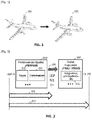
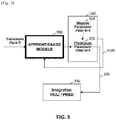
- the [ fig. 2 ] illustrates the links between the performance model and the predictive trajectory calculation.
- a trajectory comprises a plurality of points, among which the points N and N + 1 (trajectory points, in correspondence with flight plan points, waypoints).
- the performance model 210 determines the aircraft status; it includes tables 211 and one or more performance calculators 212. Tables 211 can be estimated (estimation of parameters of a parametric model from real flights).
- the data from sensors or avionics 200 are manipulated, as input.
- the parameters SEP, N1, FF (220) are determined (directly or indirectly), at said point N.
- trajectory calculation model 230 integrated and propagators 231, etc. which predicts the future (or next) state 240 of the aircraft from a present (or previous) state.
- the state of the aircraft - at a given time - can indeed be characterized (approximately but satisfactorily) by three parameters which are the parameters SEP, FF and N1. These parameters are data measurable by aircraft sensors, and are therefore accessible in flight records.
- SEP for Specific Excess Power, designates the energy available to climb the aircraft, ie the ability to climb from the airplane divided by the mass (this parameter is not constant). MS is not measured directly, but it is calculated from measurable data (such as altitude, speed, gravitational constant, etc.).
- FF - dm dt
- N1 refers to the speed of rotation of the first stage of the engine, which has the most influence on fuel consumption. The available power is closely linked to this speed N1.
- the SEP, FF and N1 parameters are closely linked.
- the engine thrust mode and vertical guidance appear to be decisive for the parameters SEP, FF and N1.
- model-based in English can consist in modeling the interdependence between SEP, FF and N1, ie by formulating games equations involving these parameters (for example by modeling aerodynamics and / or thrust mode motor and / or vertical guidance). Particularly effective optimizations (eg convergent and rapid) can thus be obtained.
- Modelless approaches based on machine learning.
- an advantageous alternative (“model-free” in English) consists in applying automatic learning methods. No prior knowledge is required. In other words, there can be no presupposition of any model, whether aerodynamic or engine, or other: machine learning establishes correspondences between input and output data sets, these data being real data (because measured directly or determined indirectly).
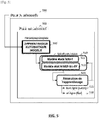
- the [ fig. 3 ] illustrates the coupling between automatic learning and integration in trajectory prediction.
- the integration calculation 330 for predicting the trajectory of the aircraft relates only to the parameters predicted at point N + 1311, obtained by learning 300 from point N.
- the predicted data 311 and measured 312 serve to continue the 3100 drive of the 300 model.
- the performance model 210 determines the aircraft status; it includes tables 211 and one or more performance calculators 212. Tables 211 can be estimated (estimation of parameters of a parametric model from real flights).
- Inputs manipulate data from sensors and / or avionics.
- the parameters SEP, N1, FF 220 are determined (directly or indirectly).
- these output parameters are used in the trajectory calculation model 230 (integrators and propagators 231, etc.) which predicts the future (or next) state of the aircraft from a present (or previous) state
- the input data are received and / or supplied, as well as the output data (outputs).
- Automatic learning is performed on the output data and learning then establishes the "links" between inputs and outputs.
- the differences between the data predicted by learning and the data actually measured in flight possibly modify the learned model. Predicted data and / or measured data are manipulated by flight computers.
- the [ fig. 4 ] illustrates certain aspects of the invention according to a specific processing chain.
- the sensor measurements and / or calculations and / or other observations are collected in step 410, possibly filtered and formatted in step 420; a corpus (reduced) i.e. reference is defined in step 430 (feedbacks by human expertise and / or machine filtering) and aircraft state tables 440 comprising a plurality of aircraft states are determined.
- the learning module 300 predicts an airplane state at the next point N + 1 from data at the previous point N.
- the learned model 450 is progressively and / or iteratively refined, possibly validated or modified 460 by an operator, and can optionally be the subject of reports and statistics 470 (for certification authorities, traffic regulation authorities, the manufacturer, an equipment supplier, etc.).
- the [ fig. 5 ] illustrates different learning modes according to different embodiments of the invention.
- the method comprises a first step 512 consisting in modeling the link between (i) the state of the aircraft on the one hand and (ii) the parameters (SEP, FF, N1) on the other.
- the model is trained by automatic learning on a large number of flight records concerning the type of aircraft concerned.
- the model is onboard (ie implementation on board) and refined to refine or strengthen or improve it by serial number, ie specifically or specifically to the aircraft considered (each device is unique, slightly different from other devices in the same category or type of device).
- the (generic) model is specified by automatic learning performed on the flight data specific to the aircraft considered.
- the data can be (past) flight recordings from this aircraft (offline 521) or received live, streaming or streaming (online 522).
- This last embodiment is an “end-to-end” modeling: a learning model 300 (neural network type for example) is trained with the airplane state as input, and the SEP, FF and N1 as output. As a result, the (existing) integrators are used with the outputs of this model, in order to predict the future state of the aircraft.
- a learning model 300 neural network type for example
- the method comprises a first step 511 consisting in modeling the link between (i) the state of the aircraft at point N on the one hand and (ii) the state of the aircraft at point N + 1 on the other hand.
- This step includes a step consisting in using the integration / trajectory prediction 230.
- the model is trained by automatic learning on a large number of flight records concerning the type of aircraft concerned.
- the model is onboard (ie implementation on board) and refined to refine or strengthen or improve it by serial number, ie specifically or specifically to the aircraft considered (each device is unique, slightly different from other devices in the same category or type of device).
- the (generic) model is specified by automatic learning performed on the flight data specific to the aircraft considered.
- the data can be (past) flight recordings from this aircraft (offline 521) or received live, streaming or streaming (online 522).
- the present invention can be implemented using hardware and / or software elements. It may be available as a computer program product on computer readable media.
- Machine learning can correspond to hardware architectures which can be emulated or simulated by computer (e.g. CPU-GPU), but sometimes not (circuits dedicated to learning may exist).
- a neural network according to the invention can be one or more neural networks chosen from neural networks comprising: a) an artificial neural network (in English "feedforward neural network”; b) an acyclic artificial neural network, eg a multilayer perceptron, thus distinguishing itself from recurrent neural networks; c) a forward propagation neural network; d) a Hopfield neural network (a discrete-time recurrent neural network model whose connection matrix is symmetrical and zero on the diagonal and where the dynamics are asynchronous, a single neuron being updated at each time unit ); e) a recurrent neural network (consisting of interconnected units interacting non-linearly and for which there is at least one cycle in the structure); f) a convolutional neural network (in English “CNN” or “ConvNet” for “Convolutional Neural Networks”, a type of feedforward acyclic artificial neural network, by multilayer stacking of
- the learning calculations are performed offline on a ground computer.
- the model can be trained specifically to model with more precision the particular aircraft on board, by reinforcement methods.
- the flight data can be used in a real-time architecture to improve knowledge of aircraft performance in real time.
- one or more steps of the method according to the invention are implemented in the form of a computer program hosted on a portable computer of the “EFB” type (acronym for “Electronic Flight Bag).
- one or more steps of the method can be implemented within a “FMS” type computer (acronym for “Flight Management System”) or in an FM function of a flight computer.
Landscapes
- Engineering & Computer Science (AREA)
- Physics & Mathematics (AREA)
- Theoretical Computer Science (AREA)
- General Physics & Mathematics (AREA)
- Software Systems (AREA)
- Computing Systems (AREA)
- Artificial Intelligence (AREA)
- Mathematical Physics (AREA)
- Data Mining & Analysis (AREA)
- Evolutionary Computation (AREA)
- General Engineering & Computer Science (AREA)
- Biophysics (AREA)
- Molecular Biology (AREA)
- General Health & Medical Sciences (AREA)
- Computational Linguistics (AREA)
- Biomedical Technology (AREA)
- Life Sciences & Earth Sciences (AREA)
- Health & Medical Sciences (AREA)
- Aviation & Aerospace Engineering (AREA)
- Computer Vision & Pattern Recognition (AREA)
- Medical Informatics (AREA)
- Radar, Positioning & Navigation (AREA)
- Remote Sensing (AREA)
- Automation & Control Theory (AREA)
- Management, Administration, Business Operations System, And Electronic Commerce (AREA)
- Traffic Control Systems (AREA)
Applications Claiming Priority (1)
| Application Number | Priority Date | Filing Date | Title |
|---|---|---|---|
| FR1873514A FR3090851B1 (fr) | 2018-12-20 | 2018-12-20 | Apprentissage automatique en avionique |
Publications (2)
| Publication Number | Publication Date |
|---|---|
| EP3671392A1 true EP3671392A1 (de) | 2020-06-24 |
| EP3671392B1 EP3671392B1 (de) | 2024-10-30 |
Family
ID=67262390
Family Applications (1)
| Application Number | Title | Priority Date | Filing Date |
|---|---|---|---|
| EP19216280.8A Active EP3671392B1 (de) | 2018-12-20 | 2019-12-13 | Maschinelles lernen in der luftfahrttechnik |
Country Status (4)
| Country | Link |
|---|---|
| US (1) | US12033521B2 (de) |
| EP (1) | EP3671392B1 (de) |
| CN (1) | CN111353256B (de) |
| FR (1) | FR3090851B1 (de) |
Families Citing this family (18)
| Publication number | Priority date | Publication date | Assignee | Title |
|---|---|---|---|---|
| CN115578711A (zh) * | 2019-05-21 | 2023-01-06 | 华为技术有限公司 | 自动换道方法、装置及存储介质 |
| US11742901B2 (en) * | 2020-07-27 | 2023-08-29 | Electronics And Telecommunications Research Institute | Deep learning based beamforming method and apparatus |
| CN112416021B (zh) * | 2020-11-17 | 2021-12-21 | 中山大学 | 一种基于学习的旋翼无人机路径跟踪预测控制方法 |
| US12437654B2 (en) * | 2020-12-17 | 2025-10-07 | The Boeing Company | Optimizing a flight of an aircraft with at least one segment of formation flight |
| CN112610339B (zh) * | 2021-01-13 | 2021-12-28 | 南京航空航天大学 | 一种基于适量信息融合卷积神经网络的变循环发动机参数估计方法 |
| CN114815592B (zh) * | 2021-01-28 | 2025-06-17 | 北京理工大学 | 基于并发学习神经网络的三角翼飞行器容错控制方法 |
| US20220300672A1 (en) * | 2021-03-19 | 2022-09-22 | Government Of The United States, As Represented By The Secretary Of The Air Force | Methods and Systems for Analyzing and Predicting Aeroelastic Flutter on Configurable Aircraft |
| US12073729B2 (en) * | 2021-04-27 | 2024-08-27 | Rockwell Collins, Inc. | Machine-learned operating system and processor |
| US20220414460A1 (en) | 2021-06-23 | 2022-12-29 | The Boeing Company | Predictive Modeling of Aircraft Dynamics |
| AU2022380638B2 (en) * | 2021-08-19 | 2024-11-28 | Merlin Labs, Inc. | Advanced flight processing system and/or method |
| FR3127047B1 (fr) * | 2021-09-15 | 2023-09-22 | Airbus Operations Sas | Système et procédé d’estimation automatique d’une vitesse d’un aéronef lors d’un vol de l’aéronef. |
| CN113987674B (zh) * | 2021-10-25 | 2025-09-09 | 杭州电子科技大学 | 一种基于生成对抗网络的雷达hrrp持续学习方法 |
| US11914599B2 (en) | 2021-11-19 | 2024-02-27 | Hamilton Sundstrand Corporation | Machine learning intermittent data dropout mitigation |
| CN114462149B (zh) * | 2022-01-29 | 2022-09-16 | 哈尔滨逐宇航天科技有限责任公司 | 一种基于预训练与增量学习的飞行器气动参数辨识方法 |
| CN114707720B (zh) * | 2022-03-30 | 2024-07-02 | 中国民航大学 | 一种基于纵向联邦学习的航班延误预测方法及系统 |
| CN116306788B (zh) * | 2022-12-19 | 2025-11-11 | 西北工业大学 | 一种航空发动机数字孪生模型 |
| US12282335B2 (en) * | 2023-01-06 | 2025-04-22 | The Boeing Company | System and method for operating an aircraft during a climb phase of flight |
| GB2631381A (en) | 2023-06-21 | 2025-01-08 | Univ Malta | A method for training a reinforcement learning agent to provide inputs to an automated system on an aircraft |
Citations (5)
| Publication number | Priority date | Publication date | Assignee | Title |
|---|---|---|---|---|
| US20090112535A1 (en) * | 2007-10-26 | 2009-04-30 | Sensis Corporation | Method of integrating point mass equations to include vertical and horizontal profiles |
| US9290262B2 (en) | 2013-02-22 | 2016-03-22 | Thales | Method for creating a vertical trajectory profile comprising multiple altitude levels |
| US9542851B1 (en) * | 2015-11-03 | 2017-01-10 | The Boeing Company | Avionics flight management recommender system |
| WO2017042166A1 (fr) | 2015-09-09 | 2017-03-16 | Thales | Optimisation de la trajectoire d'un aéronef |
| US20180259342A1 (en) * | 2017-03-10 | 2018-09-13 | Qualcomm Incorporated | System and method for dead reckoning for a drone |
Family Cites Families (9)
| Publication number | Priority date | Publication date | Assignee | Title |
|---|---|---|---|---|
| US8600675B1 (en) * | 2011-05-25 | 2013-12-03 | Rockwell Collins, Inc. | System and method for generating trajectory data for an aircraft in flight |
| US8798898B2 (en) * | 2011-10-31 | 2014-08-05 | General Electric Company | Methods and systems for inferring aircraft parameters |
| US10466266B2 (en) | 2014-08-14 | 2019-11-05 | University Of North Dakota | Flight parameter prediction using neural networks |
| CN104180801B (zh) * | 2014-08-20 | 2017-06-06 | 广州海格通信集团股份有限公司 | 基于ads‑b系统航迹点的预测方法和系统 |
| US9691286B2 (en) * | 2015-04-22 | 2017-06-27 | The Boeing Company | Data driven airplane intent inferencing |
| US10071818B2 (en) | 2016-01-13 | 2018-09-11 | The Boeing Company | Systems and methods for providing airplane performance calculations |
| CN105894117B (zh) * | 2016-03-31 | 2020-02-18 | 北京航空航天大学 | 航迹预测方法及装置 |
| US10754334B2 (en) * | 2016-05-09 | 2020-08-25 | Strong Force Iot Portfolio 2016, Llc | Methods and systems for industrial internet of things data collection for process adjustment in an upstream oil and gas environment |
| US10832581B2 (en) * | 2017-03-31 | 2020-11-10 | General Electric Company | Flight management via model-based iterative optimization |
-
2018
- 2018-12-20 FR FR1873514A patent/FR3090851B1/fr active Active
-
2019
- 2019-12-13 EP EP19216280.8A patent/EP3671392B1/de active Active
- 2019-12-16 US US16/716,160 patent/US12033521B2/en active Active
- 2019-12-20 CN CN201911322849.XA patent/CN111353256B/zh active Active
Patent Citations (5)
| Publication number | Priority date | Publication date | Assignee | Title |
|---|---|---|---|---|
| US20090112535A1 (en) * | 2007-10-26 | 2009-04-30 | Sensis Corporation | Method of integrating point mass equations to include vertical and horizontal profiles |
| US9290262B2 (en) | 2013-02-22 | 2016-03-22 | Thales | Method for creating a vertical trajectory profile comprising multiple altitude levels |
| WO2017042166A1 (fr) | 2015-09-09 | 2017-03-16 | Thales | Optimisation de la trajectoire d'un aéronef |
| US9542851B1 (en) * | 2015-11-03 | 2017-01-10 | The Boeing Company | Avionics flight management recommender system |
| US20180259342A1 (en) * | 2017-03-10 | 2018-09-13 | Qualcomm Incorporated | System and method for dead reckoning for a drone |
Also Published As
| Publication number | Publication date |
|---|---|
| FR3090851B1 (fr) | 2021-03-19 |
| FR3090851A1 (fr) | 2020-06-26 |
| EP3671392B1 (de) | 2024-10-30 |
| CN111353256B (zh) | 2025-05-23 |
| CN111353256A (zh) | 2020-06-30 |
| US12033521B2 (en) | 2024-07-09 |
| US20200202723A1 (en) | 2020-06-25 |
Similar Documents
| Publication | Publication Date | Title |
|---|---|---|
| EP3671392B1 (de) | Maschinelles lernen in der luftfahrttechnik | |
| Saldivar et al. | Self-organizing tool for smart design with predictive customer needs and wants to realize Industry 4.0 | |
| WO2021013908A1 (fr) | Analyse de trajectoires d'aeronefs | |
| CN112823358B (zh) | 递归多保真度行为预测 | |
| US20170091619A1 (en) | Selective backpropagation | |
| FR3101703A1 (fr) | Apprentissage automatique pour systeme de mission | |
| EP3846087A1 (de) | Verfahren und system zur auswahl eines lernmodells innerhalb einer vielzahl von lernmodellen | |
| FR2963448A1 (fr) | Procede et systeme d'analyse de donnees de vol enregistrees au cours d'un vol d'un avion. | |
| Kouvaros et al. | Formal analysis of neural network-based systems in the aircraft domain | |
| CN114902239A (zh) | 深度学习模型的偏差检测和可解释性 | |
| Napoli et al. | An agent-driven semantical identifier using radial basis neural networks and reinforcement learning | |
| EP3913519A1 (de) | Simulation durch substitution eines modells, das auf physikalischen gesetzen basiert, durch ein maschinelles lernmodell | |
| US20260080365A1 (en) | Earning code classification | |
| EP4557260A1 (de) | Auswahl von höhenveränderlichen phasenrouten für flugzeuge | |
| US20250166515A1 (en) | Methods for selecting aircraft cruise phase routes | |
| US12282874B2 (en) | Scheduling project activities using twin computing simulation | |
| Zhengxin et al. | Mlops spanning whole machine learning life cycle: A survey | |
| Wu et al. | Aircraft flight regime recognition with deep temporal segmentation neural network | |
| EP4162402A1 (de) | Bidirektionale mensch-maschine-kommunikation | |
| Gallon et al. | Convolutional neural network design and evaluation for real-time multivariate time series fault detection in spacecraft attitude sensors | |
| CN116384516B (zh) | 一种基于集成学习的代价敏感云边协同方法 | |
| Kulkarni et al. | Analysis of airport ground delay program decisions using data mining techniques | |
| FR3091762A1 (fr) | Apprentissage automatique en avionique | |
| Bouktif et al. | Predicting stock market movement: An evolutionary approach | |
| US20240412035A1 (en) | Pre-processing for deep neural network compilation using graph neural networks |
Legal Events
| Date | Code | Title | Description |
|---|---|---|---|
| PUAI | Public reference made under article 153(3) epc to a published international application that has entered the european phase |
Free format text: ORIGINAL CODE: 0009012 |
|
| STAA | Information on the status of an ep patent application or granted ep patent |
Free format text: STATUS: THE APPLICATION HAS BEEN PUBLISHED |
|
| AK | Designated contracting states |
Kind code of ref document: A1 Designated state(s): AL AT BE BG CH CY CZ DE DK EE ES FI FR GB GR HR HU IE IS IT LI LT LU LV MC MK MT NL NO PL PT RO RS SE SI SK SM TR |
|
| AX | Request for extension of the european patent |
Extension state: BA ME |
|
| STAA | Information on the status of an ep patent application or granted ep patent |
Free format text: STATUS: REQUEST FOR EXAMINATION WAS MADE |
|
| 17P | Request for examination filed |
Effective date: 20201217 |
|
| RBV | Designated contracting states (corrected) |
Designated state(s): AL AT BE BG CH CY CZ DE DK EE ES FI FR GB GR HR HU IE IS IT LI LT LU LV MC MK MT NL NO PL PT RO RS SE SI SK SM TR |
|
| STAA | Information on the status of an ep patent application or granted ep patent |
Free format text: STATUS: EXAMINATION IS IN PROGRESS |
|
| 17Q | First examination report despatched |
Effective date: 20220221 |
|
| P01 | Opt-out of the competence of the unified patent court (upc) registered |
Effective date: 20230427 |
|
| GRAP | Despatch of communication of intention to grant a patent |
Free format text: ORIGINAL CODE: EPIDOSNIGR1 |
|
| STAA | Information on the status of an ep patent application or granted ep patent |
Free format text: STATUS: GRANT OF PATENT IS INTENDED |
|
| INTG | Intention to grant announced |
Effective date: 20240607 |
|
| GRAS | Grant fee paid |
Free format text: ORIGINAL CODE: EPIDOSNIGR3 |
|
| GRAA | (expected) grant |
Free format text: ORIGINAL CODE: 0009210 |
|
| STAA | Information on the status of an ep patent application or granted ep patent |
Free format text: STATUS: THE PATENT HAS BEEN GRANTED |
|
| AK | Designated contracting states |
Kind code of ref document: B1 Designated state(s): AL AT BE BG CH CY CZ DE DK EE ES FI FR GB GR HR HU IE IS IT LI LT LU LV MC MK MT NL NO PL PT RO RS SE SI SK SM TR |
|
| REG | Reference to a national code |
Ref country code: GB Ref legal event code: FG4D Free format text: NOT ENGLISH |
|
| REG | Reference to a national code |
Ref country code: CH Ref legal event code: EP |
|
| REG | Reference to a national code |
Ref country code: DE Ref legal event code: R096 Ref document number: 602019061068 Country of ref document: DE |
|
| REG | Reference to a national code |
Ref country code: IE Ref legal event code: FG4D Free format text: LANGUAGE OF EP DOCUMENT: FRENCH |
|
| REG | Reference to a national code |
Ref country code: LT Ref legal event code: MG9D |
|
| REG | Reference to a national code |
Ref country code: NL Ref legal event code: MP Effective date: 20241030 |
|
| PG25 | Lapsed in a contracting state [announced via postgrant information from national office to epo] |
Ref country code: HR Free format text: LAPSE BECAUSE OF FAILURE TO SUBMIT A TRANSLATION OF THE DESCRIPTION OR TO PAY THE FEE WITHIN THE PRESCRIBED TIME-LIMIT Effective date: 20241030 Ref country code: IS Free format text: LAPSE BECAUSE OF FAILURE TO SUBMIT A TRANSLATION OF THE DESCRIPTION OR TO PAY THE FEE WITHIN THE PRESCRIBED TIME-LIMIT Effective date: 20250228 Ref country code: PT Free format text: LAPSE BECAUSE OF FAILURE TO SUBMIT A TRANSLATION OF THE DESCRIPTION OR TO PAY THE FEE WITHIN THE PRESCRIBED TIME-LIMIT Effective date: 20250228 |
|
| PG25 | Lapsed in a contracting state [announced via postgrant information from national office to epo] |
Ref country code: NL Free format text: LAPSE BECAUSE OF FAILURE TO SUBMIT A TRANSLATION OF THE DESCRIPTION OR TO PAY THE FEE WITHIN THE PRESCRIBED TIME-LIMIT Effective date: 20241030 Ref country code: FI Free format text: LAPSE BECAUSE OF FAILURE TO SUBMIT A TRANSLATION OF THE DESCRIPTION OR TO PAY THE FEE WITHIN THE PRESCRIBED TIME-LIMIT Effective date: 20241030 |
|
| REG | Reference to a national code |
Ref country code: AT Ref legal event code: MK05 Ref document number: 1737509 Country of ref document: AT Kind code of ref document: T Effective date: 20241030 |
|
| PG25 | Lapsed in a contracting state [announced via postgrant information from national office to epo] |
Ref country code: BG Free format text: LAPSE BECAUSE OF FAILURE TO SUBMIT A TRANSLATION OF THE DESCRIPTION OR TO PAY THE FEE WITHIN THE PRESCRIBED TIME-LIMIT Effective date: 20241030 |
|
| PG25 | Lapsed in a contracting state [announced via postgrant information from national office to epo] |
Ref country code: ES Free format text: LAPSE BECAUSE OF FAILURE TO SUBMIT A TRANSLATION OF THE DESCRIPTION OR TO PAY THE FEE WITHIN THE PRESCRIBED TIME-LIMIT Effective date: 20241030 |
|
| PG25 | Lapsed in a contracting state [announced via postgrant information from national office to epo] |
Ref country code: NO Free format text: LAPSE BECAUSE OF FAILURE TO SUBMIT A TRANSLATION OF THE DESCRIPTION OR TO PAY THE FEE WITHIN THE PRESCRIBED TIME-LIMIT Effective date: 20250130 |
|
| PG25 | Lapsed in a contracting state [announced via postgrant information from national office to epo] |
Ref country code: LV Free format text: LAPSE BECAUSE OF FAILURE TO SUBMIT A TRANSLATION OF THE DESCRIPTION OR TO PAY THE FEE WITHIN THE PRESCRIBED TIME-LIMIT Effective date: 20241030 Ref country code: AT Free format text: LAPSE BECAUSE OF FAILURE TO SUBMIT A TRANSLATION OF THE DESCRIPTION OR TO PAY THE FEE WITHIN THE PRESCRIBED TIME-LIMIT Effective date: 20241030 Ref country code: GR Free format text: LAPSE BECAUSE OF FAILURE TO SUBMIT A TRANSLATION OF THE DESCRIPTION OR TO PAY THE FEE WITHIN THE PRESCRIBED TIME-LIMIT Effective date: 20250131 |
|
| PG25 | Lapsed in a contracting state [announced via postgrant information from national office to epo] |
Ref country code: PL Free format text: LAPSE BECAUSE OF FAILURE TO SUBMIT A TRANSLATION OF THE DESCRIPTION OR TO PAY THE FEE WITHIN THE PRESCRIBED TIME-LIMIT Effective date: 20241030 |
|
| PG25 | Lapsed in a contracting state [announced via postgrant information from national office to epo] |
Ref country code: RS Free format text: LAPSE BECAUSE OF FAILURE TO SUBMIT A TRANSLATION OF THE DESCRIPTION OR TO PAY THE FEE WITHIN THE PRESCRIBED TIME-LIMIT Effective date: 20250130 |
|
| PG25 | Lapsed in a contracting state [announced via postgrant information from national office to epo] |
Ref country code: SM Free format text: LAPSE BECAUSE OF FAILURE TO SUBMIT A TRANSLATION OF THE DESCRIPTION OR TO PAY THE FEE WITHIN THE PRESCRIBED TIME-LIMIT Effective date: 20241030 |
|
| PG25 | Lapsed in a contracting state [announced via postgrant information from national office to epo] |
Ref country code: MC Free format text: LAPSE BECAUSE OF FAILURE TO SUBMIT A TRANSLATION OF THE DESCRIPTION OR TO PAY THE FEE WITHIN THE PRESCRIBED TIME-LIMIT Effective date: 20241030 |
|
| PG25 | Lapsed in a contracting state [announced via postgrant information from national office to epo] |
Ref country code: DK Free format text: LAPSE BECAUSE OF FAILURE TO SUBMIT A TRANSLATION OF THE DESCRIPTION OR TO PAY THE FEE WITHIN THE PRESCRIBED TIME-LIMIT Effective date: 20241030 |
|
| PG25 | Lapsed in a contracting state [announced via postgrant information from national office to epo] |
Ref country code: EE Free format text: LAPSE BECAUSE OF FAILURE TO SUBMIT A TRANSLATION OF THE DESCRIPTION OR TO PAY THE FEE WITHIN THE PRESCRIBED TIME-LIMIT Effective date: 20241030 |
|
| PG25 | Lapsed in a contracting state [announced via postgrant information from national office to epo] |
Ref country code: RO Free format text: LAPSE BECAUSE OF FAILURE TO SUBMIT A TRANSLATION OF THE DESCRIPTION OR TO PAY THE FEE WITHIN THE PRESCRIBED TIME-LIMIT Effective date: 20241030 |
|
| PG25 | Lapsed in a contracting state [announced via postgrant information from national office to epo] |
Ref country code: SK Free format text: LAPSE BECAUSE OF FAILURE TO SUBMIT A TRANSLATION OF THE DESCRIPTION OR TO PAY THE FEE WITHIN THE PRESCRIBED TIME-LIMIT Effective date: 20241030 |
|
| PG25 | Lapsed in a contracting state [announced via postgrant information from national office to epo] |
Ref country code: CZ Free format text: LAPSE BECAUSE OF FAILURE TO SUBMIT A TRANSLATION OF THE DESCRIPTION OR TO PAY THE FEE WITHIN THE PRESCRIBED TIME-LIMIT Effective date: 20241030 |
|
| PG25 | Lapsed in a contracting state [announced via postgrant information from national office to epo] |
Ref country code: IT Free format text: LAPSE BECAUSE OF FAILURE TO SUBMIT A TRANSLATION OF THE DESCRIPTION OR TO PAY THE FEE WITHIN THE PRESCRIBED TIME-LIMIT Effective date: 20241030 |
|
| REG | Reference to a national code |
Ref country code: CH Ref legal event code: PL Ref country code: DE Ref legal event code: R097 Ref document number: 602019061068 Country of ref document: DE |
|
| PG25 | Lapsed in a contracting state [announced via postgrant information from national office to epo] |
Ref country code: LU Free format text: LAPSE BECAUSE OF NON-PAYMENT OF DUE FEES Effective date: 20241213 |
|
| PLBE | No opposition filed within time limit |
Free format text: ORIGINAL CODE: 0009261 |
|
| STAA | Information on the status of an ep patent application or granted ep patent |
Free format text: STATUS: NO OPPOSITION FILED WITHIN TIME LIMIT |
|
| PG25 | Lapsed in a contracting state [announced via postgrant information from national office to epo] |
Ref country code: SE Free format text: LAPSE BECAUSE OF FAILURE TO SUBMIT A TRANSLATION OF THE DESCRIPTION OR TO PAY THE FEE WITHIN THE PRESCRIBED TIME-LIMIT Effective date: 20241030 |
|
| GBPC | Gb: european patent ceased through non-payment of renewal fee |
Effective date: 20250130 |
|
| 26N | No opposition filed |
Effective date: 20250731 |
|
| REG | Reference to a national code |
Ref country code: BE Ref legal event code: MM Effective date: 20241231 |
|
| PG25 | Lapsed in a contracting state [announced via postgrant information from national office to epo] |
Ref country code: GB Free format text: LAPSE BECAUSE OF NON-PAYMENT OF DUE FEES Effective date: 20250130 Ref country code: BE Free format text: LAPSE BECAUSE OF NON-PAYMENT OF DUE FEES Effective date: 20241231 |
|
| PG25 | Lapsed in a contracting state [announced via postgrant information from national office to epo] |
Ref country code: CH Free format text: LAPSE BECAUSE OF NON-PAYMENT OF DUE FEES Effective date: 20241231 |
|
| PG25 | Lapsed in a contracting state [announced via postgrant information from national office to epo] |
Ref country code: IE Free format text: LAPSE BECAUSE OF NON-PAYMENT OF DUE FEES Effective date: 20241213 |
|
| PGFP | Annual fee paid to national office [announced via postgrant information from national office to epo] |
Ref country code: DE Payment date: 20251119 Year of fee payment: 7 |
|
| PGFP | Annual fee paid to national office [announced via postgrant information from national office to epo] |
Ref country code: FR Payment date: 20251124 Year of fee payment: 7 |