EP3671423B1 - Datenzugriffsverfahren und speicheranordnung - Google Patents
Datenzugriffsverfahren und speicheranordnung Download PDFInfo
- Publication number
- EP3671423B1 EP3671423B1 EP17936717.2A EP17936717A EP3671423B1 EP 3671423 B1 EP3671423 B1 EP 3671423B1 EP 17936717 A EP17936717 A EP 17936717A EP 3671423 B1 EP3671423 B1 EP 3671423B1
- Authority
- EP
- European Patent Office
- Prior art keywords
- page
- logical
- small
- ssd
- address
- Prior art date
- Legal status (The legal status is an assumption and is not a legal conclusion. Google has not performed a legal analysis and makes no representation as to the accuracy of the status listed.)
- Active
Links
Images









Classifications
-
- G—PHYSICS
- G06—COMPUTING OR CALCULATING; COUNTING
- G06F—ELECTRIC DIGITAL DATA PROCESSING
- G06F3/00—Input arrangements for transferring data to be processed into a form capable of being handled by the computer; Output arrangements for transferring data from processing unit to output unit, e.g. interface arrangements
- G06F3/06—Digital input from, or digital output to, record carriers, e.g. RAID, emulated record carriers or networked record carriers
- G06F3/0601—Interfaces specially adapted for storage systems
- G06F3/0628—Interfaces specially adapted for storage systems making use of a particular technique
- G06F3/0646—Horizontal data movement in storage systems, i.e. moving data in between storage devices or systems
- G06F3/0647—Migration mechanisms
-
- G—PHYSICS
- G06—COMPUTING OR CALCULATING; COUNTING
- G06F—ELECTRIC DIGITAL DATA PROCESSING
- G06F3/00—Input arrangements for transferring data to be processed into a form capable of being handled by the computer; Output arrangements for transferring data from processing unit to output unit, e.g. interface arrangements
- G06F3/06—Digital input from, or digital output to, record carriers, e.g. RAID, emulated record carriers or networked record carriers
- G06F3/0601—Interfaces specially adapted for storage systems
- G06F3/0668—Interfaces specially adapted for storage systems adopting a particular infrastructure
- G06F3/0671—In-line storage system
- G06F3/0683—Plurality of storage devices
- G06F3/0688—Non-volatile semiconductor memory arrays
-
- G—PHYSICS
- G06—COMPUTING OR CALCULATING; COUNTING
- G06F—ELECTRIC DIGITAL DATA PROCESSING
- G06F3/00—Input arrangements for transferring data to be processed into a form capable of being handled by the computer; Output arrangements for transferring data from processing unit to output unit, e.g. interface arrangements
- G06F3/06—Digital input from, or digital output to, record carriers, e.g. RAID, emulated record carriers or networked record carriers
- G06F3/0601—Interfaces specially adapted for storage systems
- G06F3/0602—Interfaces specially adapted for storage systems specifically adapted to achieve a particular effect
- G06F3/061—Improving I/O performance
-
- G—PHYSICS
- G06—COMPUTING OR CALCULATING; COUNTING
- G06F—ELECTRIC DIGITAL DATA PROCESSING
- G06F3/00—Input arrangements for transferring data to be processed into a form capable of being handled by the computer; Output arrangements for transferring data from processing unit to output unit, e.g. interface arrangements
- G06F3/06—Digital input from, or digital output to, record carriers, e.g. RAID, emulated record carriers or networked record carriers
- G06F3/0601—Interfaces specially adapted for storage systems
- G06F3/0602—Interfaces specially adapted for storage systems specifically adapted to achieve a particular effect
- G06F3/062—Securing storage systems
- G06F3/0622—Securing storage systems in relation to access
-
- G—PHYSICS
- G06—COMPUTING OR CALCULATING; COUNTING
- G06F—ELECTRIC DIGITAL DATA PROCESSING
- G06F3/00—Input arrangements for transferring data to be processed into a form capable of being handled by the computer; Output arrangements for transferring data from processing unit to output unit, e.g. interface arrangements
- G06F3/06—Digital input from, or digital output to, record carriers, e.g. RAID, emulated record carriers or networked record carriers
- G06F3/0601—Interfaces specially adapted for storage systems
- G06F3/0628—Interfaces specially adapted for storage systems making use of a particular technique
- G06F3/0638—Organizing or formatting or addressing of data
- G06F3/064—Management of blocks
-
- G—PHYSICS
- G06—COMPUTING OR CALCULATING; COUNTING
- G06F—ELECTRIC DIGITAL DATA PROCESSING
- G06F3/00—Input arrangements for transferring data to be processed into a form capable of being handled by the computer; Output arrangements for transferring data from processing unit to output unit, e.g. interface arrangements
- G06F3/06—Digital input from, or digital output to, record carriers, e.g. RAID, emulated record carriers or networked record carriers
- G06F3/0601—Interfaces specially adapted for storage systems
- G06F3/0628—Interfaces specially adapted for storage systems making use of a particular technique
- G06F3/0638—Organizing or formatting or addressing of data
- G06F3/0644—Management of space entities, e.g. partitions, extents, pools
-
- G—PHYSICS
- G06—COMPUTING OR CALCULATING; COUNTING
- G06F—ELECTRIC DIGITAL DATA PROCESSING
- G06F3/00—Input arrangements for transferring data to be processed into a form capable of being handled by the computer; Output arrangements for transferring data from processing unit to output unit, e.g. interface arrangements
- G06F3/06—Digital input from, or digital output to, record carriers, e.g. RAID, emulated record carriers or networked record carriers
- G06F3/0601—Interfaces specially adapted for storage systems
- G06F3/0628—Interfaces specially adapted for storage systems making use of a particular technique
- G06F3/0662—Virtualisation aspects
- G06F3/0665—Virtualisation aspects at area level, e.g. provisioning of virtual or logical volumes
-
- G—PHYSICS
- G06—COMPUTING OR CALCULATING; COUNTING
- G06F—ELECTRIC DIGITAL DATA PROCESSING
- G06F3/00—Input arrangements for transferring data to be processed into a form capable of being handled by the computer; Output arrangements for transferring data from processing unit to output unit, e.g. interface arrangements
- G06F3/06—Digital input from, or digital output to, record carriers, e.g. RAID, emulated record carriers or networked record carriers
- G06F3/0601—Interfaces specially adapted for storage systems
- G06F3/0668—Interfaces specially adapted for storage systems adopting a particular infrastructure
- G06F3/067—Distributed or networked storage systems, e.g. storage area networks [SAN], network attached storage [NAS]
-
- G—PHYSICS
- G06—COMPUTING OR CALCULATING; COUNTING
- G06F—ELECTRIC DIGITAL DATA PROCESSING
- G06F3/00—Input arrangements for transferring data to be processed into a form capable of being handled by the computer; Output arrangements for transferring data from processing unit to output unit, e.g. interface arrangements
- G06F3/06—Digital input from, or digital output to, record carriers, e.g. RAID, emulated record carriers or networked record carriers
- G06F3/0601—Interfaces specially adapted for storage systems
- G06F3/0668—Interfaces specially adapted for storage systems adopting a particular infrastructure
- G06F3/0671—In-line storage system
- G06F3/0673—Single storage device
- G06F3/0679—Non-volatile semiconductor memory device, e.g. flash memory, one time programmable memory [OTP]
Definitions
- This application relates to the storage field, and in particular, to a method for accessing data in a storage array and a storage array to which the access method is applied.
- a solid state disk (Solid state disk, SSD) has advantages such as high performance, a low delay, low power consumption, and strong environment adaptability, and costs continuously decrease. Therefore, an all-flash array is more widely applied.
- the SSD cannot perform overwriting at an original place, but original data needs to be erased to write new data.
- reading and writing are performed in a page, but erasing is performed in a physical block. Therefore, when data in the SSD is updated, updated data needs to be written into another location which is blank, and the original data is set to be invalid.
- the physical block to be erased in the SSD may include a large quantity of valid pages. Therefore, data of the valid pages needs to be copied to another blank location before data in the physical block that needs to be erased is erased.
- garbage collection In the garbage collection process, because the data of the valid pages is copied to the another blank location, additional data writing is added. In other words, write amplification of the SSD is caused.
- an access speed of the all-flash array is relatively fast, increasingly more host services are carried on the all-flash array, so that the SSD has an increasingly larger page.
- a data size may differ much each time of I/O. For some data that is accessed relatively frequently and whose amount of data accessed each time is relatively small, using an SSD with a large page further increases write amplification.
- WO2016/174729A1 describes a storage unit which comprises a storage controller and a plurality of storage devices. Each storage device has nonvolatile semiconductor memories serving as storage media. The controller of each storage device diagnoses the state of degradation of the nonvolatile semiconductor memories, and if one of the nonvolatile semiconductor memories is expected to be nearing end of life, then the controller copies the data stored in that degraded nonvolatile semiconductor memory to another nonvolatile semiconductor memory, and then performs shutdown processing for the degraded nonvolatile semiconductor memory, as well as storage capacity reduction processing.
- Embodiments of the present invention provide a data access method and device, to store small frequently-accessed data into an SSD with a relatively small page in a storage array, thereby reducing write amplification.
- the invention is defined in the appended claims. Embodiments not falling within the scope of the claims are exemplary only.
- a first aspect of the present invention provides a data access method.
- the method is performed by a processor of a storage array.
- the storage array includes a plurality of first solid state disks SSDs and a plurality of second SSDs.
- a page size of each first SSD is greater than a page size of each second SSD.
- a logical address space constituted by the plurality of first SSDs is divided into a plurality of large-page logical blocks, and each large-page logical block is divided into a plurality of large-page logical pages based on the page size of the first SSD.
- a logical address space constituted by the plurality of second SSDs is divided into a plurality of small-page logical blocks, and each small-page logical block is divided into a plurality of small-page logical pages based on the page size of the second SSD.
- a hybrid-page logical block includes a large-page logical block and a small-page logical block.
- a logical unit provided for a host for use is constructed based on the large-page logical block in the hybrid-page logical block.
- a conversion table is set for each hybrid-page logical block, and the conversion table records a mapping relationship between a large-page logical page, a data annotation, and a small-page-index table address.
- the processor receives a first data access request sent by the host.
- the first data access request is used for accessing requested data stored in the storage array.
- the first data access request carries a logical address of the requested data.
- the processor searches for a first large-page logical page corresponding to the logical address and a corresponding logical page address in the first large-page logical page.
- the first large-page logical page belongs to a large-page logical block of a first hybrid-page logical block.
- the processor searches a conversion table corresponding to the first hybrid-page logical block for a first data annotation corresponding to the first large-page logical page.
- the processor obtains a small-page-index table based on a small-page-index table address that is recorded in the conversion table and that corresponds to the first large-page logical page, and determines, based on the logical page address and in small-page logical pages recorded in the small-page-index table, a small-page logical page corresponding to the first large-page logical page and an address in the small-page logical page.
- a storage space that corresponds to the small-page logical page corresponding to the first large-page logical page and that is of a second SSD is used to store data migrated from a storage space that corresponds to the first large-page logical page and that is of a first SSD.
- the processor obtains the requested data from the second SSD based on the small-page logical page and the address in the small-page logical page.
- the conversion table is set for each hybrid-page logical block, and the data annotation is set in the conversion table. In this way, after the data in the first SSD is migrated to the second SSD, the data migrated to the second SSD can be found by using the data annotation recorded in the conversion table, so that hot data of a small page is accessed by using the conversion table.
- the processor receives a second data access request sent by the host.
- the second data access request is used for accessing requested data stored in the storage array, and the second data access request carries a logical address of the requested data.
- the processor searches for a second large-page logical page corresponding to the logical address carried in the second data access request and a corresponding large-page address in the second large-page logical page.
- the second large-page logical page belongs to a large-page logical block of a second hybrid-page logical block.
- the processor searches a conversion table corresponding to the second hybrid-page logical block for a data annotation corresponding to the second large-page logical page; and when the data annotation corresponding to the second large-page logical page is a large-page annotation, obtains the requested data from the first SSD based on the second large-page logical page and the large-page address.
- the to-be-accessed data obtained from the first SSD by using the data access request can be known by recording the data annotation in the conversion table.
- the conversion table further records a quantity of access times of each large-page logical page.
- a data amount of the requested data that corresponds to the second large-page logical page and that is obtained by the processor from the first SSD is less than a preset value, a quantity of access times of the second large-page logical page in the conversion table is increased by 1.
- the processor periodically detects, in the conversion table, a large-page logical page whose quantity of access times is greater than a preset value, creates a small-page-index table for the large-page logical page whose quantity of access times is greater than the preset value, and records an address of the small-page-index table in the conversion table.
- the small-page-index table records N blank small-page logical pages, N is a quantity of small-page logical pages included in each large-page logical page, and N ⁇ 1.
- the processor migrates, to a storage space that corresponds to the blank small-page logical pages and that is of the second SSD, data that is stored in the first SSD and that corresponds to the large-page logical page whose quantity of access times is greater than the preset value; then modifies, to the small-page annotation, a data annotation of the large-page logical page whose quantity of access times is greater than the preset value; and sets, to zero, the quantity of access times of the large-page logical page whose quantity of access times is greater than the preset value.
- a small-page logical block in each hybrid-page logical block has a small-page logical page table
- the small-page logical page table records a correspondence between a small-page logical page included in each small-page logical block and a logical page in the second SSD.
- the access sub-request carries the logical page and the logical page address in the second SSD. Then the processor sends the access sub-request to the second SSD to instruct the second SSD to obtain the to-be-accessed data based on the logical page and the logical page address in the second SSD.
- a mapping relationship between the logical page in the small-page chunk and the logical page in the second SSD is established, so that it can be convenient to find the logical page that corresponds to the logical page in the small-page chunk and that is in the SSD, thereby finding the requested data.
- a large-page logical block in each hybrid-page logical block has a large-page logical page table
- the large-page logical page table records a correspondence between a large-page logical page included in each large-page logical block and a logical page in the first SSD.
- the access sub-request carries the logical page and the logical page address in the first SSD. Then the processor sends the access sub-request to the first SSD to instruct the first SSD to obtain the requested data based on the logical page and the logical page address in the first SSD.
- a mapping relationship between the logical page in the large-page chunk and the logical page in the first SSD is established, so that it can be convenient to find the logical page that corresponds to the logical page in the large-page chunk and that is in the SSD, thereby finding the requested data.
- the small-page-index table records a quantity of access times of each small-page logical page.
- the processor calculates, at an interval of a preset time, a variance and a mean value of quantities of access times corresponding to all the small-page logical pages in the small-page-index table; and if the variance is less than a threshold T1 and the mean value is greater than a threshold T2, migrates, to the first SSD corresponding to a large-page logical page corresponding to the small-page-index table, data that corresponds to the small-page logical pages and that is in the second SSD.
- the data that corresponds to the small-page logical pages and that is stored in the second SSD is migrated to the first SSD, to improve data access efficiency.
- An unclaimed second aspect of the present invention provides a data access device.
- a technology of the data access device is basically the same as that of the data access method provided in the first aspect, and beneficial effects implemented by the data access device are also the same as those of the data access method provided in the first aspect. Details are not described herein again.
- a third aspect of the present invention provides a storage array.
- the storage array includes a plurality of first solid state disks SSDs and a plurality of second SSDs, a page size of each first SSD is greater than a page size of each second SSD, a logical address space constituted by the plurality of first SSDs is divided into a plurality of large-page logical blocks, each large-page logical block is divided into a plurality of large-page logical pages based on the page size of the first SSD, a logical address space constituted by the plurality of second SSDs is divided into a plurality of small-page logical blocks, each small-page logical block is divided into a plurality of small-page logical pages based on the page size of the second SSD, a large-page logical block and a small-page logical block constitute a hybrid-page logical block, a logical unit provided for a host for use is constructed based on the large-page logical block in the hybrid-page logical block, a conversion table is set for
- a fourth aspect of the present invention provides a computer-readable medium, including a computer execution instruction.
- a processor of a computer executes the computer execution instruction, the computer performs the data access method provided in the first aspect of the embodiments of the present invention.
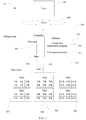
- FIG 1 is an architectural diagram of a storage system 10 to which an embodiment of the present invention is applied.
- a host 100 may be connected to a storage array 300 by using a storage area network (storage area network, SAN) 200 or another network.
- the host 110 runs various application software to provide different application services for a customer.
- the storage array 300 stores service data generated when an application in the host 100 is run.
- the storage array 300 includes a controller 301, a disk frame 306, and an SSD 307 of a 4 K page size, an SSD 308 of an 8 K page size, and an SSD of a 16 K page size that are installed on the disk frame 306.
- only the SSDs of the three page sizes are used as examples for description.
- the storage array 300 may alternatively include an SSD of another page.
- the controller 301 and the disk frame are connected by using ports 304 and 305. Each of the ports 304 and 305 may be a SAS port or a PCIE port.
- the controller 301 includes a processor 302, a memory 303, and the port 304.
- the processor 302 is configured to: execute various programs in the memory 303 to provide a data access service for the host 100, and manage the storage array 300.
- the memory 303 stores a virtual disk construction program 310 and a conversion program 311.
- the processor 302 executes the virtual disk construction program 310 and the conversion program 311 to perform functions provided in this embodiment of the present invention. This is described below in detail with reference to flowcharts of FIG. 8 to FIG. 11 .
- the controller 301 may construct, based on the SSDs, a virtual disk, such as a logical unit (logical unit, LU), visible to the host to provide a storage service for the host.
- a virtual disk such as a logical unit (logical unit, LU)
- the virtual disk construction program 310 is an improvement made based on an existing RAID 2.0+ technology.
- a virtual disk is constructed based on SSDs 20 of a same page size.
- an array controller first divides SSDs 20 in the array into a plurality of chunks (Chunk) 21 of a same size (for example, 64 M), and records an SSD 20 to which each chunk 21 belongs and a corresponding physical address space in the SSD 20 (S201). Then the array controller selects a chunk 21 based on a preset RAID policy to construct a RAID group 22 (S202).
- the RAID policy may be any RAID policy, for example, a RAID 1-6 or a RAID 10.
- the array controller continues to construct an LU 25 based on the constructed RAID group 22 (S203).
- the array controller first divides each RAID group 22 into a plurality of stripes 23.
- Each stripe 23 includes a part of a space of each chunk 21.
- the stripe 23 includes a strip 24 in each of three chunks 21. Strips 24 in each stripe 23 are consecutively addressed to form an address space of each stripe.
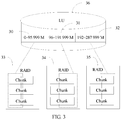
- a LUN 36 includes three stripes, each stripe is of 96 M, and the three stripes constitute an address space of 288 M.
- a stripe 30 is from a RAID 33, a stripe 31 is from a RAID 34, and a stripe 32 is from a RAID 35.
- the address space of the LU is formed by sequentially addressing the three stripes.
- an address range of the stripe 30 is 0 M to 95.999 M
- an address range of the stripe 31 is 96 M to 191.999 M
- an address range of the stripe 32 is 192 M to 287.999 M.
- a RAID is constructed based on chunks, and the chunks constituting the RAID are from different SSDs.
- an SSD on which another chunk in a RAID group including a chunk on the faulty SSD is located may participate in data reconstruction. Therefore, a data reconstruction speed is relatively fast.
- the RAID 2.0+ technology is improved in a manner that a virtual disk is constructed based on the SSDs of different page sizes included in the storage array 300.
- An improved program is the virtual disk construction program 310.
- the processor 302 records chunks of a same page size together to form a chunk group, for example, a chunk group 41 obtained by dividing an SSD with a page of a 4 K size, a chunk group 42 obtained by dividing an SSD with a page of an 8 K size, and a chunk group 43 obtained by dividing an SSD with a page of a 16 K size.
- each hybrid-page chunk 44 includes two chunks of different page sizes.
- a chunk from a chunk group with a larger page is a large-page chunk 45
- a chunk from a chunk group with a smaller page is a small-page chunk 46.
- the processor 302 constructs a RAID 47 based on the hybrid-page chunk 44.
- the constructed RAID 47 is striped, only the large-page chunk 45 is striped.
- the small-page chunk 46 is not used to construct the LU.
- the small-page chunk 46 is not provided for the host for use, and is only used to migrate data corresponding to the large-page chunk 45. Use of the small-page chunk in data migration is described below in detail.
- the controller 301 creates a large-page chunk logical page table 50 and a small-page chunk logical page table 51 for each hybrid-page chunk 44.
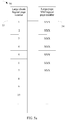
- the large-page chunk logical page table 50 records a correspondence between a logical page 53 in a large-page chunk and a logical page 54 in an SSD to which the large-page chunk belongs.
- the controller 301 divides each large-page chunk into a plurality of logical pages 53 based on an address space and a page size of the large-page chunk, and numbers each logical page 53 in an address order. The number is a large-page chunk logical page number.
- each SSD a table of mapping between a logical page number 54 and a physical page number that are in the SSD is maintained.
- a processor (not shown in the figure) of the SSD may find, in the mapping table based on an SSD logical page number carried in an access request, a physical page number corresponding to the logical page number, to find to-be-accessed data.
- the small-page chunk logical page table 51 records a correspondence between a logical page 55 in a small-page chunk and a logical page 56 in an SSD to which the small-page chunk belongs.
- An address space of the small-page chunk is divided into a plurality of logical pages 55 based on a page size of the small-page chunk, and each logical page 55 is numbered in an address order. The number is a small-page chunk logical page number.
- the controller 301 further generates, for each hybrid-page chunk 44, a conversion table 60 shown in FIG. 6 .
- the shown conversion table 60 includes a large-page chunk logical page number column 61, a data annotation column 62, an access times column 63, and a small-page-index table address (STA) column 64.
- the large-page chunk logical page number column 61 records a large-page chunk logical page number.
- the data annotation column 62 records a data annotation corresponding to each logical page 53.
- the data annotation includes a large-page annotation and a small-page annotation.
- the large-page annotation indicates that data corresponding to the logical page is stored in a large-page SSD corresponding to the large-page chunk, and is represented by 0 in this embodiment.
- the small-page annotation indicates that data corresponding to the logical page is stored in a small-page SSD corresponding to the small-page chunk, and is represented by 1 in this embodiment.
- a length of data of an accessed logical page is less than a preset value, a value that is in the access times column and that corresponds to the logical page is increased by 1.
- the preset value may be 50% of a page size of the large-page chunk.
- the small-page-index table address column 64 records an address 66 that is of a small-page-index table 65 corresponding to the logical page 53 and that is in the memory, the small-page-index table 65 can be found based on the memory address 66, and to-be-accessed data can be found by using the small-page-index table 65.
- the small-page-index table includes a small-page chunk logical page 67 and a quantity 68 of times that each logical page is accessed.
- a quantity of pages included in each small-page-index table 66 is a quantity of small chunk logical pages included in one large chunk logical page.
- each small-page-index table 66 records four small-page logical pages.
- the small-page chunk logical page 67 is selected from the small-page chunk logical page table 51 shown in FIG. 5b , and is used to migrate data in a physical page that corresponds to the large-page chunk logical page 53 and that is in an SSD.
- the read request carries a logical address of to-be-read data.
- the logical address includes a logical block address (logic block address, LBA) and an identifier of a virtual disk.
- the identifier of the virtual disk is a logical unit number (logic unit number, LUN).
- the virtual disk is identified by using an LU.
- the LBA is a logical block defined by a file system of the host 100.
- a size of a logical block is 512 K.
- the controller 301 of the storage array 300 determines, based on the LUN and the LBA address in the read request, a hybrid-page chunk to which the address of the to-be-read data belongs (S602).
- FIG. 8 is a schematic diagram of determining, based on a logical address in a read request, a hybrid-page chunk corresponding to to-be-read data. Referring to composition of the LU in FIG. 3 , it is assumed that an LU indicated in the read request is an LU 70, and the LU 70 includes three stripes: stripes 71, 72, and 73.
- each stripe is 60 M
- the three stripes constitute an address space of 180 M.
- An address space of the stripe 71 is 0 M to 31.999 M
- an address space of the stripe 72 is 32 M to 63.999 M
- an address space of the stripe 73 is 120 M to 179.999 M or 64 M to 95.999 M.
- the stripes 71, 72, and 73 are respectively from RAIDs 74, 75, and 76.
- the logical address in the read request is 5120 K + 50 K
- 5120 K is a start address of the to-be-read data in the LU
- 50 K is a length of the to-be-read data.
- the to-be-read data falls into the address space of the stripe 71.
- the stripe 71 includes three strips 77, 78, and 79, the three strips are respectively located in three large-page chunks of the RAID 74, and addresses of the three strips in the stripe 71 are contiguous.
- an address range of the strip 77 is 1 M to 10.333 M
- an address range of the strip 78 is 10.334 M to 20.666 M
- an address range of the strip 79 is 20.667 M to 31.999 M.
- the controller may further determine that the logical address of the to-be-read data falls into the address space of the strip 77, and may determine a specific location, into which the logical address of the to-be-read data falls, in the strip. After the location in the strip is determined, the logical address of the to-be-read data may be converted into an address in an address space in a large-page chunk.
- a logical page that corresponds to the address and that is in the large-page chunk is determined (S603).
- a specific method is as follows: A start address of the to-be-read data in the large-page chunk is divided by a page size of the large-page chunk, and rounding is performed, so that a logical page that corresponds to the start address of the to-be-read data and that is in the large-page chunk can be determined. In addition, it is determined, based on the length of the to-be-read data, whether the address of the to-be-read data spans logical pages.
- a plurality of logical pages corresponding to the address of the to-be-read data are determined. For example, if the address, in the large-page chunk, of the logical address in the read request is also 5120 K + 50 K, a logical page 320 is obtained by dividing 5120 K by 16 K, and the controller may determine that a first logical page is a 320 th logical page. Then, a quotient 3 and a remainder 2 are obtained by dividing 50 K by 16 K, it indicates that the to-be-read data occupies four logical pages, numbers of the four logical pages are 320, 321, 322, and 323, and in the logical page 323, only 2 K data needs to be written.
- the data annotation column of the conversion table is searched to determine whether a data annotation corresponding to the logical page is a large-page annotation or a small-page annotation (S604). If the data annotation is the large-page annotation, the large-page logical page table is searched for an SSD logical page corresponding to the large-page logical page (S605). A read sub-request carrying the SSD logical page and an address range in the SSD logical page is generated, and the read sub-request is sent to an SSD to which the large-page chunk belongs (S606). After receiving the read request, the SSD may find, in an address mapping table in the SSD based on the SSD logical page in the read sub-request, a physical page corresponding to the SSD logical page, and then read data from the physical page based on the address range.
- a length of to-be-read data corresponding to each of the logical page numbers 320 and 321 is a size of a logical page
- a length of to-be-read data in a generated read sub-request is the size of the logical page, for example, 16 K.
- step S604 if the data annotation that is of the logical page and that is found in the conversion table by the controller 301 is the small-page annotation, the controller 301 obtains, from the small-page-index table address column of the conversion table, an address that is of a small-page-index table corresponding to the logical page and that is in the memory, and obtains the small-page-index table based on the obtained address (S608).
- the small-page-index table is searched for a small-page logical page number based on an address range of the to-be-read data in the large-page chunk logical page and a size of a small-page chunk logical page (S609).
- a small-page SSD logical page number corresponding to the small-page chunk logical page number and an address range are obtained from the small-page chunk logical page table (S610).
- the controller 301 generates a read request carrying the small-page SSD logical page number and the length of the to-be-read data, and sends the read request to the small-page SSD (step S611).
- the small-page SSD obtains an address of a physical page based on the small-page SSD logical page number and a mapping relationship that is stored in the small-page SSD and that is between an SSD logical page number and an address of a physical page, and then reads the to-be-read data from the physical page based on the address of the to-be-read data.
- a received write request based on the tables in FIG. 5a , FIG. 5b , and FIG. 6 by running the conversion program 311, refer to a flowchart of FIG. 9 .
- the application sends a write request to the storage array 300.
- the write request includes a logical address of to-be-written data.
- the write request herein is a write request for writing new data, rather than a rewrite request.
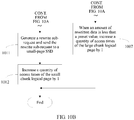
- the rewrite request is described in a flowchart of FIG. 10A and FIG. 10B .
- the controller 301 of the storage array 300 determines, based on the logical address in the write request, a large-page chunk in which the to-be-written data is located (step S802), and further determines a logical page in the large-page chunk corresponding to the logical address of the to-be-written data (step S803). Manners of determining the large-page chunk corresponding to the logical address of the to-be-written data and the logical page in the corresponding large-page chunk are the same as determining manners for the to-be-read data. Refer to descriptions of steps S602 and S603 in FIG. 7 . Details are not described herein again.
- the controller 301 allocates, in a large-page SSD corresponding to the large-page chunk, a logical page in the large-page SSD to the logical page in the large-page chunk (S804), and records, in the large-page logical page table 50, a correspondence between the logical page in the large-page chunk and the logical page in the large-page SSD (S805).
- the controller 301 generates a write sub-request carrying the logical page in the large-page SSD, and sends the write sub-request to the large-page SSD corresponding to the large-page chunk (S806).
- the SSD may find a blank physical page in the SSD based on the SSD logical page in the write request, to write the to-be-written data.
- the controller 301 determines whether a size of data written by using the write sub-request is less than a preset value (S807). If the size of the data is less than the preset value, the controller 301 increases, by 1, a quantity of access times of the large chunk logical page in the conversion table (S807). If the size of the data is not less than the preset value, the process ends.
- a received rewrite request based on the tables in FIG. 5a , FIG. 5b , and FIG. 6 by running the conversion program, refer to the flowchart of FIG. 10A and FIG. 10B .
- the host 100 needs to rewrite data that is written into the storage array 300, the host 100 sends a rewrite request to the storage array 300.
- the rewrite request includes a logical address of to-be-rewritten data, and rewritten data.
- the rewritten data is used to replace the written data corresponding to the logical address.
- the controller 301 of the storage array 300 After receiving the rewrite request (step S1001), the controller 301 of the storage array 300 determines, based on the logical address in the rewrite request, a large-page chunk in which the to-be-rewritten data is located (step S1002), and further determines a logical page in the large-page chunk corresponding to the logical address of the to-be-rewritten data (step S1003). Manners of determining the large-page chunk corresponding to the logical address of the to-be-rewritten data and the logical page in the corresponding large-page chunk are the same as determining manners for the to-be-read data. Refer to descriptions of steps S602 and S603 in FIG. 7 . Details are not described herein again.
- a to-be-rewritten data page in the rewrite request is segmented based on a size of the logical page, so that each large chunk logical page corresponds to respective to-be-written data.
- the data annotation column of the conversion table is searched to determine whether a data annotation corresponding to the logical page is a large-page annotation or a small-page annotation (S1004). If the data annotation is the large-page annotation, the large-page logical page table is searched for an SSD logical page corresponding to the large-page logical page (S1005). A rewrite sub-request carrying the SSD logical page and rewritten data corresponding to the large chunk logical page is generated, and the rewrite sub-request is sent to a large-page SSD to which the large-page chunk belongs (S1006).
- the SSD may find, in an address mapping table in the large-page SSD based on the SSD logical page in the rewrite sub-request, a physical page corresponding to the SSD logical page, invalidate data in the physical page, and write the rewritten data into the blank physical page. If an amount of the rewritten data is less than a preset value, the controller 301 increases, by 1, a quantity of access times corresponding to the large-page chunk logical page in the conversion table (1007).
- step S1004 if the data annotation that is of the logical page and that is found in the conversion table by the controller 301 is the small-page annotation, the controller 301 obtains, from the small-page-index table address column of the conversion table, an address that is of a small-page-index table corresponding to the logical page and that is in the memory, and obtains the small-page-index table based on the obtained address (S1008).
- the small-page-index table is searched for a small-page logical page number, and the rewritten data is segmented based on a size of the small-page logical page, so that each small-page logical number corresponds to a segment of rewritten data (S1009).
- a small-page SSD logical page number corresponding to the small-page chunk logical page number is obtained from the small-page chunk logical page table (S1010).
- the controller 301 generates a rewrite sub-request carrying the small-page SSD logical page number, and sends the rewrite sub-request to the small-page SSD (step S1011).
- the rewrite sub-request further includes the rewritten data corresponding to the small-page chunk logical page number.
- the small-page SSD invalidates, based on the small-page SSD logical page number and a mapping relationship that is stored in the small-page SSD and that is between an SSD logical page number and a physical page number, a physical page corresponding to the physical page number, and writes the rewritten data into the blank physical page.
- the controller 301 increases, by 1, a quantity of access times corresponding to the small-page chunk logical page (S1012).
- the controller 301 periodically detects whether a quantity of access times corresponding to each logical page in the conversion table is greater than or equal to a preset value (S1101). For a logical page whose quantity of access times is greater than or equal to the preset value, the controller 301 modifies a data annotation corresponding to the logical page from the large-page annotation to the small-page annotation (step 1102), for example, from 0 to 1, and sets the quantity of access times to zero (S1103).
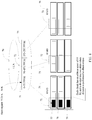
- FIG. 3 is a conversion table before detection.
- the controller 301 changes a data annotation 1202 corresponding to the logical page 1201 from 0 to 1, and sets, to zero, a quantity 1203 of access times corresponding to the logical page 1201.
- the controller 301 creates a small-page-index table 1204 for the logical page 1201 (S1104), and records, in an STA column 64 corresponding to the logical page 1201, an address YYYY 1205 of the small-page-index table 1204 in the memory.
- a quantity of small-page chunk logical pages included in the small-page-index table 1204 is a page quantity of small-page chunk logical pages included in the logical page 1201.
- the controller 301 searches the small-page chunk logical page table 51 for N logical pages that are not used (S1105), and records page numbers of the N logical pages in a small-page chunk logical page number column of the small-page-index table 1204, for example, logical pages 1206 to 1209.
- An initial quantity of access times of each of the logical pages 1206 to 1209 is 0.
- the controller 301 specifies one SSD logical page for each logical page from an SSD space corresponding to a small-page chunk to which the logical pages 1206 to 1209 belong (S1206), and records each SSD logical page in a small-page SSD logical page number column that is in the small chunk logical page table and that corresponds to the logical pages 1206 to 1209.
- the controller 301 generates a migration instruction (S1207).
- a source address in the migration instruction is a large-page SSD logical page corresponding to the logical page 1201.
- a destination address in the migration instruction is small-page SSD logical pages corresponding to the logical pages 1206 to 1209.
- the controller 301 executes the migration instruction (S1208), to migrate data corresponding to the large-page SSD logical page corresponding to the logical page 1201 from a large-page SSD to locations, in the small-page SSD, of the small-page SSD logical pages corresponding to the logical pages 1206 to 1209.
- the controller 301 deletes a large-page SSD logical page number that is in the large chunk logical page table and that corresponds to the logical page 1201. In this way, small data that is accessed relatively frequently can be stored in a small-page SSD to reduce write amplification in a garbage collection process, thereby reducing write amplification while ensuring writing efficiency of the SSD.
- the small-page-index table further records a quantity of times that each small chunk logical page is accessed.
- the controller merges data corresponding to the logical pages in the small-page-index table, and migrates the data from a small-page SSD to a large-page SSD.
- the quantities of access times in the small-page-index table are set to zero at an interval of a time period, so that a calculation result reflects a data access feature in a recent time period.
- FIG 13 is a module diagram of a data access device 1300 according to an embodiment of the present invention.
- the data access device 1300 includes a receiving module 1301, an address conversion module 1302, a data access module 1303, and a large-small page conversion module 1304.
- the receiving module 1301 is configured to receive a data access request sent by a host.
- the data access request is used for accessing requested data stored in a storage array, and the first data access request carries a logical address of the requested data.
- the logical address is a logical address of the LU in FIG. 3 .
- the access request may be a read request, a write request, or a rewrite request.
- a function performed by the receiving module 1301 refer to descriptions of step S601 in FIG. 7 , step S801 in FIG. 9 , and step S1001 in FIG. 10A .
- the address conversion module 1302 is configured to search for a large-page chunk logical page corresponding to the logical address and a corresponding logical page address in the large-page chunk logical page.
- the large-page chunk logical page belongs to a large-page logical block of a hybrid-page logical block. For a specific search process, refer to related descriptions of FIG. 8 and steps S602 and S603 in FIG. 7 .
- the data access module 1303 is configured to: search a conversion table corresponding to the hybrid-page chunk for a data annotation corresponding to the large-page chunk logical page; when the data annotation is a small-page annotation, obtain a small-page-index table based on a small-page-index table address that is recorded in the conversion table and that corresponds to the large-page chunk logical page, and determine, based on the logical page address and in small-page chunk logical pages recorded in the small-page-index table, a small-page chunk logical page corresponding to the large-page chunk logical page and an address in the small-page chunk logical page, where a storage space that corresponds to the small-page chunk logical page corresponding to the large-page chunk logical page and that is of a small-page SSD is used to store data migrated from a storage space that corresponds to the large-page chunk logical page and that is of a large-page SSD; and obtain the requested data from the small-page SSD based on the small-page chunk logical page and the
- the data access module 1303 is configured to: obtain, from the small-page chunk logical page table, a logical page in the small-page SSD and a logical page address in the small-page SSD that correspond to the small-page chunk logical page and the address in the small-page chunk logical page; generate an access sub-request, where the access sub-request carries the logical page and the logical page address in the small-page SSD; and send the access sub-request to the small-page SSD to instruct the small-page SSD to obtain to-be-accessed data based on the logical page and the logical page address in the small-page SSD.
- the data access module 1303 is configured to: obtain, from the large-page chunk logical page table, a logical page that corresponds to the large-page chunk logical page and that is in the large-page SSD, and determine a logical page address that corresponds to the large-page address and that is in the large-page SSD; generate an access sub-request, where the access sub-request carries the logical page and the logical page address in the large-page SSD; and send the access sub-request to the large-page SSD to instruct the large-page SSD to obtain the requested data based on the logical page and the logical page address in the large-page SSD.
- the large-small page conversion module 1304 is configured to: periodically detect, in the conversion table, a large-page chunk logical page whose quantity of access times is greater than a preset value, create a small-page-index table for the large-page chunk logical page whose quantity of access times is greater than the preset value, and record an address of the small-page-index table in the conversion table, where the small-page-index table records N blank small-page chunk logical pages, N is a quantity of small-page chunk logical pages included in each large-page chunk logical page, and N ⁇ 1; migrate, to a storage space that corresponds to the blank small-page chunk logical pages and that is of the small-page SSD, data that is stored in the large-page SSD and that corresponds to the large-page chunk logical page whose quantity of access times is greater than the preset value; modify, to the small-page annotation, a data annotation of the large-page chunk logical page whose quantity of access times is greater than the preset value; and set, to zero, the quantity of
- the large-small page conversion module 1304 is further configured to: calculate, at an interval of a preset time, a variance and a mean value of quantities of access times corresponding to all small-page logical pages in the small-page-index table; and if the variance is less than a threshold T1 and the mean value is greater than a threshold T2, migrate, to the large-page SSD corresponding to a large-page chunk logical page corresponding to the small-page-index table, data that corresponds to the small-page logical pages and that is in the small-page SSD.
Landscapes
- Engineering & Computer Science (AREA)
- Theoretical Computer Science (AREA)
- Human Computer Interaction (AREA)
- Physics & Mathematics (AREA)
- General Engineering & Computer Science (AREA)
- General Physics & Mathematics (AREA)
- Memory System Of A Hierarchy Structure (AREA)
- Information Retrieval, Db Structures And Fs Structures Therefor (AREA)
Claims (15)
- Datenzugriffsverfahren, das von einem Prozessor (302) einer Speicheranordnung (300) durchgeführt wird, wobei das Verfahren Folgendes umfasst:Empfangen einer von einem Host (100) gesendeten ersten Datenzugriffsanforderung (601, 801, 1001) zum Zugreifen auf erste Daten, die in der Speicheranordnung gespeichert sind, wobei die erste Datenzugriffsanforderung eine erste logische Adresse der ersten Daten trägt, die Speicheranordnung eine Vielzahl erster Solid-State-Festplatten (solid state disks - SSDs) und eine Vielzahl zweiter SSDs umfasst, eine Seitengröße jeder ersten SSD größer ist als eine Seitengröße jeder zweiten SSD, ein von der Vielzahl erster SSDs gebildeter logischer Adressraum in eine Vielzahl großseitiger logischer Blöcke (45) unterteilt ist,jeder großseitige logische Block auf Grundlage der Seitengröße der ersten SSD in eine Vielzahl großseitiger logischer Seiten unterteilt ist, ein von der Vielzahl zweiter SSDs gebildeter logischer Adressraum in eine Vielzahl kleinseitiger logischer Blöcke (46) unterteilt ist,jeder kleinseitige logische Block auf Grundlage der Seitengröße der zweiten SSD in eine Vielzahl kleinseitiger logischer Seiten unterteilt ist, ein großseitiger logischer Block und ein kleinseitiger logischer Block einen hybridseitigen logischen Block (44) bilden,eine logische Einheit, die dem Host zur Verwendung bereitgestellt wird, auf Grundlage der großseitigen logischen Blöcke in den hybridseitigen logischen Blöcken aufgebaut ist, eine Konvertierungstabelle für jeden hybridseitigen logischen Block festgelegt ist und die Konvertierungstabelle eine Zuordnungsbeziehung zwischen einer großseitigen logischen Seite (61), einer Datenanmerkung (62)und einer Adresse (64) einer Kleinseiten-Indextabelle dokumentiert;Suchen nach einer ersten großseitigen logischen Seite, die der logischen Adresse entspricht, und einer Großseitige-logische-Seite-Adresse der ersten großseitigen logischen Seite, wobei die erste großseitige logische Seite zu einem großseitigen logischen Block eines ersten hybridseitigen logischen Blocks gehört;Suchen nach einer ersten Datenanmerkung, die der ersten großseitigen logischen Seite entspricht, in einer Konvertierungstabelle, die dem ersten hybridseitigen logischen Block entspricht;wenn es sich bei der ersten Datenanmerkung um eine Kleinseiten-Anmerkung handelt, Erhalten einer Kleinseiten-Indextabelle auf Grundlage einer Kleinseiten-Indextabellen-Adresse, die in der Konvertierungstabelle dokumentiert ist und der ersten großseitigen logischen Seite entspricht, und Bestimmen einer kleinseitigen logischen Seite, die der Großseitige-logische-Seite-Adresse und einer Kleinseitige-logische-Seite-Adresse der kleinseitigen logischen Seite entspricht, in der Kleinseiten-Indextabelle auf Grundlage der Großseitige-logische-Seite-Adresse, wobei ein Speicherraum, welcher der Kleinseitige-logische-Seite-Adresse entspricht und zu einer zweiten SSD gehört, verwendet wird, um Daten zu speichern, die von einem Speicherraum migriert sind, welcher der Großseitige-logische-Seite-Adresse entspricht und zu einer ersten SSD gehört; undErhalten der ersten Daten von der zweiten SSD auf Grundlage der Kleinseitige-logische-Seite-Adresse;wobei die Kleinseiten-Anmerkung angibt, dass die der logischen Seite entsprechenden Daten in einer Kleinseiten-SSD gespeichert sind, die dem Kleinseiten-Block entspricht.
- Verfahren nach Anspruch 1, wobei das Verfahren ferner Folgendes umfasst:Empfangen einer von dem Host gesendeten zweiten Datenzugriffsanforderung, die verwendet wird, um auf zweite Daten zuzugreifen, die in der Speicheranordnung gespeichert sind, wobei die zweite Datenzugriffsanforderung eine logische Adresse der zweiten Daten trägt;Suchen nach einer zweiten großseitigen logischen Seite, die der logischen Adresse der zweiten Daten entspricht, und einer Großseitige-logische-Seite-Adresse in der zweiten großseitigen logischen Seite, wobei die zweite großseitige logische Seite zu einem großseitigen logischen Block eines zweiten hybridseitigen logischen Blocks gehört;Suchen nach einer Datenanmerkung, die der zweiten großseitigen logischen Seite entspricht, in einer Konvertierungstabelle, die dem zweiten hybridseitigen logischen Block entspricht; und, wenn es sich bei der Datenanmerkung, die der zweiten großseitigen logischen Seite entspricht, um eine Großseiten-Anmerkung handelt, Erhalten der zweiten Daten von der ersten SSD auf Grundlage der Großseitige-logische-Seite-Adresse in der zweiten großseitigen logischen Seite.
- Verfahren nach Anspruch 2, wobei die Konvertierungstabelle ferner eine Anzahl an Zugriffszeiten jeder großseitigen logischen Seite dokumentiert und das Verfahren ferner Folgendes umfasst:wenn es sich bei der Zugriffsanforderung um eine Umschreibeanforderung handelt, Erhöhen einer Anzahl an Zugriffszeiten der zweiten großseitigen logischen Seite, in der die von der ersten SSD erhaltene Datenmenge unter einem voreingestellten Wert liegt, um 1.
- Verfahren nach einem der Ansprüche 1 bis 3, wobei das Verfahren ferner Folgendes umfasst:periodisches Detektieren einer großseitigen logischen Seite in der Konvertierungstabelle, deren Anzahl an Zugriffszeiten über einem voreingestellten Wert liegt;Erstellen einer Kleinseiten-Indextabelle für die großseitige logische Seite, deren Anzahl an Zugriffszeiten über dem voreingestellten Wert liegt, und Dokumentieren einer Adresse der Kleinseiten-Indextabelle in der Konvertierungstabelle, wobei die Kleinseiten-Indextabelle N leere kleinseitige logische Seiten dokumentiert, wobei N eine Anzahl an kleinseitigen logischen Seiten ist, die in jeder großseitigen logischen Seite enthalten ist, und N≥1;Migrieren von Daten, die in der ersten SSD gespeichert sind und der großseitigen logischen Seite entsprechen, deren Anzahl an Zugriffszeiten über dem voreingestellten Wert liegt, in einen Speicherraum, der den leeren kleinseitigen logischen Seiten entspricht und zu der zweiten SSD gehört;Ändern einer Datenanmerkung der großseitigen logischen Seite, deren Anzahl an Zugriffszeiten über dem voreingestellten Wert liegt, zu der Kleinseiten-Anmerkung; undSetzen der Anzahl an Zugriffszeiten der großseitigen logischen Seite, deren Anzahl an Zugriffszeiten über dem voreingestellten Wert liegt, auf null.
- Verfahren nach einem der Ansprüche 1 bis 4, wobei ein kleinseitiger logischer Block in jedem hybridseitigen logischen Block eine Tabelle der kleinseitigen logischen Seiten aufweist und die Tabelle der kleinseitigen logischen Seiten eine Entsprechung zwischen einer kleinseitigen logischen Seite, die in einem jeweiligen kleinseitigen logischen Block enthalten ist, und einer logischen Seite in der zweiten SSD dokumentiert; und
das Erhalten der ersten Daten von der zweiten SSD auf Grundlage der Kleinseitige-logische-Seite-Adresse Folgendes umfasst;
Erhalten einer logischen Seite und einer Logische-Seite-Adresse der logischen Seite in der zweiten SSD, die der jeweiligen kleinseitigen logischen Seite und einer Kleinseitige-logische-Seite-Adresse der kleinseitigen logischen Seite entsprechen, aus der Tabelle der kleinseitigen logischen Seiten;
Erzeugen einer Zugriffsunteranforderung für jede logische Seite und eine Logische-Seite-Adresse der logischen Seite in der zweiten SSD, wobei jede Zugriffsunteranforderung eine logische Seite und eine Logische-Seite-Adresse in der zweiten SSD trägt; und
Senden der Zugriffsunteranforderung an die zweite SSD, um die zweite SSD anzuweisen, die ersten Daten auf Grundlage der logischen Seite und der Logische-Seite-Adresse der logischen Seite in der zweiten SSD zu erhalten. - Verfahren nach einem der Ansprüche 2 bis 4, wobei ein großseitiger logischer Block in jedem hybridseitigen logischen Block eine Tabelle der großseitigen logischen Seiten aufweist und die Tabelle der großseitigen logischen Seiten eine Entsprechung zwischen einer großseitigen logischen Seite, die in einem jeweiligen großseitigen logischen Block enthalten ist, und einer logischen Seite in der ersten SSD dokumentiert; und
das Erhalten der zweiten Daten von der ersten SSD auf Grundlage der Großseitige-logische-Seite-Adresse in der zweiten großseitigen logischen Seite Folgendes umfasst:Erhalten einer logischen Seite, die der zweiten großseitigen logischen Seite entspricht und sich in der ersten SSD befindet, aus der Tabelle der großseitigen logischen Seiten und Bestimmen einer Logische-Seite-Adresse, die der Großseitige-logische-Seite-Adresse entspricht und sich in der ersten SSD befindet;Erzeugen einer Zugriffsunteranforderung, wobei die Zugriffsunteranforderung die logische Seite und die Logische-Seite-Adresse in der ersten SSD trägt; undSenden der Zugriffsunteranforderung an die erste SSD, um die erste SSD anzuweisen, auf Grundlage der logischen Seite und der Logische-Seite-Adresse in der ersten SSD die in der Zugriffsunteranforderung angeforderten Daten zu erhalten. - Verfahren nach Anspruch 4, wobei die Kleinseiten-Indextabelle eine Anzahl an Zugriffszeiten jeder kleinseitigen logischen Seite dokumentiert und das Verfahren ferner Folgendes umfasst:Berechnen einer Varianz und eines Mittelwerts der Anzahlen an Zugriffszeiten, die allen kleinseitigen logischen Seiten in der Kleinseiten-Indextabelle für kleine Seiten entsprechen, in voreingestellten Zeitabständen; und wenn die Varianz unter einem Schwellenwert T1 liegt und der Mittelwert über einem Schwellenwert T2 liegt, Migrieren von Daten, die den kleinseitigen logischen Seiten entsprechen und sich in der zweiten SSD befinden, in die erste SSD, die einer großseitigen logischen Seite entspricht, die der Kleinseiten-Indextabelle entspricht.
- Speicheranordnung (300), umfassend eine Datenzugriffsvorrichtung (1300), wobei die Vorrichtung Folgendes umfasst:ein Empfangsmodul (1301), das dazu konfiguriert ist, eine von einem Host gesendete erste Datenzugriffsanforderung zum Zugreifen auf erste Daten, die in der Speicheranordnung gespeichert sind, zu empfangen, wobei die erste Datenzugriffsanforderung eine erste logische Adresse der ersten Daten trägt, die Speicheranordnung eine Vielzahl erster Solid-State-Festplatten (SSDs) und eine Vielzahl zweiter SSDs umfasst, eine Seitengröße jeder ersten SSD größer ist als eine Seitengröße jeder zweiten SSD, ein logischer Adressraum, der von der Vielzahl erster SSDs gebildet wird, in eine Vielzahl großseitiger logischer Blöcke unterteilt ist, jeder großseitige logische Block auf Grundlage der Seitengröße der ersten SSD in eine Vielzahl großseitiger logischer Seiten unterteilt ist, ein logischer Adressraum, der von der Vielzahl zweiter SSDs gebildet wird, in eine Vielzahl kleinseitiger logischer Blöcke unterteilt ist, jeder kleinseitige logische Block auf Grundlage der Seitengröße der zweiten SSD in eine Vielzahl kleinseitiger logischer Seiten unterteilt ist, ein großseitiger logischer Block und ein kleinseitiger logischer Block einen hybridseitigen logischen Block bilden, eine logische Einheit, die dem Host zur Verwendung bereitgestellt wird, auf Grundlage der großseitigen logischen Blöcke in den hybridseitigen logischen Blöcken aufgebaut ist, eine Konvertierungstabelle für jede hybridseitigen logischen Block festgelegt ist und die Konvertierungstabelle eine Zuordnungsbeziehung zwischen einer großseitigen logischen Seite, einer Datenanmerkung und einer Adresse einer Kleinseiten-Indextabelle dokumentiert;ein Adressenkonvertierungsmodul (1302), das dazu konfiguriert ist, nach einer ersten großseitigen logischen Seite, die der logischen Adresse entspricht, und einer Großseitige-logische-Seite-Adresse der ersten großseitigen logischen Seite zu suchen, wobei die erste großseitige logische Seite zu einem großseitigen logischen Block eines ersten hybridseitigen logischen Blocks gehört; undein Datenzugriffsmodul (1303), das für Folgendes konfiguriert ist: Suchen nach einer ersten Datenanmerkung, die der ersten großseitigen logischen Seite entspricht, in einer Konvertierungstabelle, die dem ersten hybridseitigen logischen Block entspricht; wenn es sich bei der ersten Datenanmerkung um eine Kleinseiten-Anmerkung handelt, Erhalten einer Kleinseiten-Indextabelle auf Grundlage einer Adresse der Kleinseiten-Indextabelle, die in der Konvertierungstabelle gespeichert ist und der ersten großseitigen logischen Seite entspricht, und Bestimmen einer kleinseitigen logischen Seite, die der Großseitige-logische-Seite-Adresse und einer Kleinseitige-logische-Seite-Adresse der kleinseitigen logischen Seite entspricht, in der Kleinseiten-Indextabelle auf Grundlage der Großseitigen-logische-Seite-Adresse, wobei ein Speicherraum, welcher der Kleinseitige-logische-Seite-Adresse entspricht und zu einer zweiten SSD gehört, verwendet wird, um Daten zu speichern, die von einem Speicherraum migriert sind, welcher der Großseitige-logische-Seite-Adresse entspricht und zu einer ersten SSD gehört; und Erhalten der ersten Daten von der zweiten SSD auf Grundlage der Kleinseitige-logische-Seite-Adresse;wobei die Kleinseiten-Anmerkung angibt, dass die der logischen Seite entsprechenden Daten in einer Kleinseiten-SSD gespeichert sind, die dem Kleinseiten-Block entspricht.
- Vorrichtung nach Anspruch 8, wobei
das Empfangsmodul ferner dazu konfiguriert ist, eine von dem Host gesendete zweite Datenzugriffsanforderung zu empfangen, die verwendet wird, um auf zweite Daten zuzugreifen, die in der Speicheranordnung gespeichert sind, wobei die zweite Datenzugriffsanforderung eine logische Adresse der zweiten Daten trägt;
das Adressenkonvertierungsmodul ferner dazu konfiguriert ist, nach einer zweiten großseitigen logischen Seite, die der logischen Adresse der zweiten Daten entspricht, und einer Großseitige-logische-Seite-Adresse in der zweiten großseitigen logischen Seite zu suchen, wobei die zweite großseitige logische Seite zu einem großseitigen logischen Block eines zweiten hybridseitigen logischen Blocks gehört; und
das Datenzugriffsmodul ferner für Folgendes konfiguriert ist: Suchen nach einer Datenanmerkung, die der zweiten großseitigen logischen Seite entspricht in einer Konvertierungstabelle, die dem zweiten hybridseitigen logischen Block entspricht; und, wenn es sich bei der Datenanmerkung, die der zweiten großseitigen logishcen Seite entspricht, um eine Großseiten-Anmerkung handelt, Erhalten der zweiten Daten von der erste SSD auf Grundlage der Großseitige-logische-Seite-Adresse in der zweiten großseitigen logischen Seite. - Vorrichtung nach Anspruch 9, wobei die Konvertierungstabelle ferner eine Anzahl an Zugriffszeiten jeder großseitigen logischen Seite dokumentiert und das Datenzugriffsmodul ferner für Folgendes konfiguriert ist:wenn es sich bei der Zugriffsanforderung um eine Umschreibeanforderung handelt, Erhöhen einer Anzahl an Zugriffszeiten der zweiten großseitigen logischen Seite, in der die von der ersten SSD erhaltene Datenmenge unter einem voreingestellten Wert liegt, um 1.
- Vorrichtung nach einem der Ansprüche 8 bis 10, wobei die Vorrichtung ferner ein Groß-Klein-Seitenkonvertierungsmodul umfasst, das für Folgendes konfiguriert ist:periodisches Detektieren einer großseitigen logischen Seite in der Konvertierungstabelle, deren Anzahl an Zugriffszeiten über einem voreingestellten Wert liegt;Erstellen einer Kleinseiten-Indextabelle für die großseitige logische Seite, deren Anzahl an Zugriffszeiten über dem voreingestellten Wert liegt, und Doumentieren einer Adresse der Kleinseiten-Indextabelle in der Konvertierungstabelle, wobei die Kleinseiten-Indextabelle N leere kleinseitige logische Seiten dokumentiert, wobei N eine Anzahl an kleinseitigen logischen Seiten ist, die in jeder großseitigen logischen Seite enthalten ist, und N≥1;Migrieren von Daten, die in der ersten SSD gespeichert sind und der großseitigen logischen Seite entsprechen, deren Anzahl an Zugriffszeiten über dem voreingestellten Wert liegt, in einen Speicherraum, der den leeren kleinseitigen logischen Seiten entspricht und zu der zweiten SSD gehört;Ändern einer Datenanmerkung der großseitigen logischen Seite, deren Anzahl an Zugriffszeiten über dem voreingestellten Wert liegt, zu der Kleinseiten-Anmerkung; undSetzen der Anzahl an Zugriffszeiten der großseitigen logischen Seite, deren Anzahl an Zugriffszeiten über dem voreingestellten Wert liegt, auf null.
- Vorrichtung nach einem der Ansprüche 8 bis 11, wobei ein kleinseitiger logischer Block in jedem hybridseitigen logischen Block eine Tabelle der kleinseitigen logischen Seiten aufweist und die Tabelle der kleinseitigen logischen Seiten eine Entsprechung zwischen einer kleinseitigen logischen Seite, die in einem jeweiligen kleinseitigen logischen Block enthalten ist, und einer logischen Seite in der zweiten SSD dokumentiert; und
das Datenzugriffsmodul beim Erhalten der ersten Daten von der zweiten SSD auf Grundlage der Kleinseitige-logische-Seite-Adresse für Folgendes konfiguriert ist:Erhalten einer logischen Seite und einer Logische-Seite-Adresse der logischen Seite in der zweiten SSD, die der jeweiligen kleinseitigen logischen Seite und einer Kleinseitige-logische-Seite-Adresse der kleinseitigen logischen Seite entsprechen, aus der Tabelle der kleinseitigen logischen Seiten;Erzeugen einer Zugriffsunteranforderung für jede logische Seite und eine Logische-Seite-Adresse der logischen Seite in der zweiten SSD, wobei jede Zugriffsunteranforderung eine logische Seite und eine Logische-Seite-Adresse in der zweiten SSD trägt; undSenden der Zugriffsunteranforderung an die zweite SSD, um die zweite SSD anzuweisen, die ersten Daten auf Grundlage der logischen Seite und der Logische-Seite-Adresse der logischen Seite in der zweiten SSD zu erhalten. - Vorrichtung nach einem der Ansprüche 9 bis 11, wobei ein großseitiger logischer Block in jedem hybridseitigen logischen Block eine Tabelle der großseitigen logischen Seiten aufweist und die Tabelle der großseitigen logischen Seiten eine Entsprechung zwischen einer großseitigen logischen Seite, die in einem jeweiligen großseitigen logischen Block enthalten ist, und einer logischen Seite in der ersten SSD dokumentiert; und
das Datenzugriffsmodul beim Erhalten der zweiten Daten von der ersten SSD auf Grundlage der Großseitige-logische-Seite-Adresse in der zweiten großseitigen logischen Seite für Folgendes konfiguriert ist:Erhalten einer logischen Seite, die der zweiten großseitigen logischen Seite entspricht und sich in der ersten SSD befindet, aus der Tabelle der großseitigen logischen Seiten und Bestimmen einer Logische-Seite-Adresse, die der Großseitige-logische-Seite-Adresse entspricht und sich in der ersten SSD befindet;Erzeugen einer Zugriffsunteranforderung, wobei die Zugriffsunteranforderung die logische Seite und die Logische-Seite-Adresse in der ersten SSD trägt; undSenden der Zugriffsunteranforderung an die erste SSD, um die erste SSD anzuweisen, auf Grundlage der logischen Seite und der Logische-Seite-Adresse in der ersten SSD die in der Zugriffsunteranforderung angeforderten Daten zu erhalten. - Vorrichtung nach Anspruch 11, wobei die Kleinseiten-Indextabelle eine Anzahl an Zugriffszeiten jeder kleinseitigen logischen Seite dokumentiert und das Groß-Klein-Seitenkonvertierungsmodul ferner für Folgendes konfiguriert ist:Berechnen einer Varianz und eines Mittelwerts der Anzahlen an Zugriffszeiten, die allen kleinseitigen logischen Seiten in der Kleinseiten-Indextabelle entsprechen, in voreingestellten Zeitabständen; und wenn die Varianz unter einem Schwellenwert T1 liegt und der Mittelwert über einem Schwellenwert T2 liegt, Migrieren von Daten, die den kleinseitigen logischen Seiten entsprechen und sich in der zweiten SSD befinden, in die erste SSD, die einer großseitigen logischen Seite entspricht, die der Kleinseiten-Indextabelle entspricht.
- Computerprogramm, das Anweisungen umfasst, die bei Ausführung des Programms durch einen Computer den Computer dazu veranlassen, das Verfahren nach einem der Ansprüche 1 bis 6 durchzuführen.
Applications Claiming Priority (1)
| Application Number | Priority Date | Filing Date | Title |
|---|---|---|---|
| PCT/CN2017/120204 WO2019127490A1 (zh) | 2017-12-29 | 2017-12-29 | 一种数据访问方法及存储阵列 |
Publications (3)
| Publication Number | Publication Date |
|---|---|
| EP3671423A1 EP3671423A1 (de) | 2020-06-24 |
| EP3671423A4 EP3671423A4 (de) | 2020-10-14 |
| EP3671423B1 true EP3671423B1 (de) | 2021-09-01 |
Family
ID=67064951
Family Applications (1)
| Application Number | Title | Priority Date | Filing Date |
|---|---|---|---|
| EP17936717.2A Active EP3671423B1 (de) | 2017-12-29 | 2017-12-29 | Datenzugriffsverfahren und speicheranordnung |
Country Status (4)
| Country | Link |
|---|---|
| US (1) | US11301157B2 (de) |
| EP (1) | EP3671423B1 (de) |
| CN (1) | CN110214305B (de) |
| WO (1) | WO2019127490A1 (de) |
Families Citing this family (8)
| Publication number | Priority date | Publication date | Assignee | Title |
|---|---|---|---|---|
| CN111782136B (zh) * | 2020-05-20 | 2021-07-30 | 重庆大学 | 面向多应用程序的自适应闪存固态盘通道分配方法及装置 |
| CN112367304B (zh) * | 2020-10-22 | 2022-08-16 | 杭州大搜车汽车服务有限公司 | 请求限制方法、装置、计算机设备和存储介质 |
| CN115079957B (zh) * | 2022-07-20 | 2023-08-04 | 阿里巴巴(中国)有限公司 | 请求处理方法、装置、控制器、设备及存储介质 |
| CN116225319B (zh) * | 2022-12-29 | 2025-01-24 | 天翼云科技有限公司 | 一种垃圾数据回收时减少数据迁移的方法及装置 |
| CN116132452B (zh) * | 2023-01-10 | 2025-08-01 | 新华三信息技术有限公司 | 数据获取方法及装置 |
| CN116027990B (zh) * | 2023-03-29 | 2023-07-14 | 苏州浪潮智能科技有限公司 | 一种raid卡及其数据访问方法、系统及存储介质 |
| KR20250084389A (ko) * | 2023-12-04 | 2025-06-11 | 삼성전자주식회사 | 메모리 컨트롤러, 스토리지 장치, 및 호스트-스토리지 시스템 |
| CN119415044B (zh) * | 2025-01-03 | 2025-03-25 | 麒麟软件有限公司 | 一种raid1磁盘阵列读操作的选盘方法及系统 |
Family Cites Families (20)
| Publication number | Priority date | Publication date | Assignee | Title |
|---|---|---|---|---|
| EP2419817A1 (de) * | 2009-10-09 | 2012-02-22 | Hitachi, Ltd. | Speichersystem und steuerverfahren dafür, implementierung von datenumvergabe im fall von last-bias |
| US9256379B2 (en) * | 2010-11-19 | 2016-02-09 | Empire Technologies Development Llc | Apparatus containing photoisomerization compound |
| US9354988B2 (en) * | 2011-03-28 | 2016-05-31 | Sap Se | Allocation strategies for data storage applications |
| CN102622189B (zh) * | 2011-12-31 | 2015-11-25 | 华为数字技术(成都)有限公司 | 存储虚拟化的装置、数据存储方法及系统 |
| JP5893745B2 (ja) * | 2012-09-24 | 2016-03-23 | 株式会社日立製作所 | ストレージ装置が有する階層型プール内のデータの配置を制御する計算機及び方法 |
| US9424201B2 (en) * | 2013-03-14 | 2016-08-23 | Nvidia Corporation | Migrating pages of different sizes between heterogeneous processors |
| US20140297921A1 (en) | 2013-03-26 | 2014-10-02 | Skymedi Corporation | Method of Partitioning Physical Block and Memory System Thereof |
| WO2015145762A1 (ja) * | 2014-03-28 | 2015-10-01 | 株式会社日立製作所 | データベース管理システム、計算機、データベース管理方法 |
| US9779015B1 (en) * | 2014-03-31 | 2017-10-03 | Amazon Technologies, Inc. | Oversubscribed storage extents with on-demand page allocation |
| CN104461393B (zh) * | 2014-12-09 | 2017-05-17 | 华中科技大学 | 一种闪存存储器的混合映射方法 |
| CN105808157A (zh) * | 2014-12-31 | 2016-07-27 | 中兴通讯股份有限公司 | 存储架构的创建方法、存储访问方法和存储系统 |
| WO2016116930A1 (en) * | 2015-01-21 | 2016-07-28 | Technion Research & Development Foundation Limited | Reusable memory devices with wom codes |
| CN105988727B (zh) * | 2015-02-25 | 2021-04-16 | 中兴通讯股份有限公司 | 一种基于raid的存储方法和存储装置 |
| JP6283771B2 (ja) * | 2015-04-28 | 2018-02-21 | 株式会社日立製作所 | ストレージ装置 |
| CN106294193B (zh) * | 2015-06-03 | 2019-10-15 | 杭州海康威视系统技术有限公司 | 存储设备及基于该存储设备的分块存储方法 |
| CN106326132B (zh) * | 2015-06-29 | 2020-03-27 | 华为技术有限公司 | 存储系统、存储管理装置、存储器、混合存储装置及存储管理方法 |
| US9940028B2 (en) * | 2015-11-13 | 2018-04-10 | Samsung Electronics Co., Ltd | Multimode storage device |
| US20190095136A1 (en) * | 2016-03-29 | 2019-03-28 | Sony Corporation | Memory control device, storage device, and information processing system |
| US10282292B2 (en) * | 2016-10-17 | 2019-05-07 | Advanced Micro Devices, Inc. | Cluster-based migration in a multi-level memory hierarchy |
| CN107273046B (zh) * | 2017-06-06 | 2019-08-13 | 华中科技大学 | 一种基于固态盘阵列的数据处理方法及系统 |
-
2017
- 2017-12-29 CN CN201780002960.3A patent/CN110214305B/zh active Active
- 2017-12-29 EP EP17936717.2A patent/EP3671423B1/de active Active
- 2017-12-29 WO PCT/CN2017/120204 patent/WO2019127490A1/zh not_active Ceased
-
2020
- 2020-04-27 US US16/859,234 patent/US11301157B2/en active Active
Also Published As
| Publication number | Publication date |
|---|---|
| US20200257465A1 (en) | 2020-08-13 |
| WO2019127490A1 (zh) | 2019-07-04 |
| US11301157B2 (en) | 2022-04-12 |
| CN110214305B (zh) | 2020-09-08 |
| EP3671423A4 (de) | 2020-10-14 |
| CN110214305A (zh) | 2019-09-06 |
| EP3671423A1 (de) | 2020-06-24 |
Similar Documents
| Publication | Publication Date | Title |
|---|---|---|
| EP3671423B1 (de) | Datenzugriffsverfahren und speicheranordnung | |
| US12216929B2 (en) | Storage system, memory management method, and management node | |
| CN103150258B (zh) | 一种固态存储系统的写入、读取及垃圾收集方法 | |
| KR102170539B1 (ko) | 저장 장치에 의해 데이터를 저장하기 위한 방법 및 저장 장치 | |
| US11928053B2 (en) | System garbage collection method and method for garbage collection in solid state disk | |
| KR101257691B1 (ko) | 메모리 컨트롤러 및 이의 데이터 관리방법 | |
| KR101852668B1 (ko) | 어드레스 매핑 | |
| US10146435B2 (en) | Storage system and data write method | |
| CN108604165B (zh) | 存储装置 | |
| TWI531963B (zh) | Data storage systems and their specific instruction enforcement methods | |
| WO2013097618A1 (zh) | 存储虚拟化的装置、存储系统及数据存储方法及系统 | |
| US11144224B2 (en) | Locality-aware, memory-efficient, time-efficient hot data identification using count-min-sketch for flash or streaming applications | |
| US20110246731A1 (en) | Backup system and backup method | |
| JP6975202B2 (ja) | 瞬断からの回復処理方法及び装置、並びにコンピュータ読み取り可能な記憶媒体 | |
| US20210034289A1 (en) | User stream aware file systems with user stream detection | |
| CN119620916A (zh) | 一种数据存储方法、装置及存储系统 | |
| JPWO2018142622A1 (ja) | 計算機 | |
| US10853257B1 (en) | Zero detection within sub-track compression domains | |
| US20110264848A1 (en) | Data recording device | |
| WO2019026221A1 (ja) | ストレージシステム及びストレージ制御方法 | |
| US11947803B2 (en) | Effective utilization of different drive capacities | |
| US11144445B1 (en) | Use of compression domains that are more granular than storage allocation units | |
| JP2023176257A (ja) | ストレージ装置、ストレージ制御方法およびストレージ制御プログラム | |
| KR20250052098A (ko) | 호스트로 제공된 맵 정보를 관리하는 스토리지 장치 및 그 동작 방법 | |
| CN115220660A (zh) | 固态硬盘的写命令处理优化方法、装置和计算机设备 |
Legal Events
| Date | Code | Title | Description |
|---|---|---|---|
| STAA | Information on the status of an ep patent application or granted ep patent |
Free format text: STATUS: THE INTERNATIONAL PUBLICATION HAS BEEN MADE |
|
| PUAI | Public reference made under article 153(3) epc to a published international application that has entered the european phase |
Free format text: ORIGINAL CODE: 0009012 |
|
| STAA | Information on the status of an ep patent application or granted ep patent |
Free format text: STATUS: REQUEST FOR EXAMINATION WAS MADE |
|
| 17P | Request for examination filed |
Effective date: 20200316 |
|
| AK | Designated contracting states |
Kind code of ref document: A1 Designated state(s): AL AT BE BG CH CY CZ DE DK EE ES FI FR GB GR HR HU IE IS IT LI LT LU LV MC MK MT NL NO PL PT RO RS SE SI SK SM TR |
|
| AX | Request for extension of the european patent |
Extension state: BA ME |
|
| A4 | Supplementary search report drawn up and despatched |
Effective date: 20200911 |
|
| RIC1 | Information provided on ipc code assigned before grant |
Ipc: G06F 3/06 20060101AFI20200907BHEP |
|
| DAV | Request for validation of the european patent (deleted) | ||
| DAX | Request for extension of the european patent (deleted) | ||
| GRAP | Despatch of communication of intention to grant a patent |
Free format text: ORIGINAL CODE: EPIDOSNIGR1 |
|
| STAA | Information on the status of an ep patent application or granted ep patent |
Free format text: STATUS: GRANT OF PATENT IS INTENDED |
|
| INTG | Intention to grant announced |
Effective date: 20210414 |
|
| GRAS | Grant fee paid |
Free format text: ORIGINAL CODE: EPIDOSNIGR3 |
|
| GRAA | (expected) grant |
Free format text: ORIGINAL CODE: 0009210 |
|
| STAA | Information on the status of an ep patent application or granted ep patent |
Free format text: STATUS: THE PATENT HAS BEEN GRANTED |
|
| AK | Designated contracting states |
Kind code of ref document: B1 Designated state(s): AL AT BE BG CH CY CZ DE DK EE ES FI FR GB GR HR HU IE IS IT LI LT LU LV MC MK MT NL NO PL PT RO RS SE SI SK SM TR |
|
| REG | Reference to a national code |
Ref country code: GB Ref legal event code: FG4D |
|
| REG | Reference to a national code |
Ref country code: CH Ref legal event code: EP Ref country code: AT Ref legal event code: REF Ref document number: 1426916 Country of ref document: AT Kind code of ref document: T Effective date: 20210915 |
|
| REG | Reference to a national code |
Ref country code: DE Ref legal event code: R096 Ref document number: 602017045504 Country of ref document: DE |
|
| REG | Reference to a national code |
Ref country code: IE Ref legal event code: FG4D |
|
| REG | Reference to a national code |
Ref country code: LT Ref legal event code: MG9D |
|
| REG | Reference to a national code |
Ref country code: NL Ref legal event code: MP Effective date: 20210901 |
|
| PG25 | Lapsed in a contracting state [announced via postgrant information from national office to epo] |
Ref country code: RS Free format text: LAPSE BECAUSE OF FAILURE TO SUBMIT A TRANSLATION OF THE DESCRIPTION OR TO PAY THE FEE WITHIN THE PRESCRIBED TIME-LIMIT Effective date: 20210901 Ref country code: SE Free format text: LAPSE BECAUSE OF FAILURE TO SUBMIT A TRANSLATION OF THE DESCRIPTION OR TO PAY THE FEE WITHIN THE PRESCRIBED TIME-LIMIT Effective date: 20210901 Ref country code: ES Free format text: LAPSE BECAUSE OF FAILURE TO SUBMIT A TRANSLATION OF THE DESCRIPTION OR TO PAY THE FEE WITHIN THE PRESCRIBED TIME-LIMIT Effective date: 20210901 Ref country code: FI Free format text: LAPSE BECAUSE OF FAILURE TO SUBMIT A TRANSLATION OF THE DESCRIPTION OR TO PAY THE FEE WITHIN THE PRESCRIBED TIME-LIMIT Effective date: 20210901 Ref country code: HR Free format text: LAPSE BECAUSE OF FAILURE TO SUBMIT A TRANSLATION OF THE DESCRIPTION OR TO PAY THE FEE WITHIN THE PRESCRIBED TIME-LIMIT Effective date: 20210901 Ref country code: BG Free format text: LAPSE BECAUSE OF FAILURE TO SUBMIT A TRANSLATION OF THE DESCRIPTION OR TO PAY THE FEE WITHIN THE PRESCRIBED TIME-LIMIT Effective date: 20211201 Ref country code: LT Free format text: LAPSE BECAUSE OF FAILURE TO SUBMIT A TRANSLATION OF THE DESCRIPTION OR TO PAY THE FEE WITHIN THE PRESCRIBED TIME-LIMIT Effective date: 20210901 Ref country code: NO Free format text: LAPSE BECAUSE OF FAILURE TO SUBMIT A TRANSLATION OF THE DESCRIPTION OR TO PAY THE FEE WITHIN THE PRESCRIBED TIME-LIMIT Effective date: 20211201 |
|
| REG | Reference to a national code |
Ref country code: AT Ref legal event code: MK05 Ref document number: 1426916 Country of ref document: AT Kind code of ref document: T Effective date: 20210901 |
|
| PG25 | Lapsed in a contracting state [announced via postgrant information from national office to epo] |
Ref country code: PL Free format text: LAPSE BECAUSE OF FAILURE TO SUBMIT A TRANSLATION OF THE DESCRIPTION OR TO PAY THE FEE WITHIN THE PRESCRIBED TIME-LIMIT Effective date: 20210901 Ref country code: LV Free format text: LAPSE BECAUSE OF FAILURE TO SUBMIT A TRANSLATION OF THE DESCRIPTION OR TO PAY THE FEE WITHIN THE PRESCRIBED TIME-LIMIT Effective date: 20210901 Ref country code: GR Free format text: LAPSE BECAUSE OF FAILURE TO SUBMIT A TRANSLATION OF THE DESCRIPTION OR TO PAY THE FEE WITHIN THE PRESCRIBED TIME-LIMIT Effective date: 20211202 |
|
| PG25 | Lapsed in a contracting state [announced via postgrant information from national office to epo] |
Ref country code: AT Free format text: LAPSE BECAUSE OF FAILURE TO SUBMIT A TRANSLATION OF THE DESCRIPTION OR TO PAY THE FEE WITHIN THE PRESCRIBED TIME-LIMIT Effective date: 20210901 |
|
| PG25 | Lapsed in a contracting state [announced via postgrant information from national office to epo] |
Ref country code: IS Free format text: LAPSE BECAUSE OF FAILURE TO SUBMIT A TRANSLATION OF THE DESCRIPTION OR TO PAY THE FEE WITHIN THE PRESCRIBED TIME-LIMIT Effective date: 20220101 Ref country code: SM Free format text: LAPSE BECAUSE OF FAILURE TO SUBMIT A TRANSLATION OF THE DESCRIPTION OR TO PAY THE FEE WITHIN THE PRESCRIBED TIME-LIMIT Effective date: 20210901 Ref country code: SK Free format text: LAPSE BECAUSE OF FAILURE TO SUBMIT A TRANSLATION OF THE DESCRIPTION OR TO PAY THE FEE WITHIN THE PRESCRIBED TIME-LIMIT Effective date: 20210901 Ref country code: RO Free format text: LAPSE BECAUSE OF FAILURE TO SUBMIT A TRANSLATION OF THE DESCRIPTION OR TO PAY THE FEE WITHIN THE PRESCRIBED TIME-LIMIT Effective date: 20210901 Ref country code: PT Free format text: LAPSE BECAUSE OF FAILURE TO SUBMIT A TRANSLATION OF THE DESCRIPTION OR TO PAY THE FEE WITHIN THE PRESCRIBED TIME-LIMIT Effective date: 20220103 Ref country code: NL Free format text: LAPSE BECAUSE OF FAILURE TO SUBMIT A TRANSLATION OF THE DESCRIPTION OR TO PAY THE FEE WITHIN THE PRESCRIBED TIME-LIMIT Effective date: 20210901 Ref country code: EE Free format text: LAPSE BECAUSE OF FAILURE TO SUBMIT A TRANSLATION OF THE DESCRIPTION OR TO PAY THE FEE WITHIN THE PRESCRIBED TIME-LIMIT Effective date: 20210901 Ref country code: CZ Free format text: LAPSE BECAUSE OF FAILURE TO SUBMIT A TRANSLATION OF THE DESCRIPTION OR TO PAY THE FEE WITHIN THE PRESCRIBED TIME-LIMIT Effective date: 20210901 Ref country code: AL Free format text: LAPSE BECAUSE OF FAILURE TO SUBMIT A TRANSLATION OF THE DESCRIPTION OR TO PAY THE FEE WITHIN THE PRESCRIBED TIME-LIMIT Effective date: 20210901 |
|
| REG | Reference to a national code |
Ref country code: DE Ref legal event code: R097 Ref document number: 602017045504 Country of ref document: DE |
|
| PLBE | No opposition filed within time limit |
Free format text: ORIGINAL CODE: 0009261 |
|
| STAA | Information on the status of an ep patent application or granted ep patent |
Free format text: STATUS: NO OPPOSITION FILED WITHIN TIME LIMIT |
|
| PG25 | Lapsed in a contracting state [announced via postgrant information from national office to epo] |
Ref country code: MC Free format text: LAPSE BECAUSE OF FAILURE TO SUBMIT A TRANSLATION OF THE DESCRIPTION OR TO PAY THE FEE WITHIN THE PRESCRIBED TIME-LIMIT Effective date: 20210901 Ref country code: IT Free format text: LAPSE BECAUSE OF FAILURE TO SUBMIT A TRANSLATION OF THE DESCRIPTION OR TO PAY THE FEE WITHIN THE PRESCRIBED TIME-LIMIT Effective date: 20210901 Ref country code: DK Free format text: LAPSE BECAUSE OF FAILURE TO SUBMIT A TRANSLATION OF THE DESCRIPTION OR TO PAY THE FEE WITHIN THE PRESCRIBED TIME-LIMIT Effective date: 20210901 |
|
| REG | Reference to a national code |
Ref country code: CH Ref legal event code: PL |
|
| 26N | No opposition filed |
Effective date: 20220602 |
|
| PG25 | Lapsed in a contracting state [announced via postgrant information from national office to epo] |
Ref country code: SI Free format text: LAPSE BECAUSE OF FAILURE TO SUBMIT A TRANSLATION OF THE DESCRIPTION OR TO PAY THE FEE WITHIN THE PRESCRIBED TIME-LIMIT Effective date: 20210901 |
|
| REG | Reference to a national code |
Ref country code: BE Ref legal event code: MM Effective date: 20211231 |
|
| PG25 | Lapsed in a contracting state [announced via postgrant information from national office to epo] |
Ref country code: LU Free format text: LAPSE BECAUSE OF NON-PAYMENT OF DUE FEES Effective date: 20211229 Ref country code: IE Free format text: LAPSE BECAUSE OF NON-PAYMENT OF DUE FEES Effective date: 20211229 |
|
| PG25 | Lapsed in a contracting state [announced via postgrant information from national office to epo] |
Ref country code: BE Free format text: LAPSE BECAUSE OF NON-PAYMENT OF DUE FEES Effective date: 20211231 |
|
| PG25 | Lapsed in a contracting state [announced via postgrant information from national office to epo] |
Ref country code: LI Free format text: LAPSE BECAUSE OF NON-PAYMENT OF DUE FEES Effective date: 20211231 Ref country code: CH Free format text: LAPSE BECAUSE OF NON-PAYMENT OF DUE FEES Effective date: 20211231 |
|
| PG25 | Lapsed in a contracting state [announced via postgrant information from national office to epo] |
Ref country code: CY Free format text: LAPSE BECAUSE OF FAILURE TO SUBMIT A TRANSLATION OF THE DESCRIPTION OR TO PAY THE FEE WITHIN THE PRESCRIBED TIME-LIMIT Effective date: 20210901 |
|
| PG25 | Lapsed in a contracting state [announced via postgrant information from national office to epo] |
Ref country code: HU Free format text: LAPSE BECAUSE OF FAILURE TO SUBMIT A TRANSLATION OF THE DESCRIPTION OR TO PAY THE FEE WITHIN THE PRESCRIBED TIME-LIMIT; INVALID AB INITIO Effective date: 20171229 |
|
| PG25 | Lapsed in a contracting state [announced via postgrant information from national office to epo] |
Ref country code: MK Free format text: LAPSE BECAUSE OF FAILURE TO SUBMIT A TRANSLATION OF THE DESCRIPTION OR TO PAY THE FEE WITHIN THE PRESCRIBED TIME-LIMIT Effective date: 20210901 |
|
| PG25 | Lapsed in a contracting state [announced via postgrant information from national office to epo] |
Ref country code: MT Free format text: LAPSE BECAUSE OF FAILURE TO SUBMIT A TRANSLATION OF THE DESCRIPTION OR TO PAY THE FEE WITHIN THE PRESCRIBED TIME-LIMIT Effective date: 20210901 |
|
| PG25 | Lapsed in a contracting state [announced via postgrant information from national office to epo] |
Ref country code: TR Free format text: LAPSE BECAUSE OF FAILURE TO SUBMIT A TRANSLATION OF THE DESCRIPTION OR TO PAY THE FEE WITHIN THE PRESCRIBED TIME-LIMIT Effective date: 20210901 |
|
| PGFP | Annual fee paid to national office [announced via postgrant information from national office to epo] |
Ref country code: DE Payment date: 20251104 Year of fee payment: 9 |
|
| PGFP | Annual fee paid to national office [announced via postgrant information from national office to epo] |
Ref country code: GB Payment date: 20251114 Year of fee payment: 9 |
|
| PGFP | Annual fee paid to national office [announced via postgrant information from national office to epo] |
Ref country code: FR Payment date: 20251110 Year of fee payment: 9 |