EP3671472B1 - Procédé et dispositif d'accès à des données - Google Patents
Procédé et dispositif d'accès à des données Download PDFInfo
- Publication number
- EP3671472B1 EP3671472B1 EP17926182.1A EP17926182A EP3671472B1 EP 3671472 B1 EP3671472 B1 EP 3671472B1 EP 17926182 A EP17926182 A EP 17926182A EP 3671472 B1 EP3671472 B1 EP 3671472B1
- Authority
- EP
- European Patent Office
- Prior art keywords
- physical
- descriptor
- memory
- virtual machine
- queue
- Prior art date
- Legal status (The legal status is an assumption and is not a legal conclusion. Google has not performed a legal analysis and makes no representation as to the accuracy of the status listed.)
- Active
Links
Images



Classifications
-
- G—PHYSICS
- G06—COMPUTING OR CALCULATING; COUNTING
- G06F—ELECTRIC DIGITAL DATA PROCESSING
- G06F13/00—Interconnection of, or transfer of information or other signals between, memories, input/output devices or central processing units
- G06F13/38—Information transfer, e.g. on bus
- G06F13/42—Bus transfer protocol, e.g. handshake; Synchronisation
-
- G—PHYSICS
- G06—COMPUTING OR CALCULATING; COUNTING
- G06F—ELECTRIC DIGITAL DATA PROCESSING
- G06F12/00—Accessing, addressing or allocating within memory systems or architectures
- G06F12/02—Addressing or allocation; Relocation
- G06F12/08—Addressing or allocation; Relocation in hierarchically structured memory systems, e.g. virtual memory systems
- G06F12/10—Address translation
- G06F12/1081—Address translation for peripheral access to main memory, e.g. direct memory access [DMA]
-
- G—PHYSICS
- G06—COMPUTING OR CALCULATING; COUNTING
- G06F—ELECTRIC DIGITAL DATA PROCESSING
- G06F12/00—Accessing, addressing or allocating within memory systems or architectures
- G06F12/02—Addressing or allocation; Relocation
- G06F12/0223—User address space allocation, e.g. contiguous or non contiguous base addressing
-
- G—PHYSICS
- G06—COMPUTING OR CALCULATING; COUNTING
- G06F—ELECTRIC DIGITAL DATA PROCESSING
- G06F12/00—Accessing, addressing or allocating within memory systems or architectures
- G06F12/02—Addressing or allocation; Relocation
- G06F12/0223—User address space allocation, e.g. contiguous or non contiguous base addressing
- G06F12/0284—Multiple user address space allocation, e.g. using different base addresses
-
- G—PHYSICS
- G06—COMPUTING OR CALCULATING; COUNTING
- G06F—ELECTRIC DIGITAL DATA PROCESSING
- G06F12/00—Accessing, addressing or allocating within memory systems or architectures
- G06F12/02—Addressing or allocation; Relocation
- G06F12/08—Addressing or allocation; Relocation in hierarchically structured memory systems, e.g. virtual memory systems
- G06F12/10—Address translation
- G06F12/109—Address translation for multiple virtual address spaces, e.g. segmentation
-
- G—PHYSICS
- G06—COMPUTING OR CALCULATING; COUNTING
- G06F—ELECTRIC DIGITAL DATA PROCESSING
- G06F13/00—Interconnection of, or transfer of information or other signals between, memories, input/output devices or central processing units
- G06F13/14—Handling requests for interconnection or transfer
- G06F13/20—Handling requests for interconnection or transfer for access to input/output bus
-
- G—PHYSICS
- G06—COMPUTING OR CALCULATING; COUNTING
- G06F—ELECTRIC DIGITAL DATA PROCESSING
- G06F3/00—Input arrangements for transferring data to be processed into a form capable of being handled by the computer; Output arrangements for transferring data from processing unit to output unit, e.g. interface arrangements
- G06F3/06—Digital input from, or digital output to, record carriers, e.g. RAID, emulated record carriers or networked record carriers
- G06F3/0601—Interfaces specially adapted for storage systems
- G06F3/0602—Interfaces specially adapted for storage systems specifically adapted to achieve a particular effect
- G06F3/061—Improving I/O performance
-
- G—PHYSICS
- G06—COMPUTING OR CALCULATING; COUNTING
- G06F—ELECTRIC DIGITAL DATA PROCESSING
- G06F3/00—Input arrangements for transferring data to be processed into a form capable of being handled by the computer; Output arrangements for transferring data from processing unit to output unit, e.g. interface arrangements
- G06F3/06—Digital input from, or digital output to, record carriers, e.g. RAID, emulated record carriers or networked record carriers
- G06F3/0601—Interfaces specially adapted for storage systems
- G06F3/0628—Interfaces specially adapted for storage systems making use of a particular technique
- G06F3/0655—Vertical data movement, i.e. input-output transfer; data movement between one or more hosts and one or more storage devices
- G06F3/0661—Format or protocol conversion arrangements
-
- G—PHYSICS
- G06—COMPUTING OR CALCULATING; COUNTING
- G06F—ELECTRIC DIGITAL DATA PROCESSING
- G06F3/00—Input arrangements for transferring data to be processed into a form capable of being handled by the computer; Output arrangements for transferring data from processing unit to output unit, e.g. interface arrangements
- G06F3/06—Digital input from, or digital output to, record carriers, e.g. RAID, emulated record carriers or networked record carriers
- G06F3/0601—Interfaces specially adapted for storage systems
- G06F3/0628—Interfaces specially adapted for storage systems making use of a particular technique
- G06F3/0662—Virtualisation aspects
- G06F3/0664—Virtualisation aspects at device level, e.g. emulation of a storage device or system
-
- G—PHYSICS
- G06—COMPUTING OR CALCULATING; COUNTING
- G06F—ELECTRIC DIGITAL DATA PROCESSING
- G06F3/00—Input arrangements for transferring data to be processed into a form capable of being handled by the computer; Output arrangements for transferring data from processing unit to output unit, e.g. interface arrangements
- G06F3/06—Digital input from, or digital output to, record carriers, e.g. RAID, emulated record carriers or networked record carriers
- G06F3/0601—Interfaces specially adapted for storage systems
- G06F3/0668—Interfaces specially adapted for storage systems adopting a particular infrastructure
- G06F3/067—Distributed or networked storage systems, e.g. storage area networks [SAN], network attached storage [NAS]
-
- G—PHYSICS
- G06—COMPUTING OR CALCULATING; COUNTING
- G06F—ELECTRIC DIGITAL DATA PROCESSING
- G06F9/00—Arrangements for program control, e.g. control units
- G06F9/06—Arrangements for program control, e.g. control units using stored programs, i.e. using an internal store of processing equipment to receive or retain programs
- G06F9/44—Arrangements for executing specific programs
- G06F9/455—Emulation; Interpretation; Software simulation, e.g. virtualisation or emulation of application or operating system execution engines
-
- G—PHYSICS
- G06—COMPUTING OR CALCULATING; COUNTING
- G06F—ELECTRIC DIGITAL DATA PROCESSING
- G06F9/00—Arrangements for program control, e.g. control units
- G06F9/06—Arrangements for program control, e.g. control units using stored programs, i.e. using an internal store of processing equipment to receive or retain programs
- G06F9/44—Arrangements for executing specific programs
- G06F9/455—Emulation; Interpretation; Software simulation, e.g. virtualisation or emulation of application or operating system execution engines
- G06F9/45533—Hypervisors; Virtual machine monitors
- G06F9/45558—Hypervisor-specific management and integration aspects
-
- G—PHYSICS
- G06—COMPUTING OR CALCULATING; COUNTING
- G06F—ELECTRIC DIGITAL DATA PROCESSING
- G06F9/00—Arrangements for program control, e.g. control units
- G06F9/06—Arrangements for program control, e.g. control units using stored programs, i.e. using an internal store of processing equipment to receive or retain programs
- G06F9/46—Multiprogramming arrangements
- G06F9/50—Allocation of resources, e.g. of the central processing unit [CPU]
- G06F9/5061—Partitioning or combining of resources
- G06F9/5077—Logical partitioning of resources; Management or configuration of virtualized resources
-
- G—PHYSICS
- G06—COMPUTING OR CALCULATING; COUNTING
- G06F—ELECTRIC DIGITAL DATA PROCESSING
- G06F9/00—Arrangements for program control, e.g. control units
- G06F9/06—Arrangements for program control, e.g. control units using stored programs, i.e. using an internal store of processing equipment to receive or retain programs
- G06F9/44—Arrangements for executing specific programs
- G06F9/455—Emulation; Interpretation; Software simulation, e.g. virtualisation or emulation of application or operating system execution engines
- G06F9/45533—Hypervisors; Virtual machine monitors
- G06F9/45558—Hypervisor-specific management and integration aspects
- G06F2009/45579—I/O management, e.g. providing access to device drivers or storage
-
- G—PHYSICS
- G06—COMPUTING OR CALCULATING; COUNTING
- G06F—ELECTRIC DIGITAL DATA PROCESSING
- G06F2212/00—Indexing scheme relating to accessing, addressing or allocation within memory systems or architectures
- G06F2212/65—Details of virtual memory and virtual address translation
- G06F2212/657—Virtual address space management
Definitions
- the present invention relates to the field of information technologies, and in particular, to a data access method and apparatus.
- a virtual machine running on a host has a virtual machine network interface card.
- a physical network interface card needs to use a descriptor of the virtual machine network interface card.
- the descriptor needs to be generated by a driver of the physical network interface card. Therefore, the driver of the physical network interface card needs to be installed on the virtual machine.
- different physical network interface card suppliers need to develop different physical network interface card drivers for different virtual machine operating systems. Users need to install a corresponding physical network interface card driver for a virtual machine operating system. Otherwise, a physical network interface card cannot access data on a virtual machine.
- US 2013/247056 A1 discloses a virtual machine control method for utilizing physical network interface card on a virtual machine.
- a virtual network interface card with multiple virtual queues is loaded in the virtual machine while physical queues are configured in the physical network interface card.
- a host as a carrier for running a virtual machine, usually includes a processor, a memory, and a physical interface card.
- the physical interface card accesses the virtual machine, for example, obtains data sent by the virtual machine, or sends data sent by the external device to the virtual machine to the virtual machine.
- the host in this embodiment of the present invention is also referred to as a server.
- the virtual machine running on the host communicates with the external device.
- a physical interface card 101 communicates with an external device 130 by using a network 120.
- the network 120 may be a wired or wireless network
- the external device 130 may be a server, a terminal device, a network device, or the like.
- the physical interface card 101 may be a physical network interface card (also referred to as a network interface card), or may be a HBA card, or the like.
- a virtual machine interface card corresponding to the physical network interface card is a virtual machine network interface card.
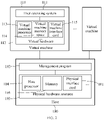
- FIG. 2 shows an architecture of a host 100, the physical interface card 101, and a virtual machine 110 in FIG. 1 .
- a plurality of virtual machines runs on the host 100.
- An architecture of the host 100 and the plurality of virtual machines may be full virtualized, semi-virtualized, or hardware-virtualized.
- the following uses one virtual machine 110 as an example.
- the host 100 includes a physical management program 102 and a physical hardware resource 103.
- the physical hardware resource 103 includes a processor 104, a memory 105, the physical interface card 101, and the like.
- an operating system of the virtual machine 110 is a user operating system 111, and hardware of the virtual machine 110 is referred to as virtual hardware 112.
- the virtual hardware 112 includes but is not limited to a virtual machine processor 113, a virtual machine memory 114, a virtual machine interface card 115, and the like.
- the processor of the host 100 may be a central processing unit (CPU), or may be an application-specific integrated circuit (ASIC), a field programmable gate array (FPGA), another programmable logic device, a transistor logic device, a hardware component, or any combination thereof.
- the management program 102 is also referred to as a virtual machine monitor (VMM), for example, a Hypervisor, or may be a kernel-based virtual machine (KVM), Xen, or Denali.
- VMM virtual machine monitor
- KVM kernel-based virtual machine
- Xen Xen
- Denali Denali
- the virtual machine 110 runs on the management program 102 of the host 100, and the management program 102 performs scheduling for the virtual hardware 112 of the virtual machine 110 and the physical hardware resource 103 of the host 100.
- the following uses a Hypervisor as an example.
- a Hypervisor 106 virtualizes some physical hardware resources 103 required by the virtual machine 110 into the virtual hardware 112, and provides a running hardware environment for the user operating system 111 of the virtual machine 110.
- the Hypervisor 106 coordinates access by each virtual machine to the physical hardware resource 103.
- the physical interface card being a physical network interface card is used as an example.
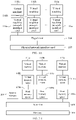
- FIG. 3A and FIG. 3B are respectively schematic diagrams of allocating a physical network interface card 107 and the memory 105 to the virtual machine by the Hypervisor 106.
- the processor 104 executes the management program 102 to implement a corresponding operation in this embodiment of the present invention. Therefore, an operation performed by the management program 102 (for example, the Hypervisor 106) mentioned in the following description of this embodiment of the present invention has a same meaning as a corresponding function of the management program 102 executed by the processor 104.
- the Hypervisor 106 allocates the physical network interface card 107 and the memory 105 to the virtual machine 110, or the processor 104 allocates the physical network interface card 107 and the memory 105 to the virtual machine 110.
- the foregoing two expressions have a same meaning.
- the Hypervisor 106 virtualizes the physical network interface card 107 into one or more virtual machine network interface cards and allocates the one or more virtual machine network interface cards to the virtual machines on the host 100. As shown in FIG. 3A , the Hypervisor 106 virtualizes the physical network interface card 107 into a virtual machine network interface card 116a, a virtual machine network interface card 116b, ... and a virtual machine network interface card 116n, and allocates them to a corresponding virtual machine 110a, a corresponding virtual machine 110b, ... and a corresponding virtual machine 110n.
- This embodiment of the present invention uses an example in which one virtual machine includes one virtual machine network interface card, but during specific implementation, one virtual machine may include a plurality of virtual machine network interface cards.
- the Hypervisor 106 virtualizes a Peripheral Component Interconnect Express (PCIE) network interface card into a plurality of virtual functions (VF) by using a single root-input/output virtualization (SR-IOV) technology, and allocates the VFs to the corresponding virtual machines.
- PCIE Peripheral Component Interconnect Express
- SR-IOV root-input/output virtualization
- the Hypervisor 106 virtualizes the memory 105 and allocates it to one or one virtual machines on the host 100. As shown in FIG. 3B , the Hypervisor 106 divides memory spaces of the memory 105 into a system memory 108, a host memory space 109a, a host memory space 109b, ... and a host memory space 109n.
- the system memory 108 is a memory space in which the Hypervisor 106 and the like are running. Only the host has access permission to access the system memory 108, and a virtual machine running on the host does not have access permission on the system memory 108. Therefore, the system memory 108 cannot be accessed by the virtual machine 110a, the virtual machine 110b, ... or the virtual machine 110n.
- the Hypervisor 106 maps the host memory space 109a to a virtual memory space 114a, the host memory space 109b to a virtual memory space 114b, ... and maps the host memory space 109n to a virtual memory space 114n, and allocates the virtual memory space 114a to the virtual machine 110a, the virtual memory space 114b to the virtual machine 110b, ... and the virtual memory space 114n to the virtual machine 110n.
- the virtual machine 110 accesses a virtual machine memory space 117 by using a virtual machine physical memory address
- the host 100 accesses the memory 105 by using a physical address in the memory 105. Because virtual storage spaces 117a to 117n are respectively mapped to the host storage spaces 109a to 109n, the Hypervisor 106 maps the virtual machine physical memory address to the physical address in the memory 105.
- the physical network interface card 107 implements data access by using a descriptor.
- a physical queue 413 is generated by a driver of the physical network interface card 107, and is used to store a descriptor.
- the physical network interface card 107 obtains the descriptor from the physical queue 413, and accesses a first storage space of accessible data according to location information of the accessible data in the descriptor.
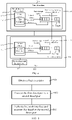
- a first descriptor 410 in FIG. 4 is generated by a driver of the virtual machine network interface card 116 and stored in a virtual queue 117 of the virtual machine network interface card 116.
- the virtual queue 117 is also generated by the driver of the virtual machine network interface card 116, and the virtual queue 117 is located in the virtual machine memory space 114 allocated by the Hypervisor 106 to the virtual machine 110.
- the driver of the virtual machine network interface card may be a VirtIO driver.
- the physical queue 413 corresponds to the virtual queue 117, and a correspondence between the physical queue 413 and the virtual queue 117 is stored in the memory 105.
- the correspondence may be stored in a form of a data table or another data structure, and this is not limited in this embodiment.
- the accessible data that can be accessed by the physical network interface card 107 when the physical network interface card 107 accesses data on the virtual machine 110 is stored in a first storage space 414 in the virtual machine memory space 114.
- the virtual machine memory space 114 provides a virtual machine physical memory for the virtual machine 110 and is mapped to a part of storage space in the memory 105.
- a virtual machine physical memory address that points to a start storage location of the first storage space 414 corresponds to the physical address in the memory 105, and the physical address in the memory 105 is a start storage location of a second storage space 415.
- FIG. 5 shows a data access process, which is specifically as follows: 501: Obtain the first descriptor 410.
- the Hypervisor 106 obtains the first descriptor 410 from the virtual queue 117.
- the first descriptor 410 is included in the first storage space 414, of the virtual machine memory space 114, that stores the accessible data.
- the first storage space 414 is equivalent to the virtual machine physical memory address and a data length of the accessible data.
- the virtual machine physical memory address points to a start location at which the accessible data is stored in the first storage space 414 (a physical memory of the virtual machine 110). Because the first descriptor 410 is generated by the driver of the virtual machine network interface card 116, the first descriptor 410 is encoded in a coding mode that can be recognized by the virtual machine network interface card, and the physical network interface card 107 cannot recognize the coding mode of the first descriptor 410.
- the physical memory of the virtual machine 110 refers to a virtual hardware memory used by a guest operating system on the virtual machine 110.
- the physical memory of the memory 105 in the host 100 is an actual physical memory in the host 100, and the physical address in the memory 105 points to the actual physical memory in the host 100.
- the Hypervisor 106 converts the first descriptor 410 to a second descriptor 411, where the second descriptor 411 is encoded in a coding mode that can be recognized by the physical network interface card 107.
- the physical network interface card 107 obtains the second descriptor 411 that can be recognized from the physical queue 413.
- the driver of the physical network interface card 107 does not need to be installed on the virtual machine 110, and the physical network interface card 107 can access the first storage space 414 of the virtual machine 110.
- the driver of the virtual machine network interface card 116 is usually integrated into the user operating system 111 on the virtual machine 110, in this embodiment, when software and hardware environments for communication of the virtual machine 110 are being created, the driver of the physical network interface card 107 does not need to be installed on the virtual machine 110. This resolves a problem that it is inconvenient for a user to use when the driver of the physical interface card 101 is installed on the virtual machine 110, increases efficiency in creating the virtual machine 110, and improves user experience of the virtual machine 110.
- the Hypervisor 106 converts the first descriptor 410 to the second descriptor 411.
- a specific process is as follows: The Hypervisor 106 obtains the virtual machine physical memory address and the data length of the accessible data based on the first descriptor 410 and the coding mode of the virtual machine network interface card 116, and encodes the virtual machine physical memory address and the data length of the accessible data into the second descriptor 411 according to the coding mode that can be recognized by the physical network interface card 107.
- the physical network interface card 107 may be a PCIe network interface card.
- the PCIe network interface card has a DMA function. Based on the virtualization technology for directed input/output (VT-d) of an Intel (Intel ® ) CPU and the IOMMU in the management program, the PCIe network interface card may generate a DMA command by using the virtual machine physical memory address, and access the virtual machine memory space. This reduces participation of the processor and saves computing resources of the processor.
- VT-d directed input/output
- Intel Intel
- the Hypervisor 106 converts the virtual machine physical memory address to the corresponding physical address in the memory 105, and encodes the physical address in the memory 105 and the data length of the accessible data into the second descriptor 411 according to the coding mode that can be recognized by the physical network interface card 107, so that the physical network interface card 107 can directly access data according to the physical address in the memory 105 in the second descriptor 411. This increases a data access speed.
- the physical network interface card 107 may be a non-PCIe physical interface card that does not have a DMA function.
- a Peripheral Component Interconnect (PCI) card is an embodiment of a non-PCIe card.
- FIG. 6A is a schematic diagram of a process in which the first descriptor 410 is converted to the second descriptor 411 when the host 100 has the IOMMU and the physical network interface card 107 has the DMA function.
- the Hypervisor 106 encodes the virtual machine physical memory address and the data length of the accessible data according to the coding mode that can be recognized by the physical network interface card 107.
- FIG. 6B is a schematic diagram of a process in which the first descriptor 410 is converted to the second descriptor 411 when the host 100 does not have the IOMMU or the physical network interface card 107 does not have the DMA function.
- the Hypervisor 106 converts the virtual machine physical memory address to the corresponding physical address in the memory 105, and encodes the physical address in the memory 105 and the data length of the accessible data according to the coding mode that can be recognized by the physical network interface card 107.
- the physical network interface card 107 accesses, based on the second descriptor 411, the second storage space 415 that stores the accessible data.
- the second descriptor 411 obtained by the physical network interface card 107 from the physical queue 413 includes the virtual machine physical memory address and the data length of the accessible data.
- the physical network interface card 107 sends, based on the DMA function of the physical network interface card 107, a query message that carries the virtual machine physical memory address to the IOMMU in the host 100, to query the physical address, corresponding to the virtual machine physical memory address, in the memory 105.
- the IOMMU returns a message carrying the physical address in the memory 105 to the physical network interface card 107, and the physical network interface card 107 generates a direct access command according to the physical address in the memory 105.
- the physical address in the memory 105 points to the start storage location of the second storage space 415.
- the physical network interface card 107 accesses the storage space of the accessible data according to the physical address in the memory 105 and the data length of the accessible data, to implement communication with the virtual machine 110.
- the physical network interface card 107 may be a PCIe network interface card.
- the second descriptor 411 obtained by the physical network interface card 107 from the physical queue 413 includes the physical address that is in the memory 105 and to which the virtual machine physical memory address is mapped and the data length of the accessible data.
- the physical address in the memory of the host points to the start storage location of the second storage space 415.
- the physical network interface card 107 accesses the storage space of the accessible data according to the physical address in the memory 105 and the data length of the accessible data in the second descriptor 411, to implement communication with the virtual machine 110.
- the physical network interface card 107 may be a non-PCIe physical interface card that does not have a DMA function.
- a PCI card is an embodiment of a non-PCIe card.
- the physical network interface card 107 may read the second descriptor 411 from the physical queue 413 by polling the physical queue 413.
- the Hypervisor 106 may also send an interrupt to the physical network interface card 107, so as to trigger the physical network interface card 107 to read the second descriptor 411 from the physical queue 413.
- the physical network interface card 107 creates a physical queue 118 that stores the second descriptor 411 shown in FIG. 4
- the physical queue 118 is stored in the virtual memory space 114, which is a storage space that cannot be sensed by the virtual machine 110.
- the storage space that cannot be sensed by the virtual machine 110 is a part of the virtual memory space 114 that is allocated by the Hypervisor 106 to the virtual machine 110, but is not notified to the virtual machine 110.
- the Hypervisor 106 does not notify the virtual machine 110 of the memory space, the virtual machine 110 does not occupy the memory space, and the memory space can be used to store the physical queue 118.
- a process of a method for accessing data on the virtual machine 110 by the physical network interface card 107 is also the same as the foregoing process 401 to 403, and details are not described herein again.
- the virtual memory space 114 is mapped to a segment of space in the memory 105, namely, the physical queue 118 is actually stored in the segment of space in the memory 105.
- the virtual memory space is formed by the virtual machine physical memory address and a segment of address length.
- a segment of space in the memory 105 to which the virtual memory space is mapped is formed by the physical address in the memory 105 to which the virtual machine physical memory address is mapped and a length of the segment.
- the physical network interface card 107 needs to access the to-be-sent data on the virtual machine 110.
- the virtual queue 117 generated by the driver of the virtual machine network interface card 116 is a virtual sending queue
- a to-be-sent data descriptor 1 is stored in the virtual sending queue.
- the physical queue 413 generated by the driver of the physical network interface card 107 is a physical sending queue
- the correspondence between the virtual queue 117 and the physical queue 413 is a correspondence between the virtual sending queue and the physical sending queue.
- a process of sending the to-be-sent data by the virtual machine 110 to the physical network interface card 107 is as follows: Step 1: The Hypervisor 106 obtains the to-be-sent data descriptor 1 from the virtual sending queue.
- the to-be-sent data descriptor 1 is included in a third storage space (a physical memory of the virtual machine), that stores the to-be-sent data, in the virtual machine memory space 117.
- the third storage space is equivalent to a virtual machine physical memory address 1 and a data length of the to-be-sent data.
- the virtual machine physical memory address 1 points to a start location at which the to-be-sent data is stored in the third storage space (the physical memory of the virtual machine).
- the to-be-sent data descriptor 1 generated by the driver of the virtual machine network interface card 116 is encoded according to the coding mode that can be recognized by the virtual machine network interface card 116.
- Step 2 When the host 100 has the IOMMU and the physical network interface card 107 has the DMA function, the Hypervisor 106 obtains the virtual machine physical memory address 1 and the data length of the to-be-sent data based on the to-be-sent data descriptor 1 and the coding mode of the virtual machine network interface card 116, and encodes, according to the coding mode that can be recognized by the physical network interface card 107, the virtual machine physical memory address 1 and the data length of the to-be-sent data into a to-be-sent descriptor 2.
- the Hypervisor 106 obtains the virtual machine physical memory address 1 and the data length of the to-be-sent data based on the to-be-sent data descriptor 1 and the coding mode of the virtual machine network interface card 116, converts the virtual machine physical memory address 1 to a physical address 1 in the memory 105 to which the virtual machine physical memory address 1 is mapped, and encodes, according to the coding mode that can be recognized by the physical network interface card 107, the physical address 1 in the memory 105 and the data length of the to-be-sent data into the to-be-sent data descriptor 2.
- Step 3 The Hypervisor 106 saves the to-be-sent data descriptor 2 into the physical sending queue according to the correspondence between the virtual sending queue and the physical sending queue.
- Step 4 The physical network interface card 107 reads the to-be-sent data on the virtual machine 110 based on the to-be-sent data descriptor 2 in the physical sending queue.
- the to-be-sent data descriptor 2 includes the virtual machine physical memory address 1 and the data length of the to-be-sent data.
- the physical network interface card 107 generates a direct access command based on the DMA function of the physical network interface card 107 and the IOMMU of the host 100, converts the virtual machine physical memory address 1 to the physical address 1 in the memory 105 to which the virtual machine physical memory address 1 is mapped, accesses data according to the physical address 1 in the memory 105 and the data length of the to-be-sent data, and obtains the to-be-sent data, to implement communication with the virtual machine 110.
- the to-be-sent data descriptor 2 includes the physical address 1 in the memory 105 to which the virtual machine physical memory address 1 is mapped and the data length of the accessible data.
- the physical network interface card 107 accesses the to-be-sent data according to the physical address 1 in the memory 105 and the data length of the to-be-sent data, and obtains the to-be-sent data, to implement communication with the virtual machine 110.
- the physical network interface card 107 may read the to-be-sent data descriptor 2 from the physical sending queue by polling the physical sending queue.
- the Hypervisor106 may also send an interrupt to the physical network interface card 107, so as to trigger the physical network interface card 107 to read the to-be-sent data descriptor 2 from the physical sending queue.
- the external device 130 When the virtual machine 110 receives data sent by the external device 130, the external device 130 sends the data to the physical network interface card 107, and the physical network interface card 107 saves the data into the virtual machine 110.
- the virtual queue 117 generated by the driver of the virtual machine network interface card 116 is a virtual receiving queue.
- the physical queue 413 generated by the driver of the physical network interface card 107 is a physical receiving queue, and the correspondence between the virtual queue 117 and the physical queue 413 is a correspondence between the virtual receiving queue and the physical receiving queue.
- the virtual machine 110 notifies, by using an idle descriptor, the physical network interface card 107 to save the data sent by the external device 103 into the virtual machine memory space 114.
- An idle descriptor 1 is stored in the virtual receiving queue.
- a specific process in which the physical network interface card 107 sends the data sent by the external device 130 to the virtual machine 110 is as follows: Step 1: The Hypervisor 106 obtains the to-be-sent data descriptor 1 from the virtual receiving queue.
- the idle descriptor 1 is included in a fourth storage space, that stores to-be-received data, in the virtual machine memory space 117.
- the fourth storage space is equivalent to a virtual machine physical memory address 2 and a maximum stored data length.
- the virtual machine physical memory address 2 points to a start location at which the to-be-received data is stored in the fourth storage space (a physical memory of the virtual machine).
- a data length of the to-be-received data is not greater than the maximum stored data length.
- the idle descriptor 1 generated by the driver of the virtual machine network interface card 116 is encoded according to the coding mode that can be recognized by the virtual machine network interface card 116 .
- Step 2 When the host 100 has the IOMMU and the physical network interface card 107 has the DMA function, the Hypervisor 106 obtains the virtual machine physical memory address 2 and the maximum stored data length based on the idle descriptor 1 and the coding mode of the virtual machine network interface card 116, and encodes, according to the coding mode that can be recognized by the physical network interface card 107, the virtual machine physical memory address 2 and the maximum stored data length into a to-be-sent descriptor 2.
- the Hypervisor 106 obtains the virtual machine physical memory address 2 and the maximum stored data length based on the idle descriptor 1 and the coding mode of the virtual machine network interface card 116, converts the virtual machine physical memory address 2 to a physical address 2 in the memory 105 to which the virtual machine physical memory address 2 is mapped, and encodes, according to the coding mode that can be recognized by the physical network interface card 107, the physical address 2 in the memory 105 to which the virtual machine physical memory address 2 is mapped and the maximum stored data length into an idle descriptor 2.
- Step 3 The Hypervisor 106 saves the idle descriptor 2 into the physical receiving queue according to the correspondence between the virtual receiving queue and the physical receiving queue.
- Step 4 The physical network interface card 107 saves the to-be-received data into the virtual machine 110 according to the idle descriptor 2 in the physical receiving queue.
- the idle descriptor 2 includes the virtual machine physical memory address 2 and the maximum stored data length.
- the physical network interface card 107 generates a direct access command based on the DMA function of the physical network interface card 107 and the IOMMU in the host 100, converts the virtual machine physical memory address 2 to the physical address 2 in the memory 105 to which the virtual machine physical memory address 2 is mapped, and saves the to-be-received data into the virtual machine 110 according to the physical address 2 in the memory 105 to which the virtual machine physical memory address 2 is mapped and the maximum stored data length.
- the idle descriptor 2 includes the physical address 2 in the memory 105 to which the virtual machine physical memory address 2 is mapped and the maximum stored data length.
- the physical network interface card 107 saves the to-be-received data into the virtual machine 110 according to the physical address 2 in the memory 105 to which the virtual machine physical memory address 2 is mapped and the maximum stored data length.
- the physical network interface card 107 may read the idle descriptor 2 from the physical receiving queue by polling the physical receiving queue.
- the Hypervisor 106 may also send an interrupt to the physical network interface card 107, so as to trigger the physical network interface card 107 to read the idle descriptor 2 from the physical receiving queue.
- An embodiment further provides a data access apparatus 700, which is applied to a host 100.
- a virtual machine runs on the host 100, and the virtual machine includes a virtual machine interface card.
- the data access apparatus 700 includes an obtaining unit 701 and a descriptor conversion unit 702.
- the obtaining unit 701 is configured to obtain a first descriptor from a memory 105.
- the first descriptor includes a virtual machine physical memory address and a data length of accessible data.
- the descriptor conversion unit 702 is configured to convert the first descriptor to a second descriptor.
- the second descriptor is encoded in a coding mode that can be recognized by a physical interface card, so that the physical interface card obtains, based on the second descriptor, a physical address that is in the memory and to which the virtual machine physical memory address is mapped, to access the accessible data.
- the data access apparatus 700 further includes a storage unit 703.
- the memory stores a virtual queue of the virtual machine interface card and a physical queue of the physical interface card.
- the first descriptor is saved in the virtual queue, and there is a correspondence between the virtual queue and the physical queue.
- the storage unit 703 is configured to save the second descriptor into the physical queue according to the correspondence, so that the physical interface card obtains the second descriptor from the physical queue.
- the correspondence is saved in a first storage space in the memory, and the first storage space cannot be accessed by the virtual machine.
- the descriptor conversion unit 702 is specifically configured to: obtain the virtual machine physical memory address based on the first descriptor; map the virtual machine physical memory address to the physical address in the memory; and encode the physical address in the memory and the data length to obtain the second descriptor.
- the second descriptor includes the physical address in the memory and the data length.
- the accessible data is to-be-sent data
- the virtual queue includes a virtual sending queue
- the first descriptor is saved in the virtual sending queue
- the physical queue includes a physical sending queue.
- the apparatus 700 further includes a storage unit 703.
- the storage unit 703 is specifically configured to save the second descriptor into the physical sending queue.
- the virtual queue includes a virtual receiving queue
- the physical queue includes a physical receiving queue
- the accessible data is to-be-received data
- the first descriptor is saved in the virtual receiving queue.
- the apparatus 700 further includes a storage unit 703.
- the storage unit is specifically configured to save the second descriptor into the physical receiving queue.
- the obtaining unit 401 may be implemented by executing a computer instruction by using the processor 104 shown in FIG. 1 , and the computer instruction is used to implement step 501 in FIG. 5 .
- the descriptor conversion unit 702 may be implemented by executing a computer instruction by using the processor 104 shown in FIG. 1 , and the computer instruction is used to implement step 502 in FIG. 5 .
- the storage unit 703 may be implemented by executing a computer instruction by using the processor 104 shown in FIG. 1 .
- the processor 104 may be a CPU, or may be an ASIC, an FPGA, or another programmable logic device, a transistor logic device, a hardware component, or any combination thereof.
- the computer instructions are stored in a memory.
- the obtaining unit 401, the descriptor conversion unit 702, and the storage unit 703 are implemented by executing the computer instructions in the memory by using the processor 104.
- the instructions are stored in a processor.
- the obtaining unit 401, the descriptor conversion unit 702, and the storage unit 703 are implemented by executing the computer instructions in the processor by using the processor.
- an embodiment further provides a non-volatile readable storage medium that includes a computer instruction.
- the computer instruction in the non-volatile readable storage medium is used by a physical network interface card to access data on a virtual machine on a host.
- a processor of the host executes the computer instruction to implement a function implemented by the processor of the host in this embodiment of the present invention.
- the computer instruction in the non-volatile readable storage medium is used to implement a function of a management program.
- a product form of the function implemented by the management program may be a computer program module in the management program, or may be an independently installed plug-in. A specific product form is not limited in this embodiment of the present invention.
- an embodiment of the present invention further provides a computer program product, which includes a computer instruction used for communication of a virtual machine running on a host.
- a processor of the host executes the computer instruction to implement a function implemented by the processor of the host in this embodiment of the present invention.
- the disclosed apparatus and method may be implemented in other manners.
- the displayed or discussed mutual couplings or direct couplings or communication connections may be implemented by using some interfaces.
- the indirect couplings or communication connections between the apparatuses or units may be implemented in electrical, mechanical, or other forms.
- the units described as separate parts may or may not be physically separate.
- the computer instruction may be stored in one or more separate non-volatile readable storage media.
- the units described as separate parts may or may not be physically separate, and parts displayed as units may or may not be physical units, may be located in one position, or may be distributed on a plurality of network units. Some or all of the units may be selected according to actual requirements to achieve the objectives of the solutions of the embodiments.
Landscapes
- Engineering & Computer Science (AREA)
- Theoretical Computer Science (AREA)
- Physics & Mathematics (AREA)
- General Engineering & Computer Science (AREA)
- General Physics & Mathematics (AREA)
- Software Systems (AREA)
- Human Computer Interaction (AREA)
- Information Retrieval, Db Structures And Fs Structures Therefor (AREA)
- Memory System Of A Hierarchy Structure (AREA)
Claims (15)
- Procédé d'accès à des données, le procédé étant appliqué à un hôte (100), l'hôte comprenant un processeur (104), une mémoire (105) et une carte d'interface physique (101), une machine virtuelle s'exécutant sur l'hôte, la machine virtuelle comprenant une carte d'interface de machine virtuelle (115) ; et
le procédé comprenant les étapes consistant à :obtenir, par le processeur (104), un premier descripteur (410) à partir de la mémoire (105), le premier descripteur comprenant une adresse de mémoire physique de machine virtuelle et une longueur de données de données accessibles, les données accessibles étant accessibles par la carte d'interface physique, l'adresse de mémoire physique de machine virtuelle pointant vers un emplacement de départ où les données accessibles sont stockées dans une mémoire physique de la machine virtuelle, et le premier descripteur étant codé dans un mode de codage qui peut être reconnu par la carte d'interface de machine virtuelle (115) ;caractérisé en ce que :le premier descripteur est codé dans un mode de codage qui ne peut pas être reconnu par la carte d'interface physique ;convertir, par le processeur (104), le premier descripteur (410) en un second descripteur (411), le second descripteur étant codé dans un mode de codage qui peut être reconnu par la carte d'interface physique (101), le second descripteur (411) comprenant une adresse de mémoire physique de machine virtuelle et la longueur de données ; etobtenir, par la carte d'interface physique (101) sur la base du second descripteur (411), une adresse physique (1, 2) qui est dans la mémoire (105) et avec laquelle l'adresse de mémoire physique de la machine virtuelle (110) est mise en concordance, et accéder aux données accessibles selon l'adresse physique dans la mémoire et la longueur de données. - Procédé selon la revendication 1, dans lequel la mémoire (105) stocke une file d'attente virtuelle (117) de la carte d'interface de machine virtuelle (115) et une file d'attente physique (118) de la carte d'interface physique (101), le premier descripteur (410) est enregistré dans la file d'attente virtuelle et il existe une correspondance entre la file d'attente virtuelle et la file d'attente physique ; et le procédé comprend en outre les étapes consistant à :enregistrer, par le processeur (104), le second descripteur (411) dans la file d'attente physique (118) selon la correspondance ; etobtenir, par la carte d'interface physique (101), le second descripteur (411) à partir de la file d'attente physique (118).
- Procédé selon la revendication 2, dans lequel la correspondance est enregistrée dans un premier espace de stockage (414) dans la mémoire (105), et le premier espace de stockage n'est pas accessible par la machine virtuelle (110).
- Procédé selon l'une quelconque des revendications 1 à 3, dans lequel l'obtention, par la carte d'interface physique (101) sur la base du second descripteur, d'une adresse physique (1, 2) qui est dans la mémoire et avec laquelle l'adresse de mémoire physique de la machine virtuelle est mise en concordance comprend spécifiquement les étapes consistant à :envoyer, par la carte d'interface physique (101), un message de requête à une unité de gestion de la mémoire (105), de manière à requêter l'adresse physique (1, 2) qui est dans la mémoire et avec laquelle l'adresse de mémoire physique de la machine virtuelle (110) est mise en concordance, le message de requête comprenant l'adresse de mémoire physique de machine virtuelle ; etrecevoir, par la carte d'interface physique (101), l'adresse physique dans la mémoire (105) envoyée par l'unité de gestion de mémoire.
- Procédé selon l'une quelconque des revendications 1 à 3, dans lequel la conversion, par le processeur (104), du premier descripteur (410) en un second descripteur (411) comprend spécifiquement les étapes consistant à :obtenir, par le processeur (104), l'adresse de la mémoire physique (105) de la machine virtuelle (110) sur la base du premier descripteur (410) ;mettre en concordance, par le processeur (104), l'adresse de la mémoire physique (105) de la machine virtuelle (110) avec l'adresse physique (1, 2) dans la mémoire ; etcoder, par le processeur (104), l'adresse physique (1, 2) dans la mémoire (105) et la longueur de données afin d'obtenir le second descripteur (411), le second descripteur comprenant l'adresse physique dans la mémoire et la longueur de données.
- Procédé selon la revendication 2, dans lequel la file d'attente virtuelle (117) comprend une file d'attente d'envoi virtuelle, la file d'attente physique (118) comprend une file d'attente d'envoi physique, les données accessibles sont des données à envoyer, et le premier descripteur (410) est enregistré dans la file d'attente d'envoi virtuelle ; et l'enregistrement, par le processeur (104), du second descripteur (411) dans la file d'attente physique (118) selon la correspondance comprend spécifiquement l'étape consistant à : enregistrer, par le processeur, le second descripteur dans la file d'attente d'envoi physique.
- Procédé selon la revendication 2, dans lequel la file d'attente virtuelle (117) comprend une file d'attente de réception virtuelle, la file d'attente physique (118) comprend une file d'attente de réception physique, les données accessibles sont des données à recevoir, et le premier descripteur (410) est enregistré dans la file d'attente de réception virtuelle ; et
l'enregistrement, par le processeur (104), du second descripteur (411) dans la file d'attente physique (118) selon la correspondance comprend spécifiquement l'étape consistant à : enregistrer, par le processeur, le second descripteur dans la file d'attente de réception physique. - Hôte (100), l'hôte comprenant un processeur (104), une mémoire (105) et une carte d'interface physique (101), l'hôte étant configuré pour exécuter une machine virtuelle, la machine virtuelle comprenant une carte d'interface de machine virtuelle (115) ; le processeur (104) étant configuré pour :obtenir un premier descripteur (410) à partir de la mémoire (105), le premier descripteur comprenant une adresse de mémoire physique de machine virtuelle et une longueur de données de données accessibles, les données accessibles étant accessibles par la carte d'interface physique, l'adresse de mémoire physique de machine virtuelle pointant vers un emplacement de départ où les données accessibles sont stockées dans une mémoire physique de la machine virtuelle, et le premier descripteur étant codé dans un mode de codage qui peut être reconnu par la carte d'interface de machine virtuelle (115) mais qui ne peut pas être reconnu par la carte d'interface physique ; et convertir le premier descripteur en un second descripteur (411), le second descripteur étant codé dans un mode de codage qui peut être reconnu par la carte d'interface physique (101), le second descripteur (411) comprenant une adresse de mémoire physique de machine virtuelle et la longueur de données ; etla carte d'interface physique (101) étant configurée pour :
obtenir, sur la base du second descripteur (411), une adresse physique qui est dans la mémoire (105) et avec laquelle l'adresse de mémoire physique de la machine virtuelle (110) est mise en concordance, et accéder aux données accessibles selon l'adresse physique dans la mémoire et la longueur de données. - Hôte (100) selon la revendication 8, dans lequel la mémoire (105) stocke une file d'attente virtuelle (117) de la carte d'interface de machine virtuelle (115) et une file d'attente physique (118) de la carte d'interface physique (101), le premier descripteur (410) est enregistré dans la file d'attente virtuelle et il existe une correspondance entre la file d'attente virtuelle et la file d'attente physique ; et le processeur (104) est en outre configuré pour enregistrer le second descripteur (411) dans la file d'attente physique (118) selon la correspondance ; et
la carte d'interface physique (101) est configurée pour obtenir le second descripteur (411) à partir de la file d'attente physique (118). - Hôte (100) selon la revendication 9, dans lequel la correspondance est enregistrée dans un premier espace de stockage (414) dans la mémoire (105), et le premier espace de stockage n'est pas accessible par la machine virtuelle (110).
- Hôte (100) selon la revendication 10, dans lequel la carte d'interface physique (101) est spécifiquement configurée pour envoyer un message de requête à une unité de gestion de mémoire, de manière à requêter l'adresse physique qui est dans la mémoire et avec laquelle l'adresse de mémoire physique de la machine virtuelle est mise en concordance, le message de requête comprenant l'adresse de mémoire physique de machine virtuelle ; et
la carte d'interface physique (101) est configurée pour recevoir l'adresse physique (1, 2) dans la mémoire (105) envoyée par l'unité de gestion de mémoire. - Hôte (100) selon l'une quelconque des revendications 8 à 10, dans lequel le processeur (104) est spécifiquement configuré pour :obtenir l'adresse de la mémoire physique (105) de la machine virtuelle (110) sur la base du premier descripteur (410) ;mettre en concordance l'adresse de la mémoire physique (105) de la machine virtuelle (110) avec l'adresse physique dans la mémoire ; etcoder l'adresse physique dans la mémoire (105) et la longueur de données afin d'obtenir le second descripteur (411), le second descripteur comprenant l'adresse physique dans la mémoire et la longueur de données.
- Hôte (100) selon la revendication 9, dans lequel la file d'attente virtuelle (117) comprend une file d'attente d'envoi virtuelle, la file d'attente physique (118) comprend une file d'attente d'envoi physique, les données accessibles sont des données à envoyer, et le premier descripteur (410) est enregistré dans la file d'attente d'envoi virtuelle ; et
le processeur (104) est spécifiquement configuré pour enregistrer le second descripteur (411) dans la file d'attente d'envoi physique. - Hôte (100) selon la revendication 9, dans lequel la file d'attente virtuelle (117) comprend une file d'attente de réception virtuelle, la file d'attente physique (118) comprend une file d'attente de réception physique, les données accessibles sont des données à recevoir, et le premier descripteur (410) est enregistré dans la file d'attente de réception virtuelle ; et
le processeur (104) est spécifiquement configuré pour enregistrer le second descripteur (411) dans la file d'attente de réception physique. - Support de stockage non volatil et lisible par ordinateur, comprenant des instructions pour amener l'hôte selon les revendications 8 à 14 à exécuter les étapes des procédés selon les revendications 1 à 7.
Applications Claiming Priority (1)
| Application Number | Priority Date | Filing Date | Title |
|---|---|---|---|
| PCT/CN2017/103203 WO2019056380A1 (fr) | 2017-09-25 | 2017-09-25 | Procédé et dispositif d'accès à des données |
Publications (3)
| Publication Number | Publication Date |
|---|---|
| EP3671472A1 EP3671472A1 (fr) | 2020-06-24 |
| EP3671472A4 EP3671472A4 (fr) | 2020-09-02 |
| EP3671472B1 true EP3671472B1 (fr) | 2022-05-04 |
Family
ID=65810065
Family Applications (1)
| Application Number | Title | Priority Date | Filing Date |
|---|---|---|---|
| EP17926182.1A Active EP3671472B1 (fr) | 2017-09-25 | 2017-09-25 | Procédé et dispositif d'accès à des données |
Country Status (4)
| Country | Link |
|---|---|
| US (1) | US11249934B2 (fr) |
| EP (1) | EP3671472B1 (fr) |
| CN (1) | CN109923528B (fr) |
| WO (1) | WO2019056380A1 (fr) |
Families Citing this family (7)
| Publication number | Priority date | Publication date | Assignee | Title |
|---|---|---|---|---|
| LU101361B1 (en) * | 2019-08-26 | 2021-03-11 | Microsoft Technology Licensing Llc | Computer device including nested network interface controller switches |
| CN114691532B (zh) * | 2020-12-30 | 2025-03-14 | 华为技术有限公司 | 内存访问方法、内存地址分配方法及装置 |
| CN113472571B (zh) * | 2021-06-28 | 2023-11-03 | 北京汇钧科技有限公司 | 一种智能网卡设备和智能网卡设备的旁路探测方法 |
| US20230091722A1 (en) * | 2021-09-17 | 2023-03-23 | Mediatek Inc. | System to enhance memory protection associated with kernel of operating system |
| US12541388B2 (en) | 2021-09-17 | 2026-02-03 | Mediatek Inc. | Kernel protection system |
| CN114048151B (zh) * | 2021-11-16 | 2025-11-18 | 湖南国科微电子股份有限公司 | 主机内存访问方法、装置及电子设备 |
| CN119045947B (zh) * | 2024-08-12 | 2025-11-18 | 中科驭数(北京)科技有限公司 | 一种用于DPU的VirtIO设备的链式描述符管理方法及装置 |
Family Cites Families (23)
| Publication number | Priority date | Publication date | Assignee | Title |
|---|---|---|---|---|
| JP2004005382A (ja) * | 2002-03-29 | 2004-01-08 | Fujitsu Ltd | データ転送装置および方法 |
| US20050144422A1 (en) * | 2003-12-30 | 2005-06-30 | Mcalpine Gary L. | Virtual to physical address translation |
| CN100414908C (zh) * | 2005-11-22 | 2008-08-27 | 华中科技大学 | 一种支持虚拟接口的存储网络适配器 |
| CN101068237B (zh) * | 2006-08-28 | 2012-01-25 | 腾讯科技(深圳)有限公司 | 数据访问系统以及数据访问方法 |
| US8219778B2 (en) * | 2008-02-27 | 2012-07-10 | Microchip Technology Incorporated | Virtual memory interface |
| JP5748349B2 (ja) * | 2012-03-16 | 2015-07-15 | 株式会社日立製作所 | 仮想計算機の制御方法及び仮想計算機システム |
| ITTO20120602A1 (it) | 2012-07-09 | 2014-01-10 | Sisvel Technology Srl | Method for transforming an image descriptor based on a gradient histogram and relative image processing apparatus. |
| US9477505B2 (en) * | 2012-08-14 | 2016-10-25 | Oracle International Corporation | Method for reducing the overhead associated with a virtual machine exit when handling instructions related to descriptor tables |
| US9838370B2 (en) * | 2012-09-07 | 2017-12-05 | Oracle International Corporation | Business attribute driven sizing algorithms |
| CN102999610A (zh) * | 2012-11-22 | 2013-03-27 | 用友软件股份有限公司 | 数据访问系统和数据访问方法 |
| CN103414535B (zh) * | 2013-07-31 | 2017-04-19 | 华为技术有限公司 | 数据发送方法和数据接收方法及相关装置 |
| US20150121046A1 (en) | 2013-10-25 | 2015-04-30 | Advanced Micro Devices, Inc. | Ordering and bandwidth improvements for load and store unit and data cache |
| EP3080693B1 (fr) * | 2013-12-13 | 2019-07-24 | Razer (Asia-Pacific) Pte Ltd. | Dispositifs, actualisateurs, procédés de commande d'un dispositif et procédés de commande d'un actualisateur |
| US10062137B2 (en) * | 2014-02-27 | 2018-08-28 | Hewlett Packard Enterprise Development Lp | Communication between integrated graphics processing units |
| KR101554633B1 (ko) * | 2014-03-04 | 2015-09-21 | 한국전자통신연구원 | 악성 코드 검출 장치 및 그 방법 |
| US11030105B2 (en) | 2014-07-14 | 2021-06-08 | Oracle International Corporation | Variable handles |
| JP2016167143A (ja) * | 2015-03-09 | 2016-09-15 | 富士通株式会社 | 情報処理システムおよび情報処理システムの制御方法 |
| US9948579B1 (en) * | 2015-03-30 | 2018-04-17 | Juniper Networks, Inc. | NIC-based packet assignment for virtual networks |
| CN106301859B (zh) * | 2015-06-09 | 2020-02-14 | 华为技术有限公司 | 一种管理网卡的方法、装置及系统 |
| CN106612306A (zh) * | 2015-10-22 | 2017-05-03 | 中兴通讯股份有限公司 | 虚拟机的数据共享方法及装置 |
| US10263832B1 (en) * | 2016-12-29 | 2019-04-16 | Juniper Networks, Inc. | Physical interface to virtual interface fault propagation |
| US11178023B2 (en) * | 2017-06-30 | 2021-11-16 | Intel Corporation | Data plane interface network quality of service in multi-tenant data centers |
| US12212504B2 (en) * | 2019-01-29 | 2025-01-28 | Intel Corporation | Techniques to use descriptors for packet transmit scheduling |
-
2017
- 2017-09-25 WO PCT/CN2017/103203 patent/WO2019056380A1/fr not_active Ceased
- 2017-09-25 EP EP17926182.1A patent/EP3671472B1/fr active Active
- 2017-09-25 CN CN201780040464.7A patent/CN109923528B/zh active Active
-
2020
- 2020-03-19 US US16/824,283 patent/US11249934B2/en active Active
Also Published As
| Publication number | Publication date |
|---|---|
| US20200218685A1 (en) | 2020-07-09 |
| EP3671472A1 (fr) | 2020-06-24 |
| EP3671472A4 (fr) | 2020-09-02 |
| CN109923528A (zh) | 2019-06-21 |
| CN109923528B (zh) | 2021-04-09 |
| WO2019056380A1 (fr) | 2019-03-28 |
| US11249934B2 (en) | 2022-02-15 |
Similar Documents
| Publication | Publication Date | Title |
|---|---|---|
| US11249934B2 (en) | Data access method and apparatus | |
| CN113296884B (zh) | 虚拟化方法、装置、电子设备、介质及资源虚拟化系统 | |
| EP3798835B1 (fr) | Procédé, dispositif et système de mise en oeuvre d'un traitement d'accélération matérielle | |
| KR101782398B1 (ko) | 보안된 가상 머신간 공유된 메모리 통신을 위한 기술 | |
| US9734096B2 (en) | Method and system for single root input/output virtualization virtual functions sharing on multi-hosts | |
| US11494221B2 (en) | Hardware control core controlling operation of hardware devices by executing device drivers within the hardware control core used by virtual machine cores via shared memory having an uplink and downlink memory | |
| JP5608243B2 (ja) | 仮想化環境においてi/o処理を行う方法および装置 | |
| CN110275774B (zh) | 在虚拟化环境中动态分配物理存储设备资源的机制 | |
| JP7504092B2 (ja) | 仮想化コンピューティング環境での安全なメモリアクセス | |
| US11397697B2 (en) | Core-to-core communication | |
| WO2017024783A1 (fr) | Procédé, appareil et système de virtualisation | |
| CN100472451C (zh) | 一种虚拟机系统及其硬件设备访问方法 | |
| US11741039B2 (en) | Peripheral component interconnect express device and method of operating the same | |
| US11194735B2 (en) | Technologies for flexible virtual function queue assignment | |
| US10013199B2 (en) | Translation bypass by host IOMMU for systems with virtual IOMMU | |
| CN113419845B (zh) | 计算加速方法和装置、计算系统、电子设备及计算机可读存储介质 | |
| KR101716715B1 (ko) | 가상 머신 환경의 네트워크 입출력 장치 가상화 방법 및 장치 | |
| US9875131B2 (en) | Virtual PCI device based hypervisor bypass using a bridge virtual machine | |
| US20250036481A1 (en) | Device virtualization method and related device | |
| WO2023221847A1 (fr) | Procédé d'accès à des données basé sur une communication directe d'un dispositif de machine virtuelle, dispositif et système | |
| KR102532099B1 (ko) | 가상 머신을 지원하는 스토리지 가상화 장치, 이의 동작 방법, 및 이를 포함하는 시스템의 동작 방법 | |
| US10127177B2 (en) | Unified device interface for a multi-bus system | |
| EP3974976B1 (fr) | Facilitation d'affichage d'application invitée à partir d'un système d'exploitation hôte | |
| KR20140079553A (ko) | 입출력 가상화 네트워크 인터페이스 카드 기반 가상 데스크탑 서비스 방법 및 장치 | |
| CN114238183B (zh) | 实现Virtio设备的系统、方法和介质 |
Legal Events
| Date | Code | Title | Description |
|---|---|---|---|
| STAA | Information on the status of an ep patent application or granted ep patent |
Free format text: STATUS: THE INTERNATIONAL PUBLICATION HAS BEEN MADE |
|
| PUAI | Public reference made under article 153(3) epc to a published international application that has entered the european phase |
Free format text: ORIGINAL CODE: 0009012 |
|
| STAA | Information on the status of an ep patent application or granted ep patent |
Free format text: STATUS: REQUEST FOR EXAMINATION WAS MADE |
|
| 17P | Request for examination filed |
Effective date: 20200317 |
|
| AK | Designated contracting states |
Kind code of ref document: A1 Designated state(s): AL AT BE BG CH CY CZ DE DK EE ES FI FR GB GR HR HU IE IS IT LI LT LU LV MC MK MT NL NO PL PT RO RS SE SI SK SM TR |
|
| AX | Request for extension of the european patent |
Extension state: BA ME |
|
| A4 | Supplementary search report drawn up and despatched |
Effective date: 20200803 |
|
| RIC1 | Information provided on ipc code assigned before grant |
Ipc: G06F 9/50 20060101ALI20200728BHEP Ipc: G06F 12/109 20160101ALI20200728BHEP Ipc: G06F 12/10 20160101AFI20200728BHEP Ipc: H04L 12/24 20060101ALI20200728BHEP Ipc: G06F 12/1081 20160101ALI20200728BHEP Ipc: G06F 9/455 20180101ALI20200728BHEP Ipc: G06F 12/02 20060101ALI20200728BHEP Ipc: G06F 12/1009 20160101ALI20200728BHEP |
|
| DAV | Request for validation of the european patent (deleted) | ||
| DAX | Request for extension of the european patent (deleted) | ||
| STAA | Information on the status of an ep patent application or granted ep patent |
Free format text: STATUS: EXAMINATION IS IN PROGRESS |
|
| 17Q | First examination report despatched |
Effective date: 20210615 |
|
| GRAP | Despatch of communication of intention to grant a patent |
Free format text: ORIGINAL CODE: EPIDOSNIGR1 |
|
| STAA | Information on the status of an ep patent application or granted ep patent |
Free format text: STATUS: GRANT OF PATENT IS INTENDED |
|
| INTG | Intention to grant announced |
Effective date: 20211214 |
|
| GRAS | Grant fee paid |
Free format text: ORIGINAL CODE: EPIDOSNIGR3 |
|
| RAP1 | Party data changed (applicant data changed or rights of an application transferred) |
Owner name: HUAWEI CLOUD COMPUTING TECHNOLOGIES CO., LTD. |
|
| GRAA | (expected) grant |
Free format text: ORIGINAL CODE: 0009210 |
|
| STAA | Information on the status of an ep patent application or granted ep patent |
Free format text: STATUS: THE PATENT HAS BEEN GRANTED |
|
| AK | Designated contracting states |
Kind code of ref document: B1 Designated state(s): AL AT BE BG CH CY CZ DE DK EE ES FI FR GB GR HR HU IE IS IT LI LT LU LV MC MK MT NL NO PL PT RO RS SE SI SK SM TR |
|
| REG | Reference to a national code |
Ref country code: GB Ref legal event code: FG4D |
|
| REG | Reference to a national code |
Ref country code: CH Ref legal event code: EP |
|
| REG | Reference to a national code |
Ref country code: AT Ref legal event code: REF Ref document number: 1489835 Country of ref document: AT Kind code of ref document: T Effective date: 20220515 |
|
| REG | Reference to a national code |
Ref country code: IE Ref legal event code: FG4D Ref country code: DE Ref legal event code: R096 Ref document number: 602017057180 Country of ref document: DE |
|
| REG | Reference to a national code |
Ref country code: LT Ref legal event code: MG9D |
|
| REG | Reference to a national code |
Ref country code: NL Ref legal event code: MP Effective date: 20220504 |
|
| REG | Reference to a national code |
Ref country code: AT Ref legal event code: MK05 Ref document number: 1489835 Country of ref document: AT Kind code of ref document: T Effective date: 20220504 |
|
| PG25 | Lapsed in a contracting state [announced via postgrant information from national office to epo] |
Ref country code: SE Free format text: LAPSE BECAUSE OF FAILURE TO SUBMIT A TRANSLATION OF THE DESCRIPTION OR TO PAY THE FEE WITHIN THE PRESCRIBED TIME-LIMIT Effective date: 20220504 Ref country code: PT Free format text: LAPSE BECAUSE OF FAILURE TO SUBMIT A TRANSLATION OF THE DESCRIPTION OR TO PAY THE FEE WITHIN THE PRESCRIBED TIME-LIMIT Effective date: 20220905 Ref country code: NO Free format text: LAPSE BECAUSE OF FAILURE TO SUBMIT A TRANSLATION OF THE DESCRIPTION OR TO PAY THE FEE WITHIN THE PRESCRIBED TIME-LIMIT Effective date: 20220804 Ref country code: NL Free format text: LAPSE BECAUSE OF FAILURE TO SUBMIT A TRANSLATION OF THE DESCRIPTION OR TO PAY THE FEE WITHIN THE PRESCRIBED TIME-LIMIT Effective date: 20220504 Ref country code: LT Free format text: LAPSE BECAUSE OF FAILURE TO SUBMIT A TRANSLATION OF THE DESCRIPTION OR TO PAY THE FEE WITHIN THE PRESCRIBED TIME-LIMIT Effective date: 20220504 Ref country code: HR Free format text: LAPSE BECAUSE OF FAILURE TO SUBMIT A TRANSLATION OF THE DESCRIPTION OR TO PAY THE FEE WITHIN THE PRESCRIBED TIME-LIMIT Effective date: 20220504 Ref country code: GR Free format text: LAPSE BECAUSE OF FAILURE TO SUBMIT A TRANSLATION OF THE DESCRIPTION OR TO PAY THE FEE WITHIN THE PRESCRIBED TIME-LIMIT Effective date: 20220805 Ref country code: FI Free format text: LAPSE BECAUSE OF FAILURE TO SUBMIT A TRANSLATION OF THE DESCRIPTION OR TO PAY THE FEE WITHIN THE PRESCRIBED TIME-LIMIT Effective date: 20220504 Ref country code: ES Free format text: LAPSE BECAUSE OF FAILURE TO SUBMIT A TRANSLATION OF THE DESCRIPTION OR TO PAY THE FEE WITHIN THE PRESCRIBED TIME-LIMIT Effective date: 20220504 Ref country code: BG Free format text: LAPSE BECAUSE OF FAILURE TO SUBMIT A TRANSLATION OF THE DESCRIPTION OR TO PAY THE FEE WITHIN THE PRESCRIBED TIME-LIMIT Effective date: 20220804 Ref country code: AT Free format text: LAPSE BECAUSE OF FAILURE TO SUBMIT A TRANSLATION OF THE DESCRIPTION OR TO PAY THE FEE WITHIN THE PRESCRIBED TIME-LIMIT Effective date: 20220504 |
|
| PG25 | Lapsed in a contracting state [announced via postgrant information from national office to epo] |
Ref country code: RS Free format text: LAPSE BECAUSE OF FAILURE TO SUBMIT A TRANSLATION OF THE DESCRIPTION OR TO PAY THE FEE WITHIN THE PRESCRIBED TIME-LIMIT Effective date: 20220504 Ref country code: PL Free format text: LAPSE BECAUSE OF FAILURE TO SUBMIT A TRANSLATION OF THE DESCRIPTION OR TO PAY THE FEE WITHIN THE PRESCRIBED TIME-LIMIT Effective date: 20220504 Ref country code: LV Free format text: LAPSE BECAUSE OF FAILURE TO SUBMIT A TRANSLATION OF THE DESCRIPTION OR TO PAY THE FEE WITHIN THE PRESCRIBED TIME-LIMIT Effective date: 20220504 Ref country code: IS Free format text: LAPSE BECAUSE OF FAILURE TO SUBMIT A TRANSLATION OF THE DESCRIPTION OR TO PAY THE FEE WITHIN THE PRESCRIBED TIME-LIMIT Effective date: 20220904 |
|
| PG25 | Lapsed in a contracting state [announced via postgrant information from national office to epo] |
Ref country code: SM Free format text: LAPSE BECAUSE OF FAILURE TO SUBMIT A TRANSLATION OF THE DESCRIPTION OR TO PAY THE FEE WITHIN THE PRESCRIBED TIME-LIMIT Effective date: 20220504 Ref country code: SK Free format text: LAPSE BECAUSE OF FAILURE TO SUBMIT A TRANSLATION OF THE DESCRIPTION OR TO PAY THE FEE WITHIN THE PRESCRIBED TIME-LIMIT Effective date: 20220504 Ref country code: RO Free format text: LAPSE BECAUSE OF FAILURE TO SUBMIT A TRANSLATION OF THE DESCRIPTION OR TO PAY THE FEE WITHIN THE PRESCRIBED TIME-LIMIT Effective date: 20220504 Ref country code: EE Free format text: LAPSE BECAUSE OF FAILURE TO SUBMIT A TRANSLATION OF THE DESCRIPTION OR TO PAY THE FEE WITHIN THE PRESCRIBED TIME-LIMIT Effective date: 20220504 Ref country code: DK Free format text: LAPSE BECAUSE OF FAILURE TO SUBMIT A TRANSLATION OF THE DESCRIPTION OR TO PAY THE FEE WITHIN THE PRESCRIBED TIME-LIMIT Effective date: 20220504 Ref country code: CZ Free format text: LAPSE BECAUSE OF FAILURE TO SUBMIT A TRANSLATION OF THE DESCRIPTION OR TO PAY THE FEE WITHIN THE PRESCRIBED TIME-LIMIT Effective date: 20220504 |
|
| REG | Reference to a national code |
Ref country code: DE Ref legal event code: R097 Ref document number: 602017057180 Country of ref document: DE |
|
| PLBE | No opposition filed within time limit |
Free format text: ORIGINAL CODE: 0009261 |
|
| STAA | Information on the status of an ep patent application or granted ep patent |
Free format text: STATUS: NO OPPOSITION FILED WITHIN TIME LIMIT |
|
| PG25 | Lapsed in a contracting state [announced via postgrant information from national office to epo] |
Ref country code: AL Free format text: LAPSE BECAUSE OF FAILURE TO SUBMIT A TRANSLATION OF THE DESCRIPTION OR TO PAY THE FEE WITHIN THE PRESCRIBED TIME-LIMIT Effective date: 20220504 |
|
| 26N | No opposition filed |
Effective date: 20230207 |
|
| PG25 | Lapsed in a contracting state [announced via postgrant information from national office to epo] |
Ref country code: MC Free format text: LAPSE BECAUSE OF FAILURE TO SUBMIT A TRANSLATION OF THE DESCRIPTION OR TO PAY THE FEE WITHIN THE PRESCRIBED TIME-LIMIT Effective date: 20220504 |
|
| REG | Reference to a national code |
Ref country code: CH Ref legal event code: PL |
|
| REG | Reference to a national code |
Ref country code: BE Ref legal event code: MM Effective date: 20220930 |
|
| PG25 | Lapsed in a contracting state [announced via postgrant information from national office to epo] |
Ref country code: SI Free format text: LAPSE BECAUSE OF FAILURE TO SUBMIT A TRANSLATION OF THE DESCRIPTION OR TO PAY THE FEE WITHIN THE PRESCRIBED TIME-LIMIT Effective date: 20220504 |
|
| P01 | Opt-out of the competence of the unified patent court (upc) registered |
Effective date: 20230524 |
|
| PG25 | Lapsed in a contracting state [announced via postgrant information from national office to epo] |
Ref country code: LU Free format text: LAPSE BECAUSE OF NON-PAYMENT OF DUE FEES Effective date: 20220925 |
|
| PG25 | Lapsed in a contracting state [announced via postgrant information from national office to epo] |
Ref country code: LI Free format text: LAPSE BECAUSE OF NON-PAYMENT OF DUE FEES Effective date: 20220930 Ref country code: IE Free format text: LAPSE BECAUSE OF NON-PAYMENT OF DUE FEES Effective date: 20220925 Ref country code: CH Free format text: LAPSE BECAUSE OF NON-PAYMENT OF DUE FEES Effective date: 20220930 |
|
| PG25 | Lapsed in a contracting state [announced via postgrant information from national office to epo] |
Ref country code: BE Free format text: LAPSE BECAUSE OF NON-PAYMENT OF DUE FEES Effective date: 20220930 |
|
| PG25 | Lapsed in a contracting state [announced via postgrant information from national office to epo] |
Ref country code: IT Free format text: LAPSE BECAUSE OF FAILURE TO SUBMIT A TRANSLATION OF THE DESCRIPTION OR TO PAY THE FEE WITHIN THE PRESCRIBED TIME-LIMIT Effective date: 20220504 |
|
| PG25 | Lapsed in a contracting state [announced via postgrant information from national office to epo] |
Ref country code: CY Free format text: LAPSE BECAUSE OF FAILURE TO SUBMIT A TRANSLATION OF THE DESCRIPTION OR TO PAY THE FEE WITHIN THE PRESCRIBED TIME-LIMIT Effective date: 20220504 |
|
| PG25 | Lapsed in a contracting state [announced via postgrant information from national office to epo] |
Ref country code: MK Free format text: LAPSE BECAUSE OF FAILURE TO SUBMIT A TRANSLATION OF THE DESCRIPTION OR TO PAY THE FEE WITHIN THE PRESCRIBED TIME-LIMIT Effective date: 20220504 Ref country code: HU Free format text: LAPSE BECAUSE OF FAILURE TO SUBMIT A TRANSLATION OF THE DESCRIPTION OR TO PAY THE FEE WITHIN THE PRESCRIBED TIME-LIMIT; INVALID AB INITIO Effective date: 20170925 |
|
| PG25 | Lapsed in a contracting state [announced via postgrant information from national office to epo] |
Ref country code: TR Free format text: LAPSE BECAUSE OF FAILURE TO SUBMIT A TRANSLATION OF THE DESCRIPTION OR TO PAY THE FEE WITHIN THE PRESCRIBED TIME-LIMIT Effective date: 20220504 |
|
| PG25 | Lapsed in a contracting state [announced via postgrant information from national office to epo] |
Ref country code: MT Free format text: LAPSE BECAUSE OF FAILURE TO SUBMIT A TRANSLATION OF THE DESCRIPTION OR TO PAY THE FEE WITHIN THE PRESCRIBED TIME-LIMIT Effective date: 20220504 |
|
| PG25 | Lapsed in a contracting state [announced via postgrant information from national office to epo] |
Ref country code: BG Free format text: LAPSE BECAUSE OF FAILURE TO SUBMIT A TRANSLATION OF THE DESCRIPTION OR TO PAY THE FEE WITHIN THE PRESCRIBED TIME-LIMIT Effective date: 20220504 |
|
| PG25 | Lapsed in a contracting state [announced via postgrant information from national office to epo] |
Ref country code: BG Free format text: LAPSE BECAUSE OF FAILURE TO SUBMIT A TRANSLATION OF THE DESCRIPTION OR TO PAY THE FEE WITHIN THE PRESCRIBED TIME-LIMIT Effective date: 20220504 |
|
| PGFP | Annual fee paid to national office [announced via postgrant information from national office to epo] |
Ref country code: DE Payment date: 20250730 Year of fee payment: 9 |
|
| PGFP | Annual fee paid to national office [announced via postgrant information from national office to epo] |
Ref country code: GB Payment date: 20250807 Year of fee payment: 9 |
|
| PGFP | Annual fee paid to national office [announced via postgrant information from national office to epo] |
Ref country code: FR Payment date: 20250808 Year of fee payment: 9 |