EP3671500A1 - Assistiertes autonomes datenerfassungsverfahren und -system für inhaber einer biometrischen vorrichtung - Google Patents
Assistiertes autonomes datenerfassungsverfahren und -system für inhaber einer biometrischen vorrichtung Download PDFInfo
- Publication number
- EP3671500A1 EP3671500A1 EP18306788.3A EP18306788A EP3671500A1 EP 3671500 A1 EP3671500 A1 EP 3671500A1 EP 18306788 A EP18306788 A EP 18306788A EP 3671500 A1 EP3671500 A1 EP 3671500A1
- Authority
- EP
- European Patent Office
- Prior art keywords
- terminal
- enrollment
- ndef
- information
- read
- Prior art date
- Legal status (The legal status is an assumption and is not a legal conclusion. Google has not performed a legal analysis and makes no representation as to the accuracy of the status listed.)
- Withdrawn
Links
Images


Classifications
-
- G—PHYSICS
- G06—COMPUTING OR CALCULATING; COUNTING
- G06F—ELECTRIC DIGITAL DATA PROCESSING
- G06F21/00—Security arrangements for protecting computers, components thereof, programs or data against unauthorised activity
- G06F21/30—Authentication, i.e. establishing the identity or authorisation of security principals
- G06F21/31—User authentication
- G06F21/32—User authentication using biometric data, e.g. fingerprints, iris scans or voiceprints
-
- G—PHYSICS
- G06—COMPUTING OR CALCULATING; COUNTING
- G06Q—INFORMATION AND COMMUNICATION TECHNOLOGY [ICT] SPECIALLY ADAPTED FOR ADMINISTRATIVE, COMMERCIAL, FINANCIAL, MANAGERIAL OR SUPERVISORY PURPOSES; SYSTEMS OR METHODS SPECIALLY ADAPTED FOR ADMINISTRATIVE, COMMERCIAL, FINANCIAL, MANAGERIAL OR SUPERVISORY PURPOSES, NOT OTHERWISE PROVIDED FOR
- G06Q20/00—Payment architectures, schemes or protocols
- G06Q20/38—Payment protocols; Details thereof
- G06Q20/40—Authorisation, e.g. identification of payer or payee, verification of customer or shop credentials; Review and approval of payers, e.g. check credit lines or negative lists
- G06Q20/401—Transaction verification
- G06Q20/4014—Identity check for transactions
- G06Q20/40145—Biometric identity checks
Definitions
- the invention relates to a stand-alone enrollment method and system for a biometric device holder.
- the invention particularly relates to user biometric enrollment systems comprising biometric devices and a communication terminal.
- the devices can for example include smart cards fitted with a biometric sensor or reader, in particular with a fingerprint, and the terminals can preferably be portable, like a smart phone, and have an NFC communication function (English acronym for Near Field communication meaning near field radio frequency communication).
- the invention can particularly relate to smart cards but can also relate to any electronic product or device which uses biometric security elements for example, USB keys, watches, bracelets, objects to wear (Wearables in English).
- One of the critical steps in the user experience is the enrollment / enrollment process of collecting a reference template for the cardholder's fingerprints and storing that reference template in the card for personalization. biometric.
- a current solution to solve this enrollment problem consists in adding colored LEDs to a smart card to give simple coded information to a user.
- this solution adds power management constraints and does not help a user to solve abnormal or complicated situations.
- Certain colored or flashing messages on LEDs can help diagnose problems more precisely, but they will be difficult to decode for users who are not aware or not used to the new techniques. In most cases, a blinking red LED will make the user understand that he has to take the card to the nearest bank branch, which obviously does not provide a good user experience and incurs additional costs.
- NFC contactless communication interfaces
- NFC Data Exchange Format (NDEF)
- NDEF NFC Data Exchange Format
- the corresponding application is authorized to coexist on an EMV type bank card.
- the NFC forum has defined a structure for writing data to RFID electronic tags or for exchanging data between two NFC devices.
- the format is called NDEF.
- An NDEF record can contain several different RTDs.
- An RTD is a record for a single software application.
- An RTD can only contain unique information such as text, a URI, business card data or pairing data for other technologies.
- the NFC Forum has approved the following four types of “tags” (or records readable via NFC communication).
- Type 1 tags is based on ISO / IEC 14443 a. This type of tag is capable of being read and written.
- the type 2 tag is based on ISO / IEC 14443 a. This type of tag is capable of being read and written.
- the type 3 tag is based on the Japanese industry standard (JIS) X 6319-4. This type of tag is preconfigured at the factory to be read and rewritable or only read.
- the type 4 tag is fully compatible with the standards of ISO / IEC 14443 (A ⁇ B). It is preconfigured at the factory to be read and rewritable or only read.
- tags records in NDEF format
- APDU commands according to ISO 7816-4 standard can be used for communication using tags (records in NDEF format).
- NFC tag is also an electronic label (or functioning as such) equipped with NFC technology and containing information that can generally be read by any NFC reader.
- the invention aims to solve the drawbacks set out above.
- the proposed invention aims to improve the user experience by simplifying its biometric enrollment.
- the invention provides, according to the preferred mode, to design a biometric enrollment method such that it can be managed, assisted or controlled by an elementary mobile software application (of reduced capacity), that is to say a software application with a terminal which only needs to capture or receive information in a reading mode (and preferably never in writing mode) with the card in order to guide the user throughout the whole process of enrollment;
- an elementary mobile software application of reduced capacity
- a software application with a terminal which only needs to capture or receive information in a reading mode (and preferably never in writing mode) with the card in order to guide the user throughout the whole process of enrollment
- the enrollment process can be implemented or deployed easily, without additional hardware development, since it is compatible with any type of NFC mobile platform (including iOS).
- NDEF digital versatile disc
- communications based on NDEF messages making it possible to read data in a smart card using different types of telephones.
- the memorizations of information or messages created or displayed by the invention preferably conform to the standard NDEF format. Alternatively, they can also conform to the QR code, 2D or 3D code standards or any characters readable by character recognition (OCR).
- OCR character recognition
- a telephone in NFC reader mode is supposed to supply radio frequency power; The invention is therefore compatible with a card with or without battery.
- the field is maintained as long as there is a pending command / response session between an NFC terminal and a contactless device.
- FIG. 1 there is an overview of an SI system for enrolling biometric data of a user 2 in a portable biometric input device 1. It easily makes it possible to create a reliable and autonomous enrollment operation by a user in the device 1.
- the IS system integrates assistance functions for the enrollment of a user.
- it is configured to assist the user during the various stages of enrollment, using a communication terminal 3, and by implementing or carrying out successive communication interactions between the terminal and the device, throughout the enrollment process.
- the device preferably comprises biometric capture means or a sensor for biometric data of the user, such as in the example a fingerprint sensor 4.
- biometric data sensor can be envisaged as a sensor voice, optical iris sensor, image sensor, etc.
- the device 1 is in the form of an NFC contactless smart card, but it can also be in the form of an intelligent electronic watch.
- many smart watches can have a contactless card emulation function and include the same functions as smart cards, in particular for contactless banking or payment transactions.
- a watch of this type has a screen which can be used for enrollment.
- the NFC 1 device can also be any portable device, an IOT (Internet of Things) device, an electronic bracelet, etc.
- IOT Internet of Things
- the device (such as a card) may include a display 5 (in particular according to a technology of the electronic ink, eInk, amoled or bistable type), and the messages read in the device 1 can be generated and displayed in a QR code format (3d code) on the card or similar code or readable by OCR.
- a QR code format (3d code)
- the portable electronic device 1 has communication functions. It is intended to cooperate with at least one other portable electronic communication terminal 3, such as a multimedia smartphone or tablet (hereinafter called indifferently mobile or reader), having capabilities for reading the message contained (or displayed) in the device.
- a multimedia smartphone or tablet hereinafter called indifferently mobile or reader
- the system S1 comprises a software application for enrollment (or management of biometric enrollment) P1 preferably executed in the biometric smart card (generally implemented as a Java Card applet).
- the term "card” may mean either any alternative device mentioned in the description.
- the enrollment application is configured for capturing and / or reading and extracting minutiae to form a biometric data model.
- the card can include a specific P3 application (banking, loyalty, logical and / or physical access, authentication, etc.) which uses the result of a biometric authentication once a user has been enrolled.
- a specific P3 application banking, loyalty, logical and / or physical access, authentication, etc.
- the card can include other interfaces (HMI), such as a keyboard 6.
- HMI head-to-electronic interfaces
- the display can have different dimensions to display alphanumeric guidance codes, or 2D or 3D codes containing more dense information.
- this application P1 is configured to store or store information in a memory M1 of the card relating to biometric enrollment and / or in the card.
- This information can generally be based on (or include) information (or data, information) relating to the capacity of the card such as self-powered (active) card information, various capacities (Storage, protocols, display 5 , interface, pairing ...) or not (passive), information on the number of finger presentations necessary to ensure correct enrollment, etc ...
- the information may also include information (data, intelligence) regarding the current status of biometric enrollment such as the current step in the enrollment process, the last error status encountered during the process, pre-established support information or assistance indications interpretable by the terminal.
- information data, intelligence
- the current status of biometric enrollment such as the current step in the enrollment process, the last error status encountered during the process, pre-established support information or assistance indications interpretable by the terminal.
- This error could be read by the application of the P2 mobile terminal and which in response, following interpretation, could automatically trigger a support request from the transmitter.
- the terminal can interpret, deduce analysis program or by artificial intelligence, errors or an error code (interpretable or not by the terminal) or too many occurrences of errors or situations abnormal; Following the above interpretation, the terminal can trigger a request for assistance from a dedicated assistance service (or customer service) for remote enrollment (sending of SMS, internet message for example asking to call the user immediately to assist in enrollment).
- a dedicated assistance service or customer service
- the information, composed or pre-established by the device 1 and intended to be read by the terminal 3, is preferably updated or simulated dynamically by the enrollment application P1 (and / or by the NDEF or simulation applet P4) of the card.
- the NDEF application (or other similar application depending on the communication or coding technology used: 3D, OCR, etc.) can be configured to generate or simulate normally static information (recording or information in NDEF format or 3D code) before, during or after the implementation of a reading by the terminal.
- the information can have the character or format of a static information or file such as NDEF information but it can be generated or simulated in real time dynamically.
- the information can be determined or developed based on (or in response to or through) all or part of the actions performed (or even not performed) by the user during the enrollment process on the device and / or the terminal.
- Actions can include, for example, subjecting the card to the terminal field, plugging in the terminal in case of insufficient field, better positioning the card relative to the terminal, placing a finger on a fingerprint sensor, guide the placement of a finger (more to the left, to the right, forwards, backwards ...), to type a pin code on a keyboard of the mobile or of the card, brief of any action intended to effect complete enrollment under certain conditions.
- a counter can be incremented each time a user performs an enrollment action or an error status is updated in the event of a problem in order to evaluate the enrollment improvement later and trigger, if necessary, a request for transmitter support to customer service or remote assistance.
- the P4 application (alone or with the P1 application) of the card can preferably support commands defined in the NDEF specification (for example at least the SELECT Application, select File, and / or READ File commands).
- the NDEF standard is generally intended to provide static information (tag or NDEF record) stored or memorized by NFC terminals in simple RFID tags, such as static URLs, geographic data, etc. This information is static and unchanged until it is reprogrammed again with new information by an NFC terminal.
- the P4 application of the card is capable of modifying, developing, itself generating new records, in particular NDEF (or NDEF tag), 3D, 2D (if necessary with or under software application control P1).
- the P1 (or P4) enrollment application can preferably be configured, (alone or if necessary, with the help of the P4 applet) to dynamically create NDEF information encapsulating (or containing) all or parts enrollment data listed above, including dynamic or instantaneous enrollment status.
- the enrollment application P1 of the card can possibly create (alone or via P4) 2D, 3D information to be displayed.
- the software application P1 can also support NDEF write commands for a more advanced NFC terminal as well as commands of other types.
- the terminal 1 according to the invention does not have the need to understand the writing function to allow effective enrollment.
- the terminal or (reader) 3 it can be chosen in particular from a mobile telephone, an IOT device, an active NFC electronic watch (radiating from the radio frequency field, etc.). Furthermore, the terminal 3 preferably has NFC capacities, but alternatively, it can have optical reading capacities, in particular OCR, QR code, etc.
- the terminal 3 may preferably include an application P2 configured to be able to implement elementary functions according to the NDEF standard. For example, it can include functions for reading (and / or selecting) information relating to enrollment as already explained. This information can be kept or memorized in a memory M1 of the device 1, by the application P1 of the card.
- the above reading is preferably a simple NDEF record reading.
- Reading can be summarized as reading guidance codes representative of guidance or assistance instructions in the device 1 and which are read and interpreted by the application P2 by comparison with a pre-stored list. assistance or guidance instructions associated with each guidance code, in a memory M2 of the terminal.
- the reading can be an optical reading, of information presented by an application similar to P4, for reading by character recognition (OCR) or in the form of QR code (3D code) displayed on a display 5 of the card.
- OCR character recognition
- QR code 3D code
- the terminal can also include a corresponding application for reading displayed graphic codes.
- the P2 application is configured to inform or guide the user on the next step to be executed according to the information read in the device, so as to continue the enrollment process or finalize it.
- the system 1 is configured so that each aforementioned interaction (between the terminal 3 and the device 1) includes at least one read function (or read command) originating from the terminal 3, in order to read or select the information contained (or alternatively displayed by it in the device 1.
- the system can implement anti-collision communication functions, application selection (SELECT AID), file selection (SELECT FILE), reading of information in the file (READ). These functions can correspond to those standardized in the NDEF exchange protocol.
- Each piece of information can be generated, captured, simulated dynamically (produced instantly or almost instantly (for example, in around 37 milliseconds preferably) or even 1 second or 2 seconds) in response to the NDEF read command) or selected by the device 1 himself at different stages of enrollment.
- the information to be read by the terminal can preferably be developed following the reception of a read command or as soon as it is placed under electromagnetic field;
- the method of the invention can provide for triggering enrollment as soon as the device detects or receives a command from the terminal).
- the issuance of a command may mean that the terminal has opened a communication session, which translates as an indication of maintaining the electromagnetic field to power the device.
- the device can send a wait response to the terminal during preparation of the information to be communicated to the terminal, in particular that relating to the assistance instruction.
- the device 1 can provide or prepare the assistance information requested for reading by the terminal.
- This latter information may have been prepared in advance during a previous session (or previous interaction of the terminal with the device).
- the device can also plan to prepare the next assistance information in advance before ending the current session and before running out of energy.
- a next information or assistance instruction can be prepared / triggered in the device by reception of any external signal including by a manual action of the user on a switch of the device (assuming that the device is powered by the field terminal or otherwise, in particular by battery).
- the device may or may not memorize a progress state or an enrollment indicator.
- An indicator of the level of enrollment (which can be decisive for continuing with further fingerprinting) can be a measurement (or detection) of the number of fingerprints captured, or an extension of the footprint area already captured.
- the indicator may include an N value and / or an R evaluation of the quantity or quality of the fingerprint minutiae described later in the description.
- the invention can provide not a monitoring and storage of the enrollment state, but a monitoring of a sequential sequence of pre-established instructions for each fingerprint acquisition during enrollment.
- the overall (or generic) procedure to follow for enrollment can be as follows: 0: installation or launch of the P2 mobile application. On Android, this first step can be triggered at the first feeding or presentation of the card to the NFC mobile. NDEF recording content, can trigger at startup (first interaction with an NFC terminal) the installation and / or download of the mobile application.
- the device includes interpretable information (displayed or printed on the device for optical reading), in the form in particular of a 2D, 3D optical code or information readable by OCR and interpretable by the terminal to trigger following reading of the terminal by photography, or OCR reading, a download as above and an installation of the P2 enrollment management application.
- interpretable information displayed or printed on the device for optical reading
- the terminal includes interpretable information (displayed or printed on the device for optical reading), in the form in particular of a 2D, 3D optical code or information readable by OCR and interpretable by the terminal to trigger following reading of the terminal by photography, or OCR reading, a download as above and an installation of the P2 enrollment management application.
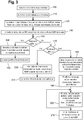
- the enrollment (or authentication) method will now be described in relation to FIG. 3.
- the fingerprint captured in step 140 can be advantageously used to initiate or continue enrollment.
- the enrollment process can be initiated or continued as soon as a finger is placed on the sensor and save time in this enrollment process.
- enrollment can be carried out during several command / response sessions. They can all intervene successively in succession by for example, for a few minutes on one day or to intervene each on different days.
- Terminal 3 via P2 can, reactivate the radio frequency field if necessary, and send a second command to read the NDEF file which will trigger or continue the enrollment process in the card (depending on whether the previous fingerprint was used or not) ;
- This new message received by the terminal following this second reading can be an instruction to again present the finger on the sensor as previously or to indicate that the enrollment will be completed (step 210 below).
- the user when the user wishes to use the NDEF record, he can use it simply by reading it with a read instruction of the mobile terminal.
- the record (message) read is used like the static records recorded in RFID tags, but in fact, the record was updated shortly before because the device has dynamic NDEF information generation capabilities.
- NDEF information can be generated by the device for a duration of a command / response which can range, for example up to 2 seconds.
- the duration can represent approximately 25 times the duration of an order / response defined by the EMV standard.
- a wait or reiterate read response can be sent by the device while dynamically creating new information intended to be read by the terminal.
- New information once created can have the same attributes as static NDEF information. However, the device has the capacity to dynamically vary this information.
- the enrollment process on the card (or device) is executed during an NDEF reading session to prevent the mobile to cut the field between two NDEF readings.
- the same session can be kept open, in particular by WTX messages requesting the device to wait, in accordance with ISO 14443 protocol.
- the device itself being passive, can control several successive operations of the terminal with information stored or displayed by the device (without the device being able to be active vis-à-vis the terminal). It can for example prepare messages asking to repeat a new reading after a lapse of time or any other message, even after closing of session and cut-off of field of the terminal.
- the device can insert information relating to enrollment and information for piloting the terminal, such as asking it to start a new reading, in particular in a new session.
- This application P1 is based on a communication interface 18 provided by the operating system of a secure microcontroller SE.
- the NDEF file containing the NDEF information to be read by the terminal 3 can be simulated or generated using a P4 application which will make it possible to respond to NDEF read commands.
- Biometric data are acquired via a sensor 4, optionally associated with a complementary biometric processor (BIO MCU) specialized to process the captured biometric information.
- the device comprises a power manager 8 for the various components of the device, depending on the energy sources available, in particular from the electromagnetic field of a terminal 3 (and / or optionally a battery).
- the invention may also include an additional mode of operation which may be faster, below.
- the enrollment can comprise successive seizures of different fingerprints carried out during the same communication session in particular of command / response between the terminal and the device.
- This enrollment operation comprising successive entries can be carried out in particular because the device has planned to send WTX requests for extension of the command / response session duration.
- the radiofrequency field can be maintained during the same session the time to capture a series of different enrollment fingerprints and before sending a response to the read command from the terminal.
- the device can include an indicator such as an LED, a micro display which can indicate a rate of enrollment progress or a fill rate or constitution of the reference fingerprint model.
- the display can be a progress bar and / or a percentage, the value of which is refreshed as you enter it.
- the LED can flash as long as enrollment is insufficient and be non-flashing when it is complete.
- the invention can provide for combining (completing) solutions of the prior art with those proposed here to inform or guide the user in the enrollment process.
- the device can communicate with the user by displaying a message in particular by 2D, 3D code (QR code) on a display, in particular a bistable display.
- 2D, 3D code QR code
- the user can know what stage of enrollment he is in or in the event of a problem or other, he can recover the information by simple optical reading using his terminal.
- the optical reading can be translated / transposed, in particular by voice synthesis, to the user or be displayed in larger type on the terminal. The user does not need to restart the terminal's enrollment program to know where he is in his enrollment.
- an analysis program P5 (or in P1) in the device can be configured to be able to determine where the problem is or to determine a finger zone to be completed or redone for reasons notably of poor capture (insufficient pressure or insufficient duration of holding the finger in place on the sensor). Then, the program P5 (or P1) prepares a more detailed message for the user to redo a finger entry for a missing area. This more detailed message can be prepared as an NDEF record.
- the following messages can be sent among: “place the tip of the finger on the sensor; replace the finger centered on the sensor; place the left or right side of the finger on the sensor; maintain more pressure on the sensor; capture error, please clean finger and / or sensor ".
- the device can stop sending time extension requests when the response containing the NDEF message is given to the terminal.
- the terminal can then display (or communicate otherwise), the instruction or information read to the user, end the session (field cut) and then start a new reading later and reactivate the field again.
- the analysis program (P5 or P1) can directly prepare, during the same command / response session, an enrollment rate message satisfying 100% after at least one entry or several entries.
- the NDEF message can then include for example: "Enrollment complete, please remove your finger from the sensor and move the card away from the terminal".
- the method may provide for enrolling a second finger and in in this case, the message for the user may be "Enrollment with a first finger completed, please place your second finger on the sensor for a second enrollment".
- the invention has the advantage of being able to overcome the battery in the device, although it can be applied to devices with a battery or other source of energy. It allows not to request a possible battery in the device especially since a series of enrollment may require a significant energy consumption that the device may not be able to provide.
- the P2 application of the terminal can provide for asking the user to connect his terminal to the sector before starting enrollment. It can also provide for conditioning the start of enrollment to the connection of the terminal to the mains (or electrical network) or to the detection of a sufficient battery level.
Landscapes
- Engineering & Computer Science (AREA)
- Theoretical Computer Science (AREA)
- Computer Security & Cryptography (AREA)
- Business, Economics & Management (AREA)
- Accounting & Taxation (AREA)
- Physics & Mathematics (AREA)
- General Physics & Mathematics (AREA)
- Strategic Management (AREA)
- General Business, Economics & Management (AREA)
- Finance (AREA)
- Computer Hardware Design (AREA)
- Software Systems (AREA)
- General Engineering & Computer Science (AREA)
- Telephone Function (AREA)
Priority Applications (2)
| Application Number | Priority Date | Filing Date | Title |
|---|---|---|---|
| EP18306788.3A EP3671500A1 (de) | 2018-12-21 | 2018-12-21 | Assistiertes autonomes datenerfassungsverfahren und -system für inhaber einer biometrischen vorrichtung |
| PCT/EP2019/085439 WO2020127112A1 (fr) | 2018-12-21 | 2019-12-16 | Procede et systeme d'enrolement autonome assiste pour detenteur de dispositif biometrique |
Applications Claiming Priority (1)
| Application Number | Priority Date | Filing Date | Title |
|---|---|---|---|
| EP18306788.3A EP3671500A1 (de) | 2018-12-21 | 2018-12-21 | Assistiertes autonomes datenerfassungsverfahren und -system für inhaber einer biometrischen vorrichtung |
Publications (1)
| Publication Number | Publication Date |
|---|---|
| EP3671500A1 true EP3671500A1 (de) | 2020-06-24 |
Family
ID=65861182
Family Applications (1)
| Application Number | Title | Priority Date | Filing Date |
|---|---|---|---|
| EP18306788.3A Withdrawn EP3671500A1 (de) | 2018-12-21 | 2018-12-21 | Assistiertes autonomes datenerfassungsverfahren und -system für inhaber einer biometrischen vorrichtung |
Country Status (2)
| Country | Link |
|---|---|
| EP (1) | EP3671500A1 (de) |
| WO (1) | WO2020127112A1 (de) |
Citations (2)
| Publication number | Priority date | Publication date | Assignee | Title |
|---|---|---|---|---|
| US20140236697A1 (en) * | 2013-02-20 | 2014-08-21 | Kt Corporation | Managing digital coupons |
| WO2018151647A1 (en) * | 2017-02-20 | 2018-08-23 | Fingerprint Cards Ab | Method and smart card adapted for progressive fingerprint enrollment |
-
2018
- 2018-12-21 EP EP18306788.3A patent/EP3671500A1/de not_active Withdrawn
-
2019
- 2019-12-16 WO PCT/EP2019/085439 patent/WO2020127112A1/fr not_active Ceased
Patent Citations (2)
| Publication number | Priority date | Publication date | Assignee | Title |
|---|---|---|---|---|
| US20140236697A1 (en) * | 2013-02-20 | 2014-08-21 | Kt Corporation | Managing digital coupons |
| WO2018151647A1 (en) * | 2017-02-20 | 2018-08-23 | Fingerprint Cards Ab | Method and smart card adapted for progressive fingerprint enrollment |
Also Published As
| Publication number | Publication date |
|---|---|
| WO2020127112A1 (fr) | 2020-06-25 |
Similar Documents
| Publication | Publication Date | Title |
|---|---|---|
| EP3794538B1 (de) | Autonomes erfassungsverfahren und -system für inhaber einer biometrischen vorrichtung | |
| EP2082359B1 (de) | Verfahren und einrichtung zum anpassen einer tragbaren elektronischen entität | |
| EP3608833B1 (de) | Erfassung eines biometrischen abdrucks von einer chipkarte | |
| FR2989799A1 (fr) | Procede de transfert d'un dispositif a un autre de droits d'acces a un service | |
| FR3043819A1 (fr) | Procede d'aide a l'authentification d'un utilisateur, serveur et programme d'ordinateur correspondants | |
| EP3252692B1 (de) | Verfahren zur lieferung der entsprechenden daten einer zahlungstransaktion, entsprechende vorrichtung und entsprechendes programm | |
| WO2008065264A1 (fr) | Entite electronique portable et procede de personnalisation d'une telle entite electronique | |
| EP3598328B1 (de) | Verfahren zur speicherung von biometrischen referenzdaten auf einer biometrischen chipkarte | |
| EP3154284B1 (de) | Kopplungsverfahren in einem peripheriegerät und einem kommunikationsendgerät, entsprechende vorrichtungen und programme | |
| EP3671500A1 (de) | Assistiertes autonomes datenerfassungsverfahren und -system für inhaber einer biometrischen vorrichtung | |
| BE1026342B1 (fr) | Dispositif et procede pour l'indentification securisee d'un utilisateur | |
| FR3047583A1 (fr) | Methode de transmission securisee d'informations d'authentification entre des applications logicielles dans un terminal informatique | |
| FR2945141A1 (fr) | Procede et systeme de gestion d'une application de paiement mobile sans contact mettant en oeuvre une verification de code personnel | |
| EP3234848A1 (de) | Verfahren zum senden eines sicherheitsinformationselements und elektronische vorrichtung zur implementierung solch eines verfahrens | |
| EP3261014B1 (de) | Sendeverfahren einer sicherheitsinformation | |
| EP3757921A1 (de) | Verfahren und system zur validierung einer erfassung einer person auf einer biometrischen vorrichtung | |
| EP2306414A1 (de) | Kommunikationsverfahren zwischen einem Kartenleser und zwei Chipkarten | |
| EP4124990A1 (de) | Digitales identifizierungsverfahren mit kommunikation zwischen einem mobilen gerät und einem identitätsdokument | |
| FR3076008A1 (fr) | Systeme d'authentification d'acces a formats d'entree multiples comprenant une borne d'authentification mobile et configurable, methode et logiciel associes | |
| EP3208731B1 (de) | Konfigurationsprozess und konfigurationsgerät für ein gerät, das banktransaktionen durchführt | |
| EP3690685A1 (de) | Authentifizierungsverfahren eines benutzers und entsprechende vorrichtung | |
| FR2795836A1 (fr) | Procede pour comptabiliser le temps dans un dispositif de traitement d'information, et dispositif associe | |
| WO2007125212A2 (fr) | Procede et dispositif de personnalisation d'une entite electronique portable | |
| EP3900228A1 (de) | Verfahren und vorrichtung zur erkennung eines benutzers | |
| FR3076252A1 (fr) | Dispositif de personnalisation de document d'identite pour imprimante et imprimante le comprenant |
Legal Events
| Date | Code | Title | Description |
|---|---|---|---|
| STAA | Information on the status of an ep patent application or granted ep patent |
Free format text: STATUS: UNKNOWN |
|
| PUAI | Public reference made under article 153(3) epc to a published international application that has entered the european phase |
Free format text: ORIGINAL CODE: 0009012 |
|
| STAA | Information on the status of an ep patent application or granted ep patent |
Free format text: STATUS: THE APPLICATION HAS BEEN PUBLISHED |
|
| AK | Designated contracting states |
Kind code of ref document: A1 Designated state(s): AL AT BE BG CH CY CZ DE DK EE ES FI FR GB GR HR HU IE IS IT LI LT LU LV MC MK MT NL NO PL PT RO RS SE SI SK SM TR |
|
| AX | Request for extension of the european patent |
Extension state: BA ME |
|
| STAA | Information on the status of an ep patent application or granted ep patent |
Free format text: STATUS: THE APPLICATION IS DEEMED TO BE WITHDRAWN |
|
| 18D | Application deemed to be withdrawn |
Effective date: 20210112 |