EP3671579A1 - Procédé et système pour fournir un service pour un système industriel - Google Patents
Procédé et système pour fournir un service pour un système industriel Download PDFInfo
- Publication number
- EP3671579A1 EP3671579A1 EP18214098.8A EP18214098A EP3671579A1 EP 3671579 A1 EP3671579 A1 EP 3671579A1 EP 18214098 A EP18214098 A EP 18214098A EP 3671579 A1 EP3671579 A1 EP 3671579A1
- Authority
- EP
- European Patent Office
- Prior art keywords
- bom
- nodes
- service
- graph
- tree
- Prior art date
- Legal status (The legal status is an assumption and is not a legal conclusion. Google has not performed a legal analysis and makes no representation as to the accuracy of the status listed.)
- Withdrawn
Links
Images



Classifications
-
- G—PHYSICS
- G06—COMPUTING OR CALCULATING; COUNTING
- G06Q—INFORMATION AND COMMUNICATION TECHNOLOGY [ICT] SPECIALLY ADAPTED FOR ADMINISTRATIVE, COMMERCIAL, FINANCIAL, MANAGERIAL OR SUPERVISORY PURPOSES; SYSTEMS OR METHODS SPECIALLY ADAPTED FOR ADMINISTRATIVE, COMMERCIAL, FINANCIAL, MANAGERIAL OR SUPERVISORY PURPOSES, NOT OTHERWISE PROVIDED FOR
- G06Q10/00—Administration; Management
-
- G—PHYSICS
- G06—COMPUTING OR CALCULATING; COUNTING
- G06Q—INFORMATION AND COMMUNICATION TECHNOLOGY [ICT] SPECIALLY ADAPTED FOR ADMINISTRATIVE, COMMERCIAL, FINANCIAL, MANAGERIAL OR SUPERVISORY PURPOSES; SYSTEMS OR METHODS SPECIALLY ADAPTED FOR ADMINISTRATIVE, COMMERCIAL, FINANCIAL, MANAGERIAL OR SUPERVISORY PURPOSES, NOT OTHERWISE PROVIDED FOR
- G06Q10/00—Administration; Management
- G06Q10/08—Logistics, e.g. warehousing, loading or distribution; Inventory or stock management
- G06Q10/087—Inventory or stock management, e.g. order filling, procurement or balancing against orders
- G06Q10/0875—Itemisation or classification of parts, supplies or services, e.g. bill of materials
-
- G—PHYSICS
- G06—COMPUTING OR CALCULATING; COUNTING
- G06F—ELECTRIC DIGITAL DATA PROCESSING
- G06F16/00—Information retrieval; Database structures therefor; File system structures therefor
- G06F16/90—Details of database functions independent of the retrieved data types
- G06F16/901—Indexing; Data structures therefor; Storage structures
- G06F16/9024—Graphs; Linked lists
-
- G—PHYSICS
- G06—COMPUTING OR CALCULATING; COUNTING
- G06F—ELECTRIC DIGITAL DATA PROCESSING
- G06F18/00—Pattern recognition
- G06F18/20—Analysing
- G06F18/21—Design or setup of recognition systems or techniques; Extraction of features in feature space; Blind source separation
- G06F18/213—Feature extraction, e.g. by transforming the feature space; Summarisation; Mappings, e.g. subspace methods
- G06F18/2135—Feature extraction, e.g. by transforming the feature space; Summarisation; Mappings, e.g. subspace methods based on approximation criteria, e.g. principal component analysis
-
- G—PHYSICS
- G06—COMPUTING OR CALCULATING; COUNTING
- G06F—ELECTRIC DIGITAL DATA PROCESSING
- G06F18/00—Pattern recognition
- G06F18/20—Analysing
- G06F18/22—Matching criteria, e.g. proximity measures
-
- G—PHYSICS
- G06—COMPUTING OR CALCULATING; COUNTING
- G06F—ELECTRIC DIGITAL DATA PROCESSING
- G06F18/00—Pattern recognition
- G06F18/20—Analysing
- G06F18/23—Clustering techniques
- G06F18/232—Non-hierarchical techniques
- G06F18/2323—Non-hierarchical techniques based on graph theory, e.g. minimum spanning trees [MST] or graph cuts
-
- G—PHYSICS
- G06—COMPUTING OR CALCULATING; COUNTING
- G06F—ELECTRIC DIGITAL DATA PROCESSING
- G06F18/00—Pattern recognition
- G06F18/20—Analysing
- G06F18/24—Classification techniques
- G06F18/241—Classification techniques relating to the classification model, e.g. parametric or non-parametric approaches
- G06F18/2413—Classification techniques relating to the classification model, e.g. parametric or non-parametric approaches based on distances to training or reference patterns
- G06F18/24147—Distances to closest patterns, e.g. nearest neighbour classification
Definitions
- the invention relates to a computer implemented method and a computer implemented service provision platform adapted to provide a service to a complex industrial system such as an automation system.
- a Bill-of-Materials BoM for two different machines of the same product family may contain different components (or the same components with a different composition relationship) although the physical compositions of the components of the machines are identical.
- Producing such machines forming part of a complex industrial system according to misaligned specifications is less problematic because production engineers may verify that two designs are conceptually identical, for example by comparing the respective technical drawings of the components.
- misaligned specifications can become extremely problematic for service engineers. For example, when each of e.g. 24 machines come with misaligned specifications, with each specification containing approximately 100,000 components or material positions, then the service engineer has to manage and to maintain service and/or spare part information for 2.4 million material specifications instead of only 100,000 material specifications. Having less material specifications makes the maintenance of this fleet of machines significantly less complex.
- Fig. 1 shows a flowchart to illustrate a conventional process of handling a service request.
- a service request SREQ for a machine X is first analysed in step S11 and a lookup of material specification in a BoM for the respective machine X is performed in step S12 using a BoM database of machine X.
- the lookup step S12 can provide a custom material ID CMID as shown in Fig. 1 .
- a spare part database SPDB is searched using the custom material ID CMID. This step S13 has to be performed for each service request and for each machine X. Consequently, the search is very time-consuming and error-prone.
- a service action can be finalized in step S14 to provide a specified service action SA including the found spare part as illustrated in Fig. 1 .
- service engineers have to manually search in different databases and have to go through documentations to validate if two components or parts are technically identical and therefore replaceable by a certain spare part. This might even require visual inspection of technical drawings which is enormous time-consuming. Manual creation of a unified view is therefore tedious, time-consuming, and error-prone.
- the invention provides according to the first aspect of the present invention a computer implemented method for providing a service for a complex industrial system, the method comprising the steps of:
- each BoM tree is configured to represent a corresponding physical system component instance and is stored in a central or distributed database.
- the BoM tree of a system component instance is a rooted tree including a set of nodes representing subcomponents of the system component instance connected via a set of edges representing relations between the subcomponents of the system component instance.
- each node of a BoM tree representing a subcomponent of the respective system component instance comprises attached attributes indicating properties of the respective subcomponent.
- the unified BoM data model is generated iteratively starting from an initial set of clusters derived from nodes of a reference BoM tree by performing a bipartite matching between a current set of clusters and nodes of an additional BoM tree to merge matching nodes of the additional BoM tree into the current set of clusters and forming an additional cluster for each not-matching node of the additional BoM tree, wherein the resulting clusters are connected as nodes in an unpruned BoM graph.
- the bipartite matching is performed on the basis of a calculated similarity score between a cluster and a node of the additional BoM tree.
- the calculated similarity score takes into account the structural relations of nodes within the BoM trees and/or attributes attached to the respective nodes in the BoM trees.
- the structural relations comprise parent-child relations of nodes within the BoM trees.
- matching nodes of an additional BoM tree are assigned to a cluster for which it has a highest calculated similarity score, to a cluster for which it has the highest similarity to the most similar item within each cluster, and/or to a cluster for which it has the highest similarity to the least similar item across all clusters.
- the unpruned BoM graph is pruned to generate the unified BoM data model.
- the pruning of the BoM graph keeps longest paths from the root node of the unpruned BoM graph to the other nodes of the unpruned BoM graph.
- the pruning of the BoM graph keeps the most frequent paths from the root node of the unpruned BoM graph to the other nodes of the unpruned BoM graph.
- redundant nodes within the unpruned BoM graph are merged to generate the unified BoM data model.
- the similarity scores are approximated by performing Nyström approximation on the basis of a similarity matrix provided for clusters and nodes.
- the service provided on the generated unified BoM data model comprises a maintenance service for the complex industrial system, a repair service for the complex industrial system and/or an update service for the complex industrial system.
- the invention further provides according to a further aspect a computer implemented service provision platform comprising the features of claim 16.
- the invention provides according to the second aspect a computer implemented service provision platform adapted to provide a service to a complex industrial system, said platform comprising a database which stores Bill of Material, BoM, trees of system component instances of said complex industrial system, at least one processor adapted to generate automatically a unified BoM data model by clustering matching nodes within the BoM trees, and a service provision engine adapted to provide a selected service for the complex industrial system based on the generated unified BoM data model stored in the database.
- a computer implemented service provision platform adapted to provide a service to a complex industrial system, said platform comprising a database which stores Bill of Material, BoM, trees of system component instances of said complex industrial system, at least one processor adapted to generate automatically a unified BoM data model by clustering matching nodes within the BoM trees, and a service provision engine adapted to provide a selected service for the complex industrial system based on the generated unified BoM data model stored in the database.
- the invention further provides according to a further aspect a computer program product comprising the features of claim 17.
- the invention provides according to the third aspect a computer program product comprising instructions adapted to perform the method according to the first aspect of the present invention.
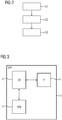
- the computer implemented method for providing a service for a complex industrial system can comprise several main steps.
- the computer implemented method according to the present invention for providing a service such as a maintenance service for a complex industrial system such as an automation system can comprise three main steps S1, S2, S3.
- a first step S1 Bill-of-Materials, BoM, trees of system component instances of the complex industrial system are provided.
- a unified BoM data model is generated automatically by clustering matching nodes within the BoM trees provided in step S1.
- a service is provided for the complex industrial system based on the generated unified BoM data model.
- the service provided on the generated unified BoM data model in step S3 can comprise in a possible embodiment a maintenance service of a complex industrial system. Further, the service provided by the generated unified BoM data model can also comprise a repair service of the complex industrial system. In a still further possible embodiment, the service provided on the generated unified BoM data model in step S3 can also comprise an update service of the complex industrial system, in particular an update service of a software component within the complex industrial system.
- Each BoM tree of system component instances of the complex industrial system provided in step S1 is configured to represent a corresponding physical system component instance and can be stored in a possible embodiment in a central or distributed database of a computer implemented service provision platform.
- the BoM tree of a system component instance comprises a rooted tree including a set of nodes representing subcomponents of the system component instance connected via a set of edges representing relations between the subcomponents of the respective system component instance.
- Each node of a BoM tree representing a subcomponent of a system component instance can comprise attached attributes indicating properties of the respective subcomponent.
- a unified BoM data model is generated in step S2 iteratively starting from an initial set of clusters derived from nodes of a reference BoM tree by performing a bipartite matching between a current set of clusters and nodes of an additional BoM tree to merge matching nodes of the additional BoM tree into the current set of clusters and forming an additional cluster for each not-matching node of the additional BoM tree.
- the resulting clusters are connected as nodes in an unpruned BoM graph.
- the bipartite matching in step S2 is performed on the basis of a calculated similarity score between a cluster and a node of the additional BoM tree.
- the calculated similarity score takes into account the structural relations of nodes within the BoM trees and/or the attributes attached to the respective nodes in the BoM trees.
- the structural relations comprise parent-child relations of nodes within the BoM trees.
- a matching node of an additional BoM tree can be either assigned to a cluster for which it has a highest calculated similarity score, to a cluster for which it has a highest similarity to the most similar item within each cluster or to a cluster to which it has the highest similarity to the least similar item across all clusters.
- the unpruned BoM graph generated in step S2 is pruned to generate the unified BoM data model used in step S3 to perform a service for the complex industrial system.
- the pruning of the BoM graph can keep in a possible embodiment the longest path from the root node of the unpruned BoM graph to the other nodes of the unpruned BoM graph.
- the pruning of the BoM graph keeps the most frequent path from the root node of the unpruned BoM graph to the other nodes of the unpruned BoM graph.
- redundant nodes within the unpruned BoM graph are merged automatically to generate the unified BoM data model used in step S3 for performing a selected service for the complex industrial system.
- the bipartite matching performed in step S2 for generating automatically the unified BoM data model can be performed on the basis of a calculated similarity score between a cluster and a node of an additional BoM tree.
- similarity scores are approximated by performing Nyström approximation on the basis of a similarity matrix provided for clusters and nodes.
- the invention further provides according to a further aspect a computer implemented service provision platform SPP 1 as illustrated schematically in the block diagram of Fig. 3 .
- the computer implemented service platform 1 comprises in the illustrated embodiment a database 2 which stores Bill-of-Material, BoM, trees of system component instances of the respective complex industrial system, for instance an industrial automation system.
- the computer implemented service provision platform 1 further comprises at least one processor 3 adapted to generate automatically a unified BoM data model by clustering matching nodes within the BoM trees.
- the computer implemented service provision platform 1 as illustrated in Fig. 3 further comprises a service provision engine SPE 4 adapted to provide a selected service for the complex industrial system based on the generated unified BoM data model stored in the database 2 of the computer implemented service provision platform 1.
- a complex gas turbine (SGTX-8000H) comprises three main subsystems or main components, i.e. a rotor R, a compressor C and a turbine T.
- Each subsystem or main component comprises in turn subsystems and components.
- the rotor R comprises several turbine discs TD1 to TD4 as illustrated in Fig. 4 .
- the second subsystem i.e. the compressor C, can for instance comprise blade stages BS1 to BS4.
- the third main component or subsystem, e.g. the turbine T of the gas turbine can comprise several components such as blade stages BS1 to BS4.
- the subcomponents can comprise parts of further subcomponents.
- the turbine disc TD3 can comprise a subcomponent MBRTN30M00-000 as shown in the diagram of Fig. 4 .
- a subcomponent can comprise several subcomponents such as the blade stage BS3 of the subsystem compressor C including a subcomponent or part MBCPB03C01-000, MBCPB03Z10-000 and MBCPB03Z20-000.
- the blade stage component BS3 of the turbine subsystem T comprises also subcomponent MBTBB30A00-000.
- Fig. 4 shows on the left side a unified view over component references with concrete locations and possible BoM trees for subcomponents.
- the unified structure on the left-hand side of Fig. 4 has references to the individual machines BoM data structures on the right side of Fig. 4 . This way, the search of fitting spare parts can be performed on a unified data structure and has not to be performed for each individual machine.
- Fig. 5 shows two engineers who specify a compressor design of a compressor C within a gas turbine with a similar configuration.
- the two engineers may have a different conception of the respective compressor leading to slightly different BoM trees as shown in Fig. 5 .
- the second design engineer generates a Bill-of-Material, BoM, tree for the compressor including a subcomponent D' of the component C' missing in the BoM tree provided by the first design engineer for the same compressor.
- the different design engineers may attach different attributes to the same components of the compressor.
- Fig. 5 illustrates how two machine component specifications of the same configuration may be represented by differing BoM data structures or BoM trees having different sets of nodes with different relations and/or attributes.
- Certain components or subsystems of the respective complex industrial system may need to follow customer-specific or country-specific requirements, such that certain nodes or even whole subtrees within the BoM tree of the respective component have to be designed differently.
- a further source for a mismatch can be different compositional preferences of the respective engineer. Engineers may have a different view on how components relate to each other or are composed. This results in BoM trees that may provide a parent-child relation in one machine, but a sibling relation in the other.
- BoM tree structures of different physical machines or components stemming from the same product family do not completely change or emerge randomly.
- Engineers, i.e. design engineers still share the same expertise and technical know-how. This implies that the engineers declare similar composition relations between components with a corresponding data structure.
- physical boundaries, engineering best practice and company regulations force the engineers generating the BoM trees to use similar attributes to describe each component, e.g. in terms of quantity. For example, most vehicles comprise four wheels.
- compositionality It can be expected that for most components, a parent-child relation is preserved and cannot be reversed.
- a motor as a parent entity can have rotors as child entities and not the other way around.
- the method according to the present invention can perform in a possible implementation an iterative graph-based entity resolution algorithm that can be based on a clustering of nodes between different BoM tree structures stored in a database.
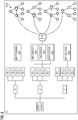
- a computer implemented service provision platform SPP can comprise a database 2 which stores a plurality of Bill-of-Materials, BoM, trees of system components instances of a complex industrial system such as an automation system.
- the database 2 stores n BoM trees forming variations concerning the same physical component such as a compressor within a gas turbine system.
- the database 2 can initially store unaligned BoM data structures or BoM trees wherein nodes represent subcomponents and edges represent compositional relations. Further, the squares illustrated in Fig.
- the computer implemented platform 1 illustrated in the block diagram of Fig. 6 comprises at least one processing unit 3 which can be used for performing the generation of a unified BoM data model by clustering matching nodes within the provided BoM trees read from the database 2 of the platform 1.
- the processing unit 3 can be used for cluster merging and/or BoM graph pruning.
- the unified BoM data model can be generated iteratively starting from an initial set of clusters derived from nodes of a reference BoM tree by performing a bipartite matching between a current set of clusters and nodes of an additional BoM tree to merge the matching nodes of the additional BoM tree into a current set of clusters and by performing an additional cluster for each not-matching node of the additional BoM tree.
- the resulting clusters can then be connected to nodes in an unpruned BoM graph.
- the generation of the unpruned BoM graph can be performed by a cluster merge unit 3A of the processing unit 3 as illustrated in Fig. 6 .
- a pruning processing unit 3B can then be used to prune the unpruned BoM graph provided by a cluster merge subunit 3A.
- Fig. 6 illustrates schematically a pruned BoM graph output by the pruning subunit 3B.
- the unpruned BoM graph is pruned by the pruning unit 3B to generate the unified BoM data model which can be supplied to a service provision engine 4 as illustrated in the block diagram of Fig. 3 .
- the service provision engine 4 can be adapted to provide a selected service for the complex industrial system based on the generated unified BoM data model which may be also stored in the database 2 of the platform 1.
- pruning of the BoM graph performed by the pruning unit 3B can keep the longest path from the root node of the unpruned BoM graph to the other nodes of the unpruned BoM graph provided by the cluster merge subunit 3A.
- the pruning of the BoM graph by the pruning unit 3B keeps the most frequent path from the root node of the unpruned BoM graph to the other nodes of the unpruned BoM graph.
- redundant nodes within the unpruned BoM graph can be merged automatically to generate the unified BoM data model.
- the cluster merge algorithm can be employed by the cluster merge unit 3A by iterating through a set of BoM data structure instances, wherein at each step every existing cluster is merged with the best matching element from the current BoM structure instance.
- the following illustrates a possible implementation of a cluster merge algorithm performed by the cluster merge subunit 3A illustrated in the block diagram of Fig. 6 .
- a super-graph structure merges the individual nodes in the trees and carries over all existing edges from their original structure.
- Figs. 7, 8 illustrate this approach for an initial data structure for BoM tree BoM1 and a second data structure for BoM tree BoM2 by merging the clusters and by alignment of the respective super-graph (which is no longer a tree as illustrated in Fig. 8 ).
- the unified BoM data model or super-graph on the right side of Fig. 8 is generated in the illustrated embodiment by iteratively starting from an initial set of clusters derived from nodes of a reference BoM tree by performing a bipartite matching between a current set of clusters and nodes of an additional BoM tree to merge matching nodes of the additional BoM into the current set of clusters and forming an additional cluster (expanding clusters) for each not-matching node of the additional BoM tree.
- an initial set of clusters is derived from the nodes of the reference BoM tree which in the given example of Fig. 7 is the BoM tree 1 illustrated on the left side of Fig. 7 .
- the illustrated BoM tree 1 comprises nodes A, B, C, D, E forming the initial set of clusters used by the unification algorithm.
- a bipartite matching is performed with the nodes of an additional BoM tree which is formed in the given example by the BoM tree BoM tree 2 shown on the right side of Fig. 7 .
- the second BoM tree 2 illustrated in Fig. 7 comprises in the given example one non-matching node, i.e. node F.
- BoM tree 2 The remaining nodes of BoM tree 2 can be matched with the existing clusters as illustrated in the middle of Fig. 8 .
- node F of the additional BoM tree i.e. BoM tree 2
- an additional cluster is formed as shown in Fig. 8 (expand cluster).
- the resulting clusters are connected as nodes within a super-graph structure, i.e. an unpruned BoM graph as illustrated in Fig. 8 .
- the unpruned BoM graph can then be pruned to generate the unified BoM data model stored in the database 2 of the platform 1.
- the unified data model can then be used by the service provision engine 4 to provide a selected service such as a maintenance service for the respective complex industrial system.
- Bipartite matching as illustrated in Fig. 8 can be performed on the basis of a calculated similarity score between a cluster and a node of any additional BoM tree such as BoM tree 2 shown in Fig. 7 .
- the calculated similarity score can take into account both the structure relations of nodes within the BoM trees but also the attributes attached to the respective nodes in the BoM trees.
- each material specification can be provided with attached attributes such as a textual description or an indicated quantity or any other kind of metadata, it is possible to incorporate an attribute-based similarity measure that can determine a degree of similarity between two nodes in different BoM trees.
- an attribute-based similarity measure that can determine a degree of similarity between two nodes in different BoM trees.
- this can for example be provided by performing a fuzzy string matching.
- a weighting scheme can be employed to reflect main expert knowledge or reflect labelled training data.
- a graph-based similarity for pairs of BoM items within BoM trees can comprise in a possible embodiment two similarities.
- a first similarity comprises an attribute-based similarity of parents (there is exactly one parent for each BoM tree item since it is a tree). Further, it comprises an aggregated pairwise attribute-based similarity for every children pair combination (e.g. fuzzy jaccard similarity). The following illustrates a possible implementation of a calculated graph-based similarity.
- Linkage techniques comprise a min-linkage (merge item to cluster to which it has the highest minimum score), a max-linkage (merge item to cluster to which it has the highest minimum score) and an average-linkage (merge item to cluster to which it has the highest average score).
- the super-graph structure illustrated in Fig. 8 on the right side is the result of the merging algorithm and can serve as a first unified view to a user. Since the resulting unified structure should again reflect a BoM structure, it should form a BoM tree structure as well. Accordingly, in a preferred embodiment, a pruning unit 3B is provided to perform pruning of the super-graph structure of a BoM graph resulting from the unification algorithm. In a possible embodiment, the pruning unit 3B can use different pruning strategies that may reflect domain expertise on how a human engineer would prune paths to recover a unified BoM tree structure.
- Fig. 9 illustrates schematically pruning of redundant paths from a parent node to a child node.
- Figs. 10 , 11, 12 illustrate different possible embodiments, where an unpruned BoM graph is pruned to generate a unified BoM data model.
- the pruning of a BoM graph keeps longest paths from a root node of the unpruned BoM graph to the least nodes of the unpruned BoM graph. This corresponds to a concept of transitive reduction.
- pruning keeps the longest paths from the root node to all other vertices or nodes in the super-graph.
- a possible approach is to use a modified version of a spanning tree algorithm where an objective function is modified to account for paths from the root node, e.g. root node A as illustrated in Fig. 10 .
- pruning is performed as illustrated in context with the schematic diagram of Fig. 11 .
- the pruning of the BoM graph keeps the most frequent path from the root node of the unpruned BoM graph to the other nodes of the unpruned BoM graph.
- weights on the edges are considered.
- weights can be assigned to the edges depending on how many BoM data structures contain the corresponding edge.
- the maximum cost spanning tree algorithm can be used to provide an unpruned BoM graph forming the unified BoM data model.
- redundant nodes within the unpruned BoM graph can be merged to generate the unified BoM data model. Pruning of a redundant parent node can be performed that has the exact same child links as one of its children nodes. In case that a parent node has the same child links as one of its children nodes, the parent node and the corresponding child node can be merged as illustrated schematically in Fig. 12 .
- a graph compression algorithm can be applied to prune the super-graph.
- new components or machines can be merged into an existing super-graph structure by executing a cluster-merge algorithm.
- the cluster-merge algorithm performed by the cluster-merge subunit 3A requires to compare new items to all existing items within a cluster, it is possible to introduce a subsampling procedure that only picks, e.g. log(n) representatives of a cluster and uses these picks for comparison.
- techniques like alpha-beta pruning can be applied to prune the search space. For example, if the attribute-based similarity already disqualifies for a best match, there is no need to consider children or parents in the respective graph.
- the method according to the present invention can provide a distributed implementation of the underlying algorithms.
- the ordering of BoM structures in the iterative clustering does influence the outcome, running multiple clusterings in parallel and calculating averages of the results can contribute to the stability and quality of the output without impacting negatively the runtime of the platform 1.
- the similarity scores can be approximated by performing a Nyström approximation on the basis of a similarity matrix provided for clusters and nodes.
- the Kernel matrix K comprises similarity scores between components and clusters.
- Kernel A B B r C
- Low-rank approximations based on sampling data points from the full Kernel matrix can be used in a possible embodiment to speed up the similarity comparison.
- the method according to the present invention provides for a high accuracy in BoM structure matching.
- the method further provides for a fast execution of structure matching.
- With the method according to the present invention it is possible to automatically generate a superseding unified structure that reflects domain expert rules on merging structures.
- the method provides in a possible embodiment a combination of attribute-based and structured similarity.
- the method according to the present invention supports a dynamic expansion of a set of clusters respecting the notion that one wants to preserve a superseding structure that includes all material nodes even if they are only present in a small subset of machines.
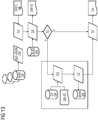
- Fig. 13 illustrates a use case for the method and system according to the present invention.
- the illustrated flowchart shows the processing of a service request SREQ for a machine X, i.e. an instance of a complex industrial system.
- the requested service can be for instance a requested maintenance service to find a fitting spare part for a component of a complex industrial system such as an automation system.
- the incoming service request SREQ can be analysed in step SA as illustrated in Fig. 13 .
- a lookup of a material specification can be performed in a unified BoM data model stored in a unified BoM database 2 of the platform 1 as shown in Fig. 3 .
- This unified BoM data model is generated automatically by performing a computer implemented method according to the first aspect of the present invention as illustrated in the flowchart of Fig. 2 on the basis of BoM trees of system component instances of the respective complex industrial system.
- the lookup performed in step SB provides for a unified component ID (UM-ID).
- UM-ID unified component ID
- SC it can be checked whether there is a spare part assigned and/or associated and identified by a corresponding node within the tree. If this is not the case, a fitting spare part can be searched in step SD on the basis of a spare part database SP-DB using the unified component ID provided by step SB. After the fitting spare part has been found in step SD, the unified BoM database can be updated in step SE as illustrated in Fig. 13 .
- the respective service action SA can be finalized, for instance a repair, maintenance or upgrade service action.
- the specified service action SA including the identified spare part can be output by the platform 1 as illustrated in Fig. 13 .
- the computer implemented method and platform 1 provides the further advantage that a reduced number of spare parts have to be kept in stock. Accordingly, the consistent clearance or search for spare parts reduces the complexity of the logistics.
- the method and platform 1 according to the present invention provide for a unification of multiple large-scale BoM data structures in an iterative fashion with possibly using fuzzy correspondence.
- the system 1 provides the possibility to define attribute-based and graph-based similarity functions as well as weightings for component attributes and their compositional relations.
- the method and system 1 according to the present invention can provide a graph-based BoM data structure as a result that approximately resembles a merged version of the input BoM structures.
- the method and system 1 according to the present invention can be used for any kind of complex systems, in particular a complex industrial system such as automation systems.
Landscapes
- Engineering & Computer Science (AREA)
- Theoretical Computer Science (AREA)
- Data Mining & Analysis (AREA)
- Physics & Mathematics (AREA)
- General Physics & Mathematics (AREA)
- Business, Economics & Management (AREA)
- General Engineering & Computer Science (AREA)
- Computer Vision & Pattern Recognition (AREA)
- Evolutionary Biology (AREA)
- Evolutionary Computation (AREA)
- Bioinformatics & Computational Biology (AREA)
- Bioinformatics & Cheminformatics (AREA)
- Artificial Intelligence (AREA)
- Life Sciences & Earth Sciences (AREA)
- Economics (AREA)
- Databases & Information Systems (AREA)
- Operations Research (AREA)
- General Business, Economics & Management (AREA)
- Marketing (AREA)
- Entrepreneurship & Innovation (AREA)
- Quality & Reliability (AREA)
- Strategic Management (AREA)
- Tourism & Hospitality (AREA)
- Human Resources & Organizations (AREA)
- Software Systems (AREA)
- Accounting & Taxation (AREA)
- Finance (AREA)
- Development Economics (AREA)
- Discrete Mathematics (AREA)
- Information Retrieval, Db Structures And Fs Structures Therefor (AREA)
Priority Applications (5)
| Application Number | Priority Date | Filing Date | Title |
|---|---|---|---|
| EP18214098.8A EP3671579A1 (fr) | 2018-12-19 | 2018-12-19 | Procédé et système pour fournir un service pour un système industriel |
| US17/312,725 US20220027849A1 (en) | 2018-12-19 | 2019-12-11 | Method and system for providing a service for a complex industrial system |
| PCT/EP2019/084596 WO2020126733A1 (fr) | 2018-12-19 | 2019-12-11 | Procédé et système de fourniture de service pour un système industriel complexe |
| EP19829007.4A EP3867832A1 (fr) | 2018-12-19 | 2019-12-11 | Procédé et système de fourniture de service pour un système industriel complexe |
| CN201980084346.5A CN113168544A (zh) | 2018-12-19 | 2019-12-11 | 为复杂工业系统提供服务的方法和系统 |
Applications Claiming Priority (1)
| Application Number | Priority Date | Filing Date | Title |
|---|---|---|---|
| EP18214098.8A EP3671579A1 (fr) | 2018-12-19 | 2018-12-19 | Procédé et système pour fournir un service pour un système industriel |
Publications (1)
| Publication Number | Publication Date |
|---|---|
| EP3671579A1 true EP3671579A1 (fr) | 2020-06-24 |
Family
ID=64746198
Family Applications (2)
| Application Number | Title | Priority Date | Filing Date |
|---|---|---|---|
| EP18214098.8A Withdrawn EP3671579A1 (fr) | 2018-12-19 | 2018-12-19 | Procédé et système pour fournir un service pour un système industriel |
| EP19829007.4A Withdrawn EP3867832A1 (fr) | 2018-12-19 | 2019-12-11 | Procédé et système de fourniture de service pour un système industriel complexe |
Family Applications After (1)
| Application Number | Title | Priority Date | Filing Date |
|---|---|---|---|
| EP19829007.4A Withdrawn EP3867832A1 (fr) | 2018-12-19 | 2019-12-11 | Procédé et système de fourniture de service pour un système industriel complexe |
Country Status (4)
| Country | Link |
|---|---|
| US (1) | US20220027849A1 (fr) |
| EP (2) | EP3671579A1 (fr) |
| CN (1) | CN113168544A (fr) |
| WO (1) | WO2020126733A1 (fr) |
Cited By (3)
| Publication number | Priority date | Publication date | Assignee | Title |
|---|---|---|---|---|
| CN112200331A (zh) * | 2020-12-03 | 2021-01-08 | 中国铁道科学研究院集团有限公司电子计算技术研究所 | 构型解析方法、节点、系统、装置、电子设备及存储介质 |
| CN112597833A (zh) * | 2020-12-11 | 2021-04-02 | 联想(北京)有限公司 | 一种处理方法和电子设备 |
| CN113191457A (zh) * | 2021-05-26 | 2021-07-30 | 重庆高新技术产业研究院有限责任公司 | 应用于制造企业的生产数据及bom自动归类的汇聚方法 |
Families Citing this family (3)
| Publication number | Priority date | Publication date | Assignee | Title |
|---|---|---|---|---|
| EP3723346B1 (fr) * | 2019-04-10 | 2024-08-21 | ABB Schweiz AG | Agrégation d'espace d'adresse sélective |
| CN113592264A (zh) * | 2021-07-19 | 2021-11-02 | 山东大学 | 一种服务bom的构建方法及系统 |
| CN114818681B (zh) * | 2022-06-24 | 2022-10-11 | 西南财经大学 | 一种实体识别方法及系统、计算机可读存储介质及终端 |
Citations (3)
| Publication number | Priority date | Publication date | Assignee | Title |
|---|---|---|---|---|
| US20110161209A1 (en) * | 2009-12-28 | 2011-06-30 | International Business Machines Corporation | Bill of Material Synchronization |
| US20120182873A1 (en) * | 2011-01-14 | 2012-07-19 | Shah Amip J | System and method for tree assessment |
| US20140364985A1 (en) * | 2013-06-05 | 2014-12-11 | Accenture Global Services Limited | Master bill of materials creation |
Family Cites Families (16)
| Publication number | Priority date | Publication date | Assignee | Title |
|---|---|---|---|---|
| US6339767B1 (en) * | 1997-06-02 | 2002-01-15 | Aurigin Systems, Inc. | Using hyperbolic trees to visualize data generated by patent-centric and group-oriented data processing |
| US7512615B2 (en) * | 2003-11-07 | 2009-03-31 | International Business Machines Corporation | Single pass workload directed clustering of XML documents |
| EP1628250A1 (fr) * | 2004-08-20 | 2006-02-22 | Sap Ag | Un procédé pour la modélisation automatique d'une relation entre un produit configurable et une pluralité des composant du dite produit sous forme d'une nomenclature, un système d'ordinateur pour la modélisation automatique d'une relation entre un produit configurable et une pluralité des composant du dite produit sous forme d'une nomenclature |
| US20090167515A1 (en) * | 2007-12-28 | 2009-07-02 | Paccar Inc | Automated telltale identification |
| CN102004943B (zh) * | 2010-04-28 | 2013-10-02 | 郭钢 | 基于统一物料库的产品多bom树配置器 |
| US8626693B2 (en) * | 2011-01-14 | 2014-01-07 | Hewlett-Packard Development Company, L.P. | Node similarity for component substitution |
| CN102722556B (zh) * | 2012-05-29 | 2014-10-22 | 清华大学 | 一种基于相似性度量的模型比对方法 |
| US20140040081A1 (en) * | 2012-07-31 | 2014-02-06 | Manish Marwah | Determining an estimated quantity of a constituent component |
| CN103092911B (zh) * | 2012-11-20 | 2016-02-03 | 北京航空航天大学 | 一种融合社会标签相似度基于k近邻的协同过滤推荐系统 |
| CN103177120B (zh) * | 2013-04-12 | 2016-03-30 | 同方知网(北京)技术有限公司 | 一种基于索引的XPath查询模式树匹配方法 |
| US10255386B2 (en) * | 2015-11-25 | 2019-04-09 | Siemens Product Lifecycle Management Software Inc. | Space exploration with quantitative pruning and ranking system and method |
| CN105809389A (zh) * | 2016-02-22 | 2016-07-27 | 浪潮通用软件有限公司 | 一种bom树的生成方法及装置 |
| CN105844398A (zh) * | 2016-03-22 | 2016-08-10 | 武汉大学 | 一种基于plm数据库面向dpipp产品族的挖掘算法 |
| CN107358347A (zh) * | 2017-07-05 | 2017-11-17 | 西安电子科技大学 | 基于工业大数据的装备集群健康状态评估方法 |
| CN108520168A (zh) * | 2018-03-30 | 2018-09-11 | 南京航空航天大学 | 一种基于线性时间算法的故障树模块扩展分解方法 |
| CN108960595A (zh) * | 2018-06-21 | 2018-12-07 | 重庆大学 | 一种机床装备资源云制造任务分解方法 |
-
2018
- 2018-12-19 EP EP18214098.8A patent/EP3671579A1/fr not_active Withdrawn
-
2019
- 2019-12-11 WO PCT/EP2019/084596 patent/WO2020126733A1/fr not_active Ceased
- 2019-12-11 EP EP19829007.4A patent/EP3867832A1/fr not_active Withdrawn
- 2019-12-11 CN CN201980084346.5A patent/CN113168544A/zh active Pending
- 2019-12-11 US US17/312,725 patent/US20220027849A1/en not_active Abandoned
Patent Citations (3)
| Publication number | Priority date | Publication date | Assignee | Title |
|---|---|---|---|---|
| US20110161209A1 (en) * | 2009-12-28 | 2011-06-30 | International Business Machines Corporation | Bill of Material Synchronization |
| US20120182873A1 (en) * | 2011-01-14 | 2012-07-19 | Shah Amip J | System and method for tree assessment |
| US20140364985A1 (en) * | 2013-06-05 | 2014-12-11 | Accenture Global Services Limited | Master bill of materials creation |
Non-Patent Citations (1)
| Title |
|---|
| VEGETTI M ET AL: "AN OBJECT-ORIENTED MODEL FOR COMPLEX BILLS OF MATERIALS IN PROCESS INDUSTRIES", BRAZILIAN JOURNAL OF CHEMICAL ENGINEERING, BRAZILAIN SOCIETY OF CHEMICAL ENGINEERING, SAO PAULO, BR, vol. 19, no. 4, 1 October 2002 (2002-10-01), pages 491 - 497, XP007901971, ISSN: 0104-6632, DOI: 10.1590/S0104-66322002000400019 * |
Cited By (4)
| Publication number | Priority date | Publication date | Assignee | Title |
|---|---|---|---|---|
| CN112200331A (zh) * | 2020-12-03 | 2021-01-08 | 中国铁道科学研究院集团有限公司电子计算技术研究所 | 构型解析方法、节点、系统、装置、电子设备及存储介质 |
| CN112200331B (zh) * | 2020-12-03 | 2021-03-02 | 中国铁道科学研究院集团有限公司电子计算技术研究所 | 构型解析方法、节点、系统、装置、电子设备及存储介质 |
| CN112597833A (zh) * | 2020-12-11 | 2021-04-02 | 联想(北京)有限公司 | 一种处理方法和电子设备 |
| CN113191457A (zh) * | 2021-05-26 | 2021-07-30 | 重庆高新技术产业研究院有限责任公司 | 应用于制造企业的生产数据及bom自动归类的汇聚方法 |
Also Published As
| Publication number | Publication date |
|---|---|
| US20220027849A1 (en) | 2022-01-27 |
| CN113168544A (zh) | 2021-07-23 |
| WO2020126733A1 (fr) | 2020-06-25 |
| EP3867832A1 (fr) | 2021-08-25 |
Similar Documents
| Publication | Publication Date | Title |
|---|---|---|
| EP3671579A1 (fr) | Procédé et système pour fournir un service pour un système industriel | |
| JP7169369B2 (ja) | 機械学習アルゴリズムのためのデータを生成する方法、システム | |
| CN111506359B (zh) | 可视化的业务配置方法、装置、设备及存储介质 | |
| Babaki et al. | Constrained clustering using column generation | |
| US9646262B2 (en) | Data intelligence using machine learning | |
| CN111400354B (zh) | 基于mes系统的机床制造bom存储查询及树形结构构建方法 | |
| CN113626241A (zh) | 应用程序的异常处理方法、装置、设备及存储介质 | |
| US7444325B2 (en) | Method and system for information extraction | |
| JP5005510B2 (ja) | ソフトウェアの設計支援方法、設計支援装置及び設計支援プログラム | |
| TW202242674A (zh) | 用於資料庫查詢效率改善的電腦實行系統以及方法 | |
| US20150379166A1 (en) | Model compilation for feature selection in statistical models | |
| JP6692281B2 (ja) | テストケース生成装置、及びテストケース生成方法 | |
| Chevalier et al. | Structural analysis and visualization of c++ code evolution using syntax trees | |
| US7672958B2 (en) | Method and system to identify records that relate to a pre-defined context in a data set | |
| JP5555238B2 (ja) | ベイジアンネットワーク構造学習のための情報処理装置及びプログラム | |
| Atik et al. | Estimating lead time using machine learning algorithms: A case study by a textile company | |
| Jeba et al. | God class refactoring recommendation and extraction using context based grouping | |
| US20020169646A1 (en) | Planning and administrating a manufacturing plant | |
| US12020008B2 (en) | Extensibility recommendation system for custom code objects | |
| Dalmas et al. | Heuristics for High-Utility Local Process Model Mining. | |
| Branch | A case study of applying SOM in market segmentation of automobile insurance customers | |
| Kirana et al. | Downtime Data Classification Using Naïve Bayes Algorithm on 2008 ESEC Engine | |
| Baghel et al. | Reclamation of extraordinary utility items in the multi-level catalogue | |
| Afzal et al. | Predictive Analytics for Product Configurations in Software Product Lines. | |
| AU2020104034A4 (en) | IML-Cloud Data Performance: Cloud Data Performance Improved using Machine Learning. |
Legal Events
| Date | Code | Title | Description |
|---|---|---|---|
| PUAI | Public reference made under article 153(3) epc to a published international application that has entered the european phase |
Free format text: ORIGINAL CODE: 0009012 |
|
| STAA | Information on the status of an ep patent application or granted ep patent |
Free format text: STATUS: THE APPLICATION HAS BEEN PUBLISHED |
|
| AK | Designated contracting states |
Kind code of ref document: A1 Designated state(s): AL AT BE BG CH CY CZ DE DK EE ES FI FR GB GR HR HU IE IS IT LI LT LU LV MC MK MT NL NO PL PT RO RS SE SI SK SM TR |
|
| AX | Request for extension of the european patent |
Extension state: BA ME |
|
| STAA | Information on the status of an ep patent application or granted ep patent |
Free format text: STATUS: THE APPLICATION IS DEEMED TO BE WITHDRAWN |
|
| 18D | Application deemed to be withdrawn |
Effective date: 20210112 |