EP3671725B1 - Système d'augmentation de contenu multimédia et procédé d'alignement de transitions dans des fichiers multimédia avec des événements à variation temporelle - Google Patents
Système d'augmentation de contenu multimédia et procédé d'alignement de transitions dans des fichiers multimédia avec des événements à variation temporelle Download PDFInfo
- Publication number
- EP3671725B1 EP3671725B1 EP20156444.0A EP20156444A EP3671725B1 EP 3671725 B1 EP3671725 B1 EP 3671725B1 EP 20156444 A EP20156444 A EP 20156444A EP 3671725 B1 EP3671725 B1 EP 3671725B1
- Authority
- EP
- European Patent Office
- Prior art keywords
- audio
- audio section
- section
- time
- sections
- Prior art date
- Legal status (The legal status is an assumption and is not a legal conclusion. Google has not performed a legal analysis and makes no representation as to the accuracy of the status listed.)
- Active
Links
Images




Classifications
-
- G—PHYSICS
- G11—INFORMATION STORAGE
- G11B—INFORMATION STORAGE BASED ON RELATIVE MOVEMENT BETWEEN RECORD CARRIER AND TRANSDUCER
- G11B27/00—Editing; Indexing; Addressing; Timing or synchronising; Monitoring; Measuring tape travel
- G11B27/02—Editing, e.g. varying the order of information signals recorded on, or reproduced from, record carriers
- G11B27/031—Electronic editing of digitised analogue information signals, e.g. audio or video signals
- G11B27/036—Insert-editing
-
- G—PHYSICS
- G10—MUSICAL INSTRUMENTS; ACOUSTICS
- G10H—ELECTROPHONIC MUSICAL INSTRUMENTS; INSTRUMENTS IN WHICH THE TONES ARE GENERATED BY ELECTROMECHANICAL MEANS OR ELECTRONIC GENERATORS, OR IN WHICH THE TONES ARE SYNTHESISED FROM A DATA STORE
- G10H7/00—Instruments in which the tones are synthesised from a data store, e.g. computer organs
- G10H7/008—Means for controlling the transition from one tone waveform to another
-
- G—PHYSICS
- G10—MUSICAL INSTRUMENTS; ACOUSTICS
- G10H—ELECTROPHONIC MUSICAL INSTRUMENTS; INSTRUMENTS IN WHICH THE TONES ARE GENERATED BY ELECTROMECHANICAL MEANS OR ELECTRONIC GENERATORS, OR IN WHICH THE TONES ARE SYNTHESISED FROM A DATA STORE
- G10H1/00—Details of electrophonic musical instruments
- G10H1/0008—Associated control or indicating means
- G10H1/0025—Automatic or semi-automatic music composition, e.g. producing random music, applying rules from music theory or modifying a musical piece
-
- A—HUMAN NECESSITIES
- A63—SPORTS; GAMES; AMUSEMENTS
- A63B—APPARATUS FOR PHYSICAL TRAINING, GYMNASTICS, SWIMMING, CLIMBING, OR FENCING; BALL GAMES; TRAINING EQUIPMENT
- A63B69/00—Training appliances or apparatus for special sports
-
- G—PHYSICS
- G06—COMPUTING OR CALCULATING; COUNTING
- G06F—ELECTRIC DIGITAL DATA PROCESSING
- G06F16/00—Information retrieval; Database structures therefor; File system structures therefor
- G06F16/20—Information retrieval; Database structures therefor; File system structures therefor of structured data, e.g. relational data
- G06F16/24—Querying
- G06F16/245—Query processing
- G06F16/2457—Query processing with adaptation to user needs
- G06F16/24575—Query processing with adaptation to user needs using context
-
- G—PHYSICS
- G10—MUSICAL INSTRUMENTS; ACOUSTICS
- G10H—ELECTROPHONIC MUSICAL INSTRUMENTS; INSTRUMENTS IN WHICH THE TONES ARE GENERATED BY ELECTROMECHANICAL MEANS OR ELECTRONIC GENERATORS, OR IN WHICH THE TONES ARE SYNTHESISED FROM A DATA STORE
- G10H1/00—Details of electrophonic musical instruments
- G10H1/0008—Associated control or indicating means
-
- G—PHYSICS
- G10—MUSICAL INSTRUMENTS; ACOUSTICS
- G10H—ELECTROPHONIC MUSICAL INSTRUMENTS; INSTRUMENTS IN WHICH THE TONES ARE GENERATED BY ELECTROMECHANICAL MEANS OR ELECTRONIC GENERATORS, OR IN WHICH THE TONES ARE SYNTHESISED FROM A DATA STORE
- G10H1/00—Details of electrophonic musical instruments
- G10H1/36—Accompaniment arrangements
- G10H1/40—Rhythm
-
- G—PHYSICS
- G10—MUSICAL INSTRUMENTS; ACOUSTICS
- G10H—ELECTROPHONIC MUSICAL INSTRUMENTS; INSTRUMENTS IN WHICH THE TONES ARE GENERATED BY ELECTROMECHANICAL MEANS OR ELECTRONIC GENERATORS, OR IN WHICH THE TONES ARE SYNTHESISED FROM A DATA STORE
- G10H7/00—Instruments in which the tones are synthesised from a data store, e.g. computer organs
-
- G—PHYSICS
- G11—INFORMATION STORAGE
- G11B—INFORMATION STORAGE BASED ON RELATIVE MOVEMENT BETWEEN RECORD CARRIER AND TRANSDUCER
- G11B20/00—Signal processing not specific to the method of recording or reproducing; Circuits therefor
- G11B20/10—Digital recording or reproducing
- G11B20/10527—Audio or video recording; Data buffering arrangements
-
- G—PHYSICS
- G11—INFORMATION STORAGE
- G11B—INFORMATION STORAGE BASED ON RELATIVE MOVEMENT BETWEEN RECORD CARRIER AND TRANSDUCER
- G11B27/00—Editing; Indexing; Addressing; Timing or synchronising; Monitoring; Measuring tape travel
- G11B27/02—Editing, e.g. varying the order of information signals recorded on, or reproduced from, record carriers
- G11B27/031—Electronic editing of digitised analogue information signals, e.g. audio or video signals
-
- G—PHYSICS
- G11—INFORMATION STORAGE
- G11B—INFORMATION STORAGE BASED ON RELATIVE MOVEMENT BETWEEN RECORD CARRIER AND TRANSDUCER
- G11B27/00—Editing; Indexing; Addressing; Timing or synchronising; Monitoring; Measuring tape travel
- G11B27/02—Editing, e.g. varying the order of information signals recorded on, or reproduced from, record carriers
- G11B27/031—Electronic editing of digitised analogue information signals, e.g. audio or video signals
- G11B27/038—Cross-faders therefor
-
- G—PHYSICS
- G11—INFORMATION STORAGE
- G11B—INFORMATION STORAGE BASED ON RELATIVE MOVEMENT BETWEEN RECORD CARRIER AND TRANSDUCER
- G11B27/00—Editing; Indexing; Addressing; Timing or synchronising; Monitoring; Measuring tape travel
- G11B27/10—Indexing; Addressing; Timing or synchronising; Measuring tape travel
- G11B27/19—Indexing; Addressing; Timing or synchronising; Measuring tape travel by using information detectable on the record carrier
- G11B27/28—Indexing; Addressing; Timing or synchronising; Measuring tape travel by using information detectable on the record carrier by using information signals recorded by the same method as the main recording
-
- H—ELECTRICITY
- H04—ELECTRIC COMMUNICATION TECHNIQUE
- H04H—BROADCAST COMMUNICATION
- H04H60/00—Arrangements for broadcast applications with a direct linking to broadcast information or broadcast space-time; Broadcast-related systems
- H04H60/02—Arrangements for generating broadcast information; Arrangements for generating broadcast-related information with a direct linking to broadcast information or to broadcast space-time; Arrangements for simultaneous generation of broadcast information and broadcast-related information
- H04H60/06—Arrangements for scheduling broadcast services or broadcast-related services
-
- H—ELECTRICITY
- H04—ELECTRIC COMMUNICATION TECHNIQUE
- H04H—BROADCAST COMMUNICATION
- H04H60/00—Arrangements for broadcast applications with a direct linking to broadcast information or broadcast space-time; Broadcast-related systems
- H04H60/29—Arrangements for monitoring broadcast services or broadcast-related services
- H04H60/33—Arrangements for monitoring the users' behaviour or opinions
-
- H—ELECTRICITY
- H04—ELECTRIC COMMUNICATION TECHNIQUE
- H04H—BROADCAST COMMUNICATION
- H04H60/00—Arrangements for broadcast applications with a direct linking to broadcast information or broadcast space-time; Broadcast-related systems
- H04H60/61—Arrangements for services using the result of monitoring, identification or recognition covered by groups H04H60/29-H04H60/54
- H04H60/65—Arrangements for services using the result of monitoring, identification or recognition covered by groups H04H60/29-H04H60/54 for using the result on users' side
-
- H—ELECTRICITY
- H04—ELECTRIC COMMUNICATION TECHNIQUE
- H04N—PICTORIAL COMMUNICATION, e.g. TELEVISION
- H04N21/00—Selective content distribution, e.g. interactive television or video on demand [VOD]
- H04N21/80—Generation or processing of content or additional data by content creator independently of the distribution process; Content per se
- H04N21/83—Generation or processing of protective or descriptive data associated with content; Content structuring
- H04N21/845—Structuring of content, e.g. decomposing content into time segments
- H04N21/8456—Structuring of content, e.g. decomposing content into time segments by decomposing the content in the time domain, e.g. in time segments
-
- A—HUMAN NECESSITIES
- A63—SPORTS; GAMES; AMUSEMENTS
- A63B—APPARATUS FOR PHYSICAL TRAINING, GYMNASTICS, SWIMMING, CLIMBING, OR FENCING; BALL GAMES; TRAINING EQUIPMENT
- A63B71/00—Games or sports accessories not covered in groups A63B1/00 - A63B69/00
- A63B71/06—Indicating or scoring devices for games or players, or for other sports activities
- A63B71/0686—Timers, rhythm indicators or pacing apparatus using electric or electronic means
-
- G—PHYSICS
- G06—COMPUTING OR CALCULATING; COUNTING
- G06F—ELECTRIC DIGITAL DATA PROCESSING
- G06F16/00—Information retrieval; Database structures therefor; File system structures therefor
- G06F16/60—Information retrieval; Database structures therefor; File system structures therefor of audio data
- G06F16/61—Indexing; Data structures therefor; Storage structures
-
- G—PHYSICS
- G10—MUSICAL INSTRUMENTS; ACOUSTICS
- G10H—ELECTROPHONIC MUSICAL INSTRUMENTS; INSTRUMENTS IN WHICH THE TONES ARE GENERATED BY ELECTROMECHANICAL MEANS OR ELECTRONIC GENERATORS, OR IN WHICH THE TONES ARE SYNTHESISED FROM A DATA STORE
- G10H1/00—Details of electrophonic musical instruments
- G10H1/02—Means for controlling the tone frequencies, e.g. attack or decay; Means for producing special musical effects, e.g. vibratos or glissandos
- G10H1/04—Means for controlling the tone frequencies, e.g. attack or decay; Means for producing special musical effects, e.g. vibratos or glissandos by additional modulation
- G10H1/053—Means for controlling the tone frequencies, e.g. attack or decay; Means for producing special musical effects, e.g. vibratos or glissandos by additional modulation during execution only
- G10H1/057—Means for controlling the tone frequencies, e.g. attack or decay; Means for producing special musical effects, e.g. vibratos or glissandos by additional modulation during execution only by envelope-forming circuits
-
- G—PHYSICS
- G10—MUSICAL INSTRUMENTS; ACOUSTICS
- G10H—ELECTROPHONIC MUSICAL INSTRUMENTS; INSTRUMENTS IN WHICH THE TONES ARE GENERATED BY ELECTROMECHANICAL MEANS OR ELECTRONIC GENERATORS, OR IN WHICH THE TONES ARE SYNTHESISED FROM A DATA STORE
- G10H1/00—Details of electrophonic musical instruments
- G10H1/36—Accompaniment arrangements
- G10H1/361—Recording/reproducing of accompaniment for use with an external source, e.g. karaoke systems
-
- G—PHYSICS
- G10—MUSICAL INSTRUMENTS; ACOUSTICS
- G10H—ELECTROPHONIC MUSICAL INSTRUMENTS; INSTRUMENTS IN WHICH THE TONES ARE GENERATED BY ELECTROMECHANICAL MEANS OR ELECTRONIC GENERATORS, OR IN WHICH THE TONES ARE SYNTHESISED FROM A DATA STORE
- G10H1/00—Details of electrophonic musical instruments
- G10H1/36—Accompaniment arrangements
- G10H1/361—Recording/reproducing of accompaniment for use with an external source, e.g. karaoke systems
- G10H1/368—Recording/reproducing of accompaniment for use with an external source, e.g. karaoke systems displaying animated or moving pictures synchronized with the music or audio part
-
- G—PHYSICS
- G10—MUSICAL INSTRUMENTS; ACOUSTICS
- G10H—ELECTROPHONIC MUSICAL INSTRUMENTS; INSTRUMENTS IN WHICH THE TONES ARE GENERATED BY ELECTROMECHANICAL MEANS OR ELECTRONIC GENERATORS, OR IN WHICH THE TONES ARE SYNTHESISED FROM A DATA STORE
- G10H1/00—Details of electrophonic musical instruments
- G10H1/46—Volume control
-
- G—PHYSICS
- G10—MUSICAL INSTRUMENTS; ACOUSTICS
- G10H—ELECTROPHONIC MUSICAL INSTRUMENTS; INSTRUMENTS IN WHICH THE TONES ARE GENERATED BY ELECTROMECHANICAL MEANS OR ELECTRONIC GENERATORS, OR IN WHICH THE TONES ARE SYNTHESISED FROM A DATA STORE
- G10H2210/00—Aspects or methods of musical processing having intrinsic musical character, i.e. involving musical theory or musical parameters or relying on musical knowledge, as applied in electrophonic musical tools or instruments
- G10H2210/005—Musical accompaniment, i.e. complete instrumental rhythm synthesis added to a performed melody, e.g. as output by drum machines
-
- G—PHYSICS
- G10—MUSICAL INSTRUMENTS; ACOUSTICS
- G10H—ELECTROPHONIC MUSICAL INSTRUMENTS; INSTRUMENTS IN WHICH THE TONES ARE GENERATED BY ELECTROMECHANICAL MEANS OR ELECTRONIC GENERATORS, OR IN WHICH THE TONES ARE SYNTHESISED FROM A DATA STORE
- G10H2210/00—Aspects or methods of musical processing having intrinsic musical character, i.e. involving musical theory or musical parameters or relying on musical knowledge, as applied in electrophonic musical tools or instruments
- G10H2210/021—Background music, e.g. for video sequences or elevator music
-
- G—PHYSICS
- G10—MUSICAL INSTRUMENTS; ACOUSTICS
- G10H—ELECTROPHONIC MUSICAL INSTRUMENTS; INSTRUMENTS IN WHICH THE TONES ARE GENERATED BY ELECTROMECHANICAL MEANS OR ELECTRONIC GENERATORS, OR IN WHICH THE TONES ARE SYNTHESISED FROM A DATA STORE
- G10H2210/00—Aspects or methods of musical processing having intrinsic musical character, i.e. involving musical theory or musical parameters or relying on musical knowledge, as applied in electrophonic musical tools or instruments
- G10H2210/031—Musical analysis, i.e. isolation, extraction or identification of musical elements or musical parameters from a raw acoustic signal or from an encoded audio signal
-
- G—PHYSICS
- G10—MUSICAL INSTRUMENTS; ACOUSTICS
- G10H—ELECTROPHONIC MUSICAL INSTRUMENTS; INSTRUMENTS IN WHICH THE TONES ARE GENERATED BY ELECTROMECHANICAL MEANS OR ELECTRONIC GENERATORS, OR IN WHICH THE TONES ARE SYNTHESISED FROM A DATA STORE
- G10H2210/00—Aspects or methods of musical processing having intrinsic musical character, i.e. involving musical theory or musical parameters or relying on musical knowledge, as applied in electrophonic musical tools or instruments
- G10H2210/031—Musical analysis, i.e. isolation, extraction or identification of musical elements or musical parameters from a raw acoustic signal or from an encoded audio signal
- G10H2210/036—Musical analysis, i.e. isolation, extraction or identification of musical elements or musical parameters from a raw acoustic signal or from an encoded audio signal of musical genre, i.e. analysing the style of musical pieces, usually for selection, filtering or classification
-
- G—PHYSICS
- G10—MUSICAL INSTRUMENTS; ACOUSTICS
- G10H—ELECTROPHONIC MUSICAL INSTRUMENTS; INSTRUMENTS IN WHICH THE TONES ARE GENERATED BY ELECTROMECHANICAL MEANS OR ELECTRONIC GENERATORS, OR IN WHICH THE TONES ARE SYNTHESISED FROM A DATA STORE
- G10H2210/00—Aspects or methods of musical processing having intrinsic musical character, i.e. involving musical theory or musical parameters or relying on musical knowledge, as applied in electrophonic musical tools or instruments
- G10H2210/031—Musical analysis, i.e. isolation, extraction or identification of musical elements or musical parameters from a raw acoustic signal or from an encoded audio signal
- G10H2210/051—Musical analysis, i.e. isolation, extraction or identification of musical elements or musical parameters from a raw acoustic signal or from an encoded audio signal for extraction or detection of onsets of musical sounds or notes, i.e. note attack timings
-
- G—PHYSICS
- G10—MUSICAL INSTRUMENTS; ACOUSTICS
- G10H—ELECTROPHONIC MUSICAL INSTRUMENTS; INSTRUMENTS IN WHICH THE TONES ARE GENERATED BY ELECTROMECHANICAL MEANS OR ELECTRONIC GENERATORS, OR IN WHICH THE TONES ARE SYNTHESISED FROM A DATA STORE
- G10H2210/00—Aspects or methods of musical processing having intrinsic musical character, i.e. involving musical theory or musical parameters or relying on musical knowledge, as applied in electrophonic musical tools or instruments
- G10H2210/031—Musical analysis, i.e. isolation, extraction or identification of musical elements or musical parameters from a raw acoustic signal or from an encoded audio signal
- G10H2210/061—Musical analysis, i.e. isolation, extraction or identification of musical elements or musical parameters from a raw acoustic signal or from an encoded audio signal for extraction of musical phrases, isolation of musically relevant segments, e.g. musical thumbnail generation, or for temporal structure analysis of a musical piece, e.g. determination of the movement sequence of a musical work
-
- G—PHYSICS
- G10—MUSICAL INSTRUMENTS; ACOUSTICS
- G10H—ELECTROPHONIC MUSICAL INSTRUMENTS; INSTRUMENTS IN WHICH THE TONES ARE GENERATED BY ELECTROMECHANICAL MEANS OR ELECTRONIC GENERATORS, OR IN WHICH THE TONES ARE SYNTHESISED FROM A DATA STORE
- G10H2210/00—Aspects or methods of musical processing having intrinsic musical character, i.e. involving musical theory or musical parameters or relying on musical knowledge, as applied in electrophonic musical tools or instruments
- G10H2210/031—Musical analysis, i.e. isolation, extraction or identification of musical elements or musical parameters from a raw acoustic signal or from an encoded audio signal
- G10H2210/076—Musical analysis, i.e. isolation, extraction or identification of musical elements or musical parameters from a raw acoustic signal or from an encoded audio signal for extraction of timing, tempo; Beat detection
-
- G—PHYSICS
- G10—MUSICAL INSTRUMENTS; ACOUSTICS
- G10H—ELECTROPHONIC MUSICAL INSTRUMENTS; INSTRUMENTS IN WHICH THE TONES ARE GENERATED BY ELECTROMECHANICAL MEANS OR ELECTRONIC GENERATORS, OR IN WHICH THE TONES ARE SYNTHESISED FROM A DATA STORE
- G10H2210/00—Aspects or methods of musical processing having intrinsic musical character, i.e. involving musical theory or musical parameters or relying on musical knowledge, as applied in electrophonic musical tools or instruments
- G10H2210/031—Musical analysis, i.e. isolation, extraction or identification of musical elements or musical parameters from a raw acoustic signal or from an encoded audio signal
- G10H2210/091—Musical analysis, i.e. isolation, extraction or identification of musical elements or musical parameters from a raw acoustic signal or from an encoded audio signal for performance evaluation, i.e. judging, grading or scoring the musical qualities or faithfulness of a performance, e.g. with respect to pitch, tempo or other timings of a reference performance
-
- G—PHYSICS
- G10—MUSICAL INSTRUMENTS; ACOUSTICS
- G10H—ELECTROPHONIC MUSICAL INSTRUMENTS; INSTRUMENTS IN WHICH THE TONES ARE GENERATED BY ELECTROMECHANICAL MEANS OR ELECTRONIC GENERATORS, OR IN WHICH THE TONES ARE SYNTHESISED FROM A DATA STORE
- G10H2210/00—Aspects or methods of musical processing having intrinsic musical character, i.e. involving musical theory or musical parameters or relying on musical knowledge, as applied in electrophonic musical tools or instruments
- G10H2210/101—Music Composition or musical creation; Tools or processes therefor
- G10H2210/105—Composing aid, e.g. for supporting creation, edition or modification of a piece of music
-
- G—PHYSICS
- G10—MUSICAL INSTRUMENTS; ACOUSTICS
- G10H—ELECTROPHONIC MUSICAL INSTRUMENTS; INSTRUMENTS IN WHICH THE TONES ARE GENERATED BY ELECTROMECHANICAL MEANS OR ELECTRONIC GENERATORS, OR IN WHICH THE TONES ARE SYNTHESISED FROM A DATA STORE
- G10H2210/00—Aspects or methods of musical processing having intrinsic musical character, i.e. involving musical theory or musical parameters or relying on musical knowledge, as applied in electrophonic musical tools or instruments
- G10H2210/101—Music Composition or musical creation; Tools or processes therefor
- G10H2210/111—Automatic composing, i.e. using predefined musical rules
-
- G—PHYSICS
- G10—MUSICAL INSTRUMENTS; ACOUSTICS
- G10H—ELECTROPHONIC MUSICAL INSTRUMENTS; INSTRUMENTS IN WHICH THE TONES ARE GENERATED BY ELECTROMECHANICAL MEANS OR ELECTRONIC GENERATORS, OR IN WHICH THE TONES ARE SYNTHESISED FROM A DATA STORE
- G10H2210/00—Aspects or methods of musical processing having intrinsic musical character, i.e. involving musical theory or musical parameters or relying on musical knowledge, as applied in electrophonic musical tools or instruments
- G10H2210/101—Music Composition or musical creation; Tools or processes therefor
- G10H2210/125—Medley, i.e. linking parts of different musical pieces in one single piece, e.g. sound collage, DJ mix
-
- G—PHYSICS
- G10—MUSICAL INSTRUMENTS; ACOUSTICS
- G10H—ELECTROPHONIC MUSICAL INSTRUMENTS; INSTRUMENTS IN WHICH THE TONES ARE GENERATED BY ELECTROMECHANICAL MEANS OR ELECTRONIC GENERATORS, OR IN WHICH THE TONES ARE SYNTHESISED FROM A DATA STORE
- G10H2210/00—Aspects or methods of musical processing having intrinsic musical character, i.e. involving musical theory or musical parameters or relying on musical knowledge, as applied in electrophonic musical tools or instruments
- G10H2210/101—Music Composition or musical creation; Tools or processes therefor
- G10H2210/131—Morphing, i.e. transformation of a musical piece into a new different one, e.g. remix
-
- G—PHYSICS
- G10—MUSICAL INSTRUMENTS; ACOUSTICS
- G10H—ELECTROPHONIC MUSICAL INSTRUMENTS; INSTRUMENTS IN WHICH THE TONES ARE GENERATED BY ELECTROMECHANICAL MEANS OR ELECTRONIC GENERATORS, OR IN WHICH THE TONES ARE SYNTHESISED FROM A DATA STORE
- G10H2210/00—Aspects or methods of musical processing having intrinsic musical character, i.e. involving musical theory or musical parameters or relying on musical knowledge, as applied in electrophonic musical tools or instruments
- G10H2210/101—Music Composition or musical creation; Tools or processes therefor
- G10H2210/131—Morphing, i.e. transformation of a musical piece into a new different one, e.g. remix
- G10H2210/136—Morphing interpolation, i.e. interpolating in pitch, harmony or time, tempo or rhythm, between two different musical pieces, e.g. to produce a new musical work
-
- G—PHYSICS
- G10—MUSICAL INSTRUMENTS; ACOUSTICS
- G10H—ELECTROPHONIC MUSICAL INSTRUMENTS; INSTRUMENTS IN WHICH THE TONES ARE GENERATED BY ELECTROMECHANICAL MEANS OR ELECTRONIC GENERATORS, OR IN WHICH THE TONES ARE SYNTHESISED FROM A DATA STORE
- G10H2210/00—Aspects or methods of musical processing having intrinsic musical character, i.e. involving musical theory or musical parameters or relying on musical knowledge, as applied in electrophonic musical tools or instruments
- G10H2210/341—Rhythm pattern selection, synthesis or composition
- G10H2210/371—Rhythm syncopation, i.e. timing offset of rhythmic stresses or accents, e.g. note extended from weak to strong beat or started before strong beat
-
- G—PHYSICS
- G10—MUSICAL INSTRUMENTS; ACOUSTICS
- G10H—ELECTROPHONIC MUSICAL INSTRUMENTS; INSTRUMENTS IN WHICH THE TONES ARE GENERATED BY ELECTROMECHANICAL MEANS OR ELECTRONIC GENERATORS, OR IN WHICH THE TONES ARE SYNTHESISED FROM A DATA STORE
- G10H2210/00—Aspects or methods of musical processing having intrinsic musical character, i.e. involving musical theory or musical parameters or relying on musical knowledge, as applied in electrophonic musical tools or instruments
- G10H2210/375—Tempo or beat alterations; Music timing control
-
- G—PHYSICS
- G10—MUSICAL INSTRUMENTS; ACOUSTICS
- G10H—ELECTROPHONIC MUSICAL INSTRUMENTS; INSTRUMENTS IN WHICH THE TONES ARE GENERATED BY ELECTROMECHANICAL MEANS OR ELECTRONIC GENERATORS, OR IN WHICH THE TONES ARE SYNTHESISED FROM A DATA STORE
- G10H2210/00—Aspects or methods of musical processing having intrinsic musical character, i.e. involving musical theory or musical parameters or relying on musical knowledge, as applied in electrophonic musical tools or instruments
- G10H2210/375—Tempo or beat alterations; Music timing control
- G10H2210/391—Automatic tempo adjustment, correction or control
-
- G—PHYSICS
- G10—MUSICAL INSTRUMENTS; ACOUSTICS
- G10H—ELECTROPHONIC MUSICAL INSTRUMENTS; INSTRUMENTS IN WHICH THE TONES ARE GENERATED BY ELECTROMECHANICAL MEANS OR ELECTRONIC GENERATORS, OR IN WHICH THE TONES ARE SYNTHESISED FROM A DATA STORE
- G10H2220/00—Input/output interfacing specifically adapted for electrophonic musical tools or instruments
- G10H2220/091—Graphical user interface [GUI] specifically adapted for electrophonic musical instruments, e.g. interactive musical displays, musical instrument icons or menus; Details of user interactions therewith
- G10H2220/101—Graphical user interface [GUI] specifically adapted for electrophonic musical instruments, e.g. interactive musical displays, musical instrument icons or menus; Details of user interactions therewith for graphical creation, edition or control of musical data or parameters
- G10H2220/126—Graphical user interface [GUI] specifically adapted for electrophonic musical instruments, e.g. interactive musical displays, musical instrument icons or menus; Details of user interactions therewith for graphical creation, edition or control of musical data or parameters for graphical editing of individual notes, parts or phrases represented as variable length segments on a 2D or 3D representation, e.g. graphical edition of musical collage, remix files or pianoroll representations of MIDI-like files
-
- G—PHYSICS
- G10—MUSICAL INSTRUMENTS; ACOUSTICS
- G10H—ELECTROPHONIC MUSICAL INSTRUMENTS; INSTRUMENTS IN WHICH THE TONES ARE GENERATED BY ELECTROMECHANICAL MEANS OR ELECTRONIC GENERATORS, OR IN WHICH THE TONES ARE SYNTHESISED FROM A DATA STORE
- G10H2220/00—Input/output interfacing specifically adapted for electrophonic musical tools or instruments
- G10H2220/155—User input interfaces for electrophonic musical instruments
- G10H2220/441—Image sensing, i.e. capturing images or optical patterns for musical purposes or musical control purposes
- G10H2220/455—Camera input, e.g. analyzing pictures from a video camera and using the analysis results as control data
-
- G—PHYSICS
- G10—MUSICAL INSTRUMENTS; ACOUSTICS
- G10H—ELECTROPHONIC MUSICAL INSTRUMENTS; INSTRUMENTS IN WHICH THE TONES ARE GENERATED BY ELECTROMECHANICAL MEANS OR ELECTRONIC GENERATORS, OR IN WHICH THE TONES ARE SYNTHESISED FROM A DATA STORE
- G10H2230/00—General physical, ergonomic or hardware implementation of electrophonic musical tools or instruments, e.g. shape or architecture
- G10H2230/005—Device type or category
- G10H2230/015—PDA [personal digital assistant] or palmtop computing devices used for musical purposes, e.g. portable music players, tablet computers, e-readers or smart phones in which mobile telephony functions need not be used
-
- G—PHYSICS
- G10—MUSICAL INSTRUMENTS; ACOUSTICS
- G10H—ELECTROPHONIC MUSICAL INSTRUMENTS; INSTRUMENTS IN WHICH THE TONES ARE GENERATED BY ELECTROMECHANICAL MEANS OR ELECTRONIC GENERATORS, OR IN WHICH THE TONES ARE SYNTHESISED FROM A DATA STORE
- G10H2240/00—Data organisation or data communication aspects, specifically adapted for electrophonic musical tools or instruments
- G10H2240/075—Musical metadata derived from musical analysis or for use in electrophonic musical instruments
-
- G—PHYSICS
- G10—MUSICAL INSTRUMENTS; ACOUSTICS
- G10H—ELECTROPHONIC MUSICAL INSTRUMENTS; INSTRUMENTS IN WHICH THE TONES ARE GENERATED BY ELECTROMECHANICAL MEANS OR ELECTRONIC GENERATORS, OR IN WHICH THE TONES ARE SYNTHESISED FROM A DATA STORE
- G10H2240/00—Data organisation or data communication aspects, specifically adapted for electrophonic musical tools or instruments
- G10H2240/075—Musical metadata derived from musical analysis or for use in electrophonic musical instruments
- G10H2240/085—Mood, i.e. generation, detection or selection of a particular emotional content or atmosphere in a musical piece
-
- G—PHYSICS
- G10—MUSICAL INSTRUMENTS; ACOUSTICS
- G10H—ELECTROPHONIC MUSICAL INSTRUMENTS; INSTRUMENTS IN WHICH THE TONES ARE GENERATED BY ELECTROMECHANICAL MEANS OR ELECTRONIC GENERATORS, OR IN WHICH THE TONES ARE SYNTHESISED FROM A DATA STORE
- G10H2240/00—Data organisation or data communication aspects, specifically adapted for electrophonic musical tools or instruments
- G10H2240/121—Musical libraries, i.e. musical databases indexed by musical parameters, wavetables, indexing schemes using musical parameters, musical rule bases or knowledge bases, e.g. for automatic composing methods
-
- G—PHYSICS
- G10—MUSICAL INSTRUMENTS; ACOUSTICS
- G10H—ELECTROPHONIC MUSICAL INSTRUMENTS; INSTRUMENTS IN WHICH THE TONES ARE GENERATED BY ELECTROMECHANICAL MEANS OR ELECTRONIC GENERATORS, OR IN WHICH THE TONES ARE SYNTHESISED FROM A DATA STORE
- G10H2240/00—Data organisation or data communication aspects, specifically adapted for electrophonic musical tools or instruments
- G10H2240/121—Musical libraries, i.e. musical databases indexed by musical parameters, wavetables, indexing schemes using musical parameters, musical rule bases or knowledge bases, e.g. for automatic composing methods
- G10H2240/131—Library retrieval, i.e. searching a database or selecting a specific musical piece, segment, pattern, rule or parameter set
-
- G—PHYSICS
- G10—MUSICAL INSTRUMENTS; ACOUSTICS
- G10H—ELECTROPHONIC MUSICAL INSTRUMENTS; INSTRUMENTS IN WHICH THE TONES ARE GENERATED BY ELECTROMECHANICAL MEANS OR ELECTRONIC GENERATORS, OR IN WHICH THE TONES ARE SYNTHESISED FROM A DATA STORE
- G10H2240/00—Data organisation or data communication aspects, specifically adapted for electrophonic musical tools or instruments
- G10H2240/325—Synchronizing two or more audio tracks or files according to musical features or musical timings
-
- G—PHYSICS
- G10—MUSICAL INSTRUMENTS; ACOUSTICS
- G10H—ELECTROPHONIC MUSICAL INSTRUMENTS; INSTRUMENTS IN WHICH THE TONES ARE GENERATED BY ELECTROMECHANICAL MEANS OR ELECTRONIC GENERATORS, OR IN WHICH THE TONES ARE SYNTHESISED FROM A DATA STORE
- G10H2250/00—Aspects of algorithms or signal processing methods without intrinsic musical character, yet specifically adapted for or used in electrophonic musical processing
- G10H2250/025—Envelope processing of music signals in, e.g. time domain, transform domain or cepstrum domain
-
- G—PHYSICS
- G10—MUSICAL INSTRUMENTS; ACOUSTICS
- G10H—ELECTROPHONIC MUSICAL INSTRUMENTS; INSTRUMENTS IN WHICH THE TONES ARE GENERATED BY ELECTROMECHANICAL MEANS OR ELECTRONIC GENERATORS, OR IN WHICH THE TONES ARE SYNTHESISED FROM A DATA STORE
- G10H2250/00—Aspects of algorithms or signal processing methods without intrinsic musical character, yet specifically adapted for or used in electrophonic musical processing
- G10H2250/025—Envelope processing of music signals in, e.g. time domain, transform domain or cepstrum domain
- G10H2250/035—Crossfade, i.e. time domain amplitude envelope control of the transition between musical sounds or melodies, obtained for musical purposes, e.g. for ADSR tone generation, articulations, medley, remix
-
- G—PHYSICS
- G11—INFORMATION STORAGE
- G11B—INFORMATION STORAGE BASED ON RELATIVE MOVEMENT BETWEEN RECORD CARRIER AND TRANSDUCER
- G11B20/00—Signal processing not specific to the method of recording or reproducing; Circuits therefor
- G11B20/10—Digital recording or reproducing
- G11B20/10527—Audio or video recording; Data buffering arrangements
- G11B2020/1062—Data buffering arrangements, e.g. recording or playback buffers
-
- G—PHYSICS
- G11—INFORMATION STORAGE
- G11B—INFORMATION STORAGE BASED ON RELATIVE MOVEMENT BETWEEN RECORD CARRIER AND TRANSDUCER
- G11B27/00—Editing; Indexing; Addressing; Timing or synchronising; Monitoring; Measuring tape travel
- G11B27/005—Reproducing at a different information rate from the information rate of recording
-
- G—PHYSICS
- G11—INFORMATION STORAGE
- G11B—INFORMATION STORAGE BASED ON RELATIVE MOVEMENT BETWEEN RECORD CARRIER AND TRANSDUCER
- G11B27/00—Editing; Indexing; Addressing; Timing or synchronising; Monitoring; Measuring tape travel
- G11B27/10—Indexing; Addressing; Timing or synchronising; Measuring tape travel
- G11B27/102—Programmed access in sequence to addressed parts of tracks of operating record carriers
- G11B27/105—Programmed access in sequence to addressed parts of tracks of operating record carriers of operating discs
Definitions
- spin classes that use static exercise bikes make use of accompanying music, but this is just background that is used by the PT instructor as distraction and an aid to having the class members undertake intensive training or active recovery.
- the backing music track There is no ability for the backing music track and, in fact, the audio broadcasting system that plays the music to be dynamic and react to real-time changes. Like all existing audio broadcast or speaker systems, the audio track is simply played and therefore follows precisely the arrangement of the pre-recorded music track.
- WO 2014/047322-Kellett et al / UJAM relates to a system for automatic rearrangement of a musical composition.
- the system includes a process of assigning metadata to an existing piece of music to divide it into sections and identify sections of the same type, and logic to remove and rearrange sections to produce a customized playback with a desired duration and additional options for including or removing specific sections or instruments under the control of a user.
- a flow includes determining, with a computing device, a first audio characteristic of a first audio track and determining, with the computing device, a second audio characteristic of a second audio track.
- the flow can further include receiving, at the computing device, data representing a user-generated trigger.
- the flow further can determine a transition parameter, responsive to the user-generated trigger, for the first audio track and the second audio track based on one or more of the first audio characteristic and the second audio characteristic.
- the flow can cause presentation of a transition from the first audio track to the second audio track.
- the activity 12 is augmented by a contiguous music track 14 that follows a natural path reflecting the original recording by the artist.
- the start of the track 16 may be initially started to coincide loosely and approximately with the very beginning of the warm-up state at time zero, the track quickly becomes disassociated with the event and thus just background, i.e. the natural audio is sub-optimal for the purpose of supporting or augmenting the real world event to which it is loosely associated.
- An embodiment of the present invention therefore operates to identify sections and to store sampled segments of music (or the like) within a database.
- Each section 14 - each of which may a have different duration T 1 -T 4 - is encoded with metadata that identifies the section (and its theme) and/or particularly resolvable contextual qualities of the section 14.
- Access to and reference of the metadata allows the sections to be subsequently re-ordered in time so as to permit alignment of the sections with related, i.e. relevant, real world events.
- a music track may include an upbeat tempo for a chorus, with the upbeat tempo therefore appropriate for a faster heart rate induced by a higher rate of energy output during a sprint part of the exercise.
- the same music track may include a half-time section.
- the half-time section would therefore be more appropriate to an active recovery period during the exercise, but not the sprint.
- the presently claimed invention therefore produces a variety of identified sections, i.e. slices of a track, that can be moved in time so as to align more appropriately with externally-driven activity. This movement in time may cause the reordering of sections, i.e.
- a naturally contiguous sequence in an original music track may yield a sequence T 1 , T 2 , T 3 , T 1 , T 5 , T 6 , T 1 where T 1 is a repeated chorus and T 2 to T 6 are verses, themes or musical movements. This movement in time also may cause the overall duration of audio output to be extended or truncated in relation to the original music track.
- Identification of the theme and the storage of a related characterization of the section into metadata might lead to a re-aligned ordering of the section (relative to a film) that produces an audio output having a different sequence T 1 , T 1 , T 6 , T 2 , T 3 , T 1 , T 1 , T 1 . This reordering is represented in FIG.
- Embodiments of the present invention permit identified musical sections to be synchronized and linked into a real-world event.
- the achieved synchronization includes a seamless musical transition - achieved using a timing offset, such as relative advancement, preferably to match accurately a pre-existing but identified music signature or beat - between potentially disparate pre-identified sections having different emotive themes defined by their respective time signatures, intensities, keys, musical rhythms and/or musical phrasing.
- the preferred embodiments therefore augment the overall sensory experience by changing between musical sections (and thus differing themes) within the context of what is occurring in the surrounding physical environment, e.g. during different phases of a cardio workout in a step class the music rate and intensity increase during sprint periods and decrease during recovery periods.
- the accompanying music (or audible content, such as non-diegetic and diegetic sound design or acousmatic sound) is automatically selected in real-time to accompany a changing physical event - which may be monitored electronically in real time, such as with a heart-rate monitor - and thereby forms an integral but complementary part of an overall sensory experience.
- the accompanying audio sample such as a snippet of music, can be pre-programmed to be tied and played with a trigger point, such as a change in scene within a video game.
- the processing environment 34 may be supported on a variety of platforms, including a server connected through a network, a tablet computer, PC or a smartphone.
- the memory 36 may be local to the processing environment 34 or remotely located in a distributed system.
- Applications stored in the memory 36 permit for the automated analysis of real world events and, moreover, permit characterization of sampled time-domain data within the events relative to a pre-identified vocabulary of terms 38 (which are also stored in memory 346).
- an input signal corresponding to a monitored or recorded external event 12 can contain multiple different characteristics, e.g. differing heartrates associated with different phases of exercise and active recovery (such as shown in FIG.
- the common thread is that identifiable characteristics vary with time since external activity changes with time since the emotional or physical state of the environment or individual changes with time.
- the event input - regardless of form - can therefore be considered to be an assemblage of multiple contiguous event segments of sampled event data having different but identifiable themes.
- the processing environment 34 is configured to reference each event segment against at least one pre-stored vocabulary word, with this reference recorded either permanently or on a transitory basis with the event segment.
- the vocabulary words for each event segment act as a key or "briefing element” that can be subsequently used to cross-reference and ultimately select a relevant audio section that has similarly been characterized with a corresponding or closely related vocabulary word which can be stored within metadata for the audio track, stored in an associated file and most preferably compartmentalized within a header for each audio section.
- the terms "audio section”, “segment”, and “audio slice” should be considered as equivalent and representative of varying length samples from within a digital audio file.
- a user interface 40 may be provided to permit a user to critique the external event input 12.
- This critique function may be independent or complementary to the automated analysis that generates the briefing elements.
- the manual critique therefore also ascribes and attaches vocabulary words to events segments and therefore provides an alternative or supplementary process for generating briefing elements.
- the functional analysis of the external events as performed by the processing environment can include:
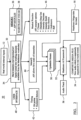
- section assembly intelligence 52 is based on processing support by an artificial intelligence ("AI") and may alternatively be referred to as the "Mashtraxx framework".
- AI artificial intelligence
- the section assembly intelligence 52 is configured to provide additional processing and the generation of a new media sample (or "composite media file" 54) in which new audio, such as a new music track, enhances the event segments from the real world event in a seamless and sequenced fashion.
- the new audio may, in fact, supplement or substitute audio samples captured from the real-world event.
- the section assembly intelligence 52 is responsive to additional inputs, namely an enhanced audio track 58 containing Mashtraxx metadata 58 for segments or slices of the original audio track.
- the audio track can, in fact, be multiple samples from multiple user-selected tracks or from a single recorded audio file (which need not be music).
- the audio track 56 could, for example, be provided by an iTunes ® library or streamed or otherwise acquired from a music repository. The generation of Mashtraxx metadata will be described subsequently.
- Mashtraxx metadata provides an audio segment definition, including track time signature(s) and other musical properties and/or functions, supplied as data associated with the audio track.
- a modified digital audio file for a track may include metadata tags that are married to musical events in the track, such as cymbal spills and drum beats.
- access to the Mashtraxx metadata can be accessed or streamed from an externally managed data repository/database accessed through a local app running of a device.
- a device-based app is preferably arranged to pull Mashtraxx metadata from the remote database based on a registered status of the original copyright artistic work, i.e.
- a locally-installed app checks local content by fingerprinting the audio; this can be based on any number of known techniques, including track metadata in the track header and/or intra-track analysis through audio sampling.
- the app is configured to then check a central database containing Mashtraxx data, with the check revealing whether Mashtraxx data exists for the identified track. If so, the app is configured to present the Mashtraxx data to the user as a Mashtraxx option within the app.
- the section assembly intelligence 52 selects 59 and orders 60 the audio sections to correspond to the real-word event(s). This results in an ordered set of audio sections 62 that may include contiguous repeating passages of music. Selection of the appropriate audio section requires consideration and analysis 64 of the metadata tag and, optionally but preferably, an assessment 66 of whether the selected audio section 62 in itself contains sufficient material to provide for its insertion. A determination that there's insufficient material leads to one or more of a rejection of the audio section, a decision to repeat, i.e.
- Selection of the audio segment may be dictated by direct user input of a briefing note into the system through a control interface.
- the briefing note indicates variable parameters including, but not limited to, duration, the nature of hit points within a track and the mood of the track.
- the user may be presented with multiple alternative track options each having a common theme, and then ask to indicate a preference.
- a fully automated system is an alternative.
- the frame assembly intelligence 52 is configured to assess whether sections in different tracks are fundamentally compatible and, preferably, compatible to the extent that they are able to be spliced or cut together to produce an audibly seamless transition therebetween. The preferred process will now be described with reference to FIGs. 7 , 8 and 10 .
- Themes are therefore contextually different aspects with an audio track or assembled composite. Themes can classify a context of a section both in terms of perceived/identified similarities or differences. Themes are therefore coded within a database related to the sections of the track and may be coded directly into ascribed metadata.
- a transition between theme one of a first section to another theme one in a different music section appears eminently achievable from the perspective of a seamless audible transition. It may also be possible to transition seamlessly between the first section and the second section given the apparent closeness in characterizations. However, in reality, it may not be feasible to transition from the first section to the third audio section just based on an assessment of characterization of the underlying theme to the respective audio sections.
- the preferred embodiment provides a solution to this seamless audible transition issue.
- FIG. 7b is an expanded view of Bar 4 of FIG. 7a .
- the audio spectrum of Bar 4 is shown as a simplified block form that has signal excursions that vary with time.
- Bar 4 is divided into four beats ("Beat 1" to "Beat 4"), with each beat further divided into an equal number of fractions (f 1 to f 4 ) - in this case four equal fractions per beat.
- the abstract exit point 155 actual possible exits points will correspond to a point at or immediately before or after an anacrusis (alternatively and interchangeably referred to as a "pickup" or "onset”), as shown in FIG. 7b in relation to "Possible Actual Exit B 164".
- An anacrusis is a note or sequence of notes which precedes the first downbeat in a bar of music. Therefore, through MIR and/or user input, anacrusis for actual exit points are identified in proximity to the abstract exit point 155.
- the anacrusis precedes the abstract exit point by: i) in the case of a first possible exit point 162, a distance of minus one beat and zero fractions; and ii) in the case of a second possible exit point 164, a distance of zero beats and minus two fractions.
- the preferred embodiment partitions the sections of audio (identified in terms of themes) into recurring units of time, e.g. rhythmic beats (which may have a variable duration).
- Each beat can have its own “tempo”, with the term “tempo” being understood to mean the number of units of time per minute.
- These beats are then divided or “fractionalized” into at least a plurality of equal and evenly-spaced time divisions (termed “fractions").
- the number of factions within adjacent beats may vary.
- the duration of fractions between adjacent units of time (“beats") can, however, be different because of each unit of time potentially has its own tempo.
- an approximate location of a potentially suitable but significant entry/exit point i.e. an anacrusis
- an anacrusis is determined relative to a start/end point of an identified section. It is this measured displacement in time - expressed in terms of beats and fractions - to the anacrusis that permits seamless integration of one section of audio to another different section of audio. More specifically, to effect an audibly seamless transition, the processing intelligence of the system looks for an exit point and an entry point - expressed in terms of beats and fractions - that has the same measured displacement (as expressed in terms of beats and fractions).
- a database 200 is therefore assembled and made available to a device operating within the system of FIG. 2 .
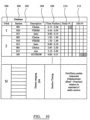
- the database 200 therefore correlates music tracks to related track metadata. More especially, the database maps audio sections 202 to identified themes 204 of tracks 206 and how these themes are defined with respect to a defined timing 208 within the section. Finally, each theme 202 is broken down into at least one and generally a multiplicity of edit-worthy entry points 210 and exit points 212 that relate to anacrusis events (expressed in terms of beats and fractions).
- the cut between sections would therefore be made from the active audio section at Bar 4 and at the start of Beat 4 (reference numeral 162) to section (X-1), Bar zero, Beat 4 position (that has a anacrusis displacement of one beat, zero fractions) for entry point 168.
- section (X-1) Bar zero
- Beat 4 position that has a anacrusis displacement of one beat, zero fractions
- Buffering is used to compensate for timing retardation or advancement, as necessary, to align the cut between different sections.
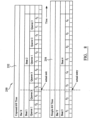
- FIG. 8 is a timing diagram 250 showing relative timing between different time signatures 252, 254 in different sections of, for example, a music track.
- the time signature in a first audio section may be compound 6/8 time
- the timing in a second audio section may be simple 4/4 time. Due to the discrepancy between timing signatures, it is necessary for the system of a preferred embodiment to assess whether, in fact, a recorded displacement (expressed in terms of beats and fractions) between exit and entry points actually corresponds. In other words, cutting between sections must take into account varying time signatures between sections.
- the multiplication coefficient results in the time anacrusis in one time signature being interchangeable with others, which may be complex.
- the simple time signature is 4/4/(16).
- the 4/4 notation is standard, whilst the 16 means semiquaver fractions; hence, four semiquaver fractions are present in a crotchet beat.
- the actual exit for the simple time signature of 4/4/16 is minus one beat and minus two 2 fractions from the end of the bar. The end of the bar, in this case, corresponds to the abstract exit.
- the compound time signature is 6/8/(16).
- the 6/8 means there are 2 beats of a dotted crotchet each in a bar. This means there are three quavers in each beat, compared to the simple time signature in which there are only quavers. Likewise, there are six fractions of 16ths compared to four fractions of 16ths.
- the section assembly intelligence 52 is configured to undertake analysis of any supplied briefing note input, uploaded or otherwise entered by the user through a user-interface.
- the section assembly intelligence 52 operates to identify and calculate music segments required to fulfil the briefing note, with the identification based on the section-related metadata.
- the briefing note may be dynamically updateable during the output of a track to reflect changes in user-notified requirements.
- Available audio sections 62 are then made available 68 for full sequencing in a sequencer 70 that, preferably, is based on AI logic.
- the sequencer 70 which is typically implemented programmatically, is configured to select and align appropriate audio segments with corresponding events. Sequencing is based on correlation of the tag placed in the metadata of the audio section with the briefing element, i.e. the Mashtraxx vocabulary word, assigned to each part of the external event that is to be audibly-augmented.
- the sequencer 70 is configured or arranged to identify and match the music interval or function 72; this is required for a seamless transition between audio sections. Additionally, the sequencer 70 operates to match entry and exit points 74 between different identified themes, wherein an audio section of a first theme is being played and an audio section of a second theme is to be cut into the first theme as the first theme is faded out (rapidly). Again, this is required for a seamless transition between audio sections. Finally, the sequencer 70 matches music timing 76.
- MIR music information retrieval
- the metadata tag for the audio segment could simply be a word that correlates to the Mashtraxx vocabulary used to define the characterization of the current and ongoing external event 12.
- An audio generator 80 is coupled to the sequencer 70.
- the audio generator 80 is configured to manage crossfading 82 between an active audio segment currently being played and a destination segment that is the next scheduled and selected audio segment to be played when the external event changes.
- This function includes identification of an appropriate transition associated with an anacrusis (alternatively and interchangeably referred to as a "pickup" or "onset”), e.g. a note or sequence of notes which precedes the first downbeat in a bar of music.
- a pickup or "onset”
- the onset - such as a downbeat - is important in that its omission or mistiming can be discerned and representative of an unnatural break in audio, whereas its presence provides continuity and flow.
- the audio generator 80 preferably includes a buffering function 84 to smooth audio transmissions and minimize delays. As its output 86, the audio generator 80 can either stream 88 the assembled audio segment or send the audio segment to a file 90.
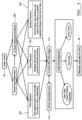
- FIG. 4 is a functional diagram for track assembly and metadata creation in accordance with a preferred creation process.
- FIG. 4 therefore represents the processes applied, for example, to an original musical track 56 to create a composite media file (reference numeral 54 of FIG. 1 ) containing Mashtraxx metadata for the original musical track 56.
- the audio track is subjected to AI-based MIR algorithms, as previously indicated.
- AI-based MIR algorithms can therefore address deficiency or errors associated with automatic interpretation of the audio track's characterization.
- the start point of a desired signal envelope for an audio segment can be adjusted manually through a GUI so as to align more precisely the start of audio data sampling with the commencement of a particular musical event (and thus an identified theme relevant to the external event that is to be augmented by the process of the present invention).
- Analysis of the time signature(s) provides a determination of bars and beats and, furthermore, variation of these as they occur between samples that make up the selected audio sections. This analysis provides the basis for the described mechanism (of the preferred embodiment) for seamless integration of one section to another regardless of differing time signatures and anacrusis.
- the system is configured to detect 104 onsets at different points. Cutting between source, i.e. an active playing slice, and a destination slice, i.e. the audio segment that has been selected to be the next played in order to change the audio theme, will be described in more detail below and with reference to FIG. 5 , whilst FIG. 9 shows a preferred process by which an onset can be determined.
- a musical onset is the point in time at which a musical (or other significant audible) event begins.
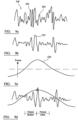
- a typical audio signal 300 is shown to comprise components 302, 304 of varying amplitude.
- a preferred approch firstly separates the transient part (i.e. quickly evolving aspects of the audio signal) from the stationary part (i.e. stable aspects of the audio signal) of the audio signal 300; this produces a time domain representation 310 as shown in FIG. 9b .
- Transients are more usually associated with higher frequencies and where these higher frequencies demonstrate significant increases in energy.
- An amplitude envelope 320 of the transient part is then determined; this is typically based on a convolution function as will be understood by the skilled addressee in audio signal processing.
- peaks in the amplitude envelope 320 are detected. Peaks correspond to maximum points of the envelope in a localised region. Then, to attain the exact position of the onset, the system is configured to work through the transient signal from the peak backwards in time to find the point X at which a characteristic of a period of the signal before that point X is maximally different from that same characteristic of a period of the signal after that point X. Characteristics include, but are not limited to, the standard deviation of the first derivative of the transient signal before and after the point X. In other words, the biggest ratio in adjacent powers as sampled over the entire transient amplitude envelope provides the most appropriate point for the onset; this is illustrated in FIG. 9d . Expressly this differently again, an onset start is detected by preferably looking to identify the point where the standard deviation of the rate of change of an identified characteristic over a period before that sampling point is maximally different for the same characteristic after that point.
- Sampling periods may be in the region of about ten milliseconds to about fifty milliseconds.
- a cymbal crash is likely to represent an onset given that it is likely to have a maximum change in transients at the point of its occurrence in the audio signal.
- the time signatures analysis 102, onset detection 104 and bar/beat detection 106 (as well as any supervised input from a user 110) is used to slice or segment the audio track into themes - of varying duration - that correlate to the Mashtrtaxx vocabulary applied to categorize the nature of the external event and thus the nature of audio enhancement.
- a metatagger 112 preferably realized using AIlogic - compiles an enhanced audio track 58 that includes metadata tags for selected audio sections. As indicated or inferred, this metadata identifies at least musical function and intensity as well as exit and entry points for cuts and fades for the themes associated with the section.
- the metadata tagging means that a sampled and delivered audio frame, i.e. a slice or segment, can be made to coincide precisely with timing of an identified external event 12, such as a identified by surpassing of triggering threshold or identification of a theme from an assigned Mashtraxx vocabulary word.
- Time signatures or timeline generation allows the track sections to be described in musical notation, which is essential for correct matching of the track sections. Accurate identification of the time signature allows for a moveable timeline that supports automatic snapping to the closest beat.
- the system generates a timeline preferably created in beats and bars for a digital audio track, ensuring that a musically faithful notation is preserved for the editing process. It is this that underpins the successful cutting, splicing and remixing of content in such a way that it is not detrimental to the musical integrity of the piece.
- System intelligence allows the construction of a flexible approach that can adapt according to the audio input that is to be modified. For example, if a decrease in tempo is detected then the timeline can be adjusted accordingly. This is important in the deconstruction of musical forms for the purpose of remixing and re-editing. It supports a tangible understanding of how the audio relates musically to the timeline and allows the user to maintain a real sense of musical structure within a digital format.
- Audio section creation is therefore the process of dividing up a track into sections which can be rearranged to form a new composition.
- sections are automatically snapped to bars.
- Each section can belong to a group that may be user definable, but preferably default to one of an intro, a verse, bridge, chorus, Middle 8 or outro (as identified by the metatag).
- Each section allows customisable metadata properties, including but not limited to intensity, musical function, instruments, vocals and tags.
- the system of the present invention makes use of software to maintain traditional compositional rhythmic analysis in terms of bars, beats and fractions of bars. This allows the user to engage in splitting and understanding bar and beat compositions in a traditional fashion. This will maintain the compositional intuition, making the deconstruction and rearrangement of ideas musically straightforward.
- the system also incorporates pulse data, exploiting the full potential of digital audio, enabling the smallest compositional fraction to be split into further pulses.
- the main function of the pulses is to offer the smallest granularity necessary to cope with different time signatures and coefficients used to cut between different time signatures in different sections.
- Metadata for a complete track therefore contains a set of audio section descriptions as well as an explanation as to how they can be transitioned to or from any other section.
- Each audio section therefore includes comprehensive metadata allowing a slice sequence to be constructed given a user brief correlating to a characterization of an external event.
- the metadata may contain a reference to the original audio track, enabling the correct track to be located from an online music library, such as Spotify. This allows the metadata to be stored independently of the original track and for both the metadata and track to be streamed or pulled down by the section assembly intelligence 52.
- the metadata framework therefore allows for tagging of music according to certain user-defined categories.
- these categories could include; for example, genre, mood, style and tempo and could be used to create a database of sound that is searchable.
- the system yields the potential to search for music not only by title and artist, but by sound, genre and musical style.
- the database configuration of FIG. 10 therefore allows for searching of individual sections' metatags, and not just on a global approach to handing of metadata.
- the meta tagging system can fulfil briefing requirements such as: "I'd like a track which is upbeat, happy lively, also it needs to have a trumpet solo at some point, and a chill out section with string beds somewhere else.”
- Existing systems fail to provide such a richness and flexibility of searching.
- Metadata schema not only allows data to be attributed to the whole track, but facilitates fine grained annotation of particular sections, thereby providing descriptive data of salient features of a piece of music.
- One or more (and typically multiple) applied musical characterizations are common to each piece of music, and therefore allow the AI mechanism to edit a digital audio file depending on synchronization requirements with identified incoming events (from the real world).
- the emotional metatags of the audio are therefore independent of characterizations applied to the theme of each section. Searching for different emotional moods will allow for different audio sections to be swapped out to fulfil synchronization requirements.
- Some key features therefore include musical hit points and function descriptors relating to:
- Every section of a piece of music can be described in terms of its form function, i.e. how the section operates within the totality of the piece, e.g. underscore, drop-out fade and build. Therefore, irrespective of the emotionally-related contextual metatags applied to a section, if the incoming event data can be described in terms of the described musical form functions then any piece of music can be used and will fulfil the synchronization requirements regardless of any emotional subjectively that arises with characterization of a particular piece by user. This is significant to the functionality of the described processing applied in the various embodiments of the invention.
- Metatagging does not need to be limited to music, and could apply to other sound sources (such as the kicking of a football) so a sound stage can be augmented by an inserted audio section that is tagged to an identified external event.
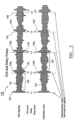
- FIG. 5 is time domain representation 130 of a preferred cut strategy between an exit point from and entry point to different musical themes within track samples.
- FIG. 5 there are two time domain spectral: a first active "playing" audio segment 132 and a second "destination" audio segment 134 that is used to introduce a change in theme and second segment which is to be cut into, i.e. to replace, the first active segment as a new correlated audio output.
- the preferred embodiment accomplishes this fade/cut in a near seamless fashion.
- Both time domain spectra include common features, such as onsets 136a-136f.
- a time signature or time base 150 this is represented in the diagram of vertical dotted lines that partition the audio envelope into segments that may have a duration corresponding to a semiquaver, crochet of or some other selected timing.
- an exemplary representation provides for four fractions of a beat 3.1, 3.2, 3.3 and 3.4 that divide the relevant portion of each envelope into four equal time sectors. These four fractions may, in fact, represent a musical beat or multiple beats or some other period in the audio track.
- the preferred fade/cut process firstly identifies and then contrasts the relative onsets in the first active playing audio segment onset A and second destination audio segment onset D , with the assessment made relative to the nearest appropriate time base 150. Having two onsets onset A and onset D played in close time proximity or an expected onset delayed significantly in time would cause a noticeable discontinuity in the fluidity of the audio and the transition between themes.
- a preferred embodiment looks to the sampling time differences (s 1 relative to s 2 and s 3 relative to s 4 ) between the first onset (in each of the active and destination segments) and selects the earliest of the alternatives.
- the earliest onset in time relative to the time base 150 is the point when there's a cross fade - and preferably an instantaneous cut 180 - from the active playing section to the destination section.
- a typical cross-fade may take up to about five milliseconds.
- Cross-fading is preferred to an instantaneous cut since it avoids the potential for an audio pop as the voltage in the two signals is unlikely to match.
- the term "cut" should be viewed as a special case cross-fading event that occurs more rapidly.
- the cut 180 from the active audio section 132 to the destination section 134 is therefore triggered simultaneously with (or, if buffering is available, marginally before) the sample where the onset in the active audio section 132 starts to rise. Destination audio track is then played out and becomes the active track until such time as another theme change is required.
- the cut 180 from the active audio section 132 to the destination section 134 is therefore triggered simultaneously with (or, if buffering is available, marginally before) the sample where the onset in the destination audio section 132 starts to rise.
- sampling rates and time bases operate on fractions of a second, so an absolute cut (rather than a slower fade) is inconsequential and not substantially noticeable. The process therefore allows for the seamless and endless reconstruction of a piece of audio. Buffering is preferred since it provides for pre-processing.
- the system of the preferred embodiment optionally keeps the substance of the content invisible, thus protecting licencing and copyright issues.
- the separation process may therefore eliminate much of the access needed for P2P (Peer-to-Peer) sharing, since the content may be dynamically generated each time it is required.
- the system of the preferred embodiment may protect the original content, as well as the new content generated by user input and the syncing process.
- the system and processes of the present invention therefore supports creative editing through an automated process operable in real-time.
- music for games can be dynamically edited to follow the story of the game: the highs and lows, achievements and failures. Since an in-game experience invariably varies, this means that intelligent framework 52 (of FIG. 2 ) can operate to stream music validated to an access key for each track to eliminate piracy for those users who do not possess a valid access key.
- intelligent framework 52 (of FIG. 2 ) can operate to stream music validated to an access key for each track to eliminate piracy for those users who do not possess a valid access key.
- metatagging of audio and correlation with real-world events permits a user to make use of their favourite music over, for example, a personal YouTube, Facebook and Vimeo video.
- the present innovation provides a method for editing digital audio information with music-like composition characteristics that enable real-time music synchronization.
- the system provides for onset detection as well as the identification of an anacrusis event in both an exit and entry audio section that provides for a seamless audible transition.
- This sophisticated system uses DSP and speciality AI algorithms to analyse raw audio data and perform editorial manipulations that previously have demanded expert knowledge and trained music professionals to execute.
- this adaptive system segments audio data, whilst simultaneously seeking to imbue a set of control codes that are easily adjusted to allow editorial change.
- the present invention serves to transform the musically significant parameters of digital audio information. While the waveform has become the standard representation and navigation interface for digital editing, it neglects traditional compositional rhythmic analysis in terms of bars and beats.
- This information is essential for the rearrangement and remixing of audio tracks, and is integral to automated synchronization. Furthermore, this system supports the encoding of additional descriptive metadata in the file format relating to the textures, trajectories and intensity of a given piece of music. There is currently no existing metadata format for capturing the narrative functions of a piece of music, and this will provide a structured way for doing this and a system for converting this high level information into a low level transferable data format.
- the software is configured to allow end-users to provide descriptive data that will facilitate the automatic retrieval of a selection of tracks that are automatically remixed - by the section assembly intelligence 52 - to fit to the scenario that requires musical accompaniment.
- End-users can provide guidance through the described access interfaces, which guidance can be based on the mood they want to create and even suggest a narrative they want the music to achieve.
- the system is preferably configured to reduce the information overload by retrieving only items that are estimated as relevant for the user, based on a simplistic input from the user, such as basic annotation of a piece of film data or information about the desired usage of the music.
- the system is configured to select relevant tracks based on global and intra-track specifications decided by an analyst or annotator, such as input and correlated to the external event through natural language or a Mashtraxx vocabulary word. Examples of this would be mood, general pace/speed of the music, key instruments (if they have any in mind) and genre.
- the present invention may be provided in a downloadable form or otherwise on a computer readable medium, such as a CD ROM, that contains program code that, when instantiated, executes the link embedding functionality at a web-server or the like.
- the technology is also applicable to augmenting sounds, such as the identified sound profiles associated with striking a tennis ball.
- the system of the present invention can therefore be arranged to augment the environmental experience with live sports matches by substituting an audio sample into the sound mix at the point when the tennis ball is identified as being struck.
- the method and system of identifying onsets may in fact find further and more applications beyond the synchronization of audio data to augment monitored events.
- the method and system may therefore be more generally applied to identifying onsets in any music or audio content file irrespective of whether or not the music is categorised in terms of a contextual theme (whether automatically sensed or set through a user or expert critique).
- an external event may be a video transition occurring between contiguous scenes in a film or a new phase within a level of a computer game (such as when new characters arrive or when new abilities are acquired and first presented to the game player during game play).
- the audio metadata derived from the various preferred embodiments can be used to drive a change in the observed temporal property of the events as experienced, e.g. lights flashing or props moving within a live stage performance or within a CGI environment or a recorded video.
Landscapes
- Engineering & Computer Science (AREA)
- Multimedia (AREA)
- Physics & Mathematics (AREA)
- Acoustics & Sound (AREA)
- Signal Processing (AREA)
- Theoretical Computer Science (AREA)
- Health & Medical Sciences (AREA)
- General Health & Medical Sciences (AREA)
- General Engineering & Computer Science (AREA)
- Social Psychology (AREA)
- Physical Education & Sports Medicine (AREA)
- Computational Linguistics (AREA)
- Data Mining & Analysis (AREA)
- Databases & Information Systems (AREA)
- General Physics & Mathematics (AREA)
- Information Retrieval, Db Structures And Fs Structures Therefor (AREA)
- Electrophonic Musical Instruments (AREA)
- Auxiliary Devices For Music (AREA)
- Management Or Editing Of Information On Record Carriers (AREA)
- User Interface Of Digital Computer (AREA)
- Two-Way Televisions, Distribution Of Moving Picture Or The Like (AREA)
Claims (12)
- Système d'augmentation de contenu média comprenant :une base de données contenant de multiples fichiers audio comportant chacun un ou plusieurs segments audio et des méta-tags associés identifiant des thèmes contextuels associés à chaque segment audio, chaque méta-tag identifiant en outre au moins un point abstrait d'entrée et au moins un point abstrait de sortie supportant des transitions de mixage ou de fondu, sans saut, entre différents segments audio et selon lequel chacun desdits au moins un point abstrait d'entrée et desdits au moins un point abstrait de sortie se rapporte à un début associé à une anacrouse du segment audio et selon lequel l'anacrouse est exprimée en termes de temps et de fractions et chaque anacrouse est une note ou séquence de notes qui précède le premier temps fort dans une mesure de musique de chaque segment audio ;un système de traitement couplé à la base de données et sensible aux dits méta-tags ; et une entrée couplée au système de traitement, l'entrée étant sensible à une entrée de données (12) définissant un évènement à variation temporelle sous forme d'un évènement physique surveillé ou capté ou de manière alternative sous forme d'une succession de trames d'image et selon lequel l'évènement à variation temporelle comporte des transitions identifiables entre des activités à différence discernable ;selon lequel le système de traitement est configuré pour :
résoudre chacune des activités différentes en un ou en plusieurs thèmes parmi une pluralité de thèmes contextuels différents catégorisés ; etcaractérisé en ce que,sur la base d'une corrélation identifiée entre chacun des thèmes contextuels catégorisés liés à l'entrée de données et aux méta-tags des dits segments audio, sélectionner un premier segment audio et un segment audio cible différent reflétant les activités différentes de l'évènement à variation temporelle et en faire la corrélation, et par la suite,sélectionner des anacrouses qui sont des points de sortie possibles réels et des points d'entrée possibles réels pour mixer ou fondre ensemble sans saut ledit premier segment audio et ledit segment audio cible pour les faire aligner avec des thèmes contextuels catégorisés correspondants des activités différentes en fonction de la variation de l'entrée de données dans le temps, selon lequel :lesdites anacrouses sélectionnées présentent des déplacements correspondants mesurés dans le temps par rapport à des points abstraits de sortie et d'entrée respectivement dans le premier segment audio et le deuxième segment audio cible entre lesquels le mixage ou le fondu doit avoir lieu,lesdites anacrouses sélectionnées du premier segment audio et du segment audio cible sont alignées afin qu'elles coïncident à un moment commun dans le temps,des différences mesurées de temps des débuts dans chacun des premier segment audio et segment audio cible sélectionnés à partir des anacrouses sélectionnées créent des positions alternatives de fondus enchaînés ou de mixage pour des transitions entre le premier segment audio sélectionné et le segment audio cible sélectionné,la position de fondu enchaîné ou de mixage est choisie en fonction du calcul selon lequel la position respective de fondu enchaîné ou de mixage dans le premier segment audio et le segment audio cible se présente le plus tôt dans le temps par rapport aux anacrouses alignées et selon lequel la position la plus tôt de fondu enchaîné ou de mixage présente un début associé, etla production d'un fondu enchaîné ou d'un mixage entre le premier segment audio et le segment audio cible se fait à un point se situant au moment, ou avant, que ledit début associé ne se mette à grimper, afin de créer une transition fondue rythmique dans la sortie audio en préservant l'intégrité de l'ordonnancement temporel musical entre le premier segment audio et le segment audio cible ; etafin de générer, sous forme de sortie, un fichier média ou de sortie en temps réel, selon lequel des transitions entre différents segments audio sont alignées de manière correspondante aux transitions liées des activités différentes. - Système d'augmentation de contenu média selon la revendication 1, selon lequel ledit évènement à variation temporelle est lié à un évènement parmi :un début et une fin dans le cas d'une caractéristique soutenue du thème contextuel, selon lequel la caractéristique soutenue est une caractéristique parmi une fonction de forme et un point d'impact temporel : etun point spécifique temporel d'un point d'impact.
- Système d'augmentation de contenu média selon l'une quelconque des revendications précédentes, selon lequel le système de traitement sélectionne le segment audio sensiblement en temps réel afin d'accompagner l'évènement physique surveillé ou capté ou la succession de trames d'image.
- Système d'augmentation de contenu média selon l'une quelconque des revendications précédentes, selon lequel le système est configuré pour augmenter une expérience sensorielle d'ensemble d'un utilisateur dans le monde réel, en modifiant, en ré-ordonnançant, ou en répétant, de manière dynamique, puis en jouant, des segments audio sélectionnés dans le contexte des dits thèmes catégorisés associés à la nature changeante des évènements présentés comme données d'entrée.
- Système d'augmentation de contenu média selon l'une quelconque des revendications précédentes, selon lequel le système de traitement est un ensemble de systèmes de traitement distribué.
- Système d'augmentation de contenu média selon la revendication 2, selon lequel la fonction de forme est choisie parmi l'une des fonctions de forme du groupe consistant en :un segment statique ;une perte de son ;un décroissement d'intensité ;une augmentation d'intensité ; etune intensité relative du segment.
- Système d'augmentation de contenu média selon la revendication 2, selon lequel le point d'impact temporel est sélectionne parmi l'un des points du groupe consistant en :un point culminant où la musique atteint un pic ;un segment statique où la musique n'augmente ni ne diminue en intensité contextuelle perçu et/ou en niveau d'intensité réelle ;une chute dramatique : la musique change de manière soudaine et devient très éparse ;une croissance où la musique augment graduellement en intensité ;un fondu décroissant où la musique décroît graduellement en intensité ;un bruit de fond, selon lequel un remplissage audio de bas niveau a lieu, en arrière-plan des dialogues et action ;un genre ; etun type d'instrument.
- Système d'augmentation de contenu média selon l'une quelconque des revendications précédentes, selon lequel l'entrée se présente sous la forme d'une intensité survenant d'au moins un élément parmi :un changement relatif de niveaux de luminosité ;un changement relatif de niveaux sonores ; etdes taux changeants d'une fonction pouvant être surveillée.
- Système d'augmentation de contenu média selon l'une quelconque des revendications 1 à 7, selon lequel l'entrée se présente sous la forme d'une mise à l'échelle des intensités survenant d'au moins un élément parmi :un changement relatif de niveaux de luminosité ;un changement relatif de niveaux sonores ; etdes taux changeants d'une fonction pouvant être surveillée.
- Procédé d'augmentation d'une expérience sensorielle d'un utilisateur en composant un produit média en alignant, de manière sélective, des segments audio d'au moins un fichier audio à un évènement variable temporel, sous forme d'un évènement physique surveillé ou capté, ou de manière alternative, sous forme d'une succession de trames d'image, et selon lequel (a) l'évènement variable temporel comporte des transitions identifiables entre des activités différentes discernables, et (b) chaque segment audio présente un méta-tag associé identifiant au moins un thème contextuel associé à chaque segment audio et, pour chaque segment audio, le méta-tag associé identifiant en outre au moins un point abstrait d'entrée et au moins un point abstrait de sortie supportant des transitions de mixage ou de fondu, sans saut, entre différents segments audio et selon lequel chacun desdits au moins un point abstrait d'entrée et desdits au moins un point abstrait de sortie se rapporte à un début associé à une anacrouse du segment audio et selon lequel l'anacrouse est exprimée en termes de temps et de fractions et chaque anacrouse est une note ou séquence de notes qui précède le premier temps fort dans une mesure de musique de chaque segment audio, le procédé comprenant :la réception, en tant qu'entrée de données temporelles (12), l'évènement variable temporel en tant que flux de données ;l'accès à une base de données contenant de multiples fichiers audio, chacun contenant un ou plusieurs segments audio et méta-tags associés identifiant des thèmes contextuels associés à chaque segment audio,la résolution de chacune des activités différentes en un ou en plusieurs thèmes contextuels différents catégorisés ;sur la base de l'identification d'une corrélation entre chacun des thèmes contextuels catégorisés liés à l'entrée de données et des thèmes contextuels des méta-tags des segments audio,caractérisé par :la sélection d'un premier segment audio et d'un segment audio cible différent reflétant les activités différentes de l'évènement à variation temporelle et en faire la corrélation, et par la suite ;la sélection d'anacrouses qui sont des points de sortie possibles réels et des points d'entrée possibles réels pour mixer ou fondre ensemble sans saut ledit premier segment audio et ledit segment audio cible pour les faire aligner avec des thèmes contextuels catégorisés correspondants des activités différentes en fonction de la variation de l'entrée de données dans le temps, selon lequel :lesdites anacrouses sélectionnées présentent des déplacements correspondants mesurés dans le temps par rapport à des points abstraits de sortie et d'entrée respectivement dans le premier segment audio et le deuxième segment audio cible entre lesquels le mixage ou le fondu doit avoir lieu,lesdites anacrouses sélectionnées du premier segment audio et du segment audio cible sont alignées afin qu'elles coïncident à un moment commun dans le temps,des différences mesurées de temps des débuts dans chacun des premier segment audio et segment audio cible sélectionnés à partir des anacrouses sélectionnées créent des positions alternatives de fondus enchaînés ou de mixage pour des transitions entre le premier segment audio sélectionné et le segment audio cible sélectionné,la position de fondu enchaîné ou de mixage est choisie en fonction du calcul selon lequel la position respective de fondu enchaîné ou de mixage dans le premier segment audio et le segment audio cible se présente le plus tôt dans le temps par rapport aux anacrouses alignées et selon lequel la position la plus tôt de fondu enchaîné ou de mixage présente un début associé, etla production d'un fondu enchaîné ou d'un mixage entre le premier segment audio et le segment audio cible se fait à un point se situant au moment, ou avant, que ledit début associé ne se mette à grimper, afin de créer une transition fondue rythmique dans la sortie audio en préservant l'intégrité de l'ordonnancement temporel musical entre le premier segment audio et le segment audio cible ; etla génération, sous forme de sortie, d'un fichier média ou de sortie en temps réel, selon lequel des transitions entre différents segments audio sont alignées de manière correspondante aux transitions liées des activités différentes.
- Procédé selon la revendication 10, selon lequel ledit évènement à variation temporelle est lié à un évènement parmi :un début et une fin dans le cas d'une caractéristique soutenue du thème contextuel, selon lequel la caractéristique soutenue est une caractéristique parmi une fonction de forme et un point d'impact temporel ; etun point spécifique temporel d'un point d'impact.
- Procédé selon la revendication 10, selon lequel le procédé augmente une expérience sensorielle d'ensemble d'un utilisateur dans le monde réel, en modifiant, en ré-ordonnançant, ou en répétant, de manière dynamique, puis en jouant, des segments audio sélectionnés dans le contexte des dits thèmes catégorisés associés à la nature changeante des évènements présentés comme données d'entrée.
Applications Claiming Priority (3)
| Application Number | Priority Date | Filing Date | Title |
|---|---|---|---|
| GB1510907.7A GB2539875B (en) | 2015-06-22 | 2015-06-22 | Music Context System, Audio Track Structure and method of Real-Time Synchronization of Musical Content |
| PCT/GB2016/051862 WO2016207625A2 (fr) | 2015-06-22 | 2016-06-22 | Système de contexte musical, structure de piste audio et procédé de synchronisation en temps réel de contenu musical |
| EP16744830.7A EP3311383B8 (fr) | 2015-06-22 | 2016-06-22 | Synchronisation rythmique pour fondu enchainé de sections musicales audio . |
Related Parent Applications (2)
| Application Number | Title | Priority Date | Filing Date |
|---|---|---|---|
| EP16744830.7A Division-Into EP3311383B8 (fr) | 2015-06-22 | 2016-06-22 | Synchronisation rythmique pour fondu enchainé de sections musicales audio . |
| EP16744830.7A Division EP3311383B8 (fr) | 2015-06-22 | 2016-06-22 | Synchronisation rythmique pour fondu enchainé de sections musicales audio . |
Publications (2)
| Publication Number | Publication Date |
|---|---|
| EP3671725A1 EP3671725A1 (fr) | 2020-06-24 |
| EP3671725B1 true EP3671725B1 (fr) | 2023-10-11 |
Family
ID=53784284
Family Applications (3)
| Application Number | Title | Priority Date | Filing Date |
|---|---|---|---|
| EP20156444.0A Active EP3671725B1 (fr) | 2015-06-22 | 2016-06-22 | Système d'augmentation de contenu multimédia et procédé d'alignement de transitions dans des fichiers multimédia avec des événements à variation temporelle |
| EP16744830.7A Active EP3311383B8 (fr) | 2015-06-22 | 2016-06-22 | Synchronisation rythmique pour fondu enchainé de sections musicales audio . |
| EP20156466.3A Active EP3671726B1 (fr) | 2015-06-22 | 2016-06-22 | Signal et procédé de détection d' amorce dans un signal numérique |
Family Applications After (2)
| Application Number | Title | Priority Date | Filing Date |
|---|---|---|---|
| EP16744830.7A Active EP3311383B8 (fr) | 2015-06-22 | 2016-06-22 | Synchronisation rythmique pour fondu enchainé de sections musicales audio . |
| EP20156466.3A Active EP3671726B1 (fr) | 2015-06-22 | 2016-06-22 | Signal et procédé de détection d' amorce dans un signal numérique |
Country Status (12)
| Country | Link |
|---|---|
| US (7) | US10032441B2 (fr) |
| EP (3) | EP3671725B1 (fr) |
| CN (4) | CN112530470B (fr) |
| AU (5) | AU2016281746B2 (fr) |
| CA (4) | CA3127192C (fr) |
| DK (1) | DK3311383T3 (fr) |
| ES (2) | ES2970812T3 (fr) |
| GB (4) | GB2581032B (fr) |
| PL (1) | PL3311383T3 (fr) |
| PT (1) | PT3311383T (fr) |
| TW (3) | TWI799720B (fr) |
| WO (1) | WO2016207625A2 (fr) |
Families Citing this family (80)
| Publication number | Priority date | Publication date | Assignee | Title |
|---|---|---|---|---|
| US10242097B2 (en) * | 2013-03-14 | 2019-03-26 | Aperture Investments, Llc | Music selection and organization using rhythm, texture and pitch |
| US11271993B2 (en) | 2013-03-14 | 2022-03-08 | Aperture Investments, Llc | Streaming music categorization using rhythm, texture and pitch |
| US10061476B2 (en) | 2013-03-14 | 2018-08-28 | Aperture Investments, Llc | Systems and methods for identifying, searching, organizing, selecting and distributing content based on mood |
| US10225328B2 (en) | 2013-03-14 | 2019-03-05 | Aperture Investments, Llc | Music selection and organization using audio fingerprints |
| US10623480B2 (en) | 2013-03-14 | 2020-04-14 | Aperture Investments, Llc | Music categorization using rhythm, texture and pitch |
| US20220147562A1 (en) | 2014-03-27 | 2022-05-12 | Aperture Investments, Llc | Music streaming, playlist creation and streaming architecture |
| US9747928B1 (en) | 2014-09-25 | 2017-08-29 | Western Digital Technologies, Inc. | Data storage device modifying write operation when a laser mode hop is detected |
| JP6583285B2 (ja) * | 2014-12-15 | 2019-10-02 | ソニー株式会社 | 情報処理方法、映像処理装置及びプログラム |
| GB2581032B (en) * | 2015-06-22 | 2020-11-04 | Time Machine Capital Ltd | System and method for onset detection in a digital signal |
| US11183202B2 (en) * | 2015-07-28 | 2021-11-23 | Dolby Laboratories Licensing Corporation | Audio discontinuity detection and correction |
| US9721551B2 (en) | 2015-09-29 | 2017-08-01 | Amper Music, Inc. | Machines, systems, processes for automated music composition and generation employing linguistic and/or graphical icon based musical experience descriptions |
| US9977645B2 (en) * | 2015-10-01 | 2018-05-22 | Moodelizer Ab | Dynamic modification of audio content |
| WO2017075279A1 (fr) * | 2015-10-27 | 2017-05-04 | ZALON, Zack, J. | Production de contenu audio, séquençage audio, procédé et système de mélangeage audio |
| US10037750B2 (en) * | 2016-02-17 | 2018-07-31 | RMXHTZ, Inc. | Systems and methods for analyzing components of audio tracks |
| US10366121B2 (en) * | 2016-06-24 | 2019-07-30 | Mixed In Key Llc | Apparatus, method, and computer-readable medium for cue point generation |
| US10002596B2 (en) * | 2016-06-30 | 2018-06-19 | Nokia Technologies Oy | Intelligent crossfade with separated instrument tracks |
| US9653095B1 (en) | 2016-08-30 | 2017-05-16 | Gopro, Inc. | Systems and methods for determining a repeatogram in a music composition using audio features |
| CN106486128B (zh) * | 2016-09-27 | 2021-10-22 | 腾讯科技(深圳)有限公司 | 一种双音源音频数据的处理方法及装置 |
| US9916822B1 (en) * | 2016-10-07 | 2018-03-13 | Gopro, Inc. | Systems and methods for audio remixing using repeated segments |
| GB2557970B (en) | 2016-12-20 | 2020-12-09 | Mashtraxx Ltd | Content tracking system and method |
| US10902829B2 (en) | 2017-03-16 | 2021-01-26 | Sony Corporation | Method and system for automatically creating a soundtrack to a user-generated video |
| US10460763B2 (en) * | 2017-04-26 | 2019-10-29 | Adobe Inc. | Generating audio loops from an audio track |
| US10062367B1 (en) * | 2017-07-14 | 2018-08-28 | Music Tribe Global Brands Ltd. | Vocal effects control system |
| CN111542885B (zh) * | 2017-08-25 | 2024-03-22 | 马克思—普朗克科学促进协会公司 | 用于在体育锻炼期间控制声反馈的方法和设备 |
| CN107610716A (zh) * | 2017-09-22 | 2018-01-19 | 上海韵焰智能科技有限公司 | 音乐分析方法及装置 |
| GB2571340A (en) | 2018-02-26 | 2019-08-28 | Ai Music Ltd | Method of combining audio signals |
| CN112437963A (zh) * | 2018-05-24 | 2021-03-02 | 克兹二世有限公司 | 与输入节奏同步以实现抚慰效果的适应性感官输出 |
| CN108806732B (zh) * | 2018-07-06 | 2021-04-30 | 深圳点猫科技有限公司 | 一种基于人工智能的背景音乐处理方法以及电子设备 |
| US10762130B2 (en) | 2018-07-25 | 2020-09-01 | Omfit LLC | Method and system for creating combined media and user-defined audio selection |
| US11443724B2 (en) * | 2018-07-31 | 2022-09-13 | Mediawave Intelligent Communication | Method of synchronizing electronic interactive device |
| CN109545249B (zh) * | 2018-11-23 | 2020-11-03 | 广州酷狗计算机科技有限公司 | 一种处理音乐文件的方法及装置 |
| US11205456B2 (en) * | 2019-01-09 | 2021-12-21 | Mediatek Singapore Pte. Ltd. | Methods and apparatus for using edit operations to perform temporal track derivations |
| CN109889882B (zh) * | 2019-01-24 | 2021-06-18 | 深圳亿幕信息科技有限公司 | 一种视频剪辑合成方法和系统 |
| US11205414B2 (en) | 2019-02-15 | 2021-12-21 | Brainfm, Inc. | Noninvasive neural stimulation through audio |
| US10847186B1 (en) * | 2019-04-30 | 2020-11-24 | Sony Interactive Entertainment Inc. | Video tagging by correlating visual features to sound tags |
| US11232773B2 (en) * | 2019-05-07 | 2022-01-25 | Bellevue Investments Gmbh & Co. Kgaa | Method and system for AI controlled loop based song construction |
| CN110288847B (zh) * | 2019-06-28 | 2021-01-19 | 浙江吉利控股集团有限公司 | 一种自动驾驶决策方法、装置、系统、存储介质及终端 |
| USD920277S1 (en) | 2019-07-12 | 2021-05-25 | Kids2, Inc. | Audio player |
| CN110428798B (zh) * | 2019-08-02 | 2021-08-10 | 湖南国声声学科技股份有限公司深圳分公司 | 人声与伴奏同步方法、蓝牙设备、终端及存储介质 |
| US11416208B2 (en) * | 2019-09-23 | 2022-08-16 | Netflix, Inc. | Audio metadata smoothing |
| JP7419726B2 (ja) * | 2019-09-27 | 2024-01-23 | ヤマハ株式会社 | 楽曲解析装置、楽曲解析方法、および楽曲解析プログラム |
| US10964299B1 (en) | 2019-10-15 | 2021-03-30 | Shutterstock, Inc. | Method of and system for automatically generating digital performances of music compositions using notes selected from virtual musical instruments based on the music-theoretic states of the music compositions |
| US11024275B2 (en) | 2019-10-15 | 2021-06-01 | Shutterstock, Inc. | Method of digitally performing a music composition using virtual musical instruments having performance logic executing within a virtual musical instrument (VMI) library management system |
| US11037538B2 (en) | 2019-10-15 | 2021-06-15 | Shutterstock, Inc. | Method of and system for automated musical arrangement and musical instrument performance style transformation supported within an automated music performance system |
| CN110769309B (zh) * | 2019-11-04 | 2023-03-31 | 北京字节跳动网络技术有限公司 | 用于展示音乐点的方法、装置、电子设备和介质 |
| CN111128100B (zh) * | 2019-12-20 | 2021-04-20 | 网易(杭州)网络有限公司 | 节奏点检测方法、装置及电子设备 |
| CN111131917B (zh) * | 2019-12-26 | 2021-12-28 | 国微集团(深圳)有限公司 | 音频频谱实时同步方法、播放装置 |
| US11475867B2 (en) * | 2019-12-27 | 2022-10-18 | Spotify Ab | Method, system, and computer-readable medium for creating song mashups |
| CN111209360B (zh) * | 2019-12-31 | 2022-08-23 | 武汉中海庭数据技术有限公司 | 一种自动提取路口面的方法及系统 |
| US11615772B2 (en) * | 2020-01-31 | 2023-03-28 | Obeebo Labs Ltd. | Systems, devices, and methods for musical catalog amplification services |
| US11694084B2 (en) | 2020-04-14 | 2023-07-04 | Sony Interactive Entertainment Inc. | Self-supervised AI-assisted sound effect recommendation for silent video |
| CN111614423B (zh) * | 2020-04-30 | 2021-08-13 | 湖南声广信息科技有限公司 | 一种音乐广播电台主持音频与音乐拼接方法 |
| EP4145439A4 (fr) * | 2020-05-01 | 2023-10-11 | Sony Group Corporation | Procédé de traitement d'informations, dispositif de traitement d'informations et programme |
| JP2021177219A (ja) * | 2020-05-08 | 2021-11-11 | ローランド株式会社 | 電子楽器プログラム及び電子楽器 |
| US12387700B2 (en) * | 2020-06-08 | 2025-08-12 | William Frederick Moyer | Systems and methods for score and screenplay based audio and video editing |
| JP2022046904A (ja) * | 2020-09-11 | 2022-03-24 | ローランド株式会社 | 電子楽器、録音再生プログラム及び録音再生方法 |
| CN112435687B (zh) | 2020-11-25 | 2024-06-25 | 腾讯科技(深圳)有限公司 | 一种音频检测方法、装置、计算机设备和可读存储介质 |
| CA3201241A1 (fr) * | 2020-12-07 | 2022-06-16 | Wattch Fitness Inc. | Generateur de seance d'entrainement menee par les emotions |
| GB2602118B (en) * | 2020-12-18 | 2025-07-23 | Scored Tech Inc | Generating and mixing audio arrangements |
| CN112866732B (zh) * | 2020-12-30 | 2023-04-25 | 广州方硅信息技术有限公司 | 音乐广播方法及其装置、设备与介质 |
| CN112863530B (zh) * | 2021-01-07 | 2024-08-27 | 广州欢城文化传媒有限公司 | 一种声音作品的生成方法和装置 |
| US11978426B2 (en) * | 2021-03-31 | 2024-05-07 | DAACI Limited | System and methods for automatically generating a musical composition having audibly correct form |
| US11514877B2 (en) * | 2021-03-31 | 2022-11-29 | DAACI Limited | System and methods for automatically generating a musical composition having audibly correct form |
| US12412105B2 (en) | 2021-04-08 | 2025-09-09 | Disney Enterprises, Inc. | Automated compositing of content compilations |
| KR20240038649A (ko) * | 2021-04-23 | 2024-03-25 | 바이브즈 & 로직, 인크. | 몰입형 오디오 경험을 위한 시스템 및 방법 |
| US11957467B2 (en) | 2021-07-02 | 2024-04-16 | Brainfm, Inc. | Neural stimulation through audio with dynamic modulation characteristics |
| US11392345B1 (en) * | 2021-12-20 | 2022-07-19 | Brainfm, Inc. | Extending audio tracks while avoiding audio discontinuities |
| US11966661B2 (en) | 2021-10-19 | 2024-04-23 | Brainfm, Inc. | Audio content serving and creation based on modulation characteristics |
| GB2609611B (en) | 2021-07-28 | 2024-06-19 | Synchro Arts Ltd | Method and system for time and feature modification of signals |
| CN113706578B (zh) * | 2021-08-03 | 2024-07-23 | 杭州数梦工场科技有限公司 | 一种基于轨迹的移动对象伴随关系的确定方法和装置 |
| EP4396810A1 (fr) * | 2021-09-03 | 2024-07-10 | Dolby Laboratories Licensing Corporation | Synthétiseur de musique à sortie de métadonnées spatiales |
| EP4195196A1 (fr) * | 2021-12-09 | 2023-06-14 | Bellevue Investments GmbH & Co. KGaA | Système et procédé pour augmenter le niveau d'énergie de chansons |
| CN114373480B (zh) * | 2021-12-17 | 2025-08-05 | 腾讯音乐娱乐科技(深圳)有限公司 | 语音对齐网络的训练方法、语音对齐方法及电子设备 |
| CN114615612B (zh) * | 2022-01-26 | 2024-07-09 | 大连即时智能科技有限公司 | 文本与音频呈现处理方法及装置 |
| TWI794002B (zh) * | 2022-01-28 | 2023-02-21 | 緯創資通股份有限公司 | 多媒體系統以及多媒體操作方法 |
| CN114783393B (zh) * | 2022-02-28 | 2024-07-16 | 杭州小伴熊科技有限公司 | 一种用于在线教育的音乐旋律识别方法及装置 |
| US20240233694A9 (en) * | 2022-10-20 | 2024-07-11 | Tuttii Inc. | System and method for enhanced audio data transmission and digital audio mashup automation |
| CN116449673B (zh) * | 2022-12-30 | 2025-07-22 | 上海洛轲智能科技有限公司 | 一种车辆闹钟控制方法、装置、电子设备及存储介质 |
| GB2628759A (en) * | 2023-03-30 | 2024-10-09 | Sony Interactive Entertainment Europe Ltd | Method for generating a sound effect |
| TWI886635B (zh) * | 2023-11-14 | 2025-06-11 | 馬思正 | 多功能複合伴唱樂器 |
Family Cites Families (91)
| Publication number | Priority date | Publication date | Assignee | Title |
|---|---|---|---|---|
| JP3134588B2 (ja) * | 1993-03-23 | 2001-02-13 | 日本ビクター株式会社 | 圧縮画像データと圧縮音響データとの同期再生方法 |
| JPH07287576A (ja) * | 1994-04-18 | 1995-10-31 | Taito Corp | 音楽再生方法 |
| DE19500751C2 (de) * | 1995-01-12 | 1999-07-08 | Blue Chip Music Gmbh | Verfahren zum Erkennen eines Tonbeginns bei geschlagenen oder gezupften Musikinstrumenten |
| JP3557917B2 (ja) * | 1998-09-24 | 2004-08-25 | ヤマハ株式会社 | 自動作曲装置および記憶媒体 |
| JP2000134105A (ja) * | 1998-10-29 | 2000-05-12 | Matsushita Electric Ind Co Ltd | オーディオ変換符号化に用いられるブロックサイズを決定し適応させる方法 |
| US6316712B1 (en) * | 1999-01-25 | 2001-11-13 | Creative Technology Ltd. | Method and apparatus for tempo and downbeat detection and alteration of rhythm in a musical segment |
| US6316710B1 (en) * | 1999-09-27 | 2001-11-13 | Eric Lindemann | Musical synthesizer capable of expressive phrasing |
| US6746247B2 (en) | 2000-12-27 | 2004-06-08 | Michael P. Barton | Choreographed athletic movement to music |
| JP3680749B2 (ja) * | 2001-03-23 | 2005-08-10 | ヤマハ株式会社 | 自動作曲装置及び自動作曲プログラム |
| US7904814B2 (en) * | 2001-04-19 | 2011-03-08 | Sharp Laboratories Of America, Inc. | System for presenting audio-video content |
| GB2378626B (en) * | 2001-04-28 | 2003-11-19 | Hewlett Packard Co | Automated compilation of music |
| US6822153B2 (en) * | 2001-05-15 | 2004-11-23 | Nintendo Co., Ltd. | Method and apparatus for interactive real time music composition |
| US6476308B1 (en) * | 2001-08-17 | 2002-11-05 | Hewlett-Packard Company | Method and apparatus for classifying a musical piece containing plural notes |
| CN1259631C (zh) * | 2002-07-25 | 2006-06-14 | 摩托罗拉公司 | 使用韵律控制的中文文本至语音拼接合成系统及方法 |
| US20040122539A1 (en) * | 2002-12-20 | 2004-06-24 | Ainsworth Heather C. | Synchronization of music and images in a digital multimedia device system |
| WO2004081940A1 (fr) * | 2003-03-11 | 2004-09-23 | Koninklijke Philips Electronics N.V. | Procede et appareil pour generer une sequence video de sortie |
| US20040197088A1 (en) * | 2003-03-31 | 2004-10-07 | Ferman Ahmet Mufit | System for presenting audio-video content |
| US7189913B2 (en) * | 2003-04-04 | 2007-03-13 | Apple Computer, Inc. | Method and apparatus for time compression and expansion of audio data with dynamic tempo change during playback |
| US20040230655A1 (en) * | 2003-05-16 | 2004-11-18 | Chia-Hsin Li | Method and system for media playback architecture |
| JP2004343617A (ja) * | 2003-05-19 | 2004-12-02 | Renesas Technology Corp | デジタルアンプ |
| US7424117B2 (en) | 2003-08-25 | 2008-09-09 | Magix Ag | System and method for generating sound transitions in a surround environment |
| US7292902B2 (en) * | 2003-11-12 | 2007-11-06 | Dolby Laboratories Licensing Corporation | Frame-based audio transmission/storage with overlap to facilitate smooth crossfading |
| US7148415B2 (en) * | 2004-03-19 | 2006-12-12 | Apple Computer, Inc. | Method and apparatus for evaluating and correcting rhythm in audio data |
| US7026536B2 (en) * | 2004-03-25 | 2006-04-11 | Microsoft Corporation | Beat analysis of musical signals |
| JP2006114174A (ja) | 2004-10-18 | 2006-04-27 | Sony Corp | コンテンツ再生方法およびコンテンツ再生装置 |
| JP4713129B2 (ja) * | 2004-11-16 | 2011-06-29 | ソニー株式会社 | 音楽コンテンツの再生装置、音楽コンテンツの再生方法および音楽コンテンツおよびその属性情報の記録装置 |
| EP1666967B1 (fr) * | 2004-12-03 | 2013-05-08 | Magix AG | Système et méthode pour générer une piste son contrôlée émotionnellement |
| US7869892B2 (en) * | 2005-08-19 | 2011-01-11 | Audiofile Engineering | Audio file editing system and method |
| US7518053B1 (en) | 2005-09-01 | 2009-04-14 | Texas Instruments Incorporated | Beat matching for portable audio |
| WO2007036846A2 (fr) * | 2005-09-30 | 2007-04-05 | Koninklijke Philips Electronics N.V. | Procede et dispositif d'analyse automatique de structures de pistes musicales |
| US20070074618A1 (en) | 2005-10-04 | 2007-04-05 | Linda Vergo | System and method for selecting music to guide a user through an activity |
| US20070074617A1 (en) | 2005-10-04 | 2007-04-05 | Linda Vergo | System and method for tailoring music to an activity |
| US20070074619A1 (en) * | 2005-10-04 | 2007-04-05 | Linda Vergo | System and method for tailoring music to an activity based on an activity goal |
| WO2007066819A1 (fr) * | 2005-12-09 | 2007-06-14 | Sony Corporation | Dispositif et procede d’edition musicale |
| WO2007066818A1 (fr) | 2005-12-09 | 2007-06-14 | Sony Corporation | Dispositif et procede d’edition musicale |
| RU2417514C2 (ru) * | 2006-04-27 | 2011-04-27 | Долби Лэборетериз Лайсенсинг Корпорейшн | Регулировка усиления звука с использованием основанного на конкретной громкости обнаружения акустических событий |
| JP2007295479A (ja) * | 2006-04-27 | 2007-11-08 | Sony Corp | 撮影装置および撮影方法、並びにプログラム |
| US20070261537A1 (en) | 2006-05-12 | 2007-11-15 | Nokia Corporation | Creating and sharing variations of a music file |
| US7842874B2 (en) | 2006-06-15 | 2010-11-30 | Massachusetts Institute Of Technology | Creating music by concatenative synthesis |
| US20080030462A1 (en) * | 2006-07-24 | 2008-02-07 | Lasar Erik M | Interactive music interface for music production |
| JP5007563B2 (ja) * | 2006-12-28 | 2012-08-22 | ソニー株式会社 | 音楽編集装置および方法、並びに、プログラム |
| EP2115732B1 (fr) * | 2007-02-01 | 2015-03-25 | Museami, Inc. | Transcription de musique |
| KR101306715B1 (ko) * | 2007-02-09 | 2013-09-11 | 엘지전자 주식회사 | 방송 신호 수신 장치 및 방송 신호 송수신 방법 |
| US7863511B2 (en) * | 2007-02-09 | 2011-01-04 | Avid Technology, Inc. | System for and method of generating audio sequences of prescribed duration |
| US8280539B2 (en) * | 2007-04-06 | 2012-10-02 | The Echo Nest Corporation | Method and apparatus for automatically segueing between audio tracks |
| US20090024234A1 (en) * | 2007-07-19 | 2009-01-22 | Archibald Fitzgerald J | Apparatus and method for coupling two independent audio streams |
| US8269093B2 (en) | 2007-08-21 | 2012-09-18 | Apple Inc. | Method for creating a beat-synchronized media mix |
| US8426715B2 (en) | 2007-12-17 | 2013-04-23 | Microsoft Corporation | Client-side audio signal mixing on low computational power player using beat metadata |
| JP2009192725A (ja) * | 2008-02-13 | 2009-08-27 | Sanyo Electric Co Ltd | 楽曲記録装置 |
| US9313359B1 (en) * | 2011-04-26 | 2016-04-12 | Gracenote, Inc. | Media content identification on mobile devices |
| US8386506B2 (en) * | 2008-08-21 | 2013-02-26 | Yahoo! Inc. | System and method for context enhanced messaging |
| JP4683116B2 (ja) * | 2008-11-12 | 2011-05-11 | ソニー株式会社 | 情報処理装置、情報処理方法、情報処理プログラムおよび撮像装置 |
| US8401683B2 (en) * | 2009-08-31 | 2013-03-19 | Apple Inc. | Audio onset detection |
| EP2362375A1 (fr) * | 2010-02-26 | 2011-08-31 | Fraunhofer-Gesellschaft zur Förderung der Angewandten Forschung e.V. | Dispositif et procédé de modification d'un signal audio par mise en forme de son envelope |
| US8680098B2 (en) | 2010-03-05 | 2014-03-25 | Janssen Pharmaceutica, Nv | Substituted aza-bicyclic imidazole derivatives useful as TRPM8 receptor modulators |
| JP2012103603A (ja) | 2010-11-12 | 2012-05-31 | Sony Corp | 情報処理装置、楽曲区間抽出方法、及びプログラム |
| JP2014506416A (ja) * | 2010-12-22 | 2014-03-13 | ジェノーディオ,インコーポレーテッド | オーディオ空間化および環境シミュレーション |
| US9326082B2 (en) * | 2010-12-30 | 2016-04-26 | Dolby International Ab | Song transition effects for browsing |
| GB201109731D0 (en) * | 2011-06-10 | 2011-07-27 | System Ltd X | Method and system for analysing audio tracks |
| JP2013009218A (ja) * | 2011-06-27 | 2013-01-10 | Sony Corp | 編集装置及び方法、並びにプログラム |
| US9160837B2 (en) * | 2011-06-29 | 2015-10-13 | Gracenote, Inc. | Interactive streaming content apparatus, systems and methods |
| WO2013006342A1 (fr) * | 2011-07-01 | 2013-01-10 | Dolby Laboratories Licensing Corporation | Procédés de synchronisation et de commutation et systèmes pour un système audio adaptatif |
| GB201118784D0 (en) * | 2011-10-31 | 2011-12-14 | Omnifone Ltd | Djml |
| CN102568454B (zh) * | 2011-12-13 | 2015-08-05 | 北京百度网讯科技有限公司 | 一种分析音乐bpm的方法和装置 |
| JP2013135309A (ja) * | 2011-12-26 | 2013-07-08 | Sony Corp | 信号処理装置、信号処理方法、プログラム、および記録媒体、並びに、信号処理システム |
| EP2845191B1 (fr) * | 2012-05-04 | 2019-03-13 | Xmos Inc. | Systèmes et procédés pour la séparation de signaux sources |
| US9459828B2 (en) * | 2012-07-16 | 2016-10-04 | Brian K. ALES | Musically contextual audio advertisements |
| JP5672280B2 (ja) * | 2012-08-31 | 2015-02-18 | カシオ計算機株式会社 | 演奏情報処理装置、演奏情報処理方法及びプログラム |
| US9230528B2 (en) * | 2012-09-19 | 2016-01-05 | Ujam Inc. | Song length adjustment |
| US20140129497A1 (en) * | 2012-11-06 | 2014-05-08 | Qualcomm Incorporated | Methods and apparatus for performing onset detection in a neuronal spiking representation of a signal |
| US20140163980A1 (en) * | 2012-12-10 | 2014-06-12 | Rawllin International Inc. | Multimedia message having portions of media content with audio overlay |
| US9158760B2 (en) * | 2012-12-21 | 2015-10-13 | The Nielsen Company (Us), Llc | Audio decoding with supplemental semantic audio recognition and report generation |
| EP2808870B1 (fr) * | 2013-05-30 | 2016-03-16 | Spotify AB | Production participative de règles de re-mélange de musique en flux. |
| GB201310861D0 (en) * | 2013-06-18 | 2013-07-31 | Nokia Corp | Audio signal analysis |
| WO2015006627A1 (fr) * | 2013-07-10 | 2015-01-15 | Aliphcom | Système et procédé de traitement audio utilisant des éléments déclencheurs arbitraires |
| JP6252088B2 (ja) * | 2013-10-09 | 2017-12-27 | ヤマハ株式会社 | 波形再生を行うためのプログラム、波形再生装置及び方法 |
| WO2015092492A1 (fr) * | 2013-12-20 | 2015-06-25 | Nokia Technologies Oy | Traitement d'informations audio |
| CN104023247B (zh) * | 2014-05-29 | 2015-07-29 | 腾讯科技(深圳)有限公司 | 获取、推送信息的方法和装置以及信息交互系统 |
| CN104133652B (zh) * | 2014-06-10 | 2016-02-17 | 腾讯科技(深圳)有限公司 | 一种音频播放控制方法,及终端 |
| SE1451583A1 (en) * | 2014-12-18 | 2016-06-19 | 100 Milligrams Holding Ab | Computer program, apparatus and method for generating a mix of music tracks |
| US9978426B2 (en) * | 2015-05-19 | 2018-05-22 | Spotify Ab | Repetitive-motion activity enhancement based upon media content selection |
| US9570059B2 (en) * | 2015-05-19 | 2017-02-14 | Spotify Ab | Cadence-based selection, playback, and transition between song versions |
| GB2581032B (en) * | 2015-06-22 | 2020-11-04 | Time Machine Capital Ltd | System and method for onset detection in a digital signal |
| US10289916B2 (en) * | 2015-07-21 | 2019-05-14 | Shred Video, Inc. | System and method for editing video and audio clips |
| US10269387B2 (en) * | 2015-09-30 | 2019-04-23 | Apple Inc. | Audio authoring and compositing |
| US9779706B2 (en) * | 2016-02-18 | 2017-10-03 | University Of Rochester | Context-dependent piano music transcription with convolutional sparse coding |
| EP3433858A1 (fr) * | 2016-03-25 | 2019-01-30 | Tristan Jehan | Transitions entre des éléments de contenu multimédia |
| US10002596B2 (en) * | 2016-06-30 | 2018-06-19 | Nokia Technologies Oy | Intelligent crossfade with separated instrument tracks |
| US10564817B2 (en) * | 2016-12-15 | 2020-02-18 | Descript, Inc. | Techniques for creating and presenting media content |
| WO2018126279A1 (fr) * | 2016-12-30 | 2018-07-05 | Lyons Jessica Barbara | Génération de fichier vidéo numérique |
| JP7193167B2 (ja) * | 2017-08-29 | 2022-12-20 | インテリテラン,インク. | マルチメディアを記録してレンダリングするための装置、システム、及び方法 |
-
2015
- 2015-06-22 GB GB2000715.9A patent/GB2581032B/en active Active
- 2015-06-22 GB GB1510907.7A patent/GB2539875B/en active Active
- 2015-06-22 GB GB1901430.7A patent/GB2573597B8/en active Active
-
2016
- 2016-06-22 AU AU2016281746A patent/AU2016281746B2/en not_active Ceased
- 2016-06-22 CN CN202011251264.6A patent/CN112530470B/zh active Active
- 2016-06-22 ES ES20156444T patent/ES2970812T3/es active Active
- 2016-06-22 ES ES16744830T patent/ES2796185T3/es active Active
- 2016-06-22 TW TW109122293A patent/TWI799720B/zh not_active IP Right Cessation
- 2016-06-22 EP EP20156444.0A patent/EP3671725B1/fr active Active
- 2016-06-22 CN CN201680036967.2A patent/CN108064406B/zh active Active
- 2016-06-22 CA CA3127192A patent/CA3127192C/fr active Active
- 2016-06-22 DK DK16744830.7T patent/DK3311383T3/da active
- 2016-06-22 TW TW109121934A patent/TWI861142B/zh active
- 2016-06-22 PL PL16744830T patent/PL3311383T3/pl unknown
- 2016-06-22 PT PT167448307T patent/PT3311383T/pt unknown
- 2016-06-22 TW TW105119565A patent/TWI716413B/zh active
- 2016-06-22 CN CN202011253940.3A patent/CN112530471B/zh active Active
- 2016-06-22 CA CA3101403A patent/CA3101403C/fr active Active
- 2016-06-22 CA CA3101400A patent/CA3101400C/fr active Active
- 2016-06-22 EP EP16744830.7A patent/EP3311383B8/fr active Active
- 2016-06-22 CN CN202011254621.4A patent/CN112562747B/zh active Active
- 2016-06-22 WO PCT/GB2016/051862 patent/WO2016207625A2/fr not_active Ceased
- 2016-06-22 EP EP20156466.3A patent/EP3671726B1/fr active Active
- 2016-06-22 US US15/189,306 patent/US10032441B2/en active Active
- 2016-06-22 CA CA2990320A patent/CA2990320C/fr active Active
- 2016-07-25 US US15/218,259 patent/US9697813B2/en active Active
-
2017
- 2017-08-08 GB GB1712715.0A patent/GB2550090B/en active Active
-
2018
- 2018-07-13 US US16/035,234 patent/US10467999B2/en active Active
-
2019
- 2019-01-31 US US16/263,201 patent/US10482857B2/en active Active
- 2019-11-08 US US16/678,679 patent/US10803842B2/en active Active
-
2020
- 2020-09-18 US US17/025,701 patent/US11114074B2/en not_active Expired - Fee Related
-
2021
- 2021-03-18 AU AU2021201716A patent/AU2021201716B2/en not_active Ceased
- 2021-03-26 AU AU2021201916A patent/AU2021201916B2/en not_active Ceased
- 2021-03-26 AU AU2021201915A patent/AU2021201915B2/en not_active Ceased
- 2021-07-09 AU AU2021204836A patent/AU2021204836B2/en not_active Ceased
- 2021-09-03 US US17/466,275 patent/US11854519B2/en active Active
Also Published As
Similar Documents
| Publication | Publication Date | Title |
|---|---|---|
| US11854519B2 (en) | Music context system audio track structure and method of real-time synchronization of musical content | |
| HK1246965B (en) | Rhythmic synchronization for cross fading of musical audio sections |
Legal Events
| Date | Code | Title | Description |
|---|---|---|---|
| PUAI | Public reference made under article 153(3) epc to a published international application that has entered the european phase |
Free format text: ORIGINAL CODE: 0009012 |
|
| STAA | Information on the status of an ep patent application or granted ep patent |
Free format text: STATUS: REQUEST FOR EXAMINATION WAS MADE |
|
| 17P | Request for examination filed |
Effective date: 20200227 |
|
| AC | Divisional application: reference to earlier application |
Ref document number: 3311383 Country of ref document: EP Kind code of ref document: P |
|
| AK | Designated contracting states |
Kind code of ref document: A1 Designated state(s): AL AT BE BG CH CY CZ DE DK EE ES FI FR GB GR HR HU IE IS IT LI LT LU LV MC MK MT NL NO PL PT RO RS SE SI SK SM TR |
|
| STAA | Information on the status of an ep patent application or granted ep patent |
Free format text: STATUS: EXAMINATION IS IN PROGRESS |
|
| 17Q | First examination report despatched |
Effective date: 20220209 |
|
| RIC1 | Information provided on ipc code assigned before grant |
Ipc: G10H 1/46 20060101ALN20230313BHEP Ipc: G10H 1/36 20060101ALN20230313BHEP Ipc: G10H 1/40 20060101ALN20230313BHEP Ipc: G10H 1/057 20060101ALI20230313BHEP Ipc: G10H 1/00 20060101AFI20230313BHEP |
|
| RIC1 | Information provided on ipc code assigned before grant |
Ipc: G10H 1/46 20060101ALN20230330BHEP Ipc: G10H 1/36 20060101ALN20230330BHEP Ipc: G10H 1/40 20060101ALN20230330BHEP Ipc: G10H 1/057 20060101ALI20230330BHEP Ipc: G10H 1/00 20060101AFI20230330BHEP |
|
| GRAP | Despatch of communication of intention to grant a patent |
Free format text: ORIGINAL CODE: EPIDOSNIGR1 |
|
| STAA | Information on the status of an ep patent application or granted ep patent |
Free format text: STATUS: GRANT OF PATENT IS INTENDED |
|
| RIC1 | Information provided on ipc code assigned before grant |
Ipc: G10H 1/46 20060101ALN20230411BHEP Ipc: G10H 1/36 20060101ALN20230411BHEP Ipc: G10H 1/40 20060101ALN20230411BHEP Ipc: G10H 1/057 20060101ALI20230411BHEP Ipc: G10H 1/00 20060101AFI20230411BHEP |
|
| INTG | Intention to grant announced |
Effective date: 20230508 |
|
| P01 | Opt-out of the competence of the unified patent court (upc) registered |
Effective date: 20230519 |
|
| GRAS | Grant fee paid |
Free format text: ORIGINAL CODE: EPIDOSNIGR3 |
|
| GRAA | (expected) grant |
Free format text: ORIGINAL CODE: 0009210 |
|
| STAA | Information on the status of an ep patent application or granted ep patent |
Free format text: STATUS: THE PATENT HAS BEEN GRANTED |
|
| AC | Divisional application: reference to earlier application |
Ref document number: 3311383 Country of ref document: EP Kind code of ref document: P |
|
| AK | Designated contracting states |
Kind code of ref document: B1 Designated state(s): AL AT BE BG CH CY CZ DE DK EE ES FI FR GB GR HR HU IE IS IT LI LT LU LV MC MK MT NL NO PL PT RO RS SE SI SK SM TR |
|
| REG | Reference to a national code |
Ref country code: GB Ref legal event code: FG4D |
|
| REG | Reference to a national code |
Ref country code: CH Ref legal event code: EP |
|
| REG | Reference to a national code |
Ref country code: DE Ref legal event code: R096 Ref document number: 602016083467 Country of ref document: DE |
|
| REG | Reference to a national code |
Ref country code: IE Ref legal event code: FG4D |
|
| REG | Reference to a national code |
Ref country code: NL Ref legal event code: FP |
|
| REG | Reference to a national code |
Ref country code: LT Ref legal event code: MG9D |
|
| REG | Reference to a national code |
Ref country code: AT Ref legal event code: MK05 Ref document number: 1621045 Country of ref document: AT Kind code of ref document: T Effective date: 20231011 |
|
| PG25 | Lapsed in a contracting state [announced via postgrant information from national office to epo] |
Ref country code: GR Free format text: LAPSE BECAUSE OF FAILURE TO SUBMIT A TRANSLATION OF THE DESCRIPTION OR TO PAY THE FEE WITHIN THE PRESCRIBED TIME-LIMIT Effective date: 20240112 |
|
| PG25 | Lapsed in a contracting state [announced via postgrant information from national office to epo] |
Ref country code: IS Free format text: LAPSE BECAUSE OF FAILURE TO SUBMIT A TRANSLATION OF THE DESCRIPTION OR TO PAY THE FEE WITHIN THE PRESCRIBED TIME-LIMIT Effective date: 20240211 |
|
| PG25 | Lapsed in a contracting state [announced via postgrant information from national office to epo] |
Ref country code: LT Free format text: LAPSE BECAUSE OF FAILURE TO SUBMIT A TRANSLATION OF THE DESCRIPTION OR TO PAY THE FEE WITHIN THE PRESCRIBED TIME-LIMIT Effective date: 20231011 |
|
| PG25 | Lapsed in a contracting state [announced via postgrant information from national office to epo] |
Ref country code: AT Free format text: LAPSE BECAUSE OF FAILURE TO SUBMIT A TRANSLATION OF THE DESCRIPTION OR TO PAY THE FEE WITHIN THE PRESCRIBED TIME-LIMIT Effective date: 20231011 |
|
| PG25 | Lapsed in a contracting state [announced via postgrant information from national office to epo] |
Ref country code: LT Free format text: LAPSE BECAUSE OF FAILURE TO SUBMIT A TRANSLATION OF THE DESCRIPTION OR TO PAY THE FEE WITHIN THE PRESCRIBED TIME-LIMIT Effective date: 20231011 Ref country code: IS Free format text: LAPSE BECAUSE OF FAILURE TO SUBMIT A TRANSLATION OF THE DESCRIPTION OR TO PAY THE FEE WITHIN THE PRESCRIBED TIME-LIMIT Effective date: 20240211 Ref country code: GR Free format text: LAPSE BECAUSE OF FAILURE TO SUBMIT A TRANSLATION OF THE DESCRIPTION OR TO PAY THE FEE WITHIN THE PRESCRIBED TIME-LIMIT Effective date: 20240112 Ref country code: BG Free format text: LAPSE BECAUSE OF FAILURE TO SUBMIT A TRANSLATION OF THE DESCRIPTION OR TO PAY THE FEE WITHIN THE PRESCRIBED TIME-LIMIT Effective date: 20240111 Ref country code: AT Free format text: LAPSE BECAUSE OF FAILURE TO SUBMIT A TRANSLATION OF THE DESCRIPTION OR TO PAY THE FEE WITHIN THE PRESCRIBED TIME-LIMIT Effective date: 20231011 Ref country code: PT Free format text: LAPSE BECAUSE OF FAILURE TO SUBMIT A TRANSLATION OF THE DESCRIPTION OR TO PAY THE FEE WITHIN THE PRESCRIBED TIME-LIMIT Effective date: 20240212 |
|
| REG | Reference to a national code |
Ref country code: ES Ref legal event code: FG2A Ref document number: 2970812 Country of ref document: ES Kind code of ref document: T3 Effective date: 20240530 |
|
| PG25 | Lapsed in a contracting state [announced via postgrant information from national office to epo] |
Ref country code: SE Free format text: LAPSE BECAUSE OF FAILURE TO SUBMIT A TRANSLATION OF THE DESCRIPTION OR TO PAY THE FEE WITHIN THE PRESCRIBED TIME-LIMIT Effective date: 20231011 Ref country code: RS Free format text: LAPSE BECAUSE OF FAILURE TO SUBMIT A TRANSLATION OF THE DESCRIPTION OR TO PAY THE FEE WITHIN THE PRESCRIBED TIME-LIMIT Effective date: 20231011 Ref country code: PL Free format text: LAPSE BECAUSE OF FAILURE TO SUBMIT A TRANSLATION OF THE DESCRIPTION OR TO PAY THE FEE WITHIN THE PRESCRIBED TIME-LIMIT Effective date: 20231011 Ref country code: NO Free format text: LAPSE BECAUSE OF FAILURE TO SUBMIT A TRANSLATION OF THE DESCRIPTION OR TO PAY THE FEE WITHIN THE PRESCRIBED TIME-LIMIT Effective date: 20240111 Ref country code: LV Free format text: LAPSE BECAUSE OF FAILURE TO SUBMIT A TRANSLATION OF THE DESCRIPTION OR TO PAY THE FEE WITHIN THE PRESCRIBED TIME-LIMIT Effective date: 20231011 Ref country code: HR Free format text: LAPSE BECAUSE OF FAILURE TO SUBMIT A TRANSLATION OF THE DESCRIPTION OR TO PAY THE FEE WITHIN THE PRESCRIBED TIME-LIMIT Effective date: 20231011 |
|
| PG25 | Lapsed in a contracting state [announced via postgrant information from national office to epo] |
Ref country code: DK Free format text: LAPSE BECAUSE OF FAILURE TO SUBMIT A TRANSLATION OF THE DESCRIPTION OR TO PAY THE FEE WITHIN THE PRESCRIBED TIME-LIMIT Effective date: 20231011 |
|
| REG | Reference to a national code |
Ref country code: DE Ref legal event code: R097 Ref document number: 602016083467 Country of ref document: DE |
|
| PG25 | Lapsed in a contracting state [announced via postgrant information from national office to epo] |
Ref country code: CZ Free format text: LAPSE BECAUSE OF FAILURE TO SUBMIT A TRANSLATION OF THE DESCRIPTION OR TO PAY THE FEE WITHIN THE PRESCRIBED TIME-LIMIT Effective date: 20231011 |
|
| PG25 | Lapsed in a contracting state [announced via postgrant information from national office to epo] |
Ref country code: SK Free format text: LAPSE BECAUSE OF FAILURE TO SUBMIT A TRANSLATION OF THE DESCRIPTION OR TO PAY THE FEE WITHIN THE PRESCRIBED TIME-LIMIT Effective date: 20231011 |
|
| PG25 | Lapsed in a contracting state [announced via postgrant information from national office to epo] |
Ref country code: SM Free format text: LAPSE BECAUSE OF FAILURE TO SUBMIT A TRANSLATION OF THE DESCRIPTION OR TO PAY THE FEE WITHIN THE PRESCRIBED TIME-LIMIT Effective date: 20231011 Ref country code: SK Free format text: LAPSE BECAUSE OF FAILURE TO SUBMIT A TRANSLATION OF THE DESCRIPTION OR TO PAY THE FEE WITHIN THE PRESCRIBED TIME-LIMIT Effective date: 20231011 Ref country code: RO Free format text: LAPSE BECAUSE OF FAILURE TO SUBMIT A TRANSLATION OF THE DESCRIPTION OR TO PAY THE FEE WITHIN THE PRESCRIBED TIME-LIMIT Effective date: 20231011 Ref country code: EE Free format text: LAPSE BECAUSE OF FAILURE TO SUBMIT A TRANSLATION OF THE DESCRIPTION OR TO PAY THE FEE WITHIN THE PRESCRIBED TIME-LIMIT Effective date: 20231011 Ref country code: DK Free format text: LAPSE BECAUSE OF FAILURE TO SUBMIT A TRANSLATION OF THE DESCRIPTION OR TO PAY THE FEE WITHIN THE PRESCRIBED TIME-LIMIT Effective date: 20231011 Ref country code: CZ Free format text: LAPSE BECAUSE OF FAILURE TO SUBMIT A TRANSLATION OF THE DESCRIPTION OR TO PAY THE FEE WITHIN THE PRESCRIBED TIME-LIMIT Effective date: 20231011 |
|
| PLBE | No opposition filed within time limit |
Free format text: ORIGINAL CODE: 0009261 |
|
| STAA | Information on the status of an ep patent application or granted ep patent |
Free format text: STATUS: NO OPPOSITION FILED WITHIN TIME LIMIT |
|
| 26N | No opposition filed |
Effective date: 20240712 |
|
| PG25 | Lapsed in a contracting state [announced via postgrant information from national office to epo] |
Ref country code: SI Free format text: LAPSE BECAUSE OF FAILURE TO SUBMIT A TRANSLATION OF THE DESCRIPTION OR TO PAY THE FEE WITHIN THE PRESCRIBED TIME-LIMIT Effective date: 20231011 |
|
| PG25 | Lapsed in a contracting state [announced via postgrant information from national office to epo] |
Ref country code: SI Free format text: LAPSE BECAUSE OF FAILURE TO SUBMIT A TRANSLATION OF THE DESCRIPTION OR TO PAY THE FEE WITHIN THE PRESCRIBED TIME-LIMIT Effective date: 20231011 |
|
| PGFP | Annual fee paid to national office [announced via postgrant information from national office to epo] |
Ref country code: NL Payment date: 20241218 Year of fee payment: 9 Ref country code: BE Payment date: 20241211 Year of fee payment: 9 |
|
| PGFP | Annual fee paid to national office [announced via postgrant information from national office to epo] |
Ref country code: IE Payment date: 20241217 Year of fee payment: 9 |
|
| PGFP | Annual fee paid to national office [announced via postgrant information from national office to epo] |
Ref country code: IT Payment date: 20241212 Year of fee payment: 9 Ref country code: ES Payment date: 20241216 Year of fee payment: 9 |
|
| PG25 | Lapsed in a contracting state [announced via postgrant information from national office to epo] |
Ref country code: MC Free format text: LAPSE BECAUSE OF FAILURE TO SUBMIT A TRANSLATION OF THE DESCRIPTION OR TO PAY THE FEE WITHIN THE PRESCRIBED TIME-LIMIT Effective date: 20231011 |
|
| REG | Reference to a national code |
Ref country code: CH Ref legal event code: PL |
|
| PG25 | Lapsed in a contracting state [announced via postgrant information from national office to epo] |
Ref country code: LU Free format text: LAPSE BECAUSE OF NON-PAYMENT OF DUE FEES Effective date: 20240622 |
|
| PG25 | Lapsed in a contracting state [announced via postgrant information from national office to epo] |
Ref country code: CH Free format text: LAPSE BECAUSE OF NON-PAYMENT OF DUE FEES Effective date: 20240630 |
|
| PG25 | Lapsed in a contracting state [announced via postgrant information from national office to epo] |
Ref country code: FI Free format text: LAPSE BECAUSE OF FAILURE TO SUBMIT A TRANSLATION OF THE DESCRIPTION OR TO PAY THE FEE WITHIN THE PRESCRIBED TIME-LIMIT Effective date: 20231011 |
|
| PG25 | Lapsed in a contracting state [announced via postgrant information from national office to epo] |
Ref country code: CY Free format text: LAPSE BECAUSE OF FAILURE TO SUBMIT A TRANSLATION OF THE DESCRIPTION OR TO PAY THE FEE WITHIN THE PRESCRIBED TIME-LIMIT; INVALID AB INITIO Effective date: 20160622 |
|
| PGFP | Annual fee paid to national office [announced via postgrant information from national office to epo] |
Ref country code: GB Payment date: 20251222 Year of fee payment: 10 |
|
| PGFP | Annual fee paid to national office [announced via postgrant information from national office to epo] |
Ref country code: FR Payment date: 20251225 Year of fee payment: 10 |
|
| REG | Reference to a national code |
Ref country code: NL Ref legal event code: MM Effective date: 20250701 |
|
| REG | Reference to a national code |
Ref country code: BE Ref legal event code: MM Effective date: 20250630 |
|
| PG25 | Lapsed in a contracting state [announced via postgrant information from national office to epo] |
Ref country code: HU Free format text: LAPSE BECAUSE OF FAILURE TO SUBMIT A TRANSLATION OF THE DESCRIPTION OR TO PAY THE FEE WITHIN THE PRESCRIBED TIME-LIMIT; INVALID AB INITIO Effective date: 20160622 |
|
| PG25 | Lapsed in a contracting state [announced via postgrant information from national office to epo] |
Ref country code: NL Free format text: LAPSE BECAUSE OF NON-PAYMENT OF DUE FEES Effective date: 20250701 |
|
| PG25 | Lapsed in a contracting state [announced via postgrant information from national office to epo] |
Ref country code: IE Free format text: LAPSE BECAUSE OF NON-PAYMENT OF DUE FEES Effective date: 20250622 |
|
| PGFP | Annual fee paid to national office [announced via postgrant information from national office to epo] |
Ref country code: DE Payment date: 20251222 Year of fee payment: 10 |
|
| PG25 | Lapsed in a contracting state [announced via postgrant information from national office to epo] |
Ref country code: BE Free format text: LAPSE BECAUSE OF NON-PAYMENT OF DUE FEES Effective date: 20250630 Ref country code: IT Free format text: LAPSE BECAUSE OF NON-PAYMENT OF DUE FEES Effective date: 20250622 |