EP3671730A1 - Informationsverarbeitungsvorrichtung, informationsverarbeitungsverfahren und programm - Google Patents
Informationsverarbeitungsvorrichtung, informationsverarbeitungsverfahren und programm Download PDFInfo
- Publication number
- EP3671730A1 EP3671730A1 EP18846171.9A EP18846171A EP3671730A1 EP 3671730 A1 EP3671730 A1 EP 3671730A1 EP 18846171 A EP18846171 A EP 18846171A EP 3671730 A1 EP3671730 A1 EP 3671730A1
- Authority
- EP
- European Patent Office
- Prior art keywords
- word
- speech recognition
- user
- information processor
- text
- Prior art date
- Legal status (The legal status is an assumption and is not a legal conclusion. Google has not performed a legal analysis and makes no representation as to the accuracy of the status listed.)
- Ceased
Links
Images








Classifications
-
- G—PHYSICS
- G10—MUSICAL INSTRUMENTS; ACOUSTICS
- G10L—SPEECH ANALYSIS TECHNIQUES OR SPEECH SYNTHESIS; SPEECH RECOGNITION; SPEECH OR VOICE PROCESSING TECHNIQUES; SPEECH OR AUDIO CODING OR DECODING
- G10L15/00—Speech recognition
- G10L15/08—Speech classification or search
- G10L15/18—Speech classification or search using natural language modelling
- G10L15/1815—Semantic context, e.g. disambiguation of the recognition hypotheses based on word meaning
-
- G—PHYSICS
- G10—MUSICAL INSTRUMENTS; ACOUSTICS
- G10L—SPEECH ANALYSIS TECHNIQUES OR SPEECH SYNTHESIS; SPEECH RECOGNITION; SPEECH OR VOICE PROCESSING TECHNIQUES; SPEECH OR AUDIO CODING OR DECODING
- G10L15/00—Speech recognition
- G10L15/22—Procedures used during a speech recognition process, e.g. man-machine dialogue
-
- G—PHYSICS
- G06—COMPUTING OR CALCULATING; COUNTING
- G06F—ELECTRIC DIGITAL DATA PROCESSING
- G06F40/00—Handling natural language data
- G06F40/20—Natural language analysis
- G06F40/279—Recognition of textual entities
- G06F40/289—Phrasal analysis, e.g. finite state techniques or chunking
- G06F40/295—Named entity recognition
-
- G—PHYSICS
- G10—MUSICAL INSTRUMENTS; ACOUSTICS
- G10L—SPEECH ANALYSIS TECHNIQUES OR SPEECH SYNTHESIS; SPEECH RECOGNITION; SPEECH OR VOICE PROCESSING TECHNIQUES; SPEECH OR AUDIO CODING OR DECODING
- G10L15/00—Speech recognition
- G10L15/08—Speech classification or search
- G10L15/18—Speech classification or search using natural language modelling
- G10L15/1822—Parsing for meaning understanding
-
- G—PHYSICS
- G10—MUSICAL INSTRUMENTS; ACOUSTICS
- G10L—SPEECH ANALYSIS TECHNIQUES OR SPEECH SYNTHESIS; SPEECH RECOGNITION; SPEECH OR VOICE PROCESSING TECHNIQUES; SPEECH OR AUDIO CODING OR DECODING
- G10L15/00—Speech recognition
- G10L15/28—Constructional details of speech recognition systems
- G10L15/32—Multiple recognisers used in sequence or in parallel; Score combination systems therefor, e.g. voting systems
-
- G—PHYSICS
- G10—MUSICAL INSTRUMENTS; ACOUSTICS
- G10L—SPEECH ANALYSIS TECHNIQUES OR SPEECH SYNTHESIS; SPEECH RECOGNITION; SPEECH OR VOICE PROCESSING TECHNIQUES; SPEECH OR AUDIO CODING OR DECODING
- G10L15/00—Speech recognition
- G10L15/08—Speech classification or search
- G10L2015/088—Word spotting
-
- G—PHYSICS
- G10—MUSICAL INSTRUMENTS; ACOUSTICS
- G10L—SPEECH ANALYSIS TECHNIQUES OR SPEECH SYNTHESIS; SPEECH RECOGNITION; SPEECH OR VOICE PROCESSING TECHNIQUES; SPEECH OR AUDIO CODING OR DECODING
- G10L15/00—Speech recognition
- G10L15/22—Procedures used during a speech recognition process, e.g. man-machine dialogue
- G10L2015/221—Announcement of recognition results
-
- G—PHYSICS
- G10—MUSICAL INSTRUMENTS; ACOUSTICS
- G10L—SPEECH ANALYSIS TECHNIQUES OR SPEECH SYNTHESIS; SPEECH RECOGNITION; SPEECH OR VOICE PROCESSING TECHNIQUES; SPEECH OR AUDIO CODING OR DECODING
- G10L15/00—Speech recognition
- G10L15/22—Procedures used during a speech recognition process, e.g. man-machine dialogue
- G10L2015/223—Execution procedure of a spoken command
-
- G—PHYSICS
- G10—MUSICAL INSTRUMENTS; ACOUSTICS
- G10L—SPEECH ANALYSIS TECHNIQUES OR SPEECH SYNTHESIS; SPEECH RECOGNITION; SPEECH OR VOICE PROCESSING TECHNIQUES; SPEECH OR AUDIO CODING OR DECODING
- G10L15/00—Speech recognition
- G10L15/22—Procedures used during a speech recognition process, e.g. man-machine dialogue
- G10L2015/225—Feedback of the input speech
-
- G—PHYSICS
- G10—MUSICAL INSTRUMENTS; ACOUSTICS
- G10L—SPEECH ANALYSIS TECHNIQUES OR SPEECH SYNTHESIS; SPEECH RECOGNITION; SPEECH OR VOICE PROCESSING TECHNIQUES; SPEECH OR AUDIO CODING OR DECODING
- G10L15/00—Speech recognition
- G10L15/22—Procedures used during a speech recognition process, e.g. man-machine dialogue
- G10L2015/226—Procedures used during a speech recognition process, e.g. man-machine dialogue using non-speech characteristics
- G10L2015/228—Procedures used during a speech recognition process, e.g. man-machine dialogue using non-speech characteristics of application context
Definitions
- the present technology relates to an information processor, an information processing method, and a program, and particularly to an information processor, an information processing method, and a program that allow a user to obtain a speech recognition result that the user expects.
- PTL 1 discloses an apparatus that causes a talker to confirm whether or not a speech recognition result is correct or incorrect and that stores a portion having an error.
- the destination is not correctly inputted because the name of a person who is the destination is not registered in the dictionary.
- the present technology has been made in light of such circumstances and is to allow the user to obtain the speech recognition result that the user expects.
- An information processor of the present technology includes a search unit that retrieves a second word that is a candidate for replacement of a first word with a predetermined attribute.
- the predetermined attribute is identified by a semantic analysis in a text including character strings obtained by speech recognition.
- An information processing method of the present technology includes retrieving a second word that is a candidate for replacement of a first word with a predetermined attribute by an information processor.
- the predetermined attribute is identified by a semantic analysis in a text including character strings obtained by speech recognition.
- a program of the present technology causes a computer to execute processing of retrieving second word that is a candidate for replacement of a first word with a predetermined attribute.
- the predetermined attribute is identified by a semantic analysis in a text including character strings obtained by speech recognition.
- the second word that is the candidate for replacement of the first word with the predetermined attribute is retrieved.
- the predetermined attribute is identified by the semantic analysis in the text including the character strings obtained by the speech recognition.
- a user is able to obtain a speech recognition result that the user expects.
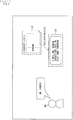
- FIG. 1 illustrates a user U1 and an electronic apparatus 10 that performs speech recognition on speech of the user U1 and to which the present technology is applied.
- the user U1 instructs the electronic apparatus 10 to transmit a message to Mr. DonDon through the use of an e-mail, by saying "E-mail Mr. DonDon suggesting that we play a game tomorrow".
- the electronic apparatus 10 performs the speech recognition on the speech of the user U1 by utilizing a large-vocabulary speech recognition engine.
- "Mr. DonDon” who is a destination, is not registered in a dictionary and incorrectly recognized as “Mr. Todou”, as illustrated in FIG. 1 .
- the electronic apparatus 10 performs a semantic analysis of a text including character strings obtained by the speech recognition to identify "Mr. Todou” being the “destination”, “we play a game tomorrow” being “contents”, and transmission of the message through the use of the e-mail being "intent”.
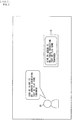
- the electronic apparatus 10 acquires, as the dictionary, a destination list which includes possible destinations, from an internally retained contact list (telephone directory) L1, as illustrated in FIG. 2 , and starts a command-type speech recognition engine.
- the user U1 instructs the electronic apparatus 10 to transmit a message to "Mr. DonDon” through the use of application (hereinafter referred to as app) "Alone” by saying “Send by Alone to Mr. DonDon suggesting that we play a game tomorrow".
- App application
- Alone is the application that is a means to transmit a message.
- the electronic apparatus 10 performs the speech recognition on the speech of the user U1 by utilizing the large-vocabulary speech recognition engine.
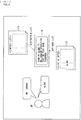
- "Mr. DonDon” which is the destination, is not registered in the dictionary and incorrectly recognized as “Mr. Todou”, as illustrated in FIG. 3 .
- "Alone” which is the means to transmit a message, is not registered in the dictionary, either, and incorrectly recognized as "Arrow”, as illustrated in FIG. 3 .
- the electronic apparatus 10 performs a sematic analysis of the text including character strings obtained by the speech recognition to identify respective elements of "Mr. Todou “ being the “destination”, “we play a game tomorrow” being the “contents”, “Arrow” being the “means to transmit a message”, and the transmission of the message being the "intent”.
- the electronic apparatus 10 On the basis of the slot of the "destination", the electronic apparatus 10 acquires, as the dictionary, the destination list which includes possible destinations, from the internally retained contact list L1, as illustrated in FIG. 4 , and starts the command-type speech recognition engine. In addition, on the basis of the slot of the "means to transmit amessage", the electronic apparatus 10 acquires, as the dictionary, an app name list of applications which are possible means to transmit a message, from an internally retained list of installed apps L2, as illustrated in FIG. 4 , and starts the command-type speech recognition engine.
- the electronic apparatus 10 correctly modifies the speech recognition result.
- FIG. 5 is a block diagram illustrating a hardware configuration example of the electronic apparatus 10 of a first embodiment to which the present technology is applied.
- the electronic apparatus 10 is configured as an agent apparatus of a user interaction type, for example.
- a central processing unit (CPU) 31, a read only memory (ROM) 32, and a random access memory (RAM) 33 are mutually connected by a bus 34.
- a microphone 35 To the bus 34 are connected a microphone 35, a sensor 36, a speaker 37, a display 38, an input unit 38, a storage unit 40, and a communications unit 41.
- the microphone 35 detects spoken voice of a user.
- the sensor 36 includes various types of sensors such as a camera, an acceleration sensor, a gyro sensor, or a positioning sensor. For example, the sensor 36 outputs an image obtained by shooting. In addition, the sensor 36 outputs information indicating a detection result such as acceleration, an angular speed, or a current position.
- the speaker 37 outputs voice (synthesized voice).
- the display 38 includes a liquid crystal display (LCD), an organic electro luminescence (EL) display, or the like.
- the display 38 displays the character strings obtained by the speech recognition as the speech recognition result.
- the input unit 39 includes a touch panel provided on the display 38 in a stacked manner or various types of buttons provided on a housing of the electronic apparatus 10.
- the input unit 39 detects an operation by the user and outputs information indicating contents of the operation.
- the storage unit 40 includes a nonvolatile memory or the like.
- the storage unit 40 stores various types of data, such as data for voice synthesis, the aforementioned contact list or list of installed apps, or the like, in addition to a program executed by the CPU 31.
- the communications unit 41 includes a network interface or the like.
- the communications unit 41 performs wired or wireless communications with an external apparatus.
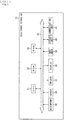
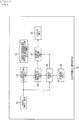
- FIG. 6 is a block diagram illustrating a functional configuration example of the electronic apparatus 10.
- At least some of function blocks of the electronic apparatus 10 illustrated in FIG. 6 are implemented by the CPU 31 of FIG. 5 executing a predetermined program.
- the electronic apparatus 10 includes a voice input unit 51, a speech recognition unit 52, a large-vocabulary speech recognition dictionary 53, a semantic analysis unit 54, a search unit 55, a storage unit 56, a display control unit 57, and a display unit 58.
- the voice input unit 51 corresponds to the microphone 35 of FIG. 5 and inputs user's spoken voice.
- the voice input unit 51 supplies the speech recognition unit 52 with voice data corresponding to the inputted user's spoken voice.
- the speech recognition unit 52 performs large-vocabulary speech recognition on the voice data received from the voice input unit 51 through the use of the large-vocabulary speech recognition engine.
- the large-vocabulary speech recognition dictionary 53 is a dictionary in which vocabulary corresponding to extensive spoken contents has been registered in advance.
- the speech recognition unit 52 is able to perform the speech recognition by matching the voice data from the voice input unit 51 against the vocabulary (words) registered in the large-vocabulary speech recognition dictionary 53.
- the character strings obtained by the speech recognition are supplied to the semantic analysis unit 54.
- the semantic analysis unit 54 identifies a predetermined slot (attribute) included in a text by performing natural language processing, specifically, the semantic analysis, on the text including the character strings received from the speech recognition unit 52.
- the slot is an attribute of a morpheme in which uncommon proper nouns in a text or highly personal words are used, for instance.
- the slot may be a "location", a "call partner”, or the like, in addition to the aforementioned "destination”.
- the search unit 55 retrieves a candidate for replacement (second word) of a word (first word) corresponding to the slot identified by the semantic analysis of the semantic analysis unit 54 in the text including the character strings obtained by the speech recognition.
- the search unit 55 creates a local speech recognition dictionary in data stored in the storage unit 56 on the basis of a search range corresponding to the identified slot and starts a local speech recognition engine that performs command recognition or fixed phrasing recognition.
- the storage unit 56 corresponds to the storage unit 40 of FIG. 5 and stores, for example, the aforementioned contact list or list of installed apps.
- the search unit 55 creates the destination list as the local speech recognition dictionary on the basis of the contact list stored in the storage unit 56 and starts the local speech recognition engine corresponding to the identified slot.
- the search unit 55 retrieves a word which is a candidate for replacement, by using the local speech recognition engine on the basis of respeaking of the user about the identified slot and replaces the word corresponding to the identified slot with the retrieved word.
- the display control unit 57 controls display on the display unit 58 corresponding to the display 38 of FIG. 5 . Specifically, the display control unit 57 causes the display unit 58 to display the text on which the semantic analysis unit 54 has performed the semantic analysis or causes the display unit 58 to display the text in which the word corresponding to the identified slot has been replaced by the search unit 55.
- FIG. 7 The processing of FIG. 7 starts when the user's spoken voice is inputted to the voice input unit 51.
- step S1 the speech recognition unit 52 performs the large-vocabulary speech recognition on a user's spoken voice (voice data received from the voice input unit 51) through the use of the large-vocabulary speech recognition engine.
- step S2 the semantic analysis unit 54 performs the semantic analysis of the text including the character strings obtained by the speech recognition performed by the speech recognition unit 52.
- step S3 the semantic analysis unit 54 identifies a slot (for example, "destination") on the basis of a result of the semantic analysis.
- step S4 the search unit 55 creates the local speech recognition dictionary on the basis of the search range corresponding to the identified slot, in the data stored in the storage unit 56.
- step S5 the search unit 55 starts the local speech recognition engine.
- step S6 the search unit 55 retrieves the word that is a candidate for replacement by using the local speech recognition engine on the basis of the respeaking of the user about the identified slot.
- step S7 the search unit 55 replaces the word corresponding to the identified slot with the retrieved word.
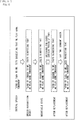
- FIG. 8 is a diagram illustrating a first display example of the speech recognition result.
- This modifiable state continues for a predetermined period of time such as 5 seconds, for example.
- the user is able to easily modify the speech recognition result by respeaking.
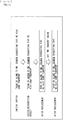
- FIG. 9 is a diagram illustrating a second display example of the speech recognition result.
- the states from the first row to the third rows in FIG. 9 are similar to the states in FIG. 8 , and thus description thereof is omitted.
- the candidates for replacement are switched one by one in the text by the user repeatedly respeaking. This makes it possible to narrow down the candidates for replacement and to reliably obtain the modification result that the user desires.
- FIG. 10 is a diagram illustrating a third display example of the speech recognition result.
- the display of the speech recognition result enters the modifiable state, as illustrated on the third row. Specifically, “Mr. Touto” corresponding to the identified slot “destination” and “Toudou” corresponding to the slot “means to transmit a message”, which are included in the text of the speech recognition result, are highlighted.
- highlighting is not limited thereto and the letter font, the color, the size, or the background color of the words may be changed, for example.
- the speech recognition engine corresponding to the "destination” identifies a position of the word replaced by "Mr. DonDon”, and the speech recognition engine corresponding to the "means to transmit a message” identifies a position of the word replaced by "ToDo”.
- the candidates for replacement are appropriately retrieved from search ranges corresponding to the respective slots. This allows the user to modify the speech recognition result without performing a focus transition operation or the like, to select which word is to be modified.
- FIG. 11 is a diagram illustrating a fourth display example of the speech recognition result.
- the states from the first row to the second row in FIG. 11 are similar to the states in FIG. 10 and thus description thereof is omitted.
- the candidates for replacement of the words corresponding to the identified slots may be displayed before respeaking of the user. In this case, it is necessary to retrieve the candidates for replacement corresponding to the identified slots independent of the respeaking of the user. This may be implemented by processing of the embodiment to be described below.
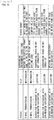
- the character strings (including e-mail address information) corresponding to the "destination" are displayed in a destination (To) column on a screen for creating a new e-mail displayed on the display unit 58.
- the character strings corresponding to the "contents" are displayed in a text column on the screen for creating a new e-mail.
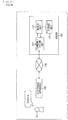
- FIG. 12 is a flowchart explaining about the speech recognition result modification processing by the electronic apparatus 10 in the present embodiment.
- processing in steps from S11 to S15 in FIG. 12 are similar to the processing in steps from S1 to S5 in FIG. 7 , and thus description thereof is omitted.
- step S15 the processing proceeds to step S16 where the search unit 55 retrieves the word that is the candidate for replacement, through the use of the local speech recognition engine, on the basis of the voice data of the word corresponding to the identified slot.
- the identified slot is included in the text on which the semantic analysis has been performed.
- the search unit 55 acquires the voice data of the user's initial speech and estimates, in the voice data, portions corresponding to the "destination" and the app name in the text on which the sematic analysis has been performed, on the basis of time of the entire speech and a length of the word corresponding to the slot.
- the search unit 55 When estimating data D11 corresponding to the "destination" in the voice data, the search unit 55 retrieves a word that is the candidate for replacement of the data D11, by starting the local speech recognition engine having the destination list in the dictionary, as illustrated in an arrow #11. Similarly, when estimating data D12 corresponding to the app name in the voice data, the search unit 55 retrieves a word that is the candidate for replacement of the data D12, by starting the local speech recognition engine having the app name list in the dictionary, as illustrated by an arrow #12.
- the word that is the candidate for replacement is retrieved on the basis of the voice data.
- the search unit 55 replaces the word corresponding to the identified slot with the retrieved word in step S17.
- FIG. 14 is a diagram illustrating a display example of the speech recognition result in the aforementioned speech recognition result modification processing.
- the search unit 55 retrieves words that are the candidates for replacement of the words (voice data) corresponding to the respective slots.
- the processing described above allows the user to obtain the speech recognition result that the user expects, without the need for respeaking of the user.
- the word replaced in the displayed text may be modified on the basis of respeaking of the user.
- the search unit 55 retrieves words that are the candidates for replacement of the words (voice data) corresponding to the respective slots.
- a frequency (accuracy rate of modification results) of further modifications (searching) by the user may also be learned for each identified slot.
- the processing of modifying the speech recognition result based on the respeaking of the user is performed on the "destination”.
- the accuracy rate of the modification result of the automatic speech recognition result on the "means to transmit a message" is higher than the predetermined value, the processing of automatically modifying the speech recognition result is performed on the "means to transmit a message”.
- the word corresponding to the identified slot may be highlighted in accordance with a degree of confidence of the speech recognition result of the word. For example, it is believed that as the degree of confidence of the speech recognition result becomes lower, necessity of modification becomes higher. Hence, the word is highlighted in a case where the degree of confidence of the speech recognition result for the word corresponding to the identified slot is lower than the predetermined value.
- the word that is the candidate for replacement may be retrieved. This allows the user to correctly modify only words that have been incorrectly recognized or modified.
- the search range of the candidate for replacement of the word corresponding to the identified slot is the search range corresponding to that slot (attribute).
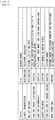
- FIG. 16 is a diagram illustrating an example of a search range corresponding to an intent.
- a candidate for replacement corresponding to an intent A and a candidate for replacement corresponding to an intent B are included in a search range corresponding to Slot A.
- the example is illustrated in which the candidate for replacement corresponding to the intent A and the candidate for replacement corresponding to the intent B have no mutually common element.
- the example is illustrated in which the candidate for replacement corresponding to the intent A and the candidate for replacement corresponding to the intent B have a mutually common element in some portions thereof.
- the example is illustrated in which the candidate for replacement corresponding to the intent A includes all elements of the candidate for replacement corresponding to the intent B.
- the search unit 55 retrieves the candidate for replacement of the word corresponding to the slot, from the search range corresponding to that slot and the intent of the text on which the semantic analysis has been performed.
- FIG. 17 is a diagram explaining about a specific example of a search range corresponding to the intent.
- the search range of words corresponding to the "destination” is the telephone directory.
- the search range of words corresponding to the "destination” is a friend list of the SNS app.
- the search range thereof differs depending on the intent of the contents of the user's speech.
- a word corresponding to another slot may be identified on the basis of a search result of a word corresponding to one slot.
- a personal name which may be the "destination”
- the SNS app which is the "means to transmit a message”
- a search range of words corresponding to the "location” is a list of names of foreign countries/cities or a list of prefectures in Japan.
- the search range of words corresponding to the "location” is names of cities, wards, and towns of an area surrounding user's home.
- the search range of words corresponding to the "location” is city names in the entire world.
- the search range of words corresponding to the "location” is station names.
- the search range thereof differs depending on the intent of the contents of the user's speech.
- the search range also differs depending on surrounding situations of the user (surrounding environment or conditions of the user).
- FIG. 18 is a diagram illustrating an example of a search range corresponding to the surrounding situations of the user (hereinafter simply referred to as situations).
- a candidate for replacement corresponding to situation A and a candidate for replacement corresponding to situation B are included in a search range corresponding to the slot A and the intent A.
- a of FIG. 18 is the example illustrated in which the candidate for replacement corresponding to the situation A and the candidate for replacement corresponding to the situation B have no mutually common element.
- the example is illustrated in which the candidate for replacement corresponding to the situation A includes all elements of the candidate for replacement corresponding to the situation B.
- the search unit 55 retrieves the candidate for replacement of the word corresponding to the slot, from the search range corresponding to the slot, the intent of the text on which the semantic analysis has been performed, and the surrounding situations of the user.
- FIG. 19 is a diagram explaining about a specific example of the search range corresponding to the surrounding situations of the user.
- the slot is the "destination”
- the surrounding environment/conditions of the user are that the user is moving in a direction to the user's home, and a time zone is between 6 PM and 10 PM
- a search range of words corresponding to the "destination” is family members or friends in the telephone directory.
- the search range of words corresponding to the "destination” is company-related destinations in a destination list of a personal computer (PC).
- the slot is the "destination”
- the surrounding environment/conditions of the user are that the user is at home
- the search range thereof differs depending on the surrounding situations of the user.
- the slot is the "location", and surrounding roads are not congested, the search range of words corresponding to the "location” is a list of shops located within a 10-kilometer radius from a current position.
- the search range of words corresponding to the "location” is a list of shops located within a 1-kilometer radius from the current position.
- the search range of words corresponding to the "location” is a list of shops located within 500 meters on a route to the destination
- the search range differs depending on the surrounding situations of the user.
- the slot in the contents of the user's speech is the "destination” or the “location”, the “call partner”, or the like, the slot is not limited thereto.
- a "numeric value" of "3000" may be identified as the slot.
- the present technology is also applicable to cloud computing.
- an electronic apparatus 110 performs the speech recognition of speech of a user U11 and transmits the result of the semantic analysis of the text including the character strings obtained by the speech recognition to a server 120 via a network 130.
- the server 120 includes a communication unit 121, a search unit 122, and a storage unit 123.
- the communication unit 121 receives the text on which the semantic analysis has been performed and the result of the semantic analysis which are transmitted from the electronic apparatus 110 via the network 130.
- the search unit 122 has same functions as the functions of the search unit 55 of FIG. 6 and retrieves a candidate for replacement of the word corresponding to the slot identified in the text from the electronic apparatus 110 by the semantic analysis.
- the search unit 122 transmits the text in which the word corresponding to the identified slot has been replaced, to the electronic apparatus 110 via the network 130.
- the storage unit 123 has same functions as the functions of the storage unit 56 of FIG. 6 and stores data that is the candidate for replacement retrieved by the search unit 122. It is to be noted that the data to be stored in the storage unit 123 may be acquired from the electronic apparatus 110 via the network 130.
- the server 120 manages a contact list or a list of installed apps stored by the electronic apparatus 110 and synchronizes them with a contact list or a list of installed apps stored in the storage unit 123.
- the search unit 122 of the server 120 creates a destination list as a local speech recognition dictionary on the basis of the contact list stored in the storage unit 123, and starts the local speech recognition engine corresponding to the identified slot ("destination"). With this, the candidate for replacement of the word corresponding to the "destination" is retrieved.
- the speech recognition engine that starts in the server 120 is also referred to as the local speech recognition engine.
- the electronic apparatus 110 performs the semantic analysis of the text including the character strings obtained by the speech recognition in the configuration illustrated in FIG. 20
- provision of the semantic analysis unit 54 in the server 120 may allow the server 120 to perform the semantic analysis of the text.
- the present technology is applicable to an apparatus or a system, such as an agent apparatus of a user interaction type or a car navigation system, that operates in response to a spoken voice instruction.
- the present technology is also applicable to home electronics products.
- processing of modifying the speech recognition result may be performed with "foodstuff' or a "family member name" as the slot. Acquisition of a correct speech recognition result makes it possible to confirm whether or not there is a specific foodstuff in a refrigerator or how it is preserved, or to provide a specific family member with the foodstuff in the refrigerator.
- a search range of words corresponding to the "foodstuff” is a history of foodstuffs stored in the refrigerator or a history (receipts) of purchased foodstuffs. These histories may be set for each user (each family member).
- the candidate for replacement of the word corresponding to the identified slot is retrieved from the search range, such as a list prepared in advance or the like.
- learning may be performed to cause such a nickname or owner's name to be identified as the "destination” or the "location” on the basis of contents of the spoken voice of the user.
- the nickname in the search range corresponding to the "destination” or include the owner's name in the search range corresponding to the "location”.
- the learning may be performed to cause a personal name included in a message (log) exchanged in the SNS app or the like to be identified as the "destination".
- Natural language processing such as the semantic analysis makes identification of the personal name feasible. This makes it possible to include that personal name in the search range corresponding to the "destination”.
- the configuration as described above allows for improvement of modification precision of the speech recognition result.
- the above description has been given on the assumption that the intent of the text on which the semantic analysis has been performed is identified correctly.
- the intent may be estimated from the contents of the speech made in the past.
- a wizard may be operated that extends a domain such as contents/field/genre of the speech and the user may be caused to add that intent.
- FIG. 21 is a block diagram illustrating a hardware configuration example of a computer that performs the aforementioned series of processing by a program.
- the aforementioned electronic apparatus 10 and the server 120 are implemented by a computer having a configuration illustrated in FIG. 21 .
- a CPU 1001, a ROM 1002, and a RAM 1003 are connected to each other by a bus 1004.
- An input and output interface 1005 is further coupled to the bus 1004.
- an input unit 1006 including a keyboard, a mouse, or the like
- an output unit 1007 including a display, a speaker, or the like.
- a storage unit 1008 including a hard disk, the nonvolatile memory, or the like
- a communication unit 1009 including a network interface
- a drive 1010 driving a removable medium 1011.
- the CPU 1001 performs the aforementioned series of processing, for example, by loading the program stored in the storage unit 1008 to the RAM 1003 via the input and output interface 1005 and the bus 1004 and executing the program.
- the program executed by the CPU 1001 is provided by being recorded in the removable medium 1011, for example, or via a wired or wireless transmission medium such as a local area network, the Internet, or digital broadcasting, and installed in the storage unit 1008.
- a wired or wireless transmission medium such as a local area network, the Internet, or digital broadcasting
- the program to be executed by the computer may be a program that is processed in chronological order along the order described herein or a program that is processed concurrently or at necessary timing such as when the program has been called.
Landscapes
- Engineering & Computer Science (AREA)
- Computational Linguistics (AREA)
- Health & Medical Sciences (AREA)
- Audiology, Speech & Language Pathology (AREA)
- Human Computer Interaction (AREA)
- Physics & Mathematics (AREA)
- Acoustics & Sound (AREA)
- Multimedia (AREA)
- Artificial Intelligence (AREA)
- Machine Translation (AREA)
Applications Claiming Priority (2)
| Application Number | Priority Date | Filing Date | Title |
|---|---|---|---|
| JP2017157540 | 2017-08-17 | ||
| PCT/JP2018/029180 WO2019035373A1 (ja) | 2017-08-17 | 2018-08-03 | 情報処理装置、情報処理方法、およびプログラム |
Publications (2)
| Publication Number | Publication Date |
|---|---|
| EP3671730A1 true EP3671730A1 (de) | 2020-06-24 |
| EP3671730A4 EP3671730A4 (de) | 2020-07-15 |
Family
ID=65362282
Family Applications (1)
| Application Number | Title | Priority Date | Filing Date |
|---|---|---|---|
| EP18846171.9A Ceased EP3671730A4 (de) | 2017-08-17 | 2018-08-03 | Informationsverarbeitungsvorrichtung, informationsverarbeitungsverfahren und programm |
Country Status (4)
| Country | Link |
|---|---|
| US (1) | US20200243074A1 (de) |
| EP (1) | EP3671730A4 (de) |
| JP (1) | JP7279636B2 (de) |
| WO (1) | WO2019035373A1 (de) |
Families Citing this family (7)
| Publication number | Priority date | Publication date | Assignee | Title |
|---|---|---|---|---|
| CN111160002B (zh) | 2019-12-27 | 2022-03-01 | 北京百度网讯科技有限公司 | 用于输出口语理解中解析异常信息的方法和装置 |
| US12008985B2 (en) * | 2020-06-22 | 2024-06-11 | Amazon Technologies, Inc. | Natural language processing of declarative statements |
| CN113312070B (zh) * | 2021-06-03 | 2023-02-24 | 海信集团控股股份有限公司 | 车载应用的应用名称更新方法及车辆 |
| EP4356370A1 (de) * | 2021-06-15 | 2024-04-24 | Microsoft Technology Licensing, LLC | Kontextuelle rechtschreibungskorrektur (csc) für automatische spracherkennung (asr) |
| WO2023210340A1 (ja) * | 2022-04-26 | 2023-11-02 | ソニーグループ株式会社 | 学習装置および学習方法 |
| JP2024038566A (ja) * | 2022-09-08 | 2024-03-21 | 株式会社東芝 | キーワード検出装置、キーワード検出方法、およびキーワード検出プログラム |
| JP2024054651A (ja) * | 2022-10-05 | 2024-04-17 | 日産自動車株式会社 | 対話装置及び対話制御方法 |
Family Cites Families (12)
| Publication number | Priority date | Publication date | Assignee | Title |
|---|---|---|---|---|
| US5712957A (en) * | 1995-09-08 | 1998-01-27 | Carnegie Mellon University | Locating and correcting erroneously recognized portions of utterances by rescoring based on two n-best lists |
| JP2002140094A (ja) * | 2000-11-01 | 2002-05-17 | Mitsubishi Electric Corp | 音声認識装置、音声認識方法および音声認識プログラムを記録したコンピュータ読取可能な記録媒体 |
| JP3614116B2 (ja) | 2001-03-30 | 2005-01-26 | オムロン株式会社 | トランスクリプション装置、トランスクリプション方法、トランスクリプションプログラム、およびそのプログラムを記録した記録媒体 |
| US7386454B2 (en) * | 2002-07-31 | 2008-06-10 | International Business Machines Corporation | Natural error handling in speech recognition |
| JP4736423B2 (ja) * | 2004-12-27 | 2011-07-27 | 日産自動車株式会社 | 音声認識装置および音声認識方法 |
| US9318108B2 (en) * | 2010-01-18 | 2016-04-19 | Apple Inc. | Intelligent automated assistant |
| JP4987623B2 (ja) * | 2007-08-20 | 2012-07-25 | 株式会社東芝 | ユーザと音声により対話する装置および方法 |
| JP2011118774A (ja) * | 2009-12-04 | 2011-06-16 | Sony Corp | 検索装置、検索方法、及び、プログラム |
| CN102682763B (zh) * | 2011-03-10 | 2014-07-16 | 北京三星通信技术研究有限公司 | 修正语音输入文本中命名实体词汇的方法、装置及终端 |
| US9818401B2 (en) * | 2013-05-30 | 2017-11-14 | Promptu Systems Corporation | Systems and methods for adaptive proper name entity recognition and understanding |
| JP2016102866A (ja) * | 2014-11-27 | 2016-06-02 | 株式会社アイ・ビジネスセンター | 誤認識修正装置およびプログラム |
| JP2018063271A (ja) * | 2015-02-27 | 2018-04-19 | パナソニックIpマネジメント株式会社 | 音声対話装置、音声対話システム、および、音声対話装置の制御方法 |
-
2018
- 2018-08-03 US US16/637,763 patent/US20200243074A1/en not_active Abandoned
- 2018-08-03 EP EP18846171.9A patent/EP3671730A4/de not_active Ceased
- 2018-08-03 JP JP2019536735A patent/JP7279636B2/ja active Active
- 2018-08-03 WO PCT/JP2018/029180 patent/WO2019035373A1/ja not_active Ceased
Also Published As
| Publication number | Publication date |
|---|---|
| JPWO2019035373A1 (ja) | 2020-10-08 |
| WO2019035373A1 (ja) | 2019-02-21 |
| EP3671730A4 (de) | 2020-07-15 |
| JP7279636B2 (ja) | 2023-05-23 |
| US20200243074A1 (en) | 2020-07-30 |
Similar Documents
| Publication | Publication Date | Title |
|---|---|---|
| US20200243074A1 (en) | Information processor, information processing method, and program | |
| KR102309489B1 (ko) | 가상 비서에서 커맨드 처리를 용이하게 하기 위한 컨텍스트 정보의 이용 | |
| US12206632B2 (en) | Method, apparatus, system, and non-transitory computer readable medium for controlling user access through content analysis of an application | |
| US9865264B2 (en) | Selective speech recognition for chat and digital personal assistant systems | |
| US11093971B2 (en) | Contextual discovery | |
| US10043514B2 (en) | Intelligent contextually aware digital assistants | |
| US8677236B2 (en) | Contact-specific and location-aware lexicon prediction | |
| US9188456B2 (en) | System and method of fixing mistakes by going back in an electronic device | |
| US9244610B2 (en) | Systems and methods for using entered text to access and process contextual information | |
| US10049149B2 (en) | Computerized system and method for search query auto-completion | |
| EP3648032A1 (de) | Informationseingabeverfahren, informationseingabevorrichtung und informationseingabesystem | |
| KR20190126734A (ko) | 문맥적 추천 | |
| US20130158987A1 (en) | System and method for dynamically generating group-related personalized dictionaries | |
| JP2009237750A (ja) | 情報検索支援装置及び情報検索支援方法 | |
| US20170249956A1 (en) | Inferring User Intentions Based on User Conversation Data and Spatio-Temporal Data | |
| US20110219299A1 (en) | Method and system of providing completion suggestion to a partial linguistic element | |
| US20100106407A1 (en) | Navigation system | |
| US20150095024A1 (en) | Function execution instruction system, function execution instruction method, and function execution instruction program | |
| JP5429377B2 (ja) | 文字入力における候補の表示方法 | |
| WO2020041945A1 (en) | Artificial intelligent systems and methods for displaying destination on mobile device | |
| KR102681754B1 (ko) | 내비게이션 시스템의 경유지 추천 방법 | |
| KR102934859B1 (ko) | 차량용 대화 시스템 및 방법 | |
| US10401184B2 (en) | Information processing device and information presentation system | |
| KR20250089061A (ko) | 메신저 기반 목적지 추천 방법을 수행하는 장치, 내비게이션 시스템, 및 이를 포함하는 컴퓨팅 시스템 | |
| CN121981117A (zh) | 一种信息识别方法及相关装置 |
Legal Events
| Date | Code | Title | Description |
|---|---|---|---|
| STAA | Information on the status of an ep patent application or granted ep patent |
Free format text: STATUS: THE INTERNATIONAL PUBLICATION HAS BEEN MADE |
|
| PUAI | Public reference made under article 153(3) epc to a published international application that has entered the european phase |
Free format text: ORIGINAL CODE: 0009012 |
|
| STAA | Information on the status of an ep patent application or granted ep patent |
Free format text: STATUS: REQUEST FOR EXAMINATION WAS MADE |
|
| 17P | Request for examination filed |
Effective date: 20200308 |
|
| AK | Designated contracting states |
Kind code of ref document: A1 Designated state(s): AL AT BE BG CH CY CZ DE DK EE ES FI FR GB GR HR HU IE IS IT LI LT LU LV MC MK MT NL NO PL PT RO RS SE SI SK SM TR |
|
| AX | Request for extension of the european patent |
Extension state: BA ME |
|
| A4 | Supplementary search report drawn up and despatched |
Effective date: 20200617 |
|
| RIC1 | Information provided on ipc code assigned before grant |
Ipc: G10L 15/22 20060101ALI20200610BHEP Ipc: G10L 15/10 20060101ALI20200610BHEP Ipc: G10L 15/18 20130101AFI20200610BHEP Ipc: G06F 3/16 20060101ALI20200610BHEP |
|
| DAV | Request for validation of the european patent (deleted) | ||
| DAX | Request for extension of the european patent (deleted) | ||
| STAA | Information on the status of an ep patent application or granted ep patent |
Free format text: STATUS: EXAMINATION IS IN PROGRESS |
|
| 17Q | First examination report despatched |
Effective date: 20210126 |
|
| RAP3 | Party data changed (applicant data changed or rights of an application transferred) |
Owner name: SONY GROUP CORPORATION |
|
| REG | Reference to a national code |
Ref country code: DE Ref legal event code: R003 |
|
| STAA | Information on the status of an ep patent application or granted ep patent |
Free format text: STATUS: THE APPLICATION HAS BEEN REFUSED |
|
| 18R | Application refused |
Effective date: 20210822 |