EP3672280A1 - Hörgerät mit beschleunigungsbasierter strahlformung - Google Patents
Hörgerät mit beschleunigungsbasierter strahlformung Download PDFInfo
- Publication number
- EP3672280A1 EP3672280A1 EP18214347.9A EP18214347A EP3672280A1 EP 3672280 A1 EP3672280 A1 EP 3672280A1 EP 18214347 A EP18214347 A EP 18214347A EP 3672280 A1 EP3672280 A1 EP 3672280A1
- Authority
- EP
- European Patent Office
- Prior art keywords
- beamforming
- input signal
- hearing device
- mode
- noise
- Prior art date
- Legal status (The legal status is an assumption and is not a legal conclusion. Google has not performed a legal analysis and makes no representation as to the accuracy of the status listed.)
- Granted
Links
Images

Classifications
-
- G—PHYSICS
- G10—MUSICAL INSTRUMENTS; ACOUSTICS
- G10L—SPEECH ANALYSIS TECHNIQUES OR SPEECH SYNTHESIS; SPEECH RECOGNITION; SPEECH OR VOICE PROCESSING TECHNIQUES; SPEECH OR AUDIO CODING OR DECODING
- G10L21/00—Speech or voice signal processing techniques to produce another audible or non-audible signal, e.g. visual or tactile, in order to modify its quality or its intelligibility
- G10L21/02—Speech enhancement, e.g. noise reduction or echo cancellation
- G10L21/0208—Noise filtering
- G10L21/0216—Noise filtering characterised by the method used for estimating noise
-
- H—ELECTRICITY
- H04—ELECTRIC COMMUNICATION TECHNIQUE
- H04R—LOUDSPEAKERS, MICROPHONES, GRAMOPHONE PICK-UPS OR LIKE ACOUSTIC ELECTROMECHANICAL TRANSDUCERS; ELECTRIC HEARING AIDS; PUBLIC ADDRESS SYSTEMS
- H04R25/00—Electric hearing aids
-
- H—ELECTRICITY
- H04—ELECTRIC COMMUNICATION TECHNIQUE
- H04R—LOUDSPEAKERS, MICROPHONES, GRAMOPHONE PICK-UPS OR LIKE ACOUSTIC ELECTROMECHANICAL TRANSDUCERS; ELECTRIC HEARING AIDS; PUBLIC ADDRESS SYSTEMS
- H04R1/00—Details of transducers, loudspeakers or microphones
- H04R1/02—Casings; Cabinets ; Supports therefor; Mountings therein
- H04R1/028—Casings; Cabinets ; Supports therefor; Mountings therein associated with devices performing functions other than acoustics, e.g. electric candles
-
- H—ELECTRICITY
- H04—ELECTRIC COMMUNICATION TECHNIQUE
- H04R—LOUDSPEAKERS, MICROPHONES, GRAMOPHONE PICK-UPS OR LIKE ACOUSTIC ELECTROMECHANICAL TRANSDUCERS; ELECTRIC HEARING AIDS; PUBLIC ADDRESS SYSTEMS
- H04R1/00—Details of transducers, loudspeakers or microphones
- H04R1/08—Mouthpieces; Microphones; Attachments therefor
-
- H—ELECTRICITY
- H04—ELECTRIC COMMUNICATION TECHNIQUE
- H04R—LOUDSPEAKERS, MICROPHONES, GRAMOPHONE PICK-UPS OR LIKE ACOUSTIC ELECTROMECHANICAL TRANSDUCERS; ELECTRIC HEARING AIDS; PUBLIC ADDRESS SYSTEMS
- H04R1/00—Details of transducers, loudspeakers or microphones
- H04R1/10—Earpieces; Attachments therefor ; Earphones; Monophonic headphones
- H04R1/1041—Mechanical or electronic switches, or control elements
-
- H—ELECTRICITY
- H04—ELECTRIC COMMUNICATION TECHNIQUE
- H04R—LOUDSPEAKERS, MICROPHONES, GRAMOPHONE PICK-UPS OR LIKE ACOUSTIC ELECTROMECHANICAL TRANSDUCERS; ELECTRIC HEARING AIDS; PUBLIC ADDRESS SYSTEMS
- H04R25/00—Electric hearing aids
- H04R25/40—Arrangements for obtaining a desired directivity characteristic
- H04R25/407—Circuits for combining signals of a plurality of transducers
-
- H—ELECTRICITY
- H04—ELECTRIC COMMUNICATION TECHNIQUE
- H04R—LOUDSPEAKERS, MICROPHONES, GRAMOPHONE PICK-UPS OR LIKE ACOUSTIC ELECTROMECHANICAL TRANSDUCERS; ELECTRIC HEARING AIDS; PUBLIC ADDRESS SYSTEMS
- H04R3/00—Circuits for transducers
-
- H—ELECTRICITY
- H04—ELECTRIC COMMUNICATION TECHNIQUE
- H04R—LOUDSPEAKERS, MICROPHONES, GRAMOPHONE PICK-UPS OR LIKE ACOUSTIC ELECTROMECHANICAL TRANSDUCERS; ELECTRIC HEARING AIDS; PUBLIC ADDRESS SYSTEMS
- H04R3/00—Circuits for transducers
- H04R3/005—Circuits for transducers for combining the signals of two or more microphones
-
- G—PHYSICS
- G10—MUSICAL INSTRUMENTS; ACOUSTICS
- G10L—SPEECH ANALYSIS TECHNIQUES OR SPEECH SYNTHESIS; SPEECH RECOGNITION; SPEECH OR VOICE PROCESSING TECHNIQUES; SPEECH OR AUDIO CODING OR DECODING
- G10L21/00—Speech or voice signal processing techniques to produce another audible or non-audible signal, e.g. visual or tactile, in order to modify its quality or its intelligibility
- G10L21/02—Speech enhancement, e.g. noise reduction or echo cancellation
- G10L21/0208—Noise filtering
- G10L21/0216—Noise filtering characterised by the method used for estimating noise
- G10L2021/02161—Number of inputs available containing the signal or the noise to be suppressed
- G10L2021/02166—Microphone arrays; Beamforming
-
- H—ELECTRICITY
- H04—ELECTRIC COMMUNICATION TECHNIQUE
- H04R—LOUDSPEAKERS, MICROPHONES, GRAMOPHONE PICK-UPS OR LIKE ACOUSTIC ELECTROMECHANICAL TRANSDUCERS; ELECTRIC HEARING AIDS; PUBLIC ADDRESS SYSTEMS
- H04R2225/00—Details of deaf aids covered by H04R25/00, not provided for in any of its subgroups
- H04R2225/41—Detection or adaptation of hearing aid parameters or programs to listening situation, e.g. pub, forest
-
- H—ELECTRICITY
- H04—ELECTRIC COMMUNICATION TECHNIQUE
- H04R—LOUDSPEAKERS, MICROPHONES, GRAMOPHONE PICK-UPS OR LIKE ACOUSTIC ELECTROMECHANICAL TRANSDUCERS; ELECTRIC HEARING AIDS; PUBLIC ADDRESS SYSTEMS
- H04R2225/00—Details of deaf aids covered by H04R25/00, not provided for in any of its subgroups
- H04R2225/55—Communication between hearing aids and external devices via a network for data exchange
-
- H—ELECTRICITY
- H04—ELECTRIC COMMUNICATION TECHNIQUE
- H04R—LOUDSPEAKERS, MICROPHONES, GRAMOPHONE PICK-UPS OR LIKE ACOUSTIC ELECTROMECHANICAL TRANSDUCERS; ELECTRIC HEARING AIDS; PUBLIC ADDRESS SYSTEMS
- H04R2430/00—Signal processing covered by H04R, not provided for in its groups
Definitions
- the present disclosure relates to a hearing device with adaptive processing and in particular to a hearing device with acceleration-based processing and related methods including a method of operating a hearing device.
- a hearing device comprising a set of microphones comprising a first microphone and/or a second microphone for provision of a first microphone input signal and a second microphone input signal, respectively; a beamforming module connected to the first microphone and/or the second microphone for processing the first microphone input signal and/or the second microphone input signal, the beamforming module configured to provide a beamformed input signal; a processor for processing the beamformed input signal for provision of an electrical output signal based on the beamformed input signal from the beamforming module; a receiver for converting the electrical output signal to an audio output signal; and an optional motion detector, wherein the beamforming module comprises a beamforming controller connected to the motion detector. The beamforming controller is optionally configured to control the beamforming module based on motion data from the motion detector.
- a method of operating a hearing device comprising: obtaining a first input signal and a second input signal; applying a beamforming mode to the first input signal and the second input signal for provision of a beamformed input signal; processing the beamformed input signal for provision of an electrical output signal based on the beamformed input signal; and converting the electrical output signal to an audio output signal.
- the method optionally comprises obtaining motion data and adjusting the beamforming mode based on the motioin data data.
- the present disclosure allows for improved listening experience by automatically detecting a user focus and adjusting beamforming. Further, improved control of situations where a user of a hearing device is in a noisy environment where it may be advantageous to spatially focus the hearing device to a specific sound source. This may e.g. be advantageous if a user of the hearing device is in a social setting, such as in a cocktail party environment, where there are a number of people surrounding the user that are talking.
- beamforming processing of microphone input signals is automatically adjusted when a user focuses on a source and optionally only when there is a need for beamforming e.g. when the user is in a noisy environment. Only applying beamforming when necessary may lead to a power-efficient hearing device while still providing a satisfactory listening experience.
- the hearing device may be a hearable or a hearing aid, wherein the processor is configured to compensate for a hearing loss of a user.
- the hearing device may be of the behind-the-ear (BTE) type, in-the-ear (ITE) type, in-the-canal (ITC) type, receiver-in-canal (RIC) type or receiver-in-the-ear (RITE) type.
- BTE behind-the-ear
- ITE in-the-ear
- ITC in-the-canal
- RIC receiver-in-canal
- RITE receiver-in-the-ear
- the hearing aid may be a binaural hearing aid.
- a hearing device comprises a set of microphones comprising a first microphone and a second microphone for provision of a first microphone input signal and a second microphone input signal, respectively.
- the hearing device comprises a beamforming module connected to the first microphone and the second microphone for processing the first microphone input signal and the second microphone input signal.
- the beamforming module is configured to provide a beamformed input signal.
- the hearing device comprises a processor for processing the beamformed input signals for provision of an electrical output signal based on the beamformed input signal from the beamforming module; and a receiver for converting the electrical output signal to an audio output signal.
- the hearing device comprises a motion detector.
- the motion detector may be a head motion detector and may comprise an accelerometer, a gyroscope and/or a compass.
- the beamforming module comprises a beamforming controller connected to the motion detector.
- the beamforming controller is configured to control the beamforming module based on motion data from the motion detector, such as based on accelerometer data from accelerometer.
- the beamforming controller may be configured to control one or more beamformers such as a plurality of beamformers of the beamforming module to apply a first beamforming mode, such as omnidirectional beamforming or a first directional beamforming, based on the motion data, e.g. the accelerometer data.
- the beamforming controller may be configured to control one or more beamformers of the beamforming module to apply a second beamforming mode, such as omnidirectional beamforming or a second directional beamforming, based on the motion data, e.g. the accelerometer data.
- the second beamforming mode may include a combination of modes e.g. a combination of omni with a directional mode such as a first directional mode.
- the second beamforming mode is different from the first beamforming mode.
- the beamforming controller may be connected to the processor, e.g. for receiving control signal(s) from the processor, thus allowing the processor to control the beamforming of the hearing device.
- the beamforming controller may be configured to apply a default beamforming mode, such as omni, in accordance with no focus criterion being satisfied.
- the beamforming action of the hearing device is controlled at least in part by receiving data from the motion detector, e.g. the accelerometer, where at least a part of data from the motion detector, e.g. accelerometer, can activate a predefined control of the beamforming controller, which activates a predefined beamforming mode.
- the beamforming controller receives motion data from the motion detector and the beamforming controller is configured to control the beamforming module based on the motion data.
- the beamforming controller may receive the motion data from the motion detector and activate a first beamforming mode based at least partly on the information received from the motion detector.
- the beamforming module may operate in a energy efficient way, as the beamforming module may require a significant amount of energy to operate the beamforming module.
- the beamforming controller may e.g. prevent a beamforming of the hearing device, if the motion data indicates that the beamforming module may operate in a low energy mode, rather than a high energy mode.
- the beamforming controller is configured to determine a first movement parameter and/or a plurality of movement parameters based on the motion data.
- the beamforming controller is optionally configured to control the beamforming module based on the first movement parameter and/or the plurality of movement parameters.
- the first movement parameter also denoted MP_1
- the first movement parameter, also denoted MP_1 may be indicative of head rotation of the user's head, e.g. where a low value is indicative of no or little head rotation and a high value is indicative of substantial rotation.
- the beamforming controller may be adapted to receive the motion data and be configured to determine the first movement parameter based on the motion data.
- the motion detector may provide the first movement parameter to the beamforming controller.
- the movement parameter(s) may e.g. indicate whether the hearing device/head of the user is in motion, whether the hearing device/head of the user rotates, whether the hearing device/head of the user is still, whether the hearing device/head of the user is accelerating or decelerating in one or more directions, and/or whether the hearing device/head of the user is in constant motion.
- the first movement parameter may be based on one or more temporal periods, where the motion data may reflect a specific and/or predetermined movement type, which may be recognized by the beamforming controller.
- the beamforming controller may continuously monitor motion data from the motion detector.
- the hearing device may utilize the motion data from the motion detector to recognize a certain movement characteristic of the hearing device.
- the movement parameter(s) may be defined by a certain type of pattern of movement registered by the motion detector. For example, in case the motion detector provides motion data indicative of a reduction in acceleration, e.g. small or no accelerations of the hearing device, the motion detector might be registering a certain type of movement, or a lack thereof, where the movement may be seen as the movement of the head of the user wearing the hearing device.
- the motion detector may comprise an accelerometer wherein the beamforming controller may be configured to control the beamforming module based on accelerometer data from the accelerometer.
- the accelerometer data may indicate the spatial positioning of the hearing device which may provide the beamforming controller a further data input to control the beamforming module of the hearing device.
- the motion detector may comprise a gyroscope wherein the beamforming controller may be configured to control the beamforming module based on gyroscope data from the gyroscope.
- the gyroscope data may indicate the spatial positioning of the hearing device which may provide the beamforming controller a further data input to control the beamforming module of the hearing device.
- the beamforming controller may comprise a noise estimator for provision of a noise parameter indicative of a noise level, and wherein the beamforming controller is configured to control the beamforming module based on the noise parameter.
- the noise parameter may be based on the first microphone input signal and/or the second microphone input signal, i.e. the noise estimator may be connected to the first microphone and/or the second microphone.
- the beamforming applied in the hearing device may be controlled based on a noise level, allowing the beamforming controller to only apply a beamforming scheme when the noise level is high such as above a (first) noise threshold, or even select a specific beamforming scheme adapted to a specific noise level.
- the noise parameter may have a low value, where the low value of the noise parameter may be used as a parameter to determine, whether the beamforming controller performs a beamforming of the microphone input signals.
- a noise threshold e.g. first noise threshold or second threshold
- the noise parameter may have a low value, where the low value of the noise parameter may be used as a parameter to determine, whether the beamforming controller performs a beamforming of the microphone input signals.
- the beamforming controller may initiate the beamforming of the first microphone input signal and/or the second microphone input signal, in order to separate the first sound source from the other sound source.
- the motion data may further be utilized by the beamforming controller to estimate whether it is necessary to initiate the beamforming by the beamforming module, as the motion data may indicate whether the user of the hearing device is moving around or whether the motion data indicates that the user or the head of the user is still, which might indicate that the user is looking or focusing at a sound source, e.g. another person.
- the motion data may be utilized to provide motion data to indicate a state or a condition of the hearing device and/or the user.
- the beamforming controller is configured to determine if one or more focus criteria including a first focus criterion are satisfied. In accordance with the first focus criterion being satisfied, the beamforming controller may be configured to apply a first beamforming mode in the beamforming module, e.g. by sending a first control signal to one or more beamformers of the beamforming module.
- the beamforming controller may be configured to control one or more beamformers of the beamforming module, where the beamforming controller may be configured to assess one or more focus criteria for controlling the beamforming module.
- the focus criteria may be based on a one or more movement parameters and/or one or more noise parameters, where the parameters may be continuously or selectively monitored during the use of the hearing device.
- the parameter(s) may alternatively be monitored with certain intervals.
- the first focus criterion may be based on one or more movement parameters MP_1, MP_2, etc. and/or the noise parameter NP.
- the noise estimator is configured to provide a plurality of noise parameters NP_1, NP_2 etc, wherein the beamforming controller is configured to control the beamforming module based on the plurality of noise parameters.
- the first focus criterion may be given by: MP_ 1 ⁇ TH_M_ 1 , wherein MP_1 is indicative of a head rotation of the head of the user of the hearing device, TH_M_1 is a first movement threshold, and where a low value of MP_1 is indicative of little rotation of the hearing device/head and a high value of MP_1 is indicative of large rotation of the hearing device/head.
- the first focus criterion may be given by: MP_ 1 ⁇ TH_ 1 AND NP > TH_N_ 1 , wherein MP_1 is indicative of a head rotation of the head of the user of the hearing device, TH_M_1 is a first movement threshold, and where a low value of MP_1 is indicative of little rotation of the hearing device/head and a high value of MP_1 is indicative of large rotation of the hearing device/head.
- NP is the noise parameter indicative noise level
- TH_N_1 is a first noise threshold
- a low value of NP is indicative of low noise level and a high value of NP is indicative of high noise level.
- the first focus criterion may be based on two or more parameters, such as one or more movement parameters and one or more noise parameters
- the first focus criterion is optionally based on the first movement parameter.
- the first movement parameter may be based on motion data, where the first movement parameter may at least partly represent the movement/rotation of the hearing device, or may alternatively represent the lack of movement/rotation of the hearing device.
- the beamforming controller may receive the first movement parameter as an input, where the beamforming controller may determine whether the first movement parameter satisfies the first focus criterion based on the first movement parameter. If the beamforming controller determines that the first movement parameter satisfies the first focus criterion, the beamforming controller may initiate the beamformer to activate beamforming of the first microphone input signal and the second microphone input signal. If the beamforming controller determines that the first movement parameter does not fulfil the first focus criterion the beamforming controller may instruct the beamformers not to activate beamforming, e.g. apply an omni-directional mode.
- the beamforming controller may monitor the status of the beamforming module, where the beamforming controller may be configured to control the beamforming module based on the current status of the beamforming module.
- the beamforming controller may determine the control action of the beamforming module based on the current status of the beamforming module. This means that e.g. the same values of the first movement parameter and/or noise parameter may be handled in one way if the beamforming module is in a first beamforming mode, and in different way if the beamforming controller is in another, e.g. second, beamforming mode.
- the first focus criterion is based on the noise parameter(s).
- the noise parameter may be utilized as a focus criterion for the beamforming controller to determine the control of the beamforming module, where the noise criterion may e.g. negate or confirm the control of the beamforming module based on the noise parameter.
- the beamforming controller may use the motion data to control the beamforming module, where the noise parameter may influence the control of the beamforming module by providing an additional input for the control of the beamforming module.
- the noise parameter may be used for providing a more efficient and power-effective beamforming in the hearing device and at the same time avoiding beamforming when beamforming is not necessary.
- the noise parameter may be used as an additional condition to apply a beamforming.
- the beamforming module may operate in a different manner than if the hearing device is in a quiet environment with the same acceleration data.
- the first focus criterion may be based on the first movement parameter and on the noise parameter.
- the beamforming controller may have more than one focus criterion, where two or more focus criteria may be configured to allow the beamforming controller to control the beamforming module and/or the beamforming of the beamforming module.
- the first and second focus criterion may be independent of each other, where the first focus criterion does not influence the second focus criterion, and vice versa.
- the beamforming controller may weigh the first focus criterion against the second focus criterion in order to provide control to the beamforming module.
- the first focus criterion may e.g. be based on movement parameters and/or noise parameter(s) where the first focus criterion defines more than one threshold for one or more parameters, i.e. the first focus criterion may define a respective range for one or more parameters.
- to apply a first beamforming mode in the beamforming module comprises to increase the directionality of a current beamforming mode of beamforming module.
- the beamforming module may have a beamforming mode where the beamforming module applies a predetermined directionality.
- the first beamforming mode may be adapted to provide an increase in the directionality of the present beamforming mode, where the increase in directionality may filter out sounds that are not in the area in which the beamforming module focusses the directionality of the beamforming module.
- the current directionality/beamforming mode of the beamforming module may be an omnidirectional mode, where the first beamforming mode may increase the directionality of the beamforming module from an omnidirectional mode to the first beamforming mode, where the beamforming module may provide a spatial filtering of the sound which is received by the first and/or the second microphone.
- the beamforming controller is configured to determine if a second focus criterion is satisfied.
- the beamforming controller may be configured to apply a second beamforming mode in the beamforming module, e.g. by sending a second control signal to one or more beamformers of the beamforming module.
- the second focus criterion is optionally based on the first movement parameter.
- To apply a second beamforming mode may comprise to apply an omnidirectional beamforming mode.
- the second focus criterion may be different from the first focus criterion.
- the second focus criterion may be based on one or more movement parameters including the first movement parameter and/or be based on the noise parameter(s).
- the beamforming controller may determine whether the second focus criterion is satisfied. If the beamforming controller determines that the second focus criterion is satisfied, the beamforming controller may control the beamformer to apply a second beamforming mode, such as omni-directional mode.
- the second focus criterion may be based on one or more parameters that may e.g. be determined in the hearing device.
- the second focus criterion may e.g. be based on movement parameters and/or noise parameter(s) where the second focus criterion optionally defines more than one threshold for one or more parameters, i.e. the second focus criterion may define a respective range for one or more parameters. This means that for the second focus criterion to be satisfied, a parameter may be required to be larger than a first threshold and less than a second threshold, which means that the parameter may be required in a certain range.
- the second focus criterion may be based on a movement parameter
- the second focus criterion may require the movement parameter to be larger than a first threshold parameter and lower than a second threshold parameter in order to satisfy the second focus criterion. This means that if the motion detector provides a movement parameter that indicates a certain type of movement which is defined by the threshold values, the beamforming controller will instruct the beamforming module to apply a second beamforming mode.
- the second focus criterion may be given by: MP_ 1 > TH_M_ 1 , wherein MP_1 is indicative of a head rotation of the head of the user of the hearing device, TH_M_1 is a first movement threshold, and where a low value of MP_1 is indicative of little rotation of the hearing device/head and a high value of MP_1 is indicative of large rotation of the hearing device/head.
- the second focus criterion may be given by: MP_ 1 > TH_M_ 2 AND / OR NP ⁇ TH_N_ 2 , wherein MP_1 is indicative of a head rotation of the head of the user of the hearing device, TH_M_2 is a second movement threshold, and where a low value of MP_1 is indicative of little rotation of the hearing device/head and a high value of MP_1 is indicative of large rotation of the hearing device/head.
- NP is the noise parameter indicative noise level
- TH_N_2 is a second noise threshold, and where a low value of NP is indicative of low noise level and a high value of NP is indicative of high noise level.
- the hearing device can react in different ways to different situations.
- the first and/or the second focus criterion may be selectively activated in the hearing device, so that the hearing device may be manually and/or automatically adjusted to operate within a predefined mode when necessary.
- the second focus criterion is based on the noise parameter.
- the second focus criterion may require that the noise parameter is larger than a first noise threshold and is less than a second noise threshold in order to satisfy the second focus criterion. This means that if the noise indicates a certain level of noise which is defined by the threshold values, the beamforming controller will instruct the beamforming module to apply the second beamforming mode.
- to apply a second beamforming mode in the beamforming module comprises to reduce the directionality of a current beamforming mode, e.g. first beamforming mode, of beamforming module.
- a current beamforming mode e.g. first beamforming mode
- the beamforming module may reduce the directionality of the beamforming mode applied in the hearing device, so that the beamforming goes e.g. from a directional mode and reduces the directionality by transforming the beamforming mode in the direction towards a omnidirectional mode. This may e.g.
- the second criterion may e.g. be adapted to provide an energy saving function for the hearing device, as the provision of an increase of directionality by the beamforming module requires more processing than the provision of a decreased directionality, which means that the energy requirement of the beamforming module is reduced when the second focus criteria is satisfied.
- the beamforming controller is configured to determine if a third focus criterion is satisfied; and in accordance with the third focus criterion being satisfied, apply a third beamforming mode in the beamforming module.
- the third focus criterion may be based on the first movement parameter and/or the noise parameter and is indicative of the user slightly moving the hearing device/head or the hearing device being in an environment with medium noise, i.e. the third focus criterion may be given by TH_M_ 1 ⁇ MP_ 1 ⁇ TH_M_ 2 AND / OR TH_N_ 2 ⁇ NP ⁇ TH_N_ 1 wherein MP_1 is indicative of a head rotation of the head of the user of the hearing device, TH_M_1 and TH_M_2 are movement thresholds, and where a low value of MP_1 is indicative of little rotation of the hearing device/head and a high value of MP_1 is indicative of large rotation of the hearing device/head.
- NP is the noise parameter indicative noise level
- TH_N_1 and TH_N_2 are noise thresholds, and where a low value of NP is indicative of low noise level and a high value of NP is indicative of high noise level.
- the beamforming controller is configured to determine if a fourth focus criterion is satisfied; and in accordance with the fourth focus criterion being satisfied, apply a fourth beamforming mode in the beamforming module.
- the third focus criterion and/or the fourth focus criterion may be based on the noise parameter(s).
- the third focus criterion and/or the fourth focus criterion may be based on one or more movement parameter(s).
- the method comprises obtaining a first input signal and a second input signal; applying a beamforming mode to the first input signal and the second input signal for provision of a beamformed input signal; processing the beamformed input signal for provision of an electrical output signal based on the beamformed input signal; and converting the electrical output signal to an audio output signal.
- the method comprises obtaining motion data and optionally adjusting the beamforming mode based on the motion data.
- the beamforming of the hearing device may be controlled at least in part based on motion data from the motion detector, where the motion data from the motion detector can activate a predefined control of the beamforming controller in order to apply a beamforming mode.
- the beamforming controller may receive motion data from the motion detector and the beamforming controller is configured to control beamformer(s) of the beamforming module based on the motion data from the motion detector.
- the beamforming controller may receive the motion data from the motion detector and activate a first beamforming mode based at least partly on the information received from the motion detector.
- the method of controlling the hearing device may be performed in an energy efficient way, as the beamforming module may require a significant amount of energy to operate the beamforming module.
- the beamforming controller may e.g. prevent a beamforming of the hearing device, if the motion data indicates that the beamforming module may operate in a low energy mode, rather than a high energy mode.
- the method may comprise obtaining a noise parameter indicative of noise level and optionally adjusting the beamforming mode based on the noise parameter.
- the noise parameter may have a high value such as above a noise threshold, where the high value of the noise parameter may be used as an indicator for the method to apply a first beamforming mode.
- the noise parameter may have a low value, where the low value of the noise parameter may be used as an indicator for the method to determine a second beamforming mode, e.g. an omni-directional mode.
- the beamforming controller may not be necessary for the beamforming controller to control the beamforming module to perform a beamforming of the first microphone input signal and/or the second microphone input signal, as an omni-directional mode can easily distinguish a single sound source in a low noise environment.
- the noise parameter is high, it may be difficult to distinguish a first sound source from other sound sources.
- the beamforming controller may initiate the beamforming of the first microphone input signal and/or the second microphone input signal, in order to separate the first sound source from the other sound sources.
- the motion data may further be utilized by the beamforming controller to estimate whether it is necessary to initiate the beamforming by the beamforming module, as the motion data may indicate whether the user of the hearing device is moving around or whether the motion data indicates that the user or the head of the user is still, which might indicate that the user is looking at a sound source, e.g. another person.
- the motion data may be utilized to provide data to indicate a focusing state or a focus condition of the hearing device and/or the user.
- the method optionally comprises determining if one or more focus criteria including a first focus criterion are satisfied.
- the method may comprise, in accordance with the first focus criterion being satisfied, applying a first beamforming mode to the first input signal and the second input signal.
- the method may comprise applying a default beamforming mode, such as omni, in accordance with none of the one or more focus criteria being satisfied.
- a default beamforming mode such as omni
- applying a first beamforming mode in the beamforming module comprises to increase the directionality of the current beamforming mode.
- the beamforming module may have a beamforming mode where the beamforming module applies a predetermined directionality.
- the first beamforming mode may be adapted to provide an increase in the directionality of the present beamforming mode, where the increase in directionality may filter out sounds that are not in the area in which the beamforming module focus the directionality of the beamforming module.
- the current directionality of the beamforming module may be an omnidirectional mode, where the first beamforming mode may increase the directionality of the beamforming module from an omnidirectional mode to a more directional mode where the beamforming module may provide a spatial filtering of the sound which is received by the first and/or the second microphone.
- the method optionally comprises determining if a second focus criterion is satisfied.
- the method may comprise, in accordance with the second focus criterion being satisfied, applying a second beamforming mode to the first input signal and the second input signal.
- applying a second beamforming mode in the beamforming module comprises to reduce the directionality of the current beamforming mode.
- Applying a second beamforming mode may comprise applying an omnidirectional beamforming mode.
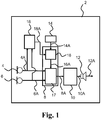
- Fig. 1 shows an exemplary hearing device 2 comprising a set of microphones comprising a first microphone 4 and a second microphone 6 for provision of a first microphone input signal 4A and a second microphone input signal 6A, respectively.
- the hearing device 2 comprises a beamforming module 8 connected to the first microphone 4 and the second microphone 6 for processing the first microphone input signal 4A and the second microphone input signal 6A, the beamforming module configured to provide a beamformed input signal 8A.
- the hearing device comprises a processor 10 for processing the beamformed input signal 8A for provision of an electrical output signal 10A based on the beamformed input signal 8A from the beamforming module 8.
- the hearing device 2 comprises a receiver 12 for converting the electrical output signal 10A to an audio output signal 12A.
- hearing device 2 comprises a motion detector 14 for provision of motion data 14A.
- the beamforming module 8/hearing device 2 comprises a beamforming controller 16 connected to the motion detector 14.
- the beamforming controller 16 is configured to control the beamforming module 8, e.g. a beamformer 17 of the beamforming module, based on the motion data 14A from the motion detector 14.
- the motion data 14A may be utilized to provide a control input 16A for the beamformer 17 of the beamforming module 8 from the beamforming controller 16.
- the hearing device 2 optionally comprises a noise estimator 18, where the noise estimator 18 is connected to the first microphone 4 and/or the second microphone 6, where the noise estimator 18 is connected to the beamforming controller 16 and configured to provide one or more noise parameters 18A indicative of noise that may be present in the first microphone input signal 4A and/or the second microphone input signal 6A to the beamforming controller.
- the beamforming controller 16 is optionally configured to control the beamforming module 8, e.g. a beamformer 17 of the beamforming module, based on the noise parameter(s) 18A from the noise estimator 18.
- the beamforming controller 16 is configured to determine if one or more focus criteria including a first focus criterion FC_1 are satisfied. In accordance with the first focus criterion being satisfied, the beamforming controller 16 is configured to apply a first beamforming mode BM_1 in the beamforming module 8, e.g. by beamforming control signal 16A comprising beamforming parameters, e.g. filter coefficients and/or delays, for the beamformer 17 or by beamforming control signal 16A comprising a beamforming mode identifier indicative of the beamforming mode for the beamformer 17.
- the first beamforming mode may have a high directionality.
- the first focus criterion FC_1 is based on the first movement parameter and the noise parameter and is indicative of the user focusing on a sound source (no or little movement of hearing device/head) in an environment with high noise, i.e. the first focus criterion is given by MP_ 1 ⁇ TH_M_ 1 AND NP > TH_N_ 1 wherein MP_1 is indicative of a head rotation of the head of the user of the hearing device, TH_M_1 is a first movement threshold, and where a low value of MP_1 is indicative of little rotation of the hearing device/head and a high value of MP_1 is indicative of large rotation of the hearing device/head.
- NP is the noise parameter indicative noise level
- TH_N_1 is a first noise threshold
- a low value of NP is indicative of low noise level and a high value of NP is indicative of high noise level.
- the beamforming controller 16 is configured to determine if a second focus criterion FC_2 is satisfied. In accordance with the second focus criterion being satisfied, the beamforming controller 16 is configured to apply a second beamforming mode BM_2 in the beamforming module 8, e.g. by beamforming control signal 16A comprising beamforming parameters, e.g. filter coefficients and/or delays, for the beamformer 17 or by beamforming control signal 16A comprising a beamforming mode identifier indicative of the beamforming mode for the beamformer 17.
- the second beamforming mode may have a low or no directionality.
- the second beamforming mode may be an omni-directional mode.
- the second focus criterion FC_2 is based on the first movement parameter and the noise parameter and is indicative of the user moving the hearing device/head or the hearing device being in an environment with low noise, i.e. the second focus criterion is given by MP_ 1 > TH_M_ 2 OR NP ⁇ TH_N_ 2 wherein MP_1 is indicative of head rotation of the hearing device, TH_M_2 is a second movement threshold, and where a low value of MP_1 is indicative of little rotation of the hearing device/head and a high value of MP_1 is indicative of large rotation of the hearing device/head.
- NP is the noise parameter indicative noise level
- TH_N_2 is a second noise threshold, and where a low value of NP is indicative of low noise level and a high value of NP is indicative of high noise level.
- the beamforming controller 16 is optionally configured to determine if a third focus criterion FC_3 is satisfied. In accordance with the third focus criterion being satisfied, the beamforming controller 16 is configured to apply a third beamforming mode BM_3 in the beamforming module 8, e.g. by beamforming control signal 16A comprising beamforming parameters, e.g. filter coefficients and/or delays, for the beamformer 17 or by beamforming control signal 16A comprising a beamforming mode identifier indicative of the beamforming mode for the beamformer 17.
- the third beamforming mode may have a medium directionality, i.e. the third beamforming mode may have a smaller directionality than the first beamforming mode and/or a higher directionality than the second beamforming mode.
- the third focus criterion FC_3 is based on the first movement parameter and the noise parameter and is indicative of the user moving a bit in an environment with medium noise, i.e. the third focus criterion is given by TH_M_ 1 ⁇ MP_ 1 ⁇ TH_M_ 2 AND TH_N_ 2 ⁇ NP ⁇ TH_N_ 1 wherein MP_1 is indicative of head rotation of the hearing device, TH_M_1 and TH_M_2 are movement thresholds, and where a low value of MP_1 is indicative of little rotation of the hearing device/head and a high value of MP_1 is indicative of large rotation of the hearing device/head.
- NP is the noise parameter indicative noise level
- TH_N_1 and TH_N2 are noise thresholds, and where a low value of NP is indicative of low noise level and a high value of NP is indicative of high noise level.
- Fig 2 shows a flow diagram of an exemplary method of operating a hearing device.
- the method 100 comprises obtaining 102 a first input signal and a second input signal; applying 104 a beamforming mode to the first input signal and the second input signal for provision of a beamformed input signal; processing 106 the beamformed input signal for provision of an electrical output signal based on the beamformed input signal; and converting 110 the electrical output signal to an audio output signal.
- the method comprises obtaining 108 data and/or parameter used for control of the beamforming.
- the method 100 optionally comprises obtaining 108A motion data and adjusting 109A the beamforming mode based on the motion data.
- the method 100 optionally comprises obtaining 108B a noise parameter indicative of noise level and adjusting 109B the beamforming mode based on the noise parameter.
- the method 100 comprises determining 104A if a first focus criterion FC_1 is satisfied; and in accordance with the first focus criterion being satisfied, applying 104B a first beamforming mode BM_1 to the first input signal and the second input signal.
- the method 100 optionally comprises determining 104C if a second focus criterion FC_2 is satisfied; and in accordance with the second focus criterion being satisfied, applying 104D a second beamforming mode BM_2 to the first input signal and the second input signal.
- the method 100 optionally comprises determining 104E if a third focus criterion FC_3 is satisfied; and in accordance with the third focus criterion being satisfied, applying 104F a third beamforming mode BM_3 to the first input signal and the second input signal.
- Figs. 1-2 comprise some modules or operations which are illustrated with a solid line and some modules or operations which are illustrated with a dashed line.
- the modules or operations which are comprised in a solid line are modules or operations which are comprised in the broadest example embodiment.
- the modules or operations which are comprised in a dashed line are example embodiments which may be comprised in, or a part of, or are further modules or operations which may be taken in addition to the modules or operations of the solid line example embodiments. It should be appreciated that these operations need not be performed in order presented. Furthermore, it should be appreciated that not all of the operations need to be performed.
- the exemplary operations may be performed in any order and in any combination.
- a computer-readable medium may include removable and non-removable storage devices including, but not limited to, Read Only Memory (ROM), Random Access Memory (RAM), compact discs (CDs), digital versatile discs (DVD), etc.
- program modules may include routines, programs, objects, components, data structures, etc. that perform specified tasks or implement specific abstract data types.
- Computer-executable instructions, associated data structures, and program modules represent examples of program code for executing steps of the methods disclosed herein. The particular sequence of such executable instructions or associated data structures represents examples of corresponding acts for implementing the functions described in such steps or processes.
Landscapes
- Engineering & Computer Science (AREA)
- Acoustics & Sound (AREA)
- Signal Processing (AREA)
- Physics & Mathematics (AREA)
- Health & Medical Sciences (AREA)
- Otolaryngology (AREA)
- General Health & Medical Sciences (AREA)
- Neurosurgery (AREA)
- Computational Linguistics (AREA)
- Quality & Reliability (AREA)
- Audiology, Speech & Language Pathology (AREA)
- Human Computer Interaction (AREA)
- Multimedia (AREA)
- Circuit For Audible Band Transducer (AREA)
Priority Applications (6)
| Application Number | Priority Date | Filing Date | Title |
|---|---|---|---|
| DK18214347.9T DK3672280T3 (da) | 2018-12-20 | 2018-12-20 | Høreaggregat med accelerationsbaseret stråleformning |
| EP18214347.9A EP3672280B1 (de) | 2018-12-20 | 2018-12-20 | Hörgerät mit beschleunigungsbasierter strahlformung |
| US16/667,883 US11600286B2 (en) | 2018-12-20 | 2019-10-29 | Hearing device with acceleration-based beamforming |
| JP2019204661A JP2020102837A (ja) | 2018-12-20 | 2019-11-12 | 加速度に基づくビームフォーミングを用いた聴覚デバイス |
| CN201911306825.5A CN111356068B (zh) | 2018-12-20 | 2019-12-18 | 具有基于加速的波束成形的听力设备 |
| US18/106,714 US12620402B2 (en) | 2018-12-20 | 2023-02-07 | Hearing device with acceleration-based beamforming |
Applications Claiming Priority (1)
| Application Number | Priority Date | Filing Date | Title |
|---|---|---|---|
| EP18214347.9A EP3672280B1 (de) | 2018-12-20 | 2018-12-20 | Hörgerät mit beschleunigungsbasierter strahlformung |
Publications (2)
| Publication Number | Publication Date |
|---|---|
| EP3672280A1 true EP3672280A1 (de) | 2020-06-24 |
| EP3672280B1 EP3672280B1 (de) | 2023-04-12 |
Family
ID=64901338
Family Applications (1)
| Application Number | Title | Priority Date | Filing Date |
|---|---|---|---|
| EP18214347.9A Active EP3672280B1 (de) | 2018-12-20 | 2018-12-20 | Hörgerät mit beschleunigungsbasierter strahlformung |
Country Status (5)
| Country | Link |
|---|---|
| US (1) | US11600286B2 (de) |
| EP (1) | EP3672280B1 (de) |
| JP (1) | JP2020102837A (de) |
| CN (1) | CN111356068B (de) |
| DK (1) | DK3672280T3 (de) |
Cited By (1)
| Publication number | Priority date | Publication date | Assignee | Title |
|---|---|---|---|---|
| EP4040806A3 (de) * | 2021-01-18 | 2022-12-21 | Oticon A/s | Hörgerät mit einem geräuschreduzierungssystem |
Families Citing this family (1)
| Publication number | Priority date | Publication date | Assignee | Title |
|---|---|---|---|---|
| CN113345455A (zh) * | 2021-06-02 | 2021-09-03 | 云知声智能科技股份有限公司 | 一种佩戴式设备语音信号处理装置及方法 |
Citations (3)
| Publication number | Priority date | Publication date | Assignee | Title |
|---|---|---|---|---|
| US6327370B1 (en) * | 1993-04-13 | 2001-12-04 | Etymotic Research, Inc. | Hearing aid having plural microphones and a microphone switching system |
| US8867763B2 (en) * | 2012-06-06 | 2014-10-21 | Siemens Medical Instruments Pte. Ltd. | Method of focusing a hearing instrument beamformer |
| US20150088500A1 (en) * | 2013-09-24 | 2015-03-26 | Nuance Communications, Inc. | Wearable communication enhancement device |
Family Cites Families (13)
| Publication number | Priority date | Publication date | Assignee | Title |
|---|---|---|---|---|
| US20010038699A1 (en) | 2000-03-20 | 2001-11-08 | Audia Technology, Inc. | Automatic directional processing control for multi-microphone system |
| DE602005006536D1 (de) | 2004-03-01 | 2008-06-19 | Gn Resound As | Hörgerät mit automatischer umschaltung zwischen betriebsarten |
| US9763016B2 (en) | 2014-07-31 | 2017-09-12 | Starkey Laboratories, Inc. | Automatic directional switching algorithm for hearing aids |
| DK2999235T3 (da) | 2014-09-17 | 2020-01-20 | Oticon As | Høreanordning der omfatter en gsc stråleformer |
| WO2016118656A1 (en) * | 2015-01-21 | 2016-07-28 | Harman International Industries, Incorporated | Techniques for amplifying sound based on directions of interest |
| US9905244B2 (en) | 2016-02-02 | 2018-02-27 | Ebay Inc. | Personalized, real-time audio processing |
| EP3236672B1 (de) | 2016-04-08 | 2019-08-07 | Oticon A/s | Hörgerät mit einer strahlformerfiltrierungseinheit |
| EP3264798A1 (de) | 2016-06-27 | 2018-01-03 | Oticon A/s | Steuerung eines hörgeräts |
| CN108694956B (zh) * | 2017-03-29 | 2023-08-22 | 大北欧听力公司 | 具有自适应子频带波束成形的听力设备及相关方法 |
| EP3413589B1 (de) | 2017-06-09 | 2022-11-16 | Oticon A/s | Mikrofonsystem und hörgerät mit einem mikrofonsystem |
| EP3416407B1 (de) * | 2017-06-13 | 2020-04-08 | Nxp B.V. | Signalprozessor |
| US20190028817A1 (en) * | 2017-07-20 | 2019-01-24 | Wizedsp Ltd. | System and method for a directional speaker selection |
| US11089402B2 (en) * | 2018-10-19 | 2021-08-10 | Bose Corporation | Conversation assistance audio device control |
-
2018
- 2018-12-20 DK DK18214347.9T patent/DK3672280T3/da active
- 2018-12-20 EP EP18214347.9A patent/EP3672280B1/de active Active
-
2019
- 2019-10-29 US US16/667,883 patent/US11600286B2/en active Active
- 2019-11-12 JP JP2019204661A patent/JP2020102837A/ja active Pending
- 2019-12-18 CN CN201911306825.5A patent/CN111356068B/zh active Active
Patent Citations (3)
| Publication number | Priority date | Publication date | Assignee | Title |
|---|---|---|---|---|
| US6327370B1 (en) * | 1993-04-13 | 2001-12-04 | Etymotic Research, Inc. | Hearing aid having plural microphones and a microphone switching system |
| US8867763B2 (en) * | 2012-06-06 | 2014-10-21 | Siemens Medical Instruments Pte. Ltd. | Method of focusing a hearing instrument beamformer |
| US20150088500A1 (en) * | 2013-09-24 | 2015-03-26 | Nuance Communications, Inc. | Wearable communication enhancement device |
Cited By (2)
| Publication number | Priority date | Publication date | Assignee | Title |
|---|---|---|---|---|
| EP4040806A3 (de) * | 2021-01-18 | 2022-12-21 | Oticon A/s | Hörgerät mit einem geräuschreduzierungssystem |
| US12225351B2 (en) | 2021-01-18 | 2025-02-11 | Oticon A/S | Hearing device with minimum processing beamformer |
Also Published As
| Publication number | Publication date |
|---|---|
| US20230197095A1 (en) | 2023-06-22 |
| JP2020102837A (ja) | 2020-07-02 |
| CN111356068B (zh) | 2024-06-18 |
| US20200202880A1 (en) | 2020-06-25 |
| EP3672280B1 (de) | 2023-04-12 |
| DK3672280T3 (da) | 2023-06-26 |
| CN111356068A (zh) | 2020-06-30 |
| US11600286B2 (en) | 2023-03-07 |
Similar Documents
| Publication | Publication Date | Title |
|---|---|---|
| US8494193B2 (en) | Environment detection and adaptation in hearing assistance devices | |
| US20220130418A1 (en) | Hearing device with own-voice detection and related method | |
| EP3900399B1 (de) | Quellentrennung in hörgeräten und zugehörige verfahren | |
| US11600286B2 (en) | Hearing device with acceleration-based beamforming | |
| US11451910B2 (en) | Pairing of hearing devices with machine learning algorithm | |
| US9301058B2 (en) | Method for selecting a preferred direction of a directional microphone and corresponding hearing device | |
| US10911877B2 (en) | Hearing device with adaptive binaural auditory steering and related method | |
| US11653147B2 (en) | Hearing device with microphone switching and related method | |
| US12620402B2 (en) | Hearing device with acceleration-based beamforming | |
| EP2688067B1 (de) | System zum Trainieren und Verbessern der Rauschunterdrückung in Hörgeräten | |
| EP3496424B1 (de) | Hörgerät und verfahren mit flexibler steuerung der strahlformung |
Legal Events
| Date | Code | Title | Description |
|---|---|---|---|
| PUAI | Public reference made under article 153(3) epc to a published international application that has entered the european phase |
Free format text: ORIGINAL CODE: 0009012 |
|
| STAA | Information on the status of an ep patent application or granted ep patent |
Free format text: STATUS: THE APPLICATION HAS BEEN PUBLISHED |
|
| AK | Designated contracting states |
Kind code of ref document: A1 Designated state(s): AL AT BE BG CH CY CZ DE DK EE ES FI FR GB GR HR HU IE IS IT LI LT LU LV MC MK MT NL NO PL PT RO RS SE SI SK SM TR |
|
| AX | Request for extension of the european patent |
Extension state: BA ME |
|
| STAA | Information on the status of an ep patent application or granted ep patent |
Free format text: STATUS: REQUEST FOR EXAMINATION WAS MADE |
|
| 17P | Request for examination filed |
Effective date: 20201211 |
|
| RBV | Designated contracting states (corrected) |
Designated state(s): AL AT BE BG CH CY CZ DE DK EE ES FI FR GB GR HR HU IE IS IT LI LT LU LV MC MK MT NL NO PL PT RO RS SE SI SK SM TR |
|
| GRAP | Despatch of communication of intention to grant a patent |
Free format text: ORIGINAL CODE: EPIDOSNIGR1 |
|
| STAA | Information on the status of an ep patent application or granted ep patent |
Free format text: STATUS: GRANT OF PATENT IS INTENDED |
|
| INTG | Intention to grant announced |
Effective date: 20220214 |
|
| GRAJ | Information related to disapproval of communication of intention to grant by the applicant or resumption of examination proceedings by the epo deleted |
Free format text: ORIGINAL CODE: EPIDOSDIGR1 |
|
| STAA | Information on the status of an ep patent application or granted ep patent |
Free format text: STATUS: REQUEST FOR EXAMINATION WAS MADE |
|
| GRAP | Despatch of communication of intention to grant a patent |
Free format text: ORIGINAL CODE: EPIDOSNIGR1 |
|
| STAA | Information on the status of an ep patent application or granted ep patent |
Free format text: STATUS: GRANT OF PATENT IS INTENDED |
|
| INTC | Intention to grant announced (deleted) | ||
| INTG | Intention to grant announced |
Effective date: 20221017 |
|
| GRAS | Grant fee paid |
Free format text: ORIGINAL CODE: EPIDOSNIGR3 |
|
| GRAA | (expected) grant |
Free format text: ORIGINAL CODE: 0009210 |
|
| STAA | Information on the status of an ep patent application or granted ep patent |
Free format text: STATUS: THE PATENT HAS BEEN GRANTED |
|
| AK | Designated contracting states |
Kind code of ref document: B1 Designated state(s): AL AT BE BG CH CY CZ DE DK EE ES FI FR GB GR HR HU IE IS IT LI LT LU LV MC MK MT NL NO PL PT RO RS SE SI SK SM TR |
|
| REG | Reference to a national code |
Ref country code: GB Ref legal event code: FG4D |
|
| REG | Reference to a national code |
Ref country code: CH Ref legal event code: EP |
|
| REG | Reference to a national code |
Ref country code: DE Ref legal event code: R096 Ref document number: 602018048276 Country of ref document: DE |
|
| REG | Reference to a national code |
Ref country code: IE Ref legal event code: FG4D |
|
| REG | Reference to a national code |
Ref country code: AT Ref legal event code: REF Ref document number: 1560444 Country of ref document: AT Kind code of ref document: T Effective date: 20230515 |
|
| REG | Reference to a national code |
Ref country code: DK Ref legal event code: T3 Effective date: 20230619 |
|
| P01 | Opt-out of the competence of the unified patent court (upc) registered |
Effective date: 20230525 |
|
| REG | Reference to a national code |
Ref country code: LT Ref legal event code: MG9D |
|
| REG | Reference to a national code |
Ref country code: NL Ref legal event code: MP Effective date: 20230412 |
|
| REG | Reference to a national code |
Ref country code: AT Ref legal event code: MK05 Ref document number: 1560444 Country of ref document: AT Kind code of ref document: T Effective date: 20230412 |
|
| PG25 | Lapsed in a contracting state [announced via postgrant information from national office to epo] |
Ref country code: NL Free format text: LAPSE BECAUSE OF FAILURE TO SUBMIT A TRANSLATION OF THE DESCRIPTION OR TO PAY THE FEE WITHIN THE PRESCRIBED TIME-LIMIT Effective date: 20230412 |
|
| PG25 | Lapsed in a contracting state [announced via postgrant information from national office to epo] |
Ref country code: SE Free format text: LAPSE BECAUSE OF FAILURE TO SUBMIT A TRANSLATION OF THE DESCRIPTION OR TO PAY THE FEE WITHIN THE PRESCRIBED TIME-LIMIT Effective date: 20230412 Ref country code: PT Free format text: LAPSE BECAUSE OF FAILURE TO SUBMIT A TRANSLATION OF THE DESCRIPTION OR TO PAY THE FEE WITHIN THE PRESCRIBED TIME-LIMIT Effective date: 20230814 Ref country code: NO Free format text: LAPSE BECAUSE OF FAILURE TO SUBMIT A TRANSLATION OF THE DESCRIPTION OR TO PAY THE FEE WITHIN THE PRESCRIBED TIME-LIMIT Effective date: 20230712 Ref country code: ES Free format text: LAPSE BECAUSE OF FAILURE TO SUBMIT A TRANSLATION OF THE DESCRIPTION OR TO PAY THE FEE WITHIN THE PRESCRIBED TIME-LIMIT Effective date: 20230412 Ref country code: AT Free format text: LAPSE BECAUSE OF FAILURE TO SUBMIT A TRANSLATION OF THE DESCRIPTION OR TO PAY THE FEE WITHIN THE PRESCRIBED TIME-LIMIT Effective date: 20230412 |
|
| PG25 | Lapsed in a contracting state [announced via postgrant information from national office to epo] |
Ref country code: RS Free format text: LAPSE BECAUSE OF FAILURE TO SUBMIT A TRANSLATION OF THE DESCRIPTION OR TO PAY THE FEE WITHIN THE PRESCRIBED TIME-LIMIT Effective date: 20230412 Ref country code: PL Free format text: LAPSE BECAUSE OF FAILURE TO SUBMIT A TRANSLATION OF THE DESCRIPTION OR TO PAY THE FEE WITHIN THE PRESCRIBED TIME-LIMIT Effective date: 20230412 Ref country code: LV Free format text: LAPSE BECAUSE OF FAILURE TO SUBMIT A TRANSLATION OF THE DESCRIPTION OR TO PAY THE FEE WITHIN THE PRESCRIBED TIME-LIMIT Effective date: 20230412 Ref country code: LT Free format text: LAPSE BECAUSE OF FAILURE TO SUBMIT A TRANSLATION OF THE DESCRIPTION OR TO PAY THE FEE WITHIN THE PRESCRIBED TIME-LIMIT Effective date: 20230412 Ref country code: IS Free format text: LAPSE BECAUSE OF FAILURE TO SUBMIT A TRANSLATION OF THE DESCRIPTION OR TO PAY THE FEE WITHIN THE PRESCRIBED TIME-LIMIT Effective date: 20230812 Ref country code: HR Free format text: LAPSE BECAUSE OF FAILURE TO SUBMIT A TRANSLATION OF THE DESCRIPTION OR TO PAY THE FEE WITHIN THE PRESCRIBED TIME-LIMIT Effective date: 20230412 Ref country code: GR Free format text: LAPSE BECAUSE OF FAILURE TO SUBMIT A TRANSLATION OF THE DESCRIPTION OR TO PAY THE FEE WITHIN THE PRESCRIBED TIME-LIMIT Effective date: 20230713 Ref country code: AL Free format text: LAPSE BECAUSE OF FAILURE TO SUBMIT A TRANSLATION OF THE DESCRIPTION OR TO PAY THE FEE WITHIN THE PRESCRIBED TIME-LIMIT Effective date: 20230412 |
|
| PG25 | Lapsed in a contracting state [announced via postgrant information from national office to epo] |
Ref country code: FI Free format text: LAPSE BECAUSE OF FAILURE TO SUBMIT A TRANSLATION OF THE DESCRIPTION OR TO PAY THE FEE WITHIN THE PRESCRIBED TIME-LIMIT Effective date: 20230412 |
|
| REG | Reference to a national code |
Ref country code: DE Ref legal event code: R026 Ref document number: 602018048276 Country of ref document: DE |
|
| PG25 | Lapsed in a contracting state [announced via postgrant information from national office to epo] |
Ref country code: SK Free format text: LAPSE BECAUSE OF FAILURE TO SUBMIT A TRANSLATION OF THE DESCRIPTION OR TO PAY THE FEE WITHIN THE PRESCRIBED TIME-LIMIT Effective date: 20230412 |
|
| PLBI | Opposition filed |
Free format text: ORIGINAL CODE: 0009260 |
|
| PLAX | Notice of opposition and request to file observation + time limit sent |
Free format text: ORIGINAL CODE: EPIDOSNOBS2 |
|
| PG25 | Lapsed in a contracting state [announced via postgrant information from national office to epo] |
Ref country code: SM Free format text: LAPSE BECAUSE OF FAILURE TO SUBMIT A TRANSLATION OF THE DESCRIPTION OR TO PAY THE FEE WITHIN THE PRESCRIBED TIME-LIMIT Effective date: 20230412 Ref country code: SK Free format text: LAPSE BECAUSE OF FAILURE TO SUBMIT A TRANSLATION OF THE DESCRIPTION OR TO PAY THE FEE WITHIN THE PRESCRIBED TIME-LIMIT Effective date: 20230412 Ref country code: RO Free format text: LAPSE BECAUSE OF FAILURE TO SUBMIT A TRANSLATION OF THE DESCRIPTION OR TO PAY THE FEE WITHIN THE PRESCRIBED TIME-LIMIT Effective date: 20230412 Ref country code: EE Free format text: LAPSE BECAUSE OF FAILURE TO SUBMIT A TRANSLATION OF THE DESCRIPTION OR TO PAY THE FEE WITHIN THE PRESCRIBED TIME-LIMIT Effective date: 20230412 Ref country code: CZ Free format text: LAPSE BECAUSE OF FAILURE TO SUBMIT A TRANSLATION OF THE DESCRIPTION OR TO PAY THE FEE WITHIN THE PRESCRIBED TIME-LIMIT Effective date: 20230412 |
|
| 26 | Opposition filed |
Opponent name: WIDEX A/S Effective date: 20240112 Opponent name: OTICON A/S Effective date: 20240112 |
|
| PG25 | Lapsed in a contracting state [announced via postgrant information from national office to epo] |
Ref country code: SI Free format text: LAPSE BECAUSE OF FAILURE TO SUBMIT A TRANSLATION OF THE DESCRIPTION OR TO PAY THE FEE WITHIN THE PRESCRIBED TIME-LIMIT Effective date: 20230412 |
|
| PLBB | Reply of patent proprietor to notice(s) of opposition received |
Free format text: ORIGINAL CODE: EPIDOSNOBS3 |
|
| PG25 | Lapsed in a contracting state [announced via postgrant information from national office to epo] |
Ref country code: SI Free format text: LAPSE BECAUSE OF FAILURE TO SUBMIT A TRANSLATION OF THE DESCRIPTION OR TO PAY THE FEE WITHIN THE PRESCRIBED TIME-LIMIT Effective date: 20230412 Ref country code: IT Free format text: LAPSE BECAUSE OF FAILURE TO SUBMIT A TRANSLATION OF THE DESCRIPTION OR TO PAY THE FEE WITHIN THE PRESCRIBED TIME-LIMIT Effective date: 20230412 |
|
| PG25 | Lapsed in a contracting state [announced via postgrant information from national office to epo] |
Ref country code: LU Free format text: LAPSE BECAUSE OF NON-PAYMENT OF DUE FEES Effective date: 20231220 |
|
| PG25 | Lapsed in a contracting state [announced via postgrant information from national office to epo] |
Ref country code: MC Free format text: LAPSE BECAUSE OF FAILURE TO SUBMIT A TRANSLATION OF THE DESCRIPTION OR TO PAY THE FEE WITHIN THE PRESCRIBED TIME-LIMIT Effective date: 20230412 |
|
| REG | Reference to a national code |
Ref country code: BE Ref legal event code: MM Effective date: 20231231 |
|
| PG25 | Lapsed in a contracting state [announced via postgrant information from national office to epo] |
Ref country code: MC Free format text: LAPSE BECAUSE OF FAILURE TO SUBMIT A TRANSLATION OF THE DESCRIPTION OR TO PAY THE FEE WITHIN THE PRESCRIBED TIME-LIMIT Effective date: 20230412 Ref country code: LU Free format text: LAPSE BECAUSE OF NON-PAYMENT OF DUE FEES Effective date: 20231220 |
|
| REG | Reference to a national code |
Ref country code: IE Ref legal event code: MM4A |
|
| PG25 | Lapsed in a contracting state [announced via postgrant information from national office to epo] |
Ref country code: IE Free format text: LAPSE BECAUSE OF NON-PAYMENT OF DUE FEES Effective date: 20231220 |
|
| PG25 | Lapsed in a contracting state [announced via postgrant information from national office to epo] |
Ref country code: BE Free format text: LAPSE BECAUSE OF NON-PAYMENT OF DUE FEES Effective date: 20231231 |
|
| PG25 | Lapsed in a contracting state [announced via postgrant information from national office to epo] |
Ref country code: IE Free format text: LAPSE BECAUSE OF NON-PAYMENT OF DUE FEES Effective date: 20231220 Ref country code: BE Free format text: LAPSE BECAUSE OF NON-PAYMENT OF DUE FEES Effective date: 20231231 |
|
| PG25 | Lapsed in a contracting state [announced via postgrant information from national office to epo] |
Ref country code: BG Free format text: LAPSE BECAUSE OF FAILURE TO SUBMIT A TRANSLATION OF THE DESCRIPTION OR TO PAY THE FEE WITHIN THE PRESCRIBED TIME-LIMIT Effective date: 20230412 |
|
| PG25 | Lapsed in a contracting state [announced via postgrant information from national office to epo] |
Ref country code: BG Free format text: LAPSE BECAUSE OF FAILURE TO SUBMIT A TRANSLATION OF THE DESCRIPTION OR TO PAY THE FEE WITHIN THE PRESCRIBED TIME-LIMIT Effective date: 20230412 |
|
| RDAF | Communication despatched that patent is revoked |
Free format text: ORIGINAL CODE: EPIDOSNREV1 |
|
| APAH | Appeal reference modified |
Free format text: ORIGINAL CODE: EPIDOSCREFNO |
|
| APAW | Appeal reference deleted |
Free format text: ORIGINAL CODE: EPIDOSDREFNO |
|
| APBP | Date of receipt of notice of appeal recorded |
Free format text: ORIGINAL CODE: EPIDOSNNOA2O |
|
| APBQ | Date of receipt of statement of grounds of appeal recorded |
Free format text: ORIGINAL CODE: EPIDOSNNOA3O |
|
| PG25 | Lapsed in a contracting state [announced via postgrant information from national office to epo] |
Ref country code: CY Free format text: LAPSE BECAUSE OF FAILURE TO SUBMIT A TRANSLATION OF THE DESCRIPTION OR TO PAY THE FEE WITHIN THE PRESCRIBED TIME-LIMIT; INVALID AB INITIO Effective date: 20181220 |
|
| PG25 | Lapsed in a contracting state [announced via postgrant information from national office to epo] |
Ref country code: HU Free format text: LAPSE BECAUSE OF FAILURE TO SUBMIT A TRANSLATION OF THE DESCRIPTION OR TO PAY THE FEE WITHIN THE PRESCRIBED TIME-LIMIT; INVALID AB INITIO Effective date: 20181220 |
|
| PG25 | Lapsed in a contracting state [announced via postgrant information from national office to epo] |
Ref country code: TR Free format text: LAPSE BECAUSE OF FAILURE TO SUBMIT A TRANSLATION OF THE DESCRIPTION OR TO PAY THE FEE WITHIN THE PRESCRIBED TIME-LIMIT Effective date: 20230412 |
|
| REG | Reference to a national code |
Ref country code: CH Ref legal event code: U11 Free format text: ST27 STATUS EVENT CODE: U-0-0-U10-U11 (AS PROVIDED BY THE NATIONAL OFFICE) Effective date: 20260101 |
|
| PGFP | Annual fee paid to national office [announced via postgrant information from national office to epo] |
Ref country code: GB Payment date: 20251219 Year of fee payment: 8 |
|
| PGFP | Annual fee paid to national office [announced via postgrant information from national office to epo] |
Ref country code: DK Payment date: 20251222 Year of fee payment: 8 |
|
| PGFP | Annual fee paid to national office [announced via postgrant information from national office to epo] |
Ref country code: FR Payment date: 20251211 Year of fee payment: 8 |
|
| PGFP | Annual fee paid to national office [announced via postgrant information from national office to epo] |
Ref country code: DE Payment date: 20251222 Year of fee payment: 8 |
|
| PGFP | Annual fee paid to national office [announced via postgrant information from national office to epo] |
Ref country code: CH Payment date: 20260101 Year of fee payment: 8 |