EP3672321B1 - Procédé d'envoi et de réception d'informations, terminal et station de base - Google Patents
Procédé d'envoi et de réception d'informations, terminal et station de base Download PDFInfo
- Publication number
- EP3672321B1 EP3672321B1 EP18845721.2A EP18845721A EP3672321B1 EP 3672321 B1 EP3672321 B1 EP 3672321B1 EP 18845721 A EP18845721 A EP 18845721A EP 3672321 B1 EP3672321 B1 EP 3672321B1
- Authority
- EP
- European Patent Office
- Prior art keywords
- pdcch
- rmsi
- monitoring
- information
- assistance information
- Prior art date
- Legal status (The legal status is an assumption and is not a legal conclusion. Google has not performed a legal analysis and makes no representation as to the accuracy of the status listed.)
- Active
Links
Images





Classifications
-
- H—ELECTRICITY
- H04—ELECTRIC COMMUNICATION TECHNIQUE
- H04W—WIRELESS COMMUNICATION NETWORKS
- H04W48/00—Access restriction; Network selection; Access point selection
- H04W48/08—Access restriction or access information delivery, e.g. discovery data delivery
- H04W48/12—Access restriction or access information delivery, e.g. discovery data delivery using downlink control channel
-
- H—ELECTRICITY
- H04—ELECTRIC COMMUNICATION TECHNIQUE
- H04W—WIRELESS COMMUNICATION NETWORKS
- H04W72/00—Local resource management
- H04W72/20—Control channels or signalling for resource management
- H04W72/23—Control channels or signalling for resource management in the downlink direction of a wireless link, i.e. towards a terminal
-
- H—ELECTRICITY
- H04—ELECTRIC COMMUNICATION TECHNIQUE
- H04L—TRANSMISSION OF DIGITAL INFORMATION, e.g. TELEGRAPHIC COMMUNICATION
- H04L5/00—Arrangements affording multiple use of the transmission path
- H04L5/003—Arrangements for allocating sub-channels of the transmission path
- H04L5/0053—Allocation of signalling, i.e. of overhead other than pilot signals
-
- Y—GENERAL TAGGING OF NEW TECHNOLOGICAL DEVELOPMENTS; GENERAL TAGGING OF CROSS-SECTIONAL TECHNOLOGIES SPANNING OVER SEVERAL SECTIONS OF THE IPC; TECHNICAL SUBJECTS COVERED BY FORMER USPC CROSS-REFERENCE ART COLLECTIONS [XRACs] AND DIGESTS
- Y02—TECHNOLOGIES OR APPLICATIONS FOR MITIGATION OR ADAPTATION AGAINST CLIMATE CHANGE
- Y02D—CLIMATE CHANGE MITIGATION TECHNOLOGIES IN INFORMATION AND COMMUNICATION TECHNOLOGIES [ICT], I.E. INFORMATION AND COMMUNICATION TECHNOLOGIES AIMING AT THE REDUCTION OF THEIR OWN ENERGY USE
- Y02D30/00—Reducing energy consumption in communication networks
- Y02D30/70—Reducing energy consumption in communication networks in wireless communication networks
Definitions
- the present disclosure relates to the field of communication technology, and in particular, relates to a method of receiving information, a method of sending information, a terminal and a base station.
- an NR base station needs to send a Synchronization Signal Block (SS block) for a terminal to perform measurement and detection.
- An SS block consists of an NR-SS and a New Radio Physical Broadcast Channel (NR-PBCH).
- NR-PBCH New Radio Physical Broadcast Channel
- a plurality of SS blocks form a Synchronization Signal Block set (SS burst set).
- the maximum number of the SS blocks included in an SS burst set is related to a carrier frequency used by the network, details are as follows:
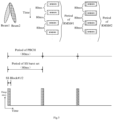
- the period of the SS burst set may be configured as ⁇ 5, 10, 20, 40, 80, 160 ⁇ milliseconds. No matter what the period of the SS burst set is set to be, all SS blocks in an SS burst set must be sent within a time window of 5 milliseconds.
- the period of the NR-PBCH is 80ms, a plurality of SS burst sets are repeatedly sent in the period of the NR-PBCH. That is, in the period of the NR-PBCH, contents of SS blocks having the same index in these SS burst sets are consistent, so that users can support soft-combining and coverage enhancement. Contents of the NR-PBCH may change in different periods.
- an SS burst set may include up to 4 SS blocks.
- the period of the SS burst set is 20ms, for example, relationship between the period of the NR-PBCH, the SS block, and the SS burst set is illustrated in Fig.1 .
- MIB Master Information Block
- RMSI Remaining Minimum System Information
- PDCCH Physical Downlink Control Channel
- CORESET Control Resource Set
- Configuration information of the CORESET is carried by the MIB. Therefore, after the terminal receives and decodes an SS block, the terminal may, according to the acquired configuration information of the CORESET in the MIB, search for and detect whether or not there is a PDCCH used to schedule RMSI transmission, and receive the RMSI at the corresponding position according to a monitored PDCCH indication.
- the CORESET indicated in the MIB is fixed at the first 2 to 3 symbols of a slot where the SS block is located, that is, there is a PDCCH used to schedule the RMSI in the CORESET that is in the same slot as the SS block.
- some links among the SS block, the CORESET and the RMSI have not been determined, and a RMSI transmission mechanism including the period and a transmission time interval of the RMSI have not been determined.
- the period of the RMSI may not be consistent with the period of the NR-PBCH. Because the period of the RMSI and the period of a Physical Broadcast Channel (PBCH) may be different, not every SS block has a corresponding RMSI. For those slots without the RMSI and scheduling information of the RMSI, monitoring the PDCCH is not necessary.
- PBCH Physical Broadcast Channel
- the user does not learn whether there is a PDCCH used to schedule the RMSI in the CORESET within the current slot, or does not learn information such as the position of the PDCCH used to schedule the RMSI, the user needs to try, after receiving the SS block, to search and detect the PDCCH in the CORESET indicated by the SS block within each slot. That is, the PDCCH must be monitored all the time, and this behavior consumes power severely.
- a 3GPP draft R1-1711374 from Ericsson discloses NR-PBCH content and payload size.
- a method of sending information is further provided in the accompanying claims of the present disclosure.
- a terminal is further provided in the accompanying claims of the present disclosure.
- a base station is further provided in the accompanying claims of the present disclosure.
- the present disclosure provides a method of receiving information, a method of sending information, a terminal, and a base station for addressing a problem that the terminal always needs to perform blind detection of the PDCCH, in a case that the terminal may not be aware of information such as a PDCCH position, etc., causing a large power consumption of the terminal.
- a method of receiving information is provided by some embodiments of the present disclosure.
- the method is applied to a terminal and includes the following steps 301 to 302.
- Step 301 acquiring monitoring assistance information of a physical downlink control channel (PDCCH) used to schedule remaining minimum system information (RMSI).
- PDCCH physical downlink control channel
- RMSI remaining minimum system information
- the monitoring assistance information includes preset parameters, and/or one or more resource indicators of the PDCCH used to schedule the RMSI and selected by the base station; the preset parameters include at least two of: the period of the RMSI, a transmission interval of the RMSI, a length of a monitoring window of the PDCCH, and an offset of the monitoring window of the PDCCH.
- Step 302 monitoring, according to the monitoring assistance information, the PDCCH used to schedule the RMSI, and receiving a corresponding RMSI.
- the terminal monitors scheduling information (it should be noted that, the scheduling information is usually carried by the PDCCH used to schedule the RMSI, and the scheduling information is usually located in downlink control information, so the terminal also acquires the scheduling information of the RMSI in a case that the terminal monitors the downlink control information) of the RMSI according to a PDCCH position indicated by the monitoring assistance information, and receives the RMSI according to an indication of the scheduling information, thereby ensuring that the terminal monitors the PDCCH only at the indicated position, and avoiding unnecessary blind detection of the PDCCH performed by the terminal.
- the scheduling information is usually carried by the PDCCH used to schedule the RMSI, and the scheduling information is usually located in downlink control information, so the terminal also acquires the scheduling information of the RMSI in a case that the terminal monitors the downlink control information) of the RMSI according to a PDCCH position indicated by the monitoring assistance information, and receives the RMSI according to an indication of the scheduling information, thereby ensuring that the terminal monitors the
- Step 301 includes: acquiring default monitoring assistance information of the PDCCH used to schedule the RMSI; and/or receiving the monitoring assistance information of the PDCCH sent by the base station and used to schedule the RMSI.
- the terminal may directly acquire, according to an agreement of a communication protocol, the monitoring assistance information of the PDCCH used to schedule the RMSI, and the monitoring assistance information in this case is called default monitoring assistance information; the terminal may also acquire the monitoring assistance information configured on the base station side, and the monitoring assistance information is configured by the base station side and sent to the terminal.
- a plurality of pieces of monitoring assistance information may be specified in the communication protocol, wherein, one of the plurality of pieces of monitoring assistance information may be determined as the default monitoring assistance information, and the terminal is instructed to use this default monitoring assistance information in a case that the base station does not send configured monitoring assistance information.
- the base station may select one of the plurality of pieces of monitoring assistance information specified in the communication protocol as the monitoring assistance information configured for the terminal, and send the monitoring assistance information to the terminal.
- the monitoring assistance information is regarded as a whole in the above manner of default monitoring assistance information and the manner of sending the monitoring assistance information by the base station, that is, all parameters included in the monitoring assistance information are configured in a default manner, or all parameters included in the monitoring assistance information are configured by the base station. It should also be noted that, in order to improve flexibility of the configuration, some parameters included in the monitoring assistance information may be configured in the default manner, and remaining parameters included in the monitoring assistance information may be configured by the base station.
- the step of receiving the monitoring assistance information, sent by the base station, of the PDCCH used to schedule the RMSI includes: receiving the at least one parameter in the monitoring assistance information sent through a preset message by the base station.
- the preset message includes at least one of: a master information block (MIB), one or more system information blocks other than the MIB, and radio resource control (RRC) signaling.
- MIB master information block
- RRC radio resource control
- the at least one parameter in the monitoring assistance information is indicated in an explicit and/or implicit manner through the preset message.
- the explicit indication manner through the preset message includes: jointly indicating the at least one parameter in the monitoring assistance information by using one or more first preset bits in the preset message, or indicating respectively the at least one parameter in the monitoring assistance information by using one or more second preset bits having a same number or different numbers in the preset message.
- the following describes the above explicit indication manner by taking as an example that the MIB is used to send the monitoring assistance information.
- a field in the MIB is used to indicate: one configuration from preset following items: a transmission interval of the RMSI, a plurality of periods of the RMSI, the length of the monitoring window of the PDCCH, an offset of the monitoring window of the PDCCH, and one or more resource indicators of a PDCCH used to schedule the RMSI, is selected by the base station.
- An index corresponding to the configuration is placed in the MIB, thereby explicitly indicating the terminal.
- the terminal may learn information such as the period of the RMSI, the transmission interval of the RMSI, the length of the monitoring window of the PDCCH, the offset of the monitoring window of the PDCCH, and the one or more resource indicators of the PDCCH used to schedule the RMSI and selected by the base station.
- an X-bit index is used to jointly explicitly indicate, in a case that this indication is 11 which means that the period of the RMSI is 320ms, the transmission interval of the RMSI is 80ms, the length of the monitoring window of the PDCCH is 1ms, and the offset is 0ms (in this example, the one or more resource indicators of the PDCCH used to schedule the RMSI and selected by the base station are omitted here).
- the period of the RMSI has x configurations, and a second configuration (a corresponding index is set to 10) is used by the network; the transmission interval has Y configurations, and a third configuration is used by the network (a corresponding index is set to 11); the length of the window has Z configurations, and the second one is used (a corresponding index is set to 10), etc.
- the implicit indication manner through the preset message includes: indicating the at least one parameter in the monitoring assistance information by using preset information in the preset message.
- the preset information has correspondence relationship with the at least one parameter in the monitoring assistance information.
- the preset information includes: the period of a synchronization signal block burst set (SS burst set).
- the following describes the above implicit indication manners by taking as an example that the MIB is used to send the monitoring assistance information.
- an indication of the period of the SS burst set is 011, which indicates that the period of the SS burst set is 20ms, and simultaneously implicitly indicates that the period of the RMSI is 320ms, the transmission interval of the RMSI is 80ms, the length of the monitoring window of the PDCCH is 20ms, and the offset of the monitoring window of the PDCCH is 0ms (in this example, the one or more resource indicators of the PDCCH used to schedule the RMSI and selected by the base station is omitted here).
- a monitoring behavior of the terminal specifically includes: performing, according to the one or more resource indicators of PDCCH, PDCCH detection on a PDCCH resource selected by the base station.
- the monitoring behavior of the terminal specifically includes: finding a starting point of the monitoring window of the PDCCH according to the offset of the monitoring window of the PDCCH, starting the monitoring window of the PDCCH, searching and detecting the PDCCH in a control resource set within the monitoring window of the PDCCH, stopping searching and detecting the PDCCH in the control resource set after the monitoring window of the PDCCH ends.
- the monitoring behavior of the terminal specifically includes: in the period of the RMSI, after the terminal receives an RMSI, not searching or detecting the PDCCH in the control resource set in a next transmission interval of the RMSI by the terminal, but searching and detecting the PDCCH in the control resource set after the transmission interval of the RMSI.
- the terminal needs to decode the RMSI to acquire the contents of the RMSI.
- the terminal stops receiving the RMSI and enters a sleep state, in a case that the terminal acquires the contents of the RMSI through decoding. Only in a case that system information or the contents of the RMSI changes, the terminal receives the RMSI again.
- the specific implementation of the embodiment of the present disclosure includes: decoding the RMSI according to the received RMSI; stopping receiving the RMSI after successfully acquiring contents of the RMSI through the decoding.
- the implementation of the decoding the RMSI according to the received RMSI includes: decoding the RMSI according to a received RMSI; or performing soft-combining and decoding on at least two received RMSIs.
- the terminal may decode the content of a first received RMSI
- the terminal stops receiving subsequent RMSIs.
- the terminal needs to continue receiving subsequent RMSIs, and performs the soft-combining and joint decoding on a plurality of received RMSIs to acquire the contents of the RMSIs.
- the specific implementation in a case that the PDCCH carrying downlink control information is sent on the base station side includes: sending, in a case that only a single transmission position of the downlink control information is included in a preset time duration, the downlink control information at the transmission position, wherein this case illustrates that the position of the PDCCH sent to the terminal is fixed; or determining, in a case that at least two candidate positions of the downlink control information are included in a preset time duration, the transmission position of the downlink control information among the at least two candidate positions, and sending the downlink control information at the determined transmission position, wherein this case illustrates that the position where the position of PDCCH sent to the terminal is not fixed.
- the base station may send at least one RMSI to the terminal according to a preset time interval.
- the base station sends the RMSI at regular time intervals in the period of the RMSI; it is also possible that the base station sends at least one RMSI within a preset time window in the period of the RMSI.
- the base station sends the RMSI at regular/irregular time intervals within 0ms to 5ms in the period of the RMSI.
- a RMSI mechanism may have following characteristics.
- Cases 1 and 2 respectively illustrate the above two different cases A and B under assumptions of a fixed time position of the PDCCH and a fixed period of the RMSI.
- the two cases A and B may also exist in application scenarios in other cases, which will not be described further.
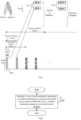
- a scenario where a base station desires a short access delay, frequent broadcast information, and the fixed time position of the PDCCH used to schedule the RMSI, is considered. It is assumed that the period of the SS burst set is 10ms, the period of the RMSI is 80ms, a value of the transmission interval of the RMSI is 20ms, and the base station sends an RMSI every 20ms within the period 80ms of the RMSI. Thus, the SS block in each SS burst set may or may not have a corresponding RMSI.
- the time position of the PDCCH used to schedule the RMSI is fixed in the first 2 to 3 symbols of the slot where the SS block is located.
- the base station sends, through the MIB to the terminal, the monitoring assistance information of the PDCCH used to schedule the RMSI.
- a solid square represents that the SS block indicates a CORESET, and the CORESET has a corresponding PDCCH used to schedule the RMSI; a dotted square represents that there is no corresponding PDCCH in the CORESET indicated by the SS block, and an RMSI may not be scheduled; an analysis to an SS block#1 of beam 1 is as follows.
- Step1 the terminal receives the SS block#1 in a first SS burst set in a first period of the PBCH and parses the MIB to acquire the configuration information of a CORESET of an RMSI#1 and the monitoring assistance information of the PDCCH.
- the terminal learns that a time-frequency position of the CORESET of the RMSI#1 is located in the first 2 to 3 symbols of the same slot as that for SS block#1, the period of the RMSI#1 is 320ms, and the transmission interval of the RMSI#1 is 80ms.
- Step 2 the terminal searches and detects the PDCCH in the CORESET of the corresponding RMSI#1 according to configuration information of the CORESET of the RMSI#1 acquired from the MIB, and receives the RMSI#1 according to the acquired PDCCH, but the RMSI#1 is not successfully parsed.
- the terminal may not search or detect the CORESET of the RMSI#1.
- Step 3 after 20ms elapses, the terminal searches and detects the PDCCH in the CORESET of the next RMSI#1 within a corresponding slot, and receives the RMSI#1, but the terminal fails to parse the RMSI#1.
- Step 4 after another 20ms elapses, the terminal searches and detects the PDCCH in the CORESET of the still next RMSI#1 within the corresponding slot and receives the RMSI#1 and successfully parses the RMSI#1.
- Step 5 in this period of the RMSI#1, a plurality of RMSI#1 received by the terminal may be soft-combined. Once the terminal successfully parses the RMSI#1, the terminal enters a sleep state until the system information or the contents of the RMSI changes.
- An application scenario i.e., a scenario where the base station desires a low signaling overhead, a large transmission period of broadcast information, and a fixed time position of the PDCCH used to schedule the RMSI.
- the period of the SS burst set is 80ms
- the period of the RMSI is 320ms
- a value of the transmission interval of the RMSI is 80ms
- the base station sends an RMSI every 80ms within the period 320ms of the RMSI. It means that the SS block in each period of the SS burst set has a corresponding RMSI.
- the time position of the PDCCH used to schedule the RMSI is fixed in the first 2 to 3 symbols of the slot where the SS block is located.
- the base station sends, to the terminal through the MIB, the monitoring assistance information of the PDCCH used to schedule the RMSI.
- a solid square represents that the SS block indicates a CORESET, and there is a PDCCH used to schedule the RMSI in the CORESET; an analysis to the SS block#1 of beam 1 is as follows.
- Step1 the terminal receives the SS block#1 in the first SS burst set in the first period of the PBCH and parses the MIB to acquire the configuration information of the CORESET of the RMSI#1 and the monitoring assistance information of the PDCCH.
- the terminal learns that the time-frequency position of the CORESET of the RMSI#1 is located in the first 2 to 3 symbols of the same slot as that for SS block#1, the period of the RMSI # 1 is 320ms, and the transmission interval is 80ms.
- Step 2 the terminal searches and detects the PDCCH in the CORESET of the corresponding RMSI#1 according to the configuration information of the CORESET of the RMSI#1 acquired from the MIB, and receives the RMSI#1 according to the acquired PDCCH, but the RMSI#1 is not successfully parsed.
- the terminal searches and detects the CORESET of the RMSI#1.
- Step 3 after 80ms elapses, the terminal searches and detects the PDCCH in the CORESET of the next RMSI#1 within the corresponding slot, and receives the RMSI#1 but fails to parse the RMSI#1.
- Step 4 after another 80ms elapses, the terminal searches and detects the PDCCH in the CORESET of the still next RMSI#1 within the corresponding slot, and receives the RMSI#1.
- Step 5 in the period of the RMSI#1, a plurality of RMSI#1 received by the terminal may be soft-combined. Once the terminal receives and successfully parses the RMSI#1, the terminal enters a sleep state until the system information or the contents of the RMSI changes.
- the monitoring behaviors of the terminal in the case 1 and the case 2 correspond to the monitoring behavior used by the terminal in a case that the monitoring assistance information includes the period of the RMSI and the transmission interval of the RMSI.
- An application scenario i.e., a scenario where a base station desires a short access delay and frequent broadcast information, is considered. It is assumed that the period of the RMSI is 80ms, a value of the transmission interval of the RMSI is 20ms, and the base station sends an RMSI every 20ms within the period 80ms of the RMSI. The period of the SS burst set is 10ms.
- a time position of the PDCCH used to schedule the RMSI is not fixed. For example, there are a plurality of candidate time positions of PDCCH within a time window W, but the base station only selects one of the plurality of candidate time positions to send the PDCCH. This means that a length of a monitoring window of the PDCCH is equal to a length of the time window W.
- the base station may select one of these positions of PDCCH to schedule the RMSI.
- the terminal needs to monitor the 10ms to ensure that the PDCCH selected by the base station may be monitored, so the length of the monitoring window may be set to 10ms. It is assumed that a starting point of the window of 10ms is aligned with a starting point of the period of the SS burst set, and an offset of the monitoring window of the PDCCH is 0ms.
- a solid square represents that the SS block has a corresponding CORESET, and the CORESET has a corresponding PDCCH which may be used to schedule the RMSI;
- a dash-dotted square represents that there is no corresponding PDCCH in the CORESET of the RMSI indicated by the SS block, and RMSI may not be scheduled;
- a dotted square represents a candidate time position of the PDCCH.
- Step 1 the base station notifies the monitoring assistance information of the PDCCH used to schedule the RMSI#1, and the terminal acquires the information.
- Step 2 the terminal determines a starting point of the monitoring window according to offset of the monitoring window of the PDCCH, and starts the monitoring window of the PDCCH.
- the base station schedules the RMSI#1 by using the PDCCH at the position a.
- the terminal detects the PDCCH "a" in the window and receives the RMSI#1 but fails to parse the RMSI#1.
- Step 3 after the monitoring window of the PDCCH ends, the terminal no longer attempts to detect the CORESET of the RMSI#1, waits for 20ms to elapse, starts a next monitoring window of the PDCCH, and restarts to searching and detecting the CORESET of the RMSI#1.
- the base station uses the PDCCH at the position " b' " to schedule the RMSI#1.
- the terminal detects the PDCCH " b' " within the window, receives the RMSI#1, and successfully parses the RMSI#1.
- Step 4 in the period of the RMSI#1, a plurality of RMSI#1 received by the terminal may be soft-combined. Once the terminal receives and successfully parses the RMSI#1, the terminal enters a sleep state until the system information or the contents of the RMSI changes.
- the monitoring behavior of the terminal in the Case 3 corresponds to the monitoring behavior used by the terminal in cases that the monitoring assistance information includes the length of the monitoring window of the PDCCH and the offset of the monitoring window of the PDCCH, and that the monitoring assistance information includes the period of the RMSI and the transmission interval of the RMSI.
- An application scenario i.e., a scenario where a base station desires a short access delay and frequent broadcast information, is considered. It is assumed that the period of the RMSI is 80ms, a value of the transmission interval of the RMSI is 20ms, and the base station sends an RMSI every 20ms within the period 80ms of the RMSI. The period of the SS burst set is 10ms.
- the time position of the PDCCH used to schedule the RMSI is not fixed: the PDCCH used to schedule the RMSI has two candidate time positions (denoted as a, b) within a window of 10ms, the base station may select one of these time positions of the PDCCH to schedule the RMSI, and the monitoring assistance information of the PDCCH sent to the terminal includes an indication of a PDCCH resource selected by the base station. It is assumed that a starting point of the window of 10ms is aligned with a starting point of the period of the SS burst set. In such a case, it means that the terminal only needs to perform detection at the indicated position of the PDCCH without continuously monitoring the entire monitoring window of the PDCCH.
- Step 1 the base station notifies the monitoring assistance information of the PDCCH used to schedule the RMSI#1, and the terminal acquires the information.
- Step 2 the terminal determines, through parsing the monitoring assistance information, a starting point of the monitoring window of the PDCCH according to an offset of the monitoring window of the PDCCH, and starts the monitoring window, and learns from the monitoring assistance information that the base station schedules the RMSI#1 by using the PDCCH at the position "a". Therefore, the terminal detects the PDCCH only at the position "a".
- Step 3 after the monitoring window of the PDCCH ends, the terminal no longer attempts to detect the CORESET of the RMSI#1.
- the terminal waits for 20ms to elapse, starts the next monitoring window of the PDCCH, and restarts detecting the CORESET of the RMSI#1, and learns from the assistance information that the base station schedules the RMSI#1 by using the PDCCH at the position " b' ".
- the terminal only detects PDCCH " b' " and receives the RMSI#1, and then successfully parses the RMSI#1.
- Step 4 in the period of the RMSI#1, a plurality of RMSI#1 received by the terminal may be soft-combined. Once the terminal receives and successfully parses the RMSI#1, the terminal enters a sleep state until the system information or the contents of the RMSI changes.
- the monitoring behavior of the terminal in the Case 4 corresponds to the monitoring behavior used by the terminal in cases that the monitoring assistance information includes one or more resource indicators of the PDCCH used to schedule the RMSI and selected by the base station, that the monitoring assistance information includes the period of the RMSI and a transmission interval of the RMSI, and that the monitoring assistance information includes a length of a monitoring window of the PDCCH and an offset of the monitoring window of the PDCCH.
- An application scenario in the period of the RMSI, the RMSI is repeatedly sent for multiple times within a system information time window T, and the transmission time interval, a time position and a frequency position of each RMSI may not be fixed.
- the time position of the corresponding PDCCH used to schedule the RMSI is naturally not fixed.
- the length of the monitoring window is equal to the length of the system information time window T.
- the period of the RMSI is 320ms
- the RMSI is sent twice within a system information time window T of 40ms in the 320ms.
- the RMSI is not sent within other parts out of the window in the period, the length of the monitoring window is set to 40ms, the offset of the monitoring window is set, the terminal needs to monitor the PDCCH within this monitoring window.
- the base station notifies, through the MIB, the terminal of the monitoring assistance information of the PDCCH used to schedule the RMSI.
- a solid square represents that the SS block has a corresponding CORESET, and the CORESET of the RMSI has an PDCCH used to schedule the RMSI;
- a dotted square represents that there is no corresponding PDCCH in the CORESET of the RMSI indicated by the SS block, and the RMSI may not be scheduled;
- Step 1 the terminal receives the SS block#1 in the first SS burst set of the first period of the PBCH and parses the MIB to acquire the configuration information of the CORESET of the RMSI#1 and the monitoring assistance information of the PDCCH.
- the terminal learns the time-frequency position of the CORESET of the RMSI#1, the period of the RMSI#1 is 320ms, the length of the monitoring window of the PDCCH is 40ms, and the offset of the monitoring window of the PDCCH.
- Step 2 the terminal determines the starting position of the monitoring window of the PDCCH according to the offset of the monitoring window of the PDCCH, starts the monitoring window of the PDCCH, and continuously detects the CORESET of the RMSI#1 within the range of the monitoring window of the PDCCH and attempts to receive the RMSI#1, and the terminal may soft-combine a plurality of received RMSI#1.
- Step 3 after the monitoring window of the PDCCH ends, the terminal enters a sleep state.
- a plurality of the RMSI#1 received by the terminal may be soft-combined.
- the terminal may also directly enter a sleep state until the system information or the contents of the RMSI changes.
- the terminal adopts the default assistance configuration information of the PDCCH
- the base station may adopt a fixed or non-fixed period of the RMSI, a fixed or non-fixed transmission interval of the RMSI, a fixed or non-fixed transmission position of the PDCCH, and a fixed or non-fixed offset of the monitoring window of the PDCCH.
- Step 1 the terminal adopts the default assistance configuration information of the PDCCH, and monitors the PDCCH according to the default period of the RMSI, a default transmission interval of the RMSI, a default length of the monitoring window of the PDCCH and a default offset, to acquire the RMSI.
- Step 2 in the period of the RMSI, a plurality of RMSIs received by the terminal may be soft-combined. Once the terminal receives and successfully parses the RMSI, the terminal enters a sleep state, otherwise the terminal continues receiving the RMSI until the system information or the contents of the RMSI changes.
- the method of receiving information of the present disclosure is mainly directed to a 5G communication system.
- the PDCCH used to schedule the RMSI is monitored through broadcast information by considering factors such as flexible configuration of the RMSI and flexible configuration of the PDCCH, etc., to avoid unnecessary monitoring of the PDCCH and to reduce the power consumption of the terminal.
- a method of sending information is provided in some embodiments of the present disclosure.
- the method is applied to a base station and includes a following Step 801.
- Step 801 sending, to one or more terminals, monitoring assistance information of a physical downlink control channel (PDCCH) used to schedule remaining minimum system information (RMSI).
- PDCCH physical downlink control channel
- RMSI remaining minimum system information
- the monitoring assistance information includes preset parameters and/or one or more resource indicators of the PDCCH used to schedule the RMSI and selected by the base station.
- the preset parameters include at least two of: the period of the RMSI, a transmission interval of the RMSI, a length of a monitoring window of the PDCCH, and an offset of the monitoring window of the PDCCH.
- Step 801 includes: sending, to the one or more terminals through a preset message, at least one parameter in the monitoring assistance information.
- the preset message includes at least one of: a master information block (MIB), one or more system information blocks other than the MIB, and radio resource control (RRC) signaling.
- MIB master information block
- RRC radio resource control
- the at least one parameter in the monitoring assistance information is indicated in an explicit and/or implicit manner through the preset message.
- the explicit indication manner through the preset message includes: jointly indicating the at least one parameter in the monitoring assistance information by using one or more first preset bits in the preset message, or indicating respectively the at least one parameter in the monitoring assistance information by using one or more second preset bits having a same number or different numbers in the preset message.
- the implicit indication manner through the preset message includes: indicating the at least one parameter in the monitoring assistance information by using preset information in the preset message.
- the preset information has correspondence relationship with the at least one parameter in the monitoring assistance information.
- the preset information includes: the period of a synchronization signal block burst set (SS burst set).
- the method further includes: sending, to the one or more terminals, downlink control information used to schedule the RMSI.
- the downlink control information is carried in the PDCCH used to schedule the RMSI, and the downlink control information is used to instruct the one or more terminals to receive RMSI.
- sending, to the one or more terminals, the downlink control information used to schedule the RMSI includes: sending, in a case that only a single transmission position of the downlink control information is included in a preset time duration, the downlink control information at the transmission position; or determining, in a case that at least two candidate positions of the downlink control information are included in a preset time duration, the transmission position of the downlink control information from the at least two candidate positions, and sending the downlink control information at the determined transmission position.
- the method further includes: sending at least one RMSI at a preset time interval; or sending at least one RMSI within a preset time window in the period of the RMSI.
- the terminal includes an acquiring module 901, and a monitoring and reception module 902.
- the acquiring module 901 is used to acquire monitoring assistance information of a physical downlink control channel (PDCCH) used to schedule remaining minimum system information (RMSI).
- PDCCH physical downlink control channel
- RMSI remaining minimum system information
- the monitoring and reception module 902 is used to monitor, according to the monitoring assistance information, the PDCCH used to schedule the RMSI, and receive a corresponding RMSI.
- the monitoring assistance information includes preset parameters and/or one or more resource indicators of the PDCCH used to schedule the RMSI and selected by the base station.
- the preset parameters include at least two of: the period of the RMSI, a transmission interval of the RMSI, a length of a monitoring window of the PDCCH, and an offset of the monitoring window of the PDCCH.
- the acquiring module 901 is used to: acquire default monitoring assistance information of PDCCH used to schedule the RMSI; and/or receive the monitoring assistance information, sent by the base station, of the PDCCH used to schedule the RMSI.
- At least one parameter in the monitoring assistance information is sent by the base station; in a case that the acquiring module 901 receives the monitoring assistance information, sent by the base station, of PDCCH and used to schedule the RMSI, the acquiring module 901 is used to: receive the at least one parameter in the monitoring assistance information sent by the base station through a preset message wherein, the preset message includes at least one of: a master information block (MIB), one or more system information blocks other than the MIB, and radio resource control (RRC) signaling.
- MIB master information block
- RRC radio resource control
- the at least one parameter in the monitoring assistance information is indicated in an explicit and/or implicit manner through the preset message.
- the explicit indication manner through the preset message includes: jointly indicating the at least one parameter in the monitoring assistance information by using one or more first preset bits in the preset message, or indicating respectively the at least one parameter in the monitoring assistance information by using one or more second preset bits having a same number or different numbers in the preset message.
- the implicit indication manner through the preset message includes: indicating the at least one parameter in the monitoring assistance information by using preset information in the preset message.
- the preset information has correspondence relationship with the at least one parameter in the monitoring assistance information.
- the preset information includes: the period of a synchronization signal block burst set (SS burst set).
- the terminal further includes: a decoding module, used to decode the RMSI according to the received RMSI; a processing module, used to stop receiving an RMSI after successfully decoding content of the RMSI.
- a decoding module used to decode the RMSI according to the received RMSI
- a processing module used to stop receiving an RMSI after successfully decoding content of the RMSI.
- the decoding module is used to: decode the RMSI according to a received RMSI; or perform soft-combining and decoding on at least two received RMSIs.
- the terminal further includes: a re-reception module, used to re-receive the RMSI in a case that system information or the content of the RMSI changes.
- a re-reception module used to re-receive the RMSI in a case that system information or the content of the RMSI changes.
- the monitoring and reception module is used to: perform, according to the one or more resource indicators of the PDCCH, PDCCH detection on a PDCCH resource selected by the base station.
- the monitoring and reception module is used to: find a starting point of the monitoring window of the PDCCH according to the offset of the monitoring window of the PDCCH, start the monitoring window of the PDCCH, search and detect the PDCCH in a control resource set within the monitoring window of the PDCCH, stop searching and detecting the PDCCH in the control resource set after the monitoring window of the PDCCH ends.
- the monitoring and reception module monitors the PDCCH used to schedule the RMSI, the monitoring and reception module is used to: in the period of the RMSI, after the terminal receives an RMSI, not search or detect the PDCCH in the control resource set in a next RMSI interval, but search and detect the PDCCH in a control resource set after a transmission interval of the RMSI.
- the embodiment of the terminal is a terminal corresponding to the above-mentioned method of receiving information applied at a terminal side. All implementations of the above embodiments are applicable to the embodiment of the terminal, and the same technical effects may be achieved.
- the terminal includes: a storage, a processor and a computer program stored in the storage and executable by the processor, when the computer program is executed by the processor, the processor implements various processes in the foregoing embodiment of the method of receiving information applied at a terminal side, and the same technical effect can be achieved, which will not be repeated herein to avoid repetition.
- Some embodiments not covered by the claims of the present disclosure also provide a computer readable storage medium, wherein a computer program is stored on the computer readable storage medium, and when the computer program is executed by a processor, the processor implements various processes in the foregoing embodiment of the method of receiving information applied at a terminal side, and the same technical effect can be achieved, which will not be repeated herein to avoid repetition.
- the computer readable storage medium may be, for example, a Read-Only Memory (ROM), a Random Access Memory (RAM), a magnetic disk or an optical disk, etc.
- FIG. 10 a structure of a terminal according to some embodiments of the present disclosure is illustrated.
- An application entity to which the method of receiving information of the present disclosure is applied will be specifically described below with reference to the figure.
- the terminal 1000 shown in Fig. 10 includes: at least one processor 1001, a storage 1002, at least one network interface 1004 and a user interface 1003.
- the various components in terminal 1000 are coupled together by a bus system 1005.
- the bus system 1005 is used to enable connection communication among these components.
- the bus system 1005 includes a power bus, a control bus, a status signal bus, and a data bus.
- various buses are labeled as the bus system 1005 in Fig. 10 .
- the user interface 1003 may include a display, a keyboard, or a pointing device (e.g., a mouse), a track ball, a touchpad, or a touch screen, etc.
- a pointing device e.g., a mouse
- a track ball e.g., a touchpad
- a touch screen e.g., a touch screen
- the storage 1002 in the embodiments of the present disclosure can be either a volatile storage or a non-volatile storage, or can include both a volatile storage and a non-volatile storage.
- the non-volatile storage may be a Read-Only Memory (ROM), a Programmable ROM (PROM), an Erasable PROM (EPROM), an Electrically EPROM (EEPROM) or a flash memory.
- the volatile storage can be a Random Access Memory (RAM) that acts as an external cache.
- RAM Random Rambus RAM
- SRAM Static RAM
- DRAM Dynamic RAM
- SDRAM Synchronous DRAM
- DDRSDRAM Double Data Rate SDRAM
- ESDRAM Enhanced SDRAM
- SLDRAM Synchlink DRAM
- DRRAM Direct Rambus RAM
- the storage 1002 of the systems and methods described in the present disclosure is intended to include, but is not limited to, these and any other suitable types of storages.
- the storage 1002 stores following elements, executable modules or data structures, or a subset thereof, or extended set thereof: an operating system 10021 and an application program 10022.
- the operating system 10021 includes various system programs, such as a framework layer, a core library layer, a driver layer, and the like, for implementing various basic services and processing hardware-based tasks.
- the application program 10022 includes various application programs, such as a Media Player, a Browser, and the like, for implementing various application services.
- a program for implementing the methods of embodiments of the present disclosure may be included in the application program 10022.
- the mobile terminal 1000 further includes: a computer program stored in the storage 1002 and executable by the processor 1001.
- the program may be a computer-controlled program in the application program 10022.
- the processor 1001 implements following steps: acquiring monitoring assistance information of a physical downlink control channel (PDCCH) used to schedule remaining minimum system information (RMSI); monitoring, according to the monitoring assistance information, the PDCCH used to schedule the RMSI, and receiving a corresponding RMSI.
- PDCCH physical downlink control channel
- RMSI remaining minimum system information
- the monitoring assistance information includes preset parameters and/or one or more resource indicators of the PDCCH used to schedule the RMSI and selected by the base station.
- the preset parameters include at least two of: the period of the RMSI, a transmission interval of the RMSI, a length of a monitoring window of the PDCCH, and an offset of the monitoring window of the PDCCH.
- the above method disclosed in the embodiments of the present disclosure may be applied to the processor 1001 or implemented by the processor 1001.
- the processor 1001 may be an integrated circuit chip having a capability of processing signals. In an implementation process, each step of the foregoing method may be completed by an integrated logic circuit of hardware or by an instruction in a form of software in the processor 1001.
- the processor 1001 may be a general purpose processor, a Digital Signal Processor (DSP), an Application Specific Integrated Circuit (ASIC), a Field Programmable Gate Array (FPGA) or other programmable logic devices, discrete gates or transistor logic devices, discrete hardware components.
- DSP Digital Signal Processor
- ASIC Application Specific Integrated Circuit
- FPGA Field Programmable Gate Array
- Various methods, steps, and logical block diagrams disclosed in the embodiments of the present disclosure may be implemented or carried out.
- the general purpose processor may be a microprocessor, any conventional processor, etc.
- the steps of the method disclosed in the embodiments of the present disclosure may be embodied directly by a hardware decoding processor, or by a combination of hardware and software modules in the hardware decoding processor.
- the software modules may reside in well-established computer readable storage medium in the art, such as a RAM, a flash memory, a ROM, a PROM, an EEPROM, a register.
- the computer readable storage medium resides in the storage 1002.
- the processor 1001 reads information from the storage 1002 and performs the steps of the methods with hardware in the processor. Specifically, a computer program is stored on the computer readable storage medium. In a case that the computer program is executed by the processor 1001, the following steps are implemented.
- processing units may be implemented in one or more of an Application Specific Integrated Circuit (ASIC), a Digital Signal Processor (DSP), a DSP device (DSPD), a Programmable Logic Device (PLD), a Field Programmable Gate Array (FPGA), a general purpose processor, a controller, a microcontroller, a microprocessor, other electronic units used to perform functions described in the present disclosure or a combination thereof.
- ASIC Application Specific Integrated Circuit
- DSP Digital Signal Processor
- DSPD DSP device
- PLD Programmable Logic Device
- FPGA Field Programmable Gate Array
- the techniques described in the present disclosure can be implemented by modules (e.g., procedures, functions, etc.) that perform the functions described in the present disclosure.
- a software code can be stored in the storage and executed by the processor.
- the storage can be implemented within the processor or external to the processor.
- the processor 1001 when the computer program is executed by the processor 1001, the processor 1001 implements: acquiring default monitoring assistance information of PDCCH used to schedule the RMSI; and/or receiving the monitoring assistance information, sent by the base station, of the PDCCH used to schedule the RMSI.
- At least one parameter in the monitoring assistance information is sent by the base station.
- the processor 1001 implements: receiving at least one parameter in the monitoring assistance information sent by the base station through a preset message, wherein, the preset message includes at least one of: a master information block (MIB), one or more system information blocks other than the MIB, and radio resource control (RRC) signaling.
- MIB master information block
- RRC radio resource control
- the at least one parameter in the monitoring assistance information is indicated in an explicit and/or implicit manner through the preset message.
- the explicit indication manner through the preset message includes: jointly indicating the at least one parameter in the monitoring assistance information by using one or more first preset bits in the preset message, or indicating respectively the at least one parameter in the monitoring assistance information by using one or more second preset bits having a same number or different numbers in the preset message.
- the implicit indication manner through the preset message includes: indicating the at least one parameter in the monitoring assistance information by using preset information in the preset message.
- the preset information has correspondence relationship with the at least one parameter in the monitoring assistance information.
- the preset information includes: the period of a synchronization signal block burst set (SS burst set).
- the processor 1001 implements: decoding the RMSI according to the received RMSI; and stopping receiving an RMSI after successfully decoding content of the RMSI.
- the processor 1001 when the computer program is executed by the processor 1001, the processor 1001 implements: decoding the RMSI according to a received RMSI; or soft-combining at least two received RMSIs to decode the RMSI.
- the processor 1001 when the computer program is executed by the processor 1001, the processor 1001 implements: re-receiving the RMSI in a case that system information or the content of the RMSI changes.
- the processor 1001 implements: performing, according to the one or more resource indicators of the PDCCH, PDCCH detection on a PDCCH resource selected by the base station.
- the processor 1001 implements: finding a starting point of the monitoring window of the PDCCH according to the offset of the monitoring window of the PDCCH, starting the monitoring window of the PDCCH, searching and detecting the PDCCH in a control resource set within the monitoring window of the PDCCH, stopping searching and detecting the PDCCH in the control resource set after the monitoring window of the PDCCH ends.
- the processor 1001 implements: in the period of the RMSI, after the terminal receives an RMSI, not searching or detecting the PDCCH in the control resource set in a next RMSI interval, but searching and detecting the PDCCH in a control resource set after a transmission interval of the RMSI.
- the terminal 1000 can implement various processes implemented by the terminal in the foregoing embodiments and details are not described herein again to avoid repetition.
- the terminal of the embodiments of the present disclosure acquires monitoring assistance information of a physical downlink control channel (PDCCH) used to schedule remaining minimum system information (RMSI); monitors, according to the monitoring assistance information, the PDCCH used to schedule the RMSI, and receives the corresponding RMSI.
- PDCCH physical downlink control channel
- RMSI remaining minimum system information
- a base station is provided in some embodiments of the present disclosure.
- the base station includes: a first sending module 1101, used to send, to one or more terminals, monitoring assistance information of a physical downlink control channel (PDCCH) used to schedule remaining minimum system information (RMSI).
- PDCH physical downlink control channel
- RMSI remaining minimum system information
- the monitoring assistance information includes preset parameters and/or one or more resource indicators of the PDCCH used to schedule the RMSI and selected by the base station.
- the preset parameters include at least two of: the period of the RMSI, a transmission interval of the RMSI, a length of a monitoring window of the PDCCH, and an offset of the monitoring window of the PDCCH.
- the first sending module is used to: send, to the one or more terminals through a preset message, at least one parameter in the monitoring assistance information.
- the preset message includes at least one of: a master information block (MIB), one or more system information blocks other than the MIB, and radio resource control (RRC) signaling.
- MIB master information block
- RRC radio resource control
- the explicit indication manner through the preset message includes: jointly indicating the at least one parameter in the monitoring assistance information by using one or more first preset bits in the preset message, or indicating respectively the at least one parameter in the monitoring assistance information by using one or more second preset bits having a same number or different numbers in the preset message.
- the implicit indication manner through the preset message includes: indicating the at least one parameter in the monitoring assistance information by using preset information in the preset message.
- the preset information has correspondence relationship with the at least one parameter in the monitoring assistance information.
- the preset information includes: the period of a synchronization signal block burst set (SS burst set).
- the base station further includes: a second sending module, used to send, to the one or more terminals, downlink control information used to schedule the RMSI.
- a physical downlink control channel PDCH
- RMSI remaining minimum system information
- the downlink control information is carried in the PDCCH used to schedule the RMSI, and the downlink control information is used to instruct the one or more terminals to receive RMSI.
- the second sending module is used to: send, in a case that only a single transmission position of the downlink control information is included in a preset time duration, the downlink control information at the transmission position; or determine, in a case that at least two candidate positions of the downlink control information are included in a preset time duration, the transmission position of the downlink control information from the at least two candidate positions, and send the downlink control information at the determined transmission position.
- the base station further includes: a third sending module, used to send at least one RMSI at a preset time interval; or a fourth sending module, used to send at least one RMSI within a preset time window in the period of the RMSI.
- the embodiment of the base station is a base station corresponding to the above-mentioned method of sending information applied to the base station side. All implementations of the above embodiments are applicable to the embodiment of the base station, and the same technical effects may be achieved.
- the base station includes: a storage, a processor and a computer program stored in the storage and executable by the processor.
- the processor implements various processes in the foregoing embodiments of the method of sending information applied at a base station side, and the same technical effect can be achieved, which will not be repeated herein to avoid repetition.
- Some embodiments not covered by the claims of the present disclosure also provide a computer readable storage medium, wherein a computer program is stored on the computer readable storage medium, and when the computer program is executed by a processor, the processor implements various processes in the foregoing embodiments of the method of sending information applied at a base station side, and the same technical effect can be achieved, which will not be repeated herein to avoid repetition.
- the computer readable storage medium may be, for example, a Read-Only Memory (ROM), a Random Access Memory (RAM), a magnetic disk or an optical disk, etc.
- Fig. 12 is a structural diagram illustrating a base station according to some embodiments of the present disclosure, which can implement the details of the method of sending information applied at a base station side, and the same technical effect can be achieved.
- the base station 1200 includes: a processor 1201, a transceiver 1202, a storage 1203 and a bus interface.
- the processor 1201 is further used to read a program in the storage 1203 and execute a following step: sending, to one or more terminals through the transceiver 1202, monitoring assistance information of a physical downlink control channel (PDCCH) used to schedule remaining minimum system information (RMSI).
- PDCH physical downlink control channel
- RMSI remaining minimum system information
- the monitoring assistance information includes preset parameters and/or one or more resource indicators of the PDCCH used to schedule the RMSI and selected by the base station.
- the preset parameters include at least two of: the period of the RMSI, a transmission interval of the RMSI, a length of a monitoring window of the PDCCH, and an offset of the monitoring window of the PDCCH.
- a bus architecture may include any number of interconnected buses and bridges. Various circuits, specifically, one or more processors represented by the processor 1201 and a storage represented by the storage 1203, are linked together. The bus architecture may also link various other circuits such as peripheral devices, voltage regulators and power management circuits, which are well known in the art, and therefore a further description thereof is omitted herein.
- a bus interface provides interfaces.
- the transceiver 1202 may be a plurality of elements, that is, includes a transmitter and a receiver, for providing units used to communicate with various other apparatuses over a transmission medium.
- the processor 1201 is responsible for managing the bus architecture and general processing, and the storage 1203 can store data used by the processor 1201 when the processor 1201 performs operations.
- the processor 1201 is used to read the program in the storage 1203 and execute: sending, to one or more terminals through the transceiver 1202, monitoring assistance information of a physical downlink control channel (PDCCH) used to schedule remaining minimum system information (RMSI).
- PDCH physical downlink control channel
- RMSI remaining minimum system information
- the processor 1201 is used to read the program in the storage 1203 and execute: sending, to the one or more terminals through a preset message, at least one parameter in the monitoring assistance information.
- the preset message includes at least one of: a master information block (MIB), one or more system information blocks other than the MIB, and radio resource control (RRC) signaling.
- MIB master information block
- RRC radio resource control
- the monitoring assistance information includes at least one of: the period of the RMSI, a transmission interval of the RMSI, a length of a monitoring window of the PDCCH, an offset of the monitoring window of the PDCCH and one or more resource indicators of the PDCCH used to schedule the RMSI and selected by the base station.
- the explicit indication manner through the preset message includes: jointly indicating the at least one parameter in the monitoring assistance information by using one or more first preset bits in the preset message, or indicating respectively the at least one parameter in the monitoring assistance information by using one or more second preset bits having a same number or different numbers in the preset message.
- the implicit indication manner through the preset message includes: indicating the at least one parameter in the monitoring assistance information by using preset information in the preset message.
- the preset information has correspondence relationship with the at least one parameter in the monitoring assistance information.
- the preset information includes: the period of a synchronization signal block burst set (SS burst set).
- the processor 1201 is used to read the program in the storage 1203 and execute: sending, to the one or more terminals, downlink control information used to schedule the RMSI.
- the downlink control information is carried in the PDCCH used to schedule the RMSI, and the downlink control information is used to instruct the one or more terminals to receive RMSI.
- the processor 1201 is used to read the program in the storage 1203 and execute: sending, in a case that only a single transmission position of the downlink control information is included in a preset time duration, the downlink control information at the transmission position; or determining, in a case that at least two candidate positions of the downlink control information are included in a preset time duration, the transmission position of the downlink control information from the at least two candidate positions, and sending the downlink control information at the determined transmission position.
- the processor 1201 is used to read the program in the storage 1203 and execute: sending at least one RMSI at a preset time interval; or sending at least one RMSI within a preset time window in the period of the RMSI.
- the base station in the embodiments of the present disclosure avoids unnecessary blind detection to the PDCCH performed by the terminal as much as possible; this method reduces the number of blind detections of the terminal and saves power consumption on the terminal side.
- the embodiments of the present disclosure may be provided as a method, an apparatus, or a computer program product. Accordingly, the embodiments of the present disclosure may take a form of an entirely hardware embodiment, an entirely software embodiment, or an embodiment combining software and hardware aspects. Moreover, the embodiments of the present disclosure may use the form of a computer program product implemented on one or more computer usable storage medium (including but not limit to a disk memory, a CD-ROM, an optical memory, etc.) including programming codes that can be executed by computers.
- a computer usable storage medium including but not limit to a disk memory, a CD-ROM, an optical memory, etc.
- These computer program instructions can be provided to a processor of a general purpose computer, a special purpose computer, an embedded processor or other programmable data processing terminal device to produce a machine, so that instructions executed by a processor of a computer or another programmable data processing terminal device are caused to produce a device for implementing the functions designated in one or more flows of the flowcharts or in one or more blocks of the block diagrams.
- the computer program instructions may also be stored in a computer readable storage that can direct a computer or another programmable data processing terminal device to operate in a particular manner, such that instructions stored in the computer readable storage produce an article of manufacture including an instruction device, and the instruction device implements the functions designated in one or more flows of the flowcharts or in one or more blocks of the block diagrams.
- These computer program instructions may also be loaded onto a computer or another programmable data processing terminal device such that a series of operational steps are performed on the computer or another programmable terminal device to produce computer-implemented processing, such that the instructions executed on a computer or another programmable terminal device provide steps for implementing the functions designated in one or more flows of the flowcharts or in one or more blocks of the block diagrams.
Landscapes
- Engineering & Computer Science (AREA)
- Signal Processing (AREA)
- Computer Networks & Wireless Communication (AREA)
- Computer Security & Cryptography (AREA)
- Mobile Radio Communication Systems (AREA)
Claims (15)
- Procédé de réception d'informations, exécuté par un terminal et comprenant les étapes de :acquérir (301) des informations d'assistance à la surveillance d'un canal de contrôle physique de liaison descendante, PDCCH, utilisé pour planifier des informations système minimales restantes, RMSI, dans lequel le PDCCH est situé dans un ensemble de ressources de contrôle, CORESET ;surveiller (302), selon les informations d'assistance à la surveillance, le PDCCH utilisé pour planifier les RMSI, et recevoir des RMSI correspondantes,caractérisé en ce que les informations d'assistance à la surveillance comprennent une longueur de fenêtre de surveillance du PDCCH et un décalage de la fenêtre de surveillance du PDCCH.
- Procédé de réception d'informations selon la revendication 1, dans lequel les informations d'assistance à la surveillance comprennent de plus un ou plusieurs indicateurs de ressources du PDCCH utilisé pour planifier les RMSI et sélectionnés par une station de base.
- Procédé de réception d'informations selon la revendication 2, dans lequel acquérir (301) des informations d'assistance à la surveillance du PDCCH utilisé pour planifier les RMSI comprend :acquérir des informations d'assistance à la surveillance par défaut du PDCCH utilisé pour planifier les RMSI ; et/ourecevoir les informations d'assistance à la surveillance, envoyées par la station de base, du PDCCH utilisé pour planifier les RMSI,dans lequel au moins un paramètre dans les informations d'assistance à la surveillance est envoyé par la station de base, la réception des informations d'assistance à la surveillance, envoyées par la station de base, du PDCCH utilisé pour planifier les RMSI, comprend :recevoir l'au moins un paramètre dans les informations d'assistance à la surveillance envoyées par la station de base par l'intermédiaire d'un message prédéfini ;dans lequel le message prédéfini comprend au moins l'un des éléments suivants : un bloc d'informations maître, MIB, un ou plusieurs blocs d'informations système autres que le MIB, et une signalisation de contrôle des ressources radio, RRC.
- Procédé de réception d'informations selon la revendication 3, dans lequel l'au moins un paramètre dans les informations d'assistance à la surveillance est indiqué de manière explicite et/ou implicite par le biais du message prédéfini.
- Procédé de réception d'informations selon la revendication 4, dans lequel le mode d'indication explicite par le biais du message prédéfini comprend : indiquer conjointement l'au moins un paramètre dans les informations d'assistance à la surveillance en utilisant un ou plusieurs premiers bits prédéfinis dans le message prédéfini, ou indiquer respectivement l'au moins un paramètre dans les informations d'assistance à la surveillance en utilisant un ou plusieurs deuxièmes bits prédéfinis ayant un même nombre ou des nombres différents dans le message prédéfini.
- Procédé de réception d'informations selon la revendication 4, dans lequel le mode d'indication implicite par le biais du message prédéfini inclut :indiquer l'au moins un paramètre dans les informations d'assistance à la surveillance en utilisant des informations prédéfinies dans le message prédéfini ;dans lequel les informations prédéfinies ont une relation de correspondance avec l'au moins un paramètre dans les informations d'assistance à la surveillance, les informations prédéfinies comprennent la période d'un ensemble de rafales de blocs de signaux de synchronisation.
- Procédé de réception d'informations selon la revendication 2, dans lequel la surveillance (302) du PDCCH utilisé pour planifier les RMSI comprend :trouver un point de départ de la fenêtre de surveillance du PDCCH selon le décalage de la fenêtre de surveillance du PDCCH,démarrer la fenêtre de surveillance du PDCCH, rechercher et détecter le PDCCH dans un ensemble de ressources de contrôle dans la fenêtre de surveillance du PDCCH,arrêter la recherche et la détection du PDCCH dans l'ensemble de ressources de contrôle après la fin de la fenêtre de surveillance du PDCCH.
- Procédé d'envoi d'informations, exécuté par une station de base et comprenant :envoyer (801), à un ou plusieurs terminaux, des informations d'assistance à la surveillance d'un canal de contrôle physique de liaison descendante, PDCCH, utilisé pour planifier les informations système minimales restantes, RMSI, dans lequel le PDCCH est situé dans un ensemble de ressources de contrôle, CORESET,caractérisé en ce que les informations d'assistance à la surveillance comprennent une longueur de fenêtre de surveillance du PDCCH et un décalage de la fenêtre de surveillance du PDCCH.
- Procédé d'envoi d'informations selon la revendication 8, dans lequel les informations d'assistance à la surveillance comprennent de plus un ou plusieurs indicateurs de ressources du PDCCH utilisé pour planifier les RMSI et sélectionnés par la station de base.
- Procédé d'envoi d'informations selon la revendication 9, dans lequel l'envoi (801), à un ou plusieurs terminaux, des informations d'assistance à la surveillance du PDCCH utilisé pour planifier les RMSI, comprend :envoyer, à un ou plusieurs terminaux, par l'intermédiaire d'un message prédéfini, au moins un paramètre dans les informations d'assistance à la surveillance ;dans lequel le message prédéfini comprend au moins l'un des éléments suivants : un bloc d'informations maître, MIB, un ou plusieurs blocs d'informations système autres que le MIB, et une signalisation de contrôle des ressources radio, RRC.
- Procédé d'envoi d'informations selon la revendication 10, dans lequel l'au moins un paramètre dans les informations d'assistance à la surveillance est indiqué de manière explicite et/ou implicite par le biais du message prédéfini.
- Procédé d'envoi d'informations selon la revendication 11, dans lequel le mode d'indication explicite par le biais du message prédéfini comprend : indiquer conjointement l'au moins un paramètre dans les informations d'assistance à la surveillance en utilisant un ou plusieurs premiers bits prédéfinis dans le message prédéfini, ou indiquer respectivement l'au moins un paramètre dans les informations d'assistance à la surveillance en utilisant un ou plusieurs deuxièmes bits prédéfinis ayant un même nombre ou des nombres différents dans le message prédéfini.
- Procédé d'envoi d'informations selon la revendication 11, dans lequel le mode d'indication implicite par le biais du message prédéfini comprend :indiquer l'au moins un paramètre dans les informations d'assistance à la surveillance en utilisant des informations prédéfinies dans le message prédéfini ;les informations prédéfinies ont une relation de correspondance avec l'au moins un paramètre dans les informations d'assistance à la surveillance, les informations prédéfinies comprennent la période d'un ensemble de rafales de blocs de signaux de synchronisation.
- Terminal, comprenant :un module d'acquisition (901), utilisé pour acquérir des informations d'assistance à la surveillance d'un canal de commande physique de liaison descendante, PDCCH, utilisé pour planifier les informations système minimales restantes, RMSI, dans lequel le PDCCH est situé dans un ensemble de ressources de contrôle, CORESET ;un module de surveillance et de réception (902) utilisé pour surveiller, selon les informations d'assistance à la surveillance, le PDCCH utilisé pour programmer les RMSI, et recevoir les RMSI correspondantes,caractérisé en ce que les informations d'assistance à la surveillance comprennent une longueur de fenêtre de surveillance du PDCCH et un décalage de la fenêtre de surveillance du PDCCH.
- Station de base, comprenant :un premier module d'envoi (1101) utilisé pour envoyer, à un ou plusieurs terminaux, des informations d'assistance à la surveillance d'un canal de contrôle physique de liaison descendante, PDCCH, utilisé pour programmer les informations système minimales restantes, RMSI, dans lequel le PDCCH est situé dans un ensemble de ressources de contrôle, CORESET,caractérisée en ce que les informations d'assistance à la surveillance comprennent une longueur de fenêtre de surveillance du PDCCH et un décalage de la fenêtre de surveillance du PDCCH.
Applications Claiming Priority (2)
| Application Number | Priority Date | Filing Date | Title |
|---|---|---|---|
| CN201710714076.4A CN109413754B (zh) | 2017-08-18 | 2017-08-18 | 一种信息接收、发送方法、终端及基站 |
| PCT/CN2018/099116 WO2019033953A1 (fr) | 2017-08-18 | 2018-08-07 | Procédé d'envoi et de réception d'informations, terminal et station de base |
Publications (3)
| Publication Number | Publication Date |
|---|---|
| EP3672321A1 EP3672321A1 (fr) | 2020-06-24 |
| EP3672321A4 EP3672321A4 (fr) | 2020-07-29 |
| EP3672321B1 true EP3672321B1 (fr) | 2024-02-14 |
Family
ID=65362114
Family Applications (1)
| Application Number | Title | Priority Date | Filing Date |
|---|---|---|---|
| EP18845721.2A Active EP3672321B1 (fr) | 2017-08-18 | 2018-08-07 | Procédé d'envoi et de réception d'informations, terminal et station de base |
Country Status (5)
| Country | Link |
|---|---|
| US (2) | US11166305B2 (fr) |
| EP (1) | EP3672321B1 (fr) |
| CN (1) | CN109413754B (fr) |
| ES (1) | ES2972894T3 (fr) |
| WO (1) | WO2019033953A1 (fr) |
Families Citing this family (10)
| Publication number | Priority date | Publication date | Assignee | Title |
|---|---|---|---|---|
| BR112021019005A2 (pt) * | 2019-03-28 | 2021-11-30 | Guangdong Oppo Mobile Telecommunications Corp Ltd | Método para transmissão de canal, dispositivo terminal, dispositivo de rede, e mídia de armazenamento |
| CN110536250B (zh) * | 2019-07-17 | 2023-03-24 | 中兴通讯股份有限公司 | 一种系统消息的接收和发送方法、装置和存储介质 |
| CN110621073A (zh) * | 2019-11-08 | 2019-12-27 | 展讯通信(上海)有限公司 | Pdcch监听、发送方法及装置、存储介质、终端、基站 |
| CN113300806B (zh) | 2020-02-21 | 2022-10-21 | 大唐移动通信设备有限公司 | 物理下行控制信道的检测方法、发送方法、终端及基站 |
| CN114762380B (zh) * | 2020-02-28 | 2024-11-12 | Oppo广东移动通信有限公司 | 控制信道资源的确定方法、设备及存储介质 |
| WO2022011685A1 (fr) * | 2020-07-17 | 2022-01-20 | Qualcomm Incorporated | Nr-u pour une répétition de pdcch de bande rmsi de 6 ghz pour mode lpi |
| WO2022077500A1 (fr) * | 2020-10-16 | 2022-04-21 | 华为技术有限公司 | Procédé et appareil de transmission de données |
| CN114641013B (zh) * | 2020-12-15 | 2025-02-07 | 维沃移动通信有限公司 | 信息传输方法、装置、终端及网络侧设备 |
| CN121357718A (zh) * | 2024-07-12 | 2026-01-16 | 大唐移动通信设备有限公司 | 物理下行控制信道的覆盖增强方法、装置及存储介质 |
| US20260046752A1 (en) * | 2024-08-07 | 2026-02-12 | Qualcomm Incorporated | Adaptive remaining minimum system information combining |
Family Cites Families (10)
| Publication number | Priority date | Publication date | Assignee | Title |
|---|---|---|---|---|
| EP3229551B1 (fr) | 2014-12-04 | 2019-07-24 | LG Electronics Inc. | Procédé de relais d'une liaison d2d dans un système de communication sans fil et dispositif de mise en oeuvre du procédé |
| WO2017026971A1 (fr) * | 2015-08-12 | 2017-02-16 | Intel IP Corporation | Configuration d'un espace de recherche non spécifique à un équipement utilisateur (ue) pour m-pdcch |
| WO2017123045A1 (fr) * | 2016-01-13 | 2017-07-20 | Samsung Electronics Co., Ltd. | Procédé et appareil de prise en charge d'une pluralité de services dans un système de communication sans fil |
| US10470191B2 (en) * | 2016-12-09 | 2019-11-05 | Samsung Electronics Co., Ltd. | Method and apparatus of broadcast signals and channels for system information transmission |
| US10492157B2 (en) * | 2017-01-04 | 2019-11-26 | Samsung Electronics Co., Ltd. | Method and apparatus for system information delivery in advanced wireless systems |
| WO2018128427A1 (fr) * | 2017-01-04 | 2018-07-12 | Samsung Electronics Co., Ltd. | Procédé et appareil de distribution d'informations système dans un système de communications sans fil |
| EP3620006A4 (fr) * | 2017-05-05 | 2021-05-12 | Apple Inc. | Conception d'ensemble de ressources de canal de commande de nouvelle radio |
| CN109391405B (zh) * | 2017-08-10 | 2021-01-22 | 电信科学技术研究院 | 波束失败的恢复方法、装置、终端及网络设备 |
| US11082320B2 (en) * | 2017-10-25 | 2021-08-03 | Qualcomm Incorporated | Techniques for RMSI PDCCH transmission and monitoring |
| KR101999702B1 (ko) | 2017-11-17 | 2019-07-12 | 엘지전자 주식회사 | 하향링크 채널을 송수신하는 방법 및 이를 위한 장치 |
-
2017
- 2017-08-18 CN CN201710714076.4A patent/CN109413754B/zh active Active
-
2018
- 2018-08-07 EP EP18845721.2A patent/EP3672321B1/fr active Active
- 2018-08-07 WO PCT/CN2018/099116 patent/WO2019033953A1/fr not_active Ceased
- 2018-08-07 ES ES18845721T patent/ES2972894T3/es active Active
- 2018-08-07 US US16/639,993 patent/US11166305B2/en active Active
-
2021
- 2021-09-30 US US17/490,016 patent/US11800535B2/en active Active
Also Published As
| Publication number | Publication date |
|---|---|
| WO2019033953A1 (fr) | 2019-02-21 |
| CN109413754A (zh) | 2019-03-01 |
| ES2972894T3 (es) | 2024-06-17 |
| US20200205186A1 (en) | 2020-06-25 |
| US11166305B2 (en) | 2021-11-02 |
| US11800535B2 (en) | 2023-10-24 |
| US20220022242A1 (en) | 2022-01-20 |
| EP3672321A4 (fr) | 2020-07-29 |
| EP3672321A1 (fr) | 2020-06-24 |
| CN109413754B (zh) | 2021-01-29 |
Similar Documents
| Publication | Publication Date | Title |
|---|---|---|
| EP3672321B1 (fr) | Procédé d'envoi et de réception d'informations, terminal et station de base | |
| US12101718B2 (en) | Link management method, wake-up signal detection method, terminal device and network device | |
| KR102582378B1 (ko) | 자원 구성 방법, 자원 획득 방법, 네트워크 기기 및 단말 | |
| EP3735068B1 (fr) | Procédés et dispositifs de configuration et de détection de canal de commande, programme, et support | |
| JP7241857B2 (ja) | 信号監視方法及び装置 | |
| CN112351477B (zh) | 物理下行控制信道的传输、检测方法、网络设备及终端 | |
| EP4550898A1 (fr) | Signaux de commande de liaison descendante dans une communication sans fil | |
| EP3833134A1 (fr) | Procédé de récupération en cas de défaillance de faisceau et dispositif terminal | |
| EP3905753A1 (fr) | Procédé de transmission dci, terminal et dispositif côté réseau | |
| JP2018121370A (ja) | ユーザ装置に動的なアップリンク−ダウンリンク再構成情報を与えるための方法、装置及びコンピュータプログラム製品 | |
| EP3541118A1 (fr) | Procédé pour permettre plusieurs numérologies dans un réseau | |
| JP7234381B2 (ja) | リソース設定方法、リソース取得方法、ネットワーク機器及び端末 | |
| CN111132338A (zh) | 数据传输方法及其装置 | |
| US10375717B2 (en) | User equipment and data transmission method thereof | |
| US20220286967A1 (en) | Method for indicating energy saving information, base station and user terminal | |
| US12156047B2 (en) | Method and apparatus for monitoring PDCCH, and base station and user equipment | |
| US20190053156A1 (en) | Method and apparatus for indicating a system information block change | |
| US20190297576A1 (en) | Power-Saving Mechanism By Cross-Slot Scheduling In Mobile Communications | |
| EP3780716B1 (fr) | Procédé et appareil d'indication de ressources et support de stockage informatique | |
| CN112399562B (zh) | 侦听周期的确定、配置方法、装置、终端及网络侧设备 | |
| CN111294179B (zh) | 子帧接收方法及装置、存储介质、用户终端 |
Legal Events
| Date | Code | Title | Description |
|---|---|---|---|
| STAA | Information on the status of an ep patent application or granted ep patent |
Free format text: STATUS: THE INTERNATIONAL PUBLICATION HAS BEEN MADE |
|
| PUAI | Public reference made under article 153(3) epc to a published international application that has entered the european phase |
Free format text: ORIGINAL CODE: 0009012 |
|
| STAA | Information on the status of an ep patent application or granted ep patent |
Free format text: STATUS: REQUEST FOR EXAMINATION WAS MADE |
|
| REG | Reference to a national code |
Ref country code: DE Ref legal event code: R079 Free format text: PREVIOUS MAIN CLASS: H04W0028260000 Ipc: H04W0048120000 Ref country code: DE Ref legal event code: R079 Ref document number: 602018065312 Country of ref document: DE Free format text: PREVIOUS MAIN CLASS: H04W0028260000 Ipc: H04W0048120000 |
|
| 17P | Request for examination filed |
Effective date: 20200224 |
|
| AK | Designated contracting states |
Kind code of ref document: A1 Designated state(s): AL AT BE BG CH CY CZ DE DK EE ES FI FR GB GR HR HU IE IS IT LI LT LU LV MC MK MT NL NO PL PT RO RS SE SI SK SM TR |
|
| AX | Request for extension of the european patent |
Extension state: BA ME |
|
| A4 | Supplementary search report drawn up and despatched |
Effective date: 20200626 |
|
| RIC1 | Information provided on ipc code assigned before grant |
Ipc: H04W 48/12 20090101AFI20200622BHEP |
|
| DAV | Request for validation of the european patent (deleted) | ||
| DAX | Request for extension of the european patent (deleted) | ||
| STAA | Information on the status of an ep patent application or granted ep patent |
Free format text: STATUS: EXAMINATION IS IN PROGRESS |
|
| 17Q | First examination report despatched |
Effective date: 20211104 |
|
| GRAP | Despatch of communication of intention to grant a patent |
Free format text: ORIGINAL CODE: EPIDOSNIGR1 |
|
| STAA | Information on the status of an ep patent application or granted ep patent |
Free format text: STATUS: GRANT OF PATENT IS INTENDED |
|
| INTG | Intention to grant announced |
Effective date: 20231025 |
|
| RIN1 | Information on inventor provided before grant (corrected) |
Inventor name: DING, YU Inventor name: ZHENG, QIAN Inventor name: BAO, WEI Inventor name: JI, ZICHAO Inventor name: LIU, SIQI |
|
| GRAS | Grant fee paid |
Free format text: ORIGINAL CODE: EPIDOSNIGR3 |
|
| GRAA | (expected) grant |
Free format text: ORIGINAL CODE: 0009210 |
|
| STAA | Information on the status of an ep patent application or granted ep patent |
Free format text: STATUS: THE PATENT HAS BEEN GRANTED |
|
| AK | Designated contracting states |
Kind code of ref document: B1 Designated state(s): AL AT BE BG CH CY CZ DE DK EE ES FI FR GB GR HR HU IE IS IT LI LT LU LV MC MK MT NL NO PL PT RO RS SE SI SK SM TR |
|
| REG | Reference to a national code |
Ref country code: GB Ref legal event code: FG4D |
|
| REG | Reference to a national code |
Ref country code: CH Ref legal event code: EP |
|
| REG | Reference to a national code |
Ref country code: DE Ref legal event code: R096 Ref document number: 602018065312 Country of ref document: DE |
|
| REG | Reference to a national code |
Ref country code: IE Ref legal event code: FG4D |
|
| REG | Reference to a national code |
Ref country code: NL Ref legal event code: FP |
|
| REG | Reference to a national code |
Ref country code: LT Ref legal event code: MG9D |
|
| REG | Reference to a national code |
Ref country code: ES Ref legal event code: FG2A Ref document number: 2972894 Country of ref document: ES Kind code of ref document: T3 Effective date: 20240617 |
|
| PG25 | Lapsed in a contracting state [announced via postgrant information from national office to epo] |
Ref country code: IS Free format text: LAPSE BECAUSE OF FAILURE TO SUBMIT A TRANSLATION OF THE DESCRIPTION OR TO PAY THE FEE WITHIN THE PRESCRIBED TIME-LIMIT Effective date: 20240614 |
|
| PG25 | Lapsed in a contracting state [announced via postgrant information from national office to epo] |
Ref country code: LT Free format text: LAPSE BECAUSE OF FAILURE TO SUBMIT A TRANSLATION OF THE DESCRIPTION OR TO PAY THE FEE WITHIN THE PRESCRIBED TIME-LIMIT Effective date: 20240214 |
|
| PG25 | Lapsed in a contracting state [announced via postgrant information from national office to epo] |
Ref country code: GR Free format text: LAPSE BECAUSE OF FAILURE TO SUBMIT A TRANSLATION OF THE DESCRIPTION OR TO PAY THE FEE WITHIN THE PRESCRIBED TIME-LIMIT Effective date: 20240515 |
|
| REG | Reference to a national code |
Ref country code: AT Ref legal event code: MK05 Ref document number: 1658124 Country of ref document: AT Kind code of ref document: T Effective date: 20240214 |
|
| PG25 | Lapsed in a contracting state [announced via postgrant information from national office to epo] |
Ref country code: HR Free format text: LAPSE BECAUSE OF FAILURE TO SUBMIT A TRANSLATION OF THE DESCRIPTION OR TO PAY THE FEE WITHIN THE PRESCRIBED TIME-LIMIT Effective date: 20240214 Ref country code: RS Free format text: LAPSE BECAUSE OF FAILURE TO SUBMIT A TRANSLATION OF THE DESCRIPTION OR TO PAY THE FEE WITHIN THE PRESCRIBED TIME-LIMIT Effective date: 20240514 |
|
| PG25 | Lapsed in a contracting state [announced via postgrant information from national office to epo] |
Ref country code: AT Free format text: LAPSE BECAUSE OF FAILURE TO SUBMIT A TRANSLATION OF THE DESCRIPTION OR TO PAY THE FEE WITHIN THE PRESCRIBED TIME-LIMIT Effective date: 20240214 |
|
| PG25 | Lapsed in a contracting state [announced via postgrant information from national office to epo] |
Ref country code: RS Free format text: LAPSE BECAUSE OF FAILURE TO SUBMIT A TRANSLATION OF THE DESCRIPTION OR TO PAY THE FEE WITHIN THE PRESCRIBED TIME-LIMIT Effective date: 20240514 Ref country code: NO Free format text: LAPSE BECAUSE OF FAILURE TO SUBMIT A TRANSLATION OF THE DESCRIPTION OR TO PAY THE FEE WITHIN THE PRESCRIBED TIME-LIMIT Effective date: 20240514 Ref country code: LT Free format text: LAPSE BECAUSE OF FAILURE TO SUBMIT A TRANSLATION OF THE DESCRIPTION OR TO PAY THE FEE WITHIN THE PRESCRIBED TIME-LIMIT Effective date: 20240214 Ref country code: IS Free format text: LAPSE BECAUSE OF FAILURE TO SUBMIT A TRANSLATION OF THE DESCRIPTION OR TO PAY THE FEE WITHIN THE PRESCRIBED TIME-LIMIT Effective date: 20240614 Ref country code: HR Free format text: LAPSE BECAUSE OF FAILURE TO SUBMIT A TRANSLATION OF THE DESCRIPTION OR TO PAY THE FEE WITHIN THE PRESCRIBED TIME-LIMIT Effective date: 20240214 Ref country code: GR Free format text: LAPSE BECAUSE OF FAILURE TO SUBMIT A TRANSLATION OF THE DESCRIPTION OR TO PAY THE FEE WITHIN THE PRESCRIBED TIME-LIMIT Effective date: 20240515 Ref country code: FI Free format text: LAPSE BECAUSE OF FAILURE TO SUBMIT A TRANSLATION OF THE DESCRIPTION OR TO PAY THE FEE WITHIN THE PRESCRIBED TIME-LIMIT Effective date: 20240214 Ref country code: BG Free format text: LAPSE BECAUSE OF FAILURE TO SUBMIT A TRANSLATION OF THE DESCRIPTION OR TO PAY THE FEE WITHIN THE PRESCRIBED TIME-LIMIT Effective date: 20240214 Ref country code: AT Free format text: LAPSE BECAUSE OF FAILURE TO SUBMIT A TRANSLATION OF THE DESCRIPTION OR TO PAY THE FEE WITHIN THE PRESCRIBED TIME-LIMIT Effective date: 20240214 |
|
| PG25 | Lapsed in a contracting state [announced via postgrant information from national office to epo] |
Ref country code: PL Free format text: LAPSE BECAUSE OF FAILURE TO SUBMIT A TRANSLATION OF THE DESCRIPTION OR TO PAY THE FEE WITHIN THE PRESCRIBED TIME-LIMIT Effective date: 20240214 Ref country code: PT Free format text: LAPSE BECAUSE OF FAILURE TO SUBMIT A TRANSLATION OF THE DESCRIPTION OR TO PAY THE FEE WITHIN THE PRESCRIBED TIME-LIMIT Effective date: 20240614 |
|
| PG25 | Lapsed in a contracting state [announced via postgrant information from national office to epo] |
Ref country code: SE Free format text: LAPSE BECAUSE OF FAILURE TO SUBMIT A TRANSLATION OF THE DESCRIPTION OR TO PAY THE FEE WITHIN THE PRESCRIBED TIME-LIMIT Effective date: 20240214 Ref country code: PT Free format text: LAPSE BECAUSE OF FAILURE TO SUBMIT A TRANSLATION OF THE DESCRIPTION OR TO PAY THE FEE WITHIN THE PRESCRIBED TIME-LIMIT Effective date: 20240614 Ref country code: PL Free format text: LAPSE BECAUSE OF FAILURE TO SUBMIT A TRANSLATION OF THE DESCRIPTION OR TO PAY THE FEE WITHIN THE PRESCRIBED TIME-LIMIT Effective date: 20240214 Ref country code: LV Free format text: LAPSE BECAUSE OF FAILURE TO SUBMIT A TRANSLATION OF THE DESCRIPTION OR TO PAY THE FEE WITHIN THE PRESCRIBED TIME-LIMIT Effective date: 20240214 |
|
| PG25 | Lapsed in a contracting state [announced via postgrant information from national office to epo] |
Ref country code: DK Free format text: LAPSE BECAUSE OF FAILURE TO SUBMIT A TRANSLATION OF THE DESCRIPTION OR TO PAY THE FEE WITHIN THE PRESCRIBED TIME-LIMIT Effective date: 20240214 |
|
| PG25 | Lapsed in a contracting state [announced via postgrant information from national office to epo] |
Ref country code: SM Free format text: LAPSE BECAUSE OF FAILURE TO SUBMIT A TRANSLATION OF THE DESCRIPTION OR TO PAY THE FEE WITHIN THE PRESCRIBED TIME-LIMIT Effective date: 20240214 |
|
| PG25 | Lapsed in a contracting state [announced via postgrant information from national office to epo] |
Ref country code: EE Free format text: LAPSE BECAUSE OF FAILURE TO SUBMIT A TRANSLATION OF THE DESCRIPTION OR TO PAY THE FEE WITHIN THE PRESCRIBED TIME-LIMIT Effective date: 20240214 Ref country code: CZ Free format text: LAPSE BECAUSE OF FAILURE TO SUBMIT A TRANSLATION OF THE DESCRIPTION OR TO PAY THE FEE WITHIN THE PRESCRIBED TIME-LIMIT Effective date: 20240214 |
|
| PG25 | Lapsed in a contracting state [announced via postgrant information from national office to epo] |
Ref country code: SK Free format text: LAPSE BECAUSE OF FAILURE TO SUBMIT A TRANSLATION OF THE DESCRIPTION OR TO PAY THE FEE WITHIN THE PRESCRIBED TIME-LIMIT Effective date: 20240214 |
|
| PG25 | Lapsed in a contracting state [announced via postgrant information from national office to epo] |
Ref country code: SM Free format text: LAPSE BECAUSE OF FAILURE TO SUBMIT A TRANSLATION OF THE DESCRIPTION OR TO PAY THE FEE WITHIN THE PRESCRIBED TIME-LIMIT Effective date: 20240214 Ref country code: SK Free format text: LAPSE BECAUSE OF FAILURE TO SUBMIT A TRANSLATION OF THE DESCRIPTION OR TO PAY THE FEE WITHIN THE PRESCRIBED TIME-LIMIT Effective date: 20240214 Ref country code: RO Free format text: LAPSE BECAUSE OF FAILURE TO SUBMIT A TRANSLATION OF THE DESCRIPTION OR TO PAY THE FEE WITHIN THE PRESCRIBED TIME-LIMIT Effective date: 20240214 Ref country code: EE Free format text: LAPSE BECAUSE OF FAILURE TO SUBMIT A TRANSLATION OF THE DESCRIPTION OR TO PAY THE FEE WITHIN THE PRESCRIBED TIME-LIMIT Effective date: 20240214 Ref country code: DK Free format text: LAPSE BECAUSE OF FAILURE TO SUBMIT A TRANSLATION OF THE DESCRIPTION OR TO PAY THE FEE WITHIN THE PRESCRIBED TIME-LIMIT Effective date: 20240214 Ref country code: CZ Free format text: LAPSE BECAUSE OF FAILURE TO SUBMIT A TRANSLATION OF THE DESCRIPTION OR TO PAY THE FEE WITHIN THE PRESCRIBED TIME-LIMIT Effective date: 20240214 |
|
| REG | Reference to a national code |
Ref country code: DE Ref legal event code: R097 Ref document number: 602018065312 Country of ref document: DE |
|
| PLBE | No opposition filed within time limit |
Free format text: ORIGINAL CODE: 0009261 |
|
| STAA | Information on the status of an ep patent application or granted ep patent |
Free format text: STATUS: NO OPPOSITION FILED WITHIN TIME LIMIT |
|
| 26N | No opposition filed |
Effective date: 20241115 |
|
| REG | Reference to a national code |
Ref country code: CH Ref legal event code: PL |
|
| PG25 | Lapsed in a contracting state [announced via postgrant information from national office to epo] |
Ref country code: LU Free format text: LAPSE BECAUSE OF NON-PAYMENT OF DUE FEES Effective date: 20240807 |
|
| PG25 | Lapsed in a contracting state [announced via postgrant information from national office to epo] |
Ref country code: SI Free format text: LAPSE BECAUSE OF FAILURE TO SUBMIT A TRANSLATION OF THE DESCRIPTION OR TO PAY THE FEE WITHIN THE PRESCRIBED TIME-LIMIT Effective date: 20240214 Ref country code: CH Free format text: LAPSE BECAUSE OF NON-PAYMENT OF DUE FEES Effective date: 20240831 Ref country code: MC Free format text: LAPSE BECAUSE OF FAILURE TO SUBMIT A TRANSLATION OF THE DESCRIPTION OR TO PAY THE FEE WITHIN THE PRESCRIBED TIME-LIMIT Effective date: 20240214 |
|
| REG | Reference to a national code |
Ref country code: BE Ref legal event code: MM Effective date: 20240831 |
|
| PGFP | Annual fee paid to national office [announced via postgrant information from national office to epo] |
Ref country code: GB Payment date: 20250626 Year of fee payment: 8 |
|
| PG25 | Lapsed in a contracting state [announced via postgrant information from national office to epo] |
Ref country code: BE Free format text: LAPSE BECAUSE OF NON-PAYMENT OF DUE FEES Effective date: 20240831 |
|
| PG25 | Lapsed in a contracting state [announced via postgrant information from national office to epo] |
Ref country code: IE Free format text: LAPSE BECAUSE OF NON-PAYMENT OF DUE FEES Effective date: 20240807 |
|
| PGFP | Annual fee paid to national office [announced via postgrant information from national office to epo] |
Ref country code: NL Payment date: 20250704 Year of fee payment: 8 |
|
| PGFP | Annual fee paid to national office [announced via postgrant information from national office to epo] |
Ref country code: ES Payment date: 20250909 Year of fee payment: 8 |
|
| PGFP | Annual fee paid to national office [announced via postgrant information from national office to epo] |
Ref country code: DE Payment date: 20250702 Year of fee payment: 8 |
|
| PGFP | Annual fee paid to national office [announced via postgrant information from national office to epo] |
Ref country code: IT Payment date: 20250722 Year of fee payment: 8 |
|
| PGFP | Annual fee paid to national office [announced via postgrant information from national office to epo] |
Ref country code: FR Payment date: 20250703 Year of fee payment: 8 |
|
| PG25 | Lapsed in a contracting state [announced via postgrant information from national office to epo] |
Ref country code: CY Free format text: LAPSE BECAUSE OF FAILURE TO SUBMIT A TRANSLATION OF THE DESCRIPTION OR TO PAY THE FEE WITHIN THE PRESCRIBED TIME-LIMIT; INVALID AB INITIO Effective date: 20180807 |
|
| PG25 | Lapsed in a contracting state [announced via postgrant information from national office to epo] |
Ref country code: HU Free format text: LAPSE BECAUSE OF FAILURE TO SUBMIT A TRANSLATION OF THE DESCRIPTION OR TO PAY THE FEE WITHIN THE PRESCRIBED TIME-LIMIT; INVALID AB INITIO Effective date: 20180807 |