EP3672590B1 - Verfahren zur induktion hämatopoetischer stammzellenspezifität - Google Patents
Verfahren zur induktion hämatopoetischer stammzellenspezifität Download PDFInfo
- Publication number
- EP3672590B1 EP3672590B1 EP18849339.9A EP18849339A EP3672590B1 EP 3672590 B1 EP3672590 B1 EP 3672590B1 EP 18849339 A EP18849339 A EP 18849339A EP 3672590 B1 EP3672590 B1 EP 3672590B1
- Authority
- EP
- European Patent Office
- Prior art keywords
- cell
- cells
- runx1
- hsc
- agent
- Prior art date
- Legal status (The legal status is an assumption and is not a legal conclusion. Google has not performed a legal analysis and makes no representation as to the accuracy of the status listed.)
- Active
Links
Images








Classifications
-
- A—HUMAN NECESSITIES
- A61—MEDICAL OR VETERINARY SCIENCE; HYGIENE
- A61K—PREPARATIONS FOR MEDICAL, DENTAL OR TOILETRY PURPOSES
- A61K31/00—Medicinal preparations containing organic active ingredients
- A61K31/33—Heterocyclic compounds
- A61K31/395—Heterocyclic compounds having nitrogen as a ring hetero atom, e.g. guanethidine or rifamycins
- A61K31/40—Heterocyclic compounds having nitrogen as a ring hetero atom, e.g. guanethidine or rifamycins having five-membered rings with one nitrogen as the only ring hetero atom, e.g. sulpiride, succinimide, tolmetin, buflomedil
- A61K31/403—Heterocyclic compounds having nitrogen as a ring hetero atom, e.g. guanethidine or rifamycins having five-membered rings with one nitrogen as the only ring hetero atom, e.g. sulpiride, succinimide, tolmetin, buflomedil condensed with carbocyclic rings, e.g. carbazole
- A61K31/404—Indoles, e.g. pindolol
-
- A—HUMAN NECESSITIES
- A61—MEDICAL OR VETERINARY SCIENCE; HYGIENE
- A61K—PREPARATIONS FOR MEDICAL, DENTAL OR TOILETRY PURPOSES
- A61K31/00—Medicinal preparations containing organic active ingredients
- A61K31/33—Heterocyclic compounds
- A61K31/395—Heterocyclic compounds having nitrogen as a ring hetero atom, e.g. guanethidine or rifamycins
- A61K31/41—Heterocyclic compounds having nitrogen as a ring hetero atom, e.g. guanethidine or rifamycins having five-membered rings with two or more ring hetero atoms, at least one of which being nitrogen, e.g. tetrazole
- A61K31/425—Thiazoles
- A61K31/426—1,3-Thiazoles
-
- A—HUMAN NECESSITIES
- A61—MEDICAL OR VETERINARY SCIENCE; HYGIENE
- A61K—PREPARATIONS FOR MEDICAL, DENTAL OR TOILETRY PURPOSES
- A61K31/00—Medicinal preparations containing organic active ingredients
- A61K31/33—Heterocyclic compounds
- A61K31/395—Heterocyclic compounds having nitrogen as a ring hetero atom, e.g. guanethidine or rifamycins
- A61K31/435—Heterocyclic compounds having nitrogen as a ring hetero atom, e.g. guanethidine or rifamycins having six-membered rings with one nitrogen as the only ring hetero atom
- A61K31/44—Non condensed pyridines; Hydrogenated derivatives thereof
- A61K31/4427—Non condensed pyridines; Hydrogenated derivatives thereof containing further heterocyclic ring systems
- A61K31/444—Non condensed pyridines; Hydrogenated derivatives thereof containing further heterocyclic ring systems containing a six-membered ring with nitrogen as a ring heteroatom, e.g. amrinone
-
- A—HUMAN NECESSITIES
- A61—MEDICAL OR VETERINARY SCIENCE; HYGIENE
- A61K—PREPARATIONS FOR MEDICAL, DENTAL OR TOILETRY PURPOSES
- A61K31/00—Medicinal preparations containing organic active ingredients
- A61K31/33—Heterocyclic compounds
- A61K31/395—Heterocyclic compounds having nitrogen as a ring hetero atom, e.g. guanethidine or rifamycins
- A61K31/55—Heterocyclic compounds having nitrogen as a ring hetero atom, e.g. guanethidine or rifamycins having seven-membered rings, e.g. azelastine, pentylenetetrazole
- A61K31/551—Heterocyclic compounds having nitrogen as a ring hetero atom, e.g. guanethidine or rifamycins having seven-membered rings, e.g. azelastine, pentylenetetrazole having two nitrogen atoms, e.g. dilazep
- A61K31/5513—1,4-Benzodiazepines, e.g. diazepam or clozapine
-
- A—HUMAN NECESSITIES
- A61—MEDICAL OR VETERINARY SCIENCE; HYGIENE
- A61K—PREPARATIONS FOR MEDICAL, DENTAL OR TOILETRY PURPOSES
- A61K35/00—Medicinal preparations containing materials or reaction products thereof with undetermined constitution
- A61K35/12—Materials from mammals; Compositions comprising non-specified tissues or cells; Compositions comprising non-embryonic stem cells; Genetically modified cells
- A61K35/48—Reproductive organs
- A61K35/50—Placenta; Placental stem cells; Amniotic fluid; Amnion; Amniotic stem cells
-
- A—HUMAN NECESSITIES
- A61—MEDICAL OR VETERINARY SCIENCE; HYGIENE
- A61K—PREPARATIONS FOR MEDICAL, DENTAL OR TOILETRY PURPOSES
- A61K35/00—Medicinal preparations containing materials or reaction products thereof with undetermined constitution
- A61K35/12—Materials from mammals; Compositions comprising non-specified tissues or cells; Compositions comprising non-embryonic stem cells; Genetically modified cells
- A61K35/48—Reproductive organs
- A61K35/54—Ovaries; Ova; Ovules; Embryos; Foetal cells; Germ cells
- A61K35/545—Embryonic stem cells; Pluripotent stem cells; Induced pluripotent stem cells; Uncharacterised stem cells
-
- C—CHEMISTRY; METALLURGY
- C12—BIOCHEMISTRY; BEER; SPIRITS; WINE; VINEGAR; MICROBIOLOGY; ENZYMOLOGY; MUTATION OR GENETIC ENGINEERING
- C12N—MICROORGANISMS OR ENZYMES; COMPOSITIONS THEREOF; PROPAGATING, PRESERVING, OR MAINTAINING MICROORGANISMS; MUTATION OR GENETIC ENGINEERING; CULTURE MEDIA
- C12N5/00—Undifferentiated human, animal or plant cells, e.g. cell lines; Tissues; Cultivation or maintenance thereof; Culture media therefor
- C12N5/0062—General methods for three-dimensional culture
-
- C—CHEMISTRY; METALLURGY
- C12—BIOCHEMISTRY; BEER; SPIRITS; WINE; VINEGAR; MICROBIOLOGY; ENZYMOLOGY; MUTATION OR GENETIC ENGINEERING
- C12N—MICROORGANISMS OR ENZYMES; COMPOSITIONS THEREOF; PROPAGATING, PRESERVING, OR MAINTAINING MICROORGANISMS; MUTATION OR GENETIC ENGINEERING; CULTURE MEDIA
- C12N5/00—Undifferentiated human, animal or plant cells, e.g. cell lines; Tissues; Cultivation or maintenance thereof; Culture media therefor
- C12N5/06—Animal cells or tissues; Human cells or tissues
- C12N5/0602—Vertebrate cells
- C12N5/0634—Cells from the blood or the immune system
- C12N5/0647—Haematopoietic stem cells; Uncommitted or multipotent progenitors
-
- A—HUMAN NECESSITIES
- A61—MEDICAL OR VETERINARY SCIENCE; HYGIENE
- A61K—PREPARATIONS FOR MEDICAL, DENTAL OR TOILETRY PURPOSES
- A61K35/00—Medicinal preparations containing materials or reaction products thereof with undetermined constitution
- A61K35/12—Materials from mammals; Compositions comprising non-specified tissues or cells; Compositions comprising non-embryonic stem cells; Genetically modified cells
- A61K35/28—Bone marrow; Haematopoietic stem cells; Mesenchymal stem cells of any origin, e.g. adipose-derived stem cells
-
- C—CHEMISTRY; METALLURGY
- C12—BIOCHEMISTRY; BEER; SPIRITS; WINE; VINEGAR; MICROBIOLOGY; ENZYMOLOGY; MUTATION OR GENETIC ENGINEERING
- C12N—MICROORGANISMS OR ENZYMES; COMPOSITIONS THEREOF; PROPAGATING, PRESERVING, OR MAINTAINING MICROORGANISMS; MUTATION OR GENETIC ENGINEERING; CULTURE MEDIA
- C12N2501/00—Active agents used in cell culture processes, e.g. differentation
- C12N2501/60—Transcription factors
-
- C—CHEMISTRY; METALLURGY
- C12—BIOCHEMISTRY; BEER; SPIRITS; WINE; VINEGAR; MICROBIOLOGY; ENZYMOLOGY; MUTATION OR GENETIC ENGINEERING
- C12N—MICROORGANISMS OR ENZYMES; COMPOSITIONS THEREOF; PROPAGATING, PRESERVING, OR MAINTAINING MICROORGANISMS; MUTATION OR GENETIC ENGINEERING; CULTURE MEDIA
- C12N2501/00—Active agents used in cell culture processes, e.g. differentation
- C12N2501/999—Small molecules not provided for elsewhere
Definitions
- the field of the invention relates to methods for inducing hematopoietic stem cell specificity.
- HSCs Hematopoietic stem cells
- ESCs embryonic stem cells
- iPSC induced pluripotent stem cells
- HSC transplantation Allogeneic and autologous HSC transplantation are routinely used in the treatment of patients with a variety of life-threatening disorders. Despite wide clinical use, HSC transplantation remains a high-risk procedure, with the number of stem cells available for transplantation being the strongest predictor of transplantation success.
- WO2009155041 and WO2007112084 describe methods to modulate hematopoietic stem cell growth.
- the methods described herein are based, in part, on the discovery that contacting a cell with an inhibitor of Runx1-CBF ⁇ induces HSC specificity, and removing of the inhibitor allowed the cells to continue developing normally and maintain long term HSC activity. Accordingly, described herein are methods for inducing HSC specification and increasing HSC numbers in a subject.
- the invention described herein provides an in vitro or ex vivo method for inducing hematopoietic stem cell (HSC) specification, the method comprising; (a) contacting a cell for a period of time with an agent selected from the group consisting of Ro5-3335, SU-5402, sc-221405, and AI-10-49; and (b) removing said agent after said period of time, thereby inducing HSC specification wherein the period of time of is between 1 and 6 days, wherein the cell is selected from the group consisting of an hemogenic endothelial (HE) cell, an embryonic stem cell (ESC), an embryoid body, an aorta-gonad-mesonephros (AGM) cell, a placenta stem cell, an adult stem cell, and an amniotic stem cell.
- HSC hematopoietic stem cell
- the concentration of the agent is between 1 ⁇ M and 100 ⁇ M.
- the cell is derived from a non-human dissociated embryo. In one embodiment, the non-human dissociated embryo is at least 9 hours post fertilization.
- the cell is a mammalian cell. In one embodiment, the cell is a human cell. In one embodiment, the cell is a nonhuman mammalian cell.
- the HSC specification is maintained long-term.
- the agent is Ro5-3335.
- HSC inducing agent refers to a developmental potential altering agent, as that term is defined herein, such as a small molecule, which contributes to the reprogramming of a cell, e.g. a somatic cell, to the HSC state.
- An HSC inducing agent can be, for example, Ro5-3335, SU-5402, sc-221405, AI-10-49.
- multipotent when used in reference to a “multipotent cell” refers to a cell that has the developmental potential to differentiate into cells of one or more germ layers, but not all three. Thus, a multipotent cell can also be termed a “partially differentiated cell.” Multipotent cells are well known in the art, and examples of multipotent cells include adult stem cells, such as for example, hematopoietic stem cells and neural stem cells. “Multipotent” indicates that a cell may form many types of cells in a given lineage, but not cells of other lineages. For example, a multipotent hematopoietic cell can form all of the many different types of blood cells (red, white, platelets, etc%), but it cannot form neurons. Accordingly, the term “multipotency” refers to a state of a cell with a degree of developmental potential that is less than totipotent and pluripotent.
- stem cell or "undifferentiated cell” as used herein, refer to a cell in an undifferentiated or partially differentiated state that has the property of self-renewal and has the developmental potential to differentiate into multiple cell types, without a specific implied meaning regarding developmental potential (i.e., pluripotent, multipotent, etc.).
- a stem cell is capable of proliferation and giving rise to more such stem cells while maintaining its developmental potential.
- self-renewal can occur by either of two major mechanisms. Stem cells can divide asymmetrically, which is known as obligatory asymmetrical differentiation, with one daughter cell retaining the developmental potential of the parent stem cell and the other daughter cell expressing some distinct other specific function, phenotype and/or developmental potential from the parent cell.
- the daughter cells themselves can be induced to proliferate and produce progeny that subsequently differentiate into one or more mature cell types, while also retaining one or more cells with parental developmental potential.
- a differentiated cell may derive from a multipotent cell, which itself is derived from a multipotent cell, and so on. While each of these multipotent cells can be considered stem cells, the range of cell types each such stem cell can give rise to, i.e., their developmental potential, can vary considerably.
- some of the stem cells in a population can divide symmetrically into two stem cells, known as stochastic differentiation, thus maintaining some stem cells in the population as a whole, while other cells in the population give rise to differentiated progeny only.
- stem cell refers to any subset of cells that have the developmental potential, under particular circumstances, to differentiate to a more specialized or differentiated phenotype, and which retain the capacity, under certain circumstances, to proliferate without substantially differentiating.
- stem cell refers generally to a naturally occurring parent cell whose descendants (progeny cells) specialize, often in different directions, by differentiation, e.g., by acquiring completely individual characters, as occurs in progressive diversification of embryonic cells and tissues. Some differentiated cells also have the capacity to give rise to cells of greater developmental potential. Such capacity can be natural or can be induced artificially upon treatment with various factors.
- Cells that begin as stem cells can proceed toward a differentiated phenotype, but then can be induced to "reverse” and re-express the stem cell phenotype, a term often referred to as “dedifferentiation” or “reprogramming” or “retrodifferentiation” by persons of ordinary skill in the art, and as used herein.
- a reprogrammed cell as the term is defined herein, can differentiate to a lineage-restricted precursor cell, which in turn can differentiate into other types of precursor cells further down the pathway (such as a blood cell, for example), and then to end-stage differentiated cells, which play a characteristic role in a certain tissue type, and may or may not retain the capacity to proliferate further.
- RNA transcribed from a gene and polypeptides obtained by translation of mRNA transcribed from a gene.
- agent means any compound or substance such as, but not limited to, a small molecule, nucleic acid, polypeptide, peptide, drug, ion, etc.
- An “agent” can be any chemical, entity or moiety, including without limitation synthetic and naturally-occurring proteinaceous and non-proteinaceous entities.
- an agent is nucleic acid, nucleic acid analogues, proteins, antibodies, peptides, aptamers, oligomer of nucleic acids, amino acids, or carbohydrates including without limitation proteins, oligonucleotides, ribozymes, DNAzymes, glycoproteins, siRNAs, lipoproteins, aptamers, and modifications and combinations thereof etc.
- agents are small molecule having a chemical moiety.
- chemical moieties included unsubstituted or substituted alkyl, aromatic, or heterocyclyl moieties including macrolides, leptomycins and related natural products or analogues thereof.
- Compounds can be known to have a desired activity and/or property, or can be selected from a library of diverse compounds.
- the agent can be a molecule from one or more chemical classes, e.g., organic molecules, which may include organometallic molecules, inorganic molecules, genetic sequences, etc. Agents may also be fusion proteins from one or more proteins, chimeric proteins (for example domain switching or homologous recombination of functionally significant regions of related or different molecules), synthetic proteins or other protein variations including substitutions, deletions, insertion and other variants.
- chemical classes e.g., organic molecules, which may include organometallic molecules, inorganic molecules, genetic sequences, etc.
- Agents may also be fusion proteins from one or more proteins, chimeric proteins (for example domain switching or homologous recombination of functionally significant regions of related or different molecules), synthetic proteins or other protein variations including substitutions, deletions, insertion and other variants.
- small molecule refers to a chemical agent which can include, but is not limited to, a peptide, a peptidomimetic, an amino acid, an amino acid analog, a polynucleotide, a polynucleotide analog, an aptamer, a nucleotide, a nucleotide analog, an organic or inorganic compound (e.g., including heterorganic and organometallic compounds) having a molecular weight less than about 10,000 grams per mole, organic or inorganic compounds having a molecular weight less than about 5,000 grams per mole, organic or inorganic compounds having a molecular weight less than about 1,000 grams per mole, organic or inorganic compounds having a molecular weight less than about 500 grams per mole, and salts, esters, and other pharmaceutically acceptable forms of such compounds.
- organic or inorganic compound e.g., including heterorganic and organometallic compounds
- isolated cell refers to a cell that has been removed from an organism in which it was originally found, or a descendant of such a cell.
- the cell has been cultured in vitro, e.g., in the presence of other cells.
- the cell is later introduced into a second organism or re-introduced into the organism from which it (or the cell or population of cells from which it descended) was isolated.
- isolated population refers to a population of cells that has been removed and separated from a mixed or heterogeneous population of cells.
- an isolated population is a "substantially pure” population of cells as compared to the heterogeneous population from which the cells were isolated or enriched.
- the isolated population is an isolated population of multipotent cells which comprise a substantially pure population of multipotent cells as compared to a heterogeneous population of somatic cells from which the multipotent cells were derived.
- contacting in connection with contacting a cell with one or more agents, includes subjecting a cell to a culture medium which comprises one or more agent at least one time, or a plurality of times, or to a method whereby such agents are forced to contact a cell at least one time, or a plurality of times.
- contacting the cell with agent includes administering the agent in a composition, such as a pharmaceutical composition, to a subject via an appropriate administration route, such that the compound contacts the cell in vivo.
- gene used herein can be a genomic gene comprising transcriptional and/or translational regulatory sequences and/or a coding region and/or non-translated sequences (e.g., introns, 5'- and 3'- untranslated sequences and regulatory sequences).
- the coding region of a gene can be a nucleotide sequence coding for an amino acid sequence or a functional RNA, such as tRNA, rRNA, catalytic RNA, siRNA, miRNA and antisense RNA.
- a gene can also be an mRNA or cDNA corresponding to the coding regions (e.g. exons and miRNA) optionally comprising 5'- or 3' untranslated sequences linked thereto.
- a gene can also be an amplified nucleic acid molecule produced in vitro comprising all or a part of the coding region and/or 5'- or 3'- untranslated sequences linked thereto.
- gene product(s) refers to include RNA transcribed from a gene, or a polypeptide encoded by a gene or translated from RNA.
- lower means a decrease by at least 10% as compared to a reference level, for example a decrease by at least about 20%, or at least about 30%, or at least about 40%, or at least about 50%, or at least about 60%, or at least about 70%, or at least about 80%, or at least about 90% or up to and including a 100% decrease (i.e. absent level as compared to a reference sample), or any decrease between 10-100% as compared to a reference level.
- a decrease refers to a reduction in protein or nucleic acid level or activity in a cell, a cell extract, or a cell supernatant.
- a decrease may be due to reduced RNA stability, transcription, or translation, increased protein degradation, or a small molecule inhibitor.
- a "decrease” is a statistically significant increase in such level.
- the terms “increased”, “increase”, “enhance”, or “activate” are all used herein to mean an increase by a statically significant amount.
- the terms “increased”, “increase”, “enhance”, or “activate” can mean an increase of at least 10% as compared to a reference level, for example an increase of at least about 20%, or at least about 30%, or at least about 40%, or at least about 50%, or at least about 60%, or at least about 70%, or at least about 80%, or at least about 90% or up to and including a 100% increase or any increase between 10-100% as compared to a reference level, or at least about a 2-fold, or at least about a 3-fold, or at least about a 4-fold, or at least about a 5-fold or at least about a 10-fold increase, or any increase between 2-fold and 10-fold or greater as compared to a reference level.
- an "increase” is a statistically significant increase in such level.
- a "reference level” refers to a normal, otherwise unaffected cell population or tissue (e.g., a biological sample obtained from a healthy subject, or a biological sample obtained from the subject at a prior time point, e.g., a biological sample obtained from a patient prior to administration of an agent described herein).
- an "appropriate control” refers to an untreated, otherwise identical cell or population (e.g., a patient who was not administered an agent described herein, as compared to a non-control cell).
- inhibitor and “antagonist” refers to an agent that inhibits expression of a polypeptide or polynucleotide, or binds to, partially or totally blocks stimulation, decreases, prevents, delays activation, inactivates, desensitizes, or down regulates the activity of the polypeptide or the polynucleotide.
- Inhibitors are agents that, for example inhibit expression (e.g., translation, post-translational processing, stability, degradation, or nuclear or cytoplasmic localization of a polypeptide, or transcription, post transcriptional processing, stability or degradation of a polynucleotide or bind to, partially or totally block stimulation, DNA binding, transcription factor activity or enzymatic activity, decrease, prevent, delay activation, inactivate, desensitize, or down regulate the activity of a polypeptide or polynucleotide).
- An inhibitor can act directly or indirectly.
- Inhibition is achieved when the activity value of a polypeptide or polynucleotide is about at least 10% less, at least 20% less, at least 30% less, at least 40% less, at least 50% less, at least 60% less, at least 70% less, at least 80% less, at least 90% less, or absent or undetectable in comparison to a reference or control level in the absence of the inhibitor.
- a "subject” means a human or animal. Usually the animal is a vertebrate such as a primate, rodent, domestic animal or game animal. Primates include, for example, chimpanzees, cynomologous monkeys, spider monkeys, and macaques, e.g., Rhesus. Rodents include, for example, mice, rats, woodchucks, ferrets, rabbits and hamsters.
- Domestic and game animals include, for example, cows, horses, pigs, deer, bison, buffalo, feline species, e.g., domestic cat, canine species, e.g., dog, fox, wolf, avian species, e.g., chicken, emu, ostrich, and fish, e.g., trout, catfish and salmon.
- the subject is a mammal, e.g., a primate, e.g., a human.
- the terms, "individual,” “patient” and “subject” are used interchangeably herein.
- the subject is a mammal.
- the mammal can be a human, non-human primate, mouse, rat, dog, cat, horse, or cow, but is not limited to these examples. Mammals other than humans can be advantageously used as subjects that represent animal models of disease e.g., decreased blood cell level.
- a subject can be male or female.
- a subject can be one who has been previously diagnosed with or identified as suffering from or having a disease or disorder in need of treatment (e.g., decreased blood cell level, and in need of increased HSCs) or one or more complications related to such a disease or disorder, and optionally, have already undergone treatment for the disease or disorder or the one or more complications related to the disease or disorder.
- a subject can also be one who has not been previously diagnosed as having such disease or disorder (e.g., decreased blood cell level) or related complications.
- a subject can be one who exhibits one or more risk factors for the disease or disorder or one or more complications related to the disease or disorder or a subject who does not exhibit risk factors.
- an effective amount is used interchangeably with the terms “sufficient amount” and “therapeutically effective amount” and refers to the amount of at least one agent, e.g., Ro5-3335, at dosages and for periods of time necessary to achieve the desired therapeutic result, e.g., to increase HSC in a subject.
- an effective amount using the methods as disclosed herein would be considered as the amount sufficient to increase HSC by at least 1%, at least 5%, at least 10%, at least 20%, at least 30%, at least 40%, at least 50%, at least 60%, at least 70%, at least 90%, at least 100%, at least 110%, at least 120%, at least 130%, at least 140%, or at least 150% as measured by any standard technique.
- an effective amount using the methods as disclosed herein would be considered as the amount sufficient to increase HSC by at least 150%.
- the term "effective amount” or “therapeutically effective amount” as used herein refers to the amount of therapeutic agent (e.g. at least one Runx1-CBF ⁇ inhibitor) of pharmaceutical composition to increase HSC specificity.
- the dosage administered, as single or multiple doses, to an individual will vary depending upon a variety of factors, including pharmacokinetic properties of the agent, the route of administration, conditions and characteristics (sex, age, body weight, health, size) of subjects, extent of symptoms, concurrent treatments, frequency of treatment and the effect desired.
- a therapeutically effective amount is also one in which any toxic or detrimental effects of the agent are outweighed by the therapeutically beneficial effects.
- the effective amount in each individual case can be determined empirically by a skilled artisan according to established methods in the art and without undue experimentation.
- pharmaceutically acceptable means a pharmaceutically acceptable material, composition or vehicle, such as a liquid or solid filler, diluent, excipient, solvent or encapsulating material, involved in carrying or transporting the agents from one organ, or portion of the body, to another organ, or portion of the body.
- a carrier must be “acceptable” in the sense of being compatible with the other ingredients of the formulation, for example the carrier does not decrease the impact of the agent on the treatment.
- a carrier is pharmaceutically inert.
- physiologically tolerable carriers and “biocompatible delivery vehicles” are used interchangeably.
- the term “comprising” means that other elements can also be present in addition to the defined elements presented.
- the use of “comprising” indicates inclusion rather than limitation.
- the term “consisting of” refers to compositions, methods, and respective components thereof as described herein, which are exclusive of any element not recited in that description of the embodiment. The term permits the presence of elements that do not materially affect the basic and novel or functional characteristic(s) of that embodiment of the invention.
- the term “consisting essentially of” refers to those elements required for a given embodiment. The term permits the presence of elements that do not materially affect the basic and novel or functional characteristic(s) of that embodiment of the invention.
- interferes or “blocks” means that the process or activity is prevented from continuing or being carried out properly. Used herein, it described that the endogenous function of the protein is altered in a way that is negative to the outcome of a gene or gene product (e.g., protein). This action can be direct or indirect to said gene or gene product.
- a gene or gene product e.g., protein
- the invention described herein relates to, in part, the discovery that HSC specification can be induced by contacting the cells with a Ro5-3335, a small molecule inhibitor of Runx1-CBF ⁇ , for an extended period of time, followed by the removal of the small molecule. It was found that this contact with, and subsequent removal of, Ro5-3335 induced cells to adapt a HSC specificity, and that the specificity was maintained for an extended period of time. Accordingly, the invention described herein relates to methods for inducing a cell to adopt HSC specificity. The invention is set out in the appended claims.
- Endogenous HSCs can be can be found in a variety of tissue sources, such as the bone marrow of adults, which includes femurs, hip, ribs, sternum, and other bones, as well as umbilical cord blood and placenta, and mobilized peripheral blood. Endogenous HSCs can be obtained directly by removal from, for example, the hip, using a needle and syringe, or from the blood following pre-treatment with cytokines, such as G-CSF (granulocyte colony-stimulating factors), that induce cells to be released from the bone marrow compartment.
- cytokines such as G-CSF (granulocyte colony-stimulating factors)
- HSCs encompass all multipotent cells capable of differentiating into all the blood or immune cell types of the hematopoietic system, including, but not limited to, myeloid cells (monocytes and macrophages, neutrophils, basophils, eosinophils, erythrocytes, megakaryocytes/platelets, dendritic cells), and lymphoid lineages (T-cells, B-cells, NKT-cells, NK-cells), and which have multi-lineage hematopoietic differentiation potential and sustained self-renewal activity.
- myeloid cells monocytes and macrophages, neutrophils, basophils, eosinophils, erythrocytes, megakaryocytes/platelets, dendritic cells
- T-cells, B-cells, NKT-cells, NK-cells lymphoid lineages
- the invention relates to a method for inducing HSC specification, comprising; contacting a cell for a period of time with an agent selected from the group consisting of Ro5-3335, SU-5402, sc-221405, and AI-10-49; and removing said agent after said period of time, thereby inducing HSC.
- an agent selected from the group consisting of Ro5-3335, SU-5402, sc-221405, and AI-10-49.
- a cell is sequestered in a HSC-specified state.
- the method comprises contacting a cell for a period of time with a broad-class Runx1-CFB ⁇ inhibitor; and removing said agent after said period of time, thereby inducing HSC.
- HSC specificity has been induced following contact of a cell with an agent described herein, for example, by using flow cytometry to determine if a HSC-specific marker is present or absent.
- markers specific for human HSC-specificity include cKit/CD117-positive, CD34-positive, CD59- positive, CD38-negative, and Thy1/CD90-positive. HSC lack expression of mature blood cell markers and are thus called Lin-negative.
- Ro5-3335 is a small molecule inhibitor of CBF ⁇ and has been shown to attenuate hematopoiesis.
- the chemical name for Ro5-3335 is 7-Chloro-1,3-dihydro-5-(1H-pyrrol-2-yl)-2H-1,4-benzodiazepin-2-one, and is commercially available and can be purchased, for example from Tocris, Minneapolis, MN.
- Ro5-3335 is a cell-permeable benzodiazepine that suppresses CBF ⁇ /Runx1-CBF ⁇ transactivation activity via direct bindings to both subunits of the heterodimeric transcription factor complex.
- Ro5-3335 has been shown to inhibit oncogenic fusion CBF ⁇ -MYH11-, TEL-RUNX1-, and RUNX1-ETO- dependent leukemia cells proliferation in vitro.
- Ro5-3335 more effectively reduces peripheral blood c-kit+ population than other similar inhibitors, for example, Cytarabine in a murine Cbfb-MYH11 leukemia model in vivo.
- Ro5-3335 modulates the Runx1-CBF ⁇ heterodimer formation without completely disrupting the subunits interaction.
- a cell is contacted with SU-5402.
- SU-5402 is a small molecule inhibitor of VEGR2, FGFR1, and PDGFR ⁇ in a cell-type dependent manner.
- the chemical name for SU-5402 is 2-[(1,2-Dihydro-2-oxo-3H-indol-3-ylidene)methyl]-4-methyl-1H-pyrrole-3-propanoic acid, and is commercially available and can be purchased, for example from Sigma Aldrich, St. Louis, MO.
- SU-5402 inhibits VEGF-, FGF-, PDGF- dependent cell proliferation.
- SU5416 selectively inhibits VEGF-driven mitogenesis in a dose-dependent manner.
- SU-5402 attenuates LMP1-mediated aerobic glycolysis, cellular transformation, cell migration, and invasion.
- mouse C3H10T1/2 cells SU-5402 diminishes the effect of FGF23 on cell differentiation.
- SU5416 inhibits subcutaneous growth of a panel of tumor cell lines by inhibiting the angiogenic process associated with tumor growth.
- a cell is contacted with sc-221405.
- Sc-221405 is a small molecule inhibitor of CBF ⁇ .
- the chemical name for sc-221405 is 5-Ethyl-4-(4′-methoxyphenyl)-thiazolyl-2-amine; 5-ethyl-4-(4-methoxyphenyl)- 1,3-thiazol-2-amine, and is commercially available and can be purchased, for example from Santa Cruz Biotechnology, Dallas, TX.
- Sc-221405 is a cell-permeable thiazolyl compound that binds to PEBP2 ⁇ (CBF ⁇ ) and allosterically disrupts CBF ⁇ /Runx1 binding to PEBP2 ⁇ (CBF ⁇ ).
- Cellular studies using sc-221405 indicate a good correlation between the inhibitor's antiproliferative activity and the Runx1 expression level in the target cells.
- a cell is contacted with AI-10-49.
- AI-10-49 is a small molecule inhibitor of CBF ⁇ .
- the chemical name for AI-10-49 is 2,2'-[oxybis(2,1-ethanediyloxy-5,2-pyridinediyl)]bis[6-(trifluoromethoxy)-1H-benzimidazole, and is commercially available and can be purchased, for example from Cayman Chemical, Ann Arbor, MI.
- AI-10-49 is an inhibitor that binds the transcription factor fusion CBF ⁇ -SMMHC (core binding factor ⁇ and smooth muscle myosin heavy chain) and blocks its binding to the transcription factor RUNX1. It restores RUNX1 transcriptional activity, displays favorable pharmacokinetics, and delays leukemia progression in mice.
- AI-10-49 allosterically binds to CBF ⁇ -SMMHC and disrupts protein-protein interaction between CBF ⁇ -SMMHC and tumor suppressor RUNX1. This inhibitor is under development as an anti-leukemic drug.
- the cell is a hemogenic endothelial (HE) cell, an embryonic stem cell (ESC), an embryoid body, an aorta-gonad-mesonephros (AGM) cell, a placenta stem cell, an adult stem cell, or an amniotic stem cell.
- HE hemogenic endothelial
- ESC embryonic stem cell
- AGM aorta-gonad-mesonephros
- a placenta stem cell an adult stem cell
- amniotic stem cell an amniotic stem cell.
- the cell to be contacted by the agent is derived from a non human dissociated embryo. In one embodiment, the cell to be contacted by the agent is not derived from a dissociated embryo. In one embodiment, the embryo is at least 9 hours post fertilization. In one embodiment, the embryo is at least 9, at least 10, at least 11, at least 12, at least 13, at least 14, at least 15, at least 16, at least 17, at least 18, at least 19, at least 20, at least 21, at least 22, at least 23, or at least 24 hours post fertilization.
- One skilled in the art will be able to dissociate an non-human embryo and isolate a single cell, or population thereof. An example publication wherein this skill is taught is Horstick EJ, Gibbs EM, Li X, Davidson AE, and Dowling JJ. J. Vis. Exp. 2013; (81): 50259 .
- the cell is contacted by the agent for a period of time between 1 and 6 days (inclusive) prior to removing the agent from the cell.
- the cell is contacted by the agent for at least 1 day, for at least 2 days, for at least 3 days, for at least 4 days, or for at least 5 days prior to removing the agent for the cell.
- Contacting can occur in a media used for cell culturing, e.g., the agent can be added directly to the culturing media, or can occur in a buffer compatible with cell growth and maintenance.
- contacting is continuous, i.e., the agent is maintained on the cells at a constant concentration over the given period of time. In another embodiment, contacting is not continuous, i.e., the agent is not maintained on the cells at a constant concentration over the given period of time.
- concentration of the agent can range from 0 to the desired concentration throughout the given period of time.
- the concentration of the agent contacting the cell is between 1 ⁇ M and 100 ⁇ M (inclusive). In one embodiment, the concentration of the agent contacting the cell is at least 1 ⁇ M, at least 2 ⁇ M, at least 3 ⁇ M, at least 4 ⁇ M, at least 5 ⁇ M, at least 6 ⁇ M, at least 7 ⁇ M, at least 8 ⁇ M, at least 9 ⁇ M, at least 10 ⁇ M, at least 11 ⁇ M, at least 12 ⁇ M, at least 13 ⁇ M, at least 14 ⁇ M, at least 15 ⁇ M, at least 16 ⁇ M, at least 17 ⁇ M, at least 18 ⁇ M, at least 19 ⁇ M, at least 20 ⁇ M, at least 21 ⁇ M, at least 22 ⁇ M, at least 23 ⁇ M, at least 24 ⁇ M, at least 25 ⁇ M, at least 26 ⁇ M, at least 27 ⁇ M, at least 28 ⁇ M, at least 29 ⁇ M, at least 30 ⁇ M, at least 31 ⁇ M,
- the cell is contacted by an agent in vitro or ex vivo.
- in vivo refers to contacting a cell with an agent within a whole living animal, including humans and plants as opposed to a tissue extract or dead organism.
- in vitro refers to contacting a cell with an agent outside its normal biological context, for example in a petri dish or tissue culture well.
- ex vivo refers to contacting a cell with an agent external, or outside of its biological environment with minimal alterations to the cells natural conditions, for example an intact tissue extracted from an animal. Ex vivo conditions is a more controlled condition than that of an in vivo experiment.
- the cell is a mammalian cell. In one embodiment, the cell is a human cell. In one embodiment, the cell is a non-human mammalian cell.
- non-human mammals include primates, such as chimpanzees, cynomologous monkeys, spider monkeys, and macaques, e.g., Rhesus; rodents, such as mice, rats, woodchucks, ferrets, rabbits and hamsters; and domestic and game animals, such as cows, horses, pigs, deer, bison, buffalo, feline species, e.g., domestic cat, and canine species.
- HSCs can refer to long term HSC (LT-HSC) and short term HSC (ST-HSC).
- LT-HSC long term HSC
- ST-HSC short term HSC
- a long term HSC typically includes the long term contribution to multi-lineage engraftment after transplantation.
- HSC typically not multi-lineage.
- LT-HSC and ST-HSC are differentiated, for example, based on their cell surface marker expression.
- LT-HSC are CD34-, SCA-1+, Thyl.l+/lo, C-kit+, Un-, CD135-, Slamfl/CD150+
- ST-HSC are CD34+, SCA-1+ , Thyl.l+/lo, C-kit+, lin-, CD135-, Slamfl/CD150+, Mac-1 (CDlIb)lo ("lo" refers to low expression).
- ST-HSC are less quiescent (i.e., more active) and more proliferative than LT-HSC.
- LT-HSC have unlimited self-renewal (i.e., they survive throughout adulthood), whereas ST-HSC have limited self-renewal (i.e., they survive for only a limited period of time).
- long term refers to a period of time that is at least 3 months.
- HSC specification is maintained for at least 3, 4, 5, 6, 7, 8, 9, 10, 11 or more months, at least 1, 2, 3, 4, 5, 6, 7, 8, 9, 10 or more years.
- short term refers to a period of time that is less than 3 months.
- HSC specification is maintained for at least 1, 2, 3, 4, 5, 6, 7, 8, 9, 10, 11, 12, 13, 14, 15, 16, 17, 18, 19, 20, 21, 22, 23, 24, 25, 26, 27, 28, 29, 30, 31, 32, 33, 34, 35, 36, 37, 38, 39, 40, 41, 42, 43, 44, 45, 46, 47, 48, 49, 50, 51, 52, 53, 54, 55, 56, 57, 58, 59, 60, 61, 62, 63, 64, 65, 66, 67, 68, 69, 70, 71, 72, 73, 74, 75, 76, 77, 78, 79, 80, 81, 82, 83, 84, 85, 86, 87, 88, 89, or 90 days.
- the cell obtained can be singular, or a population thereof.
- the cell obtained, or population thereof can be isolated using standard techniques known in the art.
- the cell population thereof can be pure. Used in this context, "pure" refers to a population of cells substantially similar consisting of a single cell type.
- the cell population in one embodiment can be mixed, including a HSC-induced cell and an at least second, different cell type.
- Transplantation of hematopoietic cells has become the treatment of choice for a variety of inherited or malignant diseases.
- the donor and the recipient can be a single individual or different individuals, for example, autologous or allogeneic transplants, respectively.
- allogeneic transplantation is practiced, regimes for reducing implant rejection and/or graft vs. host disease, as well known in the art, should be undertaken. Such regimes are currently practiced in human therapy.
- the cell populations selected can also be depleted of T lymphocytes, which may be useful in the allogeneic and haploidentical transplants setting for reducing graft-versus-host disease.
- the methods described herein are used for preparing autologous hematopoietic cells for transplantation.
- Induced HSCs can be administered to a subject either locally or systemically.
- Methods for administering bone marrow transplants to a subject are known in the art and are described in medical textbooks, e.g., Whedon, M.B. (1991) Whedon, M.B. "Bone Marrow Transplantation: Principles, Practice, and Nursing Insights", Boston:Jones and Bartlett Publishers .
- Bone marrow cells from a healthy patient can be removed, preserved, and then replicated and re-infused should the patient develop an illness which either destroys the bone marrow directly or whose treatment adversely affects the marrow. If the patient is receiving his or her own cells, this is called an autologous transplant; such a transplant has little likelihood of rejection.
- Exemplary methods of administering stem cells to a subject, particularly a human subject include injection or transplantation of the cells into target sites in the subject.
- the induced HSCs can be inserted into a delivery device which facilitates introduction, by injection or transplantation, of the cells into the subject.
- delivery devices include tubes, e.g., catheters, for injecting cells and fluids into the body of a recipient subject.
- the tubes additionally have a needle, e.g., a syringe, through which the cells can be introduced into the subject at a desired location.
- the stem cells can be inserted into such a delivery device, e.g., a syringe, in different forms.
- the cells can be suspended in a solution, or alternatively embedded in a support matrix when contained in such a delivery device.
- the term "solution” includes a pharmaceutically acceptable carrier or diluent in which the cells of the invention remain viable.
- Pharmaceutically acceptable carriers and diluents include saline, aqueous buffer solutions, solvents and/or dispersion media. The use of such carriers and diluents is known in the art.
- the solution is preferably sterile and fluid to the extent that easy syringability exists.
- the solution is stable under the conditions of manufacture and storage and preserved against the contaminating action of microorganisms such as bacteria and fungi through the use of, for example, parabens, chlorobu-tanol, phenol, ascorbic acid, thimerosal, and the like.
- Solutions can be prepared by incorporating stem cells as described herein in a pharmaceutically acceptable carrier or diluent and, as required, other ingredients enumerated above, followed by filtered sterilization.
- the HSC differentiates into a blood cell following transplantation into a subject.
- the HSC is committed to the blood lineage following transplantation into a subject.
- Differentiation of HSCs to fully differentiated blood cells is believed to be an irreversible process under normal physiological conditions.
- Hematopoietic lineage specification takes place within the bounds of strict lineal relationships: for example, megakaryocyte progenitors give rise to megakaryocytes and ultimately platelets, but not to any other blood lineages.
- a HSC can differentiate into all blood cell types.
- Non-limiting examples of blood cells that a HSC can differentiate into include a myeloid progenitor, a lymphoid progenitor, a megakaroblast, a promegakarocyte, a megakaryocyte, a thrombocyte, a proerythroblast, a basophilic erythroblast, a polychromatic erythroblast, a orthochromatic erythroblast, a polychromatic erythrocyte, an erythrocyte, a myeloblast, a B. promyelocyte, a B. myelocyte, a B. metamyelocyte, a B. band, a Basophil, a N. promyelocyte, a N. myelocyte, a N.
- metamyelocyte a N. band, a neutrophil, an E. promyelocyte, an E. myelocyte, an E. metamyelocyte, an E. band, an eosinophil, a monoblast, a promonocyte, a monocyte, a macrophage, a myeloid dendritic cell, a lymphoblast, a prolymphocyte, a small lymphocyte, a B lymphocyte, a T lymphocyte, a plasma cell, a large granular lymphocyte, and a lymphoid dendritic cell.
- Also described herein is a method for increasing HSC in a subject comprising: administering an agent selected from the group consisting of Ro5-3335, SU-5402, sc-221405, and AI-10-49 to the subject.
- the subject has or is at risk of having decreased blood cell levels compared to control blood cell levels, (e.g. blood or bone marrow disorder).
- the subject has blood cell levels decreased at least 1% compared to control blood cell levels.
- the subject has blood cell levels decreased at least 1%, 5%, 10%, 15%, 20%, 25%, 30%, 35%, 40%, 45%, 50%, 55%, 60%, 65%, 70%, 75%, 80%, 85%, 90%, 95%, 99% or more compared to control blood cell levels.
- a skilled clinician can determine if a subject has or is at risk of having decreased blood levels, for example by conducting a complete blood count (CBC) test.
- CBC complete blood count
- a CBC includes obtaining a blood sample from a subject using standard techniques and calculating the number of blood cells in a specified volume of sample. Blood cell levels are compared to control blood cell levels, which are defined at the average blood cell count for a healthy individual at a specific age and gender. For example, the normal red blood cell range for an adult male is 4.7 to 6.1 million cells per microliter (mcL), and 4.0 to 5.5 million mcL for a young male child. The blood cell count control may vary between clinicians and laboratories conducting the CBC.
- Non-limiting diseases and disorders associated with a decrease in white blood cells include an infection, for example a viral infection, certain cancers, for example leukemia, and an autoimmune disorder that destroy white blood cells.
- Non-limiting diseases and disorders associated with a decrease in red blood cells include anemia, hemolysis, leukemia, multiple myeloma, and thyroid disorders.
- thyroid disorder refers to a disorder or condition that results in the increased or decreased function of the thyroid by either directly affecting the structure or function of the thyroid.
- the subject has anemia or blood loss.
- Anemia is a condition defined by a deficiency in red blood cells or of hemoglobin in the blood compared to control red blood cell levels. Symptoms of anemia include, but are not limited to, fatigue, shortness of breath, dizziness, and rapid heartbeat. Anemia is diagnosed by a skilled clinician using a CBC, as described above.
- the subject is a bone marrow donor.
- the subject has depleted bone marrow.
- Bone marrow is a spongy tissue that promotes the formation of blood cells.
- a decrease in bone marrow is associated with low blood levels and can result in the diseases and disorders associated with low blood as described herein.
- Diseases and disorders associated with a reduction in bone marrow include, but are not limited to, aplastic anemia, myelodysplastic syndromes, and paroxysmal nocturnal hemoglobinuria.
- a skilled clinician can determine the levels of bone marrow in a subject by using standard diagnostic tests, for example aspiration and biopsy of bone marrow.
- Aspiration is done first to collect a small amount of bone marrow fluid through a needle.
- a biopsy test collects a small amount of bone marrow tissue through a larger needle.
- a biopsy test is done at the same time as the aspiration test.
- blood or bone marrow disorder refers to any disease or disorder resulting from a decrease in blood cells or bone marrow in a subject, and is not limiting to the diseases and disorders described herein.
- a blood or bone marrow disorder can be caused by external factors, such as cigarette smoking or poor diet, or genetic factors that predisposition a subject disease or disorder that negatively affects red and/or white blood cells or bone marrow.
- the dosages of an agent that increases the number of HSC in a subject can be determined by one of ordinary skill in the art depending on the severity of disease, the age and weight of the patient, and other pharmacokinetic factors generally understood in the art.
- the interrelationship of dosages for animals of various sizes and species and humans based on mg/m 3 of surface area is described by E. J. Freireich et al., "Quantitative Comparison of Toxicity of Anticancer Agents in Mouse, Rat, Hamster, Dog, Monkey and Man," Cancer Chemother. Rep. 50: 219-244 (1966 ). Adjustments in the dosage regimen can be made to optimize the therapeutic response. Doses can be divided and administered on a daily basis or the dose can be reduced proportionally depending on the therapeutic situation.
- the dosage range depends upon the potency, and includes amounts large enough to produce the desired effect, e.g., an increase in HSC numbers.
- the dosage should not be so large as to cause unacceptable adverse side effects.
- the dosage will vary with the type of agent (e.g., Ro5-335 and SU-5402), and with the age, and condition of the patient.
- the dosage can be determined by one of skill in the art and can also be adjusted by the individual physician in the event of any complication.
- the dosage will range from 0.001mg/kg body weight to 5 g/kg body weight.
- the dosage range is from 0.001 mg/kg body weight to 1g/kg body weight, from 0.001 mg/kg body weight to 0.5 g/kg body weight, from 0.001 mg/kg body weight to 0.1 g/kg body weight, from 0.001 mg/kg body weight to 50 mg/kg body weight, from 0.001 mg/kg body weight to 25 mg/kg body weight, from 0.001 mg/kg body weight to 10 mg/kg body weight, from 0.001 mg/kg body weight to 5 mg/kg body weight, from 0.001 mg/kg body weight to 1 mg/kg body weight, from 0.001 mg/kg body weight to 0.1 mg/kg body weight, from 0.001 mg/kg body weight to 0.005 mg/kg body weight.
- the dosage range is from 0.1 g/kg body weight to 5 g/kg body weight, from 0.5 g/kg body weight to 5 g/kg body weight, from 1 g/kg body weight to 5 g/kg body weight, from 1.5 g/kg body weight to 5 g/kg body weight, from 2 g/kg body weight to 5 g/kg body weight, from 2.5 g/kg body weight to 5 g/kg body weight, from 3 g/kg body weight to 5 g/kg body weight, from 3.5 g/kg body weight to 5 g/kg body weight, from 4 g/kg body weight to 5 g/kg body weight, from 4.5 g/kg body weight to 5 g/kg body weight, from 4.8 g/kg body weight to 5 g/kg body weight.
- the dose range is from 5 ⁇ g/kg body weight to 30 ⁇ g/kg body weight.
- the dose range will be titrated to maintain serum levels between 5 ⁇ g/mL and 30 ⁇ g/
- agents can be administered orally, and they can be administered in conventional pill or liquid form. If administered in pill form, they can be administered in conventional formulations with excipients, fillers, preservatives, and other typical ingredients used in pharmaceutical formations in pill form. Typically, the agents are administered in a conventional pharmaceutically acceptable formulation, typically including a carrier.
- Conventional pharmaceutically acceptable carriers known in the art can include alcohols, e.g., ethyl alcohol, serum proteins, human serum albumin, liposomes, buffers such as phosphates, water, sterile saline or other salts, electrolytes, glycerol, hydroxymethylcellulose, propylene glycol, polyethylene glycol, polyoxyethylenesorbitan, other surface active agents, vegetable oils, and conventional anti-bacterial or anti-fungal agents, such as parabens, chlorobutanol, phenol, sorbic acid, thimerosal, and the like.
- a pharmaceutically-acceptable carrier within the scope of the present disclosure meets industry standards for sterility, isotonicity, stability, and non-pyrogenicity.
- the agent formulated for administration to a subject can also be in pill, tablet, or lozenge form as is known in the art, and can include excipients or other ingredients for greater stability or acceptability.
- the excipients can be inert diluents, such as calcium carbonate, sodium carbonate or bicarbonate, lactose, or calcium phosphate; or binding agents, such as starch, gelatin, or acacia; or lubricating agents such as magnesium stearate, stearic acid, or talc, along with the substance for autophagy modulation and other ingredients.
- the agents can also be administered in liquid form in conventional formulations that can include preservatives, stabilizers, coloring, flavoring, and other generally accepted pharmaceutical ingredients.
- aqueous solution can contain buffers, and can contain alcohols such as ethyl alcohol or other pharmaceutically tolerated compounds.
- the agent can be administered by subcutaneous injection by one of several routes well known in the art.
- the agent can additionally be formulated for topical administration by one skilled in the art.
- the agent can be administered parenterally.
- parenteral administration and “administered parenterally” as used herein means modes of administration other than enteral and topical administration, usually by injection, and includes, without limitation, intravenous, intramuscular, intraarterial, intrathecal, intraventricular, intracapsular, intraorbital, intracardiac, intradermal, intraperitoneal, transtracheal, subcutaneous, subcuticular, intraarticular, sub capsular, subarachnoid, intraspinal, intracerebro spinal, and intrasternal injection, intraosseous infusion, infusion and other injection or infusion techniques, without limitation.
- the agent is administered parenterally.
- the agent can be administered to a subject once in a single dose.
- the agent can be administered from once per day to up to at least five times per day or more, depending on the severity of the disease, the total dosage to be administered, and the judgment of the treating physician.
- the agent need not be administered on a daily basis, but can be administered every other day, every third day, or on other such schedules. However, it can be preferred to administer the agent daily.
- the agents described herein are administered as a monotherapy, e.g., no other treatment is administered to the subject.
- the agents described herein are administered in combination with additional agents or therapeutics.
- Administered "in combination,” as used herein, means that two (or more) different treatments are delivered to the subject during the course of the subject's affliction with the disorder, e.g., the two or more treatments are delivered after the subject has been diagnosed with the disorder (e.g., that reduces the blood cell count in a subject) and before the disorder has been cured or eliminated or treatment has ceased for other reasons. In some examples, the delivery of one treatment is still occurring when the delivery of the second begins, so that there is overlap in terms of administration.
- the delivery of one treatment ends before the delivery of the other treatment begins.
- the treatment is more effective because of combined administration.
- the second treatment is more effective, e.g., an equivalent effect is seen with less of the second treatment, or the second treatment reduces symptoms to a greater extent, than would be seen if the second treatment were administered in the absence of the first treatment, or the analogous situation is seen with the first treatment.
- delivery is such that the reduction in a symptom, or other parameter related to the disorder is greater than what would be observed with one treatment delivered in the absence of the other.
- the effect of the two treatments can be partially additive, wholly additive, or greater than additive.
- the delivery can be such that an effect of the first treatment delivered is still detectable when the second is delivered.
- the agents described herein and the at least one additional therapy can be administered simultaneously, in the same or in separate compositions, or sequentially.
- the agent described herein can be administered first, and the additional agent can be administered second, or the order of administration can be reversed.
- the agent and/or other therapeutic agents, procedures or modalities can be administered during periods of active disorder, or during a period of remission or less active disease.
- the agent can be administered before another treatment, concurrently with the treatment, post-treatment, or during remission of the disorder.
- the agent and the additional agent can be administered in an amount or dose that is higher, lower or the same as the amount or dosage of each agent used individually, e.g., as a monotherapy.
- the administered amount or dosage of the agent, the additional agent (e.g., second or third agent), or all is lower (e.g., at least 20%, at least 30%, at least 40%, or at least 50%) than the amount or dosage of each agent used individually.
- the amount or dosage of agent, the additional agent (e.g., second or third agent), or all, that results in a desired effect is lower (e.g., at least 20%, at least 30%, at least 40%, or at least 50% lower) than the amount or dosage of each agent individually required to achieve the same therapeutic effect.
- the efficacy of an agent to increase HSC numbers in a subject can be determined by the skilled clinician. Increased HSC is shown to give rise to increased blood cell production. Diagnostic procedures described herein that assess blood cell counts can be used to determine the efficacy of a treatment.
- a treatment is considered "effective treatment," as the term is used herein, if any one or all of the signs or symptoms of, as but one example, dizziness, or other clinically accepted symptoms or markers of the decreased blood cells are improved or ameliorated, e.g., by at least 10% following treatment with a composition comprising an agent described herein.
- Efficacy can also be measured by failure of an individual to worsen as assessed by need for medical interventions (e.g., progression of anemia is halted or at least slowed).
- Treatment includes any treatment, for example of blood or bone marrow disorder in an individual or an animal (some non-limiting examples include a human, or a mammal) and includes: (1) inhibiting the blood or bone marrow disorder, e.g., arresting, or slowing symptoms of the blood or bone marrow disorder, for example dizziness caused by anemia; or (2) relieving the blood or bone marrow disorder, e.g., causing regression of symptoms, reducing the symptoms by at least 10%; and (3) preventing future blood or bone marrow disorder.
- inhibiting the blood or bone marrow disorder e.g., arresting, or slowing symptoms of the blood or bone marrow disorder, for example dizziness caused by anemia
- relieving the blood or bone marrow disorder e.g., causing regression of symptoms, reducing the symptoms by at least 10%
- Effective amounts, toxicity, and therapeutic efficacy of an agent can be determined by standard pharmaceutical procedures in cell cultures or experimental animals, e.g., for determining the LD 50 (the dose lethal to 50% of the population) and the ED 50 (the dose therapeutically effective in 50% of the population).
- the dosage can vary depending upon the dosage form employed and the route of administration utilized.
- the dose ratio between toxic and therapeutic effects is the therapeutic index and can be expressed as the ratio LD 50 /ED 50 .
- Compositions and methods that exhibit large therapeutic indices are preferred.
- a therapeutically effective dose can be estimated initially from in vivo assays.
- a dose can be formulated in animal models to achieve a circulating plasma concentration range that includes the IC 50 (i.e., the concentration of the active ingredient, which achieves a half-maximal inhibition of symptoms).
- IC 50 i.e., the concentration of the active ingredient, which achieves a half-maximal inhibition of symptoms.
- Levels in plasma can be measured, for example, by high performance liquid chromatography or other appropriate technique.
- the effects of any particular dosage can be monitored by a suitable bioassay. The dosage can be determined by a physician and adjusted, as necessary, to suit observed effects of the treatment.
- HSCs have been used clinically to reconstitute the bone marrow, but 30 to 40% of patients lack a matched donor marrow 1 .
- ESCs and iPSCs can be directed to differentiate in vitro into many types of cells for disease modeling, regenerative medicine, and drug screening 2 .
- a zebrafish embryo culture approach provides a fast and robust system to establish new pathways that can be useful targets to differentiate cells derived from iPSCs.
- a chemical genetic screen for compounds that can promote runxl cells in zebrafish blastomere cultures was performed by culturing immediately with chemicals and imaging two days later.
- the runx1-CBF ⁇ inhibitor Ro5-3335 was identified as a strong inducer of Runx1:GFP+ cells in zebrafish embryos in vivo.
- Ro5-3335 increased the number of HSPCs from hemogenic endothelium derived from human iPSCs, and mouse transplants with human hemogenic endothelial cells treated with Ro5-3335 showed engraftment of myeloid cells at 6 weeks.
- the cross-species approach involving zebrafish and mammalian systems thus offers complementary methodologies to engineer HSCs for therapy and demonstrates that transient runx1-CBF ⁇ inhibition enhances HSC specification.
- HSCs human immunosuppression systems
- ESCs embryonic stem cells
- Other efforts have endeavored to alter cell fate by using transcription factors to convert more differentiated cell types into HSCs. These approaches mostly produce embryonic-like cells with short-term engraftment potential, which are unable to give rise to all blood cell lineages 3 .
- HSCs develop in several anatomical sites during zebrafish development: the aorta-gonad-mesonephros region (AGM), caudal hematopoietic tissue (CHT), kidney marrow, and thymus 4 . These sites are analogous to those in mammalian embryogenesis: the placenta, yolk sac, aorta-gonad-mesonephros region, fetal liver, and then the bone marrow at birth 5 . In mice, the fetal liver is seeded at E9.5-10.5 and after E12.5, it becomes the main organ of HSC expansion, peaking at E15.5-16.5 before declining; HSCs then colonize the bone marrow at E18.
- AGM aorta-gonad-mesonephros region
- CHT caudal hematopoietic tissue
- thymus 4 thymus 4 . These sites are analogous to those in mammalian embryogenesis: the placenta, yolk sac,
- HSCs In zebrafish, runxl and cmyb are required for HSC development and are expressed in the AGM at 36 hours post fertilization (hpf) 6,7 . HSCs can differentiate and generate the entire array of cells in the blood system while maintaining a self-renewing population 8 .
- HSCs express runx1, a key hematopoietic transcription factor that is required for EHT 9 .
- a transgenic zebrafish line Runx1:GFP was generated 10 , which expresses the mouse stem cell-specific Runx1+23 enhancer 11 driving GFP and labels zebrafish HSCs in all sites of definitive hematopoiesis.
- the stem cell frequency in these GFP+ populations is 1-to-3 and 1-to-35 HSC-to-Runx1:GFP cells at 72 hpf and adulthood, respectively.
- HSC formation from hemogenic endothelium is dependent on a heterodimeric transcription factor composed of runx1 (a DNA-binding protein) and core binding factor ⁇ (CBF ⁇ , its obligate non-DNA-binding partner), and these two proteins have been reported to have temporally distinct roles 12 .
- runx1 a DNA-binding protein
- CBF ⁇ core binding factor ⁇
- Zebrafish embryo culture system in which blood progenitors arise in two days was developed, thereby allowing an excellent experimental model to test a number of factors and conditions in high-throughput fashion.
- Zebrafish chemical genetic screen identifies regulators of runxl expression.
- Ro5-3335 increases Runx1:GFP positive cells in vivo.
- Runx1 is a transcription factor expressed in HSCs that is required for the emergence of definitive HSCs across species 6 .
- Ro5-3335 treatment functions were desirable to investigate if Ro5-3335 treatment functions on HSPCs.
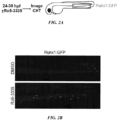
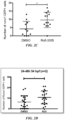
- Transgenic zebrafish embryos were treated with Ro5-3335 between 24-30 hpf - before HSCs form and are released from the AGM - and quantified the number of Runx1:GFP+ cells in live embryos at 54 hpf located in the CHT ( Figure 2A ).
- Figure 2B-F a significant increase in the number of Runx1:GFP+ cells was observed.
- Multi-lineage reconstitution remains a sine qua non characteristic of transplantable HSCs 19 .
- Runx1:GFP+ cells derived from the zebrafish embryo culture
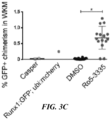
- cells into were transplanted prethymic 48 hpf casper embryos ( Figure 3A ). It was estimated that each recipient received approximately 1-3 cells based on the calculations, and up to 20 GFP+ cells were observed in circulation three days post-transplant in the recipients, indicating that the cells derived in culture expanded in vivo.
- the recipient fish were grown to adulthood, and kidney marrow analysis showed enhanced GFP+ chimerism in the samples treated with the runx1-CBF ⁇ inhibitor Ro5-3335 ( Figure 3B-C ).
- kidney marrow of two casper adult fish and one adult Runx1:GFP / ubi: mCherry transgenic fish were used for comparison purposes as negative and positive controls, respectively.
- the significantly increased chimerism observed in recipients of Ro5-3335 treated cells indicates that runx1-CBF ⁇ inhibition conferred an enhancement of HSPC engraftment or function immediately prior to transplant.
- a protocol was used to produce hemogenic endothelium from human iPSCs 20 that seeks to model embryonic hematopoiesis whereby iPSC embryoid bodies are induced to form mesoderm and lead to the emergence of hematopoietic cells.
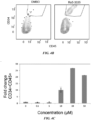
- CD34+FLK1+CD43- hemogenic endothelium cells are purified at day 8 of embryoid body formation and undergo EHT. These purified cells were treated with Ro5-3335, and observed a significant increase of CD34+CD45+ cells at day 6 of EHT ( Figure 4A-B ).
- the model regarding the activity of Ro5-3335 relies on the Runx1+23 enhancer serving as a marker of HSPC activity ( Figure 6B ).
- the enhancer element is bound by runx1 in HE cells, which increases runx1 expression.
- mutagenesis of the Runx1 binding site in the enhancer demonstrated it was not required for initial enhancer-driven expression, expression levels of hemogenic clusters were decreased at E10 of the dorsal aorta 23 , indicates that Runx1 affects enhancer activity.
- the enhancer is thus responsive to runx1 activity and becomes activated in a CBF ⁇ repressed state in the proposed model.
- runx1+23 enhancer is bound by Gata2, Scl, Runx1, and Ets transcription factors 23 , it is possible that runx1 is co-binding with Ets factors 24 at the enhancer.
- CBF ⁇ activity results in the enhancer element becoming turned off. In these cells, runx1 would then bind to other enhancer elements, such as those of myeloid genes that lead to cellular differentiation.
- treatment with Ro5-3335 disrupts the runx1-CBF ⁇ interaction, enables the Runx1+23 enhancer to remain active, and maintains a stem cell state.
- runx1-CBF ⁇ inhibition leads to increased Runx1:GFP expression.
- runx1-CBF ⁇ inhibitors factors that enhance HSPC specification from pluripotent sources were identified, including runx1-CBF ⁇ inhibitors.
- the runx1-CBF ⁇ inhibitor Ro5-3335 increased Runx1:GFP positive cells in the CHT of zebrafish embryos, and promoted the hematopoietic induction of CD34+CD45+ cells from human iPSCs.
- An HSC specification strategy using transient CBF ⁇ inhibition was identified and proposed that washing off the inhibitor would allow the cells to continue developing normally and maintain long-term HSC activity after transplant.
- Chemical factors revealed in the zebrafish culture system thus establish pathways that can be useful targets to promote iPSC-derived HSC expansion, which would be transformative in regenerative medicine to aid in therapies of blood cell lineages and improve bone marrow transplant efficiencies.
- Runx1-CBF ⁇ inhibition may mimic a runx1 haploinsufficient state.
- Runx1 haploinsufficiency surprisingly conferred engraftment potential of E10 cells transplanted from the yolk sac of mice and appeared to cause a temporal shift in the appearance of HSCs 25 .
- runx1-CBF ⁇ inhibition acting to accelerate the onset of HSC development in the zebrafish AGM and thus resulting in an increase of Runx1:GFP+ cells at 54 hpf.
- runx1-CBF ⁇ disruption may be acting on erythro-myeloid progenitors (EMPs).
- Ro5-3335 has been reported as a direct RUNX1-CBF ⁇ inhibitor 26 , but elsewhere suggested to act as a SMARCA2 inhibitor 27 , so it is contemplated that SMARCA2 inhibition also played a role in the effect observed on HSPC enhancement.
- transgenic embryos are raised to the appropriate stage and dissociated into single cells. These cells are then plated with a chemical library and allowed to differentiate in vitro, and the fluorescence from the transgene is read out on a high-content imager.
- This approach facilitates rapid screening of thousands of small molecules and leverages the advantages of the zebrafish as a model system for chemical screening. The strength of this approach is particularly evident as the identification of Ro5-3335 as an inducer of Runx1:GFP was translated to mammalian hematopoietic systems successfully. It is noteworthy that the chemical genetic screening enabled the identification of the role of runx1-CBF ⁇ , which would otherwise not have been possible by screening using a cbfb -/- genetic mutant that loses long-term HSPC function 22 .
- LDF medium contains 50% Leibowitz's L-15 (Invitrogen), 20% DMEM (Invitrogen), and 30% DMEM/F-12 (Invitrogen), supplemented with 2% B27 (Gibco), 15 mM HEPES (Gibco), 1% L-glutamine (Gibco), 1% N2 (Gibco), 10 nM sodium selenite (Sigma), 0.018% sodium bicarbonate (Gibco), 0.04% Primocin (Invivogen), and 0.2% Penicillin-Streptomycin (Gibco). All zebrafish experiments and procedures were performed as per protocols approved by the Boston Children's Hospital IACUC.
- Runx1:GFP 10 embryos at 24 hpf were washed with E3 embryo water and dechorionated with pronase. Embryos were washed with E3 embryo water, resuspended in blastomere media, mechanically homogenized, and filtered through a 40 ⁇ m nylon mesh filter.
- Single cells obtained were aliquoted 40 ⁇ l per well at approximately 2 embryo equivalents per well, and immediately screened with chemicals from NIH (Evotec, 720), Library of Pharmacologically Active Compounds (Sigma, 1,440), ICCB Known Bioactives (Biomol, 480), and Nuclear Hormone Receptor and Kinacore (ChemBridge, 1,200) libraries at 30 ⁇ M.
- Cells were cultured in a 28°C incubator with 5% CO 2 for 2 days. Cells were stained with draq5 (Cell Signaling Technology) and imaged using a Cell Voyager 7000 (Yokogawa).
- Transgenic Runx1:GFP embryos from the same clutch were treated at the time points indicated (n>10 embryos per treatment group) with 5 ⁇ M Ro5-3335 diluted in E3.
- Live embryos were embedded in 0.8% low-melting point agarose containing 0.04 mg/mL Tricaine and imaged on a Nikon Eclipe Ti microscope with 20x Plan-Apo DIC N.A. 0.75.
- CHT cells were counted blindly in Z-stack image projections processed on Imaris software (Bitplane). The Runx1:GFP cell counts displayed in the graph.
- Runx1:GFP / ubi:mCherry embryos were dissociated at 24 hpf and plated with 50 ⁇ M Ro5-3335 or DMSO. After two days in culture, double-positive cells were sorted and transplanted into 48 hpf casper recipients as previously described 10 . The recipients were grown to adulthood and the whole kidney marrow was dissected at approximately 3 months and analyzed in an LSRII (BD Biosciences). As negative and positive controls, the kidney marrow of two casper adults and one Runx1:GFP / ubi:mCherry adult were analyzed.
- Human iPSCs were cultured and differentiated into embryoid bodies as previously described 28 .
- HE cells were magnetically purified for EHT, and treated with DMSO or Ro5-3335.
- FACS analysis for CD34 and CD45 was performed at day 6 of EHT using an LSR Fortessa (BD Biosciences).
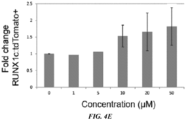
- RUNX1c-reporter cell line 21 RUNX1c activity was analyzed at day 4 of EHT using an LSR Fortessa (BD Biosciences).
- Intrafemoral transplantations were performed as described previously 28 .
- NOD/LtSz-scidIL2Rgnull mice (Jackson Laboratory) were transplanted with approximately 100,000 HE cells at day 4 that were treated with 25 ⁇ M Ro5-3335 or DMSO. Due to the limited cell number that can be obtained during EHT, the transplants were performed over the course of several weeks.
Landscapes
- Health & Medical Sciences (AREA)
- Life Sciences & Earth Sciences (AREA)
- Chemical & Material Sciences (AREA)
- Engineering & Computer Science (AREA)
- General Health & Medical Sciences (AREA)
- Cell Biology (AREA)
- Biomedical Technology (AREA)
- Veterinary Medicine (AREA)
- Public Health (AREA)
- Developmental Biology & Embryology (AREA)
- Animal Behavior & Ethology (AREA)
- Epidemiology (AREA)
- Pharmacology & Pharmacy (AREA)
- Medicinal Chemistry (AREA)
- Zoology (AREA)
- Biotechnology (AREA)
- Bioinformatics & Cheminformatics (AREA)
- Organic Chemistry (AREA)
- Genetics & Genomics (AREA)
- Wood Science & Technology (AREA)
- Immunology (AREA)
- Reproductive Health (AREA)
- Hematology (AREA)
- Virology (AREA)
- General Engineering & Computer Science (AREA)
- Microbiology (AREA)
- Biochemistry (AREA)
- Gynecology & Obstetrics (AREA)
- Pregnancy & Childbirth (AREA)
- Micro-Organisms Or Cultivation Processes Thereof (AREA)
- Medicines Containing Material From Animals Or Micro-Organisms (AREA)
Claims (4)
- In-vitro- oder Ex-vivo-Verfahren zum Induzieren der Spezifizierung hämatopoetischer Stammzellen (HSC), wobei das Verfahren Folgendes umfasst;a. Inkontaktbringen einer Zelle über einen Zeitraum mit einem Mittel, das aus der Gruppe ausgewählt ist, die aus Ro5-3335, SU-5402, sc-221405 und AI-10-49 besteht, undb. Entfernen des Wirkstoffs nach dem Zeitraum, dadurch Induzieren der HSC-Spezifizierung,wobei der Zeitraum zwischen 1 und 6 Tagen beträgt,wobei die Zelle aus der Gruppe ausgewählt ist, die aus einer hämogenen Endothelzelle (HE-Zelle), einer embryonalen Stammzelle (ESC), einem Embryoid-Body, einer aorto-gonadalenmesonephrischen Zelle (AGM-Zelle), einer Plazenta-Stammzelle, einer adulten Stammzelle und einer Amnion-Stammzelle besteht, wobei die Zelle optional aus einem nichtmenschlichen dissoziierten Embryo stammt, wobei sich der nichtmenschliche dissoziierte Embryo vorzugsweise mindestens 9 Stunden nach der Befruchtung befindet.
- Verfahren nach Anspruch 1, wobei die Konzentration des Mittels zwischen 1 µM und 100 µM liegt.
- Verfahren nach Anspruch 1, wobei das Mittel Ro5-3335 ist.
- Verfahren nach einem der Ansprüche 1-3, wobei:(i) die Zelle eine Säugetierzelle, eine menschliche Zelle oder eine nichtmenschliche Säugetierzelle ist, und/oder(ii) die HSC-Spezifizierung langfristig aufrechterhalten wird.
Applications Claiming Priority (2)
| Application Number | Priority Date | Filing Date | Title |
|---|---|---|---|
| US201762548436P | 2017-08-22 | 2017-08-22 | |
| PCT/US2018/047242 WO2019040448A1 (en) | 2017-08-22 | 2018-08-21 | METHODS FOR INDUCING HEMATOPOIETIC STEM CELL SPECIFICITY |
Publications (3)
| Publication Number | Publication Date |
|---|---|
| EP3672590A1 EP3672590A1 (de) | 2020-07-01 |
| EP3672590A4 EP3672590A4 (de) | 2021-04-28 |
| EP3672590B1 true EP3672590B1 (de) | 2025-02-12 |
Family
ID=65439543
Family Applications (1)
| Application Number | Title | Priority Date | Filing Date |
|---|---|---|---|
| EP18849339.9A Active EP3672590B1 (de) | 2017-08-22 | 2018-08-21 | Verfahren zur induktion hämatopoetischer stammzellenspezifität |
Country Status (3)
| Country | Link |
|---|---|
| US (1) | US12215351B2 (de) |
| EP (1) | EP3672590B1 (de) |
| WO (1) | WO2019040448A1 (de) |
Families Citing this family (2)
| Publication number | Priority date | Publication date | Assignee | Title |
|---|---|---|---|---|
| PL3484474T3 (pl) * | 2016-07-13 | 2024-08-26 | The Children's Medical Center Corporation | Związki fenotiazyny do leczenia zaburzeń rybosomalnych i rybosomopatii |
| CN115916218A (zh) * | 2020-04-23 | 2023-04-04 | 斯格本斯眼科研究所有限公司 | 用于治疗纤维化的方法和材料 |
Family Cites Families (4)
| Publication number | Priority date | Publication date | Assignee | Title |
|---|---|---|---|---|
| RU2425876C2 (ru) | 2006-03-24 | 2011-08-10 | Чилдрен'З Медикал Сентер Корпорейшн | Способ модулирования роста гематопоэтических стволовых клеток |
| US20110206781A1 (en) * | 2008-05-28 | 2011-08-25 | Zon Leonard I | Method to modulate hematopoietic stem cell growth |
| EP2685985B1 (de) * | 2011-03-17 | 2016-08-31 | The U.S.A. As Represented By The Secretary, Department Of Health And Human Services | Verfahren zur behandlung von leukämie und erkrankungen durch cbf- und runx1-proteine |
| EP4520828A3 (de) * | 2016-11-15 | 2025-07-09 | The Schepens Eye Research Institute, Inc. | Zusammensetzungen und verfahren zur behandlung von aberranter angiogenese |
-
2018
- 2018-08-21 EP EP18849339.9A patent/EP3672590B1/de active Active
- 2018-08-21 WO PCT/US2018/047242 patent/WO2019040448A1/en not_active Ceased
- 2018-08-21 US US16/640,403 patent/US12215351B2/en active Active
Also Published As
| Publication number | Publication date |
|---|---|
| EP3672590A1 (de) | 2020-07-01 |
| EP3672590A4 (de) | 2021-04-28 |
| US20200362308A1 (en) | 2020-11-19 |
| US12215351B2 (en) | 2025-02-04 |
| WO2019040448A1 (en) | 2019-02-28 |
Similar Documents
| Publication | Publication Date | Title |
|---|---|---|
| Himburg et al. | Distinct bone marrow sources of pleiotrophin control hematopoietic stem cell maintenance and regeneration | |
| Frame et al. | Metabolic regulation of inflammasome activity controls embryonic hematopoietic stem and progenitor cell production | |
| DeBerge et al. | Hypoxia-inducible factors individually facilitate inflammatory myeloid metabolism and inefficient cardiac repair | |
| Li et al. | Inflammatory signaling regulates embryonic hematopoietic stem and progenitor cell production | |
| Wang et al. | Skin microbiome promotes mast cell maturation by triggering stem cell factor production in keratinocytes | |
| Li et al. | Genetic engineering of platelets to neutralize circulating tumor cells | |
| Porter et al. | Prostaglandin E2 increases hematopoietic stem cell survival and accelerates hematopoietic recovery after radiation injury | |
| US20170252362A1 (en) | Methods & compounds useful in hematopoietic stem cell medicine | |
| JP2018505685A (ja) | 動脈内皮細胞集団の生成 | |
| Paul et al. | Human macrophages survive and adopt activated genotypes in living zebrafish | |
| Cheng et al. | Nod1-dependent NF-kB activation initiates hematopoietic stem cell specification in response to small Rho GTPases | |
| EP3672590B1 (de) | Verfahren zur induktion hämatopoetischer stammzellenspezifität | |
| Suzuki et al. | Impairment of fetal hematopoietic stem cell function in the absence of Fancd2 | |
| KR102543304B1 (ko) | 혈소판 생성능이 우수한 세포 및 혈소판의 제조방법 | |
| Lin et al. | Sirolimus augments hematopoietic stem and progenitor cell regeneration following hematopoietic insults | |
| Ciraci et al. | Adult human circulating CD34− Lin− CD45− CD133− cells can differentiate into hematopoietic and endothelial cells | |
| US20150216933A1 (en) | Hematopoietic stem cell growth factor | |
| Eddins et al. | Hematopoietic stem cell requirement for macrophage regeneration is tissue specific | |
| JP2009514967A (ja) | 幹細胞の加齢化を調節するための方法及び組成物 | |
| US20220243177A1 (en) | Methods of culturing quiescent hematopoietic stem cells and treatment methods | |
| Livada | Lung Megakaryocytes Are Long-Lived, Arise From Flt3-Negative Bone Marrow Cells and Contribute to Platelet Recovery in Thrombocytopenia | |
| Zerbst | An investigation into the role of autophagy in mediating leukaemic cell location in the bone marrow niche | |
| EP4600351A1 (de) | Verfahren zur herstellung von plättchen | |
| Williams et al. | Maintenance of haematopoietic stem cells by JAK inhibition and increased tyrosine-unphosphorylated STAT5 | |
| Lee | Extrinsic regulation of Hematopoietic Stem Cells in the fetal liver |
Legal Events
| Date | Code | Title | Description |
|---|---|---|---|
| STAA | Information on the status of an ep patent application or granted ep patent |
Free format text: STATUS: THE INTERNATIONAL PUBLICATION HAS BEEN MADE |
|
| PUAI | Public reference made under article 153(3) epc to a published international application that has entered the european phase |
Free format text: ORIGINAL CODE: 0009012 |
|
| STAA | Information on the status of an ep patent application or granted ep patent |
Free format text: STATUS: REQUEST FOR EXAMINATION WAS MADE |
|
| 17P | Request for examination filed |
Effective date: 20200315 |
|
| AK | Designated contracting states |
Kind code of ref document: A1 Designated state(s): AL AT BE BG CH CY CZ DE DK EE ES FI FR GB GR HR HU IE IS IT LI LT LU LV MC MK MT NL NO PL PT RO RS SE SI SK SM TR |
|
| AX | Request for extension of the european patent |
Extension state: BA ME |
|
| RIN1 | Information on inventor provided before grant (corrected) |
Inventor name: ZON, LEONARD I. Inventor name: MANDELBAUM, JOSEPH |
|
| DAV | Request for validation of the european patent (deleted) | ||
| DAX | Request for extension of the european patent (deleted) | ||
| A4 | Supplementary search report drawn up and despatched |
Effective date: 20210325 |
|
| RIC1 | Information provided on ipc code assigned before grant |
Ipc: A61K 31/4184 20060101AFI20210319BHEP Ipc: A61K 35/28 20150101ALI20210319BHEP Ipc: A61K 38/18 20060101ALI20210319BHEP |
|
| STAA | Information on the status of an ep patent application or granted ep patent |
Free format text: STATUS: EXAMINATION IS IN PROGRESS |
|
| 17Q | First examination report despatched |
Effective date: 20220324 |
|
| P01 | Opt-out of the competence of the unified patent court (upc) registered |
Effective date: 20230523 |
|
| GRAP | Despatch of communication of intention to grant a patent |
Free format text: ORIGINAL CODE: EPIDOSNIGR1 |
|
| STAA | Information on the status of an ep patent application or granted ep patent |
Free format text: STATUS: GRANT OF PATENT IS INTENDED |
|
| INTG | Intention to grant announced |
Effective date: 20240913 |
|
| GRAS | Grant fee paid |
Free format text: ORIGINAL CODE: EPIDOSNIGR3 |
|
| GRAA | (expected) grant |
Free format text: ORIGINAL CODE: 0009210 |
|
| STAA | Information on the status of an ep patent application or granted ep patent |
Free format text: STATUS: THE PATENT HAS BEEN GRANTED |
|
| AK | Designated contracting states |
Kind code of ref document: B1 Designated state(s): AL AT BE BG CH CY CZ DE DK EE ES FI FR GB GR HR HU IE IS IT LI LT LU LV MC MK MT NL NO PL PT RO RS SE SI SK SM TR |
|
| REG | Reference to a national code |
Ref country code: GB Ref legal event code: FG4D |
|
| REG | Reference to a national code |
Ref country code: CH Ref legal event code: EP |
|
| REG | Reference to a national code |
Ref country code: DE Ref legal event code: R096 Ref document number: 602018079148 Country of ref document: DE |
|
| REG | Reference to a national code |
Ref country code: IE Ref legal event code: FG4D |
|
| REG | Reference to a national code |
Ref country code: NL Ref legal event code: MP Effective date: 20250212 |
|
| PG25 | Lapsed in a contracting state [announced via postgrant information from national office to epo] |
Ref country code: RS Free format text: LAPSE BECAUSE OF FAILURE TO SUBMIT A TRANSLATION OF THE DESCRIPTION OR TO PAY THE FEE WITHIN THE PRESCRIBED TIME-LIMIT Effective date: 20250512 |
|
| PG25 | Lapsed in a contracting state [announced via postgrant information from national office to epo] |
Ref country code: FI Free format text: LAPSE BECAUSE OF FAILURE TO SUBMIT A TRANSLATION OF THE DESCRIPTION OR TO PAY THE FEE WITHIN THE PRESCRIBED TIME-LIMIT Effective date: 20250212 |
|
| PG25 | Lapsed in a contracting state [announced via postgrant information from national office to epo] |
Ref country code: PL Free format text: LAPSE BECAUSE OF FAILURE TO SUBMIT A TRANSLATION OF THE DESCRIPTION OR TO PAY THE FEE WITHIN THE PRESCRIBED TIME-LIMIT Effective date: 20250212 |
|
| PG25 | Lapsed in a contracting state [announced via postgrant information from national office to epo] |
Ref country code: ES Free format text: LAPSE BECAUSE OF FAILURE TO SUBMIT A TRANSLATION OF THE DESCRIPTION OR TO PAY THE FEE WITHIN THE PRESCRIBED TIME-LIMIT Effective date: 20250212 |
|
| REG | Reference to a national code |
Ref country code: LT Ref legal event code: MG9D |
|
| PG25 | Lapsed in a contracting state [announced via postgrant information from national office to epo] |
Ref country code: NO Free format text: LAPSE BECAUSE OF FAILURE TO SUBMIT A TRANSLATION OF THE DESCRIPTION OR TO PAY THE FEE WITHIN THE PRESCRIBED TIME-LIMIT Effective date: 20250512 Ref country code: IS Free format text: LAPSE BECAUSE OF FAILURE TO SUBMIT A TRANSLATION OF THE DESCRIPTION OR TO PAY THE FEE WITHIN THE PRESCRIBED TIME-LIMIT Effective date: 20250612 |
|
| PG25 | Lapsed in a contracting state [announced via postgrant information from national office to epo] |
Ref country code: NL Free format text: LAPSE BECAUSE OF FAILURE TO SUBMIT A TRANSLATION OF THE DESCRIPTION OR TO PAY THE FEE WITHIN THE PRESCRIBED TIME-LIMIT Effective date: 20250212 |
|
| PG25 | Lapsed in a contracting state [announced via postgrant information from national office to epo] |
Ref country code: HR Free format text: LAPSE BECAUSE OF FAILURE TO SUBMIT A TRANSLATION OF THE DESCRIPTION OR TO PAY THE FEE WITHIN THE PRESCRIBED TIME-LIMIT Effective date: 20250212 |
|
| PG25 | Lapsed in a contracting state [announced via postgrant information from national office to epo] |
Ref country code: LV Free format text: LAPSE BECAUSE OF FAILURE TO SUBMIT A TRANSLATION OF THE DESCRIPTION OR TO PAY THE FEE WITHIN THE PRESCRIBED TIME-LIMIT Effective date: 20250212 Ref country code: PT Free format text: LAPSE BECAUSE OF FAILURE TO SUBMIT A TRANSLATION OF THE DESCRIPTION OR TO PAY THE FEE WITHIN THE PRESCRIBED TIME-LIMIT Effective date: 20250612 |
|
| PG25 | Lapsed in a contracting state [announced via postgrant information from national office to epo] |
Ref country code: GR Free format text: LAPSE BECAUSE OF FAILURE TO SUBMIT A TRANSLATION OF THE DESCRIPTION OR TO PAY THE FEE WITHIN THE PRESCRIBED TIME-LIMIT Effective date: 20250513 Ref country code: BG Free format text: LAPSE BECAUSE OF FAILURE TO SUBMIT A TRANSLATION OF THE DESCRIPTION OR TO PAY THE FEE WITHIN THE PRESCRIBED TIME-LIMIT Effective date: 20250212 |
|
| REG | Reference to a national code |
Ref country code: AT Ref legal event code: MK05 Ref document number: 1765440 Country of ref document: AT Kind code of ref document: T Effective date: 20250212 |
|
| PG25 | Lapsed in a contracting state [announced via postgrant information from national office to epo] |
Ref country code: SE Free format text: LAPSE BECAUSE OF FAILURE TO SUBMIT A TRANSLATION OF THE DESCRIPTION OR TO PAY THE FEE WITHIN THE PRESCRIBED TIME-LIMIT Effective date: 20250212 |
|
| PG25 | Lapsed in a contracting state [announced via postgrant information from national office to epo] |
Ref country code: SM Free format text: LAPSE BECAUSE OF FAILURE TO SUBMIT A TRANSLATION OF THE DESCRIPTION OR TO PAY THE FEE WITHIN THE PRESCRIBED TIME-LIMIT Effective date: 20250212 |
|
| PG25 | Lapsed in a contracting state [announced via postgrant information from national office to epo] |
Ref country code: DK Free format text: LAPSE BECAUSE OF FAILURE TO SUBMIT A TRANSLATION OF THE DESCRIPTION OR TO PAY THE FEE WITHIN THE PRESCRIBED TIME-LIMIT Effective date: 20250212 |
|
| PGFP | Annual fee paid to national office [announced via postgrant information from national office to epo] |
Ref country code: IT Payment date: 20250820 Year of fee payment: 8 |
|
| PGFP | Annual fee paid to national office [announced via postgrant information from national office to epo] |
Ref country code: GB Payment date: 20250827 Year of fee payment: 8 |
|
| PG25 | Lapsed in a contracting state [announced via postgrant information from national office to epo] |
Ref country code: AT Free format text: LAPSE BECAUSE OF FAILURE TO SUBMIT A TRANSLATION OF THE DESCRIPTION OR TO PAY THE FEE WITHIN THE PRESCRIBED TIME-LIMIT Effective date: 20250212 |
|
| PGFP | Annual fee paid to national office [announced via postgrant information from national office to epo] |
Ref country code: FR Payment date: 20250825 Year of fee payment: 8 |
|
| PG25 | Lapsed in a contracting state [announced via postgrant information from national office to epo] |
Ref country code: EE Free format text: LAPSE BECAUSE OF FAILURE TO SUBMIT A TRANSLATION OF THE DESCRIPTION OR TO PAY THE FEE WITHIN THE PRESCRIBED TIME-LIMIT Effective date: 20250212 Ref country code: CZ Free format text: LAPSE BECAUSE OF FAILURE TO SUBMIT A TRANSLATION OF THE DESCRIPTION OR TO PAY THE FEE WITHIN THE PRESCRIBED TIME-LIMIT Effective date: 20250212 |
|
| PG25 | Lapsed in a contracting state [announced via postgrant information from national office to epo] |
Ref country code: RO Free format text: LAPSE BECAUSE OF FAILURE TO SUBMIT A TRANSLATION OF THE DESCRIPTION OR TO PAY THE FEE WITHIN THE PRESCRIBED TIME-LIMIT Effective date: 20250212 |
|
| PG25 | Lapsed in a contracting state [announced via postgrant information from national office to epo] |
Ref country code: SK Free format text: LAPSE BECAUSE OF FAILURE TO SUBMIT A TRANSLATION OF THE DESCRIPTION OR TO PAY THE FEE WITHIN THE PRESCRIBED TIME-LIMIT Effective date: 20250212 |
|
| REG | Reference to a national code |
Ref country code: DE Ref legal event code: R097 Ref document number: 602018079148 Country of ref document: DE |
|
| PLBE | No opposition filed within time limit |
Free format text: ORIGINAL CODE: 0009261 |
|
| STAA | Information on the status of an ep patent application or granted ep patent |
Free format text: STATUS: NO OPPOSITION FILED WITHIN TIME LIMIT |
|
| REG | Reference to a national code |
Ref country code: CH Ref legal event code: L10 Free format text: ST27 STATUS EVENT CODE: U-0-0-L10-L00 (AS PROVIDED BY THE NATIONAL OFFICE) Effective date: 20251224 |
|
| 26N | No opposition filed |
Effective date: 20251113 |
|
| REG | Reference to a national code |
Ref country code: DE Ref legal event code: R119 Ref document number: 602018079148 Country of ref document: DE |
|
| REG | Reference to a national code |
Ref country code: CH Ref legal event code: H13 Free format text: ST27 STATUS EVENT CODE: U-0-0-H10-H13 (AS PROVIDED BY THE NATIONAL OFFICE) Effective date: 20260324 |
|
| PG25 | Lapsed in a contracting state [announced via postgrant information from national office to epo] |
Ref country code: MC Free format text: LAPSE BECAUSE OF FAILURE TO SUBMIT A TRANSLATION OF THE DESCRIPTION OR TO PAY THE FEE WITHIN THE PRESCRIBED TIME-LIMIT Effective date: 20250212 |
|
| PG25 | Lapsed in a contracting state [announced via postgrant information from national office to epo] |
Ref country code: LU Free format text: LAPSE BECAUSE OF NON-PAYMENT OF DUE FEES Effective date: 20250821 |
|
| PG25 | Lapsed in a contracting state [announced via postgrant information from national office to epo] |
Ref country code: CH Free format text: LAPSE BECAUSE OF NON-PAYMENT OF DUE FEES Effective date: 20250831 |