EP3672956B1 - Molécules organiques contenant des triazines, en particulier destinées à être utilisées dans des dispositifs optoélectroniques - Google Patents
Molécules organiques contenant des triazines, en particulier destinées à être utilisées dans des dispositifs optoélectroniques Download PDFInfo
- Publication number
- EP3672956B1 EP3672956B1 EP18773077.5A EP18773077A EP3672956B1 EP 3672956 B1 EP3672956 B1 EP 3672956B1 EP 18773077 A EP18773077 A EP 18773077A EP 3672956 B1 EP3672956 B1 EP 3672956B1
- Authority
- EP
- European Patent Office
- Prior art keywords
- optionally substituted
- substituents
- group
- deuterium
- independently
- Prior art date
- Legal status (The legal status is an assumption and is not a legal conclusion. Google has not performed a legal analysis and makes no representation as to the accuracy of the status listed.)
- Active
Links
- 0 C*c1c2[n](C)c(c(*C)ccc3)c3c2ccc1 Chemical compound C*c1c2[n](C)c(c(*C)ccc3)c3c2ccc1 0.000 description 10
- YMZOXFOPMRTGDP-UHFFFAOYSA-N Fc(ccc(Cl)c1)c1-c1nc(-c2ccccc2)nc(-c2ccccc2)n1 Chemical compound Fc(ccc(Cl)c1)c1-c1nc(-c2ccccc2)nc(-c2ccccc2)n1 YMZOXFOPMRTGDP-UHFFFAOYSA-N 0.000 description 2
- VWPVYQPVSZWAQS-UHFFFAOYSA-N CC(C)(C)c(cc1c2ccccc22)ccc1[n]2-c1cccc(-c2nc(-c3ccccc3)nc(-c3ccccc3)n2)c1-c(c(-[n]1c(ccc(C(C)(C)C)c2)c2c2c1cccc2)ccc1)c1C#N Chemical compound CC(C)(C)c(cc1c2ccccc22)ccc1[n]2-c1cccc(-c2nc(-c3ccccc3)nc(-c3ccccc3)n2)c1-c(c(-[n]1c(ccc(C(C)(C)C)c2)c2c2c1cccc2)ccc1)c1C#N VWPVYQPVSZWAQS-UHFFFAOYSA-N 0.000 description 1
- DMJGKVYFBOCENL-UHFFFAOYSA-N CC1(C)OB(c(cc2F)ccc2C#N)OC1(C)C Chemical compound CC1(C)OB(c(cc2F)ccc2C#N)OC1(C)C DMJGKVYFBOCENL-UHFFFAOYSA-N 0.000 description 1
- BFXSWDUFRGWPCA-UHFFFAOYSA-N CC1(C)OB(c2cc(Cl)ccc2F)OC1(C)C Chemical compound CC1(C)OB(c2cc(Cl)ccc2F)OC1(C)C BFXSWDUFRGWPCA-UHFFFAOYSA-N 0.000 description 1
- IFKVTLAQLZMDAJ-UHFFFAOYSA-N Cc(cc1C)ccc1-c(cc1)cc(c2c3cccc2)c1[n]3-c(ccc(C#N)c1)c1-c(ccc(-c1nc(-c2ccccc2)nc(-c2ccccc2)n1)c1)c1-[n]1c(ccc(-c2c(C)cc(C)cc2)c2)c2c2ccccc12 Chemical compound Cc(cc1C)ccc1-c(cc1)cc(c2c3cccc2)c1[n]3-c(ccc(C#N)c1)c1-c(ccc(-c1nc(-c2ccccc2)nc(-c2ccccc2)n1)c1)c1-[n]1c(ccc(-c2c(C)cc(C)cc2)c2)c2c2ccccc12 IFKVTLAQLZMDAJ-UHFFFAOYSA-N 0.000 description 1
- OHWWWEODSKZKQW-UHFFFAOYSA-N Cc1cc(-c(cc2)cc(c3cc(-c4cc(C)cc(C)c4)ccc33)c2[n]3-c(c(-c(ccc(-c2nc(-c3ccccc3)nc(-c3ccccc3)n2)c2)c2-[n]2c(ccc(-c(cc3C)cc(C)c3-c3cc(-c4nc(-c5ccccc5)nc(-c(cc5)cc(-[n]6c(ccc(-c(ccc(C#N)c7)c7C#N)c7)c7c7c6cccc7)c5-c(cc(cc5)C#N)c5-[n]5c(ccc(-c(ccc(C#N)c6)c6C#N)c6)c6c6c5cccc6)n4)ccc3)c3)c3c3cc(-c4cc(C)cc(C)c4)ccc23)c2)ccc2C#N)cc(C)c1 Chemical compound Cc1cc(-c(cc2)cc(c3cc(-c4cc(C)cc(C)c4)ccc33)c2[n]3-c(c(-c(ccc(-c2nc(-c3ccccc3)nc(-c3ccccc3)n2)c2)c2-[n]2c(ccc(-c(cc3C)cc(C)c3-c3cc(-c4nc(-c5ccccc5)nc(-c(cc5)cc(-[n]6c(ccc(-c(ccc(C#N)c7)c7C#N)c7)c7c7c6cccc7)c5-c(cc(cc5)C#N)c5-[n]5c(ccc(-c(ccc(C#N)c6)c6C#N)c6)c6c6c5cccc6)n4)ccc3)c3)c3c3cc(-c4cc(C)cc(C)c4)ccc23)c2)ccc2C#N)cc(C)c1 OHWWWEODSKZKQW-UHFFFAOYSA-N 0.000 description 1
- DDGPPAMADXTGTN-UHFFFAOYSA-N Clc1nc(-c2ccccc2)nc(-c2ccccc2)n1 Chemical compound Clc1nc(-c2ccccc2)nc(-c2ccccc2)n1 DDGPPAMADXTGTN-UHFFFAOYSA-N 0.000 description 1
- OFQVRUKOVLOPGG-UHFFFAOYSA-N N#Cc(cc1-c2cc(-[n](c(cccc3)c3c3c4)c3ccc4-c3nc(-c4ccccc4)nc(-c4ccccc4)n3)ccc2-c2nc(-c3ccccc3)nc(-c3ccccc3)n2)ccc1-[n](c(cccc1)c1c1c2)c1ccc2-c1nc(-c2ccccc2)nc(-c2ccccc2)n1 Chemical compound N#Cc(cc1-c2cc(-[n](c(cccc3)c3c3c4)c3ccc4-c3nc(-c4ccccc4)nc(-c4ccccc4)n3)ccc2-c2nc(-c3ccccc3)nc(-c3ccccc3)n2)ccc1-[n](c(cccc1)c1c1c2)c1ccc2-c1nc(-c2ccccc2)nc(-c2ccccc2)n1 OFQVRUKOVLOPGG-UHFFFAOYSA-N 0.000 description 1
- OFCSJDKTIWNTDA-UHFFFAOYSA-N N#Cc(ccc(-[n](c1c2cccc1)c(cc1)c2c2c1c(C=CCC1)c1[n]2-c1ccccc1)c1)c1-c(cc(cc1)-c2nc(-c3ccccc3)nc(-c3ccccc3)n2)c1-[n]1c2ccc(c3ccccc3[n]3-c4ccccc4)c3c2c2ccccc12 Chemical compound N#Cc(ccc(-[n](c1c2cccc1)c(cc1)c2c2c1c(C=CCC1)c1[n]2-c1ccccc1)c1)c1-c(cc(cc1)-c2nc(-c3ccccc3)nc(-c3ccccc3)n2)c1-[n]1c2ccc(c3ccccc3[n]3-c4ccccc4)c3c2c2ccccc12 OFCSJDKTIWNTDA-UHFFFAOYSA-N 0.000 description 1
- NJTPKVZVUKKCRU-UHFFFAOYSA-N N#Cc(ccc(-c(cc1)cc(-c2nc(-c3ccccc3)nc(-c3ccccc3)n2)c1F)c1)c1F Chemical compound N#Cc(ccc(-c(cc1)cc(-c2nc(-c3ccccc3)nc(-c3ccccc3)n2)c1F)c1)c1F NJTPKVZVUKKCRU-UHFFFAOYSA-N 0.000 description 1
- ZPLRZAFJXXLLBE-UHFFFAOYSA-N N#Cc(cccc1-[n](c(cccc2)c2c2c3)c2ccc3-c2cc(C(F)(F)F)cc(C(F)(F)F)c2)c1-c(c(-c1nc(-c2ccccc2)nc(-c2ccccc2)n1)ccc1)c1-[n]1c(ccc(-c2cc(C(F)(F)F)cc(C(F)(F)F)c2)c2)c2c2c1cccc2 Chemical compound N#Cc(cccc1-[n](c(cccc2)c2c2c3)c2ccc3-c2cc(C(F)(F)F)cc(C(F)(F)F)c2)c1-c(c(-c1nc(-c2ccccc2)nc(-c2ccccc2)n1)ccc1)c1-[n]1c(ccc(-c2cc(C(F)(F)F)cc(C(F)(F)F)c2)c2)c2c2c1cccc2 ZPLRZAFJXXLLBE-UHFFFAOYSA-N 0.000 description 1
- ZEUPLSJULUOLKW-UHFFFAOYSA-N N#Cc1cccc(-[n]2c(ccc(-[n]3c(cccc4)c4c4c3cccc4)c3)c3c3ccccc23)c1-c(c(-[n](c(cccc1)c1c1c2)c1ccc2-[n]1c2ccccc2c2c1cccc2)ccc1)c1-c1nc(-c2ccccc2)nc(-c2ccccc2)n1 Chemical compound N#Cc1cccc(-[n]2c(ccc(-[n]3c(cccc4)c4c4c3cccc4)c3)c3c3ccccc23)c1-c(c(-[n](c(cccc1)c1c1c2)c1ccc2-[n]1c2ccccc2c2c1cccc2)ccc1)c1-c1nc(-c2ccccc2)nc(-c2ccccc2)n1 ZEUPLSJULUOLKW-UHFFFAOYSA-N 0.000 description 1
Images





Classifications
-
- C—CHEMISTRY; METALLURGY
- C07—ORGANIC CHEMISTRY
- C07D—HETEROCYCLIC COMPOUNDS
- C07D491/00—Heterocyclic compounds containing in the condensed ring system both one or more rings having oxygen atoms as the only ring hetero atoms and one or more rings having nitrogen atoms as the only ring hetero atoms, not provided for by groups C07D451/00 - C07D459/00, C07D463/00, C07D477/00 or C07D489/00
- C07D491/02—Heterocyclic compounds containing in the condensed ring system both one or more rings having oxygen atoms as the only ring hetero atoms and one or more rings having nitrogen atoms as the only ring hetero atoms, not provided for by groups C07D451/00 - C07D459/00, C07D463/00, C07D477/00 or C07D489/00 in which the condensed system contains two hetero rings
- C07D491/04—Ortho-condensed systems
- C07D491/044—Ortho-condensed systems with only one oxygen atom as ring hetero atom in the oxygen-containing ring
- C07D491/048—Ortho-condensed systems with only one oxygen atom as ring hetero atom in the oxygen-containing ring the oxygen-containing ring being five-membered
-
- C—CHEMISTRY; METALLURGY
- C07—ORGANIC CHEMISTRY
- C07D—HETEROCYCLIC COMPOUNDS
- C07D403/00—Heterocyclic compounds containing two or more hetero rings, having nitrogen atoms as the only ring hetero atoms, not provided for by group C07D401/00
- C07D403/14—Heterocyclic compounds containing two or more hetero rings, having nitrogen atoms as the only ring hetero atoms, not provided for by group C07D401/00 containing three or more hetero rings
-
- C—CHEMISTRY; METALLURGY
- C07—ORGANIC CHEMISTRY
- C07D—HETEROCYCLIC COMPOUNDS
- C07D519/00—Heterocyclic compounds containing more than one system of two or more relevant hetero rings condensed among themselves or condensed with a common carbocyclic ring system not provided for in groups C07D453/00 or C07D455/00
-
- C—CHEMISTRY; METALLURGY
- C09—DYES; PAINTS; POLISHES; NATURAL RESINS; ADHESIVES; COMPOSITIONS NOT OTHERWISE PROVIDED FOR; APPLICATIONS OF MATERIALS NOT OTHERWISE PROVIDED FOR
- C09K—MATERIALS FOR MISCELLANEOUS APPLICATIONS, NOT PROVIDED FOR ELSEWHERE
- C09K11/00—Luminescent materials, e.g. electroluminescent or chemiluminescent
- C09K11/06—Luminescent materials, e.g. electroluminescent or chemiluminescent containing organic luminescent materials
-
- H—ELECTRICITY
- H10—SEMICONDUCTOR DEVICES; ELECTRIC SOLID-STATE DEVICES NOT OTHERWISE PROVIDED FOR
- H10K—ORGANIC ELECTRIC SOLID-STATE DEVICES
- H10K50/00—Organic light-emitting devices
- H10K50/10—OLEDs or polymer light-emitting diodes [PLED]
- H10K50/11—OLEDs or polymer light-emitting diodes [PLED] characterised by the electroluminescent [EL] layers
-
- H—ELECTRICITY
- H10—SEMICONDUCTOR DEVICES; ELECTRIC SOLID-STATE DEVICES NOT OTHERWISE PROVIDED FOR
- H10K—ORGANIC ELECTRIC SOLID-STATE DEVICES
- H10K85/00—Organic materials used in the body or electrodes of devices covered by this subclass
- H10K85/60—Organic compounds having low molecular weight
- H10K85/649—Aromatic compounds comprising a hetero atom
- H10K85/654—Aromatic compounds comprising a hetero atom comprising only nitrogen as heteroatom
-
- H—ELECTRICITY
- H10—SEMICONDUCTOR DEVICES; ELECTRIC SOLID-STATE DEVICES NOT OTHERWISE PROVIDED FOR
- H10K—ORGANIC ELECTRIC SOLID-STATE DEVICES
- H10K85/00—Organic materials used in the body or electrodes of devices covered by this subclass
- H10K85/60—Organic compounds having low molecular weight
- H10K85/649—Aromatic compounds comprising a hetero atom
- H10K85/657—Polycyclic condensed heteroaromatic hydrocarbons
-
- H—ELECTRICITY
- H10—SEMICONDUCTOR DEVICES; ELECTRIC SOLID-STATE DEVICES NOT OTHERWISE PROVIDED FOR
- H10K—ORGANIC ELECTRIC SOLID-STATE DEVICES
- H10K85/00—Organic materials used in the body or electrodes of devices covered by this subclass
- H10K85/60—Organic compounds having low molecular weight
- H10K85/649—Aromatic compounds comprising a hetero atom
- H10K85/657—Polycyclic condensed heteroaromatic hydrocarbons
- H10K85/6572—Polycyclic condensed heteroaromatic hydrocarbons comprising only nitrogen in the heteroaromatic polycondensed ring system, e.g. phenanthroline or carbazole
-
- C—CHEMISTRY; METALLURGY
- C09—DYES; PAINTS; POLISHES; NATURAL RESINS; ADHESIVES; COMPOSITIONS NOT OTHERWISE PROVIDED FOR; APPLICATIONS OF MATERIALS NOT OTHERWISE PROVIDED FOR
- C09K—MATERIALS FOR MISCELLANEOUS APPLICATIONS, NOT PROVIDED FOR ELSEWHERE
- C09K2211/00—Chemical nature of organic luminescent or tenebrescent compounds
- C09K2211/10—Non-macromolecular compounds
- C09K2211/1003—Carbocyclic compounds
- C09K2211/1007—Non-condensed systems
-
- C—CHEMISTRY; METALLURGY
- C09—DYES; PAINTS; POLISHES; NATURAL RESINS; ADHESIVES; COMPOSITIONS NOT OTHERWISE PROVIDED FOR; APPLICATIONS OF MATERIALS NOT OTHERWISE PROVIDED FOR
- C09K—MATERIALS FOR MISCELLANEOUS APPLICATIONS, NOT PROVIDED FOR ELSEWHERE
- C09K2211/00—Chemical nature of organic luminescent or tenebrescent compounds
- C09K2211/10—Non-macromolecular compounds
- C09K2211/1018—Heterocyclic compounds
-
- H—ELECTRICITY
- H05—ELECTRIC TECHNIQUES NOT OTHERWISE PROVIDED FOR
- H05B—ELECTRIC HEATING; ELECTRIC LIGHT SOURCES NOT OTHERWISE PROVIDED FOR; CIRCUIT ARRANGEMENTS FOR ELECTRIC LIGHT SOURCES, IN GENERAL
- H05B33/00—Electroluminescent light sources
- H05B33/12—Light sources with substantially two-dimensional [2D] radiating surfaces
- H05B33/14—Light sources with substantially two-dimensional [2D] radiating surfaces characterised by the chemical or physical composition or the arrangement of the electroluminescent material, or by the simultaneous addition of the electroluminescent material in or onto the light source
-
- H—ELECTRICITY
- H10—SEMICONDUCTOR DEVICES; ELECTRIC SOLID-STATE DEVICES NOT OTHERWISE PROVIDED FOR
- H10K—ORGANIC ELECTRIC SOLID-STATE DEVICES
- H10K2101/00—Properties of the organic materials covered by group H10K85/00
- H10K2101/10—Triplet emission
-
- Y—GENERAL TAGGING OF NEW TECHNOLOGICAL DEVELOPMENTS; GENERAL TAGGING OF CROSS-SECTIONAL TECHNOLOGIES SPANNING OVER SEVERAL SECTIONS OF THE IPC; TECHNICAL SUBJECTS COVERED BY FORMER USPC CROSS-REFERENCE ART COLLECTIONS [XRACs] AND DIGESTS
- Y02—TECHNOLOGIES OR APPLICATIONS FOR MITIGATION OR ADAPTATION AGAINST CLIMATE CHANGE
- Y02E—REDUCTION OF GREENHOUSE GAS [GHG] EMISSIONS, RELATED TO ENERGY GENERATION, TRANSMISSION OR DISTRIBUTION
- Y02E10/00—Energy generation through renewable energy sources
- Y02E10/50—Photovoltaic [PV] energy
- Y02E10/549—Organic PV cells
Definitions
- the invention relates to organic molecules and their use in organic light-emitting diodes (OLEDs) and in other optoelectronic devices.
- the object of the present invention is to provide molecules which are suitable for use in optoelectronic devices.
- the organic molecules of the invention are purely organic molecules, i.e. they do not contain any metal ions in contrast to metal complexes known for use in optoelectronic devices.
- the organic molecules exhibit emission maxima in the blue, sky-blue or green spectral range.
- the organic molecules exhibit, in particular, emission maxima between 420 nm and 520 nm, between 440 nm and 495 nm, or between 450 nm and 470 nm.
- the photoluminescence quantum yields of the organic molecules according to the invention are, in particular, 20 % or more.
- the molecules according to the invention show, in particular, thermally activated delayed fluorescence (TADF).
- TADF thermally activated delayed fluorescence
- OLED organic light-emitting diode
- organic light-emitting molecules of the invention comprise or consist of a first chemical moiety comprising or consisting of a structure of Formula I, and
- the substituents R a , R 3 , R 4 or R 5 independently from each other can optionally form a mono- or polycyclic, aliphatic, aromatic and/or benzo-fused ring system with one or more substituents R a , R 3 , R 4 or R 5 .
- exactly one substituent selected from the group consisting of T, V and W is R A ; exactly one substituent selected from the group consisting of R T , R V and R W is CN; exactly one substituent selected from the group consisting of W, Y and X represents the binding site of a single bond linking the first chemical moiety and one of the two second chemical moieties and exactly one substituent selected from the group consisting of R W , R Y and R X represents the binding site of a single bond linking the first chemical moiety and one of the two second chemical moieties.
- first chemical moiety comprises or consists of a structure of Formula la: wherein R 1 , R 2 , R I , R Tz , R T , and R V are defined as above, R Z is selected from the group consisting of R I and CN, R D is the binding site of a single bond linking the first chemical moiety to one of the two second chemical moieties, Y D is the binding site of a single bond linking the first chemical moiety to one of the two second chemical moieties, and wherein exactly one substituent selected from the group consisting of R V , R T and R Z is CN.
- R 1 , R 2 , and R I is at each occurrence independently from another selected from the group consisting of hydrogen (H), methyl, mesityl, tolyl and phenyl.
- H hydrogen
- methyl mesityl
- tolyl refers to 2-tolyl, 3-tolyl, and 4-tolyl.
- R 1 , R 2 , and R I is at each occurrence independently from another selected from the group consisting of hydrogen (H), methyl, and phenyl.
- R V is CN
- R T is CN
- R W is CN
- V is R A .
- T is R A .
- W is R A .
- R V is CN and V is R A .
- R V is CN and W is R A .
- R V is CN and T is R A .
- R W is CN and W is R A .
- R W is CN and T is R A .
- R W is CN and V is R A .
- R T is CN and W is R A .
- R T is CN and T is R A .
- R T is CN and V is R A .
- R Tz is independently from each other selected from the group consisting of H, methyl,
- R Tz is independently from each other selected from the group consisting of H, methyl, and phenyl.
- R Tz is phenyl at each occurrence.
- each of the two second chemical moieties at each occurrence independently from another comprise or consist of a structure of Formula Ila: wherein # and R a are defined as above.
- R a is at each occurrence independently from another selected from the group consisting of: H, Me, i Pr, t Bu, CN, CF 3 , Ph, which is optionally substituted with one or more substituents independently from each other selected from the group consisting of Me, i Pr, t Bu, CN, CF 3 , and Ph, pyridinyl, which is optionally substituted with one or more substituents independently from each other selected from the group consisting of Me, i Pr, t Bu, CN, CF 3 , and Ph, pyrimidinyl, which is optionally substituted with one or more substituents independently from each other selected from the group consisting of Me, i Pr, t Bu, CN, CF 3 , and Ph, carbazolyl, which is optionally substituted with one or more substituents independently from each other selected from the group consisting of Me, i Pr, t Bu, CN, CF 3 , and Ph, triazinyl,
- R a is at each occurrence independently from another selected from the group consisting of: H, Me, i Pr, t Bu, CN, CF 3 , Ph, which is optionally substituted with one or more substituents independently from each other selected from the group consisting of Me, i Pr, t Bu, CN, CF 3 , and Ph, pyridinyl, which is optionally substituted with one or more substituents independently from each other selected from the group consisting of Me, i Pr, t Bu, CN, CF 3 , and Ph, pyrimidinyl, which is optionally substituted with one or more substituents independently from each other selected from the group consisting of Me, i Pr, t Bu, CN, CF 3 , and Ph, and triazinyl, which is optionally substituted with one or more substituents independently from each other selected from the group consisting of Me, i Pr, t Bu, CN, CF 3 , and Ph.
- R a is at each occurrence independently from another selected from the group consisting of: H, Me, t Bu, Ph, which is optionally substituted with one or more substituents independently from each other selected from the group consisting of Me, i Pr, t Bu, CN, CF 3 , and Ph, triazinyl, which is optionally substituted with one or more substituents independently from each other selected from the group consisting of Me, i Pr, t Bu, CN, CF 3 , and Ph.
- R a is H at each occurrence.
- the two second chemical moieties each at each occurrence independently from another comprise or consist of a structure of Formula IIc, a structure of Formula IIc-2, a structure of Formula IIc-3, or a structure of Formula IIc-4: wherein the aforementioned definitions apply.
- R b is at each occurrence independently from another selected from the group consisting of:
- R b is at each occurrence independently from another selected from the group consisting of:
- R b is at each occurrence independently from another selected from the group consisting of:
- R a and R 5 is at each occurrence independently from another selected from the group consisting of hydrogen (H), methyl (Me), i-propyl (CH(CH 3 ) 2 )( i Pr), t-butyl ( t Bu), phenyl (Ph), CN, CF 3 , and diphenylamine (NPh 2 ).
- the organic molecules comprise or consist of a structure of Formula III: wherein the aforementioned definitions apply, and wherein exactly one substituent selected from the group consisting of R V , R T and R Z is CN.
- the organic molecules comprise or consist of a structure of Formula III and R V is CN.
- the organic molecules comprise or consist of a structure selected from the group of Formula III-1 and Formula III-2: wherein the aforementioned definitions apply.
- the organic molecules comprise or consist of a structure selected from the group of Formula IIIa-1 and Formula IIIa-2: wherein R c is at each occurrence independently from another selected from the group consisting of: Me, i Pr, t Bu, Ph, which is optionally substituted with one or more substituents independently from each other selected from the group consisting of Me, i Pr, t Bu, CN, CF 3 , and Ph; pyridinyl, which is optionally substituted with one or more substituents independently from each other selected from the group consisting of Me, i Pr, t Bu, CN, CF 3 , and Ph; pyrimidinyl, which is optionally substituted with one or more substituents independently from each other selected from the group consisting of Me, i Pr, t Bu, CN, CF 3 , and Ph; carbazolyl, which is optionally substituted with one or more substituents independently from each other selected from the group consisting of Me, i Pr, t Bu, Ph, and Ph; pyri
- the organic molecules comprise or consist of a structure of Formula IIIa-1.
- the organic molecules comprise or consist of a structure selected from the group of Formula IIIb-1 and Formula IIIb-2: wherein the aforementioned definitions apply.
- the organic molecules comprise or consist of a structure of Formula IIIb-1.
- the organic molecules comprise or consist of a structure selected from the group of Formula IIIc-1 and Formula IIIc-2: wherein the aforementioned definitions apply.
- the organic molecules comprise or consist of a structure of Formula IIIc-1.
- the organic molecules comprise or consist of a structure selected from the group of Formula IIId-1 and Formula IIId-2: wherein the aforementioned definitions apply.
- the organic molecules comprise or consist of a structure of Formula IIId-1.
- the organic molecules comprise or consist of a structure of Formula IV: wherein the aforementioned definitions apply and wherein exactly one substituent selected from the group consisting of R T , R V and R Z is CN.
- the organic molecules comprise or consist of a structure of Formula IV and R Z is CN.
- the organic molecules comprise or consist of a structure selected from the group of Formula IV-1 and Formula IV-2: wherein the aforementioned definitions apply.
- the organic molecules comprise or consist of a structure selected from the group of Formula IVa-1 and Formula IVa-2: wherein the aforementioned definitions apply.
- the organic molecules comprise or consist of a structure of Formula IVa-2.
- the organic molecules comprise or consist of a structure selected from the group of Formula IVb-1 and Formula IVb-2: wherein the aforementioned definitions apply.
- the organic molecules comprise or consist of a structure of Formula IVb-2.
- the organic molecules comprise or consist of a structure selected from the group of Formula IVc-1 and Formula IVc-2: wherein the aforementioned definitions apply.
- the organic molecules comprise or consist of a structure of Formula IVc-2.
- the organic molecules comprise or consist of a structure selected from the group of Formula IVd-1 and Formula IVd-2: wherein the aforementioned definitions apply.
- the organic molecules comprise or consist of a structure of Formula IVd-2.
- the organic molecules comprise or consist of a structure of Formula V: wherein the aforementioned definitions apply and wherein exactly one substituent selected from the group consisting of R T , R V , and R Z is CN.
- the organic molecules comprise or consist of a structure of Formula V and R V is CN.
- the organic molecules comprise or consist of a structure selected from the group of Formula V-1 and Formula V-2: wherein the aforementioned definitions apply.
- the organic molecules comprise or consist of a structure of Formula VI: wherein the aforementioned definitions apply and wherein exactly one substituent selected from the group consisting of R T , R V and R Z is CN.
- the organic molecules comprise or consist of a structure of Formula VI and R V is CN.
- the organic molecules comprise or consist of a structure of Formula VII: wherein the aforementioned definitions apply and wherein exactly one substituent selected from the group consisting of R T , R V and R Z is CN.
- the organic molecules comprise or consist of a structure of Formula VII and R V is CN.
- the organic molecules comprise or consist of a structure of Formula VIII: wherein the aforementioned definitions apply and wherein exactly one substituent selected from the group consisting of R T , R V and R Z is CN.
- the organic molecules comprise or consist of a structure of Formula VIII and R V is CN.
- the organic molecules comprise or consist of a structure of Formula IX: wherein the aforementioned definitions apply and wherein exactly one substituent selected from the group consisting of R T , R V and R Z is CN.
- the organic molecules comprise or consist of a structure of Formula IX and R V is CN.
- the organic molecules comprise or consist of a structure of Formula X: wherein the aforementioned definitions apply and wherein exactly one substituent selected from the group consisting of R T , R V and R Z is CN.
- the organic molecules comprise or consist of a structure of Formula X and R V is CN.
- the organic molecules comprise or consist of a structure of Formula XI: wherein the aforementioned definitions apply, and wherein exactly one substituent selected from the group consisting of R V , R T and R Z is CN.
- the organic molecules comprise or consist of a structure of Formula XI and R T is CN.
- the organic molecules comprise or consist of a structure of Formula XII: wherein the aforementioned definitions apply, and wherein exactly one substituent selected from the group consisting of R V , R T and R Z is CN.
- the organic molecules comprise or consist of a structure of Formula XII and R T is CN.
- the organic molecules comprise or consist of a structure of Formula XIII: wherein the aforementioned definitions apply, and wherein exactly one substituent selected from the group consisting of R V , R T and R Z is CN.
- the organic molecules comprise or consist of a structure of Formula XIII and R T is CN.
- the organic molecules comprise or consist of a structure of Formula XIV: wherein the aforementioned definitions apply, and wherein exactly one substituent selected from the group consisting of R V , R T and R Z is CN.
- the organic molecules comprise or consist of a structure of Formula XIV and R T is CN.
- the organic molecules comprise or consist of a structure of Formula XV: wherein the aforementioned definitions apply, and wherein exactly one substituent selected from the group consisting of R V , R T and R Z is CN.
- the organic molecules comprise or consist of a structure of Formula XV and R T is CN.
- the organic molecules comprise or consist of a structure of Formula XVI: wherein the aforementioned definitions apply, and wherein exactly one substituent selected from the group consisting of R V , R T and R Z is CN.
- the organic molecules comprise or consist of a structure of Formula XVI and R T is CN.
- the organic molecules comprise or consist of a structure of Formula XVII: wherein the aforementioned definitions apply, and wherein exactly one substituent selected from the group consisting of R V , R T and R Z is CN.
- the organic molecules comprise or consist of a structure of Formula XVII and R T is CN.
- the organic molecules comprise or consist of a structure of Formula XVIII: wherein the aforementioned definitions apply, and wherein exactly one substituent selected from the group consisting of R V , R T and R Z is CN.
- the organic molecules comprise or consist of a structure of Formula XVIII and R T is CN.
- the organic molecules comprise or consist of a structure of Formula XIX: wherein the aforementioned definitions apply, and wherein exactly one substituent selected from the group consisting of R V and R T is CN.
- the organic molecules comprise or consist of a structure of Formula XIX and R T is CN.
- the organic molecules comprise or consist of a structure of Formula XX: wherein the aforementioned definitions apply, and wherein exactly one substituent selected from the group consisting of R V and R T is CN.
- the organic molecules comprise or consist of a structure of Formula XX and R T is CN.
- the organic molecules comprise or consist of a structure of Formula XXI: wherein the aforementioned definitions apply, and wherein exactly one substituent selected from the group consisting of R V and R T is CN.
- the organic molecules comprise or consist of a structure of Formula XXI and R T is CN.
- the organic molecules comprise or consist of a structure of Formula XXII: wherein the aforementioned definitions apply, and wherein exactly one substituent selected from the group consisting of R V and R T is CN.
- the organic molecules comprise or consist of a structure of Formula XXII and R T is CN.
- the organic molecules comprise or consist of a structure of Formula XXVIII: wherein the aforementioned definitions apply, and wherein exactly one substituent selected from the group consisting of R V and R T is CN.
- the organic molecules comprise or consist of a structure of Formula XXVIII and R T is CN.
- the organic molecules comprise or consist of a structure of Formula XXIV: wherein the aforementioned definitions apply, and wherein exactly one substituent selected from the group consisting of R V and R T is CN.
- the organic molecules comprise or consist of a structure of Formula XXIV and R T is CN.
- the organic molecules comprise or consist of a structure of Formula XXV: wherein the aforementioned definitions apply, and wherein exactly one substituent selected from the group consisting of R V and R T is CN.
- the organic molecules comprise or consist of a structure of Formula XXV and R T is CN.
- the organic molecules comprise or consist of a structure of Formula XXVI: wherein the aforementioned definitions apply, and wherein exactly one substituent selected from the group consisting of R V and R T is CN.
- the organic molecules comprise or consist of a structure of Formula XXVI and R T is CN.
- R c is at each occurrence independently from another selected from the group consisting of:
- aryl and aromatic may be understood in the broadest sense as any mono-, bi- or polycyclic aromatic moieties. Accordingly, an aryl group contains 6 to 60 aromatic ring atoms, and a heteroaryl group contains 5 to 60 aromatic ring atoms, of which at least one is a heteroatom. Notwithstanding, throughout the application the number of aromatic ring atoms may be given as subscripted number in the definition of certain substituents. In particular, the heteroaromatic ring includes one to three heteroatoms.
- heteroaryl and “heteroaromatic” may be understood in the broadest sense as any mono-, bi- or polycyclic hetero-aromatic moieties that include at least one heteroatom.
- the heteroatoms may at each occurrence be the same or different and be individually selected from the group consisting of N, O and S.
- arylene refers to a divalent substituent that bears two binding sites to other molecular structures and thereby serving as a linker structure.
- a group in the exemplary embodiments is defined differently from the definitions given here, for example, the number of aromatic ring atoms or number of heteroatoms differs from the given definition, the definition in the exemplary embodiments is to be applied.
- a condensed (annulated) aromatic or heteroaromatic polycycle is built of two or more single aromatic or heteroaromatic cycles, which formed the polycycle via a condensation reaction.
- aryl group or “heteroaryl group” comprises groups which can be bound via any position of the aromatic or heteroaromatic group, derived from benzene, naphthaline, anthracene, phenanthrene, pyrene, dihydropyrene, chrysene, perylene, fluoranthene, benzanthracene, benzphenanthrene, tetracene, pentacene, benzpyrene, furan, benzofuran, isobenzofuran, dibenzofuran, thiophene, benzothiophene, isobenzothiophene, dibenzothiophene; pyrrole, indole, isoindole, carbazole, pyridine, quinoline, isoquinoline, acridine, phenanthridine, benzo-5,6-quinoline, benzo-6,7-quinoline, benzo-7,8
- cyclic group may be understood in the broadest sense as any mono-, bi- or polycyclic moieties.
- biphenyl as a substituent may be understood in the broadest sense as ortho-biphenyl, meta-biphenyl, or para-biphenyl, wherein ortho, meta and para is defined in regard to the binding site to another chemical moiety.
- alkyl group may be understood in the broadest sense as any linear, branched, or cyclic alkyl substituent.
- alkyl comprises the substituents methyl (Me), ethyl (Et), n-propyl ( n Pr), i-propyl ( i Pr), cyclopropyl, n-butyl ( n Bu), i-butyl ( i Bu), s-butyl ( s Bu), t-butyl( t Bu), cyclobutyl, 2-methylbutyl, n-pentyl, s-pentyl, t-pentyl, 2-pentyl, neo-pentyl, cyclopentyl, n-hexyl, s-hexyl, t-hexyl, 2-hexyl, 3-hexyl, neo-hexyl, cyclohexyl
- alkenyl comprises linear, branched, and cyclic alkenyl substituents.
- alkenyl group exemplarily comprises the substituents ethenyl, propenyl, butenyl, pentenyl, cyclopentenyl, hexenyl, cyclohexenyl, heptenyl, cycloheptenyl, octenyl, cyclooctenyl or cyclooctadienyl.
- alkynyl comprises linear, branched, and cyclic alkynyl substituents.
- alkynyl group exemplarily comprises ethynyl, propynyl, butynyl, pentynyl, hexynyl, heptynyl or octynyl.
- alkoxy comprises linear, branched, and cyclic alkoxy substituents.
- alkoxy group exemplarily comprises methoxy, ethoxy, n-propoxy, i-propoxy, n-butoxy, i-butoxy, s-butoxy, t-butoxy and 2-methylbutoxy.
- thioalkoxy comprises linear, branched, and cyclic thioalkoxy substituents, in which the O of the exemplarily alkoxy groups is replaced by S.
- halogen and “halo” may be understood in the broadest sense as being preferably fluorine, chlorine, bromine or iodine.
- the organic molecules according to the invention have an excited state lifetime of not more than 150 ⁇ s, of not more than 100 ⁇ s, in particular of not more than 50 ⁇ s, more preferably of not more than 10 ⁇ s or not more than 7 ⁇ s in a film of poly(methyl methacrylate) (PMMA) with 10 % by weight of organic molecule at room temperature.
- PMMA poly(methyl methacrylate)
- the organic molecules according to the invention represent thermally-activated delayed fluorescence (TADF) emitters, which exhibit a ⁇ E ST value, which corresponds to the energy difference between the first excited singlet state (S1) and the first excited triplet state (T1), of less than 5000 cm -1 , preferably less than 3000 cm -1 , more preferably less than 1500 cm -1 , even more preferably less than 1000 cm -1 or even less than 500 cm -1 .
- TADF thermally-activated delayed fluorescence
- the organic molecules according to the invention have an emission peak in the visible or nearest ultraviolet range, i.e., in the range of a wavelength of from 380 to 800 nm, with a full width at half maximum of less than 0.50 eV, preferably less than 0.48 eV, more preferably less than 0.45 eV, even more preferably less than 0.43 eV or even less than 0.40 eV in a film of poly(methyl methacrylate) (PMMA) with 10 % by weight of organic molecule at room temperature.
- PMMA poly(methyl methacrylate)
- the organic molecules according to the invention have a "blue material index" (BMI), calculated by dividing the photoluminescence quantum yield (PLQY) in % by the CIEy color coordinate of the emitted light, of more than 150, in particular more than 200, preferably more than 250, more preferably of more than 300 or even more than 500.
- BMI blue material index
- Orbital and excited state energies can be determined either by means of experimental methods or by calculations employing quantum-chemical methods, in particular, density functional theory calculations.
- the energy of the highest occupied molecular orbital E HOMO is determined by methods known to the person skilled in the art from cyclic voltammetry measurements with an accuracy of 0.1 eV.
- the energy of the lowest unoccupied molecular orbital E LUMO is calculated as E HOMO + E gap , wherein E gap is determined as follows: For host compounds, the onset of the emission spectrum of a film with 10 % by weight of host in poly(methyl methacrylate) (PMMA) is used as E gap , unless stated otherwise. For emitter molecules, E gap is determined as the energy at which the excitation and emission spectra of a film with 10 % by weight of emitter in PMMA cross.
- the energy of the first excited triplet state T1 is determined from the onset of the emission spectrum at low temperature, typically at 77 K.
- the energy of the first excited triplet state T1 is determined from the onset of the delayed emission spectrum at 77 K, if not otherwise stated measured in a film of PMMA with 10 % by weight of emitter.
- the energy of the first excited singlet state S1 is determined from the onset of the emission spectrum, if not otherwise stated measured in a film of PMMA with 10 % by weight of host or emitter compound.
- the onset of an emission spectrum is determined by computing the intersection of the tangent to the emission spectrum with the x-axis.
- the tangent to the emission spectrum is set at the high-energy side of the emission band and at the point at half maximum of the maximum intensity of the emission spectrum.
- a further aspect of the invention relates to a process for preparing organic molecules (with an optional subsequent reaction) according to the invention, wherein a bromo-fluorobenzonitrile, which is substituted with three groups R I , is used as a reactant:
- a boronic acid or an equivalent boronic acid ester can be used instead of a boronic pinacol ester.
- boronic acid esters or boronic acids are 2-chloro-6-fluorophenylboronic ester or acid, 2-chloro-5-fluorophenylboronic ester or acid, 2-chloro-4-fluorophenylboronic ester or acid, 3-chloro-6-fluorophenylboronic ester or acid, 3-chloro-5-fluorophenylboronic ester or acid, 3-chloro-4-fluorophenylboronic ester or acid, 4-chloro-6-fluorophenylboronic ester or acid and 4-chloro-5-fluorophenylboronic ester or acid.
- typical conditions include the use of a base, such as tribasic potassium phosphate or sodium hydride, for example, in an aprotic polar solvent, such as dimethyl sulfoxide (DMSO) or N,N-dimethylformamide (DMF), for example.
- a base such as tribasic potassium phosphate or sodium hydride
- an aprotic polar solvent such as dimethyl sulfoxide (DMSO) or N,N-dimethylformamide (DMF), for example.
- An alternative synthesis route comprises the introduction of a nitrogen heterocycle via copper- or palladium-catalyzed coupling to an aryl halide or aryl pseudohalide, preferably an aryl bromide, an aryl iodide, aryl triflate or an aryl tosylate.
- a further aspect of the invention relates to the use of an organic molecule according to the invention as a luminescent emitter or as an absorber, and/or as host material and/or as electron transport material, and/or as hole injection material, and/or as hole blocking material in an optoelectronic device.
- the optoelectronic device also referred to as organic optoelectronic device, may be understood in the broadest sense as any device based on organic materials that is suitable for emitting light in the visible or nearest ultraviolet (UV) range, i.e., in the range of a wavelength of from 380 nm to 800 nm. More preferably, organic electroluminescent device may be able to emit light in the visible range, i.e., of from 400 nm to 800 nm.
- UV visible or nearest ultraviolet
- the optoelectronic device is more particularly selected from the group consisting of:
- the organic electroluminescent device is a device selected from the group consisting of an organic light emitting diode (OLED), a light emitting electrochemical cell (LEC), and a light-emitting transistor.
- OLED organic light emitting diode
- LEC light emitting electrochemical cell
- the fraction of the organic molecule according to the invention in the emission layer in an optoelectronic device, more particularly in OLEDs is 1 % to 99 % by weight, more particularly 5 % to 80 % by weight. In an alternative embodiment, the proportion of the organic molecule in the emission layer is 100 % by weight.
- the light-emitting layer comprises not only the organic molecules according to the invention but also a host material whose triplet (T1) and singlet (S1) energy levels are energetically higher than the triplet (T1) and singlet (S1) energy levels of the organic molecule.
- a further aspect of the invention relates to a composition
- a composition comprising or consisting of:
- the light-emitting layer comprises (or essentially consists of) a composition comprising or consisting of:
- the light-emitting layer EML comprises (or essentially consists of) a composition comprising or consisting of:
- energy can be transferred from the host compound H to the one or more organic molecules according to the invention (E), in particular transferred from the first excited triplet state T1(H) of the host compound H to the first excited triplet state T1(E) of the one or more organic molecules according to the invention E and/ or from the first excited singlet state S1(H) of the host compound H to the first excited singlet state S1(E) of the one or more organic molecules according to the invention E.
- the light-emitting layer EML comprises (or (essentially) consists of) a composition comprising or consisting of:
- the host compound H has a highest occupied molecular orbital HOMO(H) having an energy E HOMO (H) in the range of from -5 to -6.5 eV and the at least one further host compound D has a highest occupied molecular orbital HOMO(D) having an energy E HOMO (D), wherein E HOMO (H) > E HOMO (D).
- the host compound H has a lowest unoccupied molecular orbital LUMO(H) having an energy E LUMO (H) and the at least one further host compound D has a lowest unoccupied molecular orbital LUMO(D) having an energy E LUMO (D), wherein E LUMO (H) > E LUMO (D).
- the host compound H has a highest occupied molecular orbital HOMO(H) having an energy E HOMO (H) and a lowest unoccupied molecular orbital LUMO(H) having an energy E LUMO (H), and
- the invention relates to an optoelectronic device comprising an organic molecule or a composition of the type described here, more particularly in the form of a device selected from the group consisting of organic light-emitting diode (OLED), light-emitting electrochemical cell, OLED sensor, more particularly gas and vapour sensors not hermetically externally shielded, organic diode, organic solar cell, organic transistor, organic field-effect transistor, organic laser and down-conversion element.
- OLED organic light-emitting diode
- OLED sensor more particularly gas and vapour sensors not hermetically externally shielded
- organic diode organic solar cell
- organic transistor organic field-effect transistor
- organic laser and down-conversion element organic laser and down-conversion element
- the organic electroluminescent device is a device selected from the group consisting of an organic light emitting diode (OLED), a light emitting electrochemical cell (LEC), and a light-emitting transistor.
- OLED organic light emitting diode
- LEC light emitting electrochemical cell
- the organic molecule according to the invention E is used as emission material in a light-emitting layer EML.
- the light-emitting layer EML consists of the composition according to the invention described here.
- organic electroluminescent device when the organic electroluminescent device is an OLED, it may exhibit the following layer structure:
- the organic electroluminescent device may optionally comprise one or more protective layers protecting the device from damaging exposure to harmful species in the environment including, exemplarily moisture, vapor and/or gases.
- the organic electroluminescent device is an OLED, which exhibits the following inverted layer structure:
- the organic electroluminescent device is an OLED, which may exhibit stacked architecture.
- this architecture contrary to the typical arrangement, where the OLEDs are placed side by side, the individual units are stacked on top of each other.
- Blended light may be generated with OLEDs exhibiting a stacked architecture, in particular white light may be generated by stacking blue, green and red OLEDs.
- the OLED exhibiting a stacked architecture may optionally comprise a charge generation layer (CGL), which is typically located between two OLED subunits and typically consists of a n-doped and p-doped layer with the n-doped layer of one CGL being typically located closer to the anode layer.
- CGL charge generation layer
- the organic electroluminescent device is an OLED, which comprises two or more emission layers between anode and cathode.
- this so-called tandem OLED comprises three emission layers, wherein one emission layer emits red light, one emission layer emits green light and one emission layer emits blue light, and optionally may comprise further layers such as charge generation layers, blocking or transporting layers between the individual emission layers.
- the emission layers are adjacently stacked.
- the tandem OLED comprises a charge generation layer between each two emission layers.
- adjacent emission layers or emission layers separated by a charge generation layer may be merged.
- the substrate may be formed by any material or composition of materials. Most frequently, glass slides are used as substrates. Alternatively, thin metal layers (e.g., copper, gold, silver or aluminum films) or plastic films or slides may be used. This may allow a higher degree of flexibility.
- the anode layer A is mostly composed of materials allowing to obtain an (essentially) transparent film. As at least one of both electrodes should be (essentially) transparent in order to allow light emission from the OLED, either the anode layer A or the cathode layer C is transparent.
- the anode layer A comprises a large content or even consists of transparent conductive oxides (TCOs).
- Such anode layer A may, for example, comprise indium tin oxide, aluminum zinc oxide, fluorine doped tin oxide, indium zinc oxide, PbO, SnO, zirconium oxide, molybdenum oxide, vanadium oxide, wolfram oxide, graphite, doped Si, doped Ge, doped GaAs, doped polyaniline, doped polypyrrol and/or doped polythiophene.
- the anode layer A may consist of indium tin oxide (ITO) (e.g., (InO 3 )0.9(SnO 2 )0.1).
- ITO indium tin oxide
- TCOs transparent conductive oxides
- HIL hole injection layer
- the HIL may facilitate the injection of quasi charge carriers (i.e., holes) in that the transport of the quasi charge carriers from the TCO to the hole transport layer (HTL) is facilitated.
- the hole injection layer may comprise poly-3,4-ethylendioxy thiophene (PEDOT), polystyrene sulfonate (PSS), MoO 2 , V 2 O 5 , CuPC or Cul, in particular a mixture of PEDOT and PSS.
- the hole injection layer (HIL) may also prevent the diffusion of metals from the anode layer A into the hole transport layer (HTL).
- the HIL may, for example, comprise PEDOT:PSS (poly-3,4-ethylendioxy thiophene: polystyrene sulfonate), PEDOT (poly-3,4-ethylendioxy thiophene), mMTDATA (4,4',4"-tris[phenyl(m-tolyl)amino]triphenylamine), Spiro-TAD (2,2',7,7'-tetrakis(n,n-diphenylamino)-9,9'-spirobifluorene), DNTPD (N1,N1'-(biphenyl-4,4'-diyl)bis(N1-phenyl-N4,N4-di-m-tolylbenzene-1,4-diamine), NPB (N,N'-nis-(1-naphthalenyl)-N,N'-bis-phenyl-(1,1'-biphenyl)-4,
- a hole transport layer Adjacent to the anode layer A or hole injection layer (HIL), a hole transport layer (HTL) is typically located.
- HTL hole transport layer
- any hole transport compound may be used.
- electron-rich heteroaromatic compounds such as triarylamines and/or carbazoles may be used as hole transport compound.
- the HTL may decrease the energy barrier between the anode layer A and the light-emitting layer EML.
- the hole transport layer (HTL) may also be an electron blocking layer (EBL).
- EBL electron blocking layer
- hole transport compounds bear comparably high energy levels of their triplet states T1.
- the hole transport layer may comprise a star-shaped heterocycle such as tris(4-carbazoyl-9-ylphenyl)amine (TCTA), poly-TPD (poly(4-butylphenyl-diphenyl-amine)), [alpha]-NPD (poly(4-butylphenyl-diphenyl-amine)), TAPC (4,4'-cyclohexyliden-bis[N,N-bis(4-methylphenyl)benzenamine]), 2-TNATA (4,4',4"-tris[2-naphthyl(phenyl)amino]triphenylamine), Spiro-TAD, DNTPD, NPB, NPNPB, MeO-TPD, HAT-CN and/or TrisPcz (9,9'-diphenyl-6-(9-phenyl-9H-carbazol-3-yl)-9H,9'H-3,3'-bicarbazole).
- TCTA tris(4-car
- the HTL may comprise a p-doped layer, which may be composed of an inorganic or organic dopant in an organic hole-transporting matrix.
- Transition metal oxides such as vanadium oxide, molybdenum oxide or tungsten oxide may exemplarily be used as inorganic dopant.
- Tetrafluorotetracyanoquinodimethane (F 4 -TCNQ), copper-pentafluorobenzoate (Cu(I)pFBz) or transition metal complexes may exemplarily be used as organic dopant.
- the EBL may exemplarily comprise mCP (1,3-bis(carbazol-9-yl)benzene), TCTA, 2-TNATA, mCBP (3,3-di(9H-carbazol-9-yl)biphenyl), tris-Pcz, CzSi (9-(4-tert-Butylphenyl)-3,6-bis(triphenylsilyl)-9H-carbazole), and/or DCB (N,N'-dicarbazolyl-1,4-dimethylbenzene).
- the light-emitting layer EML Adjacent to the hole transport layer (HTL), typically, the light-emitting layer EML is located.
- the light-emitting layer EML comprises at least one light emitting molecule.
- the EML comprises at least one light emitting molecule according to the invention E.
- the light-emitting layer comprises only the organic molecules according to the invention E.
- the EML additionally comprises one or more host materials H.
- the host material H is selected from CBP (4,4'-Bis-(N-carbazolyl)-biphenyl), mCP, mCBP Sif87 (dibenzo[b,d]thiophen-2-yltriphenylsilane), CzSi, Sif88 (dibenzo[b,d]thiophen-2-yl)diphenylsilane), DPEPO (bis[2-(diphenylphosphino)phenyl] ether oxide), 9-[3-(dibenzofuran-2-yl)phenyl]-9H-carbazole, 9-[3-(dibenzofuran-2-yl)phenyl]-9H-carbazole, 9-[3-(dibenzothiophen-2-yl)phenyl]-9H-carbazole, 9-[3,5-bis(2-dibenzofuranyl)phenyl]-9H-carbazole, 9-[3,5-bis(2-
- the EML comprises a so-called mixed-host system with at least one hole-dominant host and one electron-dominant host.
- the EML comprises exactly one light emitting molecule according to the invention E and a mixed-host system comprising T2T as electron-dominant host and a host selected from CBP, mCP, mCBP, 9-[3-(dibenzofuran-2-yl)phenyl]-9H-carbazole, 9-[3-(dibenzofuran-2-yl)phenyl]-9H-carbazole, 9-[3-(dibenzothiophen-2-yl)phenyl]-9H-carbazole, 9-[3,5-bis(2-dibenzofuranyl)phenyl]-9H-carbazole and 9-[3,5-bis(2-dibenzothiophenyl)phenyl]-9H-carbazole as hole-dominant host.
- the EML comprises 50-80 % by weight, preferably 60-75 % by weight of a host selected from CBP, mCP, mCBP, 9-[3-(dibenzofuran-2-yl)phenyl]-9H-carbazole, 9-[3-(dibenzofuran-2-yl)phenyl]-9H-carbazole, 9-[3-(dibenzothiophen-2-yl)phenyl]-9H-carbazole, 9-[3,5-bis(2-dibenzofuranyl)phenyl]-9H-carbazole and 9-[3,5-bis(2-dibenzothiophenyl)phenyl]-9H-carbazole; 10-45 % by weight, preferably 15-30 % by weight of T2T and 5-40 % by weight, preferably 10-30 % by weight of light emitting molecule according to the invention.
- a host selected from CBP, mCP, mCBP
- an electron transport layer Adjacent to the light-emitting layer EML an electron transport layer (ETL) may be located.
- ETL electron transport layer
- any electron transporter may be used.
- electron-poor compounds such as, e.g., benzimidazoles, pyridines, triazoles, oxadiazoles (e.g., 1,3,4-oxadiazole), phosphinoxides and sulfone, may be used.
- An electron transporter may also be a star-shaped heterocycle such as 1,3,5-tri(1-phenyl-1H-benzo[d]imidazol-2-yl)phenyl (TPBi).
- the ETL may comprise NBphen (2,9-bis(naphthalen-2-yl)-4,7-diphenyl-1,10-phenanthroline), Alq 3 (Aluminum-tris(8-hydroxyquinoline)), TSPO1 (diphenyl-4-triphenylsilylphenyl-phosphinoxide), BPyTP2 (2,7-di(2,2'-bipyridin-5-yl)triphenyle), Sif87 (dibenzo[b,d]thiophen-2-yltriphenylsilane), Sif88 (dibenzo[b,d]thiophen-2-yl)diphenylsilane), BmPyPhB (1,3-bis[3,5-di(pyridin-3-yl)phenyl]benzene) and/or BTB (4,4'-bis-[2-(4,6-diphenyl-1,3,5-triazinyl)]-1,1'-biphenyl
- a cathode layer C Adjacent to the electron transport layer (ETL), a cathode layer C may be located.
- the cathode layer C may comprise or may consist of a metal (e.g., Al, Au, Ag, Pt, Cu, Zn, Ni, Fe, Pb, LiF, Ca, Ba, Mg, In, W, or Pd) or a metal alloy.
- the cathode layer may also consist of (essentially) intransparent metals such as Mg, Ca or Al.
- the cathode layer C may also comprise graphite and or carbon nanotubes (CNTs).
- the cathode layer C may also consist of nanoscalic silver wires.
- An OLED may further, optionally, comprise a protection layer between the electron transport layer (ETL) and the cathode layer C (which may be designated as electron injection layer (EIL)).
- This layer may comprise lithium fluoride, cesium fluoride, silver, Liq (8-hydroxyquinolinolatolithium), Li 2 O, BaF 2 , MgO and/or NaF.
- the electron transport layer (ETL) and/or a hole blocking layer (HBL) may comprise one or more host compounds H.
- the light-emitting layer EML may further comprise one or more further emitter molecules F.
- an emitter molecule F may be any emitter molecule known in the art.
- an emitter molecule F is a molecule with a structure differing from the structure of the molecules according to the invention E.
- the emitter molecule F may optionally be a TADF emitter.
- the emitter molecule F may optionally be a fluorescent and/or phosphorescent emitter molecule which is able to shift the emission spectrum and/or the absorption spectrum of the light-emitting layer EML.
- the triplet and/or singlet excitons may be transferred from the emitter molecule according to the invention E to the emitter molecule F before relaxing to the ground state S0 by emitting light typically red-shifted in comparison to the light emitted by emitter molecule E.
- the emitter molecule F may also provoke two-photon effects (i.e., the absorption of two photons of half the energy of the absorption maximum).
- an organic electroluminescent device e.g., an OLED
- an organic electroluminescent device may exemplarily be an essentially white organic electroluminescent device.
- white organic electroluminescent device may comprise at least one (deep) blue emitter molecule and one or more emitter molecules emitting green and/or red light. Then, there may also optionally be energy transmittance between two or more molecules as described above.
- the designation of the colors of emitted and/or absorbed light is as follows:
- a deep blue emitter has an emission maximum in the range of from >420 to 480 nm
- a sky blue emitter has an emission maximum in the range of from >480 to 500 nm
- a green emitter has an emission maximum in a range of from >500 to 560 nm
- a red emitter has an emission maximum in a range of from >620 to 800 nm.
- a deep blue emitter may preferably have an emission maximum of below 480 nm, more preferably below 470 nm, even more preferably below 465 nm or even below 460 nm. It will typically be above 420 nm, preferably above 430 nm, more preferably above 440 nm or even above 450 nm.
- a further aspect of the present invention relates to an OLED, which exhibits an external quantum efficiency at 1000 cd/m 2 of more than 8 %, more preferably of more than 10 %, more preferably of more than 13 %, even more preferably of more than 15 % or even more than 20 % and/or exhibits an emission maximum between 420 nm and 500 nm, preferably between 430 nm and 490 nm, more preferably between 440 nm and 480 nm, even more preferably between 450 nm and 470 nm and/or exhibits a LT80 value at 500 cd/m 2 of more than 100 h, preferably more than 200 h, more preferably more than 400 h, even more preferably more than 750 h or even more than 1000 h.
- a further aspect of the present invention relates to an OLED, whose emission exhibits a CIEy color coordinate of less than 0.45, preferably less than 0.30, more preferably less than 0.20 or even more preferably less than 0.15 or even less than 0.10.
- a further aspect of the present invention relates to an OLED, which emits light at a distinct color point.
- the OLED emits light with a narrow emission band (small full width at half maximum (FWHM)).
- FWHM full width at half maximum
- the OLED according to the invention emits light with a FWHM of the main emission peak of less than 0.50 eV, preferably less than 0.48 eV, more preferably less than 0.45 eV, even more preferably less than 0.43 eV or even less than 0.40 eV.
- UHD Ultra High Definition
- a further aspect of the present invention relates to an OLED, whose emission exhibits a CIEx color coordinate of between 0.02 and 0.30, preferably between 0.03 and 0.25, more preferably between 0.05 and 0.20 or even more preferably between 0.08 and 0.18 or even between 0.10 and 0.15 and/ or a a CIEy color coordinate of between 0.00 and 0.45, preferably between 0.01 and 0.30, more preferably between 0.02 and 0.20 or even more preferably between 0.03 and 0.15 or even between 0.04 and 0.10.
- the invention relates to a method for producing an optoelectronic component.
- an organic molecule of the invention is used.
- the organic electroluminescent device in particular the OLED according to the present invention can be fabricated by any means of vapor deposition and/ or liquid processing. Accordingly, at least one layer is
- the methods used to fabricate the organic electroluminescent device, in particular the OLED according to the present invention are known in the art.
- the different layers are individually and successively deposited on a suitable substrate by means of subsequent deposition processes.
- the individual layers may be deposited using the same or differing deposition methods.
- Vapor deposition processes may comprise thermal (co)evaporation, chemical vapor deposition and physical vapor deposition.
- an AMOLED backplane is used as substrate.
- the individual layer may be processed from solutions or dispersions employing adequate solvents.
- Solution deposition process exemplarily comprise spin coating, dip coating and jet printing.
- Liquid processing may optionally be carried out in an inert atmosphere (e.g., in a nitrogen atmosphere) and the solvent may optionally be completely or partially removed by means known in the state of the art.
- reaction mixture is hot filtered and the residue washed with toluene.
- the reaction mixture is poured into 300 mL of a saturated sodium chloride solution and extracted with ethyl acetate. The combined organic phases are washed with saturated sodium chloride solution, dried over MgSO 4 and the solvent is evaporated under reduced pressure.
- the residue is purified by chromatography (or by recrystallization or alternatively is stirred in hot ethanol and filtered) and I1-0 is obtained as solid.
- reaction mixture is poured into 300 mL of a saturated sodium chloride solution and extracted with ethyl acetate.
- the combined organic phases are washed with saturated sodium chloride solution, dried over MgSO 4 and the solvent is evaporated under reduced pressure.
- the residue is purified by chromatography (or by recrystallization or alternatively is stirred in hot ethanol and filtered) and Z1 is obtained as solid.
- reaction mixture is hot filtered and the residue washed with toluene.
- the reaction mixture is poured into 300 mL of a saturated sodium chloride solution and extracted with ethyl acetate. The combined organic phases are washed with saturated sodium chloride solution, dried over MgSO 4 and the solvent is evaporated under reduced pressure.
- the residue is purified by chromatography (or by recrystallization or alternatively is stirred in hot ethanol and filtered) and I2-0 is obtained as solid.
- reaction mixture is poured into 300 mL of a saturated sodium chloride solution and extracted with ethyl acetate.
- the combined organic phases are washed with saturated sodium chloride solution, dried over MgSO 4 and the solvent is evaporated under reduced pressure.
- the residue is purified by chromatography (or by recrystallization or alternatively is stirred in hot ethanol and filtered) and Z2 is obtained as solid.
- reaction mixture is hot filtered and the residue washed with toluene.
- the reaction mixture is poured into 300 mL of a saturated sodium chloride solution and extracted with ethyl acetate. The combined organic phases are washed with saturated sodium chloride solution, dried over MgSO 4 and the solvent is evaporated under reduced pressure.
- the residue is purified by chromatography (or by recrystallization or alternatively is stirred in hot ethanol and filtered) and I3-0 is obtained as solid.
- reaction mixture is poured into 300 mL of a saturated sodium chloride solution and extracted with ethyl acetate.
- the combined organic phases are washed with saturated sodium chloride solution, dried over MgSO 4 and the solvent is evaporated under reduced pressure.
- the residue is purified by chromatography or by recrystallization or alternatively is stirred in hot ethanol and filtered) and Z3 is obtained as solid.
- reaction mixture is hot filtered and the residue washed with toluene.
- the reaction mixture is poured into 300 mL of a saturated sodium chloride solution and extracted with ethyl acetate. The combined organic phases are washed with saturated sodium chloride solution, dried over MgSO 4 and the solvent is evaporated under reduced pressure.
- the residue is purified by chromatography (or by recrystallization or alternatively is stirred in hot ethanol and filtered) and I4-0 is obtained as solid.
- reaction mixture is poured into 300 mL of a saturated sodium chloride solution and extracted with ethyl acetate.
- the combined organic phases are washed with saturated sodium chloride solution, dried over MgSO 4 and the solvent is evaporated under reduced pressure.
- the residue is purified by chromatography (or by recrystallization or alternatively is stirred in hot ethanol and filtered) and Z4 is obtained as solid.
- the donor molecule D-H is a 3,6-substituted carbazole (e.g., 3,6-dimethylcarbazole, 3,6-diphenylcarbazole, 3,6-di-tert-butylcarbazole), a 2,7-substituted carbazole (e.g., 2,7-dimethylcarbazole, 2,7-diphenylcarbazole, 2,7-di-tert-butylcarbazole), a 1,8-substituted carbazole (e.g., 1,8-dimethylcarbazole, 1,8-diphenylcarbazole, 1,8-di-tert-butylcarbazole), a 1-substituted carbazole (e.g., 1-methylcarbazole, 1-phenylcarbazole, 1-tert-butylcarbazole), a 2-substituted carbazole (e.g., 2-methylcarbazol,
- a halogen-substituted carbazole particularly 3-bromocarbazole
- D-H a halogen-substituted carbazole, particularly 3-bromocarbazole
- a boronic acid ester functional group or boronic acid functional group may be, for example, introduced at the position of the one or more halogen substituents, which was introduced via D-H, to yield the corresponding carbazol-3-ylboronic acid ester or carbazol-3-ylboronic acid, e.g., via the reaction with bis(pinacolato)diboron ( CAS No. 73183-34-3 ).
- one or more substituents R a may be introduced in place of the boronic acid ester group or the boronic acid group via a coupling reaction with the corresponding halogenated reactant R a -Hal, preferably R a -Cl and R a -Br.
- one or more substituents R a may be introduced at the position of the one or more halogen substituents, which was introduced via D-H, via the reaction with a boronic acid of the substituent R a [R a -B(OH) 2 ] or a corresponding boronic acid ester.
- Cyclic voltammograms are measured from solutions having concentration of 10 -3 mol/L of the organic molecules in dichloromethane or a suitable solvent and a suitable supporting electrolyte (e.g. 0.1 mol/L of tetrabutylammonium hexafluorophosphate).
- the measurements are conducted at room temperature under nitrogen atmosphere with a three-electrode assembly (Working and counter electrodes: Pt wire, reference electrode: Pt wire) and calibrated using FeCp 2 /FeCp 2 + as internal standard.
- the HOMO data was corrected using ferrocene as internal standard against SCE (englisch: saturated calomel electrode).
- BP86 BP86 functional and the resolution of identity approach (RI).
- Excitation energies are calculated using the (BP86) optimized structures employing Time-Dependent DFT (TD-DFT) methods.
- Orbital and excited state energies are calculated with the B3LYP functional.
- Def2-SVP basis sets and a m4-grid for numerical integration are used.
- the Turbomole program package is used for all calculations.
- Apparatus Spin150, SPS euro.
- the sample concentration is 10 mg/ml, dissolved in a suitable solvent.
- Photoluminescence spectroscopy and TCSPC Time-correlated single-photon counting
- Steady-state emission spectroscopy is measured by a Horiba Scientific, Modell FluoroMax-4 equipped with a 150 W Xenon-Arc lamp, excitation- and emissions monochromators and a Hamamatsu R928 photomultiplier and a time-correlated single-photon counting option. Emissions and excitation spectra are corrected using standard correction fits.
- Excited state lifetimes are determined employing the same system using the TCSPC method with FM-2013 equipment and a Horiba Yvon TCSPC hub. Excitation sources:
- Data analysis is done using the software suite DataStation and DAS6 analysis software. The fit is specified using the chi-squared-test.
- PLQY photoluminescence quantum yield
- OLED devices comprising organic molecules according to the invention can be produced via vacuum-deposition methods. If a layer contains more than one compound, the weight-percentage of one or more compounds is given in %. The total weight-percentage values amount to 100 %, thus if a value is not given, the fraction of this compound equals to the difference between the given values and 100 %.
- the (not fully optimized) OLEDs are characterized using standard methods and measuring electroluminescence spectra, the external quantum efficiency (in %) in dependency on the intensity, calculated using the light detected by the photodiode, and the current. The OLED device lifetime is extracted from the change of the luminance during operation at constant current density.
- the LT50 value corresponds to the time, where the measured luminance decreased to 50 % of the initial luminance
- LT80 corresponds to the time point, at which the measured luminance decreased to 80 % of the initial luminance, LT 95 to the time point, at which the measured luminance decreased to 95 % of the initial luminance etc.
- Accelerated lifetime measurements are performed (e.g. applying increased current densities).
- the values correspond to the average of several pixels (typically two to eight), the standard deviation between these pixels is given.
- HPLC-MS spectroscopy is performed on a HPLC by Agilent (1100 series) with MS-detector (Thermo LTQ XL).
- a reverse phase column 4,6mm x 150mm, particle size 5,0 ⁇ m from Waters (without pre-column) is used in the HPLC.
- the HPLC-MS measurements are performed at room temperature (rt) with the solvents acetonitrile, water and THF in the following concentrations: solvent A: H 2 O (90%) MeCN (10%) solvent B: H 2 O (10%) MeCN (90%) solvent C: THF (100%)
- Example 1 was synthesized according to AAV4 and AAV5, wherein the synthesis AAV5 had a yield of 83%.
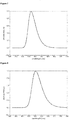
- Figure 1 depicts the emission spectrum of example 1 (10 % by weight in PMMA).
- the emission maximum ( ⁇ max ) is at 478 nm.
- the photoluminescence quantum yield (PLQY) is 91%, the full width at half maximum (FWHM) is 0.42 eV and the emission lifetime is 30 ⁇ s.
- the resulting ClE x coordinate is determined at 0.18 and the CIE y coordinate at 0.31.
- Example 2 was synthesized according to AAV4 and AAV5, wherein the synthesis AAV5 had a yield of 62%.
- Figure 2 depicts the emission spectrum of example 2 (10 % by weight in PMMA).
- the emission maximum ( ⁇ max ) is at 474 nm.
- the photoluminescence quantum yield (PLQY) is 89%, the full width at half maximum (FWHM) is 0.40 eV and the emission lifetime is 48 ⁇ s.
- the resulting CIE x coordinate is determined at 0.17 and the CIE y coordinate at 0.28.
- Example 3 was synthesized according to AAV4 and AAV5, wherein the synthesis AAV5 had a yield of 99%.
- MS HPLC-MS: Molecular Formula Retention Time m/z calculated m/z found C 64 H 40 N 6 11.35 min 892.33 892.48
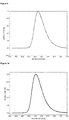
- Figure 3 depicts the emission spectrum of example 3 (10% by weight in PMMA).
- the emission maximum ( ⁇ max ) is at 474 nm.
- the photoluminescence quantum yield (PLQY) is 91%, the full width at half maximum (FWHM) is 0.41 eV and the emission lifetime is 69 ⁇ s.
- the resulting ClE x coordinate is determined at 0.16 and the CIE y coordinate at 0.25.
- Example 4 was synthesized according to AAV4 and AAV5, wherein the synthesis AAV5 had a yield of 62%.
- Figure 4 depicts the emission spectrum of example 4 (10% by weight in PMMA).
- the emission maximum is at 462 nm.
- the photoluminescence quantum yield (PLQY) is 83%, the full width at half maximum is 0.42 eV and the emission lifetime is 173 ⁇ s.
- the resulting CIE x coordinate is determined at 0.16 and the CIE y coordinate at 0.18.
- Example 5 was synthesized according to AAV4 and AAV5, wherein the synthesis AAV5 had a yield of 82%.
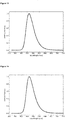
- Figure 5 depicts the emission spectrum of example 5 (10% by weight in PMMA).
- the emission maximum ( ⁇ max ) is at 476 nm.
- the photoluminescence quantum yield (PLQY) is 90%, the full width at half maximum (FWHM) is 0.39 eV and the emission lifetime is 77 ⁇ s.
- the resulting CIE x coordinate is determined at 0.17 and the CIE y coordinate at 0.29.
- Example 6 was synthesized according to AAV3 and AAV5, wherein the synthesis AAV5 had a yield of 65%.
- Figure 6 depicts the emission spectrum of example 6 (10 % by weight in PMMA).
- the emission maximum ( ⁇ max ) is at 481 nm.
- the photoluminescence quantum yield (PLQY) is 91%, the full width at half maximum (FWHM) is 0.36 eV and the emission lifetime is 17 ⁇ s.
- the resulting CIE x coordinate is determined at 0.17 and the CIE y coordinate at 0.35.
- Example 7 was synthesized according to AAV3 and AAV5, wherein the synthesis AAV5 had a yield of 30%.
- Figure 7 depicts the emission spectrum of example 7 (10 % by weight in PMMA).
- the emission maximum ( ⁇ max ) is at 468 nm.
- the photoluminescence quantum yield (PLQY) is 86%, the full width at half maximum (FWHM) is 0.38 eV and the emission lifetime is 20 ⁇ s.
- the resulting ClE x coordinate is determined at 0.15 and the CIE y coordinate at 0.21.
- Example 8 was synthesized according to AAV2 and AAV5, wherein the synthesis AAV5 had a yield of 15%.
- Figure 8 depicts the emission spectrum of example 8 (10 % by weight in PMMA).
- the emission maximum ( ⁇ max ) is at 504 nm.
- the photoluminescence quantum yield (PLQY) is 83%, the full width at half maximum (FWHM) is 0.42 eV and the emission lifetime is 12 ⁇ s.
- the resulting ClE x coordinate is determined at 0.24 and the CIE y coordinate at 0.48.
- Example 9 was synthesized according to AAV2 and AAV5, wherein the synthesis AAV5 had a yield of 17%.
- Figure 9 depicts the emission spectrum of example 9 (10 % by weight in PMMA).
- the emission maximum ( ⁇ max ) is at 521 nm.
- the photoluminescence quantum yield (PLQY) is 81%, the full width at half maximum (FWHM) is 0.39 eV and the emission lifetime is 5 ⁇ s.
- the resulting CIE x coordinate is determined at 0.32 and the CIE y coordinate at 0.57.
- Example 10 was synthesized according to AAV2 and AAV5, wherein the synthesis AAV5 had a yield of 10%.
- the emission spectrum of example 10 was recorded (10 % by weight in PMMA).
- the emission maximum ( ⁇ max ) is at 506 nm.
- the photoluminescence quantum yield (PLQY) is 78%, the full width at half maximum (FWHM) is 0.43 eV and the emission lifetime is 6 ⁇ s.
- Example 11 was synthesized according to AAV1 and AAV5, wherein the synthesis AAV5 had a yield of 32%.
- Figure 11 depicts the emission spectrum of example 11 (10% by weight in PMMA).
- the emission maximum ( ⁇ max ) is at 502 nm.
- the photoluminescence quantum yield (PLQY) is 86%, the full width at half maximum (FWHM) is 0.40 eV and the emission lifetime is 11 ⁇ s.
- the resulting CIE x coordinate is determined at 0.25 and the CIE y coordinate at 0.50.
- Example 12 was synthesized according to AAV1 and AAV5, wherein the synthesis AAV5 had a yield of 22%.
- Figure 12 depicts the emission spectrum of example 12 (10 % by weight in PMMA).
- the emission maximum ( ⁇ max ) is at 486 nm.
- the photoluminescence quantum yield (PLQY) is 81%, the full width at half maximum (FWHM) is 0.42 eV and the emission lifetime is 15 ⁇ s.
- the resulting CIE x coordinate is determined at 0.19 and the CIE y coordinate at 0.35.
- Example 13 was synthesized, similarly to AAV-1, according to the following synthesis scheme: and similar to AAV5, wherein Z5 is used as reactant in the synthesis AAV5 with a yield of 74%.
- Figure 13 depicts the emission spectrum of example 13 (10 % by weight in PMMA).
- the emission maximum ( ⁇ max ) is at 466 nm.
- the photoluminescence quantum yield (PLQY) is 71%, the full width at half maximum (FWHM) is 0.41 eV and the emission lifetime is 128 ⁇ s.
- the resulting CIE x coordinate is determined at 0.16 and the CIE y coordinate at 0.20.
- Example 14 was synthesized according to the following synthesis scheme: and similar to AAV5, wherein Z6 is used as reactant in the synthesis AAV5 with a yield of 36%.
- MS HPLC-MS: Molecular Formula Retention Time m/z calculated m/z found C 52 H 32 N 6 13.71 min 740.27 740.32
- Figure 14 depicts the emission spectrum of example 14 (10 % by weight in PMMA).
- the emission maximum ( ⁇ max ) is at 466 nm.
- the photoluminescence quantum yield (PLQY) is 71%, the full width at half maximum (FWHM) is 0.41 eV.
- the resulting CIE x coordinate is determined at 0.16 and the CIE y coordinate at 0.22.
- Example 15 was synthesized according to the following synthesis scheme wherein Z7 is used as reactant in the synthesis AAV5 with a yield of 38%: MS (HPLC-MS): Molecular Formula Retention Time m/z calculated m/z found C 60 H 48 N 6 25.92 min 852.39 852.45
- Figure 15 depicts the emission spectrum of example 15 (10 % by weight in PMMA).
- the emission maximum ( ⁇ max ) is at 481 nm.
- the photoluminescence quantum yield (PLQY) is 84%, the full width at half maximum (FWHM) is 0.38 eV and the emission lifetime is 51 ⁇ s.
- the resulting CIE x coordinate is determined at 0.17 and the CIE y coordinate at 0.34.
- Example 16 was synthesized according to the following synthesis scheme wherein Z8 is used as reactant in the synthesis AAV5 with a yield of 21%: MS (HPLC-MS): Molecular Formula Retention Time m/z calculated m/z found C 67 H 41 N 9 26.91 min 972.10 971.35
- Figure 16 depicts the emission spectrum of example 16 (10 % by weight in PMMA).
- the emission maximum ( ⁇ max ) is at 461 nm.
- the photoluminescence quantum yield (PLQY) is 52%, the full width at half maximum (FWHM) is 0.38 eV and the emission lifetime is 59 ⁇ s.
- the resulting CIE x coordinate is determined at 0.16 and the CIE y coordinate at 0.17.
- Example 17 was synthesized according the following synthesis scheme: and similar to AAV5, wherein the Z9 was used as reactant and AAV5 had a yield of 25% yield.
- MS HPLC-MS: Molecular Formula Retention Time m/z calculated m/z found C 52 H 32 N 6 12.05 min 740.27 740.46
- Figure 17 depicts the emission spectrum of example 17 (10 % by weight in PMMA).
- the emission maximum ( ⁇ max ) is at 468 nm.
- the photoluminescence quantum yield (PLQY) is 67%, the full width at half maximum (FWHM) is 0.40 eV and the emission lifetime is 79 ⁇ s.
- the resulting CIE x coordinate is determined at 0.16 and the CIE y coordinate at 0.22.
- Example 18 was synthesized according to AAV3 and AAV5, wherein the synthesis AAV5 had a yield of 33% yield.
- Figure 18 depicts the emission spectrum of example 18 (10 % by weight in PMMA).
- the emission maximum ( ⁇ max ) is at 481 nm.
- the photoluminescence quantum yield (PLQY) is 83%, the full width at half maximum (FWHM) is 0.38 eV and the emission lifetime is 5 ⁇ s.
- the resulting CIE x coordinate is determined at 0.17 and the CIE y coordinate at 0.32.
- Example 1 was tested in an OLED-device D1 with the following layer structure: Layer Thickness 8 100 nm Al 7 2 nm Liq 6 30 nm NBPhen 5 50 nm 1 (20%):mCBP(80%) 4 10 nm 9-[3,5-bis(2-dibenzofuranyl)phenyl]-9H-carbazol 3 10 nm TCTA 2 100 nm NPB 1 130 nm ITO Substrate Glass
- an external quantum efficiency (EQE) at 1000 cd/m 2 of 14.8 ⁇ 0.1 % and a LT80-value at 500 cd/m 2 of 342 h from accelerated lifetime measurements were determined.
- the emission maximum is at 481 nm
- ClE x is 0.16
- CIEy is 0.31 at 6 V.
- Example 3 was tested in an OLED-device D2 with the following layer structure: Layer Thickness 8 100 nm Al 7 2 nm Liq 6 30 nm NBPhen 5 50 nm 3 (20%):mCBP(80%) 4 10 nm mCBP 3 10 nm TCTA 2 100 nm NPB 1 130 nm ITO Substrate Glass
- Example 7 was tested in an OLED-device D3 with the following layer structure: Layer Thickness 9 100 nm Al 8 2 nm Liq 7 20 nm NBPhen 6 30 nm 7 (15%):mCBP(85%) 5 10 nm mCBP 4 10 nm TCTA 3 40 nm NPB 2 5 nm HAT-CN 1 50 nm ITO Substrate Glass
Landscapes
- Chemical & Material Sciences (AREA)
- Organic Chemistry (AREA)
- Engineering & Computer Science (AREA)
- Materials Engineering (AREA)
- Physics & Mathematics (AREA)
- Spectroscopy & Molecular Physics (AREA)
- Optics & Photonics (AREA)
- Electroluminescent Light Sources (AREA)
- Photovoltaic Devices (AREA)
- Nitrogen Condensed Heterocyclic Rings (AREA)
- Plural Heterocyclic Compounds (AREA)
- Light Receiving Elements (AREA)
- Heterocyclic Carbon Compounds Containing A Hetero Ring Having Oxygen Or Sulfur (AREA)
Claims (15)
- Molécule organique, comprenant- un premier fragment chimique comprenant ou constitué d'une structure de formule I,
 - deux deuxièmes fragments chimiques, chacun indépendamment l'un de l'autre comprenant une structure de formule II,
T étant choisi dans le groupe constitué par RA et R1 ;
V étant choisi dans le groupe constitué par RA et R1 ;
W étant le site de liaison d'une simple liaison liant le premier fragment chimique à l'un des deux deuxièmes fragments chimiques ou étant choisi dans le groupe constitué par RA et R2 ;
X étant le site de liaison d'une simple liaison liant le premier fragment chimique à l'un des deux deuxièmes fragments chimiques ou étant R2 ;
Y étant le site de liaison d'une simple liaison liant le premier fragment chimique à l'un des deux deuxièmes fragments chimiques ou étant R2 ;
RA étant 135-triazinle substitué par deux substituants RTz:
RT étant choisi dans le groupe constitué par CN et RI ;
RV étant choisi dans le groupe constitué par CN et RI;
RW étant le site de liaison d'une simple liaison liant le premier fragment chimique à l'un des deux deuxièmes fragments chimiques ou étant choisi dans le groupe constitué par CN et RI ;
RX étant le site de liaison d'une simple liaison liant le premier fragment chimique à l'un des deux deuxièmes fragments chimiques ou étant RI;
RY étant le site de liaison d'une simple liaison liant le premier fragment chimique à l'un des deux deuxièmes fragments chimiques ou étant RI ;
# représentant le site de liaison d'une simple liaison liant les deuxièmes fragments chimiques au premier fragment chimique ;
Z étant en chaque occurrence indépendamment l'un de l'autre choisi dans le groupe constitué par une liaison directe, CR3R4, C=CR3R4, C=O, C=NR3, NR3, O, SiR3R4, S, S(O) et S(O)2 ;
R1 étant en chaque occurrence indépendamment l'un de l'autre choisi dans le groupe constitué par :hydrogène, deutérium,C1-5-alkyle,
un ou plusieurs atomes d'hydrogène étant éventuellement substitués par deutérium ;C2-8-alcényle,
un ou plusieurs atomes d'hydrogène étant éventuellement substitués par deutérium ;C2-8-alcynyle,
un ou plusieurs atomes d'hydrogène étant éventuellement substitués par deutérium ; etC6-18-aryle,R2 étant en chaque occurrence indépendamment l'un de l'autre choisi dans le groupe constitué par :
qui est éventuellement substitué par un ou plusieurs substituants R6 ;hydrogène, deutérium,C1-5-alkyle,
un ou plusieurs atomes d'hydrogène étant éventuellement substitués par deutérium ;C2-8-alcényle,
un ou plusieurs atomes d'hydrogène étant éventuellement substitués par deutérium ;C2-8-alcynyle,
un ou plusieurs atomes d'hydrogène étant éventuellement substitués par deutérium ; etC6-18-aryle,RI étant en chaque occurrence indépendamment l'un de l'autre choisi dans le groupe constitué par :
qui est éventuellement substitué par un ou plusieurs substituants R6 ;hydrogène, deutérium,C1-5-alkyle,
un ou plusieurs atomes d'hydrogène étant éventuellement substitués par deutérium ;C2-8-alcényle,
un ou plusieurs atomes d'hydrogène étant éventuellement substitués par deutérium ;C2-8-alcynyle,
un ou plusieurs atomes d'hydrogène étant éventuellement substitués par deutérium ; etC6-18-aryle,RTz étant en chaque occurrence indépendamment l'un de l'autre choisi dans le groupe constitué par :
qui est éventuellement substitué par un ou plusieurs substituants R6;hydrogène,deutérium,C1-5-alkyle,
un ou plusieurs atomes d'hydrogène étant éventuellement substitués par deutérium ;C6-18-aryle,
qui est éventuellement substitué par un ou plusieurs substituants R6 ; etC3-17-hétéroaryle,Ra, R3 et R4 étant, en chaque occurrence indépendamment les uns des autres, choisis dans le groupe constitué par: hydrogène, deutérium, N(R5)2, OR5, Si(R5)3, B(OR5)2, OSO2R5, CF3, CN, F, Br, I,
qui est éventuellement substitué par un ou plusieurs substituants R6 ;
C1-40-alkyle,qui est éventuellement substitué par un ou plusieurs substituants R5 etun ou plusieurs groupes CH2 non adjacents étant éventuellement substitués par R5C=CR5, C=C, Si(R5)2, Ge(R5)2, Sn(R5)2, C=O, C=S, C=Se, C=NR5, P(=O)(R5), SO, SO2, NR5, O, S, ou CONR5;C1-40-alcoxy,qui est éventuellement substitué par un ou plusieurs substituants R5 etun ou plusieurs groupes CH2 non adjacents étant éventuellement substitués par R5C=CR5, C=C, Si(R5)2, Ge(R5)2, Sn(R5)2, C=O, C=S, C=Se, C=NR5, P(=O)(R5), SO, SO2, NR5, O, S, ou CONR5;C1-40-thioalcoxy,qui est éventuellement substitué par un ou plusieurs substituants R5 etun ou plusieurs groupes CH2 non adjacents étant éventuellement substitués par R5C=CR5, C=C, Si(R5)2, Ge(R5)2, Sn(R5)2, C=O, C=S, C=Se, C=NR5,P(=O)(R5), SO, SO2, NR5, O, S, ou CONR5C2-40-alcényle,qui est éventuellement substitué par un ou plusieurs substituants R5 etun ou plusieurs groupes CH2 non adjacents étant éventuellement substitués par R5C=CR5, C=C, Si(R5)2, Ge(R5)2, Sn(R5)2, C=O, C=S, C=Se, C=NR5, P(=O)(R5), SO, SO2, NR5, O, S, ou CONR5;C2-40-alcynyle,qui est éventuellement substitué par un ou plusieurs substituants R5 etun ou plusieurs groupes CH2 non adjacents étant éventuellement substitués par R5C=CR5, C=C, Si(R5)2, Ge(R5)2, Sn(R5)2, C=O, C=S, C=Se, C=NR 5, P(=O)(R5), SO, SO2, NR5, O, S, ou CONR5;C6-60-aryle,
qui est éventuellement substitué par un ou plusieurs substituants R5 ; et
C3-57-hétéroaryle,
qui est éventuellement substitué par un ou plusieurs substituants R5 ;
R5 étant en chaque occurrence indépendamment l'un de l'autre choisi dans le groupe constitué par hydrogène, deutérium, N(R6)2, OR6, Si(R6)3, B(OR6)2, OSO2R6, CF3, CN, F, Br, I, C1-40-alkyle,qui est éventuellement substitué par un ou plusieurs substituants R6 etun ou plusieurs groupes CH2 non adjacents étant éventuellement substitués par R6C=CR6, C=C, Si(R6)2, Ge(R6)2, Sn(R6)2, C=O, C=S, C=Se, C=NR6, P(=O)(R6), SO, SO2, NR6, O, S, ou CONR6;C1-40-alcoxy,qui est éventuellement substitué par un ou plusieurs substituants R6 etun ou plusieurs groupes CH2 non adjacents étant éventuellement substitués par R6C=CR6, C=C, Si(R6)2, Ge(R6)2, Sn(R6)2, C=O, C=S, C=Se, C=NR6, P(=O)(R6), SO, SO2, NR6, O, S, ou CONR6;C1-40-thioalcoxy,qui est éventuellement substitué par un ou plusieurs substituants R6 etun ou plusieurs groupes CH2 non adjacents étant éventuellement substitués par R6C=CR6, C=C, Si(R6)2, Ge(R6)2, Sn(R6)2, C=O, C=S, C=Se, C=NR6, P(=O)(R6), SO, SO2, NR6, O, S, ou CONR6;C2-40-alcényle,qui est éventuellement substitué par un ou plusieurs substituants R6 etun ou plusieurs groupes CH2 non adjacents étant éventuellement substitués par R6C=CR6, C=C, Si(R6)2, Ge(R6)2, Sn(R6)2, C=O, C=S, C=Se, C=NR6, P(=O)(R6), SO, SO2, NR6, O, S, ou CONR6;C2-40-alcynyle,qui est éventuellement substitué par un ou plusieurs substituants R6 etun ou plusieurs groupes CH2 non adjacents étant éventuellement substitués par R6C=CR6, C=C, Si(R6)2, Ge(R6)2, Sn(R6)2, C=O, C=S, C=Se, C=NR6, P(=O)(R6), SO, SO2, NR6, O, S, ou CONR6;C6-60-aryle,
qui est éventuellement substitué par un ou plusieurs substituants R6 ; et
C3-57-hétéroaryle,
qui est éventuellement substitué par un ou plusieurs substituants R6 ;
R6 étant en chaque occurrence indépendamment l'un de l'autre choisi dans le groupe constitué par hydrogène, deutérium, OPh, CF3, CN, F,
C1-5-alkyle,
un ou plusieurs atomes d'hydrogène étant éventuellement, indépendamment les uns des autres, substitués par deutérium, CN, CF3, ou F ;
C1-5-alcoxy,
un ou plusieurs atomes d'hydrogène étant éventuellement, indépendamment les uns des autres, substitués par deutérium, CN, CF3, ou F ;
C1-5-thioalcoxy,
un ou plusieurs atomes d'hydrogène étant éventuellement, indépendamment les uns des autres, substitués par deutérium, CN, CF3, ou F ;
C2-5-alcényle,
un ou plusieurs atomes d'hydrogène étant éventuellement, indépendamment les uns des autres, substitués par deutérium, CN, CF3, ou F ;
C2-5-alcynyle,
un ou plusieurs atomes d'hydrogène étant éventuellement, indépendamment les uns des autres, substitués par deutérium, CN, CF3, ou F ;
C6-18-aryle,
qui est éventuellement substitué par un ou plusieurs substituants C1-5-alkyle ;
C3-17-hétéroaryle,
qui est éventuellement substitué par un ou plusieurs substituants C1-5-alkyle ;
N(C6-18-aryle)2 ;
N(C3-17-hétéroaryle)2,
et N(C3-17-hétéroaryl)(C6-18-aryle) ;
les substituants Ra, R3, R4 ou R5 formant éventuellement indépendamment les uns des autres un système cyclique monocyclique ou polycyclique, aliphatique, aromatique et/ou benzo-condensé avec un ou plusieurs substituants Ra, R3, R4 ou R5 ; exactement un substituant choisi dans le groupe constitué par T, V et W étant RA,
exactement un substituant choisi dans le groupe constitué par RT, RV et RW étant CN,
exactement un substituant choisi dans le groupe constitué par W, Y et X représentant le site de liaison d'une simple liaison liant le premier fragment chimique et l'un des deux deuxièmes fragments chimiques et
exactement un substituant choisi dans le groupe constitué par RW, RY et RX représentant le site de liaison d'une simple liaison liant le premier fragment chimique et l'un des deux deuxièmes fragments chimiques. - Molécule organique selon la revendication 1, le premier fragment chimique comprenant une structure de Formule la :

RD étant le site de liaison d'une simple liaison liant le premier fragment chimique à l'un des deux deuxièmes fragments chimiques ; YD étant le site de liaison d'une simple liaison liant le premier fragment chimique à l'un des deux deuxièmes fragments chimiques ; et exactement un substituant choisi dans le groupe constitué par RV, RT et RZ étant CN ;
et mis à part cela, les définitions dans la revendication 1 s'appliquant. - Molécule organique selon la revendication 1 ou 2, en chaque occurrence R1, R2 et RI étant indépendamment les uns des autres choisis dans le groupe constitué par H, méthyle, mésityle, tolyle, et phényle.
- Molécule organique selon l'une ou plusieurs des revendications 1 à 3, RTz étant indépendamment l'un de l'autre choisi dans le groupe de H, méthyle et phényle.
- Molécule organique selon l'une ou plusieurs des revendications 1 à 4, les deux deuxièmes fragments chimiques chacun en chaque occurrence, indépendamment l'un de l'autre, comprenant une structure de Formule IIa :

- Molécule organique selon l'une ou plusieurs des revendications 1 à 5, les deux deuxièmes fragments chimiques chacun en chaque occurrence, indépendamment l'un de l'autre, comprenant une structure de Formule IIb :

C1-40-alkyle,
qui est éventuellement substitué par un ou plusieurs substituants R5 et
un ou plusieurs groupes CH2 non adjacents étant éventuellement substitués par R5C=CR5, C=C, Si(R5)2, Ge(R5)2, Sn(R5)2, C=O, C=S, C=Se, C=NR5, P(=O)(R5), SO, SO2, NR5, O, S, ou CONR5; C1-40-alcoxy,
qui est éventuellement substitué par un ou plusieurs substituants R5 et
un ou plusieurs groupes CH2 non adjacents étant éventuellement substitués par R5C=CR5, C=C, Si(R5)2, Ge(R5)2, Sn(R5)2, C=O, C=S, C=Se, C=NR5, P(=O)(R5), SO, SO2, NR5, O, S, ou CONR5 C1-40-thioalcoxy,
qui est éventuellement substitué par un ou plusieurs substituants R5 et
un ou plusieurs groupes CH2 non adjacents étant éventuellement substitués par R5C=CR5, C=C, Si(R5)2, Ge(R5)2, Sn(R5)2, C=O, C=S, C=Se, C=NR5, P(=O)(R5), SO, SO2, NR5, O, S, ou CONR5; C2-40-alcényle,
qui est éventuellement substitué par un ou plusieurs substituants R5 et
un ou plusieurs groupes CH2 non adjacents étant éventuellement substitués par R5C=CR5, C=C, Si(R5)2, Ge(R5)2, Sn(R5)2, C=O, C=S, C=Se, C=NR5, P(=O)(R5), SO, SO2, NR5, O, S, ou CONR5;
C2-40-alcynyle,
qui est éventuellement substitué par un ou plusieurs substituants R5 et
un ou plusieurs groupes CH2 non adjacents étant éventuellement substitués par R5C =CR5, C=C, Si(R5)2, Ge(R5)2, Sn(R5)2, C=O, C=S, C=Se, C=NR5, P(=O)(R5), SO, SO2, NR5, O, S, ou CONR5;
C6-60-aryle,
qui est éventuellement substitué par un ou plusieurs substituants R5; et
C3-57-hétéroaryle,
qui est éventuellement substitué par un ou plusieurs substituants R5;
et mis à part cela, les définitions dans la revendication 1 s'appliquant. - Molécule organique selon l'une ou plusieurs des revendications 1 à 5, les deux deuxièmes fragments chimiques chacun en chaque occurrence, indépendamment l'un de l'autre, comprenant une structure de Formule IIc :

C1-40-alkyle,
qui est éventuellement substitué par un ou plusieurs substituants R5 et
un ou plusieurs groupes CH2 non adjacents étant éventuellement substitués par R5C=CR5, C=C, Si(R5)2, Ge(R5)2, Sn(R5)2, C=O, C=S, C=Se, C=NR5, P(=O)(R5), SO, SO2, NR5, O, S, ou CONR5 ;
C1-40-alcoxy,
qui est éventuellement substitué par un ou plusieurs substituants R5 et
un ou plusieurs groupes CH2 non adjacents étant éventuellement substitués par R5C=CR5, C=C, Si(R5)2, Ge(R5)2, Sn(R5)2, C=O, C=S, C=Se, C=NR5, P(=O)(R5), SO, SO2, NR5, O, S, ou CONR5;
C1-40-thioalcoxy,
qui est éventuellement substitué par un ou plusieurs substituants R5 et
un ou plusieurs groupes CH2 non adjacents étant éventuellement substitués par R5C=CR5, C=C, Si(R5)2, Ge(R5)2, Sn(R5)2, C=O, C=S, C=Se, C=NR5, P(=O)(R5), SO, SO2, NR5, O, S, ou CONR5;
C2-40-alcényle,
qui est éventuellement substitué par un ou plusieurs substituants R5 et
un ou plusieurs groupes CH2 non adjacents étant éventuellement substitués par R5C=CR5, C=C, Si(R5)2, Ge(R5)2, Sn(R5)2, C=O, C=S, C=Se, C=NR5, P(=O)(R5), SO, SO2, NR5, O, S, ou CONR5;
C2-40-alcynyle,
qui est éventuellement substitué par un ou plusieurs substituants R5 et
un ou plusieurs groupes CH2 non adjacents étant éventuellement substitués par R5C=CR5, C=C, Si(R5)2, Ge(R5)2, Sn(R5)2, C=O, C=S, C=Se, C=NR5, P(=O)(R5), SO, SO2, NR5, O, S, ou CONR5;
C6-60-aryle,
qui est éventuellement substitué par un ou plusieurs substituants R5; et
C3-57-hétéroaryle,
qui est éventuellement substitué par un ou plusieurs substituants R5;
et mis à part cela, les définitions dans la revendication 1 s'appliquant. - Molécule organique selon la revendication 6 ou 7, Rb étant chaque occurrence indépendamment l'un de l'autre choisi le groupe constitué par- Me, iPr, tBu, CN, CF3,- Ph, qui est éventuellement substitué par un ou plusieurs substituants choisis indépendamment les uns des autres dans le groupe constitué par Me, iPr, tBu, CN, CF3 et Ph ;- pyridinyle, qui est éventuellement substitué par un ou plusieurs substituants choisis indépendamment les uns des autres dans le groupe constitué par Me, iPr, tBu, CN, CF3 et Ph ;- pyrimidinyle, qui est éventuellement substitué par un ou plusieurs substituants choisis indépendamment les uns des autres dans le groupe constitué par Me, iPr, tBu, CN, CF3 et Ph ;- carbazolyle, qui est éventuellement substitué par un ou plusieurs substituants choisis indépendamment les uns des autres dans le groupe constitué par Me, iPr, tBu, CN, CF3 et Ph ;- triazinyle, qui est éventuellement substitué par un ou plusieurs substituants choisis indépendamment les uns des autres dans le groupe constitué par Me, iPr, tBu, CN, CF3 et Ph ;
et- N(Ph)2. - Procédé pour la préparation d'une molécule organique selon les revendications 1 à 8, comprenant la mise à disposition d'un bromo-fluorobenzonitrile qui est substitué soit par un R1 et deux R2, soit par deux R1 et un R2, en tant que réactif.
- Utilisation d'une molécule organique selon l'une ou plusieurs des revendications 1 à 8 en tant qu'émetteur luminescent et/ou en tant que matériau hôte et/ou en tant que matériau de transport d'électrons et/ou en tant que matériau d'injection de trous et/ou en tant que matériau de blocage de trous dans un dispositif optoélectronique.
- Utilisation selon la revendication 10, le dispositif optoélectronique étant choisi dans le groupe constitué par :• des diodes luminescentes organiques (OLED),• des cellules électrochimiques luminescentes,• des capteurs OLED,• des diodes organiques,• des cellules solaires organiques,• des transistors organiques,• des transistors organiques à effet de champ,• des lasers organiques et• des éléments de conversion par abaissement.
- Composition, comprenant :(a) au moins une molécule organique selon l'une ou plusieurs des revendications 1 à 8, en particulier sous la forme d'un émetteur et/ou d'un hôte, et(b) un ou plusieurs matériaux émetteurs et/ou hôtes, qui diffèrent de la molécule organique selon l'une ou plusieurs des revendications 1 à 8, et(c) éventuellement, un ou plusieurs colorants et/ou un ou plusieurs solvants.
- Dispositif optoélectronique, comprenant une molécule organique selon l'une ou plusieurs des revendications 1 à 8 ou une composition selon la revendication 12, en particulier sous forme d'un dispositif choisi dans le groupe constitué par une diode luminescente organique (OLED), une cellule électrochimique luminescente, un capteur OLED, une diode organique, une cellule solaire organique, un transistor organique, un transistor organique à effet de champ, un laser organique, et un élément de conversion par abaissement.
- Dispositif optoélectronique selon la revendication 13, comprenant- un substrat,- une anode, et- une cathode, l'anode ou la cathode étant disposée sur le substrat et- au moins une couche luminescente, qui est agencée entre l'anode et la cathode et qui comprend une molécule organique selon les revendications 1 à 8 ou une composition selon la revendication 12.
- Procédé pour la production d'un dispositif optoélectronique, une molécule organique selon l'une des revendications 1 à 8 ou une composition selon la revendication 12 étant utilisée, en particulier comprenant le traitement du composé organique par un procédé d'évaporation sous vide ou à partir d'une solution.
Applications Claiming Priority (3)
| Application Number | Priority Date | Filing Date | Title |
|---|---|---|---|
| EP17187991 | 2017-08-25 | ||
| EP17193018 | 2017-09-25 | ||
| PCT/EP2018/072985 WO2019038448A1 (fr) | 2017-08-25 | 2018-08-27 | Molécules organiques contenant de la triazine destinées en particulier à être utilisées dans des dispositifs optoélectroniques |
Publications (2)
| Publication Number | Publication Date |
|---|---|
| EP3672956A1 EP3672956A1 (fr) | 2020-07-01 |
| EP3672956B1 true EP3672956B1 (fr) | 2021-06-02 |
Family
ID=63642934
Family Applications (1)
| Application Number | Title | Priority Date | Filing Date |
|---|---|---|---|
| EP18773077.5A Active EP3672956B1 (fr) | 2017-08-25 | 2018-08-27 | Molécules organiques contenant des triazines, en particulier destinées à être utilisées dans des dispositifs optoélectroniques |
Country Status (7)
| Country | Link |
|---|---|
| US (1) | US11600783B2 (fr) |
| EP (1) | EP3672956B1 (fr) |
| JP (1) | JP7077398B2 (fr) |
| KR (1) | KR102423189B1 (fr) |
| CN (1) | CN111032648B (fr) |
| TW (1) | TWI781218B (fr) |
| WO (1) | WO2019038448A1 (fr) |
Families Citing this family (5)
| Publication number | Priority date | Publication date | Assignee | Title |
|---|---|---|---|---|
| WO2019175160A1 (fr) * | 2018-03-13 | 2019-09-19 | Cynora Gmbh | Molécules organiques pour dispositifs optoélectroniques |
| KR20200023984A (ko) * | 2018-08-27 | 2020-03-06 | 삼성전자주식회사 | 헤테로고리 화합물 및 이를 포함한 유기 발광 소자 |
| KR20200138532A (ko) * | 2019-05-30 | 2020-12-10 | 삼성전자주식회사 | 축합환 화합물, 이를 포함한 유기 발광 소자, 및 이를 포함한 전자 장치 |
| EP4185581A1 (fr) * | 2020-07-24 | 2023-05-31 | Samsung Display Co., Ltd. | Molécules organiques contenant de la triazine organique destinées à être utilisées dans des dispositifs optoélectroniques |
| KR20250095040A (ko) * | 2023-12-19 | 2025-06-26 | 솔루스첨단소재 주식회사 | 유기 발광 화합물 및 이를 포함하는 유기 전계 발광 소자 |
Family Cites Families (8)
| Publication number | Priority date | Publication date | Assignee | Title |
|---|---|---|---|---|
| JP4380277B2 (ja) | 2003-09-16 | 2009-12-09 | 東洋インキ製造株式会社 | 有機エレクトロルミネッセンス素子用材料およびそれを用いた有機エレクトロルミネッセンス素子 |
| JP4590020B1 (ja) | 2009-07-31 | 2010-12-01 | 富士フイルム株式会社 | 電荷輸送材料及び有機電界発光素子 |
| JP5993934B2 (ja) * | 2012-02-29 | 2016-09-14 | 出光興産株式会社 | 有機エレクトロルミネッセンス素子用材料及び有機エレクトロルミネッセンス素子 |
| WO2016181846A1 (fr) * | 2015-05-08 | 2016-11-17 | コニカミノルタ株式会社 | Composé pi-conjugué, matériau électroluminescent organique, matériau électroluminescent, film mince électroluminescent, élément électroluminescent organique, dispositif d'affichage et dispositif d'éclairage |
| TWI713625B (zh) | 2015-11-06 | 2020-12-21 | Lt素材股份有限公司 | 雜環化合物及使用其之有機發光裝置 |
| CN108368088A (zh) | 2015-12-08 | 2018-08-03 | 喜星素材株式会社 | 杂环化合物和使用其的有机发光器件 |
| JP6657895B2 (ja) | 2015-12-10 | 2020-03-04 | コニカミノルタ株式会社 | 有機エレクトロルミネッセンス素子、表示装置及び照明装置 |
| KR102601600B1 (ko) | 2015-12-24 | 2023-11-14 | 삼성전자주식회사 | 축합환 화합물 및 이를 포함한 유기 발광 소자 |
-
2018
- 2018-08-27 KR KR1020207006606A patent/KR102423189B1/ko active Active
- 2018-08-27 TW TW107129742A patent/TWI781218B/zh active
- 2018-08-27 WO PCT/EP2018/072985 patent/WO2019038448A1/fr not_active Ceased
- 2018-08-27 EP EP18773077.5A patent/EP3672956B1/fr active Active
- 2018-08-27 CN CN201880055322.2A patent/CN111032648B/zh active Active
- 2018-08-27 JP JP2020510527A patent/JP7077398B2/ja active Active
- 2018-08-27 US US16/638,292 patent/US11600783B2/en active Active
Non-Patent Citations (1)
| Title |
|---|
| None * |
Also Published As
| Publication number | Publication date |
|---|---|
| KR20200037361A (ko) | 2020-04-08 |
| CN111032648B (zh) | 2023-06-27 |
| JP7077398B2 (ja) | 2022-05-30 |
| TWI781218B (zh) | 2022-10-21 |
| US11600783B2 (en) | 2023-03-07 |
| US20200235308A1 (en) | 2020-07-23 |
| TW201920147A (zh) | 2019-06-01 |
| EP3672956A1 (fr) | 2020-07-01 |
| CN111032648A (zh) | 2020-04-17 |
| JP2020531491A (ja) | 2020-11-05 |
| KR102423189B1 (ko) | 2022-07-22 |
| WO2019038448A1 (fr) | 2019-02-28 |
Similar Documents
| Publication | Publication Date | Title |
|---|---|---|
| EP3540808B1 (fr) | Molécules organiques, en particulier destinées à être utilisées dans des dispositifs optoélectroniques | |
| EP3697865B1 (fr) | Molécules organiques, destinées en particulier à être utilisées dans des dispositifs optoélectroniques | |
| EP3470411B1 (fr) | Molécules organiques, en particulier destinées à être utilisées dans des dispositifs optoélectroniques | |
| EP3636641B1 (fr) | Molécules organiques destinées à être utilisées dans des dispositifs optoélectroniques | |
| WO2019101594A1 (fr) | Molécules organiques, destinées en particulier à être utilisées dans des dispositifs optoélectroniques | |
| EP3670508B1 (fr) | Molécules organiques destinées à être utilisées dans des dispositifs optoélectroniques | |
| EP3765455B1 (fr) | Molécules organiques pour dispositifs optoélectroniques | |
| EP3759193B1 (fr) | Molécules organiques pour dispositifs optoélectroniques | |
| WO2019038448A1 (fr) | Molécules organiques contenant de la triazine destinées en particulier à être utilisées dans des dispositifs optoélectroniques | |
| EP3688116B1 (fr) | Molécules organiques, en particulier destinées à être utilisées dans des dispositifs optoélectroniques | |
| EP3645524B1 (fr) | Molécules organiques destinées en particulier à être utilisées dans des dispositifs optoélectroniques | |
| EP3617201B1 (fr) | Molécules organiques pour dispositifs optoélectroniques | |
| EP3421461A1 (fr) | Dérivés du triazine, en particulier pour l'utilisation dans les dispositifs optoélectroniques | |
| EP3694847B1 (fr) | Molécules organiques, destinées en particulier à être utilisées dans des dispositifs optoélectroniques | |
| EP3638749B1 (fr) | Molécule organique, en particulier destinée à être utilisée dans des dispositifs optoélectroniques | |
| EP3418278B1 (fr) | Molécules organiques, en particulier destinées à être utilisées dans des dispositifs optoélectroniques | |
| EP3392247B1 (fr) | Molécules organiques, en particulier destinées à être utilisées dans des dispositifs optoélectroniques | |
| EP3609978B1 (fr) | Molécules organiques destinées en particulier à l'utilisation dans des dispositifs optoélectroniques | |
| EP3724181B1 (fr) | Molécules organiques présentant un noyau trifluorométhyl-biphényle destinées à être utilisées dans des dispositifs optoélectroniques | |
| EP3459943B1 (fr) | Molecules organiques a base de pyrimidine, notamment pour utilisation dans les dispositifs optoelectroniques | |
| EP3581570B1 (fr) | Dérivés carbazole-pyridine-trifluorométhylphényl et composés similaires à être utilisés comme émetteurs luminescents tadf dans d'oleds | |
| EP3847167B1 (fr) | Molecules organiques pour dispositifs optoelectroniques | |
| EP3837254B1 (fr) | Molécules organiques pour dispositifs optoélectroniques | |
| EP3700997B1 (fr) | Molécules organiques, en particulier destinées à être utilisées dans des dispositifs optoélectroniques | |
| EP3724179B1 (fr) | Molécules organiques destinées à être utilisées dans des dispositifs optoélectroniques |
Legal Events
| Date | Code | Title | Description |
|---|---|---|---|
| STAA | Information on the status of an ep patent application or granted ep patent |
Free format text: STATUS: UNKNOWN |
|
| STAA | Information on the status of an ep patent application or granted ep patent |
Free format text: STATUS: THE INTERNATIONAL PUBLICATION HAS BEEN MADE |
|
| PUAI | Public reference made under article 153(3) epc to a published international application that has entered the european phase |
Free format text: ORIGINAL CODE: 0009012 |
|
| STAA | Information on the status of an ep patent application or granted ep patent |
Free format text: STATUS: REQUEST FOR EXAMINATION WAS MADE |
|
| 17P | Request for examination filed |
Effective date: 20200324 |
|
| AK | Designated contracting states |
Kind code of ref document: A1 Designated state(s): AL AT BE BG CH CY CZ DE DK EE ES FI FR GB GR HR HU IE IS IT LI LT LU LV MC MK MT NL NO PL PT RO RS SE SI SK SM TR |
|
| AX | Request for extension of the european patent |
Extension state: BA ME |
|
| DAV | Request for validation of the european patent (deleted) | ||
| DAX | Request for extension of the european patent (deleted) | ||
| GRAP | Despatch of communication of intention to grant a patent |
Free format text: ORIGINAL CODE: EPIDOSNIGR1 |
|
| STAA | Information on the status of an ep patent application or granted ep patent |
Free format text: STATUS: GRANT OF PATENT IS INTENDED |
|
| INTG | Intention to grant announced |
Effective date: 20201217 |
|
| GRAS | Grant fee paid |
Free format text: ORIGINAL CODE: EPIDOSNIGR3 |
|
| GRAA | (expected) grant |
Free format text: ORIGINAL CODE: 0009210 |
|
| STAA | Information on the status of an ep patent application or granted ep patent |
Free format text: STATUS: THE PATENT HAS BEEN GRANTED |
|
| REG | Reference to a national code |
Ref country code: CH Ref legal event code: EP |
|
| AK | Designated contracting states |
Kind code of ref document: B1 Designated state(s): AL AT BE BG CH CY CZ DE DK EE ES FI FR GB GR HR HU IE IS IT LI LT LU LV MC MK MT NL NO PL PT RO RS SE SI SK SM TR |
|
| REG | Reference to a national code |
Ref country code: GB Ref legal event code: FG4D |
|
| REG | Reference to a national code |
Ref country code: AT Ref legal event code: REF Ref document number: 1398345 Country of ref document: AT Kind code of ref document: T Effective date: 20210615 |
|
| REG | Reference to a national code |
Ref country code: IE Ref legal event code: FG4D |
|
| REG | Reference to a national code |
Ref country code: DE Ref legal event code: R096 Ref document number: 602018018145 Country of ref document: DE |
|
| REG | Reference to a national code |
Ref country code: LT Ref legal event code: MG9D |
|
| PG25 | Lapsed in a contracting state [announced via postgrant information from national office to epo] |
Ref country code: FI Free format text: LAPSE BECAUSE OF FAILURE TO SUBMIT A TRANSLATION OF THE DESCRIPTION OR TO PAY THE FEE WITHIN THE PRESCRIBED TIME-LIMIT Effective date: 20210602 Ref country code: LT Free format text: LAPSE BECAUSE OF FAILURE TO SUBMIT A TRANSLATION OF THE DESCRIPTION OR TO PAY THE FEE WITHIN THE PRESCRIBED TIME-LIMIT Effective date: 20210602 Ref country code: HR Free format text: LAPSE BECAUSE OF FAILURE TO SUBMIT A TRANSLATION OF THE DESCRIPTION OR TO PAY THE FEE WITHIN THE PRESCRIBED TIME-LIMIT Effective date: 20210602 Ref country code: BG Free format text: LAPSE BECAUSE OF FAILURE TO SUBMIT A TRANSLATION OF THE DESCRIPTION OR TO PAY THE FEE WITHIN THE PRESCRIBED TIME-LIMIT Effective date: 20210902 |
|
| REG | Reference to a national code |
Ref country code: NL Ref legal event code: MP Effective date: 20210602 |
|
| REG | Reference to a national code |
Ref country code: AT Ref legal event code: MK05 Ref document number: 1398345 Country of ref document: AT Kind code of ref document: T Effective date: 20210602 |
|
| PG25 | Lapsed in a contracting state [announced via postgrant information from national office to epo] |
Ref country code: GR Free format text: LAPSE BECAUSE OF FAILURE TO SUBMIT A TRANSLATION OF THE DESCRIPTION OR TO PAY THE FEE WITHIN THE PRESCRIBED TIME-LIMIT Effective date: 20210903 Ref country code: NO Free format text: LAPSE BECAUSE OF FAILURE TO SUBMIT A TRANSLATION OF THE DESCRIPTION OR TO PAY THE FEE WITHIN THE PRESCRIBED TIME-LIMIT Effective date: 20210902 Ref country code: PL Free format text: LAPSE BECAUSE OF FAILURE TO SUBMIT A TRANSLATION OF THE DESCRIPTION OR TO PAY THE FEE WITHIN THE PRESCRIBED TIME-LIMIT Effective date: 20210602 Ref country code: LV Free format text: LAPSE BECAUSE OF FAILURE TO SUBMIT A TRANSLATION OF THE DESCRIPTION OR TO PAY THE FEE WITHIN THE PRESCRIBED TIME-LIMIT Effective date: 20210602 Ref country code: SE Free format text: LAPSE BECAUSE OF FAILURE TO SUBMIT A TRANSLATION OF THE DESCRIPTION OR TO PAY THE FEE WITHIN THE PRESCRIBED TIME-LIMIT Effective date: 20210602 Ref country code: RS Free format text: LAPSE BECAUSE OF FAILURE TO SUBMIT A TRANSLATION OF THE DESCRIPTION OR TO PAY THE FEE WITHIN THE PRESCRIBED TIME-LIMIT Effective date: 20210602 |
|
| PG25 | Lapsed in a contracting state [announced via postgrant information from national office to epo] |
Ref country code: EE Free format text: LAPSE BECAUSE OF FAILURE TO SUBMIT A TRANSLATION OF THE DESCRIPTION OR TO PAY THE FEE WITHIN THE PRESCRIBED TIME-LIMIT Effective date: 20210602 Ref country code: ES Free format text: LAPSE BECAUSE OF FAILURE TO SUBMIT A TRANSLATION OF THE DESCRIPTION OR TO PAY THE FEE WITHIN THE PRESCRIBED TIME-LIMIT Effective date: 20210602 Ref country code: SK Free format text: LAPSE BECAUSE OF FAILURE TO SUBMIT A TRANSLATION OF THE DESCRIPTION OR TO PAY THE FEE WITHIN THE PRESCRIBED TIME-LIMIT Effective date: 20210602 Ref country code: AT Free format text: LAPSE BECAUSE OF FAILURE TO SUBMIT A TRANSLATION OF THE DESCRIPTION OR TO PAY THE FEE WITHIN THE PRESCRIBED TIME-LIMIT Effective date: 20210602 Ref country code: CZ Free format text: LAPSE BECAUSE OF FAILURE TO SUBMIT A TRANSLATION OF THE DESCRIPTION OR TO PAY THE FEE WITHIN THE PRESCRIBED TIME-LIMIT Effective date: 20210602 Ref country code: RO Free format text: LAPSE BECAUSE OF FAILURE TO SUBMIT A TRANSLATION OF THE DESCRIPTION OR TO PAY THE FEE WITHIN THE PRESCRIBED TIME-LIMIT Effective date: 20210602 Ref country code: NL Free format text: LAPSE BECAUSE OF FAILURE TO SUBMIT A TRANSLATION OF THE DESCRIPTION OR TO PAY THE FEE WITHIN THE PRESCRIBED TIME-LIMIT Effective date: 20210602 Ref country code: PT Free format text: LAPSE BECAUSE OF FAILURE TO SUBMIT A TRANSLATION OF THE DESCRIPTION OR TO PAY THE FEE WITHIN THE PRESCRIBED TIME-LIMIT Effective date: 20211004 Ref country code: SM Free format text: LAPSE BECAUSE OF FAILURE TO SUBMIT A TRANSLATION OF THE DESCRIPTION OR TO PAY THE FEE WITHIN THE PRESCRIBED TIME-LIMIT Effective date: 20210602 |
|
| REG | Reference to a national code |
Ref country code: DE Ref legal event code: R097 Ref document number: 602018018145 Country of ref document: DE |
|
| REG | Reference to a national code |
Ref country code: CH Ref legal event code: PL |
|
| PG25 | Lapsed in a contracting state [announced via postgrant information from national office to epo] |
Ref country code: MC Free format text: LAPSE BECAUSE OF FAILURE TO SUBMIT A TRANSLATION OF THE DESCRIPTION OR TO PAY THE FEE WITHIN THE PRESCRIBED TIME-LIMIT Effective date: 20210602 |
|
| PLBE | No opposition filed within time limit |
Free format text: ORIGINAL CODE: 0009261 |
|
| STAA | Information on the status of an ep patent application or granted ep patent |
Free format text: STATUS: NO OPPOSITION FILED WITHIN TIME LIMIT |
|
| REG | Reference to a national code |
Ref country code: BE Ref legal event code: MM Effective date: 20210831 |
|
| PG25 | Lapsed in a contracting state [announced via postgrant information from national office to epo] |
Ref country code: LI Free format text: LAPSE BECAUSE OF NON-PAYMENT OF DUE FEES Effective date: 20210831 Ref country code: DK Free format text: LAPSE BECAUSE OF FAILURE TO SUBMIT A TRANSLATION OF THE DESCRIPTION OR TO PAY THE FEE WITHIN THE PRESCRIBED TIME-LIMIT Effective date: 20210602 Ref country code: CH Free format text: LAPSE BECAUSE OF NON-PAYMENT OF DUE FEES Effective date: 20210831 |
|
| 26N | No opposition filed |
Effective date: 20220303 |
|
| PG25 | Lapsed in a contracting state [announced via postgrant information from national office to epo] |
Ref country code: LU Free format text: LAPSE BECAUSE OF NON-PAYMENT OF DUE FEES Effective date: 20210827 Ref country code: AL Free format text: LAPSE BECAUSE OF FAILURE TO SUBMIT A TRANSLATION OF THE DESCRIPTION OR TO PAY THE FEE WITHIN THE PRESCRIBED TIME-LIMIT Effective date: 20210602 |
|
| REG | Reference to a national code |
Ref country code: DE Ref legal event code: R081 Ref document number: 602018018145 Country of ref document: DE Owner name: SAMSUNG DISPLAY CO., LTD., YONGIN-SI, KR Free format text: FORMER OWNER: CYNORA GMBH, 76646 BRUCHSAL, DE Ref country code: DE Ref legal event code: R082 Ref document number: 602018018145 Country of ref document: DE Representative=s name: DR. WEITZEL & PARTNER PATENT- UND RECHTSANWAEL, DE |
|
| REG | Reference to a national code |
Ref country code: GB Ref legal event code: 732E Free format text: REGISTERED BETWEEN 20220609 AND 20220615 |
|
| PG25 | Lapsed in a contracting state [announced via postgrant information from national office to epo] |
Ref country code: IT Free format text: LAPSE BECAUSE OF FAILURE TO SUBMIT A TRANSLATION OF THE DESCRIPTION OR TO PAY THE FEE WITHIN THE PRESCRIBED TIME-LIMIT Effective date: 20210602 Ref country code: IE Free format text: LAPSE BECAUSE OF NON-PAYMENT OF DUE FEES Effective date: 20210827 Ref country code: BE Free format text: LAPSE BECAUSE OF NON-PAYMENT OF DUE FEES Effective date: 20210831 |
|
| P01 | Opt-out of the competence of the unified patent court (upc) registered |
Effective date: 20230516 |
|
| PG25 | Lapsed in a contracting state [announced via postgrant information from national office to epo] |
Ref country code: CY Free format text: LAPSE BECAUSE OF FAILURE TO SUBMIT A TRANSLATION OF THE DESCRIPTION OR TO PAY THE FEE WITHIN THE PRESCRIBED TIME-LIMIT Effective date: 20210602 |
|
| PG25 | Lapsed in a contracting state [announced via postgrant information from national office to epo] |
Ref country code: HU Free format text: LAPSE BECAUSE OF FAILURE TO SUBMIT A TRANSLATION OF THE DESCRIPTION OR TO PAY THE FEE WITHIN THE PRESCRIBED TIME-LIMIT; INVALID AB INITIO Effective date: 20180827 |
|
| PG25 | Lapsed in a contracting state [announced via postgrant information from national office to epo] |
Ref country code: MK Free format text: LAPSE BECAUSE OF FAILURE TO SUBMIT A TRANSLATION OF THE DESCRIPTION OR TO PAY THE FEE WITHIN THE PRESCRIBED TIME-LIMIT Effective date: 20210602 |
|
| PG25 | Lapsed in a contracting state [announced via postgrant information from national office to epo] |
Ref country code: MT Free format text: LAPSE BECAUSE OF FAILURE TO SUBMIT A TRANSLATION OF THE DESCRIPTION OR TO PAY THE FEE WITHIN THE PRESCRIBED TIME-LIMIT Effective date: 20210602 |
|
| PGFP | Annual fee paid to national office [announced via postgrant information from national office to epo] |
Ref country code: DE Payment date: 20250721 Year of fee payment: 8 |
|
| PGFP | Annual fee paid to national office [announced via postgrant information from national office to epo] |
Ref country code: GB Payment date: 20250722 Year of fee payment: 8 |
|
| PGFP | Annual fee paid to national office [announced via postgrant information from national office to epo] |
Ref country code: FR Payment date: 20250725 Year of fee payment: 8 |
|
| PG25 | Lapsed in a contracting state [announced via postgrant information from national office to epo] |
Ref country code: TR Free format text: LAPSE BECAUSE OF FAILURE TO SUBMIT A TRANSLATION OF THE DESCRIPTION OR TO PAY THE FEE WITHIN THE PRESCRIBED TIME-LIMIT Effective date: 20210602 |