EP3673632B1 - Optimierung der multicast-videobereitstellung in einem drahtlosen netzwerk - Google Patents
Optimierung der multicast-videobereitstellung in einem drahtlosen netzwerk Download PDFInfo
- Publication number
- EP3673632B1 EP3673632B1 EP18753433.4A EP18753433A EP3673632B1 EP 3673632 B1 EP3673632 B1 EP 3673632B1 EP 18753433 A EP18753433 A EP 18753433A EP 3673632 B1 EP3673632 B1 EP 3673632B1
- Authority
- EP
- European Patent Office
- Prior art keywords
- jitter
- client device
- access point
- safe
- client
- Prior art date
- Legal status (The legal status is an assumption and is not a legal conclusion. Google has not performed a legal analysis and makes no representation as to the accuracy of the status listed.)
- Active
Links
Images


Classifications
-
- H—ELECTRICITY
- H04—ELECTRIC COMMUNICATION TECHNIQUE
- H04L—TRANSMISSION OF DIGITAL INFORMATION, e.g. TELEGRAPHIC COMMUNICATION
- H04L47/00—Traffic control in data switching networks
- H04L47/10—Flow control; Congestion control
- H04L47/25—Flow control; Congestion control with rate being modified by the source upon detecting a change of network conditions
-
- H—ELECTRICITY
- H04—ELECTRIC COMMUNICATION TECHNIQUE
- H04L—TRANSMISSION OF DIGITAL INFORMATION, e.g. TELEGRAPHIC COMMUNICATION
- H04L65/00—Network arrangements, protocols or services for supporting real-time applications in data packet communication
- H04L65/80—Responding to QoS
-
- H—ELECTRICITY
- H04—ELECTRIC COMMUNICATION TECHNIQUE
- H04L—TRANSMISSION OF DIGITAL INFORMATION, e.g. TELEGRAPHIC COMMUNICATION
- H04L43/00—Arrangements for monitoring or testing data switching networks
- H04L43/08—Monitoring or testing based on specific metrics, e.g. QoS, energy consumption or environmental parameters
- H04L43/0852—Delays
- H04L43/087—Jitter
-
- H—ELECTRICITY
- H04—ELECTRIC COMMUNICATION TECHNIQUE
- H04L—TRANSMISSION OF DIGITAL INFORMATION, e.g. TELEGRAPHIC COMMUNICATION
- H04L43/00—Arrangements for monitoring or testing data switching networks
- H04L43/08—Monitoring or testing based on specific metrics, e.g. QoS, energy consumption or environmental parameters
- H04L43/0876—Network utilisation, e.g. volume of load or congestion level
- H04L43/0894—Packet rate
-
- H—ELECTRICITY
- H04—ELECTRIC COMMUNICATION TECHNIQUE
- H04L—TRANSMISSION OF DIGITAL INFORMATION, e.g. TELEGRAPHIC COMMUNICATION
- H04L65/00—Network arrangements, protocols or services for supporting real-time applications in data packet communication
- H04L65/60—Network streaming of media packets
- H04L65/61—Network streaming of media packets for supporting one-way streaming services, e.g. Internet radio
- H04L65/611—Network streaming of media packets for supporting one-way streaming services, e.g. Internet radio for multicast or broadcast
-
- H—ELECTRICITY
- H04—ELECTRIC COMMUNICATION TECHNIQUE
- H04L—TRANSMISSION OF DIGITAL INFORMATION, e.g. TELEGRAPHIC COMMUNICATION
- H04L65/00—Network arrangements, protocols or services for supporting real-time applications in data packet communication
- H04L65/60—Network streaming of media packets
- H04L65/61—Network streaming of media packets for supporting one-way streaming services, e.g. Internet radio
- H04L65/612—Network streaming of media packets for supporting one-way streaming services, e.g. Internet radio for unicast
-
- H—ELECTRICITY
- H04—ELECTRIC COMMUNICATION TECHNIQUE
- H04L—TRANSMISSION OF DIGITAL INFORMATION, e.g. TELEGRAPHIC COMMUNICATION
- H04L65/00—Network arrangements, protocols or services for supporting real-time applications in data packet communication
- H04L65/60—Network streaming of media packets
- H04L65/75—Media network packet handling
- H04L65/752—Media network packet handling adapting media to network capabilities
-
- H—ELECTRICITY
- H04—ELECTRIC COMMUNICATION TECHNIQUE
- H04L—TRANSMISSION OF DIGITAL INFORMATION, e.g. TELEGRAPHIC COMMUNICATION
- H04L65/00—Network arrangements, protocols or services for supporting real-time applications in data packet communication
- H04L65/60—Network streaming of media packets
- H04L65/75—Media network packet handling
- H04L65/765—Media network packet handling intermediate
-
- H—ELECTRICITY
- H04—ELECTRIC COMMUNICATION TECHNIQUE
- H04N—PICTORIAL COMMUNICATION, e.g. TELEVISION
- H04N21/00—Selective content distribution, e.g. interactive television or video on demand [VOD]
- H04N21/20—Servers specifically adapted for the distribution of content, e.g. VOD servers; Operations thereof
- H04N21/25—Management operations performed by the server for facilitating the content distribution or administrating data related to end-users or client devices, e.g. end-user or client device authentication, learning user preferences for recommending movies
- H04N21/266—Channel or content management, e.g. generation and management of keys and entitlement messages in a conditional access system, merging a VOD unicast channel into a multicast channel
- H04N21/2662—Controlling the complexity of the video stream, e.g. by scaling the resolution or bitrate of the video stream based on the client capabilities
-
- H—ELECTRICITY
- H04—ELECTRIC COMMUNICATION TECHNIQUE
- H04W—WIRELESS COMMUNICATION NETWORKS
- H04W24/00—Supervisory, monitoring or testing arrangements
- H04W24/08—Testing, supervising or monitoring using real traffic
-
- H—ELECTRICITY
- H04—ELECTRIC COMMUNICATION TECHNIQUE
- H04W—WIRELESS COMMUNICATION NETWORKS
- H04W28/00—Network traffic management; Network resource management
- H04W28/02—Traffic management, e.g. flow control or congestion control
- H04W28/0252—Traffic management, e.g. flow control or congestion control per individual bearer or channel
Definitions
- This invention relates to the field of video delivery over a wireless network.
- Video delivery over IP networks generally use one of two networking streaming technologies: one based on multicast and the other based on unicast (this could be over connection or connectionless oriented networks).
- multicast transmission a single multicast stream carrying the content is pushed from a content server to multiple network nodes simultaneously, with those network nodes duplicating the content and forwarding to any subsequent nodes or client devices as required.
- unicast transmission multiple streams of content are pulled from the server, one stream for each device consuming the content, typically using HTTP over TCP. Multicast delivery makes more efficient use of the network when delivering the same content to many client devices. However, if the number of users is small, then unicast delivery may be more efficient overall.
- Multicast video delivery schemes adopt an adaptive bitrate approach, where the same content is encoded at a number of different bit rates, with the playout client using the most appropriate rate, based on network conditions.
- First generation playout clients would typically use packet loss as a trigger for rate switching (leaving one multicast group and joining another).
- Current clients monitor playout buffer levels.
- Multicast delivery within the home environment typically utilises a wireless access point or router to provide Internet access over a broadband connection.
- Each of the clients connected to the access point requesting the same content will be part of the same multicast group.
- there is no efficient way of knowing if delivery has been successful to a particular client due to the one-to-many relationship between the access point and the receiving clients. This can be particularly problematic when the clients in the home network are connecting wirelessly over Wi-Fi, with throughput to each device limited by the network traffic levels and network conditions affecting the maximum network throughput.
- an access point can either degrade the stream to a rate based on the receiving capabilities of the weakest client, or the access point can serialise (unicast) to each client.
- the first approach results in all clients being down-graded to weakest client quality as all the clients are part of the same multicast group, whilst the second introduces greater bandwidth demands based on the number of clients, negating the advantages of multicast.
- the weakness of both these approaches are amplified with the advent of ultra high definition (UHD) video streaming requiring much higher bit rates.
- UHD ultra high definition
- US patent application US2013/195119 describes a sink device in a wireless display (WD) system may send performance information feedback to a source device to adjust media data processing at the source device.
- the performance information feedback may include performance indicators of the WD system that are capable of being measured or calculated at the sink device based on received media data or request to adjust the transmission of media data.
- US patent application US2005/089043 describes a Quality of Experience (QoE) framework provides a technique to assess the end user experience in a mobile wireless communication environment, such as 2.5G or 3G networks, or in any other wireless or hardwired communication environment.
- QoE Quality of Experience
- the framework is usable in conjunction with media streaming applications and enables a combination of network layer, transport layer, codec layer, and application layer measurements in extracting results.
- the extracted results can be used to monitor and improve, if necessary, the end user experience over severely variable network conditions.
- a method of operating an access point for streaming a media sequence in a wireless network comprising:
- the safe jitter level may be within the repair ability of the system, or put another way, where packet retransmissions are sufficient to repair the media sequence before playout.
- the method may further comprise transmitting data packets from the access point to a second client device, and adjusting the transmission rate of the data packets from the access point to the second client device if the jitter associated with the first client device exceeds the safe jitter level.
- the method may further comprise transmitting data packets from the access point to a second client device, and adjusting the transmission rate of the media sequence from the access point to the first client device if the jitter associated with the first client device exceeds the safe jitter level.
- the second client may have an associated safe jitter level.
- the jitter described may be an average jitter taken over a period of time.
- the media sequence may be a multicast media stream.
- an access point configured to: transmit data packets of a test sequence at a plurality of transmission rates to a first client device over a wireless network connection, and to:
- Embodiments of the invention allow an access point to implement an efficient delivery scheme within the capability of all client devices based on radio reception characteristics as well as traffic levels.
- Non-video traffic flows over the Wi-Fi network may impact multicast video streams and end clients.
- Low level browsing will have no effect where as a torrent download or other high bit rate data traffic will show an increase in loading.
- a high bit rate data client in a good location will scale to what it deems to be a practical bandwidth (i.e. using TCP). However, this may cause a multicast video stream to break up for a remote client.
- the access point will 'see' the effect of the high data on the remote client using loading measurements, and be in a position to apply some back-off (or other policy decision) to the clients.
- Examples of the present invention present a method of multicast video (or other media) delivery from an access point to a client device over a wireless link.
- Streaming of video to a client device over multicast can experience lost packets when the wireless link experiences random interference or is under stress, for example as a result of interference, other traffic sharing the wireless link or if the signal strength at the client is weak. This can be partly mitigated by retransmitting lost packets to the client device over unicast. However, packet loss can reach a limit beyond which retransmissions are insufficient to repair the video stream for playback at the client.
- Examples of the invention set out a method to mitigate this, whereby a critical loading related to jitter associated with a link between the access point and a client device is determined.
- This critical load is the load beyond which retransmissions are insufficient for the client device to repair the video stream.
- the critical load is determined by sending data at varying transmission rates during a calibration mode, and measuring the jitter and packet loss rate.
- a safe load is then set as a fraction of this critical load.
- the loading associated with a multicast stream is then monitored (referred to as the sustain mode) with reference to this safe load, and if the safe load is met or exceeded, then action is taken to avoid packet loss increasing to a critical level.
- One action may be to adjust the transmission rate of the multicast stream for example, such that the load is reduced to below the safe load level.
- Examples of the invention also cover multi-client scenarios, where links and associated loadings of existing clients are also taken into account.
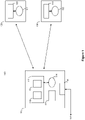
- FIG. 1 shows a home network 100, comprising an access point 110 and client devices 120 and 130.
- the access point 110 comprises a DSL interface 116 providing access to a wide area network 117 such as the Internet, as well as a Wi-Fi interface 111 providing wireless connectivity to local Wi-Fi compliant devices in accordance with the IEEE 802.11 standard.
- An example of an access point is a home router, which can connect devices within the home to each other as well as the Internet.
- Client device 120 comprises a Wi-Fi interface 121 providing Wi-Fi connectivity, for example to the access point 111.
- client device 130 also comprises a Wi-Fi interface 131, providing Wi-Fi connectivity. Examples of client devices include laptops, tablets and set-top boxes.
- the access point 110 can communicate wirelessly with the client devices 120 and 130 via their respective Wi-Fi interfaces, and provide both with access to the Internet.
- client device 120 and 130 can browse the Internet, stream video, and such like, with the access point 110 acting as a gateway, transmitting data to and from the client devices.
- the client devices 120 and 130 each further comprise a load assessor module 122 and 132 respectively.
- the access point 110 further comprises a flow monitor module 112 and a flow degrader module 113 within the Wi-Fi interface 111.
- the access point also has a load predictor module 114 and a policy module 115.
- the various modules can be implemented as software modules operating in conjunction with a processor in the respective access point or client device, or alternatively as hardware modules.
- Examples of the present invention are directed to the management of multicast video delivery to client devices.
- Multicast video can be streamed to the client devices from a media server (not shown) over the Internet to the access point 110, and then wirelessly from the access point 110 to the client devices.
- the load assessor module 122 works in conjunction with the load predictor module 114 in two modes of operation: calibration mode and sustain mode.
- the load predictor module 114 sends a data stream at a range of transmission rates from the access point 110 to the client device 120 over a wireless link.
- the load assessor module 122 measures the loading of the wireless link, in the form of jitter, at each of the transmission rates, and reports the results back to the load predictor module 114.
- the load assessor module also reports if any of the streams have experienced packet loss that is beyond the capabilities of the system to repair, based on retransmitting lost packets over unicast from a retransmission server.
- the load predictor module 114 can use these reports to determine a "critical load" value for the wireless link, which occurs when the packet loss rate is equal to or worse than the maximum repair rate, beyond which packet loss becomes unrepairable (this might be for example 10% packets lost).
- the load predictor module 114 also sets a "safe load” value, which is a load that represents a point where the client device can expect to receive a multicast stream with a high degree of reliability and well within the critical packet loss rate. This safe load value is typically set as a fraction of the critical load value. The safe load value also ensures that sufficient Wi-Fi channel utilisation is available for non-multicast traffic.
- the load predictor 114 may also halt the traffic rate progression if it finds the loading of another client device is approaching its critical load value. In this way, no existing streams are broken.
- the access point 110 can start delivery of a multicast stream (video or audio) to the client device in sustain mode, with the transmission rate chosen such that the safe load value is not exceeded over the wireless link. Furthermore, the load predictor module 114 can monitor the loading on the wireless link during multicast delivery to ensure that the loading is within safe levels and request or initiate action if not.
- a multicast stream video or audio
- the load predictor module 114 can monitor the loading on the wireless link during multicast delivery to ensure that the loading is within safe levels and request or initiate action if not.
- the access point 110 also has a flow monitor module 112 and a flow degrader module 113.
- the flow monitor module 112 reports the bitrate of existing streams over the Wi-Fi interface 111.
- the flow degrader module 113 is an active component that degrades an active stream to a given bitrate.
- the policy unit 115 holds policy information about client devices and multicast media streams, such that it can give a priority judgement indication over which client devices or streams to prioritise/protect. The policy information is thus used to resolve situations arising from the sustain mode.
- the client device 120 makes a request to join a multicast video stream or group by sending a multicast join request, which is processed by the access point 110.
- a user may click on a link to a video stream on a tablet, or select a channel to watch on a set-top box.
- the access point 110 detects the multicast join request, and the load predictor module 114 initiates calibration.
- the multicast join request for the media stream is effectively held by the load predictor module 114 until calibration is complete, after which the multicast routing is processed by the network.
- the join request is processed by the network as calibration is initiated, but the incoming multicast stream packets are not forwarded onto the client device 120 until the calibration is complete.
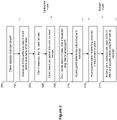
- step 202 the load predictor module 114 initiates the transmission, from the access point 110 to the client device 120, of a test sequence of data packets starting at a low transmission or bit rate, and then increasing the bit rate for further test sequences.
- the sequence is transmitted a number of times, each at a different bit rate.
- the aim is to perform the measurements set out in steps 204 and 206 at each bit rate used.
- the load predictor module 114 could use knowledge of previous streams to the client device 120 to select the starting bit rate. For example, if the client device had recently successfully streamed some media at 4Mbps, then the load predictor module 114 could start calibration at or just under 4Mbps.
- the test sequence is received by the client device 120.
- the load assessor module 122 measures the jitter associated with the received test sequence at each bit rate used (step 204).
- Figure 3 illustrates the test sequence 302 sent by the access point and test sequence 304 received by the client device 120 as a function of time.
- the form of the test sequence (in particular the interval between the test data packets) and bit rate of each transmission is known to the load assessor module 122 (this can be sent in advance by the load predictor 114 to the load assessor module 122).
- the load assessor module 122 is thus able to measure the jitter of the received data packets, where jitter is the variation in the time delay in receiving the data packets. In one example, the average jitter across the whole or portion of the test sequence is used.
- the load assessor module 122 also measures the packet loss rate (PLR) for the sequence at each bit rate.
- PLR is defined as the rate of packet loss between the access point and the client device 120.
- the load assessor module 122 sends a load report to the load predictor module 114.
- the load report consists of the following: jitter value, packet loss rate, the bit rate calibration test sequence, and the total bit rate as seen through the Wi-Fi interface 121.
- the bit rate of calibration test data is the bit rate of the test sequence.
- there may be other data being transmitted to the client during calibration As an example, a client device, such as a STB, where a user is viewing a (unicast) 6Mbps film whilst wanting to record a live multicast sports feed.
- the calibration bit rate will be applied in addition to the bit rate of the existing unicast stream.
- the total bit rate is that of the calibration test data plus any other data that is also being transmitted to the client device 120. In this example, if the test sequence bit rate is 16Mbps, and the bit rate of the unicast traffic is 6Mbps, then the total bit rate is 22Mbps. In many cases, there may not be any other traffic other than the test sequence.
- This report is sent for each test sequence at each of the bit rates.
- the load predictor module 114 uses it to determine if the wireless link to the client 120 has reached critical load.
- FIG. 4 shows how the jitter 402 and packet loss rate 404 increases with increasing total bit rate (shown on the x-axis).
- the packet loss rate can increase to a critical point 406, beyond which the retransmission server is unable to retransmit at a rate high enough to replace lost packets, and thus insufficient to repair the sequence before playout.
- the critical point is marked as 406 in Figure 4 .
- the load assessor module 114 continues to send test sequences at increasing bit rates, and receives the resulting reports from the load assessor 122, until the critical point is reached, and thus steps 202 to 208 are repeated at different bit rates. Once the critical point has been reached, a critical load and safe load are determined in step 210.
- the critical load is the jitter associated with the test sequence of packets when the critical point is reached. Or put another way, the critical load is the jitter associated with the total bit rate at which the critical point is reached.
- the critical load is marked as 408 in Figure 4 .
- the jitter may be the average jitter as described earlier.
- the load predictor module 114 can also normalise the jitter values to a probability of unrecoverable packet loss. A probability of 1 being the critical load point, where unrecoverable packet loss is expected. This then gives a measure that can be compared across client devices that might otherwise have very different jitter characteristics.
- Figure 5 shows a graph 500 of the normalised jitter values, or loading. Point 502 is the critical load with a probability of 1, and 504 is a safe load. Points 506a, 506b and 506c are intermediate loads.
- the safe load is determined by the load predictor module 114.
- the purpose of the safe load value is to provide a reference point or margin where the existing video system recovery capabilities can deal with expected Wi-Fi packet losses and fluctuations as will be discussed later.
- safe load values might be set as a fraction of the critical load value, for example between 0.5 and 0.8 of the critical load.
- the actual safe load value will take into account a number of factors:
- the multicast streaming rate selected is that of the total bit rate of the stream when the safe load was reached i.e. the combined rate of the test sequence and any other traffic being streamed at the time. Reference is made to Figure 5 , where this rate is marked up on the rate axis as R s . Whilst the requested multicast media is being streamed to the client device 120, the load assessor module 122 measures the jitter associated with the received multicast media stream, and reports back the jitter to the load predictor module 114. This can be done at intervals or when the loading changes by a certain amount, for example by 0.1.
- the load predictor module 114 monitors the jitter reported back from the load assessor module 122, and adjusts the media stream bit rate as required. In particular, if the jitter exceeds the safe load value, then a request can be made to join a lower bit rate media stream so that the jitter on the wireless link between the access point and the client device 120 is not at risk of reaching the critical load, and thus unrepairable packet loss.
- the bit rate of the media stream selected at the start and during sustain mode would be a rate below the rate associated with the safe load, so that the safe load is not exceeded as a result of minor load fluctuations.
- This can be done by instructing the client directly to join a different multicast stream.
- the access point specifically the flow degrader
- the access point can start dropping packets from the higher rate stream to trigger the client device to switch to a stream that is within the safe loading.
- Examples of the above invention can be extended to multiple clients, with the load predictor module 114 able to determine a safe load value for each client device, and adjust media delivery with reference to each safe load value.
- client 1 is the first to request to join a multicast group.
- various bit rates of the test sequence are stepped through, resulting in the determination of a critical bitrate at step 1, 702, which represents the streaming rate deemed as critical (i.e. the last streaming rate encountered before the critical load was reached.
- step 2 is the streaming bit rate that is deemed safe i.e. associated with the safe load, and here is 15Mbps.
- Client 1 can thus start streaming multicast media at 15Mbps (or marginally lower as described earlier).
- Client 2 wishes to join the same multicast group. It repeats the same calibration process, during which client 1 reaches the bit rate shown in step 3.
- the higher critical rate, step 4, for client 2 is due to more favourable device characteristics/location etc.
- the full client 2 calibration is completed without the critical load of client 1 being reached.
- the access point instructs client 2 to use the same 15Mbps rate multicast stream as client 1 (step 5). Taking this approach the access point is now serving 2 clients with the same 15 Mbps multicast stream. Alternatively, the access point could have decided to give client 2 the higher rate of 20Mbps resulting in 35Mbps total traffic, but sharing the same multicast stream results in the greatest network efficiency. These are decisions that can be managed by a suitable policy.
- Client 3 wishes to receive a different stream and starts the calibration process. However, due to the device capabilities and or location more air time is taken and it impacts the Wi-Fi channel. The calibration process is halted as client 1 breaches its critical load (step 6) during calibration, though client 2 is within its limits (step 7). Step 8 indicates that the actual critical level for client 3 has not been reached. At this point the safe level is calculated as before from the level achieved in step 8. The total multicast traffic is now 20Mbps.
- the access point could run, largely based on the usage of the multicast channels.
- the above example illustrates multiple channels being activated whilst keeping the network within safe operating limits for all clients.
- the load increase is likely to be due to noise on the Wi-Fi channel or one or more clients moving. If such a client can be readily identified (e.g. by a large change in its loading relative to the other loadings), that client can be instructed to drop to a lower rate stream. If a client cannot be identified, all the clients can be instructed to drop to a lower rate stream.
- the safe and critical load values are too conservative and recalibration can be repeated. In this way, higher rate content streams can be introduced to the clients when the network can support higher rate streaming.
- the weakest client no longer requires a multicast stream (IGMP leave detected)
- removal of the weakest client re-calibration is performed. After re-calibration, if appropriate, an upgrade to the higher bit rate streams for the remaining clients may occur.
- any client joining will trigger re-calibration.
- the safest approach is also to re-calibrate upon a client leaving.
- this need not occur e.g. it was not the weakest client, it was on the same multicast group as another client, etc. Handling these distinctions is not key to the invention, therefore for simplicity we assume re-calibration for both a client joining and leaving.
Landscapes
- Engineering & Computer Science (AREA)
- Multimedia (AREA)
- Signal Processing (AREA)
- Computer Networks & Wireless Communication (AREA)
- Environmental & Geological Engineering (AREA)
- Databases & Information Systems (AREA)
- Data Exchanges In Wide-Area Networks (AREA)
- Mobile Radio Communication Systems (AREA)
- Two-Way Televisions, Distribution Of Moving Picture Or The Like (AREA)
Claims (7)
- Verfahren zum Betreiben eines Zugangspunkts (110) zum Streamen einer Mediensequenz in einem drahtlosen Netz (100), wobei das Verfahren Folgendes umfasst:Senden (202) von Datenpaketen einer Testsequenz mit mehreren Übertragungsraten von einem Zugangspunkt an eine erste Client-Vorrichtung (120) über eine drahtlose Netzverbindung;Bestimmen (208) für jede der Übertragungsraten des Jitters der Datenpakete, die an der ersten Client-Vorrichtung empfangen werden, und einer Paketverlustrate an der ersten Client-Vorrichtung;Bestimmen (210) der Übertragungsrate, bei der die Paketverlustrate einen Schwellenwert überschreitet, wobei der Schwellenwert ein Grenzwert für einen Paketverlust ist, der durch die Testsequenz, die von dem Zugangspunkt an die erste Client-Vorrichtung gesendet wird, erfahren wird und über dem Paketneuübertragungen nicht ausreichen, um die Testsequenz vor einer Ausspielung zu reparieren;Identifizieren (210) eines kritischen Jitterniveaus als den Jitter, der der bestimmten Übertragungsrate zugeordnet ist;Einstellen eines sicheren Jitterniveaus als einen Bruchteil des kritischen Jitterniveaus; undSenden (212) der Mediensequenz von dem Zugangspunkt an die erste Client-Vorrichtung, wobei die Übertragungsrate der Mediensequenz derart angepasst wird, dass der zugeordnete Jitter das sichere Jitterniveau nicht überschreitet.
- Verfahren nach Anspruch 1, das ferner Folgendes umfasst:Senden von Datenpaketen von dem Zugangspunkt an eine zweite Client-Vorrichtung und Anpassen der Übertragungsrate der Datenpakete von dem Zugangspunkt an die zweite Client-Vorrichtung, wenn der Jitter, der der ersten Client-Vorrichtung zugeordnet ist, das sichere Jitterniveau überschreitet.
- Verfahren nach Anspruch 1, das ferner Folgendes umfasst:
Senden von Datenpaketen von dem Zugangspunkt an eine zweite Client-Vorrichtung und Anpassen der Übertragungsrate der Mediensequenz von dem Zugangspunkt an die erste Client-Vorrichtung, wenn der Jitter, der der ersten Client-Vorrichtung zugeordnet ist, das sichere Jitterniveau überschreitet. - Verfahren nach einem vorhergehenden Anspruch, wobei der zweite Client ein zugeordnetes sicheres Jitterniveau besitzt.
- Verfahren nach einem vorhergehenden Anspruch, wobei der Jitter ein mittlerer Jitter über eine Zeitperiode ist.
- Verfahren nach einem vorhergehenden Anspruch, wobei die Mediensequenz ein Multicast-Medienstrom ist.
- Zugangspunkt (110), der konfiguriert ist zum:
Senden (202) von Datenpaketen einer Testsequenz mit mehreren Übertragungsraten an eine erste Client-Vorrichtung über eine drahtlose Netzverbindung und zum:Bestimmen (208) für jede der Übertragungsraten des Jitters der Datenpakete, die bei der ersten Client-Vorrichtung empfangen werden, und einer Paketverlustrate bei der ersten Client-Vorrichtung;Bestimmen (210) der Übertragungsrate, bei der die Paketverlustrate einen Schwellenwert überschreitet, wobei der Schwellenwert ein Grenzwert für einen Paketverlust ist, der durch die Testsequenz, die von dem Zugangspunkt an die erste Client-Vorrichtung gesendet wird, erfahren wird und über dem Paketneuübertragungen nicht ausreichen, um die Testsequenz vor einer Ausspielung zu reparieren;Identifizieren eines kritischen Jitterniveaus als den Jitter, der der bestimmten Übertragungsrate zugeordnet ist;Einstellen eines sicheren Jitterniveaus als einen Bruchteil des kritischen Jitterniveaus; undSenden (212) der Mediensequenz von dem Zugangspunkt an die erste Client-Vorrichtung, wobei die Übertragungsrate der Mediensequenz derart angepasst wird, dass der zugeordnete Jitter das sichere Jitterniveau nicht überschreitet.
Applications Claiming Priority (2)
| Application Number | Priority Date | Filing Date | Title |
|---|---|---|---|
| EP17187983 | 2017-08-25 | ||
| PCT/EP2018/072550 WO2019038278A1 (en) | 2017-08-25 | 2018-08-21 | MULTICAST VIDEO DISTRIBUTION OPTIMIZATION IN A WIRELESS NETWORK |
Publications (2)
| Publication Number | Publication Date |
|---|---|
| EP3673632A1 EP3673632A1 (de) | 2020-07-01 |
| EP3673632B1 true EP3673632B1 (de) | 2022-04-20 |
Family
ID=59745742
Family Applications (1)
| Application Number | Title | Priority Date | Filing Date |
|---|---|---|---|
| EP18753433.4A Active EP3673632B1 (de) | 2017-08-25 | 2018-08-21 | Optimierung der multicast-videobereitstellung in einem drahtlosen netzwerk |
Country Status (3)
| Country | Link |
|---|---|
| US (1) | US11005768B2 (de) |
| EP (1) | EP3673632B1 (de) |
| WO (1) | WO2019038278A1 (de) |
Families Citing this family (2)
| Publication number | Priority date | Publication date | Assignee | Title |
|---|---|---|---|---|
| CN110138632B (zh) * | 2019-03-26 | 2021-02-09 | 视联动力信息技术股份有限公司 | 一种数据传输方法和装置 |
| US11349891B1 (en) * | 2021-03-09 | 2022-05-31 | Cisco Technology, Inc. | Hybrid static and dynamic multicast configuration for media serving environment |
Family Cites Families (12)
| Publication number | Priority date | Publication date | Assignee | Title |
|---|---|---|---|---|
| US6621805B1 (en) | 1999-10-25 | 2003-09-16 | Hrl Laboratories, Llc | Method and apparatus for multicasting real-time variable bit-rate traffic in wireless Ad-Hoc networks |
| JP3900413B2 (ja) | 2002-02-14 | 2007-04-04 | Kddi株式会社 | 映像情報伝送方式およびプログラム |
| US20040017822A1 (en) * | 2002-07-25 | 2004-01-29 | Adc Dsl Systems, Inc. | High-speed digital subscriber line (HDSL) wander reduction utilizing minimums |
| ATE457574T1 (de) * | 2003-08-21 | 2010-02-15 | Vidiator Entpr Inc | Metriken für die qualität der erfahrung (qoe) für drahtlose kommunikationsnetze |
| US7701851B2 (en) | 2005-07-20 | 2010-04-20 | Vidyo, Inc. | System and method for the control of the transmission rate in packet-based digital communications |
| CN101690069B (zh) | 2007-05-30 | 2013-05-29 | 艾利森电话股份有限公司 | 实时通信系统中基于抖动的媒体层调适 |
| GB201011168D0 (en) | 2010-07-02 | 2010-08-18 | Vodafone Plc | Buffering in telecommunication networks |
| US9077655B2 (en) | 2011-03-02 | 2015-07-07 | 3Inova Networks Inc. | Traffic management in distributed wireless networks |
| US9175969B2 (en) * | 2011-07-20 | 2015-11-03 | Futurewei Technologies, Inc. | Proactive navigation techniques to improve users' mobile network access |
| US20130195119A1 (en) | 2011-10-14 | 2013-08-01 | Qualcomm Incorporated | Feedback channel for wireless display devices |
| JP2017152898A (ja) * | 2016-02-24 | 2017-08-31 | 富士通株式会社 | 空き帯域特定プログラム、空き帯域特定装置、および空き帯域特定方法 |
| US10382986B2 (en) * | 2017-03-17 | 2019-08-13 | At&T Mobility Ii Llc | Facilitating mobile device self-optimizing technology selection thresholds in a wireless communication system |
-
2018
- 2018-08-21 EP EP18753433.4A patent/EP3673632B1/de active Active
- 2018-08-21 WO PCT/EP2018/072550 patent/WO2019038278A1/en not_active Ceased
- 2018-08-21 US US16/641,699 patent/US11005768B2/en active Active
Also Published As
| Publication number | Publication date |
|---|---|
| EP3673632A1 (de) | 2020-07-01 |
| US11005768B2 (en) | 2021-05-11 |
| US20200358707A1 (en) | 2020-11-12 |
| WO2019038278A1 (en) | 2019-02-28 |
Similar Documents
| Publication | Publication Date | Title |
|---|---|---|
| US10298507B2 (en) | Device and method for characterization and optimization of multiple simultaneous real-time data connections | |
| JP3662907B2 (ja) | データ送受信方法、送信装置、受信装置、送受信システム、およびプログラム | |
| Matsuzono et al. | Low latency low loss streaming using in-network coding and caching | |
| US20220294727A1 (en) | Systems and methods for managing data packet communications | |
| US9363188B2 (en) | Cable modem termination system control of cable modem queue length | |
| US20230052361A1 (en) | Resource usage in a multipath network | |
| US9781488B2 (en) | Controlled adaptive rate switching system and method for media streaming over IP networks | |
| EP2903192A1 (de) | Verfahren zur Paketvermittlung, Weiterleitungsvorrichtung und System | |
| US20090028052A1 (en) | Method and Apparatus for Optimizing Home Network Interface Selection In Home Networking Applications | |
| US20200120152A1 (en) | Edge node control | |
| EP3547690B1 (de) | Echtzeit-videoübertragungsverfahren eines mehrwegenetzes | |
| US20160352801A1 (en) | System and method for determining deterioration in call quality between one or more wireless end-users based on codec characteristics | |
| US11044636B2 (en) | Method and device for detecting congestion in data transmission path | |
| US20130003524A1 (en) | Selective Caching in a Packet Network and Packet Loss Repair Using Selective Caching | |
| US11005768B2 (en) | Optimising multicast video delivery in a wireless network | |
| Yi et al. | Automated, Cross-Layer Root Cause Analysis of 5G Video-Conferencing Quality Degradation | |
| US7965639B2 (en) | Dynamic adaptation of MAC-layer retransmission value | |
| US10536378B2 (en) | Method and device for detecting congestion on a transmission link | |
| KR100631516B1 (ko) | 스트리밍 시스템 및 적응적 대역 할당 방법 | |
| Khorov et al. | Head-of-line blocking avoidance in multimedia streaming over wireless networks | |
| Sathyanarayana | Multipath Transport Protocols for Real Time Communication Systems | |
| Li et al. | Presentation deadline-based transmission mechanism for IPTV services over wireless networks | |
| Choi | RATE CONTROL OF REALTIME STREAMING APPLICATIONS IN WIRELESS NETWORKS | |
| Yunus et al. | Proposed Technique for Transport Protocol in Wireless Sensor Network (WSN) for Multimedia Application | |
| Ko et al. | Robust multimedia multicast service over wireless networks |
Legal Events
| Date | Code | Title | Description |
|---|---|---|---|
| STAA | Information on the status of an ep patent application or granted ep patent |
Free format text: STATUS: UNKNOWN |
|
| STAA | Information on the status of an ep patent application or granted ep patent |
Free format text: STATUS: THE INTERNATIONAL PUBLICATION HAS BEEN MADE |
|
| PUAI | Public reference made under article 153(3) epc to a published international application that has entered the european phase |
Free format text: ORIGINAL CODE: 0009012 |
|
| STAA | Information on the status of an ep patent application or granted ep patent |
Free format text: STATUS: REQUEST FOR EXAMINATION WAS MADE |
|
| 17P | Request for examination filed |
Effective date: 20200224 |
|
| AK | Designated contracting states |
Kind code of ref document: A1 Designated state(s): AL AT BE BG CH CY CZ DE DK EE ES FI FR GB GR HR HU IE IS IT LI LT LU LV MC MK MT NL NO PL PT RO RS SE SI SK SM TR |
|
| AX | Request for extension of the european patent |
Extension state: BA ME |
|
| DAV | Request for validation of the european patent (deleted) | ||
| DAX | Request for extension of the european patent (deleted) | ||
| GRAP | Despatch of communication of intention to grant a patent |
Free format text: ORIGINAL CODE: EPIDOSNIGR1 |
|
| STAA | Information on the status of an ep patent application or granted ep patent |
Free format text: STATUS: GRANT OF PATENT IS INTENDED |
|
| INTG | Intention to grant announced |
Effective date: 20211124 |
|
| RAP3 | Party data changed (applicant data changed or rights of an application transferred) |
Owner name: BRITISH TELECOMMUNICATIONS PUBLIC LIMITED COMPANY |
|
| GRAS | Grant fee paid |
Free format text: ORIGINAL CODE: EPIDOSNIGR3 |
|
| GRAA | (expected) grant |
Free format text: ORIGINAL CODE: 0009210 |
|
| STAA | Information on the status of an ep patent application or granted ep patent |
Free format text: STATUS: THE PATENT HAS BEEN GRANTED |
|
| AK | Designated contracting states |
Kind code of ref document: B1 Designated state(s): AL AT BE BG CH CY CZ DE DK EE ES FI FR GB GR HR HU IE IS IT LI LT LU LV MC MK MT NL NO PL PT RO RS SE SI SK SM TR |
|
| REG | Reference to a national code |
Ref country code: GB Ref legal event code: FG4D |
|
| REG | Reference to a national code |
Ref country code: CH Ref legal event code: EP |
|
| REG | Reference to a national code |
Ref country code: IE Ref legal event code: FG4D |
|
| REG | Reference to a national code |
Ref country code: DE Ref legal event code: R096 Ref document number: 602018034189 Country of ref document: DE |
|
| REG | Reference to a national code |
Ref country code: AT Ref legal event code: REF Ref document number: 1486055 Country of ref document: AT Kind code of ref document: T Effective date: 20220515 |
|
| REG | Reference to a national code |
Ref country code: LT Ref legal event code: MG9D |
|
| REG | Reference to a national code |
Ref country code: NL Ref legal event code: MP Effective date: 20220420 |
|
| REG | Reference to a national code |
Ref country code: AT Ref legal event code: MK05 Ref document number: 1486055 Country of ref document: AT Kind code of ref document: T Effective date: 20220420 |
|
| PG25 | Lapsed in a contracting state [announced via postgrant information from national office to epo] |
Ref country code: NL Free format text: LAPSE BECAUSE OF FAILURE TO SUBMIT A TRANSLATION OF THE DESCRIPTION OR TO PAY THE FEE WITHIN THE PRESCRIBED TIME-LIMIT Effective date: 20220420 |
|
| PG25 | Lapsed in a contracting state [announced via postgrant information from national office to epo] |
Ref country code: SE Free format text: LAPSE BECAUSE OF FAILURE TO SUBMIT A TRANSLATION OF THE DESCRIPTION OR TO PAY THE FEE WITHIN THE PRESCRIBED TIME-LIMIT Effective date: 20220420 Ref country code: PT Free format text: LAPSE BECAUSE OF FAILURE TO SUBMIT A TRANSLATION OF THE DESCRIPTION OR TO PAY THE FEE WITHIN THE PRESCRIBED TIME-LIMIT Effective date: 20220822 Ref country code: NO Free format text: LAPSE BECAUSE OF FAILURE TO SUBMIT A TRANSLATION OF THE DESCRIPTION OR TO PAY THE FEE WITHIN THE PRESCRIBED TIME-LIMIT Effective date: 20220720 Ref country code: LT Free format text: LAPSE BECAUSE OF FAILURE TO SUBMIT A TRANSLATION OF THE DESCRIPTION OR TO PAY THE FEE WITHIN THE PRESCRIBED TIME-LIMIT Effective date: 20220420 Ref country code: HR Free format text: LAPSE BECAUSE OF FAILURE TO SUBMIT A TRANSLATION OF THE DESCRIPTION OR TO PAY THE FEE WITHIN THE PRESCRIBED TIME-LIMIT Effective date: 20220420 Ref country code: GR Free format text: LAPSE BECAUSE OF FAILURE TO SUBMIT A TRANSLATION OF THE DESCRIPTION OR TO PAY THE FEE WITHIN THE PRESCRIBED TIME-LIMIT Effective date: 20220721 Ref country code: FI Free format text: LAPSE BECAUSE OF FAILURE TO SUBMIT A TRANSLATION OF THE DESCRIPTION OR TO PAY THE FEE WITHIN THE PRESCRIBED TIME-LIMIT Effective date: 20220420 Ref country code: ES Free format text: LAPSE BECAUSE OF FAILURE TO SUBMIT A TRANSLATION OF THE DESCRIPTION OR TO PAY THE FEE WITHIN THE PRESCRIBED TIME-LIMIT Effective date: 20220420 Ref country code: BG Free format text: LAPSE BECAUSE OF FAILURE TO SUBMIT A TRANSLATION OF THE DESCRIPTION OR TO PAY THE FEE WITHIN THE PRESCRIBED TIME-LIMIT Effective date: 20220720 Ref country code: AT Free format text: LAPSE BECAUSE OF FAILURE TO SUBMIT A TRANSLATION OF THE DESCRIPTION OR TO PAY THE FEE WITHIN THE PRESCRIBED TIME-LIMIT Effective date: 20220420 |
|
| PG25 | Lapsed in a contracting state [announced via postgrant information from national office to epo] |
Ref country code: RS Free format text: LAPSE BECAUSE OF FAILURE TO SUBMIT A TRANSLATION OF THE DESCRIPTION OR TO PAY THE FEE WITHIN THE PRESCRIBED TIME-LIMIT Effective date: 20220420 Ref country code: PL Free format text: LAPSE BECAUSE OF FAILURE TO SUBMIT A TRANSLATION OF THE DESCRIPTION OR TO PAY THE FEE WITHIN THE PRESCRIBED TIME-LIMIT Effective date: 20220420 Ref country code: LV Free format text: LAPSE BECAUSE OF FAILURE TO SUBMIT A TRANSLATION OF THE DESCRIPTION OR TO PAY THE FEE WITHIN THE PRESCRIBED TIME-LIMIT Effective date: 20220420 Ref country code: IS Free format text: LAPSE BECAUSE OF FAILURE TO SUBMIT A TRANSLATION OF THE DESCRIPTION OR TO PAY THE FEE WITHIN THE PRESCRIBED TIME-LIMIT Effective date: 20220820 |
|
| REG | Reference to a national code |
Ref country code: DE Ref legal event code: R097 Ref document number: 602018034189 Country of ref document: DE |
|
| PG25 | Lapsed in a contracting state [announced via postgrant information from national office to epo] |
Ref country code: SM Free format text: LAPSE BECAUSE OF FAILURE TO SUBMIT A TRANSLATION OF THE DESCRIPTION OR TO PAY THE FEE WITHIN THE PRESCRIBED TIME-LIMIT Effective date: 20220420 Ref country code: SK Free format text: LAPSE BECAUSE OF FAILURE TO SUBMIT A TRANSLATION OF THE DESCRIPTION OR TO PAY THE FEE WITHIN THE PRESCRIBED TIME-LIMIT Effective date: 20220420 Ref country code: RO Free format text: LAPSE BECAUSE OF FAILURE TO SUBMIT A TRANSLATION OF THE DESCRIPTION OR TO PAY THE FEE WITHIN THE PRESCRIBED TIME-LIMIT Effective date: 20220420 Ref country code: EE Free format text: LAPSE BECAUSE OF FAILURE TO SUBMIT A TRANSLATION OF THE DESCRIPTION OR TO PAY THE FEE WITHIN THE PRESCRIBED TIME-LIMIT Effective date: 20220420 Ref country code: DK Free format text: LAPSE BECAUSE OF FAILURE TO SUBMIT A TRANSLATION OF THE DESCRIPTION OR TO PAY THE FEE WITHIN THE PRESCRIBED TIME-LIMIT Effective date: 20220420 Ref country code: CZ Free format text: LAPSE BECAUSE OF FAILURE TO SUBMIT A TRANSLATION OF THE DESCRIPTION OR TO PAY THE FEE WITHIN THE PRESCRIBED TIME-LIMIT Effective date: 20220420 |
|
| PLBE | No opposition filed within time limit |
Free format text: ORIGINAL CODE: 0009261 |
|
| STAA | Information on the status of an ep patent application or granted ep patent |
Free format text: STATUS: NO OPPOSITION FILED WITHIN TIME LIMIT |
|
| 26N | No opposition filed |
Effective date: 20230123 |
|
| PG25 | Lapsed in a contracting state [announced via postgrant information from national office to epo] |
Ref country code: MC Free format text: LAPSE BECAUSE OF FAILURE TO SUBMIT A TRANSLATION OF THE DESCRIPTION OR TO PAY THE FEE WITHIN THE PRESCRIBED TIME-LIMIT Effective date: 20220420 Ref country code: AL Free format text: LAPSE BECAUSE OF FAILURE TO SUBMIT A TRANSLATION OF THE DESCRIPTION OR TO PAY THE FEE WITHIN THE PRESCRIBED TIME-LIMIT Effective date: 20220420 |
|
| REG | Reference to a national code |
Ref country code: CH Ref legal event code: PL |
|
| PG25 | Lapsed in a contracting state [announced via postgrant information from national office to epo] |
Ref country code: LU Free format text: LAPSE BECAUSE OF NON-PAYMENT OF DUE FEES Effective date: 20220821 Ref country code: LI Free format text: LAPSE BECAUSE OF NON-PAYMENT OF DUE FEES Effective date: 20220831 Ref country code: CH Free format text: LAPSE BECAUSE OF NON-PAYMENT OF DUE FEES Effective date: 20220831 |
|
| REG | Reference to a national code |
Ref country code: BE Ref legal event code: MM Effective date: 20220831 |
|
| PG25 | Lapsed in a contracting state [announced via postgrant information from national office to epo] |
Ref country code: SI Free format text: LAPSE BECAUSE OF FAILURE TO SUBMIT A TRANSLATION OF THE DESCRIPTION OR TO PAY THE FEE WITHIN THE PRESCRIBED TIME-LIMIT Effective date: 20220420 |
|
| PG25 | Lapsed in a contracting state [announced via postgrant information from national office to epo] |
Ref country code: IE Free format text: LAPSE BECAUSE OF NON-PAYMENT OF DUE FEES Effective date: 20220821 |
|
| P01 | Opt-out of the competence of the unified patent court (upc) registered |
Effective date: 20230623 |
|
| PG25 | Lapsed in a contracting state [announced via postgrant information from national office to epo] |
Ref country code: BE Free format text: LAPSE BECAUSE OF NON-PAYMENT OF DUE FEES Effective date: 20220831 |
|
| PG25 | Lapsed in a contracting state [announced via postgrant information from national office to epo] |
Ref country code: IT Free format text: LAPSE BECAUSE OF FAILURE TO SUBMIT A TRANSLATION OF THE DESCRIPTION OR TO PAY THE FEE WITHIN THE PRESCRIBED TIME-LIMIT Effective date: 20220420 |
|
| PG25 | Lapsed in a contracting state [announced via postgrant information from national office to epo] |
Ref country code: CY Free format text: LAPSE BECAUSE OF FAILURE TO SUBMIT A TRANSLATION OF THE DESCRIPTION OR TO PAY THE FEE WITHIN THE PRESCRIBED TIME-LIMIT Effective date: 20220420 |
|
| PG25 | Lapsed in a contracting state [announced via postgrant information from national office to epo] |
Ref country code: MK Free format text: LAPSE BECAUSE OF FAILURE TO SUBMIT A TRANSLATION OF THE DESCRIPTION OR TO PAY THE FEE WITHIN THE PRESCRIBED TIME-LIMIT Effective date: 20220420 Ref country code: HU Free format text: LAPSE BECAUSE OF FAILURE TO SUBMIT A TRANSLATION OF THE DESCRIPTION OR TO PAY THE FEE WITHIN THE PRESCRIBED TIME-LIMIT; INVALID AB INITIO Effective date: 20180821 |
|
| PG25 | Lapsed in a contracting state [announced via postgrant information from national office to epo] |
Ref country code: MT Free format text: LAPSE BECAUSE OF FAILURE TO SUBMIT A TRANSLATION OF THE DESCRIPTION OR TO PAY THE FEE WITHIN THE PRESCRIBED TIME-LIMIT Effective date: 20220420 |
|
| PG25 | Lapsed in a contracting state [announced via postgrant information from national office to epo] |
Ref country code: BG Free format text: LAPSE BECAUSE OF FAILURE TO SUBMIT A TRANSLATION OF THE DESCRIPTION OR TO PAY THE FEE WITHIN THE PRESCRIBED TIME-LIMIT Effective date: 20220420 |
|
| PG25 | Lapsed in a contracting state [announced via postgrant information from national office to epo] |
Ref country code: BG Free format text: LAPSE BECAUSE OF FAILURE TO SUBMIT A TRANSLATION OF THE DESCRIPTION OR TO PAY THE FEE WITHIN THE PRESCRIBED TIME-LIMIT Effective date: 20220420 |
|
| PGFP | Annual fee paid to national office [announced via postgrant information from national office to epo] |
Ref country code: DE Payment date: 20250724 Year of fee payment: 8 |
|
| PGFP | Annual fee paid to national office [announced via postgrant information from national office to epo] |
Ref country code: GB Payment date: 20250725 Year of fee payment: 8 |
|
| PGFP | Annual fee paid to national office [announced via postgrant information from national office to epo] |
Ref country code: FR Payment date: 20250725 Year of fee payment: 8 |
|
| PG25 | Lapsed in a contracting state [announced via postgrant information from national office to epo] |
Ref country code: TR Free format text: LAPSE BECAUSE OF FAILURE TO SUBMIT A TRANSLATION OF THE DESCRIPTION OR TO PAY THE FEE WITHIN THE PRESCRIBED TIME-LIMIT Effective date: 20220420 |