EP3674316A1 - Protéines de liaison multispécifiques avec des domaines fab mutants - Google Patents
Protéines de liaison multispécifiques avec des domaines fab mutants Download PDFInfo
- Publication number
- EP3674316A1 EP3674316A1 EP18306843.6A EP18306843A EP3674316A1 EP 3674316 A1 EP3674316 A1 EP 3674316A1 EP 18306843 A EP18306843 A EP 18306843A EP 3674316 A1 EP3674316 A1 EP 3674316A1
- Authority
- EP
- European Patent Office
- Prior art keywords
- mutations
- mutation
- region
- pair
- antigen
- Prior art date
- Legal status (The legal status is an assumption and is not a legal conclusion. Google has not performed a legal analysis and makes no representation as to the accuracy of the status listed.)
- Withdrawn
Links
Images






Classifications
-
- C—CHEMISTRY; METALLURGY
- C07—ORGANIC CHEMISTRY
- C07K—PEPTIDES
- C07K16/00—Immunoglobulins [IG], e.g. monoclonal or polyclonal antibodies
-
- A—HUMAN NECESSITIES
- A61—MEDICAL OR VETERINARY SCIENCE; HYGIENE
- A61P—SPECIFIC THERAPEUTIC ACTIVITY OF CHEMICAL COMPOUNDS OR MEDICINAL PREPARATIONS
- A61P37/00—Drugs for immunological or allergic disorders
-
- C—CHEMISTRY; METALLURGY
- C07—ORGANIC CHEMISTRY
- C07K—PEPTIDES
- C07K16/00—Immunoglobulins [IG], e.g. monoclonal or polyclonal antibodies
- C07K16/18—Immunoglobulins [IG], e.g. monoclonal or polyclonal antibodies against material from animals or humans
- C07K16/28—Immunoglobulins [IG], e.g. monoclonal or polyclonal antibodies against material from animals or humans against receptors, cell surface antigens or cell surface determinants
- C07K16/2803—Immunoglobulins [IG], e.g. monoclonal or polyclonal antibodies against material from animals or humans against receptors, cell surface antigens or cell surface determinants against the immunoglobulin superfamily
- C07K16/2818—Immunoglobulins [IG], e.g. monoclonal or polyclonal antibodies against material from animals or humans against receptors, cell surface antigens or cell surface determinants against the immunoglobulin superfamily against CD28 or CD152
-
- C—CHEMISTRY; METALLURGY
- C07—ORGANIC CHEMISTRY
- C07K—PEPTIDES
- C07K16/00—Immunoglobulins [IG], e.g. monoclonal or polyclonal antibodies
- C07K16/18—Immunoglobulins [IG], e.g. monoclonal or polyclonal antibodies against material from animals or humans
- C07K16/28—Immunoglobulins [IG], e.g. monoclonal or polyclonal antibodies against material from animals or humans against receptors, cell surface antigens or cell surface determinants
- C07K16/2875—Immunoglobulins [IG], e.g. monoclonal or polyclonal antibodies against material from animals or humans against receptors, cell surface antigens or cell surface determinants against the NGF/TNF superfamily, e.g. CD70, CD95L, CD153, CD154
-
- C—CHEMISTRY; METALLURGY
- C07—ORGANIC CHEMISTRY
- C07K—PEPTIDES
- C07K16/00—Immunoglobulins [IG], e.g. monoclonal or polyclonal antibodies
- C07K16/46—Hybrid immunoglobulins
- C07K16/468—Immunoglobulins having two or more different antigen binding sites, e.g. multifunctional antibodies
-
- C—CHEMISTRY; METALLURGY
- C07—ORGANIC CHEMISTRY
- C07K—PEPTIDES
- C07K2317/00—Immunoglobulins specific features
- C07K2317/10—Immunoglobulins specific features characterized by their source of isolation or production
- C07K2317/14—Specific host cells or culture conditions, e.g. components, pH or temperature
-
- C—CHEMISTRY; METALLURGY
- C07—ORGANIC CHEMISTRY
- C07K—PEPTIDES
- C07K2317/00—Immunoglobulins specific features
- C07K2317/30—Immunoglobulins specific features characterized by aspects of specificity or valency
- C07K2317/31—Immunoglobulins specific features characterized by aspects of specificity or valency multispecific
-
- C—CHEMISTRY; METALLURGY
- C07—ORGANIC CHEMISTRY
- C07K—PEPTIDES
- C07K2317/00—Immunoglobulins specific features
- C07K2317/50—Immunoglobulins specific features characterized by immunoglobulin fragments
- C07K2317/55—Fab or Fab'
Definitions
- Classical antibodies are Y-shaped proteins or immunoglobulins which are heterotetramers formed of two heterodimers, consisting of a light chain portion and a heavy chain portion.
- the "arms" of the antibody comprise an antigen-binding site and are called a Fab region.
- Classical antibodies e.g., those produced by a host immune system
- the creation of asymmetry in a native antibody structure is a prerequisite for the generation of multispecific binding proteins having two (e.g., bispecific antibodies) or more binding specificities. For example, by separating one or more Fvs on different asymmetric binding arms or Fabs, a bispecific antibody can be made with the flexibility of binding two different antigens simultaneously.
- the present disclosure provides antigen-binding proteins that may optionally comprise a variety of mutations along a dimer interface that enable efficient heterodimerization of the antigen-binding proteins.
- the present disclosure provides an antigen-binding protein comprising a VL region paired with a VH region to form an antigen-binding site; and a CH1 region paired with a CL region, wherein the VL region and VH region comprise opposite charged mutations to facilitate pairing, and wherein the CH1 region and CL region comprise mutations to facilitate pairing.
- the antigen-binding protein further comprises a second VL region paired with a second VH region to form a second antigen-binding site; and a second CH1 region paired with a second CL region.
- one or both of the first VH and VL pair and the second VH and VL pair comprise opposite charged mutations to facilitate pairing, and wherein one or both of the first CH1 and CL pair and the second CH1 and CL pair comprise mutations to facilitate pairing.
- one or both CH1 regions comprise a T192E mutation and one or both CL regions comprise N137K and S114A mutations.
- one or both CH1 regions comprise L143Q and S188V mutations and one or both CL regions comprise V133T and S176V mutations.
- one or both CH1 regions comprise T192E, L143Q and S188V mutations and one or both CL regions comprise N137K, S114A, V133T and S176V mutations.
- one or both CH1 regions comprise a L143E, L143D, L143K, L143R, or L143H mutation and one or both CL regions comprise a S176E, S176D, S176K, S176R, or S176H mutation, wherein the mutation in CH1 is an opposite charge from the mutation in CL.
- one or both CH1 regions comprise a L124E, L124D, L124K, L124R, or L124H mutation and one or both CL regions comprise a V133E, V133D, V133K, V133R, or V133H mutation, wherein the mutation in CH1 is an opposite charge from the mutation in CL.
- one or both VH regions comprise a Q39E, Q39D, Q39K, Q39R, or Q39H mutation
- one or both VL regions comprise a Q38E, Q38D, Q38K, Q38R, or Q38H mutation, wherein the mutation in VH is an opposite charge from the mutation in VL.
- the antigen-binding protein further comprises one or more cysteine residues engineered into one or both of the VH/VL pairs to form one or more disulfide bonds.
- one or both VH regions comprise one or both of 44C and 105C mutations, and one or both VL regions comprise one or both of 100C and 43C mutations.
- one or both VH regions comprise a 44C mutation and one or both VL regions comprise a 100C mutation.
- one or both VH regions comprise a 105C mutation and one or both VL regions comprise a 43C mutation.
- the antigen-binding protein further comprises opposite charged mutations in one or both the CH1/CL pairs.
- the opposite charged mutations in one or both the CH1/CL pairs are selected from the group consisting of: K221E in the CH1 region and E123K in the CL region; K228E in the CH1 region and D122K in the CL region; L145E in the CH1 region and S176K in the CL region; and L128E in the CH1 region and V133K in the CL region.
- a multispecific antigen-binding protein comprises at least two VL regions respectively paired with at least two VH regions to form at least two antigen-binding sites and at least two CH1 regions respectively paired with two CL regions, wherein at least one CH1/CL pair comprise (CH1/CL) mutations to facilitate pairing selected from:
- one or both CH1 regions are operably linked to a heterodimerization domain.
- the heterodimerization domain comprises a first Fc domain.
- the first Fc domain heterodimerizes with a second Fc domain, and wherein the first Fc domain comprises a first CH3 region and the second Fc domain comprises a second CH3 region.
- the first CH3 region comprises one or both of S354C and T366W mutations
- the second CH3 region comprises one or more of Y349C, T366S, L368A, and Y407V mutations, wherein the mutations facilitate Fc domain heterodimerization.
- the present disclosure provides a multispecific antibody comprising
- the present disclosure provides a multispecific antibody comprising
- CH1-1 comprises a T192E mutation and CL1 comprises N137K and S114A mutations.
- CH1-1 comprises L143Q and S188V mutations and CL1 comprises V133T and S176V mutations.
- CH1-1 comprises T192E, L143Q and S188V mutations and CL1 comprises N137K, S114A, V133T and S176V mutations.
- CH1-2 comprises a T192E mutation and CL2 comprises N137K and S114A mutations.
- CH1-2 comprises L143Q and S188V mutations and CL2 comprises V133T and S176V mutations.
- CH1-2 comprises T192E, L143Q and S188V mutations and CL2 comprises N137K, S114A, V133T and S176V mutations.
- one of both of CH1-1 and CH1-2 comprises a L143E, L143D, L143K, L143R, or L143H mutation and one or both of CL1 and CL2 comprises a S176E, S176D, S176K, S176R, or S176H mutation, wherein the mutation in one of both of CH1-1 or CH1-2 is an opposite charge from the mutation in one or both of CL1 and CL2.
- one of both of CH1-1 and CH1-2 comprises a L124E, L124D, L124K, L124R, or L124H mutation and one or both of CL1 and CL2 comprises a V133E, V133D, V133K, V133R, or V133H mutation, wherein the mutation in one of both of CH1-1 or CH1-2 is an opposite charge from the mutation in one or both of CL1 and CL2
- one or both of VH1 and VH2 comprises a Q39E, Q39D, Q39K, Q39R, or Q39H mutation
- one or both of VL1 and VL2 comprises a Q38E, Q38D, Q38K, Q38R, or Q38H mutation, wherein the mutation in one or both of VH1 and VH2 is an opposite charge from the mutation in one or both of VL1 and VL2.
- the multispecific antibody further comprises one or more cysteine residues engineered into the one or both of VH1/VL1 and VH2/VL2 pairs to form one or more disulfide bonds.
- VH1 and VH2 comprises 44C and 105C mutations
- VL1 and VL2 comprises 100C and 43C mutations
- VH1 comprises a 44C mutation and VL1 comprises a 100C mutation.
- VH1 comprises a 105C mutation and VL1 comprises a 43C mutation.
- VH2 comprises a 44C mutation and VL2 comprises a 100C.
- VH2 comprises a 105C mutation and VL2 comprises a 43C mutation.
- VH1 comprises 39E and 44C mutations and VL1 comprises 38K and 100C mutations.
- VH1 comprises 39E and 105C mutations and VL1 comprises 38K and 43C mutations.
- the multispecific antibody further comprises opposite charged mutations in the CH1-1/CL1 pair.
- the opposite charged mutations in the CH1-1/CL1 pair are selected from the group consisting of: K221E in the CH1-1 region and E123K in the CL1 region; K228E in the CH1-1 region and D122K in the CL1 region; L145E in the CH1-1 region and S176K in the CL1 region; and L128E in the CH1-1 region and V133K in the CL1 region.
- the multispecific antibody further comprises opposite charged mutations in the CH1-2/CL2 pair.
- the opposite charged mutations in the CH1-2/CL2 pair are selected from the group consisting of: K221E in the CH1-2 region and E123K in the CL2 region; K228E in the CH1-2 region and D122K in the CL2 region; L145E in the CH1-2 region and S176K in the CL2 region; and L128E in the CH1-2 region and V133K in the CL2 region.
- the first and second heterodimerization domains comprise Fc domains.
- the first heterodimerization domain comprises a first CH3 domain comprising one or both of S354C and T366W mutations
- the second heterodimerization domain comprises a second CH3 domain comprising one or both of Y349C, T366S, L368A, and Y407V mutations, wherein the mutations facilitate Fc domain heterodimerization.
- the CH1-1 domain is linked to a first CH2 and first CH3 domain
- the CH1-2 domain is linked to a second CH2 and second CH3 domain
- the first CH2 and CH3 domains and the second CH2 and CH3 domains dimerize to form an Fc domain
- the first CH3 domain comprises one or both of S354C and T366W mutations
- the second CH3 domain comprises one or more of Y349C, T366S, L368A, and Y407V mutations, and wherein the mutations facilitate Fc domain heterodimerization.
- the present disclosure provides an antigen-binding protein comprising at least two polypeptide chains and forming at least two antigen-binding sites, wherein one polypeptide chain comprises a structure represented by the formula: VL1-L1-VL2-L2-CL [I] and one polypeptide chain comprises a structure represented by the formula: VH2-L3-VH1-L4-CH1 [II] wherein:
- VH1 and VH2 comprise VH44C and VH105C mutations.
- VL1 and VL2 comprise VL43C and VL100C mutations.
- VH1 and VH2 comprise a VH44C mutation and one or both of VL1 and VL2 comprise a VL100C mutation.
- VH1 and VH2 comprise a VH105C mutation and one or both of VL1 and VL2 comprise a VL43C mutation.
- CH1 comprises a T192E mutation and CL comprises N137K and S114A mutations.
- CH1 comprises L143Q and S188V mutations and CL comprises V133T and S176V mutations.
- CH1 comprises T192E, L143Q and S188V mutations and CL comprises N137K, S114A, V133T and S176V mutations.
- CH1 comprises a L143E, a L143D, a L143K, a L143R, or a L143H mutation
- CL comprises a S176E, a S176D, a S176K, a S176R, or a S176H mutation
- the mutation in CH1 is an opposite charge from the mutation in CL.
- CH1 comprises a L124E, a L124D, a L124K, a L124R, or a L124H mutation
- CL comprises a V133E, a V133D, a V133K, a V133R, or a V133H mutation
- the mutation in CH1 is an opposite charge from the mutation in CL.
- VH1 and VH2 comprises a Q39E, a Q39D, a Q39K, a Q39R, or a Q39H mutation
- one or both of VL1 and VL2 comprises a Q38E, a Q38D, a Q38K, a Q38R, or a Q38H mutation
- the mutation in one or both of VH1 and VH2 is an opposite charge from the mutation in one or both of VL1 and VL2.
- CH1 is operatively linked to a dimerization domain.
- the dimerization domain is an Fc domain comprising a CH2 domain and a CH3 domain.
- an antigen-binding protein comprising four polypeptide chains that form four antigen-binding sites, wherein two polypeptide chains each comprises a structure represented by the formula: VL1-L1-VL2-L2-CL [I] and two polypeptide chains each comprises a structure represented by the formula: VH2-L3-VH1-L4-CH1-FC [II] wherein:
- VH1 and VH2 comprise VH44C and VH105C mutations.
- VL1 and VL2 comprise VL43C and VL100C mutations.
- VH1 and VH2 comprise a VH44C mutation and one or both of VL1 and VL2 comprise a VL100C mutation.
- VH1 and VH2 comprise a VH105C mutation and one or both of VL1 and VL2 comprise a VL43C mutation.
- CH1 comprises a T192E mutation and CL comprises N137K and S114A mutations.
- CH1 comprises L143Q and S188V mutations and CL comprises V133T and S176V mutations.
- CH1 comprises T192E, L143Q and S188V mutations and CL comprises N137K, S114A, V133T and S176V mutations.
- CH1 comprises a L143E, a L143D, a L143K, a L143R, or a L143H mutation
- CL comprises a S176E, a S176D, a S176K, a S176R, or a S176H mutations, and wherein the mutation in CH1 is an opposite charge from the mutation in CL.
- CH1 comprises a L124E, a L124D, a L124K, a L124R, or a L124H mutation
- CL comprises a V133E, a V133D, a V133K, a V133R, or a V133H mutations, and wherein the mutation in CH1 is an opposite charge from the mutation in CL.
- VH1 and VH2 comprises a Q39E, a Q39D, a Q39K, a Q39R, or a Q39H mutation
- one or both of VL1 and VL2 comprises a Q38E, a Q38D, a Q38K, a Q38R, or a Q38H mutation
- the mutation in one or both of VH1 and VH2 is an opposite charge from the mutation in one or both of VL1 and VL2.
- VH1 and VH2 comprise VH44C and VH105C mutations.
- VL1 and VL2 comprise VL43C and VH100C mutations.
- VH1 and VH2 comprise a VH44C mutation and one or both of VL1 and VL2 comprise a VL100C mutation.
- VH1 and VH2 comprise a VH105C mutation and one or both of VL1 and VL2 comprise a VL43C mutation.
- one or both of CH1-1 and CL1 comprise mutations that facilitate pairing and one or both of CH1-2 and CL2 comprise mutations that facilitate pairing.
- CH1-1 comprises a T192E mutation and CL1 comprises N137K and S114A mutations.
- CH1-1 comprises L143Q and S188V mutations and CL1 comprises V133T and S176V mutations.
- CH1-1 comprises T192E, L143Q and S188V mutations and CL1 comprises N137K, S114A, V133T and S176V mutations.
- CH1-2 comprises a T192E mutation and CL2 comprises N137K and S114A mutations.
- CH1-2 comprises L143Q and S188V mutations and CL2 comprises V133T and S176V mutations.
- CH1-2 comprises a T192E, L143Q and S188V mutation and CL2 comprises N137K, S114A, V133T and S176V mutations.
- one of both of CH1-1 and CH1-2 comprises a L143E, a L143D, a L143K, a L143R, or a L143H mutation
- one or both of CL1 and CL2 comprises a S176E, a S176D, a S176K, a S176R, or a S176H mutation
- the mutation in one of both of CH1-1 or CH1-2 is an opposite charge from the mutation in one or both of CL1 and CL2.
- one of both of CH1-1 and CH1-2 comprises a L124E, a L124D, a L124K, a L124R, or a L124H mutation
- one or both of CL1 and CL2 comprises a V133E, a V133D, a V133K, a V133R, or a V133H mutation
- the mutation in one of both of CH1-1 or CH1-2 is an opposite charge from the mutation in one or both of CL1 and CL2.
- one or more of VH1, VH2, and VH3 comprises a Q39E, a Q39D, a Q39K, a Q39R, or a Q39H mutation
- one or more of VL1, VL2, and VL3 comprises a Q38E, a Q38D, a Q38K, a Q38R, or a Q38H mutation
- the mutation in one or more of VH1, VH2, and VH3 is an opposite charge from the mutation in one or more of VL1, VL2, and VL3.
- the present disclosure provides a multispecific antibody comprising
- CH1-1 comprises a T192E mutation and CL1 comprises N137K and S114A mutations.
- CH1-1 comprises L143Q and S188V mutations and CL1 comprises V133T and S176V mutations.
- CH1-1 comprises T192E, L143Q and S188V mutations and CL1 comprises N137K, S114A, V133T and S176V mutations.
- CH1-2 comprises a T192E mutation and CL2 comprises N137K and S114A mutations.
- CH1-2 comprises L143Q and S188V mutations and CL2 comprises V133T and S176V mutations.
- CH1-2 comprises T192E, L143Q and S188V mutations and CL2 comprises N137K, S114A, V133T and S176V mutations.
- one of both of CH1-1 and CH1-2 comprises a L143E, a L143D, a L143K, a L143R, or a L143H mutation
- one or both of CL1 and CL2 comprises a S176E, a S176D, a S176K, a S176R, or a S176H mutation
- the mutation in one of both of CH1-1 or CH1-2 is an opposite charge from the mutation in one or both of CL1 and CL2.
- one of both of CH1-1 and CH1-2 comprises a L124E, a L124D, a L124K, a L124R, or a L124H mutation
- one or both of CL1 and CL2 comprises a V133E, a V133D, a V133K, a V133R, or a V133H mutation
- the mutation in one of both of CH1-1 or CH1-2 is an opposite charge from the mutation in one or both of CL1 and CL2.
- VH1 and VH2 comprises a Q39E, a Q39D, a Q39K, a Q39R, or a Q39H mutation
- one or both of VL1 and VL2 comprises a Q38E, a Q38D, a Q38K, a Q38R, or a Q38H mutation
- the mutation in one or both of VH1 and VH2 is an opposite charge from the mutation in one or both of VL1 and VL2.
- the multispecific antibody further comprises one or more cysteine residues engineered into the one or both of VH1/VL1 and VH2/VL2 pairs to form one or more disulfide bonds.
- VH1 and VH2 comprises a 44C and a 105C mutation and one or both of VL1 and VL2 comprises a 100C and a 43C mutation.
- VH1 comprises a 44C mutation and VL1 comprises a 100C mutation.
- VH1 comprises a 105C mutation and VL1 comprises a 43C mutation.
- VH2 comprises a 44C mutation and VL2 comprises a 100C.
- VH2 comprises a 105C mutation and VL2 comprises a 43C mutation.
- VH1 comprises 39E and 44C mutations and VL1 comprises 38K and 100C mutations.
- VH1 comprises 39E and 105C mutations and VL1 comprises 38K and 43C mutations.
- the multispecific antibody further comprises opposite charged mutations in the CH1-1/CL1 pair.
- the opposite charged mutations in the CH1-1/CL1 pair are selected from the group consisting of: K221E in the CH1-1 region and E123K in the CL1 region; K228E in the CH1-1 region and D122K in the CL1 region; L145E in the CH1-1 region and S176K in the CL1 region; and L128E in the CH1-1 region and V133K in the CL1 region.
- the multispecific antibody further comprises opposite charged mutations in the CH1-2/CL2 pair.
- the opposite charged mutations in the CH1-2/CL2 pair are selected from the group consisting of: K221E in the CH1-2 region and E123K in the CL2 region; K228E in the CH1-2 region and D122K in the CL2 region; L145E in the CH1-2 region and S176K in the CL2 region; and L128E in the CH1-2 region and V133K in the CL2 region.
- the CH1-1 domain is linked to a first CH2 domain and first CH3 domain
- the CH1-2 domain is linked to a second CH2 domain and a second CH3 domain
- the first CH2 and CH3 domains and the second CH2 and CH3 domains dimerize to form an Fc domain
- the first CH3 domain comprises one or both of S354C and T366W mutations and the second CH3 domain comprises one or both of Y349C, T366S, L368A, and Y407V mutations to facilitate Fc domain heterodimerization.
- the C terminus of CH1-1 is operatively linked to the N terminus of VH2 via a peptide linker.
- the peptide linker comprises a (GGGGS) n (SEQ ID NO: X) linker, wherein n is any integer from 1 to 5.
- the peptide linker comprises all or part of the sequence of a hinge region of one or more immunoglobulin(s) selected from IgA, IgG, and IgD.
- the peptide linker comprises the following sequence: EPKSCDKTHTSPPSPAPELLGGPSTPPTPSPSGG (SEQ ID NO: X).
- the present disclosure provides a multispecific antibody comprising
- the present disclosure provides a multispecific antibody comprising
- the present disclosure provides a multispecific antibody comprising
- the present disclosure provides a multispecific antibody comprising
- the present disclosure provides a multispecific antibody comprising
- the present disclosure provides a multispecific antibody comprising
- the present disclosure provides a multispecific antibody comprising
- the present disclosure provides a multispecific antibody comprising
- the present disclosure provides a multispecific antibody comprising
- the present disclosure provides a multispecific antibody comprising
- CH1-1 further comprises a T192E mutation and CL1 comprises N137K and S114A mutations.
- CH1-2 comprises a T192E mutation and CL2 comprises N137K and S114A mutations.
- one or both of VH1 and VH2 comprises a Q39E, Q39D, Q39K, Q39R, or Q39H mutation
- one or both of VL1 and VL2 comprises a Q38E, Q38D, Q38K, Q38R, or Q38H mutation, wherein the mutation in one or both of VH1 and VH2 is an opposite charge from the mutation in one or both of VL1 and VL2.
- the multispecific antibody further comprises one or more cysteine residues engineered into the one or both of VH1/VL1 and VH2/VL2 pairs to form one or more disulfide bonds.
- VH1 and VH2 comprises 44C and 105C mutations
- VL1 and VL2 comprises 100C and 43C mutations
- VH1 comprises a 44C mutation and VL1 comprises a 100C mutation.
- VH1 comprises a 105C mutation and VL1 comprises a 43C mutation.
- VH2 comprises a 44C mutation and VL2 comprises a 100C.
- VH2 comprises a 105C mutation and VL2 comprises a 43C mutation.
- VH1 comprises 39E and 44C mutations and VL1 comprises 38K and 100C mutations.
- VH1 comprises 39E and 105C mutations and VL1 comprises 38K and 43C mutations.
- the multispecific antibody further comprises opposite charged mutations in one or both of the CH1-1/CL1 pair and the CH1-2/CL2 pair.
- the opposite charged mutations in the one or both of the CH1-1/CL1 pair and the CH1-2/CL2 pair comprise K221E in one or both of the CH1-1 region and CH2-2 region and E123K in one or both of the CL1 region and CL2 region.
- the CH1-1 domain is operatively linked to a first Fc domain comprising a first CH2 and first CH3 domain
- the CH1-2 domain is operatively linked to a second Fc domain comprising a second CH2 and second CH3 domain, and wherein the first Fc domain and the second Fc domain dimerize.
- the first CH3 domain comprises one or both of S354C and T366W mutations
- the second CH3 domain comprises one or more of Y349C, T366S, L368A, and Y407V mutations, and wherein the mutations facilitate Fc domain heterodimerization.
- the present disclosure provides a binding protein comprising a protein binding domain; and a CH1 region paired with a CL region, wherein the protein binding domain selectively binds to a target antigen, and wherein the CH1 region and CL region comprise one or both of:
- the binding protein further comprises a K221E mutation in the CH1 region and a E123K mutation in the CL region.
- the CH1 region is operably linked to a heterodimerization domain.
- the heterodimerization domain comprises a first Fc domain.
- the first Fc domain heterodimerizes with a second Fc domain, and wherein the first Fc domain comprises a first CH3 region and the second Fc domain comprises a second CH3 region.
- the first CH3 region comprises one or both of S354C and T366W mutations
- the second CH3 region comprises one or more of Y349C, T366S, L368A, and Y407V mutations, wherein the mutations facilitate Fc domain heterodimerization.
- the CH1 region is operably linked to a Fc domain.
- an isolated nucleic acid molecule comprising a nucleotide sequence encoding the multispecific antibody or antigen-binding protein, is provided.
- an expression vector comprising the nucleic acid molecule is provided.
- an isolated host cell comprising the nucleic acid molecule or the expression vector is provided.
- the host cell is a mammalian cell or an insect cell.
- a pharmaceutical composition comprising a pharmaceutically acceptable carrier and a therapeutically effective amount of the multispecific antibody or antigen-binding protein is provided.
- a method of treating a disorder in which antigen activity is detrimental comprising administering to a subject in need thereof an effective amount of a multispecific antibody or antigen-binding protein is provided.
- a polynucleotide encoding a multispecific antibody or antigen-binding protein is provided.
- a host cell expressing a multispecific antibody or antigen-binding protein is provided.
- a method of producing a multispecific antibody or antigen-binding protein comprising culturing the host cell under conditions such that a multispecific antibody or antigen-binding protein is expressed is provided.
- Stereoisomers e.g., D-amino acids
- unnatural amino acids such as a-disubstituted amino acids, N-alkyl amino acids, lactic acid, and other unconventional amino acids may also be suitable components for the polypeptide chains of the binding proteins described herein.
- Examples of unconventional amino acids include: 4-hydroxyproline, y-carboxyglutamate, c-N,N,N-trimethyllysine, c-N-acetyllysine, O-phosphoserine, N-acetylserine, N-formylmethionine, 3-methylhistidine, 5-hydroxylysine, u-N-methylarginine, and other similar amino acids and imino acids (e.g., 4-hydroxyproline).
- the left-hand direction is the amino terminal direction and the right-hand direction is the carboxyl-terminal direction, in accordance with standard usage and convention.
- Naturally occurring residues may be divided into classes based on common side chain properties (see Table 1).
- Conservative amino acid substitutions may involve exchange of a member of one of these classes with another member of the same class.
- Conservative amino acid substitutions may encompass non-naturally occurring amino acid residues, which are typically incorporated by chemical peptide synthesis rather than by synthesis in biological systems. These include peptidomimetics and other reversed or inverted forms of amino acid residues. Non-conservative substitutions may involve the exchange of a member of one of these classes for a member from another class.
- mutation refers to an alteration of the amino acid sequence by deletion, insertion and/or substitution of one or more amino acids.
- a mutation is introduced with respect to a given sequence, e.g., the amino acid sequence of a VL1 and/or VH1 pair that specifically recognizes a first antigen.
- the term "variant" refers to an amino acid sequence that is at least 80%, 85%, 90%, 95%, 96%, 97%, 98% or 99% identical to the amino acid sequence it is derived from.
- the determination of percent identity between two sequences is accomplished using the mathematical algorithm of Karlin and Altschul, Proc. Natl. Acad. Sci. USA 90, 5873-5877, 1993 . Such an algorithm is incorporated into the BLASTN and BLASTP programs of Altschul et al. (1990) J. Mol. Biol. 215, 403-410 .
- Gapped BLAST is utilized as described in Altschul et al. (1997) Nucleic Acids Res. 25, 3389-3402 .
- a variant can also be defined as having up to 20, 15, 10, 5, 4, 3, 2, or 1 amino acid substitutions, in particular conservative amino acid substitutions.
- Conservative substitutions are well known in the art (see for example Creighton (1984) Proteins. W.H. Freeman and Company). An overview of physical and chemical properties of amino acids is given in Table 1 above.
- conservative substitutions are substitutions made with amino acids having at least one property according to Table 1 in common (i.e., of column 1 and/or 2).
- the term "variant" also includes fragments.
- a fragment has an N-terminal and/or C-terminal deletion of up to 20, 15, 10, 5, 4, 3, 2, or 1 amino acid(s) in total.
- the variant may be modified, for example by N-terminal and/or C-terminal amino acid additions of up to 50, 40, 30, 20, 10, 5, 4, 3, 2, or 1 amino acid(s) in total.
- the term "antigen” or “target antigen” or “antigen target” refers to a molecule or a portion of a molecule that is capable of being specifically bound by a binding protein described herein, and additionally is capable of being used in an animal to produce antibodies capable of specific binding to an epitope of that antigen.
- a target antigen may have one or more epitopes. With respect to each target antigen recognized by a binding protein, the binding protein is capable of competing with an intact antibody that recognizes the target antigen.
- binding protein or "binding polypeptide” refers to a polypeptide (e.g., an antibody or fragment thereof) that contains at least one binding site which is responsible for selectively binding to a target antigen of interest (e.g., a human antigen).
- exemplary binding sites include, but are not limited to, an antibody variable domain, a ligand binding site of a receptor, or a receptor binding site of a ligand.
- the binding polypeptides comprise multiple (e.g., two, three, four, or more) binding sites.
- the binding protein is not a therapeutic enzyme.
- heterodimerization domain refers to a subunit of a bi- or a multi-specific binding protein that facilitates, directs or forces the correct assembly of light chains and their cognate heavy chains to result in the desired protein while preventing mispairing of the respective light or heavy chains.
- heterodimerizing Fc or “functional fragment of a heterodimerizing Fc refers to a mutant form of the constant domain, e.g., the CH2-CH3 or CH2-CH3-CH4, that is mutated with regard to a naturally occurring Fc part in that it no longer forms homodimers but forms a heterodimer with a correspondingly mutated Fc part.
- the term refers to one part of the two chains that form a heterodimer.
- Several of such pairs are known in the art and comprise, e.g., knob-in-hole (KIH) variant or an EV-RWT variant.
- Rigdeway and coworkers generated a CH3 interface favoring heterodimeric assembly by replacing small side chains on one CH3 interface with larger side chains to create a knob and replacing large side chains on the other CH3 domain with smaller side chains to generate a hole.
- Testing such variants demonstrated a preferential heterodimerization.
- the original knobs-into-holes mutations were further extended to identify further suitable combinations by phage display which were used to generate bispecific IgG antibodies testing additional substitutions allowing for disulfide bond formation.
- the knobs-in-hole variants are described further in U.S. Patent No. 5,732,168 and U.S. Patent No. 8,216,805 , which are herein incorporated by reference.
- the CH3 domain of one FC domain or heterodimerization domain contains the mutations Y349C, T366S, L368A, and Y407V
- the CH3 domain of another FC domain or heterodimerization domain contains the mutations S354C and T366W (amino acid position being indicated by reference to an IgG1 sequence).
- homodimerization domain refers to a domain mediating the homodimerization of to like domains, e.g., two heavy chains. Heavy chain pairing is mediated by the last domain of the constant region, i.e., CH3 in IgG molecules, which forms high-affinity homodimer complexes (KD approximately 10 pM). Further interactions reside in the hinge region responsible for covalent linkage of two heavy chains, which form after heavy chain assembly. Interaction in a CH3 homodimer involves approximately 16 residues at the CH3-CH3 interface as shown for human ⁇ 1 CH3 with patch formed by 6 residues (T366, L368, F405, Y407 and K409) at the center of the interface strongly contributing to stability. Homodimerization domains include, but are not limited to, Fc regions and effector modified variants thereof and fragments of either, CH2 domains or fragments thereof, CH3 domains or fragments thereof, CH4 domains or fragments or the like.
- Naturally-occurring antibodies typically comprise a tetramer.
- Each such tetramer is typically composed of two identical pairs of polypeptide chains, each pair having one full-length "light” chain (typically having a molecular weight of about 25 kDa) and one full-length "heavy” chain (typically having a molecular weight of about 50-70 kDa).
- the amino-terminal portion of each light and heavy chain typically includes a variable domain of about 100 to 110 or more amino acids that typically is responsible for antigen recognition.
- a full-length heavy chain IgG immunoglobulin polypeptide includes a variable domain (VH) and three constant domains (CHI, CH2, and CH3), wherein the VH domain is at the amino-terminus of the polypeptide and the CH3 domain is at the carboxyl-terminus, and a full-length light chain immunoglobulin polypeptide includes a variable domain (VL) and a constant domain (CL), wherein the VL domain is at the amino-terminus of the polypeptide and the CL domain is at the carboxyl-terminus.
- Human light chains are typically classified as kappa and lambda light chains, and human heavy chains are typically classified as mu, delta, gamma, alpha, or epsilon, and define the antibody's isotype as IgM, IgD, IgG, IgA, and IgE, respectively.
- IgG has several subclasses, including, but not limited to, IgG1, IgG2, IgG3, and IgG4.
- IgM has subclasses including, but not limited to, IgM1 and IgM2.
- IgA is similarly subdivided into subclasses including, but not limited to, IgA1 and IgA2.
- variable and constant domains typically are joined by a "J" region of about 12 or more amino acids, with the heavy chain also including a "D” region of about 10 more amino acids.
- the variable regions of each light/heavy chain pair typically form an antigen-binding site.
- the variable domains of naturally occurring antibodies typically exhibit the same general structure of relatively conserved framework regions (FR) joined by three hypervariable regions, also called complementarity determining regions or CDRs.
- both light and heavy chain variable domains typically comprise the domains FR1, CDR1, FR2, CDR2, FR3, CDR3, and FR4.
- CDR sets refers to a group of three CDRs that occur in a single variable region capable of binding the antigen.
- the exact boundaries of these CDRs have been defined differently according to different systems.
- the system described by Kabat Kabat et al., SEQUENCES OF PROTEINS OF IMMUNOLOGICAL INTEREST (National Institutes of Health, Bethesda, MD (1987) and (1991 )) not only provides an unambiguous residue numbering system applicable to any variable region of an antibody, but also provides precise residue boundaries defining the three CDRs.
- These CDRs may be referred to as Kabat CDRs. Chothia and coworkers ( Chothia and Lesk, 1987, J. Affol. Biol.
- CDR boundary definitions may not strictly follow one of the systems described herein, but will nonetheless overlap with the Kabat CDRs, although they may be shortened or lengthened in light of prediction or experimental findings that particular residues or groups of residues or even entire CDRs do not significantly impact antigen-binding.
- the methods used herein may utilize CDRs defined according to any of these systems, although certain embodiments use Kabat or Chothia defined CDRs. Identification of predicted CDRs using the amino acid sequence is well known in the field, such as in Martin, A.C. "Protein sequence and structure analysis of antibody variable domains," In Antibody Engineering, Vol. 2.
- the amino acid sequence of the heavy and/or light chain variable domain may be also inspected to identify the sequences of the CDRs by other conventional methods, e.g., by comparison to known amino acid sequences of other heavy and light chain variable regions to determine the regions of sequence hypervariability.
- the numbered sequences may be aligned by eye, or by employing an alignment program such as one of the CLUSTAL suite of programs, as described in Thompson, 1994, Nucleic Acids Res. 22: 4673-80 .
- Molecular models are conventionally used to correctly delineate framework and CDR regions and thus correct the sequence-based assignments.
- CDR/FR of an immunoglobulin light or heavy chain is determined based on an IMGT definition ( Lefranc et al. Dev. Comp. Immunol., 2003, 27(1):55-77; website: imgt.org ).
- Fc refers to a molecule comprising the sequence of a non-antigen-binding fragment resulting from digestion of an antibody or produced by other means, whether in monomeric or multimeric form, and can contain the hinge region.
- the original immunoglobulin source of the native Fc is typically of human origin and can be any of the immunoglobulins, although IgG1 and IgG2 are used in exemplary embodiments.
- Fc molecules are made up of monomeric polypeptides that can be linked into dimeric or multimeric forms by covalent (i.e., disulfide bonds) and non-covalent association.
- the number of intermolecular disulfide bonds between monomeric subunits of native Fc molecules ranges from 1 to 4 depending on class (e.g., IgG, IgA, and IgE) or subclass (e.g., IgG1, IgG2, IgG3, IgA1, and IgGA2).
- class e.g., IgG, IgA, and IgE
- subclass e.g., IgG1, IgG2, IgG3, IgA1, and IgGA2
- Fc is a disulfide-bonded dimer resulting from papain digestion of an IgG.
- native Fc is generic to the monomeric, dimeric and multimeric forms.
- An F(ab) fragment typically includes one light chain and the VH and CH1 domains of one heavy chain, wherein the VH-CH1 heavy chain portion of the F(ab) fragment cannot form a disulfide bond with another heavy chain polypeptide.
- an F(ab) fragment can also include one light chain containing two variable domains separated by an amino acid linker and one heavy chain containing two variable domains separated by an amino acid linker and a CH1 domain.
- An F(ab') fragment typically includes one light chain and a portion of one heavy chain that contains more of the constant region (between the CH1 and CH2 domains), such that an interchain disulfide bond can be formed between two heavy chains to form a F(ab')2 molecule.
- binding protein refers to a non-naturally occurring (or recombinant or engineered) molecule that specifically binds to at least one target antigen.
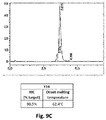
- Tm refers to the melting temperature of a binding protein, an antigen-binding protein, an antibody and is a parameter critical for the thermal stability of antigen-binding proteins.
- the Tm commonly refers to the thermal stability of the Fv fragment, i.e., a variable region heavy and light chain (VH/VL).
- the Tm can be measured by differential scanning calorimetry (DSC) or differential scanning fluorimetry (DSF).
- binding proteins having biological and immunological specificity to between one and four target antigens.
- nucleic acid molecules comprising nucleotide sequences encoding polypeptide chains that form such binding proteins.
- expression vectors comprising nucleic acid molecules comprising nucleotide sequences encoding polypeptide chains that form such binding proteins.
- host cells that express such binding proteins (i.e., comprising nucleic acid molecules or vectors encoding polypeptide chains that form such binding proteins).
- antigen or “target antigen” or “antigen target,” as used herein, refers to a molecule or a portion of a molecule that is capable of being bound by a binding protein, and additionally is capable of being used in an animal to produce antibodies capable of binding to an epitope of that antigen.
- a target antigen may have one or more epitopes. With respect to each target antigen recognized by a binding protein, the binding protein is capable of competing with an intact antibody that recognizes the target antigen.
- epitope refers to any determinant, e.g., a polypeptide determinant, capable of specifically binding to an immunoglobulin or T-cell receptor.
- epitope determinants include chemically active surface groupings of molecules such as amino acids, sugar side chains, phosphoryl groups, or sulfonyl groups, and, in certain embodiments, may have specific three-dimensional structural characteristics and/or specific charge characteristics.
- An epitope is a region of an antigen that is bound by an antibody or by an antigen-binding fragment of an antibody or by a binding protein.
- a binding protein is said to specifically bind an antigen when it preferentially recognizes its target antigen in a complex mixture of proteins and/or macromolecules. In some embodiments, a binding protein is said to specifically bind an antigen when the equilibrium dissociation constant is ⁇ 10 -8 M, when the equilibrium dissociation constant is ⁇ 1 -9 M, or when the dissociation constant is ⁇ 10 -10 M.
- linker refers to 0-100 contiguous amino acid residues.
- the linkers are, present or absent, and same or different. Linkers may all have the same amino acid sequence or may all have different amino acid sequences.
- the peptide linker comprises the following sequence: EPKSCDKTHTSPPSPAPELLGGPSTPPTPSPSGG (SEQ ID NO: X).
- linker refers to 1-15 contiguous amino acid residues. Typically, a linker provides flexibility and spatial separation between two amino acids or between two polypeptide domains.
- a linker may be inserted between VH, VL, CH and/or CL domains to provide sufficient flexibility and mobility for the domains of the light and heavy chains depending on the format of the molecule, e.g., to fold into cross over dual variable region immunoglobulins.
- a linker is typically inserted at the transition between variable domains between variable and knockout domain, or between variable and constant domains, respectively, at the amino sequence level. The transition between domains can be identified because the approximate size of the immunoglobulin domains are well understood.
- the linker may be inserted between Fab domains to create a tandem Fab antibody.
- the linker may be inserted between the N terminus of a VH domain of a first Fab and the C terminus of a CH1 domain of a second Fab.
- the identity and sequence of amino acid residues in the linker may vary depending on the type of secondary structural element(s) necessary to achieve in the linker.
- glycine, serine and alanine are suitable for linkers having maximum flexibility.
- Certain combinations of glycine, proline, threonine and serine are useful if a more rigid and extended linker is desired.
- Any amino acid residue may be considered as a linker in combination with other amino acid residues to construct larger peptide linkers as needed depending on the desired properties.
- a linker comprises: a single glycine (Gly) residue; a diglycine peptide (Gly-Gly); a tripeptide (Gly-Gly-Gly); a peptide with four glycine residues (Gly-Gly- Gly-Gly; SEQ ID NO: x); a peptide with five glycine residues (Gly-Gly-Gly-Gly-Gly; SEQ ID NO: x); a peptide with six glycine residues (Gly-Gly-Gly-Gly-Gly-Gly; SEQ ID NO: x); a peptide with seven glycine residues (Gly-Gly-Gly-Gly-Gly-Gly-Gly-Gly; SEQ ID NO: x); and a peptide with eight glycine residues (Gly-Gly-Gly-Gly-Gly-Gly-Gly-Gly; SEQ ID NO: x).
- a linker comprises small amino acids, like Gly, Ala or Ser.
- a linker comprises Gly and Ser, or GS, GGS, GGGS or GGGGS. In some embodiments, a linker comprises (Gly-Gly-Gly-Gly-Ser) 2 (i.e., (GGGGS) 2 ). In some embodiments, a linker comprises (Gly-Gly-Gly-Gly-Ser) 3 (i.e., (GGGGS) 3 ).
- a linker comprises Gly-Gly- Gly-Gly-Ser (SEQ ID NO: x), the peptide Gly-Gly-Gly-Gly-Ser-Gly-Gly-Gly-Gly-Gly-Gly-Ser (SEQ ID NO: x), the peptide Gly-Gly-Gly-Gly-Ser-Gly-Gly-Gly-Gly-Gly-Gly-Gly-Gly-Gly-Gly-Gly-Gly-Gly- Gly-Ser (SEQ ID NO: x), and the peptide Gly-Gly-Ser-Gly-Ser-Gly-Ser-Gly-Gly-Gly (SEQ ID NO:x).
- a linker comprises a single Ser residue; a single Val residue; a dipeptide selected from Arg-Thr, Gin-Pro, Ser-Ser, Thr-Lys, and Ser-Leu; Thr-Lys-Gly-Pro-Ser (SEQ ID NO: x), Thr-Val-Ala-Ala-Pro (SEQ ID NO: x), Gln-Pro-Lys-Ala-Ala (SEQ ID NO: x), Gln-Arg- Ile-Glu-Gly (SEQ ID NO: x); Ala-Ser-Thr-Lys-Gly-Pro-Ser (SEQ ID NO: x), Arg-Thr- Val-Ala-Ala-Pro-Ser (SEQ ID NO: x), Gly-Gln-Pro-Lys-Ala-Ala-Pro (SEQ ID NO:x), His-Ile-Asp-Ser-Pro-Asn-Lys (SEQ ID NO:
- two tandem Fabs are linked through a (Gly-Gly-Gly-Gly-Ser) 2 linker.
- L1 is 3 to 12 amino acid residues in length
- L2 is 3 to 14 amino acid residues in length
- L3 is 1 to 8 amino acid residues in length
- L4 is 1 to 3 amino acid residues in length.
- L1 is 5 to 10 amino acid residues in length
- L2 is 5 to 8 amino acid residues in length
- L3 is 1 to 5 amino acid residues in length
- L4 is 1 to 2 amino acid residues in length.
- L1 is 7 amino acid residues in length
- L2 is 5 amino acid residues in length
- L3 is 1 amino acid residue in length
- L4 is 2 amino acid residues in length.
- L1 is 10 amino acid residues in length
- L2 is 10 amino acid residues in length
- L3 is 0 amino acid residue in length
- L4 is 0 amino acid residues in length.
- L1, L2, L3, and L4 each have an independently selected length from 0 to 15 amino acids (e.g., 0, 1, 2, 3, 4, 5, 6, 7, 8, 9, 10, 11, 12, 13, 14, or 15 amino acids), wherein at least two of the linkers have a length of 1 to 15 amino acids (e.g., 1, 2, 3, 4, 5, 6, 7, 8, 9, 10, 11, 12, 13, 14, or 15 amino acids).
- L1, L2, L3, and L4 are Asp-Lys-Thr-His-Thr (SEQ ID NO: x).
- linker(s) comprise the sequence Gly-Gln-Pro-Lys-Ala-Ala-Pro (SEQ ID NO: x).
- L1 comprises the sequence Gly-Gln-Pro-Lys-Ala-Ala-Pro (SEQ ID NO: x). In some embodiments, L1 comprises the sequence Gly-Gln-Pro-Lys-Ala-Ala-Pro (SEQ ID NO: x), L2 comprises the sequence Thr-Lys-Gly-Pro-Ser-Arg (SEQ ID NO: x), L3 comprises the sequence Ser, and L4 comprises the sequence Arg-Thr. In some embodiments, L3 comprises the sequence Gly-Gln-Pro-Lys-Ala-Ala-Pro (SEQ ID NO: x).
- L1 comprises the sequence Ser
- L2 comprises the sequence Arg-Thr
- L3 comprises the sequence Gly-Gln-Pro-Lys-Ala-Ala-Pro (SEQ ID NO: x)
- L4 comprises the sequence Thr-Lys-Gly-Pro-Ser-Arg (SEQ ID NO: x).
- L1, L2, L3 and L4 each independently comprises a sequence selected from (Gly-Gly-Gly-Gly-Ser) n (wherein n is an integer between 0 and 5; SEQ ID NO: x), Gly-Gly-Gly-Gly-Ser-Gly-Gly-Gly-Gly-Ser (SEQ ID NO: x), Gly-Gly-Gly-Gly-Ser-Gly-Gly-Gly-Gly-Gly-Gly-Gly-Ser (GEQ ID NO: x), Ser, Arg-Thr, Thr-Lys-Gly-Pro-Ser (SEQ ID NO: x), Gly-Gln-Pro-Lys-Ala-Ala-Pro (SEQ ID NO: x), and Gly-Gly-Ser-Gly-Ser-Gly-Ser-Gly-Gly-Gly-Gly (SEQ ID NO: x).
- L1 comprises the sequence Gly-Gln-Pro-Lys-Ala-Ala-Pro (SEQ ID NO: x)
- L2 comprises the sequence Thr-Lys-Gly-Pro-Ser (SEQ ID NO: x)
- L3 comprises the sequence Ser
- L4 comprises the sequence Arg-Thr.
- L1 comprises the sequence Gly-Gly-Gly-Gly-Ser-Gly-Gly-Gly-Gly-Gly-Ser (SEQ ID NO: x)
- L2 comprises the sequence Gly-Gly-Gly-Gly-Ser-Gly-Gly-Gly-Gly-Gly-Ser (SEQ ID NO: x)
- L3 is 0 amino acids in length
- L4 is 0 amino acids in length.
- L1 comprises the sequence Gly-Gly-Ser-Gly-Ser-Ser-Gly-Ser-Gly-Gly-Gly (SEQ ID NO: x)
- L2 comprises the sequence Gly-Gly-Ser-Gly-Ser-Ser-Gly-Ser-Gly-Gly (SEQ ID NO: x)
- L3 is 0 amino acids in length
- L4 is 0 amino acids in length.
- L1 comprises the sequence Gly-Gly-Gly-Gly-Ser-Gly-Gly-Gly-Gly-Gly-Ser-Gly-Gly-Gly-Gly-Gly-Ser (SEQ ID NO: x)
- L2 is 0 amino acids in length
- L3 comprises the sequence Gly-Gly-Gly-Gly-Ser-Gly-Gly-Gly-Gly-Gly-Ser-Gly-Gly-Gly-Gly-Gly-Gly-Gly-Ser (SEQ ID NO: x)
- L4 is 0 amino acids in length.
- L1 and L2 are zero amino acids in length
- L3 and L4 each comprise a sequence independently selected from (Gly-Gly-Gly-Gly-Ser) n (SEQ ID NO: x) (wherein n is an integer between 0 and 5; SEQ ID NO: x), Gly-Gly-Gly-Gly-Ser-Gly-Gly-Gly-Gly-Ser (SEQ ID NO: x), Gly-Gly-Gly-Gly-Ser-Gly-Gly-Gly-Gly-Gly-Gly-Ser (SEQ ID NO: x), Ser, Arg-Thr, Thr-Lys-Gly-Pro-Ser (SEQ ID NO: x), Gly-Gln-Pro-Lys-Ala-Ala-Pro (SEQ ID NO: x), and Gly-Gly-Ser-Gly-Ser-Gly-Ser-Gly-Ser-Gly-Ser-Gly-S
- L3 and L4 are zero amino acids in length
- L1 and L2 each comprise a sequence independently selected from (Gly-Gly-Gly-Gly-Ser) n (wherein n is an integer between 0 and 5; SEQ ID NO: x), Gly-Gly-Gly-Gly-Ser-Gly-Gly-Gly-Gly-Ser (SEQ ID NO: x), Gly-Gly-Gly-Gly-Ser-Gly-Gly-Gly-Gly-Gly-Ser-Gly-Gly-Gly-Gly-Gly-Ser (SEQ ID NO: x), Ser, Arg-Thr, Thr-Lys-Gly-Pro-Ser (SEQ ID NO: x), Gly-Gln-Pro-Lys-Ala-Ala-Pro (SEQ ID NO: x), and Gly-Gly-Ser-Gly-Ser-Gly-Ser-Gly-Gly-Gly (S
- linker(s) comprise a sequence derived from a naturally occurring sequence at the junction between an antibody variable domain and an antibody constant domain (e.g., as described in WO2012/135345 ).
- the linker comprises a sequence found at the transition between an endogenous VH and CH1 domain, or between an endogenous VL and CL domain (e.g., kappa or lambda).
- the linker comprises a sequence found at the transition between an endogenous human VH and CH1 domain, or between an endogenous human VL and CL domain (e.g., human kappa or lambda).
- linkers comprising randomly selected amino acids selected from the group consisting of valine, leucine, isoleucine, serine, threonine, lysine, arginine, histidine, aspartate, glutamate, asparagine, glutamine, glycine, and proline are suitable for use in the binding proteins described herein.
- linker sequences see, e.g., WO2012135345 , WO2017/180913 incorporated by reference.
- the term “valency” refers to the number of binding sites of a binding protein, an epitope, an antigen-binding protein or an antibody.
- the term “monovalent binding protein” refers to a binding protein that has one antigen-binding site.
- the term “bivalent binding protein” refers to a binding protein that has two binding sites.
- the term “trivalent binding protein” refers to a binding protein that has three binding sites.
- tetravalent binding protein refers to a binding protein that has four binding sites.
- the divalent binding protein can bind to one antigen target. In other embodiments, the divalent binding protein can bind to two different antigen targets.
- the trivalent binding protein can bind to one antigen target, i.e., is monospecific. In other embodiments, the trivalent binding protein can bind to two different antigen targets, i.e., is bispecific. In other embodiments, the trivalent binding protein can bind to three different antigen targets, i.e., is trispecific. In particular embodiments the tetravalent binding protein can bind to one antigen target, i.e., is monospecific. In other embodiments, the tetravalent binding protein can bind to two different antigen targets, i.e., is bispecific. In other embodiments, the tetravalent binding protein can bind to three different antigen targets, i.e., is trispecific. In other embodiments, the tetravalent binding protein can bind to four different antigen targets, i.e., is tetraspecific.
- the term “specificity” refers to the number of binding specificities of a binding protein, an epitope, an antigen-binding protein or an antibody.
- the term “monospecific binding protein” refers to a binding protein that specifically binds to one antigen target.
- the term “bispecific binding protein” refers to a binding protein that specifically binds to two different antigen targets.
- the term “trispecific binding protein” refers to a binding protein that specifically binds to three different antigen targets.
- tetraspecific binding protein refers to a binding protein that specifically binds to four different antigen targets and so forth.
- selective recognition site refers to a modification in the binding protein allowing to be selectively recognized by an affinity reagent binding to the selective recognition site.
- Examples of a selective recognition site comprise the binding site for protein A in the Fc part of an immunoglobulin.
- affinity reagent refers to a reagent that contains a ligand that is immobilized on a matrix and specifically binds to surface groupings of molecules such as amino acids or sugar side chains and usually have specific three-dimensional structural characteristics, as well as specific charge characteristics. Affinity reagents are tools in affinity chromatography, where purification is enabled by the specific interaction between the ligand and the product.
- Protein L which is an example of an affinity reagent, refers to recombinant protein L that is immobilized on a matrix to form a ligand that has affinity for a subset of the variable domain of immunoglobulin kappa light chains.
- Such matrices can be resin.
- affinity reagent refers to a recombinant 13 kDa camelid-derived single chain antibody that is immobilized onto a matrix to form a ligand that has affinity for the constant domain of human immunoglobulin kappa light chains.
- affinity reagent is Protein A. Protein A is a 42 kDa surface protein originally found in the cell wall of the bacteria Staphylococcus aureus. It has been shown via crystallographic refinement that the primary binding site for protein A is on the Fc region, between the CH2 and CH3 domains. In addition, protein A has been shown to bind human IgG molecules containing IgG F(ab')2 fragments from the human VH3 gene family. Protein A can bind with strong affinity to the Fc portion of immunoglobulin of certain species.
- the dissociation constant (KD) of a binding protein can be determined, for example, by surface plasmon resonance.
- surface plasmon resonance analysis measures real-time binding interactions between ligand (a target antigen on a biosensor matrix) and analyte (a binding protein in solution) by surface plasmon resonance (SPR) using the BIAcore system (Pharmacia Biosensor; Piscataway, NJ).
- SPR surface plasmon resonance
- Surface plasmon analysis can also be performed by immobilizing the analyte (binding protein on a biosensor matrix) and presenting the ligand (target antigen).
- KD refers to the dissociation constant of the interaction between a particular binding protein and a target antigen.
- the term "specifically binds" refers to the ability of a binding protein or an antigen-binding fragment thereof to bind to an antigen containing an epitope with an Kd of at least about 1 x 10 -6 M, 1 x 10 -7 M, 1 x 10 -8 M, 1 x 10 -9 M, 1 x 10 -1 0 M, 1 x 10 -11 M, 1 x 10 -12 M, or more, and/or to bind to an epitope with an affinity that is at least two-fold greater than its affinity for a nonspecific antigen. Binding affinity of an antigen to a binding protein or an antibody can be conducted by surface plasmon resonance (SPR) using a BIAcore instrument.
- SPR surface plasmon resonance
- nucleic acid refers to polymeric or oligomeric macromolecules, or large biological molecules, essential for all known forms of life.
- Nucleic acids which include DNA (deoxyribonucleic acid) and RNA (ribonucleic acid), are made from monomers known as nucleotides. Most naturally occurring DNA molecules consist of two complementary biopolymer strands coiled around each other to form a double helix. The DNA strand is also known as polynucleotides consisting of nucleotides. Each nucleotide is composed of a nitrogen-containing nucleobase as well as a monosaccharide sugar called deoxyribose or ribose and a phosphate group.
- Naturally occurring nucleobases comprise guanine (G), adenine (A), thymine (T), uracil (U) or cytosine (C).
- the nucleotides are joined to one another in a chain by covalent bonds between the sugar of one nucleotide and the phosphate of the next, resulting in an alternating sugar-phosphate backbone.
- the polymer is DNA.
- the polymer is RNA.
- a polynucleotide is formed through phosphodiester bonds between the individual nucleotide monomers.
- polynucleotide refers to single-stranded or double-stranded nucleic acid polymers of at least 10 nucleotides in length. It is understood that the nucleotides comprising the polynucleotide can be ribonucleotides or deoxyribonucleotides or a modified form of either type of nucleotide.
- Such modifications include base modifications such as bromuridine, ribose modifications such as arabinoside and 2',3'-dideoxyribose, and internucleotide linkage modifications such as phosphorothioate, phosphorodithioate, phosphoroselenoate, phosphorodiselenoate, phosphoroanilothioate, phoshoraniladate and phosphoroamidate.
- base modifications such as bromuridine, ribose modifications such as arabinoside and 2',3'-dideoxyribose, and internucleotide linkage modifications such as phosphorothioate, phosphorodithioate, phosphoroselenoate, phosphorodiselenoate, phosphoroanilothioate, phoshoraniladate and phosphoroamidate.
- polynucleotide specifically includes single-stranded and double-stranded forms of DNA.
- isolated polynucleotide is a polynucleotide of genomic, cDNA, or synthetic origin or some combination thereof, which: (1) is not associated with all or a portion of a polynucleotide in which the isolated polynucleotide is found in nature; (2) is linked to a polynucleotide to which it is not linked in nature; or (3) does not occur in nature as part of a larger sequence.
- isolated polypeptide is one that: (1) is free of at least some other polypeptides with which it would normally be found; (2) is essentially free of other polypeptides from the same source, e.g., from the same species; (3) is expressed by a cell from a different species; (4) has been separated from at least about 50 percent of polynucleotides, lipids, carbohydrates, or other materials with which it is associated in nature; (5) is not associated (by covalent or noncovalent interaction) with portions of a polypeptide with which the "isolated polypeptide" is associated in nature; (6) is operably associated (by covalent or noncovalent interaction) with a polypeptide with which it is not associated in nature; or (7) does not occur in nature.
- Such an isolated polypeptide can be encoded by genomic DNA, cDNA, mRNA or other RNA, of synthetic origin, or any combination thereof.
- the isolated polypeptide is substantially free from polypeptides or other contaminants that are found in its natural environment that would interfere with its use (therapeutic, diagnostic, prophylactic, research or otherwise).
- the term "expression vector” also referred to as an expression construct, usually refers to a plasmid or virus designed for protein expression in cells.
- the term “vector” refers to a protein or a polynucleotide or a mixture thereof which is capable of being introduced or of introducing proteins and/or nucleic acids comprised therein into a cell.
- examples of vectors include but are not limited to plasmids, cosmids, phages, viruses or artificial chromosomes.
- a vector is used to transport a gene product of interest, such as e.g., foreign or heterologous DNA into a suitable host cell.
- Vectors may contain "replicon" polynucleotide sequences that facilitate the autonomous replication of the vector in a host cell.
- Foreign DNA is defined as heterologous DNA, which is DNA not naturally found in the host cell, which, for example, replicates the vector molecule, encodes a selectable or screenable marker, or encodes a transgene.
- the vector can replicate independently of or coincidental with the host chromosomal DNA, and several copies of the vector and its inserted DNA can be generated.
- the vector can also contain the necessary elements that permit transcription of the inserted DNA into an mRNA molecule or otherwise cause replication of the inserted DNA into multiple copies of RNA.
- Vectors may further encompass "expression control sequences" that regulate the expression of the gene of interest.
- expression control sequences are polypeptides or polynucleotides such as but not limited to promoters, enhancers, silencers, insulators, or repressors.
- the expression may be controlled together or separately by one or more expression control sequences. More specifically, each polynucleotide comprised on the vector may be control by a separate expression control sequence or all polynucleotides comprised on the vector may be controlled by a single expression control sequence.
- Polynucleotides comprised on a single vector controlled by a single expression control sequence may form an open reading frame.
- Some expression vectors additionally contain sequence elements adjacent to the inserted DNA that increase the half-life of the expressed mRNA and/or allow translation of the mRNA into a protein molecule. Many molecules of mRNA and polypeptide encoded by the inserted DNA can thus be rapidly synthesized.
- the term "host cell” refers to a cell into which a recombinant expression vector has been introduced.
- a recombinant host cell or host cell is intended to refer not only to the particular subject cell, but also to the progeny of such a cell. Because certain modifications may occur in succeeding generations due to either mutation or environmental influences, such progeny may not, in fact, be identical to the parent cell, but such cells are still included within the scope of the term "host cell” as used herein.
- a wide variety of host cell expression systems can be used to express the binding proteins, including bacterial, yeast, baculoviral, and mammalian expression systems (as well as phage display expression systems).
- An example of a suitable bacterial expression vector is pUC19.
- a host cell is transformed or transfected with one or more recombinant expression vectors carrying DNA fragments encoding the polypeptide chains of the binding protein such that the polypeptide chains are expressed in the host cell and, in exemplary embodiments, secreted into the medium in which the host cells are cultured, from which medium the binding protein can be recovered.
- pharmaceutical composition refers to a compound or composition capable of inducing a desired therapeutic effect when properly administered to a patient.
- pharmaceutically acceptable carrier refers to one or more formulation materials suitable for accomplishing or enhancing the delivery of a binding protein.
- a therapeutically effective amount when used in reference to a pharmaceutical composition comprising one or more binding proteins (e.g., antibodies or antigen-binding fragments thereof), refer to an amount or dosage sufficient to produce a desired therapeutic result. More specifically, a therapeutically effective amount is an amount of a binding protein (e.g., an antibody or antigen-binding fragment thereof) sufficient to inhibit, for some period of time, one or more of the clinically defined pathological processes associated with the condition being treated. The effective amount may vary depending on the specific antibody-like binding protein that is being used, and also depends on a variety of factors and conditions related to the patient being treated and the severity of the disorder.
- binding protein or multispecific binding protein is to be administered in vivo, factors such as the age, weight, and health of the patient as well as dose response curves and toxicity data obtained in preclinical animal work would be among those factors considered.
- factors such as the age, weight, and health of the patient as well as dose response curves and toxicity data obtained in preclinical animal work would be among those factors considered.
- the determination of an effective amount or therapeutically effective amount of a given pharmaceutical composition is well within the ability of those skilled in the art.
- the term "method of production of a binding protein” refers to recombinant methods of protein expression using techniques well known in the art.
- mutations may be made in the CH1 and CL interface to facilitate specific pairing and prevent CH1 / CL mispairing. Such mutations are described below and in further detail in WO2013/005194 and Golay et al. (2016) J. Immunol. Vol. 196. Pg. 3199-3211 , each of which is incorporated herein by reference.
- a first set of mutations may be made to a pair of interacting polar interface amino acids in the CH1 and CL domain. Said polar amino acids can be exchanged for a pair of neutral and salt-forming amino acids.
- a first set of mutations may comprise a T192E CH1 mutation and a N137K, S114A CL kappa mutation.
- the T192E CH1 mutation and the N137K CL kappa mutation form a salt bridge, which may reinforce the specificity of association, whereas an unwanted pairing should be avoided by the lack of steric and charge complementarity between the wild-type and variant CH1 and CL kappa domains.
- the S114A mutation on the CL kappa domain is made to avoid steric clashes with the bigger lysine side chain.
- the CH1 T192E and CL N137K / S114A mutation set may alternatively be referred to as the "CR3" mutation set.
- a second set of mutations may be made to a pair of interacting hydrophobic and polar interface amino acid residues in the CH1 and CL kappa domains.
- One mutation may constitute a switch from a hydrophobic to polar interaction.
- the second set of mutations may comprise a L143Q, S188V CH1 mutation and a V133T, S176V CL kappa mutation.
- the L134Q CH1 mutation and V133T CL kappa mutation constitutes a switch from a hydrophobic interaction to a polar interaction.
- the simultaneous S188V CH1 mutation and S176V CL kappa mutation constitutes a switch from a polar interaction to a hydrophobic interaction.
- the exchange of the polar/hydrophobic character of the interface interactions is expected to keep the affinity between the mutated CH1 and CL kappa domains unchanged, while decreasing their respective affinity for other wild-type counterpart CH1 and CL kappa domains, thus preventing mispairing by virtue of unfavorable interactions occurring upon mismatched (variant/wild-type) domains.
- the CH1 L143Q / S188V and CL V133T / S176V mutation set may alternatively be referred to as the "MUT4" mutation set.
- a third and fourth set of mutations are "knob into holes" mutations. More specifically, in the third set of mutations (KH1), a L124A, L143E CH1 mutation is made and a V133W CL kappa mutation is made. In the fourth set of mutations (KH2), a V190A CH1 mutation is made and a L135W, N137A CL kappa mutation is made.
- KH1 a L124A, L143E CH1 mutation
- V133W CL kappa mutation is made in the fourth set of mutations (KH2)
- KH2 a V190A CH1 mutation is made and a L135W, N137A CL kappa mutation is made.
- the first, second, third, and fourth sets of mutations are described in further detail in WO2013/005194 A1 .
- a fifth and sixth set of mutations may be made to swap electrostatic charges in the CH1 and CL kappa domains.
- the fifth set of mutations may comprise a K221E CH1 mutation and a E123K CL kappa mutation.
- the fifth set of mutations may be alternatively referred to as the "K221E/E123K opposite charge” mutation set.
- the sixth set of mutations may comprise a K228E CH1 mutation and a D122K CL kappa mutation.
- the sixth set of mutations may be alternatively referred to as the "K228E/D122K opposite charge” mutation set.
- the fifth and sixth set of mutations are described in further detail in WO2007/147901 A1 .
- a seventh and eighth set of mutations may be made to swap electrostatic charges in the CH1 and CL kappa domains.
- the seventh set of mutations may comprise a L143E, L143D, L143R, L143K, or L143H CH1 mutation and a S176E, S176D, S176R, S176K, or S176H CL kappa mutation, provided that the CH1 mutation is of an opposite charge from the CL kappa mutation.
- the seventh set of mutations may be alternatively referred to as the "L143/S176 opposite charge" mutation set.
- the eighth set of mutations may comprise a L124E, L124D, L124R, L124K, or L124H CH1 mutation and a V133E, V133D, V133R, V133K, or V133H CL kappa mutation, provided that the CH1 mutation is of an opposite charge from the CL kappa mutation.
- the eighth set of mutations may be alternatively referred to as the "L124/V133 opposite charge" mutation set.
- any one or more of the above mentioned mutations may be combined with each other's and/or with mutations described below.
- the CH1 domain of a first Fab comprises a T192E, K221E mutation and the CL kappa domain of a first Fab comprises a E123K, N137K, S114A mutation.
- the CH1 domain of a second Fab may further comprise a L143Q, S188V mutation and the CL kappa domain of a second Fab may comprise a V133T, S176V mutation.
- the second Fab may be wild-type.
- Sequence position numbers used herein for the CH1 and CL kappa domains refer to Kabat numbering ( Kabat, E.A. et al., Sequences of proteins of immunological interest. 5th Edition - US Department of Health and Human Services, NIH publication no 91-3242, pp 662,680,689, 1991 ).
- mutations may be made in the VH and VL interface to facilitate specific pairing and prevent VH / VL mispairing.
- the mutations made to the VH and VL domains introduce opposite charged amino acid residues to promote heterodimerization through electrostatic interactions.
- a set of opposite charge mutations may comprise a Q39 mutation in the VH domain and a Q38 mutation in the VL domain. Any known positively charged or negatively charged residue may be introduced at the VH Q39 position, provided that the mutation introduced at the VL Q38 position is of an opposite charge.
- one possible mutation pair comprises a VH Q39K mutation (introducing a positive charge) and a VL Q38E mutation (introducing a negative charge).
- the reverse mutation set may be made, where a VH Q39E mutation (introducing a negative charge) and a VL Q38K mutation (introducing a positive charge) are introduced.
- the VH domain may comprise a Q39E, Q39D, Q39K, Q39R, or Q39H mutation and the VL domain may comprise a Q38E, Q38D, Q38K, Q38R, or Q38H mutation, provided that the mutation in the VH domain is an opposite charge from the mutation in the VL domain.
- the another VH/VL pair may comprise a negative charge in VH39 and a positive charge in VL38.
- VH39/VL38 opposite charge This set of opposite charge mutations are described in further detail in Tan et al., Biophysical Journal. Vol. 75. Pg. 1473-1482. 1998 .
- any one or more of the above mentioned mutations may be combined with each other's and/or with mutations described below.
- mutations may be made in the VH and VL interface to improve stability between the VH / VL interface.
- Specific sets of amino acid mutations in the VH domain and the VL domains may improve stability through the introduction of non-native cysteine residues that form disulfide bridges.
- a first set of disulfide-stabilizing mutations may be made to amino acid residues in the VH and VL domains.
- the first set of disulfide stabilizing mutations may comprise a 44C mutation in the VH domain and a 100C mutation in the VL domain.
- the first set of disulfide stabilizing mutations may be alternatively referred to as the "VH44C/VL100C" mutation set.
- the first set of disulfide stabilizing mutations are described in further detail in Reiter et al. Nature Biotechnology. Vol. 14. Pg. 1239-1245. 1996 , incorporated herein by reference for all purposes.
- a second set of disulfide stabilizing mutations may be made to amino acid residues in the VH and VL domain.
- the second set of disulfide stabilizing mutations may comprise a 105C mutation in the VH domain and a 43C mutation in the VL domain.
- the second set of disulfide stabilizing mutations may be alternatively referred to as the "VH105C/VL43C" mutation set.
- the second set of disulfide stabilizing mutations are described in further detail in U.S. Patent No. 9,527,927 , incorporated herein by reference for all purposes.
- combinations of mutation sets may be in the CH1 and CL kappa interface and/or in the VH and VL interface to further facilitate pairing and improve stability.
- a first Fab domain in an antibody may comprise one or both of the CR3 and MUT4 mutation set in combination with a VH /VL opposite charge mutation set.
- a second Fab domain in an antibody may comprise one or both of the CR3 and MUT4 mutation set in combination with a VH / VL opposite charge mutation set.
- a first Fab domain may comprise one or both of the CR3 and MUT4 mutation set in combination with a VH /VL opposite charge mutation set and a disulfide stabilizing mutation set.
- a second Fab domain in an antibody may comprise one or both of the CR3 and MUT4 mutation set in combination with a VH / VL opposite charge mutation set and a disulfide stabilizing mutation set.
- any of the above embodiments may further comprise a opposite charge mutation set in the CH1 / CL interface.
- a first Fab may comprise a K221 E CH1 mutation and a E123K CL kappa mutation.
- a second Fab may comprise a K221 E CH1 mutation and a E123K CL kappa mutation.
- cross-over dual variable refers to an antigen-binding domain that specifically binds to at least one target antigen, and comprises at least two polypeptide chains that form at least two antigen-binding sites, wherein at least one polypeptide chain comprises a structure represented by the formula: VL1-L1-VL2-L2-CL [I] and at least one polypeptide chain comprises a structure represented by the formula: VH2-L3-VH1-L4-CH1 [II] wherein:
- a CODV antigen-binding domain specifically binds to at least one target antigen, and comprises four polypeptide chains that form four antigen-binding sites, wherein two polypeptide chains each comprises a structure represented by the formula: VL1-L1-VL2-L2-CL [I] and two polypeptide chains each comprises a structure represented by the formula: VH2-L3-VH1-L4-CH1-Fc [II] wherein:
- an antigen-binding protein described herein is a trispecific and/or a trivalent antigen-binding protein comprising four polypeptide chains that form three antigen-binding sites that specifically bind to one or more different antigen targets, wherein the first polypeptide chain comprises a structure represented by the formula: VL2-L1-VL1-L2-CL [I] the second polypeptide chain comprises a structure represented by the formula: VH1-L3-VH2-L4-CH1-hinge-CH2-CH3 [II] the third polypeptide chain comprises a structure represented by the formula: VH3-CH1-hinge-CH2-CH3 [III] and the fourth polypeptide chain comprises a structure represented by the formula: VL3-CL [IV] , wherein:
- the first polypeptide chain and the second polypeptide chain have a cross-over orientation that forms two distinct antigen-binding sites.
- the VH1 and VL1 form a binding pair and form the first antigen-binding site.
- the VH2 and VL2 form a binding pair and form the second antigen-binding site.
- the third polypeptide and the fourth polypeptide form a third antigen-binding site.
- the VH3 and VL3 form a binding pair and form the third antigen-binding site.
- linkers comprising randomly selected amino acids selected from the group consisting of valine, leucine, isoleucine, serine, threonine, lysine, arginine, histidine, aspartate, glutamate, asparagine, glutamine, glycine, and proline have been shown to be suitable in the antibody-like binding proteins described herein.
- CODV antibody format The CODV antibody format, the various permutation of the CODV antibody format, and additional details regarding linkers is further described in WO2012/135345A1 , and WO2017/180913A2 , which are incorporated herein by reference in their entireties.
- tandem fabs refers to an antigen-binding protein, wherein the C terminus of one CH1 region of a first Fab domain is operatively linked to the N terminus of a VH region of a second Fab domain.
- the tandem fab antibody may be tetravalent and monospecific (each of the four fabs binding the same antigen).
- the tandem fab antibody may be tetravalent and bispecific (two of the four fabs bind a first antigen while the other two fabs bind a second antigen).
- the tandem fabs may be operatively linked with any known peptide linker to the art used for linking two or more antigen-bind domains.
- the peptide linker is a Gly-Ser linker.
- the peptide linker is a (Gly-Gly-Gly-Gly-Ser) n (SEQ ID NO: x) linker, wherein n is any integer from 1 to 5.
- the peptide linker is a (Gly-Gly-Gly-Gly-Ser) 3 (SEQ ID NO: x) linker.
- the peptide linker is a (Gly-Gly-Gly-Gly-Ser) 2 (SEQ ID NO: x) linker.
- the peptide linker may comprise all or part of the sequence of the hinge region of one or more immunoglobulins selected from IgA, IgG, and IgD. Sequences of hinge regions of human IgG, IgA and IgD are indicated below:
- Said peptide linker may comprise all or part of the sequence of the hinge region of only one immunoglobulin.
- said immunoglobulin may belong to the same isotype and subclass as the immunoglobulin from which the adjacent CH1 domain is derived, or to a different isotype or subclass.
- said peptide linker may comprise all or part of the sequences of hinge regions of at least two immunoglobulins of different isotypes or subclasses.
- the N-terminal portion of the peptide linker which directly follows the CH1 domain, may consist of all or part of the hinge region of an immunoglobulin belonging to the same isotype and subclass as the immunoglobulin from which said CH1 domain is derived.
- said peptide linker may further comprise a sequence of from 2 to 15 or from 5 to 10 N-terminal amino-acids of the CH2 domain of an immunoglobulin.
- sequences from native hinge regions can be used.
- point mutations can be brought to these sequences, in particular the replacement of one or more cysteine residues in native IgG1, IgG2 or IgG3 hinge sequences by alanine or serine, in order to avoid unwanted intra-chain or inter-chains disulfide bonds.
- a non-limitative example of a peptide linker which can be used in the antigen-binding proteins of the disclosure is a peptide linker having the following sequence: Glu-Pro-Lys-Ser-Cys-Asp-Lys-Thr-His-Thr-Cys-Pro-Pro-Cys-Pro-Ala-Pro-Glu-Leu-Leu-Gly-Gly-Pro-Ser-Thr-Pro-Pro-Thr-Pro-Ser-Pro-Ser-Gly-Gly (SEQ ID NO: x).
- Said peptide linker consists of the full-length sequence of human IgG1 hinge, followed by the 9 N-terminal amino acids of human IgG1 CH2 (Ala-Pro-Glu-Leu-Leu-Gly-Gly-Pro-Ser, SEQ ID NO: X), followed by a portion of the sequence of human IgA1 hinge (Thr-Pro-Pro-Thr-Pro-Ser-Pro-Ser, SEQ ID NO: X), and by the dipeptide GG, added to provide supplemental flexibility to the linker.
- the peptide linker Glu-Pro-Lys-Ser-Cys-Asp-Lys-Thr-His-Thr-Cys-Pro-Pro-Cys-Pro-Ala-Pro-Glu-Leu-Leu-Gly-Gly-Pro-Ser-Thr-Pro-Pro-Thr-Pro-Ser-Pro-Ser-Gly-Gly (SEQ ID NO: x) may have one or more cysteine restudies replaced to eliminate disulfide bind formation.
- the peptide linker comprises the following sequence: Glu-Pro-Lys-Ser-Cys-Asp-Lys-Thr-His-Thr-Ser-Pro-Pro-Ser-Pro-Ala-Pro-Glu-Leu-Leu-Gly-Gly-Pro-Ser-Thr-Pro-Pro-Thr-Pro-Ser-Pro-Ser-Gly-Gly (SEQ ID NO: X).
- the hinge-derived peptide linkers are further described in WO2013/005194 A2 , which is incorporated herein by reference in its entirety.
- the antigen-binding protein of the disclosure may comprise a CODV antibody format with one or more of the CR3 mutation sets, the MUT4 mutation set, the L143/S176 opposite charge mutation set, and the L124/V133 opposite charge mutation set.
- the antigen-binding protein may further comprise one or more VH / VL opposite charge mutation sets.
- the one or more VH / VL opposite charge mutation sets include, but are not limited to, the VH39/VL38 opposite charge mutation set.
- the antigen-binding protein may further comprise one or more VH / VL disulfide stabilization mutation sets.
- the one or more VH / VL disulfide mutation sets include, but are not limited to, the VH44C/VL100C mutation set and the VH105C/VL43C mutation set.
- the antigen-binding protein may further comprise one or more CH1 / CL opposite charge mutation sets.
- the one or more CH1 / CL opposite charge mutation sets may include, but are not limited to, the K221 E/E123K opposite charge mutation set.
- an antigen-binding protein of the disclosure comprises two polypeptide chains and forming two antigen-binding sites, wherein one polypeptide chain has a structure represented by the formula: VL1-L1-VL2-L2-CL [I] and one polypeptide chain have a structure represented by the formula: VH2-L3-VH1-L4-CH1 [II] wherein:
- the antigen-binding protein of the disclosure may comprise a tandem Fab antibody format with one or more of the CR3 mutation set, the MUT4 mutation set, the L143/S176 opposite charge mutation set, and the L124/V133 opposite charge mutation set.
- the antigen-binding protein may further comprise one or more VH / VL opposite charge mutation sets.
- the one or more VH / VL opposite charge mutation sets include, but are not limited to, the VH39/VL38 opposite charge mutation set.
- the antigen-binding protein may further comprise one or more VH / VL disulfide stabilization mutation sets.
- the one or more VH / VL disulfide mutation sets include, but are not limited to, the VH44C/VL100C mutation set and the VH105C/VL43C mutation set.
- the antigen-binding protein may further comprise one or more CH1 / CL opposite charge mutation sets.
- the one or more CH1 / CL opposite charge mutation sets may include, but are not limited to, the K221E/E123K opposite charge mutation set.
- the multispecific antibody of the disclosure may comprise
- the antigen-binding protein of the disclosure may comprise a traditional Y-shaped antibody format with one or more of the CR3 mutation set, the MUT4 mutation set, the L143/S176 opposite charge mutation set, and the L124/V133 opposite charge mutation set.
- the antigen-binding protein may further comprise one or more VH / VL opposite charge mutation sets.
- the one or more VH / VL opposite charge mutation sets include, but are not limited to, the VH39/VL38 opposite charge mutation set.
- the antigen-binding protein may further comprise one or more VH / VL disulfide stabilization mutation sets.
- the one or more VH / VL disulfide stabilization mutation sets include, but are not limited to, the VH44C/VL100C mutation set and the VH105C/VL43C mutation set.
- the antigen-binding protein may further comprise one or more CH1 / CL opposite charge mutation sets.
- the one or more CH1 / CL opposite charge mutation sets may include, but are not limited to, the K221 E/E123K opposite charge mutation set.
- the multispecific antibody of the disclosure may comprise
- the multispecific antibody of the disclosure may comprise
- the multispecific antibody of the disclosure may comprise
- the multispecific antibody of the disclosure may comprise
- a pharmaceutical composition comprising a pharmaceutically acceptable carrier and a therapeutically effective amount of an antigen-binding protein described herein is provided.
- Some embodiments include pharmaceutical compositions comprising a therapeutically effective amount of any one of the binding proteins as described herein, or a binding protein-drug conjugate, in admixture with a pharmaceutically or physiologically acceptable formulation agent selected for suitability with the mode of administration.
- Acceptable formulation materials are typically non-toxic to recipients at the dosages and concentrations employed.
- the pharmaceutical composition can contain formulation materials for modifying, maintaining, or preserving, for example, the pH, osmolarity, viscosity, clarity, color, isotonicity, odor, sterility, stability, rate of dissolution or release, adsorption, or penetration of the composition.
- Suitable formulation materials include, but are not limited to, amino acids (such as glycine, glutamine, asparagine, arginine, or lysine), antimicrobials, antioxidants (such as ascorbic acid, sodium sulfite, or sodium hydrogen-sulfite), buffers (such as borate, bicarbonate, Tris-HCl, citrates, phosphates, or other organic acids), bulking agents (such as mannitol or glycine), chelating agents (such as ethylenediamine tetraacetic acid (EDTA)), complexing agents (such as caffeine, polyvinylpyrrolidone, beta-cyclodextrin, or hydroxypropyl-beta-cyclodextrin), fillers, monosaccharides, disaccharides, and other carbohydrates (such as glucose, mannose, or dextrins), proteins (such as serum albumin, gelatin, or immunoglobulins), coloring, flavoring and diluting agents, emuls
- the optimal pharmaceutical composition will be determined by a skilled artisan depending upon, for example, the intended route of administration, delivery format, and desired dosage. Such compositions can influence the physical state, stability, rate of in vivo release, and rate of in vivo clearance of the binding protein.
- the primary vehicle or carrier in a pharmaceutical composition can be either aqueous or non-aqueous in nature.
- a suitable vehicle or carrier for injection can be water, physiological saline solution, or artificial cerebrospinal fluid, possibly supplemented with other materials common in compositions for parenteral administration.
- Neutral buffered saline or saline mixed with serum albumin are further exemplary vehicles.
- Other exemplary pharmaceutical compositions comprise Tris buffer of about pH 7.0-8.5, or acetate buffer of about pH 4.0-5.5, which can further include sorbitol or a suitable substitute.
- binding protein compositions can be prepared for storage by mixing the selected composition having the desired degree of purity with optional formulation agents in the form of a lyophilized cake or an aqueous solution. Further, the binding protein can be formulated as a lyophilizate using appropriate excipients such as sucrose.
- the pharmaceutical compositions of the disclosure can be selected for parenteral delivery or subcutaneous.
- the compositions can be selected for inhalation or for delivery through the digestive tract, such as orally.
- the preparation of such pharmaceutically acceptable compositions is within the skill of the art.
- the formulation components are present in concentrations that are acceptable to the site of administration.
- buffers are used to maintain the composition at physiological pH or at a slightly lower pH, typically within a pH range of from about 5 to about 8.
- the therapeutic compositions for use can be in the form of a pyrogen-free, parenterally acceptable, aqueous solution comprising the desired binding protein in a pharmaceutically acceptable vehicle.
- a particularly suitable vehicle for parenteral injection is sterile distilled water in which a binding protein is formulated as a sterile, isotonic solution, properly preserved.
- Yet another preparation can involve the formulation of the desired molecule with an agent, such as injectable microspheres, bio-erodible particles, polymeric compounds (such as polylactic acid or polyglycolic acid), beads, or liposomes, that provides for the controlled or sustained release of the product which can then be delivered via a depot injection.
- Hyaluronic acid can also be used, and this can have the effect of promoting sustained duration in the circulation.
- Other suitable means for the introduction of the desired molecule include implantable drug delivery devices.
- a pharmaceutical composition can be formulated for inhalation.
- a binding protein can be formulated as a dry powder for inhalation.
- Binding protein inhalation solutions can also be formulated with a propellant for aerosol delivery.
- solutions can be nebulized.
- multispecific binding proteins that are administered in this fashion can be formulated with or without those carriers customarily used in the compounding of solid dosage forms such as tablets and capsules.
- a capsule can be designed to release the active portion of the formulation at the point in the gastrointestinal tract when bioavailability is maximized and pre-systemic degradation is minimized.
- Additional agents can be included to facilitate absorption of the binding protein. Diluents, flavorings, low melting point waxes, vegetable oils, lubricants, suspending agents, tablet disintegrating agents, and binders can also be employed.
- Another pharmaceutical composition can involve an effective quantity of multispecific binding proteins in a mixture with non-toxic excipients that are suitable for the manufacture of tablets.
- excipients include, but are not limited to, inert diluents, such as calcium carbonate, sodium carbonate or bicarbonate, lactose, or calcium phosphate; or binding agents, such as starch, gelatin, or acacia; or lubricating agents such as magnesium stearate, stearic acid, or talc.
- compositions of the disclosure will be evident to those skilled in the art, including formulations involving binding proteins in sustained- or controlled-delivery formulations.
- Techniques for formulating a variety of other sustained- or controlled-delivery means such as liposome carriers, bio-erodible microparticles or porous beads and depot injections, are also known to those skilled in the art.
- Additional examples of sustained-release preparations include semipermeable polymer matrices in the form of shaped articles, e.g., films, or microcapsules.
- Sustained release matrices can include polyesters, hydrogels, polylactides, copolymers of L-glutamic acid and gamma ethyl-L-glutamate, poly(2-hydroxyethyl-methacrylate), ethylene vinyl acetate, or poly-D(-)-3-hydroxybutyric acid.
- Sustained-release compositions can also include liposomes, which can be prepared by any of several methods known in the art.
- compositions are to be used for in vivo administration typically must be sterile. This can be accomplished by filtration through sterile filtration membranes. Where the composition is lyophilized, sterilization using this method can be conducted either prior to, or following, lyophilization and reconstitution.
- the composition for parenteral administration can be stored in lyophilized form or in a solution.
- parenteral compositions generally are placed into a container having a sterile access port, for example, an intravenous solution bag or vial having a stopper that can be pierced by a hypodermic injection needle.
- the pharmaceutical composition can be stored in sterile vials as a solution, suspension, gel, emulsion, solid, or as a dehydrated or lyophilized powder.
- Such formulations can be stored either in a ready-to-use form or in a form (e.g., lyophilized) requiring reconstitution prior to administration.
- kits for producing a single dose administration unit can each contain both a first container having a dried multispecific binding protein and a second container having an aqueous formulation. Also included within the scope of this disclosure are kits containing single and multi-chambered pre-filled syringes (e.g., liquid syringes and lyosyringes).
- the effective amount of a binding protein pharmaceutical composition to be employed therapeutically will depend, for example, upon the therapeutic context and objectives.
- One skilled in the art will appreciate that the appropriate dosage levels for treatment will thus vary depending, in part, upon the molecule delivered, the indication for which the binding protein is being used, the route of administration, and the size (body weight, body surface, or organ size) and condition (the age and general health) of the patient. Accordingly, the clinician can titer the dosage and modify the route of administration to obtain the optimal therapeutic effect.
- Dosing frequency will depend upon the pharmacokinetic parameters of the binding protein in the formulation being used. Typically, a clinician will administer the composition until a dosage is reached that achieves the desired effect.
- the composition can therefore be administered as a single dose, as two or more doses (which may or may not contain the same amount of the desired molecule) over time, or as a continuous infusion via an implantation device or catheter. Further refinement of the appropriate dosage is routinely made by those of ordinary skill in the art and is within the ambit of tasks routinely performed by them. Appropriate dosages can be ascertained through use of appropriate dose-response data.
- the route of administration of the pharmaceutical composition is in accord with known methods, e.g., orally; through injection by intravenous, intraperitoneal, intracerebral (intraparenchymal), intracerebroventricular, intramuscular, intraocular, intraarterial, intraportal, or intralesional routes; by sustained release systems; or by implantation devices.
- the compositions can be administered by bolus injection or continuously by infusion, or by implantation device.
- the composition can also be administered locally via implantation of a membrane, sponge, or other appropriate material onto which the desired molecule has been absorbed or encapsulated.
- a membrane, sponge, or other appropriate material onto which the desired molecule has been absorbed or encapsulated.
- the device can be implanted into any suitable tissue or organ, and delivery of the desired molecule can be via diffusion, timed-release bolus, or continuous administration.
- a method of treating a disorder in which antigen activity is detrimental comprising administering to a subject in need thereof an effective amount of an antibody described herein, is provided.
- the binding proteins can be employed in any known assay method, such as competitive binding assays, direct and indirect sandwich assays, and immunoprecipitation assays for the detection and quantitation of one or more target antigens.
- the binding proteins will bind the one or more target antigens with an affinity that is appropriate for the assay method being employed.
- binding proteins can be labeled with a detectable moiety.
- the detectable moiety can be any one that is capable of producing, either directly or indirectly, a detectable signal.
- the detectable moiety can be a radioisotope, such as 3 H, 14 C, 32 P, 35 S, 125 I, 99 Tc, 111 In, or 67 Ga; a fluorescent or chemiluminescent compound, such as fluorescein isothiocyanate, rhodamine, or luciferin; or an enzyme, such as alkaline phosphatase, ⁇ -galactosidase, or horseradish peroxidase.
- binding proteins are also useful for in vivo imaging.
- a binding protein labeled with a detectable moiety can be administered to an animal, e.g., into the bloodstream, and the presence and location of the labeled antibody in the host assayed.
- the binding protein can be labeled with any moiety that is detectable in an animal, whether by nuclear magnetic resonance, radiology, or other detection means known in the art.
- binding proteins can be conjugated to a cytotoxic agent.
- cytotoxic agents i.e., antibody-drug conjugates
- Cytotoxic agents and linkers that conjugate the agents to an antibody are known in the art; see, e.g., Parslow, A.C. et al. (2016) Biomedicines 4:14 and Kalim, M. et al. (2017) Drug Des. Devel. Ther. 11:2265-2276 .
- kits comprising a binding protein and other reagents useful for detecting target antigen levels in biological samples.
- reagents can include a detectable label, blocking serum, positive and negative control samples, and detection reagents.
- the kit comprises a composition comprising any binding protein, polynucleotide, vector, vector system, and/or host cell described herein.
- the kit comprises a container and a label or package insert on or associated with the container. Suitable containers include, for example, bottles, vials, syringes, IV solution bags, etc.
- the containers may be formed from a variety of materials such as glass or plastic.
- the container holds a composition which is by itself or combined with another composition effective for treating, preventing and/or diagnosing a condition and may have a sterile access port (for example the container may be an intravenous solution bag or a vial having a stopper that can be pierced by a hypodermic injection needle).
- the label or package insert indicates that the composition is used for preventing, diagnosing, and/or treating the condition of choice.
- the article of manufacture or kit may further comprise a second (or third) container comprising a pharmaceutically-acceptable buffer, such as bacteriostatic water for injection (BWFI), phosphate-buffered saline, Ringer's solution and dextrose solution. It may further include other materials desirable from a commercial and user standpoint, including other buffers, diluents, filters, needles, and syringes.
- a binding protein of the present disclosure is administered to a patient in need thereof for the treatment or prevention of cancer.
- the present disclosure relates to a method of preventing and/or treating a proliferative disease or disorder (e.g., cancer).
- the method comprises administering to a patient a therapeutically effective amount of at least one of the binding proteins, or pharmaceutical compositions related thereto, described herein.
- the patient is a human.
- the at least one binding protein is administered in combination with one or more anti-cancer therapies (e.g., any anti-cancer therapy known in the art, such as a chemotherapeutic agent or therapy). In some embodiments, the at least one binding protein is administered before the one or more anti-cancer therapies. In some embodiments, the at least one binding protein is administered concurrently with the one or more anti-cancer therapies. In some embodiments, the at least one binding protein is administered after the one or more anti-retroviral therapies
- HEK 293-FS cells growing in F17 serum free suspension culture were transfected with indicated light chain and heavy chain encoding plasmids using Polyethylenimine transfection reagent. After 7 days of cultivation at 37°C, cells were removed by centrifugation and the supernatant was passed over a 0.22 ⁇ m filter to remove particles.
- the antibody was captured on MabSelect SuRe column (Cat.No.: 11-0034-93, GE Healthcare) and eluted with 0.1M Citrate buffer pH 3.0 and directly desalted using a HiPrep 26/10 desalting column (Cat.No.: 17-05087-02, GE Healthcare). After polishing the protein by size exclusion chromatography (SEC) using a Superdex200 26/60 (GE) and a final ultrafiltration concentration step, the protein was used for further characterization.
- SEC size exclusion chromatography
- GE Superdex200 26/60
- Analytical SEC was performed using a BioSECcurity instrument (PSS Polymer) with a TSKgel SuperSW3000 column (4,6mm x 300mm) and TSKgel SuperSW HPLC guard column (Tosoh Bioscience) at 25°C. The analysis was run at a flow rate of 0.25 ml/min using 250 mM NaCl, 100 mM Na-phosphate pH 6.7 with detection at 280 nm and 260 nm. Static light scattering was detected at 436 nm. 5 ⁇ l of protein sample (at 1 mg/ml) were applied onto the column. Data evaluation was performed using WinGPC software v8.1 (PSS Polymer). For estimation of the molecular weight, the SEC column was calibrated with protein standards in a molecular weight range from 6.5 to 670 kDa.
- Analytical HIC was performed using a LC10 HPLC instrument (Shimadzu) with a TSKgel Ether-5PW 10 ⁇ m, 2x75 mm (Tosoh Bioscience) at 25°C. The analysis was run at a flow rate of 0.1 ml/min with detection at 280 nm. 5 ⁇ g of undiluted protein sample were applied onto the column. Gradient elution was from 0 to 30 min (0% to 100% B) followed by 10 min 100% B and 15 min of re-equilibration. Buffer A was composed of 1.5 M ammonium sulfate, 25 mM sodium phosphate pH7.0. Buffer B was composed of 25 mM sodium phosphate pH 7.0. Data evaluation was performed using LabSolutions software v5.85 (Shimadzu).
- Protein integrity was analyzed by LC-MS. Protein samples were deglycosylated with 12.5 ⁇ g of protein diluted to 0.5 mg/ml in D-PBS buffer treated with 0.5 ⁇ l PNGaseF (glycerol free, New England Biolabs) at 37°C for 15 hours.
- the LC-MS analysis was performed using a 6540 UHD Accurate-Mass Q-TOF LC/MS instrument (Agilent). Reversed phase (RP) chromatography was done using a Poroshell 300SB-C8 5 ⁇ m, 75 x 0.5mm (Agilent) with guard column Poroshell 300SB-C8, 5 ⁇ m, 2.1 x 12.5mm (Agilent) at 180 ⁇ L/min.
- RP Reversed phase
- Eluents were LC water, 0.1% formic acid (A) and 90% acetonitrile, 10% LC water, 0.1% formic acid (B). 2 ⁇ g of protein was injected onto the column and eluted using a linear gradient from 0% to 100% B in 13 minutes. Data analysis was performed using MassHunter software B.06 (Agilent). Molecular masses were calculated based on the amino acid sequences of the proteins using GPMAW software version 9.13a2 (Lighthouse Data).
- Binding of antigens to the antibody constructs was measured using surface plasmon resonance (SPR) with a BIAcore 3000 instrument (GE Healthcare) with HBS-EP buffer (GE Healthcare).
- the anti-human Fc capture antibody human antibody capture kit, GE Life Sciences
- the ligands were captured at a flow rate of 10 ⁇ l/min with an adjusted RU value that resulted in maximal analyte binding of 30 RU.
- the tested antibody constructs were used as analytes and injected at 100 nM concentration for 240 seconds with a dissociation time of 300 seconds at a flow rate of 30 ⁇ L/min.
- Binding kinetics measurements were performed using the captured antibodies with injects of two-fold serial dilutions of the analytes of 3 nM to 100 nM. Chip surfaces were regenerated with 2 min injects of the regeneration buffer provided with the capture kit. Sensorgrams were double referenced with a blank chip surface and HBS-EP buffer blanks. Data analysis was performed using the BIAevaluation software v4.1.
- DFS Differential scanning fluorimetry
- Melting point Tm data was determined using differential scanning fluorimetry (DSF). Samples were diluted in D-PBS buffer (Invitrogen) to a final concentration of 0.2 ⁇ g/ ⁇ l including a 4x concentrated solution of SYPRO-Orange dye (Invitrogen, 5000x stock in DMSO) in D-PBS in white semi-skirt 96-well plates (BIORAD). All measurements were done in duplicate using a MyiQ2 real time PCR instrument (BIORAD). Negative first derivative curves (-d(RFU)/dT) of the melting curves were generated in the iQ5 Software v2.1 (BIORAD). Data were then exported into Excel for Tm determination and graphical display of the data.
- DSF differential scanning fluorimetry
- the first format consisted of a CODV antibody with Knob-in-Hole mutations in the Fc domain with the CH1/kappa MUT4 mutations in the CODV-Fab (CH1: L143Q, S188V; Ck: V133T, S176V) and the CH1/kappa CR3 mutations in Fab2 (CH1: T192E; Ck: N137K, S114A) ( FIG. 1A ).
- the second format consisted of a CODV antibody with Knob-in-Hole mutations in the Fc domain with the MUT4 / CR3 mutations of the first format, in combination with electrostatic mutations VH39E/VL38K in both CODV-Fabs and Fab2 ( FIG. 1B ).
- the third format consisted of a CODV antibody with Knob-in-Hole mutations in the Fc domain with the MUT4 / CR3 mutations and electrostatic mutations of the second format, in combination with disulfide stabilizing mutations VH44C/VL100C on the CODV-Fab ( FIG. 1C ).
- FIG. 2A - FIG. 2G graphically depict data from the various CODV antibody formats tested.
- the first format consisted of an open conformation of the tandem Fab where a Y-shaped antibody is attached, through flexible linkers on the VH domain, to another Fab fragment (see FIG. 3A and FIG. 3B ).
- the second tandem Fab consisted of a closed conformation of the tandem fab where the linkers in the VH domain described above, could form a disulfide bond (see FIG. 3C and FIG. 3D ).
- the first mutant consisted of an open fab with only the MUT4 and CR3 mutations ( FIG. 3A ).
- the second mutant consisted of an open fab with the MUT4 and CR3 mutations in combination with the opposite charged mutations ( FIG. 3B ).
- the first mutant consisted of a closed fab with only the MUT4 and CR3 mutations ( FIG. 3C ).
- the second mutant consisted of a closed fab with the MUT4 and CR3 mutations in combination with the opposite charged mutations ( FIG. 3D ).
- the open and closed configurations were compared side-by-side with an anti-CD40 x anti-PD-L1 antibody.
- the closed configuration resulted in lower yield and purity, as measured by HIC, compared to the open configuration.
- the addition of the opposite charged mutations combined with the CH1 / CL kappa mutations (CR3 / MUT4) improved purity as well. These effects were supported by the anti-PD-1 x anti-OX40 antibody, as shown in FIG. 6A - FIG. 6C .
- the open configuration resulted in higher yield and purity.
- the inclusion of the opposite charge mutations further improved yield and purity.
- FIG. 8A are the CH1/kappa MUT4 mutations in Fab1 (CH1: L143Q, S188V; Ck: V133T, S176V) and the CH1/kappa CR3 mutations in Fab2 (CH1: T192E; Ck: N137K, S114A).
- the mutations in FIG. 8B are the MUT4 / CR3 mutations of FIG. 8A , in combination with electrostatic mutations VH39E/VL38K in both Fab1 and Fab2.
- Table 7 provides a summary of expression and biophysical characterization of variants of the PD-1 x OX40 bispecific antibody varying in its Fab interface mutations.
- the CH1/CL-only or VH/VL-only modifications were not efficacious to prevent mispairing.
- the combination of the proposed CH1/CL mutations with VH39/VL38 interface mutations significantly influenced guided pairing as determined by HIC and MS (see FIG. 9A - FIG. 9C ).
- Table 8 provides a summary of expression and biophysical characterization of variants of the CD40 x PD-L1 bispecific antibody varying in its Fab interface mutations.
- the CH1/CL-only or VH/VL-only modifications were not efficacious to prevent mispairing.
- the combination of CH1/CL mutations VH39/VL38 interface mutations significantly influenced guided pairing as determined by HIC and MS.
- Table 8 - Expression and biophysical characterization of variants of anti-CD40 x anti-PD-L1 Y-shaped antibodies.
- Table 9 provides a summary of expression and biophysical characterization of variants of a PD1 x OX40 bispecific antibody having varied Fab interface mutations. As shown in Table 9 , CH1/CL mutations in pairs L143/S176 or L124/V133 in combination with VH/VL interface mutations at positions VH38/VL39 significantly increased the amount of correct paired species as observed by HIC profile and verified by MS analysis ( FIG. 9A - FIG. 9C and FIG. 10A - FIG. 10L ).
- Antigen-binding levels in the SPR data in Tables 7-9 are reported relative to the captured antibody level (RU antigen/RU Fc capture) for better comparison among constructs.
- the SPR data in Tables 7-9 show that all tested antibody constructs bound their respective antigen with comparable binding levels.
Landscapes
- Health & Medical Sciences (AREA)
- Chemical & Material Sciences (AREA)
- Immunology (AREA)
- Organic Chemistry (AREA)
- Medicinal Chemistry (AREA)
- Life Sciences & Earth Sciences (AREA)
- General Health & Medical Sciences (AREA)
- Proteomics, Peptides & Aminoacids (AREA)
- Genetics & Genomics (AREA)
- Molecular Biology (AREA)
- Biophysics (AREA)
- Biochemistry (AREA)
- Chemical Kinetics & Catalysis (AREA)
- Bioinformatics & Cheminformatics (AREA)
- Engineering & Computer Science (AREA)
- General Chemical & Material Sciences (AREA)
- Nuclear Medicine, Radiotherapy & Molecular Imaging (AREA)
- Pharmacology & Pharmacy (AREA)
- Animal Behavior & Ethology (AREA)
- Public Health (AREA)
- Veterinary Medicine (AREA)
- Peptides Or Proteins (AREA)
Priority Applications (18)
| Application Number | Priority Date | Filing Date | Title |
|---|---|---|---|
| EP18306843.6A EP3674316A1 (fr) | 2018-12-24 | 2018-12-24 | Protéines de liaison multispécifiques avec des domaines fab mutants |
| US16/725,228 US11965030B2 (en) | 2018-12-24 | 2019-12-23 | Multispecific binding proteins with mutant fab domains |
| PCT/IB2019/061309 WO2020136566A1 (fr) | 2018-12-24 | 2019-12-23 | Protéines de liaison multispécifiques comprenant des domaines fab mutants |
| KR1020217022722A KR102979550B1 (ko) | 2018-12-24 | 2019-12-23 | 돌연변이 Fab 도메인을 포함하는 다중특이성 결합 단백질 |
| EP19836843.3A EP3902823A1 (fr) | 2018-12-24 | 2019-12-23 | Protéines de liaison multispécifiques comprenant des domaines fab mutants |
| SG11202106525TA SG11202106525TA (en) | 2018-12-24 | 2019-12-23 | Multispecific binding proteins with mutant fab domains |
| JP2021536775A JP7879691B2 (ja) | 2018-12-24 | 2019-12-23 | 突然変異fabドメインを有する多重特異性結合タンパク質 |
| BR112021012338-5A BR112021012338A2 (pt) | 2018-12-24 | 2019-12-23 | Proteínas de ligação multiespecíficas com domínios fab mutantes |
| PH1/2021/500029A PH12021500029A1 (en) | 2018-12-24 | 2019-12-23 | Multispecific binding proteins with mutant fab domains |
| AU2019412561A AU2019412561B2 (en) | 2018-12-24 | 2019-12-23 | Multispecific binding proteins with mutant Fab domains |
| CN201980092139.4A CN113795508A (zh) | 2018-12-24 | 2019-12-23 | 具有突变型Fab结构域的多特异性结合蛋白 |
| CA3124796A CA3124796A1 (fr) | 2018-12-24 | 2019-12-23 | Proteines de liaison multispecifiques comprenant des domaines fab mutants |
| MX2021007672A MX2021007672A (es) | 2018-12-24 | 2019-12-23 | Proteinas de union multiespecificas con dominios fab mutantes. |
| TW108147272A TW202104257A (zh) | 2018-12-24 | 2019-12-24 | 具有突變型Fab結構域的多特異性結合蛋白 |
| ARP190103868A AR117517A1 (es) | 2018-12-24 | 2019-12-26 | Proteínas de unión multiespecífica con dominios fab mutantes |
| IL284140A IL284140A (en) | 2018-12-24 | 2021-06-17 | Multispecific binding proteins with mutant fab domains |
| SA521422370A SA521422370B1 (ar) | 2018-12-24 | 2021-06-22 | Fab بروتينات ربط متعددة النوعية ذات مجالات متحولة |
| CONC2021/0008995A CO2021008995A2 (es) | 2018-12-24 | 2021-07-08 | Proteínas de unión multiespecíficas con dominios fab mutantes |
Applications Claiming Priority (1)
| Application Number | Priority Date | Filing Date | Title |
|---|---|---|---|
| EP18306843.6A EP3674316A1 (fr) | 2018-12-24 | 2018-12-24 | Protéines de liaison multispécifiques avec des domaines fab mutants |
Publications (1)
| Publication Number | Publication Date |
|---|---|
| EP3674316A1 true EP3674316A1 (fr) | 2020-07-01 |
Family
ID=65234365
Family Applications (1)
| Application Number | Title | Priority Date | Filing Date |
|---|---|---|---|
| EP18306843.6A Withdrawn EP3674316A1 (fr) | 2018-12-24 | 2018-12-24 | Protéines de liaison multispécifiques avec des domaines fab mutants |
Country Status (2)
| Country | Link |
|---|---|
| EP (1) | EP3674316A1 (fr) |
| AR (1) | AR117517A1 (fr) |
Cited By (2)
| Publication number | Priority date | Publication date | Assignee | Title |
|---|---|---|---|---|
| EP4405379A4 (fr) * | 2021-09-24 | 2025-08-20 | Synergy Imt Inc | Composition de molécules de liaison à un antigène recombinant et son procédé de fabrication et d'utilisation |
| EP4691565A3 (fr) * | 2020-11-23 | 2026-05-06 | Keymed Biosciences Co.,Ltd. | Anticorps bispécifique et son utilisation |
Citations (9)
| Publication number | Priority date | Publication date | Assignee | Title |
|---|---|---|---|---|
| US5732168A (en) | 1995-10-31 | 1998-03-24 | Hewlett Packard Company | Thermal optical switches for light |
| WO2007147901A1 (fr) | 2006-06-22 | 2007-12-27 | Novo Nordisk A/S | Production d'anticorps bispécifiques |
| US8216805B2 (en) | 1995-03-01 | 2012-07-10 | Genentech, Inc. | Knobs and holes heteromeric polypeptides |
| WO2012135345A1 (fr) | 2011-03-28 | 2012-10-04 | Sanofi | Protéines de liaison à des anticorps-like à double région variable ayant une orientation croisée de région de liaison |
| WO2013005194A2 (fr) | 2011-07-07 | 2013-01-10 | Centre National De La Recherche Scientifique | Anticorps multispécifiques |
| WO2015173756A2 (fr) * | 2014-05-16 | 2015-11-19 | Pfizer Inc. | Anticorps bispécifiques |
| WO2015181805A1 (fr) * | 2014-05-28 | 2015-12-03 | Zymeworks Inc. | Constructions modifiées de polypeptide de liaison à un antigène et leurs utilisations |
| US9527927B2 (en) | 2011-12-20 | 2016-12-27 | Medimmune, Llc | Modified polypeptides for bispecific antibody scaffolds |
| WO2017180913A2 (fr) | 2016-04-13 | 2017-10-19 | Sanofi | Protéines de liaison trispécifiques et/ou trivalentes |
-
2018
- 2018-12-24 EP EP18306843.6A patent/EP3674316A1/fr not_active Withdrawn
-
2019
- 2019-12-26 AR ARP190103868A patent/AR117517A1/es unknown
Patent Citations (9)
| Publication number | Priority date | Publication date | Assignee | Title |
|---|---|---|---|---|
| US8216805B2 (en) | 1995-03-01 | 2012-07-10 | Genentech, Inc. | Knobs and holes heteromeric polypeptides |
| US5732168A (en) | 1995-10-31 | 1998-03-24 | Hewlett Packard Company | Thermal optical switches for light |
| WO2007147901A1 (fr) | 2006-06-22 | 2007-12-27 | Novo Nordisk A/S | Production d'anticorps bispécifiques |
| WO2012135345A1 (fr) | 2011-03-28 | 2012-10-04 | Sanofi | Protéines de liaison à des anticorps-like à double région variable ayant une orientation croisée de région de liaison |
| WO2013005194A2 (fr) | 2011-07-07 | 2013-01-10 | Centre National De La Recherche Scientifique | Anticorps multispécifiques |
| US9527927B2 (en) | 2011-12-20 | 2016-12-27 | Medimmune, Llc | Modified polypeptides for bispecific antibody scaffolds |
| WO2015173756A2 (fr) * | 2014-05-16 | 2015-11-19 | Pfizer Inc. | Anticorps bispécifiques |
| WO2015181805A1 (fr) * | 2014-05-28 | 2015-12-03 | Zymeworks Inc. | Constructions modifiées de polypeptide de liaison à un antigène et leurs utilisations |
| WO2017180913A2 (fr) | 2016-04-13 | 2017-10-19 | Sanofi | Protéines de liaison trispécifiques et/ou trivalentes |
Non-Patent Citations (26)
| Title |
|---|
| "Current Protocols in Molecular Biology", 1987, JOHN WILEY & SONS, INC. |
| "Fundamental Immunology", 1989, RAVEN PRESS |
| "Helvetica Chimica Acta", 1995, article "A multilingual glossary of biotechnological terms: (IUPAC Recommendations" |
| ALTSCHUL ET AL., J. MOL. BIOL., vol. 215, 1990, pages 403 - 410 |
| ALTSCHUL ET AL., NUCLEIC ACIDS RES., vol. 25, 1997, pages 3389 - 3402 |
| CHOTHIA ET AL., NATURE, vol. 342, 1989, pages 877 - 83 |
| CHOTHIA; LESK, J. AFFOL. BIOL., vol. 196, 1987, pages 901 - 17 |
| CREIGHTON: "Proteins", 1984, W.H. FREEMAN AND COMPANY |
| GOLAY ET AL., J. IMMUNOL., vol. 196, 2016, pages 3199 - 3211 |
| J. SAMBROOK; HARLOW ET AL.: "Antibodies: A Laboratory Manual", 2013, COLD SPRING HARBOR LABORATORY |
| JOSEE GOLAY ET AL: "Design and Validation of a Novel Generic Platform for the Production of Tetravalent IgG1-like Bispecific Antibodies", THE JOURNAL OF IMMUNOLOGY, vol. 196, no. 7, 1 April 2016 (2016-04-01), US, pages 3199 - 3211, XP055396269, ISSN: 0022-1767, DOI: 10.4049/jimmunol.1501592 * |
| KABAT ET AL.: "SEQUENCES OF PROTEINS OF IMMUNOLOGICAL INTEREST", 1987, NATIONAL INSTITUTES OF HEALTH |
| KABAT, E.A. ET AL.: "Sequences of proteins of immunological interest", 1991, US DEPARTMENT OF HEALTH AND HUMAN SERVICES, NIH PUBLICATION, pages: 662,680,689 |
| KALIM, M. ET AL., DRUG DES. DEVEL. THER., vol. 11, 2017, pages 2265 - 2276 |
| KARLIN; ALTSCHUL, PROC. NATL. ACAD. SCI. USA, vol. 90, 1993, pages 5873 - 5877 |
| LEFRANC ET AL., DEV. COMP. IMMUNOL., vol. 27, no. 1, 2003, pages 55 - 77 |
| LEFRANC, DEV. COMP. IMMUNOL., vol. 27, 2003, pages 55 - 77 |
| MACCALLUM, J. MOL. BIOL., vol. 262, no. 5, 1996, pages 732 - 45 |
| MARTIN, A.C.: "Antibody Engineering", vol. 2, 2010, SPRINGER-VERLAG, article "Protein sequence and structure analysis of antibody variable domains", pages: 33 - 51 |
| MR GREEN: "Molecular Cloning: A Laboratory Manual" |
| PADLAN, FASEB J, vol. 9, 1995, pages 133 - 39 |
| PARSLOW, A.C. ET AL., BIOMEDICINES, vol. 4, 2016, pages 14 |
| REITER ET AL., NATURE BIOTECHNOLOGY, vol. 14, 1996, pages 1239 - 1245 |
| REMINGTON: "PHARMACEUTICAL SCIENCES", 1990, MACK PUBLISHING COMPANY |
| TAN ET AL., BIOPHYSICAL JOURNAL, vol. 75, 1998, pages 1473 - 1482 |
| THOMPSON, NUCLEIC ACIDS RES., vol. 22, 1994, pages 4673 - 80 |
Cited By (2)
| Publication number | Priority date | Publication date | Assignee | Title |
|---|---|---|---|---|
| EP4691565A3 (fr) * | 2020-11-23 | 2026-05-06 | Keymed Biosciences Co.,Ltd. | Anticorps bispécifique et son utilisation |
| EP4405379A4 (fr) * | 2021-09-24 | 2025-08-20 | Synergy Imt Inc | Composition de molécules de liaison à un antigène recombinant et son procédé de fabrication et d'utilisation |
Also Published As
| Publication number | Publication date |
|---|---|
| AR117517A1 (es) | 2021-08-11 |
Similar Documents
| Publication | Publication Date | Title |
|---|---|---|
| US11965030B2 (en) | Multispecific binding proteins with mutant fab domains | |
| TWI838039B (zh) | 具有交叉結合區定向之雙重可變區類抗體結合蛋白 | |
| EP2970435B1 (fr) | Procédés de production de fab et d'anticorps bispécifiques | |
| JP7664175B2 (ja) | 三重特異性結合性タンパク質、方法、およびその使用 | |
| US20230391888A1 (en) | Pseudofab-based multispecific binding proteins | |
| JP2026048845A (ja) | メソテリン結合タンパク質及びその使用 | |
| EP3674319A1 (fr) | Protéines de liaison multispécifiques à base de pseudofab | |
| WO2024153115A1 (fr) | Anticorps anti-alk-1 et son utilisation | |
| RU2827657C2 (ru) | Мультиспецифические связывающие белки с мутантными доменами fab | |
| RU2820254C2 (ru) | Мультиспецифические связывающие белки на основе псевдо-fab | |
| WO2026080757A2 (fr) | Anticorps du récepteur de l'activine de type ii a/b (actriia/b) | |
| CN121586731A (zh) | 抗cd38 t细胞接合器在治疗外周t细胞淋巴瘤中的方法和用途 | |
| WO2026080748A2 (fr) | Anticorps du récepteur de la protéine morphogénétique osseuse de type 2 (bmprii) | |
| WO2026080752A2 (fr) | Nouvel anticorps dirigé contre la kinase 1 de type récepteur de l'activine (alk1) | |
| TW202417480A (zh) | 純化多特異性抗體之方法 |
Legal Events
| Date | Code | Title | Description |
|---|---|---|---|
| PUAI | Public reference made under article 153(3) epc to a published international application that has entered the european phase |
Free format text: ORIGINAL CODE: 0009012 |
|
| STAA | Information on the status of an ep patent application or granted ep patent |
Free format text: STATUS: THE APPLICATION HAS BEEN PUBLISHED |
|
| AK | Designated contracting states |
Kind code of ref document: A1 Designated state(s): AL AT BE BG CH CY CZ DE DK EE ES FI FR GB GR HR HU IE IS IT LI LT LU LV MC MK MT NL NO PL PT RO RS SE SI SK SM TR |
|
| AX | Request for extension of the european patent |
Extension state: BA ME |
|
| STAA | Information on the status of an ep patent application or granted ep patent |
Free format text: STATUS: REQUEST FOR EXAMINATION WAS MADE |
|
| 17P | Request for examination filed |
Effective date: 20201201 |
|
| RBV | Designated contracting states (corrected) |
Designated state(s): AL AT BE BG CH CY CZ DE DK EE ES FI FR GB GR HR HU IE IS IT LI LT LU LV MC MK MT NL NO PL PT RO RS SE SI SK SM TR |
|
| STAA | Information on the status of an ep patent application or granted ep patent |
Free format text: STATUS: THE APPLICATION IS DEEMED TO BE WITHDRAWN |
|
| 18D | Application deemed to be withdrawn |
Effective date: 20210112 |