EP3674447A1 - Elektrodenmaterial zur elektrolytischen wasserstofferzeugung - Google Patents
Elektrodenmaterial zur elektrolytischen wasserstofferzeugung Download PDFInfo
- Publication number
- EP3674447A1 EP3674447A1 EP20151587.1A EP20151587A EP3674447A1 EP 3674447 A1 EP3674447 A1 EP 3674447A1 EP 20151587 A EP20151587 A EP 20151587A EP 3674447 A1 EP3674447 A1 EP 3674447A1
- Authority
- EP
- European Patent Office
- Prior art keywords
- tungsten
- mixture
- salt
- carbon support
- nickel
- Prior art date
- Legal status (The legal status is an assumption and is not a legal conclusion. Google has not performed a legal analysis and makes no representation as to the accuracy of the status listed.)
- Pending
Links
Images



Classifications
-
- C—CHEMISTRY; METALLURGY
- C25—ELECTROLYTIC OR ELECTROPHORETIC PROCESSES; APPARATUS THEREFOR
- C25B—ELECTROLYTIC OR ELECTROPHORETIC PROCESSES FOR THE PRODUCTION OF COMPOUNDS OR NON-METALS; APPARATUS THEREFOR
- C25B1/00—Electrolytic production of inorganic compounds or non-metals
- C25B1/01—Products
- C25B1/02—Hydrogen or oxygen
- C25B1/04—Hydrogen or oxygen by electrolysis of water
-
- B—PERFORMING OPERATIONS; TRANSPORTING
- B01—PHYSICAL OR CHEMICAL PROCESSES OR APPARATUS IN GENERAL
- B01J—CHEMICAL OR PHYSICAL PROCESSES, e.g. CATALYSIS OR COLLOID CHEMISTRY; THEIR RELEVANT APPARATUS
- B01J23/00—Catalysts comprising metals or metal oxides or hydroxides, not provided for in group B01J21/00
- B01J23/16—Catalysts comprising metals or metal oxides or hydroxides, not provided for in group B01J21/00 of arsenic, antimony, bismuth, vanadium, niobium, tantalum, polonium, chromium, molybdenum, tungsten, manganese, technetium or rhenium
- B01J23/24—Chromium, molybdenum or tungsten
- B01J23/30—Tungsten
-
- B—PERFORMING OPERATIONS; TRANSPORTING
- B01—PHYSICAL OR CHEMICAL PROCESSES OR APPARATUS IN GENERAL
- B01J—CHEMICAL OR PHYSICAL PROCESSES, e.g. CATALYSIS OR COLLOID CHEMISTRY; THEIR RELEVANT APPARATUS
- B01J23/00—Catalysts comprising metals or metal oxides or hydroxides, not provided for in group B01J21/00
- B01J23/70—Catalysts comprising metals or metal oxides or hydroxides, not provided for in group B01J21/00 of the iron group metals or copper
- B01J23/74—Iron group metals
- B01J23/755—Nickel
-
- C—CHEMISTRY; METALLURGY
- C01—INORGANIC CHEMISTRY
- C01B—NON-METALLIC ELEMENTS; COMPOUNDS THEREOF; METALLOIDS OR COMPOUNDS THEREOF NOT COVERED BY SUBCLASS C01C
- C01B32/00—Carbon; Compounds thereof
- C01B32/90—Carbides
- C01B32/907—Oxycarbides; Sulfocarbides; Mixture of carbides
-
- C—CHEMISTRY; METALLURGY
- C25—ELECTROLYTIC OR ELECTROPHORETIC PROCESSES; APPARATUS THEREFOR
- C25B—ELECTROLYTIC OR ELECTROPHORETIC PROCESSES FOR THE PRODUCTION OF COMPOUNDS OR NON-METALS; APPARATUS THEREFOR
- C25B11/00—Electrodes; Manufacture thereof not otherwise provided for
- C25B11/04—Electrodes; Manufacture thereof not otherwise provided for characterised by the material
- C25B11/042—Electrodes formed of a single material
- C25B11/043—Carbon, e.g. diamond or graphene
-
- C—CHEMISTRY; METALLURGY
- C25—ELECTROLYTIC OR ELECTROPHORETIC PROCESSES; APPARATUS THEREFOR
- C25B—ELECTROLYTIC OR ELECTROPHORETIC PROCESSES FOR THE PRODUCTION OF COMPOUNDS OR NON-METALS; APPARATUS THEREFOR
- C25B11/00—Electrodes; Manufacture thereof not otherwise provided for
- C25B11/04—Electrodes; Manufacture thereof not otherwise provided for characterised by the material
- C25B11/051—Electrodes formed of electrocatalysts on a substrate or carrier
- C25B11/073—Electrodes formed of electrocatalysts on a substrate or carrier characterised by the electrocatalyst material
-
- Y—GENERAL TAGGING OF NEW TECHNOLOGICAL DEVELOPMENTS; GENERAL TAGGING OF CROSS-SECTIONAL TECHNOLOGIES SPANNING OVER SEVERAL SECTIONS OF THE IPC; TECHNICAL SUBJECTS COVERED BY FORMER USPC CROSS-REFERENCE ART COLLECTIONS [XRACs] AND DIGESTS
- Y02—TECHNOLOGIES OR APPLICATIONS FOR MITIGATION OR ADAPTATION AGAINST CLIMATE CHANGE
- Y02E—REDUCTION OF GREENHOUSE GAS [GHG] EMISSIONS, RELATED TO ENERGY GENERATION, TRANSMISSION OR DISTRIBUTION
- Y02E60/00—Enabling technologies; Technologies with a potential or indirect contribution to GHG emissions mitigation
- Y02E60/30—Hydrogen technology
- Y02E60/36—Hydrogen production from non-carbon containing sources, e.g. by water electrolysis
Definitions
- This disclosure relates to hydrogen generation, for example, by electrolysis.
- Hydrogen can be produced by several techniques including, for example, steam reforming from hydrocarbons, electrolysis, and thermolysis. Electrolysis of water is the decomposition of water (H 2 O) into oxygen (O 2 ) and hydrogen (H 2 ) gases due to an electric current being passed through the water. Hydrogen can be produced through photovoltaic/electrolysis systems, alkaline electrolysis, acidic medium electrolysis, methanol oxidation, borohydride solution, or other techniques. Catalysts are often used in electrolytic systems to facilitate hydrogen production. Organic pigments, for example, can be used as catalysts for the release of hydrogen from a hydrogen-rich borohydride solution. Other examples of catalysts include Platinum (Pt). Because industrial quantities of hydrogen can be produced more affordably using hydrocarbons, electrolysis is not frequently used in industrial production of hydrogen.
- This disclosure describes electrolytic hydrogen generation and an electrode material for electrolytic hydrogen generation, for example, from brine water.
- a first quantity of tungsten (W) salt and a second quantity of Nickel (Ni) salt are mixed on a carbon support.
- Methane gas is flowed over the mixture of the first quantity and the second quantity to form tungsten-nickel carbides (W-Ni-C) on the carbon support.
- W-Ni-C tungsten-nickel carbides
- the methane gas is flowed at high temperature.
- the resulting product was an electrode material suitable for use in electrolytic hydrogen generation, for example, on an industrial scale, to produce large quantities of hydrogen.
- the tungsten salt can be dissolved in isopropanol.
- the nickel salt can be on a carbon support. Water and oxygen can be removed and the methane gas can be flowed over the mixture after removing the water and oxygen.
- the carbon support can be pre-treated before mixing the first quantity and the second quantity. Pre-treating the carbon support can include removing impurities from the carbon support. Pre-treating the carbon support can include mixing a third quantity of the carbon support with a first volume of hydrochloric acid. The third quantity can include about 0.2 grams (g) of the carbon support. The first volume can include about 40 milliliters (mL).
- the hydrochloric acid can have a molarity of about 0.5 moles (M).
- the third quantity can be mixed with the first volume for a duration at a rotational speed. The duration can be about 15 hours.
- the rotational speed can be about 400 rotations per minute (rpm).
- Mixing the first quantity of tungsten salt and the second quantity of nickel salt can include selecting the first quantity and the second quantity such that a molar ratio of tungsten salt to nickel salt is about 1:1.
- the molar ratio of tungsten to nickel can be about 3:1.
- the first quantity of tungsten salt can consist of WCl 6 and the second quantity of nickel salt can consist of Ni(NO 3 ) 2 .6H 2 O.
- the molar ratio of tungsten to nickel can be about 4:1 or 5:1.
- a fourth quantity of the carbon support can be dispersed in a second volume of de-ionized water to form a carbon slurry.
- the first quantity of tungsten salt can be dissolved in a third volume of isopropanol.
- the dissolved first quantity of tungsten salt in the third volume of isopropanol can be added to the carbon slurry.
- a fourth volume of de-ionized water can be added to the mixture of the tungsten salt in the carbon slurry.
- a mixture of the fourth volume of de-ionized water and the mixture of the tungsten salt in the carbon slurry can be stirred for a duration.
- the mixture of the fourth volume of the de-ionized water and the mixture of the tungsten salt in the carbon slurry can be vacuum dried after the duration.
- flowing the methane gas over the mixture of the first quantity and the second quantity can include increasing a temperature of the mixture to about 1000 °C.
- the temperature can be increased at a rate of about 5 degree Centigrade per minute (°C/min).
- the temperature of the mixture can be held for a respective duration at each of about 700 °C, about 800 °C, about 900 °C and about 1000 °C.
- the carbon support can be conductive and hydrophobic.
- the mixture After removing the water and adsorbed oxygen and flowing the methane gas over the mixture of the first quantity and the second quantity, the mixture can be used as an electrode material, for example, as a catalyst, for hydrogen generation from brine by electrolysis.
- the mixture of the first quantity and the second quantity can be a nickel-tungsten carbide alloy.
- a surface area of the carbon support can range between about 50 square meters per gram (m 2 /g) to about 3000 m 2 /g.
- Some aspects of the subject matter described here can be implemented as an electrode material for electrolytic hydrogen generation from brine including tungsten-nickel carbide (W-Ni-C) on a carbon support.
- the tungsten-nickel carbide has a molar ratio of tungsten to nickel of between 1:1 and 5:1.
- the molar ratio can be about 1:1, about 2:1, about 3:1, about 4:1 or about 5:1.
- the carbon support can have a surface area between 50 m 2 /g to about 3000 m 2 /g.
- the tungsten-nickel carbides on the carbon supports can have a particle size ranging between about 10 nanometers (nm) and 100 nm.
- the electrode material can be formed by mixing a first quantity of tungsten (W) salt and a second quantity of nickel (Ni) salt in the presence of a carbon support and flowing methane gas over the mixture of the first quantity and the second quantity to form tungsten-nickel carbides (W-Ni-C) on said carbon support.
- the first quantity of tungsten salt can consist of WCl 6 and the second quantity of nickel salt can consist of Ni(NO 3 ) 2 ⁇ 6H 2 O.
- the mixture can have water and oxygen removed prior to flowing methane gas over the mixture.
- the tungsten salt can be dissolved in isopropanol and the nickel salt can be provided on the carbon support.
- the methane gas flowing over the mixture can increase a temperature of the mixture to about 1000 °C.
- Electrolytic or photo-catalytic hydrogen production (or both) from brine water can be an improvement relative to other industrial hydrogen production techniques, for example, in terms of cost and environmental impact.
- Such hydrogen production techniques use energy that is high enough to dissociate water molecules and release hydrogen.
- the type of surface on which the dissociation occurs affects significantly the quantity of energy used.
- energy cost can be affected by using a catalyst that can lower the over voltage of the electrolytic process to produce hydrogen from brine.
- Precious metals for example, platinum (Pt), which are used as catalysts in electrolysis, offer low over potential and faster reaction kinetics for hydrogen evolution reaction (HER).
- Pt platinum
- HER hydrogen evolution reaction
- metals, particularly Pt can be expensive and, consequently, prohibitive for application for hydrogen production from brine on an industrial scale.
- coating Pt on Tungsten Carbide (WC) for example, by atomic layer deposition or physical vapor deposition, can reduce Pt loading, but is a complicated process that is difficult to be scaled up to industrial levels.
- the electrode material described here can be implemented as an efficient electro-catalyst for hydrogen generation from brine, for example, at industrial levels. As described later, the electrode material is prepared from materials that are abundantly available on earth. The electrode material described here shows significant reduction in over-potential for HER in brine electrolysis. The resulting electrode material can be based on a nano-structured electro-active material and can be implemented as a catalyst in brine electrolysis and can serve as a cost-effective, stable and active alternative to expensive, precious metals, for example, Pt.
- the electrode material can include tungsten-nickel based carbides, for example, W x -Ni y -C, WC, W 2 C, or other tungsten-nickel based carbides, prepared by effectively controlling the synthesis temperature and composition. As described later, such mixtures have shown excellent electro-activeness toward hydrogen evolution reaction from brine with an electrode performance close to that of Pt-based catalysts.
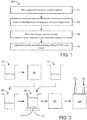
- Fig. 1 is a flowchart of an example process 200 for producing electrode materials.
- the process 100 can be implemented using the system 100.
- tungsten (W) salt is mixed with nickel (Ni) salt on a carbon support.
- Ni nickel
- WCl 6 is mixed with Ni(NO 3 ) 2 .6H 2 O on a carbon support, for example, a conductive and hydrophobic carbon support, such as Vulcan XC-72R in a container 102.
- a surface area of the carbon support can range between about 50 m 2 /g to about 3000 m 2 /g.
- water and adsorbed oxygen are removed from the mixture prior to heating at different temperatures, for example, 700 °C, 800 °C, 900 °C, 1000 °C or other temperatures.
- the mixture resulting by implementing step 102 can be kept in a container 104 having an inert atmosphere, for example, N 2 atmosphere.
- low flow of CH 4 gas for example, from a CH 4 gas source 106, can be passed over the mixture to form the carbides at higher temperature, >700 °C.
- the methane gas can be flowed at a low flow rate, for example, 100 milliliters per minute (mL/min) for a reactor of about 5 centimeter ()cm diameter.
- a carbide composite having a specified mole ratio can be synthesized.
- the mole ratios of Ni to W can be about 1:1, 1:3, 1:4, 1:5 or other mole ratios.
- the tungsten-nickel carbides can be represented as W x -Ni y in carbide form with x being about 50% to 75% atomic and y being about 50% to 25% atomic.
- x can range between 75% and 80%
- y can range between 20% and 25%.
- the carbide composites can be characterized and also prepared in the form of electrodes, and tested for HER in brine medium using a two or three-electrode electrolytic cell implementation. Experiments described later are performed on a laboratory-scale, but can be scaled up to industrial levels to produce large quantities of the electrode materials.
- Fig. 2 shows a schematic diagram of an example system for producing electrode materials.
- Vulcan XC-72R carbon support was pre-treated to remove traces of any impurities, such as metals.
- a quantity of 0.2 g of the Vulcan XC-72R was mixed in 40 mL of 0.5 M hydrochloric acid (HCl) for a duration of approximately 15 hrs at moderate temperature (20 °C - 40 °C), while stirring at 400 rpm, for example, using a magnetic stirrer.
- the quantity of carbon support, for example, Vulcan XC-72R ranged from 0.3 g to 0.4 g during pre-treatment in acid.
- a quantity of carbon support used can depend on an amount of electrode material, for example, catalyst, to be produced.
- carbon cleaning for example, by the pre-treatment described here, in acid to remove traces of impurities, for example, metals or other impurities, 0.2 g of treated carbon was used to develop the carbide materials on the carbon surface.
- the amount of carbon used can be more than the amount of carbon needed to account for carbon loss.
- the carbon support was then filtered, washed and dried in an oven 204 at 80 °C for 6-7 hrs.
- Vulcan carbon pre-treated as described earlier, was dispersed in a container 206 containing 40 mL de-ionized water by sonication for 20-30 minutes, and then transferred to a glass beaker 208 with magnetic stirrer 210 (rotated by a stir plate 212) to form a carbon slurry. Thereafter, 0.4 g of WCl 6 dissolved in a container 212 containing 30 mL isopropanol (IPA) was slowly added to the carbon slurry.
- IPA isopropanol
- Ni(NO 3 ) 2 .6H 2 O was dissolved in a container 214 containing 20 mL of de-ionized H 2 O and added, drop-wise, to the mixture in the container 208, followed by a final rinse with 10 mL of de-ionized H 2 O to make-up 100 mL of reaction volume.
- the mixture was left under stirring at 500 rpm for 2-3 days for proper impregnation of metal salts onto the carbon matrix.
- the mixture was then vacuum-dried at 80 °C between 6 and 7 hrs in an oven 216.
- the resulting sample was heat-treated as follows.
- the powdered sample was placed in a crucible boat and transferred into a quartz tube MTI furnace 218 (OTF-1200X-S). Gas cylinders were connected to the gas inlet of the furnace and the exhaust/outlet was directed to an oil bath.
- Nitrogen (N 2 ) gas was first passed into the furnace while the temperature was first increased from room temperature to 100 °C for 30 minutes and held at this temperature for 10 minutes to purge out adsorbed oxygen and water .
- Methane (CH 4 ) gas flow was then passed while ramping temperature of the furnace at a rate of 5 °C/min to the desired temperatures of 700 °C, 800 °C, 900 °C or 1000 °C, and held for 1 hr.
- a quality of the sample is affected by a ramping period, that is, the time to reach a set temperature value at which catalyst formation begins and a temperature hold period, that is, the time for which the temperature is held for catalyst active sites formation.
- the samples can be cooled at any rate.
- the cooling can be done under ambient conditions without an external cooling system.
- external cooling systems can be used to cool the samples at cooling rates ranging between about 5 °C/min and 10 °C/min.
- the cooling can be implemented by simply turning off the heating chamber in which the samples are heated. Cooling can be done under the flow of methane or an inert gas to avoid leak of oxygen into reactor.
- the electrode material in each of these ratios was prepared by processing each mixture in a manner similar to that described earlier.
- Each obtained sample was characterized using a thin film electrode in a three-electrode geometric cell and also by spectroscopic techniques to investigate the morphological structure and composition of each sample.
- a Pt mesh was used as a counter electrode during activity measurements in brine (0.5 M NaBr, pH ⁇ 7.04, specific gravity ⁇ 1.54).
- a Calomel electrode (calibrated against reversible hydrogen electrode every day prior to activity measurement of HER) was used as a reference electrode. All potential measurements during these studies were converted to reversible hydrogen electrode (RHE).
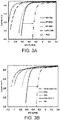
- Fig. 3A shows HER polarization curves for Ni:W in a mole ratio of 1:1 at different heat treatment temperatures in the presence of methane gas flow.
- the polarization curves show that sample treated at 800 °C shows better HER activity than the other samples with an over-voltage of 300 millivolt (mV) as compared to Pt/C catalyst. This can indicate that formation of more active sites for HER for the specific composite is more favorable at this temperature.
- Fig. 3B shows HER polarization curves obtained for individual metal carbides.
- Vulcan carbon shows the highest over potential for HER.
- WC/Vu behaves better than its homologue, NiC/C.
- a significant improvement in HER activity is observed when both metals are incorporated at 1:1 mole ratio of Ni:W.
- Fig. 3C shows HER polarization curves in brine for the carbide composites including two metals.
- the polarization curves were generated to study if the electro-catalytic synergistic effect of the two metals increased the HER performance of the carbide composite.
- An increase in current density and a reduction in over-potential were observed with HER activity close to that of bulk Pt/C.
- the mole ratio of Ni:W was optimized from 1:1 to 1:4, a corresponding reduction in over potential was significant.
- the ratio is 1:5
- a drastic reduction in activity of the catalyst toward HER in brine was noticed suggesting that the best molar ratio of Ni:W to lead to metal carbide alloys as potential Pt-free electro-catalyst for HER is 1:4.
- Such enhancement in HER activity may be due to effective utilization of the synergistic effect of the two metals that favor faster HER kinetics.
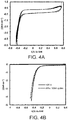
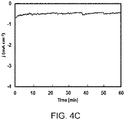
- HER activity that is, Ni:W in a molar ratio of 1:4 (for example, W-Ni-C/Vu in a 4:1 ratio)
- potential sweeps were conducted from -0.45 to +0.75V/RHE for 1000 cycles as shown in Fig. 4A.
- Fig. 4B shows the polarization curve recorded before and after the stability test.
- the catalyst demonstrated good stability by maintaining almost its initial polarization behavior in brine medium.
- Figs. 5A-5D are Scanning Electron Microscope (SEM) images of electrode materials of different Ni:W molar ratios.
- Fig. 5A is the SEM image of the composition having W:Ni in a 1:1 ratio.
- Fig. 5B is the SEM image of the composition having W:Ni in a 3:1 ratio.
- Fig. 5C is the SEM image of the composition having W:Ni in a 4:1 ratio.
- Fig. 5D is the SEM image of the composition having W:Ni in a 5:1 ratio.
- the composite with molar ratio of W:Ni of 5 to 1 appears to be more dense than those corresponding to ratios, 4:1, 3:1, and 1:1. The difference in density maybe the reason that HER activity was decreased significantly for this composition relative to the other compositions.
- Figs. 6A-6D show X-Ray diffraction patterns of synthesized catalysts at different mole ratios atomic of Ni to W.
- Fig. 6A is an XRD pattern of catalyst having W:Ni in a 1:1 ratio.
- Fig. 6B is an XRD pattern of catalyst having W:Ni in a 3:1 ratio.
- Fig. 6C is an XRD pattern of catalyst having W:Ni in a 4:1 ratio.
- Fig. 6A is an XRD pattern of catalyst having W:Ni in a 5:1 ratio.
- the XRD patterns of the synthesized catalysts show formations of mixture of metal carbides of tungsten metal (WC and W 2 C) and W-Ni carbides alloys at different diffraction angles. The unassigned peak in the XRD figure corresponds to Carbon (002) plane.
- the electrode material described here can serve as a cost effective and cheaper alloy material that can be used for hydrogen formation from brine through electrolysis.
- the alloy composition described here can allow hydrogen formation at high rates.
- the alloy composition can replace relatively more expensive, precious metals, for example, Pt.
Landscapes
- Chemical & Material Sciences (AREA)
- Organic Chemistry (AREA)
- Engineering & Computer Science (AREA)
- Materials Engineering (AREA)
- Chemical Kinetics & Catalysis (AREA)
- Electrochemistry (AREA)
- Metallurgy (AREA)
- Inorganic Chemistry (AREA)
- Electrodes For Compound Or Non-Metal Manufacture (AREA)
- Electrolytic Production Of Non-Metals, Compounds, Apparatuses Therefor (AREA)
- Catalysts (AREA)
- Carbon And Carbon Compounds (AREA)
Applications Claiming Priority (4)
| Application Number | Priority Date | Filing Date | Title |
|---|---|---|---|
| US201562190574P | 2015-07-09 | 2015-07-09 | |
| US15/147,252 US10385462B2 (en) | 2015-07-09 | 2016-05-05 | Electrode material for electrolytic hydrogen generation |
| EP16736306.8A EP3320130B1 (de) | 2015-07-09 | 2016-06-15 | Verfahren zur herstellung eines elektrodenmaterials zur elektrolytischen wasserstofferzeugung |
| PCT/US2016/037597 WO2017007581A1 (en) | 2015-07-09 | 2016-06-15 | Electrode material for electrolytic hydrogen generation |
Related Parent Applications (1)
| Application Number | Title | Priority Date | Filing Date |
|---|---|---|---|
| EP16736306.8A Division EP3320130B1 (de) | 2015-07-09 | 2016-06-15 | Verfahren zur herstellung eines elektrodenmaterials zur elektrolytischen wasserstofferzeugung |
Publications (1)
| Publication Number | Publication Date |
|---|---|
| EP3674447A1 true EP3674447A1 (de) | 2020-07-01 |
Family
ID=56369190
Family Applications (2)
| Application Number | Title | Priority Date | Filing Date |
|---|---|---|---|
| EP16736306.8A Active EP3320130B1 (de) | 2015-07-09 | 2016-06-15 | Verfahren zur herstellung eines elektrodenmaterials zur elektrolytischen wasserstofferzeugung |
| EP20151587.1A Pending EP3674447A1 (de) | 2015-07-09 | 2016-06-15 | Elektrodenmaterial zur elektrolytischen wasserstofferzeugung |
Family Applications Before (1)
| Application Number | Title | Priority Date | Filing Date |
|---|---|---|---|
| EP16736306.8A Active EP3320130B1 (de) | 2015-07-09 | 2016-06-15 | Verfahren zur herstellung eines elektrodenmaterials zur elektrolytischen wasserstofferzeugung |
Country Status (6)
| Country | Link |
|---|---|
| US (2) | US10385462B2 (de) |
| EP (2) | EP3320130B1 (de) |
| JP (1) | JP6849273B2 (de) |
| CN (1) | CN107849707B (de) |
| CA (1) | CA2991511A1 (de) |
| WO (1) | WO2017007581A1 (de) |
Families Citing this family (5)
| Publication number | Priority date | Publication date | Assignee | Title |
|---|---|---|---|---|
| TWI862532B (zh) * | 2018-12-20 | 2024-11-21 | 日商出光興產股份有限公司 | 擔載有金屬、金屬氧化物之複合物的製造方法 |
| US11525723B2 (en) | 2020-08-31 | 2022-12-13 | Saudi Arabian Oil Company | Determining fluid properties |
| US11428557B2 (en) | 2020-08-31 | 2022-08-30 | Saudi Arabian Oil Company | Determining fluid properties |
| CN112007676B (zh) * | 2020-09-11 | 2021-08-10 | 华中科技大学 | 超疏水性高分散负载型碳化钨催化剂及其制备方法和应用 |
| JP7744643B1 (ja) * | 2024-11-12 | 2025-09-26 | 兵庫県公立大学法人 | 水電解用のカソード電極 |
Citations (4)
| Publication number | Priority date | Publication date | Assignee | Title |
|---|---|---|---|---|
| US3943005A (en) * | 1972-09-12 | 1976-03-09 | Siemens Aktiengesellschaft | Process for the manufacture of an electrode material containing silver and tungsten carbide |
| US4873121A (en) * | 1986-04-09 | 1989-10-10 | Kernforschungsaniage Julich Gmbh | Cathode/membrane assembly and method of making same |
| US20090074641A1 (en) * | 2007-09-19 | 2009-03-19 | General Electric Company | Catalyst and method of manufacture |
| WO2011142738A1 (en) * | 2010-05-10 | 2011-11-17 | Utc Power Corporation | Supported catalyst |
Family Cites Families (24)
| Publication number | Priority date | Publication date | Assignee | Title |
|---|---|---|---|---|
| BE414790A (de) | 1934-09-18 | |||
| US3649485A (en) | 1968-10-02 | 1972-03-14 | Ppg Industries Inc | Electrolysis of brine using coated carbon anodes |
| US4118294A (en) | 1977-09-19 | 1978-10-03 | Diamond Shamrock Technologies S. A. | Novel cathode and bipolar electrode incorporating the same |
| DE3007503A1 (de) | 1980-02-28 | 1981-09-10 | Fried. Krupp Gmbh, 4300 Essen | Schweisselektrode |
| DE4008091A1 (de) | 1989-05-20 | 1990-11-22 | Durum Verschleissschutz Gmbh | Verfahren zum aufbringen einer verschleissschutzschicht und verbrauchende elektroden fuer die durchfuehrung des verfahrens |
| US6593271B1 (en) * | 1999-06-17 | 2003-07-15 | Calgon Carbon Corporation | Carbon char for metals-removal |
| US20020009411A1 (en) * | 2000-02-08 | 2002-01-24 | Zucker Gordon L. | Method for producing tungsten carbide |
| JP4017317B2 (ja) | 2000-06-05 | 2007-12-05 | 東燃ゼネラル石油株式会社 | 自動変速機用潤滑油組成物 |
| JP2004079244A (ja) * | 2002-08-12 | 2004-03-11 | Toshiba Corp | 燃料電池用触媒及び燃料電池 |
| CN102276644B (zh) * | 2003-08-14 | 2014-09-03 | 孟山都技术公司 | 含有过渡金属-碳化物和氮化物的催化剂、它们的制备方法和作为氧化和脱氢催化剂的用途 |
| KR100696463B1 (ko) * | 2003-09-27 | 2007-03-19 | 삼성에스디아이 주식회사 | 고농도 탄소 담지 촉매, 그 제조방법, 상기 촉매를 이용한촉매전극 및 이를 이용한 연료전지 |
| US7591864B2 (en) | 2004-01-09 | 2009-09-22 | University Of Central Florida Research Foundation, Inc. | Catalysts for the evolution of hydrogen from borohydride solution |
| US20060240187A1 (en) | 2005-01-27 | 2006-10-26 | Applied Materials, Inc. | Deposition of an intermediate catalytic layer on a barrier layer for copper metallization |
| JP4955015B2 (ja) * | 2005-12-20 | 2012-06-20 | セラマテック・インク | Naイオン伝導セラミックス膜を使用した次亜塩素酸ナトリウム製造の電解プロセス |
| US20100252445A1 (en) | 2007-07-07 | 2010-10-07 | Donald James Highgate | Electrolysis of Salt Water |
| CN101723802B (zh) * | 2008-10-24 | 2013-06-19 | 中国科学院大连化学物理研究所 | 一种纤维素制乙二醇的方法 |
| ITMI20090880A1 (it) | 2009-05-19 | 2010-11-20 | Industrie De Nora Spa | Catodo per processi elettrolitici |
| US8204411B2 (en) | 2009-07-31 | 2012-06-19 | Eastman Kodak Company | Electrographic image developing apparatus and method for developing including compensation for slippage |
| US8709964B2 (en) * | 2010-09-14 | 2014-04-29 | Basf Se | Process for producing a carbon-comprising support |
| EP2737564A4 (de) | 2011-07-25 | 2015-06-24 | Douglas Howard Phillips | Verfahren und systeme zur herstellung von wasserstoff |
| EP2634290A1 (de) * | 2012-02-28 | 2013-09-04 | Fritz Haber Institute of the Max Planck Society Department of Inorganic Chemistry | Elektrolytische Wassertrennung unter Verwendung eines kohleunterstützten MnOx-Verbundstoffes |
| US20140162873A1 (en) * | 2012-07-11 | 2014-06-12 | South Dakota State University | Materials and methods for production of activated carbons |
| US20150376803A1 (en) * | 2012-10-09 | 2015-12-31 | Brookhaven Science Associates, Llc | Gas Diffusion Electrodes and Methods for Fabricating and Testing Same |
| DE102015209804A1 (de) * | 2015-05-28 | 2016-12-01 | Thyssenkrupp Ag | Rezirkulationsbrennstoffzelle |
-
2016
- 2016-05-05 US US15/147,252 patent/US10385462B2/en active Active
- 2016-06-15 CA CA2991511A patent/CA2991511A1/en active Pending
- 2016-06-15 EP EP16736306.8A patent/EP3320130B1/de active Active
- 2016-06-15 JP JP2018500649A patent/JP6849273B2/ja active Active
- 2016-06-15 WO PCT/US2016/037597 patent/WO2017007581A1/en not_active Ceased
- 2016-06-15 EP EP20151587.1A patent/EP3674447A1/de active Pending
- 2016-06-15 CN CN201680040381.3A patent/CN107849707B/zh active Active
-
2019
- 2019-08-08 US US16/535,914 patent/US11384439B2/en active Active
Patent Citations (4)
| Publication number | Priority date | Publication date | Assignee | Title |
|---|---|---|---|---|
| US3943005A (en) * | 1972-09-12 | 1976-03-09 | Siemens Aktiengesellschaft | Process for the manufacture of an electrode material containing silver and tungsten carbide |
| US4873121A (en) * | 1986-04-09 | 1989-10-10 | Kernforschungsaniage Julich Gmbh | Cathode/membrane assembly and method of making same |
| US20090074641A1 (en) * | 2007-09-19 | 2009-03-19 | General Electric Company | Catalyst and method of manufacture |
| WO2011142738A1 (en) * | 2010-05-10 | 2011-11-17 | Utc Power Corporation | Supported catalyst |
Non-Patent Citations (2)
| Title |
|---|
| CRISTIANE B. RODELLA ET AL: "Physical and chemical studies of tungsten carbide catalysts: effects of Ni promotion and sulphonated carbon", RSC ADV., vol. 5, no. 30, 24 February 2015 (2015-02-24), pages 23874 - 23885, XP055297095, DOI: 10.1039/C5RA03252K * |
| NAGAI ET AL: "Tungsten and nickel tungsten carbides as anode electrocatalysts", ELECTROCHIMICA ACTA, ELSEVIER SCIENCE PUBLISHERS, BARKING, GB, vol. 52, no. 17, 1 March 2007 (2007-03-01), pages 5430 - 5436, XP022026867, ISSN: 0013-4686, DOI: 10.1016/J.ELECTACTA.2007.02.065 * |
Also Published As
| Publication number | Publication date |
|---|---|
| CN107849707A (zh) | 2018-03-27 |
| US10385462B2 (en) | 2019-08-20 |
| US20190360111A1 (en) | 2019-11-28 |
| EP3320130A1 (de) | 2018-05-16 |
| JP2018528141A (ja) | 2018-09-27 |
| JP6849273B2 (ja) | 2021-03-24 |
| EP3320130B1 (de) | 2020-01-15 |
| US11384439B2 (en) | 2022-07-12 |
| CA2991511A1 (en) | 2017-01-12 |
| US20170009356A1 (en) | 2017-01-12 |
| WO2017007581A1 (en) | 2017-01-12 |
| CN107849707B (zh) | 2021-01-22 |
Similar Documents
| Publication | Publication Date | Title |
|---|---|---|
| US11384439B2 (en) | Electrode material for electrolytic hydrogen generation | |
| Emin et al. | Tungsten carbide electrocatalysts prepared from metallic tungsten nanoparticles for efficient hydrogen evolution | |
| Zuo et al. | A hollow PdCuMoNiCo high-entropy alloy as an efficient bi-functional electrocatalyst for oxygen reduction and formic acid oxidation | |
| Kumari et al. | A low-noble-metal W 1− x Ir x O 3− δ water oxidation electrocatalyst for acidic media via rapid plasma synthesis | |
| Xiao et al. | Fabrication of (Ni, Co) 0.85 Se nanosheet arrays derived from layered double hydroxides toward largely enhanced overall water splitting | |
| Qamar et al. | Metal–organic framework-guided growth of Mo 2 C embedded in mesoporous carbon as a high-performance and stable electrocatalyst for the hydrogen evolution reaction | |
| Gao et al. | A green one-arrow-two-hawks strategy for nitrogen-doped carbon dots as fluorescent ink and oxygen reduction electrocatalysts | |
| Hu et al. | Unusual formation of tetragonal microstructures from nitrogen-doped carbon nanocapsules with cobalt nanocores as a bi-functional oxygen electrocatalyst | |
| Kecsenovity et al. | Decoration of ultra-long carbon nanotubes with Cu 2 O nanocrystals: a hybrid platform for enhanced photoelectrochemical CO 2 reduction | |
| Jo et al. | Nitrogen-doped carbon quantum dots decorated on platinum catalysts for improved oxygen reduction reaction | |
| Zhang et al. | Prereduction of metal oxides via carbon plasma treatment for efficient and stable electrocatalytic hydrogen evolution | |
| Hwang et al. | Ni@ Ru and NiCo@ Ru core–shell hexagonal nanosandwiches with a compositionally tunable core and a regioselectively grown shell | |
| Sidhureddy et al. | Au nanoparticle incorporated Co (OH) 2 hybrid thin film with high electrocatalytic activity and stability for overall water splitting | |
| Tang et al. | Facile and rapid synthesis of spherical porous palladium nanostructures with high catalytic activity for formic acid electro-oxidation | |
| Lu et al. | Pulse electrodeposition to prepare core–shell structured AuPt@ Pd/C catalyst for formic acid fuel cell application | |
| Yang et al. | The self-activation and synergy of amorphous Re nanoparticle–Si nanowire composites for the electrocatalytic hydrogen evolution | |
| Bao et al. | Surface engineering of Rh-modified Pd nanocrystals by colloidal underpotential deposition for electrocatalytic methanol oxidation | |
| Li et al. | In situ construction of tandem nitrogen-doped MoP nanocrystals for high-efficient electrocatalytic hydrogen evolution | |
| Le et al. | Decoration of AgOx hole collector to boost photocatalytic water oxidation activity of BiVO4 photoanode | |
| Muthukumar et al. | Gold doping induced strong enhancement of carbon quantum dots fluorescence and oxygen evolution reaction catalytic activity of amorphous cobalt hydroxide | |
| Liu et al. | A comparative study on Ti/IrO2–Ta2O5 anodes prepared by microwave plasma-assisted sintering and conventional thermal decomposition methods | |
| Wang et al. | New strategies to improve two-electron oxygen reduction reaction selectivity of polypyrrole-based catalysts | |
| Doan et al. | Development of an oxygen evolution reaction electrocatalyst of TiO2 supported IrO2 (IrO2@ TiO2) for enhancing performance and durability of polymer electrolyte membrane water electrolysis | |
| Goh et al. | Superior hydrogen production and long-term stability of NiSn alloy protected by carbon-shell in alkaline water electrolysis | |
| Jaiswal et al. | Tailoring defect generation in SnO 2 nanostructures for increased selectivity in electrochemical CO 2 reduction |
Legal Events
| Date | Code | Title | Description |
|---|---|---|---|
| PUAI | Public reference made under article 153(3) epc to a published international application that has entered the european phase |
Free format text: ORIGINAL CODE: 0009012 |
|
| STAA | Information on the status of an ep patent application or granted ep patent |
Free format text: STATUS: REQUEST FOR EXAMINATION WAS MADE |
|
| 17P | Request for examination filed |
Effective date: 20200114 |
|
| AC | Divisional application: reference to earlier application |
Ref document number: 3320130 Country of ref document: EP Kind code of ref document: P |
|
| AK | Designated contracting states |
Kind code of ref document: A1 Designated state(s): AL AT BE BG CH CY CZ DE DK EE ES FI FR GB GR HR HU IE IS IT LI LT LU LV MC MK MT NL NO PL PT RO RS SE SI SK SM TR |
|
| P01 | Opt-out of the competence of the unified patent court (upc) registered |
Effective date: 20230528 |