EP3674481A1 - Verstärktes papier zum verpacken von medizinischen vorrichtungen - Google Patents
Verstärktes papier zum verpacken von medizinischen vorrichtungen Download PDFInfo
- Publication number
- EP3674481A1 EP3674481A1 EP18248106.9A EP18248106A EP3674481A1 EP 3674481 A1 EP3674481 A1 EP 3674481A1 EP 18248106 A EP18248106 A EP 18248106A EP 3674481 A1 EP3674481 A1 EP 3674481A1
- Authority
- EP
- European Patent Office
- Prior art keywords
- paper
- fibres
- polyester
- dtex
- sheets
- Prior art date
- Legal status (The legal status is an assumption and is not a legal conclusion. Google has not performed a legal analysis and makes no representation as to the accuracy of the status listed.)
- Withdrawn
Links
- 238000004806 packaging method and process Methods 0.000 title claims abstract description 11
- 229920000728 polyester Polymers 0.000 claims abstract description 122
- 239000004816 latex Substances 0.000 claims abstract description 64
- 229920000126 latex Polymers 0.000 claims abstract description 64
- 229920002994 synthetic fiber Polymers 0.000 claims abstract description 57
- 239000011230 binding agent Substances 0.000 claims abstract description 56
- 229920002472 Starch Polymers 0.000 claims abstract description 44
- 239000008107 starch Substances 0.000 claims abstract description 44
- 235000019698 starch Nutrition 0.000 claims abstract description 44
- 239000000123 paper Substances 0.000 claims description 106
- 238000005452 bending Methods 0.000 claims description 25
- 238000000034 method Methods 0.000 claims description 17
- 239000002655 kraft paper Substances 0.000 claims description 16
- 238000005470 impregnation Methods 0.000 claims description 4
- 238000011144 upstream manufacturing Methods 0.000 claims description 3
- 239000000835 fiber Substances 0.000 description 72
- 238000000576 coating method Methods 0.000 description 28
- 239000011248 coating agent Substances 0.000 description 26
- 238000007670 refining Methods 0.000 description 21
- 239000003795 chemical substances by application Substances 0.000 description 17
- 229920002134 Carboxymethyl cellulose Polymers 0.000 description 16
- 230000035699 permeability Effects 0.000 description 16
- 230000003014 reinforcing effect Effects 0.000 description 16
- 239000001768 carboxy methyl cellulose Substances 0.000 description 15
- 235000010948 carboxy methyl cellulose Nutrition 0.000 description 15
- 239000008112 carboxymethyl-cellulose Substances 0.000 description 15
- 230000000694 effects Effects 0.000 description 13
- 230000007423 decrease Effects 0.000 description 12
- 229920000742 Cotton Polymers 0.000 description 10
- 238000001035 drying Methods 0.000 description 10
- 239000000203 mixture Substances 0.000 description 10
- 229920003043 Cellulose fiber Polymers 0.000 description 9
- 239000000463 material Substances 0.000 description 9
- 240000000907 Musa textilis Species 0.000 description 8
- 229920002401 polyacrylamide Polymers 0.000 description 8
- 239000011122 softwood Substances 0.000 description 8
- 244000198134 Agave sisalana Species 0.000 description 7
- 241000208202 Linaceae Species 0.000 description 7
- 235000004431 Linum usitatissimum Nutrition 0.000 description 7
- 125000002091 cationic group Chemical group 0.000 description 7
- 230000003247 decreasing effect Effects 0.000 description 7
- 239000011121 hardwood Substances 0.000 description 7
- 239000007787 solid Substances 0.000 description 7
- 239000011436 cob Substances 0.000 description 6
- 239000000126 substance Substances 0.000 description 6
- 229920002522 Wood fibre Polymers 0.000 description 5
- 238000010790 dilution Methods 0.000 description 5
- 239000012895 dilution Substances 0.000 description 5
- 229920000642 polymer Polymers 0.000 description 5
- 229920002451 polyvinyl alcohol Polymers 0.000 description 5
- XLYOFNOQVPJJNP-UHFFFAOYSA-N water Substances O XLYOFNOQVPJJNP-UHFFFAOYSA-N 0.000 description 5
- IJGRMHOSHXDMSA-UHFFFAOYSA-N Atomic nitrogen Chemical compound N#N IJGRMHOSHXDMSA-UHFFFAOYSA-N 0.000 description 4
- 239000006185 dispersion Substances 0.000 description 4
- -1 polyethylene terephthalate Polymers 0.000 description 4
- 239000000047 product Substances 0.000 description 4
- 239000002023 wood Substances 0.000 description 4
- 229920005789 ACRONAL® acrylic binder Polymers 0.000 description 3
- 239000004372 Polyvinyl alcohol Substances 0.000 description 3
- HEMHJVSKTPXQMS-UHFFFAOYSA-M Sodium hydroxide Chemical compound [OH-].[Na+] HEMHJVSKTPXQMS-UHFFFAOYSA-M 0.000 description 3
- 239000004775 Tyvek Substances 0.000 description 3
- 229920000690 Tyvek Polymers 0.000 description 3
- 238000010521 absorption reaction Methods 0.000 description 3
- 229940037003 alum Drugs 0.000 description 3
- 229920002678 cellulose Polymers 0.000 description 3
- 239000001913 cellulose Substances 0.000 description 3
- 235000019422 polyvinyl alcohol Nutrition 0.000 description 3
- 229920001909 styrene-acrylic polymer Polymers 0.000 description 3
- 238000012360 testing method Methods 0.000 description 3
- 229920013683 Celanese Polymers 0.000 description 2
- IMROMDMJAWUWLK-UHFFFAOYSA-N Ethenol Chemical compound OC=C IMROMDMJAWUWLK-UHFFFAOYSA-N 0.000 description 2
- 244000166124 Eucalyptus globulus Species 0.000 description 2
- 241000244489 Navia Species 0.000 description 2
- 239000004698 Polyethylene Substances 0.000 description 2
- 239000004743 Polypropylene Substances 0.000 description 2
- QAOWNCQODCNURD-UHFFFAOYSA-N Sulfuric acid Chemical compound OS(O)(=O)=O QAOWNCQODCNURD-UHFFFAOYSA-N 0.000 description 2
- 239000000654 additive Substances 0.000 description 2
- 239000007864 aqueous solution Substances 0.000 description 2
- 230000004888 barrier function Effects 0.000 description 2
- 230000008859 change Effects 0.000 description 2
- 229920001577 copolymer Polymers 0.000 description 2
- 239000012467 final product Substances 0.000 description 2
- 230000006872 improvement Effects 0.000 description 2
- 230000036512 infertility Effects 0.000 description 2
- 229920000573 polyethylene Polymers 0.000 description 2
- 229920000139 polyethylene terephthalate Polymers 0.000 description 2
- 239000005020 polyethylene terephthalate Substances 0.000 description 2
- 229920001155 polypropylene Polymers 0.000 description 2
- 230000008569 process Effects 0.000 description 2
- BDERNNFJNOPAEC-UHFFFAOYSA-N propan-1-ol Chemical compound CCCO BDERNNFJNOPAEC-UHFFFAOYSA-N 0.000 description 2
- 238000011160 research Methods 0.000 description 2
- 238000004659 sterilization and disinfection Methods 0.000 description 2
- 229920003048 styrene butadiene rubber Polymers 0.000 description 2
- 239000004753 textile Substances 0.000 description 2
- NLHHRLWOUZZQLW-UHFFFAOYSA-N Acrylonitrile Chemical compound C=CC#N NLHHRLWOUZZQLW-UHFFFAOYSA-N 0.000 description 1
- 206010013786 Dry skin Diseases 0.000 description 1
- 241000219146 Gossypium Species 0.000 description 1
- 229920000881 Modified starch Polymers 0.000 description 1
- 239000004368 Modified starch Substances 0.000 description 1
- 229920005736 STYRONAL® Polymers 0.000 description 1
- PPBRXRYQALVLMV-UHFFFAOYSA-N Styrene Natural products C=CC1=CC=CC=C1 PPBRXRYQALVLMV-UHFFFAOYSA-N 0.000 description 1
- 239000002174 Styrene-butadiene Substances 0.000 description 1
- NIXOWILDQLNWCW-UHFFFAOYSA-N acrylic acid group Chemical group C(C=C)(=O)O NIXOWILDQLNWCW-UHFFFAOYSA-N 0.000 description 1
- 125000000129 anionic group Chemical group 0.000 description 1
- 230000009172 bursting Effects 0.000 description 1
- MTAZNLWOLGHBHU-UHFFFAOYSA-N butadiene-styrene rubber Chemical compound C=CC=C.C=CC1=CC=CC=C1 MTAZNLWOLGHBHU-UHFFFAOYSA-N 0.000 description 1
- 230000001143 conditioned effect Effects 0.000 description 1
- 238000004132 cross linking Methods 0.000 description 1
- 230000001627 detrimental effect Effects 0.000 description 1
- 239000004815 dispersion polymer Substances 0.000 description 1
- 239000007789 gas Substances 0.000 description 1
- 238000010438 heat treatment Methods 0.000 description 1
- 239000001257 hydrogen Substances 0.000 description 1
- 229910052739 hydrogen Inorganic materials 0.000 description 1
- 230000002209 hydrophobic effect Effects 0.000 description 1
- 230000002452 interceptive effect Effects 0.000 description 1
- 238000005259 measurement Methods 0.000 description 1
- 238000002844 melting Methods 0.000 description 1
- 230000008018 melting Effects 0.000 description 1
- 229910052751 metal Inorganic materials 0.000 description 1
- 239000002184 metal Substances 0.000 description 1
- 238000012986 modification Methods 0.000 description 1
- 230000004048 modification Effects 0.000 description 1
- 235000019426 modified starch Nutrition 0.000 description 1
- 238000012856 packing Methods 0.000 description 1
- 230000008092 positive effect Effects 0.000 description 1
- 238000003825 pressing Methods 0.000 description 1
- 230000035484 reaction time Effects 0.000 description 1
- 230000009467 reduction Effects 0.000 description 1
- 239000000243 solution Substances 0.000 description 1
- 230000001954 sterilising effect Effects 0.000 description 1
- 238000003860 storage Methods 0.000 description 1
- 239000011115 styrene butadiene Substances 0.000 description 1
- 229920002554 vinyl polymer Polymers 0.000 description 1
Images






Classifications
-
- D—TEXTILES; PAPER
- D21—PAPER-MAKING; PRODUCTION OF CELLULOSE
- D21H—PULP COMPOSITIONS; PREPARATION THEREOF NOT COVERED BY SUBCLASSES D21C OR D21D; IMPREGNATING OR COATING OF PAPER; TREATMENT OF FINISHED PAPER NOT COVERED BY CLASS B31 OR SUBCLASS D21G; PAPER NOT OTHERWISE PROVIDED FOR
- D21H13/00—Pulp or paper, comprising synthetic cellulose or non-cellulose fibres or web-forming material
- D21H13/10—Organic non-cellulose fibres
- D21H13/20—Organic non-cellulose fibres from macromolecular compounds obtained otherwise than by reactions only involving carbon-to-carbon unsaturated bonds
- D21H13/24—Polyesters
-
- D—TEXTILES; PAPER
- D21—PAPER-MAKING; PRODUCTION OF CELLULOSE
- D21H—PULP COMPOSITIONS; PREPARATION THEREOF NOT COVERED BY SUBCLASSES D21C OR D21D; IMPREGNATING OR COATING OF PAPER; TREATMENT OF FINISHED PAPER NOT COVERED BY CLASS B31 OR SUBCLASS D21G; PAPER NOT OTHERWISE PROVIDED FOR
- D21H11/00—Pulp or paper, comprising cellulose or lignocellulose fibres of natural origin only
- D21H11/02—Chemical or chemomechanical or chemothermomechanical pulp
- D21H11/04—Kraft or sulfate pulp
-
- D—TEXTILES; PAPER
- D21—PAPER-MAKING; PRODUCTION OF CELLULOSE
- D21H—PULP COMPOSITIONS; PREPARATION THEREOF NOT COVERED BY SUBCLASSES D21C OR D21D; IMPREGNATING OR COATING OF PAPER; TREATMENT OF FINISHED PAPER NOT COVERED BY CLASS B31 OR SUBCLASS D21G; PAPER NOT OTHERWISE PROVIDED FOR
- D21H17/00—Non-fibrous material added to the pulp, characterised by its constitution; Paper-impregnating material characterised by its constitution
- D21H17/20—Macromolecular organic compounds
- D21H17/21—Macromolecular organic compounds of natural origin; Derivatives thereof
- D21H17/24—Polysaccharides
- D21H17/28—Starch
-
- D—TEXTILES; PAPER
- D21—PAPER-MAKING; PRODUCTION OF CELLULOSE
- D21H—PULP COMPOSITIONS; PREPARATION THEREOF NOT COVERED BY SUBCLASSES D21C OR D21D; IMPREGNATING OR COATING OF PAPER; TREATMENT OF FINISHED PAPER NOT COVERED BY CLASS B31 OR SUBCLASS D21G; PAPER NOT OTHERWISE PROVIDED FOR
- D21H17/00—Non-fibrous material added to the pulp, characterised by its constitution; Paper-impregnating material characterised by its constitution
- D21H17/20—Macromolecular organic compounds
- D21H17/33—Synthetic macromolecular compounds
-
- D—TEXTILES; PAPER
- D21—PAPER-MAKING; PRODUCTION OF CELLULOSE
- D21H—PULP COMPOSITIONS; PREPARATION THEREOF NOT COVERED BY SUBCLASSES D21C OR D21D; IMPREGNATING OR COATING OF PAPER; TREATMENT OF FINISHED PAPER NOT COVERED BY CLASS B31 OR SUBCLASS D21G; PAPER NOT OTHERWISE PROVIDED FOR
- D21H19/00—Coated paper; Coating material
- D21H19/10—Coatings without pigments
- D21H19/14—Coatings without pigments applied in a form other than the aqueous solution defined in group D21H19/12
- D21H19/20—Coatings without pigments applied in a form other than the aqueous solution defined in group D21H19/12 comprising macromolecular compounds obtained by reactions only involving carbon-to-carbon unsaturated bonds
- D21H19/22—Polyalkenes, e.g. polystyrene
-
- D—TEXTILES; PAPER
- D21—PAPER-MAKING; PRODUCTION OF CELLULOSE
- D21H—PULP COMPOSITIONS; PREPARATION THEREOF NOT COVERED BY SUBCLASSES D21C OR D21D; IMPREGNATING OR COATING OF PAPER; TREATMENT OF FINISHED PAPER NOT COVERED BY CLASS B31 OR SUBCLASS D21G; PAPER NOT OTHERWISE PROVIDED FOR
- D21H19/00—Coated paper; Coating material
- D21H19/36—Coatings with pigments
- D21H19/44—Coatings with pigments characterised by the other ingredients, e.g. the binder or dispersing agent
- D21H19/54—Starch
-
- D—TEXTILES; PAPER
- D21—PAPER-MAKING; PRODUCTION OF CELLULOSE
- D21H—PULP COMPOSITIONS; PREPARATION THEREOF NOT COVERED BY SUBCLASSES D21C OR D21D; IMPREGNATING OR COATING OF PAPER; TREATMENT OF FINISHED PAPER NOT COVERED BY CLASS B31 OR SUBCLASS D21G; PAPER NOT OTHERWISE PROVIDED FOR
- D21H21/00—Non-fibrous material added to the pulp, characterised by its function, form or properties; Paper-impregnating or coating material, characterised by its function, form or properties
- D21H21/14—Non-fibrous material added to the pulp, characterised by its function, form or properties; Paper-impregnating or coating material, characterised by its function, form or properties characterised by function or properties in or on the paper
- D21H21/18—Reinforcing agents
-
- D—TEXTILES; PAPER
- D21—PAPER-MAKING; PRODUCTION OF CELLULOSE
- D21H—PULP COMPOSITIONS; PREPARATION THEREOF NOT COVERED BY SUBCLASSES D21C OR D21D; IMPREGNATING OR COATING OF PAPER; TREATMENT OF FINISHED PAPER NOT COVERED BY CLASS B31 OR SUBCLASS D21G; PAPER NOT OTHERWISE PROVIDED FOR
- D21H27/00—Special paper not otherwise provided for, e.g. made by multi-step processes
- D21H27/10—Packing paper
-
- A—HUMAN NECESSITIES
- A61—MEDICAL OR VETERINARY SCIENCE; HYGIENE
- A61B—DIAGNOSIS; SURGERY; IDENTIFICATION
- A61B50/00—Containers, covers, furniture or holders specially adapted for surgical or diagnostic appliances or instruments, e.g. sterile covers
- A61B50/30—Containers specially adapted for packaging, protecting, dispensing, collecting or disposing of surgical or diagnostic appliances or instruments
Definitions
- the present disclosure relates to the field of paper materials for packaging of medical devices.
- the present inventors have realized a sizeable and growing market opportunity for a reinforced paper with significantly higher strength characteristics than those of normal kraft paper.
- the TEA and tensile strength properties may be improved by coating or impregnation with starch, but at the expense of decreased tear strength and undesirably high paper stiffness (a reasonable level of softness/flexibility of the paper is preferred to avoid creasing in converting and handling). It has been found that the stiffness problem may be overcome by impregnating with latex instead of starch. Decreased tear strength and reduced permeability are however drawbacks of a latex impregnation. High permeability may be of particular importance when the paper material is used as a "coating base", i.e. when the converter/customer applies a layer of heat seal coating on the paper surface.
- long synthetic fibres One type of long fibres that was added by the inventors is long synthetic fibres.
- a general problem with long synthetic fibres is however that their bonding to the wood cellulose fibres is inferior to the bonding between wood cellulose fibres. The bonding between some synthetic fibres and wood cellulose fibres is almost non-existent. Further, the bonding between the synthetic fibres is typically weak. This means that the addition of long synthetic fibres results in increased tear strength, but decreased TEA and tensile strength.
- a general finding is that as the percentage of long synthetic fibres increases, the tear strength increases and the tensile strength decreases.
- the present inventors found that the problem of inferior bonding (and thus the problem of the decreased TEA of the paper comprising long synthetic fibres) can be solved by coating or impregnating the paper with latex or starch.
- the inventors have found that there is a practical limitation to the length of the synthetic fibres, because when the fibres are longer than 14 mm, they tend to get stuck in and thus foul various parts of the paper machine.
- the present disclosure provides a paper for packaging of medical devices comprising 5-25 wt.% (dry) synthetic fibres comprising polyester and 2.0-12.0 wt.% (dry) of a synthetic latex binder or 1.0-5.0 wt.% (dry) of a starch binder, wherein the length of the synthetic fibres is 8-14 mm and the thickness of the synthetic fibres is 4.5-9.0 dtex.
- a method of producing the paper in a paper machine comprising the steps of adding the synthetic fibres comprising polyester to a pulp before/upstream a headbox of the paper machine, forming a paper web from the pulp and impregnating the paper web with the latex or starch binder.
- the paper is preferably a kraft paper, which means that it is mainly formed from pulp produced according to the kraft process.
- the kraft pulp used to form the paper preferably comprises softwood kraft pulp.
- the kraft pulp comprises 50-100 wt.% (dry) softwood kraft pulp and 0-50 wt.% (dry) hardwood kraft pulp, such as 50-90 wt.% (dry) softwood kraft pulp and 10-50 wt.% (dry) hardwood kraft pulp
- the paper comprises 5-25 wt.% (on a dry matter basis, “dry") synthetic fibres.
- a preferred amount of the synthetic fibres is 8-15 wt.% (dry).
- the synthetic fibres comprise polyester. It is particularly preferred that at least a sheath portion of the synthetic fibres comprises polyester.
- the amount of polyester in the synthetic fibres is preferably at least 50 wt.%, such as at least 90 wt.%. In one embodiment, the synthetic fibres are composed of polyester only.
- the length of the synthetic fibres is 8-14 mm, preferably 10-14 mm and more preferably 10-12 mm.
- the thickness of the synthetic fibres is 4.5-9.0 dtex, preferably 5.0-9.0 dtex and more preferably 5.5-9.0 dtex.
- the synthetic fibres are preferably non-flat. Accordingly, the synthetic fibres preferably have a rounded, e.g. mainly circular or oval, cross-section.
- the paper further comprises 2.0-12.0 wt.% (dry) of a synthetic latex binder or 1.0-5.0 wt.% (dry) of a starch binder.
- a synthetic latex binder is more preferred than a starch binder since a synthetic latex binder generally results in lower bending resistance than a starch binder.
- Synthetic latex binders are marketed by several companies, including Celanese, DOW, BASF and Trinseo.
- the synthetic latex binder may for example be an acrylic latex, such as a styrene acrylic latex or a vinyl acrylic latex.
- the synthetic latex binder may also be a styrene-butadiene latex.
- the starch binder may for example be Perfectafilm X115 or X85 from Avebe.
- the amount of the synthetic latex binder in the paper of the first aspect is preferably 3.0-10.0 wt.% (dry), more preferably 3.0-8.0 wt.% (dry).
- the grammage of the paper of the first aspect is preferably 70-110 g/m 2 , such as 75-105 g/m 2 , such as 75-99 g/m 2 . Grammage is measured according to ISO 536:2012.
- the TEA index of the paper of the first aspect may be at least 1.5 J/g, such as 1-5-2.0 J/g, in the machine direction (MD) and at least 2.4 J/g, such as 2.4-3.4 J/g in the cross direction (CD).
- the geometric TEA index may be 1.9-2.5 J/g, such as 2.0-2.5 J/g.
- the tear index of the paper of the first aspect may be at least 17.0 mNm 2 /g, such as 17.0-25.0 mNm 2 /g, in the MD and at least 21.0 mNm 2 /g, such 21.0-29.5 mNm 2 /g in the CD.
- TEA and tear strength is measured by ISO 1924-3:2005 and ISO 1974:2012, respectively. To obtain the TEA index, the TEA value is divided by the grammage. To obtain the tear index, the tear strength value is divided by the grammage.
- the Bendtsen Porosity of the paper of the first aspect is preferably at least 250 ml/min, such as 250 -800 ml/min, more preferably at least 400 ml/min, such as 400-750 ml/min. Bendtsen porosity is measured according to ISO 5636-3:2013.
- the geometric bending resistance index of the paper of the first aspect may be 60-160 Nm 6 /kg 3 .
- the bending resistance is measured according to ISO 2493-1:2010 using a bending length of 10 mm and a bending angle of 15°.
- the geometric bending resistance index is obtained by dividing the geometric bending resistance by the cube of the grammage.
- the (non-indexed) geometric bending resistance of the paper of the first aspect may for example be 60-90 mN.
- the Cobb 60 value of at least one side, such as both sides, of the paper of the first aspect is lower than 20 g/m 2 .
- a minimum Cobb 60 value may be 10 g/m 2 .
- the Cobb 60 value of both sides of the paper of the first aspect may in the range of 11.5-19.5 g/m 2 .
- the Cobb 60 value which represents the amount of water absorbed by a paper surface in 60 seconds, is measured according to ISO 535:2014.
- a method producing a paper according to the first aspect in a paper machine comprising the steps of adding the synthetic fibres comprising polyester to a pulp upstream a headbox of the paper machine, forming a paper web from the pulp and impregnating the paper web with the latex or starch binder.
- the pulp is subjected to refining before, but not after the addition of the synthetic fibres.
- the impregnation may be carried out using a size press.
- the size press is preferably arranged at the end of a drying section of the paper machine or downstream such a drying section.
- the size press may also be arranged off-line, e.g. at a different geographic location. An off-line size press is however considered to be a more expensive option.
- Natural fibres non-wood fibres
- Abaca, Flax and Sisal fibres were supplied by Celesa Celulosa.
- the natural fibres are divided into two main groups: textile and porous. Flax belongs to the textile group and the other two belong to the porous group.
- the natural fibres had to be refined before addition to the pulp (see below).
- Advansa supplied polyester fibres and a bi-component fibre Advansa supplied polyester fibres and a bi-component fibre:
- Fibervision supplied a bi-component fibre
- CMC Carboxymethyl cellulose
- Mare supplied a type of CMC called Niklacell UV70. It was used for the CMC-treated polyester fibre (see below).
- a mixture six parts of softwood and three parts of hardwood (eucalyptus) was used.
- the softwood was Södra's Green T quality and the hardwood pulp was supplied by Navia.
- the pulp mixture was refined at MoRe Research prior to the sheeting (see Refining below).
- wet end chemicals were used: cationic starch and cationic wet strength agent.
- Dried unrefined pulp was sent as A4 sheets to MoRe Research in ⁇ rnsköldsvik, Sweden.
- Six parts of the softwood pulp and three parts of hardwood pulp were co-refined in an Escher Wyss conical refiner (PFI type) at MoRe with total energy input of 65 kWh/ton and with a medium edge load. Refining was carried out at a concentration of about 3%.
- Synthetic fibres appear to have poor ability to bind to the cellulose fibres. It was tested if a stronger paper may be created by providing links between the fibres (synthetic and cellulose). Bi-component fibres consist of two layers and if a paper comprising such fibres is heat treated the outer layer of the bi-component fibre can melt and possibly create the supporting link. The linkage between synthetic fibres and cellulose could also be achieved by coating with a binder.
- Sheets with conditioned grammage aiming for 70 g/m 2 (uncoated) were produced in a Finnish sheet former, pressed and dried restrained in a climate room (50% humidity and 23°C).
- Cationic starch and cationic wet strength agent were added to the pulp as these chemical additives are normally included in medical papers.
- the synthetic fibres were considered “dead” material and the dosage of chemical additives was therefore calculated on the cellulosic pulp only. For the avoidance of doubt, the natural fibres were not considered to be "dead” material.
- the synthetic fibres were weighed and put in small cans. Water was added to the cans which were then closed and shaken.
- the reaction time for starch was 120 seconds and for the wet strength agent it was 30 seconds. pH was adjusted to 7 with sodium hydroxide or sulfuric acid. The sheets were coated using a lab size press.
- Burst strength was measured using a method based on the standard ISO 2758. Tear strength was measured using a method based on the standard ISO 1974.
- Tensile energy absorption (TEA) was measured using a method based on the standard ISO1924-3.
- Tensile strength was measured using a method based on the standard ISO1924-3.
- Stretchability was measured using a method based on the standard ISO1924-3.
- Bending resistance was measured using a method based on the standard ISO 2493-1.
- Air permeability was measured using a method based on the standards ISO 5636-3 and ISO 5636-5.
- polyester fibres of different thicknesses were added to evaluate how the strength properties were affected. Since it previously had been found that synthetic fibres increases tear strength, but decrease other strength parameters, sheets were tested with and without coating with a binder. As explained above, it was hypothesized that the coating could act as a link between the synthetic fibres and the cellulose fibres and thereby increase strength (burst, tensile, tear). Three different polyester fibres having the same length, but different thicknesses were tested, see table 2. Table 2. In each case, the amount of starch and wet strength agent was 0.5 % and 1.3 % (based on the amount of pulp), respectively. The binder for the coating was Vinacryl 4333.
- the sheath has a lower melting point than the core.
- dry sheets containing bi-component fibres were put between two metal plates having a temperature of about 175°C for a time period of 40 seconds to test if increased strength can be obtained by links formed between the melted polymer of the sheath and cellulose fibres (see table 4). Sheets were pressed using two different pressures to see if it was possible to achieve higher strength by pressing (see table 4). Table 4.
- bi-component fibres are used as the reinforcing fibre.
- the amount of starch and wet strength agent was 0.5 % and 1.3 % (based on the amount of pulp), respectively.
- the binder for the coating was Vinacryl 4333.
- the 12 mm long and 3.3 dtex thick polyester fibre from Advansa was used.
- alum and CMC were added in an amount of 0.7% and 1.6% (based on the amount of polyester fibre), respectively.
- the CMC-treated polyester solution was thereafter added to the pulp mixture at a concentration 0.5% to prepare sheets comprising different amounts of the polyester fibre.
- the pH was the same as in the other trials, i.e. 7. In the other sample, the pH was adjusted to 5.
- Starch, wet strength agent and C-PAM were also added to the pulp.
- the dosages of starch and wet strength agent were the same as in the other trials, i.e. 0.5% and 1.3%, respectively.
- the C-PAM dosage was 0.04%.
- C-PAM was excluded in one sample to evaluate its effects.
- the CMC-treated polyester trial is summarized in table 5. Table 5.
- the binder for the coating was Vinacryl 4333. No Pulp (%) Reinforcing fibre (%) C-PAM (%) pH 1 (ref) 100 0 0.4 7 2 94.4 5.6 0.4 7 3 90 10 0.4 7 4 90 10 0.4 5 5 90 10 0 7 6 75 25 0.4 7
- the sheets comprising the flat and short fibres were heat-dried at 140°C.
- the sheets comprising the polyester fibre from Advansa were dried at room temperature as in the other trials. A reference to each sample was made, one dried in 150°C and one dried in room temperature.
- the sheets were coated with either Eastek 1100 or Eastek 1200.
- the coated sheets were dried in an oven at 150°C.
- a sheet coated with the Eastek 1200 binder was also dried in room temperature as comparison.
- the flat and short fibre trial is summarized in table 6. Table 6. In each case, the amount of starch and wet strength agent was 0.5 % and 1.3 % (based on the amount of pulp), respectively. All sheet dryings were carried out on a "Perstorp plate”. No Pulp (%) Reinforcing fibre (%) Reinforcing fibre (type) Sheet drying temp. (°C) Coating (type) Coated sheet drying temp. (°C) 1A (ref) 100 0 Room temp. Eastek 1200 Room temp. 1B (ref) 100 0 Room temp.
- Eastek 1100 150 1C 100 0 Room temp. Eastek 1200 150 2A (ref) 100 0 140 Eastek 1200 Room temp. 2B (ref) 100 0 140 Eastek 1100 150 2C (ref) 100 0 140 Eastek 1200 150 3A 90 10 Flat and short 140 Eastek 1200 Room temp. 3B 90 10 Flat and short 140 Eastek 1100 150 3C 90 10 Flat and short 140 Eastek 1200 150 4A 75 25 Flat and short 140 Eastek 1200 Room temp. 4B 75 25 Flat and short 140 Eastek 1100 150 4C 75 25 Flat and short 140 Eastek 1200 150 5A 90 10 Longer and round Room temp. Eastek 1200 Room temp. 5B 90 10 Longer and round Room temp.
- Eastek 1100 150 5C 90 10 Longer and round Room temp. Eastek 1200 150 6A 75 25 Longer and round Room temp. Eastek 1200 Room temp. 6B 75 25 Longer and round Room temp. Eastek 1100 150 6C 75 25 Longer and round Room temp. Eastek 1200 150
- the softwood/hardwood pulp mixture described above was refined as described above, but at different energy levels: 65 kW/h (as above), 85 kW/h and 105 kWh/ton. Further, polyester fibres of two different lengths, 6 mm and 12 mm, were tested. Sheets without any polyester fibres were prepared as references (see table 7). Table 7. In each case, the amount of starch and wet strength agent was 0.5 % and 1.3 % (based on the amount of pulp), respectively. The Advansa polyester fibres having the thickness 3.3 dtex were used. All sheets were coated with the Vinacryl 4333 latex.
- Sheets reinforced with 17 % Advansa polyester fibre (12 mm, 3.3 dtex) were coated with different binders, see table 9. All the latex coatings were diluted to two times their original volumes. Table 9. In each case, the amount of starch and wet strength agent was 0.5 % and 1.3 % (based on the amount of pulp), respectively.
- a pulp mixture comprising six parts by weight of softwood kraft pulp (market pulp), four parts by weight of hardwood kraft pulp (market pulp) and 10 wt.% polyester fibre (6.7 dtex, 12 mm, Advansa) as well as 0.5% cationic starch, 1.5% cationic wet strength agent and 0.5% was provided. Before adding the polyester fibres, the pulp was subjected to low consistency refining (65 kWh/ton, disc refiner). In the headbox, the consistency of the diluted pulp mixture was about 0.4 %.
- a paper web was formed on a wire section. The paper web was dewatered in a press section. The dewatered paper web was then dried in a subsequent drying section.
- the dried paper web was coated/impregnated with a latex binder (TRINSEO XZ96821.00) composition having a solids content of 15 wt.% in an amount of about 5.3 g/m 2 (dry).
- the proportion of latex binder (based on the dry weight of the final product) was thus about 6.0% given that the grammage (dry) of the final product was 88.7 g/m 2 .
- the average grammage of uncoated and coated sheets was 72.4 g/m 2 and 88.2 g/m 2 , respectively.
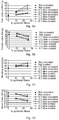
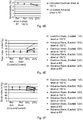
- FIG. 1A shows that addition of polyester fibres increase the tear index. A higher amount of fibres resulted in a greater increase. Interestingly, the thinnest (1.7 dtex) fibres had the greatest effect on tear index in the paper sheets that were not coated with a binder, while the thickest (6.7 dtex) fibres had the greatest effect on tear index in the paper sheets that were coated with a binder.
- Figure 1B shows that addition of polyester fibres decrease the tensile index. A higher amount of fibres resulted in a greater decrease. It is however notable that coating with the binder increased tensile index in all cases. The increase was higher for the paper sheets comprising polyester fibres than for the reference sheets. The coated paper sheets comprising 10 % polyester fibres actually had a higher tensile index than the uncoated reference sheet.
- Figure 1C shows that the bending resistance was increased by the addition of polyester fibres.
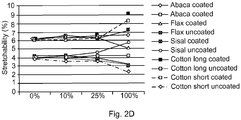
- Figure 1E shows that coating the paper sheets with the binder significantly increases the stretchability. Further, the stretchability of the coated paper sheets is more or less unaffected by the addition of polyester fibres. In contrast, the addition of polyester fibres decreases the stretchability of uncoated sheets.
- Figure 1F shows that coating of the paper sheet with the binder significantly decreased the permeability (i.e. increased the air resistance).
- the addition of the polyester fibres increased the permeability (i.e. decreased the air resistance).
- the coating had no negative effect on the permeability. It is also notable that all coated sheets comprising polyester fibres showed significantly higher permeability than the uncoated reference sheet comprising no polyester fibres.
- the average grammage of the uncoated and coated sheets was 80.5 g/m 2 and 94.2 g/m 2 , respectively.
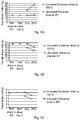
- Figure 3A shows that the uncoated sheet comprising 25% of the Fibervision fibres (1.7 dtex, 4 mm) and prepared using a pressure of 400 kPa was the only sheet of the trial showing a higher tear index than the uncoated reference sheet. The difference compared to the reference sheet is however modest. Further, the effect adding the Fibervision fibre in an amount of 25% on tensile strength was negative ( Figure 3B ) and the effect on stretchability was insignificant ( Figure 3D ). No significant improvements were obtained by increasing the pressure to 600 kPa ( Figures G-J). It was therefore decided not to proceed with the bi-component fibres.
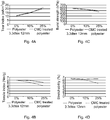
- Figure 4A shows that the CMC-treated polyester fibre increases the tear index to about the same degree as the non-treated polyester fibre of the same type (included as a reference). However, the CMC-treated fibre has a more detrimental effect on tensile index and stretchability than the reference fibre.
- Figure 5A shows that addition of the flat and short fibres has no significant impact on the tear index in case of uncoated sheets dried at 150 °C. Further, such an addition has no or negative impact on the tensile index, burst index and stretchability ( figures 5B-D ).
- Figure 5E shows that addition of the flat and short fibres has no significant impact on the tear index in case of coated sheets independent of the drying temperature. Further, such an addition has no or negative impact on the tensile index, burst index and stretchability ( figures 5F-H ).
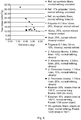
- Figure 6 shows that an increase of both tear index and TEA index was only obtained for the sheets reinforced with long and thick polyester fibres and coated with latex.
- the double-headed arrow in figure 6 shows the direction in which the properties change when the amount of fibres is adjusted. It is thus expected that a reduction of the amount of polyester fibres (6.7 dtex, 12 mm) from 10% to 5% would reduce the tear index (to a level that is still above that of the reference sheet), but further increase the TEA index.
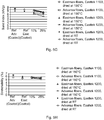
- Figure 7A shows that the 12 mm polyester fibre increases the tear index to a greater degree than the 6 mm polyester fibre. This difference is particularly accentuated at the "normal" refining level of 65 kWh/t. The tear index of sheets comprising the 12 mm fibres was decreased when the reefing level was increased.
- Figure 7B shows that increased refining, as expected, results in higher tensile index for the reference sheet without polyester fibre.
- the sheets comprising polyester fibre there was however no or only an insignificant increase of the tensile index when the refining was increased.
- Figure 7B also shows that the 12 mm polyester fibre does not decrease the tensile index to a greater degree than the 6 mm polyester fibre.
- Figure 7D shows that increased refining decreases stretchability to a greater degree for sheets comprising the polyester fibres.
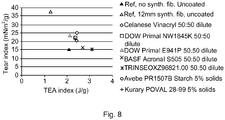
- Figure 8 shows that all binders more than compensated for the loss of TEA index caused by the addition of the 12 mm polyester fibres.
- the tear index was significantly reduced for all binders, in some cases almost back to the level of the uncoated reference sheet without any polyester fibres. If the polyester fibre had been thicker, the net gain in tear index would have been higher (see e.g. fig 1A ).
- the PVOH binder was however excluded from further trials due to its water solubility, which makes it unsuitable for the intended application.
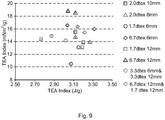
- Figure 9 shows i.a. that the highest tear index is obtained for the fibre having a thickness of 6.7 dtex and a length of 12 mm irrespective of the type of binder.
- Figure 10 shows that coating of a sheet without the polyester fibre drastically increases the air resistance (reduced the permeability).
- the figure further shows that addition of the polyester fibre (6.7 dtex, 12 mm) significantly reduces the air resistance in case of an uncoated sheet. It further shows that after the sheet comprising the polyester fibre was coated with the latex binder, the air resistance was still lower than for the uncoated reference sheet without polyester fibre. Also after coating the sheet comprising the polyester fibre with the starch/latex mixture, the air resistance was relatively low.
- the properties of the paper product produced in the paper machine trial are presented in table 11, which also shows the properties of a commercial kraft paper for packaging of medical devices. Table 11.
- the properties of the ("Inventive") paper produced in the paper machine trial are compared to those of a commercial reference paper produced on the same paper machine from a very similar pulp mixture (without synthetic fibres).
- TS means top side.
- WS means wire side.
Landscapes
- Chemical & Material Sciences (AREA)
- Chemical Kinetics & Catalysis (AREA)
- General Chemical & Material Sciences (AREA)
- Paper (AREA)
Priority Applications (6)
| Application Number | Priority Date | Filing Date | Title |
|---|---|---|---|
| EP18248106.9A EP3674481A1 (de) | 2018-12-27 | 2018-12-27 | Verstärktes papier zum verpacken von medizinischen vorrichtungen |
| US17/417,093 US11976420B2 (en) | 2018-12-27 | 2019-12-18 | Reinforced paper for packaging of medical devices |
| PCT/EP2019/086134 WO2020136064A1 (en) | 2018-12-27 | 2019-12-18 | Reinforced paper for packaging of medical devices |
| CN201980084548.XA CN113227497B (zh) | 2018-12-27 | 2019-12-18 | 用于包装医疗装置的增强纸 |
| EP19828726.0A EP3902955A1 (de) | 2018-12-27 | 2019-12-18 | Verstärktes papier zum verpacken von medizinischen vorrichtungen |
| SG11202106267RA SG11202106267RA (en) | 2018-12-27 | 2019-12-18 | Reinforced paper for packaging of medical devices |
Applications Claiming Priority (1)
| Application Number | Priority Date | Filing Date | Title |
|---|---|---|---|
| EP18248106.9A EP3674481A1 (de) | 2018-12-27 | 2018-12-27 | Verstärktes papier zum verpacken von medizinischen vorrichtungen |
Publications (1)
| Publication Number | Publication Date |
|---|---|
| EP3674481A1 true EP3674481A1 (de) | 2020-07-01 |
Family
ID=65011787
Family Applications (2)
| Application Number | Title | Priority Date | Filing Date |
|---|---|---|---|
| EP18248106.9A Withdrawn EP3674481A1 (de) | 2018-12-27 | 2018-12-27 | Verstärktes papier zum verpacken von medizinischen vorrichtungen |
| EP19828726.0A Withdrawn EP3902955A1 (de) | 2018-12-27 | 2019-12-18 | Verstärktes papier zum verpacken von medizinischen vorrichtungen |
Family Applications After (1)
| Application Number | Title | Priority Date | Filing Date |
|---|---|---|---|
| EP19828726.0A Withdrawn EP3902955A1 (de) | 2018-12-27 | 2019-12-18 | Verstärktes papier zum verpacken von medizinischen vorrichtungen |
Country Status (5)
| Country | Link |
|---|---|
| US (1) | US11976420B2 (de) |
| EP (2) | EP3674481A1 (de) |
| CN (1) | CN113227497B (de) |
| SG (1) | SG11202106267RA (de) |
| WO (1) | WO2020136064A1 (de) |
Cited By (1)
| Publication number | Priority date | Publication date | Assignee | Title |
|---|---|---|---|---|
| CN115075041A (zh) * | 2022-05-18 | 2022-09-20 | 华南理工大学 | 一种高透气度纸袋纸及其制备方法与应用 |
Families Citing this family (2)
| Publication number | Priority date | Publication date | Assignee | Title |
|---|---|---|---|---|
| DE102018118271A1 (de) * | 2018-07-27 | 2020-01-30 | Delfortgroup Ag | Leichtes trennbasispapier |
| GB2625792A (en) * | 2022-12-23 | 2024-07-03 | Pelta Medical Papers Ltd | Improvements in and relating to paper products |
Citations (6)
| Publication number | Priority date | Publication date | Assignee | Title |
|---|---|---|---|---|
| US5223095A (en) * | 1991-01-23 | 1993-06-29 | Custom Papers Group Inc. | High tear strength, high tensile strength paper |
| US20020090474A1 (en) * | 2000-10-13 | 2002-07-11 | Bean Karen H. | Self heat sealable packaging and a method for making same |
| US6808691B1 (en) * | 1998-10-12 | 2004-10-26 | Arjo Wiggins | Sealable sterilizing packaging material |
| US20100173138A1 (en) * | 2006-08-01 | 2010-07-08 | International Paper Company | Durable paper |
| EP2243872A1 (de) * | 2009-04-22 | 2010-10-27 | Bemis Company, Inc. | Hydraulisch gebildeter Fliesstoff mit Mikrofasern |
| WO2017162927A1 (en) * | 2016-03-24 | 2017-09-28 | Paptic Ltd | Method of producing a fibrous web containing natural and synthetic fibres |
Family Cites Families (1)
| Publication number | Priority date | Publication date | Assignee | Title |
|---|---|---|---|---|
| EP2917408B1 (de) * | 2012-11-09 | 2019-09-18 | Mondi AG | Einhergehend behandeltes siegelfähiges, abziehbares medizinische papier für medizinische sterilisationsverpackung |
-
2018
- 2018-12-27 EP EP18248106.9A patent/EP3674481A1/de not_active Withdrawn
-
2019
- 2019-12-18 SG SG11202106267RA patent/SG11202106267RA/en unknown
- 2019-12-18 CN CN201980084548.XA patent/CN113227497B/zh active Active
- 2019-12-18 EP EP19828726.0A patent/EP3902955A1/de not_active Withdrawn
- 2019-12-18 US US17/417,093 patent/US11976420B2/en active Active
- 2019-12-18 WO PCT/EP2019/086134 patent/WO2020136064A1/en not_active Ceased
Patent Citations (6)
| Publication number | Priority date | Publication date | Assignee | Title |
|---|---|---|---|---|
| US5223095A (en) * | 1991-01-23 | 1993-06-29 | Custom Papers Group Inc. | High tear strength, high tensile strength paper |
| US6808691B1 (en) * | 1998-10-12 | 2004-10-26 | Arjo Wiggins | Sealable sterilizing packaging material |
| US20020090474A1 (en) * | 2000-10-13 | 2002-07-11 | Bean Karen H. | Self heat sealable packaging and a method for making same |
| US20100173138A1 (en) * | 2006-08-01 | 2010-07-08 | International Paper Company | Durable paper |
| EP2243872A1 (de) * | 2009-04-22 | 2010-10-27 | Bemis Company, Inc. | Hydraulisch gebildeter Fliesstoff mit Mikrofasern |
| WO2017162927A1 (en) * | 2016-03-24 | 2017-09-28 | Paptic Ltd | Method of producing a fibrous web containing natural and synthetic fibres |
Cited By (1)
| Publication number | Priority date | Publication date | Assignee | Title |
|---|---|---|---|---|
| CN115075041A (zh) * | 2022-05-18 | 2022-09-20 | 华南理工大学 | 一种高透气度纸袋纸及其制备方法与应用 |
Also Published As
| Publication number | Publication date |
|---|---|
| EP3902955A1 (de) | 2021-11-03 |
| CN113227497A (zh) | 2021-08-06 |
| US11976420B2 (en) | 2024-05-07 |
| US20220049427A1 (en) | 2022-02-17 |
| CN113227497B (zh) | 2023-12-08 |
| SG11202106267RA (en) | 2021-07-29 |
| WO2020136064A1 (en) | 2020-07-02 |
Similar Documents
| Publication | Publication Date | Title |
|---|---|---|
| US11162222B2 (en) | Barrier film comprising microfibrillated cellulose and microfibrillated dialdehyde cellulose and a method for manufacturing the barrier film | |
| ES2975591T3 (es) | Nuevo sustrato | |
| JP4828769B2 (ja) | 紙または厚紙の積層体およびこの積層体の製造方法 | |
| US6349826B1 (en) | Medical packaging fabric with improved bacteria barrier | |
| US7648772B2 (en) | Moisture resistant container | |
| US11976420B2 (en) | Reinforced paper for packaging of medical devices | |
| JP6314094B2 (ja) | 複合紙の製造方法及び複合紙 | |
| Joseleau et al. | Interaction between microfibrillar cellulose fines and fibers: Influence on pulp qualities and paper sheet properties | |
| CN112501942B (zh) | 一种医用透析纸及其生产方法 | |
| PL199323B1 (pl) | Laminat papierowy lub kartonowy i sposób jego wytwarzania | |
| US9353480B2 (en) | Sterilizable and printable nonwoven packaging materials | |
| US20100200184A1 (en) | Wood Pulp Paper with High Antimicrobial Barrier Level | |
| US11753773B2 (en) | Paperboard product | |
| JP3714124B2 (ja) | 嵩高板紙 | |
| EP4202119B1 (de) | Recycelbares papier mit hoher nassfestigkeit | |
| EP4615906A1 (de) | Barrierefolie für verpackungsmaterial | |
| EP0991812B1 (de) | Verfahren zur zellstoffherstellung, zellstoff für saugfähige produkte und saugfähige produkte | |
| JP7377176B2 (ja) | 食品包装用紙 | |
| EP4455400A1 (de) | Sterilisationspapier zum einwickeln medizinischer vorrichtungen, verfahren zu seiner herstellung und verwendung desselben | |
| Reis et al. | Effects of chitosan coating on kraft barrier properties |
Legal Events
| Date | Code | Title | Description |
|---|---|---|---|
| PUAI | Public reference made under article 153(3) epc to a published international application that has entered the european phase |
Free format text: ORIGINAL CODE: 0009012 |
|
| STAA | Information on the status of an ep patent application or granted ep patent |
Free format text: STATUS: THE APPLICATION HAS BEEN PUBLISHED |
|
| AK | Designated contracting states |
Kind code of ref document: A1 Designated state(s): AL AT BE BG CH CY CZ DE DK EE ES FI FR GB GR HR HU IE IS IT LI LT LU LV MC MK MT NL NO PL PT RO RS SE SI SK SM TR |
|
| AX | Request for extension of the european patent |
Extension state: BA ME |
|
| STAA | Information on the status of an ep patent application or granted ep patent |
Free format text: STATUS: THE APPLICATION IS DEEMED TO BE WITHDRAWN |
|
| 18D | Application deemed to be withdrawn |
Effective date: 20210112 |