EP3674857B1 - Procédé et appareil de traitement d'événements tactiles et dispositif terminal - Google Patents
Procédé et appareil de traitement d'événements tactiles et dispositif terminal Download PDFInfo
- Publication number
- EP3674857B1 EP3674857B1 EP19210342.2A EP19210342A EP3674857B1 EP 3674857 B1 EP3674857 B1 EP 3674857B1 EP 19210342 A EP19210342 A EP 19210342A EP 3674857 B1 EP3674857 B1 EP 3674857B1
- Authority
- EP
- European Patent Office
- Prior art keywords
- touch
- control response
- application program
- point
- response area
- Prior art date
- Legal status (The legal status is an assumption and is not a legal conclusion. Google has not performed a legal analysis and makes no representation as to the accuracy of the status listed.)
- Active
Links
Images

Classifications
-
- G—PHYSICS
- G06—COMPUTING OR CALCULATING; COUNTING
- G06F—ELECTRIC DIGITAL DATA PROCESSING
- G06F3/00—Input arrangements for transferring data to be processed into a form capable of being handled by the computer; Output arrangements for transferring data from processing unit to output unit, e.g. interface arrangements
- G06F3/01—Input arrangements or combined input and output arrangements for interaction between user and computer
- G06F3/03—Arrangements for converting the position or the displacement of a member into a coded form
- G06F3/041—Digitisers, e.g. for touch screens or touch pads, characterised by the transducing means
- G06F3/0416—Control or interface arrangements specially adapted for digitisers
- G06F3/0418—Control or interface arrangements specially adapted for digitisers for error correction or compensation, e.g. based on parallax, calibration or alignment
- G06F3/04186—Touch location disambiguation
-
- G—PHYSICS
- G06—COMPUTING OR CALCULATING; COUNTING
- G06F—ELECTRIC DIGITAL DATA PROCESSING
- G06F3/00—Input arrangements for transferring data to be processed into a form capable of being handled by the computer; Output arrangements for transferring data from processing unit to output unit, e.g. interface arrangements
- G06F3/01—Input arrangements or combined input and output arrangements for interaction between user and computer
- G06F3/048—Interaction techniques based on graphical user interfaces [GUI]
- G06F3/0487—Interaction techniques based on graphical user interfaces [GUI] using specific features provided by the input device, e.g. functions controlled by the rotation of a mouse with dual sensing arrangements, or of the nature of the input device, e.g. tap gestures based on pressure sensed by a digitiser
- G06F3/0488—Interaction techniques based on graphical user interfaces [GUI] using specific features provided by the input device, e.g. functions controlled by the rotation of a mouse with dual sensing arrangements, or of the nature of the input device, e.g. tap gestures based on pressure sensed by a digitiser using a touch-screen or digitiser, e.g. input of commands through traced gestures
-
- G—PHYSICS
- G06—COMPUTING OR CALCULATING; COUNTING
- G06F—ELECTRIC DIGITAL DATA PROCESSING
- G06F3/00—Input arrangements for transferring data to be processed into a form capable of being handled by the computer; Output arrangements for transferring data from processing unit to output unit, e.g. interface arrangements
- G06F3/01—Input arrangements or combined input and output arrangements for interaction between user and computer
- G06F3/048—Interaction techniques based on graphical user interfaces [GUI]
- G06F3/0487—Interaction techniques based on graphical user interfaces [GUI] using specific features provided by the input device, e.g. functions controlled by the rotation of a mouse with dual sensing arrangements, or of the nature of the input device, e.g. tap gestures based on pressure sensed by a digitiser
- G06F3/0488—Interaction techniques based on graphical user interfaces [GUI] using specific features provided by the input device, e.g. functions controlled by the rotation of a mouse with dual sensing arrangements, or of the nature of the input device, e.g. tap gestures based on pressure sensed by a digitiser using a touch-screen or digitiser, e.g. input of commands through traced gestures
- G06F3/04886—Interaction techniques based on graphical user interfaces [GUI] using specific features provided by the input device, e.g. functions controlled by the rotation of a mouse with dual sensing arrangements, or of the nature of the input device, e.g. tap gestures based on pressure sensed by a digitiser using a touch-screen or digitiser, e.g. input of commands through traced gestures by partitioning the display area of the touch-screen or the surface of the digitising tablet into independently controllable areas, e.g. virtual keyboards or menus
-
- G—PHYSICS
- G06—COMPUTING OR CALCULATING; COUNTING
- G06F—ELECTRIC DIGITAL DATA PROCESSING
- G06F9/00—Arrangements for program control, e.g. control units
- G06F9/06—Arrangements for program control, e.g. control units using stored programs, i.e. using an internal store of processing equipment to receive or retain programs
- G06F9/46—Multiprogramming arrangements
- G06F9/48—Program initiating; Program switching, e.g. by interrupt
- G06F9/4806—Task transfer initiation or dispatching
- G06F9/4843—Task transfer initiation or dispatching by program, e.g. task dispatcher, supervisor, operating system
-
- H—ELECTRICITY
- H04—ELECTRIC COMMUNICATION TECHNIQUE
- H04M—TELEPHONIC COMMUNICATION
- H04M1/00—Substation equipment, e.g. for use by subscribers
- H04M1/72—Mobile telephones; Cordless telephones, i.e. devices for establishing wireless links to base stations without route selection
- H04M1/724—User interfaces specially adapted for cordless or mobile telephones
- H04M1/72469—User interfaces specially adapted for cordless or mobile telephones for operating the device by selecting functions from two or more displayed items, e.g. menus or icons
-
- G—PHYSICS
- G06—COMPUTING OR CALCULATING; COUNTING
- G06F—ELECTRIC DIGITAL DATA PROCESSING
- G06F2203/00—Indexing scheme relating to G06F3/00 - G06F3/048
- G06F2203/041—Indexing scheme relating to G06F3/041 - G06F3/045
- G06F2203/04104—Multi-touch detection in digitiser, i.e. details about the simultaneous detection of a plurality of touching locations, e.g. multiple fingers or pen and finger
-
- G—PHYSICS
- G06—COMPUTING OR CALCULATING; COUNTING
- G06F—ELECTRIC DIGITAL DATA PROCESSING
- G06F2203/00—Indexing scheme relating to G06F3/00 - G06F3/048
- G06F2203/048—Indexing scheme relating to G06F3/048
- G06F2203/04808—Several contacts: gestures triggering a specific function, e.g. scrolling, zooming, right-click, when the user establishes several contacts with the surface simultaneously; e.g. using several fingers or a combination of fingers and pen
-
- G—PHYSICS
- G06—COMPUTING OR CALCULATING; COUNTING
- G06F—ELECTRIC DIGITAL DATA PROCESSING
- G06F9/00—Arrangements for program control, e.g. control units
- G06F9/06—Arrangements for program control, e.g. control units using stored programs, i.e. using an internal store of processing equipment to receive or retain programs
- G06F9/44—Arrangements for executing specific programs
- G06F9/451—Execution arrangements for user interfaces
-
- H—ELECTRICITY
- H04—ELECTRIC COMMUNICATION TECHNIQUE
- H04M—TELEPHONIC COMMUNICATION
- H04M2250/00—Details of telephonic subscriber devices
- H04M2250/22—Details of telephonic subscriber devices including a touch pad, a touch sensor or a touch detector
Definitions
- the present invention relates to the field of touch event processing technologies, and in particular, to a touch event processing method and apparatus, and a terminal device.
- An event generated by touching a touchscreen of a terminal by a user is referred to as a touch event, and is also referred to as a touch control event.
- an event processor in an Android system directly sends a received touch event to a current interface, that is, a user interface of an application program running in a foreground.
- the application program processes the touch event by using a corresponding processing method.
- the application program running in the foreground refers to an application program whose display interface is visible on a screen and that can be used for direct interaction with a user.
- the display interface of the application program in the Android system includes an underlying page and a control response area arranged on the underlying page, where a control may be a button or a text area. If a position in which a touch event is performed is in a control response area, an event processor reports the touch event to an application program corresponding to the control response area; or if a position in which a touch event is performed is not in the control response area, the touch event is sent to the underlying page. Generally, the underlying page does not respond to the touch event. Because the underlying page is the last stage for event processing, the touch event to which the underlying page does not respond disappears.
- the multi-point touch event is initiated to the underlying page, and the multi-point touch event is reported to the underlying page. For example, if there is a water droplet on a touchscreen, a tap performed by a user on a phone button to answer an incoming call may not be responded to. In the Android system, the water droplet and the taps performed by the user are regarded as a multi-point touch event, and therefore the multi-point touch event is reported to the underlying page. However, the underlying page does not respond to the touch event; consequently, the touch event disappears, that is, the touch operation performed by the user is not responded to.
- US 2013/0246861 A1 describes a method for reducing accidental user inputs received as touches on a touch-screen display.
- a touch mediation function receives an indication of a first touch event and an indication of a second touch event. The touch mediation function determines which of these touch events is to be provided to the user interface of the application.
- a touch event filtering map layer is defined by the application user interface designer based on the user interface view layout. The touch event filtering map layer defines priority areas of the view, which segregate the touch screen display into multiple areas with differing priorities based upon the likelihood of unintended or accidental input.
- touch events in the normal-priority area are passed to the underlying user interface components of the application, regardless of which touch event occurred first.
- touch events in a higher priority area may take precedence over touch events in lower priority areas.
- Embodiments of the present invention provide a method of processing touch events in a terminal device, a terminal device, and a computer storage medium, so as to resolve a problem in the prior art that no application program responds to a touch operation performed by a user.
- the invention is defined by the independent claims. Advantageous embodiments of the invention are given in the dependent claims.
- a view (view) class is a basic building block of a user interface, and is a basic class for constructing a user interface control (for example, a touch button or a text area).
- a user interface control for example, a touch button or a text area.
- One view occupies one area on a screen and is responsible for drawing of a user interface and event processing.
- a touch event is directly reported to a user interface currently displayed on a touchscreen, and a corresponding method is used for processing on the user interface.
- a user interface may include three classes: a parent view, a child view, and a control.
- a touch event Touch event
- an event processor first transfers the touch event to a top-level view (a leaf node of a View node tree, that is, a control). If the touch event is not processed by the control, the touch event is then transferred to the child view (an upper-level node of the leaf node). If the touch event is still not processed by the child view, the touch event is then transferred to the parent view (an upper-level node of the child View).
- the touch event is still not processed by a bottom-level view (a root node of the View node tree, that is, a View root node), the touch event "disappears", that is, the touch event is discarded. In the foregoing process, if the touch event is processed by any one of the foregoing nodes, the touch event is not transferred to a lower-level view.
- the present invention provides a method of processing touch events in a terminal device and a terminal device.
- touch points in a multi-point touch event that is not processed and that is to be discarded are separately analyzed, and separation and recombination are performed, according to a control response area of a key application program, on the multi-point touch event that is not processed and that is to be discarded. That is, a touch event generated by touching the control response area of the application program by a user is separated, a new touch event is obtained by means of recombination, and the newly obtained touch event is transferred to the application program, so that the application program responds to the touch event performed by the user.
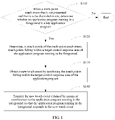
- FIG. 1 shows a schematic flowchart of a touch event processing method according to an embodiment of the present invention.
- the method is applied to a terminal device with a touchscreen, and may be specifically applied to an event processor in the terminal device. As shown in FIG. 1 , the method may include the following steps.
- S110 If a multi-point touch event that is not processed and that is to be discarded exists, determine whether an application program running in a foreground is a key application program. If the application program running in the foreground is a key application program, S120 is performed; or if the application program running in the foreground is not a key application program, the current procedure is ended.
- a multi-point touch event transferred to a parent view is not processed, in this case, it is determined that a to-be-discarded multi-point touch event exists. Then, the multi-point touch event is intercepted, and whether an application program running in a foreground is a key application program is determined. If the application program running in the foreground is a key application program, S120 is performed.
- the key application program is a phone application program, which may be set by a system or by a user as key application program.
- the system determines, according to a package name of the application program, whether the application program running in the foreground is a key application program.
- the package name of the application program is a unique identifier of the application program. If package names of the key application programs include the package name of the application program running in the foreground, it is determined that the application program running in the foreground is a key application program.
- S120 Determine, in touch points of the multi-point touch event, touch points falling within a target control response area of the application program running in the foreground.
- a target control response area may be determined by the system according to control areas included in a display interface of a key application program. For example, if the current display interface is a page of the phone application program for making a call, it is determined that a control response area corresponding to a control used for answering the call is a target control response area; or if the current display interface is a page for answering a call, it is determined that a control response area corresponding to a control used for hanging up is a target control response area.
- the touch points in the multi-point touch event are separately analyzed to determine whether the touch points fall within the target control response area.
- a new touch event is obtained by combining the touch points falling within the target control response area.
- the current display interface includes three control response areas: an area I and an area II.
- the area I is the target control response area. If separated touch points falling within the control response area includes two points, A and B, and the point A falls within the area I, the point A is used as a new touch event.
- S140 Transfer the new touch event obtained by means of combination to the application program running in the foreground, so that the application program running in the foreground responds to the new touch event.
- the new touch event obtained by means of combination is re-transferred to the application program running in the foreground, and the application program responds to the new touch event, thereby avoiding a problem that, in a scenario, a tap performed on the control response area of the application program running in the foreground by a user is not responded to.
- touch event processing method if a multi-point touch event that is not processed and that is to be discarded exists, and an application program running in a foreground is a key application program, touch points falling within a control response area of the application program running in the foreground are determined in touch points of the multi-point touch event.
- a new touch event is obtained by combining the touch points falling within the target control response area of the application program running in the foreground, and the new touch event is re-transferred to the application program running in the foreground, so that the application program running in the foreground responds to the new touch event, that is, the application program responds to the touch event performed by a user, thereby avoiding a problem that, in some scenarios, a touch operation performed by a user is not responded to.
- a ghost hand appears exactly in the control response area of the application program running in the foreground, and therefore, interference touch points need to be filtered out, and finally left touch points are touch points to which the application program needs to respond.
- FIG. 2 shows a schematic flowchart of S130 in the method according to an embodiment of the present invention. As shown in FIG. 2 , S130 may include the following steps.
- S131 Filter the touch points in the target control response area according to a touch performance parameter, so as to obtain valid touch points.
- the touch performance parameter may include any one or any combination of: a quantity of taps, a movement distance of a touch point, touch duration, or touch strength.
- touch position coordinates of a touch point fall within a target control response area of an application program running in a foreground; however, the touch point has a movement distance, and a distance between a starting position and an ending position of the touch point is greater than length of the control response area. In this case, it is determined that the touch point is an invalid touch point, and the touch point is discarded. If the touch position of the touch point falls within the target control response area, and the distance between the starting position and the ending position of the touch point is less than the length of the control response area, it is determined that the touch point is a valid touch point.
- a ghost hand appears in a target control response area, and the target control response area is tapped for hundreds of times in preset duration.
- ghost hand interference points may be filtered out by collecting a quantity of taps on a touch point in a period. If a quantity of taps on the touch point in first preset duration exceeds a preset quantity, it is determined that the touch point is an invalid touch point, and the touch point is discarded; or if the quantity of taps on the touch point in the first preset duration does not exceed a preset quantity, the touch point is a valid touch point.
- touch duration of a ghost hand is relatively long and a movement distance is relatively short.
- touch duration and a movement distance of a touch point are detected. If the touch duration of the touch point does not exceed second preset duration, and the movement distance of the touch point is not less than a preset distance, it is determined that the touch point is a valid touch point; or if the touch duration of the touch point exceeds the second preset duration, and the movement distance of the touch point is less than the preset distance, it is determined that the touch point is an invalid touch point, and the touch point is discarded.
- touch strength of a touch point is detected. If the touch strength is greater than or equal to preset touch strength, it is determined that the touch point is a valid touch point; or if the touch strength is less than the preset touch strength, it is determined that the touch point is an invalid touch point.
- an interference touch point may be eliminated by using any combination of the touch performance parameters.
- S132 Obtain the new touch event by combining the valid touch points in the target control response area.
- a new touch event is obtained by combining touch points in a target control response area.
- the newly obtained touch event may be a single-point touch event; or may be a multi-point touch event, for example, when a user touches a control response area on a current display interface by using two fingers.
- touch points separated from a to-be-discarded multi-point touch event are filtered, so that an interference touch point is filtered out, and touch points to which an application program needs to respond are left, that is, valid touch points.
- a new touch event is obtained by combining the valid touch points falling within a target control response area. Interference touch points in the new touch event are greatly reduced by using this method, and the touch event is accurately responded to.
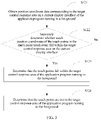
- FIG. 3 shows a schematic flowchart of S120 in the method according to an embodiment of the present invention. As shown in FIG. 3 , S120 may include the following steps.
- S121 Obtain position coordinate data corresponding to the target control response area on a current display interface of the application program running in a foreground.
- position coordinate data of a target control response area on a display interface of an application program running in the foreground can be obtained when positions of touch points in a multi-point touch event need to be determined.
- position coordinate data of a control response area of the application program is dynamically obtained, and position coordinate data of the target control response area is stored, so that the position coordinate data of the target control response area is directly read in subsequent use.
- a control response area of an application program may change with an update of the application program, and therefore, after an update of the application program installed on a terminal device is detected, the stored position coordinate data of the control response areas on the display interfaces of the application program is updated, so as to ensure that the stored position coordinate data of the control response areas is always corresponding to the installed application program.
- position coordinate data of a control response area of a key application program only needs to be obtained once, and is directly read in subsequent use instead of being obtained each time, thereby reducing occupied CPU resources.
- S122 Separately determine whether touch position coordinates of the touch points in the multi-point touch event fall within the target control response area on the current display interface. If the touch position coordinates of the touch points in the multi-point touch event fall within the target control response area on the current display interface, S123 is performed; or if touch position coordinates of the touch points in the multi-point touch event are not in the target control response area on the current display interface, S124 is performed.
- S123 Determine that the touch points fall within the target control response area of the application program running in the foreground.
- S124 Determine that the touch points are not in the target control response area of the application program running in the foreground, and then discard the touch points.
- position coordinate data of a target control response area on a display interface of an application program is obtained, touch points in a multi-point touch event are separately analyzed to determine whether the touch points fall within the target control response area, so as to detect touch points whose touch coordinates are in the control response area.
- position coordinate data of the control response area can be obtained when a key application program is started, and position coordinate data of the target control response area is stored, so that the position coordinate data of the target control response area is directly read in subsequent use instead of being obtained each time, thereby reducing occupied CPU resources.
- the present invention further provides embodiments of a touch event processing apparatus.
- FIG. 4 shows a block diagram of a touch event processing apparatus according to an embodiment of the present invention.
- the apparatus is applied to a terminal device with a touchscreen.
- the apparatus includes a first judgment unit 410, a determining unit 420, a combination unit 430, and a transfer unit 440.
- the first judgment unit 410 is configured to: when a multi-point touch event that is not processed and that is to be discarded exists, determine whether an application program running in a foreground is a key application program.
- the touch event reporting mechanism if a multi-point touch event that is not processed and that is to be discarded exists, the multi-point touch event is intercepted, and whether an application program running in a foreground is a key application program is determined.
- the determining unit 420 is configured to: if the application program running in the foreground is a key application program, determine, in touch points in the multi-point touch event, touch points falling within a target control response area of the application program running in the foreground.
- the combination unit 430 is configured to obtain a new touch event by combining the touch points falling within the target control response area.
- the transfer unit 440 is configured to transfer the new touch event obtained by means of combination to the application program running in the foreground, so that the application program running in the foreground responds to the new touch event.
- a judgment unit determines whether an application program running in a foreground is a key application program. If the application program running in the foreground is a key application program, a determining unit determines, in touch points in the multi-point touch event, touch points falling within a target control response area of the application program running in the foreground. Then, a combination unit obtains a new touch event according to the touch points falling within the target control response area, and re-transfers the new touch event to the application program running in the foreground, so that the application program running in the foreground responds to the new touch event. In this way, the application program running in the foreground responds to a touch event performed by a user, thereby avoiding a problem that, in some scenarios, a touchscreen does not respond to a touch operation performed by a user.
- a combination unit 420 for a purpose of separating a new touch event with a relatively high accuracy, where the new touch event is constituted by touch points that are in all current touch points and to which an application program needs to respond to, a combination unit 420 further needs to filter out an invalid touch point from touch points falling within a target control response area, so as to obtain valid touch points.
- the combination unit 430 may include a filtering subunit 431 and a combination subunit 432.
- the filtering subunit 431 is configured to filter out an interference touch point from the touch points in the target control response area according to a touch performance parameter, so as to obtain valid touch points.
- the touch performance parameter includes any one or any combination of: a quantity of taps, a movement distance of a touch point, touch duration, or touch strength.
- touch position coordinates of a touch point fall within a control response area of an application program; however, the touch point has a movement distance, and a distance between a starting position and an ending position of the touch point is greater than length of the control response area.
- the filtering subunit 431 determines that the touch point is an invalid touch point, and the touch point is discarded. If the touch position of the touch point falls within the control response area, and the distance between the starting position and the ending position of the touch point is less than the length of the control response area, the filtering subunit 431 determines that the touch point is a valid touch point.
- a ghost hand appears in a control response area, and the control response area is tapped for hundreds of times in preset duration.
- ghost hand touch points may be filtered out by collecting a quantity of taps on a touch point in a period. If a quantity of taps on the touch point in first preset duration exceeds a preset quantity, the filtering subunit 431 determines that the touch point is an invalid touch point, and the touch point is discarded; or if the quantity of taps on the touch point in the first preset duration does not exceed a preset quantity, the touch point is a valid touch point.
- touch duration of a ghost hand is relatively long and a movement distance is relatively short.
- touch duration and a movement distance of a touch point are detected. If the touch duration of the touch point does not exceed second preset duration, and the movement distance of the touch point is not less than a preset distance, the filtering subunit 431 determines that the touch point is a valid touch point; or if the touch duration of the touch point exceeds the second preset duration, and the movement distance of the touch point is less than the preset distance, the filtering subunit 431 determines that the touch point is an invalid touch point, and the touch point is discarded.
- touch strength of a touch point is detected. If the touch strength is greater than or equal to preset touch strength, it is determined that the touch point is a valid touch point; or if the touch strength is less than the preset touch strength, it is determined that the touch point is an invalid touch point.
- an interference touch point may be eliminated by using any combination of the touch performance parameters.
- the combination subunit 432 is configured to obtain the new touch event according to the valid touch points falling within the target control response area.
- touch points separated from a multi-point touch event that is not processed are filtered, so that an interference touch point is filtered out, and touch points to which an application program running in a foreground needs to respond are obtained, that is, valid touch points.
- a new touch event is obtained by combining the valid touch points falling within a target control response area of the application program running in the foreground. Interference touch points in the new touch event are greatly reduced by using this method, and the touch event is accurately responded to.
- FIG. 6 shows a block diagram of a determining unit according to an embodiment of the present invention.
- the determining unit 420 includes an obtaining subunit 421, a judgment subunit 422, and a determining subunit 423.
- the obtaining subunit 421 is configured to obtain position coordinate data corresponding to the target control response area on a current display interface of the application program running in a foreground.
- a current display interface of an application program refers to a display interface that is of the application program and that is currently displayed by a terminal device with a touchscreen, that is, the current display interface of the application program.
- Control response areas corresponding to all controls on the current display interface of the application program are obtained, and a control response area corresponding to a target control is determined as a target response area.
- position coordinate data of a target control response area on a display interface of an application program running in the foreground can be obtained when positions of touch points in a multi-point touch event need to be determined.
- position coordinate data of a control response area of the application program is dynamically obtained, and position coordinate data of target control response areas on display interfaces of the application program is stored, so that the position coordinate data of the target control response areas is directly read in subsequent use.
- a control response area of an application program may change with an update of the application program, and therefore, after an update of the application program installed on a terminal device is detected, the stored position coordinate data of the control response areas on the display interfaces of the application program is updated, so as to ensure that the stored position coordinate data of the control response areas is always corresponding to the installed application program.
- the judgment subunit 422 is configured to separately determine whether touch position coordinates of the touch points in the multi-point touch event fall within the target control response area on the current display interface.
- the determining subunit 423 is configured to: if the touch position coordinates of the touch points fall within the target control response area on the current display interface, determine that the touch points fall within the target control response area of the application program running in the foreground.
- position coordinate data of a target control response area on a current display interface of an application program running in a foreground is obtained by an obtaining subunit, touch points of a multi-point touch event are separately determined to determine whether the touch points fall within the target control response area, so as to detect touch points whose touch coordinates are in the target control response area.
- position coordinate data of the control response area can be obtained when a key application program is started, and position coordinate data of the target control response area is stored, so that the position coordinate data of the control response area is directly read in subsequent use instead of being obtained each time, thereby reducing occupied CPU resources.
- the present invention further provides an embodiment of a terminal device in which the touch event processing method is applied.
- FIG. 7 shows a structural block diagram of a terminal device according to an embodiment of the present invention.
- the terminal device 600 includes at least one processor 601, at least one communications bus 602, a touchscreen 603, and a memory 604604.
- the communications bus 602 is configured to implement connection and communication between the components.
- the touchscreen 603 is configured to implement the foregoing touch event processing method.
- the touchscreen 603 may include a capacitive touchscreen or a resistive touchscreen.
- the memory 604604 may include a read-only memory and a random access memory, and provides an instruction and data to the processor 601.
- a part of the memory 604 may further include a nonvolatile random access memory (NVRAM).
- NVRAM nonvolatile random access memory
- the memory 604 stores the following elements: an executable module or a data structure, a subset of an executable module and a data structure, or an extended set of an executable module and a data structure.
- the memory 604 includes an operating system 6041 and an application program module 6042.
- the operating system 6041 includes various system programs that are used to implement various basic services and process hardware-based tasks.
- the application program module 6042 includes various application programs, such as a launcher (launcher), a media player (Media Player), and a browser (Browser) that are configured to implement various application services.
- launcher launcher
- Media Player media player
- Browser Browser
- the processor 601 by invoking the program or the instruction stored in the memory 604, the processor 601 is configured to:
- processor 601 is configured to obtain a new touch event by combining the touch points in the target control response area of the application program running in the foreground specifically includes:
- the touch performance parameter includes any one or any combination of: a quantity of taps, a movement distance of a touch point, touch duration, or touch strength.
- That the processor 601 is configured to filter out an interference touch point from the touch points in the target control response area, so as to obtain valid touch points specifically includes:
- the processor 601 is configured to determine, in touch points in the multi-point touch event, touch points falling within a target control response area of the application program running in the foreground specifically includes:
- processor 601 is configured to obtain position coordinate data corresponding to the target control response area on a current display interface of the application program specifically includes:
- the present invention can be described in the general context of executable computer instructions executed by a computer, for example, a program module.
- the program unit includes a routine, program, object, component, data structure, and the like for executing a particular task or implementing a particular abstract data type.
- the present invention may also be practiced in distributed computing environments in which tasks are performed by remote processing devices that are connected through a communications network.
- program modules may be located in both local and remote computer storage media including storage devices.
Landscapes
- Engineering & Computer Science (AREA)
- Theoretical Computer Science (AREA)
- General Engineering & Computer Science (AREA)
- Physics & Mathematics (AREA)
- General Physics & Mathematics (AREA)
- Human Computer Interaction (AREA)
- Software Systems (AREA)
- Computer Networks & Wireless Communication (AREA)
- Signal Processing (AREA)
- User Interface Of Digital Computer (AREA)
- Telephone Function (AREA)
- Position Input By Displaying (AREA)
Claims (14)
- Procédé de traitement d'événements tactiles dans un dispositif terminal (600) possédant un écran tactile (603), comprenant :lorsqu'il existe un évènement tactile multipoints et qu'un programme d'application de téléphone est exécuté en avant-plan,la détermination du fait que l'événement tactile multipoints n'est pas traité et doit être écarté ;la détermination (S120), dans des points tactiles de l'évènement tactile multipoints, d'un premier point tactile tombant dans une zone de réponse de commande cible d'une interface d'affichage courante du programme d'application de téléphone et d'un second point tactile ne tombant pas dans la zone de réponse de commande cible ;l'obtention (S130) d'un nouvel évènement tactile en fonction du premier point tactile tombant dans la zone de réponse de commande cible, dans lequel le nouvel évènement tactile ne comprend pas le second point tactile ; etle transfert (S140) du nouvel évènement tactile au programme d'application de téléphone.
- Procédé selon la revendication 1, dans lequel lorsque l'interface d'affichage courante du programme d'application de téléphone est une page de réponse à un appel, la zone de réponse de commande cible correspond à une commande utilisée pour raccrocher l'appel.
- Procédé selon la revendication 1 ou 2, comprenant en outre :
la réponse, par le programme d'application de téléphone, au nouvel évènement tactile. - Procédé selon l'une quelconque des revendications 1 à 3, dans lequel l'obtention (S130) du nouvel évènement tactile en fonction du premier point tactile tombant dans la zone de réponse de commande cible comprend :l'obtention d'un point tactile valide dans la zone de réponse de commande cible en fonction d'un paramètre de performance tactile ;l'obtention du nouvel évènement tactile en fonction du point tactile valide dans la zone de réponse de commande cible.
- Procédé selon l'une quelconque des revendications 1 à 4, dans lequel la détermination (S120), dans des points tactiles dans l'évènement tactile multipoints, d'un premier point tactile tombant dans une zone de réponse de commande cible d'une interface d'affichage courante du programme d'application de téléphone comprend :l'obtention (S121) de données de coordonnées de position correspondant à la zone de réponse de commande cible ;la détermination (S 122) du fait que les coordonnées de position tactile du premier point tactile des points tactiles dans l'évènement tactile multipoints tombent dans une plage de coordonnées de position correspondant à la zone de réponse de commande cible ou non ; etsi les coordonnées de position tactile du premier point tactile tombent dans la zone de réponse de commande cible, la détermination (S123) du fait que le premier point tactile tombe dans la zone de réponse de commande cible.
- Procédé selon la revendication 5, dans lequel l'obtention (S121) des données de coordonnées de position correspondant à la zone de réponse de commande cible comprend :lorsque le programme d'application de téléphone est démarré, l'obtention de données de coordonnées de position de zones de réponse de commande sur une interface d'affichage du programme d'application de téléphone, et le stockage des données de coordonnées de position de la zone de réponse de commande cible sur l'interface d'affichage, dans lequel la zone de réponse de commande cible est déterminée en fonction des zones de réponse de commande ; etlorsqu'une mise à jour du programme d'application de téléphone est détectée, la mise à jour des données de coordonnées de position stockées de la zone de réponse de commande cible sur l'interface d'affichage du programme d'application de téléphone.
- Dispositif terminal (600) possédant un écran tactile (603), comprenant :au moins un processeur (601) ; etune mémoire (604) couplée à l'au moins un processeur et configurée pour stocker des instructions de programmation qui, lorsqu'elles sont exécutées par l'au moins un processeur, amènent le dispositif terminal à :lorsqu'il existe un évènement tactile multipoints et qu'un programme d'application de téléphone est exécuté en avant-plan,déterminer que l'évènement tactile multipoints n'est pas traité et doit être écarté ;déterminer (S120) un premier point tactile et un second point tactile parmi des points tactiles de l'événement tactile multipoints, dans lequel le premier point tactile tombe dans une zone de réponse de commande cible d'une interface d'affichage courante du programme d'application de téléphone, etle second point tactile ne tombe pas dans la zone de réponse de commande cible ;obtenir (S130) un nouvel évènement tactile en fonction du premier point tactile tombant dans la zone de réponse de commande cible, dans lequel le nouvel évènement tactile ne comprend pas le second point tactile ; ettransférer (S140) le nouvel évènement tactile au programme d'application de téléphone.
- Dispositif terminal (600) selon la revendication 7, dans lequel lorsque l'interface d'affichage courante du programme d'application de téléphone est une page de réponse à un appel, la zone de réponse de commande cible correspond à une commande utilisée pour raccrocher.
- Dispositif terminal (600) selon la revendication 7 ou 8, dans lequel la mémoire (604) est en outre configurée pour stocker des instructions de programmation qui, lorsqu'elles sont exécutées par l'au moins un processeur (601), amènent le dispositif terminal à :
répondre, par le programme d'application de téléphone, au nouvel évènement tactile. - Dispositif terminal (600) selon l'une quelconque des revendications 7 à 9, dans lequel la mémoire (604) est en outre configurée pour stocker des instructions de programmation qui, lorsqu'elles sont exécutées par l'au moins un processeur (601), amènent le dispositif terminal à :
déterminer (S110) que le programme d'application de téléphone est un programme d'application tactile. - Dispositif terminal (600) selon l'une quelconque des revendications 7 à 10, dans lequel une coordonnée de position tactile du premier point tactile tombe dans une plage de coordonnées de position correspondant à la zone de réponse de commande cible.
- Dispositif terminal (600) selon la revendication 10, dans lequel les instructions qui amènent le dispositif terminal à obtenir (S130) le nouvel évènement tactile en fonction du premier point tactile tombant dans la zone de réponse de commande cible comprend des instructions supplémentaires qui, lorsqu'elles sont exécutées par l'au moins un processeur (601), amènent le dispositif terminal à :filtrer (S131) un point tactile d'interférence dans la zone de réponse de commande cible en fonction d'un paramètre de performance tactile et obtenir un point tactile valide ; etobtenir (S132) le nouvel évènement tactile en fonction du point tactile valide dans la zone de réponse cible.
- Support de stockage informatique configuré pour stocker des instructions amenant le dispositif selon la revendication 7 à :lorsqu'il existe un évènement tactile multipoints et qu'un programme d'application de téléphone est exécuté en avant-plan,déterminer que l'évènement tactile multipoints n'est pas traité et doit être écarté ;déterminer (S120) un premier point tactile et un second point tactile parmi des points tactiles de l'événement tactile multipoints, dans lequel le premier point tactile tombe dans une zone de réponse de commande cible d'une interface d'affichage courante du programme d'application de téléphone, etle second point tactile ne tombe pas dans la zone de réponse de commande cible ;obtenir (S130) un nouvel évènement tactile en fonction du premier point tactile tombant dans la zone de réponse de commande cible, dans lequel le nouvel évènement tactile ne comprend pas le second point tactile ; ettransférer (S140) le nouvel évènement tactile au programme d'application de téléphone.
- Support de stockage informatique selon la revendication 13, dans lequel lorsque l'interface d'affichage courante du programme d'application de téléphone est une page de réponse à un appel, la zone de réponse de commande cible correspond à une commande utilisée pour raccrocher.
Priority Applications (2)
| Application Number | Priority Date | Filing Date | Title |
|---|---|---|---|
| EP22154157.6A EP4141628B1 (fr) | 2015-03-19 | 2015-03-19 | Procédé et appareil de traitement d'événements tactiles et dispositif terminal |
| EP19210342.2A EP3674857B1 (fr) | 2015-03-19 | 2015-03-19 | Procédé et appareil de traitement d'événements tactiles et dispositif terminal |
Applications Claiming Priority (3)
| Application Number | Priority Date | Filing Date | Title |
|---|---|---|---|
| EP15885040.4A EP3264249B1 (fr) | 2015-03-19 | 2015-03-19 | Procédé, appareil et dispositif de terminal de traitement d'événements tactiles |
| PCT/CN2015/074585 WO2016145657A1 (fr) | 2015-03-19 | 2015-03-19 | Procédé, appareil et dispositif de terminal de traitement d'événements tactiles |
| EP19210342.2A EP3674857B1 (fr) | 2015-03-19 | 2015-03-19 | Procédé et appareil de traitement d'événements tactiles et dispositif terminal |
Related Parent Applications (1)
| Application Number | Title | Priority Date | Filing Date |
|---|---|---|---|
| EP15885040.4A Division EP3264249B1 (fr) | 2015-03-19 | 2015-03-19 | Procédé, appareil et dispositif de terminal de traitement d'événements tactiles |
Related Child Applications (2)
| Application Number | Title | Priority Date | Filing Date |
|---|---|---|---|
| EP22154157.6A Division EP4141628B1 (fr) | 2015-03-19 | 2015-03-19 | Procédé et appareil de traitement d'événements tactiles et dispositif terminal |
| EP22154157.6A Division-Into EP4141628B1 (fr) | 2015-03-19 | 2015-03-19 | Procédé et appareil de traitement d'événements tactiles et dispositif terminal |
Publications (2)
| Publication Number | Publication Date |
|---|---|
| EP3674857A1 EP3674857A1 (fr) | 2020-07-01 |
| EP3674857B1 true EP3674857B1 (fr) | 2022-04-20 |
Family
ID=56920385
Family Applications (3)
| Application Number | Title | Priority Date | Filing Date |
|---|---|---|---|
| EP22154157.6A Active EP4141628B1 (fr) | 2015-03-19 | 2015-03-19 | Procédé et appareil de traitement d'événements tactiles et dispositif terminal |
| EP15885040.4A Active EP3264249B1 (fr) | 2015-03-19 | 2015-03-19 | Procédé, appareil et dispositif de terminal de traitement d'événements tactiles |
| EP19210342.2A Active EP3674857B1 (fr) | 2015-03-19 | 2015-03-19 | Procédé et appareil de traitement d'événements tactiles et dispositif terminal |
Family Applications Before (2)
| Application Number | Title | Priority Date | Filing Date |
|---|---|---|---|
| EP22154157.6A Active EP4141628B1 (fr) | 2015-03-19 | 2015-03-19 | Procédé et appareil de traitement d'événements tactiles et dispositif terminal |
| EP15885040.4A Active EP3264249B1 (fr) | 2015-03-19 | 2015-03-19 | Procédé, appareil et dispositif de terminal de traitement d'événements tactiles |
Country Status (4)
| Country | Link |
|---|---|
| US (1) | US10379671B2 (fr) |
| EP (3) | EP4141628B1 (fr) |
| CN (2) | CN110825304B (fr) |
| WO (1) | WO2016145657A1 (fr) |
Families Citing this family (11)
| Publication number | Priority date | Publication date | Assignee | Title |
|---|---|---|---|---|
| CN106484288A (zh) * | 2016-09-28 | 2017-03-08 | 依偎科技(南昌)有限公司 | 一种终端控制方法以及移动终端 |
| CN108073347B (zh) * | 2017-12-15 | 2019-07-05 | 掌阅科技股份有限公司 | 多点触控的处理方法、计算设备及计算机存储介质 |
| CN110134463B (zh) * | 2018-02-02 | 2022-07-26 | 斑马智行网络(香港)有限公司 | 数据处理方法、装置、设备和机器可读介质 |
| CN108376050A (zh) * | 2018-02-24 | 2018-08-07 | 海信(山东)空调有限公司 | 家用电器及其控制方法和控制组件 |
| CN109725959A (zh) * | 2018-05-08 | 2019-05-07 | 平安普惠企业管理有限公司 | 页面控件的响应方法、显示设备及计算机可读存储介质 |
| CN113325966A (zh) * | 2020-02-28 | 2021-08-31 | 北京小米移动软件有限公司 | 报点处理方法、报点处理装置及存储介质 |
| CN115185406B (zh) * | 2021-04-02 | 2026-03-10 | 华为技术有限公司 | 一种输入监控方法、装置和电子设备 |
| CN114489354B (zh) * | 2022-01-14 | 2024-12-03 | 深圳Tcl新技术有限公司 | 按键事件处理方法、装置、存储介质及终端 |
| CN114407796B (zh) * | 2022-01-21 | 2025-01-07 | 腾讯科技(深圳)有限公司 | 车载终端的控制方法、装置、设备及存储介质 |
| CN117666826A (zh) * | 2022-08-24 | 2024-03-08 | 开立生物医疗科技(武汉)有限公司 | 一种触摸校正方法、装置、超声设备及存储介质 |
| CN115904148A (zh) * | 2022-11-14 | 2023-04-04 | 京东方科技集团股份有限公司 | 触控事件的处理方法及装置、存储介质、电子设备 |
Family Cites Families (18)
| Publication number | Priority date | Publication date | Assignee | Title |
|---|---|---|---|---|
| US7956847B2 (en) * | 2007-01-05 | 2011-06-07 | Apple Inc. | Gestures for controlling, manipulating, and editing of media files using touch sensitive devices |
| CN101661363A (zh) * | 2008-08-28 | 2010-03-03 | 比亚迪股份有限公司 | 一种多点触摸感应系统的应用方法 |
| CN102053748A (zh) | 2009-10-28 | 2011-05-11 | 鸿富锦精密工业(深圳)有限公司 | 一种多点式触摸屏热键管理系统及方法 |
| US20130002602A1 (en) | 2011-06-28 | 2013-01-03 | Suzana Apelbaum | Systems And Methods For Touch Screen Image Capture And Display |
| CN102768607B (zh) * | 2011-11-02 | 2014-12-31 | 联想(北京)有限公司 | 一种实现触控操作应用程序的方法及装置 |
| DE102012110278B8 (de) | 2011-11-02 | 2025-07-17 | Beijing Lenovo Software Ltd. | Verfahren und Vorrichtungen zur Fensterdarstellung und Verfahren und Vorrichtungen zur Berührungsbedienung von Anwendungen |
| US8812994B2 (en) | 2011-12-29 | 2014-08-19 | Apple Inc. | Device, method, and graphical user interface for configuring restricted interaction with a user interface |
| US9046958B2 (en) * | 2012-03-15 | 2015-06-02 | Nokia Technologies Oy | Method, apparatus and computer program product for user input interpretation and input error mitigation |
| CN103324325B (zh) * | 2012-03-21 | 2016-02-10 | 宇龙计算机通信科技(深圳)有限公司 | 多点触摸误操作的检测方法及终端 |
| CN103455266A (zh) * | 2012-06-04 | 2013-12-18 | 华为终端有限公司 | 一种触摸屏的误触摸操作的处理方法及终端设备 |
| KR20140016655A (ko) * | 2012-07-30 | 2014-02-10 | (주)라온제나 | 오브젝트에 대한 터치를 식별하는 멀티터치 인식 장치 및 방법 |
| KR20140138224A (ko) | 2013-01-06 | 2014-12-03 | 인텔 코오퍼레이션 | 터치 데이터의 분산된 전처리와 디스플레이 영역 제어를 위한 방법, 장치, 및 시스템 |
| CN103513914B (zh) * | 2013-03-13 | 2016-05-11 | 展讯通信(上海)有限公司 | 应用对象的触摸控制方法与装置 |
| CN104102437B (zh) * | 2013-04-03 | 2017-12-15 | 华为技术有限公司 | 在多点触摸设备上进行操作的方法及多点触摸设备 |
| CN103268197B (zh) | 2013-04-28 | 2016-03-02 | 华为技术有限公司 | 一种锁定屏幕的方法、装置和终端设备 |
| KR102123406B1 (ko) * | 2013-07-05 | 2020-06-16 | 삼성전자주식회사 | 멀티 터치 입력을 지원하는 터치스크린을 구비한 모바일 단말기 및 그의 제어 방법 |
| CN103513871B (zh) * | 2013-09-30 | 2017-03-15 | 北界创想(北京)软件有限公司 | 控制移动终端的方法和装置 |
| CN104007932B (zh) * | 2014-06-17 | 2017-12-29 | 华为技术有限公司 | 一种触摸点识别方法及装置 |
-
2015
- 2015-03-19 CN CN201911033084.8A patent/CN110825304B/zh active Active
- 2015-03-19 EP EP22154157.6A patent/EP4141628B1/fr active Active
- 2015-03-19 US US15/559,401 patent/US10379671B2/en active Active
- 2015-03-19 EP EP15885040.4A patent/EP3264249B1/fr active Active
- 2015-03-19 CN CN201580021516.7A patent/CN106462351B/zh active Active
- 2015-03-19 WO PCT/CN2015/074585 patent/WO2016145657A1/fr not_active Ceased
- 2015-03-19 EP EP19210342.2A patent/EP3674857B1/fr active Active
Also Published As
| Publication number | Publication date |
|---|---|
| EP3674857A1 (fr) | 2020-07-01 |
| US20180088731A1 (en) | 2018-03-29 |
| EP4141628B1 (fr) | 2024-03-06 |
| CN110825304A (zh) | 2020-02-21 |
| EP3264249A4 (fr) | 2018-03-14 |
| CN110825304B (zh) | 2023-04-21 |
| US10379671B2 (en) | 2019-08-13 |
| EP3264249B1 (fr) | 2019-12-18 |
| EP4141628A1 (fr) | 2023-03-01 |
| CN106462351B (zh) | 2019-11-12 |
| WO2016145657A1 (fr) | 2016-09-22 |
| CN106462351A (zh) | 2017-02-22 |
| EP3264249A1 (fr) | 2018-01-03 |
Similar Documents
| Publication | Publication Date | Title |
|---|---|---|
| EP3674857B1 (fr) | Procédé et appareil de traitement d'événements tactiles et dispositif terminal | |
| KR101754908B1 (ko) | 이벤트 인식 | |
| US9007314B2 (en) | Method for touch processing and mobile terminal | |
| CN104571693B (zh) | 信息处理方法及电子设备 | |
| US20170357416A1 (en) | Method, apparatus, and terminal for processing notification information | |
| CN112817483B (zh) | 多点触控的处理方法、装置、设备及存储介质 | |
| WO2015120704A1 (fr) | Procédé et système pour afficher un raccourci d'application dans une interface d'écran de verrouillage | |
| TWI700629B (zh) | 控制顯示方向的方法和設備 | |
| WO2015120703A1 (fr) | Procédé et système pour afficher un raccourci d'application sur une interface d'ecran de verrouillage | |
| CN105487809A (zh) | 一种终端的控制方法及装置 | |
| US20180188919A1 (en) | System and method to control a touchscreen user interface | |
| WO2014015749A1 (fr) | Appareil électronique et procédé d'interaction avec une application sur un appareil électronique | |
| CN103019585A (zh) | 触摸屏的单点控制方法、装置及移动终端 | |
| CN102609187A (zh) | 一种显示菜单的方法及终端设备 | |
| CN117112124A (zh) | Kubernetes对象的参数校验方法、服务器及终端 | |
| CN111095181B (zh) | 信息处理方法、相关设备及计算机存储之介质 | |
| CN106250042A (zh) | 用户界面的退出方法、装置及电子设备 | |
| WO2016173307A1 (fr) | Procédé et dispositif de copie de message, et terminal intelligent | |
| CN114546226A (zh) | 窗口元素抓取方法、装置以及存储介质 | |
| US20160224127A1 (en) | Method for controlling a cursor, electronic device and input device | |
| EP3268849A1 (fr) | Traitement d'entrée d'encre numérique soumise à la surveillance et à l'intervention d'un programme d'application | |
| CN106293304B (zh) | 界面操作方法及装置 | |
| CN111182151A (zh) | 一种侧屏控制方法、电子设备及存储介质 | |
| WO2015100601A1 (fr) | Procédé et terminal de commande d'opérations | |
| WO2012102059A1 (fr) | Dispositif d'affichage de commandes de menu, procédé de traitement d'affichage de commandes de menu et programme d'affichage de commandes de menu |
Legal Events
| Date | Code | Title | Description |
|---|---|---|---|
| PUAI | Public reference made under article 153(3) epc to a published international application that has entered the european phase |
Free format text: ORIGINAL CODE: 0009012 |
|
| STAA | Information on the status of an ep patent application or granted ep patent |
Free format text: STATUS: THE APPLICATION HAS BEEN PUBLISHED |
|
| AC | Divisional application: reference to earlier application |
Ref document number: 3264249 Country of ref document: EP Kind code of ref document: P |
|
| AK | Designated contracting states |
Kind code of ref document: A1 Designated state(s): AL AT BE BG CH CY CZ DE DK EE ES FI FR GB GR HR HU IE IS IT LI LT LU LV MC MK MT NL NO PL PT RO RS SE SI SK SM TR |
|
| STAA | Information on the status of an ep patent application or granted ep patent |
Free format text: STATUS: REQUEST FOR EXAMINATION WAS MADE |
|
| 17P | Request for examination filed |
Effective date: 20210104 |
|
| RBV | Designated contracting states (corrected) |
Designated state(s): AL AT BE BG CH CY CZ DE DK EE ES FI FR GB GR HR HU IE IS IT LI LT LU LV MC MK MT NL NO PL PT RO RS SE SI SK SM TR |
|
| STAA | Information on the status of an ep patent application or granted ep patent |
Free format text: STATUS: EXAMINATION IS IN PROGRESS |
|
| 17Q | First examination report despatched |
Effective date: 20210408 |
|
| GRAP | Despatch of communication of intention to grant a patent |
Free format text: ORIGINAL CODE: EPIDOSNIGR1 |
|
| STAA | Information on the status of an ep patent application or granted ep patent |
Free format text: STATUS: GRANT OF PATENT IS INTENDED |
|
| RIC1 | Information provided on ipc code assigned before grant |
Ipc: G06F 9/451 20180101ALN20210915BHEP Ipc: H04M 1/72469 20210101ALI20210915BHEP Ipc: G06F 9/48 20060101ALI20210915BHEP Ipc: G06F 3/0488 20130101ALI20210915BHEP Ipc: G06F 3/041 20060101AFI20210915BHEP |
|
| RIC1 | Information provided on ipc code assigned before grant |
Ipc: G06F 9/451 20180101ALN20210922BHEP Ipc: H04M 1/72469 20210101ALI20210922BHEP Ipc: G06F 9/48 20060101ALI20210922BHEP Ipc: G06F 3/0488 20130101ALI20210922BHEP Ipc: G06F 3/041 20060101AFI20210922BHEP |
|
| RIC1 | Information provided on ipc code assigned before grant |
Ipc: G06F 9/451 20180101ALN20210930BHEP Ipc: H04M 1/72469 20210101ALI20210930BHEP Ipc: G06F 9/48 20060101ALI20210930BHEP Ipc: G06F 3/0488 20130101ALI20210930BHEP Ipc: G06F 3/041 20060101AFI20210930BHEP |
|
| INTG | Intention to grant announced |
Effective date: 20211015 |
|
| GRAS | Grant fee paid |
Free format text: ORIGINAL CODE: EPIDOSNIGR3 |
|
| GRAA | (expected) grant |
Free format text: ORIGINAL CODE: 0009210 |
|
| STAA | Information on the status of an ep patent application or granted ep patent |
Free format text: STATUS: THE PATENT HAS BEEN GRANTED |
|
| AC | Divisional application: reference to earlier application |
Ref document number: 3264249 Country of ref document: EP Kind code of ref document: P |
|
| AK | Designated contracting states |
Kind code of ref document: B1 Designated state(s): AL AT BE BG CH CY CZ DE DK EE ES FI FR GB GR HR HU IE IS IT LI LT LU LV MC MK MT NL NO PL PT RO RS SE SI SK SM TR |
|
| REG | Reference to a national code |
Ref country code: GB Ref legal event code: FG4D |
|
| REG | Reference to a national code |
Ref country code: CH Ref legal event code: EP |
|
| REG | Reference to a national code |
Ref country code: IE Ref legal event code: FG4D |
|
| REG | Reference to a national code |
Ref country code: DE Ref legal event code: R096 Ref document number: 602015078466 Country of ref document: DE |
|
| REG | Reference to a national code |
Ref country code: AT Ref legal event code: REF Ref document number: 1485688 Country of ref document: AT Kind code of ref document: T Effective date: 20220515 |
|
| REG | Reference to a national code |
Ref country code: NL Ref legal event code: FP |
|
| REG | Reference to a national code |
Ref country code: LT Ref legal event code: MG9D |
|
| REG | Reference to a national code |
Ref country code: AT Ref legal event code: MK05 Ref document number: 1485688 Country of ref document: AT Kind code of ref document: T Effective date: 20220420 |
|
| PG25 | Lapsed in a contracting state [announced via postgrant information from national office to epo] |
Ref country code: SE Free format text: LAPSE BECAUSE OF FAILURE TO SUBMIT A TRANSLATION OF THE DESCRIPTION OR TO PAY THE FEE WITHIN THE PRESCRIBED TIME-LIMIT Effective date: 20220420 Ref country code: PT Free format text: LAPSE BECAUSE OF FAILURE TO SUBMIT A TRANSLATION OF THE DESCRIPTION OR TO PAY THE FEE WITHIN THE PRESCRIBED TIME-LIMIT Effective date: 20220822 Ref country code: NO Free format text: LAPSE BECAUSE OF FAILURE TO SUBMIT A TRANSLATION OF THE DESCRIPTION OR TO PAY THE FEE WITHIN THE PRESCRIBED TIME-LIMIT Effective date: 20220720 Ref country code: LT Free format text: LAPSE BECAUSE OF FAILURE TO SUBMIT A TRANSLATION OF THE DESCRIPTION OR TO PAY THE FEE WITHIN THE PRESCRIBED TIME-LIMIT Effective date: 20220420 Ref country code: HR Free format text: LAPSE BECAUSE OF FAILURE TO SUBMIT A TRANSLATION OF THE DESCRIPTION OR TO PAY THE FEE WITHIN THE PRESCRIBED TIME-LIMIT Effective date: 20220420 Ref country code: GR Free format text: LAPSE BECAUSE OF FAILURE TO SUBMIT A TRANSLATION OF THE DESCRIPTION OR TO PAY THE FEE WITHIN THE PRESCRIBED TIME-LIMIT Effective date: 20220721 Ref country code: FI Free format text: LAPSE BECAUSE OF FAILURE TO SUBMIT A TRANSLATION OF THE DESCRIPTION OR TO PAY THE FEE WITHIN THE PRESCRIBED TIME-LIMIT Effective date: 20220420 Ref country code: ES Free format text: LAPSE BECAUSE OF FAILURE TO SUBMIT A TRANSLATION OF THE DESCRIPTION OR TO PAY THE FEE WITHIN THE PRESCRIBED TIME-LIMIT Effective date: 20220420 Ref country code: BG Free format text: LAPSE BECAUSE OF FAILURE TO SUBMIT A TRANSLATION OF THE DESCRIPTION OR TO PAY THE FEE WITHIN THE PRESCRIBED TIME-LIMIT Effective date: 20220720 Ref country code: AT Free format text: LAPSE BECAUSE OF FAILURE TO SUBMIT A TRANSLATION OF THE DESCRIPTION OR TO PAY THE FEE WITHIN THE PRESCRIBED TIME-LIMIT Effective date: 20220420 |
|
| PG25 | Lapsed in a contracting state [announced via postgrant information from national office to epo] |
Ref country code: RS Free format text: LAPSE BECAUSE OF FAILURE TO SUBMIT A TRANSLATION OF THE DESCRIPTION OR TO PAY THE FEE WITHIN THE PRESCRIBED TIME-LIMIT Effective date: 20220420 Ref country code: PL Free format text: LAPSE BECAUSE OF FAILURE TO SUBMIT A TRANSLATION OF THE DESCRIPTION OR TO PAY THE FEE WITHIN THE PRESCRIBED TIME-LIMIT Effective date: 20220420 Ref country code: LV Free format text: LAPSE BECAUSE OF FAILURE TO SUBMIT A TRANSLATION OF THE DESCRIPTION OR TO PAY THE FEE WITHIN THE PRESCRIBED TIME-LIMIT Effective date: 20220420 Ref country code: IS Free format text: LAPSE BECAUSE OF FAILURE TO SUBMIT A TRANSLATION OF THE DESCRIPTION OR TO PAY THE FEE WITHIN THE PRESCRIBED TIME-LIMIT Effective date: 20220820 |
|
| REG | Reference to a national code |
Ref country code: DE Ref legal event code: R097 Ref document number: 602015078466 Country of ref document: DE |
|
| PG25 | Lapsed in a contracting state [announced via postgrant information from national office to epo] |
Ref country code: SM Free format text: LAPSE BECAUSE OF FAILURE TO SUBMIT A TRANSLATION OF THE DESCRIPTION OR TO PAY THE FEE WITHIN THE PRESCRIBED TIME-LIMIT Effective date: 20220420 Ref country code: SK Free format text: LAPSE BECAUSE OF FAILURE TO SUBMIT A TRANSLATION OF THE DESCRIPTION OR TO PAY THE FEE WITHIN THE PRESCRIBED TIME-LIMIT Effective date: 20220420 Ref country code: RO Free format text: LAPSE BECAUSE OF FAILURE TO SUBMIT A TRANSLATION OF THE DESCRIPTION OR TO PAY THE FEE WITHIN THE PRESCRIBED TIME-LIMIT Effective date: 20220420 Ref country code: EE Free format text: LAPSE BECAUSE OF FAILURE TO SUBMIT A TRANSLATION OF THE DESCRIPTION OR TO PAY THE FEE WITHIN THE PRESCRIBED TIME-LIMIT Effective date: 20220420 Ref country code: DK Free format text: LAPSE BECAUSE OF FAILURE TO SUBMIT A TRANSLATION OF THE DESCRIPTION OR TO PAY THE FEE WITHIN THE PRESCRIBED TIME-LIMIT Effective date: 20220420 Ref country code: CZ Free format text: LAPSE BECAUSE OF FAILURE TO SUBMIT A TRANSLATION OF THE DESCRIPTION OR TO PAY THE FEE WITHIN THE PRESCRIBED TIME-LIMIT Effective date: 20220420 |
|
| PLBE | No opposition filed within time limit |
Free format text: ORIGINAL CODE: 0009261 |
|
| STAA | Information on the status of an ep patent application or granted ep patent |
Free format text: STATUS: NO OPPOSITION FILED WITHIN TIME LIMIT |
|
| 26N | No opposition filed |
Effective date: 20230123 |
|
| PG25 | Lapsed in a contracting state [announced via postgrant information from national office to epo] |
Ref country code: AL Free format text: LAPSE BECAUSE OF FAILURE TO SUBMIT A TRANSLATION OF THE DESCRIPTION OR TO PAY THE FEE WITHIN THE PRESCRIBED TIME-LIMIT Effective date: 20220420 |
|
| PG25 | Lapsed in a contracting state [announced via postgrant information from national office to epo] |
Ref country code: SI Free format text: LAPSE BECAUSE OF FAILURE TO SUBMIT A TRANSLATION OF THE DESCRIPTION OR TO PAY THE FEE WITHIN THE PRESCRIBED TIME-LIMIT Effective date: 20220420 |
|
| P01 | Opt-out of the competence of the unified patent court (upc) registered |
Effective date: 20230511 |
|
| PG25 | Lapsed in a contracting state [announced via postgrant information from national office to epo] |
Ref country code: MC Free format text: LAPSE BECAUSE OF FAILURE TO SUBMIT A TRANSLATION OF THE DESCRIPTION OR TO PAY THE FEE WITHIN THE PRESCRIBED TIME-LIMIT Effective date: 20220420 |
|
| REG | Reference to a national code |
Ref country code: CH Ref legal event code: PL |
|
| REG | Reference to a national code |
Ref country code: BE Ref legal event code: MM Effective date: 20230331 |
|
| PG25 | Lapsed in a contracting state [announced via postgrant information from national office to epo] |
Ref country code: LU Free format text: LAPSE BECAUSE OF NON-PAYMENT OF DUE FEES Effective date: 20230319 |
|
| REG | Reference to a national code |
Ref country code: IE Ref legal event code: MM4A |
|
| PG25 | Lapsed in a contracting state [announced via postgrant information from national office to epo] |
Ref country code: LI Free format text: LAPSE BECAUSE OF NON-PAYMENT OF DUE FEES Effective date: 20230331 Ref country code: IE Free format text: LAPSE BECAUSE OF NON-PAYMENT OF DUE FEES Effective date: 20230319 Ref country code: CH Free format text: LAPSE BECAUSE OF NON-PAYMENT OF DUE FEES Effective date: 20230331 |
|
| PG25 | Lapsed in a contracting state [announced via postgrant information from national office to epo] |
Ref country code: BE Free format text: LAPSE BECAUSE OF NON-PAYMENT OF DUE FEES Effective date: 20230331 |
|
| PG25 | Lapsed in a contracting state [announced via postgrant information from national office to epo] |
Ref country code: BG Free format text: LAPSE BECAUSE OF FAILURE TO SUBMIT A TRANSLATION OF THE DESCRIPTION OR TO PAY THE FEE WITHIN THE PRESCRIBED TIME-LIMIT Effective date: 20220420 |
|
| PG25 | Lapsed in a contracting state [announced via postgrant information from national office to epo] |
Ref country code: BG Free format text: LAPSE BECAUSE OF FAILURE TO SUBMIT A TRANSLATION OF THE DESCRIPTION OR TO PAY THE FEE WITHIN THE PRESCRIBED TIME-LIMIT Effective date: 20220420 |
|
| PG25 | Lapsed in a contracting state [announced via postgrant information from national office to epo] |
Ref country code: CY Free format text: LAPSE BECAUSE OF FAILURE TO SUBMIT A TRANSLATION OF THE DESCRIPTION OR TO PAY THE FEE WITHIN THE PRESCRIBED TIME-LIMIT; INVALID AB INITIO Effective date: 20150319 |
|
| PG25 | Lapsed in a contracting state [announced via postgrant information from national office to epo] |
Ref country code: HU Free format text: LAPSE BECAUSE OF FAILURE TO SUBMIT A TRANSLATION OF THE DESCRIPTION OR TO PAY THE FEE WITHIN THE PRESCRIBED TIME-LIMIT; INVALID AB INITIO Effective date: 20150319 |
|
| PG25 | Lapsed in a contracting state [announced via postgrant information from national office to epo] |
Ref country code: TR Free format text: LAPSE BECAUSE OF FAILURE TO SUBMIT A TRANSLATION OF THE DESCRIPTION OR TO PAY THE FEE WITHIN THE PRESCRIBED TIME-LIMIT Effective date: 20220420 |
|
| PGFP | Annual fee paid to national office [announced via postgrant information from national office to epo] |
Ref country code: NL Payment date: 20260213 Year of fee payment: 12 |
|
| PGFP | Annual fee paid to national office [announced via postgrant information from national office to epo] |
Ref country code: GB Payment date: 20260202 Year of fee payment: 12 |
|
| PGFP | Annual fee paid to national office [announced via postgrant information from national office to epo] |
Ref country code: DE Payment date: 20260204 Year of fee payment: 12 |
|
| PGFP | Annual fee paid to national office [announced via postgrant information from national office to epo] |
Ref country code: IT Payment date: 20260220 Year of fee payment: 12 |
|
| PGFP | Annual fee paid to national office [announced via postgrant information from national office to epo] |
Ref country code: FR Payment date: 20260209 Year of fee payment: 12 |