EP3674985A1 - Benutzerüberprüfungsverfahren und -vorrichtung unter verwendung eines verallgemeinerten benutzermodells - Google Patents
Benutzerüberprüfungsverfahren und -vorrichtung unter verwendung eines verallgemeinerten benutzermodells Download PDFInfo
- Publication number
- EP3674985A1 EP3674985A1 EP19201858.8A EP19201858A EP3674985A1 EP 3674985 A1 EP3674985 A1 EP 3674985A1 EP 19201858 A EP19201858 A EP 19201858A EP 3674985 A1 EP3674985 A1 EP 3674985A1
- Authority
- EP
- European Patent Office
- Prior art keywords
- user
- feature vector
- parameter
- enrolled
- feature
- Prior art date
- Legal status (The legal status is an assumption and is not a legal conclusion. Google has not performed a legal analysis and makes no representation as to the accuracy of the status listed.)
- Granted
Links
Images





Classifications
-
- G—PHYSICS
- G06—COMPUTING OR CALCULATING; COUNTING
- G06N—COMPUTING ARRANGEMENTS BASED ON SPECIFIC COMPUTATIONAL MODELS
- G06N7/00—Computing arrangements based on specific mathematical models
- G06N7/01—Probabilistic graphical models, e.g. probabilistic networks
-
- G—PHYSICS
- G06—COMPUTING OR CALCULATING; COUNTING
- G06F—ELECTRIC DIGITAL DATA PROCESSING
- G06F21/00—Security arrangements for protecting computers, components thereof, programs or data against unauthorised activity
- G06F21/30—Authentication, i.e. establishing the identity or authorisation of security principals
- G06F21/31—User authentication
- G06F21/32—User authentication using biometric data, e.g. fingerprints, iris scans or voiceprints
-
- G—PHYSICS
- G06—COMPUTING OR CALCULATING; COUNTING
- G06F—ELECTRIC DIGITAL DATA PROCESSING
- G06F18/00—Pattern recognition
- G06F18/20—Analysing
- G06F18/21—Design or setup of recognition systems or techniques; Extraction of features in feature space; Blind source separation
- G06F18/214—Generating training patterns; Bootstrap methods, e.g. bagging or boosting
-
- G—PHYSICS
- G06—COMPUTING OR CALCULATING; COUNTING
- G06F—ELECTRIC DIGITAL DATA PROCESSING
- G06F18/00—Pattern recognition
- G06F18/20—Analysing
- G06F18/22—Matching criteria, e.g. proximity measures
-
- G—PHYSICS
- G06—COMPUTING OR CALCULATING; COUNTING
- G06F—ELECTRIC DIGITAL DATA PROCESSING
- G06F18/00—Pattern recognition
- G06F18/20—Analysing
- G06F18/23—Clustering techniques
- G06F18/232—Non-hierarchical techniques
- G06F18/2321—Non-hierarchical techniques using statistics or function optimisation, e.g. modelling of probability density functions
-
- G—PHYSICS
- G06—COMPUTING OR CALCULATING; COUNTING
- G06F—ELECTRIC DIGITAL DATA PROCESSING
- G06F18/00—Pattern recognition
- G06F18/20—Analysing
- G06F18/24—Classification techniques
- G06F18/241—Classification techniques relating to the classification model, e.g. parametric or non-parametric approaches
- G06F18/2411—Classification techniques relating to the classification model, e.g. parametric or non-parametric approaches based on the proximity to a decision surface, e.g. support vector machines
-
- G—PHYSICS
- G06—COMPUTING OR CALCULATING; COUNTING
- G06F—ELECTRIC DIGITAL DATA PROCESSING
- G06F21/00—Security arrangements for protecting computers, components thereof, programs or data against unauthorised activity
- G06F21/30—Authentication, i.e. establishing the identity or authorisation of security principals
- G06F21/31—User authentication
-
- G—PHYSICS
- G06—COMPUTING OR CALCULATING; COUNTING
- G06N—COMPUTING ARRANGEMENTS BASED ON SPECIFIC COMPUTATIONAL MODELS
- G06N3/00—Computing arrangements based on biological models
- G06N3/02—Neural networks
- G06N3/04—Architecture, e.g. interconnection topology
- G06N3/044—Recurrent networks, e.g. Hopfield networks
- G06N3/0442—Recurrent networks, e.g. Hopfield networks characterised by memory or gating, e.g. long short-term memory [LSTM] or gated recurrent units [GRU]
-
- G—PHYSICS
- G06—COMPUTING OR CALCULATING; COUNTING
- G06N—COMPUTING ARRANGEMENTS BASED ON SPECIFIC COMPUTATIONAL MODELS
- G06N3/00—Computing arrangements based on biological models
- G06N3/02—Neural networks
- G06N3/04—Architecture, e.g. interconnection topology
- G06N3/045—Combinations of networks
-
- G—PHYSICS
- G06—COMPUTING OR CALCULATING; COUNTING
- G06N—COMPUTING ARRANGEMENTS BASED ON SPECIFIC COMPUTATIONAL MODELS
- G06N3/00—Computing arrangements based on biological models
- G06N3/02—Neural networks
- G06N3/04—Architecture, e.g. interconnection topology
- G06N3/0464—Convolutional networks [CNN, ConvNet]
-
- G—PHYSICS
- G06—COMPUTING OR CALCULATING; COUNTING
- G06N—COMPUTING ARRANGEMENTS BASED ON SPECIFIC COMPUTATIONAL MODELS
- G06N3/00—Computing arrangements based on biological models
- G06N3/02—Neural networks
- G06N3/08—Learning methods
-
- G—PHYSICS
- G06—COMPUTING OR CALCULATING; COUNTING
- G06N—COMPUTING ARRANGEMENTS BASED ON SPECIFIC COMPUTATIONAL MODELS
- G06N3/00—Computing arrangements based on biological models
- G06N3/02—Neural networks
- G06N3/08—Learning methods
- G06N3/09—Supervised learning
-
- G—PHYSICS
- G10—MUSICAL INSTRUMENTS; ACOUSTICS
- G10L—SPEECH ANALYSIS TECHNIQUES OR SPEECH SYNTHESIS; SPEECH RECOGNITION; SPEECH OR VOICE PROCESSING TECHNIQUES; SPEECH OR AUDIO CODING OR DECODING
- G10L17/00—Speaker identification or verification techniques
- G10L17/02—Preprocessing operations, e.g. segment selection; Pattern representation or modelling, e.g. based on linear discriminant analysis [LDA] or principal components; Feature selection or extraction
-
- G—PHYSICS
- G10—MUSICAL INSTRUMENTS; ACOUSTICS
- G10L—SPEECH ANALYSIS TECHNIQUES OR SPEECH SYNTHESIS; SPEECH RECOGNITION; SPEECH OR VOICE PROCESSING TECHNIQUES; SPEECH OR AUDIO CODING OR DECODING
- G10L17/00—Speaker identification or verification techniques
- G10L17/04—Training, enrolment or model building
-
- G—PHYSICS
- G10—MUSICAL INSTRUMENTS; ACOUSTICS
- G10L—SPEECH ANALYSIS TECHNIQUES OR SPEECH SYNTHESIS; SPEECH RECOGNITION; SPEECH OR VOICE PROCESSING TECHNIQUES; SPEECH OR AUDIO CODING OR DECODING
- G10L17/00—Speaker identification or verification techniques
- G10L17/18—Artificial neural networks; Connectionist approaches
Definitions
- the following description relates to a user verification method and apparatus using a generalized user model.
- the neural network employs an algorithm. Through this algorithm, the neural network may generate a mapping between the input pattern and output patterns. The capability of generating such a mapping may be referred to as a learning capability of the neural network. Further, the neural network may have a generalization capability of generating a relatively accurate output with respect to an input pattern that is yet to be used for learning, based on a result of prior learning.
- a user verification method including generating a feature vector corresponding to a user based on input data corresponding to the user, determining a first parameter indicating a similarity between the feature vector and an enrolled feature vector enrolled for user verification, determining a second parameter indicating a similarity between the feature vector and a user model corresponding to generalized users, and generating a verification result of the user based on the first parameter and the second parameter.
- the user model may include feature clusters obtained by clustering generalized feature vectors corresponding to the generalized users.
- the determining of the second parameter may include selecting a portion of the feature clusters as a representative feature cluster based on a similarity between the feature vector and each of the feature clusters, and determining the second parameter based on a similarity between the feature vector and the representative feature cluster.
- the determining of the second parameter may include determining the second parameter based on a Gaussian mixture model (GMM) may include the feature vector and Gaussian distributions, and the Gaussian distributions may correspond to a distribution of generalized feature vectors representing the generalized users.
- GMM Gaussian mixture model
- the determining of the second parameter may include determining the second parameter using a neural network trained to output a similarity between a network input and the user model.
- the generating of the feature vector may include generating the feature vector by extracting features from the input data using a neural network trained to extract features from an input.
- the generating of the verification result of the user may include determining a confidence score based on the first parameter and the second parameter, and obtaining the verification result of the user by comparing the confidence score and a threshold.
- the confidence score may increase in response to an increase in the similarity between the feature vector and the enrolled feature vector and may decrease in response to an increase in the similarity between the feature vector and the user model.
- the generating of the verification result of the user may include determining a threshold based on the second parameter, and generating the verification result of the user by comparing a confidence score corresponding to the first parameter and the threshold.
- the threshold may increase, in response to an increase in the similarity between the feature vector and the user model.
- the first parameter may increase in response to a decrease in a distance between the feature vector and the enrolled feature vector
- the second parameter may increase in response to a decrease in a distance between the feature vector and the user model
- a speaker verification method including generating a feature vector corresponding to a user by extracting a feature from speech data corresponding to the user, determining a first parameter indicating a similarity between the feature vector and an enrolled feature vector enrolled for user verification, determining a second parameter indicating a similarity between the feature vector and a user model corresponding to generalized users, and generating a verification result of the user based on the first parameter and the second parameter.
- the enrolled feature vector may be based on speech data input by an enrolled user.
- the feature vector may include information for identifying the user, and the enrolled feature vector may include information for identifying the enrolled user.
- the user model may include feature clusters obtained by clustering generalized feature vectors corresponding to the generalized users.
- the determining of the second parameter may include determining the second parameter based on a Gaussian mixture model (GMM) may include the feature vector and Gaussian distributions, and the Gaussian distributions may correspond to a distribution of generalized feature vectors representing the generalized users.
- GMM Gaussian mixture model
- the determining of the second parameter may include determining the second parameter using a neural network trained to output a similarity between a network input and the user model.
- the generating of the verification result of the user may include determining a confidence score based on the first parameter and the second parameter, and obtaining the verification result of the user by comparing the confidence score and a threshold.
- the generating of the verification result of the user may include determining a threshold based on the second parameter, and generating the verification result of the user by comparing a confidence score corresponding to the first parameter and the threshold.
- a user verification apparatus including a processor configured to generate a feature vector corresponding to a user based on input data input by the user, determine a first parameter indicating a similarity between the feature vector and an enrolled feature vector enrolled for user verification, determine a second parameter indicating a similarity between the feature vector and a user model corresponding to generalized users, and generate a verification result of the user based on the first parameter and the second parameter.
- the user model may include feature clusters obtained by clustering generalized feature vectors corresponding to the generalized users.
- the processor may be configured to select a portion of the feature clusters as a representative feature cluster based on a similarity between the feature vector and each of the feature clusters, and to determine the second parameter based on a similarity between the feature vector and the representative feature cluster.
- the processor may be configured to determine the second parameter based on a Gaussian mixture model (GMM) may include the feature vector and Gaussian distributions, and the Gaussian distributions correspond to a distribution of generalized feature vectors representing the generalized users.
- GMM Gaussian mixture model
- the processor may be configured to determine the second parameter using a comparator operating based on a neural network trained to output a similarity between a network input and the user model.
- the processor may be configured to generate the feature vector by extracting features from the input data using a neural network trained to extract features from an input.
- the processor may be configured to determine a confidence score based on the first parameter and the second parameter, and to obtain the verification result of the user by comparing the confidence score and a threshold.
- the processor may be configured to determine a threshold based on the second parameter, and to generate the verification result of the user by comparing a confidence score corresponding to the first parameter and the threshold.
- the apparatus may include a memory storing instructions that, when executed, configures the processor to generate the feature vector, to determine the first parameter, to determine the second parameter, and to generate the verification result.
- a speaker verification apparatus including a processor, the processor configured to generate a feature vector corresponding to a user by extracting a feature from speech data corresponding to the user, determine a first parameter indicating a similarity between the feature vector and an enrolled feature vector enrolled for user verification, determine a second parameter indicating a similarity between the feature vector and a user model corresponding to generalized users, and generate a verification result of the user based on the first parameter and the second parameter.
- the enrolled feature vector may be based on speech data input by an enrolled user.
- the apparatus may include a memory storing instructions that, when executed, configures the processor to generate the feature vector, to determine the first parameter, to determine the second parameter, and to generate the verification result.
- an electronic device including a sensor configured to receive an input from a user, a memory configured to store the input, an enrolled feature vector for user verification, a user model corresponding to generalized users, and instructions, and a processor configured to execute the instructions to implement a feature extractor configured to extract a feature vector corresponding to the user from the input, implement a first comparator configured to determine a first parameter indicating a similarity between the feature vector and the enrolled feature vector, implement a second comparator configured to determine a second parameter indicating a similarity between the feature vector and the user model, and verify the user based on the first parameter and the second parameter.
- the processor may be configured to determine a confidence score based on the first parameter and the second parameter, and verify the user based on a comparison of the confidence score with a threshold.
- a part When a part is connected to another part, it includes not only a case where the part is directly connected but also a case where the part is connected with another part in between. Also, when a part includes a constituent element, other elements may also be included in the part, instead of the other elements being excluded, unless specifically stated otherwise.
- terms such as “first,” “second,” “third” “A,” “B,” (a), and (b) may be used herein to describe various members, components, regions, layers, or sections, these members, components, regions, layers, or sections are not to be limited by these terms. Rather, these terms are only used to distinguish one member, component, region, layer, or section from another member, component, region, layer, or section.
- a first member, component, region, layer, or section referred to in examples described herein may also be referred to as a second member, component, region, layer, or section without departing from the teachings of the examples.
- a third component may be “connected”, “coupled”, and “joined” between the first and second components, although the first component may be directly connected, coupled, or joined to the second component.
- a first component is “directly connected” or “directly joined” to a second component
- a third component may not be “connected” or “joined” between the first component and the second component. Similar expressions, for example, “between” and “immediately between” and “adjacent to” and “immediately adjacent to,” are also to be construed in this manner.
- FIG. 1 is a diagram illustrating an example of a user verification apparatus using a generalized user model.
- a user verification apparatus 100 receives input data and generates output data by processing the received input data.
- the input data may correspond to an indicia used for identification, such as, for example, input voice, input biometric information, or an input image.
- the input data may include a voice or an audio, and may be referred to as speech data.
- the input data may include a face image.
- the input data may include a fingerprint image.
- the input data may include an iris image.
- the input data may be input by a test user attempting user verification.
- the user verification apparatus 100 generates a result of verification of the test user by processing the input data.
- Output data may include a result of the verification the test user generated by the user verification apparatus 100.
- the verification result may indicate a verification success or indicate a verification failure.
- the user verification apparatus 100 uses a feature extractor 110 and comparators 120 and 130 to perform the user verification.
- Each of the feature extractor 110, the comparator 120, and the comparator 130 may be implemented on a hardware module.
- each of the feature extractor 110, the comparator 120, and the comparator 130 may be implemented as a neural network on an appropriate hardware.
- the neural network may correspond to a recurrent neural network (RNN) or a convolutional neural network (CNN).
- the CNN may be a deep neural network (DNN).
- the DNN may include a fully-connected network (FCN), a deep convolutional network (DCN), a long-short term memory (LSTM) network, and a grated recurrent units (GRUs).
- the DNN may include a plurality of layers. The plurality of layers may include an input layer, at least one hidden layer, and an output layer.
- neural network may include a sub-sampling layer, a pooling layer, a fully connected layer, etc., in addition to a convolution layer.
- the neural network may map input data and output data that have a nonlinear relationship based on deep learning to perform tasks such as, for example, object classification, object recognition, audio or speech recognition, and image recognition.
- the deep learning may be a type of machine learning that is applied to perform image recognition or speech recognition from a big dataset.
- the deep learning may be performed in supervised and/or unsupervised manners, which may be applied to perform the mapping of input data and output data.
- the neural network may be trained to perform a desired operation by mapping input data and output data that have a nonlinear relationship therebetween through deep learning to perform tasks such as, for example, object classification, object recognition, audio or speech recognition, and image recognition.
- the deep learning is a machine learning method used to solve a problem given from a big dataset.
- the deep learning may also be construed as a problem-solving process for optimization to find a point where energy is minimized while training the neural network using provided training data.
- supervised or unsupervised learning a weight corresponding to an architecture or a model of the neural network may be obtained, and the input data and the output data may be mapped to each other based on the obtained weight.
- the neural network may be implemented as an architecture having a plurality of layers including an input image, feature maps, and an output.
- a convolution operation between the input image, and a filter referred to as a kernel is performed, and as a result of the convolution operation, the feature maps are output.
- the feature maps that are output are input feature maps, and a convolution operation between the output feature maps and the kernel is performed again, and as a result, new feature maps are output. Based on such repeatedly performed convolution operations, results of recognition of characteristics of the input image via the neural network may be output.
- the neural network may include an input source sentence, (e.g., voice entry) instead of an input image.
- a convolution operation is performed on the input source sentence with a kernel, and as a result, the feature maps are output.
- the convolution operation is performed again on the output feature maps as input feature maps, with a kernel, and new feature maps are output.
- a recognition result with respect to features of the input source sentence may be finally output through the neural network.
- the feature extractor 110 generates a test feature vector corresponding to the test user based on input data that is input by the test user.
- the feature extractor 110 generates the test feature vector by extracting at least one feature from the input data. For example, in the case of speaker verification, the feature extractor 110 extracts a feature from speech data input by the test user and generates a test feature vector corresponding to the test user.
- the test feature vector includes information for identifying the test user.
- the feature extractor 110 includes a neural network trained to extract features from a network input.
- the comparator 120 determines a first parameter indicating a similarity between the test feature vector and an enrolled feature vector and outputs the determined first parameter.
- the first parameter increases as a distance between the test feature vector and the enrolled feature vector decreases.
- the comparator 120 includes a neural network trained to output a similarity between the enrolled feature vector and a network input.
- the enrolled feature vector is enrolled for the user verification in advance.
- the enrolled feature vector may be enrolled by an enrolled user and include information for identifying the enrolled user.
- the enrolled feature vector may include at least one feature extracted from enrolled data that is input to enroll the enrolled user.
- the data is input by the enrolled user.
- an enrolled feature vector corresponding to an enrolled user is generated by extracting a feature from speech data input by the enrolled user. When it is determined that the test user matches the enrolled user, a verification of the test user is successful. When it is determined that the test user does not match the enrolled user, the verification of the test user fails.
- the comparator 130 determines a second parameter indicating a similarity between the test feature vector and a user model corresponding to generalized users and outputs the determined second parameter.
- the second parameter increases as a distance between the test feature vector and the user model decreases.
- the user model includes data corresponding to the generalized users.
- the user model includes generalized feature vectors corresponding to the generalized users. The similarity between the test feature vector and the user model is determined based on distances between the test feature vector and the generalized feature vectors.
- data corresponding to the generalized users may be constructed based on at least a portion of data corresponding to a population of users.
- the user model may correspond to people other than the test user, that is, other users.
- the comparator 130 includes a neural network trained to output a similarity between the user model and a network input.
- the data corresponding to the generalized users corresponds to training data used in a process of training the neural network included in the comparator 130.
- the user model may be stored as generalized feature vectors, stored as a cluster into which the generalized feature vectors are clustered, stored as a GMM, or stored through an application to a neural network.
- Clustering, GMM, and user model-based neural networks will be described in detail later.
- the user verification apparatus 100 generates a verification result of the test user based on the first parameter and the second parameter.
- the user verification apparatus 100 determines a confidence score based on the first parameter and the second parameter and generates the verification result of the test user by comparing the confidence score and a threshold. In an example, when the confidence score is higher than the threshold, a verification result indicating a verification success is generated. In an example, when the confidence score is lower than the threshold, a verification result indicating a verification failure is generated. In an example, when the confidence score is equal to the threshold, whether a verification is to be processed as success or failure is determined by policy.
- a variable verification condition may be applied for each test user.
- the test user has a general characteristic
- the user model may be present at a distance close to the test feature vector, and thus, a tight verification condition may be applied to the test user.
- the test user has a unique characteristic
- the user model may be present at a distance far from the test feature vector, and thus, a loose verification condition may be applied to the test user.
- User identification is a process of determining a test user.
- User verification is a process of determining whether a test user matches an enrolled user.
- a neural network trained in view of the user identification is used in the user verification.
- a characteristic obtained based on the user verification is not applied to a verification process.
- a reliability of the user verification may be improved by considering a relationship between a test user and another user through the user model in the user verification.
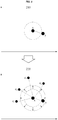
- FIG. 2 is a diagram illustrating an example of controlling a verification condition.
- a fixed verification condition is applied to a case 210 and a variable verification condition is applied to a case 220.
- a distance between a test feature vector x and an enrolled feature vector y does not satisfy a verification condition and thus, verification using the test feature vector x fails.
- the verification condition may include a confidence score higher than a threshold.
- a second parameter indicating a similarity between a test feature vector and a user model is applied to the confidence score or applied to the threshold.
- the second parameter increases, for example, as a distance between the test feature vector and the user model decreases, the confidence score decreases and the threshold increases. Since a probability of a verification success decreases as the confidence score decreases and the threshold increases, it can be seen that the verification condition is tightened. Conversely, since the probability of the verification success increases as the confidence score increases and the threshold decreases, it can be seen that the verification condition is relaxed.
- the confidence score is expressed by Equation 1.
- Equation 1 represents a posterior probability for a test user x and an overall user model ⁇ including an enrolled user and a generalized user.
- equation 1 can be expressed as Equation 2.
- ⁇ c ⁇ n 1 k P x
- a user verification apparatus determines the confidence score based on a last term of Equation 2.
- the last term of Equation 2 is rewritten as Equation 3. P x
- ⁇ c ⁇ n 1 k P x
- ⁇ c ) denotes a posterior probability that the test user x corresponds to an enrolled user ⁇ c when the enrolled user ⁇ c exists.
- the test user x corresponds to a test feature vector and the enrolled user ⁇ c corresponds to an enrolled feature vector.
- a denominator ⁇ n 1 k P x
- ⁇ n denotes a posterior probability that the test user x corresponds to a user model ⁇ n when the user model ⁇ n exists.
- the user model ⁇ n corresponds to a user other than the test user x.
- the user model ⁇ n corresponds to the generalized feature vectors c 1 through c n .
- ⁇ c ) corresponds to a similarity between the test feature vector and the enrolled feature vector or corresponds to a distance between the test feature vector and the enrolled feature vector.
- ⁇ c ) may be determined based on a cosine distance between the test feature vector and the enrolled feature vector. The distance is a concept corresponding to a difference, and the similarity and the distance may be inversely proportional to each other. As the similarity between the test feature vector and the enrolled feature vector increases or as the distance between the test feature vector and the enrolled feature vector decreases, a value of P ( x
- ⁇ c ) increases. Likewise, ⁇ n 1 k P x
- ⁇ c ) and ⁇ n 1 k P x
- ⁇ n will be described based on a concept of similarity.
- ⁇ c ) corresponds to the first parameter indicating the similarity between the test feature vector and the enrolled feature vector
- ⁇ n 1 k P x
- ⁇ n corresponds to the second parameter indicating the similarity between the test feature vector and the user model.
- Equation 3 the verification condition is expressed by Equation 4.
- ⁇ c ⁇ n 1 k P x
- Equation 4 TH denotes a threshold. Equation 4 represents a case in which the second parameter is applied to the confidence score. According to Equation 4, the confidence score increases as the similarity between the test feature vector corresponding to the test user x and the enrolled feature vector corresponding to the enrolled user ⁇ c increases, and decreases as the similarity between the test feature vector and the user model ⁇ n increases.
- Equation 4 since the probability of the verification success decreases as the second parameter increases, it can be seen that the verification condition is tightened. Also, since the probability of the verification success increases as the second parameter decreases, it can be seen that the verification condition is relaxed.
- the user verification apparatus determines the confidence score based on the first parameter and the second parameter and generates a verification result of the test user by comparing the confidence score and the threshold. Equation 4 can be expressed as Equation 5. P x
- ⁇ c > TH * ⁇ n 1 k P x
- Equation 5 represents a case in which the second parameter is applied to the threshold. According to Equation 5, the threshold increases as the similarity between the test feature vector corresponding to the test user x and the user model ⁇ n increases.
- TH * ⁇ n 1 k P x
- ⁇ n may be defined as a new threshold.
- the user verification apparatus determines the threshold based on the second parameter and generates the verification result of the test user by comparing the confidence score corresponding to the first parameter and the determined threshold.
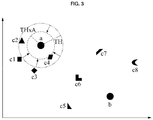
- FIG. 3 is a diagram illustrating an example of tightening a verification condition.
- FIG. 3 illustrates an enrolled feature vector a and generalized feature vectors c1 through c8.
- the generalized feature vectors c1 through c8 correspond to a user model. Because similarities between the enrolled feature vector a and the generalized feature vectors c1 through c4 are relatively high, a verification condition is tightened.
- an original threshold TH may be adjusted to a new threshold TH ⁇ A based on a correction factor A.
- the threshold TF of FIG. 3 may correspond to the threshold of Equation 4 and Equation 5.
- the correction factor A may be a real number greater than 1 and may increase the original threshold TH. Since a probability of a verification success decreases when the original threshold TH increases due to the correction factor A, it can be seen that the verification condition is tightened.
- FIG. 4 is a diagram illustrating an example of relaxing a verification condition.
- FIG. 4 illustrates an enrolled feature vector b and generalized feature vectors c1 through c8. Because similarities between the enrolled feature vector b and neighboring generalized feature vectors c5 through c8 are relatively low, a verification condition is relaxed.
- an original threshold TH may be adjusted to a new threshold TH ⁇ B based on a correction factor B.
- the threshold TF of FIG. 4 may correspond to the threshold of Equation 4 and Equation 5.
- the correction factor B may be a real number less than 1 and may reduce the original threshold TH. Since a probability of a verification success increases when the original threshold TH decreases due to the correction factor B, it can be seen that the verification condition is relaxed.
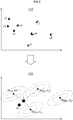
- FIG. 5 is a diagram illustrating an example of a clustering-based discrete user model.
- FIG. 5 illustrates an original user model 510 and a clustered user model 520.
- the original user model 510 includes generalized feature vectors c1 through c8. Although FIG. 5 illustrates eight feature vectors c1 through c8, a number of feature vectors included in the original user model 510 is not limited thereto.
- the feature vectors c1 through c8 are clustered into feature clusters ⁇ 1 through ⁇ 4 to reduce a computing load that is consumed to process operations associated with a plurality of feature vectors.
- a portion of the feature clusters ⁇ 1 through ⁇ 4 are selected as representative feature clusters ⁇ 1 through ⁇ 3 to be used for determining a second parameter.
- a number of feature clusters among the feature clusters ⁇ 1 through ⁇ 4 are selected as the representative feature clusters ⁇ 1 through ⁇ 3 in an order of adjacency to a test feature vector x. In an example, when a number of feature vectors may be 55000, a number of feature clusters may be 10, 50, or 100, and a number of representative feature clusters may be 5.
- a user verification apparatus selects at least a portion of the feature clusters ⁇ 1 through ⁇ 4 to be the representative feature clusters ⁇ 1 through ⁇ 3 based on similarities between the test feature vector x and the feature clusters ⁇ 1 through ⁇ 4.
- the user verification apparatus determines the second parameter based on similarities between the test feature vector x and the representative feature clusters ⁇ 1 through ⁇ 3.
- the user verification apparatus determines the confidence score by calculating the numerator P ( x
- FIG. 6 is a diagram illustrating an example of a GMM-based continuous user model.
- FIG. 6 illustrates an original user model 610 and a GMM 620.
- the GMM 620 includes a Gaussian distribution N( ⁇ n , ⁇ n ) where ⁇ denotes an average and ⁇ denotes a standard deviation.
- the GMM 620 includes a first Gaussian distribution N( ⁇ 1 , ⁇ 1 ) through a fourth Gaussian distribution N( ⁇ 4 , ⁇ 4 ).
- the first Gaussian distribution N( ⁇ 1 , ⁇ 1 ) through the fourth Gaussian distribution N( ⁇ 4 , ⁇ 4 ) correspond to a distribution of generalized feature vectors c1 through c8.
- FIG. 7 is a diagram illustrating an example of a user model-based neural network.
- FIG. 7 illustrates a user model 710 and a neural network 720 trained based on the user model 710.
- the neural network 720 is trained to output a similarity between a network input and the user model 710.
- the network input may be trained to output similarities between the network input and generalized feature vectors c1 through c8 included in the user model 710.
- the neural network 720 may correspond to the comparator 130 of FIG. 1
- the user verification apparatus inputs a test feature vector to the neural network 720 and acquires a second parameter corresponding to an output of the neural network 720.
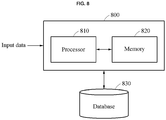
- FIG. 8 is a diagram illustrating an example of a user verification apparatus.
- a user verification apparatus 800 receives input data.
- the user verification apparatus 800 may also be referred to as a speaker verification apparatus.
- the input data may correspond to an input voice or an input image.
- the user verification apparatus 800 processes the input data using a neural network.
- the user verification apparatus 800 may process a verification operation on the input data using the neural network.
- a database 830 stores an enrolled feature vector and a user model.
- a processor 810 uses the enrolled feature vector and the user model stored in the database 830 to perform user verification.
- the user model may be stored through clustering, stored as a GMM, or stored as the neural network 720 of FIG. 7 .
- the user verification apparatus 800 performs at least one of the operations described herein for user verification, and provides a user with a result of the user verification.
- the result of the user verification is provided by an audio or video feedback through an input/output module (not shown).
- the user verification apparatus 800 includes at least one processor 810 and a memory 820.
- the memory 820 is connected to the processor 810, and stores instructions executable by the processor 810, and data to be calculated by the processor 810 or data processed by the processor 810.
- the memory 820 may include a non-transitory computer-readable medium, for example, a high-speed random-access memory (RAM), and/or a nonvolatile computer-readable storage medium, for example, at least one disk storage device, flash memory device, and other nonvolatile solid-state memory devices. Further details regarding the memory 820 is provided below.
- a non-transitory computer-readable medium for example, a high-speed random-access memory (RAM)
- RAM random-access memory
- nonvolatile computer-readable storage medium for example, at least one disk storage device, flash memory device, and other nonvolatile solid-state memory devices. Further details regarding the memory 820 is provided below.
- the processor 810 refers to a data processing device configured as hardware with a circuitry in a physical structure to execute desired operations.
- the desired operations may include codes or instructions included in a program.
- the data processing device configured as hardware may include a microprocessor, a central processing unit (CPU), a processor core, a multicore processor, a reconfigurable processor, a multiprocessor, an application-specific integrated circuit (ASIC), a field programmable gate array (FPGA), a graphics processor unit (GPU), or any other type of multi- or single-processor configuration.
- the processor 810 executes instructions to perform at least one of the operations described above with reference to FIGS. 1 through 7 . For example, the processor 810 generates a test feature vector corresponding to a test user based on input data input by the test user, determine a first parameter indicating a similarity between the test feature vector and an enrolled feature vector enrolled for user verification, determine a second parameter indicating a similarity between the test feature vector and a user model corresponding to generalized users, and generates a verification result of the test user based on the first parameter and the second parameter. Further details regarding the processor 810 is provided below.
- FIG. 9 is a diagram illustrating an example of an electronic device incorporating a user verification apparatus.
- an electronic device 900 receives input data and processes a user verifying operation associated with the input data.
- the electronic device 900 uses the above-described user model to process the user verifying operation.
- the electronic device 900 may include the user verification apparatus described with reference to FIGS. 1 through 8 , or perform functions of the user verification apparatus described with reference to FIGS. 1 through 8 .
- the electronic device 900 the electronic device 900
- the electronic device 900 includes a processor 910, a memory 920, a camera 930, a storage device 940, an input device 950, an output device 960, and a network interface 970.
- the processor 910, the memory 920, the camera 930, the storage device 940, the input device 950, the output device 960, and the network interface 970 may communicate with one another through a communication bus 980.
- the processor 910 refers to a data processing device configured as hardware with a circuitry in a physical structure to execute desired operations.
- the desired operations may include codes or instructions included in a program.
- the data processing device configured as hardware may include a microprocessor, a central processing unit (CPU), a processor core, a multicore processor, a reconfigurable processor, a multiprocessor, an application-specific integrated circuit (ASIC), a field programmable gate array (FPGA), a graphics processor unit (GPU), or any other type of multi- or single-processor configuration.
- the processor 910 executes functions and instructions in the electronic device 900.
- the processor 910 may process instructions stored in the memory 920 or the storage device 940.
- the process 910 performs at least one of the operations described above with reference to FIGS. 1 through 8 . Further details regarding the process 910 is provided below.
- the memory 920 stores information used for performing user verification.
- the memory 920 includes a computer-readable storage medium or a computer-readable storage device.
- the memory 920 stores instructions to be executed by the processor 910, and stores related information while a software program or an application is being executed by the electronic apparatus 900. Further details regarding the memory 920 is provided below.
- the camera 930 captures a still image, a video image, or both the images.
- the camera 930 captures an image of a face region input by a user for face verification.
- the camera 930 provides a three-dimensional (3D) image including depth information of objects.
- the storage device 940 includes a computer-readable storage medium or a computer-readable storage device.
- the storage device 940 stores a database including information used for processing the user verification, such as, for example, an enrolled feature vector and a user model.
- the storage device 940 may store a greater amount of information for a longer period of time, compared to the memory 920.
- the storage device 940 may include, for example, a magnetic hard disk, an optical disc, a flash memory, a floppy disk, and other types of nonvolatile memory that are well-known in the related technical fields. Further details regarding the storage device 940 is provided below.
- the input device 950 receives an input from a user through a traditional input method, for example, a keyboard and a mouse, and a new input method, for example, a touch input, a voice input, and an image input.
- the input device 950 may include, for example, a keyboard, a mouse, a touchscreen, a microphone, and other devices that may detect an input from a user and transmit the detected input to the electronic apparatus 900.
- the output device 960 provides an output of the electronic apparatus 900 to a user through a visual, auditory, or tactile channel.
- the output device 960 may include, for example, a display, a touchscreen, a speaker, a vibration generator, and other devices that may provide an output to a user.
- the network interface 970 communicates with an external device through a wired or wireless network.
- the input device 950 and the output device 960 may be a display that receives an input from a user or provides an output.
- the user interface is a physical structure that includes one or more hardware components that provide the ability to render a user interface, render a display, and/or receive user input.
- the input device 950 and the output device 960 are not limited to the example described above, and any other displays, such as, for example, computer monitor and eye glass display (EGD) that are operatively connected to the electronic device 900 may be used without departing from the scope of the illustrative examples described.
- EGD computer monitor and eye glass display
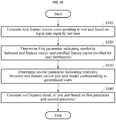
- FIG. 10 is a diagram illustrating an example of a user verification method.
- the operations in FIG. 10 may be performed in the sequence and manner as shown, although the order of some operations may be changed or some of the operations omitted without departing from the scope of the illustrative examples described. Many of the operations shown in FIG. 10 may be performed in parallel or concurrently.
- One or more blocks of FIG. 10 , and combinations of the blocks, can be implemented by special purpose hardware-based computer, such as a processor, that perform the specified functions, or combinations of special purpose hardware and computer instructions.
- FIGS. 1-9 are also applicable to FIG. 10 , and are incorporated herein by reference. Thus, the above description may not be repeated here.
- a user verification apparatus in operation 1010, generates a test feature vector corresponding to a test user based on input data that is input by the test user.
- the user verification apparatus determines a first parameter indicating a similarity between the test feature vector and an feature vector that is enrolled for user verification.
- the user verification apparatus determines a second parameter indicating a similarity between the test feature vector and a user model corresponding to generalized users.
- the user verification apparatus generates a verification result of the test user based on the first parameter and the second parameter.
- the user verification method may also be referred to as a speaker verification method.
- operations 1010 through 1040 may be performed by a speaker verification apparatus.
- the speaker verification apparatus extracts a feature from speech data input by a test user and generates a test feature vector corresponding to the test user in operation 1010.
- User verification apparatus 100, feature extractor 110, comparators 120 and 130, user verification apparatus 800, electronic device 900, and other apparatuses, units, modules, devices, and other components described herein are implemented by hardware components.
- hardware components that may be used to perform the operations described in this application where appropriate include controllers, sensors, generators, drivers, memories, comparators, arithmetic logic units, adders, subtractors, multipliers, dividers, integrators, and any other electronic components configured to perform the operations described in this application.
- one or more of the hardware components that perform the operations described in this application are implemented by computing hardware, for example, by one or more processors or computers.
- a processor or computer may be implemented by one or more processing elements, such as an array of logic gates, a controller and an arithmetic logic unit, a digital signal processor, a microcomputer, a programmable logic controller, a field-programmable gate array, a programmable logic array, a microprocessor, or any other device or combination of devices that is configured to respond to and execute instructions in a defined manner to achieve a desired result.
- a processor or computer includes, or is connected to, one or more memories storing instructions or software that are executed by the processor or computer.
- Hardware components implemented by a processor or computer may execute instructions or software, such as an operating system (OS) and one or more software applications that run on the OS, to perform the operations described in this application.
- OS operating system
- the hardware components may also access, manipulate, process, create, and store data in response to execution of the instructions or software.
- processor or “computer” may be used in the description of the examples described in this application, but in other examples multiple processors or computers may be used, or a processor or computer may include multiple processing elements, or multiple types of processing elements, or both.
- a single hardware component or two or more hardware components may be implemented by a single processor, or two or more processors, or a processor and a controller.
- One or more hardware components may be implemented by one or more processors, or a processor and a controller, and one or more other hardware components may be implemented by one or more other processors, or another processor and another controller.
- One or more processors may implement a single hardware component, or two or more hardware components.
- a hardware component may have any one or more of different processing configurations, examples of which include a single processor, independent processors, parallel processors, single-instruction single-data (SISD) multiprocessing, single-instruction multiple-data (SIMD) multiprocessing, multiple-instruction single-data (MISD) multiprocessing, and multiple-instruction multiple-data (MIMD) multiprocessing.
- SISD single-instruction single-data
- SIMD single-instruction multiple-data
- MIMD multiple-instruction multiple-data
- the methods that perform the operations described in this application are performed by computing hardware, for example, by one or more processors or computers, implemented as described above executing instructions or software to perform the operations described in this application that are performed by the methods.
- a single operation or two or more operations may be performed by a single processor, or two or more processors, or a processor and a controller.
- One or more operations may be performed by one or more processors, or a processor and a controller, and one or more other operations may be performed by one or more other processors, or another processor and another controller.
- One or more processors, or a processor and a controller may perform a single operation, or two or more operations.
- Instructions or software to control a processor or computer to implement the hardware components and perform the methods as described above are written as computer programs, code segments, instructions or any combination thereof, for individually or collectively instructing or configuring the processor or computer to operate as a machine or special-purpose computer to perform the operations performed by the hardware components and the methods as described above.
- the instructions or software includes at least one of an applet, a dynamic link library (DLL), middleware, firmware, a device driver, an application program storing the method of outputting the state information.
- the instructions or software include machine code that is directly executed by the processor or computer, such as machine code produced by a compiler.
- the instructions or software include higher-level code that is executed by the processor or computer using an interpreter. Programmers of ordinary skill in the art can readily write the instructions or software based on the block diagrams and the flow charts illustrated in the drawings and the corresponding descriptions in the specification, which disclose algorithms for performing the operations performed by the hardware components and the methods as described above.
- the instructions or software to control computing hardware for example, one or more processors or computers, to implement the hardware components and perform the methods as described above, and any associated data, data files, and data structures, may be recorded, stored, or fixed in or on one or more non-transitory computer-readable storage media.
- Examples of a non-transitory computer-readable storage medium include read-only memory (ROM), random-access programmable read only memory (PROM), electrically erasable programmable read-only memory (EEPROM), random-access memory (RAM), dynamic random access memory (DRAM), static random access memory (SRAM), flash memory, non-volatile memory, CD-ROMs, CD-Rs, CD+Rs, CD-RWs, CD+RWs, DVD-ROMs, DVD-Rs, DVD+Rs, DVD-RWs, DVD+RWs, DVD-RAMs, BD-ROMs, BD-Rs, BD-R LTHs, BD-REs, blue-ray or optical disk storage, hard disk drive (HDD), solid state drive (SSD), flash memory, card type memory such as multimedia card, secure digital (SD) card, or extreme digital (XD) card, magnetic tapes, floppy disks, magneto-optical data storage devices, optical data storage devices, hard disks, solid-state disks, and
- the instructions or software and any associated data, data files, and data structures are distributed over network-coupled computer systems so that the instructions and software and any associated data, data files, and data structures are stored, accessed, and executed in a distributed fashion by the one or more processors or computers.
Landscapes
- Engineering & Computer Science (AREA)
- Theoretical Computer Science (AREA)
- Physics & Mathematics (AREA)
- General Physics & Mathematics (AREA)
- Data Mining & Analysis (AREA)
- General Engineering & Computer Science (AREA)
- Artificial Intelligence (AREA)
- Evolutionary Computation (AREA)
- Software Systems (AREA)
- Life Sciences & Earth Sciences (AREA)
- Health & Medical Sciences (AREA)
- Mathematical Physics (AREA)
- Computing Systems (AREA)
- Computer Security & Cryptography (AREA)
- Computer Vision & Pattern Recognition (AREA)
- Biophysics (AREA)
- Computational Linguistics (AREA)
- Biomedical Technology (AREA)
- Molecular Biology (AREA)
- General Health & Medical Sciences (AREA)
- Bioinformatics & Cheminformatics (AREA)
- Evolutionary Biology (AREA)
- Bioinformatics & Computational Biology (AREA)
- Audiology, Speech & Language Pathology (AREA)
- Human Computer Interaction (AREA)
- Acoustics & Sound (AREA)
- Multimedia (AREA)
- Computer Hardware Design (AREA)
- Probability & Statistics with Applications (AREA)
- Mathematical Analysis (AREA)
- Mathematical Optimization (AREA)
- Pure & Applied Mathematics (AREA)
- Computational Mathematics (AREA)
- Algebra (AREA)
- Image Analysis (AREA)
- Collating Specific Patterns (AREA)
- Measurement Of The Respiration, Hearing Ability, Form, And Blood Characteristics Of Living Organisms (AREA)
Applications Claiming Priority (1)
| Application Number | Priority Date | Filing Date | Title |
|---|---|---|---|
| KR1020180170905A KR102570070B1 (ko) | 2018-12-27 | 2018-12-27 | 일반화된 사용자 모델을 이용한 사용자 인증 방법 및 장치 |
Publications (2)
| Publication Number | Publication Date |
|---|---|
| EP3674985A1 true EP3674985A1 (de) | 2020-07-01 |
| EP3674985B1 EP3674985B1 (de) | 2025-06-25 |
Family
ID=68242283
Family Applications (1)
| Application Number | Title | Priority Date | Filing Date |
|---|---|---|---|
| EP19201858.8A Active EP3674985B1 (de) | 2018-12-27 | 2019-10-08 | Benutzerüberprüfungsverfahren und -vorrichtung unter verwendung eines verallgemeinerten benutzermodells |
Country Status (5)
| Country | Link |
|---|---|
| US (1) | US11775851B2 (de) |
| EP (1) | EP3674985B1 (de) |
| JP (2) | JP2020107331A (de) |
| KR (1) | KR102570070B1 (de) |
| CN (1) | CN111382407A (de) |
Families Citing this family (8)
| Publication number | Priority date | Publication date | Assignee | Title |
|---|---|---|---|---|
| KR102570070B1 (ko) * | 2018-12-27 | 2023-08-23 | 삼성전자주식회사 | 일반화된 사용자 모델을 이용한 사용자 인증 방법 및 장치 |
| EP3819812B1 (de) * | 2019-11-08 | 2023-08-16 | Axis AB | Verfahren zur objektneuidentifizierung |
| US11568173B2 (en) * | 2020-06-04 | 2023-01-31 | Dell Products, L.P. | Method and apparatus for processing test execution logs to detremine error locations and error types |
| KR102444003B1 (ko) * | 2020-11-30 | 2022-09-15 | 경희대학교 산학협력단 | 음성 이미지 기반 사용자 인증 장치 및 그 방법 |
| KR102951774B1 (ko) * | 2021-01-05 | 2026-04-14 | 삼성전자주식회사 | 전자 장치 및 이의 제어 방법 |
| JP7683247B2 (ja) * | 2021-03-10 | 2025-05-27 | セイコーエプソン株式会社 | 機械学習モデルを用いて被判別データのクラスを判別する方法、情報処理装置、及び、コンピュータープログラム |
| KR102498268B1 (ko) * | 2022-07-15 | 2023-02-09 | 국방과학연구소 | 화자 인식을 위한 전자 장치 및 그의 동작 방법 |
| KR102864389B1 (ko) * | 2022-08-10 | 2025-09-25 | 블록체인랩스 주식회사 | Ai 기반의 반려동물 신원 인식 방법 및 그 전자 장치 |
Citations (1)
| Publication number | Priority date | Publication date | Assignee | Title |
|---|---|---|---|---|
| CA3036533A1 (en) * | 2016-09-12 | 2018-03-15 | Pindrop Security, Inc. | End-to-end speaker recognition using deep neural network |
Family Cites Families (32)
| Publication number | Priority date | Publication date | Assignee | Title |
|---|---|---|---|---|
| JPH04360291A (ja) * | 1991-06-06 | 1992-12-14 | Nippon Telegr & Teleph Corp <Ntt> | ニューラルネットの学習方法 |
| JP2001101406A (ja) * | 1999-09-27 | 2001-04-13 | Ntt Data Corp | 一般的侵入者モデル作成方法及び装置、個人認証方法及び装置 |
| CN101051463B (zh) * | 2006-04-06 | 2012-07-11 | 株式会社东芝 | 说话人认证的验证方法及装置 |
| KR100897553B1 (ko) * | 2007-01-04 | 2009-05-15 | 삼성전자주식회사 | 사용자의 기기 사용 패턴을 이용한 음성 인식 방법 및 장치 |
| US8099288B2 (en) | 2007-02-12 | 2012-01-17 | Microsoft Corp. | Text-dependent speaker verification |
| JP4410265B2 (ja) | 2007-02-19 | 2010-02-03 | 株式会社東芝 | 音声認識装置及び方法 |
| JP5250576B2 (ja) | 2010-02-25 | 2013-07-31 | 日本電信電話株式会社 | ユーザ判定装置、方法、プログラム及びコンテンツ配信システム |
| US10395018B2 (en) * | 2010-11-29 | 2019-08-27 | Biocatch Ltd. | System, method, and device of detecting identity of a user and authenticating a user |
| EP2705458B1 (de) * | 2011-05-06 | 2018-04-04 | Duquesne University of the Holy Spirit | Urheberschaftstechnologien |
| EP2842069B1 (de) * | 2012-04-25 | 2019-12-25 | Southeast Solutions, Inc. | Betrugssicheres passcodeeingabesystem |
| WO2014040124A1 (en) * | 2012-09-11 | 2014-03-20 | Auraya Pty Ltd | Voice authentication system and method |
| US10386492B2 (en) * | 2013-03-07 | 2019-08-20 | Trimble Inc. | Verifiable authentication services based on global navigation satellite system (GNSS) signals and personal or computer data |
| US10540979B2 (en) | 2014-04-17 | 2020-01-21 | Qualcomm Incorporated | User interface for secure access to a device using speaker verification |
| US10410178B2 (en) | 2015-03-16 | 2019-09-10 | Moca Systems, Inc. | Method for graphical pull planning with active work schedules |
| US10482225B1 (en) * | 2015-07-14 | 2019-11-19 | Melih Abdulhayoglu | Method of authorization dialog organizing |
| US9978374B2 (en) | 2015-09-04 | 2018-05-22 | Google Llc | Neural networks for speaker verification |
| US10769255B2 (en) * | 2015-11-11 | 2020-09-08 | Samsung Electronics Co., Ltd. | Methods and apparatuses for adaptively updating enrollment database for user authentication |
| US20170236520A1 (en) * | 2016-02-16 | 2017-08-17 | Knuedge Incorporated | Generating Models for Text-Dependent Speaker Verification |
| CN106127103B (zh) * | 2016-06-12 | 2019-06-25 | 广州广电运通金融电子股份有限公司 | 一种离线身份认证的方法和装置 |
| GB2552722A (en) | 2016-08-03 | 2018-02-07 | Cirrus Logic Int Semiconductor Ltd | Speaker recognition |
| US11881560B2 (en) * | 2016-10-12 | 2024-01-23 | Prologium Technology Co., Ltd. | Lithium battery structure and electrode layer thereof |
| WO2018110608A1 (ja) * | 2016-12-15 | 2018-06-21 | 日本電気株式会社 | 照合システム、方法、装置及びプログラム |
| JP6553664B2 (ja) * | 2017-03-08 | 2019-07-31 | 日本電信電話株式会社 | モデル学習装置、スコア計算装置、方法、データ構造、及びプログラム |
| CN106683680B (zh) * | 2017-03-10 | 2022-03-25 | 百度在线网络技术(北京)有限公司 | 说话人识别方法及装置、计算机设备及计算机可读介质 |
| KR102370063B1 (ko) * | 2017-03-28 | 2022-03-04 | 삼성전자주식회사 | 얼굴 인증 방법 및 장치 |
| KR102288302B1 (ko) * | 2017-07-03 | 2021-08-10 | 삼성전자주식회사 | 적외선 영상을 이용한 사용자 인증 방법 및 장치 |
| US11449587B2 (en) * | 2017-11-20 | 2022-09-20 | Ppip, Llc | Systems and methods for biometric identity and authentication |
| US10733996B2 (en) * | 2018-03-30 | 2020-08-04 | Qualcomm Incorporated | User authentication |
| US10621991B2 (en) * | 2018-05-06 | 2020-04-14 | Microsoft Technology Licensing, Llc | Joint neural network for speaker recognition |
| US10593336B2 (en) * | 2018-07-26 | 2020-03-17 | Accenture Global Solutions Limited | Machine learning for authenticating voice |
| KR20200024602A (ko) * | 2018-08-28 | 2020-03-09 | 삼성전자주식회사 | 사용자 단말의 학습 방법 및 장치 |
| KR102570070B1 (ko) * | 2018-12-27 | 2023-08-23 | 삼성전자주식회사 | 일반화된 사용자 모델을 이용한 사용자 인증 방법 및 장치 |
-
2018
- 2018-12-27 KR KR1020180170905A patent/KR102570070B1/ko active Active
-
2019
- 2019-08-20 US US16/545,095 patent/US11775851B2/en active Active
- 2019-10-08 EP EP19201858.8A patent/EP3674985B1/de active Active
- 2019-11-07 CN CN201911084027.2A patent/CN111382407A/zh active Pending
- 2019-12-10 JP JP2019223017A patent/JP2020107331A/ja active Pending
-
2024
- 2024-11-11 JP JP2024196406A patent/JP7769076B2/ja active Active
Patent Citations (1)
| Publication number | Priority date | Publication date | Assignee | Title |
|---|---|---|---|---|
| CA3036533A1 (en) * | 2016-09-12 | 2018-03-15 | Pindrop Security, Inc. | End-to-end speaker recognition using deep neural network |
Non-Patent Citations (3)
| Title |
|---|
| ARINDAM JATI ET AL: "Speaker2Vec: Unsupervised Learning and Adaptation of a Speaker Manifold Using Deep Neural Networks with an Evaluation on Speaker Segmentation", INTERSPEECH 2017, 20 August 2017 (2017-08-20), ISCA, pages 3567 - 3571, XP055686571, DOI: 10.21437/Interspeech.2017-1650 * |
| GÖKAY DISKEN ET AL: "Speaker Model Clustering to Construct Background Models for Speaker Verification", ARCHIVES OF ACOUSTICS, vol. 42, no. 1, 1 March 2017 (2017-03-01), pages 127 - 135, XP055686522, DOI: 10.1515/aoa-2017-0014 * |
| LANTIAN LI ET AL: "Decision Making Based on Cohort Scores for Speaker Verification", ARXIV.ORG, CORNELL UNIVERSITY LIBRARY, 201 OLIN LIBRARY CORNELL UNIVERSITY ITHACA, NY 14853, 27 September 2016 (2016-09-27), XP080813878 * |
Also Published As
| Publication number | Publication date |
|---|---|
| KR102570070B1 (ko) | 2023-08-23 |
| US11775851B2 (en) | 2023-10-03 |
| US20200210556A1 (en) | 2020-07-02 |
| EP3674985B1 (de) | 2025-06-25 |
| CN111382407A (zh) | 2020-07-07 |
| JP2020107331A (ja) | 2020-07-09 |
| JP7769076B2 (ja) | 2025-11-12 |
| JP2025016785A (ja) | 2025-02-04 |
| KR20200080921A (ko) | 2020-07-07 |
Similar Documents
| Publication | Publication Date | Title |
|---|---|---|
| EP3674985B1 (de) | Benutzerüberprüfungsverfahren und -vorrichtung unter verwendung eines verallgemeinerten benutzermodells | |
| US11586925B2 (en) | Neural network recogntion and training method and apparatus | |
| EP3644311A1 (de) | Datenerkennungsvorrichtung und -verfahren sowie trainingsvorrichtung und -verfahren | |
| Gorban et al. | How deep should be the depth of convolutional neural networks: a backyard dog case study | |
| US20200125927A1 (en) | Model training method and apparatus, and data recognition method | |
| US11244671B2 (en) | Model training method and apparatus | |
| CN112002309B (zh) | 模型训练方法和设备 | |
| EP4068222A1 (de) | Anti-spoofing-verfahren und -vorrichtung | |
| US12293765B2 (en) | Authentication method and apparatus with transformation model | |
| EP3671575B1 (de) | Verfahren und vorrichtung zur verarbeitung eines neuronalen netzwerks basierend auf einer eingebetteten bit-darstellung | |
| EP3509011A1 (de) | Vorrichtungen und verfahren zur erkennung von objekten und gesichtsausdruck mit robustheit gegen veränderung des gesichtsausdrucks sowie vorrichtungen und verfahren zum trainieren | |
| US12211311B2 (en) | Object recognition method and object recognition apparatus | |
| US12321445B2 (en) | Method and apparatus with biometric information spoof detection | |
| EP4064216B1 (de) | Verfahren und vorrichtung zur objektverfolgung | |
| US11574641B2 (en) | Method and device with data recognition | |
| EP3876146B1 (de) | Verfahren und vorrichtung mit spoofing-schutz mittels einbettungsvektoren | |
| US20200074058A1 (en) | Method and apparatus for training user terminal | |
| US20230252283A1 (en) | Method and device with neural network | |
| EP3832542A1 (de) | Vorrichtung und verfahren mit sensorspezifischer bilderkennung | |
| EP3889842B1 (de) | Verfahren und vorrichtung zur parallelen verarbeitung eines neuronalen netzwerkmodells | |
| EP4002205A1 (de) | Verfahren und vorrichtung mit bilderkennung | |
| US20240232619A9 (en) | Method and apparatus for recognizing user based on on-device training | |
| US20210241098A1 (en) | Method and apparatus with neural network meta-training and class vector training | |
| US20200210811A1 (en) | Data processing method based on neural network, training method of neural network, and apparatuses thereof | |
| EP3822864A1 (de) | Verfahren und vorrichtung mit verschmelzung des modells eines tiefen neuronalen netzes |
Legal Events
| Date | Code | Title | Description |
|---|---|---|---|
| PUAI | Public reference made under article 153(3) epc to a published international application that has entered the european phase |
Free format text: ORIGINAL CODE: 0009012 |
|
| STAA | Information on the status of an ep patent application or granted ep patent |
Free format text: STATUS: THE APPLICATION HAS BEEN PUBLISHED |
|
| AK | Designated contracting states |
Kind code of ref document: A1 Designated state(s): AL AT BE BG CH CY CZ DE DK EE ES FI FR GB GR HR HU IE IS IT LI LT LU LV MC MK MT NL NO PL PT RO RS SE SI SK SM TR |
|
| AX | Request for extension of the european patent |
Extension state: BA ME |
|
| STAA | Information on the status of an ep patent application or granted ep patent |
Free format text: STATUS: REQUEST FOR EXAMINATION WAS MADE |
|
| 17P | Request for examination filed |
Effective date: 20201223 |
|
| RBV | Designated contracting states (corrected) |
Designated state(s): AL AT BE BG CH CY CZ DE DK EE ES FI FR GB GR HR HU IE IS IT LI LT LU LV MC MK MT NL NO PL PT RO RS SE SI SK SM TR |
|
| P01 | Opt-out of the competence of the unified patent court (upc) registered |
Effective date: 20230530 |
|
| STAA | Information on the status of an ep patent application or granted ep patent |
Free format text: STATUS: EXAMINATION IS IN PROGRESS |
|
| 17Q | First examination report despatched |
Effective date: 20230728 |
|
| REG | Reference to a national code |
Ref country code: DE Ref legal event code: R079 Free format text: PREVIOUS MAIN CLASS: G06N0003040000 Ipc: G06N0003045000 Ref document number: 602019071477 Country of ref document: DE |
|
| RIC1 | Information provided on ipc code assigned before grant |
Ipc: G06N 7/01 20230101ALI20241205BHEP Ipc: G06N 3/045 20230101AFI20241205BHEP |
|
| GRAP | Despatch of communication of intention to grant a patent |
Free format text: ORIGINAL CODE: EPIDOSNIGR1 |
|
| STAA | Information on the status of an ep patent application or granted ep patent |
Free format text: STATUS: GRANT OF PATENT IS INTENDED |
|
| INTG | Intention to grant announced |
Effective date: 20250207 |
|
| RIN1 | Information on inventor provided before grant (corrected) |
Inventor name: CHOI, CHANG KYU Inventor name: KIM, KYUHONG Inventor name: LEE, DOHWAN |
|
| GRAS | Grant fee paid |
Free format text: ORIGINAL CODE: EPIDOSNIGR3 |
|
| GRAA | (expected) grant |
Free format text: ORIGINAL CODE: 0009210 |
|
| STAA | Information on the status of an ep patent application or granted ep patent |
Free format text: STATUS: THE PATENT HAS BEEN GRANTED |
|
| AK | Designated contracting states |
Kind code of ref document: B1 Designated state(s): AL AT BE BG CH CY CZ DE DK EE ES FI FR GB GR HR HU IE IS IT LI LT LU LV MC MK MT NL NO PL PT RO RS SE SI SK SM TR |
|
| REG | Reference to a national code |
Ref country code: GB Ref legal event code: FG4D |
|
| REG | Reference to a national code |
Ref country code: CH Ref legal event code: EP |
|
| REG | Reference to a national code |
Ref country code: CH Ref legal event code: EP |
|
| REG | Reference to a national code |
Ref country code: IE Ref legal event code: FG4D |
|
| REG | Reference to a national code |
Ref country code: DE Ref legal event code: R096 Ref document number: 602019071477 Country of ref document: DE |
|
| PG25 | Lapsed in a contracting state [announced via postgrant information from national office to epo] |
Ref country code: FI Free format text: LAPSE BECAUSE OF FAILURE TO SUBMIT A TRANSLATION OF THE DESCRIPTION OR TO PAY THE FEE WITHIN THE PRESCRIBED TIME-LIMIT Effective date: 20250625 |
|
| REG | Reference to a national code |
Ref country code: LT Ref legal event code: MG9D |
|
| PG25 | Lapsed in a contracting state [announced via postgrant information from national office to epo] |
Ref country code: GR Free format text: LAPSE BECAUSE OF FAILURE TO SUBMIT A TRANSLATION OF THE DESCRIPTION OR TO PAY THE FEE WITHIN THE PRESCRIBED TIME-LIMIT Effective date: 20250926 Ref country code: NO Free format text: LAPSE BECAUSE OF FAILURE TO SUBMIT A TRANSLATION OF THE DESCRIPTION OR TO PAY THE FEE WITHIN THE PRESCRIBED TIME-LIMIT Effective date: 20250925 |
|
| PG25 | Lapsed in a contracting state [announced via postgrant information from national office to epo] |
Ref country code: BG Free format text: LAPSE BECAUSE OF FAILURE TO SUBMIT A TRANSLATION OF THE DESCRIPTION OR TO PAY THE FEE WITHIN THE PRESCRIBED TIME-LIMIT Effective date: 20250625 |
|
| PGFP | Annual fee paid to national office [announced via postgrant information from national office to epo] |
Ref country code: GB Payment date: 20250911 Year of fee payment: 7 |
|
| PG25 | Lapsed in a contracting state [announced via postgrant information from national office to epo] |
Ref country code: HR Free format text: LAPSE BECAUSE OF FAILURE TO SUBMIT A TRANSLATION OF THE DESCRIPTION OR TO PAY THE FEE WITHIN THE PRESCRIBED TIME-LIMIT Effective date: 20250625 |
|
| PGFP | Annual fee paid to national office [announced via postgrant information from national office to epo] |
Ref country code: FR Payment date: 20250908 Year of fee payment: 7 |
|
| PG25 | Lapsed in a contracting state [announced via postgrant information from national office to epo] |
Ref country code: RS Free format text: LAPSE BECAUSE OF FAILURE TO SUBMIT A TRANSLATION OF THE DESCRIPTION OR TO PAY THE FEE WITHIN THE PRESCRIBED TIME-LIMIT Effective date: 20250925 |
|
| PG25 | Lapsed in a contracting state [announced via postgrant information from national office to epo] |
Ref country code: LV Free format text: LAPSE BECAUSE OF FAILURE TO SUBMIT A TRANSLATION OF THE DESCRIPTION OR TO PAY THE FEE WITHIN THE PRESCRIBED TIME-LIMIT Effective date: 20250625 |
|
| REG | Reference to a national code |
Ref country code: NL Ref legal event code: MP Effective date: 20250625 |
|
| PG25 | Lapsed in a contracting state [announced via postgrant information from national office to epo] |
Ref country code: NL Free format text: LAPSE BECAUSE OF FAILURE TO SUBMIT A TRANSLATION OF THE DESCRIPTION OR TO PAY THE FEE WITHIN THE PRESCRIBED TIME-LIMIT Effective date: 20250625 |
|
| PG25 | Lapsed in a contracting state [announced via postgrant information from national office to epo] |
Ref country code: PT Free format text: LAPSE BECAUSE OF FAILURE TO SUBMIT A TRANSLATION OF THE DESCRIPTION OR TO PAY THE FEE WITHIN THE PRESCRIBED TIME-LIMIT Effective date: 20251027 |
|
| REG | Reference to a national code |
Ref country code: AT Ref legal event code: MK05 Ref document number: 1807254 Country of ref document: AT Kind code of ref document: T Effective date: 20250625 |
|
| PG25 | Lapsed in a contracting state [announced via postgrant information from national office to epo] |
Ref country code: IS Free format text: LAPSE BECAUSE OF FAILURE TO SUBMIT A TRANSLATION OF THE DESCRIPTION OR TO PAY THE FEE WITHIN THE PRESCRIBED TIME-LIMIT Effective date: 20251025 |
|
| PGFP | Annual fee paid to national office [announced via postgrant information from national office to epo] |
Ref country code: DE Payment date: 20250910 Year of fee payment: 7 |
|
| PG25 | Lapsed in a contracting state [announced via postgrant information from national office to epo] |
Ref country code: AT Free format text: LAPSE BECAUSE OF FAILURE TO SUBMIT A TRANSLATION OF THE DESCRIPTION OR TO PAY THE FEE WITHIN THE PRESCRIBED TIME-LIMIT Effective date: 20250625 Ref country code: SM Free format text: LAPSE BECAUSE OF FAILURE TO SUBMIT A TRANSLATION OF THE DESCRIPTION OR TO PAY THE FEE WITHIN THE PRESCRIBED TIME-LIMIT Effective date: 20250625 |
|
| PG25 | Lapsed in a contracting state [announced via postgrant information from national office to epo] |
Ref country code: CZ Free format text: LAPSE BECAUSE OF FAILURE TO SUBMIT A TRANSLATION OF THE DESCRIPTION OR TO PAY THE FEE WITHIN THE PRESCRIBED TIME-LIMIT Effective date: 20250625 |
|
| PG25 | Lapsed in a contracting state [announced via postgrant information from national office to epo] |
Ref country code: PL Free format text: LAPSE BECAUSE OF FAILURE TO SUBMIT A TRANSLATION OF THE DESCRIPTION OR TO PAY THE FEE WITHIN THE PRESCRIBED TIME-LIMIT Effective date: 20250625 |
|
| PG25 | Lapsed in a contracting state [announced via postgrant information from national office to epo] |
Ref country code: EE Free format text: LAPSE BECAUSE OF FAILURE TO SUBMIT A TRANSLATION OF THE DESCRIPTION OR TO PAY THE FEE WITHIN THE PRESCRIBED TIME-LIMIT Effective date: 20250625 |
|
| PG25 | Lapsed in a contracting state [announced via postgrant information from national office to epo] |
Ref country code: SK Free format text: LAPSE BECAUSE OF FAILURE TO SUBMIT A TRANSLATION OF THE DESCRIPTION OR TO PAY THE FEE WITHIN THE PRESCRIBED TIME-LIMIT Effective date: 20250625 |
|
| PG25 | Lapsed in a contracting state [announced via postgrant information from national office to epo] |
Ref country code: ES Free format text: LAPSE BECAUSE OF FAILURE TO SUBMIT A TRANSLATION OF THE DESCRIPTION OR TO PAY THE FEE WITHIN THE PRESCRIBED TIME-LIMIT Effective date: 20250625 |
|
| PG25 | Lapsed in a contracting state [announced via postgrant information from national office to epo] |
Ref country code: RO Free format text: LAPSE BECAUSE OF FAILURE TO SUBMIT A TRANSLATION OF THE DESCRIPTION OR TO PAY THE FEE WITHIN THE PRESCRIBED TIME-LIMIT Effective date: 20250625 |
|
| PG25 | Lapsed in a contracting state [announced via postgrant information from national office to epo] |
Ref country code: DK Free format text: LAPSE BECAUSE OF FAILURE TO SUBMIT A TRANSLATION OF THE DESCRIPTION OR TO PAY THE FEE WITHIN THE PRESCRIBED TIME-LIMIT Effective date: 20250625 |
|
| PG25 | Lapsed in a contracting state [announced via postgrant information from national office to epo] |
Ref country code: IT Free format text: LAPSE BECAUSE OF FAILURE TO SUBMIT A TRANSLATION OF THE DESCRIPTION OR TO PAY THE FEE WITHIN THE PRESCRIBED TIME-LIMIT Effective date: 20250625 |
|
| PLBE | No opposition filed within time limit |
Free format text: ORIGINAL CODE: 0009261 |
|
| STAA | Information on the status of an ep patent application or granted ep patent |
Free format text: STATUS: NO OPPOSITION FILED WITHIN TIME LIMIT |
|
| REG | Reference to a national code |
Ref country code: CH Ref legal event code: L10 Free format text: ST27 STATUS EVENT CODE: U-0-0-L10-L00 (AS PROVIDED BY THE NATIONAL OFFICE) Effective date: 20260507 |