EP3675121B1 - Interaction informatique avec un utilisateur - Google Patents
Interaction informatique avec un utilisateur Download PDFInfo
- Publication number
- EP3675121B1 EP3675121B1 EP19220069.9A EP19220069A EP3675121B1 EP 3675121 B1 EP3675121 B1 EP 3675121B1 EP 19220069 A EP19220069 A EP 19220069A EP 3675121 B1 EP3675121 B1 EP 3675121B1
- Authority
- EP
- European Patent Office
- Prior art keywords
- user
- personal assistant
- virtual personal
- prediction
- sensor data
- Prior art date
- Legal status (The legal status is an assumption and is not a legal conclusion. Google has not performed a legal analysis and makes no representation as to the accuracy of the status listed.)
- Active
Links
Images



Classifications
-
- G—PHYSICS
- G10—MUSICAL INSTRUMENTS; ACOUSTICS
- G10L—SPEECH ANALYSIS TECHNIQUES OR SPEECH SYNTHESIS; SPEECH RECOGNITION; SPEECH OR VOICE PROCESSING TECHNIQUES; SPEECH OR AUDIO CODING OR DECODING
- G10L15/00—Speech recognition
- G10L15/22—Procedures used during a speech recognition process, e.g. man-machine dialogue
-
- G—PHYSICS
- G06—COMPUTING OR CALCULATING; COUNTING
- G06F—ELECTRIC DIGITAL DATA PROCESSING
- G06F3/00—Input arrangements for transferring data to be processed into a form capable of being handled by the computer; Output arrangements for transferring data from processing unit to output unit, e.g. interface arrangements
- G06F3/01—Input arrangements or combined input and output arrangements for interaction between user and computer
- G06F3/011—Arrangements for interaction with the human body, e.g. for user immersion in virtual reality
-
- G—PHYSICS
- G06—COMPUTING OR CALCULATING; COUNTING
- G06F—ELECTRIC DIGITAL DATA PROCESSING
- G06F40/00—Handling natural language data
- G06F40/30—Semantic analysis
- G06F40/35—Discourse or dialogue representation
-
- B—PERFORMING OPERATIONS; TRANSPORTING
- B60—VEHICLES IN GENERAL
- B60W—CONJOINT CONTROL OF VEHICLE SUB-UNITS OF DIFFERENT TYPE OR DIFFERENT FUNCTION; CONTROL SYSTEMS SPECIALLY ADAPTED FOR HYBRID VEHICLES; ROAD VEHICLE DRIVE CONTROL SYSTEMS FOR PURPOSES NOT RELATED TO THE CONTROL OF A PARTICULAR SUB-UNIT
- B60W10/00—Conjoint control of vehicle sub-units of different type or different function
- B60W10/18—Conjoint control of vehicle sub-units of different type or different function including control of braking systems
-
- B—PERFORMING OPERATIONS; TRANSPORTING
- B60—VEHICLES IN GENERAL
- B60W—CONJOINT CONTROL OF VEHICLE SUB-UNITS OF DIFFERENT TYPE OR DIFFERENT FUNCTION; CONTROL SYSTEMS SPECIALLY ADAPTED FOR HYBRID VEHICLES; ROAD VEHICLE DRIVE CONTROL SYSTEMS FOR PURPOSES NOT RELATED TO THE CONTROL OF A PARTICULAR SUB-UNIT
- B60W30/00—Purposes of road vehicle drive control systems not related to the control of a particular sub-unit, e.g. of systems using conjoint control of vehicle sub-units
- B60W30/14—Adaptive cruise control
-
- B—PERFORMING OPERATIONS; TRANSPORTING
- B60—VEHICLES IN GENERAL
- B60W—CONJOINT CONTROL OF VEHICLE SUB-UNITS OF DIFFERENT TYPE OR DIFFERENT FUNCTION; CONTROL SYSTEMS SPECIALLY ADAPTED FOR HYBRID VEHICLES; ROAD VEHICLE DRIVE CONTROL SYSTEMS FOR PURPOSES NOT RELATED TO THE CONTROL OF A PARTICULAR SUB-UNIT
- B60W50/00—Details of control systems for road vehicle drive control not related to the control of a particular sub-unit, e.g. process diagnostic or vehicle driver interfaces
- B60W50/08—Interaction between the driver and the control system
- B60W50/14—Means for informing the driver, warning the driver or prompting a driver intervention
-
- G—PHYSICS
- G05—CONTROLLING; REGULATING
- G05D—SYSTEMS FOR CONTROLLING OR REGULATING NON-ELECTRIC VARIABLES
- G05D1/00—Control of position, course, altitude or attitude of land, water, air or space vehicles, e.g. using automatic pilots
- G05D1/0055—Control of position, course, altitude or attitude of land, water, air or space vehicles, e.g. using automatic pilots with safety arrangements
- G05D1/0061—Control of position, course, altitude or attitude of land, water, air or space vehicles, e.g. using automatic pilots with safety arrangements for transition from automatic pilot to manual pilot and vice versa
-
- G—PHYSICS
- G05—CONTROLLING; REGULATING
- G05D—SYSTEMS FOR CONTROLLING OR REGULATING NON-ELECTRIC VARIABLES
- G05D1/00—Control of position, course, altitude or attitude of land, water, air or space vehicles, e.g. using automatic pilots
- G05D1/02—Control of position or course in two dimensions
- G05D1/021—Control of position or course in two dimensions specially adapted to land vehicles
- G05D1/0212—Control of position or course in two dimensions specially adapted to land vehicles with means for defining a desired trajectory
- G05D1/0223—Control of position or course in two dimensions specially adapted to land vehicles with means for defining a desired trajectory involving speed control of the vehicle
-
- G—PHYSICS
- G05—CONTROLLING; REGULATING
- G05D—SYSTEMS FOR CONTROLLING OR REGULATING NON-ELECTRIC VARIABLES
- G05D1/00—Control of position, course, altitude or attitude of land, water, air or space vehicles, e.g. using automatic pilots
- G05D1/60—Intended control result
- G05D1/65—Following a desired speed profile
-
- G—PHYSICS
- G05—CONTROLLING; REGULATING
- G05D—SYSTEMS FOR CONTROLLING OR REGULATING NON-ELECTRIC VARIABLES
- G05D1/00—Control of position, course, altitude or attitude of land, water, air or space vehicles, e.g. using automatic pilots
- G05D1/80—Arrangements for reacting to or preventing system or operator failure
- G05D1/81—Handing over between on-board automatic and on-board manual control
-
- G—PHYSICS
- G06—COMPUTING OR CALCULATING; COUNTING
- G06F—ELECTRIC DIGITAL DATA PROCESSING
- G06F3/00—Input arrangements for transferring data to be processed into a form capable of being handled by the computer; Output arrangements for transferring data from processing unit to output unit, e.g. interface arrangements
- G06F3/16—Sound input; Sound output
- G06F3/167—Audio in a user interface, e.g. using voice commands for navigating, audio feedback
-
- G—PHYSICS
- G10—MUSICAL INSTRUMENTS; ACOUSTICS
- G10L—SPEECH ANALYSIS TECHNIQUES OR SPEECH SYNTHESIS; SPEECH RECOGNITION; SPEECH OR VOICE PROCESSING TECHNIQUES; SPEECH OR AUDIO CODING OR DECODING
- G10L13/00—Speech synthesis; Text to speech systems
-
- G—PHYSICS
- G10—MUSICAL INSTRUMENTS; ACOUSTICS
- G10L—SPEECH ANALYSIS TECHNIQUES OR SPEECH SYNTHESIS; SPEECH RECOGNITION; SPEECH OR VOICE PROCESSING TECHNIQUES; SPEECH OR AUDIO CODING OR DECODING
- G10L13/00—Speech synthesis; Text to speech systems
- G10L13/02—Methods for producing synthetic speech; Speech synthesisers
- G10L13/027—Concept to speech synthesisers; Generation of natural phrases from machine-based concepts
-
- G—PHYSICS
- G10—MUSICAL INSTRUMENTS; ACOUSTICS
- G10L—SPEECH ANALYSIS TECHNIQUES OR SPEECH SYNTHESIS; SPEECH RECOGNITION; SPEECH OR VOICE PROCESSING TECHNIQUES; SPEECH OR AUDIO CODING OR DECODING
- G10L13/00—Speech synthesis; Text to speech systems
- G10L13/08—Text analysis or generation of parameters for speech synthesis out of text, e.g. grapheme to phoneme translation, prosody generation or stress or intonation determination
-
- G—PHYSICS
- G10—MUSICAL INSTRUMENTS; ACOUSTICS
- G10L—SPEECH ANALYSIS TECHNIQUES OR SPEECH SYNTHESIS; SPEECH RECOGNITION; SPEECH OR VOICE PROCESSING TECHNIQUES; SPEECH OR AUDIO CODING OR DECODING
- G10L15/00—Speech recognition
- G10L15/26—Speech to text systems
-
- G—PHYSICS
- G10—MUSICAL INSTRUMENTS; ACOUSTICS
- G10L—SPEECH ANALYSIS TECHNIQUES OR SPEECH SYNTHESIS; SPEECH RECOGNITION; SPEECH OR VOICE PROCESSING TECHNIQUES; SPEECH OR AUDIO CODING OR DECODING
- G10L15/00—Speech recognition
- G10L15/28—Constructional details of speech recognition systems
- G10L15/30—Distributed recognition, e.g. in client-server systems, for mobile phones or network applications
-
- B—PERFORMING OPERATIONS; TRANSPORTING
- B60—VEHICLES IN GENERAL
- B60R—VEHICLES, VEHICLE FITTINGS, OR VEHICLE PARTS, NOT OTHERWISE PROVIDED FOR
- B60R16/00—Electric or fluid circuits specially adapted for vehicles and not otherwise provided for; Arrangement of elements of electric or fluid circuits specially adapted for vehicles and not otherwise provided for
- B60R16/02—Electric or fluid circuits specially adapted for vehicles and not otherwise provided for; Arrangement of elements of electric or fluid circuits specially adapted for vehicles and not otherwise provided for electric constitutive elements
- B60R16/037—Electric or fluid circuits specially adapted for vehicles and not otherwise provided for; Arrangement of elements of electric or fluid circuits specially adapted for vehicles and not otherwise provided for electric constitutive elements for occupant comfort, e.g. for automatic adjustment of appliances according to personal settings, e.g. seats, mirrors, steering wheel
- B60R16/0373—Voice control
-
- B—PERFORMING OPERATIONS; TRANSPORTING
- B60—VEHICLES IN GENERAL
- B60W—CONJOINT CONTROL OF VEHICLE SUB-UNITS OF DIFFERENT TYPE OR DIFFERENT FUNCTION; CONTROL SYSTEMS SPECIALLY ADAPTED FOR HYBRID VEHICLES; ROAD VEHICLE DRIVE CONTROL SYSTEMS FOR PURPOSES NOT RELATED TO THE CONTROL OF A PARTICULAR SUB-UNIT
- B60W2420/00—Indexing codes relating to the type of sensors based on the principle of their operation
-
- B—PERFORMING OPERATIONS; TRANSPORTING
- B60—VEHICLES IN GENERAL
- B60Y—INDEXING SCHEME RELATING TO ASPECTS CROSS-CUTTING VEHICLE TECHNOLOGY
- B60Y2300/00—Purposes or special features of road vehicle drive control systems
- B60Y2300/14—Cruise control
-
- B—PERFORMING OPERATIONS; TRANSPORTING
- B60—VEHICLES IN GENERAL
- B60Y—INDEXING SCHEME RELATING TO ASPECTS CROSS-CUTTING VEHICLE TECHNOLOGY
- B60Y2400/00—Special features of vehicle units
- B60Y2400/30—Sensors
-
- G—PHYSICS
- G10—MUSICAL INSTRUMENTS; ACOUSTICS
- G10L—SPEECH ANALYSIS TECHNIQUES OR SPEECH SYNTHESIS; SPEECH RECOGNITION; SPEECH OR VOICE PROCESSING TECHNIQUES; SPEECH OR AUDIO CODING OR DECODING
- G10L15/00—Speech recognition
- G10L15/08—Speech classification or search
- G10L15/18—Speech classification or search using natural language modelling
- G10L15/1822—Parsing for meaning understanding
-
- G—PHYSICS
- G10—MUSICAL INSTRUMENTS; ACOUSTICS
- G10L—SPEECH ANALYSIS TECHNIQUES OR SPEECH SYNTHESIS; SPEECH RECOGNITION; SPEECH OR VOICE PROCESSING TECHNIQUES; SPEECH OR AUDIO CODING OR DECODING
- G10L15/00—Speech recognition
- G10L15/22—Procedures used during a speech recognition process, e.g. man-machine dialogue
- G10L2015/223—Execution procedure of a spoken command
-
- G—PHYSICS
- G10—MUSICAL INSTRUMENTS; ACOUSTICS
- G10L—SPEECH ANALYSIS TECHNIQUES OR SPEECH SYNTHESIS; SPEECH RECOGNITION; SPEECH OR VOICE PROCESSING TECHNIQUES; SPEECH OR AUDIO CODING OR DECODING
- G10L15/00—Speech recognition
- G10L15/22—Procedures used during a speech recognition process, e.g. man-machine dialogue
- G10L2015/225—Feedback of the input speech
Definitions
- Embodiments of the present invention relate generally to computer-implemented methods for interacting with a user and computing devices and, more specifically, to a two-way virtual personal assistant.
- Virtual personal assistants have recently increased in popularity. In particular, demand for devices equipped with virtual personal assistant capability has grown, due at least in part to the capability of these devices to perform various tasks and fulfill various requests according to user direction.
- a virtual personal assistant is employed in conjunction with a vehicle. The user initiates an operation by uttering a special word or command to "wake up" the virtual personal assistant. The virtual personal assistant indicates readiness to perform an operation via a speech output or other indicator. The user then interacts with the virtual personal assistant to perform an operation, such as initiate a phone call, begin a navigation sequence, or play a music track.
- EP 3 057 091 A1 discloses an apparatus for adaptively interacting with a driver via voice interaction.
- the apparatus includes a computational models block and an adaptive interactive voice system.
- the computational models block is configured to receive driver related parameters, vehicle related parameters, and vehicle environment parameters from a plurality of sensors.
- the computational models block is further configured to generate a driver state model based on the driver related parameters and to generate a vehicle state model based on the vehicle related parameter.
- the computational models block is further configured to generate a vehicle environment state model based on the vehicle environment parameters.
- the adaptive interactive voice system is configured to generate a voice output based on a driver's situation and context as indicated on information included within at least one of the driver state model, the vehicle state model, and the vehicle environment state model.
- DE 10 2012 022630 A1 describes a method that involves activating a man-machine interface of a driver assistance system, and detecting a natural language input to the man-machine interface by the driver.
- the natural-language input is processed by a data processing unit by semantically analyzing the input and detection of a key word, which is stored and processed in a database, and associating the key word to an operating parameter.
- the output information for a natural-language output is created from the operating parameter.
- US 2015/088514 A1 describes techniques for providing virtual assistants to assist users during a voice communication between the users.
- a first user operating a device may establish a voice communication with respective devices of one or more additional users, such as with a device of a second user.
- the first user may utilize her device to place a telephone call to the device of the second user.
- a virtual assistant may also join the call and, upon invocation by a user on the call, may identify voice commands from the call and may perform corresponding tasks for the users in response.
- US 2018/260680 A1 discloses intelligent assistant devices and methods for interacting with a user.
- a method for interacting with a user comprises predicting suggested action(s) for the user and displaying the action(s) via a display of the device. While the suggested action(s) are displayed, audio input comprising a command followed by a keyword is received from the user. The audio input is processed locally on the intelligent assistance device to (i) determine that the keyword follows the command and (ii) recognize that the command applies to the suggested action(s). Based on determining that the keyword follows the command and recognizing that the command applies to the suggested action(s), a user selection of the suggested action(s) is established. Based on establishing the user selection, the one or more suggested actions are executed.
- the present invention relates to a computer-implemented method for interacting with a user as defined in claim 1, one or more computer-readable storage media as defined in claim 9 and a system as defined in claim 10.
- Various embodiments of the present disclosure set forth a computer-implemented method for interacting with a user.
- the method includes obtaining first sensor data from a first sensor included in a plurality of sensors.
- the method further includes analyzing the first sensor data to generate a first result.
- the method further includes obtaining second sensor data from a second sensor included in the plurality of sensors.
- the method further includes analyzing the second sensor data and the first result to generate a second result.
- the method further includes outputting a natural language audio output to the user based on the second result.
- At least one technical advantage of the disclosed techniques relative to the prior art is that the disclosed techniques enable a virtual personal assistant to continuously monitor sensor data and other data sources and, in response, to proactively notify a user of certain conditions based on this data.
- Another advantage of the disclosed techniques is that, because the virtual personal assistant has access to a rich variety of sensor data and other data sources, the virtual personal assistant generates notifications with improved accuracy and thoroughness relative to conventional approaches.
- a two-way virtual personal assistant system enables a user to interact with a virtual personal assistant to obtain information about an area, such as a vehicle and the surrounding environment or a home and the surrounding environment, monitored by one or more sensors.
- the two-way virtual personal assistant detects one or more states in the area monitored by the sensors and alerts the user regarding the detected states.
- the virtual personal assistant module receives sensor data from one or more sensors and determines a state based on the sensors data.
- the virtual personal assistant module automatically generates an output, such as natural language speech output, based on the state ( e.g. , if the state is abnormal, if the state exceeds a threshold, etc.).
- the virtual personal assistant receives a speech event via one or more microphones.
- the virtual personal assistant determines a request based on the speech event and determines a response to the request based on sensor data obtained from one or more sensors.
- the virtual personal assistant further generates an output, such as natural language speech output, based on the response to the request.
- embodiments of the virtual personal assistant are generally described with respect to a vehicle-based environment. However, it is understood that the various embodiments of the virtual personal assistant may be used with other environments of interest, such as a home environment, an office environment, and/or the like.
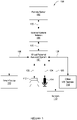
- FIG. 1 illustrates a virtual personal assistant environment 100 configured to implement one or more embodiments.
- virtual personal assistant environment 100 includes, without limitation, a virtual personal assistant system 101 and a remote server 102 in communication with each other via a communications network 104.
- Virtual personal assistant system 101 and remote server 102 attach to communications network 104 via communications links 130 and 132, respectively.
- Communications network 104 may be any suitable environment to enable communications among remote or local computer systems and computing devices, including, without limitation, Bluetooth communications channels, wireless and wired LANs (Local Area Networks), Internet-based WANs (Wide Area Networks), cellular networks, and/or the like.
- virtual personal assistant environment 100 includes a smart device 110, an audio output device (e.g. , a speaker) 112, an audio input device (e.g. , a microphone) 114, sensors 116 and other input/output (I/O) devices 118.
- Virtual personal assistant system 101 establishes communications and communicates with smart device 110, audio output device 112, audio input device 114, sensors 116, and other I/O devices 118 via communications links 120, 122, 124, 126, and 128, respectively.
- Communications links 120, 122, 124, 126, and 128 may be any technically feasible combination of wireless or wired point-to-point or networked communications links.
- Networked communications links include any suitable communications links to enable communications among remote or local computer systems and computing devices, including, without limitation, Bluetooth communications channels, wireless and wired LANs (Local Area Networks), Internet-based WANs (Wide Area Networks), cellular networks, and/or the like. Additionally or alternatively, communications links 120, 122, 124, 126, and 128 may provide communications via communications network 104.
- Virtual personal assistant system 101 includes, without limitation, a computing device that may be a standalone server, a cluster or "farm" of servers, one or more network appliances, or any other device suitable for implementing one or more aspects of the present disclosure.
- virtual personal assistant system 101 communicates over communications network 104 via communications link 130.
- virtual personal assistant system 101 engages with one or more users (e.g. , the driver and passengers of a vehicle) via two-way natural language dialog.
- This two-way natural language dialog includes user(s)-to-vehicle and vehicle-to-user(s) communications.
- Virtual personal assistant system 101 combines data from internal sensors and data from external sensors to generate inferences about situations occurring within the vehicle and about situations occurring external to the vehicle. Further, virtual personal assistant system 101 combines data from internal sensors and data from external sensors to generate predictions or other results regarding the users(s), vehicle, and/or environment.
- Internal sensors include, without limitation, event data recorders (EDRs), on-board diagnostic information, sensors associated with the vehicle head unit, sensors associated with the vehicle information/entertainment (infotainment) system, data from the vehicle controller area network (CAN) bus, and data from the vehicle engine control unit (ECU). Images and other data from external cameras, radar units, and LIDAR units.
- EDRs event data recorders
- sensors associated with the vehicle head unit sensors associated with the vehicle information/entertainment (infotainment) system
- CAN vehicle controller area network
- ECU vehicle engine control unit
- virtual personal assistant system 101 coordinates the overall operation of the virtual personal assistant environment 100.
- virtual personal assistant system 101 may be coupled to, but separate from other components of the virtual personal assistant system 101.
- virtual personal assistant environment 100 may include one or more separate processors that receive data acquired from the surrounding environment and transmit the data to virtual personal assistant system 101. These separate processors may be included in a separate device, such as a vehicle head unit, personal computer, an audio-video receiver, a smartphone, a portable media player, a wearable device, etc.
- a separate device such as a vehicle head unit, personal computer, an audio-video receiver, a smartphone, a portable media player, a wearable device, etc.
- the embodiments disclosed herein contemplate any technically feasible system configured to implement the functionality of virtual personal assistant environment 100.
- virtual personal assistant system 101 monitors the internal and external vehicle environment by utilizing multiple sensors and notifying the users when a significant deviation from the current condition is detected. Virtual personal assistant system 101 generates audio speech output that describes the event, generates one or more alerts, and/or provides possible suggestions or solutions. During user(s)-to-vehicle communications, virtual personal assistant system 101 invokes external services according to the requests and needs of the users. In general, virtual personal assistant system 101 integrates sensor fusion data, computer vision, natural language processing, speech recognition, and driver-assistance techniques to deliver a safe, intelligent and personalized experience to the user(s) in a vehicle.
- Remote server 102 includes, without limitation, a computing device that may be a standalone server, a cluster or "farm" of servers, one or more network appliances, or any other device suitable for implementing one or more aspects of the present disclosure.
- remote server 102 communicates over communications network 104 via communications link 132.
- remote server 102 performs one or more of the techniques described herein in conjunction with virtual personal assistant system 101.
- the disclosed techniques may be implemented by a cloud computing system that includes remote server 102 in conjunction with virtual personal assistant system 101 communicating via communications network 104.
- virtual personal assistant system 101 may transmit speech data to remote server 102.
- Remote server 102 may process the speech data in any technically feasible manner to determine a request included in the speech data.
- virtual personal assistant system 101 may transmit sensor data to the remote server 102.
- Remote server 102 may process the sensor data in any technically feasible manner to determine the state of the user(s), the vehicle, and/or the environment.
- Remote server 102 may generate a notice, alert, and/or response based on the determined state.
- Smart device 110 includes, without limitation, a computing device that may be a personal computer, personal digital assistant, tablet computer, mobile phone, mobile device, or any other device suitable for implementing one or more aspects of the present invention.
- smart device 110 communicates with virtual personal assistant system 101 via communications link 120.
- smart device 110 augments the functionality of virtual personal assistant system 101 by providing various services, including, without limitation, telephone services, navigation services, and infotainment services. Further, smart device 110 includes various sensors that are separate from the sensors 116 coupled to virtual personal assistant system 101. In this regard, smart device 110 acquires data from such sensors and transmits the data to virtual personal assistant system 101. Smart device 110 may include a speaker and a microphone that are separate from the audio output device 112 and audio input device 114 coupled to virtual personal assistant system 101. Smart device 110 acquires sound data via audio input device 114 and transmits the sound data to virtual personal assistant system 101 for processing. Likewise, smart device 110 receives sound data from virtual personal assistant system 101 and transmits the sound data via the loudspeaker so that the user(s) are able to hear audio originating from virtual personal assistant system 101 via the loudspeaker located on smart device 110.
- Audio output device 112 generates sound based on one or more audio signals received from virtual personal assistant system 101 and/or an alternative audio device, such as a power amplifier associated with virtual personal assistant system 101. More specifically, audio output device 112 converts one or more electrical signals into sound waves and directs the sound waves into the physical environment. Illustratively, audio output device 112 communicates with virtual personal assistant system 101 via communications link 122.
- Audio input device 114 acquires acoustic data, such as the voice of a user, from the surrounding environment and transmits signals associated with the acoustic data to virtual personal assistant system 101. Illustratively, audio input device 114 communicates with virtual personal assistant system 101 via communications link 124.
- sensors 116 acquire sensor data corresponding to one or more objects included in an area being monitored by the sensors 140 and transmit such sensor data to virtual personal assistant system 101.
- sensors 116 communicate with virtual personal assistant system 101 via communications link 126.
- I/O devices 118 include, without limitation, input devices, output devices, and devices capable of both receiving input data and generating output data.
- I/O devices 118 communicate with virtual personal assistant system 101 via communications link 128.
- the virtual personal assistant environment 100 may include any technically feasible number of smart devices 110, audio output devices 112, audio input devices 114, sensors 116, and other I/O devices 118.
- the various functions and features of virtual personal assistant system 101 are now described.
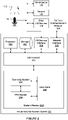
- FIG 2 is a more detailed illustration of the virtual personal assistant system 101 of Figure 1 , according to various embodiments.
- virtual personal assistant system 101 includes, without limitation, a processor 202, storage 204, an I/O devices interface 206, a network interface 208, an interconnect 210, and a system memory 212.
- Processor 202 retrieves and executes programming instructions stored in system memory 212. Similarly, processor 202 stores and retrieves application data residing in system memory 212. Interconnect 210 facilitates transmission, such as of programming instructions and application data, between processor 202, I/O devices interface 206, storage 204, network interface 208, and system memory 212. I/O devices interface 206 is configured to receive input data from and transit data to smart device 110, audio output device 112, audio input device 114, sensors 116, and other I/O devices 118.
- I/O devices interface 206 includes an audio output unit configured to generate an electrical audio output signal and, in response, audio output device 112 generates an acoustic output in response to the electrical audio output signal. Audio output device 112 generates sound based on one or more audio signals received from virtual personal assistant system 101 and/or an audio device ( e.g. , a power amplifier) associated with virtual personal assistant system 101.
- an audio device e.g. , a power amplifier
- I/O devices interface 206 includes an audio input unit configured to receive an acoustic input via audio input device 114 and generate an electrical audio input signal in response to the acoustic input.
- Audio input device 114 acquires acoustic data from the surrounding environment (e.g. , a voice of a user) and transmits signals associated with the acoustic data to virtual personal assistant system 101.
- Virtual personal assistant system 101 then processes the acoustic data acquired by audio input device 114 to determine and/or filter the audio signals being reproduced by audio output device 112.
- audio input device 114 may include any type of transducer capable of acquiring acoustic data including, for example and without limitation, a differential microphone, a piezoelectric microphone, an optical microphone, etc.
- Sensors 116 generate sensor data corresponding to one or more objects included in an area being monitored.
- sensors 116 may include visual sensors (e.g. , RGB cameras, infrared cameras, etc.), distance measurement sensors (e.g. , LIDAR, radar), biological sensors (e.g. , electroencephalography sensors, etc.), auditory sensors ( e.g. , microphones), behavior sensors ( e.g. , mobile usage sensors, etc.), vehicle or telematics sensors ( e.g. , speedometers, etc.), and/or environment sensors (e.g. , thermometers, etc.). Data from these sensors may be "fused" (e.g. , aggregated and analyzed together) to generate meaningful information, warnings, recommendations, etc.
- I/O devices 118 include, without limitation, input devices, output devices, and devices capable of both receiving input data and generating output data.
- I/O devices 104 may include wired and/or wireless communication devices that send data to and/or receive data from audio output device 112, audio input device 114, sensors 116, remote databases, audio devices, display devices, other computing devices, etc.
- I/O devices 104 mayinclude a push-to-talk (PTT) button, such as a PTT button included in a vehicle, on a mobile device, on a smart speaker, etc.
- PTT push-to-talk
- Examples of other I/O devices 118 may include one or more buttons, a keyboard, and a mouse or other pointing device.
- Examples of other I/O devices 118 may further include a display device that generally represents any technically feasible means for generating an image for display.
- the display device may be a liquid crystal display (LCD) display, organic light-emitting diode (OLED) display, or digital light processing (DLP) display.
- the display device may be a TV that includes a broadcast or cable tuner for receiving digital or analog television signals.
- the display device may be included in a VR/AR headset.
- the display device may project an image onto one or more surfaces, such as walls or projection screens, or may project an image directly onto the eyes of a user.
- the display device may include a touchscreen for receiving touch-based input.
- Processor 202 is included to be representative of a single central processing unit (CPU), multiple CPUs, a single CPU having multiple processing cores, and the like. And system memory 212 is generally included to be representative of a random access memory.
- Storage 204 may be a disk drive storage device. Although shown as a single unit, storage 204 may be a combination of fixed and/or removable storage devices, such as fixed disc drives, floppy disc drives, tape drives, removable memory cards, or optical storage, network attached storage (NAS), or a storage area-network (SAN).
- Processor 202 communicates to other computing devices and systems via network interface 208, where network interface 208 is configured to transmit and receive data via a communications network.
- System memory 212 includes, without limitation, an operating system 232, a virtual personal assistant (VPA) module 234, and a data store 242.
- Operating system 232 and virtual personal assistant module 234 when executed by processor 202, perform one or more operations associated with the virtual personal assistant system 101 of Figure 1 , as further described herein.
- operating system 232 and virtual personal assistant module 234 may store data in and retrieve data from data store 242.
- operating system 232 provides various support functions for virtual personal assistant system 101.
- Processor 202 is generally under the control of operating system 232.
- Examples of operating systems include the UNIX operating system, versions of the Microsoft Windows operating system, and distributions of the Linux operating system.
- UNIX is a registered trademark of The Open Group in the United States and other countries.
- Microsoft and Windows are trademarks of Microsoft Corporation in the United States, other countries, or both.
- Linux is a registered trademark of Linus Torvalds in the United States, other countries, or both.
- any operating system supporting the functions disclosed herein may be used.
- virtual personal assistant module 234 engages with the user(s) of a vehicle via two-way natural language dialog.
- This two-way natural language dialog includes user(s)-to-vehicle and vehicle-to-user(s) communications.
- Virtual personal assistant module 234 combines data from internal sensors and data from external sensors to generate inferences about situations occurring within the vehicle and about situations occurring external to the vehicle. Further, virtual personal assistant module 234 combines data from internal sensors and data from external sensors to generate predictions or other results regarding the user(s), vehicle, and/or environment.
- Internal sensors include, without limitation, event data recorders (EDRs), on-board diagnostic information, sensors associated with the vehicle head unit, sensors associated with the vehicle information/entertainment (infotainment) system, data from the vehicle controller area network (CAN) bus, and data from the vehicle engine control unit (ECU). Images and other data from external cameras, radar units, and LIDAR units.
- EDRs event data recorders
- sensors associated with the vehicle head unit sensors associated with the vehicle information/entertainment (infotainment) system
- CAN vehicle controller area network
- ECU vehicle engine control unit
- Virtual personal assistant module 234 includes the text-to-speech functionality, speech-to-text functionality, natural language processing functionality, and may include a sensor fusion system, and deep learning models and logic, as further described herein.
- Virtual personal assistant module 234 processes speech data acquired via one or more audio input devices 114 to determine a request (e.g. , a question) and a concept (meaning, intent) of the request.
- Virtual personal assistant module 234 determines a response to the request based on sensor data from one or more sensors 116, generates an output (a speech output) based on the response, and causes the output to be output to a user (e.g. , via an audio output device).
- one or more deep learning, machine learning models, and/or training datasets may be stored in the memory 110 (e.g. , in data store 242).
- data store 242 may be located within virtual personal assistant system 101 (e.g. , in system memory 212) and/or in a remote server such as remote server 102 ( e.g. , in a cloud computing system).
- virtual personal assistant module 234 may process sensor data from one or more sensors 116 to detect a state of the user(s), the vehicle, and/or the environment. In some embodiments, virtual personal assistant module 234 may determine whether the state exceeds a threshold. In response to detecting the state (and, in some embodiments, in response to determining that the state exceeds the threshold), virtual personal assistant module 234 generates an output (e.g. , a natural languge speech output) and causes the output to be output to a user ( e.g. , via an audio output device).
- an output e.g. , a natural languge speech output
- virtual personal assistant module 234 provides information to users according to a user-to-assistant approach.
- a user makes a speech utterance directed to virtual personal assistant module 234.
- the speech includes a wakeword or hotword associated with virtual personal assistant module 234.
- the user may activate an input device associated with virtual personal assistant module 234 (e.g. , a physical or virtual button configured to signal virtual personal assistant module 234 that an utterance from the user is forthcoming, such as a push-to-talk button) prior to making the utterance.
- Virtual personal assistant module 234 acquires speech data, corresponding to the speech utterance, via the one or more audio input devices 114.
- Virtual personal assistant module 234 processes the speech data to determine a request in the speech in any technically feasible manner.
- Virtual personal assistant module 234 performs speech recognition to convert the speech data into a text of a request embodied in the speech data (e.g. , a question corresponding to the request).
- Virtual personal assistant module 234 then performs natural language processing on the text (using a natural language model) in order to determine a concept (a meaning, an intent) of the request.
- Virtual personal assistant module 234 does then, based on the request and the concept of the request, acquire and process sensor data from sensors 116 to determine a response to the request. For example, if the request is "what is the speed of the blue sedan on my right lane?", then virtual personal assistant module 234 determine that sensor data from one or more cameras (e.g. , RGB cameras, infrared cameras), radar, and thermal sensors are the sensors most relevant to the request. Virtual personal assistant module 234 obtains sensor data from these sensors to identify the blue sedan in the request and to determine the speed of that blue sedan. That is, virtual personal assistant module 234 "fuses" data from these sensors in order to determine a response to the request.
- sensor data e.g. , RGB cameras, infrared cameras
- radar e.g., radar
- thermal sensors are the sensors most relevant to the request.
- Virtual personal assistant module 234 obtains sensor data from these sensors to identify the blue sedan in the request and to determine the speed of that blue sedan. That is, virtual personal assistant module 234 "fuses"
- the processing or "fusing" of the sensor data may include applying one or more models to the sensor data to predict one or more states based on the sensor data. For example, to process the request "what is the speed of the blue sedan in the right lane?” discussed above, virtual personal assistant module 234 may apply a computer vision model on the data from the cameras and a signal processing model on the radar and thermal sensors to predict the target object of the request ("the blue sedan in the right lane"). Virtual personal assistant module 234 aggregates the predictions and/or other results from the multiple models to determine the proper response to the request. As another example, if the request is "what is my baby doing?", then virtual personal assistant module 234 may apply a computer vision model (e.g.
- Virtual personal assistant module 234 then aggregates the predictions and/or other results in order to determine the proper response to the request. More generally, virtual personal assistant module 234 aggregates determinations, predictions, and/or results based on sensor data from one or more sensors to determine the proper response to a request. In various embodiments, virtual personal assistant module 234 may use any number of deep learning techniques and models ( e.g. , machine learning techniques) to determine the proper response.
- deep learning techniques and models e.g. , machine learning techniques
- Virtual personal assistant module 234 then generates an output (a speech output) based on the response to the request in any technically feasible manner.
- Virtual personal assistant module 234 applies a natural language model to the response to obtain a natural language textual representation of the response, and then convert the textual representation to speech that may be output via audio output device 112.
- Virtual personal assistant module 234 then causes the output to be output to a user ( e.g. , output speech corresponding to the response via audio output device 112).
- the response and corresponding output may include an answer to the request. For example, for the request "what is the speed of the blue sedan in the right lane?", the output may report the speed of the blue sedan in the right lane.
- the response and corresponding output may optionally include a suggested course of action.
- virtual personal assistant module 234 may use any number of machine learning and deep learning techniques and models to determine the suggested course of action.
- virtual personal assistant module 234 also provides information to users according to an assistant-to-user approach.
- virtual personal assistant module 234 monitors sensor data from sensors 116 (e.g. , continuously monitor the sensor data) and determines one or more states based on the sensor data in any technically feasible manner.
- virtual personal assistant module 234 may process or "fuse" the data from sensors 116, including applying similar machine learning and deep learning models as described above to the sensor data, to detect one or more states in the area (e.g. , the speeds of the surrounding vehicles, the activity status of vehicle occupants).
- virtual personal assistant module 234 may first compare a detected state to an associated threshold.
- the threshold may be predefined and/or user-configurable. If the state does not exceed the threshold, then virtual personal assistant module 234 takes no action with respect to the state. If the state exceeds the threshold, then virtual personal assistant module 234 may generate a notice or alert output associated with the state. In some embodiments, virtual personal assistant module 234 may generate a notice or alert output for at least one or more states without regard for whether the state exceeded the threshold.
- virtual personal assistant module 234 may be configured by a user to report on the activity status of all occupants in the rear seating of a vehicle every 5 minutes regardless of what the occupants are doing.
- Virtual personal assistant module 234 may determine a notice or alert, and generate a corresponding output for the notice or alert, based on a detected state (e.g. , if the detected state exceeds an associated threshold).
- the notice or alert, and the corresponding output may include information on the detected state, and optionally include a suggested course of action in response to the detected state.
- virtual personal assistant module 234 may use any number of machine learning and deep learning techniques and models to determine the suggested course of action.
- the notice or alert may inform the user of the erratically driven vehicle and suggest that the user change lanes in a direction away from the erratically driven vehicle and/or slow down to obtain greater distance from the erratically driven vehicle.
- virtual personal assistant module 234 may perform other operations in addition to or in alternative to generating audio speech output messages.
- virtual personal assistant module 234 may assume or exercise autonomous control of the vehicle at various control levels depending on certain conditions. If virtual personal assistant module 234 determines, via one or more sensors, that the user is driving the vehicle on city streets, then virtual personal assistant module 234 may allow the user to have full control of the vehicle. In some embodiments, if virtual personal assistant module 234 detects certain conditions, then virtual personal assistant module 234 may temporarily assume or exercise autonomous control or further autonomous control of the vehicle.
- virtual personal assistant module 234 may apply a braking function to slow down and/or stop the vehicle. If virtual personal assistant module 234 subsequently determines, via one or more sensors, that the user is now driving the vehicle on the highway, then virtual personal assistant module 234 may exert partial autonomous control and follow certain patterns, such as following another vehicle in a particular traffic lane at a safe distance. If virtual personal assistant module 234 then determines, via one or more sensors, that the user is exiting the highway, then virtual personal assistant module 234 may return full control of the vehicle to the user.
- virtual personal assistant module 234 may disguise certain personally identifiable information when transmitting visual input and sensor data to a remote server, such as remote server 102, in a cloud environment.
- virtual personal assistant module 234 may obscure personally identifying information, such as by blurring faces in an image and hiding personal identity information in sensor data, so that individuals are not identifiable. This technique may be preferable when sensor data from one user is combined with sensor data from multiple users to generate a multiuser machine learning model that all users may access. Visual input and sensor data may then be employed to train a multiuser machine learning model without compromising the privacy of individual users.
- virtual personal assistant module 234 may allow remote access to visual input and sensor data.
- a vehicle may be part of a managed fleet of vehicles belonging to a delivery company or a taxi service.
- a supervisor or other employee may remotely monitor visual input and sensor data from various vehicles in the fleet to determine that each vehicle is being used in a proper and safe manner.
- emergency services or police may remotely monitor visual input and sensor data from a particular vehicle to detect dangerous, life-threatening, or illegal activity occurring within the vehicle.
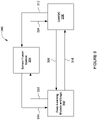
- Figure 3 illustrates a data model 300 associated with a virtual personal assistant system, such as the virtual personal assistant system 101, according to various embodiments.
- the data model 300 may be implemented by the virtual personal assistant module 234 executing on the virtual personal assistant system 101 of Figure 2 .
- the data model 300 includes, without limitation, deep learning models and logic 302, a sensor fusion system 304, and user(s) 306.
- the data model 300 further includes a user-to-vehicle interaction path that includes paths 312, 314, and 316, as well as a vehicle-to-user interaction path that includes paths 322, 324, and 326,
- a user 306 asks a question or makes a request.
- Sensor fusion system 304 receives the question or request via path 312.
- Sensor fusion system 304 preprocesses sensor data and transmits preprocessed sensor data to deep learning models and logic 302 via path 314.
- Responses in the form of audio speech output are generated by applying deep learning models and logic 302 to the preprocessed sensor data.
- the responses in the form of audio speech output are transmitted to the user(s) 306 via path 316.
- deep learning models and logic 302 are applied to sensor data.
- a computer vision model may be applied to visual data, including, without limitation, camera inputs and infrared inputs.
- a signal processing model may be applied to other sensor data, including, without limitation, radar inputs and thermal sensor inputs.
- Deep learning models and logic 302 continually monitor the sensor data to generate one or more predictions. Deep learning models and logic 302 transmits the predictions along path 322 to sensor fusion system 304. Sensor fusion system 304 merges predictions received from various deep learning models and logic 302 to generate an aggregate prediction value. The aggregate prediction value is then compared to a threshold level. If the prediction value exceeds then threshold level, then an audio speech message, such as a notice or alert, is generated.
- the audio speech message is transmitted to the user(s) 306 along path 324.
- the user(s) 306 may perform one or more actions in response to the audio speech message.
- Various sensors monitor the actions of the user(s) 306 and transmit corresponding sensor data, in the form of user feedback data, to deep learning models and logic 302. Deep learning models and logic 302 are modified in response to the user feedback data, in order continually train and improve the models and logic therein. In this manner, deep learning models and logic 302 continually self-learns and matures over time.
- Figure 4 illustrates a data flow pipeline 400 for an interaction initiated by a user of a virtual personal assistant system, such as the virtual personal assistant system 101, according to various embodiments.
- Data flow pipeline 400 corresponds to the user-to-vehicle interaction path of Figure 3 .
- the data flow pipeline 400 includes, without limitation, speech recognition 402, an input natural language processing (NLP) model 404, a computer vision model 406, a signal processing model 408, sensor fusion 410, an output NLP model 412, and text to speech 414.
- NLP natural language processing
- a user initiates a conversation with virtual personal assistant system 101 by making a request within the scope of virtual personal assistant system 101.
- Speech recognition 402 receives speech input 422 in the form of sound waves received via audio input device 114. Speech recognition 402 decoded the speech input 422 into request text 424 and transmits the request text 424 to input NLP model 404.
- Input NLP model 404 analyzes the request text 424 to generate an extracted meaning 426 that represents a meaning or intent of the user who uttered the words represented by the request text 424.
- the extracted meaning 426 generated by input NLP model 404 determines the predictions needed to respond to the user.
- Input NLP model 404 transmits the extracted meaning 426 to computer vision model 406 and signal processing model 408.
- Computer vision model 406 analyzes visual inputs, including, without limitation, camera input 428 and infrared input 430, in view of the extracted meaning 426.
- Computer vision model 406 generates a prediction 432 based on the visual inputs and the extracted meaning 426.
- signal processing model 408 analyzes sensor data, including, without limitation, radar input 434 and thermal sensor input 436, in view of the extracted meaning 426.
- Signal processing model 408 generates a prediction 438 based on the sensor data and the extracted meaning 426.
- Sensor fusion 410 combines predictions received from various models, including, without limitation, prediction 432 received from computer vision model 406 and prediction 438 received from signal processing model 408. Sensor fusion 410 combines these predictions to generate an aggregate prediction 440 based on the individual predictions.
- Sensor fusion 410 transmits the aggregate prediction 440 to output NLP model 412.
- Output NLP model 412 generates a natural language response text 442 based on the aggregate prediction 440.
- Text to speech 414 converts the response text 442 to speech output 444 and transmits the speech output 444 to the user.
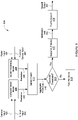
- Figure 5 illustrates a data flow pipeline 500 for an interaction initiated by a virtual personal assistant system, such as the virtual personal assistant system 101, according to various embodiments.
- Data flow pipeline 500 corresponds to the vehicle-to-user interaction path of Figure 3 .
- the data flow pipeline 500 includes, without limitation, a computer vision model 406, a signal processing model 408, sensor fusion 410, an "exceeds threshold” decision block 516, a "take no action” block 518, an output NLP model 412, and text to speech 414.
- virtual personal assistant system 101 initiates a conversation to notify or alert the user with information about the vehicle, the environment external to the vehicle, and/or the environment inside the vehicle cabin.
- Various models monitor visual data and other sensor data on a continuing basis to detect anomalies.
- computer vision model 406 analyzes visual inputs, including, without limitation, camera input 428 and infrared input 430.
- Computer vision model 406 generates a prediction 532 based on the visual inputs.
- signal processing model 408 analyzes sensor data, including, without limitation, radar input 434 and thermal sensor input 436.
- Signal processing model 408 generates a prediction 538 based on the sensor data.
- Sensor fusion 410 combines predictions received from various models, including, without limitation, prediction 532 received from computer vision model 406 and prediction 538 received from signal processing model 408. Sensor fusion 410 combines these predictions to generate an aggregate prediction 540 based on the individual predictions.
- the "exceeds threshold" decision block 516 compares the aggregate prediction 540 to a predetermined threshold level. If the aggregate prediction 540 does not exceed the predetermined threshold level, then no action is taken at "take no action" block 518." If, on the other hand, the aggregate prediction 540 exceeds the predetermined threshold level then output NLP model 412 generates a natural language notification text 542 based on the aggregate prediction 540. Text to speech 414 converts the notification text 542 to speech output 544 and transmits the speech output 544 to the user.
- virtual personal assistant system 101 may assume or exercise autonomous control of the vehicle at various control levels depending on certain conditions.
- virtual personal assistant system 101 may increase the level of autonomy to take control of driving away from the user. If virtual personal assistant system 101 subsequently determines that the driver is sober, attentive, and awake, virtual personal assistant system 101 may decrease the level of autonomy to transfer control of driving back to the user.
- FIG. 6 illustrates a deep learning process flow 600 associated with a virtual personal assistant system, such as the virtual personal assistant system 101, according to various embodiments.
- virtual personal assistance system 101 communicates with machine learning modules and logic 610 via communications network 104.
- Machine learning modules and logic 610 execute on a remote server, such as remote server 102.
- virtual personal assistant system 100 acquires visual input and sensor data.
- Virtual personal assistant system 100 transmits the visual input and sensor data to machine learning modules and logic 610 via communications network 104.
- Each of the components of machine learning modules and logic 610 are pre-trained machine learning models that generate corresponding outputs included in the machine learning outputs 630, where the corresponding output is based on the received visual input and sensor data.
- the machine learning outputs 630 are generated on a remote server, such as remote server 102.
- natural language processing 612 generates natural language words 632 based on the visual input and sensor data.
- Visual questioning answering (VQA) 614 generates sentences 634 describing answers to questions that can be asked about an image or other visual data.
- Object detection 616 generates positions 636 of the detected objects.
- Recognition 618 generates identifiers 638 of people recognized within an image or other visual data.
- Body detection 620 generates position and location of bodies of people within an image or other visual data.
- Age/gender/emotion detection 622 generates features 642 indicative of the age, gender, and emotional state of people within an image or other visual data.
- Face detection 624 generates features and positions 644 related to faces of people within an image or other visual data.
- Biometric authentication 626 generates a true or false determination 646 based on whether biometric data within an image or other visual data matches stored biometric data.
- Geofencing 628 generates an inside or outside determination 648 based on whether a detected location of the vehicle is inside or outside a geofenced area of interest.
- the machine learning outputs 630 generated by the various machine learning modules and logic 610 are transmitted to an analysis model 650.
- Analysis model 650 generates one or more predicted actions of the user(s) and transmits the predicted actions to visual personal assistance system 101 via communications network 104.
- Visual personal assistance system 101 then performs one or more responsive actions based on the predicted actions received from analysis model 650. For example, visual personal assistance system 101 may generate natural language responses based on the predicted actions thresholds and then output the natural language responses to the user(s).
- machine learning modules and logic 610 execute and machine learning outputs 630 are generated on a remote server, such as remote server 102. Additionally or alternatively, machine learning modules and logic 610 execute locally on virtual personal assistance system 101 and machine learning outputs 630 are generated locally on virtual personal assistance system 101.
- FIG. 7 illustrates various modules 700 performed by a virtual personal assistant system, such as the virtual personal assistant system 101, according to various embodiments.
- the modules 700 receive visual input and sensor data from various sensors 710 and perform various functions categorized into three types of events, namely, life threatening events 730, better driving experience events 750, and user-to-vehicle information retrieval events 770. The user may enable or disable these three event types independently.
- Life threatening events 730 include, without limitation, following too close to a vehicle in front 740, approaching a red light or stop sign 742, drunk, inattentive, or drowsy driving 744, approaching pedestrian, object, or cyclist 746, and exceeding a visibility-based safety speed 746. More generally, life threatening events include any condition where the user is driving in an impaired or inattentive condition or where the vehicle is in danger of colliding with an object.
- modules 700 related to life threatening events 730 may analyze visual input from forward camera 712 and in-cabin camera 714 with telematics 722 sensor data to determine that the user is approaching a red light or stop sign 742 and is unlikely to stop in time.
- modules 700 related to life threatening events 730 may analyze visual input from in-cabin camera 714 and alcohol sensor 718 data to determine if the user is engaging in drunk or drowsy driving 744.
- modules 700 related to life threatening events 730 may analyze visual input from rear camera 716 and radar 720 data to determine if a pedestrian or cyclist 746 is approaching from behind.
- modules 700 related to life threatening events 730 may analyze visual input from forward camera 712, in-cabin camera 714, and rear camera to determine if the user is exceeding a visibility-based safety speed 746 based on current weather or road conditions.
- Better driving experience events 750 include, without limitation, unnecessary lane changing 760, more than 5% over the speed limit 702, uncomfortable driving or jerking 764, and low fuel level 766.
- modules 700 related to better driving experience events 750 may notify the user when the user is repeatedly changing lanes unnecessarily or when the user is exceeding the speed limit by more than a specified percentage.
- modules 700 related to better driving experience events 750 may notify the user when a vehicle to the rear is tailgating.
- modules 700 related to better driving experience events 750 may notify the user when an emergency vehicle is nearby and may identify the direction and distance of the emergency vehicle.
- modules 700 related to better driving experience events 750 may notify the user when the user appears to be uncomfortable or is jerking excessively. In yet another example, modules 700 related to better driving experience events 750 may notify the user when the fuel level is low and may identify the nearest gas station.
- User-to-vehicle information retrieval events 770 include, without limitation, driving statistics retrieval 780, visual scene understanding 782, traffic information retrieval 784, and in-cabin information retrieval 786.
- the user may ask questions of the virtual personal assistant system 101 via user-to-vehicle information retrieval events 770.
- the user may direct questions to modules 700 related to better driving experience events 750 to ask the average or highest speed in the past hour, to identify a particular building within view, or to assess the current level of visibility.
- the user may direct questions to modules 700 related to better driving experience events 750 to ask the whether the right lane is clear for making a lane change or to ask the travel time to a particular location.
- the user may direct questions to modules 700 related to better driving experience events 750 to ask questions regarding one or more nearby persons, such as whether the person on the left rear seat sleeping.
- the user(s) interact with virtual personal assistant system 101 in a natural manner based on a wide array of sensor data from sensors 710.
- the user(s) receive relevant and timely information in an understandable manner regarding life threatening events 730, better driving experience events 750, and user-to-vehicle information retrieval events 770.
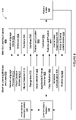
- Figure 8 is a flow diagram of method steps for performing an operation initiated by a user of a virtual personal assistant system, such as the virtual personal assistant system 101, according to the invention. The method steps are described in conjunction with the systems of Figures 1-7 .
- a method 800 begins at step 802, where a virtual personal assistant system 101 receives an audio speech input 802 from a user in the form of sound waves received via audio input device 114. At step 804, virtual personal assistant system 101 converts the audio speech input into a text segment. At step 806, virtual personal assistant system 101 applies a first NLP model to the text segment to extract an intended meaning. More particularly, virtual personal assistant system 101 analyzes the text segment to generate an extracted meaning that represents a meaning or intent of the user who uttered the words represented by the text segment.
- virtual personal assistant system 101 generates a first prediction based on the intended meaning and first sensor inputs.
- the first sensor inputs may include without limitation, camera data, infrared data, radar data, thermal sensor data, or any other technically feasible sensor data.
- virtual personal assistant system 101 receives second sensor inputs that augment the first prediction.
- the second sensor inputs may include without limitation, camera data, infrared data, radar data, thermal sensor data, or any other technically feasible sensor data.
- Virtual personal assistant system 101 selects the second sensor based on the intended meaning.
- virtual personal assistant system 101 generates a second prediction based on the intended meaning, the first prediction, and the second sensor inputs.
- virtual personal assistant system 101 applies a second NLP model to the second prediction to generate a natural language response text segment.
- virtual personal assistant system 101 converts the response text segment into an audio speech output, which is then transmitted to the user(s).
- virtual personal assistant system 101 may incorporate information derived from the second sensor inputs into the natural language audio speech output. The method 800 then terminates.
- FIG 9 is a flow diagram of method steps for performing an operation initiated by a virtual personal assistant system, such as the virtual personal assistant system 101, according to various embodiments.
- a virtual personal assistant system such as the virtual personal assistant system 101
- the method steps are described in conjunction with the systems of Figures 1-7 , persons skilled in the art will understand that any system configured to perform the method steps, in any order, is within the scope of the present disclosure.
- a method 900 begins at step 902, where a virtual personal assistant system 101 generates a first prediction based on first sensor inputs.
- the first sensor inputs may include without limitation, camera data, infrared data, radar data, thermal sensor data, or any other technically feasible sensor data.
- virtual personal assistant system 101 receives second sensor inputs that augment the first prediction.
- the second sensor inputs may include without limitation, camera data, infrared data, radar data, thermal sensor data, or any other technically feasible sensor data.
- virtual personal assistant system 101 may determine that the second sensor accesses data that augments an aspect of the first prediction and, in response, may select the second sensor based on the first result.
- virtual personal assistant system 101 generates a second prediction based on the first prediction, and the second sensor inputs.
- virtual personal assistant system 101 compares the second prediction with a threshold level.
- virtual personal assistant system 101 determines whether the second prediction exceeds the threshold level. If the second prediction does not exceed the threshold level, then the method 900 proceeds to step 902, described above. If, on the other hand, the second prediction exceeds the threshold level, then the method 900 proceeds to step 912, where virtual personal assistant system 101 applies an NLP model to the second prediction to generate a natural language notification text segment, such as an alert or notification.
- virtual personal assistant system 101 converts the response text segment into an audio speech output, which is then transmitted to the user(s). In some embodiments, virtual personal assistant system 101 incorporates information derived from the second sensor inputs into the natural language audio speech output. The method 900 then terminates.
- a two-way virtual personal assistant system enables a user to interact with a virtual personal assistant to obtain information about an area, such as a vehicle and the surrounding environment or a home and the surrounding environment, monitored by one or more sensors.
- the two-way virtual personal assistant detects one or more states in the area monitored by the sensors and alerts the user regarding the detected states.
- the virtual personal assistant module receives sensor data from one or more sensors and determines a state based on the sensors data.
- the virtual personal assistant module automatically generates an output, such as a speech output, based on the state ( e.g. , if the state is abnormal, if the state exceeds a threshold, etc.).
- the virtual personal assistant receives a speech event via one or more microphones.
- the virtual personal assistant determines a request based on the speech event and determines a response to the request based on sensor data obtained from one or more sensors.
- the virtual personal assistant further generates an output, such as natural language speech output, based on the response to the request.
- At least one technical advantage of the disclosed techniques relative to the prior art is that the disclosed techniques enable a virtual personal assistant to continuously monitor sensor data and other data sources and, in response, to proactively notify a user of certain conditions based on this data.
- Another advantage of the disclosed techniques is that, because the virtual personal assistant has access to a rich variety of sensor data and other data sources, the virtual personal assistant generates notifications with improved accuracy and thoroughness relative to conventional approaches.
- aspects of the present embodiments may be embodied as a system, method or computer program product. Accordingly, aspects of the present disclosure may take the form of an entirely hardware embodiment, an entirely software embodiment (including firmware, resident software, micro-code, etc.) or an embodiment combining software and hardware aspects that may all generally be referred to herein as a "module” or "system.” Furthermore, aspects of the present disclosure may take the form of a computer program product embodied in one or more computer readable medium(s) having computer readable program code embodied thereon.
- the computer readable medium may be a computer readable signal medium or a computer readable storage medium.
- a computer readable storage medium may be, for example, but not limited to, an electronic, magnetic, optical, electromagnetic, infrared, or semiconductor system, apparatus, or device, or any suitable combination of the foregoing.
- a computer readable storage medium may be any tangible medium that can contain, or store a program for use by or in connection with an instruction execution system, apparatus, or device.
- each block in the flowchart or block diagrams may represent a module, segment, or portion of code, which comprises one or more executable instructions for implementing the specified logical function(s).
- the functions noted in the block may occur out of the order noted in the figures. For example, two blocks shown in succession may, in fact, be executed substantially concurrently, or the blocks may sometimes be executed in the reverse order, depending upon the functionality involved.
Landscapes
- Engineering & Computer Science (AREA)
- Physics & Mathematics (AREA)
- Human Computer Interaction (AREA)
- Health & Medical Sciences (AREA)
- Audiology, Speech & Language Pathology (AREA)
- Multimedia (AREA)
- Computational Linguistics (AREA)
- Acoustics & Sound (AREA)
- General Physics & Mathematics (AREA)
- Theoretical Computer Science (AREA)
- Automation & Control Theory (AREA)
- General Engineering & Computer Science (AREA)
- Aviation & Aerospace Engineering (AREA)
- Radar, Positioning & Navigation (AREA)
- Remote Sensing (AREA)
- Transportation (AREA)
- Mechanical Engineering (AREA)
- General Health & Medical Sciences (AREA)
- Chemical & Material Sciences (AREA)
- Combustion & Propulsion (AREA)
- Artificial Intelligence (AREA)
- User Interface Of Digital Computer (AREA)
- Traffic Control Systems (AREA)
Claims (10)
- Procédé mis en œuvre par ordinateur pour interagir avec un utilisateur (306), le procédé comprenant :l'obtention de premières données de capteur à partir d'un premier capteur (802, 114) inclus dans une pluralité de capteurs (114, 116), dans lequel les premières données de capteur comprennent une entrée de parole audio ;l'analyse des premières données de capteur pour générer une première prédiction, l'analyse des premières données de capteur comprenant :la conversion (804) des premières données de capteur en un segment de texte,l'application d'un premier modèle de traitement de langage naturel (806, 404) au segment de texte pour extraire une signification voulue ;la génération (808) de la première prédiction sur la base de la signification voulue et des premières données de capteur ; etla sélection du second capteur sur la base de la signification voulue ;l'obtention de secondes données de capteur (810) à partir du second capteur inclus dans la pluralité de capteurs (114, 116) ;l'analyse des secondes données de capteur et la première prédiction pour générer une seconde prédiction (812) sur la base de la signification voulue, de la première prédiction et des secondes données de capteur ;l'application d'un second modèle de traitement de langage naturel (814, 412) à la seconde prédiction pour générer un segment de texte ; etla conversion (816) du segment de texte en une sortie audio en langage naturel ; etla délivrance de la sortie audio en langage naturel à l'utilisateur (306) sur la base de la seconde prédiction.
- Procédé mis en œuvre par ordinateur selon la revendication 1, comprenant en outre :la comparaison de la seconde prédiction à un niveau de seuil ; etla détermination que la seconde prédiction dépasse le niveau de seuil,dans lequel la délivrance de la sortie audio en langage naturel est basée sur la détermination que la seconde prédiction dépasse le niveau de seuil.
- Procédé mis en œuvre par ordinateur selon la revendication 1, comprenant en outre :la modification d'au moins l'une des premières données de capteur ou des secondes données de capteur pour masquer les informations d'identification associées à l'utilisateur (306) ; etla transmission de l'au moins une parmi les premières données de capteur ou les secondes données de capteur à un serveur distant (102) pour analyse.
- Procédé mis en œuvre par ordinateur selon la revendication 1, comprenant en outre :l'établissement de communications avec un dispositif intelligent (110) ; etla réception d'au moins l'une des premières données de capteur ou des secondes données de capteur depuis le dispositif intelligent (110).
- Procédé mis en œuvre par ordinateur selon la revendication 1, comprenant en outre :l'établissement de communications avec un dispositif intelligent (110) ; etla transmission de la sortie audio en langage naturel au dispositif intelligent (110).
- Procédé mis en œuvre par ordinateur selon la revendication 1, comprenant en outre :la détermination que la seconde prédiction indique un événement mettant la vie en danger, dans lequel un événement mettant la vie en danger inclut toute condition dans laquelle l'utilisateur (306) conduit dans un état affaibli ou inattentif ou lorsque le véhicule risque d'entrer en collision avec un objet ; etl'augmentation d'un niveau de commande autonome d'un véhicule associé à l'utilisateur (306) en fonction de la seconde prédiction indiquant un événement mettant la vie en danger.
- Procédé mis en œuvre par ordinateur selon la revendication 1, dans lequel au moins l'une parmi la première prédiction ou la seconde prédiction est une détection d'un objet à l'extérieur d'un véhicule associé à l'utilisateur (306), et la sortie audio en langage naturel indique au moins l'une d'une direction et d'une distance entre le véhicule et l'objet.
- Procédé mis en œuvre par ordinateur selon la revendication 1, dans lequel au moins l'une parmi la première prédiction ou la seconde prédiction est une détection qu'un véhicule associé à l'utilisateur (306) s'approche d'un feu rouge ou d'un panneau stop, et le procédé comprend en outre l'application d'une fonction de freinage pour arrêter le véhicule.
- Un ou plusieurs supports de stockage lisibles par ordinateur incluant des instructions qui, lorsqu'elles sont exécutées par un ou plusieurs processeurs (202), amènent le ou plusieurs processeurs (202) à interagir avec un utilisateur (306) pour exécuter le procédé de l'une des revendications précédentes.
- Système, comprenant :une mémoire (212) qui inclut des instructions ; etun processeur (202) qui est couplé à la mémoire (212) et, lors de l'exécution des instructions, configuré pour exécuter le procédé de l'une des revendications 1 à 8.
Applications Claiming Priority (2)
| Application Number | Priority Date | Filing Date | Title |
|---|---|---|---|
| US201862786247P | 2018-12-28 | 2018-12-28 | |
| US16/726,216 US12080284B2 (en) | 2018-12-28 | 2019-12-23 | Two-way in-vehicle virtual personal assistant |
Publications (3)
| Publication Number | Publication Date |
|---|---|
| EP3675121A2 EP3675121A2 (fr) | 2020-07-01 |
| EP3675121A3 EP3675121A3 (fr) | 2020-07-22 |
| EP3675121B1 true EP3675121B1 (fr) | 2022-12-14 |
Family
ID=69055863
Family Applications (1)
| Application Number | Title | Priority Date | Filing Date |
|---|---|---|---|
| EP19220069.9A Active EP3675121B1 (fr) | 2018-12-28 | 2019-12-30 | Interaction informatique avec un utilisateur |
Country Status (4)
| Country | Link |
|---|---|
| US (2) | US12080284B2 (fr) |
| EP (1) | EP3675121B1 (fr) |
| KR (1) | KR102909636B1 (fr) |
| CN (1) | CN111381673B (fr) |
Families Citing this family (32)
| Publication number | Priority date | Publication date | Assignee | Title |
|---|---|---|---|---|
| WO2020116193A1 (fr) * | 2018-12-07 | 2020-06-11 | ソニー株式会社 | Appareil de traitement d'informations, procédé de traitement d'informations et programme |
| US10565365B1 (en) * | 2019-02-21 | 2020-02-18 | Capital One Services, Llc | Systems and methods for data access control using narrative authentication questions |
| US20210081863A1 (en) * | 2019-07-25 | 2021-03-18 | Airwire Technologies | Vehicle intelligent assistant |
| US12090955B2 (en) | 2019-07-29 | 2024-09-17 | Airwire Technologies | Vehicle intelligent assistant using contextual data |
| US20210191394A1 (en) * | 2019-12-18 | 2021-06-24 | Lyft, Inc. | Systems and methods for presenting curated autonomy-system information of a vehicle |
| US20230347902A1 (en) * | 2020-01-22 | 2023-11-02 | Semiconductor Energy Laboratory Co., Ltd. | Data processing system, driver assistance system, data processing device, and wearable device |
| US12080268B1 (en) * | 2020-03-30 | 2024-09-03 | Amazon Technologies, Inc. | Generating event output |
| US20220122456A1 (en) * | 2020-10-20 | 2022-04-21 | Here Global B.V. | Explanation of erratic driving behavior |
| US20220201083A1 (en) * | 2020-12-22 | 2022-06-23 | Cerence Operating Company | Platform for integrating disparate ecosystems within a vehicle |
| CN113129889B (zh) * | 2021-03-09 | 2023-11-07 | 佛山市佰特智慧物联科技有限公司 | 语音控制方法及控制装置 |
| CN115083391A (zh) * | 2021-03-15 | 2022-09-20 | 上海博泰悦臻网络技术服务有限公司 | 自适应虚拟语音助手调整方法、系统、存储介质及车载终端 |
| CN113282721B (zh) * | 2021-04-28 | 2023-07-21 | 南京大学 | 基于网络结构搜索的视觉问答方法 |
| CA3183569A1 (fr) * | 2021-05-31 | 2022-12-08 | Carlos Filipe Lopes Torrao | Assistant personnel aux competences multiples |
| WO2023019475A1 (fr) * | 2021-08-18 | 2023-02-23 | 阿波罗智联(北京)科技有限公司 | Procédé et appareil d'affichage d'un assistant personnel virtuel, dispositif, support et produit |
| KR102652486B1 (ko) * | 2021-09-24 | 2024-03-29 | (주)오토노머스에이투지 | 라이다를 이용한 신호등 정보 예측 방법 및 이를 이용한 서버 |
| KR102657537B1 (ko) | 2021-11-23 | 2024-04-17 | 주식회사 바이오브레인 | 자율주행차량과 메타버스 연동을 위한 확장현실 가상 콘텐츠 제공 시스템 |
| CN114327041B (zh) * | 2021-11-26 | 2022-09-27 | 北京百度网讯科技有限公司 | 智能座舱的多模态交互方法、系统及具有其的智能座舱 |
| JPWO2023105351A1 (fr) * | 2021-12-07 | 2023-06-15 | ||
| TR2021019768A2 (tr) * | 2021-12-13 | 2021-12-21 | Dizaynvip Teknoloji Bilisim Ve Otomotiv Sanayi Anonim Sirketi | Yapay zekâya sahi̇p akilli araç asi̇stani |
| CN115273865B (zh) * | 2022-07-26 | 2025-02-18 | 中国第一汽车股份有限公司 | 一种智能语音交互方法、装置、设备和存储介质 |
| US20240092379A1 (en) | 2022-09-16 | 2024-03-21 | Gm Cruise Holdings Llc | Human assisted live operations systems and methods |
| TWI893335B (zh) * | 2022-11-25 | 2025-08-11 | 公信電子股份有限公司 | 座艙服務系統及其方法 |
| US20240205174A1 (en) * | 2022-12-14 | 2024-06-20 | Google Llc | Device sensor information as context for interactive chatbot |
| JP2024140422A (ja) * | 2023-03-28 | 2024-10-10 | 本田技研工業株式会社 | 表示装置、表示装置の制御方法、及びプログラム |
| GB2629565A (en) * | 2023-04-27 | 2024-11-06 | Barnes Dwain | A combined vehicle control, communication and interactive assistant system employing AI multimodal large language models. |
| CN116661743A (zh) * | 2023-05-25 | 2023-08-29 | 成都赛力斯科技有限公司 | 一种车载虚拟个人助手资源开放平台、使用方法及设备 |
| US12567115B2 (en) | 2023-06-06 | 2026-03-03 | State Farm Mutual Automobile Insurance Company | Chatbot for reviewing insurance claims complaints |
| US12444418B1 (en) | 2023-09-05 | 2025-10-14 | Amazon Technologies, Inc. | Device selection for outputting content |
| US20250147992A1 (en) * | 2023-11-03 | 2025-05-08 | Nec Laboratories America, Inc. | OptiSenseGPT: Context-Aware Anomaly Detection with Natural Language Alerts and ActionableRecommendations for Distributed Fiber Optic Sensing Applications |
| US12445687B1 (en) | 2024-03-19 | 2025-10-14 | Amazon Technologies, Inc. | Supplemental content recommender |
| DE102024115995A1 (de) * | 2024-06-07 | 2025-12-11 | Audi Aktiengesellschaft | Verfahren zum Ansteuern zumindest einer Systemkomponente eines Systems gemäß durch das System erzeugte Umgebungsinformationen |
| KR102880405B1 (ko) | 2024-10-29 | 2025-11-03 | (주)페르소나에이아이 | 차량용 전장 시스템과 연동되어 추천 응답을 생성하기 위한 비서 모델을 포함하는 전자 장치 |
Family Cites Families (30)
| Publication number | Priority date | Publication date | Assignee | Title |
|---|---|---|---|---|
| US6507810B2 (en) * | 1999-06-14 | 2003-01-14 | Sun Microsystems, Inc. | Integrated sub-network for a vehicle |
| US8473420B2 (en) * | 2009-06-26 | 2013-06-25 | Microsoft Corporation | Computational models for supporting situated interactions in multi-user scenarios |
| WO2014062565A1 (fr) * | 2012-10-15 | 2014-04-24 | Beanco Technology L.L.C. | Invocation à distance de fonctionnalité de téléphone mobile dans un environnement automobile |
| US9085303B2 (en) | 2012-11-15 | 2015-07-21 | Sri International | Vehicle personal assistant |
| DE102012022630A1 (de) | 2012-11-20 | 2013-06-06 | Daimler Ag | Fahrerassistenzsystem und Verfahren zur Kommunikation eines Fahrers mit einem Fahrerassistenzsystem |
| US9875494B2 (en) | 2013-04-16 | 2018-01-23 | Sri International | Using intents to analyze and personalize a user's dialog experience with a virtual personal assistant |
| US9607612B2 (en) | 2013-05-20 | 2017-03-28 | Intel Corporation | Natural human-computer interaction for virtual personal assistant systems |
| US10134395B2 (en) * | 2013-09-25 | 2018-11-20 | Amazon Technologies, Inc. | In-call virtual assistants |
| US20160210382A1 (en) | 2015-01-21 | 2016-07-21 | Ford Global Technologies, Llc | Autonomous driving refined in virtual environments |
| US10137902B2 (en) * | 2015-02-12 | 2018-11-27 | Harman International Industries, Incorporated | Adaptive interactive voice system |
| KR102338554B1 (ko) * | 2015-03-16 | 2021-12-15 | 주식회사 만도모빌리티솔루션즈 | 자동 긴급 제동장치 및 그 제어방법 |
| CN104951077A (zh) * | 2015-06-24 | 2015-09-30 | 百度在线网络技术(北京)有限公司 | 基于人工智能的人机交互方法、装置和终端设备 |
| EP3141926B1 (fr) * | 2015-09-10 | 2018-04-04 | Continental Automotive GmbH | Détection automatisée de dérive dangereux de véhicules automobiles par des capteurs de véhicules |
| WO2017058960A1 (fr) | 2015-09-28 | 2017-04-06 | Wand Labs, Inc. | Plate-forme de réalité virtuelle unifiée |
| US10884503B2 (en) | 2015-12-07 | 2021-01-05 | Sri International | VPA with integrated object recognition and facial expression recognition |
| US20190057703A1 (en) | 2016-02-29 | 2019-02-21 | Faraday&Future Inc. | Voice assistance system for devices of an ecosystem |
| JP2017156511A (ja) | 2016-03-01 | 2017-09-07 | ソニー株式会社 | 情報処理装置、情報処理方法、およびプログラム |
| US10241511B2 (en) * | 2016-11-03 | 2019-03-26 | Ford Global Technologies, Llc | Emergency evacuation using autonomous driving |
| US10318827B2 (en) * | 2016-12-19 | 2019-06-11 | Waymo Llc | Object detection neural networks |
| US11100384B2 (en) * | 2017-02-14 | 2021-08-24 | Microsoft Technology Licensing, Llc | Intelligent device user interactions |
| JP6658691B2 (ja) * | 2017-07-26 | 2020-03-04 | トヨタ自動車株式会社 | 走行支援装置 |
| US10090000B1 (en) * | 2017-11-01 | 2018-10-02 | GM Global Technology Operations LLC | Efficient echo cancellation using transfer function estimation |
| US11989861B2 (en) * | 2017-11-28 | 2024-05-21 | Intel Corporation | Deep learning-based real-time detection and correction of compromised sensors in autonomous machines |
| US10785562B1 (en) * | 2017-12-08 | 2020-09-22 | Verily Life Sciences Llc | Position-aware recording devices able to provide context to speech |
| KR102033174B1 (ko) * | 2018-02-19 | 2019-10-16 | 김경식 | 스마트폰 통합측위를 활용한 지하철역 도착알림 및 역사 정보안내 시스템 |
| US10789943B1 (en) * | 2018-08-31 | 2020-09-29 | Interactions Llc | Proxy for selective use of human and artificial intelligence in a natural language understanding system |
| US20200105120A1 (en) * | 2018-09-27 | 2020-04-02 | International Business Machines Corporation | Emergency detection and notification system |
| US11341207B2 (en) * | 2018-12-10 | 2022-05-24 | Ebay Inc. | Generating app or web pages via extracting interest from images |
| US11069351B1 (en) * | 2018-12-11 | 2021-07-20 | Amazon Technologies, Inc. | Vehicle voice user interface |
| US11037559B2 (en) * | 2018-12-27 | 2021-06-15 | At&T Intellectual Property I, L.P. | Voice gateway for federated voice services |
-
2019
- 2019-12-23 US US16/726,216 patent/US12080284B2/en active Active
- 2019-12-27 CN CN201911380799.0A patent/CN111381673B/zh active Active
- 2019-12-27 KR KR1020190176027A patent/KR102909636B1/ko active Active
- 2019-12-30 EP EP19220069.9A patent/EP3675121B1/fr active Active
-
2024
- 2024-07-16 US US18/774,073 patent/US12512099B2/en active Active
Also Published As
| Publication number | Publication date |
|---|---|
| EP3675121A3 (fr) | 2020-07-22 |
| EP3675121A2 (fr) | 2020-07-01 |
| KR20200083310A (ko) | 2020-07-08 |
| US12080284B2 (en) | 2024-09-03 |
| US20240371376A1 (en) | 2024-11-07 |
| CN111381673A (zh) | 2020-07-07 |
| CN111381673B (zh) | 2024-11-22 |
| US12512099B2 (en) | 2025-12-30 |
| US20200211553A1 (en) | 2020-07-02 |
| KR102909636B1 (ko) | 2026-01-07 |
Similar Documents
| Publication | Publication Date | Title |
|---|---|---|
| US12512099B2 (en) | Two-way in-vehicle virtual personal assistant | |
| US10908677B2 (en) | Vehicle system for providing driver feedback in response to an occupant's emotion | |
| US10467488B2 (en) | Method to analyze attention margin and to prevent inattentive and unsafe driving | |
| US10192171B2 (en) | Method and system using machine learning to determine an automotive driver's emotional state | |
| EP3384475B1 (fr) | Système et procédé d'ajustement de conversations sur la base de l'état cognitif d'un utilisateur | |
| JP2024026816A (ja) | 情報処理システム、情報処理装置、情報処理方法、及び、プログラム | |
| EP4141813A1 (fr) | Détection et atténuation de comportements inappropriés de passagers de véhicule autonome | |
| US12418780B2 (en) | Human assisted live operations systems and methods | |
| EP2942012A1 (fr) | Système d'assistance au conducteur | |
| CN105895095A (zh) | 自适应交互语音系统 | |
| US10717443B2 (en) | Occupant awareness monitoring for autonomous vehicles | |
| CN110505837A (zh) | 信息处理设备、信息处理方法和程序 | |
| US20200130706A1 (en) | Automated driver assistance system | |
| US12157498B2 (en) | Assistance from autonomous vehicle during emergencies | |
| US20240367667A1 (en) | Notification system, vehicle control device, and notification method | |
| JP2023151292A (ja) | 交通安全支援システム及びその学習方法 | |
| JP2023151565A (ja) | 交通安全支援システム | |
| US20260051250A1 (en) | System | |
| CN115631550B (zh) | 一种用户反馈的方法和系统 | |
| JP2024160673A (ja) | 通知システム、車両制御装置、通知方法及びプログラム | |
| JP2024160674A (ja) | 通知システム、車両制御装置、通知方法及びプログラム | |
| WO2025239879A1 (fr) | Systèmes et procédés d'aide à la conduite | |
| JP2026047879A (ja) | システム | |
| CN118887821A (zh) | 通知系统、车辆控制装置、通知方法以及非暂时性存储介质 | |
| CN118894051A (zh) | 通知系统、车辆控制装置、通知方法以及存储介质 |
Legal Events
| Date | Code | Title | Description |
|---|---|---|---|
| PUAI | Public reference made under article 153(3) epc to a published international application that has entered the european phase |
Free format text: ORIGINAL CODE: 0009012 |
|
| STAA | Information on the status of an ep patent application or granted ep patent |
Free format text: STATUS: THE APPLICATION HAS BEEN PUBLISHED |
|
| PUAL | Search report despatched |
Free format text: ORIGINAL CODE: 0009013 |
|
| AK | Designated contracting states |
Kind code of ref document: A2 Designated state(s): AL AT BE BG CH CY CZ DE DK EE ES FI FR GB GR HR HU IE IS IT LI LT LU LV MC MK MT NL NO PL PT RO RS SE SI SK SM TR |
|
| AX | Request for extension of the european patent |
Extension state: BA ME |
|
| AK | Designated contracting states |
Kind code of ref document: A3 Designated state(s): AL AT BE BG CH CY CZ DE DK EE ES FI FR GB GR HR HU IE IS IT LI LT LU LV MC MK MT NL NO PL PT RO RS SE SI SK SM TR |
|
| AX | Request for extension of the european patent |
Extension state: BA ME |
|
| RIC1 | Information provided on ipc code assigned before grant |
Ipc: G10L 15/18 20130101ALN20200618BHEP Ipc: G10L 15/22 20060101ALN20200618BHEP Ipc: G10L 13/027 20130101AFI20200618BHEP |
|
| STAA | Information on the status of an ep patent application or granted ep patent |
Free format text: STATUS: REQUEST FOR EXAMINATION WAS MADE |
|
| 17P | Request for examination filed |
Effective date: 20210113 |
|
| RBV | Designated contracting states (corrected) |
Designated state(s): AL AT BE BG CH CY CZ DE DK EE ES FI FR GB GR HR HU IE IS IT LI LT LU LV MC MK MT NL NO PL PT RO RS SE SI SK SM TR |
|
| STAA | Information on the status of an ep patent application or granted ep patent |
Free format text: STATUS: EXAMINATION IS IN PROGRESS |
|
| 17Q | First examination report despatched |
Effective date: 20210429 |
|
| GRAP | Despatch of communication of intention to grant a patent |
Free format text: ORIGINAL CODE: EPIDOSNIGR1 |
|
| STAA | Information on the status of an ep patent application or granted ep patent |
Free format text: STATUS: GRANT OF PATENT IS INTENDED |
|
| RIC1 | Information provided on ipc code assigned before grant |
Ipc: B60R 16/037 20060101ALN20220607BHEP Ipc: G10L 15/22 20060101ALN20220607BHEP Ipc: G10L 15/18 20130101ALN20220607BHEP Ipc: G06F 40/35 20200101ALI20220607BHEP Ipc: G06F 3/16 20060101ALI20220607BHEP Ipc: G10L 13/027 20130101AFI20220607BHEP |
|
| INTG | Intention to grant announced |
Effective date: 20220705 |
|
| GRAS | Grant fee paid |
Free format text: ORIGINAL CODE: EPIDOSNIGR3 |
|
| GRAA | (expected) grant |
Free format text: ORIGINAL CODE: 0009210 |
|
| STAA | Information on the status of an ep patent application or granted ep patent |
Free format text: STATUS: THE PATENT HAS BEEN GRANTED |
|
| AK | Designated contracting states |
Kind code of ref document: B1 Designated state(s): AL AT BE BG CH CY CZ DE DK EE ES FI FR GB GR HR HU IE IS IT LI LT LU LV MC MK MT NL NO PL PT RO RS SE SI SK SM TR |
|
| REG | Reference to a national code |
Ref country code: GB Ref legal event code: FG4D |
|
| REG | Reference to a national code |
Ref country code: CH Ref legal event code: EP |
|
| REG | Reference to a national code |
Ref country code: DE Ref legal event code: R096 Ref document number: 602019023119 Country of ref document: DE |
|
| REG | Reference to a national code |
Ref country code: IE Ref legal event code: FG4D |
|
| REG | Reference to a national code |
Ref country code: AT Ref legal event code: REF Ref document number: 1538162 Country of ref document: AT Kind code of ref document: T Effective date: 20230115 |
|
| REG | Reference to a national code |
Ref country code: LT Ref legal event code: MG9D |
|
| REG | Reference to a national code |
Ref country code: NL Ref legal event code: MP Effective date: 20221214 |
|
| PG25 | Lapsed in a contracting state [announced via postgrant information from national office to epo] |
Ref country code: SE Free format text: LAPSE BECAUSE OF FAILURE TO SUBMIT A TRANSLATION OF THE DESCRIPTION OR TO PAY THE FEE WITHIN THE PRESCRIBED TIME-LIMIT Effective date: 20221214 Ref country code: NO Free format text: LAPSE BECAUSE OF FAILURE TO SUBMIT A TRANSLATION OF THE DESCRIPTION OR TO PAY THE FEE WITHIN THE PRESCRIBED TIME-LIMIT Effective date: 20230314 Ref country code: LT Free format text: LAPSE BECAUSE OF FAILURE TO SUBMIT A TRANSLATION OF THE DESCRIPTION OR TO PAY THE FEE WITHIN THE PRESCRIBED TIME-LIMIT Effective date: 20221214 Ref country code: FI Free format text: LAPSE BECAUSE OF FAILURE TO SUBMIT A TRANSLATION OF THE DESCRIPTION OR TO PAY THE FEE WITHIN THE PRESCRIBED TIME-LIMIT Effective date: 20221214 |
|
| REG | Reference to a national code |
Ref country code: AT Ref legal event code: MK05 Ref document number: 1538162 Country of ref document: AT Kind code of ref document: T Effective date: 20221214 |
|
| PG25 | Lapsed in a contracting state [announced via postgrant information from national office to epo] |
Ref country code: RS Free format text: LAPSE BECAUSE OF FAILURE TO SUBMIT A TRANSLATION OF THE DESCRIPTION OR TO PAY THE FEE WITHIN THE PRESCRIBED TIME-LIMIT Effective date: 20221214 Ref country code: LV Free format text: LAPSE BECAUSE OF FAILURE TO SUBMIT A TRANSLATION OF THE DESCRIPTION OR TO PAY THE FEE WITHIN THE PRESCRIBED TIME-LIMIT Effective date: 20221214 Ref country code: HR Free format text: LAPSE BECAUSE OF FAILURE TO SUBMIT A TRANSLATION OF THE DESCRIPTION OR TO PAY THE FEE WITHIN THE PRESCRIBED TIME-LIMIT Effective date: 20221214 Ref country code: GR Free format text: LAPSE BECAUSE OF FAILURE TO SUBMIT A TRANSLATION OF THE DESCRIPTION OR TO PAY THE FEE WITHIN THE PRESCRIBED TIME-LIMIT Effective date: 20230315 |
|
| PG25 | Lapsed in a contracting state [announced via postgrant information from national office to epo] |
Ref country code: NL Free format text: LAPSE BECAUSE OF FAILURE TO SUBMIT A TRANSLATION OF THE DESCRIPTION OR TO PAY THE FEE WITHIN THE PRESCRIBED TIME-LIMIT Effective date: 20221214 |
|
| P01 | Opt-out of the competence of the unified patent court (upc) registered |
Effective date: 20230527 |
|
| PG25 | Lapsed in a contracting state [announced via postgrant information from national office to epo] |
Ref country code: SM Free format text: LAPSE BECAUSE OF FAILURE TO SUBMIT A TRANSLATION OF THE DESCRIPTION OR TO PAY THE FEE WITHIN THE PRESCRIBED TIME-LIMIT Effective date: 20221214 Ref country code: RO Free format text: LAPSE BECAUSE OF FAILURE TO SUBMIT A TRANSLATION OF THE DESCRIPTION OR TO PAY THE FEE WITHIN THE PRESCRIBED TIME-LIMIT Effective date: 20221214 Ref country code: PT Free format text: LAPSE BECAUSE OF FAILURE TO SUBMIT A TRANSLATION OF THE DESCRIPTION OR TO PAY THE FEE WITHIN THE PRESCRIBED TIME-LIMIT Effective date: 20230414 Ref country code: ES Free format text: LAPSE BECAUSE OF FAILURE TO SUBMIT A TRANSLATION OF THE DESCRIPTION OR TO PAY THE FEE WITHIN THE PRESCRIBED TIME-LIMIT Effective date: 20221214 Ref country code: EE Free format text: LAPSE BECAUSE OF FAILURE TO SUBMIT A TRANSLATION OF THE DESCRIPTION OR TO PAY THE FEE WITHIN THE PRESCRIBED TIME-LIMIT Effective date: 20221214 Ref country code: CZ Free format text: LAPSE BECAUSE OF FAILURE TO SUBMIT A TRANSLATION OF THE DESCRIPTION OR TO PAY THE FEE WITHIN THE PRESCRIBED TIME-LIMIT Effective date: 20221214 Ref country code: AT Free format text: LAPSE BECAUSE OF FAILURE TO SUBMIT A TRANSLATION OF THE DESCRIPTION OR TO PAY THE FEE WITHIN THE PRESCRIBED TIME-LIMIT Effective date: 20221214 |
|
| REG | Reference to a national code |
Ref country code: CH Ref legal event code: PL |
|
| REG | Reference to a national code |
Ref country code: BE Ref legal event code: MM Effective date: 20221231 |
|
| PG25 | Lapsed in a contracting state [announced via postgrant information from national office to epo] |
Ref country code: SK Free format text: LAPSE BECAUSE OF FAILURE TO SUBMIT A TRANSLATION OF THE DESCRIPTION OR TO PAY THE FEE WITHIN THE PRESCRIBED TIME-LIMIT Effective date: 20221214 Ref country code: PL Free format text: LAPSE BECAUSE OF FAILURE TO SUBMIT A TRANSLATION OF THE DESCRIPTION OR TO PAY THE FEE WITHIN THE PRESCRIBED TIME-LIMIT Effective date: 20221214 Ref country code: LU Free format text: LAPSE BECAUSE OF NON-PAYMENT OF DUE FEES Effective date: 20221230 Ref country code: IS Free format text: LAPSE BECAUSE OF FAILURE TO SUBMIT A TRANSLATION OF THE DESCRIPTION OR TO PAY THE FEE WITHIN THE PRESCRIBED TIME-LIMIT Effective date: 20230414 Ref country code: AL Free format text: LAPSE BECAUSE OF FAILURE TO SUBMIT A TRANSLATION OF THE DESCRIPTION OR TO PAY THE FEE WITHIN THE PRESCRIBED TIME-LIMIT Effective date: 20221214 |
|
| REG | Reference to a national code |
Ref country code: DE Ref legal event code: R097 Ref document number: 602019023119 Country of ref document: DE |
|
| PG25 | Lapsed in a contracting state [announced via postgrant information from national office to epo] |
Ref country code: MC Free format text: LAPSE BECAUSE OF FAILURE TO SUBMIT A TRANSLATION OF THE DESCRIPTION OR TO PAY THE FEE WITHIN THE PRESCRIBED TIME-LIMIT Effective date: 20221214 |
|
| PLBE | No opposition filed within time limit |
Free format text: ORIGINAL CODE: 0009261 |
|
| STAA | Information on the status of an ep patent application or granted ep patent |
Free format text: STATUS: NO OPPOSITION FILED WITHIN TIME LIMIT |
|
| PG25 | Lapsed in a contracting state [announced via postgrant information from national office to epo] |
Ref country code: LI Free format text: LAPSE BECAUSE OF NON-PAYMENT OF DUE FEES Effective date: 20221231 Ref country code: IE Free format text: LAPSE BECAUSE OF NON-PAYMENT OF DUE FEES Effective date: 20221230 Ref country code: DK Free format text: LAPSE BECAUSE OF FAILURE TO SUBMIT A TRANSLATION OF THE DESCRIPTION OR TO PAY THE FEE WITHIN THE PRESCRIBED TIME-LIMIT Effective date: 20221214 Ref country code: CH Free format text: LAPSE BECAUSE OF NON-PAYMENT OF DUE FEES Effective date: 20221231 |
|
| 26N | No opposition filed |
Effective date: 20230915 |
|
| PG25 | Lapsed in a contracting state [announced via postgrant information from national office to epo] |
Ref country code: SI Free format text: LAPSE BECAUSE OF FAILURE TO SUBMIT A TRANSLATION OF THE DESCRIPTION OR TO PAY THE FEE WITHIN THE PRESCRIBED TIME-LIMIT Effective date: 20221214 Ref country code: BE Free format text: LAPSE BECAUSE OF NON-PAYMENT OF DUE FEES Effective date: 20221231 |
|
| PG25 | Lapsed in a contracting state [announced via postgrant information from national office to epo] |
Ref country code: HU Free format text: LAPSE BECAUSE OF FAILURE TO SUBMIT A TRANSLATION OF THE DESCRIPTION OR TO PAY THE FEE WITHIN THE PRESCRIBED TIME-LIMIT; INVALID AB INITIO Effective date: 20191230 |
|
| PG25 | Lapsed in a contracting state [announced via postgrant information from national office to epo] |
Ref country code: CY Free format text: LAPSE BECAUSE OF FAILURE TO SUBMIT A TRANSLATION OF THE DESCRIPTION OR TO PAY THE FEE WITHIN THE PRESCRIBED TIME-LIMIT Effective date: 20221214 |
|
| PG25 | Lapsed in a contracting state [announced via postgrant information from national office to epo] |
Ref country code: MK Free format text: LAPSE BECAUSE OF FAILURE TO SUBMIT A TRANSLATION OF THE DESCRIPTION OR TO PAY THE FEE WITHIN THE PRESCRIBED TIME-LIMIT Effective date: 20221214 Ref country code: IT Free format text: LAPSE BECAUSE OF FAILURE TO SUBMIT A TRANSLATION OF THE DESCRIPTION OR TO PAY THE FEE WITHIN THE PRESCRIBED TIME-LIMIT Effective date: 20221214 |
|
| PG25 | Lapsed in a contracting state [announced via postgrant information from national office to epo] |
Ref country code: TR Free format text: LAPSE BECAUSE OF FAILURE TO SUBMIT A TRANSLATION OF THE DESCRIPTION OR TO PAY THE FEE WITHIN THE PRESCRIBED TIME-LIMIT Effective date: 20221214 |
|
| PG25 | Lapsed in a contracting state [announced via postgrant information from national office to epo] |
Ref country code: BG Free format text: LAPSE BECAUSE OF FAILURE TO SUBMIT A TRANSLATION OF THE DESCRIPTION OR TO PAY THE FEE WITHIN THE PRESCRIBED TIME-LIMIT Effective date: 20221214 |
|
| PG25 | Lapsed in a contracting state [announced via postgrant information from national office to epo] |
Ref country code: MT Free format text: LAPSE BECAUSE OF FAILURE TO SUBMIT A TRANSLATION OF THE DESCRIPTION OR TO PAY THE FEE WITHIN THE PRESCRIBED TIME-LIMIT Effective date: 20221214 |
|
| PGFP | Annual fee paid to national office [announced via postgrant information from national office to epo] |
Ref country code: DE Payment date: 20251126 Year of fee payment: 7 |
|
| PGFP | Annual fee paid to national office [announced via postgrant information from national office to epo] |
Ref country code: GB Payment date: 20251120 Year of fee payment: 7 |
|
| PGFP | Annual fee paid to national office [announced via postgrant information from national office to epo] |
Ref country code: FR Payment date: 20251120 Year of fee payment: 7 |