EP3675233B1 - Vernetzter polyolefinseparator und herstellungsverfahren dafür - Google Patents
Vernetzter polyolefinseparator und herstellungsverfahren dafür Download PDFInfo
- Publication number
- EP3675233B1 EP3675233B1 EP19842259.4A EP19842259A EP3675233B1 EP 3675233 B1 EP3675233 B1 EP 3675233B1 EP 19842259 A EP19842259 A EP 19842259A EP 3675233 B1 EP3675233 B1 EP 3675233B1
- Authority
- EP
- European Patent Office
- Prior art keywords
- separator
- porous membrane
- crosslinked polyolefin
- coating solution
- manufacturing
- Prior art date
- Legal status (The legal status is an assumption and is not a legal conclusion. Google has not performed a legal analysis and makes no representation as to the accuracy of the status listed.)
- Active
Links
Images






Classifications
-
- B—PERFORMING OPERATIONS; TRANSPORTING
- B05—SPRAYING OR ATOMISING IN GENERAL; APPLYING FLUENT MATERIALS TO SURFACES, IN GENERAL
- B05D—PROCESSES FOR APPLYING FLUENT MATERIALS TO SURFACES, IN GENERAL
- B05D7/00—Processes, other than flocking, specially adapted for applying liquids or other fluent materials to particular surfaces or for applying particular liquids or other fluent materials
- B05D7/24—Processes, other than flocking, specially adapted for applying liquids or other fluent materials to particular surfaces or for applying particular liquids or other fluent materials for applying particular liquids or other fluent materials
-
- B—PERFORMING OPERATIONS; TRANSPORTING
- B29—WORKING OF PLASTICS; WORKING OF SUBSTANCES IN A PLASTIC STATE IN GENERAL
- B29C—SHAPING OR JOINING OF PLASTICS; SHAPING OF MATERIAL IN A PLASTIC STATE, NOT OTHERWISE PROVIDED FOR; AFTER-TREATMENT OF THE SHAPED PRODUCTS, e.g. REPAIRING
- B29C48/00—Extrusion moulding, i.e. expressing the moulding material through a die or nozzle which imparts the desired form; Apparatus therefor
-
- B—PERFORMING OPERATIONS; TRANSPORTING
- B29—WORKING OF PLASTICS; WORKING OF SUBSTANCES IN A PLASTIC STATE IN GENERAL
- B29C—SHAPING OR JOINING OF PLASTICS; SHAPING OF MATERIAL IN A PLASTIC STATE, NOT OTHERWISE PROVIDED FOR; AFTER-TREATMENT OF THE SHAPED PRODUCTS, e.g. REPAIRING
- B29C48/00—Extrusion moulding, i.e. expressing the moulding material through a die or nozzle which imparts the desired form; Apparatus therefor
- B29C48/001—Combinations of extrusion moulding with other shaping operations
-
- B—PERFORMING OPERATIONS; TRANSPORTING
- B29—WORKING OF PLASTICS; WORKING OF SUBSTANCES IN A PLASTIC STATE IN GENERAL
- B29C—SHAPING OR JOINING OF PLASTICS; SHAPING OF MATERIAL IN A PLASTIC STATE, NOT OTHERWISE PROVIDED FOR; AFTER-TREATMENT OF THE SHAPED PRODUCTS, e.g. REPAIRING
- B29C48/00—Extrusion moulding, i.e. expressing the moulding material through a die or nozzle which imparts the desired form; Apparatus therefor
- B29C48/03—Extrusion moulding, i.e. expressing the moulding material through a die or nozzle which imparts the desired form; Apparatus therefor characterised by the shape of the extruded material at extrusion
- B29C48/07—Flat, e.g. panels
- B29C48/08—Flat, e.g. panels flexible, e.g. films
-
- C—CHEMISTRY; METALLURGY
- C08—ORGANIC MACROMOLECULAR COMPOUNDS; THEIR PREPARATION OR CHEMICAL WORKING-UP; COMPOSITIONS BASED THEREON
- C08F—MACROMOLECULAR COMPOUNDS OBTAINED BY REACTIONS ONLY INVOLVING CARBON-TO-CARBON UNSATURATED BONDS
- C08F2/00—Processes of polymerisation
- C08F2/44—Polymerisation in the presence of compounding ingredients, e.g. plasticisers, dyestuffs, fillers
-
- C—CHEMISTRY; METALLURGY
- C08—ORGANIC MACROMOLECULAR COMPOUNDS; THEIR PREPARATION OR CHEMICAL WORKING-UP; COMPOSITIONS BASED THEREON
- C08F—MACROMOLECULAR COMPOUNDS OBTAINED BY REACTIONS ONLY INVOLVING CARBON-TO-CARBON UNSATURATED BONDS
- C08F8/00—Chemical modification by after-treatment
- C08F8/42—Introducing metal atoms or metal-containing groups
-
- C—CHEMISTRY; METALLURGY
- C08—ORGANIC MACROMOLECULAR COMPOUNDS; THEIR PREPARATION OR CHEMICAL WORKING-UP; COMPOSITIONS BASED THEREON
- C08J—WORKING-UP; GENERAL PROCESSES OF COMPOUNDING; AFTER-TREATMENT NOT COVERED BY SUBCLASSES C08B, C08C, C08F, C08G or C08H
- C08J7/00—Chemical treatment or coating of shaped articles made of macromolecular substances
- C08J7/12—Chemical modification
- C08J7/16—Chemical modification with polymerisable compounds
-
- C—CHEMISTRY; METALLURGY
- C08—ORGANIC MACROMOLECULAR COMPOUNDS; THEIR PREPARATION OR CHEMICAL WORKING-UP; COMPOSITIONS BASED THEREON
- C08J—WORKING-UP; GENERAL PROCESSES OF COMPOUNDING; AFTER-TREATMENT NOT COVERED BY SUBCLASSES C08B, C08C, C08F, C08G or C08H
- C08J9/00—Working-up of macromolecular substances to porous or cellular articles or materials; After-treatment thereof
- C08J9/28—Working-up of macromolecular substances to porous or cellular articles or materials; After-treatment thereof by elimination of a liquid phase from a macromolecular composition or article, e.g. drying of coagulum
-
- C—CHEMISTRY; METALLURGY
- C08—ORGANIC MACROMOLECULAR COMPOUNDS; THEIR PREPARATION OR CHEMICAL WORKING-UP; COMPOSITIONS BASED THEREON
- C08J—WORKING-UP; GENERAL PROCESSES OF COMPOUNDING; AFTER-TREATMENT NOT COVERED BY SUBCLASSES C08B, C08C, C08F, C08G or C08H
- C08J9/00—Working-up of macromolecular substances to porous or cellular articles or materials; After-treatment thereof
- C08J9/36—After-treatment
- C08J9/40—Impregnation
-
- C—CHEMISTRY; METALLURGY
- C08—ORGANIC MACROMOLECULAR COMPOUNDS; THEIR PREPARATION OR CHEMICAL WORKING-UP; COMPOSITIONS BASED THEREON
- C08K—Use of inorganic or non-macromolecular organic substances as compounding ingredients
- C08K5/00—Use of organic ingredients
- C08K5/54—Silicon-containing compounds
- C08K5/541—Silicon-containing compounds containing oxygen
-
- G—PHYSICS
- G01—MEASURING; TESTING
- G01N—INVESTIGATING OR ANALYSING MATERIALS BY DETERMINING THEIR CHEMICAL OR PHYSICAL PROPERTIES
- G01N3/00—Investigating strength properties of solid materials by application of mechanical stress
- G01N3/30—Investigating strength properties of solid materials by application of mechanical stress by applying a single impulsive force, e.g. by falling weight
-
- H—ELECTRICITY
- H01—ELECTRIC ELEMENTS
- H01G—CAPACITORS; CAPACITORS, RECTIFIERS, DETECTORS, SWITCHING DEVICES, LIGHT-SENSITIVE OR TEMPERATURE-SENSITIVE DEVICES OF THE ELECTROLYTIC TYPE
- H01G11/00—Hybrid capacitors, i.e. capacitors having different positive and negative electrodes; Electric double-layer [EDL] capacitors; Processes for the manufacture thereof or of parts thereof
- H01G11/52—Separators
-
- H—ELECTRICITY
- H01—ELECTRIC ELEMENTS
- H01M—PROCESSES OR MEANS, e.g. BATTERIES, FOR THE DIRECT CONVERSION OF CHEMICAL ENERGY INTO ELECTRICAL ENERGY
- H01M50/00—Constructional details or processes of manufacture of the non-active parts of electrochemical cells other than fuel cells, e.g. hybrid cells
- H01M50/40—Separators; Membranes; Diaphragms; Spacing elements inside cells
- H01M50/403—Manufacturing processes of separators, membranes or diaphragms
-
- H—ELECTRICITY
- H01—ELECTRIC ELEMENTS
- H01M—PROCESSES OR MEANS, e.g. BATTERIES, FOR THE DIRECT CONVERSION OF CHEMICAL ENERGY INTO ELECTRICAL ENERGY
- H01M50/00—Constructional details or processes of manufacture of the non-active parts of electrochemical cells other than fuel cells, e.g. hybrid cells
- H01M50/40—Separators; Membranes; Diaphragms; Spacing elements inside cells
- H01M50/403—Manufacturing processes of separators, membranes or diaphragms
- H01M50/406—Moulding; Embossing; Cutting
-
- H—ELECTRICITY
- H01—ELECTRIC ELEMENTS
- H01M—PROCESSES OR MEANS, e.g. BATTERIES, FOR THE DIRECT CONVERSION OF CHEMICAL ENERGY INTO ELECTRICAL ENERGY
- H01M50/00—Constructional details or processes of manufacture of the non-active parts of electrochemical cells other than fuel cells, e.g. hybrid cells
- H01M50/40—Separators; Membranes; Diaphragms; Spacing elements inside cells
- H01M50/409—Separators, membranes or diaphragms characterised by the material
- H01M50/411—Organic material
- H01M50/414—Synthetic resins, e.g. thermoplastics or thermosetting resins
- H01M50/417—Polyolefins
-
- H—ELECTRICITY
- H01—ELECTRIC ELEMENTS
- H01M—PROCESSES OR MEANS, e.g. BATTERIES, FOR THE DIRECT CONVERSION OF CHEMICAL ENERGY INTO ELECTRICAL ENERGY
- H01M50/00—Constructional details or processes of manufacture of the non-active parts of electrochemical cells other than fuel cells, e.g. hybrid cells
- H01M50/40—Separators; Membranes; Diaphragms; Spacing elements inside cells
- H01M50/489—Separators, membranes, diaphragms or spacing elements inside the cells, characterised by their physical properties, e.g. swelling degree, hydrophilicity or shut down properties
-
- H—ELECTRICITY
- H01—ELECTRIC ELEMENTS
- H01M—PROCESSES OR MEANS, e.g. BATTERIES, FOR THE DIRECT CONVERSION OF CHEMICAL ENERGY INTO ELECTRICAL ENERGY
- H01M50/00—Constructional details or processes of manufacture of the non-active parts of electrochemical cells other than fuel cells, e.g. hybrid cells
- H01M50/40—Separators; Membranes; Diaphragms; Spacing elements inside cells
- H01M50/489—Separators, membranes, diaphragms or spacing elements inside the cells, characterised by their physical properties, e.g. swelling degree, hydrophilicity or shut down properties
- H01M50/491—Porosity
-
- B—PERFORMING OPERATIONS; TRANSPORTING
- B29—WORKING OF PLASTICS; WORKING OF SUBSTANCES IN A PLASTIC STATE IN GENERAL
- B29L—INDEXING SCHEME ASSOCIATED WITH SUBCLASS B29C, RELATING TO PARTICULAR ARTICLES
- B29L2031/00—Other particular articles
- B29L2031/34—Electrical apparatus, e.g. sparking plugs or parts thereof
- B29L2031/3468—Batteries, accumulators or fuel cells
-
- B—PERFORMING OPERATIONS; TRANSPORTING
- B29—WORKING OF PLASTICS; WORKING OF SUBSTANCES IN A PLASTIC STATE IN GENERAL
- B29L—INDEXING SCHEME ASSOCIATED WITH SUBCLASS B29C, RELATING TO PARTICULAR ARTICLES
- B29L2031/00—Other particular articles
- B29L2031/755—Membranes, diaphragms
-
- C—CHEMISTRY; METALLURGY
- C08—ORGANIC MACROMOLECULAR COMPOUNDS; THEIR PREPARATION OR CHEMICAL WORKING-UP; COMPOSITIONS BASED THEREON
- C08J—WORKING-UP; GENERAL PROCESSES OF COMPOUNDING; AFTER-TREATMENT NOT COVERED BY SUBCLASSES C08B, C08C, C08F, C08G or C08H
- C08J2201/00—Foams characterised by the foaming process
- C08J2201/02—Foams characterised by the foaming process characterised by mechanical pre- or post-treatments
- C08J2201/026—Crosslinking before of after foaming
-
- C—CHEMISTRY; METALLURGY
- C08—ORGANIC MACROMOLECULAR COMPOUNDS; THEIR PREPARATION OR CHEMICAL WORKING-UP; COMPOSITIONS BASED THEREON
- C08J—WORKING-UP; GENERAL PROCESSES OF COMPOUNDING; AFTER-TREATMENT NOT COVERED BY SUBCLASSES C08B, C08C, C08F, C08G or C08H
- C08J2201/00—Foams characterised by the foaming process
- C08J2201/02—Foams characterised by the foaming process characterised by mechanical pre- or post-treatments
- C08J2201/03—Extrusion of the foamable blend
-
- C—CHEMISTRY; METALLURGY
- C08—ORGANIC MACROMOLECULAR COMPOUNDS; THEIR PREPARATION OR CHEMICAL WORKING-UP; COMPOSITIONS BASED THEREON
- C08J—WORKING-UP; GENERAL PROCESSES OF COMPOUNDING; AFTER-TREATMENT NOT COVERED BY SUBCLASSES C08B, C08C, C08F, C08G or C08H
- C08J2201/00—Foams characterised by the foaming process
- C08J2201/04—Foams characterised by the foaming process characterised by the elimination of a liquid or solid component, e.g. precipitation, leaching out, evaporation
- C08J2201/046—Elimination of a polymeric phase
- C08J2201/0462—Elimination of a polymeric phase using organic solvents
-
- C—CHEMISTRY; METALLURGY
- C08—ORGANIC MACROMOLECULAR COMPOUNDS; THEIR PREPARATION OR CHEMICAL WORKING-UP; COMPOSITIONS BASED THEREON
- C08J—WORKING-UP; GENERAL PROCESSES OF COMPOUNDING; AFTER-TREATMENT NOT COVERED BY SUBCLASSES C08B, C08C, C08F, C08G or C08H
- C08J2323/00—Characterised by the use of homopolymers or copolymers of unsaturated aliphatic hydrocarbons having only one carbon-to-carbon double bond; Derivatives of such polymers
- C08J2323/02—Characterised by the use of homopolymers or copolymers of unsaturated aliphatic hydrocarbons having only one carbon-to-carbon double bond; Derivatives of such polymers not modified by chemical after treatment
- C08J2323/04—Homopolymers or copolymers of ethene
- C08J2323/06—Polyethene
-
- C—CHEMISTRY; METALLURGY
- C08—ORGANIC MACROMOLECULAR COMPOUNDS; THEIR PREPARATION OR CHEMICAL WORKING-UP; COMPOSITIONS BASED THEREON
- C08J—WORKING-UP; GENERAL PROCESSES OF COMPOUNDING; AFTER-TREATMENT NOT COVERED BY SUBCLASSES C08B, C08C, C08F, C08G or C08H
- C08J2323/00—Characterised by the use of homopolymers or copolymers of unsaturated aliphatic hydrocarbons having only one carbon-to-carbon double bond; Derivatives of such polymers
- C08J2323/02—Characterised by the use of homopolymers or copolymers of unsaturated aliphatic hydrocarbons having only one carbon-to-carbon double bond; Derivatives of such polymers not modified by chemical after treatment
- C08J2323/10—Homopolymers or copolymers of propene
- C08J2323/12—Polypropene
-
- C—CHEMISTRY; METALLURGY
- C08—ORGANIC MACROMOLECULAR COMPOUNDS; THEIR PREPARATION OR CHEMICAL WORKING-UP; COMPOSITIONS BASED THEREON
- C08J—WORKING-UP; GENERAL PROCESSES OF COMPOUNDING; AFTER-TREATMENT NOT COVERED BY SUBCLASSES C08B, C08C, C08F, C08G or C08H
- C08J2483/00—Characterised by the use of macromolecular compounds obtained by reactions forming in the main chain of the macromolecule a linkage containing silicon with or without sulfur, nitrogen, oxygen, or carbon only; Derivatives of such polymers
- C08J2483/04—Polysiloxanes
- C08J2483/07—Polysiloxanes containing silicon bound to unsaturated aliphatic groups
-
- C—CHEMISTRY; METALLURGY
- C08—ORGANIC MACROMOLECULAR COMPOUNDS; THEIR PREPARATION OR CHEMICAL WORKING-UP; COMPOSITIONS BASED THEREON
- C08J—WORKING-UP; GENERAL PROCESSES OF COMPOUNDING; AFTER-TREATMENT NOT COVERED BY SUBCLASSES C08B, C08C, C08F, C08G or C08H
- C08J2491/00—Characterised by the use of oils, fats or waxes; Derivatives thereof
-
- Y—GENERAL TAGGING OF NEW TECHNOLOGICAL DEVELOPMENTS; GENERAL TAGGING OF CROSS-SECTIONAL TECHNOLOGIES SPANNING OVER SEVERAL SECTIONS OF THE IPC; TECHNICAL SUBJECTS COVERED BY FORMER USPC CROSS-REFERENCE ART COLLECTIONS [XRACs] AND DIGESTS
- Y02—TECHNOLOGIES OR APPLICATIONS FOR MITIGATION OR ADAPTATION AGAINST CLIMATE CHANGE
- Y02E—REDUCTION OF GREENHOUSE GAS [GHG] EMISSIONS, RELATED TO ENERGY GENERATION, TRANSMISSION OR DISTRIBUTION
- Y02E60/00—Enabling technologies; Technologies with a potential or indirect contribution to GHG emissions mitigation
- Y02E60/10—Energy storage using batteries
-
- Y—GENERAL TAGGING OF NEW TECHNOLOGICAL DEVELOPMENTS; GENERAL TAGGING OF CROSS-SECTIONAL TECHNOLOGIES SPANNING OVER SEVERAL SECTIONS OF THE IPC; TECHNICAL SUBJECTS COVERED BY FORMER USPC CROSS-REFERENCE ART COLLECTIONS [XRACs] AND DIGESTS
- Y02—TECHNOLOGIES OR APPLICATIONS FOR MITIGATION OR ADAPTATION AGAINST CLIMATE CHANGE
- Y02T—CLIMATE CHANGE MITIGATION TECHNOLOGIES RELATED TO TRANSPORTATION
- Y02T10/00—Road transport of goods or passengers
- Y02T10/60—Other road transportation technologies with climate change mitigation effect
- Y02T10/70—Energy storage systems for electromobility, e.g. batteries
Definitions
- the present disclosure relates to a crosslinked polyolefin separator and a method for manufacturing the same.
- lithium secondary batteries developed in the early 1990's have been spotlighted, since they have a higher operating voltage and significantly higher energy density as compared to conventional batteries, such as Ni-MH, Ni-Cd and sulfuric acid-lead batteries using an aqueous electrolyte.
- Such a lithium secondary battery includes a positive electrode, a negative electrode, an electrolyte and a separator. Particularly, it is required for the separator to have insulation property for separating the positive electrode and the negative electrode from each other and high ion conductivity for increasing lithium ion permeability based on high porosity.
- a silane crosslinked porous membrane having a high melt-down temperature has been used as such a separator.
- the conventional silane crosslinked polyolefin porous membrane is obtained by carrying out silane grafting during the extrusion of a polyolefin composition so that silane grafting and extrusion of a polyolefin composition may be performed at the same time.
- the above process requires a step of extracting a diluting agent after the reactive extrusion step, and thus a crosslinking agent, initiator, or the like, are removed together with the diluting agent, thereby making it difficult to control the crosslinking.
- a deviation of thickness in the width direction is generated in the resultant separator.
- US 2016 006011 A1 relates to a heat-resistant porous separator.
- the heat-resistant porous separator includes a porous substrate and a composite coating layer coated on at least one surface of the substrate.
- the composite coating layer is an interpenetrating polymer network structure formed by a hydrophilic polymer and silicon dioxide.
- Xiaming Zhu et al describe in "A highly thermostable ceramic-grafted Microporous Polyethylene Separator for Safer Lithium-Ion Batteries", ACS Appl. Mater. Interfaces 2015, 7, 43, 24119-24126 (XP055694572 ) a ceramic (SiO2)-grafted polyethylene separator prepared by electron beam irradiation.
- the separator shows similar thickness and pore structure to the bare separator, while displaying dimensional thermostability, as the shrinkage ratio is 20% even at an elevated temperature of 180 °C.
- the present disclosure is designed to solve the problems of the related art, and therefore the present disclosure is directed to providing a crosslinked polyolefin separator which shows a low amount of gel formation during extrusion, and a method for manufacturing the same.
- the present disclosure is also directed to providing a separator which shows a small deviation of thickness in the width direction, and a method for manufacturing the same.
- the present disclosure is directed to providing a separator in which silane crosslinking is performed uniformly into pores, and a method for manufacturing the same.
- a polyolfin composition containing polyolefin with a diluting agent is introduced to an extruder and mixed therein to prepare polyolefin composition. Then, the diluting agent is extracted from the composition to obtain a porous membrane, and a coating solution containing an initiator and alkoxy group-containing vinylsilane is applied thereto.
- the coating solution can permeate even into the pores exposed from the porous membrane, and thus silane crosslinking is carried out uniformly even inside of the pores.
- silane crosslinking is carried out uniformly even inside of the pores.
- a crosslinked polyolefin separator having a uniform crosslinking degree over the whole separator surface.
- gel is less formed in the separator.
- it is possible to improve the mechanical strength, such as tensile strength, of the separator. It is also possible to provide a separator capable of transporting lithium salt uniformly.
- a method for manufacturing a crosslinked polyolefin separator, and a crosslinked polyolefin separator are provided.
- a separator for use in a lithium secondary battery shows excellent safety, when it shows a broad interval between the shut-down temperature and the melt-down temperature.
- To broaden the interval between a shut-down temperature and a melt-down temperature it is required that the shut-down temperature is controlled to be decreased and the melt-down temperature is controlled to be increased.
- a silane-crosslinked polyolefin porous membrane is used to obtain a separator having a higher melt-down temperature.
- silane-crosslinked polyolefin porous membrane when manufacturing a silane-crosslinked polyolefin porous membrane, polyolefin, a diluting agent, initiator and alkoxy group-containing vinylsilane are introduced to an extruder at once. Thus, it is difficult to control the stretching ratio to a high ratio due to the mechanical properties of sheets changed by reactive extrusion.
- silane grafting is also performed during the extrusion of a polyolefin composition, unreacted crosslinking additives (alkoxy group-containing vinylsilane, initiator, crosslinking catalyst) are removed together with the diluting agent in the step of removing the diluting agent. Thus, it is difficult to control the crosslinking uniformly.
- a crosslinked polyolefin separator which shows a uniform crosslinking degree over the whole separator surface.
- the crosslinked polyolefin separator has gels with a longer side length of 50 ⁇ m or more in a number ranging from 0 to 3 per 1 m 2 of the separator, and shows a standard deviation of absorbance ratio between the center of the separator and the side thereof ranging from 0.01 to 0.50, or from 0.02 to 0.45, or from 0.25 to 0.40.
- the absorbance ratio is determined by the ratio of the absorbance at 1090cm -1 where the functional group of -Si-OCH 3 derived from crosslinking is detected based on the absorbance at 2920cm -1 where the characteristic peak of polyolefin before crosslinking is expressed, i.e. I 1090 /I 2920 (x1000).
- the crosslinked polyolefin separator according to the present disclosure has gels (foreign materials) with a longer side length of 50 ⁇ m or more in a number ranging from 0 to 3, from 0 to 2, from 0 to 1, or 0, per 1 m 2 of the separator.
- gels foreign materials
- mechanical strength, such as tensile strength, of the separator is deteriorated and uniform transport of lithium salt is degraded undesirably.
- the crosslinked polyolefin separator may have a crosslinking degree of 20-60%.
- the crosslinked polyolefin separator may be provided with preferred mechanical strength and heat resistance in terms of application as a separator.
- the crosslinking degree is a ratio obtained by weighing the initial weight of a separator, dipping the separator in decalin solution at 135°C and boiling it therein for 4 hours according to ASTM D 2765, weighing the dry weight of residue, and calculating the ratio of the dry weight of residue based on the initial weight.
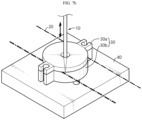
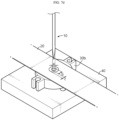
- the nail penetration test may be carried out at room temperature, i.e. 20-25°C.
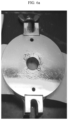
- the nail 10, used for the nail penetration test more particularly the shank 10a and tip 10b of the nail penetrating the separator may be heated to a temperature of 250°C or higher, such as 370°C.
- the shank 10a and tip 10b may be made of a metallic material to which heat is transferred with ease from a heating source, and the material is not particularly limited as long as it retains rigidity at the corresponding temperature range.
- the shank 10a of nail has a diameter of 'a'.
- FIG. 7c shows an image from which the upper loader 30a of the sample loader 30 is removed so that the nail penetration test method may be understood more clearly.
- the silane-crosslinked polyolefin separator may have a puncture strength of 30-80 gf/ ⁇ m, 30-70 gf/ ⁇ m, 30-60 gf/ ⁇ m, or 32-60 gf/ ⁇ m.
- ⁇ puncture strength' means a value obtained by measuring the strength of a porous membrane when it is pressed and broken by using a needle with a diameter of 1 mm (radius of curvature of 0.5 mm) at a rate of 2 mm/sec, and dividing the strength by the thickness of the porous membrane.
- the polyolefin porous membrane may be obtained by the following method.
- step (S1) may include the steps of: introducing polyolefin and a diluting agent to an extruder, followed by mixing, and carrying out extrusion to prepare a polyolefin composition; molding the extruded polyolefin composition into a form of sheet and stretching the sheet; and extracting the diluting agent from the stretched sheet to obtain a porous membrane.
- a polyolefin porous membrane is prepared first by using polyolefin and a diluting agent, and then silane grafting is carried out in the subsequent thermal fixing step.
- a porous coating solution is applied to at least one surface of the porous membrane.
- silane grafting may be carried out on the surface of fibrils forming the polyolefin porous membrane and fibrils present on the pore surfaces.
- the diluting agent may be one capable of liquid-liquid phase separation against polyolefin.
- the diluting agent may be a phthalic acid ester, such as dibutyl phthalate, dihexyl phthalate, dioctyl phthalate, or the like; aromatic ether, such as diphenyl ether, benzyl ether, or the like; C10-C20 fatty acid, such as palmitic acid, stearic acid, oleic acid, linolic acid, linolenic acid, or the like, C 10-C20 fatty acid alcohol, such as palmitic acid alcohol, stearic acid alcohol, oleic acid alcohol, or the like; and a fatty acid ester such as palmitic acid mono-, di- or tri-ester, stearic acid mono-, di- or tri-ester, oleic acid mono-, di- or tri-ester, linoleic acid mono-
- the step of preparing a polyolefin composition may be carried out by using a uniaxial extruder or biaxial extruder.
- the extruded polyolefin composition is molded into a form of sheet and stretched.
- the stretching may be carried out by sequential or simultaneous stretching using a roll or tenter.
- the stretching ratio may be 3 times or more, or 5-12 times, each in the machine direction and transverse direction, and the total stretching ratio may be 20-80 times.
- the stretching ratio satisfies the above-defined ratio, it is possible to prevent the problem of insufficient stretching in one direction, a failure in balance of physical properties between the machine direction and the transverse direction, and degradation of tensile strength and puncture strength.
- the total stretching ratio satisfies the above-defined range, it is possible to prevent the problems of non-stretching or a failure in pore formation.
- the silane-crosslinked polyolefin porous membrane undergoes a change in mechanical properties due to the reactive extrusion.
- stretching ratio there is a limitation in stretching ratio in the stretching step.
- a non-grafted porous membrane is prepared first. In other words, when preparing the porous membrane, only the diluting agent is allowed to react with polyolefin and no silane grafting occurs. Therefore, the resultant membrane undergoes no significant change in mechanical properties, and thus the extruded polyolefin composition may be controlled to a high stretching ratio in the subsequent stretching step.
- the extruded polyolefin composition may be stretched by 8-12 times, 9-12 times, or 11-12 times, each in the machine direction and the transverse direction.
- the separator obtained according to the related art causes breakage at a high stretching ratio.
- the stretching temperature may be varied depending on the melting point of polyolefin, concentration and type of the diluting agent, or the like.
- the stretching temperature when the polyolefin is polyethylene, the stretching temperature may be 70-160°C, 90-140°C, or 100-130°C in the machine direction, and may be 90-180°C, 110-160°C, or 120-150°C in the transverse direction.
- the stretching temperature satisfies the above-defined range, it is possible to prevent the problem of breakage or non-stretching due to the lack of softness, caused by a low stretching temperature. In addition, it is possible to prevent over-stretching or a difference in physical properties, caused by a high stretching temperature.
- the diluting agent is extracted from the stretched sheet to obtain a porous membrane.
- the diluting agent may be extracted from the stretched sheet by using an organic solvent and then dried to obtain a porous membrane.
- the organic solvent is not particularly limited, as long as it is capable of extraction of the diluting agents.
- it is suitable to use methyl ethyl ketone, methylene chloride or hexane having high extraction efficiency and showing a high drying rate.
- the extraction may be any conventional solvent extraction process, such as an immersion process, solvent spray process or ultrasonication process, and such processes may be used alone or in combination.
- the content of residual diluting agents should be preferably 1 wt% or less.
- the content of residual diluting agent may be affected by extraction temperature and extraction time.
- a higher extraction temperature is preferred.
- the extraction temperature is preferably 40°C or lower.
- the extraction temperature equals to or is lower than the solidifying point of the diluting agents, extraction efficiency may be decreased significantly.
- the extraction temperature should be higher than the solidifying point of the diluting agent.
- the extraction time may be varied with the thickness of a porous membrane.
- the extraction time may be 1-3 minutes suitably.
- a coating solution containing an initiator and alkoxy group-containing vinylsilane is applied onto at least one surface of the polyolefin porous membrane (S2).
- a coating solution containing a composition capable of silane crosslinking is coated onto the polyolefin porous membrane itself, the pores of which are exposed preliminarily.
- the coating solution can permeate even to the fibrils present on the preliminarily formed pore surfaces. Therefore, it is possible to carry out silane crosslinking uniformly in the thickness direction of the porous membrane.
- the alkoxy group-containing vinylsilane is a crosslinking agent capable of generating crosslinking, and functions to crosslink polyolefin through the grafting to polyolefin with vinyl groups and the aqueous crosslinking with alkoxy groups.
- the alkoxy group-containing vinylsilane may be any one of trimethoxyvinylsilane, triethoxyvinylsilane and triacetoxyvinylsilane, or a mixture of two or more of them.
- the alkoxy group-containing vinylsilane may be a mixture of trimethoxyvinylsilane with triethoxyvinylsilane, and the mixing ratio thereof may be selected considering the temperature in the thermal fixing step and the boiling point of the alkoxy group-containing vinylsilane.
- the alkoxy group-containing vinylsilane may be a mixture of trimethoxyvinylsilane with triethoxyvinylsilane, and the weight ratio of trimethoxyvinylsilane to triethoxyvinylsilane may be 90:10-30:70, 80:20-40:60, or 70:30-50:50.
- the ratio satisfies the above-defined range, it is possible to complete crosslinking in the thermal fixing step and to remove the surplus crosslinking additives completely.
- the content of alkoxy group-containing vinylsilane may be 0.5-10.0 parts by weight, 0.7-7.0 parts by weight, or 1.0-5.0 parts by weight, based on 100 parts by weight of polyolefin.
- the content of alkoxy group-containing vinylsilane satisfies the above-defined range, it is possible to prevent the problems of a decrease in silane grafting ratio, caused by a low silane content or degradation of the appearance of the resultant sheet, caused by a high silane content and the remaining unreacted silane.
- the initiator may be any initiator with no particular limitation, as long as it can generate radicals.
- Non-limiting examples of the initiator include 2,5-dimethyl-2,5-di(tert-butylperoxy)hexane (DHBP), benzoyl peroxide, acetyl peroxide, dilauryl peroxide, di-tert-butyl peroxide, dicumyl peroxide, cumyl peroxide, hydrogen peroxide, potassium persulfate, or the like.
- DHBP 2,5-dimethyl-2,5-di(tert-butylperoxy)hexane
- benzoyl peroxide acetyl peroxide
- dilauryl peroxide di-tert-butyl peroxide
- dicumyl peroxide cumyl peroxide
- hydrogen peroxide potassium persulfate, or the like.
- the content of initiator may be 0.1-20 parts by weight, particularly 1-10 parts by weight, and more particularly 2-5 parts by weight, based on 100 parts by weight of the alkoxy group-containing vinylsilane.
- the content of initiator satisfies the above-defined range, it is possible to prevent the problems of a decrease in silane graft ratio, caused by a low content of initiator, and over-crosslinking on the surface of the porous membrane, caused by a high content of initiator.
- the coating solution may further include a crosslinking catalyst.
- the crosslinking catalyst may be a carboxylate of metal, such as tin, zinc, iron, lead or cobalt, organic base, inorganic acid or an organic acid.
- metal carboxylates such as dibutyltin dilaurate, dibutyltin diacetate, stannous acetate, stannous capylate, zinc naphthenate, zinc caprylate and cobalt naphthenate, organic bases, such as ethylamine, dibutylamine, hexylamine and pyridine, inorganic acids, such as sulfuric acid and hydrochloric acid, and organic acids, such as benzoic acid , sulfonic acid, acetic acid, stearic acid and maleic acid.
- Such crosslinking agents may be used alone or in combination.
- the content of crosslinking catalyst may be 0.1-20 parts by weight, 1-10 parts by weight, or 2-5 parts by weight, based on 100 parts by weight of the alkoxy group-containing vinylsilane.
- the content of crosslinking catalyst satisfies the above-defined range, it is possible to carry out silane crosslinking to a desired level and to prevent undesired side reactions in a lithium secondary battery.
- the thermal fixing is a process of fixing and heating the porous membrane so that the porous membrane to be shrunk may be fixed forcibly to remove residual stress.
- sialne grafting may occur in the porous membrane at the same time in the thermal fixing time.
- silane coupling occurs simultaneously with thermal fixing, and the remaining alkoxy group-containing vinylsilane may be removed through evaporation.
- the thermal fixing temperature may be 110-145°C
- the alkoxy group-containing vinylsilane may be a mixture of trimethoxyvinylsilane with triethoxyvinylsilane
- the weight ratio of trimethoxyvinylsilane to triethoxyvinylsilane may be 90:10-30:70.
- trimethoxyvinylsilane When trimethoxyvinylsilane is used at a high ratio, there is an advantage in that crosslinking can be performed rapidly. When triethoxyvinylsilane is used at a high ratio, the thermal fixing tank may be retained at a high temperature, which is favorable to relieving residual stress of the substrate.
- the weight ratio of trimethoxyvinylsilane to triethoxyvinylsilane may be controlled within the above-defined range considering the characteristics required for a finished product.
- the stretching ratio in the transverse direction may be 1.05-1.75 times, 1.1-1.7 times, or 1.15-1.65 times, during the thermal fixing.
- thermal fixing and stretching in TD are carried out at the same time so that the porous membrane may have increased porosity and thus the coating solution may permeate better into the pores of the porous membrane.
- the surplus crosslinking agent in the porous membrane coated with the coating solution may be removed through vaporization, which may be carried out in the thermal fixing step.
- the thermal fixing step may be started at a temperature lower than the boiling point of the alkoxy group-containing vinylsilane and then completed at a temperature higher than the boiling point of the alkoxy group-containing vinylsilane.
- the temperature of the container or chamber used for the thermal fixing may be set to a temperature lower than the boiling point of the crosslinking agent (particularly, alkoxy group-containing vinylsilane) and then increased gradually so that the temperature may be higher than the boiling point of the crosslinking agent as the thermal fixing goes to completion. In this manner, it is possible to remove the surplus crosslinking agent through vaporization.
- the temperature of the thermal fixing tank may be set to a temperature lower than 124°C, the boiling point of trimethoxyvinylsilane, and then increased to a temperature (e.g. 128°C) higher than the boiling point of trimethoxyvinylsilane as the thermal fixing goes to completion, thereby removing trimethoxyvinylsilane through vaporization.
- the surplus crosslinking agent when manufacturing a composite separator which includes a porous coating layer containing a mixture of inorganic particles with a binder polymer and formed on at least one surface of the thermally fixed porous membrane, the surplus crosslinking agent may be further removed in the step of applying the porous coating layer to the porous membrane, in addition to the step of pressurizing the porous membrane coated with the coating solution containing the initiator and alkoxy group-containing vinylsilane and/or the step of vaporizing the surplus crosslinking agent in the thermal fixing step.
- the crosslinking agent may be removed through vaporization.
- the crosslinking agent may be removed while carrying out washing with water after the dipping phase separation.
- the method may further include the step of removing the coating solution, between step (S2) and step (S3).
- the coating solution may be removed by pressurizing the porous membrane coated with the coating solution.
- step (S2) it is preferred that the coating solution is applied uniformly in an adequate amount according to the volume of pores present inside of the exposed pores.
- the coating solution is applied in an excessive amount actually, and thus it may be disposed mainly on the pore surface portions.
- FIG. 2 is a schematic view illustrating the step of pressurizing the porous membrane coated with the coating solution according to an embodiment of the present disclosure.
- the coating solution is applied onto the surface of the porous membrane 10, the surplus coating solution 11 is present.
- the porous membrane is pressurized with a first roller 111 and a second roller 112 to remove the surplus coating solution 11.
Landscapes
- Chemical & Material Sciences (AREA)
- Chemical Kinetics & Catalysis (AREA)
- Engineering & Computer Science (AREA)
- General Chemical & Material Sciences (AREA)
- Electrochemistry (AREA)
- Health & Medical Sciences (AREA)
- Medicinal Chemistry (AREA)
- Polymers & Plastics (AREA)
- Organic Chemistry (AREA)
- Manufacturing & Machinery (AREA)
- Power Engineering (AREA)
- Mechanical Engineering (AREA)
- Materials Engineering (AREA)
- Life Sciences & Earth Sciences (AREA)
- Wood Science & Technology (AREA)
- Microelectronics & Electronic Packaging (AREA)
- Biochemistry (AREA)
- Analytical Chemistry (AREA)
- General Health & Medical Sciences (AREA)
- General Physics & Mathematics (AREA)
- Immunology (AREA)
- Pathology (AREA)
- Physics & Mathematics (AREA)
- Cell Separators (AREA)
- Separation Using Semi-Permeable Membranes (AREA)
Claims (15)
- Vernetzter Polyolefin-Separator,der Silan-vernetztes Polyolefin umfasst,Gele mit einer längeren Seitenlänge von 50 µm oder mehr in einer Anzahl von 0 bis 3 je 1 m2 des Separators aufweist undder eine Standardabweichung des Extinktionsverhältnisses zwischen dem Zentrum des Separators und der Seite hiervon im Bereich von 0,01 bis 0,5 aufweist,worin das Extinktionsverhältnis bestimmt ist durch I1090/I2920 (x1.000), worin I1090 die Extinktion bei 1.090 cm-1 bezeichnet, wo die funktionelle Gruppe des -Si-OCH3, das aus der Vernetzung stammt, detektiert wird, und I2920 die Extinktion bei 2.920 cm-1 bezeichnet, wo der charakteristische Peak des Polyolefins vor dem Vernetzen ausgedrückt ist;worin der Silan (Si)-Gehalt in dem Separator 700 ppm oder mehr und 2.500 ppm oder weniger beträgt, bezogen auf 100 Gewichtsteile des Separators;und worin der Silangehalt, die Anzahl der Gele und die Standardabweichung des Extinktionsverhältnisses zwischen dem Zentrum des Separators und der Seite hiervon mit den Verfahren bestimmt werden, die in der Beschreibung beschrieben sind.
- Vernetzter Polyolefin-Separator gemäß Anspruch 1, der einen Prozess-Kapabilitätsindex (Cp) von 1,3 oder größer aufweist, bestimmt in Übereinstimmung mit dem in der Beschreibung angegebenen Verfahren.
- Vernetzter Polyolefin-Separator gemäß Anspruch 1, der die folgende [Formel 1] und [Formel 2] in einem Nagel-Penetriertest erfüllt, wenn ein Nagel mit einer Temperatur von 250°C oder höher vertikal fallengelassen wird:
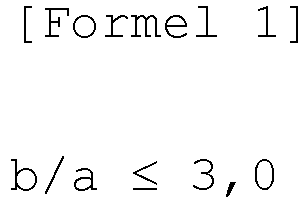
 worin a den Durchmesser des in dem Nagel-Penetrationstest verwendeten Nagels darstellt,b den Durchmesser des entfernten Separators nach der Nagel-Penetration in dem Nagel-Penetrationstest darstellt undc die Länge des Poren-blockierten Bereichs nach der Nagel-Penetration darstellt; worin der Penetrationstest und die Berechnung wie in der Beschreibung beschrieben durchgeführt werden.
 - Verfahren zur Herstellung eines vernetzten Polyolefin-Separators gemäß irgendeinem der Ansprüche 1 bis 3, umfassend die Schritte:(S1) Vorbereiten einer porösen Polyolefin-Membran;(S2) Auftragen einer Beschichtungslösung, die einen Initiator und ein Alkoxygruppe-haltiges Vinylsilan enthält, auf zumindest eine Oberfläche der porösen Membran;(S3) Trocknen und thermisches Fixieren der porösen Membran, die mit der Beschichtungslösung beschichtet ist; und(S4) Vernetzen der thermisch fixierten porösen Membran in der Gegenwart von Wasser.
- Verfahren zur Herstellung eines vernetzten Polyolefin-Separators gemäß Anspruch 4, worin der Schritt (S1) die folgenden Schritte umfasst:Einführen von Polyolefin und eines Verdünnungsmittels in einen Extruder, gefolgt von Mischen und Durchführen einer Extrusion, um eine Polyolefinzusammensetzung herzustellen;Formen der extrudierten Polyolefinzusammensetzung zu einer Blattform und Strecken des Blatts; undExtrahieren des Verdünnungsmittels von dem gestreckten Blatt, um eine poröse Membran zu erhalten.
- Verfahren zur Herstellung eines vernetzten Polyolefin-Separators gemäß Anspruch 4, worin in dem thermischen Fixierschritt (S3) simultan ein Silan-Pfropfen in der porösen Membran abläuft.
- Verfahren zur Herstellung eines vernetzten Polyolefin-Separators gemäß Anspruch 4, worin das thermische Fixieren bei einer Temperatur von 110-145°C durchgeführt wird und das Alkoxygruppe-haltige Vinylsilan zwei Arten von Alkoxygruppe-haltigem Vinylsilan mit unterschiedlichem Siedepunkt umfasst.
- Verfahren zur Herstellung eines vernetzten Polyolefin-Separators gemäß Anspruch 4, worin das Alkoxygruppe-haltige Vinylsilan eine Mischung von Trimethoxyvinylsilan mit Triethoxyvinylsilan ist und das Gewichtsverhältnis von Trimethoxyvinylsilan zu Triethoxyvinylsilan 90:10-30:70 beträgt.
- Verfahren zur Herstellung eines vernetzten Polyolefin-Separators gemäß Anspruch 4, worin das thermische Fixieren bei einer Temperatur von 110-145°C durchgeführt wird, das Alkoxygruppe-haltige Vinylsilan eine Mischung von Trimethoxyvinylsilan mit Triethoxyvinylsilan ist und das Gewichtsverhältnis von Trimethoxyvinylsilan zu Triethoxyvinylsilan 90:10-30:70 beträgt.
- Verfahren zur Herstellung eines vernetzten Polyolefin-Separators gemäß Anspruch 4, welches ferner einen Schritt zum Entfernen der Beschichtungslösung zwischen dem Schritt (S2) und dem Schritt (S3) umfasst.
- Verfahren zur Herstellung eines vernetzten Polyolefin-Separators gemäß Anspruch 10, worin der Schritt zum Entfernen der Beschichtungslösung durch Entfernen von überschüssiger Beschichtungslösung durch Unterdrucksetzen der porösen Membran, die mit der Beschichtungslösung beschichtet ist, durchgeführt wird.
- Verfahren zur Herstellung eines vernetzten Polyolefin-Separators gemäß Anspruch 10, worin der Schritt zum Entfernen der Beschichtungslösung durchgeführt wird, indem die poröse Membran durch einen Abstand zwischen einer ersten Walze und einer zweiten Walze, die einander gegenüberliegen, geführt wird, um die überschüssige Beschichtungslösung zu entfernen.
- Verfahren zur Herstellung eines vernetzten Polyolefin-Separators gemäß Anspruch 12, worin der Abstand zwischen der ersten Walze und der zweiten Walze +10 µm bis -10 µm beträgt und der Abstand S durch die Formel definiert ist S = D - (R1 + R2 + T), worin D die Strecke zwischen dem Zentrum der ersten walze und dem Zentrum der zweiten Walze darstellt, R1 den Radius der ersten Walze darstellt, R2 den Radius der zweiten Walze darstellt und T die Dicke der porösen Polyolefin-Membran darstellt.
- Verfahren zur Herstellung eines vernetzten Polyolefin-Separators gemäß Anspruch 10, welches ferner einen Reibeschritt zum Absorbieren von überschüssiger Beschichtungslösung zwischen dem Schritt zum Entfernen der Beschichtungslösung und dem thermischen Fixierschritt (S3) umfasst.
- Verfahren zur Herstellung eines vernetzten Polyolefin-Separators gemäß Anspruch 14, worin der Reibeschritt unter Verwendung einer Reibewalze oder eines Reibetuchs durchgeführt wird.
Applications Claiming Priority (4)
| Application Number | Priority Date | Filing Date | Title |
|---|---|---|---|
| KR20180087450 | 2018-07-26 | ||
| KR20180087451 | 2018-07-26 | ||
| KR20180108560 | 2018-09-11 | ||
| PCT/KR2019/009361 WO2020022848A1 (ko) | 2018-07-26 | 2019-07-26 | 가교 폴리올레핀 분리막 및 이의 제조방법 |
Publications (3)
| Publication Number | Publication Date |
|---|---|
| EP3675233A1 EP3675233A1 (de) | 2020-07-01 |
| EP3675233A4 EP3675233A4 (de) | 2021-01-13 |
| EP3675233B1 true EP3675233B1 (de) | 2024-07-03 |
Family
ID=69182341
Family Applications (1)
| Application Number | Title | Priority Date | Filing Date |
|---|---|---|---|
| EP19842259.4A Active EP3675233B1 (de) | 2018-07-26 | 2019-07-26 | Vernetzter polyolefinseparator und herstellungsverfahren dafür |
Country Status (7)
| Country | Link |
|---|---|
| US (2) | US11718723B2 (de) |
| EP (1) | EP3675233B1 (de) |
| JP (2) | JP7072646B2 (de) |
| KR (1) | KR102236982B1 (de) |
| CN (1) | CN111108630B (de) |
| HU (1) | HUE067519T2 (de) |
| WO (1) | WO2020022848A1 (de) |
Families Citing this family (14)
| Publication number | Priority date | Publication date | Assignee | Title |
|---|---|---|---|---|
| EP3675233B1 (de) | 2018-07-26 | 2024-07-03 | Lg Chem, Ltd. | Vernetzter polyolefinseparator und herstellungsverfahren dafür |
| JP7495266B2 (ja) * | 2019-04-18 | 2024-06-04 | 住友化学株式会社 | 電池用セパレータの製造システムおよび製造方法 |
| KR102856190B1 (ko) * | 2020-04-02 | 2025-09-04 | 주식회사 엘지에너지솔루션 | 가교 폴리올레핀 분리막 및 이의 제조방법 |
| JP7654464B2 (ja) * | 2020-05-28 | 2025-04-01 | 旭化成バッテリーセパレータ株式会社 | 蓄電デバイス用セパレータ及びその製造方法 |
| KR102601003B1 (ko) * | 2020-05-28 | 2023-11-13 | 아사히 가세이 가부시키가이샤 | 축전 디바이스용 세퍼레이터 및 그의 제조 방법 |
| CN111755650B (zh) * | 2020-06-05 | 2022-07-26 | 江苏厚生新能源科技有限公司 | 一种利用紫外辐射接枝改性锂电池隔膜的制备方法、锂电池隔膜及其应用 |
| CN111613761A (zh) * | 2020-06-08 | 2020-09-01 | 德州东鸿制膜科技有限公司 | 一种锂离子电池隔膜及其制备方法和应用 |
| CN112201899B (zh) * | 2020-09-25 | 2022-07-08 | 江苏厚生新能源科技有限公司 | 超薄多孔膜及原料配方、制备方法、孔径控制方法、电池 |
| WO2022103184A1 (ko) * | 2020-11-11 | 2022-05-19 | 주식회사 엘지화학 | 리튬 이차전지용 분리막 및 이의 제조방법 |
| KR102862694B1 (ko) * | 2020-12-17 | 2025-09-19 | 주식회사 엘지에너지솔루션 | 분리막 내열 특성 평가 장치 및 분리막 내열 특성 평가 방법 |
| CN115728340A (zh) * | 2021-08-30 | 2023-03-03 | 中国石油化工股份有限公司 | 一种判断聚乙烯熔体中是否存在液-液相分离的方法 |
| EP4481928A4 (de) * | 2022-10-27 | 2025-12-17 | Lg Energy Solution Ltd | Separatorsubstrat für elektrochemische vorrichtung und separator damit |
| WO2024091076A1 (ko) * | 2022-10-27 | 2024-05-02 | 주식회사 엘지에너지솔루션 | 전기화학소자용 분리막 기재 및 이를 포함하는 분리막 |
| KR102765967B1 (ko) * | 2022-11-02 | 2025-02-07 | 주식회사 엘지에너지솔루션 | 전기화학소자용 분리막 기재 및 이를 포함하는 분리막 |
Family Cites Families (40)
| Publication number | Priority date | Publication date | Assignee | Title |
|---|---|---|---|---|
| KR100345419B1 (ko) * | 1994-04-20 | 2002-11-29 | 더 다우 케미칼 캄파니 | 실질적으로선형인실란가교결합성에틸렌중합체,이의제조방법및이로부터제조된제품 |
| JPH11172036A (ja) | 1997-12-10 | 1999-06-29 | Kureha Chem Ind Co Ltd | 多孔膜、多孔膜からなる電池用セパレータ、およびその製造方法 |
| US6830849B2 (en) * | 2000-01-10 | 2004-12-14 | Lg Chemical Co., Ltd. | High crystalline polypropylene microporous membrane, multi-component microporous membrane and methods for preparing the same |
| JP2001296243A (ja) * | 2000-04-14 | 2001-10-26 | Sumitomo Electric Ind Ltd | 赤外吸収測定方法及びそれを用いた光ファイバの製造方法 |
| US7332531B2 (en) | 2004-06-11 | 2008-02-19 | Sk Corporation | Microporous high density polyethylene film |
| KR100683845B1 (ko) * | 2004-06-11 | 2007-02-15 | 에스케이 주식회사 | 고밀도폴리에틸렌 미세다공막 및 그 제조방법 |
| WO2008059806A1 (en) | 2006-11-14 | 2008-05-22 | Asahi Kasei Chemicals Corporation | Separator for lithium ion secondary battery and method for manufacturing the separator |
| JP5378720B2 (ja) | 2007-07-27 | 2013-12-25 | パナソニック株式会社 | リチウムイオン二次電池 |
| RU2485634C2 (ru) | 2008-02-20 | 2013-06-20 | Карл Фройденберг Кг | Нетканый материал, содержащий сшивающий материал |
| CN101434708B (zh) | 2008-12-19 | 2012-01-11 | 成都中科来方能源科技有限公司 | 水性聚合物改性微孔聚烯烃隔膜及其制备方法和用途 |
| KR101269207B1 (ko) * | 2010-01-25 | 2013-05-31 | 에스케이이노베이션 주식회사 | 내열성이 우수한 다층 다공막 |
| KR101670200B1 (ko) | 2010-08-02 | 2016-10-27 | 셀가드 엘엘씨 | 높은 용융 온도 미세다공성 리튬-이온 2차 전지 세퍼레이터 및 제조방법 및 용도 |
| CN103491927B (zh) | 2011-04-25 | 2017-07-11 | 捷通国际有限公司 | 药丸分配器 |
| KR101503140B1 (ko) | 2012-07-24 | 2015-03-17 | 주식회사 엘지화학 | 이차전지용 분리막 코팅장치와 코팅방법 |
| CN102888016B (zh) * | 2012-09-12 | 2014-03-05 | 常州大学 | 具有交联结构复合层的锂离子二次电池隔膜的制备方法 |
| JP6510164B2 (ja) | 2013-03-29 | 2019-05-08 | 株式会社Gsユアサ | 蓄電素子及び車載用蓄電池システム |
| CN103441229B (zh) | 2013-07-23 | 2015-06-24 | 清华大学 | 电池隔膜及其制备方法 |
| KR101636857B1 (ko) * | 2013-08-30 | 2016-07-20 | 제일모직 주식회사 | 코팅층을 포함하는 분리막, 이의 제조방법 및 이를 이용한 전지 |
| JP2015072266A (ja) | 2013-09-05 | 2015-04-16 | 株式会社山本金属製作所 | 安全性試験方法、及びその装置 |
| TW201524288A (zh) | 2013-12-11 | 2015-06-16 | Microcosm Technology Co Ltd | 塗佈設備及塗佈方法 |
| TWI501452B (zh) * | 2014-07-03 | 2015-09-21 | Benq Materials Corp | 耐熱多孔隔離膜及其製造方法 |
| KR20160038918A (ko) * | 2014-09-30 | 2016-04-08 | 삼성에스디아이 주식회사 | 분리막, 이의 제조방법 및 이를 이용한 전지 |
| KR101841586B1 (ko) | 2014-09-30 | 2018-03-23 | 주식회사 엘지화학 | 고온 안전성이 향상된 세퍼레이터 및 그의 제조방법 |
| KR20160102108A (ko) | 2014-10-10 | 2016-08-29 | 스미또모 가가꾸 가부시키가이샤 | 적층체, 적층체를 포함하는 비수 전해액 이차 전지용 세퍼레이터, 및 비수 전해액 이차 전지 |
| KR101790621B1 (ko) * | 2014-10-24 | 2017-10-26 | 삼성에스디아이 주식회사 | 분리막 코팅제 조성물, 상기 코팅제 조성물로 형성된 코팅 분리막 및 이를 이용한 전지 |
| KR101857156B1 (ko) * | 2014-10-31 | 2018-05-11 | 주식회사 엘지화학 | 가교 폴리올레핀 분리막 및 이의 제조방법 |
| CN105576172B (zh) | 2014-10-31 | 2018-06-22 | Lg化学株式会社 | 交联聚烯烃隔膜及其制备方法 |
| KR101888228B1 (ko) * | 2015-02-10 | 2018-08-14 | 주식회사 엘지화학 | 열 안전성이 향상된 전기화학소자용 세퍼레이터 및 그의 제조방법 |
| KR101915344B1 (ko) | 2015-04-30 | 2018-11-05 | 주식회사 엘지화학 | 폴리올레핀 분리막 및 이의 제조방법 |
| KR101960926B1 (ko) | 2015-06-11 | 2019-03-21 | 주식회사 엘지화학 | 가교 폴리올레핀 분리막의 제조방법 및 그에 의해 제조된 분리막 |
| JP6797188B2 (ja) | 2015-08-25 | 2020-12-09 | バイクテック アーゲーBiketec Ag | 電気自転車 |
| KR102062315B1 (ko) * | 2015-10-16 | 2020-01-03 | 주식회사 엘지화학 | 가교 폴리올레핀 분리막의 제조방법 및 그에 의해 제조된 분리막 |
| JP6845252B2 (ja) | 2015-12-21 | 2021-03-17 | バーサム マテリアルズ ユーエス,リミティド ライアビリティ カンパニー | ケイ素含有膜の堆積のための組成物及びそれを用いた方法 |
| KR20170087315A (ko) | 2016-01-20 | 2017-07-28 | 주식회사 엘지화학 | 전기화학소자용 복합 분리막 및 이를 제조하는 방법 |
| JP2017188392A (ja) | 2016-04-08 | 2017-10-12 | トヨタ自動車株式会社 | 電池 |
| EP3479892A4 (de) | 2016-06-29 | 2020-02-26 | Toray Industries, Inc. | Semipermeable verbundmembran und verfahren zur herstellung einer semipermeablen verbundmembran |
| KR101959263B1 (ko) * | 2016-08-26 | 2019-03-19 | 더블유스코프코리아 주식회사 | 우수한 인성 및 내열수축성을 가지는 리튬이차전지용 분리막 필름 및 이의 제조방법 |
| CN109563329A (zh) * | 2016-12-10 | 2019-04-02 | 库珀标准汽车公司 | 聚烯烃弹性体组合物及其制备方法 |
| CN106920912A (zh) * | 2017-04-14 | 2017-07-04 | 上海恩捷新材料科技股份有限公司 | 一种锂离子电池隔离膜的制备方法 |
| EP3675233B1 (de) | 2018-07-26 | 2024-07-03 | Lg Chem, Ltd. | Vernetzter polyolefinseparator und herstellungsverfahren dafür |
-
2019
- 2019-07-26 EP EP19842259.4A patent/EP3675233B1/de active Active
- 2019-07-26 CN CN201980004620.3A patent/CN111108630B/zh active Active
- 2019-07-26 KR KR1020190091246A patent/KR102236982B1/ko active Active
- 2019-07-26 JP JP2020516507A patent/JP7072646B2/ja active Active
- 2019-07-26 US US16/648,562 patent/US11718723B2/en active Active
- 2019-07-26 WO PCT/KR2019/009361 patent/WO2020022848A1/ko not_active Ceased
- 2019-07-26 HU HUE19842259A patent/HUE067519T2/hu unknown
-
2022
- 2022-03-22 JP JP2022045751A patent/JP7589189B2/ja active Active
-
2023
- 2023-06-13 US US18/209,275 patent/US12583988B2/en active Active
Also Published As
| Publication number | Publication date |
|---|---|
| US20200220139A1 (en) | 2020-07-09 |
| KR102236982B1 (ko) | 2021-04-06 |
| US20230323061A1 (en) | 2023-10-12 |
| US11718723B2 (en) | 2023-08-08 |
| KR20200012800A (ko) | 2020-02-05 |
| HUE067519T2 (hu) | 2024-10-28 |
| CN111108630B (zh) | 2023-04-25 |
| CN111108630A (zh) | 2020-05-05 |
| EP3675233A4 (de) | 2021-01-13 |
| JP7072646B2 (ja) | 2022-05-20 |
| US12583988B2 (en) | 2026-03-24 |
| JP2020535595A (ja) | 2020-12-03 |
| JP7589189B2 (ja) | 2024-11-25 |
| EP3675233A1 (de) | 2020-07-01 |
| JP2022075879A (ja) | 2022-05-18 |
| WO2020022848A1 (ko) | 2020-01-30 |
Similar Documents
| Publication | Publication Date | Title |
|---|---|---|
| EP3675233B1 (de) | Vernetzter polyolefinseparator und herstellungsverfahren dafür | |
| EP2443186B1 (de) | Mikroporöser polyethylenfilm mit wärmestabilen hybridverbundschichten | |
| US9564624B2 (en) | Microporous composite film with high thermostable organic/inorganic coating layer | |
| EP3715407B1 (de) | Vernetzter polyolefinseparator und verfahren zur herstellung davon | |
| US11545718B2 (en) | Crosslinked polyolefin separator and manufacturing method thereof | |
| EP3750621B1 (de) | Vernetzter polyolefinseparator und verfahren zu seiner herstellung | |
| CN111433264B (zh) | 交联聚烯烃隔膜及其制造方法 | |
| KR102856190B1 (ko) | 가교 폴리올레핀 분리막 및 이의 제조방법 | |
| KR102769812B1 (ko) | 리튬이차전지 분리막용 가교 폴리올레핀 필름 및 그의 제조방법 | |
| KR101982161B1 (ko) | 가교 폴리올레핀 분리막 및 이의 제조방법 | |
| KR102607417B1 (ko) | 가교 폴리올레핀 분리막 및 이의 제조방법 | |
| KR101269203B1 (ko) | 고내열성 피복층을 갖는 폴리올레핀계 복합 미세다공막 | |
| KR20210067950A (ko) | 폴리올레핀 수지 조성물 및 가교 폴리올레핀 분리막 | |
| KR102763324B1 (ko) | 가교 폴리올레핀 분리막 및 이의 제조방법 | |
| EP4410409A1 (de) | Verfahren zur herstellung eines separators | |
| KR102765087B1 (ko) | 가교 폴리올레핀 분리막의 제조방법 | |
| KR102798571B1 (ko) | 리튬이차전지 분리막용 가교 폴리올레핀 필름 및 그의 제조방법 | |
| EP4481928A1 (de) | Separatorsubstrat für elektrochemische vorrichtung und separator damit |
Legal Events
| Date | Code | Title | Description |
|---|---|---|---|
| STAA | Information on the status of an ep patent application or granted ep patent |
Free format text: STATUS: THE INTERNATIONAL PUBLICATION HAS BEEN MADE |
|
| PUAI | Public reference made under article 153(3) epc to a published international application that has entered the european phase |
Free format text: ORIGINAL CODE: 0009012 |
|
| STAA | Information on the status of an ep patent application or granted ep patent |
Free format text: STATUS: REQUEST FOR EXAMINATION WAS MADE |
|
| 17P | Request for examination filed |
Effective date: 20200326 |
|
| AK | Designated contracting states |
Kind code of ref document: A1 Designated state(s): AL AT BE BG CH CY CZ DE DK EE ES FI FR GB GR HR HU IE IS IT LI LT LU LV MC MK MT NL NO PL PT RO RS SE SI SK SM TR |
|
| AX | Request for extension of the european patent |
Extension state: BA ME |
|
| A4 | Supplementary search report drawn up and despatched |
Effective date: 20201210 |
|
| RIC1 | Information provided on ipc code assigned before grant |
Ipc: C09D 4/00 20060101ALI20201204BHEP Ipc: H01G 11/52 20130101ALI20201204BHEP Ipc: H01M 2/14 20060101ALI20201204BHEP Ipc: C09D 143/04 20060101ALI20201204BHEP Ipc: C08F 8/42 20060101ALI20201204BHEP Ipc: B29C 48/08 20190101ALI20201204BHEP Ipc: B29C 48/00 20190101ALI20201204BHEP Ipc: B05D 7/24 20060101ALI20201204BHEP Ipc: C08F 2/44 20060101ALI20201204BHEP Ipc: G01N 3/30 20060101ALI20201204BHEP Ipc: H01M 2/16 20060101AFI20201204BHEP Ipc: C08J 7/16 20060101ALI20201204BHEP Ipc: C08J 9/36 20060101ALI20201204BHEP |
|
| DAV | Request for validation of the european patent (deleted) | ||
| DAX | Request for extension of the european patent (deleted) | ||
| REG | Reference to a national code |
Ref country code: DE Ref legal event code: R079 Free format text: PREVIOUS MAIN CLASS: H01M0002160000 Ref country code: DE Ref legal event code: R079 Ref document number: 602019054747 Country of ref document: DE Free format text: PREVIOUS MAIN CLASS: H01M0002160000 Ipc: H01M0050489000 |
|
| GRAP | Despatch of communication of intention to grant a patent |
Free format text: ORIGINAL CODE: EPIDOSNIGR1 |
|
| STAA | Information on the status of an ep patent application or granted ep patent |
Free format text: STATUS: GRANT OF PATENT IS INTENDED |
|
| RIC1 | Information provided on ipc code assigned before grant |
Ipc: H01M 50/417 20210101ALI20240208BHEP Ipc: H01M 50/406 20210101ALI20240208BHEP Ipc: H01M 50/403 20210101ALI20240208BHEP Ipc: C08J 9/40 20060101ALI20240208BHEP Ipc: C08J 9/28 20060101ALI20240208BHEP Ipc: B29C 48/08 20190101ALI20240208BHEP Ipc: C08F 8/42 20060101ALI20240208BHEP Ipc: C08F 2/44 20060101ALI20240208BHEP Ipc: B05D 7/24 20060101ALI20240208BHEP Ipc: B29C 48/00 20190101ALI20240208BHEP Ipc: C09D 143/04 20060101ALI20240208BHEP Ipc: C09D 4/00 20060101ALI20240208BHEP Ipc: C08J 7/16 20060101ALI20240208BHEP Ipc: C08J 9/36 20060101ALI20240208BHEP Ipc: G01N 3/30 20060101ALI20240208BHEP Ipc: H01G 11/52 20130101ALI20240208BHEP Ipc: H01M 50/489 20210101AFI20240208BHEP |
|
| INTG | Intention to grant announced |
Effective date: 20240229 |
|
| GRAS | Grant fee paid |
Free format text: ORIGINAL CODE: EPIDOSNIGR3 |
|
| GRAA | (expected) grant |
Free format text: ORIGINAL CODE: 0009210 |
|
| STAA | Information on the status of an ep patent application or granted ep patent |
Free format text: STATUS: THE PATENT HAS BEEN GRANTED |
|
| P01 | Opt-out of the competence of the unified patent court (upc) registered |
Effective date: 20240508 |
|
| AK | Designated contracting states |
Kind code of ref document: B1 Designated state(s): AL AT BE BG CH CY CZ DE DK EE ES FI FR GB GR HR HU IE IS IT LI LT LU LV MC MK MT NL NO PL PT RO RS SE SI SK SM TR |
|
| REG | Reference to a national code |
Ref country code: CH Ref legal event code: EP |
|
| REG | Reference to a national code |
Ref country code: DE Ref legal event code: R096 Ref document number: 602019054747 Country of ref document: DE |
|
| REG | Reference to a national code |
Ref country code: LT Ref legal event code: MG9D |
|
| REG | Reference to a national code |
Ref country code: HU Ref legal event code: AG4A Ref document number: E067519 Country of ref document: HU |
|
| REG | Reference to a national code |
Ref country code: NL Ref legal event code: MP Effective date: 20240703 |
|
| PG25 | Lapsed in a contracting state [announced via postgrant information from national office to epo] |
Ref country code: PT Free format text: LAPSE BECAUSE OF FAILURE TO SUBMIT A TRANSLATION OF THE DESCRIPTION OR TO PAY THE FEE WITHIN THE PRESCRIBED TIME-LIMIT Effective date: 20241104 |
|
| REG | Reference to a national code |
Ref country code: AT Ref legal event code: MK05 Ref document number: 1700802 Country of ref document: AT Kind code of ref document: T Effective date: 20240703 |
|
| PG25 | Lapsed in a contracting state [announced via postgrant information from national office to epo] |
Ref country code: NL Free format text: LAPSE BECAUSE OF FAILURE TO SUBMIT A TRANSLATION OF THE DESCRIPTION OR TO PAY THE FEE WITHIN THE PRESCRIBED TIME-LIMIT Effective date: 20240703 |
|
| PG25 | Lapsed in a contracting state [announced via postgrant information from national office to epo] |
Ref country code: PT Free format text: LAPSE BECAUSE OF FAILURE TO SUBMIT A TRANSLATION OF THE DESCRIPTION OR TO PAY THE FEE WITHIN THE PRESCRIBED TIME-LIMIT Effective date: 20241104 Ref country code: NL Free format text: LAPSE BECAUSE OF FAILURE TO SUBMIT A TRANSLATION OF THE DESCRIPTION OR TO PAY THE FEE WITHIN THE PRESCRIBED TIME-LIMIT Effective date: 20240703 |
|
| PG25 | Lapsed in a contracting state [announced via postgrant information from national office to epo] |
Ref country code: NO Free format text: LAPSE BECAUSE OF FAILURE TO SUBMIT A TRANSLATION OF THE DESCRIPTION OR TO PAY THE FEE WITHIN THE PRESCRIBED TIME-LIMIT Effective date: 20241003 |
|
| PG25 | Lapsed in a contracting state [announced via postgrant information from national office to epo] |
Ref country code: GR Free format text: LAPSE BECAUSE OF FAILURE TO SUBMIT A TRANSLATION OF THE DESCRIPTION OR TO PAY THE FEE WITHIN THE PRESCRIBED TIME-LIMIT Effective date: 20241004 Ref country code: FI Free format text: LAPSE BECAUSE OF FAILURE TO SUBMIT A TRANSLATION OF THE DESCRIPTION OR TO PAY THE FEE WITHIN THE PRESCRIBED TIME-LIMIT Effective date: 20240703 Ref country code: PL Free format text: LAPSE BECAUSE OF FAILURE TO SUBMIT A TRANSLATION OF THE DESCRIPTION OR TO PAY THE FEE WITHIN THE PRESCRIBED TIME-LIMIT Effective date: 20240703 |
|
| PG25 | Lapsed in a contracting state [announced via postgrant information from national office to epo] |
Ref country code: BG Free format text: LAPSE BECAUSE OF FAILURE TO SUBMIT A TRANSLATION OF THE DESCRIPTION OR TO PAY THE FEE WITHIN THE PRESCRIBED TIME-LIMIT Effective date: 20240703 |
|
| PG25 | Lapsed in a contracting state [announced via postgrant information from national office to epo] |
Ref country code: LV Free format text: LAPSE BECAUSE OF FAILURE TO SUBMIT A TRANSLATION OF THE DESCRIPTION OR TO PAY THE FEE WITHIN THE PRESCRIBED TIME-LIMIT Effective date: 20240703 |
|
| PG25 | Lapsed in a contracting state [announced via postgrant information from national office to epo] |
Ref country code: IS Free format text: LAPSE BECAUSE OF FAILURE TO SUBMIT A TRANSLATION OF THE DESCRIPTION OR TO PAY THE FEE WITHIN THE PRESCRIBED TIME-LIMIT Effective date: 20241103 Ref country code: AT Free format text: LAPSE BECAUSE OF FAILURE TO SUBMIT A TRANSLATION OF THE DESCRIPTION OR TO PAY THE FEE WITHIN THE PRESCRIBED TIME-LIMIT Effective date: 20240703 |
|
| PG25 | Lapsed in a contracting state [announced via postgrant information from national office to epo] |
Ref country code: HR Free format text: LAPSE BECAUSE OF FAILURE TO SUBMIT A TRANSLATION OF THE DESCRIPTION OR TO PAY THE FEE WITHIN THE PRESCRIBED TIME-LIMIT Effective date: 20240703 Ref country code: CZ Free format text: LAPSE BECAUSE OF FAILURE TO SUBMIT A TRANSLATION OF THE DESCRIPTION OR TO PAY THE FEE WITHIN THE PRESCRIBED TIME-LIMIT Effective date: 20240703 |
|
| PG25 | Lapsed in a contracting state [announced via postgrant information from national office to epo] |
Ref country code: RS Free format text: LAPSE BECAUSE OF FAILURE TO SUBMIT A TRANSLATION OF THE DESCRIPTION OR TO PAY THE FEE WITHIN THE PRESCRIBED TIME-LIMIT Effective date: 20241003 Ref country code: ES Free format text: LAPSE BECAUSE OF FAILURE TO SUBMIT A TRANSLATION OF THE DESCRIPTION OR TO PAY THE FEE WITHIN THE PRESCRIBED TIME-LIMIT Effective date: 20240703 |
|
| PG25 | Lapsed in a contracting state [announced via postgrant information from national office to epo] |
Ref country code: RS Free format text: LAPSE BECAUSE OF FAILURE TO SUBMIT A TRANSLATION OF THE DESCRIPTION OR TO PAY THE FEE WITHIN THE PRESCRIBED TIME-LIMIT Effective date: 20241003 Ref country code: PL Free format text: LAPSE BECAUSE OF FAILURE TO SUBMIT A TRANSLATION OF THE DESCRIPTION OR TO PAY THE FEE WITHIN THE PRESCRIBED TIME-LIMIT Effective date: 20240703 Ref country code: NO Free format text: LAPSE BECAUSE OF FAILURE TO SUBMIT A TRANSLATION OF THE DESCRIPTION OR TO PAY THE FEE WITHIN THE PRESCRIBED TIME-LIMIT Effective date: 20241003 Ref country code: LV Free format text: LAPSE BECAUSE OF FAILURE TO SUBMIT A TRANSLATION OF THE DESCRIPTION OR TO PAY THE FEE WITHIN THE PRESCRIBED TIME-LIMIT Effective date: 20240703 Ref country code: IS Free format text: LAPSE BECAUSE OF FAILURE TO SUBMIT A TRANSLATION OF THE DESCRIPTION OR TO PAY THE FEE WITHIN THE PRESCRIBED TIME-LIMIT Effective date: 20241103 Ref country code: HR Free format text: LAPSE BECAUSE OF FAILURE TO SUBMIT A TRANSLATION OF THE DESCRIPTION OR TO PAY THE FEE WITHIN THE PRESCRIBED TIME-LIMIT Effective date: 20240703 Ref country code: GR Free format text: LAPSE BECAUSE OF FAILURE TO SUBMIT A TRANSLATION OF THE DESCRIPTION OR TO PAY THE FEE WITHIN THE PRESCRIBED TIME-LIMIT Effective date: 20241004 Ref country code: FI Free format text: LAPSE BECAUSE OF FAILURE TO SUBMIT A TRANSLATION OF THE DESCRIPTION OR TO PAY THE FEE WITHIN THE PRESCRIBED TIME-LIMIT Effective date: 20240703 Ref country code: ES Free format text: LAPSE BECAUSE OF FAILURE TO SUBMIT A TRANSLATION OF THE DESCRIPTION OR TO PAY THE FEE WITHIN THE PRESCRIBED TIME-LIMIT Effective date: 20240703 Ref country code: CZ Free format text: LAPSE BECAUSE OF FAILURE TO SUBMIT A TRANSLATION OF THE DESCRIPTION OR TO PAY THE FEE WITHIN THE PRESCRIBED TIME-LIMIT Effective date: 20240703 Ref country code: BG Free format text: LAPSE BECAUSE OF FAILURE TO SUBMIT A TRANSLATION OF THE DESCRIPTION OR TO PAY THE FEE WITHIN THE PRESCRIBED TIME-LIMIT Effective date: 20240703 Ref country code: AT Free format text: LAPSE BECAUSE OF FAILURE TO SUBMIT A TRANSLATION OF THE DESCRIPTION OR TO PAY THE FEE WITHIN THE PRESCRIBED TIME-LIMIT Effective date: 20240703 |
|
| REG | Reference to a national code |
Ref country code: CH Ref legal event code: PL |
|
| PG25 | Lapsed in a contracting state [announced via postgrant information from national office to epo] |
Ref country code: LU Free format text: LAPSE BECAUSE OF NON-PAYMENT OF DUE FEES Effective date: 20240726 |
|
| PG25 | Lapsed in a contracting state [announced via postgrant information from national office to epo] |
Ref country code: LU Free format text: LAPSE BECAUSE OF NON-PAYMENT OF DUE FEES Effective date: 20240726 |
|
| REG | Reference to a national code |
Ref country code: DE Ref legal event code: R097 Ref document number: 602019054747 Country of ref document: DE |
|
| PG25 | Lapsed in a contracting state [announced via postgrant information from national office to epo] |
Ref country code: DK Free format text: LAPSE BECAUSE OF FAILURE TO SUBMIT A TRANSLATION OF THE DESCRIPTION OR TO PAY THE FEE WITHIN THE PRESCRIBED TIME-LIMIT Effective date: 20240703 Ref country code: RO Free format text: LAPSE BECAUSE OF FAILURE TO SUBMIT A TRANSLATION OF THE DESCRIPTION OR TO PAY THE FEE WITHIN THE PRESCRIBED TIME-LIMIT Effective date: 20240703 Ref country code: SM Free format text: LAPSE BECAUSE OF FAILURE TO SUBMIT A TRANSLATION OF THE DESCRIPTION OR TO PAY THE FEE WITHIN THE PRESCRIBED TIME-LIMIT Effective date: 20240703 |
|
| PG25 | Lapsed in a contracting state [announced via postgrant information from national office to epo] |
Ref country code: CH Free format text: LAPSE BECAUSE OF NON-PAYMENT OF DUE FEES Effective date: 20240731 Ref country code: BE Free format text: LAPSE BECAUSE OF NON-PAYMENT OF DUE FEES Effective date: 20240731 Ref country code: MC Free format text: LAPSE BECAUSE OF FAILURE TO SUBMIT A TRANSLATION OF THE DESCRIPTION OR TO PAY THE FEE WITHIN THE PRESCRIBED TIME-LIMIT Effective date: 20240703 Ref country code: EE Free format text: LAPSE BECAUSE OF FAILURE TO SUBMIT A TRANSLATION OF THE DESCRIPTION OR TO PAY THE FEE WITHIN THE PRESCRIBED TIME-LIMIT Effective date: 20240703 |
|
| PG25 | Lapsed in a contracting state [announced via postgrant information from national office to epo] |
Ref country code: IT Free format text: LAPSE BECAUSE OF FAILURE TO SUBMIT A TRANSLATION OF THE DESCRIPTION OR TO PAY THE FEE WITHIN THE PRESCRIBED TIME-LIMIT Effective date: 20240703 Ref country code: SK Free format text: LAPSE BECAUSE OF FAILURE TO SUBMIT A TRANSLATION OF THE DESCRIPTION OR TO PAY THE FEE WITHIN THE PRESCRIBED TIME-LIMIT Effective date: 20240703 |
|
| PLBE | No opposition filed within time limit |
Free format text: ORIGINAL CODE: 0009261 |
|
| STAA | Information on the status of an ep patent application or granted ep patent |
Free format text: STATUS: NO OPPOSITION FILED WITHIN TIME LIMIT |
|
| REG | Reference to a national code |
Ref country code: BE Ref legal event code: MM Effective date: 20240731 |
|
| 26N | No opposition filed |
Effective date: 20250404 |
|
| GBPC | Gb: european patent ceased through non-payment of renewal fee |
Effective date: 20241003 |
|
| PG25 | Lapsed in a contracting state [announced via postgrant information from national office to epo] |
Ref country code: GB Free format text: LAPSE BECAUSE OF NON-PAYMENT OF DUE FEES Effective date: 20241003 |
|
| PGFP | Annual fee paid to national office [announced via postgrant information from national office to epo] |
Ref country code: FR Payment date: 20250624 Year of fee payment: 7 |
|
| PG25 | Lapsed in a contracting state [announced via postgrant information from national office to epo] |
Ref country code: IE Free format text: LAPSE BECAUSE OF NON-PAYMENT OF DUE FEES Effective date: 20240726 |
|
| PGFP | Annual fee paid to national office [announced via postgrant information from national office to epo] |
Ref country code: HU Payment date: 20250721 Year of fee payment: 7 |
|
| PG25 | Lapsed in a contracting state [announced via postgrant information from national office to epo] |
Ref country code: SE Free format text: LAPSE BECAUSE OF FAILURE TO SUBMIT A TRANSLATION OF THE DESCRIPTION OR TO PAY THE FEE WITHIN THE PRESCRIBED TIME-LIMIT Effective date: 20240703 |
|
| PGFP | Annual fee paid to national office [announced via postgrant information from national office to epo] |
Ref country code: DE Payment date: 20250624 Year of fee payment: 7 |
|
| PG25 | Lapsed in a contracting state [announced via postgrant information from national office to epo] |
Ref country code: CY Free format text: LAPSE BECAUSE OF FAILURE TO SUBMIT A TRANSLATION OF THE DESCRIPTION OR TO PAY THE FEE WITHIN THE PRESCRIBED TIME-LIMIT; INVALID AB INITIO Effective date: 20190726 |