EP3675308B1 - Système de gestion de réduction de puissance active - Google Patents
Système de gestion de réduction de puissance active Download PDFInfo
- Publication number
- EP3675308B1 EP3675308B1 EP19187442.9A EP19187442A EP3675308B1 EP 3675308 B1 EP3675308 B1 EP 3675308B1 EP 19187442 A EP19187442 A EP 19187442A EP 3675308 B1 EP3675308 B1 EP 3675308B1
- Authority
- EP
- European Patent Office
- Prior art keywords
- phase
- apc
- data
- inverter
- rooftop
- Prior art date
- Legal status (The legal status is an assumption and is not a legal conclusion. Google has not performed a legal analysis and makes no representation as to the accuracy of the status listed.)
- Active
Links
Images




Classifications
-
- H—ELECTRICITY
- H02—GENERATION; CONVERSION OR DISTRIBUTION OF ELECTRIC POWER
- H02J—ELECTRIC POWER NETWORKS; CIRCUIT ARRANGEMENTS OR SYSTEMS FOR SUPPLYING OR DISTRIBUTING ELECTRIC POWER; SYSTEMS FOR STORING ELECTRIC ENERGY
- H02J3/00—Circuit arrangements for AC mains or AC distribution networks
- H02J3/38—Arrangements for feeding a single network from two or more generators or sources in parallel; Arrangements for feeding already energised networks from additional generators or sources in parallel
- H02J3/381—Dispersed generators
-
- H—ELECTRICITY
- H02—GENERATION; CONVERSION OR DISTRIBUTION OF ELECTRIC POWER
- H02J—ELECTRIC POWER NETWORKS; CIRCUIT ARRANGEMENTS OR SYSTEMS FOR SUPPLYING OR DISTRIBUTING ELECTRIC POWER; SYSTEMS FOR STORING ELECTRIC ENERGY
- H02J2101/00—Supply or distribution of decentralised, dispersed or local electric power generation
- H02J2101/20—Dispersed power generation using renewable energy sources
- H02J2101/22—Solar energy
- H02J2101/24—Photovoltaics
-
- H—ELECTRICITY
- H02—GENERATION; CONVERSION OR DISTRIBUTION OF ELECTRIC POWER
- H02J—ELECTRIC POWER NETWORKS; CIRCUIT ARRANGEMENTS OR SYSTEMS FOR SUPPLYING OR DISTRIBUTING ELECTRIC POWER; SYSTEMS FOR STORING ELECTRIC ENERGY
- H02J2105/00—Networks for supplying or distributing electric power characterised by their spatial reach or by the load
- H02J2105/40—Networks for supplying or distributing electric power characterised by their spatial reach or by the load characterised by the loads connecting to the networks or being supplied by the networks
- H02J2105/42—Home appliances
-
- Y—GENERAL TAGGING OF NEW TECHNOLOGICAL DEVELOPMENTS; GENERAL TAGGING OF CROSS-SECTIONAL TECHNOLOGIES SPANNING OVER SEVERAL SECTIONS OF THE IPC; TECHNICAL SUBJECTS COVERED BY FORMER USPC CROSS-REFERENCE ART COLLECTIONS [XRACs] AND DIGESTS
- Y02—TECHNOLOGIES OR APPLICATIONS FOR MITIGATION OR ADAPTATION AGAINST CLIMATE CHANGE
- Y02B—CLIMATE CHANGE MITIGATION TECHNOLOGIES RELATED TO BUILDINGS, e.g. HOUSING, HOUSE APPLIANCES OR RELATED END-USER APPLICATIONS
- Y02B10/00—Integration of renewable energy sources in buildings
- Y02B10/10—Photovoltaic [PV]
-
- Y—GENERAL TAGGING OF NEW TECHNOLOGICAL DEVELOPMENTS; GENERAL TAGGING OF CROSS-SECTIONAL TECHNOLOGIES SPANNING OVER SEVERAL SECTIONS OF THE IPC; TECHNICAL SUBJECTS COVERED BY FORMER USPC CROSS-REFERENCE ART COLLECTIONS [XRACs] AND DIGESTS
- Y02—TECHNOLOGIES OR APPLICATIONS FOR MITIGATION OR ADAPTATION AGAINST CLIMATE CHANGE
- Y02B—CLIMATE CHANGE MITIGATION TECHNOLOGIES RELATED TO BUILDINGS, e.g. HOUSING, HOUSE APPLIANCES OR RELATED END-USER APPLICATIONS
- Y02B70/00—Technologies for an efficient end-user side electric power management and consumption
- Y02B70/30—Systems integrating technologies related to power network operation and communication or information technologies for improving the carbon footprint of the management of residential or tertiary loads, i.e. smart grids as climate change mitigation technology in the buildings sector, including also the last stages of power distribution and the control, monitoring or operating management systems at local level
-
- Y—GENERAL TAGGING OF NEW TECHNOLOGICAL DEVELOPMENTS; GENERAL TAGGING OF CROSS-SECTIONAL TECHNOLOGIES SPANNING OVER SEVERAL SECTIONS OF THE IPC; TECHNICAL SUBJECTS COVERED BY FORMER USPC CROSS-REFERENCE ART COLLECTIONS [XRACs] AND DIGESTS
- Y02—TECHNOLOGIES OR APPLICATIONS FOR MITIGATION OR ADAPTATION AGAINST CLIMATE CHANGE
- Y02B—CLIMATE CHANGE MITIGATION TECHNOLOGIES RELATED TO BUILDINGS, e.g. HOUSING, HOUSE APPLIANCES OR RELATED END-USER APPLICATIONS
- Y02B70/00—Technologies for an efficient end-user side electric power management and consumption
- Y02B70/30—Systems integrating technologies related to power network operation and communication or information technologies for improving the carbon footprint of the management of residential or tertiary loads, i.e. smart grids as climate change mitigation technology in the buildings sector, including also the last stages of power distribution and the control, monitoring or operating management systems at local level
- Y02B70/3225—Demand response systems, e.g. load shedding, peak shaving
-
- Y—GENERAL TAGGING OF NEW TECHNOLOGICAL DEVELOPMENTS; GENERAL TAGGING OF CROSS-SECTIONAL TECHNOLOGIES SPANNING OVER SEVERAL SECTIONS OF THE IPC; TECHNICAL SUBJECTS COVERED BY FORMER USPC CROSS-REFERENCE ART COLLECTIONS [XRACs] AND DIGESTS
- Y02—TECHNOLOGIES OR APPLICATIONS FOR MITIGATION OR ADAPTATION AGAINST CLIMATE CHANGE
- Y02E—REDUCTION OF GREENHOUSE GAS [GHG] EMISSIONS, RELATED TO ENERGY GENERATION, TRANSMISSION OR DISTRIBUTION
- Y02E10/00—Energy generation through renewable energy sources
- Y02E10/50—Photovoltaic [PV] energy
- Y02E10/56—Power conversion systems, e.g. maximum power point trackers
-
- Y—GENERAL TAGGING OF NEW TECHNOLOGICAL DEVELOPMENTS; GENERAL TAGGING OF CROSS-SECTIONAL TECHNOLOGIES SPANNING OVER SEVERAL SECTIONS OF THE IPC; TECHNICAL SUBJECTS COVERED BY FORMER USPC CROSS-REFERENCE ART COLLECTIONS [XRACs] AND DIGESTS
- Y02—TECHNOLOGIES OR APPLICATIONS FOR MITIGATION OR ADAPTATION AGAINST CLIMATE CHANGE
- Y02E—REDUCTION OF GREENHOUSE GAS [GHG] EMISSIONS, RELATED TO ENERGY GENERATION, TRANSMISSION OR DISTRIBUTION
- Y02E70/00—Other energy conversion or management systems reducing GHG emissions
- Y02E70/30—Systems combining energy storage with energy generation of non-fossil origin
-
- Y—GENERAL TAGGING OF NEW TECHNOLOGICAL DEVELOPMENTS; GENERAL TAGGING OF CROSS-SECTIONAL TECHNOLOGIES SPANNING OVER SEVERAL SECTIONS OF THE IPC; TECHNICAL SUBJECTS COVERED BY FORMER USPC CROSS-REFERENCE ART COLLECTIONS [XRACs] AND DIGESTS
- Y04—INFORMATION OR COMMUNICATION TECHNOLOGIES HAVING AN IMPACT ON OTHER TECHNOLOGY AREAS
- Y04S—SYSTEMS INTEGRATING TECHNOLOGIES RELATED TO POWER NETWORK OPERATION, COMMUNICATION OR INFORMATION TECHNOLOGIES FOR IMPROVING THE ELECTRICAL POWER GENERATION, TRANSMISSION, DISTRIBUTION, MANAGEMENT OR USAGE, i.e. SMART GRIDS
- Y04S20/00—Management or operation of end-user stationary applications or the last stages of power distribution; Controlling, monitoring or operating thereof
- Y04S20/20—End-user application control systems
- Y04S20/222—Demand response systems, e.g. load shedding, peak shaving
-
- Y—GENERAL TAGGING OF NEW TECHNOLOGICAL DEVELOPMENTS; GENERAL TAGGING OF CROSS-SECTIONAL TECHNOLOGIES SPANNING OVER SEVERAL SECTIONS OF THE IPC; TECHNICAL SUBJECTS COVERED BY FORMER USPC CROSS-REFERENCE ART COLLECTIONS [XRACs] AND DIGESTS
- Y04—INFORMATION OR COMMUNICATION TECHNOLOGIES HAVING AN IMPACT ON OTHER TECHNOLOGY AREAS
- Y04S—SYSTEMS INTEGRATING TECHNOLOGIES RELATED TO POWER NETWORK OPERATION, COMMUNICATION OR INFORMATION TECHNOLOGIES FOR IMPROVING THE ELECTRICAL POWER GENERATION, TRANSMISSION, DISTRIBUTION, MANAGEMENT OR USAGE, i.e. SMART GRIDS
- Y04S20/00—Management or operation of end-user stationary applications or the last stages of power distribution; Controlling, monitoring or operating thereof
- Y04S20/20—End-user application control systems
- Y04S20/242—Home appliances
Definitions
- the present invention is related to the problem of Active Power Curtailment (APC) in single/multiple-phase photovoltaic (PV) systems.
- APC Active Power Curtailment
- the inverter in a grid-connected single/multiple-phase PV system fails to inject active power into the low voltage distribution network due to the violation of network voltage upper limit (e.g. 1.10 per unit or 253 V in Belgium), which leads to a loss of PV power. Therefore, the main focus of the present invention is to minimize this PV power loss to zero by providing a solution/system in order to prevent or reduce APC of such single/multiple-phase PV systems.
- phase voltages plays an important role, which increases with the increase in the distance from the substation transformer in a low voltage distribution network (refer Fig. 2 ). This means that the phase voltages near the end of distribution network are far more sensitive and susceptible to changes with the active power injected or drawn as compared to near the substation transformer.
- APC The duration of APC ranges from 8% to 15% of the total PV power production hours in a year. In Belgium, it accounts for 80 to 150 hours of APC per year, which is a significant amount of PV power curtailed because of which single-phase rooftop PV system homeowners suffer from the decrease in return on investment (ROI).
- Distribution network phase voltage balancing systems for maintaining a balanced load condition in response to variations in the load applied to one or more phases of a multi-phase system are for example known from US2652529 , DE102009060364 , CN104333035 , Sam Weckx et al. (S. Weckx and J. Driesen, "Load Balancing With EV Chargers and PV Inverters in Unbalanced Distribution Grids," in IEEE Transactions on Sustainable Energy, vol. 6, no. 2, pp. 635-643, April 2015, doi: 10.1109/TSTE.2015.2402834 ) or WO2012175332 .
- CN104333035 provides a system capable of restraining network voltage imbalance by automatically output compensating current.
- Sam Weckx et al. proposes three-phase balancing inverters and off-board three phase Electric Vehicle (EV) chargers in a distribution network to improve network voltage conditions by absorbing power from a phase with a lower loading and injecting into the phase with the highest loading.
- EV Electric Vehicle
- These balancing inverters and offboard EV chargers are additional components compared to the single-phase PV inverters and chargers typically found in homes which distribute the current among three phases.
- Sam Weckx et al. objective is to balance the network voltage.
- US 2652529 patent deals with phase balancing system by energizing a capacitive reactance, an inductive reactance and a variable single-phase load from different phase conductors of three-phase system.
- WO2017193172A1 relates to predicting a level of solar radiation, such as a solar irradiance or power. For example, the predicted solar irradiance can be used for controlling solar power systems.
- US2010076613A1 relates generally to energy management systems. More specifically, the present disclosure relates to a system, method, and module capable of curtailing energy production within congestive grid operating environments.
- US2017250540A1 relates to power generation facilities. More specifically, the present invention provides methods and systems for operating a power generation facility such as a photovoltaic (PV) solar farm.
- PV photovoltaic
- Bunaiyan "Photovoltaic inverter dispatch for voltage regulation in power distribution systems: A comparative evaluation," 2016 North American Power Symposium (NAPS), 2016, pp. 1-6, doi: 10.1109/NAPS.2016.7747976 ) relates to a comparative evaluation of methods for choosing the PV inverter set-points, comparing local decentralized methods to a variety of optimal power flow-based algorithms. Utility concerns, namely voltage regulation and line losses, are balanced against the customer concerns of maximum profit from owned PV systems.
- the present invention provides a system to manage that curtailed active power that can be utilized by using one or more of the following actions:
- an APC management system is provided to prevent or reduce APC in the inverter of a rooftop PV system, which are connected to low voltage distribution network, using household load(s), comprising;
- the microcontroller is preferably configured to use day-ahead PV output power forecast data to predict time and duration of APC in advance and take preemptive action by preparing the household load(s) beforehand to absorb the single/multiple-phase PV inverter output power during the APC.
- the microcontroller in the APC management system may be further configured to;
- the system receives information on phase voltage(s) of low voltage distribution network through the phase voltage input module.
- This module could be based on known phase voltage measurement unit(s) such as found in phase balancing system(s).
- the APC management system as herein provided is typically installed behind the meter and connected to a low voltage distribution network, including single-phase or multiple-phases, such as in a 3-phase low voltage distribution network.
- a low voltage distribution network including single-phase or multiple-phases, such as in a 3-phase low voltage distribution network.
- the system is connected to a multiple-phase distribution network; in particular a 3-phase distribution network it comprises;
- the APC management system may also comprise a plurality of secondary relay(s) each configured to connect or disconnect the single/multiple-phase rooftop PV system from a plurality of household load(s). The system can even enter into an off-grid mode wherein it is fully disconnected from the phases, thus providing full flexibility to the system in preventing and reducing APC to occur.
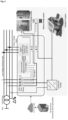
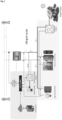
- the system can further comprise a curtailment handling (CH) inverter, a battery storage system and a remote central server, as shown in Fig. 6 and 7 .
- CH inverter will enable conversion of the grid-connected household network into an islanded grid/off-grid/nanogrid, i.e. a network with a small number of nodes like a household that can realize a functional islanded/off-grid by complete separation from the low voltage distribution network.
- the CH inverter is specifically configured to set the nominal voltage (e.g. 230 V rms) and a nominal frequency (e.g. 50 Hz) at its AC terminals when the single/multiple-phase rooftop PV system is disconnected from the voltage phases of the low voltage distribution network.
- the plurality of household load(s) within the context of the present invention could be any electric household device(s), which can use the curtailed active power when it occurs.
- Such household load(s) could for example be selected from a battery storage system, heating or cooling devices.
- SOC state of charge
- curtailed PV active power can be absorbed by said battery storage system during APC.
- the battery storage system can participate through the CH inverter in controlling the voltage and frequency of the islanded grid/off-grid/nanogrid in accordance with the nominal voltage and frequency e.g.
- the CH inverter 230 V rms and 50 Hz set by the CH inverter.
- the CH inverter will absorb the excess power produced into the battery storage system.
- the CH inverter will draw power from the battery storage system to maintain the voltage and frequency of the islanded grid/off-grid/nanogrid in accordance with the nominal voltage set by the CH inverter.
- the set temperature of the boiler can be lowered beforehand and curtailed PV active power can be utilized to boil the water by elevating the temperature in case an APC occurs.
- curtailed PV active power can be utilized to boil the water by elevating the temperature in case an APC occurs.
- a heat pump room or pool temperature can be adjusted to a lower or higher temperature and heating or refrigeration activated in case of APC events to tap curtailed PV active power.
- the system is configured to prepare the battery storage system and household load(s) in advance to absorb the curtailed PV active power in preventing or reducing the APC. As already mentioned hereinbefore, this adjustment is preferably based using day-ahead PV output power forecast data.
- the APC management system may be configured to use day-ahead PV output power forecast data to predict time and duration of APC in advance and take preemptive action by preparing the battery storage system and household load(s) beforehand to absorb the PV inverter output power during the APC in preventing or reducing the APC; more in particular, the microcontroller in an APC management system according to the invention is further characterized in being configured to use day-ahead PV output power forecast data to prepare the battery storage system and household load(s) in preventing or reducing the APC.
- the system makes use of actual PV power generation data, real-time PV inverter injected active power data and phase voltage input data.
- phase voltage input module yields the phase voltage input data
- real-time PV inverter injected active power data is directly available as an output from the ac terminal of PV inverter.
- Day-ahead PV output power forecast data and actual PV power generation data are for example available from a power grid system operator like Elia in Belgium. Said data are either the accumulated day-ahead PV output power forecast for the installed solar capacity of a country, region, network and the accumulated real-time actual PV power generation data for the installed solar capacity of a country, region, network.
- the day-ahead PV output power forecast data for the single/multiple-phase rooftop PV system are a downscale of said accumulated day-ahead PV output power forecast in accordance with the geographical location of said single/multiple-phase rooftop PV system.
- the actual PV power generation data for the single/multiple-phase rooftop PV system are a downscale of said accumulated real-time actual PV power generation data in accordance with the geographical location of said single/multiple-phase rooftop PV system.
- the presence of such remote central server allows for example to adjust the accumulated actual PV power generation data and the day-ahead PV output power forecast data in accordance with the geographical location and technical details of the local single/multiple-phase rooftop PV system before being transmitted to the microcontroller in the APC management system.
- the actual PV power generation data are directly transmitted to the microcontroller and adjusted in accordance with the geographical location and technical details of the local single/multiple-phase rooftop PV system by said microcontroller.
- the system further comprises communication means to receive actual PV power generation data and day-ahead PV output power forecast data from a remote central provider.
- the system further comprises a single/multiple-phase rooftop PV system data module configured to receive technical data of the single/multiple-phase rooftop PV system such as capacity, azimuth, inclination, and solar irradiation of the single/multiple-phase rooftop PV system. It will be evident that the aforementioned methods to adjust the accumulated actual PV generation data are equally applicable for the day-ahead PV output power forecast data available from such Power Grid transmission system operators.
- a method for APC management of a single/multiple-phase rooftop PV system comprising a single/multiple-phase PV inverter connected to any phase(s) of a low voltage distribution network; using a microcontroller connected to primary relay(s) configured to connect or disconnect the single/multiple-phase rooftop PV system from said phase(s); and connected to one or more secondary relay(s) configured to connect or disconnect the single/multiple-phase rooftop PV system from household load(s) in a household network, said method comprising
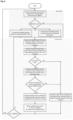
- the APC management system activates when both the network voltage violates its upper limit and there is a difference between the actual PV power generation data and the real-time PV inverter injected active power data where this difference is increasing rapidly with time such as for example that the rate of change of real-time PV inverter injected active power data is greater than 100, 200, 300, 400, or 500 W/minute.
- the microcontroller may send commands to the primary relay(s) to disconnect from said phase(s) and commands at least one of the secondary relays to connect to the household load(s) when the real-time PV inverter injected active power becomes unequal with actual PV power generation where this difference is increasing rapidly with time such that the rate of change of real-time PV inverter injected active power data is for example greater than 250 W/minute, in particular greater than 500 W/minute, and the phase voltage violates the network voltage upper limit.
- the microcontroller commands the primary relay(s) to disconnect from said phase(s) and commands at least one of the secondary relays to connect to the battery storage system and household load(s) when the phase voltage violates the network voltage upper limit, and the real-time PV inverter injected active power becomes unequal with actual PV power generation data and this difference is increasing rapidly with time such that the rate of change of real-time PV inverter injected active power data is for example greater than 500 W/minute, the system could enter into an islanded grid/off-grid/nanogrid mode.
- the microcontroller may further command a CH inverter present between the incoming phase(s) in a household and the battery storage system (refer Fig.
- the microcontroller may command the CH inverter to maintain the nominal voltage (e.g. 230 V rms) and the nominal frequency (e.g. 50 Hz) at its AC terminals, by injecting or drawing power to/from battery storage system present in the system and/or within the isolated household network.
- the nominal voltage e.g. 230 V rms
- the nominal frequency e.g. 50 Hz
- the method for APC management comprises
- the microcontroller commands the primary relay of the phase to which the PV inverter is connected to disconnect from said phase and commands one of the other primary relays to connect to the other phase of the 3-phase distribution network if the phase voltage of said other phase is below the network voltage upper limit; or commands at least one of the secondary relay(s) to connect to the battery storage system and household load(s) when the real-time PV inverter injected active power becomes unequal with actual PV power generation data where this difference is increasing rapidly with time such that the rate of change of real-time PV inverter injected active power data is for example greater than 500 W/minute and the phase voltage violates the network voltage upper limit.
- Day-ahead PV output power forecast data may be provided to the microcontroller, and used by said microcontroller to predict time and duration of APC in advance and take preemptive action by preparing the household load(s) beforehand to absorb the PV inverter output power during the APC in preventing or reducing the APC.
- the household load(s) preferably include battery storage system and at least one of the secondary relays is configured to connect or disconnect the single/multiple-phase rooftop PV system from such battery storage system.
- the microcontroller uses said day-ahead PV output power forecast data to prepare the battery storage system in preventing or reducing the APC by reducing the battery SOC.
- the actual PV power generation data and the day-ahead PV output power forecast data may be adjusted for the technical data of the single/multiple-phase rooftop PV system. This could be done either at a remote central server or by the microcontroller of the APC management system.
- adjustments can comprise:
- APC occurs when the phase voltages at the POI of PV inverter to the low voltage distribution network hits the network voltage upper limit (such as which is 10% above the nominal voltage of 230 V rms in Belgium i.e. 253 V rms or 1.10 per unit).
- the APC management system disclosed herein will monitor the phase voltages at the POI of PV inverter to the low voltage distribution network and based on actual PV power generation data and the real-time PV inverter injected active power data, the system is configured to determine whether APC occurs and to prevent or reduce such APC by dynamically disconnecting it from the phase(s) that is violating the network voltage upper limit such as 1.10 per unit or 253 V rms and re-connecting it to either of the voltage phases that is within the voltage limits; or household load(s) like battery storage system, heating or refrigerating device(s) to absorb the curtailed PV active power.
- the network voltage upper limit such as 1.10 per unit or 253 V rms
- the APC system disclosed herein is highly flexible and can even be implemented in single/multiple-phase rooftop PV systems connected through a single/multiple-phase with a low-voltage distribution network.
- the APC management system is configured to determine whether APC occurs as herein describes and prevents or reduces APC by commanding the secondary relay(s) configured to connect or disconnect the single/multiple-phase rooftop PV system from said household load(s).
- the rooftop PV system will be disconnected from the low voltage distribution network and entering an off-grid configuration wherein the PV inverter active power is either directly consumed through the household load(s) and/or stored in an electrical energy storage device such as a battery.
- the APC management system disclosed herein is highly modular in its possibilities of reducing or preventing the APC to occur. Not to be bound to a particular order of events, when the APC management system detects an APC event it will;
- the system relies on day-ahead PV output power forecast data to prepare household load(s) including battery storage system to act as energy buffers for such APC events.
- the phase voltage(s) hits the network voltage upper limit and the difference between the real-time PV inverter injected active power data and the actual PV power generation date changes rapidly, i.e. at a rate of more than 100 W/minute, in particular more than 500W/minute, the system can switch into a full islanded grid/off-grid/nanogrid mode injecting the PV active power into the pre-conditioned battery storage system and household load(s).
- the household network is isolated from the low voltage distribution network by opening the primary relays shown as S1 and S2 in Figures 6 and 7 .
- the household network will be operating in an islanded mode as a nanogrid requiring the presence of a so named curtailment handling (CH) inverter, a battery storage system and a remote central server.
- the curtailment handling (CH) inverter is a bidirectional inverter which constitutes the backbone of the system.
- the CH inverter is installed behind the meter between the battery storage system and incoming ac phase(s) in a household, as shown in Fig. 6 and Fig. 7 . It is capable of operating during all the possible modes of operation and receives commands from the microcontroller.
- the APC management system may further comprise a curtailment handling (CH) inverter.
- CH curtailment handling
- a battery storage system may be included, said battery storage preferably being connected with said CH inverter and optionally under direct operational control of the microcontroller. Therefore, an APC management system as herein described comprises, inter alia:
- determining whether APC occurs is still relying on the actual PV power generation data, real-time PV inverter injected active power data and phase voltage(s) input data as extensively described, but further characterized in that the CH inverter sets nominal voltage and frequency at its AC terminals when entering into islanded/off-grid/nanogrid mode.
Landscapes
- Engineering & Computer Science (AREA)
- Power Engineering (AREA)
- Supply And Distribution Of Alternating Current (AREA)
Claims (14)
- Système de gestion de réduction de puissance active, APC, pour empêcher ou réduire l'APC dans un onduleur d'un système photovoltaïque, PV, en toiture qui peut être connecté à un réseau de distribution basse tension comprenant au moins une phase, et au moins une charge domestique, comprenant :- un module d'entrée de tension de phase configuré pour mesurer la tension de l'au moins une phase et pour fournir des données d'entrée de tension de phase ;- un microcontrôleur ;- au moins un relais primaire configuré pour connecter ou déconnecter le système PV en toiture d'une ou plusieurs de ladite au moins une phase ; et- au moins un relais secondaire configuré pour connecter ou déconnecter le système PV en toiture d'une ou plusieurs de ladite au moins une charge domestique ;caractérisé en ce que le système comprend des moyens de communication pour recevoir des données en ligne d'un fournisseur distant et en ce que le microcontrôleur est configuré pour déterminer si l'APC se produit sur la base d'au moins les entrées suivantes :- des données réelles de production d'énergie PV basées sur les données en ligne reçues du fournisseur distant, lesdites données réelles de production d'énergie PV étant une échelle descendante de données réelles de production d'énergie PV accumulées en temps réel conformément à un emplacement géographique du système PV en toiture,- des données de sortie de puissance de l'onduleur PV en temps réel reçues de l'onduleur, et- les données d'entrée de tension de phase reçues du module d'entrée de tension de phase ;où le microcontrôleur est en outre configuré pour déterminer si l'APC se produit sur la base du respect des conditions suivantes :- la tension de phase viole une limite supérieure de tension du réseau ;- il existe une différence entre les données réelles de production d'énergie PV et les données de sortie de puissance de l'onduleur PV en temps réel et ladite différence augmente avec un taux de variation supérieur à un seuil prédéterminé ;et où le microcontrôleur est en outre configuré pour empêcher ou réduire l'APC en ouvrant et/ou en fermant au moins l'un des relais primaire et/ou secondaire sur la base de ladite détermination.
- Système de gestion APC selon la revendication 1, où le microcontrôleur est configuré pour :- utiliser des données de prévision de puissance de sortie PV journalière reçues dudit fournisseur distant pour prédire l'occurrence d'APC à l'avance et préparer ladite au moins une charge domestique afin qu'elles puissent agir comme des tampons énergétiques lorsque le système PV en toiture est déconnecté du réseau de distribution basse tension.
- Système de gestion APC selon la revendication 1, où le système est connectable à un réseau de distribution basse tension polyphasé et comprend :a) un module d'entrée de tension de phase pour chaque phase ; etb) une pluralité de relais primaires configurés pour connecter ou déconnecter le système PV en toiture à chacune desdites phases.
- Système de gestion APC selon l'une quelconque des revendications précédentes, où le système comprend une pluralité de relais secondaires, chacun configuré pour connecter ou déconnecter le système PV en toiture d'une pluralité de charges domestiques.
- Système de gestion APC selon la revendication 4, où la pluralité de charges domestiques est sélectionnée parmi un système de stockage de batterie, des dispositifs de chauffage et/ou de refroidissement.
- Système de gestion APC selon la revendication 1, où le microcontrôleur est en outre caractérisé en ce qu'il est configuré pour utiliser des données de prévision de puissance de sortie PV journalière pour prédire l'heure et la durée de l'APC à l'avance et prendre des mesures préventives en préparant un système de stockage de batterie et/ou une ou plusieurs de l'au moins une charge domestique au préalable pour absorber la puissance de sortie de l'onduleur PV pendant l'APC en empêchant ou en réduisant l'APC.
- Système de gestion APC selon l'une quelconque des revendications précédentes, où le système comprend en outre un module de données de système PV en toiture configuré pour recevoir des données techniques du système PV en toiture telles que la capacité, l'azimut, l'inclinaison et l'irradiation solaire du système PV en toiture ; et où le système est configuré pour ajuster les données réelles de production d'énergie PV reçues, et en fonction de la revendication 2 ou de la revendication 6, les données de prévision de puissance de sortie PV journalière, sur la base de l'emplacement géographique et des données techniques du système PV en toiture.
- Système de gestion APC selon l'une quelconque des revendications précédentes, où le système comprend en outre l'onduleur mentionné dans la revendication 1, un système de stockage de batterie et un serveur central distant, où l'onduleur est un onduleur de gestion de réduction, CH.
- Système de gestion APC selon la revendication 8, où l'onduleur CH est configuré pour définir une tension nominale et une fréquence nominale à ses bornes AC lorsque le système PV en toiture est déconnecté des phases de tension du réseau de distribution basse tension.
- Procédé de gestion de réduction de puissance active, APC, d'un système photovoltaïque, PV, en toiture, comprenant un onduleur PV connectable à au moins une phase d'un réseau de distribution basse tension et au moins une charge domestique ; utilisant un microcontrôleur connecté à au moins un relais primaire configuré pour connecter ou déconnecter le système PV en toiture d'une ou plusieurs de ladite au moins une phase et connecté à au moins un relais secondaire configuré pour connecter ou déconnecter le système PV en toiture d'au moins une charge domestique dans un réseau domestique, ledit procédé comprenant :a) fournir des données d'entrée de tension de phase audit microcontrôleur, lesdites données d'entrée de tension de phase étant fournies par un module d'entrée de tension de phase qui mesure la tension de l'au moins une phase ;b) fournir des données réelles de production d'énergie PV audit microcontrôleur, lesdites données de production d'énergie PV étant basées sur des données en ligne reçues d'un fournisseur distant, lesdites données réelles de production d'énergie PV étant une réduction d'échelle de données réelles de production d'énergie PV accumulées en temps réel conformément à un emplacement géographique du système PV en toiture ; etc) fournir des données de sortie de puissance d'onduleur PV en temps réel audit microcontrôleur, lesdites données de sortie de puissance d'onduleur PV en temps réel étant fournies par l'onduleur PV ;où ledit microcontrôleur détermine si l'APC se produit sur la base du respect des conditions suivantes :- la tension de phase viole une limite supérieure de tension du réseau ;- il existe une différence entre les données réelles de production d'énergie PV et les données de sortie de puissance de l'onduleur PV en temps réel et ladite différence augmente avec un taux de variation supérieur à un seuil prédéterminé ;et où le microcontrôleur ouvre et/ou ferme au moins l'un des relais primaire et/ou secondaire sur la base de ladite détermination afin d'empêcher ou de réduire l'APC.
- Procédé selon la revendication 10, où le microcontrôleur commande au relais primaire respectif de se déconnecter de la phase respective et commande au moins à un des relais secondaires de se connecter à un système de stockage de batterie et/ou à au moins une des charges domestiques lorsque la tension de phase viole une limite supérieure de tension de réseau et les données de sortie de puissance de l'onduleur PV en temps réel deviennent inégales avec les données réelles de production d'énergie PV.
- Procédé selon la revendication 11, où le microcontrôleur commande en outre un onduleur de gestion de réduction, CH, présent entre l'au moins une phase et le système de stockage par batterie, pour définir et maintenir une tension nominale et une fréquence nominale à ses bornes AC, convertissant le réseau domestique en réseau îloté/hors réseau/nano-réseau.
- Procédé selon l'une quelconque des revendications 10 à 12, où les données réelles de production d'énergie PV sont ajustées pour les données techniques du système PV en toiture.
- Procédé selon la revendication 10, comprenant en outre la fourniture de données de prévision de puissance de sortie PV journalière au microcontrôleur, lesdites données de prévision étant reçues du fournisseur distant, et où le microcontrôleur utilise lesdites données de prévision de puissance de sortie PV journalière pour préparer le système de stockage de batterie et/ou au moins une des charges domestiques pour empêcher ou réduire l'APC.
Applications Claiming Priority (1)
| Application Number | Priority Date | Filing Date | Title |
|---|---|---|---|
| EP18248012 | 2018-12-27 |
Publications (3)
| Publication Number | Publication Date |
|---|---|
| EP3675308A1 EP3675308A1 (fr) | 2020-07-01 |
| EP3675308C0 EP3675308C0 (fr) | 2023-08-30 |
| EP3675308B1 true EP3675308B1 (fr) | 2023-08-30 |
Family
ID=65010435
Family Applications (1)
| Application Number | Title | Priority Date | Filing Date |
|---|---|---|---|
| EP19187442.9A Active EP3675308B1 (fr) | 2018-12-27 | 2019-07-19 | Système de gestion de réduction de puissance active |
Country Status (1)
| Country | Link |
|---|---|
| EP (1) | EP3675308B1 (fr) |
Families Citing this family (2)
| Publication number | Priority date | Publication date | Assignee | Title |
|---|---|---|---|---|
| PL248192B1 (pl) * | 2023-12-29 | 2025-11-03 | Politechnika Swietokrzyska | Urządzenie minimalizujące czasy wyłączeń 1-fazowych systemów instalacji fotowoltaicznych małej mocy |
| PL248193B1 (pl) * | 2023-12-29 | 2025-11-03 | Politechnika Swietokrzyska | Urządzenie minimalizujące czasy wyłączeń 3-fazowych systemów instalacji fotowoltaicznych małej mocy |
Family Cites Families (7)
| Publication number | Priority date | Publication date | Assignee | Title |
|---|---|---|---|---|
| US2652529A (en) | 1952-09-17 | 1953-09-15 | Gen Electric | Phase balancing system |
| US7930070B2 (en) * | 2008-09-25 | 2011-04-19 | Kingston Consulting, Inc. | System, method, and module capable of curtailing energy production within congestive grid operating environments |
| US10424935B2 (en) * | 2009-09-15 | 2019-09-24 | Rajiv Kumar Varma | Multivariable modulator controller for power generation facility |
| DE102009060364B4 (de) | 2009-12-24 | 2023-04-13 | Volkswagen Ag | Vorrichtung und Verfahren zur Energieeinspeisung und/oder -rückspeisung von elektrischer Energie |
| DE102011078047A1 (de) | 2011-06-24 | 2012-12-27 | Siemens Aktiengesellschaft | Vorrichtung zur Steuerung der Belastung der Phasen eines dreiphasigen Energienetzes |
| CN104333035A (zh) | 2014-10-28 | 2015-02-04 | 国网辽宁省电力有限公司朝阳供电公司 | 一种可抑制电网电压不平衡的光伏发电系统 |
| WO2017193153A1 (fr) * | 2016-05-11 | 2017-11-16 | Commonwealth Scientific And Industrial Research Organisation | Prévision d'énergie solaire |
-
2019
- 2019-07-19 EP EP19187442.9A patent/EP3675308B1/fr active Active
Also Published As
| Publication number | Publication date |
|---|---|
| EP3675308C0 (fr) | 2023-08-30 |
| EP3675308A1 (fr) | 2020-07-01 |
Similar Documents
| Publication | Publication Date | Title |
|---|---|---|
| Nour et al. | Review on voltage‐violation mitigation techniques of distribution networks with distributed rooftop PV systems | |
| US10965124B2 (en) | Apparatuses including power electronics circuitry, and related methods of operation | |
| JP6978572B2 (ja) | バーチャルパワープラント | |
| CN107425518B (zh) | 混合电力系统中的负载管理 | |
| RU2475923C2 (ru) | Управление энергией альтернативных источников | |
| US11749992B2 (en) | Method and system for locally controlling power delivery along a distribution feeder of an electricity grid | |
| US20120229077A1 (en) | Electric power supply system and method for controlling electric power discharge | |
| JP2022525523A (ja) | 家庭ユーザの電気車両を含む異なる負荷間の電力を管理するための家庭ユーザのための電力管理システムをもつ変換器 | |
| WO2011129054A1 (fr) | Système de gestion d'énergie électrique, procédé de gestion d'énergie électrique et régulateur de section | |
| JP6821904B2 (ja) | 電力システム | |
| JP2017521034A (ja) | 送電網ネットワークのゲートウェイアグリゲーション | |
| JP6828567B2 (ja) | 系統連系システムおよび電力システム | |
| JP6821905B2 (ja) | 電力システム | |
| JP6921529B2 (ja) | 配電系統の潮流制御方法及び配電システム | |
| JP2019122150A (ja) | 電力システムおよび蓄電池パワーコンディショナ | |
| EP3675308B1 (fr) | Système de gestion de réduction de puissance active | |
| Chen et al. | Distributed electric spring based smart thermal loads for overvoltage prevention in LV distributed network using dynamic consensus approach | |
| EP3329576B1 (fr) | Alimentation sans interruption et procédé pour gérer un flux d'énergie électrique dans un système photovoltaïque connecté au réseau d'énergie électrique | |
| JP6892191B2 (ja) | 電力システム | |
| Hashemi et al. | Evaluation of voltage regulation mitigation methods due to high penetration of PV generation in residential areas | |
| Lulbadda et al. | Novel concepts for additional functions of smart PV inverters | |
| US20220014025A1 (en) | Feed-in method for a wind power system, and wind power system | |
| EP3920357B1 (fr) | Système de gestion de flux de puissance ou d'énergie dans un nanoréseau ou un miniréseau | |
| US12184070B1 (en) | Controlling local generation capacity independently of the power grid | |
| EP4528966A1 (fr) | Procédé de commande d'un micro-réseau et micro-réseau associé |
Legal Events
| Date | Code | Title | Description |
|---|---|---|---|
| PUAI | Public reference made under article 153(3) epc to a published international application that has entered the european phase |
Free format text: ORIGINAL CODE: 0009012 |
|
| STAA | Information on the status of an ep patent application or granted ep patent |
Free format text: STATUS: THE APPLICATION HAS BEEN PUBLISHED |
|
| AK | Designated contracting states |
Kind code of ref document: A1 Designated state(s): AL AT BE BG CH CY CZ DE DK EE ES FI FR GB GR HR HU IE IS IT LI LT LU LV MC MK MT NL NO PL PT RO RS SE SI SK SM TR |
|
| AX | Request for extension of the european patent |
Extension state: BA ME |
|
| STAA | Information on the status of an ep patent application or granted ep patent |
Free format text: STATUS: REQUEST FOR EXAMINATION WAS MADE |
|
| 17P | Request for examination filed |
Effective date: 20210108 |
|
| RBV | Designated contracting states (corrected) |
Designated state(s): AL AT BE BG CH CY CZ DE DK EE ES FI FR GB GR HR HU IE IS IT LI LT LU LV MC MK MT NL NO PL PT RO RS SE SI SK SM TR |
|
| STAA | Information on the status of an ep patent application or granted ep patent |
Free format text: STATUS: EXAMINATION IS IN PROGRESS |
|
| 17Q | First examination report despatched |
Effective date: 20211202 |
|
| RIC1 | Information provided on ipc code assigned before grant |
Ipc: H02S 10/20 20140101ALN20220602BHEP Ipc: H02J 3/14 20060101ALN20220602BHEP Ipc: H02J 3/38 20060101AFI20220602BHEP |
|
| GRAP | Despatch of communication of intention to grant a patent |
Free format text: ORIGINAL CODE: EPIDOSNIGR1 |
|
| STAA | Information on the status of an ep patent application or granted ep patent |
Free format text: STATUS: GRANT OF PATENT IS INTENDED |
|
| INTG | Intention to grant announced |
Effective date: 20220728 |
|
| GRAJ | Information related to disapproval of communication of intention to grant by the applicant or resumption of examination proceedings by the epo deleted |
Free format text: ORIGINAL CODE: EPIDOSDIGR1 |
|
| STAA | Information on the status of an ep patent application or granted ep patent |
Free format text: STATUS: EXAMINATION IS IN PROGRESS |
|
| INTC | Intention to grant announced (deleted) | ||
| RIC1 | Information provided on ipc code assigned before grant |
Ipc: H02S 10/20 20140101ALN20230109BHEP Ipc: H02J 3/14 19680901ALN20230109BHEP Ipc: H02J 3/38 19680901AFI20230109BHEP |
|
| GRAP | Despatch of communication of intention to grant a patent |
Free format text: ORIGINAL CODE: EPIDOSNIGR1 |
|
| STAA | Information on the status of an ep patent application or granted ep patent |
Free format text: STATUS: GRANT OF PATENT IS INTENDED |
|
| INTG | Intention to grant announced |
Effective date: 20230313 |
|
| GRAS | Grant fee paid |
Free format text: ORIGINAL CODE: EPIDOSNIGR3 |
|
| GRAA | (expected) grant |
Free format text: ORIGINAL CODE: 0009210 |
|
| STAA | Information on the status of an ep patent application or granted ep patent |
Free format text: STATUS: THE PATENT HAS BEEN GRANTED |
|
| AK | Designated contracting states |
Kind code of ref document: B1 Designated state(s): AL AT BE BG CH CY CZ DE DK EE ES FI FR GB GR HR HU IE IS IT LI LT LU LV MC MK MT NL NO PL PT RO RS SE SI SK SM TR |
|
| REG | Reference to a national code |
Ref country code: GB Ref legal event code: FG4D |
|
| REG | Reference to a national code |
Ref country code: CH Ref legal event code: EP |
|
| REG | Reference to a national code |
Ref country code: DE Ref legal event code: R096 Ref document number: 602019035979 Country of ref document: DE |
|
| REG | Reference to a national code |
Ref country code: IE Ref legal event code: FG4D |
|
| U01 | Request for unitary effect filed |
Effective date: 20230928 |
|
| U07 | Unitary effect registered |
Designated state(s): AT BE BG DE DK EE FI FR IT LT LU LV MT NL PT SE SI Effective date: 20231006 |
|
| PG25 | Lapsed in a contracting state [announced via postgrant information from national office to epo] |
Ref country code: GR Free format text: LAPSE BECAUSE OF FAILURE TO SUBMIT A TRANSLATION OF THE DESCRIPTION OR TO PAY THE FEE WITHIN THE PRESCRIBED TIME-LIMIT Effective date: 20231201 |
|
| PG25 | Lapsed in a contracting state [announced via postgrant information from national office to epo] |
Ref country code: IS Free format text: LAPSE BECAUSE OF FAILURE TO SUBMIT A TRANSLATION OF THE DESCRIPTION OR TO PAY THE FEE WITHIN THE PRESCRIBED TIME-LIMIT Effective date: 20231230 |
|
| PG25 | Lapsed in a contracting state [announced via postgrant information from national office to epo] |
Ref country code: RS Free format text: LAPSE BECAUSE OF FAILURE TO SUBMIT A TRANSLATION OF THE DESCRIPTION OR TO PAY THE FEE WITHIN THE PRESCRIBED TIME-LIMIT Effective date: 20230830 Ref country code: NO Free format text: LAPSE BECAUSE OF FAILURE TO SUBMIT A TRANSLATION OF THE DESCRIPTION OR TO PAY THE FEE WITHIN THE PRESCRIBED TIME-LIMIT Effective date: 20231130 Ref country code: IS Free format text: LAPSE BECAUSE OF FAILURE TO SUBMIT A TRANSLATION OF THE DESCRIPTION OR TO PAY THE FEE WITHIN THE PRESCRIBED TIME-LIMIT Effective date: 20231230 Ref country code: HR Free format text: LAPSE BECAUSE OF FAILURE TO SUBMIT A TRANSLATION OF THE DESCRIPTION OR TO PAY THE FEE WITHIN THE PRESCRIBED TIME-LIMIT Effective date: 20230830 Ref country code: GR Free format text: LAPSE BECAUSE OF FAILURE TO SUBMIT A TRANSLATION OF THE DESCRIPTION OR TO PAY THE FEE WITHIN THE PRESCRIBED TIME-LIMIT Effective date: 20231201 |
|
| PG25 | Lapsed in a contracting state [announced via postgrant information from national office to epo] |
Ref country code: PL Free format text: LAPSE BECAUSE OF FAILURE TO SUBMIT A TRANSLATION OF THE DESCRIPTION OR TO PAY THE FEE WITHIN THE PRESCRIBED TIME-LIMIT Effective date: 20230830 |
|
| PG25 | Lapsed in a contracting state [announced via postgrant information from national office to epo] |
Ref country code: ES Free format text: LAPSE BECAUSE OF FAILURE TO SUBMIT A TRANSLATION OF THE DESCRIPTION OR TO PAY THE FEE WITHIN THE PRESCRIBED TIME-LIMIT Effective date: 20230830 |
|
| PG25 | Lapsed in a contracting state [announced via postgrant information from national office to epo] |
Ref country code: SM Free format text: LAPSE BECAUSE OF FAILURE TO SUBMIT A TRANSLATION OF THE DESCRIPTION OR TO PAY THE FEE WITHIN THE PRESCRIBED TIME-LIMIT Effective date: 20230830 Ref country code: RO Free format text: LAPSE BECAUSE OF FAILURE TO SUBMIT A TRANSLATION OF THE DESCRIPTION OR TO PAY THE FEE WITHIN THE PRESCRIBED TIME-LIMIT Effective date: 20230830 Ref country code: ES Free format text: LAPSE BECAUSE OF FAILURE TO SUBMIT A TRANSLATION OF THE DESCRIPTION OR TO PAY THE FEE WITHIN THE PRESCRIBED TIME-LIMIT Effective date: 20230830 Ref country code: CZ Free format text: LAPSE BECAUSE OF FAILURE TO SUBMIT A TRANSLATION OF THE DESCRIPTION OR TO PAY THE FEE WITHIN THE PRESCRIBED TIME-LIMIT Effective date: 20230830 Ref country code: SK Free format text: LAPSE BECAUSE OF FAILURE TO SUBMIT A TRANSLATION OF THE DESCRIPTION OR TO PAY THE FEE WITHIN THE PRESCRIBED TIME-LIMIT Effective date: 20230830 |
|
| REG | Reference to a national code |
Ref country code: DE Ref legal event code: R097 Ref document number: 602019035979 Country of ref document: DE |
|
| PLBE | No opposition filed within time limit |
Free format text: ORIGINAL CODE: 0009261 |
|
| STAA | Information on the status of an ep patent application or granted ep patent |
Free format text: STATUS: NO OPPOSITION FILED WITHIN TIME LIMIT |
|
| U20 | Renewal fee for the european patent with unitary effect paid |
Year of fee payment: 6 Effective date: 20240619 |
|
| 26N | No opposition filed |
Effective date: 20240603 |
|
| PG25 | Lapsed in a contracting state [announced via postgrant information from national office to epo] |
Ref country code: MC Free format text: LAPSE BECAUSE OF FAILURE TO SUBMIT A TRANSLATION OF THE DESCRIPTION OR TO PAY THE FEE WITHIN THE PRESCRIBED TIME-LIMIT Effective date: 20230830 |
|
| PGFP | Annual fee paid to national office [announced via postgrant information from national office to epo] |
Ref country code: GB Payment date: 20250619 Year of fee payment: 7 |
|
| PG25 | Lapsed in a contracting state [announced via postgrant information from national office to epo] |
Ref country code: IE Free format text: LAPSE BECAUSE OF NON-PAYMENT OF DUE FEES Effective date: 20240719 |
|
| U20 | Renewal fee for the european patent with unitary effect paid |
Year of fee payment: 7 Effective date: 20250620 |
|
| PGFP | Annual fee paid to national office [announced via postgrant information from national office to epo] |
Ref country code: CH Payment date: 20250801 Year of fee payment: 7 |
|
| PG25 | Lapsed in a contracting state [announced via postgrant information from national office to epo] |
Ref country code: CY Free format text: LAPSE BECAUSE OF FAILURE TO SUBMIT A TRANSLATION OF THE DESCRIPTION OR TO PAY THE FEE WITHIN THE PRESCRIBED TIME-LIMIT; INVALID AB INITIO Effective date: 20190719 |
|
| PG25 | Lapsed in a contracting state [announced via postgrant information from national office to epo] |
Ref country code: HU Free format text: LAPSE BECAUSE OF FAILURE TO SUBMIT A TRANSLATION OF THE DESCRIPTION OR TO PAY THE FEE WITHIN THE PRESCRIBED TIME-LIMIT; INVALID AB INITIO Effective date: 20190719 |