EP3675425B1 - Basismodul eines system zur verteilung von audiovisuellem inhalt - Google Patents
Basismodul eines system zur verteilung von audiovisuellem inhalt Download PDFInfo
- Publication number
- EP3675425B1 EP3675425B1 EP19219415.7A EP19219415A EP3675425B1 EP 3675425 B1 EP3675425 B1 EP 3675425B1 EP 19219415 A EP19219415 A EP 19219415A EP 3675425 B1 EP3675425 B1 EP 3675425B1
- Authority
- EP
- European Patent Office
- Prior art keywords
- processing
- module
- data
- demand
- elementary
- Prior art date
- Legal status (The legal status is an assumption and is not a legal conclusion. Google has not performed a legal analysis and makes no representation as to the accuracy of the status listed.)
- Active
Links
Images

Classifications
-
- H—ELECTRICITY
- H04—ELECTRIC COMMUNICATION TECHNIQUE
- H04L—TRANSMISSION OF DIGITAL INFORMATION, e.g. TELEGRAPHIC COMMUNICATION
- H04L65/00—Network arrangements, protocols or services for supporting real-time applications in data packet communication
- H04L65/60—Network streaming of media packets
- H04L65/61—Network streaming of media packets for supporting one-way streaming services, e.g. Internet radio
- H04L65/612—Network streaming of media packets for supporting one-way streaming services, e.g. Internet radio for unicast
-
- H—ELECTRICITY
- H04—ELECTRIC COMMUNICATION TECHNIQUE
- H04N—PICTORIAL COMMUNICATION, e.g. TELEVISION
- H04N21/00—Selective content distribution, e.g. interactive television or video on demand [VOD]
- H04N21/20—Servers specifically adapted for the distribution of content, e.g. VOD servers; Operations thereof
- H04N21/21—Server components or server architectures
- H04N21/218—Source of audio or video content, e.g. local disk arrays
- H04N21/2183—Cache memory
-
- H—ELECTRICITY
- H04—ELECTRIC COMMUNICATION TECHNIQUE
- H04N—PICTORIAL COMMUNICATION, e.g. TELEVISION
- H04N21/00—Selective content distribution, e.g. interactive television or video on demand [VOD]
- H04N21/20—Servers specifically adapted for the distribution of content, e.g. VOD servers; Operations thereof
- H04N21/23—Processing of content or additional data; Elementary server operations; Server middleware
- H04N21/232—Content retrieval operation locally within server, e.g. reading video streams from disk arrays
- H04N21/2326—Scheduling disk or memory reading operations
-
- H—ELECTRICITY
- H04—ELECTRIC COMMUNICATION TECHNIQUE
- H04L—TRANSMISSION OF DIGITAL INFORMATION, e.g. TELEGRAPHIC COMMUNICATION
- H04L41/00—Arrangements for maintenance, administration or management of data switching networks, e.g. of packet switching networks
- H04L41/50—Network service management, e.g. ensuring proper service fulfilment according to agreements
- H04L41/5041—Network service management, e.g. ensuring proper service fulfilment according to agreements characterised by the time relationship between creation and deployment of a service
- H04L41/5051—Service on demand, e.g. definition and deployment of services in real time
-
- H—ELECTRICITY
- H04—ELECTRIC COMMUNICATION TECHNIQUE
- H04L—TRANSMISSION OF DIGITAL INFORMATION, e.g. TELEGRAPHIC COMMUNICATION
- H04L41/00—Arrangements for maintenance, administration or management of data switching networks, e.g. of packet switching networks
- H04L41/50—Network service management, e.g. ensuring proper service fulfilment according to agreements
- H04L41/508—Network service management, e.g. ensuring proper service fulfilment according to agreements based on type of value added network service under agreement
- H04L41/509—Network service management, e.g. ensuring proper service fulfilment according to agreements based on type of value added network service under agreement wherein the managed service relates to media content delivery, e.g. audio, video or TV
-
- H—ELECTRICITY
- H04—ELECTRIC COMMUNICATION TECHNIQUE
- H04L—TRANSMISSION OF DIGITAL INFORMATION, e.g. TELEGRAPHIC COMMUNICATION
- H04L65/00—Network arrangements, protocols or services for supporting real-time applications in data packet communication
- H04L65/60—Network streaming of media packets
-
- H—ELECTRICITY
- H04—ELECTRIC COMMUNICATION TECHNIQUE
- H04L—TRANSMISSION OF DIGITAL INFORMATION, e.g. TELEGRAPHIC COMMUNICATION
- H04L67/00—Network arrangements or protocols for supporting network services or applications
- H04L67/01—Protocols
- H04L67/02—Protocols based on web technology, e.g. hypertext transfer protocol [HTTP]
-
- H—ELECTRICITY
- H04—ELECTRIC COMMUNICATION TECHNIQUE
- H04N—PICTORIAL COMMUNICATION, e.g. TELEVISION
- H04N21/00—Selective content distribution, e.g. interactive television or video on demand [VOD]
- H04N21/20—Servers specifically adapted for the distribution of content, e.g. VOD servers; Operations thereof
-
- H—ELECTRICITY
- H04—ELECTRIC COMMUNICATION TECHNIQUE
- H04N—PICTORIAL COMMUNICATION, e.g. TELEVISION
- H04N21/00—Selective content distribution, e.g. interactive television or video on demand [VOD]
- H04N21/20—Servers specifically adapted for the distribution of content, e.g. VOD servers; Operations thereof
- H04N21/23—Processing of content or additional data; Elementary server operations; Server middleware
- H04N21/234—Processing of video elementary streams, e.g. splicing of video streams or manipulating encoded video stream scene graphs
- H04N21/2343—Processing of video elementary streams, e.g. splicing of video streams or manipulating encoded video stream scene graphs involving reformatting operations of video signals for distribution or compliance with end-user requests or end-user device requirements
-
- H—ELECTRICITY
- H04—ELECTRIC COMMUNICATION TECHNIQUE
- H04N—PICTORIAL COMMUNICATION, e.g. TELEVISION
- H04N21/00—Selective content distribution, e.g. interactive television or video on demand [VOD]
- H04N21/20—Servers specifically adapted for the distribution of content, e.g. VOD servers; Operations thereof
- H04N21/23—Processing of content or additional data; Elementary server operations; Server middleware
- H04N21/234—Processing of video elementary streams, e.g. splicing of video streams or manipulating encoded video stream scene graphs
- H04N21/2343—Processing of video elementary streams, e.g. splicing of video streams or manipulating encoded video stream scene graphs involving reformatting operations of video signals for distribution or compliance with end-user requests or end-user device requirements
- H04N21/234327—Processing of video elementary streams, e.g. splicing of video streams or manipulating encoded video stream scene graphs involving reformatting operations of video signals for distribution or compliance with end-user requests or end-user device requirements by decomposing into layers, e.g. base layer and one or more enhancement layers
-
- H—ELECTRICITY
- H04—ELECTRIC COMMUNICATION TECHNIQUE
- H04N—PICTORIAL COMMUNICATION, e.g. TELEVISION
- H04N21/00—Selective content distribution, e.g. interactive television or video on demand [VOD]
- H04N21/20—Servers specifically adapted for the distribution of content, e.g. VOD servers; Operations thereof
- H04N21/23—Processing of content or additional data; Elementary server operations; Server middleware
- H04N21/234—Processing of video elementary streams, e.g. splicing of video streams or manipulating encoded video stream scene graphs
- H04N21/2343—Processing of video elementary streams, e.g. splicing of video streams or manipulating encoded video stream scene graphs involving reformatting operations of video signals for distribution or compliance with end-user requests or end-user device requirements
- H04N21/23439—Processing of video elementary streams, e.g. splicing of video streams or manipulating encoded video stream scene graphs involving reformatting operations of video signals for distribution or compliance with end-user requests or end-user device requirements for generating different versions
-
- H—ELECTRICITY
- H04—ELECTRIC COMMUNICATION TECHNIQUE
- H04N—PICTORIAL COMMUNICATION, e.g. TELEVISION
- H04N21/00—Selective content distribution, e.g. interactive television or video on demand [VOD]
- H04N21/20—Servers specifically adapted for the distribution of content, e.g. VOD servers; Operations thereof
- H04N21/23—Processing of content or additional data; Elementary server operations; Server middleware
- H04N21/235—Processing of additional data, e.g. scrambling of additional data or processing content descriptors
- H04N21/2355—Processing of additional data, e.g. scrambling of additional data or processing content descriptors involving reformatting operations of additional data, e.g. HTML pages
- H04N21/2358—Processing of additional data, e.g. scrambling of additional data or processing content descriptors involving reformatting operations of additional data, e.g. HTML pages for generating different versions, e.g. for different recipient devices
-
- H—ELECTRICITY
- H04—ELECTRIC COMMUNICATION TECHNIQUE
- H04N—PICTORIAL COMMUNICATION, e.g. TELEVISION
- H04N21/00—Selective content distribution, e.g. interactive television or video on demand [VOD]
- H04N21/20—Servers specifically adapted for the distribution of content, e.g. VOD servers; Operations thereof
- H04N21/23—Processing of content or additional data; Elementary server operations; Server middleware
- H04N21/239—Interfacing the upstream path of the transmission network, e.g. prioritizing client content requests
- H04N21/2393—Interfacing the upstream path of the transmission network, e.g. prioritizing client content requests involving handling client requests
-
- H—ELECTRICITY
- H04—ELECTRIC COMMUNICATION TECHNIQUE
- H04N—PICTORIAL COMMUNICATION, e.g. TELEVISION
- H04N21/00—Selective content distribution, e.g. interactive television or video on demand [VOD]
- H04N21/20—Servers specifically adapted for the distribution of content, e.g. VOD servers; Operations thereof
- H04N21/23—Processing of content or additional data; Elementary server operations; Server middleware
- H04N21/24—Monitoring of processes or resources, e.g. monitoring of server load, available bandwidth, upstream requests
-
- H—ELECTRICITY
- H04—ELECTRIC COMMUNICATION TECHNIQUE
- H04N—PICTORIAL COMMUNICATION, e.g. TELEVISION
- H04N21/00—Selective content distribution, e.g. interactive television or video on demand [VOD]
- H04N21/60—Network structure or processes for video distribution between server and client or between remote clients; Control signalling between clients, server and network components; Transmission of management data between server and client, e.g. sending from server to client commands for recording incoming content stream; Communication details between server and client
- H04N21/63—Control signaling related to video distribution between client, server and network components; Network processes for video distribution between server and clients or between remote clients, e.g. transmitting basic layer and enhancement layers over different transmission paths, setting up a peer-to-peer communication via Internet between remote STB's; Communication protocols; Addressing
-
- H—ELECTRICITY
- H04—ELECTRIC COMMUNICATION TECHNIQUE
- H04N—PICTORIAL COMMUNICATION, e.g. TELEVISION
- H04N21/00—Selective content distribution, e.g. interactive television or video on demand [VOD]
- H04N21/60—Network structure or processes for video distribution between server and client or between remote clients; Control signalling between clients, server and network components; Transmission of management data between server and client, e.g. sending from server to client commands for recording incoming content stream; Communication details between server and client
- H04N21/63—Control signaling related to video distribution between client, server and network components; Network processes for video distribution between server and clients or between remote clients, e.g. transmitting basic layer and enhancement layers over different transmission paths, setting up a peer-to-peer communication via Internet between remote STB's; Communication protocols; Addressing
- H04N21/637—Control signals issued by the client directed to the server or network components
Definitions
- the present invention relates to an elementary module intended to be used in at least one processing chain of a system making it possible to distribute audiovisual content, a system comprising at least one elementary module and a method executed by an elementary module.
- OTT over-the-top service
- Anglo-Saxon terminology is an audiovisual content distribution service on a network in which the operator of said network (i.e. a cable, telephone or satellite company) only acts as a carrier of said content.
- the network operator has no control over the content, i.e. it is neither responsible nor in a position to control the display of said content, the respect of the rights copyright, and/or the redistribution of such content.
- OTT services are operated on so-called unmanaged networks (“managed” in Anglo-Saxon terminology), ie with bandwidth and quality of service (“quality of service (QoS)” not guaranteed.
- a system of the HAS type is therefore very consumer in terms of volume of data to be stored.
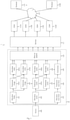
- the Fig. 1 schematically represents an example of a broadcast channel 1 of audiovisual programs.
- the broadcast chain 1 comprises a source 100, a block called the OTT network head 10, a server, called the origin server, 111, a plurality of CDNs 112A, 112B, 112C and 112D connected to terminals 114A, 114B by the intermediary of an Internet network 113.
- the source 100 provides original content to the OTT headend 10.
- this content is encoded in the form of a binary stream comprising a video sub-stream, at least one audio sub-stream and at least one sub-stream of subtitles.
- the OTT network head 10 is in charge of preparing the content in versions conforming to the needs of terminals which could request this content.
- the OTT network head 10 comprises a plurality of modules, each module being able to be a physical (“hardware” in English terminology) or software (“software” in English terminology) module.
- the binary stream is received by a video decoder 101 (respectively an audio decoder 102, a subtitle decoder 103) which generates a decoded video stream (respectively at least one decoded audio stream, at least a decoded subtitle stream).
- the decoded video stream is supplied to two image processing modules 104A and 104B which generate processed video streams.
- the image processing module 104A is for example a noise reduction filter module.
- the image processing module 104B is for example a contour enhancement module.
- the video encoder 107A is for example an encoder conforming to the AVC standard (H264/AVC (ISO/IEC 14496-10 - MPEG-4 Part 10, advanced video coding ("Advanced Video Coding" in English terminology) / ITU- T H.264).
- the encoder 107B is for example an encoder conforming to the HEVC standard (ISO/IEC 23008-2 - MPEG-H Part 2, high efficiency video coding (High Efficiency Video Coding in Anglo-Saxon terminology) / ITU -T H.265).
- Each decoded audio stream is supplied to two audio processing modules 105A and 105B which generate processed audio streams.
- the audio processing module 105A is for example a noise reduction filtering module.
- the image processing module 105B is for example a voice enhancement module.
- Each processed audio stream is supplied to two audio encoders 108A and 108B.
- the audio encoder 108A is for example an encoder conforming to the AAC standard (Advanced audio coding, ISO/CEI 13818-7).
- the encoder 107B is for example an encoder conforming to the MP3 standard (MPEG-1/2 Audio Layer 3).
- Each decoded subtitle stream is provided to a subtitle processing module 106 which generates processed subtitle streams.
- the subtitles processing module 106 is for example a filtering module replacing certain words by others according to regional linguistic usages.
- Each processed subtitle stream is provided to a subtitle format conversion module.
- Each video stream from the video encoders 107A and 107B, each audio stream from the audio encoders 108A and 108B and each subtitle stream from the conversion module 109 are transmitted to a packetization module (“packetizer” in English terminology). -Saxon) 110.
- the packetization module 110 forms segments conforming to the protocol(s) to be supported. Each segment is then transmitted to an origin server 111 which takes care of transmitting these segments to the CDNs 112A, 112B, 112C and 112D.
- Each terminal 114A (or 114B) wishing to play the content requests the content from a CDN segment by segment, changing profile if necessary from one segment to another.
- the OTT head end 10 has generated, assuming that two HAS type protocols must be supported, about thirty different versions of the content.
- the segments corresponding to each version are stored on each CDN.
- JIT Just in time, “just in time” in Anglo-Saxon terminology
- An application of the JIT concept to the OTT headend 10 would consist of not systematically using all the modules of said block.
- the OTT 10 headend could stop at decodes, i.e. video decode by video decoder 101, audio decode by audio decoder 102, and subtitle decode by subtitle decoder 103. Then, on request , depending on the needs of the terminal that sent the request, the OTT network head 10 activates certain modules.
- the JIT concept can relate to different stages of an audiovisual distribution chain.
- the JIT concept can be applied to a processing stage (image processing, audio processing, subtitle processing) and/or to an encoding stage (video or audio) and/or to a packaging.
- a packetization stage may only form segments conforming to a single protocol.
- Another application of the JIT concept is to generate a single version of a content (single video or audio processing, single video encoding, single audio encoding, single protocol) called pivot version, then to generate other versions on request from the pivot version, for example by transcoding.
- HAS-type systems audiovisual data broadcasting systems
- JIT-type systems which are monolithic and static.
- HAS-type systems audiovisual data broadcasting systems
- JIT-type systems JIT-type systems
- these systems have been dimensioned once and for all to process a predefined number of maximum audiovisual programs in parallel.
- These systems cannot go beyond this predefined number.
- the relationships between the different processing modules of these systems are fixed. Each module is thus connected in a static way with the module which gives it data and the module to which it gives data.
- workflow in English terminology
- the monolithic and static aspect implies that the processing chains are rigid and therefore not very scalable. Thus, it is very difficult to integrate new functionalities or to replace functionalities in an existing processing chain. At best an intervention on the OTT headend to reconfigure it and at worst a replacement of the OTT headend are necessary.
- Micro-services type architectures theoretically make processing chains more flexible.
- a micro-services type architecture is a software architecture in which a complex application or processing is broken down into several independent and loosely coupled processes called micro-services. Each micro-service is most often specialized in a single task. Micro-services communicate with each other using APIs (Application Programming Interface) such as REST APIs (Representational state transfer) -Saxon).
- APIs Application Programming Interface
- REST APIs Real-S (Representational state transfer) -Saxon).
- a declared advantage of a micro-services type architecture is that in the event of a need for an increase in resources to perform a processing, only the micro-service(s) involved in this processing must be scaled. However, these architectures are still difficult to implement. Moreover, they are implemented in systems which are themselves pre-dimensioned.
- the document US 2016/0380883 describes a method for determining a content delivery network that is personalized.
- the transport network is in particular personalized according to a request for content contained and associated information.
- An object of the present invention is to propose an elementary module intended to be used in at least one processing chain of a system making it possible to distribute audiovisual content stored or produced live by sources to display terminals, each content being received by a terminal in the form of a succession of consecutive files, called segments, each segment being distributed to a terminal following transmission of a request by said terminal and being obtained by applying a processing chain to a portion of a content, the elementary module executing a processing of a predefined type of the processing chain.
- the elementary module comprises: a variable plurality of processing units available to execute processing of the predefined type, the elementary module regularly obtaining information representative of each processing unit added or removed from the plurality, each processing unit retaining no information regarding a processing once the processing has been carried out; a module, called the central module, comprising a communication module: able to receive requests for first data, each request comprising information representative of a processing chain to be applied to a portion of content corresponding to a segment requested in a request by a terminal to obtain said first data and information representing configuration parameters to be applied to at least one processing unit of said elementary module to generate the first data, each processing unit taking into account the information representing configuration parameters included in a request for first data to perform processing corresponding to said request for first data; capable of transmitting a request for second data to a source or to a unit preceding the elementary module in the processing chain determined from the information representative of the processing chain, said second data corresponding to said portion processed or not by a or several units preceding the elementary module in the processing chain; and, capable of transmitting first
- an elementary module makes it possible to avoid having a management unit in the distribution system indicating which processing unit must execute a processing of the processing chain.
- the elementary module knows that it must execute processing of the predefined processing type, but the request does not impose on it which processing unit or units must implement this processing.
- the elementary module is capable of determining itself which processing unit of which it is aware will have to implement the processing. This aspect makes it possible to obtain a very agile audiovisual data distribution system, capable of using a variable number of processing units over time according to its needs, these processing units belonging to a set of processing units available that can be changed over time.
- the fact of letting the elementary module define for each segment the processing units to be used and of receiving a request for first data describing the processing chain makes it possible to use processing units, said to be stateless, not keeping any information concerning a processing once the treatment has been completed.
- the stateless processing units can pass from one processing to another very quickly without the processings necessarily relating to the same processing chain, the same content or the same display terminal.
- the dynamic allocation of processing units implemented by the allocation module makes it possible not to monopolize processing units unnecessarily and thus to make them available for example for other processing chains implemented by d other elementary modules.
- the allocation module only allocates the processing units it needs to be certain of executing the processing operations requested of it.
- each processing unit interrogates a database included in the central module to obtain configuration parameters corresponding to the information representative of configuration parameters before carrying out a processing operation corresponding to a request for first data.
- the central module comprises a cache memory and the communication module is configured to transmit a request for second data when the first data requested is absent from the cache memory.
- the database comprises configuration parameters set independently of a request for first data.
- the database and each module of the elementary module are collocated on the same equipment or totally or partially dispersed on separate equipment connected by a communication network.
- the elementary module comprises an extraction module able to extract the information representative of the configuration parameters of each request for first data received.
- the elementary module comprises means for executing a method for managing the cache memory managing inputs and outputs of data from the cache memory.
- the elementary module comprises a regulation module supplying management rules to the cache management module, to the allocation module and to the load management module, the regulation module storing predefined management rules or receiving management rules from an external entity.
- the invention relates to a processing method executed by an elementary module executing a predefined type of processing in at least one processing chain of a system for distributing audiovisual content stored or produced live by sources to display terminals, each distribution of content taking the form of files, called segments, each segment distributed to a terminal having been the subject of a request transmitted by said terminal and resulting from an application of a processing chain to a portion of content requested by the request.
- the method comprises: receiving at least one request for first data, each request comprising information representative of a processing chain to be applied to a portion of a content corresponding to a segment requested in a request by a terminal to obtain said first data and information representative of configuration parameters to be applied to at least one processing unit to generate the first data; recover the information representative of the configuration parameters contained in said request and transmit a request for second data to a source or to a unit preceding the elementary module in the processing chain determined from the information representative of the processing chain, said second data corresponding to said portion processed or not by one or more units preceding the elementary module in the processing chain; determine whether one or more processing units of the elementary module must be allocated or deallocated and allocate and/or deallocate at least one processing unit when necessary according to the request or requests received, each processing unit belonging to a plurality of units of processing available to execute the processing of the predefined processing type, the module elementary regularly obtaining information representative of each processing unit added or deleted from said plurality; choosing for each request at least one processing unit from among the allocated processing units and activating
- each processing unit having to execute a processing requested in a request for first data interrogates a database by using the information representative of configuration parameters contained in said request in order to obtain configuration parameters corresponding to said information to be applied for said processing.
- the method comprises, for each request, prior to the transmission of a request for second data, verifying the presence of the first data in a cache memory of the elementary module; and, transmitting the second request when the first data is missing from the cache memory.
- the invention relates to a system for distributing audiovisual content stored or produced live by sources to display terminals, each content being received by a terminal in the form of a succession of consecutive files, called segments , each segment being distributed to a terminal following transmission of a request by said terminal and being obtained by applying a processing chain to a portion of a content
- at least one processing chain implemented by the distribution system comprises at least one elementary module according to the first aspect capable of implementing processing of a predefined type of processing.
- the invention relates to a computer program product, comprising instructions for implementing, by equipment, the method according to the second aspect by one or more processors of the equipment.
- the invention relates to storage means, storing a computer program comprising instructions for implementing, by equipment, the method according to the second aspect when said program is executed by one or more processors of said equipment .
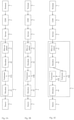
- Figs. 2A, 2B, and 2C describe an evolution of an audiovisual data distribution system in operation when the invention is used.
- this distribution system comprises a display terminal 1, at least one CDN 2, an origin server 3, simply called a server hereinafter, a processing chain 4 and a source 5.
- the source 5 comprises at least one audiovisual content, simply called content below, which can be requested by the terminal 1 according to a particular profile.
- the processing chain 4 comprises a set of processing modules comprising a decoding module 44 capable of performing audio and video decoding, an image processing module 43A capable of applying image processing A, an encoding module 42 capable of performing audio and video encoding and a packetization module 41 capable of generating segments conforming to a predetermined protocol.
- the image processing A is for example noise reduction filtering.
- Each processing module of the processing chain 4 can be a software module ("software” in English terminology) executed by one or more programmable or hardware processing units ("hardware” in English terminology) by a processing unit. dedicated treatment.
- the processing modules of the processing chain 4 can be geographically collocated and linked for example by a communication bus or dispersed and linked together by a communication network.
- the delivery system is in the process of delivering content.
- the terminal 1 has fixed a profile and the distribution system provides segments compatible with this profile.
- the terminal 1 sends a request in order to obtain said segment containing information representative of the desired profile.
- the processing chain 4 is dynamically defined for each segment by the terminal 1 or by an intermediate device which can be the CDN 2 or the server 3.
- each processing module has been chosen from a set of candidate processing modules able to apply exactly the same processing.
- each processing can be executed by different processing modules.
- a change of processing module can be motivated by a temporary unavailability of a processing module, for example, when this processing module is already used to generate another segment, by a malfunction said processing module, by an overload of the computing unit having to implement said processing module, by a choice of an operator who wishes to favor certain processing units rather than others, etc.
- a processing of B images would be more appropriate than the processing of A images.
- the processing of B images is for example a filtering making it possible to enhance contours.
- the operator sends for example a command to the terminal 1 so that the terminal 1 generates a request making it possible to modify the processing chain 4.
- the image processing module 43A is replaced by a module image processing unit 43B implementing the processing of images B.
- a processing C of the digital watermarking type is appropriate.
- the operator sends for example a command to the terminal 1 so that the terminal 1 generates a request making it possible to modify the processing chain 4.
- a digital watermarking module 43C is added to the processing chain 4 between the processing module 43B and the encoding module 42.
- Figs. 2A, 2B and 2C show that the invention allows great dynamicity and agility in the definition of the processing chain 4.
- a chain Different processing mode can be set for each segment.
- the definition of the processing chain is not only dynamic in the choice of the candidate processing module having to implement such and such a processing, but also in terms of the choice of the processing to be applied by this processing chain.
- each processing module of the processing chain 4 is implemented by an elementary module that we will describe below in relation to the Figs. 3 and 4 .
- Each elementary module makes available to the processing chain, one or more processing units to implement a processing module of the processing chain.
- One role of an elementary module in charge of processing in a processing chain is to choose which processing unit(s) from among a set of processing units of which it is aware must execute said processing.
- no processing implemented by an elementary module is executed by a processing unit defined beforehand in a centralized manner.
- each request from the terminal 1 for a segment triggers for each elementary module involved in a processing of the processing chain to produce this segment, a selection of one or more processing units. From one segment to another, the processing unit(s) selected may be different.
- an elementary module can contribute to several processing chains in parallel, each processing chain making it possible to distribute audiovisual content stored or produced live by a source to a display terminal. An elementary module is therefore not monopolized by a processing chain.
- the Fig. 5 schematically illustrates the steps of a method making it possible to activate a processing chain so that a terminal can obtain a segment.
- the method of Fig. 5 is executed by terminal 1.
- the process of the Fig. 5 allows terminal 1 to activate a processing chain in order to obtain a segment.
- the requested segment conforms to the HLS protocol and each data transmission, each request and each request are made in the form of transmissions of requests conforming to the HTTP/HTTPS protocol (secure HTTP “HTTP secured” in English terminology). Saxon).
- Terminal 1 has requested a manifest from CDN 2 regarding some content.
- the terminal 1 receives a request containing the manifest from the CDN 2. This manifest describes each profile that can be requested by the terminal 1.
- a step 601 the terminal 1 determines whether it should continue playing the current content or not, ie whether it should request a new segment, called the current segment. This information was for example provided by a user of the terminal 1. If the terminal 1 does not have to continue playing the content, the method ends during a step 602.
- step 601 is followed by a step 603.
- the terminal 1 determines whether the processing chain 4 used for the segment preceding the current segment must be modified. In other words, is it necessary to add, delete or replace a processing executed by the processing chain 4 to obtain the current segment. In one embodiment, during each change of profile, the terminal 1 considers that the processing chain 4 must be modified.
- the terminal 1 selects a profile, called current profile, from among the profiles of the manifest as a function of transmission and processing constraints obtained by the terminal 1.
- the transmission constraints are for example a measured bit rate constraint by the terminal 1.
- the processing constraints are for example a display capacity (ie a screen resolution) of the terminal 1, a number of images that can be decoded per second, etc.
- the current profile is compared to the requested profile for the segment preceding the current segment. If the two profiles are identical, the terminal 1 executes a step 605. If the two profiles are different or if the current segment is the first segment requested for the content, the terminal 1 executes a step 604.
- the terminal 1 obtains a list of processing operations representative of the processing chain 4 to be applied to a portion of the content to obtain the current segment.
- this list is deduced from the profile selected during step 603.
- the terminal 1 has for example a correspondence table associating each profile that can be requested for a content, with a list of processes.
- step 605 the terminal 1 determines whether each processing from the list of processing has been considered. If not, the terminal 1 traverses the list from the first processing in search of the next processing not yet considered.
- the terminal 1 chooses an elementary module from a set of modules capable of performing said processing.
- the terminal 1 adds an identifier made up of an address and a port number of the elementary module chosen in a request. Each identifier is written following the identifier(s) possibly already present in the request.
- Step 607 is followed by step 605, during which terminal 1 moves on to the next process in the list.
- the terminal 1 goes to a step 608.
- the terminal 1 adds information representative of the portion of the desired content to the request. This information also makes it possible to identify the source storing or producing said content directly.
- the terminal 1 obtains for each processing information representative of configuration parameters of the elementary module corresponding to said processing, the information representative of the configuration parameters having been obtained from, in particular, the profile selected during step 603.
- the terminal 1 adds information representative of configuration parameters of each module in the request.
- the conf field explicitly includes each configuration parameter to be applied to an elementary module.
- the terminal 1 transmits the request to the first elementary destination module in order to launch the execution of the processing chain and thus cause the transmission of the current segment to the terminal 1.
- the broadcast systems described in relation to the Figs. 2A, 2B and 2C include a CDN 2 and a server 3 located between the terminal 1 and the processing chain 4.
- the request transmitted by the terminal 1 passes through the server 2 and the CDN 3 without intervention of these which are satisfied with the retransmit.
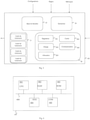
- the Fig. 3 schematically illustrates a 4X elementary module capable of performing processing of a predefined type of a processing chain.
- the 4X elementary module of the Fig. 3 is for example an elementary module implementing one of the processing modules 41 to 44. If, for example, the elementary module implements the processing module 41, the type of processing implemented by the elementary module 4X is therefore a packetization conforming to the HLS protocol.
- the elementary module 4X comprises a variable plurality of processing units 31 available to execute processing of the predefined type, the elementary module 4X regularly obtaining information representative of each processing unit added or removed from the plurality.
- Each processing unit of the plurality is said to be stateless, that is to say that it retains no information concerning a processing once the processing has been carried out.
- One advantage of a stateless processing unit is that it can easily pass from one processing to another without the successive processings relating to the same content, the same processing chain or the same terminal.
- the elementary module 4X further comprises a central module, comprising a communication module 305, an allocation module 303 and a load management module 302 and a database 35.
- the communication module 305 is capable of receiving requests for first data.
- a request for first data is for example the request transmitted by the terminal 1 during step 611 when the elementary module 4X implements the processing module 41.
- the elementary module implements the processing module 42 (respectively 43 or 44)
- a request for first data corresponds to the request transmitted by the terminal 1 during step 611 modified by the elementary module implementing the processing module 41 (respectively by the elementary modules implementing the processing modules 41 and 42 or by the elementary modules implementing the processing modules 41, 42 and 43) according to a modification procedure described in relation to the Fig. 6 .
- the first data correspond to the current segment since the module 41 is the last module of the processing chain.
- the request generated by terminal 1 requests therefore the current segment to the elementary module 4X.
- the elementary module 4X implements the processing module 42 (respectively 43 or 44)
- the first data is a result of the processing of the content portion corresponding to the identifier IDportion by the processing modules 43 and 44 (respectively of the processing of said portion of content by the processing module 44 or said portion of content).
- this request for first data comprises information representative of a processing chain to be applied to the portion of content corresponding to the identifier IDportion in order to obtain the first data and information representative of parameters configuration to be applied to at least one processing unit of said elementary module to generate the first data.
- the information representative of the processing chain ie the sequence Address1:port1/Address2:port2/Address3:port3/Address4:port4 describes the entire chain treatment.
- the information representative of the processing chain describes the processing chain up to the processing module 42 (ie Address2:port2/Address3:port3/ Address4:port4) (respectively up to module 43 (Address3:port3/Address4:port4) or 44 (Address4:port4)).
- the communication module 305 is also capable of transmitting a request for second data to the source 5 or to a unit preceding the elementary module 4X in the processing chain 4 determined from the information representative of the processing chain.
- the unit preceding the elementary module 4X is an elementary module implementing the processing module 42.
- the second data correspond to a result of an application of the processing modules 42, 43 and 44 to the portion of content corresponding to the identifier IDportion.
- the unit preceding the elementary module 4X is an elementary module implementing the processing module 43.
- the second data correspond to the result of an application of the processing modules 43 and 44 to the portion of content corresponding to the identifier IDportion.
- the unit preceding the elementary module 4X is an elementary module implementing the processing module 44.
- the second data correspond to the result of an application of the processing module 44 to the portion of content corresponding to the identifier IDportion.
- the unit preceding the elementary module 4X is the source 5.
- the second data correspond to the portion of content corresponding to the identifier IDportion.
- the communication module 305 is also capable of transmitting the first data requested to the unit having sent the request for said first data.
- the unit having sent the request is the terminal 1.
- the unit having sent the request is the elementary module putting implements the processing module 41.
- the unit having sent the request is the elementary module implementing the processing module 42.
- the unit having sent the request is the elementary module implementing the processing module 43.
- the communication module 305 is a WEB server.
- the allocation module 303 manages allocations and deallocations of processing units of the plurality as a function in particular of the requests for first data received by the elementary module 4X.
- the load management module 302 is capable of choosing for each request received at least one processing unit from among the processing units allocated by the allocation module 303 and capable of launching the processing of the type predefined by each processing unit chosen in order to obtain the requested first data from the second data.
- the database 35 is intended to store text files, for example in JSON or XML format, each containing detailed configuration parameters corresponding to the information representing the configuration parameters NomConfN contained in the requests for first data.
- the database 35 also stores text files which do not correspond directly to the profiles requested by terminals, but to so-called constrained profiles containing constrained configuration parameters set by an external entity independently of a request. first data.
- constrained configuration parameters are for example parameters imposed by an operator which do not appear in a profile. For example, these settings can force a video encoder to work with a limited number of compression tools.
- the central module 30 comprises a cache memory 304 used to temporarily store, according to a predefined cache memory management method implemented by a cache management module, first data generated by the elementary module 4X.
- the method for managing the cache memory may simply consist of keeping each first data item in the cache memory for a predefined duration and erasing these first data items after this predefined duration.
- the cache management module can calculate statistics on the requested content and adjust the retention period of the first data based on these statistics. For example, the cache memory management method may consist of increasing the predefined retention period for the first data corresponding to highly requested content and decreasing the retention period for the first data. corresponding to content that is not in high demand.
- the communication module 305 implements the cache memory management method. In this case, the 4X elementary module does not include a cache management module.
- the 4X elementary module comprises an extraction module 36 able to extract the information representative of the configuration parameters of each request for first data received by the 4X elementary module.
- the central module 30 comprises a regulation module 301 supplying cache management rules taken into account in the cache management procedure, allocation rules to the allocation module 303 and management rules load to the load management module 302, the regulation module storing predefined management rules or receiving management rules from an external entity.
- the cache management rules set, for example, the duration of conservation of the first data in the cache memory 304.
- the allocation rules set for example, which processing units must be allocated or deallocated in priority according to criteria of computing capacity, of energy consumption or financial cost of using each processing unit.
- the load management rules can for example fix when a processing unit is considered to be overloaded and that it must no longer be requested for new processing operations.
- the modules 30, 301, 302, 303, 305 and 36, the database 35, and the cache memory 304 are included in a single 4Y device and linked together by a communication bus.
- the processing units of the plurality 31 are included in the equipment 4Y or included in other equipment connected to the equipment 4Y by a communication network.
- the Fig. 4 illustrates an example of hardware architecture of a 4Y device used in the context of the invention.
- the equipment 4Y implements the modules 30, 301, 302, 303, 305 and 36, the database 35, and the cache memory 304 and includes certain processing units of the plurality 31.
- the equipment 4Y then comprises, connected by a communication bus 400: a plurality of processing units 401; RAM 402; a ROM 403; a storage unit or storage media reader, such as an SD card reader 404; a set of communication interfaces 405 allowing the 4Y equipment to communicate with other units of the processing chain, i.e. with other elementary modules, with the source 5, the terminal 1 and with other equipment.
- storage unit 404 stores database 35 and cache memory 304.
- Each processing unit of the plurality 401 is capable of executing instructions loaded into RAM 402 from ROM 403, external memory (not shown), storage medium, such as an SD card , or a communication network. When the 4Y equipment is powered up, each processing unit of the plurality 401 is capable of reading instructions from RAM 402 and executing them.
- Each module of the 4X elementary module, the processing of the predefined processing type implemented by the 4X elementary module and the method described later in relation to the Fig. 6 is represented in the form of instructions forming a computer program. When one or more processing units load a computer program corresponding to a module (respectively to a processing or to the process described in relation to the Fig. 6 ) it implements said module (respectively said processing or said method).
- each processing unit of the plurality is a physical processor (or logic implemented by a physical processor), a microcontroller or a DSP ("Digital Signal Processor" in English terminology) loading one computer programs.
- a physical processor or logic implemented by a physical processor
- microcontroller or a DSP ("Digital Signal Processor" in English terminology) loading one computer programs.
- DSP Digital Signal Processor
- all or part of the modules, the processing of the predefined type of processing or the method described in relation to the Fig. 6 can be implemented in hardware form by a dedicated machine or component, such as an FPGA (“Field-Programmable Gate Array” in English terminology) or an ASIC (“Application-Specific Integrated Circuit” in English terminology) .
- a dedicated machine or component such as an FPGA (“Field-Programmable Gate Array” in English terminology) or an ASIC (“Application-Specific Integrated Circuit” in English terminology) .
- the modules of the elementary module 4X, the database 35, and the cache memory 304 are totally or partially dispersed on different equipment, and linked together by a communication bus when they are on the same equipment or by a communication network when they are on different equipment.
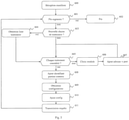
- the Fig. 6 schematically illustrates a method executed by an elementary module upon receipt of one or more requests for first data.
- the communication module 305 of the elementary module 4X receives a request for first data.
- the request for first data corresponds to the request transmitted by the terminal 1 during step 611.
- the communication module 305 of the elementary module 4X can receive several requests for first data almost simultaneously.
- the communication module 305 can receive several requests for first data from several terminals.
- the communication module 305 of the elementary module 4X checks for each request for first data received, the presence of said first data in the cache memory 304.
- the extraction module 36 extracts during a step 702 the information representative of the parameters of configuring said request for first data.
- the elementary module 4X not having the first data at its disposal, it must request them.
- the communication module 305 transmits during a step 704 a request for second data to the source 5 or to a unit preceding the elementary module 4X in the processing chain 4.
- the module determines during a step 703 to whom he must transmit the request for second data based on the information representative of the processing chain.
- the unit preceding the elementary module 4X in the processing chain is either the source 5 or an elementary module. If the elementary module 4X implements the processing module 41, the elementary module preceding the elementary module 4X in the processing chain 4 is an elementary module implementing the processing module 42.
- the second data request corresponds to a modified version of the first data request. During the modification, the communication module removes the identifier of the elementary module 4X from the request for first data.
- the request for first data comprises the following sequence: http:// purse1:port1/ ist2:port2/ ist2/ ist3:port3/ ist4:port4/IDportion?Conf and becomes: http://Address2:port2/Address3:port3/Address4:port4/IDportion?Conf when modified to get the second data request.
- the allocation module 303 determines whether one or more processing units of the plurality must be allocated or deallocated and allocates and/or deallocates at least one processing unit when necessary according to the request or requests received.
- the processing unit(s) allocated during step 705 are added to the processing units of the plurality already allocated by the allocation module 303.
- the processing unit(s) deallocated during step 705 are subtracted processing units of the plurality already allocated by the allocation module 303.
- the allocation module 303 applies an allocation procedure.
- the allocation procedure consists for example of allocating a first predefined number of processing units when a difference between a number of processing units allocated and a number of active processing units is less than a first threshold.
- Each processing unit is associated with a list of processing operations of the predefined type of processing to be performed, each processing operation in the list corresponding to a request for first data.
- Allocated processing units that have at least one processing in their list are considered active.
- Allocated processing units that have no processing in their list are considered inactive.
- the allocation procedure also consists, for example, in deallocating a second predefined number of processing units when a difference between the number of processing units allocated and the number of active processing units is greater than a second threshold. Only inactive processing units can be deallocated.
- the first predefined number is greater than the second predefined number.
- the load management module 302 chooses for each request for first data at least one processing unit from among the processing units allocated to execute the processing of the type of processing corresponding to said request. To do this, for example, the load management module 302 chooses the allocated processing units whose associated processing list contains the least processing. In another embodiment, the load management module 302 traverses all the processing units in a circular manner and at each new request for first data advances by one processing unit in its path and chooses the processing unit obtained to execute the processing corresponding to said request. Each chosen processing unit is activated by the load management module 302 so that it applies the type of predefined processing to the second data upon receipt of the second data.
- each processing unit prior to the execution of a processing operation corresponding to a request for first data, each processing unit interrogates the database with the information representative of the configuration parameters extracted from said request for first data by the extraction module 36 to obtain the configuration parameters corresponding to the processing that it must execute.
- Each processing unit chosen to execute a processing requested by a request for first data must therefore wait for the reception of the second data requested during step 704 in order to be able to apply the processing of the predefined type of processing to said second data in order to obtain said first data.
- Step 706 and step 701 are followed by a step 707 during which, for each request for first data, the communication module 305 transmits the first data when they are available to the unit having issued the request. for said first data.
- the unit having sent the request for said first data is either the terminal 1 (when the elementary module 4X implements the processing module 41), or an elementary module (when the elementary module 4X implements the processing module 42 or 43 or 44).
- the extraction module 36 extracts each information representative of configuration parameters from each request for first data and stores this information in the database 35.
- Each processing unit of the plurality 31 having to execute a processing interrogates the database to obtain said information and then find the configuration parameters corresponding to this information.
- Each piece of information representative of configuration parameters thus stored can be used for statistical purposes.
- the procedure for launching the processing chain is executed by the CDN 2 or the server 3.
- the terminal 1 transmits a request, for example in accordance with the HLS protocol, to obtain said segment and the CDN 2 or the server 3 translates this request into a request in accordance with the invention as for example described in relation to step 610.
- the procedure for launching the processing chain is executed by the CDN 2 independently of any request from a terminal.
- the CDN 2 anticipates future requests from clients.
- the segments thus obtained are kept at least temporarily by the CDN 2.
- each processing unit of the plurality available to perform processing of the predefined type corresponding to a 4X elementary module registers with a unit such as a server, called registration server, with which each elementary module can communicate using a communication network.
- registration server a unit such as a server, called registration server, with which each elementary module can communicate using a communication network.
- each elementary module interrogates the registration server in order to obtain the list of processing units that it could use.
- an elementary module allocates a processing unit from the list kept by the registration server, it informs the registration server which deletes this processing unit from the list.
- each processing module of the processing chain 4 was implemented by an elementary module.
- only certain processing modules of the processing chain 4 are implemented by an elementary module according to the invention.
- the other processing modules are implemented by conventional equipment of a processing chain.
- an elementary module must transmit a request for second data to a processing module implemented by conventional equipment, the latter translates its request for second data into a format conforming to a protocol understood by the conventional equipment and transmits the request translated to said classic equipment.
- an elementary module receives a request for first data from a processing module implemented by conventional equipment, the latter translates this request for first data into a format conforming to the format described for example in relation to the step 610.
Landscapes
- Engineering & Computer Science (AREA)
- Multimedia (AREA)
- Signal Processing (AREA)
- Databases & Information Systems (AREA)
- Computer Networks & Wireless Communication (AREA)
- Information Transfer Between Computers (AREA)
Claims (14)
- Elementarmodul (4X), das dazu bestimmt ist, in mindestens einem Verarbeitungsablauf eines Systems verwendet zu werden, das es ermöglicht, gespeicherte oder direkt von Quellen erzeugte audiovisuelle Inhalte an Anzeigeendgeräte zu verteilen, wobei jeder Inhalt in Form einer Folge von aufeinanderfolgenden Dateien, Segmente genannt, von einem Endgerät empfangen wird, wobei jedes Segment nach einer Übertragung eines Antrags durch ein Endgerät an das Endgerät verteilt und durch eine Anwendung eines Verarbeitungsablaufs an einen Abschnitt eines Inhalts erhalten wird, wobei das Elementarmodul fähig ist, eine Verarbeitung eines vordefinierten Typs des Verarbeitungsablaufs auszuführen, dadurch gekennzeichnet, dass das Elementarmodul enthält:- eine variable Vielzahl (31) von verfügbaren Verarbeitungseinheiten, um die Verarbeitung des vordefinierten Typs auszuführen, wobei das Elementarmodul (4X) fähig ist, regelmäßig eine für jede der Vielzahl hinzugefügte oder aus ihr gelöschte Verarbeitungseinheit repräsentative Information zu erhalten, wobei jede Verarbeitungseinheit keine eine Verarbeitung betreffende Information aufrechterhält, wenn die Verarbeitung ausgeführt wurde;- ein Modul (30), zentrales Modul genannt, das ein Kommunikationsmodul (305) enthält, das fähig ist, Anforderungen erster Daten zu empfangen, wobei jede Anforderung eine Information, die für einen Verarbeitungsablauf repräsentativ ist, der an einen Abschnitt eines Inhalts anzuwenden ist, der einem in einem Antrag von einem Endgerät angeforderten Segment entspricht, um die ersten Daten zu erhalten, und eine Information enthält, die für Konfigurationsparameter repräsentativ ist, die an mindestens eine Verarbeitungseinheit des Elementarmoduls anzuwenden sind, um die ersten Daten zu generieren, wobei jede Verarbeitungseinheit fähig ist, die in einer Anforderung erster Daten enthaltene, für die Konfigurationsparameter repräsentative Information zu berücksichtigen, um eine Verarbeitung entsprechend der Anforderung erster Daten auszuführen; fähig ist, eine Anforderung zweiter Daten an eine Quelle oder an eine dem Elementarmodul im Verarbeitungsablauf vorhergehende Einheit zu übertragen, die ausgehend von der für den Verarbeitungsablauf repräsentativen Information bestimmt wird, wobei die zweiten Daten dem von einer oder mehreren im Verarbeitungsablauf dem Elementarmodul vorhergehenden Einheiten verarbeiteten oder nicht verarbeiteten Abschnitt entsprechen; und fähig ist, erste Daten, wenn sie verfügbar sind, an eine Einheit zu übertragen, die eine Anforderung für die ersten Daten gesendet hat;- ein Zuweisungsmodul (303), das fähig ist, Zuweisungen und Freigaben von Verarbeitungseinheiten der Vielzahl abhängig von empfangenen Anforderungen erster Daten zu verwalten; und- ein Lastverwaltungsmodul (302), das fähig ist, für jede empfangene Anforderung mindestens eine Verarbeitungseinheit unter zugewiesenen Verarbeitungseinheiten zu wählen, um zweite Daten zu verarbeiten, um erste angeforderte Daten zu erhalten, und fähig ist, die Verarbeitung des vordefinierten Typs durch jede gewählte Verarbeitungseinheit zu starten.
- Elementarmodul nach Anspruch 1, dadurch gekennzeichnet, dass jede Verarbeitungseinheit fähig ist, eine im zentralen Modul enthaltene Datenbank (35) zu befragen, um Konfigurationsparameter zu erhalten, die der für Konfigurationsparameter repräsentativen Information entsprechen, ehe eine einer Anforderung erster Daten entsprechende Verarbeitung ausgeführt wird.
- Elementarmodul nach Anspruch 1 oder 2, dadurch gekennzeichnet, dass das zentrale Modul einen Cache-Speicher (304) enthält, und dass das Kommunikationsmodul konfiguriert ist, eine Anforderung zweiter Daten zu übertragen, wenn die angeforderten ersten Daten im Cache-Speicher fehlen.
- Elementarmodul nach einem der Ansprüche 2 oder 3, dadurch gekennzeichnet, dass die Datenbank fähig ist, Konfigurationsparameter zu enthalten, die unabhängig von einer Anforderung erster Daten festgelegt sind.
- Elementarmodul nach einem der Ansprüche 2, 3 oder 4, dadurch gekennzeichnet, dass die Datenbank und jedes Modul des Elementarmoduls auf einer gleichen Ausrüstung zusammen lokalisiert oder vollständig oder teilweise auf getrennte Ausrüstungen verstreut sind, die durch ein Kommunikationsnetz verbunden sind.
- Elementarmodul nach einem der vorhergehenden Ansprüche, dadurch gekennzeichnet, dass es ein Entnahmemodul (36) enthält, das fähig ist, die für die Konfigurationsparameter repräsentative Information aus jeder Anforderung empfangener erster Daten zu entnehmen.
- Elementarmodul nach einem der vorhergehenden Ansprüche, dadurch gekennzeichnet, dass es Einrichtungen zur Ausführung eines Verwaltungsverfahrens des Cache-Speichers enthält, das Dateneingänge und -ausgänge des Cache-Speichers verwaltet.
- Elementarmodul nach Anspruch 7, dadurch gekennzeichnet, dass es ein Regelungsmodul (301) enthält, das fähig ist, Verwaltungsregeln an das Cache-Verwaltungsmodul, an das Zuweisungsmodul und an das Lastverwaltungsmodul zu liefern, wobei das Regelungsmodul fähig ist, vordefinierte Verwaltungsregeln zu speichern oder Verwaltungsregeln von einer externen Entität zu empfangen.
- Verarbeitungsverfahren, das von einem Elementarmodul ausgeführt wird, das einen vordefinierten Verarbeitungstyp in mindestens einem Verarbeitungsablauf eines Verteilungssystems von gespeicherten oder direkt von Quellen generierten audiovisuellen Inhalten an Anzeigeendgeräte ausführt, wobei jede Verteilung von Inhalten in Form von Dateien, Segmente genannt, erfolgt, wobei jedes an ein Endgerät verteilte Segment Gegenstand eines vom Endgerät übertragenen Antrags war und aus einer Anwendung eines Verarbeitungsablaufs an einen vom Antrag angeforderten Inhaltsabschnitt resultiert, dadurch gekennzeichnet, dass das Verfahren enthält:- Empfangen (700) mindestens einer Anforderung erster Daten, wobei jede Anforderung eine Information, die für einen Verarbeitungsablauf repräsentativ ist, der an einen Abschnitt eines Inhalts entsprechend einem in einem Antrag durch ein Endgerät angeforderten Segment anzuwenden ist, um die ersten Daten zu erhalten, und eine Information enthält, die für Konfigurationsparameter repräsentativ ist, die an mindestens eine Verarbeitungseinheit anzuwenden sind, um die ersten Daten zu generieren;- Entnahme (702) der für die in der Anforderung enthaltenen Konfigurationsparameter repräsentativen Information und (703, 704) Übertragen einer Anforderung zweiter Daten an eine Quelle oder an eine dem Elementarmodul in dem Verarbeitungsablauf vorhergehende Einheit, die ausgehend von der für den Verarbeitungsablauf repräsentativen Information bestimmt wird, wobei die zweiten Daten dem Abschnitt entsprechen, der von einer oder mehreren dem Elementarmodul im Verarbeitungsablauf vorhergehenden Einheiten verarbeitet wurde oder nicht;- Bestimmen (705), ob eine oder mehrere Verarbeitungseinheiten des Elementarmoduls zugewiesen oder freigegeben werden müssen, und Zuweisung und/oder Freigabe mindestens einer Verarbeitungseinheit falls nötig, abhängig von der oder den empfangenen Anforderungen, wobei jede Verarbeitungseinheit zu einer Vielzahl von verfügbaren Verarbeitungseinheiten gehört, um die Verarbeitung des vordefinierten Verarbeitungstyps auszuführen, wobei das Elementarmodul regelmäßig eine Information erhält, die für jede hinzugefügte oder gelöschte Verarbeitungseinheit der Vielzahl repräsentativ ist;- Wählen (706) für jede Anforderung mindestens einer Verarbeitungseinheit unter den zugewiesenen Verarbeitungseinheiten und Aktivieren jeder gewählten Verarbeitungseinheit, damit sie den vordefinierten Verarbeitungstyp an die zweiten Daten bei Empfang der zweiten Daten anwendet, wobei jede Verarbeitungseinheit die Information berücksichtigt, die für die Konfigurationsparameter repräsentativ ist, die der Verarbeitung entsprechen, die sie ausführen muss; und- für jede Anforderung, Übertragen (707) der ersten Daten, wenn sie verfügbar sind, an eine Einheit, die die Anforderung für die ersten Daten gesendet hat; wobei jede Verarbeitungseinheit keine Information betreffend eine Verarbeitung aufrechterhält, sobald die Verarbeitung ausgeführt wurde.
- Verfahren nach Anspruch 9, dadurch gekennzeichnet, dass jede Verarbeitungseinheit, die eine in einer Anforderung erster Daten angeforderte Verarbeitung ausführen muss, eine Datenbank befragt, indem sie die für in der Anforderung enthaltenen Konfigurationsparameter repräsentative Information verwendet, um Konfigurationsparameter zu erhalten, die der für die Verarbeitung anzuwendenden Information entsprechen.
- Verfahren nach Anspruch 9 oder 10, dadurch gekennzeichnet, dass das Verfahren für jede Anforderung vor der Übertragung einer Anforderung für zweite Daten die Überprüfung eines Vorhandenseins der ersten Daten in einem Cache-Speicher des Elementarmoduls und die Übertragung der zweiten Anforderung enthält, wenn die ersten Daten im Cache-Speicher fehlen.
- System zur Verteilung audiovisueller Inhalte, die gespeichert sind oder direkt von Quellen erzeugt werden, an Anzeigeendgeräte, wobei jeder Inhalt von einem Endgerät in Form einer Folge aufeinanderfolgender Dateien, Segmente genannt, empfangen wird, wobei jedes Segment an ein Endgerät nach einer Übertragung eines Antrags durch das Endgerät verteilt und durch eine Anwendung eines Verarbeitungsablaufs an einen Abschnitt eines Inhalts erhalten wird, dadurch gekennzeichnet, dass mindestens ein vom Verteilungssystem verwendeter Verarbeitungsablauf mindestens ein Elementarmodul gemäß den Ansprüchen 1 bis 8 enthält, das fähig ist, eine Verarbeitung eines vordefinierten Verarbeitungstyps durchzuführen.
- Computerprogrammprodukt, dadurch gekennzeichnet, dass es Anweisungen aufweist, um durch eine Ausrüstung das Verfahren nach Anspruch 9, 10 oder 11 durch einen Prozessor der Ausrüstung auszuführen.
- Speichereinrichtungen, dadurch gekennzeichnet, dass sie fähig sind, ein Computerprogramm zu speichern, das Anweisungen aufweist, um durch eine Ausrüstung das Verfahren nach Anspruch 9, 10 oder 11 durchzuführen, wenn das Programm von einem Prozessor der Ausrüstung ausgeführt wird.
Applications Claiming Priority (1)
| Application Number | Priority Date | Filing Date | Title |
|---|---|---|---|
| FR1874299A FR3091438B1 (fr) | 2018-12-28 | 2018-12-28 | Module elementaire d’un systeme de distribution d’un contenu audiovisuel |
Publications (2)
| Publication Number | Publication Date |
|---|---|
| EP3675425A1 EP3675425A1 (de) | 2020-07-01 |
| EP3675425B1 true EP3675425B1 (de) | 2022-03-02 |
Family
ID=67262417
Family Applications (1)
| Application Number | Title | Priority Date | Filing Date |
|---|---|---|---|
| EP19219415.7A Active EP3675425B1 (de) | 2018-12-28 | 2019-12-23 | Basismodul eines system zur verteilung von audiovisuellem inhalt |
Country Status (4)
| Country | Link |
|---|---|
| US (1) | US10958945B2 (de) |
| EP (1) | EP3675425B1 (de) |
| FR (1) | FR3091438B1 (de) |
| IL (1) | IL271676A (de) |
Family Cites Families (6)
| Publication number | Priority date | Publication date | Assignee | Title |
|---|---|---|---|---|
| US10148716B1 (en) * | 2012-04-09 | 2018-12-04 | Conviva Inc. | Dynamic generation of video manifest files |
| CN104811326A (zh) * | 2014-01-24 | 2015-07-29 | 中兴通讯股份有限公司 | 一种管理业务链的方法、系统及装置 |
| US9860339B2 (en) * | 2015-06-23 | 2018-01-02 | At&T Intellectual Property I, L.P. | Determining a custom content delivery network via an intelligent software-defined network |
| US10306308B2 (en) * | 2015-12-15 | 2019-05-28 | Telefonaktiebolaget Lm Ericsson (Publ) | System and method for media delivery using common mezzanine distribution format |
| WO2018222996A1 (en) * | 2017-06-02 | 2018-12-06 | Vid Scale, Inc. | 360-degree video delivery over next generation network |
| US12069115B2 (en) * | 2017-11-29 | 2024-08-20 | Comcast Cable Communications, Llc | Video streaming delivery |
-
2018
- 2018-12-28 FR FR1874299A patent/FR3091438B1/fr not_active Expired - Fee Related
-
2019
- 2019-12-23 EP EP19219415.7A patent/EP3675425B1/de active Active
- 2019-12-24 IL IL271676A patent/IL271676A/en unknown
- 2019-12-27 US US16/728,491 patent/US10958945B2/en active Active
Also Published As
| Publication number | Publication date |
|---|---|
| IL271676A (en) | 2020-06-30 |
| FR3091438B1 (fr) | 2021-12-31 |
| US20200213628A1 (en) | 2020-07-02 |
| US10958945B2 (en) | 2021-03-23 |
| FR3091438A1 (fr) | 2020-07-03 |
| EP3675425A1 (de) | 2020-07-01 |
Similar Documents
| Publication | Publication Date | Title |
|---|---|---|
| US8560729B2 (en) | Method and apparatus for the adaptation of multimedia content in telecommunications networks | |
| EP3000215B1 (de) | Live-medienverarbeitungs- und streaming-dienst | |
| US9923945B2 (en) | Virtual assets for on-demand content generation | |
| US20140119428A1 (en) | System and method for providing intelligent chunk duration | |
| US11831700B2 (en) | Embedding MQTT messages in media streams | |
| US20170237794A1 (en) | Technologies for distributed fault-tolerant transcoding with synchronized streams | |
| EP3225027A1 (de) | Verfahren zur zusammenstellung eines zwischenvideodarstellung | |
| EP3780632B1 (de) | System zur verbreitung eines audiovisuellen inhalts | |
| EP2947888A1 (de) | Verfahren zum adaptiven herunterladen von digitalen inhalten für mehrere bildschirme | |
| EP3675425B1 (de) | Basismodul eines system zur verteilung von audiovisuellem inhalt | |
| US11316794B1 (en) | Method and system for improving adaptive bit rate content and data delivery | |
| EP3245794A1 (de) | Verfahren zur übertragung eines datenstroms unter verwendung eines direkten rundfunkprotokolls | |
| EP3675505B1 (de) | Verfahren und system zur verbreitung audiovisueller inhalte | |
| US11611635B1 (en) | Content creation utilizing micro-services | |
| FR3004055A1 (fr) | Transcodage et diffusion adaptative de contenus multimedia | |
| FR3007615A1 (fr) | Procede d'amelioration du temps de changement entre programmes audiovisuels | |
| EP3481069B1 (de) | Verfahren und system zur verarbeitung eines multimedia-inhalts in einem ballungsgebiet | |
| FR3055762A1 (fr) | Procede et dispositif d'encodage d'un contenu audiovisuel destine a etre diffuse par telechargements successifs de morceaux de donnees | |
| EP4564823A1 (de) | Gateway zur lokalen kodierung von terrestrischen digitalen fernsehinhalten in http-adaptiven inhaltssegmenten | |
| FR3167507A1 (fr) | Système et procédé de transcodage de flux vidéo | |
| EP2879352A1 (de) | Kontrolle der Verbreitung von Multimediadaten |
Legal Events
| Date | Code | Title | Description |
|---|---|---|---|
| PUAI | Public reference made under article 153(3) epc to a published international application that has entered the european phase |
Free format text: ORIGINAL CODE: 0009012 |
|
| STAA | Information on the status of an ep patent application or granted ep patent |
Free format text: STATUS: THE APPLICATION HAS BEEN PUBLISHED |
|
| AK | Designated contracting states |
Kind code of ref document: A1 Designated state(s): AL AT BE BG CH CY CZ DE DK EE ES FI FR GB GR HR HU IE IS IT LI LT LU LV MC MK MT NL NO PL PT RO RS SE SI SK SM TR |
|
| AX | Request for extension of the european patent |
Extension state: BA ME |
|
| STAA | Information on the status of an ep patent application or granted ep patent |
Free format text: STATUS: REQUEST FOR EXAMINATION WAS MADE |
|
| 17P | Request for examination filed |
Effective date: 20201208 |
|
| RBV | Designated contracting states (corrected) |
Designated state(s): AL AT BE BG CH CY CZ DE DK EE ES FI FR GB GR HR HU IE IS IT LI LT LU LV MC MK MT NL NO PL PT RO RS SE SI SK SM TR |
|
| GRAP | Despatch of communication of intention to grant a patent |
Free format text: ORIGINAL CODE: EPIDOSNIGR1 |
|
| STAA | Information on the status of an ep patent application or granted ep patent |
Free format text: STATUS: GRANT OF PATENT IS INTENDED |
|
| GRAJ | Information related to disapproval of communication of intention to grant by the applicant or resumption of examination proceedings by the epo deleted |
Free format text: ORIGINAL CODE: EPIDOSDIGR1 |
|
| RIC1 | Information provided on ipc code assigned before grant |
Ipc: H04L 29/06 20060101AFI20210505BHEP Ipc: H04L 29/08 20060101ALN20210505BHEP Ipc: H04L 12/24 20060101ALN20210505BHEP |
|
| GRAP | Despatch of communication of intention to grant a patent |
Free format text: ORIGINAL CODE: EPIDOSNIGR1 |
|
| STAA | Information on the status of an ep patent application or granted ep patent |
Free format text: STATUS: REQUEST FOR EXAMINATION WAS MADE |
|
| GRAJ | Information related to disapproval of communication of intention to grant by the applicant or resumption of examination proceedings by the epo deleted |
Free format text: ORIGINAL CODE: EPIDOSDIGR1 |
|
| INTG | Intention to grant announced |
Effective date: 20210602 |
|
| RIC1 | Information provided on ipc code assigned before grant |
Ipc: H04L 29/06 20060101AFI20210521BHEP Ipc: H04L 29/08 20060101ALN20210521BHEP Ipc: H04L 12/24 20060101ALN20210521BHEP |
|
| INTG | Intention to grant announced |
Effective date: 20210617 |
|
| INTC | Intention to grant announced (deleted) | ||
| REG | Reference to a national code |
Ref country code: DE Ref legal event code: R079 Ref document number: 602019012102 Country of ref document: DE Free format text: PREVIOUS MAIN CLASS: H04L0012240000 Ipc: H04L0029060000 |
|
| GRAP | Despatch of communication of intention to grant a patent |
Free format text: ORIGINAL CODE: EPIDOSNIGR1 |
|
| STAA | Information on the status of an ep patent application or granted ep patent |
Free format text: STATUS: GRANT OF PATENT IS INTENDED |
|
| GRAJ | Information related to disapproval of communication of intention to grant by the applicant or resumption of examination proceedings by the epo deleted |
Free format text: ORIGINAL CODE: EPIDOSDIGR1 |
|
| GRAP | Despatch of communication of intention to grant a patent |
Free format text: ORIGINAL CODE: EPIDOSNIGR1 |
|
| RIC1 | Information provided on ipc code assigned before grant |
Ipc: H04L 12/24 20060101ALN20210909BHEP Ipc: H04L 29/08 20060101ALN20210909BHEP Ipc: H04L 29/06 20060101AFI20210909BHEP |
|
| RIC1 | Information provided on ipc code assigned before grant |
Ipc: H04L 12/24 20060101ALN20210913BHEP Ipc: H04L 29/08 20060101ALN20210913BHEP Ipc: H04L 29/06 20060101AFI20210913BHEP |
|
| INTG | Intention to grant announced |
Effective date: 20211001 |
|
| RIC1 | Information provided on ipc code assigned before grant |
Ipc: H04L 12/24 20060101ALN20210922BHEP Ipc: H04L 29/08 20060101ALN20210922BHEP Ipc: H04L 29/06 20060101AFI20210922BHEP |
|
| INTG | Intention to grant announced |
Effective date: 20211013 |
|
| GRAS | Grant fee paid |
Free format text: ORIGINAL CODE: EPIDOSNIGR3 |
|
| GRAA | (expected) grant |
Free format text: ORIGINAL CODE: 0009210 |
|
| STAA | Information on the status of an ep patent application or granted ep patent |
Free format text: STATUS: THE PATENT HAS BEEN GRANTED |
|
| AK | Designated contracting states |
Kind code of ref document: B1 Designated state(s): AL AT BE BG CH CY CZ DE DK EE ES FI FR GB GR HR HU IE IS IT LI LT LU LV MC MK MT NL NO PL PT RO RS SE SI SK SM TR |
|
| REG | Reference to a national code |
Ref country code: GB Ref legal event code: FG4D Free format text: NOT ENGLISH |
|
| REG | Reference to a national code |
Ref country code: CH Ref legal event code: EP Ref country code: AT Ref legal event code: REF Ref document number: 1473201 Country of ref document: AT Kind code of ref document: T Effective date: 20220315 |
|
| REG | Reference to a national code |
Ref country code: DE Ref legal event code: R096 Ref document number: 602019012102 Country of ref document: DE |
|
| REG | Reference to a national code |
Ref country code: IE Ref legal event code: FG4D Free format text: LANGUAGE OF EP DOCUMENT: FRENCH |
|
| REG | Reference to a national code |
Ref country code: LT Ref legal event code: MG9D |
|
| REG | Reference to a national code |
Ref country code: NL Ref legal event code: MP Effective date: 20220302 |
|
| PG25 | Lapsed in a contracting state [announced via postgrant information from national office to epo] |
Ref country code: SE Free format text: LAPSE BECAUSE OF FAILURE TO SUBMIT A TRANSLATION OF THE DESCRIPTION OR TO PAY THE FEE WITHIN THE PRESCRIBED TIME-LIMIT Effective date: 20220302 Ref country code: RS Free format text: LAPSE BECAUSE OF FAILURE TO SUBMIT A TRANSLATION OF THE DESCRIPTION OR TO PAY THE FEE WITHIN THE PRESCRIBED TIME-LIMIT Effective date: 20220302 Ref country code: NO Free format text: LAPSE BECAUSE OF FAILURE TO SUBMIT A TRANSLATION OF THE DESCRIPTION OR TO PAY THE FEE WITHIN THE PRESCRIBED TIME-LIMIT Effective date: 20220602 Ref country code: LT Free format text: LAPSE BECAUSE OF FAILURE TO SUBMIT A TRANSLATION OF THE DESCRIPTION OR TO PAY THE FEE WITHIN THE PRESCRIBED TIME-LIMIT Effective date: 20220302 Ref country code: HR Free format text: LAPSE BECAUSE OF FAILURE TO SUBMIT A TRANSLATION OF THE DESCRIPTION OR TO PAY THE FEE WITHIN THE PRESCRIBED TIME-LIMIT Effective date: 20220302 Ref country code: ES Free format text: LAPSE BECAUSE OF FAILURE TO SUBMIT A TRANSLATION OF THE DESCRIPTION OR TO PAY THE FEE WITHIN THE PRESCRIBED TIME-LIMIT Effective date: 20220302 Ref country code: BG Free format text: LAPSE BECAUSE OF FAILURE TO SUBMIT A TRANSLATION OF THE DESCRIPTION OR TO PAY THE FEE WITHIN THE PRESCRIBED TIME-LIMIT Effective date: 20220602 |
|
| REG | Reference to a national code |
Ref country code: AT Ref legal event code: MK05 Ref document number: 1473201 Country of ref document: AT Kind code of ref document: T Effective date: 20220302 |
|
| PG25 | Lapsed in a contracting state [announced via postgrant information from national office to epo] |
Ref country code: PL Free format text: LAPSE BECAUSE OF FAILURE TO SUBMIT A TRANSLATION OF THE DESCRIPTION OR TO PAY THE FEE WITHIN THE PRESCRIBED TIME-LIMIT Effective date: 20220302 Ref country code: LV Free format text: LAPSE BECAUSE OF FAILURE TO SUBMIT A TRANSLATION OF THE DESCRIPTION OR TO PAY THE FEE WITHIN THE PRESCRIBED TIME-LIMIT Effective date: 20220302 Ref country code: GR Free format text: LAPSE BECAUSE OF FAILURE TO SUBMIT A TRANSLATION OF THE DESCRIPTION OR TO PAY THE FEE WITHIN THE PRESCRIBED TIME-LIMIT Effective date: 20220603 Ref country code: FI Free format text: LAPSE BECAUSE OF FAILURE TO SUBMIT A TRANSLATION OF THE DESCRIPTION OR TO PAY THE FEE WITHIN THE PRESCRIBED TIME-LIMIT Effective date: 20220302 |
|
| PG25 | Lapsed in a contracting state [announced via postgrant information from national office to epo] |
Ref country code: NL Free format text: LAPSE BECAUSE OF FAILURE TO SUBMIT A TRANSLATION OF THE DESCRIPTION OR TO PAY THE FEE WITHIN THE PRESCRIBED TIME-LIMIT Effective date: 20220302 |
|
| PG25 | Lapsed in a contracting state [announced via postgrant information from national office to epo] |
Ref country code: SM Free format text: LAPSE BECAUSE OF FAILURE TO SUBMIT A TRANSLATION OF THE DESCRIPTION OR TO PAY THE FEE WITHIN THE PRESCRIBED TIME-LIMIT Effective date: 20220302 Ref country code: SK Free format text: LAPSE BECAUSE OF FAILURE TO SUBMIT A TRANSLATION OF THE DESCRIPTION OR TO PAY THE FEE WITHIN THE PRESCRIBED TIME-LIMIT Effective date: 20220302 Ref country code: RO Free format text: LAPSE BECAUSE OF FAILURE TO SUBMIT A TRANSLATION OF THE DESCRIPTION OR TO PAY THE FEE WITHIN THE PRESCRIBED TIME-LIMIT Effective date: 20220302 Ref country code: PT Free format text: LAPSE BECAUSE OF FAILURE TO SUBMIT A TRANSLATION OF THE DESCRIPTION OR TO PAY THE FEE WITHIN THE PRESCRIBED TIME-LIMIT Effective date: 20220704 Ref country code: EE Free format text: LAPSE BECAUSE OF FAILURE TO SUBMIT A TRANSLATION OF THE DESCRIPTION OR TO PAY THE FEE WITHIN THE PRESCRIBED TIME-LIMIT Effective date: 20220302 Ref country code: CZ Free format text: LAPSE BECAUSE OF FAILURE TO SUBMIT A TRANSLATION OF THE DESCRIPTION OR TO PAY THE FEE WITHIN THE PRESCRIBED TIME-LIMIT Effective date: 20220302 Ref country code: AT Free format text: LAPSE BECAUSE OF FAILURE TO SUBMIT A TRANSLATION OF THE DESCRIPTION OR TO PAY THE FEE WITHIN THE PRESCRIBED TIME-LIMIT Effective date: 20220302 |
|
| PG25 | Lapsed in a contracting state [announced via postgrant information from national office to epo] |
Ref country code: IS Free format text: LAPSE BECAUSE OF FAILURE TO SUBMIT A TRANSLATION OF THE DESCRIPTION OR TO PAY THE FEE WITHIN THE PRESCRIBED TIME-LIMIT Effective date: 20220702 Ref country code: AL Free format text: LAPSE BECAUSE OF FAILURE TO SUBMIT A TRANSLATION OF THE DESCRIPTION OR TO PAY THE FEE WITHIN THE PRESCRIBED TIME-LIMIT Effective date: 20220302 |
|
| REG | Reference to a national code |
Ref country code: DE Ref legal event code: R097 Ref document number: 602019012102 Country of ref document: DE |
|
| PLBE | No opposition filed within time limit |
Free format text: ORIGINAL CODE: 0009261 |
|
| STAA | Information on the status of an ep patent application or granted ep patent |
Free format text: STATUS: NO OPPOSITION FILED WITHIN TIME LIMIT |
|
| PG25 | Lapsed in a contracting state [announced via postgrant information from national office to epo] |
Ref country code: DK Free format text: LAPSE BECAUSE OF FAILURE TO SUBMIT A TRANSLATION OF THE DESCRIPTION OR TO PAY THE FEE WITHIN THE PRESCRIBED TIME-LIMIT Effective date: 20220302 |
|
| 26N | No opposition filed |
Effective date: 20221205 |
|
| PG25 | Lapsed in a contracting state [announced via postgrant information from national office to epo] |
Ref country code: SI Free format text: LAPSE BECAUSE OF FAILURE TO SUBMIT A TRANSLATION OF THE DESCRIPTION OR TO PAY THE FEE WITHIN THE PRESCRIBED TIME-LIMIT Effective date: 20220302 |
|
| PGFP | Annual fee paid to national office [announced via postgrant information from national office to epo] |
Ref country code: DE Payment date: 20221228 Year of fee payment: 4 |
|
| PG25 | Lapsed in a contracting state [announced via postgrant information from national office to epo] |
Ref country code: IT Free format text: LAPSE BECAUSE OF FAILURE TO SUBMIT A TRANSLATION OF THE DESCRIPTION OR TO PAY THE FEE WITHIN THE PRESCRIBED TIME-LIMIT Effective date: 20220302 |
|
| REG | Reference to a national code |
Ref country code: CH Ref legal event code: PL |
|
| REG | Reference to a national code |
Ref country code: BE Ref legal event code: MM Effective date: 20221231 |
|
| PG25 | Lapsed in a contracting state [announced via postgrant information from national office to epo] |
Ref country code: LU Free format text: LAPSE BECAUSE OF NON-PAYMENT OF DUE FEES Effective date: 20221223 |
|
| PG25 | Lapsed in a contracting state [announced via postgrant information from national office to epo] |
Ref country code: LI Free format text: LAPSE BECAUSE OF NON-PAYMENT OF DUE FEES Effective date: 20221231 Ref country code: IE Free format text: LAPSE BECAUSE OF NON-PAYMENT OF DUE FEES Effective date: 20221223 Ref country code: CH Free format text: LAPSE BECAUSE OF NON-PAYMENT OF DUE FEES Effective date: 20221231 |
|
| PG25 | Lapsed in a contracting state [announced via postgrant information from national office to epo] |
Ref country code: BE Free format text: LAPSE BECAUSE OF NON-PAYMENT OF DUE FEES Effective date: 20221231 |
|
| PG25 | Lapsed in a contracting state [announced via postgrant information from national office to epo] |
Ref country code: HU Free format text: LAPSE BECAUSE OF FAILURE TO SUBMIT A TRANSLATION OF THE DESCRIPTION OR TO PAY THE FEE WITHIN THE PRESCRIBED TIME-LIMIT; INVALID AB INITIO Effective date: 20191223 |
|
| PG25 | Lapsed in a contracting state [announced via postgrant information from national office to epo] |
Ref country code: CY Free format text: LAPSE BECAUSE OF FAILURE TO SUBMIT A TRANSLATION OF THE DESCRIPTION OR TO PAY THE FEE WITHIN THE PRESCRIBED TIME-LIMIT Effective date: 20220302 |
|
| PG25 | Lapsed in a contracting state [announced via postgrant information from national office to epo] |
Ref country code: MK Free format text: LAPSE BECAUSE OF FAILURE TO SUBMIT A TRANSLATION OF THE DESCRIPTION OR TO PAY THE FEE WITHIN THE PRESCRIBED TIME-LIMIT Effective date: 20220302 |
|
| PG25 | Lapsed in a contracting state [announced via postgrant information from national office to epo] |
Ref country code: MC Free format text: LAPSE BECAUSE OF FAILURE TO SUBMIT A TRANSLATION OF THE DESCRIPTION OR TO PAY THE FEE WITHIN THE PRESCRIBED TIME-LIMIT Effective date: 20220302 |
|
| PG25 | Lapsed in a contracting state [announced via postgrant information from national office to epo] |
Ref country code: MC Free format text: LAPSE BECAUSE OF FAILURE TO SUBMIT A TRANSLATION OF THE DESCRIPTION OR TO PAY THE FEE WITHIN THE PRESCRIBED TIME-LIMIT Effective date: 20220302 |
|
| REG | Reference to a national code |
Ref country code: DE Ref legal event code: R119 Ref document number: 602019012102 Country of ref document: DE |
|
| PG25 | Lapsed in a contracting state [announced via postgrant information from national office to epo] |
Ref country code: MT Free format text: LAPSE BECAUSE OF FAILURE TO SUBMIT A TRANSLATION OF THE DESCRIPTION OR TO PAY THE FEE WITHIN THE PRESCRIBED TIME-LIMIT Effective date: 20220302 |
|
| PG25 | Lapsed in a contracting state [announced via postgrant information from national office to epo] |
Ref country code: DE Free format text: LAPSE BECAUSE OF NON-PAYMENT OF DUE FEES Effective date: 20240702 |
|
| PG25 | Lapsed in a contracting state [announced via postgrant information from national office to epo] |
Ref country code: DE Free format text: LAPSE BECAUSE OF NON-PAYMENT OF DUE FEES Effective date: 20240702 |
|
| PG25 | Lapsed in a contracting state [announced via postgrant information from national office to epo] |
Ref country code: TR Free format text: LAPSE BECAUSE OF FAILURE TO SUBMIT A TRANSLATION OF THE DESCRIPTION OR TO PAY THE FEE WITHIN THE PRESCRIBED TIME-LIMIT Effective date: 20220302 |
|
| PGFP | Annual fee paid to national office [announced via postgrant information from national office to epo] |
Ref country code: GB Payment date: 20251229 Year of fee payment: 7 |
|
| PGFP | Annual fee paid to national office [announced via postgrant information from national office to epo] |
Ref country code: FR Payment date: 20251226 Year of fee payment: 7 |