EP3675512A1 - Techniques d'acheminement de contenu audio vers un agencement de haut-parleurs asymétrique à l'intérieur d'un véhicule - Google Patents
Techniques d'acheminement de contenu audio vers un agencement de haut-parleurs asymétrique à l'intérieur d'un véhicule Download PDFInfo
- Publication number
- EP3675512A1 EP3675512A1 EP19220071.5A EP19220071A EP3675512A1 EP 3675512 A1 EP3675512 A1 EP 3675512A1 EP 19220071 A EP19220071 A EP 19220071A EP 3675512 A1 EP3675512 A1 EP 3675512A1
- Authority
- EP
- European Patent Office
- Prior art keywords
- audio
- vehicle
- speakers
- sub
- speaker
- Prior art date
- Legal status (The legal status is an assumption and is not a legal conclusion. Google has not performed a legal analysis and makes no representation as to the accuracy of the status listed.)
- Ceased
Links
Images



Classifications
-
- H—ELECTRICITY
- H04—ELECTRIC COMMUNICATION TECHNIQUE
- H04R—LOUDSPEAKERS, MICROPHONES, GRAMOPHONE PICK-UPS OR LIKE ACOUSTIC ELECTROMECHANICAL TRANSDUCERS; ELECTRIC HEARING AIDS; PUBLIC ADDRESS SYSTEMS
- H04R1/00—Details of transducers, loudspeakers or microphones
- H04R1/02—Casings; Cabinets ; Supports therefor; Mountings therein
- H04R1/028—Casings; Cabinets ; Supports therefor; Mountings therein associated with devices performing functions other than acoustics, e.g. electric candles
-
- H—ELECTRICITY
- H04—ELECTRIC COMMUNICATION TECHNIQUE
- H04R—LOUDSPEAKERS, MICROPHONES, GRAMOPHONE PICK-UPS OR LIKE ACOUSTIC ELECTROMECHANICAL TRANSDUCERS; ELECTRIC HEARING AIDS; PUBLIC ADDRESS SYSTEMS
- H04R1/00—Details of transducers, loudspeakers or microphones
- H04R1/20—Arrangements for obtaining desired frequency or directional characteristics
- H04R1/32—Arrangements for obtaining desired frequency or directional characteristics for obtaining desired directional characteristic only
- H04R1/323—Arrangements for obtaining desired frequency or directional characteristics for obtaining desired directional characteristic only for loudspeakers
-
- B—PERFORMING OPERATIONS; TRANSPORTING
- B60—VEHICLES IN GENERAL
- B60Q—ARRANGEMENT OF SIGNALLING OR LIGHTING DEVICES, THE MOUNTING OR SUPPORTING THEREOF OR CIRCUITS THEREFOR, FOR VEHICLES IN GENERAL
- B60Q5/00—Arrangement or adaptation of acoustic signal devices
-
- H—ELECTRICITY
- H04—ELECTRIC COMMUNICATION TECHNIQUE
- H04R—LOUDSPEAKERS, MICROPHONES, GRAMOPHONE PICK-UPS OR LIKE ACOUSTIC ELECTROMECHANICAL TRANSDUCERS; ELECTRIC HEARING AIDS; PUBLIC ADDRESS SYSTEMS
- H04R3/00—Circuits for transducers
- H04R3/12—Circuits for transducers for distributing signals to two or more loudspeakers
-
- B—PERFORMING OPERATIONS; TRANSPORTING
- B60—VEHICLES IN GENERAL
- B60R—VEHICLES, VEHICLE FITTINGS, OR VEHICLE PARTS, NOT OTHERWISE PROVIDED FOR
- B60R11/00—Arrangements for holding or mounting articles, not otherwise provided for
- B60R11/02—Arrangements for holding or mounting articles, not otherwise provided for for radio sets, television sets, telephones, or the like; Arrangement of controls thereof
- B60R11/0217—Arrangements for holding or mounting articles, not otherwise provided for for radio sets, television sets, telephones, or the like; Arrangement of controls thereof for loud-speakers
-
- H—ELECTRICITY
- H04—ELECTRIC COMMUNICATION TECHNIQUE
- H04R—LOUDSPEAKERS, MICROPHONES, GRAMOPHONE PICK-UPS OR LIKE ACOUSTIC ELECTROMECHANICAL TRANSDUCERS; ELECTRIC HEARING AIDS; PUBLIC ADDRESS SYSTEMS
- H04R2420/00—Details of connection covered by H04R, not provided for in its groups
- H04R2420/05—Detection of connection of loudspeakers or headphones to amplifiers
-
- H—ELECTRICITY
- H04—ELECTRIC COMMUNICATION TECHNIQUE
- H04R—LOUDSPEAKERS, MICROPHONES, GRAMOPHONE PICK-UPS OR LIKE ACOUSTIC ELECTROMECHANICAL TRANSDUCERS; ELECTRIC HEARING AIDS; PUBLIC ADDRESS SYSTEMS
- H04R2499/00—Aspects covered by H04R or H04S not otherwise provided for in their subgroups
- H04R2499/10—General applications
- H04R2499/13—Acoustic transducers and sound field adaptation in vehicles
-
- H—ELECTRICITY
- H04—ELECTRIC COMMUNICATION TECHNIQUE
- H04R—LOUDSPEAKERS, MICROPHONES, GRAMOPHONE PICK-UPS OR LIKE ACOUSTIC ELECTROMECHANICAL TRANSDUCERS; ELECTRIC HEARING AIDS; PUBLIC ADDRESS SYSTEMS
- H04R5/00—Stereophonic arrangements
- H04R5/02—Spatial or constructional arrangements of loudspeakers
- H04R5/023—Spatial or constructional arrangements of loudspeakers in a chair, pillow
Definitions
- the present disclosure relates generally to vehicle audio systems and, more specifically, to techniques for routing audio content to an asymmetric speaker layout within a vehicle.
- Traditional solutions to the above problem generally involve implementing multiple symmetric speakers for each occupant of the vehicle, which requires the vehicle to have a relatively large number of speakers as well as high-channel audio amplifiers. For instance, traditional designs may incorporate multiple symmetric speakers into the headrest of each seat within a vehicle in order to transmit audio content to the occupant of each seat.
- Traditional solutions also involve implementing computationally-expensive digital signal processing to provide sound cancellation at various locations within a vehicle. For example, when presenting audio navigation prompts to the driver of a vehicle, the vehicle audio system may provide sound cancellation at other locations in the vehicle to block the audio navigation prompts from being transmitted to the other occupants of the vehicle. Because traditional solutions require additional audio output devices and/or audio processing devices, traditional solutions increase the complexity, size, weight, and cost of automotive audio systems.
- Various embodiments include a vehicle audio system comprising a first set of speakers located at a first side of an occupant-centered component.
- the occupant-centered component comprises an interior vehicle component having an asymmetric speaker layout.
- the vehicle audio system further comprises an audio engine coupled to the first set of speakers. In operation, the audio engine routes a first audio signal to the first set of speakers to provide audio content to a first occupant location within a vehicle.
- the disclosed techniques enable audio content to be transmitted separately to different vehicle occupants via a simple, small, and lightweight vehicle audio system.
- the vehicle audio system includes a first set of speakers located at an occupant-centered component (such as a headrest or seat) having an asymmetric speaker layout.
- the occupant-centered component could include speakers at only the left side or the right side of the occupant-centered component, but would not include speakers at both the left side and the right side.
- the first set of speakers is directed towards a first vehicle occupant to provide audio content to the first vehicle occupant.
- an audio engine routes particular audio signals to only the first set of speakers and not to other sets of speakers within the vehicle.
- the audio engine could route audio navigation prompts to only the first set of speakers located at within the driver seat headrest, but not to any of the other sets of speakers within the vehicle.
- the disclosed techniques allow audio content to be transmitted separately to different vehicle occupants without relying on complex sound cancellation techniques, while also reducing the number of audio components relative to prior approaches.
- FIG. 1 is a block diagram of a vehicle audio system 100 configured to implement one or more aspects of the various embodiments.
- the vehicle audio system 100 includes vehicle sub-systems 110, a head unit 140, and a plurality of speaker sets 180 interconnected via a bus, network, or any other feasible electrical connections.
- the vehicle sub-systems 110, head unit 140, and plurality of speaker sets 180 are each installed in a vehicle.
- Each speaker set 180 comprises a set of one or more speakers. Each speaker set 180 receives an audio signal and reproduces/generates audio sound (audio content) within the vehicle interior based on the audio signal.
- the plurality of speaker sets 180 are positioned at various locations within the interior of the vehicle. For example, speaker sets 180 may be placed on the front dashboard, the door panels, and the rear panels of the vehicle.
- the head unit 140 includes an audio engine 150 that provides audio content to the interior of the vehicle via the plurality of speaker sets 180 (such as 180a-180n).
- the logic of the audio engine 150 is located in the head unit 140. In other embodiments, the logic of the audio engine is external to the head unit 140, for example, in a separate hardware unit.
- the audio engine 150 receives audio signals from vehicle sub-systems 110 and routes the audio signals to one or more speaker sets in the plurality of speaker sets 180 based on the received audio signals. For example, the audio engine 150 may receive an audio signal from a particular vehicle sub-system 110 and select one or more speaker sets in the plurality of speaker sets 180 to route the audio signal for presentation. The audio engine 150 may select the one or more speaker sets based on the received audio signal. For example, the audio engine 150 may select the one or more speaker sets based on the particular vehicle sub-system 110 that transmitted the audio signal. As another example, the audio engine 150 may select the one or more speaker sets based on the type of audio content detected within the received audio signal. In some embodiments, the audio engine 150 selects the one or more speaker sets for receiving the audio signal via a mapping table.
- the head unit 140 may further include various audio devices 170 that are controllable by the audio engine 150 to perform the embodiments described herein.
- the various audio devices 170 are external to the head unit 140 but connected with the audio engine 150 to enable control of the various audio devices 170 to perform the embodiments described herein.
- the audio devices 170 may include one or more amplifiers (such as multiple-channel amplifiers), a preamplifier, and one or more signal processors.
- the audio engine 150 may be coupled to the preamplifier, which in turn, is coupled to the amplifiers, which in turn, are coupled to the plurality of speaker sets 180 within the vehicle.
- the audio engine 150 may control the preamplifier to route audio signals to one or more amplifiers or one or more channels of an amplifier, which in turn, transmit amplified audio signals to one or more speaker sets 180 in the plurality of speaker sets 180. In this manner, the audio engine 150 may select which speaker sets 180 in the plurality of speaker sets 180 to route received audio signals for reproduction.
- the audio devices 170 may further include analog-to-digital (A/D) converters for receiving and processing analog audio signals, as well as digital-to-analog (D/A) converters for enabling reproduction of digital audio signals at the plurality of speaker sets 180.
- A/D analog-to-digital
- D/A digital-to-analog
- the audio devices 170 may further include devices for preforming filtering, statistical analysis, heuristic processing, acoustic processing, and/or other types of data processing and analysis of audio signals.
- the audio devices 170 may filter an audio signal to separate out a particular signal that is intended to be broadcast to one or more of the occupants of the vehicle.
- the audio devices 170 may include one or more signal processors used to detect particular audio content (such as a cell phone call or music) contained in the received audio signals.
- a speaker set 180 is located on an occupant-centered component having an asymmetric speaker layout.
- the occupant-centered component comprises an interior vehicle component, wherein an occupant location is proximate to a center of the interior vehicle component.
- a seating location of an occupant is proximate to the center of the occupant-centered component, or a head location of an occupant is proximate to the center of the occupant-centered component.
- the occupant-centered component comprises a seat (such as a front passenger seat), wherein an occupant is seated proximate to the center of the seat.
- the occupant-centered component comprises a headrest, wherein the head of an occupant is located proximate to the center of the headrest.
- the occupant-centered component comprises a headliner, wherein the head of an occupant is located proximate to the center of the headliner.
- the headliner comprises a portion of the vehicle ceiling just above an occupant where speakers may be placed.
- a first speaker set 180 is located only on one side of an occupant-centered component, which provides an asymmetric speaker layout for the occupant-centered component.
- the occupant-centered component includes one or more speakers only on a single side (left or right side).
- a first speaker set 180 is located only on the left side of the occupant-centered component, and no speakers are located on the right side of the occupant-centered component.
- a first speaker set 180 is located only on the right side of the occupant-centered component, and no speakers are located on the left side of the occupant-centered component.
- the occupant-centered component includes one or more speakers only on a first side, and does not include any speakers on a second side of the occupant-centered component, the second side being opposite to the first side.
- FIG 2 illustrates an exemplary asymmetric speaker layout that can be implemented in the vehicle audio system of Figure 1 , according to various embodiments.
- a plurality of speaker sets 180 are positioned at various locations within the interior of a vehicle 200.
- speaker sets 180 may be placed on the front dashboard, the door panels, and the rear panels of the vehicle 200.
- the vehicle 200 also includes one or more occupant-centered components 250.
- a speaker set 180 is also located on a single side (left or right side) of each occupant-centered component 250. Note that the left side and right side of the occupant-centered component 250 is based on the front side of the vehicle 200.
- the left side of the occupant-centered component 250 also corresponds to the left side of the occupant location and the right side of the occupant-centered component 250 also corresponds to the right side of the occupant location.
- the occupant-centered component 250 comprises an interior vehicle component, wherein an occupant location is proximate to a center 260 of the interior vehicle component.
- a speaker set 180 is located on the outer/outboard side (the side closest to the exterior of the vehicle 200) of the occupant-centered component 250.
- the occupant-centered component 250 comprises a headrest of a passenger seat, whereby a speaker set 180 is located proximate to the outer/outboard ear of the occupant of that seat.
- the speaker set 180 is also directed/oriented towards the outer/outboard ear of the occupant.
- substantially all of the audio content broadcast by the speaker set 180 may be audible to the occupant of that seat, and the audio content may be substantially less audible to the other occupants/passengers in the vehicle 200.
- the occupant-centered component 250 comprises a seat (such as a single passenger front seat), wherein an occupant is seated proximate to the center of the seat.
- the speaker set 180 is located on an outboard side of the seat and is directed/oriented towards the outer side of the occupant. Audio content separation is achieved based on physical separation of the speaker set 180 and the body-shadowing caused by the body of the occupant blocking the sound from the speaker set 180 from traveling throughout the rest of the vehicle 200.
- the occupant-centered component 250 comprises a headliner, wherein the head of an occupant is located proximate to the center of the headliner.
- the headliner comprises a portion of the vehicle ceiling just above an occupant where speakers may be placed.
- the speaker set 180 is located on an outboard side of the headliner and is directed/oriented towards the outer ear of the occupant. Audio content separation is achieved based on physical separation of the speaker set 180 and the head-shadowing caused by the head of the occupant blocking the sound from the speaker set 180 from traveling throughout the rest of the vehicle 200.
- the occupant-centered component comprises another type of interior vehicle component.
- the speaker set 180 comprises a single speaker. In other embodiments, the speaker set 180 comprises two or more speakers.
- the same audio content may be transmitted to multiple speakers of the speaker set 180 for a selected occupant of the vehicle. In this manner, the same audio content may be played by the multiple speakers without requiring additional processing of multiple different audio signals. That is, the same audio signal (audio content) may be played back by each of the multiple speakers of the speaker set 180.
- FIG. 3 illustrates an exemplary alternative asymmetric speaker layout that can be implemented in the vehicle audio system of Figure 1 , according to various embodiments.
- a plurality of speaker sets 180 are positioned at various locations within the interior of a vehicle 200.
- a speaker set 180 is also located on a single side (left or right side) of each occupant-centered component 250.
- the occupant-centered component 250 comprises an interior vehicle component, wherein an occupant location is proximate to a center 260 of the interior vehicle component.
- a speaker set 180 is located on the inner/inboard side (the side farthest from the exterior of the vehicle 200) of the occupant-centered component 250.
- the occupant-centered component 250 comprises a headrest of a passenger seat, whereby a speaker set 180 is located proximate to the inner/inboard ear of the occupant of that seat.
- the speaker set 180 is also directed/oriented towards the inner/inboard ear of the occupant. In this manner, by mounting the speaker set 180 in the headrests directed toward the inner ear of the occupant, audio content separation is achieved based on physical separation of the speaker set 180 and the head-shadowing caused by the head of the occupant blocking the sound from the speaker set 180 from traveling throughout the rest of the vehicle 200.
- the occupant-centered component 250 comprises a seat, wherein the speaker set 180 is located on an inboard side of the seat and is directed/oriented towards the inner side of the occupant. Audio content separation is achieved based on physical separation of the speaker set 180 and the body-shadowing caused by the body of the occupant blocking the sound from the speaker set 180 from traveling throughout the rest of the vehicle 200.
- the occupant-centered component 250 comprises a headliner, wherein the speaker set 180 is located on an inboard side of the headliner and is directed/oriented towards the inner ear of the occupant. Audio content separation is achieved based on physical separation of the speaker set 180 and the head-shadowing caused by the head of the occupant blocking the sound from the speaker set 180 from traveling throughout the rest of the vehicle 200.
- the occupant-centered component 250 comprises another type of interior vehicle component.
- each speaker set 180 may be located at a same relative position relative to a seating position of an occupant of the vehicle 200.
- each speaker may be located at a left ear position of the occupant of the vehicle 200.
- each speaker set 180 may be located at a different position that is mirrored relative to another seating position of the vehicle 200.
- each speaker set 180 may be located at an inner ear position of the occupant of the vehicle 200, where the inner ear position corresponds to the ear positioned closer to the center of the vehicle 200.
- each speaker set 180 may be located at any technically feasible position relative to a seating position of an occupant of the vehicle 200.
- a speaker set 180 may be arranged asymmetrically relative to a designated occupant of the vehicle and an occupant-centered component 250 in any technically feasible manner that achieves acoustic separation of the audio signals.
- a choice among the speaker layout provided in the embodiments of Figure 2 , the speaker layout provided in the embodiments of Figure 3 , and any other technically feasible speaker layout will be based on performance of the acoustic separation in the vehicle audio system 100. Such performance may be dependent on the acoustics of the particular vehicle design, the placements of the seats relative to one another, and the placements of the seats within the vehicle 200, among other things.
- the vehicle audio system 100 includes vehicle sub-systems 110 and a head unit 140 that executes an audio engine 150. Based on audio signals received from the vehicle sub-systems 110, the audio engine 150 provides audio content to the interior of the vehicle via the plurality of speaker sets 180 (such as 180a-180n).
- Figure 4 illustrates an exemplary head unit 140 that can be implemented in the vehicle audio system of Figure 1 , according to various embodiments. As shown, the head unit 140 comprises at least one processor 402, input/output (I/O) devices 404, and a memory unit 406, coupled together.
- processor 402 input/output (I/O) devices 404
- memory unit 406 coupled together.
- a processor 402 may be any technically feasible processing device or hardware unit capable of processing data and executing software applications and program code.
- the processor 402 of the head unit 140 allows on-board processing of instructions and commands, particularly as part of an application layer and/or API of the head unit 140.
- the processor 402 executes the software and performs the functions and operations set forth in the embodiments described herein.
- a processor 402 may comprise a central processing unit (CPU), a graphics processing unit (GPU), a digital signal processor (DSP), an application-specific integrated circuit (ASIC), a field programmable gate array (FPGA) or other programmable logic device, discrete gate or transistor logic, discrete hardware components, or any combination of different processing units, such as a CPU configured to operate in conjunction with a GPU, or many CPUs configured to work together through cloud computing.
- CPU central processing unit
- GPU graphics processing unit
- DSP digital signal processor
- ASIC application-specific integrated circuit
- FPGA field programmable gate array
- the memory unit 406 may include a hard disk, a random access memory (RAM) module, a flash memory unit, or any other type of memory unit or combination thereof.
- Processor and I/O devices read data from and write data to memory 406.
- the memory unit 406 is configured to store software application(s) and data. Instructions from the software constructs within the memory unit 406 are executed by processors to enable the operations and functions described herein.
- the memory unit 406 is configured to store an audio engine 150 and an audio mapping table 410 for performing embodiments herein.
- the head unit 140 may be connected to a storage device (not shown) comprising a persistent storage device, such as a hard disk drive (HDD) or flash memory.
- the storage device stores, for example, the audio engine 150 and the audio mapping table 410.
- the processor 402 is configured to execute the audio engine 150 to provide an underlying functionality of a vehicle audio system 100 as described in various embodiments herein.
- the audio engine 150 is executed within a stand-alone audio unit that is connected with the head unit 140.
- the audio unit comprises a memory unit and processor for executing the audio engine 150 to provide an underlying functionality of a vehicle audio system 100 as described in various embodiments herein.
- the audio engine 150 may comprise an add-on feature, part of the original equipment manufacturer (OEM) controls of the vehicle, or a combination of both.
- OEM original equipment manufacturer
- the I/O devices 404 are also coupled to memory 406 and comprise as a front end interface located in the vehicle that allows the user to interact with the head unit 140 and vehicle sub-systems 110 via user inputs, such as voice commands and touch inputs.
- the I/O devices 404 include devices capable of receiving user inputs, such as a microphone (for receiving voice commands), a keyboard, a mouse, a control stick, a trackball, and so forth, as well as devices capable of providing output, such as a display, speaker, and so forth. Additionally, I/O devices may include devices capable of both receiving input and providing output, such as a touchscreen, a universal serial bus (USB) port, and so forth.
- I/O devices 404 could include wired and/or wireless communication devices that send data to and/or receive data from remote databases, such as Cloud-based audio classification databases.
- the head unit 140 is coupled to one or more vehicle sub-systems 110, such as a navigation/GPS sub-system 440, safety/autonomous sub-system 450, external device sub-system 460, and entertainment sub-system 470.
- vehicle sub-systems 110 include other vehicle sub-systems.
- the audio engine 150 receives audio signals from the vehicle sub-systems 110, and routes the audio signals to one or more speaker sets in the plurality of speaker sets 180 within the vehicle 200 based on the received audio signals.
- the communications/interactions between the vehicle sub-systems 110 and the audio engine 150 are implemented via Controller Area Network (CAN), and/or LIN Local Interconnect Network (LIN), MOST (Media Oriented Systems Transport), IEEE 1394, or other suitable technologies.
- CAN Controller Area Network
- LIN LIN Local Interconnect Network
- MOST Media Oriented Systems Transport
- IEEE 1394 IEEE 1394
- the communications/interactions between the vehicle sub-systems 110 and the audio engine 150 are implemented via other protocols and/or bus standards configured to allow vehicle components to communicate with each other.
- the audio engine 150 may receive audio signals from the navigation/GPS sub-system 440 comprising audio navigation prompts, such as "turn left on Main Street,” “turn right on 1 st Avenue,” “stay on Route 1,” and the like. Such audio navigation prompts may be useful only to the driver of the vehicle but disturbs other occupants within the vehicle. Therefore, the audio engine 150 may route the audio signals received from the navigation/GPS sub-system 440 to only a first speaker set 180 located at a first occupant-centered component 250 corresponding to the driver, such as a headrest, seat, or headliner of the driver.
- the audio engine 150 routes the audio navigation prompts to only the first speaker set 180 in the plurality of speaker sets 180 and does not route the audio navigation prompts to the remaining speaker sets 180 in the plurality of speaker sets 180 installed within the vehicle.
- the audio engine 150 routes the audio navigation prompts to only the first speaker set 180 on the first side of the first occupant-centered component 250, and does not route the audio navigation prompts to a speaker set 180 on the second opposite side of the first occupant-centered component 250.
- the techniques described herein could direct audio navigation prompts to the driver of the vehicle such that these audio navigation prompts are audible only to the driver of the vehicle, and are substantially less audible or inaudible to the other occupants of the vehicle.
- the audio engine 150 may receive audio signals from the safety/autonomous sub-system 450 comprising audio safety prompts, such as "car in left blind spot,” “object near right corner,” and the like. Such audio safety prompts may be useful only to the driver of the vehicle but disturbs other occupants within the vehicle. Therefore, the audio engine 150 may route the audio signals received from the safety/autonomous sub-system 450 to only a first speaker set 180 located at a first occupant-centered component 250 corresponding to the driver, such as a headrest, seat, or headliner of the driver.
- audio safety/autonomous sub-system 450 comprising audio safety prompts, such as "car in left blind spot,” “object near right corner,” and the like. Such audio safety prompts may be useful only to the driver of the vehicle but disturbs other occupants within the vehicle. Therefore, the audio engine 150 may route the audio signals received from the safety/autonomous sub-system 450 to only a first speaker set 180 located at a first occupant-centered component 250 corresponding to the driver, such as
- the audio engine 150 routes the audio safety prompts to only the first speaker set 180 in the plurality of speaker sets 180 and does not route the audio safety prompts to the remaining speaker sets 180 in the plurality of speaker sets 180 installed within the vehicle.
- the audio engine 150 routes the audio safety prompts to only the first speaker set 180 on the first side of the first occupant-centered component 250, and does not route the audio safety prompts to a speaker set 180 on the second opposite side of the first occupant-centered component 250.
- the audio engine 150 may receive audio signals from the entertainment sub-system 470.
- the entertainment sub-system 470 enables audio/video functions that provide, for example, audio and/or video signals that are output to speakers and/or a video display (not shown).
- the entertainment sub-system 470 include entertainment components comprising an analog or digital radio, CD/DVD player, or other media sources/players.
- the audio engine 150 may receive audio signals from the entertainment sub-system 470 comprising audio entertainment content, such as music, videos, or other types of entertainment content received from the various media sources/players of the entertainment sub-system 470. Such audio entertainment content may be enjoyed by all occupants of the vehicle. Therefore, the audio engine 150 may route the audio signals received from the entertainment sub-system 470 to all speaker sets 180 in the plurality of speaker sets 180 installed in the vehicle 200.
- the audio engine 150 may receive audio signals from the external device sub-system 460.
- the external device sub-system 460 comprises components required for providing a wired or wireless interface between the head unit 140 and various external devices. Examples of external devices include a mobile communication device, cell phone (such as a smart phone or a PDA), tablet or laptop, memory stick, media (MP3/MP4) player, mass storage device, portable navigation device, digital video camera, or the like.
- the external device sub-system 460 may communicate with an external devices via wireless transmission (e.g. , using Wi-Fi, Bluetooth®, or other types of wireless transmission), or wired transmission (e.g. , using USB, HDMI, or other types of wired transmission).
- the audio signals received from external devices may include a wide variety of audio content, such as audio entertainment content (such as music) received from a media source, an audio phone call received from a cell phone, and the like. Audio entertainment content may be enjoyed by all occupants of the vehicle, whereas an audio phone call may be useful only to the driver of the vehicle but disturbs other occupants within the vehicle.
- the audio engine 150 may first perform signal processing operations on the audio signal to detect the type of audio content in the audio signal.
- the audio engine 150 maps the type of audio content to one or more speaker sets 180 via the audio mapping table 410. For example, the audio engine 150 may route audio entertainment content to all speaker sets 180 in the plurality of speaker sets 180 and route audio phone calls to only a first speaker set 180 located at a first occupant-centered component 250 corresponding to the driver.
- the audio engine 150 maps a received audio signal to one or more speaker sets 180 via the audio mapping table 410.
- the audio mapping table 410 is generated via interactions with remote databases, such as Cloud-based audio classification databases, that provide information regarding, for example, which speaker sets 180 correspond to which occupants in the vehicle, and which audio signals map to which speaker sets 180.
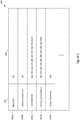
- FIG. 5 is a conceptual diagram of the audio mapping table 410 of Figure 4 , according to various embodiments.
- the audio engine 150 determines/selects one or more speaker sets 180 to receive/route the received audio signal via the audio mapping table 410.
- the audio mapping table 410 comprises a plurality of mapping entries 901 (such as 901a, 901b, 901c, etc.).
- Each mapping entry 901 comprises a mapping from a received audio signal 510 (received from a particular vehicle sub-system 110) to a set of one or more speaker sets 180 within the vehicle 200.
- Each speaker set 180 is identified by a unique identifier, such as SS1, SS2, SS3, etc.
- a first mapping entry 901a maps an audio signal 510 received from the navigation/GPS sub-system 440 to a first speaker set 180 (shown as "SS1").
- the first speaker set 180 may be located at a first occupant-centered component 250 corresponding to the driver, such as a headrest, seat, or headliner of the driver.
- the audio signal 510 received from the navigation/GPS sub-system 440 is routed to only the first speaker set 180 in the plurality of speaker sets 180, and is not routed to any other speaker sets 180 in the plurality of speaker sets 180.
- a second mapping entry 901b maps an audio signal 510 received from the safety/autonomous sub-system 450 to only the first speaker set 180 (shown as "SS1") in the plurality of speaker sets 180.
- a third mapping entry 901c maps an audio signal 510 received from the entertainment sub-system 470 to all speaker sets 180 in the plurality of speaker sets 180 (shown as "SS1" - “SS10").
- the audio mapping table 410 includes multiple mapping entries 901 for audio signals 510 received from a particular vehicle sub-system 110, each mapping entry 901 being based on the particular vehicle sub-system 110 sending the audio signal as well as the type of audio content detected in the audio signal.
- a fourth mapping entry 901d maps an audio signal 510 received from the external device sub-system 460 and comprising entertainment content to all speaker sets 180 in the plurality of speaker sets 180 (shown as "SS1" - "SS10").
- a fifth mapping entry 901e maps an audio signal 510 received from the external device sub-system 460 and comprising a phone call to only the first speaker set 180 (shown as "SS1") in the plurality of speaker sets 180.
- the audio signals 510 received from the navigation/GPS sub-system 440, the safety/autonomous sub-system 450, and the external device sub-system 460 are each mapped (via the mapping table 410) to only a second speaker set 180 (SS2) in the plurality of speaker sets 180.
- the second speaker set 180 may be located at a second occupant-centered component 250 corresponding to the front passenger, such as a headrest, seat, or headliner of the front passenger.
- the audio signals 510 received from the navigation/GPS sub-system 440, the safety/autonomous sub-system 450, and the external device sub-system 460 are each mapped (via the mapping table 410) to only the first speaker set 180 (SS1) and the second speaker set 180 (SS2) in the plurality of speaker sets 180.
- the audio engine 150 maps a received audio signal to one or more speaker sets 180 via the audio mapping table 410, and transmits/routes the audio signal to the one or more speaker sets 180, which broadcasts/reproduces the audio signal to provide audio content to one or more occupants of the vehicle 200.
- multiple audio signals from multiple vehicle sub-systems 110 are broadcast by the plurality of speaker sets 180 concurrently/simultaneously. For example, an audio signal is first received from the entertainment sub-system 470 and routed to all speaker sets 180 in the plurality of speaker sets 180 (SS1 - SS10).
- the audio signals 510 received from the navigation/GPS sub-system 440, the safety/autonomous sub-system 450, and the external device sub-system 460 have priority over audio signals 510 received from other vehicle sub-systems 110 and/or other types of audio content.
- any audio signals 510 subsequently received from the navigation/GPS sub-system 440, the safety/autonomous sub-system 450, or the external device sub-system 460 has priority and is routed to the first speaker set 180 (SS1) for broadcasting to the driver, wherein the first speaker set 180 (SS1) stops broadcasting the audio signal received from the entertainment sub-system 470.
- an audio signal subsequently received from the entertainment sub-system 470 does not have priority and is not routed to the first speaker set 180 (SS1), wherein the first speaker set 180 (SS1) continues broadcasting the audio signal received from the navigation/GPS sub-system 440, the safety/autonomous sub-system 450, or the external device sub-system 460 (comprising a phone call).
- the audio signal subsequently received from the entertainment sub-system 470 is still routed to the remaining speaker sets 180 (SS2 - SS10).
- Figure 6 is a flow diagram of method steps for routing audio signals to different sets of speakers within a vehicle, according to various embodiments. Although the method steps are described in conjunction with the systems of Figures 1-5 , persons skilled in the art will understand that the method steps can be performed in any order by any system. In some embodiments, the method 600 may be performed by the audio engine 150 in conjunction with the vehicle sub-systems 110 and the plurality of speaker sets 180 within a vehicle.
- the method 600 begins when the audio engine 150 receives (at step 610) an audio signal from a vehicle sub-system 110.
- the audio signal may be received from a navigation/GPS sub-system 440, safety/autonomous sub-system 450, external device sub-system 460, or entertainment sub-system 470.
- the audio engine 150 identifies (at step 620) a type of audio content that is received in the audio signal.
- the audio engine 150 may perform this step for audio signals received from particular vehicle sub-systems 110, such as the external device sub-system 460.
- the audio engine 150 selects (at step 630) one or more speaker sets 180 to which to route the received audio signal based on the audio signal via an audio mapping table 410. For example, the audio engine 150 determines the one or more speaker sets 180 to route the received audio signal based on the particular vehicle sub-system 110 sending the audio signal and/or the type of audio content identified in the audio signal. The audio engine 150 transmits/routes (at step 640) the received audio signal to the one or more selected speaker sets 180, which in turn, broadcasts the audio signal (audio content) to one or more occupants of the vehicle. The method 600 then continues at step 610 whereby the audio engine 150 receives a next audio signal.
- a vehicle audio system provides separation of audio content between vehicle occupants via an asymmetric speaker layout and an audio engine.
- the vehicle audio system includes a first set of speakers located at an occupant-centered component having an asymmetric speaker layout.
- the occupant-centered component comprises an interior vehicle component wherein a location of a first occupant is proximate to a center of the occupant-centered component. Examples of an occupant-centered component include a headrest or a front passenger seat.
- the occupant-centered component includes a speaker set at only a left side or a right side of the occupant-centered component to provide the asymmetric speaker layout. However, the occupant-centered component does not include speakers at both the left side and the right side.
- the first set of speakers is directed towards the first occupant to provide audio content to the first occupant.
- the single speaker set is configured and arranged asymmetrically relative to the occupant-centered component as well as the occupant corresponding to the occupant-centered component.
- the vehicle audio system also includes a passive acoustic absorber or material for blocking/absorbing acoustic energy/sound.
- the single speaker set is arranged so that substantially all of the audio content broadcast by that the speaker set is audible only to the corresponding occupant. Further, the broadcast audio content is at least partially attenuated at seating positions of other occupants of the vehicle and is therefore substantially less audible to other occupants of the vehicle.
- the vehicle audio system further includes an audio engine coupled to a plurality of sets of speakers installed within the vehicle.
- the audio engine receives audio signals from various vehicle sub-systems and routes the audio signals to one or more sets of speakers within the vehicle based on the received audio signal.
- the audio engine may determine which sets of speakers to route a received audio signal using a mapping table.
- the audio engine may be configured to route audio music to all sets of speakers installed within the vehicle.
- the audio engine may be configured to route audio navigation prompts or cell phone calls to only the first set of speakers located at a driver's headrest or seat. In this manner, the disclosed techniques rely on occupant shadowing and passive signal routing to achieve separation of audio content within a vehicle.
- the disclosed techniques enable audio content to be transmitted separately to different vehicle occupants via a simple, small, and lightweight vehicle audio system.
- the vehicle audio system includes a first set of speakers located at an occupant-centered component (such as a headrest or seat) having an asymmetric speaker layout.
- the occupant-centered component could include speakers at only the left side or the right side of the occupant-centered component, but would not include speakers at both the left side and the right side.
- the first set of speakers is directed towards a first vehicle occupant to provide audio content to the first vehicle occupant.
- an audio engine routes particular audio signals to only the first set of speakers and not to other sets of speakers within the vehicle.
- the audio engine could route audio navigation prompts to only the first set of speakers located at within the driver seat headrest, but not to any of the other sets of speakers within the vehicle.
- the disclosed techniques allow audio content to be transmitted separately to different vehicle occupants without relying on complex sound cancellation techniques, while also reducing the number of audio components relative to prior approaches.
- aspects of the present embodiments may be embodied as a system, method or computer program product. Accordingly, aspects of the present disclosure may take the form of an entirely hardware embodiment, an entirely software embodiment (including firmware, resident software, micro-code, etc.) or an embodiment combining software and hardware aspects that may all generally be referred to herein as a "module” or “system.” In addition, any hardware and/or software technique, process, function, component, engine, module, or system described in the present disclosure may be implemented as a circuit or set of circuits. Furthermore, aspects of the present disclosure may take the form of a computer program product embodied in one or more computer readable medium(s) having computer readable program code embodied thereon.
- the computer readable medium may be a computer readable signal medium or a computer readable storage medium.
- a computer readable storage medium may be, for example, but not limited to, an electronic, magnetic, optical, electromagnetic, infrared, or semiconductor system, apparatus, or device, or any suitable combination of the foregoing.
- a computer readable storage medium may be any tangible medium that can contain, or store a program for use by or in connection with an instruction execution system, apparatus, or device.
- each block in the flowchart or block diagrams may represent a module, segment, or portion of code, which comprises one or more executable instructions for implementing the specified logical function(s).
- the functions noted in the block may occur out of the order noted in the figures. For example, two blocks shown in succession may, in fact, be executed substantially concurrently, or the blocks may sometimes be executed in the reverse order, depending upon the functionality involved.
Landscapes
- Physics & Mathematics (AREA)
- Acoustics & Sound (AREA)
- Engineering & Computer Science (AREA)
- Signal Processing (AREA)
- Health & Medical Sciences (AREA)
- Otolaryngology (AREA)
- General Health & Medical Sciences (AREA)
- Mechanical Engineering (AREA)
- Fittings On The Vehicle Exterior For Carrying Loads, And Devices For Holding Or Mounting Articles (AREA)
Applications Claiming Priority (2)
| Application Number | Priority Date | Filing Date | Title |
|---|---|---|---|
| US201862787184P | 2018-12-31 | 2018-12-31 | |
| US16/727,748 US20200213722A1 (en) | 2018-12-31 | 2019-12-26 | Techniques for routing audio content to an asymmetric speaker layout within a vehicle |
Publications (1)
| Publication Number | Publication Date |
|---|---|
| EP3675512A1 true EP3675512A1 (fr) | 2020-07-01 |
Family
ID=69055865
Family Applications (1)
| Application Number | Title | Priority Date | Filing Date |
|---|---|---|---|
| EP19220071.5A Ceased EP3675512A1 (fr) | 2018-12-31 | 2019-12-30 | Techniques d'acheminement de contenu audio vers un agencement de haut-parleurs asymétrique à l'intérieur d'un véhicule |
Country Status (3)
| Country | Link |
|---|---|
| US (1) | US20200213722A1 (fr) |
| EP (1) | EP3675512A1 (fr) |
| CN (1) | CN111376827A (fr) |
Cited By (1)
| Publication number | Priority date | Publication date | Assignee | Title |
|---|---|---|---|---|
| CN112437383A (zh) * | 2020-11-09 | 2021-03-02 | 中国第一汽车股份有限公司 | 多音源调整方法、装置、车辆和存储介质 |
Families Citing this family (1)
| Publication number | Priority date | Publication date | Assignee | Title |
|---|---|---|---|---|
| WO2026081062A1 (fr) * | 2024-10-15 | 2026-04-23 | 瑞声开泰声学科技(上海)有限公司 | Système de haut-parleur embarqué |
Citations (8)
| Publication number | Priority date | Publication date | Assignee | Title |
|---|---|---|---|---|
| US20050111673A1 (en) * | 2002-08-23 | 2005-05-26 | Rosen Michael D. | Baffle vibration reducing |
| EP1536664A2 (fr) * | 2003-11-27 | 2005-06-01 | Sony Corporation | Equipement audiophonique pour automobile |
| US20080273712A1 (en) * | 2007-05-04 | 2008-11-06 | Jahn Dmitri Eichfeld | Directionally radiating sound in a vehicle |
| EP2161950A2 (fr) * | 2008-09-08 | 2010-03-10 | Bang & Olufsen A/S | Configuration d'un champ sonore |
| WO2014026165A2 (fr) * | 2012-08-10 | 2014-02-13 | Johnson Controls Technology Company | Systèmes et procédés pour audio réglé dans un habitacle de véhicule |
| EP2910429A1 (fr) * | 2014-02-19 | 2015-08-26 | Fraunhofer-Gesellschaft zur Förderung der angewandten Forschung e.V. | Module acoustique pour l'absorption acoustique et l'amélioration de la communication |
| US20150256933A1 (en) * | 2014-03-06 | 2015-09-10 | Bose Corporation | Managing telephony and entertainment audio in a vehicle audio platform |
| US20170193991A1 (en) * | 2015-12-30 | 2017-07-06 | Harman International Industries, Incorporated | Isolation and enhancement of short duration speech prompts in an automotive system |
Family Cites Families (3)
| Publication number | Priority date | Publication date | Assignee | Title |
|---|---|---|---|---|
| JP2001146136A (ja) * | 1999-09-07 | 2001-05-29 | Denso Corp | 自動車用ハンズフリー通話装置 |
| DE102007028476A1 (de) * | 2007-06-18 | 2008-12-24 | Volkswagen Ag | Verfahren und Vorrichtung zur Kommunikation in einem Kraftfahrzeug |
| DE102010009888A1 (de) * | 2010-03-02 | 2011-09-08 | GM Global Technology Operations LLC , (n. d. Ges. d. Staates Delaware) | Kommunikationsverbesserung in Fahrzeugen |
-
2019
- 2019-12-26 US US16/727,748 patent/US20200213722A1/en not_active Abandoned
- 2019-12-30 EP EP19220071.5A patent/EP3675512A1/fr not_active Ceased
- 2019-12-31 CN CN201911411597.8A patent/CN111376827A/zh active Pending
Patent Citations (8)
| Publication number | Priority date | Publication date | Assignee | Title |
|---|---|---|---|---|
| US20050111673A1 (en) * | 2002-08-23 | 2005-05-26 | Rosen Michael D. | Baffle vibration reducing |
| EP1536664A2 (fr) * | 2003-11-27 | 2005-06-01 | Sony Corporation | Equipement audiophonique pour automobile |
| US20080273712A1 (en) * | 2007-05-04 | 2008-11-06 | Jahn Dmitri Eichfeld | Directionally radiating sound in a vehicle |
| EP2161950A2 (fr) * | 2008-09-08 | 2010-03-10 | Bang & Olufsen A/S | Configuration d'un champ sonore |
| WO2014026165A2 (fr) * | 2012-08-10 | 2014-02-13 | Johnson Controls Technology Company | Systèmes et procédés pour audio réglé dans un habitacle de véhicule |
| EP2910429A1 (fr) * | 2014-02-19 | 2015-08-26 | Fraunhofer-Gesellschaft zur Förderung der angewandten Forschung e.V. | Module acoustique pour l'absorption acoustique et l'amélioration de la communication |
| US20150256933A1 (en) * | 2014-03-06 | 2015-09-10 | Bose Corporation | Managing telephony and entertainment audio in a vehicle audio platform |
| US20170193991A1 (en) * | 2015-12-30 | 2017-07-06 | Harman International Industries, Incorporated | Isolation and enhancement of short duration speech prompts in an automotive system |
Cited By (1)
| Publication number | Priority date | Publication date | Assignee | Title |
|---|---|---|---|---|
| CN112437383A (zh) * | 2020-11-09 | 2021-03-02 | 中国第一汽车股份有限公司 | 多音源调整方法、装置、车辆和存储介质 |
Also Published As
| Publication number | Publication date |
|---|---|
| US20200213722A1 (en) | 2020-07-02 |
| CN111376827A (zh) | 2020-07-07 |
Similar Documents
| Publication | Publication Date | Title |
|---|---|---|
| US12322387B2 (en) | In-vehicle voice command control | |
| US20190237067A1 (en) | Multi-channel voice recognition for a vehicle environment | |
| US10448150B2 (en) | Method and apparatus to detect and isolate audio in a vehicle using multiple microphones | |
| CN106998518B (zh) | 用于在车辆音频区域中个性化声音隔离的车辆、装置和方法 | |
| US20200336827A1 (en) | Method and device for processing an audio signal in a vehicle | |
| EP2987312B1 (fr) | Système et procédé d'annulation d'écho acoustique | |
| US9704487B2 (en) | Speech recognition solution based on comparison of multiple different speech inputs | |
| US11503401B2 (en) | Dual-zone automotive multimedia system | |
| JP7186375B2 (ja) | 音声処理装置、音声処理方法および音声処理システム | |
| US10070242B2 (en) | Devices and methods for conveying audio information in vehicles | |
| CN114125655A (zh) | 一种扬声器控制方法、装置、电子设备及存储介质 | |
| US10410618B2 (en) | In-vehicle noise control system and control method thereof | |
| WO2016183825A1 (fr) | Procédé de positionnement d'emplacement sonore, et dispositif terminal | |
| EP3392619B1 (fr) | Invites audibles dans un système de navigation de véhicule | |
| EP3675512A1 (fr) | Techniques d'acheminement de contenu audio vers un agencement de haut-parleurs asymétrique à l'intérieur d'un véhicule | |
| WO2020157991A1 (fr) | Système de gestion d'espace, unité mobile, programme et procédé de gestion d'espace | |
| CN117643074A (zh) | 用于载具的通透音频模式 | |
| EP3906706B1 (fr) | Système de réalité augmentée acoustique de casque d'écoute embarqué | |
| KR20230019302A (ko) | 시트 자세에 따른 차량 내 음향 제어 방법 및 장치 | |
| CN115701632A (zh) | 用于车内声音控制的系统、方法、存储介质以及车辆 | |
| JP2009232011A (ja) | 音場制御装置 | |
| KR20250140920A (ko) | 차량 내의 음향 출력 제어 방법 및 시스템 | |
| CN118860323A (zh) | 车载播放系统声道映射方法、装置、电子设备、存储介质及车辆 | |
| US9520122B2 (en) | Audio apparatus and controlling method thereof | |
| WO2026045262A1 (fr) | Système, procédé et appareil de commande de bruit, et véhicule |
Legal Events
| Date | Code | Title | Description |
|---|---|---|---|
| PUAI | Public reference made under article 153(3) epc to a published international application that has entered the european phase |
Free format text: ORIGINAL CODE: 0009012 |
|
| STAA | Information on the status of an ep patent application or granted ep patent |
Free format text: STATUS: THE APPLICATION HAS BEEN PUBLISHED |
|
| AK | Designated contracting states |
Kind code of ref document: A1 Designated state(s): AL AT BE BG CH CY CZ DE DK EE ES FI FR GB GR HR HU IE IS IT LI LT LU LV MC MK MT NL NO PL PT RO RS SE SI SK SM TR |
|
| AX | Request for extension of the european patent |
Extension state: BA ME |
|
| STAA | Information on the status of an ep patent application or granted ep patent |
Free format text: STATUS: REQUEST FOR EXAMINATION WAS MADE |
|
| 17P | Request for examination filed |
Effective date: 20210111 |
|
| RBV | Designated contracting states (corrected) |
Designated state(s): AL AT BE BG CH CY CZ DE DK EE ES FI FR GB GR HR HU IE IS IT LI LT LU LV MC MK MT NL NO PL PT RO RS SE SI SK SM TR |
|
| STAA | Information on the status of an ep patent application or granted ep patent |
Free format text: STATUS: EXAMINATION IS IN PROGRESS |
|
| 17Q | First examination report despatched |
Effective date: 20210217 |
|
| STAA | Information on the status of an ep patent application or granted ep patent |
Free format text: STATUS: THE APPLICATION HAS BEEN REFUSED |
|
| 18R | Application refused |
Effective date: 20230402 |