EP3676178B1 - Vereisungsresistente flächen - Google Patents
Vereisungsresistente flächen Download PDFInfo
- Publication number
- EP3676178B1 EP3676178B1 EP18852340.1A EP18852340A EP3676178B1 EP 3676178 B1 EP3676178 B1 EP 3676178B1 EP 18852340 A EP18852340 A EP 18852340A EP 3676178 B1 EP3676178 B1 EP 3676178B1
- Authority
- EP
- European Patent Office
- Prior art keywords
- coating
- ice
- superhydrophobic
- drop
- drops
- Prior art date
- Legal status (The legal status is an assumption and is not a legal conclusion. Google has not performed a legal analysis and makes no representation as to the accuracy of the status listed.)
- Active
Links
Images


Classifications
-
- C—CHEMISTRY; METALLURGY
- C09—DYES; PAINTS; POLISHES; NATURAL RESINS; ADHESIVES; COMPOSITIONS NOT OTHERWISE PROVIDED FOR; APPLICATIONS OF MATERIALS NOT OTHERWISE PROVIDED FOR
- C09D—COATING COMPOSITIONS, e.g. PAINTS, VARNISHES OR LACQUERS; FILLING PASTES; CHEMICAL PAINT OR INK REMOVERS; INKS; CORRECTING FLUIDS; WOODSTAINS; PASTES OR SOLIDS FOR COLOURING OR PRINTING; USE OF MATERIALS THEREFOR
- C09D5/00—Coating compositions, e.g. paints, varnishes or lacquers, characterised by their physical nature or the effects produced; Filling pastes
- C09D5/02—Emulsion paints including aerosols
- C09D5/021—Aerosols
-
- C—CHEMISTRY; METALLURGY
- C09—DYES; PAINTS; POLISHES; NATURAL RESINS; ADHESIVES; COMPOSITIONS NOT OTHERWISE PROVIDED FOR; APPLICATIONS OF MATERIALS NOT OTHERWISE PROVIDED FOR
- C09D—COATING COMPOSITIONS, e.g. PAINTS, VARNISHES OR LACQUERS; FILLING PASTES; CHEMICAL PAINT OR INK REMOVERS; INKS; CORRECTING FLUIDS; WOODSTAINS; PASTES OR SOLIDS FOR COLOURING OR PRINTING; USE OF MATERIALS THEREFOR
- C09D5/00—Coating compositions, e.g. paints, varnishes or lacquers, characterised by their physical nature or the effects produced; Filling pastes
- C09D5/16—Antifouling paints; Underwater paints
- C09D5/1681—Antifouling coatings characterised by surface structure, e.g. for roughness effect giving superhydrophobic coatings or Lotus effect
-
- B—PERFORMING OPERATIONS; TRANSPORTING
- B64—AIRCRAFT; AVIATION; COSMONAUTICS
- B64D—EQUIPMENT FOR FITTING IN OR TO AIRCRAFT; FLIGHT SUITS; PARACHUTES; ARRANGEMENT OR MOUNTING OF POWER PLANTS OR PROPULSION TRANSMISSIONS IN AIRCRAFT
- B64D15/00—De-icing or preventing icing on exterior surfaces of aircraft
-
- B—PERFORMING OPERATIONS; TRANSPORTING
- B05—SPRAYING OR ATOMISING IN GENERAL; APPLYING FLUENT MATERIALS TO SURFACES, IN GENERAL
- B05D—PROCESSES FOR APPLYING FLUENT MATERIALS TO SURFACES, IN GENERAL
- B05D1/00—Processes for applying liquids or other fluent materials
- B05D1/02—Processes for applying liquids or other fluent materials performed by spraying
-
- B—PERFORMING OPERATIONS; TRANSPORTING
- B32—LAYERED PRODUCTS
- B32B—LAYERED PRODUCTS, i.e. PRODUCTS BUILT-UP OF STRATA OF FLAT OR NON-FLAT, e.g. CELLULAR OR HONEYCOMB, FORM
- B32B7/00—Layered products characterised by the relation between layers; Layered products characterised by the relative orientation of features between layers, or by the relative values of a measurable parameter between layers, i.e. products comprising layers having different physical, chemical or physicochemical properties; Layered products characterised by the interconnection of layers
- B32B7/02—Physical, chemical or physicochemical properties
-
- C—CHEMISTRY; METALLURGY
- C08—ORGANIC MACROMOLECULAR COMPOUNDS; THEIR PREPARATION OR CHEMICAL WORKING-UP; COMPOSITIONS BASED THEREON
- C08J—WORKING-UP; GENERAL PROCESSES OF COMPOUNDING; AFTER-TREATMENT NOT COVERED BY SUBCLASSES C08B, C08C, C08F, C08G or C08H
- C08J9/00—Working-up of macromolecular substances to porous or cellular articles or materials; After-treatment thereof
- C08J9/32—Working-up of macromolecular substances to porous or cellular articles or materials; After-treatment thereof from compositions containing microballoons, e.g. syntactic foams
-
- C—CHEMISTRY; METALLURGY
- C08—ORGANIC MACROMOLECULAR COMPOUNDS; THEIR PREPARATION OR CHEMICAL WORKING-UP; COMPOSITIONS BASED THEREON
- C08J—WORKING-UP; GENERAL PROCESSES OF COMPOUNDING; AFTER-TREATMENT NOT COVERED BY SUBCLASSES C08B, C08C, C08F, C08G or C08H
- C08J9/00—Working-up of macromolecular substances to porous or cellular articles or materials; After-treatment thereof
- C08J9/34—Chemical features in the manufacture of articles consisting of a foamed macromolecular core and a macromolecular surface layer having a higher density than the core
-
- C—CHEMISTRY; METALLURGY
- C09—DYES; PAINTS; POLISHES; NATURAL RESINS; ADHESIVES; COMPOSITIONS NOT OTHERWISE PROVIDED FOR; APPLICATIONS OF MATERIALS NOT OTHERWISE PROVIDED FOR
- C09D—COATING COMPOSITIONS, e.g. PAINTS, VARNISHES OR LACQUERS; FILLING PASTES; CHEMICAL PAINT OR INK REMOVERS; INKS; CORRECTING FLUIDS; WOODSTAINS; PASTES OR SOLIDS FOR COLOURING OR PRINTING; USE OF MATERIALS THEREFOR
- C09D163/00—Coating compositions based on epoxy resins; Coating compositions based on derivatives of epoxy resins
-
- C—CHEMISTRY; METALLURGY
- C09—DYES; PAINTS; POLISHES; NATURAL RESINS; ADHESIVES; COMPOSITIONS NOT OTHERWISE PROVIDED FOR; APPLICATIONS OF MATERIALS NOT OTHERWISE PROVIDED FOR
- C09D—COATING COMPOSITIONS, e.g. PAINTS, VARNISHES OR LACQUERS; FILLING PASTES; CHEMICAL PAINT OR INK REMOVERS; INKS; CORRECTING FLUIDS; WOODSTAINS; PASTES OR SOLIDS FOR COLOURING OR PRINTING; USE OF MATERIALS THEREFOR
- C09D5/00—Coating compositions, e.g. paints, varnishes or lacquers, characterised by their physical nature or the effects produced; Filling pastes
- C09D5/002—Priming paints
-
- C—CHEMISTRY; METALLURGY
- C09—DYES; PAINTS; POLISHES; NATURAL RESINS; ADHESIVES; COMPOSITIONS NOT OTHERWISE PROVIDED FOR; APPLICATIONS OF MATERIALS NOT OTHERWISE PROVIDED FOR
- C09D—COATING COMPOSITIONS, e.g. PAINTS, VARNISHES OR LACQUERS; FILLING PASTES; CHEMICAL PAINT OR INK REMOVERS; INKS; CORRECTING FLUIDS; WOODSTAINS; PASTES OR SOLIDS FOR COLOURING OR PRINTING; USE OF MATERIALS THEREFOR
- C09D7/00—Features of coating compositions, not provided for in group C09D5/00; Processes for incorporating ingredients in coating compositions
- C09D7/40—Additives
- C09D7/70—Additives characterised by shape, e.g. fibres, flakes or microspheres
-
- C—CHEMISTRY; METALLURGY
- C09—DYES; PAINTS; POLISHES; NATURAL RESINS; ADHESIVES; COMPOSITIONS NOT OTHERWISE PROVIDED FOR; APPLICATIONS OF MATERIALS NOT OTHERWISE PROVIDED FOR
- C09K—MATERIALS FOR MISCELLANEOUS APPLICATIONS, NOT PROVIDED FOR ELSEWHERE
- C09K3/00—Materials not provided for elsewhere
- C09K3/18—Materials not provided for elsewhere for application to surfaces to minimize adherence of ice, mist or water thereto; Thawing or antifreeze materials for application to surfaces
Definitions
- the invention is related to the problem of ice formation on external surfaces in general, including on land and sea, and of air vehicles in flight.
- air vehicles are used in a generic sense to include all types of manned and unmanned aircraft and missiles.
- Ice is formed from drops of super-cooled water in the atmosphere that collide with the surfaces of the air vehicle and crystallize on impact. Ice that forms on the surfaces of an air vehicle affects its aerodynamic properties and can seriously affect the ability to control the flying object. Ice may form on and adhere to other surfaces, such as system operated on land or at sea, and cause malfunction of essential systems.
- a summary of prior art work that is relevant to the present invention reveals that there exist two main mechanisms by which ice is formed, either from water by excessive cooling or directly from the gas phase.
- the more dangerous and most relevant to the present invention is ice that is formed from an aqueous solution, i.e. nucleation of ice, after impacting a surface.
- Deicing systems are considered to be difficult to maintain, expensive to repair and not effective with all types of air vehicles. Most of the systems are electro-thermic. In case of malfunction of the temperature control, these systems can cause damage as a result of excess heating, especially for drones whose wings are made from composite materials. Also heating requires large amounts of energy and the engines of many types of air vehicles cannot supply the additional amounts of energy that are required.
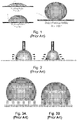
- Fig. 1 schematically shows droplets of water on these three types of surfaces, which can be more precisely defined in terms of the contact angle (CA), i.e. the internal angle ⁇ between the surface and a tangent to the water drop.
- CA contact angle
- a surface is: hydrophylic if ⁇ ⁇ 90o; hydrophobic if ⁇ ⁇ 90o; and superhydrophobic if ⁇ > 150o and a water drop rolls-off the surface at an inclination of a few degrees [1].
- CAH contact angle hysteresis
- Fig. 3A and Fig. 3B The fundamental models that describe the phenomenon of super-hydrophobicity are schematically shown in Fig. 3A and Fig. 3B . These figures show the Cassie-Baxter ( Fig. 3A ) and Wenzel ( Fig. 3B ) models. According to the Cassie-Baxter model, the reason for the increase in hydrophobicity of a surface is caused by the air that is trapped in the grooves upon the surface. According to this model the contact area of the drop with the surface is reduced because the drop rests partially on air.
- Ice adhesion to the surface is critical because it is generally stronger on rough surfaces. As shown in previous researches, most superhydrophobic surfaces on which the dynamics of water favors the prevention of ice formation are rough surfaces. The adhesion of ice to a surface determines to a large part the ability of ice to build up on the surface and the ability of removal of the ice by shear forces that act upon it.
- EP0932540 [6] describes a two layer coating to be applied to external surfaces of structural members of travelling vehicles such as railroad trains in order to prevent accumulation of snow or ice on the surface.
- the inner layer of the coating that is in contact with the surface has a high heat-insulating capacity and the outer layer has an even, stiff and smooth surface, i.e. the outer layer is comprised of a hydrophobic material.
- Amsalem, et al. [7] describes initial rudimentary work by a research group that included the inventors of the present application. In this paper is reported tests carried out using commercial coatings combined with different surface morphologies. The work reported demonstrated the ability to decrease ice accumulation by combining textured surface with a superhydrophobic coating.
- Amirfazli and Carlo Antonini [5] present a very comprehensive overview of the current theoretical and applied state of the art relating to anti-icing surfaces.
- the current state of the understanding and application of non-wetting (or superhydrophobic) surfaces, as anti-icing surfaces is very promising.
- adhesion strength of ice to non-wetting surfaces can be lower than traditional surface coatings used.
- a coating is likely not a standalone solution but a pathway to reduce the use of thermal energy, or chemicals, or mechanical force needed to devoid a surface from ice.
- the invention is a coating applied to a surface to minimize or prevent the ability of drops of super-cooled water that impact on the surface from transforming into ice.
- the coating comprises one or more layers that collectively provide:
- the insulation layer comprises a rigid foam.
- the foam may comprise microballoons within an epoxy matrix.
- the superhydrophobic surface is a coating that is sprayed onto the insulation.
- the surface is operative on air, ground or sea, and is one of: an electricity line; an antenna; an external surfaces of a ship including decks, rails, weapons, and antennas; and a wing or control surface of an air vehicle.
- the surface to be coated is selected from among motor vehicles, buildings, including elevators and windows, glass surfaces and large refrigerators.
- Embodiments of the coating of claim have coefficient of thermal conductivity (K) no more than 0.15 W ⁇ m ° k ), contact angle hysteresis (CAH) no more than ten degrees, and roll off angle no more than five degrees.
- the invention is a method of minimizing or preventing the ability of drops of super-cooled water that impact on a surface from transforming into ice.
- the method comprises applying to the surface a coating comprising one or more layers that collectively provide:
- the insulation layer comprises a rigid foam.
- the foam may comprise microballoons within an epoxy matrix.
- the superhydrophobic coating is sprayed onto the insulation.
- the surface is one of: an electricity line; an antenna; an external surfaces of a ship including decks, rails, weapons, and antennas; and a wing or control surface of an air vehicle.
- the invention is a method for preventing ice from adhering to a surface.
- the method comprises providing on the surface a coating that, when coming into contact with drops of super-cooled water, prevents them from transforming into ice by providing thermal insulation between the surface to be protected and the drops, the upper surface of the coating being superhydrophobic.
- the invention is an ice-phobic coating that, when coming into contact with drops of super-cooled water, prevents them from transforming into ice.
- the ice-phobic coating is comprised of a thermal insulation between the surface to be protected and the drops and has an upper surface which is superhydrophobic.
- the parameters that describe the ability of a water drop to wet a surface are the angle at which a water drop will slide or roll off the surface (designated as the roll-off angle) and the contact angle hysteresis (CAH) of the drop on the surface.
- the inventors used a tilt stage and measured the tilt angle with a digital angle meter. At least five drops were measured for each substrate. The measurements were carried out by starting at a random tilt angle between zero and thirty degrees. If the drop slid or rolled off the surface, then the angle was reduced gradually until the angle was reached at which no sliding or roll off occurred. If the drop didn't slide or roll off the surface, then the angle was increased gradually until the angle was reached at which sliding or roll-off occurred.
- Typical results for the measured slide/roll-off angle for different substrates as a function of their coatings are shown in Fig. 5 .
- Surfaces for which the slide/roll-off angle is less than ten degrees are classified as superhydrophobic. It can be seen that the substrates coated with UED have an especially low slide/roll-off angles.
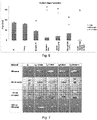
- a goniometer was used to measure the contact angle (CA) and hysteresis of the contact angle (CAH) on the substrates and the coatings. The measurements were made by photographing the drops on the surface and processing the images. The hysteresis was measured by adding and removing water from a drop in a horizontal orientation, as shown in Fig. 2 .
- FIG. 6 shows typical results for measurements of CAH for different substrates and coatings. Seen in Fig. 6 are the CAH indicated by the solid bars, the advancing angle represented by the squares, and the receding angle represented by triangles. In Figs. 5 and 6 the hydrophobic coating (2 nd bar from the right) is applied to a carbon-epoxy composite substrate.
- Fig. 7 it can be seen the behavior of the drop at different stages from the instant of impact until it stabilizes into a new state after impact, attached to the surface and turned into ice or rebound from the surface.
- first stage after impact similar behavior can be seen for all substrates - stretching and spreading of the drop on the substrate until it reaches a maximum radius. After this waves develop within the drop that in most of the cases causes concentration of the mass of water around the circumference.
- UED Superhydrophobic coating on composite
- the drop isn't stable enough to withstand the waves and the drop breaks up into small round drops, which begin to separate from the substrate.
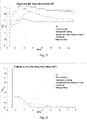
- Fig. 8 show the normalized diameter of the drop as a function of time from the instant of impact with a surface tilted at angles of 25o respectively.
- the temperature of all of the substrates was -8oC.
- Fig. 9 shows the normalized velocity (V/V 0 , where V is the instantaneous velocity and V 0 the velocity at impact) of a drop of water as a function of time after impacting a surface tilted at 25o.
- the temperature of all of the substrates was -8oC.
- the velocity of the drop fell rapidly to zero, that is the drops lost all of their kinetic energy on impact - apparently as a result of friction - stopped, and froze.
- the speed of the drop/air vehicle has a large influence on the ability to form ice on a surface.
- the speed of the drops was 10kph and ice didn't form at -10oC on any of the substrates, with or without surface morphology, that were coated with a superhydrophobic coating.
- the ice tunnel at similar temperatures at drop velocities of 110kph ice formed on all of the substrates without surface morphology, under all conditions. Indeed a reduction in the coverage and adhesion was achieved when compared to the reference substrates without the superhydrophobic coating; however, ice did form.
- Fig. 10 is a graph of temperature vs. time that schematically shows the different stages of ice formation within a drop of super-cooled water.
- the latent heat is released, enabling a phase transfer from liquid to solid, which is thermodynamically more stable. This leads to ice formation.
- Most of the latent heat is transferred from the liquid drop to the surface that it impacts.
- a property of the surface that influences the rate of transfer of this heat is the heat transfer constant K.
- D marks the end of melting and crystal formation. Crystal incubation takes place between D and E, and cooling at a constant rate occurs between E and F where crystal burst takes place.
- the solution to the problem of preventing the formation of ice by drops of super cooled water impacting on the surface of a substrate that is provided by the inventors is to intervene in the stage between B and C.
- the intervention comprised delaying the transfer of heat by placing a "generic coating” that has a low value of K between the drop and the surface.
- a super hydrophilic coating which very strongly repels the water drop, is applied on top of the generic coating to shorten the time of contact of the drop with the surface.
- thermoly insulating medium that repels water constitutes a solution to the issue of ice formation on surfaces.
- An example for such an implementation is a combination of insulating foam with a superhydrophobic coating on it.
- This implementation can be provided in a coating comprised of one layer, i.e. an insulating material whose surface is superhydrophobic; in a coating comprised of two separate layers, i.e. an insulating material on top of which is applied a superhydrophobic coating; or a coating comprised of several layers, which constitute a combination of insulating and superhydrophobic materials.
- This structure combines two central features:
- the concept of a generic coating was investigated by producing samples consisting of a substrate (i.e., composite or aluminum) with an insulating layer (e.g., rigid foam), and a superhydrophobic coating (e.g., UED). This was characterized by means of static and dynamic experiments.
- a substrate i.e., composite or aluminum
- an insulating layer e.g., rigid foam
- a superhydrophobic coating e.g., UED
Landscapes
- Chemical & Material Sciences (AREA)
- Engineering & Computer Science (AREA)
- Materials Engineering (AREA)
- Organic Chemistry (AREA)
- Life Sciences & Earth Sciences (AREA)
- Wood Science & Technology (AREA)
- Dispersion Chemistry (AREA)
- Health & Medical Sciences (AREA)
- Chemical Kinetics & Catalysis (AREA)
- Medicinal Chemistry (AREA)
- Polymers & Plastics (AREA)
- Combustion & Propulsion (AREA)
- Aviation & Aerospace Engineering (AREA)
- Crystallography & Structural Chemistry (AREA)
- Materials Applied To Surfaces To Minimize Adherence Of Mist Or Water (AREA)
Claims (12)
- Beschichtung, die auf eine Oberfläche aufgebracht wird, um die Fähigkeit von Tropfen aus unterkühltem Wasser, die auf die Oberfläche auftreffen, sich in Eis zu verwandeln, zu minimieren oder zu verhindern, wobei die Beschichtung entweder umfasst:A) eine Schicht, die aus einem wärmeisolierenden Material besteht, wobei die obere Oberfläche der einen Schicht superhydrophob ist;
oder,B) zwei oder mehr Schichten, die eine Kombination aus wärmeisolierenden Materialien und superhydrophoben Materialien bilden, wobei die obere Oberfläche der zwei oder mehr Schichten superhydrophob ist;wobei die Beschichtung einen Wärmeleitfähigkeitskoeffizienten (K) von nicht mehr als 0,15 W+ (m°k), Kontaktwinkelhysterese (CAH) von nicht mehr als zehn Grad und einen Abrollwinkel von nicht mehr als fünf Grad aufweist. - Beschichtung nach Anspruch 1, wobei die Isolierschicht aus Hartschaum besteht.
- Beschichtung nach Anspruch 2, wobei der Hartschaum aus Mikroballonen innerhalb einer Epoxidmatrix besteht.
- Beschichtung nach Anspruch 1, wobei die superhydrophobe Oberfläche eine Beschichtung ist, die auf eine Isolierschicht aufgesprüht wird.
- Beschichtung nach Anspruch 1, wobei die Oberfläche in der Luft, auf dem Boden oder auf See operativ ist und eine der folgenden ist: eine Stromleitung, eine Antenne, eine Außenfläche eines Schiffs, einschließlich Decks, Schienen, Waffen und Antennen; und eine Tragfläche oder Steuerfläche eines Luftfahrzeugs.
- Verfahren zur Minimierung oder Verhinderung der Fähigkeit von Tropfen aus unterkühltem Wasser, die auf eine Oberfläche auftreffen, sich in Eis umzuwandeln, wobei das Verfahren Aufbringen der Beschichtung nach Anspruch 1 auf die Oberfläche umfasst.
- Verfahren nach Anspruch 6, wobei die Isolierung durch Verwendung von Hartschaum bereitgestellt wird.
- Verfahren nach Anspruch 7, wobei der Hartschaum aus Mikroballonen innerhalb einer Epoxidmatrix besteht.
- Verfahren nach Anspruch 6, wobei die superhydrophobe Beschichtung auf die Isolierung aufgesprüht wird.
- Verfahren nach Anspruch 6, wobei die Oberfläche eine der folgenden ist: eine Stromleitung, eine Antenne, eine Außenfläche eines Schiffs, einschließlich Decks, Schienen, Waffen und Antennen; und eine Tragfläche oder Steuerfläche eines Luftfahrzeugs.
- Verfahren nach Anspruch 6, wobei die zu beschichtende Oberfläche ausgewählt ist aus Kraftfahrzeugen, Gebäuden, einschließlich Aufzügen und Fenstern, Glasflächen und großen Kühlschränken.
- Verfahren zum Verhindern des Anhaftens von Eis an einer Oberfläche, wobei das Verfahren Aufbringen der Beschichtung nach Anspruch 1 auf die Oberfläche umfasst.
Applications Claiming Priority (2)
| Application Number | Priority Date | Filing Date | Title |
|---|---|---|---|
| IL254269A IL254269B (en) | 2017-08-31 | 2017-08-31 | isophobic surfaces |
| PCT/IL2018/050886 WO2019043686A1 (en) | 2017-08-31 | 2018-08-09 | SURFACES NOT GIVING NOT |
Publications (3)
| Publication Number | Publication Date |
|---|---|
| EP3676178A1 EP3676178A1 (de) | 2020-07-08 |
| EP3676178A4 EP3676178A4 (de) | 2021-05-26 |
| EP3676178B1 true EP3676178B1 (de) | 2022-06-29 |
Family
ID=60942782
Family Applications (1)
| Application Number | Title | Priority Date | Filing Date |
|---|---|---|---|
| EP18852340.1A Active EP3676178B1 (de) | 2017-08-31 | 2018-08-09 | Vereisungsresistente flächen |
Country Status (4)
| Country | Link |
|---|---|
| US (1) | US20210155806A1 (de) |
| EP (1) | EP3676178B1 (de) |
| IL (1) | IL254269B (de) |
| WO (1) | WO2019043686A1 (de) |
Families Citing this family (1)
| Publication number | Priority date | Publication date | Assignee | Title |
|---|---|---|---|---|
| CN114213972B (zh) * | 2021-12-03 | 2022-12-20 | 国电宁波风电开发有限公司 | 一种应用于旋转风力机叶片除冰的涂层及其制作方法 |
Family Cites Families (9)
| Publication number | Priority date | Publication date | Assignee | Title |
|---|---|---|---|---|
| GB9311715D0 (en) * | 1993-06-07 | 1993-07-21 | Liquid Polymers Group Plc | Improvements in or relating to pipe coating |
| RU2091986C1 (ru) * | 1994-12-13 | 1997-09-27 | Акционерное общество открытого типа "РИФ" | Высокотемпературный нагревательный элемент для бытовых электронагревательных приборов, электроизоляционная эмаль для высокотемпературного нагревательного элемента, электроизоляционный слой для высокотемпературного нагревательного элемента, наружный теплозащитный и гидрофобный слой для высокотемпературного нагревательного элемента и способ изготовления высокотемпературного нагревательного элемента для бытовых электроприборов |
| DE69623661T2 (de) * | 1996-10-24 | 2003-08-07 | Bombardier Transportation Gmbh | Entfroster vorrichtung |
| US6251971B1 (en) * | 1998-07-31 | 2001-06-26 | Power Lone Star, Inc. | Thermal insulation coating for pipes |
| EP1205449B1 (de) * | 1999-05-27 | 2013-09-25 | Sumitomo Electric Industries, Ltd. | Vorrichtung und verfahren zur herstellung von optischen fasern |
| US6632535B1 (en) * | 2000-06-08 | 2003-10-14 | Q2100, Inc. | Method of forming antireflective coatings |
| WO2013042052A1 (en) * | 2011-09-19 | 2013-03-28 | Corinne Jean Greyling | Superhydrophobic coatings and methods of preparation |
| US20140272301A1 (en) * | 2013-03-15 | 2014-09-18 | Hrl Laboratories, Llc | Structural coatings with dewetting and anti-icing properties, and processes for fabricating these coatings |
| NO20161469A1 (en) * | 2016-09-15 | 2018-03-16 | Kulyakhtin As | Setting, insulating, anti sea spray icing coating and a marine structure coated with a setting, insulating anti sea spray icing coating |
-
2017
- 2017-08-31 IL IL254269A patent/IL254269B/en unknown
-
2018
- 2018-08-09 WO PCT/IL2018/050886 patent/WO2019043686A1/en not_active Ceased
- 2018-08-09 EP EP18852340.1A patent/EP3676178B1/de active Active
- 2018-08-09 US US16/641,520 patent/US20210155806A1/en not_active Abandoned
Also Published As
| Publication number | Publication date |
|---|---|
| IL254269A0 (en) | 2017-12-31 |
| EP3676178A1 (de) | 2020-07-08 |
| US20210155806A1 (en) | 2021-05-27 |
| WO2019043686A1 (en) | 2019-03-07 |
| IL254269B (en) | 2021-08-31 |
| EP3676178A4 (de) | 2021-05-26 |
Similar Documents
| Publication | Publication Date | Title |
|---|---|---|
| De Pauw et al. | Effect of superhydrophobic coating on the anti-icing and deicing of an airfoil | |
| Tarquini et al. | Investigation of ice shedding properties of superhydrophobic coatings on helicopter blades | |
| Jin et al. | The impact and freezing processes of a water droplet on different inclined cold surfaces | |
| EP2915747B1 (de) | Systeme und Verfahren zur passiven Enteisung | |
| Makkonen | Ice adhesion—theory, measurements and countermeasures | |
| Ma et al. | Bio‐inspired icephobic coatings for aircraft icing mitigation: A critical review | |
| Makkonen | Models for the growth of rime, glaze, icicles and wet snow on structures | |
| Esmeryan et al. | Rational strategy for the atmospheric icing prevention based on chemically functionalized carbon soot coatings | |
| Guo et al. | Strong anti-ice ability of nanohairs over micro-ratchet structures | |
| Zhang et al. | An experimental study of rain erosion effects on a hydro-/ice-phobic coating pertinent to Unmanned-Arial-System (UAS) inflight icing mitigation | |
| Boinovich et al. | Role of water vapor desublimation in the adhesion of an iced droplet to a superhydrophobic surface | |
| Koivuluoto et al. | Research on icing behavior and ice adhesion testing of icephobic surfaces | |
| CN111291311B (zh) | 一种积冰密度测量方法 | |
| Veronesi et al. | Icephobic properties of anti-wetting coatings for aeronautical applications | |
| Peng et al. | An experimental study on mitigating dynamic ice accretion process on bridge cables with a superhydrophobic coating | |
| Han et al. | An experimental investigation to assess the effectiveness of various anti-icing coatings for UAV propeller icing mitigation | |
| Brassard et al. | Ice accretion, shedding, and melting on cable-stayed bridges: A laboratory performance assessment | |
| Boinovich et al. | Antiicing performance of superhydrophobic coatings on aluminum and stainless steel | |
| Bobinski et al. | Droplet impact in icing conditions–the influence of ambient air humidity | |
| CN112678189A (zh) | 一种改进的结冰传感器安装位置确定方法 | |
| Khadak et al. | Enhancing the de-icing capabilities of carbon fiber-reinforced composite aircraft via permanent superhydrophobic coatings | |
| EP3676178B1 (de) | Vereisungsresistente flächen | |
| Chen et al. | Disturbing stability of interface by adopting phase-change temperature gradient to reduce ice adhesion strength | |
| Strobl et al. | Evaluation of roughness effects on ice adhesion | |
| Fukusako et al. | Ice accretion characteristics along a circular cylinder immersed in a cold air stream with seawater spray |
Legal Events
| Date | Code | Title | Description |
|---|---|---|---|
| STAA | Information on the status of an ep patent application or granted ep patent |
Free format text: STATUS: THE INTERNATIONAL PUBLICATION HAS BEEN MADE |
|
| PUAI | Public reference made under article 153(3) epc to a published international application that has entered the european phase |
Free format text: ORIGINAL CODE: 0009012 |
|
| STAA | Information on the status of an ep patent application or granted ep patent |
Free format text: STATUS: REQUEST FOR EXAMINATION WAS MADE |
|
| 17P | Request for examination filed |
Effective date: 20200225 |
|
| AK | Designated contracting states |
Kind code of ref document: A1 Designated state(s): AL AT BE BG CH CY CZ DE DK EE ES FI FR GB GR HR HU IE IS IT LI LT LU LV MC MK MT NL NO PL PT RO RS SE SI SK SM TR |
|
| AX | Request for extension of the european patent |
Extension state: BA ME |
|
| DAV | Request for validation of the european patent (deleted) | ||
| DAX | Request for extension of the european patent (deleted) | ||
| A4 | Supplementary search report drawn up and despatched |
Effective date: 20210423 |
|
| RIC1 | Information provided on ipc code assigned before grant |
Ipc: B64D 15/00 20060101AFI20210419BHEP Ipc: C09K 3/18 20060101ALI20210419BHEP Ipc: C08J 9/32 20060101ALI20210419BHEP Ipc: C08J 9/34 20060101ALI20210419BHEP Ipc: B05D 1/02 20060101ALI20210419BHEP Ipc: B32B 7/02 20190101ALI20210419BHEP Ipc: C09D 5/16 20060101ALI20210419BHEP |
|
| GRAP | Despatch of communication of intention to grant a patent |
Free format text: ORIGINAL CODE: EPIDOSNIGR1 |
|
| STAA | Information on the status of an ep patent application or granted ep patent |
Free format text: STATUS: GRANT OF PATENT IS INTENDED |
|
| INTG | Intention to grant announced |
Effective date: 20220329 |
|
| GRAS | Grant fee paid |
Free format text: ORIGINAL CODE: EPIDOSNIGR3 |
|
| GRAA | (expected) grant |
Free format text: ORIGINAL CODE: 0009210 |
|
| STAA | Information on the status of an ep patent application or granted ep patent |
Free format text: STATUS: THE PATENT HAS BEEN GRANTED |
|
| AK | Designated contracting states |
Kind code of ref document: B1 Designated state(s): AL AT BE BG CH CY CZ DE DK EE ES FI FR GB GR HR HU IE IS IT LI LT LU LV MC MK MT NL NO PL PT RO RS SE SI SK SM TR |
|
| REG | Reference to a national code |
Ref country code: CH Ref legal event code: EP |
|
| REG | Reference to a national code |
Ref country code: AT Ref legal event code: REF Ref document number: 1501202 Country of ref document: AT Kind code of ref document: T Effective date: 20220715 |
|
| REG | Reference to a national code |
Ref country code: IE Ref legal event code: FG4D |
|
| REG | Reference to a national code |
Ref country code: DE Ref legal event code: R096 Ref document number: 602018037430 Country of ref document: DE |
|
| REG | Reference to a national code |
Ref country code: LT Ref legal event code: MG9D |
|
| PG25 | Lapsed in a contracting state [announced via postgrant information from national office to epo] |
Ref country code: SE Free format text: LAPSE BECAUSE OF FAILURE TO SUBMIT A TRANSLATION OF THE DESCRIPTION OR TO PAY THE FEE WITHIN THE PRESCRIBED TIME-LIMIT Effective date: 20220629 Ref country code: NO Free format text: LAPSE BECAUSE OF FAILURE TO SUBMIT A TRANSLATION OF THE DESCRIPTION OR TO PAY THE FEE WITHIN THE PRESCRIBED TIME-LIMIT Effective date: 20220929 Ref country code: LT Free format text: LAPSE BECAUSE OF FAILURE TO SUBMIT A TRANSLATION OF THE DESCRIPTION OR TO PAY THE FEE WITHIN THE PRESCRIBED TIME-LIMIT Effective date: 20220629 Ref country code: HR Free format text: LAPSE BECAUSE OF FAILURE TO SUBMIT A TRANSLATION OF THE DESCRIPTION OR TO PAY THE FEE WITHIN THE PRESCRIBED TIME-LIMIT Effective date: 20220629 Ref country code: GR Free format text: LAPSE BECAUSE OF FAILURE TO SUBMIT A TRANSLATION OF THE DESCRIPTION OR TO PAY THE FEE WITHIN THE PRESCRIBED TIME-LIMIT Effective date: 20220930 Ref country code: FI Free format text: LAPSE BECAUSE OF FAILURE TO SUBMIT A TRANSLATION OF THE DESCRIPTION OR TO PAY THE FEE WITHIN THE PRESCRIBED TIME-LIMIT Effective date: 20220629 Ref country code: BG Free format text: LAPSE BECAUSE OF FAILURE TO SUBMIT A TRANSLATION OF THE DESCRIPTION OR TO PAY THE FEE WITHIN THE PRESCRIBED TIME-LIMIT Effective date: 20220929 |
|
| REG | Reference to a national code |
Ref country code: NL Ref legal event code: MP Effective date: 20220629 |
|
| REG | Reference to a national code |
Ref country code: AT Ref legal event code: MK05 Ref document number: 1501202 Country of ref document: AT Kind code of ref document: T Effective date: 20220629 |
|
| PG25 | Lapsed in a contracting state [announced via postgrant information from national office to epo] |
Ref country code: RS Free format text: LAPSE BECAUSE OF FAILURE TO SUBMIT A TRANSLATION OF THE DESCRIPTION OR TO PAY THE FEE WITHIN THE PRESCRIBED TIME-LIMIT Effective date: 20220629 Ref country code: LV Free format text: LAPSE BECAUSE OF FAILURE TO SUBMIT A TRANSLATION OF THE DESCRIPTION OR TO PAY THE FEE WITHIN THE PRESCRIBED TIME-LIMIT Effective date: 20220629 |
|
| PG25 | Lapsed in a contracting state [announced via postgrant information from national office to epo] |
Ref country code: NL Free format text: LAPSE BECAUSE OF FAILURE TO SUBMIT A TRANSLATION OF THE DESCRIPTION OR TO PAY THE FEE WITHIN THE PRESCRIBED TIME-LIMIT Effective date: 20220629 |
|
| PG25 | Lapsed in a contracting state [announced via postgrant information from national office to epo] |
Ref country code: SM Free format text: LAPSE BECAUSE OF FAILURE TO SUBMIT A TRANSLATION OF THE DESCRIPTION OR TO PAY THE FEE WITHIN THE PRESCRIBED TIME-LIMIT Effective date: 20220629 Ref country code: SK Free format text: LAPSE BECAUSE OF FAILURE TO SUBMIT A TRANSLATION OF THE DESCRIPTION OR TO PAY THE FEE WITHIN THE PRESCRIBED TIME-LIMIT Effective date: 20220629 Ref country code: RO Free format text: LAPSE BECAUSE OF FAILURE TO SUBMIT A TRANSLATION OF THE DESCRIPTION OR TO PAY THE FEE WITHIN THE PRESCRIBED TIME-LIMIT Effective date: 20220629 Ref country code: PT Free format text: LAPSE BECAUSE OF FAILURE TO SUBMIT A TRANSLATION OF THE DESCRIPTION OR TO PAY THE FEE WITHIN THE PRESCRIBED TIME-LIMIT Effective date: 20221031 Ref country code: ES Free format text: LAPSE BECAUSE OF FAILURE TO SUBMIT A TRANSLATION OF THE DESCRIPTION OR TO PAY THE FEE WITHIN THE PRESCRIBED TIME-LIMIT Effective date: 20220629 Ref country code: EE Free format text: LAPSE BECAUSE OF FAILURE TO SUBMIT A TRANSLATION OF THE DESCRIPTION OR TO PAY THE FEE WITHIN THE PRESCRIBED TIME-LIMIT Effective date: 20220629 Ref country code: AT Free format text: LAPSE BECAUSE OF FAILURE TO SUBMIT A TRANSLATION OF THE DESCRIPTION OR TO PAY THE FEE WITHIN THE PRESCRIBED TIME-LIMIT Effective date: 20220629 |
|
| PG25 | Lapsed in a contracting state [announced via postgrant information from national office to epo] |
Ref country code: PL Free format text: LAPSE BECAUSE OF FAILURE TO SUBMIT A TRANSLATION OF THE DESCRIPTION OR TO PAY THE FEE WITHIN THE PRESCRIBED TIME-LIMIT Effective date: 20220629 Ref country code: IS Free format text: LAPSE BECAUSE OF FAILURE TO SUBMIT A TRANSLATION OF THE DESCRIPTION OR TO PAY THE FEE WITHIN THE PRESCRIBED TIME-LIMIT Effective date: 20221029 |
|
| REG | Reference to a national code |
Ref country code: DE Ref legal event code: R097 Ref document number: 602018037430 Country of ref document: DE |
|
| PG25 | Lapsed in a contracting state [announced via postgrant information from national office to epo] |
Ref country code: MC Free format text: LAPSE BECAUSE OF FAILURE TO SUBMIT A TRANSLATION OF THE DESCRIPTION OR TO PAY THE FEE WITHIN THE PRESCRIBED TIME-LIMIT Effective date: 20220629 Ref country code: AL Free format text: LAPSE BECAUSE OF FAILURE TO SUBMIT A TRANSLATION OF THE DESCRIPTION OR TO PAY THE FEE WITHIN THE PRESCRIBED TIME-LIMIT Effective date: 20220629 |
|
| REG | Reference to a national code |
Ref country code: CH Ref legal event code: PL |
|
| PG25 | Lapsed in a contracting state [announced via postgrant information from national office to epo] |
Ref country code: LU Free format text: LAPSE BECAUSE OF NON-PAYMENT OF DUE FEES Effective date: 20220809 Ref country code: LI Free format text: LAPSE BECAUSE OF NON-PAYMENT OF DUE FEES Effective date: 20220831 Ref country code: DK Free format text: LAPSE BECAUSE OF FAILURE TO SUBMIT A TRANSLATION OF THE DESCRIPTION OR TO PAY THE FEE WITHIN THE PRESCRIBED TIME-LIMIT Effective date: 20220629 Ref country code: CZ Free format text: LAPSE BECAUSE OF FAILURE TO SUBMIT A TRANSLATION OF THE DESCRIPTION OR TO PAY THE FEE WITHIN THE PRESCRIBED TIME-LIMIT Effective date: 20220629 Ref country code: CH Free format text: LAPSE BECAUSE OF NON-PAYMENT OF DUE FEES Effective date: 20220831 |
|
| REG | Reference to a national code |
Ref country code: BE Ref legal event code: MM Effective date: 20220831 |
|
| PLBE | No opposition filed within time limit |
Free format text: ORIGINAL CODE: 0009261 |
|
| STAA | Information on the status of an ep patent application or granted ep patent |
Free format text: STATUS: NO OPPOSITION FILED WITHIN TIME LIMIT |
|
| 26N | No opposition filed |
Effective date: 20230330 |
|
| P01 | Opt-out of the competence of the unified patent court (upc) registered |
Effective date: 20230514 |
|
| PG25 | Lapsed in a contracting state [announced via postgrant information from national office to epo] |
Ref country code: IE Free format text: LAPSE BECAUSE OF NON-PAYMENT OF DUE FEES Effective date: 20220809 |
|
| PG25 | Lapsed in a contracting state [announced via postgrant information from national office to epo] |
Ref country code: SI Free format text: LAPSE BECAUSE OF FAILURE TO SUBMIT A TRANSLATION OF THE DESCRIPTION OR TO PAY THE FEE WITHIN THE PRESCRIBED TIME-LIMIT Effective date: 20220629 |
|
| PG25 | Lapsed in a contracting state [announced via postgrant information from national office to epo] |
Ref country code: BE Free format text: LAPSE BECAUSE OF NON-PAYMENT OF DUE FEES Effective date: 20220831 |
|
| PG25 | Lapsed in a contracting state [announced via postgrant information from national office to epo] |
Ref country code: CY Free format text: LAPSE BECAUSE OF FAILURE TO SUBMIT A TRANSLATION OF THE DESCRIPTION OR TO PAY THE FEE WITHIN THE PRESCRIBED TIME-LIMIT Effective date: 20220629 |
|
| PG25 | Lapsed in a contracting state [announced via postgrant information from national office to epo] |
Ref country code: MK Free format text: LAPSE BECAUSE OF FAILURE TO SUBMIT A TRANSLATION OF THE DESCRIPTION OR TO PAY THE FEE WITHIN THE PRESCRIBED TIME-LIMIT Effective date: 20220629 Ref country code: HU Free format text: LAPSE BECAUSE OF FAILURE TO SUBMIT A TRANSLATION OF THE DESCRIPTION OR TO PAY THE FEE WITHIN THE PRESCRIBED TIME-LIMIT; INVALID AB INITIO Effective date: 20180809 |
|
| PG25 | Lapsed in a contracting state [announced via postgrant information from national office to epo] |
Ref country code: MT Free format text: LAPSE BECAUSE OF FAILURE TO SUBMIT A TRANSLATION OF THE DESCRIPTION OR TO PAY THE FEE WITHIN THE PRESCRIBED TIME-LIMIT Effective date: 20220629 |
|
| PG25 | Lapsed in a contracting state [announced via postgrant information from national office to epo] |
Ref country code: BG Free format text: LAPSE BECAUSE OF FAILURE TO SUBMIT A TRANSLATION OF THE DESCRIPTION OR TO PAY THE FEE WITHIN THE PRESCRIBED TIME-LIMIT Effective date: 20220629 |
|
| PG25 | Lapsed in a contracting state [announced via postgrant information from national office to epo] |
Ref country code: BG Free format text: LAPSE BECAUSE OF FAILURE TO SUBMIT A TRANSLATION OF THE DESCRIPTION OR TO PAY THE FEE WITHIN THE PRESCRIBED TIME-LIMIT Effective date: 20220629 |
|
| PGFP | Annual fee paid to national office [announced via postgrant information from national office to epo] |
Ref country code: GB Payment date: 20250619 Year of fee payment: 8 |
|
| PGFP | Annual fee paid to national office [announced via postgrant information from national office to epo] |
Ref country code: FR Payment date: 20250610 Year of fee payment: 8 |
|
| PGFP | Annual fee paid to national office [announced via postgrant information from national office to epo] |
Ref country code: DE Payment date: 20250618 Year of fee payment: 8 |
|
| PGFP | Annual fee paid to national office [announced via postgrant information from national office to epo] |
Ref country code: IT Payment date: 20250722 Year of fee payment: 8 |
|
| PG25 | Lapsed in a contracting state [announced via postgrant information from national office to epo] |
Ref country code: TR Free format text: LAPSE BECAUSE OF FAILURE TO SUBMIT A TRANSLATION OF THE DESCRIPTION OR TO PAY THE FEE WITHIN THE PRESCRIBED TIME-LIMIT Effective date: 20220629 |