EP3676699B1 - Dispositif et procédé pour configurer et surveiller des applications virtuelles - Google Patents
Dispositif et procédé pour configurer et surveiller des applications virtuelles Download PDFInfo
- Publication number
- EP3676699B1 EP3676699B1 EP18769790.9A EP18769790A EP3676699B1 EP 3676699 B1 EP3676699 B1 EP 3676699B1 EP 18769790 A EP18769790 A EP 18769790A EP 3676699 B1 EP3676699 B1 EP 3676699B1
- Authority
- EP
- European Patent Office
- Prior art keywords
- virtual application
- injection
- virtual
- application
- monitoring
- Prior art date
- Legal status (The legal status is an assumption and is not a legal conclusion. Google has not performed a legal analysis and makes no representation as to the accuracy of the status listed.)
- Active
Links
Images



Classifications
-
- G—PHYSICS
- G06—COMPUTING OR CALCULATING; COUNTING
- G06F—ELECTRIC DIGITAL DATA PROCESSING
- G06F9/00—Arrangements for program control, e.g. control units
- G06F9/06—Arrangements for program control, e.g. control units using stored programs, i.e. using an internal store of processing equipment to receive or retain programs
- G06F9/44—Arrangements for executing specific programs
- G06F9/455—Emulation; Interpretation; Software simulation, e.g. virtualisation or emulation of application or operating system execution engines
- G06F9/45533—Hypervisors; Virtual machine monitors
- G06F9/45558—Hypervisor-specific management and integration aspects
-
- G—PHYSICS
- G06—COMPUTING OR CALCULATING; COUNTING
- G06F—ELECTRIC DIGITAL DATA PROCESSING
- G06F8/00—Arrangements for software engineering
- G06F8/60—Software deployment
-
- G—PHYSICS
- G06—COMPUTING OR CALCULATING; COUNTING
- G06F—ELECTRIC DIGITAL DATA PROCESSING
- G06F8/00—Arrangements for software engineering
- G06F8/60—Software deployment
- G06F8/61—Installation
-
- G—PHYSICS
- G06—COMPUTING OR CALCULATING; COUNTING
- G06F—ELECTRIC DIGITAL DATA PROCESSING
- G06F9/00—Arrangements for program control, e.g. control units
- G06F9/06—Arrangements for program control, e.g. control units using stored programs, i.e. using an internal store of processing equipment to receive or retain programs
- G06F9/44—Arrangements for executing specific programs
- G06F9/445—Program loading or initiating
- G06F9/44505—Configuring for program initiating, e.g. using registry, configuration files
-
- G—PHYSICS
- G06—COMPUTING OR CALCULATING; COUNTING
- G06F—ELECTRIC DIGITAL DATA PROCESSING
- G06F9/00—Arrangements for program control, e.g. control units
- G06F9/06—Arrangements for program control, e.g. control units using stored programs, i.e. using an internal store of processing equipment to receive or retain programs
- G06F9/44—Arrangements for executing specific programs
- G06F9/455—Emulation; Interpretation; Software simulation, e.g. virtualisation or emulation of application or operating system execution engines
- G06F9/45504—Abstract machines for programme code execution, e.g. Java virtual machine [JVM], interpreters, emulators
- G06F9/45529—Embedded in an application, e.g. JavaScript in a Web browser
-
- H—ELECTRICITY
- H04—ELECTRIC COMMUNICATION TECHNIQUE
- H04L—TRANSMISSION OF DIGITAL INFORMATION, e.g. TELEGRAPHIC COMMUNICATION
- H04L41/00—Arrangements for maintenance, administration or management of data switching networks, e.g. of packet switching networks
- H04L41/08—Configuration management of networks or network elements
- H04L41/0803—Configuration setting
- H04L41/0806—Configuration setting for initial configuration or provisioning, e.g. plug-and-play
-
- H—ELECTRICITY
- H04—ELECTRIC COMMUNICATION TECHNIQUE
- H04L—TRANSMISSION OF DIGITAL INFORMATION, e.g. TELEGRAPHIC COMMUNICATION
- H04L41/00—Arrangements for maintenance, administration or management of data switching networks, e.g. of packet switching networks
- H04L41/08—Configuration management of networks or network elements
- H04L41/0895—Configuration of virtualised networks or elements, e.g. virtualised network function or OpenFlow elements
-
- H—ELECTRICITY
- H04—ELECTRIC COMMUNICATION TECHNIQUE
- H04L—TRANSMISSION OF DIGITAL INFORMATION, e.g. TELEGRAPHIC COMMUNICATION
- H04L41/00—Arrangements for maintenance, administration or management of data switching networks, e.g. of packet switching networks
- H04L41/40—Arrangements for maintenance, administration or management of data switching networks, e.g. of packet switching networks using virtualisation of network functions or resources, e.g. SDN or NFV entities
-
- H—ELECTRICITY
- H04—ELECTRIC COMMUNICATION TECHNIQUE
- H04L—TRANSMISSION OF DIGITAL INFORMATION, e.g. TELEGRAPHIC COMMUNICATION
- H04L41/00—Arrangements for maintenance, administration or management of data switching networks, e.g. of packet switching networks
- H04L41/50—Network service management, e.g. ensuring proper service fulfilment according to agreements
- H04L41/5041—Network service management, e.g. ensuring proper service fulfilment according to agreements characterised by the time relationship between creation and deployment of a service
- H04L41/5048—Automatic or semi-automatic definitions, e.g. definition templates
-
- H—ELECTRICITY
- H04—ELECTRIC COMMUNICATION TECHNIQUE
- H04L—TRANSMISSION OF DIGITAL INFORMATION, e.g. TELEGRAPHIC COMMUNICATION
- H04L43/00—Arrangements for monitoring or testing data switching networks
- H04L43/08—Monitoring or testing based on specific metrics, e.g. QoS, energy consumption or environmental parameters
- H04L43/0805—Monitoring or testing based on specific metrics, e.g. QoS, energy consumption or environmental parameters by checking availability
- H04L43/0817—Monitoring or testing based on specific metrics, e.g. QoS, energy consumption or environmental parameters by checking availability by checking functioning
-
- H—ELECTRICITY
- H04—ELECTRIC COMMUNICATION TECHNIQUE
- H04L—TRANSMISSION OF DIGITAL INFORMATION, e.g. TELEGRAPHIC COMMUNICATION
- H04L43/00—Arrangements for monitoring or testing data switching networks
- H04L43/20—Arrangements for monitoring or testing data switching networks the monitoring system or the monitored elements being virtualised, abstracted or software-defined entities, e.g. SDN or NFV
-
- G—PHYSICS
- G06—COMPUTING OR CALCULATING; COUNTING
- G06F—ELECTRIC DIGITAL DATA PROCESSING
- G06F9/00—Arrangements for program control, e.g. control units
- G06F9/06—Arrangements for program control, e.g. control units using stored programs, i.e. using an internal store of processing equipment to receive or retain programs
- G06F9/44—Arrangements for executing specific programs
- G06F9/455—Emulation; Interpretation; Software simulation, e.g. virtualisation or emulation of application or operating system execution engines
- G06F9/45533—Hypervisors; Virtual machine monitors
- G06F9/45558—Hypervisor-specific management and integration aspects
- G06F2009/45591—Monitoring or debugging support
-
- G—PHYSICS
- G06—COMPUTING OR CALCULATING; COUNTING
- G06F—ELECTRIC DIGITAL DATA PROCESSING
- G06F9/00—Arrangements for program control, e.g. control units
- G06F9/06—Arrangements for program control, e.g. control units using stored programs, i.e. using an internal store of processing equipment to receive or retain programs
- G06F9/44—Arrangements for executing specific programs
- G06F9/455—Emulation; Interpretation; Software simulation, e.g. virtualisation or emulation of application or operating system execution engines
- G06F9/45533—Hypervisors; Virtual machine monitors
- G06F9/45558—Hypervisor-specific management and integration aspects
- G06F2009/45595—Network integration; Enabling network access in virtual machine instances
-
- H—ELECTRICITY
- H04—ELECTRIC COMMUNICATION TECHNIQUE
- H04L—TRANSMISSION OF DIGITAL INFORMATION, e.g. TELEGRAPHIC COMMUNICATION
- H04L41/00—Arrangements for maintenance, administration or management of data switching networks, e.g. of packet switching networks
- H04L41/50—Network service management, e.g. ensuring proper service fulfilment according to agreements
- H04L41/508—Network service management, e.g. ensuring proper service fulfilment according to agreements based on type of value added network service under agreement
- H04L41/5096—Network service management, e.g. ensuring proper service fulfilment according to agreements based on type of value added network service under agreement wherein the managed service relates to distributed or central networked applications
Definitions
- the invention relates to the technical field of virtual applications, and more specifically to, configuring and monitoring a virtual application in a cloud environment.
- a virtual application is an application that runs on a virtualized infrastructure.
- Virtual applications are typically implemented using a group of one or more virtual machines (VMs) deployed in a cloud environment that work together to perform certain high-level functions.
- VMs virtual machines
- the telecommunications industry uses the term Virtualized Network Functions, or VNFs, to refer to virtual applications that perform network functions.
- each virtual application needs to be individually configured and monitored to ensure that the virtual application functions as intended.
- the data needed for configuring and monitoring each virtual application is typically collected manually.
- the configuration and monitoring (e.g., health verification) of virtual applications are typically performed by one or more external centralized computer programs that send commands to the virtual applications via predefined interfaces.
- a compatible platform script or computer program can be used to configure and monitor a virtual application, but this requires configuring network connectivity and access permissions (e.g., username/password and/or security certificate) to allow the platform script or computer program to access the virtual application.
- network connectivity and access permissions e.g., username/password and/or security certificate
- a human operator must manually configure the network connectivity and access permissions prior to running the platform script or computer program.
- a method is implemented by a computing device to configure and monitor a virtual application in a cloud environment according to claim 1.
- a computing device is adapted to configure and monitor a virtual application in a cloud environment according to claim 7.
- a non-transitory machine-readable medium has computer code stored therein, which when executed by a set of one or more processors of a computing device, causes the computing device to perform operations for configuring and monitoring a virtual application in a cloud environment according to claim 9.
- a computing device generates instructions for configuring and monitoring the virtual application based on configuration data for the virtual application.
- the computing device modifies an injection virtual machine (VM) image to include the instructions for configuring and monitoring the virtual application, where the injection VM image is a template for instantiating an injection VM that is to configure and monitoring the virtual application according to the instructions.
- the computing device modifies a virtual application deployment descriptor for the application to indicate that the injection VM is to be injected into the virtual application.
- the computing device then causes the virtual application, with the injection VM injected therein, to be deployed in the cloud environment using the modified virtual application deployment descriptor. Once deployed, the injection VM configures and monitors the virtual application according to the instructions.
- Other embodiments are further described herein.
- references in the specification to "one embodiment,” “an embodiment,” “an example embodiment,” etc., indicate that the embodiment described may include a particular feature, structure, or characteristic, but every embodiment may not necessarily include the particular feature, structure, or characteristic. Moreover, such phrases are not necessarily referring to the same embodiment. Further, when a particular feature, structure, or characteristic is described in connection with an embodiment, it is submitted that it is within the knowledge of one skilled in the art to affect such feature, structure, or characteristic in connection with other embodiments whether or not explicitly described.
- Bracketed text and blocks with dashed borders may be used herein to illustrate optional operations that add additional features to certain embodiments. However, such notation should not be taken to mean that these are the only options or optional operations, and/or that blocks with solid borders are not optional in certain embodiments.
- Coupled is used to indicate that two or more elements, which may or may not be in direct physical or electrical contact with each other, co-operate or interact with each other.
- Connected is used to indicate the establishment of communication between two or more elements that are coupled with each other.
- An electronic device stores and transmits (internally and/or with other electronic devices over a network) code (which is composed of software instructions and which is sometimes referred to as computer program code or a computer program) and/or data using machine-readable media (also called computer-readable media), such as machine-readable storage media (e.g., magnetic disks, optical disks, solid state drives, read only memory (ROM), flash memory devices, phase change memory) and machine-readable transmission media (also called a carrier) (e.g., electrical, optical, radio, acoustical or other form of propagated signals - such as carrier waves, infrared signals).
- machine-readable media also called computer-readable media
- machine-readable storage media e.g., magnetic disks, optical disks, solid state drives, read only memory (ROM), flash memory devices, phase change memory
- machine-readable transmission media also called a carrier
- carrier e.g., electrical, optical, radio, acoustical or other form of propagated signals - such as carrier waves, inf
- an electronic device e.g., a computer
- hardware and software such as a set of one or more processors (e.g., wherein a processor is a microprocessor, controller, microcontroller, central processing unit, digital signal processor, application specific integrated circuit, field programmable gate array, other electronic circuitry, a combination of one or more of the preceding) coupled to one or more machine-readable storage media to store code for execution on the set of processors and/or to store data.
- processors e.g., wherein a processor is a microprocessor, controller, microcontroller, central processing unit, digital signal processor, application specific integrated circuit, field programmable gate array, other electronic circuitry, a combination of one or more of the preceding
- an electronic device may include non-volatile memory containing the code since the non-volatile memory can persist code/data even when the electronic device is turned off (when power is removed), and while the electronic device is turned on that part of the code that is to be executed by the processor(s) of that electronic device is typically copied from the slower non-volatile memory into volatile memory (e.g., dynamic random access memory (DRAM), static random access memory (SRAM)) of that electronic device.
- Typical electronic devices also include a set or one or more physical network interface(s) (NI(s)) to establish network connections (to transmit and/or receive code and/or data using propagating signals) with other electronic devices.
- NI(s) physical network interface
- a physical NI may comprise radio circuitry capable of receiving data from other electronic devices over a wireless connection and/or sending data out to other devices via a wireless connection.
- This radio circuitry may include transmitter(s), receiver(s), and/or transceiver(s) suitable for radiofrequency communication.
- the radio circuitry may convert digital data into a radio signal having the appropriate parameters (e.g., frequency, timing, channel, bandwidth, etc.). The radio signal may then be transmitted via antennas to the appropriate recipient(s).
- the set of physical NI(s) may comprise network interface controller(s) (NICs), also known as a network interface card, network adapter, or local area network (LAN) adapter.
- NICs network interface controller
- the NIC(s) may facilitate in connecting the electronic device to other electronic devices allowing them to communicate via wire through plugging in a cable to a physical port connected to a NIC.
- One or more parts of an embodiment of the invention may be implemented using different combinations of software, firmware, and/or hardware.
- a network device is an electronic device that communicatively interconnects other electronic devices on the network (e.g., other network devices, end-user devices).
- Some network devices are "multiple services network devices" that provide support for multiple networking functions (e.g., routing, bridging, switching, Layer 2 aggregation, session border control, Quality of Service, and/or subscriber management), and/or provide support for multiple application services (e.g., data, voice, and video).
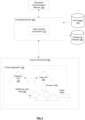
- Fig. 1 is a block diagram of a system for configuring and monitoring a virtual application in a cloud environment, according to some embodiments.
- the system includes a computing device 100 communicatively coupled to a cloud environment 120 and a structured communication medium 140.
- the computing device 100 includes a virtual application (vApp) injection component 110.
- the virtual application injection component 110 is operable to cause a special-purpose VM (referred to herein as an "injection VM") to be injected into a virtual application 130 to configure and monitor the virtual application 130.
- This injection VM 150 can be deployed as part of the virtual application 130 itself (e.g., in the same resource group) to configure and monitor the virtual application 130.
- the virtual application injection component 110 is implemented as software (e.g., computer code) that is executable by computing device 100.
- the virtual application injection component 110 can be implemented as any combination of hardware, firmware, and software. While the virtual application injection component 110 is shown as being implemented outside of the cloud environment 120, in some embodiments, the virtual application injection component 110 is implemented inside the cloud environment 120.
- the cloud environment 120 is operable to provide cloud computing services.
- Cloud computing typically involves the provision of dynamically scalable and often virtualized resources such as virtualized computing resources, virtualized storage resources, and virtualized network resources.
- the virtualized resources can be used to implement one or more virtual applications 130 (e.g., a Virtual Network Function (VNF)) in the cloud environment 120.
- VNF Virtual Network Function
- a virtual application 130 can be implemented using one or more interconnected virtual machines (VMs).
- VMs virtual machines
- the structured communication medium 140 is a communication medium over which a group of users/stakeholders can communicate in a structured manner (e.g., using a time line or workflow).
- the structured communication medium 140 is an automated workflow system or an electronic messaging system (e.g., an e-mail system).
- the structured communication medium 140 may be implemented using a Post Office Protocol version 3 (POP3) mail server.
- POP3 Post Office Protocol version 3
- a group of users can communicate via the structured communication medium 140 to generate the information that is needed to properly configure and monitor the virtual application 130. Such information is referred to herein as the configuration data for the virtual application 130.
- the configuration data may include, for example, information regarding where the virtual application 130 is to be deployed (e.g., which virtual data center or cloud environment 120), information regarding the virtual application 130 itself (e.g., VM images (or the locations of where those VM images are stored), a virtual application deployment descriptor for the virtual application 130 (e.g., a Heat Orchestration Template (HOT)), configuration files (e.g., eXtensible Markup Language (XML) files), license information (e.g., a license activation key), and/or VM connectivity parameters), information regarding where to store logs, statistics, and results, and information regarding the cloud manager that manages the cloud environment 120 in which the virtual application 130 is to be deployed.
- HAT Heat Orchestration Template
- configuration files e.g., eXtensible Markup Language (XML) files
- license information e.g., a license activation key
- VM connectivity parameters information regarding where to store logs, statistics, and results, and information regarding the cloud manager that manages the
- the virtual application injection component 110 is subscribed to the structured communication medium 140 and receives the configuration data for the virtual application 130 via the structured communication medium 140.
- the configuration data is formatted using a known data representation format such as JavaScript Object Notation (JSON), Extensible Markup Language (XML), YAML Ain't Markup Language (YAML), or a proprietary format (this allows pieces of data to be easily extracted).
- JSON JavaScript Object Notation
- XML Extensible Markup Language
- the virtual application injection component 110 extracts configuration data in the form of hyperlinks and/or attachments from messages (e.g., e-mails) sent via the structured communication medium 140.
- the virtual application injection component 110 may then generate instructions for configuring and monitoring the virtual application 130 based on the configuration data for the virtual application 130.
- the virtual application injection component 110 Since the virtual application injection component 110 is privy to the configuration data for the virtual application 130, it knows how the virtual application 130 should be configured and monitored, and can generate the appropriate instructions for configuring and monitoring the virtual application 130 based on this knowledge.
- the instructions may include an instruction to ping a particular VM that implements the virtual application 130 and/or an instruction to call an application programming interface (API) provided by the virtual application 130 and verify the response.
- the instructions may include an instruction to enable virtual application tracing, collect virtual application log file(s), and perform a virtual application health status check.
- the instructions may include an instruction to set the license activation key for the virtual application 130, activate the virtual application 130, and verify the health of the virtual application 130.
- an injection VM 150 can be injected into the virtual application 130 (so that is deployed as part of the virtual application 130) to configure and monitor the virtual application 130.
- An injection VM 150 can be instantiated using an injection VM image, which is a template for instantiating an injection VM 150.
- the injection VM image includes a configuration execution program that can be executed to configure and monitor the virtual application 130 according to a set of instructions provided to it.
- the virtual application injection component 110 obtains an injection VM image from a data store 170 and modifies/customizes it to include the instructions (e.g., that were generated based on the configuration data received via the structured communication medium 140) for configuring and monitoring the virtual application 130.
- a virtual application 130 may be implemented using one or more virtual application VMs 160, 165.
- a virtual application VM 160 can be instantiated using a virtual application VM image, which is a template for instantiating a virtual application VM 160.
- the virtual application injection component 110 obtains a virtual application VM image from a data store 170 and modifies/customizes it to include injection data.
- Injection data is data that is added to the virtual application VM image to facilitate the configuration and monitoring of the virtual application 130 or the virtual application VM 160.
- the injection data may include, for example, scripts (e.g., cloud-init script that is to be executed when the virtual application VM 160 is instantiated), configuration files, and/or security certificates/keys (e.g., a public key (e.g., injected into /root/ssh directory of virtual application VM image) that corresponds to a private key included in the injection VM image to enable secure communications between the virtual application VM 160 and the injection VM 150).
- injection data is included in multiple virtual application VM images (so that multiple virtual application VMs 160, 165 can be instantiated with injection data).
- a virtual application 130 may be deployed using a virtual application deployment descriptor (e.g., Heat Orchestration Template (HOT)).
- a virtual application deployment descriptor describes the infrastructure for a virtual application 130 (usually in a human-readable format).
- the virtual application deployment descriptor may describe the various components of the virtual application 130 such as the VMs, the virtual networks, and the virtual storage that implement the virtual application 130, as well as the relationship between the components (e.g., how the components are interconnected).
- the virtual application injection component 110 modifies a virtual application deployment descriptor for the virtual application 130 to indicate that the injection VM 150 is to be injected into the virtual application 130. In one embodiment, this is accomplished by adding a reference to the injection VM image in the virtual application deployment descriptor. This allows the injection VM 150 to be deployed as part of the virtual application 130 (and as part of the same resource group as the virtual application VMs 160, 165 that implement the virtual application 130).
- the virtual application injection component 110 can cause the virtual application 130, with the injection VM 150 injected therein, to be deployed in the cloud environment 120 using the modified virtual application deployment descriptor. In one embodiment, this is accomplished by the virtual application injection component 110 providing the modified virtual application deployment descriptor to a cloud manager or a virtual infrastructure manager (e.g., OpenStack or VMware), which in turn deploys the virtual application 130 according to the description provided in the modified virtual application deployment descriptor. As shown in the diagram, the deployed virtual application 130 includes virtual application VMs 160 and 165, as well as the injection VM 150.
- a cloud manager or a virtual infrastructure manager e.g., OpenStack or VMware
- the injection VM 150 can execute the configuration execution program to configure and monitor the virtual application 130 (e.g., by performing configuration and health verification tasks on the virtual application VM 160 that implements the virtual application 130 via a virtual network) according to the instructions that were included in the injection VM image (e.g., ping the virtual application VM 160 to verify that it is running, call an API provided by the virtual application 130 and verify the response, enable virtual application tracing and collection of logs, etc.).
- the injection VM 150 may then report the results of the configuration and monitoring to the virtual application injection component 110 (e.g., via a cloud manager).
- the virtual application injection component 110 may then report the results to users via the structured communication medium 140 and/or store the results in data store 180.
- the cloud environment 120 is shown as including a single virtual application 130. However, it should be understood that the typical cloud environment 120, during operation, will include more than one virtual application 130. Also, it should be understood that an injection VM 150 can be injected into multiple virtual application 130 (e.g., one injection VM 150 per virtual application 130) to configure and monitor those virtual applications 130.
- injecting the injection VM 150 into the virtual application 130 itself to configure and monitoring the virtual application 130 reduce the number of manual steps such as setting up network connectivity and access permissions (username/password and Secure Sockets Layer (SSL) security certificates). This reduces human error, lowers the cost of enabling virtual applications, and allows virtual applications to be deployed with a faster timeline. Also, injecting the injection VM 150 into the virtual application 130 addresses communication and security concerns, as the injection VM 150 is part of the same resource group as the virtual application VMs 160, 165 that implement the virtual application 130 (e.g., injection VM 150 uses same networking protocols and channels as the virtual application VMs 160).
- SSL Secure Sockets Layer
- Embodiments can be seen as taking a distributed approach to configuring and monitoring virtual applications 130 by injecting, into the virtual applications, injection VMs 150 that are responsible for performing configuration and monitoring tasks for their respective virtual applications 130. This is in contrast to the conventional approach where a centralized entity is typically responsible for configuring and monitoring many, and often times disparate, virtual applications 130, which is complex to manage and does not scale well.
- This configuration data includes the information that is needed to configure and monitor the virtual application 130.
- the virtual application injection component 110 may be subscribed to the structured communication medium 140 so that it can receive the configuration data for the virtual application 130 (e.g., via a POP3 mail server).
- the virtual application injection component 110 then generates instructions for configuring and monitoring the virtual application 130 based on the configuration data for the virtual application 130 that was received via the structured communication medium 140.
- the virtual application injection component 110 obtains an injection VM image from a data store 170 and modifies the injection VM image to include the instructions for configuring and monitoring the virtual application 130.
- the virtual application injection component 110 may also obtain one or more virtual application VM images and modify those virtual application VM images to include injection data.
- the virtual application injection component 110 modifies the virtual application deployment descriptor for the virtual application 130 to indicate that the injection VM 150 is to be injected into the virtual application 130.
- the virtual application injection component 110 then causes the virtual application 130, with the injection VM 150, to be deployed in the cloud environment 120. This can be accomplished, for example, by providing the modified virtual application deployment descriptor to a cloud manager or a virtual infrastructure manager. Once deployed, the injection VM 150 executes the configuration execution program to configure and monitor the virtual application according to the instructions (that were included in the injection VM image). The injection VM 150 reports the results of the configuration and/or monitoring to the virtual application injection component 110 (e.g., via a cloud manager). This could include various statistics and/or error logs that were generated as part of configuring and monitoring the virtual application 130. The virtual application injection component 110 may then store the results in a data store 180 accessible to users. Additionally or alternatively, the virtual application injection component 110 and/or the injection VM 150 may report the results to users via the structured communication medium 140 (e.g., send the results to the POP3 mail server).
- the structured communication medium 140 e.g., send the results to the POP3 mail server.
- Fig. 2 is a diagram illustrating the interactions between the functional components of a system for configuring and monitoring a virtual application in a cloud environment, according to some embodiments.
- Configuration data 230 for a virtual application 130 is collected from one or more users 210 and/or a data store 220 via the structured communication medium 140.
- the collected virtual application configuration data 230 is provided to the configuration preparation program 240 (which may be implemented as part of the virtual application injection component 110), which generates instructions 250 for configuring and monitoring the virtual application 130 based on the configuration data 230 for the virtual application 130.
- the instructions 250 for configuring and monitoring the virtual application 130 are provided to the configuration execution program 260 (e.g., which is executed by the injection VM 150), which configures and monitors the virtual application 130 according to the instructions.
- the results of configuring and monitoring the virtual application are sent to the users 210 via the structured communication medium 140.
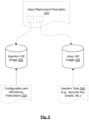
- Fig. 3 is a diagram illustrating a virtual application deployment descriptor that is modified to include a reference to an injection VM image, according to some embodiments.
- a virtual application deployment descriptor 310 (e.g., HOT) describes the infrastructure for a virtual application 130.
- a virtual application deployment descriptor for a virtual application 130 typically includes a reference to one or more virtual application VM images (e.g., virtual application VM image 330) that implement the virtual application 130.
- the modified virtual application deployment descriptor 310 further includes a reference to an injection VM image 320 and this injection VM image 320 is modified/customized to include configuration and monitoring instructions 250.
- one or more of the virtual application VM images 330 is modified to include injection data 340.
- the modified virtual application deployment descriptor 310 can be used to deploy the virtual application 130, with the addition of an injection VM 150 that is to configure and monitor the virtual application 130 according to the configuration and monitoring instructions 250.
- Fig. 4 is a diagram illustrating a virtual application that is deployed in a cloud environment with an injection VM, according to some embodiments.
- the virtual application 130 is deployed in a cloud environment 120.
- the virtual application 130 includes an injection VM 150 and a virtual application VM 160.
- the injection VM 150 includes a configuration execution program 260 and configuration and monitoring instructions 250.
- the virtual application VM 160 includes injection data 340.
- the injection VM 150 and the virtual application VM 160 are connected via virtual Local Area Network (vLAN) 410.
- the injection VM 150 can execute the configuration execution program 260 to configure and monitor the virtual application 130 (e.g., by configuring and monitoring virtual application VM 160) according to the provided configuration and monitoring instructions 250.
- vLAN virtual Local Area Network
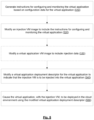
- Fig. 5 is a flow diagram of a process for configuring and monitoring a virtual application in a cloud environment, according to some embodiments.
- the process is performed by a computing device 100 (e.g., the virtual application injection component 110 of the computing device 100).
- a computing device 100 e.g., the virtual application injection component 110 of the computing device 100.
- the operations in the flow diagrams will be described with reference to the exemplary embodiments of the other figures. However, it should be understood that the operations of the flow diagrams can be performed by embodiments other than those discussed with reference to the other figures, and the embodiments discussed with reference to these other figures can perform operations different than those discussed with reference to the flow diagrams.
- the computing device 100 generates instructions for configuring and monitoring the virtual application 130 based on configuration data for the virtual application 130 (block 510).
- the configuration data includes one or more of: information regarding where the virtual application 130 is to be deployed, information regarding where VM images (e.g., injection VM image and/or virtual application VM images) are stored, the virtual application deployment descriptor, information regarding where to store results of configuring and monitoring the virtual application 130, information regarding a cloud manager or virtual infrastructure manager that is to deploy the virtual application 130, and a license activation key.
- the computing device 100 receives the configuration data via a structured communication medium 140.
- the structured communication medium 140 is any one of: an automated workflow system and an electronic messaging system (e.g., an e-mail system).
- the computing device 100 modifies an injection VM image to include the instructions for configuring and monitoring the virtual application 130 (block 520).
- the injection VM image is a template for instantiating an injection VM 150 that is to configure and monitor the virtual application 130 according to the instructions.
- the injection VM image is configured to report a result of the configuring and monitoring (e.g., via the structured communication medium 140, to a data store 180, and/or to the computing device 100).
- the computing device 100 modifies a virtual application VM image to include injection data (block 530).
- the virtual application VM image is a template for instantiating a virtual application VM 160 that implements the virtual application 130.
- the injection data includes a script, a configuration file, and/or a security certificate such as a public key that corresponds to a private key included in the injection VM image to enable secure communications between the virtual application VM 160 and the injection VM 150.
- the computing device 100 modifies a virtual application deployment descriptor for the virtual application 130 to indicate that the injection VM 150 is to be injected into the virtual application 130 (block 540).
- the computing device 100 modifies the virtual application deployment descriptor to indicate that the injection VM 150 is to be connected to a virtual application VM 160 that implements the virtual application 130 via a virtual network (e.g., a vLAN).
- the injection VM 150 is configured to configure and monitor the virtual application 130 by performing configuration and health verification tasks on the virtual application VM 160 via the virtual network.
- the computing device 100 then causes the virtual application 130, with the injection VM 150, to be deployed in the cloud environment 120 using the modified virtual application deployment descriptor (block 550). Once deployed, the injection VM 150 configures and monitors the virtual application 130 according to the provided instructions and can report the results of the configuring and monitoring (e.g., to the computing device 100 or via the structured communication medium 140).
- Fig. 6A illustrates connectivity between network devices (NDs) within an exemplary network, as well as three exemplary implementations of the NDs, according to some embodiments.
- Fig. 6A shows NDs 600A-H, and their connectivity by way of lines between 600A-600B, 600B-600C, 600C-600D, 600D-600E, 600E-600F, 600F-600G, and 600A-600G, as well as between 600H and each of 600A, 600C, 600D, and 600G.
- These NDs are physical devices, and the connectivity between these NDs can be wireless or wired (often referred to as a link).
- NDs 600A, 600E, and 600F An additional line extending from NDs 600A, 600E, and 600F illustrates that these NDs act as ingress and egress points for the network (and thus, these NDs are sometimes referred to as edge NDs; while the other NDs may be called core NDs).
- Two of the exemplary ND implementations in Fig. 6A are: 1) a special-purpose network device 602 that uses custom application-specific integrated-circuits (ASICs) and a special-purpose operating system (OS); and 2) a general purpose network device 604 that uses common off-the-shelf (COTS) processors and a standard OS.
- ASICs application-specific integrated-circuits
- OS special-purpose operating system
- COTS common off-the-shelf
- the special-purpose network device 602 includes networking hardware 610 comprising a set of one or more processor(s) 612, forwarding resource(s) 614 (which typically include one or more ASICs and/or network processors), and physical network interfaces (NIs) 616 (through which network connections are made, such as those shown by the connectivity between NDs 600A-H), as well as non-transitory machine readable storage media 618 having stored therein networking software 620.
- the networking software 620 may be executed by the networking hardware 610 to instantiate a set of one or more networking software instance(s) 622.
- Each of the networking software instance(s) 622, and that part of the networking hardware 610 that executes that network software instance form a separate virtual network element 630A-R.
- Each of the virtual network element(s) (VNEs) 630A-R includes a control communication and configuration module 632A-R (sometimes referred to as a local control module or control communication module) and forwarding table(s) 634A-R, such that a given virtual network element (e.g., 630A) includes the control communication and configuration module (e.g., 632A), a set of one or more forwarding table(s) (e.g., 634A), and that portion of the networking hardware 610 that executes the virtual network element (e.g., 630A).
- a control communication and configuration module 632A-R sometimes referred to as a local control module or control communication module
- forwarding table(s) 634A-R such that a given virtual network element (e.g., 630A) includes the control communication and configuration module (e.g., 632A), a set of one or more forwarding table(s) (e.g., 634A), and that portion of the networking hardware 610 that
- Software 620 can include code such as virtual application injection component 625, which when executed by networking hardware 610, causes the special-purpose network device 602 to perform operations of one or more embodiments described herein above as part networking software instances 622.
- the special-purpose network device 602 is often physically and/or logically considered to include: 1) a ND control plane 624 (sometimes referred to as a control plane) comprising the processor(s) 612 that execute the control communication and configuration module(s) 632A-R; and 2) a ND forwarding plane 626 (sometimes referred to as a forwarding plane, a data plane, or a media plane) comprising the forwarding resource(s) 614 that utilize the forwarding table(s) 634A-R and the physical NIs 616.
- a ND control plane 624 (sometimes referred to as a control plane) comprising the processor(s) 612 that execute the control communication and configuration module(s) 632A-R
- a ND forwarding plane 626 sometimes referred to as a forwarding plane, a data plane, or a media plane
- the forwarding resource(s) 614 that utilize the forwarding table(s) 634A-R and the physical NIs 616.
- the ND control plane 624 (the processor(s) 612 executing the control communication and configuration module(s) 632A-R) is typically responsible for participating in controlling how data (e.g., packets) is to be routed (e.g., the next hop for the data and the outgoing physical NI for that data) and storing that routing information in the forwarding table(s) 634A-R, and the ND forwarding plane 626 is responsible for receiving that data on the physical NIs 616 and forwarding that data out the appropriate ones of the physical NIs 616 based on the forwarding table(s) 634A-R.
- data e.g., packets
- the ND forwarding plane 626 is responsible for receiving that data on the physical NIs 616 and forwarding that data out the appropriate ones of the physical NIs 616 based on the forwarding table(s) 634A-R.
- Fig. 6B illustrates an exemplary way to implement the special-purpose network device 602 according to some embodiments.
- Fig. 6B shows a special-purpose network device including cards 638 (typically hot pluggable). While in some embodiments the cards 638 are of two types (one or more that operate as the ND forwarding plane 626 (sometimes called line cards), and one or more that operate to implement the ND control plane 624 (sometimes called control cards)), alternative embodiments may combine functionality onto a single card and/or include additional card types (e.g., one additional type of card is called a service card, resource card, or multi-application card).
- additional card types e.g., one additional type of card is called a service card, resource card, or multi-application card.
- a service card can provide specialized processing (e.g., Layer 4 to Layer 7 services (e.g., firewall, Internet Protocol Security (IPsec), Secure Sockets Layer (SSL) / Transport Layer Security (TLS), Intrusion Detection System (IDS), peer-to-peer (P2P), Voice over IP (VoIP) Session Border Controller, Mobile Wireless Gateways (Gateway General Packet Radio Service (GPRS) Support Node (GGSN), Evolved Packet Core (EPC) Gateway)).
- Layer 4 to Layer 7 services e.g., firewall, Internet Protocol Security (IPsec), Secure Sockets Layer (SSL) / Transport Layer Security (TLS), Intrusion Detection System (IDS), peer-to-peer (P2P), Voice over IP (VoIP) Session Border Controller, Mobile Wireless Gateways (Gateway General Packet Radio Service (GPRS) Support Node (GGSN), Evolved Packet Core (EPC) Gateway)
- GPRS General Pack
- the general purpose network device 604 includes hardware 640 comprising a set of one or more processor(s) 642 (which are often COTS processors) and physical NIs 646, as well as non-transitory machine readable storage media 648 having stored therein software 650.
- the processor(s) 642 execute the software 650 to instantiate one or more sets of one or more applications 664A-R. While one embodiment does not implement virtualization, alternative embodiments may use different forms of virtualization.
- the virtualization layer 654 represents the kernel of an operating system (or a shim executing on a base operating system) that allows for the creation of multiple instances 662A-R called software containers that may each be used to execute one (or more) of the sets of applications 664A-R; where the multiple software containers (also called virtualization engines, virtual private servers, or jails) are user spaces (typically a virtual memory space) that are separate from each other and separate from the kernel space in which the operating system is run; and where the set of applications running in a given user space, unless explicitly allowed, cannot access the memory of the other processes.
- the multiple software containers also called virtualization engines, virtual private servers, or jails
- user spaces typically a virtual memory space
- the virtualization layer 654 represents a hypervisor (sometimes referred to as a virtual machine monitor (VMM)) or a hypervisor executing on top of a host operating system, and each of the sets of applications 664A-R is run on top of a guest operating system within an instance 662A-R called a virtual machine (which may in some cases be considered a tightly isolated form of software container) that is run on top of the hypervisor - the guest operating system and application may not know they are running on a virtual machine as opposed to running on a "bare metal" host electronic device, or through para-virtualization the operating system and/or application may be aware of the presence of virtualization for optimization purposes.
- a hypervisor sometimes referred to as a virtual machine monitor (VMM)
- VMM virtual machine monitor
- one, some or all of the applications are implemented as unikernel(s), which can be generated by compiling directly with an application only a limited set of libraries (e.g., from a library operating system (LibOS) including drivers/libraries of OS services) that provide the particular OS services needed by the application.
- libraries e.g., from a library operating system (LibOS) including drivers/libraries of OS services
- unikernel can be implemented to run directly on hardware 640, directly on a hypervisor (in which case the unikernel is sometimes described as running within a LibOS virtual machine), or in a software container
- embodiments can be implemented fully with unikernels running directly on a hypervisor represented by virtualization layer 654, unikernels running within software containers represented by instances 662A-R, or as a combination of unikernels and the above-described techniques (e.g., unikernels and virtual machines both run directly on a hypervisor, unikernels and sets of applications that are run in different software containers).
- the virtual network element(s) 660A-R perform similar functionality to the virtual network element(s) 630A-R - e.g., similar to the control communication and configuration module(s) 632A and forwarding table(s) 634A (this virtualization of the hardware 640 is sometimes referred to as network function virtualization (NFV)).
- NFV network function virtualization
- CPE customer premise equipment
- each instance 662A-R corresponding to one VNE 660A-R
- alternative embodiments may implement this correspondence at a finer level granularity (e.g., line card virtual machines virtualize line cards, control card virtual machine virtualize control cards, etc.); it should be understood that the techniques described herein with reference to a correspondence of instances 662A-R to VNEs also apply to embodiments where such a finer level of granularity and/or unikernels are used.
- the virtualization layer 654 includes a virtual switch that provides similar forwarding services as a physical Ethernet switch. Specifically, this virtual switch forwards traffic between instances 662A-R and the physical NI(s) 646, as well as optionally between the instances 662A-R; in addition, this virtual switch may enforce network isolation between the VNEs 660A-R that by policy are not permitted to communicate with each other (e.g., by honoring virtual local area networks (VLANs)).
- VLANs virtual local area networks
- Software 650 can include code such as virtual application injection component 663, which when executed by processor(s) 642, cause the general purpose network device 604 to perform operations of one or more embodiments described herein above as part software instances 662A-R.
- the third exemplary ND implementation in Fig. 6A is a hybrid network device 606, which includes both custom ASICs/special-purpose OS and COTS processors/standard OS in a single ND or a single card within an ND.
- a platform VM i.e., a VM that that implements the functionality of the special-purpose network device 602 could provide for para-virtualization to the networking hardware present in the hybrid network device 606.
- each of the VNEs receives data on the physical NIs (e.g., 616, 646) and forwards that data out the appropriate ones of the physical NIs (e.g., 616, 646).
- a VNE implementing IP router functionality forwards IP packets on the basis of some of the IP header information in the IP packet; where IP header information includes source IP address, destination IP address, source port, destination port (where "source port” and “destination port” refer herein to protocol ports, as opposed to physical ports of a ND), transport protocol (e.g., user datagram protocol (UDP), Transmission Control Protocol (TCP), and differentiated services code point (DSCP) values.
- transport protocol e.g., user datagram protocol (UDP), Transmission Control Protocol (TCP), and differentiated services code point (DSCP) values.
- UDP user datagram protocol
- TCP Transmission Control Protocol
- DSCP differentiated services code point
- a network interface may be physical or virtual; and in the context of IP, an interface address is an IP address assigned to a NI, be it a physical NI or virtual NI.
- a virtual NI may be associated with a physical NI, with another virtual interface, or stand on its own (e.g., a loopback interface, a point-to-point protocol interface).
- a NI physical or virtual
- a loopback interface (and its loopback address) is a specific type of virtual NI (and IP address) of a NE/VNE (physical or virtual) often used for management purposes; where such an IP address is referred to as the nodal loopback address.
- IP addresses of that ND are referred to as IP addresses of that ND; at a more granular level, the IP address(es) assigned to NI(s) assigned to a NE/VNE implemented on a ND can be referred to as IP addresses of that NE/VNE.
- a virtual network is a logical abstraction of a physical network (such as that in Fig. 6A ) that provides network services (e.g., L2 and/or L3 services).
- a virtual network can be implemented as an overlay network (sometimes referred to as a network virtualization overlay) that provides network services (e.g., layer 2 (L2, data link layer) and/or layer 3 (L3, network layer) services) over an underlay network (e.g., an L3 network, such as an Internet Protocol (IP) network that uses tunnels (e.g., generic routing encapsulation (GRE), layer 2 tunneling protocol (L2TP), IPSec) to create the overlay network).
- IP Internet Protocol
- An embodiment of the invention may be an article of manufacture in which a non-transitory machine-readable medium (such as microelectronic memory) has stored thereon instructions which program one or more data processing components (generically referred to here as a "processor") to perform the operations described above.
- a non-transitory machine-readable medium such as microelectronic memory
- a processor program one or more data processing components (generically referred to here as a "processor") to perform the operations described above.
- some of these operations might be performed by specific hardware components that contain hardwired logic (e.g., dedicated digital filter blocks and state machines). Those operations might alternatively be performed by any combination of programmed data processing components and fixed hardwired circuit components.
Landscapes
- Engineering & Computer Science (AREA)
- Software Systems (AREA)
- Theoretical Computer Science (AREA)
- General Engineering & Computer Science (AREA)
- Physics & Mathematics (AREA)
- General Physics & Mathematics (AREA)
- Computer Networks & Wireless Communication (AREA)
- Signal Processing (AREA)
- Environmental & Geological Engineering (AREA)
- Stored Programmes (AREA)
- Alarm Systems (AREA)
Claims (10)
- Procédé par un dispositif informatique pour configurer et surveiller une application virtuelle (130) dans un environnement cloud (120), comprenant :la réception de données de configuration via un support de communication structuré, dans lequel le support de communication structuré est l'un quelconque parmi : un système de flux de travail automatisé et un système de messagerie électronique ;la génération (510) d'instructions pour configurer et surveiller l'application virtuelle (130) sur la base de données de configuration pour l'application virtuelle, les données de configuration comportant des informations qui sont nécessaires pour configurer et surveiller l'application virtuelle ;la modification (520) d'une image de machine virtuelle d'injection, VM, pour inclure les instructions de configuration et de surveillance de l'application virtuelle, dans lequel l'image VM d'injection est un modèle pour instancier une VM d'injection (150) qui doit configurer et surveiller l'application virtuelle selon les instructions ;la modification (540) d'un descripteur de déploiement d'application virtuelle pour l'application virtuelle pour indiquer que la VM d'injection (150) doit être injectée dans l'application virtuelle et pour indiquer que la VM d'injection doit être connectée à une VM d'application virtuelle (160) qui met en oeuvre l'application virtuelle via un réseau virtuel ; etle fait d'amener (550) l'application virtuelle, avec la VM d'injection, à être déployée dans l'environnement cloud à l'aide du descripteur de déploiement d'application virtuelle modifié, dans lequel la VM d'injection (150) fait partie du même groupe de ressources que la VM d'application virtuelle (160) qui met en oeuvre l'application virtuelle.
- Procédé selon la revendication 1, comprenant en outre :
la modification (530) d'une image VM d'application virtuelle pour inclure des données d'injection, dans lequel l'image VM d'application virtuelle est un modèle pour instancier une VM d'application virtuelle qui met en oeuvre l'application virtuelle, et dans lequel le descripteur de déploiement d'application virtuelle comporte une référence à l'image VM d'application virtuelle. - Procédé selon la revendication 2, dans lequel les données d'injection comportent l'un ou plusieurs parmi : un script, un fichier de configuration et une clé publique qui correspond à une clé privée incluse dans l'image VM d'injection pour permettre des communications sécurisées entre la VM d'application virtuelle et la VM d'injection.
- Procédé selon la revendication 1, dans lequel la VM d'injection (150) est configurée pour configurer et surveiller l'application virtuelle (130) en exécutant des tâches de configuration et de vérification de santé sur la VM d'application virtuelle via le réseau virtuel.
- Procédé selon la revendication 1, dans lequel la VM d'injection (150) est configurée pour rapporter un résultat de la configuration et de la surveillance via le support de communication structuré.
- Procédé selon la revendication 1, dans lequel les données de configuration comportent l'un ou plusieurs parmi : des informations concernant l'endroit où l'application virtuelle doit être déployée, des informations concernant l'endroit où les images VM sont stockées, le descripteur de déploiement d'application virtuelle, des informations concernant l'endroit où stocker les résultats de la configuration et la surveillance de l'application virtuelle, des informations concernant un gestionnaire de cloud qui doit déployer l'application virtuelle, et une clé d'activation de licence.
- Dispositif informatique (604) pour configurer et surveiller une application virtuelle (130) dans un environnement cloud, le dispositif informatique comprenant :un support de stockage non transitoire lisible par machine (648) dans lequel est stocké un composant d'injection d'application virtuelle (663) ; etun ensemble d'un ou de plusieurs processeurs (642) pour exécuter le composant d'injection d'application virtuelle pour amener le dispositif informatique à recevoir des données de configuration via un support de communication structuré, dans lequel le support de communication structuré est l'un quelconque parmi : un système de flux de travail automatisé et un système de messagerie électronique, et pour générer des instructions de configuration et de surveillance de l'application virtuelle (130) sur la base de données de configuration pour l'application virtuelle, modifier une image de machine virtuelle, VM, d'injection, pour inclure les instructions de configuration et de surveillance de l'application virtuelle, les données de configuration comportant des informations qui sont nécessaires pour configurer et surveiller l'application virtuelle, dans lequel l'image VM d'injection est un modèle pour instancier une VM d'injection (150) qui doit configurer et surveiller l'application virtuelle selon les instructions, modifier un descripteur de déploiement d'application virtuelle pour l'application virtuelle pour indiquer que la VM d'injection doit être injectée dans l'application virtuelle et pour indiquer que la VM d'injection (150) doit être connectée à une VM d'application virtuelle (160) qui met en oeuvre l'application virtuelle via un réseau virtuel, et amener l'application virtuelle, avec la VM d'injection, à être déployée dans l'environnement cloud à l'aide du descripteur de déploiement d'application virtuelle modifié, dans lequel la VM d'injection (150) fait partie du même groupe de ressources que la VM d'application virtuelle (160) qui met en oeuvre l'application virtuelle.
- Dispositif informatique selon la revendication 7, dans lequel le composant d'injection d'application virtuelle, lorsqu'il est exécuté par l'ensemble d'un ou de plusieurs processeurs, amène en outre le dispositif informatique à mettre en oeuvre un procédé tel que mentionné dans l'une quelconque des revendications 2 à 6.
- Support non transitoire lisible par machine dans lequel est stocké un code informatique qui, lorsqu'il est exécuté par un ensemble d'un ou de plusieurs processeurs d'un dispositif informatique, amène le dispositif informatique à exécuter des opérations de configuration et de surveillance d'une application virtuelle dans un environnement cloud, les opérations comprenant :la réception de données de configuration via un support de communication structuré, dans lequel le support de communication structuré est l'un quelconque parmi : un système de flux de travail automatisé et un système de messagerie électronique ;la génération (510) d'instructions pour configurer et surveiller l'application virtuelle sur la base de données de configuration pour l'application virtuelle, les données de configuration comportant des informations qui sont nécessaires pour configurer et surveiller l'application virtuelle ;la modification (520) d'une image de machine virtuelle d'injection, VM, pour inclure les instructions de configuration et de surveillance de l'application virtuelle, dans lequel l'image VM d'injection est un modèle pour instancier une VM d'injection qui doit configurer et surveiller l'application virtuelle selon les instructions ;la modification (540) d'un descripteur de déploiement d'application virtuelle pour l'application virtuelle pour indiquer que la VM d'injection doit être injectée dans l'application virtuelle et pour indiquer que la VM d'injection doit être connectée à une VM d'application virtuelle qui met en oeuvre l'application virtuelle via un réseau virtuel ; etle fait d'amener (550) l'application virtuelle, avec la VM d'injection, à être déployée dans l'environnement cloud à l'aide du descripteur de déploiement d'application virtuelle modifié, dans lequel la VM d'injection (150) fait partie du même groupe de ressources que la VM d'application virtuelle (160) qui met en oeuvre l'application virtuelle.
- Support non transitoire lisible par machine selon la revendication 9, dans lequel le code informatique, lorsqu'il est exécuté par l'ensemble d'un ou de plusieurs processeurs, amène le dispositif informatique à exécuter d'autres opérations d'un procédé tel que mentionné dans l'une quelconque des revendications 2 à 6.
Applications Claiming Priority (3)
| Application Number | Priority Date | Filing Date | Title |
|---|---|---|---|
| US201762552301P | 2017-08-30 | 2017-08-30 | |
| US15/893,406 US10691480B2 (en) | 2017-08-30 | 2018-02-09 | Apparatus and method for configuring and enabling virtual applications |
| PCT/IB2018/056113 WO2019043492A1 (fr) | 2017-08-30 | 2018-08-14 | Appareil et procédé de configuration et de surveillance d'applications virtuelles |
Publications (3)
| Publication Number | Publication Date |
|---|---|
| EP3676699A1 EP3676699A1 (fr) | 2020-07-08 |
| EP3676699C0 EP3676699C0 (fr) | 2023-06-14 |
| EP3676699B1 true EP3676699B1 (fr) | 2023-06-14 |
Family
ID=65434230
Family Applications (1)
| Application Number | Title | Priority Date | Filing Date |
|---|---|---|---|
| EP18769790.9A Active EP3676699B1 (fr) | 2017-08-30 | 2018-08-14 | Dispositif et procédé pour configurer et surveiller des applications virtuelles |
Country Status (5)
| Country | Link |
|---|---|
| US (2) | US10691480B2 (fr) |
| EP (1) | EP3676699B1 (fr) |
| ES (1) | ES2949264T3 (fr) |
| PL (1) | PL3676699T3 (fr) |
| WO (1) | WO2019043492A1 (fr) |
Families Citing this family (12)
| Publication number | Priority date | Publication date | Assignee | Title |
|---|---|---|---|---|
| US10728243B2 (en) * | 2018-01-17 | 2020-07-28 | Vmware, Inc. | Automating establishment of initial mutual trust during deployment of a virtual appliance in a managed virtual data center environment |
| US11418386B2 (en) * | 2018-03-06 | 2022-08-16 | At&T Intellectual Property I, L.P. | Virtual network function creation system |
| US10992680B2 (en) * | 2018-06-29 | 2021-04-27 | Sap Se | Authorization client management in a distributed computing environment |
| US10797968B2 (en) | 2018-11-15 | 2020-10-06 | Cisco Technology, Inc. | Automated provisioning of radios in a virtual radio access network |
| US11106512B2 (en) * | 2018-12-07 | 2021-08-31 | Vmware, Inc. | System and method for container provenance tracking |
| DE102019208937A1 (de) * | 2019-06-19 | 2020-12-24 | Arburg Gmbh + Co. Kg | Verfahren zum Bereitstellen eines Betriebssystems einer Maschinensteuerung |
| US11431732B2 (en) * | 2019-07-04 | 2022-08-30 | Check Point Software Technologies Ltd. | Methods and system for packet control and inspection in containers and meshed environments |
| US11966767B2 (en) * | 2020-10-28 | 2024-04-23 | Dell Products, L.P. | Enabling dial home service requests from an application executing in an embedded environment |
| US11733989B2 (en) * | 2021-03-22 | 2023-08-22 | Nec Corporation | Automated and dynamic system call sealing |
| US11799874B1 (en) * | 2021-04-02 | 2023-10-24 | Wiz, Inc. | System and method for detecting lateral movement using SSH private keys |
| US11792156B1 (en) * | 2021-09-10 | 2023-10-17 | NanoVMs, Inc. | 5G unikernel services |
| US11868749B2 (en) * | 2022-01-14 | 2024-01-09 | Discover Financial Services | Configurable deployment of data science models |
Family Cites Families (10)
| Publication number | Priority date | Publication date | Assignee | Title |
|---|---|---|---|---|
| US20150381567A1 (en) * | 2006-01-26 | 2015-12-31 | Unisys Corporation | Cleartext gateway for secure enterprise communications |
| EP2816470A1 (fr) * | 2013-06-19 | 2014-12-24 | British Telecommunications public limited company | Spécification de déploiement augmentée pour conformité de logiciels |
| US9256467B1 (en) * | 2014-11-11 | 2016-02-09 | Amazon Technologies, Inc. | System for managing and scheduling containers |
| JP2016103144A (ja) * | 2014-11-28 | 2016-06-02 | 富士通株式会社 | 仮想マシン配備方法、仮想マシン配備プログラム及び仮想マシン配備システム |
| KR101932872B1 (ko) * | 2015-01-23 | 2019-03-15 | 닛본 덴끼 가부시끼가이샤 | 네트워크 기능들 가상화의 관리 및 오케스트레이션을 위한 방법, 디바이스, 및 프로그램 |
| US20160358193A1 (en) * | 2015-06-08 | 2016-12-08 | Realine Technology Inc. | Technology Platform for Matching Demand-Side and Supply-Side Users |
| US10148731B2 (en) * | 2015-06-30 | 2018-12-04 | Oracle International Corporation | Methods, systems, and computer readable media for on-boarding virtualized network function (VNF) packages in a network functions virtualization (NFV) system |
| WO2017161562A1 (fr) * | 2016-03-25 | 2017-09-28 | 华为技术有限公司 | Procédé et dispositif de gestion d'application dans un environnement de virtualisation de fonction de réseau |
| US10680902B2 (en) * | 2016-08-31 | 2020-06-09 | At&T Intellectual Property I, L.P. | Virtual agents for facilitation of network based storage reporting |
| US10244034B2 (en) * | 2017-03-29 | 2019-03-26 | Ca, Inc. | Introspection driven monitoring of multi-container applications |
-
2018
- 2018-02-09 US US15/893,406 patent/US10691480B2/en active Active
- 2018-08-14 PL PL18769790.9T patent/PL3676699T3/pl unknown
- 2018-08-14 EP EP18769790.9A patent/EP3676699B1/fr active Active
- 2018-08-14 ES ES18769790T patent/ES2949264T3/es active Active
- 2018-08-14 WO PCT/IB2018/056113 patent/WO2019043492A1/fr not_active Ceased
-
2020
- 2020-04-17 US US16/851,566 patent/US11748132B2/en active Active
Also Published As
| Publication number | Publication date |
|---|---|
| US20200241913A1 (en) | 2020-07-30 |
| EP3676699C0 (fr) | 2023-06-14 |
| US10691480B2 (en) | 2020-06-23 |
| US11748132B2 (en) | 2023-09-05 |
| ES2949264T3 (es) | 2023-09-27 |
| PL3676699T3 (pl) | 2023-11-06 |
| EP3676699A1 (fr) | 2020-07-08 |
| US20190065232A1 (en) | 2019-02-28 |
| WO2019043492A1 (fr) | 2019-03-07 |
Similar Documents
| Publication | Publication Date | Title |
|---|---|---|
| US11748132B2 (en) | Apparatus and method for configuring and enabling virtual applications | |
| US11812362B2 (en) | Containerized router with a disjoint data plane | |
| US12255802B2 (en) | Active assurance for virtualized services | |
| US12245130B2 (en) | Containerized router with a disjoint data plane | |
| EP3384386B1 (fr) | Autorisation d'un chaînage de services granulaire fin dans une architecture de virtualisation de fonction de réseau | |
| US12155569B1 (en) | Multi-stage virtual private network service provisioning for containerized routers | |
| JP2020129800A (ja) | 仮想ネットワークインタフェースオブジェクト | |
| US20170289060A1 (en) | Model driven process for automated deployment of domain 2.0 virtualized services and applications on cloud infrastructure | |
| US11991097B2 (en) | Hybrid data plane for a containerized router | |
| EP4307639B1 (fr) | Routeur conteneurisé à réseautage virtuel | |
| CN108370368B (zh) | 安全策略部署方法与装置 | |
| CN115941457A (zh) | 用于多个集群的云本地软件定义网络架构 | |
| US20250097821A1 (en) | Containerized router with virtual networking | |
| Mechtri et al. | Inter and intra Cloud Networking Gateway as a service. | |
| US20260039695A1 (en) | Protocol Switching and Secure Sockets Layer (SSL) Cross-Wiring to Enable Inter-Network Resource Connectivity | |
| CN117255019A (zh) | 用于虚拟化计算基础设施的系统、方法及存储介质 | |
| CN117061425A (zh) | 利用虚拟联网的容器化路由器 | |
| CN116530130A (zh) | 用于虚拟化服务的主动保证 | |
| Shaikh | Building a Multivendor Hybrid Network Consisting of Physical and Virtual Routing and Switching Devices for Cloud Deployment |
Legal Events
| Date | Code | Title | Description |
|---|---|---|---|
| STAA | Information on the status of an ep patent application or granted ep patent |
Free format text: STATUS: UNKNOWN |
|
| STAA | Information on the status of an ep patent application or granted ep patent |
Free format text: STATUS: THE INTERNATIONAL PUBLICATION HAS BEEN MADE |
|
| PUAI | Public reference made under article 153(3) epc to a published international application that has entered the european phase |
Free format text: ORIGINAL CODE: 0009012 |
|
| STAA | Information on the status of an ep patent application or granted ep patent |
Free format text: STATUS: REQUEST FOR EXAMINATION WAS MADE |
|
| 17P | Request for examination filed |
Effective date: 20200306 |
|
| AK | Designated contracting states |
Kind code of ref document: A1 Designated state(s): AL AT BE BG CH CY CZ DE DK EE ES FI FR GB GR HR HU IE IS IT LI LT LU LV MC MK MT NL NO PL PT RO RS SE SI SK SM TR |
|
| AX | Request for extension of the european patent |
Extension state: BA ME |
|
| DAV | Request for validation of the european patent (deleted) | ||
| DAX | Request for extension of the european patent (deleted) | ||
| STAA | Information on the status of an ep patent application or granted ep patent |
Free format text: STATUS: EXAMINATION IS IN PROGRESS |
|
| 17Q | First examination report despatched |
Effective date: 20211217 |
|
| GRAP | Despatch of communication of intention to grant a patent |
Free format text: ORIGINAL CODE: EPIDOSNIGR1 |
|
| STAA | Information on the status of an ep patent application or granted ep patent |
Free format text: STATUS: GRANT OF PATENT IS INTENDED |
|
| RIC1 | Information provided on ipc code assigned before grant |
Ipc: H04L 41/50 20220101ALI20230228BHEP Ipc: H04L 43/20 20220101ALI20230228BHEP Ipc: H04L 41/0895 20220101ALI20230228BHEP Ipc: H04L 41/40 20220101ALI20230228BHEP Ipc: H04L 41/5041 20220101ALI20230228BHEP Ipc: G06F 9/455 20060101ALI20230228BHEP Ipc: H04L 41/0806 20220101ALI20230228BHEP Ipc: G06F 8/60 20180101ALI20230228BHEP Ipc: G06F 9/445 20060101ALI20230228BHEP Ipc: H04L 43/0817 20220101ALI20230228BHEP Ipc: G06F 8/61 20180101AFI20230228BHEP |
|
| INTG | Intention to grant announced |
Effective date: 20230316 |
|
| GRAS | Grant fee paid |
Free format text: ORIGINAL CODE: EPIDOSNIGR3 |
|
| GRAA | (expected) grant |
Free format text: ORIGINAL CODE: 0009210 |
|
| STAA | Information on the status of an ep patent application or granted ep patent |
Free format text: STATUS: THE PATENT HAS BEEN GRANTED |
|
| AK | Designated contracting states |
Kind code of ref document: B1 Designated state(s): AL AT BE BG CH CY CZ DE DK EE ES FI FR GB GR HR HU IE IS IT LI LT LU LV MC MK MT NL NO PL PT RO RS SE SI SK SM TR |
|
| REG | Reference to a national code |
Ref country code: CH Ref legal event code: EP |
|
| REG | Reference to a national code |
Ref country code: DE Ref legal event code: R096 Ref document number: 602018051868 Country of ref document: DE |
|
| REG | Reference to a national code |
Ref country code: AT Ref legal event code: REF Ref document number: 1579715 Country of ref document: AT Kind code of ref document: T Effective date: 20230715 |
|
| U01 | Request for unitary effect filed |
Effective date: 20230614 |
|
| U07 | Unitary effect registered |
Designated state(s): AT BE BG DE DK EE FI FR IT LT LU LV MT NL PT SE SI Effective date: 20230619 |
|
| REG | Reference to a national code |
Ref country code: ES Ref legal event code: FG2A Ref document number: 2949264 Country of ref document: ES Kind code of ref document: T3 Effective date: 20230927 |
|
| U20 | Renewal fee for the european patent with unitary effect paid |
Year of fee payment: 6 Effective date: 20230828 |
|
| REG | Reference to a national code |
Ref country code: LT Ref legal event code: MG9D |
|
| PG25 | Lapsed in a contracting state [announced via postgrant information from national office to epo] |
Ref country code: NO Free format text: LAPSE BECAUSE OF FAILURE TO SUBMIT A TRANSLATION OF THE DESCRIPTION OR TO PAY THE FEE WITHIN THE PRESCRIBED TIME-LIMIT Effective date: 20230914 |
|
| PG25 | Lapsed in a contracting state [announced via postgrant information from national office to epo] |
Ref country code: RS Free format text: LAPSE BECAUSE OF FAILURE TO SUBMIT A TRANSLATION OF THE DESCRIPTION OR TO PAY THE FEE WITHIN THE PRESCRIBED TIME-LIMIT Effective date: 20230614 Ref country code: HR Free format text: LAPSE BECAUSE OF FAILURE TO SUBMIT A TRANSLATION OF THE DESCRIPTION OR TO PAY THE FEE WITHIN THE PRESCRIBED TIME-LIMIT Effective date: 20230614 Ref country code: GR Free format text: LAPSE BECAUSE OF FAILURE TO SUBMIT A TRANSLATION OF THE DESCRIPTION OR TO PAY THE FEE WITHIN THE PRESCRIBED TIME-LIMIT Effective date: 20230915 |
|
| PG25 | Lapsed in a contracting state [announced via postgrant information from national office to epo] |
Ref country code: SK Free format text: LAPSE BECAUSE OF FAILURE TO SUBMIT A TRANSLATION OF THE DESCRIPTION OR TO PAY THE FEE WITHIN THE PRESCRIBED TIME-LIMIT Effective date: 20230614 |
|
| U1N | Appointed representative for the unitary patent procedure changed after the registration of the unitary effect |
Representative=s name: KRAUS & WEISERT PATENTANWAELTE PARTGMBB; DE |
|
| PG25 | Lapsed in a contracting state [announced via postgrant information from national office to epo] |
Ref country code: IS Free format text: LAPSE BECAUSE OF FAILURE TO SUBMIT A TRANSLATION OF THE DESCRIPTION OR TO PAY THE FEE WITHIN THE PRESCRIBED TIME-LIMIT Effective date: 20231014 |
|
| PG25 | Lapsed in a contracting state [announced via postgrant information from national office to epo] |
Ref country code: SM Free format text: LAPSE BECAUSE OF FAILURE TO SUBMIT A TRANSLATION OF THE DESCRIPTION OR TO PAY THE FEE WITHIN THE PRESCRIBED TIME-LIMIT Effective date: 20230614 Ref country code: SK Free format text: LAPSE BECAUSE OF FAILURE TO SUBMIT A TRANSLATION OF THE DESCRIPTION OR TO PAY THE FEE WITHIN THE PRESCRIBED TIME-LIMIT Effective date: 20230614 Ref country code: RO Free format text: LAPSE BECAUSE OF FAILURE TO SUBMIT A TRANSLATION OF THE DESCRIPTION OR TO PAY THE FEE WITHIN THE PRESCRIBED TIME-LIMIT Effective date: 20230614 Ref country code: IS Free format text: LAPSE BECAUSE OF FAILURE TO SUBMIT A TRANSLATION OF THE DESCRIPTION OR TO PAY THE FEE WITHIN THE PRESCRIBED TIME-LIMIT Effective date: 20231014 Ref country code: CZ Free format text: LAPSE BECAUSE OF FAILURE TO SUBMIT A TRANSLATION OF THE DESCRIPTION OR TO PAY THE FEE WITHIN THE PRESCRIBED TIME-LIMIT Effective date: 20230614 |
|
| PG25 | Lapsed in a contracting state [announced via postgrant information from national office to epo] |
Ref country code: MC Free format text: LAPSE BECAUSE OF FAILURE TO SUBMIT A TRANSLATION OF THE DESCRIPTION OR TO PAY THE FEE WITHIN THE PRESCRIBED TIME-LIMIT Effective date: 20230614 |
|
| REG | Reference to a national code |
Ref country code: DE Ref legal event code: R097 Ref document number: 602018051868 Country of ref document: DE |
|
| REG | Reference to a national code |
Ref country code: CH Ref legal event code: PL |
|
| PG25 | Lapsed in a contracting state [announced via postgrant information from national office to epo] |
Ref country code: MC Free format text: LAPSE BECAUSE OF FAILURE TO SUBMIT A TRANSLATION OF THE DESCRIPTION OR TO PAY THE FEE WITHIN THE PRESCRIBED TIME-LIMIT Effective date: 20230614 |
|
| PLBE | No opposition filed within time limit |
Free format text: ORIGINAL CODE: 0009261 |
|
| STAA | Information on the status of an ep patent application or granted ep patent |
Free format text: STATUS: NO OPPOSITION FILED WITHIN TIME LIMIT |
|
| PG25 | Lapsed in a contracting state [announced via postgrant information from national office to epo] |
Ref country code: CH Free format text: LAPSE BECAUSE OF NON-PAYMENT OF DUE FEES Effective date: 20230831 |
|
| 26N | No opposition filed |
Effective date: 20240315 |
|
| REG | Reference to a national code |
Ref country code: IE Ref legal event code: MM4A |
|
| PG25 | Lapsed in a contracting state [announced via postgrant information from national office to epo] |
Ref country code: IE Free format text: LAPSE BECAUSE OF NON-PAYMENT OF DUE FEES Effective date: 20230814 |
|
| PG25 | Lapsed in a contracting state [announced via postgrant information from national office to epo] |
Ref country code: IE Free format text: LAPSE BECAUSE OF NON-PAYMENT OF DUE FEES Effective date: 20230814 |
|
| U20 | Renewal fee for the european patent with unitary effect paid |
Year of fee payment: 7 Effective date: 20240827 |
|
| PG25 | Lapsed in a contracting state [announced via postgrant information from national office to epo] |
Ref country code: CY Free format text: LAPSE BECAUSE OF FAILURE TO SUBMIT A TRANSLATION OF THE DESCRIPTION OR TO PAY THE FEE WITHIN THE PRESCRIBED TIME-LIMIT; INVALID AB INITIO Effective date: 20180814 |
|
| PG25 | Lapsed in a contracting state [announced via postgrant information from national office to epo] |
Ref country code: HU Free format text: LAPSE BECAUSE OF FAILURE TO SUBMIT A TRANSLATION OF THE DESCRIPTION OR TO PAY THE FEE WITHIN THE PRESCRIBED TIME-LIMIT; INVALID AB INITIO Effective date: 20180814 |
|
| U20 | Renewal fee for the european patent with unitary effect paid |
Year of fee payment: 8 Effective date: 20250827 |
|
| PGFP | Annual fee paid to national office [announced via postgrant information from national office to epo] |
Ref country code: ES Payment date: 20250901 Year of fee payment: 8 |
|
| PGFP | Annual fee paid to national office [announced via postgrant information from national office to epo] |
Ref country code: PL Payment date: 20250724 Year of fee payment: 8 |
|
| PGFP | Annual fee paid to national office [announced via postgrant information from national office to epo] |
Ref country code: GB Payment date: 20250827 Year of fee payment: 8 |
|
| PG25 | Lapsed in a contracting state [announced via postgrant information from national office to epo] |
Ref country code: TR Free format text: LAPSE BECAUSE OF FAILURE TO SUBMIT A TRANSLATION OF THE DESCRIPTION OR TO PAY THE FEE WITHIN THE PRESCRIBED TIME-LIMIT Effective date: 20230614 |