EP3676701B1 - Syntaxe de schéma - Google Patents
Syntaxe de schéma Download PDFInfo
- Publication number
- EP3676701B1 EP3676701B1 EP17928220.7A EP17928220A EP3676701B1 EP 3676701 B1 EP3676701 B1 EP 3676701B1 EP 17928220 A EP17928220 A EP 17928220A EP 3676701 B1 EP3676701 B1 EP 3676701B1
- Authority
- EP
- European Patent Office
- Prior art keywords
- syntax
- distinct
- source
- action
- data
- Prior art date
- Legal status (The legal status is an assumption and is not a legal conclusion. Google has not performed a legal analysis and makes no representation as to the accuracy of the status listed.)
- Active
Links
Images


Classifications
-
- G—PHYSICS
- G06—COMPUTING OR CALCULATING; COUNTING
- G06F—ELECTRIC DIGITAL DATA PROCESSING
- G06F16/00—Information retrieval; Database structures therefor; File system structures therefor
- G06F16/20—Information retrieval; Database structures therefor; File system structures therefor of structured data, e.g. relational data
- G06F16/21—Design, administration or maintenance of databases
- G06F16/211—Schema design and management
-
- G—PHYSICS
- G06—COMPUTING OR CALCULATING; COUNTING
- G06F—ELECTRIC DIGITAL DATA PROCESSING
- G06F16/00—Information retrieval; Database structures therefor; File system structures therefor
- G06F16/90—Details of database functions independent of the retrieved data types
- G06F16/95—Retrieval from the web
- G06F16/958—Organisation or management of web site content, e.g. publishing, maintaining pages or automatic linking
- G06F16/972—Access to data in other repository systems, e.g. legacy data or dynamic Web page generation
-
- G—PHYSICS
- G06—COMPUTING OR CALCULATING; COUNTING
- G06F—ELECTRIC DIGITAL DATA PROCESSING
- G06F16/00—Information retrieval; Database structures therefor; File system structures therefor
- G06F16/20—Information retrieval; Database structures therefor; File system structures therefor of structured data, e.g. relational data
- G06F16/24—Querying
- G06F16/242—Query formulation
- G06F16/2433—Query languages
-
- G—PHYSICS
- G06—COMPUTING OR CALCULATING; COUNTING
- G06F—ELECTRIC DIGITAL DATA PROCESSING
- G06F16/00—Information retrieval; Database structures therefor; File system structures therefor
- G06F16/20—Information retrieval; Database structures therefor; File system structures therefor of structured data, e.g. relational data
- G06F16/25—Integrating or interfacing systems involving database management systems
-
- G—PHYSICS
- G06—COMPUTING OR CALCULATING; COUNTING
- G06F—ELECTRIC DIGITAL DATA PROCESSING
- G06F9/00—Arrangements for program control, e.g. control units
- G06F9/06—Arrangements for program control, e.g. control units using stored programs, i.e. using an internal store of processing equipment to receive or retain programs
- G06F9/46—Multiprogramming arrangements
- G06F9/54—Interprogram communication
- G06F9/547—Remote procedure calls [RPC]; Web services
-
- G—PHYSICS
- G06—COMPUTING OR CALCULATING; COUNTING
- G06F—ELECTRIC DIGITAL DATA PROCESSING
- G06F8/00—Arrangements for software engineering
- G06F8/30—Creation or generation of source code
- G06F8/31—Programming languages or programming paradigms
- G06F8/315—Object-oriented languages
-
- G—PHYSICS
- G06—COMPUTING OR CALCULATING; COUNTING
- G06F—ELECTRIC DIGITAL DATA PROCESSING
- G06F8/00—Arrangements for software engineering
- G06F8/40—Transformation of program code
- G06F8/41—Compilation
- G06F8/42—Syntactic analysis
-
- G—PHYSICS
- G06—COMPUTING OR CALCULATING; COUNTING
- G06F—ELECTRIC DIGITAL DATA PROCESSING
- G06F9/00—Arrangements for program control, e.g. control units
- G06F9/06—Arrangements for program control, e.g. control units using stored programs, i.e. using an internal store of processing equipment to receive or retain programs
- G06F9/44—Arrangements for executing specific programs
- G06F9/448—Execution paradigms, e.g. implementations of programming paradigms
- G06F9/4488—Object-oriented
Definitions
- An application may include machine-readable instructions executable by a processing resource to perform specific tasks or jobs. Some applications may operate by utilizing computational resources from a single source such as a single computational system, a single virtual location, a single computing device, etc. Some applications may be a distributed application. A distributed application may utilize computational resources from multiple sources such as multiple computational systems, multiple virtual locations, multiple computing devices, remote servers, cloud computing resources, etc. Document by anonymous describes " Directives - graphql-php", https://webonyx.github.io, 17 September 2017, pages 1-2 .
- Software applications may be developed with a web-first or even a web-only development model.
- applications may be developed as distributed applications or application services that at least partially operate from and/or utilize computational resources distributed across a network.
- the distributed applications may, for example, operate on and/or communicate with multiple servers or devices on a same computer network.
- the data that the distributed application utilizes in its operation may be spread over more than one server or device in the computer network.
- the distributed application may be broken into separate sets of machine-readable instructions executable by a processing resource.
- the distributed application may include client-based machine-readable instructions and server and/or cloud-based machine-readable instructions.
- the client-based machine-readable instructions may operate on a client device and access data from a server or from a computing cloud environment, while the server or cloud-based machine-readable instructions may process the data.
- distributed applications may utilize computational resources that are distributed at distinct locations in a network in order to perform their specific tasks or jobs.
- interface design may be a complex process. Specifically, an interface design may be configured to provide external developers access to application programming interfaces (APIs) for building additional functionality to drive the utility of the application service. Additionally, the interface design may be configured to abstract APIs into a syntax that is easily digestible within the context of a web browser through which the application operates.
- APIs application programming interfaces
- Two distributed application development methodologies may include utilizing a representational state transfer (REST) application model and a GraphQL application model.
- the REST application model may include a specification for addressing resources utilizing the semantics that are available already within the hypertext transfer protocol (HTTP).
- HTTP hypertext transfer protocol
- a client may utilize the REST API to make requests for addressable distributed resources.
- Utilizing a REST API may include utilizing multiple endpoints that return fixed data structures.
- An application server may translate requests to and from a data service utilized by the application and the client utilizing the application.
- the GraphQL application model may include a specification that may attempt to provide introspection into APIs by providing a syntax that can be used to query an application server about its available APIs.
- the client may utilize GraphQL to make requests for addressable resources.
- GraphQL may enable declarative data fetching.
- An application server may relegate a data request by an application to the GraphQL serve.
- a GraphQL server may expose a single endpoint and responds with precisely the data that a client requests.
- the REST and GraphQL mechanisms may be used by developers to introspect and manipulate resources hosted by the application.
- Compositing these various views may include creating relationships between distributed data from multiple resources and/or combining the objects from multiple data resources to form a single resource view.
- REST the semantics of the GraphQL
- Compositing may be attempted at the client.
- Compositing multiple views of distributed data resources at the client may include the client application knowing and correlating identifiers between the resources within disparate systems.
- the client may also be aware of the relevant elements that make up each view of data and how to manipulate that data correctly. Therefore, maintaining a client-based compositing scheme may include maintaining correlation identities across multiple data sources. In some examples, each pair of resources could potentially have a unique correlation. Maintaining the client-based compositing scheme may also include maintaining consistency in a view of data when each of the supporting systems is also a live system subject to updates. Thus, the compositing client may implement a mechanism to keep data views up-to-date.
- Maintaining the client-based compositing scheme may include operations to synchronize updates across each data service ensuring atomic operations and the ability to rollback transactions. Additionally, client-based compositing may include maintenance of the client-based application code involved in rendering accurate representations of data when one or more of the data services changes definitions for its data types. Maintaining the client-based compositing scheme in a web-based distributed application may additionally include the added complexity of translating from a binary protocol and/or API into a web environment.
- Compositing may be attempted at the application.
- Application-based compositing may be similar to client-based compositing, except that the compositing occurs within an application server associated with the application.
- the computational intelligence for managing the correlations and operations within the context of the application may act as a gateway between services and/or data sources that would otherwise be restricted from direct access.
- Maintaining the application-based compositing scheme may include creating a service layer redundancy that is continuously maintained over time. Maintenance of the service layer redundancy may be a relatively higher priority when the application is being utilized as an interface to other pre-existing applications relying on the service layer redundancy.
- Application-based compositing may also include implementing a mechanism to keep data views up-to-date.
- each layer or linkage between subsystems may contain its own set of complexities and management specifications, such as API semantics, preferred data type representation, control methods for accessing data, and/or measures for preserving data integrity.
- examples of the present disclosure may include a model for compositing distributed data resources based on a syntax for extending schema models.
- a system according to the present disclosure may include a processing resource and a memory resource storing instructions executable by the processing resource to utilize a schema language to extend a schema element, utilize the schema language to specify a source location of the schema element existing in a plurality of source locations, utilize the schema language to specify a custom action to perform based on the source location, and utilize the schema language to specify a plurality of source-dependent syntaxes to the custom action.
- Figure 1 is a block diagram of a computing system 100 according to the present disclosure.
- the computing system 100 may be the same as or different than the computing system 220 illustrated in figure 2 .
- the computing system 100 may include at least one computing device that is capable of communicating with at least one remote system.
- computing system 100 includes a processing resource 102 and a computer readable medium 104.
- the following descriptions refer to a single processing resource and a single computer-readable medium, the descriptions may also apply to a system with multiple processing resources and computer-readable mediums.
- the instructions may be distributed (e.g., stored) across multiple computer-readable mediums and the instructions may be distributed (e.g., executed by) across multiple processing resources.
- Processing resource 102 may be a central processing unit (CPU), a microprocessor, and/or other hardware devices suitable for retrieval and execution of instructions stored in the computer-readable medium 104.
- processing resource 102 may retrieve, execute, and/or send instructions 106, 108, and 110 for extending a schema element.
- processing resource 102 may include an electronic circuit comprising a number of electronic components for performing the functionality of an instruction in computer-readable medium 104.
- the processing resource 102 may include an application-specific circuit (ASIC).
- ASIC application-specific circuit
- executable instruction representations e.g., boxes
- executable instructions and/or electronic circuits included within a particular box may be included in a different box shown in the figures or in a different box not shown.
- Computer-readable medium 104 may be any electronic, magnetic, optical, or other physical storage device that stores executable instructions.
- computer-readable medium 104 may be, for example, Random Access Memory (RAM), an Electrically-Erasable Programmable Read-Only Memory (EEPROM), a storage drive, an optical disc, and the like.
- Computer-readable medium 104 may be disposed within system 100, as shown in Figure 1 . In this situation, the executable instructions may be "installed" on the system 100.
- computer-readable medium 104 may be a portable, external or remote storage medium, for example, that allows system 100 to download the instructions from the portable/external/remote storage medium. In this situation, the executable instructions may be part of an "installation package".
- computer-readable medium 104 may be encoded with executable instructions for extending a schema element.
- the computer-readable medium 104 can be in communication with the processing resource 102 via a communication link (e.g., a path) 114.
- the communication link 114 can be local or remote to a machine (e.g., a computing system) associated with the processing resource 102. Examples of a local communication link 114 can include an electronic bus internal to a machine (e.g., a computing system) where the machine readable medium 104 is one of volatile, non-volatile, fixed, and/or removable storage medium in communication with the processing resource 102 via the electronic bus.
- the instructions 106, 108, and 110 may be executed by the processing resource 102 to utilize a schema language to extend a schema element.
- a schema language may include a definition of how data is stored and related to other data within a data store.
- a schema may include a data definition language such as standard query language (SQL).
- SQL standard query language
- a schema element may include a representation of an addressable data item or datum within the data store.
- a basic schema element may define a data element by name, data type, and its location within the data store. Extending the schema element may include providing additional definitions, beyond those contained in a basic schema, related to data retrieval in the schema language. The additional definitions may facilitate data location and compilation of data elements.
- instructions 106 when executed by a processor (e.g., processing resource 102), may cause the computing system 100 to utilize a schema language to specify a source location of a schema element.
- the source location of a schema element may include the data source or data sources that are to be utilized and/or drawn from in deriving the schema element in response to a command included in the utilized schema language.
- a source location may include a database or a data service.
- the schema language may be utilized to specify a source location of the schema element existing in a plurality of source locations.
- the schema element may include data that is stored in and/or sourced from a variety of distinct data sources.
- the distinct data sources may be in distinct physical locations, have distinct data formats, and operate utilizing distinct syntaxes.
- Specifying the source location of the schema element may include defining which data sources the schema element is stored in and/or sourced from.
- Specifying the source location of the schema element may include defining a type associated with the data source that the schema element is stored in and/or sourced from. For example, defining the type may include defining whether a data source storing the data of the schema element is a persistent type memory or volatile type memory.
- Specifying the source location may include defining the source location as a composite of the plurality of source locations.
- the plurality of source locations may be located at a plurality of distinct resource domains.
- Defining the source location as a composite of the plurality of locations may include specifying each of a plurality of distinct resource domains associated with each of the distinct data sources storing or providing the data of the schema element.
- instructions 108 when executed by a processor (e.g., processing resource 102), may cause the computing system 100 to cause a computing system to utilize the schema language to specify an action to perform.
- An action may include an action to take with regard to the data sources storing and/or providing the data of the schema element. Examples of an action may include a create, read, update, and/or delete action.
- the schema may be utilized to specify a custom action.
- a custom action may include a definition of the action that is customized to each of the plurality of source locations.
- a custom action may include a definition of how to translate a requested action formatted in a syntax of a composite data source into the specific actions formatted in the syntax of each of the composited distinct data sources storing and/or providing the schema element data.
- the source location may include a composite of a plurality of source locations.
- the custom action may, therefore, be tailored to each of the plurality of source locations.
- each data source storing and/or providing the data of the schema element may include specific implementation instruction sets and/or syntax for performing an action to the data source.
- Defining the custom action may include providing a translation of the custom action within the schema language that is specific to the specific implementation instruction sets and/or syntax for performing an action to the data source.
- instructions 108 when executed by a processor (e.g., processing resource 102), may cause the computing system 100 to utilize the schema language to specify a plurality of source-dependent syntaxes to the custom action.
- the syntax to the custom action may be a syntax that is supported by a data source storing and/or providing data of a schema element. Since data of the schema element may be distributed among distinct data sources, the computing system 100 may specify a plurality of data source-dependent syntaxes that correspond to respective ones of the data sources.
- the schema may be utilized to translate the custom action from its original syntax or format to a syntax or format that is supported by the underlying data source or data sources.
- the schema utilized may translate the custom action by specifying a syntax for the custom action applicable to each of a plurality of distinct data sources utilizing distinct syntaxes.
- a host at each of the plurality of source locations may utilize a language.
- Specifying the source-dependent syntax of each particular source location may include identifying the syntax utilized at each particular source location.
- the source-dependent syntax for the particular source location may be selected based on the language utilized by a host at the source location.
- a source location may be associated with an application programming interface (API).
- An API may include a set of subroutine definitions, protocols, and/or tools providing defined methods of communication between client devices and data sources.
- the API associated with a particular source location may utilize a specific syntax.
- the source-dependent syntax for the particular source location may be selected based on the language utilized by the API associated with the source location.
- Utilizing the computing system 100 may provide a mechanism to define a schema element as a composite of other resources.
- a schema element may be defined as a composite of data sources spanning multiple resource domains, such as different database servers, other APIs, and other data storage mediums.
- the computing system 100 may provide a mechanism to define syntax specific to each of a plurality of data sources.
- the syntax utilized by a data source may be selected based on which syntax and data source format allows the underlying data to be stored in a relatively most efficient form, such as storing historical data within a time-series model, storing relational data within a relational data source, storing document data within a document warehouse, or storing metric data within a memory cache model.
- the determination of a syntax and a relatively most efficient storage form may be made without regard to concerns over compatibility with a particular syntax utilized by a client.
- providing a mechanism to define syntax specific to each of a plurality of data sources may allow for the deviation in resource access based on the syntax of the data sources.
- the deviation may not only allow for the compositing discussed above, but may also accommodate a seamless migration of resources from one data source type to another data source type without implementing low-level instructions executable by the processing resource 102 to maintain and/or update data source relationships and calling conventions.
- Providing a mechanism to define syntax specific to each of a plurality of data sources may allow for implementation of a generalized schema language for web-based application development that allows application calls to span multiple resource domains.
- the computing system 100 may allow for a generalization of a parser than can composite schema elements from multiple resource domains based on a template definition of the compositing behavior.
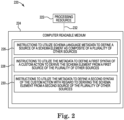
- FIG. 2 is a block diagram of a computing system 220 according to the present disclosure.
- the computing system 220 may be the same as or different than the computing system 100 illustrated in Figure 1 .
- the computing system 220 may include at least one computing device that is capable of communicating with at least one remote system.
- computing system 220 includes a processing resource 222 and a computer readable medium 224.
- the following descriptions refer to a single processing resource and a single computer-readable medium, the descriptions may also apply to a system with multiple processing resources and computer-readable mediums.
- the instructions may be distributed (e.g., stored) across multiple computer-readable mediums and the instructions may be distributed (e.g., executed by) across multiple processing resources.
- Processing resource 222 may be a central processing unit (CPU), a microprocessor, and/or other hardware devices suitable for retrieval and execution of instructions stored in the computer-readable medium 224.
- processing resource 222 may retrieve, execute, and/or send instructions 226, 228, and 230 for extending a schema element.
- processing resource 222 may include an electronic circuit comprising a number of electronic components for performing the functionality of an instruction in computer-readable medium 224.
- the processing resource 222 may include an application-specific circuit (ASIC).
- ASIC application-specific circuit
- executable instruction representations e.g., boxes
- executable instructions and/or electronic circuits included within a particular box may be included in a different box shown in the figures or in a different box not shown.
- Computer-readable medium 224 may be any electronic, magnetic, optical, or other physical storage device that stores executable instructions.
- computer-readable medium 104 may be, for example, Random Access Memory (RAM), an Electrically-Erasable Programmable Read-Only Memory (EEPROM), a storage drive, an optical disc, and the like.
- Computer-readable medium 224 may be disposed within computing system 220, as shown in Figure 2 . In this situation, the executable instructions may be "installed" on the computing system 220.
- computer-readable medium 244 may be a portable, external or remote storage medium, for example, that allows computing system 220 to download the instructions from the portable/external/remote storage medium. In this situation, the executable instructions may be part of an "installation package".
- computer-readable medium 224 may be encoded with executable instructions for extending a schema element.
- the computer-readable medium 224 can be in communication with the processing resource 222 via a communication link (e.g., a path) 232.
- the communication link 232 can be local or remote to a machine (e.g., a computing system) associated with the processing resource 222. Examples of a local communication link 232 can include an electronic bus internal to a machine (e.g., a computing system) where the machine readable medium 224 is one of volatile, non-volatile, fixed, and/or removable storage medium in communication with the processing resource 222 via the electronic bus.
- instructions 226, when executed by a processor may cause the computing system 220 to utilize a schema to define a source of a schema element.
- the computing system 220 may utilize schema language metadata to define the source of the schema element.
- Schema language may include a definition and description of a request from an application to a data source, where the definition and description of the request utilized a specific semantic format or syntax.
- An example of schema language may include a GraphQL interface definition extended language.
- the schema language may be extended by the addition of schema language metadata.
- Schema language metadata may include data in the schema language which is not defining or describing an action or the particular data that is to be manipulated in the execution of the action.
- schema language metadata may include a definition of a location of a data source and/or a specification of whether a first portion of the schema element is stored in a volatile memory and a second portion of the schema element is stored in a non-volatile memory.
- the computing system 220 may utilize the schema language metadata to define a source of a schema element as a composite of a plurality of other sources.
- Defining the source of a schema element as a composite of a plurality of other sources may include defining the schema element as a combination of the schemas referenced underneath the composite, those referenced schemas being schemas associated with varied data sources storing and/or providing the data of the schema element.
- defining the schema element as a composite of the other data sources that store and/or provide the data of the schema element may include defining the location and/or memory type of each of other the data sources.
- instructions 228, when executed by a processor may cause the computing system 220 to utilize the schema language metadata to define a first syntax of a custom action to derive the schema element from a first source of the plurality of other sources. Since the schema element may be defined as a composite of the data sources storing and/or providing the schema element, the custom action utilized to derive a schema element may be directed to a plurality of data sources.
- each of the plurality of other data sources may operate utilizing a particular syntax.
- the syntax of a first data source may be a different syntax than a syntax utilized by a second data source.
- the schema language metadata may be utilized to identify the particular syntax utilized by the first data source and, therefore, the syntax that the custom action should be translated to in order to derive the data of the schema element from the first data source.
- instructions 230 when executed by a processor (e.g., processing resource 222), may cause the computing system 220 to utilize the metadata to define a second syntax of the custom action with regard to deriving the schema element from a second source of the plurality of other sources.
- a processor e.g., processing resource 222
- each of the plurality of data resources that a schema element is derived from, in response to a custom action may operate utilizing a distinct syntax.
- the identified first syntax may include a structured query language (SQL) syntax and the second syntax may include a Javascript syntax.
- the computing system 220 may utilize the schema language metadata to translate the custom action to a syntax utilized by each of the plurality of data sources.
- the metadata may provide a definition to effectuate the translation of the custom action to the distinct syntax of each of the plurality of other sources.
- the computing system 220 may include instructions that when executed by a processor (e.g., processing resource 222), may cause the computing system 220 to parse the composite definition of the plurality of sources of the schema element, the custom action, and the first and second syntaxes from the schema language metadata.
- a web-based application may then derive the schema element from the first source and from the second source based on the parsed composite definition of the plurality of sources of the schema element, the custom action, and the first and second syntaxes.
- the computing system 220 may result in the derivation of the schema element from across a plurality of distinct sources utilizing distinct syntaxes by utilizing the translation instructions and definitions included in the metadata extension of the schema language.
- the computing system 220 may allow compositing through denotations of definitions within the schema language. As such, the computing system 220 may remove the complexities of compositing at a client or within an application, such as creating, maintaining, updating, and/or synchronizing correlation across multiple data sources.
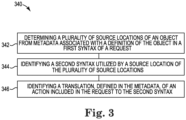
- Figure 3 illustrates a method 340 according to the invention.
- the method 340 may be performed utilizing the computing system 100 in Figure 1 and/or the computing system 200 in Figure 2 .
- the method 340 includes determining a plurality of source locations of an object.
- the object may include an element identified in a request from a distributed application to a data source such as a server.
- the object may include a particular composition of data to be utilized by the distributed application.
- the object may be distributed across a plurality of source locations.
- the source locations from which the object is bederived are determined based on parsing metadata associated with a definition of the object in first syntax of the request.
- the first syntax may include a basic schema language that is extended by the inclusion of metadata associated with the object.
- the schema language of the request may be extended with the metadata in order to be utilized in identifying the plurality of sources.
- the request includes an action and an identification of an object, for example in the schema language and the schema language may be extended with metadata according to a schema language extension template and/or a semantics scheme associated with schema language extension.
- the method 340 includes identifying a second syntax utilized by a source location of the plurality of source locations.
- the second syntax is a different and/or distinct syntax from the first syntax.
- an action specified in the first syntax gets translated to the second syntax before the object can be derived from the source location.
- the second syntax may be identified from an API that processes requests to the source and/or a language utilized by a host at the source location.
- the syntaxes of each of the plurality of distributed source locations storing and/or providing the data of the object may be identified.
- the method 340 includes identifying a translation of an action included in the request.
- the request includes metadata.
- the metadata provides a plurality of different syntaxes.
- the plurality of different syntaxes are a plurality of different syntaxes utilized by the plurality of source locations.
- the source locations may be hosted within distinct systems utilizing distinct schema language syntaxes.
- the metadata also include translations of an action specified in the syntax of the request.
- the action included in the request gets translated from the first syntax to the second syntax based on a translation template for the second syntax.
- a translation template may include a set of parameters defining the proper format of an action in the second syntax.
- the translation template may include actions in other syntaxes that correspond to the action in the second syntax.
- the translation template may include instructions to alter an action in a first syntax to a corresponding properly formatted action in the second context.
- the metadata include the translation and other translations of the action into the plurality of different syntaxes.
- the metadata may serve as an index of action translations to different syntaxes that may be utilized and understood by the plurality of resources storing and/or providing an object in the request.
- the second syntax of utilized by the source location is identified and the metadata include the translations of actions in the request to various syntaxes including the second syntax. Therefore, the translation of an action included in the request to the second syntax is defined in the metadata. As such, the translation is identified from the definition provided in the metadata of the request. A plurality of translations, each one corresponding to a distinct source location of the object, are identified.
- the identified translations are utilized to derive the object from the plurality of source locations. For each source location, the corresponding translated action may be carried out to derive the object. Therefore, the object may be derived from the plurality of source locations hosted within distinct systems utilizing distinct schema language syntaxes.
- the action may include a mutation as opposed to a query or a subscription.
- a mutation may include a change to data on a source location such as a server.
- the mutation may include a change to the data followed by a fetch of the piece of data that was changed all in one operation.
- a query may include an operation to fetch data in a read-only manner and a subscription may include an operation to get a real-time feed of data from a source location such as a server.
- the action specifies a mutation to the object, the mutation may be formed to the plurality of source locations. For example, the data stored and/or provided at each of the source locations may be changed.
- the mutation may be performed to each of the plurality of sources based on a plurality of translations of the action including the translation to the second syntax. Since each of the plurality of sources may utilize a distinct syntax, performing the mutation may include performing the translated action in the syntax specific to each source location.
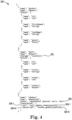
- Figure 4 illustrates instructions 350 according to the present disclosure.
- the instructions 350 may be executable by a computing device such as computing device 100 in Figure 1 and/or computing device 220.
- the instructions 350 may include a request formatted in a schema domain language.
- the instructions 350 may include a source type 352.
- the source type 352 may specify a type of a source of data of a schema element.
- the source type 352 may include a location designator such as "volatile” or “nonvolatile” indicating the type of memory storing and/or providing the data of the schema element.
- the source code may include a value designator 356.
- the value designator 356 may specify the action to be taken in a first syntax.
- the instructions 350 may also include a translation 360-1 ... 360-N of the value designator 356 into a second syntax.
- the translation 360-1 ... 360-N of the value designator 356 into a second syntax may be syntax specific.
- the instructions 350 may include syntax designators 358-1 ...358-N that specify the syntax associated with the corresponding translation 360-1 ...360-N.
- Figure 5 illustrates instructions 370 according to the present disclosure.
- the instructions 370 may be executable by a computing device such as computing device 100 in Figure 1 and/or computing device 220.
- the instructions 370 may include a request formatted in a schema domain language.
- the instructions 370 may include a GraphQL interface definition language extension.
- the instructions 370 may include a source type 372.
- the source type 372 may specify a type of a source of data of a schema element.
- the source type 372 may include a location designator such as "volatile” or "nonvolatile” indicating the type of memory storing and/or providing the data of the schema element.
- the source code may include a value designator 374.
- the value designator 374 may specify the action to be taken in a first syntax.
- the instructions 370 may also include a translation 378-1 ... 378-N of the value designator 374 into a second syntax.
- the translation 378-1 ... 378-N of the value designator 374 into a second syntax may be syntax specific.
- the instructions 370 may include syntax designators 380-1 ...380-N that specify the syntax associated with the corresponding translation 378-1 ... 378-N.
- logic is an alternative or additional processing resource to perform a particular action and/or function, etc., described herein, which includes hardware, e.g., various forms of transistor logic, application specific integrated circuits (ASICs), etc., as opposed to computer executable instructions, e.g., software firmware, etc., stored in memory and executable by a processor.
- ASICs application specific integrated circuits
Landscapes
- Engineering & Computer Science (AREA)
- Theoretical Computer Science (AREA)
- Databases & Information Systems (AREA)
- Physics & Mathematics (AREA)
- General Engineering & Computer Science (AREA)
- General Physics & Mathematics (AREA)
- Data Mining & Analysis (AREA)
- Software Systems (AREA)
- Mathematical Physics (AREA)
- Computational Linguistics (AREA)
- Stored Programmes (AREA)
- Information Retrieval, Db Structures And Fs Structures Therefor (AREA)
Claims (8)
- Système comprenant :une ressource de traitement ; etune ressource de mémoire stockant des instructions exécutables par la ressource de traitement pour :déterminer une pluralité d'emplacements sources d'un objet à partir de métadonnées associées à une définition de l'objet dans une première syntaxe d'une demande pour mettre en oeuvre une action concernant l'objet, des sources de données distinctes pouvant être dans des emplacements physiques distincts, avoir des formats de données distincts, et fonctionner en utilisant des syntaxes distinctes ;identifier une seconde syntaxe respective utilisée par chaque emplacement source de la pluralité d'emplacements sources ;identifier une traduction respective, définie dans les métadonnées dans un modèle de traduction, de l'action incluse dans la demande, à la seconde syntaxe respective ;traduire l'action incluse dans la demande de la première syntaxe à la seconde syntaxe respective en fonction de la traduction identifiée ; etdériver l'objet à partir de la pluralité d'emplacements sources hébergés au sein de systèmes distincts en utilisant l'action traduite dans la syntaxe distincte respective de chacun parmi la pluralité d'emplacements sources.
- Système selon la revendication 1, dans lequel la pluralité d'emplacements sources est définie en tant qu'emplacement source composite dans les métadonnées.
- Système selon la revendication 2, dans lequel la pluralité d'emplacements sources sont localisés au niveau d'une pluralité de domaines de ressources distincts.
- Support non transitoire lisible par ordinateur contenant des instructions exécutables par une ressource de traitement pour amener la ressource de traitement à :déterminer une pluralité d'emplacements sources d'un objet à partir de métadonnées associées à une définition de l'objet dans une première syntaxe d'une demande pour mettre en oeuvre une action concernant l'objet, des sources de données distinctes pouvant être dans des emplacements physiques distincts, avoir des formats de données distincts, et fonctionner en utilisant des syntaxes distinctes ;identifier une seconde syntaxe respective utilisée par chaque emplacement source de la pluralité d'emplacements sources ;identifier une traduction respective, définie dans les métadonnées dans un modèle de traduction, de l'action incluse dans la demande, à la seconde syntaxe respective ;traduire l'action incluse dans la demande de la première syntaxe à la seconde syntaxe respective en fonction de la traduction identifiée ; etdériver l'objet à partir de la pluralité d'emplacements sources hébergés au sein de systèmes distincts en utilisant l'action traduite dans la syntaxe distincte respective de chacun parmi la pluralité d'emplacements sources.
- Support non transitoire lisible par ordinateur selon la revendication 4, dans lequel la première syntaxe est une syntaxe en langage d'interrogation structuré, SQL.
- Support non transitoire lisible par ordinateur selon la revendication 5, dans lequel la seconde syntaxe est une syntaxe en JavaScript.
- Support non transitoire lisible par ordinateur selon la revendication 4, dans lequel une syntaxe de langage de schéma comprend une extension de langage de définition d'interface GraphQL.
- Procédé implémenté par ordinateur, comprenant :la détermination d'une pluralité d'emplacements sources d'un objet à partir de métadonnées associées à une définition de l'objet dans une première syntaxe d'une demande pour mettre en oeuvre une action concernant l'objet, des sources de données distinctes pouvant être dans des emplacements physiques distincts, avoir des formats de données distincts, et fonctionner en utilisant des syntaxes distinctes ;l'identification d'une seconde syntaxe respective utilisée par chaque emplacement source de la pluralité d'emplacements sources ; etl'identification d'une traduction respective, définie dans les métadonnées dans un modèle de traduction, de l'action incluse dans la demande à la seconde syntaxe respective ;la traduction de l'action incluse dans la demande de la première syntaxe à la seconde syntaxe respective en fonction de la traduction identifiée ; etla dérivation de l'objet à partir de la pluralité d'emplacements sources hébergés au sein de systèmes distincts en utilisant l'action traduite dans la syntaxe distincte respective de chacun parmi la pluralité d'emplacements sources.
Applications Claiming Priority (1)
| Application Number | Priority Date | Filing Date | Title |
|---|---|---|---|
| PCT/CN2017/105829 WO2019071511A1 (fr) | 2017-10-12 | 2017-10-12 | Syntaxe de schéma |
Publications (3)
| Publication Number | Publication Date |
|---|---|
| EP3676701A1 EP3676701A1 (fr) | 2020-07-08 |
| EP3676701A4 EP3676701A4 (fr) | 2021-04-07 |
| EP3676701B1 true EP3676701B1 (fr) | 2023-11-29 |
Family
ID=66100234
Family Applications (1)
| Application Number | Title | Priority Date | Filing Date |
|---|---|---|---|
| EP17928220.7A Active EP3676701B1 (fr) | 2017-10-12 | 2017-10-12 | Syntaxe de schéma |
Country Status (4)
| Country | Link |
|---|---|
| US (1) | US20210191907A1 (fr) |
| EP (1) | EP3676701B1 (fr) |
| CN (1) | CN111373365A (fr) |
| WO (1) | WO2019071511A1 (fr) |
Families Citing this family (2)
| Publication number | Priority date | Publication date | Assignee | Title |
|---|---|---|---|---|
| US10558671B2 (en) * | 2018-05-01 | 2020-02-11 | Servicenow, Inc. | Modified representational state transfer (REST) application programming interface (API) including a customized GraphQL framework |
| US20240320069A1 (en) * | 2023-03-24 | 2024-09-26 | Intel Corporation | Graph query language api for data query and manipulation services in sixth generation service-based architectures |
Family Cites Families (8)
| Publication number | Priority date | Publication date | Assignee | Title |
|---|---|---|---|---|
| EP1815349A4 (fr) * | 2004-08-31 | 2008-12-10 | Ibm | Methodes et systemes pour une identification semantique dans des systemes de donnees |
| US7779396B2 (en) * | 2005-08-10 | 2010-08-17 | Microsoft Corporation | Syntactic program language translation |
| US20100088686A1 (en) * | 2008-10-06 | 2010-04-08 | Microsoft Corporation | Programming language with extensible syntax |
| CN101950294A (zh) * | 2010-08-16 | 2011-01-19 | 无锡市浏立方科技有限公司 | 一种用于语义数据模型的描述性查询语言 |
| US9177017B2 (en) * | 2010-09-27 | 2015-11-03 | Microsoft Technology Licensing, Llc | Query constraint encoding with type-based state machine |
| US9959103B2 (en) * | 2010-11-19 | 2018-05-01 | Microsoft Technology Licensing, Llc | Code deployment assistance |
| US8874551B2 (en) * | 2012-05-09 | 2014-10-28 | Sap Se | Data relations and queries across distributed data sources |
| US9684699B2 (en) * | 2014-12-03 | 2017-06-20 | Sas Institute Inc. | System to convert semantic layer metadata to support database conversion |
-
2017
- 2017-10-12 EP EP17928220.7A patent/EP3676701B1/fr active Active
- 2017-10-12 US US16/755,167 patent/US20210191907A1/en not_active Abandoned
- 2017-10-12 WO PCT/CN2017/105829 patent/WO2019071511A1/fr not_active Ceased
- 2017-10-12 CN CN201780096786.3A patent/CN111373365A/zh active Pending
Also Published As
| Publication number | Publication date |
|---|---|
| EP3676701A1 (fr) | 2020-07-08 |
| US20210191907A1 (en) | 2021-06-24 |
| EP3676701A4 (fr) | 2021-04-07 |
| WO2019071511A1 (fr) | 2019-04-18 |
| CN111373365A (zh) | 2020-07-03 |
Similar Documents
| Publication | Publication Date | Title |
|---|---|---|
| US11308079B2 (en) | Maintaining data stream history for generating materialized views | |
| US10970306B2 (en) | Change management system for data synchronization within an enterprise portal application | |
| JP6755954B2 (ja) | インターフェースデータの提示方法及び装置 | |
| US9229952B1 (en) | History preserving data pipeline system and method | |
| US9477731B2 (en) | Background format optimization for enhanced SQL-like queries in Hadoop | |
| US10095807B2 (en) | Linked data processor for database storage | |
| US11334568B2 (en) | Deep caching in the data access layer of an enterprise portal application | |
| US11086827B1 (en) | Dataset schema and metadata management service | |
| US10783193B2 (en) | Program, method, and system for execution of software services | |
| KR20100014305A (ko) | 기업 검색 시스템과 커스텀 액세스 제어 애플리케이션 프로그래밍 인터페이스의 통합 | |
| US11379268B1 (en) | Affinity-based routing and execution for workflow service | |
| US20160202968A1 (en) | Modularized xml namespaces | |
| US11036560B1 (en) | Determining isolation types for executing code portions | |
| US20160072927A1 (en) | Odata enabled mobile software applications | |
| US7558726B2 (en) | Multi-language support for data mining models | |
| US11907707B2 (en) | Methods and systems for orchestrating software application variant configuration | |
| EP3676701B1 (fr) | Syntaxe de schéma | |
| US20240272893A1 (en) | Version compatibility metadata transformation | |
| CN111241803A (zh) | 生成文本文件的方法、装置、计算机设备及可读存储介质 | |
| US10558640B2 (en) | Dynamically adding custom data definition language syntax to a database management system | |
| US20140100840A1 (en) | Systems and Methods for Creating Context Sensitive Graph Topologies Based on Multidimensional Context Information | |
| US11620285B2 (en) | Automatic database query translation | |
| US20130103741A1 (en) | Access of external data for inclusion within document | |
| US10467077B2 (en) | Configuration item integrity | |
| Dayton et al. | Introduction to Snowflake |
Legal Events
| Date | Code | Title | Description |
|---|---|---|---|
| STAA | Information on the status of an ep patent application or granted ep patent |
Free format text: STATUS: THE INTERNATIONAL PUBLICATION HAS BEEN MADE |
|
| PUAI | Public reference made under article 153(3) epc to a published international application that has entered the european phase |
Free format text: ORIGINAL CODE: 0009012 |
|
| STAA | Information on the status of an ep patent application or granted ep patent |
Free format text: STATUS: REQUEST FOR EXAMINATION WAS MADE |
|
| 17P | Request for examination filed |
Effective date: 20200402 |
|
| AK | Designated contracting states |
Kind code of ref document: A1 Designated state(s): AL AT BE BG CH CY CZ DE DK EE ES FI FR GB GR HR HU IE IS IT LI LT LU LV MC MK MT NL NO PL PT RO RS SE SI SK SM TR |
|
| AX | Request for extension of the european patent |
Extension state: BA ME |
|
| DAV | Request for validation of the european patent (deleted) | ||
| DAX | Request for extension of the european patent (deleted) | ||
| A4 | Supplementary search report drawn up and despatched |
Effective date: 20210309 |
|
| RIC1 | Information provided on ipc code assigned before grant |
Ipc: G06F 9/44 20180101AFI20210302BHEP Ipc: G06F 8/30 20180101ALI20210302BHEP Ipc: G06F 16/25 20190101ALI20210302BHEP |
|
| STAA | Information on the status of an ep patent application or granted ep patent |
Free format text: STATUS: EXAMINATION IS IN PROGRESS |
|
| 17Q | First examination report despatched |
Effective date: 20221125 |
|
| REG | Reference to a national code |
Ref country code: DE Ref legal event code: R079 Free format text: PREVIOUS MAIN CLASS: G06F0009440000 Ipc: G06F0016958000 Ref document number: 602017077131 Country of ref document: DE |
|
| GRAP | Despatch of communication of intention to grant a patent |
Free format text: ORIGINAL CODE: EPIDOSNIGR1 |
|
| RIC1 | Information provided on ipc code assigned before grant |
Ipc: G06F 8/41 20180101ALI20230606BHEP Ipc: G06F 8/30 20180101ALI20230606BHEP Ipc: G06F 9/44 20180101ALI20230606BHEP Ipc: G06F 16/25 20190101ALI20230606BHEP Ipc: G06F 16/958 20190101AFI20230606BHEP |
|
| STAA | Information on the status of an ep patent application or granted ep patent |
Free format text: STATUS: GRANT OF PATENT IS INTENDED |
|
| INTG | Intention to grant announced |
Effective date: 20230713 |
|
| GRAS | Grant fee paid |
Free format text: ORIGINAL CODE: EPIDOSNIGR3 |
|
| GRAA | (expected) grant |
Free format text: ORIGINAL CODE: 0009210 |
|
| STAA | Information on the status of an ep patent application or granted ep patent |
Free format text: STATUS: THE PATENT HAS BEEN GRANTED |
|
| AK | Designated contracting states |
Kind code of ref document: B1 Designated state(s): AL AT BE BG CH CY CZ DE DK EE ES FI FR GB GR HR HU IE IS IT LI LT LU LV MC MK MT NL NO PL PT RO RS SE SI SK SM TR |
|
| REG | Reference to a national code |
Ref country code: GB Ref legal event code: FG4D |
|
| REG | Reference to a national code |
Ref country code: CH Ref legal event code: EP |
|
| REG | Reference to a national code |
Ref country code: DE Ref legal event code: R096 Ref document number: 602017077131 Country of ref document: DE |
|
| REG | Reference to a national code |
Ref country code: IE Ref legal event code: FG4D |
|
| REG | Reference to a national code |
Ref country code: LT Ref legal event code: MG9D |
|
| REG | Reference to a national code |
Ref country code: NL Ref legal event code: MP Effective date: 20231129 |
|
| PG25 | Lapsed in a contracting state [announced via postgrant information from national office to epo] |
Ref country code: GR Free format text: LAPSE BECAUSE OF FAILURE TO SUBMIT A TRANSLATION OF THE DESCRIPTION OR TO PAY THE FEE WITHIN THE PRESCRIBED TIME-LIMIT Effective date: 20240301 |
|
| PG25 | Lapsed in a contracting state [announced via postgrant information from national office to epo] |
Ref country code: IS Free format text: LAPSE BECAUSE OF FAILURE TO SUBMIT A TRANSLATION OF THE DESCRIPTION OR TO PAY THE FEE WITHIN THE PRESCRIBED TIME-LIMIT Effective date: 20240329 |
|
| PG25 | Lapsed in a contracting state [announced via postgrant information from national office to epo] |
Ref country code: LT Free format text: LAPSE BECAUSE OF FAILURE TO SUBMIT A TRANSLATION OF THE DESCRIPTION OR TO PAY THE FEE WITHIN THE PRESCRIBED TIME-LIMIT Effective date: 20231129 |
|
| PG25 | Lapsed in a contracting state [announced via postgrant information from national office to epo] |
Ref country code: ES Free format text: LAPSE BECAUSE OF FAILURE TO SUBMIT A TRANSLATION OF THE DESCRIPTION OR TO PAY THE FEE WITHIN THE PRESCRIBED TIME-LIMIT Effective date: 20231129 |
|
| PG25 | Lapsed in a contracting state [announced via postgrant information from national office to epo] |
Ref country code: LT Free format text: LAPSE BECAUSE OF FAILURE TO SUBMIT A TRANSLATION OF THE DESCRIPTION OR TO PAY THE FEE WITHIN THE PRESCRIBED TIME-LIMIT Effective date: 20231129 Ref country code: IS Free format text: LAPSE BECAUSE OF FAILURE TO SUBMIT A TRANSLATION OF THE DESCRIPTION OR TO PAY THE FEE WITHIN THE PRESCRIBED TIME-LIMIT Effective date: 20240329 Ref country code: GR Free format text: LAPSE BECAUSE OF FAILURE TO SUBMIT A TRANSLATION OF THE DESCRIPTION OR TO PAY THE FEE WITHIN THE PRESCRIBED TIME-LIMIT Effective date: 20240301 Ref country code: ES Free format text: LAPSE BECAUSE OF FAILURE TO SUBMIT A TRANSLATION OF THE DESCRIPTION OR TO PAY THE FEE WITHIN THE PRESCRIBED TIME-LIMIT Effective date: 20231129 Ref country code: BG Free format text: LAPSE BECAUSE OF FAILURE TO SUBMIT A TRANSLATION OF THE DESCRIPTION OR TO PAY THE FEE WITHIN THE PRESCRIBED TIME-LIMIT Effective date: 20240229 |
|
| REG | Reference to a national code |
Ref country code: AT Ref legal event code: MK05 Ref document number: 1636850 Country of ref document: AT Kind code of ref document: T Effective date: 20231129 |
|
| PG25 | Lapsed in a contracting state [announced via postgrant information from national office to epo] |
Ref country code: NL Free format text: LAPSE BECAUSE OF FAILURE TO SUBMIT A TRANSLATION OF THE DESCRIPTION OR TO PAY THE FEE WITHIN THE PRESCRIBED TIME-LIMIT Effective date: 20231129 |
|
| PG25 | Lapsed in a contracting state [announced via postgrant information from national office to epo] |
Ref country code: SE Free format text: LAPSE BECAUSE OF FAILURE TO SUBMIT A TRANSLATION OF THE DESCRIPTION OR TO PAY THE FEE WITHIN THE PRESCRIBED TIME-LIMIT Effective date: 20231129 Ref country code: RS Free format text: LAPSE BECAUSE OF FAILURE TO SUBMIT A TRANSLATION OF THE DESCRIPTION OR TO PAY THE FEE WITHIN THE PRESCRIBED TIME-LIMIT Effective date: 20231129 Ref country code: PL Free format text: LAPSE BECAUSE OF FAILURE TO SUBMIT A TRANSLATION OF THE DESCRIPTION OR TO PAY THE FEE WITHIN THE PRESCRIBED TIME-LIMIT Effective date: 20231129 Ref country code: NO Free format text: LAPSE BECAUSE OF FAILURE TO SUBMIT A TRANSLATION OF THE DESCRIPTION OR TO PAY THE FEE WITHIN THE PRESCRIBED TIME-LIMIT Effective date: 20240229 Ref country code: NL Free format text: LAPSE BECAUSE OF FAILURE TO SUBMIT A TRANSLATION OF THE DESCRIPTION OR TO PAY THE FEE WITHIN THE PRESCRIBED TIME-LIMIT Effective date: 20231129 Ref country code: LV Free format text: LAPSE BECAUSE OF FAILURE TO SUBMIT A TRANSLATION OF THE DESCRIPTION OR TO PAY THE FEE WITHIN THE PRESCRIBED TIME-LIMIT Effective date: 20231129 Ref country code: HR Free format text: LAPSE BECAUSE OF FAILURE TO SUBMIT A TRANSLATION OF THE DESCRIPTION OR TO PAY THE FEE WITHIN THE PRESCRIBED TIME-LIMIT Effective date: 20231129 |
|
| PG25 | Lapsed in a contracting state [announced via postgrant information from national office to epo] |
Ref country code: DK Free format text: LAPSE BECAUSE OF FAILURE TO SUBMIT A TRANSLATION OF THE DESCRIPTION OR TO PAY THE FEE WITHIN THE PRESCRIBED TIME-LIMIT Effective date: 20231129 |
|
| PG25 | Lapsed in a contracting state [announced via postgrant information from national office to epo] |
Ref country code: AT Free format text: LAPSE BECAUSE OF FAILURE TO SUBMIT A TRANSLATION OF THE DESCRIPTION OR TO PAY THE FEE WITHIN THE PRESCRIBED TIME-LIMIT Effective date: 20231129 Ref country code: CZ Free format text: LAPSE BECAUSE OF FAILURE TO SUBMIT A TRANSLATION OF THE DESCRIPTION OR TO PAY THE FEE WITHIN THE PRESCRIBED TIME-LIMIT Effective date: 20231129 |
|
| PG25 | Lapsed in a contracting state [announced via postgrant information from national office to epo] |
Ref country code: SK Free format text: LAPSE BECAUSE OF FAILURE TO SUBMIT A TRANSLATION OF THE DESCRIPTION OR TO PAY THE FEE WITHIN THE PRESCRIBED TIME-LIMIT Effective date: 20231129 |
|
| PG25 | Lapsed in a contracting state [announced via postgrant information from national office to epo] |
Ref country code: SM Free format text: LAPSE BECAUSE OF FAILURE TO SUBMIT A TRANSLATION OF THE DESCRIPTION OR TO PAY THE FEE WITHIN THE PRESCRIBED TIME-LIMIT Effective date: 20231129 Ref country code: SK Free format text: LAPSE BECAUSE OF FAILURE TO SUBMIT A TRANSLATION OF THE DESCRIPTION OR TO PAY THE FEE WITHIN THE PRESCRIBED TIME-LIMIT Effective date: 20231129 Ref country code: RO Free format text: LAPSE BECAUSE OF FAILURE TO SUBMIT A TRANSLATION OF THE DESCRIPTION OR TO PAY THE FEE WITHIN THE PRESCRIBED TIME-LIMIT Effective date: 20231129 Ref country code: IT Free format text: LAPSE BECAUSE OF FAILURE TO SUBMIT A TRANSLATION OF THE DESCRIPTION OR TO PAY THE FEE WITHIN THE PRESCRIBED TIME-LIMIT Effective date: 20231129 Ref country code: EE Free format text: LAPSE BECAUSE OF FAILURE TO SUBMIT A TRANSLATION OF THE DESCRIPTION OR TO PAY THE FEE WITHIN THE PRESCRIBED TIME-LIMIT Effective date: 20231129 Ref country code: DK Free format text: LAPSE BECAUSE OF FAILURE TO SUBMIT A TRANSLATION OF THE DESCRIPTION OR TO PAY THE FEE WITHIN THE PRESCRIBED TIME-LIMIT Effective date: 20231129 Ref country code: CZ Free format text: LAPSE BECAUSE OF FAILURE TO SUBMIT A TRANSLATION OF THE DESCRIPTION OR TO PAY THE FEE WITHIN THE PRESCRIBED TIME-LIMIT Effective date: 20231129 Ref country code: AT Free format text: LAPSE BECAUSE OF FAILURE TO SUBMIT A TRANSLATION OF THE DESCRIPTION OR TO PAY THE FEE WITHIN THE PRESCRIBED TIME-LIMIT Effective date: 20231129 |
|
| PG25 | Lapsed in a contracting state [announced via postgrant information from national office to epo] |
Ref country code: PT Free format text: LAPSE BECAUSE OF FAILURE TO SUBMIT A TRANSLATION OF THE DESCRIPTION OR TO PAY THE FEE WITHIN THE PRESCRIBED TIME-LIMIT Effective date: 20240401 |
|
| PG25 | Lapsed in a contracting state [announced via postgrant information from national office to epo] |
Ref country code: PT Free format text: LAPSE BECAUSE OF FAILURE TO SUBMIT A TRANSLATION OF THE DESCRIPTION OR TO PAY THE FEE WITHIN THE PRESCRIBED TIME-LIMIT Effective date: 20240401 |
|
| REG | Reference to a national code |
Ref country code: DE Ref legal event code: R097 Ref document number: 602017077131 Country of ref document: DE |
|
| PLBE | No opposition filed within time limit |
Free format text: ORIGINAL CODE: 0009261 |
|
| STAA | Information on the status of an ep patent application or granted ep patent |
Free format text: STATUS: NO OPPOSITION FILED WITHIN TIME LIMIT |
|
| PG25 | Lapsed in a contracting state [announced via postgrant information from national office to epo] |
Ref country code: SI Free format text: LAPSE BECAUSE OF FAILURE TO SUBMIT A TRANSLATION OF THE DESCRIPTION OR TO PAY THE FEE WITHIN THE PRESCRIBED TIME-LIMIT Effective date: 20231129 |
|
| PG25 | Lapsed in a contracting state [announced via postgrant information from national office to epo] |
Ref country code: SI Free format text: LAPSE BECAUSE OF FAILURE TO SUBMIT A TRANSLATION OF THE DESCRIPTION OR TO PAY THE FEE WITHIN THE PRESCRIBED TIME-LIMIT Effective date: 20231129 |
|
| 26N | No opposition filed |
Effective date: 20240830 |
|
| REG | Reference to a national code |
Ref country code: DE Ref legal event code: R119 Ref document number: 602017077131 Country of ref document: DE |
|
| REG | Reference to a national code |
Ref country code: CH Ref legal event code: PL |
|
| GBPC | Gb: european patent ceased through non-payment of renewal fee |
Effective date: 20241012 |
|
| PG25 | Lapsed in a contracting state [announced via postgrant information from national office to epo] |
Ref country code: MC Free format text: LAPSE BECAUSE OF FAILURE TO SUBMIT A TRANSLATION OF THE DESCRIPTION OR TO PAY THE FEE WITHIN THE PRESCRIBED TIME-LIMIT Effective date: 20231129 |
|
| PG25 | Lapsed in a contracting state [announced via postgrant information from national office to epo] |
Ref country code: DE Free format text: LAPSE BECAUSE OF NON-PAYMENT OF DUE FEES Effective date: 20250501 |
|
| PG25 | Lapsed in a contracting state [announced via postgrant information from national office to epo] |
Ref country code: GB Free format text: LAPSE BECAUSE OF NON-PAYMENT OF DUE FEES Effective date: 20241012 |
|
| PG25 | Lapsed in a contracting state [announced via postgrant information from national office to epo] |
Ref country code: BE Free format text: LAPSE BECAUSE OF NON-PAYMENT OF DUE FEES Effective date: 20241031 Ref country code: LU Free format text: LAPSE BECAUSE OF NON-PAYMENT OF DUE FEES Effective date: 20241012 |
|
| PG25 | Lapsed in a contracting state [announced via postgrant information from national office to epo] |
Ref country code: FR Free format text: LAPSE BECAUSE OF NON-PAYMENT OF DUE FEES Effective date: 20241031 |
|
| PG25 | Lapsed in a contracting state [announced via postgrant information from national office to epo] |
Ref country code: CH Free format text: LAPSE BECAUSE OF NON-PAYMENT OF DUE FEES Effective date: 20241031 |
|
| REG | Reference to a national code |
Ref country code: BE Ref legal event code: MM Effective date: 20241031 |
|
| PG25 | Lapsed in a contracting state [announced via postgrant information from national office to epo] |
Ref country code: FI Free format text: LAPSE BECAUSE OF FAILURE TO SUBMIT A TRANSLATION OF THE DESCRIPTION OR TO PAY THE FEE WITHIN THE PRESCRIBED TIME-LIMIT Effective date: 20231129 |
|
| PG25 | Lapsed in a contracting state [announced via postgrant information from national office to epo] |
Ref country code: IE Free format text: LAPSE BECAUSE OF NON-PAYMENT OF DUE FEES Effective date: 20241012 |
|
| PG25 | Lapsed in a contracting state [announced via postgrant information from national office to epo] |
Ref country code: CY Free format text: LAPSE BECAUSE OF FAILURE TO SUBMIT A TRANSLATION OF THE DESCRIPTION OR TO PAY THE FEE WITHIN THE PRESCRIBED TIME-LIMIT; INVALID AB INITIO Effective date: 20171012 |
|
| PG25 | Lapsed in a contracting state [announced via postgrant information from national office to epo] |
Ref country code: HU Free format text: LAPSE BECAUSE OF FAILURE TO SUBMIT A TRANSLATION OF THE DESCRIPTION OR TO PAY THE FEE WITHIN THE PRESCRIBED TIME-LIMIT; INVALID AB INITIO Effective date: 20171012 |