EP3676704B1 - Verfahren und system zur vorhersage einer optimalen anzahl von threads für eine anwendung, die auf einer elektronischen vorrichtung läuft - Google Patents
Verfahren und system zur vorhersage einer optimalen anzahl von threads für eine anwendung, die auf einer elektronischen vorrichtung läuft Download PDFInfo
- Publication number
- EP3676704B1 EP3676704B1 EP18894561.2A EP18894561A EP3676704B1 EP 3676704 B1 EP3676704 B1 EP 3676704B1 EP 18894561 A EP18894561 A EP 18894561A EP 3676704 B1 EP3676704 B1 EP 3676704B1
- Authority
- EP
- European Patent Office
- Prior art keywords
- application
- electronic device
- threads
- scheduler
- behavior
- Prior art date
- Legal status (The legal status is an assumption and is not a legal conclusion. Google has not performed a legal analysis and makes no representation as to the accuracy of the status listed.)
- Active
Links
Images



Classifications
-
- G—PHYSICS
- G06—COMPUTING OR CALCULATING; COUNTING
- G06F—ELECTRIC DIGITAL DATA PROCESSING
- G06F9/00—Arrangements for program control, e.g. control units
- G06F9/06—Arrangements for program control, e.g. control units using stored programs, i.e. using an internal store of processing equipment to receive or retain programs
- G06F9/46—Multiprogramming arrangements
- G06F9/48—Program initiating; Program switching, e.g. by interrupt
- G06F9/4806—Task transfer initiation or dispatching
- G06F9/4843—Task transfer initiation or dispatching by program, e.g. task dispatcher, supervisor, operating system
- G06F9/4881—Scheduling strategies for dispatcher, e.g. round robin, multi-level priority queues
-
- G—PHYSICS
- G06—COMPUTING OR CALCULATING; COUNTING
- G06F—ELECTRIC DIGITAL DATA PROCESSING
- G06F9/00—Arrangements for program control, e.g. control units
- G06F9/06—Arrangements for program control, e.g. control units using stored programs, i.e. using an internal store of processing equipment to receive or retain programs
- G06F9/44—Arrangements for executing specific programs
- G06F9/445—Program loading or initiating
- G06F9/44505—Configuring for program initiating, e.g. using registry, configuration files
-
- G—PHYSICS
- G06—COMPUTING OR CALCULATING; COUNTING
- G06F—ELECTRIC DIGITAL DATA PROCESSING
- G06F9/00—Arrangements for program control, e.g. control units
- G06F9/06—Arrangements for program control, e.g. control units using stored programs, i.e. using an internal store of processing equipment to receive or retain programs
- G06F9/44—Arrangements for executing specific programs
- G06F9/445—Program loading or initiating
- G06F9/44568—Immediately runnable code
- G06F9/44578—Preparing or optimising for loading
-
- G—PHYSICS
- G06—COMPUTING OR CALCULATING; COUNTING
- G06F—ELECTRIC DIGITAL DATA PROCESSING
- G06F9/00—Arrangements for program control, e.g. control units
- G06F9/06—Arrangements for program control, e.g. control units using stored programs, i.e. using an internal store of processing equipment to receive or retain programs
- G06F9/46—Multiprogramming arrangements
- G06F9/48—Program initiating; Program switching, e.g. by interrupt
- G06F9/4806—Task transfer initiation or dispatching
- G06F9/4843—Task transfer initiation or dispatching by program, e.g. task dispatcher, supervisor, operating system
- G06F9/4881—Scheduling strategies for dispatcher, e.g. round robin, multi-level priority queues
- G06F9/4893—Scheduling strategies for dispatcher, e.g. round robin, multi-level priority queues taking into account power or heat criteria
-
- G—PHYSICS
- G06—COMPUTING OR CALCULATING; COUNTING
- G06F—ELECTRIC DIGITAL DATA PROCESSING
- G06F9/00—Arrangements for program control, e.g. control units
- G06F9/06—Arrangements for program control, e.g. control units using stored programs, i.e. using an internal store of processing equipment to receive or retain programs
- G06F9/46—Multiprogramming arrangements
- G06F9/50—Allocation of resources, e.g. of the central processing unit [CPU]
- G06F9/5005—Allocation of resources, e.g. of the central processing unit [CPU] to service a request
- G06F9/5027—Allocation of resources, e.g. of the central processing unit [CPU] to service a request the resource being a machine, e.g. CPUs, Servers, Terminals
- G06F9/505—Allocation of resources, e.g. of the central processing unit [CPU] to service a request the resource being a machine, e.g. CPUs, Servers, Terminals considering the load
-
- G—PHYSICS
- G06—COMPUTING OR CALCULATING; COUNTING
- G06N—COMPUTING ARRANGEMENTS BASED ON SPECIFIC COMPUTATIONAL MODELS
- G06N3/00—Computing arrangements based on biological models
- G06N3/02—Neural networks
- G06N3/08—Learning methods
- G06N3/09—Supervised learning
-
- G—PHYSICS
- G06—COMPUTING OR CALCULATING; COUNTING
- G06N—COMPUTING ARRANGEMENTS BASED ON SPECIFIC COMPUTATIONAL MODELS
- G06N7/00—Computing arrangements based on specific mathematical models
-
- G—PHYSICS
- G06—COMPUTING OR CALCULATING; COUNTING
- G06N—COMPUTING ARRANGEMENTS BASED ON SPECIFIC COMPUTATIONAL MODELS
- G06N20/00—Machine learning
- G06N20/10—Machine learning using kernel methods, e.g. support vector machines [SVM]
-
- G—PHYSICS
- G06—COMPUTING OR CALCULATING; COUNTING
- G06N—COMPUTING ARRANGEMENTS BASED ON SPECIFIC COMPUTATIONAL MODELS
- G06N3/00—Computing arrangements based on biological models
- G06N3/02—Neural networks
- G06N3/08—Learning methods
-
- G—PHYSICS
- G06—COMPUTING OR CALCULATING; COUNTING
- G06N—COMPUTING ARRANGEMENTS BASED ON SPECIFIC COMPUTATIONAL MODELS
- G06N5/00—Computing arrangements using knowledge-based models
- G06N5/01—Dynamic search techniques; Heuristics; Dynamic trees; Branch-and-bound
-
- Y—GENERAL TAGGING OF NEW TECHNOLOGICAL DEVELOPMENTS; GENERAL TAGGING OF CROSS-SECTIONAL TECHNOLOGIES SPANNING OVER SEVERAL SECTIONS OF THE IPC; TECHNICAL SUBJECTS COVERED BY FORMER USPC CROSS-REFERENCE ART COLLECTIONS [XRACs] AND DIGESTS
- Y02—TECHNOLOGIES OR APPLICATIONS FOR MITIGATION OR ADAPTATION AGAINST CLIMATE CHANGE
- Y02D—CLIMATE CHANGE MITIGATION TECHNOLOGIES IN INFORMATION AND COMMUNICATION TECHNOLOGIES [ICT], I.E. INFORMATION AND COMMUNICATION TECHNOLOGIES AIMING AT THE REDUCTION OF THEIR OWN ENERGY USE
- Y02D10/00—Energy efficient computing, e.g. low power processors, power management or thermal management
Definitions
- the present disclosure relates to an application thread management, and more specifically related to a method and system for predicting optimal number of threads for an application running on an electronic device.
- a developer In an electronic device, a developer generally sets a fixed number of threads for an application. Each thread is executed by a single core (e.g., CPU), which has its own thread queue, allocated memory on a Random Access Memory (RAM). Processing cores are assigned to the threads by a scheduler. A single core may be assigned to multiple threads which get executed sequentially, for example, when number of active cores available is less than the number of threads application requests.
- a single core e.g., CPU
- RAM Random Access Memory
- Document WO 2011/025720 relates to a system and method for efficient dynamic scheduling of tasks wherein a scheduler within an operating system assigns software threads of program code to computation units.
- An execution time for the threads depends on system conditions (e.g., current length of thread queue of assigned core, a status of main memory, how many processors are currently active, or the like).
- system conditions e.g., current length of thread queue of assigned core, a status of main memory, how many processors are currently active, or the like.
- the fixed number of threads is non-optimal for all conditions to run the application in the electronic device.
- embodiments herein disclose a method for predicting optimal number of threads for an application in an electronic device based on a scheduler-behaviour model and the current state of the electronic device according to claim 1.
- the current state of the electronic device includes, but not limited to, a current Central Processing Unit (CPU) load, the current Random-Access Memory (RAM) usage, a current temperature, a current memory status, a number of active cores in the electronic device, and a current battery condition and the number of threads requested by the application.
- CPU Central Processing Unit
- RAM Random-Access Memory
- the current state of the electronic device may be dynamically determined while the electronic device running a background task.
- the current state of the electronic device may be dynamically determined while the electronic device running a foreground task.
- the current state of the electronic device may be dynamically determined without executing any application.
- the scheduler-behaviour model includes a plurality of scheduler-behaviour configurations corresponding to one or more device states, a run-time of the application corresponding to the plurality of scheduler-behavior configurations, and a thread count spawned corresponding to the plurality of scheduler-behavior configurations.
- predicting by the application thread controller the number of threads to be spawned for the application based on the scheduler-behaviour model and the current state of the electronic device comprises identifying a plurality of scheduler-behaviour configurations for the current state of the electronic device, selecting a scheduler-behaviour configuration from the plurality of scheduler-behaviour configurations, and predicting the number of threads to be spawned for the application by selecting a thread count corresponding to the selected scheduler-behaviour configuration.
- the selected scheduler-behaviour configuration results in minimum run-time for the current state of the electronic device
- the plurality of scheduler-behaviour configurations are dynamically learned by the application thread controller for various states of the electronic device.
- various functions described below can be implemented or supported by one or more computer programs, each of which is formed from computer readable program code and embodied in a computer readable medium.
- application and “program” refer to one or more computer programs, software components, sets of instructions, procedures, functions, objects, classes, instances, related data, or a portion thereof adapted for implementation in a suitable computer readable program code.
- computer readable program code includes any type of computer code, including source code, object code, and executable code.
- computer readable medium includes any type of medium capable of being accessed by a computer, such as read only memory (ROM), random access memory (RAM), a hard disk drive, a compact disc (CD), a digital video disc (DVD), or any other type of memory.
- ROM read only memory
- RAM random access memory
- CD compact disc
- DVD digital video disc
- a "non-transitory” computer readable medium excludes wired, wireless, optical, or other communication links that transport transitory electrical or other signals.
- a non-transitory computer readable medium includes media where data can be permanently stored and media where data can be stored and later overwritten, such as a rewritable optical disc or an erasable memory device.
- the principal object of the embodiments herein is to provide a method and system for predicting optimal number of threads for an application in an electronic device.
- Another object of the embodiment herein is to receive a request to predict a number of threads to be spawned from the application in a real-time.
- Another object of the embodiment herein is to determine a run-time for a plurality of scheduler-behaviour configurations for the current state of the electronic device.
- Another object of the embodiment herein is to select the scheduler-behaviour configuration from the plurality of scheduler-behaviour configurations, where the selected scheduler-behaviour configuration results in minimum run-time of the application for the current state of the electronic device.
- Another object of the embodiment herein is to predict the number of threads to be spawned for the application based on a scheduler-behaviour model and the current state of the electronic device.
- Another object of the embodiment herein is to predict the number of threads to be spawned for the application by selecting a thread count corresponding to the scheduler-behaviour configuration that takes the minimum run-time for the current state of the electronic device.
- Another object of the embodiment herein is to dynamically learn the plurality of scheduler-behaviour configurations by an application thread controller for various states of the electronic device.
- Another object of the embodiment herein is to spawn the number of threads for the application.
- FIGS. 1 through 11b discussed below, and the various embodiments used to describe the principles of the present disclosure in this patent document are by way of illustration only and should not be construed in any way to limit the scope of the disclosure. Those skilled in the art will understand that the principles of the present disclosure may be implemented in any suitably arranged system or device.
- circuits may, for example, be embodied in one or more semiconductor chips, or on substrate supports such as printed circuit boards and the like.
- circuits constituting a block may be implemented by dedicated hardware, or by a processor (e.g., one or more programmed microprocessors and associated circuitry), or by a combination of dedicated hardware to perform some functions of the block and a processor to perform other functions of the block.
- a processor e.g., one or more programmed microprocessors and associated circuitry
- Each block of the embodiments may be physically separated into two or more interacting and discrete blocks without departing from the scope of this disclosure.
- the blocks of the embodiments may be physically combined into more complex blocks without departing from the scope of this disclosure.
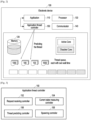
- FIG. 1 illustrates an example in which the electronic device 100 controls spawning of threads for the application 110, according to prior art.
- the application 110 requests 8 threads to execute a program, when only 4 cores are active in a processor. As the number of active cores is less than the requested threads, it is non-optimal for running the application 110 in the electronic device 100, it may result in making some of the threads wait for the cores to be available for processing. This might lead to a thread creation overhead in the electronic device 100. Further, if the application 110 is memory intensive and a memory 120 (e.g., RAM or the like) is full then, the threads request more memory to execute the application. This results in a time-delay for executing the application. Furthermore, the electronic device 100 does not optimally utilize the system resources so as to provide unreliable/ poor user experience.
- a memory 120 e.g., RAM or the like
- the electronic device includes a memory comprising the application, and a processor.
- An application thread controller is communicated to the memory and the processor.
- the application thread controller is configured to receive a request to predict a number of threads to be spawned from the application in real-time.
- the application thread controller is configured to measure a current state of the electronic device in response to the request received from the application.
- the application thread controller is configured to predict the number of threads to be spawned for the application based on a scheduler-behaviour model and the current state of the electronic device.
- the application thread controller is configured to recommend the number of threads to be spawned by the application based on the prediction.
- the proposed method can be used to predict the current optimal number of threads in real time based on the scheduler-behaviour model and the current state of the electronic device indicates parameters such as a current CPU load, a current RAM usage, a current temperature, a current memory status, a number of active cores in the electronic device, and a current battery condition. This results in faster execution time in the electronic device. Hence, the electronic device improves the user experience.
- the proposed method can be used to predict current optimal number of threads in real time based on the current state of the electronic device and the scheduler-behaviour configuration. This results in quickly launching the application in a smooth manner immediately after restarting the electronic device and the electronic device executes many background tasks.
- the electronic device samples the system parameters at that instant and the application utilizes the current state of the electronic device to predict the ideal number of threads for the application in that instant. This will result in the best performance of the application at that instant.
- the method can be used to maintain the real time performance of the electronic device and improves the user experience by varying thread allocation according to system conditions in an automatic manner.
- the method can be used to dynamically determine the number of thread resources for the particular system condition and enhances optimum performance for a developer in an automatic manner.
- FIGS. 2 through 11 there are shown preferred embodiments.
- FIG. 2 illustrates an overview an electronic device 100 for controlling spawning of threads for an application 110, according to an embodiment as disclosed herein.
- the electronic device 100 can be, for example, but not limited to a smart phone, a Personal Digital Assistant (PDA), a tablet computer, a laptop computer, a personal media player device, a wireless web-watch device, a personal headset device, an application specific device, or the like.
- the application can be, for example, but not limited to a social networking application, a web application, a native application, an email application, a call application, a messaging application, a game application, a multimedia application, a video application or the like.
- the electronic device 100 includes the application 110, a memory 120, a processor 130, a communicator 140 and an application thread controller 150.
- the application thread controller 150 is communicated to the memory 120, the processor 130, and the communicator 140.
- the application thread controller 150 is configured to receive a request to predict a number of threads to be spawned from the application 110 in real-time.
- each task usually includes one or more execution abstractions known as "threads.”
- the thread typically includes its own instruction pointer and sometimes has its own stack.
- access to a CPU is scheduled per-thread.
- the task is thus an environment in which one or several threads are scheduled independently to run on the CPU(s), and not necessarily all (or even more than one) at a time even in multi-processor architectures.
- the request may be implemented in a variety of forms including system calls, register settings or the like.
- the application thread controller 150 is configured to measure a current state of the electronic device 100 based on the request received from the application 110.
- the current state of the electronic device 100 includes but not limited to, a current CPU load, a current RAM usage, a current temperature, a current memory status, a number of active cores in the electronic device 100, a workload within the thread, and a current battery condition.
- the current state of the electronic device 100 is dynamically determined when the electronic device 100 is in an idle state, or while the application 110 associated with electronic device 100 runs as a background task or a foreground task.
- the application thread controller 150 is configured to predict the number of threads to be spawned for the application 110.
- the scheduler-behaviour model includes a plurality of scheduler-behaviour configurations corresponding to one or more device states, a run-time of the application 110 corresponding to the plurality of scheduler-behavior configurations, and a thread count spawned corresponding to the plurality of scheduler-behavior configurations.
- the application thread controller is configured to predict the number of threads to be spawned for the application based on a Machine Learning (ML) model.
- the ML Model can be developed based on at least one of a regression model, classification model, Support Vector Machine (SVM) model, neural network approaches or any other ML approaches.
- the ML model is trained from a system data (e.g., current CPU load, current RAM usage, current temperature, current memory status, number of active cores in the electronic device 100, current battery condition or the like) collected from the electronic device 100 over the period of time.
- multiple regression models predict the running time, each for a given number of thread, of the application 110 using the current measured system parameters.
- the model that predicts the minimum running time is chosen and the corresponding number of threads is predicted as the optimal one.
- 'K' regression models are trained to predict a running time from the system parameters at once. During the run-time, on the electronic device 100, each regression model predicts the current running time. Further, regression model that predicts the lowest running time is chosen and the corresponding number of threads is selected as the optimal number of threads for the specific application.
- the classification model classifies the current system parameters measured into a class belonging to the optimal number of threads.
- each output class corresponds to a number of threads.
- the application thread controller 150 is configured to train the ML model (consider model type 1) for different system conditions to predict the time taken for a given system condition and the thread count. This results in multiple models (one for each thread count).
- the application thread controller 150 utilizes the models (i.e., model type 1) to label the training data (e.g., system conditions) itself, where the label now is optimal thread count, predicted by models trained by the model type 1. Further, application thread controller 150 trains a classifier model to classify the training data (e.g., system condition parameters) into classes, where the class label is optimal thread number. This results in a single classifier model.
- the models i.e., model type 1
- application thread controller 150 trains a classifier model to classify the training data (e.g., system condition parameters) into classes, where the class label is optimal thread number. This results in a single classifier model.
- an optimal thread prediction is determined as a classification problem, where a unique class id is assigned to each number of threads under consideration.
- a classification model e.g., neural network or the like
- the classification model predicts the class from the current system parameters.
- the optimal number of threads is the one corresponding to the class predicted by the classification model.
- the application thread controller 150 is configured to identify a plurality of scheduler-behaviour configurations for the current state of the electronic device 100. Further, the application thread controller 150 is configured to select a scheduler-behaviour configuration from the plurality of scheduler-behaviour configurations. The scheduler-behaviour configuration provides a minimum run-time for the current state of the electronic device 100. Further, the application thread controller 150 is configured to predict the number of threads to be spawned for the application 110 by selecting the thread count corresponding to the selected scheduler-behaviour configuration.
- the scheduler-behaviour configuration indicates at least one of a state of the electronic device 100, a time taken by the application 110 at the state of the electronic device 100, and the thread count spawned at the state of the electronic device 100.
- the scheduler-behaviour configuration may include information associated with an allocation of the memory 120 and/or CPU resources to predict the number of threads to be spawned for the application 110.
- the scheduler-behaviour configuration may include information about a memory configuration data and a thread configuration data.
- a particular value and/or setting for the memory configuration data and the thread configuration data may correspond to a particular respective memory buffer and the CPU thread configuration setting for the application 110.
- the memory configuration data may correspond to a quantity, size of memory resources and how much of memory 120 is free currently.
- the thread configuration data may correspond to a quantity of CPU threads, a running time of threads and/or thread prioritization. It should be understood that other types of resources and/or resource attributes may be correspondingly set/ allocated for the application 110 to improve the performance.
- the plurality of scheduler-behaviour configurations are dynamically learned by the application thread controller 150 for various states of the electronic device 100.
- the application thread controller 150 can be used to predict the number of threads to be spawned for the application 110 based on the number of threads used and complexity of the thread represented by measure such as cycles required or a length of time the threads run.
- the application thread controller 150 may provide a thread management section that effectively predicts the number of threads to be spawned for the application 110 based on the scheduler-behaviour configuration and the current state of the electronic device 100. After predicting the number of threads to be spawned for the application, the application thread controller 150 is configured to suggest the optimum number of threads for the application 110, such that the application 110 has to spawn the threads.
- the application thread controller 150 can be used to provide a bridge between the application 110 and a scheduler executed in an Operating System (OS) (not shown) for improving the performance of the electronic device 100.
- OS Operating System
- the OS is capable of allocating multiple processing threads among resources of the cores according to a scheduling system.
- the threads represent portions of application programs (e.g. sets of instructions) that may be substantially scheduled separately and executed independently on the different core.
- the OS controls the execution of the application 110 and computer programs, and provides scheduling, input-output control, file and data management, memory management, and communication control and related services in the electronic device 100.
- the application thread controller 150 may include a thread allocating logic that may be arranged to monitor real time computing data and allocate the thread to the at least one application 110 based, at least in part, on the monitored real time computing data, the current CPU load, the current RAM usage, the current temperature, the current memory status, the number of active cores in the electronic device 100, and the current battery condition.
- the application thread controller 150 may include the thread allocating logic may include a thread allocation data that may be useful for allocating the thread to an appropriate application based on learned information about the plurality of scheduler-behaviour configurations.
- the application thread controller 150 may include the thread allocating logic may include a thread allocation data that may be useful for allocating the thread to an appropriate application based on learned information about the plurality of scheduler-behaviour configurations.
- the electronic device 100 may provide for multiple processing cores, for example, each containing a processing unit for executing arithmetic, logical, and dataflow instructions, registers, caches and the like. Further, the processing cores may communicate with the memory 120 logically shown as a single entity but typically comprised of various memory devices including random access memory, disk drive, flash drive, and the like.
- the memory 120 may hold an OS program (not shown) of the type generally known in the art as well as multiple application programs whose execution will be managed by the operating system program.
- the processor 130 is configured to execute instructions stored in the memory 120 and to perform various processes.
- the communicator 140 is configured for communicating internally between internal hardware components and with external devices via one or more networks.
- the communicator 140 is configured for communicating with the application thread controller 150 to control spawning of threads for the application 110 embedded in the electronic device 100.
- the processor 130 serves to execute instructions for the application 110 that may be loaded into the memory 120.
- the processor 130 may be a set of one or more processors or may be a multi-processor core, depending on the implementation. Further, the processor 130 may be implemented using one or more heterogeneous processor systems in which a main processor is present with secondary processors on a single chip. As another illustrative example, the processor 130 may be a symmetric multi-processor system containing multiple processors of the same type.
- the memory 120 also stores instructions to be executed by the processor 130.
- the memory 120 may include non-volatile storage elements. Examples of such non-volatile storage elements may include magnetic hard discs, optical discs, floppy discs, flash memories, or forms of electrically programmable memories (EPROM) or electrically erasable and programmable (EEPROM) memories.
- the memory 120 may, in some examples, be considered a non-transitory storage medium.
- the term “non-transitory” may indicate that the storage medium is not embodied in a carrier wave or a propagated signal. However, the term “non-transitory” should not be interpreted that the memory 120 is non-movable.
- the memory 120 can be configured to store larger amounts of information than the memory.
- a non-transitory storage medium may store data that can, over time, change (e.g., in Random Access Memory (RAM) or cache).
- RAM Random Access Memory
- FIG. 2 shows various hardware components of the electronic device 100 but it is to be understood that other embodiments are not limited thereon.
- the electronic device 100 may include less or more number of components.
- the labels or names of the components are used only for illustrative purpose and does not limit the scope of this disclosure.
- One or more components can be combined together to perform same or substantially similar function to control spawning of the threads for the application embedded in the electronic device 100.
- FIG. 3 illustrates a block diagram of the application thread controller 150, according to an embodiment as disclosed herein.
- the application thread controller 150 includes a request receiving controller 152, a current state measuring controller 154, a thread predicting controller 156, and a spawning controller 158.
- the request receiving controller 152 is configured to receive the request to predict the number of threads to be spawned from the application 110 in real-time.
- the current state measuring controller 154 is configured to measure the current state of the electronic device 100.
- the thread predicting controller 156 is configured to predict the number of threads to be spawned for the application 110.
- the spawning controller 158 is configured to spawn the number of threads for the application 110.
- the thread predicting controller 156 is configured to determine the run-time for the plurality of scheduler-behaviour configurations for the current state of the electronic device 100. Further, the thread predicting controller 156 is configured to determine the scheduler-behaviour configuration from the plurality of scheduler-behaviour configurations that takes a minimum run-time for the current state of the electronic device 100. Further, the thread predicting controller 156 is configured to predict the number of threads to be spawned for the application 110 by selecting the thread count corresponding to the scheduler-behaviour configuration that takes the minimum run-time for the current state of the electronic device 100.
- FIG. 3 shows various hardware components of the application thread controller 150 but it is to be understood that other embodiments are not limited thereon.
- the application thread controller 150 may include less or more number of components.
- the labels or names of the components are used only for illustrative purpose and does not limit the scope of this disclosure.
- One or more components can be combined together to perform same or substantially similar function to control spawning of the threads for the application 110 embedded in the electronic device 100.
- FIG. 4 illustrates a flow diagram 400 of a method for recommending the number of threads for the application 110 executed in the electronic device 100, according to an embodiment as disclosed herein.
- the method includes receiving the request to predict the number of threads to be spawned from the application 110 in the real-time.
- the method allows the request receiving controller 152 to receive the request to predict the number of threads to be spawned from the application 110 in the real-time.
- the method includes measuring the current state of the electronic device 100.
- the method allows the current state measuring controller 154 to measure the current state of the electronic device 100.
- the method includes predicting the number of threads to be spawned for the application 110 based on the scheduler-behaviour model and the current state of the electronic device 100.
- the method allows the thread predicting controller 156 to predict the number of threads to be spawned for the application 110 based on the scheduler-behaviour model and the current state of the electronic device 100.
- the method includes recommending the number of threads to be spawned by the application 110.
- the method allows the spawning controller 158 to recommend the number of threads to be spawned by the application 110.
- the method can be used to dynamically decide the number of thread resources for particular system condition, so as to enhance optimum performance for the application 110.
- the method can be used to provide a consistent user experience during system error conditions (e.g., phone heating up, core fault or the like).
- FIG. 5 illustrates a flow diagram 406 of various operations for predicting the number of threads to be spawned for the application 110 based on the scheduler-behaviour model and the current state of the electronic device 100, while recommending the number of threads for the application 110 executed in the electronic device 100, according to an embodiment as disclosed herein.
- the operations (406a to 406c) are performed by the thread predicting controller 156.
- the method includes identifying the plurality of scheduler-behaviour configurations for the current state of the electronic device 100.
- the method includes selecting the scheduler-behaviour configuration from the plurality of scheduler-behaviour configurations. The selected scheduler-behaviour configuration results in minimum run-time of the application for the current state of the electronic device 100.
- the method includes predicting the number of threads to be spawned for the application 110 by selecting the thread count corresponding to the selected scheduler-behaviour configuration.
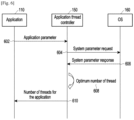
- FIG. 6 illustrates an example sequence diagram of various operations for controlling spawning of threads for the application 110 executed in the electronic device 100, according to an embodiment as disclosed herein.
- the application 110 sends an application parameter request to the application thread controller 150.
- the application parameter request corresponds to predict the number of threads to be spawned for the application 110.
- the application parameter request includes information such as a cycle per thread, a memory requirement per thread.
- the application thread controller 150 sends a system parameter request to the OS 170.
- the OS 170 sends the system parameter response to the application thread controller 150.
- the system parameter response includes an information (e.g., CPU load, battery or the like).
- the application thread controller 150 predicts the optimum number of thread.
- the application 110 has to spawn the threads.
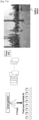
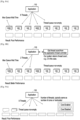
- FIG. 7A illustrates an example in which a panorama image is generated by a camera application, according to prior art.
- the camera application appends one frame to another frames and a primary requirement for stitching the frames for panorama image is real time for e.g. 30 fps.
- the camera application typically uses multiple threads to get high performance. But based on existing methods, as number of threads for the camera application is non-optimal in conditions such as high CPU load, low memory, the process for stitching the frames for panorama image runs at a slower rate, e.g., 15fps. Hence significant frame drop is occurred, so that the panorama image quality is reduced.
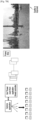
- FIG. 7B illustrates an example in which a panorama quality enhancement is explained by controlling spawning of threads for the camera application while generating the panorama image, according to an embodiment as disclosed herein.
- the application thread controller 150 receives the request to predict the number of threads to be spawned from the camera application.
- the application thread controller 150 measures the current state of the electronic device 100, such as the current CPU load, the current RAM usage and the number of active cores in the electronic device 100.
- the application thread controller 150 predicts the number of threads to be spawned for the camera application based on the thread count requested, the current CPU load, the current RAM usage and the number of active cores in the electronic device 100, so that as number of threads for the optimal process for stitching the frames for the panorama image runs at an optimal run rate, e.g., 25fps. Hence significant frame drop is avoided, so that the panorama image quality is improved.
- FIG. 8A illustrates an example in which launching of the application 110 is explained when many tasks are running in a background, such as after restarting the electronic device 100 (e.g., smart phone) immediately, according to prior art.
- the electronic device 100 e.g., smart phone
- FIG. 8A illustrates an example in which launching of the application 110 is explained when many tasks are running in a background, such as after restarting the electronic device 100 (e.g., smart phone) immediately, according to prior art.
- the electronic device 100 e.g., smart phone
- FIG. 8A illustrates an example in which launching of the application 110 is explained when many tasks are running in a background, such as after restarting the electronic device 100 (e.g., smart phone) immediately, according to prior art.
- the application 110 requests and obtains 8 threads for the launching the application, so that the process is divided into 8 parts to run on 8 cores, but since there are already multiple tasks running in the background, the application launch take more time.
- FIG. 8B illustrates an example in which launching of the application 110 is explained when many tasks are running in the background, such as after restarting the electronic device 100 (e.g., smart phone) immediately based on spawning of threads for the application 110, according to an embodiment as disclosed herein.
- the electronic device 100 e.g., smart phone
- the application thread controller 150 receives the request to predict the number of threads to be spawned for the application 110. Further, the application thread controller 150 measures at least one of the current CPU load, the current RAM usage and the number of active cores in the electronic device 100. Further, the application thread controller 150 predicts the number of threads to be spawned for the application 110 based on the thread count, and at least one of the current CPU load, the current RAM usage and the number of active cores in the electronic device 100, so that the application thread controller 150 suggests fewer threads (e.g., two threads), so that the process is divided into fewer parts which takes minimum time to launch the application. Based on the proposed method, the time taken to launch the application is equal to summation of maximum queue wait time and maximum of run-times of parts of the process. Based on the proposed method, the application 110 launches and work smoothly, quickly and immediately after the smart phone is restarted.
- FIG. 9A illustrates an example in which a video playback application is operated when the electronic device 100 (e.g., smart phone) is overheated, according to prior art.
- the electronic device 100 e.g., smart phone
- FIG. 9A illustrates an example in which a video playback application is operated when the electronic device 100 (e.g., smart phone) is overheated, according to prior art.
- the application requests and obtains 8 threads for the playing a video application, but the video application is running in only 2 cores due to the smart phone is getting overheated and some of the cores are inactive.
- the unavailability of cores i.e., 6 cores
- FIG. 9B illustrates an example in which the video playback application is operated based on spawning of threads for the video playback application when the electronic device 100 (e.g., smart phone) is overheated, according to an embodiment as disclosed herein.
- the electronic device 100 e.g., smart phone
- the application thread controller 150 receives the request to predict the number of threads to be spawned for the video application. Further, the application thread controller 150 measures at least one of the current CPU load, the current RAM usage and the number of active cores in the electronic device 100. Further, the application thread controller predicts the number of threads to be spawned for the video application based on the thread count, and the at least one of the current CPU load, the current RAM usage and the number of active cores in the electronic device 100, so that the application thread controller 150 suggests fewer threads (e.g., two threads), so that the process is divided into fewer parts.
- the method can be used to increase the thread efficiency and reduces overhead of the video application. Hence, a video playback works more smoothly even when the smart phone is over heated.
- FIG. 10A illustrates an example in which a sluggishness of the memory 120 is explained, according to prior art.
- RAM usage might be high which leads to sluggishness.
- the application requests and obtains 8 threads for the application 110, and parallel RAM access by the threads of the process slows down execution. This results in a poor performance of the electronic device 100.
- FIG. 10B illustrates an example in which the sluggishness of the memory 120 is avoided based on spawning of threads for the application 110, according to an embodiment as disclosed herein.
- the application thread controller 150 receives the request to predict the number of threads to be spawned for the application 110. Further, the application thread controller 150 measures at least one of the current CPU load, the current RAM usage and the number of active cores in the electronic device 100.
- the application thread controller 150 predicts the number of threads to be spawned for the application based on the thread count, and the at least one the current CPU load, the current RAM usage and the number of active cores in the electronic device 100, so that the application thread controller 150 suggests fewer threads (e.g., one thread), so that the process is divided into fewer parts and demand for parallel RAM accesses for the application process is reduced, hence the device sluggishness is reduced.
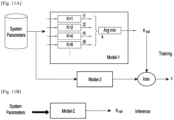
- FIG. 11A and FIG. 11B illustrate an example illustration in which various operations used to train a machine learning model that predicts an optimal number of threads to be spawned for the application 110, according to an embodiment as disclosed herein.
- various operations are used to train a machine learning model that can predict the optimal number of threads to be spawned for the application 110 so that the run-time of the application 110 is minimized.
- the first step is to train a set of regression models, each capable of predicting the run-time taken by the application 110 for the given number of threads.
- the training data may be collected by running the application 110 several times on a hardware (e.g., Application thread controller 150) for different number of threads and for various system conditions including, but not limited to, memory usage, number of active cores, CPU load, etc.
- the time taken by the application 110 for each run may be recorded.
- the training data is partitioned into mutually exclusive subsets based on the number of threads used by the application 110.
- the regression model is trained to predict the run-time of the application 110 for the corresponding number of threads.
- the optimal number of threads to be spawned is decided by using each regression model to predict the run-time for the application for each thread and then choosing the one that predicts minimum run-time. This entire model is named Model-1 in the FIG. 11A .
- the FIG. 11B describes a Model-2 that can predict the number of threads to be spawned directly from the system state, without predicting the run-time for each thread and then taking the minimum.
- the Model-2 can be designed as a classifier that classifies the system state into one of the classes, where the classes are defined based on the optimal number of threads for the given system state. To train such a classifier, it is required to label the training data by the optimal thread for each training sample. As shown in FIG. 11A , the Model-1 is used for labelling the training data. The Model-1 essentially predicts the optimal number of threads for each training/test sample and the predicted optimal number of thread is used to label the training/test data.
- the classifiers such as support vector machine (SVM), neural networks and decision trees can be used for the Model-2.
- SVM support vector machine
- the embodiments disclosed herein can be implemented using at least one software program running on at least one hardware device and performing network management functions to control the elements.
Landscapes
- Engineering & Computer Science (AREA)
- Software Systems (AREA)
- Theoretical Computer Science (AREA)
- Physics & Mathematics (AREA)
- General Physics & Mathematics (AREA)
- General Engineering & Computer Science (AREA)
- Computing Systems (AREA)
- Artificial Intelligence (AREA)
- Mathematical Physics (AREA)
- Data Mining & Analysis (AREA)
- Evolutionary Computation (AREA)
- Algebra (AREA)
- Computational Mathematics (AREA)
- Pure & Applied Mathematics (AREA)
- Mathematical Optimization (AREA)
- Mathematical Analysis (AREA)
- Biophysics (AREA)
- Life Sciences & Earth Sciences (AREA)
- Health & Medical Sciences (AREA)
- Biomedical Technology (AREA)
- Molecular Biology (AREA)
- Computational Linguistics (AREA)
- General Health & Medical Sciences (AREA)
- Debugging And Monitoring (AREA)
- Power Sources (AREA)
Claims (8)
- Verfahren zur Vorhersage einer optimalen Anzahl von Threads für eine Anwendung (110) in einer elektronischen Vorrichtung (100), umfassend:Empfangen (402), durch eine Anwendungs-Thread-Steuerung (150), einer Anforderung in Echtzeit zum Vorhersagen einer ersten Anzahl von Threads, die von der Anwendung hervorzubringen ist;Messen (404), durch die Anwendungs-Thread-Steuerung, eines aktuellen Zustands der elektronischen Vorrichtung als Reaktion auf die Anforderung, die von der Anwendung empfangen wird;Vorhersagen (406), durch die Anwendungs-Thread-Steuerung, der ersten Anzahl von Threads, die für die Anwendung hervorzubringen ist, basierend auf einem Scheduler-Verhaltensmodell und dem aktuellen Zustand der elektronischen Vorrichtung, wobei der aktuelle Zustand der elektronischen Vorrichtung zumindest eines von einer aktuellen CPU-Last, einer aktuellen RAM-Nutzung, einer aktuellen Temperatur, einem aktuellen Speicherstatus, einer Anzahl von aktiven Kernen in der elektronischen Vorrichtung (100) und einem aktuellen Batteriezustand umfasst; undEmpfehlen (408), durch die Thread-Steuerung, der ersten Anzahl von Threads, die durch die Anwendung hervorzubringen ist, basierend auf der Vorhersage,wobei das Scheduler-Verhaltensmodell ein erstes Modell zur Vorhersage einer Laufzeit für die Anwendung und ein zweites Modell zur Vorhersage einer zweiten Anzahl von Threads umfasst, die für die Anwendung hervorzubringen sind, ohne die Laufzeit vorherzusagen,wobei das erste Modell eine Vielzahl von Regressionsmodellen umfasst, wobei jedes aus der Vielzahl von Regressionsmodellen zur Vorhersage der Laufzeit für eine gegebene Anzahl von Threads basierend auf dem aktuellen Zustand der elektronischen Vorrichtung ist, und eine Anzahl von Threads, die einem Regressionsmodell unter der Vielzahl von Regressionsmodellen entspricht, das eine Mindestlaufzeit vorhersagt, als optimale Anzahl von Threads für die Anwendung bestimmt ist,wobei das zweite Modell einen Klassifikator zum Klassifizieren des aktuellen Zustands der elektronischen Vorrichtung in eine von einer Vielzahl von Klassen und Vorhersagen der zweiten Anzahl von Threads basierend auf der einen aus der Vielzahl von Klassen umfasst und jede aus der Vielzahl von Klassen basierend auf einer optimalen Anzahl von Threads für einen gegebenen Zustand der elektronischen Vorrichtung definiert ist, undwobei das Verfahren ferner Folgendes umfasst:Trainieren der Vielzahl von Regressionsmodellen basierend auf Trainingsdaten, die durch Ausführen der Anwendung auf der einer Anwendungs-Thread-Steuerung für unterschiedliche Anzahlen von Threads und für unterschiedliche Zustände der elektronischen Vorrichtung gesammelt werden, wobei Trainingsdaten in sich gegenseitig ausschließende Teilmengen aufgeteilt werden, wobei jede Teilmenge einer gegebenen Anzahl von Threads entspricht, die durch die Anwendung verwendet wird, und jedes aus der Vielzahl von Regressionsmodellen trainiert wird, um die Laufzeit für die Anwendung für jede gegebene Anzahl von Threads vorherzusagen, und die Trainingsdaten zumindest eines von Speichernutzung, Anzahl von aktiven Kernen und CPU-Last beinhalten; undTrainieren des Klassifikators durch Markieren der Trainingsdaten unter Verwendung des ersten Modells basierend auf der optimalen Anzahl von Threads für jede Trainingsprobe.
- Verfahren nach Anspruch 1, wobei das Scheduler-Verhaltensmodell eine Vielzahl von Scheduler-Verhaltenskonfigurationen, die zumindest einem von einem oder mehreren Vorrichtungszuständen entsprechen, eine Laufzeit der Anwendung, die der Vielzahl von Scheduler-Verhaltenskonfigurationen entspricht, und eine Thread-Zahl, die entsprechend der Vielzahl von Scheduler-Verhaltenskonfigurationen hervorgebracht wird, beinhaltet.
- Verfahren nach Anspruch 1, wobei das Vorhersagen, durch die Anwendungs-Thread-Steuerung (150), der Anzahl von Threads, die für die Anwendung hervorzubringen ist, basierend auf dem Scheduler-Verhaltensmodell und dem aktuellen Zustand der elektronischen Vorrichtung Folgendes umfasst:Identifizieren (406a) einer Vielzahl von Scheduler-Verhaltenskonfigurationen für den aktuellen Zustand der elektronischen Vorrichtung;Auswählen (406b) einer Scheduler-Verhaltenskonfiguration aus der Vielzahl von Scheduler-Verhaltenskonfigurationen, wobei die ausgewählte Scheduler-Verhaltenskonfiguration zu minimaler Laufzeit der Anwendung für den aktuellen Zustand der elektronischen Vorrichtung führt; undVorhersagen (406c) der Anzahl von Threads, die für die Anwendung hervorzubringen ist, durch Auswählen einer Thread-Zahl, die der ausgewählten Scheduler-Verhaltenskonfiguration entspricht.
- Verfahren nach Anspruch 3, wobei die Vielzahl von Scheduler-Verhaltenskonfigurationen dynamisch durch die Anwendungs-Thread-Steuerung (150) für verschiedene Zustände der elektronischen Vorrichtung erlernt wird, wobei jede Scheduler-Verhaltenskonfiguration einen Zustand der elektronischen Vorrichtung, eine Zeit, die von der Anwendung in dem Zustand der elektronischen Vorrichtung benötigt wird, und eine Thread-Zahl, die in dem Zustand der elektronischen Vorrichtung hervorgebracht wird, angibt.
- Elektronische Vorrichtung (100) zur Vorhersage einer optimalen Anzahl von Threads für eine Anwendung, umfassend:einen Speicher (140), der die Anwendung (110) speichert;einen Prozessor; undeine Anwendungs-Thread-Steuerung (150), die an den Speicher und den Prozessor gekoppelt ist, wobei die Anwendungs-Thread-Steuerung zu Folgendem konfiguriert ist:Empfangen (402) einer Anforderung in Echtzeit zum Vorhersagen einer ersten Anzahl von Threads, die von der Anwendung hervorzubringen ist,Messen (404) eines aktuellen Zustands der elektronischen Vorrichtung als Reaktion auf die Anforderung, die von der Anwendung empfangen wird,Vorhersagen (406) der ersten Anzahl von Threads, die für die Anwendung hervorzubringen ist, basierend auf einem Scheduler-Verhaltensmodell und dem aktuellen Zustand der elektronischen Vorrichtung, wobei der aktuelle Zustand der elektronischen Vorrichtung zumindest eines von einer aktuellen CPU-Last, einer aktuellen RAM-Nutzung, einer aktuellen Temperatur, einem aktuellen Speicherstatus, einer Anzahl von aktiven Kernen in der elektronischen Vorrichtung (100) und einem aktuellen Batteriezustand umfasst, undEmpfehlen (408) der Anzahl von Threads, die durch die Anwendung hervorzubringen ist, basierend auf der Vorhersage,wobei das Scheduler-Verhaltensmodell ein erstes Modell zur Vorhersage einer Laufzeit für die Anwendung und ein zweites Modell zur Vorhersage einer zweiten Anzahl von Threads, die für die Anwendung hervorzubringen ist, ohne die Laufzeit vorherzusagen, umfasst,wobei das erste Modell eine Vielzahl von Regressionsmodellen umfasst, wobei jedes aus der Vielzahl von Regressionsmodellen zur Vorhersage der Laufzeit in Bezug auf die Anwendung für eine gegebene Anzahl von Threads basierend auf dem aktuellen Zustand der elektronischen Vorrichtung ist, und eine Anzahl von Threads, die einem Regressionsmodell unter der Vielzahl von Regressionsmodellen entspricht, das eine Mindestlaufzeit vorhersagt, als optimale Anzahl von Threads für die Anwendung bestimmt ist,wobei das zweite Modell einen Klassifikator zum Klassifizieren des aktuellen Zustands der elektronischen Vorrichtung in eine von einer Vielzahl von Klassen und Vorhersagen der zweiten Anzahl von Threads basierend auf der einen aus der Vielzahl von Klassen umfasst und jede aus der Vielzahl von Klassen basierend auf einer optimalen Anzahl von Threads für einen gegebenen Zustand der elektronischen Vorrichtung definiert ist, undwobei die Anwendungs-Thread-Steuerung ferner zu Folgendem konfiguriert ist:Trainieren der Vielzahl von Regressionsmodellen basierend auf Trainingsdaten, die durch Ausführen der Anwendung auf der einer Anwendungs-Thread-Steuerung für unterschiedliche Anzahlen von Threads und für unterschiedliche Zustände der elektronischen Vorrichtung gesammelt werden, wobei Trainingsdaten in sich gegenseitig ausschließende Teilmengen aufgeteilt werden, wobei jede Teilmenge einer gegebenen Anzahl von Threads entspricht, die durch die Anwendung verwendet wird, und jedes aus der Vielzahl von Regressionsmodellen trainiert wird, um die Laufzeit für die Anwendung für jede gegebene Anzahl von Threads vorherzusagen, und die Trainingsdaten zumindest eines von Speichernutzung, Anzahl von aktiven Kernen und CPU-Last beinhalten; undTrainieren des Klassifikators durch Markieren der Trainingsdaten unter Verwendung des ersten Modells basierend auf der optimalen Anzahl von Threads für jede Trainingsprobe.
- Elektronische Vorrichtung nach Anspruch 5, wobei das Scheduler-Verhaltensmodell eine Vielzahl von Scheduler-Verhaltenskonfigurationen, die zumindest einem von einem oder mehreren Vorrichtungszuständen entsprechen, eine Laufzeit der Anwendung, die der Vielzahl von Scheduler-Verhaltenskonfigurationen entspricht, und eine Thread-Zahl, die entsprechend der Vielzahl von Scheduler-Verhaltenskonfigurationen hervorgebracht wird, beinhaltet.
- Elektronische Vorrichtung nach Anspruch 5, wobei das Vorhersagen der Anzahl von Threads, die für die Anwendung hervorzubringen ist, basierend auf dem Scheduler-Verhaltensmodell und dem aktuellen Zustand der elektronischen Vorrichtung Folgendes umfasst:Identifizieren (406a) einer Vielzahl von Scheduler-Verhaltenskonfigurationen für den aktuellen Zustand der elektronischen Vorrichtung;Auswählen (406b) einer Scheduler-Verhaltenskonfiguration aus der Vielzahl von Scheduler-Verhaltenskonfigurationen, wobei die ausgewählte Scheduler-Verhaltenskonfiguration zu minimaler Laufzeit der Anwendung für den aktuellen Zustand der elektronischen Vorrichtung führt; undVorhersagen (406c) der Anzahl von Threads, die für die Anwendung hervorzubringen ist, durch Auswählen einer Thread-Zahl, die der ausgewählten Scheduler-Verhaltenskonfiguration entspricht.
- Elektronische Vorrichtung nach Anspruch 7, wobei die Vielzahl von Scheduler-Verhaltenskonfigurationen dynamisch durch die Anwendungs-Thread-Steuerung für verschiedene Zustände der elektronischen Vorrichtung erlernt wird, wobei jede Scheduler-Verhaltenskonfiguration einen Zustand der elektronischen Vorrichtung, eine Zeit, die durch die Anwendung in dem Zustand der elektronischen Vorrichtung benötigt wird und eine Thread-Zahl, die in dem Zustand der elektronischen Vorrichtung hervorgebracht wird, angibt.
Applications Claiming Priority (2)
| Application Number | Priority Date | Filing Date | Title |
|---|---|---|---|
| IN201741046612 | 2017-12-26 | ||
| PCT/KR2018/015775 WO2019132330A1 (en) | 2017-12-26 | 2018-12-12 | Method and system for predicting optimal number of threads for application running on electronic device |
Publications (3)
| Publication Number | Publication Date |
|---|---|
| EP3676704A1 EP3676704A1 (de) | 2020-07-08 |
| EP3676704A4 EP3676704A4 (de) | 2020-09-30 |
| EP3676704B1 true EP3676704B1 (de) | 2024-10-02 |
Family
ID=66950311
Family Applications (1)
| Application Number | Title | Priority Date | Filing Date |
|---|---|---|---|
| EP18894561.2A Active EP3676704B1 (de) | 2017-12-26 | 2018-12-12 | Verfahren und system zur vorhersage einer optimalen anzahl von threads für eine anwendung, die auf einer elektronischen vorrichtung läuft |
Country Status (4)
| Country | Link |
|---|---|
| US (1) | US11347557B2 (de) |
| EP (1) | EP3676704B1 (de) |
| CN (1) | CN111542808B (de) |
| WO (1) | WO2019132330A1 (de) |
Families Citing this family (4)
| Publication number | Priority date | Publication date | Assignee | Title |
|---|---|---|---|---|
| CN111324387A (zh) * | 2020-01-20 | 2020-06-23 | 北京无限光场科技有限公司 | 应用任务的控制方法、装置、终端及系统 |
| KR102649071B1 (ko) * | 2020-08-21 | 2024-03-19 | 주식회사 딥엑스 | 프루닝된 인공신경망 모델을 구동하도록 구성된 신경망 프로세싱 유닛 |
| US12253930B2 (en) | 2021-10-19 | 2025-03-18 | International Business Machines Corporation | Dynamic adaptive threading using idle time analysis |
| CN114519002B (zh) * | 2022-01-07 | 2024-10-15 | 南京航空航天大学 | 评估cpu多线程环境对深度学习模型训练差异影响的测试方法 |
Family Cites Families (28)
| Publication number | Priority date | Publication date | Assignee | Title |
|---|---|---|---|---|
| US6182109B1 (en) * | 1996-03-08 | 2001-01-30 | International Business Machines Corporation | Dynamic execution unit management for high performance user level network server system |
| US20020046230A1 (en) * | 1998-04-29 | 2002-04-18 | Daniel J. Dieterich | Method for scheduling thread execution on a limited number of operating system threads |
| US6182210B1 (en) * | 1997-12-16 | 2001-01-30 | Intel Corporation | Processor having multiple program counters and trace buffers outside an execution pipeline |
| US6477561B1 (en) * | 1998-06-11 | 2002-11-05 | Microsoft Corporation | Thread optimization |
| US7137117B2 (en) * | 2000-06-02 | 2006-11-14 | Microsoft Corporation | Dynamically variable idle time thread scheduling |
| US7363626B2 (en) * | 2003-03-24 | 2008-04-22 | Sun Microsystems, Inc. | Thread level application partitioning |
| US7363369B2 (en) * | 2003-10-16 | 2008-04-22 | International Business Machines Corporation | Monitoring thread usage to dynamically control a thread pool |
| CN101091164A (zh) * | 2004-05-20 | 2007-12-19 | Bea系统公司 | 用于具有自调整线程模型的应用服务器的系统和方法 |
| US7681196B2 (en) * | 2004-11-18 | 2010-03-16 | Oracle International Corporation | Providing optimal number of threads to applications performing multi-tasking using threads |
| US8413151B1 (en) * | 2007-12-19 | 2013-04-02 | Nvidia Corporation | Selective thread spawning within a multi-threaded processing system |
| US8219999B2 (en) * | 2008-07-31 | 2012-07-10 | International Business Machines Corporation | System and method for determining a number of threads to maximize utilization of a system |
| US8954977B2 (en) * | 2008-12-09 | 2015-02-10 | Intel Corporation | Software-based thread remapping for power savings |
| US8881157B2 (en) * | 2009-09-11 | 2014-11-04 | Empire Technology Development Llc | Allocating threads to cores based on threads falling behind thread completion target deadline |
| US20110055838A1 (en) * | 2009-08-28 | 2011-03-03 | Moyes William A | Optimized thread scheduling via hardware performance monitoring |
| US9594599B1 (en) * | 2009-10-14 | 2017-03-14 | Nvidia Corporation | Method and system for distributing work batches to processing units based on a number of enabled streaming multiprocessors |
| KR20110089649A (ko) * | 2010-02-01 | 2011-08-09 | 삼성전자주식회사 | 병렬 연산 처리 방법 및 장치 |
| WO2012124125A1 (ja) * | 2011-03-17 | 2012-09-20 | 富士通株式会社 | システムおよびスケジューリング方法 |
| US9043788B2 (en) * | 2012-08-10 | 2015-05-26 | Concurix Corporation | Experiment manager for manycore systems |
| CN103294550B (zh) * | 2013-05-29 | 2016-08-10 | 中国科学院计算技术研究所 | 一种异构多核线程调度方法、系统及异构多核处理器 |
| US9563474B2 (en) * | 2013-06-13 | 2017-02-07 | Wipro Limited | Methods for managing threads within an application and devices thereof |
| US9342374B2 (en) * | 2013-06-28 | 2016-05-17 | Dell Products, L.P. | Method of scheduling threads for execution on multiple processors within an information handling system |
| US20160077871A1 (en) * | 2014-09-17 | 2016-03-17 | Advanced Micro Devices, Inc. | Predictive management of heterogeneous processing systems |
| US9424092B2 (en) * | 2014-09-26 | 2016-08-23 | Microsoft Technology Licensing, Llc | Heterogeneous thread scheduling |
| US10234930B2 (en) * | 2015-02-13 | 2019-03-19 | Intel Corporation | Performing power management in a multicore processor |
| CN104657219B (zh) * | 2015-02-27 | 2017-10-20 | 西安交通大学 | 一种用于异构众核系统下的应用程序线程数动态调整方法 |
| KR102384345B1 (ko) * | 2015-05-15 | 2022-04-19 | 삼성전자 주식회사 | 스레드를 실행하는 방법, 프로세서 및 기록매체 |
| US10146583B2 (en) * | 2016-08-11 | 2018-12-04 | Samsung Electronics Co., Ltd. | System and method for dynamically managing compute and I/O resources in data processing systems |
| US10871989B2 (en) * | 2018-10-18 | 2020-12-22 | Oracle International Corporation | Selecting threads for concurrent processing of data |
-
2018
- 2018-12-12 EP EP18894561.2A patent/EP3676704B1/de active Active
- 2018-12-12 CN CN201880081436.4A patent/CN111542808B/zh active Active
- 2018-12-12 WO PCT/KR2018/015775 patent/WO2019132330A1/en not_active Ceased
- 2018-12-19 US US16/225,595 patent/US11347557B2/en active Active
Also Published As
| Publication number | Publication date |
|---|---|
| CN111542808A (zh) | 2020-08-14 |
| EP3676704A1 (de) | 2020-07-08 |
| WO2019132330A1 (en) | 2019-07-04 |
| EP3676704A4 (de) | 2020-09-30 |
| US11347557B2 (en) | 2022-05-31 |
| US20190196874A1 (en) | 2019-06-27 |
| CN111542808B (zh) | 2024-03-22 |
Similar Documents
| Publication | Publication Date | Title |
|---|---|---|
| US11853809B2 (en) | Systems, methods and devices for determining work placement on processor cores | |
| EP3676704B1 (de) | Verfahren und system zur vorhersage einer optimalen anzahl von threads für eine anwendung, die auf einer elektronischen vorrichtung läuft | |
| US12079612B2 (en) | Firmware boot task distribution to enable low latency boot performance | |
| TWI599960B (zh) | 在多核心處理器中執行電源管理 | |
| JP5658365B2 (ja) | ハイブリッド・コンピューティング環境における高スループット・コンピューティングの方法、システム及びプログラム | |
| US20160203025A1 (en) | Methods and systems to identify and migrate threads among system nodes based on system performance metrics | |
| WO2017067586A1 (en) | Method and system for code offloading in mobile computing | |
| Tran et al. | Proactive stateful fault-tolerant system for kubernetes containerized services | |
| US20120284720A1 (en) | Hardware assisted scheduling in computer system | |
| CN109376009A (zh) | 一种共享资源的方法及装置 | |
| US20200267071A1 (en) | Traffic footprint characterization | |
| US20250077274A1 (en) | Artificial intelligence scheduler for task-execution systems | |
| US10567490B2 (en) | Dynamically reallocating resources for optimized job performance in distributed heterogeneous computer system | |
| Harichane et al. | KubeSC‐RTP: Smart scheduler for Kubernetes platform on CPU‐GPU heterogeneous systems | |
| Maruf et al. | Extending resources for avoiding overloads of mixed‐criticality tasks in cyber‐physical systems | |
| CN120166035A (zh) | 基于Kubernetes的Jenkins持续集成方法及系统 | |
| US20130152098A1 (en) | Task priority boost management | |
| US20230350722A1 (en) | Apparatuses and methods for determining an interdependency between resources of a computing system | |
| WO2020001427A1 (zh) | 一种分析任务执行方法、装置、系统及电子设备 | |
| CN112099952B (zh) | 资源调度方法、装置、电子设备及存储介质 | |
| CN116484975A (zh) | 容器编排系统及其用于调度训练任务的方法 | |
| CN114385502A (zh) | 基于K8s集群的离线预测方法、系统、存储介质及终端 | |
| CN121189409B (zh) | 一种灵活的算子替换实验平台 | |
| CN1997966A (zh) | 用于多个内核的并行执行的方法和系统 | |
| US12517765B2 (en) | Framework for scheduling accelerator-enabled workloads |
Legal Events
| Date | Code | Title | Description |
|---|---|---|---|
| STAA | Information on the status of an ep patent application or granted ep patent |
Free format text: STATUS: THE INTERNATIONAL PUBLICATION HAS BEEN MADE |
|
| PUAI | Public reference made under article 153(3) epc to a published international application that has entered the european phase |
Free format text: ORIGINAL CODE: 0009012 |
|
| STAA | Information on the status of an ep patent application or granted ep patent |
Free format text: STATUS: REQUEST FOR EXAMINATION WAS MADE |
|
| 17P | Request for examination filed |
Effective date: 20200330 |
|
| AK | Designated contracting states |
Kind code of ref document: A1 Designated state(s): AL AT BE BG CH CY CZ DE DK EE ES FI FR GB GR HR HU IE IS IT LI LT LU LV MC MK MT NL NO PL PT RO RS SE SI SK SM TR |
|
| AX | Request for extension of the european patent |
Extension state: BA ME |
|
| A4 | Supplementary search report drawn up and despatched |
Effective date: 20200901 |
|
| RIC1 | Information provided on ipc code assigned before grant |
Ipc: G06F 9/50 20060101ALI20200826BHEP Ipc: G06F 9/48 20060101AFI20200826BHEP |
|
| DAV | Request for validation of the european patent (deleted) | ||
| DAX | Request for extension of the european patent (deleted) | ||
| STAA | Information on the status of an ep patent application or granted ep patent |
Free format text: STATUS: EXAMINATION IS IN PROGRESS |
|
| 17Q | First examination report despatched |
Effective date: 20220117 |
|
| GRAP | Despatch of communication of intention to grant a patent |
Free format text: ORIGINAL CODE: EPIDOSNIGR1 |
|
| STAA | Information on the status of an ep patent application or granted ep patent |
Free format text: STATUS: GRANT OF PATENT IS INTENDED |
|
| INTG | Intention to grant announced |
Effective date: 20240430 |
|
| GRAS | Grant fee paid |
Free format text: ORIGINAL CODE: EPIDOSNIGR3 |
|
| GRAA | (expected) grant |
Free format text: ORIGINAL CODE: 0009210 |
|
| STAA | Information on the status of an ep patent application or granted ep patent |
Free format text: STATUS: THE PATENT HAS BEEN GRANTED |
|
| AK | Designated contracting states |
Kind code of ref document: B1 Designated state(s): AL AT BE BG CH CY CZ DE DK EE ES FI FR GB GR HR HU IE IS IT LI LT LU LV MC MK MT NL NO PL PT RO RS SE SI SK SM TR |
|
| REG | Reference to a national code |
Ref country code: GB Ref legal event code: FG4D |
|
| REG | Reference to a national code |
Ref country code: CH Ref legal event code: EP |
|
| REG | Reference to a national code |
Ref country code: IE Ref legal event code: FG4D |
|
| REG | Reference to a national code |
Ref country code: DE Ref legal event code: R096 Ref document number: 602018075077 Country of ref document: DE |
|
| PGFP | Annual fee paid to national office [announced via postgrant information from national office to epo] |
Ref country code: DE Payment date: 20241121 Year of fee payment: 7 |
|
| PGFP | Annual fee paid to national office [announced via postgrant information from national office to epo] |
Ref country code: GB Payment date: 20241121 Year of fee payment: 7 |
|
| REG | Reference to a national code |
Ref country code: LT Ref legal event code: MG9D |
|
| REG | Reference to a national code |
Ref country code: NL Ref legal event code: MP Effective date: 20241002 |
|
| REG | Reference to a national code |
Ref country code: AT Ref legal event code: MK05 Ref document number: 1728972 Country of ref document: AT Kind code of ref document: T Effective date: 20241002 |
|
| PG25 | Lapsed in a contracting state [announced via postgrant information from national office to epo] |
Ref country code: NL Free format text: LAPSE BECAUSE OF FAILURE TO SUBMIT A TRANSLATION OF THE DESCRIPTION OR TO PAY THE FEE WITHIN THE PRESCRIBED TIME-LIMIT Effective date: 20241002 |
|
| PG25 | Lapsed in a contracting state [announced via postgrant information from national office to epo] |
Ref country code: NL Free format text: LAPSE BECAUSE OF FAILURE TO SUBMIT A TRANSLATION OF THE DESCRIPTION OR TO PAY THE FEE WITHIN THE PRESCRIBED TIME-LIMIT Effective date: 20241002 |
|
| PG25 | Lapsed in a contracting state [announced via postgrant information from national office to epo] |
Ref country code: IS Free format text: LAPSE BECAUSE OF FAILURE TO SUBMIT A TRANSLATION OF THE DESCRIPTION OR TO PAY THE FEE WITHIN THE PRESCRIBED TIME-LIMIT Effective date: 20250202 Ref country code: HR Free format text: LAPSE BECAUSE OF FAILURE TO SUBMIT A TRANSLATION OF THE DESCRIPTION OR TO PAY THE FEE WITHIN THE PRESCRIBED TIME-LIMIT Effective date: 20241002 Ref country code: PT Free format text: LAPSE BECAUSE OF FAILURE TO SUBMIT A TRANSLATION OF THE DESCRIPTION OR TO PAY THE FEE WITHIN THE PRESCRIBED TIME-LIMIT Effective date: 20250203 |
|
| PG25 | Lapsed in a contracting state [announced via postgrant information from national office to epo] |
Ref country code: FI Free format text: LAPSE BECAUSE OF FAILURE TO SUBMIT A TRANSLATION OF THE DESCRIPTION OR TO PAY THE FEE WITHIN THE PRESCRIBED TIME-LIMIT Effective date: 20241002 |
|
| PG25 | Lapsed in a contracting state [announced via postgrant information from national office to epo] |
Ref country code: BG Free format text: LAPSE BECAUSE OF FAILURE TO SUBMIT A TRANSLATION OF THE DESCRIPTION OR TO PAY THE FEE WITHIN THE PRESCRIBED TIME-LIMIT Effective date: 20241002 |
|
| PG25 | Lapsed in a contracting state [announced via postgrant information from national office to epo] |
Ref country code: ES Free format text: LAPSE BECAUSE OF FAILURE TO SUBMIT A TRANSLATION OF THE DESCRIPTION OR TO PAY THE FEE WITHIN THE PRESCRIBED TIME-LIMIT Effective date: 20241002 |
|
| PG25 | Lapsed in a contracting state [announced via postgrant information from national office to epo] |
Ref country code: NO Free format text: LAPSE BECAUSE OF FAILURE TO SUBMIT A TRANSLATION OF THE DESCRIPTION OR TO PAY THE FEE WITHIN THE PRESCRIBED TIME-LIMIT Effective date: 20250102 |
|
| PG25 | Lapsed in a contracting state [announced via postgrant information from national office to epo] |
Ref country code: GR Free format text: LAPSE BECAUSE OF FAILURE TO SUBMIT A TRANSLATION OF THE DESCRIPTION OR TO PAY THE FEE WITHIN THE PRESCRIBED TIME-LIMIT Effective date: 20250103 Ref country code: AT Free format text: LAPSE BECAUSE OF FAILURE TO SUBMIT A TRANSLATION OF THE DESCRIPTION OR TO PAY THE FEE WITHIN THE PRESCRIBED TIME-LIMIT Effective date: 20241002 Ref country code: LV Free format text: LAPSE BECAUSE OF FAILURE TO SUBMIT A TRANSLATION OF THE DESCRIPTION OR TO PAY THE FEE WITHIN THE PRESCRIBED TIME-LIMIT Effective date: 20241002 |
|
| PG25 | Lapsed in a contracting state [announced via postgrant information from national office to epo] |
Ref country code: CZ Free format text: LAPSE BECAUSE OF FAILURE TO SUBMIT A TRANSLATION OF THE DESCRIPTION OR TO PAY THE FEE WITHIN THE PRESCRIBED TIME-LIMIT Effective date: 20241002 Ref country code: PL Free format text: LAPSE BECAUSE OF FAILURE TO SUBMIT A TRANSLATION OF THE DESCRIPTION OR TO PAY THE FEE WITHIN THE PRESCRIBED TIME-LIMIT Effective date: 20241002 |
|
| PG25 | Lapsed in a contracting state [announced via postgrant information from national office to epo] |
Ref country code: RS Free format text: LAPSE BECAUSE OF FAILURE TO SUBMIT A TRANSLATION OF THE DESCRIPTION OR TO PAY THE FEE WITHIN THE PRESCRIBED TIME-LIMIT Effective date: 20250102 |
|
| PG25 | Lapsed in a contracting state [announced via postgrant information from national office to epo] |
Ref country code: SM Free format text: LAPSE BECAUSE OF FAILURE TO SUBMIT A TRANSLATION OF THE DESCRIPTION OR TO PAY THE FEE WITHIN THE PRESCRIBED TIME-LIMIT Effective date: 20241002 |
|
| REG | Reference to a national code |
Ref country code: DE Ref legal event code: R097 Ref document number: 602018075077 Country of ref document: DE |
|
| PG25 | Lapsed in a contracting state [announced via postgrant information from national office to epo] |
Ref country code: MC Free format text: LAPSE BECAUSE OF FAILURE TO SUBMIT A TRANSLATION OF THE DESCRIPTION OR TO PAY THE FEE WITHIN THE PRESCRIBED TIME-LIMIT Effective date: 20241002 |
|
| PG25 | Lapsed in a contracting state [announced via postgrant information from national office to epo] |
Ref country code: DK Free format text: LAPSE BECAUSE OF FAILURE TO SUBMIT A TRANSLATION OF THE DESCRIPTION OR TO PAY THE FEE WITHIN THE PRESCRIBED TIME-LIMIT Effective date: 20241002 |
|
| PG25 | Lapsed in a contracting state [announced via postgrant information from national office to epo] |
Ref country code: EE Free format text: LAPSE BECAUSE OF FAILURE TO SUBMIT A TRANSLATION OF THE DESCRIPTION OR TO PAY THE FEE WITHIN THE PRESCRIBED TIME-LIMIT Effective date: 20241002 |
|
| PG25 | Lapsed in a contracting state [announced via postgrant information from national office to epo] |
Ref country code: RO Free format text: LAPSE BECAUSE OF FAILURE TO SUBMIT A TRANSLATION OF THE DESCRIPTION OR TO PAY THE FEE WITHIN THE PRESCRIBED TIME-LIMIT Effective date: 20241002 |
|
| PG25 | Lapsed in a contracting state [announced via postgrant information from national office to epo] |
Ref country code: SK Free format text: LAPSE BECAUSE OF FAILURE TO SUBMIT A TRANSLATION OF THE DESCRIPTION OR TO PAY THE FEE WITHIN THE PRESCRIBED TIME-LIMIT Effective date: 20241002 |
|
| PG25 | Lapsed in a contracting state [announced via postgrant information from national office to epo] |
Ref country code: IT Free format text: LAPSE BECAUSE OF FAILURE TO SUBMIT A TRANSLATION OF THE DESCRIPTION OR TO PAY THE FEE WITHIN THE PRESCRIBED TIME-LIMIT Effective date: 20241002 |
|
| REG | Reference to a national code |
Ref country code: CH Ref legal event code: PL |
|
| PLBE | No opposition filed within time limit |
Free format text: ORIGINAL CODE: 0009261 |
|
| STAA | Information on the status of an ep patent application or granted ep patent |
Free format text: STATUS: NO OPPOSITION FILED WITHIN TIME LIMIT |
|
| PG25 | Lapsed in a contracting state [announced via postgrant information from national office to epo] |
Ref country code: LU Free format text: LAPSE BECAUSE OF NON-PAYMENT OF DUE FEES Effective date: 20241212 |
|
| PG25 | Lapsed in a contracting state [announced via postgrant information from national office to epo] |
Ref country code: SE Free format text: LAPSE BECAUSE OF FAILURE TO SUBMIT A TRANSLATION OF THE DESCRIPTION OR TO PAY THE FEE WITHIN THE PRESCRIBED TIME-LIMIT Effective date: 20241002 |
|
| 26N | No opposition filed |
Effective date: 20250703 |
|
| REG | Reference to a national code |
Ref country code: BE Ref legal event code: MM Effective date: 20241231 |
|
| PG25 | Lapsed in a contracting state [announced via postgrant information from national office to epo] |
Ref country code: BE Free format text: LAPSE BECAUSE OF NON-PAYMENT OF DUE FEES Effective date: 20241231 |
|
| PG25 | Lapsed in a contracting state [announced via postgrant information from national office to epo] |
Ref country code: FR Free format text: LAPSE BECAUSE OF NON-PAYMENT OF DUE FEES Effective date: 20241231 |
|
| PG25 | Lapsed in a contracting state [announced via postgrant information from national office to epo] |
Ref country code: CH Free format text: LAPSE BECAUSE OF NON-PAYMENT OF DUE FEES Effective date: 20241231 |
|
| PG25 | Lapsed in a contracting state [announced via postgrant information from national office to epo] |
Ref country code: IE Free format text: LAPSE BECAUSE OF NON-PAYMENT OF DUE FEES Effective date: 20241212 |