EP3676827B1 - Reconnaissance vocale locale et dans le nuage - Google Patents
Reconnaissance vocale locale et dans le nuage Download PDFInfo
- Publication number
- EP3676827B1 EP3676827B1 EP18852011.8A EP18852011A EP3676827B1 EP 3676827 B1 EP3676827 B1 EP 3676827B1 EP 18852011 A EP18852011 A EP 18852011A EP 3676827 B1 EP3676827 B1 EP 3676827B1
- Authority
- EP
- European Patent Office
- Prior art keywords
- user
- voice
- electronic device
- responsive electronic
- audio
- Prior art date
- Legal status (The legal status is an assumption and is not a legal conclusion. Google has not performed a legal analysis and makes no representation as to the accuracy of the status listed.)
- Active
Links
Images





Classifications
-
- G—PHYSICS
- G10—MUSICAL INSTRUMENTS; ACOUSTICS
- G10L—SPEECH ANALYSIS TECHNIQUES OR SPEECH SYNTHESIS; SPEECH RECOGNITION; SPEECH OR VOICE PROCESSING TECHNIQUES; SPEECH OR AUDIO CODING OR DECODING
- G10L15/00—Speech recognition
- G10L15/28—Constructional details of speech recognition systems
- G10L15/30—Distributed recognition, e.g. in client-server systems, for mobile phones or network applications
-
- G—PHYSICS
- G06—COMPUTING OR CALCULATING; COUNTING
- G06F—ELECTRIC DIGITAL DATA PROCESSING
- G06F3/00—Input arrangements for transferring data to be processed into a form capable of being handled by the computer; Output arrangements for transferring data from processing unit to output unit, e.g. interface arrangements
- G06F3/16—Sound input; Sound output
- G06F3/167—Audio in a user interface, e.g. using voice commands for navigating, audio feedback
-
- G—PHYSICS
- G10—MUSICAL INSTRUMENTS; ACOUSTICS
- G10L—SPEECH ANALYSIS TECHNIQUES OR SPEECH SYNTHESIS; SPEECH RECOGNITION; SPEECH OR VOICE PROCESSING TECHNIQUES; SPEECH OR AUDIO CODING OR DECODING
- G10L15/00—Speech recognition
- G10L15/22—Procedures used during a speech recognition process, e.g. man-machine dialogue
-
- H—ELECTRICITY
- H04—ELECTRIC COMMUNICATION TECHNIQUE
- H04L—TRANSMISSION OF DIGITAL INFORMATION, e.g. TELEGRAPHIC COMMUNICATION
- H04L67/00—Network arrangements or protocols for supporting network services or applications
- H04L67/01—Protocols
- H04L67/10—Protocols in which an application is distributed across nodes in the network
-
- H—ELECTRICITY
- H04—ELECTRIC COMMUNICATION TECHNIQUE
- H04R—LOUDSPEAKERS, MICROPHONES, GRAMOPHONE PICK-UPS OR LIKE ACOUSTIC ELECTROMECHANICAL TRANSDUCERS; ELECTRIC HEARING AIDS; PUBLIC ADDRESS SYSTEMS
- H04R1/00—Details of transducers, loudspeakers or microphones
- H04R1/20—Arrangements for obtaining desired frequency or directional characteristics
- H04R1/32—Arrangements for obtaining desired frequency or directional characteristics for obtaining desired directional characteristic only
- H04R1/326—Arrangements for obtaining desired frequency or directional characteristics for obtaining desired directional characteristic only for microphones
-
- H—ELECTRICITY
- H04—ELECTRIC COMMUNICATION TECHNIQUE
- H04R—LOUDSPEAKERS, MICROPHONES, GRAMOPHONE PICK-UPS OR LIKE ACOUSTIC ELECTROMECHANICAL TRANSDUCERS; ELECTRIC HEARING AIDS; PUBLIC ADDRESS SYSTEMS
- H04R27/00—Public address systems
-
- G—PHYSICS
- G10—MUSICAL INSTRUMENTS; ACOUSTICS
- G10L—SPEECH ANALYSIS TECHNIQUES OR SPEECH SYNTHESIS; SPEECH RECOGNITION; SPEECH OR VOICE PROCESSING TECHNIQUES; SPEECH OR AUDIO CODING OR DECODING
- G10L15/00—Speech recognition
- G10L15/20—Speech recognition techniques specially adapted for robustness in adverse environments, e.g. in noise, of stress induced speech
-
- G—PHYSICS
- G10—MUSICAL INSTRUMENTS; ACOUSTICS
- G10L—SPEECH ANALYSIS TECHNIQUES OR SPEECH SYNTHESIS; SPEECH RECOGNITION; SPEECH OR VOICE PROCESSING TECHNIQUES; SPEECH OR AUDIO CODING OR DECODING
- G10L15/00—Speech recognition
- G10L15/22—Procedures used during a speech recognition process, e.g. man-machine dialogue
- G10L2015/223—Execution procedure of a spoken command
-
- G—PHYSICS
- G10—MUSICAL INSTRUMENTS; ACOUSTICS
- G10L—SPEECH ANALYSIS TECHNIQUES OR SPEECH SYNTHESIS; SPEECH RECOGNITION; SPEECH OR VOICE PROCESSING TECHNIQUES; SPEECH OR AUDIO CODING OR DECODING
- G10L21/00—Speech or voice signal processing techniques to produce another audible or non-audible signal, e.g. visual or tactile, in order to modify its quality or its intelligibility
- G10L21/02—Speech enhancement, e.g. noise reduction or echo cancellation
- G10L21/0208—Noise filtering
- G10L2021/02082—Noise filtering the noise being echo, reverberation of the speech
-
- G—PHYSICS
- G10—MUSICAL INSTRUMENTS; ACOUSTICS
- G10L—SPEECH ANALYSIS TECHNIQUES OR SPEECH SYNTHESIS; SPEECH RECOGNITION; SPEECH OR VOICE PROCESSING TECHNIQUES; SPEECH OR AUDIO CODING OR DECODING
- G10L21/00—Speech or voice signal processing techniques to produce another audible or non-audible signal, e.g. visual or tactile, in order to modify its quality or its intelligibility
- G10L21/02—Speech enhancement, e.g. noise reduction or echo cancellation
- G10L21/0208—Noise filtering
- G10L21/0216—Noise filtering characterised by the method used for estimating noise
- G10L2021/02161—Number of inputs available containing the signal or the noise to be suppressed
- G10L2021/02166—Microphone arrays; Beamforming
-
- G—PHYSICS
- G10—MUSICAL INSTRUMENTS; ACOUSTICS
- G10L—SPEECH ANALYSIS TECHNIQUES OR SPEECH SYNTHESIS; SPEECH RECOGNITION; SPEECH OR VOICE PROCESSING TECHNIQUES; SPEECH OR AUDIO CODING OR DECODING
- G10L21/00—Speech or voice signal processing techniques to produce another audible or non-audible signal, e.g. visual or tactile, in order to modify its quality or its intelligibility
- G10L21/02—Speech enhancement, e.g. noise reduction or echo cancellation
- G10L21/0208—Noise filtering
-
- H—ELECTRICITY
- H04—ELECTRIC COMMUNICATION TECHNIQUE
- H04R—LOUDSPEAKERS, MICROPHONES, GRAMOPHONE PICK-UPS OR LIKE ACOUSTIC ELECTROMECHANICAL TRANSDUCERS; ELECTRIC HEARING AIDS; PUBLIC ADDRESS SYSTEMS
- H04R2227/00—Details of public address [PA] systems covered by H04R27/00 but not provided for in any of its subgroups
- H04R2227/003—Digital PA systems using, e.g. LAN or internet
-
- H—ELECTRICITY
- H04—ELECTRIC COMMUNICATION TECHNIQUE
- H04R—LOUDSPEAKERS, MICROPHONES, GRAMOPHONE PICK-UPS OR LIKE ACOUSTIC ELECTROMECHANICAL TRANSDUCERS; ELECTRIC HEARING AIDS; PUBLIC ADDRESS SYSTEMS
- H04R2227/00—Details of public address [PA] systems covered by H04R27/00 but not provided for in any of its subgroups
- H04R2227/005—Audio distribution systems for home, i.e. multi-room use
-
- H—ELECTRICITY
- H04—ELECTRIC COMMUNICATION TECHNIQUE
- H04R—LOUDSPEAKERS, MICROPHONES, GRAMOPHONE PICK-UPS OR LIKE ACOUSTIC ELECTROMECHANICAL TRANSDUCERS; ELECTRIC HEARING AIDS; PUBLIC ADDRESS SYSTEMS
- H04R2430/00—Signal processing covered by H04R, not provided for in its groups
- H04R2430/20—Processing of the output signals of the acoustic transducers of an array for obtaining a desired directivity characteristic
-
- H—ELECTRICITY
- H04—ELECTRIC COMMUNICATION TECHNIQUE
- H04R—LOUDSPEAKERS, MICROPHONES, GRAMOPHONE PICK-UPS OR LIKE ACOUSTIC ELECTROMECHANICAL TRANSDUCERS; ELECTRIC HEARING AIDS; PUBLIC ADDRESS SYSTEMS
- H04R3/00—Circuits for transducers
- H04R3/005—Circuits for transducers for combining the signals of two or more microphones
Definitions
- This disclosure is generally directed to distributing the performance of speech recognition among a remote control device and a voice platform in the cloud in order to improve speech recognition and reduce power usage, network usage, memory usage, and processing time. This disclosure is further directed to providing voice control in a media streaming environment using multiple digital assistants.
- remote control devices including universal remote controls, audio responsive remote controls, cell phones, and personal digital assistants (PDAs), to name just a few examples, allow a user to remotely control various electronic devices and are typically powered by a remote power supply, such as a battery or power cell. It is desirable to maximize the time that a remote control device may operate before its power supply must be replaced or recharged. But the functionality of and demands on remote control devices have increased through the years.
- an audio responsive remote control device may receive voice input from a user.
- the audio responsive remote control device may analyze the voice input to recognize trigger words and commands. But the audio responsive remote control may process the voice commands incorrectly because of the presence of background noise that negatively impacts the ability of the audio responsive remote control to clearly receive and recognize the voice command. This may prevent the audio responsive remote control from performing the voice commands, or may cause the audio responsive remote control to perform the incorrect voice commands.
- an audio responsive remote control may require a faster processor and increased memory. But a faster processor and increased memory may require greater power consumption, which results in greater power supply demands and reduced convenience and reliability because of the shorter intervals required between replacing or recharging batteries.
- an audio responsive remote control device may send the voice input to a voice service in the cloud for remote processing (rather than processing locally).
- the voice service may then analyze the voice input to recognize trigger words and commands.
- an audio responsive remote control device may send the voice input to a digital assistant at the voice service which may analyze the voice input in order to recognize commands to be performed.
- the digital assistant may use automated speech recognition and natural language processing techniques to determine the task the user is intending to perform. Because the digital assistant at the voice service analyzes the voice input, the audio responsive remote control device may not require a faster processor and increased memory.
- sending the voice input to a voice service in the cloud for remote processing may increase network consumption, especially where the voice input is continuously streamed to the voice service.
- sending the voice input to a voice service in the cloud may increase the response time for handling the voice input. For example, a user may not be able to immediately issue a voice command to an audio responsive remote control because high latency may be associated with sending the voice command to the voice service. This lack of responsiveness may decrease user satisfaction.
- an audio responsive remote control device is typically configured to work with a single digital assistant (e.g., at a voice service).
- a single digital assistant e.g., at a voice service
- various types of digital assistants have been developed through the years for understanding and performing different types of tasks. Each of these digital assistants is often good at performing certain types of tasks but poor at performing other types of tasks.
- some digital assistants understand general natural language requests from a user. Some digital assistants are optimized for understanding requests from a user based on personal data collected about the user. Some digital assistants are optimized for understanding requests from a user based on location data.
- a user often wants to use all of these various types of digital assistants. But because an audio responsive remote control device is often configured to work with a single digital assistant, a user may be forced to buy different audio responsive electronic devices that are configured to work with different digital assistants. This is often prohibitively expensive for a user. Moreover, even if a user buys several different audio responsive remote control device that are configured to work with different digital assistants, there is no integration across the different digital assistants. Finally, a user may often select a digital assistant that is not the best solution for a task.
- US2014/163978A1 discloses that power consumption for a computing device may be managed by one or more keywords. For example, if an audio input obtained by the computing device includes a keyword, a network interface module and/or an application processing module of the computing device may be activated. The audio input may then be transmitted via the network interface module to a remote computing device, such as a speech recognition server. Alternately, the computing device may be provided with a speech recognition engine configured to process the audio input for on-device speech recognition.
- US2016/267913A1 discloses a device detects a wake-up keyword from a received speech signal of a user by using a wake-up keyword model, and transmits a wake-up keyword detection/non-detection signal and the received speech signal of the user to a speech recognition server.
- the speech recognition server performs a recognition process on the speech signal of the user by setting a speech recognition model according to the detection or non-detection of the wake-up keyword.
- the method may optionally be as specified in any of claims 2 to 6.
- a data processing system as specified in claim 7.
- the data processing system may optionally be as specified in any of claims 8 to 12.
- FIG. 1 illustrates a block diagram of a data processing system 102, according to some embodiments.
- data processing system 102 is a media or home electronics system 102.
- the media system 102 may include a display device 104 (e.g. monitors, televisions, computers, phones, tablets, projectors, etc.) and a media device 114 (e.g. streaming devices, multimedia devices, audio/video playback devices, etc.).
- the media device 114 can be a part of, integrated with, operatively coupled to, and/or connected to display device 104.
- the media device 114 can be configured to communicate with network 118.
- the network 118 can include, without limitation, wired and/or wireless intranet, extranet, Internet, cellular, Bluetooth and/or any other local, short range, ad hoc, regional, global communications network, as well as any combination thereof.
- the media system 102 also includes one or more content sources 120 (also called content servers 120).
- Content sources 120 may each store music, videos, movies, TV programs, multimedia, images, still pictures, text, graphics, gaming applications, advertisements, software, and/or any other content in electronic form.
- the media system 102 may include a user 136 and a remote control 138.
- Remote control 138 can be any component, part, apparatus or method for controlling media device 114 and/or display device 104, such as a remote control, a tablet, laptop computer, smartphone, on-screen controls, integrated control buttons, or any combination thereof, to name just a few examples.
- the media system 102 may also include an audio responsive electronic device 122.
- the audio responsive electronic device 122 is an audio remote control device. Audio responsive electronic device 122 may receive audio commands from user 136 or another source of audio commands (such as but not limited to the audio of content output by speaker(s) 108 of display device 104). Audio responsive electronic device 122 may transmit control signals corresponding to such audio commands to media device 114, display device 104, digital assistant(s) 180 and/or any other component in system 102, to cause the media device 114, display device 104, digital assistant(s) 180 and/or other component to operate according to the audio commands.
- Presence detector 150 may detect the presence, or near presence of user 136. Presence detector 150 may further determine a position of user 136. For example, presence detector 150 may detect user 136 in a specific quadrant of a room such as a living room. Beam forming module 170 may adjust a transmission pattern of transceiver 112 to establish and maintain a peer to peer wireless network connection to audio responsive electronic device 122.
- presence detector 150 may be a motion sensor, or a plurality of motion sensors.
- the motion sensor may be passive infrared (PIR) sensor that detects motion based on body heat.
- the motion sensor may be passive sensor that detects motion based on an interaction of radio waves (e.g., radio waves of the IEEE 802.11 standard) with a person.
- the motion sensor may be microwave motion sensor that detects motion using radar. For example, the microwave motion sensor may detect motion through the principle of Doppler radar.
- the motion sensor may be an ultrasonic motion sensor.
- the motion sensor may be a tomographic motion sensor that detects motion by sensing disturbances to radio waves as they pass from node to node in a wireless network.
- the motion sensor may be video camera software that analyzes video from a video camera to detect motion in a field of view.
- the motion sensor may be a sound sensor that analyzes sound from a microphone to detect motion in the surrounding area.
- the motion sensor may be various other types of sensors, and may use various other types of mechanisms for motion detection or presence detection now known or developed in the future.
- display device 104 may operate in standby mode.
- Standby mode may be a low power mode.
- Standby mode may reduce power consumption compared to leaving display device 104 fully on.
- Display device 104 may also exit standby mode more quickly than a time to perform a full startup. Standby mode may therefore reduce the time a user may have to wait before interacting with display device 104.
- display device 104 may operate in standby mode by turning off one or more of display 106, speaker(s) 108, control module 110, and transceiver 112. The turning off of these one or more components may reduce power usage.
- display device 104 may keep on control module 110 and transceiver 112 in standby mode. This may allow display device 104 to receive input from user 136, or another device, via control module 110 and exit standby mode. For example, display device 104 may turn on display 104 and speaker(s) 108 upon exiting standby mode.
- display device 104 may keep on presence detector 150 in standby mode. Presence detector 150 may then monitor for the presence, or near presence, of user 136 by display device 104. In some embodiments, presence detector 150 may cause display device 104 to exit standby mode when presence detector 150 detects the presence, or near presence, of user 136 by display device 104. This is because the presence of user 136 by display device 104 likely means user 136 will be interested in viewing and issuing commands to display device 104.
- presence detector 150 may cause display device 104 to exit standby mode when presence detector 150 detects user 136 in a specific location.
- presence detector 150 may be a passive infrared motion sensor that detects motion at a certain distance and angle.
- presence detector 150 may be a passive sensor that detects motion at a certain distance and angle based on an interaction of radio waves (e.g., radio waves of the IEEE 802.11 standard) with a person (e.g., user 136). This determined distance and angle may indicate user 136 is in a specific location. For example, presence detector 150 may detect user 136 being in a specific quadrant of a room. Similarly, presence detector 150 may detect user 136 being directly in front of display device 104.
- radio waves e.g., radio waves of the IEEE 802.11 standard
- Determining user 136 is in a specific location may reduce the number of times presence detector 150 may inadvertently cause display device 104 to exit standby mode. For example, presence detector 150 may not cause display device 104 to exit standby mode when user 136 is not directly in front of display device 104.
- presence detector 150 may monitor for the presence of user 136 by display device 104 when display device 104 is turned on.
- Display device 104 may detect the lack of presence of user 136 by display device 104 at a current time using presence detector 150.
- Display device 104 may then determine the difference between the current time and a past time of a past user presence detection by presence detector 150.
- Display device 104 may place itself in standby mode if the time difference is greater than a period of time threshold. The period of time threshold may be user configured.
- display device 104 may prompt user 136 via display 106 and or speaker(s) 108 to confirm user 136 is still watching and or listening to display device 104.
- display device 104 may place itself in standby mode if user 136 does not respond to the prompt in a period of time.
- Media device 114 may include a control interface module 116 for sending and receiving commands to/from display device 104, remote control 138 and/or audio responsive electronic device 122.
- media device 114 may include one or more voice adaptor(s) 196.
- a voice adaptor 196 may interact with a digital assistant 180 to process an intent for an application 194.
- a digital assistant 180 is an intelligent software agent that performs tasks for user 136. In some embodiments, a digital assistant 180 may analyze received voice input to determine an intent of user 136.
- media device 114 may include one or more application(s) 194.
- An application 194 may interact with a content source 120 over network 118 to select content, such as a movie, TV show or song.
- content such as a movie, TV show or song.
- an application 194 may also be referred to as a channel.
- user 136 may use remote control 138 or audio responsive electronic device 122 to interact with media device 114 to select content, such as a movie, TV show or song.
- user 136 may use remote control 138 or audio responsive electronic device 122 to interact with an application 194 on media device 114 to select content.
- Media device 114 requests the selected content from content source(s) 120 over the network 118.
- an application 194 requests the selected content from a content source 120.
- Content source(s) 120 transmits the requested content to media device 114.
- content source 120 transmits the requested content to an application 194.
- Media device 114 transmits the content to display device 104 for playback using display 106 and/or speakers 108.
- User 136 may use remote control 138 or audio responsive electronic device 122 to change settings of display device 104, such as changing the volume, the source, the channel, display and audio settings, to name just a few examples.
- the user 136 may enter commands on remote control 138 by pressing buttons or using a touch screen on remote control 138, such as channel up/down, volume up/down, play/pause/stop/rewind/fast forward, menu, up, down, left, right, to name just a few examples.
- the user 136 may also or alternatively enter commands using audio responsive electronic device 122 by speaking a command. For example, to increase the volume, the user 136 may say “Volume Up.” To change to the immediately preceding channel, the user 136 may say “Channel down.”
- the user 136 may say a trigger word before saying commands, to better enable the audio responsive electronic device 122 to distinguish between commands and other spoken words.
- the trigger word may be "Command,” “Hey Roku,” or “Ok Google.”
- the user 136 may say "Command Volume Up.”
- audio responsive electronic device 122 may select a digital assistant 180 from among a plurality of digital assistants 180 in voice platform 192 to process voice commands. Each respective digital assistant 180 may have its own trigger word and particular functionality. Audio responsive electronic device 122 may select a digital assistant 180 based on a trigger word. Audio responsive electronic device 122 may recognize one or more trigger words associated with the different digital assistants 180.
- the audio responsive electronic device 122 may include a microphone array 124 comprising one or more microphones 126.
- the audio responsive electronic device 122 may also include a user interface and command module 128, transceiver 130, beam forming module 132, data storage 134, and presence detector 160.
- the audio responsive electronic device 122 may further include visual indicators 182, speakers 190, and a processor or processing module 184 having an interface 186 and database library 188, according to some embodiments (further described below).
- the library 188 may be stored in data storage 134.
- user interface and command module 128 may receive audio input via microphone array 124.
- the audio input may be from user 136, display device 104 (via speakers 108), or any other audio source in system 102.
- User interface and command module 128 may analyze the received audio input to recognize trigger words and commands, using any well-known signal recognition techniques, procedures, technologies, etc.
- the user interface and command module 128 may generate command signals compatible with display device 104 and/or media device 114 corresponding to the recognized commands, and transmit such commands to display device 104 and/or media device 114 via transceiver 130, to thereby cause display device 104 and/or media device 114 to operate according to the commands.
- user interface and command module 128 may transmit the audio input (e.g., voice input) to digital assistant(s) 180 based on a recognized trigger word.
- the user interface and command module 128 may transmit the audio input to digital assistant(s) 180 via transceiver 130, to thereby cause digital assistant(s) 180 to operate according to the audio input.
- Transceiver 130 may operate according to any communication standard or technique, such as infrared, cellular, WIFI, Blue Tooth, to name just a few examples.
- Audio responsive electronic device 122 may be powered by a battery 140, or via an external power source 142 (such as AC power, for example).
- user interface and command module 128 may receive voice input from a user 136 via microphone array 124. In some embodiments, user interface and command module 128 may continuously receive voice input from a user 136.
- user interface and command module 128 may analyze the voice input to recognize trigger words and commands, using any well-known signal recognition techniques, procedures, technologies, etc.
- user interface and command module 128 and a digital assistant 180 in voice platform 192 may analyze the voice input to recognize trigger words and commands. This combined local/remote analysis of the voice input by user interface and command module 128 (local) and digital assistant 180 (remote, or cloud) may improve the speech recognition of the voice input and reduce power usage, network usage, memory usage, and processing time.
- user interface and command module 128 may stream the voice input to a digital assistant 180 in voice platform 192 via network 118.
- user interface and command module 128 may stream the voice input in response to audio responsive electronic device 122 receiving a push-to-talk (PTT) command from a user 136.
- PTT push-to-talk
- user interface and command module 128 may ignore analyzing the voice input to recognize trigger words because reception of the PTT command indicates user 136 is inputting voice commands.
- digital assistant 180 in voice platform 192 may analyze the voice input to recognize the trigger words and commands.
- user interface and command module 128 and a digital assistant 180 in voice platform 192 may together analyze the voice input to recognize trigger words and commands.
- user interface and command module 128 may preprocess the voice input prior to sending the voice input to a digital assistant 180 in voice platform 192.
- user interface and command module 128 may perform one or more of echo cancellation, trigger word detection, and noise cancellation on the voice input.
- a digital assistant 180 in voice platform 192 may analyze the preprocessed voice input to determine an intent of a user 136.
- an intent may represent a task, goal, or outcome for user 136.
- user 136 may say “Hey Roku, play jazz on Pandora on my television.”
- digital assistant 180 may determine that the intent of user 136 is to play jazz music on an application 194 (e.g., the Pandora application) on display device 104.
- an application 194 e.g., the Pandora application
- user interface and command module 128 may preprocess the voice input using a Digital Signal Processor (DSP). This is because a DSP often has better power efficiency than a general purpose microprocessor since it is designed and optimized for digital signal processing (e.g., audio signal processing). In some other embodiments, user interface and command module 128 may preprocess the voice input using a general purpose microprocessor (e.g., an x86 architecture processor).
- DSP Digital Signal Processor
- a general purpose microprocessor e.g., an x86 architecture processor
- user interface and command module 128 may perform echo cancellation on the voice input. For example, user interface and command module 128 may receive voice input via microphone array 124 from user 136 while loud music is playing in the background (e.g., via speakers 108). This background noise may make it difficult to clearly receive and recognize trigger words and commands in the voice input. In some embodiments, user interface and command module 128 may perform echo cancellation on the voice input to filter out background noise. In some embodiments, user interface and command module 128 may perform echo cancellation on the voice input by subtracting a background audio signal (e.g., the audio signal being output by media system 102 via speakers 108) from the voice input received via microphone array 124. In some embodiments, user interface and command module 128 may perform echo cancellation on the voice input prior to performing trigger word detection. This may enable user interface and command module 128 to more accurately recognize trigger words and commands in the voice input.
- a background audio signal e.g., the audio signal being output by media system 102 via speakers 108
- user interface and command module 128 may perform trigger word detection on the voice input. In some embodiments, user interface and command module 128 may continuously perform trigger word detection.
- a trigger word is a short word or saying that may cause subsequent commands to be sent directly to a digital assistant 180 in voice platform 192.
- a trigger word may enable user interface and command module 128 to distinguish between commands and other spoken words from user 136.
- a trigger word may cause user interface and command module 128 to establish a conversation between a digital assistant 180 and a user 136.
- a trigger word corresponds to a particular digital assistant 180 in voice platform 192.
- different digital assistants 180 are associated with and respond to different trigger words.
- user interface and command module 128 may start a conversation with a digital assistant 180 in voice platform 192 in response to detecting a trigger word in the voice input. In some embodiments, user interface and command module 128 may send the voice input to a digital assistant 180 for the duration of the conversation. In some embodiments, user interface and command module 128 may stop the conversation between the digital assistant 180 and user 136 in response to receiving a stop intent in the voice input from user 136 (e.g., "Hey Roku, Stop").
- a stop intent in the voice input from user 136 e.g., "Hey Roku, Stop"
- user interface and command module 128 may perform trigger word detection on the voice input using reduced processing capability and memory capacity. This is because there may be a small number of trigger words, and the trigger words may be of short duration. For example, in some embodiments, user interface and command module 128 may perform trigger word detection on the voice input using a low power DSP.
- user interface and command module 128 may perform trigger word detection for a single trigger word. For example, user interface and command module 128 may perform speech recognition on the voice input and compare the speech recognition result to the trigger word. If the speech recognition result is the same, or substantially similar to the trigger word, user interface and command module 128 may stream the voice input to a digital assistant 180 in voice platform 192 that is associated with the trigger word. This may reduce the amount of network transmission. This is because user interface and command module 128 may avoid streaming the voice input to a digital assistant 180 in voice platform 192 when the voice input does not contain commands.
- user interface and command module 128 may perform speech recognition on the voice input using any well-known signal recognition techniques, procedures, technologies, etc.. Moreover, as would be appreciated by a person of ordinary skill in the art, user interface and command module 128 may compare the speech recognition result to the trigger word using various well-known comparison techniques, procedures, technologies, etc.
- user interface and command module 128 may perform trigger word detection for multiple trigger words. For example, user interface and command module 128 may perform trigger word detection for the trigger words "Hey Roku” and "OK Google.” In some embodiments, different trigger words may correspond to different digital assistants 180. This enables a user 136 to interact with different digital assistants 180 using different trigger words. In some embodiments, user interface and command module 128 may store the different trigger words in data storage 134 of the audio responsive electronic device 122.
- user interface and command module 128 may perform trigger word detection for multiple trigger words by performing speech recognition on the voice input. In some embodiments, user interface and command module 128 may compare the speech recognition result to the multiple trigger words in data storage 134. If the speech recognition result is the same or substantially similar to one of the trigger words, user interface and command module 128 may stream the voice input from user 136 to a digital assistant 180 in voice platform 192 that is associated with the trigger word.
- user interface and command module 128 may send the speech recognition result to a voice adaptor 196. In some other embodiments, user interface and command module 128 may send the speech recognition result to multiple voice adaptors 196 in parallel.
- a voice adaptor 196 may operate with a digital assistant 180. While voice adaptor(s) 196 are shown in media device 114, a person of ordinary skill in the art would understand that voice adaptor(s) 196 may also operate on audio responsive electronic device 122.
- a voice adaptor 196 may compare the speech recognition result to a trigger word associated with the voice adaptor 196. In some embodiments, a voice adaptor 196 may notify user interface and command module 128 that the speech recognition result is the same or substantially similar to the trigger word associated with the voice adaptor 196. If the speech recognition result is the same or substantially similar to the trigger word, user interface and command module 128 may stream the voice input from user 136 to a digital assistant 180 in voice platform 192 that is associated with the trigger word.
- a voice adaptor 196 may stream the voice input from user 136 to a digital assistant 180 in voice platform 192 that is associated with the trigger word.
- user interface and command module 128 may perform noise cancellation on the voice input. In some embodiments, user interface and command module 128 may perform noise cancellation on the voice input after detecting a trigger word.
- user interface and command module 128 may receive voice input via microphone array 124 from user 136.
- the voice input may include background noise picked up by microphone array 124. This background noise may make it difficult to clearly receive and recognize the voice input.
- user interface and command module 128 may perform noise cancellation on the voice input to filter out this background noise.
- user interface and command module 128 may perform noise cancellation on the voice input using beam forming techniques.
- audio responsive electronic device 122 may use beam forming techniques on any of its microphones 126 to de-emphasize reception of audio from a microphone in microphone array 124 that is positioned away from user 136.
- user interface and command module 128 may perform noise cancellation on the voice input using beam forming module 132.
- beam forming module 132 may adjust the reception pattern 204A of the front microphone 126A (and potentially also reception patterns 204D and 204B of the right microphone 126D and the left microphone 126) to suppress or even negate the receipt of audio from display device 104.
- Beam forming module 132 may perform this functionality using any well-known beam forming technique, operation, process, module, apparatus, technology, etc.
- voice platform 192 may process the preprocessed voice input from audio responsive electronic device 122.
- the voice platform 192 includes one or more digital assistants 180.
- a digital assistant 180 is an intelligent software agent that can perform tasks for user 136.
- a digital assistant 180 may include, but is not limited to, Amazon Alexa ® , Apple Siri ® , Microsoft Cortana ® , and Google Assistant ® .
- voice platform 192 may select a digital assistant 180 to process the preprocessed voice input based on a trigger word in the voice input.
- a digital assistant 180 may have a unique trigger word.
- voice platform 192 may be implemented in a cloud computing platform. In some other embodiments, voice platform 192 may be implemented on a server computer. In some embodiments, voice platform 192 may be operated by a third-party entity. In some embodiments, audio responsive electronic device 122 may send the preprocessed voice input to voice platform 192 at the third-party entity based on a detected trigger word and configuration information provided by a voice adaptor 196.
- voice platform 192 may perform one or more of secondary trigger word detection, automated speech recognition (ASR), natural language processing (NLP), and intent determination. The performance of these functions by voice platform 192 may enable audio responsive electronic device 122 to utilize a low power processor (e.g., a DSP) with reduced memory capacity while still providing reliable voice command control.
- ASR automated speech recognition
- NLP natural language processing
- intent determination may enable audio responsive electronic device 122 to utilize a low power processor (e.g., a DSP) with reduced memory capacity while still providing reliable voice command control.
- DSP low power processor
- voice platform 192 performs a secondary trigger word detection on the received voice input.
- voice platform 192 may perform a secondary trigger word detection when user interface and command module 128 detects a trigger word with a low confidence value. This secondary trigger word detection may improve trigger word detection accuracy.
- voice platform 192 selects a digital assistant 180 based on the detected trigger word.
- voice platform 192 may select a digital assistant 180 based on lookup table that maps trigger words to a particular digital assistant 180. Voice platform 192 may then dispatch the preprocessed voice input to the selected digital assistant 180 for processing.
- a digital assistant 180 may process the preprocessed voice input as commands. In some embodiments, a digital assistant 180 may provide a response to audio response electronic device 122 via network 118 for delivery to user 136.
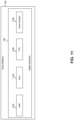
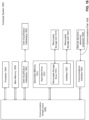
- FIG. 11 illustrates a block diagram of a voice platform 192 that analyzes voice input from audio responsive electronic device 122, according to some embodiments.
- voice platform 192 includes a digital assistant 180 and an intent handler 1108.
- digital assistant 180 includes an automated speech recognizer (ASR) 1102, natural language unit (NLU) 1104, and a text-to-speech (TTS) unit 1106.
- ASR automated speech recognizer
- NLU natural language unit
- TTS text-to-speech
- voice platform 192 may include a common ASR 1102 for one or more digital assistants 180.
- digital assistant 180 receives the preprocessed voice input from audio responsive electronic device 122 at ASR 1102.
- digital assistant 180 may receive the preprocessed voice input as a pulse-code modulation (PCM) voice stream.
- PCM pulse-code modulation
- digital assistant 180 may receive the preprocessed voice input in various other data formats.
- ASR 1102 may detect an end-of-utterance in the preprocessed voice input. In other words, ASR 1102 may detect when a user 136 is done speaking. This may reduce the amount of data to analyze by NLU 1104.
- ASR 1102 may determine which words were spoken in the preprocessed voice input. In response to this determination, ASR 1102 may output text results for the preprocessed voice input. Each text result may have a certain level of confidence. For example, in some embodiments, ASR 1102 may output a word graph for the preprocessed voice input (e.g., a lattice that consists of word hypotheses).
- NLU 1104 receives the text results from ASR 1102. In some embodiments, NLU 1104 may generate a meaning representation of the text results through natural language understanding techniques as would be appreciated by a person of ordinary skill in the art.
- NLU 1104 may generate an intent through natural language understanding techniques as would be appreciated by a person of ordinary skill in the art.
- an intent may be a data structure that represents a task, goal, or outcome requested by a user 136. For example, a user 136 may say "Hey Roku, play jazz on Pandora on my television.”
- NLU 1104 may determine that the intent of user 136 is to play jazz on an application 194 (e.g., the Pandora application) on display device 104.
- the intent may be specific to NLU 1104. This is because a particular digital assistant 180 may provide NLU 1104.
- intent handler 198 may receive an intent from NLU 1104.
- intent handler 1108 may convert the intent into a standard format.
- intent handler 1108 may convert the intent into a standard format for media device 114.
- intent handler 1108 may convert the intent into a fixed number of intent types. In some embodiments, this may provide faster intent processing for media device 114 .
- intent handler 1108 may refine an intent based on information in a cloud computing platform. For example, in some embodiments, user 136 may say "Hey Roku, play jazz.” In response, NLU 1104 may determine that the intent of user 136 is to play jazz. Intent handler 1108 may further determine an application for playing jazz. For example, in some embodiments, intent handler 1108 may search a cloud computing platform for an application that plays jazz. Intent handler 1108 may then refine the intent by adding the determined application to the intent.
- intent handler 1108 may add search results to an intent. For example, in response to "Show me famous movies", intent handler 1108 may add search results such as “Star Wars” and “Gone With the Wind” to the intent.
- voice platform 192 may overrule the selected digital assistant 180. For example, voice platform 192 may select a different digital assistant 180 than is normally selected based on the detected trigger word. Voice platform 192 may overrule the selected digital assistant 180 because some digital assistants 180 may perform certain types of tasks better than other digital assistants 180. For example, in some embodiments, voice platform 192 may determine that the digital assistant 180 selected based on the detected trigger word does not perform the requested task as well as another digital assistant 180. In response, voice platform 192 may dispatch the voice input to the other digital assistant 180.
- voice platform 192 may overrule the selected digital assistant 180 based on crowdsourced data. In some embodiments, voice platform 192 may track what digital assistant 180 is most often used for certain types tasks. In some other embodiments, a crowdsource server may keep track of which digital assistants 180 are used for certain types of tasks. As would be appreciated by a person of ordinary skill in the art, voice platform 192 may track the usage of different digital assistants 180 using various criteria including, but not limited to, time of day, location, and frequency. In some embodiments, voice platform 192 may select a different digital assistant 180 based on this tracking. Voice platform 192 may then dispatch the voice input to this newly selected digital assistant 180 for processing.
- a majority of users 136 may use a digital assistant 180 from Google, Inc. to look up general information.
- a user 136 may submit a voice input of "Hey Siri, what is the capital of Minnesota?" that would normally be processed by Apple Inc.'s Siri ® digital assistant 180 due to the user 136's use of the trigger word "Hey Siri.”
- voice platform 192 may consult a crowdsource server to determine if another digital assistant 180 should be used instead. The voice platform 192 may then send the voice input to the Google digital assistant 180 (rather than Siri), if the crowdsource data indicates that typically such general information queries are processed by the Google digital assistant 180.
- the crowdsource server may record the user 136's original request for Siri to perform the lookup. For example, the crowdsource server may increment a Siri counter relating to general information queries by one. In the future, if a majority of users request Siri to process general information queries (such that Siri's counter becomes greater than Google's and the counters of other digital assistants 180), then the voice platform 180 will dispatch such queries to Siri for processing (rather than the Google digital assistant).
- a voice adaptor 196 may process an intent received from a digital assistant 180. For example, in some embodiments, a voice adaptor 196 may determine an application 194 for handling the intent.
- a particular application 194 may not be specified in an intent.
- a voice adaptor 196 may route the intent to an application 194 based on other criteria. For example, in some embodiments, a voice adaptor 196 may route the intent to an application 194 based on a trigger word. In some embodiments, the digital assistant handler may route the intent to an application 194 based on a fixed rule (e.g., send all podcasts to the Tunein application 194). In some embodiments, a voice adaptor 196 may route the intent to an application 194 based on a user-configured default application (e.g., a default music application 194). In some embodiments, a voice adaptor 196 may route the intent to an application 194 based on the results of a search (e.g., the Spotify application 194 is the only application that has Sonata No. 5).
- digital assistant 180 may determine that it cannot handle the commands in the preprocessed voice input. In response, in some embodiments, digital assistant 180 may transmit a response to audio responsive electronic device 122 indicating that digital assistant 180 cannot handle the commands. In some other embodiments, digital assistant 180 may transmit the response to media device 114.
- digital assistant 180 may determine that another digital assistant 180 can handle the voice commands.
- voice platform 192 may send the preprocessed voice input to the other digital assistant 180 for handling.
- TTS 1106 may generate an audio response in response to generation of an intent. In some embodiments, TTS 1106 may generate an audio response to being unable to generate an intent.
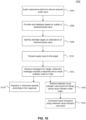
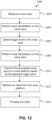
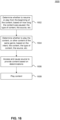
- FIG. 12 illustrates a method 1200 for performing speech recognition for a digital assistant, according to some embodiments.
- Method 1200 can be performed by processing logic that can comprise hardware (e.g., circuitry, dedicated logic, programmable logic, microcode, etc.), software (e.g., instructions executing on a processing device), or a combination thereof. It is to be appreciated that not all steps may be needed to perform the disclosure provided herein. Further, some of the steps may be performed simultaneously, or in a different order than shown in FIG. 12 , as will be understood by a person of ordinary skill in the art. Method 1200 is discussed with respect to FIGS. 1 and 11 .
- audio responsive electronic device 122 receives a voice input from user 136 via microphone array 124.
- user interface and command module 128 optionally performs echo cancellation on voice input. For example, in some embodiments, user interface and command module 128 may subtract a background audio signal (e.g., an audio signal being output by media system 102 via speakers 108) from the voice input received via microphone array 124.
- a background audio signal e.g., an audio signal being output by media system 102 via speakers 108
- user interface and command module 128 detects a trigger word in the voice input. In some embodiments, user interface and command module 128 may perform trigger word detection for a single trigger word. In some other embodiments, user interface and command module 128 may perform trigger word detection for multiple trigger words.
- user interface and command module 128 may detect a trigger word by performing speech recognition on the voice input and compare the speech recognition result to the trigger word.
- user interface and command module 128 may perform trigger word detection on the voice input using reduced processing capability and memory capacity. This is because there may be a small number of trigger words, and the trigger words may be of short duration.
- user interface and command module 128 optionally performs noise cancellation on the voice input.
- user interface and command module 128 performs noise cancellation on the voice input using beam forming module 132.
- beam forming module 132 may adjust the reception pattern at microphone array 124 to emphasize reception of audio from user 136.
- user interface and command module 128 transmits the processed voice input to voice platform 192 based on the detection of the trigger word in the voice input.
- voice platform 192 performs a secondary trigger word detection on the received voice input. According to the invention, voice platform 192 selects a digital assistant 180 based on the detected trigger word. In some embodiments, voice platform 192 may select a digital assistant 180 based on lookup table that maps trigger words to a particular digital assistant 180. Voice platform 192 may then dispatch the preprocessed voice input to the selected digital assistant 180 for processing.
- voice platform 192 may convert the voice input into a text input using ASR 1102 in digital assistant 180. In some embodiments, voice platform 192 may convert the text input into an intent using NLU 1104 in digital assistant 180. In some embodiments, voice platform 192 may convert the intent into a standard format using intent handler 1108. In some embodiments, intent handler 1108 may refine the intent based on information in a cloud computing platform.
- media device 114 receives an intent for the voice input from the voice platform 192.
- the audio responsive electronic device 122 may receive the intent for the voice input from the voice platform 192.
- voice adaptor 196 may route the intent to an application 194 for handling based on the intent indicating that application 194 should process the intent. In some other embodiments, a voice adaptor 196 may route the intent to an application 194 based on a fixed rule, user-configured default application, or the results of a search.
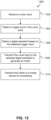
- voice platform 192 receives a voice input from audio responsive electronic device 122.
- voice platform 192 selects a digital assistant 108 from multiple digital assistants 108 based on the detected trigger word. In some embodiments, voice platform 192 may select a digital assistant 180 based on a lookup table that maps different trigger words to the digital assistants 180.
- voice platform 192 dispatches the voice input to the selected digital assistant 108 to generate an intent.
- the selected digital assistant 108 performs automated speech recognition using ASR 1102 on the voice input.
- the selected digital assistant 108 then performs natural language processing (NLP) on the speech recognition result using NLU 1104 to generate the intent.
- NLP natural language processing
- voice platform 192 may convert the intent into a standard format intent using intent handler 1108.
- intent handler 1108 may refine the intent by adding additional information to the intent.
- voice platform 192 transmits the intent to media device 114 for processing.
- the audio responsive electronic device 122 may receive the intent.
- the audio responsive electronic device 122 may the transmit the intent to media device 114 for processing.
- presence detector 160 in the audio responsive electronic device 122 may detect the presence, or near presence of a user. Presence detector 160 may further determine a position of a user. In some embodiments, presence detector 160 may be a passive infrared motion sensor that detects motion at a certain distance and angle. In some other embodiments, presence detector 160 may be a passive sensor that detects motion at a certain distance and angle based on an interaction of radio waves (e.g., radio waves of the IEEE 802.11 standard) with a person (e.g., user 136). This determined distance and angle may indicate user 136 is in a specific location. For example, presence detector 160 may detect user 136 in a specific quadrant of a room such as a living room. As would be appreciated by a person of ordinary skill in the art, remote control 138 may similarly include a presence detector 160.
- radio waves e.g., radio waves of the IEEE 802.11 standard
- remote control 138 may similarly include a presence detector 160.
- the motion sensor may be video camera software that analyzes video from a video camera to detect motion in a field of view.
- the motion sensor may be a sound sensor that analyzes sound from a microphone to detect motion in the surrounding area.
- the motion sensor may be various other types of sensors, and may use various other types of mechanisms for motion detection or presence detection now known or developed in the future.
- audio responsive electronic device 122 may keep on presence detector 160, and turn off all other components in standby mode. Presence detector 160 may then monitor for the presence, or near presence, of user 136 by audio responsive electronic device 122. In some embodiments, presence detector 160 may cause audio responsive electronic device 122 to exit standby mode when presence detector 160 detects the presence, or near presence, of user 136 by audio responsive electronic device 122. This is because the presence of user 136 by audio responsive electronic device 122 likely means user 136 will be interested in interacting with audio responsive electronic device 122.
- presence detector 160 may cause audio responsive electronic device 122 to exit standby mode when presence detector 160 detects user 136 in a specific location. For example, presence detector 160 may detect user 136 being in a specific quadrant of a room. Similarly, presence detector 160 may detect user 136 within a threshold distance (e.g., 3 feet) of audio responsive electronic device 122. This may reduce the number of times presence detector 160 may inadvertently cause audio responsive electronic device 122 to exit standby mode. For example, presence detector 160 may not cause audio responsive electronic device 122 to exit standby mode when a user is not within a threshold distance of audio responsive electronic device 122.
- a threshold distance e.g. 3 feet
- presence detector 160 may monitor for the presence of user 136 by audio responsive electronic device 122 when audio responsive electronic device 122 is turned on. Audio responsive electronic device 122 may detect the lack of presence of user 136 by audio responsive electronic device 122 at a current time using presence detector 160. Audio responsive electronic device 122 may then determine the difference between the current time and a past time of a past user presence detection by presence detector 160. Audio responsive electronic device 122 may place itself in standby mode if the time difference is greater than a period of time threshold. The period of time threshold may be user configured. In some embodiments, audio responsive electronic device 122 may prompt user 136 via visual indicators 182 and or speakers 190 to confirm user 136 does not plan to interact with audio responsive electronic device 122 in the near future.
- audio responsive electronic device 122 may place itself in standby mode if user 136 does not respond to the prompt in a period of time. For example, audio responsive electronic device 122 may place itself in standby mode if user 136 does not click a button on, or issue a voice command to, audio responsive electronic device 122.
- audio responsive electronic device 122 may automatically turn off microphone array 124 after a period of time. This may reduce power consumption.
- presence detector 160 may monitor for the presence of user 136 by audio responsive electronic device 122 when audio responsive electronic device 122 is turned on. Audio responsive electronic device 122 may detect the lack of presence of user 136 by audio responsive electronic device 122 at a current time using presence detector 160. Audio responsive electronic device 122 may then determine the difference between the current time and a past time of a past user presence detection by presence detector 160. Audio responsive electronic device 122 may turn off microphone array 124 if the time difference is greater than a period of time threshold. The period of time threshold may be user configured.
- audio responsive electronic device 122 may prompt user 136 via visual indicators 182 and or speakers 190 to confirm user 136 is not present, or does not plan to issue voice commands to microphone array 124 in the near future. In some embodiments, audio responsive electronic device 122 may turn off microphone array 124 if user 136 does not respond to the prompt in a period of time. For example, audio responsive electronic device 122 may turn off microphone array 124 if user 136 does not click a button on, or issue a voice command to, audio responsive electronic device 122.
- audio responsive electronic device 122 may automatically turn on microphone array 124 after detecting the presence of user 136. In some embodiments, audio responsive electronic device 122 may turn on microphone array 124 when presence detector 150 detects user 136 in a specific location. For example, presence detector 160 may detect user 136 being in a specific quadrant of a room. Similarly, presence detector 160 may be a proximity detector that detects user 136 is within a threshold distance (e.g., 3 feet) of audio responsive electronic device 122. This may reduce the number of times presence detector 160 may inadvertently cause audio responsive electronic device 122 to turn on microphone array 124. For example, audio responsive electronic device 122 may not turn on microphone array 124 when user 136 is not within a threshold distance of audio responsive electronic device 122.
- a threshold distance e.g. 3 feet
- audio responsive electronic device 122 may automatically turn on transceiver 130 after detecting the presence of user 136. In some embodiments, this may reduce the amount of time to setup a peer to peer wireless networking connection between the audio responsive electronic device 122 and display device 104. In some other embodiments, this may reduce the amount of time to setup a peer to peer wireless networking connection between the audio responsive electronic device 122 and media device 114. For example, audio responsive electronic device 122 may automatically establish setup, or reestablish, the peer to peer wireless networking connection in response to turning on transceiver 130. In some embodiments, audio responsive electronic device 122 may automatically send a keep alive message over the peer to peer wireless network connection to display device 104 after detecting the presence of user 136. The keep alive message may ensure that the peer to peer wireless network connection is not disconnected due to inactivity.
- audio responsive electronic device 122 may turn on transceiver 130 when presence detector 150 detects user 136 in a specific location. For example, presence detector 160 may detect user 136 being in a specific quadrant of a room. Similarly, presence detector 160 may detect user 136 within a threshold distance (e.g., 3 feet) of audio responsive electronic device 122. This may reduce the number of times presence detector 160 may inadvertently cause audio responsive electronic device 122 to turn on transceiver 130. For example, audio responsive electronic device 122 may not turn on transceiver 130 when user 136 is not within a threshold distance of audio responsive electronic device 122.
- a threshold distance e.g. 3 feet
- display device 104 may establish a peer to peer wireless network connection with audio responsive electronic device 122 using transceiver 112.
- the peer to peer wireless network connection may be WiFi Direct connection.
- the peer to peer wireless network connection may be a Bluetooth connection.
- the peer to peer wireless network connection may be implemented using various other network protocols and standards.
- display device 104 may send commands to, and receive commands from, audio responsive electronic device 122 over this peer to peer wireless network connection. These commands may be intended for media device 114.
- display device 104 may stream data from media device 114 to audio responsive electronic device 122 over this peer to peer wireless network connection. For example, display device 104 may stream music data from media device 114 to audio responsive electronic device 122 for playback using speaker(s) 190.
- display device 104 may determine the position of user 136 using presence detector 150, since user 136 may be considered to be at the same location as audio responsive electronic device 122.
- presence detector 150 may detect user 136 being in a specific quadrant of a room.
- beam forming module 170 in display device 104 may use beam forming techniques on transceiver 112 to emphasize a transmission signal for the peer to peer wireless network connection for the determined position of the audio responsive electronic device 122. For example, beam forming module 170 may adjust the transmission pattern of transceiver 112 to be stronger at the position of the audio responsive electronic device 122 using beam forming techniques. Beam forming module 170 may perform this functionality using any well known beam forming technique, operation, process, module, apparatus, technology, etc.
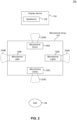
- FIG. 2 illustrates a block diagram of microphone array 124 of the audio responsive electronic device 122, shown in an example orientation relative to the display device 104 and the user 136, according to some embodiments.
- the microphone array 124 includes four microphones 126A-126D, although in other embodiments the microphone array 124 may include any number of microphones 126.
- microphones 126 are positioned relative to each other in a general square configuration.
- microphone 126A may be considered at the front; microphone 126D may be considered at the right; microphone 126C may be considered at the back; and microphone 126B may be considered at the left. It is noted that such example designations may be set according to an expected or designated position of user 136 or display device 104, in some embodiments.
- the user 136 is positioned proximate to the back microphone 126C, and the display device 104 is positioned proximate to the front microphone 126A.
- Each microphone 126 may have an associated reception pattern 204.
- a microphone's reception pattern reflects the directionality of the microphone, that is, the microphone's sensitivity to sound from various directions. As persons skilled in the relevant art(s) will appreciate, some microphones pick up sound equally from all directions, others pick up sound only from one direction or a particular combination of directions.
- the front microphone 126A receives audio from speakers 108 of display 104 most clearly, given its reception pattern 204A and relative to the other microphones 204B-204D.
- the back microphone 126C receives audio from user 136 most clearly, given its reception pattern 204C and relative to the other microphones 126A, 126B and 126D.
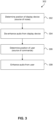
- FIG. 3 illustrates a method 302 for enhancing audio from a user (and/or other sources of audio commands) and de-enhancing audio from a display device (and/or other noise sources), according to some embodiments.
- Method 302 can be performed by processing logic that can comprise hardware (e.g., circuitry, dedicated logic, programmable logic, microcode, etc.), software (e.g., instructions executing on a processing device), or a combination thereof. It is to be appreciated that not all steps may be needed to perform the disclosure provided herein. Further, some of the steps may be performed simultaneously, or in a different order than shown in FIG. 3 , as will be understood by a person of ordinary skill in the art.
- method 302 shall be described with reference to FIGS. 1 and 2 . However, method 302 is not limited to those examples.
- the position of a source of noise may be determined.
- user interface and command module 128 of the audio responsive electronic device 122 may determine the position of display device 104.
- display device 104 may be considered a source of noise because audio commands may be expected from user 136 during times when display device 104 is outputting audio of content via speakers 108.
- display device 104 may determine the position of user 136 using presence detector 150, since user 136 may be considered to have the same position as audio responsive electronic device 122. Display device 104 may then transmit position information to audio responsive electronic device 122 that defines the relative position of display device 104 to user 136. In some embodiments, audio responsive electronic device 122 may determine the position of display device 104 based on this position information.
- user 136 may enter configuration settings specifying where the display device 104 is positioned proximate to one of the microphones 126 (such as the front microphone 126A in the example orientation of FIG. 2 ). Such configuration settings may be stored in data storage 134 of the audio responsive electronic device 122. Accordingly, in 302, user interface and command module 128 may access the configuration settings in data storage 134 to determine the position of display device 104.
- audio from the source of noise may be de-enhanced or suppressed.
- user interface and command module 128 may deactivate microphones 126 proximate to the display device 104 and having reception patterns 204 most likely to receive audio from display device 104.
- user interface and command module 128 may deactivate the front microphone 126A, and potentially also the right microphone 126D and/or the left microphone 126B.
- beam forming module 132 in the audio responsive electronic device 122 may use beam forming techniques on any of its microphones 126 to de-emphasize reception of audio from the display device 104. For example, beam forming module 132 may adjust the reception pattern 204A of the front microphone 126A (and potentially also reception patterns 204D and 204B of the right microphone 126D and the left microphone 126) to suppress or even negate the receipt of audio from display device 104. Beam forming module 132 may perform this functionality using any well known beam forming technique, operation, process, module, apparatus, technology, etc.
- FIG. 4 illustrates an alternative or additional embodiment for implementing elements 302 and 304 in FIG. 3 .
- user interface and command module 128 in the audio responsive electronic device 122 receives the audio stream of content being also provided to display device 104 from media device 114, for play over speakers 108.
- User interface and command module 128 may receive this audio stream from media device 114 via network 118 using, for example, WIFI, Blue Tooth, cellular, to name a few communication examples.
- User interface and command module 128 could also receive this audio stream from content source(s) 120 over network 118.
- user interface and command module 128 may listen for audio received via microphone array 124 that matches the audio stream received in 404, using well known signal processing techniques and algorithms.
- user interface and command module 128 may adjust the reception patterns 204 of those microphones 126 that received the matched audio stream, to suppress or even null audio reception of those microphones 126. For example, in 408, user interface and command module 128 may identify the microphones 126 where the signal amplitude (or signal strength) was the greatest during reception of the matched audio stream (such as the front microphone 126A in the example orientation of FIG. 2 ), and then operate with beam forming module 132 to suppress or null audio reception of those microphones 126 using well known beam forming techniques.
- user interface and command module 128 in 408 may subtract the matched audio received in 406 from the combined audio received from all the microphones 126 in microphone array 124, to compensate for noise from the display device 104.
- flowchart 402 the operations depicted in flowchart 402 are not performed when audio responsive electronic device 122 is powered by the battery 140 because receipt of the audio stream in 404 may consume significant power, particularly if receipt is via WIFI or cellular. Instead, in these embodiments, flowchart 402 is performed when audio responsive electronic device 122 is powered by an external source 142.
- the position of a source of commands may be determined.
- user interface and command module 128 of the audio responsive electronic device 122 may determine the position of user 136, since user 136 may be considered to be the source of commands.
- audio responsive electronic device 122 may determine the position of user 136 using presence detector 160, since user 136 may be considered to be the source of commands. For example, presence detector 160 may detect user 136 being in a specific quadrant of a room.
- audio from the source of commands may be enhanced.
- user interface and command module 128 may enhance the audio sensitivity of microphones 126 proximate to the user 136 and having reception patterns 204 most likely to receive audio from user 136, using beam forming techniques.
- the user interface and command module 128 may use well known beam forming techniques to adjust the reception pattern 204C of back microphone 126C to enhance the ability of back microphone 126C to clearly receive audio from user 136.
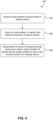
- FIG. 5 illustrates a method 500 for intelligently placing a display device in a standby mode, according to some embodiments.
- Method 500 can be performed by processing logic that can comprise hardware (e.g., circuitry, dedicated logic, programmable logic, microcode, etc.), software (e.g., instructions executing on a processing device), or a combination thereof. It is to be appreciated that not all steps may be needed to perform the disclosure provided herein. Further, some of the steps may be performed simultaneously, or in a different order than shown in FIG. 5 , as will be understood by a person of ordinary skill in the art.
- method 500 shall be described with reference to FIG. 1 . However, method 500 is not limited to that example.
- display device 104 determines a lack of presence of user 136 at or proximate to display device 104 at a current time.
- presence detector 150 of display device 104 may determine a lack of presence of user 136.
- display device 104 determines a difference between the current time of 502 and a past time when a user was present.
- presence detector 150 of display device 104 may have determined the past time when a user was present.
- display device 104 may have determined the past time when a user was present based on user interaction with display device 104.
- display device 104 determines whether the difference of 504 is greater than a threshold value.
- the threshold value may be user configured. In some other embodiments, the threshold value may be defined by display device 104.
- display device 104 places itself in a standby mode in response to the determination that the difference of 506 is greater than the threshold value in 506. For example, display device 104 may turn off one or more of display 106, speaker(s) 108, control module 110, and transceiver 112. In some embodiments, display device 104 may prompt user 136 via display 106 and or speaker(s) 108 to confirm user 136 is still watching and or listening to display device 104. Display device 104 may place itself in standby mode if user 136 does not respond to the prompt within a period of time.
- FIG. 6 illustrates a method 600 for intelligently placing an audio remote control in a standby mode, according to some embodiments.
- Method 600 can be performed by processing logic that can comprise hardware (e.g., circuitry, dedicated logic, programmable logic, microcode, etc.), software (e.g., instructions executing on a processing device), or a combination thereof. It is to be appreciated that not all steps may be needed to perform the disclosure provided herein. Further, some of the steps may be performed simultaneously, or in a different order than shown in FIG. 6 , as will be understood by a person of ordinary skill in the art.
- method 600 shall be described with reference to FIGS. 1 and 2 . However, method 600 is not limited to these examples.
- audio responsive electronic device 122 determines a lack of presence of user 136 at audio responsive electronic device 122 at a current time. For example, presence detector 160 of audio responsive electronic device 122 may determine a lack of presence of user 136.
- audio responsive electronic device 122 determines a difference between the current time of 602 and a past time when a user was present.
- presence detector 160 of audio responsive electronic device 122 may have determined the past time when a user was present.
- audio responsive electronic device 122 may have determined the past time when a user was present based on user interaction with audio responsive electronic device 122.
- audio responsive electronic device 122 determines whether the difference of 604 is greater than a threshold value.
- the threshold value may be user configured. In some other embodiments, the threshold value may be defined by audio responsive electronic device 122.
- audio responsive electronic device 122 places itself in a standby mode in response to the determination that the difference of 606 is greater than the threshold value in 606.
- audio responsive electronic device 122 may turn off one or more of microphone array 124, user interface and command module 128, transceiver 130, beam forming module 132, data storage 134, visual indicators 182, speakers 190, and processing module 184.
- audio responsive electronic device 122 may prompt user 136 via visual indicators 182 and or speakers 190 to confirm user 136 is still intends to interact with audio responsive electronic device 122. Audio responsive electronic device 122 may place itself in standby mode if user 136 does not respond to the prompt within a period of time.
- FIG. 7 illustrates a method 700 for performing intelligent transmission from a display device to an audio remote control, according to some embodiments.
- Method 700 can be performed by processing logic that can comprise hardware (e.g., circuitry, dedicated logic, programmable logic, microcode, etc.), software (e.g., instructions executing on a processing device), or a combination thereof. It is to be appreciated that not all steps may be needed to perform the disclosure provided herein. Further, some of the steps may be performed simultaneously, or in a different order than shown in FIG. 7 , as will be understood by a person of ordinary skill in the art.
- method 500 shall be described with reference to FIG. 1 .
- method 700 is not limited to that example.
- display device 104 establishes a peer to peer wireless network connection to audio responsive electronic device 122.
- display device 104 establishes a WiFi Direct connection to audio responsive electronic device 122.
- Display device 104 may transmit large amounts of data over this peer to peer wireless network connection.
- display device 104 may stream music over this peer to peer wireless network connection.
- Audio responsive electronic device 122 may play the streaming music via speakers 190.
- audio responsive electronic device 122 may be communicatively coupled to a set of headphones and play the streaming music via the headphones.
- display device 104 determines a position of user 136 at or proximate to display device 104. For example, presence detector 150 of display device 104 may determine a position of user 136. Display device 104 determines a position of user 136 because user 136 will likely be at the same position as audio responsive electronic device 122.
- display device 104 configures a transmission pattern for the peer to peer wireless network connection based on the determined position of user 136 in 704.
- beam forming module 170 of display device 104 may use beam forming techniques discussed herein to configure transceiver 112 to emphasize or enhance a transmission signal for the peer to peer wireless networking connection toward the determined position of user 136 in 704, e.g., the position of audio responsive electronic device 122.
- display device 104 performs a transmission to audio responsive electronic device 122 over the peer to peer wireless network according to the configured transmission pattern of 706.
- user 136 may listen to streaming music over the peer to peer wireless network connection via a pair of headphones communicatively coupled to audio responsive electronic device 122.
- streaming music involves transmitting large amounts of data at a steady rate.
- streaming music over a low bandwidth and or intermittent connection may result in choppy playback of the streaming music and or a loss of audio quality.
- enhancement of a transmission signal for the peer to peer wireless networking connection may increase the bandwidth of the connection and decrease connection interruptions. This may reduce choppy playback of the streaming music and or poor audio quality.
- display device 104 may determine the position of user 136 in a room as discussed herein. For example, display device 104 may determine that user 136 is sitting on a sofa in a specific quadrant in the room. Based on this positional information, display device 104 may use beam forming techniques discussed herein to configure transceiver 112 to enhance a transmission signal for the peer to peer wireless networking connection toward the determined position of user 136, e.g., the position of audio responsive electronic device 122. This may increase the bandwidth of the peer to peer wireless connection and decrease connection interruptions. This may further reduce choppy playback and or poor audio quality during playback of the streaming music on audio responsive electronic device 122, e.g., via a set of headphones communicatively coupled to audio responsive electronic device 122.
- display device 104 may enhance a transmission signal for the peer to peer wireless networking connection to improve the performance of various other functions of audio responsive electronic device 122 such as, but not limited to, video playback and the playing of video games.
- other devices in system 102 may be configured to enhance a transmission signal for a wireless network connection based on the detected presence or position of user 136 using presence detector 150 or presence detector 160.
- FIG. 8 illustrates a method 802 for enhancing audio from a user, according to some embodiments.
- method 802 is an alternative implementation of elements 306 and/or 308 in FIG. 3 .
- user interface and command module 128 determines the position of the user 136. For example, in 806, user interface and command module 128 may identify the microphones 126 where the signal amplitude (or signal strength) was the greatest during reception of the trigger word(s) (such as the back microphone 126C in the example of FIG. 2 ), and then operate with beam forming module 132 to adjust the reception patterns 126 of the identified microphones 126 (such as reception pattern 126C of the back microphone 126C) to enhance audio sensitivity and reception by those microphones 126. In this way, user interface and command module 128 may be able to better receive audio from user 136, to thus be able to better recognize commands in the received audio. Beam forming module 132 may perform this functionality using any well known beam forming technique, operation, process, module, apparatus, technology, etc.
- trigger words and commands may be issued by any audio source.
- trigger words and commands may be part of the audio track of content such that the speakers 108 of display device 104 may audibly output trigger words and audio commands as the content (received from media device 114) is played on the display device 104.
- such audio commands may cause the media device 114 to retrieve related content from content sources 120, for playback or otherwise presentation via display device 104.
- audio responsive electronic device 122 may detect and recognize such trigger words and audio commands in the manner described above with respect to FIGS. 3 , 4 , and 8 , except in this case the display device 104 is the source of the commands, and the user 136 is a source of noise. Accordingly, with respect to FIG.
- the beam forming algorithms executed by the beam forming module 132 can be simplified because the display device 104 and the user 136 are typically at stable locations relative to the audio responsive electronic device 122. That is, once initially positioned, the display device 104 and the audio responsive electronic device 122 are typically not moved, or are moved by small amounts. Also, users 136 tend to watch the display device 104 from the same locations, so their locations relative to the audio responsive electronic device 122 are also often stable.
- the audio responsive electronic device 122 represents the hardware front-end component.
- the audio responsive electronic device 122 takes the place of AMAZON ECHO when operating with ALEXA, or the IPHONE when operating with SIRI, or GOOGLE HOME when operating with the GOOGLE ASSISTANT, etc.
- AMAZON ECHO is native to ALEXA. That is, AMAZON ECHO was designed and implemented specifically for ALEXA, with knowledge of its internal structure and operation, and vice versa.
- the IPHONE is native to SIRI
- MICROSOFT computers are native to CORTANA
- GOOGLE HOME is native to GOOGLE ASSISTANT. Because they are native to each other, the back-end software component is able to control and cause the front-end hardware component to operate in a consistent, predictable and precise manner, because the back-end software component was implemented and operates with knowledge of the design and implementation of the front-end hardware component.
- the audio responsive electronic device 122 is not native to one or more of the digital assistants 180.
- hardware such as the audio responsive electronic device 122
- non-native software such as digital assistants 180.
- the challenge results from the hardware being partially or completely a closed system from the point of view of the software. Because specifics of the hardware are not known, it is difficult or even impossible for the non-native software to control the hardware in predictable and precise ways.
- visual indicators 182 in the audio responsive electronic device 122 are a series of light emitting diodes (LEDs), such as 5 diodes (although the visual indicators 182 can include more or less than 5 diodes).
- Digital assistants 180 may wish to use visual indicators 182 to provide visual feedback to (and otherwise visually communicate with) the user 136. However, because they are non-native, digital assistants 180 may not have sufficient knowledge of the technical implementation of the audio responsive electronic device 122 to enable control of the visual indicators 182 in a predictable and precise manner.
- Some embodiments of this disclosure solve this technological challenge by providing a processor or processing module 184, and an interface 186 and a library 188.
- An example library 188 is shown in FIG. 9 .
- the library 188 and/or interface 186 represent an application programming interface (API) having commands for controlling the visual indicators 182.
- API application programming interface
- Native and non-native electronic devices such as digital assistants 180, media device 114, content sources 120, display device 104, etc., may use the API of the library 188 to control the audio responsive electronic device 122 in a consistent, predictable and precise manner.
- the library 188 may have a row 910 for each command supported by the API.
- Each row 910 may include information specifying an index 904, category 906, type (or sub-category) 908, and/or visual indicator command 910.
- the index 904 may be an identifier of the API command associated with the respective row 910.
- the category 906 may specify the category of the API command.
- the tone category may correspond to an emotional state that a digital assistant 180 may wish to convey when sending a message to the user 136 via the audio responsive electronic device 122.
- the example library 188 of FIG. 9 illustrates 2 rows 910A, 910B of the tone category.
- the emotional state may be designated in the type field 908. According, row 910A corresponds to a "happy" emotional state, and row 910B corresponds to a "sad” emotional state.
- Other embodiments may include any number of tone rows corresponding to any emotions.
- the function/scenario category may correspond to functions and/or scenarios wherein a digital assistant 180 may wish to convey visual feedback to the user 136 via the audio responsive electronic device 122.
- the example library 188 of FIG. 9 illustrates 3 rows 910C, 910D, 910E of the function/scenario category.
- the function/scenario may be designated in the type field 908. According, row 910C corresponds to a situation where the audio responsive electronic device 122 is pausing playback, row 910D corresponds to a situation where the audio responsive electronic device 122 is processing a command, and row 910E corresponds to a situation where the audio responsive electronic device 122 is waiting for audio input.
- Other embodiments may include any number of function/scenario rows corresponding to any functions and/or scenarios.
- the user feedback category may correspond to situations where a digital assistant 180 or the audio responsive electronic device 122 may wish to provide feedback or information (or otherwise communicate with) the user 136.
- the example library 188 of FIG. 9 illustrates 2 rows 910F, 910G of the user feedback category.
- the user feedback situation may be designated in the type field 908. According, row 910F corresponds to a situation where a digital assistant 180 or the audio responsive electronic device 122 wishes to inform the user 136 that audio input was clearly understood. Row 910G corresponds to a situation where a digital assistant 180 or the audio responsive electronic device 122 wishes to inform the user 136 that audio input was not received or understood.
- Other embodiments may include any number of user feedback rows corresponding to any user feedback messages.
- the library 188 may specify how the audio responsive electronic device 122 operates for the commands respectively associated with the rows 910. For example, information in the visual indicator command 910 field may specify how the visual indicators 182 in the audio responsive electronic device 122 operate for the commands respectively associated with the rows 910. While the following describes operation of the visual indicators 182, in other embodiments the library 188 may specify how other functions and/or features of the audio responsive electronic device 122 operate for the commands respectively associated with the rows 910.
- the visual indicator field 910 indicates: which LEDs of the visual indicators 182 are on or off; the brightness of the "on” LEDs; the color of the “on” LEDs; and/or the movement of light of the LEDs (for example, whether the "on” LEDs are blinking, flashing from one side to the other, etc.).
- the visual indicator field 910 indicates: which LEDs of the visual indicators 182 are on or off; the brightness of the "on” LEDs; the color of the "on” LEDs; and/or the movement of light of the LEDs (for example, whether the "on” LEDs are blinking, flashing from one side to the other, etc.).
- the visual indicator field 910 indicates: which LEDs of the visual indicators 182 are on or off; the brightness of the "on” LEDs; the color of the "on” LEDs; and/or the movement of light of the LEDs (for example, whether the "on” LEDs are blinking, flashing from one side to the other, etc.).
- row 910A corresponding to the
- FIG. 10 illustrates a method 1002 in the audio responsive electronic device 122 for predictably and precisely providing users 136 with visual information from computing entities/devices, such as but not limited to digital assistants 180, media device 114, content sources 120, display device 104, etc.
- computing entities/devices may be native or non-native to the audio responsive electronic device 122. Accordingly, embodiments of this disclosure overcome the technical challenge of enabling a first computing device to predictably and precisely interact with and control a second computing device, when the first computer device is not native to the second computing device.
- Method 1002 can be performed by processing logic that can comprise hardware (e.g., circuitry, dedicated logic, programmable logic, microcode, etc.), software (e.g., instructions executing on a processing device), or a combination thereof. It is to be appreciated that not all steps may be needed to perform the disclosure provided herein. Further, some of the steps may be performed simultaneously, or in a different order than shown in FIG. 10 , as will be understood by a person of ordinary skill in the art.
- processing logic can comprise hardware (e.g., circuitry, dedicated logic, programmable logic, microcode, etc.), software (e.g., instructions executing on a processing device), or a combination thereof. It is to be appreciated that not all steps may be needed to perform the disclosure provided herein. Further, some of the steps may be performed simultaneously, or in a different order than shown in FIG. 10 , as will be understood by a person of ordinary skill in the art.
- method 1002 shall be described with reference to FIGS. 1 and 9 . However, method 1002 is not limited to those examples.
- the audio responsive electronic device 122 receives audio input from user 136 or another source, such as from speakers 108 of display 104.
- the microphone array 124 of the audio responsive electronic device 122 receives such audio input.
- user 136 may say "When does the new season of GAME OF THRONES start?"
- the audio responsive electronic device 122 determines if the audio input was properly received and understood.
- the audio input may not have been properly received if the user 136 was speaking in a low voice, if there was noise from other sources (such as from other users or the display device 104), or any number of other reasons.
- the audio responsive electronic device 122 may use well known speech recognition technology to assist in determining whether the audio input was properly received and understood in step 1006.
- the audio responsive electronic device 122 may use the library 188 to provide visual feedback to the user 136 as to whether the audio input was properly received and understood. For example, the audio responsive electronic device 122 may send index 6 to the interface 186 of processor 184 when the audio input was properly received and understood. Processor 184 may access the library 188 using Index 6 to retrieve the information from row 910F, which corresponds to the "audio input clearly understood" user feedback command. The processor 184 may use the visual indicator command field 910 of the retrieved row 910F to cause the LEDs of the visual indicators 182 to be one long bright green pulse.
- the audio responsive electronic device 122 may send Index 7 to the interface 186 of processor 184 when the audio input was not properly received and understood.
- Processor 184 may access the library 188 using Index 7 to retrieve the information from row 910G, which corresponds to the "audio input not received or understood" user feedback command.
- the processor 184 may use the visual indicator command field 910 of the retrieved row 910G to cause the LEDs of the visual indicators 182 to be all on, bright red, and fast blinking.
- the audio responsive electronic device 122 analyzes the audio input to identify the intended target (or destination) of the audio input. For example, the audio responsive electronic device 122 may analyze the audio input to identify keywords or trigger words in the audio input, such as "HEY SIRI” (indicating the intended target is SIRI), "HEY GOOGLE” (indicating the intended target is the GOOGLE ASSISTANT), or "HEY ROKU” (indicating the intended target is the media device 114).
- keywords or trigger words in the audio input such as "HEY SIRI” (indicating the intended target is SIRI), "HEY GOOGLE” (indicating the intended target is the GOOGLE ASSISTANT), or “HEY ROKU” (indicating the intended target is the media device 114).
- the audio responsive electronic device 122 transmits the audio input to the intended target identified in 1008, via the network 118.
- the intended target processes the audio input and sends a reply message to the audio responsive electronic device 122 over the network.
- the reply message may include (1) a response, and (2) a visual indicator index.
- the reply message from SIRI may be:
- the reply message from SIRI may be:
- the audio responsive electronic device 122 processes the response received in step 1012.
- the response may be a message to audibly playback to the user 136 via speakers 190, or may be commands the audio responsive electronic device 122 is instructed to perform (such as commands to control the media device 114, the display device 104, etc.).
- the audio responsive electronic device 122 may play over speakers 190 "I don't know” or "Soon.”
- Some audio responsive electronic devices are configured to respond solely to audible commands. For example, consider a scenario where a user says a trigger word followed by "play country music.” In response, the audio responsive electronic device associated with the trigger word may play country music. To stop playback, the user may say the trigger word followed by "stop playing music.” A problem with this example scenario exists, however, because the music being played may make it difficult for the audio responsive electronic device to properly receive and respond to the user's "stop playing music” command. Accordingly, the user may be required to repeat the command, or state the command in a louder voice, either of which may detract from the user's enjoyment of the audio responsive electronic device.
- FIG. 15 illustrates a method 1502 for controlling an audio responsive electronic device using a play/stop button, according to some embodiments.
- Method 1502 can be performed by processing logic that can comprise hardware (e.g., circuitry, dedicated logic, programmable logic, microcode, etc.), software (e.g., instructions executing on a processing device), or a combination thereof. It is to be appreciated that not all steps may be needed to perform the disclosure provided herein. Further, some of the steps may be performed simultaneously, or in a different order than shown in FIG. 15 , as will be understood by a person of ordinary skill in the art.
- a user 136 may press the play/stop button 1410 of the audio responsive electronic device 1402. Alternatively, the user 136 may say a trigger word associated with the audio responsive electronic device 1402 followed by "stop” or "pause” (or a similar command).
- the audio responsive electronic device 1402 may store state information regarding the paused content.
- state information may include, for example, information identifying the content, the source of the content (that is, which content source 120 provided, or was providing, the content), type of content (music, movie, TV program, audio book, game, etc.), genre of content (genre of music or movie, for example), the timestamp of when the pause occurred, and/or point in the content where it was paused, as well as any other state information that may be used to resume playing content (based on the paused content) at a later time.
- the audio responsive electronic device 1402 may resume playing content based on the retrieved content and associated state information. For example, in some embodiments, the audio responsive electronic device 1402 may (1) cause playback of the content to be resumed at the point where playback was paused at 1508; (2) cause playback of the content to be resumed at the beginning of the content; or (3) cause content in the same genre - but not the particular content associated with the retrieved intent -- to be played. It is noted this disclosure is not limited to these example playback options.
- FIG. 16 illustrates a method 1600 for performing step 1518, according to some embodiments.
- method 1600 illustrates an example approach for determining how content will be played back in step 1518.
- Method 1600 can be performed by processing logic that can comprise hardware (e.g., circuitry, dedicated logic, programmable logic, microcode, etc.), software (e.g., instructions executing on a processing device), or a combination thereof. It is to be appreciated that not all steps may be needed to perform the disclosure provided herein. Further, some of the steps may be performed simultaneously, or in a different order than shown in FIG. 16 , as will be understood by a person of ordinary skill in the art.
- method 1600 shall be described with reference to FIGS. 1 and 14 .
- method 1600 is not limited to those examples.
- the audio responsive electronic device 1402 may determine whether to resume play of the content from the point where playback was paused, or from the beginning of the content, based on the retrieved state information, such as how long the content was paused, the type of content, the source, etc. For example, if play was paused for greater than a predetermined threshold (as determined using the timestamp in the state information identifying when the pause occurred), then the audio responsive electronic device 1402 may decide to resume playing the content from the beginning rather than the point where the pause occurred. As another example, if the type of the content is a movie or TV program, then the audio responsive electronic device 1402 may decide to resume playing the content from the point where the pause occurred. For other content types, such as music, the audio responsive electronic device 1402 may decide to resume playing the content from the beginning.
- a predetermined threshold as determined using the timestamp in the state information identifying when the pause occurred
- the audio responsive electronic device 1402 may decide to resume playing the content from the beginning rather than the point where the pause
- the audio responsive electronic device 1402 may also consider the source of the content in step 1602. For example, if the content source 120 allows retrieval of content only from the beginning, then the audio responsive electronic device 1402 may decide to resume playing the content from the beginning rather than the point where the pause occurred.
- the audio responsive electronic device 1402 may determine whether to play the content associated with the intent retrieved in step 1516, or other content of the same genre, based on the retrieved state information, such as the intent, the content, the type of content, the source, etc. For example, if the user's original command (as indicated by the intent) was to play a particular song, then the audio responsive electronic device 1402 may decide to play that specific song. If, instead, the user's original command was to play a genre of music (such as country music), then the audio responsive electronic device 1402 may decide to play music within that genre rather than the song paused at step 1508.
- a genre of music such as country music
- the audio responsive electronic device 1402 may also consider the source of the content in step 1604. For example, if the content source 120 does not allow random access retrieval of specific content, but instead only allows retrieval based on genre, then the audio responsive electronic device 1402 may decide to play content within the same genre of the content associated with the intent retrieved in step 1516.
- the audio responsive electronic device 1402 may access the content source(s) 120 identified in the state information to retrieve content pursuant to the determinations made in steps 1602 and/or 1604.
- the audio responsive electronic device 1402 may play the content retrieved in step 1606, or cause such content to be played by other devices in the media system 102 (such as media device 114 and/or display device 104).
- the audio responsive electronic device 1402 includes a tell me something button 1412. It is noted that the tell me something button 1412 may have different names in different embodiments.
- FIG. 17 is a method 1702 directed to the operation of the tell me something button 1412, according to some embodiments. Method 1702 can be performed by processing logic that can comprise hardware (e.g., circuitry, dedicated logic, programmable logic, microcode, etc.), software (e.g., instructions executing on a processing device), or a combination thereof. It is to be appreciated that not all steps may be needed to perform the disclosure provided herein. Further, some of the steps may be performed simultaneously, or in a different order than shown in FIG. 17 , as will be understood by a person of ordinary skill in the art.
- method 1702 shall be described with reference to FIGS. 1 and 14 . However, method 1702 is not limited to those examples.
- user 136 may press the tell me something button 1412 of the audio responsive electronic device 1402.
- the user 136 may say a trigger word associated with the audio responsive electronic device 1402 followed by "tell me something” (or a similar command).
- the audio responsive electronic device 1402 may determine the identity of the user 136. In some embodiments, the audio responsive electronic device 1402 may identify the user 136 based on user characteristics, such as user preferences and/or how the user 136 interacts with the audio responsive electronic device 1402 and/or the remote control 138. In other embodiments, the audio responsive electronic device 1402 may identify the user 136 based on networking approaches, such as identifying cell phones (and associated users) within range of the audio responsive electronic device 122 or other devices in the media system 102, such as media device 114. These and other example approaches for identifying the user 136 are described in U.S. Patent Applications "Network-Based User Identification,” Ser. No. 15/478,444 filed April 4, 2017 ; and “Interaction-Based User Identification,” Ser. No. 15/478,448 filed April 4, 2017 .
- the audio responsive electronic device 1402 may determine the location of the user 136 using any of the approaches discussed herein, and/or other approaches, such as GPS (global positioning system) or location services functionality that may be included in audio responsive electronic device 122, media device 114, the user 136's smartphone, etc.
- GPS global positioning system
- location services functionality may be included in audio responsive electronic device 122, media device 114, the user 136's smartphone, etc.
- the audio responsive electronic device 1402 may access information associated with the user 136 identified in step 1706, such as user preferences, user history information, the user's media subscriptions, etc. Such user information may be accessed from other devices in media system 102, such as from media device 114 and/or content sources 120.
- the audio responsive electronic device 1402 may retrieve a topic from topic database 1408 based on, for example, the location of the user 136 (determined in step 1708) and/or information about the user 136 (accessed in step 1710).
- the topics in topic database 1408 may include or be related to program scheduling, new or changes in content and/or content providers, public service announcements, promotions, advertisements, contests, trending topics, politics, local/national/world events, and/or topics of interest to the user 136, to name just some examples.
- the audio responsive electronic device 1402 may generate a message that is based on the retrieved topic and customized for the user 136 based on, for example, the location of the user 136 (determined in step 1708) and/or information about the user 136 (accessed in step 1710). Then, the audio responsive electronic device 1402 may audibly provide the customized message to the user 136.
- the topic retrieved in step 1712 was a promotion for a free viewing period on Hulu.
- the user 136 is located in Palo Alto, CA.
- the audio responsive electronic device 1402 may access content source(s) 120 and/or other sources available via network 118 to determine that the most popular show on Hulu for subscribers in Palo Alto is "Shark Tank.”
- the audio responsive electronic device 1402 may also determine that the user 136 is not a subscriber to Hulu. Accordingly, in step 1714, the audio responsive electronic device 1402 may generate and say to the user 136 the following customized message: "The most popular Hulu show in Palo Alto is Shark Tank. Say 'Free Hulu Trial' to watch for free.”
- the topic retrieved in step 1712 was a promotion for discount pricing on commercial free Pandora.
- the audio responsive electronic device 1402 may access content source(s) 120 and/or other sources available via network 118, and/or information retrieved in step 1710, to determine that the user 136 has a subscription to Pandora (with commercials), and listened to Pandora 13 hours last month. Accordingly, in step 1714, the audio responsive electronic device 1402 may generate and say to the user 136 the following customized message: "You listened to Pandora for 13 hours last month. Say 'Pandora with no commercials' to sign up for discount pricing for commercial-free Pandora.”
- the audio responsive electronic device 1402 receives an audible command from the user 136.
- the received command may or may not be related to or prompted by the customized topic message of step 1714.
- the audio responsive electronic device 1402 processes the received user command.
- Computer system 1800 can be any computer or computing device capable of performing the functions described herein.
- Computer system 1800 includes one or more processors (also called central processing units, or CPUs), such as a processor 1804.
- processors also called central processing units, or CPUs
- Processor 1804 is connected to a communication infrastructure or bus 1806.
- One or more processors 1804 can each be a graphics processing unit (GPU).
- a GPU is a processor that is a specialized electronic circuit designed to process mathematically intensive applications.
- the GPU can have a parallel structure that is efficient for parallel processing of large blocks of data, such as mathematically intensive data common to computer graphics applications, images, videos, etc.
- Computer system 1800 also includes user input/output device(s) 1803, such as monitors, keyboards, pointing devices, etc., that communicate with communication infrastructure 1806 through user input/output interface(s) 1802.
- user input/output device(s) 1803 such as monitors, keyboards, pointing devices, etc.
- Computer system 1800 also includes a main or primary memory 1808, such as random access memory (RAM).
- Main memory 1808 can include one or more levels of cache.
- Main memory 1808 has stored therein control logic (i.e., computer software) and/or data.
- Computer system 1800 can also include one or more secondary storage devices or memory 1810.
- Secondary memory 1810 can include, for example, a hard disk drive 1812 and/or a removable storage device or drive 1814.
- Removable storage drive 1814 can be a floppy disk drive, a magnetic tape drive, a compact disk drive, an optical storage device, tape backup device, and/or any other storage device/drive.
- Removable storage drive 1814 can interact with a removable storage unit 1818.
- Removable storage unit 1818 includes a computer usable or readable storage device having stored thereon computer software (control logic) and/or data.
- Removable storage unit 1818 can be a floppy disk, magnetic tape, compact disk, DVD, optical storage disk, and/ any other computer data storage device.
- Removable storage drive 1814 reads from and/or writes to removable storage unit 1818 in a well-known manner.
- secondary memory 1810 can include other means, instrumentalities or other approaches for allowing computer programs and/or other instructions and/or data to be accessed by computer system 1800.
- Such means, instrumentalities or other approaches can include, for example, a removable storage unit 1822 and an interface 1820.
- the removable storage unit 1822 and the interface 1820 can include a program cartridge and cartridge interface (such as that found in video game devices), a removable memory chip (such as an EPROM or PROM) and associated socket, a memory stick and USB port, a memory card and associated memory card slot, and/or any other removable storage unit and associated interface.
- Computer system 1800 can further include a communication or network interface 1824.
- Communication interface 1824 enables computer system 1800 to communicate and interact with any combination of remote devices, remote networks, remote entities, etc. (individually and collectively referenced by reference number 1828).
- communication interface 1824 can allow computer system 1800 to communicate with remote devices 1828 over communications path 1826, which can be wired and/or wireless, and which can include any combination of LANs, WANs, the Internet, etc.
- Control logic and/or data can be transmitted to and from computer system 1800 via communication path 1826.
- a tangible apparatus or article of manufacture comprising a tangible computer useable or readable medium having control logic (software) stored thereon is also referred to herein as a computer program product or program storage device.
- control logic software stored thereon
- control logic when executed by one or more data processing devices (such as computer system 1800), causes such data processing devices to operate as described herein.
- references herein to "one embodiment,” “an embodiment,” “an example embodiment,” or similar phrases, indicate that the embodiment described can include a particular feature, structure, or characteristic, but every embodiment can not necessarily include the particular feature, structure, or characteristic. Moreover, such phrases are not necessarily referring to the same embodiment. Further, when a particular feature, structure, or characteristic is described in connection with an embodiment, it would be within the knowledge of persons skilled in the relevant art(s) to incorporate such feature, structure, or characteristic into other embodiments whether or not explicitly mentioned or described herein. Additionally, some embodiments can be described using the expression “coupled” and “connected” along with their derivatives. These terms are not necessarily intended as synonyms for each other.
- Coupled can also mean that two or more elements are not in direct contact with each other, but yet still co-operate or interact with each other.
Landscapes
- Engineering & Computer Science (AREA)
- Physics & Mathematics (AREA)
- Health & Medical Sciences (AREA)
- Acoustics & Sound (AREA)
- Audiology, Speech & Language Pathology (AREA)
- Human Computer Interaction (AREA)
- Multimedia (AREA)
- Signal Processing (AREA)
- Computational Linguistics (AREA)
- Theoretical Computer Science (AREA)
- General Health & Medical Sciences (AREA)
- General Engineering & Computer Science (AREA)
- General Physics & Mathematics (AREA)
- Computer Networks & Wireless Communication (AREA)
- Otolaryngology (AREA)
- User Interface Of Digital Computer (AREA)
- Quality & Reliability (AREA)
Claims (13)
- Procédé mis en œuvre par ordinateur pour effectuer une reconnaissance vocale pour un assistant numérique, comprenant les étapes consistant à :recevoir, par l'intermédiaire d'au moins un processeur au niveau d'un dispositif électronique audio-réactif, une entrée vocale provenant d'un utilisateur, dans lequel le dispositif électronique audio-réactif est couplé de manière communicative à une plate-forme vocale, et dans lequel la plate-forme vocale comprend une pluralité d'assistants numériques ;détecter, par l'intermédiaire du au moins un processeur, un mot de déclenchement dans l'entrée vocale ;traiter l'entrée vocale par l'intermédiaire du au moins un processeur, ;transmettre, par l'intermédiaire du au moins un processeur, l'entrée vocale à la plate-forme vocale sur la base de la détection du mot de déclenchement dans l'entrée vocale ;effectuer, par l'intermédiaire de la plate-forme vocale, une détection de mot de déclenchement secondaire sur l'entrée vocale ;sélectionner, par l'intermédiaire de la plate-forme vocale, l'assistant numérique parmi la pluralité d'assistants numériques sur la base du mot de déclenchement détecté ;générer, par l'intermédiaire de l'assistant numérique sélectionné dans la plate-forme vocale, une intention sur la base de l'entrée vocale ;transmettre, par l'intermédiaire de la plate-forme vocale, l'intention au dispositif électronique audio-réactif ;recevoir, par l'intermédiaire du au moins un processeur, l'intention en provenance de la plate-forme vocale ; ettraiter, par l'intermédiaire du au moins un processeur, l'intention en provenance de la plate-forme vocale.
- Procédé selon la revendication 1, dans lequel la plate-forme vocale comprend une plate-forme informatique en nuage.
- Procédé selon la revendication 1, comprenant en outre l'étape consistant à :
effectuer, par l'intermédiaire du au moins un processeur, une annulation d'écho sur l'entrée vocale. - Procédé selon la revendication 1, le traitement comprenant en outre l'étape consistant à :
réaliser une annulation de bruit sur l'entrée vocale sur la base d'une position de l'utilisateur, dans lequel la réalisation de l'annulation de bruit comprend un ajustement d'un motif de réception pour un microphone sur la base de la position de l'utilisateur. - Procédé selon la revendication 1, dans lequel la génération de l'intention comprend l'étape consistant à :
convertir l'entrée vocale en une entrée de texte à l'aide de la reconnaissance vocale automatisée. - Procédé selon la revendication 5, dans lequel la génération de l'intention comprend l'étape consistant à :
convertir l'entrée de texte en l'intention en utilisant un traitement de langage naturel. - Système de traitement de données, comprenant :une plate-forme vocale comprenant une pluralité d'assistants numériques ; etun dispositif électronique audio-réactif couplé de manière communicative à la plate-forme vocale, dans lequel le dispositif électronique audio-réactif comprend :un microphone ;une mémoire ; etun processeur couplé à la mémoire et configuré pour :recevoir une entrée vocale à partir d'un utilisateur via le microphone ;détecter un mot déclencheur dans l'entrée vocale ;traiter l'entrée vocale ; ettransmettre l'entrée vocale à la plate-forme vocale en réponse à la détection du mot de déclenchement dans l'entrée vocale ;dans lequel la plate-forme vocale est configurée pour :effectuer une détection de mot de déclenchement secondaire sur l'entrée vocale ;sélectionner l'assistant numérique parmi la pluralité d'assistants numériques sur la base du mot de déclenchement détecté ;générer, par l'intermédiaire de l'assistant numérique sélectionné, une intention sur la base de l'entrée vocale ;transmettre l'intention au dispositif électronique audio-réactif ; etdans lequel le processeur est en outre configuré pour :recevoir l'intention en provenance de la plate-forme vocale ; ettraiter l'intention en provenance de la plate-forme vocale.
- Système de traitement de données selon la revendication 7, dans lequel la plate-forme vocale comprend en outre une plate-forme informatique en nuage.
- Système de traitement de données selon la revendication 7, dans lequel le processeur est en outre configuré pour :
réaliser une annulation d'écho sur l'entrée vocale. - Système de traitement de données selon la revendication 7, dans lequel le processeur est en outre configuré pour :
réaliser une annulation de bruit sur l'entrée vocale en utilisant une position de l'utilisateur, dans lequel la réalisation de l'annulation de bruit comprend un ajustement d'un motif de réception pour le microphone en utilisant la position de l'utilisateur. - Système de traitement de données selon la revendication 7, dans lequel la plate-forme vocale est en outre configurée pour convertir l'entrée vocale en une entrée de texte en utilisant une reconnaissance vocale automatisée.
- Système de traitement de données selon la revendication 11, dans lequel la plate-forme vocale est en outre configurée pour convertir l'entrée de texte en l'intention en utilisant un traitement de langage naturel.
- Support de stockage lisible par ordinateur non transitoire sur lequel sont stockées des instructions qui, lorsqu'elles sont exécutées par au moins un dispositif informatique, amènent le au moins un dispositif informatique à mettre en œuvre le procédé selon l'une quelconque des revendications 1 à 6.
Applications Claiming Priority (3)
| Application Number | Priority Date | Filing Date | Title |
|---|---|---|---|
| US201762550935P | 2017-08-28 | 2017-08-28 | |
| US16/032,868 US11062710B2 (en) | 2017-08-28 | 2018-07-11 | Local and cloud speech recognition |
| PCT/US2018/048101 WO2019046170A1 (fr) | 2017-08-28 | 2018-08-27 | Reconnaissance vocale locale et dans le nuage |
Publications (3)
| Publication Number | Publication Date |
|---|---|
| EP3676827A1 EP3676827A1 (fr) | 2020-07-08 |
| EP3676827A4 EP3676827A4 (fr) | 2021-04-14 |
| EP3676827B1 true EP3676827B1 (fr) | 2025-03-05 |
Family
ID=65437690
Family Applications (1)
| Application Number | Title | Priority Date | Filing Date |
|---|---|---|---|
| EP18852011.8A Active EP3676827B1 (fr) | 2017-08-28 | 2018-08-27 | Reconnaissance vocale locale et dans le nuage |
Country Status (3)
| Country | Link |
|---|---|
| US (3) | US11062710B2 (fr) |
| EP (1) | EP3676827B1 (fr) |
| WO (1) | WO2019046170A1 (fr) |
Families Citing this family (73)
| Publication number | Priority date | Publication date | Assignee | Title |
|---|---|---|---|---|
| US9772817B2 (en) | 2016-02-22 | 2017-09-26 | Sonos, Inc. | Room-corrected voice detection |
| US9811314B2 (en) | 2016-02-22 | 2017-11-07 | Sonos, Inc. | Metadata exchange involving a networked playback system and a networked microphone system |
| US10095470B2 (en) | 2016-02-22 | 2018-10-09 | Sonos, Inc. | Audio response playback |
| US10264030B2 (en) | 2016-02-22 | 2019-04-16 | Sonos, Inc. | Networked microphone device control |
| US9965247B2 (en) | 2016-02-22 | 2018-05-08 | Sonos, Inc. | Voice controlled media playback system based on user profile |
| US9947316B2 (en) | 2016-02-22 | 2018-04-17 | Sonos, Inc. | Voice control of a media playback system |
| US10373612B2 (en) * | 2016-03-21 | 2019-08-06 | Amazon Technologies, Inc. | Anchored speech detection and speech recognition |
| US9978390B2 (en) | 2016-06-09 | 2018-05-22 | Sonos, Inc. | Dynamic player selection for audio signal processing |
| US10134399B2 (en) | 2016-07-15 | 2018-11-20 | Sonos, Inc. | Contextualization of voice inputs |
| US10115400B2 (en) | 2016-08-05 | 2018-10-30 | Sonos, Inc. | Multiple voice services |
| US9942678B1 (en) | 2016-09-27 | 2018-04-10 | Sonos, Inc. | Audio playback settings for voice interaction |
| US10181323B2 (en) | 2016-10-19 | 2019-01-15 | Sonos, Inc. | Arbitration-based voice recognition |
| US11183181B2 (en) | 2017-03-27 | 2021-11-23 | Sonos, Inc. | Systems and methods of multiple voice services |
| US10599377B2 (en) | 2017-07-11 | 2020-03-24 | Roku, Inc. | Controlling visual indicators in an audio responsive electronic device, and capturing and providing audio using an API, by native and non-native computing devices and services |
| US10475449B2 (en) | 2017-08-07 | 2019-11-12 | Sonos, Inc. | Wake-word detection suppression |
| US11062710B2 (en) | 2017-08-28 | 2021-07-13 | Roku, Inc. | Local and cloud speech recognition |
| US10777197B2 (en) | 2017-08-28 | 2020-09-15 | Roku, Inc. | Audio responsive device with play/stop and tell me something buttons |
| US11062702B2 (en) | 2017-08-28 | 2021-07-13 | Roku, Inc. | Media system with multiple digital assistants |
| US10048930B1 (en) | 2017-09-08 | 2018-08-14 | Sonos, Inc. | Dynamic computation of system response volume |
| US10446165B2 (en) | 2017-09-27 | 2019-10-15 | Sonos, Inc. | Robust short-time fourier transform acoustic echo cancellation during audio playback |
| US10482868B2 (en) | 2017-09-28 | 2019-11-19 | Sonos, Inc. | Multi-channel acoustic echo cancellation |
| US10621981B2 (en) | 2017-09-28 | 2020-04-14 | Sonos, Inc. | Tone interference cancellation |
| US10051366B1 (en) | 2017-09-28 | 2018-08-14 | Sonos, Inc. | Three-dimensional beam forming with a microphone array |
| US10466962B2 (en) | 2017-09-29 | 2019-11-05 | Sonos, Inc. | Media playback system with voice assistance |
| US10880650B2 (en) | 2017-12-10 | 2020-12-29 | Sonos, Inc. | Network microphone devices with automatic do not disturb actuation capabilities |
| US10818290B2 (en) | 2017-12-11 | 2020-10-27 | Sonos, Inc. | Home graph |
| US11343614B2 (en) | 2018-01-31 | 2022-05-24 | Sonos, Inc. | Device designation of playback and network microphone device arrangements |
| US11145298B2 (en) | 2018-02-13 | 2021-10-12 | Roku, Inc. | Trigger word detection with multiple digital assistants |
| US20190251961A1 (en) * | 2018-02-15 | 2019-08-15 | Lenovo (Singapore) Pte. Ltd. | Transcription of audio communication to identify command to device |
| US11175880B2 (en) | 2018-05-10 | 2021-11-16 | Sonos, Inc. | Systems and methods for voice-assisted media content selection |
| US12057121B2 (en) * | 2018-05-16 | 2024-08-06 | Ricoh Company, Ltd. | Approach for deploying skills for cognitive agents across multiple vendor platforms |
| US10959029B2 (en) | 2018-05-25 | 2021-03-23 | Sonos, Inc. | Determining and adapting to changes in microphone performance of playback devices |
| US10681460B2 (en) | 2018-06-28 | 2020-06-09 | Sonos, Inc. | Systems and methods for associating playback devices with voice assistant services |
| CN108897848A (zh) * | 2018-06-28 | 2018-11-27 | 北京百度网讯科技有限公司 | 机器人互动方法、装置及设备 |
| US11076035B2 (en) | 2018-08-28 | 2021-07-27 | Sonos, Inc. | Do not disturb feature for audio notifications |
| US10461710B1 (en) | 2018-08-28 | 2019-10-29 | Sonos, Inc. | Media playback system with maximum volume setting |
| US10587430B1 (en) | 2018-09-14 | 2020-03-10 | Sonos, Inc. | Networked devices, systems, and methods for associating playback devices based on sound codes |
| US10878811B2 (en) | 2018-09-14 | 2020-12-29 | Sonos, Inc. | Networked devices, systems, and methods for intelligently deactivating wake-word engines |
| US11870862B2 (en) * | 2018-09-17 | 2024-01-09 | Amazon Technologies, Inc. | State prediction of devices |
| US11024331B2 (en) | 2018-09-21 | 2021-06-01 | Sonos, Inc. | Voice detection optimization using sound metadata |
| KR102887671B1 (ko) * | 2018-09-21 | 2025-11-19 | 삼성전자주식회사 | 전자 장치, 시스템 및 음성 인식 서비스 이용 방법 |
| US10811015B2 (en) | 2018-09-25 | 2020-10-20 | Sonos, Inc. | Voice detection optimization based on selected voice assistant service |
| US11100923B2 (en) | 2018-09-28 | 2021-08-24 | Sonos, Inc. | Systems and methods for selective wake word detection using neural network models |
| US10692518B2 (en) | 2018-09-29 | 2020-06-23 | Sonos, Inc. | Linear filtering for noise-suppressed speech detection via multiple network microphone devices |
| US11899519B2 (en) | 2018-10-23 | 2024-02-13 | Sonos, Inc. | Multiple stage network microphone device with reduced power consumption and processing load |
| WO2020096218A1 (fr) * | 2018-11-05 | 2020-05-14 | Samsung Electronics Co., Ltd. | Dispositif électronique et son procédé de fonctionnement |
| EP3654249A1 (fr) | 2018-11-15 | 2020-05-20 | Snips | Convolutions dilatées et déclenchement efficace de mot-clé |
| US11183183B2 (en) | 2018-12-07 | 2021-11-23 | Sonos, Inc. | Systems and methods of operating media playback systems having multiple voice assistant services |
| US11132989B2 (en) | 2018-12-13 | 2021-09-28 | Sonos, Inc. | Networked microphone devices, systems, and methods of localized arbitration |
| US10602268B1 (en) | 2018-12-20 | 2020-03-24 | Sonos, Inc. | Optimization of network microphone devices using noise classification |
| US10867604B2 (en) | 2019-02-08 | 2020-12-15 | Sonos, Inc. | Devices, systems, and methods for distributed voice processing |
| US11120794B2 (en) | 2019-05-03 | 2021-09-14 | Sonos, Inc. | Voice assistant persistence across multiple network microphone devices |
| US11200894B2 (en) | 2019-06-12 | 2021-12-14 | Sonos, Inc. | Network microphone device with command keyword eventing |
| US10586540B1 (en) | 2019-06-12 | 2020-03-10 | Sonos, Inc. | Network microphone device with command keyword conditioning |
| US11138975B2 (en) | 2019-07-31 | 2021-10-05 | Sonos, Inc. | Locally distributed keyword detection |
| US10871943B1 (en) | 2019-07-31 | 2020-12-22 | Sonos, Inc. | Noise classification for event detection |
| US11138969B2 (en) | 2019-07-31 | 2021-10-05 | Sonos, Inc. | Locally distributed keyword detection |
| US11189286B2 (en) | 2019-10-22 | 2021-11-30 | Sonos, Inc. | VAS toggle based on device orientation |
| US11200900B2 (en) | 2019-12-20 | 2021-12-14 | Sonos, Inc. | Offline voice control |
| US11562740B2 (en) | 2020-01-07 | 2023-01-24 | Sonos, Inc. | Voice verification for media playback |
| US11556307B2 (en) | 2020-01-31 | 2023-01-17 | Sonos, Inc. | Local voice data processing |
| US11308958B2 (en) | 2020-02-07 | 2022-04-19 | Sonos, Inc. | Localized wakeword verification |
| US11482224B2 (en) | 2020-05-20 | 2022-10-25 | Sonos, Inc. | Command keywords with input detection windowing |
| US11308962B2 (en) | 2020-05-20 | 2022-04-19 | Sonos, Inc. | Input detection windowing |
| US12387716B2 (en) | 2020-06-08 | 2025-08-12 | Sonos, Inc. | Wakewordless voice quickstarts |
| US11698771B2 (en) | 2020-08-25 | 2023-07-11 | Sonos, Inc. | Vocal guidance engines for playback devices |
| US12283269B2 (en) | 2020-10-16 | 2025-04-22 | Sonos, Inc. | Intent inference in audiovisual communication sessions |
| US11984123B2 (en) | 2020-11-12 | 2024-05-14 | Sonos, Inc. | Network device interaction by range |
| SE546022C2 (en) * | 2020-11-23 | 2024-04-16 | Assa Abloy Ab | Enabling training of a machine-learning model for trigger-word detection |
| US11626107B1 (en) * | 2020-12-07 | 2023-04-11 | Amazon Technologies, Inc. | Natural language processing |
| US12160779B2 (en) | 2021-03-19 | 2024-12-03 | Roku, Inc. | Detecting and switching wireless networks |
| US12327556B2 (en) | 2021-09-30 | 2025-06-10 | Sonos, Inc. | Enabling and disabling microphones and voice assistants |
| US12327549B2 (en) | 2022-02-09 | 2025-06-10 | Sonos, Inc. | Gatekeeping for voice intent processing |
Family Cites Families (139)
| Publication number | Priority date | Publication date | Assignee | Title |
|---|---|---|---|---|
| US7865568B1 (en) | 2000-05-16 | 2011-01-04 | Verizon Corporate Services Group Inc. | Systems and methods for controlling appliances via a network |
| EP1215661A1 (fr) | 2000-12-14 | 2002-06-19 | TELEFONAKTIEBOLAGET L M ERICSSON (publ) | Appareil portable à reconnaissance de la parole |
| US6747566B2 (en) | 2001-03-12 | 2004-06-08 | Shaw-Yuan Hou | Voice-activated remote control unit for multiple electrical apparatuses |
| US7295882B2 (en) | 2002-06-27 | 2007-11-13 | International Business Machines Corporation | Method and apparatus for audible error code detection and identification |
| US7072686B1 (en) | 2002-08-09 | 2006-07-04 | Avon Associates, Inc. | Voice controlled multimedia and communications device |
| JP3910898B2 (ja) | 2002-09-17 | 2007-04-25 | 株式会社東芝 | 指向性設定装置、指向性設定方法及び指向性設定プログラム |
| KR100905966B1 (ko) | 2002-12-31 | 2009-07-06 | 엘지전자 주식회사 | 홈시어터의 오디오 출력 조정 장치 및 그 방법 |
| US8544050B2 (en) | 2003-12-30 | 2013-09-24 | Aol Inc. | Rule-based playlist engine |
| WO2005072405A2 (fr) | 2004-01-27 | 2005-08-11 | Transpose, Llc | Etablissement de recommandations et de communaute par recherche massivement distribuee des plus proches voisins |
| US20050216949A1 (en) | 2004-03-23 | 2005-09-29 | Ray Candelora | Systems and methods for a universal media server with integrated networking and telephony |
| JP3972921B2 (ja) | 2004-05-11 | 2007-09-05 | ソニー株式会社 | 音声集音装置とエコーキャンセル処理方法 |
| WO2006069381A2 (fr) * | 2004-12-22 | 2006-06-29 | Enterprise Integration Group | Fiabilisation du tour de parole |
| US7756388B2 (en) | 2005-03-21 | 2010-07-13 | Microsoft Corporation | Media item subgroup generation from a library |
| US7683252B2 (en) | 2005-11-23 | 2010-03-23 | Microsoft Corporation | Algorithm for providing music to influence a user's exercise performance |
| US7565288B2 (en) | 2005-12-22 | 2009-07-21 | Microsoft Corporation | Spatial noise suppression for a microphone array |
| WO2007092053A1 (fr) | 2006-02-10 | 2007-08-16 | Strands, Inc. | Divertissement interactif dynamique |
| US7653761B2 (en) | 2006-03-15 | 2010-01-26 | Microsoft Corporation | Automatic delivery of personalized content to a portable media player with feedback |
| US7778980B2 (en) | 2006-05-24 | 2010-08-17 | International Business Machines Corporation | Providing disparate content as a playlist of media files |
| WO2007145876A2 (fr) | 2006-06-02 | 2007-12-21 | Electro-Media Design, Ltd | Système, appareil et procédé de communication |
| US7995034B2 (en) | 2006-06-22 | 2011-08-09 | Microsoft Corporation | Input device having a presence sensor |
| DE602006003096D1 (de) | 2006-08-04 | 2008-11-20 | Harman Becker Automotive Sys | Methode und System zur Verarbeitung von Stimmkommandos in einer Fahrzeugumgebung |
| US8620658B2 (en) * | 2007-04-16 | 2013-12-31 | Sony Corporation | Voice chat system, information processing apparatus, speech recognition method, keyword data electrode detection method, and program for speech recognition |
| US20080312935A1 (en) | 2007-06-18 | 2008-12-18 | Mau Ii Frederick W | Media device with speech recognition and method for using same |
| US8027518B2 (en) | 2007-06-25 | 2011-09-27 | Microsoft Corporation | Automatic configuration of devices based on biometric data |
| US20090044687A1 (en) | 2007-08-13 | 2009-02-19 | Kevin Sorber | System for integrating music with an exercise regimen |
| US8156118B2 (en) | 2007-08-20 | 2012-04-10 | Samsung Electronics Co., Ltd. | Method and system for generating playlists for content items |
| US8583615B2 (en) | 2007-08-31 | 2013-11-12 | Yahoo! Inc. | System and method for generating a playlist from a mood gradient |
| US8094891B2 (en) | 2007-11-01 | 2012-01-10 | Sony Ericsson Mobile Communications Ab | Generating music playlist based on facial expression |
| US20090138507A1 (en) | 2007-11-27 | 2009-05-28 | International Business Machines Corporation | Automated playback control for audio devices using environmental cues as indicators for automatically pausing audio playback |
| US8060525B2 (en) | 2007-12-21 | 2011-11-15 | Napo Enterprises, Llc | Method and system for generating media recommendations in a distributed environment based on tagging play history information with location information |
| US7890623B2 (en) | 2007-12-27 | 2011-02-15 | International Business Machines Corporation | Generating data for media playlist construction in virtual environments |
| US9520743B2 (en) | 2008-03-27 | 2016-12-13 | Echostar Technologies L.L.C. | Reduction of power consumption in remote control electronics |
| US8813107B2 (en) | 2008-06-27 | 2014-08-19 | Yahoo! Inc. | System and method for location based media delivery |
| US8452855B2 (en) | 2008-06-27 | 2013-05-28 | Yahoo! Inc. | System and method for presentation of media related to a context |
| JP4377952B1 (ja) | 2008-11-14 | 2009-12-02 | 有限会社ケプストラム | 適応フィルタ及びこれを有するエコーキャンセラ |
| US11012732B2 (en) | 2009-06-25 | 2021-05-18 | DISH Technologies L.L.C. | Voice enabled media presentation systems and methods |
| US20110295843A1 (en) | 2010-05-26 | 2011-12-01 | Apple Inc. | Dynamic generation of contextually aware playlists |
| GB201013117D0 (en) | 2010-08-04 | 2010-09-22 | Elliptic Laboratories As | Control of electronic devices |
| US9274744B2 (en) | 2010-09-10 | 2016-03-01 | Amazon Technologies, Inc. | Relative position-inclusive device interfaces |
| CA2820947A1 (fr) | 2010-12-13 | 2012-06-21 | Xandem Technology, Llc | Systemes et procedes de detection de mouvement et de detection de presence exemptes de dispositif |
| US9171551B2 (en) | 2011-01-14 | 2015-10-27 | GM Global Technology Operations LLC | Unified microphone pre-processing system and method |
| JP5039214B2 (ja) | 2011-02-17 | 2012-10-03 | 株式会社東芝 | 音声認識操作装置及び音声認識操作方法 |
| US8989360B2 (en) | 2011-03-04 | 2015-03-24 | Mitel Networks Corporation | Host mode for an audio conference phone |
| US9883326B2 (en) | 2011-06-06 | 2018-01-30 | autoGraph, Inc. | Beacon based privacy centric network communication, sharing, relevancy tools and other tools |
| US10034135B1 (en) | 2011-06-08 | 2018-07-24 | Dstillery Inc. | Privacy-sensitive methods, systems, and media for geo-social targeting |
| US10866783B2 (en) | 2011-08-21 | 2020-12-15 | Transenterix Europe S.A.R.L. | Vocally activated surgical control system |
| US8660847B2 (en) | 2011-09-02 | 2014-02-25 | Microsoft Corporation | Integrated local and cloud based speech recognition |
| US8340975B1 (en) | 2011-10-04 | 2012-12-25 | Theodore Alfred Rosenberger | Interactive speech recognition device and system for hands-free building control |
| WO2013058728A1 (fr) | 2011-10-17 | 2013-04-25 | Nuance Communications, Inc. | Amélioration de signal de paroles à l'aide d'informations visuelles |
| US20130238326A1 (en) | 2012-03-08 | 2013-09-12 | Lg Electronics Inc. | Apparatus and method for multiple device voice control |
| US20150046157A1 (en) | 2012-03-16 | 2015-02-12 | Nuance Communications, Inc. | User Dedicated Automatic Speech Recognition |
| US9280610B2 (en) | 2012-05-14 | 2016-03-08 | Apple Inc. | Crowd sourcing information to fulfill user requests |
| US9111522B1 (en) | 2012-06-21 | 2015-08-18 | Amazon Technologies, Inc. | Selective audio canceling |
| CN102945672B (zh) | 2012-09-29 | 2013-10-16 | 深圳市国华识别科技开发有限公司 | 一种多媒体设备语音控制系统及方法 |
| US9734151B2 (en) | 2012-10-31 | 2017-08-15 | Tivo Solutions Inc. | Method and system for voice based media search |
| US9704486B2 (en) | 2012-12-11 | 2017-07-11 | Amazon Technologies, Inc. | Speech recognition power management |
| US9271111B2 (en) | 2012-12-14 | 2016-02-23 | Amazon Technologies, Inc. | Response endpoint selection |
| DE112014000709B4 (de) | 2013-02-07 | 2021-12-30 | Apple Inc. | Verfahren und vorrichtung zum betrieb eines sprachtriggers für einen digitalen assistenten |
| US9307337B2 (en) | 2013-03-11 | 2016-04-05 | Arris Enterprises, Inc. | Systems and methods for interactive broadcast content |
| US9443529B2 (en) | 2013-03-12 | 2016-09-13 | Aawtend, Inc. | Integrated sensor-array processor |
| US20140270696A1 (en) | 2013-03-14 | 2014-09-18 | Aliphcom | Media device with integrated storage and charging for an accessory device and a universal remote with bi-directional rf and uni-directional ir |
| US9196262B2 (en) | 2013-03-14 | 2015-11-24 | Qualcomm Incorporated | User sensing system and method for low power voice command activation in wireless communication systems |
| US9215532B2 (en) | 2013-03-14 | 2015-12-15 | Cirrus Logic, Inc. | Systems and methods for using a speaker as a microphone in a mobile device |
| US9689960B1 (en) | 2013-04-04 | 2017-06-27 | Amazon Technologies, Inc. | Beam rejection in multi-beam microphone systems |
| US9373322B2 (en) | 2013-04-10 | 2016-06-21 | Nuance Communications, Inc. | System and method for determining query intent |
| JP6323994B2 (ja) | 2013-06-06 | 2018-05-16 | キヤノン株式会社 | コンテンツ管理装置、コンテンツ管理方法及びプログラム |
| WO2014197336A1 (fr) | 2013-06-07 | 2014-12-11 | Apple Inc. | Système et procédé pour détecter des erreurs dans des interactions avec un assistant numérique utilisant la voix |
| US9298415B2 (en) | 2013-07-09 | 2016-03-29 | Sonos, Inc. | Systems and methods to provide play/pause content |
| US9431014B2 (en) | 2013-07-25 | 2016-08-30 | Haier Us Appliance Solutions, Inc. | Intelligent placement of appliance response to voice command |
| US9357492B2 (en) | 2013-08-05 | 2016-05-31 | Qualcomm Incorporated | WLAN-capable remote control device |
| US9729994B1 (en) | 2013-08-09 | 2017-08-08 | University Of South Florida | System and method for listener controlled beamforming |
| US10030878B2 (en) | 2013-08-21 | 2018-07-24 | Honeywell International Inc. | User interaction with building controller device using a remote server and a duplex connection |
| US9177546B2 (en) | 2013-08-28 | 2015-11-03 | Texas Instruments Incorporated | Cloud based adaptive learning for distributed sensors |
| EP3047481A4 (fr) | 2013-09-20 | 2017-03-01 | Amazon Technologies Inc. | Traitement vocal local et à distance |
| KR20150040445A (ko) | 2013-10-07 | 2015-04-15 | 삼성전자주식회사 | 사용자 음성을 입력받는 원격 제어 장치 및 그 방법 |
| EP2879397B1 (fr) | 2013-11-29 | 2017-03-15 | Nxp B.V. | Procédé et dispositif pour le traitement d'un flux de contenu de diffusion |
| US9804820B2 (en) | 2013-12-16 | 2017-10-31 | Nuance Communications, Inc. | Systems and methods for providing a virtual assistant |
| US9721570B1 (en) | 2013-12-17 | 2017-08-01 | Amazon Technologies, Inc. | Outcome-oriented dialogs on a speech recognition platform |
| US9443516B2 (en) | 2014-01-09 | 2016-09-13 | Honeywell International Inc. | Far-field speech recognition systems and methods |
| US8782122B1 (en) | 2014-01-17 | 2014-07-15 | Maximilian A. Chang | Automated collaboration for peer-to-peer electronic devices |
| US9899022B2 (en) | 2014-02-24 | 2018-02-20 | Mitsubishi Electric Corporation | Multimodal information processing device |
| US20160142840A1 (en) | 2014-03-14 | 2016-05-19 | Qualcomm Incorporated | Features and optimizations for personal communication device based public addressing system |
| US20160142875A1 (en) | 2014-11-14 | 2016-05-19 | Qualcomm Incorporated | Location aware personal communication device enabled public addressing (pa) system |
| DE112014006542B4 (de) | 2014-03-31 | 2024-02-08 | Mitsubishi Electric Corporation | Einrichtung und Verfahren zum Verständnis von einer Benutzerintention |
| US9426568B2 (en) | 2014-04-15 | 2016-08-23 | Harman International Industries, LLC | Apparatus and method for enhancing an audio output from a target source |
| CA2891742C (fr) | 2014-05-15 | 2023-11-28 | Tyco Safety Products Canada Ltd. | Systeme et methode de traitement de commandes de controle dans un systeme interactif vocal |
| KR102147346B1 (ko) | 2014-06-23 | 2020-08-24 | 엘지전자 주식회사 | 디스플레이 장치 및 그의 동작 방법 |
| US9338493B2 (en) | 2014-06-30 | 2016-05-10 | Apple Inc. | Intelligent automated assistant for TV user interactions |
| US20160038848A1 (en) | 2014-08-08 | 2016-02-11 | Topray Mems Inc. | Speech remote control device |
| WO2016032021A1 (fr) | 2014-08-27 | 2016-03-03 | 삼성전자주식회사 | Appareil et procédé de reconnaissance de commandes vocales |
| US9456416B2 (en) | 2014-09-30 | 2016-09-27 | Apple Inc. | Scoring beacon messages for mobile device wake-up |
| KR102342623B1 (ko) | 2014-10-01 | 2021-12-22 | 엑스브레인, 인크. | 음성 및 연결 플랫폼 |
| US9842608B2 (en) | 2014-10-03 | 2017-12-12 | Google Inc. | Automatic selective gain control of audio data for speech recognition |
| US9318107B1 (en) | 2014-10-09 | 2016-04-19 | Google Inc. | Hotword detection on multiple devices |
| KR102246120B1 (ko) | 2014-11-21 | 2021-04-29 | 삼성전자주식회사 | 디스플레이 장치를 제어하기 위한 사용자 단말 및 이의 제어 방법 |
| KR101610161B1 (ko) | 2014-11-26 | 2016-04-08 | 현대자동차 주식회사 | 음성인식 시스템 및 그 방법 |
| WO2016094418A1 (fr) | 2014-12-09 | 2016-06-16 | Knowles Electronics, Llc | Vocabulaire asr local dynamique |
| US20180014075A1 (en) | 2014-12-24 | 2018-01-11 | Magic Media Works Limited | Media playback device and system |
| US9800964B2 (en) | 2014-12-29 | 2017-10-24 | Sound Devices, LLC | Motion detection for microphone gating |
| US10237256B1 (en) | 2015-01-26 | 2019-03-19 | Microstrategy Incorporated | Dynamic identity profiles |
| US9886953B2 (en) * | 2015-03-08 | 2018-02-06 | Apple Inc. | Virtual assistant activation |
| EP3067884B1 (fr) | 2015-03-13 | 2019-05-08 | Samsung Electronics Co., Ltd. | Procédé de reconnaissance vocale et système de reconnaissance vocale associé |
| CA2984313C (fr) | 2015-04-27 | 2024-03-26 | First Advantage Corporation | Dispositif et procede d'execution de validation et d'authentification d'une structure physique ou d'un objet physique |
| US10198667B2 (en) | 2015-09-02 | 2019-02-05 | Pocketguardian, Llc | System and method of detecting offensive content sent or received on a portable electronic device |
| US10026399B2 (en) | 2015-09-11 | 2018-07-17 | Amazon Technologies, Inc. | Arbitration between voice-enabled devices |
| US9875081B2 (en) | 2015-09-21 | 2018-01-23 | Amazon Technologies, Inc. | Device selection for providing a response |
| US9653075B1 (en) | 2015-11-06 | 2017-05-16 | Google Inc. | Voice commands across devices |
| US10154358B2 (en) | 2015-11-18 | 2018-12-11 | Samsung Electronics Co., Ltd. | Audio apparatus adaptable to user position |
| US20170161278A1 (en) | 2015-12-08 | 2017-06-08 | International Business Machines Corporation | Degrees of Separation Network Builder |
| JP2017117371A (ja) | 2015-12-25 | 2017-06-29 | パナソニック インテレクチュアル プロパティ コーポレーション オブ アメリカPanasonic Intellectual Property Corporation of America | 制御方法、制御装置およびプログラム |
| KR20170086814A (ko) | 2016-01-19 | 2017-07-27 | 삼성전자주식회사 | 음성 인식 기능을 제공하는 전자 장치 및 그 동작 방법 |
| US10264030B2 (en) | 2016-02-22 | 2019-04-16 | Sonos, Inc. | Networked microphone device control |
| US9947316B2 (en) | 2016-02-22 | 2018-04-17 | Sonos, Inc. | Voice control of a media playback system |
| US9779735B2 (en) | 2016-02-24 | 2017-10-03 | Google Inc. | Methods and systems for detecting and processing speech signals |
| US10133612B2 (en) | 2016-03-17 | 2018-11-20 | Nuance Communications, Inc. | Session processing interaction between two or more virtual assistants |
| US10621992B2 (en) | 2016-07-22 | 2020-04-14 | Lenovo (Singapore) Pte. Ltd. | Activating voice assistant based on at least one of user proximity and context |
| US10115400B2 (en) * | 2016-08-05 | 2018-10-30 | Sonos, Inc. | Multiple voice services |
| US10026403B2 (en) | 2016-08-12 | 2018-07-17 | Paypal, Inc. | Location based voice association system |
| WO2018049416A1 (fr) | 2016-09-12 | 2018-03-15 | Zendrive, Inc. | Procédé de capture de données coopératives basée sur un dispositif mobile |
| US9967689B1 (en) | 2016-09-29 | 2018-05-08 | Sonos, Inc. | Conditional content enhancement |
| US10210863B2 (en) | 2016-11-02 | 2019-02-19 | Roku, Inc. | Reception of audio commands |
| US10469787B1 (en) | 2016-12-02 | 2019-11-05 | Amazon Technologies, Inc. | Learning multi-device controller with personalized voice control |
| KR20180101063A (ko) | 2017-03-03 | 2018-09-12 | 삼성전자주식회사 | 사용자 입력을 처리하는 전자 장치 및 그 방법 |
| KR101925034B1 (ko) * | 2017-03-28 | 2018-12-04 | 엘지전자 주식회사 | 스마트 컨트롤링 디바이스 및 그 제어 방법 |
| US10147439B1 (en) | 2017-03-30 | 2018-12-04 | Amazon Technologies, Inc. | Volume adjustment for listening environment |
| US10255917B2 (en) | 2017-03-31 | 2019-04-09 | International Business Machines Corporation | Coordinating the execution of a voice command across multiple connected devices |
| US10425981B2 (en) | 2017-04-04 | 2019-09-24 | Roku, Inc. | Network-based user identification |
| US10452350B2 (en) | 2017-04-04 | 2019-10-22 | Roku, Inc. | Interaction-based user identification |
| US11188808B2 (en) | 2017-04-11 | 2021-11-30 | Lenovo (Singapore) Pte. Ltd. | Indicating a responding virtual assistant from a plurality of virtual assistants |
| US10353480B2 (en) * | 2017-04-17 | 2019-07-16 | Essential Products, Inc. | Connecting assistant device to devices |
| DK201770428A1 (en) * | 2017-05-12 | 2019-02-18 | Apple Inc. | LOW-LATENCY INTELLIGENT AUTOMATED ASSISTANT |
| US20190013019A1 (en) * | 2017-07-10 | 2019-01-10 | Intel Corporation | Speaker command and key phrase management for muli -virtual assistant systems |
| US10599377B2 (en) | 2017-07-11 | 2020-03-24 | Roku, Inc. | Controlling visual indicators in an audio responsive electronic device, and capturing and providing audio using an API, by native and non-native computing devices and services |
| US10796698B2 (en) | 2017-08-10 | 2020-10-06 | Microsoft Technology Licensing, Llc | Hands-free multi-site web navigation and consumption |
| US10455322B2 (en) | 2017-08-18 | 2019-10-22 | Roku, Inc. | Remote control with presence sensor |
| US10777197B2 (en) | 2017-08-28 | 2020-09-15 | Roku, Inc. | Audio responsive device with play/stop and tell me something buttons |
| US11062710B2 (en) | 2017-08-28 | 2021-07-13 | Roku, Inc. | Local and cloud speech recognition |
| US11062702B2 (en) | 2017-08-28 | 2021-07-13 | Roku, Inc. | Media system with multiple digital assistants |
| US11145298B2 (en) | 2018-02-13 | 2021-10-12 | Roku, Inc. | Trigger word detection with multiple digital assistants |
-
2018
- 2018-07-11 US US16/032,868 patent/US11062710B2/en active Active
- 2018-08-27 EP EP18852011.8A patent/EP3676827B1/fr active Active
- 2018-08-27 WO PCT/US2018/048101 patent/WO2019046170A1/fr not_active Ceased
-
2021
- 2021-05-21 US US17/327,115 patent/US11804227B2/en active Active
-
2023
- 2023-09-12 US US18/465,758 patent/US20240005926A1/en active Pending
Also Published As
| Publication number | Publication date |
|---|---|
| US20210327433A1 (en) | 2021-10-21 |
| US20190066687A1 (en) | 2019-02-28 |
| EP3676827A4 (fr) | 2021-04-14 |
| EP3676827A1 (fr) | 2020-07-08 |
| US20240005926A1 (en) | 2024-01-04 |
| US11062710B2 (en) | 2021-07-13 |
| US11804227B2 (en) | 2023-10-31 |
| WO2019046170A1 (fr) | 2019-03-07 |
Similar Documents
| Publication | Publication Date | Title |
|---|---|---|
| US12482467B2 (en) | Media system with multiple digital assistants | |
| US11804227B2 (en) | Local and cloud speech recognition | |
| US11935537B2 (en) | Trigger word detection with multiple digital assistants | |
| US10455322B2 (en) | Remote control with presence sensor | |
| EP3676832B1 (fr) | Dispositif à réponse audio comportant des touches marche/arrêt et dis-moi quelque chose | |
| EP3535754B1 (fr) | Réception améliorée de commandes audios | |
| US12265746B2 (en) | Controlling visual indicators in an audio responsive electronic device, and capturing and providing audio using an API, by native and non-native computing devices and services |
Legal Events
| Date | Code | Title | Description |
|---|---|---|---|
| STAA | Information on the status of an ep patent application or granted ep patent |
Free format text: STATUS: THE INTERNATIONAL PUBLICATION HAS BEEN MADE |
|
| PUAI | Public reference made under article 153(3) epc to a published international application that has entered the european phase |
Free format text: ORIGINAL CODE: 0009012 |
|
| STAA | Information on the status of an ep patent application or granted ep patent |
Free format text: STATUS: REQUEST FOR EXAMINATION WAS MADE |
|
| 17P | Request for examination filed |
Effective date: 20200303 |
|
| AK | Designated contracting states |
Kind code of ref document: A1 Designated state(s): AL AT BE BG CH CY CZ DE DK EE ES FI FR GB GR HR HU IE IS IT LI LT LU LV MC MK MT NL NO PL PT RO RS SE SI SK SM TR |
|
| AX | Request for extension of the european patent |
Extension state: BA ME |
|
| DAV | Request for validation of the european patent (deleted) | ||
| DAX | Request for extension of the european patent (deleted) | ||
| REG | Reference to a national code |
Ref country code: DE Ref legal event code: R079 Free format text: PREVIOUS MAIN CLASS: G10L0015020000 Ipc: G10L0015300000 Ref country code: DE Ref legal event code: R079 Ref document number: 602018079905 Country of ref document: DE Free format text: PREVIOUS MAIN CLASS: G10L0015020000 Ipc: G10L0015300000 |
|
| A4 | Supplementary search report drawn up and despatched |
Effective date: 20210315 |
|
| RIC1 | Information provided on ipc code assigned before grant |
Ipc: G10L 15/30 20130101AFI20210309BHEP Ipc: G10L 15/02 20060101ALI20210309BHEP Ipc: G10L 15/26 20060101ALI20210309BHEP Ipc: G10L 21/02 20130101ALI20210309BHEP Ipc: G10L 15/18 20130101ALI20210309BHEP Ipc: G10L 15/28 20130101ALI20210309BHEP Ipc: G10L 15/22 20060101ALI20210309BHEP Ipc: H04R 27/00 20060101ALI20210309BHEP Ipc: G06F 3/16 20060101ALI20210309BHEP Ipc: G10L 15/20 20060101ALN20210309BHEP Ipc: G10L 21/0208 20130101ALN20210309BHEP Ipc: H04R 3/00 20060101ALN20210309BHEP Ipc: G10L 21/0216 20130101ALN20210309BHEP |
|
| STAA | Information on the status of an ep patent application or granted ep patent |
Free format text: STATUS: EXAMINATION IS IN PROGRESS |
|
| 17Q | First examination report despatched |
Effective date: 20230228 |
|
| GRAP | Despatch of communication of intention to grant a patent |
Free format text: ORIGINAL CODE: EPIDOSNIGR1 |
|
| STAA | Information on the status of an ep patent application or granted ep patent |
Free format text: STATUS: GRANT OF PATENT IS INTENDED |
|
| INTG | Intention to grant announced |
Effective date: 20241008 |
|
| RIC1 | Information provided on ipc code assigned before grant |
Ipc: G10L 21/0216 20130101ALN20241001BHEP Ipc: H04R 3/00 20060101ALN20241001BHEP Ipc: G10L 21/0208 20130101ALN20241001BHEP Ipc: G10L 15/20 20060101ALN20241001BHEP Ipc: G06F 3/16 20060101ALI20241001BHEP Ipc: H04R 27/00 20060101ALI20241001BHEP Ipc: G10L 15/22 20060101ALI20241001BHEP Ipc: G10L 15/28 20130101ALI20241001BHEP Ipc: G10L 15/18 20130101ALI20241001BHEP Ipc: G10L 21/02 20130101ALI20241001BHEP Ipc: G10L 15/26 20060101ALI20241001BHEP Ipc: G10L 15/02 20060101ALI20241001BHEP Ipc: G10L 15/30 20130101AFI20241001BHEP |
|
| GRAS | Grant fee paid |
Free format text: ORIGINAL CODE: EPIDOSNIGR3 |
|
| GRAA | (expected) grant |
Free format text: ORIGINAL CODE: 0009210 |
|
| STAA | Information on the status of an ep patent application or granted ep patent |
Free format text: STATUS: THE PATENT HAS BEEN GRANTED |
|
| P01 | Opt-out of the competence of the unified patent court (upc) registered |
Free format text: CASE NUMBER: APP_2915/2025 Effective date: 20250117 |
|
| AK | Designated contracting states |
Kind code of ref document: B1 Designated state(s): AL AT BE BG CH CY CZ DE DK EE ES FI FR GB GR HR HU IE IS IT LI LT LU LV MC MK MT NL NO PL PT RO RS SE SI SK SM TR |
|
| REG | Reference to a national code |
Ref country code: GB Ref legal event code: FG4D |
|
| REG | Reference to a national code |
Ref country code: CH Ref legal event code: EP |
|
| REG | Reference to a national code |
Ref country code: DE Ref legal event code: R096 Ref document number: 602018079905 Country of ref document: DE |
|
| REG | Reference to a national code |
Ref country code: IE Ref legal event code: FG4D |
|
| PG25 | Lapsed in a contracting state [announced via postgrant information from national office to epo] |
Ref country code: RS Free format text: LAPSE BECAUSE OF FAILURE TO SUBMIT A TRANSLATION OF THE DESCRIPTION OR TO PAY THE FEE WITHIN THE PRESCRIBED TIME-LIMIT Effective date: 20250605 |
|
| PG25 | Lapsed in a contracting state [announced via postgrant information from national office to epo] |
Ref country code: FI Free format text: LAPSE BECAUSE OF FAILURE TO SUBMIT A TRANSLATION OF THE DESCRIPTION OR TO PAY THE FEE WITHIN THE PRESCRIBED TIME-LIMIT Effective date: 20250305 |
|
| REG | Reference to a national code |
Ref country code: NL Ref legal event code: MP Effective date: 20250305 |
|
| PG25 | Lapsed in a contracting state [announced via postgrant information from national office to epo] |
Ref country code: ES Free format text: LAPSE BECAUSE OF FAILURE TO SUBMIT A TRANSLATION OF THE DESCRIPTION OR TO PAY THE FEE WITHIN THE PRESCRIBED TIME-LIMIT Effective date: 20250305 |
|
| REG | Reference to a national code |
Ref country code: LT Ref legal event code: MG9D |
|
| PG25 | Lapsed in a contracting state [announced via postgrant information from national office to epo] |
Ref country code: NO Free format text: LAPSE BECAUSE OF FAILURE TO SUBMIT A TRANSLATION OF THE DESCRIPTION OR TO PAY THE FEE WITHIN THE PRESCRIBED TIME-LIMIT Effective date: 20250605 |
|
| PG25 | Lapsed in a contracting state [announced via postgrant information from national office to epo] |
Ref country code: HR Free format text: LAPSE BECAUSE OF FAILURE TO SUBMIT A TRANSLATION OF THE DESCRIPTION OR TO PAY THE FEE WITHIN THE PRESCRIBED TIME-LIMIT Effective date: 20250305 |
|
| PG25 | Lapsed in a contracting state [announced via postgrant information from national office to epo] |
Ref country code: LV Free format text: LAPSE BECAUSE OF FAILURE TO SUBMIT A TRANSLATION OF THE DESCRIPTION OR TO PAY THE FEE WITHIN THE PRESCRIBED TIME-LIMIT Effective date: 20250305 |
|
| PG25 | Lapsed in a contracting state [announced via postgrant information from national office to epo] |
Ref country code: GR Free format text: LAPSE BECAUSE OF FAILURE TO SUBMIT A TRANSLATION OF THE DESCRIPTION OR TO PAY THE FEE WITHIN THE PRESCRIBED TIME-LIMIT Effective date: 20250606 Ref country code: BG Free format text: LAPSE BECAUSE OF FAILURE TO SUBMIT A TRANSLATION OF THE DESCRIPTION OR TO PAY THE FEE WITHIN THE PRESCRIBED TIME-LIMIT Effective date: 20250305 |
|
| REG | Reference to a national code |
Ref country code: AT Ref legal event code: MK05 Ref document number: 1773709 Country of ref document: AT Kind code of ref document: T Effective date: 20250305 |
|
| PG25 | Lapsed in a contracting state [announced via postgrant information from national office to epo] |
Ref country code: NL Free format text: LAPSE BECAUSE OF FAILURE TO SUBMIT A TRANSLATION OF THE DESCRIPTION OR TO PAY THE FEE WITHIN THE PRESCRIBED TIME-LIMIT Effective date: 20250305 |
|
| PG25 | Lapsed in a contracting state [announced via postgrant information from national office to epo] |
Ref country code: SE Free format text: LAPSE BECAUSE OF FAILURE TO SUBMIT A TRANSLATION OF THE DESCRIPTION OR TO PAY THE FEE WITHIN THE PRESCRIBED TIME-LIMIT Effective date: 20250305 |
|
| PG25 | Lapsed in a contracting state [announced via postgrant information from national office to epo] |
Ref country code: SM Free format text: LAPSE BECAUSE OF FAILURE TO SUBMIT A TRANSLATION OF THE DESCRIPTION OR TO PAY THE FEE WITHIN THE PRESCRIBED TIME-LIMIT Effective date: 20250305 |
|
| PG25 | Lapsed in a contracting state [announced via postgrant information from national office to epo] |
Ref country code: PT Free format text: LAPSE BECAUSE OF FAILURE TO SUBMIT A TRANSLATION OF THE DESCRIPTION OR TO PAY THE FEE WITHIN THE PRESCRIBED TIME-LIMIT Effective date: 20250707 |
|
| PGFP | Annual fee paid to national office [announced via postgrant information from national office to epo] |
Ref country code: DE Payment date: 20250714 Year of fee payment: 8 |
|
| PG25 | Lapsed in a contracting state [announced via postgrant information from national office to epo] |
Ref country code: IT Free format text: LAPSE BECAUSE OF FAILURE TO SUBMIT A TRANSLATION OF THE DESCRIPTION OR TO PAY THE FEE WITHIN THE PRESCRIBED TIME-LIMIT Effective date: 20250305 Ref country code: PL Free format text: LAPSE BECAUSE OF FAILURE TO SUBMIT A TRANSLATION OF THE DESCRIPTION OR TO PAY THE FEE WITHIN THE PRESCRIBED TIME-LIMIT Effective date: 20250305 |
|
| PGFP | Annual fee paid to national office [announced via postgrant information from national office to epo] |
Ref country code: GB Payment date: 20250827 Year of fee payment: 8 |
|
| PG25 | Lapsed in a contracting state [announced via postgrant information from national office to epo] |
Ref country code: AT Free format text: LAPSE BECAUSE OF FAILURE TO SUBMIT A TRANSLATION OF THE DESCRIPTION OR TO PAY THE FEE WITHIN THE PRESCRIBED TIME-LIMIT Effective date: 20250305 |
|
| PG25 | Lapsed in a contracting state [announced via postgrant information from national office to epo] |
Ref country code: EE Free format text: LAPSE BECAUSE OF FAILURE TO SUBMIT A TRANSLATION OF THE DESCRIPTION OR TO PAY THE FEE WITHIN THE PRESCRIBED TIME-LIMIT Effective date: 20250305 Ref country code: CZ Free format text: LAPSE BECAUSE OF FAILURE TO SUBMIT A TRANSLATION OF THE DESCRIPTION OR TO PAY THE FEE WITHIN THE PRESCRIBED TIME-LIMIT Effective date: 20250305 |
|
| PG25 | Lapsed in a contracting state [announced via postgrant information from national office to epo] |
Ref country code: RO Free format text: LAPSE BECAUSE OF FAILURE TO SUBMIT A TRANSLATION OF THE DESCRIPTION OR TO PAY THE FEE WITHIN THE PRESCRIBED TIME-LIMIT Effective date: 20250305 |
|
| PG25 | Lapsed in a contracting state [announced via postgrant information from national office to epo] |
Ref country code: SK Free format text: LAPSE BECAUSE OF FAILURE TO SUBMIT A TRANSLATION OF THE DESCRIPTION OR TO PAY THE FEE WITHIN THE PRESCRIBED TIME-LIMIT Effective date: 20250305 |
|
| PG25 | Lapsed in a contracting state [announced via postgrant information from national office to epo] |
Ref country code: IS Free format text: LAPSE BECAUSE OF FAILURE TO SUBMIT A TRANSLATION OF THE DESCRIPTION OR TO PAY THE FEE WITHIN THE PRESCRIBED TIME-LIMIT Effective date: 20250705 |
|
| REG | Reference to a national code |
Ref country code: DE Ref legal event code: R097 Ref document number: 602018079905 Country of ref document: DE |
|
| PLBE | No opposition filed within time limit |
Free format text: ORIGINAL CODE: 0009261 |
|
| STAA | Information on the status of an ep patent application or granted ep patent |
Free format text: STATUS: NO OPPOSITION FILED WITHIN TIME LIMIT |
|
| PG25 | Lapsed in a contracting state [announced via postgrant information from national office to epo] |
Ref country code: DK Free format text: LAPSE BECAUSE OF FAILURE TO SUBMIT A TRANSLATION OF THE DESCRIPTION OR TO PAY THE FEE WITHIN THE PRESCRIBED TIME-LIMIT Effective date: 20250305 |
|
| REG | Reference to a national code |
Ref country code: CH Ref legal event code: L10 Free format text: ST27 STATUS EVENT CODE: U-0-0-L10-L00 (AS PROVIDED BY THE NATIONAL OFFICE) Effective date: 20260114 |
|
| 26N | No opposition filed |
Effective date: 20251208 |
|
| REG | Reference to a national code |
Ref country code: CH Ref legal event code: H13 Free format text: ST27 STATUS EVENT CODE: U-0-0-H10-H13 (AS PROVIDED BY THE NATIONAL OFFICE) Effective date: 20260324 |
|
| PG25 | Lapsed in a contracting state [announced via postgrant information from national office to epo] |
Ref country code: MC Free format text: LAPSE BECAUSE OF FAILURE TO SUBMIT A TRANSLATION OF THE DESCRIPTION OR TO PAY THE FEE WITHIN THE PRESCRIBED TIME-LIMIT Effective date: 20250305 |
|
| PG25 | Lapsed in a contracting state [announced via postgrant information from national office to epo] |
Ref country code: LU Free format text: LAPSE BECAUSE OF NON-PAYMENT OF DUE FEES Effective date: 20250827 |
|
| PG25 | Lapsed in a contracting state [announced via postgrant information from national office to epo] |
Ref country code: CH Free format text: LAPSE BECAUSE OF NON-PAYMENT OF DUE FEES Effective date: 20250831 |