EP3676852B1 - Système, méthode, produit de programme d'ordinateur et appareil pour la surveillance prédictive dynamique dans l'évaluation de la santé critique et le score de l'étude des résultats (chaos) - Google Patents
Système, méthode, produit de programme d'ordinateur et appareil pour la surveillance prédictive dynamique dans l'évaluation de la santé critique et le score de l'étude des résultats (chaos) Download PDFInfo
- Publication number
- EP3676852B1 EP3676852B1 EP18783166.4A EP18783166A EP3676852B1 EP 3676852 B1 EP3676852 B1 EP 3676852B1 EP 18783166 A EP18783166 A EP 18783166A EP 3676852 B1 EP3676852 B1 EP 3676852B1
- Authority
- EP
- European Patent Office
- Prior art keywords
- signals
- time
- individual
- signatures
- varying
- Prior art date
- Legal status (The legal status is an assumption and is not a legal conclusion. Google has not performed a legal analysis and makes no representation as to the accuracy of the status listed.)
- Active
Links
Images







Classifications
-
- G—PHYSICS
- G16—INFORMATION AND COMMUNICATION TECHNOLOGY [ICT] SPECIALLY ADAPTED FOR SPECIFIC APPLICATION FIELDS
- G16H—HEALTHCARE INFORMATICS, i.e. INFORMATION AND COMMUNICATION TECHNOLOGY [ICT] SPECIALLY ADAPTED FOR THE HANDLING OR PROCESSING OF MEDICAL OR HEALTHCARE DATA
- G16H50/00—ICT specially adapted for medical diagnosis, medical simulation or medical data mining; ICT specially adapted for detecting, monitoring or modelling epidemics or pandemics
- G16H50/30—ICT specially adapted for medical diagnosis, medical simulation or medical data mining; ICT specially adapted for detecting, monitoring or modelling epidemics or pandemics for calculating health indices; for individual health risk assessment
-
- G—PHYSICS
- G16—INFORMATION AND COMMUNICATION TECHNOLOGY [ICT] SPECIALLY ADAPTED FOR SPECIFIC APPLICATION FIELDS
- G16H—HEALTHCARE INFORMATICS, i.e. INFORMATION AND COMMUNICATION TECHNOLOGY [ICT] SPECIALLY ADAPTED FOR THE HANDLING OR PROCESSING OF MEDICAL OR HEALTHCARE DATA
- G16H20/00—ICT specially adapted for therapies or health-improving plans, e.g. for handling prescriptions, for steering therapy or for monitoring patient compliance
- G16H20/10—ICT specially adapted for therapies or health-improving plans, e.g. for handling prescriptions, for steering therapy or for monitoring patient compliance relating to drugs or medications, e.g. for ensuring correct administration to patients
-
- G—PHYSICS
- G16—INFORMATION AND COMMUNICATION TECHNOLOGY [ICT] SPECIALLY ADAPTED FOR SPECIFIC APPLICATION FIELDS
- G16H—HEALTHCARE INFORMATICS, i.e. INFORMATION AND COMMUNICATION TECHNOLOGY [ICT] SPECIALLY ADAPTED FOR THE HANDLING OR PROCESSING OF MEDICAL OR HEALTHCARE DATA
- G16H20/00—ICT specially adapted for therapies or health-improving plans, e.g. for handling prescriptions, for steering therapy or for monitoring patient compliance
- G16H20/40—ICT specially adapted for therapies or health-improving plans, e.g. for handling prescriptions, for steering therapy or for monitoring patient compliance relating to mechanical, radiation or invasive therapies, e.g. surgery, laser therapy, dialysis or acupuncture
-
- G—PHYSICS
- G16—INFORMATION AND COMMUNICATION TECHNOLOGY [ICT] SPECIALLY ADAPTED FOR SPECIFIC APPLICATION FIELDS
- G16H—HEALTHCARE INFORMATICS, i.e. INFORMATION AND COMMUNICATION TECHNOLOGY [ICT] SPECIALLY ADAPTED FOR THE HANDLING OR PROCESSING OF MEDICAL OR HEALTHCARE DATA
- G16H40/00—ICT specially adapted for the management or administration of healthcare resources or facilities; ICT specially adapted for the management or operation of medical equipment or devices
- G16H40/20—ICT specially adapted for the management or administration of healthcare resources or facilities; ICT specially adapted for the management or operation of medical equipment or devices for the management or administration of healthcare resources or facilities, e.g. managing hospital staff or surgery rooms
-
- G—PHYSICS
- G16—INFORMATION AND COMMUNICATION TECHNOLOGY [ICT] SPECIALLY ADAPTED FOR SPECIFIC APPLICATION FIELDS
- G16H—HEALTHCARE INFORMATICS, i.e. INFORMATION AND COMMUNICATION TECHNOLOGY [ICT] SPECIALLY ADAPTED FOR THE HANDLING OR PROCESSING OF MEDICAL OR HEALTHCARE DATA
- G16H50/00—ICT specially adapted for medical diagnosis, medical simulation or medical data mining; ICT specially adapted for detecting, monitoring or modelling epidemics or pandemics
- G16H50/70—ICT specially adapted for medical diagnosis, medical simulation or medical data mining; ICT specially adapted for detecting, monitoring or modelling epidemics or pandemics for mining of medical data, e.g. analysing previous cases of other patients
Definitions
- risk scoring systems e.g., APACHE, SAPS, and the Seattle Heart Failure risk score
- risk scoring systems e.g., APACHE, SAPS, and the Seattle Heart Failure risk score
- APACHE, SAPS, and the Seattle Heart Failure risk score have improved allocation of resources toward those cases requiring early intervention, they require data from multiple sources and cannot predict individual mortality risk.
- Diseases such as sepsis, cardiac arrhythmias, seizures, pulmonary embolism, shock, cardiac arrest, stroke, heart failure, and respiratory failure have rapid onset and evolution, and require immediate individualized intervention to prevent impending morbidity and mortality.
- ICU intensive care unit
- VT/VF ventricular tachycardia and fibrillation
- SCD sudden cardiac death
- the inventor has previously published work in conjunction with the Johns Hopkins University School of Medicine describing hardware and software environments that can implement continuous acquisition, annotation and storage of physiological waveform data (e.g., from ICU telemetry monitors), connect that data with an electronic health record (EHR), and perform analyses of the data using real-time stream-computing and high-performance computing systems. Further, the inventor has developed an open-source, open-platform informatics and analytics infrastructure for the research community for studying animal and human physiological waveforms during periods of health, critical illness and after recovery from illness. These prior studies have proposed that repetition of distinct non-linear patterns underlying the variability of physiological signals reflects altered homeostatic signaling and provides unique prognostic insight.
- EHR electronic health record
- a human organism may be modeled as a complex network of interconnected molecules, cells, tissues and organs that communicate with each other via afferent and efferent neuro-axial and other signaling processes.
- the degree of coupling within and between prominent network components is altered in illness.
- Physiological signatures reflect dynamic integrative aspects of inter-organ communications and the evolution of collective network derangements in response to brewing subclinical critical illness.
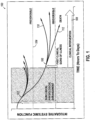
- Fig. 1 illustrates the typical timeline 100 of impairment of an integrative systemic function over development, detection and intervention of critical illness.
- the earliest period 102 of derangement is identified as subclinical because conventional clinical measures, static physiological measures (e.g., average heart rate), and aggregate-based risk scores are limited for detecting these signatures, for example because virtually all biosignals demonstrate non-linear properties. It is believed that many illnesses are entirely preventable if the systemic derangement can be identified before it crosses the preventable threshold 104.
- the period 106 when clinical signs of illness appear a patient may or may not be in a reversible condition. Some patients may receive intervention 108 in time to take a recovery path 110, others may not be recoverable and may die 112.
- WO 2013/003787 A2 describes a system and method for determining a patient's susceptibility to develop cardiorespiratory instability wherein physiological parameters are analyzed with respect to a dynamics systems model to produce and indicator associated with a probability that the patient will become unstable.
- US 2015/133795 A1 describes a system and method for the assessment of health and mortality based on dynamic nonlinear calculations of self-similar fluctuation patterns in a time series of QT intervals and of other physiological signals, such as RR intervals, temperature, blood pressure, respiration, saturation of peripheral oxygen, intracardiac pressures, and electroencephalogram.
- time series of QT intervals and of other physiological signals e.g.. RR intervals
- entropy values are calculated for each signal over the same temporal interval.
- EntropyX is calculated from relative changes between moments and entropy of QT intervals and those of other physiological signals over seconds to days. The absolute and relative entropy values at a specific time point and/or subsequent changes in entropy over future time points can be used to determine a treatment plan for the subject.
- the present invention provides, broadly, a method for assessing the likelihood of an individual for experiencing a condition (which may be an illness, an improvement from illness, or an improvement in athletic conditioning) by obtaining one or more time-varying signals from continuous monitoring of the individual or the individual's environment, processing the signals to develop signatures for those signals, and calculating an integrated likelihood of experiencing the condition which can be provided to an individual and/or a trainer, supervising authority, or health-care provider for the individual, and updated on a time schedule.
- a condition which may be an illness, an improvement from illness, or an improvement in athletic conditioning
- the integrated likelihood is computed by calculating a set of parameters from time-varying signals using linear and non-linear analyses of a signal and/or features derived from at least one of the signals, which may comprise one of many time-varying physiological and/or environmental signals.
- Candidate signals include electrocardiogram (ECG), electroencephalogram (EEG), electrooculogram (EOG), electromyogram (EMG), thoracic and/or abdominal excursions recorded by inductive plethysmography bands, recordings of nasopharyngeal airflow, pulse oximetry, intracardiac pressure, intracardiac electrogram (EGM), temperature, gauge and/or camera-sensed body position, sleep/activity monitor, acid/base monitoring, respiration, acceleration or ambulation monitor, ambient light exposure monitor, ambient sound exposure monitor, ambient temperature monitor, invasive and/or noninvasive blood pressure readings, glucose level monitor readings, hemoglobin oxygen saturation monitor readings, arterial blood oxygen and carbon dioxide partial pressure monitor readings, tissue hemoglobin oxygen saturation readings, nasopharyngeal airflow, and metabolic activity based on one or more of expired CO2 and inspired 02, respiration rate, respiration volume, and laboratory measurements such as plasma count and blood lipid density concentrations.
- ECG electrocardiogram
- EEG electroocul
- signals representing continuous monitoring over a time frame of minutes to days are processed to create an integrated likelihood measure which is updated on a time schedule.
- a profile of the individual comprising a composite of the individual's time-varying signatures and integrated likelihood of groups of individuals with similar time-varying signatures is created, stored, and used in the individual's subsequent treatment or training.
- the invention has found a particular correlation of signal variations during sleep onset or a sleep state transition to subsequent health outcomes and can therefore be an important addition to sleep assessment therapies.
- Development of signatures for such applications can involve comparison of signals from an individual in different sleep states or during progression between sleep states, and by comparison of signatures of a plurality of subjects diagnosed with a pathological condition such as heart failure to signatures of a plurality of normal subjects when monitored during sleep periods.
- the present invention relates generally to a method, system, computer program product and apparatus for individualized health evaluation, risk stratification and early identification of impending catastrophic or worsening illness or other adverse events, or alternatively for assessment of athletic condition and functional capacity, or assessment of health care quality, based on analysis of time-varying physiological signals using informatic methods.
- the informatic methods include control-theoretic, mechanistic model- and machine-learning based algorithm development and deployment in a device, apparatus or computing platform, linear and nonlinear analyses, utilizing hardware and software tools for data acquisition, storage, management and analysis of electronic health records (EHR), development of metadata standards, ontology, and annotation (data catalogs); data visualization; and predictive modeling.
- a method, system, computer program product and apparatus of an embodiment of the present invention may be implemented using hardware, software, algorithm, or a combination thereof, in one or more computer or other processing systems, in which high resolution time-varying physiological signals are obtained from an individual to mathematically characterize signatures of health and illness.
- implanting methods for the acquisition and analysis of high resolution signals are important for avoiding artifacts and markedly improve the accuracy and precision of signature characterization.
- signatures of certain illnesses are optimally detected through analyses of specific linear and non-linear characteristics, phase and time lags, temporal window lengths, degree of coupling between different physiological signals, and their changes over time. These signatures are determined from large databases of physiological time series obtained from representative individuals of health and illness, as well as from those obtained in real time.
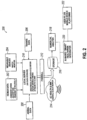
- the filtering process 524 and identification process 526 utilize learned characteristics 528 of noise or other "bad” data and characteristics 530 of "good” data (i.e., predictive data) for each individual and/or groups of individuals, developed through machine learning processes using the results of prior clinical outcomes and the patient's demographics and medical history information, to improve filtering of noise or data and selectivity of useful data.
- learned characteristics 528 of noise or other "bad” data and characteristics 530 of "good” data i.e., predictive data
- the relationship between two or more distinct physiological time series that are simultaneously acquired from the same individual will be analyzed using multiple univariate and cross-measures including but not limited to the domains of time (e.g., autocorrelation, cross-correlation and covariance), frequency (e.g., Fourier transform, Lomb periodogram, cross-spectra, coherence, transfer functions), wavelet (e.g., cross- wavelet transform), non-linear (e.g., cross-entropy), phase (e.g., Hilbert transform), information (Granger causality and mutual information), and other mathematical and statistical domains using traditional or novel analyses, transforms, estimators or other mathematical calculations.
- time e.g., autocorrelation, cross-correlation and covariance
- frequency e.g., Fourier transform, Lomb periodogram, cross-spectra, coherence, transfer functions
- wavelet e.g., cross- wavelet transform
- non-linear e.g., cross-entropy
- phase
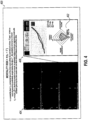
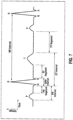
- Fig. 7 illustrates the sub-sections of an ECG waveform in order to demonstrate the extraction of features from cardiac electrical signals to determine cardiac electrophysiological dynamics (e.g., activation, repolarization, conduction, impedance, etc).
- cardiac electrophysiological dynamics e.g., activation, repolarization, conduction, impedance, etc.
- the dicrotic notch reflects vascular tone, i.e., higher arterial tone (lower compliance) can cause the notch to occur earlier and higher on the downward diastolic curve.
- the upward PPG slope (calculated by second derivative) can reflect the impact of aging or hypertension.
- the PPG also reflects venous congestion, e.g., larger peaks during diastole.
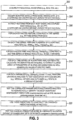
- Fig. 11 the most significant independent predictors of an individual's health, illness or response to treatment can be identified ( Fig. 11 , Step 1114) and then a personalized multivariate predictive model for groups of individuals, and or each individual, can be created and stored ( Fig. 11 , Step 1116).
- Figs. 10A - 10C the above may be repeated to extract a sequence of N time intervals from two or more distinct simultaneously measured physiological signals (e.g., ECG and PPG as shown in Fig. 10A ) and/or the same signal measured at different locations (e.g., PPG at different locations as seen in Fig. 10B ), each time interval determined from two consecutive beats using a peak, waveform shape detection and machine learning algorithms, with the start of one interval determined from a certain physiological signal and the end of that interval determined from another distinct signal (e.g., PPT determined from R wave of ECG to max positive slope of onset of PPG as seen in Fig. 10C ).
- PPT determined from R wave of ECG to max positive slope of onset of PPG as seen in Fig. 10C .
- Figs. 12A et seq. the use of entropy measurement in accordance with the present invention can be elaborated.
- turbulent flows give rise to some of the most complex signals (e.g., ocean waves, waterfalls). They manifest as spatio-temporal arrays, posing the most daunting challenges in physics and mathematics.
- this class of dynamics is linked to the key functional properties essential for life.
- the inventor herein introduced a powerful new strategy (EntropyX) to accurately measure the information entropy of physiological time series that will illuminate the subclinical pathophysiologic world within us, reported in the above-noted patent applications.
- FIG. 12B shows curves representing multivariate-adjusted hazard ratios (solid line) with 95% confidence intervals (dotted lines) based on restricted cubic splines with knots at the 5th, 35th, 65th, and 95th percentiles of EntropyX QT distribution.
- the reference value (hazard ratio 1) was set at 1.79, the 10th percentile of the EntropyX QT distribution.
- the net reclassification improvement is plotted for cases (cyan), non-cases (red), and overall (black).
- Adding EntropyX QT increased both sensitivity and specificity of an extensive set of conventional risk predictors, e.g., improved net reclassification for SCD by >35%.
- Fig. 12C presents the same data as Fig. 12B except EntropyX QT was added to Seattle Heart Failure risk score.
- EntropyX does not require equally sampled time intervals or extensive preprocessing of data. Unlike prior non-linear analyses (e.g., sample entropy, approximate entropy), EntropyX is insensitive to the degree of tolerance allowed for matching templates and outlying points (e.g., noise, ectopic beats). Unlike approximate entropy, frequency domain and geometric measures such as Poincaré plots, EntropyX produces consistent results in both short and long time series. Because EntropyX can be applied to all body signals, future studies can extend the ECG and PPG studied in this proposal to other body signals (e.g., electroencephalogram) as a potential conduit for continued discovery and refinement of the proposed PSG-based mortality risk prediction model.
- ECG and PPG studied in this proposal e.g., electroencephalogram
- ECG electrocardiographic
- PPG pulse oximetry photoplethysmographic
- Analysis of sleep data will proceed by calculating the large array of parameters (potential predictors) from the time course of 5-min binned analyses of each time series per feature extracted from each body signal.
- the MESA-sleep training set is ideal because these waveforms have been extensively screened and manually annotated.
- Nonlinear ECG analyses will be performed using EntropyX and DFA.
- the DFA offers distinct insight by measuring correlations within HRV.
- the correlations will be divided into short-term ( ⁇ 1 , range 4 ⁇ n ⁇ 16) and long-term ( ⁇ 2 , 16 ⁇ n ⁇ 64) fluctuations. For example, 0 ⁇ 0.5 indicates that a large value is followed by a small value and vice versa; and 0.5 ⁇ 1.0 indicates a large value is followed by a large value.
- An ⁇ of 0.5, 1.0, >1.0, or >1.5 indicates white noise, 1/ f noise, different types of noise, or brown noise (integral of white noise), respectively.
- EntropyX examines changes in patterns of variability such that the presence of more frequent and more similar patterns lead to lower EntropyX values.
- EntropyX exploits information in the ordering of the interval time series and quantifies the degree to which patterns of fluctuation repeat themselves. More self-similar fluctuations can imply an increased coupling of periodic processes among organ systems that typically are a signature of health, e.g., respiratory sinus arrhythmia.
- EntropyX we expect the refined analysis with EntropyX to reveal the subtle instabilities of electromechanical impulse propagation, repolarization/relaxation and coordination in the heart, along with the likelihood that a new, out-of-sync electromechanical signal will occur to trigger SCD or initiate contractile failure.
- the time course of the 5-min bin results for each calculated parameter will be quantified by absolute values and slopes around specific time points relative to the first onset of sleep.
- Our preliminary data suggest that analysis of time series data after alignment by the first onset of sleep in each individual is critical for revealing important associations with mortality risk.
- prior studies have not analyzed PSG time series data in this manner.
- the resulting large array of parameters will be correlated with sub-groups, including demographics (e.g., age, race, gender), risk factors (e.g., diabetes, body mass index, blood pressure), medications, lab values, serum inflammatory markers, sleep states (awake, REM, non-REM) and sleep characteristics (e.g., apnea, central arousals, time of night, duration of sleep).
- the described algorithms for ECG processing may also be adapted to the goal of eliminating the human interaction component of PPG analyses without compromising precision or accuracy.
- time and frequency domain analyses may be performed on the PPG waveforms.
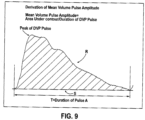
- the key features include amplitude (related to pulse pressure, stroke volume, vascular compliance), area, width (at the base and at 50% height), the maximum slope (related to ⁇ P/ ⁇ T) and minimum slope (related to speed of vessel relaxation and blood flow).
- the frequency domain e.g., Fourier transformation
- the PPG waveforms can be described as the sum of simpler underlying harmonics (sine and cosine waves).
- the PPG waveform is primarily composed of three physiologic metronomes, i.e., heart, lungs and autonomic nervous system.
- the preload information from venous modulation (a component known as DC divided by respiratory modulation) is related to stroke volume variation present in the cardiac portion (a component known as AC divided by stroke volume modulation), providing critical non-invasive insight into the Frank-Starling curve of each individual.
- DC divided by respiratory modulation a component known as DC divided by respiratory modulation
- AC divided by stroke volume modulation a component known as AC divided by stroke volume modulation
- the time course of each calculated parameter per 5-min bin will be numerically quantified at discrete time points in the periods before and after the first onset of sleep.
- the large resulting array of PPG values and slopes at discrete time points will be correlated with sub-groups.
- the most important independent predictors may be identified in the tens of thousands of parameters extracted from the time series of features of PPG, and ECG+PPG waveforms. Whereas conventional multivariate statistics preclude analysis of too many covariates (e.g., collinearity), hierarchical analysis using AI is well suited for this.
- Predictive models will be derived using a combination of conventional statistical (e.g., penalized logistic regression, proportional hazards) and progressive AI_(e.g., support vector machine (SVM), random forests (RF), classification and regression tree (CART), and supervised and unsupervised deep learning techniques. Combinations may be explored through forest trees to consistently identify the most important independent predictors.
- conventional statistical e.g., penalized logistic regression, proportional hazards
- progressive AI_ e.g., support vector machine (SVM), random forests (RF), classification and regression tree (CART), and supervised and unsupervised deep learning techniques. Combinations may be explored through forest trees to consistently identify the most important independent predictors.
- scores are assigned by dividing ⁇ -coefficients by the absolute value of the smallest coefficient in the model and rounding up to the nearest integer.
- the final risk integration index per person will be calculated by adding the point scores for all individual independent predictors.
- An optimal-performing risk index (CHAOS-sleep, Framingham risk score, or a multivariate model comprised of established risk predictors) will be determined by calculating risk discrimination and continuous net reclassification to assess improvement in predictive ability when adding these new risk indexes to conventional factors and predictors (e.g., age, gender, race, diabetes, coronary artery disease, renal function, sleep apnea, etc.).
- Model discrimination will be assessed by Harrell's C-index.
- An adjusted hazards ratio and measures of reclassification of 5- and 10- year risks can also be calculated to quantify the extent to which individuals are more appropriately classified into risk categories using CHAOS-sleep vs. model of established risk factors vs. the Framingham risk score.
- Reclassification tables can be constructed to examine movement of participants between three predicted 5- and 10- year risk categories [e.g., low ( ⁇ 5%); intermediate (5-10%); high ( ⁇ 10%)] when adding new risk indexes to established risk factors.
- model calibration will be assessed by visual inspection of observed vs. predicted risk and modified Hosmer-Lemeshow statistic.
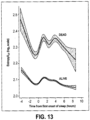
- Fig. 14 illustrates the time course of sympathovagal changes before and after first onset of sleep.
- the sympathovagal tone was much lower, along with a blunted sympathovagal response to the onset of sleep in those that died over follow up.
- EntropyX QT has proven important for SCD risk stratification in heart failure patients and predicted SCD in preliminary results in sleep study database. Even conventional HRV measures seem to have greater predictive value, especially at the onset of sleep in our preliminary data.
- HRV measures seem to have greater predictive value, especially at the onset of sleep in our preliminary data.
- Fig. 15 is an illustration of EntropyXQT calculations applied to fractionated lipoprotein measurements in a population of men and women, illustrating variance between those persons with and without diabetic symptoms.
- a data series was formed from each individual's lipid-density profile (graphing frequency vs. density from a blood sample); EntropyX QT measures were then computed on these series and the resulting entropy measure graphed vs. subject age for men 1502 and women 1504. While the series are different for each gender, each demonstrates a monotonic increase until approximately age 50, indicative of greater entropy in lipid density concentrations with increasing age. The reductions after age 50 are potentially indicative of selective mortality of patients showing the greatest entropy in lipid density concentrations. Further analysis has revealed a clear correlation of the entropy of lipid density concentration and the absence 1506 and presence 1508 of diabetes in men and women.
- Fig. 16 is an illustration of the efficacy of EntropyX QT ECG measurements on animal populations, showing similar results as in human studies. The data illustrated is from ECG waveforms of guinea pigs, separated into those subjects which survived 1602 and those which deceased 1604 during the experimental period. Again, the EntropyX QT measurement on ECG data demonstrates predictivity of animal mortality risk.
- Fig. 17 is an illustration of data produced in a multicenter prospective observational study of 851 heart failure patients showing EntropyX QT measurements taken of ventricular repolarization waveforms.
- the data show HF patients 1702 who died over follow up show a substantially greater entropy in this measure than those which survived 1074.
- EntropyX QT 1706 shows a strong positive and nearly linear correlation indicating prediction of SCD and mortality from this measure over the subsequent 21-69 months.
- signals may be gathered at cellular level such as to evaluate heart muscle response to electrical stimulation (time from signal to contraction), and this data processed as described above for predictivity of heath, athletic performance, illness or the like.
- Use cases for predictive systems according to the invention extend well outside hospitalization.
- critical waveform data gathered in an ambulance can be processed according to the invention, and the invention may be used in triage such as in a trauma center or emergency room, or in other first responder circumstances.
- analyses may be applied to triage patients in each step in inpatient and outpatient care, from intensive care units to hospital rooms, to rehabilitations facilities and then to home care.
- Home care and rehabilitation facilities may apply the invention to determining whether patients are improving or may need return to a higher level of care to avoid additional onset of illness.
- the present invention is also applicable beyond the provision of treatment to individuals or prediction of non-emergent illness.
- the present invention provides systems-based analytics for eliminating medical errors, preventable harm and missed diagnoses, thus achieving better clinical outcomes and reducing costs.
- healthcare services include numerous potential hazards and can cause preventable complications such as hospital-acquired infections, patient falls, missed billable diagnoses (e.g., paroxysmal atrial fibrillation), failure to follow evidence-based practices (e.g., medication reconciliation, prophylaxis), and poor communication among providers and patients.
- the present invention may be applied to enhance the extraction, representation and sharing of health data, patient preference elicitation and personalization of "generic" therapy plans, as well as assess adaptation of providers to care environments and available health expertise, and analysis of patterns in medication reconciliation based on comorbidities, providers and drug classes (including, e.g., appropriate use of antibiotics).
- the invention via integration of medical information from the outputs of multiple machines and technologies that monitor a patient's progress, provide evaluation of caregiver performance, as well as better accessibility of patients to medical information to improve the quality of care.
- Novel AI-based algorithms of the type described above may be leveraged to identify the sources of medical errors in order to systematically eliminate them and enhance clinical outcomes, deliver patient-centered care, improve patient/family participation, and foster a culture of collaboration, accountability and organizational learning.
- Analytics for enhancing training facilitated by the invention include the gathering of trainee performance data via virtual personal assistants, to permit identification of impending exhaustion/failure of trainees.
- the invention Leveraging innovative "deep" neural network algorithms for analyzing large datasets of performance evaluation patterns and outcomes of medical and allied health professional trainees, the invention may identify trainees that are excelling and importantly, those that may suffer setbacks and would benefit from closer monitoring and early interventi on/gui dance.
- the "big data” collected through the invention will serve as an important resource for creating and expanding training programs (e.g., T32, graduate curriculum), providing career development opportunities, generating research studies, securing external funding and facilitating development of new strategies for improving patient outcomes and efficient allocation of healthcare resources. Further, the data gathered will create an open-source, open-platform informatics and analytics infrastructure freely available to the broader academic research community for analyzing human biosignals before/during critical illness to gain rapid and unique insights where simulations alone cannot fully predict the real world and translating data science into personalized medicine.
- the invention is also applicable in facilitating the development and training of athletes and others for optimal exercise tolerance and performance.
- the invention facilitates the development of new AI-based methods for unraveling unique mechanistic and performance insights that otherwise are not available from conventional approaches. For example duration of activity or exercise or physiological signs during exercise may be used as input signals along with quantitative measures such as strength, sprint times, muscle twitch speed, along with qualitative health measures such as self-assessed or trainer-assessed fatigue and performance assessments, to evaluate training regimens and model ideal regimens for a particular individual or population.
Landscapes
- Engineering & Computer Science (AREA)
- Health & Medical Sciences (AREA)
- Medical Informatics (AREA)
- Public Health (AREA)
- Primary Health Care (AREA)
- Epidemiology (AREA)
- General Health & Medical Sciences (AREA)
- Biomedical Technology (AREA)
- Data Mining & Analysis (AREA)
- Databases & Information Systems (AREA)
- Pathology (AREA)
- Business, Economics & Management (AREA)
- General Business, Economics & Management (AREA)
- Nuclear Medicine, Radiotherapy & Molecular Imaging (AREA)
- Surgery (AREA)
- Urology & Nephrology (AREA)
- Chemical & Material Sciences (AREA)
- Bioinformatics & Cheminformatics (AREA)
- Medicinal Chemistry (AREA)
- Measuring And Recording Apparatus For Diagnosis (AREA)
- Investigating Or Analysing Biological Materials (AREA)
Claims (15)
- Procédé (300) mis en oeuvre par ordinateur pour évaluer la probabilité qu'un individu souffre d'un problème de santé, le procédé (300) comprenant :a. la fourniture (302) d'un ou plusieurs signaux variant dans le temps obtenus par la surveillance continue de l'individu ou de son environnement, les un ou plusieurs signaux variant dans le temps comprenant un ou plusieurs signaux physiologiques ;b. le traitement (306) des signaux pour développer des signatures pour ces signaux, les signatures étant déterminées sur la base de caractéristiques linéaires et non linéaires des signaux, de décalages de phase et de temps des signaux, de longueurs de fenêtres temporelles des signaux, du degré de couplage entre différents signaux physiologiques ;c. le calcul (320) d'une probabilité intégrée de souffrir du problème de santé sur la base des signatures développées ;d. la fourniture de la probabilité intégrée et/ou des signatures à l'individu et/ou à un prestataire d'entraînement ou de soins de santé pour l'individu ; ete. la mise à jour de la probabilité intégrée et/ou des signatures intégrées selon un horaire.
- Procédé (300) selon la revendication 1, dans lequel le calcul d'une probabilité intégrée comprend l'analyse dynamique non linéaire d'un signal non linéaire dérivé d'au moins un des signaux variant dans le temps après discernement de signaux de bonne foi du bruit et de données manquantes via un procédé d'intelligence artificielle.
- Procédé selon la revendication 1, dans lequel les signaux variant dans le temps comprennent des signaux physiologiques et/ou environnementaux continus variant dans le temps, et dans lequel les signatures sont des données de forme d'onde dérivées par télémétrie.
- Procédé (300) selon la revendication 3, dans lequel les signaux comprennent une sortie d'onde continue obtenue à partir d'au moins : un électrocardiogramme (ECG), un électroencéphalogramme (EEG), un électrooculogramme (EOG), un électromyogramme (EMG), des excursions thoraciques et/ou abdominales enregistrées par des bandes de pléthysmographie inductives ; des enregistrements de débit d'air nasopharyngé, d'oxymétrie de pouls, de pression intracardiaque, d'électrogramme endocavitaire (EGM), de température, de position du corps détectée par une jauge et/ou une caméra, un moniteur de sommeil/activité, une surveillance acide/basique, un moniteur de respiration, d'accélération ou de marche, un moniteur d'exposition à la lumière ambiante, un moniteur d'exposition au bruit ambiant, un moniteur de température ambiante, des lectures de pression artérielle invasives et/ou non invasives, un glucomètre, un moniteur de saturation en oxygène de l'hémoglobine, un moniteur de pression partielle d'oxygène et de dioxyde de carbone du sang artériel, un moniteur de saturation en oxygène de l'hémoglobine tissulaire, un débit d'air nasopharyngé, et un moniteur d'activité métabolique basé sur une ou plusieurs mesures de CO2 expiré, d'02 inspiré, de fréquence respiratoire, de volume respiratoire et de sang de laboratoire, comportant, sans s'y limiter, des mesures de numération plasmatique et de concentration de densité lipidique.
- Procédé (300) selon la revendication 1, dans lequel au moins un des signaux associés au problème de santé comprend en outre un rapport subjectif individuel, familial et/ou de prestataire de soins de santé d'un état relatif du problème de santé de l'individu.
- Procédé (300) selon la revendication 1, dans lequel les un ou plusieurs signaux comprennent au moins une signature subclinique.
- Procédé selon la revendication 1, dans lequel l'individu est asymptomatique pour le problème de santé.
- Procédé (300) selon la revendication 1, dans lequel les une ou plusieurs signatures sont dérivées d'une population d'individus manifestant le problème de santé ou de l'individu ou des deux.
- Procédé (300) selon la revendication 1, dans lequel les signaux représentent une surveillance continue sur une période de temps d'une heure à plusieurs jours, et dans lequel la probabilité et les signatures intégrées sont mises à jour selon un horaire de 1 à 30 minutes.
- Procédé (300) selon la revendication 1, comprenant en outre la création d'un profil de l'individu comprenant un composite des signatures variant dans le temps de l'individu et de la probabilité intégrée de groupes d'individus présentant des signatures similaires variant dans le temps, le stockage du profil de signature, et l'utilisation du profil de signature stocké lors du traitement ou de l'entraînement ultérieur de l'individu.
- Système (200) d'évaluation de la probabilité qu'un individu souffre d'un problème de santé selon l'une quelconque des revendications de procédé précédentes, le système (200) comprenant :a. un moyen de collecte de données (202) configuré pour fournir un ou plusieurs signaux variant dans le temps obtenus par la surveillance continue de l'individu ou de son environnement, les un ou plusieurs signaux variant dans le temps comprenant un ou plusieurs signaux physiologiques ;b. un serveur central (210) configuré pour recevoir les un ou plusieurs signaux variant dans le temps ;c. un ou plusieurs serveurs (214) couplés au serveur central (210) et configurés pour :dans lequel le serveur central (210) est configuré en outre pour fournir la probabilité et/ou les signatures intégrées à l'individu et/ou au prestataire d'entraînement ou de soins de santé pour l'individu, et mettre à jour la probabilité et/ou les signatures intégrées affichées selon un planning.traiter les un ou plusieurs signaux variant dans le temps pour développer des signatures pour ces signaux, les signatures étant déterminées en fonction de caractéristiques linéaires et non linéaires des signaux, de décalages de phase et de temps des signaux, de longueurs de fenêtres temporelles des signaux, du degré de couplage entre différents signaux physiologiques, etcalculer la probabilité intégrée de souffrir du problème de santé en fonction des signatures développées ;
- Procédé (300) selon la revendication 8, comprenant en outre :a. la collecte de signaux physiologiques variant dans le temps pour chaque individu de la population, dans lequel la population comprend des individus ayant subi un événement ou problème de santé prédictif et des individus qui n'ont pas subi l'événement ou le problème de santé prédictif ;b. le traitement des signaux physiologiques variant dans le temps pour produire des profils de signature pour chaque individu ;c. la comparaison des profils de signature des individus qui ont subi l'événement ou le problème de santé prédictif à des profils de signature des individus qui n'ont pas souffert de l'événement ou du problème de santé prédictif afin d'identifier un modèle corrélatif distinguant les profils de signature des individus qui ont souffert de l'événement ou du problème de santé et les individus qui n'ont pas souffert de l'événement ou du problème de santé ;d. le calcul de la probabilité intégrée de l'événement ou du problème de santé pour un candidat en collectant des signaux physiques variant dans le temps du candidat, traitant les signaux physiologiques variant dans le temps pour produire des profils de signature pour le candidat et identifiant que le modèle corrélatif apparaît ou non dans les profils de signature du candidat.
- Procédé (300) selon la revendication 12, dans lequel l'événement ou le problème de santé est la mortalité ou l'apparition de symptômes de maladie ou les deux.
- Procédé (300) selon la revendication 13, dans lequel le modèle corrélatif comprend au moins une variation de signal durant un début d'endormissement ou une transition de l'état de sommeil, une utilisation ou non-utilisation d'un médicament ou d'un produit pharmaceutique, une exposition ou non-exposition à une condition ou agent environnemental.
- Procédé (300) selon la revendication 13, dans lequel les signaux variant dans le temps comprennent une ou plusieurs signatures variant dans le temps non numérisées surveillées par télémétrie.
Applications Claiming Priority (2)
| Application Number | Priority Date | Filing Date | Title |
|---|---|---|---|
| US201762553490P | 2017-09-01 | 2017-09-01 | |
| PCT/US2018/049381 WO2019046854A1 (fr) | 2017-09-01 | 2018-09-04 | Système, procédé, produit-programme informatique et appareil permettant une surveillance prédictive dynamique dans une évaluation de santé critique et une étude des résultats/un score/(chaos) |
Publications (3)
| Publication Number | Publication Date |
|---|---|
| EP3676852A1 EP3676852A1 (fr) | 2020-07-08 |
| EP3676852B1 true EP3676852B1 (fr) | 2024-07-10 |
| EP3676852C0 EP3676852C0 (fr) | 2024-07-10 |
Family
ID=63794599
Family Applications (1)
| Application Number | Title | Priority Date | Filing Date |
|---|---|---|---|
| EP18783166.4A Active EP3676852B1 (fr) | 2017-09-01 | 2018-09-04 | Système, méthode, produit de programme d'ordinateur et appareil pour la surveillance prédictive dynamique dans l'évaluation de la santé critique et le score de l'étude des résultats (chaos) |
Country Status (2)
| Country | Link |
|---|---|
| EP (1) | EP3676852B1 (fr) |
| WO (1) | WO2019046854A1 (fr) |
Families Citing this family (33)
| Publication number | Priority date | Publication date | Assignee | Title |
|---|---|---|---|---|
| WO2016077786A1 (fr) * | 2014-11-14 | 2016-05-19 | Zoll Medical Corporation | Estimation d'évènement prémonitoire médical |
| CN112640000A (zh) * | 2018-08-22 | 2021-04-09 | 西门子医疗有限公司 | 根据医学数据对预测性数字孪生体模型的数据驱动的估计 |
| US11521743B2 (en) * | 2019-10-21 | 2022-12-06 | Tencent America LLC | Framework for performing electrocardiography analysis |
| WO2021122336A1 (fr) * | 2019-12-20 | 2021-06-24 | Sony Corporation | Appareil et procédé de génération de caractéristiques de niveau supérieur |
| CN113440144B (zh) * | 2020-03-26 | 2022-12-27 | 太原理工大学 | 一种使用卷积神经网络DenseNet检测早期心力衰竭的方法和装置 |
| RU2020113220A (ru) * | 2020-04-09 | 2021-10-11 | Общество с ограниченной ответственностью «Парма-Телеком» | Способ оценки рисков для здоровья человека |
| TWI784256B (zh) | 2020-04-10 | 2022-11-21 | 宏碁股份有限公司 | 分析心電圖訊號的方法 |
| CN111508585B (zh) * | 2020-04-24 | 2022-07-15 | 珠海格力电器股份有限公司 | 一种饮食推荐方法、装置、存储介质及系统 |
| CN111613331A (zh) * | 2020-05-21 | 2020-09-01 | 安徽理工大学 | 一种基于随机森林和word2vec的矿工营养代谢评估方法及系统 |
| CN111584088B (zh) * | 2020-06-15 | 2023-05-30 | 四川中电启明星信息技术有限公司 | 一种基于病源信息熵的电网施工人员高原病风险判断方法 |
| CN111933282A (zh) * | 2020-07-21 | 2020-11-13 | 北京东方兴企食品工业技术有限公司 | 亚临床风险评价装置、机器可读存储介质和处理器 |
| CN114073493B (zh) * | 2020-08-18 | 2023-12-29 | 华为终端有限公司 | 生理数据采集方法、装置及可穿戴设备 |
| EP4205142A1 (fr) * | 2020-08-28 | 2023-07-05 | Emerja Corporation | Systèmes et procédés de mesure, d'apprentissage et d'utilisation de propriétés émergentes de systèmes adaptatifs complexes |
| CN112216397A (zh) * | 2020-09-10 | 2021-01-12 | 广州呼吸健康研究院 | 一种新冠肺炎的预警方法和系统 |
| TWI849361B (zh) | 2020-12-03 | 2024-07-21 | 瑞士商諾華公司 | 實現跨不同資料庫的資料分析合作的平台及方法 |
| WO2022178022A1 (fr) * | 2021-02-16 | 2022-08-25 | Children's Hospital Medical Center | Métrique continue pour la mesure d'une interaction d'endotype et de corticostéroïdes dans un choc septique |
| WO2022232992A1 (fr) * | 2021-05-06 | 2022-11-10 | Huawei Technologies Co., Ltd. | Système et procédé permettant de déterminer un risque d'accident vasculaire cérébral pour une personne |
| US11955244B2 (en) | 2021-07-02 | 2024-04-09 | Optum Services (Ireland) Limited | Generating risk determination machine learning frameworks using per-horizon historical claim sets |
| WO2023026152A1 (fr) * | 2021-08-23 | 2023-03-02 | Analytics For Life, Inc. | Procédés et systèmes de modification de caractéristiques de spectre de puissance à partir de signaux biophysiques destinés à être utilisés dans la caractérisation de systèmes physiologiques |
| WO2023026153A1 (fr) * | 2021-08-23 | 2023-03-02 | Analytics For Life Inc. | Procédés et systèmes pour l'ingénierie de caractéristiques associées au rythme respiratoire à partir de signaux biophysiques destinés à être utilisés dans la caractérisation de systèmes physiologiques |
| CN114098655B (zh) * | 2022-01-25 | 2022-04-26 | 慕思健康睡眠股份有限公司 | 一种智能睡眠风险监测方法及系统 |
| CN114943680A (zh) * | 2022-02-07 | 2022-08-26 | 苏州佰睿昕智能科技有限公司 | 一种基于fNIRS的人体运动评估方法及系统 |
| CN115105028B (zh) * | 2022-07-05 | 2024-08-02 | 鹤壁市传染病医院(鹤壁市第三人民医院) | 一种用于休息状态下的血液采集系统及方法 |
| US20240099666A1 (en) * | 2022-09-27 | 2024-03-28 | Mayo Foundation For Medical Education And Research | Staging, Paging, and Engagement System for Real-Time Management for Patients at Risk for Cardiogenic Shock |
| CN115688186B (zh) * | 2023-01-03 | 2023-03-10 | 长春理工大学 | 一种基于数据分析的多模态睡眠质量分析系统及方法 |
| CN117493999B (zh) * | 2023-10-20 | 2024-08-16 | 北京航空航天大学杭州创新研究院 | 一种集成的康复下肢外骨骼脑电解码方法及系统 |
| CN117877763B (zh) * | 2024-03-11 | 2024-05-14 | 南昌大学第二附属医院 | 基于智能腕带的护理用通信系统及方法 |
| WO2025207295A1 (fr) * | 2024-03-26 | 2025-10-02 | Emerja Corporation | Système et procédé de triage automatisé sur la base de modèles de flux de chaleur |
| CN119257552B (zh) * | 2024-09-19 | 2026-01-02 | 上海酷潮科技股份有限公司 | 一种基于深度学习的睡眠质量分析系统 |
| CN119601208B (zh) * | 2024-11-11 | 2025-11-28 | 华中科技大学 | 一种基于临床指标的生物学年龄评估系统、构建方法及应用 |
| CN120036753B (zh) * | 2025-02-21 | 2025-11-14 | 松研科技(杭州)有限公司 | 一种基于身心健康分析的心率计算方法与监测传感装置 |
| CN120356673B (zh) * | 2025-06-23 | 2025-09-02 | 江西师范大学 | 一种青少年体质锻炼实时监测系统 |
| CN120376154B (zh) * | 2025-06-26 | 2026-01-06 | 福州市数字产业互联科技有限责任公司 | 一种基于深度情感神经网络的心理压力等级识别方法 |
Family Cites Families (2)
| Publication number | Priority date | Publication date | Assignee | Title |
|---|---|---|---|---|
| JP6067008B2 (ja) * | 2011-06-30 | 2017-01-25 | ユニヴァーシティ オヴ ピッツバーグ オヴ ザ コモンウェルス システム オヴ ハイアー エデュケーション | 心肺機能不全に対する易罹患性(susceptibility)を判断するシステム及び方法 |
| WO2013170251A2 (fr) | 2012-05-11 | 2013-11-14 | The Johns Hopkins University | Système et méthode pour la stratification du risque sur la base d'une analyse non linéaire dynamique et d'une comparaison de repolarisation cardiaque avec d'autres signaux physiologiques |
-
2018
- 2018-09-04 WO PCT/US2018/049381 patent/WO2019046854A1/fr not_active Ceased
- 2018-09-04 EP EP18783166.4A patent/EP3676852B1/fr active Active
Also Published As
| Publication number | Publication date |
|---|---|
| EP3676852A1 (fr) | 2020-07-08 |
| EP3676852C0 (fr) | 2024-07-10 |
| WO2019046854A9 (fr) | 2019-05-09 |
| WO2019046854A1 (fr) | 2019-03-07 |
Similar Documents
| Publication | Publication Date | Title |
|---|---|---|
| EP3676852B1 (fr) | Système, méthode, produit de programme d'ordinateur et appareil pour la surveillance prédictive dynamique dans l'évaluation de la santé critique et le score de l'étude des résultats (chaos) | |
| US20210272696A1 (en) | System, method computer program product and apparatus for dynamic predictive monitoring in the critical health assessment and outcomes study (chaos) | |
| Hussain et al. | Big-ECG: Cardiographic predictive cyber-physical system for stroke management | |
| US20230181121A1 (en) | Systems and methods to predict and manage post-surgical recovery | |
| US8388530B2 (en) | Personalized monitoring and healthcare information management using physiological basis functions | |
| US7801591B1 (en) | Digital healthcare information management | |
| US9785745B2 (en) | System and method for providing multi-organ variability decision support for extubation management | |
| CN112365978A (zh) | 心动过速事件早期风险评估的模型的建立方法及其装置 | |
| US20250322960A1 (en) | Apparatus, systems and methods for predicting, screening and monitoring of mortality and other conditions | |
| US20230071467A1 (en) | Method and System to Non-Invasively Assess Elevated Left Ventricular End-Diastolic Pressure | |
| Jain et al. | Enhanced cardiovascular diagnostics using wearable ECG and bioimpedance monitoring with LightGBM classifier | |
| Naghshvarianjahromi et al. | Natural brain-inspired intelligence for screening in healthcare applications | |
| Abirami | AI clinical decision support system (AI-CDSS) for cardiovascular diseases | |
| Li et al. | Assessment of firefighter-training effectiveness in China based on human-factor parameters and machine learning | |
| Torres et al. | Wearable System for Cardiac Diagnosis and Monitoring: Clustering Analysis and Usability Assessment Using Fractal Geometry | |
| Jung et al. | Monitoring senior wellness status using multimodal biosensors | |
| Karimi Moridani | An automated method for sleep apnoea detection using HRV | |
| Kataria et al. | Generalist vs Specialist Time Series Foundation Models: Investigating Potential Emergent Behaviors in Assessing Human Health Using PPG Signals | |
| Satyavathi et al. | Predictive Modelling Approach for Sleep Disorder using Sleep Health and Lifestyle Properties. | |
| Jafri | ARTIFICIAL INTELLIGENCE BASED PROGNOSIS OF CARDIOVASCULAR ABNORMALITY USING PHOTOPLETHYSMOGRAPHY (PPG) SENSORS IN SMART WATCHES | |
| Dai | Smart sensing and clinical predictions with wearables: from physiological signals to mental health | |
| Kanagaraj et al. | Stroke prediction using ML and IOT based wearable device | |
| Tomlinson | Non-invasive vital-sign monitoring and data fusion in acute care | |
| Sudhakar et al. | Predicting the Early Risk of Heart Disease using MABC with Self-Adaptive Bayesian Technique based on Lifestyle Factors | |
| Kareem | Atrial fibrillation detection service for stroke prevention |
Legal Events
| Date | Code | Title | Description |
|---|---|---|---|
| STAA | Information on the status of an ep patent application or granted ep patent |
Free format text: STATUS: UNKNOWN |
|
| STAA | Information on the status of an ep patent application or granted ep patent |
Free format text: STATUS: THE INTERNATIONAL PUBLICATION HAS BEEN MADE |
|
| PUAI | Public reference made under article 153(3) epc to a published international application that has entered the european phase |
Free format text: ORIGINAL CODE: 0009012 |
|
| STAA | Information on the status of an ep patent application or granted ep patent |
Free format text: STATUS: REQUEST FOR EXAMINATION WAS MADE |
|
| 17P | Request for examination filed |
Effective date: 20200401 |
|
| AK | Designated contracting states |
Kind code of ref document: A1 Designated state(s): AL AT BE BG CH CY CZ DE DK EE ES FI FR GB GR HR HU IE IS IT LI LT LU LV MC MK MT NL NO PL PT RO RS SE SI SK SM TR |
|
| AX | Request for extension of the european patent |
Extension state: BA ME |
|
| DAV | Request for validation of the european patent (deleted) | ||
| DAX | Request for extension of the european patent (deleted) | ||
| STAA | Information on the status of an ep patent application or granted ep patent |
Free format text: STATUS: EXAMINATION IS IN PROGRESS |
|
| 17Q | First examination report despatched |
Effective date: 20230309 |
|
| GRAP | Despatch of communication of intention to grant a patent |
Free format text: ORIGINAL CODE: EPIDOSNIGR1 |
|
| STAA | Information on the status of an ep patent application or granted ep patent |
Free format text: STATUS: GRANT OF PATENT IS INTENDED |
|
| INTG | Intention to grant announced |
Effective date: 20240131 |
|
| GRAS | Grant fee paid |
Free format text: ORIGINAL CODE: EPIDOSNIGR3 |
|
| GRAA | (expected) grant |
Free format text: ORIGINAL CODE: 0009210 |
|
| STAA | Information on the status of an ep patent application or granted ep patent |
Free format text: STATUS: THE PATENT HAS BEEN GRANTED |
|
| AK | Designated contracting states |
Kind code of ref document: B1 Designated state(s): AL AT BE BG CH CY CZ DE DK EE ES FI FR GB GR HR HU IE IS IT LI LT LU LV MC MK MT NL NO PL PT RO RS SE SI SK SM TR |
|
| REG | Reference to a national code |
Ref country code: CH Ref legal event code: EP |
|
| REG | Reference to a national code |
Ref country code: DE Ref legal event code: R096 Ref document number: 602018071606 Country of ref document: DE |
|
| U01 | Request for unitary effect filed |
Effective date: 20240710 |
|
| U07 | Unitary effect registered |
Designated state(s): AT BE BG DE DK EE FI FR IT LT LU LV MT NL PT SE SI Effective date: 20240821 |
|
| U20 | Renewal fee for the european patent with unitary effect paid |
Year of fee payment: 7 Effective date: 20240812 |
|
| PG25 | Lapsed in a contracting state [announced via postgrant information from national office to epo] |
Ref country code: NO Free format text: LAPSE BECAUSE OF FAILURE TO SUBMIT A TRANSLATION OF THE DESCRIPTION OR TO PAY THE FEE WITHIN THE PRESCRIBED TIME-LIMIT Effective date: 20241010 |
|
| PG25 | Lapsed in a contracting state [announced via postgrant information from national office to epo] |
Ref country code: GR Free format text: LAPSE BECAUSE OF FAILURE TO SUBMIT A TRANSLATION OF THE DESCRIPTION OR TO PAY THE FEE WITHIN THE PRESCRIBED TIME-LIMIT Effective date: 20241011 Ref country code: PL Free format text: LAPSE BECAUSE OF FAILURE TO SUBMIT A TRANSLATION OF THE DESCRIPTION OR TO PAY THE FEE WITHIN THE PRESCRIBED TIME-LIMIT Effective date: 20240710 |
|
| PG25 | Lapsed in a contracting state [announced via postgrant information from national office to epo] |
Ref country code: IS Free format text: LAPSE BECAUSE OF FAILURE TO SUBMIT A TRANSLATION OF THE DESCRIPTION OR TO PAY THE FEE WITHIN THE PRESCRIBED TIME-LIMIT Effective date: 20241110 |
|
| PG25 | Lapsed in a contracting state [announced via postgrant information from national office to epo] |
Ref country code: HR Free format text: LAPSE BECAUSE OF FAILURE TO SUBMIT A TRANSLATION OF THE DESCRIPTION OR TO PAY THE FEE WITHIN THE PRESCRIBED TIME-LIMIT Effective date: 20240710 |
|
| PG25 | Lapsed in a contracting state [announced via postgrant information from national office to epo] |
Ref country code: ES Free format text: LAPSE BECAUSE OF FAILURE TO SUBMIT A TRANSLATION OF THE DESCRIPTION OR TO PAY THE FEE WITHIN THE PRESCRIBED TIME-LIMIT Effective date: 20240710 Ref country code: RS Free format text: LAPSE BECAUSE OF FAILURE TO SUBMIT A TRANSLATION OF THE DESCRIPTION OR TO PAY THE FEE WITHIN THE PRESCRIBED TIME-LIMIT Effective date: 20241010 |
|
| PG25 | Lapsed in a contracting state [announced via postgrant information from national office to epo] |
Ref country code: RS Free format text: LAPSE BECAUSE OF FAILURE TO SUBMIT A TRANSLATION OF THE DESCRIPTION OR TO PAY THE FEE WITHIN THE PRESCRIBED TIME-LIMIT Effective date: 20241010 Ref country code: PL Free format text: LAPSE BECAUSE OF FAILURE TO SUBMIT A TRANSLATION OF THE DESCRIPTION OR TO PAY THE FEE WITHIN THE PRESCRIBED TIME-LIMIT Effective date: 20240710 Ref country code: NO Free format text: LAPSE BECAUSE OF FAILURE TO SUBMIT A TRANSLATION OF THE DESCRIPTION OR TO PAY THE FEE WITHIN THE PRESCRIBED TIME-LIMIT Effective date: 20241010 Ref country code: IS Free format text: LAPSE BECAUSE OF FAILURE TO SUBMIT A TRANSLATION OF THE DESCRIPTION OR TO PAY THE FEE WITHIN THE PRESCRIBED TIME-LIMIT Effective date: 20241110 Ref country code: HR Free format text: LAPSE BECAUSE OF FAILURE TO SUBMIT A TRANSLATION OF THE DESCRIPTION OR TO PAY THE FEE WITHIN THE PRESCRIBED TIME-LIMIT Effective date: 20240710 Ref country code: GR Free format text: LAPSE BECAUSE OF FAILURE TO SUBMIT A TRANSLATION OF THE DESCRIPTION OR TO PAY THE FEE WITHIN THE PRESCRIBED TIME-LIMIT Effective date: 20241011 Ref country code: ES Free format text: LAPSE BECAUSE OF FAILURE TO SUBMIT A TRANSLATION OF THE DESCRIPTION OR TO PAY THE FEE WITHIN THE PRESCRIBED TIME-LIMIT Effective date: 20240710 |
|
| PG25 | Lapsed in a contracting state [announced via postgrant information from national office to epo] |
Ref country code: SM Free format text: LAPSE BECAUSE OF FAILURE TO SUBMIT A TRANSLATION OF THE DESCRIPTION OR TO PAY THE FEE WITHIN THE PRESCRIBED TIME-LIMIT Effective date: 20240710 |
|
| PG25 | Lapsed in a contracting state [announced via postgrant information from national office to epo] |
Ref country code: MC Free format text: LAPSE BECAUSE OF FAILURE TO SUBMIT A TRANSLATION OF THE DESCRIPTION OR TO PAY THE FEE WITHIN THE PRESCRIBED TIME-LIMIT Effective date: 20240710 |
|
| PG25 | Lapsed in a contracting state [announced via postgrant information from national office to epo] |
Ref country code: CZ Free format text: LAPSE BECAUSE OF FAILURE TO SUBMIT A TRANSLATION OF THE DESCRIPTION OR TO PAY THE FEE WITHIN THE PRESCRIBED TIME-LIMIT Effective date: 20240710 |
|
| PG25 | Lapsed in a contracting state [announced via postgrant information from national office to epo] |
Ref country code: SK Free format text: LAPSE BECAUSE OF FAILURE TO SUBMIT A TRANSLATION OF THE DESCRIPTION OR TO PAY THE FEE WITHIN THE PRESCRIBED TIME-LIMIT Effective date: 20240710 |
|
| REG | Reference to a national code |
Ref country code: CH Ref legal event code: PL |
|
| PLBE | No opposition filed within time limit |
Free format text: ORIGINAL CODE: 0009261 |
|
| STAA | Information on the status of an ep patent application or granted ep patent |
Free format text: STATUS: NO OPPOSITION FILED WITHIN TIME LIMIT |
|
| 26N | No opposition filed |
Effective date: 20250411 |
|
| PG25 | Lapsed in a contracting state [announced via postgrant information from national office to epo] |
Ref country code: CH Free format text: LAPSE BECAUSE OF NON-PAYMENT OF DUE FEES Effective date: 20240930 |
|
| PG25 | Lapsed in a contracting state [announced via postgrant information from national office to epo] |
Ref country code: IE Free format text: LAPSE BECAUSE OF NON-PAYMENT OF DUE FEES Effective date: 20240904 |
|
| PG25 | Lapsed in a contracting state [announced via postgrant information from national office to epo] |
Ref country code: RO Free format text: LAPSE BECAUSE OF FAILURE TO SUBMIT A TRANSLATION OF THE DESCRIPTION OR TO PAY THE FEE WITHIN THE PRESCRIBED TIME-LIMIT Effective date: 20240710 |
|
| U21 | Renewal fee for the european patent with unitary effect paid with additional fee |
Year of fee payment: 8 Effective date: 20251126 |
|
| PGFP | Annual fee paid to national office [announced via postgrant information from national office to epo] |
Ref country code: GB Payment date: 20251127 Year of fee payment: 8 |
|
| PG25 | Lapsed in a contracting state [announced via postgrant information from national office to epo] |
Ref country code: CY Free format text: LAPSE BECAUSE OF FAILURE TO SUBMIT A TRANSLATION OF THE DESCRIPTION OR TO PAY THE FEE WITHIN THE PRESCRIBED TIME-LIMIT; INVALID AB INITIO Effective date: 20180904 |
|
| PG25 | Lapsed in a contracting state [announced via postgrant information from national office to epo] |
Ref country code: HU Free format text: LAPSE BECAUSE OF FAILURE TO SUBMIT A TRANSLATION OF THE DESCRIPTION OR TO PAY THE FEE WITHIN THE PRESCRIBED TIME-LIMIT; INVALID AB INITIO Effective date: 20180904 |