EP3677286B1 - Hämostatischer komplex und herstellungsverfahren dafür - Google Patents
Hämostatischer komplex und herstellungsverfahren dafür Download PDFInfo
- Publication number
- EP3677286B1 EP3677286B1 EP19822613.6A EP19822613A EP3677286B1 EP 3677286 B1 EP3677286 B1 EP 3677286B1 EP 19822613 A EP19822613 A EP 19822613A EP 3677286 B1 EP3677286 B1 EP 3677286B1
- Authority
- EP
- European Patent Office
- Prior art keywords
- molecular sieve
- fiber
- hemostatic
- precursor solution
- hemostatic compound
- Prior art date
- Legal status (The legal status is an assumption and is not a legal conclusion. Google has not performed a legal analysis and makes no representation as to the accuracy of the status listed.)
- Active
Links
Images




Classifications
-
- A—HUMAN NECESSITIES
- A61—MEDICAL OR VETERINARY SCIENCE; HYGIENE
- A61K—PREPARATIONS FOR MEDICAL, DENTAL OR TOILETRY PURPOSES
- A61K9/00—Medicinal preparations characterised by special physical form
- A61K9/70—Web, sheet or filament bases ; Films; Fibres of the matrix type containing drug
- A61K9/7007—Drug-containing films, membranes or sheets
-
- A—HUMAN NECESSITIES
- A61—MEDICAL OR VETERINARY SCIENCE; HYGIENE
- A61L—METHODS OR APPARATUS FOR STERILISING MATERIALS OR OBJECTS IN GENERAL; DISINFECTION, STERILISATION OR DEODORISATION OF AIR; CHEMICAL ASPECTS OF BANDAGES, DRESSINGS, ABSORBENT PADS OR SURGICAL ARTICLES; MATERIALS FOR BANDAGES, DRESSINGS, ABSORBENT PADS OR SURGICAL ARTICLES
- A61L15/00—Chemical aspects of, or use of materials for, bandages, dressings or absorbent pads
- A61L15/16—Bandages, dressings or absorbent pads for physiological fluids such as urine or blood, e.g. sanitary towels, tampons
- A61L15/18—Bandages, dressings or absorbent pads for physiological fluids such as urine or blood, e.g. sanitary towels, tampons containing inorganic materials
-
- A—HUMAN NECESSITIES
- A61—MEDICAL OR VETERINARY SCIENCE; HYGIENE
- A61F—FILTERS IMPLANTABLE INTO BLOOD VESSELS; PROSTHESES; DEVICES PROVIDING PATENCY TO, OR PREVENTING COLLAPSING OF, TUBULAR STRUCTURES OF THE BODY, e.g. STENTS; ORTHOPAEDIC, NURSING OR CONTRACEPTIVE DEVICES; FOMENTATION; TREATMENT OR PROTECTION OF EYES OR EARS; BANDAGES, DRESSINGS OR ABSORBENT PADS; FIRST-AID KITS
- A61F13/00—Bandages or dressings; Absorbent pads
- A61F13/00051—Accessories for dressings
- A61F13/00063—Accessories for dressings comprising medicaments or additives, e.g. odor control, PH control, debriding, antimicrobic
-
- A—HUMAN NECESSITIES
- A61—MEDICAL OR VETERINARY SCIENCE; HYGIENE
- A61F—FILTERS IMPLANTABLE INTO BLOOD VESSELS; PROSTHESES; DEVICES PROVIDING PATENCY TO, OR PREVENTING COLLAPSING OF, TUBULAR STRUCTURES OF THE BODY, e.g. STENTS; ORTHOPAEDIC, NURSING OR CONTRACEPTIVE DEVICES; FOMENTATION; TREATMENT OR PROTECTION OF EYES OR EARS; BANDAGES, DRESSINGS OR ABSORBENT PADS; FIRST-AID KITS
- A61F13/00—Bandages or dressings; Absorbent pads
- A61F13/14—Bandages or dressings; Absorbent pads specially adapted for the breast or abdomen
-
- A—HUMAN NECESSITIES
- A61—MEDICAL OR VETERINARY SCIENCE; HYGIENE
- A61K—PREPARATIONS FOR MEDICAL, DENTAL OR TOILETRY PURPOSES
- A61K45/00—Medicinal preparations containing active ingredients not provided for in groups A61K31/00 - A61K41/00
- A61K45/06—Mixtures of active ingredients without chemical characterisation, e.g. antiphlogistics and cardiaca
-
- A—HUMAN NECESSITIES
- A61—MEDICAL OR VETERINARY SCIENCE; HYGIENE
- A61K—PREPARATIONS FOR MEDICAL, DENTAL OR TOILETRY PURPOSES
- A61K9/00—Medicinal preparations characterised by special physical form
- A61K9/70—Web, sheet or filament bases ; Films; Fibres of the matrix type containing drug
-
- A—HUMAN NECESSITIES
- A61—MEDICAL OR VETERINARY SCIENCE; HYGIENE
- A61L—METHODS OR APPARATUS FOR STERILISING MATERIALS OR OBJECTS IN GENERAL; DISINFECTION, STERILISATION OR DEODORISATION OF AIR; CHEMICAL ASPECTS OF BANDAGES, DRESSINGS, ABSORBENT PADS OR SURGICAL ARTICLES; MATERIALS FOR BANDAGES, DRESSINGS, ABSORBENT PADS OR SURGICAL ARTICLES
- A61L15/00—Chemical aspects of, or use of materials for, bandages, dressings or absorbent pads
- A61L15/16—Bandages, dressings or absorbent pads for physiological fluids such as urine or blood, e.g. sanitary towels, tampons
- A61L15/42—Use of materials characterised by their function or physical properties
- A61L15/425—Porous materials, e.g. foams or sponges
-
- A—HUMAN NECESSITIES
- A61—MEDICAL OR VETERINARY SCIENCE; HYGIENE
- A61P—SPECIFIC THERAPEUTIC ACTIVITY OF CHEMICAL COMPOUNDS OR MEDICINAL PREPARATIONS
- A61P7/00—Drugs for disorders of the blood or the extracellular fluid
- A61P7/04—Antihaemorrhagics; Procoagulants; Haemostatic agents; Antifibrinolytic agents
-
- A—HUMAN NECESSITIES
- A61—MEDICAL OR VETERINARY SCIENCE; HYGIENE
- A61F—FILTERS IMPLANTABLE INTO BLOOD VESSELS; PROSTHESES; DEVICES PROVIDING PATENCY TO, OR PREVENTING COLLAPSING OF, TUBULAR STRUCTURES OF THE BODY, e.g. STENTS; ORTHOPAEDIC, NURSING OR CONTRACEPTIVE DEVICES; FOMENTATION; TREATMENT OR PROTECTION OF EYES OR EARS; BANDAGES, DRESSINGS OR ABSORBENT PADS; FIRST-AID KITS
- A61F13/00—Bandages or dressings; Absorbent pads
- A61F2013/00361—Plasters
- A61F2013/00365—Plasters use
- A61F2013/00463—Plasters use haemostatic
-
- A—HUMAN NECESSITIES
- A61—MEDICAL OR VETERINARY SCIENCE; HYGIENE
- A61L—METHODS OR APPARATUS FOR STERILISING MATERIALS OR OBJECTS IN GENERAL; DISINFECTION, STERILISATION OR DEODORISATION OF AIR; CHEMICAL ASPECTS OF BANDAGES, DRESSINGS, ABSORBENT PADS OR SURGICAL ARTICLES; MATERIALS FOR BANDAGES, DRESSINGS, ABSORBENT PADS OR SURGICAL ARTICLES
- A61L2300/00—Biologically active materials used in bandages, wound dressings, absorbent pads or medical devices
- A61L2300/40—Biologically active materials used in bandages, wound dressings, absorbent pads or medical devices characterised by a specific therapeutic activity or mode of action
- A61L2300/418—Agents promoting blood coagulation, blood-clotting agents, embolising agents
-
- A—HUMAN NECESSITIES
- A61—MEDICAL OR VETERINARY SCIENCE; HYGIENE
- A61L—METHODS OR APPARATUS FOR STERILISING MATERIALS OR OBJECTS IN GENERAL; DISINFECTION, STERILISATION OR DEODORISATION OF AIR; CHEMICAL ASPECTS OF BANDAGES, DRESSINGS, ABSORBENT PADS OR SURGICAL ARTICLES; MATERIALS FOR BANDAGES, DRESSINGS, ABSORBENT PADS OR SURGICAL ARTICLES
- A61L2400/00—Materials characterised by their function or physical properties
- A61L2400/04—Materials for stopping bleeding
-
- A—HUMAN NECESSITIES
- A61—MEDICAL OR VETERINARY SCIENCE; HYGIENE
- A61L—METHODS OR APPARATUS FOR STERILISING MATERIALS OR OBJECTS IN GENERAL; DISINFECTION, STERILISATION OR DEODORISATION OF AIR; CHEMICAL ASPECTS OF BANDAGES, DRESSINGS, ABSORBENT PADS OR SURGICAL ARTICLES; MATERIALS FOR BANDAGES, DRESSINGS, ABSORBENT PADS OR SURGICAL ARTICLES
- A61L2400/00—Materials characterised by their function or physical properties
- A61L2400/12—Nanosized materials, e.g. nanofibres, nanoparticles, nanowires, nanotubes; Nanostructured surfaces
Definitions
- the disclosure relates to the technical field of biomedical materials, and particularly relates to a hemostatic compound and a preparation method thereof.
- molecular sieves have good hemostatic effects, are suitable for emergency hemostasis, especially aortic bleeding, and are cheap, stable, and easy to carry.
- a substance with a regular microporous channel structure and a function of screening molecules is called molecular sieve.
- TO 4 tetrahedron T is selected from Si, Al, P, B, Ga, Ge, etc.
- TiO 4 , AlO 4 , PO 4 , BO 4 , GaO 4 , GeO 4 , etc. constituting the molecular sieve skeleton, which is bound by a common oxygen atom to form a three-dimensional network structure. This combination forms holes and pores with a molecular level and a uniform pore size.
- Skeleton T atoms usually refer to Si, Al or P atoms, and in a few cases to other atoms, such as B, Ga, Ge, etc.
- a zeolite is an aluminosilicate molecular sieve, which is an aluminosilicate with the ability of sieving molecules, adsorption, ion exchange, and catalysis.
- the general chemical composition of zeolite is: (M) 2/n O ⁇ xAl 2 O 3 ⁇ ySiO 2 ⁇ pH 2 O, M stands for metal ion (such as K + , Na + , Ca 2+ , Ba 2+ , etc.), n stands for valence of metal ion, and x stands for mole of Al 2 O 3 , Y represents the mole number of SiO 2 , and p represents the mole number of H 2 O.
- the molecular sieve may be X-type molecular sieve, Y-type molecular sieve, A-type molecular sieve, ZSM-5 molecular sieve, chabazite, beta molecular sieve, mordenite, L-type molecular sieve, P-type molecular sieve, merlinoite, AlPO4-5 molecular sieve, AlPO4-11 molecular sieve, SAPO-31 molecular sieve, SAPO-34 molecular sieve, SAPO-11 molecular sieve, BAC-1 molecular sieve, BAC-3 molecular sieve, or BAC-10 molecular sieve.
- molecular sieves rely on van der Waals forces during the adsorption process. The distance between molecules during the mutual attraction process is reduced, and the potential energy of the molecules is converted to internal energy to release energy. Therefore, the molecular sieve absorbs water and releases heat.
- molecular sieves mainly cover wounds in the form of granules or powder to stop bleeding, and the wounded may feel uncomfortable. Because the hemostatic material needs to completely cover the wound, powder and granular molecular sieves are used as hemostatic materials in very large amounts, which causes the molecular sieve to absorb a large amount of water and exotherm on the wound and easily burn the wound. During use, the molecular sieve will stick to the wound, which is very difficult to clean.
- the granular molecular sieve needs to be adhered by an adhesive so that the molecular sieve cannot contact the blood of the wound sufficiently, which affects the hemostatic effect of molecular sieve.
- the molecular sieve adhered on the wound has the risk of entering blood vessels or other tissues, and it is easy to remain in the lumen of the blood vessel to form a thrombus to block peripheral artery flow.
- Fiber has good physical properties such as flexibility, elasticity, strength, and weavability. It is one of the ideal choices for molecular sieve carriers.
- Inorganic fibers are mainly glass fibers, quartz glass fibers, carbon fibers, boron fibers, ceramic fibers, metal fibers, silicon carbide fibers, and the like.
- the surface compounds of some inorganic fibers can chemically react with molecular sieves, which can cause molecular sieves to bind to the surface of inorganic fibers.
- inorganic fibers are brittle, easy to break, and easy to wear, which makes them unsuitable as a flexible carrier for molecular sieves. Therefore, inorganic fibers are not within the scope of the fibers described in the present disclosure.
- the fibers in the present disclosure refer to organic fibers.
- the organic fibers can be divided into two categories: one is natural fiber, such as cotton, wool, silk, and hemp; the other is chemical fiber, which is made by chemical processing of natural or synthetic polymer compounds.
- chemical fiber can be divided into artificial fiber and synthetic fiber.
- Artificial fibers are divided into regenerated protein fibers, regenerated cellulose fibers, and cellulosic fibers.
- Synthetic fibers are divided into carbon chain fibers (the macromolecule main chain is composed of C-C) and heterochain fibers (the macromolecule main chain contains other elements, such as N, O, etc.).
- Carbon chain fibers include polyacrylonitrile fibers, polyvinyl acetal fibers, polyvinyl chloride fibers, fluorine-containing fibers and so on.
- Heterochain fibers include polyamide fibers, polyester fibers, polyurethane elastic fibers, polyurea fibers, polytoluene fibers, polyimide fibers, polyamide-polyhydrazine fibers, polybenzimidazole fibers, and so on.
- Adhesives are divided according to material source: (i) natural adhesives, including starch, protein, dextrin, animal gum, shellac, skin rubber, bone glue, natural rubber, rosin and other biological adhesives, and also include asphalt and other mineral adhesives; (ii) synthetic adhesives, mainly refers to synthetic substances, including inorganic binders such as silicate, phosphate; and epoxy resin, phenolic resin, urea resin, polyvinyl alcohol, polyurethane, polyetherimide, polyvinyl acetal, perchloroethylene resin and other resins; neoprene, nitrile rubber and other synthetic polymer compounds.
- natural adhesives including starch, protein, dextrin, animal gum, shellac, skin rubber, bone glue, natural rubber, rosin and other biological adhesives, and also include asphalt and other mineral adhesives
- synthetic adhesives mainly refers to synthetic substances, including inorganic binders such as silicate, phosphate; and epoxy resin, phenolic resin,
- water-soluble adhesives such as starch, dextrin, polyvinyl alcohol, carboxymethyl cellulose, etc.
- hot-melt adhesives such as polyurethane, polystyrene, polyacrylate, ethylene-vinyl acetate copolymer, etc.
- solvent-based adhesives such as shellac, butyl rubber, etc.
- emulsion adhesive mostly suspended in water, such as vinyl acetate resin, acrylic resin, chlorinated rubber, etc.
- solvent-free liquid adhesive which is a viscous liquid at normal temperature, such as epoxy resin, etc.
- raw materials (i) MS modified silane, the end of the modified silane polymer is methoxysilane; (ii) polyurethane, the full name of polyurethane is a collective name for macromolecular compounds containing repeating urethane groups on the main chain; (iii) silicones are commonly referred to as silicone oil or dimethyl silicone oil.
- the molecular formula is (CH 3 ) 3 SiO(CH 3 ) 2 SiO n Si(CH 3 ) 3 . It is a polymer of organic silicon oxide and a series of polydimethylsiloxanes with different molecular weight, of which viscosity increases with molecular weight.
- the paper discloses an adhesive-bonded A-type molecular sieve/wool fiber composite ( Applied Surface Science, 2013, 287 (18): 467-472 ).
- 3-mercaptopropyltrimethoxysilane is used as a binder, and the A-type molecular sieve is bonded to the surface of the wool fiber, and the content of the A-type molecular sieve on the fiber is 2.5% or less.
- the silane binder was added, agglomerated molecular sieves appeared on the surface of wool fibers, which was observed through scanning electron microscopy.
- the active silane binder caused agglomeration of molecular sieve particles.
- the agglomeration of molecular sieve particles will reduce the effective surface area of the molecular sieve and the ability of material exchange.
- the paper discloses an adhesive-bonded Na-LTAmolecular sieve/nanocellulose fiber composite ( ACS Appl. Mater. Interfaces 2016, 8, 3032-3040 ).
- nanocellulose fibers were immersed in a polydiallyl dimethyl ammonium chloride (polyDADMAC) aqueous solution at 60 °C for 30 minutes to achieve adsorption of LTA molecular sieves (polyDADMAC is an adhesvie).
- polyDADMAC polydiallyl dimethyl ammonium chloride
- the molecular sieve is unevenly distributed on the fiber surface, which is difficult to achieve equal content of molecular sieve on fiber surface.
- Coefficient of variance is also called the "standard deviation rate", which is the ratio of the standard deviation to the mean multiplied by 100%.
- Coefficient of variation is an absolute value that reflects the degree of dispersion of the data. The higher the coefficient of variation, the greater the degree of dispersion of the data, indicating that the content of molecular sieves varies widely across the fiber surface. From the scanning electron microscope, it can be observed that the Na-LTA molecular sieve does not form a binding interface with the fiber ( Figure 6 ), indicating that the bonding between the fiber and the molecular sieve is not strong, and the molecular sieve is easy to fall off the fiber surface.
- the paper discloses a Y-type molecular sieve/fiber composite bonded by an adhesive ( Advanced Materials, 2010, 13 (19): 1491-1495 ). Although molecular sieves can be attached to the surface of plant fibers by covalent bonds of the binder, the amount of adhesion is limited (all below 5 wt%). In this composite, 3-chloropropyltrimethoxysilane was used as a binder to modify the surface of the molecular sieve to make it adhere to cotton fibers.
- this technology modifies polyetherimide as a binder to the fiber surface, and then attaches 3-chloropropyltrimethoxysilane-modified molecular sieve to the binder-modified fiber.
- both the surface of the molecular sieve and the fiber interact with the binder, and the sandwich-like material is formed by the adhesive of the intermediate layer, which increases the cost of the synthesis process and reduces the effective surface area of the molecular sieve.
- the paper discloses a NaY-type molecular sieve/fiber composite bonded by a cationic and anionic polymer binder ( Microporous & Mesoporous Materials, 2011, 145 (1-3): 51-58 ).
- NaY molecular sieves are added to cellulose and polyvinyl alcohol amine solution, and then polyacrylamide polymer solution is added to form corresponding composite materials. Scanning electron microscopy can observe that there is no bond between NaY molecular sieve and fiber, and there is no force between them. It is just a simple physical combination of the two materials so that the molecular sieve can easily fall off the fiber ( Figure 7 ).
- US patent US7390452B2 discloses an electrospun mesoporous molecular sieve/fiber composite.
- Polyetherimide (PEI) methanol solution and mesoporous molecular sieve solution were electrospun to form a composite.
- No molecular sieve was apparently observed on the fiber surface from the scanning electron microscope ( Figure 9 ), which suggests most of the molecular sieve was present inside the fiber, and the internal molecular sieve was unable to exert its performance.
- Chinese patent CN1779004A discloses an antibacterial viscose fiber and its preparation method.
- the disclosure is prepared by blending and spinning a silver molecular sieve antibacterial agent and a cellulose sulfonate solution, and the silver molecular sieve antibacterial agent accounts for 0.5 to 5% of cellulose.
- the silver molecular sieve is dispersed in a cellulose sulfonate solution through a 0.01% MET dispersant, and spin-molded at a bath temperature of 49 °C. Most of the molecular sieve exists in the fiber, which easily blocks the molecular sieve channels, resulting in a small effective surface area.
- Chinese patent CN104888267A discloses a medical hemostatic spandex fiber and a preparation method thereof.
- the method for preparing medical hemostatic spandex fiber includes the following steps: (i) preparing a polyurethane urea stock solution; (ii) grinding the inorganic hemostatic powder and dispersant in a dimethylacetamide solvent to obtain a hemostatic solution; (iii) placing the polyurethane urea stock solution and hemostatic solution in a reaction container, and weaving them into a spandex fiber through a dry spinning process.
- the inorganic hemostatic powder is one or more of diatomite, montmorillonite, zeolite, bioglass and halloysite nanotubes. A large part of the inorganic hemostatic powder in the hemostatic spandex fiber is inside the fiber, which cannot fully contact with the blood and cannot exert its hemostatic effect. Although the amount of inorganic hemostatic powder is increased, the hemostatic effect is not good.
- the adhesive not only reduces the contact area of the clay material with the blood, but also has a weak binding strength between the clay material and the gauze fibers.
- the clay material on the gauze surface is still very easy to fall off the gauze fiber ( Figure 18 ).
- Clay retention rate on the gauze fiber is 10% or less under ultrasonic condition for 1 minute; clay retention rate on the gauze fiber is 5% or less under ultrasonic condition for 5 minutes ( Figure 19 ); clay retention rate on the gauze fiber is 5% or less under ultrasonic condition for 20 minutes.
- This defective structural form limits the hemostatic properties of the hemostatic product and risks causing sequelae or other side effects (such as thrombus).
- Dispersing molecular sieves (or inorganic hemostatic materials) on the fibers in a small size can solve the problem of molecular sieve materials sticking to the wound and the difficulty of cleaning up the wound to a certain extent, reduce the amount of molecular sieves, and dilute the exothermic effect caused by water absorption.
- the existing molecular sieves and fiber composites are used as hemostatic fabric materials, and the hemostatic composites prepared in the prior art have four structural forms: (1) physical mixing of molecular sieves and fibers; (2) aggregation of molecular sieves formed on the fiber surface; (3) molecular sieve and the fiber form a sandwich-like structure through an adhesive; (4) most of the molecular sieve is present inside the fiber and is not bound to the fiber surface.
- the composite materials of these four structural forms have poor dispersibility of the molecular sieve, small effective specific surface area, insufficient contact with blood during use, and poor hemostatic effect.
- the effective specific surface area of the molecular sieve in the molecular sieve and fiber hemostatic composite is smaller than the original effective specific surface area of the molecular sieve.
- molecular sieves easily fall off the fiber surface, and the retention rate of molecular sieves is low, and the hemostatic material easily loses the hemostatic effect. Some detached molecular sieves will stick to the wound and some will enter the blood circulation. Molecular sieves tend to remain in blood vessels, inducing the risk of thrombosis.
- silicate inorganic hemostatic materials e.g. clay
- the composite materials formed by inorganic hemostatic materials and fibers also have the above-mentioned four defective structural forms, which seriously affects the performance and safety of hemostatic materials.
- the prior art cannot achieve a strong binding between the molecular sieve (or inorganic hemostatic material) and the fiber, cannot prevent molecular sieve fall off, cannot achieve good dispersibility of molecular sieve on the fiber surface, and cannot remain effective specific surface area of molecular sieve and cannot possess excellent hemostatic function of molecular sieve and fiber composite.
- European Patent Specification No. EP 1 810 697 A2 discloses devices for the delivery of molecular sieve materials for the formation of blood clots.
- a method of fabricating a blood clotting apparatus comprises the steps of providing a cellulose-based substrate; providing a zeolite; incorporating at least one cationic species into a structure of the zeolite to impart a positive charge thereto; and impregnating the cellulose-based substrate with the zeolite.
- the first technical problem to be solved by the present disclosure is to provide a hemostatic compound with strong binding between molecular sieve and fiber, high hemostatic performance and high safety during the hemostatic process without adding an adhesive, and the molecular sieve in the hemostatic compound maintains the original large effective specific surface area and strong substance exchange capacity of pore.
- the present disclosure adopts the following technical solutions:
- the present disclosure provides a novel hemostatic material by a simple method.
- the hemostatic material is a hemostatic compound, which comprises a molecular sieve and a fiber, and the molecular sieve is distributed on the fiber surface and directly contacts the fiber surface.
- the particle diameter D90 of the molecular sieve is 0.01 to 50 ⁇ m, the particle diameter D50 of the molecular sieve is 0.005 to 30 ⁇ m.
- the adhesive content of the contact surface between the molecular sieve and the fiber is zero
- the surface of molecular sieve contacted with the fiber is inner surface, and the inner surface is a rough planar surface matched with the fiber surface, and growth-matched coupling is formed between the molecular sieve and the fiber on the inner surface of the molecular sieve
- the surface of molecular sieve uncontacted with the fiber is outer surface, and the outer surface is non-planar surface. Both the inner surface and outer surface are composed of molecular sieve nanoparticles.
- D50 refers to the particle size corresponding to the cumulative particle size distribution percentage of the molecular sieve microparticles on the surface of the hemostatic compound reaching 50%. Its physical meaning is that molecular sieve microparticles with a particle size larger than it account for 50%, and molecular sieve microparticles with a particle size smaller than it also account for 50%. D50 is also called median particle size, which can represent the average particle size of molecular sieve microparticles.
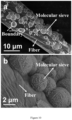
- the molecular sieve microparticle is the molecular sieve geometry with a certain shape and a size smaller than 50 ⁇ m, which retains the boundary ( Figure 10a ) of growth shape of the original molecular sieve.
- D90 refers to the particle size corresponding to the cumulative particle size distribution percentage of the molecular sieve microparticles on the surface of the hemostatic compound reaching 90%. Its physical meaning is that the molecular sieve microparticles with a particle size larger than it account for 10%, and the molecular sieve microparticles with a particle size smaller than it account for 90%.
- the growth-matched coupling is that the molecular sieve microparticles cooperate with the fiber surface to grow a tightly-coupled coupling interface with the fiber, as shown in Figure 11 , so that the molecular sieve has a strong binding strength with the fiber.
- the detection method for forming the growth-matched coupling is: the retention rate of the molecular sieve on the fiber is greater than or equal to 90% under ultrasonic condition for 20 minutes or more; preferably, the retention rate is greater than or equal to 95%; more preferably, the retention rate is 100%, that is, the molecular sieve has a strong binding strength with the fiber, and the molecular sieve does not easily fall off the fiber surface.
- the detection method for forming the growth-matched coupling is: the retention rate of the molecular sieve on the fiber is greater than or equal to 90% under ultrasonic condition for 40 minutes or more; preferably, the retention rate is greater than or equal to 95%; more preferably, the retention rate is 100%, that is, the molecular sieve has a strong binding strength with the fiber, and the molecular sieve does not easily fall off the fiber surface.
- the detection method for forming the growth-matched coupling is: the retention rate of the molecular sieve on the fiber is greater than or equal to 90% under ultrasonic condition for 60 minutes or more; preferably, the retention rate is greater than or equal to 95%; more preferably, the retention rate is 100%, that is, the molecular sieve has a strong binding strength with the fiber, and the molecular sieve does not easily fall off the fiber surface.
- the molecular sieve nanoparticles are particles formed by molecular sieve growing in a nanometer-scale size (2 to 500 nm).
- the average size of the molecular sieve nanoparticles of outer surface is larger than the average size of the molecular sieve nanoparticles of inner surface.
- the particle diameter D90 of the molecular sieve is 0.1 to 30 ⁇ m, and the particle diameter D50 of the molecular sieve is 0.05 to 15 ⁇ m; preferably, the particle diameter D90 of the molecular sieve is 0.5 to 20 ⁇ m, and the particle diameter D50 of the molecular sieve is 0.25 to 10 ⁇ m; preferably, the particle diameter D90 of the molecular sieve is 1 to 15 ⁇ m, and the particle diameter D50 of the molecular sieve is 0.5 to 8 ⁇ m; more preferably, the particle diameter D90 of the molecular sieve is 5 to 10 ⁇ m, and the particle diameter D50 of the molecular sieve is 2.5 to 5 ⁇ m.
- the molecular sieve nanoparticles of outer surface are particles with corner angles.
- the molecular sieve nanoparticles of inner surface are particles without corner angles.
- the nanoparticles without corner angles make the inner surface of the molecular sieve match the fiber surface better, which is beneficial to the combination of the molecular sieve and the fiber.
- the average size of the molecular sieve nanoparticles of inner surface is 2 to 100 nm; preferably, the average size of the molecular sieve nanoparticles of inner surface is 10 to 60 nm.
- the average size of the molecular sieve nanoparticles of outer surface is 50 to 500 nm; preferably, the average size of the molecular sieve nanoparticles of outer surface is 100 to 300 nm.
- the non-planar surface is composed of any one or combination of non-planar curves or non-planar lines.
- the non-planar surface is composed of non-planar curves.
- the non-planar surface is a spherical surface, and the spherical surface increases the effective area of contact with a substance.
- the spherical surface is made up of non-planar curves.
- the non-planar surface may be composed of non-planar curves and non-planar lines.
- the non-planar line may be a polygonal line.
- the molecular sieve is a mesoporous molecular sieve.
- the molecular sieve is independently dispersed on the fiber surface, that is, the molecular sieve does not aggregate on the fiber surface. And the molecular sieve is independently dispersed on the fiber surface so that the fiber maintains the original physical properties of flexibility and elasticity.
- the independent dispersion means that each molecular sieve microparticle has its own independent boundary; as shown in Figure 10a , the boundary of each molecular sieve microparticle is clearly visible.
- the aggregation of molecular sieves on the fiber surface refers to the partial or full overlap of the molecular sieve microparticles and their nearest neighbor molecular sieve microparticles in space; that is, the minimum distance between the molecular sieve microparticles is less than one half of the sum of the particle size of the two molecular sieve microparticles, as shown in Figure 20(1) , d ⁇ r 1 +r 2 .
- the independent dispersion means that the molecular sieve microparticles are dispersed on the fiber surface with a gap between each other, and the independent dispersion means the minimum distance between the molecular sieve microparticles and the nearest molecular sieve microparticles is greater than or equal to one half of the sum of the particle sizes of the two molecular sieve microparticles, as shown in Figure 20(2) , d ⁇ r 1 +r 2 , which indicates the boundary between the adjacent molecular sieve microparticles.
- the content of the molecular sieve accounts for 0.05 to 80 wt% of the hemostatic compound; preferably, the content of the molecular sieve accounts for 1 to 50 wt% of the hemostatic compound; preferably, the content of the molecular sieve accounts for 5 to 35 wt% of the hemostatic compound; preferably, the content of the molecular sieve accounts for 10 to 25 wt% of the hemostatic compound; more preferably, the content of the molecular sieve accounts for 15 to 20 wt% of the hemostatic compound.
- the molecular sieve is selected from any one or more of X-type molecular sieve, Y-type molecular sieve, A-type molecular sieve, ZSM-5 molecular sieve, chabazite, ⁇ -molecular sieve, mordenite, L-type molecular sieve, P-type molecular sieve, merlinoite, AlPO 4 -5 molecular sieve, AlPO 4 -11 molecular sieve, SAPO-31 molecular sieve, SAPO-34 molecular sieve, SAPO-11 molecular sieve, BAC-1 molecular sieve, BAC-3 molecular sieve, and BAC-10 molecular sieve.
- the molecular sieve is a molecular sieve after metal ion exchange.
- the metal ion is selected from any one or more of strontium ion, calcium ion, magnesium ion, silver ion, zinc ion, barium ion, potassium ion, ammonium ion, and copper ion.
- the fiber is a polymer containing hydroxyl groups in a repeating unit.
- the fiber is selected from any one or more of silk fiber, chitin fiber, rayon fiber, acetate fiber, carboxymethyl cellulose, bamboo fiber, cotton fiber, linen fiber, wool, wood fiber, lactide polymer fiber, glycolide polymer fiber, polyester fiber (abbreviated as PET), polyamide fiber (abbreviated as PA), polypropylene fiber (abbreviated as PP), polyethylene fiber (abbreviated as PE), polyvinyl chloride fiber (abbreviated as PVC), polyacrylonitrile fiber (abbreviated as acrylic fiber, artificial wool), and viscose fiber.
- the polyester fiber refers to a polyester obtained by polycondensation of a monomer having both a hydroxyl group and a carboxyl group, or a polyester obtained by polycondensation of an aliphatic dibasic acid and an aliphatic diol, or polyester or copolyester made from aliphatic lactone through ring-opening polymerization, and the molecular weight of the aliphatic polyester is 50,000 to 250,000.
- the polyester obtained by polycondensation of a monomer having both a hydroxyl group and a carboxyl group is a polylactic acid obtained by direct polycondensation of lactic acid;
- the polyester obtained by polycondensation of an aliphatic dibasic acid and an aliphatic diol is polybutylene succinate, polyhexanediol sebacate, polyethylene glycol succinate or polyhexyl succinate;
- polyester produced from ring-opening polymerization of aliphatic lactones is polylactic acid obtained by ring-opening polymerization of lactide, and polycaprolactone obtained by ring-opening polymerization of caprolactone;
- copolyester is poly(D,L-lactide-co-glycolide).
- the polyamide fiber refers to polyhexamethylene adipamide obtained by polycondensation of diamine and diacid, and the chemical structure formula of its long chain molecule is: H-[HN(CH 2 ) X NHCO(CH 2 ) Y CO]n-OH; or obtained by polycondensation or ring-opening polymerization of caprolactam, the chemical structural formula of its long chain molecule is: H-[NH(CH 2 ) X CO]n-OH.
- the hemostatic compound is prepared by an in-situ growth method.
- the in-situ growth method includes the following steps:
- the molecular sieve precursor solution does not include a templating agent.
- the temperature of the heat treatment is 60 to 220 °C, and the time of heat treatment is 4 to 240 h.
- mass ratio of the fiber to the molecular sieve precursor solution is 1:0.5 to 1: 1000; preferably, in the step (i), mass ratio of the fiber to the molecular sieve precursor solution is 1:0.8 to 1:100; preferably, in the step (i), mass ratio of the fiber to the molecular sieve precursor solution is 1:1 to 1:50; preferably, in the step (i), mass ratio of the fiber to the molecular sieve precursor solution is 1:1.5 to 1:20; preferably, in the step (i), mass ratio of the fiber to the molecular sieve precursor solution in is 1:2 to 1: 10; more preferably, in the step (i), mass ratio of the fiber to the molecular sieve precursor solution is 1:2 to 1:5.
- the second technical problem to be solved by the present disclosure is to provide a method for synthesizing a hemostatic compound by using fibers as a scaffold for nucleation and crystal growth of molecular sieve, and a new template-free in-situ growth method, without adding an adhesive.
- This method has the characteristics of low cost, simple process and environmental friendliness.
- the present disclosure adopts the following technical solutions:
- the present disclosure provides a preparation method for a hemostatic compound as described above, including the following steps:
- the molecular sieve precursor solution does not include a templating agent.
- the temperature of the heat treatment is 60 to 220 °C, and the time of heat treatment is 4 to 240 h.
- mass ratio of the fiber to the molecular sieve precursor solution is 1:0.5 to 1: 1000; preferably, in the step (i), mass ratio of the fiber to the molecular sieve precursor solution is 1:0.8 to 1:100; preferably, in the step (i), mass ratio of the fiber to the molecular sieve precursor solution is 1:1 to 1:50; preferably, in the step (i), mass ratio of the fiber to the molecular sieve precursor solution is 1:1.5 to 1:20; preferably, in the step (i), mass ratio of the fiber to the molecular sieve precursor solution in is 1:2 to 1: 10; more preferably, in the step (i), mass ratio of the fiber to the molecular sieve precursor solution is 1:2 to 1:5.
- the molecular sieve is a mesoporous molecular sieve.
- the adhesive content of the contact surface between the molecular sieve and the fiber is zero.
- the surface of molecular sieve contacted with the fiber is inner surface, and the inner surface is a rough planar surface matched with the fiber surface, and growth-matched coupling is formed between the molecular sieve and the fiber on the inner surface of the molecular sieve.
- the surface of molecular sieve uncontacted with the fiber is outer surface, and the outer surface is non-planar surface. Both the inner surface and outer surface are composed of molecular sieve nanoparticles.
- the detection method for forming the growth-matched coupling is: the retention rate of the molecular sieve on the fiber is greater than or equal to 90% under ultrasonic condition for 20 minutes or more; preferably, the retention rate is greater than or equal to 95%; more preferably, the retention rate is 100%, that is, the molecular sieve has a strong binding strength with the fiber, and the molecular sieve does not easily fall off the fiber surface.
- the detection method for forming the growth-matched coupling is: the retention rate of the molecular sieve on the fiber is greater than or equal to 90% under ultrasonic condition for 40 minutes or more; preferably, the retention rate is greater than or equal to 95%; more preferably, the retention rate is 100%, that is, the molecular sieve has a strong binding strength with the fiber, and the molecular sieve does not easily fall off the fiber surface.
- the detection method for forming the growth-matched coupling is: the retention rate of the molecular sieve on the fiber is greater than or equal to 90% under ultrasonic condition for 60 minutes or more; preferably, the retention rate is greater than or equal to 95%; more preferably, the retention rate is 100%, that is, the molecular sieve has a strong binding strength with the fiber, and the molecular sieve does not easily fall off the fiber surface.
- the molecular sieve nanoparticles are particles formed by molecular sieve growing in a nanometer-scale size (2 to 500 nm).
- the average size of the molecular sieve nanoparticles of outer surface is larger than the average size of the molecular sieve nanoparticles of inner surface.
- the particle diameter D90 of the molecular sieve is 0.1 to 30 ⁇ m, and the particle diameter D50 of the molecular sieve is 0.05 to 15 ⁇ m; preferably, the particle diameter D90 of the molecular sieve is 0.5 to 20 ⁇ m, and the particle diameter D50 of the molecular sieve is 0.25 to 10 ⁇ m; preferably, the particle diameter D90 of the molecular sieve is 1 to 15 ⁇ m, and the particle diameter D50 of the molecular sieve is 0.5 to 8 ⁇ m; more preferably, the particle diameter D90 of the molecular sieve is 5 to 10 ⁇ m, and the particle diameter D50 of the molecular sieve is 2.5 to 5 ⁇ m.
- the molecular sieve nanoparticles of outer surface are particles with corner angles.
- the molecular sieve nanoparticles of inner surface are particles without corner angles.
- the nanoparticles without corner angles make the inner surface of the molecular sieve match the fiber surface better, which is beneficial to the combination of the molecular sieve and the fiber.
- the average size of the molecular sieve nanoparticles of inner surface is 2 to 100 nm; preferably, the average size of the molecular sieve nanoparticles of inner surface is 10 to 60 nm.
- the average size of the molecular sieve nanoparticles of outer surface is 50 to 500 nm; preferably, the average size of the molecular sieve nanoparticles of outer surface is 100 to 300 nm.
- the non-planar surface is composed of any one or combination of non-planar curves or a non-planar lines.
- the non-planar surface is made up of non-planar curves.
- the non-planar surface is a spherical surface, and the spherical surface increases the effective area of contact with a substance.
- the spherical surface is made up of non-planar curves.
- the non-planar surface may be composed of non-planar curves and non-planar lines.
- the non-planar line may be a polygonal line.
- the content of the molecular sieve accounts for 0.05 to 80 wt% of the hemostatic compound; preferably, the content of the molecular sieve accounts for 1 to 50 wt% of the hemostatic compound; preferably, the content of the molecular sieve accounts for 5 to 35 wt% of the hemostatic compound; preferably, the content of the molecular sieve accounts for 10 to 25 wt% of the hemostatic compound; more preferably, the content of the molecular sieve accounts for 15 to 20 wt% of the hemostatic compound.
- the molecular sieve is selected from any one or more of X-type molecular sieve, Y-type molecular sieve, A-type molecular sieve, ZSM-5 molecular sieve, chabazite, ⁇ -molecular sieve, mordenite, L-type molecular sieve, P-type molecular sieve, merlinoite, AlPO 4 -5 molecular sieve, AlPO 4 -11 molecular sieve, SAPO-31 molecular sieve, SAPO-34 molecular sieve, SAPO-11 molecular sieve, BAC-1 molecular sieve, BAC-3 molecular sieve, and BAC-10 molecular sieve.
- the fiber is a polymer containing hydroxyl groups in a repeating unit.
- the fiber is selected from any one or more of silk fiber, chitin fiber, rayon fiber, acetate fiber, carboxymethyl cellulose, bamboo fiber, cotton fiber, linen fiber, wool, wood fiber, lactide polymer fiber, glycolide polymer fiber, polyester fiber (abbreviated as PET), polyamide fiber (abbreviated as PA), polypropylene fiber (abbreviated as PP), polyethylene fiber (abbreviated as PE), polyvinyl chloride fiber (abbreviated as PVC), polyacrylonitrile fiber (abbreviated as acrylic fiber, artificial wool), and viscose fiber.
- a third object of the present disclosure is to provide a composite material, the composite material comprising any one of the forms of hemostatic compound as described above or a hemostatic compound prepared by any of the forms of preparation methods as described above.
- the composite material is a hemostatic textile.
- the hemostatic textile is selected from any one or more of a hemostatic bandage, a hemostatic gauze, a hemostatic cloth, a hemostatic clothing, a hemostatic cotton, a hemostatic suture, a hemostatic paper, and a hemostatic band-aid.
- hemostatic clothing is a material worn on the human body for protection or decoration.
- hemostatic clothing is selected from any one or more of hemostatic underwear, hemostatic vest, hemostatic cap, and hemostatic pants.
- the " degree of ion exchange” is the ion exchange capacity of the compensation cations outside the molecular sieve framework and cations in the solution.
- the method for detecting the ion exchange capacity is: immersing hemostatic compounds in a 5M concentration strontium chloride, calcium chloride or magnesium chloride solution at room temperature for 12 hours to obtain a hemostatic compound after ion exchange, and measuring the degree of strontium ion, calcium ion or magnesium ion exchange of the molecular sieves of hemostatic compounds after ion exchange.
- Effective specific surface area of molecular sieve shows the specific surface area of the molecular sieve on the fiber surface in the hemostatic compound.
- Detection method of "content of molecular sieve on fiber surface” the mass fraction of molecular sieve on the fiber is analyzed using a thermogravimetric analyzer.
- the detection method of "uniform distribution of molecular sieves on the fiber surface” is: randomly taking n samples of the hemostatic compound at different locations and analyzing the content of the molecular sieve on the fiber surface, where n is a positive integer greater than or equal to 8.
- the coefficient of variance is also called the "standard deviation rate", which is the ratio of the standard deviation to the mean multiplied by 100%.
- the coefficient of variation is an absolute value that reflects the degree of dispersion of the data. The smaller the value of the coefficient of variation, the smaller the degree of dispersion of the data, indicating that the smaller the difference in the content of molecular sieves on the fiber surface, the more uniform the distribution of molecular sieves on the fiber surface.
- the coefficient of variation of the content of the molecular sieves in the n samples is ⁇ 15%, indicating that the molecular sieves are uniformly distributed on the fiber surface.
- the coefficient of variation of the content of the molecular sieves is ⁇ 10%, indicating that the molecular sieves are uniformly distributed on the fiber surface.
- the coefficient of variation of the content of the molecular sieves is ⁇ 5%, indicating that the molecular sieves are uniformly distributed on the fiber surface.
- the coefficient of variation of the content of the molecular sieves is ⁇ 2%, indicating that the molecular sieves are uniformly distributed on the fiber surface.
- the coefficient of variation of the content of the molecular sieves is ⁇ 1%, indicating that the molecular sieves are uniformly distributed on the fiber surface.
- the coefficient of variation of the content of the molecular sieves is ⁇ 0.5%, indicating that the molecular sieves are uniformly distributed on the fiber surface.
- the coefficient of variation of the content of the molecular sieves is ⁇ 0.2%, indicating that the molecular sieves are uniformly distributed on the fiber surface.
- the detection methods of D50 and D90 are: using scanning electron microscope to observe the molecular sieve microparticles on the surface of the hemostatic compound, and carrying out statistical analysis of particle size.
- D50 refers to the particle size corresponding to the cumulative particle size distribution percentage of the molecular sieve microparticles reaching 50%.
- D90 refers to the particle size corresponding to the cumulative particle size distribution percentage of the molecular sieve microparticles reaching 90%.
- the detection method of the binding strength between the molecular sieve and the fiber is: putting hemostatic compound in deionized water under ultrasonic condition for 20 min or more, and analyzing the content of the molecular sieve on the fiber surface by using a thermogravimetric analyzer.
- the retention rate on the fiber, the retention rate (content of the molecular sieve on the fiber surface before the ultrasound -content of the molecular sieve on the fiber surface after the ultrasound) ⁇ 100% / content of the molecular sieve on the fiber surface before the ultrasound. If the retention rate is greater than or equal to 90%, it indicates that molecular sieve and fiber form a growth-matched coupling, and molecular sieve is firmly bonded to fiber.
- Detection method of hemostatic function of hemostatic compound The hemostatic function of hemostatic compound is evaluated by using a rabbit femoral artery lethal model. The specific steps are as follows: (1) before the experiment, white rabbits were anesthetized with sodium pentobarbital intravenously (45 mg/kg); their limbs and head were fixed, and supine on the experimental table; part of the hair was removed to expose the right groin of the hind limb. (2) Then, the femoral skin and muscle were cut longitudinally to expose the femoral artery, and the femoral artery was partially cut off (about half of the circumference).
- the blood at the wound was cleaned with cotton gauze, and then the hemostatic compound was quickly pressed to the wound. After pressing for 60 seconds, the hemostatic compound is lifted up slightly every 10 seconds to observe the coagulation of the injured part and the coagulation time is recorded. Infrared thermometers are used to detect changes in wound temperature (before and after using hemostatic compound). (3) After hemostasis, observe the wound and suture the wound. The survival of the animals is observed for 2 hours after hemostasis.
- the survival rate (total number of experimental white rabbits-number of deaths of white rabbits observed for 2 hours after hemostasis) ⁇ 100% / total number of experimental white rabbits, wherein the number of experimental white rabbits in each group is n, n is a positive integer greater than or equal to 6. (4) The difference in weight of the hemostatic compound before and after use was recorded as the amount of blood loss during wound hemostasis.
- the preparation method of the Y-type molecular sieve/cotton fiber hemostatic compound of the present disclosure includes the following steps:
- the average content of molecular sieves on the fibers in the ten samples was 25 wt%, the standard deviation of the samples is 0.1 wt%, and the coefficient of variation is 0.4%, which indicates that the Y-type molecular sieve is uniformly distributed on the fiber surface.
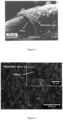
- the prepared Y-type molecular sieve/cotton fiber hemostatic compound was observed with a scanning electron microscope. Hemispherical molecular sieves with an average particle size of 5 ⁇ m are independently dispersed on the fiber surface, as shown in Figure 10 .
- the molecular sieves microparticles of the molecular sieve/fiber composite are observed with a scanning electron microscope, and are performed statistical analysis of particle size to obtain a particle diameter D90 value of 25 ⁇ m and a particle diameter D50 value of 5 ⁇ m.
- the molecular sieves are obtained after removing the fibers by calcination.
- the inner surface of the molecular sieves in contact with the fiber is planar surface (caused by tight binding with the fiber), and the outer surface is spherical surface.
- the planar surface of the inner surface of the molecular sieves is a rough surface, as shown in Figure 11 .
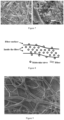
- the outer surface of the molecular sieve is composed of nanoparticles with corner angles, and the inner surface (the contact surface with the fiber) is composed of nanoparticles without corner angles ( Figure 12 ).
- the nanoparticles without corner angles make the inner surface of the molecular sieve match the fiber surface better, which is beneficial to the combination of the molecular sieve and the fiber.
- the average size of nanoparticles of the inner surface (61 nm) is significantly smaller than that of the outer surface (148nm), and small-sized particles are more conducive to binding with fibers tightly ( Figure 13 ).
- the detection method of the binding strength between the molecular sieve and the fiber the hemostatic compound is under ultrasonic condition in deionized water for 20 min, and the content of the Y-type molecular sieves on the fiber surface is analyzed by using a thermogravimetric analyzer. It is found that the content of the molecular sieve on the fiber surface is the same before and after ultrasonic condition. It shows that the retention rate of molecular sieve on the fiber is 100%, which indicates that the growth-matched coupling is formed between the molecular sieve and the fiber.
- the molecular sieve in the Y-type molecular sieve/cotton fiber hemostatic compound was analyzed by nitrogen isothermal adsorption and desorption, and a hysteresis loop was found in the isothermal adsorption curve, indicating that the molecular sieve has a mesoporous structure.
- the effective specific surface area of the molecular sieve in the Y-type molecular sieve/cotton fiber hemostatic compound prepared in this embodiment was measured to be 490 m 2 g -1 .
- the degree of calcium ion exchange is 99.9%
- the degree of magnesium ion exchange is 97%
- the degree of strontium ion exchange is 90%.
- the effective specific surface area of the Y-type molecular sieve was 490 m 2 g -1 , the degree of calcium ion exchange was 99.9%, the degree of magnesium ion exchange was 97%, and the degree of strontium ion exchange was 90%.
- the effective specific surface area and ion exchange capacity of the above Y-type molecular sieve are used as reference values to evaluate the performance of the molecular sieve to the fiber surface in the Comparative Examples described below.
- the difference between this Comparative Example 1 and Example 1 is that only the Y-type molecular sieve is synthesized without adding fibers (the traditional solution growth method).
- the synthesized molecular sieve is a complete microsphere composed of nanoparticles, and there is no rough planar surface (inner surface) in contact with the fibers compared with Example 1.
- Example 1 The difference between this Comparative Example and Example 1 is that only the Y-type molecular sieve is synthesized without adding fibers (the traditional solution growth method). Using a scanning electron microscope, the synthesized molecular sieve is a complete microsphere composed of nanoparticles, and there is no rough planar surface (inner surface) in contact with the fibers compared with Example 1. Therefore, there is no growth-matched coupling between the molecular sieve and the fiber surface ( Figure 15 ). The binding strength between the molecular sieve and the fiber was measured.
- the Y-type molecular sieve/cotton fiber hemostatic complex (impregnation method) was under the ultrasonic condition for 20 min, the retention rate of the molecular sieve on the fiber was 5%, indicating that the molecular sieve of Y-type molecular sieve/cotton fiber hemostatic complex (impregnation method) has a weak binding effect with the fiber, and the molecular sieve easily falls off ( Figure 15 ).
- Example 1 The difference between this Comparative Example and Example 1 is that the synthesized molecular sieve is sprayed onto cotton fibers. Using a scanning electron microscope, there is no rough planar surface (inner surface) in contact with the fibers compared with Example 1. Therefore, there is no growth-matched coupling between the molecular sieve and the fiber surface. The binding strength between the molecular sieve and the fiber was measured. The hemostatic complex was under the ultrasonic condition for 20 min, the retention rate of the molecular sieve on the fiber was 2%, indicating that the molecular sieve of Y-type molecular sieve/cotton fiber hemostatic complex (spray method) has a weak binding effect with the fiber, and the molecular sieve easily falls off.
- Example 1 The difference between this Comparative Example and Example 1 is that the synthesized molecular sieve is bonded to cotton fibers through an adhesive. After detection of scanning electron microscope, there is no rough planar surface (inner surface) in contact with the fiber, so there is no growth-matched coupling. The binding strength between the molecular sieve and the fiber was measured. The retention rate of the molecular sieve on the fiber was 50% under ultrasonic condition for 20 min, indicating that the molecular sieve has a weak binding strength with the fiber, and the molecular sieve in the Y-type molecular sieve/cotton fiber hemostatic complex (including adhesive 1) easily falls off.
- the molecular sieve After detection of scanning electron microscope, the molecular sieve was unevenly distributed on the fiber surface, and there was agglomeration of the molecular sieve. After testing, with the addition of adhesive, the effective specific surface area of the molecular sieve became 320 m 2 g -1 , the degree of calcium ion exchange became 75.9%, the degree of magnesium ion exchange became 57%, and the degree of strontium ion exchange became 50%.
- the complex material with added adhesive reduces the effective contact area between the molecular sieve and the reaction system, and reduces the ion exchange and pore substance exchange capacity of the molecular sieve.
- Ten samples of the prepared Y-type molecular sieve/cotton fiber hemostatic complex (including adhesive 1) were randomly taken at different locations, and the content of the Y-type molecular sieve on the fiber surface was analyzed.
- the average content of molecular sieves on the fibers in the ten samples was 25 wt%, the standard deviation of the samples is 10 wt%, and the coefficient of variation is 40%, which indicates that the Y-type molecular sieve is unevenly distributed on the fiber surface.
- Example 1 The difference between this Comparative Example and Example 1 is that the molecular sieves with an adhesive were sprayed onto cotton fibers. After detection of scanning electron microscope, there is no rough planar surface (inner surface) in contact with the fiber, so there is no growth-matched coupling. The binding strength between the molecular sieve and the fiber was measured. The retention rate of the molecular sieve on the fiber was 41% under ultrasonic condition for 20 min, indicating that the molecular sieve has a weak binding strength with the fiber, and the molecular sieve in the Y-type molecular sieve/cotton fiber hemostatic complex (including adhesive 2) easily falls off.
- the molecular sieve After detection of scanning electron microscope, the molecular sieve was unevenly distributed on the fiber surface, and there was agglomeration of the molecular sieve. After testing, with the addition of adhesive, the effective specific surface area of the molecular sieve became 256 m 2 g -1 , the degree of calcium ion exchange became 65.9%, the degree of magnesium ion exchange became 47%, and the degree of strontium ion exchange became 42%.
- the complex material with added adhesive reduces the effective contact area between the molecular sieve and the reaction system, and reduces the ion exchange and pore substance exchange capacity of the molecular sieve.
- Example 1 The difference between this Comparative Example and Example 1 is that the molecular sieves with a silica sol-based adhesive were coated on the cotton fibers. After detection of scanning electron microscope, there is no rough planar surface (inner surface) in contact with the fiber, so there is no growth-matched coupling. The binding strength between the molecular sieve and the fiber was measured. The retention rate of the molecular sieve on the fiber was 46% under ultrasonic condition for 20 min, indicating that the molecular sieve has a weak binding strength with the fiber, and the molecular sieve in the Y-type molecular sieve/cotton fiber hemostatic complex (including adhesive 3) easily falls off.
- the molecular sieve After detection of scanning electron microscope, the molecular sieve was unevenly distributed on the fiber surface, and there was agglomeration of the molecular sieve. After testing, with the addition of adhesive, the effective specific surface area of the molecular sieve became 246 m 2 g -1 , the degree of calcium ion exchange became 55.9%, the degree of magnesium ion exchange became 57%, and the degree of strontium ion exchange became 40%.
- the complex material with added adhesive reduces the effective contact area between the molecular sieve and the reaction system, and reduces the ion exchange and pore substance exchange capacity of the molecular sieve.
- the retention rate of the molecular sieve on the fiber was 63% under ultrasonic condition for 20 min, indicating that the molecular sieve has a weak binding strength with the fiber, and the molecular sieve in the Y-type molecular sieve/cotton fiber hemostatic complex (pretreatment of fiber) easily falls off.
- Example 1 The difference between this Comparative Example and Example 1 is that the Y-type molecular sieve is blended and spun into the fiber, and there is no growth-matched coupling, and the molecular sieve and the fiber are simply physically mixed.
- the effective specific surface area of the molecular sieve becomes 126 m 2 g -1
- the degree of calcium ion exchange becomes 45.9%
- the degree of magnesium ion exchange becomes 27%
- the degree of strontium ion exchange becomes 12%.
- the blend spinning method is used to prepare hemostatic complex, which greatly reduces the effective contact area between the effective molecular sieve and the reaction system, and reduces the ion exchange and pore substance exchange capacity of the molecular sieve.
- Example 1 The difference between this Comparative Example and Example 1 is that the Y-type molecular sieve is blended and spun into the fiber. After detection by a scanning electron microscope, molecular sieve and fiber were simply physically mixed, and there was no growth-matched coupling. After testing, this method makes the effective specific surface area of the molecular sieve become 126 m 2 g -1 , the degree of calcium ion exchange become 45.9%, the degree of magnesium ion exchange become 27%, and the degree of strontium ion exchange become 12%.
- the blend spinning method is used to prepare hemostatic complex, which greatly reduces the effective contact area between the effective molecular sieve and the reaction system, and reduces the ion exchange and pore substance exchange capacity of the molecular sieve.
- the difference between this Comparative Example and Example 1 is that the content of the Y-type molecular sieves is different.
- the content of the Y-type molecular sieves of this Comparative Example is greater than 80 wt%.
- the molecular sieves are clumped and wrapped on the fiber surface.
- the molecular sieves are not independently dispersed on the fiber surface, resulting in fiber stiffening.
- the agglomeration of molecular sieves makes the effective specific surface area of the molecular sieve become 346 m 2 g -1 , the degree of calcium ion exchange become 53%, the degree of magnesium ion exchange become 52%, and the degree of strontium ion exchange become 42%. Both the effective specific surface area and ion exchange capacity are significantly reduced.
- the preparation method of the chabazite/cotton fiber hemostatic compound of the present disclosure includes the following steps:
- the preparation method of the X-type molecular sieve/silk fiber hemostatic compound of the present disclosure includes the following steps:
- Eight samples of the prepared X-type molecular sieve/silk fiber hemostatic compound were randomly taken at different locations, and the content of the X-type molecular sieve on the fiber surface was analyzed.
- the average content of molecular sieves on the fibers in the eight samples was 15 wt%, the standard deviation of the samples is 1.5 wt%, and the coefficient of variation is 10%, which indicates that the X-type molecular sieve is uniformly distributed on the fiber surface.
- the preparation method of the A-type molecular sieve/polyester fiber hemostatic compound of the present disclosure includes the following steps:
- the preparation method of the ZSM-5 molecular sieve/polypropylene fiber hemostatic compound of the present disclosure includes the following steps:
- the preparation method of the ⁇ -molecular sieve/rayon fiber hemostatic compound of the present disclosure includes the following steps:
- Eight samples of the prepared ⁇ -molecular sieve/rayon fiber hemostatic compound were randomly taken at different locations, and the content of the ⁇ -molecular sieve on the fiber surface was analyzed.
- the average content of molecular sieves on the fibers in the eight samples was 25 wt%, the standard deviation of the samples is 2 wt%, and the coefficient of variation is 8%, which indicates that the ⁇ -molecular sieve is uniformly distributed on the fiber surface.
- the preparation method of the mordenite/acetate fiber hemostatic compound of the present disclosure includes the following steps:
- the preparation method of the L-type molecular sieve/carboxymethyl cellulose hemostatic compound of the present disclosure includes the following steps:
- the preparation method of the P-type molecular sieve/bamboo fiber hemostatic compound of the present disclosure includes the following steps:
- the preparation method of the merlinoite/linen fiber hemostatic compound of the present disclosure includes the following steps:
- the preparation method of the X-type molecular sieve/wool hemostatic compound of the present disclosure includes the following steps:
- the preparation method of the X-type molecular sieve/wood fiber hemostatic compound of the present disclosure includes the following steps:
- the preparation method of the X-type molecular sieve/lactide polymer fiber hemostatic compound of the present disclosure includes the following steps:
- the preparation method of the X-type molecular sieve/glycolide polymer fiber hemostatic compound of the present disclosure includes the following steps:
- the preparation method of the X-type molecular sieve/polylactide-glycolide polymer fiber hemostatic compound of the present disclosure includes the following steps:
- the preparation method of the X-type molecular sieve/polyamide fiber hemostatic compound of the present disclosure includes the following steps:
- the preparation method of the X-type molecular sieve/rayon-polyester fiber hemostatic compound of the present disclosure includes the following steps:
- Eight samples of the prepared X-type molecular sieve/rayon-polyester fiber hemostatic compound were randomly taken at different locations, and the content of the X-type molecular sieve on the fiber surface was analyzed.
- the average content of molecular sieves on the fibers in the eight samples was 5 wt%, the standard deviation of the samples is 0.05 wt%, and the coefficient of variation is 1%, which indicates that the X-type molecular sieve is uniformly distributed on the fiber surface.
- the preparation method of the X-type molecular sieve/chitin fiber hemostatic compound of the present disclosure includes the following steps:
- the preparation method of the AlPO 4 -5 molecular sieve/polyethylene fiber hemostatic compound of the present disclosure includes the following steps:
- the preparation method of the AlPO 4 -11 molecular sieve/polyvinyl chloride fiber hemostatic compound of the present disclosure includes the following steps:
- the preparation method of the SAPO-31 molecular sieve/polyacrylonitrile fiber hemostatic compound of the present disclosure includes the following steps:
- the preparation method of the SAPO-34 molecular sieve/viscose fiber hemostatic compound of the present disclosure includes the following steps:
- the preparation method of the SAPO-11 molecular sieve/chitin fiber hemostatic compound of the present disclosure includes the following steps:
- the preparation method of the BAC-1 molecular sieve/chitin fiber hemostatic compound of the present disclosure includes the following steps:
- the preparation method of the BAC-3 molecular sieve/chitin fiber hemostatic compound of the present disclosure includes the following steps:
- the preparation method of the BAC-10 molecular sieve/chitin fiber hemostatic compound of the present disclosure includes the following steps:
- the commercial Combat Gauze is an inorganic hemostatic material (clay, kaolin) attached to the fiber surface. Observed from the scanning electron microscope, the inorganic hemostatic material is unevenly distributed on the fiber surface, as shown in Figure 17 , and the material is not bonded to the fiber surface, and it is easy to fall off from the fiber surface.
- Clay retention rate on the gauze fiber is 10% or less under ultrasonic condition for 1 min; clay retention rate on the gauze fiber is 5% or less under ultrasonic condition for 5 min ( Figure 18 ); clay retention rate on the gauze fiber is 5% or less under ultrasonic condition for 20 min. This defective structural form limits the hemostatic properties of the hemostatic product and risks causing sequelae or other side effects.
- the certain size of the molecular sieve in the hemostatic compound can promote the uniform distribution of the molecular sieve on the fiber surface.
- the size of the molecular sieve and the average particle diameters of the inner and outer surface nanoparticles in the synthetic hemostatic compound of Examples 1-26 are shown in Table 1, according to the observation of the scanning electron microscope.
- the synthetic hemostatic compounds of Examples 1-26 were ultrasonicated in deionized water for 20, 40, 60, and 80 minutes, respectively. After ultrasonic testing, the retention rates of the molecular sieve on the fibers are shown in Table 2.
- Example 11 Combat Gauze (Clay/fiber hemostatic complex) 7.5 min No 12.7 ⁇ 0.8 Tailored for wound size and practical needs Part of the clay falls off the fibers. Due to the large amount of bleeding, a large area of blood clot is formed on the wound surface, which adheres to the wound surface and is easy to rebleed when cleared. A large blood clot forms on the wound surface, making it difficult to observe the actual blood vessel healing 40%
- Examples 1-26 list the molecular sieve/fiber hemostatic compounds with different molecular sieves and different fibers, and the inner surface of the molecular sieve of the molecular sieve/fiber hemostatic compounds of Examples 1-26 in contact with the fibers is a rough planar surface matched with the fiber surface.
- the retention rate of molecular sieves is ⁇ 90%, indicating that a growth-matched coupling is formed between the molecular sieve and the fiber.
- the molecular sieve is firmly bonded to the fiber.
- the adhesive content of the contact surface between the molecular sieve and the fiber is zero in Examples 1-26 of the present disclosure, and the degree of calcium ion exchange of the molecular sieve is ⁇ 90%, the degree of magnesium ion exchange is ⁇ 75%, and the degree of strontium ion exchange is ⁇ 70%. It overcomes the defects of high synthetic cost, low effective surface area, and clogging of molecular sieve channels, which exists on the fibers through the adhesive.
- the molecular sieve/fiber hemostatic compound has a reduced amount of molecular sieve compared to the molecular sieve granules, the hemostatic effect of the molecular sieve/fiber hemostatic compound is better than the commercial molecular sieve granules (Quikclot), which further solves the problem of water absorption and heat release.
- the molecular sieve of the present disclosure is uniformly distributed on the fiber surface with a certain size, and a growth-matched coupling is formed between the molecular sieve and the fiber.
- the molecular sieve has a strong binding strength with the fiber.
- the molecular sieve has a high effective specific surface area and substance exchange capacity on the fiber surface.
- the hemostatic effect of hemostatic compounds is superior to that of composite materials with weak binding strength between molecular sieves and fiber or low effective specific surface area or low material exchange capacity in the prior art.
- the hemostatic compounds have a short hemostatic time, low blood loss, and high survival rate in the rabbit femoral artery lethal model, and the molecular sieve/fiber compounds are safe during hemostatic process.
- the hemostatic compounds also have the following advantages: (i) the wound surface after hemostasis is easy to clean up and convenient for post-processing by professionals; (ii) hemostatic compounds can be tailored for wound size and practical needs; (iii) the wound after hemostasis is dry and heals well after treated with the hemostatic compounds.
Landscapes
- Health & Medical Sciences (AREA)
- Chemical & Material Sciences (AREA)
- General Health & Medical Sciences (AREA)
- Life Sciences & Earth Sciences (AREA)
- Animal Behavior & Ethology (AREA)
- Public Health (AREA)
- Veterinary Medicine (AREA)
- Engineering & Computer Science (AREA)
- Medicinal Chemistry (AREA)
- Epidemiology (AREA)
- Pharmacology & Pharmacy (AREA)
- Bioinformatics & Cheminformatics (AREA)
- Hematology (AREA)
- Materials Engineering (AREA)
- Biomedical Technology (AREA)
- Vascular Medicine (AREA)
- Heart & Thoracic Surgery (AREA)
- General Chemical & Material Sciences (AREA)
- Nuclear Medicine, Radiotherapy & Molecular Imaging (AREA)
- Organic Chemistry (AREA)
- Chemical Kinetics & Catalysis (AREA)
- Diabetes (AREA)
- Inorganic Chemistry (AREA)
- Dispersion Chemistry (AREA)
- Chemical Or Physical Treatment Of Fibers (AREA)
- Materials For Medical Uses (AREA)
- Silicates, Zeolites, And Molecular Sieves (AREA)
- Pharmaceuticals Containing Other Organic And Inorganic Compounds (AREA)
Claims (15)
- Hämostatische Verbindung, umfassend Molekularsiebe und eine Faser, wobei die Molekularsiebe unabhängig voneinander auf einer Faseroberfläche der Faser ohne Agglomeration dispergiert sind und die Faseroberfläche direkt kontaktieren;wobei der Klebstoffgehalt der Kontaktfläche zwischen dem Molekularsieb und der Faser Null ist;wobei eine erste Oberfläche des Molekularsiebs, die mit der Faser in Kontakt ist, als eine innere Oberfläche definiert ist und die innere Oberfläche eine raue ebene Oberfläche ist; und wobei eine zweite Oberfläche des Molekularsiebs, die nicht mit der Faser in Kontakt ist, als eine äußere Oberfläche definiert ist und die äußere Oberfläche eine nicht ebene Oberfläche ist;wobei das Molekularsieb eine wachstumsangepasste Kopplung mit der Faser auf der inneren Oberfläche bildet, und wobei die wachstumsangepasste Kopplung sich darauf bezieht, dass eine Vielzahl von Molekularsieb-Mikropartikeln so wachsen, dass sie mit der Faseroberfläche übereinstimmen, um eine eng gekoppelte Kopplungsschnittstelle zu bilden, die mit der Faseroberfläche übereinstimmt; wobei die innere Oberfläche eine planare Oberfläche ist, die mit der Faseroberfläche übereinstimmt;wobei eine erste Partikelgröße D90 der Molekularsieb-Mikropartikeln 0,01 bis 50 pm beträgt und eine zweite Partikelgröße D50 der MOlekularsieb-Mikropartikeln 0,005 bis 30 pm beträgt; wobei sowohl die innere Oberfläche als auch die äußere Oberfläche aus Molekularsieb-Nanopartikeln bestehen.
- Hämostatische Verbindung nach Anspruch 1, wobei die nicht ebene Oberfläche aus einer beliebigen Kombination von nicht ebenen Kurven oder nicht ebenen Linien besteht; wobei vorzugsweise die nicht ebene Oberfläche eine Kugeloberfläche ist.
- Hämostatische Verbindung nach Anspruch 1, wobei jedes der unabhängig voneinander auf der Faseroberfläche dispergierten Molekularsiebe eine Grenze aufweist.
- Hämostatische Verbindung nach Anspruch 1, wobei ein Nachweisverfahren zur Bildung einer wachstumsangepassten Kopplung unter den folgenden Bedingungen durchgeführt wird:
eine Retentionsrate des Molekularsiebs auf der Faser größer oder gleich 90% unter einer Ultraschallbedingung für 20 Minuten oder mehr ist, wobei optional die Retentionsrate des Molekularsiebs auf der Faser größer oder gleich 90% unter einer Ultraschallbedingung für 40 Minuten oder mehr ist, wobei die Retentionsrate vorzugsweise > 95% ist; und wobei die Retentionsrate noch bevorzugter100% ist. - Hämostatische Verbindung nach Anspruch 1, wobei die durchschnittliche Größe der Molekularsieb-Nanopartikel der äußeren Oberfläche größer als die durchschnittliche Größe der Molekularsieb-Nanopartikel der inneren Oberfläche ist.
- Hämostatische Verbindung nach Anspruch 1, wobei die durchschnittliche Größe der Molekularsieb-Nanopartikel der inneren Oberfläche 2 bis 100 nm beträgt; wobei vorzugsweise die durchschnittliche Größe der Molekularsieb-Nanopartikel der inneren Oberfläche 10 bis 60 nm beträgt.
- Hämostatische Verbindung nach Anspruch 1, wobei die durchschnittliche Größe der Molekularsieb-Nanopartikel der äußeren Oberfläche 50 bis 500 nm beträgt; wobei vorzugsweise die durchschnittliche Größe der Molekularsieb-Nanopartikel der äußeren Oberfläche 100 bis 300 nm beträgt.
- Hämostatische Verbindung nach Anspruch 1, wobei das Molekularsieb aus der Gruppe ausgewählt ist, die aus Molekularsieb vom X-Typ, Molekularsieb vom Y-Typ, Molekularsieb vom A-Typ, Molekularsieb ZSM-5, Chabazit, Molekularsieb vom P-Typ, Mordenit, Molekularsieb vom L-Typ, P-Typ-Molekularsieb, Merlinoit, A1PO4-5-Molekularsieb, AIPO4-H-Molekularsieb, SAPO-31-Molekularsieb, SAPO-34-Molekularsieb, SAPO-11-Molekularsieb, BAC-1-Molekularsieb, BAC-3-Molekularsieb und BAC-10-Molekularsieb und einer Kombination davon besteht; wobei gegebenenfalls das Molekularsieb ein Molekularsieb nach Metallionenaustausch ist; wobei vorzugsweise das Metallion aus der Gruppe ausgewählt ist, die aus Strontiumion, Calciumion, Magnesiumion, Silberion, Zinkion, Bariumion, Kaliumion, Ammoniumion und Kupferion und einer Kombination davon besteht.
- Hämostatische Verbindung nach einem der Ansprüche 1 bis 8, wobei die Faser ein Polymer ist, das Hydroxylgruppen in einer Wiederholungseinheit enthält.
- Hämostatische Verbindung nach einem der Ansprüche 1 bis 8, wobei die Faser aus der Gruppe ausgewählt ist, die aus Seidenfaser, Chitinfaser, Rayonfaser, Acetatfaser, Carboxymethylcellulose, Bambusfaser, Baumwollfaser, Leinenfaser, Wolle, Holzfaser, Lactidpolymerfaser, Glycolidpolymerfaser, Polyesterfaser, Polyamidfaser, Polypropylenfaser, Polyethylenfaser, Polyvinylchloridfaser, Polyacrylnitrilfaser, Viskosefaser und einer Kombination davon besteht.
- Hämostatische Verbindung nach Anspruch 1, wobei die Molekularsiebe unabhängig voneinander auf der Faseroberfläche dispergiert sind, was bedeutet, dass der Mindestabstand zwischen den Molekularsieb-Mikropartikeln und den nächstgelegenen Molekularsieb-Mikropartikeln größer als oder gleich der Hälfte der Summe der Partikelgröße der beiden Molekularsieb-Mikropartikeln ist, d.h.
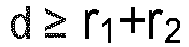
- Hämostatische Verbindung nach Anspruch 1, wobei das Molekularsieb gleichmäßig auf der Faseroberfläche verteilt ist und ein Nachweisverfahren für die gleichmäßige Verteilung der Molekularsiebe auf der Faseroberfläche darin besteht, dass n Proben der hämostatischen Verbindung an verschiedenen Stellen zufällig entnommen werden und der Gehalt des Molekularsiebs auf der Faseroberfläche analysiert wird, wobei n eine positive ganze Zahl ist und größer oder gleich 8 ist; wobei ein Variationskoeffizient des Gehalts der Molekularsiebe in den n Proben ≤15% beträgt.
- Herstellungsverfahren für eine hämostatische Verbindung nach Anspruch 1, wobei das Herstellungsverfahren ein In-situ-Wachstumsverfahren ist und das In-situ-Wachstumsverfahren die folgenden Schritte umfasst:(i) Vorbereiten einer Molekularsieb-Vorläuferlösung und Mischen der Molekularsieb-Vorläuferlösung mit einer Faser;(ii) Verarbeiten der in Schritt (i) erhaltenen Mischung aus der Faser und der Molekularsieb-Vorläuferlösung durch Wärmebehandlung, um eine hämostatische Verbindung zu erhalten;wobei der Gehalt des Molekularsiebs 0,05 bis 80 Gew.-% der hämostatischen Verbindung beträgt;wobei gegebenenfalls der Gehalt des Molekularsiebs 1 bis 50 Gew.-% der hämostatischen Verbindung ausmacht; wobei gegebenenfalls der Gehalt des Molekularsiebs 5 bis 35 Gew.-% der hämostatischen Verbindung ausmacht; wobei gegebenenfalls der Gehalt des Molekularsiebs 10 bis 25 Gew.-% der hämostatischen Verbindung ausmacht; wobei mehr gegebenenfalls der Gehalt des Molekularsiebs 15 bis 20 Gew.-% der hämostatischen Verbindung ausmacht;wobei optional die Molekularsieb-Vorläuferlösung kein Templatmittel enthält.
- Herstellungsverfahren nach Anspruch 13, wobei in Schritt (ii) die Temperatur der Wärmebehandlung 60 bis 220 °C beträgt und die Dauer der Wärmebehandlung 4 bis 240 h beträgt; und gegebenenfalls, wobei in Schritt (i) das Massenverhältnis der Faser zu der Molekularsieb-Vorläuferlösung 1: 0,5 bis 1: 1000 beträgt; wobei vorzugsweise in Schritt (i) das Massenverhältnis der Faser zu der Molekularsieb-Vorläuferlösung 1:0. 8 bis 1:100 beträgt; wobei vorzugsweise in Schritt (i) das Massenverhältnis der Faser zu der Molekularsieb-Vorläuferlösung 1:1 bis 1:50 beträgt; wobei vorzugsweise in Schritt (i) das Massenverhältnis der Faser zu der Molekularsieb-Vorläuferlösung 1:1. 5 bis 1:20 beträgt; wobei vorzugsweise in Schritt (i) das Massenverhältnis der Faser zu der Molekularsieb-Vorläuferlösung 1:2 bis 1:10 ist; wobei noch bevorzugter in Schritt (i) das Massenverhältnis der Faser zu der Molekularsieb-Vorläuferlösung 1:2 bis 1:5 ist.
- Verbundmaterial, wobei das Verbundmaterial die hämostatische Verbindung nach einem der Ansprüche 1 bis 12 oder die hämostatische Verbindung, die durch das Herstellungsverfahren nach einem der Ansprüche 13 bis 14 hergestellt wurde, umfasst; optional, wobei das Verbundmaterial ein hämostatisches Textil ist; und optional, wobei das hämostatische Textil aus der Gruppe ausgewählt ist, die aus einem hämostatischen Verband, einer hämostatischen Gaze, einem hämostatischen Tuch, einer hämostatischen Kleidung, einer hämostatischen Baumwolle, einem hämostatischen Nahtmaterial, einem hämostatischen Papier, einem hämostatischen Pflaster und einer Kombination davon besteht.
Applications Claiming Priority (2)
| Application Number | Priority Date | Filing Date | Title |
|---|---|---|---|
| CN201810625854.7A CN109847092B (zh) | 2018-06-18 | 2018-06-18 | 一种止血复合物及其制备方法 |
| PCT/CN2019/082931 WO2019242391A1 (zh) | 2018-06-18 | 2019-04-16 | 一种止血复合物及其制备方法 |
Publications (3)
| Publication Number | Publication Date |
|---|---|
| EP3677286A1 EP3677286A1 (de) | 2020-07-08 |
| EP3677286A4 EP3677286A4 (de) | 2020-12-02 |
| EP3677286B1 true EP3677286B1 (de) | 2024-04-10 |
Family
ID=66889671
Family Applications (1)
| Application Number | Title | Priority Date | Filing Date |
|---|---|---|---|
| EP19822613.6A Active EP3677286B1 (de) | 2018-06-18 | 2019-04-16 | Hämostatischer komplex und herstellungsverfahren dafür |
Country Status (7)
| Country | Link |
|---|---|
| US (1) | US11154512B2 (de) |
| EP (1) | EP3677286B1 (de) |
| JP (2) | JP6933411B2 (de) |
| KR (2) | KR20210021061A (de) |
| CN (1) | CN109847092B (de) |
| IL (1) | IL279552B2 (de) |
| WO (1) | WO2019242391A1 (de) |
Families Citing this family (6)
| Publication number | Priority date | Publication date | Assignee | Title |
|---|---|---|---|---|
| CN111995798B (zh) * | 2018-06-18 | 2022-04-15 | 杭州沸创生命科技股份有限公司 | 一种包含分子筛和纤维的复合材料、其制备方法和用途 |
| CN112891602B (zh) * | 2021-01-14 | 2022-06-14 | 湖北工业大学 | 用于杀菌消毒及快速止血的复合材料及制备和应用 |
| CN113398319B (zh) * | 2021-07-21 | 2022-07-29 | 军事科学院系统工程研究院卫勤保障技术研究所 | 一种止血材料的制备方法及产品 |
| CN113616847B (zh) * | 2021-09-03 | 2022-08-16 | 山西中医药大学 | 基于y分子筛载体的炉甘石止血复合物及其制备 |
| CN115252906B (zh) * | 2022-07-29 | 2023-08-01 | 佛山仙湖实验室 | 一种三明治结构支架及其制备方法和应用 |
| CN116139322B (zh) * | 2023-04-07 | 2024-08-16 | 南通大学 | 一种创面敷料及其制备方法 |
Family Cites Families (26)
| Publication number | Priority date | Publication date | Assignee | Title |
|---|---|---|---|---|
| CN1142026C (zh) * | 1999-06-23 | 2004-03-17 | 中国石油化工集团公司 | 一种zsm-5沸石与多孔金属复合材料及其制备方法 |
| US6981110B1 (en) | 2001-10-23 | 2005-12-27 | Stephen Waller Melvin | Hardware enforced virtual sequentiality |
| US7390452B2 (en) | 2002-03-08 | 2008-06-24 | Board Of Regents, The University Of Texas System | Electrospinning of polymer and mesoporous composite fibers |
| US6814759B2 (en) | 2002-08-06 | 2004-11-09 | Board Of Regents Of The University Of Nebraska | Stable zeolite/cellulose composite materials and method of preparation |
| CN100362152C (zh) | 2004-11-26 | 2008-01-16 | 新乡化纤股份有限公司 | 一种抗菌粘胶纤维及其生产方法 |
| WO2007033135A2 (en) * | 2005-09-13 | 2007-03-22 | Imed Scientific Corporation | Process for manufacturing hemostatic agents and their uses |
| EP1810697A3 (de) * | 2005-11-07 | 2008-04-02 | Jeffrey L. Horn | Geräte zur Abgabe von Molekularsieb-Materialien für die Bildung von Blutgerinnseln |
| US20070104768A1 (en) * | 2005-11-07 | 2007-05-10 | Z-Medica Corporation | Devices for the delivery of molecular sieve materials for the formation of blood clots |
| US20070154510A1 (en) * | 2005-12-30 | 2007-07-05 | Wilcher Steve A | Adsorbent-Containing Hemostatic Devices |
| US20070154509A1 (en) * | 2005-12-30 | 2007-07-05 | Wilcher Steve A | Adsorbent-Containing Hemostatic Devices |
| US8277837B2 (en) * | 2006-01-11 | 2012-10-02 | Entegrion, Inc. | Hemostatic textile |
| US7968114B2 (en) | 2006-05-26 | 2011-06-28 | Z-Medica Corporation | Clay-based hemostatic agents and devices for the delivery thereof |
| US7604819B2 (en) | 2006-05-26 | 2009-10-20 | Z-Medica Corporation | Clay-based hemostatic agents and devices for the delivery thereof |
| WO2008127497A2 (en) * | 2007-02-21 | 2008-10-23 | The Regents Of The University Of California | Hemostatic compositions and methods of use |
| US8883194B2 (en) * | 2007-11-09 | 2014-11-11 | Honeywell International, Inc. | Adsorbent-containing hemostatic devices |
| US8795718B2 (en) * | 2008-05-22 | 2014-08-05 | Honeywell International, Inc. | Functional nano-layered hemostatic material/device |
| CN101708436B (zh) * | 2009-11-05 | 2012-05-23 | 浙江大学 | 一种分子筛复合膜 |
| CN102225314B (zh) * | 2011-04-19 | 2013-01-02 | 浙江大学 | 一种分子筛膜合成的方法 |
| WO2013052577A1 (en) * | 2011-10-04 | 2013-04-11 | Z-Medica, Llc | Hemostatic fibrous material |
| CN103252253B (zh) * | 2013-05-07 | 2014-12-10 | 中国科学院金属研究所 | 一种多孔碳化硅载体表面梯度孔隙分子筛涂层及制备方法 |
| CN103263948B (zh) * | 2013-05-31 | 2015-03-04 | 东南大学 | 一种制备基于原位合成技术的酸性催化膜的方法 |
| CN103449473B (zh) * | 2013-08-23 | 2015-06-17 | 清华大学 | 一种空心分子筛纤维及其制备方法 |
| CN104846371B (zh) * | 2015-05-13 | 2017-12-26 | 吉林大学 | 一种在医用镁合金表面制备分子筛涂层的方法 |
| CN104888267A (zh) | 2015-05-25 | 2015-09-09 | 浙江华峰氨纶股份有限公司 | 一种医用止血氨纶纤维织物及其制备方法 |
| CN104888841B (zh) * | 2015-05-26 | 2017-10-20 | 华东理工大学 | 一种分子筛涂层的整体式催化剂的制备方法 |
| CN105749893B (zh) * | 2016-02-25 | 2018-03-16 | 环境保护部南京环境科学研究所 | 一种表面负载纳米二氧化钛的改性活性炭纤维丝的制备方法 |
-
2018
- 2018-06-18 CN CN201810625854.7A patent/CN109847092B/zh active Active
-
2019
- 2019-04-16 EP EP19822613.6A patent/EP3677286B1/de active Active
- 2019-04-16 KR KR1020217001487A patent/KR20210021061A/ko not_active Ceased
- 2019-04-16 KR KR1020257022086A patent/KR20250105690A/ko active Pending
- 2019-04-16 IL IL279552A patent/IL279552B2/en unknown
- 2019-04-16 WO PCT/CN2019/082931 patent/WO2019242391A1/zh not_active Ceased
- 2019-04-16 JP JP2020511147A patent/JP6933411B2/ja active Active
-
2020
- 2020-04-07 US US16/842,753 patent/US11154512B2/en active Active
-
2021
- 2021-08-12 JP JP2021131529A patent/JP7503814B2/ja active Active
Also Published As
| Publication number | Publication date |
|---|---|
| EP3677286A1 (de) | 2020-07-08 |
| CN109847092A (zh) | 2019-06-07 |
| IL279552B1 (en) | 2023-10-01 |
| US20200237681A1 (en) | 2020-07-30 |
| US11154512B2 (en) | 2021-10-26 |
| KR20210021061A (ko) | 2021-02-24 |
| JP6933411B2 (ja) | 2021-09-08 |
| IL279552B2 (en) | 2024-02-01 |
| WO2019242391A1 (zh) | 2019-12-26 |
| EP3677286A4 (de) | 2020-12-02 |
| JP2021192794A (ja) | 2021-12-23 |
| KR20250105690A (ko) | 2025-07-08 |
| JP2021502129A (ja) | 2021-01-28 |
| JP7503814B2 (ja) | 2024-06-21 |
| CN109847092B (zh) | 2020-03-31 |
| IL279552A (en) | 2021-01-31 |
Similar Documents
| Publication | Publication Date | Title |
|---|---|---|
| EP3677631A1 (de) | Molekularsieb/faserverbundstoff und verfahren zu seiner herstellung | |
| US11154512B2 (en) | Hemostatic compound and preparation method thereof | |
| US8383148B2 (en) | Clay-based hemostatic agents and devices for the delivery thereof | |
| US7968114B2 (en) | Clay-based hemostatic agents and devices for the delivery thereof | |
| EP3991759B1 (de) | Trypsin-haltiges hämostatisches gewebe und verfahren zu seiner herstellung | |
| CN103074777A (zh) | 一种载银海藻酸纤维及其制备方法 | |
| KR20120112968A (ko) | 아파타이트를 복합한 항균성 폴리우레탄 필름의 제조방법 | |
| HK40042401A (en) | Composite material containing molecular sieves and fibers, and preparation method and application thereof | |
| HK40042401B (en) | Composite material containing molecular sieves and fibers, and preparation method and application thereof | |
| CN121987840A (zh) | 钙离子沸石咪唑骨架复合止血敷料及其制备方法与应用 | |
| HK1170147A (en) | Clay-based hemostatic agents and devices for the delivery thereof |
Legal Events
| Date | Code | Title | Description |
|---|---|---|---|
| STAA | Information on the status of an ep patent application or granted ep patent |
Free format text: STATUS: THE INTERNATIONAL PUBLICATION HAS BEEN MADE |
|
| PUAI | Public reference made under article 153(3) epc to a published international application that has entered the european phase |
Free format text: ORIGINAL CODE: 0009012 |
|
| STAA | Information on the status of an ep patent application or granted ep patent |
Free format text: STATUS: REQUEST FOR EXAMINATION WAS MADE |
|
| 17P | Request for examination filed |
Effective date: 20200331 |
|
| AK | Designated contracting states |
Kind code of ref document: A1 Designated state(s): AL AT BE BG CH CY CZ DE DK EE ES FI FR GB GR HR HU IE IS IT LI LT LU LV MC MK MT NL NO PL PT RO RS SE SI SK SM TR |
|
| AX | Request for extension of the european patent |
Extension state: BA ME |
|
| A4 | Supplementary search report drawn up and despatched |
Effective date: 20201104 |
|
| RIC1 | Information provided on ipc code assigned before grant |
Ipc: A61L 15/22 20060101ALI20201029BHEP Ipc: A61L 15/42 20060101ALI20201029BHEP Ipc: A61L 15/18 20060101AFI20201029BHEP Ipc: A61F 13/00 20060101ALI20201029BHEP |
|
| DAV | Request for validation of the european patent (deleted) | ||
| DAX | Request for extension of the european patent (deleted) | ||
| GRAP | Despatch of communication of intention to grant a patent |
Free format text: ORIGINAL CODE: EPIDOSNIGR1 |
|
| STAA | Information on the status of an ep patent application or granted ep patent |
Free format text: STATUS: GRANT OF PATENT IS INTENDED |
|
| INTG | Intention to grant announced |
Effective date: 20231102 |
|
| GRAS | Grant fee paid |
Free format text: ORIGINAL CODE: EPIDOSNIGR3 |
|
| GRAA | (expected) grant |
Free format text: ORIGINAL CODE: 0009210 |
|
| STAA | Information on the status of an ep patent application or granted ep patent |
Free format text: STATUS: THE PATENT HAS BEEN GRANTED |
|
| AK | Designated contracting states |
Kind code of ref document: B1 Designated state(s): AL AT BE BG CH CY CZ DE DK EE ES FI FR GB GR HR HU IE IS IT LI LT LU LV MC MK MT NL NO PL PT RO RS SE SI SK SM TR |
|
| REG | Reference to a national code |
Ref country code: GB Ref legal event code: FG4D |
|
| REG | Reference to a national code |
Ref country code: CH Ref legal event code: EP |
|
| REG | Reference to a national code |
Ref country code: DE Ref legal event code: R096 Ref document number: 602019050140 Country of ref document: DE |
|
| REG | Reference to a national code |
Ref country code: IE Ref legal event code: FG4D |
|
| REG | Reference to a national code |
Ref country code: LT Ref legal event code: MG9D |
|
| REG | Reference to a national code |
Ref country code: NL Ref legal event code: MP Effective date: 20240410 |
|
| REG | Reference to a national code |
Ref country code: AT Ref legal event code: MK05 Ref document number: 1674240 Country of ref document: AT Kind code of ref document: T Effective date: 20240410 |
|
| PG25 | Lapsed in a contracting state [announced via postgrant information from national office to epo] |
Ref country code: NL Free format text: LAPSE BECAUSE OF FAILURE TO SUBMIT A TRANSLATION OF THE DESCRIPTION OR TO PAY THE FEE WITHIN THE PRESCRIBED TIME-LIMIT Effective date: 20240410 |
|
| PG25 | Lapsed in a contracting state [announced via postgrant information from national office to epo] |
Ref country code: NL Free format text: LAPSE BECAUSE OF FAILURE TO SUBMIT A TRANSLATION OF THE DESCRIPTION OR TO PAY THE FEE WITHIN THE PRESCRIBED TIME-LIMIT Effective date: 20240410 |
|
| PG25 | Lapsed in a contracting state [announced via postgrant information from national office to epo] |
Ref country code: IS Free format text: LAPSE BECAUSE OF FAILURE TO SUBMIT A TRANSLATION OF THE DESCRIPTION OR TO PAY THE FEE WITHIN THE PRESCRIBED TIME-LIMIT Effective date: 20240810 |
|
| PG25 | Lapsed in a contracting state [announced via postgrant information from national office to epo] |
Ref country code: BG Free format text: LAPSE BECAUSE OF FAILURE TO SUBMIT A TRANSLATION OF THE DESCRIPTION OR TO PAY THE FEE WITHIN THE PRESCRIBED TIME-LIMIT Effective date: 20240410 |
|
| PG25 | Lapsed in a contracting state [announced via postgrant information from national office to epo] |
Ref country code: HR Free format text: LAPSE BECAUSE OF FAILURE TO SUBMIT A TRANSLATION OF THE DESCRIPTION OR TO PAY THE FEE WITHIN THE PRESCRIBED TIME-LIMIT Effective date: 20240410 Ref country code: FI Free format text: LAPSE BECAUSE OF FAILURE TO SUBMIT A TRANSLATION OF THE DESCRIPTION OR TO PAY THE FEE WITHIN THE PRESCRIBED TIME-LIMIT Effective date: 20240410 |
|
| PG25 | Lapsed in a contracting state [announced via postgrant information from national office to epo] |
Ref country code: GR Free format text: LAPSE BECAUSE OF FAILURE TO SUBMIT A TRANSLATION OF THE DESCRIPTION OR TO PAY THE FEE WITHIN THE PRESCRIBED TIME-LIMIT Effective date: 20240711 |
|
| PG25 | Lapsed in a contracting state [announced via postgrant information from national office to epo] |
Ref country code: PT Free format text: LAPSE BECAUSE OF FAILURE TO SUBMIT A TRANSLATION OF THE DESCRIPTION OR TO PAY THE FEE WITHIN THE PRESCRIBED TIME-LIMIT Effective date: 20240812 |
|
| PG25 | Lapsed in a contracting state [announced via postgrant information from national office to epo] |
Ref country code: ES Free format text: LAPSE BECAUSE OF FAILURE TO SUBMIT A TRANSLATION OF THE DESCRIPTION OR TO PAY THE FEE WITHIN THE PRESCRIBED TIME-LIMIT Effective date: 20240410 |
|
| PG25 | Lapsed in a contracting state [announced via postgrant information from national office to epo] |
Ref country code: AT Free format text: LAPSE BECAUSE OF FAILURE TO SUBMIT A TRANSLATION OF THE DESCRIPTION OR TO PAY THE FEE WITHIN THE PRESCRIBED TIME-LIMIT Effective date: 20240410 |
|
| PG25 | Lapsed in a contracting state [announced via postgrant information from national office to epo] |
Ref country code: PL Free format text: LAPSE BECAUSE OF FAILURE TO SUBMIT A TRANSLATION OF THE DESCRIPTION OR TO PAY THE FEE WITHIN THE PRESCRIBED TIME-LIMIT Effective date: 20240410 |
|
| PG25 | Lapsed in a contracting state [announced via postgrant information from national office to epo] |
Ref country code: LV Free format text: LAPSE BECAUSE OF FAILURE TO SUBMIT A TRANSLATION OF THE DESCRIPTION OR TO PAY THE FEE WITHIN THE PRESCRIBED TIME-LIMIT Effective date: 20240410 |
|
| PG25 | Lapsed in a contracting state [announced via postgrant information from national office to epo] |
Ref country code: PT Free format text: LAPSE BECAUSE OF FAILURE TO SUBMIT A TRANSLATION OF THE DESCRIPTION OR TO PAY THE FEE WITHIN THE PRESCRIBED TIME-LIMIT Effective date: 20240812 Ref country code: PL Free format text: LAPSE BECAUSE OF FAILURE TO SUBMIT A TRANSLATION OF THE DESCRIPTION OR TO PAY THE FEE WITHIN THE PRESCRIBED TIME-LIMIT Effective date: 20240410 Ref country code: NO Free format text: LAPSE BECAUSE OF FAILURE TO SUBMIT A TRANSLATION OF THE DESCRIPTION OR TO PAY THE FEE WITHIN THE PRESCRIBED TIME-LIMIT Effective date: 20240710 Ref country code: LV Free format text: LAPSE BECAUSE OF FAILURE TO SUBMIT A TRANSLATION OF THE DESCRIPTION OR TO PAY THE FEE WITHIN THE PRESCRIBED TIME-LIMIT Effective date: 20240410 Ref country code: IS Free format text: LAPSE BECAUSE OF FAILURE TO SUBMIT A TRANSLATION OF THE DESCRIPTION OR TO PAY THE FEE WITHIN THE PRESCRIBED TIME-LIMIT Effective date: 20240810 Ref country code: HR Free format text: LAPSE BECAUSE OF FAILURE TO SUBMIT A TRANSLATION OF THE DESCRIPTION OR TO PAY THE FEE WITHIN THE PRESCRIBED TIME-LIMIT Effective date: 20240410 Ref country code: GR Free format text: LAPSE BECAUSE OF FAILURE TO SUBMIT A TRANSLATION OF THE DESCRIPTION OR TO PAY THE FEE WITHIN THE PRESCRIBED TIME-LIMIT Effective date: 20240711 Ref country code: FI Free format text: LAPSE BECAUSE OF FAILURE TO SUBMIT A TRANSLATION OF THE DESCRIPTION OR TO PAY THE FEE WITHIN THE PRESCRIBED TIME-LIMIT Effective date: 20240410 Ref country code: ES Free format text: LAPSE BECAUSE OF FAILURE TO SUBMIT A TRANSLATION OF THE DESCRIPTION OR TO PAY THE FEE WITHIN THE PRESCRIBED TIME-LIMIT Effective date: 20240410 Ref country code: BG Free format text: LAPSE BECAUSE OF FAILURE TO SUBMIT A TRANSLATION OF THE DESCRIPTION OR TO PAY THE FEE WITHIN THE PRESCRIBED TIME-LIMIT Effective date: 20240410 Ref country code: AT Free format text: LAPSE BECAUSE OF FAILURE TO SUBMIT A TRANSLATION OF THE DESCRIPTION OR TO PAY THE FEE WITHIN THE PRESCRIBED TIME-LIMIT Effective date: 20240410 Ref country code: RS Free format text: LAPSE BECAUSE OF FAILURE TO SUBMIT A TRANSLATION OF THE DESCRIPTION OR TO PAY THE FEE WITHIN THE PRESCRIBED TIME-LIMIT Effective date: 20240710 |
|
| REG | Reference to a national code |
Ref country code: CH Ref legal event code: PL |
|
| PG25 | Lapsed in a contracting state [announced via postgrant information from national office to epo] |
Ref country code: LU Free format text: LAPSE BECAUSE OF NON-PAYMENT OF DUE FEES Effective date: 20240416 |
|
| REG | Reference to a national code |
Ref country code: BE Ref legal event code: MM Effective date: 20240430 |
|
| PG25 | Lapsed in a contracting state [announced via postgrant information from national office to epo] |
Ref country code: LU Free format text: LAPSE BECAUSE OF NON-PAYMENT OF DUE FEES Effective date: 20240416 |
|
| REG | Reference to a national code |
Ref country code: DE Ref legal event code: R097 Ref document number: 602019050140 Country of ref document: DE |
|
| PG25 | Lapsed in a contracting state [announced via postgrant information from national office to epo] |
Ref country code: DK Free format text: LAPSE BECAUSE OF FAILURE TO SUBMIT A TRANSLATION OF THE DESCRIPTION OR TO PAY THE FEE WITHIN THE PRESCRIBED TIME-LIMIT Effective date: 20240410 |
|
| PG25 | Lapsed in a contracting state [announced via postgrant information from national office to epo] |
Ref country code: BE Free format text: LAPSE BECAUSE OF NON-PAYMENT OF DUE FEES Effective date: 20240430 |
|
| PG25 | Lapsed in a contracting state [announced via postgrant information from national office to epo] |
Ref country code: EE Free format text: LAPSE BECAUSE OF FAILURE TO SUBMIT A TRANSLATION OF THE DESCRIPTION OR TO PAY THE FEE WITHIN THE PRESCRIBED TIME-LIMIT Effective date: 20240410 |
|
| PG25 | Lapsed in a contracting state [announced via postgrant information from national office to epo] |
Ref country code: CZ Free format text: LAPSE BECAUSE OF FAILURE TO SUBMIT A TRANSLATION OF THE DESCRIPTION OR TO PAY THE FEE WITHIN THE PRESCRIBED TIME-LIMIT Effective date: 20240410 |
|
| PG25 | Lapsed in a contracting state [announced via postgrant information from national office to epo] |
Ref country code: RO Free format text: LAPSE BECAUSE OF FAILURE TO SUBMIT A TRANSLATION OF THE DESCRIPTION OR TO PAY THE FEE WITHIN THE PRESCRIBED TIME-LIMIT Effective date: 20240410 Ref country code: SK Free format text: LAPSE BECAUSE OF FAILURE TO SUBMIT A TRANSLATION OF THE DESCRIPTION OR TO PAY THE FEE WITHIN THE PRESCRIBED TIME-LIMIT Effective date: 20240410 |
|
| PG25 | Lapsed in a contracting state [announced via postgrant information from national office to epo] |
Ref country code: SM Free format text: LAPSE BECAUSE OF FAILURE TO SUBMIT A TRANSLATION OF THE DESCRIPTION OR TO PAY THE FEE WITHIN THE PRESCRIBED TIME-LIMIT Effective date: 20240410 |
|
| PG25 | Lapsed in a contracting state [announced via postgrant information from national office to epo] |
Ref country code: SM Free format text: LAPSE BECAUSE OF FAILURE TO SUBMIT A TRANSLATION OF THE DESCRIPTION OR TO PAY THE FEE WITHIN THE PRESCRIBED TIME-LIMIT Effective date: 20240410 Ref country code: SK Free format text: LAPSE BECAUSE OF FAILURE TO SUBMIT A TRANSLATION OF THE DESCRIPTION OR TO PAY THE FEE WITHIN THE PRESCRIBED TIME-LIMIT Effective date: 20240410 Ref country code: RO Free format text: LAPSE BECAUSE OF FAILURE TO SUBMIT A TRANSLATION OF THE DESCRIPTION OR TO PAY THE FEE WITHIN THE PRESCRIBED TIME-LIMIT Effective date: 20240410 Ref country code: EE Free format text: LAPSE BECAUSE OF FAILURE TO SUBMIT A TRANSLATION OF THE DESCRIPTION OR TO PAY THE FEE WITHIN THE PRESCRIBED TIME-LIMIT Effective date: 20240410 Ref country code: DK Free format text: LAPSE BECAUSE OF FAILURE TO SUBMIT A TRANSLATION OF THE DESCRIPTION OR TO PAY THE FEE WITHIN THE PRESCRIBED TIME-LIMIT Effective date: 20240410 Ref country code: CZ Free format text: LAPSE BECAUSE OF FAILURE TO SUBMIT A TRANSLATION OF THE DESCRIPTION OR TO PAY THE FEE WITHIN THE PRESCRIBED TIME-LIMIT Effective date: 20240410 Ref country code: BE Free format text: LAPSE BECAUSE OF NON-PAYMENT OF DUE FEES Effective date: 20240430 Ref country code: CH Free format text: LAPSE BECAUSE OF NON-PAYMENT OF DUE FEES Effective date: 20240430 Ref country code: MC Free format text: LAPSE BECAUSE OF FAILURE TO SUBMIT A TRANSLATION OF THE DESCRIPTION OR TO PAY THE FEE WITHIN THE PRESCRIBED TIME-LIMIT Effective date: 20240410 |
|
| PG25 | Lapsed in a contracting state [announced via postgrant information from national office to epo] |
Ref country code: IT Free format text: LAPSE BECAUSE OF FAILURE TO SUBMIT A TRANSLATION OF THE DESCRIPTION OR TO PAY THE FEE WITHIN THE PRESCRIBED TIME-LIMIT Effective date: 20240410 |
|
| PLBE | No opposition filed within time limit |
Free format text: ORIGINAL CODE: 0009261 |
|
| STAA | Information on the status of an ep patent application or granted ep patent |
Free format text: STATUS: NO OPPOSITION FILED WITHIN TIME LIMIT |
|
| 26N | No opposition filed |
Effective date: 20250113 |
|
| PG25 | Lapsed in a contracting state [announced via postgrant information from national office to epo] |
Ref country code: IE Free format text: LAPSE BECAUSE OF NON-PAYMENT OF DUE FEES Effective date: 20240416 |
|
| PG25 | Lapsed in a contracting state [announced via postgrant information from national office to epo] |
Ref country code: SI Free format text: LAPSE BECAUSE OF FAILURE TO SUBMIT A TRANSLATION OF THE DESCRIPTION OR TO PAY THE FEE WITHIN THE PRESCRIBED TIME-LIMIT Effective date: 20240410 |
|
| PGFP | Annual fee paid to national office [announced via postgrant information from national office to epo] |
Ref country code: DE Payment date: 20250514 Year of fee payment: 7 |
|
| PGFP | Annual fee paid to national office [announced via postgrant information from national office to epo] |
Ref country code: GB Payment date: 20250520 Year of fee payment: 7 |
|
| PGFP | Annual fee paid to national office [announced via postgrant information from national office to epo] |
Ref country code: FR Payment date: 20250429 Year of fee payment: 7 |
|
| PG25 | Lapsed in a contracting state [announced via postgrant information from national office to epo] |
Ref country code: CY Free format text: LAPSE BECAUSE OF FAILURE TO SUBMIT A TRANSLATION OF THE DESCRIPTION OR TO PAY THE FEE WITHIN THE PRESCRIBED TIME-LIMIT; INVALID AB INITIO Effective date: 20190416 |
|
| PG25 | Lapsed in a contracting state [announced via postgrant information from national office to epo] |
Ref country code: HU Free format text: LAPSE BECAUSE OF FAILURE TO SUBMIT A TRANSLATION OF THE DESCRIPTION OR TO PAY THE FEE WITHIN THE PRESCRIBED TIME-LIMIT; INVALID AB INITIO Effective date: 20190416 |
|
| PG25 | Lapsed in a contracting state [announced via postgrant information from national office to epo] |
Ref country code: SE Free format text: LAPSE BECAUSE OF FAILURE TO SUBMIT A TRANSLATION OF THE DESCRIPTION OR TO PAY THE FEE WITHIN THE PRESCRIBED TIME-LIMIT Effective date: 20240410 |