EP3677483A1 - Hybridfahrzeug und leistungsverbrauchssteuerungsverfahren und vorrichtung dafür - Google Patents
Hybridfahrzeug und leistungsverbrauchssteuerungsverfahren und vorrichtung dafür Download PDFInfo
- Publication number
- EP3677483A1 EP3677483A1 EP18860080.3A EP18860080A EP3677483A1 EP 3677483 A1 EP3677483 A1 EP 3677483A1 EP 18860080 A EP18860080 A EP 18860080A EP 3677483 A1 EP3677483 A1 EP 3677483A1
- Authority
- EP
- European Patent Office
- Prior art keywords
- power
- consumption
- current
- electric vehicle
- level
- Prior art date
- Legal status (The legal status is an assumption and is not a legal conclusion. Google has not performed a legal analysis and makes no representation as to the accuracy of the status listed.)
- Withdrawn
Links
Images



Classifications
-
- B—PERFORMING OPERATIONS; TRANSPORTING
- B60—VEHICLES IN GENERAL
- B60W—CONJOINT CONTROL OF VEHICLE SUB-UNITS OF DIFFERENT TYPE OR DIFFERENT FUNCTION; CONTROL SYSTEMS SPECIALLY ADAPTED FOR HYBRID VEHICLES; ROAD VEHICLE DRIVE CONTROL SYSTEMS FOR PURPOSES NOT RELATED TO THE CONTROL OF A PARTICULAR SUB-UNIT
- B60W20/00—Control systems specially adapted for hybrid vehicles
- B60W20/10—Controlling the power contribution of each of the prime movers to meet required power demand
- B60W20/12—Controlling the power contribution of each of the prime movers to meet required power demand using control strategies taking into account route information
-
- B—PERFORMING OPERATIONS; TRANSPORTING
- B60—VEHICLES IN GENERAL
- B60W—CONJOINT CONTROL OF VEHICLE SUB-UNITS OF DIFFERENT TYPE OR DIFFERENT FUNCTION; CONTROL SYSTEMS SPECIALLY ADAPTED FOR HYBRID VEHICLES; ROAD VEHICLE DRIVE CONTROL SYSTEMS FOR PURPOSES NOT RELATED TO THE CONTROL OF A PARTICULAR SUB-UNIT
- B60W10/00—Conjoint control of vehicle sub-units of different type or different function
- B60W10/30—Conjoint control of vehicle sub-units of different type or different function including control of auxiliary equipment, e.g. air-conditioning compressors or oil pumps
-
- B—PERFORMING OPERATIONS; TRANSPORTING
- B60—VEHICLES IN GENERAL
- B60W—CONJOINT CONTROL OF VEHICLE SUB-UNITS OF DIFFERENT TYPE OR DIFFERENT FUNCTION; CONTROL SYSTEMS SPECIALLY ADAPTED FOR HYBRID VEHICLES; ROAD VEHICLE DRIVE CONTROL SYSTEMS FOR PURPOSES NOT RELATED TO THE CONTROL OF A PARTICULAR SUB-UNIT
- B60W10/00—Conjoint control of vehicle sub-units of different type or different function
- B60W10/04—Conjoint control of vehicle sub-units of different type or different function including control of propulsion units
- B60W10/06—Conjoint control of vehicle sub-units of different type or different function including control of propulsion units including control of combustion engines
-
- B—PERFORMING OPERATIONS; TRANSPORTING
- B60—VEHICLES IN GENERAL
- B60W—CONJOINT CONTROL OF VEHICLE SUB-UNITS OF DIFFERENT TYPE OR DIFFERENT FUNCTION; CONTROL SYSTEMS SPECIALLY ADAPTED FOR HYBRID VEHICLES; ROAD VEHICLE DRIVE CONTROL SYSTEMS FOR PURPOSES NOT RELATED TO THE CONTROL OF A PARTICULAR SUB-UNIT
- B60W10/00—Conjoint control of vehicle sub-units of different type or different function
- B60W10/04—Conjoint control of vehicle sub-units of different type or different function including control of propulsion units
- B60W10/08—Conjoint control of vehicle sub-units of different type or different function including control of propulsion units including control of electric propulsion units, e.g. motors or generators
-
- B—PERFORMING OPERATIONS; TRANSPORTING
- B60—VEHICLES IN GENERAL
- B60W—CONJOINT CONTROL OF VEHICLE SUB-UNITS OF DIFFERENT TYPE OR DIFFERENT FUNCTION; CONTROL SYSTEMS SPECIALLY ADAPTED FOR HYBRID VEHICLES; ROAD VEHICLE DRIVE CONTROL SYSTEMS FOR PURPOSES NOT RELATED TO THE CONTROL OF A PARTICULAR SUB-UNIT
- B60W10/00—Conjoint control of vehicle sub-units of different type or different function
- B60W10/24—Conjoint control of vehicle sub-units of different type or different function including control of energy storage means
- B60W10/26—Conjoint control of vehicle sub-units of different type or different function including control of energy storage means for electrical energy, e.g. batteries or capacitors
-
- B—PERFORMING OPERATIONS; TRANSPORTING
- B60—VEHICLES IN GENERAL
- B60W—CONJOINT CONTROL OF VEHICLE SUB-UNITS OF DIFFERENT TYPE OR DIFFERENT FUNCTION; CONTROL SYSTEMS SPECIALLY ADAPTED FOR HYBRID VEHICLES; ROAD VEHICLE DRIVE CONTROL SYSTEMS FOR PURPOSES NOT RELATED TO THE CONTROL OF A PARTICULAR SUB-UNIT
- B60W20/00—Control systems specially adapted for hybrid vehicles
-
- B—PERFORMING OPERATIONS; TRANSPORTING
- B60—VEHICLES IN GENERAL
- B60W—CONJOINT CONTROL OF VEHICLE SUB-UNITS OF DIFFERENT TYPE OR DIFFERENT FUNCTION; CONTROL SYSTEMS SPECIALLY ADAPTED FOR HYBRID VEHICLES; ROAD VEHICLE DRIVE CONTROL SYSTEMS FOR PURPOSES NOT RELATED TO THE CONTROL OF A PARTICULAR SUB-UNIT
- B60W20/00—Control systems specially adapted for hybrid vehicles
- B60W20/10—Controlling the power contribution of each of the prime movers to meet required power demand
-
- B—PERFORMING OPERATIONS; TRANSPORTING
- B60—VEHICLES IN GENERAL
- B60W—CONJOINT CONTROL OF VEHICLE SUB-UNITS OF DIFFERENT TYPE OR DIFFERENT FUNCTION; CONTROL SYSTEMS SPECIALLY ADAPTED FOR HYBRID VEHICLES; ROAD VEHICLE DRIVE CONTROL SYSTEMS FOR PURPOSES NOT RELATED TO THE CONTROL OF A PARTICULAR SUB-UNIT
- B60W20/00—Control systems specially adapted for hybrid vehicles
- B60W20/20—Control strategies involving selection of hybrid configuration, e.g. selection between series or parallel configuration
-
- B—PERFORMING OPERATIONS; TRANSPORTING
- B60—VEHICLES IN GENERAL
- B60W—CONJOINT CONTROL OF VEHICLE SUB-UNITS OF DIFFERENT TYPE OR DIFFERENT FUNCTION; CONTROL SYSTEMS SPECIALLY ADAPTED FOR HYBRID VEHICLES; ROAD VEHICLE DRIVE CONTROL SYSTEMS FOR PURPOSES NOT RELATED TO THE CONTROL OF A PARTICULAR SUB-UNIT
- B60W20/00—Control systems specially adapted for hybrid vehicles
- B60W20/40—Controlling the engagement or disengagement of prime movers, e.g. for transition between prime movers
-
- B—PERFORMING OPERATIONS; TRANSPORTING
- B60—VEHICLES IN GENERAL
- B60W—CONJOINT CONTROL OF VEHICLE SUB-UNITS OF DIFFERENT TYPE OR DIFFERENT FUNCTION; CONTROL SYSTEMS SPECIALLY ADAPTED FOR HYBRID VEHICLES; ROAD VEHICLE DRIVE CONTROL SYSTEMS FOR PURPOSES NOT RELATED TO THE CONTROL OF A PARTICULAR SUB-UNIT
- B60W30/00—Purposes of road vehicle drive control systems not related to the control of a particular sub-unit, e.g. of systems using conjoint control of vehicle sub-units
- B60W30/18—Propelling the vehicle
- B60W30/188—Controlling power parameters of the driveline, e.g. determining the required power
-
- B—PERFORMING OPERATIONS; TRANSPORTING
- B60—VEHICLES IN GENERAL
- B60W—CONJOINT CONTROL OF VEHICLE SUB-UNITS OF DIFFERENT TYPE OR DIFFERENT FUNCTION; CONTROL SYSTEMS SPECIALLY ADAPTED FOR HYBRID VEHICLES; ROAD VEHICLE DRIVE CONTROL SYSTEMS FOR PURPOSES NOT RELATED TO THE CONTROL OF A PARTICULAR SUB-UNIT
- B60W30/00—Purposes of road vehicle drive control systems not related to the control of a particular sub-unit, e.g. of systems using conjoint control of vehicle sub-units
- B60W30/18—Propelling the vehicle
- B60W30/188—Controlling power parameters of the driveline, e.g. determining the required power
- B60W30/1886—Controlling power supply to auxiliary devices
-
- B—PERFORMING OPERATIONS; TRANSPORTING
- B60—VEHICLES IN GENERAL
- B60W—CONJOINT CONTROL OF VEHICLE SUB-UNITS OF DIFFERENT TYPE OR DIFFERENT FUNCTION; CONTROL SYSTEMS SPECIALLY ADAPTED FOR HYBRID VEHICLES; ROAD VEHICLE DRIVE CONTROL SYSTEMS FOR PURPOSES NOT RELATED TO THE CONTROL OF A PARTICULAR SUB-UNIT
- B60W30/00—Purposes of road vehicle drive control systems not related to the control of a particular sub-unit, e.g. of systems using conjoint control of vehicle sub-units
- B60W30/18—Propelling the vehicle
- B60W30/188—Controlling power parameters of the driveline, e.g. determining the required power
- B60W30/1886—Controlling power supply to auxiliary devices
- B60W30/1888—Control of power take off [PTO]
-
- B—PERFORMING OPERATIONS; TRANSPORTING
- B60—VEHICLES IN GENERAL
- B60W—CONJOINT CONTROL OF VEHICLE SUB-UNITS OF DIFFERENT TYPE OR DIFFERENT FUNCTION; CONTROL SYSTEMS SPECIALLY ADAPTED FOR HYBRID VEHICLES; ROAD VEHICLE DRIVE CONTROL SYSTEMS FOR PURPOSES NOT RELATED TO THE CONTROL OF A PARTICULAR SUB-UNIT
- B60W2510/00—Input parameters relating to a particular sub-units
- B60W2510/06—Combustion engines, Gas turbines
- B60W2510/0666—Engine power
-
- B—PERFORMING OPERATIONS; TRANSPORTING
- B60—VEHICLES IN GENERAL
- B60W—CONJOINT CONTROL OF VEHICLE SUB-UNITS OF DIFFERENT TYPE OR DIFFERENT FUNCTION; CONTROL SYSTEMS SPECIALLY ADAPTED FOR HYBRID VEHICLES; ROAD VEHICLE DRIVE CONTROL SYSTEMS FOR PURPOSES NOT RELATED TO THE CONTROL OF A PARTICULAR SUB-UNIT
- B60W2510/00—Input parameters relating to a particular sub-units
- B60W2510/08—Electric propulsion units
- B60W2510/085—Power
-
- B—PERFORMING OPERATIONS; TRANSPORTING
- B60—VEHICLES IN GENERAL
- B60W—CONJOINT CONTROL OF VEHICLE SUB-UNITS OF DIFFERENT TYPE OR DIFFERENT FUNCTION; CONTROL SYSTEMS SPECIALLY ADAPTED FOR HYBRID VEHICLES; ROAD VEHICLE DRIVE CONTROL SYSTEMS FOR PURPOSES NOT RELATED TO THE CONTROL OF A PARTICULAR SUB-UNIT
- B60W2510/00—Input parameters relating to a particular sub-units
- B60W2510/30—Auxiliary equipments
- B60W2510/305—Power absorbed by auxiliaries
-
- B—PERFORMING OPERATIONS; TRANSPORTING
- B60—VEHICLES IN GENERAL
- B60W—CONJOINT CONTROL OF VEHICLE SUB-UNITS OF DIFFERENT TYPE OR DIFFERENT FUNCTION; CONTROL SYSTEMS SPECIALLY ADAPTED FOR HYBRID VEHICLES; ROAD VEHICLE DRIVE CONTROL SYSTEMS FOR PURPOSES NOT RELATED TO THE CONTROL OF A PARTICULAR SUB-UNIT
- B60W2540/00—Input parameters relating to occupants
- B60W2540/10—Accelerator pedal position
-
- B—PERFORMING OPERATIONS; TRANSPORTING
- B60—VEHICLES IN GENERAL
- B60W—CONJOINT CONTROL OF VEHICLE SUB-UNITS OF DIFFERENT TYPE OR DIFFERENT FUNCTION; CONTROL SYSTEMS SPECIALLY ADAPTED FOR HYBRID VEHICLES; ROAD VEHICLE DRIVE CONTROL SYSTEMS FOR PURPOSES NOT RELATED TO THE CONTROL OF A PARTICULAR SUB-UNIT
- B60W2552/00—Input parameters relating to infrastructure
- B60W2552/15—Road slope, i.e. the inclination of a road segment in the longitudinal direction
-
- B—PERFORMING OPERATIONS; TRANSPORTING
- B60—VEHICLES IN GENERAL
- B60W—CONJOINT CONTROL OF VEHICLE SUB-UNITS OF DIFFERENT TYPE OR DIFFERENT FUNCTION; CONTROL SYSTEMS SPECIALLY ADAPTED FOR HYBRID VEHICLES; ROAD VEHICLE DRIVE CONTROL SYSTEMS FOR PURPOSES NOT RELATED TO THE CONTROL OF A PARTICULAR SUB-UNIT
- B60W2710/00—Output or target parameters relating to a particular sub-units
- B60W2710/08—Electric propulsion units
- B60W2710/083—Torque
-
- B—PERFORMING OPERATIONS; TRANSPORTING
- B60—VEHICLES IN GENERAL
- B60W—CONJOINT CONTROL OF VEHICLE SUB-UNITS OF DIFFERENT TYPE OR DIFFERENT FUNCTION; CONTROL SYSTEMS SPECIALLY ADAPTED FOR HYBRID VEHICLES; ROAD VEHICLE DRIVE CONTROL SYSTEMS FOR PURPOSES NOT RELATED TO THE CONTROL OF A PARTICULAR SUB-UNIT
- B60W2710/00—Output or target parameters relating to a particular sub-units
- B60W2710/08—Electric propulsion units
- B60W2710/086—Power
Definitions
- This disclosure relates to the field of vehicle technologies, and in particular to a power consumption control method of a hybrid electric vehicle, a power consumption control apparatus of a hybrid electric vehicle, and a hybrid electric vehicle.
- a state of charge (SOC) value of a battery is usually used as a reference point for a change of a power consumption policy. For example, when the SOC value is greater than a preset electric quantity, an electric quantity of the battery is identified to be sufficient, and most power output is output by a motor, and when the SOC value is less than the preset electric quantity, the electric quantity is identified to be insufficient, and most power output is output by an engine.
- SOC state of charge
- problems existing in the related art are that because during power consumption for driving, only the SOC value is used as a standard, an engine may operate in a non-economic zone and increase fuel consumption, resulting in relatively high comprehensive fuel consumption of a whole vehicle.
- the SOC value is relatively low, power consumption cannot be reduced to the largest extent, resulting in poor a power maintaining capacity of the whole vehicle.
- a first objective of this disclosure is to provide a power consumption control method of a hybrid electric vehicle, to reduce comprehensive fuel consumption and enhance a power maintaining capacity.
- a second objective of this disclosure is to provide a power consumption control apparatus of a hybrid electric vehicle.
- a third objective of this disclosure is to provide a hybrid electric vehicle.
- an embodiment of a first aspect of this disclosure provides a power consumption control method of a hybrid electric vehicle, including the following steps: obtaining a current slope, a current throttle depth, and a current operating power of power-consuming device of the hybrid electric vehicle, and determining a current power-consumption level of the hybrid electric vehicle according to the current slope, the current throttle depth, and the current operating power of the power-consuming device; obtaining a current power-generation level of the hybrid electric vehicle, where the hybrid electric vehicle has a plurality of power-generation levels and a plurality of power-consumption levels, and the plurality of power-generation levels respectively correspond to the plurality of power-consumption levels; and controlling a final power-consumption level of the hybrid electric vehicle according to the current power-consumption level and the current power-generation level, and controlling power consumption of the hybrid electric vehicle according to the final power-consumption level.
- a current slope, a current throttle depth, and a current operating power of power-consuming device of the hybrid electric vehicle are obtained, a current power-consumption level of the hybrid electric vehicle is determined according to the current slope, the current throttle depth, and the current operating power of the power-consuming device, a current power-generation level of the hybrid electric vehicle is obtained, then a final power-consumption level of the hybrid electric vehicle is controlled according to the current power-consumption level and the current power-generation level, and power consumption of the hybrid electric vehicle is controlled according to the final power-consumption level.
- the final power-consumption level is determined according to the current slope, the current throttle depth, the current power of the power-consuming device, and the current power-generation level of the hybrid electric vehicle, and then, the power-consuming device is adjusted according to the final power-consumption level, so that power consumption of a whole vehicle can be controlled in more comprehensive operating modes, and the engine is enabled to operate in an economic zone as much as possible during driving, thereby reducing comprehensive fuel consumption, and power consumption of the whole vehicle can also be reduced to the largest extent, thereby improving a power maintaining capacity.
- an embodiment of a second aspect of this disclosure provides a power consumption control apparatus of a hybrid electric vehicle, including a controller and a memory, where the memory stores a plurality of instructions, and the instructions are loadable and executable by the controller to: obtaining a current slope, a current throttle depth, and a current operating power of power-consuming device of the hybrid electric vehicle, and determining a current power-consumption level of the hybrid electric vehicle according to the current slope, the current throttle depth, and the current operating power of the power-consuming device; obtain a current power-generation level of the hybrid electric vehicle, control a final power-consumption level of the hybrid electric vehicle according to the current power-consumption level and the current power-generation level, and control power consumption of the hybrid electric vehicle according to the final power-consumption level, where the hybrid electric vehicle has a plurality of power-generation levels and a plurality of power-consumption levels, and the plurality of power-generation levels respectively correspond to the plurality of power-cons
- a current slope, a current throttle depth, and a current operating power of power-consuming device of the hybrid electric vehicle are obtained, a current power-consumption level of the hybrid electric vehicle is determined according to the current slope, the current throttle depth, and the current operating power of the power-consuming device, a current power-generation level of the hybrid electric vehicle is obtained, then a final power-consumption level of the hybrid electric vehicle is controlled according to the current power-consumption level and the current power-generation level, and power consumption of the hybrid electric vehicle is controlled according to the final power-consumption level, where the hybrid electric vehicle has a plurality of power-generation levels and a plurality of power-consumption levels, and the plurality of power-generation levels respectively correspond to the plurality of power-consumption levels.
- the final power-consumption level is determined according to the current slope, the current throttle depth, the current power of the power-consuming device, and the current power-generation level of the hybrid electric vehicle, and then, the power-consuming device is adjusted according to the final power-consumption level, so that power consumption of a whole vehicle can be controlled in more comprehensive operating modes, and the engine is enabled to operate in an economic zone as much as possible during driving, thereby reducing comprehensive fuel consumption, and power consumption of the whole vehicle can also be reduced to the largest extent, thereby improving a power maintaining capacity.
- an embodiment of a third aspect of this disclosure provides a hybrid electric vehicle, including the power consumption control apparatus of a hybrid electric vehicle.
- the hybrid electric vehicle of this embodiment of this disclosure through the power consumption control apparatus of the hybrid electric vehicle, power consumption of a whole vehicle can be controlled in more comprehensive operating modes, and the engine is enabled to operate in an economic zone as much as possible during driving, thereby reducing comprehensive fuel consumption, and power consumption of the whole vehicle can also be reduced to the largest extent, thereby improving a power maintaining capacity.
- a power consumption control method of a hybrid electric vehicle, a power system of a hybrid electric vehicle, and a hybrid electric vehicle of the embodiments of this disclosure are described below with reference to accompanying drawings.
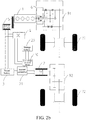
- a power system 200 of the hybrid electric vehicle includes: an engine 1, a power motor 2, a power battery 3, a DC-DC converter 4, and a secondary motor 5.
- the engine 1 is configured to output power to a wheel 7 of the hybrid electric vehicle through a clutch 6; and the power motor 2 is configured to output driving power to a wheel 7 of the hybrid electric vehicle.
- the power system in this embodiment of the present invention can provide power for normally traveling of the hybrid electric vehicle through the engine 1 and/or the power motor 2.
- a power source of the power system 200 may be the engine 1 and the power motor 2. That is, either of the engine 1 and power motor 2 can individually output power to the wheel 7, or the engine 1 and the power motor 2 can output power to the wheel 7 together.
- the power battery 3 is configured to supply power to the power motor 2.
- the secondary motor 5 is connected to the engine 1.
- the secondary motor 5 may be connected to the engine 1 through a wheel train end of the engine 1.
- the secondary motor 5 is connected to the power motor 2, the DC-DC converter 4, and the power battery 3 separately, and when being actuated by the engine 1 to generate power, the secondary motor 5 implements at least one of charging the power battery 3, supplying power to the power motor 2, and supplying power to the DC-DC converter 4.
- the engine 1 may actuate the secondary motor 5 to generate power
- electric energy generated by the secondary motor 5 may be provided to at least one of the power battery 3, the power motor 2, and the DC-DC converter 4.
- the engine 1 may actuate the secondary motor 5 to generate power while outputting power to the wheel 7, or may separately actuate the secondary motor 5 to generate power.
- the power motor 2 and the secondary motor 5 respectively and correspondingly serve as a driving motor and a generator.
- the secondary motor 5 may also have a relatively high generating power and relatively high generating efficiency at a low speed, a power demand of low-speed traveling can be satisfied, low-speed electric balance and low-speed smoothness of the whole vehicle can be maintained, and performance of the whole vehicle can be improved.
- the secondary motor 5 may be a Belt-driven Starter Generator (BSG) motor.
- BSG Belt-driven Starter Generator
- the secondary motor 5 is a high-voltage motor.
- a generating voltage of the secondary motor 5 is equivalent to a voltage of the power battery 3, so that the electric energy generated by the secondary motor 5 can be directly used to charge the power battery 3 without being subjected to voltage conversion, or may be directly supplied to the power motor 2 and/or the DC-DC converter 4.
- the secondary motor 5 is also a high-efficiency generator. For example, when the engine 1 actuates the secondary motor 5 at an idle revolution speed to generate power, generating efficiency of 97% or above can be achieved, so that normal generating efficiency is improved.
- the secondary motor 5 may be configured to start the engine 1. That is, the secondary motor 5 may have a function of starting the engine 1. For example, when starting the engine 1, the secondary motor 5 may actuate a crankshaft of the actuate engine 1 to rotate, to enable a piston of the engine 1 to arrive at an ignition position, so as to start the engine 1. Therefore, the secondary motor 5 may implement a function of a starter in the related art.
- the engine 1 and the power motor 2 can both be configured to drive the wheel 7 of the hybrid electric vehicle.
- the engine 1 and the power motor 2 drive a same wheel, for example, a pair of front wheels 71 (including a left front wheel and a right front wheel), of the hybrid electric vehicle together.
- the engine 1 may drive a first wheel, for example, the pair of front wheels 71 (including a left front wheel and a right front wheel), of the hybrid electric vehicle, and the power motor 2 may output driving power to a second wheel, for example, a pair of rear wheels 72 (including a left rear wheel and a right rear wheel), of the hybrid electric vehicle.
- driving power of the power system 200 is output to the pair of front wheels 71, and the whole vehicle may use a two wheel drive mode; and when the engine 1 drives the pair of front wheels 71, and the power motor 2 drives the pair of rear wheels 72, driving power of the power system 200 is separately output to the pair of front wheels 71 and the pair of rear wheels 72, and the whole vehicle may use a four wheel drive mode.
- the power system 200 of the hybrid electric vehicle further includes a main reducer 8 and a transmission 90.
- the engine 1 outputs power to the first wheel, for example, the pair of front wheels 71, of the hybrid electric vehicle through the clutch 6, the transmission 90, and the main reducer 8.
- the power motor 2 outputs driving power to the first wheel, for example, the pair of front wheels 71, of the hybrid electric vehicle through the main reducer 8.
- the clutch 6 and the transmission 90 may be integrally disposed.
- the power system 200 of the hybrid electric vehicle further includes a first transmission 91 and a second transmission 92.
- the engine 1 outputs power to the first wheel, for example, the pair of front wheels 71, of the hybrid electric vehicle through the clutch 6 and the first transmission 91.
- the power motor 2 outputs driving power to the second wheel, for example, the pair of rear wheels 72, of the hybrid electric vehicle through the second transmission 92.
- the clutch 6 and the first transmission 91 may be integrally disposed.
- the secondary motor 5 further includes a first controller 51
- the power motor 2 further includes a second controller 21.
- the secondary motor 5 is connected to the power battery 3 and the DC-DC converter 4 separately through the first controller 51, and is connected to the power motor 2 through the first controller 51 and the second controller 21.
- the first controller 51 is connected to the second controller 21, the power battery 3, and the DC-DC converter 4 separately.
- the first controller 51 may include an AC-DC conversion unit.
- the secondary motor 5 When generating power, the secondary motor 5 may generate an alternating current.
- the AC-DC conversion unit may convert the alternating current generated by a high-voltage motor 2 through power generation into a high-voltage direct current, for example, a 600 V high-voltage direct current, to perform at least one of charging the power battery 3, supplying power to the power motor 2, and supplying power to the DC-DC converter 4.
- the second controller 21 may include a DC-AC conversion unit.
- the first controller 51 may convert an alternating current generated by the secondary motor 5 through power generation into a high-voltage direct current.
- the DC-AC conversion unit may further convert the high-voltage direct current converted by the first controller 51 to an alternating current, to supply power to the power motor 2.
- the secondary motor 5 when generating power, may charge the power battery 3 and/or supply power to the DC-DC converter 4 through the first controller 51. In addition, the secondary motor 5 may further supply power to the power motor 2 through the first controller 51 and the second controller 21.
- the DC-DC converter 4 is further connected to the power battery 3.
- the DC-DC converter 4 is further connected to the power motor 2 through the second controller 21.
- the first controller 51 has a first direct current end DC1
- the second controller 21 has a second direct current end DC2
- the DC-DC converter 4 has a third direct current end DC3.
- the third direct current end DC3 of the DC-DC converter 4 may be connected to the first direct current end DC1 of the first controller 51, to perform DC-DC conversion on the high-voltage direct current output by the first controller 51 through the first direct current end DC1.
- the third direct current end DC3 of the DC-DC converter 4 may alternatively be connected to the power battery 3, and further, the first direct current end DC1 of the first controller 51 may be connected to the power battery 3, so that the first controller 51 outputs the high-voltage direct current to the power battery 3 through the first direct current end DC1 to charge the power battery 3.
- the third direct current end DC3 of the DC-DC converter 4 may alternatively be connected to the second direct current end DC2 of the second controller 21, and further, the first direct current end DC1 of the first controller 51 may be connected to the second direct current end DC2 of the second controller 21, so that the first controller 51 outputs the high-voltage direct current to the second controller 21 through the first direct current end DC1 to supply power to the power motor 2.
- the DC-DC converter 4 is further connected to a first electrical device 10 and a low-voltage storage battery 20 in the hybrid electric vehicle to supply power to the first electrical device 10 and the low-voltage storage battery 20, and the low-voltage storage battery 20 is further connected to the first electrical device 10.
- the DC-DC converter 4 further includes a fourth direct current end DC4.
- the DC-DC converter 4 may convert the high-voltage direct current output by the power battery 3 and/or the high-voltage direct current output by the secondary motor 5 through the first controller 51 into a low-voltage direct current, and output the low-voltage direct current through the fourth direct current end DC4.
- the fourth direct current end DC4 of the DC-DC converter 4 may be connected to the first electrical device 10, to supply power to the first electrical device 10.
- the first electrical device 10 may be a low-voltage electrical device, which includes, but is not limited to, a vehicle light, a radio, and the like.
- the fourth direct current end DC4 of the DC-DC converter 4 may be further connected to the low-voltage storage battery 20, to supply power to the low-voltage storage battery 20.
- the low-voltage storage battery 20 is connected to the first electrical device 10, to supply power to the first electrical device 10.
- the low-voltage storage battery 20 may supply power to the first electrical device 10, to ensure low-voltage power consumption of the whole vehicle, ensure that the whole vehicle can implement traveling in a pure fuel mode, and increase a traveling distance of the whole vehicle.
- the third direct current end DC3 of the DC-DC converter 4 is connected to the first controller 51, and the fourth direct current end DC4 of the DC-DC converter 4 is connected to the first electrical device 10 and the low-voltage storage battery 20 separately.
- the secondary motor 5 may generate power to supply power to the first electrical device 10 and/or charge the low-voltage storage battery 20 through the first controller 51 and the DC-DC converter 4, to enable the hybrid electric vehicle to travel in a pure-fuel mode.
- the first controller 51 may convert an alternating current generated by the secondary motor 5 during power generation into a high-voltage direct current
- the DC-DC converter 4 may convert the high-voltage direct current converted by the first controller 50 into a low-voltage direct current, to supply power to the first electrical device 10 and/or charge low-voltage storage battery 20.
- the secondary motor 5 and the DC-DC converter 4 have a single power supply channel.
- the power motor 2, the second controller 21, and the power battery 3 are faulty, electric driving cannot be implemented.
- low-voltage power consumption of the whole vehicle can be ensured through the single power supply channel of the secondary motor 5 and the DC-DC converter 4, to ensure low-voltage power consumption of the whole vehicle, ensure that the whole vehicle can implement traveling in a pure fuel mode, and increase a traveling distance of the whole vehicle.
- the first controller 51, the second controller 21, and the power battery 3 are further separately connected to a second electrical device 30 of the hybrid electric vehicle.
- the first direct current end DC1 of the first controller 51 may be connected to the second electrical device 30, and when generating power, the secondary motor 5 may directly supply power to the second electrical device 30 through the first controller 51.
- the AC-DC conversion unit of the first controller 51 may further convert an alternating current generated by the secondary motor 5 during power generation into a high-voltage direct current, and directly supply power to the second electrical device 30.
- the power battery 3 may be further connected to the second electrical device 30, to supply power to the second electrical device 30. That is, the high-voltage direct current output by the power battery 3 may be directly supplied to the second electrical device 30.
- the second electrical device 30 may be a high-voltage electrical device, which includes, but is not limited to, an air conditioner compressor, a Positive Temperature Coefficient (PTC) heater, and the like.
- PTC Positive Temperature Coefficient
- charging the power battery 3, supplying power to the power motor 2, or supplying power to the first electrical device 10 and the second electrical device 30 may be implemented through power generation of the secondary motor 5.
- the power battery 3 may supply power to the power motor 2 through the second controller 21, or supply power to the second electrical device 30, or supply power to the first electrical device 10 and/or low-voltage storage battery 20 through the DC-DC converter 4. Therefore, power supply modes of the whole vehicle are enriched, power demands of the whole vehicle under different working conditions are satisfied, and performance of the whole vehicle is improved.
- a low voltage may refer to a voltage ranging from 12 V (volt) to 24 V
- a high voltage may refer to a voltage of 600 V, but is not limited thereto.
- the engine can be prevented from participating in driving at a low speed, and further, the clutch is not used, thereby reducing wear or slipping wear of the clutch while reducing jerks and improving comfort.
- the engine can operate in an economic zone at a low speed, only generate power, and do not perform driving, thereby reducing fuel consumption, reducing engine noise, maintaining low-speed electric balance and low-speed smoothness of the whole vehicle, and improving performance of the whole vehicle.
- the secondary motor can directly charge the power battery, may also supply power to a low-voltage device such as the low-voltage storage battery and the first electrical device, and may also be used as a starter.
- the embodiments of this disclosure further provide a power consumption control method of a hybrid electric vehicle.
- Fig. 4 is a flowchart of a power consumption control method of a hybrid electric vehicle according to an embodiment of this disclosure. As shown in Fig. 4 , the power consumption control method of a hybrid electric vehicle of this embodiment of this disclosure includes the following steps
- S1 Obtain a current slope, a current throttle depth, and a current operating power of power-consuming device of the hybrid electric vehicle, and determine a current power consumption level of the hybrid electric vehicle according to the current slope, the current throttle depth, and the current operating power of the power-consuming device.
- the slope may be a ratio of a vertical height of a slope to a horizontal length of the slope
- the throttle depth is a depth at which a throttle pedal is depressed
- the current operating power of the power-consuming device is a current total power of all power-consuming devices.
- the power-consuming device may be an air conditioner, a radio, or the like.
- S2 Obtain a current power-generation level of the hybrid electric vehicle, where the hybrid electric vehicle has a plurality of power-generation levels and a plurality of power-consumption levels, and the plurality of power-generation levels respectively correspond to the plurality of power-consumption levels.
- the power-generation level may be divided into three power-generation levels, namely, a high power power-generation level, a moderate power power-generation level, and a high power power-generation level, and similarly, the power-consumption level may also be divided into three power-consumption levels, namely, a maximum power-consumption level, a standard power-consumption level, and an economic power-consumption level, where the high power power-generation level corresponds to the maximum power-consumption level, that is, the high power power-generation level and the maximum power-consumption level are a same level, the moderate power power-generation level corresponds to the standard power-consumption level, that is, the moderate power power-generation level and the standard power-consumption level are a same level, and the high power power-generation level corresponds to economic power-consumption level, that is, the moderate power power-generation level and the standard power-consumption level are a same level.
- the maximum power-consumption level is higher than the standard power-consumption level, and the standard power-consumption level is higher than the economic power-consumption level.
- the high power power-generation level is higher than the moderate power power-generation level, and the moderate power power-generation level is higher than the high power power-generation level.
- S3 Control a final power-consumption level of the hybrid electric vehicle according to the current power-consumption level and the current power-generation level, and control power consumption of the hybrid electric vehicle according to the final power-consumption level.
- the final power-consumption level is determined by detecting the current slope, the current throttle depth, the current operating power of the power-consuming device, and a power generation capacity of the whole vehicle, and power consumption of the hybrid electric vehicle is controlled according to the final power-consumption level, so that during driving, the power generator is enabled to operate in an economic zone as much as possible, thereby low comprehensive fuel consumption.
- the determining a current power-consumption level of the hybrid electric vehicle according to the current slope, the current throttle depth, and the current operating power of the power-consuming device includes: obtaining a slope interval to which the current slope belongs, and obtaining a slope power-consumption level corresponding to the slope interval to which the current slope belongs; obtaining a throttle-depth interval to which the current throttle depth belongs, and obtaining a throttle-depth power-consumption level corresponding to the throttle-depth interval to which the current throttle depth belongs; obtaining a power interval to which the current operating power of the power-consuming device belongs, and obtaining a power power-consumption level corresponding to the power interval to which the current operating power of the power-consuming device belongs; and using a highest level in the slope power-consumption level, the throttle-depth power-consumption level, and the power power-consumption level as the current power-consumption level.
- the slope is positively correlated to a target slope power-consumption level. That is, if the target slope power-consumption level is higher, a slope in a corresponding slope interval is higher.
- the throttle depth is positively correlated to a target throttle-depth power-consumption level. That is, if the target throttle-depth power-consumption level is higher, a throttle depth in a corresponding throttle-depth interval is higher.
- the operating power of the power-consuming device is positively correlated to a target power power-consumption level. That is, if the target power power-consumption level is higher, an operating power of a power-consuming device in a corresponding power interval is higher.
- the current power-consumption level may be determined from three dimensions, namely, the current slope, the current throttle depth, and the current operating power of the power-consuming device. Specifically, each of the slope, the throttle depth, and the operating power of the power-consuming device of the hybrid electric vehicle is divided into three intervals. The three intervals respectively correspond to the maximum power-consumption level, the standard power-consumption level, the economic power-consumption level. That is, three slope intervals respectively correspond to a maximum slope power-consumption level, a standard slope power-consumption level, and an economic slope power-consumption level.
- Three throttle-depth intervals respectively correspond to a maximum throttle-depth power-consumption level, a standard throttle-depth power-consumption level, and an economic throttle-depth power-consumption level.
- Three power intervals respectively correspond to a maximum power power-consumption level, a standard power power-consumption level, and an economic power power-consumption level.
- the maximum power-consumption level is higher than the standard power-consumption level, and the standard power-consumption level is higher than the economic power-consumption level.
- the slope of the hybrid electric vehicle may be divided into a first slope interval, a second slope interval, and a third slope interval.
- the first slope interval is greater than A1%
- the second slope interval is greater than or equal to A2% and less than or equal to A1%
- the third slope interval is greater than 0 and less than A2%.
- a current slope is greater than A1%, it is determined that the current slope belongs to the first slope interval, and a slope power-consumption level corresponding to the first slope interval is the maximum power-consumption level; when the current slope is greater than or equal to A2% and less than or equal to A1%, it is determined that the current slope belongs to the second slope interval, and a slope power-consumption level corresponding to the second slope interval is the standard power-consumption level; and when the current slope is greater than 0 and less than A2%, it is determined that the current slope belongs to the third slope interval, and a slope power-consumption level corresponding to the third slope interval is the economic power-consumption level, where A1>A2>0.
- the throttle depth of the hybrid electric vehicle may be divided into a first depth interval, a second depth interval, and a third depth interval.
- the first depth interval is greater than B1%
- the second depth interval is greater than B2% and less than or equal to B1%
- the third depth interval is greater than 0 and less than or equal to B2%.
- the current operating power of the power-consuming device of the hybrid electric vehicle is divided into a first power interval, a second power interval, and a third power interval.
- the first power interval is greater than C1 kw
- the second power interval is greater than or equal to C2 kw and less than or equal to C1 kw
- the third power interval is less than C2 kw.
- the current power-consumption level may be determined in a descending sequence of priority of the maximum power-consumption level, the standard power-consumption level, the economic power-consumption level. That is, a highest level in the slope power-consumption level, the throttle-depth power-consumption level, and the power power-consumption level is used as the current power-consumption level.
- the current power-consumption level is the maximum power-consumption level, if there is no maximum power-consumption level, but there is at least one standard power-consumption level, the current power-consumption level is the standard power-consumption level, if there is no maximum power-consumption level or standard power-consumption level, but there is at least one economic power-consumption level, the current power-consumption level is the economic power-consumption level.
- a power-consumption level corresponding to the current power-generation level is used as the final power-consumption level.
- the current power-consumption level when the current power-generation level is lower than current power-consumption level, if the current power-consumption level is inconsistent with the slope power-consumption level, that is, the slope power-consumption level is not a highest power-consumption level in the slope power-consumption level, the throttle-depth power-consumption level, and the power power-consumption level, the current power-consumption level of the whole vehicle is reduced to a priority of the current power-generation level, that is, the current power-generation level limits an upper limit of the current power-consumption level.
- the power generation capacity of the whole vehicle limits power consumption of the whole vehicle.
- the current power-generation level is the moderate power power-generation level and the maximum power-consumption level
- the slope power-consumption level is either the standard power-consumption level or the economic power-consumption level
- the current power-consumption level is not determined from the slope power-consumption level
- the final power-consumption level is the standard power-consumption level corresponding to the moderate power power-generation level.
- the slope power-consumption level is used as the final power-consumption level.
- the slope power-consumption level is a highest power-consumption level in the slope power-consumption level, the throttle-depth power-consumption level, and the power power-consumption level
- the slope power-consumption level that is, the current power-consumption level
- the power generation capacity of the whole vehicle is no longer a factor restricting a power-consumption level, and the slope power-consumption level is directly used as the final power-consumption level.
- the current power-generation level when the current power-generation level is higher than or equal to the current power-consumption level, the current power-generation level is used as the final power-consumption level.
- the final power-consumption level may be determined according to a lower level in the current power-generation level and the current power-consumption level. For example, when the current power-generation level is the moderate power power-generation level, and the current power-consumption level is the maximum power-consumption level, it is determined that the final power-consumption level is the standard power-consumption level.
- the current power-generation level is the high power power-generation level
- the current power-consumption level is the standard power-consumption level
- the final power-consumption level is the standard power-consumption level.
- the slope power-consumption level is the highest power-consumption level
- the slope power-consumption level is used as the final power-consumption level.
- an operating mode can be determined more comprehensively, during driving, an engine can be enabled to operate in an economic zone as much as possible, thereby reducing comprehensive fuel consumption, and when an electric quantity is insufficient, power consumption of the whole vehicle is reduced, and a power maintaining capacity can be enhanced.
- the controlling power consumption of the hybrid electric vehicle according to the final power-consumption level includes: selecting a corresponding throttle depth-target motor torque curve according to the final power-consumption level, where the hybrid electric vehicle has a plurality of throttle depth-target motor torque curves, and the plurality of power-consumption levels respectively correspond to the plurality of throttle depth-target motor torque curves; and obtaining a current target motor torque according to the current throttle depth and a corresponding throttle depth-target motor torque curve, and controlling an output torque of a power motor of the hybrid electric vehicle according to the current target motor torque.
- Proportions of the target motor torques of the plurality of throttle depth-target motor torque curves to a total driving torque at a same throttle depth gradually decrease according to a descending order of the plurality of power-consumption levels.
- the plurality of power-consumption levels respectively correspond to the plurality of throttle depth-target motor torque curves. That is, the plurality of throttle depth-target motor torque curves can be calibrated according to the plurality of power-consumption levels. More specifically, three throttle depth-target motor torque curves may be calibrated respectively according to the maximum power-consumption level, the standard power-consumption level, and the economic power-consumption level.
- a total driving torque m is a fixed value.
- a proportion of a target motor torque n to the total driving torque m is a1%.
- a proportion of the target motor torque n to the total driving torque m is a2%
- a proportion of the target motor torque n to the total driving torque m is a3%, where a1>a2>a3.
- a corresponding throttle depth-target motor torque curve may be selected according to the final power-consumption level. For example, when the final power-consumption level is the maximum power-consumption level, a first throttle depth-target motor torque curve is selected, when the final power-consumption level is the standard power-consumption level, a second throttle depth-target motor torque curve is selected, and when the final power-consumption level is the economic power-consumption level, a third throttle depth-target motor torque curve is selected. Subsequently, a current target motor torque is obtained according to the current throttle depth and a corresponding throttle depth-target motor torque curve, and an output torque of a power motor of the hybrid electric vehicle is controlled according to the current target motor torque.
- the controlling power consumption of the hybrid electric vehicle according to the final power-consumption level includes: obtaining a lowest power consumption power and a rated power consumption power of the power-consuming device; obtaining a bias power according to a difference between the rated power consumption power and the lowest power consumption power; selecting a corresponding power coefficient according to the final power-consumption level, where the hybrid electric vehicle has a plurality of power coefficients, and the plurality of power-consumption levels respectively correspond to the plurality of power coefficients; and adjusting an operating power of the power-consuming device according to the rated power consumption power, the bias power, and the corresponding power coefficient.
- P is an adjusted operating power of the power-consuming device
- P2 is the rated power consumption power
- a is the power coefficient
- ⁇ P is the bias power.
- the plurality of power coefficients gradually increase according to a descending order of the plurality of power-consumption levels.
- the plurality of power coefficients can be calibrated according to the plurality of power-consumption levels. More specifically, three power coefficients may be respectively calibrated according to the maximum power-consumption level, the standard power-consumption level, and the economic power-consumption level. That is, a may be 0, 0.5, and 1 separately.
- a is 0.5
- the final power-consumption levels and the power coefficients have a one-to-one correspondence. That is, power consumption of the hybrid electric vehicle can be controlled according to the power coefficient corresponding to the final power-consumption level.
- the power coefficient for controlling the power-consuming device is the rated power coefficient P2.
- the power coefficient for controlling the power-consuming device is the lowest power consumption power P1. Therefore, on the condition of ensuring that the power-consuming device can satisfy a demand, a power of power consumption of a device is adjusted according to a power consumption demand, and power consumption of the power-consuming device of the whole vehicle is reduced.
- an operating mode can be determined more comprehensively, during driving, an engine can be enabled to operate in an economic zone as much as possible, thereby reducing comprehensive fuel consumption, and when an electric quantity is insufficient, power consumption of the power-consuming device of the whole vehicle is reduced, the economic zone of the engine is adjusted for BSG power generation, and a power maintaining capacity can be enhanced.
- a current slope, a current throttle depth, and a current operating power of power-consuming device of the hybrid electric vehicle are obtained, a current power-consumption level of the hybrid electric vehicle is determined according to the current slope, the current throttle depth, and the current operating power of the power-consuming device, a current power-generation level of the hybrid electric vehicle is obtained, then a final power-consumption level of the hybrid electric vehicle is controlled according to the current power-consumption level and the current power-generation level, and power consumption of the hybrid electric vehicle is controlled according to the final power-consumption level.
- the final power-consumption level is determined according to the current slope, the current throttle depth, the current power of the power-consuming device, and the current power-generation level of the hybrid electric vehicle, and then, the power-consuming device is adjusted according to the final power-consumption level, so that power consumption of a whole vehicle can be controlled in more comprehensive operating modes, and the engine is enabled to operate in an economic zone as much as possible during driving, thereby reducing comprehensive fuel consumption, and power consumption of the whole vehicle can also be reduced to the largest extent, thereby improving a power maintaining capacity.
- Fig. 5 is a schematic block diagram of a power consumption control apparatus of a hybrid electric vehicle according to an embodiment of this disclosure.
- a power consumption control apparatus 100 of a hybrid electric vehicle of this embodiment of this disclosure includes a controller 500 and a memory 300, where the memory 300 stores a plurality of instructions 400, and the instructions 400 are loadable and executable by the controller 500 to: obtain a current slope, a current throttle depth, and a current operating power of power-consuming device of the hybrid electric vehicle, and determine a current power consumption level of the hybrid electric vehicle according to the current slope, the current throttle depth, and the current operating power of the power-consuming device; obtain a current power-generation level of the hybrid electric vehicle, control a final power-consumption level of the hybrid electric vehicle according to the current power-consumption level and the current power-generation level, and control power consumption of the hybrid electric vehicle according to the final power-consumption level, where the hybrid electric vehicle has a plurality of power-generation levels and a plurality of
- the controller 500 further performs: obtaining a slope interval to which the current slope belongs, and obtaining a slope power-consumption level corresponding to the slope interval to which the current slope belongs; obtaining a throttle-depth interval to which the current throttle depth belongs, and obtaining a throttle-depth power-consumption level corresponding to the throttle-depth interval to which the current throttle depth belongs; obtaining a power interval to which the current operating power of the power-consuming device belongs, and obtaining a power power-consumption level corresponding to the power interval to which the current operating power of the power-consuming device belongs; and using a highest level in the slope power-consumption level, the throttle-depth power-consumption level, and the power power-consumption level as the current power-consumption level.
- the controller 500 further performs: when the current power-generation level is lower than the current power-consumption level, and the current power-consumption level is inconsistent with the slope power-consumption level, using a power-consumption level corresponding to the current power-generation level as the final power-consumption level; and when the current power-generation level is lower than the current power-consumption level, and the current power-consumption level is consistent with the slope power-consumption level, using the slope power-consumption level as the final power-consumption level.
- the controller 500 further performs: when the current power-generation level higher than or equal to the current power-consumption level, using the current power-consumption level as the final power-consumption level.
- the controller 500 further performs: selecting a corresponding throttle depth-target motor torque curve according to the final power-consumption level, obtaining a current target motor torque according to the current throttle depth and a corresponding throttle depth-target motor torque curve, and controlling an output torque of a power motor of the hybrid electric vehicle according to the current target motor torque, where the hybrid electric vehicle has a plurality of throttle depth-target motor torque curves, and the plurality of power-consumption levels respectively correspond to the plurality of throttle depth-target motor torque curves.
- proportions of the target motor torques of the plurality of throttle depth-target motor torque curves to a total driving torque at a same throttle depth gradually decrease according to a descending order of the plurality of power-consumption levels.
- the controller 500 further performs: obtaining a lowest power consumption power and a rated power consumption power of the power-consuming device, obtaining a bias power according to a difference between the rated power consumption power and the lowest power consumption power, selecting a corresponding power coefficient according to the final power-consumption level, and adjusting an operating power of the power-consuming device according to the rated power consumption power, the bias power, and the corresponding power coefficient, where the hybrid electric vehicle has a plurality of power coefficients, and the plurality of power-consumption levels respectively correspond to the plurality of power coefficients.
- the plurality of power coefficients gradually increase according to a descending order of the plurality of power-consumption levels.
- a current slope, a current throttle depth, and a current operating power of power-consuming device of the hybrid electric vehicle are obtained, a current power-consumption level of the hybrid electric vehicle is determined according to the current slope, the current throttle depth, and the current operating power of the power-consuming device, a current power-generation level of the hybrid electric vehicle is obtained, a final power-consumption level of the hybrid electric vehicle is controlled according to the current power-consumption level and the current power-generation level, and power consumption of the hybrid electric vehicle is controlled according to the final power-consumption level, where the hybrid electric vehicle has a plurality of power-generation levels and a plurality of power-consumption levels, and the plurality of power-generation levels respectively correspond to the plurality of power-consumption levels.
- the final power-consumption level is determined according to the current slope, the current throttle depth, the current power of the power-consuming device, and the current power-generation level of the hybrid electric vehicle, and then, the power-consuming device is adjusted according to the final power-consumption level, so that power consumption of a whole vehicle can be controlled in more comprehensive operating modes, and the engine is enabled to operate in an economic zone as much as possible during driving, thereby reducing comprehensive fuel consumption, and power consumption of the whole vehicle can also be reduced to the largest extent, thereby improving a power maintaining capacity.
- the embodiments of this disclosure further provide a hybrid electric vehicle.
- Fig. 6 is a schematic block diagram of a hybrid electric vehicle according to an embodiment of this disclosure.
- a hybrid electric vehicle 1000 includes the power consumption control apparatus 100 of a hybrid electric vehicle.
- the hybrid electric vehicle of this embodiment of this disclosure through the power consumption control apparatus of the hybrid electric vehicle, power consumption of a whole vehicle can be controlled in more comprehensive operating modes, and the engine is enabled to operate in an economic zone as much as possible during driving, thereby reducing comprehensive fuel consumption, and power consumption of the whole vehicle can also be reduced to the largest extent, thereby improving a power maintaining capacity.
- orientation or position relationships indicated by the terms such as “central”, “longitudinal”, “transverse”, “length”, “width”, “thickness”, “upper”, “lower”, “front”, “rear”, “left”, “right”, “vertical”, “horizontal”, “top”, “bottom”, “inside”, “outside”, “clockwise”, “counterclockwise”, “axial”, “radial”, and “circumferential”, are based on orientation or position relationships shown in the accompanying drawings, and are used only for ease of describing this disclosure and simplifying the descriptions, rather than indicating or implying that the mentioned apparatus or component needs to have a particular orientation or needs to be constructed and operated in a particular orientation. Therefore, such terms should not be construed as limiting of this disclosure.
- first and second are only used to describe the objective and cannot be understood as indicating or implying relative importance or implying a quantity of the indicated technical features. Therefore, features defined by “first” and “second” may explicitly or implicitly include at least one of the features.
- a plurality of means two or more, for example, two or three.
- connection may be a fixed connection, a detachable connection, or an integral connection; or the connection may be a mechanical connection or an electrical connection; or unless otherwise explicitly defined.
- the connection may be a direct connection, an indirect connection through an intermediary medium, or internal communication between two components.
- the first feature being located “above” or “below” the second feature may be the first feature being in direct contact with the second feature, or the first feature being in indirect contact with the second feature through an intermediary medium.
- the first feature being located “above” the second feature may be the first feature being located directly above or obliquely above the second feature, or may simply indicate that the first feature is higher in level than the second feature.
- the first feature being located “below” the second feature may be the first feature being located directly below or obliquely below the second feature, or may simply indicate that the first feature is lower in level than the second feature.
Landscapes
- Engineering & Computer Science (AREA)
- Transportation (AREA)
- Mechanical Engineering (AREA)
- Chemical & Material Sciences (AREA)
- Combustion & Propulsion (AREA)
- Automation & Control Theory (AREA)
- Electric Propulsion And Braking For Vehicles (AREA)
Applications Claiming Priority (2)
| Application Number | Priority Date | Filing Date | Title |
|---|---|---|---|
| CN201710911851.5A CN109572676B (zh) | 2017-09-29 | 2017-09-29 | 混合动力汽车及其用电控制方法和装置 |
| PCT/CN2018/108540 WO2019062882A1 (zh) | 2017-09-29 | 2018-09-29 | 混合动力汽车及其用电控制方法和装置 |
Publications (2)
| Publication Number | Publication Date |
|---|---|
| EP3677483A1 true EP3677483A1 (de) | 2020-07-08 |
| EP3677483A4 EP3677483A4 (de) | 2020-09-09 |
Family
ID=65900690
Family Applications (1)
| Application Number | Title | Priority Date | Filing Date |
|---|---|---|---|
| EP18860080.3A Withdrawn EP3677483A4 (de) | 2017-09-29 | 2018-09-29 | Hybridfahrzeug und leistungsverbrauchssteuerungsverfahren und vorrichtung dafür |
Country Status (4)
| Country | Link |
|---|---|
| EP (1) | EP3677483A4 (de) |
| CN (1) | CN109572676B (de) |
| TW (1) | TWI667162B (de) |
| WO (1) | WO2019062882A1 (de) |
Families Citing this family (2)
| Publication number | Priority date | Publication date | Assignee | Title |
|---|---|---|---|---|
| CN114379376B (zh) * | 2020-10-22 | 2025-04-22 | 厦门雅迅智联科技股份有限公司 | 一种车辆动力动态控制系统与方法 |
| CN112557794B (zh) * | 2020-12-08 | 2022-02-25 | 安徽江淮汽车集团股份有限公司 | 整车电平衡的评价方法、装置和计算机可读存储介质 |
Family Cites Families (15)
| Publication number | Priority date | Publication date | Assignee | Title |
|---|---|---|---|---|
| JP2003161364A (ja) * | 2001-11-27 | 2003-06-06 | Hitachi Ltd | ハイブリッド車両の制御装置 |
| JP2007074765A (ja) * | 2004-01-16 | 2007-03-22 | Yamaha Motor Co Ltd | ハイブリッド車両 |
| EP1833160A3 (de) * | 2006-03-07 | 2009-04-29 | Fujitsu Ten Limited | Leistungsregelungsvorrichtung, Leistungsregelungsverfahren |
| KR100859662B1 (ko) * | 2007-09-28 | 2008-09-23 | 콘티넨탈 오토모티브 시스템 주식회사 | 하이브리드 차량의 경사 도로 제어 장치 및 방법 |
| CN101445041B (zh) * | 2008-10-11 | 2012-03-21 | 比亚迪股份有限公司 | 一种混合动力驱动系统及采用该系统的汽车 |
| JP2010143310A (ja) * | 2008-12-17 | 2010-07-01 | Nissan Motor Co Ltd | シリーズハイブリッド電気自動車の発電制御装置 |
| CN103906651B (zh) * | 2011-11-04 | 2016-04-20 | 丰田自动车株式会社 | 车辆和车辆的控制方法 |
| CN104417544B (zh) * | 2013-09-09 | 2017-08-22 | 比亚迪股份有限公司 | 混合动力汽车的控制系统和控制方法 |
| CN104787027B (zh) * | 2014-01-17 | 2019-01-25 | 舍弗勒技术股份两合公司 | 一种车辆的动力控制方法和装置 |
| CN104973057A (zh) * | 2014-04-03 | 2015-10-14 | 李治良 | 智能预测控制系统 |
| JP6500368B2 (ja) * | 2014-08-27 | 2019-04-17 | 三菱自動車工業株式会社 | ハイブリッド車両の回生制御装置 |
| CN105667498B (zh) * | 2014-11-18 | 2018-03-30 | 上海汽车集团股份有限公司 | 混合动力汽车串联模式下发电功率的分配方法与装置 |
| KR101755976B1 (ko) * | 2016-01-07 | 2017-07-07 | 현대자동차주식회사 | 배터리 과 방전 방어방법과 컨트롤러 및 하이브리드 차량 |
| CN106379313A (zh) * | 2016-11-02 | 2017-02-08 | 天津市松正电动汽车技术股份有限公司 | 一种混合动力汽车发电方法 |
| CN106945658A (zh) * | 2017-03-31 | 2017-07-14 | 德州富路汽车智能化研究有限公司 | 一种混合动力车的整车控制方法、设备以及系统 |
-
2017
- 2017-09-29 CN CN201710911851.5A patent/CN109572676B/zh active Active
-
2018
- 2018-07-02 TW TW107122810A patent/TWI667162B/zh active
- 2018-09-29 EP EP18860080.3A patent/EP3677483A4/de not_active Withdrawn
- 2018-09-29 WO PCT/CN2018/108540 patent/WO2019062882A1/zh not_active Ceased
Also Published As
| Publication number | Publication date |
|---|---|
| WO2019062882A1 (zh) | 2019-04-04 |
| CN109572676A (zh) | 2019-04-05 |
| EP3677483A4 (de) | 2020-09-09 |
| TWI667162B (zh) | 2019-08-01 |
| CN109572676B (zh) | 2020-07-10 |
| TW201914873A (zh) | 2019-04-16 |
Similar Documents
| Publication | Publication Date | Title |
|---|---|---|
| TWI716701B (zh) | 混合動力汽車及其發電控制方法和裝置及電腦可讀儲存媒體 | |
| KR101776723B1 (ko) | 하이브리드 차량의 주행 모드 변환 제어 방법 및 그 제어 장치 | |
| US8020651B2 (en) | Hybrid motor vehicle and method for controlling operation of a hybrid motor vehicle | |
| CN108656928B (zh) | 混合动力汽车的动力系统和发电控制方法及混合动力汽车 | |
| CN102114766B (zh) | 一种混合动力驱动系统及其驱动方法 | |
| TWI737921B (zh) | 混合動力汽車、其發電控制方法和發電控制器及非臨時性電腦可讀儲存媒體 | |
| CN108656932B (zh) | 混合动力汽车及其动力系统和发电控制方法 | |
| US20140229043A1 (en) | Systems and methods for implementing dynamic operating modes and control policies for hybrid electric vehicles | |
| US9252630B2 (en) | Battery charge control apparatus | |
| CN109591801B (zh) | 混合动力汽车及其动力系统和控制方法 | |
| CN206678765U (zh) | 混合动力汽车及其动力系统 | |
| CN108656924B (zh) | 混合动力汽车的动力系统和发电控制方法及混合动力汽车 | |
| WO2018177362A1 (zh) | 混合动力汽车及其动力系统 | |
| CN108656919B (zh) | 混合动力汽车及其动力系统和发电控制方法 | |
| KR101694023B1 (ko) | 하이브리드 차량의 엔진 제어 장치 및 방법 | |
| EP3677483A1 (de) | Hybridfahrzeug und leistungsverbrauchssteuerungsverfahren und vorrichtung dafür | |
| CN108656929B (zh) | 混合动力汽车的动力系统和发电控制方法及混合动力汽车 | |
| CN113859048B (zh) | 一种车辆发电控制方法、控制系统及车辆 | |
| CN108656927B (zh) | 混合动力汽车及其动力系统 | |
| CN108656921B (zh) | 混合动力汽车的动力系统和发电控制方法及混合动力汽车 | |
| HK40000419B (en) | Hybrid vehicle and power consumption control method and device thereof | |
| HK40000419A (en) | Hybrid vehicle and power consumption control method and device thereof | |
| CN108656930B (zh) | 混合动力汽车及其动力系统 | |
| CN108657167B (zh) | 混合动力汽车的动力系统和发电控制方法及混合动力汽车 | |
| CN108656922A (zh) | 混合动力汽车及其动力系统和发电控制方法 |
Legal Events
| Date | Code | Title | Description |
|---|---|---|---|
| STAA | Information on the status of an ep patent application or granted ep patent |
Free format text: STATUS: THE INTERNATIONAL PUBLICATION HAS BEEN MADE |
|
| PUAI | Public reference made under article 153(3) epc to a published international application that has entered the european phase |
Free format text: ORIGINAL CODE: 0009012 |
|
| STAA | Information on the status of an ep patent application or granted ep patent |
Free format text: STATUS: REQUEST FOR EXAMINATION WAS MADE |
|
| 17P | Request for examination filed |
Effective date: 20200330 |
|
| AK | Designated contracting states |
Kind code of ref document: A1 Designated state(s): AL AT BE BG CH CY CZ DE DK EE ES FI FR GB GR HR HU IE IS IT LI LT LU LV MC MK MT NL NO PL PT RO RS SE SI SK SM TR |
|
| AX | Request for extension of the european patent |
Extension state: BA ME |
|
| A4 | Supplementary search report drawn up and despatched |
Effective date: 20200811 |
|
| RIC1 | Information provided on ipc code assigned before grant |
Ipc: B60W 10/06 20060101ALI20200805BHEP Ipc: B60W 20/20 20160101ALI20200805BHEP Ipc: B60W 30/188 20120101ALI20200805BHEP Ipc: B60W 20/40 20160101ALI20200805BHEP Ipc: B60W 20/10 20160101ALI20200805BHEP Ipc: B60W 10/08 20060101ALI20200805BHEP Ipc: B60W 20/00 20160101AFI20200805BHEP Ipc: B60W 10/26 20060101ALI20200805BHEP Ipc: B60W 20/12 20160101ALI20200805BHEP Ipc: B60W 10/30 20060101ALI20200805BHEP |
|
| STAA | Information on the status of an ep patent application or granted ep patent |
Free format text: STATUS: EXAMINATION IS IN PROGRESS |
|
| 17Q | First examination report despatched |
Effective date: 20201023 |
|
| DAV | Request for validation of the european patent (deleted) | ||
| DAX | Request for extension of the european patent (deleted) | ||
| STAA | Information on the status of an ep patent application or granted ep patent |
Free format text: STATUS: THE APPLICATION IS DEEMED TO BE WITHDRAWN |
|
| 18D | Application deemed to be withdrawn |
Effective date: 20220219 |