EP3677588A1 - Modifizierte oligonukleotide und verbindung für ihre synthese - Google Patents
Modifizierte oligonukleotide und verbindung für ihre synthese Download PDFInfo
- Publication number
- EP3677588A1 EP3677588A1 EP17936469.0A EP17936469A EP3677588A1 EP 3677588 A1 EP3677588 A1 EP 3677588A1 EP 17936469 A EP17936469 A EP 17936469A EP 3677588 A1 EP3677588 A1 EP 3677588A1
- Authority
- EP
- European Patent Office
- Prior art keywords
- formula
- compound
- linker
- oligonucleotide
- synthesis
- Prior art date
- Legal status (The legal status is an assumption and is not a legal conclusion. Google has not performed a legal analysis and makes no representation as to the accuracy of the status listed.)
- Pending
Links
- 0 *C(*OC(CO)C1O)C1O Chemical compound *C(*OC(CO)C1O)C1O 0.000 description 10
- AJYGOQOLKBEWJW-UHFFFAOYSA-N CC(C)N(C(C)CC(C)N1C(C)C)P1OCCC#N Chemical compound CC(C)N(C(C)CC(C)N1C(C)C)P1OCCC#N AJYGOQOLKBEWJW-UHFFFAOYSA-N 0.000 description 1
- LPTITAGPBXDDGR-UHFFFAOYSA-N CC(OCC(C(C(C1OC(C)=O)OC(C)=O)OC(C)=O)OC1OC(C)=O)=O Chemical compound CC(OCC(C(C(C1OC(C)=O)OC(C)=O)OC(C)=O)OC1OC(C)=O)=O LPTITAGPBXDDGR-UHFFFAOYSA-N 0.000 description 1
- UDDQEBCWUGLJSZ-UHFFFAOYSA-N CC/[O]=C(\C(C12OC(C)=O)[O]1C(C)=O)/OC(COC(C)=O)C2OC(C)=O Chemical compound CC/[O]=C(\C(C12OC(C)=O)[O]1C(C)=O)/OC(COC(C)=O)C2OC(C)=O UDDQEBCWUGLJSZ-UHFFFAOYSA-N 0.000 description 1
- WLERHFKVTFPYMO-UHFFFAOYSA-N CCOC(C(C1OC(C)=O)OC(C)=O)OC(COC(C)=O)C1OC(C(C1OC(C)=O)OC(C)=O)OC(COC(C)=O)C1OC(C)=O Chemical compound CCOC(C(C1OC(C)=O)OC(C)=O)OC(COC(C)=O)C1OC(C(C1OC(C)=O)OC(C)=O)OC(COC(C)=O)C1OC(C)=O WLERHFKVTFPYMO-UHFFFAOYSA-N 0.000 description 1
Images
Classifications
-
- C—CHEMISTRY; METALLURGY
- C07—ORGANIC CHEMISTRY
- C07H—SUGARS; DERIVATIVES THEREOF; NUCLEOSIDES; NUCLEOTIDES; NUCLEIC ACIDS
- C07H15/00—Compounds containing hydrocarbon or substituted hydrocarbon radicals directly attached to hetero atoms of saccharide radicals
- C07H15/02—Acyclic radicals, not substituted by cyclic structures
- C07H15/04—Acyclic radicals, not substituted by cyclic structures attached to an oxygen atom of the saccharide radical
-
- A—HUMAN NECESSITIES
- A61—MEDICAL OR VETERINARY SCIENCE; HYGIENE
- A61K—PREPARATIONS FOR MEDICAL, DENTAL OR TOILETRY PURPOSES
- A61K31/00—Medicinal preparations containing organic active ingredients
- A61K31/70—Carbohydrates; Sugars; Derivatives thereof
- A61K31/7028—Compounds having saccharide radicals attached to non-saccharide compounds by glycosidic linkages
-
- A—HUMAN NECESSITIES
- A61—MEDICAL OR VETERINARY SCIENCE; HYGIENE
- A61K—PREPARATIONS FOR MEDICAL, DENTAL OR TOILETRY PURPOSES
- A61K31/00—Medicinal preparations containing organic active ingredients
- A61K31/70—Carbohydrates; Sugars; Derivatives thereof
- A61K31/7088—Compounds having three or more nucleosides or nucleotides
-
- A—HUMAN NECESSITIES
- A61—MEDICAL OR VETERINARY SCIENCE; HYGIENE
- A61K—PREPARATIONS FOR MEDICAL, DENTAL OR TOILETRY PURPOSES
- A61K31/00—Medicinal preparations containing organic active ingredients
- A61K31/70—Carbohydrates; Sugars; Derivatives thereof
- A61K31/7088—Compounds having three or more nucleosides or nucleotides
- A61K31/713—Double-stranded nucleic acids or oligonucleotides
-
- A—HUMAN NECESSITIES
- A61—MEDICAL OR VETERINARY SCIENCE; HYGIENE
- A61K—PREPARATIONS FOR MEDICAL, DENTAL OR TOILETRY PURPOSES
- A61K47/00—Medicinal preparations characterised by the non-active ingredients used, e.g. carriers or inert additives; Targeting or modifying agents chemically bound to the active ingredient
- A61K47/50—Medicinal preparations characterised by the non-active ingredients used, e.g. carriers or inert additives; Targeting or modifying agents chemically bound to the active ingredient the non-active ingredient being chemically bound to the active ingredient, e.g. polymer-drug conjugates
- A61K47/51—Medicinal preparations characterised by the non-active ingredients used, e.g. carriers or inert additives; Targeting or modifying agents chemically bound to the active ingredient the non-active ingredient being chemically bound to the active ingredient, e.g. polymer-drug conjugates the non-active ingredient being a modifying agent
- A61K47/54—Medicinal preparations characterised by the non-active ingredients used, e.g. carriers or inert additives; Targeting or modifying agents chemically bound to the active ingredient the non-active ingredient being chemically bound to the active ingredient, e.g. polymer-drug conjugates the non-active ingredient being a modifying agent the modifying agent being an organic compound
- A61K47/549—Sugars, nucleosides, nucleotides or nucleic acids
-
- A—HUMAN NECESSITIES
- A61—MEDICAL OR VETERINARY SCIENCE; HYGIENE
- A61K—PREPARATIONS FOR MEDICAL, DENTAL OR TOILETRY PURPOSES
- A61K47/00—Medicinal preparations characterised by the non-active ingredients used, e.g. carriers or inert additives; Targeting or modifying agents chemically bound to the active ingredient
- A61K47/50—Medicinal preparations characterised by the non-active ingredients used, e.g. carriers or inert additives; Targeting or modifying agents chemically bound to the active ingredient the non-active ingredient being chemically bound to the active ingredient, e.g. polymer-drug conjugates
- A61K47/51—Medicinal preparations characterised by the non-active ingredients used, e.g. carriers or inert additives; Targeting or modifying agents chemically bound to the active ingredient the non-active ingredient being chemically bound to the active ingredient, e.g. polymer-drug conjugates the non-active ingredient being a modifying agent
- A61K47/54—Medicinal preparations characterised by the non-active ingredients used, e.g. carriers or inert additives; Targeting or modifying agents chemically bound to the active ingredient the non-active ingredient being chemically bound to the active ingredient, e.g. polymer-drug conjugates the non-active ingredient being a modifying agent the modifying agent being an organic compound
- A61K47/554—Medicinal preparations characterised by the non-active ingredients used, e.g. carriers or inert additives; Targeting or modifying agents chemically bound to the active ingredient the non-active ingredient being chemically bound to the active ingredient, e.g. polymer-drug conjugates the non-active ingredient being a modifying agent the modifying agent being an organic compound the modifying agent being a steroid plant sterol, glycyrrhetic acid, enoxolone or bile acid
-
- A—HUMAN NECESSITIES
- A61—MEDICAL OR VETERINARY SCIENCE; HYGIENE
- A61P—SPECIFIC THERAPEUTIC ACTIVITY OF CHEMICAL COMPOUNDS OR MEDICINAL PREPARATIONS
- A61P1/00—Drugs for disorders of the alimentary tract or the digestive system
- A61P1/16—Drugs for disorders of the alimentary tract or the digestive system for liver or gallbladder disorders, e.g. hepatoprotective agents, cholagogues, litholytics
-
- C—CHEMISTRY; METALLURGY
- C07—ORGANIC CHEMISTRY
- C07H—SUGARS; DERIVATIVES THEREOF; NUCLEOSIDES; NUCLEOTIDES; NUCLEIC ACIDS
- C07H1/00—Processes for the preparation of sugar derivatives
-
- C—CHEMISTRY; METALLURGY
- C07—ORGANIC CHEMISTRY
- C07H—SUGARS; DERIVATIVES THEREOF; NUCLEOSIDES; NUCLEOTIDES; NUCLEIC ACIDS
- C07H15/00—Compounds containing hydrocarbon or substituted hydrocarbon radicals directly attached to hetero atoms of saccharide radicals
- C07H15/02—Acyclic radicals, not substituted by cyclic structures
- C07H15/04—Acyclic radicals, not substituted by cyclic structures attached to an oxygen atom of the saccharide radical
- C07H15/08—Polyoxyalkylene derivatives
-
- C—CHEMISTRY; METALLURGY
- C07—ORGANIC CHEMISTRY
- C07H—SUGARS; DERIVATIVES THEREOF; NUCLEOSIDES; NUCLEOTIDES; NUCLEIC ACIDS
- C07H15/00—Compounds containing hydrocarbon or substituted hydrocarbon radicals directly attached to hetero atoms of saccharide radicals
- C07H15/02—Acyclic radicals, not substituted by cyclic structures
- C07H15/12—Acyclic radicals, not substituted by cyclic structures attached to a nitrogen atom of the saccharide radical
-
- C—CHEMISTRY; METALLURGY
- C07—ORGANIC CHEMISTRY
- C07H—SUGARS; DERIVATIVES THEREOF; NUCLEOSIDES; NUCLEOTIDES; NUCLEIC ACIDS
- C07H15/00—Compounds containing hydrocarbon or substituted hydrocarbon radicals directly attached to hetero atoms of saccharide radicals
- C07H15/26—Acyclic or carbocyclic radicals, substituted by hetero rings
-
- C—CHEMISTRY; METALLURGY
- C07—ORGANIC CHEMISTRY
- C07H—SUGARS; DERIVATIVES THEREOF; NUCLEOSIDES; NUCLEOTIDES; NUCLEIC ACIDS
- C07H21/00—Compounds containing two or more mononucleotide units having separate phosphate or polyphosphate groups linked by saccharide radicals of nucleoside groups, e.g. nucleic acids
-
- C—CHEMISTRY; METALLURGY
- C07—ORGANIC CHEMISTRY
- C07H—SUGARS; DERIVATIVES THEREOF; NUCLEOSIDES; NUCLEOTIDES; NUCLEIC ACIDS
- C07H21/00—Compounds containing two or more mononucleotide units having separate phosphate or polyphosphate groups linked by saccharide radicals of nucleoside groups, e.g. nucleic acids
- C07H21/02—Compounds containing two or more mononucleotide units having separate phosphate or polyphosphate groups linked by saccharide radicals of nucleoside groups, e.g. nucleic acids with ribosyl as saccharide radical
-
- C—CHEMISTRY; METALLURGY
- C12—BIOCHEMISTRY; BEER; SPIRITS; WINE; VINEGAR; MICROBIOLOGY; ENZYMOLOGY; MUTATION OR GENETIC ENGINEERING
- C12N—MICROORGANISMS OR ENZYMES; COMPOSITIONS THEREOF; PROPAGATING, PRESERVING, OR MAINTAINING MICROORGANISMS; MUTATION OR GENETIC ENGINEERING; CULTURE MEDIA
- C12N15/00—Mutation or genetic engineering; DNA or RNA concerning genetic engineering, vectors, e.g. plasmids, or their isolation, preparation or purification; Use of hosts therefor
- C12N15/09—Recombinant DNA-technology
- C12N15/11—DNA or RNA fragments; Modified forms thereof; Non-coding nucleic acids having a biological activity
- C12N15/111—General methods applicable to biologically active non-coding nucleic acids
-
- C—CHEMISTRY; METALLURGY
- C12—BIOCHEMISTRY; BEER; SPIRITS; WINE; VINEGAR; MICROBIOLOGY; ENZYMOLOGY; MUTATION OR GENETIC ENGINEERING
- C12N—MICROORGANISMS OR ENZYMES; COMPOSITIONS THEREOF; PROPAGATING, PRESERVING, OR MAINTAINING MICROORGANISMS; MUTATION OR GENETIC ENGINEERING; CULTURE MEDIA
- C12N15/00—Mutation or genetic engineering; DNA or RNA concerning genetic engineering, vectors, e.g. plasmids, or their isolation, preparation or purification; Use of hosts therefor
- C12N15/09—Recombinant DNA-technology
- C12N15/11—DNA or RNA fragments; Modified forms thereof; Non-coding nucleic acids having a biological activity
- C12N15/113—Non-coding nucleic acids modulating the expression of genes, e.g. antisense oligonucleotides; Antisense DNA or RNA; Triplex- forming oligonucleotides; Catalytic nucleic acids, e.g. ribozymes; Nucleic acids used in co-suppression or gene silencing
-
- C—CHEMISTRY; METALLURGY
- C12—BIOCHEMISTRY; BEER; SPIRITS; WINE; VINEGAR; MICROBIOLOGY; ENZYMOLOGY; MUTATION OR GENETIC ENGINEERING
- C12N—MICROORGANISMS OR ENZYMES; COMPOSITIONS THEREOF; PROPAGATING, PRESERVING, OR MAINTAINING MICROORGANISMS; MUTATION OR GENETIC ENGINEERING; CULTURE MEDIA
- C12N2310/00—Structure or type of the nucleic acid
- C12N2310/10—Type of nucleic acid
- C12N2310/14—Type of nucleic acid interfering nucleic acids [NA]
-
- C—CHEMISTRY; METALLURGY
- C12—BIOCHEMISTRY; BEER; SPIRITS; WINE; VINEGAR; MICROBIOLOGY; ENZYMOLOGY; MUTATION OR GENETIC ENGINEERING
- C12N—MICROORGANISMS OR ENZYMES; COMPOSITIONS THEREOF; PROPAGATING, PRESERVING, OR MAINTAINING MICROORGANISMS; MUTATION OR GENETIC ENGINEERING; CULTURE MEDIA
- C12N2310/00—Structure or type of the nucleic acid
- C12N2310/30—Chemical structure
- C12N2310/35—Nature of the modification
- C12N2310/351—Conjugate
-
- C—CHEMISTRY; METALLURGY
- C12—BIOCHEMISTRY; BEER; SPIRITS; WINE; VINEGAR; MICROBIOLOGY; ENZYMOLOGY; MUTATION OR GENETIC ENGINEERING
- C12N—MICROORGANISMS OR ENZYMES; COMPOSITIONS THEREOF; PROPAGATING, PRESERVING, OR MAINTAINING MICROORGANISMS; MUTATION OR GENETIC ENGINEERING; CULTURE MEDIA
- C12N2330/00—Production
- C12N2330/30—Production chemically synthesised
Definitions
- the present invention belongs to the technical field of biomedicine, and in particular relates to a modified oligonucleotide and a compound that can be used for synthesizing same and a method for modifying the oligonucleotide.
- Asialoglycoprotein receptor is an abundant endocytic receptor of hetero-oligomers, which exists mainly on the surface of the cell membrane of liver parenchymal cells facing the side of sinusoidal space and has specificity for sugar.
- the sugar-binding specificity of ASGPR is actually galactosyl, and it is also called galactose-specific receptor.
- ASGPRs are mainly distributed in the liver parenchymal cells, and low in content in other cells, so the ASGPRs become the best receptor for liver targeted transport.
- Glycoproteins terminated with non-reducing galactose (Gal) or N-acetylgalactosamine (GalNAc) residues can be recognized by ASGPRs, wherein the affinity of GalNAc to ASGPR is about 50 times higher than that of Gal ( lobst S T et al, J Biol Chem, 1996, 271 (12): 6686-6693 ).
- ASGPR receptor-mediated liver targeting oligonucleotide is a new breakthrough in the research field of nucleic acid innovative drugs.
- Alnylam Pharmaceuticals Inc. covalently linked triantennary GalNAc structure previously studied with small interfering RNA (siRNA) to achieve liver-targeted delivery of siRNA in vivo.
- siRNA small interfering RNA
- researchers have developed drugs for amyloidosis, hemophilia, hypercholesterolemia, liver porphyrin, hepatitis B and other diseases.
- a number of drug candidates have entered into clinical studies (http: //www.alnylam.com/product-pipeline/).
- ISIS Pharmaceuticals of the United States covalently linked triantennary GalNAc and antisense nucleic acid to achieve liver-targeted drug delivery in animals, with 10-fold increase in antisense nucleic acid activity after linking ( Prakash, T. P. et al., Nucleic Acids Res. 42, 8796-807 .).
- the present inventors have obtained a compound with an ASGPR ligand that can be used to modify oligonucleotides, thereby obtaining a modified oligonucleotide comprising a conjugate group.
- the present application provides a compound comprising an oligonucleotide and a conjugate group, having a general formula wherein PN is an oligonucleotide, Y is selected from an integer between 1 and 10, X is selected from an integer between 0 and 10, M T is selected from a conjugate group as shown in formulas (1), (2), (3), and (4), when X is not 0, X M are each independently selected from a conjugate group represented by formulas (1'), (2'), and (3'), Wherein m1 and m2 are each independently selected from integers 1-10 Wherein m1 and m2 are each independently selected from integers 1-10 wherein A x is a ligand, linker is a linker arm, and Q is a hydroxyl group or a modifier.
- a x is each independently a ligand of a human asialoglycoprotein receptor (ASGPR).
- a x is a galactose, an acetylgalactosamine, a galactose-containing polysaccharide, an acetylgalactosamine-containing polysaccharide, a galactose derivative (e.g., an ester of galactose, such as galactoacetate), or an acetylgalactosamine derivative (e.g., an ester of acetylgalactosamine, such as acetylgalactosamine acetate).
- a x is also each independently provided with a modifying group, such as a carbonylalkyl or an esteralkyl, preferably an alkyl is a C 1 - 6 alkyl or a C 6 - 12 alkyl.
- a modifying group such as a carbonylalkyl or an esteralkyl, preferably an alkyl is a C 1 - 6 alkyl or a C 6 - 12 alkyl.
- a x is selected from: Wherein q is selected from an integer between 1 and 10 Wherein q is selected from an integer between 1 and 10 Wherein q is selected from an integer between 1 and 10 Wherein q is selected from an integer between 1 and 10
- a structure of the linker is each independently as shown in formulas (i), (ii), (iii), (iv), or (v): wherein n is selected from an integer between 1 and 10. In certain embodiments, n is 1 or 6. wherein n 1 and n 2 are each independently selected from integers between 1 and 10. In certain embodiments, n 1 is 1. In certain embodiments, n 2 is 4. In certain embodiments, n 1 is 1 and n 2 is 4. wherein n 1 , n 2 , and n 3 are each independently selected from integers between 1 and 10. In certain embodiments, n 1 is 1. In certain embodiments, n 2 is 3.
- n 3 is 4. In certain embodiments, n 1 is 1, n 2 is 3, and n 3 is 4. wherein n is selected from an integer between 1 and 10. In certain embodiments, n is 1. wherein n is selected from an integer between 1 and 10. In certain embodiments, n is 4.
- a x is each independently selected from A 1 , A 2 , A 3 , A 1 ', A 2 ' or A 3 ', and the structure of the linker is shown in formula (i). In certain embodiments, n is 1 or 6.
- Ax is each independently selected from A l or A l ', and the structure of the linker is shown in formula (ii).
- n 1 is 1 and n 2 is 4.
- a x is each independently selected from A 1 , or A 1 ', and the structure of the linker is shown in formula (iii).
- n 1 is 1, n 2 is 3, and n 3 is 4.
- a x is each independently selected from A l or A l ', and the structure of the linker is shown in formula (iv).
- n is 1.
- a x is each independently selected from A 1 , A 2 , A 3 , A 1 ', A 2 ' or A 3 ', and the structure of the linker is shown in formula (i). In certain embodiments, n is 1 or 6.
- a x is each independently selected from A l or A l ', and the structure of the linker is shown in formula (ii).
- n 1 is 1 and n 2 is 4.
- a x is each independently selected from A 1 , A 2 , A 3 , A 1 ', A 2 ' or A 3 ', and the structure of the linker is shown in formula (i). In certain embodiments, n is 1 or 6.
- a x is each independently selected from A l or A 1 ', and the structure of the linker is shown in formula (v). In certain embodiments, n is 4.
- Q is selected from: cholesterol and derivatives thereof, polyethylene glycol, fluorescent probes, biotin, polypeptides, vitamins and tissue targeting molecules.
- the oligonucleotide may be a single-stranded oligonucleotide or a double-stranded oligonucleotide.
- oligonucleotides of the present invention may comprise one or more modified nucleotides.
- the one or more modified nucleotides are each independently selected from: 2'-methoxyethyl modified nucleotides, 2'-O-alkyl modified nucleotides (e.g.
- the modified nucleotide is selected from 2'-O-alkyl modified nucleotides, 2'-fluoro modified nucleotides.
- the oligonucleotide is provided with a terminal modifier, preferably the terminal modifier is selected from: cholesterol, polyethylene glycol, fluorescent probes, biotin, polypeptides, vitamins, tissue targeting molecules and any combination thereof.
- the phosphate-containing backbone of the oligonucleotide is modified, preferably the modification is a phosphorthioate modification.
- the oligonucleotide is a siRNA.
- the siRNA comprises a sense strand and an antisense strand complementary to form a double strand.
- the siRNA comprises a sequence as shown in SEQ ID NO: 1, SEQ ID NO: 2, SEQ ID NO: 3, or SEQ ID NO: 4.
- the conjugate groups may be linked at different positions on the oligonucleotide.
- the linkage between M and M T or between M and M is via a phosphotriester.
- the oligonucleotide is a single-stranded oligonucleotide.
- Y is 1, is linked to the 3' terminal or 5' terminal of the oligonucleotide.
- Y is 2, and 2 are each linked to the 3' terminal and 5' terminal of the oligonucleotide.
- the oligonucleotide is a double-stranded oligonucleotide.
- Y is 1, is linked to either the 3' terminal or 5' terminal of any of the strands in the oligonucleotide.
- Y is 2, 2 are each linked to the 3' terminal and 5' terminal of the same strand in the oligonucleotide.
- Y is 2, 2 are each linked to the 3' terminals of two strands in the oligonucleotide.
- Y is 2, 2 are each linked to the 5' terminals of two strands in the oligonucleotide.
- Y is 3 two of the three are respectively linked with the 3' terminal and 5' terminal of the same strand in the oligonucleotide, and the third is linked with the 3' terminal or 5' terminal of the other strand. In certain embodiments, Y is 4, 4 are each linked to the 3' terminals and 5' terminals of two strands in the oligonucleotide.
- the structures between M T and M or between a plurality of M may have the same or different structures.
- X is not 0, M T and at least one M has the same A x and/or linker structure.
- X is greater than 1, and X M have the same or different structures.
- Y is greater than 1 and Y have the same or different structures.
- the modified oligonucleotide of the present invention may include one or more and the structure of M or M T , the number of M, or the number of may be adjusted.
- Y is 1, X is 0, and the compound has one of the following characteristics:
- Y is 1, X is 1, 2, or 3, when X is 2 or 3, each M has the same structure, and the compound has one of the following characteristics:
- Y is 1, X is 2, the structure of the two M are the same as shown in formula (1'), A x is A 1 ', and the structure of the linker is shown in formula (iv), and preferably, n is 1; structure of M T is shown in formula (4), A x is A 1 ', and the structure of the linker is shown in formula (v); and preferably, n is 4.
- Exemplary compounds of the present invention include: wherein n 1 , n 2 , n 3 and n are each independently selected from integers between 1 and 10.
- the application provides a compound can be used for modifying an oligonucleotide, the compound having a ligand thereon and a chemical group reactive with the oligonucleotide, and a linker arm linking the ligand to the chemical group.
- the present application relates to compounds having general formulas A x -linker-R 1 , A x -linker-R 2 , A x -linker-R 3 , and A x -linker-R 4 , wherein A x is a ligand, and the linker is a linker arm, R 1 is R 2 is wherein m 1 and m 2 are each independently selected from integers between 1 and 10.
- Z is a protecting group for hydroxy, preferably, Z is each independently 4, 4-dimethoxytriphenylalkyl (DMTr) or 4-methoxytriphenylchloromethyl (MMT).
- DMTr 4-dimethoxytriphenylalkyl
- MMT 4-methoxytriphenylchloromethyl
- a x is a ligand of a human asialoglycoprotein receptor (ASGPR).
- ASGPR asialoglycoprotein receptor
- a x is galactose, acetylgalactosamine, a galactose-containing polysaccharide, an acetylgalactosamine-containing polysaccharide, galactose derivative (e.g., an ester of galactose, such as galactoacetate), or an acetylgalactosamine derivative (e.g., an ester of acetylgalactosamine, such as acetylgalactosamine acetate).
- a x is also each independently provided with a modifying group, such as a carbonylalkyl or an esteralkyl, preferably the alkyla C 1-6 alkyl or a C 6-12 alkyl.
- a x is selected from: Wherein q is selected from an integer bewteen 1 and 10 Wherein q' is selected from an integer bewteen 1 and 10 Wherein q is selected from an integer bewteen 1 and 10 Wherein q' is selected from an integer bewteen 1 and 10
- the structure of the linker is shown in formula (i), (ii), (iii), (iv), or (v): wherein n is selected from an integer between 1 and 10, preferably n is 1 or 6; wherein n 1 and n 2 are each independently selected from integers between 1 and 10, preferably n 1 is 1, and preferably n 2 is 4. wherein n 1 , n 2 , n 3 and n are each independently selected from integers between 1 and 10, preferably n 1 is 1, preferably n 2 is 3, and preferably n 3 is 4. wherein n is selected from an integer between 1 and 10, preferably n is 1; wherein n is selected from an integer between 1 and 10, preferably n is 4;
- the compound has one of the following characteristics:
- the compound having the general formula of A x -linker-R 1 is selected: wherein n is selected from an integer between 1 and 10, wherein n 1 and n 2 are each independently selected from integers between 1 and 10, Wherein n 1 , n 2 , and n 3 are each independently selected from integers between 1 and 10.
- the compound has one of the following characteristics:
- the compound having the general formula of Ax-linker-R 2 is selected: wherein n, m 1 and m 2 are each independently selected from integers between 1 and 10, wherein n 1 , n 2 , m 1 and m 2 are each independently selected from integers between 1 and 10, wherein n 1 , n 2 , and n 3 , m 1 and m 2 are each independently selected from integers between 1 and 10.
- a x is A 3 , A 2 or A 3
- the structure of the linker is shown in formula (i), and preferably, n is 1 or 6.
- a x is A 1
- the structure of the linker is shown in formula (v), and preferably, n is 4.
- the present application provides a method for modifying an oligonucleotide, comprising linking one or more compounds (e.g., 2, 3, 4, 5, 6, 7, 8, 9 or 10) to the oligonucleotide, the one or more compounds is each independently selected from compounds having general formulas A x -linker-R 1 , A x -linker-R 2 , A x -linker-R 3 , or A x -linker-R 4 .
- the linking is achieved by a chemical reaction of the on the compound.
- the method is used for solid phase synthesis.
- the application provides another method for modifying oligonucleotides, which comprises the following steps:
- the method further comprises a step (3): repeating step (2) one or more times (e.g., 2-9 times).
- the method further comprises a step (4): repeating step (1), step (2), and step (3) one or more times (e.g., 2-9 times).
- the linking is achieved by a chemical reaction of the on the first compound or the second compound.
- the oligonucleotide used in any of the modification methods of the present invention may be a single-stranded oligonucleotide or a double-stranded oligonucleotide.
- the oligonucleotide may comprise one or more modified nucleotides.
- the one or more modified nucleotides are each independently selected from: 2'-methoxyethyl modified nucleotides, 2'-O-alkyl modified nucleotides (e.g.
- the modified nucleotide is selected from2'-O-alkyl modified nucleotides, 2'-fluoro modified nucleotides.
- the oligonucleotide is provided with a terminal modifier, preferably the terminal modifier is selected from: cholesterol, polyethylene glycol, fluorescent probes, biotin, polypeptides, vitamins, tissue targeting molecules and any combination thereof.
- the phosphate-containing backbone of the oligonucleotide is modified, preferably the modification is a phosphorthioate modification.
- the oligonucleotide is a siRNA.
- the siRNA comprises a sense strand and an antisense strand complementary to form a double strand.
- the siRNA comprises a sequence as shown in SEQ ID NO: 1, SEQ ID NO: 2, SEQ ID NO: 3, or SEQ ID NO: 4.
- the application also provides use of a compound having a general formula of A x -linker-R 1 , A x -linker-R 2 , A x -linker-R 3 , or A x -linker-R 4 as defined above to modify oligonucleotides.
- the application also provides a kit comprising at least one selected from a compound having a general formula of A x -linker-R 1 , A x -linker-R 2 , A x -linker-R 3 , or A x -linker-R 4 as defined above.
- the kit further comprises a reagent for synthesizing and/or modifying oligonucleotides (e.g: a solid support, DNA monomer, RNA monomer, a modified monomer, an activator, an oxidizer, a deprotection reagent, a buffer, and any combination thereof.
- a reagent for synthesizing and/or modifying oligonucleotides e.g: a solid support, DNA monomer, RNA monomer, a modified monomer, an activator, an oxidizer, a deprotection reagent, a buffer, and any combination thereof.
- the application provides a pharmaceutical composition
- a pharmaceutical composition comprising a compound of the present invention comprising an oligonucleotide and a conjugate group, and optionally a pharmaceutically acceptable carrier.
- the pharmaceutical composition is used to prevent and/or treat a liver-related disease in a subject.
- compositions of the present invention may be formulated in any pharmaceutically acceptable dosage form.
- the dosage form is selected from powders, tablets, granules, capsules, solutions, emulsions, suspensions, injections, sprays, aerosols, and dry powder inhalations.
- the formulations may be administered to a patient or subject in need of prevention and/or treatment in any suitable manner of administration, e.g., oral, parenteral, rectal, pulmonary, or topical administration.
- the formulation When used for oral administration, the formulation may be an oral formulation, e.g., an oral solid formulation such as a tablet, a capsule, a pill, a granule, etc.; alternatively, an oral liquid preparation such as oral solutions, oral suspensions, syrups, etc.
- the oral formulation may also contain suitable fillers, binders, disintegrants, lubricants and the like.
- the formulation When used for parenteral administration, the formulation may be an injection, including injection solutions, sterile powders for injection and concentrated solutions for injection. For injections, they can be produced by conventional methods known in the pharmaceutical field. When an injection is formulated, no additional agent may be added to the formulation or an appropriate additional agent may be added depending on the nature of the drug.
- the application provides the use of a compound of the present invention comprising an oligonucleotide and a conjugate group for preventing and/or treating a liver-related disease in a subject.
- the application provides a method for preventing and/or treating a liver-related disease in a subject, comprising administering to the subject in need an effective amount of a compound comprising an oligonucleotide and a conjugate group of the present invention.
- the liver-related disease is selected from: hereditary angioedema, familial tyrosinemia type I, Alagille syndrome, ⁇ -1-antitrypsin deficiency, bile acid synthesis and metabolic defects, biliary atresia, cystic fibrosis liver disease, idiopathic neonatal hepatitis, mitochondrial liver disease, progressive familial intrahepatic cholestasis, primary sclerosing cholangitis, transthyretin amyloidosis, hemophilia, homozygous familial hypercholesterolemia, hyperlipidemia, steatohepatitis, nonalcoholic steatohepatitis (NASH), nonalcoholic fatty liver disease (NAFLD), hyperglycemia and diseases involving abnormally increased hepatic glucose production similar to type II diabetes, hepatitis, hepatic porphyrins.
- hereditary angioedema familial tyrosinemia type I, Alagill
- the subject is a mammal, such as a bovine, equine, ovine, porcine, canine, feline, rodent, primate; for example, the subject is a human.
- oligonucleotide refers to an oligomeric compound containing a plurality of linked chemically modified or unmodified nucleotides having a length of less than about 100 nucleotides (e.g., 1-20 nucleotides or 1-50 nucleotides).
- the oligonucleotide can include a non-nucleic acid conjugate group.
- the oligonucleotide comprises ribonucleic acid (RNA) or deoxyribonucleic acid (DNA).
- RNA ribonucleic acid
- DNA deoxyribonucleic acid
- the oligonucleotide is double-stranded or single-stranded.
- the oligonucleotide is a siRNA, an aptamer, or an antisense nucleic acid.
- conjugate means an atom or group of atoms bound to an oligonucleotide.
- the conjugate groups alter one or more properties of the oligonucleotide to which they are linked, including but not limited to pharmacodynamics, pharmacokinetics, binding, absorption, cell distribution, cell uptake, charge, and/or clearance properties.
- the term “receptor” refers to a biological macromolecule composed of glycoproteins or lipoproteins, present in the cell membrane, cytoplasm, or nucleus of a cell, with different receptors having specific structures and configurations.
- the term “ligand” refers to a substance that has the ability to recognize and bind to a receptor. In certain embodiments, the ligand is a ligand having affinity for an asialoglycoprotein receptor (ASGPR).
- ASGPR asialoglycoprotein receptor
- the ligand is a carbohydrate, such as monosaccharides and polysaccharides, including but not limited to: galactose, N-acetylgalactosamine, mannose, glucose, glucosamine and fucose.
- polysaccharide refers to a polymer formed from a plurality of monosaccharide groups linked by glycosidic linkages.
- polysaccharides include oligoses and oligosaccharides.
- oligose refers to a polymer composed of 2-10 monosaccharide groups linked by glycosidic bonds
- oligosaccharide refers to a polymer composed of less than 20 monosaccharide groups linked by glycosidic bonds.
- the term “about” should be understood by those skilled in the art and will vary to some extent depending on the context in which it is used. If, depending on the context in which the term is used, its meaning is not clear to those skilled in the art, then the meaning of "about” is such that the deviation does not exceed plus or minus 10% of the specified value or range.
- preventing refers to preventing or delaying the onset of a disease.
- treating refers to curing or at least partially arresting the progression of a disease, or alleviating the symptoms of a disease.
- an amount effective to achieve the intended purpose refers to an amount effective to prevent, arrest, or delay the onset of the disease. Determination of such effective amounts is within the ability of one skilled in the art.
- the present invention has the following beneficial effects: Compared with related inventions of Alnylam Pharmaceuticals and ISIS Pharmaceuticals ( US20150119444A1 , US20150119445A1 , US20150126718A1 ), the present invention has the following remarkable differences:
- the structure designed by two companies is that a multi-antennary ASGPR ligand is linked to an oligonucleic acid at one time; the structure designed by the present invention is that a single ASGPR ligand is coupled with oligonucleic acid for many times through solid-phase chemical synthesis of nucleic acid phosphoramidite to realize multi-ligand modification.
- the advantages of multiple solid-phase synthesis couplings of a single ASGPR ligand are that (1) the synthesis steps are shortened, and the scale-up production is easy to realize.
- the solid phase synthesis linking efficiency of each ligand for the coupling reaction is more than 98%, the linking efficiency of three ligands is more than 94%, the solid phase synthesis can be automatically completed by equipment, and purification is not needed in the connection reaction.
- three ligands are combined into a single molecule to be linked, the efficiency is higher, speed is higher, and scale-up production is easier.
- each ASGPR ligand is independently linked with the oligonucleic acid, which can easily control the spatial distance of the central ligand, adjust the number of ligands, form hundreds of combinations, expand the types of oligo nucleic acid modifications, and help find more active medicine molecules.
- the ASGPR ligand types are expanded. A series of new ASGPR ligand substrates have been prepared on the basis of GalNAc, and the screening of these new ligands would be beneficial to the development of new oligonucleic acid drugs.
- Ligands are covalently linked to oligonucleic acids by different synthetic methods.
- ISIS pharmaceutics attempted to link a triantennary GalNAc ligand to the 5' end by a nucleic acid phosphoramidite solid-phase synthesis method, but failed due to large steric hindrance (Efficient Synthesis and Biological Evaluation of 5'-GalNAc).
- each ligand is independently linked with the oligonucleic acid, small in the molecular steric hindrance, and high in the connection efficiency.
- Oligonucleotide sites and combinations may be modified differently.
- Terminal sites in oligonucleic acid drug molecules are often modified with cholesterol, polyethylene glycol (PEG) and the like to improve pharmacokinetic properties.
- Triantennary GalNAc ligands designed by Alnylam and ISIS Pharmaceuticals are only used for terminal modifier of oligonucleotide strands, occupying the site of terminal modifier and reducing the number of species available for oligonucleotide modification.
- the novel compound can be used for modifying any position of the oligonucleic acid in solid phase synthesis, and other modifications are not affected by the terminal.
- the preparation of novel compounds mixed with terminal cholesterol to modify oligonucleic acids is described in the examples of the present invention.
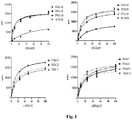
- Fig. 1 shows the GalNAc binding curves for each sample in Example 35.
- Sequence number (SEQ ID NO: ) Description 1 Artificial sequence 2 Artificial sequence 3 Artificial sequence 4 Artificial sequence
- compound 1 was prepared according to the reference ( Choi J Y,Borch R F.Highly efficient synthesis of enantiomerically enriched 2-hydroxymethylaziridines by enzymatic desymmetrization.[J].Organic letters,2007,9(2):215-218 ), and compound R' 1 -H was further prepared to obtain a white solid with a total yield of 49% over two steps.
- N-benzyloxycarbonyl-6-aminocaproic acid 10 g, 37.69 mmol
- 1-ethyl-(3-dimethylaminopropyl) carbonyldiimine hydrochloride EDC. HCL
- N-hydroxysuccinimide 4.67g, 41.46mmol
- dichloromethane 100 mL were added.
- compound R' 1 -H (14.8 g, 37.69 mmol) was added, and the reaction was monitored by TLC and was complete after 4 h.
- the modified oligonucleotide was synthesized according to the theoretical yield of 1 ⁇ mol.
- the process was as follows:
- the modified oligonucleotide was synthesized according to the theoretical yield of 1 ⁇ mol.
- the process was as follows:
- the process was as follows: after the preparation of the modified single-stranded oligonucleotides were completed, the modified single-stranded oligonucleotides were mixed according to an ultraviolet absorption content of 1: 1, heated to 95 °C for three minutes, and then cooled to room temperature to form double strands.
- the modified oligonucleotides with a crude purity of less than 50% were purified in a linear gradient manner by a DNAPAc PA-100 ion exchange column with mobile phase A: 20 mM NaOH; and mobile phase B: 20 mM NaOH + 2M NaCl mixture.
- Modified oligonucleotides for animal experiments were filtered through a 0.22 ⁇ m membrane before injection.
- mice were anesthetized, and the skin and muscle layers were dissected to expose the liver, the perfusion catheter was inserted into the portal vein, and the inferior vena cava was dissected to prepare for liver perfusion.
- Perfusion Solution I Hank's, 0.5 mM EGTA, pH 8) and Perfusion Solution II (Low-glucose DMEM, 100 U/mL Type IV, pH 7.4) were pre-warmed at 40°C, and Perfusion Solution I of 37°C was perfused through the portal vein at a flow rate of 7 mL/min for 5 min until the liver turned off-white. Perfusion Solution II of 37°C was then perfused into the liver at a flow rate of 7 mL/min for 7 min.
- the liver was removed and placed in Solution III (10%FBS low-glucose DMEM, 4°C) to stop digestion, then the liver capsule was cut by the forceps, and the hepatocytes was released by gently shaking.
- the hepatocytes were filtered through a 70 ⁇ m cell filter, centrifuged at 50 g for 2 min with the supernatant discarded.
- the cells were resuspended in Solution IV (40% percoll low-glucose DMEM, 4°C), centrifuged at 100 g for 2 min with the supernatant discarded. Cells were added with 2 % FBS low-glucose DMEM and resuspended for use. Cell viability was identified by Trypan blue staining.
- GalNAc-siRNA was added to each well, respectively.
- Each GalNAc-siRNA was set to a final concentration of 0.9 nM, 2.7 nM, 8.3 nM, 25 nM, 50 nM, or 100 nM.
- the suspensions were incubated at 4°C for 2 h, and centrifuged at 50 g for 2 min with the supernatant discarded.
- the cells were resuspended in 10 ⁇ g/ml PI, stained for 10 min and centrifuged at 50 g for 2 min.
- GalNAc-siRNA could specifically target hepatocytes; the GalNAc ligand has a Kd value of 7.6-53.4 nM with the cell receptor, showing a higher affinity (Ki value 5.2-51.3 nM) compared with the galactose ligand preferred in the prior art ( PCT/US2014/046425 ).
- GalNAc-siRNAs with different conjugate structures show a certain difference in binding ability to the receptor, and structures A3 and A4 show a relatively strong affinity for the receptor (the smaller the Kd value, the greater the affinity). Table 2.
- mice Male, 6-7 week old SPF grade Balb/c-nu mice (purchased from Beijing Vital River Laboratory Animal Technology Co., Ltd.) were used for this study, and were randomly divided into 4 groups, blank control group, P8G8 control group (unconjugated ligand), P8G8-A3 group and P8G8-B3 group. The number of animals in each group was 2, 3, 4 and 4 respectively, and administered by tail vein injection at a dose of about 10 mg/kg (see Table 4 for experimental design). All animals were subjected to in vivo imaging, including white light and X-ray imaging, before administration and 5 min, 30 min, 1 hour, 2 hours, 4 hours, 6 hours after administration.
Landscapes
- Chemical & Material Sciences (AREA)
- Health & Medical Sciences (AREA)
- Life Sciences & Earth Sciences (AREA)
- Organic Chemistry (AREA)
- Engineering & Computer Science (AREA)
- Molecular Biology (AREA)
- Genetics & Genomics (AREA)
- General Health & Medical Sciences (AREA)
- Biochemistry (AREA)
- Biotechnology (AREA)
- Biomedical Technology (AREA)
- Bioinformatics & Cheminformatics (AREA)
- Medicinal Chemistry (AREA)
- Pharmacology & Pharmacy (AREA)
- Animal Behavior & Ethology (AREA)
- Public Health (AREA)
- Veterinary Medicine (AREA)
- Crystallography & Structural Chemistry (AREA)
- Epidemiology (AREA)
- Wood Science & Technology (AREA)
- General Engineering & Computer Science (AREA)
- Zoology (AREA)
- Biophysics (AREA)
- Physics & Mathematics (AREA)
- Plant Pathology (AREA)
- Microbiology (AREA)
- Nuclear Medicine, Radiotherapy & Molecular Imaging (AREA)
- General Chemical & Material Sciences (AREA)
- Chemical Kinetics & Catalysis (AREA)
- Gastroenterology & Hepatology (AREA)
- Botany (AREA)
- Pharmaceuticals Containing Other Organic And Inorganic Compounds (AREA)
- Medicinal Preparation (AREA)
- Saccharide Compounds (AREA)
- Medicines That Contain Protein Lipid Enzymes And Other Medicines (AREA)
Applications Claiming Priority (1)
| Application Number | Priority Date | Filing Date | Title |
|---|---|---|---|
| PCT/CN2017/118591 WO2019127004A1 (zh) | 2017-12-26 | 2017-12-26 | 修饰的寡核苷酸和可用于合成修饰的寡核苷酸的化合物 |
Publications (2)
| Publication Number | Publication Date |
|---|---|
| EP3677588A1 true EP3677588A1 (de) | 2020-07-08 |
| EP3677588A4 EP3677588A4 (de) | 2020-11-25 |
Family
ID=67064319
Family Applications (1)
| Application Number | Title | Priority Date | Filing Date |
|---|---|---|---|
| EP17936469.0A Pending EP3677588A4 (de) | 2017-12-26 | 2017-12-26 | Modifizierte oligonukleotide und verbindung für ihre synthese |
Country Status (5)
| Country | Link |
|---|---|
| US (1) | US11485752B2 (de) |
| EP (1) | EP3677588A4 (de) |
| JP (1) | JP7011080B2 (de) |
| AU (1) | AU2017444369B2 (de) |
| WO (1) | WO2019127004A1 (de) |
Cited By (4)
| Publication number | Priority date | Publication date | Assignee | Title |
|---|---|---|---|---|
| WO2022271806A1 (en) * | 2021-06-24 | 2022-12-29 | Eli Lilly And Company | Novel therapeutic delivery moieties and uses thereof |
| WO2023034719A1 (en) * | 2021-08-30 | 2023-03-09 | Hongene Biotech Corporation | Functionalized n-acetylgalactosamine analogs |
| WO2023114746A1 (en) * | 2021-12-15 | 2023-06-22 | Hongene Biotech Corporation | Functionalized n-acetylgalactosamine analogs |
| US12116382B2 (en) | 2022-11-28 | 2024-10-15 | Hongene Biotech Corporation | Functionalized N-acetylgalactosamine analogs |
Families Citing this family (6)
| Publication number | Priority date | Publication date | Assignee | Title |
|---|---|---|---|---|
| AU2021318943A1 (en) * | 2020-07-27 | 2023-03-02 | Aligos Therapeutics, Inc. | HBV binding oligonucleotides and methods of use |
| KR20230133836A (ko) * | 2021-01-20 | 2023-09-19 | 아르고나 파마슈티컬스 컴퍼니 리미티드 | 리간드 화합물, 접합체 및 이의 응용 |
| WO2023021715A1 (ja) * | 2021-08-17 | 2023-02-23 | 国立大学法人大阪大学 | 糖誘導体および糖-核酸コンジュゲート体 |
| CN115028670B (zh) * | 2022-06-24 | 2023-07-28 | 四川大学华西医院 | 一种n-乙酰基-d-半乳糖胺三聚体前体的制备方法 |
| EP4685144A1 (de) | 2023-05-04 | 2026-01-28 | SFC Co., Ltd. | Nichtfluoreszente verbindung und verwendungen davon |
| CN120230161A (zh) * | 2023-12-29 | 2025-07-01 | 苏州时安生物技术有限公司 | 一种核酸缀合物、其制备方法和应用 |
Family Cites Families (10)
| Publication number | Priority date | Publication date | Assignee | Title |
|---|---|---|---|---|
| WO2009073809A2 (en) * | 2007-12-04 | 2009-06-11 | Alnylam Pharmaceuticals, Inc. | Carbohydrate conjugates as delivery agents for oligonucleotides |
| WO2013089522A1 (ko) * | 2011-12-15 | 2013-06-20 | (주)바이오니아 | 신규한 올리고뉴클레오티드 접합체 및 그 용도 |
| DK2992098T3 (da) * | 2013-05-01 | 2019-06-17 | Ionis Pharmaceuticals Inc | Sammensætninger og fremgangsmåder til modulering af hbv- og ttr-ekspression |
| WO2015042447A1 (en) * | 2013-09-20 | 2015-03-26 | Isis Pharmaceuticals, Inc. | Targeted therapeutic nucleosides and their use |
| WO2015143091A1 (en) | 2014-03-19 | 2015-09-24 | Genzyme Corporation | Site-specific glycoengineering of targeting moieties |
| US9382540B2 (en) * | 2014-05-01 | 2016-07-05 | Isis Pharmaceuticals, Inc | Compositions and methods for modulating angiopoietin-like 3 expression |
| IL316808A (en) * | 2014-08-20 | 2025-01-01 | Alnylam Pharmaceuticals Inc | Modified double-stranded RNA materials and their uses |
| CN106795200B (zh) | 2014-10-10 | 2020-06-19 | 豪夫迈·罗氏有限公司 | Galnac亚磷酰胺、其核酸缀合物及其用途 |
| WO2017178656A1 (en) | 2016-04-14 | 2017-10-19 | Roche Innovation Center Copenhagen A/S | TRITYL-MONO-GalNAc COMPOUNDS AND THEIR USE |
| CN110396121B (zh) | 2016-12-16 | 2020-10-16 | 嘉应学院医学院 | 肝癌靶向糖配体分子及其制备方法和载药系统 |
-
2017
- 2017-12-26 WO PCT/CN2017/118591 patent/WO2019127004A1/zh not_active Ceased
- 2017-12-26 AU AU2017444369A patent/AU2017444369B2/en active Active
- 2017-12-26 US US16/756,855 patent/US11485752B2/en active Active
- 2017-12-26 EP EP17936469.0A patent/EP3677588A4/de active Pending
- 2017-12-26 JP JP2020545836A patent/JP7011080B2/ja active Active
Cited By (8)
| Publication number | Priority date | Publication date | Assignee | Title |
|---|---|---|---|---|
| WO2022271806A1 (en) * | 2021-06-24 | 2022-12-29 | Eli Lilly And Company | Novel therapeutic delivery moieties and uses thereof |
| WO2023034719A1 (en) * | 2021-08-30 | 2023-03-09 | Hongene Biotech Corporation | Functionalized n-acetylgalactosamine analogs |
| US11692001B2 (en) | 2021-08-30 | 2023-07-04 | Hongene Biotech Corporation | Functionalized n-acetylgalactosamine analogs |
| US11884691B2 (en) | 2021-08-30 | 2024-01-30 | Hongene Biotech Corporation | Functionalized n-acetylgalactosamine analogs |
| CN118434751A (zh) * | 2021-08-30 | 2024-08-02 | 兆维生物科技公司 | 官能化的n-乙酰基半乳糖胺类似物 |
| WO2023114746A1 (en) * | 2021-12-15 | 2023-06-22 | Hongene Biotech Corporation | Functionalized n-acetylgalactosamine analogs |
| US11993626B2 (en) | 2021-12-15 | 2024-05-28 | Hongene Biotech Corporation | Functionalized N-acetylgalactosamine analogs |
| US12116382B2 (en) | 2022-11-28 | 2024-10-15 | Hongene Biotech Corporation | Functionalized N-acetylgalactosamine analogs |
Also Published As
| Publication number | Publication date |
|---|---|
| JP2021504454A (ja) | 2021-02-15 |
| AU2017444369A1 (en) | 2020-05-07 |
| EP3677588A4 (de) | 2020-11-25 |
| US11485752B2 (en) | 2022-11-01 |
| AU2017444369B2 (en) | 2022-02-24 |
| JP7011080B2 (ja) | 2022-02-10 |
| WO2019127004A1 (zh) | 2019-07-04 |
| US20200369703A1 (en) | 2020-11-26 |
Similar Documents
| Publication | Publication Date | Title |
|---|---|---|
| EP3677588A1 (de) | Modifizierte oligonukleotide und verbindung für ihre synthese | |
| CN109957566B (zh) | 修饰的寡核苷酸和可用于合成修饰的寡核苷酸的化合物 | |
| JP7365052B2 (ja) | 核酸、当該核酸を含む組成物及び複合体ならびに調製方法と使用 | |
| EP3992291B1 (de) | Neue verbindung und anwendung davon | |
| US6525031B2 (en) | Targeted Oligonucleotide conjugates | |
| Hamzavi et al. | Modulation of the pharmacokinetic properties of PNA: preparation of galactosyl, mannosyl, fucosyl, N-acetylgalactosaminyl, and N-acetylglucosaminyl derivatives of aminoethylglycine peptide nucleic acid monomers and their incorporation into PNA oligomers | |
| CN116854754A (zh) | 一种含有核糖环或其衍生结构的GalNAc化合物及其寡核苷酸缀合物 | |
| CN118291457A (zh) | 一种核酸、含有该核酸的组合物与缀合物及制备方法和用途 | |
| EP3992290A1 (de) | Nukleinsäure, pharmazeutische zusammensetzung und konjugat, verfahren zu ihrer herstellung und ihre verwendung | |
| CN118217305A (zh) | 核酸、药物组合物与缀合物及制备方法和用途 | |
| CN111620927B (zh) | 一种抗体药物偶联物中间体的一锅法制备工艺 | |
| CN114853828B (zh) | 化合物、缀合物及其用途 | |
| JP7618778B2 (ja) | リガンド化合物、コンジュゲート及びその応用 | |
| EP4729072A1 (de) | Galnac-monomer mit ribosering oder einer derivatstruktur davon und verwendung davon bei der auf die leber gerichteten abgabe von kleinen nukleinsäurearzneimitteln | |
| RU2819894C1 (ru) | Лигандные соединения, конъюгаты и их применение | |
| HK40069355A (zh) | 化合物、缀合物及其用途 | |
| WO2025007274A1 (zh) | 一种缀合物及其中间体化合物和用途 | |
| WO2026067609A1 (zh) | 靶向配体修饰的聚乙二醇化脂质,相关的组合物及其应用 | |
| CN116514883A (zh) | 一种糖基没食子酸类衍生物及制备方法与在制备肝脏疾病靶向诊疗材料中的应用 | |
| CN121717859A (zh) | 一种用于递送核酸的载体 | |
| Sallam et al. | SYNTHESIS OF NEW CLASS OF FUCOSIDE AND MANNOSIDE HOMO GLYCODENDRIMERS MULTIVALENT TARGETED LIGANDS |
Legal Events
| Date | Code | Title | Description |
|---|---|---|---|
| STAA | Information on the status of an ep patent application or granted ep patent |
Free format text: STATUS: THE INTERNATIONAL PUBLICATION HAS BEEN MADE |
|
| PUAI | Public reference made under article 153(3) epc to a published international application that has entered the european phase |
Free format text: ORIGINAL CODE: 0009012 |
|
| STAA | Information on the status of an ep patent application or granted ep patent |
Free format text: STATUS: REQUEST FOR EXAMINATION WAS MADE |
|
| 17P | Request for examination filed |
Effective date: 20200331 |
|
| AK | Designated contracting states |
Kind code of ref document: A1 Designated state(s): AL AT BE BG CH CY CZ DE DK EE ES FI FR GB GR HR HU IE IS IT LI LT LU LV MC MK MT NL NO PL PT RO RS SE SI SK SM TR |
|
| AX | Request for extension of the european patent |
Extension state: BA ME |
|
| A4 | Supplementary search report drawn up and despatched |
Effective date: 20201028 |
|
| RIC1 | Information provided on ipc code assigned before grant |
Ipc: A61K 47/54 20170101ALI20201022BHEP Ipc: C07H 21/00 20060101AFI20201022BHEP Ipc: A61P 1/16 20060101ALI20201022BHEP Ipc: C07H 15/04 20060101ALI20201022BHEP Ipc: C07H 1/00 20060101ALI20201022BHEP Ipc: C12N 15/11 20060101ALI20201022BHEP Ipc: A61K 31/7028 20060101ALI20201022BHEP Ipc: C07H 15/08 20060101ALI20201022BHEP |
|
| DAV | Request for validation of the european patent (deleted) | ||
| DAX | Request for extension of the european patent (deleted) | ||
| RAP3 | Party data changed (applicant data changed or rights of an application transferred) |
Owner name: GUANGZHOU RIBOBIO CO., LTD. |
|
| STAA | Information on the status of an ep patent application or granted ep patent |
Free format text: STATUS: EXAMINATION IS IN PROGRESS |
|
| 17Q | First examination report despatched |
Effective date: 20250224 |