EP3677677A1 - Monoklonaler anti-hsv-gb-antikörper oder antigenbindendes fragment davon - Google Patents
Monoklonaler anti-hsv-gb-antikörper oder antigenbindendes fragment davon Download PDFInfo
- Publication number
- EP3677677A1 EP3677677A1 EP18852683.4A EP18852683A EP3677677A1 EP 3677677 A1 EP3677677 A1 EP 3677677A1 EP 18852683 A EP18852683 A EP 18852683A EP 3677677 A1 EP3677677 A1 EP 3677677A1
- Authority
- EP
- European Patent Office
- Prior art keywords
- hsv
- amino acid
- seq
- set forth
- acid sequence
- Prior art date
- Legal status (The legal status is an assumption and is not a legal conclusion. Google has not performed a legal analysis and makes no representation as to the accuracy of the status listed.)
- Withdrawn
Links
Images




Classifications
-
- C—CHEMISTRY; METALLURGY
- C07—ORGANIC CHEMISTRY
- C07K—PEPTIDES
- C07K16/00—Immunoglobulins [IG], e.g. monoclonal or polyclonal antibodies
- C07K16/08—Immunoglobulins [IG], e.g. monoclonal or polyclonal antibodies against material from viruses
- C07K16/081—DNA viruses
- C07K16/085—Orthoherpesviridae (F), e.g. pseudorabies virus or Epstein-Barr virus
- C07K16/087—Herpes simplex virus
-
- A—HUMAN NECESSITIES
- A61—MEDICAL OR VETERINARY SCIENCE; HYGIENE
- A61P—SPECIFIC THERAPEUTIC ACTIVITY OF CHEMICAL COMPOUNDS OR MEDICINAL PREPARATIONS
- A61P31/00—Antiinfectives, i.e. antibiotics, antiseptics, chemotherapeutics
- A61P31/12—Antivirals
- A61P31/20—Antivirals for DNA viruses
- A61P31/22—Antivirals for DNA viruses for herpes viruses
-
- C—CHEMISTRY; METALLURGY
- C07—ORGANIC CHEMISTRY
- C07K—PEPTIDES
- C07K16/00—Immunoglobulins [IG], e.g. monoclonal or polyclonal antibodies
- C07K16/46—Hybrid immunoglobulins
- C07K16/461—Igs containing Ig-regions, -domains or -residues form different species
-
- C—CHEMISTRY; METALLURGY
- C12—BIOCHEMISTRY; BEER; SPIRITS; WINE; VINEGAR; MICROBIOLOGY; ENZYMOLOGY; MUTATION OR GENETIC ENGINEERING
- C12N—MICROORGANISMS OR ENZYMES; COMPOSITIONS THEREOF; PROPAGATING, PRESERVING, OR MAINTAINING MICROORGANISMS; MUTATION OR GENETIC ENGINEERING; CULTURE MEDIA
- C12N15/00—Mutation or genetic engineering; DNA or RNA concerning genetic engineering, vectors, e.g. plasmids, or their isolation, preparation or purification; Use of hosts therefor
- C12N15/09—Recombinant DNA-technology
-
- C—CHEMISTRY; METALLURGY
- C12—BIOCHEMISTRY; BEER; SPIRITS; WINE; VINEGAR; MICROBIOLOGY; ENZYMOLOGY; MUTATION OR GENETIC ENGINEERING
- C12N—MICROORGANISMS OR ENZYMES; COMPOSITIONS THEREOF; PROPAGATING, PRESERVING, OR MAINTAINING MICROORGANISMS; MUTATION OR GENETIC ENGINEERING; CULTURE MEDIA
- C12N5/00—Undifferentiated human, animal or plant cells, e.g. cell lines; Tissues; Cultivation or maintenance thereof; Culture media therefor
- C12N5/10—Cells modified by introduction of foreign genetic material
-
- A—HUMAN NECESSITIES
- A61—MEDICAL OR VETERINARY SCIENCE; HYGIENE
- A61K—PREPARATIONS FOR MEDICAL, DENTAL OR TOILETRY PURPOSES
- A61K39/00—Medicinal preparations containing antigens or antibodies
- A61K2039/505—Medicinal preparations containing antigens or antibodies comprising antibodies
-
- C—CHEMISTRY; METALLURGY
- C07—ORGANIC CHEMISTRY
- C07K—PEPTIDES
- C07K2317/00—Immunoglobulins specific features
- C07K2317/20—Immunoglobulins specific features characterized by taxonomic origin
- C07K2317/21—Immunoglobulins specific features characterized by taxonomic origin from primates, e.g. man
-
- C—CHEMISTRY; METALLURGY
- C07—ORGANIC CHEMISTRY
- C07K—PEPTIDES
- C07K2317/00—Immunoglobulins specific features
- C07K2317/20—Immunoglobulins specific features characterized by taxonomic origin
- C07K2317/24—Immunoglobulins specific features characterized by taxonomic origin containing regions, domains or residues from different species, e.g. chimeric, humanized or veneered
-
- C—CHEMISTRY; METALLURGY
- C07—ORGANIC CHEMISTRY
- C07K—PEPTIDES
- C07K2317/00—Immunoglobulins specific features
- C07K2317/30—Immunoglobulins specific features characterized by aspects of specificity or valency
- C07K2317/34—Identification of a linear epitope shorter than 20 amino acid residues or of a conformational epitope defined by amino acid residues
-
- C—CHEMISTRY; METALLURGY
- C07—ORGANIC CHEMISTRY
- C07K—PEPTIDES
- C07K2317/00—Immunoglobulins specific features
- C07K2317/50—Immunoglobulins specific features characterized by immunoglobulin fragments
- C07K2317/51—Complete heavy chain or Fd fragment, i.e. VH + CH1
-
- C—CHEMISTRY; METALLURGY
- C07—ORGANIC CHEMISTRY
- C07K—PEPTIDES
- C07K2317/00—Immunoglobulins specific features
- C07K2317/50—Immunoglobulins specific features characterized by immunoglobulin fragments
- C07K2317/515—Complete light chain, i.e. VL + CL
-
- C—CHEMISTRY; METALLURGY
- C07—ORGANIC CHEMISTRY
- C07K—PEPTIDES
- C07K2317/00—Immunoglobulins specific features
- C07K2317/50—Immunoglobulins specific features characterized by immunoglobulin fragments
- C07K2317/55—Fab or Fab'
-
- C—CHEMISTRY; METALLURGY
- C07—ORGANIC CHEMISTRY
- C07K—PEPTIDES
- C07K2317/00—Immunoglobulins specific features
- C07K2317/50—Immunoglobulins specific features characterized by immunoglobulin fragments
- C07K2317/56—Immunoglobulins specific features characterized by immunoglobulin fragments variable (Fv) region, i.e. VH and/or VL
- C07K2317/565—Complementarity determining region [CDR]
-
- C—CHEMISTRY; METALLURGY
- C07—ORGANIC CHEMISTRY
- C07K—PEPTIDES
- C07K2317/00—Immunoglobulins specific features
- C07K2317/60—Immunoglobulins specific features characterized by non-natural combinations of immunoglobulin fragments
- C07K2317/62—Immunoglobulins specific features characterized by non-natural combinations of immunoglobulin fragments comprising only variable region components
- C07K2317/622—Single chain antibody (scFv)
-
- C—CHEMISTRY; METALLURGY
- C07—ORGANIC CHEMISTRY
- C07K—PEPTIDES
- C07K2317/00—Immunoglobulins specific features
- C07K2317/70—Immunoglobulins specific features characterized by effect upon binding to a cell or to an antigen
- C07K2317/76—Antagonist effect on antigen, e.g. neutralization or inhibition of binding
-
- C—CHEMISTRY; METALLURGY
- C07—ORGANIC CHEMISTRY
- C07K—PEPTIDES
- C07K2317/00—Immunoglobulins specific features
- C07K2317/90—Immunoglobulins specific features characterized by (pharmaco)kinetic aspects or by stability of the immunoglobulin
- C07K2317/92—Affinity (KD), association rate (Ka), dissociation rate (Kd) or EC50 value
Definitions
- the present invention relates to an anti-HSV gB monoclonal antibody or an antigen-binding fragment thereof.
- HSV Herpes simplex virus
- HSV-1 Two HSV serotypes (HSV-1, HSV-2) are known.
- HSV-1 is mainly responsible for herpes labialis and herpes keratitis and HSV-2 is mainly responsible for genital herpes.
- HSV-1 may often be responsible for genital herpes and HSV-2 may often be responsible for herpes labialis.
- the percentages of antibody-positive persons (previously infected persons) in Japan are 60 to 80% for HSV-1 and 10% for HSV-2 and, even for HSV-2 alone, the potential demand of vaccine is estimated to be 10000000 persons (Non-Patent Literature 2).
- Non-Patent Literature 3 the percentages of antibody-positive persons (previously infected persons) in the United States are 57% for HSV-1 and 20% for HSV-2 (of which, about 10% is latent genital herpes)
- envelope glycoprotein B envelope glycoprotein B
- envelope glycoprotein C envelope glycoprotein C
- gD envelope glycoprotein D
- gH envelope glycoprotein H
- gL envelope glycoprotein L
- Non-Patent Literature 5, 6 heparan sulfate on the cell surface. This process is not essential when HSV enters cells, but is considered to be involved in more efficient entry. Then, the entry process is initiated by the binding of gB and gD to respective host cell receptors and the fusion of the virus envelope and the host cell membrane.
- Known host cell receptors include gB receptors and gD receptors.
- Identified gB receptors include NM-IIA (Non-Patent Literature 7, 8) and MAG (Non-Patent Literature 9).
- Identified gD receptors include Nectin 1 (Non-Patent Literature 10), HVEM (Non-Patent Literature 11), and 3-O-sulfated heparan sulfate (Non-Patent Literature 12).
- the gH/gL heterodimer is known to interact with gB and gD and play an important role in the membrane fusion (Non-Patent Literature 13).
- Non-Patent Literature 14 the structure of gB is a structure similar to that of gG in VSV (vesicular stomatitis virus), which is known as a membrane fusion protein, and this supports that gB is a membrane fusion protein in HSV.
- VSV vesicular stomatitis virus
- gB is also highly conserved in other herpesvirus and considered that its function is shared among herpesviruses.
- antiviral drugs such as aciclovir are used in treatment of HSV, but they cannot remove the virus completely, and the virus is reactivated when the medication is discontinued. This is because HSV takes a special infection form referred to as latent infection to ganglia. Therefore, the development of a preventive vaccine for preventing infection itself with HSV or a therapeutic vaccine that alleviates or palliates symptoms of infection or symptoms of reactivation is desired, but there is currently no effective vaccine, with unmet needs for such a vaccine being high.
- Non-Patent Literature 19 there are concerns for increase of resistant virus strains caused by frequent or long-term use of antiviral drugs such as aciclovir and foscarnet (Non-Patent Literature 19). Furthermore, those antiviral drugs have various side effects such as liver dysfunction, spermatogenic dysfunction, gastrointestinal dysfunction, and kidney dysfunction and cases where drug reduction or drug withdrawal is unavoidable may occur.
- HSV is known to be one of pathogens to which sufficient protective immunity cannot be acquired by a conventional vaccine or previous infection with a pathogen. This is considered to be because HSV has various immunoediting systems and cleverly avoids the immune reaction of the host.
- An object of the present invention is to provide a novel anti-HSV gB monoclonal antibody or an antigen-binding fragment thereof that exhibits HSV-neutralizing effect, suppresses intercellular transmission of HSV, and can be used in the prevention and/or treatment of HSV infection.
- the present inventors obtained 44 anti-gB antibodies by comprehensive search of anti-HSV gB antibodies conducted by using a human antibody library. As a result of examining those antibodies in a virus neutralization test, it was found that the strain designated as monoclonal antibody D48 exhibits strong virus-neutralizing activity (plaque number-reducing activity) on HSV-1 and HSV-2 and intercellular transmission (cell to cell infection spread)-suppression activity and the intensity of the activity overwhelms those of other antibodies. The present inventors performed more detail analysis of monoclonal antibody D48, thereby completing the present invention.
- the present invention relates to the following inventions.
- the anti-HSV gB monoclonal antibody or antigen-binding fragment thereof according to the present invention has strong virus-neutralizing activity (plaque number-reducing activity) to HSV-1 and HSV-2 in vitro, as well as strong cell to cell infection spread (intercellular transmission)- suppression activity, and the anti-HSV gB monoclonal antibody or antigen-binding fragment according to the present invention exhibits significant infection prevention effect not only after preventive administration, but also after therapeutic administration under the situation where HSV infection has been already established in the living body, also in vivo.
- the anti-HSV gB monoclonal antibody or antigen-binding fragment thereof according to the present invention can be applied to the prevention and/or treatment and/or prevention of reactivation of HSV infection and can be used particularly as a preventive agent for immunocompromised patients having high risk of HSV infection or patients undergoing bone marrow transplantation, blood stem cell transplantation, or organ transplantation receiving an immunosuppressive agent, as a therapeutic agent for patients undergoing repetitive reactivation of HSV, or as an alternative drug or a concomitant drug of an existing antiviral drug.
- the anti-HSV gB monoclonal antibody or antigen-binding fragment thereof according to the present invention specifically binds to herpes simplex virus (HSV) envelope glycoprotein B (gB).
- the anti-HSV gB monoclonal antibody or antigen-binding fragment thereof according to the present invention comprises a heavy chain variable region comprising a heavy chain CDR1 consisting of the amino acid sequence set forth in SEQ ID NO: 3, a heavy chain CDR2 consisting of the amino acid sequence set forth in SEQ ID NO: 4, and a heavy chain CDR3 consisting of the amino acid sequence set forth in SEQ ID NO: 5, and a light chain variable region comprising a light chain CDR1 consisting of the amino acid sequence set forth in SEQ ID NO: 6, a light chain CDR2 consisting of the amino acid sequence set forth in SEQ ID NO: 7, and a light chain CDR3 consisting of the amino acid sequence set forth in SEQ ID NO: 8.
- the present inventors obtained 44 anti-gB antibodies by comprehensive search of anti-HSV-2 gB antibodies conducted by using a human antibody library. As a result of examining those antibodies in a virus neutralization test, monoclonal antibody D48 exhibited strong plaque number-reducing activity and cell to cell infection spread-suppression activity.
- Antibody D48 has a heavy chain variable region (VH) having the amino acid sequence set forth in SEQ ID NO: 1 and a light chain variable region (VL) having the amino acid sequence set forth in SEQ ID NO: 2 and a heavy chain variable region comprising a heavy chain CDR1, a heavy chain CDR2, and a heavy chain CDR3 consisting of the amino acid sequences set forth in SEQ ID NOs: 3-5 and a light chain variable region comprising a light chain CDR1, a light chain CDR2, and a light chain CDR3 consisting of amino acid sequences set forth in SEQ ID NOs: 6-8, shown in Table 1.
- VH and VL amino acid sequences of antibody D48 and CDRs thereof Region Amino acid sequence SEQ ID NO: VH 1 VL 2 VH CDR1 SGSAMH 3 CDR2 VISHDGNIIQYHDSVKG 4 CDR3 DVWLLPATISYAFDF 5 VL CDR1 RASQGISNSIA 6 CDR2 AAYRLQS 7 CDR3 QQYYDNPLT 8
- the anti-HSV gB monoclonal antibody or antigen-binding fragment thereof comprises CDR sequences of monoclonal antibody D48, it has strong virus-neutralizing activity (plaque number-reducing activity) to HSV-1 and HSV-2, as well as strong cell to cell infection spread (intercellular transmission)-suppression activity.
- the anti-HSV gB monoclonal antibody or antigen-binding fragment thereof may comprise a heavy chain variable region comprising the amino acid sequence set forth in SEQ ID NO: 1 and a light chain variable region comprising the amino acid sequence set forth in SEQ ID NO: 2.
- the anti-HSV gB monoclonal antibody is an antibody comprising at least a heavy chain variable domain and a light chain variable domain and may be a complete antibody.
- the complete antibody has 2 full length light chains and 2 full length heavy chains and the light chains and respective heavy chains are linked by disulfide bonds.
- the complete antibody includes IgA, IgD, IgE, IgM, and IgG, and IgG includes IgG 1 , IgG 2 , IgG 3 , and IgG 4 as subtypes.
- the antigen-binding fragment is also referred to as the antibody fragment and means a fragment with the function of binding to antigens (antigen-binding fragment).
- the antigen-binding fragment includes, for example, single chain variable region fragment (scFv), Fab, Fab', F(ab') 2 , scAb, scFvFc, and Fv.
- Fab has one antigen-binding site as a structure having light chain and heavy chain variable regions and a light chain invariable region and the first heavy chain invariable region (CHI domain).
- Fab' is different from Fab in that it has a hinge region containing at least a cysteine residue at the C terminus of the heavy chain CHI domain.
- F(ab') 2 antibody is produced by a disulfide bond between cysteine residues of the hinge region of Fab'.
- Fv (variable fragment) means the minimum antigen-binding fragment having only a heavy chain variable site and a light chain variable site.
- Double-stranded Fv (dsFv) has a heavy chain variable site linked with a light chain variable site by a disulfide bond and single chain Fv (scFv) has a heavy chain variable region linked with a light chain variable region by a covalent bond usually through a peptide linker.
- scAb is a fragment in which a partial domain (C domain) in an L-chain or H chain constant region is bound to scFv.
- scFvFc is a fragment in which CH1 and CH2 of the H chain are linked to scFv.
- the antigen-binding fragment can be obtained, for example, from a complete antibody using a proteolytic enzyme.
- the Fab fragment can be obtained by digesting a complete antibody with papain and the F(ab') 2 fragment can be obtained by digesting a complete antibody with pepsin.
- the antigen-binding fragment can be produced using a gene recombination technique.
- the light chain and heavy chain variable regions contain 3 highly variable regions called complementarity-determining regions (hereinafter, referred to as "CDRs").
- the CDRs mainly serve to bind to antigenic epitopes.
- the 3 CDRs are respectively called CDR1, CDR2, CDR3 in the order from the N-terminus.
- the anti-HSV gB monoclonal antibody may be a human antibody (fully human antibody), a humanized antibody, or a chimeric antibody and is preferably a human monoclonal antibody or a humanized monoclonal antibody, in particular.
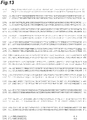
- HSV gB includes gB derived from HSV-1 and gB derived from HSV-2 and Figure 13 illustrates the result of comparison by multiple alignment of an amino acid sequence (SEQ ID NO: 10) of gB derived from HSV-1 and an amino acid sequence (SEQ ID NO: 11) of gB derived from HSV-2. According to Figure 13 , the identity between both sequences is 87%.
- the anti-HSV gB monoclonal antibody or antigen-binding fragment thereof specifically binds to either of gB derived from HSV-1 and gB derived from HSV-2, particularly to domain II of gB and more particularly to I383-R388 of domain II of gB derived from HSV-1 or at least 1, at least 2, or furthermore at least 3 amino acid residues in the region corresponding to I386-R391 of domain II of gB derived from HSV-2.
- the anti-HSV gB monoclonal antibody or antigen-binding fragment thereof according to this embodiment is considered to have the following 2 merits over existing antiviral drugs: (1) few side effects and (2) low risk of emergence of a resistant viral strain.
- the emergence of HSV resistance that would be caused by a mutation in the epitope sequence in the gB protein is considered to be unlikely because the anti-HSV gB monoclonal antibody or antigen-binding fragment thereof according to this embodiment is an antibody that specifically binds to an epitope sequence on the HSV-1 and HSV-2 envelope surface glycoprotein B (gB) indispensable for the virus replication cycle and therefore it is considered that such a mutation itself should cause the loss of virus infectivity titer.
- gB envelope surface glycoprotein B
- the anti-HSV gB monoclonal antibody or antigen-binding fragment thereof specifically binds to at least one amino acid residue in the region consisting of the amino acid residues 383-388 of the herpes simplex virus -1 (HSV-1) envelope glycoprotein B (gB) set forth in SEQ ID NO: 10, and/or at least one amino acid residue in the region consisting of the amino acid residues 386-391 of the herpes simplex virus-2 (HSV-2) envelope glycoprotein B (gB) set forth in SEQ ID NO: 11.
- Examples of the anti-HSV gB monoclonal antibody or an antigen-binding fragment thereof include those comprising a heavy chain variable region comprising a heavy chain CDR1 consisting of the amino acid sequence set forth in SEQ ID NO: 3, a heavy chain CDR2 consisting of the amino acid sequence set forth in SEQ ID NO: 4, and a heavy chain CDR3 consisting of the amino acid sequence set forth in SEQ ID NO: 5, and a light chain variable region comprising a light chain CDR1 consisting of the amino acid sequence set forth in SEQ ID NO: 6, a light chain CDR2 consisting of the amino acid sequence set forth in SEQ ID NO: 7, and a light chain CDR3 consisting of the amino acid sequence set forth in SEQ ID NO: 8.
- a polynucleotide encoding the monoclonal antibody or antigen-binding fragment thereof, an expression vector comprising the polynucleotide and one or more regulatory sequences operably linked to the polynucleotide, and a transformant comprising the expression vector are provided.
- the polynucleotide may be a polynucleotide encoding a complete antibody and may be polynucleotides respectively encoding antigen-binding fragments comprising the amino acid sequences set forth in SEQ ID NOs: 1 to 8 and polynucleotides encoding a plurality of CDRs may be incorporated in one polynucleotide.
- a polynucleotide can be obtained, for example, by chemical synthesis.
- the expression vector comprising a polynucleotide encoding an anti-HSV gB monoclonal antibody or an antigen-binding fragment thereof and one or more regulatory sequences operably linked to the polynucleotide according to this embodiment is not particularly limited, but may be a vector that can replicate and/or express a polynucleotide in host cells. Examples thereof include pCAG and pET.
- the regulatory sequence is a sequence that controls the expression of a polynucleotide in host cells (for example, a promoter, an enhancer, a ribosome-binding sequence, and a transcription termination sequence) and can be selected as appropriate depending on the kind of the host.
- the expression vector is operably linked to an appropriate promoter so that the polynucleotide can be expressed in host cells and may be a vector comprising a selection marker.
- polynucleotides respectively encoding antigen-binding fragments comprising the amino acid sequences set forth in SEQ ID NOs: 1 to 8, for example, a polynucleotide encoding a heavy chain variable region and a polynucleotide encoding a light chain variable region may be expressed with separate vectors.
- the host cells are not particularly limited as long as they are those that can express an antibody, but examples thereof include cells of a mammalian animal such as human, Chinese hamster, mouse, rat, rabbit, pig, monkey, goat, and horse, plant cells, yeast cells, insect cells, or bacterial cells.
- a mammalian animal such as human, Chinese hamster, mouse, rat, rabbit, pig, monkey, goat, and horse, plant cells, yeast cells, insect cells, or bacterial cells.
- Methods for transforming the host cells are not particularly limited, but conventionally known methods such as electroporation, the calcium phosphate method, the liposome method, and the DEAE dextran method can be suitably used.
- the monoclonal antibody or antigen-binding fragment thereof can be prepared, for example, by a known method of genetic engineering.
- the monoclonal antibody or antigen-binding fragment thereof can be prepared, for example, by expressing a vector comprising the polynucleotide encoding an anti-HSV gB monoclonal antibody or an antigen-binding fragment thereof in host cells.
- a vector comprising the polynucleotide encoding an anti-HSV gB monoclonal antibody or an antigen-binding fragment thereof in host cells.
- Those skilled in the art can appropriately design the polynucleotide depending on whether the antibody is a human antibody, a humanized antibody, or a chimeric antibody.
- the polypeptide may further comprise in addition to the heavy chain and light chain variable regions set forth in SEQ ID NOs: 1 and 2 or polynucleotides encoding heavy chain CDR1-3 and light chain CDR1-3 set forth SEQ IDs NO: 3 to 8, at least a part of a polynucleotide encoding the amino acid sequence of the parts other than these parts of the human antibody.
- such a polypeptide can be obtained by functionally linking a polynucleotide encoding the variable regions or CDR1-3 and a polynucleotide encoding the other parts in the right order.
- Polynucleotides encoding a heavy chain and a light chain may be incorporated in one polynucleotide or separate polynucleotides. Moreover, the polynucleotide may further comprise a polynucleotide(s) encoding a promoter for the expression and/or a tag necessary for confirmation of the expression.
- the other parts other than the heavy chain and light chain variable regions set forth in SEQ ID NOs: 1 and 2 or the polynucleotides encoding heavy chain CDR1-3 and light chain CDR1-3 set forth SEQ IDs NO: 3 to 8 may comprise a polynucleotide encoding an amino acid sequence derived from an animal such as mouse or guinea pig.
- a further embodiment provides a pharmaceutical composition for preventing or treating HSV infection, comprising an anti-HSV gB monoclonal antibody or an antigen-binding fragment thereof.
- the HSV infection comprises infection with HSV-1 and HSV-2 and examples thereof include herpes labialis, herpetic keratitis, genital herpes, systemic neonatal herpes, and stomatitis, dermatosis, encephalitis, meningitis, and myelitis caused by HSV.
- the treatment means palliation, improvement, or complete remission of symptoms by administration to a subject having already established HSV infection in the living body and includes the prevention of recurrence by administration to a subject undergoing repetitive HSV recurrence.
- the pharmaceutical composition for treating HSV infection may be used as an alternative drug or a concomitant drug of existing antiviral drugs.
- the pharmaceutical composition may further comprise a pharmaceutically acceptable carrier.
- the pharmaceutically acceptable carrier is not particularly limited, but examples thereof include water, salt solutions, phosphate buffered physiological saline, dextrose, glycerol, ethanol, and the like. One of these carriers may be used alone or of two or more thereof may be used in a combination.
- the pharmaceutical composition may be formulated into tablets, granules, capsules, an injection, an instillation, an inhaler, or a poultice.
- the pharmaceutical composition may further comprise a small amount of an auxiliary substance that improves preservation or efficacy of an antibody or an antibody portion, for example, a lubricant, an emulsifier, an antiseptic, a buffer, an stabilizing agent.
- the isolated antibody D48 scFv (single chain Fv) gene encoding the amino acid sequence set forth in SEQ ID NO: 9 was linked to an Fc gene (CH2-CH3) derived from human IgG1 and cloned into the pCAG vector to construct an scFv-Fc expression plasmid.
- Fc gene CH2-CH3 derived from human IgG1
- Expi293 expression system Life Technology Inc.
- Cells were transfected with the expression plasmid and culture supernatant was collected in 4 to 6 days. The culture supernatant was purified using Ab-Rapid PuRe 10 (ProteNova) or Ab-Rapid PuRe Ex (ProteNova) to obtain an scFv-hFc.
- the VH region of the isolated antibody D48 scFv gene was linked to a CHI gene derived from murine IgG2a and cloned into the pCAG vector to construct an H chain expression plasmid.
- the VL region of the antibody D48 scFv gene was linked to a murine CL gene and cloned into the pCAG vector to construct an L chain expression plasmid.
- His tag gene was linked after (on the C terminal side of) the CHI gene.
- FreeStyle293 or Expi293 expression system was used. Cells were transfected with the expression plasmid and culture supernatant was collected in 4 to 6 days. The culture supernatant was purified using Ni NTAAgarose (QIAGEN) to obtain a Fab.
- the VH region of the isolated antibody D48 scFv gene was linked to an H chain constant region gene (CH1-CH2-CH3) derived from murine IgG2a and cloned into the pCAG vector to construct an H chain expression plasmid.
- the VL region of the antibody D48 scFv gene was linked to a murine CL gene and cloned into the pCAG vector to construct an L chain expression plasmid.
- FreeStyle293 or Expi293 expression system was used for expression. Cells were transfected with the expression plasmid and culture supernatant was collected in 4 to 6 days. Culture supernatant was purified using a Hi Trap ProteinA HP Column (GE Healthcare) to obtain a human-murine chimeric IgG2a.
- the VH region of the isolated antibody D48 scFv gene was linked to an H chain constant region gene (CH1-CH2-CH3) derived from guinea pig IgG2a and cloned into the pCAG vector to construct an H chain expression plasmid.
- the VL region of the antibody D48 scFv gene was linked to a murine CL gene and cloned into the pCAG vector to construct an L chain expression plasmid.
- FreeStyle293 or Expi293 expression system was used for expression. Cells were transfected with the expression plasmid and culture supernatant was collected in 4 to 6 days. Culture supernatant was purified using a Hi Trap ProteinA HP Column to obtain a human-guinea pig chimeric IgG2 ⁇ .
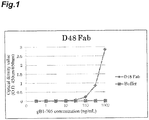
- the binding activity of the obtained Fab was evaluated by ELISA.
- the Fab was diluted to 2 ⁇ g/mL in PBS and immobilized by transferring 100 ⁇ L into a MaxiSorp plate (Nunc) and incubating the plate at room temperature for 2 hours. After the immobilization, the plate was washed with PBS and 100 ⁇ L solutions of a recombination HSV-1 gB (gB1-705-strep) serially diluted 3.16-fold each from 1 ⁇ g/mL to 0.316 ng/ml were added to wells of the plate, which was incubated at 37°C.
- the plate was washed with PBST and 100 ⁇ L aliquots of the detection antibody anti-strep-Tactin/HRP (Funakoshi) were added to the wells of the plate, which was incubated at 37°C.
- the plate was washed with PBST and 100 ⁇ L of TMB (3,3',5,5'-tetramethylbenzidine) was added to each well of the plate for the color development.
- TMB 3,3',5,5'-tetramethylbenzidine
- the recombinant gB (gB1-705-strep) used was one obtained by connecting Strep tagII to the C terminus of the ectodomain of the wild type gB, derived from HSV-2 strain 333, consisting of 1st to 705th amino acid residues of the amino acid sequence set forth in SEQ ID NO: 11 and the purification and the detection by ELISA were conducted using this tag.
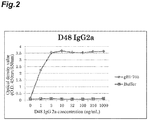
- the binding activity of the obtained human-murine chimeric IgG2a was evaluated by ELISA.
- a recombinant gB (gB1-705-strep) was diluted to 1 ⁇ g/mL with PBS and 100 ⁇ L was transferred into a MaxiSorp plate and the recombinant gB (gB1-705-strep) was immobilized by incubating the plate at room temperature for 1 hour. After the immobilization, the plate was washed with PBS and 100 ⁇ L solutions of the human-murine chimeric IgG2a serially diluted 3.16-fold each from 1 ⁇ g/mL to 0.316 ng/ml were added to wells of the plate, which was incubated at 37°C.
- the plate was washed with PBST and 100 ⁇ L solutions of the detection antibody rabbit anti-mouse IgG/HRP (invitrogen) was added to the wells of the plate, which was incubated at 37°C.
- the plate was washed with PBST and 100 ⁇ L of TMB was added to each well of the plate for the color development. 30 minutes later, the reaction was stopped with 1 N sulfuric acid and the color value (O.D. 450 nm/650 nm) was measured with a microplate reader.
- the human-murine chimeric IgG2a exhibited specific binding to the recombinant gB (gB1-705-strep), as illustrated in Figure 2 .
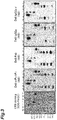
- nitrocellulose membrane was incubated with anti-hIgG (H+L)/HRP (BIORAD), anti-His tag/HRP (R & D), anti-mouse IgG (H+L)/HRP, or anti-guinea pig (H+L)/HRP (Invitrogen) in 2% skim milk-PBST and developed in Immobilon Western Detection Regent (Millipore). Native gB1-705-strep, denatured gB1-705-strep and reduced and denatured gB1-705-strep were prepared.
- the reduced and denatured gB1-705-strep was obtained by adding 1 M DTT and boiling the mixture at 96°C for 5 minutes.
- the denatured gB1-705-strep was obtained by boiling gB1-705-strep at 96°C for 5 minutes.
- the native gB1-705-strep is gB1-705-strep without these treatments.
- the prepared native gB1-705-strep, denatured gB1-705-strep, and reduced and denatured gB1-705-strep were directly loaded into a gel.
- Lanes 1 to 3 were native gB1-705-strep, denatured gB1-705-strep, and reduced and denatured gB1-705-strep, in order, and Lanes M and M' were respectively BenchMark prestained Ladder and Magic Western standard.
- the left photograph is of SDS-PAGE and CBB staining was performed for the band staining.
- the 4 right photographs were the results of Western blotting (WB).
- the original scFv-hFc had an interesting characteristic to strongly react to reduced and denatured gB1-705-strep in comparison with native gB1-705-strep and this characteristic was shared to the Fab form, the human-murine chimeric IgG2a form, and the human-guinea pig chimeric IgG2 ⁇ form, which are the modified molecule forms. It is considered that antibodies that strongly react to denatured antigen epitopes are likely to recognize linear sequences. Accordingly, it is speculated that antibody D48 recognizes a linear sequence of gB from this result.
- the analysis was performed using Biacore T200 (GE Healthcare). In all experiments, HBS-EP+buffer was used and the temperature was set at 25°C and the flow rate was set to 30 ⁇ L/m.
- the sensor tip used was CM5 (GE Healthcare) and about 100 resonance units (RU) of gB1-705-strep was immobilized. The measurement is conducted in the single cycle kinetics mode.
- scFv-hFc was used at 128 nM, 64 nM, 32 nM, 16 nM, 8 nM; Fab was used at 64 nM, 32 nM, 16 nM, 8 nM, 4 nM; and human-murine chimeric IgG2a, human-guinea pig chimeric IgG2 ⁇ , monoclonal antibody E31, and monoclonal antibody F67 were used at 256 fold, 128 fold, 64 fold, 32 fold, and 16 fold dilutions. All samples were measured only once. Monoclonal antibody E31 and monoclonal antibody F67 are both antibodies that recognizes domain IV of gB.
- the genes in which the charged amino acid residues (187 positions) in gB1-705 were changed to alanine were constructed by PCR and cloned into pCAGGS1-dhfr-neo.
- FreeStyle293 or Expi293 expression system was used for expression.
- the expression levels of the obtained gB alanine substitutes and the binding activity of alanine substitutes to the antibody fragment was evaluated by ELISA.
- Culture supernatants containing the gB alanine substitutes were transferred to a MaxiSorp plate and the gB alanine substitutes were immobilized by incubating the plate at room temperature for 1 hour. After the immobilization, the plate was washed with PBST and 100 ⁇ L solutions of the detection antibody StrepTactin/HRP (IBA) were added to the wells of the plate, which was incubated at room temperature. One hour later, the plate was washed with PBST and 100 ⁇ L solutions of TMB were added to the wells of the plate for the color development. 30 minutes later, the reaction was stopped with 1 N sulfuric acid and the color values (O.D. 450 nm/650 nm) were measured with a microplate reader to determine the expression levels.
- IBA detection antibody StrepTactin/HRP
- the culture supernatants containing the gB alanine substitutes were transferred into a MaxiSorp plate on which Streptactin (IBA) was immobilized and the gB alanine substitutes were immobilized by incubating the plate at room temperature for 1 hour.
- the plate was washed with PBST and 100 ⁇ L solutions of the antibody fragment were added to the wells of the plate, which was incubated at room temperature.
- the plate was washed with PBST and 100 ⁇ L solutions of the detection antibody anti-human Fc/HRP (Cosmo bio) were added into the wells of the plate, which was incubated at room temperature.
- the plate was washed with PBST and 100 ⁇ L solutions of TMB were added to the wells of the plate for the color development. 30 minutes later, the reaction was stopped with 1 N sulfuric acid and the color values (O.D. 450 nm/650 nm) were measured with a microplate reader to determine the binding activity. Epitope candidates were selected on the basis of whether the reactivity per expression level is changed in comparison with that of the wild type gB1-705 with no alanine substitution.
- R391 on domain II of gB is an amino acid residue that is important as an epitope.
- Alanine scanning is an analysis that targets only hydrophilic residues and the possibility that other non-hydrophilic residues may be epitopes was well expected.
- HDX-MS hydrogen-deuterium exchange mass spectrometry
- HDX-MS has already become an established technique with applied results in many fields and, particularly in the epitope analysis of antibodies, it has become an important technique in that it allows analysis of conformational epitopes with maintaining the conformation in solution.
- the procedure of the experiment was as follows. 120 ⁇ M gB1-705 and 400 ⁇ M antibody D48 Fab that are the same amount were mixed to prepare a gB1-705/antibody D48 Fab complex. This complex was prepared in PBS (pH 7.2) and H/D exchange reaction was performed at 20°C using PBS (pD7.2) as a deuterium buffer. To the complex after the reaction were added Quench buffer (100 mM sodium phosphate, 150 mM sodium chloride, 4M guanidine hydrochloride, 150 mM tris(2-carboxyethyl)phosphine hydrochloride (TCEP)) and a mixture was prepared to be pH 2.4.
- Quench buffer 100 mM sodium phosphate, 150 mM sodium chloride, 4M guanidine hydrochloride, 150 mM tris(2-carboxyethyl)phosphine hydrochloride (TCEP)
- the complex was processed into peptide fragments, which were analyzed by LC-MS. Digestion and elution conditions in this process were Injected sample: 75 pmol, time for pepsin digestion + desalination: 6 minutes, gradient condition for LC: 9 minutes. 192 peptides were common to three times of measurement of gB1-705, gB1-705/antibody D48 Fab complex under such conditions and the sequence coverage was 99.2%.
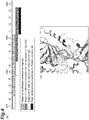
- pepsin is used as a digestive enzyme in this study and it was not possible to obtain any peptide containing R391, but, taken together, the possibility that I386-R391 in HSV-2 gB set forth in SEQ ID NO: 11 is an epitope of antibody D48 is considered to be very high. Moreover, it is considered that there is a possibility that either one of D389, R388, G387, and 1386 is the epitope. Furthermore, it is also possible that a part of the epitope is composed of a residue after R391.
- I386-R391 forms an alpha helix located in the protein-solvent interface of gB domain II and is considered to be a site easily accessible to antibodies.
- L416-L422 did not satisfy the criteria for hit, but a difference in the deuterium exchange rate was detected. Since L416-L422 is located more inside in the structure than I386-R391 and resides at the position that is unlikely to be exposed to solvent, this difference in deuterium exchange rate is considered to reflect the effect of structural change.
- Non-Patent Literature 18 While C226, H1838, and H1781, of already reported antibodies, are known as anti-HSV gB monoclonal antibodies to recognize epitopes on domain II of HSV gB and approximate epitopes and in vitro bioactivity have been reported, there is no report on details of in vivo bioactivity (Non-Patent Literature 18).
- Vero cells For culture of viruses, measurement of infectivity titer, and measurement of neutralizing antibody titer, Vero cells (CCL.81) purchased from ATCC were used. The Vero cells were cultured under conditions at 37°C and 5% CO 2 . A MEM medium supplemented with 10% FBS was used at the time of preparing plates for expansion, maintenance, and analysis and an MEM medium supplemented with 2% FBS was used at the time of the measurement of infectivity titer and the measurement of neutralizing antibody titer.
- HSV-2 human herpesvirus 2
- HSV-1 human herpesvirus 1
- VR-1493 human herpesvirus 1
- HSV-2 human herpesvirus 2
- HSV-1 human herpesvirus 1
- VR-1493 human herpesvirus 1 strain KOS
- the neutralization test was conducted using 2 methods: the measurement of plaque number-reducing activity (plaque reducution activity) and the measurement of cell to cell infection spread-suppression activity.
- the viruses used in the test were 2 viruses: HSV-2 strain MS and HSV-1 strain KOS.
- a test antibody is prepared at a predetermined concentration and mixed with about 100 PFU of HSV-2 strain MS or HSV-1 strain KOS and then incubated at 37°C for 1 hour.
- the resultant reaction solution was seeded onto Vero cells allowed to become full sheets in a 48-well plate, left for the adsorption at 30°C for 1 hour, and then cultured in a MEM (2% FBS) medium supplemented with 1% methylcellulose for 24 hours, and then the inactivation and the fixation were performed with 50% methanol/50 % ethanol (-20°C) at -20°C for 30 minutes.
- HSV-2 strain MS or HSV-1 strain KOS was inoculated onto Vero cells allowed to become full sheets in a 48-well plate and left for the adsorption at 30°C for 1 hour, and then a MEM (2% FBS) medium supplemented with 1% methylcellulose containing a test antibody at a predetermined concentration (the antibody concentrations are 5, 25 and 125 ⁇ g/mL) was added; and HSV-2 strain MS was cultured for about 40 hours and HSV-1 strain KOS was cultured for 48 hours and then the inactivation and the fixation were performed with 50% methanol/50 % ethanol (-20°C) at -20°C for 30 minutes.
- MEM 2% FBS
- an infection-prevention test upon preventive administration and therapeutic administration of an anti-HSV gB monoclonal antibody (human-murine chimeric IgG2a) was conducted.
- BALB/c mice (5 weeks old, female) were used.
- a predetermined amount of the antibody was dissolved in physiological saline for injection and the antibody was administered to the mice.
- the antibody in a volume of 200 ⁇ L/animal was intraperitoneally administered 24 hours before the inoculation of virus.
- therapeutic administration the antibody in a volume of 200 ⁇ L/animal was intraperitoneally administered 48 hours before the inoculation of virus.
- mice infection prevention abilities of the 3 anti-HSV gB2 antibodies D48, F67, and E31 (all human-murine chimeric IgG2a) set forth in Table 4 were evaluated and compared. While antibody D48 is an antibody having an epitope in domain II region of HSV gB and having strong virus-neutralizing activity (50% plaque number-reducing activity), F67 and E31 both have an epitope in domain IV region and the former had no virus-neutralizing activity and the latter had intermediate virus-neutralizing activity.
- the survival time after the infection and the mean thereof are shown in Table 5 and the mean of survival rate (%) after the infection is shown in Figure 5 .
- As to the mouse infection prevention ability while antibody D48 exhibited prominent survival time prolongation effect at 30 ⁇ g/animal/dose and 3 ⁇ g/animal/dose and significant survival time prolongation effect even at 0.3 ⁇ g/animal/dose, F67 and E31 both exhibited only limited effect. From this result, the possibility was suggested that antibody D48 has prominent infection prevention activity in comparison with other anti-HSV gB2 antibodies not only in vitro but also in vivo and the superiority is based on the difference of epitope region and affinity.
- the results of preventive administration are shown in Table 6 (survival time by dosage), Figure 6 (survival rate), and Figure 7 (symptom score).
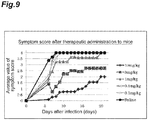
- the results of therapeutic administration are shown in Table 7 (survival time by dosage), Figure 8 (survival rate), and Figure 9 (symptom score).
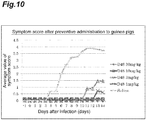
- an infection-prevention test upon preventive administration and therapeutic administration of an anti-HSV gB monoclonal antibody D48 (human-guinea pig chimeric IgG2k) was conducted.
- a predetermined amount of the antibody was dissolved in physiological saline for injection and the antibody was intraperitoneally administered at a dose of 1 mg/kg to 30 mg/kg 24 hours before the viral inoculation in the case of preventive administration and 4 days after the viral inoculation in the case of therapeutic administration.
- the symptom scores were defined as follows: 0: no apparent lesions, 0.5 to 1: erythema, 1.5 to 2: localized vesicles, 2.5 to 3: localized ulcer or crust, 3 to 5: extended vesicles, ulcer, or crust, 3 to 7: extended ulcer or crust with incontinence, 7.5: euthanization due to serious symptoms, and 8: death.
- vaginal swabs were collected and the amount of virus release was measured by the plaque method.
- the vagina swabs were collected by inserting a cotton swab wet with the MEM medium into vagina and then wiping the mucosa of the intravaginal wall.
- vaginal swabs Collected vaginal swabs were suspended in 1 mL aliquots of the MEM medium dispensed in siliconized tubes and cryopreserved until use. When measuring the amount of virus release, the vagina swabs were diluted 1-fold, 10-fold, 100-fold, and 1000-fold and inoculated at 100 ⁇ L/well onto Vero cells allowed to become full sheets in 96-well or 48-well. Virus adsorption was performed at 37°C for 1 hour after the inoculation of vaginal swabs and the number of plaques was measured by a predetermined method after culturing in 2% FBS MEM medium supplemented with of 1% methylcellulose for 24 to 72 hours.
- the result of the symptom score of infection-prevention test of preventive administration of antibody D48 (human-guinea pig chimeric IgG2 ⁇ ) is shown in Figure 10
- the result of the symptom score of the therapeutic administration infection-prevention test is shown in Figure 11
- the amount of HSV release in the vaginal swab in the therapeutic administration infection-prevention test using a guinea pig model of genital herpes infection (acute phase) is shown in Figure 12 .
- novel anti-HSV gB monoclonal antibodies that exhibit strong HSV-neutralizing effect and can suppress cell to cell spread of HSV can be provided.
- the antibodies can be applied to the prevention and/or the treatment of HSV infection and used as a preventive agent for immunocompromised patients having high risk of HSV infection or patients underging bone marrow transplantation, blood stem cell transplantation, or organ transplantation receiving an immunosuppressive agent, as a therapeutic agent for patients undergoing repetitive reactivation of HSV, or as an alternative drug or a concomitant drug of existing antiviral drugs.
Landscapes
- Health & Medical Sciences (AREA)
- Life Sciences & Earth Sciences (AREA)
- Chemical & Material Sciences (AREA)
- Organic Chemistry (AREA)
- Genetics & Genomics (AREA)
- Virology (AREA)
- Engineering & Computer Science (AREA)
- General Health & Medical Sciences (AREA)
- Molecular Biology (AREA)
- Biotechnology (AREA)
- Medicinal Chemistry (AREA)
- Biochemistry (AREA)
- Immunology (AREA)
- Biophysics (AREA)
- Bioinformatics & Cheminformatics (AREA)
- Wood Science & Technology (AREA)
- Biomedical Technology (AREA)
- Zoology (AREA)
- Proteomics, Peptides & Aminoacids (AREA)
- General Engineering & Computer Science (AREA)
- Nuclear Medicine, Radiotherapy & Molecular Imaging (AREA)
- Animal Behavior & Ethology (AREA)
- Tropical Medicine & Parasitology (AREA)
- Communicable Diseases (AREA)
- Oncology (AREA)
- Chemical Kinetics & Catalysis (AREA)
- General Chemical & Material Sciences (AREA)
- Veterinary Medicine (AREA)
- Pharmacology & Pharmacy (AREA)
- Public Health (AREA)
- Microbiology (AREA)
- Cell Biology (AREA)
- Physics & Mathematics (AREA)
- Plant Pathology (AREA)
- Peptides Or Proteins (AREA)
- Preparation Of Compounds By Using Micro-Organisms (AREA)
- Micro-Organisms Or Cultivation Processes Thereof (AREA)
- Medicinal Preparation (AREA)
- Medicines Containing Antibodies Or Antigens For Use As Internal Diagnostic Agents (AREA)
Applications Claiming Priority (2)
| Application Number | Priority Date | Filing Date | Title |
|---|---|---|---|
| JP2017165968 | 2017-08-30 | ||
| PCT/JP2018/032019 WO2019044926A1 (ja) | 2017-08-30 | 2018-08-29 | 抗HSV gBモノクローナル抗体又はその抗原結合断片 |
Publications (2)
| Publication Number | Publication Date |
|---|---|
| EP3677677A1 true EP3677677A1 (de) | 2020-07-08 |
| EP3677677A4 EP3677677A4 (de) | 2021-09-22 |
Family
ID=65525762
Family Applications (1)
| Application Number | Title | Priority Date | Filing Date |
|---|---|---|---|
| EP18852683.4A Withdrawn EP3677677A4 (de) | 2017-08-30 | 2018-08-29 | Monoklonaler anti-hsv-gb-antikörper oder antigenbindendes fragment davon |
Country Status (6)
| Country | Link |
|---|---|
| US (1) | US11472867B2 (de) |
| EP (1) | EP3677677A4 (de) |
| JP (1) | JP7145862B2 (de) |
| CN (1) | CN111148832A (de) |
| AU (1) | AU2018323503A1 (de) |
| WO (1) | WO2019044926A1 (de) |
Families Citing this family (6)
| Publication number | Priority date | Publication date | Assignee | Title |
|---|---|---|---|---|
| EP3677593B1 (de) * | 2017-08-30 | 2024-08-07 | KM Biologics Co., Ltd. | Modifiziertes hsv-gb-protein und hsv-impfstoff damit |
| CN113661176B (zh) * | 2019-03-19 | 2025-02-18 | 阿尔伯特爱因斯坦医学院 | 用于预防和治疗单纯疱疹病毒感染的单克隆抗体 |
| TWI815194B (zh) | 2020-10-22 | 2023-09-11 | 美商基利科學股份有限公司 | 介白素2-Fc融合蛋白及使用方法 |
| WO2023003951A2 (en) * | 2021-07-20 | 2023-01-26 | Albert Einstein College Of Medicine | Compositions and methods for the treatment of herpes simplex virus infection |
| CN117122676A (zh) * | 2022-05-27 | 2023-11-28 | 江苏瑞科生物技术股份有限公司 | Hsv免疫原性组合物及其应用 |
| WO2026006489A1 (en) * | 2024-06-27 | 2026-01-02 | University Of Washington | Prefusion-stabilized herpesvirus glycoprotein b trimers |
Family Cites Families (3)
| Publication number | Priority date | Publication date | Assignee | Title |
|---|---|---|---|---|
| WO1995018634A1 (en) * | 1994-01-04 | 1995-07-13 | The Scripps Research Institute | Human monoclonal antibodies to herpes simplex virus and methods therefor |
| EP2308895A1 (de) * | 2009-10-01 | 2011-04-13 | Universität Duisburg-Essen | Anti-HSV-Antikörper |
| RU2703903C2 (ru) | 2014-06-26 | 2019-10-22 | Хайдельберг Иммунотерапьютикс Гмбх | Местное применение антитела к hsv |
-
2018
- 2018-08-29 CN CN201880055610.8A patent/CN111148832A/zh active Pending
- 2018-08-29 JP JP2019539595A patent/JP7145862B2/ja not_active Expired - Fee Related
- 2018-08-29 WO PCT/JP2018/032019 patent/WO2019044926A1/ja not_active Ceased
- 2018-08-29 AU AU2018323503A patent/AU2018323503A1/en not_active Abandoned
- 2018-08-29 EP EP18852683.4A patent/EP3677677A4/de not_active Withdrawn
- 2018-08-29 US US16/641,408 patent/US11472867B2/en active Active
Also Published As
| Publication number | Publication date |
|---|---|
| WO2019044926A1 (ja) | 2019-03-07 |
| EP3677677A4 (de) | 2021-09-22 |
| CN111148832A (zh) | 2020-05-12 |
| JPWO2019044926A1 (ja) | 2020-08-13 |
| US11472867B2 (en) | 2022-10-18 |
| US20200239549A1 (en) | 2020-07-30 |
| AU2018323503A1 (en) | 2020-03-19 |
| JP7145862B2 (ja) | 2022-10-03 |
Similar Documents
| Publication | Publication Date | Title |
|---|---|---|
| US11472867B2 (en) | Anti-HSV GB monoclonal antibody or antigen-binding fragment thereof | |
| TWI877396B (zh) | 一種抗新型冠狀病毒的雙特異性抗體及其應用 | |
| US8431118B2 (en) | Anti-herpes simplex virus antibodies and methods of use thereof | |
| EP2483306B1 (de) | Anti-hsv-antikörper | |
| EP4019541A1 (de) | Humanisierter monoklonaler antikörper für neuartiges 2019-coronavirus und verwendung davon | |
| TWI799855B (zh) | 抗新型冠狀病毒(SARS-CoV-2)之新穎單株抗體及其應用 | |
| WO2025246679A1 (zh) | 一种广谱中和冠状病毒的抗体及其应用 | |
| TWI454279B (zh) | 抗單純皰疹病毒抗體及其使用方法 | |
| JP7145863B2 (ja) | 改変型HSV gBタンパク質及びこれを含むHSVワクチン | |
| WO2020186687A1 (zh) | 一种特异性结合四种血清型登革病毒的人源抗体 | |
| EP3677592B1 (de) | Modifiziertes hsv-gd-protein und impfstoff damit | |
| WO2022127739A1 (zh) | 特异性结合SARS-CoV-2的抗原结合蛋白 | |
| US20250296987A1 (en) | Rsv/hmpv cross-reactive antibodies | |
| WO2024256623A1 (en) | Novel anti-hsv antibody | |
| WO2024196463A2 (en) | Broadly neutralizing human monoclonal antibodies that target the sars-cov-2 receptor binding domain (rbd) | |
| CN121159672A (zh) | 靶向人乳头瘤病毒的抗体及应用 | |
| HK40052759A (en) | A human monoclonal antibody against novel coronavirus and use thereof | |
| CN119997976A (zh) | 单纯疱疹病毒感染的治疗 | |
| CN121159673A (zh) | 靶向人乳头瘤病毒的抗体及应用 | |
| HK40055435A (en) | A bispecific antibody against novel coronavirus and its application | |
| HK40055435B (en) | A bispecific antibody against novel coronavirus and its application |
Legal Events
| Date | Code | Title | Description |
|---|---|---|---|
| STAA | Information on the status of an ep patent application or granted ep patent |
Free format text: STATUS: THE INTERNATIONAL PUBLICATION HAS BEEN MADE |
|
| PUAI | Public reference made under article 153(3) epc to a published international application that has entered the european phase |
Free format text: ORIGINAL CODE: 0009012 |
|
| STAA | Information on the status of an ep patent application or granted ep patent |
Free format text: STATUS: REQUEST FOR EXAMINATION WAS MADE |
|
| 17P | Request for examination filed |
Effective date: 20200323 |
|
| AK | Designated contracting states |
Kind code of ref document: A1 Designated state(s): AL AT BE BG CH CY CZ DE DK EE ES FI FR GB GR HR HU IE IS IT LI LT LU LV MC MK MT NL NO PL PT RO RS SE SI SK SM TR |
|
| AX | Request for extension of the european patent |
Extension state: BA ME |
|
| DAV | Request for validation of the european patent (deleted) | ||
| DAX | Request for extension of the european patent (deleted) | ||
| RIC1 | Information provided on ipc code assigned before grant |
Ipc: C12P 21/08 20060101ALI20210512BHEP Ipc: C12N 5/10 20060101ALI20210512BHEP Ipc: C12N 1/21 20060101ALI20210512BHEP Ipc: C12N 1/19 20060101ALI20210512BHEP Ipc: C12N 1/15 20060101ALI20210512BHEP Ipc: C07K 16/46 20060101ALI20210512BHEP Ipc: C07K 16/08 20060101ALI20210512BHEP Ipc: A61P 31/22 20060101ALI20210512BHEP Ipc: A61K 39/395 20060101ALI20210512BHEP Ipc: C12N 15/09 20060101AFI20210512BHEP |
|
| A4 | Supplementary search report drawn up and despatched |
Effective date: 20210819 |
|
| RIC1 | Information provided on ipc code assigned before grant |
Ipc: C12P 21/08 20060101ALI20210813BHEP Ipc: C12N 5/10 20060101ALI20210813BHEP Ipc: C12N 1/21 20060101ALI20210813BHEP Ipc: C12N 1/19 20060101ALI20210813BHEP Ipc: C12N 1/15 20060101ALI20210813BHEP Ipc: C07K 16/46 20060101ALI20210813BHEP Ipc: C07K 16/08 20060101ALI20210813BHEP Ipc: A61P 31/22 20060101ALI20210813BHEP Ipc: A61K 39/395 20060101ALI20210813BHEP Ipc: C12N 15/09 20060101AFI20210813BHEP |
|
| STAA | Information on the status of an ep patent application or granted ep patent |
Free format text: STATUS: EXAMINATION IS IN PROGRESS |
|
| 17Q | First examination report despatched |
Effective date: 20230117 |
|
| GRAP | Despatch of communication of intention to grant a patent |
Free format text: ORIGINAL CODE: EPIDOSNIGR1 |
|
| STAA | Information on the status of an ep patent application or granted ep patent |
Free format text: STATUS: GRANT OF PATENT IS INTENDED |
|
| RIC1 | Information provided on ipc code assigned before grant |
Ipc: A61K 39/00 20060101ALI20231006BHEP Ipc: C12P 21/08 20060101ALI20231006BHEP Ipc: C12N 5/10 20060101ALI20231006BHEP Ipc: C12N 1/21 20060101ALI20231006BHEP Ipc: C12N 1/19 20060101ALI20231006BHEP Ipc: C12N 1/15 20060101ALI20231006BHEP Ipc: C07K 16/46 20060101ALI20231006BHEP Ipc: C07K 16/08 20060101ALI20231006BHEP Ipc: A61P 31/22 20060101ALI20231006BHEP Ipc: A61K 39/395 20060101ALI20231006BHEP Ipc: C12N 15/09 20060101AFI20231006BHEP |
|
| RIN1 | Information on inventor provided before grant (corrected) |
Inventor name: KOUBE, AKIHIRO Inventor name: SHIMIZU, HIROYUKI Inventor name: NISHIMURA, TOMOHIRO Inventor name: MORI, HIROAKI |
|
| INTG | Intention to grant announced |
Effective date: 20231107 |
|
| STAA | Information on the status of an ep patent application or granted ep patent |
Free format text: STATUS: THE APPLICATION IS DEEMED TO BE WITHDRAWN |
|
| 18D | Application deemed to be withdrawn |
Effective date: 20240308 |