EP3678022B1 - Procédé de fonctionnement d'une seconde unité de commande, d'une première unité de commande et système - Google Patents
Procédé de fonctionnement d'une seconde unité de commande, d'une première unité de commande et système Download PDFInfo
- Publication number
- EP3678022B1 EP3678022B1 EP19150344.0A EP19150344A EP3678022B1 EP 3678022 B1 EP3678022 B1 EP 3678022B1 EP 19150344 A EP19150344 A EP 19150344A EP 3678022 B1 EP3678022 B1 EP 3678022B1
- Authority
- EP
- European Patent Office
- Prior art keywords
- commands
- graphic
- display
- control unit
- processing unit
- Prior art date
- Legal status (The legal status is an assumption and is not a legal conclusion. Google has not performed a legal analysis and makes no representation as to the accuracy of the status listed.)
- Active
Links
Images


Classifications
-
- G—PHYSICS
- G06—COMPUTING OR CALCULATING; COUNTING
- G06F—ELECTRIC DIGITAL DATA PROCESSING
- G06F9/00—Arrangements for program control, e.g. control units
- G06F9/06—Arrangements for program control, e.g. control units using stored programs, i.e. using an internal store of processing equipment to receive or retain programs
- G06F9/44—Arrangements for executing specific programs
- G06F9/451—Execution arrangements for user interfaces
- G06F9/452—Remote windowing, e.g. X-Window System, desktop virtualisation
-
- G—PHYSICS
- G06—COMPUTING OR CALCULATING; COUNTING
- G06F—ELECTRIC DIGITAL DATA PROCESSING
- G06F9/00—Arrangements for program control, e.g. control units
- G06F9/06—Arrangements for program control, e.g. control units using stored programs, i.e. using an internal store of processing equipment to receive or retain programs
- G06F9/44—Arrangements for executing specific programs
- G06F9/455—Emulation; Interpretation; Software simulation, e.g. virtualisation or emulation of application or operating system execution engines
- G06F9/45533—Hypervisors; Virtual machine monitors
- G06F9/45558—Hypervisor-specific management and integration aspects
-
- G—PHYSICS
- G06—COMPUTING OR CALCULATING; COUNTING
- G06F—ELECTRIC DIGITAL DATA PROCESSING
- G06F9/00—Arrangements for program control, e.g. control units
- G06F9/06—Arrangements for program control, e.g. control units using stored programs, i.e. using an internal store of processing equipment to receive or retain programs
- G06F9/44—Arrangements for executing specific programs
- G06F9/455—Emulation; Interpretation; Software simulation, e.g. virtualisation or emulation of application or operating system execution engines
- G06F9/45533—Hypervisors; Virtual machine monitors
- G06F9/45558—Hypervisor-specific management and integration aspects
- G06F2009/45579—I/O management, e.g. providing access to device drivers or storage
Definitions
- the present invention concerns a method for operating a first control unit in order to transmit display commands over a computer network to a second control unit.
- the present invention concerns a first control comprising at least one processor, at least one memory, and at least one network controller the at least one processor being connected to the at least one memory and the at least one network controller, the at least one network controller being adapted to be connected to a network.
- the present invention relates to a system and a vehicle.
- Linux provides a solution in combination with the X11 Windows manager, called GLX.
- GLX OpenGL commands are sent over the network.
- this system needs a lot of bandwidth and is very slow.
- US 9 183 663 B1 concerns a client-server computing system.
- the server includes a server application, a server 3D library and a virtual display driver.
- the client includes a client application, a client 3D library and a client display driver.
- a similar structure is disclosed in the thesis of RICARDO A BARATTO, "THINC: A virtual and remote display architecture for desktop computing and mobile devices", Columbia University.
- US 2009/089453 A1 also concerns the remote visualisation of applications.
- the system comprising an encoder receiving the operations from an OpenGL library and form an OS specific OpenGL interface and translates these operations into an OS-independent wire protocol or data stream.
- Object of the invention is to provide methods, control units and a system, which enables a simple display of three dimensional (3D) information at a remote display comprising its own control unit.
- a vehicle in particular automotive vehicle, is provided comprising a system according to an embodiment disclosed herein.
- a computer program product comprising commands for executing a method according an embodiment disclosed herein, when loaded and executed on a processor.
- a computer program product may be a physical software product, for example a hard disc, a solid state disc, a CD-ROM, a DVD, comprising the program.
- the present invention relates to non-volatile memory, for example a hard disc, a solid state device, a CD-ROM, a DVD, including a program containing commands for executing the method according an embodiment disclosed herein, when loaded and executed on a processor.
- non-volatile memory for example a hard disc, a solid state device, a CD-ROM, a DVD, including a program containing commands for executing the method according an embodiment disclosed herein, when loaded and executed on a processor.
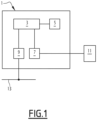
- FIG. 1 shows schematically an electronic control unit (ECU) 1.
- the ECU 1 might be also called control unit in the present patent application.
- the ECU 1 is realized as a system on chip (SoC).
- SoC system on chip
- an ECU comprises one or more processors 3 connected to one or more memories 5.
- the or each processor 3 may includes one or more cores.
- the processor 3 comprises at least 1, 2, 3, 4, 5, 6, 7, 8 or more cores.
- each core is an independent processing unit, independent from the other cores.
- the cores enable parallel computing in the processor 3.
- the ECU 1 may comprise interface for connecting to one or more bus systems, for example one or more hardware controller 9 for a network connection 13.
- the network 13 may be an Ethernet network, a controller area network (CAN) busses and/or a FlexRay busses.
- the ECU may also comprise one or more further hardware controller for connecting to one or more wired or wireless connecting means, for example a Bluetooth connection, an Ethernet connection and/or to a USB (Universal Serial Bus) connecting means.
- USB Universal Serial Bus
- an automotive vehicle comprises a plurality of electronic control units according to the present invention, which are spaced apart within the vehicle.
- the ECU 1 is provided as an embedded system in a vehicle.
- the ECU 1 may be connected to some sensors or drivers via an interface, for example to drive the window, or to sense the angulation of the steering wheel, the level of oil or water in the motor.
- ECU may be connected to an input device, for example a keyboard, one or more buttons, or the like.
- the ECU 1 may be connected to one or more displays via one or more display ports.
- control units disclosed herein have to be provided with a display port.
- the first control unit does not necessarily need a hardware connection to an own display.
- the ECU 1 includes a graphic processing unit (GPU) 7.
- the graphic processing unit (GPU) 7 is a device specifically adapted for calculating and/or rendering graphics, for example two or three dimensional graphics.
- the GPU 7 has a highly parallel structure, where processing of data is done in parallel.
- the GPU 7 is separated from the one or more processors 3.
- the GPU 7 is integrated into the one or more processors 3.
- a GPU 7 sends a rendered frame to the one or more displays 11, for example directly or via a further display controller, which for example performs some post processing of the rendered frame.
- rendering is the process for generating an image or a frame for the one or more displays based on GPU specific commands.
- models or scene files which are a virtual model defining the characteristics of objects and lights, are used as a basis for rendering the frame. For example during rendering, it is determined which objects are visible for the observer, whether the objects are shaded or not, the light distribution within the scene etc.
- Rendering includes calculations, which vary according to the size and the complexity of a scene. Thus, the time for rendering the scene is variable.
- Display commands for example OpenGL commands, are directly executed after they have been translated to the GPU specific (graphic) commands by the GPU driver.
- Display commands are usually application program interface (API) commands, in particular at a high level.
- API application program interface
- GPU driver software translates the display commands in GPU specific (graphic) commands and provides the graphic commands to the GPU for execution. Commands that are not available in the command set of the GPU have to be emulated by the GPU driver software or the operating system.
- display commands include for example shader commands, geometry and/or texture commands.
- OpenGL commands are defined in an application program interface (API), for example OpenGL.
- OpenGL commands is a cross language cross-platform application programming interface (API).
- OpenGL for Embedded Systems (OpenGL ES or GLES) is a subset of the OpenGL computer graphics rendering application programming interface (API) designed for embedded systems like smartphones, tablet computers, video game consoles and PDAs (personal digital assistants).
- OpenGL is a standard of the Khronos Group, Beaverton, USA. OpenGL includes about 250 commands, which enable the rendering of complex 3D scenes in real time.
- shader commands define the characteristics of the surface of an object, in particular the absorption and the diffusion of light, the texture to use, the reflection, refractions, and the shadows, primitive displacement and/or some post-treatment effects.
- An example of shader commands is used in the OpenGL shading language (GLSL).
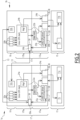
- Fig. 2 shows schematically a system of a first control unit 1a and a second control unit 1b according to a first embodiment.
- Each of the first and second control unit 1a or 1b may correspond to a control unit 1.
- the first and second control units 1a, 1b are identically configured. However in other embodiments only one of the control units may be connected to a display 11 and therefore only one of the control units need a physical GPU 7, 7a, 7b.
- one of the control units 1a, 1b may only transmit display commands, whereas the other control unit receives the display commands, provides them to a GPU 7, 7a, 7b for rendering and sends the rendered frames to the display 11.
- Figure 2 shows several levels, the hardware level 15, the operating system level 17, and the application level 19.
- an operating system is running.
- the operating system may be Linux.
- other operating systems may be used.
- the present disclosure will describe the invention with Linux. Equivalent routines may be used in other operating systems.
- the programs running in the operating system level have another privilege to access hardware resources compared to programs running in the application level.
- programs running in the application level may have less rights to access hardware or software resources compared to programs running in the operating system level.
- the operating system level is split into two subgroups, the kernel program routines 17a and other operating system routines 17b.
- the control units 1a, 1b include respectively one or more applications 20a, 20b.
- the applications are typically running in the application level 19. However, in other embodiments only one of the control units 1a, 1b may include one or more applications 20a, 20b.
- the at least one application 20a, 20b is adapted to generate display commands, for example OpenGL commands and/or OpenGL shading commands. Further, the applications 20a, 20b are adapted to provide a texture compression.
- the texture compression is defined by the OpenGL standard of the Khronos Group, Beaverton, USA
- control units 1a, 1b include respectively a graphic stack which includes a plurality of GPU drivers 22a, 22b, 24a, 24b.
- the GPU drivers 22a, 22b, 24a, 24b include routines for translating graphic commands into GPU specific commands.
- the graphic stack may include in some embodiments further modules, like a DRM/KMS module in Linux.
- the direct rendering manger (DRM) enables access to the GPU without passing via an X-Windows server and KMS (kernel based mode setting) enables to manage the window modes.
- each control unit 1a, 1b includes two GPU drivers 22a, 22b, 24a, 24b.
- a first GPU driver 22a, 22b is provided for a virtual GPU device 26a, 26b.
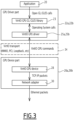
- the first GPU driver 22a, 22b is also called GPU driver part in Figure 3 .
- the virtual GPU device 26a, 26b is also called GPU device part in Figure 3 .
- the first GPU driver 22a, 22b and the virtual GPU device 26a, 26b are running concurrently in the same operating system.
- the first GPU driver 22a, 22b is adapted to transform the display commands into graphic commands.
- the graphic commands are the commands that are able to be interpreted by the virtual GPU device 26a, 26b.
- the graphic commands are, according to an embodiment, orthogonal functional commands that make up a, in particular the complete, graphical processing unit and display functionality.
- the graphic commands in particular the geometry and/or texture commands, are selected of a reduced set of graphic commands including preferably between 10 and 50 graphic commands, in particular between 15 and 30 graphic commands.
- These graphic commands can be separated in two groups, one for two dimensional, 2D, graphic commands and another one for three dimensional, 3D, graphic commands.
- the shading commands from the display commands are transformed into an intermediate representation to avoid parser exploits as well as to limit the amount of transferred data.
- GLSL commands are transformed using the Tungsten Graphics Shader infrastructure, TGSI, intermediate representation, originally defined by Tungsten Graphics; Inc, in particular in order to avoid parser exploits as well as limit the amount of transferred data. Further display command, in particular GL command pipelining can be facilitated.
- TGSI Tungsten Graphics Shader infrastructure
- the virtual GPU device 26a, 26b in particular the virtual GPU adapting device 28, is adapted to aligning the display commands or graphic commands and their parameters in sequential data wherein the references to the at least one memory section is transformed to an offset within the sequential data forming a data stream. For example, if the parameters are stored in multiple memory addresses, the virtual GPU device 26a, 26b may collect them using a vectored I/O (input /output) procedure.
- the virtual GPU device 26a, 26b, in network adapter 30, is adapted to encapsulate, the created data stream in one or more network packets and to send it over the network 13 to a target control unit.
- the network packets may be TCP/IP packets, according to an embodiment.
- the virtual GPU device 26a, 26b, in particular the network adapter 30, is adapted to provide a framebuffer compression, in particular of 2D frames.
- compression algorithms in particular domain specific compression algorithms, may be used to safe network bandwidth.
- the virtual GPU device 26a, 26b in particular the virtual GPI adapting device 28, as adapted to send acknowledgements to the first GPU driver 22a, 22b.
- the acknowledgements include information to pretend that the graphic commands have been executed by the GPU, in other words that a picture frame has been successfully rendered.
- the acknowledgements to the graphic commands are sent to the first GPU driver 22a, 22b without knowing whether the graphic commands has been actually rendered by a GPU on the second or target control unit. In some embodiments, the acknowledgement is sent for all previously received display or graphic commands.
- the second GPU driver 24a, 24b is adapted to transform the display commands into GPU specific commands for the hardware GPU 7a, 7b.
- the GPU specific commands depend on the used GPU 7a, 7b and may differentiate from one GPU to another.
- control units 1a, 1b each comprise a virtual display device 32.
- the virtual display device 32a, 32b is running in the application level 19.
- the virtual display device 32a, 32b is adapted to receive the sequential data in the network packets including the transformed display commands over the network 13, for example the Ethernet network.
- the virtual display device 32a, 32b is adapted transform the sequential data again into display commands and provides them to the second GPU driver 24a, 24b.
- the 3D specific commands are decoded and in particular translated to OpenGL or EGL commands.
- the parameters are stored again into the memory 5 and the an offset within the sequential data forming the data stream is converted to references to at least one memory section, which are used by the display commands.
- the application 20 uses display commands, for example OpenGL/OpenGL ES API commands or calls, to set up a scene, load textures and/or tune a rendering picture.
- the application may provide a texture compression as detailed above.
- the GPU driver 22a, 22b converts the display commands into graphic commands, as described above, using a graphic implementation library 23, for example a OpenGL/GLES implementation library 23, for example a VirtIO OpenGL/GLES implementation library 23, for example as used in QEMU 2.4 and virgil3D, and a converting module 25a, 25b.
- a graphic implementation library 23 for example a OpenGL/GLES implementation library 23, for example a VirtIO OpenGL/GLES implementation library 23, for example as used in QEMU 2.4 and virgil3D
- the GLSL commands are transformed into the Tungsten Graphics Shader infrastructure, TGSI, intermediate representation.
- these display command calls (shown in Figure 3 as Open GL/GLES calls) of the application 20 are converted into operating system calls by the graphic implementation library 23, for example the OpenGL/GLES implementation library in Figure 3 , and the operating system calls are provided the to the converting module 25a, 25b, here also called VirtIO GPU driver 25a, 25b, for example as used in QEMU 2.4 and virgil3D.
- the converting module 25a, 25b then converts those operating system calls into graphic commands, for example VirtIO GPU commands, which are transferred to the virtual GPU Device 26a, 26b for example by using a transport standard 34, for example VirtIO transport 34.
- the transport standard may alternatively be a PCI (peripheral component interconnect standard) or a MMIO (Memory-mapped I/O).
- a loopback function may be used in case that the virtual GPU device 26a, 26b and the GPU driver 22a, 22b are running in the same operating system to transmit the graphic command or display command from the GPU driver 22a, 22b to the virtual GPU device 26a, 26b.
- a loopback function is for example a localhost in case of a network adapter.
- the graphic commands or display command calls send out by the GPU driver 22a, 22b and in particular from the operating system are feed back to the operating system on which the GPU driver 22a, 22b is running and received or read by the virtual GPU device 26a, 26b.
- the graphic commands for the GPU device 26a, 26b which are called in the example of Fig. 3 VirtIO GPU commands, are sent to the GPU device 26a, 26b.
- the acknowlegment of the commands is then sent back to the GPU Driver 22a, 22b, for example using the transport standard as discussed above, for example using VirtIO transport, so GPU Driver can continue with sending new graphic commands to the GPU device 26a, 26b.
- the acknowledgement pretending that the graphic commands have been executed by the GPU are sent independently whether the frame actually has been rendered by the GPU of the target control unit.
- TCPI/IP offloading may be used in order to reduce the amount of processor cycles per packet in order to reduce latency. Further, dynamically switching between interrupt driver mode and polling for network packet handling can greatly reduce flow latency.
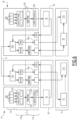
- the network packets and therefore the sequential data including the converted graphic commands are received by the virtual display device 32a, 32b via a network adapter 31 (not shown in Figure 2 ), which uses a hardware GPU to execute received display commands, as seen Figure 4 .
- the network adapter 31 receives Ethernet packets from the first control unit, reconstructs sequential data.
- the sequential data may represent a TCP/IP data stream.
- the sequential data is read or consumed by the virtual display device 32a, 32b, called in Figure 4 remote display service.
- the network adapter 31 may be the same physical network adapter 30 as for the sending of the network packets by the virtual GPU device 26a, 26b.
- the virtual display device application 32a, 32b the graphic commands, for example VirtIO GPU commands, from sequential data and subsequently and converts them back into the display commands, for example into OpenGL/OpenGL ES API calls for the hardware GPU.
- graphic commands for example VirtIO GPU commands
- FIG. 5 another embodiment of the system 40 is shown.
- One first control unit 42 transmitting the display commands is connected to a plurality of second control units 44, each being connected to one or more displays 46.
- the control units 42, 44 correspond to the control units disclosed herein.
- transmitting control units 46 can exist, and receivers can display applications from several transmitting control units on the connected displays 46 to achieve the desired user experience.
- a virtual graphical processing unit (GPU) device is emulated on the transmitting side.
- the application 20, 20a, 20b then uses the virtual GPU device, but all commands that are sent to the GPU are forwarded via Ethernet network to receiving control units 1, 1a, 1b, 44.
- the receiving control unit 1, 1a, 1b, 44, the display commands are received, and then executed on the actual hardware GPU, and result of execution is then displayed on the connected displays 11, 46.
- the virtual GPU device 26a, 26b and the GPU driver 22a, 22b run in the same operating system.
- the system is more efficient in terms of both network latency and throughput for 3D applications, because it uses remote GPU for rendering instead of local one. So, large textures and 3D scenes can be loaded into remote GPU memory on the start of application, and then only small amount of display commands, for example OpenGL commands, are transferred over the network for each rendered frame, delivering near native performance for 3D applications.
- the invention solves this drawback by forwarding OpenGL commands over network instead of complete images, lowering both latency and throughput.
Landscapes
- Engineering & Computer Science (AREA)
- Software Systems (AREA)
- Theoretical Computer Science (AREA)
- Physics & Mathematics (AREA)
- General Engineering & Computer Science (AREA)
- General Physics & Mathematics (AREA)
- Human Computer Interaction (AREA)
- Image Generation (AREA)
- Controls And Circuits For Display Device (AREA)
Claims (9)
- Procédé pour transmettre une commande d'affichage d'une première unité de commande (1, 1a, 1b, 1a', 1 b', 42) d'un véhicule à une seconde unité de commande (1, 1 a, 1 b, 1 a', 1 b', 44) du véhicule, la seconde unité de commande étant espacée de la première unité de commande, comprenant des étapes d'un procédé pour faire fonctionner la première unité de commande (1, 1a, 1b, 1a', 1b', 42) afin de transmettre des commandes d'affichage sur un réseau informatique (13) à la seconde unité de commande (1, 1a, 1b, 1a', 1b', 46), comprenant :la génération, par une application (20a, 20b) au niveau de la première unité de commande, d'au moins une commande d'affichage, la au moins une commande d'affichage permettant un rendu d'une trame comprenant une image tridimensionnelle par une unité de traitement graphique (7a, 7b), dans lequel la commande d'affichage est une commande OpenGL et/ou une commande de nuanceur OpenGL ;la réception, par un pilote d'unité de traitement graphique (22a, 22b) sur la première unité de commande, de la au moins une commande d'affichage ;la transformation des commandes d'affichage en commandes graphiques ;la fourniture, par le pilote d'unité de traitement graphique (22a, 22b), à un dispositif d'unité de traitement graphique virtuel (26a, 26b) des commandes graphiques transformées à partir des commandes d'affichage ;la collecte, par le dispositif d'unité de traitement graphique virtuel (26a, 26b), d'une pluralité de commandes graphiques, dans lequel la collecte d'une pluralité de commandes graphiques inclut l'envoi, par le dispositif d'unité de traitement graphique virtuel (26a, 26b), d'un accusé de réception d'au moins une commande graphique reçue au pilote d'unité de traitement graphique (22a, 22b), dans lequel l'accusé de réception prétend qu'au moins une trame d'affichage basée sur la au moins une commande graphique a été rendue par un GPU indépendamment du fait que la au moins une trame d'affichage basée sur la au moins une commande graphique ait été rendue sur un GPU de la seconde unité de commande, dans lequel l'envoi de l'accusé de réception est une clôture dans OpenGL ; la détermination des paramètres de la pluralité collectée de commandes graphiques stockées dans au moins une section de la au moins une mémoire (5) en utilisant au moins une référence à la au moins une section de la au moins une mémoire (5) ;l'alignement des commandes graphiques et de leurs paramètres dans des données séquentielles, dans lequel les références à la au moins une section de la au moins une mémoire (5) sont transformées en un décalage dans les données séquentielles ;l'encapsulation, par un dispositif d'unité de traitement graphique virtuel, des données séquentielles créées dans un ou plusieurs paquets de réseau ;la transmission du au moins un paquet de réseau par le dispositif d'unité de traitement graphique virtuel (26a, 26b) sur le réseau informatique à la seconde unité de commande adaptée pour générer des trames d'affichage d'au moins une image selon les commandes d'affichage ; et le procédé comprend en outre des étapes de procédé pour faire fonctionner la seconde unité de commande (1, 1a, 1b, 1a', 1b', 44) afin de générer des trames d'affichage à partir de commandes d'affichage reçues sur le réseau informatique (13) depuis la première unité de commande, comprenant :la réception d'au moins un paquet de réseau de la
première unité de commande (1, 1a, 1b, 1a', 1b',
42), le paquet de réseau comprenant des données séquentielles codant des commandes graphiques et leurs paramètres, dans lequel les paramètres des commandes graphiques transformées à partir de commandes d'affichage sont référencés avec un décalage dans les données séquentielles, dans lequel une commande d'affichage permet un rendu d'une trame comprenant une image tridimensionnelle par une unité de traitement graphique (7a, 7b) ;le décodage des commandes graphiques et le stockage de leurs paramètres dans au moins une section d'au moins une mémoire (5), dans lequel le décodage inclut la transformation du décalage en une référence à la au moins une section dans au moins une mémoire (5) ;la conversion des commandes graphiques en commandes d'affichage OpenGL/OpenGL pour les systèmes embarqués, OpenGL ES ou GLES, des appels d'API pour une unité de traitement graphique, GPU ;la conversion des commandes d'affichage et de leurs paramètres en commandes spécifiques à l'unité de traitement graphique GPU ;la fourniture des commandes spécifiques de GPU à une unité de traitement graphique (7, 7a, 7b) de la seconde unité de commande (1, 1a, 1b, 1a', 1b', 44) ;le rendu d'un cadre d'affichage basé sur les commandes spécifiques du GPU. - Procédé selon la revendication 1, dans lequel les commandes d'affichage incluent des commandes de géométrie,des commandes de texture et des commandes de nuanceur, dans lequel, en particulier, lescommandes de géométrie et de texture sont des commandes OpenGL, et/ou les commandes de nuanceur sont des langages d'ombrage OpenGL.
- Procédé selon la revendication 1 ou 2, dans lequel les paramètres incluent des objets de tampon de trame d'une scène en 2D rendue par une CPU, des paramètres de scène et/ou des paramètres de caméra, impliquent des mélangeurs, des trameurs, des nuanceurs, des vertex, des surfaces, des échantillonneurs, des requêtes et/ou des flux cibles.
- Procédé selon l'une quelconque des revendications précédentes, dans lequel les commandes d'affichage sont transformées en commandes fonctionnelles orthogonales qui constituent la fonctionnalité complète de l'unité de traitement graphique et d'affichage ; et dans lequel les commandes graphiques sont sélectionnées parmi un ensemble réduit de commandes graphiques par rapport aux commandes d'affichage, les commandes graphiques incluant de préférence entre 10 et 50 commandes graphiques, en particulier entre 15 et 30 commandes graphiques.
- Procédé selon l'une des revendications précédentes, comprenant en outre : la fourniture de la trame d'affichage à au moins un écran (11).
- Produit-programme informatique comportant des commandes pour l'exécution du procédé selon l'une quelconque des revendications précédentes, lorsqu'elles sont chargées et exécutées sur un ou plusieurs processeurs.
- Système comprenant une ou plusieurs premières unités de commande d'un véhicule, chaque première unité de commande (1, 1a, 1b, 1a', 1b', 42) comprenant au moins un processeur (3), au moins une mémoire (5), et au moins un contrôleur de réseau (9), le au moins un processeur étant connecté à la au moins une mémoire et au au moins un contrôleur de réseau, le au moins un contrôleur de réseau (9) étant adapté pour être connecté à un réseau (13), dans lequel la première unité de commande est adaptée pour :générer, par une application (20a, 20b), au moins une commande d'affichage, la au moins une commande d'affichage permettant un rendu d'une trame comprenant une image tridimensionnelle par une unité de traitement graphique (7a, 7b) dans lequel la commande d'affichage est une commande OpenGL et/ou une commande de nuanceur OpenGL ;recevoir, par un pilote d'unité de traitement graphique (22a, 22b) sur la première unité de commande, la au moins une commande d'affichage ;transformer, par le pilote de l'unité de traitement graphique, les commandes d'affichage en commandes graphiques ;fournir, par le pilote d'unité de traitement graphique (22a, 22b), les commandes graphiques à un dispositif d'unité de traitement graphique virtuel (26a, 26b) ;collecter, par le dispositif d'unité de traitement graphique virtuel (26a, 26b), d'une pluralité de commandes graphiques, dans lequel la collecte d'une pluralité de commandes graphiques inclut l'envoi, par le dispositif d'unité de traitement graphique virtuel, d'un accusé de réception d'au moins une commande graphique ou d'affichage reçue au pilote d'unité de traitement graphique (22a, 22b), dans lequel l'accusé de réception prétend qu'au moins une trame d'affichage basée sur la au moins une commande graphique ou d'affichage a été rendue par un GPU indépendamment du fait que la au moins une trame d'affichage basée sur la au moins une commande graphique a été rendue sur un GPU de la seconde unité de commande, dans lequel l'envoi de l'accusé de réception est une clôture en OpenGL ;déterminer des paramètres de la pluralité collectée de commandes graphiques stockées dans au moins une section de la au moins une mémoire (5) en utilisant au moins une référence à la au moins une section de la au moins une mémoire (5) ;aligner les commandes graphiques et leurs paramètres dans des données séquentielles, dans lequel les références à la au moins une section de la au moins une mémoire sont transformées en un décalage dans les données séquentielles ;encapsuler, par un dispositif d'unité de traitement graphique virtuel, les données séquentielles créées dans un ou plusieurs paquets de réseau ;transmettre l'au moins un paquet de réseau par le dispositif d'unité de traitement graphique virtuel (26a, 26b) sur le réseau informatique à une seconde unité de commande adaptée pour générer des trames d'affichage d'au moins une image selon les commandes d'affichage, dans lequel le système comprend en outre au moins une seconde unité de commande du véhicule, en particulier une pluralité de secondes unités de commande, dans lequel la seconde unité de commande comprend au moins un processeur (3), au moins une mémoire (5), au moins une unité de traitement graphique, GPU, (7, 7a, 7b) au moins un port d'affichage connecté à la sortie du GPU et pouvant être connecté à au moins un affichage (11),et au moins un contrôleur de réseau (9), le au moins un processeur (3) étant connecté à la au moins une mémoire (5), au GPU et au contrôleur de réseau (9), le au moins un contrôleur de réseau (9) étant adapté pour être connecté à un réseau (13), la seconde unité de commande étant adaptée pour :recevoir au moins un paquet de réseau de lapremière unité de commande (1, 1a, 1b, 1a', 1'b, 42),le paquet de réseau comprenant des données séquentielles codant des commandes graphiques et leurs paramètres, dans lequel les paramètres des commandes graphiques transformées à partir de commandes d'affichage sont référencés avec un décalage dans les données séquentielles, dans lequel une commande d'affichage permet un rendu d'une trame comprenant une image tridimensionnelle par une unité de traitement graphique (7a, 7b) ;décoder les commandes graphiques et le stockage de leurs paramètres dans au moins une section d'au moins une mémoire (5), dans lequel le décodage inclut la transformation du décalage en une référence à la au moins une section dans au moins une mémoire ;convertir les commandes graphiques en commandes d'affichage OpenGL/OpenGL pour les systèmes embarqués, OpenGL ES ou GLES,les appels API pour une unité de traitement graphique, GPU ;convertir les commandes d'affichage et leurs paramètres en unité de traitement graphique,GPU, commandes spécifiques ;fournir les commandes spécifiques de GPU à une unité de traitement graphique (7, 7a, 7b) de la seconde unité de commande (1, 1a, 1b, 1a', 1b', 44) ;rendre, par le GPU, une trame d'affichage basée sur les commandes spécifiques au GPU, dans lequel la au moins une seconde unité de commande est adaptée pour recevoir les paquets de réseau comprenant les données séquentielles codant les commandes d'affichage ou les commandes graphiques et leurs paramètres émis par la au moins une première unité de commande.
- Système selon la revendication 7, dans lequel il est en outre adapté pour transformer les commandes d'affichage en commandes fonctionnelles orthogonales qui constituent la fonctionnalité complète d'unité de traitement graphique et d'affichage ; et dans lequel les commandes graphiques sont sélectionnées parmi un ensemble réduit de commandes graphiques par rapport aux commandes d'affichage, dans lequel les commandes graphiques incluent de préférence entre 10 et 50 commandes graphiques, en particulier entre 15 et 30 commandes graphiques.
- Véhicule, en particulier un véhicule automobile, comprenant un système selon la revendication 7 ou 8.
Priority Applications (1)
| Application Number | Priority Date | Filing Date | Title |
|---|---|---|---|
| EP19150344.0A EP3678022B1 (fr) | 2019-01-04 | 2019-01-04 | Procédé de fonctionnement d'une seconde unité de commande, d'une première unité de commande et système |
Applications Claiming Priority (1)
| Application Number | Priority Date | Filing Date | Title |
|---|---|---|---|
| EP19150344.0A EP3678022B1 (fr) | 2019-01-04 | 2019-01-04 | Procédé de fonctionnement d'une seconde unité de commande, d'une première unité de commande et système |
Publications (2)
| Publication Number | Publication Date |
|---|---|
| EP3678022A1 EP3678022A1 (fr) | 2020-07-08 |
| EP3678022B1 true EP3678022B1 (fr) | 2023-03-29 |
Family
ID=65023697
Family Applications (1)
| Application Number | Title | Priority Date | Filing Date |
|---|---|---|---|
| EP19150344.0A Active EP3678022B1 (fr) | 2019-01-04 | 2019-01-04 | Procédé de fonctionnement d'une seconde unité de commande, d'une première unité de commande et système |
Country Status (1)
| Country | Link |
|---|---|
| EP (1) | EP3678022B1 (fr) |
Families Citing this family (2)
| Publication number | Priority date | Publication date | Assignee | Title |
|---|---|---|---|---|
| EP4246882A4 (fr) * | 2020-11-04 | 2024-09-25 | LG Electronics Inc. | Dispositif d'affichage destiné à un véhicule |
| CN115731338A (zh) * | 2022-11-08 | 2023-03-03 | 中国船舶集团有限公司第七〇九研究所 | 一种基于x协议的二三维一体化远程渲染方法和系统 |
Family Cites Families (2)
| Publication number | Priority date | Publication date | Assignee | Title |
|---|---|---|---|---|
| US20090089453A1 (en) * | 2007-09-27 | 2009-04-02 | International Business Machines Corporation | Remote visualization of a graphics application |
| US9183663B1 (en) * | 2011-12-30 | 2015-11-10 | Graphon Corporation | System for and method of classifying and translating graphics commands in client-server computing systems |
-
2019
- 2019-01-04 EP EP19150344.0A patent/EP3678022B1/fr active Active
Also Published As
| Publication number | Publication date |
|---|---|
| EP3678022A1 (fr) | 2020-07-08 |
Similar Documents
| Publication | Publication Date | Title |
|---|---|---|
| US20190172175A1 (en) | System for Distributed Virtualization of GPUs in Desktop Cloud | |
| EP2622461B1 (fr) | Mémoire partagée entre des partitionnements fils et père | |
| JP5869135B2 (ja) | コプロセッサのためのダイレクトi/oアクセス | |
| CN107223264B (zh) | 一种渲染方法及装置 | |
| EP2899687B1 (fr) | Procédé et dispositif destinés au traitement de données graphiques | |
| US9665921B2 (en) | Adaptive OpenGL 3D graphics in virtual desktop infrastructure | |
| Aji et al. | MPI-ACC: An integrated and extensible approach to data movement in accelerator-based systems | |
| CN114691286B (zh) | 服务器系统、虚拟机创建方法及装置 | |
| US20120084774A1 (en) | Techniques For Load Balancing GPU Enabled Virtual Machines | |
| JP2019207707A (ja) | 異種3次元回路スタック、システム、方法および装置 | |
| US10002403B2 (en) | Command remoting | |
| US20240096007A1 (en) | Rendering Method, Device, and System | |
| EP3559806B1 (fr) | Accélération d'interface réseau de paravirtualisation à l'aide de remappage d'accès direct à la mémoire (dma) | |
| US8849905B2 (en) | Centralized computing | |
| EP3678022B1 (fr) | Procédé de fonctionnement d'une seconde unité de commande, d'une première unité de commande et système | |
| US20250175427A1 (en) | Multipathing with remote direct memory access connections | |
| CN119621650A (zh) | 虚拟化场景下远程直接内存访问方法及设备 | |
| US10733689B2 (en) | Data processing | |
| US12007921B2 (en) | Programmable user-defined peripheral-bus device implementation using data-plane accelerator (DPA) | |
| US20230153153A1 (en) | Task processing method and apparatus | |
| US20240028400A1 (en) | Memory bandwidth allocation in multi-entity systems | |
| EP4070192A1 (fr) | Activation d'accélération matérielle partagée de graphiques et de calculs dans un environnement virtuel | |
| US11477304B2 (en) | Conversion to an internet protocol stream | |
| EP4687044A1 (fr) | Transmission de reseau initiee par destination pour flux de donnees | |
| US20260037476A1 (en) | Network transmission for data streams |
Legal Events
| Date | Code | Title | Description |
|---|---|---|---|
| PUAI | Public reference made under article 153(3) epc to a published international application that has entered the european phase |
Free format text: ORIGINAL CODE: 0009012 |
|
| STAA | Information on the status of an ep patent application or granted ep patent |
Free format text: STATUS: THE APPLICATION HAS BEEN PUBLISHED |
|
| AK | Designated contracting states |
Kind code of ref document: A1 Designated state(s): AL AT BE BG CH CY CZ DE DK EE ES FI FR GB GR HR HU IE IS IT LI LT LU LV MC MK MT NL NO PL PT RO RS SE SI SK SM TR |
|
| AX | Request for extension of the european patent |
Extension state: BA ME |
|
| STAA | Information on the status of an ep patent application or granted ep patent |
Free format text: STATUS: REQUEST FOR EXAMINATION WAS MADE |
|
| 17P | Request for examination filed |
Effective date: 20201221 |
|
| RBV | Designated contracting states (corrected) |
Designated state(s): AL AT BE BG CH CY CZ DE DK EE ES FI FR GB GR HR HU IE IS IT LI LT LU LV MC MK MT NL NO PL PT RO RS SE SI SK SM TR |
|
| STAA | Information on the status of an ep patent application or granted ep patent |
Free format text: STATUS: EXAMINATION IS IN PROGRESS |
|
| 17Q | First examination report despatched |
Effective date: 20210329 |
|
| GRAP | Despatch of communication of intention to grant a patent |
Free format text: ORIGINAL CODE: EPIDOSNIGR1 |
|
| STAA | Information on the status of an ep patent application or granted ep patent |
Free format text: STATUS: GRANT OF PATENT IS INTENDED |
|
| INTG | Intention to grant announced |
Effective date: 20221011 |
|
| GRAS | Grant fee paid |
Free format text: ORIGINAL CODE: EPIDOSNIGR3 |
|
| GRAA | (expected) grant |
Free format text: ORIGINAL CODE: 0009210 |
|
| STAA | Information on the status of an ep patent application or granted ep patent |
Free format text: STATUS: THE PATENT HAS BEEN GRANTED |
|
| AK | Designated contracting states |
Kind code of ref document: B1 Designated state(s): AL AT BE BG CH CY CZ DE DK EE ES FI FR GB GR HR HU IE IS IT LI LT LU LV MC MK MT NL NO PL PT RO RS SE SI SK SM TR |
|
| REG | Reference to a national code |
Ref country code: CH Ref legal event code: EP |
|
| REG | Reference to a national code |
Ref country code: DE Ref legal event code: R096 Ref document number: 602019026782 Country of ref document: DE |
|
| REG | Reference to a national code |
Ref country code: AT Ref legal event code: REF Ref document number: 1557161 Country of ref document: AT Kind code of ref document: T Effective date: 20230415 |
|
| REG | Reference to a national code |
Ref country code: IE Ref legal event code: FG4D |
|
| P01 | Opt-out of the competence of the unified patent court (upc) registered |
Effective date: 20230509 |
|
| REG | Reference to a national code |
Ref country code: LT Ref legal event code: MG9D |
|
| PG25 | Lapsed in a contracting state [announced via postgrant information from national office to epo] |
Ref country code: RS Free format text: LAPSE BECAUSE OF FAILURE TO SUBMIT A TRANSLATION OF THE DESCRIPTION OR TO PAY THE FEE WITHIN THE PRESCRIBED TIME-LIMIT Effective date: 20230329 Ref country code: NO Free format text: LAPSE BECAUSE OF FAILURE TO SUBMIT A TRANSLATION OF THE DESCRIPTION OR TO PAY THE FEE WITHIN THE PRESCRIBED TIME-LIMIT Effective date: 20230629 Ref country code: LV Free format text: LAPSE BECAUSE OF FAILURE TO SUBMIT A TRANSLATION OF THE DESCRIPTION OR TO PAY THE FEE WITHIN THE PRESCRIBED TIME-LIMIT Effective date: 20230329 Ref country code: LT Free format text: LAPSE BECAUSE OF FAILURE TO SUBMIT A TRANSLATION OF THE DESCRIPTION OR TO PAY THE FEE WITHIN THE PRESCRIBED TIME-LIMIT Effective date: 20230329 Ref country code: HR Free format text: LAPSE BECAUSE OF FAILURE TO SUBMIT A TRANSLATION OF THE DESCRIPTION OR TO PAY THE FEE WITHIN THE PRESCRIBED TIME-LIMIT Effective date: 20230329 |
|
| REG | Reference to a national code |
Ref country code: NL Ref legal event code: MP Effective date: 20230329 |
|
| REG | Reference to a national code |
Ref country code: AT Ref legal event code: MK05 Ref document number: 1557161 Country of ref document: AT Kind code of ref document: T Effective date: 20230329 |
|
| PG25 | Lapsed in a contracting state [announced via postgrant information from national office to epo] |
Ref country code: SE Free format text: LAPSE BECAUSE OF FAILURE TO SUBMIT A TRANSLATION OF THE DESCRIPTION OR TO PAY THE FEE WITHIN THE PRESCRIBED TIME-LIMIT Effective date: 20230329 Ref country code: NL Free format text: LAPSE BECAUSE OF FAILURE TO SUBMIT A TRANSLATION OF THE DESCRIPTION OR TO PAY THE FEE WITHIN THE PRESCRIBED TIME-LIMIT Effective date: 20230329 Ref country code: GR Free format text: LAPSE BECAUSE OF FAILURE TO SUBMIT A TRANSLATION OF THE DESCRIPTION OR TO PAY THE FEE WITHIN THE PRESCRIBED TIME-LIMIT Effective date: 20230630 Ref country code: FI Free format text: LAPSE BECAUSE OF FAILURE TO SUBMIT A TRANSLATION OF THE DESCRIPTION OR TO PAY THE FEE WITHIN THE PRESCRIBED TIME-LIMIT Effective date: 20230329 |
|
| PG25 | Lapsed in a contracting state [announced via postgrant information from national office to epo] |
Ref country code: SM Free format text: LAPSE BECAUSE OF FAILURE TO SUBMIT A TRANSLATION OF THE DESCRIPTION OR TO PAY THE FEE WITHIN THE PRESCRIBED TIME-LIMIT Effective date: 20230329 Ref country code: RO Free format text: LAPSE BECAUSE OF FAILURE TO SUBMIT A TRANSLATION OF THE DESCRIPTION OR TO PAY THE FEE WITHIN THE PRESCRIBED TIME-LIMIT Effective date: 20230329 Ref country code: PT Free format text: LAPSE BECAUSE OF FAILURE TO SUBMIT A TRANSLATION OF THE DESCRIPTION OR TO PAY THE FEE WITHIN THE PRESCRIBED TIME-LIMIT Effective date: 20230731 Ref country code: ES Free format text: LAPSE BECAUSE OF FAILURE TO SUBMIT A TRANSLATION OF THE DESCRIPTION OR TO PAY THE FEE WITHIN THE PRESCRIBED TIME-LIMIT Effective date: 20230329 Ref country code: EE Free format text: LAPSE BECAUSE OF FAILURE TO SUBMIT A TRANSLATION OF THE DESCRIPTION OR TO PAY THE FEE WITHIN THE PRESCRIBED TIME-LIMIT Effective date: 20230329 Ref country code: AT Free format text: LAPSE BECAUSE OF FAILURE TO SUBMIT A TRANSLATION OF THE DESCRIPTION OR TO PAY THE FEE WITHIN THE PRESCRIBED TIME-LIMIT Effective date: 20230329 |
|
| PG25 | Lapsed in a contracting state [announced via postgrant information from national office to epo] |
Ref country code: SK Free format text: LAPSE BECAUSE OF FAILURE TO SUBMIT A TRANSLATION OF THE DESCRIPTION OR TO PAY THE FEE WITHIN THE PRESCRIBED TIME-LIMIT Effective date: 20230329 Ref country code: PL Free format text: LAPSE BECAUSE OF FAILURE TO SUBMIT A TRANSLATION OF THE DESCRIPTION OR TO PAY THE FEE WITHIN THE PRESCRIBED TIME-LIMIT Effective date: 20230329 Ref country code: IS Free format text: LAPSE BECAUSE OF FAILURE TO SUBMIT A TRANSLATION OF THE DESCRIPTION OR TO PAY THE FEE WITHIN THE PRESCRIBED TIME-LIMIT Effective date: 20230729 |
|
| REG | Reference to a national code |
Ref country code: DE Ref legal event code: R097 Ref document number: 602019026782 Country of ref document: DE |
|
| PG25 | Lapsed in a contracting state [announced via postgrant information from national office to epo] |
Ref country code: DK Free format text: LAPSE BECAUSE OF FAILURE TO SUBMIT A TRANSLATION OF THE DESCRIPTION OR TO PAY THE FEE WITHIN THE PRESCRIBED TIME-LIMIT Effective date: 20230329 Ref country code: CZ Free format text: LAPSE BECAUSE OF FAILURE TO SUBMIT A TRANSLATION OF THE DESCRIPTION OR TO PAY THE FEE WITHIN THE PRESCRIBED TIME-LIMIT Effective date: 20230329 |
|
| PLBE | No opposition filed within time limit |
Free format text: ORIGINAL CODE: 0009261 |
|
| STAA | Information on the status of an ep patent application or granted ep patent |
Free format text: STATUS: NO OPPOSITION FILED WITHIN TIME LIMIT |
|
| 26N | No opposition filed |
Effective date: 20240103 |
|
| PG25 | Lapsed in a contracting state [announced via postgrant information from national office to epo] |
Ref country code: SI Free format text: LAPSE BECAUSE OF FAILURE TO SUBMIT A TRANSLATION OF THE DESCRIPTION OR TO PAY THE FEE WITHIN THE PRESCRIBED TIME-LIMIT Effective date: 20230329 |
|
| PG25 | Lapsed in a contracting state [announced via postgrant information from national office to epo] |
Ref country code: SI Free format text: LAPSE BECAUSE OF FAILURE TO SUBMIT A TRANSLATION OF THE DESCRIPTION OR TO PAY THE FEE WITHIN THE PRESCRIBED TIME-LIMIT Effective date: 20230329 Ref country code: IT Free format text: LAPSE BECAUSE OF FAILURE TO SUBMIT A TRANSLATION OF THE DESCRIPTION OR TO PAY THE FEE WITHIN THE PRESCRIBED TIME-LIMIT Effective date: 20230329 |
|
| REG | Reference to a national code |
Ref country code: DE Ref legal event code: R082 Ref document number: 602019026782 Country of ref document: DE Representative=s name: BARDEHLE PAGENBERG PARTNERSCHAFT MBB PATENTANW, DE Ref country code: DE Ref legal event code: R081 Ref document number: 602019026782 Country of ref document: DE Owner name: QUALCOMM TECHNOLOGIES, INC., SAN DIEGO, US Free format text: FORMER OWNER: OPENSYNERGY GMBH, 10245 BERLIN, DE |
|
| PG25 | Lapsed in a contracting state [announced via postgrant information from national office to epo] |
Ref country code: MC Free format text: LAPSE BECAUSE OF FAILURE TO SUBMIT A TRANSLATION OF THE DESCRIPTION OR TO PAY THE FEE WITHIN THE PRESCRIBED TIME-LIMIT Effective date: 20230329 |
|
| PG25 | Lapsed in a contracting state [announced via postgrant information from national office to epo] |
Ref country code: MC Free format text: LAPSE BECAUSE OF FAILURE TO SUBMIT A TRANSLATION OF THE DESCRIPTION OR TO PAY THE FEE WITHIN THE PRESCRIBED TIME-LIMIT Effective date: 20230329 |
|
| REG | Reference to a national code |
Ref country code: CH Ref legal event code: PL |
|
| PG25 | Lapsed in a contracting state [announced via postgrant information from national office to epo] |
Ref country code: LU Free format text: LAPSE BECAUSE OF NON-PAYMENT OF DUE FEES Effective date: 20240104 |
|
| REG | Reference to a national code |
Ref country code: GB Ref legal event code: 732E Free format text: REGISTERED BETWEEN 20240829 AND 20240904 |
|
| PG25 | Lapsed in a contracting state [announced via postgrant information from national office to epo] |
Ref country code: LU Free format text: LAPSE BECAUSE OF NON-PAYMENT OF DUE FEES Effective date: 20240104 |
|
| PG25 | Lapsed in a contracting state [announced via postgrant information from national office to epo] |
Ref country code: BE Free format text: LAPSE BECAUSE OF NON-PAYMENT OF DUE FEES Effective date: 20240131 |
|
| PG25 | Lapsed in a contracting state [announced via postgrant information from national office to epo] |
Ref country code: CH Free format text: LAPSE BECAUSE OF NON-PAYMENT OF DUE FEES Effective date: 20240131 |
|
| PG25 | Lapsed in a contracting state [announced via postgrant information from national office to epo] |
Ref country code: CH Free format text: LAPSE BECAUSE OF NON-PAYMENT OF DUE FEES Effective date: 20240131 Ref country code: BE Free format text: LAPSE BECAUSE OF NON-PAYMENT OF DUE FEES Effective date: 20240131 |
|
| REG | Reference to a national code |
Ref country code: BE Ref legal event code: MM Effective date: 20240131 |
|
| PG25 | Lapsed in a contracting state [announced via postgrant information from national office to epo] |
Ref country code: BG Free format text: LAPSE BECAUSE OF FAILURE TO SUBMIT A TRANSLATION OF THE DESCRIPTION OR TO PAY THE FEE WITHIN THE PRESCRIBED TIME-LIMIT Effective date: 20230329 |
|
| PG25 | Lapsed in a contracting state [announced via postgrant information from national office to epo] |
Ref country code: BG Free format text: LAPSE BECAUSE OF FAILURE TO SUBMIT A TRANSLATION OF THE DESCRIPTION OR TO PAY THE FEE WITHIN THE PRESCRIBED TIME-LIMIT Effective date: 20230329 |
|
| PG25 | Lapsed in a contracting state [announced via postgrant information from national office to epo] |
Ref country code: IE Free format text: LAPSE BECAUSE OF NON-PAYMENT OF DUE FEES Effective date: 20240104 |
|
| PG25 | Lapsed in a contracting state [announced via postgrant information from national office to epo] |
Ref country code: IE Free format text: LAPSE BECAUSE OF NON-PAYMENT OF DUE FEES Effective date: 20240104 |
|
| PG25 | Lapsed in a contracting state [announced via postgrant information from national office to epo] |
Ref country code: CY Free format text: LAPSE BECAUSE OF FAILURE TO SUBMIT A TRANSLATION OF THE DESCRIPTION OR TO PAY THE FEE WITHIN THE PRESCRIBED TIME-LIMIT; INVALID AB INITIO Effective date: 20190104 |
|
| PG25 | Lapsed in a contracting state [announced via postgrant information from national office to epo] |
Ref country code: HU Free format text: LAPSE BECAUSE OF FAILURE TO SUBMIT A TRANSLATION OF THE DESCRIPTION OR TO PAY THE FEE WITHIN THE PRESCRIBED TIME-LIMIT; INVALID AB INITIO Effective date: 20190104 |
|
| PG25 | Lapsed in a contracting state [announced via postgrant information from national office to epo] |
Ref country code: TR Free format text: LAPSE BECAUSE OF FAILURE TO SUBMIT A TRANSLATION OF THE DESCRIPTION OR TO PAY THE FEE WITHIN THE PRESCRIBED TIME-LIMIT Effective date: 20230329 |
|
| PGFP | Annual fee paid to national office [announced via postgrant information from national office to epo] |
Ref country code: GB Payment date: 20251211 Year of fee payment: 8 |
|
| PGFP | Annual fee paid to national office [announced via postgrant information from national office to epo] |
Ref country code: FR Payment date: 20251216 Year of fee payment: 8 |
|
| PGFP | Annual fee paid to national office [announced via postgrant information from national office to epo] |
Ref country code: DE Payment date: 20251222 Year of fee payment: 8 |