EP3678035A1 - Procédé informatisé et dispositif d'annotation d'au moins une caractéristique d'une image d'une vue - Google Patents
Procédé informatisé et dispositif d'annotation d'au moins une caractéristique d'une image d'une vue Download PDFInfo
- Publication number
- EP3678035A1 EP3678035A1 EP20157605.5A EP20157605A EP3678035A1 EP 3678035 A1 EP3678035 A1 EP 3678035A1 EP 20157605 A EP20157605 A EP 20157605A EP 3678035 A1 EP3678035 A1 EP 3678035A1
- Authority
- EP
- European Patent Office
- Prior art keywords
- image
- feature identification
- feature
- portable device
- annotations
- Prior art date
- Legal status (The legal status is an assumption and is not a legal conclusion. Google has not performed a legal analysis and makes no representation as to the accuracy of the status listed.)
- Withdrawn
Links
Images



Classifications
-
- G—PHYSICS
- G06—COMPUTING OR CALCULATING; COUNTING
- G06T—IMAGE DATA PROCESSING OR GENERATION, IN GENERAL
- G06T11/00—Two-dimensional [2D] image generation
- G06T11/60—Creating or editing images; Combining images with text
-
- G—PHYSICS
- G06—COMPUTING OR CALCULATING; COUNTING
- G06F—ELECTRIC DIGITAL DATA PROCESSING
- G06F17/00—Digital computing or data processing equipment or methods, specially adapted for specific functions
-
- G—PHYSICS
- G06—COMPUTING OR CALCULATING; COUNTING
- G06F—ELECTRIC DIGITAL DATA PROCESSING
- G06F16/00—Information retrieval; Database structures therefor; File system structures therefor
- G06F16/40—Information retrieval; Database structures therefor; File system structures therefor of multimedia data, e.g. slideshows comprising image and additional audio data
-
- G—PHYSICS
- G06—COMPUTING OR CALCULATING; COUNTING
- G06F—ELECTRIC DIGITAL DATA PROCESSING
- G06F16/00—Information retrieval; Database structures therefor; File system structures therefor
- G06F16/50—Information retrieval; Database structures therefor; File system structures therefor of still image data
- G06F16/58—Retrieval characterised by using metadata, e.g. metadata not derived from the content or metadata generated manually
- G06F16/583—Retrieval characterised by using metadata, e.g. metadata not derived from the content or metadata generated manually using metadata automatically derived from the content
- G06F16/5838—Retrieval characterised by using metadata, e.g. metadata not derived from the content or metadata generated manually using metadata automatically derived from the content using colour
-
- G—PHYSICS
- G06—COMPUTING OR CALCULATING; COUNTING
- G06F—ELECTRIC DIGITAL DATA PROCESSING
- G06F16/00—Information retrieval; Database structures therefor; File system structures therefor
- G06F16/50—Information retrieval; Database structures therefor; File system structures therefor of still image data
- G06F16/58—Retrieval characterised by using metadata, e.g. metadata not derived from the content or metadata generated manually
- G06F16/583—Retrieval characterised by using metadata, e.g. metadata not derived from the content or metadata generated manually using metadata automatically derived from the content
- G06F16/5854—Retrieval characterised by using metadata, e.g. metadata not derived from the content or metadata generated manually using metadata automatically derived from the content using shape and object relationship
-
- G—PHYSICS
- G06—COMPUTING OR CALCULATING; COUNTING
- G06F—ELECTRIC DIGITAL DATA PROCESSING
- G06F16/00—Information retrieval; Database structures therefor; File system structures therefor
- G06F16/50—Information retrieval; Database structures therefor; File system structures therefor of still image data
- G06F16/58—Retrieval characterised by using metadata, e.g. metadata not derived from the content or metadata generated manually
- G06F16/583—Retrieval characterised by using metadata, e.g. metadata not derived from the content or metadata generated manually using metadata automatically derived from the content
- G06F16/5862—Retrieval characterised by using metadata, e.g. metadata not derived from the content or metadata generated manually using metadata automatically derived from the content using texture
-
- G—PHYSICS
- G06—COMPUTING OR CALCULATING; COUNTING
- G06F—ELECTRIC DIGITAL DATA PROCESSING
- G06F16/00—Information retrieval; Database structures therefor; File system structures therefor
- G06F16/70—Information retrieval; Database structures therefor; File system structures therefor of video data
-
- G—PHYSICS
- G06—COMPUTING OR CALCULATING; COUNTING
- G06F—ELECTRIC DIGITAL DATA PROCESSING
- G06F40/00—Handling natural language data
- G06F40/10—Text processing
- G06F40/103—Formatting, i.e. changing of presentation of documents
- G06F40/117—Tagging; Marking up; Designating a block; Setting of attributes
-
- G—PHYSICS
- G06—COMPUTING OR CALCULATING; COUNTING
- G06F—ELECTRIC DIGITAL DATA PROCESSING
- G06F40/00—Handling natural language data
- G06F40/10—Text processing
- G06F40/166—Editing, e.g. inserting or deleting
-
- G—PHYSICS
- G06—COMPUTING OR CALCULATING; COUNTING
- G06F—ELECTRIC DIGITAL DATA PROCESSING
- G06F40/00—Handling natural language data
- G06F40/10—Text processing
- G06F40/166—Editing, e.g. inserting or deleting
- G06F40/169—Annotation, e.g. comment data or footnotes
-
- G—PHYSICS
- G06—COMPUTING OR CALCULATING; COUNTING
- G06T—IMAGE DATA PROCESSING OR GENERATION, IN GENERAL
- G06T11/00—Two-dimensional [2D] image generation
- G06T11/60—Creating or editing images; Combining images with text
- G06T11/65—Creating or editing images; Combining images with text on geographic maps
-
- G—PHYSICS
- G06—COMPUTING OR CALCULATING; COUNTING
- G06V—IMAGE OR VIDEO RECOGNITION OR UNDERSTANDING
- G06V20/00—Scenes; Scene-specific elements
- G06V20/20—Scenes; Scene-specific elements in augmented reality scenes
Definitions
- the present invention concerns a computerized method and device for annotating at least one feature of an image of a view.
- mediated reality indicates the possibility to modify by a device a view of the reality, e.g. augmenting or reducing it.
- augmented reality and reduced reality respectively indicate a live view of a physical real-world environment whose elements or features are augmented by virtual inputs - such as graphic elements or text annotations superimposed on the captured image- or respectively reduced or suppressed. For example, it is possible to annotate prominent features of an image of a view with identifying or characterising information.
- Annotation of features of an image results in a modified image or video, for example an image of video with additional annotations superimposed or otherwise delivered to the viewer during normal use of the image.
- Annotation of image for classification usually results in additional metadata, such as additional keywords, associated with the image and which are usually hidden during normal use of the image.
- EP1246080 describes a computerised method and device for annotating a feature which emits a radio signal.
- the feature can be identified my means of this radio signal.
- the identified feature is then related to annotating data associated with the feature, which is then displayed on the device.
- the feature can be an element belonging to a museum, e.g. it can be a painting or a statue, having a circuit for emitting a radio signal.
- EP1246080 also describes the use of cartographic data or other spatial information in digital form: a correspondence matching between cartographic and pictorial data can allow the pictorial data to be annotated with cartographic data.
- EP1246080 does not suggest how to handle the annotation method with the same device used in a museum. Obviously mountains and landscape elements do not have circuits for emitting radio signals. On the other hand a device which uses cartographic data for annotating a feature can hardly be used in a museum wherein elements can emit radio signals. In other words EP1246080 does not suggest how to handle with the same device the annotation of a feature of an image of a view belonging to different environments and locations.
- EP2207113 describes a computerised method and device for annotating a feature of a view based on the position and the orientation of the device.
- EP2154481 describes an image capturing device which can automatically switch from a real 2D display mode to a virtual 3D display mode depending on the position and the orientation of the device and on its zooming factor. The device then automatically chooses the type of the image representation, real or virtual.
- JP2005292064 describes a navigation system for outputting a three-dimensional or two-dimensional display data if three-dimensional data are unavailable or they are not easy to be displayed.
- US2004030741 describes another navigation system which allows a manual selection of a 2D or 3D image display. These documents then are not related to modified reality devices.
- this aim is achieved by means of a computerized method for annotating at least one feature of an image of a view according to claim 1, by means of a computer-readable storage medium according to claim 16 and by means of a system for annotating at least one feature of an image of a view according to claim 17.
- the noun "feature” in this context indicates any element or characteristic of an image of a view.
- a feature can be, for example and without any limitation, a mountain, a painting, a statue, a person, the weather, an article in a newspaper, a poster, a restaurant, any other elements on a street, etc.
- the feature could be static, i.e. having a fixed position in time, or dynamic, i.e. having a position or its appearance changing over time. In this last case this kind of feature will be not only be identified but also tracked.
- the appearance of the feature can change dynamically over time, e.g. an advertisement clip displayed on a digital signage display
- the identification and tracking of the feature can use either the temporal inter-frame relation in the case of a video stream, or use a static portion of the image, which remains static during a window of time.
- the noun "annotation” indicates one or more words, symbols, smileys, drawings, lines, arrows, images, etc. which identify or characterise a particular feature in an image.
- the annotation is visible during normal observation of the image; for example, the annotation is superimposed on the annotated image.
- the noun “annotation” can also indicate an audio message, comprising sounds and/or verbal expressions.
- the noun “annotation” can further indicate a sequence of audio images or video clip, i.e. both visual and audio messages.
- the annotations can also be interactive, e.g. the user can click on an annotation to trigger an action.
- the result of such an action could be a menu asking for user input or displaying different information to the user.
- a menu is presented to the user as soon as the corresponding feature is recognized, without the need for the user's interaction.
- the feature to annotate is a placard containing a square composed by 16 points, asking the user to trace few straight lines for connecting all the 16 points. If the user properly traces these lines, the feature will be annotated, e.g. with an audio annotation comprising an applause.
- portable device may indicate, but it is not limited to, a camera, a video-camera, a mobile phone, a laptop, a computer a personal digital assistant (PDA), a smart-phone, a game console.
- a video-camera the image obtained by this video-camera comprises at least one frame of a video stream, which could be a real-time video stream.
- condition in this context designates relations between parameters, which can be used for selecting one feature identification method among a plurality of avalaible methods.
- the condition might depend on the image obtained from the image sensor of the portable device or on other sources, like
- the a priori recognition of some features of the image could be used for selecting an annotation method.
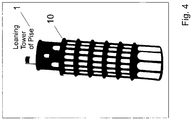
- the method could categorize features identified in the image, such as the presence in the image of a mountain view, such as the Matterhorn (Cervin), of a building such as the Leaning Tower of Pisa, of a sculpture such as the Discobolus, or of a painting such as the Mona Lisa.
- categories of identified features include for example landscape elements, urban elements, traffic elements, close-up elements, etc.
- the selected identifying method can depend for example on the category of the location for selecting an appropriate annotation method. Examples of categories include landscape vs. urban view; indoor location vs. outdoor location; highway vs. museum; etc.
- Indoor and outdoor categorization can also depend on the measured brightness, or on use of an additional flash light.
- parameters of the lens can be used, such as the zooming factor, the aperture or the focusing distance.
- a user-selected or automatically selected scene mode in order to distinguish between Auto, Portrait, Party/Indoor, Beach/Snow, Landscape, Close-up, Museum, Dusk/Dawn etc. for example, can also be used as a condition for determining the most adapted feature identification method.
- These device parameters can be automatic or manually selected by the user.
- the use of the flash can be automatically set by the portable device - e.g. in the scene mode "Auto” if the light is considered not sufficient or in the scene mode "Party/Indoor” - or it can be manually set by the user by selecting an hapting means of the portable device or by adding an external flash device to the portable device.
- the condition can also be retrieved from a database of one or more remote servers comprising image models.
- feature identification method in this context designates a method which is selected for identifying one or several features in a captured image. The selection of the method depends on at least one of the mentioned conditions, so that different feature identification methods are used in different conditions.
- An example of feature identification method includes, a matching of features in a captured image with reference 2D images stored in a local or remote database of known features.
- Another feature identification method which can be used under different condition included a matching of features in a captured image with projections of one or several 3D models stored in a local or remote database.
- Yet another feature identification method includes use of a radio signal emitted by a radio beacon, such as a RFID element, associated with the captured element and received by the user's device.
- the choice of a particular database of reference 2D respectively 3D elements used by the selected method can also depend on the conditions.
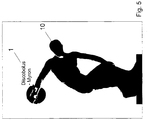
- the selected feature identification method may be a 3D matching recognition or identification method, in which the capture image of the Discobolus is matched with projections of candidate 3D reference elements in a database. If the focusing distance is compatible with an object in the background, such as for example a mountain range, the selected feature identification method may be a 2D matching recognition or identification method, in which the profile of the mountain range is matched with 2D reference images in a database.
- the method according to the present invention automatically selects a 2D or a 3D feature identification method depending on the current focusing distance of the portable device.
- the method can use and combine more than one condition in order to determine the best feature identification method.
- the image contains the Discobolus
- the portable device is set on a "Museum" mode.
- This different condition confirms that a 3D matching algorithm is suitable, so that a specific database containing 3D images, e.g. images representing statues of the ancient Greece, can then be selected based on these conditions and the Discobolus can quickly and efficiently be identified.
- the portable device is set on the "Landscape" mode, so that it does not use a flash and that it can retrieve the geographical position of the device by using a location sensor, e.g. a GPS sensor, linked to its image sensor, or a network-based sensor, e.g. for localising the device in a GSM or UMTS network.
- a location sensor e.g. a GPS sensor, linked to its image sensor, or a network-based sensor, e.g. for localising the device in a GSM or UMTS network.
- a feature identification method is selected in which a specific database containing 2D images, e.g. images representing landscape profiles of this particular location, is selected based on these conditions and the mountain range can quickly and efficiently be identified.
- this selection of candidates is based on at least one condition, similar to the automatic selection of a feature identification method.
- this at least one condition depends on the device location retrieved from a location sensor, e.g. a GPS sensor, of the portable device.
- the annotations candidates could be downloaded wirelessly through a cellular network, e.g. UMTS, or Wifi, from a remote server on the portable device: in this manner, the annotation of an image of a view can be done on the portable device itself, without the need of any external server.
- the annotation device can also be shipped with a large non-volatile set of annotations, stored on a medium like a flash memory, a DVD etc. In that case, the annotation device will only use a subset of this set of.
- some annotation set can be embedded into an annotation device like a compact digital camera, wherein the camera can recognize the view the user is currently looking at and automatically "tag" the image of the view he's taking, with the recognized annotation.
- a feature identification method which in one embodiment can depend on at least one condition as discussed above, is then applied for identifying at least one feature of the image of the view.
- the method explained in “ BRIEF: Computing a Local Binary Descriptor Very Fast”, M. Calonder & al, European Conference on Computer Vision, Heraklion, Greece, 2010 combined with the method explained in “ Scalable Recognition with a Vocabulary Tree", D. Nistér & al, CVPR, 2006 is used for this purpose, although other methods could be used. After deciding which of the identified features are annotated, the correspondence between these identified features and the annotations candidates is verified.
- a correspondence or match is not found, another set of candidates is downloaded from the same or from another server and the correspondence between the identified features and the new candidates is verified.
- the new set is in general wider than the previous, i.e. it contains candidates which have a lower number of common features. If a correspondence or match is found, the above considerations are still valid, if not the downloading and verifying steps are carried on in an iterative manner until when a correspondence or matching is found. If not, an annotation failure message is communicated to the user of the portable device, e.g. by a written message displayed on the portable device. In one embodiment the user is asked to help the device to find the desired annotations, e.g. by introducing some searching criteria on the portable device.
- the inventive method for annotating at least one feature of an image of a view comprises the following steps
- the new feature identification data is for example a model or template of a feature available on the image and that the user wants to annotate, and which can be used for recognizing this feature on other similar images.
- the new feature identification data could correspond for example to a portion of the captured image which the user wants to annotate with a new annotation.
- the new annotation is sent to the remote server by using the same communication link which was used for downloading the annotation set. Future users would then be able to have the objects of the image of a view annotated.
- the annotations could thus be user-generated and shared among users.
- the feature identification method In order to execute the annotation of a live video stream in real-time, the feature identification method has to be carried out within the portable device. Usually this feature identification method involves the use of some feature identification data, depending on the chosen method, in order to reach the identification goal. For example, by using a computer vision method, the feature identification method needs a "model" of each feature it has to identify. The portable device uses that model to identify the features in the image of a view and annotate them. By doing so, the portable device is not only a display-capable device but also an annotation device where all the required image and sensor processing is done on the portable device itself without the need of any external server.
- the feature identification data are optimised by the remote server for reducing the communication costs between the remote server and the annotation device and/or for reducing the computation need of the annotation device.
- the selection of feature identification data which are downloaded from a remote server to the portable device depends on the discussed at least one condition. According to another independent aspect of the invention this selection depends on the quality of the communication link between the server and the portable device. According to another independent aspect of the invention this selection depends on the portable device computation power and/or available memory space.
- the method according to the invention may comprise the following steps, illustrated in Figure 1 :
- the annotations are then displayed on the portable device.
- the method according to the invention allows to efficiently handle the annotation of a feature belonging to different environments and locations.
- the automatically chosen feature identification method may be validated by the user of the portable device. If he does not validate the method, he can manually select another method. The feedback of the user can then be taken into account by the portable device for further automatic choices of the feature identification method. This user feedback procedure can be repeated iteratively.
- the invention concerns also a system for annotating at least one feature of an image of a view, comprising:
- the system may comprise
- the portable device comprises said means for retrieving and/or said means for selecting and/or said means for applying and/or said means for annotating.
- system comprises one or more remote servers comprising said means for retrieving and/or said means for selecting and/or said means for applying and/or said means for annotating.
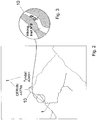
- Figure 2 shows an example of an image obtained by a portable device comprising an image sensor, e.g. a digital camera (step 1000 of Figure 1 ).
- the image shows a mountain, here the Matterhorn (Cervin).
- the prominent feature is the Matterhorn (Cervin) 10, but the image comprises other features, e.g. other mountains in the range.
- At least one condition is retrieved and associated with this image (step 2000 of Figure 1 ).
- Example of conditions which can be considered can depend on:
- a categorization of the image could be performed, based on one or more of the previous conditions. For example, a particular focusing distance (for example 3,8 m) could be associated with a category of focusing distance (for example close range). A particular location (for example Zermatt) could be associated with a corresponding category of locations (for example countryside or landscape). A particular image (the Matterhorn) can be associated with a category of images (landscape), etc.
- a feature identification method is then automatically selected (step 3000 of Figure 1 ) among several methods which are available, and then applied for identifying at least one feature 10 of the image (step 4000 of Figure 1 ).
- the Cervin, the Tyndall and other lower peaks are recognised.
- the inventive method it is possible to select which of the identified features of the image (Cervin, the Tyndall and other lower peaks) have to be annotated (step 5000 of Figure 1 ).
- the identified features of the image Cervin, the Tyndall and other lower peaks
- This step can be based at least partially on the previously retrieved conditions. For example, the system can decide to annotate only geographic feature element (such as mountain) when a landscape view has been detected, but not the persons or other elements which may be present on the image.
- step 6000 of Figure 1 it is possible to decide the content of the annotations 1 and how to write them. Usually, once the features have been selected, this step is not dependent on the previously retrieved conditions. However it is possible to imagine a search in a specific database containing the name of the mountains and their altitude in the case of a mountain range as in the example, or in another database in the case of a museum.
- each annotation 1 comprises the name and the altitude of each selected mountain.
- the Cervin is the most important feature, its name will be written with a different font, or a different colour, or a frame around, or with capital characters as in Figure 2 .
- the user could manually select a feature to annotate.
- the font and the dimension of the annotations 1 are adapted in order to avoid collision and taking into account the space available on the display of the camera and the user reading constraints.
- Another possible feature could be a hiking trail: in this example the annotation could be a line superposed on the image and indicating this hiking trail. If the user of the portable device zooms the image, he can visualize another image as illustrated in Figure 3 . The change of the zooming factor could automatically change the feature identification method used, which could be based now on a 3D feature identification method, instead of the previous 2D feature identification method. The hiking trail can then be recognised with this different method, and annotated.
- Figure 4 shows another example of an image obtained by the same digital camera used for Figures 2 to 3 .
- possible conditions could be:
- the selected feature identification method could be based now on a 3D feature identification method, i.e. a method where features of the captured image are matched with projections of 3D models stored in a database.
- the feature identification method could use a RFID signal emitted from a sender close to the Discobolus.
- the image contains two possible prominent features: the Cervin 10" in the background and the mountain shelter 10' in the foreground.
- the selection of a feature identification can depend on the focusing distance of the portable device. If for example the focus is on the mountain shelter, a 3D feature identification method will be automatically used and the annotation will be for example surrounded by a frame, as illustrated in Figure 6 .
- the image contains other two possible prominent features: the Cervin 10" in the background and a person 10"' in the foreground.
- the same considerations for the Figure 6 are valid also for the Figure 7 .
- the annotation of the person could comprise a symbol like a smile retrieved from a remote server and associated with the person 10'" which has been identified with a 3D feature identification method.
- Figure 8 illustrates a room of a museum.
- the feature identification method according to the invention determines based on the retrieved conditions that the most interesting feature for annotation is a painting 10 which is in another room and is therefore not visible in the image captured by the camera of the portable device.
- the painting 10 is illustrated with dashed lines, superposed on the view taken by the device 100 with another painting 12 in the current room.
- the portable device 100 can then annotate the capture image with an element, such as an arrow 20 indicating the direction to go to get to the painting 10.
- the painting 12 can be suppressed from the displayed image.
- the selected features can be clickable, so that, when they are clicked, additional information will be displayed.
- non selected features can also be clickable, so that, when they are clicked, an annotation will be displayed.
- the portable device 100 can comprise haptic means 3 allowing the user to input information.
- the portable device comprises a display for displaying the image and its annotations.
- the portable device can comprise one or more localisation sensors, e.g. GPS sensors and/or one or more network-based sensors, and/or one or more orientation sensors like gyroscopes and/or accelerometers.
- one or more localisation sensors e.g. GPS sensors and/or one or more network-based sensors, and/or one or more orientation sensors like gyroscopes and/or accelerometers.
- the user can interact with it, for example by pressing a pause and/or stop and/or rewind and/or forward and/or re-play buttons displayed on the portable device.
- one or more useful and clickable web links can appear, related to the annotated feature.
- the annotated feature is a board or placard which advertises a specific car, for example a Ferrari
- the annotation is an advertising video
- this link could propose to the user to buy the advertised product.
- this file or stream is preferably time-synchronized with the video captured by the portable device.
- the user captures a video sequence from a train or from a car driving along a trajectory, which can be known or which can be retrieved from the captured image and/or from some locations sensors (e.g. a GPS sensor or a gyroscope), an annotating video can be superimposed over this captured video sequence, with elements of the superimposed video matching elements of the captured sequence.
- the device can capture a video from a movie picture, for example displayed on TV, and superimpose on the captured sequence subtitles, audio comments, or another time-changing annotations time-synchronized with the video sequence.
- the displayed annotations are adjusted in such a manner that they hold the same orientation with regard to the portable device user.
- the portable device automatically gives a negative feedback to the user, e.g. a message displayed on the portable device which informs the user that the identification is not possible, and asks the user to insert some input data for helping it to identify the features.
- the language of the written annotation and/or of the audio of the video-annotations can depend on the localisation sensor of the portable device or on some user settings, allowing for example a French tourist in Tokyo to display the annotations in French and not in Japanese.
- the annotation method allows the user to interact with the augmented reality displayed on the portable device.
- the annotation could be an image or a video of the reconstruction of the Coliseum as it was during the Roman age.
- the annotation could comprise the possibility, for the user, to select the age corresponding to the annotation to display, e.g. the user can decide to display the reconstruction of Coliseum as it was during the Middle Ages or during the Renaissance or also the different phases of construction of this building.
- the portable device can automatically select the most important feature to annotate according to some criteria, e.g. by taking into account the focusing distance or some user settings.
- all the features are simultaneously annotated but only one has the volume of the video sounds activated. The user can activate the volume of the video annotation of another feature by selecting it, e.g. by a click, and automatically the volume of the previous annotated feature is deactivated.
- the annotation method comprises the definition of a plurality of confidence levels of the annotation as a "quality index", which can be related to
- At least one of those confidence levels can be used for detecting transitions when the device is moved by the user between a first position where one first feature to annotate is captured and recognised with a confidence level, and a second position or orientation where a second feature is recognised with high confidence. During the transition, the confidence level decreases, and this information can be used for interrupting the annotation.
- the selection is based on at least one condition, similar to the automatic selection of a feature identification method among a plurality of feature identification methods.
- this at least one condition is retrieved from a location sensor, e.g. a GPS sensor, of the portable device.
- Examples of conditions which can be used for selecting the feature identification data and associated annotations include:
- annotations candidates are then downloaded from a remote server on the portable device: in this manner the annotation of an image of a view can be done on the portable device without the need of any external server.
- a feature identification method which in one embodiment can depend on the at least one condition as discussed above, is then applied for matching features of the captured image of the view with selected and downloaded reference features. After deciding which of the identified features are annotated, the correspondence between these identified features and the annotations candidates is verified.
- the portable device decides how and where to write and/or reproduce the annotations for the identified features, how many annotations insert on the image, the fonts' types and dimensions of the written-annotations, the volume or the language of the video-annotations, etc. Some of the identified features are then annotated.
- the new set is preferably wider than the previous, i.e. it contains feature identification data and annotation candidates which have a lower number of common features. If a correspondence or matching is found, the above considerations are valid, if not the downloading and verifying steps are carried on in an iterative manner until when a correspondence or matching is found. If not, an annotation failure message is communicated to the portable device user, e.g. a written message is displayed on the portable device. In one embodiment the user is asked to help the device to find the annotations, e.g. by introducing some searching criteria on the portable device.
- the condition for automatically selecting a set of annotations candidates among a plurality of annotations on a remote server is based on a GPS sensor, the less precise the GPS sensor, the higher the number of annotations candidates downloaded on the portable device.
- feature identification data are selected in the server, and then downloaded from the remote server to the portable device, whereas the selection depends on the quality of the communication link between the server and the portable device. According to another aspect of the invention this selection depends on the portable device computation power and/or available memory space.
- the annotations candidates and/or the feature identification data are downloaded on the portable device when it is turned on or when the displacement of the device is larger than a predetermined threshold, e.g. 1 meter.
- a predetermined threshold e.g. 1 meter.
- the portable device decides itself when the annotations candidates and/or the feature identification data have to be downloaded according to some criteria depending e.g. on its geographical location, the current time, etc.
- feature identification and/or corresponding data can be added by a user on his mobile device, and then sent from the portable device to a remote server.
- a user can take an image or video of a scene, indicate one feture of the image or images to identify in order to build a model resulting in feature identification data, and associate an annotation, such as text, formatted text, image, hyperlink, audio, video, etc, to this feature.
- the feature identification data and associated annotation entered by the user is then automatically or on user's request stored in a remote server, and made available to this user and to other users for subsequent use. This allows to share those feature identification data and corresponding annotations, so that other users's portable devices will be able to recognize and annotate those new features. Subsequent requests to the remote server will then retrieve the new feature identification data and corresponding annotation, depending on the above mentioned condition.
Landscapes
- Engineering & Computer Science (AREA)
- Theoretical Computer Science (AREA)
- Physics & Mathematics (AREA)
- General Physics & Mathematics (AREA)
- General Engineering & Computer Science (AREA)
- Databases & Information Systems (AREA)
- Data Mining & Analysis (AREA)
- Library & Information Science (AREA)
- Multimedia (AREA)
- General Health & Medical Sciences (AREA)
- Health & Medical Sciences (AREA)
- Computational Linguistics (AREA)
- Audiology, Speech & Language Pathology (AREA)
- Artificial Intelligence (AREA)
- Mathematical Physics (AREA)
- Software Systems (AREA)
- Studio Devices (AREA)
- Processing Or Creating Images (AREA)
- Information Retrieval, Db Structures And Fs Structures Therefor (AREA)
- User Interface Of Digital Computer (AREA)
Applications Claiming Priority (3)
| Application Number | Priority Date | Filing Date | Title |
|---|---|---|---|
| CH21312010 | 2010-12-21 | ||
| EP11785657.5A EP2656245B1 (fr) | 2010-12-21 | 2011-11-17 | Procede informatise et dispositif pour annotation au moins une caractéristique de l'image d'une vue |
| PCT/EP2011/070382 WO2012084362A1 (fr) | 2010-12-21 | 2011-11-17 | Procédé informatisé et dispositif d'annotation d'au moins une caractéristique d'une image d'une vue |
Related Parent Applications (1)
| Application Number | Title | Priority Date | Filing Date |
|---|---|---|---|
| EP11785657.5A Division EP2656245B1 (fr) | 2010-12-21 | 2011-11-17 | Procede informatise et dispositif pour annotation au moins une caractéristique de l'image d'une vue |
Publications (1)
| Publication Number | Publication Date |
|---|---|
| EP3678035A1 true EP3678035A1 (fr) | 2020-07-08 |
Family
ID=43827859
Family Applications (2)
| Application Number | Title | Priority Date | Filing Date |
|---|---|---|---|
| EP11785657.5A Active EP2656245B1 (fr) | 2010-12-21 | 2011-11-17 | Procede informatise et dispositif pour annotation au moins une caractéristique de l'image d'une vue |
| EP20157605.5A Withdrawn EP3678035A1 (fr) | 2010-12-21 | 2011-11-17 | Procédé informatisé et dispositif d'annotation d'au moins une caractéristique d'une image d'une vue |
Family Applications Before (1)
| Application Number | Title | Priority Date | Filing Date |
|---|---|---|---|
| EP11785657.5A Active EP2656245B1 (fr) | 2010-12-21 | 2011-11-17 | Procede informatise et dispositif pour annotation au moins une caractéristique de l'image d'une vue |
Country Status (6)
| Country | Link |
|---|---|
| US (1) | US9959644B2 (fr) |
| EP (2) | EP2656245B1 (fr) |
| JP (1) | JP6013363B2 (fr) |
| KR (1) | KR101867558B1 (fr) |
| CN (1) | CN103415849B (fr) |
| WO (1) | WO2012084362A1 (fr) |
Families Citing this family (37)
| Publication number | Priority date | Publication date | Assignee | Title |
|---|---|---|---|---|
| US9132352B1 (en) | 2010-06-24 | 2015-09-15 | Gregory S. Rabin | Interactive system and method for rendering an object |
| JP5668587B2 (ja) * | 2011-04-19 | 2015-02-12 | ソニー株式会社 | 画像処理装置、画像処理方法及びプログラム |
| US9681121B2 (en) * | 2012-01-11 | 2017-06-13 | Ultra-D Coöperatief U.A. | Mobile display device |
| US9829996B2 (en) * | 2012-06-25 | 2017-11-28 | Zspace, Inc. | Operations in a three dimensional display system |
| US9654968B2 (en) | 2012-07-17 | 2017-05-16 | Texas Instruments Incorporated | Certified-based control unit-key fob pairing |
| US9489702B2 (en) | 2012-07-24 | 2016-11-08 | Nec Corporation | Information processing device, data processing method thereof, and program |
| US9237263B2 (en) | 2012-10-05 | 2016-01-12 | Vidinoti Sa | Annotation method and apparatus |
| EP2904605A1 (fr) | 2012-10-05 | 2015-08-12 | Vidinoti SA | Procédé et appareil d'annotation |
| JP6064510B2 (ja) * | 2012-10-19 | 2017-01-25 | トヨタ自動車株式会社 | 情報提供装置および情報提供方法 |
| EP2746726A1 (fr) * | 2012-12-21 | 2014-06-25 | GN Store Nord A/S | Système et procédé pour le marquage d'un signal audio sur un objet ou un emplacement, système et procédé de reproduction d'un signal audio étiqueté |
| US8854361B1 (en) * | 2013-03-13 | 2014-10-07 | Cambridgesoft Corporation | Visually augmenting a graphical rendering of a chemical structure representation or biological sequence representation with multi-dimensional information |
| US10853407B2 (en) * | 2013-09-05 | 2020-12-01 | Ebay, Inc. | Correlating image annotations with foreground features |
| US10290036B1 (en) * | 2013-12-04 | 2019-05-14 | Amazon Technologies, Inc. | Smart categorization of artwork |
| JP6447992B2 (ja) * | 2014-10-23 | 2019-01-09 | キヤノン株式会社 | 画像管理装置及びその制御方法 |
| US20170243403A1 (en) * | 2014-11-11 | 2017-08-24 | Bent Image Lab, Llc | Real-time shared augmented reality experience |
| WO2016077506A1 (fr) | 2014-11-11 | 2016-05-19 | Bent Image Lab, Llc | Positionnement précis d'un contenu de réalité augmentée |
| US20160133230A1 (en) * | 2014-11-11 | 2016-05-12 | Bent Image Lab, Llc | Real-time shared augmented reality experience |
| US9959623B2 (en) | 2015-03-09 | 2018-05-01 | Here Global B.V. | Display of an annotation representation |
| CN104850229B (zh) * | 2015-05-18 | 2019-03-22 | 小米科技有限责任公司 | 识别物体的方法及装置 |
| US10600249B2 (en) | 2015-10-16 | 2020-03-24 | Youar Inc. | Augmented reality platform |
| US9876869B2 (en) * | 2015-10-28 | 2018-01-23 | Sk Planet Co., Ltd. | Method and apparatus for providing beacon service |
| KR102528596B1 (ko) * | 2015-10-28 | 2023-05-04 | 에스케이플래닛 주식회사 | 비콘 서비스 제공 방법 및 장치 |
| CN106971129A (zh) * | 2016-01-13 | 2017-07-21 | 深圳超多维光电子有限公司 | 一种3d图像的应用方法和装置 |
| US10802695B2 (en) | 2016-03-23 | 2020-10-13 | Youar Inc. | Augmented reality for the internet of things |
| US9715508B1 (en) * | 2016-03-28 | 2017-07-25 | Cogniac, Corp. | Dynamic adaptation of feature identification and annotation |
| CN105808782B (zh) * | 2016-03-31 | 2019-10-29 | 广东小天才科技有限公司 | 一种图片标签的添加方法及装置 |
| US9842095B2 (en) * | 2016-05-10 | 2017-12-12 | Adobe Systems Incorporated | Cross-device document transactions |
| US10019824B2 (en) * | 2016-08-16 | 2018-07-10 | Lawrence Livermore National Security, Llc | Annotation of images based on a 3D model of objects |
| EP3285216A1 (fr) * | 2016-08-19 | 2018-02-21 | Nokia Technologies Oy | Associer des commentaires aux points d'intérêts dans une réalité virtuelle |
| US10623453B2 (en) * | 2017-07-25 | 2020-04-14 | Unity IPR ApS | System and method for device synchronization in augmented reality |
| US10776619B2 (en) | 2018-09-27 | 2020-09-15 | The Toronto-Dominion Bank | Systems and methods for augmenting a displayed document |
| US11073972B2 (en) | 2018-11-02 | 2021-07-27 | Motorola Solutions, Inc. | Visual summarization methods for time-stamped images |
| DE102018220892A1 (de) * | 2018-12-04 | 2020-06-04 | Robert Bosch Gmbh | Vorrichtung und Verfahren zur Generierung von Labelobjekten für die Umgebung eines Fahrzeugs |
| CN110119383A (zh) * | 2019-04-15 | 2019-08-13 | 维沃移动通信有限公司 | 一种文件管理方法及终端设备 |
| US11093691B1 (en) * | 2020-02-14 | 2021-08-17 | Capital One Services, Llc | System and method for establishing an interactive communication session |
| EP4193302A1 (fr) | 2020-08-05 | 2023-06-14 | Avesha, Inc. | Réalisation d'auto-ajustement d'équilibrage de charge dans un environnement d'application |
| WO2024237705A1 (fr) * | 2023-05-16 | 2024-11-21 | 주식회사 어노테이션에이아이 | Procédé de réalisation d'annotation sur la base d'une invite |
Citations (5)
| Publication number | Priority date | Publication date | Assignee | Title |
|---|---|---|---|---|
| EP1246080A2 (fr) | 2001-03-26 | 2002-10-02 | Ecole Polytechnique Fédérale de Lausanne (EPFL) | Annotation automatique d'une vue |
| US20040030741A1 (en) | 2001-04-02 | 2004-02-12 | Wolton Richard Ernest | Method and apparatus for search, visual navigation, analysis and retrieval of information from networks with remote notification and content delivery |
| JP2005292064A (ja) | 2004-04-05 | 2005-10-20 | Sony Corp | ナビゲーション装置、およびデータ処理方法、並びにコンピュータ・プログラム |
| EP2154481A1 (fr) | 2007-05-31 | 2010-02-17 | Panasonic Corporation | Dispositif de capture d'image, serveur de fourniture d'informations supplémentaires, et système de filtrage d'informations supplémentaires |
| WO2010026170A1 (fr) * | 2008-09-02 | 2010-03-11 | Ecole Polytechnique Federale De Lausanne (Epfl) | Annotation d’images sur dispositifs portables |
Family Cites Families (17)
| Publication number | Priority date | Publication date | Assignee | Title |
|---|---|---|---|---|
| DE69635101T2 (de) * | 1995-11-01 | 2006-06-01 | Canon K.K. | Verfahren zur Extraktion von Gegenständen und dieses Verfahren verwendendes Bildaufnahmegerät |
| US6222583B1 (en) * | 1997-03-27 | 2001-04-24 | Nippon Telegraph And Telephone Corporation | Device and system for labeling sight images |
| JP3225882B2 (ja) | 1997-03-27 | 2001-11-05 | 日本電信電話株式会社 | 景観ラベリングシステム |
| JP2001216309A (ja) * | 2000-01-31 | 2001-08-10 | Keio Gijuku | 対象物特定装置及びカメラ |
| US20020089519A1 (en) | 2001-01-05 | 2002-07-11 | Vm Labs, Inc. | Systems and methods for creating an annotated media presentation |
| US6915011B2 (en) * | 2001-03-28 | 2005-07-05 | Eastman Kodak Company | Event clustering of images using foreground/background segmentation |
| US20040021780A1 (en) * | 2002-07-31 | 2004-02-05 | Intel Corporation | Method and apparatus for automatic photograph annotation with contents of a camera's field of view |
| JP2006522411A (ja) * | 2003-03-06 | 2006-09-28 | アニメトリックス,インク. | 複数の特徴を含むオブジェクトの画像データベースの生成 |
| TWI255429B (en) * | 2003-12-29 | 2006-05-21 | Ind Tech Res Inst | Method for adjusting image acquisition parameters to optimize objection extraction |
| JP2006059136A (ja) * | 2004-08-20 | 2006-03-02 | Seiko Epson Corp | ビューア装置及びそのプログラム |
| JP2007018456A (ja) * | 2005-07-11 | 2007-01-25 | Nikon Corp | 情報表示装置及び情報表示方法 |
| US20080002864A1 (en) * | 2006-06-29 | 2008-01-03 | Eastman Kodak Company | Using background for searching image collections |
| US8364020B2 (en) * | 2007-09-28 | 2013-01-29 | Motorola Mobility Llc | Solution for capturing and presenting user-created textual annotations synchronously while playing a video recording |
| JP4956375B2 (ja) * | 2007-10-30 | 2012-06-20 | キヤノン株式会社 | 画像処理装置、画像処理方法 |
| US8150098B2 (en) * | 2007-12-20 | 2012-04-03 | Eastman Kodak Company | Grouping images by location |
| JP2010009192A (ja) * | 2008-06-25 | 2010-01-14 | Olympus Corp | 情報表示システム及びそれを用いた携帯情報端末 |
| US8890896B1 (en) * | 2010-11-02 | 2014-11-18 | Google Inc. | Image recognition in an augmented reality application |
-
2011
- 2011-11-17 KR KR1020137018883A patent/KR101867558B1/ko active Active
- 2011-11-17 EP EP11785657.5A patent/EP2656245B1/fr active Active
- 2011-11-17 JP JP2013545134A patent/JP6013363B2/ja active Active
- 2011-11-17 CN CN201180061732.6A patent/CN103415849B/zh active Active
- 2011-11-17 EP EP20157605.5A patent/EP3678035A1/fr not_active Withdrawn
- 2011-11-17 WO PCT/EP2011/070382 patent/WO2012084362A1/fr not_active Ceased
- 2011-11-17 US US13/995,578 patent/US9959644B2/en active Active
Patent Citations (6)
| Publication number | Priority date | Publication date | Assignee | Title |
|---|---|---|---|---|
| EP1246080A2 (fr) | 2001-03-26 | 2002-10-02 | Ecole Polytechnique Fédérale de Lausanne (EPFL) | Annotation automatique d'une vue |
| EP2207113A1 (fr) | 2001-03-26 | 2010-07-14 | Ecole Polytechnique Fédérale de Lausanne (EPFL) | Annotation automatique d'une vue |
| US20040030741A1 (en) | 2001-04-02 | 2004-02-12 | Wolton Richard Ernest | Method and apparatus for search, visual navigation, analysis and retrieval of information from networks with remote notification and content delivery |
| JP2005292064A (ja) | 2004-04-05 | 2005-10-20 | Sony Corp | ナビゲーション装置、およびデータ処理方法、並びにコンピュータ・プログラム |
| EP2154481A1 (fr) | 2007-05-31 | 2010-02-17 | Panasonic Corporation | Dispositif de capture d'image, serveur de fourniture d'informations supplémentaires, et système de filtrage d'informations supplémentaires |
| WO2010026170A1 (fr) * | 2008-09-02 | 2010-03-11 | Ecole Polytechnique Federale De Lausanne (Epfl) | Annotation d’images sur dispositifs portables |
Non-Patent Citations (3)
| Title |
|---|
| D. NISTER: "Scalable Recognition with a Vocabulary Tree", CVPR, 2006 |
| M. CALONDER: "BRIEF: Computing a Local Binary Descriptor Very Fast", EUROPEAN CONFERENCE ON COMPUTER VISION, 2010 |
| YOHAN JIN ET AL.: "Advances in multimedia information systems lecture notes in computer science", 1 January 2005, SPRINGER, article "Improving image annotations using wordnet", pages: 115 - 130 |
Also Published As
| Publication number | Publication date |
|---|---|
| CN103415849B (zh) | 2019-11-15 |
| KR20140038355A (ko) | 2014-03-28 |
| CN103415849A (zh) | 2013-11-27 |
| EP2656245B1 (fr) | 2020-02-19 |
| EP2656245A1 (fr) | 2013-10-30 |
| US20130311868A1 (en) | 2013-11-21 |
| JP2014501984A (ja) | 2014-01-23 |
| JP6013363B2 (ja) | 2016-10-25 |
| US9959644B2 (en) | 2018-05-01 |
| WO2012084362A1 (fr) | 2012-06-28 |
| KR101867558B1 (ko) | 2018-06-15 |
Similar Documents
| Publication | Publication Date | Title |
|---|---|---|
| US9959644B2 (en) | Computerized method and device for annotating at least one feature of an image of a view | |
| US9189699B2 (en) | Augmented reality interaction implementation method and system | |
| US10410364B2 (en) | Apparatus and method for generating virtual reality content | |
| CN104376118B (zh) | 基于全景图的精确标注兴趣点的户外移动增强现实方法 | |
| KR101357262B1 (ko) | 필터 정보를 이용한 객체 인식 장치 및 방법 | |
| US11232636B2 (en) | Methods, devices, and systems for producing augmented reality | |
| US20090161963A1 (en) | Method. apparatus and computer program product for utilizing real-world affordances of objects in audio-visual media data to determine interactions with the annotations to the objects | |
| CN109189879B (zh) | 电子书籍显示方法及装置 | |
| US20130066878A1 (en) | Method and apparatus for enabling virtual tags | |
| KR101545138B1 (ko) | 증강 현실을 이용한 광고 제공 방법과 그를 위한 시스템, 장치 및 단말기 | |
| US10796207B2 (en) | Automatic detection of noteworthy locations | |
| CN108509621B (zh) | 景区全景图的景点识别方法、装置、服务器和存储介质 | |
| CN110019599A (zh) | 获取兴趣点poi信息的方法、系统、装置及电子设备 | |
| US20210019908A1 (en) | Building Recognition via Object Detection and Geospatial Intelligence | |
| CN112215964A (zh) | 基于ar的场景导览方法和设备 | |
| CN116862946A (zh) | 运动视频生成方法、装置、终端设备以及存储介质 | |
| CN117828137A (zh) | 数据查询方法、装置、存储介质及程序产品 | |
| Di et al. | An Augmented Reality Design Method Based on ARKit for the Fusion of Hierarchical Traditional Media and Real Scenes | |
| US20250363687A1 (en) | Systems and methods for real-time point-of-interest detection and overlay | |
| KR101640020B1 (ko) | 강화 이미지 제공 시스템 및 방법 | |
| CN120011536A (zh) | 对象识别方法、装置及计算机程序产品 | |
| Braganza et al. | Multipurpose Application for the Visually Impaired | |
| Luley et al. | Geo-services and computer vision for object awareness in mobile system applications | |
| CN121147476A (zh) | 位置查询方法及相关装置、设备和存储介质 | |
| Lee et al. | Street searching service framework for navigation |
Legal Events
| Date | Code | Title | Description |
|---|---|---|---|
| PUAI | Public reference made under article 153(3) epc to a published international application that has entered the european phase |
Free format text: ORIGINAL CODE: 0009012 |
|
| STAA | Information on the status of an ep patent application or granted ep patent |
Free format text: STATUS: REQUEST FOR EXAMINATION WAS MADE |
|
| 17P | Request for examination filed |
Effective date: 20200217 |
|
| AC | Divisional application: reference to earlier application |
Ref document number: 2656245 Country of ref document: EP Kind code of ref document: P |
|
| AK | Designated contracting states |
Kind code of ref document: A1 Designated state(s): AL AT BE BG CH CY CZ DE DK EE ES FI FR GB GR HR HU IE IS IT LI LT LU LV MC MK MT NL NO PL PT RO RS SE SI SK SM TR |
|
| RIN1 | Information on inventor provided before grant (corrected) |
Inventor name: MONNEY, MATHIEU Inventor name: VETTERLI, MARTIN Inventor name: AYER, SERGE |
|
| STAA | Information on the status of an ep patent application or granted ep patent |
Free format text: STATUS: THE APPLICATION IS DEEMED TO BE WITHDRAWN |
|
| 18D | Application deemed to be withdrawn |
Effective date: 20220601 |