EP3679043B9 - Antagonistes du récepteur de la vasopressine, produits et procédés associés - Google Patents
Antagonistes du récepteur de la vasopressine, produits et procédés associés Download PDFInfo
- Publication number
- EP3679043B9 EP3679043B9 EP18779495.3A EP18779495A EP3679043B9 EP 3679043 B9 EP3679043 B9 EP 3679043B9 EP 18779495 A EP18779495 A EP 18779495A EP 3679043 B9 EP3679043 B9 EP 3679043B9
- Authority
- EP
- European Patent Office
- Prior art keywords
- independently
- alkyl
- formula
- haloalkyl
- halo
- Prior art date
- Legal status (The legal status is an assumption and is not a legal conclusion. Google has not performed a legal analysis and makes no representation as to the accuracy of the status listed.)
- Active
Links
Classifications
-
- C—CHEMISTRY; METALLURGY
- C07—ORGANIC CHEMISTRY
- C07D—HETEROCYCLIC COMPOUNDS
- C07D487/00—Heterocyclic compounds containing nitrogen atoms as the only ring hetero atoms in the condensed system, not provided for by groups C07D451/00 - C07D477/00
- C07D487/02—Heterocyclic compounds containing nitrogen atoms as the only ring hetero atoms in the condensed system, not provided for by groups C07D451/00 - C07D477/00 in which the condensed system contains two hetero rings
- C07D487/10—Spiro-condensed systems
-
- A—HUMAN NECESSITIES
- A61—MEDICAL OR VETERINARY SCIENCE; HYGIENE
- A61K—PREPARATIONS FOR MEDICAL, DENTAL OR TOILETRY PURPOSES
- A61K31/00—Medicinal preparations containing organic active ingredients
- A61K31/33—Heterocyclic compounds
- A61K31/395—Heterocyclic compounds having nitrogen as a ring hetero atom, e.g. guanethidine or rifamycins
- A61K31/435—Heterocyclic compounds having nitrogen as a ring hetero atom, e.g. guanethidine or rifamycins having six-membered rings with one nitrogen as the only ring hetero atom
- A61K31/44—Non condensed pyridines; Hydrogenated derivatives thereof
- A61K31/4427—Non condensed pyridines; Hydrogenated derivatives thereof containing further heterocyclic ring systems
- A61K31/4439—Non condensed pyridines; Hydrogenated derivatives thereof containing further heterocyclic ring systems containing a five-membered ring with nitrogen as a ring hetero atom, e.g. omeprazole
-
- A—HUMAN NECESSITIES
- A61—MEDICAL OR VETERINARY SCIENCE; HYGIENE
- A61K—PREPARATIONS FOR MEDICAL, DENTAL OR TOILETRY PURPOSES
- A61K31/00—Medicinal preparations containing organic active ingredients
- A61K31/33—Heterocyclic compounds
- A61K31/395—Heterocyclic compounds having nitrogen as a ring hetero atom, e.g. guanethidine or rifamycins
- A61K31/535—Heterocyclic compounds having nitrogen as a ring hetero atom, e.g. guanethidine or rifamycins having six-membered rings with at least one nitrogen and one oxygen as the ring hetero atoms, e.g. 1,2-oxazines
- A61K31/5375—1,4-Oxazines, e.g. morpholine
- A61K31/538—1,4-Oxazines, e.g. morpholine ortho- or peri-condensed with carbocyclic ring systems
-
- A—HUMAN NECESSITIES
- A61—MEDICAL OR VETERINARY SCIENCE; HYGIENE
- A61K—PREPARATIONS FOR MEDICAL, DENTAL OR TOILETRY PURPOSES
- A61K31/00—Medicinal preparations containing organic active ingredients
- A61K31/33—Heterocyclic compounds
- A61K31/395—Heterocyclic compounds having nitrogen as a ring hetero atom, e.g. guanethidine or rifamycins
- A61K31/55—Heterocyclic compounds having nitrogen as a ring hetero atom, e.g. guanethidine or rifamycins having seven-membered rings, e.g. azelastine, pentylenetetrazole
- A61K31/554—Heterocyclic compounds having nitrogen as a ring hetero atom, e.g. guanethidine or rifamycins having seven-membered rings, e.g. azelastine, pentylenetetrazole having at least one nitrogen and one sulfur as ring hetero atoms, e.g. clothiapine, diltiazem
-
- A—HUMAN NECESSITIES
- A61—MEDICAL OR VETERINARY SCIENCE; HYGIENE
- A61P—SPECIFIC THERAPEUTIC ACTIVITY OF CHEMICAL COMPOUNDS OR MEDICINAL PREPARATIONS
- A61P15/00—Drugs for genital or sexual disorders; Contraceptives
-
- A—HUMAN NECESSITIES
- A61—MEDICAL OR VETERINARY SCIENCE; HYGIENE
- A61P—SPECIFIC THERAPEUTIC ACTIVITY OF CHEMICAL COMPOUNDS OR MEDICINAL PREPARATIONS
- A61P15/00—Drugs for genital or sexual disorders; Contraceptives
- A61P15/02—Drugs for genital or sexual disorders; Contraceptives for disorders of the vagina
-
- A—HUMAN NECESSITIES
- A61—MEDICAL OR VETERINARY SCIENCE; HYGIENE
- A61P—SPECIFIC THERAPEUTIC ACTIVITY OF CHEMICAL COMPOUNDS OR MEDICINAL PREPARATIONS
- A61P15/00—Drugs for genital or sexual disorders; Contraceptives
- A61P15/08—Drugs for genital or sexual disorders; Contraceptives for gonadal disorders or for enhancing fertility, e.g. inducers of ovulation or of spermatogenesis
-
- A—HUMAN NECESSITIES
- A61—MEDICAL OR VETERINARY SCIENCE; HYGIENE
- A61P—SPECIFIC THERAPEUTIC ACTIVITY OF CHEMICAL COMPOUNDS OR MEDICINAL PREPARATIONS
- A61P25/00—Drugs for disorders of the nervous system
-
- A—HUMAN NECESSITIES
- A61—MEDICAL OR VETERINARY SCIENCE; HYGIENE
- A61P—SPECIFIC THERAPEUTIC ACTIVITY OF CHEMICAL COMPOUNDS OR MEDICINAL PREPARATIONS
- A61P25/00—Drugs for disorders of the nervous system
- A61P25/18—Antipsychotics, i.e. neuroleptics; Drugs for mania or schizophrenia
-
- A—HUMAN NECESSITIES
- A61—MEDICAL OR VETERINARY SCIENCE; HYGIENE
- A61P—SPECIFIC THERAPEUTIC ACTIVITY OF CHEMICAL COMPOUNDS OR MEDICINAL PREPARATIONS
- A61P25/00—Drugs for disorders of the nervous system
- A61P25/20—Hypnotics; Sedatives
-
- A—HUMAN NECESSITIES
- A61—MEDICAL OR VETERINARY SCIENCE; HYGIENE
- A61P—SPECIFIC THERAPEUTIC ACTIVITY OF CHEMICAL COMPOUNDS OR MEDICINAL PREPARATIONS
- A61P25/00—Drugs for disorders of the nervous system
- A61P25/22—Anxiolytics
-
- A—HUMAN NECESSITIES
- A61—MEDICAL OR VETERINARY SCIENCE; HYGIENE
- A61P—SPECIFIC THERAPEUTIC ACTIVITY OF CHEMICAL COMPOUNDS OR MEDICINAL PREPARATIONS
- A61P25/00—Drugs for disorders of the nervous system
- A61P25/24—Antidepressants
-
- A—HUMAN NECESSITIES
- A61—MEDICAL OR VETERINARY SCIENCE; HYGIENE
- A61P—SPECIFIC THERAPEUTIC ACTIVITY OF CHEMICAL COMPOUNDS OR MEDICINAL PREPARATIONS
- A61P9/00—Drugs for disorders of the cardiovascular system
-
- C—CHEMISTRY; METALLURGY
- C07—ORGANIC CHEMISTRY
- C07D—HETEROCYCLIC COMPOUNDS
- C07D519/00—Heterocyclic compounds containing more than one system of two or more relevant hetero rings condensed among themselves or condensed with a common carbocyclic ring system not provided for in groups C07D453/00 or C07D455/00
-
- C—CHEMISTRY; METALLURGY
- C07—ORGANIC CHEMISTRY
- C07B—GENERAL METHODS OF ORGANIC CHEMISTRY; APPARATUS THEREFOR
- C07B2200/00—Indexing scheme relating to specific properties of organic compounds
- C07B2200/07—Optical isomers
Definitions
- the invention relates to vasopressin receptor antagonists and to products containing the same, as well as to their uses.
- Arginine vasopressin is a naturally occurring neurohormone released in the brain and the blood stream. AVP is important in regulating water conservation, blood pressure and pituitary adrenocorticotropic hormone (ACTH) secretion, and exerts its effects on physiology and behavior by binding to specific G protein-coupled receptors in the central nervous system and certain peripheral sites or tissues. Within the brain, AVP regulates circadian rhythms, facilitates hippocampal learning and memory and plays an important role in mediating social behaviors by acting in limbic circuits that are dysregulated in neurobehavioral disorders.
- AVP Arginine vasopressin
- V1a, V1b and V2 Three distinct AVP receptor subtypes have been identified on pharmacological and functional bases: V1a, V1b and V2. These receptors are located in the liver, vessels (coronary, renal, cerebral), platelets, kidney, uterus, adrenal glands, pancreas, central nervous system or pituitary gland. AVP is involved in the regulation of several functions, such as cardiovascular, hepatic, pancreatic, antidiuretic, and platelet-aggregating effects, and effects on the central and peripheral nervous system and on the uterine sphere. The effects of the AVP receptors depends on where they are located. The V1a receptor is found throughout the limbic system and cortex of the brain, and in the smooth muscle of blood vessels, uterus, and heart muscle. The V1b receptor is also located in limbic system and the pituitary gland. V2 receptors are located on the collecting ducts of nephrons in the kidney and have been a target for therapeutic approaches to the treatment of cardiovascular conditions.
- Vasopressin functions as a neurochemical signal in the brain to affect social behavior.
- the V1a receptor is extensively expressed in the brain and particularly in limbic areas like the amygdala, lateral septum and hippocampus which are known to have an important role in the regulation of majority of the known effects of AVP, including anxiety, memory and learning, social cognition, aggressive behavior, affiliation, depression and the like.
- the V1a receptor is implicated in other neuropsychological disorders such as autistic spectrum disorders, schizophrenia, aggression, aggressive behavior and obsessive-compulsive disorders.
- the V1a receptor also mediates the cardiovascular effects of vasopressin in the brain by centrally regulating blood pressure and heart rate in the solitary tract nucleus and peripherally by inducing the contraction of vascular smooth muscles.
- WO-A-2015173392 discloses oxindole compounds carrying a co-bound spiro substituent and the use thereof in the treatment of vasopressing-related diseases.
- WO-A-2008068185 discloses indol-2-yl-carbonyl-spiro-piperidine derivatives as Vla receptor antagonists, their manufacture, pharmaceutical compositions containing them and their use in the prevention and/or treatment of anxiety and depressive disorders and other diseases.
- vasopressin receptor antagonists particularly V1a receptor antagonists
- V1a receptor antagonists Use of vasopressin receptor antagonists, particularly V1a receptor antagonists, provides significant promise for the treatment of a variety of disorders which may benefit from antagonism of the V1a receptor.
- a number of V1a antagonists have been taken forward for clinical use and/or development.
- new and/or improved V1a receptor antagonists as well as for pharmaceutical products containing the same, and for methods related to their use and manufacture.
- the present invention is directed to compounds that antagonize vasopressin receptors, particularly the V1a receptor, to compositions containing the same and to said compounds and compositions for use for treatment of a malcondition wherein antagonism of the V1a receptor is medically indicated or beneficial.
- compounds having the structure of Formula (I), or a pharmaceutically acceptable chiral, diastereomeric or racemic form, racemate, hydrate, solvate, isotope, or salt thereof:
- composition comprising a compound having the structure of Formula (I), or a pharmaceutically acceptable chiral, diastereomeric or racemic form, racemate, hydrate, solvate, isotope, or salt thereof, in combination with a pharmaceutically acceptable carrier, diluent, or excipient.
- an in-vitro method for antagonizing the V1a receptor, the method comprising contacting the receptor with an effective amount of a compound having the structure of Formula (I), or a pharmaceutically acceptable chiral, diastereomeric or racemic form, racemate, hydrate, solvate, isotope, or salt thereof, or a pharmaceutical composition comprising the same.
- a compound for use in a method for treating vasopressin-dependent conditions or conditions related to inappropriate secretion of vasopressin, or for treating a neuropsychological disorder, or for treating a circadian rhythm related disorder, or for the therapeutic and/or prophylactic treatment of chronic stress related infertility, primary or secondary dysmenorrhea, male or female sexual dysfunction, the method comprising administering to a subject in need thereof an effective amount of a compound of Formula (I), or a pharmaceutically acceptable chiral, diastereomeric or racemic form, racemate, hydrate, solvate, isotope, or salt thereof, or a composition comprising the same, at a frequency and for a duration sufficient to provide a beneficial effect to the subject.
- a compound of Formula (I) or a pharmaceutically acceptable chiral, diastereomeric or racemic form, racemate, hydrate, solvate, isotope, or salt thereof, or a composition comprising the same, at a frequency and for a duration sufficient to provide
- a method of synthesis is provided for a compound having the structure of Formula (I), or a pharmaceutically acceptable chiral, diastereomeric or racemic form, racemate, hydrate, solvate, isotope, or salt thereof.
- the invention relates to compounds that antagonize vasopressin receptors, particularly the V1a receptor, to products comprising the same, and to their uses
- compounds having the structure of Formula (I), or a pharmaceutically acceptable chiral, diastereomeric or racemic form, racemate, hydrate, solvate, isotope, or salt thereof: wherein:
- lower alkyl means a straight chain or branched alkyl group having from 1 to 8 carbon atoms, in some embodiments from 1 to 6 carbon atoms, in some embodiments from 1 to 4 carbon atoms, and in some embodiments from 1 to 2 carbon atoms.
- straight chain lower alkyl groups include, but are not limited to, methyl, ethyl, n -propyl, n -butyl, n pentyl-, n -hexyl, n -heptyl, and n -octyl groups.
- branched lower alkyl groups include, but are not limited to, isopropyl, iso -butyl, sec -butyl, t -butyl, neopentyl, isopentyl, and 2,2-dimethylpropyl groups.
- Halo or halogen refers to fluorine, chlorine, bromine, and iodine.
- Cyano refers to -CN.
- Lower haloalkyl refers to a lower alkyl as defined above with one or more hydrogen atoms replaced with halogen.
- Examples of lower haloalkyl groups include, but are not limited to, -CF 3 , -CH 2 CF 3 , and the like.
- Lower alkoxy refers to a lower alkyl as defined above joined by way of an oxygen atom (i.e., -O-(lower alkyl).
- Examples of lower alkoxy groups include, but are not limited to, methoxy, ethoxy, n -propoxy, n -butoxy, isopropoxy, sec -butoxy, tert -butoxy, and the like.
- Lower haloalkoxy refers to a lower haloalkyl as defined above joined by way of an oxygen atom (i.e., -O-(lower haloalkyl).
- Examples of lower haloalkoxy groups include, but are not limited to, -OCF 3 , -OCH 2 CF 3 , and the like.
- Cycloalkyl refers to alkyl groups forming a ring structure, which can be substituted or unsubstituted, wherein the ring is either completely saturated, partially unsaturated, or fully unsaturated, wherein if there is unsaturation, the conjugation of the pi-electrons in the ring do not give rise to aromaticity.
- Examples of cycloalkyl include, but are not limited to, cyclopropyl, cyclobutyl, cyclopentyl, cyclohexyl, cycloheptyl, and cyclooctyl groups.
- the cycloalkyl group has 3 to 8 ring members, whereas in other embodiments the number of ring carbon atoms range from 3 to 5, 3 to 6, or 3 to 7.
- Cycloalkyl groups further include polycyclic cycloalkyl groups such as, but not limited to, norbornyl, adamantyl, bornyl, camphenyl, isocamphenyl, and carenyl groups, and fused rings such as, but not limited to, decalinyl, and the like
- Cycloalkylalkyl are alkyl groups as defined above in which a hydrogen or carbon bond of the alkyl group is replaced with a bond to a cycloalkyl group as defined above.
- Aryl groups are cyclic aromatic hydrocarbons that do not contain heteroatoms.
- aryl groups include, but are not limited to, phenyl, azulenyl, heptalenyl, biphenyl, indacenyl, fluorenyl, phenanthrenyl, triphenylenyl, pyrenyl, naphthacenyl, chrysenyl, biphenylenyl, anthracenyl, and naphthyl groups.
- aryl groups contain 6-14 carbons in the ring portions of the groups.
- aryl groups includes groups containing fused rings, such as fused aromatic-aliphatic ring systems (e.g., indanyl, tetrahydronaphthyl, and the like). In one embodiment, aryl is phenyl or naphthyl, and in another embodiment aryl is phenyl.
- Heterocyclyl refers to aromatic and non-aromatic ring moieties containing 3 or more ring members, of which one or more is a heteroatom such as, but not limited to, N, O, S, or P.
- heterocyclyl include 3 to 20 ring members, whereas other such groups have 3 to 15 ring members.
- At least one ring contains a heteroatom, but every ring in a polycyclic system need not contain a heteroatom.
- a dioxolanyl ring and a benzdioxolanyl ring system are both heterocyclyl groups within the meaning herein.
- Heterocyclyl groups also include fused ring species including those having fused aromatic and non-aromatic groups.
- a heterocyclyl group also includes polycyclic ring systems containing a heteroatom such as, but not limited to, quinuclidyl, and also includes heterocyclyl groups that have substituents, including but not limited to alkyl, halo, amino, hydroxy, cyano, carboxy, nitro, thio, or alkoxy groups, bonded to one of the ring members.
- a heterocyclyl group as defined herein can be a heteroaryl group or a partially or completely saturated cyclic group including at least one ring heteroatom.
- Heterocyclyl groups include, but are not limited to, pyrrolidinyl, furanyl, tetrahydrofuranyl, dioxolanyl, piperidinyl, piperazinyl, morpholinyl, pyrrolyl, pyrazolyl, triazolyl, tetrazolyl, oxazolyl, isoxazolyl, thiazolyl, pyridinyl, thiophenyl, benzothiophenyl, benzofuranyl, dihydrobenzofuranyl, indolyl, dihydroindolyl, azaindolyl, indazolyl, benzimidazolyl, azabenzimidazolyl, benzoxazolyl, benzothiazolyl, benzothiadiazolyl, imidazopyridinyl, isoxazolopyridinyl, thianaphthalenyl, purinyl, xanthinyl,
- Heteroaryl refers to aromatic ring moieties containing 5 or more ring members, of which, one or more is a heteroatom such as, but not limited to, N, O, and S.
- Heteroaryl groups include, but are not limited to, groups such as pyrrolyl, pyrazolyl, pyridinyl, pyridazinyl, pyrimidyl, pyrazyl, pyrazinyl, pyrimidinyl, thienyl, triazolyl, tetrazolyl, triazinyl, thiazolyl, thiophenyl, oxazolyl, isoxazolyl, benzothiophenyl, benzofuranyl, indolyl, azaindolyl, indazolyl, benzimidazolyl, azabenzimidazolyl, benzoxazolyl, benzothiazolyl, benzothiadiazolyl, imidazopyridin
- Racemic is used herein to encompass all chiral, diastereomeric or racemic forms of a structure, unless a particular stereochemistry or isomeric form is specifically indicated. Such compounds can be enriched or resolved optical isomers at any or all asymmetric atoms as are apparent from the depictions, at any degree of enrichment. Both racemic and diastereomeric mixtures, as well as the individual optical isomers can be synthesized so as to be substantially free of their enantiomeric or diastereomeric partners, and these are all within the scope of certain embodiments of the invention.
- the isomers resulting from the presence of a chiral center comprise a pair of nonsuperimposable- isomers that are called "enantiomers.”
- Single enantiomers of a pure compound are optically active (i.e., they are capable of rotating the plane of plane polarized light and designated R or S ).
- isolated optical isomer means a compound which has been substantially purified from the corresponding optical isomer(s) of the same formula.
- the isolated isomer may be at least about 80%, at least 80% or at least 85% pure. In other embodiments, the isolated isomer is at least 90% pure or at least 98% pure, or at least 99% pure by weight.
- substantially enantiomerically or diastereomerically pure means a level of enantiomeric or diastereomeric enrichment of one enantiomer with respect to the other enantiomer or diastereomer of at least about 80%, and more specifically in excess of 80%, 85%, 90%, 95%, 98%, 99%, 99.5% or 99.9%.
- racemate and “racemic mixture” refer to an equal mixture of two enantiomers.
- a racemate is labeled “( ⁇ )” because it is not optically active (i.e., will not rotate plane-polarized light in either direction since its constituent enantiomers cancel each other out).
- All compounds with an asterisk (*) adjacent to a tertiary or quarternary carbon are optically active isomers, which may be purified from the respective racemate and/or synthesized by appropriate chiral synthesis.
- a “hydrate” is a compound that exists in combination with water molecules.
- the combination can include water in stoichiometric quantities, such as a monohydrate or a dihydrate, or can include water in random amounts.
- a "hydrate” refers to a solid form; that is, a compound in a water solution, while it may be hydrated, is not a hydrate as the term is used herein.
- a “solvate” is similar to a hydrate except that a solvent other that water is present.
- a solvent other that water For example, methanol or ethanol can form an “alcoholate", which can again be stoichiometric or non-stoichiometric.
- a “solvate” refers to a solid form; that is, a compound in a solvent solution, while it may be solvated, is not a solvate as the term is used herein.
- Isotope refers to atoms with the same number of protons but a different number of neutrons, and an isotope of a compound of Formula (I) includes any such compound wherein one or more atoms are replaced by an isotope of that atom.
- carbon 12 the most common form of carbon, has six protons and six neutrons, whereas carbon 13 has six protons and seven neutrons, and carbon 14 has six protons and eight neutrons.
- Hydrogen has two stable isotopes, deuterium (one proton and one neutron) and tritium (one proton and two neutrons). While fluorine has a number of isotopes, fluorine 19 is longest-lived.
- an isotope of a compound having the structure of Formula (I) includes, but not limited to, compounds of Formula (I) wherein one or more carbon 12 atoms are replaced by carbon-13 and/or carbon-14 atoms, wherein one or more hydrogen atoms are replaced with deuterium and/or tritium, and/or wherein one or more fluorine atoms are replaced by fluorine-19.
- Salt generally refers to an organic compound, such as a carboxylic acid or an amine, in ionic form, in combination with a counter ion.
- acids in their anionic form and cations
- bases in the cationic form and anions
- Co-crystal forms of compounds having the structure of Formula (I) are also included within the scope of this invention; namely, solids that are crystalline single phase materials composed of two or more different molecular and/or ionic compounds generally in a stoichiometric ratio which are neither solvates nor simple salts.
- pharmaceutically acceptable refers to an agent that has been approved for human consumption and is generally non-toxic.
- pharmaceutically acceptable salt refers to nontoxic inorganic or organic acid and/or base addition salts (see, e.g., Lit et al., Salt Selection for Basic Drugs, Int. J. Pharm., 33, 201-217, 1986 ).
- Pharmaceutically acceptable base addition salts of compounds of the invention include, for example, metallic salts including alkali metal, alkaline earth metal, and transition metal salts such as, for example, calcium, magnesium, potassium, sodium, and zinc salts.
- Pharmaceutically acceptable base addition salts also include organic salts made from basic amines such as, for example, N , N 'dibenzylethylenediamine, chloroprocaine, choline, diethanolamine-, ethylenediamine, meglumine ( N methylglucamine-), and procaine.
- Pharmaceutically acceptable acid addition salts may be prepared from an inorganic acid or from an organic acid.
- inorganic acids include hydrochloric, hydrobromic, hydriodic, nitric, carbonic, sulfuric, and phosphoric acids.
- Appropriate organic acids may be selected from aliphatic, cycloaliphatic, aromatic, aromatic aliphatic, heterocyclic, carboxylic, and sulfonic classes of organic acids, examples of which include formic, acetic, propionic, succinic, glycolic, gluconic, lactic, malic, tartaric, citric, ascorbic, glucuronic, maleic, fumaric, pyruvic, aspartic, glutamic, benzoic, anthranilic, 4-hydroxybenzoic, phenylacetic, mandelic, hippuric, malonic, oxalic, embonic (pamoic), methanesulfonic, ethanesulfonic, benzenesulfonic,
- salts may be useful, for example as intermediates in the synthesis of compounds having the structure of Formula I, for example in their purification by recrystallization.
- the general term "lower alkyl” means a C 1-8 alkyl group
- the general term “lower alkoxy” means a C 1-8 alkoxy group
- the general term “aryl” means a C 6-14 aryl group
- the general term “heteroaryl” means a 5- to 14-membered heteroaryl group
- the general term “cycloalkyl” means a C 3-8 cycloalkyl group
- the general term “heterocyclyl” means a 3- to 20-membered heterocyclyl group.
- compounds are provided having the structure of Formula (II), or a pharmaceutically acceptable chiral, diastereomic or racemic form, racemate, hydrate, solvate, isotope, or salt thereof: wherein:
- compounds are provided having the structure of Formula (II-a), or a pharmaceutically acceptable chiral, diastereomeric or racemic form, racemate, hydrate, solvate, isotope, or salt thereof: wherein:
- compounds are provided having the structure of Formula (II-b), or a pharmaceutically acceptable chiral, diastereomeric or racemic form, racemate, hydrate, solvate, isotope, or salt thereof: wherein:
- compounds are provided having the structure of Formula (II-c), or a pharmaceutically acceptable chiral, diastereomeric or racemic form, racemate, hydrate, solvate, isotope, or salt thereof: wherein:
- compounds are provided having the structure of Formula (II-d), or a pharmaceutically acceptable chiral, diastereomeric or racemic form, racemate, hydrate, solvate, isotope, or salt thereof: wherein:
- compounds are provided having the structure of Formula (II-e), or a pharmaceutically acceptable chiral, diastereomeric or racemic form, racemate, hydrate, solvate, isotope, or salt thereof: wherein:
- compounds are provided having the structure of Formula (II-f), or a pharmaceutically acceptable chiral, diastereomeric or racemic form, racemate, hydrate, solvate, isotope, or salt thereof: wherein:
- compounds are provided having the structure of Formula (II-g), or a pharmaceutically acceptable chiral, diastereomeric or racemic form, racemate, hydrate, solvate, isotope, or salt thereof: wherein:
- compounds are provided having the structure of Formula (II-h), or a pharmaceutically acceptable chiral, diastereomeric or racemic form, racemate, hydrate, solvate, isotope, or salt thereof: wherein:
- compounds are provided having the structure of Formula (II-i), or a pharmaceutically acceptable chiral, diastereomeric or racemic form, racemate, hydrate, solvate, isotope, or salt thereof: wherein:
- compounds are provided having the structure of Formula (II-j), or a pharmaceutically acceptable chiral, diastereomeric or racemic form, racemate, hydrate, solvate, isotope, or salt thereof: wherein:
- compounds are provided having the structure of Formula (II-k), or a pharmaceutically acceptable chiral, diastereomeric or racemic form, racemate, hydrate, solvate, isotope, or salt thereof: wherein:
- compounds are provided having the structure of Formula (III), or a pharmaceutically acceptable chiral, diastereomeric or racemic form, racemate, hydrate, solvate, isotope, or salt thereof: wherein:
- compounds are provided having the structure of Formula (III-a), or a pharmaceutically acceptable chiral, diastereomeric or racemic form, racemate, hydrate, solvate, isotope, or salt thereof: wherein:
- compounds are provided having the structure of Formula (III-b), or a pharmaceutically acceptable chiral, diastereomeric or racemic form, racemate, hydrate, solvate, isotope, or salt thereof: wherein:
- compounds are provided having the structure of Formula (III-c), or a pharmaceutically acceptable chiral, diastereomeric or racemic form, racemate, hydrate, solvate, isotope, or salt thereof: wherein:
- compounds are provided having the structure of Formula (III-d), or a pharmaceutically acceptable chiral, diastereomeric or racemic form, racemate, hydrate, solvate, isotope, or salt thereof: wherein:
- compounds are provided having the structure of Formula (III-e), or a pharmaceutically acceptable chiral, diastereomeric or racemic form, racemate, hydrate, solvate, isotope, or salt thereof: wherein:
- compounds are provided having the structure of Formula (III-f), or a pharmaceutically acceptable chiral, diastereomeric or racemic form, racemate, hydrate, solvate, isotope, or salt thereof: wherein:
- compounds are provided having the structure of Formula (III-g), or a pharmaceutically acceptable chiral, diastereomeric or racemic form, racemate, hydrate, solvate, isotope, or salt thereof: wherein:
- compounds are provided having the structure of Formula (III-h), or a pharmaceutically acceptable chiral, diastereomeric or racemic form, racemate, hydrate, solvate, isotope, or salt thereof: wherein:
- compounds are provided having the structure of Formula (III-i), or a pharmaceutically acceptable chiral, diastereomeric or racemic form, racemate, hydrate, solvate, isotope, or salt thereof: wherein:
- compounds are provided having the structure of Formula (III-j), or a pharmaceutically acceptable chiral, diastereomeric or racemic form, racemate, hydrate, solvate, isotope, or salt thereof: wherein:
- compounds are provided having the structure of Formula (III-k), or a pharmaceutically acceptable chiral, diastereomeric or racemic form, racemate, hydrate, solvate, isotope, or salt thereof: wherein:
- compounds are provided having the structure of Formula (IV), or a pharmaceutically acceptable chiral, diastereomeric or racemic form, racemate, hydrate, solvate, isotope, or salt thereof: wherein:
- compounds are provided having the structure of Formula (IV-a), or a pharmaceutically acceptable chiral, diastereomeric or racemic form, racemate, hydrate, solvate, isotope, or salt thereof: wherein:
- compounds are provided having the structure of Formula (IV-b), or a pharmaceutically acceptable chiral, diastereomeric or racemic form, racemate, hydrate, solvate, isotope, or salt thereof: wherein:
- compounds are provided having the structure of Formula (IV-c), or a pharmaceutically acceptable chiral, diastereomeric or racemic form, racemate, hydrate, solvate, isotope, or salt thereof: wherein:
- compounds are provided having the structure of Formula (IV-d), or a pharmaceutically acceptable chiral, diastereomeric or racemic form, racemate, hydrate, solvate, isotope, or salt thereof: wherein:
- compounds are provided having the structure of Formula (IV-e), or a pharmaceutically acceptable chiral, diastereomeric or racemic form, racemate, hydrate, solvate, isotope, or salt thereof: wherein:
- compounds are provided having the structure of Formula (IV-f), or a pharmaceutically acceptable chiral, diastereomeric or racemic form, racemate, hydrate, solvate, isotope, or salt thereof: wherein:
- compounds are provided having the structure of Formula (IV-g), or a pharmaceutically acceptable chiral, diastereomeric or racemic form, racemate, hydrate, solvate, isotope, or salt thereof: wherein:
- compounds are provided having the structure of Formula (IV-h), or a pharmaceutically acceptable chiral, diastereomeric or racemic form, racemate, hydrate, solvate, isotope, or salt thereof: wherein:
- compounds are provided having the structure of Formula (IV-i), or a pharmaceutically acceptable chiral, diastereomeric or racemic form, racemate, hydrate, solvate, isotope, or salt thereof: wherein:
- compounds are provided having the structure of Formula (IV-j), or a pharmaceutically acceptable chiral, diastereomeric or racemic form, racemate, hydrate, solvate, isotope, or salt thereof: wherein:
- compounds are provided having the structure of Formula (IV-k), or a pharmaceutically acceptable chiral, diastereomeric or racemic form, racemate, hydrate, solvate, isotope, or salt thereof: wherein:
- compounds are provided having the structure of Formula (V), or a pharmaceutically acceptable chiral, diastereomeric or racemic form, racemate, hydrate, solvate, isotope, or salt thereof: wherein:
- compounds are provided having the structure of Formula (V-a), or a pharmaceutically acceptable chiral, diastereomeric or racemic form, racemate, hydrate, solvate, isotope, or salt thereof: wherein:
- compounds are provided having the structure of Formula (V-b), or a pharmaceutically acceptable chiral, diastereomeric or racemic form, racemate, hydrate, solvate, isotope, or salt thereof: wherein:
- compounds are provided having the structure of Formula (V-c), or a pharmaceutically acceptable chiral, diastereomeric or racemic form, racemate, hydrate, solvate, isotope, or salt thereof: wherein:
- compounds are provided having the structure of Formula (V-d), or a pharmaceutically acceptable chiral, diastereomeric or racemic form, racemate, hydrate, solvate, isotope, or salt thereof: wherein:
- compounds are provided having the structure of Formula (V-e), or a pharmaceutically acceptable chiral, diastereomeric or racemic form, racemate, hydrate, solvate, isotope, or salt thereof: wherein:
- compounds are provided having the structure of Formula (V-f), or a pharmaceutically acceptable chiral, diastereomeric or racemic form, racemate, hydrate, solvate, isotope, or salt thereof: wherein:
- compounds are provided having the structure of Formula (V-g), or a pharmaceutically acceptable chiral, diastereomeric or racemic form, recemate, hydrate, solvate, isotope, or salt thereof: wherein:
- compounds are provided having the structure of Formula (V-h), or a pharmaceutically acceptable chiral, diastereomeric or racemic form, racemate, hydrate, solvate, isotope, or salt thereof: wherein:
- compounds are provided having the structure of Formula (V-i), or a pharmaceutically acceptable chiral, diastereomeric or racemic form, racemate, hydrate, solvate, isotope, or salt thereof: wherein:
- compounds are provided having the structure of Formula (V-j), or a pharmaceutically acceptable chiral, diastereomeric or racemic form, racemate, hydrate, solvate, isotope, or salt thereof: wherein:
- compounds are provided having the structure of Formula (V-k), or a pharmaceutically acceptable chiral, diastereomeric or racemic form, racemate, hydrate, solvate, isotope, or salt thereof: wherein:
- compounds are provided having the structure of Formula (VI), or a pharmaceutically acceptable chiral, diastereomeric or racemic form, racemate, hydrate, solvate, isotope, or salt thereof: wherein:
- compounds are provided having the structure of Formula (VI-a), or a pharmaceutically acceptable chiral, diastereomeric or racemic form, racemate, hydrate, solvate, isotope, or salt thereof: wherein:
- compounds are provided having the structure of Formula (VI-b), or a pharmaceutically acceptable chiral, diastereomeric or racemic form, racemate, hydrate, solvate, isotope, or salt thereof: wherein:
- compounds are provided having the structure of Formula (VI-c), or a pharmaceutically acceptable chiral, diastereomeric or racemic form, racemate, hydrate, solvate, isotope, or salt thereof: wherein:
- compounds are provided having the structure of Formula (VI-d), or a pharmaceutically acceptable chiral, diastereomeric or racemic form, racemate, hydrate, solvate, isotope, or salt thereof: wherein:
- compounds are provided having the structure of Formula (VI-e), or a pharmaceutically acceptable chiral, diastereomeric or racemic form, racemate, hydrate, solvate, isotope, or salt thereof: wherein:
- compounds are provided having the structure of Formula (VI-f), or a pharmaceutically acceptable chiral, diastereomeric or racemic form, racemate, hydrate, solvate, isotope, or salt thereof: wherein:
- compounds are provided having the structure of Formula (VI-g), or a pharmaceutically acceptable chiral, diastereomeric or racemic form, racemate, hydrate, solvate, isotope, or salt thereof: wherein:
- compounds are provided having the structure of Formula (VI-h), or a pharmaceutically acceptable chiral, diastereomeric or racemic form, racemate, hydrate, solvate, isotope, or salt thereof: wherein:
- compounds are provided having the structure of Formula (VI-i), or a pharmaceutically acceptable chiral, diastereomeric or racemic form, racemate, hydrate, solvate, isotope, or salt thereof: wherein:
- compounds are provided having the structure of Formula (VI-j), or a pharmaceutically acceptable chiral, diastereomeric or racemic form, racemate, hydrate, solvate, isotope, or salt thereof: wherein:
- compounds are provided having the structure of Formula (VI-k), or a pharmaceutically acceptable chiral, diastereomeric or racemic form, racemate, hydrate, solvate, isotope, or salt thereof: wherein:
- compounds are provided having the structure of Formula (VII), or a pharmaceutically acceptable chiral diastereomeric or racemic form, racemate, hydrate, solvate, isotope, or salt thereof: wherein:
- compounds are provided having the structure of Formula (VII-a), or a pharmaceutically acceptable chiral, diastereomeric or racemic form, racemate, hydrate, solvate, isotope, or salt thereof: wherein:
- compounds are provided having the structure of Formula (VII-b), or a pharmaceutically acceptable chiral, diastereomeric or racemic form, racemate, hydrate, solvate, isotope, or salt thereof: wherein:
- compounds are provided having the structure of Formula (VII-c), or a pharmaceutically acceptable chiral, diastereomeric or racemic form, racemate, hydrate, solvate, isotope, or salt thereof: wherein:
- compounds are provided having the structure of Formula (VII-d), or a pharmaceutically acceptable chiral diastereomeric or racemic form, racemate, hydrate, solvate, isotope, or salt thereof: wherein:
- compounds are provided having the structure of Formula (VII-e), or a pharmaceutically acceptable chiral, diastereomeric or racemic form, racemate, hydrate, solvate, isotope, or salt thereof: wherein:
- compounds are provided having the structure of Formula (VII-f), or a pharmaceutically acceptable chiral, diastereomeric or racemic form, racemate, hydrate, solvate, isotope, or salt thereof: wherein:
- compounds are provided having the structure of Formula (VII-g), or a pharmaceutically acceptable chiral, diastereomeric or racemic form, racemate, hydrate, solvate, isotope, or salt thereof: wherein:
- compounds are provided having the structure of Formula (VII-h), or a pharmaceutically acceptable chiral, diastereomeric or racemic form, racemate, hydrate, solvate, isotope, or salt thereof: wherein:
- compounds are provided having the structure of Formula (VII-i), or a pharmaceutically acceptable chiral diastereomeric or racemic form, racemate, hydrate, solvate, isotope, or salt thereof: wherein:
- compounds are provided having the structure of Formula (VII-j), or a pharmaceutically acceptable chiral, diastereomeric or racemic form, racemate, hydrate, solvate, isotope, or salt thereof: wherein:
- compounds are provided having the structure of Formula (VII-k), or a pharmaceutically acceptable chiral, diastereomeric or racemic form, racemate, hydrate, solvate, isotope, or salt thereof: wherein:
- compounds are provided having the structure of Formula (VII-a), or a pharmaceutically acceptable chiral, diastereomeric or racemic form, racemate, hydrate, solvate, isotope, or salt thereof, wherein p is zero.
- compounds are provided having the structure of Formula (VII-a) or a pharmaceutically acceptable chiral, diastereomeric or racemic form, racemate, hydrate, solvate, isotope, or salt thereof, wherein R 1b is halo ; R 1a and R 1c are each, independently, H, lower alkyl, lower alkoxy; and R 2a and R 2b are each, independently, H, lower alkyl, or lower alkoxy.
- compounds are provided having the structure of Formula (VIII), or a pharmaceutically acceptable chiral, diastereomeric or racemic form, racemate, hydrate, solvate, isotope, or salt thereof: wherein:
- compounds are provided having the structure of Formula (VIII-a), or a pharmaceutically acceptable chiral, diastereomeric or racemic form, racemate, hydrate, solvate, isotope, or salt thereof: wherein:
- compounds are provided having the structure of Formula (VIII-b), or a pharmaceutically acceptable chiral, diastereomeric or racemic form, racemate, hydrate, solvate, isotope, or salt thereof: wherein:
- compounds are provided having the structure of Formula (VIII-c), or a pharmaceutically acceptable chiral, diastereomeric or racemic form, racemate, hydrate, solvate, isotope, or salt thereof: wherein:
- compounds are provided having the structure of Formula (VIII-d), or a pharmaceutically acceptable chiral, diastereomeric or racemic form, racemate, hydrate, solvate, isotope, or salt thereof: wherein:
- compounds are provided having the structure of Formula (VIII-e), or a pharmaceutically acceptable chiral, diastereomeric or racemic form, racemate, hydrate, solvate, isotope, or salt thereof: wherein:
- compounds are provided having the structure of Formula (VIII-f), or a pharmaceutically acceptable chiral, diastereomeric or racemic form, racemate, hydrate, solvate, isotope, or salt thereof: wherein:
- compounds are provided having the structure of Formula (VIII-g), or a pharmaceutically acceptable chiral, diastereomeric or racemic form, racemate, hydrate, solvate, isotope, or salt thereof: wherein:
- compounds are provided having the structure of Formula (VIII-h), or a pharmaceutically acceptable chiral, diastereomeric or racemic form, racemate, hydrate, solvate, isotope, or salt thereof: wherein:
- compounds are provided having the structure of Formula (VIII-i), or a pharmaceutically acceptable chiral, diastereomeric or racemic form, racemate, hydrate, solvate, isotope, or salt thereof: wherein:
- compounds are provided having the structure of Formula (VIII-j), or a pharmaceutically acceptable chiral, diastereomeric or racemic form, racemate, hydrate, solvate, isotope, or salt thereof: wherein:
- compounds are provided having the structure of Formula (VIII-k), or a pharmaceutically acceptable chiral, diastereomeric or racemic form, racemate, hydrate, solvate, isotope, or salt thereof: wherein:
- compounds are provided having the structure of Formula (IX), or a pharmaceutically acceptable chiral, diastereomeric or racemic form, racemate, hydrate, solvate, isotope, or salt thereof: wherein:
- compounds are provided having the structure of Formula (IX-a), or a pharmaceutically acceptable chiral, diastereomeric or racemic form, racemate, hydrate, solvate, isotope, or salt thereof: wherein:
- compounds are provided having the structure of Formula (IX-a), or a pharmaceutically acceptable chiral, diastereomeric or racemic form, racemate, hydrate, solvate, isotope, or salt thereof, wherein p is zero.
- compounds are provided having the structure of Formula (IX-a) or a pharmaceutically acceptable chiral, diastereomeric or racemic form, racemate, hydrate, solvate, isotope, or salt thereof, wherein R 1b is halo ; R 1a and R 1c are each, independently, H, lower alkyl, lower alkoxy; and R 2a and R 2b are each, independently, H, lower alkyl, or lower alkoxy.
- compounds are provided having the structure of Formula (IX-a) or a pharmaceutically acceptable chiral, diastereomeric or racemic form, racemate, hydrate, solvate, isotope, or salt thereof, wherein R 1b is halo; R 1a and R 1c are each, independently, H, lower alkyl, lower alkoxy or halo; and R 2a and R 2b are each, independently, H, lower alkyl, or lower alkoxy.
- compounds are provided having the structure of Formula (IX-b), or a pharmaceutically acceptable chiral, diastereomeric or racemic form, racemate, hydrate, solvate, isotope, or salt thereof: wherein:
- compounds are provided having the structure of Formula (IX-c), or a pharmaceutically acceptable chiral, diastereomeric or racemic form, racemate, hydrate, solvate, isotope, or salt thereof: wherein:
- compounds are provided having the structure of Formula (IX-d), or a pharmaceutically acceptable chiral, diastereomeric or racemic form, racemate, hydrate, solvate, isotope, or salt thereof: wherein:
- compounds are provided having the structure of Formula (IX-e), or a pharmaceutically acceptable chiral, diastereomeric or racemic form, racemate, hydrate, solvate, isotope, or salt thereof: wherein:
- compounds are provided having the structure of Formula (IX-f), or a pharmaceutically acceptable chiral, diastereomeric or racemic form, racemate, hydrate, solvate, isotope, or salt thereof: wherein:
- compounds are provided having the structure of Formula (IX-g), or a pharmaceutically acceptable chiral, diastereomeric or racemic form, racemate, hydrate, solvate, isotope, or salt thereof: wherein:
- compounds are provided having the structure of Formula (IX-h), or a pharmaceutically acceptable chiral, diastereomeric or racemic form, racemate, hydrate, solvate, isotope, or salt thereof: wherein:
- compounds are provided having the structure of Formula (IX-i), or a pharmaceutically acceptable chiral, diastereomeric or racemic form, racemate, hydrate, solvate, isotope, or salt thereof: wherein:
- compounds are provided having the structure of Formula (IX-j), or a pharmaceutically acceptable chiral, diastereomeric or recemic form, racemate, hydrate, solvate, isotope, or salt thereof: wherein:
- compounds are provided having the structure of Formula (IX-k), or a pharmaceutically acceptable chiral, diastereomeric or racemic form, racemate, hydrate, solvate, isotope, or salt thereof: wherein:
- compounds are provided having the structure of Formula (X), or a pharmaceutically acceptable chiral, diastereomeric or racemic form, racemate, hydrate, solvate, isotope, or salt thereof: wherein:
- compounds are provided having the structure of Formula (X-a), or a pharmaceutically acceptable chiral, diastereomeric or racemic form, racemate, hydrate, solvate, isotope, or salt thereof: wherein:
- compounds are provided having the structure of Formula (X-b), or a pharmaceutically acceptable chiral, diastereomeric or racemic form, racemate, hydrate, solvate, isotope, or salt thereof: wherein:
- compounds are provided having the structure of Formula (Xc-), or a pharmaceutically acceptable chiral, diastereomeric or racemic form, racemate, hydrate, solvate, isotope, or salt thereof: wherein:
- compounds are provided having the structure of Formula (Xd-), or a pharmaceutically acceptable chiral, diastereomeric or racemic form, racemate, hydrate, solvate, isotope, or salt thereof: wherein:
- compounds are provided having the structure of Formula (Xe-), or a pharmaceutically acceptable chiral, diastereomeric or racemic form, racemate, hydrate, solvate, isotope, or salt thereof: wherein:
- compounds are provided having the structure of Formula (X-f), or a pharmaceutically acceptable chiral, diastereomeric or racemic form, racemate, hydrate, solvate, isotope, or salt thereof: wherein:
- compounds are provided having the structure of Formula (Xg-), or a pharmaceutically acceptable chiral, diastereomeric or racemic form, racemate, hydrate, solvate, isotope, or salt thereof: wherein:
- compounds are provided having the structure of Formula (Xh-), or a pharmaceutically acceptable chiral, diastereomeric or racemic form, racemate, hydrate, solvate, isotope, or salt thereof: wherein:
- compounds are provided having the structure of Formula (X-i), or a pharmaceutically acceptable chiral, diastereomeric or racemic form, racemate, hydrate, solvate, isotope, or salt thereof: wherein:
- compounds are provided having the structure of Formula (Xj-), or a pharmaceutically acceptable chiral, diastereomeric or racemic form, racemate, hydrate, solvate, isotope, or salt thereof: wherein:
- compounds are provided having the structure of Formula (Xk-), or a pharmaceutically acceptable chiral, diastereomeric or racemic form, racemate, hydrate, solvate, isotope, or salt thereof: wherein:
- compounds are provided having the structure of Formula (XI), or a pharmaceutically acceptable chiral, diastereomeric or racemic form, racemate, hydrate, solvate, isotope, or salt thereof: wherein:
- compounds are provided having the structure of Formula (XI-a), or a pharmaceutically acceptable chiral, diastereomeric or racemic form, racemate, hydrate, solvate, isotope, or salt thereof: wherein:
- compounds are provided having the structure of Formula (XI-b), or a pharmaceutically acceptable chiral, diastereomeric or racemic form, racemate, hydrate, solvate, isotope, or salt thereof: wherein:
- compounds are provided having the structure of Formula (XI-c), or a pharmaceutically acceptable chiral, diastereomeric or racemic form, racemate, hydrate, solvate, isotope, or salt thereof: wherein:
- compounds are provided having the structure of Formula (XI-d), or a pharmaceutically acceptable chiral, diastereomeric or racemic form, racemate, hydrate, solvate, isotope, or salt thereof: wherein:
- compounds are provided having the structure of Formula (XI-e), or a pharmaceutically acceptable chiral, diastereomeric or racemic form, racemate, hydrate, solvate, isotope, or salt thereof: wherein:
- compounds are provided having the structure of Formula (XI-f), or a pharmaceutically acceptable chiral, diastereomeric or racemic form, racemate, hydrate, solvate, isotope, or salt thereof: wherein:
- compounds are provided having the structure of Formula (XI-g), or a pharmaceutically acceptable chiral, diastereomeric or racemic form, racemate, hydrate, solvate, isotope, or salt thereof: wherein:
- compounds are provided having the structure of Formula (XI-h), or a pharmaceutically acceptable chiral, diastereomeric or racemic form, racemate, hydrate, solvate, isotope, or salt thereof: wherein:
- compounds are provided having the structure of Formula (XI-i), or a pharmaceutically acceptable chiral, diastereomeric or racemic form, racemate, hydrate, solvate, isotope, or salt thereof: wherein:
- compounds are provided having the structure of Formula (XI-j), or a pharmaceutically acceptable chiral, diastereomeric or racemic form, racemate, hydrate, solvate, isotope, or salt thereof: wherein:
- compounds are provided having the structure of Formula (XIk-), or a pharmaceutically acceptable chiral, diastereomeric or racemic form, racemate, hydrate, solvate, isotope, or salt thereof: wherein:
- compounds are provided having the structure of Formula (XII), or a pharmaceutically acceptable chiral, diastereomeric or racemic form, racemate, hydrate, solvate, isotope, or salt thereof: wherein:
- compounds are provided having the structure of Formula (XII-a), or a pharmaceutically acceptable chiral, diastereomeric or racemic form, racemate, hydrate, solvate, isotope, or salt thereof: wherein:
- compounds are provided having the structure of Formula (XII-b), or a pharmaceutically acceptable chiral, diastereomeric or racemic form, racemate, hydrate, solvate, isotope, or salt thereof: wherein:
- compounds are provided having the structure of Formula (XII-c), or a pharmaceutically acceptable chiral, diastereomeric or racemic form, racemate, hydrate, solvate, isotope, or salt thereof: wherein:
- compounds are provided having the structure of Formula (XII-d), or a pharmaceutically acceptable chiral, diastereomeric or racemic form, racemate, hydrate, solvate, isotope, or salt thereof: wherein:
- compounds are provided having the structure of Formula (XII-e), or a pharmaceutically acceptable chiral, diastereomeric or racemic form, racemate, hydrate, solvate, isotope, or salt thereof: wherein:
- compounds are provided having the structure of Formula (XII-f), or a pharmaceutically acceptable chiral, diastereomeric or racemic form, racemate, hydrate, solvate, isotope, or salt thereof: wherein:
- compounds are provided having the structure of Formula (XH-g), or a pharmaceutically acceptable chiral, diastereomeric or racemic form, racemate, hydrate, solvate, isotope, or salt thereof: wherein:
- compounds are provided having the structure of Formula (XII-h), or a pharmaceutically acceptable chiral, diastereomeric or racemic form, racemate, hydrate, solvate, isotope, or salt thereof: wherein:
- compounds are provided having the structure of Formula (XII-i), or a pharmaceutically acceptable chiral, diastereomeric or racemic form, racemate, hydrate, solvate, isotope, or salt thereof: wherein:
- compounds are provided having the structure of Formula (XII-j), or a pharmaceutically acceptable chiral, diastereomeric or racemic form, racemate, hydrate, solvate, isotope, or salt thereof: wherein:
- compounds are provided having the structure of Formula (XII-k), or a pharmaceutically acceptable chiral, diastereomeric or racemic form, racemate, hydrate, solvate, isotope, or salt thereof: wherein:
- compounds are provided having the structure of Formula (XIII), or a pharmaceutically acceptable chiral, diastereomeric or racemic form, racemate, hydrate, solvate, isotope, or salt thereof: wherein:
- compounds are provided having the structure of Formula (XIII-a), or a pharmaceutically acceptable chiral, diastereomeric or racemic form, racemate, hydrate, solvate, isotope, or salt thereof: wherein:
- compounds are provided having the structure of Formula (XIII-b), or a pharmaceutically acceptable chiral, diastereomeric or racemic form, racemate, hydrate, solvate, isotope, or salt thereof: wherein:
- compounds are provided having the structure of Formula (XIII-c), or a pharmaceutically acceptable chiral, diastereomeric or racemic form, racemate, hydrate, solvate, isotope, or salt thereof: wherein:
- compounds are provided having the structure of Formula (XIII-d), or a pharmaceutically acceptable chiral, diastereomeric or racemic form, racemate, hydrate, solvate, isotope, or salt thereof: wherein:
- compounds are provided having the structure of Formula (XIII-e), or a pharmaceutically acceptable chiral, diastereomeric or racemic form, racemate, hydrate, solvate, isotope, or salt thereof: wherein:
- compounds are provided having the structure of Formula (XIII-f), or a pharmaceutically acceptable chiral, diastereomeric or racemic form, racemate, hydrate, solvate, isotope, or salt thereof: wherein:
- compounds are provided having the structure of Formula (XIII-g), or a pharmaceutically acceptable chiral, diastereomeric or racemic form, racemate, hydrate, solvate, isotope, or salt thereof: wherein:
- compounds are provided having the structure of Formula (XIII-h), or a pharmaceutically acceptable chiral, diastereomeric or racemic form, racemate, hydrate, solvate, isotope, or salt thereof: wherein:
- compounds are provided having the structure of Formula (XIII-i), or a pharmaceutically acceptable chiral, diastereomeric or racemic form, racemate, hydrate, solvate, isotope, or salt thereof: wherein:
- compounds are provided having the structure of Formula (XIII-j), or a pharmaceutically acceptable chiral, diastereomeric or racemic form, racemate, hydrate, solvate, isotope, or salt thereof: wherein:
- compounds are provided having the structure of Formula (XIII-k), or a pharmaceutically acceptable chiral, diastereomeric or racemic form, racemate, hydrate, solvate, isotope, or salt thereof: wherein:
- compounds are provided having the structure of Formula (XIV), or a pharmaceutically acceptable chiral, diastereomeric or racemic form, racemate, hydrate, solvate, isotope, or salt thereof: wherein:
- compounds are provided having the structure of Formula (XIV-a), or a pharmaceutically acceptable chiral, diastereomeric or racemic form, racemate, hydrate, solvate, isotope, or salt thereof: wherein:
- compounds are provided having the structure of Formula (XIV-b), or a pharmaceutically acceptable chiral, diastereomeric or racemic form, racemate, hydrate, solvate, isotope, or salt thereof: wherein:
- compounds are provided having the structure of Formula (XIV-c), or a pharmaceutically acceptable chiral, diastereomeric or racemic form, racemate, hydrate, solvate, isotope, or salt thereof: wherein:
- compounds are provided having the structure of Formula (XIV-d), or a pharmaceutically acceptable chiral, diastereomeric or racemic form, racemate, hydrate, solvate, isotope, or salt thereof: wherein:
- compounds are provided having the structure of Formula (XIV-e), or a pharmaceutically acceptable chiral, diastereomeric or racemic form, racemate, hydrate, solvate, isotope, or salt thereof: wherein:
- compounds are provided having the structure of Formula (XIV-f), or a pharmaceutically acceptable chiral, diastereomeric or racemic form, racemate, hydrate, solvate, isotope, or salt thereof: wherein:
- compounds are provided having the structure of Formula (XIV-g), or a pharmaceutically acceptable chiral, diastereomeric or racemic form, racemate, hydrate, solvate, isotope, or salt thereof: wherein:
- compounds are provided having the structure of Formula (XIV-h), or a pharmaceutically acceptable chiral, diastereomeric or racemic form, racemate, hydrate, solvate, isotope, or salt thereof: wherein:
- compounds are provided having the structure of Formula (XIV-i), or a pharmaceutically acceptable chiral, diastereomeric or racemic form, racemate, hydrate, solvate, isotope, or salt thereof: wherein:
- compounds are provided having the structure of Formula (XIV-j), or a pharmaceutically acceptable chiral, diastereomeric or racemic form, racemate, hydrate, solvate, isotope, or salt thereof: wherein:
- compounds are provided having the structure of Formula (XIV-k), or a pharmaceutically acceptable chiral, diastereomeric or racemic form, racemate, hydrate, solvate, isotope, or salt thereof: wherein:
- compounds are provided having the structure of Formula (XV), or a pharmaceutically acceptable chiral, diastereomeric or racemic form, racemate, hydrate, solvate, isotope, or salt thereof: wherein:
- compounds are provided having the structure of Formula (XV-a), or a pharmaceutically acceptable chiral, diastereomeric or racemic form, racemate, hydrate, solvate, isotope, or salt thereof: wherein:
- compounds are provided having the structure of Formula (XV-b), or a pharmaceutically acceptable chiral, diastereomeric or racemic form, racemate, hydrate, solvate, isotope, or salt thereof: wherein:
- compounds are provided having the structure of Formula (XV-c), or a pharmaceutically acceptable chiral, diastereomeric or racemic form, racemate, hydrate, solvate, isotope, or salt thereof: wherein:
- compounds are provided having the structure of Formula (XV-d), or a pharmaceutically acceptable chiral, diastereomeric or racemic form, racemate, hydrate, solvate, isotope, or salt thereof: wherein:
- compounds are provided having the structure of Formula (XV-e), or a pharmaceutically acceptable chiral, diastereomeric or racemic form, racemate, hydrate, solvate, isotope, or salt thereof: wherein:
- compounds are provided having the structure of Formula (XV-f), or a pharmaceutically acceptable chiral, diastereomeric or racemic form, racemate, hydrate, solvate, isotope, or salt thereof: wherein:
- compounds are provided having the structure of Formula (XV-g), or a pharmaceutically acceptable chiral, diastereomeric or racemic form, racemate, hydrate, solvate, isotope, or salt thereof: wherein:
- compounds are provided having the structure of Formula (XV-h), or a pharmaceutically acceptable chiral, diastereomeric or racemic form, racemate, hydrate, solvate, isotope, or salt thereof: wherein:
- compounds are provided having the structure of Formula (XV-i), or a pharmaceutically acceptable chiral, diastereomeric or racemic form, racemate, hydrate, solvate, isotope, or salt thereof: wherein:
- compounds are provided having the structure of Formula (XV-j), or a pharmaceutically acceptable chiral, diastereomeric or racemic form, racemate, hydrate, solvate, isotope, or salt thereof: wherein:
- compounds are provided having the structure of Formula (XV-k), or a pharmaceutically acceptable chiral, diastereomeric or racemic form, racemate, hydrate, solvate, isotope, or salt thereof: wherein:
- compounds are provided having the structure of Formula (XVI), or a pharmaceutically acceptable chiral, diastereomeric or racemic form, racemate, hydrate, solvate, isotope, or salt thereof: wherein:
- compounds are provided having the structure of Formula (XVI-a), or a pharmaceutically acceptable chiral, diastereomeric or racemic form, racemate, hydrate, solvate, isotope, or salt thereof: wherein:
- compounds are provided having the structure of Formula (XVI-b), or a pharmaceutically acceptable chiral, diastereomeric or racemic form, racemate, hydrate, solvate, isotope, or salt thereof: wherein:
- compounds are provided having the structure of Formula (XVI-c), or a pharmaceutically acceptable chiral, diastereomeric or racemic form, racemate, hydrate, solvate, isotope, or salt thereof: wherein:
- compounds are provided having the structure of Formula (XVI-d), or a pharmaceutically acceptable chiral, diastereomeric or racemic form, racemate, hydrate, solvate, isotope, or salt thereof: wherein:
- compounds are provided having the structure of Formula (XVI-e), or a pharmaceutically acceptable chiral, diastereomeric or racemic form, racemate, hydrate, solvate, isotope, or salt thereof: wherein:
- compounds are provided having the structure of Formula (XVI-f), or a pharmaceutically acceptable chiral, diastereomeric or racemic form, racemate, hydrate, solvate, isotope, or salt thereof: wherein:
- compounds are provided having the structure of Formula (XVI-g), or a pharmaceutically acceptable chiral, diastereomeric or racemic form, racemate, hydrate, solvate, isotope, or salt thereof: wherein:
- compounds are provided having the structure of Formula (XVI-h), or a pharmaceutically acceptable chiral, diastereomeric or racemic form, racemate, hydrate, solvate, isotope, or salt thereof: wherein:
- compounds are provided having the structure of Formula (XVI-i), or a pharmaceutically acceptable chiral, diastrereomeric or racemic form, racemate, hydrate, solvate, isotope, or salt thereof: wherein:
- compounds are provided having the structure of Formula (XVI-j), or a pharmaceutically acceptable chiral, diastereomeric or racemic form, racemate, hydrate, solvate, isotope, or salt thereof: wherein:
- compounds are provided having the structure of Formula (XVI-k), or a pharmaceutically acceptable chiral, diastereomeric or racemic form, racemate, hydrate, solvate, isotope, or salt thereof: wherein:
- the various substituents e.g., R 1a , R 1b , R 1c , R 2a , R 2b , R 3 , R 4 , R 5 , and X
- R 1a , R 1b , R 1c , R 2a , R 2b , R 3 , R 4 , R 5 , and X are set forth in more detail with respect to the compounds of each of Formulas (I) through (XVI-k) above, as applicable to the substituents being further defined.
- Q 1 is intended to further limit the compounds of Formulas (I) above, but not Formulas (II) through (XVI-k) since the Q 1 substituent has already been further defined in the same.
- reference to the substituents below is intended to further modify Formulas (I) through (XVI-k) to the extent such formulas recite that particular substituent as a variable.
- compounds are provided having the structure of any one of Formulas (I) through (XVI-k) or a pharmaceutically acceptable chiral, diastereomeric or racemic form, racemate, hydrate, solvate, isotope, or salt thereof, wherein R 1b is halogen.
- compounds are provided having the structure of any one of Formulas (I) through (XVI-k) or a pharmaceutically acceptable chiral, diastereomeric or racemic form, racemate, hydrate, solvate, isotope, or salt thereof, wherein R 1b is Cl, F, or Br.
- compounds are provided having the structure of any one of Formulas (I) through (XVI-k) or a pharmaceutically acceptable chiral, diastereomeric or racemic form, racemate, hydrate, solvate, isotope, or salt thereof, wherein R 1b is Cl.
- compounds are provided having the structure of any one of Formulas (I) through (XVI-k), or a pharmaceutically acceptable chiral, diastereomeric or racemic form, racemate, hydrate, solvate, isotope, or salt thereof, wherein R 1b is C 1-8 alkyl.
- compounds are provided having the structure of any one of Formulas (I) through (XVI-k), or a pharmaceutically acceptable chiral, diastereomeric or racemic form, racemate, hydrate, solvate, isotope, or salt thereof, wherein R 1b is methyl, ethyl, or isopropyl.
- compounds are provided having the structure of any one of Formulas (I) through (XVI-k), or a pharmaceutically acceptable chiral, diastereomeric or racemic form, racemate, hydrate, solvate, isotope, or salt thereof, wherein R 1b is C 1-8 haloalkyl.
- compounds are provided having the structure of any one of Formulas (I) through (XVI-k), or a pharmaceutically acceptable chiral, diastereomeric or racemic form, racemate, hydrate, solvate, isotope, or salt thereof, wherein R 1b is -CF 3 .
- compounds are provided having the structure of any one of Formulas (I) through (XVI-k), or a pharmaceutically acceptable chiral, diastereomeric or racemic form, racemate, hydrate, solvate, isotope, or salt thereof, wherein R 1b is C 1-8 alkoxy.
- compounds are provided having the structure of any one of Formulas (I) through (XVI-k), or a pharmaceutically acceptable chiral, diastereomeric or racemic form, racemate, hydrate, solvate, isotope, or salt thereof, wherein R 1b is methoxy, ethoxy, isopropoxy, or t -butoxy.
- compounds are provided having the structure of any one of Formulas (I) through (XVI-k), or a pharmaceutically acceptable chiral, diastereomeric or racemic form, racemate, hydrate, solvate, isotope, or salt thereof, wherein R 1b is cyano.
- compounds are provided having the structure of any one of Formulas (I) through (XVI-k), or a pharmaceutically acceptable chiral, diastereomeric or racemic form, racemate, hydrate, solvate, isotope, or salt thereof, wherein R x is hydrogen.
- compounds are provided having the structure of any one of Formulas (I) through (XVI-k), or a pharmaceutically acceptable chiral, diastereomeric or racemic form, racemate, hydrate, solvate, isotope, or salt thereof, wherein R x is C 1-8 alkyl.
- compounds are provided having the structure of any one of Formulas (I) through (XVI-k), or a pharmaceutically acceptable chiral, diastereomeric or racemic form, racemate, hydrate, solvate, isotope, or salt thereof, wherein R x is methyl, ethyl, or isopropyl.
- compounds are provided having the structure of any one of Formulas (I) through (XVI-k), or a pharmaceutically acceptable chiral, diastereomeric or racemic form, racemate, hydrate, solvate, isotope, or salt thereof, wherein R x is C 1-8 alkoxy.
- compounds are provided having the structure of any one of Formulas (I) through (XVI-k) or a pharmaceutically acceptable chiral, diastereomeric or racemic form, racemate, hydrate, solvate, isotope, or salt thereof, wherein R x is methoxy, ethoxy, isopropoxy, or t-butoxy.
- compounds are provided having the structure of any one of Formulas (I) through (XVI-k), or a pharmaceutically acceptable chiral, diastereomeric or racemic form, racemate, hydrate, solvate, isotope, or salt thereof, wherein R x is C 3-8 cycloalkyl.
- compounds are provided having the structure of any one of Formulas (I) through (XVI-k), or a pharmaceutically acceptable chiral, diastereomeric or racemic form, racemate, hydrate, solvate, isotope, or salt thereof, wherein R x is cyclopropyl or cyclobutyl.
- compounds are provided having the structure of any one of Formulas (I) through (XVI-k), or a pharmaceutically acceptable chiral, diastereomeric or racemic form, racemate, hydrate, solvate, isotope, or salt thereof, wherein R 3 is -Q-(R 4 ) p .
- p is 0.
- p is 1 or 2.
- p is 1.
- compounds are provided having the structure of any one of Formulas (I) through (XVI-k) wherein R 3 is -Q-(R 4 ) p and R 4 is halogen. In more specific embodiments, compounds are provided wherein R 4 is F or Cl.
- compounds are provided having the structure of any one of Formulas (I) through (XVI-k) wherein R 2 is -Q-(R 4 ) p and R 4 is C 1-8 alkyl. In more specific embodiments, compounds are provided wherein R 4 is methyl or ethyl.
- compounds are provided having the structure of any one of Formulas (I) through (XVI-k) wherein R 3 is -Q-(R 4 ) p and R 4 is C 1-8 alkoxy. In more specific embodiments, compounds are provided wherein R 4 is methoxy or ethoxy.
- compounds are provided having the structure of any one of Formulas (I) through (XVI-k) wherein R 3 is -Q-(R 4 ) p and R 4 is cyano.
- compounds are provided having the structure of any one of Formulas (I) through (XVI-k) wherein R 3 is -Q-(R 4 ) n and R 4 is hydroxy.
- representative compounds of Formula (I), and Formulas (II) through (XVI-k) are provided, which are listed in Table 1 below, as well as pharmaceutically acceptable chiral, diastereomeric or racemic form, racemates, hydrates, solvates, isotopes, and salts thereof.
- representative compounds are identified herein by their respective “Compound Number”, which is sometimes abbreviated as “Compound No.”, "Cpd. No.” or "No.”
- Table 1 Representative Compounds No. Structure 1-1 1-2 1-3 1-4 1-5 1-6 No.
- substantially enantiomerically pure compounds having the structure of Formula (XVII-S), or a pharmaceutically acceptable hydrate, solvate, isotope, or salt thereof: wherein:
- substantially enantiomerically pure compounds having the structure of Formula (XVII-R), or a pharmaceutically acceptable hydrate, solvate, isotope, or salt thereof: wherein:
- compounds having the structure of Formula (XVIII-S), and having a level of enantiomeric enrichment of one enantiomer with respect to the other enantiomer of at least about 80%, or a pharmaceutically acceptable hydrate, solvate, isotope, or salt thereof: wherein:
- compounds having the structure of Formula (XVIII-R), and having a level of enantiomeric enrichment of one enantiomer with respect to the other enantiomer of at least about 80%, or a pharmaceutically acceptable hydrate, solvate, isotope, or salt thereof: wherein:
- the invention provides a pharmaceutical composition
- a pharmaceutical composition comprising a compound of the invention together with at least one pharmaceutically acceptable carrier, diluent, or excipient.
- the active compound will usually be mixed with a carrier, or diluted by a carrier, or enclosed within a carrier which can be in the form of an ampoule, capsule, sachet, paper, or other container.
- a carrier or when the carrier serves as a diluent, it can be solid, semi-solid, or liquid material that acts as a vehicle, excipient, or medium for the active compound.
- the active compound can be adsorbed on a granular solid carrier, for example contained in a sachet.
- suitable carriers are water, salt solutions, alcohols, polyethylene glycols, polyhydroxyethoxylated castor oil, peanut oil, olive oil, gelatin, lactose, terra alba, sucrose, dextrin, magnesium carbonate, sugar, cyclodextrin, amylose, magnesium stearate, talc, gelatin, agar, pectin, acacia, stearic acid, or lower alkyl ethers of cellulose, silicic acid, fatty acids, fatty acid amines, fatty acid monoglycerides and diglycerides, pentaerythritol fatty acid esters, polyoxyethylene, hydroxymethyl cellulose, and polyvinylpyrrolidone.
- the carrier or diluent can include any sustained release material known in the art, such as glyceryl monostearate or glyceryl distearate, alone or mixed with a wax.
- the formulations can be mixed with auxiliary agents which do not deleteriously react with the active compounds.
- auxiliary agents which do not deleteriously react with the active compounds.
- Such additives can include wetting agents, emulsifying and suspending agents, salt for influencing osmotic pressure, buffers and/or coloring substances, preserving agents, sweetening agents, or flavoring agents.
- the compositions can also be sterilized if desired.
- the route of administration can be any route which effectively transports the active compound of the invention to the appropriate or desired site of action, such as oral, nasal, pulmonary, buccal, subdermal, intradermal, transdermal, or parenteral, e.g., rectal, depot, subcutaneous, intravenous, intraurethral, intramuscular, intranasal, ophthalmic solution, or an ointment, the oral route being preferred.
- the carrier will typically comprise sterile water, although other ingredients that aid solubility or serve as preservatives can also be included.
- injectable suspensions can also be prepared, in which case appropriate liquid carriers, suspending agents, and the like can be employed.
- the compounds of the present invention can be formulated using bland, moisturizing bases such as ointments or creams.
- the preparation can be tableted, placed in a hard gelatin capsule in powder or pellet form or it can be in the form of a troche or lozenge. If a liquid carrier is used, the preparation can be in the form of a syrup, emulsion, soft gelatin capsule, or sterile injectable liquid such as an aqueous or non-aqueous liquid suspension or solution.
- Injectable dosage forms generally include aqueous suspensions or oil suspensions which can be prepared using a suitable dispersant or wetting agent and a suspending agent Injectable forms can be in solution phase or in the form of a suspension, which is prepared with a solvent or diluent.
- Acceptable solvents or vehicles include sterilized water, Ringer's solution, or an isotonic aqueous saline solution.
- sterile oils can be employed as solvents or suspending agents.
- the oil or fatty acid is non-volatile, including natural or synthetic oils, fatty acids, mono-, di-, or tri-glycerides.
- the formulation can also be a powder suitable for reconstitution with an appropriate solution as described above. Examples of these include, but are not limited to, freeze dried, rotary dried, or spray dried powders, amorphous powders, granules, precipitates, or particulates.
- the formulations can optionally contain stabilizers, pH modifiers, surfactants, bioavailability modifiers, and combinations of these.
- the compounds can be formulated for parenteral administration by injection such as by bolus injection or continuous infusion.
- a unit dosage form for injection can be in ampoules or in multidose containers.
- the formulations of the invention can be designed to provide quick, sustained, or delayed release of the active ingredient after administration to the patient by employing procedures well known in the art.
- the formulations can also be formulated for controlled release or for slow release.
- compositions contemplated by the present invention can include, for example, micelles or liposomes, or some other encapsulated form, or can be administered in an extended release form to provide a prolonged storage and/or delivery effect. Therefore, the formulations can be compressed into pellets or cylinders and implanted intramuscularly or subcutaneously as depot injections. Such implants can employ known inert materials such as silicones and biodegradable polymers, e.g., polylactide-polyglycolide. Examples of other biodegradable polymers include poly(orthoesters) and poly(anhydrides).
- the preparation can contain a compound of the invention, dissolved or suspended in a liquid carrier, preferably an aqueous carrier, for aerosol application.
- a liquid carrier preferably an aqueous carrier
- the carrier can contain additives such as solubilizing agents, e.g., propylene glycol, surfactants, absorption enhancers such as lecithin (phosphatidylcholine) or cyclodextrin, or preservatives such as parabens.
- injectable solutions or suspensions preferably aqueous solutions with the active compound dissolved in polyhydroxylated castor oil.
- Dosage forms can be administered once a day, or more than once a day, such as twice or thrice daily. Alternatively, dosage forms can be administered less frequently than daily, such as every other day, or weekly, if found to be advisable by a prescribing physician.
- Dosing regimens include, for example, dose titration to the extent necessary or useful for the indication to be treated, thus allowing the patient's body to adapt to the treatment and/or to minimize or avoid unwanted side effects associated with the treatment.
- Other dosage forms include delayed or controlled-release forms. Suitable dosage regimens and/or forms include those set out, for example, in the latest edition of the Physicians' Desk Reference.
- the compounds provided herein When used to prevent the onset of a malcondition, the compounds provided herein will be administered to a subject at risk for developing the same, typically on the advice and under the supervision of a physician, at the dosage levels described above.
- Subjects at risk for developing a particular malcondition generally include those that have a family history of the same, or those who have been identified by genetic testing or screening to be particularly susceptible to developing the malcondition.
- Chronic administration refers to administration of a compound or pharmaceutical composition thereof over an extended period of time, e.g., for example, over 3 months, 6 months, 1 year, 2 years, 3 years, 5 years, etc., or may be continued indefinitely, for example, for the rest of the subject's life.
- the chronic administration is intended to provide a constant level of the compound in the blood, e.g., within the therapeutic window over the extended period of time.
- a composition of a compound described herein including formulating a compound of the invention with a pharmaceutically acceptable carrier or diluent.
- the pharmaceutically acceptable carrier or diluent is suitable for oral administration.
- the methods can further include the step of formulating the composition into a tablet or capsule.
- the pharmaceutically acceptable carrier or diluent is suitable for parenteral administration.
- the methods further include the step of lyophilizing the composition to form a lyophilized preparation.
- an in-vitro method for antagonizing the V1a receptor, the method comprising contacting the receptor with an effective amount of a compound having the structure of Formula (I) through (XVI-k), or a pharmaceutically acceptable chiral, diastereomeric or racemic form, racemate, hydrate, solvate, isotope, or salt thereof, or a pharmaceutical composition comprising the same.
- anti-antagonism is used herein to encompass molecules that interact in some way with a receptor and thereby function as an antagonist, either by binding to the receptor at the binding site of its natural ligand or at locations other than the binding site.
- V1a antagonism is used herein to encompass molecules that interact in some way with the V1a receptor and thereby function as an antagonist, either by binding to the V1a receptor at the binding site of its natural ligand, or at a location other than the binding site ( i.e ., allosteric binding).
- a method for treatment of a malcondition in a subject for which antagonism of the V1a receptor is medically indicated comprises administering to the subject an effective amount of a compound having the structure of Formula (I) through (XVI-k), or a pharmaceutically acceptable chiral, diastereomeric or racemic form, racemate, hydrate, solvate, isotope, or salt thereof, or a pharmaceutical composition comprising the same, at a frequency and for duration sufficient to provide a beneficial effect to the subject.
- a "subject” means both mammals and non-mammals.
- Mammals include, for example: humans; non-human primates (e.g., apes and monkeys); cattle; horses; sheep; and goats.
- Non-mammals include, for example, fish and birds.
- Treating refers to an alleviation of symptoms associated with a malcondition, or inhibition of further progression or worsening of those symptoms, or prevention or prophylaxis of the malcondition in certain instances.
- antagonism of the V1a receptor refers to the amount of the compound sufficient to produce a beneficial therapeutic effect for the subject.
- malcondition is intended to broadly encompass any and all diseases, disorders, syndromes and/or symptoms wherein the V1a receptor plays a role in the same, such that a therapeutically beneficial effect can be achieved by antagonism of the V1a receptor.
- the present invention provides an in-vitro method for antagonizing the V1a receptor with a compound of Formula (I) through (XVI-k), or a pharmaceutically acceptable chiral, diastereomeric or racemic form, racemate, hydrate, solvate, isotope, or salt thereof, by contacting the receptor with a suitable amount of the compound to antagonize the receptor.
- Such contacting can take place in vitro , for example in carrying out an assay to determine the V1a inhibition activity of a compound undergoing experimentation related to a submission for regulatory approval.
- Not part of the invention is the method for antagonizing the V1a receptor which is carried out in vivo , that is, within the living body of the subject.
- the compound of Formula (I) through (XVI-k), or a pharmaceutically acceptable chiral, diastereomeric or racemic form, racemate, hydrate, solvate, isotope, or salt thereof can be supplied to the living organism via one of the routes as described above (e.g., orally) or can be provided locally within the body tissues.
- inhibition of the receptor takes place, and the effect thereof can be studied.
- a compound of Formula (I) through (XVI-k) is an imaging agent, wherein the compound contains an isotope, such as isotopes of F, O, N and C.
- the isotope is a fluorine isotope.
- the compounds may be used for therapeutic purposes, or to diagnose or assess the progression of a malcondition (a vasopressin-dependent condition) in a subject for which antagonism of the V1a receptor is medically indicated.
- imaging and/or diagnostic methods comprising administering to a subject in need thereof the imaging agent described herein and detecting the compound comprised in the imaging agent in the subject.
- the amount of the compound in the subject is quantified.
- a vasopressin-dependent condition in the subject is detected via a detection of the compound in the subject.
- the imaging is effected by a radiodiagnostic method.
- the radiodiagnostic method may be performed by any instrument capable of detecting radiation by the compounds. Exemplary radiodiagnostic methods include, but not limited to, Positron Emission Tomography (PET), PET-Time-Activity Curve (TAC) or PET-Magnetic Resonance Imaging (MRI).
- the radiodiagnostic method is PET.
- methods of treatment comprising administering a compound of Formula (I) through (XVI-k) or a pharmaceutically acceptable chiral, diastereomeric or racemic form, racemate, hydrate, solvate, isotope, or salt thereof, alone or in combination with another pharmacologically active agent or second medicament, to a subject having a malcondition for which antagonizing the V1a receptor is medically indicated.
- V1a receptor antagonists provide significant promise for the treatment of malconditions which benefit from antagonism of the V1a receptor.
- vasopressin has been associated with a wide range of regulatory functions in numerous organs and/or tissues and implicated in or with: (1) the cardiovascular system, (2) renal effects, (3) circadian rhythm, (4) food intake and metabolic and endocrine regulation, (5) uterus, (6) endotoxemia, and (7) stress, depression and psychiatric disorders.
- AVP is also involved in the regulation of several functions, such as, hepatic, pancreatic, and platelet-aggregating effects, and effects on the central and peripheral nervous system. The effects of the AVP receptors depends on where they are located.
- vasopressin is associated with: (a) peripheral effects (e.g., it acts as a potent vasoconstrictor and plays a role in the regulation of carioca muscle differentiation, growth and contractility); (b) central cardiovascular control (e.g ., buffering excessive increases and decreases in blood pressure); (c) regulation of cardiovascular reflexes ( e.g. , in the regulation of the baroreceptor reflex); (d) interaction with other factors (e.g ., factors regulating blood pressure such as Ang II); (e) adaption to hemorrhage; and (f) cardiovascular diseases (e.g ., hypertension and heart failure, intracranial hemorrhage and stroke).
- peripheral effects e.g., it acts as a potent vasoconstrictor and plays a role in the regulation of carioca muscle differentiation, growth and contractility
- central cardiovascular control e.g ., buffering excessive increases and decreases in blood pressure
- regulation of cardiovascular reflexes e.g.,
- vasopressin As for renal effects, vasopressin has antidiuretic action, and interacts with Angiotensin II (Angll) in the regulation of urine excretion. Vasopressin also exerts a diposgenic action, manifested by reduction of the osmotic thirst threshold.
- Angll Angiotensin II
- vasopressin neurons in the suprachiasmatic nuclei (SCN) of the hypothalamus manifest a distinct circadian rhythmicity
- studies have shown distinct circadian rhythmicity of vasopressin concentration in the cerebrospinal fluid (CSF). It has been suggested that SCN vasopressin neurons belong to the group of autonomous pacemakers and play a role in the regulation of the circadian rhythm, and studies have shown that circadian rhythmicity of vasopressin release has repercussions in the diurnal rhythmicity of other functions, such as corticosterone release, locomotor activity and body temperature.
- vasopressin has been associated with regulation of food intake and glucose homeostasis, and animal studies with V1a receptor knockout mice consuming high fat diet show that vasopressin acting on V1a receptor improves glucose tolerance and protects from the development of obesity. Studies have also shown that vasopressin plays a directed role in the regulation of glucagon and insulin release from the pancreatic cells. In the adrenal gland, vasopressin causes hypertrophy and hyperplasia of the adrenal cortex and stimulates secretion of aldosterone and glucocorticoids through stimulation of V1a receptors. Stimulation of the V1a receptor by vasopressin also influences release of luteinizing hormone releasing hormone (LHRL) and is believed to play a role in initiating the preovulatory LH surge.
- LHRL luteinizing hormone releasing hormone
- V1a receptors have also been reported in the uterus, with the density of such receptors higher in the myometrium than in the endometrium, and they react with oxytocin (OT) receptors.
- OT oxytocin
- Endotoxemia is associated with the increased expression of the vasopressin gene in the hypothalamic nuclei and elevated concentration of vasopressin in the blood.
- Vasopressin exerts various effects on the cardiovascular system during endotoxemia, including reducing renal medullary blood flow aortic contractility is reduced.
- vasopressin plays a role in the regulation of immunologic processes, and that it may play a role in the regeneration of the liver.
- vasopressin has long-lasting effects on learning and new memory acquisition as well as emotional and social behaviors, and clinical observations have shown that depression and other psychiatric disorders are associated with significant changes in vasopressin secretion.
- Neurogenic stress has also been shown to stimulate vasopressin release in the blood and CSF. A strong association has been shown between chronic stress, inappropriate activation of the vasopressinergic system and depression.
- vasopressin is an anxiogenic agent, and direct administration of V1a receptor antagonist into the paraventricular nucleus (PVN) of rats attenuated anxiety and depression behavior. Aggression has also been associated with an increased release of vasopressin into the CSF.
- Vasopressin plays a role in the regulation of pain, and its antinociceptive action has been shown in a number of studies. Inappropriate secretion of vasopressin has also been suggested in the disordered processing of psychosomatic stress which occurs in schizophrenia.
- vasopressin and its receptors have been recognized as an important target for diagnostic and therapeutic applications.
- vasopressin antagonists have shown efficacy in easing congestion symptoms and oedema and increasing plasma sodium ion concentration in clinical trials.
- the compounds of the present invention have utility across a broad spectrum of malconditions, including the following: heart failure, hepatic cirrhosis, psychiatric disorders (e.g.
- rhythm disorders e.g., associated with shift work or jet lag, resulting in sleep drifting later each day, abnormal nigh sleep patterns, and/or difficulty staying awake during the day
- bone growth e.g., diabetes mellitus, ovarian function
- septic shock e.g., maintaining haemodynamic parameters and preventing organ damage
- cancer and metastasis e.g. , decreasing dissemination of tumor cells and the spread of metastases by improving haemostasis and slowing of proliferation of carcinoma cells.
- the compounds of the present invention selectively block the effects of V1a receptors, are orally bioavailable/effective, and demonstrate central nervous system (CNS)-penetrating effects.
- CNS central nervous system
- These compounds (when acting peripherally and/or centrally) are useful in the treatment of vasopressin-dependent conditions or in the conditions related to inappropriate secretion of vasopressin, particularly in the response to chronic stress and in circuits that are dysregulated in affective disorders.
- These compounds reduce measures of stress, fear, aggression, depression, and anxiety.
- a method for treatment or prevention of vasopressin-dependent conditions or in the conditions related to inappropriate secretion of vasopressin comprising administering to a subject in need thereof an effective amount of a compound having the structure of Formulas (I) through (XVI-k), or a pharmaceutically acceptable chiral, diastereomeric or racemic form, racemate, hydrate, solvate, isotope or salt thereof, or a pharmaceutical composition comprising the same, at a frequency and for a duration sufficient to provide a beneficial effect to the subject.
- a method for treatment of a vasopressin-dependent condition, whether organic, stress-induced or iatrogenic.
- vasopressin-dependent condition is defined as conditions related to inappropriate secretion of vasopressin, particularly in the response to chronic stress and in circuits that are dysregulated in affective disorders, such as disorders of stress, mood, and behavioral disorders, including stress-related affective disorders.
- Vasopressin-dependent conditions include conditions such as cardiovascular conditions, for example hypertension, pulmonary hypertension, cardiac insufficiency, myocardial infarction or coronary vasospasm, in particular in smokers, Raynaud's syndrome, unstable angina and PTCA (percutaneous transluminal coronary angioplasty), cardiac ischemia, hemostasis disturbances or thrombosis; conditions of the central nervous system, such as migraine, cerebral vasospasm, cerebral hemorrhage, trauma and cerebral edema, depression, anxiety, stress, emotional disorders, obsessive-compulsive disorder, panic attacks, psychotic states, aggression, memory or sleep disorders, or cognitive disorders, for example disorders associated with impaired social cognition (e.g., schizophrenia, autism spectrum disorder); conditions of the renal system, such as renal vasospasm, necrosis of the renal cortex, nephrogenic diabetes insipidus or diabetic nephropathy; or conditions of the gastric system, such as gastric vasos
- vasopressin-dependent conditions include but are not limited to neuropsychiatric disorders, neuropsychiatric symptoms in neurodegenerative diseases, PTSD, inappropriate aggression, anxiety, depressive disorders, major depression, obsessive compulsive disorder, autistic spectrum disorders, schizophrenia, and aggressive behavior, and other affective disorders.
- a method for treatment of an autism spectrum disorder comprising administering to a subject in need thereof an effective amount of a compound having the structure of Formulas (I) through (XVI-k), or a pharmaceutically acceptable chiral, diastereomeric or racemic form, racemate, hydrate, solvate, isotope or salt thereof, or a pharmaceutical composition comprising the same, at a frequency and for a duration sufficient to provide a beneficial effect to the subject.
- Autism spectrum disorder also referred to herein as autistic spectrum disorder
- autistic spectrum disorder is a blanket term describing a complex developmental disorder that affects the brain's normal development of social and communication skills.
- Core symptoms of ASD include impaired social interactions such as social interaction difficulties, communication challenges including impaired verbal and nonverbal communication, problems processing information from the senses, and a tendency to engage in restricted and repetitive patterns of behavior.
- the core symptoms of the autism spectrum disorder are impaired social interactions and communication challenges.
- the core symptom of the autism spectrum disorder is impaired social interactions.
- the core symptom of the autism spectrum disorder is impaired communication challenges.
- the core symptom of the autism spectrum disorder is the tendency to engage in restricted and repetitive patterns of behavior.
- a method for treatment of an anxiety disorder comprising administering to a subject in need thereof an effective amount of a compound having the structure of Formulas (I) through (XVI-k), or a pharmaceutically acceptable chiral, diastereomeric or racemic form, racemate, hydrate, solvate, isotope or salt thereof, or a pharmaceutical composition comprising the same, at a frequency and for a duration sufficient to provide a beneficial effect to the subject.
- Anxiety disorder is a blanket term covering several different forms of abnormal and pathological fear and anxiety.
- Current psychiatric diagnostic criteria recognize a wide variety of anxiety disorders, including generalized anxiety disorder, panic disorder, stress-related disorders, obsessive compulsive disorder, phobia, social anxiety disorder, separation anxiety disorder and post-traumatic stress disorder (PTSD).
- the anxiety disorder is a social anxiety disorder.
- the anxiety disorder is phobia.
- the anxiety disorder is a stress-related disorder.
- the anxiety related disorder is PTSD.
- Generalized anxiety disorder is a common chronic disorder characterized by long-lasting anxiety that is not focused on any one object or situation. A person suffering from generalized anxiety experience non-specific persistent fear and worry and become overly concerned with everyday matters. Generalized anxiety disorder is the most common anxiety disorder to affect older adults.
- panic disorder a person suffers from brief attacks of intense terror and apprehension, often marked by trembling, shaking, confusion, dizziness, nausea, difficulty breathing.
- panic attacks defined by the APA as fear or discomfort that abruptly arises and peaks in less than ten minutes, can last for several hours and can be triggered by stress, fear, or even exercise; although the specific cause is not always apparent.
- a diagnosis of panic disorder also requires that said attacks have chronic consequences: either worry over the attack's potential implications, persistent fear of future attacks, or significant changes in behavior related to the attacks. Accordingly, those suffering from panic disorder experience symptoms even outside of specific panic episodes.
- Obsessive compulsive disorder is a type of anxiety disorder primarily characterized by repetitive obsessions (distressing, persistent, and intrusive thoughts or images) and compulsions (urges to perform specific acts or rituals).
- the OCD thought pattern may be likened to superstitions insofar as it involves a belief in a causative relationship where, in reality, one does not exist.
- the process is entirely illogical; for example, the compulsion of walking in a certain pattern may be employed to alleviate the obsession of impending harm.
- the compulsion is entirely inexplicable, simply an urge to complete a ritual triggered by nervousness.
- sufferers of OCD may only experience obsessions, with no overt compulsions; a much smaller number of sufferers experience only compulsions.
- Phobia The single largest category of anxiety disorders is that of Phobia, which includes all cases in which fear and anxiety is triggered by a specific stimulus or situation. Sufferers typically anticipate cosmic consequences from encountering the object of their fear, which can be anything from social phobia, specific phobia, agoraphobia, phobia of an animal to a location to a bodily fluid.
- Post-traumatic stress disorder or PTSD is an anxiety disorder which results from a traumatic experience.
- Post-traumatic stress can result from an extreme situation, such as combat, rape, hostage situations, or even serious accident. It can also result from long term (chronic) exposure to a severe stressor, for example soldiers who endure individual battles but cannot cope with continuous combat. Common symptoms include flashbacks, avoidant behaviors, and depression.
- a method for treatment of a depressive disorder, depression, or depressive illness comprising administering to a subject in need thereof an effective amount of a compound having the structure of Formulas (I) through (XVI-k), or a pharmaceutically acceptable chiral, diastereomeric or racemic form, racemate, hydrate, solvate, isotope or salt thereof, or a pharmaceutical composition comprising the same, at a frequency and for duration sufficient to provide a beneficial effect to the subject.
- disorders include major depression, MDD, drug-resistant depression, dysthymia and bipolar disorder.
- a method for treatment of a mood disorder, or an affective disorder comprising administering to a subject in need thereof an effective amount of a compound having the structure of Formulas (I) through (XVI-k), or a pharmaceutically acceptable chiral, diastereomeric or racemic form, racemate, hydrate, solvate, isotope or salt thereof, or a pharmaceutical composition comprising the same, at a frequency and for duration sufficient to provide a beneficial effect to the subject.
- Examples of a mood disorder or an affective disorder include major depressive disorder (MDD); bipolar disorder; anhedonia; dysthymia; major depression, Psychotic major depression (PMD), or psychotic depression; postpartum depression; seasonal affective disorder (SAD); and catatonic depression is a rare and severe form of major depression involving disturbances of motor behavior and other symptoms.
- anhedonia and “anhedonic symptom” are used interchangeably and is defined as the inability to experience pleasure from activities usually found enjoyable, e.g. exercise, hobbies, music, sexual activities or social interactions.
- the terms “anhedonia” and “anhedonic symptom” are closely related to criterion of "depressive disorder with melancholic features” which is defined in DSM-5 as melancholic depression characterized by a loss of pleasure in most or all activities, a failure of reactivity to pleasurable stimuli, a quality of depressed mood more pronounced than that of grief or loss, a worsening of symptoms in the morning hours, early morning waking, psychomotor retardation, excessive weight loss, or excessive guilt.
- treatment of depressive disorder with melancholic features comprises treatment of both the depressive disorder and melancholic features associated herewith.
- the mood disorder is anhedonia.
- the mood disorder is major depression.
- the mood disorder is seasonal affective disorder (SAD).
- a method for treatment of an affective disorder comprising administering to a subject in need thereof an effective amount of a compound having the structure of Formulas (I) through (XVI-k), or a pharmaceutically acceptable chiral, diastereomeric or racemic form, racemate, hydrate, solvate, isotope or salt thereof, or a pharmaceutical composition comprising the same, at a frequency and for a duration sufficient to provide a beneficial effect to the subject.
- Affective disorders such as disorders of stress, mood, and behavioral disorders, including stress-related affective disorders, obsessive compulsive disorder, autistic spectrum disorders, Personality disorders, ADHD, panic attacks and the like.
- autism spectrum disorders and “Autism spectrum disorders” are used interchangeably and refer to autism, monogenetic causes of autism such as synaptophathies, e.g., Rett syndrome, Fragile X syndrome, Angelman syndrome and the like.
- a method for treatment of Anger, Aggression or Aggressive Disorder, or Impulse Control Disorders comprising administering to a subject in need thereof an effective amount of a compound having the structure of Formulas (I) through (XVI-k), or a pharmaceutically acceptable chiral, diastereomeric or racemic form, racemate, hydrate, solvate, isotope or salt thereof, or a pharmaceutical composition comprising the same, at a frequency and for a duration sufficient to provide a beneficial effect to the subject.
- Anger, Aggression or Aggressive Disorder, or Impulse Control Disorders include, but are not limited to, inappropriate aggression, aggressive behavior, aggression related to social isolation, for treatment of interpersonal violence co-occurring with such illness as ADHD, autism, bipolar disorder, emotional disorders, disorders of memory and/or cognition and cognitive disorders (such as Alzheimer's disease, Parkinson's disease, Huntington's disease and the like), and addictive disorder/substance abuse.
- a method for treatment of Intermittent Explosive Disorder comprising administering to a subject in need thereof an effective amount of a compound having the structure of Formulas (I) through (XVI-k), or a pharmaceutically acceptable chiral, diastereomeric or racemic form, racemate, hydrate, solvate, isotope or salt thereof: or a pharmaceutical composition comprising the same, at a frequency and for a duration sufficient to provide a beneficial effect to the subject.
- Intermittent explosive disorder is a behavioral disorder characterized by explosive outbursts of anger and violence, often to the point of rage, that are disproportionate to the situation at hand (e.g., impulsive screaming triggered by relatively inconsequential events).
- Impulsive aggression is unpremeditated, and is defined by a disproportionate reaction to any provocation, real or perceived.
- Some individuals have reported affective changes prior to an outburst (e.g., tension, mood changes, energy changes, etc.).
- the disorder is currently categorized in the Diagnostic and Statistical Manual of Mental Disorders (DSM-5) under the "Disruptive, Impulse-Control, and Conduct Disorders" category.
- DSM-5 Diagnostic and Statistical Manual of Mental Disorders
- the disorder itself is not easily characterized and often exhibits comorbidity with other mood disorders, particularly bipolar disorder.
- a method for treatment of a Schizophrenia spectrum disorders comprising administering to a subject in need thereof an effective amount of a compound having the structure of Formulas (I) through (XVI-k), or a pharmaceutically acceptable chiral, diastereomeric or racemic form, racemate, hydrate, solvate, isotope or salt thereof, or a pharmaceutical composition comprising the same, at a frequency and for duration sufficient to provide a beneficial effect to the subject.
- Schizophrenia spectrum disorders include schizophrenia, schizoaffective disorder, psychotic states and memory disorders.
- a method for treatment of a circadian rhythm related disorders comprising administering to a subject in need thereof an effective amount of a compound having the structure of Formulas (I) through (XVI-k), or a pharmaceutically acceptable chiral, diastereomeric or racemic form, racemate, hydrate, solvate, isotope or salt thereof, or a pharmaceutical composition comprising the same, at a frequency and for duration sufficient to provide a beneficial effect to the subject.
- Circadian rhythm sleep disorders are caused by desynchronization or misalignment between internal sleep-wake rhythms (body clock) and the external light-darkness cycle.
- Circadian rhythm disorders include sleep disorders associated with jet lag, shift work, or altered sleep phase types, resulting in sleep drifting later each day, abnormal nigh sleep patterns, and/or difficulty staying awake during the day.
- the cause may be internal (e.g., delayed or advanced sleep phase syndrome, or Non-24-h sleep-wake syndrome) or external (e.g., jet lag, shift work). If the cause is external, other circadian body rhythms, including temperature and hormone secretion, can become out of sync with the light-darkness cycle (external desynchronization) and with one another (internal desynchronization); in addition to insomnia and excessive sleepiness, these alterations may cause nausea, malaise, irritability, and depression.
- Compounds of the invention are useful for treating circadian rhythm-related disorders, such as depression, jet-lag, work-shift syndrome, sleep disorders, glaucoma, reproduction, cancer, premenstrual syndrome, immune disorders, inflammatory articular diseases and neuroendocrine disorders, Non-24 Hour Disorder.
- the compounds according to the invention may also be used in the treatment or prevention of Neuropsychiatric Disorders such as anorexia nervosa, bulimia, mood disorders, depression, anxiety, sleeping disorders, addictive disorders, panic attacks, phobias, obsession, pain-perception disorders (fibromyalgia), dependency on a substance, hemorrhagic stress, muscular spasms and hypoglycemia.
- Neuropsychiatric Disorders such as anorexia nervosa, bulimia, mood disorders, depression, anxiety, sleeping disorders, addictive disorders, panic attacks, phobias, obsession, pain-perception disorders (fibromyalgia), dependency on a substance, hemorrhagic stress, muscular spasms and hypoglycemia.
- Addictive disorder including disorders related to substance abuse or addiction, and compulsive behavior.
- the compounds according to the invention may also be used in the treatment or prevention of chronic stress states such as immunodepression, fertility disorders and dysfunctions of the hypothalamopituitaryadrenal axis.
- the compounds according to the invention can also be used in the treatment of disorders such as primary or secondary dysmenorrhea, premature labor or endometriosis, male or female sexual dysfunction, hypertension, chronic heart failure, inappropriate secretion of vasopressin, liver cirrhosis and nephrotic syndrome.
- disorders such as primary or secondary dysmenorrhea, premature labor or endometriosis, male or female sexual dysfunction, hypertension, chronic heart failure, inappropriate secretion of vasopressin, liver cirrhosis and nephrotic syndrome.
- the compounds according to the invention can also be used in the treatment or prevention of any pathology resulting from stress, such as fatigue and its syndromes, ACTH-dependent disorders, cardiac disorders, pain, modifications in gastric emptying, in fecal excretion (colitis, irritable bowel syndrome or Crohn's disease) or in acid secretion, hyperglycemia, immunosuppression, inflammatory processes (rheumatoid arthritis and osteoarthritis), multiple infections, septic shock, cancers, asthma, psoriasis and allergies.
- stress such as fatigue and its syndromes, ACTH-dependent disorders, cardiac disorders, pain, modifications in gastric emptying, in fecal excretion (colitis, irritable bowel syndrome or Crohn's disease) or in acid secretion, hyperglycemia, immunosuppression, inflammatory processes (rheumatoid arthritis and osteoarthritis), multiple infections, septic shock, cancers, asthma, psoriasis and allergies.
- the compounds according to the invention may also be used as psychostimulants, bringing about an increase in consciousness/alertness and/or in emotional reactivity towards the environment and making adaptation easier.
- the compounds according to the present invention can be used in healing, in analgesia, in anxiolysis, in the prevention of pain, in the prevention of anxiety, depression, schizophrenia, autism or obsessive-compulsive syndrome, in maternal behavior (facilitation of recognition and acceptance of the mother by the child) and social behavior, memory; regulation of food and drink intake, dependence on drugs, withdrawal and sexual motivation; hypertension, hyponatremia, cardiac insufficiency, atherosclerosis, angiogenesis, the proliferation of tumors, Kaposi's sarcoma, to regulate the storage of fat by the adipocyte, to control hyperlipidemia, triglyceridemia and metabolic syndrome.
- the compounds according to the invention can also be used in the treatment of cancers, such as small cell lung cancers or breast cancers; hyponatremic encephalopathy; pulmonary syndrome; Meniere's disease; ocular hypertension; glaucoma; cataracts; obesity; type-I and type-II diabetes; atherosclerosis; metabolic syndrome; hyperlipidemia; insulin resistance; or hypertriglyceridemia; in post-operative treatments, in particular after abdominal surgery; autism; hypercortisolemia; hyperaldosteronemia; pheochromocytoma; Cushing's syndrome; preeclampsia; disorders of micturition; or premature ejaculation.
- cancers such as small cell lung cancers or breast cancers; hyponatremic encephalopathy; pulmonary syndrome; Meniere's disease; ocular hypertension; glaucoma; cataracts; obesity; type-I and type-II diabetes; atherosclerosis; metabolic syndrome; hyperlipidemia; insulin resistance; or hypertriglyceridemia;
- reactions may be carried out in any suitable solvent, or other reagents to perform the transformation[s] necessary.
- suitable solvents are protic or aprotic solvents which are substantially non-reactive with the reactants, the intermediates or products at the temperatures at which the reactions are carried out (i.e ., temperatures which may range from the freezing to boiling temperatures).
- a given reaction may be carried out in one solvent or a mixture of more than one solvent.
- suitable solvents for a particular work-up following the reaction may be employed.
- Reagents and conditions i) Triphosgene, DIPEA, DCM; ii) 1 , DIPEA, DMF; iii) TFA, DCM; iv) R 3 Br or R 3 Cl, Ruphos or Xantphos, Cs 2 CO 3 , Pd(OAc) 2 , 1,4-dioxane; v) R 3 Br, BINAP, Pd 2 (dba) 3 , NaO t Bu, 1,4-dioxane; vi) R 3 Cl, DIPEA, Dioxane; vii) R 3 Cl, NaO t Bu, Dioxane
- Reagents and conditions i) R 3 Br or R 3 Cl, Ruphos, Cs 2 CO 3 , Pd(OAc) 2 , 1,4-dioxane; ii) Pd/C, EtOH; iii) 4 , triphosgene, DIPEA, DCM; iv) 3 , DIPEA, DMF.
- Reagents and conditions i) R 3 Br or R 3 Cl, Ruphos, Cs 2 CO 3 , Pd(OAc) 2 , 1,4-dioxane; ii) TFA, DCM; iii) 4 , triphosgene, DIPEA, DCM; iv) 3 , DIPEA, DMF.
- Reagents and conditions i) Triphosgene, DIPEA, DCM; ii) 2 , DIPEA, DMF; iii) TFA, DCM; iv) BrCN, DIPEA, DCM; v) HONH 3 Cl, NEt 3 , EtOH; vi) Ac 2 O, Pyr.
- Reagents and conditions i) R 3 Br or R 3 Cl, Ruphos, Cs 2 CO 3 , Pd(OAc) 2 , 1,4-dioxane; ii) Pd/C, methylcyclohexadiene, EtOH; iii) 4 , triphosgene, DIPEA, DCM; iv) 3 , DIPEA, DMF; v) Deoxo-Fluor ® , DCM; vi) NaBH 4 , MeOH; vii) Deoxo-Fluor ® , DCM; viii) NaH, MeI, DMF; ix) MeLi, THF.
- Preparative HPLC purification was performed by reverse phase HPLC using a Waters Fractionlynx preparative HPLC system (2525 pump, 2996/2998 UV/VIS detector, 2767 liquid handler) or an equivalent HPLC system such as a Gilson Tritution UV directed system.
- the Waters 2767 liquid handler acted as both autosampler and fraction collector.
- the columns used for the preparative purification of the compounds were a Waters Sunfire OBD Phenomenex Luna Phenyl Hexyl (10 ⁇ m 21.2 ⁇ 150 mm, 10 ⁇ m) or Waters Xbridge Phenyl (10 ⁇ m 19 ⁇ 150 mm, 5 ⁇ m).
- Appropriate focused gradients were selected based on acetonitrile and methanol solvent systems under either acidic or basic conditions.
- the modifiers used under acidic/basic conditions were formic acid (0.1% VIV) and ammonium bicarbonate (10 mM) respectively.
- the purification was controlled by Waters Fractionlynx software through monitoring at 210-400 nm, and triggered a threshold collection value at 260 nm and, when using the Fractionlynx, the presence of target molecular ion as observed under APi conditions. Collected fractions were analysed by LCMS (Waters Acquity systems with Waters SQD). Normal phase flash column chromatography was performed utilizing a Biotage Isolera system.
- the silica gel columns were purchased from either Interchim or Biotage.
- the mobile phase was either ethyl acetate in hexanes or methanol in dichloromethane with various ratios, and the fraction collection was triggered by UV absorbance at 254 nm.
- Analytical high-performance liquid chromatography-mass spectrometry (HPLC-MS) was performed utilizing HP or Waters DAD + Micromass ZQ, single quadrupole LC-MS or Quattro Micro LC-MS-MS.
- Method 1 The RP-HPLC column was Phenomenex Luna 5 ⁇ m C18 (2), (100 ⁇ 4.6mm).
- Step 1 tert-butyl 6-(7-chloro-3,4-dihydro-2H-benzo[b][1,4]oxazine-4-carbonyl)-2,6-diazaspiro[3.3]heptane-2-carboxylate
- Step 2 (7-chloro-2,3-dihydro-4H-benzor[b][1,4]oxazin-4-yl)(6-(5-methyl-1,2,4-oxadiazol-3-yl)-2,6-diazaspiro[3.3]heptan-2-yl)methanone (Compound No. 7-1)
- Step 3 (7-chloro-3-methyl-2,3-dihydro-4H-benzo[b][1,4]oxazin-4-yl)(6-(pyridazin-3-yl)-2,6-diazaspiro[3.3]heptan-2-yl)methanone (Compound No. 9-1)
- Step 4 (7-chloro-3-ethyl-2,3-dihydro-4H-benzo[b][1,4]oxazin-4-yl)(6-(pyridin-2-yl)-2,6-diazaspiro[3.3]heptan-2-yl)methanone (Compound No. 11-1)
- Step 3 6-chloro-1-(6-(5-fluoropyridin-2-yl)-2,6-diazaspiro[3.3]heptane-2-carbonyl)-2,3-dihydroquinolin-4(1H)-one
- Step 4 6-chloro-4-hydroxy-3,4-dihydroquinolin-1(2H)-yl)(6-(5-fluoropyridin-2-yl)-2,6-diazaspiro[3.3]heptan-2-yl)methanone (Compound No. 13-1)
- Step 1 Synthesis of tert -butyl 6-(pyrimidin-2-yl)-2,6-diazaspiro[3.3]heptane-2-carboxylate
- Step 3 Synthesis of (7-fluoro-3-methyl-2,3-dihydro-4H-benzo[b][1,4]oxazin-4-yl)(6-(pyrimidin-2-yl)-2,6-diazaspiro[3.3]heptan-2-yl)methanone (Compound No. 18-1)
- Step 1 Synthesis of ethyl (4,5-difluoro-2-iodophenyl)alaninate
- Step 4 Synthesis of (6,7-difluoro-3-methyl-2,3-dihydro-4H-benzo[b][1,4]oxazin-4-yl)(6-(pyrimidin-2-yl)-2,6-diazaspiro[3.3]heptan-2-yl)methanone (Compound No. 19-1)
- Step 1 Synthesis of tert -butyl 6-(pyridin-3-yl)-2,6-diazaspiro[3.3]heptane-2-carboxylate
- Step 3 Synthesis of (7-chloro-3-methyl-2,3-dihydro-4H-benzo[b][1,4]oxazin-4-yl)(6-(pyridin-3-yl)-2,6-diazaspiro[3.3]heptan-2-yl)methanone (Compound No. 20-1)
- Step 1 Synthesis of ethyl (4-chloro-2-iodophenyl)alaninate
- Step 4 Synthesis of (6-(benzo[d]isoxazol-3-yl)-2,6-diazaspiro[3.3]heptan-2-yl)(7-chloro-3-methyl-2,3-dihydro-4H-benzo[b][1,4]oxazin-4-yl)methanone (Compound No. 21-1)
- Racemates were resolved by chiral HPLC to give isomer A and isomer B with the first eluting peak identified as A and the second eluting peak identified as B.
- the compounds were purified using the appropriate preparative column selected from the following: YMC Amylose-C, YMC Cellulose-C, YMC Cellulose-SC, Phenomenex LUX Cellulose-3 or Phenomenex LUX Cellulose-4.
- Appropriate isocratic methods were selected using the following solvents: methanol, ethanol, 2-propanol, heptane and CO 2 (Table 13A).
- the modifier diethyl amine (0.1% V/V) was also used for all methods with a flow rate of 100 ml/min (or as appropriate), 120 Bar back pressure and 40°C column temperature. As summarized in Table 13, the retention time was obtained for each compound using the appropriate analytical column.
- the purification was controlled either by Waters Fractionlynx or Waters Chromscope software through monitoring at 210-400nm and triggered a threshold collection value at an appropriate wavelength. Collected fractions were analysed by SFC (Waters/Thar SFC systems with Waters SQD or Waters UPCC with Waters QDa). The fractions that contained the desired product were concentrated by vacuum centrifugation.
- Isomer A While the exact conformation has not been designated (e.g., R or S), Isomer A always has a shorter retention time than Isomer B, as indicated in the sixth column (i.e., Isomer A is always first eluting) when utilizing the SFC methodology listed in the fifth column (and specified in Table 13), in order to specifically identify the isomeric form utilized to generate the activity data presented in Table 15 below.
- the purpose of this assay was to determine the inhibitory effect of synthesized compounds on the Vasopressin V1a receptor.
- the assay was performed in Chinese Hamster Ovary (CHO) cells expressing the human Arginine Vasopressin Receptor la (AVPRIa).
- AVPRIa human Arginine Vasopressin
- AVP Arginine Vasopressin evokes an increase in intracellular calcium in CHO-AVPR1a cells which is measured in a fluorescence assay on the FLIPR TETRA using calcium sensitive dyes.
- Test compounds were assessed for their ability to affect the magnitude of the response to AVP, with antagonists showing a concentration-dependent reduction in the AVP-mediated fluorescence.
- Compounds were tested in duplicate in a 10-point, 1:3 dilution series starting at a nominal concentration of 3 ⁇ M in the assay.
- CHO-AVPR 1a cells were maintained in routine culture in T 175 Flasks at 37°C, 5% CO 2 .
- the growth medium consists of Ham's F12 media supplemented with 10% v/v fetal bovine serum, 1X non-essential amino acids, and 0.4 mg/ml Geneticin G418.
- cells were harvested from T175 flasks when they are 80-90% confluent by first washing the cell monolayer with PBS and then dissociated using trypsin 0.05%/EDTA (3 mL for a T175 Flask). The flasks were incubated at room temperature until the cells detached. To the cell suspension, 10 ml of growth media was added and the cell density determined using the Vi-Cell automated cell counter. The cells were spun at 1000 rpm for 3 minutes, then the supernatant was carefully removed and discarded. The cell pellet was re-suspended at 6.0e 5 cells/ml in growth media. 25 ⁇ L of cells in growth media was dispensed into each well (15,000 cells per well) of a poly-D-lysine coated black, clear bottomed, 384-well plate. The plates were incubated at 37°C, 5% CO 2 overnight.
- the assay buffer consisted of HBSS (+ Ca/+ Mg) supplemented with 20 mM HEPES, and for the preparation of the AVP agonist only, 0.1% w/v bovine serum albumin.
- the assay was initiated by the removal of growth media from the cells and replacement with 45 ⁇ l of Calcium-6 dye (Molecular Devices) prepared at 1X in assay buffer. Cells were loaded with dye for 60-90 min at 37°C, 5% CO 2 before initiation of the FLIPR TETRA protocol.
- the first addition consisted of assay buffer containing 3% v/v DMSO and the second addition, a 10-point dilution series of AVP (1:3 dilutions from 1 ⁇ M) in assay buffer supplemented with 0.1% BSA.
- test compounds were first serially diluted in DMSO (10-point curve, 1:3 dilutions) then diluted 33.3-fold in assay buffer prior to addition to the dye loaded cells on the FLIPR TETRA .
- 10 ⁇ l of AVP in assay buffer containing 0.1% BSA was added at the previously determined EC 80 concentration.
- In-plate controls for the assay included balovaptan and PF-184563 concentration-response curves as reference V1a antagonists, and an AVP concentration-response curve to confirm the reproducibility of the EC so used for the compound challenge.
- MAX-MIN raw data was normalised to in-plate assay controls comprising DMSO matched solutions of 300 nM SR49059 (100% inhibition) and AVP EC so (0% inhibition).
- the purpose of the assay was to determine the inhibitory effect of synthesized compounds on the Vasopressin V1b receptor.
- the assay was performed in Chinese Hamster Ovary (CHO) cells expressing the human Arginine Vasopressin Receptor lb (AVPRlb).
- AVPRlb human Arginine Vasopressin Receptor lb
- AVP Arginine Vasopressin evokes an increase in intracellular calcium in CHO-AVPRlb cells which is measured in a fluorescence assay on the FLIPR TETRA using calcium sensitive dyes.
- Test compounds were assessed for their ability to affect the magnitude of the response to AVP, with antagonists showing a concentration-dependent reduction in the A VP-mediated fluorescence.
- CHO-AVPRIb cells were maintained in routine culture in T175 Flasks at 37°C, 5% CO2.
- the growth medium consisted of Ham's F12 media supplemented with 10% v/v fetal bovine serum, 1X non-essential amino acids, and 0.4 mg/ml Geneticin G418.
- Cells were harvested from T175 flasks when they were 80-90% confluent by first washing the cell monolayer with PBS and then dissociated using trypsin 0.05%/EDTA (3 mL for a T175 Flask). The flasks were incubated at room temperature until the cells detached. To the cell suspension, 10 ml of growth media was added and the cell density determined using the Vi-Cell automated cell counter. The cells were spun at 1000 rpm for 3 minutes, then the supernatant was carefully removed and discarded. The cell pellet was re-suspended at 6.0e 5 cells/ml in growth media. 25 ⁇ L of cells in growth media was dispensed into each well (15,000 cells per well) of a poly-D-lysine coated black, clear bottomed, 384-well plate. The plates were incubated at 37°C, 5% CO 2 overnight.
- the assay buffer consisted of HBSS (+ Ca/+ Mg) supplemented with 20 mM HEPES, and for the preparation of the AVP agonist only, 0.1% w/v bovine serum albumin.
- the assay was initiated by the removal of growth media from the cells and replacement with 45 ⁇ l of Calcium-6 dye (Molecular Devices) prepared at 1X in assay buffer. Cells were loaded with dye for 60-90 min at 37°C, 5% CO 2 before initiation of the FLIPR TETRA protocol.
- the first addition consisted of assay buffer containing 3% v/v DMSO and the second addition a 10-point dilution series of AVP (1:3 dilutions from 1 ⁇ M) in assay buffer supplemented with 0.1% BSA.
- test compounds were first serially diluted in DMSO (10-point curve, 1:3 dilutions) then diluted 33.3-fold in assay buffer prior to addition to the dye loaded cells on the FLIPR TETRA .
- 10 ⁇ l of AVP in assay buffer containing 0.1% BSA was added at the previously determined EC 80 concentration.
- In-plate controls for the assay included a Nelivaptan concentration-response curve as the reference V1b antagonist and an AVP concentration-response curve to confirm the reproducibility of the EC 80 used for the compound challenge.
- MAX-MIN raw data was normalised to in-plate assay controls comprising DMSO matched solutions of 3 ⁇ M nelivaptan (100% inhibition) and AVP EC 80 (0% inhibition).
- the purpose of the assay was to determine the inhibitory effect of synthesized compounds on the Vasopressin receptor 2.
- the assay was performed in commercially available 132INI cells expressing the human Arginine Vasopressin Receptor V2 (AVPR2) (Perkin Elmer 4 ES-363-CF).
- AVPR2 human Arginine Vasopressin Receptor V2
- AVP Arginine Vasopressin evokes an increase in intracellular cAMP in these cells which is measured in a TR-FRET assay using a Europium cAMP tracer and U Light labelled antibody reagents contained in a LANCE Ultra cAMP kit (Perkin Elmer # TRF0263).
- Increases in cAMP in the assay result in a reduction in TR-FRET as the cAMP produced by the stimulated cells competes with the Eu-cAMP tracer for binding sites on the ULight labelled antibody.
- Test compounds were assessed for their ability to affect the magnitude of the response to AVP, with antagonists showing a concentration-dependent decrease in the AVP-mediated reduction in TR-FRET signal.
- cAMPZen V2 assay ready cells were thawed at 37°C and resuspended directly from frozen in 9 ml growth medium consisting of DMEM supplemented with 10% v/v fetal bovine serum, 1X non-essential amino acids, and 1 mM sodium pyruvate. Cells were spun at 1000 rpm for 3 minutes and the supernatant was carefully removed and discarded. The pellet was resuspended in 5 ml stimulation buffer and the cell density determined using the Vi-Cell automated cell counter. The cell suspension was diluted to a 0.2 ⁇ 10 6 /ml suspension ready for plating.
- Stimulation buffer consisted of HBSS (+ Ca/+ Mg) supplemented with 5 mM HEPES, 0.1% BSA stabiliser and 0.5 mM IBMX.
- In-plate controls for the assay included a Tolvaptan concentration-response curve as the reference V2 antagonist and an A VP concentration-response curve to confirm the reproducibility of the EC 80 used for the compound challenge.
- Data for fluorescence at 665 nm is normalised to in-plate assay controls comprising DMSO matched solutions of assay buffer without agonist (100% inhibition) and AVP EC 80 (0% inhibition).
- Oxytocin Receptor hOTR
- Oxytocin evokes an increase in intracellular calcium in CHEM-1-hOTR cells which is measured in a fluorescence assay on the FLIPR TETRA using calcium sensitive dyes.
- Test compounds were assessed for their ability to affect the magnitude of the response to oxytocin, with antagonists showing a concentration-dependent reduction in the oxytocin-mediated fluorescence.
- CHEM-1-hOTR ready was used to assay frozen cells (Eurofins # HTS090RTA) which are supplied with a proprietary Media Component.
- Day 1 of the assay Cells were thawed in a 37°C water bath and diluted with the supplied Media Component to a final volume of 10 ml. The cell suspension was centrifuged at 1000 rpm for 3 min at room temperature and the supernatant was discarded. The cell pellet was resuspended in Media Component (10.5 ml) and the cells (25 ⁇ L) were dispensed into a poly-D-lysine coated black, clear bottomed, 384-well plate. The plates were incubated overnight at 37°C, 5% CO 2 .
- the assay buffer consisted of HBSS (+ Ca/+ Mg) supplemented with 20 mM HEPES, and for the preparation of the oxytocin agonist only, 0.1% w/v bovine serum albumin.
- the assay was initiated by the removal of growth media from the cells and replaced with 45 ⁇ 1 of Calcium-6 dye (Molecular Devices) prepared at 1X in assay buffer. Cells were loaded with dye for 60-90 min at 37°C, 5% CO 2 before initiation of the FLIPR TETRA protocol.
- the first addition consisted of assay buffer containing 3% v/v DMSO and the second addition involved a 10-point dilution series of oxytocin (1:3 dilutions from 1 ⁇ M) in assay buffer supplemented with 0.1% BSA.
- test compounds were first serially diluted in DMSO (10-point curve, 1:3 dilutions) then diluted 33.3-fold in assay buffer prior to addition to the dye loaded cells on the FLIPR TETRA .
- 10 ⁇ 1 of oxytocin in assay buffer containing 0.1% BSA was added at the previously determined EC 80 concentration.
- In-plate controls for the assay included a L-368,899 concentration-response curve as the reference OTR antagonist and an oxytocin concentration-response curve to confirm the reproducibility of the EC 80 used for the compound challenge.
- MAX-MIN raw data is normalised to in-plate assay controls comprising DMSO matched solutions of assay buffer without agonist (100% inhibition) and oxytocin EC 80 (0% inhibition).
- the MDR1-MDCK effective efflux assay was performed as described in the BioFocus Standard Operating Procedure, ADME-SOP-56. Both wild-type (WT) and MDR1-MDCK cells (Solvo Biotechnology) were seeded onto 24-well Transwell plates at 2.35 x 10⁵ cells per well and used in confluent monolayers after a 3 day culture at 37°C under 5% CO2.
- V is the volume of each Transwell compartment (apical 125 ⁇ L, basolateral 600 ⁇ L), and concentrations are the relative MS responses for compound (normalized to internal standard) in the donor chamber before incubation and acceptor chamber at the end of the incubation, and Area is the area of cells exposed for drug transfer (0.33 cm 2 ).
- Efflux ratios (Papp B>A / Papp A>B) were calculated for each compound from the mean Papp values in each direction for both wild-type and MDR1-MDCK cells.
- the MDR1-MDCK cell line has been engineered to over-express the efflux transporter, MDR1 (P-glycoprotein), and a finding of good permeability B>A, but poor permeability A>B, indicates that a compound is a substrate for this transporter.
- EER ER MDR1 ⁇ MDCK / ER wild-type MDCK
- This ratio illustrates the effect of the over-expressed MDR1 normalised for the background movement of compound through the wild-type cells.
- Lucifer Yellow was added to the apical buffer in all wells to assess viability of the cell layer. As LY cannot freely permeate lipophilic barriers, a high degree of LY transport indicates poor integrity of the cell layer and wells with a LY Papp > 10 x 10 -6 cm/s were rejected. (Note that an integrity failure in one well does not affect the validity of other wells on the plate.) Compound recovery from the wells was determined from MS responses (normalized to internal standard) in donor and acceptor chambers at the end of incubation compared to response in the donor chamber preincubation. Recoveries ⁇ 50% indicates compound solubility, stability or binding issues, thereby reducing the reliability of a result.
- a potential drug molecule with an apparent permeability ⁇ 7 (10 ⁇ -6cm/sec) has low permeability (+), >7 (10 ⁇ -6cm/sec) but ⁇ 10 (10 ⁇ -6cm/sec) has moderate permeability (++), >10 (10 ⁇ -6cm/sec) but ⁇ 20 (10 ⁇ -6cm/sec) has good permeability (+++), and >20 (10 ⁇ -6cm/sec) is highly permeable (++++).
- High permeability in the WT and MDCK II cell permeability assay increases the probability of blood brain barrier penetration and access to the CNS.
- a potential drug molecule in the above assay system with an efflux ratio or effective efflux ratio of ⁇ 1 has low probability of being an efflux substrate (++++), >1 but ⁇ 2 has moderate probability of being an efflux substrate (+++), >2 but ⁇ 3 has has an increased probability of being an efflux substrate (++), and >3 has a high probability of being an efflux substrate (+). If a potential drug molecule is an efflux substrate, the molecule will have a low probability of reaching exposures in the brain (site of action) that will result in efficacious levels of receptor occupancy.
- Valproate is an anticonvulsant drug commonly prescribed for patients with epilepsy.
- administration of VPA elevates the risk of neurodevelopmental disorders in the offspring and this effect has been modeled similarly in rodents to better understand the mechanisms underlying the VPA-induced neurodevelopmental changes.
- V1a antagonists are assessed for preventative and/or restorative effects in rodents following the administration of a single injection of valproate acid (600 mg/kg) or vehicle (sham) to pregnant females dams on gestational day 13 (embryonic day 13).
- Pregnant dams are monitored on a daily basis for changes in weight and health, or in their feeding patterns. After birth, pups are monitored for any signs of physical abnormalities (e.g., weights, food and water intake, postnatal day of eye opening).
- V1 antagonists administered to VPA treated animals are assessed using standard methodology for behavioral changes such as anxiety (e.g., ultrasonic vocalizations, elevated plus maze), learning and memory (e.g., Morris water maze, novel object recognition), social interactions, sensorimotor gating and locomotor activity.
- Biochemical changes are measured by assessing synaptic proteins and mRNA (e.g., gamma-aminobutyric acid [GABA] synthesis, glutamic acid decarboxylase [GAD], brain derived neurotrophic factor [BDNF]).
- GABA gamma-aminobutyric acid
- GABA glutamic acid decarboxylase
- BDNF brain derived neurotrophic factor
- the vasopressin system is important in regulating biological circadian rhythms and re-entrainment following environmental alterations.
- animals are housed on a 12 hour light/dark cycle and activity is monitored using an infrared beam break system or by wheel running (rodents) or by activity monitors attached to the collar of the animal (non-human primates).
- Activity data is collected for up to 30 days to establish circadian rhythms and changes induced by phase shifting the light/dark cycle by e.g., 4, 8 or 12 hours is recorded and analyzed.
- V1a antagonist is administered to improve re-entrainment as measured by re-establishment of the regular activity patterns.
- Additional endpoints may include cognitive assessment (e.g., spatial working memory).
- EEG/EMG electrodes and transmitters are implanted in fully anesthetized animals by trained surgeons.
- the transmitter module is implanted subcutaneously below the scapular region or into the abdomen.
- Biopotential leads are guided subcutaneously from the back to the head via a midline incision.
- stainless steel screws are implanted into the skull over areas of interest until the tips are on the surface of the dura mater. The biopotential leads are wrapped around the screws and referenced.
- the EMG or EOG leads are sutured into the temporalis muscle or intra-ocular muscle, respectively. Animals receive postoperative analgesia and antibiotics and recover for a minimum of 21-days before testing. Receiver boards are placed in close proximity to the animal to facilitate real-time EEG/EMG/EOG recordings during testing.
- Vasopressin is an important regulator of water conservation and blood pressure in the body and its release into the peripheral blood supply can be induced by an increase in plasma osmolality.
- a rise in plasma osmolality of 1-2% above basal level produces thirst that promotes water intake and normalization of osmolality.
- Intravenous administration of a hyperosmolic solution to rodents or humans increases the plasma vasopressin concentration and other measures (e.g., thirst, urine output and vasoconstriction).
- V1a antagonist is evaluated for its ability to alter plasma vasopressin concentrations, vasoconstriction, urine output and/or qEEG parameters following administration of a normal saline (0.9% sodium chloride solution) or hyperosmolic solution (>0.9% sodium chloride solution).
- V1a receptors When V1a receptors are coupled to phospholipase C (PLC), they increase intracellular Ca2+ concentrations and protein kinase C (PKC) activity, and transactivate the mitogen-activated protein kinases/extracellular signal-regulated kinase (MAPK/Erk) and PI3 kinase/Akt pathways upon activation ( Chen et al., J Neuroendocrinol. 2010 ).
- Rat choroid plexus (RCP) cell lines express functional V1a receptors measured by increased calcium concentrations in response to V1a receptor agonists ( Battle et al., Biochem. Biophys. Res. Comm. 2000 ). In these studies, RCP were stimulated with AVP and V1a receptor antagonists reference compounds relcovaptan and balovaptan and Compond No. 1-83B were evaluated.
- RCP P9(18) cells were seeded 30K/well, in 100 ⁇ l growth medium containing 10% FBS in polystyrene 96-well plates and incubated at 37°C, 5% CO 2 and incubated overnight. The following day, the growth medium was replaced with 50 ⁇ l pre-warmed HBSS containing 20mM HEPES and the cells were incubated at 37°C, 5% CO 2 for 1.5 hrs. 1mM AVP (Sigma V9879) was freshly prepared in distilled water in a glass vial and diluted to 3X concentrations in HBSS containing 20mM HEPES and 0.1% BSA in glass vials and kept on ice.
- 1mM AVP Sigma V9879
- Cells were treated with 25 ⁇ l 3X vehicle, 3X eBioscience Cell Stimulation Cocktail (Thermo Fisher Scientific 00-4970-93) or 3X AVP and incubated at 37°C, 5% CO2 for 5, 10 or 20 min. Final concentrations of AVP: 10, 100 or 1000nM. Final concentrations of components in Cell Stimulation Cocktail: 81nM PMA, 1.34 ⁇ M ionomycin, 0.2% ethanol. Cells were lysed with 25 ⁇ l 4X CST lysis buffer containing protease and phosphatase inhibitors, PMSF and SDS and then stored at -80°C, for 48 h.
- the lysates were thawed, centrifuged at 2000g for 30min at 4°C and 40 ⁇ l supernatants assayed for pERKl/2 (Thr202/Tyr204; Thr185/Tyr187) and total ERK1/2 using MSD kit K15107D.
- the MSD ECL data for the lysates were corrected for no cell blanks, then phospho-protein levels expressed as a ratio to the total ERK1/2 level. The ratios were expressed as fold-change from the vehicle-treated control at each timepoint.
- Arginine-Vasopressin intracerebroventricularly (i.c.v.) elicits characteristic scratching, digging and grooming behavior in mice that can be measured readily and is sensitive to blockade with vasopressin antagonists ( Meisenberg, Ann N Y Acad Sci. 525:257-69, 1988 ; Bleickardt et. al., Psychopharmacology (Berl). 202(4):711-8, 2009 ).
- mice Male CD-I mice (Charles River Germany) weighing 22-25 g upon the study in-life were used for this study. Animals were housed in groups of 4-5 per cage in standard temperature (22 ⁇ 1°C) and light-controlled environment (lights on from 7 am to 8 pm), with ad libitum access to food and water. Prior to commencing any procedures to the mice, they were allowed to habituate in the vivarium for a minimum of 7 days. Anesthesia was induced in a plexiglass chamber for 2-3 min with 5% isoflurane and maintained through a snout mask with 1-2 % isoflurane thereafter.
- a homeothermic blanket system with a rectal probe was used to monitor and maintain the animal's body temperature at 37.0°C ⁇ 1.5 °C during the operation.
- Anesthetized mice were placed in a stereotaxic apparatus and skin between the ears shaved and disinfected with povidone-iodine solution (Betadine).
- Betadine povidone-iodine solution
- the actual coordinates were calculated by the distance from the point in midline between the eyes and no skin incision was made. After the needle was placed in the ventricle and the AVP was delivered, the needle was left in place for 3 minutes before withdrawal. Finally, the mouse was detached from the anesthesia mask and immediately placed in a clean cage to commence the observation.
- mice were observed and video-recorded for 15 minutes following AVP/saline administration and behaviors were measured (in seconds) and a cumulative time was calculated.
- the following behaviors were considered as AVP-related: scratching of limbs or torso, digging, licking and face washing (swiping of face).
- balovaptan 100 and 300 mg/kg, po
- JNJ-17308616 (30, 100 mg/kg, po)
- Compound No. 1-83B 100, 300, 500 mg/kg, po
- Balovaptan was effective at 100 mg/kg
- JNJ-17308616 showed weak effects at 100 mg/kg
- 1-83B was effective at 300 and 500 mg/kg.
Landscapes
- Health & Medical Sciences (AREA)
- Chemical & Material Sciences (AREA)
- Organic Chemistry (AREA)
- Engineering & Computer Science (AREA)
- Bioinformatics & Cheminformatics (AREA)
- Veterinary Medicine (AREA)
- Public Health (AREA)
- General Health & Medical Sciences (AREA)
- Life Sciences & Earth Sciences (AREA)
- Animal Behavior & Ethology (AREA)
- Medicinal Chemistry (AREA)
- Pharmacology & Pharmacy (AREA)
- Chemical Kinetics & Catalysis (AREA)
- General Chemical & Material Sciences (AREA)
- Nuclear Medicine, Radiotherapy & Molecular Imaging (AREA)
- Neurology (AREA)
- Biomedical Technology (AREA)
- Neurosurgery (AREA)
- Psychiatry (AREA)
- Reproductive Health (AREA)
- Pain & Pain Management (AREA)
- Anesthesiology (AREA)
- Epidemiology (AREA)
- Endocrinology (AREA)
- Cardiology (AREA)
- Heart & Thoracic Surgery (AREA)
- Gynecology & Obstetrics (AREA)
- Pregnancy & Childbirth (AREA)
- Pharmaceuticals Containing Other Organic And Inorganic Compounds (AREA)
- Medicines That Contain Protein Lipid Enzymes And Other Medicines (AREA)
- Nitrogen Condensed Heterocyclic Rings (AREA)
- Nitrogen And Oxygen Or Sulfur-Condensed Heterocyclic Ring Systems (AREA)
- Heterocyclic Carbon Compounds Containing A Hetero Ring Having Oxygen Or Sulfur (AREA)
- Plural Heterocyclic Compounds (AREA)
- Heterocyclic Carbon Compounds Containing A Hetero Ring Having Nitrogen And Oxygen As The Only Ring Hetero Atoms (AREA)
Claims (56)
- Composé ayant la structure de Formule (I) ou forme chirale, diastéréoi-somérique ou racémique, racémate, hydrate, solvate, isotope ou sel pharmaceutiquement acceptable de celui-ci :
 X est -(CRxRy)nO(CRxRy)q-, -(CRxRy)nS(O)t(CRxRy)q-, - (CRxRy)nN(Rx)(CRxRy)q-, ou -(CRxRy)n-,RX est indépendamment, à chaque occurrence, H, un alkyle en C1-8, un haloalkyle en C1-8, un halogéno, ou R6 ;RY est indépendamment, à chaque occurrence, H, -OH, un alkyle en C1-8, un alcoxy en C1-8, ou un halogéno ;Q1 est N ou CR1a, Q2 est N ou CR1b et Q3 est N ou CR1c, l'un au moins parmi Q1, Q2 ou Q3 n'étant pas N ;R1a, R1b et R1c sont chacun, indépendamment, H, un alkyle en C1-8, un haloalkyle en C1-8, un alcoxy en C1-8, un cyano, ou un halogéno ;R2a et R2b sont chacun, indépendamment, H, un alkyle en C1-8, un haloalkyle en C1-8, ou un alcoxy en C1-8 ;R3 est -(CHRz)m-Q-(R4)p, -S(=O)2R5, ou -C(=O)R5 ;Rz est H ou CH3Q est un aryle en C6-14 ou un hétéroaryle de 5 à 14 chaînons ;R4 est indépendamment, à chaque occurrence, H, -OH, =O, un cycloalkyle en C3-8, un alkyle en C1-8, un haloalkyle en C1-8, un alcoxy en C1-8, un haloalcoxy en C1-8, un halogéno, ou un cyano ;R5 est H, un cycloalkyle en C3-8, un alkyle en C1-8, un haloalkyle en C1-8, un alcoxy en C1-8, un aryle en C6-14, un hétéroaryle de 5 à 14 chaînons, un cycloalkyle en C3-8-alkyle en C1-8, un hétérocyclyle de 3 à 20 chaînons, ou -O-(hétérocyclyle de 3 à 20 chaînons) ;R6 est un cycloalkyle en C3-8, un hétérocyclyle de 3 à 20 chaînons, ou - C(=O)R7 ;R7 est H, un alkyle en C1-8, ou un haloalkyle en C1-8 ;n vaut 0, 1, ou 2 ;q vaut 0, 1, ou 2 ;t vaut 0, 1, ou 2 ;m vaut 0, 1, 2, 3, 4, 5, ou 6 ; etp vaut 0, 1, ou 2.
 - Composé selon la revendication 1 ayant la structure de Formule (II) :
 X est -(CRxRy)nO(CRxRy)q-, -(CRxRy)nS(O)t(CRxRy)q-, - (CRxRy)nN(Rx)(CRxRy)q-, ou -(CRxRy)n-,RX est indépendamment, à chaque occurrence, H, un alkyle en C1-8, un haloalkyle en C1-8, un halogéno, ou R6 ;RY est indépendamment, à chaque occurrence, H, -OH, un alkyle en C1-8, un alcoxy en C1-8, ou un halogéno ;R1a, R1b et R1c sont chacun, indépendamment, H, un alkyle en C1-8, un haloalkyle en C1-8, un alcoxy en C1-8, un cyano, ou un halogéno ;R2a et R2b sont chacun, indépendamment, H, un alkyle en C1-8, un haloalkyle en C1-8, ou un alcoxy en C1-8 ;R3 est -(CHRz)m-Q-(R4)p, -S(=O)2R5, ou -C(=O)R5 ;Rz est H ou CH3 ;Q est un aryle en C6-14 ou un hétéroaryle de 5 à 14 chaînons ;R4 est indépendamment, à chaque occurrence, H, -OH, =O, un cycloalkyle en C3-8, un alkyle en C1-8, un haloalkyle en C1-8, un alcoxy en C1-8, un haloalcoxy en C1-8, un halogéno, ou un cyano ;R5 est H, un cycloalkyle en C3-8, un alkyle en C1-8, un haloalkyle en C1-8, un alcoxy en C1-8, un aryle en C6-14, un hétéroaryle de 5 à 14 chaînons, un cycloalkyle en C3-8-alkyle en C1-8, un hétérocyclyle de 3 à 20 chaînons, ou -O-(hétérocyclyle de 3 à 20 chaînons) ;R6 est un cycloalkyle en C3-8, un hétérocyclyle de 3 à 20 chaînons, ou - C(=O)R7 ;R7 est H, un alkyle en C1-8, ou un haloalkyle en C1-8 ;n vaut 0, 1, ou 2 ;q vaut 0, 1, ou 2 ;t vaut 0, 1, ou 2 ;m vaut 0, 1, 2, 3, 4, 5, ou 6 ; etp vaut 0, 1, ou 2.
 - Composé selon la revendication 1 ou 2 ayant la structure de Formule (II-a) :
 ou ayant la structure de Formule (II-b) :
 ou ayant la structure de Formule (II-c) :
 ou ayant la structure de Formule (II-d) :
 ou ayant la structure de Formule (II-e) :
 ou ayant la structure de Formule (II-f) :
 ou ayant la structure de Formule (II-g) :
 ou ayant la structure de Formule (II-h) :
 ou ayant la structure de Formule (II-i) :
 ou ayant la structure de Formule (II-j) :
 ou ayant la structure de Formule (II-k) :
 R1a, R1b et R1c sont chacun, indépendamment, H, un alkyle en C1-8, un haloalkyle en C1-8, un alcoxy en C1-8, un cyano, ou un halogéno ;R2a et R2b sont chacun, indépendamment, H, un alkyle en C1-8, un haloalkyle en C1-8, ou un alcoxy en C1-8 ;R3 est -(CHRz)m-Q-(R4)p, -S(=O)2R5, ou -C(=O)R5 ;RX est indépendamment, à chaque occurrence, H, un alkyle en C1-8, un haloalkyle en C1-8, ou un halogéno ;RY est indépendamment, à chaque occurrence, H, -OH, un alkyle en C1-8, un alcoxy en C1-8, ou un halogéno ;Rz est H ou CH3 ;Q est un aryle en C6-14 ou un hétéroaryle de 5 à 14 chaînons ;R4 est indépendamment, à chaque occurrence, H, -OH, =O, un cycloalkyle en C3-8, un alkyle en C1-8, un haloalkyle en C1-8, un alcoxy en C1-8, un haloalcoxy en C1-8, un halogéno, ou un cyano ;R5 est H, un cycloalkyle en C3-8, un alkyle en C1-8, un haloalkyle en C1-8, un alcoxy en C1-8, un cycloalkyle en C3-8-alkyle en C1-8, un hétérocyclyle de 3 à 20 chaînons, ou -O-(hétérocyclyle de 3 à 20 chaînons) ;m vaut 0, 1, 2, 3, 4, 5, ou 6 ; etp vaut 0, 1, ou 2.
 - Composé selon la revendication 3, ayant la structure de Formule (II-a) dans laquelle R3 est -(CHRz)m-Q-(R4)p, m et p valent tous deux 0 et Q est un hétéroaryle de 5 à 14 chaînons.
- Composé selon la revendication 1 ou 2 ayant la structure de Formule (III) :
 X est -(CRxRy)nO(CRxRy)q-, -(CRxRy)nS(O)t(CRxRy)q-, - (CRxRy)nN(Rx)(CRxRy)q-, ou -(CRxRy)n-,RX est indépendamment, à chaque occurrence, H, un alkyle en C1-8, un haloalkyle en C1-8, ou un halogéno ;RY est indépendamment, à chaque occurrence, H, -OH, un alkyle en C1-8, un alcoxy en C1-8, ou un halogéno ;R1a, R1b et R1c sont chacun, indépendamment, H, un alkyle en C1-8, un haloalkyle en C1-8, un alcoxy en C1-8, un cyano, ou un halogéno ;R2a et R2b sont chacun, indépendamment, H, un alkyle en C1-8, un haloalkyle en C1-8, ou un alcoxy en C1-8 ;Rz est H ou CH3 ;Q est un aryle en C6-14 ou un hétéroaryle de 5 à 14 chaînons ;R4 est indépendamment, à chaque occurrence, H, -OH, =O, un cycloalkyle en C3-8, un alkyle en C1-8, un haloalkyle en C1-8, un alcoxy en C1-8, un haloalcoxy en C1-8, un halogéno, ou un cyano ;n vaut 0, 1, ou 2 ;q vaut 0, 1, ou 2 ;t vaut 0, 1, ou 2 ;m vaut 0, 1, 2, 3, 4, 5, ou 6 ; etp vaut 0, 1, ou 2.
 - Composé selon la revendication 1, 2 ou 5 ayant la structure de Formule (III-a) :
 ou ayant la structure de Formule (III-b) :
 ou ayant la structure de Formule (III-c) :
 ou ayant la structure de Formule (III-d) :
 ou ayant la structure de Formule (III-e) :
 ou ayant la structure de Formule (III-f) :
 ou ayant la structure de Formule (III-g) :
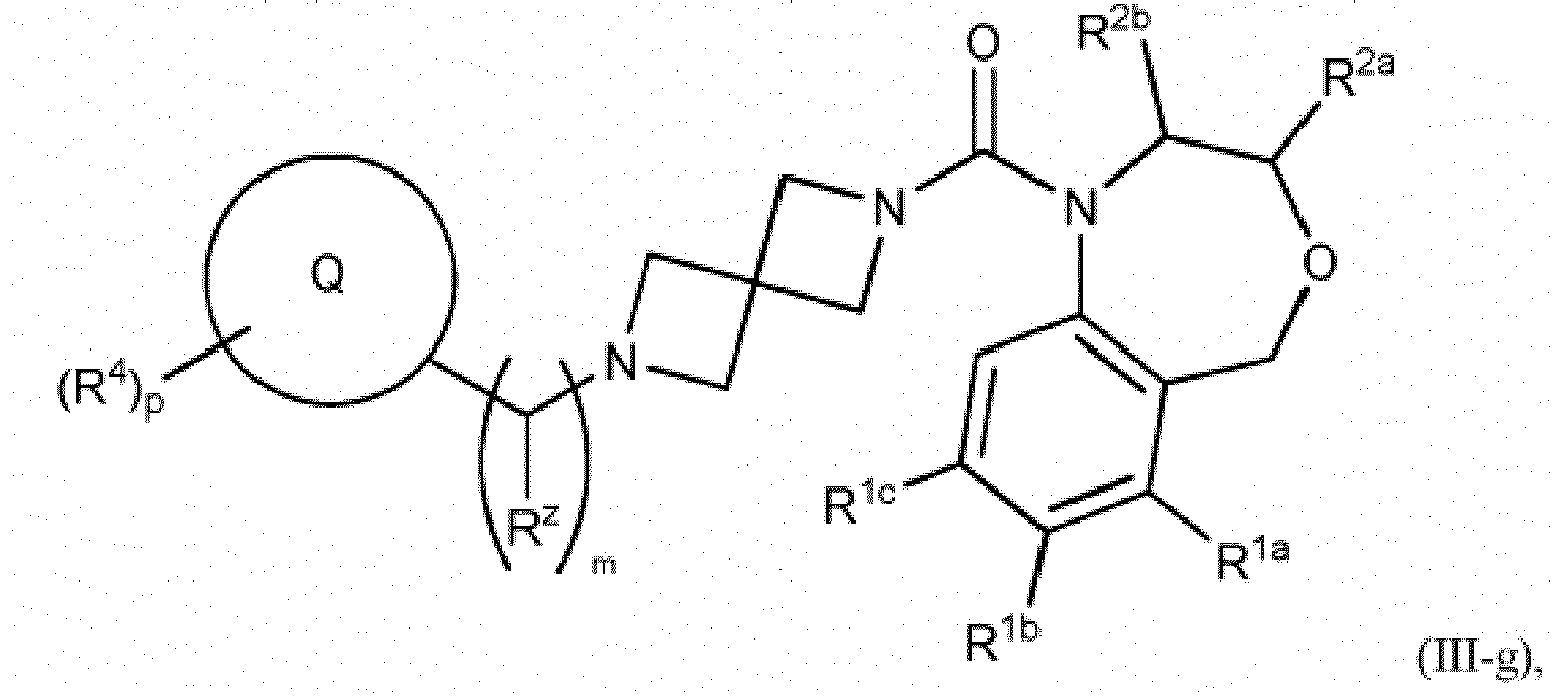 ou ayant la structure de Formule (III-h) :
 ou ayant la structure de Formule (III-i) :
 ou ayant la structure de Formule (III-j) :
 ou ayant la structure de Formule (III-k) :
 R1a, R1b et R1c sont chacun, indépendamment, H, un alkyle en C1-8, un haloalkyle en C1-8, un alcoxy en C1-8, un cyano, ou un halogéno ;R2a et R2b sont chacun, indépendamment, H, un alkyle en C1-8, un haloalkyle en C1-8, ou un alcoxy en C1-8 ;RX est indépendamment, à chaque occurrence, H, un alkyle en C1-8, un haloalkyle en C1-8, ou un halogéno ;RY est indépendamment, à chaque occurrence, H, -OH, un alkyle en C1-8, un alcoxy en C1-8, ou un halogéno ;Rz est H ou CH3 ;Q est un aryle en C6-14 ou un hétéroaryle de 5 à 14 chaînons ;R4 est indépendamment, à chaque occurrence, H, -OH, =O, un cycloalkyle en C3-8, un alkyle en C1-8, un haloalkyle en C1-8, un alcoxy en C1-8, un haloalcoxy en C1-8, un halogéno, ou un cyano ;m vaut 0, 1, 2, 3, 4, 5, ou 6 ; etp vaut 0, 1, ou 2.
 - Composé selon la revendication 1, 2 ou 5 ayant la structure de Formule (IV) :
 X est -(CRxRy)nO(CRxRy)q-, -(CRxRy)nS(O)t(CRxRy)q-, - (CRxRy)nN(Rx)(CRxRy)q-, ou -(CRxRy)n-,RX est indépendamment, à chaque occurrence, H, un alkyle en C1-8, un haloalkyle en C1-8, ou un halogéno ;RY est indépendamment, à chaque occurrence, H, -OH, un alkyle en C1-8, un alcoxy en C1-8, ou un halogéno ;R1a, R1b et R1c sont chacun, indépendamment, H, un alkyle en C1-8, un haloalkyle en C1-8, un alcoxy en C1-8, un cyano, ou un halogéno ;R2a et R2b sont chacun, indépendamment, H, un alkyle en C1-8, un haloalkyle en C1-8, ou un alcoxy en C1-8 ;Rz est H ou CH3J1, J2, J3 et J4 sont chacun, indépendamment, N, O, CH ou CR4 ;R4 est indépendamment, à chaque occurrence, H, -OH, =O, un cycloalkyle en C3-8, un alkyle en C1-8, un haloalkyle en C1-8, un alcoxy en C1-8, un haloalcoxy en C1-8, un halogéno, ou un cyano ;n vaut 0, 1, ou 2 ;q vaut 0, 1, ou 2 ;t vaut 0, 1, ou 2 ;p vaut 0, 1, ou 2.
 - Composé selon la revendication 1, 2, 5 ou 7 ayant la structure de Formule (IV-a) :
 ou ayant la structure de Formule (IV-b) :
 ou ayant la structure de Formule (IV-c) :
 ou ayant la structure de Formule (IV-d) :
 ou ayant la structure de Formule (IV-e) :
 ou ayant la structure de Formule (IV-f) :
 ou ayant la structure de Formule (IV-g) :
 ou ayant la structure de Formule (IV-h) :
 ou ayant la structure de Formule (IV-i) :
 ou ayant la structure de Formule (IV-j) :
 ou ayant la structure de Formule (IV-k) :
 R1a, R1b et R1c sont chacun, indépendamment, H, un alkyle en C1-8, un haloalkyle en C1-8, un alcoxy en C1-8, un cyano, ou un halogéno ;R2a et R2b sont chacun, indépendamment, H, un alkyle en C1-8, un haloalkyle en C1-8, ou un alcoxy en C1-8 ;RX est indépendamment, à chaque occurrence, H, un alkyle en C1-8, un haloalkyle en C1-8, ou un halogéno ;RY est indépendamment, à chaque occurrence, H, -OH, un alkyle en C1-8, un alcoxy en C1-8, ou un halogéno ;Rz est H ou CH3 ;J1, J2, J3 et J4 sont, chacun indépendamment, N, O, CH ou CR4 ;R4 est indépendamment, à chaque occurrence, H, -OH, =O, un cycloalkyle en C3-8, un alkyle en C1-8, un haloalkyle en C1-8, un alcoxy en C1-8, un haloalcoxy en C1-8, un halogéno, ou un cyano ; etp vaut 0, 1, ou 2.
 - Composé selon l'une quelconque des revendications 1, 2 ou 5 ayant la structure de Formule (V) :
 X est -(CRxRy)nO(CRxRy)q-, -(CRxRy)nS(O)t(CRxRy)q-, - (CRxRy)nN(Rx)(CRxRy)q-, ou -(CRxRy)n-,RX est indépendamment, à chaque occurrence, H, un alkyle en C1-8, un haloalkyle en C1-8, ou un halogéno ;RY est indépendamment, à chaque occurrence, H, -OH, un alkyle en C1-8, un alcoxy en C1-8, ou un halogéno ;R1a, R1b et R1c sont chacun, indépendamment, H, un alkyle en C1-8, un haloalkyle en C1-8, un alcoxy en C1-8, un cyano, ou un halogéno ;R2a et R2b sont chacun, indépendamment, H, un alkyle en C1-8, un haloalkyle en C1-8, ou un alcoxy en C1-8 ;J1, J2, J3 et J4 sont, chacun indépendamment, N, O, CH ou CR4 ;R4 est indépendamment, à chaque occurrence, H, -OH, =O, un cycloalkyle en C3-8, un alkyle en C1-8, un haloalkyle en C1-8, un alcoxy en C1-8, un haloalcoxy en C1-8, un halogéno, ou un cyano ;n vaut 0, 1, ou 2 ;q vaut 0, 1, ou 2 ;t vaut 0, 1, ou 2 ;p vaut 0, 1, ou 2.
 - Composé selon l'une quelconque des revendications 1, 2, 5 ou 9 ayant la structure de Formule (V-a) :
 ou ayant la structure de Formule (V-b) :
 ou ayant la structure de Formule (V-c) :
 ou ayant la structure de Formule (V-d) :
 ou ayant la structure de Formule (V-e) :
 ou ayant la structure de Formule (V-f) :
 ou ayant la structure de Formule (V-g) :
 ou ayant la structure de Formule (V-h) :
 ou ayant la structure de Formule (V-i) :
 ou ayant la structure de Formule (V-j) :
 ou ayant la structure de Formule (V-k) :
 R1a, R1b et R1c sont chacun, indépendamment, H, un alkyle en C1-8, un haloalkyle en C1-8, un alcoxy en C1-8, un cyano, ou un halogéno ;R2a et R2b sont chacun, indépendamment, H, un alkyle en C1-8, un haloalkyle en C1-8, ou un alcoxy en C1-8 ;RX est indépendamment, à chaque occurrence, H, un alkyle en C1-8, un haloalkyle en C1-8, ou un halogéno ;RY est indépendamment, à chaque occurrence, H, -OH, un alkyle en C1-8, un alcoxy en C1-8, ou un halogéno ;J1, J2, J3 et J4 sont, chacun indépendamment, N, O, CH ou CR4 ;R4 est indépendamment, à chaque occurrence, H, -OH, =O, un cycloalkyle en C3-8, un alkyle en C1-8, un haloalkyle en C1-8, un alcoxy en C1-8, un haloalcoxy en C1-8, un halogéno, ou un cyano ; etp vaut 0, 1, ou 2.
 - Composé selon l'une quelconque des revendications 1, 2, 5, 7 ou 9 ayant la structure de Formule (VI) :
 X est -(CRxRy)nO(CRxRy)q-, -(CRxRy)nS(O)t(CRxRy)q-, - (CRxRy)nN(Rx)(CRxRy)q-, ou -(CRxRy)n-,RX est indépendamment, à chaque occurrence, H, un alkyle en C1-8, un haloalkyle en C1-8, ou un halogéno ;RY est indépendamment, à chaque occurrence, H, -OH, un alkyle en C1-8, un alcoxy en C1-8, ou un halogéno ;R1a, R1b et R1c sont chacun, indépendamment, H, un alkyle en C1-8, un haloalkyle en C1-8, un alcoxy en C1-8, un cyano, ou un halogéno ;R2a et R2b sont chacun, indépendamment, H, un alkyle en C1-8, un haloalkyle en C1-8, ou un alcoxy en C1-8 ;R4 est indépendamment, à chaque occurrence, H, -OH, =O, un cycloalkyle en C3-8, un alkyle en C1-8, un haloalkyle en C1-8, un alcoxy en C1-8, un haloalcoxy en C1-8, un halogéno, ou un cyano ;n vaut 0, 1, ou 2 ;q vaut 0, 1, ou 2 ;t vaut 0, 1, ou 2 ;p vaut 0, 1, ou 2.
 - Composé selon l'une quelconque des revendications 1, 2, 5, 7, 9 ou 11 ayant la structure de Formule (VI-a) :
 ou ayant la structure de Formule (VI-b) :
 ou ayant la structure de Formule (VI-c) :
 ou ayant la structure de Formule (VI-d) :
 ou ayant la structure de Formule (VI-e) :
 ou ayant la structure de Formule (VI-f) :
 ou ayant la structure de Formule (VI-g) :
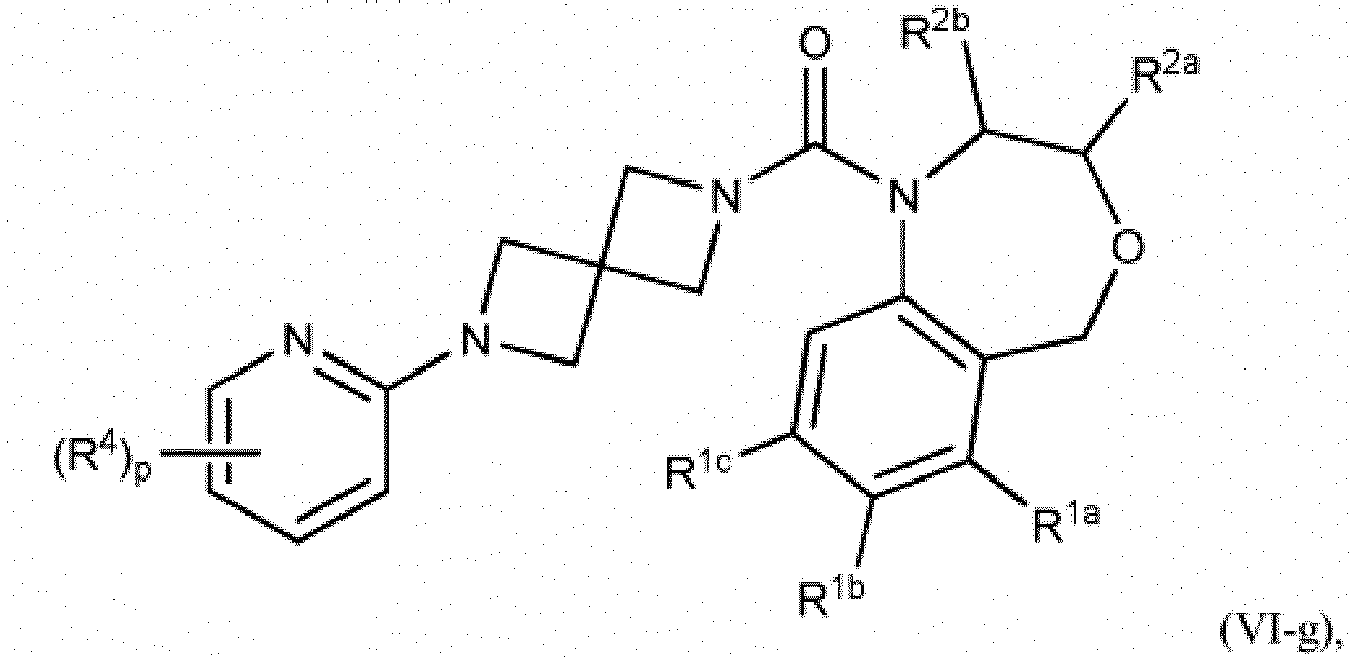 ou ayant la structure de Formule (VI-h) :
 ou ayant la structure de Formule (VI-i) :
 ou ayant la structure de Formule (VI-j) :
 ou ayant la structure de Formule (VI-k) :
 R1a, R1b et R1c sont chacun, indépendamment, H, un alkyle en C1-8, un haloalkyle en C1-8, un alcoxy en C1-8, un cyano, ou un halogéno ;R2a et R2b sont chacun, indépendamment, H, un alkyle en C1-8, un haloalkyle en C1-8, ou un alcoxy en C1-8 ;RX est indépendamment, à chaque occurrence, H, un alkyle en C1-8, un haloalkyle en C1-8, ou un halogéno ;RY est indépendamment, à chaque occurrence, H, -OH, un alkyle en C1-8, un alcoxy en C1-8, ou un halogéno ;R4 est indépendamment, à chaque occurrence, H, -OH, =O, un cycloalkyle en C3-8, un alkyle en C1-8, un haloalkyle en C1-8, un alcoxy en C1-8, un haloalcoxy en C1-8, un halogéno, ou un cyano ; etp vaut 0, 1, ou 2.
 - Composé selon l'une quelconque des revendications 1, 2, 5, 7 ou 9 ayant la structure de Formule (VII) :
 X est -(CRxRy)nO(CRxRy)q-, -(CRxRy)nS(O)t(CRxRy)q-, - (CRxRy)nN(Rx)(CRxRy)q-, ou -(CRxRy)n-,RX est indépendamment, à chaque occurrence, H, un alkyle en C1-8, un haloalkyle en C1-8, ou un halogéno ;RY est indépendamment, à chaque occurrence, H, -OH, un alkyle en C1-8, un alcoxy en C1-8, ou un halogéno ;R1a, R1b et R1c sont chacun, indépendamment, H, un alkyle en C1-8, un haloalkyle en C1-8, un alcoxy en C1-8, un cyano, ou un halogéno ;R2a et R2b sont chacun, indépendamment, H, un alkyle en C1-8, un haloalkyle en C1-8, ou un alcoxy en C1-8 ;R4 est indépendamment, à chaque occurrence, H, -OH, =O, un cycloalkyle en C3-8, un alkyle en C1-8, un haloalkyle en C1-8, un alcoxy en C1-8, un haloalcoxy en C1-8, un halogéno, ou un cyano ;n vaut 0, 1, ou 2 ;q vaut 0, 1, ou 2 ;t vaut 0, 1, ou 2 ;p vaut 0, 1, ou 2.
 - Composé selon l'une quelconque des revendications 1, 2, 5, 7, 9 ou 13 ayant la structure de Formule (VII-a) :
 ou ayant la structure de Formule (VII-b) :
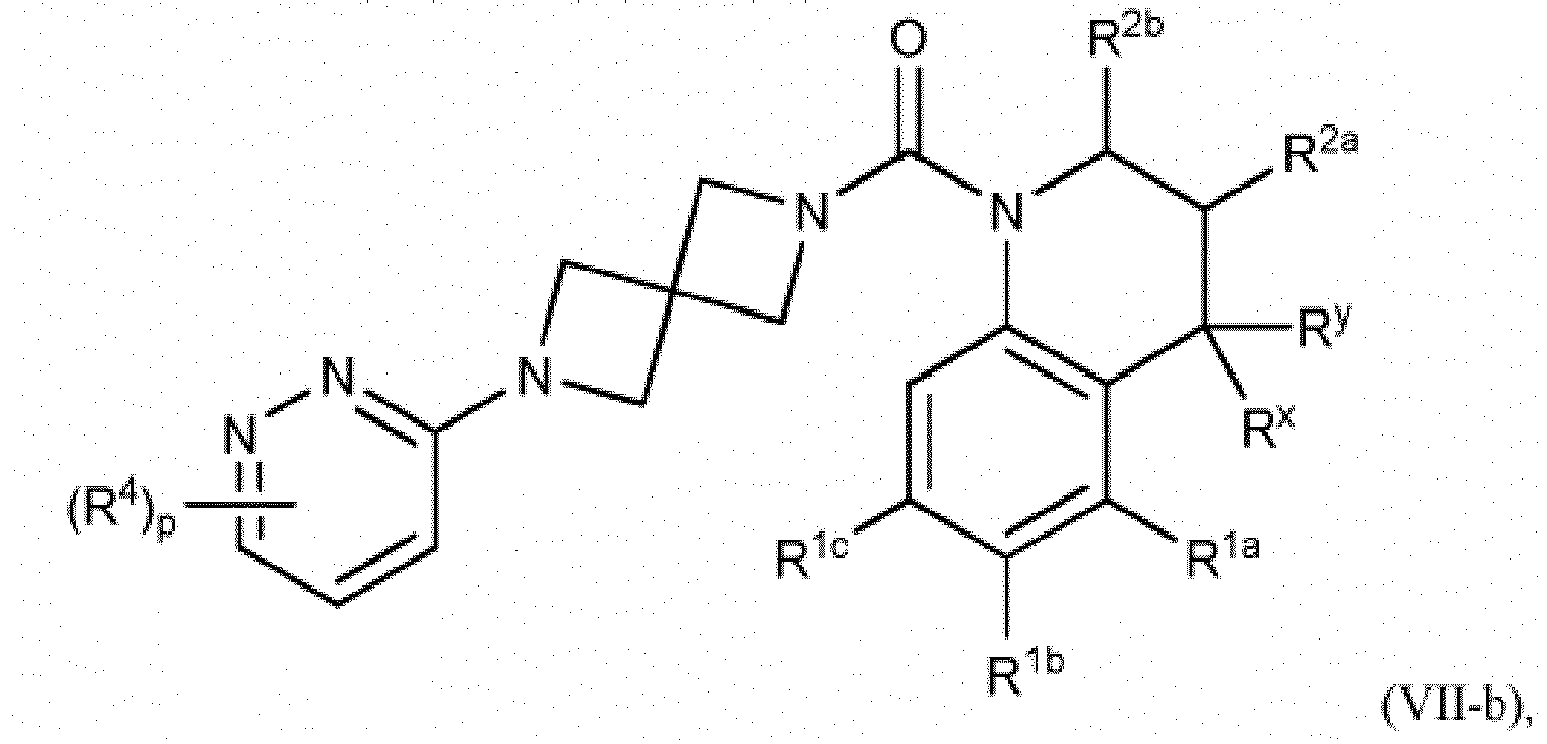 ou ayant la structure de Formule (VII-c) :
 ou ayant la structure de Formule (VII-d) :
 ou ayant la structure de Formule (VII-e) :
 ou ayant la structure de Formule (VII-f) :
 ou ayant la structure de Formule (VII-g) :
 ou ayant la structure de Formule (VII-h) :
 ou ayant la structure de Formule (VII-i) :
 ou ayant la structure de Formule (VII-j) :
 ou ayant la structure de Formule (VII-k) :
 R1a, R1b et R1c sont chacun, indépendamment, H, un alkyle en C1-8, un haloalkyle en C1-8, un alcoxy en C1-8, un cyano, ou un halogéno ;R2a et R2b sont chacun, indépendamment, H, un alkyle en C1-8, un haloalkyle en C1-8, ou un alcoxy en C1-8 ;RX est indépendamment, à chaque occurrence, H, un alkyle en C1-8, un haloalkyle en C1-8, ou un halogéno ;RY est indépendamment, à chaque occurrence, H, -OH, un alkyle en C1-8, un alcoxy en C1-8, ou un halogéno ;R4 est indépendamment, à chaque occurrence, H, -OH, =O, un cycloalkyle en C3-8, un alkyle en C1-8, un haloalkyle en C1-8, un alcoxy en C1-8, un haloal-coxy en C1-8, un halogéno, ou un cyano ; etp vaut 0, 1, ou 2.
 - Composé selon l'une quelconque des revendications 1, 2, 5, 7 ou 9 ayant la structure de Formule (VIII) :
 X est -(CRxRy)nO(CRxRy)q-, -(CRxRy)nS(O)t(CRxRy)q-, - (CRxRy)nN(Rx)(CRxRy)q-, ou -(CRxRy)n-,RX est indépendamment, à chaque occurrence, H, un alkyle en C1-8, un haloalkyle en C1-8, ou un halogéno ;RY est indépendamment, à chaque occurrence, H, -OH, un alkyle en C1-8, un alcoxy en C1-8, ou un halogéno ;R1a, R1b et R1c sont chacun, indépendamment, H, un alkyle en C1-8, un haloalkyle en C1-8, un alcoxy en C1-8, un cyano, ou un halogéno ;R2a et R2b sont chacun, indépendamment, H, un alkyle en C1-8, un haloalkyle en C1-8, ou un alcoxy en C1-8 ;R4 est indépendamment, à chaque occurrence, H, -OH, =O, un cycloalkyle en C3-8, un alkyle en C1-8, un haloalkyle en C1-8, un alcoxy en C1-8, un haloal-coxy en C1-8, un halogéno, ou un cyano ;n vaut 0, 1, ou 2 ;q vaut 0, 1, ou 2 ;t vaut 0, 1, ou 2 ;p vaut 0, 1, ou 2.
 - Composé selon l'une quelconque des revendications 1, 2, 5, 7, 9 ou 15 ayant la structure de Formule (VIII-a) :
 ou ayant la structure de Formule (VIII-b) :
 ou ayant la structure de Formule (VIII-c) :
 ou ayant la structure de Formule (VIII-d) :
 ou ayant la structure de Formule (VIII-e) :
 ou ayant la structure de Formule (VIII-f) :
 ou ayant la structure de Formule (VIII-g) :
 ou ayant la structure de Formule (VIII-h) :
 ou ayant la structure de Formule (VIII-i) :
 ou ayant la structure de Formule (VIII-j) :
 ou ayant la structure de Formule (VIII-k) :
 R1a, R1b et R1c sont chacun, indépendamment, H, un alkyle en C1-8, un haloalkyle en C1-8, un alcoxy en C1-8, un cyano, ou un halogéno ;R2a et R2b sont chacun, indépendamment, H, un alkyle en C1-8, un haloalkyle en C1-8, ou un alcoxy en C1-8 ;RX est indépendamment, à chaque occurrence, H, un alkyle en C1-8, un haloalkyle en C1-8, ou un halogéno ;RY est indépendamment, à chaque occurrence, H, -OH, un alkyle en C1-8, un alcoxy en C1-8, ou un halogéno ;R4 est indépendamment, à chaque occurrence, H, -OH, =O, un cycloalkyle en C3-8, un alkyle en C1-8, un haloalkyle en C1-8, un alcoxy en C1-8, un haloal-coxy en C1-8, un halogéno, ou un cyano ; etp vaut 0, 1, ou 2.
 - Composé selon l'une quelconque des revendications 1, 2, 5, 7 ou 9 ayant la structure de Formule (IX) :
 X est -(CRxRy)nO(CRxRy)q-, -(CRxRy)nS(O)t(CRxRy)q-, - (CRxRy)nN(Rx)(CRxRy)q-, ou -(CRxRy)n-,RX est indépendamment, à chaque occurrence, H, un alkyle en C1-8, un haloalkyle en C1-8, ou un halogéno ;RY est indépendamment, à chaque occurrence, H, -OH, un alkyle en C1-8, un alcoxy en C1-8, ou un halogéno ;R1a, R1b et R1c sont chacun, indépendamment, H, un alkyle en C1-8, un haloalkyle en C1-8, un alcoxy en C1-8, un cyano, ou un halogéno ;R2a et R2b sont chacun, indépendamment, H, un alkyle en C1-8, un haloalkyle en C1-8, ou un alcoxy en C1-8 ;R4 est indépendamment, à chaque occurrence, H, -OH, =O, un cycloalkyle en C3-8, un alkyle en C1-8, un haloalkyle en C1-8, un alcoxy en C1-8, un haloal-coxy en C1-8, un halogéno, ou un cyano ;n vaut 0, 1, ou 2 ;q vaut 0, 1, ou 2 ;t vaut 0, 1, ou 2 ;p vaut 0, 1, ou 2.
 - Composé selon l'une quelconque des revendications 1, 2, 5, 7, 9 ou 17 ayant la structure de Formule (IX-a) :
 ou ayant la structure de Formule (IX-b) :
 ou ayant la structure de Formule (IX-c) :
 ou ayant la structure de Formule (IX-d) :
 ou ayant la structure de Formule (IX-e) :
 ou ayant la structure de Formule (IX-f) :
 ou ayant la structure de Formule (IX-g) :
 ou ayant la structure de Formule (IX-h) :
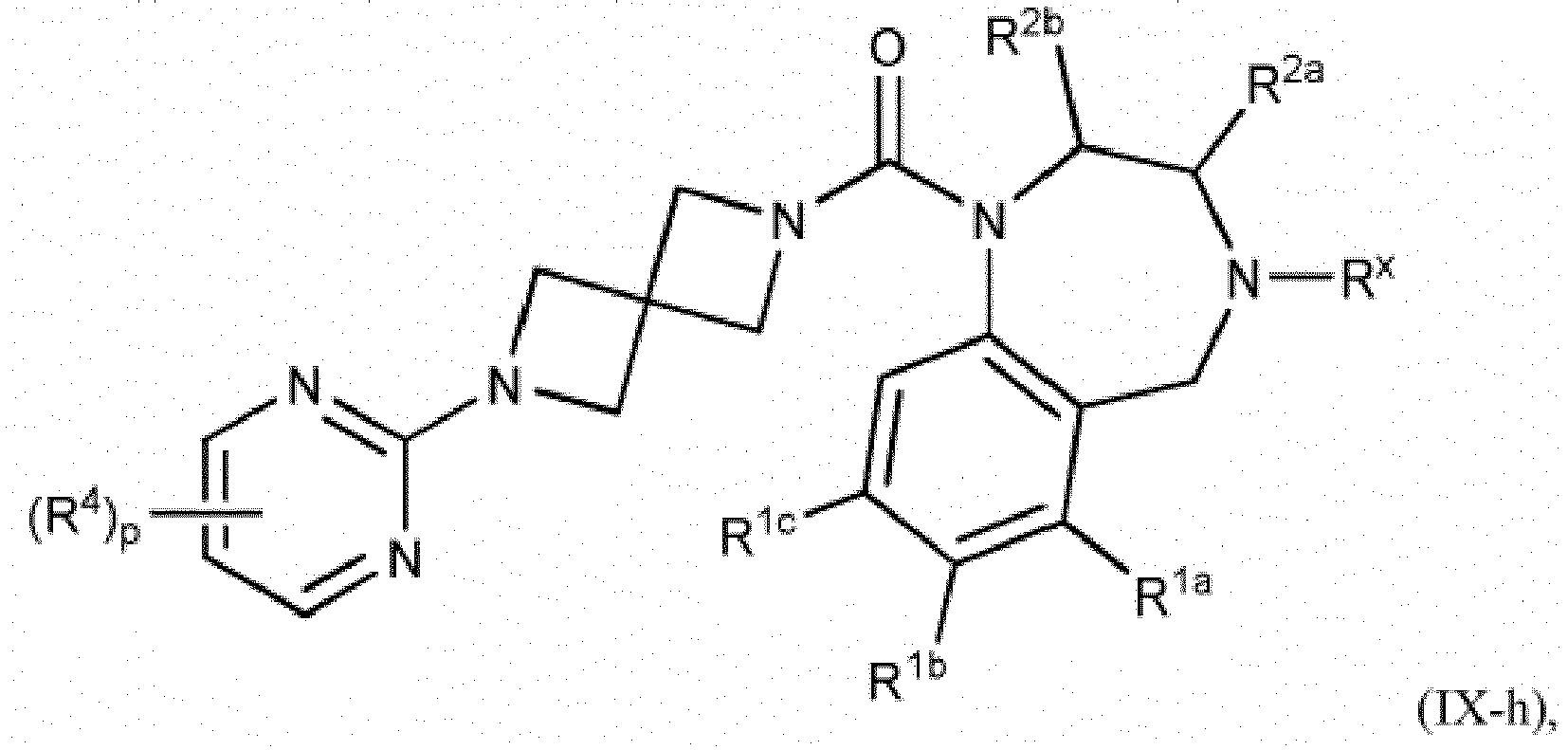 ou ayant la structure de Formule (IX-i) :
 ou ayant la structure de Formule (IX-j) :
 ou ayant la structure de Formule (IX-k) :
 R1a, R1b et R1c sont chacun, indépendamment, H, un alkyle en C1-8, un haloalkyle en C1-8, un alcoxy en C1-8, un cyano, ou un halogéno ;R2a et R2b sont chacun, indépendamment, H, un alkyle en C1-8, un haloalkyle en C1-8, ou un alcoxy en C1-8 ;RX est indépendamment, à chaque occurrence, H, un alkyle en C1-8, un haloalkyle en C1-8, ou un halogéno ;RY est indépendamment, à chaque occurrence, H, -OH, un alkyle en C1-8, un alcoxy en C1-8, ou un halogéno ;R4 est indépendamment, à chaque occurrence, H, -OH, =O, un cycloalkyle en C3-8, un alkyle en C1-8, un haloalkyle en C1-8, un alcoxy en C1-8, un haloal-coxy en C1-8, un halogéno, ou un cyano ; etp vaut 0, 1, ou 2.
 - Composé selon la revendication 1, 2 ou 5 ayant la structure de Formule (X) :
 X est -(CRxRy)nO(CRxRy)q-, -(CRxRy)nS(O)t(CRxRy)q-, - (CRxRy)nN(Rx)(CRxRy)q-, ou -(CRxRy)n-,RX est indépendamment, à chaque occurrence, H, un alkyle en C1-8, un haloalkyle en C1-8, ou un halogéno ;RY est indépendamment, à chaque occurrence, H, -OH, un alkyle en C1-8, un alcoxy en C1-8, ou un halogéno ;R1a, R1b et R1c sont chacun, indépendamment, H, un alkyle en C1-8, un haloalkyle en C1-8, un alcoxy en C1-8, un cyano, ou un halogéno ;R2a et R2b sont chacun, indépendamment, H, un alkyle en C1-8, un haloalkyle en C1-8, ou un alcoxy en C1-8 ;J1, J2, J3 et J4 sont chacun, indépendamment, N, O, CH ou CR4 ;R4 est indépendamment, à chaque occurrence, H, -OH, =O, un cycloalkyle en C3-8, un alkyle en C1-8, un haloalkyle en C1-8, un alcoxy en C1-8, un haloal-coxy en C1-8, un halogéno, ou un cyano ;n vaut 0, 1, ou 2 ;q vaut 0, 1, ou 2 ;t vaut 0, 1, ou 2 ;p vaut 0, 1, ou 2.
 - Composé selon l'une quelconque des revendications 1, 2, 15 ou 19 ayant la structure de Formule (X-a) :
 ou ayant la structure de Formule (X-b) :
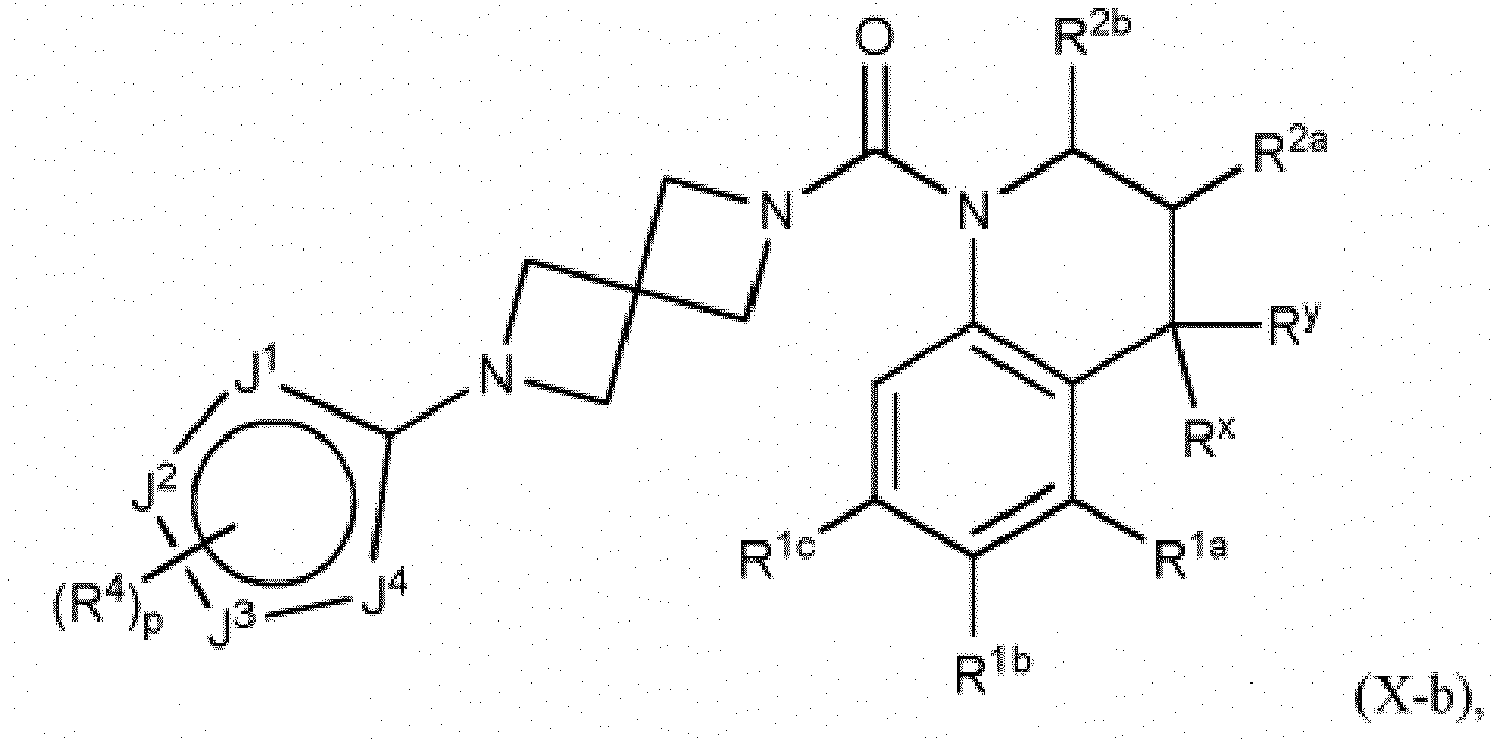 ou ayant la structure de Formule (X-c) :
 ou ayant la structure de Formule (X-d) :
 ou ayant la structure de Formule (X-e) :
 ou ayant la structure de Formule (X-f) :
 ou ayant la structure de Formule (X-g) :
 ou ayant la structure de Formule (X-h) :
 ou ayant la structure de Formule (X-i) :
 ou ayant la structure de Formule (X-j) :
 ou ayant la structure de Formule (X-k) :
 R1a, R1b et R1c sont chacun, indépendamment, H, un alkyle en C1-8, un haloalkyle en C1-8, un alcoxy en C1-8, un cyano, ou un halogéno ;R2a et R2b sont chacun, indépendamment, H, un alkyle en C1-8, un haloalkyle en C1-8, ou un alcoxy en C1-8 ;RX est indépendamment, à chaque occurrence, H, un alkyle en C1-8, un haloalkyle en C1-8, ou un halogéno ;RY est indépendamment, à chaque occurrence, H, -OH, un alkyle en C1-8, un alcoxy en C1-8, ou un halogéno ;J1, J2, J3 et J4 sont, chacun indépendamment, N, O, CH ou CR4 ;R4 est indépendamment, à chaque occurrence, H, -OH, =O, un cycloalkyle en C3-8, un alkyle en C1-8, un haloalkyle en C1-8, un alcoxy en C1-8, un haloal-coxy en C1-8, un halogéno, ou un cyano ; etp vaut 0, 1, ou 2.
 - Composé selon l'une quelconque des revendications 1, 2, 5 ou 19 ayant la structure de Formule (XI) :
 X est -(CRxRy)nO(CRxRy)q-, -(CRxRy)nS(O)t(CRxRy)q-, - (CRxRy)nN(Rx)(CRxRy)q-, ou -(CRxRy)n-,RX est indépendamment, à chaque occurrence, H, un alkyle en C1-8, un haloalkyle en C1-8, ou un halogéno ;RY est indépendamment, à chaque occurrence, H, -OH, un alkyle en C1-8, un alcoxy en C1-8, ou un halogéno ;R1a, R1b et R1c sont chacun, indépendamment, H, un alkyle en C1-8, un haloalkyle en C1-8, un alcoxy en C1-8, un cyano, ou un halogéno ;R2a et R2b sont chacun, indépendamment, H, un alkyle en C1-8, un haloalkyle en C1-8, ou un alcoxy en C1-8 ;R4 est indépendamment, à chaque occurrence, H, -OH, =O, un cycloalkyle en C3-8, un alkyle en C1-8, un haloalkyle en C1-8, un alcoxy en C1-8, un haloal-coxy en C1-8, un halogéno, ou un cyano ;n vaut 0, 1, ou 2 ;q vaut 0, 1, ou 2 ;t vaut 0, 1, ou 2 ; etp vaut 0, 1, ou 2.
 - Composé selon l'une quelconque des revendications 1, 2, 5, 19 ou 21 ayant la structure de Formule (XI-a) :
 ou ayant la structure de Formule (XI-b) :
 ou ayant la structure de Formule (XI-c) :
 ou ayant la structure de Formule (XI-d) :
 ou ayant la structure de Formule (XI-e) :
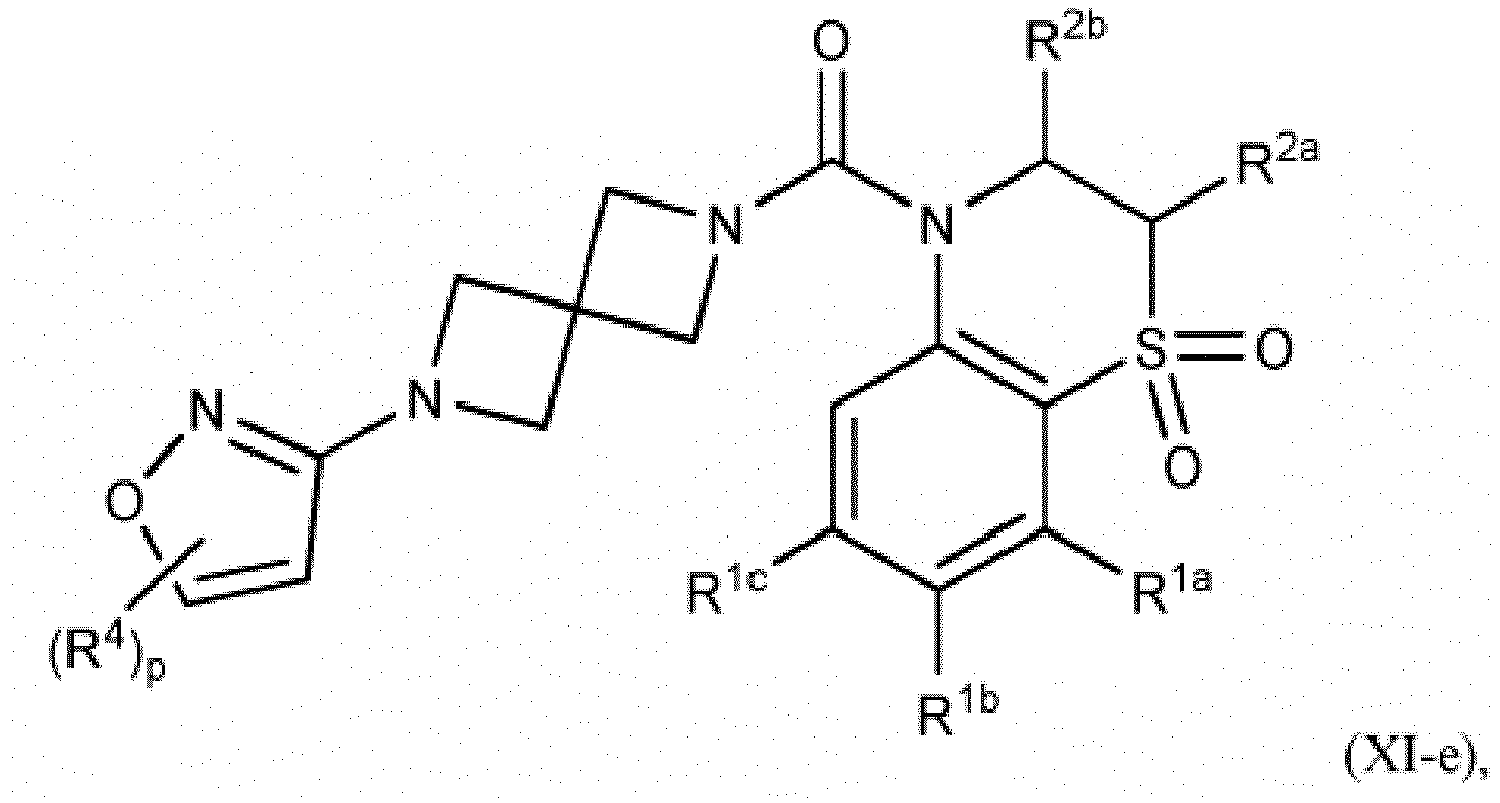 ou ayant la structure de Formule (XI-f) :
 ou ayant la structure de Formule (XI-g) :
 ou ayant la structure de Formule (XI-h) :
 ou ayant la structure de Formule (XI-i) :
 ou ayant la structure de Formule (XI-j) :
 ou ayant la structure de Formule (XI-k) :
 R1a, R1b et R1c sont chacun, indépendamment, H, un alkyle en C1-8, un haloalkyle en C1-8, un alcoxy en C1-8, un cyano, ou un halogéno ;R2a et R2b sont chacun, indépendamment, H, un alkyle en C1-8, un haloalkyle en C1-8, ou un alcoxy en C1-8 ;RX est indépendamment, à chaque occurrence, H, un alkyle en C1-8, un haloalkyle en C1-8, ou un halogéno ;RY est indépendamment, à chaque occurrence, H, -OH, un alkyle en C1-8, un alcoxy en C1-8, ou un halogéno ;R4 est indépendamment, à chaque occurrence, H, -OH, =O, un cycloalkyle en C3-8, un alkyle en C1-8, un haloalkyle en C1-8, un alcoxy en C1-8, un haloal-coxy en C1-8, un halogéno, ou un cyano ; etp vaut 0 ou 1.
 - Composé selon l'une quelconque des revendications 1, 2, 5 ou 19 ayant la structure de Formule (XII) :
 X est -(CRxRy)nO(CRxRy)q-, -(CRxRy)nS(O)t(CRxRy)q-, - (CRxRy)nN(Rx)(CRxRy)q-, ou -(CRxRy)n-,RX est indépendamment, à chaque occurrence, H, un alkyle en C1-8, un haloalkyle en C1-8, ou un halogéno ;RY est indépendamment, à chaque occurrence, H, -OH, un alkyle en C1-8, un alcoxy en C1-8, ou un halogéno ;R1a, R1b et R1c sont chacun, indépendamment, H, un alkyle en C1-8, un haloalkyle en C1-8, un alcoxy en C1-8, un cyano, ou un halogéno ;R2a et R2b sont chacun, indépendamment, H, un alkyle en C1-8, un haloalkyle en C1-8, ou un alcoxy en C1-8 ;R4 est indépendamment, à chaque occurrence, H, -OH, =O, un cycloalkyle en C3-8, un alkyle en C1-8, un haloalkyle en C1-8, un alcoxy en C1-8, un haloal-coxy en C1-8, un halogéno, ou un cyano ;n vaut 0, 1, ou 2 ;q vaut 0, 1, ou 2 ;t vaut 0, 1, ou 2 ; etp vaut 0, 1, ou 2.
 - Composé selon l'une quelconque des revendications 1, 2, 5, 19 ou 23 ayant la structure de Formule (XII-a) :
 ou ayant la structure de Formule (XII-b) :
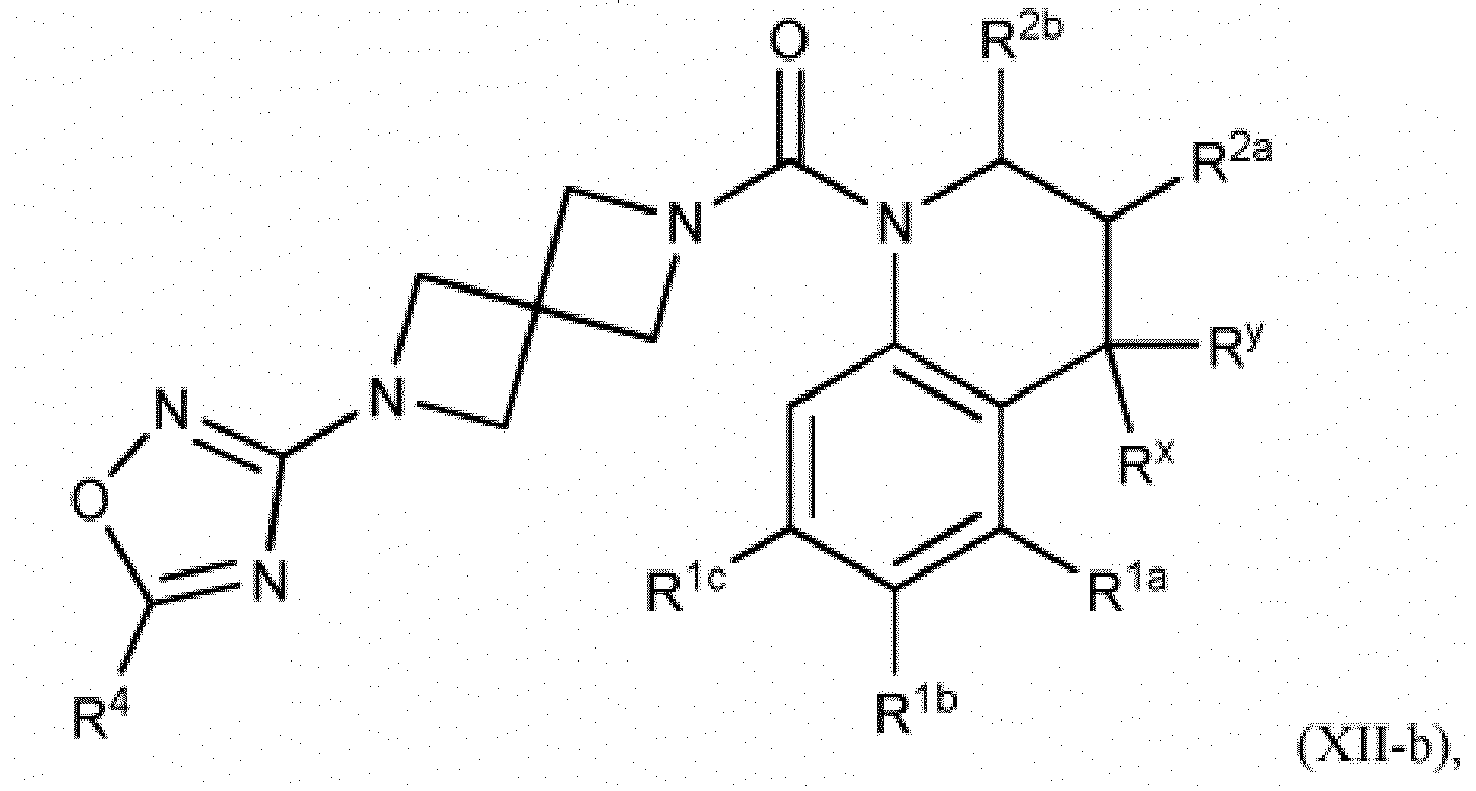 ou ayant la structure de Formule (XII-c) :
 ou ayant la structure de Formule (XII-d) :
 ou ayant la structure de Formule (XII-e) :
 ou ayant la structure de Formule (XII-f) :
 ou ayant la structure de Formule (XII-g) :
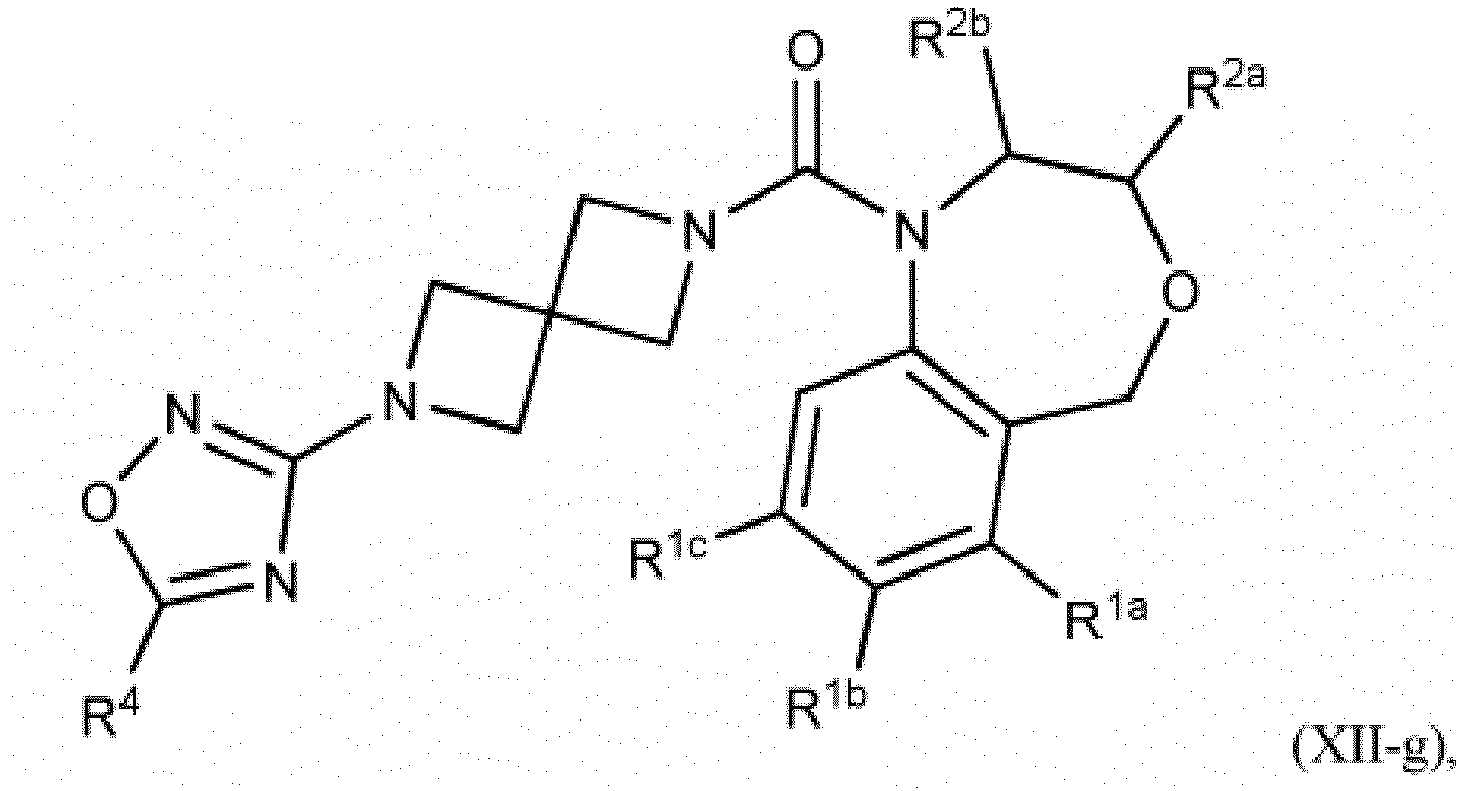 ou ayant la structure de Formule (XII-h) :
 ou ayant la structure de Formule (XII-i) :
 ou ayant la structure de Formule (XII-j) :
 ou ayant la structure de Formule (XII-k) :
 R1a, R1b et R1c sont chacun, indépendamment, H, un alkyle en C1-8, un haloalkyle en C1-8, un alcoxy en C1-8, un cyano, ou un halogéno ;R2a et R2b sont chacun, indépendamment, H, un alkyle en C1-8, un haloalkyle en C1-8, ou un alcoxy en C1-8 ;RX est indépendamment, à chaque occurrence, H, un alkyle en C1-8, un haloalkyle en C1-8, ou un halogéno ;RY est indépendamment, à chaque occurrence, H, -OH, un alkyle en C1-8, un alcoxy en C1-8, ou un halogéno ;R4 est indépendamment, à chaque occurrence, H, -OH, =O, un cycloalkyle en C3-8, un alkyle en C1-8, un haloalkyle en C1-8, un alcoxy en C1-8, un haloal-coxy en C1-8, un halogéno, ou un cyano ; etp vaut 0, 1 ou 2.
 - Composé selon l'une quelconque des revendications 1, 2, 5 ou 19 ayant la structure de Formule (XIII) :
 X est -(CRxRy)nO(CRxRy)q-, -(CRxRy)nS(O)t(CRxRy)q-, - (CRxRy)nN(Rx)(CRxRy)q-, ou -(CRxRy)n-,RX est indépendamment, à chaque occurrence, H, un alkyle en C1-8, un haloalkyle en C1-8, ou un halogéno ;RY est indépendamment, à chaque occurrence, H, -OH, un alkyle en C1-8, un alcoxy en C1-8, ou un halogéno ;R1a, R1b et R1c sont chacun, indépendamment, H, un alkyle en C1-8, un haloalkyle en C1-8, un alcoxy en C1-8, un cyano, ou un halogéno ;R2a et R2b sont chacun, indépendamment, H, un alkyle en C1-8, un haloalkyle en C1-8, ou un alcoxy en C1-8 ;R4 est indépendamment, à chaque occurrence, H, -OH, =O, un cycloalkyle en C3-8, un alkyle en C1-8, un haloalkyle en C1-8, un alcoxy en C1-8, un haloal-coxy en C1-8, un halogéno, ou un cyano ;n vaut 0, 1, ou 2 ;q vaut 0, 1, ou 2 ;t vaut 0, 1, ou 2 ; etp vaut 0, 1, ou 2.
 - Composé selon l'une quelconque des revendications 1, 2, 5, 9 ou 25 ayant la structure de Formule (XIII-a) :
 ou ayant la structure de Formule (XIII-b) :
 ou ayant la structure de Formule (XIII-c) :
 ou ayant la structure de Formule (XIII-d) :
 ou ayant la structure de Formule (XIII-e) :
 ou ayant la structure de Formule (XIII-f) :
 ou ayant la structure de Formule (XIII-g) :
 ou ayant la structure de Formule (XIII-h) :
 ou ayant la structure de Formule (XIII-i) :
 ou ayant la structure de Formule (XIII-j) :
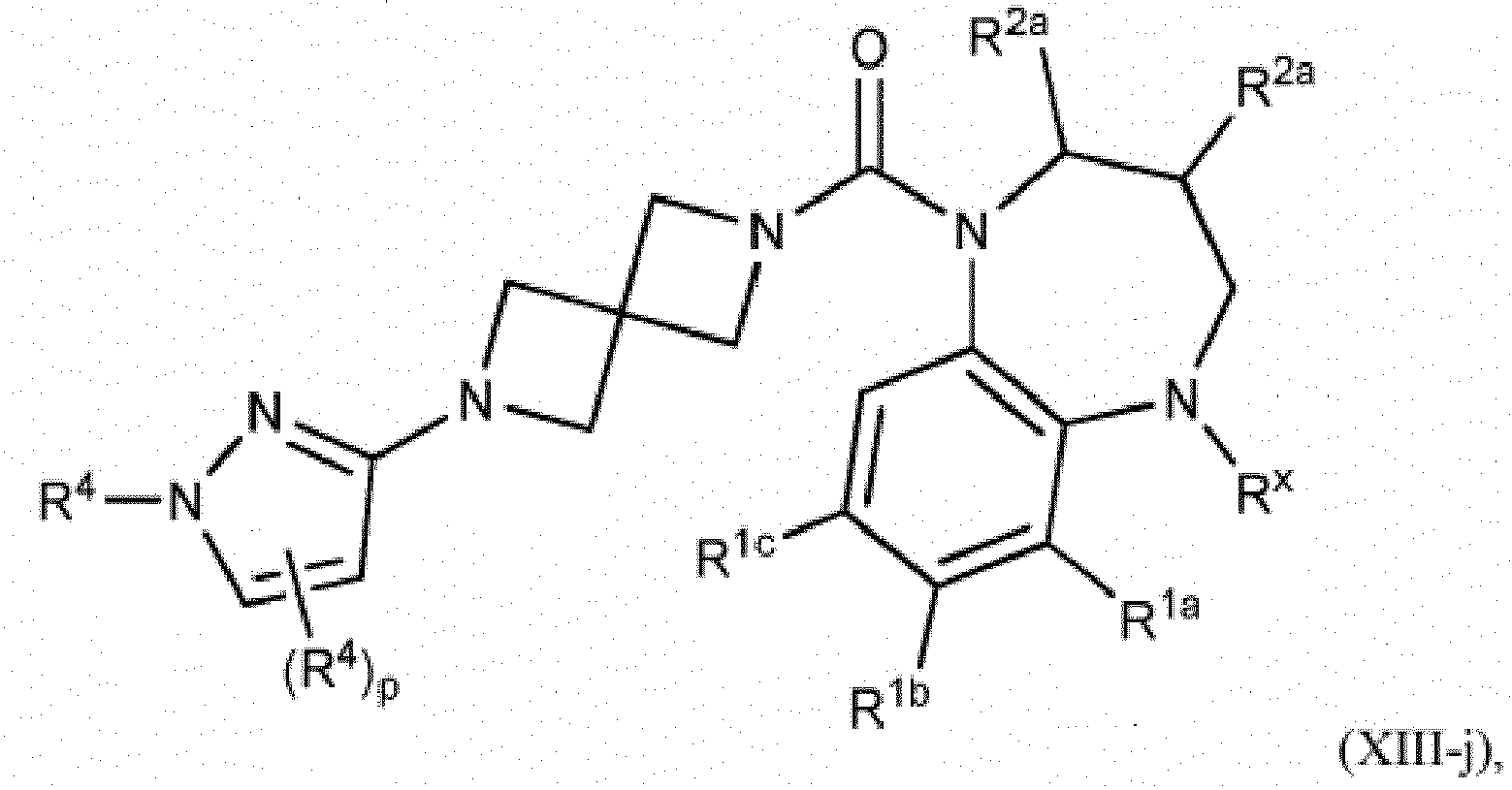 ou ayant la structure de Formule (XIII-k) :
 R1a, R1b et R1c sont chacun, indépendamment, H, un alkyle en C1-8, un haloalkyle en C1-8, un alcoxy en C1-8, un cyano, ou un halogéno ;R2a et R2b sont chacun, indépendamment, H, un alkyle en C1-8, un haloalkyle en C1-8, ou un alcoxy en C1-8 ;RX est indépendamment, à chaque occurrence, H, un alkyle en C1-8, un haloalkyle en C1-8, ou un halogéno ;RY est indépendamment, à chaque occurrence, H, -OH, un alkyle en C1-8, un alcoxy en C1-8, ou un halogéno ;R4 est indépendamment, à chaque occurrence, H, -OH, =O, un cycloalkyle en C3-8, un alkyle en C1-8, un haloalkyle en C1-8, un alcoxy en C1-8, un haloal-coxy en C1-8, un halogéno, ou un cyano ; etp vaut 0, 1 ou 2.
 - Composé selon l'une quelconque des revendications 1, 2, 5 ou 19 ayant la structure de Formule (XIV) :
 X est -(CRxRy)nO(CRxRy)q-, -(CRxRy)nS(O)t(CRxRy)q-, - (CRxRy)nN(Rx)(CRxRy)q-, ou -(CRxRy)n-,RX est indépendamment, à chaque occurrence, H, un alkyle en C1-8, un haloalkyle en C1-8, ou un halogéno ;RY est indépendamment, à chaque occurrence, H, -OH, un alkyle en C1-8, un alcoxy en C1-8, ou un halogéno ;R1a, R1b et R1c sont chacun, indépendamment, H, un alkyle en C1-8, un haloalkyle en C1-8, un alcoxy en C1-8, un cyano, ou un halogéno ;R2a et R2b sont chacun, indépendamment, H, un alkyle en C1-8, un haloalkyle en C1-8, ou un alcoxy en C1-8 ;R4 est indépendamment, à chaque occurrence, H, -OH, =O, un cycloalkyle en C3-8, un alkyle en C1-8, un haloalkyle en C1-8, un alcoxy en C1-8, un haloal-coxy en C1-8, un halogéno, ou un cyano ;n vaut 0, 1, ou 2 ;q vaut 0, 1, ou 2 ;t vaut 0, 1, ou 2 ; etp vaut 0, 1, ou 2.
 - Composé selon l'une quelconque des revendications 1, 2, 5, 19 ou 27 ayant la structure de Formule (XIV-a) :
 ou ayant la structure de Formule (XIV-b) :
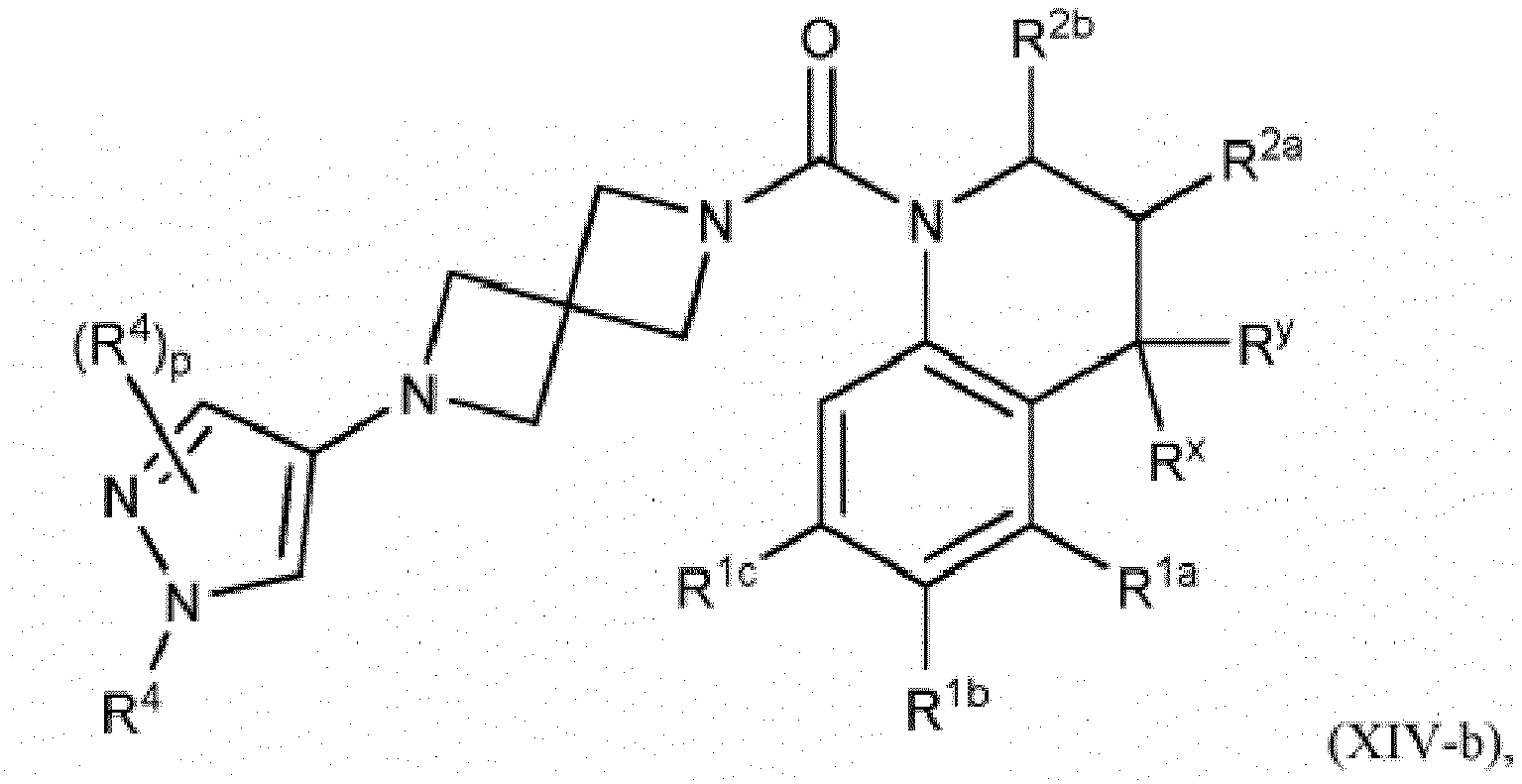 ou ayant la structure de Formule (XIV-c) :
 ou ayant la structure de Formule (XIV-d) :
 ou ayant la structure de Formule (XIV-e) :
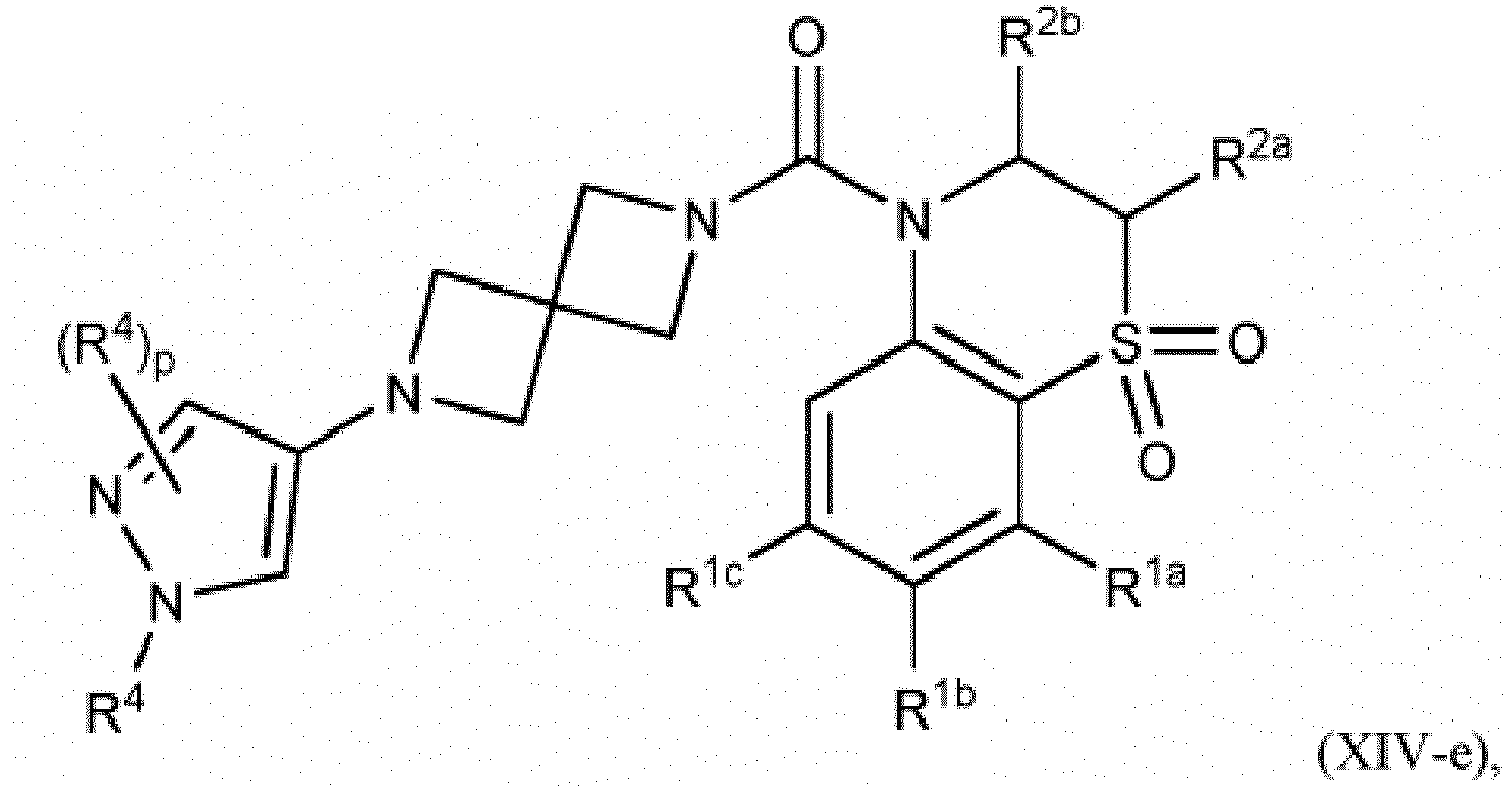 ou ayant la structure de Formule (XIV-f) :
 ou ayant la structure de Formule (XIV-g) :
 ou ayant la structure de Formule (XIV-h) :
 ou ayant la structure de Formule (XIV-i) :
 ou ayant la structure de Formule (XIV-j) :
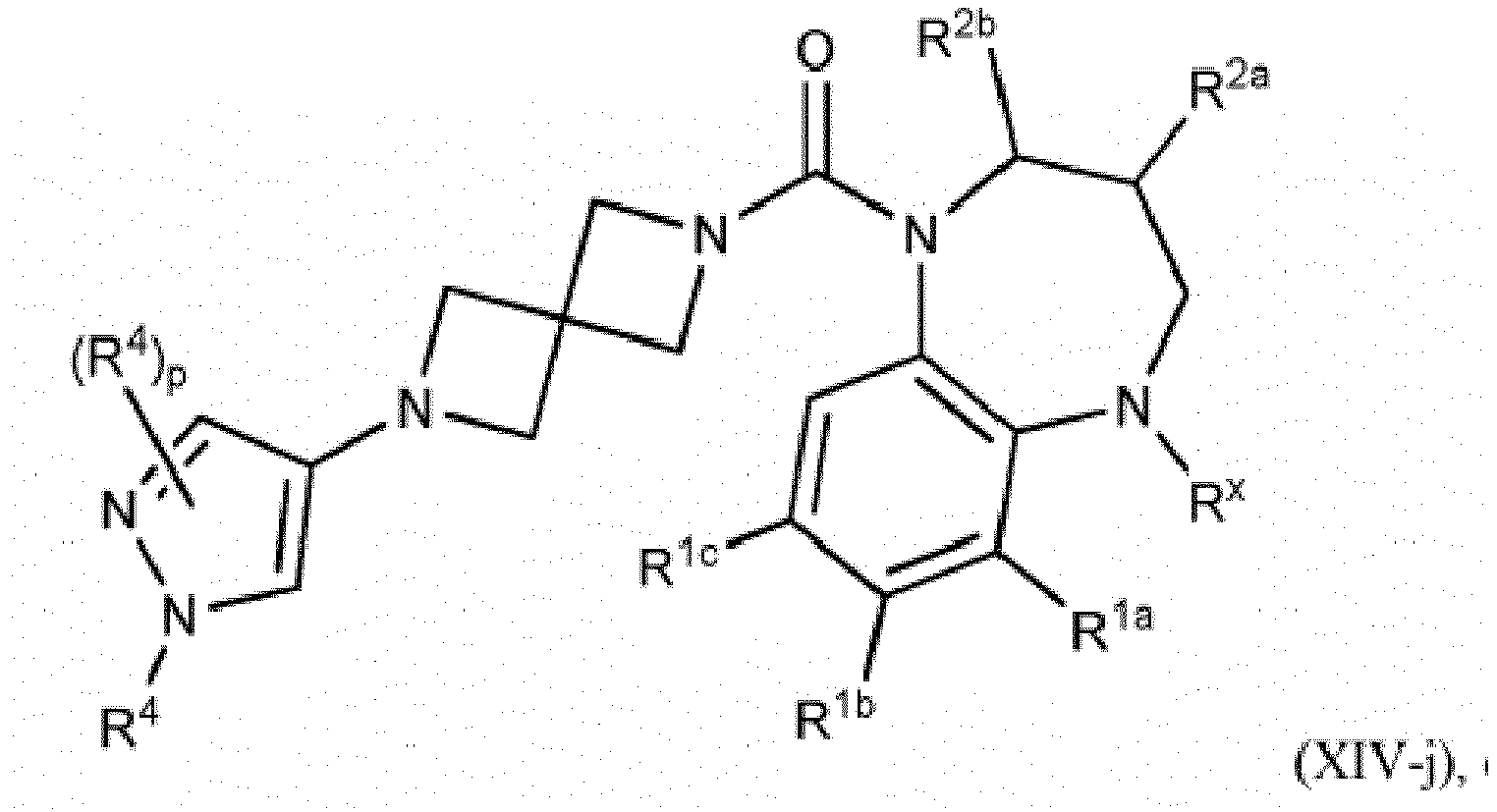 ou ayant la structure de Formule (XIV-k) :
 R1a, R1b et R1c sont chacun, indépendamment, H, un alkyle en C1-8, un haloalkyle en C1-8, un alcoxy en C1-8, un cyano, ou un halogéno ;R2a et R2b sont chacun, indépendamment, H, un alkyle en C1-8, un haloalkyle en C1-8, ou un alcoxy en C1-8 ;RX est indépendamment, à chaque occurrence, H, un alkyle en C1-8, un haloalkyle en C1-8, ou un halogéno ;RY est indépendamment, à chaque occurrence, H, -OH, un alkyle en C1-8, un alcoxy en C1-8, ou un halogéno ;R4 est indépendamment, à chaque occurrence, H, -OH, =O, un cycloalkyle en C3-8, un alkyle en C1-8, un haloalkyle en C1-8, un alcoxy en C1-8, un haloal-coxy en C1-8, un halogéno, ou un cyano ; etp vaut 0, 1 ou 2.
 - Composé selon la revendication 1 ou 2 ayant la structure de Formule (XV) :
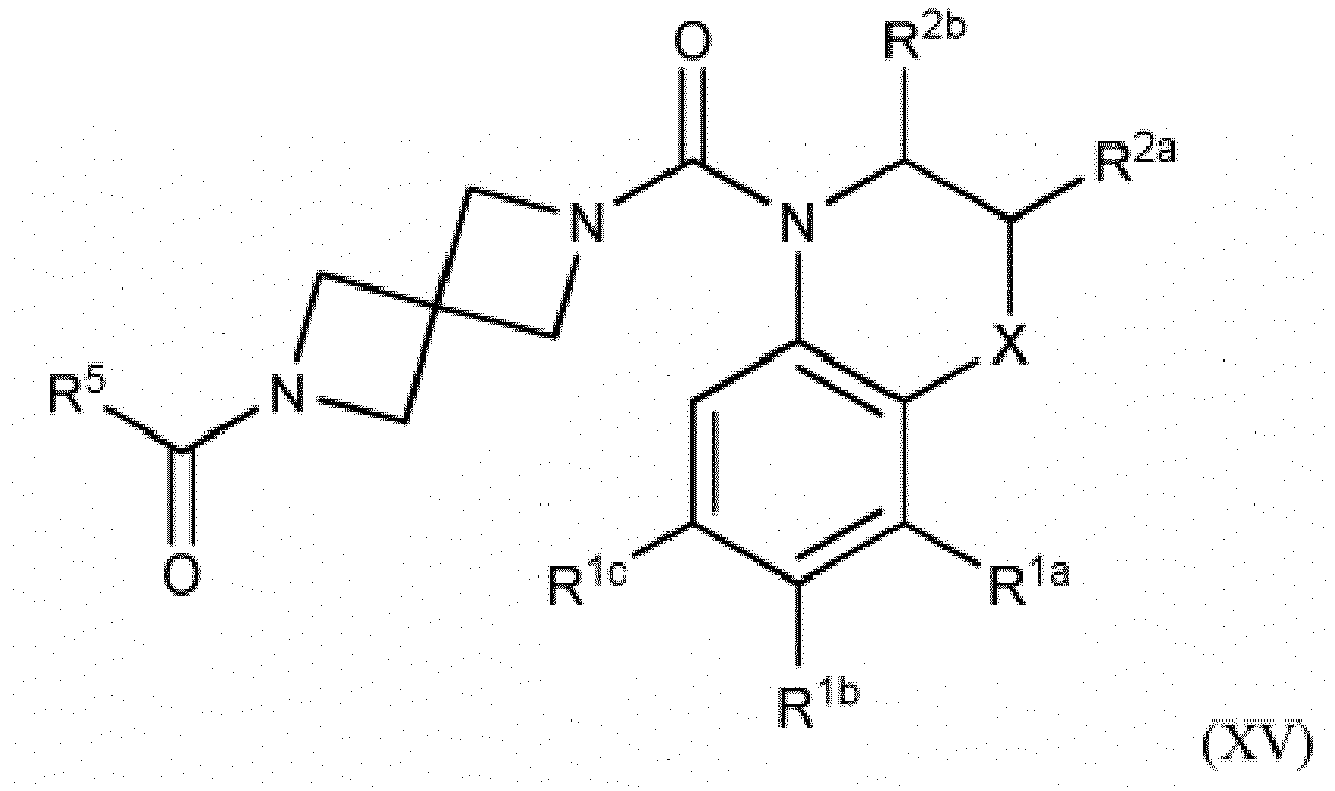 X est -(CRxRy)nO(CRxRy)q-, -(CRxRy)nS(O)t(CRxRy)q-, - (CRxRy)nN(Rx)(CRxRy)q-, ou -(CRxRy)n-,RX est indépendamment, à chaque occurrence, H, un alkyle en C1-8, un haloalkyle en C1-8, ou un halogéno ;RY est indépendamment, à chaque occurrence, H, -OH, un alkyle en C1-8, un alcoxy en C1-8, ou un halogéno ;R1a, R1b et R1c sont chacun, indépendamment, H, un alkyle en C1-8, un haloalkyle en C1-8, un alcoxy en C1-8, un cyano, ou un halogéno ;R2a et R2b sont chacun, indépendamment, H, un alkyle en C1-8, un haloalkyle en C1-8, ou un alcoxy en C1-8 ;R5 est H, un cycloalkyle en C3-8, un alkyle en C1-8, un haloalkyle en C1-8, un alcoxy en C1-8, un aryle en C6-14, un hétéroaryle de 5 à 14 chaînons, un cycloalkyle en C3-8-alkyle en C1-8, un hétérocyclyle de 3 à 20 chaînons, ou -O-(hétérocyclyle de 3 à 20 chaînons) ;n vaut 0, 1, ou 2 ;q vaut 0, 1, ou 2 ; ett vaut 0, 1, ou 2.
 - Composé selon l'une quelconque des revendications 1, 2 ou 29 ayant la structure de Formule (XV-a) :
 ou ayant la structure de Formule (XV-b) :
 ou ayant la structure de Formule (XV-c) :
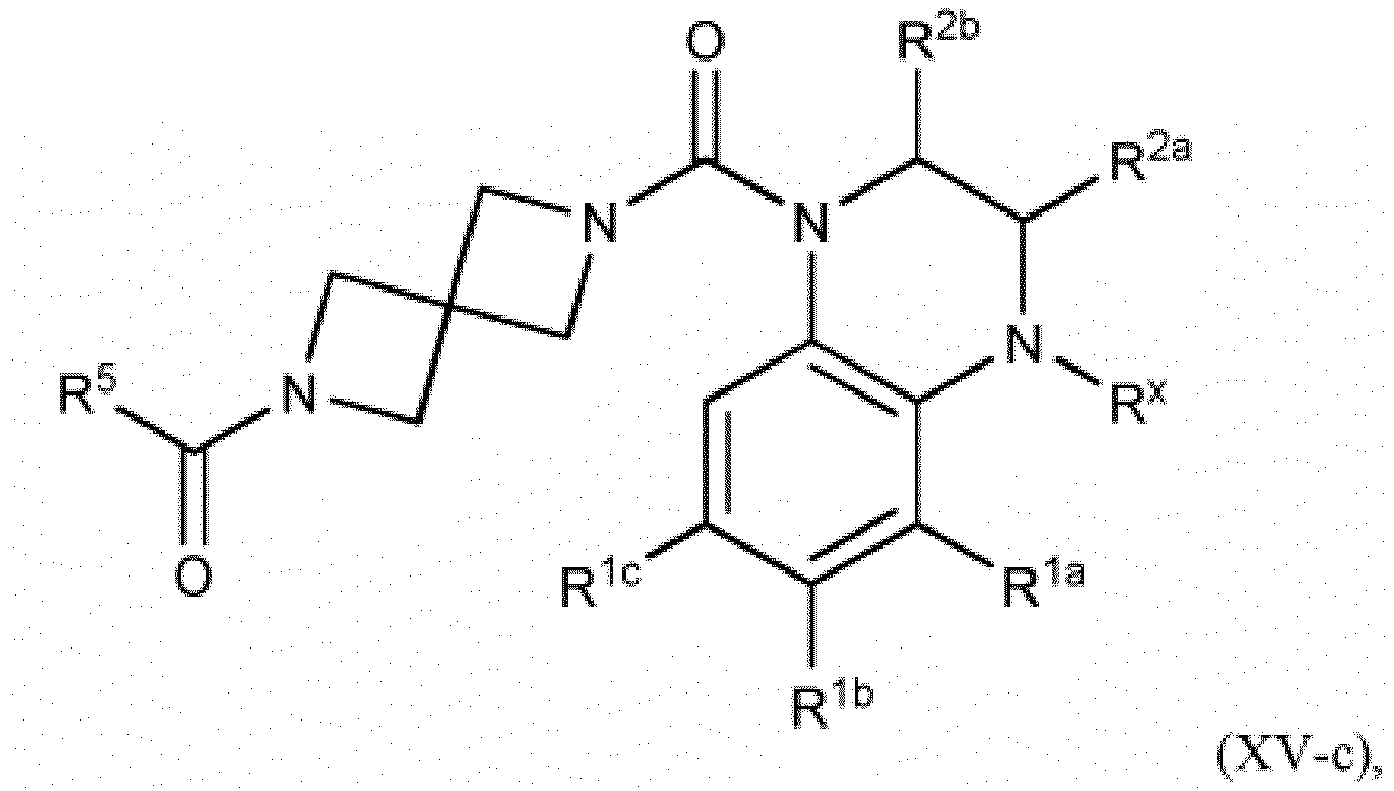 ou ayant la structure de Formule (XV-d) :
 ou ayant la structure de Formule (XV-e) :
 ou ayant la structure de Formule (XV-f) :
 ou ayant la structure de Formule (XV-g) :
 ou ayant la structure de Formule (XV-h) :
 ou ayant la structure de Formule (XV-i) :
 ou ayant la structure de Formule (XV-j) :
 ou ayant la structure de Formule (XV-k) :
 R1a, R1b et R1c sont chacun, indépendamment, H, un alkyle en C1-8, un haloalkyle en C1-8, un alcoxy en C1-8, un cyano, ou un halogéno ;R2a et R2b sont chacun, indépendamment, H, un alkyle en C1-8, un haloalkyle en C1-8, ou un alcoxy en C1-8 ;RX est indépendamment, à chaque occurrence, H, un alkyle en C1-8, un haloalkyle en C1-8, ou un halogéno ;RY est indépendamment, à chaque occurrence, H, -OH, un alkyle en C1-8, un alcoxy en C1-8, ou un halogéno ; etR5 est H, un cycloalkyle en C3-8, un alkyle en C1-8, un haloalkyle en C1-8, un alcoxy en C1-8, un aryle en C6-14, un hétéroaryle de 5 à 14 chaînons, un cycloalkyle en C3-8-alkyle en C1-8, un hétérocyclyle de 3 à 20 chaînons, ou -O-(hétérocyclyle de 3 à 20 chaînons).
 - Composé selon la revendication 1 ou 2 ayant la structure de Formule (XVI) :
 X est -(CRxRy)nO(CRxRy)q-, -(CRxRy)nS(O)t(CRxRy)q-, - (CRxRy)nN(Rx)(CRxRy)q-, ou -(CRxRy)n-,RX est indépendamment, à chaque occurrence, H, un alkyle en C1-8, un haloalkyle en C1-8, ou un halogéno ;RY est indépendamment, à chaque occurrence, H, -OH, un alkyle en C1-8, un alcoxy en C1-8, ou un halogéno ;R1a, R1b et R1c sont chacun, indépendamment, H, un alkyle en C1-8, un haloalkyle en C1-8, un alcoxy en C1-8, un cyano, ou un halogéno ;R2a et R2b sont chacun, indépendamment, H, un alkyle en C1-8, un haloalkyle en C1-8, ou un alcoxy en C1-8 ;R5 est H, un cycloalkyle en C3-8, un alkyle en C1-8, un haloalkyle en C1-8, un alcoxy en C1-8, un aryle en C6-14, un hétéroaryle de 5 à 14 chaînons, un cycloalkyle en C3-8-alkyle en C1-8, un hétérocyclyle de 3 à 20 chaînons, ou -O-(hétérocyclyle de 3 à 20 chaînons) ;n vaut 0, 1, ou 2 ;q vaut 0, 1, ou 2 ; ett vaut 0, 1, ou 2.
 - Composé selon l'une quelconque des revendications 1, 2, ou 31 ayant la structure de Formule (XVI-a) :
 ou ayant la structure de Formule (XVI-b) :
 ou ayant la structure de Formule (XVI-c) :
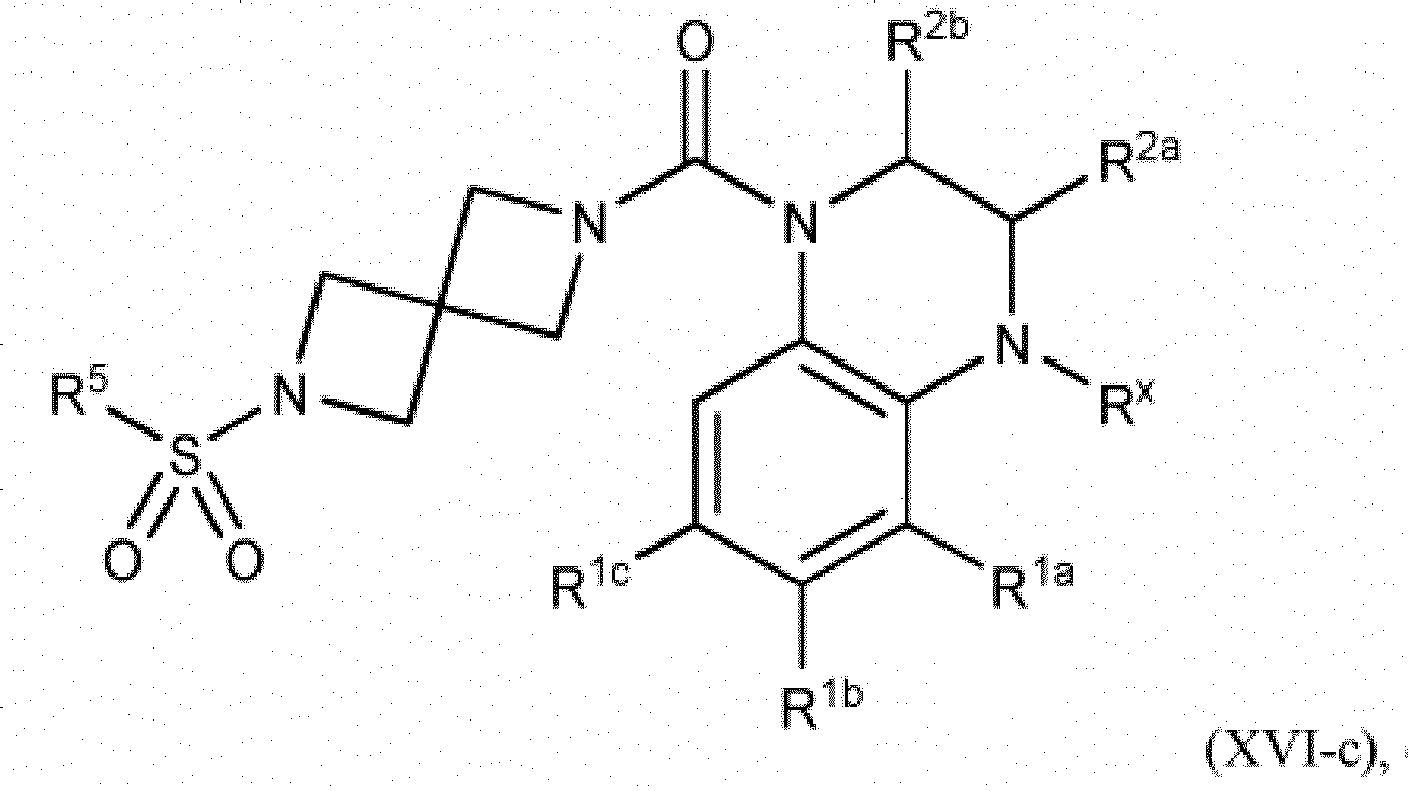 ou ayant la structure de Formule (XVI-d) :
 ou ayant la structure de Formule (XVI-e) :
 ou ayant la structure de Formule (XVI-f) :
 ou ayant la structure de Formule (XVI-g) :
 ou ayant la structure de Formule (XVI-h) :
 ou ayant la structure de Formule (XVI-i) :
 ou ayant la structure de Formule (XVI-j) :
 ou ayant la structure de Formule (XVI-k) :
 R1a, R1b et R1c sont chacun, indépendamment, H, un alkyle en C1-8, un haloalkyle en C1-8, un alcoxy en C1-8, un cyano, ou un halogéno ;R2a et R2b sont chacun, indépendamment, H, un alkyle en C1-8, un haloalkyle en C1-8, ou un alcoxy en C1-8 ;RX est indépendamment, à chaque occurrence, H, un alkyle en C1-8, un haloalkyle en C1-8, ou un halogéno ;RY est indépendamment, à chaque occurrence, H, -OH, un alkyle en C1-8, un alcoxy en C1-8, ou un halogéno ; etR5 est H, un cycloalkyle en C3-8, un alkyle en C1-8, un haloalkyle en C1-8, un alcoxy en C1-8, un aryle en C6-14, un hétéroaryle de 5 à 14 chaînons, un cycloalkyle en C3-8-alkyle en C1-8, un hétérocyclyle de 3 à 20 chaînons, ou -O-(hétérocyclyle de 3 à 20 chaînons).
 - Composé selon la revendication 1 ayant la structure de Formule (XVII-S) ou de Formule (XVII-R) et ayant un niveau d'enrichissement énantiomérique d'un énantiomère par rapport à l'autre énantiomère d'au moins environ 80 %, ou hydrate, solvate, isotope ou sel pharmaceutiquement acceptable de celui-ci :

 X est -(CRxRy)nO(CRxRy)q-, -(CRxRy)nS(O)t(CRxRy)q-, - (CRxRy)nN(Rx)(CRxRy)q-, ou -(CRxRy)n-,RX est indépendamment, à chaque occurrence, H, un alkyle en C1-8, un haloalkyle en C1-8, un halogéno, ou R6 ;RY est indépendamment, à chaque occurrence, H, -OH, un alkyle en C1-8, un alcoxy en C1-8, ou un halogéno ;Q1 est N ou CR1a, Q2 est N ou CR1b et Q3 est N ou CR1c, l'un au moins parmi Q1, Q2 ou Q3 n'étant pas N ;R1a, R1b et R1c sont chacun, indépendamment, H, un alkyle en C1-8, un haloalkyle en C1-8, un alcoxy en C1-8, un cyano, ou un halogéno ;R2a et R2b sont chacun, indépendamment, H, un alkyle en C1-8, un haloalkyle en C1-8, ou un alcoxy en C1-8 ;R3 est -(CHRz)m-Q-(R4)p, -S(=O)2R5, ou -C(=O)R5 ;Rz est H ou CH3Q est un aryle en C6-14 ou un hétéroaryle de 5 à 14 chaînons ;R4 est indépendamment, à chaque occurrence, H, -OH, =O, un cycloalkyle en C3-8, un alkyle en C1-8, un haloalkyle en C1-8, un alcoxy en C1-8, un haloal-coxy en C1-8, un halogéno, ou un cyano ;R5 est H, un cycloalkyle en C3-8, un alkyle en C1-8, un haloalkyle en C1-8, un alcoxy en C1-8, un aryle en C6-14, un hétéroaryle de 5 à 14 chaînons, un cycloalkyle en C3-8-alkyle en C1-8, un hétérocyclyle de 3 à 20 chaînons, ou -O-(hétérocyclyle de 3 à 20 chaînons) ;R6 est un cycloalkyle en C3-8, un hétérocyclyle de 3 à 20 chaînons, ou - C(=O)R7 ;R7 est H, un alkyle en C1-8, ou un haloalkyle en C1-8 ;n vaut 0, 1, ou 2 ;q vaut 0, 1, ou 2 ;t vaut 0, 1, ou 2 ;m vaut 0, 1, 2, 3, 4, 5, ou 6 ; etp vaut 0, 1, ou 2.
 - Composé selon la revendication 1 ayant la structure de Formule (XVIII-S) ou de Formule (XVIII-R) et ayant un niveau d'enrichissement énantiomérique d'un énantiomère par rapport à l'autre énantiomère d'au moins environ 80 %, ou hydrate, solvate, isotope ou sel pharmaceutiquement acceptable de celui-ci :

 X est -(CRxRy)nO(CRxRy)q-, -(CRxRy)nS(O)t(CRxRy)q-,-(CRxRy)nN(Rx)(CRxRy)q-, ou -(CRxRy)n-,RX est indépendamment, à chaque occurrence, H, un alkyle en C1-8, un haloalkyle en C1-8, un halogéno, ou R6 ;RY est indépendamment, à chaque occurrence, H, -OH, un alkyle en C1-8, un alcoxy en C1-8, ou un halogéno ;Q1 est N ou CR1a, Q2 est N ou CR1b et Q3 est N ou CR1c, l'un au moins parmi Q1, Q2 ou Q3 n'étant pas N ;R1a, R1b et R1c sont chacun, indépendamment, H, un alkyle en C1-8, un haloalkyle en C1-8, un alcoxy en C1-8, un cyano, ou un halogéno ;R2a et R2b sont chacun, indépendamment, H, un alkyle en C1-8, un haloalkyle en C1-8, ou un alcoxy en C1-8 ;R3 est -(CHRz)m-Q-(R4)p, -S(=O)2R5, ou -C(=O)R5 ;Rz est H ou CH3 ;Q est un aryle en C6-14 ou un hétéroaryle de 5 à 14 chaînons ;R4 est indépendamment, à chaque occurrence, H, -OH, =O, un cycloalkyle en C3-8, un alkyle en C1-8, un haloalkyle en C1-8, un alcoxy en C1-8, un haloalcoxy en C1-8, un halogéno, ou un cyano ;R5 est H, un cycloalkyle en C3-8, un alkyle en C1-8, un haloalkyle en C1-8, un alcoxy en C1-8, un aryle en C6-14, un hétéroaryle de 5 à 14 chaînons, un cycloalkyle en C3-8-alkyle en C1-8, un hétérocyclyle de 3 à 20 chaînons, ou -O-(hétérocyclyle de 3 à 20 chaînons) ;R6 est un cycloalkyle en C3-8, un hétérocyclyle de 3 à 20 chaînons, ou - C(=O)R7 ;R7 est H, un alkyle en C1-8, ou un haloalkyle en C1-8 ;n vaut 0, 1, ou 2 ;q vaut 0, 1, ou 2 ;t vaut 0, 1, ou 2 ;m vaut 0, 1, 2, 3, 4, 5, ou 6 ; etp vaut 0, 1, ou 2.
 - Composé selon l'une quelconque des revendications 1 à 34, dans lequel R1b est un halogène, de préférence Cl ; oudans lequel R1b est un alkyle en C1-8, de préférence un méthyle, éthyle, ou isopropyle ; oudans lequel R1b est un haloalkyle en C1-8, de préférence -CF3 ; oudans lequel R1b est un alcoxy en C1-8, de préférence un méthoxy, éthoxy, isopropoxy, ou t-butoxy ; ouR1b est un cyano.
- Composé selon l'une quelconque des revendications 1 à 35, dans lequel RX est un hydrogène, oudans lequel RX est un alkyle en C1-8, de préférence un méthyle, éthyle, ou isopropyle ; oudans lequel RX est un alcoxy en C1-8, de préférence un méthoxy, éthoxy, isopropoxy, ou t-butoxy ; oudans lequel RX est un cycloalkyle en C3-8, de préférence un cyclopropyle ou cyclobutyle.
- Composé selon l'une quelconque des revendications 1 à 36, dans lequel R4 est un halogène, de préférence F ou Cl ; oudans lequel R4 est un alkyle en C1-8, de préférence un méthyle ou éthyle ; oudans lequel R4 est un alcoxy en C1-8, de préférence un méthoxy ou éthoxy ; oudans lequel R4 est un cyano ; oudans lequel R4 est un hydroxy.
- Composé selon l'une quelconque des revendications 1 à 37, dans lequel R5 est un alkyle en C1-8, de préférence un méthyle, éthyle ou isopropyle ; ou
dans lequel R5 est un alcoxy en C1-8, de préférence un t-butoxy. - Composé selon la revendication 1 ou forme chirale, diastéréoisomérique ou racémique, racémate, hydrate, solvate, isotope ou sel pharmaceutiquement acceptable de celui-ci, choisi dans le groupe constitué par
1-1 
1-2 
1-3 
1-4 
1-5 
1-6 
1-7 
1-8 
1-9 
1-10 
1-11 
1-12 
1-13 
1-14 
1-15 
1-16 
1-17 
1-18 
1-19 
1-20 
1-21 
1-22 
1-23 
1-24 
1-25 
1-26 
1-27 
1-28 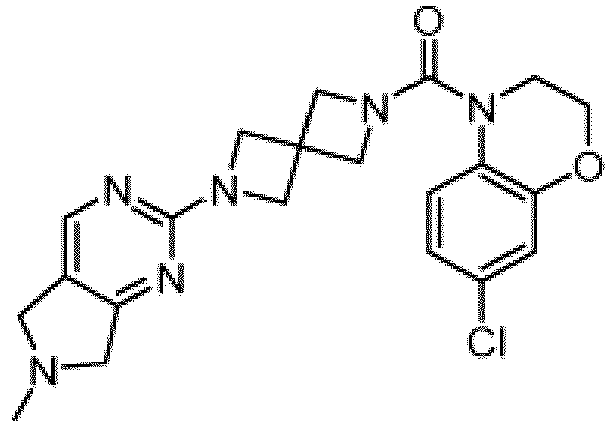
1-29 
1-30 
1-31 
1-32 
1-33 
1-34 
1-35 
1-36 
1-37 
1-38 
1-39 
1-40 
1-41 
1-42 
1 -43 
1-44 
1-45 
1-46 
1-47 
1-48 
1-49 
1-50 
1-51 
1-52 
1-53 
1-54 
1-55 
1-56 
1-57 
1-58 
1-59 
1-60 
1-61 
1-62 
1-63 
1-64 
1-65 
1-66 
1-67 
1-68 
1-69 
1-70 
1-71 
1-72 
1-73 
1-74 
1-75 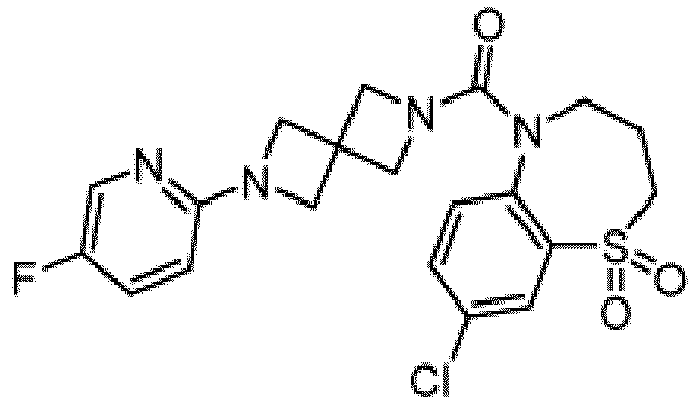
1-76 
1-77 
1-78 
1-79 
1-80 
1-81 
1-82 
1-83 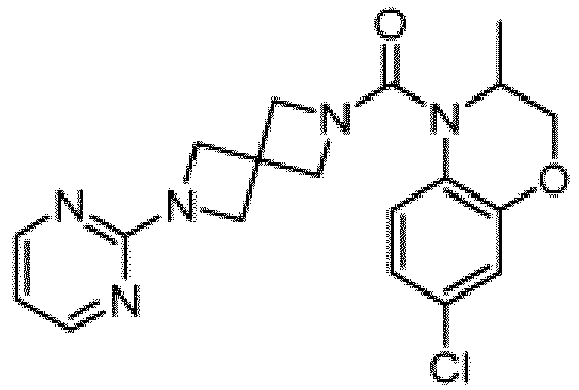
1-84 
1-85 
1-86 
1-87 
1-88 
1-89 
1-90 
2-1 
2-2 
2-3 
2-4 
2-5 
2-6 
3-1 
4-1 
4-2 
4-3 
5-1 
6-1 
6-2 
6-3 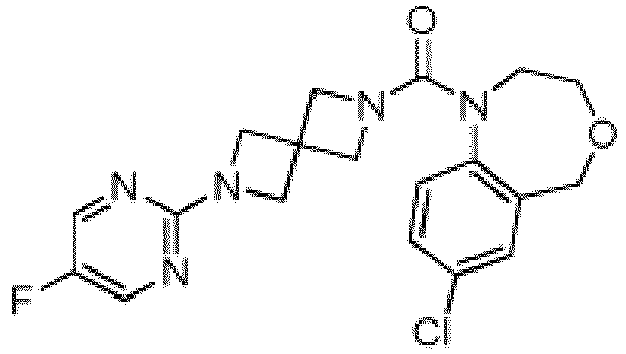
6-4 
6-5 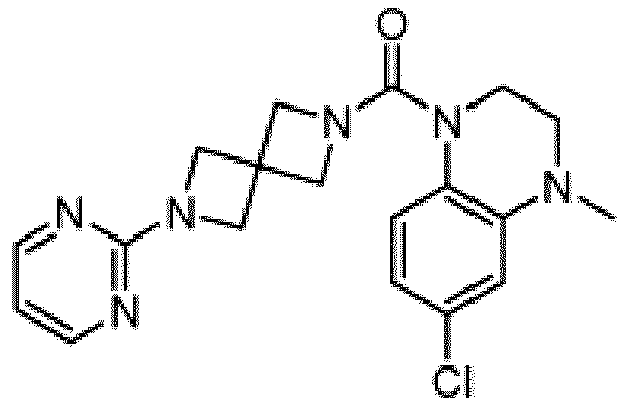
6-6 
6-7 
6-8 
7-1 
8-1 
8-2 
8-3 
8-4 
8-5 
8-6 
8-7 
8-8 
8-9 
8-10 
8-11 
8-12 
8-13 
8-14 
8-15 
8-16 
8-17 
8-18 
8-19 
8-20 
9-1 
9-2 
9-3 
9-4 
9-5 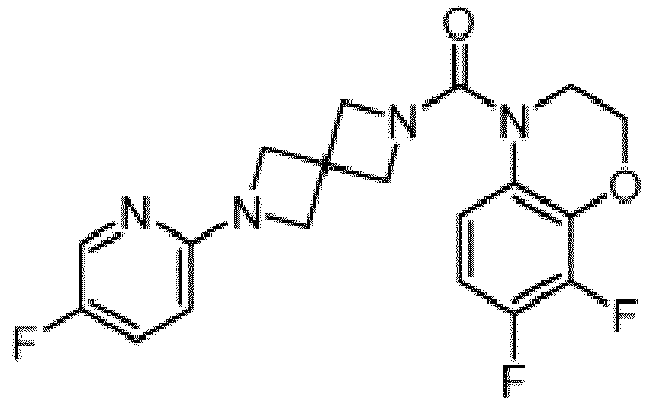
9-6 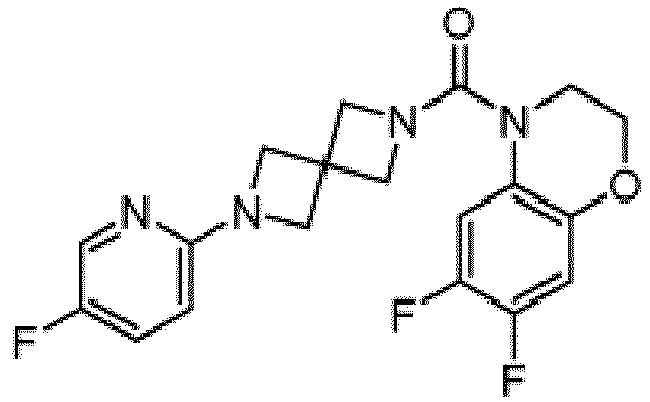
9-7 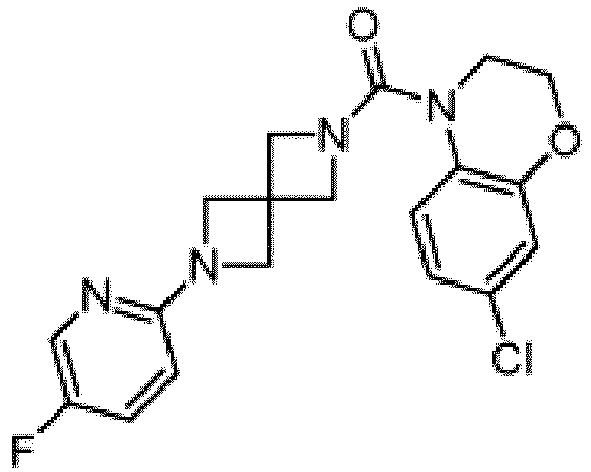
9-8 
9-9 
9-10 
9-11 
9-12 
9-13 
9-14 
9-15 
9-16 
9-17 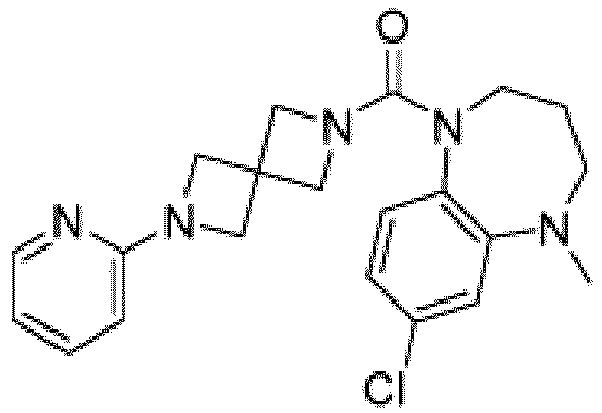
9-18 
9-19 
9-20 
9-21 
9-22 
9-23 
9-24 
9-25 
9-26 
9-27 
9-28 
9-29 
9-30 
9-31 
9-32 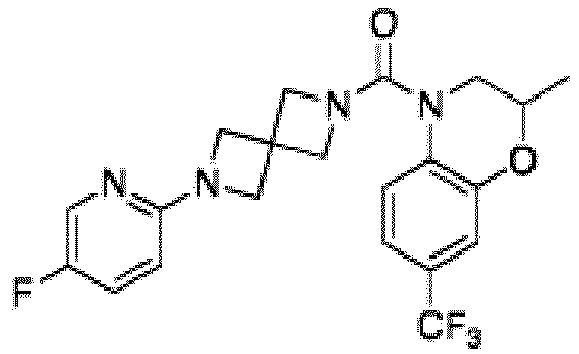
10-1 
10-2 
10-3 
10-4 
10-5 
1 0-6 
10-7 
10-8 
11-1 
12-1 
13-1 
13-2 
13-3 
13-4 
13-5 
13-6 
13-7 
14-1 
15-1 
16-1 
17-1 
18-1 
18-2 
18-3 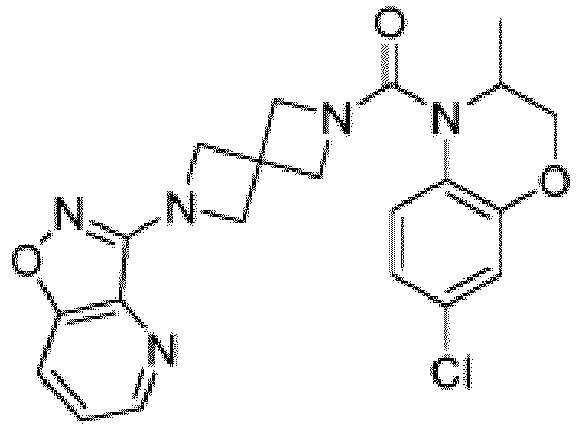
18-4 
18-5 
19-1 
19-2 
19-3 
19-4 
19-5 
19-6 
19-7 
19-8 
19-9 
19-10 
19-11 
19-12 
19-13 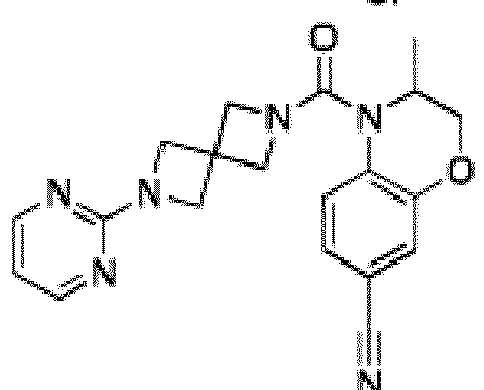
19-14 
19-15 
19-16 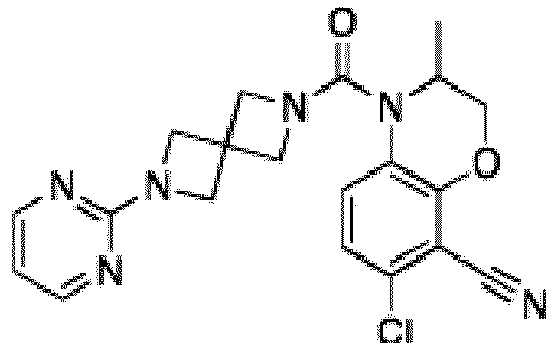
19-17 
19-18 
20-1 
20-2 
20-3 
20-4 
20-5 
20-6 
20-7 
20-8 
20-9 
20-10 
20-11 
20-12 
20-13 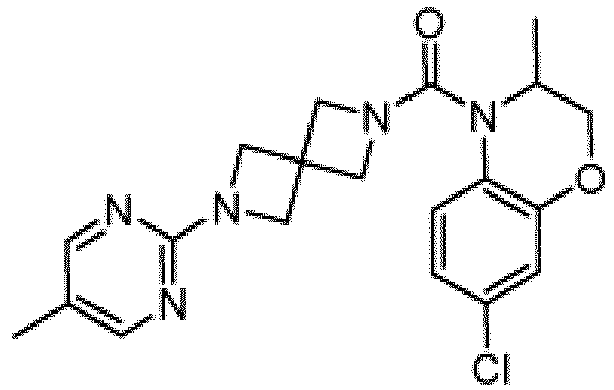
20-14 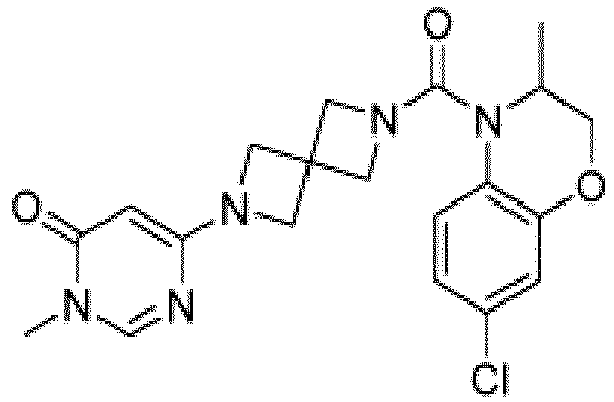
20-15 
20-16 
21-1 
21-2 
21-3 
21-4 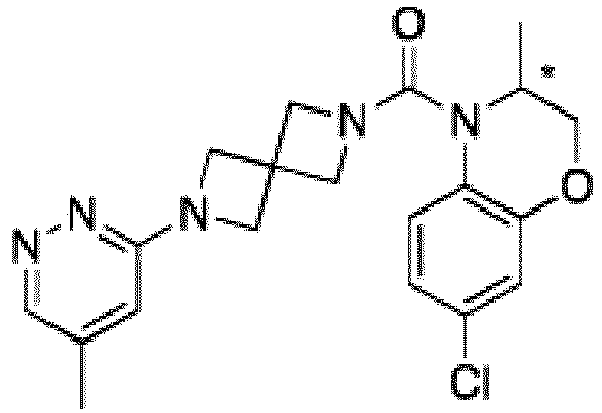
21-5 
21-6 
21-7 
21-8 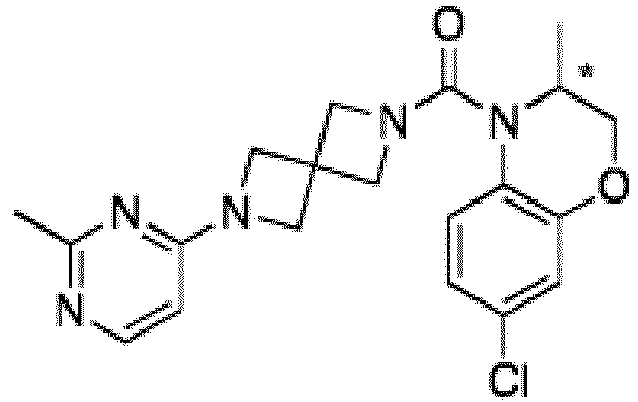
21-9 
21-10 
- Composé selon la revendication 1 ou hydrate, solvate, isotope ou sel pharmaceutiquement acceptable de celui-ci choisi dans le groupe constitué par
1-55-A 
Isomère A 1-55-B 
Isomère B 1-57-A 
Isomère A 1-57-B 
Isomère B 1-58-A 
Isomère A 1-58-B 
Isomère B 1-59-A 
Isomère A 1-59-B 
Isomère B 1-60-A 
Isomère A 1-60-8 
Isomère B 1-62-A 
Isomère A 1-62-B 
Isomère B 1-65-A 
Isomère A 1-65-B 
Isomère B 1-66-A 
Isomère A 1-66-B 
Isomère B 1-67-A 
Isomère A 1-67-B 
Isomère B 1-73-A 
Isomère A 1-73-B 
Isomère B 1-83-A 
Isomère A 1-83-B 
Isomère B 9-1-A 
Isomère A 9-1-B 
Isomère B 9-3-A 
isomère A 9-3-B 
Isomère B 9-4-A 
Isomère A 9-4-B 
Isomère B 12-1-A 
Isomère A 12-1-B 
Isomère B 13-1-A 
Isomère A 13-1-B 
Isomère B 13-2-A 
Isomère A 13-2-8 
Isomère B 13-3-A 
Isomère A 13-3-B 
Isomère B 13-4-A 
Isomère A 13-4-B 
Isomère B 13-5-A 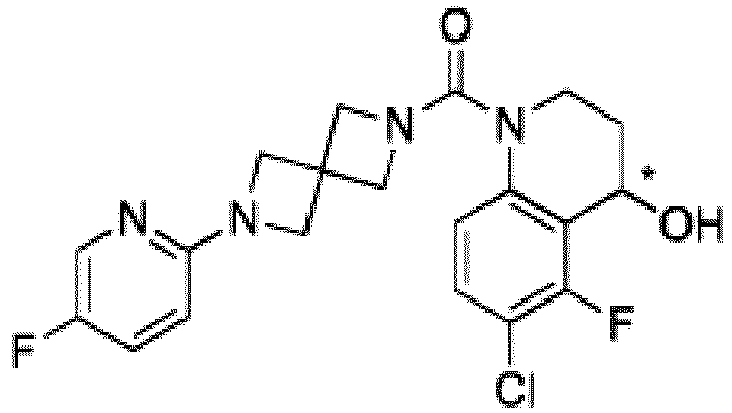
Isomère A 13-5-B 
Isomère B 18-2-A 
Isomère A 18-2-B 
Isomère B 18-3-A 
Isomère A 18-3-B 
Isomère B 9-4-A 
Isomère A 9-4-B 
Isomère B 12-1-A 
Isomère A 12-1-B 
Isomère B 13-1-A 
Isomère A 13-1-B 
Isomère B 13-2-A 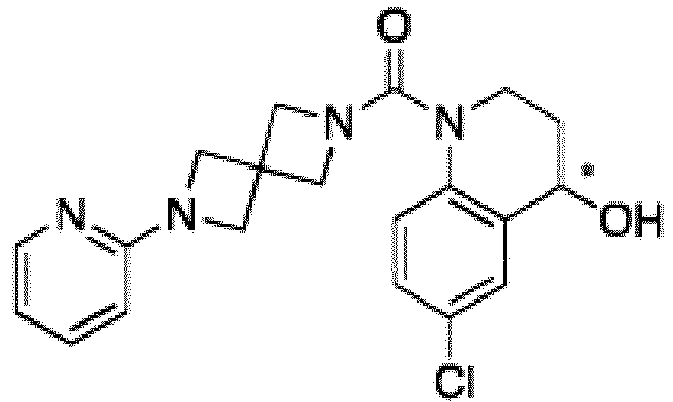
Isomère A 13-2-B 
Isomère B 13-3-A 
Isomère A 13-3-B 
Isomère B I3-4-A 
Isomère A 13-4-B 
Isomère B 13-5-A 
Isomère A 13-5-B 
Isomère B 18-2-A 
Isomère A 18-2-B 
Isomère B 18-3-A 
Isomère A 18-3-B 
Isomère B 19-5-B 
Isomère B 20-1-A 
Isomère A 20-1-B 
Isomère B 20-2-A 
Isomère A 20-2-B 
Isomère B 20-3-A 
Isomère A 20-3-B 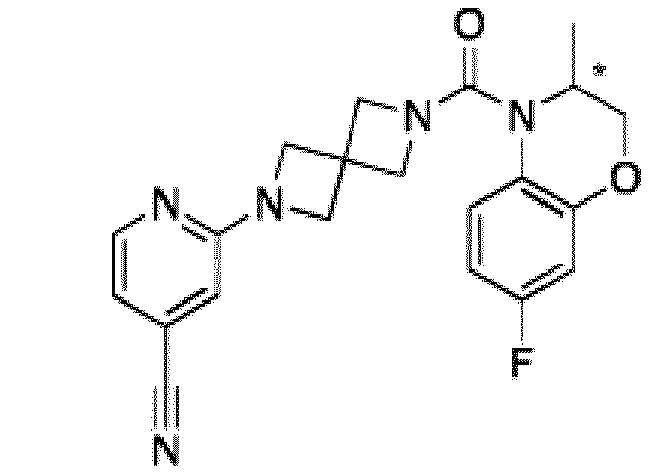
Isomère B 20-4-A 
Isomère A 20-4-B 
Isomère B 20-5-A 
Isomère A 20-5-B 
Isomère B 20-6-A 
Isomère A 20-6-B 
Isomère B 20-7-A 
Isomère A 20-7-B 
Isomère B 20-8-A 
Isomère A 20-8-B 
Isomère B 20-9-A 
Isomère A 20-9-B 
Isomère B 20-10-A 
Isomère A 20-10-B 
Isomère B 20-11-A 
Isomère A 20-11-B 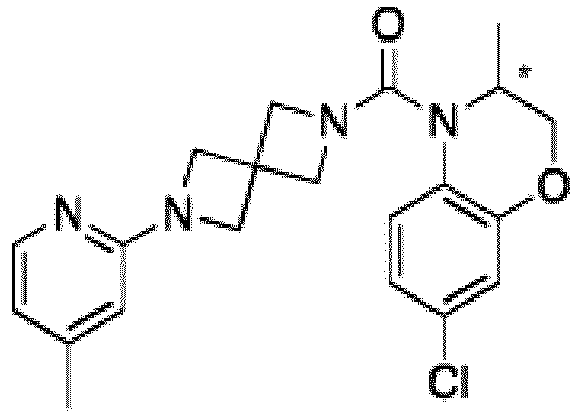
Isomère B 20-12-A 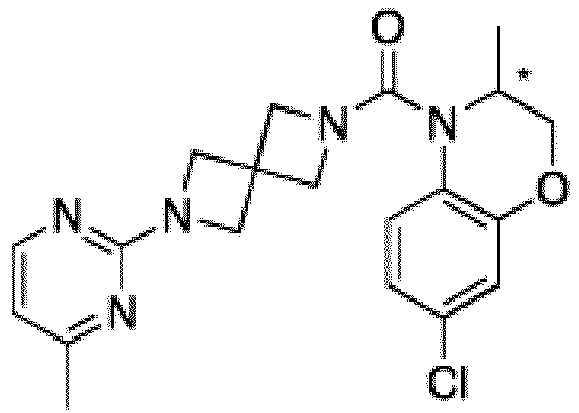
Isomère A 20-12-B 
Isomère B 20-13-A 
Isomère A 20-13-B 
Isomère B 20-14-A 
Isomère A 20-14-B 
Isomère B 20-15-A 
Isomère A 20-15-B 
Isomère B 20-16-A 
Isomère A 20-16-B 
Isomère B - Composé selon la revendication 39, le composé étant

- Composé selon la revendication 39, le composé étant

- Composé selon la revendication 39, le composé étant

- Composé selon la revendication 39, le composé étant

- Composé selon la revendication 39, le composé étant

- Composé selon la revendication 39, le composé étant

- Composé selon la revendication 39, le composé étant

- Composé selon la revendication 39, le composé étant

- Composé selon la revendication 39, le composé étant

- Composé selon la revendication 39, le composé étant

- Composé selon la revendication 39, le composé étant

- Composition comprenant un composé selon l'une quelconque des revendications 1 à 51, ou une forme chirale, diastéréoisomérique ou racémique, un racémate, un hydrate, un solvate, un isotope ou un sel pharmaceutiquement acceptable de celui-ci, et un véhicule, un diluant ou un excipient pharmaceutiquement acceptable.
- Procédé in vitro d'antagonisation du récepteur V1a, comprenant la mise en contact du récepteur V1a avec une quantité efficace d'un composé selon l'une quelconque des revendications 1 à 51, ou d'une forme chirale, diastéréoisomérique ou racémique, d'un racémate, d'un hydrate, d'un solvate, d'un isotope ou d'un sel pharmaceutiquement acceptable de celui-ci, ou d'une composition le comprenant.
- Composé selon l'une quelconque des revendications 1 à 51 destiné à être utilisé dans un procédé de traitement d'affections dépendantes de la vasopressine ou d'affections liées à une sécrétion inappropriée de vasopressine, ou de traitement d'un trouble neuropsychologique, ou de traitement d'un trouble lié au rythme circadien, ou de traitement thérapeutique et/ou prophylactique d'une infertilité liée au stress chronique, d'une dysménorrhée primaire ou secondaire, d'un dysfonctionnement sexuel mâle ou femelle,
le procédé comprenant l'administration, à un sujet le nécessitant, d'une quantité thérapeutiquement efficace d'un composé selon l'une quelconque des revendications 1 à 51, ou d'une forme chirale, diastéréoisomérique ou racémique, d'un racémate, d'un hydrate, d'un solvate, d'un isotope ou d'un sel pharmaceutiquement acceptable de celui-ci, ou d'une composition le comprenant, à une fréquence et pendant une durée suffisantes pour apporter un effet bénéfique au sujet. - Composé destiné à être utilisé selon la revendication 54, le trouble neuropsychologique étant un trouble du spectre autistique ; ouun comportement agressif ; ouun trouble explosif intermittent ; ouun trouble anxieux, le trouble anxieux étant de préférence un trouble anxieux généralisé, un trouble panique, un trouble lié au stress, un trouble obsessionnel compulsif, une phobie, un trouble d'anxiété sociale, un trouble d'anxiété de la séparation, ou un trouble du stress post-traumatique, ou un trouble d'anxiété sociale, ou une phobie, ou un trouble lié au stress, ou un trouble du stress post-traumatique, ou un trouble obsessionnel compulsif ; oule trouble neuropsychologique étant un trouble dépressif, un trouble de l'humeur, ou un trouble affectif, le trouble dépressif étant de préférence une dépression majeure, une dépression résistante aux médicaments, une dysthymie et un trouble bipolaire, plus préférablement une dépression majeure ; et le trouble de l'humeur étant de préférence une anhédonie ; oule trouble neuropsychologique étant un trouble du spectre schizophrénique, de préférence une schizophrénie, un trouble schizo-affectif, un état psychotique ou un trouble de la mémoire.
- Composé destiné à être utilisé selon la revendication 54, le trouble lié au rythme circadien étant un trouble du décalage horaire, ou un trouble du sommeil.
Applications Claiming Priority (2)
| Application Number | Priority Date | Filing Date | Title |
|---|---|---|---|
| US201762554452P | 2017-09-05 | 2017-09-05 | |
| PCT/US2018/049607 WO2019050988A1 (fr) | 2017-09-05 | 2018-09-05 | Antagonistes du récepteur de la vasopressine, produits et procédés associés |
Publications (3)
| Publication Number | Publication Date |
|---|---|
| EP3679043A1 EP3679043A1 (fr) | 2020-07-15 |
| EP3679043B1 EP3679043B1 (fr) | 2023-05-31 |
| EP3679043B9 true EP3679043B9 (fr) | 2023-09-27 |
Family
ID=63708454
Family Applications (1)
| Application Number | Title | Priority Date | Filing Date |
|---|---|---|---|
| EP18779495.3A Active EP3679043B9 (fr) | 2017-09-05 | 2018-09-05 | Antagonistes du récepteur de la vasopressine, produits et procédés associés |
Country Status (13)
| Country | Link |
|---|---|
| US (2) | US10538530B2 (fr) |
| EP (1) | EP3679043B9 (fr) |
| JP (1) | JP7368357B2 (fr) |
| KR (1) | KR102765806B1 (fr) |
| CN (1) | CN111212842B (fr) |
| AU (1) | AU2018330423B2 (fr) |
| CA (1) | CA3072766A1 (fr) |
| ES (1) | ES2951874T3 (fr) |
| IL (1) | IL272563B2 (fr) |
| MX (1) | MX2020002436A (fr) |
| SG (1) | SG11202001498QA (fr) |
| WO (1) | WO2019050988A1 (fr) |
| ZA (2) | ZA202001027B (fr) |
Families Citing this family (7)
| Publication number | Priority date | Publication date | Assignee | Title |
|---|---|---|---|---|
| CN106810536A (zh) | 2015-11-30 | 2017-06-09 | 甘李药业股份有限公司 | 一种蛋白激酶抑制剂及其制备方法和医药用途 |
| CA3190277A1 (fr) | 2020-09-03 | 2022-03-10 | Joerg Benz | Composes heterocycliques |
| CN117295726A (zh) * | 2021-04-23 | 2023-12-26 | 豪夫迈·罗氏有限公司 | 杂环化合物 |
| WO2023130050A1 (fr) * | 2021-12-29 | 2023-07-06 | Psy Therapeutics, Inc. | Inhibiteurs de la monoacylglycérol lipase et leur utilisation pour le traitement et la prise en charge de la douleur |
| CA3242372A1 (fr) | 2021-12-29 | 2023-07-06 | Psy Therapeutics, Inc. | Inhibition de la monoacylglycerol lipase (magl) |
| US20250170100A1 (en) * | 2021-12-29 | 2025-05-29 | Psy Therapeutics, Inc. | Monoacylglycerol lipase inhibitors and use thereof for the treatment of anxiety and related conditions |
| CN120379996A (zh) * | 2022-08-11 | 2025-07-25 | 瑞敏德股份有限公司 | 用于治疗神经退行性障碍的(氮杂)螺庚烷衍生物 |
Family Cites Families (18)
| Publication number | Priority date | Publication date | Assignee | Title |
|---|---|---|---|---|
| US2025005A (en) * | 1930-01-02 | 1935-12-17 | Union Switch & Signal Co | Multiple control apparatus |
| DE3930262A1 (de) * | 1989-09-11 | 1991-03-21 | Thomae Gmbh Dr K | Kondensierte diazepinone, verfahren zu ihrer herstellung und diese verbindungen enthaltende arzneimittel |
| US5091387A (en) * | 1990-03-02 | 1992-02-25 | Merck & Co., Inc. | Spirocyclic oxytocin antagonists |
| HUP0203548A3 (en) * | 1999-07-21 | 2003-04-28 | Astrazeneca Ab | New spirooxindole derivatives, process for their preparation, pharmaceutical compositions containing them and their use |
| WO2006034015A1 (fr) * | 2004-09-17 | 2006-03-30 | Osi Pharmaceuticals, Inc. | COMPOSÉS (SPIROCYCLYLAMIDO)AMINOTHIOPHÈNES EN TANT QU'INHIBITEURS DU PROTO-ONCOGÈNE c-KIT |
| KR100984893B1 (ko) * | 2005-07-21 | 2010-10-01 | 에프. 호프만-라 로슈 아게 | V1a 수용체 길항제로서의인돌-3-일-카보닐-피페리딘-벤조이미다졸 유도체 |
| US7351706B2 (en) * | 2006-01-05 | 2008-04-01 | Hoffmann-La Roche Inc. | Indol-3-yl-carbonyl-spiro-piperidine derivatives |
| JP2010504352A (ja) * | 2006-09-22 | 2010-02-12 | ジヤンセン・フアーマシユーチカ・ナームローゼ・フエンノートシヤツプ | バソプレッシン拮抗薬としてのスピロベンズアゼピン類 |
| DE602007006990D1 (de) | 2006-12-07 | 2010-07-15 | Hoffmann La Roche | Spiropiperidinderivate als antagonisten des via-rezeptors |
| DE602007006989D1 (en) * | 2006-12-07 | 2010-07-15 | Hoffmann La Roche | Spiropiperidinderivate |
| US8329904B2 (en) | 2009-05-12 | 2012-12-11 | Hoffmann-La Roche Inc. | Azacyclic derivatives |
| WO2011036204A1 (fr) * | 2009-09-24 | 2011-03-31 | Shire-Movetis N.V. | [1,4]-benzodiazépines comme antagonistes du récepteur v2 à la vasopressine |
| CN105263910A (zh) | 2013-02-18 | 2016-01-20 | 斯克利普斯研究所 | 具有治疗潜力的血管加压素受体调节剂 |
| JP6502267B2 (ja) | 2013-02-18 | 2019-04-17 | スプリング バンク ファーマシューティカルズ,インコーポレイテッド | ワクチンアジュバントおよび治療剤としての短鎖オリゴヌクレオチドの設計 |
| US9688678B2 (en) * | 2014-05-15 | 2017-06-27 | AbbVie Deutschland GmbH & Co. KG | Oxindole compounds carrying a nitrogen-bound spiro substituent and use thereof for treating vasopressin-related diseases |
| US9527856B2 (en) * | 2014-05-15 | 2016-12-27 | AbbVie Deutschland GmbH & Co. KG | Oxindole compounds carrying a CO-bound spiro substituent and use thereof for treating vasopressin-related diseases |
| WO2018226769A1 (fr) * | 2017-06-05 | 2018-12-13 | Blackthorn Therapeutics, Inc. | Dérivés de 1-(2-azaspiro[3.3]heptan-6-yl)-5,6-dihydro-4h-benzo[f][1,2,4]triazolo[4,3-a][1,4]diazépine en tant qu'antagonistes du récepteur v1a pour le traitement de troubles neuropsychologiques |
| WO2020123872A1 (fr) | 2018-12-12 | 2020-06-18 | Blackthorn Therapeutics, Inc. | Dérivés de 1-(2,6-diazaspiro[3.3]heptan-6-yl)-5,6-dihydro-4h-benzo[f][1,2,4]triazolo[4,3-a][1,4]diazépine et composés apparentés servant d'antagonistes de la vasopressine pour le traitement de troubles neuropsychologiques |
-
2018
- 2018-09-05 EP EP18779495.3A patent/EP3679043B9/fr active Active
- 2018-09-05 CN CN201880057828.7A patent/CN111212842B/zh active Active
- 2018-09-05 ES ES18779495T patent/ES2951874T3/es active Active
- 2018-09-05 MX MX2020002436A patent/MX2020002436A/es unknown
- 2018-09-05 KR KR1020207009443A patent/KR102765806B1/ko active Active
- 2018-09-05 CA CA3072766A patent/CA3072766A1/fr active Pending
- 2018-09-05 AU AU2018330423A patent/AU2018330423B2/en active Active
- 2018-09-05 SG SG11202001498QA patent/SG11202001498QA/en unknown
- 2018-09-05 US US16/122,780 patent/US10538530B2/en active Active
- 2018-09-05 JP JP2020534818A patent/JP7368357B2/ja active Active
- 2018-09-05 WO PCT/US2018/049607 patent/WO2019050988A1/fr not_active Ceased
-
2020
- 2020-02-09 IL IL272563A patent/IL272563B2/en unknown
- 2020-02-18 ZA ZA2020/01027A patent/ZA202001027B/en unknown
-
2021
- 2021-03-05 US US17/194,069 patent/US12152038B2/en active Active
- 2021-06-23 ZA ZA2021/04313A patent/ZA202104313B/en unknown
Also Published As
| Publication number | Publication date |
|---|---|
| ES2951874T3 (es) | 2023-10-25 |
| US12152038B2 (en) | 2024-11-26 |
| IL272563A (en) | 2020-03-31 |
| EP3679043B1 (fr) | 2023-05-31 |
| ZA202104313B (en) | 2024-12-18 |
| IL272563B2 (en) | 2023-02-01 |
| IL272563B (en) | 2022-10-01 |
| WO2019050988A1 (fr) | 2019-03-14 |
| AU2018330423A1 (en) | 2020-03-05 |
| CN111212842B (zh) | 2022-10-25 |
| CN111212842A (zh) | 2020-05-29 |
| EP3679043A1 (fr) | 2020-07-15 |
| KR102765806B1 (ko) | 2025-02-10 |
| KR20200051686A (ko) | 2020-05-13 |
| US20190169202A1 (en) | 2019-06-06 |
| US20210317126A1 (en) | 2021-10-14 |
| US10538530B2 (en) | 2020-01-21 |
| ZA202001027B (en) | 2023-10-25 |
| AU2018330423B2 (en) | 2023-04-06 |
| JP2020532592A (ja) | 2020-11-12 |
| JP7368357B2 (ja) | 2023-10-24 |
| MX2020002436A (es) | 2020-07-13 |
| NZ762031A (en) | 2024-04-26 |
| CA3072766A1 (fr) | 2019-03-14 |
| SG11202001498QA (en) | 2020-03-30 |
Similar Documents
| Publication | Publication Date | Title |
|---|---|---|
| US12152038B2 (en) | Vasopressin receptor antagonists and products and methods related thereto | |
| US12404277B2 (en) | Substituted 4-phenylpiperidines, their preparation and use | |
| US10787453B2 (en) | Octahydropyrrolopyrroles their preparation and use | |
| US20140038941A1 (en) | Ring-fused heterocyclic derivative | |
| US11858943B2 (en) | Vasopressin receptor antagonists and products and methods related thereto | |
| EP3894414B1 (fr) | Dérivés de 1-(2,6-diazaspiro[3.3]heptan-6-yl)-5,6-dihydro-4h-benzo[f][1,2,4]triazolo[4,3-a][1,4]diazépine en tant qu'antagonistes de vasopressin pour le traitement de maladies neuro-psychologiques | |
| HK40033061B (en) | Vasopressin receptor antagonists and products and methods related thereto | |
| HK40033061A (en) | Vasopressin receptor antagonists and products and methods related thereto | |
| WO2025108234A1 (fr) | Composé, son procédé de préparation et son utilisation | |
| CN121471213A (zh) | 钠通道调节剂 | |
| BR112019019157A2 (pt) | antagonistas de receptor de capa-opiode e produtos e métodos relacionados aos mesmos | |
| HK1232169B (en) | Substituted 4-phenylpiperidines, their preparation and use |
Legal Events
| Date | Code | Title | Description |
|---|---|---|---|
| STAA | Information on the status of an ep patent application or granted ep patent |
Free format text: STATUS: UNKNOWN |
|
| STAA | Information on the status of an ep patent application or granted ep patent |
Free format text: STATUS: THE INTERNATIONAL PUBLICATION HAS BEEN MADE |
|
| PUAI | Public reference made under article 153(3) epc to a published international application that has entered the european phase |
Free format text: ORIGINAL CODE: 0009012 |
|
| STAA | Information on the status of an ep patent application or granted ep patent |
Free format text: STATUS: REQUEST FOR EXAMINATION WAS MADE |
|
| 17P | Request for examination filed |
Effective date: 20200331 |
|
| AK | Designated contracting states |
Kind code of ref document: A1 Designated state(s): AL AT BE BG CH CY CZ DE DK EE ES FI FR GB GR HR HU IE IS IT LI LT LU LV MC MK MT NL NO PL PT RO RS SE SI SK SM TR |
|
| AX | Request for extension of the european patent |
Extension state: BA ME |
|
| DAV | Request for validation of the european patent (deleted) | ||
| DAX | Request for extension of the european patent (deleted) | ||
| REG | Reference to a national code |
Ref country code: HK Ref legal event code: DE Ref document number: 40033061 Country of ref document: HK |
|
| STAA | Information on the status of an ep patent application or granted ep patent |
Free format text: STATUS: EXAMINATION IS IN PROGRESS |
|
| 17Q | First examination report despatched |
Effective date: 20210503 |
|
| GRAP | Despatch of communication of intention to grant a patent |
Free format text: ORIGINAL CODE: EPIDOSNIGR1 |
|
| STAA | Information on the status of an ep patent application or granted ep patent |
Free format text: STATUS: GRANT OF PATENT IS INTENDED |
|
| INTG | Intention to grant announced |
Effective date: 20221205 |
|
| GRAS | Grant fee paid |
Free format text: ORIGINAL CODE: EPIDOSNIGR3 |
|
| GRAA | (expected) grant |
Free format text: ORIGINAL CODE: 0009210 |
|
| STAA | Information on the status of an ep patent application or granted ep patent |
Free format text: STATUS: THE PATENT HAS BEEN GRANTED |
|
| RAP1 | Party data changed (applicant data changed or rights of an application transferred) |
Owner name: NEUMORA THERAPEUTICS, INC. |
|
| AK | Designated contracting states |
Kind code of ref document: B1 Designated state(s): AL AT BE BG CH CY CZ DE DK EE ES FI FR GB GR HR HU IE IS IT LI LT LU LV MC MK MT NL NO PL PT RO RS SE SI SK SM TR |
|
| REG | Reference to a national code |
Ref country code: GB Ref legal event code: FG4D Ref country code: CH Ref legal event code: EP |
|
| REG | Reference to a national code |
Ref country code: DE Ref legal event code: R096 Ref document number: 602018050483 Country of ref document: DE |
|
| REG | Reference to a national code |
Ref country code: AT Ref legal event code: REF Ref document number: 1570883 Country of ref document: AT Kind code of ref document: T Effective date: 20230615 |
|
| REG | Reference to a national code |
Ref country code: IE Ref legal event code: FG4D |
|
| REG | Reference to a national code |
Ref country code: SE Ref legal event code: TRGR |
|
| REG | Reference to a national code |
Ref country code: NL Ref legal event code: FP |
|
| REG | Reference to a national code |
Ref country code: CH Ref legal event code: PK Free format text: BERICHTIGUNG B9 |
|
| REG | Reference to a national code |
Ref country code: LT Ref legal event code: MG9D |
|
| REG | Reference to a national code |
Ref country code: AT Ref legal event code: MK05 Ref document number: 1570883 Country of ref document: AT Kind code of ref document: T Effective date: 20230531 |
|
| REG | Reference to a national code |
Ref country code: ES Ref legal event code: FG2A Ref document number: 2951874 Country of ref document: ES Kind code of ref document: T3 Effective date: 20231025 |
|
| PG25 | Lapsed in a contracting state [announced via postgrant information from national office to epo] |
Ref country code: NO Free format text: LAPSE BECAUSE OF FAILURE TO SUBMIT A TRANSLATION OF THE DESCRIPTION OR TO PAY THE FEE WITHIN THE PRESCRIBED TIME-LIMIT Effective date: 20230831 Ref country code: AT Free format text: LAPSE BECAUSE OF FAILURE TO SUBMIT A TRANSLATION OF THE DESCRIPTION OR TO PAY THE FEE WITHIN THE PRESCRIBED TIME-LIMIT Effective date: 20230531 |
|
| PG25 | Lapsed in a contracting state [announced via postgrant information from national office to epo] |
Ref country code: RS Free format text: LAPSE BECAUSE OF FAILURE TO SUBMIT A TRANSLATION OF THE DESCRIPTION OR TO PAY THE FEE WITHIN THE PRESCRIBED TIME-LIMIT Effective date: 20230531 Ref country code: PL Free format text: LAPSE BECAUSE OF FAILURE TO SUBMIT A TRANSLATION OF THE DESCRIPTION OR TO PAY THE FEE WITHIN THE PRESCRIBED TIME-LIMIT Effective date: 20230531 Ref country code: LV Free format text: LAPSE BECAUSE OF FAILURE TO SUBMIT A TRANSLATION OF THE DESCRIPTION OR TO PAY THE FEE WITHIN THE PRESCRIBED TIME-LIMIT Effective date: 20230531 Ref country code: LT Free format text: LAPSE BECAUSE OF FAILURE TO SUBMIT A TRANSLATION OF THE DESCRIPTION OR TO PAY THE FEE WITHIN THE PRESCRIBED TIME-LIMIT Effective date: 20230531 Ref country code: IS Free format text: LAPSE BECAUSE OF FAILURE TO SUBMIT A TRANSLATION OF THE DESCRIPTION OR TO PAY THE FEE WITHIN THE PRESCRIBED TIME-LIMIT Effective date: 20230930 Ref country code: HR Free format text: LAPSE BECAUSE OF FAILURE TO SUBMIT A TRANSLATION OF THE DESCRIPTION OR TO PAY THE FEE WITHIN THE PRESCRIBED TIME-LIMIT Effective date: 20230531 Ref country code: GR Free format text: LAPSE BECAUSE OF FAILURE TO SUBMIT A TRANSLATION OF THE DESCRIPTION OR TO PAY THE FEE WITHIN THE PRESCRIBED TIME-LIMIT Effective date: 20230901 |
|
| PG25 | Lapsed in a contracting state [announced via postgrant information from national office to epo] |
Ref country code: FI Free format text: LAPSE BECAUSE OF FAILURE TO SUBMIT A TRANSLATION OF THE DESCRIPTION OR TO PAY THE FEE WITHIN THE PRESCRIBED TIME-LIMIT Effective date: 20230531 |
|
| PG25 | Lapsed in a contracting state [announced via postgrant information from national office to epo] |
Ref country code: SK Free format text: LAPSE BECAUSE OF FAILURE TO SUBMIT A TRANSLATION OF THE DESCRIPTION OR TO PAY THE FEE WITHIN THE PRESCRIBED TIME-LIMIT Effective date: 20230531 |
|
| PG25 | Lapsed in a contracting state [announced via postgrant information from national office to epo] |
Ref country code: SM Free format text: LAPSE BECAUSE OF FAILURE TO SUBMIT A TRANSLATION OF THE DESCRIPTION OR TO PAY THE FEE WITHIN THE PRESCRIBED TIME-LIMIT Effective date: 20230531 Ref country code: SK Free format text: LAPSE BECAUSE OF FAILURE TO SUBMIT A TRANSLATION OF THE DESCRIPTION OR TO PAY THE FEE WITHIN THE PRESCRIBED TIME-LIMIT Effective date: 20230531 Ref country code: RO Free format text: LAPSE BECAUSE OF FAILURE TO SUBMIT A TRANSLATION OF THE DESCRIPTION OR TO PAY THE FEE WITHIN THE PRESCRIBED TIME-LIMIT Effective date: 20230531 Ref country code: PT Free format text: LAPSE BECAUSE OF FAILURE TO SUBMIT A TRANSLATION OF THE DESCRIPTION OR TO PAY THE FEE WITHIN THE PRESCRIBED TIME-LIMIT Effective date: 20231002 Ref country code: EE Free format text: LAPSE BECAUSE OF FAILURE TO SUBMIT A TRANSLATION OF THE DESCRIPTION OR TO PAY THE FEE WITHIN THE PRESCRIBED TIME-LIMIT Effective date: 20230531 Ref country code: DK Free format text: LAPSE BECAUSE OF FAILURE TO SUBMIT A TRANSLATION OF THE DESCRIPTION OR TO PAY THE FEE WITHIN THE PRESCRIBED TIME-LIMIT Effective date: 20230531 Ref country code: CZ Free format text: LAPSE BECAUSE OF FAILURE TO SUBMIT A TRANSLATION OF THE DESCRIPTION OR TO PAY THE FEE WITHIN THE PRESCRIBED TIME-LIMIT Effective date: 20230531 |
|
| REG | Reference to a national code |
Ref country code: DE Ref legal event code: R097 Ref document number: 602018050483 Country of ref document: DE |
|
| PLBE | No opposition filed within time limit |
Free format text: ORIGINAL CODE: 0009261 |
|
| STAA | Information on the status of an ep patent application or granted ep patent |
Free format text: STATUS: NO OPPOSITION FILED WITHIN TIME LIMIT |
|
| PG25 | Lapsed in a contracting state [announced via postgrant information from national office to epo] |
Ref country code: SI Free format text: LAPSE BECAUSE OF FAILURE TO SUBMIT A TRANSLATION OF THE DESCRIPTION OR TO PAY THE FEE WITHIN THE PRESCRIBED TIME-LIMIT Effective date: 20230531 |
|
| 26N | No opposition filed |
Effective date: 20240301 |
|
| PG25 | Lapsed in a contracting state [announced via postgrant information from national office to epo] |
Ref country code: LU Free format text: LAPSE BECAUSE OF NON-PAYMENT OF DUE FEES Effective date: 20230905 |
|
| PG25 | Lapsed in a contracting state [announced via postgrant information from national office to epo] |
Ref country code: MC Free format text: LAPSE BECAUSE OF FAILURE TO SUBMIT A TRANSLATION OF THE DESCRIPTION OR TO PAY THE FEE WITHIN THE PRESCRIBED TIME-LIMIT Effective date: 20230531 Ref country code: SI Free format text: LAPSE BECAUSE OF FAILURE TO SUBMIT A TRANSLATION OF THE DESCRIPTION OR TO PAY THE FEE WITHIN THE PRESCRIBED TIME-LIMIT Effective date: 20230531 Ref country code: LU Free format text: LAPSE BECAUSE OF NON-PAYMENT OF DUE FEES Effective date: 20230905 |
|
| PG25 | Lapsed in a contracting state [announced via postgrant information from national office to epo] |
Ref country code: BG Free format text: LAPSE BECAUSE OF FAILURE TO SUBMIT A TRANSLATION OF THE DESCRIPTION OR TO PAY THE FEE WITHIN THE PRESCRIBED TIME-LIMIT Effective date: 20230531 |
|
| PG25 | Lapsed in a contracting state [announced via postgrant information from national office to epo] |
Ref country code: BG Free format text: LAPSE BECAUSE OF FAILURE TO SUBMIT A TRANSLATION OF THE DESCRIPTION OR TO PAY THE FEE WITHIN THE PRESCRIBED TIME-LIMIT Effective date: 20230531 |
|
| PG25 | Lapsed in a contracting state [announced via postgrant information from national office to epo] |
Ref country code: CY Free format text: LAPSE BECAUSE OF FAILURE TO SUBMIT A TRANSLATION OF THE DESCRIPTION OR TO PAY THE FEE WITHIN THE PRESCRIBED TIME-LIMIT; INVALID AB INITIO Effective date: 20180905 |
|
| PG25 | Lapsed in a contracting state [announced via postgrant information from national office to epo] |
Ref country code: HU Free format text: LAPSE BECAUSE OF FAILURE TO SUBMIT A TRANSLATION OF THE DESCRIPTION OR TO PAY THE FEE WITHIN THE PRESCRIBED TIME-LIMIT; INVALID AB INITIO Effective date: 20180905 |
|
| REG | Reference to a national code |
Ref country code: CH Ref legal event code: U11 Free format text: ST27 STATUS EVENT CODE: U-0-0-U10-U11 (AS PROVIDED BY THE NATIONAL OFFICE) Effective date: 20251001 |
|
| PGFP | Annual fee paid to national office [announced via postgrant information from national office to epo] |
Ref country code: DE Payment date: 20250929 Year of fee payment: 8 |
|
| PGFP | Annual fee paid to national office [announced via postgrant information from national office to epo] |
Ref country code: NL Payment date: 20250926 Year of fee payment: 8 Ref country code: IT Payment date: 20250919 Year of fee payment: 8 |
|
| PGFP | Annual fee paid to national office [announced via postgrant information from national office to epo] |
Ref country code: BE Payment date: 20250929 Year of fee payment: 8 Ref country code: GB Payment date: 20250929 Year of fee payment: 8 |
|
| PGFP | Annual fee paid to national office [announced via postgrant information from national office to epo] |
Ref country code: FR Payment date: 20250925 Year of fee payment: 8 |
|
| PGFP | Annual fee paid to national office [announced via postgrant information from national office to epo] |
Ref country code: SE Payment date: 20250927 Year of fee payment: 8 |
|
| PGFP | Annual fee paid to national office [announced via postgrant information from national office to epo] |
Ref country code: IE Payment date: 20250929 Year of fee payment: 8 |
|
| PG25 | Lapsed in a contracting state [announced via postgrant information from national office to epo] |
Ref country code: TR Free format text: LAPSE BECAUSE OF FAILURE TO SUBMIT A TRANSLATION OF THE DESCRIPTION OR TO PAY THE FEE WITHIN THE PRESCRIBED TIME-LIMIT Effective date: 20230531 |
|
| PGFP | Annual fee paid to national office [announced via postgrant information from national office to epo] |
Ref country code: CH Payment date: 20251001 Year of fee payment: 8 |
|
| PGFP | Annual fee paid to national office [announced via postgrant information from national office to epo] |
Ref country code: ES Payment date: 20251001 Year of fee payment: 8 |