EP3679155B1 - Method to confirm variants in ngs panel testing by snp genotyping - Google Patents
Method to confirm variants in ngs panel testing by snp genotyping Download PDFInfo
- Publication number
- EP3679155B1 EP3679155B1 EP18756472.9A EP18756472A EP3679155B1 EP 3679155 B1 EP3679155 B1 EP 3679155B1 EP 18756472 A EP18756472 A EP 18756472A EP 3679155 B1 EP3679155 B1 EP 3679155B1
- Authority
- EP
- European Patent Office
- Prior art keywords
- label
- seq
- snp
- ngs
- primers
- Prior art date
- Legal status (The legal status is an assumption and is not a legal conclusion. Google has not performed a legal analysis and makes no representation as to the accuracy of the status listed.)
- Active
Links
Images
Classifications
-
- C—CHEMISTRY; METALLURGY
- C12—BIOCHEMISTRY; BEER; SPIRITS; WINE; VINEGAR; MICROBIOLOGY; ENZYMOLOGY; MUTATION OR GENETIC ENGINEERING
- C12Q—MEASURING OR TESTING PROCESSES INVOLVING ENZYMES, NUCLEIC ACIDS OR MICROORGANISMS; COMPOSITIONS OR TEST PAPERS THEREFOR; PROCESSES OF PREPARING SUCH COMPOSITIONS; CONDITION-RESPONSIVE CONTROL IN MICROBIOLOGICAL OR ENZYMOLOGICAL PROCESSES
- C12Q1/00—Measuring or testing processes involving enzymes, nucleic acids or microorganisms; Compositions therefor; Processes of preparing such compositions
- C12Q1/68—Measuring or testing processes involving enzymes, nucleic acids or microorganisms; Compositions therefor; Processes of preparing such compositions involving nucleic acids
- C12Q1/6876—Nucleic acid products used in the analysis of nucleic acids, e.g. primers or probes
-
- C—CHEMISTRY; METALLURGY
- C12—BIOCHEMISTRY; BEER; SPIRITS; WINE; VINEGAR; MICROBIOLOGY; ENZYMOLOGY; MUTATION OR GENETIC ENGINEERING
- C12Q—MEASURING OR TESTING PROCESSES INVOLVING ENZYMES, NUCLEIC ACIDS OR MICROORGANISMS; COMPOSITIONS OR TEST PAPERS THEREFOR; PROCESSES OF PREPARING SUCH COMPOSITIONS; CONDITION-RESPONSIVE CONTROL IN MICROBIOLOGICAL OR ENZYMOLOGICAL PROCESSES
- C12Q1/00—Measuring or testing processes involving enzymes, nucleic acids or microorganisms; Compositions therefor; Processes of preparing such compositions
- C12Q1/68—Measuring or testing processes involving enzymes, nucleic acids or microorganisms; Compositions therefor; Processes of preparing such compositions involving nucleic acids
- C12Q1/6876—Nucleic acid products used in the analysis of nucleic acids, e.g. primers or probes
- C12Q1/6883—Nucleic acid products used in the analysis of nucleic acids, e.g. primers or probes for diseases caused by alterations of genetic material
-
- C—CHEMISTRY; METALLURGY
- C12—BIOCHEMISTRY; BEER; SPIRITS; WINE; VINEGAR; MICROBIOLOGY; ENZYMOLOGY; MUTATION OR GENETIC ENGINEERING
- C12Q—MEASURING OR TESTING PROCESSES INVOLVING ENZYMES, NUCLEIC ACIDS OR MICROORGANISMS; COMPOSITIONS OR TEST PAPERS THEREFOR; PROCESSES OF PREPARING SUCH COMPOSITIONS; CONDITION-RESPONSIVE CONTROL IN MICROBIOLOGICAL OR ENZYMOLOGICAL PROCESSES
- C12Q1/00—Measuring or testing processes involving enzymes, nucleic acids or microorganisms; Compositions therefor; Processes of preparing such compositions
- C12Q1/68—Measuring or testing processes involving enzymes, nucleic acids or microorganisms; Compositions therefor; Processes of preparing such compositions involving nucleic acids
- C12Q1/6844—Nucleic acid amplification reactions
- C12Q1/6858—Allele-specific amplification
-
- C—CHEMISTRY; METALLURGY
- C12—BIOCHEMISTRY; BEER; SPIRITS; WINE; VINEGAR; MICROBIOLOGY; ENZYMOLOGY; MUTATION OR GENETIC ENGINEERING
- C12Q—MEASURING OR TESTING PROCESSES INVOLVING ENZYMES, NUCLEIC ACIDS OR MICROORGANISMS; COMPOSITIONS OR TEST PAPERS THEREFOR; PROCESSES OF PREPARING SUCH COMPOSITIONS; CONDITION-RESPONSIVE CONTROL IN MICROBIOLOGICAL OR ENZYMOLOGICAL PROCESSES
- C12Q1/00—Measuring or testing processes involving enzymes, nucleic acids or microorganisms; Compositions therefor; Processes of preparing such compositions
- C12Q1/68—Measuring or testing processes involving enzymes, nucleic acids or microorganisms; Compositions therefor; Processes of preparing such compositions involving nucleic acids
- C12Q1/6809—Methods for determination or identification of nucleic acids involving differential detection
-
- C—CHEMISTRY; METALLURGY
- C12—BIOCHEMISTRY; BEER; SPIRITS; WINE; VINEGAR; MICROBIOLOGY; ENZYMOLOGY; MUTATION OR GENETIC ENGINEERING
- C12Q—MEASURING OR TESTING PROCESSES INVOLVING ENZYMES, NUCLEIC ACIDS OR MICROORGANISMS; COMPOSITIONS OR TEST PAPERS THEREFOR; PROCESSES OF PREPARING SUCH COMPOSITIONS; CONDITION-RESPONSIVE CONTROL IN MICROBIOLOGICAL OR ENZYMOLOGICAL PROCESSES
- C12Q2600/00—Oligonucleotides characterized by their use
- C12Q2600/156—Polymorphic or mutational markers
-
- C—CHEMISTRY; METALLURGY
- C12—BIOCHEMISTRY; BEER; SPIRITS; WINE; VINEGAR; MICROBIOLOGY; ENZYMOLOGY; MUTATION OR GENETIC ENGINEERING
- C12Q—MEASURING OR TESTING PROCESSES INVOLVING ENZYMES, NUCLEIC ACIDS OR MICROORGANISMS; COMPOSITIONS OR TEST PAPERS THEREFOR; PROCESSES OF PREPARING SUCH COMPOSITIONS; CONDITION-RESPONSIVE CONTROL IN MICROBIOLOGICAL OR ENZYMOLOGICAL PROCESSES
- C12Q2600/00—Oligonucleotides characterized by their use
- C12Q2600/16—Primer sets for multiplex assays
Definitions
- the present invention belongs to the field of methods to validate genotyping results obtained by Next-Generation Sequencing (NGS) for a series of patients, to detect sample mix-ups and prevent misdiagnosis.
- NGS Next-Generation Sequencing
- the present invention relates to a method to validate NGS genotyping results by genotyping Single Nucleotide Polymorphisms (SNPs) of a specific panel, adapted for allele-specific multiplex PCR, allowing accurate validation of NGS data by sample pairing.
- SNPs Single Nucleotide Polymorphisms
- the present invention also relates to a kit comprising an optimized set of primers to detect this SNP panel and its use for validating NGS genotyping results.
- NGS refers to high throughput sequencing technologies in which clonally amplified DNA templates, or single DNA molecules, are sequenced in a massively parallel fashion in a flow cell. Sequencing is conducted in either a stepwise iterative process or in a continuous real-time manner. By virtue of the highly parallel process, each clonal template or single molecule is "individually" sequenced and can be counted among the total sequences generated. This has positioned NGS as the method of choice for largescale complex genetic analyses (Voelkerding et al., 2010).
- NGS workflows are very complex and comprise multiple processing steps, such as library preparation, DNA sample quality control, amplification of sample library, sequencing and bioinformatics process.
- processing steps such as library preparation, DNA sample quality control, amplification of sample library, sequencing and bioinformatics process.
- index containing adapters - short single strand DNA sequences added at the end of the library fragments that allow identification of sample by sequencing ⁇ , sample mix-up are both possible and difficult to detect.
- genotyping results have consequences for genetic counseling and further molecular analyzes for the index case as well as for his family: the presence of mutation(s) in the index case must therefore be absolutely certain.
- this(ese) variant(s) which cannot be used for genetic counseling at this time, may, according to future published scientific data, be later interpreted as being polymorphism(s) or disease causing mutation(s). In this later case, this new interpretation has to be communicated to the index case, with the same consequences for genetic counseling and further analyzes than previously mentioned.
- SNPs single nucleotide polymorphisms
- the present invention relates to a method to validate NGS genotyping results of a panel of genes tested in a series of at least 2 patients characterized in that said validation is provided by the SNP profiling assay.
- the NGS genotyping results do not need to be confirmed by another technique if the results of the SNP profiling assay is strictly identical to the corresponding NGS genotyping results, and if there are not two patients from the series with identical SNP profiles.
- results of SNP profiling assay not strictly identical to NGS genotyping results will reveal sample mix-up. In this case, further validation is necessary.
- a sequencing assay e.g. Sanger sequencing
- a sequencing assay would have to be subsequently performed to validate NGS genotyping results for both patients.
- the inventors surprisingly found that NGS genotyping results could be efficiently validated by sample tracking based on the comparison of a SNP profile, consisting in the genotype of a particular SNPs set, obtained both by the NGS assay that provided the said NGS genotyping results and, independently, from the "primary" DNA samples of tested patients, by SNP profiling assay.
- SNPs are specifically selected according to the following features:
- the present invention thus relates to a method to validate NGS genotyping results of a panel of genes tested in series of at least 2 patients characterized in that said validation is provided by SNP profiling assay, said method comprising the steps of:
- kits for detection of a combination of at least 8 SNPs which comprises specific primers to detect said SNPs by allele-specific polymerase chain reaction (allele-specific PCR), and preferably further comprises PCR multiplex reagents, and/or NGS oligonucleotide probes or primers designed to capture or amplify sequences comprising said at least 8 SNPs.
- allele-specific PCR allele-specific polymerase chain reaction
- a method for detecting polymorphisms in the DNA of patients comprising performing, preferentially in parallel, the two following steps:
- the inventors surprisingly found that NGS genotyping results could be efficiently validated by sample tracking based on the comparison of a SNP profile, consisting in the genotype of a particular SNPs set, obtained both by the NGS assay that provided the said NGS genotyping results and, independently, from the "primary" DNA samples of tested patients by SNP profiling assay.
- the SNPs are specifically selected according to the following features:
- the present invention thus provides a method to validate NGS genotyping results of a panel of genes tested in series of at least 2 patients characterized in that said validation is provided by SNP profiling assay, said method comprising the steps of:
- biological sample refers to any sample that comprises nucleic acids, such as any tissue (biopsy for instance), or any type of cells (isolated or present in body fluid).
- the biological sample is derived from a human or animal, preferably human.
- the sample is selected from the group consisting of cells (healthy or not, e.g. tumor cells), tissue (e.g. organ tissue samples such as lung, kidney or liver) and body fluids (e.g. blood, blood products such as buffy coat, plasma and serum, urine, liquor, sputum, stool, CSF (cerebrospinal fluid) and sperm, epithelial swabs, biopsies, bone marrow samples).
- the term “biological sample” also includes processed samples such as preserved, fixed and/or stabilised samples.
- biological sample also includes artificial samples which comprise nucleic acids such as compositions comprising already purified nucleic acids.
- primary DNA samples DNA samples which are directly obtained from a biological sample of a patient, from which aliquots will be taken to perform, in parallel, the NGS assay and the SNP profiling assay. Preferentially, such primary DNA samples have not been amplified or diluted, but same limited transformation of the sample may have been performed (e.g. genomic DNA extraction or mRNA extraction followed by reverse transcription to obtain cDNA).
- DNA refers to genomic DNA or cDNA, preferentially genomic DNA (less transformation of biological sample and necessary if at least one SNP is not in coding regions).
- single nucleotide polymorphism refers to a polymorphic site occupied by a single nucleotide, which is the site of variation between allelic sequences. The site is usually preceded by and followed by highly conserved sequences of the allele (e.g., sequences that vary in less than 1/100 or 1/1000 members of the populations).
- a single nucleotide polymorphism usually arises due to substitution of one nucleotide for another at the polymorphic site.
- Single nucleotide polymorphisms can also arise from a deletion of a nucleotide or an insertion of a nucleotide relative to a reference allele.
- SNPs are common sequence variations in the human genome, and each individual has a unique combination of these nucleotide variations.
- SNP profiling assay means that for each primary DNA samples obtained from a patient, several SNPs are detected and combined to determine the combination, or profile, of these nucleotide variations.
- validate results of NGS it is meant that SNP profiles obtained in the independent SNP profiling assay and in the NGS genotyping results obtained from the same primary DNA sample are compared. A strictly identical profile validates the NGS genotyping results.
- the minimal number of SNPs to be analysed in order to validate NGS genotyping results depends on the number N of patients tested in the NGS assay and on the frequency of the two alleles of each SNP in the tested population of patients.
- minor allele frequency refers to the frequency at which the less common allele (minor allele, or allele 2) occurs in a given population.
- Allele 1 refers to the most common allele in this population.
- MAF provides information to differentiate between common (MAF ⁇ 1%) and rare variants (MAF ⁇ 1%) in the population
- P should be as low as possible (to prevent necessity of further validation by sequencing).
- SNPs will be selected so that P is ⁇ 10%, preferentially ⁇ 9%, more preferentially ⁇ 5%, or even more preferentially ⁇ 1%.
- the method according to the invention thus comprises the step of detecting at least n SNPs according to the number N of patients: Table 1: Minimal number of SNPs to be analysed in order to validate NGS genotyping results.
- Number of patients (N) Minimal number of SNPs (n; MAF 0.4) P 12 8 0.031751 24 10 0.019859 48 11 0.031115 96 12 0.048079 384 15 0.044535
- selected SNPs should preferably not present significant linkage disequilibrium (preferably they do not present linkage disequilibrium) with each other and present a minor allele frequency (MAF) for the tested population comprised between 0.1 and 0.5.
- MAF minor allele frequency
- the SNPs according to the invention further have one or both of the following features:
- SNPs according to the invention have the features v. and vi.
- Linkage disequilibrium (also referred to as LD) is defined as the trend for alleles at nearby loci on haploid genomes to correlate in the population. Loci are said to be in linkage disequilibrium when the frequency of association of their different alleles is higher or lower than what would be expected if the loci were independent and associated randomly.
- b and c alleles at close loci B and C, are said to be in linkage disequilibrium if the "b c" haplotype (a haplotype is defined as a set of alleles on the same chromosomal segment) has a frequency which is statistically higher than f(b) x f(c) (expected frequency if the alleles segregate independently, where f(b) is the frequency of allele b, and f(c) that of allele c).
- population it is meant herein a group of individuals that is determined by geographic, temporal and/or genetic heritage criteria.
- European American and African American populations are defined by NHLBI Exome Sequencing Project (ESP) relying on patient data collected by clinicians (Auer et al., 2016); and Exome Aggregation Consortium (ExAC) performed principal component analysis (PCA) to distinguish the major axes of geographic ancestry and to identify population clusters corresponding to individuals of Finnish European, non-Finnish European, African, South Asian, East Asian, Latino ancestry (Lek et al., 2016).
- PCA principal component analysis
- a particular genetic element e.g., an allele of a polymorphic marker, or a haplotype
- another element occurs at a frequency of 0.50 (50%)
- the predicted occurrence of a person's having both elements is 0.25 (25%), assuming a random distribution of the elements.
- the two elements occur together at a frequency higher than 0.25, then the elements are said to be in linkage disequilibrium, since they tend to be inherited together at a higher rate than what their independent frequencies of occurrence (e.g., allele or haplotype frequencies) would predict.
- SNPs according to the inventions should preferably not present significant linkage disequilibrium (preferably they do not present LD) with each other in order to provide independent information from each other and to increase the informativeness of the SNP profiling assay.
- Genomic LD maps have been generated across the genome, and such LD maps have been proposed to serve as framework for mapping disease-genes (Risch et al, 1996; Maniatis et al, 2002; Reich et al, 2001).
- D' and r2 The two metrics most commonly used to measure LD are D' and r2 and can be written in terms of each other and allele frequencies. Both measures range from 0 (the two alleles are independent or in equilibrium) to 1 (the two alleles are completely dependent or in complete disequilibrium), but with different interpretation. D' is equal to 1 if at most two or three of the possible haplotypes defined by two markers are present, and ⁇ 1 if all four possible haplotypes are present. r2 measures the statistical correlation between two markers and is equal to 1 if only two haplotypes are present. It is generally considered that significant LD is present when r2 ⁇ 0.8.
- any pair of selected SNPs preferably has a r2 ⁇ 0.8, preferably r2 ⁇ 0.75, r2 ⁇ 0.7, r2 ⁇ 0.65, r2 ⁇ 0.6, r2 ⁇ 0.55, r2 ⁇ 0.5, r2 ⁇ 0.45, r2 ⁇ 0.4, or r2 ⁇ 0.35.
- r2 values of two SNPs located in close parts of the genome may notably be found in Genome Variation Server (GVS, http://gvs.gs.washington.edu).
- Another method to assess significant LD between two biallelic SNPs that are located in close regions of the genome is based on the comparison of the MAF of the two SNPs. If the MAF of the two SNPs is the same or nearly the same ( ⁇ 10% variation), it may be considered that the two SNPs are probably in significant LD.
- MAFs of SNPs are available to those skilled in the art in various databases, such as NHLBI Exome Sequencing Project (ESP) - Exome Variant Server (http://evs.gs.washington.edu/EVS/), Exome Aggregation Consortium - ExAC (http://exac.broadinstitute.org/), or Genome Aggregation Database - gnomAD (http://gnomad.broadinstitute.org/).
- ESP NHLBI Exome Sequencing Project
- Exome Variant Server http://evs.gs.washington.edu/EVS/
- Exome Aggregation Consortium - ExAC http://exac.broadinstitute.org/
- Genome Aggregation Database - gnomAD http://gnomad.broadinstitute.org/).
- the SNPs according to the invention are located in housekeeping genes.
- housekeeping gene refers to a group of genes that codes for proteins whose activities are essential for the maintenance of cell function. Accordingly, housekeeping gene are not likely to be related to disease, and are therefore reducing the risk of unsolicited finding, in contrast to Pengelly et al. (2013).
- the terms "combination of SNPs” and “set of SNPs” both indistinctly designate at least two different SNPs whose genotypes are determined in order to obtain a SNP profile.
- combination of SNPs comprises at least one of rs11702450; rs843345; rs1058018; rs8017; rs3738494; rs1065483; rs2839181; rs11059924; rs2075144; rs6795772; rs456261; rs1131620; rs2231926; rs352169 and rs3739160 (Table 2).
- combination of SNPs according to the invention comprises at least 2, preferentially at least 8 SNPs, more preferentially at least 12 SNPs, and even more preferably 15 SNPs selected from rs11702450; rs843345; rs1058018; rs8017; rs3738494; rs1065483; rs2839181; rs11059924; rs2075144; rs6795772; rs456261; rs1131620; rs2231926; rs352169 and rs3739160.
- Table 2 Selected SNPs SNP Chromosome Coordinate 1 Ref 2 Alt 3 dbSNP ID 4 Gene Sense 5 NM 6 Nomenclature (HGVS) 7 1 chr21 47703649 G A rs11702450 MCM3AP AS 8 NM_003906 c.1323C>T 2 chr3 183906515 T C rs843345 ABCF3 S 9 NM_018358 c.837-34T>C 3 chr17 47000251 C T rs1058018 UBE21 S NM_023079 c.846C>T 4 chr16 2821573 C T rs8017 ELOB 10 AS NM_207013 c.386G>A 5 chr1 43124859 C T rs3738494 PPIH S NM_006347 c.132-40C>T 6 chr17 5284770 G A rs1065483 RABEP1 S NM_004703
- HGVS Human Genome Variation Society, http://www.hgvs.org/ 8 AS: antisense 9 S: sense 10 previously TCEB2 11 associated to the phenotype 613177 according to OMIM, https://www.omim.org/
- combination of SNPs consists of all of rs11702450; rs843345; rs1058018; rs8017; rs3738494; rs1065483; rs2839181; rs11059924; rs2075144; rs6795772; rs456261; rs1131620; rs2231926; rs352169 and rs3739160.
- SNPs fulfill all criteria mentioned above for SNPs, i.e. they are not located in a repeated sequence of the genome; they are biallelic; the 60 bases flanking sequences at either side of the SNP site has a GC content ⁇ 70% and an AT content ⁇ 70%; they are not associated to a known pathology; they do not present significant linkage disequilibrium between each other; they present a minor allele frequency (MAF) between 0.39 and 0.5 for European American population, or between 0.21 and 0.5 for African American population, and they are located in housekeeping genes.
- MAF minor allele frequency
- all of said SNPs according to the invention are detected by allele-specific multiplex PCR with a specific set of primers, wherein said specific primers have the following features:
- the PCR efficiency is further improved by selecting primers with high melting temperature comprised between 62°C and 71°C, preferentially between 63°C and 68°C, more preferentially between 64 and 66°C, even more preferentially about 65°C (+/-1 °C), according to point II. above, which enhance annealing specificity of the all primer set and tend to equalize yields of PCR amplification for all SNPs.
- primers are also designed to generate amplicons which do not contain any repeat, insertion or deletion frequent (>1%) polymorphism, that could modify the expected amplicon size and thus jeopardize the discriminatory power of the method based on the detection of amplicons of different sizes.
- multiplex PCR or “allele-specific multiplex PCR” it is meant a molecular biology technique for amplification of multiple targets in a single PCR reaction.
- allele-specific multiplex PCR assay more than one target sequence can be amplified by using multiple primers in the same reaction mixture.
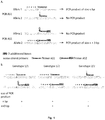
- sense strand primer refers to the primer designed to hybridize specifically, at its 3' end, to the polymorphic nucleotide of allele 1 or 2 of a particular SNP ( Figure 1 ).
- the "opposite strand primer” is therefore the primer designed to hybridize specifically to the opposite strand of the DNA targeted sequence used to design the sense strand primer.
- the same opposite strand primer is used to amplify alleles 1 and 2.
- a pair of primers according to the invention consists in a sense strand primer and opposite strand primer adapted to specifically amplify the DNA sequence of the allele 1 or the allele 2 of a particular SNP of interest.
- PCR methods, conditions and reagents are known in the art.
- PCR amplification is conducted in a PCR reaction mixture that includes a template nucleic acid molecule containing the sequence that is sought to be amplified, complementary primers designed to hybridize to particular target sites on the template, deoxyribonucleotide triphosphates (dNTPs), and a DNA polymerase, all combined in a suitable buffer that allows annealing of the primers to the template and provides conditions and any cofactors or ions necessary for the DNA polymerase to extend the primer to result in new DNA product, also call "amplicon" or PCR product.
- dNTPs deoxyribonucleotide triphosphates
- PCR methods consist in subjecting PCR reaction mixture to cycle of varying temperatures and for pre-determined times that allow for the steps of denaturation, annealing and elongation.
- the denaturation, annealing and elongation steps of the PCR cycle each occur at a different specific temperature and it is known in the art to conduct the PCR in a thermal cycler to achieve the required temperature for each step of the PCR cycle.
- Denaturation is typically performed at the highest temperature to melt any double stranded DNA (either template or amplified product formed in previous cycles), for example about 95°C if a heat resistant DNA polymerase such as Taq polymerase is used.
- the annealing step is performed at a temperature that allows for the primers to specifically hybridize to their complementary DNA strand target, and is typically chosen to facilitate specific annealing while reducing non-specific base pairing.
- Annealing temperature is chosen according to the melting temperature of the primers included in the PCR reaction mixture, which depends on the sequence of the primers. As used herein, the term “annealing temperature” refers to the temperature used during PCR to allow a primer to form specific base pairs with a complementary strand of DNA.
- the annealing temperature for a particular set of primers is chosen to be slightly below the average melting temperature, for example about 1°C, about 2°C, about 3°C or about 4°C below, preferentially 1°C below, although it may in some instances be equal to or slightly above the average melting temperature for the particular set of primers, especially for allele-specific multiplex PCR.
- primers are preferentially designed to have a melting temperature comprised between 62°C and 71°C, preferentially between 63°C and 68°C, more preferentially between 64 and 66°C, even more preferentially about 65°C (+/-1°C) and the annealing temperature is preferentially 65°C (+/-1°C).
- the selection of a high annealing temperature (about 65°C) and of primers with corresponding high melting temperature as defined above permits to limit or even prevent the formation of 3'dimers of primers with themselves, with the other primer of their pair, and with other primers of other pairs of the set of primers. Indeed, the energy of binding of such primers with high melting temperature for use at a high annealing temperature to their target is much lower (in general between -35 Kcal/mol to -60 Kcal/mol) than that of possible 3'dimers of primers (see values defined below).
- the elongation step is performed at a temperature suitable for the particular DNA polymerase enzyme used, to allow the DNA polymerase to synthesize amplified product, or amplicon.
- the “melting temperature” of an oligonucleotide is defined as the temperature at which 50% of that oligonucleotide are in duplex (double strand with its perfect complementary sequence) and the other 50% are single strand molecules.
- the specific primers of each pair consisting of a sense primer and an opposite primer intended for amplifying one allele of an SNP according to the invention further have at least one of the following features:
- features IV. and V. prevent synthesis of unspecific PCR products and allow to increase primers availability to enhance efficiency of the PCR amplification
- feature VI. tends to equalize the yield of PCR, allows to shorten the PCR elongation step, and therefore maintains the efficiency of the polymerase through the PCR cycles.
- selected pair of primers should not be capable of forming dimers or hybridize to the genome unspecifically, since this can interfere with primer annealing to a target locus and thus reduce efficiency of the amplification.
- the specific pair of primers according to the invention have all of the above features I. to VI.
- the 2 sense strand primers according to the invention comprise at least one base at the 3' end which is a Locked Nucleic Acid (LNA) base (criteria VII).
- LNA Locked Nucleic Acid
- LNA locked nucleic acid
- LNA nucleotides can be mixed with DNA residues in the primer whenever desired.
- the bridge -locked in the 3'-endo conformation -restricts the flexibility of the ribofuranose ring and locks the structure into a rigid bicyclic formation. This significantly increases the hybridization properties (melting temperature) of primers.
- LNA oligonucleotides are used to increase the sensitivity and specificity of the PCR.
- any modified nucleotide that allows to also increase the sensitivity and specificity of the amplification of the PCR.
- said opposite strand primers or sense strand primers, preferentially opposite strand primers, according to the invention have an additional GTTTCTT sequence added to their 5' end (criteria VIII.).
- primers comprising said additional GTTTCTT sequence do not form dimer at their 3'end with themselves or with both sense strand primers of said pair of primers, or preferentially with other primers of said set whose binding energy is below -3.6 Kcal/mol.
- the specific primers of each pair consisting of a sense primer and an opposite primer intended for amplifying one allele of an SNP according to the invention further comprise at least one of the following features:
- the specific pair of primers according to the invention further comprise all of the features IV. to VIII.
- the pairs of primers intended to amplify one allele of an SNP are further designed to generate amplicons of different sizes, wherein:
- Sense strand primers designed to detect allele 1 and the allele 2 of SNP n according to point IX. differ by 2 to 5 bases (see above for preferred ranges and values), preferentially 3 bases, to allow on one side to efficiently discriminate amplicons of allele 1 and 2 according to their sizes, and on the other side to limit the difference in melting temperature between the primers. Limitation of the difference in melting temperature is important to optimize annealing temperature, in order to have equivalent PCR yield for both alleles.
- sizes of amplicons related to the allele 2 of SNP n and the allele 1 of SNP n+1 differ by 2 to 20 base pairs (see above for preferred ranges and values), to allow on one side to efficiently discriminate amplicons from allele 2 of SNP n and amplicons from allele 1 of SNP n+1 according to their sizes, and on the other side to limit the size of all the amplicons between 90 and 500 bases. Limitation of the size of all the amplicons between 90 and 500 bases is important to obtain similar yield for each PCR product, and to shorten PCR elongation step, which enhance PCR efficiency, and time to result.
- SNPs according to the invention are detected by determining the size of said amplicons generated by allele-specific multiplex PCR, preferably by method for separation of DNA based on size, such as capillary electrophoresis. Such method for separation of DNA based on size are well known in the art. Based on the size of the amplicons detected, SNPs genotype can be determined and SNPs profile of the patient can be established.
- the sense strand primers or the opposite strand primers according to the invention are labeled with a fluorochrome, such as 6-FAM.
- a fluorochrome such as 6-FAM.
- the fluorochrome of the invention can be identified or distinguished from other labels, and allow discrimination of different labeled amplicons.
- fluorochrome or fluorescent label are 6-FAM, HEX, TET or NED dye.
- Differentially labeled primers allow to distinguish different PCR amplification products (multi-color multiplex PCR) even if their length (size) are approximately the same.
- the combination of SNPs according to the invention comprises at least one, preferentially at least 2, preferentially at least 8, more preferentially at least 12, even more preferentially all of rs11702450; rs843345; rs1058018; rs8017; rs3738494; rs1065483; rs2839181; rs11059924; rs2075144; rs6795772; rs456261; rs1131620; rs2231926; rs352169 and rs3739160, and the following primers are used for each of the SNPs: Table 4.
- Said labelling modification may be selected from 5' fluorescent modifications, 5' radioactive modifications, 5' luminescent modifications, and any other appropriate 5' modification permitting detection of the amplification product.
- said labelling modification is a 5' fluorescent modification by any suitable fluorescent label, including 6FAM (6-carboxyfluorescein), TET, VIC, HEX, NED, PET, JOE, ROX, TAMRA, Cy ® dyes, Alexa Fluor ® Dyes, ATTO-TEC Dyes, Dragonfly Orange TM , Texas Red ® , Yakima Yellow ® , Fluorescein.
- the 5' fluorescent modification is a 5' 6FAM modification.
- the first primer is the sense strand primer specific for allele 1; the second is the sense strand primer specific for allele 2; the third is the opposite strand primer.
- Bases in braces are LNA modified bases; [LABEL] is the 5' labelling modification of the primer; bases in bold characters are the three bases added at the 5' end of the sense strand primer specific for allele 2.
- the primers are labelled with a fluorescent modification in their 5' end.
- the combination of SNPs according to the invention comprises at least one, preferentially at least 2, preferentially at least 8, more preferentially at least 12, even more preferentially all of rs11702450; rs843345; rs1058018; rs8017; rs3738494; rs1065483; rs2839181; rs11059924; rs2075144; rs6795772; rs456261; rs1131620; rs2231926; rs352169 and rs3739160, and the following primers are used for each of the SNPs: Table 5.
- the first primer is the sense strand primer specific for allele 1; the second is the sense strand primer specific for allele 2; the third is the opposite strand primer.
- Bases in braces are LNA modified bases; [6FAM] is the 5' fluorescent modification of the primer; bases in bold characters are the three bases added at the 5' end of the sense strand primer specific for allele 2.
- the combination of SNPs according to the invention consists in all of rs11702450; rs843345; rs1058018; rs8017; rs3738494; rs1065483; rs2839181; rs11059924; rs2075144; rs6795772; rs456261; rs1131620; rs2231926; rs352169 and rs3739160, and the primers identified in Table 4 or Table 5 are used for each of the SNPs, respectively.
- SNP profiling assay in said step b) according to the invention is automated with a software recognizing the said labeled multiplex PCR products.
- the NGS method which results are validated using the method according to the invention is target capture NGS or amplicon NGS.
- target capture NGS refers to NGS which is only perform on genomic regions of interest, which have been previously captured (or isolated) from a sample library. It is therefore important when using the target capture NGS method to choose the genomic regions of interest. Hence, when using capture NGS predefined manufacturer commercial kits, SNP genotyping is thus not immediately possible, and the SNP probes must be added to the kit by the manufacturer. And, when using capture NGS custom kits, genotyping of the SNPs is achieved by requesting to the manufacturer to add the SNP probes in a new version of the custom kit.
- amplicon NGS refers to NGS which is only perform on genomic regions of interest which have been amplified from a DNA sample using primers designed to amplify regions of interest. For the NGS technique by amplicons using commercial kits predefined by the manufacturer, SNP genotyping is thus not immediately possible. Hence, in order to use amplicons NGS, the primers required for the amplification of regions surrounding the SNPs of interest, would have to be designed and added to the existing kit.
- Another object of the present invention is a kit for detection of a combination of at least 8 SNPs in a method according to the invention as described above, comprising primers as defined above, said kit preferably further comprising:
- PCR multiplex reagents may include, but are not limited to, DNA polymerase, dNTPs, buffer, any cofactors or ions necessary for the DNA polymerase to amplify the targeted sequence (e.g. QIAGEN Multiplex PCR Kit; Thermo Scientific Phusion TM U Multiplex PCR Master Mix; NEB Multiplex PCR 5X Master Mix).
- DNA polymerase e.g. dNTPs, buffer, any cofactors or ions necessary for the DNA polymerase to amplify the targeted sequence
- any cofactors or ions necessary for the DNA polymerase to amplify the targeted sequence e.g. QIAGEN Multiplex PCR Kit; Thermo Scientific Phusion TM U Multiplex PCR Master Mix; NEB Multiplex PCR 5X Master Mix.
- the use of Taq DNA polymerases and/or master mixes designed for simultaneous amplification of multiple targets in a single tube may reduce the need for PCR optimization.
- kits according to the invention are used in a method to validate NGS genotyping results of a panel of genes tested in series of at least 2 patients, according to the invention.
- Another object of the present invention is a method for detecting polymorphisms in the DNA of a patients, comprising performing, preferentially in parallel, the two following steps:
- Example 1 Development of an allele-specific multiplex PCR SNP profiling assay for validation of target NGS genotyping results
- This SNP profiling assay has a high discrimination power, as the risk for two samples of a series of 96 patients to have the same SNP profile is less than 5%, whatever the origin of patient.
- SNPs were selected according to the following criteria:
- Three primers were designed for each SNP: two sense strand primers hybridizing, on the same DNA strand, specifically, at their 3' end, to the polymorphic nucleotide of alleles 1 and 2 of the SNP; one opposite strand primer hybridizing to the opposite strand. Primers were designed according to the following criteria:
- Sense strand primers are labeled at their 5' end by a 6FAM fluorescent dye.
- Sense strand primers were synthetized and purified by HLPC by Eurogentec (www.eurogentec.com). Opposite strand primers were synthetized and purified by HLPC by Sigma Aldrich (www.sigmaaldrich.com).
- Allele-specific multiplex PCR was performed with QIAGEN Multiplex PCR Kit (QIAGEN, Hilden, Germany). Several annealing temperatures, concentrations of primer, concentrations of 5x Q-Solution were tested in order to optimize the yield of PCR for each allele of each SNP.
- PCR were performed using either Icycler (Bio-Rad, Hercules, California, USA) or GeneAmp ® 9700 (Applied Biosystems, Waltham, Massachusetts, USA) PCR Thermal Cyclers.
- PCR products were subjected to capillary electrophoresis using ABI PRISM 3730 DNA analyzer (Life Technologies). Raw data were analyzed by GeneMapper TM Software 5 software (Applied Biosystems).
- NGS capture custom kit (Roche NimbleGen Inc., Madison, Wisconsin, USA) was requested to add the probes corresponding to the selected SNP in a new version of the custom kit according to the coordinates of the regions of interest, i.e. SNP +/-100 bases.
- NGS capture assay were performed according to the manufacturer instructions using a MiSeq System Illumina sequencing instrument (Illumina Inc., San Diego, California, USA). Bioinformatic analysis of data was performed by Genodiag (Genosplice, Paris, France).
- the SNP profiling assay was performed for same selected samples on ten different PCR thermal cyclers: 8 Icycler and 2 GeneAmp ® 9700 PCR Thermal Cyclers. DNA quantity. The SNP profiling assay was performed with 10, 25, 50, 100, 200, and 400 ng of DNA.
- primary DNA sample concentration was up to ⁇ 800 ng/ ⁇ l for DNA samples obtained from standard saline extraction method, standard phenol-chloroform extraction method, or FlexiGene DNA Kit (QIAGEN, Hilden, Germany); primary DNA sample concentration ranges from ⁇ 100 to ⁇ 350 ng/ ⁇ l for DNA samples obtained from QIAsymphony SP instrument and from ⁇ 100 to ⁇ 200 ng/ ⁇ l for DNA samples obtained from EZ1 DNA Tissue Kit or EZ1 DNA Blood 350 ⁇ l Kit. Ten ng of each DNA sample were also tested in parallel.
- SNPs frequency according the origin of populations
- Frequency EVS 1 Frequency ExAC 2 SNP EA 3 AA 4 African East Asian European (Finnish) European (Non-Finnish) Latino South Asian rs11702450 0.3928 0.2161 0.2095 0.1379 0.3147 0.3973 0.2305 0.3654 rs843345 0.4984 0.4251 0.5737 0.6037 0.5042 0.5125 0.4410 0.5732 rs1058018 0.4245 0.4555 0.5498 0.7471 0.5973 0.5700 0.5210 0.7023 rs8017 0.4680 0.2882 0.2769 0.3340 0.4339 0.5206 0.5298 0.5167 rs3738494 0.4031 0.3515 0.6509 0.6563 0.5940 0.5991 0.5815 0.7007 rs1065483 0.4031 0.3515 0.6509 0.6563 0.5940 0.5991 0.5815 0.7007 rs1065483 0.4031 0.3515 0.6509 0.6563 0.
- the risk P that at least 2 patients among N patients present with the same SNP profile according to size of series and origin's of patient is shown in Table 7a (according to EVS frequencies) and 7b (according to ExAC frequencies).
- the risk is less than 5% for series of 96 patients whatever the origin of population (according to the Exome Variant Server and the Exome Aggregation Consortium).
- the lowest risk is calculated for European population: 0.002174 and 0.002129 for EA EVS frequency and European (Non-Finnish) ExAC frequency, respectively; the highest risk 0.035574 is calculated for East Asian population.
- the primers designed for allele-specific multiplex PCR SNP profiling assay are listed in Tables 4 and 5 of the general description above.
- the sense strand primers comprise only one Locked Nucleic Acid (LNA) base at their 3' end, excepted for primers RABEP1_2457GL2_F_Fam, LTBP4_2359GL2_R_Fam, and PPP4R2_420-1015GL2_R_Fam which are 3' ended by two LNA bases.
- the sense strand primers specific for allele 2 have 3 additional bases at their 5' end as compared with sense strand primers specific for allele 1. For each SNP, these bases were chosen in order that they do not induce the formation of dimer with neither both the sense strand primers nor the opposite strand primer.
- sense strand primer for allele 2 was designed by addition of three bases at the 5'end of the sense strand primer for allele 1.
- GTTTCTT sequence was added at the 5' end of the opposite stand primer. These additional bases sometimes resulted in supplementary specific base(s). These supplementary specific base(s) are indicated in brackets.
- Optimized PCR conditions are as follows. Primer mix contains the 45 primers at concentration listed in Table 9. The composition of mix PCR is detailed in Table 10. Mix PCR was subjected to PCR amplification: after initial denaturation step (95°C, 15 min), 30 cycles (denaturation 94°C, 30 s; annealing 65°C, 3 min; elongation 72°C, 90 s) were performed, followed by final elongation step (72°C, 10 min). PCR products were stored on PCR thermal cycler at 10°C until storage at 4°C.
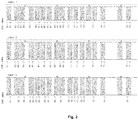
- Genotype of SNP according to the electrophoregrams shown in Figure 2 SNP Patient 1 Patient 2 Patient 3 01 1/2 1/1 2/2 02 1/2 1/2 2/2 03 1/2 2/2 2/2 04 1/1 1/2 1/2 05 1/2 2/2 1/2 06 1/2 2/2 2/2 07 1/2 2/2 1/1 08 1/2 1/1 1/1 09 1/2 1/2 1/1 10 1/1 2/2 1/2 11 1/2 2/2 1/2 12 1/2 2/2 1/2 13 1/1 1/1 1/1 14 1/2 1/2 2/2 15 1/2 1/2 1/1 b.
- SNP Patient 1 Patient 2
- Patient 3 rs11702450 C/T C/C T/T rs843345 T/C T/C C/C rs1058018 C/T T/T T/T rs8017 G/G G/A G/A rs3738494 C/T T/T C/T rs1065483 G/A A/A A/A rs2839181 T/C C/C T/T rs11059924 G/A G/G G/G rs2075144 G/A G/A G/G rs6795772 G/G A/A G/A rs456261 G/A A/A G/A rs1131620 A/G G/G A/G rs2231926 A/A A/A A/A rs352169 G/A G/A A/A rs3739160
- One of the expected features of the SNP profiling assay was to have an assay that can be used routinely. This can be achieved only if the assay is simple to run, in the present case if the number of reagents to mix in the PCR reactions is not too high.
- As 45 primers are needed to determine the SNP profile for the 15 SNPs it was necessary to simplify the PCR preparation by using pre-prepared mixes containing at least the 45 primers. However, such pre-prepared mixes have to demonstrate a good stability in time. Hence, test of stability of two mixes have been performed: the first mix contains only the primers (primer mix) and the second one contains all the PCR reagents and primers excepted DNA (mix-PCR).
- the two mixes have been prepared, aliquoted in suitable volume, and frozen for twelve months. Both mixes have been tested over a period of 12 months (one test per month for each mix) with remarkable stability of the results, as demonstrated by the overlay of monthly electrophoregrams for each sample tested (data not shown). This perfect stability observed at twelve months is encouraging and demonstrates that mixes can be prepared in batch, aliquoted, frozen, and used at least 12 months after the production date, which is suited to a routinely application.
- the robustness of the SNP profiling assay is satisfying considering the four variables tested. Indeed, the results obtained using different PCR thermal cyclers are similar to each other. The quality of results from DNA extracted with two different procedures is satisfying for both. The use of an amount of 10 to 400 ng DNA per test showed good quality of results, whatever the initial amount of DNA. This latter point is of particular importance as one of the requirement for the SNP profiling assay was the use of primary DNA samples, whatever their DNA concentration. Finally, results obtained with 1 ⁇ l of primary DNA sample mixed with 9 ⁇ l, 14 ⁇ l, 24 ⁇ l or 49 ⁇ l of mix-PCR are similar if primary DNA sample concentration ranged from 10 to 400 ng/ ⁇ l.
- the new custom kit was used as usually to test series of 24 patients. After carrying out the NGS sequencing, the raw data were transferred to the Genodiag company for bioinformatics analysis. For the 15 SNPs, the company Genodiag provided a summary of the results in tabular form, allowing an easy reading of the genotype of the SNP combination (Table 13). The number of reads for each SNP was more than 30X.
- SNP are numbered according to Table 2.
- SRY is a gene located on Y chromosome; probe corresponding to this gene was previously included in the custom kit in order to test for the sex of patient, which participates to the sample tracking.
- SNP results for Patients 05 and 15 have been switched; columns for Patients 19 and 21 have been switched; sex of Patient 24 have been modified in the label of the corresponding column; results for Patient 22 have been replaced by results of Patient 03.
- NGS genotyping results are provided by the comparison of SNP profile obtained by allele-specific Multiplex PCR SNP profiling assay and NGS assay.
- the NGS genotyping results provided that they passed quality control and threshold filters, and that bioinformatics pipeline provides accurate nomenclature of variants, do not need to be confirmed by another technique if the results of the SNP profiling assay is strictly identical to the corresponding NGS genotyping results, and if none of the patients from the series present an identical SNP profile.
- Results of SNP profiling assay not strictly identical to NGS genotyping results will reveal sample mix-up: in this case, NGS genotyping results cannot be validated.
- an Excel file has been created. This file consists of four visible worksheets. The first worksheet is used to paste the results of NGS such as those presented in Table 13. The second worksheet allows to paste the .txt file exported from Genemapper (non visible additional worksheets allow to transform Genemapper results in a suitable format for comparison with NGS genotyping results).
- the third worksheet allows to compare: 1) the order of samples in the work list of the NGS assay results with that of the allele-specific PCR SNP profiling assay (if the patient identifier is identical to the position considered for both techniques, it appears in clear text; in the event of discrepancy, words "ettes ordre” replaces the patient's identifier); 2) the genotype obtained by NGS assay and that obtained by allele-specific PCR SNP profiling assay for each SNP (if the genotype is identical, it appears in clear text; in the case of discordance, word "Pb” replaces the genotype); 3) the sex of the patient determined by NGS assay (SRY line in Table 13.) with the sex of the patient indicated on the patient ID of the work list (if the sex is identical, the letter “ F " or " M " appear in clear text for female and male, respectively; in case of discrepancy, the word "Pb” replaces the gender).
- Table 14 illustrates the different possible discrepancies.
- the SNP profiles obtained by NGS assay and allele-specific PCR SNP profiling assay for patient 05 and patient 15 are not identical (8 discrepancies for each); the patient identifier is different in the NGS assay work list as compared to SNP profiling assay work list at the position corresponding to patients 19 and 21; the SNP profiles (NGS vs SNP profiling assay) are not identical for patient 19 as well as for patient 21 (10 discrepancies for each); sex of Patient 24 is F in the work list whereas the sex determined by NGS assay is M.
- the fourth worksheet is an Excel PivotTable based on the previous worksheet. It allows to determine how many patients presented with the same SNP profile, i.e. the same combination for the 15 SNPs (Table 15.): the "Total canyon" column indicates the number of patients with the same SNP profile (resulted from the genotype shown for each SNP in columns 1 to 15).
- the "Total canyon" column indicates the number of patients with the same SNP profile (resulted from the genotype shown for each SNP in columns 1 to 15).
- Patient 03-M and Patient 22-M have the same SNP profile, which was difficult to see in Table 14 (again, this result was expected after the intentional modification of NGS genotyping results depicted in legend to Table 13.).
- our allele-specific multiplex PCR SNP profiling assay can be the unique SNP profiling assay used in a laboratory performing NGS assays with different NGS kits. It has a high discrimination power, as the risk for two samples of a series of 96 samples to have the same SNP profile is less than 5%, whatever the origin of patient, reaching 0.2 % in European population (i.e. statistically, NGS genotyping results would have to be confirmed for two patients by Sanger Sequencing only for 2 out of 1000 NGS assays). Interpretation of SNP profiling assay results is simple and rapid. The NGS genotyping results for the 15 SNP are reliable as the coverage reaches more than 30 reads. The SNP profiles obtained by both NGS and allele-specific PCR SNP profiling assays can be easily compared using an Excel file designed for this purpose.
- the results of the SNP profiling assay is strictly identical to the corresponding NGS genotyping results and if none of the patients from the series present an identical SNP profile, the NGS genotyping results do not need to be confirmed by another technique, which results in a considerable time saving in the laboratory processes.
- Example 2 Implementation of the allele-specific multiplex PCR SNP profiling assay for validation of whole exome sequencing results
- the SNPs of the above described SNP profiling assay are exonic (rs11702450, rs1058018, rs8017, rs1065483, rs2839181, rs11059924, rs1131620) or near the exon-intron +/- 50 bp junction (rs843345, rs3738494, rs2075144, rs6795772, rs456261, rs352169, rs3739160), with the exception of a single SNP (rs2231926) located at a distance from an exon-intron junction (-1015 pb).
Landscapes
- Chemical & Material Sciences (AREA)
- Life Sciences & Earth Sciences (AREA)
- Organic Chemistry (AREA)
- Proteomics, Peptides & Aminoacids (AREA)
- Health & Medical Sciences (AREA)
- Engineering & Computer Science (AREA)
- Zoology (AREA)
- Wood Science & Technology (AREA)
- Analytical Chemistry (AREA)
- Genetics & Genomics (AREA)
- Bioinformatics & Cheminformatics (AREA)
- Immunology (AREA)
- Microbiology (AREA)
- Molecular Biology (AREA)
- Physics & Mathematics (AREA)
- Biotechnology (AREA)
- Biochemistry (AREA)
- Biophysics (AREA)
- General Engineering & Computer Science (AREA)
- General Health & Medical Sciences (AREA)
- Pathology (AREA)
- Chemical Kinetics & Catalysis (AREA)
- Measuring Or Testing Involving Enzymes Or Micro-Organisms (AREA)
Applications Claiming Priority (2)
| Application Number | Priority Date | Filing Date | Title |
|---|---|---|---|
| EP17306106 | 2017-08-29 | ||
| PCT/EP2018/073150 WO2019043015A1 (en) | 2017-08-29 | 2018-08-28 | METHOD OF CONFIRMATION OF VARIANTS IN A NGS PANEL TEST BY GENOTYPING SNP |
Publications (2)
| Publication Number | Publication Date |
|---|---|
| EP3679155A1 EP3679155A1 (en) | 2020-07-15 |
| EP3679155B1 true EP3679155B1 (en) | 2021-12-15 |
Family
ID=59761906
Family Applications (1)
| Application Number | Title | Priority Date | Filing Date |
|---|---|---|---|
| EP18756472.9A Active EP3679155B1 (en) | 2017-08-29 | 2018-08-28 | Method to confirm variants in ngs panel testing by snp genotyping |
Country Status (7)
| Country | Link |
|---|---|
| US (1) | US20210180128A1 (da) |
| EP (1) | EP3679155B1 (da) |
| CA (1) | CA3074244A1 (da) |
| DK (1) | DK3679155T3 (da) |
| ES (1) | ES2907028T3 (da) |
| PT (1) | PT3679155T (da) |
| WO (1) | WO2019043015A1 (da) |
Families Citing this family (4)
| Publication number | Priority date | Publication date | Assignee | Title |
|---|---|---|---|---|
| WO2022087299A1 (en) * | 2020-10-21 | 2022-04-28 | Abs Global, Inc. | Methods and systems for processing genetic samples to determine identity or detect contamination |
| EP4563710A1 (en) * | 2022-07-28 | 2025-06-04 | National Cancer Center | Method for verifying next-generation sequencing panels |
| CN117051123A (zh) * | 2023-09-06 | 2023-11-14 | 广州海关技术中心 | 一种木瓜秀粉蚧种群溯源snp分子标记及其应用 |
| WO2025159599A1 (ko) * | 2024-01-26 | 2025-07-31 | 국립암센터 | Dna 혼합물을 이용한 차세대 염기서열분석 패널의 검증 및 위양성 오류 분석 방법 |
Family Cites Families (2)
| Publication number | Priority date | Publication date | Assignee | Title |
|---|---|---|---|---|
| CA2949622C (en) * | 2012-11-26 | 2019-07-02 | The University Of Toledo | Methods for standardized sequencing of nucleic acids and uses thereof |
| US20170218447A1 (en) * | 2014-08-05 | 2017-08-03 | The Johns Hopkins University | Platform independent haplotype identification and use in ultrasensitive dna detection |
-
2018
- 2018-08-28 DK DK18756472.9T patent/DK3679155T3/da active
- 2018-08-28 WO PCT/EP2018/073150 patent/WO2019043015A1/en not_active Ceased
- 2018-08-28 US US16/643,197 patent/US20210180128A1/en not_active Abandoned
- 2018-08-28 CA CA3074244A patent/CA3074244A1/en active Pending
- 2018-08-28 EP EP18756472.9A patent/EP3679155B1/en active Active
- 2018-08-28 ES ES18756472T patent/ES2907028T3/es active Active
- 2018-08-28 PT PT187564729T patent/PT3679155T/pt unknown
Also Published As
| Publication number | Publication date |
|---|---|
| DK3679155T3 (da) | 2022-01-31 |
| ES2907028T3 (es) | 2022-04-21 |
| PT3679155T (pt) | 2022-02-14 |
| EP3679155A1 (en) | 2020-07-15 |
| CA3074244A1 (en) | 2019-03-07 |
| WO2019043015A1 (en) | 2019-03-07 |
| US20210180128A1 (en) | 2021-06-17 |
Similar Documents
| Publication | Publication Date | Title |
|---|---|---|
| Tindall et al. | Assessing high‐resolution melt curve analysis for accurate detection of gene variants in complex DNA fragments | |
| EP2183387B1 (en) | Analysis of nucleic acids by digital pcr | |
| EP3679155B1 (en) | Method to confirm variants in ngs panel testing by snp genotyping | |
| US20210123102A1 (en) | Single Nucleotide Polymorphism in HLA-B*15:02 and Use Thereof | |
| KR101667526B1 (ko) | 차세대 염기서열분석법을 이용한 인간 객체의 확장 상염색체 str 분석방법 | |
| EP3739064A1 (en) | Comparative analysis of microsatellites by capillary electrophoresis (ce) dna profiles | |
| EP1888777A2 (en) | Methods and compositions for assessment of pulmonary function and disorders | |
| CN116064842A (zh) | 一种用于降解检材推断的生物地理祖先DIPs和性别鉴定的复合扩增盒 | |
| CN105586392B (zh) | 评估胎儿样本中母体细胞污染程度的方法 | |
| US20160053333A1 (en) | Novel Haplotype Tagging Single Nucleotide Polymorphisms and Use of Same to Predict Childhood Lymphoblastic Leukemia | |
| KR102724607B1 (ko) | 근감소증 진단용 마커 및 이의 용도 | |
| KR102543976B1 (ko) | 한국인 특이적 snp 정보 및 최적화된 파이프라인을 이용한 hla-b 유전자형 분석 방법 | |
| KR102511162B1 (ko) | 한국인 특이적 snp 정보 및 최적화된 파이프라인을 이용한 hla-drb1 유전자형 분석 방법 | |
| Xu et al. | A Pooling Genome‐Wide Association Study Identifies Susceptibility Loci and Signaling Pathways of Immune Thrombocytopenia in Chinese Han Population | |
| KR101174823B1 (ko) | 개인식별용 단일염기다형성 마커 및 그의 용도 | |
| KR101731619B1 (ko) | 부녀 관계 확인용 마커 조성물 및 그의 용도 | |
| KR102511161B1 (ko) | 한국인 특이적 snp 정보 및 최적화된 파이프라인을 이용한 hla-a 유전자형 분석 방법 | |
| KR102511160B1 (ko) | 총콜레스테롤 관련 유전인자를 이용한 고콜레스테롤혈증 고위험군 예측 방법 | |
| KR101663171B1 (ko) | 다운증후군 진단을 위한 바이오마커 및 그의 용도 | |
| JP6245796B2 (ja) | 原発性胆汁性肝硬変の発症リスク予測マーカー、プローブ、プライマー及びキット並びに原発性胆汁性肝硬変の発症リスク予測方法 | |
| KR101065058B1 (ko) | 관상동맥 질환의 발병과 연관성을 갖는 폴리뉴클레오티드 및 관상동맥 질환 발병의 변경된 위험도를 갖는 대상을 확인하는 방법 | |
| CN101218357A (zh) | 用于评价肺功能和肺部疾病的方法和组合物 | |
| KR20250167593A (ko) | 롱 리드 시퀀싱 하이브리드 데이터 분석을 통한 접합성 분해능을 이용한 원거리 유전체좌의 위상화를 위한 새로운 분석법 | |
| KR20250040125A (ko) | 다유전자 위험 점수 분석에 의한 한국인 특이적 고위험 개방각 녹내장 발병 위험도 판별방법 | |
| Cañadas et al. | Molecular haplotyping of tandem single nucleotide polymorphisms by allele-specific PCR |
Legal Events
| Date | Code | Title | Description |
|---|---|---|---|
| STAA | Information on the status of an ep patent application or granted ep patent |
Free format text: STATUS: UNKNOWN |
|
| STAA | Information on the status of an ep patent application or granted ep patent |
Free format text: STATUS: THE INTERNATIONAL PUBLICATION HAS BEEN MADE |
|
| PUAI | Public reference made under article 153(3) epc to a published international application that has entered the european phase |
Free format text: ORIGINAL CODE: 0009012 |
|
| STAA | Information on the status of an ep patent application or granted ep patent |
Free format text: STATUS: REQUEST FOR EXAMINATION WAS MADE |
|
| 17P | Request for examination filed |
Effective date: 20200423 |
|
| AK | Designated contracting states |
Kind code of ref document: A1 Designated state(s): AL AT BE BG CH CY CZ DE DK EE ES FI FR GB GR HR HU IE IS IT LI LT LU LV MC MK MT NL NO PL PT RO RS SE SI SK SM TR |
|
| AX | Request for extension of the european patent |
Extension state: BA ME |
|
| DAV | Request for validation of the european patent (deleted) | ||
| DAX | Request for extension of the european patent (deleted) | ||
| REG | Reference to a national code |
Ref country code: DE Ref legal event code: R079 Ref document number: 602018028244 Country of ref document: DE Free format text: PREVIOUS MAIN CLASS: C12Q0001680000 Ipc: C12Q0001687600 |
|
| GRAP | Despatch of communication of intention to grant a patent |
Free format text: ORIGINAL CODE: EPIDOSNIGR1 |
|
| STAA | Information on the status of an ep patent application or granted ep patent |
Free format text: STATUS: GRANT OF PATENT IS INTENDED |
|
| RIC1 | Information provided on ipc code assigned before grant |
Ipc: C12Q 1/6876 20180101AFI20210622BHEP |
|
| INTG | Intention to grant announced |
Effective date: 20210708 |
|
| GRAS | Grant fee paid |
Free format text: ORIGINAL CODE: EPIDOSNIGR3 |
|
| GRAA | (expected) grant |
Free format text: ORIGINAL CODE: 0009210 |
|
| STAA | Information on the status of an ep patent application or granted ep patent |
Free format text: STATUS: THE PATENT HAS BEEN GRANTED |
|
| RIN1 | Information on inventor provided before grant (corrected) |
Inventor name: NOEL, SANDRINE Inventor name: CAZENEUVE, CECILE |
|
| AK | Designated contracting states |
Kind code of ref document: B1 Designated state(s): AL AT BE BG CH CY CZ DE DK EE ES FI FR GB GR HR HU IE IS IT LI LT LU LV MC MK MT NL NO PL PT RO RS SE SI SK SM TR |
|
| REG | Reference to a national code |
Ref country code: GB Ref legal event code: FG4D Ref country code: CH Ref legal event code: EP |
|
| REG | Reference to a national code |
Ref country code: IE Ref legal event code: FG4D Ref country code: DE Ref legal event code: R096 Ref document number: 602018028244 Country of ref document: DE |
|
| REG | Reference to a national code |
Ref country code: AT Ref legal event code: REF Ref document number: 1455539 Country of ref document: AT Kind code of ref document: T Effective date: 20220115 |
|
| REG | Reference to a national code |
Ref country code: FI Ref legal event code: FGE Ref country code: SE Ref legal event code: TRGR |
|
| REG | Reference to a national code |
Ref country code: DK Ref legal event code: T3 Effective date: 20220128 |
|
| REG | Reference to a national code |
Ref country code: PT Ref legal event code: SC4A Ref document number: 3679155 Country of ref document: PT Date of ref document: 20220214 Kind code of ref document: T Free format text: AVAILABILITY OF NATIONAL TRANSLATION Effective date: 20220208 |
|
| REG | Reference to a national code |
Ref country code: NO Ref legal event code: T2 Effective date: 20211215 |
|
| REG | Reference to a national code |
Ref country code: LT Ref legal event code: MG9D |
|
| REG | Reference to a national code |
Ref country code: NL Ref legal event code: MP Effective date: 20211215 |
|
| REG | Reference to a national code |
Ref country code: ES Ref legal event code: FG2A Ref document number: 2907028 Country of ref document: ES Kind code of ref document: T3 Effective date: 20220421 |
|
| PG25 | Lapsed in a contracting state [announced via postgrant information from national office to epo] |
Ref country code: RS Free format text: LAPSE BECAUSE OF FAILURE TO SUBMIT A TRANSLATION OF THE DESCRIPTION OR TO PAY THE FEE WITHIN THE PRESCRIBED TIME-LIMIT Effective date: 20211215 Ref country code: LT Free format text: LAPSE BECAUSE OF FAILURE TO SUBMIT A TRANSLATION OF THE DESCRIPTION OR TO PAY THE FEE WITHIN THE PRESCRIBED TIME-LIMIT Effective date: 20211215 Ref country code: BG Free format text: LAPSE BECAUSE OF FAILURE TO SUBMIT A TRANSLATION OF THE DESCRIPTION OR TO PAY THE FEE WITHIN THE PRESCRIBED TIME-LIMIT Effective date: 20220315 |
|
| REG | Reference to a national code |
Ref country code: AT Ref legal event code: MK05 Ref document number: 1455539 Country of ref document: AT Kind code of ref document: T Effective date: 20211215 |
|
| PG25 | Lapsed in a contracting state [announced via postgrant information from national office to epo] |
Ref country code: LV Free format text: LAPSE BECAUSE OF FAILURE TO SUBMIT A TRANSLATION OF THE DESCRIPTION OR TO PAY THE FEE WITHIN THE PRESCRIBED TIME-LIMIT Effective date: 20211215 Ref country code: HR Free format text: LAPSE BECAUSE OF FAILURE TO SUBMIT A TRANSLATION OF THE DESCRIPTION OR TO PAY THE FEE WITHIN THE PRESCRIBED TIME-LIMIT Effective date: 20211215 Ref country code: GR Free format text: LAPSE BECAUSE OF FAILURE TO SUBMIT A TRANSLATION OF THE DESCRIPTION OR TO PAY THE FEE WITHIN THE PRESCRIBED TIME-LIMIT Effective date: 20220316 |
|
| PG25 | Lapsed in a contracting state [announced via postgrant information from national office to epo] |
Ref country code: NL Free format text: LAPSE BECAUSE OF FAILURE TO SUBMIT A TRANSLATION OF THE DESCRIPTION OR TO PAY THE FEE WITHIN THE PRESCRIBED TIME-LIMIT Effective date: 20211215 |
|
| PG25 | Lapsed in a contracting state [announced via postgrant information from national office to epo] |
Ref country code: SM Free format text: LAPSE BECAUSE OF FAILURE TO SUBMIT A TRANSLATION OF THE DESCRIPTION OR TO PAY THE FEE WITHIN THE PRESCRIBED TIME-LIMIT Effective date: 20211215 Ref country code: SK Free format text: LAPSE BECAUSE OF FAILURE TO SUBMIT A TRANSLATION OF THE DESCRIPTION OR TO PAY THE FEE WITHIN THE PRESCRIBED TIME-LIMIT Effective date: 20211215 Ref country code: RO Free format text: LAPSE BECAUSE OF FAILURE TO SUBMIT A TRANSLATION OF THE DESCRIPTION OR TO PAY THE FEE WITHIN THE PRESCRIBED TIME-LIMIT Effective date: 20211215 Ref country code: EE Free format text: LAPSE BECAUSE OF FAILURE TO SUBMIT A TRANSLATION OF THE DESCRIPTION OR TO PAY THE FEE WITHIN THE PRESCRIBED TIME-LIMIT Effective date: 20211215 Ref country code: CZ Free format text: LAPSE BECAUSE OF FAILURE TO SUBMIT A TRANSLATION OF THE DESCRIPTION OR TO PAY THE FEE WITHIN THE PRESCRIBED TIME-LIMIT Effective date: 20211215 |
|
| PG25 | Lapsed in a contracting state [announced via postgrant information from national office to epo] |
Ref country code: PL Free format text: LAPSE BECAUSE OF FAILURE TO SUBMIT A TRANSLATION OF THE DESCRIPTION OR TO PAY THE FEE WITHIN THE PRESCRIBED TIME-LIMIT Effective date: 20211215 Ref country code: AT Free format text: LAPSE BECAUSE OF FAILURE TO SUBMIT A TRANSLATION OF THE DESCRIPTION OR TO PAY THE FEE WITHIN THE PRESCRIBED TIME-LIMIT Effective date: 20211215 |
|
| REG | Reference to a national code |
Ref country code: DE Ref legal event code: R097 Ref document number: 602018028244 Country of ref document: DE |
|
| PG25 | Lapsed in a contracting state [announced via postgrant information from national office to epo] |
Ref country code: IS Free format text: LAPSE BECAUSE OF FAILURE TO SUBMIT A TRANSLATION OF THE DESCRIPTION OR TO PAY THE FEE WITHIN THE PRESCRIBED TIME-LIMIT Effective date: 20220415 |
|
| PLBE | No opposition filed within time limit |
Free format text: ORIGINAL CODE: 0009261 |
|
| STAA | Information on the status of an ep patent application or granted ep patent |
Free format text: STATUS: NO OPPOSITION FILED WITHIN TIME LIMIT |
|
| PG25 | Lapsed in a contracting state [announced via postgrant information from national office to epo] |
Ref country code: AL Free format text: LAPSE BECAUSE OF FAILURE TO SUBMIT A TRANSLATION OF THE DESCRIPTION OR TO PAY THE FEE WITHIN THE PRESCRIBED TIME-LIMIT Effective date: 20211215 |
|
| 26N | No opposition filed |
Effective date: 20220916 |
|
| PG25 | Lapsed in a contracting state [announced via postgrant information from national office to epo] |
Ref country code: SI Free format text: LAPSE BECAUSE OF FAILURE TO SUBMIT A TRANSLATION OF THE DESCRIPTION OR TO PAY THE FEE WITHIN THE PRESCRIBED TIME-LIMIT Effective date: 20211215 |
|
| PG25 | Lapsed in a contracting state [announced via postgrant information from national office to epo] |
Ref country code: MC Free format text: LAPSE BECAUSE OF FAILURE TO SUBMIT A TRANSLATION OF THE DESCRIPTION OR TO PAY THE FEE WITHIN THE PRESCRIBED TIME-LIMIT Effective date: 20211215 |
|
| REG | Reference to a national code |
Ref country code: CH Ref legal event code: PL |
|
| PG25 | Lapsed in a contracting state [announced via postgrant information from national office to epo] |
Ref country code: LU Free format text: LAPSE BECAUSE OF NON-PAYMENT OF DUE FEES Effective date: 20220828 Ref country code: LI Free format text: LAPSE BECAUSE OF NON-PAYMENT OF DUE FEES Effective date: 20220831 Ref country code: CH Free format text: LAPSE BECAUSE OF NON-PAYMENT OF DUE FEES Effective date: 20220831 |
|
| REG | Reference to a national code |
Ref country code: BE Ref legal event code: MM Effective date: 20220831 |
|
| PG25 | Lapsed in a contracting state [announced via postgrant information from national office to epo] |
Ref country code: IE Free format text: LAPSE BECAUSE OF NON-PAYMENT OF DUE FEES Effective date: 20220828 |
|
| PG25 | Lapsed in a contracting state [announced via postgrant information from national office to epo] |
Ref country code: BE Free format text: LAPSE BECAUSE OF NON-PAYMENT OF DUE FEES Effective date: 20220831 |
|
| PG25 | Lapsed in a contracting state [announced via postgrant information from national office to epo] |
Ref country code: CY Free format text: LAPSE BECAUSE OF FAILURE TO SUBMIT A TRANSLATION OF THE DESCRIPTION OR TO PAY THE FEE WITHIN THE PRESCRIBED TIME-LIMIT Effective date: 20211215 |
|
| PG25 | Lapsed in a contracting state [announced via postgrant information from national office to epo] |
Ref country code: MK Free format text: LAPSE BECAUSE OF FAILURE TO SUBMIT A TRANSLATION OF THE DESCRIPTION OR TO PAY THE FEE WITHIN THE PRESCRIBED TIME-LIMIT Effective date: 20211215 Ref country code: HU Free format text: LAPSE BECAUSE OF FAILURE TO SUBMIT A TRANSLATION OF THE DESCRIPTION OR TO PAY THE FEE WITHIN THE PRESCRIBED TIME-LIMIT; INVALID AB INITIO Effective date: 20180828 |
|
| PG25 | Lapsed in a contracting state [announced via postgrant information from national office to epo] |
Ref country code: MT Free format text: LAPSE BECAUSE OF FAILURE TO SUBMIT A TRANSLATION OF THE DESCRIPTION OR TO PAY THE FEE WITHIN THE PRESCRIBED TIME-LIMIT Effective date: 20211215 |
|
| PGFP | Annual fee paid to national office [announced via postgrant information from national office to epo] |
Ref country code: PT Payment date: 20250718 Year of fee payment: 8 Ref country code: ES Payment date: 20250908 Year of fee payment: 8 Ref country code: FI Payment date: 20250722 Year of fee payment: 8 |
|
| PGFP | Annual fee paid to national office [announced via postgrant information from national office to epo] |
Ref country code: DE Payment date: 20250812 Year of fee payment: 8 Ref country code: DK Payment date: 20250729 Year of fee payment: 8 |
|
| PGFP | Annual fee paid to national office [announced via postgrant information from national office to epo] |
Ref country code: NO Payment date: 20250728 Year of fee payment: 8 |
|
| PGFP | Annual fee paid to national office [announced via postgrant information from national office to epo] |
Ref country code: IT Payment date: 20250808 Year of fee payment: 8 |
|
| PGFP | Annual fee paid to national office [announced via postgrant information from national office to epo] |
Ref country code: GB Payment date: 20250826 Year of fee payment: 8 |
|
| PGFP | Annual fee paid to national office [announced via postgrant information from national office to epo] |
Ref country code: FR Payment date: 20250710 Year of fee payment: 8 |
|
| PGFP | Annual fee paid to national office [announced via postgrant information from national office to epo] |
Ref country code: SE Payment date: 20250826 Year of fee payment: 8 |
|
| PG25 | Lapsed in a contracting state [announced via postgrant information from national office to epo] |
Ref country code: TR Free format text: LAPSE BECAUSE OF FAILURE TO SUBMIT A TRANSLATION OF THE DESCRIPTION OR TO PAY THE FEE WITHIN THE PRESCRIBED TIME-LIMIT Effective date: 20211215 |