EP3679416B1 - Système optique varifocal - Google Patents
Système optique varifocal Download PDFInfo
- Publication number
- EP3679416B1 EP3679416B1 EP17781108.0A EP17781108A EP3679416B1 EP 3679416 B1 EP3679416 B1 EP 3679416B1 EP 17781108 A EP17781108 A EP 17781108A EP 3679416 B1 EP3679416 B1 EP 3679416B1
- Authority
- EP
- European Patent Office
- Prior art keywords
- ftl
- optical response
- optical
- ftls
- lens assembly
- Prior art date
- Legal status (The legal status is an assumption and is not a legal conclusion. Google has not performed a legal analysis and makes no representation as to the accuracy of the status listed.)
- Active
Links
Images




Classifications
-
- G—PHYSICS
- G02—OPTICS
- G02B—OPTICAL ELEMENTS, SYSTEMS OR APPARATUS
- G02B27/00—Optical systems or apparatus not provided for by any of the groups G02B1/00 - G02B26/00, G02B30/00
- G02B27/01—Head-up displays
- G02B27/0179—Display position adjusting means not related to the information to be displayed
-
- H—ELECTRICITY
- H04—ELECTRIC COMMUNICATION TECHNIQUE
- H04N—PICTORIAL COMMUNICATION, e.g. TELEVISION
- H04N13/00—Stereoscopic video systems; Multi-view video systems; Details thereof
- H04N13/30—Image reproducers
- H04N13/302—Image reproducers for viewing without the aid of special glasses, i.e. using autostereoscopic displays
- H04N13/322—Image reproducers for viewing without the aid of special glasses, i.e. using autostereoscopic displays using varifocal lenses or mirrors
-
- G—PHYSICS
- G02—OPTICS
- G02B—OPTICAL ELEMENTS, SYSTEMS OR APPARATUS
- G02B27/00—Optical systems or apparatus not provided for by any of the groups G02B1/00 - G02B26/00, G02B30/00
- G02B27/01—Head-up displays
- G02B27/0179—Display position adjusting means not related to the information to be displayed
- G02B2027/0185—Displaying image at variable distance
-
- G—PHYSICS
- G02—OPTICS
- G02B—OPTICAL ELEMENTS, SYSTEMS OR APPARATUS
- G02B3/00—Simple or compound lenses
- G02B3/12—Fluid-filled or evacuated lenses
- G02B3/14—Fluid-filled or evacuated lenses of variable focal length
Definitions
- the invention relates to a device and a method for controlling an assembly of focus tunable lenses (FTL).
- FTL focus tunable lenses
- the purpose of the device and method is to enhance the optical response of a focus tunable optical system, e.g., a Multifocal Plane Display (MFD).
- MFD Multifocal Plane Display
- Multi-focal-plane near eye displays have recently emerged as display devices (e.g., head-mounted displays) for volumetric 3D rendering.
- Volumetric 3D rendering can alleviate visual discomfort that may arise with some other types of near eye displays (NEDs), e.g., with stereoscopic 3D displays which render depth perception of 3D scenes from pairs of 2D perspective images with binocular disparities presented at a fixed distance (focal plane) to the viewer.
- the fixed distance creates an unnatural viewing condition and causes a Vergence-Accommodation Conflict (VAC) with adverse consequences, such as visual discomfort, fatigue, or distorted depth perception.
- VAC Vergence-Accommodation Conflict
- Document WO 02/33657 A2 relates to a combinatorial optical processor that can be used for 3D displays.
- MFD implementations can be categorized into spatially multiplexed or temporally/time multiplexed techniques.
- time multiplexed systems the viewing distance of a single 2D display from the eye is rapidly switched in synchronization with the rendering of frames of multiple focal planes to create a flicker-free perception.
- high-speed Focal Modulator Elements utilizing variable power lenses or focus tunable lenses are employed to continuously adjust and/or modulate the focal length (or, equivalently, the optical power) of, e.g., electrically tunable lens or deformable membrane mirror devices (DMMD).
- a focal modulator element may be implemented in the form of a shape-changing lens.
- the lens may comprise a container, which is filled with an optical fluid and sealed off with, e.g., an elastic polymer membrane.
- An electrical current e.g., flowing through a coil of an actuator of the lens
- a plurality of optical power levels can be generated by applying a control signal (e.g., an electrical current) that takes the form of a step function, each value of the step function representing a corresponding current level and thus a corresponding optical power level.
- a multi-focal display system of the above described kind may suffer from artifacts related to inertia of the Focal Modulator Elements, e.g., as illustrated in FIG. 2 .
- An example of lens inertia is highlighted in " Datasheet: EL-10-30-Series, Fast Electrically Tunable Lens, Optotune, Jan 2017 " .
- Due to lens inertia an oscillation artifact (notably, overshoot and ringing) may appear in the optical response.
- the oscillation artifact may be characterized by a rise time and a settling time. This can produce a delay before the optical system reaches its steady-state period. This, in turn, may limit the maximum frame rate that can be achieved.
- the problem may be alleviated by pre-processing or pre-compensating the control signal, to enhance the optical response of the variable optical power lense, e.g., as highlighted in " Datasheet: EL-10-30-Series, Fast Electrically Tunable Lens, Optotune, Jan 2017 ". More specifically, a shorter settling time may be achieved by removing resonant frequencies from the applied step function and by applying an overshooting step function.
- the invention aims at improving the image rendering quality of an MFD system.
- the invention specifically aims at reducing the undesired effects of artifacts arising from lens inertia in an optical system.
- An optical system of multiple closely cascaded FTLs is provided.
- the FTLs e.g., electrically controlled liquid lenses, are placed separately and coaxially along an optical axis of an optical system.
- An improved optical step response is obtained by combining several optical responses produced by several FTLs, based on a Fourier decomposition of the desired ideal optical step response.
- a first aspect of the invention provides a focus tunable optical system, comprising a lens assembly including a plurality of focus tunable lenses, FTLs, coaxially disposed along an optical axis, each FTL contributing to an optical power of the lens assembly, and a controller configured to control the optical power of the lens assembly by applying to each FTL a respective control signal, thereby generating a periodic optical response of the respective FTL, wherein the optical response of each FTL is substantially different from the optical response of any other FTL of the plurality of FTLs.
- each FTL's optical response is a periodic function which corresponds to one or more Fourier components of the ideal optical step response.
- the sum of the Fourier components is the desired optical step response.
- Each control signal applied by the controller to each respective FTL may be a sinusoidal signal, a periodic sequence of pulses, a periodic staircase function, or a periodic saw tooth function, depending, for instance, on the number of Fourier components of the ideal optical step response one of the plurality of FTLs needs to reproduce.
- the optical power of the lens assembly, or any FTL in the lens assembly for that matter, is considered as a function of time and is referred to herein as the optical response.
- the statement that the optical response of an FTL is substantially different from that of any other FTL means that the two optical responses differ in a non-trivial manner, that is, they do not differ merely by an overall amplitude scaling factor or by a time shift.
- the optical response of an FTL comprises a natural frequency of the FTL.
- the optical response of an FTL comprises a frequency lower than the natural frequency of the FTL.
- the control signal for any FTL can generally be a periodic signal with a specific amplitude, frequency and phase lag.
- the control signal parameters current intensity, frequency and phase can be derived knowing the expected optical response.
- Driving an FTL at below its natural frequency (resonant frequency) has the advantage that only a low intensity (the lowest possible) is required and the phase shift is reduced.
- the controller is configured to perform a Fourier analysis of a desired optical response and to generate for each of the FTLs the respective control signal in proportion to the sum of one or more Fourier components of the desired optical response.
- each or one or more of the FTLs the optical response of the respective FTL comprises one or more Fourier components of the optical response of the lens assembly.
- the optical response of one of the FTLs comprises the lowest Fourier component of the optical response of the lens assembly (that is, the Fourier component with the lowest frequency).
- the optical response of the respective FTL comprises only odd Fourier components or only even Fourier components of the optical response of the lens assembly.
- the optical response of the respective FTL comprises less than 10, preferably less than 5, Fourier components of the optical response of the lens assembly.
- the plurality of FTLs comprises a first, a second, and a third FTL
- the optical response of the first FTL approximates a first sum of a number of Fourier components of the desired optical response of the lens assembly
- the optical response of the second FTL approximates a second sum of a subset of the remainder of the Fourier components of the desired optical response of the lens assembly to compensate for a first residual of the first FTL
- the optical response of the third FTL approximates a third sum of the remaining Fourier components of the desired optical response of the lens assembly to compensate for a second residual of the second FTL
- the sum of the optical responses of the first, the second and the third FTLs approximates the desired optical response.
- the optical response of the lens assembly is a periodic staircase function or an approximation of a periodic staircase function.
- a second aspect of the invention provides a multifocal display device, comprising a focus tunable optical system according to the first aspect or any of the implementation forms of the first aspect.
- a third aspect of the invention provides a method for controlling a focus tunable optical system, comprising the steps of controlling an optical power of a lens assembly, which comprises a plurality of focus tunable lenses, FTLs, coaxially disposed along an optical axis of the lens assembly; and applying to each FTL a respective control signal, thereby generating a periodic optical response of the respective FTL, wherein the optical response of each FTL contributes to the optical power of the lens assembly and is substantially different from the optical response from any other FTL of the plurality of FTLs.
- the optical response of an FTL comprises a natural frequency of the FTL.
- the optical response of an FTL comprises a frequency lower than the natural frequency of the FTL.
- the method further comprises performing a Fourier analysis of a desired optical response and generating for each of the FTLs the respective control signal in proportion to the sum of one or more Fourier components of the desired optical response.
- each or one or more of the FTLs the optical response of the respective FTL comprises one or more Fourier components of the optical response of the lens assembly.
- the optical response of one of the FTLs comprises the lowest Fourier component of the optical response of the lens assembly.
- the optical response of the respective FTL comprises only odd Fourier components or only even Fourier components of the optical response of the lens assembly.
- the optical response of the respective FTL comprises less than 10, preferably less than 5, Fourier components of the optical response of the lens assembly.
- the plurality of FTLs comprises a first, a second, and a third FTL
- the optical response of the first FTL approximates a first sum of a number of Fourier components of the desired optical response of the lens assembly
- the optical response of the second FTL approximates a second sum of a subset of the remainder of the Fourier components of the desired optical response of the lens assembly to compensate for a first residual of the first FTL
- the optical response of the third FTL approximates a third sum of the remaining Fourier components of the desired optical response of the lens assembly to compensate for a second residual of the second FTL
- the sum of the optical responses of the first, the second and the third FTLs approximates the desired optical response.
- the optical response of the lens assembly is a periodic staircase function or an approximation of a periodic staircase function.
- the method of the third aspect achieves all advantages and effects described above for the system of the first aspect.
- a forth aspect of the invention provides a method for controlling a focus tunable Computer program product comprising a program code for controlling a focus tunable optical system according to the first aspect or any implementation form thereof or a multifocal display device according to the second aspect.
- Multifocal plane display (MFD) optical systems are related to Near eye displays (NED) or Near-to-eye (NTE) applications or devices.
- NED Near eye displays
- NTE Near-to-eye
- FIG. 1 An example of such a device 100 is shown in FIG. 1 .
- MFD implementations can be categorized into spatially multiplexed or temporally/time multiplexed techniques.
- time multiplexed system as shown for the device 100 in FIG. 1 , the viewing distance of a single 2D display from the eye is rapidly switched in synchronization with the rendering of frames of multiple focal planes to create a flicker-free perception.
- DMD Digital Micromirror Device
- FLCoS Ferroelectric Liquid Crystal on Silicon
- the next essential building blocks are high-speed focal modulator (or varifocal) elements 103 utilizing variable power lenses to continuously adjust or modulate the focal length or optical power, e.g. electrically tunable lenses or focus tunable lenses (FTL) and deformable membrane mirror devices (DMMD).
- MFD optical systems can provide a good balance between image quality and ease of implementation while alleviating VAC and enabling true volumetric 3D rendering.
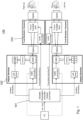
- the MFD device 100 shown in FIG. 2 comprises a Master Controller 101, Display Elements 102 and Focal Modulator Elements 103 for generating a focused image for 3D perception.
- the Master controller 101 produces a signal of a certain current intensity to control the Focal Modulator Elements 103.
- the Focal Modulator Elements 103 use focus tunable lenses (FTL), wherein the optical power of the FTLs is adjusted by said control signal.
- FTL focus tunable lenses
- a control signal in the form of a step current is applied along a lens control function path.
- each of the multiple FTLs is driven by a control signal comprising only a particular frequency of interest.
- each lens is driven with its proper frequency (i.e. its free oscillation or fundamental frequency). This can be done by driving the FTL with a sinusoidal signal having a frequency equal to the fundamental frequency (i.e. the first harmonic) of the FTL.
- the combination of the optical responses of each of the sinusoidally driven FTLs then provides an ideal optical step response 303 or at least a much improved approximation 301, 302 of the desired ideal step response 304 of the optical system by technically applying the principle of Fourier Series and the Harmonic Oscillator in combination with (multiple) cascaded FTLs.
- an optical system of multiple FTLs can be constructed, whereby each FTL's optical response shall resemble a sinusoidal basis function, which corresponds to each Fourier component. The sum of these Fourier components guarantees the generation or at least close approximation of the desired ideal optical step response.
- An additional benefit of this arrangement lies in the fact that the undesirable delay of an optical system driven by instant changes of control signals can also be reduced. As a consequence, faster focal scanning rates, higher frame rates or the ability to accommodate more focal planes can be achieved.
- FIG. 3 shows the construction 300 of such an optical system according to an embodiment of the invention by employing up to 32 Fourier components, which corresponds to 32 FTLs, in order to obtain an ideal 303 or at least a much improved approximated step response 301, 302.
- the required number of Fourier components can certainly be reduced by employing a better desired optical step response, e.g., by having a symmetric staircase function which reduces the needed number of high frequency components.
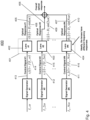
- FIG. 4 shows a block diagram 400 of a corresponding embodiment of such an optical system of multiple FTLs 401.
- any periodic signal in this case the ideal step optical response
- a set of FTLs 402, 403, 404 may be chosen or manufactured to satisfy the requirement that each FTL has to yield an optical response 405, 406, 407, which oscillates at its respective frequency ⁇ j according to the given Fourier decomposition.
- This is highly related to the FTL's properties (e.g., the diameter, fluid pump mechanism), which can be analyzed by its frequency response. Assuming, for example, differently sized FTLs, each FTL will then have a different frequency response and the desired control signal is decomposed so each FTL handles different frequency components (bigger FTLs handle lower frequency components, and vice versa).
- a respective oscillating control signal 411, 412, 413 with frequency ⁇ j is generated.
- the frequency ⁇ j matches the fundamental frequency (also referred to herein as the lowest resonance or as the natural frequency) of the respective FTL, i.e. the lens is operated at resonance. Proper shaping of the FTL can thus be ensured. At higher resonances, the FTL will have an unwanted shape (not lens-like anymore).
- the current intensity I j 414, 415, 416 may be further tuned to adjust the optical power D j since both values are proportional to each other. In this embodiment it is assumed that the system delay is negligible or that there is a similar delay in each branch, which will easily be the case if each FTL is driven at its resonant frequency. This guarantees that the branches oscillate in phase with each other.
- a compound lens comprising multiple FTLs can also be realized by considering that an FTL may be driven 501 by a frequency ⁇ j 506 other than its natural frequency ⁇ j 510 as shown in Fig. 5 .
- the lens control signal 504 can generally be a periodic signal.
- the periodic control signal may oscillate with an amplitude I j 505, a frequency ⁇ j 506 and a phase lag ⁇ j 507 between the control signal 504 and the optical response 512, depending on the difference between the frequency of the driving control signal ⁇ j 506 and the natural frequency 510 of each respective FTL 508.
- control signal parameters I j 505, ⁇ j 506 and ⁇ j 507 for the control signal x j (t) 504 for each FTL 508 can be derived knowing the expected optical response output using the well-known function of the (driven) Harmonic Oscillator function: f (D j , ⁇ j , c j , ⁇ j ), where Dj is the amplitude of the optical response output in dioptre.
- the design task is reduced to finding an FTL 508 having the parameters c j 509 and ⁇ j 510, whereby the FTLs natural frequency ⁇ j 510 is not necessarily the frequency ⁇ j 506, at which it is driven 501, 504 to produce the actual optical response 512, which is the corresponding Fourier component.
- FIG. 5 depicts this scenario by identifying one single branch 500 of the complete lens assembly as shown in Fig. 4 .
- a phase controller 503 is disposed, which "harmonizes" the optical responses of each FTL by correcting their respective control signal 504 to achieve that all optical responses 512 are in-phase.
- one or more or all FTLs are driven well below their respective natural frequency ⁇ j (resonant frequency), which has the advantage that only a low intensity (the lowest possible) is required and the phase shift is minimum (approaching zero).
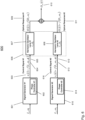
- FIG. 6 depicts an embodiment of a lens assembly 606 with two FTLs, whereby the first FTL 607 generates an optical response 609 by being driven by a e.g. sinusoidal driving function 603 or a periodic pulse 603, corresponding to a sum of a limited number of Fourier components of the desired optical response 610.
- the limited number of Fourier components may include:
- the second FTL 608 then compensates for the residual components left by the first FTL by generating an optical response 611 approximating another sum of Fourier components taken from this residual set of components.
- the first FTL may be driven with an according control signal 603.
- the controller frequencies ⁇ 1 604 and ⁇ 2 613 correspond to or are near the fundamental or resonance frequency ⁇ 1 and ⁇ 2 of the first 607 and the second 608 FTL.
- the frequency ⁇ 1 is the fundamental frequency (inverse of the period) of the desired optical response of the lens assembly
- ⁇ 2 is the main or lowest frequency of the residual Fourier components of the lens assembly's desired optical response.
- each of the two FTLs 607 and 608 have to be chosen in a way to provide a satisfactory optical response for a plurality of frequencies corresponding to the Fourier components "assigned" to each of the two FTLs, the difference between frequencies ⁇ 1 and ⁇ 1 (if any) and frequencies ⁇ 2 and ⁇ 2 (if any) and hence first phase lag ⁇ 1 605 and second phase lag ⁇ 2 612 might not be the same.
- the signal generators 601 and 615 driving each of the two FTLs comprise phase controllers 602 and 614, which each compensate for the phase lags ⁇ 1 and ⁇ 2 between the main (lowest) frequencies ⁇ 1 604 and ⁇ 2 613 of the control signals 603, 616 and the according optical first 609 and second response 611.
- FIG. 7 depicts an embodiment of a lens assembly 706 with three FTLs 707, 708 and 709, whereby a first FTL 707 generates an optical response 710 by being driven by a e.g. sinusoidal driving function 703 or a periodic pulse 703, corresponding to a sum of a limited number of Fourier components of the desired optical response 711.
- the second FTL 712 in the lens assembly generates an optical response 712 approximating the sum of some of the remaining Fourier components in order to compensate for the residual of the first FTL 707, while not necessarily “covering" all remaining Fourier components as is the aim of the embodiment shown in Fig. 6 .
- the third FTL 709 of the lens assembly 706 then generates an optical response 713 approximating the sum of the remaining Fourier components in order to compensate for the residual of the first 707 and second 708 FTL.
- the Fourier components may include the components described for Fig. 6 in the bullet point section above.
- fundamental frequencies ⁇ 1 , ⁇ 2 and ⁇ 3 referenced in Fig. 7 by numbers 704, 717 and 715, at which the first, the second and third FTL 707, 708 and 709 are driven, correspond to or are near the fundamental or resonance frequencies ⁇ 1 , ⁇ 2 and ⁇ 3 of the first, the second and the third FTL. Consequently, as has been elaborated above for the scenario in Fig. 6 , three signal generators 701, 723 and 721 are disposed for each of the three FTLs, whereby each signal controller comprises a respective phase controller 702, 722 and 720. Each phase controller compensates for the respective phase lags ⁇ 1 , ⁇ 2 and ⁇ 3 , referenced in Fig. 7 by numbers 705, 718 and 714, between the respective main (lowest) frequencies ⁇ 1, ⁇ 2 and ⁇ 3 of the control signals 703, 719 and 716 and the according optical responses 710, 712 and 713.
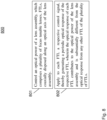
- the invention also includes a method 800, which is shown in FIG. 8 .
- the method 800 includes a step 801 of controlling an optical power of a lens assembly, which comprises a plurality of focus tunable lenses, FTLs, coaxially disposed along an optical axis of the lens assembly.
- the method 800 also includes a step 802 of applying to each FTL a respective control signal, thereby generating a periodic optical response of the respective FTL, wherein the optical response of each FTL contributes to the optical power of the lens assembly and is substantially different from the optical response from any other FTL of the plurality of FTLs.
- an optical system of separately controlled FTLs which are placed separately and coaxially along an optical axis of an optical system can produce an ideal optical step response or at least a close approximation thereof.
- Each FTL is thereby driven by signal generator to produce an periodic optical response, which corresponds to a number of Fourier components of the ideal optical step response.
- the sum of all Fourier components guarantees the generation of a desired ideal optical step response and annihilation of oscillation artifacts and signal delays.
Landscapes
- Physics & Mathematics (AREA)
- General Physics & Mathematics (AREA)
- Optics & Photonics (AREA)
- Engineering & Computer Science (AREA)
- Multimedia (AREA)
- Signal Processing (AREA)
- Mechanical Light Control Or Optical Switches (AREA)
- Liquid Crystal (AREA)
Claims (12)
- Système optique à distance focale réglable (400), comprenant :un ensemble de lentilles (401) comprenant une pluralité de lentilles à distance focale réglable, FTL, disposées coaxialement le long d'un axe optique, chaque FTL contribuant à une puissance optique (301, 302, 303) de l'ensemble de lentilles, etun dispositif de commande configuré pour commander la puissance optique de l'ensemble de lentilles en appliquant à chaque FTL un signal de commande respectif (413, 412, 411), générant ainsi une réponse optique (405, 406, 407) de la FTL respective,la réponse optique de chaque FTL étant sensiblement différente de la réponse optique de n'importe quelle autre FTL de la pluralité de FTL,caractérisé en ce que la réponse optique de chaque FTL est périodique, et en ce que le dispositif de commande est configuré pour effectuer une analyse de Fourier d'une réponse optique souhaitée (304) et pour générer pour chacune des FTL le signal de commande respectif en proportion de la somme d'une ou plusieurs composantes de Fourier de la réponse optique souhaitée.
- Système optique à distance focale réglable selon la revendication 1,
la réponse optique d'une FTL comprenant une fréquence naturelle de la FTL. - Système optique à distance focale réglable selon la revendication 1,
la réponse optique (512) d'une FTL comprenant une fréquence (506) inférieure à la fréquence naturelle (510) de la FTL. - Système optique à distance focale réglable selon l'une quelconque des revendications 1 à 3, pour chacune de la ou des FTL,
la réponse optique (609, 611) de la FTL respective (607, 608) comprenant une ou plusieurs composantes de Fourier de la réponse optique (610) de l'ensemble de lentilles. - Système optique à distance focale réglable selon l'une quelconque des revendications 1 à 3,
la réponse optique de l'une (607) des FTL comprenant la composante de Fourier la plus basse de la réponse optique de l'ensemble de lentilles. - Système optique à distance focale réglable selon l'une quelconque des revendications 1 à 3, pour chacune de la ou des FTL,
la réponse optique (609, 611) de la FTL respective (607, 608) comprenant seulement des composantes de Fourier impaires ou seulement des composantes de Fourier paires de la réponse optique de l'ensemble de lentilles. - Système optique à distance focale réglable selon l'une quelconque des revendications 1 à 3, pour chacune de la ou des FTL,
la réponse optique (609, 611) de la FTL respective (607, 608) comprenant moins de 10, de préférence moins de 5, composantes de Fourier de la réponse optique de l'ensemble de lentilles. - Système optique à distance focale réglable selon l'une quelconque des revendications 1 à 3,la pluralité de FTL comprenant une première (707), une deuxième (708) et une troisième (709) FTL,la réponse optique (710) de la première FTL étant une approximation d'une première somme d'un certain nombre de composantes de Fourier de la réponse optique souhaitée de l'ensemble de lentilles,la réponse optique (712) de la deuxième FTL étant une approximation d'une deuxième somme d'un sous-ensemble du reste des composantes de Fourier de la réponse optique souhaitée de l'ensemble de lentilles pour compenser un premier résidu de la première FTL (707),la réponse optique (713) de la troisième FTL étant une approximation d'une troisième somme des composantes de Fourier restantes de la réponse optique souhaitée de l'ensemble de lentilles pour compenser un deuxième résidu de la deuxième FTL (708), etla somme (711) des réponses optiques de la première, de la deuxième et de la troisième FTL étant une approximation de la réponse optique souhaitée.
- Système optique à distance focale réglable selon l'une quelconque des revendications 1 à 8,
la réponse optique de l'ensemble de lentilles étant une fonction périodique en escalier ou une approximation d'une fonction périodique en escalier. - Dispositif d'affichage multifocal, comprenant :
un système optique à distance focale réglable selon l'une quelconque des revendications 1 à 9. - Procédé de commande d'un système optique à distance focale réglable, comprenant les étapes de :commande (801) d'une puissance optique d'un ensemble de lentilles, qui comprend une pluralité de lentilles à distance focale réglable, FTL, disposées coaxialement le long d'un axe optique de l'ensemble de lentilles ;
etapplication (802) à chaque FTL d'un signal de commande respectif, générant ainsi une réponse optique de la FTL respective,la réponse optique de chaque FTL contribuant à la puissance optique de l'ensemble de lentilles et étant sensiblement différente de la réponse optique de n'importe quelle autre FTL de la pluralité de FTL,caractérisé en ce que la réponse optique de chaque FTL est périodique, et en ce que le procédé comprend en outre les étapes deréalisation d'une analyse de Fourier d'une réponse optique souhaitée (304) etgénération pour chacune des FTL du signal de commande respectif en proportion de la somme d'une ou plusieurs composantes de Fourier de la réponse optique souhaitée. - Produit de programme informatique comprenant un code de programme pour commander un système optique à distance focale réglable selon l'une quelconque des revendications 1 à 9 ou un dispositif d'affichage multifocal selon la revendication 10.
Applications Claiming Priority (1)
| Application Number | Priority Date | Filing Date | Title |
|---|---|---|---|
| PCT/EP2017/075657 WO2019072360A1 (fr) | 2017-10-09 | 2017-10-09 | Système optique varifocal |
Publications (2)
| Publication Number | Publication Date |
|---|---|
| EP3679416A1 EP3679416A1 (fr) | 2020-07-15 |
| EP3679416B1 true EP3679416B1 (fr) | 2023-04-12 |
Family
ID=60043207
Family Applications (1)
| Application Number | Title | Priority Date | Filing Date |
|---|---|---|---|
| EP17781108.0A Active EP3679416B1 (fr) | 2017-10-09 | 2017-10-09 | Système optique varifocal |
Country Status (3)
| Country | Link |
|---|---|
| US (1) | US11630247B2 (fr) |
| EP (1) | EP3679416B1 (fr) |
| WO (1) | WO2019072360A1 (fr) |
Families Citing this family (2)
| Publication number | Priority date | Publication date | Assignee | Title |
|---|---|---|---|---|
| JP7052772B2 (ja) * | 2019-04-26 | 2022-04-12 | オムロン株式会社 | 画像センサ |
| US10989927B2 (en) * | 2019-09-19 | 2021-04-27 | Facebook Technologies, Llc | Image frame synchronization in a near eye display |
Family Cites Families (13)
| Publication number | Priority date | Publication date | Assignee | Title |
|---|---|---|---|---|
| US5880711A (en) * | 1996-04-24 | 1999-03-09 | Sony Corporation | Three-dimensional image display method and its display apparatus |
| US7072086B2 (en) * | 2001-10-19 | 2006-07-04 | Batchko Robert G | Digital focus lens system |
| WO2002033657A2 (fr) * | 2000-10-20 | 2002-04-25 | Robert Batchko | Processeur optique combinatoire |
| US7672059B2 (en) * | 2000-10-20 | 2010-03-02 | Holochip Corporation | Fluidic lens with electrostatic actuation |
| US7350922B2 (en) * | 2004-02-13 | 2008-04-01 | Angstrom, Inc. | Three-dimensional display using variable focal length micromirror array lens |
| JP5119567B2 (ja) * | 2004-09-30 | 2013-01-16 | カシオ計算機株式会社 | カメラ |
| US8194307B2 (en) * | 2007-02-26 | 2012-06-05 | Trustees Of Princeton University | Tunable acoustic gradient index of refraction lens and system |
| CA2706002C (fr) * | 2007-12-04 | 2016-08-23 | Blackeye Optics, Llc | Mecanisme de stabilisation d'image a l'aide d'une ou de plusieurs lentilles liquides |
| US20130063805A1 (en) * | 2011-05-24 | 2013-03-14 | Craig B. Arnold | Tunable acoustic gradient index of refraction lens and system |
| ES2575211B1 (es) * | 2014-11-25 | 2017-02-23 | Davalor Salud, S.L. | Método de reproducción de imágenes con apariencia tridimensional |
| TWI597704B (zh) * | 2016-12-12 | 2017-09-01 | 國立清華大學 | 液體透鏡晶片、驅動裝置及其驅動方法 |
| EP3676644A2 (fr) * | 2017-09-01 | 2020-07-08 | Corning Incorporated | Lentilles liquides |
| WO2019173357A1 (fr) * | 2018-03-05 | 2019-09-12 | Vijayakumar Bhagavatula | Système d'affichage destiné au rendu d'une scène contenant de multiples plans focaux |
-
2017
- 2017-10-09 WO PCT/EP2017/075657 patent/WO2019072360A1/fr not_active Ceased
- 2017-10-09 EP EP17781108.0A patent/EP3679416B1/fr active Active
-
2020
- 2020-04-07 US US16/842,494 patent/US11630247B2/en active Active
Also Published As
| Publication number | Publication date |
|---|---|
| US11630247B2 (en) | 2023-04-18 |
| US20200233120A1 (en) | 2020-07-23 |
| EP3679416A1 (fr) | 2020-07-15 |
| WO2019072360A1 (fr) | 2019-04-18 |
Similar Documents
| Publication | Publication Date | Title |
|---|---|---|
| EP3391126B1 (fr) | Modulation par résonance de lentille à membrane liquide à focale variable pour fournir des plans focaux simultanés multiples dans un affichage vr pour des repères de mise au point réalistes | |
| US11209651B2 (en) | Multi-focal display system and method | |
| US11726346B2 (en) | Focus tunable optical system and multi-focal display device | |
| EP3523700B1 (fr) | Appareil d'affichage d'images holographiques et procédé de commande associé | |
| US11630247B2 (en) | Varifocal optical system | |
| AU2013301200A1 (en) | Scanning two-way light field camera and display | |
| Llull et al. | Design and optimization of a near-eye multifocal display system for augmented reality | |
| KR20120071885A (ko) | 표시 패널의 구동 방법 및 이를 수행하는 표시 장치 | |
| US11662547B2 (en) | Multifocal display device and method | |
| US11202060B2 (en) | Device and method for pre-compensating a fast tunable lens | |
| CN118068581A (zh) | 一种变焦成像装置以及变焦成像方法 | |
| KR102847558B1 (ko) | 체적형 디스플레이 | |
| Kim et al. | Development of the 2nd generation system of HMD type multi-focus 3D display system | |
| KR20230003245A (ko) | 디스플레이 장치, 시스템, 및 방법 | |
| Sunil et al. | Simulation of a Vision Correction Display System | |
| Jiao et al. | LED backlight adjustment for backward-compatible stereoscopic display |
Legal Events
| Date | Code | Title | Description |
|---|---|---|---|
| STAA | Information on the status of an ep patent application or granted ep patent |
Free format text: STATUS: UNKNOWN |
|
| STAA | Information on the status of an ep patent application or granted ep patent |
Free format text: STATUS: THE INTERNATIONAL PUBLICATION HAS BEEN MADE |
|
| PUAI | Public reference made under article 153(3) epc to a published international application that has entered the european phase |
Free format text: ORIGINAL CODE: 0009012 |
|
| STAA | Information on the status of an ep patent application or granted ep patent |
Free format text: STATUS: REQUEST FOR EXAMINATION WAS MADE |
|
| 17P | Request for examination filed |
Effective date: 20200408 |
|
| AK | Designated contracting states |
Kind code of ref document: A1 Designated state(s): AL AT BE BG CH CY CZ DE DK EE ES FI FR GB GR HR HU IE IS IT LI LT LU LV MC MK MT NL NO PL PT RO RS SE SI SK SM TR |
|
| AX | Request for extension of the european patent |
Extension state: BA ME |
|
| DAV | Request for validation of the european patent (deleted) | ||
| DAX | Request for extension of the european patent (deleted) | ||
| GRAP | Despatch of communication of intention to grant a patent |
Free format text: ORIGINAL CODE: EPIDOSNIGR1 |
|
| STAA | Information on the status of an ep patent application or granted ep patent |
Free format text: STATUS: GRANT OF PATENT IS INTENDED |
|
| INTG | Intention to grant announced |
Effective date: 20221025 |
|
| GRAS | Grant fee paid |
Free format text: ORIGINAL CODE: EPIDOSNIGR3 |
|
| GRAA | (expected) grant |
Free format text: ORIGINAL CODE: 0009210 |
|
| STAA | Information on the status of an ep patent application or granted ep patent |
Free format text: STATUS: THE PATENT HAS BEEN GRANTED |
|
| AK | Designated contracting states |
Kind code of ref document: B1 Designated state(s): AL AT BE BG CH CY CZ DE DK EE ES FI FR GB GR HR HU IE IS IT LI LT LU LV MC MK MT NL NO PL PT RO RS SE SI SK SM TR |
|
| REG | Reference to a national code |
Ref country code: GB Ref legal event code: FG4D |
|
| REG | Reference to a national code |
Ref country code: CH Ref legal event code: EP |
|
| REG | Reference to a national code |
Ref country code: DE Ref legal event code: R096 Ref document number: 602017067679 Country of ref document: DE |
|
| REG | Reference to a national code |
Ref country code: IE Ref legal event code: FG4D |
|
| REG | Reference to a national code |
Ref country code: AT Ref legal event code: REF Ref document number: 1560113 Country of ref document: AT Kind code of ref document: T Effective date: 20230515 |
|
| REG | Reference to a national code |
Ref country code: LT Ref legal event code: MG9D |
|
| REG | Reference to a national code |
Ref country code: NL Ref legal event code: MP Effective date: 20230412 |
|
| REG | Reference to a national code |
Ref country code: AT Ref legal event code: MK05 Ref document number: 1560113 Country of ref document: AT Kind code of ref document: T Effective date: 20230412 |
|
| PG25 | Lapsed in a contracting state [announced via postgrant information from national office to epo] |
Ref country code: NL Free format text: LAPSE BECAUSE OF FAILURE TO SUBMIT A TRANSLATION OF THE DESCRIPTION OR TO PAY THE FEE WITHIN THE PRESCRIBED TIME-LIMIT Effective date: 20230412 |
|
| PG25 | Lapsed in a contracting state [announced via postgrant information from national office to epo] |
Ref country code: SE Free format text: LAPSE BECAUSE OF FAILURE TO SUBMIT A TRANSLATION OF THE DESCRIPTION OR TO PAY THE FEE WITHIN THE PRESCRIBED TIME-LIMIT Effective date: 20230412 Ref country code: PT Free format text: LAPSE BECAUSE OF FAILURE TO SUBMIT A TRANSLATION OF THE DESCRIPTION OR TO PAY THE FEE WITHIN THE PRESCRIBED TIME-LIMIT Effective date: 20230814 Ref country code: NO Free format text: LAPSE BECAUSE OF FAILURE TO SUBMIT A TRANSLATION OF THE DESCRIPTION OR TO PAY THE FEE WITHIN THE PRESCRIBED TIME-LIMIT Effective date: 20230712 Ref country code: ES Free format text: LAPSE BECAUSE OF FAILURE TO SUBMIT A TRANSLATION OF THE DESCRIPTION OR TO PAY THE FEE WITHIN THE PRESCRIBED TIME-LIMIT Effective date: 20230412 Ref country code: AT Free format text: LAPSE BECAUSE OF FAILURE TO SUBMIT A TRANSLATION OF THE DESCRIPTION OR TO PAY THE FEE WITHIN THE PRESCRIBED TIME-LIMIT Effective date: 20230412 |
|
| PG25 | Lapsed in a contracting state [announced via postgrant information from national office to epo] |
Ref country code: RS Free format text: LAPSE BECAUSE OF FAILURE TO SUBMIT A TRANSLATION OF THE DESCRIPTION OR TO PAY THE FEE WITHIN THE PRESCRIBED TIME-LIMIT Effective date: 20230412 Ref country code: PL Free format text: LAPSE BECAUSE OF FAILURE TO SUBMIT A TRANSLATION OF THE DESCRIPTION OR TO PAY THE FEE WITHIN THE PRESCRIBED TIME-LIMIT Effective date: 20230412 Ref country code: LV Free format text: LAPSE BECAUSE OF FAILURE TO SUBMIT A TRANSLATION OF THE DESCRIPTION OR TO PAY THE FEE WITHIN THE PRESCRIBED TIME-LIMIT Effective date: 20230412 Ref country code: LT Free format text: LAPSE BECAUSE OF FAILURE TO SUBMIT A TRANSLATION OF THE DESCRIPTION OR TO PAY THE FEE WITHIN THE PRESCRIBED TIME-LIMIT Effective date: 20230412 Ref country code: IS Free format text: LAPSE BECAUSE OF FAILURE TO SUBMIT A TRANSLATION OF THE DESCRIPTION OR TO PAY THE FEE WITHIN THE PRESCRIBED TIME-LIMIT Effective date: 20230812 Ref country code: HR Free format text: LAPSE BECAUSE OF FAILURE TO SUBMIT A TRANSLATION OF THE DESCRIPTION OR TO PAY THE FEE WITHIN THE PRESCRIBED TIME-LIMIT Effective date: 20230412 Ref country code: GR Free format text: LAPSE BECAUSE OF FAILURE TO SUBMIT A TRANSLATION OF THE DESCRIPTION OR TO PAY THE FEE WITHIN THE PRESCRIBED TIME-LIMIT Effective date: 20230713 Ref country code: AL Free format text: LAPSE BECAUSE OF FAILURE TO SUBMIT A TRANSLATION OF THE DESCRIPTION OR TO PAY THE FEE WITHIN THE PRESCRIBED TIME-LIMIT Effective date: 20230412 |
|
| PG25 | Lapsed in a contracting state [announced via postgrant information from national office to epo] |
Ref country code: FI Free format text: LAPSE BECAUSE OF FAILURE TO SUBMIT A TRANSLATION OF THE DESCRIPTION OR TO PAY THE FEE WITHIN THE PRESCRIBED TIME-LIMIT Effective date: 20230412 |
|
| REG | Reference to a national code |
Ref country code: DE Ref legal event code: R097 Ref document number: 602017067679 Country of ref document: DE |
|
| PG25 | Lapsed in a contracting state [announced via postgrant information from national office to epo] |
Ref country code: SK Free format text: LAPSE BECAUSE OF FAILURE TO SUBMIT A TRANSLATION OF THE DESCRIPTION OR TO PAY THE FEE WITHIN THE PRESCRIBED TIME-LIMIT Effective date: 20230412 |
|
| PG25 | Lapsed in a contracting state [announced via postgrant information from national office to epo] |
Ref country code: SM Free format text: LAPSE BECAUSE OF FAILURE TO SUBMIT A TRANSLATION OF THE DESCRIPTION OR TO PAY THE FEE WITHIN THE PRESCRIBED TIME-LIMIT Effective date: 20230412 Ref country code: SK Free format text: LAPSE BECAUSE OF FAILURE TO SUBMIT A TRANSLATION OF THE DESCRIPTION OR TO PAY THE FEE WITHIN THE PRESCRIBED TIME-LIMIT Effective date: 20230412 Ref country code: RO Free format text: LAPSE BECAUSE OF FAILURE TO SUBMIT A TRANSLATION OF THE DESCRIPTION OR TO PAY THE FEE WITHIN THE PRESCRIBED TIME-LIMIT Effective date: 20230412 Ref country code: EE Free format text: LAPSE BECAUSE OF FAILURE TO SUBMIT A TRANSLATION OF THE DESCRIPTION OR TO PAY THE FEE WITHIN THE PRESCRIBED TIME-LIMIT Effective date: 20230412 Ref country code: DK Free format text: LAPSE BECAUSE OF FAILURE TO SUBMIT A TRANSLATION OF THE DESCRIPTION OR TO PAY THE FEE WITHIN THE PRESCRIBED TIME-LIMIT Effective date: 20230412 Ref country code: CZ Free format text: LAPSE BECAUSE OF FAILURE TO SUBMIT A TRANSLATION OF THE DESCRIPTION OR TO PAY THE FEE WITHIN THE PRESCRIBED TIME-LIMIT Effective date: 20230412 |
|
| PLBE | No opposition filed within time limit |
Free format text: ORIGINAL CODE: 0009261 |
|
| STAA | Information on the status of an ep patent application or granted ep patent |
Free format text: STATUS: NO OPPOSITION FILED WITHIN TIME LIMIT |
|
| 26N | No opposition filed |
Effective date: 20240115 |
|
| PG25 | Lapsed in a contracting state [announced via postgrant information from national office to epo] |
Ref country code: SI Free format text: LAPSE BECAUSE OF FAILURE TO SUBMIT A TRANSLATION OF THE DESCRIPTION OR TO PAY THE FEE WITHIN THE PRESCRIBED TIME-LIMIT Effective date: 20230412 |
|
| PG25 | Lapsed in a contracting state [announced via postgrant information from national office to epo] |
Ref country code: SI Free format text: LAPSE BECAUSE OF FAILURE TO SUBMIT A TRANSLATION OF THE DESCRIPTION OR TO PAY THE FEE WITHIN THE PRESCRIBED TIME-LIMIT Effective date: 20230412 Ref country code: IT Free format text: LAPSE BECAUSE OF FAILURE TO SUBMIT A TRANSLATION OF THE DESCRIPTION OR TO PAY THE FEE WITHIN THE PRESCRIBED TIME-LIMIT Effective date: 20230412 Ref country code: MC Free format text: LAPSE BECAUSE OF FAILURE TO SUBMIT A TRANSLATION OF THE DESCRIPTION OR TO PAY THE FEE WITHIN THE PRESCRIBED TIME-LIMIT Effective date: 20230412 |
|
| REG | Reference to a national code |
Ref country code: CH Ref legal event code: PL |
|
| REG | Reference to a national code |
Ref country code: BE Ref legal event code: MM Effective date: 20231031 |
|
| PG25 | Lapsed in a contracting state [announced via postgrant information from national office to epo] |
Ref country code: LU Free format text: LAPSE BECAUSE OF NON-PAYMENT OF DUE FEES Effective date: 20231009 |
|
| PG25 | Lapsed in a contracting state [announced via postgrant information from national office to epo] |
Ref country code: LU Free format text: LAPSE BECAUSE OF NON-PAYMENT OF DUE FEES Effective date: 20231009 |
|
| PG25 | Lapsed in a contracting state [announced via postgrant information from national office to epo] |
Ref country code: CH Free format text: LAPSE BECAUSE OF NON-PAYMENT OF DUE FEES Effective date: 20231031 |
|
| PG25 | Lapsed in a contracting state [announced via postgrant information from national office to epo] |
Ref country code: FR Free format text: LAPSE BECAUSE OF NON-PAYMENT OF DUE FEES Effective date: 20231031 Ref country code: CH Free format text: LAPSE BECAUSE OF NON-PAYMENT OF DUE FEES Effective date: 20231031 |
|
| PG25 | Lapsed in a contracting state [announced via postgrant information from national office to epo] |
Ref country code: BE Free format text: LAPSE BECAUSE OF NON-PAYMENT OF DUE FEES Effective date: 20231031 |
|
| PG25 | Lapsed in a contracting state [announced via postgrant information from national office to epo] |
Ref country code: IE Free format text: LAPSE BECAUSE OF NON-PAYMENT OF DUE FEES Effective date: 20231009 |
|
| PG25 | Lapsed in a contracting state [announced via postgrant information from national office to epo] |
Ref country code: IE Free format text: LAPSE BECAUSE OF NON-PAYMENT OF DUE FEES Effective date: 20231009 |
|
| PG25 | Lapsed in a contracting state [announced via postgrant information from national office to epo] |
Ref country code: BG Free format text: LAPSE BECAUSE OF FAILURE TO SUBMIT A TRANSLATION OF THE DESCRIPTION OR TO PAY THE FEE WITHIN THE PRESCRIBED TIME-LIMIT Effective date: 20230412 |
|
| PG25 | Lapsed in a contracting state [announced via postgrant information from national office to epo] |
Ref country code: BG Free format text: LAPSE BECAUSE OF FAILURE TO SUBMIT A TRANSLATION OF THE DESCRIPTION OR TO PAY THE FEE WITHIN THE PRESCRIBED TIME-LIMIT Effective date: 20230412 |
|
| PG25 | Lapsed in a contracting state [announced via postgrant information from national office to epo] |
Ref country code: CY Free format text: LAPSE BECAUSE OF FAILURE TO SUBMIT A TRANSLATION OF THE DESCRIPTION OR TO PAY THE FEE WITHIN THE PRESCRIBED TIME-LIMIT; INVALID AB INITIO Effective date: 20171009 |
|
| PG25 | Lapsed in a contracting state [announced via postgrant information from national office to epo] |
Ref country code: HU Free format text: LAPSE BECAUSE OF FAILURE TO SUBMIT A TRANSLATION OF THE DESCRIPTION OR TO PAY THE FEE WITHIN THE PRESCRIBED TIME-LIMIT; INVALID AB INITIO Effective date: 20171009 |
|
| PGFP | Annual fee paid to national office [announced via postgrant information from national office to epo] |
Ref country code: GB Payment date: 20250904 Year of fee payment: 9 |
|
| PG25 | Lapsed in a contracting state [announced via postgrant information from national office to epo] |
Ref country code: TR Free format text: LAPSE BECAUSE OF FAILURE TO SUBMIT A TRANSLATION OF THE DESCRIPTION OR TO PAY THE FEE WITHIN THE PRESCRIBED TIME-LIMIT Effective date: 20230412 |
|
| PGFP | Annual fee paid to national office [announced via postgrant information from national office to epo] |
Ref country code: DE Payment date: 20250902 Year of fee payment: 9 |