EP3680229B1 - Initiateur de polymérisation par modification et son procédé de préparation - Google Patents
Initiateur de polymérisation par modification et son procédé de préparation Download PDFInfo
- Publication number
- EP3680229B1 EP3680229B1 EP19822724.1A EP19822724A EP3680229B1 EP 3680229 B1 EP3680229 B1 EP 3680229B1 EP 19822724 A EP19822724 A EP 19822724A EP 3680229 B1 EP3680229 B1 EP 3680229B1
- Authority
- EP
- European Patent Office
- Prior art keywords
- carbon atoms
- group
- formula
- compound represented
- polymerization initiator
- Prior art date
- Legal status (The legal status is an assumption and is not a legal conclusion. Google has not performed a legal analysis and makes no representation as to the accuracy of the status listed.)
- Active
Links
Classifications
-
- C—CHEMISTRY; METALLURGY
- C08—ORGANIC MACROMOLECULAR COMPOUNDS; THEIR PREPARATION OR CHEMICAL WORKING-UP; COMPOSITIONS BASED THEREON
- C08C—TREATMENT OR CHEMICAL MODIFICATION OF RUBBERS
- C08C19/00—Chemical modification of rubber
- C08C19/22—Incorporating nitrogen atoms into the molecule
-
- C—CHEMISTRY; METALLURGY
- C08—ORGANIC MACROMOLECULAR COMPOUNDS; THEIR PREPARATION OR CHEMICAL WORKING-UP; COMPOSITIONS BASED THEREON
- C08F—MACROMOLECULAR COMPOUNDS OBTAINED BY REACTIONS ONLY INVOLVING CARBON-TO-CARBON UNSATURATED BONDS
- C08F236/00—Copolymers of compounds having one or more unsaturated aliphatic radicals, at least one having two or more carbon-to-carbon double bonds
- C08F236/02—Copolymers of compounds having one or more unsaturated aliphatic radicals, at least one having two or more carbon-to-carbon double bonds the radical having only two carbon-to-carbon double bonds
- C08F236/04—Copolymers of compounds having one or more unsaturated aliphatic radicals, at least one having two or more carbon-to-carbon double bonds the radical having only two carbon-to-carbon double bonds conjugated
- C08F236/10—Copolymers of compounds having one or more unsaturated aliphatic radicals, at least one having two or more carbon-to-carbon double bonds the radical having only two carbon-to-carbon double bonds conjugated with vinyl-aromatic monomers
-
- C—CHEMISTRY; METALLURGY
- C07—ORGANIC CHEMISTRY
- C07C—ACYCLIC OR CARBOCYCLIC COMPOUNDS
- C07C211/00—Compounds containing amino groups bound to a carbon skeleton
- C07C211/01—Compounds containing amino groups bound to a carbon skeleton having amino groups bound to acyclic carbon atoms
- C07C211/20—Compounds containing amino groups bound to a carbon skeleton having amino groups bound to acyclic carbon atoms of an acyclic unsaturated carbon skeleton
- C07C211/21—Monoamines
-
- C—CHEMISTRY; METALLURGY
- C07—ORGANIC CHEMISTRY
- C07D—HETEROCYCLIC COMPOUNDS
- C07D207/00—Heterocyclic compounds containing five-membered rings not condensed with other rings, with one nitrogen atom as the only ring hetero atom
- C07D207/02—Heterocyclic compounds containing five-membered rings not condensed with other rings, with one nitrogen atom as the only ring hetero atom with only hydrogen or carbon atoms directly attached to the ring nitrogen atom
- C07D207/04—Heterocyclic compounds containing five-membered rings not condensed with other rings, with one nitrogen atom as the only ring hetero atom with only hydrogen or carbon atoms directly attached to the ring nitrogen atom having no double bonds between ring members or between ring members and non-ring members
-
- C—CHEMISTRY; METALLURGY
- C07—ORGANIC CHEMISTRY
- C07D—HETEROCYCLIC COMPOUNDS
- C07D211/00—Heterocyclic compounds containing hydrogenated pyridine rings, not condensed with other rings
- C07D211/04—Heterocyclic compounds containing hydrogenated pyridine rings, not condensed with other rings with only hydrogen or carbon atoms directly attached to the ring nitrogen atom
- C07D211/06—Heterocyclic compounds containing hydrogenated pyridine rings, not condensed with other rings with only hydrogen or carbon atoms directly attached to the ring nitrogen atom having no double bonds between ring members or between ring members and non-ring members
-
- C—CHEMISTRY; METALLURGY
- C07—ORGANIC CHEMISTRY
- C07D—HETEROCYCLIC COMPOUNDS
- C07D223/00—Heterocyclic compounds containing seven-membered rings having one nitrogen atom as the only ring hetero atom
- C07D223/02—Heterocyclic compounds containing seven-membered rings having one nitrogen atom as the only ring hetero atom not condensed with other rings
- C07D223/04—Heterocyclic compounds containing seven-membered rings having one nitrogen atom as the only ring hetero atom not condensed with other rings with only hydrogen atoms, halogen atoms, hydrocarbon or substituted hydrocarbon radicals, directly attached to ring carbon atoms
-
- C—CHEMISTRY; METALLURGY
- C07—ORGANIC CHEMISTRY
- C07F—ACYCLIC, CARBOCYCLIC OR HETEROCYCLIC COMPOUNDS CONTAINING ELEMENTS OTHER THAN CARBON, HYDROGEN, HALOGEN, OXYGEN, NITROGEN, SULFUR, SELENIUM OR TELLURIUM
- C07F1/00—Compounds containing elements of Groups 1 or 11 of the Periodic Table
- C07F1/02—Lithium compounds
-
- C—CHEMISTRY; METALLURGY
- C08—ORGANIC MACROMOLECULAR COMPOUNDS; THEIR PREPARATION OR CHEMICAL WORKING-UP; COMPOSITIONS BASED THEREON
- C08C—TREATMENT OR CHEMICAL MODIFICATION OF RUBBERS
- C08C19/00—Chemical modification of rubber
- C08C19/30—Addition of a reagent which reacts with a hetero atom or a group containing hetero atoms of the macromolecule
- C08C19/42—Addition of a reagent which reacts with a hetero atom or a group containing hetero atoms of the macromolecule reacting with metals or metal-containing groups
- C08C19/44—Addition of a reagent which reacts with a hetero atom or a group containing hetero atoms of the macromolecule reacting with metals or metal-containing groups of polymers containing metal atoms exclusively at one or both ends of the skeleton
-
- C—CHEMISTRY; METALLURGY
- C08—ORGANIC MACROMOLECULAR COMPOUNDS; THEIR PREPARATION OR CHEMICAL WORKING-UP; COMPOSITIONS BASED THEREON
- C08F—MACROMOLECULAR COMPOUNDS OBTAINED BY REACTIONS ONLY INVOLVING CARBON-TO-CARBON UNSATURATED BONDS
- C08F2/00—Processes of polymerisation
- C08F2/44—Polymerisation in the presence of compounding ingredients, e.g. plasticisers, dyestuffs, fillers
-
- C—CHEMISTRY; METALLURGY
- C08—ORGANIC MACROMOLECULAR COMPOUNDS; THEIR PREPARATION OR CHEMICAL WORKING-UP; COMPOSITIONS BASED THEREON
- C08F—MACROMOLECULAR COMPOUNDS OBTAINED BY REACTIONS ONLY INVOLVING CARBON-TO-CARBON UNSATURATED BONDS
- C08F36/00—Homopolymers and copolymers of compounds having one or more unsaturated aliphatic radicals, at least one having two or more carbon-to-carbon double bonds
- C08F36/02—Homopolymers and copolymers of compounds having one or more unsaturated aliphatic radicals, at least one having two or more carbon-to-carbon double bonds the radical having only two carbon-to-carbon double bonds
- C08F36/04—Homopolymers and copolymers of compounds having one or more unsaturated aliphatic radicals, at least one having two or more carbon-to-carbon double bonds the radical having only two carbon-to-carbon double bonds conjugated
-
- C—CHEMISTRY; METALLURGY
- C08—ORGANIC MACROMOLECULAR COMPOUNDS; THEIR PREPARATION OR CHEMICAL WORKING-UP; COMPOSITIONS BASED THEREON
- C08F—MACROMOLECULAR COMPOUNDS OBTAINED BY REACTIONS ONLY INVOLVING CARBON-TO-CARBON UNSATURATED BONDS
- C08F8/00—Chemical modification by after-treatment
- C08F8/02—Alkylation
-
- C—CHEMISTRY; METALLURGY
- C08—ORGANIC MACROMOLECULAR COMPOUNDS; THEIR PREPARATION OR CHEMICAL WORKING-UP; COMPOSITIONS BASED THEREON
- C08F—MACROMOLECULAR COMPOUNDS OBTAINED BY REACTIONS ONLY INVOLVING CARBON-TO-CARBON UNSATURATED BONDS
- C08F236/00—Copolymers of compounds having one or more unsaturated aliphatic radicals, at least one having two or more carbon-to-carbon double bonds
- C08F236/02—Copolymers of compounds having one or more unsaturated aliphatic radicals, at least one having two or more carbon-to-carbon double bonds the radical having only two carbon-to-carbon double bonds
- C08F236/04—Copolymers of compounds having one or more unsaturated aliphatic radicals, at least one having two or more carbon-to-carbon double bonds the radical having only two carbon-to-carbon double bonds conjugated
- C08F236/06—Butadiene
-
- C—CHEMISTRY; METALLURGY
- C08—ORGANIC MACROMOLECULAR COMPOUNDS; THEIR PREPARATION OR CHEMICAL WORKING-UP; COMPOSITIONS BASED THEREON
- C08F—MACROMOLECULAR COMPOUNDS OBTAINED BY REACTIONS ONLY INVOLVING CARBON-TO-CARBON UNSATURATED BONDS
- C08F2810/00—Chemical modification of a polymer
-
- Y—GENERAL TAGGING OF NEW TECHNOLOGICAL DEVELOPMENTS; GENERAL TAGGING OF CROSS-SECTIONAL TECHNOLOGIES SPANNING OVER SEVERAL SECTIONS OF THE IPC; TECHNICAL SUBJECTS COVERED BY FORMER USPC CROSS-REFERENCE ART COLLECTIONS [XRACs] AND DIGESTS
- Y02—TECHNOLOGIES OR APPLICATIONS FOR MITIGATION OR ADAPTATION AGAINST CLIMATE CHANGE
- Y02T—CLIMATE CHANGE MITIGATION TECHNOLOGIES RELATED TO TRANSPORTATION
- Y02T10/00—Road transport of goods or passengers
- Y02T10/80—Technologies aiming to reduce greenhouse gasses emissions common to all road transportation technologies
- Y02T10/86—Optimisation of rolling resistance, e.g. weight reduction
Definitions
- the present invention relates to a modification polymerization initiator which is capable of initiating polymerization reaction and introducing a functional group into a polymer chain at the same time, and a method for preparing the same.
- a conjugated diene-based polymer having modulational stability represented by wet skid resistance as well as low rolling resistance, and excellent abrasion resistance and tensile properties is required as a rubber material for tires.
- Natural rubbers, polyisoprene rubbers, or polybutadiene rubbers are known as rubber materials having low hysteresis loss, but these rubbers have a limitation of low wet skid resistance.
- conjugated diene-based polymers or copolymers such as styrene-butadiene rubbers (hereinafter, referred to as "SBR") and butadiene rubbers (hereinafter, referred to as "BR”), are prepared by emulsion polymerization or solution polymerization to be used as rubbers for tires.
- the greatest advantage of the solution polymerization in comparison to the emulsion polymerization is that the vinyl structure content and the styrene content, which specify physical properties of the rubber, may be arbitrarily adjusted and its molecular weight and physical properties may be controlled by coupling or modification.
- the SBR prepared by the solution polymerization is widely used as a rubber material for tires because it is easy to change a structure of the finally prepared SBR or BR, and movement of chain terminals may be reduced and a coupling force with a filler such as silica and carbon black may be increased by coupling or modification of the chain terminals.
- solution-polymerized SBR is used as the rubber material for tires
- a glass transition temperature of the rubber is increased by increasing the vinyl content in the SBR
- physical properties such as running resistance and braking force, required for tires may be controlled, and fuel consumption may also be reduced by appropriately adjusting the glass transition temperature.
- the solution-polymerized SBR is prepared by using an anionic polymerization initiator and is being used by coupling or modifying the chain terminals of the polymer thus formed using various modifiers.
- 4,397,994 discloses a method of coupling active anions of the chain terminals of a polymer obtained by polymerizing styrene-butadiene using alkyllithium which is a monofunctional initiator in a non-polar solvent, using a binder such as a tin compound.
- solution-polymerized SSBR is prepared using an anionic polymerization initiator, and in this case, the anionic polymerization initiator mostly uses an organolithium compound.
- the organolithium compound may be used as it is or after modifying to a functional group-containing compound which is capable of imparting a polymer chain with the functional group.
- a method of preparing and using a modification polymerization initiator having a styrene-based structure unit, a conjugated diene-based structure unit or an arylamine structure unit by reacting a styrene-based compound, a conjugated diene-based compound or an arylamine compound with an organolithium compound but this method is not economically feasible and has limitation in industrial use.
- the obtaining of a modification polymerization initiator using the conjugated diene-based compound is difficult, because the coupling of a functional group with a conjugated diene-based unit is not easy.
- JP3748277 discloses an anionic polymerization initiator prepared by reacting an additive in which nitrogen of a cyclic secondary amine is bonded with conjugated diene carbon, with an organolithium compound.
- the cyclic secondary amine remains to act as a scavenger in the reaction, thereby degrading the yield of the anionic polymerization initiator, and accordingly, filtering and purifying processes are definitely required after the reaction.
- a hexamethylene lithium initiator prepared by the reaction of hexamethyleneimine (MHI) and n-butyllithium (BuLi) as shown in the following Reaction 1 is widely known as a modification polymerization initiator used for preparing SSBR:
- the hexamethylene lithium initiator has low solubility with respect to a solvent and is precipitated over time and has a limitation in that reactivity with respect to n-butyllithium is not good though used as a polymerization initiator.
- a method for preparing a modification polymerization initiator by further reacting the hexamethylene lithium synthesized in Reaction 1 with a conjugated diene compound such as isoprene and 1,3-butadiene as in the following Reaction 2 has been suggested:
- modification polymerization initiator thus prepared has improved solubility and reactivity when compared with the hexamethylene lithium initiator, precipitation still takes place over time and deactivation arises.
- an anionic polymerization initiator such as the above-described modification polymerization initiator is generally prepared through a batch type process, or an anionic polymerization initiator and SSBR are simultaneously prepared in one batch type reactor.
- the anionic polymerization initiator thus prepared necessarily requires a storage step prior to use for preparing SSBR, and reacts with various scavengers such as humidity and air during storage time to lose activity.
- the initiator has adverse effects on a subsequent process and may become a factor degrading the physical properties of the SSBR finally prepared.
- the preparation reaction of an anionic polymerization initiator and SSBR polymerization reaction are performed in the same batch type reactor, and the defects relating to the storage may be solved but it is difficult to confirm if the anionic polymerization initiator is properly synthesized and the physical properties of the SSBR finally prepared are inferior to a case of adding a pre-synthesized anionic polymerization initiator.
- by-products may be produced by the direct injection, mixing and reaction of raw materials, or unreacted materials may be produced by reverse reaction, and as a result, there are problems of decreasing yield.
- Korean Laid-open Patent Publication No. 10-2016-0092227 discloses a method for preparing an anionic polymerization initiator using a continuous type reactor including a static mixer.
- concentration distribution of raw materials or temperature distribution may become uniform, lithiation reaction is continuously carried out, and problems relating to storage and problems of decreasing yield may be reduced, but with the use of the static mixer, the problem of the exothermic reaction of the lithiation reaction is not solved, and a special cooling apparatus is required to increase preparation cost.
- the present invention is devised to solve the above-mentioned problems of the conventional technique, and an object is to provide a modification polymerization initiator which is used in polymerization reaction to easily initiate reaction and provide a polymer with a functional group.
- Another object of the present invention is to provide a method for preparing a modification polymerization initiator in a high conversion ratio by minimizing side reactions.
- the present invention provides a modification polymerization initiator including at least one derived unit from a compound represented by the following Formula 1 and a derived unit from a compound represented by the following Formula 2:
- the present invention provides a method for preparing the modification polymerization initiator described above, including a step of reacting a compound represented by the following Formula 1 and a compound represented by the following Formula 2:
- the present invention also provides a modified conjugated diene-based polymer, comprising:
- the modification polymerization initiator according to the present invention may include various functional groups in a molecule by including a derived unit from a compound represented by Formula 1, and thus, may initiate polymerization reaction and introducing a functional group into a polymer chain at the same time.
- a modification polymerization initiator may be easily prepared, and particularly, the production of an unreacted material during lithiation reaction may be decreased by performing through continuous type reaction using a continuous type reactor, problems due to the exothermic reaction of the lithiation reaction and the generation of by-products may be reduced by rapid removal of heat, and thus, a conversion ratio may be increased and a modification polymerization initiator with high purity may be prepared in high yield.
- substituted used in the present invention may mean that hydrogen of a functional group, atomic group or compound is substituted with a specific substituent, and in case where the hydrogen of the functional group, atomic group or compound is substituted with the specific substituent, one or a plurality of two or more substituents may be present according to the number of hydrogen present in the functional group, atomic group or compound. If a plurality of substituents is present, each substituent may be the same or different.
- alkyl group used in the present invention may mean monovalent aliphatic saturated hydrocarbon, and may include both a linear alkyl group such as methyl, ethyl, propyl and butyl, and a branched alkyl group such as isopropyl, sec-butyl, tert-butyl and neo-pentyl.
- alkylene group used in the present invention may mean divalent aliphatic saturated hydrocarbon such as methylene, ethylene, propylene and butylene.
- alkenyl group used in the present invention may mean an alkyl group including one or two or more double bonds.
- alkynyl group used in the present invention may mean an alkyl group including one or two or more triple bonds.
- cycloalkyl group used in the present invention may mean cyclic saturated hydrocarbon.
- aryl group used in the present invention may mean cyclic aromatic hydrocarbon, and may include both monocyclic aromatic hydrocarbon including one ring, and polycyclic aromatic hydrocarbon including two or more bonded rings.
- heterocycle used in the present invention may mean an aliphatic hetero hydrocarbon ring or an aromatic hetero hydrocarbon ring, in which one or more among carbon atoms constituting an aliphatic hydrocarbon ring or an aromatic hydrocarbon ring are substituted with heteroatoms.
- derived unit and "derived functional group” used in the present invention may represent a component or a structure comes from a certain material, or the material itself.
- the present invention provides a modification polymerization initiator which acts as a polymerization initiator for initiating polymerization during polymerizing a polymer, particularly, a conjugated diene-based polymer, and at the same time, acts as a modifier introducing a functional group into a polymer chain.
- the modification polymerization initiator according to an embodiment of the present invention is characterized in including a derived unit from a compound represented by the following Formula 1 and a derived unit from a compound represented by the following Formula 2:
- A is -NR a R b , -OR c , or -SR d , where R a to R d may be each independently an alkyl group of 1 to 20 carbon atoms, an alkenyl group of 2 to 20 carbon atoms, an alkynyl group of 2 to 20 carbon atoms, a cycloalkyl group of 3 to 20 carbon atoms, an aryl group of 6 to 20 carbon atoms, a heteroalkyl group of 1 to 20 carbon atoms, a heteroalkenyl group of 2 to 20 carbon atoms, a heteroalkynyl group of 2 to 20 carbon atoms, a heterocycloalkyl group of 2 to 20 carbon atoms or a heteroaryl group of 3 to 20 carbon atoms, where each of R a to R d may be unsubstituted or substituted with a substituent including one or more heteroatoms selected among N, O, S, Si and F atoms.
- R a and R b in -NR a R b may be combined with each other to form a heterocycle of 3 to 10 carbon atoms, which is unsubstituted or substituted with an alkyl group of 1 to 10 carbon atoms, where the heterocycle may include one or more heteroatoms selected among O, S, Si and F atoms in addition to N.
- A may be selected from substituents represented by the following Formula 1a to Formula 1c:
- R 1 , R 2 , R 5 , R 7 and R 8 are each independently an alkyl group of 1 to 10 carbon atoms or a heteroalkyl group of 1 to 10 carbon atoms, which is unsubstituted or substituted with a substituent including one or more heteroatoms selected among N, O and S atoms, where R 1 and R 2 are combined with each other to form an aliphatic hetero hydrocarbon ring of 5 to 10 carbon atoms or an aromatic hetero hydrocarbon ring of 6 to 10 carbon atoms together with N, and R 7 and R 8 may be combined with each other to form an aliphatic hetero hydrocarbon ring of 5 to 10 carbon atoms or an aromatic hetero hydrocarbon ring of 6 to 10 carbon atoms together with X, R 3 , R 4 and R 6 are each independently an alkylene group of 1 to 10 carbon atoms, which is unsubstituted or substituted with an alkyl group of 1 to 6 carbon atoms, R 5 is
- a myrcene derivative compound represented by Formula 1 may be a compound represented by the following Formula 1-1 to Formula 1-11:
- M is an alkali metal and R e may be hydrogen, an alkyl group of 1 to 10 carbon atoms, an alkenyl group of 2 to 10 carbon atoms, an alkynyl group of 2 to 10 carbon atoms, a cycloalkyl group of 5 to 10 carbon atoms or an aryl group of 6 to 10 carbon atoms, particularly, in Formula 2, M may be Na, K or Li and Re may be an alkyl group of 1 to 10 carbon atoms.
- the modification polymerization initiator according to an embodiment of the present invention may be a single material or a mixture type obtained by mixing various materials.
- the mixture may mean the presence of various isomers together.
- the modification polymerization initiator may include one or more selected from the group consisting of a compound represented by the following Formula 3 and isomers thereof:
- A is the same as defined in Formula 1, M is Na, K or Li, and R e is hydrogen or an alkyl group of 1 to 10 carbon atoms.
- M may be bonded to neighboring carbon via an ionic bond.
- the isomer of the compound represented by Formula 3 may include both a structural isomer and a stereoisomer of the compound represented by Formula 3, and for example, a compound represented by the following Formula 3-1 to Formula 3-3:
- modification polymerization initiator may include one or more selected from a dimer, a trimer and an oligomer of each of the compound represented by Formula 3 and an isomer thereof.
- the dimer represents a type in which two derived units from the compound represented by Formula 1 and one derived unit from the compound represented by Formula 2 per molecule
- the trimer represents a type in which three derived units from the compound represented by Formula 1 and one derived unit from the compound represented by Formula 2
- the oligomer is a type in which a plurality of derived units from the compound represented by Formula 1 and one derived unit from the compound represented by Formula 2 per molecule.
- the compound represented by Formula 1, may be prepared by reacting myrcene with a functional group compound, for example, prepared through a preparation method including a step of reacting a halogenated myrcene represented by Formula 4 below with an acetylating agent in the presence of a polar organic solvent and a catalyst to prepare an acetylated compound including a compound represented by Formula 5a below and a compound represented by Formula 5b below (step a); a step of hydrolyzing the acetylated compound to prepare a hydroxylated compound (step b); a step of reacting the hydroxylated compound and a leaving group-containing compound to prepare a leaving group-containing compound including a compound represented by Formula 6a below and a compound represented by Formula 6b below (step c); a step of reacting the leaving group-containing compound and a compound represented by Formula 7 below (step d); and a step of purifying (step e).
- a preparation method including a step of reacting a halogenated
- Formula 5a, Formula 5b, Formula 6a, Formula 6b and Formula 7, A is the same as defined above, L is a leaving group, and Y is Cl, Br or I.
- Step a may be performed by reacting a halogenated myrcene represented by Formula 4 and an acetylating agent in the presence of a polar organic solvent and a catalyst, and in this case, the halogenated myrcene, catalyst and acetylating agent may be reacted in a molar ratio of 1:0.1 to 5:1 to 20, at a temperature of 30°C to 100°C for 10 minutes to 24 hours.
- the acetylating compound is an isomer mixture including a compound represented by Formula 5a and a compound represented by Formula 5b, which are E/Z (cis/trans) isomers, and through the reaction of Step a, the compound represented by Formula 5a and the compound represented by Formula 5b may be formed at the same time from the halogenated myrcene compound represented by Formula 4.
- the polar organic solvent may be a polar aprotic organic solvent or a polar protic organic solvent.
- the polar aprotic organic solvent may be, for example, one or more selected from the group consisting of N,N-dimethylformamide and dimethyl sulfoxide (DMSO), and the polar protic organic solvent may be one or more selected from the group consisting of acetic acid, n-butanol and n-propanol.
- the catalyst may be one or more selected from the group consisting of sodium iodide (NaI) and sodium bromide (NaBr).
- the acetylating agent may be one or more selected from the group consisting of sodium acetate (NaOAc), acetic acid (HOAc) and acetic anhydride (Ac 2 O).
- the halogenated myrcene represented by Formula 4 may be prepared by reacting ⁇ -myrcene and a halogen-containing compound to introduce a halogen group into the molecular structure of ⁇ -myrcene, and in this case, the halogen-containing compound may be a material producing halogenated myrcene through reacting with ⁇ -myrcene, for example, calcium hypochlorite (Ca(OCl) 2 ), sodium hypochlorite (NaClO) or hypochlorous acid (HClO).
- Ca(OCl) 2 calcium hypochlorite
- NaClO sodium hypochlorite
- HClO hypochlorous acid
- the ⁇ -myrcene and the halogen-containing compound may be reacted in a molar ratio of 1:0.8 to 1.2, or 1:0.8 to 1.0, without specific limitation, and in this case, the halogenated myrcene represented by Formula 4 may be easily prepared in a high conversion ratio.
- the reaction between the ⁇ -myrcene and the halogen-containing compound may be performed in the presence of a reducing agent, and here, the reducing agent plays the role of performing halogenation reaction more easily and may be, for example, carbon dioxide.
- Step b is a step for preparing a hydroxylated compound from the acetylated compound and may be performed by hydrolyzing the acetylating compound.
- the hydrolysis may be performed by preparing an aqueous solution of an acetylating compound and adding a hydrolysis catalyst.
- the aqueous solution of an acetylating compound may include an acetylating compound, an alcohol and water.
- the acetylating compound, the alcohol and water in the aqueous solution may provide appropriate concentration of the aqueous solution, for example, the acetylating compound, the alcohol and water may have a molar ratio of 1:10 to 100:5 to 50.
- the hydrolysis catalyst is for catalyze the hydrolysis of the acetylating compound and is not specifically limited.
- any one or more among potassium carbonate (K 2 CO 3 ), sodium carbonate (Na 2 CO 3 ) and lithium carbonate (Li 2 CO 3 ) may be used.
- the hydrolysis catalyst may be used in 0.5 to 10 mol based on 1 mol of the acetylating compound.
- Step c is a step for preparing a leaving group-containing compound and may be performed by reacting the hydroxylated compound and a leaving group-containing compound. Particularly, the hydroxylated compound and the leaving group-containing compound may be reacted in a molar ratio of 1:0.5 to 5.
- the leaving group-containing compound is a material reacting with the hydroxylated compound and providing a leaving group corresponding to L in compounds represented by Formula 6a and Formula 6b, for example an alkylsulfonate group such as methanesulfonate group (CH 3 SO 3 - ) and methylbenzenesulfonate group (C 7 H 7 SO 3 - ), and any material may be used without specific limitation as long as it may react with the hydroxylated compound and provide the leaving group.
- an alkylsulfonate group such as methanesulfonate group (CH 3 SO 3 - ) and methylbenzenesulfonate group (C 7 H 7 SO 3 - )
- any material may be used without specific limitation as long as it may react with the hydroxylated compound and provide the leaving group.
- methanesulfonyl chloride p-toluenesulfonyl chloride, 2-propanesulfonyl chloride, trichloromethanesulfonyl chloride, cyclohexanesulfonyl chloride or cyclopentanesulfonyl chloride, may be used.
- Step d is a step for preparing an isomer composition including a compound represented by Formula 1 which introduces a functional group derived from a compound represented by Formula 7, and may be performed by reacting the leaving group-containing compound and the compound represented by Formula 7.
- the leaving group-containing compound and the compound represented by Formula 7 may be reacted in a molar ratio of 1:0.1 to 20, or 1:0.1 to 10.
- Step e is a step for separating and obtaining the compound represented by Formula 1 from the isomer composition through purifying, and may be performed through a common method in the art.
- the present invention provides a method for preparing the modification polymerization initiator.
- the method for preparing the modification polymerization initiator according to an embodiment of the present invention is characterized in including a step of reacting a compound represented by the following Formula 1 and a compound represented by the following Formula 2: [Formula 2] M-R e
- the compound represented by Formula 1 and the compound represented by Formula 2 may be reacted in a molar ratio of 1:0.5 to 5 and may be performed in a temperature range of 0°C to 80°C under pressure conditions of 50 kPa (0.5 bar) to 1000 kPa (10 bar).
- the preparation method according to an embodiment of the present invention may be performed by batch type reaction or continuous type reaction.
- the compound represented by Formula 1 and the compound represented by Formula 2 may be reacted in a molar ratio of 1:0.5 to 3, more particularly, the compound represented by Formula 1 and the compound represented by Formula 2 may be reacted in a molar ratio of 1:1 to 2.
- reaction of the compound represented by Formula 1 and the compound represented by Formula 2 may be performed in a temperature range of 0°C to 45°C and under an atmospheric pressure or more, particularly, in a temperature range of 20°C to 30°C and under pressure conditions of 50 kPa (0.5 bar) to 200 kPa (2 bar).
- the reaction of the compound represented by Formula 1 and the compound represented by Formula 2 may be performed in a continuous type reactor, and in this case, the continuous type reactor may mean a reactor performing reaction while continuously injecting raw materials used in the reaction.
- the reaction may be performed in the continuous type reactor including a first channel and a second channel, and prior to performing the reaction, the first reactant including the compound represented by Formula 1 may be injected through the first channel to the continuous type reactor and the second reactant including the compound represented by Formula 2 may be injected through the second channel to the continuous type reactor.
- the first channel and the second channel may mean injection parts (or inputting parts) for controlling the injection amounts of the first reactant and the second reactant, respectively, in the continuous type reactor, and in this case, the injection amounts of the first reactant and the second reactant may be each independently controlled. Through this, each injection amount may be controlled according to reaction environments and side reactions may be minimized.
- the first reactant may be injected through the first channel in a rate of 1.0 g/min to 20.0 g/min to the continuous type reactor, and the second reactant may be injected through the second channel in a rate of 1.0 g/min to 20.0 g/min to the continuous type reactor.
- the first reactant may be injected through the first channel in a rate of 1.0 g/min to 10.0 g/min to the continuous type reactor, and the second reactant may be injected through the second channel in a rate of 1.0 g/min to 10.0 g/min to the continuous type reactor.
- the injection amounts of the compound represented by Formula 1 and the compound represented by Formula 2 may be appropriately controlled without rapid change, thereby minimizing side reactions.
- the compound represented by Formula 1 and the compound represented by Formula 2 may be reacted in a molar ratio of 1:0.5 to 1:5, and particularly, the compound represented by Formula 1 and the compound represented by Formula 2 may be reacted in a molar ratio of 1:0.8 to 1:1.5. If the compound represented by Formula 1 and the compound represented by Formula 2 are reacted in the above-described molar ratio, side reactions may be decreased.
- a modification polymerization initiator in a polymer type of a monomer or a dimer may be prepared.
- the first reactant may be a material having flowability so that the compound represented by Formula 1 may be easily injected to the continuous type reactor to participate in the reaction, for example, the first reactant may be the compound represented by Formula 1 itself, or a solution including the compound represented by Formula 1 and a reaction solvent.
- the second reactant may be a material having flowability so that the compound represented by Formula 2 may be easily injected to the continuous type reactor to participate in the reaction, for example, the second reactant may be the compound represented by Formula 2 itself, or a solution including the compound represented by Formula 2 and a reaction solvent.
- the concentration of the solution is not specifically limited and may be controlled so that the compound represented by Formula 1 and the compound represented by Formula 2 may have the above-described molar ratio.
- the reaction solvent may be a hydrocarbon solvent which does not react with anions, for example, one or more selected among a linear hydrocarbon compound such as pentane, hexane and octane; a branched derivative thereof; a cyclic hydrocarbon compound such as cyclohexane and cycloheptane; an aromatic hydrocarbon compound such as benzene, toluene and xylene; and liner or cyclic ethers such as dimethyl ether, diethyl ether, anisole and tetrahydrofuran.
- the reaction solvent may be cyclohexane, hexane, tetrahydrofuran or diethyl ether.
- the reaction may be performed in the presence of a polar additive to control the reactivity of the compound represented by Formula 1 and the compound represented by Formula 2.
- the polar additive is not specifically limited but may include, for example, one or more selected from the group consisting of tetrahydrofuran, ditetrahydrofurylpropane, diethyl ether, cycloamyl ether, dipropyl ether, ethylene dimethyl ether, ethylene diethyl ether, diethyl glycol, dimethyl glycol, tert-butoxyethoxyethane, bis(3-dimethylamino ethyl) ether, (dimethylamino ethyl) ethyl ether, trimethylamine, triethylamine, tripropylamine and tetramethylethylenediamine.
- the polar additive may be injected into the continuous type reactor by being contained in the first reactant or the second reactant, and particularly, the polar additive may be injected into the continuous type reactor by being contained in the first reactant.
- the first reactant may include a polar additive, and in this case, the polar additive may be included in the first reactant in a molar ratio of 1.0 to 5.0 with respect to 1 mol of the compound represented by Formula 1. Within this range, the reactivity between the compound represented by Formula 1 and the compound represented by Formula 2 may be appropriately controlled to easily carry out the reaction and decrease side reactions.
- the mixing ratio of reaction raw materials for example, the compound represented by Formula 1 and the compound represented by Formula 2 during lithiation reaction may be increased to decrease the production of unreacted material, and the production of by-products may be decreased by reducing problems due to the exothermic reaction of the lithiation reaction by rapid removal of heat.
- a conversion ratio may be improved and a modification polymerization initiator with high purity may be stably prepared in high yield.
- the present invention provides a modified conjugated diene-based polymer including a functional group derived from the modification polymerization initiator.
- the modified conjugated diene-based polymer according to an embodiment of the present invention includes a repeating unit derived from a conjugated diene-based monomer and may include a functional group derived from the modification polymerization initiator in at least one terminal.
- the repeating unit derived from the conjugated diene-based monomer may mean a repeating unit formed during polymerizing a conjugated diene-based monomer
- the conjugated diene-based monomer may be one or more selected from the group consisting of 1,3-butadiene, 2,3-dimethyl-1,3-butadiene, piperylene, 3-butyl-1,3-octadiene, isoprene, 2-phenyl-1,3-butadiene, and 2-halo-1,3-butadiene (halo means a halogen atom).
- the modified conjugated diene-based polymer may be, for example, a copolymer further including a repeating unit derived from an aromatic vinyl-based monomer together with the repeating unit derived from the conjugated diene-based monomer, and the repeating unit derived from the aromatic vinyl-based monomer may mean a repeating unit formed by an aromatic vinyl-based monomer during polymerizing.
- the aromatic vinyl-based monomer may be, for example, one or more selected from the group consisting of styrene, ⁇ -methylstyrene, 3-methylstyrene, 4-methylstyrene, 4-propylstyrene, 1-vinylnaphthalene, 4-cyclohexylstyrene, 4-(p-methylphenyl)styrene, and 1-vinyl-5-hexylnaphthalene.
- a reactor in an inert state was prepared through purging with nitrogen for a constant time and applying vacuum.
- the internal temperature of the reactor was controlled to 25°C and the internal pressure was controlled to 100 kPa (1 bar), and then, 16.1 g of n-hexane, 0.7 g (6.2 mmol) of tetramethylethyleneamine, 1.7 g (6.2 mmol in hexane) of 2.5 M n-butyllithium, and 6.2 mmol of a compound represented by Formula 1-5 below were injected in order into the reactor, followed by stirring for 1 minute to prepare a modification polymerization initiator including a compound represented by Formula i below and a compound represented by Formula v below.
- ZB-5MS (0.25 mm (ID) x 30 ml, 0.25 ⁇ m d.f. capillary) was used as a column, a gas flow rate (column (He)) was 1 ml/min, the oven temperature was initially 50°C, elevated to 320°C after 3 minutes in a rate of 10°C/min and kept for 15 minutes, the injector temperature was 250°C, a split ratio was 1/20, and an injection amount was controlled to 0.2 ⁇ l.
- the modification polymerization initiator was measured after quenching for the protonation of an organolithium part.
- a reactor in an inert state was prepared through purging with nitrogen for a constant time and applying vacuum.
- the internal temperature of the reactor was controlled to 25°C and the internal pressure was controlled to 100 kPa (1 bar), and then, 16.1 g of n-hexane, 0.7 g (6.2 mmol) of tetramethylethyleneamine, 1.7 g (6.2 mmol in n-hexane) of 2.5 M n-butyllithium, and 6.2 mmol of a compound represented by Formula 1-7 below were injected in order into the reactor, followed by stirring for 1 minute to prepare a modification polymerization initiator including a compound represented by Formula ii below and a compound represented by Formula vi below.
- a reactor in an inert state was prepared through purging with nitrogen for a constant time and applying vacuum.
- the internal temperature of the reactor was controlled to 25°C and the internal pressure was controlled to 100 kPa (1 bar), and then, 16.1 g of n-hexane, 0.7 g (6.2 mmol) of tetramethylethyleneamine, 1.7 g (6.2 mmol in n-hexane) of 2.5 M n-butyllithium, and 6.2 mmol of a compound represented by Formula 1-6 below were injected in order into the reactor, followed by stirring for 1 minute to prepare a modification polymerization initiator including a compound represented by Formula iii below.
- the synthesis of the modification polymerization initiator thus prepared was confirmed by the change of molecular weights between the compound represented by Formula 1-6 and a finally obtained material through GC/MS analysis.
- a reactor in an inert state was prepared through purging with nitrogen for a constant time and applying vacuum.
- the internal temperature of the reactor was controlled to 25°C and the internal pressure was controlled to 100 kPa (1 bar), and then, 16.1 g of n-hexane, 0.7 g (6.2 mmol) of tetramethylethyleneamine, 1.7 g (6.2 mmol in n-hexane) of 2.5 M n-butyllithium, and 6.2 mmol of a compound represented by Formula 1-1 below were injected in order into the reactor, followed by stirring for 1 minute to prepare a modification polymerization initiator including a compound represented by Formula iv below.
- the synthesis of the modification polymerization initiator thus prepared was confirmed by the change of molecular weights between the compound represented by Formula 1-1 and a finally obtained material through GC/MS analysis.
- a reactor in an inert state was prepared through purging with nitrogen for a constant time and applying vacuum.
- the internal temperature of the reactor was controlled to 25°C and the internal pressure was controlled to 100 kPa (1 bar), and then, 16.1 g of n-hexane, 0.7 g (6.2 mmol) of tetramethylethyleneamine, 1.7 g (6.2 mmol in n-hexane) of 2.5 M n-butyllithium, and 12.4 mmol of a compound represented by Formula 1-5 below were injected in order into the reactor, followed by stirring for 10 minute to prepare a modification polymerization initiator including a compound represented by Formula v below.
- the synthesis of the modification polymerization initiator thus prepared was confirmed by the change of molecular weights between the compound represented by Formula 1-5 and a finally obtained material through GC/MS analysis.
- Two 2 L, vacuum dried stainless steel pressure vessels were prepared.
- 1740 g of hexane, 1.4 mol of a compound represented by Formula 1-5 below, and 1.4 mol of tetramethylethylenediamine were injected to prepare a first reactant.
- 385 g of 2.5 M n-butyllithium and 1845 g of hexane were injected to prepare a second reactant which was a n-butyllithium solution of 4 wt% (1.4 mol).
- Two 2 L, vacuum dried stainless steel pressure vessels were prepared.
- 1740 g of hexane, 1.4 mol of a compound represented by Formula 1-7 below, and 1.4 mol of tetramethylethylenediamine were injected to prepare a first reactant.
- 385 g of 2.5 M n-butyllithium and 1845 g of hexane were injected to prepare a second reactant which was a n-butyllithium solution of 4 wt% (1.4 mol).
- the first reactant was injected via a first channel in an injection rate of 1.0 g/min and the second reactant was injected via a second channel in an injection rate of 1.0 g/min, respectively.
- the reaction was performed for 5 minutes while maintaining the temperature of the continuous type reactor to 25°C and the internal pressure to 200 kPa (2 bar) using a backpressure regulator to prepare a modification polymerization initiator including a compound represented by Formula ii below.
- the synthesis of the modification polymerization initiator thus prepared was confirmed by the change of molecular weights between the compound represented by Formula 1-7 and a finally obtained material through GC/MS analysis.
- Two 2 L, vacuum dried stainless steel pressure vessels were prepared.
- 1740 g of hexane, 1.4 mol of a compound represented by Formula 1-6 below, and 1.4 mol of tetramethylethylenediamine were injected to prepare a first reactant.
- 385 g of 2.5 M n-butyllithium and 1845 g of hexane were injected to prepare a second reactant which was a n-butyllithium solution of 4 wt% (1.4 mol).
- Two 2 L, vacuum dried stainless steel pressure vessels were prepared.
- 1740 g of hexane, 1.4 mol of a compound represented by Formula 1-1 below, and 1.4 mol of tetramethylethylenediamine were injected to prepare a first reactant.
- 385 g of 2.5 M n-butyllithium and 1845 g of hexane were injected to prepare a second reactant which was a n-butyllithium solution of 4 wt% (1.4 mol).
- Example 6 a modification polymerization initiator was prepared through the same method as in Example 6 except for injecting a first reactant including a compound represented by Formula 1-5 via a first channel in an injection rate of 20.0 g/min and the second reactant including n-butyllithium via a second channel in an injection rate of 20.0 g/min, respectively, and reacting.
- Example 6 a modification polymerization initiator including a compound represented by Formula v below, which had a dimer structure was prepared through the same method as in Example 6 except for injecting a first reactant including a compound represented by Formula 1-5 via a first channel in an injection rate of 10.0 g/min and the second reactant including n-butyllithium via a second channel in an injection rate of 5.0 g/min, respectively, and reacting for 10 min.
- the final conversion ratio (yield) of and a ratio of a monomer and a dimer in a modification polymerization initiator were compared and analyzed for each of the modification polymerization initiators of Example 1, Example 2, and Example 6 to Example 11, and the results are shown in Table 1 below.
- the conversion ratio was confirmed as the ratio of a material corresponding to Formula 1, which was used for the reaction and a material corresponding to Formula 1 in a final product, based on a material corresponding to Formula 1.
- Example 1 [Table 1] Division Conversion ratio (%) Monomer ratio (mol%) Dimer ratio (mol%) Example 1 ⁇ 95 70 30 Example 2 ⁇ 90 80 20 Example 6 ⁇ 95 100 0 Example 7 ⁇ 90 100 0 Example 8 100 100 0 Example 9 100 100 0 Example 10 100 100 0 Example 11 ⁇ 90 0 100
- Example 1, Example 2, and Example 6 to Example 11 were all confirmed to produce modification polymerization initiators in a high conversion ratio. Particularly, Example 6 to Example 11 were confirmed to produce modification polymerization initiators with high purity in high yield. In addition, it was confirmed that in Example 1 and Example 2, modification polymerization initiators in a mixture type obtained by mixing a monomer and a dimer were prepared, but in Example 6 to Example 11, single materials of a monomer or a dimer were prepared. Through this, it was confirmed that in case of performing through continuous type reaction according to an embodiment of the present invention, a single material of a monomer or a dimer could be selectively prepared by controlling the flowing amount of the reactant injected into a continuous reactor.
- Modified conjugated diene-based polymers including a functional group derived from the modification polymerization initiator were prepared using the modification polymerization initiators prepared in Example 1 to Example 11, respectively.
- the polymer thus obtained was put in hot water heated with steam, stirred to remove solvents, and roll-dried to remove a remaining amount of the solvent and water to prepare a modified conjugated diene-based copolymer.
- Elementary analysis on each copolymer thus prepared was performed to confirm that a nitrogen atom was present in a copolymer chain.
Landscapes
- Chemical & Material Sciences (AREA)
- Organic Chemistry (AREA)
- Health & Medical Sciences (AREA)
- Chemical Kinetics & Catalysis (AREA)
- Medicinal Chemistry (AREA)
- Polymers & Plastics (AREA)
- General Chemical & Material Sciences (AREA)
- Engineering & Computer Science (AREA)
- Materials Engineering (AREA)
- Addition Polymer Or Copolymer, Post-Treatments, Or Chemical Modifications (AREA)
- Polymerization Catalysts (AREA)
- Organic Low-Molecular-Weight Compounds And Preparation Thereof (AREA)
Claims (15)
- Initiateur de polymérisation de modification, comprenant une ou plusieurs unités dérivées d'un composé représenté ci-après par la Formule 1 et une unité dérivée d'un composé représenté ci-après par la Formule 2 :
 dans la Formule 1,A est -NRaRb, -ORc ou -SRd, etRa à Rd sont chacun indépendamment un groupe alkyle de 1 à 30 atomes de carbone, un groupe alkényle de 2 à 30 atomes de carbone, un groupe alkynyle de 2 à 30 atomes de carbone, un groupe cycloalkyle de 3 à 30 atomes de carbone, un groupe aryle de 6 à 30 atomes de carbone, un groupe hétéroalkényle de 2 à 30 atomes de carbone, un groupe hétéroalkynyle de 2 à 30 atomes de carbone, un groupe hétérocycloalkyle de 2 à 30 atomes de carbone ou un groupe hétéroaryle de 3 à 30 atomes de carbone, où chacun de Ra à Rd est non substitué ou substitué par un substituant comprenant un ou plusieurs hétéroatomes sélectionnés parmi des atomes N, O, S, Si et F, et Ra et Rb peuvent être combinés l'un avec l'autre pour former un hétérocycle de 3 à 20 atomes de carbone, qui est non substitué ou substitué par un groupe alkyle de 1 à 30 atomes de carbone,
[Formule 2] M-Re
dans la Formule 2,M est un métal alcalin, etRe est un hydrogène, un groupe alkyle de 1 à 30 atomes de carbone, un groupe alkényle de 2 à 30 atomes de carbone, un groupe alkynyle de 2 à 30 atomes de carbone, un groupe cycloalkyle de 5 à 30 atomes de carbone ou un groupe aryle de 6 à 30 atomes de carbone. - Initiateur de polymérisation de modification selon la revendication 1, dans lequeldans la Formule 1, A est sélectionné parmi des substituants représentés ci-après par les Formules 1a 1c :


 dans les Formules 1a à 1c,R1, R2, R5, R7 et R8 sont chacun indépendamment un groupe alkyle de 1 à 10 atomes de carbone, un groupe alkényle de 2 à 10 atomes de carbone, un groupe alkynyle de 2 à 10 atomes de carbone, un groupe cycloalkyle de 3 à 10 atomes de carbone, un groupe aryle de 6 à 10 atomes de carbone, un groupe hétéroalkyle de 1 à 10 atomes de carbone, un groupe hétéroalkényle de 2 à 10 atomes de carbone, un groupe hétéroalkynyle de 2 à 10 atomes de carbone, un groupe hétérocycloalkyle de 3 à 10 atomes de carbone ou un groupe hétéroaryle de 3 à 10 atomes de carbone, où R1 et R2 sont combinés l'un avec l'autre avec N pour former un cycle hétéro-hydrocarboné aliphatique de 5 à 10 atomes de carbone ou un cycle hétéro-hydrocarboné aromatique de 6 à 10 atomes de carbone, R7 et R8 sont combinés l'un avec l'autre avec X pour former un cycle hétéro-hydrocarboné aliphatique de 5 à 20 atomes de carbone ou un cycle hétéro-hydrocarboné aromatique de 6 à 20 atomes de carbone, et chacun de R1, R2, R5, R7 et R8 est non substitué ou substitué par un substituant comprenant un ou plusieurs hétéroatomes sélectionnés parmi des atomes N, O et S,R3, R4 et R6 sont chacun indépendamment un groupe alkylène de 1 à 10 atomes de carbone, qui est non substitué ou substitué par un groupe alkyle de 1 à 10 atomes de carbone, un groupe cycloalkyle de 5 à 10 atomes de carbone, un groupe aryle de 6 à 10 atomes de carbone ou un hétéroatome sélectionné parmi des atomes N et O ou un substituant comprenant l'hétéroatome, etX et Z sont chacun indépendamment un atome sélectionné parmi des atomes N, O et S où, si X est O ou S, R8 n'est pas présent et, si Z est O ou S, R5 n'est pas présent.
 - Initiateur de polymérisation de modification selon la revendication 2, dans lequelR1, R2, R5, R7 et R8 sont chacun indépendamment un groupe alkyle de 1 à 10 atomes de carbone, qui est non substitué ou substitué par un substituant comprenant un ou plusieurs hétéroatomes sélectionnés parmi des atomes N, O et S, où R1 et R2 sont combinés l'un avec l'autre avec N pour former un cycle hétéro-hydrocarboné aliphatique de 5 à 10 atomes de carbone ou un cycle hétéro-hydrocarboné aromatique de 6 à 10 atomes de carbone, R7 et R8 sont combinés l'un avec l'autre pour former un cycle hétéro-hydrocarboné aliphatique de 5 à 10 atomes de carbone ou un cycle hétéro-hydrocarboné aromatique de 6 à 10 atomes de carbone,R3, R4 et R6 sont chacun indépendamment un groupe alkylène de 1 à 10 atomes de carbone, qui est non substitué ou substitué par un groupe alkyle de 1 à 6 atomes de carbone,R5 est un groupe alkyle de 1 à 10 atomes de carbone, etX et Z sont un atome sélectionné parmi des atomes N, O et S, où, si X est O ou S, R8 n'est pas présent et, si Z est O ou S, R5 n'est pas présent.
- Initiateur de polymérisation de modification selon la revendication 1, dans lequel le composé représenté par la Formule 1 est un composé représenté ci-après par les Formules 1-1 à 1-11 :





- Initiateur de polymérisation de modification selon la revendication 1, dans lequel
dans la Formule 2, Re est un hydrogène, un groupe alkyle de 1 à 10 atomes de carbone, un groupe alkényle de 2 à 10 atomes de carbone, un groupe alkynyle de 2 à 10 atomes de carbone, un groupe cycloalkyle de 5 à 10 atomes de carbone ou un groupe aryle de 6 à 10 atomes de carbone. - Initiateur de polymérisation de modification selon la revendication 1, dans lequell'initiateur de polymérisation de modification comprend un ou plusieurs éléments sélectionnés dans le groupe constitué d'un composé représenté ci-après par la Formule 3 et leurs isomères :
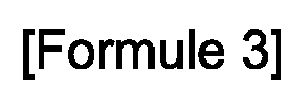
 dans la Formule 3,A est le même que défini dans la Formule 1,M est Na, K ou Li, etRe est un hydrogène ou un groupe alkyle de 1 à 10 atomes de carbone.
 - Initiateur de polymérisation de modification selon la revendication 6, dans lequel l'isomère comprend un composé représenté ci-après par les Formules 3-1 à 3-3 :


 dans les Formules 3-1 à 3-3,A est le même que défini dans la Formule 1,M est Na, K ou Li, etRe est un hydrogène ou un groupe alkyle de 1 à 10 atomes de carbone.
 - Initiateur de polymérisation de modification selon la revendication 6, dans lequel
l'initiateur de polymérisation de modification comprend un ou plusieurs éléments sélectionnés parmi un dimère, un trimère et un oligomère de chacun des composés représentés par la Formule 3 et un isomère de ces derniers. - Procédé de préparation de l'initiateur de polymérisation de modification selon la revendication 1, le procédé consistant à faire réagir un composé représenté ci-après par la Formule 1 et un composé représenté ci-après par la Formule 2 :
 dans la Formule 1,A est -NRaRb, -ORc ou -SRd, etRa à Rd sont chacun indépendamment un groupe alkyle de 1 à 30 atomes de carbone, un groupe alkényle de 2 à 30 atomes de carbone, un groupe alkynyle de 2 à 30 atomes de carbone, un groupe cycloalkyle de 3 à 30 atomes de carbone, un groupe aryle de 6 à 30 atomes de carbone, un groupe hétéroalkyle de 1 à 30 atomes de carbone, un groupe hétéroalkényle de 2 à 30 atomes de carbone, un groupe hétéroalkynyle de 2 à 30 atomes de carbone, un groupe hétérocycloalkyle de 2 à 30 atomes de carbone ou un groupe hétéroaryle de 3 à 30 atomes de carbone, où chacun de Ra à Rd est non substitué ou substitué par un substituant comprenant un ou plusieurs hétéroatomes sélectionnés parmi des atomes N, O, S, Si et F, et Ra et Rb peuvent être combinés l'un avec l'autre pour former un hétérocycle de 3 à 20 atomes de carbone, qui est non substitué ou substitué par un groupe alkyle de 1 à 30 atomes de carbone,
[Formule 2] M-Re
dans la Formule 2,M est un métal alcalin, etRe est un hydrogène, un groupe alkyle de 1 à 30 atomes de carbone, un groupe alkényle de 2 à 30 atomes de carbone, un groupe alkynyle de 2 à 30 atomes de carbone, un groupe cycloalkyle de 5 à 30 atomes de carbone ou un groupe aryle de 6 à 30 atomes de carbone. - Procédé de préparation d'un initiateur de polymérisation de modification selon la revendication 9, dans lequella réaction du composé représenté par la Formule 1 et du composé représenté par la Formule 2 est effectuée dans un réacteur de type continu comprenant un premier canal et un deuxième canal, etavant d'effectuer la réaction, un premier réactif comprenant le composé représenté par la Formule 1 est injecté par le premier canal dans le réacteur de type continu, et un deuxième réactif comprenant le composé représenté par la Formule 2 est injecté par le deuxième canal dans le réacteur de type continu.
- Procédé de préparation de l'initiateur de polymérisation de modification selon la revendication 10, dans lequel le premier réactif et le deuxième réactif sont injectés par le premier canal et le deuxième canal à raison de 1,0 g/min à 20,0 g/min dans le réacteur de type continu, respectivement.
- Procédé de préparation de l'initiateur de polymérisation de modification selon la revendication 9, dans lequel
le composé représenté par la Formule 1 et le composé représenté par la Formule 2 réagissent dans un rapport molaire compris entre 1:0,5 et 5. - Procédé de préparation de l'initiateur de polymérisation de modification selon la revendication 9, dans lequel
la réaction est effectuée à une température comprise entre 0°C et 80°C et à une pression comprise entre 0,5 bar et 10 bar. - Procédé de préparation de l'initiateur de polymérisation de modification selon la revendication 9, dans lequella réaction est effectuée en présence d'un additif polaire, etl'additif polaire comprend un ou plusieurs additifs sélectionnés dans le groupe constitué de tétrahydrofurane, ditétrahydrofurylpropane, éther diéthylique, éther cycloamylique, éther dipropylique, éther diméthylique d'éthylène, éther diéthylique d'éthylène, glycol diéthylique, glycol diméthylique, tert-butoxy éthoxy éthane, éther de bis(3-diméthylaminoéthyle), éther éthylique (diméthylaminoéthyle), triméthylamine, triéthylamine, tripropylamine et tétraméthyléthylènediamine.
- Polymère à base de diène conjugué modifié, comprenant :une unité de répétition dérivée d'un monomère à base de diène conjugué ; etun groupe fonctionnel dérivé de l'initiateur de polymérisation de modification selon la revendication 1.
Applications Claiming Priority (3)
| Application Number | Priority Date | Filing Date | Title |
|---|---|---|---|
| KR1020180070891A KR102587624B1 (ko) | 2018-06-20 | 2018-06-20 | 연속식 반응을 통한 변성 중합 개시제의 제조방법 |
| KR1020180070890A KR102281112B1 (ko) | 2018-06-20 | 2018-06-20 | 변성 중합 개시제 및 이의 제조방법 |
| PCT/KR2019/007405 WO2019245287A1 (fr) | 2018-06-20 | 2019-06-19 | Initiateur de polymérisation modifié et son procédé de préparation |
Publications (3)
| Publication Number | Publication Date |
|---|---|
| EP3680229A1 EP3680229A1 (fr) | 2020-07-15 |
| EP3680229A4 EP3680229A4 (fr) | 2021-03-03 |
| EP3680229B1 true EP3680229B1 (fr) | 2023-08-02 |
Family
ID=68983304
Family Applications (1)
| Application Number | Title | Priority Date | Filing Date |
|---|---|---|---|
| EP19822724.1A Active EP3680229B1 (fr) | 2018-06-20 | 2019-06-19 | Initiateur de polymérisation par modification et son procédé de préparation |
Country Status (5)
| Country | Link |
|---|---|
| US (1) | US11214643B2 (fr) |
| EP (1) | EP3680229B1 (fr) |
| JP (1) | JP7209718B2 (fr) |
| CN (1) | CN111212828B (fr) |
| WO (1) | WO2019245287A1 (fr) |
Families Citing this family (1)
| Publication number | Priority date | Publication date | Assignee | Title |
|---|---|---|---|---|
| CN117003652B (zh) * | 2022-04-28 | 2026-03-17 | 中国石油化工股份有限公司 | 一种n,n-二甲基氨基乙二醇醚及其制备和用作聚合结构调节剂中的应用 |
Family Cites Families (27)
| Publication number | Priority date | Publication date | Assignee | Title |
|---|---|---|---|---|
| NL86588C (fr) | 1980-09-20 | |||
| US5063190A (en) * | 1988-05-31 | 1991-11-05 | Gencorp Inc. | Anionic initiator system for polymerizing monomers |
| US5491230A (en) | 1993-12-29 | 1996-02-13 | Bridgestone Corporation | Anionic polymerization initiators containing adducts of cyclic secondary amines and conjugated dienes, and products therefrom |
| JP3625919B2 (ja) * | 1995-10-16 | 2005-03-02 | 株式会社ブリヂストン | 重合体の製造方法 |
| CN1045090C (zh) * | 1996-08-14 | 1999-09-15 | 北京燕山石油化工公司研究院 | 双官能团烷基锂引发剂及其制备方法 |
| US5935893A (en) * | 1997-08-01 | 1999-08-10 | Bridgestone Corporation | Aliphatic solutions of aminoalkyllithium compounds |
| ES2530797T3 (es) * | 2008-03-15 | 2015-03-05 | Bridgestone Corp | Polímeros funcionalizados e iniciadores para su fabricación |
| KR101384468B1 (ko) * | 2010-04-29 | 2014-04-11 | 주식회사 엘지화학 | 변성 중합 개시제, 및 이를 이용한 공역디엔계 공중합체 |
| KR101307494B1 (ko) * | 2010-07-07 | 2013-09-11 | 주식회사 엘지화학 | 광반응성 작용기를 갖는 화합물, 광반응성 중합체 및 이를 포함하는 배향막 |
| JP5058332B2 (ja) * | 2010-07-14 | 2012-10-24 | 住友ゴム工業株式会社 | イソプレンオリゴマー、ポリイソプレン、及びこれらの製造方法、ゴム組成物、並びに空気入りタイヤ |
| JP2013028781A (ja) * | 2011-01-24 | 2013-02-07 | Sumitomo Chemical Co Ltd | 共役ジエン系重合体の製造方法、共役ジエン系重合体、及び、共役ジエン系重合体組成物 |
| SG182932A1 (en) * | 2011-01-24 | 2012-08-30 | Sumitomo Chemical Co | Process for producing conjugated diene-based polymer, conjugated diene-based polymer, and conjugated diene-based polymer composition |
| BR112014002423A2 (pt) | 2011-08-03 | 2017-02-21 | Sumitomo Rubber Ind | composição de borracha e pneumático |
| WO2013099819A1 (fr) * | 2011-12-26 | 2013-07-04 | 公益財団法人相模中央化学研究所 | Procédé de production de farnésal à l'aide d'un complexe de vanadium |
| JP6468512B2 (ja) * | 2012-09-12 | 2019-02-13 | 住友ゴム工業株式会社 | イソプレンオリゴマー、ポリイソプレン、及びこれらの製造方法、ゴム組成物、並びに空気入りタイヤ |
| KR101525291B1 (ko) * | 2012-12-06 | 2015-06-02 | 주식회사 엘지화학 | 중합 개시제, 변성 공액 디엔계 중합체 및 이로부터 제조된 타이어 |
| WO2015046705A1 (fr) * | 2013-09-26 | 2015-04-02 | 주식회사 엘지화학 | Composé de métal de transition, composition de catalyseur renfermant ce composé et procédé de préparation d'un polymère au moyen de ceux-ci |
| EP3070105B1 (fr) | 2013-11-15 | 2021-06-23 | LG Chem, Ltd. | Polymère diénique conjugué modifié, procédé de préparation associé et composition de caoutchouc le contenant |
| KR101748915B1 (ko) * | 2014-11-28 | 2017-06-19 | 주식회사 엘지화학 | 신규 음이온 중합 개시제 및 이를 이용한 공역디엔계 공중합체의 제조방법 |
| KR101768293B1 (ko) * | 2014-12-19 | 2017-08-14 | 주식회사 엘지화학 | 신규 음이온 중합 개시제 및 이를 이용한 공역디엔계 공중합체의 제조방법 |
| KR101760169B1 (ko) * | 2015-01-27 | 2017-07-31 | 주식회사 엘지화학 | 연속 공정식 음이온 중합개시제의 제조방법 및 음이온중합 개시제 |
| EP3351566B1 (fr) * | 2015-09-17 | 2020-02-19 | LG Chem, Ltd. | Procédé et dispositif de production d'initiateur de polymérisation anionique et initiateur de polymérisation anionique ainsi produit |
| WO2017078408A1 (fr) * | 2015-11-02 | 2017-05-11 | 주식회사 엘지화학 | Composé d'organolithium, procédé de production d'un polymère à base de diène conjugué modifié l'utilisant, et polymère à base de diène conjugué modifié |
| KR101880370B1 (ko) * | 2015-12-24 | 2018-07-19 | 주식회사 엘지화학 | 고분자 화합물, 이를 이용한 변성 공액디엔계 중합체의 제조방법 및 변성 공액디엔계 중합체 |
| KR101913339B1 (ko) | 2016-12-19 | 2019-01-14 | (주)에이알씨엔에스 | 네트워크 보안상황 시각화 장치 |
| KR102605755B1 (ko) | 2016-12-19 | 2023-11-27 | 삼성전자주식회사 | 스피커를 제어하는 전자 장치와 이의 동작 방법 |
| US11732062B2 (en) * | 2018-03-16 | 2023-08-22 | Lg Chem, Ltd. | Modification polymerization initiator and method for preparing the same |
-
2019
- 2019-06-19 US US16/756,023 patent/US11214643B2/en active Active
- 2019-06-19 EP EP19822724.1A patent/EP3680229B1/fr active Active
- 2019-06-19 CN CN201980005046.3A patent/CN111212828B/zh active Active
- 2019-06-19 WO PCT/KR2019/007405 patent/WO2019245287A1/fr not_active Ceased
- 2019-06-19 JP JP2020530526A patent/JP7209718B2/ja active Active
Also Published As
| Publication number | Publication date |
|---|---|
| EP3680229A1 (fr) | 2020-07-15 |
| WO2019245287A1 (fr) | 2019-12-26 |
| EP3680229A4 (fr) | 2021-03-03 |
| US20210147599A1 (en) | 2021-05-20 |
| JP2021505718A (ja) | 2021-02-18 |
| JP7209718B2 (ja) | 2023-01-20 |
| US11214643B2 (en) | 2022-01-04 |
| CN111212828A (zh) | 2020-05-29 |
| CN111212828B (zh) | 2023-07-21 |
Similar Documents
| Publication | Publication Date | Title |
|---|---|---|
| EP3103820B1 (fr) | Nouvel initiateur de polymérisation anionique et procédé de préparation de polymère à base de diène conjugué l'employant | |
| JP3797262B2 (ja) | 変性ジエン系重合体ゴム、その製造方法及びゴム組成物 | |
| EP3567074B1 (fr) | Initiateur de polymérisation modifié et polymère à base de diène conjugué modifié et groupe fonctionnel dérivé de celui-ci | |
| KR20160076418A (ko) | 관능기가 도입된 아미노실란계 말단변성제, 이를 이용하는 말단변성 공역디엔계 중합체의 제조방법, 및 이에 따라 제조한 말단변성 공역디엔계 중합체 | |
| EP3543245B1 (fr) | Procédé de préparation d'un initiateur de polymérisation modifié au moyen d'un réacteur continu | |
| EP3095799B1 (fr) | Procédé de préparation d'un nouvel initiateur de polymérisation anionique et copolymère de système de diène conjugué l'employant | |
| KR102551166B1 (ko) | 성상-분지형 디엔 고무 | |
| EP3636652B1 (fr) | Initiateur de polymérisation modifié et procédé de préparation associé | |
| US11214643B2 (en) | Modification polymerization initiator and method for preparing the same | |
| KR102224737B1 (ko) | 연속식 반응을 통한 변성 중합 개시제의 제조방법 | |
| KR102587624B1 (ko) | 연속식 반응을 통한 변성 중합 개시제의 제조방법 | |
| KR102501596B1 (ko) | 변성 중합 개시제 및 이의 제조방법 | |
| KR102668764B1 (ko) | 연속식 반응을 통한 변성 중합 개시제의 제조방법 | |
| KR102281112B1 (ko) | 변성 중합 개시제 및 이의 제조방법 | |
| KR102501595B1 (ko) | 연속식 반응을 통한 변성 중합 개시제의 제조방법 | |
| KR102369332B1 (ko) | 미르센 유도체 화합물 및 이의 제조방법 | |
| HK40027553A (en) | Star-branched diene rubber | |
| HK40027553B (en) | Star-branched diene rubber |
Legal Events
| Date | Code | Title | Description |
|---|---|---|---|
| STAA | Information on the status of an ep patent application or granted ep patent |
Free format text: STATUS: THE INTERNATIONAL PUBLICATION HAS BEEN MADE |
|
| PUAI | Public reference made under article 153(3) epc to a published international application that has entered the european phase |
Free format text: ORIGINAL CODE: 0009012 |
|
| STAA | Information on the status of an ep patent application or granted ep patent |
Free format text: STATUS: REQUEST FOR EXAMINATION WAS MADE |
|
| 17P | Request for examination filed |
Effective date: 20200408 |
|
| AK | Designated contracting states |
Kind code of ref document: A1 Designated state(s): AL AT BE BG CH CY CZ DE DK EE ES FI FR GB GR HR HU IE IS IT LI LT LU LV MC MK MT NL NO PL PT RO RS SE SI SK SM TR |
|
| AX | Request for extension of the european patent |
Extension state: BA ME |
|
| A4 | Supplementary search report drawn up and despatched |
Effective date: 20210201 |
|
| RIC1 | Information provided on ipc code assigned before grant |
Ipc: C08C 19/22 20060101ALI20210125BHEP Ipc: C07C 211/21 20060101AFI20210125BHEP Ipc: C08F 236/10 20060101ALI20210125BHEP Ipc: C08F 8/02 20060101ALI20210125BHEP Ipc: C08F 36/04 20060101ALI20210125BHEP Ipc: C08F 2/44 20060101ALI20210125BHEP Ipc: C07D 211/06 20060101ALI20210125BHEP Ipc: C07D 207/04 20060101ALI20210125BHEP Ipc: C07D 223/04 20060101ALI20210125BHEP Ipc: C08C 19/44 20060101ALI20210125BHEP |
|
| DAV | Request for validation of the european patent (deleted) | ||
| DAX | Request for extension of the european patent (deleted) | ||
| REG | Reference to a national code |
Ref country code: DE Ref legal event code: R079 Free format text: PREVIOUS MAIN CLASS: C07C0211210000 Ipc: C08C0019220000 Ref country code: DE Ref legal event code: R079 Ref document number: 602019034215 Country of ref document: DE Free format text: PREVIOUS MAIN CLASS: C07C0211210000 Ipc: C08C0019220000 |
|
| GRAP | Despatch of communication of intention to grant a patent |
Free format text: ORIGINAL CODE: EPIDOSNIGR1 |
|
| STAA | Information on the status of an ep patent application or granted ep patent |
Free format text: STATUS: GRANT OF PATENT IS INTENDED |
|
| RIC1 | Information provided on ipc code assigned before grant |
Ipc: C08F 4/48 20060101ALI20230303BHEP Ipc: C08F 236/10 20060101ALI20230303BHEP Ipc: C08F 236/06 20060101ALI20230303BHEP Ipc: C08C 19/44 20060101ALI20230303BHEP Ipc: C08C 19/22 20060101AFI20230303BHEP |
|
| INTG | Intention to grant announced |
Effective date: 20230328 |
|
| GRAS | Grant fee paid |
Free format text: ORIGINAL CODE: EPIDOSNIGR3 |
|
| GRAA | (expected) grant |
Free format text: ORIGINAL CODE: 0009210 |
|
| STAA | Information on the status of an ep patent application or granted ep patent |
Free format text: STATUS: THE PATENT HAS BEEN GRANTED |
|
| AK | Designated contracting states |
Kind code of ref document: B1 Designated state(s): AL AT BE BG CH CY CZ DE DK EE ES FI FR GB GR HR HU IE IS IT LI LT LU LV MC MK MT NL NO PL PT RO RS SE SI SK SM TR |
|
| REG | Reference to a national code |
Ref country code: GB Ref legal event code: FG4D |
|
| REG | Reference to a national code |
Ref country code: CH Ref legal event code: EP |
|
| REG | Reference to a national code |
Ref country code: DE Ref legal event code: R096 Ref document number: 602019034215 Country of ref document: DE |
|
| REG | Reference to a national code |
Ref country code: IE Ref legal event code: FG4D |
|
| REG | Reference to a national code |
Ref country code: LT Ref legal event code: MG9D |
|
| REG | Reference to a national code |
Ref country code: NL Ref legal event code: MP Effective date: 20230802 |
|
| REG | Reference to a national code |
Ref country code: AT Ref legal event code: MK05 Ref document number: 1594680 Country of ref document: AT Kind code of ref document: T Effective date: 20230802 |
|
| PG25 | Lapsed in a contracting state [announced via postgrant information from national office to epo] |
Ref country code: GR Free format text: LAPSE BECAUSE OF FAILURE TO SUBMIT A TRANSLATION OF THE DESCRIPTION OR TO PAY THE FEE WITHIN THE PRESCRIBED TIME-LIMIT Effective date: 20231103 |
|
| PG25 | Lapsed in a contracting state [announced via postgrant information from national office to epo] |
Ref country code: IS Free format text: LAPSE BECAUSE OF FAILURE TO SUBMIT A TRANSLATION OF THE DESCRIPTION OR TO PAY THE FEE WITHIN THE PRESCRIBED TIME-LIMIT Effective date: 20231202 |
|
| PG25 | Lapsed in a contracting state [announced via postgrant information from national office to epo] |
Ref country code: SE Free format text: LAPSE BECAUSE OF FAILURE TO SUBMIT A TRANSLATION OF THE DESCRIPTION OR TO PAY THE FEE WITHIN THE PRESCRIBED TIME-LIMIT Effective date: 20230802 Ref country code: RS Free format text: LAPSE BECAUSE OF FAILURE TO SUBMIT A TRANSLATION OF THE DESCRIPTION OR TO PAY THE FEE WITHIN THE PRESCRIBED TIME-LIMIT Effective date: 20230802 Ref country code: PT Free format text: LAPSE BECAUSE OF FAILURE TO SUBMIT A TRANSLATION OF THE DESCRIPTION OR TO PAY THE FEE WITHIN THE PRESCRIBED TIME-LIMIT Effective date: 20231204 Ref country code: NO Free format text: LAPSE BECAUSE OF FAILURE TO SUBMIT A TRANSLATION OF THE DESCRIPTION OR TO PAY THE FEE WITHIN THE PRESCRIBED TIME-LIMIT Effective date: 20231102 Ref country code: NL Free format text: LAPSE BECAUSE OF FAILURE TO SUBMIT A TRANSLATION OF THE DESCRIPTION OR TO PAY THE FEE WITHIN THE PRESCRIBED TIME-LIMIT Effective date: 20230802 Ref country code: LV Free format text: LAPSE BECAUSE OF FAILURE TO SUBMIT A TRANSLATION OF THE DESCRIPTION OR TO PAY THE FEE WITHIN THE PRESCRIBED TIME-LIMIT Effective date: 20230802 Ref country code: LT Free format text: LAPSE BECAUSE OF FAILURE TO SUBMIT A TRANSLATION OF THE DESCRIPTION OR TO PAY THE FEE WITHIN THE PRESCRIBED TIME-LIMIT Effective date: 20230802 Ref country code: IS Free format text: LAPSE BECAUSE OF FAILURE TO SUBMIT A TRANSLATION OF THE DESCRIPTION OR TO PAY THE FEE WITHIN THE PRESCRIBED TIME-LIMIT Effective date: 20231202 Ref country code: HR Free format text: LAPSE BECAUSE OF FAILURE TO SUBMIT A TRANSLATION OF THE DESCRIPTION OR TO PAY THE FEE WITHIN THE PRESCRIBED TIME-LIMIT Effective date: 20230802 Ref country code: GR Free format text: LAPSE BECAUSE OF FAILURE TO SUBMIT A TRANSLATION OF THE DESCRIPTION OR TO PAY THE FEE WITHIN THE PRESCRIBED TIME-LIMIT Effective date: 20231103 Ref country code: FI Free format text: LAPSE BECAUSE OF FAILURE TO SUBMIT A TRANSLATION OF THE DESCRIPTION OR TO PAY THE FEE WITHIN THE PRESCRIBED TIME-LIMIT Effective date: 20230802 Ref country code: AT Free format text: LAPSE BECAUSE OF FAILURE TO SUBMIT A TRANSLATION OF THE DESCRIPTION OR TO PAY THE FEE WITHIN THE PRESCRIBED TIME-LIMIT Effective date: 20230802 |
|
| PG25 | Lapsed in a contracting state [announced via postgrant information from national office to epo] |
Ref country code: PL Free format text: LAPSE BECAUSE OF FAILURE TO SUBMIT A TRANSLATION OF THE DESCRIPTION OR TO PAY THE FEE WITHIN THE PRESCRIBED TIME-LIMIT Effective date: 20230802 |
|
| PG25 | Lapsed in a contracting state [announced via postgrant information from national office to epo] |
Ref country code: ES Free format text: LAPSE BECAUSE OF FAILURE TO SUBMIT A TRANSLATION OF THE DESCRIPTION OR TO PAY THE FEE WITHIN THE PRESCRIBED TIME-LIMIT Effective date: 20230802 |
|
| PG25 | Lapsed in a contracting state [announced via postgrant information from national office to epo] |
Ref country code: SM Free format text: LAPSE BECAUSE OF FAILURE TO SUBMIT A TRANSLATION OF THE DESCRIPTION OR TO PAY THE FEE WITHIN THE PRESCRIBED TIME-LIMIT Effective date: 20230802 Ref country code: RO Free format text: LAPSE BECAUSE OF FAILURE TO SUBMIT A TRANSLATION OF THE DESCRIPTION OR TO PAY THE FEE WITHIN THE PRESCRIBED TIME-LIMIT Effective date: 20230802 Ref country code: ES Free format text: LAPSE BECAUSE OF FAILURE TO SUBMIT A TRANSLATION OF THE DESCRIPTION OR TO PAY THE FEE WITHIN THE PRESCRIBED TIME-LIMIT Effective date: 20230802 Ref country code: EE Free format text: LAPSE BECAUSE OF FAILURE TO SUBMIT A TRANSLATION OF THE DESCRIPTION OR TO PAY THE FEE WITHIN THE PRESCRIBED TIME-LIMIT Effective date: 20230802 Ref country code: DK Free format text: LAPSE BECAUSE OF FAILURE TO SUBMIT A TRANSLATION OF THE DESCRIPTION OR TO PAY THE FEE WITHIN THE PRESCRIBED TIME-LIMIT Effective date: 20230802 Ref country code: CZ Free format text: LAPSE BECAUSE OF FAILURE TO SUBMIT A TRANSLATION OF THE DESCRIPTION OR TO PAY THE FEE WITHIN THE PRESCRIBED TIME-LIMIT Effective date: 20230802 Ref country code: SK Free format text: LAPSE BECAUSE OF FAILURE TO SUBMIT A TRANSLATION OF THE DESCRIPTION OR TO PAY THE FEE WITHIN THE PRESCRIBED TIME-LIMIT Effective date: 20230802 |
|
| REG | Reference to a national code |
Ref country code: DE Ref legal event code: R097 Ref document number: 602019034215 Country of ref document: DE |
|
| PLBE | No opposition filed within time limit |
Free format text: ORIGINAL CODE: 0009261 |
|
| STAA | Information on the status of an ep patent application or granted ep patent |
Free format text: STATUS: NO OPPOSITION FILED WITHIN TIME LIMIT |
|
| 26N | No opposition filed |
Effective date: 20240503 |
|
| PG25 | Lapsed in a contracting state [announced via postgrant information from national office to epo] |
Ref country code: SI Free format text: LAPSE BECAUSE OF FAILURE TO SUBMIT A TRANSLATION OF THE DESCRIPTION OR TO PAY THE FEE WITHIN THE PRESCRIBED TIME-LIMIT Effective date: 20230802 |
|
| PG25 | Lapsed in a contracting state [announced via postgrant information from national office to epo] |
Ref country code: BG Free format text: LAPSE BECAUSE OF FAILURE TO SUBMIT A TRANSLATION OF THE DESCRIPTION OR TO PAY THE FEE WITHIN THE PRESCRIBED TIME-LIMIT Effective date: 20230802 |
|
| PG25 | Lapsed in a contracting state [announced via postgrant information from national office to epo] |
Ref country code: BG Free format text: LAPSE BECAUSE OF FAILURE TO SUBMIT A TRANSLATION OF THE DESCRIPTION OR TO PAY THE FEE WITHIN THE PRESCRIBED TIME-LIMIT Effective date: 20230802 |
|
| PG25 | Lapsed in a contracting state [announced via postgrant information from national office to epo] |
Ref country code: MC Free format text: LAPSE BECAUSE OF FAILURE TO SUBMIT A TRANSLATION OF THE DESCRIPTION OR TO PAY THE FEE WITHIN THE PRESCRIBED TIME-LIMIT Effective date: 20230802 |
|
| REG | Reference to a national code |
Ref country code: CH Ref legal event code: PL |
|
| PG25 | Lapsed in a contracting state [announced via postgrant information from national office to epo] |
Ref country code: LU Free format text: LAPSE BECAUSE OF NON-PAYMENT OF DUE FEES Effective date: 20240619 |
|
| PG25 | Lapsed in a contracting state [announced via postgrant information from national office to epo] |
Ref country code: IE Free format text: LAPSE BECAUSE OF NON-PAYMENT OF DUE FEES Effective date: 20240619 |
|
| PG25 | Lapsed in a contracting state [announced via postgrant information from national office to epo] |
Ref country code: BE Free format text: LAPSE BECAUSE OF NON-PAYMENT OF DUE FEES Effective date: 20240630 Ref country code: CH Free format text: LAPSE BECAUSE OF NON-PAYMENT OF DUE FEES Effective date: 20240630 |
|
| REG | Reference to a national code |
Ref country code: BE Ref legal event code: MM Effective date: 20240630 |
|
| PGFP | Annual fee paid to national office [announced via postgrant information from national office to epo] |
Ref country code: DE Payment date: 20250520 Year of fee payment: 7 |
|
| PGFP | Annual fee paid to national office [announced via postgrant information from national office to epo] |
Ref country code: GB Payment date: 20250520 Year of fee payment: 7 |
|
| PGFP | Annual fee paid to national office [announced via postgrant information from national office to epo] |
Ref country code: IT Payment date: 20250523 Year of fee payment: 7 |
|
| PGFP | Annual fee paid to national office [announced via postgrant information from national office to epo] |
Ref country code: FR Payment date: 20250521 Year of fee payment: 7 |
|
| PG25 | Lapsed in a contracting state [announced via postgrant information from national office to epo] |
Ref country code: CY Free format text: LAPSE BECAUSE OF FAILURE TO SUBMIT A TRANSLATION OF THE DESCRIPTION OR TO PAY THE FEE WITHIN THE PRESCRIBED TIME-LIMIT; INVALID AB INITIO Effective date: 20190619 |
|
| PG25 | Lapsed in a contracting state [announced via postgrant information from national office to epo] |
Ref country code: HU Free format text: LAPSE BECAUSE OF FAILURE TO SUBMIT A TRANSLATION OF THE DESCRIPTION OR TO PAY THE FEE WITHIN THE PRESCRIBED TIME-LIMIT; INVALID AB INITIO Effective date: 20190619 |