EP3680794A1 - Dispositif et procédé d'authentification d'utilisateur sur la base de la reconnaissance d'iris - Google Patents
Dispositif et procédé d'authentification d'utilisateur sur la base de la reconnaissance d'iris Download PDFInfo
- Publication number
- EP3680794A1 EP3680794A1 EP18880306.8A EP18880306A EP3680794A1 EP 3680794 A1 EP3680794 A1 EP 3680794A1 EP 18880306 A EP18880306 A EP 18880306A EP 3680794 A1 EP3680794 A1 EP 3680794A1
- Authority
- EP
- European Patent Office
- Prior art keywords
- iris
- image
- normalized
- eye
- parameter
- Prior art date
- Legal status (The legal status is an assumption and is not a legal conclusion. Google has not performed a legal analysis and makes no representation as to the accuracy of the status listed.)
- Granted
Links
Images





Classifications
-
- G—PHYSICS
- G06—COMPUTING OR CALCULATING; COUNTING
- G06V—IMAGE OR VIDEO RECOGNITION OR UNDERSTANDING
- G06V40/00—Recognition of biometric, human-related or animal-related patterns in image or video data
- G06V40/10—Human or animal bodies, e.g. vehicle occupants or pedestrians; Body parts, e.g. hands
- G06V40/16—Human faces, e.g. facial parts, sketches or expressions
- G06V40/168—Feature extraction; Face representation
- G06V40/171—Local features and components; Facial parts ; Occluding parts, e.g. glasses; Geometrical relationships
-
- G—PHYSICS
- G06—COMPUTING OR CALCULATING; COUNTING
- G06V—IMAGE OR VIDEO RECOGNITION OR UNDERSTANDING
- G06V40/00—Recognition of biometric, human-related or animal-related patterns in image or video data
- G06V40/10—Human or animal bodies, e.g. vehicle occupants or pedestrians; Body parts, e.g. hands
- G06V40/18—Eye characteristics, e.g. of the iris
- G06V40/197—Matching; Classification
-
- G—PHYSICS
- G06—COMPUTING OR CALCULATING; COUNTING
- G06F—ELECTRIC DIGITAL DATA PROCESSING
- G06F18/00—Pattern recognition
- G06F18/20—Analysing
- G06F18/22—Matching criteria, e.g. proximity measures
-
- G—PHYSICS
- G06—COMPUTING OR CALCULATING; COUNTING
- G06F—ELECTRIC DIGITAL DATA PROCESSING
- G06F21/00—Security arrangements for protecting computers, components thereof, programs or data against unauthorised activity
- G06F21/30—Authentication, i.e. establishing the identity or authorisation of security principals
- G06F21/31—User authentication
- G06F21/32—User authentication using biometric data, e.g. fingerprints, iris scans or voiceprints
-
- G—PHYSICS
- G06—COMPUTING OR CALCULATING; COUNTING
- G06F—ELECTRIC DIGITAL DATA PROCESSING
- G06F21/00—Security arrangements for protecting computers, components thereof, programs or data against unauthorised activity
- G06F21/30—Authentication, i.e. establishing the identity or authorisation of security principals
- G06F21/45—Structures or tools for the administration of authentication
-
- G—PHYSICS
- G06—COMPUTING OR CALCULATING; COUNTING
- G06T—IMAGE DATA PROCESSING OR GENERATION, IN GENERAL
- G06T7/00—Image analysis
- G06T7/0002—Inspection of images, e.g. flaw detection
- G06T7/0012—Biomedical image inspection
- G06T7/0014—Biomedical image inspection using an image reference approach
- G06T7/0016—Biomedical image inspection using an image reference approach involving temporal comparison
-
- G—PHYSICS
- G06—COMPUTING OR CALCULATING; COUNTING
- G06V—IMAGE OR VIDEO RECOGNITION OR UNDERSTANDING
- G06V40/00—Recognition of biometric, human-related or animal-related patterns in image or video data
- G06V40/10—Human or animal bodies, e.g. vehicle occupants or pedestrians; Body parts, e.g. hands
- G06V40/18—Eye characteristics, e.g. of the iris
-
- G—PHYSICS
- G06—COMPUTING OR CALCULATING; COUNTING
- G06V—IMAGE OR VIDEO RECOGNITION OR UNDERSTANDING
- G06V40/00—Recognition of biometric, human-related or animal-related patterns in image or video data
- G06V40/10—Human or animal bodies, e.g. vehicle occupants or pedestrians; Body parts, e.g. hands
- G06V40/18—Eye characteristics, e.g. of the iris
- G06V40/19—Sensors therefor
-
- G—PHYSICS
- G06—COMPUTING OR CALCULATING; COUNTING
- G06V—IMAGE OR VIDEO RECOGNITION OR UNDERSTANDING
- G06V40/00—Recognition of biometric, human-related or animal-related patterns in image or video data
- G06V40/10—Human or animal bodies, e.g. vehicle occupants or pedestrians; Body parts, e.g. hands
- G06V40/18—Eye characteristics, e.g. of the iris
- G06V40/193—Preprocessing; Feature extraction
Definitions
- the present disclosure relates to an iris recognition-based user authentication device and method, and more particularly, to a device and method for determining whether to approve user authentication by recognizing irises of users including a user whose iris is partly occluded.
- Technology related to user identification using biometric recognition is one of the rapidly growing technical fields, and in particular, recognizing and identifying an eye, i.e., an iris, among a user's body parts, is one of the most effective methods of user authentication.
- a sufficient area e. g., more than 40%
- an iris region should not be occluded by the user's eyelid and eyelashes or by highlights due to the user wearing eyeglasses.
- a user is required to open his or her eyes wide during iris registration and recognition to obtain a reliable level of authentication, even in various external environments.
- These various external environments may be bright light that is reflected directly or indirectly from other objects, such as snow, wind, dust, fog, smoke, etc., or may be diseases, such as drooping eyelid, which make it difficult to open the eyes wide.
- FIG. 1 illustrates an iris region and a pupil region in an image of a user's eye, according to some embodiments.
- an image 10 of a user's eye may be largely divided into an iris region 101 and a pupil region 103.
- a traditional iris recognition technique mainly involves extracting iris features, i.e., features of an iris texture, via image analysis of the iris region 101 and comparing the extracted iris features with pre-registered iris data to check whether they match each other.
- a texture refers to an image patch or pattern characterized by statistical indicators describing characteristics of image pattern orientations and spatial frequency.
- each user may pre-register and manage iris data by capturing and analyzing an image of his or her own iris and use the iris data as a user authentication tool.
- the pupil region 103 is not covered by the user's eyelid while the iris region 101 is partially obscured by the user's eyelid, but a sufficient area for registration and recognition is exposed.
- the pupil region 103 and the iris region 101 are partially covered by the user's eyelid, and in particular, a sufficient area of the iris region 101 for registration and recognition is not exposed, which may cause difficulties in iris recognition and user authentication.
- One of the biometric systems based on traditional iris recognition uses a method of modifying a similarity score calculation by determining a confidence score based on local densities of similarities between compared iris images, and determining whether the compared iris images match each other based on a result of the modification.
- Another of the biometric systems using traditional iris recognition is a recognition method in which multiple features of a user's eye image are fused.
- the multiple features include both information about parameters related to iris texture and additional information about eye color and a region around an eye.
- the method employing such additional information is used to improve recognition accuracy, thereby reducing the number of failed recognition attempts, but this method requires the use of additional computational resources due to the use of additional information and uses only information about one eye. Thus, this method is not adequate for providing a solution to the problem related to recognition of a partially occluded eye.
- iris image may be rotated at an angle in a direction such that a head tilt angle is removed, by using a virtual line extending between a user's two eyes according to predefined features associated with the eyes.
- An iris image generated as a result of the rotation may be used for registration or authentication, and the head tilt angle may be determined using a predefined feature associated with one eye in an image.
- this method is also not adequate for providing a solution to the problem related to recognition of a partially occluded eye.
- iris recognition-based user authentication device and method capable of increasing accuracy of iris recognition via analysis of the iris and pupil of a user's left and right eyes.
- iris recognition-based user authentication device and method capable of effectively performing iris recognition by using information about geometric parameters of an iris obtained via analysis of a user's iris image and pupil image.
- a method of authenticating a user based on iris recognition includes: acquiring an image of a user's left and right eyes; extracting a pupil image and an iris image from the image; obtaining a first iris feature by analyzing the iris image; obtaining a second iris feature by analyzing the iris image and the pupil image; obtaining a similarity score based on the first iris feature, the second iris feature, and prestored reference iris data; and determining whether to approve user authentication based on the similarity score.
- a device for authenticating a user based on iris recognition includes: at least one processor configured to acquire an image of a user's left and right eyes, extract a pupil image and an iris image from the image, obtain a first iris feature by analyzing the iris image, obtain a second iris feature by analyzing the iris image and the pupil image, obtain a similarity score based on the first iris feature, the second iris feature, and prestored reference iris data, and determine whether to approve user authentication based on the similarity score; and at least one memory storing the reference iris data.
- accuracy of iris recognition may be increased via analysis of an iris and a pupil of a user's left and right eyes.
- iris recognition it is possible to efficiently perform iris recognition by using information about geometric parameters of an iris obtained via analysis of a user's iris image and pupil image.
- a method of authenticating a user based on iris recognition includes: acquiring an image of a user's left and right eyes; extracting a pupil image and an iris image from the image; obtaining a first iris feature by analyzing the iris image; obtaining a second iris feature by analyzing the iris image and the pupil image; obtaining a similarity score based on the first iris feature, the second iris feature, and prestored reference iris data; and determining whether to approve user authentication based on the similarity score.
- a device for authenticating a user based on iris recognition includes: at least one processor configured to acquire an image of a user's left and right eyes, extract a pupil image and an iris image from the image, obtain a first iris feature by analyzing the iris image, obtain a second iris feature by analyzing the iris image and the pupil image, obtain a similarity score based on the first iris feature, the second iris feature, and prestored reference iris data, and determine whether to approve user authentication based on the similarity score; and at least one memory storing the reference iris data.
- a computer program apparatus includes a computer-readable recording medium having recorded thereon a program for executing on a computer the method according to the embodiment.
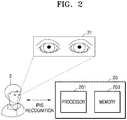
- FIG. 2 illustrates an example of an iris recognition-based user authentication device according to some embodiments.
- the iris recognition-based user authentication device 20 may perform user authentication by acquiring an image 21 of left and right eyes of a user 2.
- the processor 201 may acquire the image 21 of the user's left and right eyes.
- the processor 201 may acquire the image 21 of the user's left and right eyes by capturing a user's image directly via an image acquisition unit, or may receive from another device the image 21 of the user's left and right eyes captured by the other device.
- the processor 201 may extract a pupil image and an iris image from the image 21 of the user's left and right eyes.
- the processor 201 may segment and acquire a pupil image and an iris image of the left eye and a pupil image and an iris image of the right eye from the image 21 of the user's left and right eyes.
- the processor 201 may obtain a first iris feature by analyzing the iris image. For example, the processor 201 may obtain the first iris feature by performing iris segmentation and normalization.
- the first iris feature may include information about an iris texture feature.
- the first iris feature may include information about an iris texture extracted by analyzing an iris image acquired from the image 21 of the user's left and right eyes.
- the first iris feature may be encoded into, for example, a binary iris code.
- the processor 201 may obtain a second iris feature by analyzing the iris image and the pupil image.
- the iris circle means a circumscribed circle having the smallest radius among circles circumscribed about the iris
- the pupil circle means a circumscribed circle having the smallest radius among circles circumscribed about the pupil
- the processor 201 may obtain a similarity score based on the first iris feature, the second iris feature, and reference iris data prestored in the memory 203.
- the processor 201 may generate a first similarity parameter by comparing an iris code corresponding to the first iris feature with a reference code included in the reference iris data prestored in the memory 203.
- the processor 201 may generate a second similarity parameter by comparing the second iris feature with a reference feature included in the reference iris data prestored in the memory 203.
- the processor 201 may obtain a similarity score by using the first and second similarity parameters. For example, the processor 201 may substitute the first and second similarity parameters into at least one of a preset equation and a parameter mapping table to obtain a similarity score for determining whether to approve user authentication.
- the processor 201 may determine whether to approve user authentication based on the similarity score. For example, the processor 201 may determine whether to approve user authentication by comparing the obtained similarity score with a preset threshold score.
- the processor 201 may acquire an image of a user's left and right eyes.
- the processor 201 may acquire the image of the user's left and right eyes by capturing a user's image directly via an image acquisition unit, or may receive from another device the image of the user's left and right eyes captured by the other device.
- a detailed method of extracting a pupil image and an iris image by the processor 201 will be described below with reference to an embodiment of FIG. 4 .
- the processor 201 may obtain a first iris feature by analyzing the iris image.
- the processor 201 may obtain the first iris feature by performing iris segmentation and normalization.
- the first iris feature may include information about an iris texture feature.
- the first iris feature may be encoded into, for example, a binary iris code.
- the processor 201 may obtain a second iris feature by analyzing the iris image and the pupil image.
- the second iris feature may include information about geometric parameters for the user's pupil position and iris position.
- the second iris feature may include information about a radius R I of an iris circle, a ratio PIR between a radius of a pupil circle and the radius of the iris circle, a normalized X-axis distance NDX, and a normalized Y-axis distance NDY.
- the processor 201 may obtain the second iris feature based on center coordinates (X I , Y I ) and the radius R I of the iris circle, which are determined by analyzing the iris image, and on center coordinates (X P , Y P ) and a radius Rp of the pupil circle, which are determined by analyzing the pupil image.
- the processor 201 may generate the first similarity parameter based on a normalized Hamming distance HD Left for the left eye, a normalized Hamming distance HD Right for the right eye, the number of bits BitCount Left for the left eye, and the number of bits BitCount Right for the right eye.
- the processor 201 may calculate the normalized Hamming distances HD Left and HD Right for the left and right eyes, e.g., by comparing an iris code with a prestored reference code in order to generate the first similarity parameter.
- a Hamming distance is a distance function that indicates how many different symbols are in the same position in two strings of an equal length, and in particular, the Hamming distance between binary codes represent the number of mismatching bits between binary codes to be compared.
- the first similarity parameter may include a Hamming distance difference parameter ⁇ HD norm that indicates a normalized difference between the normalized Hamming distances HD Left and HD right for the left and right eyes.
- ⁇ HD norm indicates a normalized difference between the normalized Hamming distances HD Left and HD right for the left and right eyes.
- the first similarity parameter may include, for example, a Hamming distance average parameter HD avg that indicates an average of the normalized Hamming distances HD Left and HD right for the left and right eyes.
- the first similarity parameter may include, for example, a minimum total bit number parameter BitCount min which indicates a minimum total number of bits used to calculate the normalized Hamming distances HD left and HD right for the left and right eyes.
- the processor 201 may generate a second similarity parameter by comparing the second iris feature with a reference feature included in the reference iris data prestored in the memory 203.
- the second similarity parameter may include a minimum center distance difference parameter ⁇ ND min which indicates a minimum distance between centers of the pupil circle and the iris circle.
- the second similarity parameter may include, for example, a maximum center distance difference parameter ⁇ ND max which indicates a maximum distance between the centers of the pupil circle and the iris circle.
- the second similarity parameter may include, for example, a radius difference average parameter ⁇ R I,avg which indicates an average of a normalized left eye iris circle radius difference and a normalized right eye iris circle radius difference.
- the processor 201 may obtain a similarity score by using the first and second similarity parameters.
- the processor 201 may obtain a similarity score by using the first similarity parameter including a plurality of parameters, such as a Hamming distance difference parameter ⁇ HDnorm, a Hamming distance average parameter HD avg , a minimum total bit number parameter BitCount min and a maximum total bit number parameter BitCount max , and the second similarity parameter including a plurality of parameters, such as a minimum center distance difference parameter ⁇ ND min , a maximum center distance difference parameter ⁇ ND max , a radius difference average parameter ⁇ R I,avg , and a radius ratio difference average parameter ⁇ PIR avg .
- a minimum center distance difference parameter ⁇ ND min such as a minimum center distance difference parameter ⁇ ND min , a maximum center distance difference parameter ⁇ ND max , a radius difference average parameter ⁇ R I,avg , and a radius ratio difference average parameter ⁇ PIR avg .
- FIG. 4 illustrates a method of obtaining a first iris feature and a second iris feature, according to some embodiments of the present disclosure.
- the processor 201 may receive a user's image captured via an external device such as an infrared (IR) camera 401 and acquire an image of the user's left and right eyes from the received user's image (402).
- an external device such as an infrared (IR) camera 401
- IR infrared
- the processor 201 may separate the left and right eye regions in the image from each other to separately obtain first and second iris features of the left and right eyes (41 and 43).
- the processor 201 may perform a plurality of operations as follows.
- the processor 201 may detect a left eye pupil in the image and determine a radius and center coordinates of a circle representing the detected left eye pupil.
- the processor 201 may acquire a left eye pupil image via detection of the left eye pupil.
- the processor 201 may perform segmentation of a left eye iris.
- the segmentation of the left eye iris may include determining a boundary between the left eye pupil and the left eye iris.
- the segmentation of the left eye iris may be performed using an image segmentation algorithm.
- the processor 201 may acquire a left eye iris image via the segmentation of the left eye iris and determine a radius and center coordinates of a circle representing the left eye iris.
- the processor 201 may normalize the left eye iris image. Normalization of the left eye iris image may be defined as transformation of a pixel in the left eye iris image from polar coordinates into linear coordinates, and pixels in the left eye iris image may be moved from circular locations to rectangular matrix locations through the normalization.
- the processor 201 may extract a first left iris feature from the normalized left eye iris image (413).
- the processor 201 may generate a binary left iris code by encoding the extracted first left iris feature.
- the processor 201 may obtain a second left iris feature based on information about the left eye pupil image acquired during detection of the left eye pupil and information about the left eye iris image acquired during segmentation of the left eye iris (411).
- the processor 201 may obtain the second left iris feature based on center coordinates (X I,Left , Y I,Left ) and a radius R I,Left of the left eye iris circle, which are determined by analyzing the left eye iris image, and on center coordinates (X P,Left , Y P,Left ) and a radius R P of the left eye pupil circle, which are determined by analyzing the left eye pupil image (411).
- the second left iris feature may include information about pupil and iris positions, such as the radius R I,Left of the left eye iris circle, a ratio PIR Left between a radius of the left eye pupil circle and the radius of the left eye iris circle, a normalized X-axis distance NDX Left for the left eye and a normalized Y-axis distance NDY Left for the right eye.
- right eye image processing includes operations corresponding to those for left eye image processing.
- the processor 201 may perform a plurality of operations as follows.
- the processor 201 may detect a right eye pupil in the image and determine a radius and center coordinates of a circle representing the detected right eye pupil.
- the processor 201 may acquire a right eye pupil image via detection of the right eye pupil.
- the processor 201 may perform segmentation of a right eye iris.
- the segmentation of the right eye iris may include determining a boundary between the right eye pupil and the right eye iris.
- the segmentation of the right eye iris may be performed using an image segmentation algorithm.
- the processor 201 may acquire a right eye iris image via the segmentation of the right eye iris and determine a radius and center coordinates of a circle representing the right eye iris.
- the processor 201 may extract a first right iris feature from the normalized right eye iris image (433).
- the processor 201 may generate a binary right iris code by encoding the extracted first right iris feature.
- the processor 201 may obtain a second right iris feature based on information about the right eye pupil image acquired during detection of the right eye pupil and information about the right eye iris image acquired during segmentation of the right eye iris (431).
- the processor 201 may obtain the second right iris feature based on center coordinates (X I,Right , Y I,Right ) and a radius R I,Right of the right eye iris circle, which are determined by analyzing the right eye iris image, and on center coordinates (X P,Right , Y P,Right ) and a radius R P,Right of the right eye pupil circle, which are determined by analyzing the right eye pupil image 431.
- the second right iris feature may include information about pupil and iris positions, such as the radius R I,Right of the right eye iris circle, a ratio PIR Right between a radius of the right eye pupil circle and the radius of the right eye iris circle, a normalized X-axis distance NDX Right for the right eye, and a normalized Y-axis distance NDY Right for the right eye.
- the processor 201 may determine whether to approve user authentication by comparing the first iris features and the second iris features obtained for the left and right eyes with reference iris data in a database 405 stored in the memory 203 403.
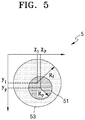
- FIG. 5 is a diagram illustrating positions of a pupil and an iris in a coordinate system according to some embodiments.
- FIG. 5 shows the positions of the pupil and iris in the coordinate system having X and Y axes and parameters corresponding to each position.
- the processor 201 may generate parameters by using circumscribed circles, i.e., an iris circle 53 and a pupil circle 51, by which the iris and the pupil are respectively approximated.
- the pupil circle 51 circumscribed about the pupil has a radius R P and center coordinates (X P , Y P ), and the iris circle 53 circumscribed about the iris has a radius R I and center coordinates (X I , Y I ).
- Each parameter for the pupil circle 51 and the iris circle 53 may be used to generate a second iris feature, i.e., a plurality of parameters such as the radius R I of the iris circle 53, a ratio PIR between the radius of the pupil circle and the radius R I of the iris circle , a normalized X-axis distance NDX, and a normalized Y-axis distance NDY.
- the second iris feature may be compared to a reference feature included in prestored reference iris data and used to generate a second similarity parameter.
- the second iris feature is calculated based on information about sizes and positions of the pupil and iris, which are determined while obtaining a first iris feature and an iris code, and because a formula for the second iris feature is computationally simple, it does not require a large amount of computational recourses for processing data.
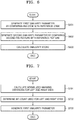
- FIG. 6 is a flowchart of a method of calculating a similarity score, according to some embodiments.
- the processor 201 may generate a second similarity parameter by comparing a second iris feature with a reference feature included in the prestored reference iris data.
- the processor 201 may obtain the second right iris feature based on center coordinates (X I , Y I ) and a radius R I of an iris circle, which are determined by analyzing an iris image, and on center coordinates (X P , Y P ) and a radius Rp of a pupil circle, which are determined by analyzing a pupil image.
- the second iris feature obtained via analysis of left eye iris and pupil images by the processor 201 may include, for example, information about a normalized X-axis distance NDX Left for the left eye, a normalized Y-axis distance NDY Left for the left eye, a left eye circle radius ratio PIR Left , and a left eye iris circle radius R I,Left .
- the second iris feature obtained via analysis of right eye iris and pupil images by the processor 201 may include, for example, a normalized X-axis distance NDX Right for the right eye, a normalized Y-axis distance NDY Right for the right eye, a right eye circle radius ratio PIR Right , and a right eye iris circle radius R I,Right .
- X I , X P , and R I respectively represent an X-axis component of iris circle center coordinates, an X- axis component of pupil circle center coordinates, and an iris circle radius.
- NDY y P ⁇ y I R I
- Y I , Y P , and R I respectively represent a Y-axis component of iris circle center coordinates, a Y-axis component of pupil circle center coordinates, and an iris circle radius.
- the processor 201 may obtain a second similarity parameter based on
- the second iris feature obtained during authentication i.e., a normalized X-axis distance NDX Left for the left eye, a normalized Y-axis distance NDY Left for the left eye, a left eye circle radius ratio PIR Left , a left iris circle radius R I,Left , a normalized X-axis distance NDX Right for the right eye, a normalized Y-axis distance NDY Right for the right eye, a right eye circle radius ratio PIR Right , and a right eye iris circle radius R I,Right .
- the second similarity parameter may include, for example, a minimum center distance difference parameter ⁇ ND min which indicates a minimum distance between centers of the pupil circle and the iris circle.
- the processor 201 may obtain the minimum center distance difference parameter ⁇ ND min by determining the minimum distance between the centers of the pupil circle and the iris circle.
- the second similarity parameter may include, for example, a maximum center distance difference parameter ⁇ ND max which indicates a maximum distance between the centers of the pupil circle and the iris circle.
- the processor 201 may obtain the maximum center distance difference parameter ⁇ ND max by determining the maximum distance between the centers of the pupil circle and the iris circle.
- the second similarity parameter may include a radius difference average parameter ⁇ R I,avg which indicates an average of a normalized left eye iris circle radius difference and a normalized right eye iris circle radius difference.
- the processor 201 may obtain the radius difference average parameter ⁇ R I,avg by calculating the average of the normalized left eye iris circle radius difference and the normalized right eye iris circle radius difference.
- the second similarity parameter may include, for example, a radius ratio difference average parameter ⁇ PIR avg that indicates an average of a difference between ratios of a pupil circle radius to an iris circle radius of a left eye and a difference between ratios of a pupil circle radius to an iris circle radius of a right eye.
- a radius ratio difference average parameter ⁇ PIR avg that indicates an average of a difference between ratios of a pupil circle radius to an iris circle radius of a left eye and a difference between ratios of a pupil circle radius to an iris circle radius of a right eye.
- the processor 201 may obtain the radius ratio difference average parameter ⁇ PIR avg by calculating the average of the difference between the ratios of the pupil circle radius to the iris circle radius of the left eye and the difference between the ratios of the pupil circle radius to the iris circle radius of the right eye.
- the processor 201 may calculate a similarity score by using the first and second similarity parameters.
- FIG. 7 is a flowchart of a method of calculating a first similarity parameter, according to some embodiments.
- the processor 201 may calculate a normalized Hamming distance HD Left for the left eye and a normalized Hamming distance HD Right for the right eye by comparing an iris code with a reference code.
- the processor 201 may determine the number of bits BitCount Left for the left eye, which are used to calculate the normalized Hamming distance HD Left for the left eye, and the number of bits BitCount Right for the right eye, which are used to calculate the normalized Hamming distance HD Right for the right eye.
- the bits used to calculate each normalized Hamming distance parameter correspond to bits in a part of an iris that is not masked when the user registers an image from which more information is to be obtained during authentication when the user has his or her eyes narrowed.
- the processor 201 may generate a first similarity parameter based on the normalized Hamming distances HD Left and HD Right for the left and right eyes and the numbers of bits BitCount Left and BitCount Right for the left and right eyes.
- the first similarity parameter may include a Hamming distance difference parameter ⁇ HD norm that indicates a normalized difference between the normalized Hamming distances HD Left and HD right for the left and right eyes.
- ⁇ HD norm indicates a normalized difference between the normalized Hamming distances HD Left and HD right for the left and right eyes.
- the processor 201 may obtain the Hamming distance difference parameter ⁇ HD norm by normalizing a difference between the normalized Hamming distances HD Left and HD right for the left and right eyes.
- the first similarity parameter may include, for example, a Hamming distance average parameter HD avg that indicates an average of the normalized Hamming distances HD Left and HD right for the left and right eyes.
- the processor 201 may obtain the Hamming distance average parameter HD avg by calculating the average of the normalized Hamming distances HD Left and HD right for the left and right eyes.
- the first similarity parameter may include, for example, a minimum total bit number parameter BitCount min which indicates a minimum total number of bits used to calculate the normalized Hamming distances HD left and HD right for the left and right eyes.
- the processor 201 may obtain the minimum total bit number parameter BitCount min by calculating the minimum total number of bits used to calculate the normalized Hamming distances HD left and HD right for the left and right eyes.
- the first similarity parameter may include, for example, a maximum total bit number parameter BitCount max which indicates a maximum total number of bits used to calculate the normalized Hamming distances HD left and HD right for the left and right eyes.
- the processor 201 may obtain the maximum total bit number parameter BitCount max by calculating the maximum total number of bits used to calculate the normalized Hamming distances HD left and HD right for the left and right eyes.
- MAX_BTS in Equations (9) and (10) is the maximum number of bits available to represent a binary iris code and may be preset based on experimental data.
- FIG. 8 illustrates a method of calculating a similarity score by using first and second similarity parameters.
- the processor 201 may obtain a normalized Hamming distance HD Left for the left eye and the number of bits BitCount Left for the left eye based on a reference left eye iris code IrisCode Left Enrolled included in prestored reference iris data and a left eye iris code obtained from an image of a user's left and right eyes (801).
- the processor 201 may obtain a normalized Hamming distance HD Right for the right eye and the number of bits BitCount Right for the right eye based on a reference right eye iris code IrisCode Right Enrolled included in the prestored reference iris data and a right eye iris code obtained from the image of the user's left and right eyes (802).
- the processor 201 may generate a first similarity parameter based on the obtained normalized Hamming distances HD Left and HD Right for the left and right eyes and numbers of bits BitCount Left and BitCount Right for the left and right eyes (821).
- the first similarity parameter may include a Hamming distance difference parameter ⁇ HD norm indicating a normalized difference between the normalized Hamming distances HD Left and HD right for the left and right eyes, a Hamming distance average parameter HD avg indicating an average of the normalized Hamming distances HD Left and HD right , a minimum total bit number parameter BitCount min indicating a minimum total number of bits used to calculate the normalized Hamming distances HD left and HD right , and a maximum total bit number parameter BitCount max indicating a maximum total number of bits used to calculate the normalized Hamming distances HD left and HD right .
- ⁇ HD norm indicating a normalized difference between the normalized Hamming distances HD Left and HD right for the left and right eyes
- HD avg indicating an average of the normalized Hamming distances HD Left and HD right
- a minimum total bit number parameter BitCount min indicating a minimum total number of bits used to calculate the normalized Hamming distances HD left and HD right
- the processor 201 may generate a second similarity parameter by comparing a second iris feature obtained from the image of the user's left and right eyes with a reference feature included in the prestored reference iris data.
- the processor 201 may use a second left eye iris feature obtained from the image of the user's left and right eyes, such as a normalized X-axis distance parameter NDX Left Enrolled for the left eye, a normalized Y-axis distance parameter NDY Left Enrolled for the left eye, a circle radius ratio parameter PIR Left Enrolled , and an iris circle radius parameter R I,Left Enrolled , and a second right eye iris feature such as a normalized X-axis distance parameter NDX Right Enrolled for the right eye, a normalized Y-axis distance parameter NDY Right Enrolled for the right eye, a circle radius ratio parameter PIR Right Enrolled , and an iris circle radius parameter R I,Right Enrolled (822).
- a second left eye iris feature obtained from the image of the user's left and right eyes, such as a normalized X-axis distance parameter NDX Left Enrolled for the left eye, a normalized Y-axis distance parameter NDY Left Enrolled for the left
- the second similarity parameter may include a minimum center distance difference parameter ⁇ ND min indicating a minimum distance between centers of the pupil circle and the iris circle, a maximum center distance difference parameter ⁇ ND max indicating a maximum distance between the centers of the pupil circle and the iris circle, a radius difference average parameter ⁇ R I,avg indicating an average of a normalized left eye iris circle radius difference and a normalized right eye iris circle radius difference, and a radius ratio difference average parameter ⁇ PIR avg indicating an average of a difference between ratios of a pupil circle radius to an iris circle radius of a left eye and a difference between ratios of a pupil circle radius to an iris circle radius of a right eye.
- a minimum center distance difference parameter ⁇ ND min indicating a minimum distance between centers of the pupil circle and the iris circle
- ⁇ ND max indicating a maximum distance between the centers of the pupil circle and the iris circle
- a radius difference average parameter ⁇ R I,avg indicating an average of
- the processor 201 may calculate a similarity score based on the generated first and second similarity parameters.
- the similarity score may be calculated by using the following Equation (11) containing both the first and second similarity parameters.
- S 1 1 + exp ⁇ ic ⁇ w 1 ⁇ ⁇ HD norm ⁇ w 2 ⁇ HD avg ⁇ w 3 ⁇ BitCount min ⁇ w 4 ⁇ BitCount max ⁇ w 5 ⁇ ⁇ ND min ⁇ w 6 ⁇ ⁇ ND max ⁇ w 7 ⁇ ⁇ PIR avg ⁇ w 8 ⁇ ⁇ R I , avg
- the bias factor ic and the weighting factor w i may be obtained empirically by using a logistic regression model for a training data set including a plurality of iris images of a user and may be predetermined based on experimental data acquired at different distances from the user and under different capture conditions.
- FIG. 9 is a flowchart of a method of determining whether to approve user authentication by comparing a similarity score with a threshold score, according to some embodiments.
- the processor 201 may obtain first and second similarity parameters, and in operation S902, the processor 201 may calculate a similarity score by using the first and second similarity parameters.
- the processor 201 may approve user authentication in operation S904.
- a condition for approving user authentication in the authentication method using the consensus rule is that a Hamming distance HD Left for the left eye is less than a preset threshold and a Hamming distance HD Right for the right eye is less than a preset threshold.
- a condition for approving user authentication in the authentication method using the minimum HD value selection rule is to satisfy that a minimum value of the Hamming distances HD Left and HD Right for the left and right eyes is determined as a similarity score and that the determined similarity score is less than the preset threshold.
- FNMR False Non-Match Rate
- FMR False Match Rate
- the percentage of authentication errors recorded when using the authentication method based on the consensus rule is 3.59% higher than a result obtained by applying the authentication method of the present disclosure.
- the percentage of authentication errors recorded when using the authentication method based on the minimum HD value selection rule is 3.13% higher than a result obtained by applying the authentication method of the present disclosure.
- the authentication method of the present disclosure provides more accurate results than the authentication method using the consensus rule and the authentication method using the minimum HD value selection rule without significantly increasing the required computational resources.
Landscapes
- Engineering & Computer Science (AREA)
- Theoretical Computer Science (AREA)
- Physics & Mathematics (AREA)
- General Physics & Mathematics (AREA)
- Health & Medical Sciences (AREA)
- Computer Security & Cryptography (AREA)
- General Health & Medical Sciences (AREA)
- Human Computer Interaction (AREA)
- Multimedia (AREA)
- Ophthalmology & Optometry (AREA)
- General Engineering & Computer Science (AREA)
- Computer Hardware Design (AREA)
- Software Systems (AREA)
- Computer Vision & Pattern Recognition (AREA)
- Oral & Maxillofacial Surgery (AREA)
- Data Mining & Analysis (AREA)
- Medical Informatics (AREA)
- Quality & Reliability (AREA)
- Radiology & Medical Imaging (AREA)
- Nuclear Medicine, Radiotherapy & Molecular Imaging (AREA)
- Artificial Intelligence (AREA)
- Evolutionary Computation (AREA)
- Evolutionary Biology (AREA)
- Bioinformatics & Computational Biology (AREA)
- Bioinformatics & Cheminformatics (AREA)
- Life Sciences & Earth Sciences (AREA)
- Collating Specific Patterns (AREA)
Applications Claiming Priority (3)
| Application Number | Priority Date | Filing Date | Title |
|---|---|---|---|
| RU2017141021A RU2670798C9 (ru) | 2017-11-24 | 2017-11-24 | Способ аутентификации пользователя по радужной оболочке глаз и соответствующее устройство |
| KR1020180138307A KR102554391B1 (ko) | 2017-11-24 | 2018-11-12 | 홍채 인식 기반 사용자 인증 장치 및 방법 |
| PCT/KR2018/014515 WO2019103520A1 (fr) | 2017-11-24 | 2018-11-23 | Dispositif et procédé d'authentification d'utilisateur sur la base de la reconnaissance d'iris |
Publications (3)
| Publication Number | Publication Date |
|---|---|
| EP3680794A1 true EP3680794A1 (fr) | 2020-07-15 |
| EP3680794A4 EP3680794A4 (fr) | 2020-12-09 |
| EP3680794B1 EP3680794B1 (fr) | 2024-07-17 |
Family
ID=63923624
Family Applications (1)
| Application Number | Title | Priority Date | Filing Date |
|---|---|---|---|
| EP18880306.8A Active EP3680794B1 (fr) | 2017-11-24 | 2018-11-23 | Dispositif et procédé d'authentification d'utilisateur sur la base de la reconnaissance d'iris |
Country Status (5)
| Country | Link |
|---|---|
| US (1) | US11449590B2 (fr) |
| EP (1) | EP3680794B1 (fr) |
| KR (1) | KR102554391B1 (fr) |
| CN (1) | CN111344703B (fr) |
| RU (1) | RU2670798C9 (fr) |
Families Citing this family (12)
| Publication number | Priority date | Publication date | Assignee | Title |
|---|---|---|---|---|
| CN110688951B (zh) * | 2019-09-26 | 2022-05-31 | 上海商汤智能科技有限公司 | 图像处理方法及装置、电子设备和存储介质 |
| CN112580506A (zh) * | 2020-12-18 | 2021-03-30 | 杭州电子科技大学 | 一种基于双向最小汉明距的虹膜特征点比对方法 |
| KR102508789B1 (ko) * | 2021-01-27 | 2023-03-14 | 아이리텍 잉크 | 홍채 인증 방법 및 홍채 인증 시스템 |
| CN113591550B (zh) * | 2021-06-17 | 2024-03-26 | 湖南大学 | 一种个人喜好自动检测模型构建方法、装置、设备及介质 |
| KR102480152B1 (ko) | 2021-06-28 | 2022-12-22 | 주식회사 아이리시스 | 홍채 인식의 경량화 방법 및 홍채 인식 프로그램을 저장한 컴퓨터로 판독가능한 기록 매체 |
| CN116563958A (zh) * | 2022-01-27 | 2023-08-08 | 北京眼神智能科技有限公司 | 多模态身份认证方法、装置、存储介质及设备 |
| KR102848257B1 (ko) * | 2023-01-31 | 2025-08-19 | 조선대학교산학협력단 | 생체정보를 이용한 출입관리 시스템 |
| CN116052313B (zh) * | 2023-02-10 | 2024-02-23 | 北京中超伟业信息安全技术股份有限公司 | 一种智能保密柜控制方法、装置、设备及存储介质 |
| CN116798107B (zh) * | 2023-06-16 | 2024-05-14 | 北京万里红科技有限公司 | 一种用于比对虹膜图像的可视化处理方法及装置 |
| CN116522370B (zh) * | 2023-07-03 | 2023-09-12 | 北京万里红科技有限公司 | 全同态加密认证方法、存储介质及电子设备 |
| CN121713175A (zh) * | 2023-08-21 | 2026-03-20 | 米哈伊尔·尼古拉耶维奇·多尔布尼亚 | 控制和安全数据访问方法 |
| CN117290834B (zh) * | 2023-10-10 | 2024-05-10 | 深圳市华弘智谷科技有限公司 | 一种基于虹膜识别来实现精准眼动追踪的多模态识别装置 |
Family Cites Families (29)
| Publication number | Priority date | Publication date | Assignee | Title |
|---|---|---|---|---|
| US5291560A (en) | 1991-07-15 | 1994-03-01 | Iri Scan Incorporated | Biometric personal identification system based on iris analysis |
| KR100307792B1 (ko) * | 1992-10-10 | 2001-11-30 | 존 이. 시드라즈 | 홍채분석에근거한생물측정사람식별방법 |
| CN101027678B (zh) | 2004-06-21 | 2011-09-21 | 谷歌公司 | 基于单个图像的多生物统计系统及方法 |
| WO2008016724A2 (fr) | 2006-03-03 | 2008-02-07 | Honeywell International, Inc. | Système de reconnaissance d'iris ayant une mesure de qualité d'image |
| KR20080017763A (ko) | 2006-08-22 | 2008-02-27 | 연세대학교 산학협력단 | 스코어 레벨 결합을 통한 홍채 인식 방법 |
| WO2008091401A2 (fr) * | 2006-09-15 | 2008-07-31 | Retica Systems, Inc | Système et procédés biométriques oculaires multimodaux |
| KR100826876B1 (ko) * | 2006-09-18 | 2008-05-06 | 한국전자통신연구원 | 홍채 검출 방법 및 이를 위한 장치 |
| JP4650386B2 (ja) | 2006-09-29 | 2011-03-16 | 沖電気工業株式会社 | 個人認証システム及び個人認証方法 |
| CN100517370C (zh) * | 2007-04-10 | 2009-07-22 | 杭州电子科技大学 | 基于双眼虹膜的身份识别方法 |
| DE602008002276D1 (de) * | 2007-04-26 | 2010-10-07 | St Microelectronics Rousset | Lokalisierungsverfahren und -vorrichtung einer menschlichen Iris in einem Bild |
| KR101030613B1 (ko) | 2008-10-08 | 2011-04-20 | 아이리텍 잉크 | 아이이미지에서 관심영역정보 및 인식적 정보획득방법 |
| US8317325B2 (en) * | 2008-10-31 | 2012-11-27 | Cross Match Technologies, Inc. | Apparatus and method for two eye imaging for iris identification |
| KR101763761B1 (ko) | 2010-06-04 | 2017-08-02 | 한국전자통신연구원 | 홍채 형상의 인식 방법 및 홍채 형상 인식 장치 |
| CN102844766B (zh) * | 2011-04-20 | 2014-12-24 | 中国科学院自动化研究所 | 基于人眼图像的多特征融合身份识别方法 |
| KR101302661B1 (ko) | 2011-07-20 | 2013-09-03 | 한국기초과학지원연구원 | 신원 인식 장치 및 방법 |
| RU110848U1 (ru) * | 2011-07-26 | 2011-11-27 | Александр Александрович Вальчук | Устройство идентификации личности по радужной оболочке глаза |
| FR2979727B1 (fr) | 2011-09-06 | 2013-08-30 | Morpho | Identification par reconnaissance d'iris |
| JP6452617B2 (ja) | 2012-12-10 | 2019-01-16 | エスアールアイ インターナショナルSRI International | バイオメトリク虹彩照合システム |
| US9530052B1 (en) * | 2013-03-13 | 2016-12-27 | University Of Maryland | System and method for sensor adaptation in iris biometrics |
| WO2015127313A1 (fr) * | 2014-02-21 | 2015-08-27 | Samsung Electronics Co., Ltd. | Système de caméra biométrique multibande ayant une reconnaissance de couleur d'iris |
| KR101645084B1 (ko) * | 2014-06-10 | 2016-08-02 | 아이리텍 잉크 | 실외 및 실내에서 홍채인식이 가능한 손 부착형 웨어러블 장치 |
| US9282237B2 (en) | 2014-07-17 | 2016-03-08 | Schlage Lock Company Llc | Multifocal iris recognition device |
| US9928422B2 (en) * | 2014-10-15 | 2018-03-27 | Samsung Electronics Co., Ltd. | User terminal apparatus and IRIS recognition method thereof |
| KR102277212B1 (ko) * | 2015-01-23 | 2021-07-15 | 삼성전자주식회사 | 디스플레이 정보를 이용한 홍채 인증 방법 및 장치 |
| KR102103286B1 (ko) * | 2015-02-10 | 2020-04-22 | 삼성전자주식회사 | 사용자 단말 및 이의 제공 방법 |
| KR102329821B1 (ko) * | 2015-06-04 | 2021-11-23 | 삼성전자주식회사 | 개인 인증 전자 장치 및 방법 |
| RU2628201C1 (ru) * | 2016-07-07 | 2017-08-15 | Самсунг Электроникс Ко., Лтд. | Способ адаптивного квантования для кодирования изображения радужной оболочки |
| RU2630742C1 (ru) * | 2016-07-18 | 2017-09-12 | Самсунг Электроникс Ко., Лтд. | Способ, система и устройство для биометрического распознавания радужной оболочки глаза |
| EP4120127B1 (fr) * | 2017-03-24 | 2025-02-12 | Magic Leap, Inc. | Accumulation et attribution de confiance de codes d'iris |
-
2017
- 2017-11-24 RU RU2017141021A patent/RU2670798C9/ru active
-
2018
- 2018-11-12 KR KR1020180138307A patent/KR102554391B1/ko active Active
- 2018-11-23 CN CN201880073875.0A patent/CN111344703B/zh active Active
- 2018-11-23 US US16/765,298 patent/US11449590B2/en active Active
- 2018-11-23 EP EP18880306.8A patent/EP3680794B1/fr active Active
Also Published As
| Publication number | Publication date |
|---|---|
| CN111344703B (zh) | 2023-10-13 |
| CN111344703A (zh) | 2020-06-26 |
| RU2670798C1 (ru) | 2018-10-25 |
| EP3680794A4 (fr) | 2020-12-09 |
| RU2670798C9 (ru) | 2018-11-26 |
| EP3680794B1 (fr) | 2024-07-17 |
| US20200356648A1 (en) | 2020-11-12 |
| US11449590B2 (en) | 2022-09-20 |
| KR102554391B1 (ko) | 2023-07-11 |
| KR20190060671A (ko) | 2019-06-03 |
Similar Documents
| Publication | Publication Date | Title |
|---|---|---|
| EP3680794B1 (fr) | Dispositif et procédé d'authentification d'utilisateur sur la base de la reconnaissance d'iris | |
| US12223760B2 (en) | Systems and methods for performing fingerprint based user authentication using imagery captured using mobile devices | |
| CN108921100B (zh) | 一种基于可见光图像与红外图像融合的人脸识别方法及系统 | |
| Srinivas et al. | Analysis of facial marks to distinguish between identical twins | |
| Asteriadis et al. | Facial feature detection using distance vector fields | |
| US20100202669A1 (en) | Iris recognition using consistency information | |
| CN106599785B (zh) | 人体3d特征身份信息库的建立方法及设备 | |
| Russ et al. | 3D facial recognition: a quantitative analysis | |
| Yi et al. | Partial face matching between near infrared and visual images in mbgc portal challenge | |
| CN110929570B (zh) | 虹膜快速定位装置及其定位方法 | |
| Gupta et al. | Iris recognition system using biometric template matching technology | |
| CN105320919A (zh) | 人眼定位方法及装置 | |
| Amjed et al. | Noncircular iris segmentation based on weighted adaptive hough transform using smartphone database | |
| Nandakumar et al. | Incorporating ancillary information in multibiometric systems | |
| Mendez-Llanes et al. | On the use of local fixations and quality measures for deep face recognition | |
| CN116229557B (zh) | 身份识别方法、装置、设备及存储介质 | |
| CN112288934A (zh) | 基于智能化门控的控制方法 | |
| RU2854769C1 (ru) | Способ двухфакторной идентификации личности человека по цифровому изображению лица | |
| Hombalimath et al. | Image quality assessment for iris recognition | |
| Feddaoui et al. | An efficcient and reliable algorithm for iris recognition based on Gabor filters | |
| Lee et al. | Ocular and iris recognition baseline algorithm | |
| Pandit et al. | Biometric Personal Identification based on Iris Patterns | |
| Barra | Design of a Multi-biometric Platform, based on physical traits and physiological measures: Face, Iris, Ear, ECG and EEG | |
| Yi et al. | A Hybrid Algorithm of Eyes Localization in Color Facial Region | |
| Shah et al. | Iris segmentation and recognition for human identification |
Legal Events
| Date | Code | Title | Description |
|---|---|---|---|
| STAA | Information on the status of an ep patent application or granted ep patent |
Free format text: STATUS: THE INTERNATIONAL PUBLICATION HAS BEEN MADE |
|
| PUAI | Public reference made under article 153(3) epc to a published international application that has entered the european phase |
Free format text: ORIGINAL CODE: 0009012 |
|
| STAA | Information on the status of an ep patent application or granted ep patent |
Free format text: STATUS: REQUEST FOR EXAMINATION WAS MADE |
|
| 17P | Request for examination filed |
Effective date: 20200306 |
|
| AK | Designated contracting states |
Kind code of ref document: A1 Designated state(s): AL AT BE BG CH CY CZ DE DK EE ES FI FR GB GR HR HU IE IS IT LI LT LU LV MC MK MT NL NO PL PT RO RS SE SI SK SM TR |
|
| AX | Request for extension of the european patent |
Extension state: BA ME |
|
| A4 | Supplementary search report drawn up and despatched |
Effective date: 20201109 |
|
| RIC1 | Information provided on ipc code assigned before grant |
Ipc: G06F 21/45 20130101ALI20201103BHEP Ipc: G06T 7/00 20170101ALI20201103BHEP Ipc: G06F 21/32 20130101AFI20201103BHEP Ipc: G06K 9/00 20060101ALI20201103BHEP |
|
| DAV | Request for validation of the european patent (deleted) | ||
| DAX | Request for extension of the european patent (deleted) | ||
| STAA | Information on the status of an ep patent application or granted ep patent |
Free format text: STATUS: EXAMINATION IS IN PROGRESS |
|
| 17Q | First examination report despatched |
Effective date: 20220503 |
|
| GRAP | Despatch of communication of intention to grant a patent |
Free format text: ORIGINAL CODE: EPIDOSNIGR1 |
|
| STAA | Information on the status of an ep patent application or granted ep patent |
Free format text: STATUS: GRANT OF PATENT IS INTENDED |
|
| INTG | Intention to grant announced |
Effective date: 20240315 |
|
| RIC1 | Information provided on ipc code assigned before grant |
Ipc: G06V 40/18 20220101ALI20240304BHEP Ipc: G06F 21/45 20130101ALI20240304BHEP Ipc: G06F 21/32 20130101AFI20240304BHEP |
|
| GRAS | Grant fee paid |
Free format text: ORIGINAL CODE: EPIDOSNIGR3 |
|
| GRAA | (expected) grant |
Free format text: ORIGINAL CODE: 0009210 |
|
| STAA | Information on the status of an ep patent application or granted ep patent |
Free format text: STATUS: THE PATENT HAS BEEN GRANTED |
|
| AK | Designated contracting states |
Kind code of ref document: B1 Designated state(s): AL AT BE BG CH CY CZ DE DK EE ES FI FR GB GR HR HU IE IS IT LI LT LU LV MC MK MT NL NO PL PT RO RS SE SI SK SM TR |
|
| REG | Reference to a national code |
Ref country code: CH Ref legal event code: EP |
|
| REG | Reference to a national code |
Ref country code: DE Ref legal event code: R096 Ref document number: 602018072002 Country of ref document: DE |
|
| REG | Reference to a national code |
Ref country code: IE Ref legal event code: FG4D |
|
| REG | Reference to a national code |
Ref country code: LT Ref legal event code: MG9D |
|
| REG | Reference to a national code |
Ref country code: NL Ref legal event code: MP Effective date: 20240717 |
|
| PG25 | Lapsed in a contracting state [announced via postgrant information from national office to epo] |
Ref country code: PT Free format text: LAPSE BECAUSE OF FAILURE TO SUBMIT A TRANSLATION OF THE DESCRIPTION OR TO PAY THE FEE WITHIN THE PRESCRIBED TIME-LIMIT Effective date: 20241118 |
|
| REG | Reference to a national code |
Ref country code: AT Ref legal event code: MK05 Ref document number: 1704811 Country of ref document: AT Kind code of ref document: T Effective date: 20240717 |
|
| PG25 | Lapsed in a contracting state [announced via postgrant information from national office to epo] |
Ref country code: NL Free format text: LAPSE BECAUSE OF FAILURE TO SUBMIT A TRANSLATION OF THE DESCRIPTION OR TO PAY THE FEE WITHIN THE PRESCRIBED TIME-LIMIT Effective date: 20240717 |
|
| PG25 | Lapsed in a contracting state [announced via postgrant information from national office to epo] |
Ref country code: PT Free format text: LAPSE BECAUSE OF FAILURE TO SUBMIT A TRANSLATION OF THE DESCRIPTION OR TO PAY THE FEE WITHIN THE PRESCRIBED TIME-LIMIT Effective date: 20241118 Ref country code: NL Free format text: LAPSE BECAUSE OF FAILURE TO SUBMIT A TRANSLATION OF THE DESCRIPTION OR TO PAY THE FEE WITHIN THE PRESCRIBED TIME-LIMIT Effective date: 20240717 |
|
| PG25 | Lapsed in a contracting state [announced via postgrant information from national office to epo] |
Ref country code: NO Free format text: LAPSE BECAUSE OF FAILURE TO SUBMIT A TRANSLATION OF THE DESCRIPTION OR TO PAY THE FEE WITHIN THE PRESCRIBED TIME-LIMIT Effective date: 20241017 |
|
| PG25 | Lapsed in a contracting state [announced via postgrant information from national office to epo] |
Ref country code: GR Free format text: LAPSE BECAUSE OF FAILURE TO SUBMIT A TRANSLATION OF THE DESCRIPTION OR TO PAY THE FEE WITHIN THE PRESCRIBED TIME-LIMIT Effective date: 20241018 Ref country code: FI Free format text: LAPSE BECAUSE OF FAILURE TO SUBMIT A TRANSLATION OF THE DESCRIPTION OR TO PAY THE FEE WITHIN THE PRESCRIBED TIME-LIMIT Effective date: 20240717 Ref country code: PL Free format text: LAPSE BECAUSE OF FAILURE TO SUBMIT A TRANSLATION OF THE DESCRIPTION OR TO PAY THE FEE WITHIN THE PRESCRIBED TIME-LIMIT Effective date: 20240717 |
|
| PG25 | Lapsed in a contracting state [announced via postgrant information from national office to epo] |
Ref country code: BG Free format text: LAPSE BECAUSE OF FAILURE TO SUBMIT A TRANSLATION OF THE DESCRIPTION OR TO PAY THE FEE WITHIN THE PRESCRIBED TIME-LIMIT Effective date: 20240717 |
|
| PG25 | Lapsed in a contracting state [announced via postgrant information from national office to epo] |
Ref country code: LV Free format text: LAPSE BECAUSE OF FAILURE TO SUBMIT A TRANSLATION OF THE DESCRIPTION OR TO PAY THE FEE WITHIN THE PRESCRIBED TIME-LIMIT Effective date: 20240717 |
|
| PG25 | Lapsed in a contracting state [announced via postgrant information from national office to epo] |
Ref country code: IS Free format text: LAPSE BECAUSE OF FAILURE TO SUBMIT A TRANSLATION OF THE DESCRIPTION OR TO PAY THE FEE WITHIN THE PRESCRIBED TIME-LIMIT Effective date: 20241117 Ref country code: AT Free format text: LAPSE BECAUSE OF FAILURE TO SUBMIT A TRANSLATION OF THE DESCRIPTION OR TO PAY THE FEE WITHIN THE PRESCRIBED TIME-LIMIT Effective date: 20240717 |
|
| PG25 | Lapsed in a contracting state [announced via postgrant information from national office to epo] |
Ref country code: HR Free format text: LAPSE BECAUSE OF FAILURE TO SUBMIT A TRANSLATION OF THE DESCRIPTION OR TO PAY THE FEE WITHIN THE PRESCRIBED TIME-LIMIT Effective date: 20240717 |
|
| PG25 | Lapsed in a contracting state [announced via postgrant information from national office to epo] |
Ref country code: ES Free format text: LAPSE BECAUSE OF FAILURE TO SUBMIT A TRANSLATION OF THE DESCRIPTION OR TO PAY THE FEE WITHIN THE PRESCRIBED TIME-LIMIT Effective date: 20240717 Ref country code: RS Free format text: LAPSE BECAUSE OF FAILURE TO SUBMIT A TRANSLATION OF THE DESCRIPTION OR TO PAY THE FEE WITHIN THE PRESCRIBED TIME-LIMIT Effective date: 20241017 |
|
| PG25 | Lapsed in a contracting state [announced via postgrant information from national office to epo] |
Ref country code: RS Free format text: LAPSE BECAUSE OF FAILURE TO SUBMIT A TRANSLATION OF THE DESCRIPTION OR TO PAY THE FEE WITHIN THE PRESCRIBED TIME-LIMIT Effective date: 20241017 Ref country code: PL Free format text: LAPSE BECAUSE OF FAILURE TO SUBMIT A TRANSLATION OF THE DESCRIPTION OR TO PAY THE FEE WITHIN THE PRESCRIBED TIME-LIMIT Effective date: 20240717 Ref country code: NO Free format text: LAPSE BECAUSE OF FAILURE TO SUBMIT A TRANSLATION OF THE DESCRIPTION OR TO PAY THE FEE WITHIN THE PRESCRIBED TIME-LIMIT Effective date: 20241017 Ref country code: LV Free format text: LAPSE BECAUSE OF FAILURE TO SUBMIT A TRANSLATION OF THE DESCRIPTION OR TO PAY THE FEE WITHIN THE PRESCRIBED TIME-LIMIT Effective date: 20240717 Ref country code: IS Free format text: LAPSE BECAUSE OF FAILURE TO SUBMIT A TRANSLATION OF THE DESCRIPTION OR TO PAY THE FEE WITHIN THE PRESCRIBED TIME-LIMIT Effective date: 20241117 Ref country code: HR Free format text: LAPSE BECAUSE OF FAILURE TO SUBMIT A TRANSLATION OF THE DESCRIPTION OR TO PAY THE FEE WITHIN THE PRESCRIBED TIME-LIMIT Effective date: 20240717 Ref country code: GR Free format text: LAPSE BECAUSE OF FAILURE TO SUBMIT A TRANSLATION OF THE DESCRIPTION OR TO PAY THE FEE WITHIN THE PRESCRIBED TIME-LIMIT Effective date: 20241018 Ref country code: FI Free format text: LAPSE BECAUSE OF FAILURE TO SUBMIT A TRANSLATION OF THE DESCRIPTION OR TO PAY THE FEE WITHIN THE PRESCRIBED TIME-LIMIT Effective date: 20240717 Ref country code: ES Free format text: LAPSE BECAUSE OF FAILURE TO SUBMIT A TRANSLATION OF THE DESCRIPTION OR TO PAY THE FEE WITHIN THE PRESCRIBED TIME-LIMIT Effective date: 20240717 Ref country code: BG Free format text: LAPSE BECAUSE OF FAILURE TO SUBMIT A TRANSLATION OF THE DESCRIPTION OR TO PAY THE FEE WITHIN THE PRESCRIBED TIME-LIMIT Effective date: 20240717 Ref country code: AT Free format text: LAPSE BECAUSE OF FAILURE TO SUBMIT A TRANSLATION OF THE DESCRIPTION OR TO PAY THE FEE WITHIN THE PRESCRIBED TIME-LIMIT Effective date: 20240717 |
|
| PG25 | Lapsed in a contracting state [announced via postgrant information from national office to epo] |
Ref country code: RO Free format text: LAPSE BECAUSE OF FAILURE TO SUBMIT A TRANSLATION OF THE DESCRIPTION OR TO PAY THE FEE WITHIN THE PRESCRIBED TIME-LIMIT Effective date: 20240717 Ref country code: SM Free format text: LAPSE BECAUSE OF FAILURE TO SUBMIT A TRANSLATION OF THE DESCRIPTION OR TO PAY THE FEE WITHIN THE PRESCRIBED TIME-LIMIT Effective date: 20240717 Ref country code: DK Free format text: LAPSE BECAUSE OF FAILURE TO SUBMIT A TRANSLATION OF THE DESCRIPTION OR TO PAY THE FEE WITHIN THE PRESCRIBED TIME-LIMIT Effective date: 20240717 |
|
| REG | Reference to a national code |
Ref country code: DE Ref legal event code: R097 Ref document number: 602018072002 Country of ref document: DE |
|
| PG25 | Lapsed in a contracting state [announced via postgrant information from national office to epo] |
Ref country code: EE Free format text: LAPSE BECAUSE OF FAILURE TO SUBMIT A TRANSLATION OF THE DESCRIPTION OR TO PAY THE FEE WITHIN THE PRESCRIBED TIME-LIMIT Effective date: 20240717 |
|
| PG25 | Lapsed in a contracting state [announced via postgrant information from national office to epo] |
Ref country code: CZ Free format text: LAPSE BECAUSE OF FAILURE TO SUBMIT A TRANSLATION OF THE DESCRIPTION OR TO PAY THE FEE WITHIN THE PRESCRIBED TIME-LIMIT Effective date: 20240717 |
|
| PG25 | Lapsed in a contracting state [announced via postgrant information from national office to epo] |
Ref country code: SK Free format text: LAPSE BECAUSE OF FAILURE TO SUBMIT A TRANSLATION OF THE DESCRIPTION OR TO PAY THE FEE WITHIN THE PRESCRIBED TIME-LIMIT Effective date: 20240717 |
|
| PLBE | No opposition filed within time limit |
Free format text: ORIGINAL CODE: 0009261 |
|
| STAA | Information on the status of an ep patent application or granted ep patent |
Free format text: STATUS: NO OPPOSITION FILED WITHIN TIME LIMIT |
|
| 26N | No opposition filed |
Effective date: 20250422 |
|
| REG | Reference to a national code |
Ref country code: CH Ref legal event code: PL |
|
| PG25 | Lapsed in a contracting state [announced via postgrant information from national office to epo] |
Ref country code: MC Free format text: LAPSE BECAUSE OF FAILURE TO SUBMIT A TRANSLATION OF THE DESCRIPTION OR TO PAY THE FEE WITHIN THE PRESCRIBED TIME-LIMIT Effective date: 20240717 |
|
| PG25 | Lapsed in a contracting state [announced via postgrant information from national office to epo] |
Ref country code: LU Free format text: LAPSE BECAUSE OF NON-PAYMENT OF DUE FEES Effective date: 20241123 |
|
| REG | Reference to a national code |
Ref country code: CH Ref legal event code: PL |
|
| PG25 | Lapsed in a contracting state [announced via postgrant information from national office to epo] |
Ref country code: CH Free format text: LAPSE BECAUSE OF NON-PAYMENT OF DUE FEES Effective date: 20241130 |
|
| REG | Reference to a national code |
Ref country code: BE Ref legal event code: MM Effective date: 20241130 |
|
| PG25 | Lapsed in a contracting state [announced via postgrant information from national office to epo] |
Ref country code: SE Free format text: LAPSE BECAUSE OF FAILURE TO SUBMIT A TRANSLATION OF THE DESCRIPTION OR TO PAY THE FEE WITHIN THE PRESCRIBED TIME-LIMIT Effective date: 20240717 |
|
| PG25 | Lapsed in a contracting state [announced via postgrant information from national office to epo] |
Ref country code: BE Free format text: LAPSE BECAUSE OF NON-PAYMENT OF DUE FEES Effective date: 20241130 |
|
| PG25 | Lapsed in a contracting state [announced via postgrant information from national office to epo] |
Ref country code: FR Free format text: LAPSE BECAUSE OF NON-PAYMENT OF DUE FEES Effective date: 20241130 |
|
| PG25 | Lapsed in a contracting state [announced via postgrant information from national office to epo] |
Ref country code: IE Free format text: LAPSE BECAUSE OF NON-PAYMENT OF DUE FEES Effective date: 20241123 |
|
| PGFP | Annual fee paid to national office [announced via postgrant information from national office to epo] |
Ref country code: DE Payment date: 20251002 Year of fee payment: 8 |
|
| PGFP | Annual fee paid to national office [announced via postgrant information from national office to epo] |
Ref country code: GB Payment date: 20251001 Year of fee payment: 8 |
|
| PG25 | Lapsed in a contracting state [announced via postgrant information from national office to epo] |
Ref country code: IT Free format text: LAPSE BECAUSE OF FAILURE TO SUBMIT A TRANSLATION OF THE DESCRIPTION OR TO PAY THE FEE WITHIN THE PRESCRIBED TIME-LIMIT Effective date: 20240717 |
|
| PG25 | Lapsed in a contracting state [announced via postgrant information from national office to epo] |
Ref country code: HU Free format text: LAPSE BECAUSE OF FAILURE TO SUBMIT A TRANSLATION OF THE DESCRIPTION OR TO PAY THE FEE WITHIN THE PRESCRIBED TIME-LIMIT; INVALID AB INITIO Effective date: 20181123 |
|
| PG25 | Lapsed in a contracting state [announced via postgrant information from national office to epo] |
Ref country code: CY Free format text: LAPSE BECAUSE OF FAILURE TO SUBMIT A TRANSLATION OF THE DESCRIPTION OR TO PAY THE FEE WITHIN THE PRESCRIBED TIME-LIMIT; INVALID AB INITIO Effective date: 20181123 |