EP3680896A1 - Verfahren zur steuerung eines endgerätes durch sprache, endgerät, server und speichermedium - Google Patents
Verfahren zur steuerung eines endgerätes durch sprache, endgerät, server und speichermedium Download PDFInfo
- Publication number
- EP3680896A1 EP3680896A1 EP18853000.0A EP18853000A EP3680896A1 EP 3680896 A1 EP3680896 A1 EP 3680896A1 EP 18853000 A EP18853000 A EP 18853000A EP 3680896 A1 EP3680896 A1 EP 3680896A1
- Authority
- EP
- European Patent Office
- Prior art keywords
- client
- server
- audio data
- scene information
- terminal
- Prior art date
- Legal status (The legal status is an assumption and is not a legal conclusion. Google has not performed a legal analysis and makes no representation as to the accuracy of the status listed.)
- Granted
Links
Images




Classifications
-
- G—PHYSICS
- G10—MUSICAL INSTRUMENTS; ACOUSTICS
- G10L—SPEECH ANALYSIS TECHNIQUES OR SPEECH SYNTHESIS; SPEECH RECOGNITION; SPEECH OR VOICE PROCESSING TECHNIQUES; SPEECH OR AUDIO CODING OR DECODING
- G10L15/00—Speech recognition
- G10L15/22—Procedures used during a speech recognition process, e.g. man-machine dialogue
-
- H—ELECTRICITY
- H04—ELECTRIC COMMUNICATION TECHNIQUE
- H04N—PICTORIAL COMMUNICATION, e.g. TELEVISION
- H04N21/00—Selective content distribution, e.g. interactive television or video on demand [VOD]
- H04N21/40—Client devices specifically adapted for the reception of or interaction with content, e.g. set-top-box [STB]; Operations thereof
- H04N21/41—Structure of client; Structure of client peripherals
- H04N21/422—Input-only peripherals, i.e. input devices connected to specially adapted client devices, e.g. global positioning system [GPS]
- H04N21/42204—User interfaces specially adapted for controlling a client device through a remote control device; Remote control devices therefor
- H04N21/42206—User interfaces specially adapted for controlling a client device through a remote control device; Remote control devices therefor characterized by hardware details
- H04N21/42208—Display device provided on the remote control
-
- G—PHYSICS
- G06—COMPUTING OR CALCULATING; COUNTING
- G06F—ELECTRIC DIGITAL DATA PROCESSING
- G06F3/00—Input arrangements for transferring data to be processed into a form capable of being handled by the computer; Output arrangements for transferring data from processing unit to output unit, e.g. interface arrangements
- G06F3/16—Sound input; Sound output
- G06F3/167—Audio in a user interface, e.g. using voice commands for navigating, audio feedback
-
- H—ELECTRICITY
- H04—ELECTRIC COMMUNICATION TECHNIQUE
- H04N—PICTORIAL COMMUNICATION, e.g. TELEVISION
- H04N21/00—Selective content distribution, e.g. interactive television or video on demand [VOD]
- H04N21/40—Client devices specifically adapted for the reception of or interaction with content, e.g. set-top-box [STB]; Operations thereof
- H04N21/41—Structure of client; Structure of client peripherals
- H04N21/422—Input-only peripherals, i.e. input devices connected to specially adapted client devices, e.g. global positioning system [GPS]
- H04N21/42204—User interfaces specially adapted for controlling a client device through a remote control device; Remote control devices therefor
- H04N21/42206—User interfaces specially adapted for controlling a client device through a remote control device; Remote control devices therefor characterized by hardware details
- H04N21/42208—Display device provided on the remote control
- H04N21/42209—Display device provided on the remote control for displaying non-command information, e.g. electronic programme guide [EPG], e-mail, messages or a second television channel
-
- H—ELECTRICITY
- H04—ELECTRIC COMMUNICATION TECHNIQUE
- H04N—PICTORIAL COMMUNICATION, e.g. TELEVISION
- H04N21/00—Selective content distribution, e.g. interactive television or video on demand [VOD]
- H04N21/40—Client devices specifically adapted for the reception of or interaction with content, e.g. set-top-box [STB]; Operations thereof
- H04N21/41—Structure of client; Structure of client peripherals
- H04N21/422—Input-only peripherals, i.e. input devices connected to specially adapted client devices, e.g. global positioning system [GPS]
- H04N21/42204—User interfaces specially adapted for controlling a client device through a remote control device; Remote control devices therefor
- H04N21/42206—User interfaces specially adapted for controlling a client device through a remote control device; Remote control devices therefor characterized by hardware details
- H04N21/4222—Remote control device emulator integrated into a non-television apparatus, e.g. a PDA, media center or smart toy
-
- H—ELECTRICITY
- H04—ELECTRIC COMMUNICATION TECHNIQUE
- H04N—PICTORIAL COMMUNICATION, e.g. TELEVISION
- H04N21/00—Selective content distribution, e.g. interactive television or video on demand [VOD]
- H04N21/40—Client devices specifically adapted for the reception of or interaction with content, e.g. set-top-box [STB]; Operations thereof
- H04N21/41—Structure of client; Structure of client peripherals
- H04N21/422—Input-only peripherals, i.e. input devices connected to specially adapted client devices, e.g. global positioning system [GPS]
- H04N21/42204—User interfaces specially adapted for controlling a client device through a remote control device; Remote control devices therefor
- H04N21/42206—User interfaces specially adapted for controlling a client device through a remote control device; Remote control devices therefor characterized by hardware details
- H04N21/42222—Additional components integrated in the remote control device, e.g. timer, speaker, sensors for detecting position, direction or movement of the remote control, microphone or battery charging device
-
- H—ELECTRICITY
- H04—ELECTRIC COMMUNICATION TECHNIQUE
- H04N—PICTORIAL COMMUNICATION, e.g. TELEVISION
- H04N21/00—Selective content distribution, e.g. interactive television or video on demand [VOD]
- H04N21/80—Generation or processing of content or additional data by content creator independently of the distribution process; Content per se
- H04N21/81—Monomedia components thereof
- H04N21/8166—Monomedia components thereof involving executable data, e.g. software
- H04N21/8173—End-user applications, e.g. Web browser, game
-
- G—PHYSICS
- G10—MUSICAL INSTRUMENTS; ACOUSTICS
- G10L—SPEECH ANALYSIS TECHNIQUES OR SPEECH SYNTHESIS; SPEECH RECOGNITION; SPEECH OR VOICE PROCESSING TECHNIQUES; SPEECH OR AUDIO CODING OR DECODING
- G10L15/00—Speech recognition
- G10L15/26—Speech to text systems
-
- G—PHYSICS
- G10—MUSICAL INSTRUMENTS; ACOUSTICS
- G10L—SPEECH ANALYSIS TECHNIQUES OR SPEECH SYNTHESIS; SPEECH RECOGNITION; SPEECH OR VOICE PROCESSING TECHNIQUES; SPEECH OR AUDIO CODING OR DECODING
- G10L15/00—Speech recognition
- G10L15/28—Constructional details of speech recognition systems
- G10L15/30—Distributed recognition, e.g. in client-server systems, for mobile phones or network applications
-
- G—PHYSICS
- G10—MUSICAL INSTRUMENTS; ACOUSTICS
- G10L—SPEECH ANALYSIS TECHNIQUES OR SPEECH SYNTHESIS; SPEECH RECOGNITION; SPEECH OR VOICE PROCESSING TECHNIQUES; SPEECH OR AUDIO CODING OR DECODING
- G10L15/00—Speech recognition
- G10L15/22—Procedures used during a speech recognition process, e.g. man-machine dialogue
- G10L2015/223—Execution procedure of a spoken command
Definitions
- This application relates to the field of Internet technologies, and in particular, to a method for controlling a terminal by voice, a terminal, a server, and a storage medium.
- television equipment for example, a smart TV or a TV box
- Television equipment refers to a new television product which has an open platform and is equipped with an operation control system and on which application programs can be installed. Therefore, a user can not only enjoy ordinary television content, but also autonomously install and uninstall various types of application software to expand and upgrade functions.
- Embodiments of this application provide a method for controlling a terminal by voice, a terminal, a server, and a storage medium.
- An embodiment of this application provides a method for controlling a terminal by voice.
- the method is performed by a first terminal and includes:
- An embodiment of this application provides a method for controlling a terminal by voice.
- the method is performed by a server and includes:
- the first terminal includes:
- the server includes:
- This application provides a method for controlling a terminal by voice.
- the method includes:
- the first terminal includes:
- the first server includes:
- An embodiment of this application provides a non-volatile computer-readable storage medium, storing a computer program, the program, when executed by a processor, implementing steps of the foregoing method.
- the first client records voice and transmits an instruction for querying scene information to the second client of the second terminal after a user triggers the voice recording control of the first client.
- the first client transmits scene information and audio data inputted by the user to the back-end server of the second client after receiving the scene information returned by the second client.
- the server determines a text of the first audio data, performs word segmentation on the text, performs matching between a word segmentation result and the scene information, forms a control instruction according to a matching result, and then transmits the control instruction to the first client.
- the first client transmits the control instruction to the second client after receiving the control instruction, so that the second client performs a corresponding action.
- the user only needs to input voice through the voice recording control on the first client, thereby greatly facilitating the operation of the second terminal by the user.
- FIG. 1 A system architecture to which the method is applied is shown in FIG. 1 .
- the system architecture includes: a first terminal 101, a second terminal 102, and a first server 103.
- the first terminal 101 and the second terminal 102 may be connected through a local area network 104, and the first terminal 101 and the first server 103 may be connected through the Internet 105.
- the foregoing first terminal 101 may be a mobile terminal such as a smartphone, a tablet computer, or the like.
- Clients of various types of application software are installed on the first terminal, and a user can log in to and use the clients, for example, a voice assistant client, of the types of application software through the first terminal.
- the foregoing second terminal 102 may be television equipment, for example, a smart TV equipped with Android or another system, and a TV box connected to a conventional TV, where the TV box is equipped with Android or another system and the conventional TV serves as a display of the TV box.
- Various application programs can be installed on the second terminal, and the user can control these application programs through a remote control.
- the user can use the remote control to open a Tencent video client installed on the smart TV, find a video that the user wants to watch, and then perform a play, fast forward or fast rewind operation on the video.
- the user can use a remote control to open a client of music software (for example, QQ music) installed on the TV box, and then perform a play or collection operation on a local or online song in an interface displayed by the conventional TV.
- music software for example, QQ music
- the foregoing first server 103 refers to a back-end server of the client installed on the second terminal, for example, a back-end server corresponding to a video client on the second terminal, or a back-end server of music software. If a video client is operated on the second terminal, a corresponding first server is a back-end server corresponding to the video client; if a client of music software is operated on the second terminal, a corresponding first server is a back-end server of the music software. In other words, the first server is a back-end server corresponding to a client which is operated on the second terminal.
- the first server may be specifically a server or a server cluster formed by a plurality of servers.
- an embodiment of this application provides a method for controlling a terminal by voice.
- the method may be performed by the first terminal 101, and may be specifically performed by the first client on the first terminal 101.
- the method includes: S201. Record voice to obtain first audio data in response to an operation on a voice recording control of a first client on the first terminal 101, and transmit an instruction for querying scene information to a second client on a second terminal 102, the scene information including at least one piece of operable object information in at least one display interface of the second client.
- the first client on the first terminal 101 needs to be connected to the second terminal 102, and may be specifically connected to the second terminal 102 through a local area network.
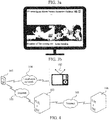
- a client to which a mobile phone interface shown in FIG. 3a belongs is connected to a smart TV shown in FIG. 3b , where the client shown in FIG. 3a is a voice assistant client, and the smart TV shown in FIG. 3b is a Xiaomi TV in the user's living room.
- a voice recording control 301 of the first client transmits an instruction for querying scene information to the Huawei TV in the living room after being triggered.
- the voice recording control 301 may have many forms, for example, a virtual key that is set in an interface.
- the first client detects surrounding sound and records the detected sound; and when the user releases the key, the recording ends. So far, the recorded sound forms first audio data.
- the voice recording control in this embodiment of this application can not only record voice, but also transmit an instruction for querying scene information to the second terminal 102 connected to the first client.
- the first client transmits an instruction for querying scene information to the Huawei TV in the living room.
- the first audio data recorded by the user through the first client is a voice instruction for operating the second terminal 102.
- prompt information for voice recording may be further displayed.
- the prompt information prompts the user: You can ask me like this: play Eternal Love, open viewing history, or search for a TV series related to Yang Mi, so that the user can issue a voice operation instruction with reference to the prompt information.
- the second client is a client installed on the second terminal 102. Since there may be a plurality of clients installed on the second terminal 102, one or more of the clients need to be selected as the second client. In one way, a client corresponding to an interface currently displayed by a television (a conventional TV connected to the TV box or a smart TV) is used as the second client.
- a client corresponding to an interface currently displayed by a television a conventional TV connected to the TV box or a smart TV
- the Xiaomi TV in the user's living room displays an interface of the Tencent video client
- the instruction for querying scene information transmitted by the first client is transmitted to the Tencent video client in the Huawei TV, and after receiving the query instruction, the Tencent video client returns scene information of the Tencent video client to the first client.
- the so-called scene information includes at least one piece of operable object information in at least one interface of the second client.
- the Tencent video client includes a variety show display interface, a TV series display interface, a movie display interface, a documentary display interface, and the like.
- There are many recently hot variety shows in the variety show display interface and these variety shows are displayed in forms of poster, program name, and the like.
- there are many recently hot TV series in the TV series display interface and these TV series may also be displayed in forms of poster, TV series name, and the like.
- viewing history, favorites, search, feedback, settings, and the like and these options may be used as global options for the Tencent video client.
- operable objects of the video client include TV series in the TV series display interface, variety shows in the variety show display interface, and the global options such as viewing history, favorites, search, feedback, and settings.
- the scene information returned by the Tencent video client may include names of a plurality of variety shows, names of a plurality of TV series, names of a plurality of movies, names of a plurality of documentaries, and may further include viewing history, favorites, search, feedback, settings, and the like.
- the foregoing scene information is described by using a video client as an example.
- the second client is not limited to the video client, and may be another client, for example, a music client or a news client.
- the music client includes a ranking display interface, a playlist display interface, an MV display interface, and a local display interface.
- There are a plurality of songs ranked by popularity in the ranking display interface there are a plurality of songs classified by song types in the playlist display interface, there are a plurality of MV songs in the MV display interface, and there are a plurality of songs that have been downloaded locally in the local display interface.
- Songs displayed in the ranking display interface, the playlist display interface, and the MV display interface are online songs, and songs displayed in the local display interface are local songs.
- Operable objects of the music client include online songs, local songs, and global options.
- the returned scene information may include names of a plurality of online songs or local songs, and may also include settings, questions and suggestions, checking for updates, and the like.
- the first server 103 is a back-end server of the second client.
- the first server 103 is a server of the video client; provided that the second client is a news client, the first server 103 is a server of the news client.
- the so-called to-be-performed operable object information may include names of operable objects. For example, if voice inputted by the user on the first client is "open history", to-be-performed operable object information includes “history”, and after receiving a control instruction carrying the to-be-performed operable object information, the second client opens history, that is, displays a history interface, so that the user can see recently watched media content in this interface. For another example, if voice inputted by the user on the first client is "I want to watch Journey to the West”, to-be-performed operable object information includes "Journey to the West”, and after receiving a control instruction carrying the to-be-performed operable object information, the second client performs an action of playing Journey to the West by default.
- to-be-performed operable object information may further include information such as actions to be performed on the operable objects. For example, if the user inputs voice "download a theme song of Journey to the West" on the first client, the first server 103 generates a control instruction based on the audio data and the scene information of the second client, and to-be-performed operable object information in the control instruction includes not only "a theme song of Journey to the West", but also "download", so that after receiving the control instruction, the second client does not perform an action of playing the theme song of Journey to the West, but performs an action of downloading the theme song of Journey to the West.
- a process in which the first server 103 forms a control instruction according to the scene information and the first audio data may be implemented in many ways, which is not limited in this embodiment of this application.
- a smart TV connected to the first client of the user's first terminal 101 displays an interface of a video client, when the user holds the voice recording control on the first client and says "I want to watch Journey to the West", the first client transmits an instruction for querying scene information to the second client on the second terminal 102.
- the video client displayed by the smart TV returns the scene information including names of various TV series, movies and variety shows, and some global options to the first client.
- the first client transmits the scene information and the audio data of "I want to watch Journey to the West" to the back-end server of the video client, that is, the first server 103.
- the first server 103 learns, according to the audio data, that the user wants to watch Journey to the West, combines the audio data and the scene information to generate a control instruction, and then returns the control instruction to the first client.
- the first client then transmits the control instruction to the second client, so that the second client performs an action of opening a play interface of a media resource of "Journey to the West".
- media resources related to "Journey to the West” found by the second client according to the control instruction include a TV series “Journey to the West", a TV series “New Journey to the West”, a cartoon “Journey to the West”, movies “Journey to the West: Havoc in Heaven” and “Journey to the West: Return of the Great Sage”, and the like, and there are many episodes of TV series related to Journey to the West
- the second client may display information about these media resources on the smart TV or a conventional TV connected to the TV box for the user to choose. After the user selects one of the media resources by voice or using a remote control, an action of playing is performed. The second client may further give the user some corresponding prompts about whether a corresponding action is performed successfully or not.
- the user triggers the voice recording control of the first client, so that the first client records voice and transmits the instruction for querying scene information to the second client of the second terminal 102.
- the first client After receiving the scene information returned by the second client, the first client transmits the scene information and audio data inputted by the user to the back-end server of the second client.
- the server forms a control instruction according to received information, and then transmits the instruction to the second client through the first client, so that the second client performs a corresponding action.
- the user only needs to input voice through the first client of the first terminal 101, to control the second terminal 102 to perform a corresponding action.
- television equipment is used as the second terminal 102, the user does not need to use a remote control to perform operations step by step, that is, tedious operations of the remote control are omitted, thereby making it greatly convenient for the user to operate the second terminal 102.
- an agent module may be installed on the second terminal 102, for example, a TV agent module may be installed on the smart TV or the TV box.
- the so-called TV agent module is actually an application program that is invisible to the user, and may serve as a bridge for other application programs installed on the smart TV or the TV box to interact with the outside world.
- other application programs installed on the smart TV or the TV box interact with the outside world through the agent module, which facilitates the management of the interaction between the application programs in the smart TV or the TV box and the outside world.
- application programs for example, a video client, a music client, a news client, and the like
- the agent module After receiving an instruction transmitted from the outside, the agent module transmits the instruction to a corresponding application program through broadcast, for example, specify a package name when broadcasting, and only transmits the instruction to a foreground application program, so that only the foreground application program can receive the instruction.
- the so-called foreground application program is a client to which a current display interface of the second terminal 102 belongs.
- the process in which the first client transmits an instruction for querying scene information to the second client on the second terminal 102 may be: the first client transmits the instruction for querying scene information to the agent module in the second terminal 102, so that the agent module transmits the instruction for querying scene information to the second client.
- the first client transmits an instruction for querying scene information to the agent module in the second terminal 102, and after receiving the instruction for querying scene information, the agent module transmits the instruction for querying scene information to the second client.
- the second client after receiving the instruction for querying scene information transmitted by the agent module, the second client returns scene information to the agent module, and after receiving the scene information, the agent module transmits the scene information to the first client.
- the process in which the first client transmits the control instruction to the second client may be: the control instruction is transmitted to the agent module in the second terminal 102, so that the agent module transmits the control instruction to the second client.
- the first client after receiving the control instruction transmitted by the first server 103, the first client transmits the control instruction to the agent module, and after receiving the control instruction, the agent module transmits the control instruction to the second client. It can be learned that, the client in the second terminal 102 and the external first terminal 101 interact with each other through the agent module, to implement the management of communication between the client in the second terminal 102 and the outside.
- the agent module in the second terminal 102 may be further configured to display some prompt information in the TV interface. For example, when the user inputs voice on the first client, the first client transmits an instruction for querying scene information to the agent module, and after receiving the instruction, the agent module learns that the user is recording voice, so that the agent module can display, in a current interface of the TV, prompt information that voice is being inputted.
- step S202 there are many ways of transmitting the scene information and the first audio data to the first server 103.
- the first audio data is transmitted to the first server 103 slice by slice in a streaming slice transmitting mode, to improve transmission efficiency.
- each slice is transmitted in 300 ms.
- the first audio data is divided into a plurality of slices, and these slices are transmitted to the first server 103 slice by slice.
- the scene information may be carried in any one of the slices.
- the scene information is carried in a last slice. After a slice carrying the scene information is received by the first server 103, it can be considered that reception of the first audio data is completed.
- the first audio data and the scene information may be transmitted to the first server 103 in other ways.
- the first server 103 forms the control instruction after the first client transmits the scene information and the first audio data to the first server 103.
- the first server 103 converts the first audio data into a text, performs word segmentation on the text, performs matching between a word segmentation result and the scene information, and forms a control instruction according to a matching result.
- the first server 103 may also transmit the first audio data to another server having an audio recognition capability, for example, a back-end server of WeChat or a back-end server of QQ.
- the another server having the audio recognition capability is referred to as a second server 106. In this case, as shown in FIG.
- the second server 106 is added to the system architecture to which the embodiments of this application are applied.
- the first server 103 and the second server 106 may be separately disposed, and in this case, the first server 103 and the second server 106 transmit data to each other through a network.
- the first server 103 and the second server 106 may be integrated to obtain an integrated server, and in this case, the integrated server has both the functions of the first server 103 and the functions of the second server 106.
- the second server 106 After receiving the first audio data, the second server 106 converts the first audio data into a text, and then returns the text to the first server 103, so that the first server 103 performs word segmentation on the received text, performs matching between a word segmentation result and the scene information, and forms a control instruction according to a matching result.
- the first server 103 having no voice processing capability may transmit the first audio data to the second server 106 having the voice processing capability, so that the second server 106 converts the first audio data into a text and then returns the text to the first server 103.
- a current display interface of the TV is an interface of a video client
- the first client transmits, to the first server 103, the voice and the scene information returned by the video client.
- the first server 103 has no capability of converting the voice inputted by the user into a text, so that after receiving the voice and the scene information, the first server 103 transmits the voice to the back-end server of WeChat, that is, the second server 106.
- the back-end server of WeChat converts the voice into a text, and returns the text to the first server 103.
- the first server 103 After receiving the text, the first server 103 performs word segmentation on the text "I want to watch Journey to the West” by using a semantic-based word segmentation method, to obtain a word segmentation result: "I”, “want to watch”, and "Journey to the West”, then performs matching between the word segmentation result and the scene information, and finds that there are videos related to Journey to the West in the scene information, so that the first server 103 forms a control instruction carrying information about videos related to "Journey to the West”.
- the first server 103 may further convert the text into standard voice, which may be referred to as second audio data, and then transmit the second audio data to the first client.
- the first server 103 may also transmit a speech synthesis request to the second server 106, and after receiving the request, the second server 106 converts the text into standard voice, that is, second audio data, and then returns the second audio data to the first server 103, so that the first server 103 can transmit the second audio data to the first client.
- the second server 106 refers to a server having the voice processing capability.
- the so-called voice processing capability includes converting audio data into a text, and certainly may further include converting a text into standard audio data.
- the requirements for the first server 103 are not high, and the first server 103 is not required to have the voice processing capability. Therefore, a first server 103 having the voice processing capability can convert the text into the second audio data, and a first server 103 having no voice processing capability can transmit the speech synthesis request to the second server 106 having the voice processing capability to obtain the second audio data.
- the first client may play the second audio data, or may transmit the second audio data to the second terminal 102, for example, transmit the second audio data to the agent module in the second terminal 102, so that the agent module plays the second audio data.
- the second audio data is audio data formed by converting a text
- the text is formed by converting the first audio data. In this way, the user can hear the standard voice corresponding to the voice the user has inputted.
- an embodiment of this application further provides a method for controlling a terminal by voice, and the method may be performed by the first server 103.
- the method includes the following steps: S501: Determine a text formed by converting first audio data after scene information and the first audio data that are transmitted by a first client on a first terminal 101 are received, the scene information including at least one piece of operable object information in at least one display interface of a second client on a second terminal 102.
- a way in which the first server 103 determines a text formed by converting the first audio data may be: the first server 103 converts the first audio data into a text; or, the first server 103 transmits the first audio data to the second server 106 after receiving the scene information and the first audio data that are transmitted by the first client, so that the second server 106 converts the first audio data into a text, and returns the text to the first server 103, that is, the first server 103 transmits the first audio data to the second server 106 having the voice processing capability. Any of the two ways may be used, as long as the first server 103 can obtain the text formed by converting the first audio data.
- S502 Perform word segmentation on the text, to obtain a word segmentation result.
- the word segmentation result obtained after performing word segmentation on the text "I want to watch Journey to the West” is “I”, “want to watch”, and “Journey to the West”.
- the word segmentation method here may be, but is not limited to, a word segmentation method based on semantic analysis.
- S503 Form a control instruction carrying to-be-performed operable object information according to the word segmentation result and the scene information.
- S504 Transmit the control instruction to a second client through the first client, so that the second client performs a corresponding action according to the control instruction.
- the first server 103 after receiving the scene information and the first audio data that are transmitted by the first client, the first server 103 first obtains a text corresponding to the first audio data, then performs word segmentation on the text, then forms a control instruction based on the word segmentation result and the scene information, and transmits the control instruction to the first client, and the first client transmits the control instruction to the second client, so that the second client performs a corresponding action, thereby controlling the second client by voice.
- control instruction there are many ways of forming a control instruction in the foregoing S503, one of which is: performing matching between the word segmentation result and the scene information, and forming the control instruction carrying to-be-performed operable object information in a case that the scene information has operable object information that matches the word segmentation result, the to-be-performed operable object information being operable object information that matches the word segmentation result.
- the word segmentation result is "I”, “want to watch”, and “Journey to the West”
- the scene information includes a video name "Journey to the West”
- operable object information that matches the word segmentation result
- a formed control instruction carries the video name "Journey to the West”.
- the second client performs an action of playing the operable object, that is, a video "Journey to the West”.
- the operable object information included in the scene information may be operable object information that corresponds to a media resource stored in the first server 103, or may be operable object information of a third-party media resource.
- the so-called media resource may be video, music, news content (including text, pictures, and the like), or another type of media resource.
- step S503 may include:
- the foregoing search for a media resource is to search for a media resource in the first server 103. If a media resource that matches the word segmentation result is stored in the first server 103, for example, if there is no operable object information that matches "Journey to the West" in the scene information, a media resource is searched for in the first server 103. If a video resource that matches "Journey to the West" is found, a control instruction is formed, and the control instruction includes the video name "Journey to the West". After receiving the control instruction, the second client performs an action of playing the operable object, that is, a video "Journey to the West". In other words, the smart TV or the TV connected to the TV box enters a play interface of Journey to the West.
- the first server 103 may feed back a search result to the second client through the first client, so that the second client displays the search result.
- the first server 103 feeds back a search result that no video related to Journey to the West is found to the first client, and after receiving information, the first client transmits the information to the second client.
- the second client displays prompt information that "no video related to 'Journey to the West' is found!” on the TV.
- the first server 103 may further transmit the text to the first client, so that the first client can display the text, as shown in FIG. 6b , display "What you said is: I want to watch Journey to the West".
- the first client may transmit the first audio data to the first server 103 in the streaming slice transmitting mode. If the first server 103 has no voice processing capability, the first server 103 transmits the first audio data to the second server 106. Specifically, after receiving each slice of the first audio data, the first server 103 transmits the slice to the second server 106, so that the second server 106 converts the slice into a corresponding text fragment, and returns the text fragment to the first server 103. Text fragments corresponding to slices are combined into a text. In such a way in which the slices are transmitted to the second server 106 in the streaming slice transmitting mode so that the second server 106 performs the text conversion, transmission efficiency can be improved.
- the first server 103 may obtain standard voice corresponding to the text. If the first server 103 has no voice processing capability, the first server 103 may transmit a speech synthesis request to the second server 106 so that the second server 106 converts the text into second audio data; and transmit the second audio data to the first client after receiving the second audio data returned by the second server 106.
- the first client may play the second audio data, or may transmit the second audio data to the second terminal 102 so that the second terminal 102 plays the second audio data.
- An embodiment of this application further provides a first terminal.
- the first terminal includes:
- the at least one instruction module is an instruction module in the first client. As shown in FIG. 7 , the at least one instruction module includes:
- the first transmitting module 702 may transmit the first audio data to the first server slice by slice in a streaming slice transmitting mode, the scene information being carried in one slice of the first audio data, for example, the scene information being carried in a last slice of the first audio data.
- the first client may further include: a playing module, configured to play second audio data after the second audio data transmitted by the first server is received, the second audio data being formed by converting a text, and the text being formed by converting the first audio data.
- a playing module configured to play second audio data after the second audio data transmitted by the first server is received, the second audio data being formed by converting a text, and the text being formed by converting the first audio data.
- the second transmitting module 703 may be further configured to transmit second audio data to an agent module of the second terminal after the second audio data transmitted by the first server is received, so that the agent module plays the second audio data, the second audio data being formed by converting a text, and the text being formed by converting the first audio data.
- the response module 701 may be configured to transmit the instruction for querying scene information to an agent module in the second terminal, so that the agent module transmits the instruction for querying scene information to the second client.
- the second transmitting module 703 may be configured to transmit the control instruction to an agent module in the second terminal, so that the agent module transmits the control instruction to the second client.
- the first client provided in this embodiment of this application is a functional architecture module in the foregoing method for controlling a terminal by voice, and for the explanation, examples, and beneficial effects of the content related to the first client, reference may be made to the related content in the foregoing method for controlling a terminal by voice, and this is not described herein again.
- An embodiment of this application further provides a first server.
- the server includes:
- the instruction forming module 803 may be configured to perform matching between the word segmentation result and the scene information, and form a control instruction carrying to-be-performed operable object information in a case that the scene information has operable object information that matches the word segmentation result, the to-be-performed operable object information being operable object information that matches the word segmentation result.
- the instruction forming module 803 may be configured to perform matching between the word segmentation result and the scene information, and search for a media resource that matches the word segmentation result according to the word segmentation result in a case that the scene information has no operable object information that matches the word segmentation result; and form the control instruction carrying to-be-performed operable object information in a case that the media resource that matches the word segmentation result is found, the to-be-performed operable object information being operable object information that corresponds to the media resource that matches the word segmentation result.
- the instruction forming module 803 may be further configured to feed back a search result to the second client through the first client in a case that the media resource that matches the word segmentation result is not found, so that the second client displays the search result.
- the text determining module 801 may be configured to transmit the first audio data to a second server after the scene information and the first audio data that are transmitted by the first client are received, so that the second server converts the first audio data into a text and returns the text to the first server.
- the text determining module 801 may be specifically configured to transmit each slice of the first audio data to the second server after the slice is received, so that the second server converts the slice into a corresponding text fragment, and returns the text fragment to the first server; text fragments corresponding to slices being combined into a text.
- the first server 800 may further include: a request module, configured to transmit a speech synthesis request to the second server so that the second server converts the text into second audio data; and transmit the second audio data to the first client after receiving the second audio data returned by the second server.
- a request module configured to transmit a speech synthesis request to the second server so that the second server converts the text into second audio data
- the third transmitting module 804 may be further configured to transmit the text to the first client, so that the first client displays the text.
- the first server provided in this embodiment of this application is a functional architecture module in the foregoing method for controlling a terminal by voice, and for the explanation, examples, and beneficial effects of the content related to the first client, reference may be made to the related content in the foregoing method for controlling a terminal by voice, and this is not described herein again.
- an embodiment of this application further provides an overall process of a method for controlling a terminal by voice.
- An embodiment of this application further provides a non-volatile computer-readable storage medium, storing a computer program, and the program, when executed by a processor, implementing the steps of any one of the foregoing methods.
- FIG. 10 is a structural diagram of composition of a computer device where a first client or a first server is located.
- the computer device includes one or more processors (CPU) 1002, a communications module 1004, a memory 1006, a user interface 1010, and a communications bus 1008 configured to interconnect these components.
- processors CPU
- communications module 1004
- memory 1006
- user interface 1010 a user interface 1010
- communications bus 1008 configured to interconnect these components.
- the processor 1002 may receive and transmit data by using the communications module 1004, to implement network communication and/or local communication.
- the user interface 1010 includes one or more output devices 1012, including one or more speakers and/or one or more visualization displays.
- the user interface 1010 further includes one or more input devices 1014, including a keyboard, a mouse, a sound command input unit or a microphone, a touch display, a touch-sensitive input panel, a posture capturing camera, another input key or control, or the like.
- the memory 1006 may be a high-speed random access memory such as a DRAM, an SRAM, a DDR RAM, or other random access solid-state memory devices; or a non-volatile memory such as one or more magnetic disk storage devices, optical disc storage devices, flash memory devices, or other non-volatile solid-state memory devices.
- a high-speed random access memory such as a DRAM, an SRAM, a DDR RAM, or other random access solid-state memory devices
- a non-volatile memory such as one or more magnetic disk storage devices, optical disc storage devices, flash memory devices, or other non-volatile solid-state memory devices.
- the memory 1006 stores an instruction set that can be executed by the processor 1002 and includes:
- modules are not all steps and modules in the procedures and the structural diagrams are necessary, and some steps or modules may be omitted according to an actual need. An execution sequence of the steps is not fixed and may be adjusted as needed. Division of the modules is merely functional division for ease of descriptions. During actual implementation, one module may include a plurality of modules, and functions of a plurality of modules may be implemented by a same module. These modules may be located in a same device or in different devices.
- Hardware modules in the embodiments may be implemented by hardware or a hardware platform combined with software.
- the software includes machine-readable instructions, stored in a non-volatile storage medium. Therefore, the embodiments may alternatively be reflected as software products.
- the hardware may be implemented by dedicated hardware or hardware executing the machine-readable instructions.
- the hardware may be a permanent circuit or logical device (for example, a special-purpose processor, such as an FPGA or an ASIC) that is specially designed to perform particular operations.
- the hardware may include a programmable logic device or circuit (for example, including a general-purpose processor or another programmable processor) that is temporarily configured by software to perform particular operations.
- each embodiment of this application may be implemented by a data processing program executed by a data processing device such as a computer.
- the data processing program constitutes this application.
- a data processing program stored in a storage medium is directly read from the storage medium for execution or the program is installed on or replicated to a storage device (such as a hard disk or an internal memory) of a data processing device for execution. Therefore, such storage medium also constitutes this application.
- This application further provides a non-volatile storage medium storing a data processing program.
- the data processing program may be used for performing any one of the foregoing embodiments of this application.
- a non-volatile computer-readable storage medium may be a memory disposed in an extension board inserted into the computer or a memory disposed in an extension unit connected to the computer.
- a CPU and the like installed on the extension board or the extension unit can perform some or all actual operations according to the instructions.
Landscapes
- Engineering & Computer Science (AREA)
- Multimedia (AREA)
- Human Computer Interaction (AREA)
- Signal Processing (AREA)
- Audiology, Speech & Language Pathology (AREA)
- Physics & Mathematics (AREA)
- Health & Medical Sciences (AREA)
- Acoustics & Sound (AREA)
- Computational Linguistics (AREA)
- Theoretical Computer Science (AREA)
- General Engineering & Computer Science (AREA)
- General Physics & Mathematics (AREA)
- General Health & Medical Sciences (AREA)
- Software Systems (AREA)
- Information Transfer Between Computers (AREA)
- Telephonic Communication Services (AREA)
- Two-Way Televisions, Distribution Of Moving Picture Or The Like (AREA)
Applications Claiming Priority (2)
| Application Number | Priority Date | Filing Date | Title |
|---|---|---|---|
| CN201710804781.3A CN109474843B (zh) | 2017-09-08 | 2017-09-08 | 语音操控终端的方法、客户端、服务器 |
| PCT/CN2018/104264 WO2019047878A1 (zh) | 2017-09-08 | 2018-09-06 | 语音操控终端的方法、终端、服务器和存储介质 |
Publications (3)
| Publication Number | Publication Date |
|---|---|
| EP3680896A1 true EP3680896A1 (de) | 2020-07-15 |
| EP3680896A4 EP3680896A4 (de) | 2021-01-06 |
| EP3680896B1 EP3680896B1 (de) | 2024-04-10 |
Family
ID=65634661
Family Applications (1)
| Application Number | Title | Priority Date | Filing Date |
|---|---|---|---|
| EP18853000.0A Active EP3680896B1 (de) | 2017-09-08 | 2018-09-06 | Verfahren zur steuerung eines endgerätes durch sprache, endgerät, server und speichermedium |
Country Status (4)
| Country | Link |
|---|---|
| US (1) | US11227598B2 (de) |
| EP (1) | EP3680896B1 (de) |
| CN (1) | CN109474843B (de) |
| WO (1) | WO2019047878A1 (de) |
Families Citing this family (14)
| Publication number | Priority date | Publication date | Assignee | Title |
|---|---|---|---|---|
| CN109474843B (zh) * | 2017-09-08 | 2021-09-03 | 腾讯科技(深圳)有限公司 | 语音操控终端的方法、客户端、服务器 |
| CN110322873B (zh) | 2019-07-02 | 2022-03-01 | 百度在线网络技术(北京)有限公司 | 语音技能的退出方法、装置、设备及存储介质 |
| CN110600027B (zh) * | 2019-08-26 | 2022-12-02 | 深圳市丰润达科技有限公司 | 语音终端场景控制、应用方法、语音终端、云端及系统 |
| CN110718219B (zh) * | 2019-09-12 | 2022-07-22 | 百度在线网络技术(北京)有限公司 | 一种语音处理方法、装置、设备和计算机存储介质 |
| CN113194346A (zh) * | 2019-11-29 | 2021-07-30 | 广东海信电子有限公司 | 一种显示设备 |
| CN111464595B (zh) * | 2020-03-17 | 2022-10-18 | 云知声智能科技股份有限公司 | 一种云端配置个性化场景的方法及装置 |
| CN114430496B (zh) * | 2020-10-15 | 2024-03-01 | 华为技术有限公司 | 跨设备视频搜索方法及相关设备 |
| CN112397068B (zh) * | 2020-11-16 | 2024-03-26 | 深圳市朗科科技股份有限公司 | 一种语音指令执行方法及存储设备 |
| CN117882130A (zh) * | 2021-06-22 | 2024-04-12 | 海信视像科技股份有限公司 | 一种进行语音控制的终端设备及服务器 |
| CN115620710A (zh) * | 2021-06-30 | 2023-01-17 | 青岛海尔科技有限公司 | 语音识别的方法、装置、存储介质以及电子装置 |
| CN116170646B (zh) * | 2021-11-25 | 2025-11-21 | 中移(杭州)信息技术有限公司 | 一种机顶盒的控制方法和系统,及存储介质 |
| CN114610158B (zh) * | 2022-03-25 | 2024-09-27 | Oppo广东移动通信有限公司 | 数据处理方法及装置、电子设备、存储介质 |
| CN115002059B (zh) * | 2022-05-06 | 2024-03-12 | 深圳市雷鸟网络传媒有限公司 | 信息处理方法、装置、计算机可读存储介质及计算机设备 |
| CN115802083A (zh) * | 2022-11-22 | 2023-03-14 | 深圳创维-Rgb电子有限公司 | 控制方法、装置、分体电视及可读存储介质 |
Family Cites Families (26)
| Publication number | Priority date | Publication date | Assignee | Title |
|---|---|---|---|---|
| US6636242B2 (en) * | 1999-08-31 | 2003-10-21 | Accenture Llp | View configurer in a presentation services patterns environment |
| US7289964B1 (en) * | 1999-08-31 | 2007-10-30 | Accenture Llp | System and method for transaction services patterns in a netcentric environment |
| US6389467B1 (en) * | 2000-01-24 | 2002-05-14 | Friskit, Inc. | Streaming media search and continuous playback system of media resources located by multiple network addresses |
| US7987491B2 (en) * | 2002-05-10 | 2011-07-26 | Richard Reisman | Method and apparatus for browsing using alternative linkbases |
| US20150135206A1 (en) * | 2002-05-10 | 2015-05-14 | Convergent Media Solutions Llc | Method and apparatus for browsing using alternative linkbases |
| US20150135214A1 (en) * | 2002-05-10 | 2015-05-14 | Convergent Media Solutions Llc | Method and apparatus for browsing using alternative linkbases |
| US9357025B2 (en) * | 2007-10-24 | 2016-05-31 | Social Communications Company | Virtual area based telephony communications |
| KR101560183B1 (ko) * | 2008-04-17 | 2015-10-15 | 삼성전자주식회사 | 사용자 인터페이스를 제공/수신하는 방법 및 장치 |
| EP2727395B1 (de) * | 2011-06-28 | 2018-08-08 | Nokia Technologies Oy | Gemeinsame live-videonutzung mit multimodalen modi |
| EP3754997B1 (de) * | 2011-08-05 | 2023-08-30 | Samsung Electronics Co., Ltd. | Verfahren zur steuerung einer elektronischen vorrichtung auf grundlage von spracherkennung und bewegungserkennung und elektronische vorrichtung damit |
| US10096033B2 (en) * | 2011-09-15 | 2018-10-09 | Stephan HEATH | System and method for providing educational related social/geo/promo link promotional data sets for end user display of interactive ad links, promotions and sale of products, goods, and/or services integrated with 3D spatial geomapping, company and local information for selected worldwide locations and social networking |
| US10127563B2 (en) * | 2011-09-15 | 2018-11-13 | Stephan HEATH | System and method for providing sports and sporting events related social/geo/promo link promotional data sets for end user display of interactive ad links, promotions and sale of products, goods, gambling and/or services integrated with 3D spatial geomapping, company and local information for selected worldwide locations and social networking |
| US9436650B2 (en) * | 2011-11-25 | 2016-09-06 | Lg Electronics Inc. | Mobile device, display device and method for controlling the same |
| CN103839549A (zh) * | 2012-11-22 | 2014-06-04 | 腾讯科技(深圳)有限公司 | 一种语音指令控制方法及系统 |
| US9569467B1 (en) * | 2012-12-05 | 2017-02-14 | Level 2 News Innovation LLC | Intelligent news management platform and social network |
| CN103188538A (zh) * | 2012-12-28 | 2013-07-03 | 吴玉胜 | 基于智能电视设备和互联网的家电控制方法及系统 |
| CN104104703B (zh) * | 2013-04-09 | 2018-02-13 | 广州华多网络科技有限公司 | 多人音视频互动方法、客户端、服务器及系统 |
| CN103546762A (zh) * | 2013-10-30 | 2014-01-29 | 乐视致新电子科技(天津)有限公司 | 一种搜索智能电视资源的方法和装置 |
| CN104717536A (zh) * | 2013-12-11 | 2015-06-17 | 中国电信股份有限公司 | 一种语音控制的方法和系统 |
| AU2015223099B2 (en) * | 2014-02-28 | 2019-09-26 | Russell Brands, Llc | Sporting device and wearable computer interaction |
| US9727661B2 (en) * | 2014-06-20 | 2017-08-08 | Lg Electronics Inc. | Display device accessing broadcast receiver via web browser and method of controlling therefor |
| CN104599669A (zh) * | 2014-12-31 | 2015-05-06 | 乐视致新电子科技(天津)有限公司 | 一种语音控制方法和装置 |
| CN105161106A (zh) * | 2015-08-20 | 2015-12-16 | 深圳Tcl数字技术有限公司 | 智能终端的语音控制方法、装置及电视机系统 |
| US9691070B2 (en) * | 2015-09-01 | 2017-06-27 | Echostar Technologies L.L.C. | Automated voice-based customer service |
| CN105957530B (zh) * | 2016-04-28 | 2020-01-03 | 海信集团有限公司 | 一种语音控制方法、装置和终端设备 |
| CN109474843B (zh) * | 2017-09-08 | 2021-09-03 | 腾讯科技(深圳)有限公司 | 语音操控终端的方法、客户端、服务器 |
-
2017
- 2017-09-08 CN CN201710804781.3A patent/CN109474843B/zh active Active
-
2018
- 2018-09-06 WO PCT/CN2018/104264 patent/WO2019047878A1/zh not_active Ceased
- 2018-09-06 EP EP18853000.0A patent/EP3680896B1/de active Active
-
2020
- 2020-03-05 US US16/809,746 patent/US11227598B2/en active Active
Also Published As
| Publication number | Publication date |
|---|---|
| US20200202860A1 (en) | 2020-06-25 |
| CN109474843A (zh) | 2019-03-15 |
| EP3680896A4 (de) | 2021-01-06 |
| US11227598B2 (en) | 2022-01-18 |
| CN109474843B (zh) | 2021-09-03 |
| WO2019047878A1 (zh) | 2019-03-14 |
| EP3680896B1 (de) | 2024-04-10 |
Similar Documents
| Publication | Publication Date | Title |
|---|---|---|
| US11227598B2 (en) | Method for controlling terminal by voice, terminal, server and storage medium | |
| US11743514B2 (en) | Apparatus, systems and methods for a content commentary community | |
| CN115145529B (zh) | 语音控制设备的方法及电子设备 | |
| US10133810B2 (en) | Systems and methods for automatic program recommendations based on user interactions | |
| RU2614137C2 (ru) | Способ и устройство для получения информации | |
| KR101999984B1 (ko) | 콘텐츠 표시 시스템 및 방법 | |
| US8522283B2 (en) | Television remote control data transfer | |
| CN107396177B (zh) | 视频播放方法、装置及存储介质 | |
| WO2022121558A1 (zh) | 一种直播演唱方法、装置、设备和介质 | |
| CN111372109B (zh) | 一种智能电视以及信息交互方法 | |
| JP2021530147A (ja) | 背景音楽を選択して動画を撮影する方法、装置、端末機及び媒体 | |
| CN109688475B (zh) | 视频播放跳转方法、系统及计算机可读存储介质 | |
| WO2020010818A1 (zh) | 视频拍摄方法、装置、终端、服务器和存储介质 | |
| CN103686200A (zh) | 智能电视视频资源搜索的方法和系统 | |
| CN106470146A (zh) | 即时通信应用中文本转换为语音的方法和装置 | |
| CN110418181B (zh) | 对智能电视的业务处理方法、装置、智能设备及存储介质 | |
| CN109325180B (zh) | 文章摘要推送方法、装置、终端设备、服务器及存储介质 | |
| US20190320230A1 (en) | Method, apparatus, and device for obtaining play data, and storage medium | |
| WO2025040110A1 (zh) | 搜索方法、图形界面及相关装置 | |
| US12301896B2 (en) | Audio bullet screen processing method and device | |
| CN115379250B (zh) | 视频处理方法、装置、计算机设备及存储介质 | |
| AU2015394336A1 (en) | Voice/manual activated and integrated audio/video multi- media, multi-interface system | |
| WO2024036979A9 (zh) | 一种多媒体资源播放方法及相关装置 | |
| WO2022237381A1 (zh) | 保存会议记录的方法、终端及服务器 | |
| CN115273833A (zh) | 语音处理方法、装置、电子设备和介质 |
Legal Events
| Date | Code | Title | Description |
|---|---|---|---|
| STAA | Information on the status of an ep patent application or granted ep patent |
Free format text: STATUS: THE INTERNATIONAL PUBLICATION HAS BEEN MADE |
|
| PUAI | Public reference made under article 153(3) epc to a published international application that has entered the european phase |
Free format text: ORIGINAL CODE: 0009012 |
|
| STAA | Information on the status of an ep patent application or granted ep patent |
Free format text: STATUS: REQUEST FOR EXAMINATION WAS MADE |
|
| 17P | Request for examination filed |
Effective date: 20200220 |
|
| AK | Designated contracting states |
Kind code of ref document: A1 Designated state(s): AL AT BE BG CH CY CZ DE DK EE ES FI FR GB GR HR HU IE IS IT LI LT LU LV MC MK MT NL NO PL PT RO RS SE SI SK SM TR |
|
| AX | Request for extension of the european patent |
Extension state: BA ME |
|
| RIC1 | Information provided on ipc code assigned before grant |
Ipc: H04N 21/422 20110101ALN20200902BHEP Ipc: G10L 15/22 20060101ALN20200902BHEP Ipc: G10L 15/30 20130101ALN20200902BHEP Ipc: G10L 15/26 20060101AFI20200902BHEP Ipc: G06F 3/16 20060101ALN20200902BHEP |
|
| DAV | Request for validation of the european patent (deleted) | ||
| DAX | Request for extension of the european patent (deleted) | ||
| A4 | Supplementary search report drawn up and despatched |
Effective date: 20201209 |
|
| RIC1 | Information provided on ipc code assigned before grant |
Ipc: G10L 15/22 20060101ALN20201203BHEP Ipc: G06F 3/16 20060101ALN20201203BHEP Ipc: H04N 21/422 20110101ALN20201203BHEP Ipc: G10L 15/26 20060101AFI20201203BHEP Ipc: G10L 15/30 20130101ALN20201203BHEP |
|
| STAA | Information on the status of an ep patent application or granted ep patent |
Free format text: STATUS: EXAMINATION IS IN PROGRESS |
|
| 17Q | First examination report despatched |
Effective date: 20220408 |
|
| RAP3 | Party data changed (applicant data changed or rights of an application transferred) |
Owner name: TENCENT TECHNOLOGY (SHENZHEN) COMPANY LIMITED |
|
| GRAP | Despatch of communication of intention to grant a patent |
Free format text: ORIGINAL CODE: EPIDOSNIGR1 |
|
| STAA | Information on the status of an ep patent application or granted ep patent |
Free format text: STATUS: GRANT OF PATENT IS INTENDED |
|
| INTG | Intention to grant announced |
Effective date: 20240108 |
|
| RIC1 | Information provided on ipc code assigned before grant |
Ipc: H04N 21/422 20110101ALN20231219BHEP Ipc: G10L 15/22 20060101ALN20231219BHEP Ipc: G10L 15/30 20130101ALN20231219BHEP Ipc: G06F 3/16 20060101ALN20231219BHEP Ipc: H04N 21/81 20110101ALI20231219BHEP Ipc: G10L 15/26 20060101AFI20231219BHEP |
|
| GRAS | Grant fee paid |
Free format text: ORIGINAL CODE: EPIDOSNIGR3 |
|
| GRAA | (expected) grant |
Free format text: ORIGINAL CODE: 0009210 |
|
| STAA | Information on the status of an ep patent application or granted ep patent |
Free format text: STATUS: THE PATENT HAS BEEN GRANTED |
|
| AK | Designated contracting states |
Kind code of ref document: B1 Designated state(s): AL AT BE BG CH CY CZ DE DK EE ES FI FR GB GR HR HU IE IS IT LI LT LU LV MC MK MT NL NO PL PT RO RS SE SI SK SM TR |
|
| REG | Reference to a national code |
Ref country code: GB Ref legal event code: FG4D |
|
| REG | Reference to a national code |
Ref country code: CH Ref legal event code: EP |
|
| REG | Reference to a national code |
Ref country code: DE Ref legal event code: R096 Ref document number: 602018067982 Country of ref document: DE |
|
| REG | Reference to a national code |
Ref country code: IE Ref legal event code: FG4D |
|
| REG | Reference to a national code |
Ref country code: LT Ref legal event code: MG9D |
|
| REG | Reference to a national code |
Ref country code: NL Ref legal event code: MP Effective date: 20240410 |
|
| REG | Reference to a national code |
Ref country code: AT Ref legal event code: MK05 Ref document number: 1675738 Country of ref document: AT Kind code of ref document: T Effective date: 20240410 |
|
| PG25 | Lapsed in a contracting state [announced via postgrant information from national office to epo] |
Ref country code: NL Free format text: LAPSE BECAUSE OF FAILURE TO SUBMIT A TRANSLATION OF THE DESCRIPTION OR TO PAY THE FEE WITHIN THE PRESCRIBED TIME-LIMIT Effective date: 20240410 |
|
| PG25 | Lapsed in a contracting state [announced via postgrant information from national office to epo] |
Ref country code: NL Free format text: LAPSE BECAUSE OF FAILURE TO SUBMIT A TRANSLATION OF THE DESCRIPTION OR TO PAY THE FEE WITHIN THE PRESCRIBED TIME-LIMIT Effective date: 20240410 |
|
| PG25 | Lapsed in a contracting state [announced via postgrant information from national office to epo] |
Ref country code: IS Free format text: LAPSE BECAUSE OF FAILURE TO SUBMIT A TRANSLATION OF THE DESCRIPTION OR TO PAY THE FEE WITHIN THE PRESCRIBED TIME-LIMIT Effective date: 20240810 |
|
| PG25 | Lapsed in a contracting state [announced via postgrant information from national office to epo] |
Ref country code: BG Free format text: LAPSE BECAUSE OF FAILURE TO SUBMIT A TRANSLATION OF THE DESCRIPTION OR TO PAY THE FEE WITHIN THE PRESCRIBED TIME-LIMIT Effective date: 20240410 |
|
| PG25 | Lapsed in a contracting state [announced via postgrant information from national office to epo] |
Ref country code: FI Free format text: LAPSE BECAUSE OF FAILURE TO SUBMIT A TRANSLATION OF THE DESCRIPTION OR TO PAY THE FEE WITHIN THE PRESCRIBED TIME-LIMIT Effective date: 20240410 Ref country code: HR Free format text: LAPSE BECAUSE OF FAILURE TO SUBMIT A TRANSLATION OF THE DESCRIPTION OR TO PAY THE FEE WITHIN THE PRESCRIBED TIME-LIMIT Effective date: 20240410 |
|
| PG25 | Lapsed in a contracting state [announced via postgrant information from national office to epo] |
Ref country code: GR Free format text: LAPSE BECAUSE OF FAILURE TO SUBMIT A TRANSLATION OF THE DESCRIPTION OR TO PAY THE FEE WITHIN THE PRESCRIBED TIME-LIMIT Effective date: 20240711 |
|
| PG25 | Lapsed in a contracting state [announced via postgrant information from national office to epo] |
Ref country code: PT Free format text: LAPSE BECAUSE OF FAILURE TO SUBMIT A TRANSLATION OF THE DESCRIPTION OR TO PAY THE FEE WITHIN THE PRESCRIBED TIME-LIMIT Effective date: 20240812 |
|
| PG25 | Lapsed in a contracting state [announced via postgrant information from national office to epo] |
Ref country code: ES Free format text: LAPSE BECAUSE OF FAILURE TO SUBMIT A TRANSLATION OF THE DESCRIPTION OR TO PAY THE FEE WITHIN THE PRESCRIBED TIME-LIMIT Effective date: 20240410 |
|
| PG25 | Lapsed in a contracting state [announced via postgrant information from national office to epo] |
Ref country code: AT Free format text: LAPSE BECAUSE OF FAILURE TO SUBMIT A TRANSLATION OF THE DESCRIPTION OR TO PAY THE FEE WITHIN THE PRESCRIBED TIME-LIMIT Effective date: 20240410 |
|
| PG25 | Lapsed in a contracting state [announced via postgrant information from national office to epo] |
Ref country code: PL Free format text: LAPSE BECAUSE OF FAILURE TO SUBMIT A TRANSLATION OF THE DESCRIPTION OR TO PAY THE FEE WITHIN THE PRESCRIBED TIME-LIMIT Effective date: 20240410 |
|
| PG25 | Lapsed in a contracting state [announced via postgrant information from national office to epo] |
Ref country code: LV Free format text: LAPSE BECAUSE OF FAILURE TO SUBMIT A TRANSLATION OF THE DESCRIPTION OR TO PAY THE FEE WITHIN THE PRESCRIBED TIME-LIMIT Effective date: 20240410 |
|
| PG25 | Lapsed in a contracting state [announced via postgrant information from national office to epo] |
Ref country code: PT Free format text: LAPSE BECAUSE OF FAILURE TO SUBMIT A TRANSLATION OF THE DESCRIPTION OR TO PAY THE FEE WITHIN THE PRESCRIBED TIME-LIMIT Effective date: 20240812 Ref country code: PL Free format text: LAPSE BECAUSE OF FAILURE TO SUBMIT A TRANSLATION OF THE DESCRIPTION OR TO PAY THE FEE WITHIN THE PRESCRIBED TIME-LIMIT Effective date: 20240410 Ref country code: NO Free format text: LAPSE BECAUSE OF FAILURE TO SUBMIT A TRANSLATION OF THE DESCRIPTION OR TO PAY THE FEE WITHIN THE PRESCRIBED TIME-LIMIT Effective date: 20240710 Ref country code: LV Free format text: LAPSE BECAUSE OF FAILURE TO SUBMIT A TRANSLATION OF THE DESCRIPTION OR TO PAY THE FEE WITHIN THE PRESCRIBED TIME-LIMIT Effective date: 20240410 Ref country code: IS Free format text: LAPSE BECAUSE OF FAILURE TO SUBMIT A TRANSLATION OF THE DESCRIPTION OR TO PAY THE FEE WITHIN THE PRESCRIBED TIME-LIMIT Effective date: 20240810 Ref country code: HR Free format text: LAPSE BECAUSE OF FAILURE TO SUBMIT A TRANSLATION OF THE DESCRIPTION OR TO PAY THE FEE WITHIN THE PRESCRIBED TIME-LIMIT Effective date: 20240410 Ref country code: GR Free format text: LAPSE BECAUSE OF FAILURE TO SUBMIT A TRANSLATION OF THE DESCRIPTION OR TO PAY THE FEE WITHIN THE PRESCRIBED TIME-LIMIT Effective date: 20240711 Ref country code: FI Free format text: LAPSE BECAUSE OF FAILURE TO SUBMIT A TRANSLATION OF THE DESCRIPTION OR TO PAY THE FEE WITHIN THE PRESCRIBED TIME-LIMIT Effective date: 20240410 Ref country code: ES Free format text: LAPSE BECAUSE OF FAILURE TO SUBMIT A TRANSLATION OF THE DESCRIPTION OR TO PAY THE FEE WITHIN THE PRESCRIBED TIME-LIMIT Effective date: 20240410 Ref country code: BG Free format text: LAPSE BECAUSE OF FAILURE TO SUBMIT A TRANSLATION OF THE DESCRIPTION OR TO PAY THE FEE WITHIN THE PRESCRIBED TIME-LIMIT Effective date: 20240410 Ref country code: AT Free format text: LAPSE BECAUSE OF FAILURE TO SUBMIT A TRANSLATION OF THE DESCRIPTION OR TO PAY THE FEE WITHIN THE PRESCRIBED TIME-LIMIT Effective date: 20240410 Ref country code: RS Free format text: LAPSE BECAUSE OF FAILURE TO SUBMIT A TRANSLATION OF THE DESCRIPTION OR TO PAY THE FEE WITHIN THE PRESCRIBED TIME-LIMIT Effective date: 20240710 |
|
| REG | Reference to a national code |
Ref country code: DE Ref legal event code: R097 Ref document number: 602018067982 Country of ref document: DE |
|
| PG25 | Lapsed in a contracting state [announced via postgrant information from national office to epo] |
Ref country code: DK Free format text: LAPSE BECAUSE OF FAILURE TO SUBMIT A TRANSLATION OF THE DESCRIPTION OR TO PAY THE FEE WITHIN THE PRESCRIBED TIME-LIMIT Effective date: 20240410 |
|
| PG25 | Lapsed in a contracting state [announced via postgrant information from national office to epo] |
Ref country code: EE Free format text: LAPSE BECAUSE OF FAILURE TO SUBMIT A TRANSLATION OF THE DESCRIPTION OR TO PAY THE FEE WITHIN THE PRESCRIBED TIME-LIMIT Effective date: 20240410 |
|
| PG25 | Lapsed in a contracting state [announced via postgrant information from national office to epo] |
Ref country code: CZ Free format text: LAPSE BECAUSE OF FAILURE TO SUBMIT A TRANSLATION OF THE DESCRIPTION OR TO PAY THE FEE WITHIN THE PRESCRIBED TIME-LIMIT Effective date: 20240410 |
|
| PG25 | Lapsed in a contracting state [announced via postgrant information from national office to epo] |
Ref country code: SK Free format text: LAPSE BECAUSE OF FAILURE TO SUBMIT A TRANSLATION OF THE DESCRIPTION OR TO PAY THE FEE WITHIN THE PRESCRIBED TIME-LIMIT Effective date: 20240410 Ref country code: RO Free format text: LAPSE BECAUSE OF FAILURE TO SUBMIT A TRANSLATION OF THE DESCRIPTION OR TO PAY THE FEE WITHIN THE PRESCRIBED TIME-LIMIT Effective date: 20240410 |
|
| PG25 | Lapsed in a contracting state [announced via postgrant information from national office to epo] |
Ref country code: SM Free format text: LAPSE BECAUSE OF FAILURE TO SUBMIT A TRANSLATION OF THE DESCRIPTION OR TO PAY THE FEE WITHIN THE PRESCRIBED TIME-LIMIT Effective date: 20240410 |
|
| PG25 | Lapsed in a contracting state [announced via postgrant information from national office to epo] |
Ref country code: SM Free format text: LAPSE BECAUSE OF FAILURE TO SUBMIT A TRANSLATION OF THE DESCRIPTION OR TO PAY THE FEE WITHIN THE PRESCRIBED TIME-LIMIT Effective date: 20240410 Ref country code: SK Free format text: LAPSE BECAUSE OF FAILURE TO SUBMIT A TRANSLATION OF THE DESCRIPTION OR TO PAY THE FEE WITHIN THE PRESCRIBED TIME-LIMIT Effective date: 20240410 Ref country code: RO Free format text: LAPSE BECAUSE OF FAILURE TO SUBMIT A TRANSLATION OF THE DESCRIPTION OR TO PAY THE FEE WITHIN THE PRESCRIBED TIME-LIMIT Effective date: 20240410 Ref country code: EE Free format text: LAPSE BECAUSE OF FAILURE TO SUBMIT A TRANSLATION OF THE DESCRIPTION OR TO PAY THE FEE WITHIN THE PRESCRIBED TIME-LIMIT Effective date: 20240410 Ref country code: DK Free format text: LAPSE BECAUSE OF FAILURE TO SUBMIT A TRANSLATION OF THE DESCRIPTION OR TO PAY THE FEE WITHIN THE PRESCRIBED TIME-LIMIT Effective date: 20240410 Ref country code: CZ Free format text: LAPSE BECAUSE OF FAILURE TO SUBMIT A TRANSLATION OF THE DESCRIPTION OR TO PAY THE FEE WITHIN THE PRESCRIBED TIME-LIMIT Effective date: 20240410 |
|
| PG25 | Lapsed in a contracting state [announced via postgrant information from national office to epo] |
Ref country code: IT Free format text: LAPSE BECAUSE OF FAILURE TO SUBMIT A TRANSLATION OF THE DESCRIPTION OR TO PAY THE FEE WITHIN THE PRESCRIBED TIME-LIMIT Effective date: 20240410 |
|
| PLBE | No opposition filed within time limit |
Free format text: ORIGINAL CODE: 0009261 |
|
| STAA | Information on the status of an ep patent application or granted ep patent |
Free format text: STATUS: NO OPPOSITION FILED WITHIN TIME LIMIT |
|
| 26N | No opposition filed |
Effective date: 20250113 |
|
| PG25 | Lapsed in a contracting state [announced via postgrant information from national office to epo] |
Ref country code: MC Free format text: LAPSE BECAUSE OF FAILURE TO SUBMIT A TRANSLATION OF THE DESCRIPTION OR TO PAY THE FEE WITHIN THE PRESCRIBED TIME-LIMIT Effective date: 20240410 Ref country code: SI Free format text: LAPSE BECAUSE OF FAILURE TO SUBMIT A TRANSLATION OF THE DESCRIPTION OR TO PAY THE FEE WITHIN THE PRESCRIBED TIME-LIMIT Effective date: 20240410 |
|
| REG | Reference to a national code |
Ref country code: CH Ref legal event code: PL |
|
| PG25 | Lapsed in a contracting state [announced via postgrant information from national office to epo] |
Ref country code: LU Free format text: LAPSE BECAUSE OF NON-PAYMENT OF DUE FEES Effective date: 20240906 |
|
| REG | Reference to a national code |
Ref country code: BE Ref legal event code: MM Effective date: 20240930 |
|
| PG25 | Lapsed in a contracting state [announced via postgrant information from national office to epo] |
Ref country code: BE Free format text: LAPSE BECAUSE OF NON-PAYMENT OF DUE FEES Effective date: 20240930 |
|
| PG25 | Lapsed in a contracting state [announced via postgrant information from national office to epo] |
Ref country code: CH Free format text: LAPSE BECAUSE OF NON-PAYMENT OF DUE FEES Effective date: 20240930 |
|
| PG25 | Lapsed in a contracting state [announced via postgrant information from national office to epo] |
Ref country code: IE Free format text: LAPSE BECAUSE OF NON-PAYMENT OF DUE FEES Effective date: 20240906 |
|
| PG25 | Lapsed in a contracting state [announced via postgrant information from national office to epo] |
Ref country code: SE Free format text: LAPSE BECAUSE OF FAILURE TO SUBMIT A TRANSLATION OF THE DESCRIPTION OR TO PAY THE FEE WITHIN THE PRESCRIBED TIME-LIMIT Effective date: 20240410 |
|
| PGFP | Annual fee paid to national office [announced via postgrant information from national office to epo] |
Ref country code: DE Payment date: 20250919 Year of fee payment: 8 |
|
| PGFP | Annual fee paid to national office [announced via postgrant information from national office to epo] |
Ref country code: GB Payment date: 20250923 Year of fee payment: 8 |
|
| PGFP | Annual fee paid to national office [announced via postgrant information from national office to epo] |
Ref country code: FR Payment date: 20250924 Year of fee payment: 8 |
|
| PG25 | Lapsed in a contracting state [announced via postgrant information from national office to epo] |
Ref country code: CY Free format text: LAPSE BECAUSE OF FAILURE TO SUBMIT A TRANSLATION OF THE DESCRIPTION OR TO PAY THE FEE WITHIN THE PRESCRIBED TIME-LIMIT; INVALID AB INITIO Effective date: 20180906 |
|
| PG25 | Lapsed in a contracting state [announced via postgrant information from national office to epo] |
Ref country code: HU Free format text: LAPSE BECAUSE OF FAILURE TO SUBMIT A TRANSLATION OF THE DESCRIPTION OR TO PAY THE FEE WITHIN THE PRESCRIBED TIME-LIMIT; INVALID AB INITIO Effective date: 20180906 |