EP3681234A1 - Procédé et agencement dans un système de communication sans fil - Google Patents
Procédé et agencement dans un système de communication sans fil Download PDFInfo
- Publication number
- EP3681234A1 EP3681234A1 EP20159943.8A EP20159943A EP3681234A1 EP 3681234 A1 EP3681234 A1 EP 3681234A1 EP 20159943 A EP20159943 A EP 20159943A EP 3681234 A1 EP3681234 A1 EP 3681234A1
- Authority
- EP
- European Patent Office
- Prior art keywords
- data
- scheduling request
- user equipment
- status report
- buffer status
- Prior art date
- Legal status (The legal status is an assumption and is not a legal conclusion. Google has not performed a legal analysis and makes no representation as to the accuracy of the status listed.)
- Granted
Links
Images





Classifications
-
- H—ELECTRICITY
- H04—ELECTRIC COMMUNICATION TECHNIQUE
- H04W—WIRELESS COMMUNICATION NETWORKS
- H04W72/00—Local resource management
- H04W72/20—Control channels or signalling for resource management
- H04W72/21—Control channels or signalling for resource management in the uplink direction of a wireless link, i.e. towards the network
-
- H—ELECTRICITY
- H04—ELECTRIC COMMUNICATION TECHNIQUE
- H04L—TRANSMISSION OF DIGITAL INFORMATION, e.g. TELEGRAPHIC COMMUNICATION
- H04L47/00—Traffic control in data switching networks
- H04L47/10—Flow control; Congestion control
- H04L47/30—Flow control; Congestion control in combination with information about buffer occupancy at either end or at transit nodes
Definitions
- the present invention relates to a method and an arrangement in a user equipment. In particular, it relates to handling scheduling request triggers.
- UE User Equipments
- RAN Radio Access Network
- the user equipments may be mobile stations or user equipment units such as mobile telephones also known as "cellular" telephones, and laptops with wireless capability, e.g., mobile termination, and thus may be, for example, portable, pocket, hand-held, computer-included, or car-mounted mobile devices which communicate voice and/or data with the radio access network.
- the radio access network covers a geographical area which is divided into cell areas, with each cell area being served by a base station, e.g., a Radio Base Station (RBS), which in some networks is also called “eNB", “NodeB” or “B node” and which in this document is referred to as a base station.
- a cell is a geographical area where radio coverage is provided by the radio base station equipment at a base station site.
- the base stations communicate over the air interface operating on radio frequencies with the user equipment units within range of the base stations.
- Evolved Universal Terrestrial Radio Access is the air interface that is used in the LTE.
- the radio UpLink is the transmission path from the user equipment to a base station and the radio DownLink is the transmission path from a base station to the user equipment.
- BSR Regular Buffer Status Report
- RLC Radio Link Controller
- PDCP Packet Data Convergence Protocol
- the PDCP is an upper layer of the RLC entity
- the regular BSR triggers a Scheduling Request (SR).
- SR Scheduling Request
- the SR trigger triggers an SR to be conveyed to the base station which is then informed that the user equipment has new data that it would like to transmit.
- the SR is transmitted either on the user equipment's preallocated scheduling request resource on a Physical Uplink Control Channel (PUCCH) and is then known as dedicated SR (D-SR) since it is transmitted on a resource dedicated to the user equipment, or on the Physical Random Access Channel (PRACH) and is then known as a random access SR (RA-SR).
- PUCCH Physical Uplink Control Channel
- D-SR dedicated SR
- PRACH Physical Random Access Channel
- RA-SR random access SR
- the base station When the base station receives a D-SR, the base station typically issues an UL grant. When the user equipment transmits on that grant, it will transmit a MAC Packet Data Unit (PDU) including a BSR in the shape of a so-called BSR Medium Access Control (MAC) control element, describing the size of its buffers.
- the BSR is mandated to reflect the buffer status after the MAC Packet Data Unit (PDU) including the BSR MAC control element is built.
- a BSR is always included if a BSR trigger is pending in the user equipment at the time of building the MAC PDU, unless all data can fit in the MAC PDU but there is not room enough for a buffer status report in addition to the data.
- TTI Transmission Time Interval
- the object is achieved by a method in a user equipment for handling a scheduling request trigger.
- the user equipment comprises a buffer. After receiving data arriving into the buffer to be transmitted to a base station, the user equipment generates a scheduling request trigger.
- the scheduling request trigger is pending until it is cancelled, and is triggered directly or indirectly by the arrived data.
- the user equipment cancels the pending scheduling request trigger when the data that triggered the generation of the scheduling request trigger is accounted for in a buffer status report to be included in a scheduled data transmission to be transmitted to the base station, or when the data that triggered the generation of the scheduling request is included in a scheduled data transmission to be transmitted to the base station, whichever occurs first.
- the object is achieved by a method in a user equipment for handling a scheduling request trigger.
- the user equipment comprises a buffer. After receiving data arriving into the buffer to be transmitted to a base station, the user equipment generates a scheduling request trigger.
- the scheduling request trigger is pending until it is cancelled, and is triggered directly or indirectly by the arrived data.
- the user equipment cancels the pending scheduling request trigger at any time, but keeps track of what data that has either been accounted for in the buffer status report to be included in a scheduled data transmission or included directly in the scheduled data transmission and what data that has not been accounted for in any of these two ways.
- the user equipment sends a scheduling request if and only if the buffer comprises data that has not yet been accounted for in any of the two ways mentioned.
- the object is achieved by a method in a user equipment for handling a scheduling request trigger.
- the user equipment comprises a buffer. After receiving data to be transmitted to a base station, arriving into the buffer, the user equipment generates a scheduling request trigger.
- the scheduling request trigger is pending until it is cancelled, and is triggered directly or indirectly by the arrived data.
- the user equipment cancels the pending scheduling request trigger when the data that triggered the generation of the scheduling request trigger is accounted for in a buffer status report to be included in a scheduled data transmission to be transmitted to the base station, or when the data that triggered the generation of the scheduling request is included in a scheduled data transmission to be transmitted to the base station, whichever occurs first.
- the user equipment cancels the pending scheduling request trigger at any time, but keeps track of what data that has been accounted for in the buffer status report to be included in a scheduled data transmission and what data that has not been accounted for.
- the user equipments sends a scheduling request if and only if the buffer comprises data that has not yet been accounted for in the buffer status report.
- the object is achieved by a user equipment for handling a scheduling request trigger.
- the user equipment comprises a buffer configured to receive data to be transmitted to a base station, which data arrives into the buffer.
- the user equipment further comprises a generating unit configured to generate a scheduling request trigger.
- the scheduling request trigger is pending until it is cancelled, and is triggered directly or indirectly by the arrived data.
- the user equipment further comprises a cancelling unit configured to cancel the pending scheduling request trigger when the data that triggered the generation of the scheduling request trigger is accounted for in a buffer status report to be included in a scheduled data transmission to be transmitted to the base station, or when the data that triggered the generation of the scheduling request is included in a scheduled data transmission to be transmitted to the base station 110, whichever occurs first.
- the object is achieved by user equipment for handling a scheduling request trigger.
- the user equipment comprises a buffer configured to receive data to be transmitted to a base station, which data arrives into the buffer.
- the user equipment further comprises a generating unit configured to generate a scheduling request trigger.
- the scheduling request trigger is pending until it is cancelled, and is triggered directly or indirectly by the arrived data.
- the user equipment further comprises a cancelling unit configured to cancel the pending scheduling request trigger at any time, but keeps track of what data that has either been accounted for in the buffer status report to be included in a scheduled data transmission or included directly in the scheduled data transmission and what data that has not been accounted for in any of these two ways.
- the user equipment further comprises a sending unit configured to, when a next scheduling request opportunity appears, send a scheduling request if and only if the buffer comprises data that has not yet been accounted for in any of the two ways mentioned.
- the object is achieved by user equipment for handling a scheduling request trigger.
- the user equipment comprises a buffer configured to receive data to be transmitted to a base station, which data arrives into the buffer.
- the user equipment further comprises a generating unit configured to generate a scheduling request trigger.
- the scheduling request trigger is pending until it is cancelled, and is triggered directly or indirectly by the arrived data.
- the user equipment further comprises a cancelling unit configured to cancel the pending scheduling request trigger when the data that triggered the generation of the scheduling request trigger is accounted for in a buffer status report to be included in a scheduled data transmission to be transmitted to the base station, or when the data that triggered the generation of the scheduling request is included in a scheduled data transmission to be transmitted to the base station, whichever occurs first.
- the cancelling unit 930 is configured to cancel the pending scheduling request trigger at any time, but keeping track of what data that has been accounted for in the buffer status report to be included in a scheduled data transmission and what data that has not been accounted for, and when a next scheduling request opportunity appears.
- the user equipment further comprises a sending unit configured to send a scheduling request if and only if the buffer comprises data that has not yet been accounted for in the buffer status report.
- the user equipment cancels the pending scheduling request trigger when the data that triggered the generation of the scheduling request trigger is accounted for in a buffer status report to be included in a scheduled data transmission to be transmitted to the base station, or when the data that triggered the generation of the scheduling request is included in a scheduled data transmission to be transmitted to the base station , whichever occurs first or alternatively cancels the pending scheduling request trigger at any time, but keeping track of what data that has been accounted for in the buffer status report to be included in a scheduled data transmission and what data that has not been accounted for.
- This cancelling will lead to the same behavior, the advantage of cancelling a pending scheduling request when it has served its purpose.
- Figure 1 illustrates an analysis of the alternative to cancel a scheduling request at transmission of UL data when new second data arrives to the user equipment buffer before grant for the first data is received.
- First data has arrived to the user equipment buffer.
- This first data has triggered a buffer status report.
- This first data has also directly or indirectly triggered a first scheduling request trigger for sending a scheduling request at the next scheduling request opportunity.
- the scheduling request opportunity has occurred and a first scheduling request has been transmitted to the base station.
- the first scheduling request trigger is still pending. It will be cancelled upon transmission of UL data.
- case a) and b) illustrated in Figure 1 there are then two different cases that appear, case a) and b) illustrated in Figure 1 .
- the user equipment has a scheduling request opportunity between receiving the UL grant and transmitting the data.
- the user equipment has no scheduling request opportunity between receiving the UL grant and transmitting the data; the next SR opportunity occurs after the transmission of the data.
- the scheduling request trigger has not yet been cancelled when the scheduling request opportunity occurs.
- a new scheduling request is sent, although the user equipment has already received a grant in response to its previous scheduling request.
- the user equipment is mandated by the specification to send it.
- PUCCH Physical Uplink Control Channel
- this extra scheduling request is unnecessary so this is a disadvantage.
- the base station should do in response to the unnecessary scheduling request as described above. Note that the same procedure, with an extra unnecessary scheduling request and its unwanted consequences, would happen in case a) even if the user equipment received the first data but no second data so it is not an uncommon scenario.
- Figure 2 illustrates an analysis of the alternative to cancel SR at transmission of UL data, when new data arrives between reception of grant and transmission of data corresponding to the grant for case a) wherein the user equipment has an SR opportunity between receiving the UL grant and transmitting the data.
- First data has arrived to the user equipment buffer.
- This first data has triggered a buffer status report trigger.
- This first data also directly or indirectly via the buffer status report trigger, has triggered a first scheduling request trigger for sending a scheduling request at the next scheduling request opportunity.
- the SR opportunity has occurred and a first scheduling request is transmitted to the base station.
- the first scheduling request trigger is still pending. It will be cancelled upon transmission of UL data.
- both case a-I and case a-II an extra scheduling request is sent, but when receiving it, the base station only knows that it has received two scheduling request and cannot distinguish between case a-I and case a-II, i.e. whether the same data was behind both scheduling requests, or if additional data was received for the second scheduling request.
- the base station does not know if the buffer status report it received actually reflects the user equipment buffer sizes, as new data could have arrived after the buffer status report was built. The base station hence has to guess, and depending on its guess it risks either wasting a grant or losing track of the new data, the base station having inaccurate buffer size estimation for the user equipment as new data has not been reported.
- Figure 3 illustrates an analysis of the alternative to cancel scheduling request at transmission of UL data , when new data arrives between reception of grant and transmission of data corresponding to the grant for case b) wherein the user equipment has no scheduling request opportunity between receiving the UL grant and transmitting the data; the next scheduling request opportunity occurs after the transmission of the data.
- First data has arrived to the user equipment buffer. This first data has triggered buffer status report trigger. This first data also directly or indirectly via the buffer status report trigger, has triggered a first scheduling request trigger for sending a scheduling request at the next scheduling request opportunity.
- the scheduling request opportunity has occurred and a first scheduling request is transmitted to the base station.
- the first scheduling request trigger is still pending. It will be cancelled upon transmission of UL data.
- case b-II works well but case b-I) does not.
- the triggered second scheduling request trigger is never sent as it is cancelled when the first data is transmitted.
- the base station will not know about this data. Two things may save the situation: The user equipment receiving a grant for other data, not in response to the scheduling request never sent, since the transmission on that grant will include a buffer status report, or a new SR being triggered by the arrival of yet new data.
- the user equipment has no means of sending a new scheduling request until the fallback mechanism known as "retransmit buffer status report timer" or “retx-BSR-Timer” expires, triggering a scheduling request.
- this timer has a minimum value of 320 ms which adds considerable delay.
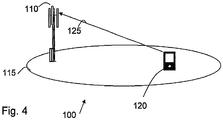
- FIG. 4 depicts a wireless communications system 100 in which the present solution is implemented.
- the wireless communications system 100 is a packet-based communications system which may be an LTE communications system, Worldwide Interoperability for Microwave Access (WiMax) or any other wireless communications system handling scheduling requests for uplink scheduling.
- WiMax Worldwide Interoperability for Microwave Access
- the wireless communications system 100 comprises a base station 110 serving a cell 115.
- the base station 110 is a radio base station such as an eNB, a Radio Base Station (RBS) or any other network unit capable to communicate over a radio carrier with user equipments being present in the cell.
- eNB eNode B
- RBS Radio Base Station
- the user equipment 120 may be a terminal, e.g. a mobile terminal or a wireless terminal, a mobile phone, a computer such as e.g. a laptop, Personal Digital Assistants (PDA), or any other radio network units capable to communicate with a base station over an air interface.
- the air interface may e.g. be an E-UTRA air interface used in LTE.
- the user equipment 120 comprises a buffer, to which buffer new uplink data arrives that is to be transmitted to the base station 110.
- the data may be voice data, video data, photo data, text data or any other kind of data that a user may want to transmit.
- the arrival of new UL data, of higher priority than the already existing data or new data of any priority when there is no previous data, to the user equipment buffer triggers a buffer status report.
- the arrived new data further directly or indirectly triggers a scheduling request trigger to be pending.
- the indirectly triggering may be performed such that the arrived data triggers a buffer status report which in turn triggers the scheduling request trigger.
- the scheduling request trigger will trigger a scheduling request to be sent to the base station 110 at a next scheduling request opportunity.
- the "scheduling request trigger” may also be referred to as "a pending scheduling request".
- a pending scheduling request As mentioned above there is a fixed periodicity associated with the opportunities to transmit scheduling requests to the base station 110, so the user equipment 120 has to wait until such an opportunity is available. The base station 110 receiving the scheduling request is in that way informed that the user equipment 120 has new data that it would like to transmit.
- a scheduling request trigger is pending or not pending.
- a scheduling request is typically not associated with any specific arrived data and a scheduling request trigger does not need to be associated with any data although it is implicitly associated with the data that triggered it. But if further data, here called second data, arrives to the user equipment buffer, triggering a scheduling request trigger, a further scheduling request is triggered, even if a scheduling request trigger is already triggered.
- the base station 110 typically sends an uplink grant to the user equipment 120.
- the grant is specific to a user equipment but not associated with any specific arrived data in that user equipment.
- Priorities set by the eNB and signalled to the user equipment 120 decides which particular data that shall be transmitted on the resources that the user equipment 120 has been allocated.
- a pending scheduling request trigger is cancelled as follows:
- the pending scheduling request is cancelled when the data that triggered the scheduling request is accounted for in a buffer status report to be included in a scheduled data transmission to be transmitted to the base station 110, or when the data that triggered the scheduling request is included in a scheduled data transmission to be transmitted to the base station, whichever occurs first.
- the scheduled data need not be transmitted, just included in the patent data unit that a bit later will be transmitted.
- the pending scheduling request is cancelled at any time by the user equipment, but the user equipment 120 keeps track of what data that has been accounted for in the buffer status report to be included in a scheduled data transmission and what data that has not been accounted for, and when a next scheduling request opportunity appears, the user equipment 120 sends a scheduling request if and only if the buffer comprises data that has not yet been accounted for in a buffer status report.
- This is equivalent to having a pending scheduling request in the first embodiment, but does not necessarily have to be called "having a pending scheduling request". The consequence will however be the same, at the next scheduling request opportunity, the user equipment 120 will send a scheduling request if there is data not yet included in a buffer status report, and that data has not yet been sent.
- the present solution relating to a method in the base station 110 for handling a scheduling request trigger will now be described with reference to the flowchart depicted in Figure 5 .
- the user equipment 120 comprising a buffer.
- the method comprises the following steps, which steps may as well be carried out in another suitable order than described below:
- the user equipment 120 may internally cancel its pending scheduling request trigger whenever it wants, before or after the time the point of time that it is cancelled according to the first embodiment in step 504, while still fulfilling the behaviour that can be tested by the 3GPP.
- This is as mentioned above performed by the user equipment 120 keeping track of data that has not yet been included in a buffer status report, and according to some embodiments, nor been included in a scheduled UL data transmission.
- This is equivalent to having a pending scheduling request in the first embodiment, but does not necessarily have to be called "having a pending scheduling request". The consequence will however be the same, at the next scheduling request opportunity, the user equipment 120 will send a scheduling request if there is data not yet included in a buffer status report, and that data has not yet been sent.
- the buffer status report trigger may be generated in response to new data incoming to an uplink transmit buffer, and a scheduling request trigger may be generated corresponding to the buffer status report trigger.
- a scheduling request trigger may be generated corresponding to the buffer status report trigger.
- advantageous handling and cancelling of pending buffer status report triggers and corresponding pending scheduling request triggers prevents uplink data from becoming stuck in the user equipment 120, and/or prevents or at least reduces unnecessary scheduling request transmissions and resultant unnecessary uplink resource grants.
- buffer status report triggers and corresponding scheduling request triggers may be implemented as flags or other logical indicators, which may be set or otherwise created to indicate the pending status, and cleared or otherwise deleted for cancellation.
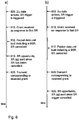
- Figure 6 illustrates an analysis of the present solution according to the first embodiment when new second data arrives to the user equipment buffer before grant for the first data is received.
- the first embodiment comprising cancelling the scheduling request trigger when the data that triggered the scheduling request is accounted for in a buffer status report to be included in a scheduled data transmission to be transmitted to the base station 110, or the user equipment 120 cancels the pending scheduling request when the data that triggered the scheduling request is included in a scheduled data transmission to be transmitted to the base station, whichever occurs first.
- First data has arrived to the user equipment buffer, which corresponds to step 501 in Figure 5 .
- This first data has triggered a buffer status report, which corresponds to step 501 in Figure 5 .
- This first data has also directly or indirectly triggered a first scheduling request trigger for sending a scheduling request at the next scheduling request opportunity, which corresponds to step 503 in Figure 5 .
- the scheduling request opportunity has occurred and a first scheduling request has been transmitted to the base station 110.
- the first scheduling request trigger is still pending.
- case a) and b) illustrated in Figure 6 there are then two different cases that appears, case a) and b) illustrated in Figure 6 .
- case a) the user equipment 120 has a scheduling request opportunity between receiving the UL grant and transmitting the data.
- case b) the user equipment 120 has no scheduling request opportunity between receiving the UL grant and transmitting the data; the next scheduling request opportunity occurs after the transmission of the data.
- a scheduling request means that there is new data in the user equipment 120 that the user equipment 110 was not previously aware of.
- Figure 7 and Figure 8 illustrates an analysis of the present solution according to the first embodiment where the user equipment 120 gets new data to its buffer after a grant corresponding to the first scheduling request is received. This new data triggers a scheduling request trigger. Looking at a time line, there are then two different cases that appears, case a) illustrated in Figure 7 and b) illustrated in Figure 8 . In case a), the user equipment 120 has a scheduling request opportunity between receiving the UL grant and transmitting the data. In case b) the user equipment 120 has no scheduling request opportunity between receiving the UL grant and transmitting the data, the next scheduling request opportunity comes after the transmission of the data.
- Figure 7 illustrates an analysis according to the present solution in the scenario when new data arrives between reception of grant and transmission of data corresponding to the grant for case a) wherein the user equipment 120 has a scheduling request opportunity between receiving the UL grant and transmitting the data.
- First data has arrived to the user equipment buffer, which corresponds to step 501 in Figure 5 .
- This first data has triggered a buffer status report, which corresponds to step 502 in Figure 5 .
- This first data also directly or indirectly via the buffer status report trigger, has triggered a first scheduling request trigger for sending a scheduling request at the next scheduling request opportunity, which corresponds to step 503 in Figure 5 .
- the scheduling request opportunity has occurred and a first scheduling request is transmitted to the base station.
- the first scheduling request trigger is still pending.
- the scheduling request trigger will be cancelled when the data that triggered the scheduling request is accounted for in a buffer status report to be included in a scheduled data transmission to be transmitted to the base station 110, or the user equipment 120 cancels the pending scheduling request when the data that triggered the scheduling request is included in a scheduled data transmission to be transmitted to the base station, whichever occurs first.
- Figure 8 illustrates an analysis according to the present solution in the scenario when new data arrives between reception of grant and transmission of data corresponding to the grant for case b) wherein the user equipment 120 has no scheduling request opportunity between receiving the UL grant and transmitting the data, the next scheduling request opportunity occurring after the transmission of the data.
- First data has arrived to the user equipment buffer, which corresponds to step 501 in Figure 5 .
- This first data has triggered a buffer status report, which corresponds to step 502 in Figure 5 .
- This first data also directly or indirectly via the buffer status report trigger, has triggered a first scheduling request trigger for sending a scheduling request at the next scheduling request opportunity, which corresponds to step 503 in Figure 5 .
- the scheduling request opportunity has occurred and a first scheduling request is transmitted to the base station.
- the first scheduling request trigger is still pending.
- the scheduling request trigger will be cancelled when the data that triggered the scheduling request is accounted for in a buffer status report to be included in a scheduled data transmission to be transmitted to the base station 110, or the user equipment 120 cancels the pending scheduling request when the data that triggered the scheduling request is included in a scheduled data transmission to be transmitted to the base station, whichever occurs first.
- the user equipment 120 comprises an arrangement depicted in Figure 9 .
- the user equipment 120 comprises a buffer 900 configured to receive data to be transmitted to the base station 110.
- the user equipment 120 further comprises a generating unit 920 configured to generate a scheduling request trigger, which scheduling request trigger is pending until it is cancelled, and which generation is triggered directly or indirectly by the arrived data.
- the user equipment 120 further comprises a cancelling unit 930.
- the cancelling unit 930 is configured to cancel the pending scheduling request trigger when the data that triggered the generation of the scheduling request trigger is accounted for in a buffer status report to be included in a scheduled data transmission to be transmitted to the base station 110, or when the data that triggered the generation of the scheduling request is included in a scheduled data transmission to be transmitted to the base station 110, whichever occurs first.
- the cancelling unit 930 is configured to cancel the pending scheduling request trigger at any time, but keeping track of what data that has either been accounted for in the buffer status report to be included in a scheduled data transmission or included directly in the scheduled data transmission and what data that has not been accounted for in any of these two ways.
- the cancelling unit 930 is configured to cancel the pending scheduling request trigger when the data that triggered the generation of the scheduling request trigger is accounted for in a buffer status report to be included in a scheduled data transmission to be transmitted to the base station 110, or when the data that triggered the generation of the scheduling request is included in a scheduled data transmission to be transmitted to the base station 110, whichever occurs first, or alternatively to cancel the pending scheduling request trigger at any time, but keeping track of what data that has been accounted for in the buffer status report to be included in a scheduled data transmission and what data that has not been accounted for.
- the user equipment 120 comprises a sending unit 940 configured to, when a next scheduling request opportunity appears, send a scheduling request if and only if the buffer comprises data that has not yet been accounted for in any of the two ways mentioned.
- the sending unit 940 is configured to, when a next scheduling request opportunity appears, send a scheduling request if and only if the buffer comprises data that has not yet been accounted for in the buffer status report.
- the present mechanism for handling a scheduling request trigger may be implemented through one or more processors, such as a processor 950 in the user equipment 120 depicted in Figure 9 , together with computer program code for performing the functions of the present solution.
- the program code mentioned above may also be provided as a computer program product, for instance in the form of a data carrier carrying computer program code for performing the present solution when being loaded into the user equipment 120.
- a data carrier carrying computer program code for performing the present solution when being loaded into the user equipment 120.
- One such carrier may be in the form of a CD ROM disc. It is however feasible with other data carriers such as a memory stick.
- the computer program code may furthermore be provided as pure program code on a server and downloaded to the user equipment 120.
- Figure 10 depicts one embodiment of the user equipment 120, including processing circuits operatively associated with transceiver circuits (radiofrequency receiver front-end, transmit modulator/amplifier, etc.), and one or more transmit/receive antennas.
- transceiver circuits radiofrequency receiver front-end, transmit modulator/amplifier, etc.
- transmit/receive antennas one or more transmit/receive antennas.
- the user equipment 120 is, for example, a mobile terminal or other type of user equipment configured for operation in a wireless communication system based on the LTE standards.
- the user equipment 120 is configured to implement any of the embodiments described herein.
- the processing circuits may comprise one or more baseband processors.
- the processing circuits comprise one or more microprocessor-based circuits, such as a Digital Signal Processor (DSP) or other digital processor.
- DSP Digital Signal Processor
- the user equipment 120 includes one or more memory circuits-e.g., non-volatile and volatile-for storing program instructions, configuration and provisioning data, working data, etc.
- the processing circuits within the user equipment 120 include an uplink transmit buffer such as the buffer 900-which may be a reserved portion of working memory-for buffering data for uplink transmission, and an associated controller for implementing all or part of the control and processing described herein and as referred to in the text above related to Figure 9 . That is, one or more embodiments of the controller such as the cancelling unit 930, are configured to cancel a pending scheduling request when the data that triggered the scheduling request is included in a buffer status report MAC control element or the data that triggered the scheduling request is transmitted, whichever occurs first as described above.
- the user equipment 120 can be understood as being configured to cancel a pending scheduling request when the buffer status report that triggered the scheduling request is canceled.
- the user equipment's controller can be configured via hardware, software, or some combination thereof, to track what data has been included or otherwise accounted for in a buffer status report and what data has not. Accordingly, when a scheduling request opportunity comes, the user equipment 120 sends a scheduling request if it has data that has not yet been accounted for in a buffer status report (the buffer status report does not have to have been sent; for example, it is sufficient if the buffer status report is included in a MAC PDU that has been assembled for transmission.)
- Both embodiments 1 and 2 lead to the same behavior, the advantage of which is that it is natural to cancel a pending SR when it has served its purpose. This is only guaranteed if cancelled when the data that triggered it is accounted for in a buffer status report, or the data that triggered it is transmitted. Any other solution will lead to ambiguities or unnecessary SRs sent and/or unnecessary grants.
- the present solution may be referred to as follows.
- a scheduling request When a scheduling request is triggered, it shall be considered as pending until it is cancelled. All pending scheduling requests shall be cancelled when a MAC PDU is assembled and this PDU includes a buffer status report which contains buffer status up to (and including) the last event that triggered a buffer status report, or when the uplink grant can accommodate all pending data available for transmission.
Landscapes
- Engineering & Computer Science (AREA)
- Computer Networks & Wireless Communication (AREA)
- Signal Processing (AREA)
- Mobile Radio Communication Systems (AREA)
Priority Applications (2)
| Application Number | Priority Date | Filing Date | Title |
|---|---|---|---|
| EP21179069.6A EP3908070B1 (fr) | 2009-05-05 | 2010-01-25 | Procédé et agencement dans un système de communication sans fil |
| PL20159943T PL3681234T3 (pl) | 2009-05-05 | 2010-01-25 | Sposób i układ w systemie komunikacji bezprzewodowej |
Applications Claiming Priority (4)
| Application Number | Priority Date | Filing Date | Title |
|---|---|---|---|
| US17566809P | 2009-05-05 | 2009-05-05 | |
| PCT/SE2010/050063 WO2010128927A1 (fr) | 2009-05-05 | 2010-01-25 | Traitement d'un déclencheur de demande de programmation |
| EP10772329.8A EP2428091B1 (fr) | 2009-05-05 | 2010-01-25 | Traitement d'un déclencheur de demande de programmation |
| EP16150866.8A EP3094148B1 (fr) | 2009-05-05 | 2010-01-25 | Procédé et agencement dans un système de communication sans fil |
Related Parent Applications (2)
| Application Number | Title | Priority Date | Filing Date |
|---|---|---|---|
| EP16150866.8A Division EP3094148B1 (fr) | 2009-05-05 | 2010-01-25 | Procédé et agencement dans un système de communication sans fil |
| EP10772329.8A Division EP2428091B1 (fr) | 2009-05-05 | 2010-01-25 | Traitement d'un déclencheur de demande de programmation |
Related Child Applications (2)
| Application Number | Title | Priority Date | Filing Date |
|---|---|---|---|
| EP21179069.6A Division EP3908070B1 (fr) | 2009-05-05 | 2010-01-25 | Procédé et agencement dans un système de communication sans fil |
| EP21179069.6A Division-Into EP3908070B1 (fr) | 2009-05-05 | 2010-01-25 | Procédé et agencement dans un système de communication sans fil |
Publications (2)
| Publication Number | Publication Date |
|---|---|
| EP3681234A1 true EP3681234A1 (fr) | 2020-07-15 |
| EP3681234B1 EP3681234B1 (fr) | 2021-07-21 |
Family
ID=43050275
Family Applications (4)
| Application Number | Title | Priority Date | Filing Date |
|---|---|---|---|
| EP21179069.6A Active EP3908070B1 (fr) | 2009-05-05 | 2010-01-25 | Procédé et agencement dans un système de communication sans fil |
| EP20159943.8A Active EP3681234B1 (fr) | 2009-05-05 | 2010-01-25 | Procédé et agencement dans un système de communication sans fil |
| EP10772329.8A Active EP2428091B1 (fr) | 2009-05-05 | 2010-01-25 | Traitement d'un déclencheur de demande de programmation |
| EP16150866.8A Active EP3094148B1 (fr) | 2009-05-05 | 2010-01-25 | Procédé et agencement dans un système de communication sans fil |
Family Applications Before (1)
| Application Number | Title | Priority Date | Filing Date |
|---|---|---|---|
| EP21179069.6A Active EP3908070B1 (fr) | 2009-05-05 | 2010-01-25 | Procédé et agencement dans un système de communication sans fil |
Family Applications After (2)
| Application Number | Title | Priority Date | Filing Date |
|---|---|---|---|
| EP10772329.8A Active EP2428091B1 (fr) | 2009-05-05 | 2010-01-25 | Traitement d'un déclencheur de demande de programmation |
| EP16150866.8A Active EP3094148B1 (fr) | 2009-05-05 | 2010-01-25 | Procédé et agencement dans un système de communication sans fil |
Country Status (23)
| Country | Link |
|---|---|
| US (7) | US8913565B2 (fr) |
| EP (4) | EP3908070B1 (fr) |
| JP (2) | JP5667167B2 (fr) |
| KR (1) | KR101582708B1 (fr) |
| CN (2) | CN102422699B (fr) |
| AU (1) | AU2010245353B2 (fr) |
| BR (1) | BRPI1014593B1 (fr) |
| CA (1) | CA2760962C (fr) |
| DK (2) | DK2428091T3 (fr) |
| ES (4) | ES2784476T3 (fr) |
| HU (2) | HUE049123T2 (fr) |
| IL (1) | IL215207A (fr) |
| MA (1) | MA33263B1 (fr) |
| MX (1) | MX2011010865A (fr) |
| MY (1) | MY164920A (fr) |
| NZ (1) | NZ595244A (fr) |
| PL (3) | PL3094148T3 (fr) |
| PT (1) | PT3094148T (fr) |
| RU (1) | RU2517434C2 (fr) |
| SG (1) | SG174863A1 (fr) |
| TW (1) | TWI477176B (fr) |
| WO (1) | WO2010128927A1 (fr) |
| ZA (1) | ZA201106850B (fr) |
Families Citing this family (49)
| Publication number | Priority date | Publication date | Assignee | Title |
|---|---|---|---|---|
| PL3094148T3 (pl) * | 2009-05-05 | 2020-08-24 | Telefonaktiebolaget Lm Ericsson (Publ) | Sposób i układ w systemie komunikacji bezprzewodowej |
| JP5607991B2 (ja) * | 2009-09-02 | 2014-10-15 | 創新音▲速▼股▲ふん▼有限公司 | Bsrの方法及び通信装置 |
| JP2011228940A (ja) * | 2010-04-20 | 2011-11-10 | Panasonic Corp | 基地局装置及びスケジューリング方法 |
| US20140036880A1 (en) * | 2011-02-18 | 2014-02-06 | Nokia Corporation | Method and apparatus to provide a-periodic sounding reference signal |
| CN102761967B (zh) * | 2011-04-29 | 2015-09-23 | 华为技术有限公司 | 数据发送方法、传输资源分配方法和装置 |
| KR101517383B1 (ko) * | 2011-08-16 | 2015-05-04 | 알까뗄 루슨트 | 버퍼 상태 보고 메시징을 제어하기 위한 방법 및 장치 |
| US9420571B2 (en) | 2011-09-23 | 2016-08-16 | Lg Electronics Inc. | Method and apparatus for transmitting and receiving signal to and from network at user equipment in a wireless communication system |
| WO2013159830A1 (fr) * | 2012-04-27 | 2013-10-31 | Telefonaktiebolaget L M Ericsson (Publ) | Transmission de données au moyen d'une ressource de canal de commande sur la liaison montante partagée |
| EP2661138A1 (fr) | 2012-05-04 | 2013-11-06 | Panasonic Corporation | Procédure de demande de programmation à seuil et à faible consommation d'énergie |
| WO2014035074A1 (fr) * | 2012-08-27 | 2014-03-06 | Lg Electronics Inc. | Procédé et appareil de configuration d'une opération de réception discontinue (drx) dans un système de communication sans fil |
| CN103687037B (zh) * | 2012-09-12 | 2017-04-12 | 华为技术有限公司 | 一种资源调度的方法、设备及通信系统 |
| CN103796242B (zh) * | 2012-10-29 | 2018-08-14 | 中兴通讯股份有限公司 | 切换场景中处理调度请求的方法和装置 |
| US9591661B2 (en) * | 2012-11-09 | 2017-03-07 | Apple Inc. | Reducing scheduling requests by a wireless communication device transmitting voice data over dynamically scheduled resources |
| US9136984B2 (en) | 2013-03-20 | 2015-09-15 | Google Inc. | Multi-listener wireless medium access method |
| WO2014180351A1 (fr) | 2013-05-10 | 2014-11-13 | Mediatek Singapore Pte. Ltd. | Mécanisme amélioré de demande de programmation à une pluralité de programmateurs dans un réseau sans fil avec agrégation de porteuses entre stations de base |
| US10892879B2 (en) * | 2013-05-10 | 2021-01-12 | Hfi Innovation Inc. | Enhanced mechanism of scheduling request to multiple schedulers in a wireless network with multiple connectivity |
| US9603160B2 (en) * | 2014-05-22 | 2017-03-21 | Nokia Solutions And Networks Oy | Method and apparatus for uplink backhaul scheduling |
| US20160014803A1 (en) * | 2014-07-09 | 2016-01-14 | Qualcomm Incorporated | Systems and methods for traffic information signaling in a wireless communications network |
| EP2999286B1 (fr) * | 2014-09-17 | 2020-04-15 | Innovative Sonic Corporation | Procédés et appareil permettant de demander des ressources dans un système de communication sans fil |
| US10477478B2 (en) | 2014-10-13 | 2019-11-12 | Yandex Europe Ag | Method of processing system requests in a wireless communication device |
| EP3216296B1 (fr) | 2014-11-05 | 2020-09-30 | LG Electronics Inc. | Procédé pour annuler des requêtes de planification déclenchées par un rapport d'état de mémoire tampon de liaison latérale dans un système de communication de dispositif à dispositif (d2d) et dispositif associé |
| CN106034284B (zh) * | 2015-03-20 | 2021-11-12 | 中兴通讯股份有限公司 | 一种通信方法、无线基站、用户终端及通信系统 |
| CN114222372B (zh) * | 2015-04-17 | 2025-10-21 | 索尼公司 | 用于无线通信的电子设备和方法 |
| WO2017007148A1 (fr) | 2015-07-06 | 2017-01-12 | Lg Electronics Inc. | Procédé pour annuler un rapport d'état de tampon (bsr) ou une requête de planification (sr) dans une connectivité double et un dispositif à cet effet |
| KR102166508B1 (ko) | 2016-03-30 | 2020-10-19 | 아이디에이씨 홀딩스, 인크. | 무선 시스템에서의 사용자 평면의 처리 |
| TW201737679A (zh) | 2016-03-30 | 2017-10-16 | Idac控股公司 | 在5g可撓rat系統中分立l2處理及控制架構 |
| CN107318171B (zh) * | 2016-04-26 | 2020-03-27 | 北京佰才邦技术有限公司 | 一种上行传输方法、装置、用户终端及基站 |
| US10887907B2 (en) | 2016-11-04 | 2021-01-05 | Lg Electronics Inc. | Method and apparatus for performing scheduling request for uplink data transmission in wireless communication system |
| WO2018098762A1 (fr) * | 2016-11-30 | 2018-06-07 | 华为技术有限公司 | Procédé de transmission d'informations, station de base et appareil terminal |
| CN108633082B (zh) * | 2017-03-15 | 2020-10-16 | 华为技术有限公司 | 上行数据调度请求方法及装置 |
| TWI665897B (zh) * | 2017-04-26 | 2019-07-11 | 華碩電腦股份有限公司 | 無線通訊系統中請求控制單元傳送資源的方法和設備 |
| US10485017B2 (en) * | 2017-05-30 | 2019-11-19 | Htc Corporation | Device and method of handling a schedule request |
| KR102055061B1 (ko) * | 2017-06-08 | 2019-12-11 | 아서스테크 컴퓨터 인코포레이션 | 무선 통신 시스템에서의 다중 sr (scheduling request) 구성의 방법 및 장치 |
| WO2019028884A1 (fr) * | 2017-08-11 | 2019-02-14 | Nokia Solutions And Networks Oy | Procédure de demande d'ordonnancement avec multiples configurations de demande d'ordonnancement |
| CN109587805B (zh) | 2017-09-28 | 2021-02-19 | 维沃移动通信有限公司 | 调度请求的处理方法及终端设备 |
| US10986667B2 (en) | 2017-12-20 | 2021-04-20 | Lenovo (Singapore) Pte. Ltd. | Random-access procedure for scheduling request |
| CN110461021B (zh) * | 2018-02-13 | 2020-07-14 | 华为技术有限公司 | 一种调度请求取消方法及设备 |
| US10764918B2 (en) | 2018-06-11 | 2020-09-01 | At&T Intellectual Property I, L.P. | Wireless communication framework for multiple user equipment |
| GB201812926D0 (en) * | 2018-08-08 | 2018-09-19 | Samsung Electronics Co Ltd | Buffer status reporting |
| US10951362B2 (en) | 2018-08-10 | 2021-03-16 | At&T Intellectual Property I, L.P. | Hybrid automatic repeat request and scheduling for wireless cellular systems with local traffic managers |
| US11234251B2 (en) | 2018-08-17 | 2022-01-25 | At&T Intellectual Property I, L.P. | Generic control channel configuration for new radio sidelink |
| US11026117B2 (en) * | 2018-10-24 | 2021-06-01 | Lg Electronics Inc. | Method for transmitting signals by user equipment in wireless communication system and apparatus therefor |
| US11503645B2 (en) * | 2018-11-28 | 2022-11-15 | Samsung Electronics Co., Ltd. | Method and apparatus for performing communication in wireless communication system |
| US11039422B2 (en) | 2019-01-11 | 2021-06-15 | At&T Intellectual Property I, L.P. | Load manager performance management for 5G or other next generation network |
| US11611984B2 (en) | 2019-07-18 | 2023-03-21 | Samsung Electronics Co., Ltd. | System and method for preserving wireless transmissions |
| CN111586570B (zh) * | 2020-05-27 | 2022-06-03 | 武汉风韵出行信息科技有限公司 | 用于车联网系统的行人位置信息上传方法及系统 |
| US20250392950A1 (en) * | 2022-07-05 | 2025-12-25 | Nokia Technologies Oy | Report triggering |
| EP4738917A1 (fr) * | 2023-06-30 | 2026-05-06 | Quectel Wireless Solutions Co., Ltd. | Procédé de transmission de bsr, dispositif terminal, et dispositif de réseau |
| EP4666652A1 (fr) * | 2023-09-28 | 2025-12-24 | Lenovo (Beijing) Limited | Signalisation de rapport d'état de retard |
Citations (1)
| Publication number | Priority date | Publication date | Assignee | Title |
|---|---|---|---|---|
| US20090113086A1 (en) * | 2007-10-29 | 2009-04-30 | Sunplus Mmobile Inc. | Method for providing a buffer status report in a mobile communication network |
Family Cites Families (33)
| Publication number | Priority date | Publication date | Assignee | Title |
|---|---|---|---|---|
| EP2254290B1 (fr) | 2004-03-31 | 2012-10-24 | Panasonic Corporation | Procédé de réalisation d'un algorithme de programmation avec un paramètre de ressources minimales et procédé de calcul dudit paramètre |
| RU2341029C2 (ru) * | 2004-03-31 | 2008-12-10 | Мацусита Электрик Индастриал Ко., Лтд. | Способ для выполнения алгоритма планирования с минимальным параметром ресурса и способ его вычисления |
| EP1892901A3 (fr) | 2004-10-01 | 2011-07-13 | Panasonic Corporation | Programmation sensible à la qualité de service (qos) pour la transmission montante par canaux dédiés |
| RU2305372C2 (ru) * | 2004-11-05 | 2007-08-27 | Самсунг Электроникс Ко., Лтд. | Способ и устройство для планирования передачи данных по обратной линии связи, использующей идентификатор оборудования пользователя, в системе мобильной связи, поддерживающей службу пакетной передачи данных по обратной линии связи |
| KR100984819B1 (ko) | 2005-10-07 | 2010-10-04 | 인터디지탈 테크날러지 코포레이션 | 고속 다운링크 및 업링크를 지원하기 위한 제어 정보의제공 방법 및 시스템 |
| JP4472713B2 (ja) | 2006-06-19 | 2010-06-02 | 株式会社エヌ・ティ・ティ・ドコモ | 移動局装置、送信方法及び移動通信システム |
| EP2063552A4 (fr) | 2006-10-25 | 2014-05-28 | Fujitsu Ltd | Station de base radio, station relais, système de communication radio, et procédé de communication radio |
| KR101364926B1 (ko) * | 2007-03-23 | 2014-02-21 | 삼성전자주식회사 | 이동통신시스템의 스케줄링 방법 및 장치 |
| GB2452013A (en) | 2007-06-19 | 2009-02-25 | Nec Corp | Buffer status reporting from a mobile communications device |
| KR101421773B1 (ko) * | 2007-06-19 | 2014-07-22 | 텔레폰악티에볼라겟엘엠에릭슨(펍) | 원격 통신 시스템에서의 자원을 스케줄링하기 위한 방법 및 시스템 |
| JP2010531120A (ja) * | 2007-06-21 | 2010-09-16 | インターデイジタル テクノロジー コーポレーション | E−utran用のハンドオーバー関連測定報告 |
| KR100932264B1 (ko) * | 2007-10-04 | 2009-12-16 | 한국전자통신연구원 | 피드백 메시지 기반의 상향 트래픽 전송 스케줄링 방법 및장치 |
| US8621475B2 (en) * | 2007-12-06 | 2013-12-31 | International Business Machines Corporation | Responsive task scheduling in cooperative multi-tasking environments |
| TW200931869A (en) * | 2007-12-31 | 2009-07-16 | Interdigital Patent Holdings | Method and apparatus for handling interactions between measurement gap, automated repeat request, discontinuous reception and discontinuous transmission in wireless communications |
| US20090176502A1 (en) * | 2008-01-08 | 2009-07-09 | Richard Lee-Chee Kuo | Method of Receiving Signaling and Related Communication Device |
| US8243667B2 (en) * | 2008-01-28 | 2012-08-14 | Lg Electronics Inc. | Method for transmitting scheduling request effectively in wireless communication system |
| EP2094038B1 (fr) * | 2008-02-20 | 2015-11-04 | Amazon Technologies, Inc. | Appareil et procédé pour la construction d'une unité de données qui inclut un rapport d'état du tampon |
| US8606336B2 (en) * | 2008-03-20 | 2013-12-10 | Blackberry Limited | System and method for uplink timing synchronization in conjunction with discontinuous reception |
| BRPI0908593B1 (pt) * | 2008-03-21 | 2020-12-29 | Telefonaktiebolaget Lm Ericsson (Publ) | método relacionado a comunicações de enlace ascendente de um terminal sem fio, aparelho para uso em um terminal sem fio e sistema de radiocomunicações |
| US8547917B2 (en) * | 2008-03-28 | 2013-10-01 | Telefonaktiebolaget Lm Ericsson (Publ) | Network driven L3 control signalling prioritization |
| US20100040028A1 (en) * | 2008-08-13 | 2010-02-18 | Qualcomm Incorporated | Method and apparatus for mitigation of procedures in a wireless communication system |
| US9167594B2 (en) * | 2008-09-22 | 2015-10-20 | Htc Corporation | Method and related device of a trigger mechanism of buffer status report and scheduling request in a wireless communication system |
| CN101778418B (zh) * | 2009-01-13 | 2014-03-19 | 中兴通讯股份有限公司 | 无线网络中触发或上报调度请求的方法和设备 |
| NZ593644A (en) * | 2009-02-09 | 2014-03-28 | Ericsson Telefon Ab L M | Method and arrangement in a wireless communication system |
| TWI439160B (zh) * | 2009-03-16 | 2014-05-21 | Htc Corp | 於載波聚合模式中處理上鏈路資訊的方法及相關裝置 |
| EP2237633A1 (fr) * | 2009-04-03 | 2010-10-06 | Panasonic Corporation | Rapport de statut de tampon dans un système de communication mobile |
| PL3094148T3 (pl) * | 2009-05-05 | 2020-08-24 | Telefonaktiebolaget Lm Ericsson (Publ) | Sposób i układ w systemie komunikacji bezprzewodowej |
| CN102761967B (zh) * | 2011-04-29 | 2015-09-23 | 华为技术有限公司 | 数据发送方法、传输资源分配方法和装置 |
| EP3064009A4 (fr) * | 2013-11-01 | 2017-06-21 | Nokia Technologies Oy | Procédé et appareil pour prendre en charge la signalisation d'état de tampon et les demandes d'ordonnancement avec la double connectivité |
| WO2017074437A1 (fr) * | 2015-10-30 | 2017-05-04 | Nokia Technologies Oy | Procédures pour rapporter un état de mémoire tampon |
| CN111866945B (zh) * | 2019-04-30 | 2023-03-10 | 华为技术有限公司 | 取消待处理sr的方法及装置 |
| KR102907572B1 (ko) * | 2020-04-06 | 2026-01-05 | 삼성전자 주식회사 | Rar에의해 수신한 상향링크 자원을 고려한 단말 내 우선화를 위한 방법 및 장치 |
| JP7692529B2 (ja) * | 2021-08-05 | 2025-06-13 | テレフオンアクチーボラゲット エルエム エリクソン(パブル) | 2次セルグループ(scg)アクティブ化解除/再アクティブ化中の媒体アクセス制御(mac)エンティティのハンドリング |
-
2010
- 2010-01-25 PL PL16150866T patent/PL3094148T3/pl unknown
- 2010-01-25 HU HUE16150866A patent/HUE049123T2/hu unknown
- 2010-01-25 ES ES16150866T patent/ES2784476T3/es active Active
- 2010-01-25 ES ES21179069T patent/ES3014362T3/es active Active
- 2010-01-25 JP JP2012509763A patent/JP5667167B2/ja active Active
- 2010-01-25 PT PT161508668T patent/PT3094148T/pt unknown
- 2010-01-25 RU RU2011149331/07A patent/RU2517434C2/ru active
- 2010-01-25 DK DK10772329.8T patent/DK2428091T3/en active
- 2010-01-25 KR KR1020117026414A patent/KR101582708B1/ko active Active
- 2010-01-25 SG SG2011066792A patent/SG174863A1/en unknown
- 2010-01-25 PL PL10772329T patent/PL2428091T3/pl unknown
- 2010-01-25 MY MYPI2011004428A patent/MY164920A/en unknown
- 2010-01-25 HU HUE10772329A patent/HUE028634T2/en unknown
- 2010-01-25 CN CN201080020153.2A patent/CN102422699B/zh active Active
- 2010-01-25 EP EP21179069.6A patent/EP3908070B1/fr active Active
- 2010-01-25 EP EP20159943.8A patent/EP3681234B1/fr active Active
- 2010-01-25 BR BRPI1014593-1A patent/BRPI1014593B1/pt active IP Right Grant
- 2010-01-25 DK DK20159943.8T patent/DK3681234T3/da active
- 2010-01-25 EP EP10772329.8A patent/EP2428091B1/fr active Active
- 2010-01-25 CN CN201410561730.9A patent/CN104320857B/zh active Active
- 2010-01-25 PL PL20159943T patent/PL3681234T3/pl unknown
- 2010-01-25 MA MA34335A patent/MA33263B1/fr unknown
- 2010-01-25 NZ NZ595244A patent/NZ595244A/en unknown
- 2010-01-25 MX MX2011010865A patent/MX2011010865A/es active IP Right Grant
- 2010-01-25 WO PCT/SE2010/050063 patent/WO2010128927A1/fr not_active Ceased
- 2010-01-25 ES ES10772329.8T patent/ES2568219T3/es active Active
- 2010-01-25 ES ES20159943T patent/ES2891586T3/es active Active
- 2010-01-25 EP EP16150866.8A patent/EP3094148B1/fr active Active
- 2010-01-25 AU AU2010245353A patent/AU2010245353B2/en active Active
- 2010-01-25 CA CA2760962A patent/CA2760962C/fr active Active
- 2010-02-11 TW TW099104426A patent/TWI477176B/zh active
- 2010-03-04 US US12/717,176 patent/US8913565B2/en active Active
-
2011
- 2011-09-18 IL IL215207A patent/IL215207A/en active IP Right Grant
- 2011-09-20 ZA ZA2011/06850A patent/ZA201106850B/en unknown
-
2014
- 2014-11-10 US US14/537,202 patent/US9307553B2/en active Active
- 2014-12-11 JP JP2014250871A patent/JP6018165B2/ja active Active
-
2016
- 2016-02-16 US US15/044,654 patent/US9844071B2/en active Active
-
2017
- 2017-12-07 US US15/834,952 patent/US10375721B2/en active Active
-
2019
- 2019-07-03 US US16/502,343 patent/US10904911B2/en active Active
-
2021
- 2021-01-20 US US17/153,225 patent/US12069666B2/en active Active
-
2024
- 2024-08-16 US US18/807,403 patent/US20240414717A1/en active Pending
Patent Citations (1)
| Publication number | Priority date | Publication date | Assignee | Title |
|---|---|---|---|---|
| US20090113086A1 (en) * | 2007-10-29 | 2009-04-30 | Sunplus Mmobile Inc. | Method for providing a buffer status report in a mobile communication network |
Non-Patent Citations (4)
| Title |
|---|
| ERICSSON ET AL: "Framework for Scheduling Request and Buffer Status Reporting", 3GPP DRAFT; R2-074691 FRAMEWORK FOR SR AND BSR, 3RD GENERATION PARTNERSHIP PROJECT (3GPP), MOBILE COMPETENCE CENTRE ; 650, ROUTE DES LUCIOLES ; F-06921 SOPHIA-ANTIPOLIS CEDEX ; FRANCE, vol. RAN WG2, no. Jeju, Korea; 20071105 - 20071109, 12 November 2007 (2007-11-12), XP050603347 * |
| ERICSSON: "Scheduling request triggering criterions for LTE", 3GPP DRAFT; R2-073209 SCHEDULING REQUEST TRIGGERING, 3RD GENERATION PARTNERSHIP PROJECT (3GPP), MOBILE COMPETENCE CENTRE ; 650, ROUTE DES LUCIOLES ; F-06921 SOPHIA-ANTIPOLIS CEDEX ; FRANCE, vol. RAN WG2, no. Athens, Greece; 20070814, 14 August 2007 (2007-08-14), XP050135938 * |
| NOKIA SIEMENS NETWORKS ET AL: "Usage of RRC Parameters", 3GPP DRAFT; 36321_CR0280R2-(REL-8)_R2-091651 ON RRC PARAMETERS, 3RD GENERATION PARTNERSHIP PROJECT (3GPP), MOBILE COMPETENCE CENTRE ; 650, ROUTE DES LUCIOLES ; F-06921 SOPHIA-ANTIPOLIS CEDEX ; FRANCE, no. Athens, Greece; 20090212, 12 February 2009 (2009-02-12), XP050322982 * |
| SUNPLUS MMOBILE INC: "Consideration on BSR triggers", 3GPP DRAFT; R2-080400, 3RD GENERATION PARTNERSHIP PROJECT (3GPP), MOBILE COMPETENCE CENTRE ; 650, ROUTE DES LUCIOLES ; F-06921 SOPHIA-ANTIPOLIS CEDEX ; FRANCE, vol. RAN WG2, no. Sevilla, Spain; 20080108, 8 January 2008 (2008-01-08), XP050138250 * |
Also Published As
Similar Documents
| Publication | Publication Date | Title |
|---|---|---|
| US12069666B2 (en) | Method and apparatus in a wireless communications system | |
| EP2567589B1 (fr) | Procédé et appareil de programmation de voie montante à l'aide de relais | |
| EP3337281B1 (fr) | Procédé et agencement dans un système de communication sans fil | |
| HK1206532B (en) | Handling a scheduling request trigger | |
| HK1169540B (en) | Handling a scheduling request trigger |
Legal Events
| Date | Code | Title | Description |
|---|---|---|---|
| PUAI | Public reference made under article 153(3) epc to a published international application that has entered the european phase |
Free format text: ORIGINAL CODE: 0009012 |
|
| STAA | Information on the status of an ep patent application or granted ep patent |
Free format text: STATUS: THE APPLICATION HAS BEEN PUBLISHED |
|
| AC | Divisional application: reference to earlier application |
Ref document number: 3094148 Country of ref document: EP Kind code of ref document: P Ref document number: 2428091 Country of ref document: EP Kind code of ref document: P |
|
| AK | Designated contracting states |
Kind code of ref document: A1 Designated state(s): AT BE BG CH CY CZ DE DK EE ES FI FR GB GR HR HU IE IS IT LI LT LU LV MC MK MT NL NO PL PT RO SE SI SK SM TR |
|
| RIN1 | Information on inventor provided before grant (corrected) |
Inventor name: OESTERGAARD, JESSICA Inventor name: STATTIN, MAGNUS Inventor name: PELLETIER, GHYSLAIN |
|
| RIN1 | Information on inventor provided before grant (corrected) |
Inventor name: PELLETIER, GHYSLAIN Inventor name: STATTIN, MAGNUS Inventor name: OESTERGAARD, JESSICA |
|
| STAA | Information on the status of an ep patent application or granted ep patent |
Free format text: STATUS: REQUEST FOR EXAMINATION WAS MADE |
|
| 17P | Request for examination filed |
Effective date: 20210108 |
|
| RBV | Designated contracting states (corrected) |
Designated state(s): AT BE BG CH CY CZ DE DK EE ES FI FR GB GR HR HU IE IS IT LI LT LU LV MC MK MT NL NO PL PT RO SE SI SK SM TR |
|
| GRAP | Despatch of communication of intention to grant a patent |
Free format text: ORIGINAL CODE: EPIDOSNIGR1 |
|
| STAA | Information on the status of an ep patent application or granted ep patent |
Free format text: STATUS: GRANT OF PATENT IS INTENDED |
|
| INTG | Intention to grant announced |
Effective date: 20210310 |
|
| RIN1 | Information on inventor provided before grant (corrected) |
Inventor name: STATTIN, MAGNUS Inventor name: OESTERGAARD, JESSICA Inventor name: PELLETIER, GHYSLAIN |
|
| GRAS | Grant fee paid |
Free format text: ORIGINAL CODE: EPIDOSNIGR3 |
|
| GRAA | (expected) grant |
Free format text: ORIGINAL CODE: 0009210 |
|
| STAA | Information on the status of an ep patent application or granted ep patent |
Free format text: STATUS: THE PATENT HAS BEEN GRANTED |
|
| AC | Divisional application: reference to earlier application |
Ref document number: 2428091 Country of ref document: EP Kind code of ref document: P Ref document number: 3094148 Country of ref document: EP Kind code of ref document: P |
|
| AK | Designated contracting states |
Kind code of ref document: B1 Designated state(s): AT BE BG CH CY CZ DE DK EE ES FI FR GB GR HR HU IE IS IT LI LT LU LV MC MK MT NL NO PL PT RO SE SI SK SM TR |
|
| REG | Reference to a national code |
Ref country code: GB Ref legal event code: FG4D |
|
| REG | Reference to a national code |
Ref country code: CH Ref legal event code: EP |
|
| REG | Reference to a national code |
Ref country code: DE Ref legal event code: R096 Ref document number: 602010067327 Country of ref document: DE |
|
| REG | Reference to a national code |
Ref country code: AT Ref legal event code: REF Ref document number: 1413818 Country of ref document: AT Kind code of ref document: T Effective date: 20210815 |
|
| REG | Reference to a national code |
Ref country code: IE Ref legal event code: FG4D |
|
| REG | Reference to a national code |
Ref country code: NL Ref legal event code: FP |
|
| REG | Reference to a national code |
Ref country code: FI Ref legal event code: FGE |
|
| REG | Reference to a national code |
Ref country code: DK Ref legal event code: T3 Effective date: 20210915 |
|
| REG | Reference to a national code |
Ref country code: LT Ref legal event code: MG9D Ref country code: GR Ref legal event code: EP Ref document number: 20210402402 Country of ref document: GR Effective date: 20211013 |
|
| REG | Reference to a national code |
Ref country code: NO Ref legal event code: T2 Effective date: 20210721 |
|
| REG | Reference to a national code |
Ref country code: ES Ref legal event code: FG2A Ref document number: 2891586 Country of ref document: ES Kind code of ref document: T3 Effective date: 20220128 |
|
| PG25 | Lapsed in a contracting state [announced via postgrant information from national office to epo] |
Ref country code: BG Free format text: LAPSE BECAUSE OF FAILURE TO SUBMIT A TRANSLATION OF THE DESCRIPTION OR TO PAY THE FEE WITHIN THE PRESCRIBED TIME-LIMIT Effective date: 20211021 Ref country code: LT Free format text: LAPSE BECAUSE OF FAILURE TO SUBMIT A TRANSLATION OF THE DESCRIPTION OR TO PAY THE FEE WITHIN THE PRESCRIBED TIME-LIMIT Effective date: 20210721 Ref country code: HR Free format text: LAPSE BECAUSE OF FAILURE TO SUBMIT A TRANSLATION OF THE DESCRIPTION OR TO PAY THE FEE WITHIN THE PRESCRIBED TIME-LIMIT Effective date: 20210721 Ref country code: PT Free format text: LAPSE BECAUSE OF FAILURE TO SUBMIT A TRANSLATION OF THE DESCRIPTION OR TO PAY THE FEE WITHIN THE PRESCRIBED TIME-LIMIT Effective date: 20211122 Ref country code: SE Free format text: LAPSE BECAUSE OF FAILURE TO SUBMIT A TRANSLATION OF THE DESCRIPTION OR TO PAY THE FEE WITHIN THE PRESCRIBED TIME-LIMIT Effective date: 20210721 |
|
| PG25 | Lapsed in a contracting state [announced via postgrant information from national office to epo] |
Ref country code: LV Free format text: LAPSE BECAUSE OF FAILURE TO SUBMIT A TRANSLATION OF THE DESCRIPTION OR TO PAY THE FEE WITHIN THE PRESCRIBED TIME-LIMIT Effective date: 20210721 |
|
| REG | Reference to a national code |
Ref country code: DE Ref legal event code: R097 Ref document number: 602010067327 Country of ref document: DE |
|
| PLBE | No opposition filed within time limit |
Free format text: ORIGINAL CODE: 0009261 |
|
| STAA | Information on the status of an ep patent application or granted ep patent |
Free format text: STATUS: NO OPPOSITION FILED WITHIN TIME LIMIT |
|
| PG25 | Lapsed in a contracting state [announced via postgrant information from national office to epo] |
Ref country code: SM Free format text: LAPSE BECAUSE OF FAILURE TO SUBMIT A TRANSLATION OF THE DESCRIPTION OR TO PAY THE FEE WITHIN THE PRESCRIBED TIME-LIMIT Effective date: 20210721 Ref country code: SK Free format text: LAPSE BECAUSE OF FAILURE TO SUBMIT A TRANSLATION OF THE DESCRIPTION OR TO PAY THE FEE WITHIN THE PRESCRIBED TIME-LIMIT Effective date: 20210721 Ref country code: RO Free format text: LAPSE BECAUSE OF FAILURE TO SUBMIT A TRANSLATION OF THE DESCRIPTION OR TO PAY THE FEE WITHIN THE PRESCRIBED TIME-LIMIT Effective date: 20210721 Ref country code: EE Free format text: LAPSE BECAUSE OF FAILURE TO SUBMIT A TRANSLATION OF THE DESCRIPTION OR TO PAY THE FEE WITHIN THE PRESCRIBED TIME-LIMIT Effective date: 20210721 Ref country code: CZ Free format text: LAPSE BECAUSE OF FAILURE TO SUBMIT A TRANSLATION OF THE DESCRIPTION OR TO PAY THE FEE WITHIN THE PRESCRIBED TIME-LIMIT Effective date: 20210721 |
|
| 26N | No opposition filed |
Effective date: 20220422 |
|
| PG25 | Lapsed in a contracting state [announced via postgrant information from national office to epo] |
Ref country code: MC Free format text: LAPSE BECAUSE OF FAILURE TO SUBMIT A TRANSLATION OF THE DESCRIPTION OR TO PAY THE FEE WITHIN THE PRESCRIBED TIME-LIMIT Effective date: 20210721 |
|
| REG | Reference to a national code |
Ref country code: AT Ref legal event code: UEP Ref document number: 1413818 Country of ref document: AT Kind code of ref document: T Effective date: 20210721 |
|
| REG | Reference to a national code |
Ref country code: BE Ref legal event code: MM Effective date: 20220131 |
|
| PG25 | Lapsed in a contracting state [announced via postgrant information from national office to epo] |
Ref country code: LU Free format text: LAPSE BECAUSE OF NON-PAYMENT OF DUE FEES Effective date: 20220125 |
|
| PG25 | Lapsed in a contracting state [announced via postgrant information from national office to epo] |
Ref country code: BE Free format text: LAPSE BECAUSE OF NON-PAYMENT OF DUE FEES Effective date: 20220131 |
|
| P01 | Opt-out of the competence of the unified patent court (upc) registered |
Effective date: 20230523 |
|
| PG25 | Lapsed in a contracting state [announced via postgrant information from national office to epo] |
Ref country code: MK Free format text: LAPSE BECAUSE OF FAILURE TO SUBMIT A TRANSLATION OF THE DESCRIPTION OR TO PAY THE FEE WITHIN THE PRESCRIBED TIME-LIMIT Effective date: 20210721 Ref country code: CY Free format text: LAPSE BECAUSE OF FAILURE TO SUBMIT A TRANSLATION OF THE DESCRIPTION OR TO PAY THE FEE WITHIN THE PRESCRIBED TIME-LIMIT Effective date: 20210721 |
|
| PG25 | Lapsed in a contracting state [announced via postgrant information from national office to epo] |
Ref country code: HU Free format text: LAPSE BECAUSE OF FAILURE TO SUBMIT A TRANSLATION OF THE DESCRIPTION OR TO PAY THE FEE WITHIN THE PRESCRIBED TIME-LIMIT; INVALID AB INITIO Effective date: 20100125 |
|
| PG25 | Lapsed in a contracting state [announced via postgrant information from national office to epo] |
Ref country code: MT Free format text: LAPSE BECAUSE OF FAILURE TO SUBMIT A TRANSLATION OF THE DESCRIPTION OR TO PAY THE FEE WITHIN THE PRESCRIBED TIME-LIMIT Effective date: 20210721 |
|
| REG | Reference to a national code |
Ref country code: CH Ref legal event code: U11 Free format text: ST27 STATUS EVENT CODE: U-0-0-U10-U11 (AS PROVIDED BY THE NATIONAL OFFICE) Effective date: 20260201 |
|
| PGFP | Annual fee paid to national office [announced via postgrant information from national office to epo] |
Ref country code: NL Payment date: 20260126 Year of fee payment: 17 |
|
| PGFP | Annual fee paid to national office [announced via postgrant information from national office to epo] |
Ref country code: GB Payment date: 20260127 Year of fee payment: 17 |
|
| PGFP | Annual fee paid to national office [announced via postgrant information from national office to epo] |
Ref country code: ES Payment date: 20260202 Year of fee payment: 17 |
|
| PGFP | Annual fee paid to national office [announced via postgrant information from national office to epo] |
Ref country code: DE Payment date: 20260128 Year of fee payment: 17 Ref country code: DK Payment date: 20260126 Year of fee payment: 17 Ref country code: NO Payment date: 20260128 Year of fee payment: 17 Ref country code: IE Payment date: 20260127 Year of fee payment: 17 |
|
| PGFP | Annual fee paid to national office [announced via postgrant information from national office to epo] |
Ref country code: AT Payment date: 20260128 Year of fee payment: 17 |
|
| PGFP | Annual fee paid to national office [announced via postgrant information from national office to epo] |
Ref country code: IT Payment date: 20260121 Year of fee payment: 17 Ref country code: FI Payment date: 20260126 Year of fee payment: 17 |
|
| PGFP | Annual fee paid to national office [announced via postgrant information from national office to epo] |
Ref country code: FR Payment date: 20260126 Year of fee payment: 17 |
|
| PGFP | Annual fee paid to national office [announced via postgrant information from national office to epo] |
Ref country code: TR Payment date: 20260116 Year of fee payment: 17 |
|
| PGFP | Annual fee paid to national office [announced via postgrant information from national office to epo] |
Ref country code: CH Payment date: 20260201 Year of fee payment: 17 |
|
| PGFP | Annual fee paid to national office [announced via postgrant information from national office to epo] |
Ref country code: GR Payment date: 20260127 Year of fee payment: 17 Ref country code: PL Payment date: 20260108 Year of fee payment: 17 |