EP3681996B1 - Zusammensetzungen und verfahren zur verbesserung von gamma-delta-t-zellen im darm - Google Patents
Zusammensetzungen und verfahren zur verbesserung von gamma-delta-t-zellen im darm Download PDFInfo
- Publication number
- EP3681996B1 EP3681996B1 EP18782647.4A EP18782647A EP3681996B1 EP 3681996 B1 EP3681996 B1 EP 3681996B1 EP 18782647 A EP18782647 A EP 18782647A EP 3681996 B1 EP3681996 B1 EP 3681996B1
- Authority
- EP
- European Patent Office
- Prior art keywords
- cells
- cell
- expression
- btnl8
- iels
- Prior art date
- Legal status (The legal status is an assumption and is not a legal conclusion. Google has not performed a legal analysis and makes no representation as to the accuracy of the status listed.)
- Active
Links
Images


































Classifications
-
- A—HUMAN NECESSITIES
- A61—MEDICAL OR VETERINARY SCIENCE; HYGIENE
- A61K—PREPARATIONS FOR MEDICAL, DENTAL OR TOILETRY PURPOSES
- A61K48/00—Medicinal preparations containing genetic material which is inserted into cells of the living body to treat genetic diseases; Gene therapy
- A61K48/005—Medicinal preparations containing genetic material which is inserted into cells of the living body to treat genetic diseases; Gene therapy characterised by an aspect of the 'active' part of the composition delivered, i.e. the nucleic acid delivered
- A61K48/0058—Nucleic acids adapted for tissue specific expression, e.g. having tissue specific promoters as part of a contruct
-
- A—HUMAN NECESSITIES
- A61—MEDICAL OR VETERINARY SCIENCE; HYGIENE
- A61K—PREPARATIONS FOR MEDICAL, DENTAL OR TOILETRY PURPOSES
- A61K40/00—Cellular immunotherapy
- A61K40/10—Cellular immunotherapy characterised by the cell type used
-
- A—HUMAN NECESSITIES
- A61—MEDICAL OR VETERINARY SCIENCE; HYGIENE
- A61K—PREPARATIONS FOR MEDICAL, DENTAL OR TOILETRY PURPOSES
- A61K40/00—Cellular immunotherapy
- A61K40/10—Cellular immunotherapy characterised by the cell type used
- A61K40/11—T-cells, e.g. tumour infiltrating lymphocytes [TIL] or regulatory T [Treg] cells; Lymphokine-activated killer [LAK] cells
-
- A—HUMAN NECESSITIES
- A61—MEDICAL OR VETERINARY SCIENCE; HYGIENE
- A61K—PREPARATIONS FOR MEDICAL, DENTAL OR TOILETRY PURPOSES
- A61K40/00—Cellular immunotherapy
- A61K40/20—Cellular immunotherapy characterised by the effect or the function of the cells
- A61K40/22—Immunosuppressive or immunotolerising
-
- A—HUMAN NECESSITIES
- A61—MEDICAL OR VETERINARY SCIENCE; HYGIENE
- A61K—PREPARATIONS FOR MEDICAL, DENTAL OR TOILETRY PURPOSES
- A61K40/00—Cellular immunotherapy
- A61K40/40—Cellular immunotherapy characterised by antigens that are targeted or presented by cells of the immune system
- A61K40/41—Vertebrate antigens
- A61K40/416—Antigens related to auto-immune diseases; Preparations to induce self-tolerance
-
- A—HUMAN NECESSITIES
- A61—MEDICAL OR VETERINARY SCIENCE; HYGIENE
- A61P—SPECIFIC THERAPEUTIC ACTIVITY OF CHEMICAL COMPOUNDS OR MEDICINAL PREPARATIONS
- A61P1/00—Drugs for disorders of the alimentary tract or the digestive system
-
- C—CHEMISTRY; METALLURGY
- C12—BIOCHEMISTRY; BEER; SPIRITS; WINE; VINEGAR; MICROBIOLOGY; ENZYMOLOGY; MUTATION OR GENETIC ENGINEERING
- C12N—MICROORGANISMS OR ENZYMES; COMPOSITIONS THEREOF; PROPAGATING, PRESERVING, OR MAINTAINING MICROORGANISMS; MUTATION OR GENETIC ENGINEERING; CULTURE MEDIA
- C12N15/00—Mutation or genetic engineering; DNA or RNA concerning genetic engineering, vectors, e.g. plasmids, or their isolation, preparation or purification; Use of hosts therefor
-
- C—CHEMISTRY; METALLURGY
- C12—BIOCHEMISTRY; BEER; SPIRITS; WINE; VINEGAR; MICROBIOLOGY; ENZYMOLOGY; MUTATION OR GENETIC ENGINEERING
- C12N—MICROORGANISMS OR ENZYMES; COMPOSITIONS THEREOF; PROPAGATING, PRESERVING, OR MAINTAINING MICROORGANISMS; MUTATION OR GENETIC ENGINEERING; CULTURE MEDIA
- C12N15/00—Mutation or genetic engineering; DNA or RNA concerning genetic engineering, vectors, e.g. plasmids, or their isolation, preparation or purification; Use of hosts therefor
- C12N15/09—Recombinant DNA-technology
- C12N15/63—Introduction of foreign genetic material using vectors; Vectors; Use of hosts therefor; Regulation of expression
- C12N15/79—Vectors or expression systems specially adapted for eukaryotic hosts
- C12N15/85—Vectors or expression systems specially adapted for eukaryotic hosts for animal cells
- C12N15/86—Viral vectors
-
- C—CHEMISTRY; METALLURGY
- C12—BIOCHEMISTRY; BEER; SPIRITS; WINE; VINEGAR; MICROBIOLOGY; ENZYMOLOGY; MUTATION OR GENETIC ENGINEERING
- C12N—MICROORGANISMS OR ENZYMES; COMPOSITIONS THEREOF; PROPAGATING, PRESERVING, OR MAINTAINING MICROORGANISMS; MUTATION OR GENETIC ENGINEERING; CULTURE MEDIA
- C12N5/00—Undifferentiated human, animal or plant cells, e.g. cell lines; Tissues; Cultivation or maintenance thereof; Culture media therefor
- C12N5/06—Animal cells or tissues; Human cells or tissues
- C12N5/0602—Vertebrate cells
- C12N5/0634—Cells from the blood or the immune system
- C12N5/0636—T lymphocytes
-
- A—HUMAN NECESSITIES
- A61—MEDICAL OR VETERINARY SCIENCE; HYGIENE
- A61K—PREPARATIONS FOR MEDICAL, DENTAL OR TOILETRY PURPOSES
- A61K2239/00—Indexing codes associated with cellular immunotherapy of group A61K40/00
- A61K2239/31—Indexing codes associated with cellular immunotherapy of group A61K40/00 characterized by the route of administration
-
- A—HUMAN NECESSITIES
- A61—MEDICAL OR VETERINARY SCIENCE; HYGIENE
- A61K—PREPARATIONS FOR MEDICAL, DENTAL OR TOILETRY PURPOSES
- A61K2239/00—Indexing codes associated with cellular immunotherapy of group A61K40/00
- A61K2239/38—Indexing codes associated with cellular immunotherapy of group A61K40/00 characterised by the dose, timing or administration schedule
Definitions
- the present invention relates to the activation and enhancement of ⁇ T cells in the gut, for example for the treatment of Inflammatory Bowel Disease (IBD).
- IBD Inflammatory Bowel Disease
- IBD Inflammatory Bowel Disease
- GI gastrointestinal
- Vy4+ cells are associated with human gut inflammation.
- Atypical levels or activity of Vy4+ cells may result from reduced Butyrophilin 3 (BTNL3) and/or Butyrophilin 8 (BTNL8) function in the human gut.
- BTNL3 Butyrophilin 3
- BTNL8 Butyrophilin 8
- compositions for treating inflammation in the gut associated with atypical levels of Vy4+ cells or Vy4+ cell activity in the gut e.g., loss of Vy4+ cell presence or activity associated with a mutation in BTNL3 and/or BTNL8 and/or loss of function of BTNL3 and/or BTNL8 in the gut, e.g., as a result of a mutation or loss of function of HNF4A).
- Compositions of the disclosure involve polynucleotides encoding BTNL3 and BTNL8, and/or HNF4A to adjust expression of BTNL3 and BTNL8, which can impact inflammation of the gut (e.g.
- compositions also involve administration of Vy4+ cells to treat inflammation of the gut (e.g. IBD, e.g. in a subject heterozygous for a mutation in a polynucleotide encoding BTNL3, BTNL8, and/or HNF4A) or cancer of the gut.
- the Vy4+ cells express a heterologous Vy4 protein.
- the invention provides a V ⁇ 4+ cell expressing a heterologous protein for use in a method of treating inflamation of the gut of a subject according to claim 8.
- the Vy4+ cell is derived from a Vy4- cell and Vy4 is the heterologous protein.
- the Vy4+ cell is a ⁇ T cell.
- the Vy4+ cell is derived from a human cell.
- the V ⁇ 4+ cell is derived from an induced pluripotent stem cell.
- the V ⁇ 4+ cell expressing a heterologous protein is for use in treating inflammation in the gut of a subject (e.g., IBD, for example ulcerative colitis and/or Crohn's disease) or cancer (e.g., colorectal cancer, colon cancer, rectal cancer, anal cancer, hereditary nonpolyposis colorectal cancer (HNPCC), familial adenomatous polyposis (FAP), small intestine cancer (e.g., adenocarcinoma, sarcoma, gastrointestinal carcinoid tumours, lymphoma, or gastrointestinal stromal tumours).
- a subject e.g., IBD, for example ulcerative colitis and/or Crohn's disease
- cancer e.g., colorectal cancer, colon cancer, rectal cancer, anal cancer, hereditary nonpolyposis colorectal cancer (HNPCC), familial adenomatous polyposis (FAP), small intestine cancer (e.g.,
- the Vy4+ cell expressing a heterologous protein can be used in a method of treating inflammation in the gut of a subject having a decreased expression level of BTNL3 and/or BTNL8, relative to a reference expression level (e.g., as a consequence of being heterozygous for a mutation in a polynucleotide encoding BTNL3, BTNL8, and/or HNF4A, e.g., a gene encoding BTNL3, BTNL8, and/or HNF4A).
- the reference expression level can be a wild-type expression level.
- V ⁇ 4+ cell expressing a heterologous protein can be used in a method of increasing a number or frequency of the V ⁇ 4+ cells in the gut of a subject (e.g., as a consequence of being heterozygous for a mutation in a polynucleotide encoding BTNL3, BTNL8, and/or HNF4A, e.g., a gene encoding BTNL3, BTNL8, and/or HNF4A).
- the invention provides a composition for use in a method of treating inflammation in the gut of a subject containing a population of V ⁇ 4+ cells according to claim 1.
- the population may contains 10 6 -10 10 cells (e.g., from 1 x 10 6 cells to 5 x 10 6 cells, from 5 x 10 6 cells to 1 x 10 7 cells, from 1 x 10 7 cells to 5 x 10 7 cells, from 5 x 10 7 cells to 1 x 10 8 cells, from 1 x 10 8 cells to 5 x 10 8 cells, from 5 x 10 8 cells to 1 x 10 9 cells, from 1 x 10 9 cells to 5 x 10 9 cells, from 5 x 10 9 cells to 1 x 10 10 cells, e.g., about 1 x 10 6 cells, about 1.5 x 10 6 cells, about 2 x 10 6 cells, about 3 x 10 6 cells, about 5 x 10 6 cells, about 1 x 10 7 cells, about 1.5 x 10 7 cells, about 2 x 10 7 cells, about 3 x 10 7 cells, about 5 x 10 7 cells, about 1 x 10 8 cells, about 2 x 10 8 cells, about 3 x 10 8 cells, about 5 x 10 8 cells,
- 10-50% of the population is a population of V ⁇ 4+ T cells (e.g., from 10% to 20%, from 20% to 30%, from 30% to 40%, or from 40% to 50%, e.g., about 10%, about 15%, about 20%, about 25%, about 30%, about 35%, about 40%, about 45%, or about 50%) of the population is a population of Vy4+ T cells.
- V ⁇ 4+ T cells e.g., from 10% to 20%, from 20% to 30%, from 30% to 40%, or from 40% to 50%, e.g., about 10%, about 15%, about 20%, about 25%, about 30%, about 35%, about 40%, about 45%, or about 50%
- the number of Vy4+ T cells in the composition is from 1 x 10 5 to 5 x 10 9 (e.g., from 1 x 10 5 cells to 5 x 10 5 cells, from 5 x 10 5 cells to 1 x 10 6 , from 1 x 10 6 cells to 5 x 10 6 cells, from 5 x 10 6 cells to 1 x 10 7 cells, from 1 x 10 7 cells to 5 x 10 7 cells, from 5 x 10 7 cells to 1 x 10 8 cells, from 1 x 10 8 cells to 5 x 10 8 cells, from 5 x 10 8 cells to 1 x 10 9 cells, or from 1 x 10 9 cells to 5 x 10 9 cells, e.g., about 1 x 10 5 cells, about 1.5 x 10 5 cells, about 2 x 10 5 cells, about 3 x 10 5 cells, about 5 x 10 5 cells, about 1 x 10 6 cells, about 1.5 x 10 6 cells, about 2 x 10 6 cells, about 3 x 10 6 cells, about 5 x 10 9 cells, about
- the present invention is based, in part, on the discovery that mutations in the polynucleotide region containing the genes encoding BTNL3 and BTNL8 can result in a fusion of the two proteins that is unable to traffic to the cell surface.
- mutations in the polynucleotide region containing the genes encoding BTNL3 and BTNL8 can result in a fusion of the two proteins that is unable to traffic to the cell surface.
- few, if any Vy4+ T cells occupy the gut.
- the presence of V ⁇ 4+ T cells is diminished.
- the lack of Vy4+ T cells in these patients is associated (e.g., correlated) with altered risk for inflammatory bowel disease (IBD).
- IBD inflammatory bowel disease
- Vy4+ T cells can be recruited to restore homeostasis in the gut and regulate inflammation.
- administration of V ⁇ 4+ T cells e.g., Vy4+ T cells expressing heterologous proteins or V ⁇ 4- cells expressing V ⁇ 4 can support strategies for IBD treatment. Indeed, the inventors have shown that heterologous expression of V ⁇ 4 on a cell was shown to be sufficient to bind and respond to BTNL3+BTNL8.
- the term "about” as used herein refers to the usual error range for the respective value readily known to the skilled person in this technical field. Reference to “about” a value or parameter herein includes (and describes) embodiments that are directed to that value or parameter per se. In some instances, “about” encompass variations of +20%, in some instances +10%, in some instances +5%, in some instances +1%, or in some instances +0.1% from the specified value, as such variations are appropriate to perform the disclosed methods.
- the term “subject” refers to any single animal, more preferably a mammal (e.g., humans and non-human animals as non-human primates) for which treatment is considered or desired. In particular embodiments, the subject herein is a human.
- the subject may be a "cancer patient,” i.e., one who is suffering from cancer, or at risk for suffering from cancer, or suffering from one or more symptoms of cancer.
- butyrophilin 3 refers to any functional BTNL3 protein from any primate source (e.g., humans), unless otherwise indicated. Functional BTNL3 is expressed on the cell surface and associates with BTNL8 to retain Vy4+ cells in tissues, such as gut.
- the amino acid sequence of an exemplary human BTNL3 is set forth in SEQ ID NO: 1 and corresponds to accession number AAQ88751.1.
- the nucleic acid sequence of an exemplary gene encoding human BTNL3 is shown in SEQ ID NO: 2 and corresponds to accession number NM_197975.2.
- Murine butyrophilin 1 or BTNL1 is an ortholog for human BTNL3.
- the amino acid sequence of an exemplary murine BTNL1 is set forth in SEQ ID NO: 3 and corresponds to accession number NP_001 104564.1.
- the nucleic acid sequence of an exemplary gene encoding murine BTNL1 is shown in SEQ ID NO: 4 and corresponds to accession number NM_001111094.1.
- a BTNL3 or BTNL1 protein may for example comprise a reference amino acid sequence as set out above or a variant thereof.
- butyrophilin 8 refers to any functional BTNL8 protein from any primate source (e.g., humans), unless otherwise indicated. Functional BTNL8 is expressed on the cell surface and associates with BTNL3 to retain Vy4+ cells in tissues, such as gut.
- the amino acid sequence of an exemplary human BTNL8 is set forth in SEQ ID NO: 5 and corresponds to accession number AAI19697.1.
- the nucleic acid sequence of an exemplary gene encoding human BTNL8 is shown in SEQ ID NO: 6 and corresponds to accession number NM_001040462.2.
- BTNL8S is an exemplary splice variant of BTNL8.
- the amino acid sequence of an exemplary human BTNL8S is set forth in SEQ ID NO: 7 and corresponds to accession number NP_079126.1.
- the nucleic acid sequence of an exemplary gene encoding human BTNL8S is shown in SEQ ID NO: 8 and corresponds to accession number NM_024850.2.
- a BTNL8 or BTNL8S protein may for example comprise a reference amino acid sequence as set out above or a variant thereof.
- BTNL8*3 fusion protein refers to a protein comprising BTNL8 (or a portion thereof) and BTNL3 (or a portion thereof).
- An exemplary BTNL8*3 fusion protein results from a ⁇ 56-kb deletion polymorphism (chr5:180375027-180430596 in hg19)as reported in Aigner et al., BMC Genetics (2013), 14:16.
- L3B30.2cl refers to a gene encoding BTNL-3 containing four SNPs in the L3B30.2 domain as shown in FIG. 27 or the protein encoded thereby.
- HNF4A hepatocyte nuclear factor 4-alpha
- functional HNF4A is a transcription factor expressed in the intestine.
- the amino acid sequence of an exemplary human HNF4A is set forth in SEQ ID NO: 9 and corresponds to accession number NP_001274113.1.
- the nucleic acid sequence of an exemplary gene encoding human HNF4A is shown in SEQ ID NO: 10 and corresponds to accession number P41235 (Gene ID: 3172).
- a nucleic acid sequence of an exemplary gene encoding a mouse orthologue of Hnf4a is shown in SEQ ID NO: 11, which encodes a protein having the sequence shown in SEQ ID NO: 12.
- a HNF4A protein may for example comprise a reference amino acid sequence as set out above or a variant thereof.
- CD103 or “cluster of differentiation 103” (Gene ID 3682) as used herein, refers to any functional CD103 protein from any primate source (e.g., humans) unless otherwise indicated.
- the amino acid sequence of an exemplary or reference human CD103 may comprise the amino acid sequence of database accession number NP_002199.3.
- the nucleic acid sequence of an exemplary or reference nucleotide sequence encoding human CD103 may comprise the sequence of database accession number NM_002208.4.
- a CD103 protein may for example comprise a reference amino acid sequence as set out above or a variant thereof.
- the term "2B4" (also called CD244; Gene ID 51744) as used herein, refers to any functional 2B4 protein from any primate source (e.g., humans) unless otherwise indicated.
- the amino acid sequence of an exemplary or reference human 2B4 may comprise the amino acid sequence of database accession number NP_001160135.1.
- the nucleic acid sequence of an exemplary or reference nucleotide sequence encoding human 2B4 may comprise the sequence of database accession number NM_001166663.1.
- a 2B4 protein may for example comprise a reference amino acid sequence as set out above or a variant thereof.
- CD3 or “cluster of differentiation 3” as used herein, refers to any functional CD3 protein from any primate source (e.g., humans) unless otherwise indicated.
- the term CD3 may include CD3G (Gene ID 917), CD3E (Gene ID 916) and/or CD3E (Gene ID 915).
- expression of CD3 as described herein may include expression of any one, two or all three of CD3G, CD3E and CD3D.
- An amino acid sequence of an exemplary or reference human CD3 may comprise the amino acid sequence of database accession number NP_000064.1 (CD3G), NP_000724.1 (CD3E) or NP_000723.1 (CD3D).
- the nucleic acid sequence of an exemplary or reference nucleotide sequence encoding human CD3 may comprise the sequence of database accession number NM_000073.2 (CD3G), NM_000733.3 (CD3E), or NM_000732.4 (CD3D).
- CD3 protein may for example comprise a reference amino acid sequence as set out above or a variant thereof.
- a wild-type or WT protein or polynucleotide refers to the reference sequence from which mutated variants are derived.
- the wild-type sequence for a given protein is the sequence that is most common in nature.
- a wild-type gene sequence is the sequence for that gene which is most commonly found in nature.
- a protein described herein that is a variant of a reference sequence such as a BTNL8, BTNL3 or HNF4A sequence described above, may have 1 or more amino acid residues altered relative to the reference sequence. For example, 50 or fewer amino acid residues may be altered relative to the reference sequence, preferably 45 or fewer, 40 or fewer, 30 or fewer, 20 or fewer, 15 or fewer, 10 or fewer, 5 or fewer or 3 or fewer, 2 or 1.
- a variant described herein may comprise the sequence of a reference sequence with 50 or fewer, 45 or fewer, 40 or fewer, 30 or fewer, 20 or fewer, 15 or fewer, 10 or fewer, 5 or fewer, 3 or fewer, 2 or 1 amino acid residues mutated.
- a chimeric protein described herein may comprise an amino acid sequence with 50 or fewer, 45 or fewer, 40 or fewer, 30 or fewer, 20 or fewer, 15 or fewer, 10 or fewer, 5 or fewer, 3 or fewer, 2 or 1 amino acid residue altered relative to any one of SEQ ID NOs: 1, 3, 5, 7, or 9.
- amino acid residue in the reference sequence may be altered or mutated by insertion, deletion or substitution, preferably substitution for a different amino acid residue. Such alterations may be caused by one or more of addition, insertion, deletion or substitution of one or more nucleotides in the encoding nucleic acid.
- a protein as described herein that is a variant of a reference sequence, such as a BTNL8, BTNL3 or HNF4A sequence described above, may share at least 50% sequence identity with the reference amino acid sequence, at least 55%, at least 60%, at least 65%, at least 70%, at least about 80%, at least 90%, at least 95%, at least 98% or at least 99% sequence identity.
- a variant of a protein described herein may comprise an amino acid sequence that has at least 50% sequence identity with the reference amino acid sequence, at least 55%, at least 60%, at least 65%, at least 70%, at least about 80%, at least 90%, at least 95%, at least 98% or at least 99% sequence identity with the reference amino acid sequence, for example one or more of SEQ ID NOs: 1, 3, 5, 7, or 9.
- GAP Garnier GAP (1990) J. Mol. Biol. 215: 405-410 ), FASTA (which uses the method of Pearson and Lipman (1988) PNAS USA 85: 2444-2448 ), or the Smith-Waterman algorithm ( Smith and Waterman (1981) J. Mol Biol.
- a “reference level,” “reference expression level,” or “reference sample,” as used herein, refers to a level, an expression level, a sample, or a standard that is used for comparison purposes.
- a reference sample can be obtained from a healthy individual (e.g., an individual expressing functionallevels of BTNL3 and/or BTNL8).
- a reference level can be the level of expression of one or more reference samples. For example, an average expression (e.g., a mean expression or median expression) among a plurality of individuals (e.g., healthy individuals, or individuals expressing functional levels of BTNL3 and/or BTNL8).
- a reference level can be a predetermined threshold level, e.g., based on functional expression as otherwise determined, e.g., by empirical assays.
- V ⁇ 4+ cell or a “V ⁇ 4+ T cell” refers to a V ⁇ 4V ⁇ 1 T cell (e.g., a CD3+ T cell that expresses V ⁇ 1 and V ⁇ 4) or a V ⁇ 4V ⁇ 3 T cell (e.g., a CD3+ T cell that expresses V ⁇ 3 and V ⁇ 4).
- a V ⁇ 4+ cell can express V ⁇ 1 or V ⁇ 3, and/or V ⁇ 4 as an endogenous protein or as a heterologous protein.
- a V ⁇ 4+ cell is a non-haematopoietic cell, as defined in WO 2017/072367 .
- a cell or population of cells that has been "screened for" expression of a marker refers to a cell or population of cells in which the marker has been explicitly identified and/or quantified ex vivo.
- a population of V ⁇ 4+ cells that are administered to a subject will have been screened for expression of V ⁇ 4 (e.g., after isolation and/or expansion from a donor and prior to administration to the subject) to confirm the presence of V ⁇ 4+ cells, the total number of V ⁇ 4+ cells, a frequency of V ⁇ 4+ cells within a given population of cells (e.g., a percentage of V ⁇ 4+ cells among the total number of V ⁇ 1+ cells, a percentage of V ⁇ 4+ cells among the total number of V ⁇ 3+ cells, a percentage of V ⁇ 4+ cells among the total number of ⁇ T cells, or a percentage of V ⁇ 4+ cells among the total number of T cells), a mean or median V ⁇ 4 expression level among a given population
- a cell that is "derived from" a cell of a different phenotype refers to a cell that has been modified from an endogenous cell type.
- a Vy4+ cell that is derived from a V ⁇ 4- cell describes a cell that was endogenously negative for V ⁇ 4, but became Vy4+ upon transduction with a gene encoding V ⁇ 4.
- a cell or population of cells that "expresses" a marker of interest is one in which mRNA encoding the protein, or the protein itself, including fragments thereof, is determined to be present in the cell or the population.
- Expression of a marker can be detected by various means.
- expression of a marker refers to a surface density of the marker on a cell.
- Mean fluorescence intensity (MFI) for example, as used as a readout of flow cytometry, is representative of the density of a marker on a population of cells.
- MFI can be quantitative when considered in the context of appropriate controls.
- a population of cells can be said to express a marker if the MFI of an antibody to that marker is significantly higher than the MFI of an appropriate isotype control antibody on the same population of cells, stained under equivalent conditions.
- a population of cells can be said to express a marker on a cell-by-cell basis using a positive and negative gate according to conventional flow cytometry analytical methods (e.g., by setting the gate according to isotype or "fluorescence-minus-one" (FMO) controls).
- FMO fluorescence-minus-one
- the percentage difference is a percentage of the parent population of each respective population. For example, if a marker is expressed on 10% of the cells of population A, and the same marker is expressed on 1% of the cells of population B, then population A is said to have a 9% greater frequency of marker-positive cells than population B (i.e., 10%-1%, not 10% ⁇ 1%). When a frequency is multiplied through by the number of cells in the parent population, the difference in absolute number of cells is calculated. In the example given above, if there are 100 cells in population A, and 10 cells in population B, then population A has 100-fold the number of cells relative to population B, i.e., (10% x 100) - (1% x 10).
- An expression level of a marker may be a nucleic acid expression level (e.g., a DNA expression level or an RNA expression level, e.g., an mRNA expression level). Any suitable method of determining a nucleic acid expression level may be used. In some embodiments, the nucleic acid expression level is determined using qPCR, rtPCR, RNA-seq, multiplex qPCR or RT-qPCR, microarray analysis, serial analysis of gene expression (SAGE), MassARRAY technique, in situ hybridization (e.g., FISH), or combinations thereof.
- SAGE serial analysis of gene expression
- MassARRAY technique e.g., FISH
- treatment refers to clinical intervention, whether of a human or an animal (e.g. in veterinary applications), in which some desired therapeutic effect is achieved, for example, the inhibition or delay of the progress of the condition, and includes a reduction in the rate of progress, a halt in the rate of progress, amelioration of the condition, cure or remission (whether partial or total) of the condition, preventing, delaying, abating, or arresting one or more symptoms and/or signs of the condition, or prolonging survival of a subject or patient beyond that expected in the absence of treatment.
- Treatment as a prophylactic measure is also included.
- a patient, subject, or individual susceptible to or at risk of the occurrence or re-occurrence of inflammation may be treated as described herein. Such treatment may prevent or delay the occurrence or re-occurrence of inflammation in the patient, subject, or individual.
- administering is meant a method of giving a dosage of a therapeutic composition (e.g., a pharmaceutical composition) to a subject.
- the compositions utilized in the methods described herein can be administered, for example, intramuscularly, intravenously, intradermally, percutaneously, intraarterially, intraperitoneally, intralesionally, intracranially, intraarticularly, intraprostatically, intrapleurally, intratracheally, intrathecally, intranasally, intravaginally, intrarectally, topically, intratumourally, peritoneally, subcutaneously, subconjunctivally, intravesicularly, mucosally, intrapericardially, intraumbilically, intraocularly, intraorbitally, intravitreally (e.g., by intravitreal injection), by eye drop, orally, topically, transdermally, by inhalation, by injection, by implantation, by infusion, by continuous infusion, by localized perfusion bathing target cells directly, by
- composition refers to a preparation which is in such form as to permit the biological activity of one or more active ingredients contained therein to be effective, and which contains no additional components which are unacceptably toxic to a patient to which the formulation would be administered.
- Vy4+ T cells e.g., Vy4+ T cells expressing a heterologous protein
- the therapy may be autologous, or the therapy may be allogeneic.
- the Vy4+ T cells may be substantially free of non-V ⁇ 4+ T cells, such as V ⁇ 9 ⁇ 2 T cells or ⁇ T cells.
- non-V ⁇ 4+ T cells e.g., V ⁇ 9 ⁇ 2 T cells or ⁇ T cells
- Vy4+ T cells may be depleted from the Vy4+ T cell population prior to in vivo expansion, after in vivo expansion, or at any point during in vivo expansion using any suitable means known in the art (e.g., by negative selection, e.g., using magnetic beads).
- the cells are not selected, and a mixed population of cells may be administered.
- the population of Vy4+ T cells administered to the patient is part of a larger population including non-V ⁇ 4+ T cells, such as V ⁇ 9 ⁇ 2 T cells and ⁇ T cells.
- Vy4+ T cells can also be part of a population that includes ⁇ T cells, NK cells, B cells, and innate lymphoid cells (ILC).
- V ⁇ 4+ T cells account for at least 10% of the total population of cells administered to the patient in a single dose or over the course of a regimen
- a dose of Vy4+ T cells expressing a heterologous protein comprises about 1 x 10 6 , 1.1 x 10 6 , 2 x 10 6 , 3.6 x 10 6 , 5 x 10 6 , 1 x 10 7 , 1.8 x 10 7 , 2 x 10 7 , 5 x 10 7 , 1 x 10 8 , 2 x 10 8 , or 5 x 10 8 cells/kg.
- a dose of V ⁇ 4+ T cells expressing a heterologous protein comprises at least about 1 x 10 6 , 1.1 x 10 6 , 2 x 10 6 , 3.6 x 10 6 , 5 x 10 6 , 1 x 10 7 , 1.8 x 10 7 , 2 x 10 7 , 5 x 10 7 , 1 x 10 8 , 2 x 10 8 , or 5 x 10 8 cells/kg.
- a dose of Vy4+ T cells expressing a heterologous protein comprises up to about 1 x 10 6 , 1.1 x 10 6 , 2 x 10 6 , 3.6 x 10 6 , 5 x 10 6 , 1 x 10 7 , 1.8 x 10 7 , 2 x 10 7 , 5 x 10 7 , 1 x 10 8 , 2 x 10 8 , or 5 x 10 8 cells/kg.
- a dose of expanded cells (Vy4+ T cells expressing a heterologous protein) comprises about 1.1 x 10 6 - 1.8 x 10 7 cells/kg.
- a dose of expanded cells V ⁇ 4+ T cells expressing a heterologous protein comprises about 1 x 10 7 , 2 x 10 7 , 5 x 10 7 , 1 x 10 8 , 2 x 10 8 , 5 x 10 8 , 1 x 10 9 , 2 x 10 9 , or 5 x 10 9 cells.
- a dose of expanded cells Vy4+ T cells expressing a heterologous protein -comprises at least about 1 x 10 7 , 2 x 10 7 , 5 x 10 7 , 1 x 10 8 , 2 x 10 8 , 5 x 10 8 , 1 x 10 9 , 2 x 10 9 , or 5 x 10 9 cells.
- a dose of expanded cells Vy4+ T cells expressing a heterologous protein comprises up to about 1 x 10 7 , 2 x 10 7 , 5 x 10 7 , 1 x 10 8 , 2 x 10 8 , 5 x 10 8 , 1 x 10 9 , 2 x 10 9 , or 5 x 10 9 cells.
- the subject is administered 10 4 to 10 6 V ⁇ 4+ T cells expressing a heterologous protein per kg body weight of the subject.
- the subject receives an initial administration of a population of cells V ⁇ 4+ T cells expressing a heterologous protein, e.g., an initial administration of 10 4 to 10 6 cells per kg body weight of the subject, e.g., 10 4 to 10 5 cells per kg body weight of the subject), and one or more (e.g., 2, 3, 4, or 5) subsequent administrations of cells (e.g., V ⁇ 4+ T cells, e.g., V ⁇ 4+ T cells expressing a heterologous protein, e.g., one or more subsequent administration of 10 4 to 10 6 expanded non-haematopoietic tissue-resident ⁇ T cells per kg body weight of the subject, e.g., 10 4 to 10 5 expanded cells per kg body weight of the subject).
- a population of cells V ⁇ 4+ T cells expressing a heterologous protein e.g., an initial administration of 10 4 to 10 6 cells per kg body weight of the subject, e.g., 10 4 to 10 5 cells per kg body weight of the
- the one or more subsequent administrations are administered less than 15 days, e.g., 14, 13, 12, 11, 10, 9, 8, 7, 6, 5, 4, 3, or 2 days after the previous administration, e.g., less than 4, 3, or 2 days after the previous administration.
- the treatment can be administered once, or, optionally, repeated one or more times, e.g., once weekly, once biweekly, once monthly, once bimonthly, three times annually, twice annually, or once annually.
- the subject receives a total of about 10 6 cells (e.g., Vy4+ T cells, e.g., Vy4+ T cells expressing a heterologous protein) per kg body weight of the subject over the course of at least three administrations of a population of cells, e.g., the subject receives an initial dose of 1 x 10 5 cells, a second administration of 3 x 10 5 cells, and a third administration of 6 x 10 5 cells, and each administration is administered less than 4, 3, or 2 days after the previous administration.
- Vy4+ T cells useful as part of the present invention can be derived from any suitable cell source.
- Vy4+ cells for use as part of the compositions and methods of the invention can be derived from solid tissue (e.g., epithelial tissue, such as tissue of the gastrointestinal epithelium (e.g., from a biopsy of the colon, e.g., the ascending colon), or skin tissue) or a body fluid, such as blood.
- Solid tissue e.g., epithelial tissue, such as tissue of the gastrointestinal epithelium (e.g., from a biopsy of the colon, e.g., the ascending colon), or skin tissue
- a body fluid such as blood.
- Cells derived from a tissue can be manipulated after isolation from a donor tissue, e.g., by separation (e.g., positive or negative selection from another population).
- lymphocytes are separated from solid tissue using an organotypic cell culture, such as that described by Clark, et al ( Clark, et al., Journal of Investigational Dermatology. 2006.
- Cells can be expanded according to known methods, prior to and/or after a separation step.
- Cells for use in the present invention can be autologous or allogeneic.
- Vy4+ T cells useful as part of the present invention can be derived from induced pluripotent stem cells (iPSCs).
- iPSCs induced pluripotent stem cells
- the Vy4+ T cells may be differentiated from iPSCs or may be descendants of such cells.
- Methods of generating T cells from iPSCs are well-known in the art (see for example WO2018/147801 ).
- the invention includes generation and use of V ⁇ 4+ cells that express a heterologous protein.
- Vy4+ cells can be endogenous V ⁇ 4 ⁇ 1 cells that are transduced with a gene encoding a heterologous protein.
- V ⁇ 4+ cells are derived from V ⁇ 4- cells and the V ⁇ 4 is transduced as the heterologous protein.
- Suitable methods for the transduction of mammalian cells to express heterologous proteins, for example using viral vectors are well known in the art.
- the V ⁇ 4- cell may be any suitable cell type, including an immune cell (e.g., a monocyte, a macrophage, a dendritic cell, a neutrophil, an eosinophil, a basophil, a mast cell, or a lymphocyte, such as a T cell, a B cell, an ILC, or an NK cell).
- the immune cell can be a lymphocyte.
- the lymphocyte is a T cell (e.g., a CD8 T cell, a CD4 T cell, or a regulatory T cell (e.g., a Foxp3+ Treg)) or an NK cell.
- CD8 and/or CD4 T cells can be used for treatment of cancer of the gut.
- Tregs or other suppressive T cells can be used for treatment of inflammation in the gut.
- the T cell is a ⁇ T cell
- one or more additional therapeutic agents can be administered to the subject.
- the additional therapeutic agent may be selected from the group consisting of an immunotherapeutic agent, a cytotoxic agent, a growth inhibitory agent, a radiation therapy agent, an anti-angiogenic agent, or a combination of two or more agents thereof.
- the additional therapeutic agent may be administered concurrently with, prior to, or after administration of the cells (e.g., Vy4+ T cells, e.g., Vy4+ T cells expressing a heterologous protein).
- the additional therapeutic agent may be an immunotherapeutic agent, which may act on a target within the subject's body (e.g., the subject's own immune system) and/or on the transferred cells.
- compositions described herein may be administered to a patient transarterially, subcutaneously, intradermally, intranodally, intramedullary, intramuscularly, by intravenous injection, intrarectally, intraperitoneally, by intradermal or subcutaneous injection, admixed with fecal transfer material (e.g., as part of a faecal transplant (e.g., by colonoscopy, enema, or orogastric tube), or orally.
- fecal transfer material e.g., as part of a faecal transplant (e.g., by colonoscopy, enema, or orogastric tube), or orally.
- compositions may include cells as described herein (e.g., Vy4+ T cells) in combination with one or more pharmaceutically or physiologically acceptable carrier, diluents, or excipients.
- Such compositions may include buffers such as neutral buffered saline, phosphate buffered saline and the like; carbohydrates such as glucose, mannose, sucrose or dextrans, mannitol; proteins; polypeptides or amino acids such as glycine; antioxidants; chelating agents such as EDTA or glutathione; adjuvants (e.g., aluminum hydroxide); and preservatives.
- Cryopreservation solutions which may be used in the pharmaceutical compositions of the invention include, for example, DMSO.
- Compositions can be formulated, e.g., for intravenous administration.
- Subjects that may be treated with the compositions (e.g., cells or vectors) and according to the methods described herein include subjects having or at risk of developing IBD.
- IBD includes disorders that involve chronic inflammation of the digestive tract, and types of IBD include ulcerative colitis (UC) and Crohn's disease.
- compositions and methods described herein can also be used to treat subjects with cancer, such as subjects with colorectal cancer, colon cancer, rectal cancer, anal cancer, hereditary nonpolyposis colorectal cancer (HNPCC), familial adenomatous polyposis (FAP), small intestine cancer (e.g., adenocarcinoma, sarcoma, gastrointestinal carcinoid tumours, lymphoma, or gastrointestinal stromal tumours), and small bowel cancer.
- the cancer is a gastrointestinal cancer, such as non-metastatic or metastatic colorectal cancer, pancreatic cancer, gastric cancer, or hepatocellular cancer.
- compositions and methods described herein can be used to treat a subject with normal numbers of ⁇ T cells in the gut, reduced numbers of ⁇ T cells in the gut, reduced cell surface expression of BTNL3 and/or BTNL8, normal surface expression of BTNL3 and/or BTNL8, a mutation in BTNL3 and/or BTNL8, reduced expression of HNF4A, or normal expression of HNF4A.
- Compositions (e.g., cells or vectors) of the invention are administered in an amount sufficient to improve one or more of the symptoms of IBD or cancer.
- the compositions described herein can be administered in an amount sufficient to reduce or inhibit one or more of the following symptoms: diarrhoea, fever, fatigue, abdominal pain and cramping, reduced appetite, or unintended weight loss.
- compositions described herein can be administered in an amount sufficient to treat the cancer or tumour, cause remission, reduce tumour growth, volume, metastasis, invasion, proliferation, or number, increase cancer cell death, increase time to recurrence, or improve survival.
- the compositions described herein can be administered in an amount sufficient to increase the number of ⁇ T cells in the gut, or, in the case of administration of a vector, to increase BTNL3 cell surface expression, increase BTNL8 cell surface expression, and/or increase HNF4A expression.
- the compositions described herein may reduce one or more IBD symptoms by 10%, 15%, 20%, 25%, 30%, 35%, 40%, 45%, 50%, 55%, 60%, 65%, 70%, 75%, 80%, 85%, 90%, 95%, or 100%.
- These effects may occur, for example, within 1 week, 2 weeks, 3 weeks, 4 weeks, 5 weeks, 6 weeks, 7 weeks, 8 weeks, 9 weeks, 10 weeks, 15 weeks, 20 weeks, 25 weeks, or more, following administration of the compositions described herein.
- the patient may be evaluated, for instance, 2 weeks, 1 month, 2 months, 3 months, 4 months, 5 months, 6 months or more following administration of the composition, depending on the route of administration used for treatment.
- Any expression products described herein can be encoded on vectors known in the art or described herein.
- BTNL3 and BTNL8 are delivered together (e.g., on the same vector) to facilitate dimerization on the cell surface.
- V ⁇ 1 and V ⁇ 4 or V ⁇ 3 and V ⁇ 4 can be delivered together (e.g., on the same vector) to facilitate correct TCR assembly.
- stable expression of an exogenous gene in a mammalian cell can be achieved by integration of the polynucleotide containing the gene into the nuclear genome of the mammalian cell.
- a variety of vectors for the delivery and integration of polynucleotides encoding exogenous proteins into the nuclear DNA of a mammalian cell have been developed. Examples of expression vectors are disclosed in, e.g., WO 1994/011026 .
- Expression vectors for use in the compositions and methods described herein contain a polynucleotide sequence that encodes BTNL3, BTNL8, V ⁇ 1, V ⁇ 3, V ⁇ 4, or HNF4A, as well as, e.g., additional sequence elements used for the expression of these agents and/or the integration of these polynucleotide sequences into the genome of a mammalian cell.
- Certain vectors that can be used for the expression of BTNL3, BTNL8, V ⁇ 1, V ⁇ 3, V ⁇ 4, or HNF4A include plasmids that contain regulatory sequences, such as promoter and enhancer regions, which direct gene transcription.
- BTNL3, BTNL8, V ⁇ 1, V ⁇ 3, V ⁇ 4, or HNF4A contain polynucleotide sequences that enhance the rate of translation of these genes or improve the stability or nuclear export of the mRNA that results from gene transcription. These sequence elements include, e.g., 5' and 3' untranslated regions, an internal ribosomal entry site (IRES), and polyadenylation signal site in order to direct efficient transcription of the gene carried on the expression vector.
- IRS internal ribosomal entry site
- the expression vectors suitable for use with the compositions and methods described herein may also contain a polynucleotide encoding a marker for selection of cells that contain such a vector. Suitable marker include genes that encode resistance to antibiotics, such as ampicillin, chloramphenicol, kanamycin, or nourseothricin.
- Expression vectors for use in the compositions and methods described herein may express BTNL3, BTNL8, V ⁇ 1, V ⁇ 3, V ⁇ 4, or HNF4A from monocistronic or polycistronic expression cassettes.
- a monocistronic expression cassette contains a polynucleotide sequence that encodes a single gene.
- Pluripotent cells described herein can be transfected with multiple plasmids, for example, each containing a monocistronic expression cassette, or with a single plasmid containing more than one monocistronic expression cassette.
- Polycistronic expression cassettes can be used to simultaneously express two or more proteins from a single transcript.
- Polycistronic expression cassettes include bicistronic expression cassettes, which can be used to generate two proteins from a single transcript and may include IRES sequences to recruit ribosomes to initiate translation from a region of the mRNA other than the 5' cap.
- Viral genomes provide a rich source of vectors that can be used for the efficient delivery of exogenous genes, such as BTNL 3/8 and V ⁇ 4 ⁇ 1 or V ⁇ 4 ⁇ 3 TCR, into a mammalian cell.
- Viral genomes are particularly useful vectors for gene delivery because the polynucleotides contained within such genomes are typically incorporated into the nuclear genome of a mammalian cell by generalized or specialized transduction. These processes occur as part of the natural viral replication cycle, and do not require added proteins or reagents in order to induce gene integration.
- viral vectors examples include a retrovirus (e.g., Retroviridae family viral vector), adenovirus (e.g., Ad5, Ad26, Ad34, Ad35, and Ad48), parvovirus (e.g., adeno-associated viruses), coronavirus, negative strand RNA viruses such as orthomyxovirus (e.g., influenza virus), rhabdovirus (e.g., rabies and vesicular stomatitis virus), paramyxovirus (e.g.
- RNA viruses such as picornavirus and alphavirus
- double stranded DNA viruses including adenovirus, herpesvirus (e.g., Herpes Simplex virus types 1 and 2, Epstein-Barr virus, cytomegalovirus), and poxvirus (e.g., vaccinia, modified vaccinia Ankara (MVA), fowlpox and canarypox).
- herpesvirus e.g., Herpes Simplex virus types 1 and 2, Epstein-Barr virus, cytomegalovirus
- poxvirus e.g., vaccinia, modified vaccinia Ankara (MVA), fowlpox and canarypox
- Other viruses include Norwalk virus, togavirus, flavivirus, reoviruses, papovavirus, hepadnavirus, human papilloma virus, human foamy virus, and hepatitis virus, for example.
- retroviruses examples include: avian leukosis-sarcoma, avian C-type viruses, mammalian C-type, B-type viruses, D-type viruses, oncoretroviruses, HTLV-BLV group, lentivirus, alpharetrovirus, gammaretrovirus, spumavirus ( Coffin, J. M., Retroviridae: The viruses and their replication, Virology, Third Edition (Lippincott-Raven, Philadelphia, 1996 )).
- murine leukemia viruses include murine leukemia viruses, murine sarcoma viruses, mouse mammary tumour virus, bovine leukemia virus, feline leukemia virus, feline sarcoma virus, avian leukemia virus, human T-cell leukemia virus, baboon endogenous virus, Gibbon ape leukemia virus, Mason Pfizer monkey virus, simian immunodeficiency virus, simian sarcoma virus, Rous sarcoma virus and lentiviruses.
- vectors are described, for example, in McVey et al. (US 5,801,030 ),
- Nucleic acids of the compositions and methods described herein may be incorporated into rAAV vectors and/or virions in order to facilitate their introduction into a cell.
- AAV vectors can be used in the central nervous system, and appropriate promoters and serotypes are discussed in Pignataro et al., J Neural Transm (2017 ), epub ahead of print.
- rAAV vectors useful in the compositions and methods described herein are recombinant nucleic acid constructs that include (1) a heterologous sequence to be expressed and (2) viral sequences that facilitate integration and expression of the heterologous genes.
- the viral sequences may include those sequences of AAV that are required in cis for replication and packaging (e.g., functional ITRs) of the DNA into a virion.
- Such rAAV vectors may also contain marker or reporter genes.
- Useful rAAV vectors have one or more of the AAV WT genes deleted in whole or in part, but retain functional flanking ITR sequences.
- the AAV ITRs may be of any serotype suitable for a particular application. Methods for using rAAV vectors are described, for example, in Tal et al., J. Biomed. Sci. 7:279 (2000 ), and Monahan and Samulski, Gene Delivery 7:24 (2000 ).
- the nucleic acids and vectors described herein can be incorporated into a rAAV virion in order to facilitate introduction of the nucleic acid or vector into a cell.
- the capsid proteins of AAV compose the exterior, non-nucleic acid portion of the virion and are encoded by the AAV cap gene.
- the cap gene encodes three viral coat proteins, VP1, VP2 and VP3, which are required for virion assembly.
- the construction of rAAV virions has been described, for instance, in US 5,173,414 ; US 5,139,941 ; US 5,863,541 ; US 5,869,305 ; US 6,057,152 ; and US 6,376,237 ; as well as in Rabinowitz et al., J. Virol. 76:791 (2002 ) and Bowles et al., J. Virol. 77:423 (2003 ).
- rAAV virions useful in conjunction with the compositions and methods described herein include those derived from a variety of AAV serotypes including AAV 1, 2, 3, 4, 5, 6, 7, 8, 9, 10 and rh74.
- AAV2 AAV9, and AAV10 may be particularly useful. Construction and use of AAV vectors and AAV proteins of different serotypes are described, for instance, in Chao et al., Mol. Ther. 2:619 (2000 ); Davidson et al., Proc. Natl. Acad. Sci. USA 97:3428 (2000 ); Xiao et al., J. Virol. 72:2224 (1998 ); Halbert et al., J.
- Pseudotyped vectors include AAV vectors of a given serotype pseudotyped with a capsid gene derived from a serotype other than the given serotype (e.g., AAV1, AAV2, AAV3, AAV4, AAV5, AAV6, AAV7, AAV8, AAV9, and AAV10, among others etc.).
- AAV virions that have mutations within the virion capsid may be used to infect particular cell types more effectively than non-mutated capsid virions.
- suitable AAV mutants may have ligand insertion mutations for the facilitation of targeting AAV to specific cell types.
- AAV capsid mutants including insertion mutants, alanine screening mutants, and epitope tag mutants is described in Wu et al., J. Virol. 74:8635 (2000 ).
- Other rAAV virions that can be used in methods described herein include those capsid hybrids that are generated by molecular breeding of viruses as well as by exon shuffling. See, e.g., Soong et al., Nat. Genet., 25:436 (2000 ) and Kolman and Stemmer, Nat. Biotechnol. 19:423 (2001 ).
- the delivery vector used in the methods and compositions described herein may be a retroviral vector.
- retroviral vector One type of retroviral vector that may be used in the methods and compositions described herein is a lentiviral vector.
- Lentiviral vectors LVs
- LVs Lentiviral vectors
- An overview optimization strategies for lentiviral vectors is provided in Delenda, The Journal of Gene Medicine 6: S125 (2004 ).
- the use of lentivirus-based gene transfer techniques relies on the in vitro production of recombinant lentiviral particles carrying a highly deleted viral genome in which the transgene of interest is accommodated.
- the recombinant lentivirus are recovered through the in trans co-expression in a permissive cell line of (1) the packaging constructs, i.e., a vector expressing the Gag-Pol precursors together with Rev (alternatively expressed in trans); (2) a vector expressing an envelope receptor, generally of an heterologous nature; and (3) the transfer vector, consisting in the viral cDNA deprived of all open reading frames, but maintaining the sequences required for replication, encapsidation, and expression, in which the sequences to be expressed are inserted.
- the packaging constructs i.e., a vector expressing the Gag-Pol precursors together with Rev (alternatively expressed in trans)
- Rev alternatively expressed in trans
- an envelope receptor generally of an heterologous nature
- the transfer vector consisting in the viral cDNA deprived of all open reading frames, but maintaining the sequences required for replication, encapsidation, and expression, in which the sequences to be expressed are inserted.
- a lentiviral vector used in the methods and compositions described herein may include one or more of a 5'-Long terminal repeat (LTR), HIV signal sequence, HIV Psi signal 5'-splice site (SD), delta-GAG element, Rev Responsive Element (RRE), 3'-splice site (SA), Elongation factor (EF) 1-alpha promoter and 3'-self inactivating LTR (SIN-LTR).
- the lentiviral vector optionally includes a central polypurine tract (cPPT) and a woodchuck hepatitis virus post-transcriptional regulatory element (WPRE), as described in US 6,136,597 .
- the lentiviral vector may further include a pHR' backbone, which may include for example as provided below.
- Lentigen lentiviral vector described in Lu et al., Journal of Gene Medicine 6:963 (2004 ) may be used to express the DNA molecules and/or transduce cells.
- a lentiviral vector used in the methods and compositions described herein may include a 5'-Long terminal repeat (LTR), HIV signal sequence, HIV Psi signal 5'-splice site (SD), delta-GAG element, Rev Responsive Element (RRE), 3'-splice site (SA), Elongation factor (EF) 1-alpha promoter and 3'-self inactivating LTR (SIN-LTR). It will be readily apparent to one skilled in the art that optionally one or more of these regions is substituted with another region performing a similar function.
- LTR 5'-Long terminal repeat
- SD HIV Psi signal 5'-splice site
- SD delta-GAG element
- SA 3'-splice site
- EF Elongation factor 1-alpha promoter
- the lentiviral vector includes a CMV promoter.
- the promoter may also be Elongation factor (EF) 1-alpha promoter or PGK promoter.
- EF Elongation factor
- PGK PGK promoter
- Enhancer elements can be used to increase expression of modified DNA molecules or increase the lentiviral integration efficiency.
- the lentiviral vector used in the methods and compositions described herein may further include a nef sequence.
- the lentiviral vector used in the methods and compositions described herein may further include a cPPT sequence which enhances vector integration.
- the cPPT acts as a second origin of the (+)-strand DNA synthesis and introduces a partial strand overlap in the middle of its native HIV genome.
- the introduction of the cPPT sequence in the transfer vector backbone strongly increased the nuclear transport and the total amount of genome integrated into the DNA of target cells.
- the lentiviral vector used in the methods and compositions described herein may further include a Woodchuck Posttranscriptional Regulatory Element (WPRE).
- WPRE Woodchuck Posttranscriptional Regulatory Element
- the WPRE acts at the transcriptional level, by promoting nuclear export of transcripts and/or by increasing the efficiency of polyadenylation of the nascent transcript, thus increasing the total amount of mRNA in the cells.
- the addition of the WPRE to lentiviral vector results in a substantial improvement in the level of transgene expression from several different promoters, both in vitro and in vivo.
- the lentiviral vector used in the methods and compositions described herein may include both a cPPT sequence and WPRE sequence.
- the vector may also include an internal ribosome entry site (IRES) sequence that permits the expression of multiple polypeptides from a single promoter.
- IRES internal ribosome entry site
- the vector used in the methods and compositions described herein may, be a clinical grade vector.
- Viral regulatory elements are components of delivery vehicles used to introduce nucleic acid molecules into a host cell.
- Viral regulatory elements are optionally retroviral regulatory elements.
- the viral regulatory elements may be the LTR and gag sequences from HSC1 or MSCV.
- the retroviral regulatory elements may be from lentiviruses or they may be heterologous sequences identified from other genomic regions.
- One skilled in the art would also appreciate that as other viral regulatory elements are identified, these may be used with the nucleic acid molecules described herein.
- Vectors of the invention may induce expression specifically in the gut through the use of gut- specific promoters (e.g., constitutively active gut-specific promoters).
- gut-specific promoters e.g., constitutively active gut-specific promoters.
- Such promoters include, e.g., intestinal fatty acid binding protein (IFABP), human mucin-2 promoter (HMUC2), human lysozyme promoter (HLY), human sucrose-isomaltase enhancer (HIS), CDX2, Villin, and PDX1.
- Subjects that may be treated as described herein may include subjects having or at risk of developing inflammation of the gut, such as that associated with IBD. Whether a subject has or is at risk of developing inflammation of the gut (e.g., IBD) can be determined by identifying certain mutations that influence the presence and function of Vy4+ T cells in the gut.
- a subject at risk of developing inflammation of the gut may have an increased risk of or susceptibility to the condition relative to control subjects.
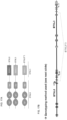
- a subject can be identified as having a mutation in a polynucleotide sequence encoding BTNL3 and BTNL8 (e.g., a ⁇ 56-kb deletion polymorphism (chr5:180375027-180430596 in hg19) by comparing a level of a polynucleotide sequence associated with a the BTNL8*3 mutation using the genotyping method described illustrated in FIG. 17B in a sample of the subject with a reference level of the polynucleotide sequence.
- a mutation in a polynucleotide sequence encoding BTNL3 and BTNL8 e.g., a ⁇ 56-kb deletion polymorphism (chr5:180375027-180430596 in hg19) by comparing a level of a polynucleotide sequence associated with a the BTNL8*3 mutation using the genotyping method described illustrated in FIG. 17B in a sample of the subject with a reference level
- the mutation can be characterized by reduced or ablated trafficking of BLTN3 and/or BTNL8 to a cell surface, e.g., relative to a reference sample, e.g., a wild-type sample.
- the mutation is characterized by expression of a BTNL8*3 fusion protein.
- the individual may be heterozygous or homozygous for a BTNL8*3 mutation.
- the mutation can be a single nucleotide polymorphism (SNP), e.g., a SNP in a BTNL3 intron or a BTNL8 intron.
- SNPs include rs6868418 and rs4700772 (see for example the NCBI Short Genetic Variations database; dbSNP).
- subject may be homozygous (TT) or heterozygous (CT) for T at rs6868418 (common allele CC) and/or homozygous (AA) or heterozygous (GA) for A at rs4700772 (common allele GG).
- the mutation may be an L3B30.2lc genotype.
- the subject may be heterozygous (GT) or homozygous (TT) for T at rs73815153, heterozygous (CG) or homozygous (GG) for G at rs7726604, heterozygous (CG) or homozygous (GG) for G at rs7726607, and heterozygous (CG) or homozygous (GG) for G at rs59220426.
- a subject identified as having a mutation that influences the presence and function of Vy4+ T cells in the gut may be amenable to or suitable for treatment as described herein.
- a subject identified as having or at risk of inflammation of the gut may be as described herein may be treated or selected for treatment in accordance with an aspect of the invention.
- identifying a subject as one having inflammation of the gut or likely or at risk of developing inflammation of the gut can be followed by providing a recommendation to pursue therapy (e.g., gene therapy or cell therapy, according to any of the methods described herein or known in the art).
- a recommendation to pursue therapy e.g., gene therapy or cell therapy, according to any of the methods described herein or known in the art.
- an individual identified, treated or selected for treatment as described herein may lack a BTNL8*3 mutation and may be heterozygous (GT) at rs73815153, heterozygous (CG) at rs7726604, heterozygous (CG) at rs7726607, and heterozygous (CG) at rs59220426.
- GT heterozygous
- CG heterozygous
- CG heterozygous
- CG heterozygous at rs7726607
- CG heterozygous
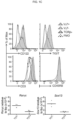
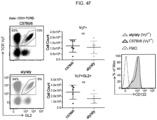
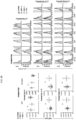
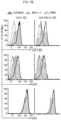
- Vy7+ cells mostly phenocopied mature Skint1-selected dendritic epithelial T cells DETCs), expressing uniformly high levels of CD122 (the IL-2R/IL-15R ⁇ chain), TIGIT (an inhibitory co-receptor), and the TCR (detected with anti-CD3 antibodies) and low levels of RNA for Ror ⁇ c and Sox13, two transcription factors contributing to ⁇ T cell differentiation ( FIG. 1C ).
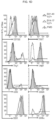
- V ⁇ 7- IELs did not show this phenotype, and whereas both Vy7+ and V ⁇ 7- IEL subsets were mostly CD45RBhi, CD44+, and CCR9+, Vy7+ IELs were distinct in being Lag3+, Thy1-, CD69+, CD5-, and CD8 ⁇ + ( FIGS. 1C and 2A ).
- Vy7+ IELs Prior to day 21, however, Vy7+ IELs phenocopied V ⁇ 7- IELs of adult mice.
- V ⁇ 7+ IELs CD122hi[MFI > 500], Thy1-, TIGIT+, Lag3+, CD8 ⁇ +, CD5-, CD24-, TCRhi
- putative Vy7+ IEL progenitors CD122lo[MFI ⁇ 200], Thy1+, TIGIT-, Lag3-, CD8 ⁇ -, CD5+, CD24+, TCRIo; FIGS. 1D , 1E , and 2B ), with the latter also phenocopying DETC progenitors prior to Skint1 selection.
- CD122hi V ⁇ 7+ and CD122lo V ⁇ 7+ IELs were purified from the same day 14-17 mice on four independent occasions and assessed by RNA sequencing (RNA-seq; FIG. 2C ). Consistent with their distinct phenotypes, the cells showed significantly different expression of many genes for cell surface proteins ( FIG. 2C ).
- Vy7+ cells were enriched in cell-cycle genes, consistent with which -100% of V ⁇ 7+ IELs at day 21-24 were Ki67+ (i.e., outside of G0), compared to ⁇ 40% of V ⁇ 7- cells (p ⁇ 0.0001) ( FIG. 1G ).
- Vy7+ IELs at day 28 phenocopied rapidly dividing thymocytes in that -10% incorporated ethynyldeoxyuridine (EdU) (a labeled nucleotide) during a 3-hour pulse, compared to only 4% of V ⁇ 7-IELs ( FIG. 2D ).
- EdU ethynyldeoxyuridine
- Example 2 A gut epithelial selecting element
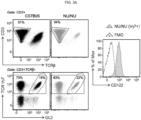
- TRDV2-2 sequences accounted for -25% of TCR ⁇ chain RNAs expressed by purified Vy7+ IELs ( FIGS. 3A and 4A ). In sum, the shaping of the gut Vy7+ IEL compartment did not require a thymus.
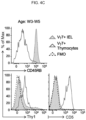
- V ⁇ 7+ thymocytes were rare, comprising ⁇ 10% of TCR ⁇ + cells in fetal and postnatal thymi across the first 8 weeks of life, the peak period of thymus function in mice ( FIG. 4B ). Furthermore, most V ⁇ 7+ thymocytes were CD45RBIo, Thy1+, CD5hi, CD122lo, TCRlo, and CD8 ⁇ -, thus offering no evidence for intrathymic maturation ( FIGS. 4C and 4E ).
- Btnl1, Btnl4, and Btnl6 which are closely related to Skint1.
- Btnl4 was expressed at low levels in proximal small intestine, commencing in the fetus.
- Btnl1 and Btnl6 RNAs were detected at day 6 postpartum, and Btnl1 levels further increased at around day 14 before the expression of all three Btnl genes stabilized ( FIG. 3C ).
- Expression was in post-mitotic villus enterocytes that are interspersed with IELs and was essentially absent from villus crypts that house replicating epithelial cell progenitors and lack IELs ( FIGS. 3D , 3E , and 4G ).
- Btnl1 expression peaked in proximal and medial small intestine ( FIG. 4H ), where its expression was >107-fold higher than in the thymus ( FIG. 4I ). These expression patterns could permit Btnl1, Btnl4, and/or Btnl6 to act locally upon V ⁇ 7+ IELs in weanling mice.
- ESCs embryonic stem cells
- CRISPR clustered regularly interspaced short palindromic repeats
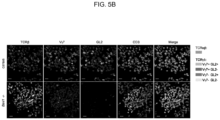
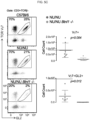
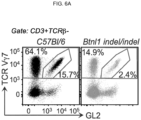
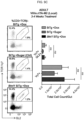
- Vy7+ IEL numbers were depleted by -90%, with V ⁇ 7GL2+ cells almost ablated. Because V ⁇ 7- IEL numbers barely increased, the percentage representation of V ⁇ 7+ cells among ⁇ IELs was reduced only by ⁇ 3-fold relative to wild-type (WT) mice, but this was set against a background of dramatically reduced ⁇ IEL numbers ( FIGS. 5A and 6A ). By contrast, TCR ⁇ +CD8 ⁇ + IEL numbers increased significantly in Btnl1-/- mice ( FIGS. 5A and 5B ).
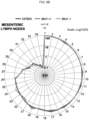
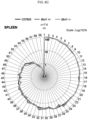
- Btnl1 for Vy7+ IELs was emphasized by comprehensive immune phenotyping of Btnl1-/-, WT, and Btnl1+/- mice that showed comparable splenic or MLN immune cell subsets (including ⁇ cell repertoires) and comparable representation and phenotypes of V ⁇ 7+ thymocytes from day 4 to week 8 ( FIGS. 6B-6E ). Consistent with its expression pattern, Btnl1 acted extrathymically; thus, Btnl1 deficiency crossed onto NU/NU mice reduced the average number of Vy7+ IELs by -90%, with almost total loss of V ⁇ 7GL2+ IELs ( FIG. 5C ).
- Btnl1-/- mice were CD122lo, Thy1+, TIGIT-, Lag3-, CD8 ⁇ -, CD5+, CD24+, thereby phenocopying immature Vy7+ IELs of day 14-17 WT mice ( FIGS. 7B , 7C , and 8B ).
- Btnl1 exerts its selective impact on V ⁇ 7+ T cells in trans, we established conditions in which the V ⁇ 7+ and V ⁇ 7GL2+ IEL compartments of week 3-5 WT mice were reconstituted within ⁇ 5 weeks of donor bone marrow (BM) transfer to irradiated 8- to 10-week, ⁇ T cell-deficient TCR ⁇ -/- mice ( FIG. 8C ).
- FIG. 7D WT BM reconstitution of V ⁇ 7+ IELs in irradiated, congenic T cell-sufficient CD45.2+ WT recipients was less effective than it was in TCR ⁇ -/- hosts (compare plots, top left in FIGS. 7D and 7E ), but nonetheless, reconstitution of Btnl1-/- hosts was much less effective, and the few Vy7+ and V ⁇ 7GL2+ IELs that developed in Btnl1-/- recipients phenocopied residual Vy7+ cells in Btnl1-/- mice and immature IELs in day 14-17 WT mice ( FIG. 7E ).
- Btnl1-/- mice transgenic for Btnl1 expressed from a doxycycline (Dox)-inducible promoter FIGS. 10A and 10B
- Dox doxycycline
- rtTA Dox-responsive trans-activator
- Rosa26 ubiquitously expressed Rosa26 promoter
- BiTg mice administered sugar water and Dox-treated single-transgenic (SiTg) Btnl1-/- mice that inherited only the Btnl1 transgene served as controls.
- Btnl1 induction in mice of appropriate genotypes was validated by qPCR ( FIG. 10C ).
- Vy7+ and V ⁇ 7GL2+ IEL there was significantly increased representation of Vy7+ and V ⁇ 7GL2+ IEL when Btnl1 expression was induced in Btnl1-/- mice in early-life by commencing Dox-treatment of nursing females at D7 or of weanlings at D21 and then maintaining treatment for 2-5 weeks ( FIG. 9D ).
- the expanded Vy7+ cells phenocopied IEL of W4-5 WT mice, and were significantly different from the IEL of Dox-treated SiTg mice and Btnl1-/- mice ( FIG. 9E ).
- Btnl1 might show specificity for Vy7+ IEL ex vivo. Since primary intestinal epithelial cells reportedly harbor Btnl1 in a complex with Btnl6, we sought evidence for heterotypic interactions of Btnl proteins. Indeed, cell surface expression of Btnl1 on Btnl1-transfected MODE-K cells (an established intestinal epithelial cell line in which endogenous Btnl genes are negligibly expressed) was greatly enhanced by co-transfection with Btnl4 or Btnl6 ( FIG. 12A ).
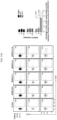
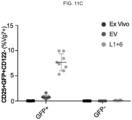
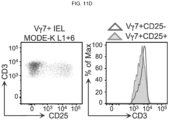
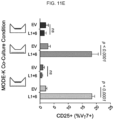
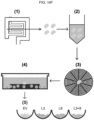
- MODE-K cells stably transduced with Btnl1 (L1), Btnl6 (L6), Btnl1 plus Btnl6 (L1+6), or empty vector (EV) were co-cultured with freshly explanted IELs that were then assayed for CD25 (IL-2R ⁇ chain) upregulation, which is among the most robust readouts of TCR stimulation for systemic T cells.
- CD25 upregulation was accompanied by slight but significant TCR downregulation, another rapid response to TCR stimulation ( FIG. 11D ).
- Btnl1+Btnl6 acted directly on V ⁇ 7+ IEL, since CD25 was upregulated on cells that had been purified by flow cytometry prior to L1+6 cell coculture ( FIG. 12D ).
- background CD25 expression was increased by TCR-dependent sorting, but this did not obscure the result.
- CD25 upregulation was abrogated and could not be secondarily transactivated by IELs that were in contact with L1+6 cells, e.g., via secreted cytokines ( FIG. 11E ).
- CD25 upregulation by IELs in contact with L1+6 cells showed dose-dependent inhibition by PP2, which inhibits signalling by src-family kinases, such as Lck and Fyn, but was not inhibited by PP3, an established control for PP2 specificity ( FIG. 12E ).
- Vy7+ IEL in Btnl1-/- mice responded to acute transgenic Btnl1 induction in vivo, they were comparable to WT Vy7+ IELs in responding to Btnl1 plus Btnl6 ex vivo ( FIG. 11F ).
- Vy7+ IELs showed relatively poor responses to anti-CD3, phenocopying the attenuated responsiveness imposed on Vy5+ DETC progenitors by Skint1, whereas Vy7+ IELs from Btnl1-/- mice, and TCR ⁇ + and V ⁇ 7- IELs from WT mice, none of which subsets had experienced prior Btnl1 selection in vivo, all showed strong responses to anti-CD3 ( FIGS. 11F and 11G ).
- Example 7 Signature human intestinal ⁇ T cells
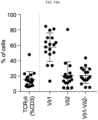
- V ⁇ 4 was reported to be the signature chain of intestinal V ⁇ 2- cells. Indeed, for up to ten donors examined, most intestinal V ⁇ 2- cells reacted with a Vy2/3/4-specific antibody, but not a V ⁇ 5/3-specific antibody ( FIG. 13B ; Table 1), and TCR deep sequencing showed that V ⁇ 4 sequences far outnumbered V ⁇ 2 sequences ( FIG. 14A ). Thus, despite individual variation, most gut ⁇ T cell compartments included a substantial V ⁇ 4+V ⁇ 2- subset, while some donors also displayed relatively high representation of V ⁇ 8+V ⁇ 1+ cells ( FIG. 13B ; Table 1).
- Example 8 BTNL3 and BTNL8 regulate human Vy4+ cells
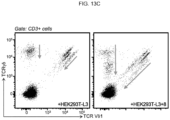
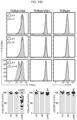
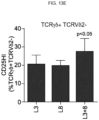
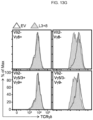
- TCR downregulation occurred in response to L3+8 cells in 21 of 23 donors but was never seen in co-cultures with L3 or L8 cells, and was never shown by intestinal V ⁇ 2+ or TCR ⁇ + cells, even in the same cultures as responding V ⁇ 2- cells ( FIG. 13D ).
- higher baseline CD25 expression reduced the sensitivity of this assay for human versus mouse gut T cell activation ex vivo
- L3+8 cells induced significant CD25 upregulation vis-a-vis gut T cells co-cultured with control cells ( FIG. 13E ), and CD25 upregulation was most evident on cells with downregulated TCRs ( FIG. 14G ).
- V ⁇ 2- cells responded to L3+8 ( FIG. 13C ).
- TCR ⁇ chains might determine BTNL responsiveness, as is true in mice.
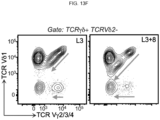
- human V ⁇ 2- populations that downregulated TCRs in co-cultures with L3+8 cells were detected by the V ⁇ 2/3/4-specific antibody, but not by antibodies to V ⁇ 8, V ⁇ 5/3, or V ⁇ 9 ( FIGS. 13F and 13G ).
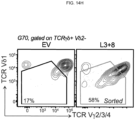
- productively rearranged V ⁇ 4 genes were prevalent when L3+8-responsive cells with downregulated TCRs were flow cytometry sorted from one donor ( FIG. 14H ) and their V ⁇ chains amplified without bias and sequenced (top four sequences, FIG. 15 ).
- TCR ⁇ transcripts from skin-derived TCR ⁇ + cells were biased toward V ⁇ 3 (bottom four sequences, FIG. 15 ).
- TCR ⁇ transcripts from skin-derived TCR ⁇ + cells were biased toward V ⁇ 3 (bottom four sequences, FIG. 15 ).
- two donors showing no substantial response to BTNL3+8 one proved a posteriori to have an atypical intestinal ⁇ T cell repertoire dominated by V ⁇ 8+ cells ( FIG. 14I ).
- L3+8 cells induced no significant TCR down-modulation by primary ⁇ + T cells from skin or blood among which Vy4+ cells are rare ( FIG. 13H ).
- epithelial BTNL genes regulate human-tissue-resident ⁇ T cells in an organ-specific, TCR ⁇ chain-specific manner.
- Wild-type (WT) C57BI/6 mice were obtained from Charles River and Harlan.
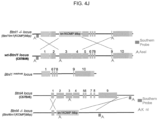
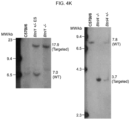
- Three independently derived embryonic stem (e.s.) cells for Btnl1-/- (Btnl1tm1(KOMP)Mbp) and e.s. cells for Btnl4-/- (Btnl4tm1(KOMP)Mbp) mice were obtained from the international mouse phenotyping consortium (IMPC) (project IDs: CSD67994 and CSD81524).
- IMPC international mouse phenotyping consortium
- RNAs & PAM sequences were cloned into the g-RNA basic vector, translated in vitro, purified and co-injected with Cas9 into day 1 zygotes and transferred into pseudopregnant foster mice.
- mice were mated overnight and E0 was considered as the day a vaginal plug is observed. Both male and female mice aged between 1 and 35 weeks (as indicated) were used in this study. No gender-specific differences were observed.
- Germ-free mice were kept in plastic isolators with autoclaved food, bedding, and water. Sterility of animals was checked bi-weekly by culturing faeces in thioglycollate medium under aerobic and anaerobic conditions for at least ten days. All handling procedures for GF mice were conducted in a laminar flow hood under sterile conditions. Food antigen-free (FAF) mice were raised on an amino acid-containing diet for up to five generations.
- FAF Food antigen-free mice
- Pellets of FAF diet contained all essential vitamins, minerals, trace elements, fat, dextrin, sucrose and free amino acids equimolar to the protein content of normal rodent chow (LASQCdietRod16, LASvendi).
- mice Generation of doxycyclin inducible Btnl-1 transgenic (Tg) mice
- Doxycycline (Dox)-inducible Btnl1-Tg mice were generated by injection of Btnl1-/- blastocysts with a linearized cassette containing a TRE/CMV-promoter upstream of the Btnl1-ORF.
- the TRE/CMV cassette has been previously described (Oppenheim et al., 2005).
- R26-rtTA2-M2 Hochedlinger et al., 2005
- Villin-rtTA2-M2 Villin-rtTA2-M2 mice were bred to homozygosity for Btnl1-deficiency and backcrossed onto Btnl-Tg mice for 3 generations to facilitate global (R26) or local (Villin) induction of Btnl1 transgene expression by doxycycline administered to drinking water (1 mg/ml Dox, 2% sucrose). Animal experiments were undertaken in full compliance with UK Home Office regulations and under a project license to A.H. (80/2480).
- Antibodies for mouse CD3 APC Cy7 (17A2); CD3 PerCPCy5.5 (145-2C11); TCR ⁇ Brilliant Violet 421 (H57-597); TCR ⁇ APC (H57-597); CD122 PE (TM ⁇ 1); CD122 Brilliant Violet 421 (TM ⁇ 1); CD122 APC (TM ⁇ 1); TIGIT PE (GIGD7); CD45RB APC Cy7 (C363-16A); Thy1.2 Brilliant Violet 510 (53-2.1); Lag3 PerCP-efluor 710 (C9B7W); CD5 PE (53-7.3); CD24 FITC (M1/69); CD24 PECy7 (M1/69); CD8 ⁇ PECy7 (53-6.7); CD8 ⁇ PECy7 (53-6.7); TCR V ⁇ 4 FITC (GL-2); TCR V ⁇ 4 PE (GL-2); CD8 ⁇ PerCpCy5.5 (YTS156.7.7); CD25 PerCpCy
- Antibodies for human CD25 Brilliant Violet TM 421 (BC96); CD25 PE (BC96); CD3 Brilliant Violet TM 510 (OKT3); CD3 BUV (UCHT 1); EpCAM eFlour ® 660 (1B7); Streptavidin APC-Cy7; Streptavidin Brilliant Violet TM 421; TCR ⁇ PeCy7 (IMMU510); V ⁇ 9 PC5 (IMMU360); V ⁇ 9 PE (B3); V ⁇ 1 APC (REA173); V ⁇ 2 PerCP (B6); V ⁇ 2/3/4 biotin (23D12), Vy3/5 biotin (56.3) and V ⁇ 8 biotin (R4.5.1) were provided by D. Wilmington and D. Wesch (University of Kiel).
- DYKDDDDK-PE Flag
- DYKDDDDK-APC Flag
- HA-DyLight 650 6x- Histidine-PE.
- Commercial antibodies were purchased from Biolegend, eBioscience, BD-Bioscience, Thermo Fisher Scientific or Miltenyi. Viability dyes (near IR or Blue) were from Invitrogen.
- Anti TCRV ⁇ 7 F2.67) was purified from hybridoma supernatant using the mouse TCS purification system (Abcam) and conjugated to biotin or AF647.
- Ki-67 staining was performed on cells fixed and permeabilized using the Foxp3 staining buffer set (eBioscience).
- BrdU Sigma-Aldrich
- EdU incorporation was assessed 3h post-intraperitoneal injection (50mg/kg) by immunohistochemistry or by flow cytometry (Click-iT EdU AF647 Assay Kit, Invitrogen), respectively.
- Anti-TCRV ⁇ 7 was purified from hybridoma supernatant using the mouse TCS purification system (abcam-ab128749).
- Purified anti-TCRV ⁇ 7 was conjugated to biotin (EZ-Link Sulfo-NHS-LC Biotinylation Kit, Thermo Fisher Scientific) or to AF647 (labelling kit, Thermo Fisher Scientific).
- Other antibodies were anti-human V ⁇ 2/3/4 (23D12, biotinylated), Vy5/3 (56.3, biotinylated) and V ⁇ 8 (R4.5.1, biotinylated).
- Flow cytometry data analysis was performed on FlowJo (Version 9.9)
- the self-inactivating lentiviral vector pCSIGPW (SFFV promoter - Multiple Cloning Site [MCS] - IRES-GFP - CMV promoter - PuromycinR) was constructed by replacing the PuromycinR/mIR cassette from the pAPM vector (Pertel et al., 2011) by a custom EcoRI-Xhol-Pmel-Notl-BamHI-Xbal-Mlul MCS.
- the IRES-GFP cassette was cloned by PCR from the plRES2-eGFP vector (Clonetech) using the BamHI/Xbal sites.
- the CMV promoter was cloned by PCR from the pCDNA3.1+ vector (Thermo Fischer Scientific) using the Mlul/Clal sites.
- the Puromycin resistance gene was cloned by PCR from the pGIPZ vector (Dharmacon) using the Clal/Agel sites.
- the pCSIGHW variant was generated by exchanging the puromycin resistance gene with a hygromycin B resistance gene, which was cloned by PCR from the pLHCX vector (Clontech).
- cDNAs were (sub-)cloned into pCSIGPW or variant vectors.
- Btnl1, Btnl4 and Btnl6 were previously described (Bas et al., 2011).
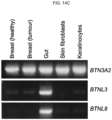
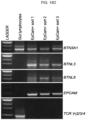
- BTNL3, BTNL8S and BTNL8 (GenBank accession numbers NM_197975.2, NM_024850.2 and NM_001040462.2) were cloned from Caco-2 cells by conventional RT- PCR, using the following primers: BTNL3 For 5'-GAATATCCATGGCTTTTGTGC-3' (SEQ ID NO: 15) BTNL3 Rev 5'-GTCTTCTCTGTCTCATCCCC-3' (SEQ ID NO: 16) BTNL8 For 5'-CCATTCACAGAACACATCCATG-3' (SEQ ID NO: 17) BTNL8S Rev 5'-TATGGGTTACAGTTTTCAGATCAG-3' (SEQ ID NO: 18) BTNL8 Rev 5'-GTGGGATGTG
- BTN3A1 For 5'-AGTATCTCCTGATATGCAGCATG-3' (SEQ ID NO: 28)
- BTN3A2 For 5'-TGGTATCTCTTGATATGCAGCATAG-3' (SEQ ID NO: 30)
- EPCAM For 5'-GCCGCCACCATGGCGCCCCCGCAG-3' (SEQ ID NO: 32)
- GAPDH For 5'-GAAGGTGAAGGTCGGAGTC-3' (SEQ ID NO: 34)
- GAPDH For 5'-GAAGGTGAAGGTCGGAGTC-3' (SEQ ID NO: 34)
- Transfections were carried out in HEK293T cells using PEI (3:1 PEI:DNA ratio, Polysciences). Btnl/BTNL expression was checked 48h post-transfection. Lentiviral particles were produced in HEK293T cells by co-transfection of pCSIGPW or pCSIGHW either empty or containing Btnl/BTNL cDNAs, pCMV ⁇ R8.91 (HIV-1 tat/rev/gag/pol), and pHIT/G (MLV env). Transduced cells were treated with puromycin and hygromycin 48h post-transduction for 7 days, sorted on the basis of GFP expression and used for functional assays.
- RNAlater (Ambion) or directly frozen in RLT buffer prior to RNA purification (Qiagen RNeasy kit).
- cDNA was generated using Superscript-II (Invitrogen) and analysed using Sybr-green assay (Invitrogen) using a ViiA7 Real-time PCR machine (Applied Biosystems).
- Btnl1 For: 5'-TGACCAGGAGAAATCGAAGG-3' (SEQ ID NO: 36) Btnl1 Rev: 5'-CACCGAGCAGGACCAATAGT-3' (SEQ ID NO: 37)
- Btnl4 For: 5'-CATTCTCCTCAGAGACCCACACTA-3' (SEQ ID NO: 38)
- Btnl4 Rev: 5'-GAGAGGCCTGAGGGAAGAA-3' (SEQ ID NO: 39)
- BTNL6 For: 5'-GCACCTCTCTGGTGAAGGAG-3' (SEQ ID NO: 40) Btnl6 Rev: 5'-ACCGTCTTCTGGACCTTTGA-3' (SEQ ID NO: 41)
- ⁇ -Actin For: 5'-CAGCTTCTTTGCAGCTCCTT-3' (SEQ ID NO: 42)
- Sox-13 For: 5'-CTCCAGGCCTTC
- Southern blots were performed with probes generated using a Dig-Probe labelling kit; blots were hybridized in DIG-Easy-hyb buffer overnight, and developed using the DIG-Luminescence Detection Kit (Sigma-Aldrich).
- DIG labelled probes for Southern blotting were generated using the following primers: Btnl1 For: 5'-ACTGGCTTCCTCAGAGTCAT-3' (SEQ ID NO: 52) Btnl1 Rev: 5'-CAGTAGTGAATGGCCCCTGA-3' (SEQ ID NO: 53) Btnl4 For: 5'-GACCAACGCTTCCCTACCTC-3' (SEQ ID NO: 54) Btnl4 Rev: 5'-GCCTTGGGTCCAACAAGACA-3' (SEQ ID NO: 55) Btnl1-Tg-Ex3-For: 5'-GGTTTTCTGTGAAGGGACCA-3' (SEQ ID NO: 56) Btnl1-Tg-Ex4-Rev: 5'-GGTCTGCAACTCAGAGGAGG-3' (SEQ ID NO: 57)
- RNAscope was performed on paraffin embedded sections using probes and kits obtained from Advanced Cell Diagnostics Inc. using the RNAscope 2.0 HD Reagent Kit-BROWN. Reference sequences are as follows: Btnl1.NM_001111094.1 (576-1723); Btnl4 NM030746.1 (560-968); Btnl6.NM_030747.1 (245-1552).
- IELs murine intestinal intra-epithelial lymphocytes
- IELs were isolated from mouse small intestine as described in Wencker et al., Nat. Immunol. 2014, 15: 80-87 . Small intestine was opened and washed in PBS, cut into 1 cm pieces and incubated for 20min in RPMI 1640 supplemented with 1% penicillin/streptomycin (pen/strep), 10% fetal calf serum (FCS) and 1mM dithiothreitol on a turning wheel. Tissues were washed and vortexed in RPMI, then passed through a 70 ⁇ m nylon cell strainer twice, and centrifuged on a 20/40/80% Percoll density gradient at 700g for 30min. IELs were harvested from the 40 to 80% Percoll interface.
- pen/strep penicillin/streptomycin
- FCS fetal calf serum
- 105 MODE-K were seeded in 48-well plates 24 hours prior to the addition of 105 unsorted or (where indicated) positively FACS-sorted (CD45+V ⁇ 7+) IELs and incubated for 16-18 hours in 10% CO2 unless indicated otherwise.
- 2 x 10⁵ MODE-K cells were seeded onto 24-well transwell plates (3 ⁇ m pore size - Corning) 24 hours prior to the addition of 3 x 10⁵ IELs, either in direct contact (below), sequestered from (above), or split 50:50 with MODE-K cells (above and below the transwell).
- 96-well U bottom plates were coated overnight with 10 ⁇ g/ml LEAF-Purified anti-mouse CD3 ⁇ or Hamster IgG Isotype control (Biolegend) at 4oC and washed once with PBS 1x before seeding IEL.100,000 IELs were seeded per well. Cells were incubated at 37oC for 16-18 hours in 10% CO2 prior to analysis.
- Proximal small intestine (SI) samples were fixed in Zamboni's fixative, blocked with normal goat serum and stained with antibodies against TCR ⁇ , TCR ⁇ , TCRV ⁇ 4 (encoded by TRDV2-2) (GL2), CD3 and V ⁇ 7.
- Z-Sections were acquired on a confocal-LSM-710 microscope (Zeiss) and processed and analysed using Imaris Software (Bitplane Scientific Solutions).
- mice 10-12 week old recipient mice were irradiated with 950Rads 24 hours, injected (IV) with 5-10x106 donor bone marrow cells and analysed 4-12 weeks later.
- IELs harvested from 4 week-old WT mice were column-purified using CD45 microbeads (MACS Miltenyi biotec) and IV-injected into 6 week-old TCR ⁇ -/- and TCR ⁇ -/-Btnl1-/- recipients. Analysis was performed 2-3 weeks later.
- RNA libraries were generated using the KAPA Stranded RNA-seq Kit with RiboErase (HMR) (KAPA BIOSYSTEMS). Paired-end sequencing on HiSeq 2500 (illumina) using rapid run chemistry (read length: 100bp).
- Endoscopic biopsies were obtained from the ascending colon of adult donors undergoing routine diagnostic colonoscopy. Excess resected skin discarded at the time of cutaneous or reconstructive surgery was obtained from adult donors.
- Primary gut lymphocytes were obtained using an adaptation of the method of Kupper and Clarke ( Clark, et al., Journal of Investigational Dermatology. 2006. 126(5):1059-70 ; FIG. 14F ). Skin lymphocytes were isolated using the method as originally described.
- Biopsies were washed for 20min in 5mL wash medium (RPMI 1640 10% FCS, ⁇ -mercaptoethanol, penicillin [500 U/ml], streptomycin [500 ⁇ g/ml], metronidazole [5 ⁇ g/ml, Pharmacy department, Guy's Hospital], gentamicin [100 ⁇ g/ml, Sigma- Aldrich] and amphotericin 12.5 ⁇ g/ml [Thermo Fisher Scientific]).
- 5mL wash medium RPMI 1640 10% FCS, ⁇ -mercaptoethanol, penicillin [500 U/ml], streptomycin [500 ⁇ g/ml], metronidazole [5 ⁇ g/ml, Pharmacy department, Guy's Hospital], gentamicin [100 ⁇ g/ml, Sigma- Aldrich] and amphotericin 12.5 ⁇ g/ml [Thermo Fisher Scientific]).
- One endoscopic biopsy was placed on top of each matrix, which was inverted, and pressure applied, to
- the matrices were placed into a 24-well plate (1 per well) and covered with 2 mL RPMI 1640 (supplemented with 10% FCS, ⁇ -mercaptoethanol, penicillin [100 U/ml], streptomycin [100 ⁇ g/ml], metronidazole [1 ⁇ g/ml], gentamicin [20 ⁇ g/ml], amphotericin [2.5 ⁇ g/ml]), IL-2 (100 U/mL, Novartis Pharmaceutical UK) and IL-15 (10 ng/mL, Biolegend). 1 ml of medium was aspirated every second day and replaced with complete medium containing 2x concentrated cytokines.
- PBMCs were isolated by Ficoll gradient from blood obtained from the blood donation service.
- RNA and cDNA were prepared as described above.
- 5x10⁵ HEK293T cells transduced with either empty vector (EV), BTNL3, BTNL8 or BTNL3+8 and 2x10⁵ freshly harvested primary human lymphocytes were co-cultured in 96-well plates with complete medium without supplementary cytokine and incubated at 37°C at 5% CO2 for 16 hrs ( FIG. 14F ).
- Mouse TRDV gene Amplification and sequencing of TCR ⁇ CDR3 from RNA purified from sorted Vy7+ IEL was performed using the Amp2Seq Platform (iRepertoire).
- Human TCRG V ⁇ gene Amplification and sequencing of TCR ⁇ CDR3 was performed using the immunoSEQ Platform (Adaptive Biotechnologies).
- bar/spider charts display mean ⁇ SD and p values were derived from unpaired two tailed t tests, assuming equivalent SD (ns>0.05).
- Confocal microscopy was performed using a LSM710 laser scanning confocal microscope (Zeiss) with a 40x oil objective (numerical aperture 1.3). 3D image analysis on z-stacks was carried out using Imaris (Bitplane). The surfaces tool was used to identify CD3+ cells. Voxels outside of these structures were set to zero in each of the channels to create masks.
- RNA sequencing data GEO Accession number - GSE85422.
- TCR ⁇ FIG. 16A , left three panels
- TCR.CD3 FIG. 16A , right-most panel
- T cell subtypes indicated in each panel following overnight human gut T cell co-cultures with 293 cells transduced with empty vector (EV; blue histograms) or 293 cells transduced with a vector expressing BTNL3+BTNL8 (red histograms).
- TCR/CD3 expression in the two co-culture situations essentially overlay, whereas for ⁇ cells expressing V ⁇ 2, V ⁇ 3, or V ⁇ 4 (which are indistinguishable with the detection reagent used), TCR ⁇ expression by cells exposed to BTNL3 and BTNL8 (red histogram) was shifted to the left (down-regulated) relative to that expressed by cells exposed to EV (blue).
- TCR expression was quantified for 7 donors ( FIG. 16B , left hand panel). Down-regulation in TCRV ⁇ 2/3/4 cells is equivalent to that in all TCRV ⁇ 9(-) cells, and thus accounts for the complete down-regulation observed ( FIG. 16B , second panel). Donor ⁇ and TCRV ⁇ 2/3/4 frequencies in these donors was characterized ( FIG. 16B , right two panels).
- FIGS. 17A and 17B A strategy to detect the common haplotype encoding BTNL8 and BTNL3 from the rarer haplotype encoding BTNL8*3 is illustrated in FIGS. 17A and 17B .
- Genotype-specific primers L8R and L3R
- L8F common forward primer
- Results are shown in FIG. 18 .
- About 46% of mutations were heterozygous, and about 8% were homozygous.
- Expression of transduced proteins was detected using FLAG-tagged proteins as shown in FIG.19 .
- BTNL3 is poorly expressed at the cell surface unless it is co-expressed with either BTNL8 or BTNL8S179F, an allelic variant of BTNL8.
- coexpression with BTNL8*3 did not enhance its surface expression.
- BTNL8*3 did enhance the cell surface expression of BTNL8 and BTNL8S179F.
- FIG. 20 shows that following exposure of BTNL3+BTNL8 and BTNL3+BTNL8S179F, TCR ⁇ expression and TCRV ⁇ 2/3/4 expression are coordinately reduced, but not in other circumstances.
- Flow cytometry reveals that a homozygote patient diagnosed with IBD exhibited a very small ⁇ T cell compartment, of which the majority is V ⁇ 1+.
- the number of ⁇ T cells is also very low, and more than 85% of ⁇ T cells do not express TCRV ⁇ 2/3/4 ( FIG. 21 ).
- patient GN017 expressed primarily TCRV ⁇ 2/3/4 and V ⁇ 1, V ⁇ 3, V ⁇ 9, and V ⁇ 2, patient GN019 expressed more diverse genes with readily detectable signals for V ⁇ 8 and V ⁇ 5, in addition to those detected in GN017.
- FIGS. 24A and 24B show that the TCR is downregulated and CD69 is upregulated specifically for J76 V ⁇ 4V ⁇ 1 cells exposed specifically to BTNL3+BTNL8 or PMA+ ionomycin.
- J76 V ⁇ 9V ⁇ 2 cells showed TCR downregulation and CD69 upregulation only upon exposure to PMA-ionomycin.
- heterologous expression of V ⁇ 4 on a cell was shown to be sufficient to bind and respond to BTNL3+BTNL8.
- BTNL3 expression was notably only substantially expressed only in polarized Caco2 cells ( FIGS. 25B and 25C ).
- HNF4a expression and IL-8 expression were also both upregulated in polarized Caco2 cells ( FIG. 25C ).
- BTNL8 expression was upregulated in confluent/quiescent Caco2 cells, irrespective of polarization.
- TNF ⁇ reduced the expression of BTNL3, BTNL8, HNF4, and CDX2, while IL-8 was upregulated ( FIG. 26A ).
- Kinetic assays revealed that electrical resistance was lost over time in the presence of TNF ⁇ , relative to untreated controls ( FIG. 26B ).
- Example 11 Administration of a population of Vv4+ T cells to treat IBD
- a physician of skill in the art can treat a patient, such as a human patient, so as to reduce or alleviate the symptoms of IBD.
- a physician of skill in the art administers to the human patient a population of V ⁇ 4+ T cells in which 5% or more (e.g., 5%, 10%, 15%, 20%, 25%. 30%, 40%, 50%, 60%, 70%, 80%, 90%, or more) of the cells are V ⁇ 4 ⁇ 1+ or V ⁇ 4 ⁇ 3+ T cells. 10 6 V ⁇ 4+ T cells are administered to the patient by intravenous administration on a bimonthly frequency.
- the patient is evaluated, for instance, 2 weeks, 1 month, 2 months, 3 months, 4 months, 5 months, 6 months or more following administration of the population of IELs depending on the route of administration used for treatment.
- a finding of a reduction of one or more IBD symptoms following administration of a population of Vy4+ T cells provides an indication that the treatment has successfully treated IBD.
- Non-V ⁇ 4 ⁇ 1 ⁇ T cells can be isolated from a patient sample and transduced to express V ⁇ 4 ⁇ 1.
- viral vectors e.g., a lentiviral vector, adenoviral vector, or adeno-associated viral vector
- a constitutively active promoter e.g., any constitutively active known in the art, such as a human retroviral LTR, SFFV, EIF1 ⁇ , or PGK
- the nucleic acid sequences encoding V ⁇ 1 and V ⁇ 4 are engineered using standard techniques known in the art.
- a bicistronic expression cassette is used in which an IRES sequence is placed between the nucleic acid sequence encoding V ⁇ 1 and the nucleic acid sequence encoding V ⁇ 4.
- the virus can be used to transduce ⁇ T cells to generate a population of ⁇ T cells that express V ⁇ 1 and V ⁇ 4.
- Regulatory T cells can be isolated from a patient sample and transduced to express V ⁇ 4 ⁇ 1.
- viral vectors e.g., a lentiviral vector, adenoviral vector, or adeno-associated viral vector
- a constitutively active promoter e.g., any constitutively active known in the art, such as a human retroviral LTR, SFFV, EIF1 ⁇ , or PGK
- the nucleic acid sequences encoding V ⁇ 1 and V ⁇ 4 are engineered using standard techniques known in the art.
- a bicistronic expression cassette is used in which an IRES sequence is placed between the nucleic acid sequence encoding V ⁇ 1 and the nucleic acid sequence encoding V ⁇ 4.
- the virus can be used to transduce Tregs to generate a population of Tregs that express V ⁇ 1 and V ⁇ 4.
- Natural Killer (NK) cells can be isolated from a patient sample and transduced to express V ⁇ 4 ⁇ 1.
- viral vectors e.g., a lentiviral vector, adenoviral vector, or adeno-associated viral vector
- a constitutively active promoter e.g., any constitutively active known in the art, such as a human retroviral LTR, SFFV, EIF1 ⁇ , or PGK
- the nucleic acid sequences encoding V ⁇ 1 and V ⁇ 4 are engineered using standard techniques known in the art.
- a bicistronic expression cassette is used in which an IRES sequence is placed between the nucleic acid sequence encoding V ⁇ 1 and the nucleic acid sequence encoding V ⁇ 4.
- Viral vectors e.g., a lentiviral vector, adenoviral vector, or adeno-associated viral vector
- a lentiviral vector, adenoviral vector, or adeno-associated viral vector containing an NK cell promoter and the nucleic acid sequence encoding CD3 are also engineered using standard techniques known in the art.
- the V ⁇ 1 and V ⁇ 4 virus and the CD3 virus are used to co-transduce NK cells to generate a population of NK cells that express V ⁇ 1, V ⁇ 4, and CD3.
- a physician of skill in the art can treat a patient, such as a human patient, so as to reduce or alleviate the symptoms of IBD.
- a physician of skill in the art administers to the human patient a virus expressing BTNL3 and BTNL8.
- Viral vectors e.g., a lentiviral vector, adenoviral vector, or adeno-associated viral vector
- a virus expressing BTNL3 and BTNL8 e.g., a lentiviral vector, adenoviral vector, or adeno-associated viral vector
- a bicistronic expression cassette is used in which an IRES sequence is placed between the nucleic acid sequence encoding BTNL3 and the nucleic acid sequence encoding BTNL8.
- a therapeutically effective amount of the virus is administered to the patient by intravenous administration to treat IBD.
- the treatment is administered once, or, optionally, repeated one or more times, e.g., once monthly, once bimonthly, three times annually, twice annually, or once annually.
- the patient is evaluated, for instance, 2 weeks, 1 month, 2 months, 3 months, 4 months, 5 months, 6 months or more following administration of the virus depending on the route of administration used for treatment.
- a finding of a reduction of one or more IBD symptoms following administration of a virus provides an indication that the treatment has successfully treated IBD.
- a physician of skill in the art can treat a patient, such as a human patient (e.g., a human expressing at least one WT copy of BTNL3 and BTNL8), so as to reduce or alleviate the symptoms of IBD.
- a physician of skill in the art administers to the human patient a virus expressing HNF4A.
- Viral vectors e.g., a lentiviral vector, adenoviral vector, or adeno-associated viral vector
- the virus is administered in a therapeutically effective amount by intravenous administration to treat IBD.
- the treatment can be administered once, or, optionally, repeated one or more times, e.g., once monthly, once bimonthly, three times annually, twice annually, or once annually.
- the patient is evaluated, for instance, 2 weeks, 1 month, 2 months, 3 months, 4 months, 5 months, 6 months or more following administration of the virus depending on the route of administration used for treatment.
- a finding of a reduction of one or more IBD symptoms following administration of a virus provides an indication that the treatment has successfully treated IBD.
- L8 *3 and L3B30.2cl were investigated for their ability to induce TCR downregulation.
- Donors with known disease states were genotyped for the indicated polymorphisms. Those donors who are either homozygous or compound heterozygous tended to be non-responders, while negative controls were responders. Responsiveness is shown in FIGS. 28A-28B .
- Example 18 Dysregulation of colonic ⁇ T cell surface phenotype.
Landscapes
- Health & Medical Sciences (AREA)
- Life Sciences & Earth Sciences (AREA)
- Engineering & Computer Science (AREA)
- General Health & Medical Sciences (AREA)
- Genetics & Genomics (AREA)
- Chemical & Material Sciences (AREA)
- Biomedical Technology (AREA)
- Veterinary Medicine (AREA)
- Animal Behavior & Ethology (AREA)
- Public Health (AREA)
- Organic Chemistry (AREA)
- Bioinformatics & Cheminformatics (AREA)
- Biotechnology (AREA)
- Epidemiology (AREA)
- Wood Science & Technology (AREA)
- Zoology (AREA)
- General Engineering & Computer Science (AREA)
- Biochemistry (AREA)
- Microbiology (AREA)
- Immunology (AREA)
- Molecular Biology (AREA)
- Medicinal Chemistry (AREA)
- Pharmacology & Pharmacy (AREA)
- Physics & Mathematics (AREA)
- Biophysics (AREA)
- Plant Pathology (AREA)
- Hematology (AREA)
- Cell Biology (AREA)
- Virology (AREA)
- General Chemical & Material Sciences (AREA)
- Nuclear Medicine, Radiotherapy & Molecular Imaging (AREA)
- Chemical Kinetics & Catalysis (AREA)
- Medicines Containing Material From Animals Or Micro-Organisms (AREA)
- Micro-Organisms Or Cultivation Processes Thereof (AREA)
- Medicines That Contain Protein Lipid Enzymes And Other Medicines (AREA)
- Measuring Or Testing Involving Enzymes Or Micro-Organisms (AREA)
- Medicines Containing Antibodies Or Antigens For Use As Internal Diagnostic Agents (AREA)
- Investigating Or Analysing Biological Materials (AREA)
Claims (13)
- Zusammensetzung, umfassend eine Population von 106 bis 1010 Zellen, wobei zumindest 10 % der Population eine Population von isolierten Vγ4+-T-Zellen sind, zur Verwendung in einem Verfahren zur Behandlung einer Entzündung im Darm eines Individuums, wobei die Entzündung im Darm gegebenenfalls mit chronisch-entzündlicher Darmkrankheit (IBD), wie Morbus Crohn, und/oder ulzerativer Kolitis in Zusammenhang steht und wobei die Vγ4+-Zellen ein heterologes Protein exprimieren, wobei das heterologe Protein Vγ4 ist und wobei die Vγ4+-Zellen Vδ2(-)-γδ-T-Zellen sind und von Vy4(-)-Zellen abgeleitet sind.
- Zusammensetzung zur Verwendung nach Anspruch 1, wobei die Vγ4+-Zellen von menschlichen Zellen abgeleitet sind.
- Zusammensetzung zur Verwendung nach Anspruch 1 oder 2, wobei die Vγ4+-Zellen weiters einen Oberflächenmarker exprimieren, der mit Vγ4+-γδ-T-Zellen, wie z. B. CD103 oder 2B4, assoziiert ist.
- Zusammensetzung zur Verwendung nach Anspruch 3, wobei der Oberflächenmarker heterolog ist.
- Zusammensetzung zur Verwendung nach einem der vorangegangenen Ansprüche, wobei die Zellen von einer induzierten pluripotenten Stammzelle (iPSC) abgeleitet sind.
- Zusammensetzung zur Verwendung nach einem der Ansprüche 1 bis 5, wobei das Individuum ein verringertes Expressionsausmaß von BTNL3 und/oder BTNL8 verglichen mit einem Referenzexpressionsausmaß aufweist.
- Zusammensetzung zur Verwendung nach Anspruch 6, wobei das verringerte Expressionsausmaß von BTNL3 und/oder BTNL8 das Ergebnis einer Mutation in einer Polynucleotidsequenz ist, die für BTNL3 und/oder BTNL8 kodiert, wie z. B. eine Mutation, gekennzeichnet durch die Expression eines BTNL8*3-Fusionsproteins und/oder eines L3B30.2lc-Geno-typs.
- Isolierte Vγ4+-Zelle zur Verwendung in einem Verfahren zur Behandlung einer Entzündung im Darm eines Individuums, wobei das Verfahren das Verabreichen einer Population von Vγ4+-Zellen an das Individuum umfasst, wobei die Vγ4+-Zellen ein heterologes Protein exprimieren, wobei das heterologe Protein Vy4 ist und wobei die verabreichte Population von Vγ4+-Zellen auf die Expression von Vγ4 gescreent wurde, wobei die Vγ4+-Zelle eine Vδ2(-)-γδ-T-Zelle ist und von einer Vγ4(-)-Zelle abgeleitet ist, und wobei bei dem Individuum IBD, wie z. B. Morbus Crohn, und/oder ulzerative Kolitis diagnostiziert wurde.
- Isolierte Vγ4+-Zelle zur Verwendung nach Anspruch 8, wobei die Vγ4+-Zelle von einer menschlichen Zelle abgeleitet ist.
- Isolierte Vγ4+-Zelle zur Verwendung nach Anspruch 8 oder 9, wobei die Vγ4+-Zelle weiters einen Oberflächenmarker exprimiert, der mit Vγ4+-γδ-T-Zellen, wie z. B. CD103 oder 2B4, assoziiert ist.
- Isolierte Vγ4+-Zelle zur Verwendung nach Anspruch 10, wobei der Oberflächenmarker heterolog ist.
- Isolierte Vγ4+-Zelle zur Verwendung nach einem der Ansprüche 8 bis 11, wobei die Zelle von einer induzierten pluripotenten Stammzelle (iPSC) abgeleitet ist.
- Isolierte Vγ4+-Zelle zur Verwendung nach einem der Ansprüche 8 bis 12, wobei das Individuum eine Mutation in einer Polynucleotidsequenz aufweist, die für BTNL3 und/oder BTNL8 kodiert.
Priority Applications (1)
| Application Number | Priority Date | Filing Date | Title |
|---|---|---|---|
| EP24187137.5A EP4467146A3 (de) | 2017-09-15 | 2018-09-17 | Zusammensetzungen und verfahren zur verbesserung von gamma-delta-t-zellen im darm |
Applications Claiming Priority (2)
| Application Number | Priority Date | Filing Date | Title |
|---|---|---|---|
| US201762559225P | 2017-09-15 | 2017-09-15 | |
| PCT/EP2018/075102 WO2019053272A1 (en) | 2017-09-15 | 2018-09-17 | COMPOSITIONS AND METHODS FOR IMPROVING T GAMMA DELTA LYMPHOCYTES IN INTESTINE |
Related Child Applications (1)
| Application Number | Title | Priority Date | Filing Date |
|---|---|---|---|
| EP24187137.5A Division EP4467146A3 (de) | 2017-09-15 | 2018-09-17 | Zusammensetzungen und verfahren zur verbesserung von gamma-delta-t-zellen im darm |
Publications (2)
| Publication Number | Publication Date |
|---|---|
| EP3681996A1 EP3681996A1 (de) | 2020-07-22 |
| EP3681996B1 true EP3681996B1 (de) | 2024-08-07 |
Family
ID=63787888
Family Applications (2)
| Application Number | Title | Priority Date | Filing Date |
|---|---|---|---|
| EP18782647.4A Active EP3681996B1 (de) | 2017-09-15 | 2018-09-17 | Zusammensetzungen und verfahren zur verbesserung von gamma-delta-t-zellen im darm |
| EP24187137.5A Pending EP4467146A3 (de) | 2017-09-15 | 2018-09-17 | Zusammensetzungen und verfahren zur verbesserung von gamma-delta-t-zellen im darm |
Family Applications After (1)
| Application Number | Title | Priority Date | Filing Date |
|---|---|---|---|
| EP24187137.5A Pending EP4467146A3 (de) | 2017-09-15 | 2018-09-17 | Zusammensetzungen und verfahren zur verbesserung von gamma-delta-t-zellen im darm |
Country Status (4)
| Country | Link |
|---|---|
| US (3) | US20200297871A1 (de) |
| EP (2) | EP3681996B1 (de) |
| JP (3) | JP7569686B2 (de) |
| WO (1) | WO2019053272A1 (de) |
Families Citing this family (4)
| Publication number | Priority date | Publication date | Assignee | Title |
|---|---|---|---|---|
| PH12021551475A1 (en) | 2019-01-07 | 2022-05-02 | Shattuck Labs Inc | Heterodimeric proteins for modulating gamma delta t cells |
| US11098093B2 (en) | 2019-01-07 | 2021-08-24 | Shattuck Labs, Inc. | Heterodimeric proteins for modulating gamma delta T cells |
| WO2021175954A1 (en) | 2020-03-04 | 2021-09-10 | Imcheck Therapeutics Sas | Antibodies having specificity for btnl8 and uses thereof |
| WO2022109110A1 (en) * | 2020-11-19 | 2022-05-27 | Shattuck Labs, Inc. | Methods of identifying gamma delta t cell-modulating agents |
Family Cites Families (18)
| Publication number | Priority date | Publication date | Assignee | Title |
|---|---|---|---|---|
| US5139941A (en) | 1985-10-31 | 1992-08-18 | University Of Florida Research Foundation, Inc. | AAV transduction vectors |
| US5173414A (en) | 1990-10-30 | 1992-12-22 | Applied Immune Sciences, Inc. | Production of recombinant adeno-associated virus vectors |
| DK0752248T3 (da) | 1992-11-13 | 2000-11-13 | Idec Pharma Corp | Terapeutisk anvendelse af kimæriske og radioaktivt mærkede antistoffer mod humant B-lymfocytbegrænset differentieringsantig |
| US5869305A (en) | 1992-12-04 | 1999-02-09 | The University Of Pittsburgh | Recombinant viral vector system |
| US6204059B1 (en) | 1994-06-30 | 2001-03-20 | University Of Pittsburgh | AAV capsid vehicles for molecular transfer |
| US6001650A (en) | 1995-08-03 | 1999-12-14 | Avigen, Inc. | High-efficiency wild-type-free AAV helper functions |
| US5801030A (en) | 1995-09-01 | 1998-09-01 | Genvec, Inc. | Methods and vectors for site-specific recombination |
| US6136597A (en) | 1997-09-18 | 2000-10-24 | The Salk Institute For Biological Studies | RNA export element |
| JP2005095166A (ja) * | 2003-08-28 | 2005-04-14 | Sumitomo Pharmaceut Co Ltd | 炎症性腸疾患の疾患マーカーおよびその利用 |
| WO2009108274A2 (en) * | 2008-02-26 | 2009-09-03 | The University Of North Carolina At Chapel Hill | Methods and compositions for adeno-associated virus (aav) with hi loop mutations |
| WO2014165707A2 (en) * | 2013-04-03 | 2014-10-09 | Memorial Sloan-Kettering Cancer Center | Effective generation of tumor-targeted t-cells derived from pluripotent stem cells |
| EP3060059A4 (de) * | 2013-10-25 | 2017-11-01 | Board of Regents, The University of Texas System | Polyklonale gamma-delta-t-zellen zur immuntherapie |
| KR20170032406A (ko) * | 2014-07-15 | 2017-03-22 | 주노 쎄러퓨티크스 인코퍼레이티드 | 입양 세포 치료를 위한 조작된 세포 |
| IL297773B2 (en) * | 2014-11-17 | 2024-07-01 | Adicet Bio Inc | Engineered gamma delta t-cells |
| AU2015367290A1 (en) * | 2014-12-16 | 2017-05-11 | Garvan Institute Of Medical Research | Sequencing controls |
| WO2017072367A1 (en) | 2015-10-30 | 2017-05-04 | Cancer Research Technology Limited | EXPANSION OF NON-HAEMATOPOIETIC TISSUE-RESIDENT γδ T CELLS AND USES OF THESE CELLS |
| EP3580332B1 (de) | 2017-02-07 | 2026-04-15 | Agency for Science, Technology And Research | Verfahren und kits zur erzeugung von mimetischen angeborenen immunzellen aus pluripotenten stammzellen |
| US20190345516A1 (en) * | 2018-03-12 | 2019-11-14 | Musc Foundation For Research Development | Methods for treating eye disease |
-
2018
- 2018-09-17 EP EP18782647.4A patent/EP3681996B1/de active Active
- 2018-09-17 JP JP2020515237A patent/JP7569686B2/ja active Active
- 2018-09-17 WO PCT/EP2018/075102 patent/WO2019053272A1/en not_active Ceased
- 2018-09-17 US US16/646,914 patent/US20200297871A1/en not_active Abandoned
- 2018-09-17 EP EP24187137.5A patent/EP4467146A3/de active Pending
-
2023
- 2023-08-11 US US18/448,811 patent/US20240131191A1/en active Pending
- 2023-08-11 US US18/448,807 patent/US20240123090A1/en active Pending
-
2024
- 2024-05-22 JP JP2024083412A patent/JP7728919B2/ja active Active
-
2025
- 2025-08-13 JP JP2025134654A patent/JP2025161855A/ja active Pending
Non-Patent Citations (1)
| Title |
|---|
| ANDREI I. CHAPOVAL ET AL: "BTNL8, a butyrophilin-like molecule that costimulates the primary immune response", MOLECULAR IMMUNOLOGY, vol. 56, no. 4, 1 December 2013 (2013-12-01), GB, pages 819 - 828, XP055439211, ISSN: 0161-5890, DOI: 10.1016/j.molimm.2013.08.003 * |
Also Published As
| Publication number | Publication date |
|---|---|
| JP2025161855A (ja) | 2025-10-24 |
| US20240131191A1 (en) | 2024-04-25 |
| US20240123090A1 (en) | 2024-04-18 |
| US20200297871A1 (en) | 2020-09-24 |
| JP2020534822A (ja) | 2020-12-03 |
| EP4467146A2 (de) | 2024-11-27 |
| JP7569686B2 (ja) | 2024-10-18 |
| JP2024119849A (ja) | 2024-09-03 |
| EP3681996A1 (de) | 2020-07-22 |
| WO2019053272A1 (en) | 2019-03-21 |
| EP4467146A3 (de) | 2025-05-07 |
| JP7728919B2 (ja) | 2025-08-25 |
Similar Documents
| Publication | Publication Date | Title |
|---|---|---|
| US20240131191A1 (en) | Compositions and methods for enhancing gamma delta t cells in the gut | |
| Barros et al. | Epithelia use butyrophilin-like molecules to shape organ-specific γδ T cell compartments | |
| Yamada et al. | Transcription factor ELF4 controls the proliferation and homing of CD8+ T cells via the Krüppel-like factors KLF4 and KLF2 | |
| US12060566B2 (en) | Self-inactivating lentiviral vector comprising a FOXP3 expression cassette | |
| Speckmann et al. | Clinical and molecular heterogeneity of RTEL1 deficiency | |
| Łyszkiewicz et al. | miR-181a/b-1 controls thymic selection of Treg cells and tunes their suppressive capacity | |
| CN111344020A (zh) | 靶向非病毒dna插入 | |
| Drennan et al. | NKT sublineage specification and survival requires the ubiquitin-modifying enzyme TNFAIP3/A20 | |
| Jain et al. | Il-21–Driven Neoplasms in SJL Mice Mimic Some Key Features of Human Angioimmunoblastic T-Cell Lymphoma | |
| JP2024512261A (ja) | Cd8 t細胞における治療標的を発見するためのインビボcrisprスクリーニングシステム | |
| HK40118388A (en) | Compositions and methods for enhancing gamma delta t cells in the gut | |
| Kose et al. | Maturational arrest of thymocyte development is caused by a deletion in the receptor-like protein tyrosine phosphatase κ gene in LEC rats | |
| US20250305003A1 (en) | Genome editing of cells | |
| US20240131073A1 (en) | Mir200c-epcam axis reprogramed immune cells for enhanced anti-tumor function | |
| WO2024102860A1 (en) | Engineered cells for therapy | |
| Kirkwood et al. | Human-like APOBEC3 gene expression and anti-viral responses following replacement of mouse Apobec3 with the 7-gene human APOBEC3 locus | |
| EP4048796B1 (de) | Zusammensetzungen und verfahren mit viralen vektorsystemen zur multiplexierten aktivierung endogener gene als immuntherapie und immun-gentherapie auf viraler basis | |
| Fischer et al. | Gene therapy for immunodeficiency diseases | |
| US12440579B2 (en) | Optimised RAG1 deficient gene therapy | |
| CA3132420A1 (en) | Expression constructs for the genetic modification of cells | |
| Mauer | HIV-1 Infection Modulates CD4+ T Cell Gene Expression to Induce a Quiescent Phenotype | |
| Anderson | Modeling autoimmune associated genetics in primary human T cells using CRISPR/Cas9 gene editing | |
| Yue et al. | Loss of TET proteins in regulatory T cells unleashes effector function | |
| WO2024227946A1 (en) | Gene therapy | |
| WO2025212236A1 (en) | Method for increasing the peptide repertoire presented by mhc proteins on a mammalian cell |
Legal Events
| Date | Code | Title | Description |
|---|---|---|---|
| STAA | Information on the status of an ep patent application or granted ep patent |
Free format text: STATUS: UNKNOWN |
|
| STAA | Information on the status of an ep patent application or granted ep patent |
Free format text: STATUS: THE INTERNATIONAL PUBLICATION HAS BEEN MADE |
|
| PUAI | Public reference made under article 153(3) epc to a published international application that has entered the european phase |
Free format text: ORIGINAL CODE: 0009012 |
|
| STAA | Information on the status of an ep patent application or granted ep patent |
Free format text: STATUS: REQUEST FOR EXAMINATION WAS MADE |
|
| 17P | Request for examination filed |
Effective date: 20200313 |
|
| AK | Designated contracting states |
Kind code of ref document: A1 Designated state(s): AL AT BE BG CH CY CZ DE DK EE ES FI FR GB GR HR HU IE IS IT LI LT LU LV MC MK MT NL NO PL PT RO RS SE SI SK SM TR |
|
| AX | Request for extension of the european patent |
Extension state: BA ME |
|
| DAV | Request for validation of the european patent (deleted) | ||
| STAA | Information on the status of an ep patent application or granted ep patent |
Free format text: STATUS: EXAMINATION IS IN PROGRESS |
|
| 17Q | First examination report despatched |
Effective date: 20210420 |
|
| GRAP | Despatch of communication of intention to grant a patent |
Free format text: ORIGINAL CODE: EPIDOSNIGR1 |
|
| STAA | Information on the status of an ep patent application or granted ep patent |
Free format text: STATUS: GRANT OF PATENT IS INTENDED |
|
| INTG | Intention to grant announced |
Effective date: 20230919 |
|
| GRAJ | Information related to disapproval of communication of intention to grant by the applicant or resumption of examination proceedings by the epo deleted |
Free format text: ORIGINAL CODE: EPIDOSDIGR1 |
|
| STAA | Information on the status of an ep patent application or granted ep patent |
Free format text: STATUS: EXAMINATION IS IN PROGRESS |
|
| GRAP | Despatch of communication of intention to grant a patent |
Free format text: ORIGINAL CODE: EPIDOSNIGR1 |
|
| STAA | Information on the status of an ep patent application or granted ep patent |
Free format text: STATUS: GRANT OF PATENT IS INTENDED |
|
| GRAJ | Information related to disapproval of communication of intention to grant by the applicant or resumption of examination proceedings by the epo deleted |
Free format text: ORIGINAL CODE: EPIDOSDIGR1 |
|
| GRAP | Despatch of communication of intention to grant a patent |
Free format text: ORIGINAL CODE: EPIDOSNIGR1 |
|
| INTC | Intention to grant announced (deleted) | ||
| INTG | Intention to grant announced |
Effective date: 20240216 |
|
| INTG | Intention to grant announced |
Effective date: 20240305 |
|
| RAP3 | Party data changed (applicant data changed or rights of an application transferred) |
Owner name: KING'S COLLEGE LONDON |
|
| GRAS | Grant fee paid |
Free format text: ORIGINAL CODE: EPIDOSNIGR3 |
|
| GRAA | (expected) grant |
Free format text: ORIGINAL CODE: 0009210 |
|
| STAA | Information on the status of an ep patent application or granted ep patent |
Free format text: STATUS: THE PATENT HAS BEEN GRANTED |
|
| AK | Designated contracting states |
Kind code of ref document: B1 Designated state(s): AL AT BE BG CH CY CZ DE DK EE ES FI FR GB GR HR HU IE IS IT LI LT LU LV MC MK MT NL NO PL PT RO RS SE SI SK SM TR |
|
| P01 | Opt-out of the competence of the unified patent court (upc) registered |
Free format text: CASE NUMBER: APP_38675/2024 Effective date: 20240627 |
|
| REG | Reference to a national code |
Ref country code: GB Ref legal event code: FG4D |
|
| REG | Reference to a national code |
Ref country code: CH Ref legal event code: EP |
|
| REG | Reference to a national code |
Ref country code: IE Ref legal event code: FG4D |
|
| REG | Reference to a national code |
Ref country code: DE Ref legal event code: R096 Ref document number: 602018072810 Country of ref document: DE |
|
| REG | Reference to a national code |
Ref country code: LT Ref legal event code: MG9D |
|
| REG | Reference to a national code |
Ref country code: NL Ref legal event code: MP Effective date: 20240807 |
|
| PG25 | Lapsed in a contracting state [announced via postgrant information from national office to epo] |
Ref country code: NO Free format text: LAPSE BECAUSE OF FAILURE TO SUBMIT A TRANSLATION OF THE DESCRIPTION OR TO PAY THE FEE WITHIN THE PRESCRIBED TIME-LIMIT Effective date: 20241107 |
|
| REG | Reference to a national code |
Ref country code: AT Ref legal event code: MK05 Ref document number: 1710968 Country of ref document: AT Kind code of ref document: T Effective date: 20240807 |
|
| PG25 | Lapsed in a contracting state [announced via postgrant information from national office to epo] |
Ref country code: FI Free format text: LAPSE BECAUSE OF FAILURE TO SUBMIT A TRANSLATION OF THE DESCRIPTION OR TO PAY THE FEE WITHIN THE PRESCRIBED TIME-LIMIT Effective date: 20240807 Ref country code: NL Free format text: LAPSE BECAUSE OF FAILURE TO SUBMIT A TRANSLATION OF THE DESCRIPTION OR TO PAY THE FEE WITHIN THE PRESCRIBED TIME-LIMIT Effective date: 20240807 Ref country code: PL Free format text: LAPSE BECAUSE OF FAILURE TO SUBMIT A TRANSLATION OF THE DESCRIPTION OR TO PAY THE FEE WITHIN THE PRESCRIBED TIME-LIMIT Effective date: 20240807 Ref country code: GR Free format text: LAPSE BECAUSE OF FAILURE TO SUBMIT A TRANSLATION OF THE DESCRIPTION OR TO PAY THE FEE WITHIN THE PRESCRIBED TIME-LIMIT Effective date: 20241108 Ref country code: PT Free format text: LAPSE BECAUSE OF FAILURE TO SUBMIT A TRANSLATION OF THE DESCRIPTION OR TO PAY THE FEE WITHIN THE PRESCRIBED TIME-LIMIT Effective date: 20241209 |
|
| PG25 | Lapsed in a contracting state [announced via postgrant information from national office to epo] |
Ref country code: BG Free format text: LAPSE BECAUSE OF FAILURE TO SUBMIT A TRANSLATION OF THE DESCRIPTION OR TO PAY THE FEE WITHIN THE PRESCRIBED TIME-LIMIT Effective date: 20240807 |
|
| PG25 | Lapsed in a contracting state [announced via postgrant information from national office to epo] |
Ref country code: LV Free format text: LAPSE BECAUSE OF FAILURE TO SUBMIT A TRANSLATION OF THE DESCRIPTION OR TO PAY THE FEE WITHIN THE PRESCRIBED TIME-LIMIT Effective date: 20240807 |
|
| PG25 | Lapsed in a contracting state [announced via postgrant information from national office to epo] |
Ref country code: AT Free format text: LAPSE BECAUSE OF FAILURE TO SUBMIT A TRANSLATION OF THE DESCRIPTION OR TO PAY THE FEE WITHIN THE PRESCRIBED TIME-LIMIT Effective date: 20240807 Ref country code: IS Free format text: LAPSE BECAUSE OF FAILURE TO SUBMIT A TRANSLATION OF THE DESCRIPTION OR TO PAY THE FEE WITHIN THE PRESCRIBED TIME-LIMIT Effective date: 20241207 |
|
| PG25 | Lapsed in a contracting state [announced via postgrant information from national office to epo] |
Ref country code: HR Free format text: LAPSE BECAUSE OF FAILURE TO SUBMIT A TRANSLATION OF THE DESCRIPTION OR TO PAY THE FEE WITHIN THE PRESCRIBED TIME-LIMIT Effective date: 20240807 |
|
| PG25 | Lapsed in a contracting state [announced via postgrant information from national office to epo] |
Ref country code: RS Free format text: LAPSE BECAUSE OF FAILURE TO SUBMIT A TRANSLATION OF THE DESCRIPTION OR TO PAY THE FEE WITHIN THE PRESCRIBED TIME-LIMIT Effective date: 20241107 Ref country code: ES Free format text: LAPSE BECAUSE OF FAILURE TO SUBMIT A TRANSLATION OF THE DESCRIPTION OR TO PAY THE FEE WITHIN THE PRESCRIBED TIME-LIMIT Effective date: 20240807 |
|
| PG25 | Lapsed in a contracting state [announced via postgrant information from national office to epo] |
Ref country code: RS Free format text: LAPSE BECAUSE OF FAILURE TO SUBMIT A TRANSLATION OF THE DESCRIPTION OR TO PAY THE FEE WITHIN THE PRESCRIBED TIME-LIMIT Effective date: 20241107 Ref country code: PT Free format text: LAPSE BECAUSE OF FAILURE TO SUBMIT A TRANSLATION OF THE DESCRIPTION OR TO PAY THE FEE WITHIN THE PRESCRIBED TIME-LIMIT Effective date: 20241209 Ref country code: PL Free format text: LAPSE BECAUSE OF FAILURE TO SUBMIT A TRANSLATION OF THE DESCRIPTION OR TO PAY THE FEE WITHIN THE PRESCRIBED TIME-LIMIT Effective date: 20240807 Ref country code: NO Free format text: LAPSE BECAUSE OF FAILURE TO SUBMIT A TRANSLATION OF THE DESCRIPTION OR TO PAY THE FEE WITHIN THE PRESCRIBED TIME-LIMIT Effective date: 20241107 Ref country code: NL Free format text: LAPSE BECAUSE OF FAILURE TO SUBMIT A TRANSLATION OF THE DESCRIPTION OR TO PAY THE FEE WITHIN THE PRESCRIBED TIME-LIMIT Effective date: 20240807 Ref country code: LV Free format text: LAPSE BECAUSE OF FAILURE TO SUBMIT A TRANSLATION OF THE DESCRIPTION OR TO PAY THE FEE WITHIN THE PRESCRIBED TIME-LIMIT Effective date: 20240807 Ref country code: IS Free format text: LAPSE BECAUSE OF FAILURE TO SUBMIT A TRANSLATION OF THE DESCRIPTION OR TO PAY THE FEE WITHIN THE PRESCRIBED TIME-LIMIT Effective date: 20241207 Ref country code: HR Free format text: LAPSE BECAUSE OF FAILURE TO SUBMIT A TRANSLATION OF THE DESCRIPTION OR TO PAY THE FEE WITHIN THE PRESCRIBED TIME-LIMIT Effective date: 20240807 Ref country code: GR Free format text: LAPSE BECAUSE OF FAILURE TO SUBMIT A TRANSLATION OF THE DESCRIPTION OR TO PAY THE FEE WITHIN THE PRESCRIBED TIME-LIMIT Effective date: 20241108 Ref country code: FI Free format text: LAPSE BECAUSE OF FAILURE TO SUBMIT A TRANSLATION OF THE DESCRIPTION OR TO PAY THE FEE WITHIN THE PRESCRIBED TIME-LIMIT Effective date: 20240807 Ref country code: ES Free format text: LAPSE BECAUSE OF FAILURE TO SUBMIT A TRANSLATION OF THE DESCRIPTION OR TO PAY THE FEE WITHIN THE PRESCRIBED TIME-LIMIT Effective date: 20240807 Ref country code: BG Free format text: LAPSE BECAUSE OF FAILURE TO SUBMIT A TRANSLATION OF THE DESCRIPTION OR TO PAY THE FEE WITHIN THE PRESCRIBED TIME-LIMIT Effective date: 20240807 Ref country code: AT Free format text: LAPSE BECAUSE OF FAILURE TO SUBMIT A TRANSLATION OF THE DESCRIPTION OR TO PAY THE FEE WITHIN THE PRESCRIBED TIME-LIMIT Effective date: 20240807 |
|
| PG25 | Lapsed in a contracting state [announced via postgrant information from national office to epo] |
Ref country code: RO Free format text: LAPSE BECAUSE OF FAILURE TO SUBMIT A TRANSLATION OF THE DESCRIPTION OR TO PAY THE FEE WITHIN THE PRESCRIBED TIME-LIMIT Effective date: 20240807 Ref country code: DK Free format text: LAPSE BECAUSE OF FAILURE TO SUBMIT A TRANSLATION OF THE DESCRIPTION OR TO PAY THE FEE WITHIN THE PRESCRIBED TIME-LIMIT Effective date: 20240807 Ref country code: SM Free format text: LAPSE BECAUSE OF FAILURE TO SUBMIT A TRANSLATION OF THE DESCRIPTION OR TO PAY THE FEE WITHIN THE PRESCRIBED TIME-LIMIT Effective date: 20240807 |
|
| PG25 | Lapsed in a contracting state [announced via postgrant information from national office to epo] |
Ref country code: EE Free format text: LAPSE BECAUSE OF FAILURE TO SUBMIT A TRANSLATION OF THE DESCRIPTION OR TO PAY THE FEE WITHIN THE PRESCRIBED TIME-LIMIT Effective date: 20240807 |
|
| PG25 | Lapsed in a contracting state [announced via postgrant information from national office to epo] |
Ref country code: CZ Free format text: LAPSE BECAUSE OF FAILURE TO SUBMIT A TRANSLATION OF THE DESCRIPTION OR TO PAY THE FEE WITHIN THE PRESCRIBED TIME-LIMIT Effective date: 20240807 |
|
| PG25 | Lapsed in a contracting state [announced via postgrant information from national office to epo] |
Ref country code: SK Free format text: LAPSE BECAUSE OF FAILURE TO SUBMIT A TRANSLATION OF THE DESCRIPTION OR TO PAY THE FEE WITHIN THE PRESCRIBED TIME-LIMIT Effective date: 20240807 |
|
| REG | Reference to a national code |
Ref country code: CH Ref legal event code: PL |
|
| REG | Reference to a national code |
Ref country code: DE Ref legal event code: R097 Ref document number: 602018072810 Country of ref document: DE |
|
| PG25 | Lapsed in a contracting state [announced via postgrant information from national office to epo] |
Ref country code: LU Free format text: LAPSE BECAUSE OF NON-PAYMENT OF DUE FEES Effective date: 20240917 |
|
| PLBE | No opposition filed within time limit |
Free format text: ORIGINAL CODE: 0009261 |
|
| STAA | Information on the status of an ep patent application or granted ep patent |
Free format text: STATUS: NO OPPOSITION FILED WITHIN TIME LIMIT |
|
| PG25 | Lapsed in a contracting state [announced via postgrant information from national office to epo] |
Ref country code: MC Free format text: LAPSE BECAUSE OF FAILURE TO SUBMIT A TRANSLATION OF THE DESCRIPTION OR TO PAY THE FEE WITHIN THE PRESCRIBED TIME-LIMIT Effective date: 20240807 |
|
| REG | Reference to a national code |
Ref country code: BE Ref legal event code: MM Effective date: 20240930 |
|
| PG25 | Lapsed in a contracting state [announced via postgrant information from national office to epo] |
Ref country code: BE Free format text: LAPSE BECAUSE OF NON-PAYMENT OF DUE FEES Effective date: 20240930 |
|
| 26N | No opposition filed |
Effective date: 20250508 |
|
| PG25 | Lapsed in a contracting state [announced via postgrant information from national office to epo] |
Ref country code: CH Free format text: LAPSE BECAUSE OF NON-PAYMENT OF DUE FEES Effective date: 20240930 |
|
| PG25 | Lapsed in a contracting state [announced via postgrant information from national office to epo] |
Ref country code: IE Free format text: LAPSE BECAUSE OF NON-PAYMENT OF DUE FEES Effective date: 20240917 |
|
| PG25 | Lapsed in a contracting state [announced via postgrant information from national office to epo] |
Ref country code: SE Free format text: LAPSE BECAUSE OF FAILURE TO SUBMIT A TRANSLATION OF THE DESCRIPTION OR TO PAY THE FEE WITHIN THE PRESCRIBED TIME-LIMIT Effective date: 20240807 |
|
| PGFP | Annual fee paid to national office [announced via postgrant information from national office to epo] |
Ref country code: DE Payment date: 20250820 Year of fee payment: 8 |
|
| PGFP | Annual fee paid to national office [announced via postgrant information from national office to epo] |
Ref country code: GB Payment date: 20250820 Year of fee payment: 8 |
|
| PGFP | Annual fee paid to national office [announced via postgrant information from national office to epo] |
Ref country code: FR Payment date: 20250820 Year of fee payment: 8 |
|
| PG25 | Lapsed in a contracting state [announced via postgrant information from national office to epo] |
Ref country code: IT Free format text: LAPSE BECAUSE OF NON-PAYMENT OF DUE FEES Effective date: 20240917 |
|
| PG25 | Lapsed in a contracting state [announced via postgrant information from national office to epo] |
Ref country code: CY Free format text: LAPSE BECAUSE OF FAILURE TO SUBMIT A TRANSLATION OF THE DESCRIPTION OR TO PAY THE FEE WITHIN THE PRESCRIBED TIME-LIMIT; INVALID AB INITIO Effective date: 20180917 |
|
| PG25 | Lapsed in a contracting state [announced via postgrant information from national office to epo] |
Ref country code: HU Free format text: LAPSE BECAUSE OF FAILURE TO SUBMIT A TRANSLATION OF THE DESCRIPTION OR TO PAY THE FEE WITHIN THE PRESCRIBED TIME-LIMIT; INVALID AB INITIO Effective date: 20180917 |
|
| PG25 | Lapsed in a contracting state [announced via postgrant information from national office to epo] |
Ref country code: IT Free format text: LAPSE BECAUSE OF NON-PAYMENT OF DUE FEES Effective date: 20240917 |
|
| PGFP | Annual fee paid to national office [announced via postgrant information from national office to epo] |
Ref country code: IT Payment date: 20250822 Year of fee payment: 8 |
|
| PGRI | Patent reinstated in contracting state [announced from national office to epo] |
Ref country code: IT Effective date: 20250131 |