EP3682876A1 - Composition pharmaceutique pour le traitement des douleurs aiguës et chroniques, contenant du polmacoxib et du tramadol - Google Patents
Composition pharmaceutique pour le traitement des douleurs aiguës et chroniques, contenant du polmacoxib et du tramadol Download PDFInfo
- Publication number
- EP3682876A1 EP3682876A1 EP18855260.8A EP18855260A EP3682876A1 EP 3682876 A1 EP3682876 A1 EP 3682876A1 EP 18855260 A EP18855260 A EP 18855260A EP 3682876 A1 EP3682876 A1 EP 3682876A1
- Authority
- EP
- European Patent Office
- Prior art keywords
- tramadol
- polmacoxib
- pain
- pharmaceutical composition
- tablet
- Prior art date
- Legal status (The legal status is an assumption and is not a legal conclusion. Google has not performed a legal analysis and makes no representation as to the accuracy of the status listed.)
- Withdrawn
Links
- TVYLLZQTGLZFBW-GOEBONIOSA-N CN(C)C[C@H](CCCC1)[C@@]1(c1cccc(OC)c1)O Chemical compound CN(C)C[C@H](CCCC1)[C@@]1(c1cccc(OC)c1)O TVYLLZQTGLZFBW-GOEBONIOSA-N 0.000 description 1
- 0 CN(C)C[C@](CCCC1)[C@]1(c1cccc(OCI(*)=C)c1)O Chemical compound CN(C)C[C@](CCCC1)[C@]1(c1cccc(OCI(*)=C)c1)O 0.000 description 1
Images






Classifications
-
- A—HUMAN NECESSITIES
- A61—MEDICAL OR VETERINARY SCIENCE; HYGIENE
- A61K—PREPARATIONS FOR MEDICAL, DENTAL OR TOILETRY PURPOSES
- A61K31/00—Medicinal preparations containing organic active ingredients
- A61K31/13—Amines
- A61K31/135—Amines having aromatic rings, e.g. ketamine, nortriptyline
- A61K31/137—Arylalkylamines, e.g. amphetamine, epinephrine, salbutamol, ephedrine or methadone
-
- A—HUMAN NECESSITIES
- A61—MEDICAL OR VETERINARY SCIENCE; HYGIENE
- A61K—PREPARATIONS FOR MEDICAL, DENTAL OR TOILETRY PURPOSES
- A61K31/00—Medicinal preparations containing organic active ingredients
- A61K31/33—Heterocyclic compounds
- A61K31/335—Heterocyclic compounds having oxygen as the only ring hetero atom, e.g. fungichromin
- A61K31/34—Heterocyclic compounds having oxygen as the only ring hetero atom, e.g. fungichromin having five-membered rings with one oxygen as the only ring hetero atom, e.g. isosorbide
-
- A—HUMAN NECESSITIES
- A61—MEDICAL OR VETERINARY SCIENCE; HYGIENE
- A61P—SPECIFIC THERAPEUTIC ACTIVITY OF CHEMICAL COMPOUNDS OR MEDICINAL PREPARATIONS
- A61P29/00—Non-central analgesic, antipyretic or antiinflammatory agents, e.g. antirheumatic agents; Non-steroidal antiinflammatory drugs [NSAID]
-
- A—HUMAN NECESSITIES
- A61—MEDICAL OR VETERINARY SCIENCE; HYGIENE
- A61K—PREPARATIONS FOR MEDICAL, DENTAL OR TOILETRY PURPOSES
- A61K9/00—Medicinal preparations characterised by special physical form
- A61K9/20—Pills, tablets, discs, rods
-
- A—HUMAN NECESSITIES
- A61—MEDICAL OR VETERINARY SCIENCE; HYGIENE
- A61K—PREPARATIONS FOR MEDICAL, DENTAL OR TOILETRY PURPOSES
- A61K31/00—Medicinal preparations containing organic active ingredients
- A61K31/13—Amines
- A61K31/135—Amines having aromatic rings, e.g. ketamine, nortriptyline
-
- A—HUMAN NECESSITIES
- A61—MEDICAL OR VETERINARY SCIENCE; HYGIENE
- A61K—PREPARATIONS FOR MEDICAL, DENTAL OR TOILETRY PURPOSES
- A61K31/00—Medicinal preparations containing organic active ingredients
- A61K31/33—Heterocyclic compounds
- A61K31/335—Heterocyclic compounds having oxygen as the only ring hetero atom, e.g. fungichromin
- A61K31/34—Heterocyclic compounds having oxygen as the only ring hetero atom, e.g. fungichromin having five-membered rings with one oxygen as the only ring hetero atom, e.g. isosorbide
- A61K31/341—Heterocyclic compounds having oxygen as the only ring hetero atom, e.g. fungichromin having five-membered rings with one oxygen as the only ring hetero atom, e.g. isosorbide not condensed with another ring, e.g. ranitidine, furosemide, bufetolol, muscarine
-
- A—HUMAN NECESSITIES
- A61—MEDICAL OR VETERINARY SCIENCE; HYGIENE
- A61K—PREPARATIONS FOR MEDICAL, DENTAL OR TOILETRY PURPOSES
- A61K9/00—Medicinal preparations characterised by special physical form
- A61K9/20—Pills, tablets, discs, rods
- A61K9/2072—Pills, tablets, discs, rods characterised by shape, structure or size; Tablets with holes, special break lines or identification marks; Partially coated tablets; Disintegrating flat shaped forms
- A61K9/2086—Layered tablets, e.g. bilayer tablets; Tablets of the type inert core-active coat
- A61K9/209—Layered tablets, e.g. bilayer tablets; Tablets of the type inert core-active coat containing drug in at least two layers or in the core and in at least one outer layer
-
- A—HUMAN NECESSITIES
- A61—MEDICAL OR VETERINARY SCIENCE; HYGIENE
- A61K—PREPARATIONS FOR MEDICAL, DENTAL OR TOILETRY PURPOSES
- A61K9/00—Medicinal preparations characterised by special physical form
- A61K9/20—Pills, tablets, discs, rods
- A61K9/28—Dragees; Coated pills or tablets, e.g. with film or compression coating
-
- A—HUMAN NECESSITIES
- A61—MEDICAL OR VETERINARY SCIENCE; HYGIENE
- A61P—SPECIFIC THERAPEUTIC ACTIVITY OF CHEMICAL COMPOUNDS OR MEDICINAL PREPARATIONS
- A61P19/00—Drugs for skeletal disorders
-
- A—HUMAN NECESSITIES
- A61—MEDICAL OR VETERINARY SCIENCE; HYGIENE
- A61P—SPECIFIC THERAPEUTIC ACTIVITY OF CHEMICAL COMPOUNDS OR MEDICINAL PREPARATIONS
- A61P25/00—Drugs for disorders of the nervous system
- A61P25/04—Centrally acting analgesics, e.g. opioids
Definitions
- the present invention relates to a composition comprising polmacoxib and tramadol, and more particularly, to a pharmaceutical composition for treating acute or chronic pain comprising polmacoxib used as a non-steroidal anti-inflammatory agent and tramadol as an opioid-based analgesic agent which shows excellent stability and excellent effect at low content.
- Pain is defined an unpleasant sensory and emotional experience associated with actual or potential tissue damage, or described in terms of such damage. It may also refer to sense of pain and sensory impairment caused by stimulation of the area in contact with cerebral cortex and marginal systemic regions through a neuropath consisting of nociceptors and nerve fibers. It can be said a warning response that transmits an abnormality inside or outside the body as a defense means to protect the body. Since pain itself is not a disease, elimination of pain does not cure the disease that causes pain.
- Pain is largely divided into perceptual pain caused by damage or inflammation of somatic or visceral tissues, and neuropathic pain occurring after nerve injury.
- Perceptual pain may include skin pain, visceral pain, somatic pain, perceptual neuralgia, nerve root referred pain, somatic referred pain, and the like, and neuropathic pain may include pain due to peripheral or central nervous system dysfunction. If the pain persists for a long time or if the irritation is too severe, it may interfere with daily life and cause anxiety and fear. Because of this, people with chronic pain often have depression, so these characteristics should be considered in treatment.
- tramadol suppresses pain by attaching to a ⁇ -receptor which causes pain
- the pain-suppressing mechanism in which tramadol suppresses pain by attaching to a ⁇ -receptor which causes pain is similar to some narcotic analgesics. Accordingly, the prolonged use or injection of tramadol may lead to drug dependence.
- side effects of tramadol constipation, sleepless and anxiety symptom may occur.
- other side effects such as dizziness, drowsiness, nausea, etc. may occur.
- the U.S. FDA has classified tramadol as a narcotic analgesic and recommends not to prescribe it for children under 12 years of age and lactating women in consideration of the risk of dyspnea. Because of this drawback, opioid drugs that have been used as an analgesic in the treatment of pain have not always been available in high doses or for repeated use.
- U.S. patent No. 6,558,701 describes that for treating moderate to severe pain the International Health Organization has suggested a combination of opioid analgesics and nonsteroidal analgesics in order to exhibit effective pain relief and to reduce the amount of analgesics necessary for administration.
- Korean Patent No. 10-0444195 mentioned the synergistic effect of the coadministration of COX-2 selective inhibitors and opioids.
- analgesic activity is increased and the dosage can be reduced compared to the case of individual use of both drugs for the same pain. Therefore, it was expected that the type and extent of side effects caused by each drug can be reduced.
- polmacoxib which is currently commercially available under the name of ACELEX capsule, and has a structure represented by the following formula 2.
- the compound name of polmacoxib is 5-(4-(aminosulfonyl)-phenyl)-2,2-dimethyl-4-(3-fluorophenyl)-3(2H)-furanone. It is a selective inhibitor of COX-2 and has reduced gastrointestinal toxicities than conventional NSAIDs. It is known to be effective in inflammatory disease, inflammation-related disease, pain, solid cancer, angiogenesis-related disease, Alzheimer's disease, seizure and convulsion, stroke, or epilepsy (Korean Patent 10-0495389 ).
- acetaminophen and celecoxib have been developed as a combination with tramadol.
- the above-mentioned polmacoxib exhibits has an advantage of maximum effects and minimum side effects even with a small amount of active ingredient.
- COX cyclooxygenase
- COX-1 and COX-2 Two isoforms, COX-1 and COX-2, have been identified.
- COX-2 has been shown to be induced by pro-inflammatory stimuli, and is an isoform of an enzyme that is assumed to play a major role in the synthesis of prostanoid regulators of pain, inflammation, and fever.
- the present invention intends to apply a combination of polmacoxib which is a COX-2 inhibitor and tramadol having these actions to the treatment of acute and chronic pain.
- compositions in which the combination of polmacoxib and tramadol can achieve additional effects in severe to moderate pain, in particular pain associated with inflammation.
- the inventors have noted synergistic effects on the pain and superior stabilities of a combination of polmacoxib and tramadol over existing products, and thus intended to formulate two different active ingredients into a single dosage form to further enhance the ease of taking each drug.
- the present invention provides a pharmaceutical composition for treating acute and chronic pain, comprising polmacoxib and tramadol.
- the pain may be neurological pain, including diabetic neuropathy, cancer pain, osteoarthritis, moderate pain, rheumatoid arthritis, spondylitis or sciatica.
- the composition may be in the form of a double-layered tablet having a bi-layered structure in which the polmacoxib and the tramadol are separated into each layer.
- the composition may further comprise a coating base.
- the composition may be in the form of a cored tablet formulation containing an inner core of tramadol and an outer core of polmacoxib or a dual release micro-coating (DRM) containing an outer coating layer of polmacoxib on an inner layer of tramadol.
- DRM dual release micro-coating
- the ratio of polmacoxib to tramadol may be a weight ratio of 1: 1 to 500.
- the ratio of polmacoxib to tramadol may be a weight ratio of 1: 1 to 300.
- the ratio of polmacoxib to tramadol may be a weight ratio of 2: 1 to 300.
- the composition may further comprise a pharmaceutically acceptable carrier.
- polmacoxib and tramadol are formulated into a single dosage form containing rapid release of polmacoxib and sustained release of tramadol, which is a combination designed to allow the effects of each drug to be complementarily and sustainably exerted even with only one or two doses per day by minimizing the interaction of each drug in the dosage form.
- Multi-layered tablet according to the present invention is suitable for mass production since it has excellent flow of particles, a hardness suitable for facilitating package, transport and handling of tablets, and less occurrence of capping or lamination of tablets during manufacturing process.
- composition as used herein may be described interchangeably with a "pharmacological composition” and a “pharmaceutically acceptable composition”, and which means any inorganic or organic compound formulation which can be a relatively non-toxic to a subject to be administered and have harmless effective action.
- pharmaceutical composition may refer to any organic or inorganic compound formulation in that side effects resulting from the composition do not impair the efficacy of the drug, and that does not cause serious irritation to a subject to be administered by the compound and does not impair the biological activities and properties of the compound.
- the term 'subject to be administered' may be used interchangeably with 'individual to be administered' and 'organism to be administered', and may refer to any animal including humans in which acute or chronic pain is caused or may be caused.
- the present invention provides a combination composition for treating acute and chronic pain, comprising polmacoxib and tramadol.
- the combination of polmacoxib and tramadol may have effects of reducing deformation of active ingredients to increase stabilities against changes over time when mixed with other pharmaceutically acceptable additives.
- the ratio of polmacoxib to tramadol in the pharmaceutical composition according to the invention may be a weight ratio of 1 to 500: 1 to 500, for example a weight ratio of 1 to 300: 1 to 300, for example a weight ratio of 1 to 2: 1 to 300, for example a weight ratio of 1: 1 to 300, for example a weight ratio of 2: 1 to 300.
- the content ratio of polmacoxib to tramadol may be 1: 500
- the mass ratio of polmacoxib to tramadol may be 1: 500, for example.
- the composition may comprise 0.1 to 10% by weight of polmacoxib and 10 to 50% by weight of tramadol, for example 0.3 to 1% by weight of polmacoxib and 20 to 40% by weight of tramadol based on the total weight of the composition.
- polmacoxib may be present in an amount of 1 to 5 mg, for example 1 to 2 mg, and tramadol may be present in an amount of 30 to 300 mg, for example 37.5 to 200 mg in the composition.
- the present invention may further comprise a pharmaceutically acceptable and physiologically suitable additive.
- a pharmaceutically acceptable additives commonly used in each formulation can be used as an additive, such as a filler, an extender, a binder, a disintegrant, a lubricant, a preservative, a buffer, a coating agent, a sweetener, a solubilizer, a suspending agent, a colorant, a water soluble additive, an excipient, a carrier, a filler, a glydent, a hygrocopic agent, etc.
- the additive may be present in an amount of 5 to 90% by weight, for example 40 to 90% by weight based on the total weight of the composition.
- the present invention can be divided into a polmacoxib compartment and a tramadol compartment.
- the polmacoxib compartment may be composed of silicified microcrystalline cellulose, sodium starch glycolate, povidone, or magnesium stearate, but is not limited thereto.
- silicified microcrystalline cellulose may be used as a water-insoluble polymer in order to improve the mixing uniformity of the drug in the mixture and to improve the tableting ability, but the present invention is not limited thereto.
- the tramadol layer for sustained release may be composed of microcrystalline cellulose, hydroxypropyl methylcellulose, povidone, silicon dioxide or magnesium stearate, but is not limited thereto.
- cellulose derivatives such as hydroxypropyl cellulose, methylcellulose, and hydroxypropyl methylcellulose and carboxymethylcellulose sodium or carboxyvinyl polymers, which are gel-forming substances that can control the release of the active ingredient by coating the drug with a water-insoluble substance or by contacting with water to form a hydrogel.
- the tramadol layer may contain hydroxypropyl methylcellulose to implement sustained release, but is not limited thereto.
- the present invention may further comprise a coating base to ensure long-term stability of the light-sensitive polmacoxib.
- a coating base to ensure long-term stability of the light-sensitive polmacoxib.
- the coating bases may be at least one selected from the group consisting of a coating base including polyvinyl alcohol derivatives, methacrylic acid derivatives and polyacrylic acid derivatives, Opadry®, Kollicoat®, and hydroxypropyl methylcellulose (HPMC) among water-soluble coating bases, for example Opadry®.
- the composition according to the present invention may be provided in oral dosage form and may be formulated in solid or liquid form.
- composition according to the invention may be provided in any convenient form, such as in the form of tablet, pellet, granule, capsule, suspension, emulsion or powder, which is suitable for reconstitution with water or other suitable liquid medium.
- the composition of the present invention may be provided in the form of a tablet, such as a single layer and a multilayer tablet, or in the form of a dual release micro-coating (DRM).
- DRM dual release micro-coating
- the composition of the present invention may be a dual release micro-coating (DRM) containing an outer coating layer of polmacoxib on an inner layer of tramadol.
- DRM dual release micro-coating
- composition of the present invention can be formulated in the form of cored tablets, double-layered tablets, multi-layer tablets, single tablets, capsules or suspensions. It is preferably physically separated into a polmacoxib compartment and a tramadol compartment so that the polmacoxib compartment shows rapid drug release and the tramadol compartment shows sustained drug release.
- it may be formulated into a double-layered tablet of bi-layered structure having the separated polmacoxib layer and tramadol layer.
- the manufacturing method of the bi-layered structure may comprise, but is not limited to, forming a lower layer with tramadol and a mixture granule thereof and compressing it, and then forming an upper layer with polmacoxib and a mixture granule thereof and tableting it using a tableting machine.
- the composition according to the invention may be prepared in a cored tablet formulation containing an inner core of tramadol and an outer core of polmacoxib.
- the final formulation of the composition according to the invention may be selected from a cored tablet comprising an inner core composed of a sustained release compartment and an outer layer composed of a rapid release compartment, a capsule containing particles, granules, pellets or tablets composed of a sustained release compartment and particles, granules, pellets, or tablets composed of a rapid release compartment, or a multilayered tablet in which a layer of a sustained release compartment and a layer of a rapid release compartment are laminated.
- the present invention may exhibit an effective effect as an analgesic for treating pain, in particular, acute pain and chronic pain.
- the pain may include neurological pain including diabetic neuropathy, hyperalgesia, allodynia, cancer pain and osteoarthritis as well as severe to moderate pain, rheumatoid arthritis, ankylosing spondylitis, sciatica and frozen shoulder.
- the present invention can be used for the treatment of severe to moderate pain associated with inflammatory components such as rheumatoid arthritis, ankylosing spondylitis, sciatica and frozen shoulder.
- the pharmacological or pharmaceutical composition according to the present invention may be prepared in any form suitable for application to humans, including infants, children and adult animals, by standard procedures known to those skilled in the art.
- Polmacoxib and tramadol as a main ingredient and excipients in Table 1 below were combined, dried, granulated, mixed and tableted into a wet granule form.
- the polmacoxib layer proceeded by quoting a tablet prescription of the existing product of Crystal Genomics, and prescription study focused on the tramadol layer showing sustained release.
- HPMC K100M (METHOCEL TM K100M Premium Hydroxypropyl methylcellulose, DOW Chemical Company) was used as a sustained release agent to prepare a bilayer tablet for oral administration.
- Polmacoxib-tramadol combination (Example 1) Tramadol layer Manufacturing process Purpose Material per tablet (mg) Content (%) 1 First granulation Main ingredient Tramadol 150 33.3 2 Excipient MCC 102 25 5.6 3 Excipient Lactose monohydrate 30 6.7 4 Sustained-release agent HPMC K100M 100 22.2 5 Binder PVP K-30 15 3.3 6 Post-mixing Sustained-release agent HPMC K100M 100 22.2 7 Disintegrant L-HPC (NBD-020) 25 5.6 8 Lubricant Magnesium stearate 5 1.1 Total amount of uncoated tablet 450 100 Polmacoxib layer 9 First granulation Main ingredient Polmacoxib 1 2 10 Disintegrant Sodium starch glycolate 3.5 7 11 Excipient Silicified 43.5 87 microcrystalline cellulose 12 Binder Povidone K-30 1.5 3 13 Post-mixing Lubricant Magnesium stearate 0.5 1 Total amount of uncoated tablet 50 100
- Ethylcellulose was added in post-mixing to prepare a bilayer tablet for oral administration.
- the binding force between the excipients was increased by increasing the content of the binder in the granulation process instead of the sustained release agent in the post-mixing.
- the content of PVP K-30 as the binder was increased to prepare a bilayer tablet for oral administration.
- the target dose of the tramadol layer was reduced as shown in Table 5 below to prepare a bilayer tablet for oral administration.
- Table 5 Polmacoxib-tramadol combination (Example 5) Tramadol layer Manufacturing process Purpose Material per tablet (mg) Content (%) 1 First granulation Main ingredient Tramadol 75 33.33 2 Excipient MCC 102 12.5 5.56 3 Excipient Lactose monohydrate 15 6.67 4 Sustained-release agent HPMC K100M 50 22.22 5 Binder PVP K-30 7.5 3.33 6 Post-mixing Sustained-release agent HPMC K100M 50 22.22 7 Disintegrant L-HPC (NBD-020) 12.5 5.56 8 Lubricant Magnesium stearate 2.5 1.11 Total amount of uncoated tablet 225 100 Polmacoxib layer 9 First granulation Main ingredient Polmacoxib 1 2 10 Disintegrant Sodium starch glycolate 3.5 7 11 Excipient Silicified microcrystalline cellulose 43.5 87 12 Binder Po
- low-molecular HPMC was used as a sustained-release agent to prepare a bilayer tablet for oral administration.
- Polmacoxib-tramadol combination (Example 6) Tramadol layer Manufacturing process Purpose Material per tablet (mg) Content (%) 1 First granulation Main ingredient Tramadol 75 37.5 2 Excipient HPMC K100M 15 7.5 3 Excipient HPMC K15M 9 4.5 4 Sustained-release agent HPMC K4M 3 1.5 5 Binder Lactose 31.5 15.8 6 Solubilizer Microcrystalline cellulose 30 15 7 Sustained-release agent PVP K30 9 4.5 8 Post-mixing Disintegrant Talc 4.5 2.3 9 Lubricant Magnesium stearate 3 1.5 Total amount of uncoated tablet 200 100 Polmacoxib layer 10 First granulation Main ingredient Polmacoxib 1 2 11 Disintegrant Sodium starch glycolate 3.5 7 12 Excipient Silicified microcrystalline cellulose 43.5 87 13 Binder Povidone K
- the content ratio of HPMC K100M was increased to prepare a bilayer tablet for oral administration.
- the mass of the polmacoxib layer is lower than that of the tramadol layer, the content unevenness between the layers is occurred. In order to prevent this phenomenon, the amount of the excipient in the polmacoxib layer was increased by two times to prepare a bilayer tablet for oral administration.
- the formulation was prepared such that the tablets had hardness of 7, 10 and 13 kp, respectively.
- a tablet composition containing 150 mg of tramadol and 2 mg of polmacoxib was prepared for development of tablets intended for twice a day (bis in die, BID) administration and at the same time for development of tablets intended for four times a day (quaque die, QD) administration.
- the amount of the rapid-release layer in the BID tablet was increased by two times to prepare a bilayer tablet for oral administration.
- Example 15 The dissolution rate in Example 15 was higher than that of a reference drug, and thus Carbomer 71G was changed to Carbomer 974P as a sustained-release agent in post-mixing to prepare a composition.
- Carbomer 974P Since Carbomer 974P has lower flowability of the particles than that of Carbomer 71G but exhibits high sustained release property, Carbomer 974P was added in an appropriate amount in consideration of flowability to prepare a composition.
- Example 16 Although the dissolution rate of Example 16 was close to that of a reference drug, the flowability of Carbomer was not good in the production of the composition and there were mass deviation and a difficulty in production. Accordingly, PEO, another sustained-release agent was added to prepare a composition.
- Example 18 Tramadol layer Manufacturing process Purpose Material per tablet (mg) Content (%) 1 First granulation Main ingredient Tramadol 150 29.4 2 Excipient MCC 101 20 3.9 3 Excipient Mannitol 160C 20 3.9 4 Sustained-release agent HPMC K200M 300 58.8 5 Binder PVP K-30 15 2.9 6 Post-mixing Lubricant Magnesium stearate 5 0.9 Total amount of uncoated tablet 510 100 Polmacoxib layer 7 First granulation Main ingredient Polmacoxib 2 1 8 Disintegrant Sodium starch glycolate 14 7.1 9 Excipient Silicified microcrystalline cellulose 174 87.9 10 Binder Povidone K-30 6 3 11 Solubilizer Purified water 80 40.4 12 Post-mixing
- Carbomer which shows dissolution rate closest to a reference drug was selected as a sustained-release agent and Carbomer was added to both of granulation and post-mixing to prepare a composition.
- An appropriate amount of Carbomer was added in post-mixing in consideration of flowability to prepare a composition.
- a tablet was prepared in the form of a circular punch in Example 21 and a tablet was prepared in the form of a rectangular punch in Example 22 in order to compare differences in dissolution rate according to the shape of tablet.
- ULTRACET sustained-release tablet As a control group, ULTRACET sustained-release tablet (Janssen Korea, Ltd., ultracet ER tablet, ultracet ER Tab. Acetaminophen 650mg, Tramadol hydrochloride 75mg) was used in Comparative Example 1, ACELEX Tab. (Crystalgenomics, Acelex tablet, 2mg-Polmacoxib) was used in Comparative example 2 and Zytram XL (Mundipharma Korea, Zytram XL sustained-release tablet, Tramadol hydrochloride 150mg) was used in Comparative Example 3.
- Test method 1 Tramadol
- Test method 2 Polymacoxib
- Test method Test 2 Paddle method of dissolution test of Korean Pharmacopoeia Test 2 (Paddle method) of dissolution test of Korean Pharmacopoeia Test solution Solution 1 of dissolution test of Korean Pharmacopoeia, 900 mL Water, 900 mL Test temperature 37 ⁇ 0.5 °C 37 ⁇ 0.5 °C Rotation speed 50 rpm 50 rpm
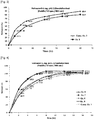
- Example 21 The dissolution evaluation results of tramadol layer in Example 5 are shown in Table 21 and Fig. 2 and the dissolution evaluation results of polmacoxib layer in Example 5 are shown in Table 22 and Fig. 3 , wherein the unit of dissolution rate is %.
- Table 21 0hr 4hr 6hr 12hr 16hr Comparative Example 1 0 72.9 88.6 102.2 101.8
- Example 5 0 63.2 78.4 99.1 103.4
- Table 22 0hr 5hr 10hr 15hr 30hr 45hr 60hr Comparative Example 2 0 37.2 52.8 63.4 75.1 82.7 89.4
- Example 5 0 23.5 38 49.8 67.3 75.9 80.4
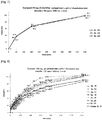
- Example 6 The dissolution evaluation results of Examples 6 to 9 are shown in Table 23 and Fig. 4 , wherein the unit of dissolution rate is %.
- Table 23 0hr 2hr 4hr 6hr 8hr 12hr 16hr
- Example 6 0 59.1 84.8 99.8 101.8 102.3 102.7
- Example 7 0 59.7 86.6 98.7 105.6 105.8 106.4
- Example 8 0 41.7 62 77.1 86.9 96.5 99.6
- Example 9 0 43.4 66.4 82.2 91.9 100.2 101.2 Comparative Example 1 0 49.5 69.3 82.9 92.7 102.8 103.1
- Example 10 exhibits a dissolution pattern similar to that of Comparative Example 1.
- dissolution evaluation results according to pH of Example 10 are shown in Table 25 and Fig. 6 .
- the unit of dissolution rate is%.
- Example 12 The dissolution evaluation results of Examples 12 to 14 are shown in Table 26 and Fig. 7 , wherein the unit of dissolution rate is %.
- Table 26 min 0 60 180 600
- Example 12 Hardness 7kp
- Example 13 Hardness 10kp
- Example 14 Hardness 13kp
- Example 15 The dissolution evaluation results of Examples 15 to 21 and Comparative Example 3 are shown in Table 27 and Fig. 8 , wherein the unit of dissolution rate is %.
- Table 27 pH1.2 0 15 30 60 90 120 180 300 360 480 600 720 1440
- Example 15 0 12.5 17.7 25.1 31.1 36.0 44.4 57.7 63.1 72.2 79.9 85.9 101.5
- Example 16 0 9.7 14.1 20.5 25.5 29.7 37.0 48.4 53.1 61.1 68.0 73.7 90.9
- Example 17 0 9.7 14.5 22.5 29.0 35.0 46.3 65.6 74.9 88.2 96.7 100.1 103.5
- Example 18 0 9.4 14.0 21.0 27.1 31.9 40.2 52.9 58.6 67.9 75.5 81.6 100.4
- Example 19 0 8.9 13.4 19.9 25.4 30.3 39.5 52.5 57.9 67.6 75.3 82.1 101.0
- Example 20 0 12.2 17.6 26.0 32.3 38.3 47.2 61.1 6
- Example 22 The dissolution evaluation results of Example 22 are shown in Table 28 and Fig. 9 , wherein the unit of dissolution rate is %.
- Table 28 pH1.2 0 15 30 60 90 120 180 300 360 480 600 720 1440
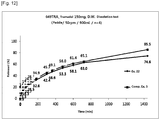
- Example 22 0 10.9 15.5 22.2 27.2 31.5 38.6 49.3 53.8 61.3 67.1 71.8 86.3
- Comparative Example 3 0 9.1 12.8 18.6 23.0 26.8 33.1 42.9 47.0 53.8 59.7 64.9 86.5
- Group separation was performed only on animals judged to have no quarantine abnormalities during acclimation period, followed by MIA administration.
- MIA administration On the 6th day after MIA administration, the weight bearing of hind leg for a total of 100 subjects administered with MIA was measured and the affected subjects with high weight bearing of left hind leg were sequentially excluded to select 70 subjects. Selected subjects were randomly grouped to have uniform distribution of body weight load and body weight.
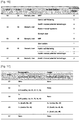
- an individual identification card (including test name, test group, individual number, sex, beginning date of test, etc.) was attached to each breeding box. They were separated into a total of seven groups and the detailed description of each group is shown in Table 30 below.
- the content ratio of polmacoxib and tramadol hydrochloride is set to 1: 100 and the dose in the group G7 is 1.5 times higher than the dose in the group G6. That is, in the group G6, 0.2 mg/kg of polmacoxib and 20 mg/kg of tramadol hydrochloride are administrated, and in the group G7, 0.3 mg/kg of polmacoxib and 30 mg/kg of tramadol hydrochloride are administrated.
- Specific administration information of each group is as follows:
- Each group was orally administered with 3 mL once daily for 3 weeks.
- the average weight range of each group at the beginning of the test was from 332.58 ⁇ 22.92g to 335.93 ⁇ 25.62g and the measurement results of weight change are shown in Fig. 8 .
- the average weight of each group at the end of the test was from 378.38 ⁇ 40.03g to 415.26 ⁇ 30.11g, specifically G1 (20.5%), G2 (24.5%), G3 (13.8%), G4 (24.4%), G5 (18.5%), G6 (18.6%) and G7 (18.4%) compared to the average weight of each group at the beginning of the test, which indicate a weight gain of about 13.8% to 24.5%.
- the test groups showed no significant difference compared to the normal group G1.
- the G3 group showed the slowest weight gain and a significant weight loss on day 21 and before autopsy after fasting ( Fig. 13 ). In all test groups, no clinical symptoms or deaths related to administration of the test substance were observed during the test period.
- paw withdrawal threshold PWT, g was measured using a dynamic planter aesthesiometer (Ugo Basile S.R.L, Italy).
- Von Frey filament used in this experiment has a constant pressure during bending, thereby imparting a constant stimulation. At this time, physical allodynia appears as an avoidance response, thereby enabling quantification of the pain index.
- Fig. 14 The measurement results are shown in Fig. 14 .
- the change of stimulus intensity of the avoidance response during the 3-week evaluation period was 32.1 ⁇ 39.5g for the negative control group G1
- the change was 10.5 ⁇ 18.9g for the induced group G2, which indicates that a dramatic decrease in a mechanical threshold is maintained ( Fig. 14 ).
- the paw withdrawal threshold was found to be increased compared to the G2 group.
- the paw withdrawal threshold was 30.3g, 24.2g, and 26.3g for the positive control group G3 (acetaminophen and tramadol co-administration), the group G4 (polmacoxib single administration) and the group G5 (tramadol hydrochloride single administration), respectively, and the paw withdrawal threshold was 25.5g and 29.59g for the combination of co-administration groups G6 and G7. That is, all treatment groups showed a significant increase in the paw withdrawal threshold, compared to the induced group G2 which shows 14.7g of PWT (p ⁇ 0.05).
- the positive control group G3, the tramadol hydrochloride single administration group G5 showed 30.0 g, 26.3 g, 26.2 g, and 31.8 g, respectively, and the polmacoxib single administration group G4 showed 24.2g, which indicates a significant increase compared to the induced group G2 (p ⁇ 0.05).
- paw withdrawal threshold tends to be more increased in the high-dose of polmacoxib and tramadol hydrochloride co-administration G7 than in the low-dose group G6, with regard to the analgesic efficacy against mechanical allodynia.
- the average paw withdrawal threshold in the test groups was similar between the positive control group G3 and the high-dose of polmacoxib and tramadol hydrochloride co-administration G7, which is expected to show similar analgesic effects.
- the group G6 (polmacoxib 0.2mg/kg + tramadol 20mg/kg) showed a similar pain relief effect to that of using tramadol (30mg/kg) alone, despite the reduced amount of tramadol by 1/3. It is a result that can expect reduction of the risk of side effects and addiction that may occur with long-term use of tramadol.
- Matrix metalloproteinase is responsible for the controlled degradation of cellular substrates in normal physiological environments. It has been reported to be a factor that causes tissue damage by extensive degradation of cellular substrate components in case that its action is uncontrolled and overexpressed.
- MMP-3 Matrix metalloproteinase
- the level of MMP-3 active ingredients in serum obtained after 3 weeks of treatment was lower in all treatment groups compared to the induced group (G2).
- the polmacoxib group and the polmacoxib + tramadol combination group showed lower MMP-3 levels compared to the groups G3 and G5. From this, it can be expected that polmacoxib which is a potent anti-inflammatory drug can inhibit activity of catabolic factor (MMP-3) and thus inhibit joint damage, thereby producing a synergistic effect on pain relief ( Fig. 15 ).
- the combination of polmacoxib and tramadol can be used as an excellent pain treatment that has excellent pain relief effect and anti-inflammatory effect and has a very low expression of side effect, compared with the combination of acetaminophen + tramadol or tramadol alone as a reference drug.
- Tissue sections were stained for histological evaluation.
- the hepatocytes had normal lobular architecture maintained around the central vein while the radial hepatic cell cords and sinusoids showed cord-like arrangement toward the edge of the hepatic lobules. All test groups showed similar findings to the negative control group G1, indicating that there was no specific abnormality associated with administration of the test substance.
- the degrees of damage of joint surface, chondrocyte reduction, and glycosaminoglycan reduction were similar in all the test groups.
- the tramadol hydrochloride single administration group G5 and the polmacoxib and tramadol hydrochloride co-administration groups G6 and G7 showed improvement effects compared to the positive control group G3 (acetaminophen and tramadol co-administration).
Landscapes
- Health & Medical Sciences (AREA)
- General Health & Medical Sciences (AREA)
- Veterinary Medicine (AREA)
- Chemical & Material Sciences (AREA)
- Medicinal Chemistry (AREA)
- Public Health (AREA)
- Pharmacology & Pharmacy (AREA)
- Life Sciences & Earth Sciences (AREA)
- Animal Behavior & Ethology (AREA)
- Epidemiology (AREA)
- Engineering & Computer Science (AREA)
- Bioinformatics & Cheminformatics (AREA)
- General Chemical & Material Sciences (AREA)
- Organic Chemistry (AREA)
- Nuclear Medicine, Radiotherapy & Molecular Imaging (AREA)
- Chemical Kinetics & Catalysis (AREA)
- Pain & Pain Management (AREA)
- Neurosurgery (AREA)
- Biomedical Technology (AREA)
- Neurology (AREA)
- Rheumatology (AREA)
- Emergency Medicine (AREA)
- Physical Education & Sports Medicine (AREA)
- Acyclic And Carbocyclic Compounds In Medicinal Compositions (AREA)
- Pharmaceuticals Containing Other Organic And Inorganic Compounds (AREA)
- Medicinal Preparation (AREA)
Applications Claiming Priority (2)
| Application Number | Priority Date | Filing Date | Title |
|---|---|---|---|
| KR20170118918 | 2017-09-15 | ||
| PCT/KR2018/006504 WO2019054606A1 (fr) | 2017-09-15 | 2018-06-08 | Composition pharmaceutique pour le traitement des douleurs aiguës et chroniques, contenant du polmacoxib et du tramadol |
Publications (2)
| Publication Number | Publication Date |
|---|---|
| EP3682876A1 true EP3682876A1 (fr) | 2020-07-22 |
| EP3682876A4 EP3682876A4 (fr) | 2021-06-16 |
Family
ID=65722924
Family Applications (1)
| Application Number | Title | Priority Date | Filing Date |
|---|---|---|---|
| EP18855260.8A Withdrawn EP3682876A4 (fr) | 2017-09-15 | 2018-06-08 | Composition pharmaceutique pour le traitement des douleurs aiguës et chroniques, contenant du polmacoxib et du tramadol |
Country Status (13)
| Country | Link |
|---|---|
| US (2) | US20200276152A1 (fr) |
| EP (1) | EP3682876A4 (fr) |
| JP (2) | JP7174441B2 (fr) |
| KR (1) | KR102619489B1 (fr) |
| CN (2) | CN110913850A (fr) |
| AU (1) | AU2018332417B2 (fr) |
| BR (1) | BR112020005138A2 (fr) |
| CA (1) | CA3072054A1 (fr) |
| MX (2) | MX2020001329A (fr) |
| PH (1) | PH12020500206A1 (fr) |
| RU (1) | RU2769555C2 (fr) |
| SG (1) | SG11202001855QA (fr) |
| WO (1) | WO2019054606A1 (fr) |
Family Cites Families (13)
| Publication number | Priority date | Publication date | Assignee | Title |
|---|---|---|---|---|
| GB8521350D0 (en) * | 1985-08-28 | 1985-10-02 | Euro Celtique Sa | Analgesic composition |
| AU661723B2 (en) | 1991-10-30 | 1995-08-03 | Mcneilab, Inc. | Composition comprising a tramadol material and a non-steroidal anti-inflammatory drug |
| RS49982B (sr) * | 1997-09-17 | 2008-09-29 | Euro-Celtique S.A., | Sinergistička analgetička kombinacija analgetičkog opijata i inhibitora ciklooksigenaze-2 |
| AU3384200A (en) * | 1999-03-01 | 2000-09-21 | Ortho-Mcneil Pharmaceutical, Inc. | Composition comprising a tramadol material and a selective cox-2 inhibitor drug |
| KR100495389B1 (ko) | 1999-04-14 | 2005-06-16 | 주식회사 태평양 | 시클로옥시게네이즈-2 저해제로서의4,5-디아릴-3(2h)-퓨라논 유도체 |
| DE19927688A1 (de) * | 1999-06-17 | 2000-12-21 | Gruenenthal Gmbh | Mehrschichttablette zur Verabreichung einer fixen Kombination von Tramadol und Diclofenac |
| CN101257894A (zh) * | 2005-07-07 | 2008-09-03 | 法纳姆公司 | 高水溶性药物的缓释药物组合物 |
| US20080026054A1 (en) * | 2007-04-27 | 2008-01-31 | Nectid Inc. | Novel anelgesic combination |
| WO2009021058A2 (fr) * | 2007-08-06 | 2009-02-12 | Trinity Labortories, Inc. | Compositions pharmaceutiques pour le traitement de la douleur chronique et de la douleur associée à une neuropathie |
| KR20130078147A (ko) * | 2011-12-30 | 2013-07-10 | 한미약품 주식회사 | 일정한 입도를 갖는 4,5―디아릴―3(2h)―퓨라논 유도체를 포함하는 약학 조성물 |
| KR101446601B1 (ko) * | 2014-01-29 | 2014-10-07 | 크리스탈지노믹스(주) | 5-(4-(아미노설포닐)페닐)-2,2-디메틸-4-(3-플루오로페닐)-3(2h)-퓨라논을 포함하는 약학적 조성물 및 캡슐 제형 |
| US20160008371A1 (en) * | 2014-07-14 | 2016-01-14 | Autotelic Llc | Fixed dose combination for pain relief without edema |
| KR101710792B1 (ko) * | 2015-07-14 | 2017-02-28 | 주식회사 유영제약 | 세레콕시브 및 트라마돌을 함유하는 약제학적 조성물 |
-
2018
- 2018-06-08 CN CN201880046909.7A patent/CN110913850A/zh active Pending
- 2018-06-08 KR KR1020180065757A patent/KR102619489B1/ko active Active
- 2018-06-08 EP EP18855260.8A patent/EP3682876A4/fr not_active Withdrawn
- 2018-06-08 US US16/647,128 patent/US20200276152A1/en not_active Abandoned
- 2018-06-08 WO PCT/KR2018/006504 patent/WO2019054606A1/fr not_active Ceased
- 2018-06-08 CA CA3072054A patent/CA3072054A1/fr active Pending
- 2018-06-08 BR BR112020005138-1A patent/BR112020005138A2/pt unknown
- 2018-06-08 SG SG11202001855QA patent/SG11202001855QA/en unknown
- 2018-06-08 CN CN202311047152.2A patent/CN117017971A/zh active Pending
- 2018-06-08 JP JP2020515705A patent/JP7174441B2/ja active Active
- 2018-06-08 MX MX2020001329A patent/MX2020001329A/es unknown
- 2018-06-08 RU RU2020112072A patent/RU2769555C2/ru active
- 2018-06-08 AU AU2018332417A patent/AU2018332417B2/en not_active Expired - Fee Related
-
2020
- 2020-01-28 PH PH12020500206A patent/PH12020500206A1/en unknown
- 2020-01-31 MX MX2023005681A patent/MX2023005681A/es unknown
-
2022
- 2022-10-28 JP JP2022173187A patent/JP2023021990A/ja active Pending
-
2023
- 2023-01-23 US US18/158,284 patent/US20230157991A1/en not_active Abandoned
Also Published As
| Publication number | Publication date |
|---|---|
| AU2018332417B2 (en) | 2023-11-30 |
| AU2018332417A1 (en) | 2020-01-16 |
| WO2019054606A1 (fr) | 2019-03-21 |
| PH12020500206A1 (en) | 2020-10-12 |
| JP2023021990A (ja) | 2023-02-14 |
| JP2020534286A (ja) | 2020-11-26 |
| EP3682876A4 (fr) | 2021-06-16 |
| JP7174441B2 (ja) | 2022-11-17 |
| SG11202001855QA (en) | 2020-04-29 |
| CN110913850A (zh) | 2020-03-24 |
| MX2020001329A (es) | 2020-03-20 |
| BR112020005138A2 (pt) | 2020-09-15 |
| KR20190031122A (ko) | 2019-03-25 |
| RU2020112072A3 (fr) | 2021-10-15 |
| RU2020112072A (ru) | 2021-10-15 |
| CA3072054A1 (fr) | 2019-03-21 |
| US20230157991A1 (en) | 2023-05-25 |
| CN117017971A (zh) | 2023-11-10 |
| MX2023005681A (es) | 2023-05-26 |
| RU2769555C2 (ru) | 2022-04-04 |
| US20200276152A1 (en) | 2020-09-03 |
| KR102619489B1 (ko) | 2024-01-02 |
Similar Documents
| Publication | Publication Date | Title |
|---|---|---|
| US11045424B2 (en) | Extended release pharmaceutical formulation | |
| US8575172B2 (en) | Pharmaceutical compositions of aripiprazole | |
| US20080021074A1 (en) | Pharmaceutical Compositions and Related Methods of Treatment | |
| EP2392319A1 (fr) | Composition pharmaceutique contenant des co-cristaux de tramadol et d'un coxib | |
| MX2008015359A (es) | Forma de dosis farmaceutica de liberacion sostenida que contiene fenilefrina. | |
| KR20110117216A (ko) | R-바클로펜 전구약물의 서방형 경구 투약 형태 | |
| US12005043B2 (en) | Formulations of AG10 | |
| EA021321B1 (ru) | Новые композиции 1-[2-(2,4-диметилфенилсульфанил)фенил]пиперазина | |
| CN116726027A (zh) | 包含塞来昔布及曲马多的药剂学组合物 | |
| KR20230074522A (ko) | 서방형 약학적 제형 | |
| EA030310B1 (ru) | Гидроморфон и налоксон для лечения боли и индуцированного опиоидами синдрома дисфункции кишечника | |
| ES2982954T3 (es) | Formulación farmacéutica de liberación prolongada | |
| US20230157991A1 (en) | Pharmaceutical composition for treating acute and chronic pain, containing polmacoxib and tramadol | |
| WO2003082261A1 (fr) | Formulations de venlafaxine a liberation prolongee | |
| HK40103735A (zh) | 用於治疗急性或慢性疼痛的药物组合物 | |
| US20060205815A1 (en) | Choline esters useful for the treatment of cognitive dysfunctions and enhancement of memory, learning and cognition | |
| US20100008956A1 (en) | Composition and combinations of carboxylic acid losartan in dosage forms | |
| RU2834494C2 (ru) | Пероральные композиции аминодигидрофталазиндиона и их применение в лечении невирусного гепатита | |
| Kadam et al. | FORMULATION & EVALUATION OF EXTENDED RELEASE TABLET | |
| Senthilnathan | Design and development of pulsatile drug delivery system for anti-diabetic drug | |
| Garg et al. | FORMULATION AND EVALUATION OF ORO DISPERSIBLE TABLETS OF GLIBENCLAMIDE | |
| Batra et al. | A Review on Sustained Release Matrix Tablets of Pioglitazone | |
| LAKSHMI | Master of Pharmacy In Pharmaceutics |
Legal Events
| Date | Code | Title | Description |
|---|---|---|---|
| STAA | Information on the status of an ep patent application or granted ep patent |
Free format text: STATUS: THE INTERNATIONAL PUBLICATION HAS BEEN MADE |
|
| PUAI | Public reference made under article 153(3) epc to a published international application that has entered the european phase |
Free format text: ORIGINAL CODE: 0009012 |
|
| STAA | Information on the status of an ep patent application or granted ep patent |
Free format text: STATUS: REQUEST FOR EXAMINATION WAS MADE |
|
| 17P | Request for examination filed |
Effective date: 20200212 |
|
| AK | Designated contracting states |
Kind code of ref document: A1 Designated state(s): AL AT BE BG CH CY CZ DE DK EE ES FI FR GB GR HR HU IE IS IT LI LT LU LV MC MK MT NL NO PL PT RO RS SE SI SK SM TR |
|
| AX | Request for extension of the european patent |
Extension state: BA ME |
|
| RIN1 | Information on inventor provided before grant (corrected) |
Inventor name: PARK, HYUNJIN Inventor name: CHO, JAE PYOUNG Inventor name: CHO, JOONG MYUNG |
|
| DAV | Request for validation of the european patent (deleted) | ||
| DAX | Request for extension of the european patent (deleted) | ||
| REG | Reference to a national code |
Ref country code: DE Ref legal event code: R079 Free format text: PREVIOUS MAIN CLASS: A61K0031340000 Ipc: A61K0031135000 |
|
| A4 | Supplementary search report drawn up and despatched |
Effective date: 20210517 |
|
| RIC1 | Information provided on ipc code assigned before grant |
Ipc: A61K 31/135 20060101AFI20210510BHEP Ipc: A61K 31/341 20060101ALI20210510BHEP Ipc: A61K 9/24 20060101ALI20210510BHEP Ipc: A61P 29/00 20060101ALI20210510BHEP Ipc: A61P 25/04 20060101ALI20210510BHEP |
|
| STAA | Information on the status of an ep patent application or granted ep patent |
Free format text: STATUS: EXAMINATION IS IN PROGRESS |
|
| 17Q | First examination report despatched |
Effective date: 20230413 |
|
| STAA | Information on the status of an ep patent application or granted ep patent |
Free format text: STATUS: THE APPLICATION IS DEEMED TO BE WITHDRAWN |
|
| 18D | Application deemed to be withdrawn |
Effective date: 20250103 |