EP3683086B1 - Procédé de commande de climatiseur de véhicule - Google Patents
Procédé de commande de climatiseur de véhicule Download PDFInfo
- Publication number
- EP3683086B1 EP3683086B1 EP18853413.5A EP18853413A EP3683086B1 EP 3683086 B1 EP3683086 B1 EP 3683086B1 EP 18853413 A EP18853413 A EP 18853413A EP 3683086 B1 EP3683086 B1 EP 3683086B1
- Authority
- EP
- European Patent Office
- Prior art keywords
- vehicle
- temperature
- interior
- operation mode
- exterior
- Prior art date
- Legal status (The legal status is an assumption and is not a legal conclusion. Google has not performed a legal analysis and makes no representation as to the accuracy of the status listed.)
- Active
Links
Images

Classifications
-
- B—PERFORMING OPERATIONS; TRANSPORTING
- B60—VEHICLES IN GENERAL
- B60H—ARRANGEMENTS OF HEATING, COOLING, VENTILATING OR OTHER AIR-TREATING DEVICES SPECIALLY ADAPTED FOR PASSENGER OR GOODS SPACES OF VEHICLES
- B60H1/00—Heating, cooling or ventilating devices
- B60H1/00642—Control systems or circuits; Control members or indication devices for heating, cooling or ventilating devices
- B60H1/0073—Control systems or circuits characterised by particular algorithms or computational models, e.g. fuzzy logic or dynamic models
-
- B—PERFORMING OPERATIONS; TRANSPORTING
- B60—VEHICLES IN GENERAL
- B60H—ARRANGEMENTS OF HEATING, COOLING, VENTILATING OR OTHER AIR-TREATING DEVICES SPECIALLY ADAPTED FOR PASSENGER OR GOODS SPACES OF VEHICLES
- B60H1/00—Heating, cooling or ventilating devices
- B60H1/00271—HVAC devices specially adapted for particular vehicle parts or components and being connected to the vehicle HVAC unit
- B60H1/00278—HVAC devices specially adapted for particular vehicle parts or components and being connected to the vehicle HVAC unit for the battery
-
- B—PERFORMING OPERATIONS; TRANSPORTING
- B60—VEHICLES IN GENERAL
- B60H—ARRANGEMENTS OF HEATING, COOLING, VENTILATING OR OTHER AIR-TREATING DEVICES SPECIALLY ADAPTED FOR PASSENGER OR GOODS SPACES OF VEHICLES
- B60H1/00—Heating, cooling or ventilating devices
- B60H1/00357—Air-conditioning arrangements specially adapted for particular vehicles
- B60H1/00385—Air-conditioning arrangements specially adapted for particular vehicles for vehicles having an electrical drive, e.g. hybrid or fuel cell
- B60H1/00392—Air-conditioning arrangements specially adapted for particular vehicles for vehicles having an electrical drive, e.g. hybrid or fuel cell for electric vehicles having only electric drive means
-
- B—PERFORMING OPERATIONS; TRANSPORTING
- B60—VEHICLES IN GENERAL
- B60H—ARRANGEMENTS OF HEATING, COOLING, VENTILATING OR OTHER AIR-TREATING DEVICES SPECIALLY ADAPTED FOR PASSENGER OR GOODS SPACES OF VEHICLES
- B60H1/00—Heating, cooling or ventilating devices
- B60H1/00642—Control systems or circuits; Control members or indication devices for heating, cooling or ventilating devices
- B60H1/0065—Control members, e.g. levers or knobs
- B60H1/00657—Remote control devices
-
- B—PERFORMING OPERATIONS; TRANSPORTING
- B60—VEHICLES IN GENERAL
- B60H—ARRANGEMENTS OF HEATING, COOLING, VENTILATING OR OTHER AIR-TREATING DEVICES SPECIALLY ADAPTED FOR PASSENGER OR GOODS SPACES OF VEHICLES
- B60H1/00—Heating, cooling or ventilating devices
- B60H1/00642—Control systems or circuits; Control members or indication devices for heating, cooling or ventilating devices
- B60H1/00735—Control systems or circuits characterised by their input, i.e. by the detection, measurement or calculation of particular conditions, e.g. signal treatment, dynamic models
-
- B—PERFORMING OPERATIONS; TRANSPORTING
- B60—VEHICLES IN GENERAL
- B60H—ARRANGEMENTS OF HEATING, COOLING, VENTILATING OR OTHER AIR-TREATING DEVICES SPECIALLY ADAPTED FOR PASSENGER OR GOODS SPACES OF VEHICLES
- B60H1/00—Heating, cooling or ventilating devices
- B60H1/00642—Control systems or circuits; Control members or indication devices for heating, cooling or ventilating devices
- B60H1/00735—Control systems or circuits characterised by their input, i.e. by the detection, measurement or calculation of particular conditions, e.g. signal treatment, dynamic models
- B60H1/00807—Control systems or circuits characterised by their input, i.e. by the detection, measurement or calculation of particular conditions, e.g. signal treatment, dynamic models the input being a specific way of measuring or calculating an air or coolant temperature
-
- B—PERFORMING OPERATIONS; TRANSPORTING
- B60—VEHICLES IN GENERAL
- B60H—ARRANGEMENTS OF HEATING, COOLING, VENTILATING OR OTHER AIR-TREATING DEVICES SPECIALLY ADAPTED FOR PASSENGER OR GOODS SPACES OF VEHICLES
- B60H1/00—Heating, cooling or ventilating devices
- B60H1/00642—Control systems or circuits; Control members or indication devices for heating, cooling or ventilating devices
- B60H1/00814—Control systems or circuits characterised by their output, for controlling particular components of the heating, cooling or ventilating installation
- B60H1/00821—Control systems or circuits characterised by their output, for controlling particular components of the heating, cooling or ventilating installation the components being ventilating, air admitting or air distributing devices
- B60H1/00835—Damper doors, e.g. position control
- B60H1/00849—Damper doors, e.g. position control for selectively commanding the induction of outside or inside air
-
- B—PERFORMING OPERATIONS; TRANSPORTING
- B60—VEHICLES IN GENERAL
- B60H—ARRANGEMENTS OF HEATING, COOLING, VENTILATING OR OTHER AIR-TREATING DEVICES SPECIALLY ADAPTED FOR PASSENGER OR GOODS SPACES OF VEHICLES
- B60H1/00—Heating, cooling or ventilating devices
- B60H1/00642—Control systems or circuits; Control members or indication devices for heating, cooling or ventilating devices
- B60H1/00814—Control systems or circuits characterised by their output, for controlling particular components of the heating, cooling or ventilating installation
- B60H1/00878—Control systems or circuits characterised by their output, for controlling particular components of the heating, cooling or ventilating installation the components being temperature regulating devices
-
- B—PERFORMING OPERATIONS; TRANSPORTING
- B60—VEHICLES IN GENERAL
- B60H—ARRANGEMENTS OF HEATING, COOLING, VENTILATING OR OTHER AIR-TREATING DEVICES SPECIALLY ADAPTED FOR PASSENGER OR GOODS SPACES OF VEHICLES
- B60H1/00—Heating, cooling or ventilating devices
- B60H1/00642—Control systems or circuits; Control members or indication devices for heating, cooling or ventilating devices
- B60H1/00985—Control systems or circuits characterised by display or indicating devices, e.g. voice simulators
-
- B—PERFORMING OPERATIONS; TRANSPORTING
- B60—VEHICLES IN GENERAL
- B60L—PROPULSION OF ELECTRICALLY-PROPELLED VEHICLES; SUPPLYING ELECTRIC POWER FOR AUXILIARY EQUIPMENT OF ELECTRICALLY-PROPELLED VEHICLES; ELECTRODYNAMIC BRAKE SYSTEMS FOR VEHICLES IN GENERAL; MAGNETIC SUSPENSION OR LEVITATION FOR VEHICLES; MONITORING OPERATING VARIABLES OF ELECTRICALLY-PROPELLED VEHICLES; ELECTRIC SAFETY DEVICES FOR ELECTRICALLY-PROPELLED VEHICLES
- B60L1/00—Supplying electric power to auxiliary equipment of vehicles
-
- B—PERFORMING OPERATIONS; TRANSPORTING
- B60—VEHICLES IN GENERAL
- B60L—PROPULSION OF ELECTRICALLY-PROPELLED VEHICLES; SUPPLYING ELECTRIC POWER FOR AUXILIARY EQUIPMENT OF ELECTRICALLY-PROPELLED VEHICLES; ELECTRODYNAMIC BRAKE SYSTEMS FOR VEHICLES IN GENERAL; MAGNETIC SUSPENSION OR LEVITATION FOR VEHICLES; MONITORING OPERATING VARIABLES OF ELECTRICALLY-PROPELLED VEHICLES; ELECTRIC SAFETY DEVICES FOR ELECTRICALLY-PROPELLED VEHICLES
- B60L1/00—Supplying electric power to auxiliary equipment of vehicles
- B60L1/02—Supplying electric power to auxiliary equipment of vehicles to electric heating circuits
-
- B—PERFORMING OPERATIONS; TRANSPORTING
- B60—VEHICLES IN GENERAL
- B60L—PROPULSION OF ELECTRICALLY-PROPELLED VEHICLES; SUPPLYING ELECTRIC POWER FOR AUXILIARY EQUIPMENT OF ELECTRICALLY-PROPELLED VEHICLES; ELECTRODYNAMIC BRAKE SYSTEMS FOR VEHICLES IN GENERAL; MAGNETIC SUSPENSION OR LEVITATION FOR VEHICLES; MONITORING OPERATING VARIABLES OF ELECTRICALLY-PROPELLED VEHICLES; ELECTRIC SAFETY DEVICES FOR ELECTRICALLY-PROPELLED VEHICLES
- B60L58/00—Methods or circuit arrangements for monitoring or controlling batteries or fuel cells, specially adapted for electric vehicles
- B60L58/10—Methods or circuit arrangements for monitoring or controlling batteries or fuel cells, specially adapted for electric vehicles for monitoring or controlling batteries
- B60L58/24—Methods or circuit arrangements for monitoring or controlling batteries or fuel cells, specially adapted for electric vehicles for monitoring or controlling batteries for controlling the temperature of batteries
- B60L58/27—Methods or circuit arrangements for monitoring or controlling batteries or fuel cells, specially adapted for electric vehicles for monitoring or controlling batteries for controlling the temperature of batteries by heating
-
- B—PERFORMING OPERATIONS; TRANSPORTING
- B60—VEHICLES IN GENERAL
- B60L—PROPULSION OF ELECTRICALLY-PROPELLED VEHICLES; SUPPLYING ELECTRIC POWER FOR AUXILIARY EQUIPMENT OF ELECTRICALLY-PROPELLED VEHICLES; ELECTRODYNAMIC BRAKE SYSTEMS FOR VEHICLES IN GENERAL; MAGNETIC SUSPENSION OR LEVITATION FOR VEHICLES; MONITORING OPERATING VARIABLES OF ELECTRICALLY-PROPELLED VEHICLES; ELECTRIC SAFETY DEVICES FOR ELECTRICALLY-PROPELLED VEHICLES
- B60L2250/00—Driver interactions
- B60L2250/14—Driver interactions by input of vehicle departure time
-
- B—PERFORMING OPERATIONS; TRANSPORTING
- B60—VEHICLES IN GENERAL
- B60L—PROPULSION OF ELECTRICALLY-PROPELLED VEHICLES; SUPPLYING ELECTRIC POWER FOR AUXILIARY EQUIPMENT OF ELECTRICALLY-PROPELLED VEHICLES; ELECTRODYNAMIC BRAKE SYSTEMS FOR VEHICLES IN GENERAL; MAGNETIC SUSPENSION OR LEVITATION FOR VEHICLES; MONITORING OPERATING VARIABLES OF ELECTRICALLY-PROPELLED VEHICLES; ELECTRIC SAFETY DEVICES FOR ELECTRICALLY-PROPELLED VEHICLES
- B60L2260/00—Operating Modes
- B60L2260/40—Control modes
- B60L2260/50—Control modes by future state prediction
- B60L2260/56—Temperature prediction, e.g. for pre-cooling
-
- B—PERFORMING OPERATIONS; TRANSPORTING
- B60—VEHICLES IN GENERAL
- B60L—PROPULSION OF ELECTRICALLY-PROPELLED VEHICLES; SUPPLYING ELECTRIC POWER FOR AUXILIARY EQUIPMENT OF ELECTRICALLY-PROPELLED VEHICLES; ELECTRODYNAMIC BRAKE SYSTEMS FOR VEHICLES IN GENERAL; MAGNETIC SUSPENSION OR LEVITATION FOR VEHICLES; MONITORING OPERATING VARIABLES OF ELECTRICALLY-PROPELLED VEHICLES; ELECTRIC SAFETY DEVICES FOR ELECTRICALLY-PROPELLED VEHICLES
- B60L58/00—Methods or circuit arrangements for monitoring or controlling batteries or fuel cells, specially adapted for electric vehicles
- B60L58/10—Methods or circuit arrangements for monitoring or controlling batteries or fuel cells, specially adapted for electric vehicles for monitoring or controlling batteries
- B60L58/12—Methods or circuit arrangements for monitoring or controlling batteries or fuel cells, specially adapted for electric vehicles for monitoring or controlling batteries responding to state of charge [SoC]
-
- Y—GENERAL TAGGING OF NEW TECHNOLOGICAL DEVELOPMENTS; GENERAL TAGGING OF CROSS-SECTIONAL TECHNOLOGIES SPANNING OVER SEVERAL SECTIONS OF THE IPC; TECHNICAL SUBJECTS COVERED BY FORMER USPC CROSS-REFERENCE ART COLLECTIONS [XRACs] AND DIGESTS
- Y02—TECHNOLOGIES OR APPLICATIONS FOR MITIGATION OR ADAPTATION AGAINST CLIMATE CHANGE
- Y02T—CLIMATE CHANGE MITIGATION TECHNOLOGIES RELATED TO TRANSPORTATION
- Y02T10/00—Road transport of goods or passengers
- Y02T10/60—Other road transportation technologies with climate change mitigation effect
- Y02T10/70—Energy storage systems for electromobility, e.g. batteries
-
- Y—GENERAL TAGGING OF NEW TECHNOLOGICAL DEVELOPMENTS; GENERAL TAGGING OF CROSS-SECTIONAL TECHNOLOGIES SPANNING OVER SEVERAL SECTIONS OF THE IPC; TECHNICAL SUBJECTS COVERED BY FORMER USPC CROSS-REFERENCE ART COLLECTIONS [XRACs] AND DIGESTS
- Y02—TECHNOLOGIES OR APPLICATIONS FOR MITIGATION OR ADAPTATION AGAINST CLIMATE CHANGE
- Y02T—CLIMATE CHANGE MITIGATION TECHNOLOGIES RELATED TO TRANSPORTATION
- Y02T10/00—Road transport of goods or passengers
- Y02T10/60—Other road transportation technologies with climate change mitigation effect
- Y02T10/7072—Electromobility specific charging systems or methods for batteries, ultracapacitors, supercapacitors or double-layer capacitors
-
- Y—GENERAL TAGGING OF NEW TECHNOLOGICAL DEVELOPMENTS; GENERAL TAGGING OF CROSS-SECTIONAL TECHNOLOGIES SPANNING OVER SEVERAL SECTIONS OF THE IPC; TECHNICAL SUBJECTS COVERED BY FORMER USPC CROSS-REFERENCE ART COLLECTIONS [XRACs] AND DIGESTS
- Y02—TECHNOLOGIES OR APPLICATIONS FOR MITIGATION OR ADAPTATION AGAINST CLIMATE CHANGE
- Y02T—CLIMATE CHANGE MITIGATION TECHNOLOGIES RELATED TO TRANSPORTATION
- Y02T90/00—Enabling technologies or technologies with a potential or indirect contribution to GHG emissions mitigation
- Y02T90/10—Technologies relating to charging of electric vehicles
- Y02T90/12—Electric charging stations
Definitions
- the present invention belongs to the technical field of an air conditioner, and in particular to a control method for a vehicle air conditioner.
- the air conditioning system and the engine system are independent of each other and are both powered by batteries.
- the compressor of the air conditioner can be turned on without being driven by the vehicle engine, therefore, in principle, the air conditioner can be turned on before the engine starts, so that the interior space of the vehicle can be pre-cooled and preheated. But no application is known.
- the energy efficiency of the traditional vehicle air conditioner is low, and the power supply efficiency of the battery pack is also reduced under the condition of a low ambient temperature, thereby affecting the driving mileage.
- the battery power is consumed too fast, because the efficiency of the battery is low under the low ambient temperature, and the hot air heating is based on positive temperature coefficient (PTC), therefore the heating efficiency is low.
- PTC positive temperature coefficient
- the full electric vehicle cannot provide engine waste heat for heating, and the traditional hot air heating based on PTC has low energy utilization efficiency, which makes the battery power consumption further increase under the low temperature ambient, therefore the electric vehicle in cold northern region in winter has a short driving time.
- the operation of the air conditioner in the vehicle needs to consume electric energy, it is possible that the vehicle consumes electric power for cooling or heating, so that the electric power of the vehicle is lower than a safe range, and the vehicle cannot be used because the energy of the vehicle battery is out or too low to start.
- the new energy vehicle air conditioner in the prior art cannot pre-cool or pre-heat the interior of the vehicle, which will cause the problems of low comfort for the user, low energy efficiency of the air conditioning system, low utilization efficiency of the battery, and low heating efficiency under the low ambient temperature, and cause the problems that the driving time is seriously affected, and that the vehicle cannot start as the energy of the vehicle battery is out or too low. Therefore, a new control method for the vehicle air conditioner is developed and designed in the present invention.
- FR2690387 discloses a method of reducing the temperature of the air in the cabin of a stationary vehicle.
- the technical problem to be solved by the present invention is to overcome the defects that the vehicle air conditioner in the prior art cannot pre-cool or preheat the interior of the vehicle, resulting in low use comfort for the user, and the present application provides a control method for the vehicle air conditioner.
- the present invention provides a control method for a vehicle air conditioner, including: remote pre-control, comprising remote timing pre-control; wherein the remote timing pre-control comprises starting the air conditioner to pre-cool or pre-heat t0 minutes before the vehicle is started, and t0 is a constant.
- the remote timing pre-control further includes:
- a range of X1 is 1 ⁇ X1 ⁇ 6 ; and a range of time t1 is 1 ⁇ t1 ⁇ 15.
- a range of X 2 is 2 ⁇ X2 ⁇ 6
- a range of time t2 is 1 ⁇ t2 ⁇ 12.
- the remote pre-control further includes remote intelligent temperature control, and the remote intelligent temperature control comprises:
- the calculating step further includes calculating a temperature value available in the vehicle within t3 ; and the control method further comprises a displaying step of displaying the available temperature value via a control panel or a mobile phone screen.
- the embedded algorithm comprises two cases which are classified according to a difference between the interior temperature of the vehicle and the exterior temperature of the vehicle when t3>t4, and t3 ⁇ t5:
- operating time is allocated as follows: first, the exterior air circulation operates for time (t3-t4) ⁇ k1, and the air conditioner operates according to the maximum output capacity operation mode for a remaining time, so that the interior temperature of the vehicle reaches a preset value in a preset time, wherein k1 is a correction factor which is given according to the interior temperature of the vehicle, the exterior temperature of the vehicle, and a temperature difference between the interior temperature of the vehicle and the exterior temperature of the vehicle.
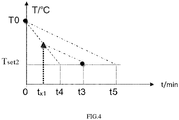
- the air conditioning system first operates according to the maximum output capacity operation mode for tx1 minutes, then operates according to the highest energy efficiency operation mode for (t3-tx1) minutes.
- the tx1 is calculated by a linear operation based on the cooling/heating speed in the maximum output capacity operation mode and the cooling/heating speed in the highest energy efficiency operation mode; the cooling speed/heating speed in the maximum output capacity operation mode and the cooling speed/heating speed in the highest energy efficiency operation mode are respectively defined as v1 and v2 ;
- the embedded algorithm further comprises two cases which are classified according to a difference between the interior temperature of the vehicle and the exterior temperature of the vehicle when t3 ⁇ t5:
- an operating time is allocated as follows: first, the exterior air circulation runs for time (t3-t5) ⁇ k2, and the air conditioner operates according to the highest energy efficiency operation mode for a remaining time, so that the interior temperature of the vehicle reaches a preset value in a preset time, wherein k2 is a correction factor which is given according to the interior temperature of the vehicle, the exterior temperature of the vehicle, and a temperature difference between the interior temperature of the vehicle and the exterior temperature of the vehicle.
- the air conditioning system first operates according to highest energy efficiency operation mode for tx2 minutes, then operates according to the minimum capacity operation mode for (t3-tx2) minutes.
- tx2 is calculated by a linear arithmetic based on cooling/heating speed in the highest energy efficiency operation mode and cooling/heating speed in the minimum capacity operation mode; the cooling/heating speed in the highest energy efficiency operation mode and the cooling/heating speed in the minimum capacity operation mode are defined as v2 and v3 respectively;
- the present invention provides a control method for a vehicle air conditioner, which includes remote pre-control.
- the remote pre-control includes remote timing pre-control, and the remote timing pre-control includes starting the air conditioner to pre-cool or pre-heat t0 minutes before the vehicle is started, where t0 is a constant.
- the invention provides the remote pre-control for a new energy vehicle air conditioner.
- the remote pre-control mainly includes remote timing pre-control and remote intelligent temperature control, and at the same time taking the temperature control of the battery pack into account.
- the remote pre-control means that, in a case that the passenger or the driver has not got on the vehicle yet, the driver can remotely turn on the air conditioner through an on-board air conditioner controller or a mobile phone APP (i.e., remote timing pre-control), or remotely configure a preset value of the interior temperature of the vehicle to be reached in a predetermined time (i.e., remote intelligent temperature control).
- the air conditioner can pre-cool or pre-heat before the vehicle is started, so that the air interior temperature of the vehicle can be controlled in advance and can reach a comfortable ambient temperature when the user enters the vehicle, thereby providing a comfortable environment for the driver and the passengers.
- the present invention provides remote control and pre-control for the new energy vehicle air conditioner, which achieves the objective that the interior temperature of the vehicle reaches the preset comfortable state when the person reaches the vehicle. In summer, the interior temperature of the vehicle is too high after the vehicle is exposed to the sun.
- the vehicle user When the vehicle user wants to use the vehicle, the vehicle user starts the door first for ventilation, and turns on the air conditioner at the same time, and waits for the interior temperature of the vehicle to decrease to be in an acceptable range. And the vehicle user in haste will have to tolerate the high temperature in the vehicle; and a similar case is also true in a cold winter.
- the interior space can be pre-cooled or pre-heated by remote pre-control for the vehicle air conditioner, so that the interior temperature of the vehicle can reach a preset human comfort temperature range in a preset time, thereby reducing the waiting time of the driver and the passengers, and improving the comfort.
- the remote timing pre-control further includes a combined control of interior and exterior air circulations, and the combined control includes:
- the air outside the vehicle can be used effectively to realize an air exchange and a heat exchange with the air inside the vehicle interior, so that the air outside the vehicle can reduce or increase the temperature of the air inside the vehicle to meet the requirement.
- the exterior air circulation is started to exchange heat, thereby reducing the energy consumption of the air conditioning system and increasing the overall energy efficiency of the air conditioning system efficiently.
- T in >T out +X1 is not satisfied, that is, T in ⁇ T out +X1 is satisfied, which indicates that the ambient interior temperature of the vehicle is lower than the ambient exterior temperature of the vehicle plus a compensation value, even if the air inside the vehicle and the air outside the vehicle are in communication, it is impossible for the air outside the vehicle to reduce the air interior temperature of the vehicle, so the interior air circulation of the air conditioner is directly started at this time.
- the driver can set a starting time of the air conditioner through an air conditioner controller in the vehicle, that is, start the air conditioner at a preset time, or directly set the temperature of the vehicle to be reached at a certain time.
- the above operations can also be completed by remote control through an APP in a mobile phone, and the APP on the mobile phone has the functions of the controller in the vehicle.
- Start the air conditioner at the preset time namely, start the air conditioner unit at the predetermined time
- Tset1 the preset temperature to be Tset1
- T in the interior temperature of the vehicle to be T in
- T out the exterior temperature of the vehicle to be T out .
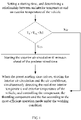
- the timing control mode under the cooling condition is shown in FIG. 1 .
- the interior air circulation means that the air inside the vehicle is circulated, and the air inside the vehicle does not exchange heat with the air outside the vehicle;
- the exterior air circulation means that the air outside the vehicle enters the vehicle, and the air inside the vehicle exchanges heat with the air outside the vehicle;
- the highest energy efficiency operation mode refers to a mode, in which the air conditioner runs with the highest energy efficiency ratio under the current working condition; the mode is matched and established by the previous air conditioning system, and is realized by controlling the compressor frequency, the throttling component, the fan speed, and the on/off of the solenoid valve.
- the range of X1 is 1 ⁇ X1 ⁇ 6; the range of time t1 is 1 ⁇ t1 ⁇ 15.
- the detecting the interior temperature of the vehicle and the exterior temperature of the vehicle and starting the exterior air circulation under certain conditions herein are to cool inside of the vehicle via the temperature difference in the environment, thereby saving energy consumption of the air conditioner.
- T in ⁇ T out -X2 When T in ⁇ T out -X2 is not satisfied, that is, T in >T ou t-X2 is satisfied, it indicates that the ambient interior temperature of the vehicle is higher than the ambient exterior temperature of the vehicle minus a compensation value. Even if the air inside the vehicle and the air outside the vehicle are in communication, it is impossible for the air outside the vehicle to increase the temperature of air inside the vehicle, so the interior air circulation of the air conditioner is directly started at this time.
- the range of X2 is 2 ⁇ X2 ⁇ 6; the range of time t2 is 1 ⁇ t2 ⁇ 12.
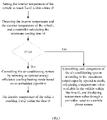
- the remote pre-control further includes remote intelligent temperature control, and the remote intelligent temperature control includes:
- the maximum output capacity operation mode is a mode, in which the air conditioner unit outputs the maximum capacity (including cooling capacity or heating capacity) under the current working condition. In the mode, the greatest temperature decreasing speed through cooling or the greatest temperature rising speed through heating in the vehicle is achieved. That is, this mode is also the shortest cooling time or heating time mode.
- the highest energy efficiency operation mode is a mode, in which the air conditioner unit operating in the current working condition has the highest energy efficiency ratio.
- the minimum capacity operation mode refers to a mode, in which the air conditioner unit needs to output the minimum capacity (including cooling capacity or heating capacity) to maintain the interior temperature of the vehicle. In the mode, the interior temperature of the vehicle remains unchanged.
- Tset2 can be achieved by the air conditioner operating according to the maximum output capacity operation mode for time t4, therefore, it is necessary to consider the energy efficiency of the air conditioning system at this time, and the optimal energy efficiency cooling/heating mode is selected to control the air conditioning system, thereby increasing the energy efficiency of the air conditioning system.
- the remote intelligent temperature control of the air conditioner can also be realized through the controller in the vehicle or through the APP on the mobile phone. That is, presetting the air conditioning unit enables the interior temperature of the vehicle to reach the preset value at in determined time.
- the air conditioning system In the remote intelligent temperature control mode, combining the interior temperature of the vehicle and the exterior temperature of the vehicle, the air conditioning system automatically adjusts the output capability according to the preset time and the preset temperature to be reached.
- the closed space in the vehicle is not too large, and the load of the air conditioner, the time required for cooling or heating can be calculated by the embedded algorithm matching with the air conditioning system in advance, and the optimal cooling/heating mode is selected, so that the interior temperature of the vehicle can reach the preset temperature within the preset time when the air conditioner operates according to the highest energy efficiency operation mode.
- the calculating step further includes calculating a temperature value available in the vehicle within the time t3.
- the remote intelligent temperature control further includes a displaying step of displaying the available temperature value via a control panel or a mobile phone screen.
- a displaying step of displaying the available temperature value via a control panel or a mobile phone screen.
- the air conditioner unit has three optional operating modes: the maximum output capacity operation mode, the highest energy efficiency operation mode, and the minimum capacity operation mode.
- the maximum output capacity operation mode is a mode, in which the air conditioner unit can output the maximum capacity (including cooling capacity or heating capacity) under the current working condition. In the mode, the greatest temperature decreasing speed through cooling or the greatest temperature rising speed through heating in the vehicle is achieved. That is, this mode is also the shortest cooling time or heating time mode.
- the highest energy efficiency operation mode is a mode, in which the air conditioner unit operating in the current working condition has the highest energy efficiency ratio.
- the minimum capacity operation mode refers to a mode, in which the air conditioner unit needs to output the minimum capacity (including cooling capacity or heating capacity) to maintain the interior temperature of the vehicle. In the mode, the interior temperature of the vehicle remains unchanged.
- the embedded algorithm includes: two cases which are classified according to a difference between the interior temperature of the vehicle and the exterior temperature of the vehicle when t3>t4, and t3 ⁇ t5:
- the air conditioning system can calculate the cooling time according to the current interior temperature of the vehicle and the current exterior temperature of the vehicle, as shown in the control chart: assume that the cooling time is set to be t3, and the cooling time of the air conditioning system operating according to the maximum output capacity operation mode is t4, and the cooling time of the air conditioning system operating according to the highest energy efficiency operation mode is t5, where t5 ⁇ t4.
- the exterior temperature of the vehicle being less than the difference between the interior temperature of the vehicle and the compensating temperature indicates that the interior temperature is higher than the exterior temperature by a certain value.
- it is preferable to start the mode of the interior air circulation exchanging with the exterior air circulation to achieve the goal of cooling the interior of the vehicle to reduce the temperature.
- start the interior air circulation and then start the refrigerant circulation to reduce the temperature, thereby effectively utilizing the air outside the vehicle to transfer heat and reduce the temperature of the high temperature air inside the vehicle, and improving the energy efficiency of the air conditioner.
- the interior of the vehicle is under the heating condition, and the exterior temperature of the vehicle is greater than the sum of the interior temperature of the vehicle and the compensating temperature, it indicates that the interior temperature is lower than the exterior temperature by a certain value.
- start the interior air circulation and then start the refrigerant circulation to increase the temperature, thereby effectively utilizing the air outside the vehicle to transfer heat and increase the temperature of the low temperature air inside the vehicle, and improving the energy efficiency of the air conditioner.
- the operating time is allocated as follows: first, the exterior air circulation operates for time (t3-t4) ⁇ k1, and the air conditioner runs according to the maximum output capacity operation mode for the remaining time, where k1 is a correction factor which is given according to the interior temperature of the vehicle, the exterior temperature of the vehicle, and the temperature difference between the interior temperature of the vehicle and the exterior temperature of the vehicle.
- k1 is a correction factor which is given according to the interior temperature of the vehicle, the exterior temperature of the vehicle, and the temperature difference between the interior temperature of the vehicle and the exterior temperature of the vehicle.
- the air conditioning system first operates according to the maximum output capacity operation mode for tx1 minutes, then operates according to the highest energy efficiency operation mode for (t3-tx1) minutes.
- the tx1 is calculated by a linear arithmetic based on the cooling speed or the heating speed in the maximum output capacity operation mode and in the highest energy efficiency operation mode.
- the cooling speed or the heating speed in the maximum output capacity operation mode and in the highest energy efficiency operation mode are respectively defined as v1 and v2, then:
- the embedded algorithm further includes two cases which are classified according to a difference between the interior temperature of the vehicle and the exterior temperature of the vehicle when t3 ⁇ t5:
- the air conditioning system can calculate the cooling time according to the current interior temperature of the vehicle and the current exterior temperature of the vehicle, as shown in the control chart: assume that the cooling time is set to be t3, and the cooling time of the air conditioning system operating according to the maximum output capacity operation mode is t4, and the cooling time of the air conditioning system operating according to the highest energy efficiency operation mode is t5, where t5 ⁇ t4.
- the exterior temperature of the vehicle being less than the difference between the interior temperature of the vehicle and the compensating temperature indicates that the interior temperature is higher than the exterior temperature by a certain value.
- it is preferable to start the mode of the interior air circulation exchanging with the exterior air circulation to achieve the goal of cooling the interior of the vehicle to reduce the temperature.
- start the interior air circulation and then start the refrigerant circulation to reduce the temperature, thereby effectively utilizing the air outside the vehicle to transfer heat and reduce the temperature of the high temperature air inside the vehicle, and improving the energy efficiency of the air conditioner.
- the interior of the vehicle is under the heating condition, and the exterior temperature of the vehicle is greater than the sum of the interior temperature of the vehicle and the compensating temperature, it indicates that the interior temperature is lower than the exterior temperature by a certain value.
- start the interior air circulation and then start the refrigerant circulation to increase the temperature, thereby effectively utilizing the air outside the vehicle to transfer heat and increase the temperature of the low temperature air inside the vehicle, and improving the energy efficiency of the air conditioner.
- the operating time is allocated as follows: first, the exterior air circulation runs for time (t3-t5) ⁇ k2, and the air conditioner operates according to the highest energy efficiency operation mode for the remaining time, where k2 is a correction factor which is given according to the interior temperature of the vehicle, the exterior temperature of the vehicle, and the temperature difference between the interior temperature of the vehicle and the exterior temperature of the vehicle.
- k2 is a correction factor which is given according to the interior temperature of the vehicle, the exterior temperature of the vehicle, and the temperature difference between the interior temperature of the vehicle and the exterior temperature of the vehicle.
- the air conditioning system first operates according to the highest energy efficiency operation mode for tx2 minutes, and then runs according to the minimum capacity operation mode for (t3-tx2) minutes.
- the tx2 is calculated by a linear arithmetic based on the cooling speed or the heating speed in the highest energy efficiency operation mode and in the minimum capacity operation mode.
- the cooling speed or the heating speed in the highest energy efficiency operation mode and the minimum capacity operation mode are defined as v2 and v3 respectively, then:
- the remote intelligent temperature control can meet the customer's requirements more accurately, and can provide quantifiable indicators for the comfort of the interior temperature. Moreover, the air conditioning system control scheme with the highest efficiency is selected by the remote intelligent temperature control combining the interior heating mode or cooling mode, thereby saving the electricity consumption of the air conditioner.
Landscapes
- Engineering & Computer Science (AREA)
- Mechanical Engineering (AREA)
- Physics & Mathematics (AREA)
- Thermal Sciences (AREA)
- Power Engineering (AREA)
- Transportation (AREA)
- Sustainable Energy (AREA)
- Sustainable Development (AREA)
- Life Sciences & Earth Sciences (AREA)
- Fuzzy Systems (AREA)
- Mathematical Physics (AREA)
- Software Systems (AREA)
- Theoretical Computer Science (AREA)
- Air-Conditioning For Vehicles (AREA)
Claims (5)
- Procédé de commande de climatiseur de véhicule, comprenant :une pré-commande à distance, comprenant une pré-commande de temporisation à distance ; dans lequel la pré-commande de temporisation à distance comprend le démarrage du climatiseur pour pré-refroidir ou préchauffer t0 minutes avant le démarrage du véhicule, et t0 est une constante ;la pré-commande de temporisation à distance comprend de plus :une étape de détection consistant à détecter une température intérieure Tin du véhicule et une température extérieure Tout du véhicule ;une étape de détermination consistant à déterminer une relation entre Tin et Tout ; etune étape d'exécution consistant à sélectionner le démarrage d'une circulation d'air extérieur ou le démarrage d'une circulation d'air intérieur directement selon la relation déterminée ; dans lequel, la circulation d'air intérieur signifie que l'air à l'intérieur du véhicule circule à l'intérieur du véhicule et ne s'échange pas avec l'air à l'extérieur du véhicule ; la circulation d'air extérieur signifie que l'air à l'extérieur du véhicule circule dans le véhicule, et l'air à l'intérieur du véhicule s'échange avec l'air à l'extérieur du véhicule ; caractérisé en ce que, lorsque le climatiseur de véhicule se trouve dans une condition de fonctionnement de prérefroidissement, l'étape de détermination comprend la détermination de savoir si Tin > Tout+X1 est satisfait,et l'étape d'exécution comprend, si Tin > Tout+X1 est satisfait, le démarrage de la circulation d'air extérieur pour pré-refroidir t1 minutes avant une durée prédéterminée t0, puis, lorsque la durée prédéterminée t0 arrive, le démarrage de la circulation d'air intérieur du climatiseur et du climatiseur, et si Tin > Tout+Xl n'est pas satisfait, et lorsque la durée prédéterminée t0 arrive, le démarrage de la circulation d'air intérieur du climatiseur et du climatiseur sans démarrer la circulation d'air extérieur, dans lequel X1 et t1 sont des constantes ;lorsque le climatiseur de véhicule se trouve dans une condition de fonctionnement de préchauffage, l'étape de détermination comprend la détermination de savoir si Tin < Tout-X2 est satisfait, et l'étape d'exécution comprend, si Tin < Tout+X2 est satisfait, le démarrage de la circulation d'air extérieur pour préchauffer t2 minutes avant une durée prédéterminée t0, puis lorsque la durée prédéterminée t0 arrive, le démarrage de la circulation d'air intérieur du climatiseur et du climatiseur, et si Tin < Tout-X2 n'est pas satisfait, et lorsque la durée prédéterminée t0 arrive, le démarrage de la circulation d'air intérieur du climatiseur et du climatiseur sans démarrer la circulation d'air extérieur, dans lequel X2 et t2 sont des constantes.
- Procédé de commande de climatiseur de véhicule selon la revendication 1, dans lequel, un intervalle de X1 est 1 ≤ X1 ≤6 ; un intervalle de durée t1 est 1 ≤ t1 ≤ 15 ;
un intervalle de X2 est 2 ≤ X2 ≤ 6 ; et un intervalle de durée t2 est 1 ≤ t2 ≤ 12. - Procédé de commande de climatiseur de véhicule selon la revendication 1 ou 2, dans lequel, la pré-commande à distance comprend de plus une commande de température intelligente à distance, et la commande de température intelligente à distance comprend :une étape de réglage consistant à régler la température intérieure du véhicule pour atteindre Tset2 dans un intervalle de temps t3 ;une étape de détection consistant à détecter la température intérieure Tin du véhicule ;une étape de calcul consistant à calculer une durée minimum t4 de fonctionnement du système de climatisation selon un mode de fonctionnement à capacité de sortie maximale, lorsque la température intérieure du véhicule atteint Tset2 ;une étape de détermination consistant à estimer une relation de grandeur entre t3 et t4 ;une étape d'exécution consistant à commander le climatiseur pour qu'il fonctionne selon le mode de fonctionnement à capacité de sortie maximale lorsque t3 ≤ t4, et à commander le système de climatisation en sélectionnant un mode de refroidissement/chauffage à rendement énergétique optimal sur la base d'un algorithme intégré lorsque t3 > t4 ; etdéfinir une durée t5 pour que la température intérieure atteigne Tset2 lorsque le système de climatisation fonctionne selon un mode de fonctionnement à rendement énergétique le plus élevé ; dans lequel t5 ≤ t4, et le mode de fonctionnement à capacité de sortie maximale est un mode, dans lequel l'unité de climatisation sort une capacité maximale dans une condition de fonctionnement actuelle ; et le mode de fonctionnement à rendement énergétique le plus élevé est un mode, dans lequel l'unité de climatisation fonctionnant dans la condition de fonctionnement actuelle a un rapport de rendement énergétique le plus élevé.
- Procédé de commande de climatiseur de véhicule selon la revendication 3, dans lequel : lorsque t3 ≤ t4, l'étape de calcul comprend de plus le calcul d'une valeur de température disponible dans le véhicule dans les limites de t3, et le procédé de commande comprend de plus une étape d'affichage de la valeur de température disponible via un panneau de commande ou un écran de téléphone mobile ;lorsque t3 > t4 et t3 < t5, l'algorithme intégré comprend deux cas qui sont classés selon une différence entre la température intérieure du véhicule et la température extérieure du véhicule :cas a. sélection d'un mode de circulation d'air extérieur et du mode de fonctionnement à capacité de sortie maximale, si un intérieur du véhicule se trouve dans une condition de fonctionnement de refroidissement, et la température extérieure du véhicule est inférieure à une différence entre la température intérieure du véhicule et une température de compensation, ou si l'intérieur du véhicule se trouve dans une condition de fonctionnement de chauffage, et la température extérieure du véhicule est supérieure à une somme de la température intérieure du véhicule et de la température de compensation ; la durée de fonctionnement est allouée comme suit : d'abord, la circulation d'air extérieur fonctionne pendant une durée (t3-t4) ∗ k1, et le climatiseur fonctionne selon le mode de fonctionnement à capacité de sortie maximale pendant une durée restante, de sorte que la température intérieure du véhicule atteint une valeur prédéfinie dans un temps prédéfini, dans lequel k1 est un facteur de correction qui est donné selon la température intérieure du véhicule, la température extérieure du véhicule, et une différence de température entre la température intérieure du véhicule et la température extérieure du véhicule ; etcas b. sélection du mode de fonctionnement à capacité de sortie maximale et du mode de fonctionnement à rendement énergétique le plus élevé, si l'intérieur du véhicule se trouve dans la condition de fonctionnement de refroidissement, et la température extérieure du véhicule est supérieure à la différence entre la température intérieure du véhicule et la température de compensation, ou si l'intérieur du véhicule se trouve dans la condition de fonctionnement de chauffage, et la température extérieure du véhicule est inférieure à la somme de la température intérieure du véhicule et de la température de compensation ; une température intérieure anticipée du véhicule est réglée pour être Tset2 ; le système de climatisation fonctionne d'abord selon le mode de fonctionnement à capacité de sortie maximale pendant tx1 minutes, puis fonctionne selon le mode de fonctionnement de rendement énergétique le plus élevé pendant (t3-txl) minutes ;lorsque t3 ≤ t5, l'algorithme intégré comprend de plus deux cas qui sont classés selon une différence entre la température intérieure du véhicule et la température extérieure du véhicule :cas c. sélection d'un mode de circulation d'air extérieur et du mode de fonctionnement à rendement énergétique le plus élevé, si un intérieur du véhicule se trouve dans une condition de fonctionnement de refroidissement, et la température extérieure du véhicule est inférieure à une différence entre la température intérieure du véhicule et une température de compensation, ou si l'intérieur du véhicule se trouve dans la condition de fonctionnement de chauffage, et la température extérieure du véhicule est supérieure à une somme de la température intérieure du véhicule et de la température de compensation ; une durée de fonctionnement est allouée comme suit : d'abord, la circulation d'air extérieur fonctionne pendant une durée (t3-t5) ∗ k2, et le climatiseur fonctionne selon le mode de fonctionnement à rendement énergétique le plus élevé pendant une durée restante, de sorte que la température intérieure du véhicule atteint une valeur prédéfinie dans un temps prédéfini, dans lequel k2 est un facteur de correction qui est donné selon la température intérieure du véhicule, de la température extérieure du véhicule, et d'une différence de température entre la température intérieure du véhicule et la température extérieure du véhicule ; etcas d. sélection d'un mode de fonctionnement à capacité minimale et du mode de fonctionnement à rendement énergétique le plus élevé, si l'intérieur du véhicule se trouve dans la condition de fonctionnement de refroidissement, et la température extérieure du véhicule est supérieure à la différence entre la température intérieure du véhicule et la température de compensation, ou si l'intérieur du véhicule se trouve dans la condition de fonctionnement de chauffage, et la température extérieure du véhicule est inférieure à la somme de la température intérieure du véhicule et de la température de compensation ; dans lequel, le mode de fonctionnement à capacité minimale se réfère à un mode, dans lequel le climatiseur sort la capacité minimale pour maintenir la température intérieure du véhicule ; une température intérieure anticipée du véhicule est réglée à Tset2 ; le système de climatisation fonctionne d'abord selon le mode de fonctionnement à rendement énergétique le plus élevé pendant tx2 minutes, puis fonctionne selon le mode de fonctionnement à capacité minimale pendant (t3-tx2) minutes.
- Procédé de commande de climatiseur de véhicule selon la revendication 4, dans lequel, tx1 est calculé par une opération linéaire basée sur la vitesse de refroidissement/chauffage dans le mode de fonctionnement à capacité de sortie maximale et la vitesse de refroidissement/chauffage dans le mode de fonctionnement à rendement énergétique le plus élevé ; la vitesse de refroidissement/chauffage dans le mode de fonctionnement à capacité de sortie maximale et la vitesse de refroidissement/chauffage dans le mode de fonctionnement à rendement énergétique le plus élevé sont respectivement définies comme v1 et v2 ;lorsque l'intérieur du véhicule se trouve dans la condition de fonctionnement de refroidissement, Tin-Tset2 = v1*tx1+v2*(t3-tx1), c'est-à-dire tx1 = (Tin-Tset2-v2*t3)/(v1-v2) ; etlorsque l'intérieur du véhicule se trouve dans la condition de fonctionnement de chauffage, Tset2-Tin = v1*tx1+v2*(t3-tx1), c'est-à-dire, tx1 = (Tset2-Tin-v2*t3)/(v1-v2) ;tx2 est calculé par une arithmétique linéaire basée sur la vitesse de refroidissement/chauffage dans le mode de fonctionnement à rendement énergétique maximale et la vitesse de refroidissement/chauffage dans le mode de fonctionnement à rendement minimal ; la vitesse de refroidissement/chauffage dans le mode de fonctionnement à rendement énergétique maximale et la vitesse de refroidissement/chauffage dans le mode de fonctionnement à rendement minimal sont définies comme v2 et v3 respectivement ;lorsque l'intérieur du véhicule se trouve dans la condition de fonctionnement de refroidissement, Tin-Tset2 = v2*tx2+v3*(t3-tx2), c'est-à-dire tx2 = (Tin-Tset2-v3*t3)/(v2-v3) ; etlorsque l'intérieur du véhicule se trouve dans la condition de fonctionnement de chauffage, Tset2-Tin = v2*tx2+v3*(t3-tx2), c'est-à-dire tx2 = (Tset2-Tin-v3*t3) / (v2-v3) .
Applications Claiming Priority (2)
| Application Number | Priority Date | Filing Date | Title |
|---|---|---|---|
| CN201710811727.1A CN107745618B (zh) | 2017-09-11 | 2017-09-11 | 一种汽车空调的控制方法 |
| PCT/CN2018/091356 WO2019047585A1 (fr) | 2017-09-11 | 2018-06-14 | Procédé de commande de climatiseur de véhicule |
Publications (3)
| Publication Number | Publication Date |
|---|---|
| EP3683086A1 EP3683086A1 (fr) | 2020-07-22 |
| EP3683086A4 EP3683086A4 (fr) | 2021-03-24 |
| EP3683086B1 true EP3683086B1 (fr) | 2022-10-26 |
Family
ID=61255688
Family Applications (1)
| Application Number | Title | Priority Date | Filing Date |
|---|---|---|---|
| EP18853413.5A Active EP3683086B1 (fr) | 2017-09-11 | 2018-06-14 | Procédé de commande de climatiseur de véhicule |
Country Status (4)
| Country | Link |
|---|---|
| US (1) | US11179997B2 (fr) |
| EP (1) | EP3683086B1 (fr) |
| CN (1) | CN107745618B (fr) |
| WO (1) | WO2019047585A1 (fr) |
Families Citing this family (31)
| Publication number | Priority date | Publication date | Assignee | Title |
|---|---|---|---|---|
| CN107745618B (zh) * | 2017-09-11 | 2019-10-01 | 珠海格力电器股份有限公司 | 一种汽车空调的控制方法 |
| CN109130778B (zh) * | 2018-08-15 | 2022-03-04 | 北京新能源汽车股份有限公司 | 一种车载空调的控制方法、装置和设备 |
| CN111204188B (zh) * | 2018-11-22 | 2024-01-05 | 武汉比亚迪汽车有限公司 | 一种车辆温度调整方法、系统及车辆 |
| CN109968943B (zh) * | 2019-04-10 | 2021-01-05 | 睿驰达新能源汽车科技(北京)有限公司 | 一种车载空调的控制方法和装置 |
| JP7372794B2 (ja) * | 2019-09-18 | 2023-11-01 | サンデン株式会社 | 車両用空気調和装置 |
| CN111137100A (zh) * | 2020-01-03 | 2020-05-12 | 长城汽车股份有限公司 | 用于调节车辆内部温度的方法和装置以及车辆 |
| JP2021160645A (ja) | 2020-04-01 | 2021-10-11 | トヨタ自動車株式会社 | 車両の制御装置、車両の制御方法、及び車両の制御システム |
| CN111716989B (zh) * | 2020-05-29 | 2021-11-30 | 东风汽车集团有限公司 | 一种汽车车内温度补偿控制方法及系统 |
| CN112223981B (zh) * | 2020-10-23 | 2022-09-02 | 上海三一重机股份有限公司 | 挖掘机空调启动方法及装置 |
| IT202000028580A1 (it) | 2020-11-27 | 2022-05-27 | Improve Public Mobility S R L | Dispositivo di monitoraggio e gestione delle condizioni ambientali di un veicolo |
| CN112721568B (zh) * | 2020-12-15 | 2024-04-19 | 东风本田汽车有限公司 | 一种实现远程空调预测续航里程的方法 |
| CN112659845B (zh) * | 2020-12-17 | 2023-08-04 | 武汉格罗夫氢能汽车有限公司 | 基于车联网远程启动氢燃料电池开启空调的方法 |
| US11766919B2 (en) * | 2021-01-28 | 2023-09-26 | Caterpillar Inc. | System and method of climate control in unmanned machine |
| JP7548842B2 (ja) * | 2021-02-17 | 2024-09-10 | トヨタ自動車株式会社 | 車両用マニュアルエアコンの制御システム |
| JP7459823B2 (ja) * | 2021-03-01 | 2024-04-02 | トヨタ自動車株式会社 | 情報処理装置、情報処理方法、およびプログラム |
| CN114590095A (zh) * | 2021-03-24 | 2022-06-07 | 长城汽车股份有限公司 | 空调控制方法、装置及车辆 |
| US11654748B2 (en) * | 2021-05-05 | 2023-05-23 | Honda Motor Co., Ltd. | Heating, ventilation, and air conditioning indicator for temperature and fan adjustments and methods thereof |
| FR3123255A1 (fr) * | 2021-05-25 | 2022-12-02 | Psa Automobiles Sa | Vehicule comprenant un dispositif de chauffage de l’habitacle |
| CN113246805B (zh) * | 2021-07-02 | 2022-07-19 | 吉林大学 | 考虑汽车驾驶舱温度的燃料电池功率管理控制方法 |
| JP7600918B2 (ja) * | 2021-07-26 | 2024-12-17 | トヨタ自動車株式会社 | 空調制御装置、空調制御プログラム及び空調制御システム |
| CN113581159A (zh) * | 2021-07-27 | 2021-11-02 | 东风汽车集团股份有限公司 | 一种汽车舒适性进入控制方法与控制系统 |
| CN113844270B (zh) * | 2021-09-30 | 2023-08-01 | 华人运通(江苏)技术有限公司 | 电动汽车的显示里程更新方法、装置及车辆 |
| CN114211978B (zh) * | 2021-12-14 | 2023-07-14 | 华人运通(江苏)技术有限公司 | 电动汽车的充电功率分配方法、系统、设备及存储介质 |
| CN114714855B (zh) * | 2022-04-06 | 2024-04-19 | 赛力斯汽车有限公司 | 一种空调内循环启动方法、控制装置、设备及存储介质 |
| CN114953911B (zh) * | 2022-05-31 | 2025-08-29 | 郑州科林车用空调有限公司 | 一种车用空调系统控制方法 |
| CN115303018A (zh) | 2022-08-25 | 2022-11-08 | 惠州市乐亿通科技有限公司 | 车载空调控制方法及装置、车载控制器 |
| CN115407810B (zh) * | 2022-09-07 | 2024-08-27 | 长城汽车股份有限公司 | 一种车辆温度调节方法、装置、车辆以及存储介质 |
| CN116749840A (zh) * | 2023-06-25 | 2023-09-15 | 珠海格力电器股份有限公司 | 纯电动公交车及其电池降温控制方法、装置和存储介质 |
| US12611911B2 (en) * | 2023-06-30 | 2026-04-28 | Fca Us Llc | Methods and systems for ventilating air flow in a vehicle |
| CN117261543B (zh) * | 2023-10-11 | 2025-08-19 | 广汽本田汽车有限公司 | 汽车舱内环境调节方法、计算机装置和存储介质 |
| CN119017898A (zh) * | 2024-09-30 | 2024-11-26 | 长城汽车股份有限公司 | 车辆空调控制方法、电子设备和车辆 |
Family Cites Families (29)
| Publication number | Priority date | Publication date | Assignee | Title |
|---|---|---|---|---|
| FR2690387B1 (fr) * | 1992-04-28 | 1995-06-23 | Valeo Thermique Habitacle | Procede et dispositif pour abaisser la temperature de l'air dans l'habitacle d'un vehicule hors circulation. |
| DE10007195B4 (de) * | 2000-02-17 | 2006-06-29 | J. Eberspächer GmbH & Co. KG | Verfahren zum Betreiben eines Heizgeräts, insbesondere Fahrzeug-Heizgerät |
| DE10256409B4 (de) * | 2002-12-02 | 2004-12-23 | Daimlerchrysler Ag | Verfahren zur Klimaregelung |
| US6745582B1 (en) * | 2003-01-10 | 2004-06-08 | Delphi Technologies, Inc. | HVAC control method for a remote start motor vehicle |
| JP3896978B2 (ja) * | 2003-03-26 | 2007-03-22 | 株式会社デンソー | 車両用空調装置 |
| DE10326596A1 (de) * | 2003-06-13 | 2004-11-11 | Daimlerchrysler Ag | Verfahren zum Heizen, Lüften und/oder Klimatisieren eines Fahrzeuginnenraumes bei abgestelltem Antriebsmotor des Fahrzeugs |
| KR101776309B1 (ko) * | 2011-05-23 | 2017-09-19 | 현대자동차주식회사 | 전기자동차의 충전시 온도 관리 방법 |
| JP5652331B2 (ja) * | 2011-05-30 | 2015-01-14 | スズキ株式会社 | 電池温調システムおよび電池充電システム |
| DE102011079415B4 (de) * | 2011-07-19 | 2018-10-25 | Bayerische Motoren Werke Aktiengesellschaft | Laden eines eine elektrische Klimaanlage umfassenden Elektrofahrzeugs |
| US20130079978A1 (en) * | 2011-09-22 | 2013-03-28 | Honda Motor Co., Ltd. | Preconditioning a vehicle |
| CN202283863U (zh) * | 2011-10-13 | 2012-06-27 | 浙江吉利汽车研究院有限公司 | 一种基于太阳能的汽车智能降温系统 |
| KR101305830B1 (ko) * | 2011-11-16 | 2013-09-06 | 현대자동차주식회사 | 차량의 실내 환기방법 |
| CN102447148A (zh) * | 2011-12-09 | 2012-05-09 | 中联重科股份有限公司 | 电池预热系统、方法及电动车 |
| WO2013124990A1 (fr) * | 2012-02-22 | 2013-08-29 | トヨタ自動車株式会社 | Système de commande à distance de véhicule, serveur, et terminal de commande à distance |
| US20150191073A1 (en) | 2012-08-30 | 2015-07-09 | Volvo Truck Corporation | Method and vehicle for operating a vehicle air conditioning system |
| JP2014069600A (ja) * | 2012-09-27 | 2014-04-21 | Mitsubishi Motors Corp | 車載機器制御装置 |
| JP6015618B2 (ja) * | 2013-10-04 | 2016-10-26 | トヨタ自動車株式会社 | 車両 |
| JP2015074243A (ja) * | 2013-10-04 | 2015-04-20 | トヨタ自動車株式会社 | 車両 |
| JP6015620B2 (ja) * | 2013-10-16 | 2016-10-26 | トヨタ自動車株式会社 | 車両 |
| JP6319047B2 (ja) * | 2013-11-19 | 2018-05-09 | 株式会社デンソー | 車両用空調システム及びその起動方法 |
| US10131204B2 (en) * | 2015-01-05 | 2018-11-20 | Ford Global Technologies, Llc | Smart connected climate control |
| CN104842743B (zh) * | 2015-03-25 | 2017-02-22 | 北汽福田汽车股份有限公司 | 一种车载空调远程控制方法及系统 |
| CN204674335U (zh) * | 2015-06-16 | 2015-09-30 | 常州信息职业技术学院 | 智能车载空调系统 |
| DE102015213097B4 (de) * | 2015-07-13 | 2025-06-26 | Bayerische Motoren Werke Aktiengesellschaft | Stand-Klimatisieren eines Fahrzeuginnenraums |
| CN105857011B (zh) | 2016-04-14 | 2018-07-17 | 北京长安汽车工程技术研究有限责任公司 | 一种汽车空调控制方法、控制器及汽车空调控制系统 |
| CN106240292A (zh) * | 2016-08-09 | 2016-12-21 | 安徽聚润互联信息技术有限公司 | 一种车载空调智能调节系统 |
| US10675948B2 (en) * | 2016-09-29 | 2020-06-09 | Bergstrom, Inc. | Systems and methods for controlling a vehicle HVAC system |
| CN106891773A (zh) * | 2017-04-28 | 2017-06-27 | 北京新能源汽车股份有限公司 | 一种汽车充电控制方法 |
| CN107745618B (zh) | 2017-09-11 | 2019-10-01 | 珠海格力电器股份有限公司 | 一种汽车空调的控制方法 |
-
2017
- 2017-09-11 CN CN201710811727.1A patent/CN107745618B/zh active Active
-
2018
- 2018-06-14 WO PCT/CN2018/091356 patent/WO2019047585A1/fr not_active Ceased
- 2018-06-14 EP EP18853413.5A patent/EP3683086B1/fr active Active
- 2018-06-14 US US16/645,963 patent/US11179997B2/en active Active
Also Published As
| Publication number | Publication date |
|---|---|
| CN107745618B (zh) | 2019-10-01 |
| US11179997B2 (en) | 2021-11-23 |
| EP3683086A1 (fr) | 2020-07-22 |
| WO2019047585A1 (fr) | 2019-03-14 |
| EP3683086A4 (fr) | 2021-03-24 |
| US20200276878A1 (en) | 2020-09-03 |
| CN107745618A (zh) | 2018-03-02 |
Similar Documents
| Publication | Publication Date | Title |
|---|---|---|
| EP3683086B1 (fr) | Procédé de commande de climatiseur de véhicule | |
| CN113682106B (zh) | 车辆热管理控制方法以及装置 | |
| US7055340B2 (en) | Remotely operable air conditioning system for vehicle | |
| CN109455056B (zh) | 一种分体空调的节能控制方法及装置 | |
| EP4344911A1 (fr) | Procédé et appareil de commande de chauffage de véhicule, dispositif, support et produit programme | |
| CN113400891B (zh) | 双温区热泵空调控制方法 | |
| CN105522891B (zh) | 一种电动汽车的电动空调系统及其控制方法 | |
| JPH11170855A (ja) | 車両用空調装置 | |
| CN109693506A (zh) | 一种电动汽车及其车内温度调节方法、系统 | |
| CN113415122B (zh) | 一种纯电动汽车空调制热系统的控制方法 | |
| CN106347065B (zh) | 一种车厢温度控制方法 | |
| CN115071503A (zh) | 基于用户预约出行的动力电池保温控制方法及控制系统 | |
| CN112238733A (zh) | 一种电动汽车热调控系统 | |
| CN114670597A (zh) | 预约车内温度的控制方法、车载终端、控制装置及车辆 | |
| CN116572699A (zh) | 一种离车后保持车内恒温的纯电动车控制方法及系统 | |
| US10661629B2 (en) | Method and system for controlling the temperature in a cabin of a vehicle while the vehicle engine is turned off | |
| CN203902206U (zh) | 一种车内温度调整器 | |
| CN106080115A (zh) | 车载空调系统的控制方法及车载空调系统 | |
| CN113650475B (zh) | 车辆热管理控制方法、装置、设备及存储介质 | |
| CN202013001U (zh) | 汽车空调控制器 | |
| US20150102119A1 (en) | Vehicle | |
| CN112440662B (zh) | 热管理系统的控制方法及控制系统 | |
| KR101684146B1 (ko) | 하이브리드 차량의 ptc 히터 제어 장치 및 방법 | |
| CN108110368A (zh) | 一种动力电池的热管理系统和方法 | |
| CN208306322U (zh) | 一种电动汽车空调的控制系统及电动汽车 |
Legal Events
| Date | Code | Title | Description |
|---|---|---|---|
| STAA | Information on the status of an ep patent application or granted ep patent |
Free format text: STATUS: THE INTERNATIONAL PUBLICATION HAS BEEN MADE |
|
| PUAI | Public reference made under article 153(3) epc to a published international application that has entered the european phase |
Free format text: ORIGINAL CODE: 0009012 |
|
| STAA | Information on the status of an ep patent application or granted ep patent |
Free format text: STATUS: REQUEST FOR EXAMINATION WAS MADE |
|
| 17P | Request for examination filed |
Effective date: 20200313 |
|
| AK | Designated contracting states |
Kind code of ref document: A1 Designated state(s): AL AT BE BG CH CY CZ DE DK EE ES FI FR GB GR HR HU IE IS IT LI LT LU LV MC MK MT NL NO PL PT RO RS SE SI SK SM TR |
|
| AX | Request for extension of the european patent |
Extension state: BA ME |
|
| RIC1 | Information provided on ipc code assigned before grant |
Ipc: B60L 58/27 20190101ALI20201014BHEP Ipc: B60H 1/00 20060101ALI20201014BHEP Ipc: B60L 53/30 20190101AFI20201014BHEP |
|
| DAV | Request for validation of the european patent (deleted) | ||
| DAX | Request for extension of the european patent (deleted) | ||
| A4 | Supplementary search report drawn up and despatched |
Effective date: 20210223 |
|
| RIC1 | Information provided on ipc code assigned before grant |
Ipc: B60L 53/30 20190101AFI20210217BHEP Ipc: B60H 1/00 20060101ALI20210217BHEP Ipc: B60L 1/00 20060101ALI20210217BHEP Ipc: B60L 58/27 20190101ALI20210217BHEP Ipc: B60L 1/02 20060101ALI20210217BHEP |
|
| STAA | Information on the status of an ep patent application or granted ep patent |
Free format text: STATUS: EXAMINATION IS IN PROGRESS |
|
| 17Q | First examination report despatched |
Effective date: 20211027 |
|
| GRAP | Despatch of communication of intention to grant a patent |
Free format text: ORIGINAL CODE: EPIDOSNIGR1 |
|
| STAA | Information on the status of an ep patent application or granted ep patent |
Free format text: STATUS: GRANT OF PATENT IS INTENDED |
|
| INTG | Intention to grant announced |
Effective date: 20220712 |
|
| GRAS | Grant fee paid |
Free format text: ORIGINAL CODE: EPIDOSNIGR3 |
|
| GRAA | (expected) grant |
Free format text: ORIGINAL CODE: 0009210 |
|
| STAA | Information on the status of an ep patent application or granted ep patent |
Free format text: STATUS: THE PATENT HAS BEEN GRANTED |
|
| AK | Designated contracting states |
Kind code of ref document: B1 Designated state(s): AL AT BE BG CH CY CZ DE DK EE ES FI FR GB GR HR HU IE IS IT LI LT LU LV MC MK MT NL NO PL PT RO RS SE SI SK SM TR |
|
| REG | Reference to a national code |
Ref country code: GB Ref legal event code: FG4D |
|
| REG | Reference to a national code |
Ref country code: CH Ref legal event code: EP |
|
| REG | Reference to a national code |
Ref country code: AT Ref legal event code: REF Ref document number: 1526816 Country of ref document: AT Kind code of ref document: T Effective date: 20221115 |
|
| REG | Reference to a national code |
Ref country code: DE Ref legal event code: R096 Ref document number: 602018042381 Country of ref document: DE |
|
| REG | Reference to a national code |
Ref country code: IE Ref legal event code: FG4D |
|
| REG | Reference to a national code |
Ref country code: LT Ref legal event code: MG9D |
|
| REG | Reference to a national code |
Ref country code: NL Ref legal event code: MP Effective date: 20221026 |
|
| REG | Reference to a national code |
Ref country code: AT Ref legal event code: MK05 Ref document number: 1526816 Country of ref document: AT Kind code of ref document: T Effective date: 20221026 |
|
| PG25 | Lapsed in a contracting state [announced via postgrant information from national office to epo] |
Ref country code: NL Free format text: LAPSE BECAUSE OF FAILURE TO SUBMIT A TRANSLATION OF THE DESCRIPTION OR TO PAY THE FEE WITHIN THE PRESCRIBED TIME-LIMIT Effective date: 20221026 |
|
| PG25 | Lapsed in a contracting state [announced via postgrant information from national office to epo] |
Ref country code: SE Free format text: LAPSE BECAUSE OF FAILURE TO SUBMIT A TRANSLATION OF THE DESCRIPTION OR TO PAY THE FEE WITHIN THE PRESCRIBED TIME-LIMIT Effective date: 20221026 Ref country code: PT Free format text: LAPSE BECAUSE OF FAILURE TO SUBMIT A TRANSLATION OF THE DESCRIPTION OR TO PAY THE FEE WITHIN THE PRESCRIBED TIME-LIMIT Effective date: 20230227 Ref country code: NO Free format text: LAPSE BECAUSE OF FAILURE TO SUBMIT A TRANSLATION OF THE DESCRIPTION OR TO PAY THE FEE WITHIN THE PRESCRIBED TIME-LIMIT Effective date: 20230126 Ref country code: LT Free format text: LAPSE BECAUSE OF FAILURE TO SUBMIT A TRANSLATION OF THE DESCRIPTION OR TO PAY THE FEE WITHIN THE PRESCRIBED TIME-LIMIT Effective date: 20221026 Ref country code: FI Free format text: LAPSE BECAUSE OF FAILURE TO SUBMIT A TRANSLATION OF THE DESCRIPTION OR TO PAY THE FEE WITHIN THE PRESCRIBED TIME-LIMIT Effective date: 20221026 Ref country code: ES Free format text: LAPSE BECAUSE OF FAILURE TO SUBMIT A TRANSLATION OF THE DESCRIPTION OR TO PAY THE FEE WITHIN THE PRESCRIBED TIME-LIMIT Effective date: 20221026 Ref country code: AT Free format text: LAPSE BECAUSE OF FAILURE TO SUBMIT A TRANSLATION OF THE DESCRIPTION OR TO PAY THE FEE WITHIN THE PRESCRIBED TIME-LIMIT Effective date: 20221026 |
|
| PG25 | Lapsed in a contracting state [announced via postgrant information from national office to epo] |
Ref country code: RS Free format text: LAPSE BECAUSE OF FAILURE TO SUBMIT A TRANSLATION OF THE DESCRIPTION OR TO PAY THE FEE WITHIN THE PRESCRIBED TIME-LIMIT Effective date: 20221026 Ref country code: PL Free format text: LAPSE BECAUSE OF FAILURE TO SUBMIT A TRANSLATION OF THE DESCRIPTION OR TO PAY THE FEE WITHIN THE PRESCRIBED TIME-LIMIT Effective date: 20221026 Ref country code: LV Free format text: LAPSE BECAUSE OF FAILURE TO SUBMIT A TRANSLATION OF THE DESCRIPTION OR TO PAY THE FEE WITHIN THE PRESCRIBED TIME-LIMIT Effective date: 20221026 Ref country code: IS Free format text: LAPSE BECAUSE OF FAILURE TO SUBMIT A TRANSLATION OF THE DESCRIPTION OR TO PAY THE FEE WITHIN THE PRESCRIBED TIME-LIMIT Effective date: 20230226 Ref country code: HR Free format text: LAPSE BECAUSE OF FAILURE TO SUBMIT A TRANSLATION OF THE DESCRIPTION OR TO PAY THE FEE WITHIN THE PRESCRIBED TIME-LIMIT Effective date: 20221026 Ref country code: GR Free format text: LAPSE BECAUSE OF FAILURE TO SUBMIT A TRANSLATION OF THE DESCRIPTION OR TO PAY THE FEE WITHIN THE PRESCRIBED TIME-LIMIT Effective date: 20230127 |
|
| P01 | Opt-out of the competence of the unified patent court (upc) registered |
Effective date: 20230530 |
|
| REG | Reference to a national code |
Ref country code: DE Ref legal event code: R097 Ref document number: 602018042381 Country of ref document: DE |
|
| PG25 | Lapsed in a contracting state [announced via postgrant information from national office to epo] |
Ref country code: SM Free format text: LAPSE BECAUSE OF FAILURE TO SUBMIT A TRANSLATION OF THE DESCRIPTION OR TO PAY THE FEE WITHIN THE PRESCRIBED TIME-LIMIT Effective date: 20221026 Ref country code: RO Free format text: LAPSE BECAUSE OF FAILURE TO SUBMIT A TRANSLATION OF THE DESCRIPTION OR TO PAY THE FEE WITHIN THE PRESCRIBED TIME-LIMIT Effective date: 20221026 Ref country code: EE Free format text: LAPSE BECAUSE OF FAILURE TO SUBMIT A TRANSLATION OF THE DESCRIPTION OR TO PAY THE FEE WITHIN THE PRESCRIBED TIME-LIMIT Effective date: 20221026 Ref country code: DK Free format text: LAPSE BECAUSE OF FAILURE TO SUBMIT A TRANSLATION OF THE DESCRIPTION OR TO PAY THE FEE WITHIN THE PRESCRIBED TIME-LIMIT Effective date: 20221026 Ref country code: CZ Free format text: LAPSE BECAUSE OF FAILURE TO SUBMIT A TRANSLATION OF THE DESCRIPTION OR TO PAY THE FEE WITHIN THE PRESCRIBED TIME-LIMIT Effective date: 20221026 |
|
| PG25 | Lapsed in a contracting state [announced via postgrant information from national office to epo] |
Ref country code: SK Free format text: LAPSE BECAUSE OF FAILURE TO SUBMIT A TRANSLATION OF THE DESCRIPTION OR TO PAY THE FEE WITHIN THE PRESCRIBED TIME-LIMIT Effective date: 20221026 Ref country code: AL Free format text: LAPSE BECAUSE OF FAILURE TO SUBMIT A TRANSLATION OF THE DESCRIPTION OR TO PAY THE FEE WITHIN THE PRESCRIBED TIME-LIMIT Effective date: 20221026 |
|
| PLBE | No opposition filed within time limit |
Free format text: ORIGINAL CODE: 0009261 |
|
| STAA | Information on the status of an ep patent application or granted ep patent |
Free format text: STATUS: NO OPPOSITION FILED WITHIN TIME LIMIT |
|
| 26N | No opposition filed |
Effective date: 20230727 |
|
| PG25 | Lapsed in a contracting state [announced via postgrant information from national office to epo] |
Ref country code: SI Free format text: LAPSE BECAUSE OF FAILURE TO SUBMIT A TRANSLATION OF THE DESCRIPTION OR TO PAY THE FEE WITHIN THE PRESCRIBED TIME-LIMIT Effective date: 20221026 |
|
| PG25 | Lapsed in a contracting state [announced via postgrant information from national office to epo] |
Ref country code: MC Free format text: LAPSE BECAUSE OF FAILURE TO SUBMIT A TRANSLATION OF THE DESCRIPTION OR TO PAY THE FEE WITHIN THE PRESCRIBED TIME-LIMIT Effective date: 20221026 |
|
| PG25 | Lapsed in a contracting state [announced via postgrant information from national office to epo] |
Ref country code: MC Free format text: LAPSE BECAUSE OF FAILURE TO SUBMIT A TRANSLATION OF THE DESCRIPTION OR TO PAY THE FEE WITHIN THE PRESCRIBED TIME-LIMIT Effective date: 20221026 |
|
| REG | Reference to a national code |
Ref country code: CH Ref legal event code: PL |
|
| REG | Reference to a national code |
Ref country code: BE Ref legal event code: MM Effective date: 20230630 |
|
| GBPC | Gb: european patent ceased through non-payment of renewal fee |
Effective date: 20230614 |
|
| PG25 | Lapsed in a contracting state [announced via postgrant information from national office to epo] |
Ref country code: LU Free format text: LAPSE BECAUSE OF NON-PAYMENT OF DUE FEES Effective date: 20230614 |
|
| REG | Reference to a national code |
Ref country code: IE Ref legal event code: MM4A |
|
| PG25 | Lapsed in a contracting state [announced via postgrant information from national office to epo] |
Ref country code: LU Free format text: LAPSE BECAUSE OF NON-PAYMENT OF DUE FEES Effective date: 20230614 |
|
| PG25 | Lapsed in a contracting state [announced via postgrant information from national office to epo] |
Ref country code: IE Free format text: LAPSE BECAUSE OF NON-PAYMENT OF DUE FEES Effective date: 20230614 |
|
| PG25 | Lapsed in a contracting state [announced via postgrant information from national office to epo] |
Ref country code: IE Free format text: LAPSE BECAUSE OF NON-PAYMENT OF DUE FEES Effective date: 20230614 Ref country code: GB Free format text: LAPSE BECAUSE OF NON-PAYMENT OF DUE FEES Effective date: 20230614 Ref country code: CH Free format text: LAPSE BECAUSE OF NON-PAYMENT OF DUE FEES Effective date: 20230630 |
|
| PG25 | Lapsed in a contracting state [announced via postgrant information from national office to epo] |
Ref country code: IT Free format text: LAPSE BECAUSE OF FAILURE TO SUBMIT A TRANSLATION OF THE DESCRIPTION OR TO PAY THE FEE WITHIN THE PRESCRIBED TIME-LIMIT Effective date: 20221026 Ref country code: FR Free format text: LAPSE BECAUSE OF NON-PAYMENT OF DUE FEES Effective date: 20230630 Ref country code: BE Free format text: LAPSE BECAUSE OF NON-PAYMENT OF DUE FEES Effective date: 20230630 |
|
| PG25 | Lapsed in a contracting state [announced via postgrant information from national office to epo] |
Ref country code: BG Free format text: LAPSE BECAUSE OF FAILURE TO SUBMIT A TRANSLATION OF THE DESCRIPTION OR TO PAY THE FEE WITHIN THE PRESCRIBED TIME-LIMIT Effective date: 20221026 |
|
| PG25 | Lapsed in a contracting state [announced via postgrant information from national office to epo] |
Ref country code: BG Free format text: LAPSE BECAUSE OF FAILURE TO SUBMIT A TRANSLATION OF THE DESCRIPTION OR TO PAY THE FEE WITHIN THE PRESCRIBED TIME-LIMIT Effective date: 20221026 |
|
| PGFP | Annual fee paid to national office [announced via postgrant information from national office to epo] |
Ref country code: DE Payment date: 20250618 Year of fee payment: 8 |
|
| PG25 | Lapsed in a contracting state [announced via postgrant information from national office to epo] |
Ref country code: CY Free format text: LAPSE BECAUSE OF FAILURE TO SUBMIT A TRANSLATION OF THE DESCRIPTION OR TO PAY THE FEE WITHIN THE PRESCRIBED TIME-LIMIT; INVALID AB INITIO Effective date: 20180614 |
|
| PG25 | Lapsed in a contracting state [announced via postgrant information from national office to epo] |
Ref country code: HU Free format text: LAPSE BECAUSE OF FAILURE TO SUBMIT A TRANSLATION OF THE DESCRIPTION OR TO PAY THE FEE WITHIN THE PRESCRIBED TIME-LIMIT; INVALID AB INITIO Effective date: 20180614 |
|
| PG25 | Lapsed in a contracting state [announced via postgrant information from national office to epo] |
Ref country code: TR Free format text: LAPSE BECAUSE OF FAILURE TO SUBMIT A TRANSLATION OF THE DESCRIPTION OR TO PAY THE FEE WITHIN THE PRESCRIBED TIME-LIMIT Effective date: 20221026 |