EP3683714B1 - Procédé de communication et dispositif de communication correspondant - Google Patents
Procédé de communication et dispositif de communication correspondant Download PDFInfo
- Publication number
- EP3683714B1 EP3683714B1 EP18863523.9A EP18863523A EP3683714B1 EP 3683714 B1 EP3683714 B1 EP 3683714B1 EP 18863523 A EP18863523 A EP 18863523A EP 3683714 B1 EP3683714 B1 EP 3683714B1
- Authority
- EP
- European Patent Office
- Prior art keywords
- network element
- data
- service
- information
- session
- Prior art date
- Legal status (The legal status is an assumption and is not a legal conclusion. Google has not performed a legal analysis and makes no representation as to the accuracy of the status listed.)
- Active
Links
Images



Classifications
-
- H—ELECTRICITY
- H04—ELECTRIC COMMUNICATION TECHNIQUE
- H04L—TRANSMISSION OF DIGITAL INFORMATION, e.g. TELEGRAPHIC COMMUNICATION
- H04L41/00—Arrangements for maintenance, administration or management of data switching networks, e.g. of packet switching networks
- H04L41/02—Standardisation; Integration
- H04L41/024—Standardisation; Integration using relational databases for representation of network management data, e.g. managing via structured query language [SQL]
-
- G—PHYSICS
- G06—COMPUTING OR CALCULATING; COUNTING
- G06F—ELECTRIC DIGITAL DATA PROCESSING
- G06F16/00—Information retrieval; Database structures therefor; File system structures therefor
- G06F16/20—Information retrieval; Database structures therefor; File system structures therefor of structured data, e.g. relational data
- G06F16/22—Indexing; Data structures therefor; Storage structures
- G06F16/2228—Indexing structures
-
- G—PHYSICS
- G06—COMPUTING OR CALCULATING; COUNTING
- G06F—ELECTRIC DIGITAL DATA PROCESSING
- G06F16/00—Information retrieval; Database structures therefor; File system structures therefor
- G06F16/20—Information retrieval; Database structures therefor; File system structures therefor of structured data, e.g. relational data
- G06F16/25—Integrating or interfacing systems involving database management systems
-
- G—PHYSICS
- G06—COMPUTING OR CALCULATING; COUNTING
- G06F—ELECTRIC DIGITAL DATA PROCESSING
- G06F16/00—Information retrieval; Database structures therefor; File system structures therefor
- G06F16/20—Information retrieval; Database structures therefor; File system structures therefor of structured data, e.g. relational data
- G06F16/27—Replication, distribution or synchronisation of data between databases or within a distributed database system; Distributed database system architectures therefor
-
- H—ELECTRICITY
- H04—ELECTRIC COMMUNICATION TECHNIQUE
- H04B—TRANSMISSION
- H04B7/00—Radio transmission systems, i.e. using radiation field
- H04B7/02—Diversity systems; Multi-antenna system, i.e. transmission or reception using multiple antennas
- H04B7/04—Diversity systems; Multi-antenna system, i.e. transmission or reception using multiple antennas using two or more spaced independent antennas
- H04B7/0413—MIMO systems
- H04B7/0426—Power distribution
- H04B7/043—Power distribution using best eigenmode, e.g. beam forming or beam steering
-
- H—ELECTRICITY
- H04—ELECTRIC COMMUNICATION TECHNIQUE
- H04B—TRANSMISSION
- H04B7/00—Radio transmission systems, i.e. using radiation field
- H04B7/02—Diversity systems; Multi-antenna system, i.e. transmission or reception using multiple antennas
- H04B7/04—Diversity systems; Multi-antenna system, i.e. transmission or reception using multiple antennas using two or more spaced independent antennas
- H04B7/06—Diversity systems; Multi-antenna system, i.e. transmission or reception using multiple antennas using two or more spaced independent antennas at the transmitting station
- H04B7/0613—Diversity systems; Multi-antenna system, i.e. transmission or reception using multiple antennas using two or more spaced independent antennas at the transmitting station using simultaneous transmission
- H04B7/0684—Diversity systems; Multi-antenna system, i.e. transmission or reception using multiple antennas using two or more spaced independent antennas at the transmitting station using simultaneous transmission using different training sequences per antenna
-
- H—ELECTRICITY
- H04—ELECTRIC COMMUNICATION TECHNIQUE
- H04L—TRANSMISSION OF DIGITAL INFORMATION, e.g. TELEGRAPHIC COMMUNICATION
- H04L67/00—Network arrangements or protocols for supporting network services or applications
- H04L67/01—Protocols
- H04L67/10—Protocols in which an application is distributed across nodes in the network
- H04L67/1095—Replication or mirroring of data, e.g. scheduling or transport for data synchronisation between network nodes
-
- H—ELECTRICITY
- H04—ELECTRIC COMMUNICATION TECHNIQUE
- H04L—TRANSMISSION OF DIGITAL INFORMATION, e.g. TELEGRAPHIC COMMUNICATION
- H04L67/00—Network arrangements or protocols for supporting network services or applications
- H04L67/14—Session management
-
- H—ELECTRICITY
- H04—ELECTRIC COMMUNICATION TECHNIQUE
- H04W—WIRELESS COMMUNICATION NETWORKS
- H04W24/00—Supervisory, monitoring or testing arrangements
- H04W24/10—Scheduling measurement reports ; Arrangements for measurement reports
-
- H—ELECTRICITY
- H04—ELECTRIC COMMUNICATION TECHNIQUE
- H04W—WIRELESS COMMUNICATION NETWORKS
- H04W48/00—Access restriction; Network selection; Access point selection
- H04W48/18—Selecting a network or a communication service
-
- H—ELECTRICITY
- H04—ELECTRIC COMMUNICATION TECHNIQUE
- H04W—WIRELESS COMMUNICATION NETWORKS
- H04W76/00—Connection management
- H04W76/10—Connection setup
- H04W76/11—Allocation or use of connection identifiers
-
- H—ELECTRICITY
- H04—ELECTRIC COMMUNICATION TECHNIQUE
- H04W—WIRELESS COMMUNICATION NETWORKS
- H04W80/00—Wireless network protocols or protocol adaptations to wireless operation
- H04W80/08—Upper layer protocols
- H04W80/10—Upper layer protocols adapted for application session management, e.g. SIP [Session Initiation Protocol]
-
- H—ELECTRICITY
- H04—ELECTRIC COMMUNICATION TECHNIQUE
- H04L—TRANSMISSION OF DIGITAL INFORMATION, e.g. TELEGRAPHIC COMMUNICATION
- H04L41/00—Arrangements for maintenance, administration or management of data switching networks, e.g. of packet switching networks
- H04L41/50—Network service management, e.g. ensuring proper service fulfilment according to agreements
- H04L41/5041—Network service management, e.g. ensuring proper service fulfilment according to agreements characterised by the time relationship between creation and deployment of a service
Definitions
- This application relates to the communications field, and more specifically, to a communication method
- intrusion detection In a communications network, intrusion detection, a differentiated service, traffic monitoring, a quality of service (Quality Of Service, QoS) guarantee, charging management, and the like may be implemented by identifying a service type.
- QoS Quality Of Service
- This application provides a communication method, and a database network element, to identify a service type by using a big data analysis technology in a communications network supporting big data.
- this application provides a communication method.
- the communication method includes: obtaining, by a database network element, training data, where the training data includes service transmission data and network data; sending, by the database network element, the training data to a data analytics network element; and receiving, by the database network element, first information from the data analytics network element, where the first information includes a first feature index list set, a service identifier corresponding to each feature index list in the first feature index list set, and a data network name (Data Network Name, DNN) corresponding to the service identifier.
- DNN Data Network Name
- the database network element obtains the training data, and sends the training data to the data analytics network element, so that the data analytics network element can perform a subsequent step based on the training data during service type identification.
- the database network element may be deployed close to a service server in a distributed manner. Therefore, when the database network element uses a data synchronization technology, a delay caused during obtaining the training data is reduced.
- the distributed database network element may be alternatively deployed close to a control plane network element. Therefore, when the database network element receives the first information from the data analytics network element, a delay caused when the database network element subsequently sends a feature index list set to the control plane network element is reduced.
- the database network element may collect the service transmission data in the following manner:
- the database network element may collect the service transmission data from an operator platform, a third-party service server, or a vertical industry management and control center.
- the service transmission data collected by the database network element may include an IP 5-tuple, a size of a data packet, a time for the data packet, a service type, service experience, and an extended field.
- the IP 5-tuple may include an IP address of a terminal, a port on the terminal, an IP address of a service server, a port on the service server, and a transmission protocol.
- the database network element may collect the network data in the following manner:
- the database network element may obtain the network data from a device such as the terminal, an access network, or a core network network element.
- the core network network element that obtains the network data may include at least one of an access and mobility management function (Access and Mobility Management Function, AMF) network element, a session management function (Session Management Function, SMF) network element, a user plane function (User Plane Function, UPF) network element, a unified data management (Unified Data Management, UDM) network element, an application function (Application Function, AF) network element, and a packet flow description function (Packet and Flow Description Function, PFDF) network element.
- AMF Access and Mobility Management Function
- SMF Session Management Function
- UPF User Plane Function
- UDM Unified Data Management
- UDM Unified Data Management
- AF Application Function
- PFDF Packet and Flow Description Function
- the network data may include at least one of the IP address of the terminal, a port number of the terminal, a terminal type, terminal location information, a time, a DNN, and a network congestion condition.
- the training data includes the network data and the service transmission data, so that the data analytics network element obtains more accurate first information based on the training data, and service type identification accuracy is improved.
- the database network element may associate the service data with the network data, to obtain the training data.
- a possible implementation in which the database network element obtains the training data includes: After collecting the service data and the network data, the database network element determines, based on the IP 5-tuple and time information in the service data, network data that includes the same IP 5-tuple and time information, and associates the service data with the network data. After the association, the service data and the network data may be stored as the complete training data in the database network element.
- the database network element may store the first information in the following manner:
- the database network element may store, by using a service identifier as data index information, a feature index list corresponding to each service identifier and a DNN corresponding to each service identifier.
- the database network element may store the first information in the following manner:
- the database network element may store, by using a DNN as data index information, a service identifier corresponding to each DNN and a feature index list corresponding to each service identifier.
- the communication method further includes: sending, by the database network element, the first information to the control plane network element, so that the control plane network element can perform a subsequent step based on the first information during the service type identification.
- the first information further includes at least one of the following information corresponding to each feature index list in the first feature index list set: a network slice type, a session and service continuity (Session and Service Continuity, SSC) mode, and a packet data unit (Packet Data Unit, PDU) session type.
- a network slice type a session and service continuity (Session and Service Continuity, SSC) mode
- PDU Packet Data Unit
- the first information may include the service identifier corresponding to each feature index list, the DNN corresponding to a service type corresponding to each feature index list, and the at least one of the network slice type, the SSC mode, and the PDU session type that correspond to each feature index list.
- the control plane network element can determine a more accurate second feature index list set for a user plane network element based on the first information and the network slice type, the SSC mode, and the PDU session type that are supported by the user plane network element, thereby improving accuracy of subsequent service type identification.
- the communication method further includes: receiving, by the database network element from the control plane network element, a DNN corresponding to a first session; querying, by the database network element, the first information based on the DNN corresponding to the first session, to obtain second information, where the second information includes a second feature index list set corresponding to the DNN corresponding to the first session and a service identifier corresponding to each feature index list in the second feature index list set; and sending, by the database network element, the second information to the control plane network element.
- the database network element obtains the second information from the first information based on a request from the control plane network element, and sends the second information to the control plane network element, so that the control plane network element can perform a subsequent step during the service type identification.
- the first information further includes at least one of the following information corresponding to each feature index list in the first feature index list set: a network slice type, an SSC mode, and a PDU session type.
- the communication method further includes: receiving, by the database network element from the control plane network element, at least one of the following information corresponding to the first session: a network slice type, an SSC mode, and a PDU session type; and the querying, by the database network element, the first information based on the DNN corresponding to the first session, to obtain second information includes: querying, by the database network element, the first information based on the DNN corresponding to the first session and the at least one of the information corresponding to the first session, to obtain the second information.
- the database network element queries for the second information from the first information based on both the DNN corresponding to the first session and the at least one of the information corresponding to the first session, to improve accuracy of the second information, and improve service identification efficiency.
- the communication method further includes: receiving, by the database network element, third information from the user plane network element, where the third information includes a first service identifier set; querying, by the database network element, the first information based on each service identifier in the first service identifier set, to obtain a feature index list corresponding to each service identifier in the first service identifier set; querying, by the database network element, the network data based on the feature index list corresponding to each service identifier in the first service identifier set, to obtain a network data eigenvalue list corresponding to each service identifier in the first service identifier set; and sending, by the database network element, the network data eigenvalue list corresponding to each service identifier in the first service identifier set to the user plane network element.
- the database network element may be deployed close to the user plane network element in a distributed manner. Therefore, when the database network element provides, based on a request from the user plane network element, the user plane network element with a network data value used for identifying a service type, a delay caused during transmission of the network data value is reduced.
- the communication method further includes: receiving, by the database network element, the third information from the user plane network element, where the third information includes a network data feature index list; obtaining, by the database network element, a network data value corresponding to a feature index in the network data feature index list, to obtain the network data eigenvalue list; and sending, by the database network element, the network data eigenvalue list to the user plane network element.
- the database network element may be deployed close to the user plane network element in a distributed manner. Therefore, when the database network element sends a network data eigenvalue to the user plane network element based on a request from the user plane network element, a delay caused during transmission of the network data value can be reduced.
- the network data feature index list includes no repetitive feature index.
- the third information further includes at least one of the following information: a time at which the user plane network element receives service transmission data corresponding to the first session, a session identifier of the first session, an identifier of a terminal corresponding to the first session, an IP address of the terminal corresponding to the first session, a port on the terminal corresponding to the first session, an IP address of a service server corresponding to the first session, a port that is on the service server and that corresponds to the first session, and a service transmission protocol for the service data corresponding to the first session.
- the network data value sent by the database network element to the user plane network element is determined by the database network element based on the at least one of the information, so that accuracy of the network data value can be improved, and the service type identification accuracy is improved.
- this application provides a communication method.
- the communication method includes: receiving, by a data analytics network element, training data sent by the database network element, where the training data includes service transmission data and network data; determining, by the data analytics network element, first information based on the training data, where the first information includes a first feature index list set, a service identifier corresponding to each feature index list in the first feature index list set, and a DNN corresponding to the service identifier; and sending, by the data analytics network element, the first information to the database network element.
- the data analytics network element obtains, based on the training data, a feature index list used for identifying a service type, so that the service type can be identified based on the feature index list in a subsequent step.
- the training data based on which the data analytics network element obtains the feature index list is received from the database network element, and during deployment implementation, the database network element may be deployed close to a source of the training data in a distributed manner. Therefore, the communication method in the second aspect helps reduce a delay caused when the database network element obtains the training data.
- the data analysis network element determines the first information based on both the service transmission data and the network data, to improve service identification accuracy.
- the first information further includes at least one of the following information corresponding to each feature index list in the first feature index list set: a network slice type, an SSC mode, and a PDU session type.
- the first information further includes the at least one of the information, so that the database network element or a control plane network element can determine, based on the information, a feature index list supported by a user plane network element, to improve accuracy of the feature index list determined for the user plane network element, and improve service type identification accuracy.
- this application provides a communication method.
- the communication method includes: receiving, by a control plane network element, first information from a database network element, where the first information includes a first feature index list set, a service identifier corresponding to each feature index list in the first feature index list set, and a DNN corresponding to the service identifier; querying, by the control plane network element, the first information based on a DNN corresponding to a first session, to obtain second information, where the second information includes a second feature index list set and a service identifier corresponding to each feature index list in the second feature index list set; and sending, by the control plane network element, the second information to a user plane network element.
- control plane network element receives the first information from the database network element, and determines a feature index list corresponding to the user plane network element, so that the user plane network element can proceed with a related step during service type identification.
- the database network element may be deployed close to the control plane network element in a distributed manner. Therefore, when the control plane network element receives the first information from the database network element, a delay caused during transmission of the first information is reduced.
- control plane network element that receives the first information from the database network element may be an SMF network element or a policy control function (Policy Control Function, PCF) network element.
- Policy Control Function Policy Control Function
- the first information further includes at least one of the following information corresponding to each feature index list in the first feature index list set: a network slice type, an SSC mode, and a PDU session type; and the querying, by the control plane network element, the first information based on a DNN corresponding to a first session, to obtain second information includes: querying, by the control plane network element, the first information based on the DNN corresponding to the first session and at least one of a network slice type, an SSC mode, and a PDU session type that correspond to the first session, to obtain the second information.
- the control plane network element determines the second information based on both the DNN corresponding to the first session and the at least one of the information corresponding to the first session, to improve accuracy of the second information, and improve service type identification accuracy.
- this application provides a communication method.
- the communication method includes: sending, by a control plane network element, a DNN corresponding to a first session to a database network element; receiving, by the control plane network element, second information from the database network element, where the second information includes a second feature index list set and a service identifier corresponding to each feature index list in the second feature index list set, and each feature index list in the second feature index list set corresponds to the DNN corresponding to the first session; and sending, by the control plane network element, the second information to a user plane network element.
- control plane network element requests to obtain the second information from the database network element, and sends the second information to the user plane network element, so that the user plane network element can perform a subsequent step based on the second information during service type identification.
- the database network element may be deployed close to the control plane network element in a distributed manner. Therefore, when the control plane network element receives the first information from the database network element, a delay caused during transmission of the first information is reduced.
- control plane network element that receives the first information from the database network element may be an SMF network element or a PCF network element.
- the communication method before the receiving, by the control plane network element, second information from the database network element, the communication method further includes: sending, by the control plane network element to the database network element, at least one of the following information corresponding to the first session: a network slice type, an SSC mode, and a PDU session type.
- the control plane network element sends both the DNN corresponding to the first session and the at least one of the information corresponding to the first session to the database network element, so that the database network element determines more accurate second information, to improve service type identification accuracy.
- this application provides a communication method.
- the communication method includes: receiving, by a user plane network element, second information from a control plane network element, where the second information includes a second feature index list set and a service identifier corresponding to each feature index list in the second feature index list set; receiving, by the user plane network element, service transmission data corresponding to a first session; determining, by the user plane network element, a service identifier corresponding to a feature index list that is in the second feature index list set and for which an eigenvalue cannot be obtained based on the service transmission data, to obtain a first service identifier set; sending, by the user plane network element, third information to a database network element, where the third information includes the first service identifier set; and receiving, by the user plane network element from the database network element, a network data eigenvalue list corresponding to each service identifier in the first service identifier set.
- the user plane network element requests, from the database network element, a network data value corresponding to a feature index in the feature index list, so that the user plane network element can perform a subsequent step to identify a service type.
- the database network element may be deployed relatively close to the user plane network element. Therefore, when the user plane network element requests the network data value from the database network element, a delay is reduced.
- the third information includes at least one of the following information: a time at which a user plane processes and receives the service transmission data corresponding to the first session, a session identifier of the first session, an identifier of a terminal corresponding to the first session, an IP address of the terminal corresponding to the first session, a port on the terminal corresponding to the first session, an IP address of a service server corresponding to the first session, a port that is on the service server and that corresponds to the first session, and a service transmission protocol for the service data corresponding to the first session.
- the user plane network element sends both the first service identifier set and the at least one of the information to the database network element, so that the database network element can determine the network data value based on the at least one of the information, to improve accuracy of the determined network data value, and improve service type identification accuracy.
- this application provides a communication method.
- the communication method includes: receiving, by a user plane network element, second information from a control plane network element, where the second information includes a second feature index list set and a service identifier corresponding to each feature index list in the second feature index list set; receiving, by the user plane network element, service transmission data corresponding to a first session; determining, by the user plane network element, a feature index that is in the second feature index list set and for which an eigenvalue cannot be obtained based on the service transmission data, to obtain a network data feature index list; sending, by the user plane network element, the network data feature index list to a database network element; and receiving, by the user plane network element from the database network element, a network data eigenvalue list corresponding to the network data feature index list.
- the user plane network element sends the feature index list to the database network element, and receives the network data eigenvalue list that corresponds to the feature index list and that is obtained by the database network element, so that the user plane network element can proceed with a subsequent step during service type identification.
- the user plane network element may remove a repetitive feature index, to obtain the network data feature index list.
- third information includes at least one of the following information: a time at which the user plane network element receives the service transmission data corresponding to the first session, a session identifier of the first session, an identifier of a terminal corresponding to the first session, an IP address of the terminal corresponding to the first session, a port on the terminal corresponding to the first session, an IP address of a service server corresponding to the first session, a port that is on the service server and that corresponds to the first session, and a service transmission protocol for the service data corresponding to the first session.
- the user plane network element sends both the first service identifier set and the at least one of the information to the database network element, so that the database network element can determine a network data value based on the at least one of the information, to improve accuracy of the determined network data value, and improve service type identification accuracy.
- the database network element obtains the training data
- the data analytics network element obtains feature index lists corresponding to service types based on the training data
- the database network element records the feature index lists and sends the feature index lists to the control plane network element
- the control plane network element sends a feature index list supported by the user plane network element to the user plane network element
- the user plane network element obtains, based on the feature index list, an eigenvalue corresponding to the service transmission data and sends the eigenvalue to the data analytics network element
- the data analytics network element determines a service type based on the eigenvalue and notifies the user plane network element of the service type.
- the communication method implements a communication method in which a service type is identified by applying a big data analysis-based technology in a communications system.
- the database network element may be deployed relatively close to the service server, the control plane network element, and the user plane network element. Therefore, when the database network element obtains the training data and delivers the feature index to the control plane network element, the delay is reduced.
- the user plane network element may further request the network data value from the database network element. Therefore, the delay can also be reduced.
- this application provides a database network element.
- the database network element includes modules configured to perform the communication method in any one of the first aspect or the possible implementations of the first aspect.
- the modules included in the database network element may be implemented by using software and/or hardware.
- this application provides a database network element.
- the database network element includes a processor, a transmitter, and a receiver.
- the processor is configured to execute a program.
- the processor executes code
- the processor, the transmitter, and the receiver implement the communication method in any one of the first aspect or the possible implementations of the first aspect.
- the database network element may further include a memory, and the memory is configured to store the code executed by the processor.
- this application provides a computer-readable storage medium.
- the computer-readable storage medium stores program code executed by a database network element.
- the program code includes an instruction used to perform the communication method in any one of the first aspect or the possible implementations of the first aspect.
- this application provides a computer program product including an instruction.
- the computer program product is run on a database network element, the database network element is enabled to perform the communication method in any one of the first aspect or the possible implementations of the first aspect.
- this application provides a chip system.
- the chip system includes a processor, configured to support a database network element in implementing functions described in the foregoing corresponding aspects, for example, generating or processing information related to the communication method.
- the chip system further includes a memory.
- the memory is configured to store a program instruction and data necessary for the database network element.
- the chip system may include a chip, or may include a chip and another discrete device.
- a communications system that can apply a communication method in the embodiments of this application may include a terminal 110, an access network (Access Network, AN) device 120, a UPF network element 130, an AMF network element 140, an SMF network element 150, a PCF network element 160, a network data analytics (Network data Analytics, NWDA) network element 170, and a structured data storage function (Structured Data Storage Function, SDSF) network element 180.
- AN Access Network
- NWDA Network data Analytics
- SDSF Structured Data Storage Function
- an apparatus in FIG. 1 may be hardware, or software obtained based on functional division, or a combination thereof.
- the terminal 110 may be user equipment (User Equipment, UE).
- the terminal 110 may communicate with one or more core networks (Core Network, CN) by using the AN device 120.
- the terminal may be referred to as an access terminal, a terminal device, a subscriber unit, a subscriber station, a mobile station, a mobile console, a remote station, a remote terminal, a mobile device, a user terminal, a wireless network device, a user agent, or a user apparatus.
- the terminal may be a cellular phone, a cordless phone, a session initiation protocol (Session Initiation Protocol, SIP) phone, a wireless local loop (Wireless Local Loop, WLL) station, a personal digital assistant (Personal Digital Assistant, PDA), a handheld device having a wireless communication function, a computing device, another device connected to a wireless modem, a vehicle-mounted device, a wearable device, a terminal device in the internet of things or the internet of vehicles, or a terminal device in any form in a future network.
- SIP Session Initiation Protocol
- WLL Wireless Local Loop
- PDA Personal Digital Assistant
- the AN device 120 may be specifically a radio access network (Radio Access Network, RAN) device.
- RAN Radio Access Network
- the AN device 120 is a base station (Base Station, BS).
- the base station also referred to as a base station device, is a device connecting the terminal to a wireless network, and includes but is not limited to: a transmission reception point (Transmission Reception Point, TRP), a 5G NodeB (gNB), an evolved NodeB (evolved Node B, eNB), a radio network controller (Radio Network Controller, RNC), a NodeB (Node B, NB), a base station controller (Base Station Controller, BSC), abase transceiver station (Base Transceiver Station, BTS), a home NodeB (for example, a Home evolved nodeB, or a Home Node B, HNB), a baseband unit (Base Band Unit, BBU), a Wifi access point (Access Point, AP), a small cell device (a pico), or the like.
- TRP Transmission Reception Point
- gNB 5G NodeB
- eNB evolved
- a specific type of the base station is not limited in this embodiment of this application.
- a device having a base station function may have different names.
- the foregoing apparatus providing a wireless communication function for the terminal is collectively referred to as a base station.
- the UPF network element 130 has functions such as forwarding, encapsulation, and statistics collection of packets of the terminal.
- the AMF network element 140 is responsible for performing access and mobility management on the terminal.
- access and mobility management includes managing a mobility status, allocating a temporary identifier to the terminal, authenticating and authorizing the terminal, and the like.
- the SMF network element 150 is responsible for selecting or reselecting a UPF network element, allocating an IP address, and the like, and may further be responsible for session establishment, modification, and releasing, QoS control, and the like.
- the PCF network element 160 may include functions such as policy control, flow-based charging control, terminal subscription data management, QoS control, and the like.
- the NWDA network element 170 may analyze network-level data, and notify another network element of a data analysis result by using the SDSF network element 180.
- the network-level data includes data generated, stored, and managed by a core network.
- the SDSF network element 180 may store structured data.
- the structured data includes at least one of application policy data, network topology data, and big-data analysis data in a network.
- the SDSF network element 180 may be configured to implement capability exposure inside or outside a network.
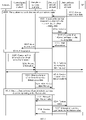
- FIG. 2 is a schematic interaction flowchart of a communication method according to an embodiment of this application. It should be understood that, although steps or operations of the communication method are shown in FIG. 2 , the steps or operations are merely an example, and other operations or variations of the operations in FIG. 2 may also be performed in this embodiment of this application. In addition, the steps in FIG. 2 may be performed in a sequence different from that presented in FIG. 2 , and not all the operations in FIG. 2 may be performed.
- a database network element collects network data.
- the database network element may collect historical network data from one or more of a terminal, an access network, a control plane network element, and a user plane network element, that is, network data that is generated before the collection.
- the database network element includes but is not limited to an SDSF network element, for example, the SDSF 180 in FIG. 1 .
- the control plane network element includes but is not limited to a control plane function (Control Plane Function, CPF) network element.
- the CPF network element may include the AMF network element 140, the SMF network element 150, or the PCF network element 160 shown in FIG. 1 .
- the user plane network element may include a user plane function (User Plane Function, UPF) network element.
- UPF User Plane Function
- the UPF network element may be the UPF network element 130 shown in FIG. 1 .
- the network data may include a DNN corresponding to a service type to which service transmission data associated with the network data belongs.
- step S201 may include: subscribing, by the database network element, to the network data from the control plane network element, and receiving the network data reported by the control plane network element in real-time or periodically.
- the network data includes but is not limited to at least one of an IP address of the terminal, a terminal type (Terminal Type), a cell identifier (Cell ID), a network congestion condition, and a start time for collecting the network data.
- the database network element collects the service transmission data.
- the service transmission data is specific service data, and may also be referred to as application data.
- the database network element may collect different service types of service transmission data.
- a voice service, a WeChat service, and an in-vehicle navigation map service belong to different service types. It should be understood that the voice service, the WeChat service, and the in-vehicle navigation map service are merely examples, but should not constitute a limitation on the service type in this embodiment of this application.
- the service transmission data may include at least one of the following information: an IP 5-tuple, a data packet, a size of the data packet, a start time for the service transmission data, a service type, service experience, and an extended field.
- the service transmission data collected by the database network element may include uplink service transmission data and/or downlink service transmission data.
- the database network element may collect the service transmission data from an application platform (Application Platform, AP).
- the application platform may include an OTT (Over The Top) service center, a vertical management and control center, an operator platform, a third-party service server, or the like.
- the service transmission data collected by the database network element is historical service transmission data, that is, service transmission data previously transmitted in a network.
- step S201 and step S202 are not limited in this embodiment of this application.
- step S202 may be performed before step S201, or step S201 may be performed before step S202, or step S201 and step S202 may be performed in an interleaved manner or simultaneously.
- the database network element associates the service transmission data collected in step S202 with the network data collected in step S201, to obtain training data.
- the database network element associates the service transmission data with the network data by using information such as an IP 5-tuple or time, to obtain the training data.
- the service transmission data collected by the database network element includes information such as the IP of the terminal and time, and the time may be the start time for the service transmission data.
- the network data collected by the database network element also includes information such as the IP of the terminal and time, and the time may be a start time for generating the network data.
- the database network element may associate the service transmission data with the network data, to obtain the training data, where the service transmission data and the network data include same information such as the IP of the terminal or the time.
- the database network element sends the training data to a data analytics network element, where the training data includes the service transmission data and the network data that are associated with each other, and correspondingly, the data analytics network element receives the training data.
- the data analytics network element includes but is not limited to an NWDA network element, for example, the NWDA network element 170 in FIG. 1 .
- the database network element may proactively send the training data to the data analytics network element; or the data analytics network element may send, to the database network element, a request message for requesting the training data, and the database network element may send the training data to the data analytics network element after receiving the request message sent by the data analytics network element.
- the database network element may send the training data to the data analytics network element in batches. For example, when the database network element sends the training data to the data analytics network element, if congestion occurs on the network, the database network element may continue to send the training data to the data analytics network element when the network becomes idle.
- the data analytics network element generates first information based on the training data, where the first information includes a first feature index list set, a service identifier corresponding to each feature index list in the first feature index list set, and a DNN corresponding to the service identifier.
- the data analytics network element deployed with feature engineering generates a big data model based on the training data.
- feature engineering original data is converted into a feature, so that an actual problem processed by a prediction model can be better presented by using the feature, and accuracy of unknown data is improved.
- the feature is obtained through generation, extraction, delete, or combination and variation by using an automated method or based on knowledge in a specific field to which a target problem belongs.
- a process in which the data analytics network element converts the training data into a feature includes the following steps: integrating data, to be specific, integrating the data into one data set; pre-processing the data, to be specific, cleaning, formatting, and sampling the data; converting the data, to be specific, converting the data into key information by using the feature engineering; and modeling the data, to be specific, establishing a model, evaluating the model, and adjusting the model, where the model may also be referred to as the big data model used for identifying a service type.
- the data analytics network element may separate the key information from the training data by using the feature engineering.
- the key information includes service feature lists corresponding to different service types.
- the service feature list may be referred to as a feature list for short.
- One service feature list corresponds to one unique service type, so that the unique service type can be identified based on the service feature list.
- each service type may have a unique service identifier
- the data analytics network element may obtain a correspondence between the feature list and the service identifier based on a correspondence between the service type and the service identifier and a correspondence between the service type and the feature list.
- Each feature list corresponds to one service identifier.
- training data includes service transmission data corresponding to a video service and a payment service, and network data.
- the data analytics network element performs big data analysis on the training data, to obtain example feature lists corresponding to the video service and the payment service.
- the example feature list corresponding to the video service may include the following features: a size of the first packet in a video service flow (flow), an average value of sizes of all packets in the video service flow, entropy of the sizes of all packets in the video service flow, a use time of the video service, a terminal location, and a cell identifier.
- the size of the first packet in the video service flow, the average value of the sizes of all packets in the video service flow, the entropy of the sizes of all packets in the video service flow, and the use time of the video service may be obtained by the data analytics network element based on the service transmission data corresponding to the video service, and the terminal location and the cell identifier may be obtained by the data analytics network element based on the network data associated with the service transmission data corresponding to the video service.
- the example feature list corresponding to the payment service may include the following features: an average value of uplink and downlink intervals of all packets in a payment service flow, entropy of the uplink and downlink intervals of all packets in the payment service flow, a use time of the payment service, and a terminal type.
- the average value of the uplink and downlink intervals of all packets in the payment service flow, the entropy of the uplink and downlink intervals of all packets in the payment service flow, and the use time of the payment service may be obtained by the data analytics network element based on the service transmission data corresponding to the payment service, and the terminal type may be obtained by the data analytics network element based on the network data associated with the service transmission data corresponding to the payment service.
- the data analytics network element may mix these feature lists, or integrate a newly obtained feature list into an existing feature list set and calculate a union set, to obtain a general feature list in which there is no repetitive feature.
- Table 1 General feature list Feature Use time Size of the first packet in a flow Average value of sizes of all packets in a flow Entropy of sizes of all packets in a flow Average value of uplink and downlink intervals of all packets in a flow Entropy of uplink and downlink intervals of all packets in a flow Terminal type Terminal location Cell identifier
- the data analytics network element may allocate an index to each feature based on the general feature list.
- a correspondence between a feature in the general feature list shown in Table 1 and an index is shown in Table 2.
- Table 2 Correspondence between a feature and an index Feature Index Use time 1 Size of the first packet in a flow 2 Average value of sizes of all packets in a flow 3 Entropy of sizes of all packets in a flow 4 Average value of uplink and downlink intervals of all packets in a flow 5 Entropy of uplink and downlink intervals of all packets in a flow 6 Terminal type 7 Terminal location 8 Cell (Cell) identifier 9
- the data analytics network element may obtain, based on the general feature index list and feature lists corresponding to different service types, feature index lists corresponding to the different service types.
- a feature index list corresponding to the payment service and a feature index list corresponding to the video service are obtained based on a general feature index list shown in Table 2, and are shown in Table 3.
- Table 3 Feature index lists corresponding to the payment service and the video service Service type Feature index list
- Payment service ⁇ 1, 5, 6, 7 ⁇ Video service ⁇ 1, 2, 3, 4, 8, 9 ⁇
- the feature index list may be extended to binary space. Assuming that the total feature index list includes n features, each feature index list may be represented as an n-dimensional binary character string.
- the general feature list shown in Table 2 includes nine features.
- the feature index list may be represented as a binary character string with a length of 9.
- a binary feature index list corresponding to the payment service may be represented as 100011100
- a binary feature index list corresponding to the video service may be represented as 111100011.
- a plurality of feature index lists obtained by the data analytics network element form one feature index list set, and the feature index list set is referred to as a first feature index list set.
- One service type corresponds to a plurality of feature lists.
- one service type corresponds to a plurality of feature index lists.
- network congestion conditions may be different in different geographic locations. Therefore, users may use the payment service at different time, and the data analytics network element may generate, based on the training data, a plurality of feature lists corresponding to the payment service.
- a feature index list corresponding to the payment service is shown in Table 4.
- Table 4 Feature list corresponding to the payment service (city A, from 7:00 AM to 17:00 PM)
- Service type Feature list Payment service ⁇ use time, average value of uplink and downlink intervals of all packets in a flow, entropy of uplink and downlink intervals of all packets in a flow, terminal type ⁇
- Feature index list corresponding to the payment service (city A, from 17:00 PM to 21:00 PM)
- Service type Feature list Payment service ⁇ use time, average value of uplink and downlink intervals of all packets in a flow, entropy of uplink and downlink intervals of all packets in a flow, terminal type, terminal location, cell identifier ⁇
- a feature index list corresponding to the payment service is shown in Table 6.
- Table 6 Feature index list corresponding to the payment service (city A, from 21:00 PM to 7:00 AM) Service type Feature index list
- Payment service ⁇ use time, average value of uplink and downlink intervals of all packets in a flow, entropy of uplink and downlink intervals of all packets in a flow ⁇
- Table 7 Feature index lists corresponding to the payment service in the city
- a Service type Feature list Payment service Feature index list-1: ⁇ 1, 5, 6, 7 ⁇ Feature index list-2: ⁇ 1, 5, 6, 7, 8, 9 ⁇ Feature index list-3: ⁇ 1, 5, 6 ⁇
- each service type may have a unique service identifier, and in terms of a feature index list, this means that one feature index list corresponds to one service identifier.
- a plurality of feature lists correspond to one service type, and in terms of a feature index list, this means that a plurality of feature index lists correspond to one service identifier.
- a service identifier of the payment service corresponds to the feature index list-1, the feature index list-2, and the feature index list-3.
- the feature index list-1, the feature index list-2, and the feature index list-3 all correspond to the service identifier of the payment service.
- Table 8 Correspondence between the service identifier of the payment service and the plurality of feature index lists Service identifier Feature index list Service identifier of the payment service Feature index list-1 Feature index list-2 Feature index list-3
- Table 8 is merely an example in which the plurality of feature index lists correspond to the same service identifier, but should not constitute a limitation on an expression form or a storage form of the correspondence between the feature index lists and the service identifier.
- the correspondence between the service identifier of the payment service and the plurality of feature index lists may be shown in Table 9.
- Table 9 Correspondence between the service identifier of the payment service and the plurality of feature index lists Service identifier Feature index list Service identifier of the payment service Feature index list-1 Service identifier of the payment service Feature index list-2 Service identifier of the payment service Feature index list-3
- the network data may include a DNN corresponding to a service type
- the data analytics network element may further obtain a correspondence between the DNN corresponding to the service type and the service identifier corresponding to the service type.
- Table 10 An example of a correspondence between a DNN, a service identifier, and a feature index list is shown in Table 10.
- Table 10 Correspondence between a DNN, a service identifier, and a feature index list
- DNN Service identifier Feature index list
- DNN-1 Service identifier 1 ⁇ 1, 5, 6, 7 ⁇ Service identifier 2 ⁇ 1, 2, 3, 4, 8, 9 ⁇ DNN-2 Service identifier 3 ⁇ 1, 4, 7, ..., 19 ⁇ ⁇ 1, 2, 3, ..., 1000 ⁇
- DNN-3 Service identifier 4 ⁇ 1, 2, 3, ..., 200 ⁇
- an expression form of the correspondence between a DNN, a service identifier, and a feature index list in Table 10 is merely an example, but should not constitute a limitation on this embodiment of this application.
- the correspondence between a DNN, a service identifier, and a feature index list may have another expression form, for example, an expression form shown in Table 11.
- Table 10 or Table 11 includes five feature index lists, each of the five feature index lists corresponds to a unique service identifier, and four service types corresponding to the five feature index lists correspond to three different DNNs.
- the quantity 5 of the feature index lists, the maximum quantity 1000 of feature indexes, the quantity 3 of the DNNs, and a quantity of service identifiers corresponding to each DNN network that are shown in Table 10 or Table 11 are merely an example, but should not constitute a limitation on this embodiment of this application.
- the data analytics network element sends first information to the database network element, and correspondingly, the database network element receives the first information.
- the first information may further include a correspondence between a feature and an index.
- the first information may include the correspondence shown in Table 2.
- the database network element can learn of a feature corresponding to a feature index in each feature index list in the first feature index set.
- the database network element may store the first information.
- the database network element may store the first information in the following manner:
- the database network element may store, by using a service identifier as data index information, a feature index list corresponding to each service identifier and a DNN corresponding to each service identifier.
- the database network element may store the first information in the following manner:
- the database network element may store, by using a DNN as data index information, a service identifier corresponding to each DNN and a feature index list corresponding to each service identifier.
- the database network element sends the first information to the control plane network element, and correspondingly, the control plane network element receives the first information.
- the first information sent by the data analytics network element to the database network element includes the correspondence between a feature and an index
- the first information sent by the database network element to the control plane network element may also include the correspondence between a feature and an index.
- the control plane network element may be an AMF network element, an SMF network element, a PCF network element, or another control plane function network element.
- the control plane network element may be the AMF network element 140, the SMF network element 150, or the PCF network element 160 shown in FIG. 1 .
- control plane network element may store the first information.
- the database network element may directly deliver the first information to the SMF network element or the PCF network element or deliver the first information to the SMF network element or the PCF network element by using a network exposure function (Network Exposure Function, NEF) network element.
- NEF Network Exposure Function
- the terminal initiates a process for modifying an existing session or a process for establishing a new session.
- the session is referred to as a first session.
- the first session may be a service data flow (Service Data Flow), and the first session may be identified by using an IP 5-tuple.
- Service Data Flow Service Data Flow
- a DNN associated with the first session is added.
- the DNN associated with the first session may be referred to as a first DNN.
- the control plane network element queries the first information based on the first DNN to obtain second information, where the second information includes a second feature index list set corresponding to the first DNN and a service identifier corresponding to each feature index list in the second feature index list set.
- control plane network element may screen the locally stored first information based on the first DNN, and find a feature index list and a service identifier that correspond to the first DNN.
- the feature index list that corresponds to the first DNN and that is obtained by screening the first information forms the second feature index list set.
- the control plane network element generates the second information based on the second feature index list set and the service identifier obtained through the screening, where the second information includes the second feature index list set and the service identifier obtained through the screening.
- the control plane network element may generate the second information based on Table 11, where the second information may include content shown in Table 12.
- Table 12 Service identifier and feature index list included in the second information Service identifier Feature index list Service identifier 1 ⁇ 1, 5, 6, 7 ⁇ Service identifier 2 ⁇ 1, 2, 3, 4, 8, 9 ⁇
- the second information sent by the control plane network element to the user plane network element may also include the correspondence.
- the user plane network element may locally store the correspondence between a feature and an index.
- the control plane network element subsequently sends the second information corresponding to a service type to the user plane network element again, the second information can include only a feature index list corresponding to the service type, and the user plane network element may obtain, based on the stored correspondence between a feature and an index, a feature list corresponding to the feature index list.
- the control plane network element sends the second information to the user plane network element, and correspondingly, the user plane network element receives the second information.
- the user plane network element includes but is not limited to a UPF network element.
- the user plane network element may be the UPF network element 130 shown in FIG. 1 .
- control plane network element sending the second information to the user plane network element may be the SMF network element.
- the SMF network element determines the second information based on the first information, and sends the second information to the user plane network element.
- the SMF network element obtains, from the PCF network element, the second information determined by the PCF network element based on the first information, and the SMF network element sends the second information to the UPF network element.
- control plane network element sends the second information to the user plane network element is merely an example, but should not constitute a limitation on this embodiment of this application.
- the user plane network element receives service transmission data corresponding to the terminal.
- the service transmission data may be uplink service transmission data or downlink service transmission data.
- step S211 may be alternatively performed before step S209 or step S210.
- the user plane network element obtains an eigenvalue from the service transmission data.
- the user plane network element obtains, from the service transmission data, an eigenvalue list corresponding to each feature index list in the second feature index list set.
- the user plane network element may obtain eigenvalues corresponding to the features "use time”, "size of the first packet in a flow”, “average value of sizes of all packets in a flow”, “entropy of sizes of all packets in a flow”, “average value of uplink and downlink intervals of all packets in a flow”, and “entropy of uplink and downlink intervals of all packets in a flow” that correspond to the feature indexes 1, 2, 3, 4, 5, and 6.
- the user plane network element may obtain, from the service transmission data, eigenvalues shown in Table 13.
- Table 13 Eigenvalue obtained based on the service transmission data Feature Feature index Eigenvalue Use time 1 9:00 AM Size of the first packet in a flow 2 20 bits Average value of sizes of all packets in a flow 3 30 bits Entropy of sizes of all packets in a flow 4 2 Average value of uplink and downlink intervals of all packets in a flow 5 10 milliseconds Entropy of uplink and downlink intervals of all packets in a flow 6 1.5 Terminal type 7 Terminal location 8 Cell identifier 9
- the user plane network element cannot obtain, based on the service transmission data, eigenvalues corresponding to the terminal type, the terminal location, and the cell identifier that respectively correspond to the feature indexes 7, 8, and 9.
- the user plane network element performs step S213.
- the user plane network element sends third information to the database network element, where the third information includes a first service identifier set, and correspondingly, the database network element receives the third information sent by the user plane network element.
- the user plane network element determines all feature indexes that are in the second feature index list set and for which eigenvalues cannot be obtained based on the service transmission data.
- a feature index list including the feature indexes that are in the second feature index list set and for which the eigenvalues cannot be obtained based on the service transmission data is referred to as a first network data feature index list.
- the feature index list may include a feature index corresponding to the network data.
- An eigenvalue corresponding to the feature index corresponding to the network data cannot be obtained from the service transmission data.
- the user plane network element may screen out the feature index for which the eigenvalue cannot be obtained from the service transmission data, to obtain the first network data feature index list.
- the user plane network element cannot obtain, from the service transmission data, the eigenvalues corresponding to the features "terminal type", “terminal location”, and "cell identifier" that correspond to the feature indexes 7, 8, and 9 in Table 12.
- the feature indexes 7, 8, and 9 form the first network data feature index list shown in Table 14.
- Table 14 First network data feature index list Feature index 7 8 9
- the user plane network element may remove a repetitive feature index in the first network data index list, to obtain a first network data feature index list in which there is no repetitive feature index.
- the user plane network element may determine a service identifier corresponding to a feature index list to which each feature index in the first network data feature index list belongs. Service identifiers corresponding to all the feature indexes in the first network data feature index list form the first service identifier set.
- a service identifier corresponding to the feature index 7 that is in Table 12 and for which an eigenvalue cannot be obtained based on the service transmission data is the service identifier 1
- a service identifier corresponding to the indexes 8 and 9 that are in Table 12 and for which eigenvalues cannot be obtained based on the service transmission data is the service identifier 2. Therefore, a correspondence between a first network data feature index list and a service identifier shown in Table 15 can be obtained.
- Table 15 Correspondence between a first network data feature index list and a service identifier Index Service identifier 7 Service identifier 1 8 Service identifier 2 9 Service identifier 2
- the user plane network element may obtain, based on Table 15, the first service identifier set including the service identifier 1 and the service identifier 2, where the first service identifier set is shown in Table 16.
- Table 16 First service identifier set Service identifier Service identifier 1 Service identifier 2
- the database network element collects network data corresponding to the first session.
- the network data corresponding to the first session may include a type of the terminal initiating the first session, a time at which the terminal initiates the first session, an identifier of a cell in which the terminal is located, and the like.
- step S214 is not limited in this embodiment of this application.
- step S214 may be performed at any time between step S208 and step S213.
- the database network element sends a network data eigenvalue list to the user plane network element, and correspondingly, the user plane network element receives the network data eigenvalue list.
- the database network element collects the network data corresponding to the first session, and after receiving the third information sent by the user plane network element, the database network element may determine a feature index that is in a feature index list corresponding to each service identifier in the first service identifier set and that corresponds to the network data.
- a feature list including feature indexes that are in feature index lists corresponding to all service identifiers in the first service identifier set and that correspond to the network data may be referred to as a second network data feature index list.
- the database network element After determining the second network data feature index list, the database network element obtains, from the collected network data corresponding to the first session, an eigenvalue of a feature corresponding to each feature index in the second network data feature index list.
- An eigenvalue list including the eigenvalue that is of the feature corresponding to each feature index in the second network data feature index list and that is obtained from the network data corresponding to the first session may be referred to as the network data eigenvalue list.
- the database network element may obtain, from the network data corresponding to the first session, data eigenvalues corresponding to the features "terminal type", “terminal location”, and "cell identifier".
- the database network element obtains the network data eigenvalue list is as follows: The database network element obtains the service identifier 1 and the service identifier 2 in the first service identifier set based on the first service identifier set in Table 16; and the database network element further finds, based on the first information obtained in step S206, that the "terminal type" corresponding to the feature index 7 corresponding to the service identifier 1 belongs to the network data, and determines, based on the network data obtained in step S214, an eigenvalue corresponding to the "terminal type".
- the database network element determines eigenvalues based on the network data obtained in step S214, the "terminal location” corresponding to the feature index 8 corresponding to the service identifier 2, and the "cell identifier” corresponding to the feature index 9 corresponding to the service identifier 2, where the eigenvalues correspond to the "terminal location" and the "cell identifier".
- Table 17 An example of the network data eigenvalue list obtained by the database network element is shown in Table 17.
- Table 17 Network data eigenvalue list corresponding to the first service identifier set Service identifier Feature index Eigenvalue Service identifier 1 7 Huawei P10 Service identifier 2 8 Haidian District Service identifier 2 9 Cell ID-1
- the database network element may send the network data eigenvalue list shown in Table 17 to the user plane network element.
- the user plane network element sends the second feature index list set and the eigenvalue list corresponding to each feature index list in the second feature index list set to the data analytics network element, where the second feature index list set and the eigenvalue list corresponding to each feature index list in the second feature index list set correspond to the first session.
- the eigenvalue sent by the user plane network element to the data analytics network element includes not only the eigenvalue corresponding to the service transmission data, but also includes the network data eigenvalue.
- the data analytics network element receives the foregoing eigenvalue from the user plane network element.
- the user plane network element may send, based on Table 13 and Table 17, an eigenvalue list shown in Table 18 to the data analytics network element.
- the eigenvalue list corresponds to the first session.
- Table 18 Eigenvalue list corresponding to the first session Feature index list Eigenvalue list ⁇ 1,5,6,7 ⁇ ⁇ 9:00 AM, 10 milliseconds, 1.5, Huawei P10 ⁇ ⁇ 1, 2, 3, 4, 8, 9 ⁇ ⁇ 9:00 AM, 20 bits, 30 bits, 2, Haidian, Cell ID-1 ⁇
- the data analytics network element determines, based on the second feature index list set and the eigenvalue list corresponding to each feature index list in the second feature index list set, a service type corresponding to a data packet corresponding to the first session, where the second feature index list set and the eigenvalue list are received from the user plane network element.
- the data analytics network element may use the second feature index list set and the eigenvalue list corresponding to each feature index list in the second feature index list set that are sent by the user plane network element, as input parameters of the big data model generated in step S205.
- An output result of the big data model is the service type corresponding to the data packet corresponding to the first session.
- the service type determined by the data analytics network element can be only one of the two service types.
- the feature index list set and the eigenvalue list corresponding to each feature index list in the feature index list set that are sent by the user plane network element correspond to a unique service type.
- the data analytics network element sends, to the user plane network element, the service type determined in step S217, and correspondingly, the user plane network element receives the service type.
- all the network elements operate jointly to identifying the service type.
- the database network element may be deployed close to an application server and a core network network element in a distributed manner. Therefore, delays caused during obtaining the training data and delivering the first information can be reduced.
- the data analytics network element can determine, based on the network data and the service transmission data that correspond to the terminal, the service type corresponding to the terminal, thereby improving identification accuracy.
- the first information may further include at least one of the following information corresponding to each feature index list in the first feature index list set: a network slice type, an SSC mode, and a PDU session type.
- the control plane network element may screen out the second information based on both the DNN corresponding to the first session and the at least one of the network slice type, the SSC mode, and the PDU session type that correspond to the first session.
- the second information is obtained by screening the first information, and each feature index list in the second feature index list set in the second information corresponds to the DNN corresponding to the first session and corresponds to the at least one of the network slice type, the SSC mode, and the PDU session type that correspond to the first session.
- step S213 and step S215 or even step S214 may be skipped in this embodiment of this application.
- the third information may further carry at least one of the following information: a time at which the user plane network element receives the service transmission data corresponding to the first session, a session identifier of the first session, an identifier of the terminal corresponding to the first session, an IP address of the terminal corresponding to the first session, a port on the terminal corresponding to the first session, an IP address of a service server corresponding to the first session, a port that is on the service server and that corresponds to the first session, and a service transmission protocol for the service transmission data corresponding to the first session.
- the database network element may further obtain, based on the at least one of the information carried in the third information, an eigenvalue corresponding to the network data that satisfies the at least one of the information.
- the third information sent by the user plane network element to the database network element may carry the IP address of the terminal, the IP address of the terminal is used to identify the terminal, and the database network element determines, based on the IP address of the terminal, the network data corresponding to the terminal. Therefore, the service type identification accuracy can be further improved.
- the database network element may further collect the network data based on one or more of information corresponding to the first session, such as the DNN, the IP of the terminal, the ID of the terminal, and a PDU session ID, where the network data corresponding to the first session.
- the user plane network element may directly communicate with the database network element or communicate with the database network element by using the SMF network element.
- FIG. 3 is a schematic interaction flowchart of a communication method according to an embodiment of this application. It should be understood that, although steps or operations of the communication method are shown in FIG. 3 , the steps or operations are merely an example, and other operations or variations of the operations in FIG. 3 may also be performed in this embodiment of this application. In addition, the steps in FIG. 3 may be performed in a sequence different from that presented in FIG. 3 , and not all the operations in FIG. 3 may be performed.
- steps S301 to S312 refer to steps S201 to S212 in FIG. 2 .
- steps S301 to S312 refer to steps S201 to S212 in FIG. 2 .
- steps S301 to S312 refer to steps S201 to S212 in FIG. 2 .
- the user plane network element sends third information to the database network element, where the third information carries a network data feature index list, and correspondingly, the database network element receives the third information sent by the user plane network element.
- the user plane network element determines all feature indexes that are in the second feature index list set and for which eigenvalues cannot be obtained based on the service transmission data.
- the feature indexes that are in the second feature index list set and for which the eigenvalues cannot be obtained based on the service transmission data form the network data feature index list.
- the feature index list may include a feature index corresponding to the network data.
- An eigenvalue corresponding to the feature index corresponding to the network data cannot be obtained from the service transmission data.
- the user plane network element may screen out the feature index for which the eigenvalue cannot be obtained from the service transmission data, to obtain the network data feature index list.
- the user plane network element cannot obtain, from the service transmission data, the eigenvalues corresponding to the features "terminal type”, “terminal location”, and "cell identifier" that correspond to the feature indexes 7, 8, and 9 in Table 12.
- the feature indexes 7, 8, and 9 form the network data feature index list.
- the user plane network element may remove a repetitive feature index in the network data feature index list, to obtain a network data feature index list in which there is no repetitive feature index.
- step S314 refer to step S214 in FIG. 2 . Details are not described herein again.
- the database network element sends the network data eigenvalue list to the user plane network element, and correspondingly, the user plane network element receives the network data eigenvalue list from the database network element.
- the database network element obtains, from the collected network data corresponding to the first session, an eigenvalue of a feature corresponding to each feature index in the network data feature index list.
- An eigenvalue list including the eigenvalue that corresponds to each feature index in the network data feature index list and that is obtained from the network data corresponding to the first session may be referred to as the network data eigenvalue list.
- the database network element may obtain, from the network data corresponding to the first session, network data eigenvalues corresponding to the features "terminal type”, “terminal location”, and "cell identifier".
- steps S316 to S318 refer to steps S216 to S218 in FIG. 2 . Details are not described herein again.
- FIG. 4 is a schematic interaction flowchart of a communication method according to an embodiment of this application. It should be understood that, although steps or operations of the communication method are shown in FIG. 4 , the steps or operations are merely an example, and other operations or variations of the operations in FIG. 4 may also be performed in this embodiment of this application. In addition, the steps in FIG. 4 may be performed in a sequence different from that presented in FIG. 4 , and not all the operations in FIG. 4 may be performed.
- steps S401 to S412 refer to steps S201 to S212 in FIG. 2 .
- steps S401 to S412 refer to steps S201 to S212 in FIG. 2 .
- steps S401 to S412 refer to steps S201 to S212 in FIG. 2 .
- the user plane network element sends third information to the database network element, where the third information is used to request network data corresponding to the first session, and correspondingly, the database network element receives the third information sent by the user plane network element.
- the user plane network element determines whether the second feature index list set includes a feature index for which an eigenvalue cannot be obtained based on the service transmission data.
- the user plane network element sends the third information to the database network element, to request the network data corresponding to the first session.
- a network data feature index list an index list including the feature index that is in the second feature index list set and for which the eigenvalue cannot be obtained based on the service transmission data.
- the feature index list may include a feature index corresponding to the network data.
- the eigenvalue that cannot be obtained based on the service transmission data may be obtained from the network data. Therefore, the user plane network element may send, to the database network element, the third information for requesting the network data.
- the user plane network element cannot obtain, from the service transmission data, the eigenvalues corresponding to the features "terminal type", “terminal location”, and “cell identifier” that correspond to the feature indexes 7, 8, and 9 in Table 12.
- the user plane network element sends the third information to the database network element, to request the network data corresponding to the first session.
- the third information may include a time at which the user plane network element receives the service transmission data corresponding to the first session, a session identifier of the first session, an identifier of the terminal corresponding to the first session, an IP address of the terminal corresponding to the first session, a port on the terminal corresponding to the first session, an IP address of a service server corresponding to the first session, a port that is on the service server and that corresponds to the first session, and a service transmission protocol for the service transmission data corresponding to the first session.
- the database network element may collect, based on the third information, the network data corresponding to the first session.
- the database network element may collect network data that satisfies at least one of the following conditions: the time at which the user plane network element receives the service transmission data corresponding to the first session, the session identifier of the first session, the identifier of the terminal corresponding to the first session, the IP address of the terminal corresponding to the first session, the port on the terminal corresponding to the first session, the IP address of the service server corresponding to the first session, the port that is on the service server and that corresponds to the first session, and the service transmission protocol for the service transmission data corresponding to the first session.
- the database network element sends the network data to the user plane network element, and correspondingly, the user plane network element receives the network data from the database network element.
- the user plane network element After receiving, from the database network element, the network data corresponding to the first session, the user plane network element obtains, from the network data corresponding to the first session, an eigenvalue of a feature corresponding to a feature index in the network data feature index list.
- a list including the eigenvalue of the feature corresponding to the feature index in the network data feature index list may be referred to as a network data eigenvalue list.
- steps S416 to S4108 refer to steps S216 to S218 in FIG. 2 . Details are not described herein again.
- FIG. 5 is a schematic interaction flowchart of a communication method according to an embodiment of this application. It should be understood that, although steps or operations of the communication method are shown in FIG. 5 , the steps or operations are merely an example, and other operations or variations of the operations in FIG. 5 may also be performed in this embodiment of this application. In addition, the steps in FIG. 5 may be performed in a sequence different from that presented in FIG. 5 , and not all the operations in FIG. 5 may be performed.
- steps S501 to S506 respectively refer to corresponding steps S201 to S206.
- steps S501 to S506 respectively refer to corresponding steps S201 to S206.
- step S507 refer to step S208.
- step S208 For brevity, details are not described herein again.
- the control plane network element sends a DNN corresponding to a first session to the database network element, and correspondingly, the database network element receives, from the control plane network element, the DNN corresponding to the first session.
- the database network element queries the first information based on the DNN corresponding to the first session, to obtain second information, where the second information includes a second feature index list set and a service identifier corresponding to a service type corresponding to each feature index list in the second feature list set.
- the database network element queries the first information based on the first DNN associated with the first session, to obtain the second information, where the second information includes the second feature index list set corresponding to the first DNN and the service identifier corresponding to each feature index list in the second feature index list set.
- the database network element may screen the locally stored first information based on the first DNN, and find a feature index list and a service identifier that correspond to the first DNN.
- the feature index list that corresponds to the first DNN and that is obtained by screening the first information forms the second feature index list set.
- the database network element generates the second information based on the second feature index list set and the service identifier obtained through the screening, where the second information includes the second feature index list set and the service identifier obtained through the screening.
- the database network element may generate the second information based on Table 11, where the second information may include content shown in Table 12.
- the second information sent by the database network element to the control plane network element may also include the correspondence.
- control plane network element may locally store the general feature list.
- the second information can include only a feature index list corresponding to the service type.
- the control plane network element may send the correspondence between a feature and an index to the user plane network element, so that the user plane network element can obtain, based on the correspondence, a feature list corresponding to the feature index list in the second information.
- the database network element sends the second information to the control plane network element, and correspondingly, the control plane network element receives the second information sent by the database network element.
- steps S511 to S519 refer to corresponding steps S210 to S218.
- steps S511 to S519 refer to corresponding steps S210 to S218.
- control plane network element may further send, to the database network element, at least one of the following information: a network slice type, an SSC mode, and a PDU session type.
- the database network element further receives, from the CPF network element, the at least one of the information corresponding to the first session.
- the database network element may further obtain the second information based on both the DNN corresponding to the first session and the at least one of the information corresponding to the first session. Therefore, more accurate second information is obtained, and service type identification accuracy is improved.
- the second information may further include at least one of the following information corresponding to each feature index list in the second feature index list set: a DNN, a network slice type, a service and an SSC mode, and a PDU session type.
- the control plane network element may determine, based on the at least one of the information corresponding to each feature index list in the second feature index list set, whether the second feature index list set includes a feature index list corresponding to the second session.
- control plane network element may skip requesting the second information from the database network element, thereby improving service type identification efficiency.
- FIG. 6 is a schematic interactive flowchart of a communication method according to an embodiment of this application. It should be understood that, although steps or operations of the communication method are shown in FIG. 6 , the steps or operations are merely an example, and other operations or variations of the operations in FIG. 6 may also be performed in this embodiment of this application. In addition, the steps in FIG. 6 may be performed in a sequence different from that presented in FIG. 6 , and not all the operations in FIG. 6 may be performed.
- steps S601 to S613 refer to steps S501 to S513 in FIG. 5 .
- steps S601 to S613 refer to steps S501 to S513 in FIG. 5 .
- steps S614 to S616 refer to steps S313 to S315 in FIG. 3 .
- steps S614 to S616 refer to steps S313 to S315 in FIG. 3 .
- steps S617 to S619 refer to steps S517 to S519 in FIG. 5 .
- steps S617 to S619 refer to steps S517 to S519 in FIG. 5 .
- FIG. 7 is a schematic interactive flowchart of a communication method according to an embodiment of this application. It should be understood that, although steps or operations of the communication method are shown in FIG. 7 , the steps or operations are merely an example, and other operations or variations of the operations in FIG. 7 may also be performed in this embodiment of this application. In addition, the steps in FIG. 7 may be performed in a sequence different from that presented in FIG. 7 , and not all the operations in FIG. 7 may be performed.
- steps S701 to S713 refer to steps S501 to S513 in FIG. 5 .
- steps S701 to S713 refer to steps S501 to S513 in FIG. 5 .
- steps S701 to S713 refer to steps S501 to S513 in FIG. 5 .
- steps S714 to S716 refer to steps S413 to S415 in FIG. 4 .
- steps S714 to S716 refer to steps S413 to S415 in FIG. 4 .
- steps S717 to S719 refer to steps S517 to S519 in FIG. 5 .
- steps S517 to S519 in FIG. 5 .
- the database network element may re-perform steps S201 to S207.
- the database network element may re-perform steps S301 to S307.
- the database network element may re-perform steps S401 to S407.
- the database network element may re-perform steps S501 to S506.
- the database network element may re-perform steps S601 to S606.
- the database network element may re-perform steps S701 to S706.
- FIG. 8 is a schematic flowchart of a communication method according to an embodiment of this application. It should be understood that, although steps or operations of the communication method are shown in FIG. 8 , the steps or operations are merely an example, and other operations or variations of the operations in FIG. 8 may also be performed in this embodiment of this application. In addition, the steps in FIG. 8 may be performed in a sequence different from that presented in FIG. 8 , and not all the operations in FIG. 8 may be performed.
- a database network element obtains training data, where the training data includes service transmission data and network data.
- step S201 to step S203 in FIG. 2 For details, for example, refer to step S201 to step S203 in FIG. 2 , step S301 to step S303 in FIG. 3 , step S401 to step S403 in FIG. 4 , step S501 to S503 in FIG. 5 , step 601 to step 603 in FIG. 6 , or step S701 to step S703 in FIG. 7 .
- the database network element sends the training data to a data analytics network element.
- step S204 in FIG. 2 For details, for example, refer to step S204 in FIG. 2 , step S304 in FIG. 3 , step S404 in FIG. 4 , step S504 in FIG. 5 , step S604 in FIG. 6 , or step S704 in FIG. 7 .
- the database network element receives first information from the data analytics network element, where the first information includes a first feature index list set, a service identifier corresponding to each feature index list in the first feature index list set, and a DNN corresponding to the service identifier.
- step S206 in FIG. 2 For details, for example, refer to step S206 in FIG. 2 , step S306 in FIG. 3 , step S406 in FIG. 4 , step S506 in FIG. 5 , step S606 in FIG. 6 , or step S706 in FIG. 7 .
- the communication method shown in FIG. 8 may further include: sending, by the database network element, the first information to a control plane network element.
- step S207 in FIG. 2 For details, for example, refer to step S207 in FIG. 2 , step S307 in FIG. 3 or step S407 in FIG. 4 .
- the communication method shown in FIG. 8 may further include: receiving, by the database network element from the control plane network element, a DNN corresponding to a first session; querying, by the database network element, the first information based on the DNN corresponding to the first session, to obtain second information, where the second information includes a second feature index list set corresponding to the DNN corresponding to the first session and a service identifier corresponding to each feature index list in the second feature index list set; and sending, by the database network element, the second information to the control plane network element.
- step S509 in FIG. 5 step S609 in FIG. 6 or step S709 in FIG. 7 .
- the communication method shown in FIG. 8 may further include: receiving, by the database network element, third information from a user plane network element, where the third information includes a first service identifier set; querying, by the database network element, the first information to obtain a feature index list corresponding to each service identifier in the first service identifier set; querying, by the database network element, the network data based on the feature index list corresponding to each service identifier in the first service identifier set, to obtain a network data eigenvalue list corresponding to each service identifier in the first service identifier set; and sending, by the database network element, the network data eigenvalue list corresponding to each service identifier in the first service identifier set to the user plane network element.
- steps S213 to S215 in FIG. 2 or steps S514 to S516 in FIG. 5 .
- FIG. 9 is a schematic flowchart of a communication method according to an embodiment of this application. It should be understood that, although steps or operations of the communication method are shown in FIG. 9 , the steps or operations are merely an example, and other operations or variations of the operations in FIG. 9 may also be performed in this embodiment of this application. In addition, the steps in FIG. 9 may be performed in a sequence different from that presented in FIG. 9 , and not all the operations in FIG. 9 may be performed.
- a data analytics network element receives training data from a database network element, where the training data includes service transmission data and network data.
- step S204 in FIG. 2 For details, for example, refer to step S204 in FIG. 2 , step S304 in FIG. 3 , step S404 in FIG. 4 , step S504 in FIG. 5 , step S604 in FIG. 6 , or step S704 in FIG. 7 .
- the data analytics network element determines first information based on the training data, where the first information includes a first feature index list set, a service identifier corresponding to each feature index list in the first feature index list set, and a DNN corresponding to the service identifier.
- step S205 in FIG. 2 For details, for example, refer to step S205 in FIG. 2 , step S305 in FIG. 3 , step S405 in FIG. 4 , step S505 in FIG. 5 , step S605 in FIG. 6 , or step S705 in FIG. 7 .
- the data analytics network element sends the first information to the database network element.
- step S206 in FIG. 2 For details, for example, refer to step S206 in FIG. 2 , step S306 in FIG. 3 , step S406 in FIG. 4 , step S506 in FIG. 5 , step S606 in FIG. 6 , or step S706 in FIG. 7 .
- FIG. 10 is a schematic flowchart of a communication method according to an embodiment of this application. It should be understood that, although steps or operations of the communication method are shown in FIG. 10 , the steps or operations are merely an example, and other operations or variations of the operations in FIG. 10 may also be performed in this embodiment of this application. In addition, the steps in FIG. 10 may be performed in a sequence different from that presented in FIG. 10 , and not all the operations in FIG. 10 may be performed.
- a control plane network element receives first information from a database network element, where the first information includes a first feature index list set, a service identifier corresponding to each feature index list in the first feature index list set, and a DNN corresponding to the service identifier.
- step S207 in FIG. 2 For details, for example, refer to step S207 in FIG. 2 , step S307 in FIG. 3 , or step S407 in FIG. 4 .
- the control plane network element queries the first information based on a DNN corresponding to a first session, to obtain second information, where the second information includes a second feature index list set corresponding to the DNN corresponding to the first session and a service identifier corresponding to each feature index list in the second feature index list set.
- step S209 in FIG. 2 For details, for example, refer to step S209 in FIG. 2 , step S309 in FIG. 3 , or step S409 in FIG. 4 .
- the control plane network element sends the second information to a user plane network element.
- step S210 in FIG. 2 For details, for example, refer to step S210 in FIG. 2 , step S310 in FIG. 3 , or step S410 in FIG. 4 .
- FIG. 11 is a schematic flowchart of a communication method according to an embodiment of this application. It should be understood that, although steps or operations of the communication method are shown in FIG. 11 , the steps or operations are merely an example, and other operations or variations of the operations in FIG. 11 may also be performed in this embodiment of this application. In addition, the steps in FIG. 11 may be performed in a sequence different from that presented in FIG. 11 , and not all the operations in FIG. 11 may be performed.
- a control plane network element sends a DNN corresponding to a first session to a database network element.
- the control plane network element receives second information from the database network element, where the second information includes a second feature index list set and a service identifier corresponding to each feature index list in the second feature index list set, and the service identifier corresponds to the DNN.
- step S510 in FIG. 5 For details, for example, refer to step S510 in FIG. 5 , step S610 in FIG. 6 , or step S710 in FIG. 7 .
- the control plane network element sends the second information to a user plane network element.
- step S511 in FIG. 5 For details, for example, refer to step S511 in FIG. 5 , step S611 in FIG. 6 , or step S711 in FIG. 7 .
- the communication method may further include: sending, by the control plane network element to the database network element, at least one of the following information corresponding to the first session: a network slice type, an SSC mode, and a PDU session type.
- FIG. 12 is a schematic flowchart of a communication method according to an embodiment of this application. It should be understood that, although steps or operations of the communication method are shown in FIG. 12 , the steps or operations are merely an example, and other operations or variations of the operations in FIG. 12 may also be performed in this embodiment of this application. In addition, the steps in FIG. 12 may be performed in a sequence different from that presented in FIG. 12 , and not all the operations in FIG. 12 may be performed.
- a user plane network element receives second information from a control plane network element, where the second information includes a second feature index list set and a service identifier corresponding to each feature index list in the second feature index list set.
- step S210 in FIG. 2 or step S511 in FIG. 5 .
- the user plane network element receives service transmission data corresponding to a first session.
- step S211 in FIG. 2 or step S512 in FIG. 5 .
- the user plane network element determines a service identifier corresponding to a feature index list that is in the second feature index list set and for which an eigenvalue cannot be obtained based on the service transmission data, to obtain a first service identifier set, and sends third information to a database network element, where the third information includes the first service identifier set.
- step S213 in FIG. 2 or step S514 in FIG. 5 .
- the user plane network element receives, from the database network element, a network data eigenvalue list corresponding to each service identifier in the first service identifier set.
- step S215 in FIG. 2 or step S516 in FIG. 5 .
- FIG. 13 is a schematic flowchart of a communication method according to an embodiment of this application. It should be understood that, although steps or operations of the communication method are shown in FIG. 13 , the steps or operations are merely an example, and other operations or variations of the operations in FIG. 13 may also be performed in this embodiment of this application. In addition, the steps in FIG. 13 may be performed in a sequence different from that presented in FIG. 13 , and not all the operations in FIG. 13 may be performed.
- a user plane network element receives second information from a control plane network element, where the second information includes a second feature index list set and a service identifier corresponding to each feature index list in the second feature index list set.
- step S310 in FIG. 3 or step S611 in FIG. 6 .
- the user plane network element receives service transmission data corresponding to a first session.
- step S311 in FIG. 3 or step S612 in FIG. 6 For details, for example, refer to step S311 in FIG. 3 or step S612 in FIG. 6 .
- the user plane network element determines a feature index that is in the second feature index list set and for which an eigenvalue cannot be obtained based on the service transmission data, to obtain a network data feature index list, and sends the network data feature index list to a database network element.
- step S313 in FIG. 3 or step S614 in FIG. 6 For details, for example, refer to step S313 in FIG. 3 or step S614 in FIG. 6 .
- the user plane network element receives, from the database network element, a network data eigenvalue list corresponding to the network data feature index list.
- step S315 in FIG. 3 or step S616 in FIG. 6 For details, for example, refer to step S315 in FIG. 3 or step S616 in FIG. 6 .
- FIG. 14 is a schematic structural diagram of a database network element according to an embodiment of this application. It should be understood that the database network element 1400 shown in FIG. 14 is merely an example. The database network element in this embodiment of this application may further include other modules or units, or include modules having functions similar to those of modules in FIG. 14 , or not include all modules in FIG. 14 .
- a processing module 1401 is configured to obtain training data, where the training data includes service transmission data and network data.
- a sending module 1402 is configured to send the training data to a data analytics network element.
- a receiving module 1403 is configured to receive first information from the data analytics network element, where the first information includes a first feature index list set, a service identifier corresponding to each feature index list in the first feature index list set, and a data network name DNN corresponding to the service identifier.
- the first information may further include at least one of the following information corresponding to each feature index list in the first feature index list set: a network slice type, an SSC mode, and a PDU session type.
- the sending module 1402 may be further configured to send the first information to a control plane network element.
- the receiving module may be further configured to receive, from the control plane network element, a DNN corresponding to a first session.
- the processing module 1401 is further configured to query the first information based on the DNN corresponding to the first session, to obtain second information, where the second information includes a second feature index list set corresponding to the DNN corresponding to the first session and a service identifier corresponding to each feature index list in the second feature index list set.
- the sending module is further configured to send the second information to the control plane network element.
- the receiving module 1403 may be further configured to receive, from the control plane network element, at least one of the following information corresponding to the first session: a network slice type, an SSC mode, and a PDU session type.
- the processing module 1401 is specifically configured to query the first information based on the DNN corresponding to the first session and the at least one of the information corresponding to the first session, to obtain the second information.
- the receiving module 1403 may be further configured to receive third information from a user plane network element, where the third information includes a first service identifier set.
- processing module 1401 is further configured to:
- the sending module 1402 is further configured to send the network data eigenvalue list corresponding to each service identifier in the first service identifier set to the user plane network element.
- the third information may further include at least one of the following information: a time at which the user plane network element receives service transmission data corresponding to the first session, a session identifier of the first session, an identifier of a terminal corresponding to the first session, an internet protocol IP address of the terminal corresponding to the first session, a port on the terminal corresponding to the first session, an IP address of a service server corresponding to the first session, a port that is on the service server and that corresponds to the first session, and a service transmission protocol for the service transmission data corresponding to the first session.
- modules included in the database network element 1400 in FIG. 14 may be configured to implement corresponding steps performed by the database network element in any of the communication methods shown in FIG. 2 to FIG. 7 .
- details are not described herein again.
- FIG. 15 is a schematic structural diagram of a data analytics network element, which is not part of the scope of the invention. It should be understood that the data analytics network element 1500 shown in FIG. 15 is merely an example. The data analytics network element may further include other modules or units, or include modules having functions similar to those of modules in FIG. 15 , or not include all modules in FIG. 15 .
- a receiving module 1501 is configured to receive training data from a database network element, where the training data includes service transmission data and network data.
- a processing module 1502 is configured to determine first information based on the training data, where the first information includes a first feature index list set, a service identifier corresponding to each feature index list in the first feature index list set, and a DNN corresponding to the service identifier.
- a sending module 1503 is configured to send the first information to the database network element.
- the first information may further include at least one of the following information corresponding to each feature index list in the first feature index list set: a network slice type, an SSC mode, and a PDU session type.
- modules included in the data analytics network element 1500 in FIG. 15 may be configured to implement corresponding steps performed by the data analytics network element in any of the communication methods shown in FIG. 2 to FIG. 7 .
- the modules included in the data analytics network element 1500 in FIG. 15 may be configured to implement corresponding steps performed by the data analytics network element in any of the communication methods shown in FIG. 2 to FIG. 7 .
- details are not described herein again.
- FIG. 16 is a schematic structural diagram of a control plane network element, which is not part of the scope of the invention. It should be understood that the control plane network element 1600 shown in FIG. 16 is merely an example. The control plane network element may further include other modules or units, or include modules having functions similar to those of modules in FIG. 16 , or not include all modules in FIG. 16 .
- a receiving module 1601 is configured to receive first information from a database network element, where the first information includes a first feature index list set, a service identifier corresponding to each feature index list in the first feature index list set, and a DNN corresponding to the service identifier.
- a processing module 1602 is configured to query the first information based on a DNN corresponding to a first session, to obtain second information, where the second information includes a second feature index list set corresponding to the DNN corresponding to the first session and a service identifier corresponding to each feature index list in the second feature index list.
- a sending module 1603 is configured to send the second information to a user plane network element.
- the first information may further include at least one of the following information corresponding to each feature index list in the first feature index list set: a network slice type, an SSC mode, and a PDU session type.
- the processing module 1602 is specifically configured to query the first information based on the DNN corresponding to the first session and at least one of a network slice type, an SSC mode, and a PDU session type that correspond to the first session, to obtain the second information.
- modules included in the control plane network element 1600 in FIG. 16 may be configured to implement corresponding steps performed by the control plane network element in the communication method shown in FIG. 2 , FIG. 3 , or FIG. 4 .
- the modules included in the control plane network element 1600 in FIG. 16 may be configured to implement corresponding steps performed by the control plane network element in the communication method shown in FIG. 2 , FIG. 3 , or FIG. 4 .
- FIG. 4 For brevity, details are not described herein again.
- FIG. 17 is a schematic structural diagram of a control plane network element, which is not part of the scope of the invention. It should be understood that the control plane network element 1700 shown in FIG. 17 is merely an example. The control plane network element may further include other modules or units, or include modules having functions similar to those of modules in FIG. 17 , or not include all modules in FIG. 17 .
- a sending module 1701 is configured to send a DNN corresponding to a first session to a database network element.
- a receiving module 1702 is configured to receive second information from the database network element, where the second information includes a second feature index list set and a service identifier corresponding to each feature index list in the second feature index list set, and the service identifier corresponds to the DNN corresponding to the first session.
- the sending module 1701 is further configured to send the second information to a user plane network element.
- the sending module 1701 is further configured to send, to the database network element, at least one of the following information corresponding to the first session: a network slice type, an SSC mode, and a PDU session type.
- modules included in the control plane network element 1700 in FIG. 17 may be configured to implement corresponding steps performed by the control plane network element in the communication method shown in FIG. 5 , FIG. 6 , or FIG. 7 .
- FIG. 17 For brevity, details are not described herein again.
- FIG. 18 is a schematic structural diagram of a user plane network element, which is not part of the scope of the invention. It should be understood that the user plane network element 1800 shown in FIG. 18 is merely an example. The user plane network element may further include other modules or units, or include modules having functions similar to those of modules in FIG. 18 , or not include all modules in FIG. 18 .
- a receiving module 1801 is configured to receive second information from a control plane network element, where the second information includes a second feature index list set and a service identifier corresponding to each feature index list in the second feature index list set.
- the receiving module 1801 is further configured to receive service transmission data corresponding to a first session.
- a processing module 1802 is configured to determine a service identifier corresponding to a feature index list that is in the second feature index list set and for which an eigenvalue cannot be obtained based on the service transmission data, to obtain a first service identifier set.
- a sending module 1803 is configured to send third information to a database network element, where the third information includes the first service identifier set.
- the receiving module 1801 is further configured to receive, from the database network element, a network data eigenvalue list corresponding to each service identifier in the first service identifier set.
- the third information further includes at least one of the following information: a time at which the user plane network element receives the service transmission data corresponding to the first session, a session identifier of the first session, an identifier of a terminal corresponding to the first session, an IP address of the terminal corresponding to the first session, a port on the terminal corresponding to the first session, an IP address of a service server corresponding to the first session, a port that is on the service server and that corresponds to the first session, and a service transmission protocol for the service transmission data corresponding to the first session.
- modules included in the user plane network element 1800 in FIG. 18 may be configured to implement corresponding steps performed by the user plane network element in the communication method shown in FIG. 2 or FIG. 5 .
- the modules included in the user plane network element 1800 in FIG. 18 may be configured to implement corresponding steps performed by the user plane network element in the communication method shown in FIG. 2 or FIG. 5 .
- details are not described herein again.
- FIG. 19 is a schematic structural diagram of a user plane network element, which is not part of the scope of the invention. It should be understood that the user plane network element 1900 shown in FIG. 19 is merely an example. The user plane network element may further include other modules or units, or include modules having functions similar to those of modules in FIG. 19 , or not include all modules in FIG. 19 .
- a receiving module 1901 is configured to receive second information from a control plane network element, where the second information includes a second feature index list set and a service identifier corresponding to each feature index list in the second feature index list set.
- the receiving module 1901 is further configured to receive service transmission data corresponding to a first session.
- a processing module 1902 is configured to determine a feature index that is in the second feature index list set and for which an eigenvalue cannot be obtained based on the service transmission data, to obtain a network data feature index list.
- a sending module 1903 is configured to send the network data feature index list to a database network element.
- the receiving module 1901 is further configured to receive, from the database network element, a network data eigenvalue list corresponding to the network data feature index list.
- third information may include at least one of the following information: a time at which the user plane network element receives the service transmission data corresponding to the first session, a session identifier of the first session, an identifier of a terminal corresponding to the first session, an IP address of the terminal corresponding to the first session, a port on the terminal corresponding to the first session, an IP address of a service server corresponding to the first session, a port that is on the service server and that corresponds to the first session, and a service transmission protocol for the service data corresponding to the first session.
- modules included in the user plane network element 1900 in FIG. 19 may be configured to implement corresponding steps performed by the user plane network element in the communication method shown in FIG. 3 or FIG. 6 .
- details are not described herein again.
- FIG. 20 is a schematic structural diagram of a database network element according to an embodiment of this application. It should be understood that the database network element 2000 shown in FIG. 20 is merely an example. The database network element in this embodiment of this application may further include other modules or units, or include modules having functions similar to those of modules in FIG. 20 , or not include all modules in FIG. 20 .
- a processor 2020 may be configured to implement an operation or a step performed by the processing module 1401 in FIG. 14 .
- a transmitter 2040 may be configured to implement an operation or a step performed by the sending module 1402 in FIG. 14 .
- a receiver 2030 may be configured to implement an operation or a step performed by the receiving module 1403 in FIG. 14 .
- the receiver 2030 and the transmitter 2040 may be integrated together and collectively referred to as a transceiver.
- the database network element 2000 may further include a memory 2010, configured to store program code executed by the processor 2020.
- the memory may be integrated into the processor 2020.
- FIG. 21 is a schematic structural diagram of a data analytics network element, which is not part of the scope of the invention. It should be understood that the data analytics network element 2100 shown in FIG. 21 is merely an example. The data analytics network element may further include other modules or units, or include modules having functions similar to those of modules in FIG. 21 , or not include all modules in FIG. 21 .
- a processor 2120 may be configured to implement an operation or a step performed by the processing module 1502 in FIG. 15 .
- a transmitter 2140 may be configured to implement an operation or a step performed by the sending module 1503 in FIG. 15 .
- a receiver 2130 may be configured to implement an operation or a step performed by the receiving module 1501 in FIG. 15 .
- the receiver 2130 and the transmitter 2140 may be integrated together and collectively referred to as a transceiver.
- the data analytics network element 2100 may further include a memory 2110, configured to store program code executed by the processor 2120.
- the memory may be integrated into the processor 2120.
- FIG. 22 is a schematic structural diagram of a control plane network element, which is not part of the scope of the invention. It should be understood that the control plane network element 2200 shown in FIG. 22 is merely an example. The control plane network element may further include other modules or units, or include modules having functions similar to those of modules in FIG. 22 , or not include all modules in FIG. 22 .
- a processor 2220 may be configured to implement an operation or a step performed by the processing module 1602 in FIG. 16 .
- a transmitter 2240 may be configured to implement an operation or a step performed by the sending module 1603 in FIG. 16 .
- a receiver 2230 may be configured to implement an operation or a step performed by the receiving module 1601 in FIG. 16 .
- the receiver 2230 and the transmitter 2240 may be integrated together and collectively referred to as a transceiver.
- control plane network element 2200 may further include a memory 2210, configured to store program code executed by the processor 2220.
- the memory may be integrated into the processor 2220.
- FIG. 23 is a schematic structural diagram of a control plane network element, which is not part of the scope of the invention. It should be understood that the control plane network element 2300 shown in FIG. 23 is merely an example. The control plane network element may further include other modules or units, or include modules having functions similar to those of modules in FIG. 23 , or not include all modules in FIG. 23 .
- a transmitter 2340 may be configured to implement an operation or a step performed by the sending module 1701 in FIG. 17 .
- a receiver 2330 may be configured to implement an operation or a step performed by the receiving module 1702 in FIG. 17 .
- the receiver 2330 and the transmitter 2340 may be integrated together and collectively referred to as a transceiver.
- control plane network element 2300 may further include a memory 2310 and a processor 2320.
- the memory 2310 is configured to store program code
- the processor 2320 is configured to execute the program code stored in the memory 2310.
- the memory 2310 may be integrated into the processor 2320.
- FIG. 24 is a schematic structural diagram of a user plane network element, which is not part of the scope of the invention. It should be understood that the user plane network element 2400 shown in FIG. 24 is merely an example. The user plane network element may further include other modules or units, or include modules having functions similar to those of modules in FIG. 24 , or not include all modules in FIG. 24 .
- a processor 2420 may be configured to implement an operation or a step performed by the processing module 1802 in FIG. 18 .
- a transmitter 2440 may be configured to implement an operation or a step performed by the sending module 1803 in FIG. 18 .
- a receiver 2430 may be configured to implement an operation or a step performed by the receiving module 1801 in FIG. 18 .
- the receiver 2430 and the transmitter 2440 may be integrated together and collectively referred to as a transceiver.
- the user plane network element 2400 may further include a memory 2410, configured to store program code executed by the processor 2420.
- the memory may be integrated into the processor 2420.
- FIG. 25 is a schematic structural diagram of a user plane network element, which is not part of the scope of the invention. It should be understood that the user plane network element 2500 shown in FIG. 25 is merely an example. The user plane network element may further include other modules or units, or include modules having functions similar to those of modules in FIG. 25 , or not include all modules in FIG. 25 .
- a processor 2520 may be configured to implement an operation or a step performed by the processing module 1902 in FIG. 19 .
- a transmitter 2540 may be configured to implement an operation or a step performed by the sending module 1903 in FIG. 19 .
- a receiver 2530 may be configured to implement an operation or a step performed by the receiving module 1901 in FIG. 19 .
- the receiver 2530 and the transmitter 2540 may be integrated together and collectively referred to as a transceiver.
- the user plane network element 2500 may further include a memory 2510, configured to store program code executed by the processor 2520.
- the memory may be integrated into the processor 2520.
- FIG. 26 is a schematic structural diagram of a chip system according to an embodiment of this application. It should be understood that the chip system 2600 shown in FIG. 26 is merely an example. The chip system in this embodiment of this application may further include other modules or units, or include modules having functions similar to those of modules in FIG. 26 , or not include all modules in FIG. 26 .
- the chip system 2600 includes a processor 2620, configured to support the database network element, the data analytics network element, the control plane network element, or the user plane network element in implementing functions described in the corresponding communication method, for example, generating or processing information related to the communication method.
- the chip system 2600 may include one or more processors 2620. This is not limited in this application.
- the chip system 2600 further includes a memory 2610.
- the memory 2610 is configured to store a program instruction and data necessary for the database network element, the data analytics network element, the control plane network element, or the user plane network element.
- the chip system may include a chip, or may include a chip and another discrete device.
- All or some of the foregoing embodiments may be implemented by using software, hardware, firmware, or any combination thereof.
- software is used to implement the embodiments, all or some of the embodiments may be implemented in a form of a computer program product.
- the computer program product includes one or more computer instructions.
- the computer may be a general-purpose computer, a special-purpose computer, a computer network, or another programmable apparatus.
- the computer instructions may be stored in a computer-readable storage medium or may be transmitted from a computer-readable storage medium to another computer-readable storage medium.
- the computer instructions may be transmitted from a website, computer, server, or data center to another website, computer, server, or data center in a wired (for example, a coaxial cable, an optical fiber, or a digital subscriber line (DSL)) or wireless (for example, infrared, radio, or microwave) manner.
- the computer-readable storage medium may be any usable medium accessible to the computer, or a data storage device, such as a server or a data center, integrating one or more usable media.
- the usable medium may be a magnetic medium (for example, a floppy disk, a hard disk, or a magnetic tape), an optical medium (for example, a DVD), a semiconductor medium (for example, a solid-state drive Solid State Disk (SSD)), or the like.
- a magnetic medium for example, a floppy disk, a hard disk, or a magnetic tape
- an optical medium for example, a DVD
- a semiconductor medium for example, a solid-state drive Solid State Disk (SSD)
Landscapes
- Engineering & Computer Science (AREA)
- Computer Networks & Wireless Communication (AREA)
- Signal Processing (AREA)
- Databases & Information Systems (AREA)
- Theoretical Computer Science (AREA)
- Data Mining & Analysis (AREA)
- Physics & Mathematics (AREA)
- General Engineering & Computer Science (AREA)
- General Physics & Mathematics (AREA)
- Power Engineering (AREA)
- Computing Systems (AREA)
- Computer Security & Cryptography (AREA)
- Software Systems (AREA)
- Mobile Radio Communication Systems (AREA)
- Data Exchanges In Wide-Area Networks (AREA)
- Telephonic Communication Services (AREA)
Claims (7)
- Procédé de communication, comprenant :• l'obtention, par un élément de réseau de base de données qui comporte un élément de réseau de fonction de stockage de données structurées, SDSF, (180), des données d'apprentissage, les données d'apprentissage comprenant des données de transmission de service et des données de réseau (S 501, S 601, S 701),grâce à quoi les données de transmission de service comportent : un IP à 5 tuples ; et/ou une taille d'un paquet de données ; et/ou un temps pour le paquet de données ; et/ou un type de service ; et/ou une expérience de service ; et/ou un champ étendu,et grâce à quoi les données de réseau comportent : une adresse IP d'un terminal ; et/ou un numéro de port du terminal ; et/ou un type de terminal ; et/ou des informations de localisation de terminal ; et/ou un temps ; et/ou un DNN ; et/ou une condition d'encombrement du réseau ;• l'envoi, par l'élément de réseau de base de données, des données d'apprentissage à un élément de réseau d'analyse de données qui comporte un élément de réseau d'analyse de données de réseau, NWDA, (170) (S 504, S 604, S 704), grâce à quoi l'élément de réseau d'analyse de données génère en premier des informations sur la base des données d'apprentissage, sur la base à la fois des données de transmission de service et des données de réseau (S 505, S 605, S 705) ;• la réception, par l'élément de réseau de base de données, des premières informations de l'élément de réseau d'analyse de données, les premières informations comprenant un premier ensemble de listes d'index de caractéristiques, un identifiant de service correspondant à chaque liste d'index de caractéristiques dans le premier ensemble de listes d'index de caractéristiques et un nom de réseau de données, DNN, correspondant à l'identifiant de service, chaque liste d'index de caractéristiques correspondant à un type de service indiqué par l'identifiant de service, et chaque liste d'index de caractéristiques contenant pour chaque caractéristique parmi une pluralité de caractéristiques du type de service un index différent parmi une pluralité de caractéristiques d'indices (S 506, S 606, S 706) ;• la réception, par l'élément de réseau de base de données, d'un élément de réseau du plan de commande qui comporte un élément de réseau de fonction de plan de commande, CPF, qui comporte un élément de réseau de fonction de gestion d'accès et de gestion de mobilité (140), AMF ; un élément de réseau de fonction de gestion de session (150), SMF ; ou un élément de réseau de fonction de commande de politique (160), PCF, un DNN correspondant à une première session (S 508, S 608, S 708) ;• la requête, par l'élément de réseau de base de données, des premières informations sur la base du DNN correspondant à la première session, pour obtenir des deuxièmes informations, les deuxièmes informations comprenant un second ensemble de listes d'index de caractéristiques correspondant au DNN correspondant à la première session et un identifiant de service correspondant à chaque liste d'index de caractéristiques dans le second ensemble de listes d'index de caractéristiques (S 509, S 609, S 709) ;• l'envoi, par l'élément de réseau de base de données, des deuxièmes informations à l'élément de réseau de plan de commande (S 510, S 610, S 710).
- Procédé de communication selon la revendication 1, dans lequel les premières informations comprennent en outre les informations suivantes correspondant à chaque liste d'index de caractéristiques dans le premier ensemble de listes d'index de caractéristiques : un type de tranche de réseau, et/ou un mode de continuité de service et de session, SSC, et/ou un type de session d'unité de données par paquets, PDU.
- Procédé de communication selon la revendication 1 ou 2, dans lequel le procédé de communication comprend en outre :
l'envoi, par l'élément de réseau de base de données, des premières informations à l'élément de réseau du plan de commande. - Procédé de communication selon la revendication 1 ou 2, dans lequel le procédé de communication comprend en outre :
la réception, par l'élément de réseau de base de données à partir de l'élément de réseau de plan de commande, des informations suivantes correspondant à la première session :un type de tranche de réseau, et/ou un mode SSC et/ou un type de session PDU ; etla requête, par l'élément de réseau de base de données, des premières informations sur la base du DNN correspondant à la première session, pour obtenir les deuxièmes informations comprend : la requête, par l'élément de réseau de base de données, des premières informations sur la base du DNN correspondant à la première session et l'au moins une des informations correspondant à la première session, pour obtenir les deuxièmes informations. - Procédé de communication selon l'une quelconque des revendications 1 à 4, dans lequel le procédé de communication comprend en outre :la réception, par l'élément de réseau de base de données, des troisièmes informations à partir d'un élément de réseau de plan utilisateur, les troisièmes informations comprenant un premier ensemble d'identifiants de service ;la requête, par l'élément de réseau de base de données, des premières informations pour obtenir une liste d'index de caractéristiques correspondant à chaque identifiant de service dans le premier ensemble d'identifiants de service ;la requête, par l'élément de réseau de base de données, des données de réseau sur la base de la liste d'index de caractéristiques correspondant à chaque identifiant de service dans le premier ensemble d'identifiants de service, pour obtenir une liste de valeurs propres de données de réseau correspondant à chaque identifiant de service dans le premier ensemble d'identifiants de service ; etl'envoi, par l'élément de réseau de base de données, de la liste de valeurs propres de données de réseau correspondant à chaque identifiant de service dans le premier ensemble d'identifiants de service à l'élément de réseau du plan utilisateur.
- Procédé de communication selon la revendication 5, dans lequel les troisièmes informations comprennent en outre les informations suivantes : un temps auquel l'élément de réseau du plan utilisateur reçoit des données de transmission de service correspondant à la première session, et/ou un identifiant de session de la première session, et/ou un identifiant d'un terminal correspondant à la première session, et/ou un protocole internet, IP, et/ou une adresse du terminal correspondant à la première session, et/ou un port sur le terminal correspondant à la première session, et/ou une adresse IP d'un serveur de service correspondant à la première session, et/ou un port qui se trouve sur le serveur de service et qui correspond à la première session, et/ou un protocole de transmission de service pour les données de transmission de service correspondant à la première session.
- Élément de réseau de base de données, comprenant un moyen configuré pour effectuer le procédé selon l'une quelconque des revendications 1 à 6.
Applications Claiming Priority (2)
| Application Number | Priority Date | Filing Date | Title |
|---|---|---|---|
| CN201710916010.3A CN110019511B (zh) | 2017-09-30 | 2017-09-30 | 通信方法及其通信设备 |
| PCT/CN2018/107337 WO2019062710A1 (fr) | 2017-09-30 | 2018-09-25 | Procédé de communication et dispositif de communication correspondant |
Publications (3)
| Publication Number | Publication Date |
|---|---|
| EP3683714A1 EP3683714A1 (fr) | 2020-07-22 |
| EP3683714A4 EP3683714A4 (fr) | 2020-10-14 |
| EP3683714B1 true EP3683714B1 (fr) | 2022-11-30 |
Family
ID=65900648
Family Applications (1)
| Application Number | Title | Priority Date | Filing Date |
|---|---|---|---|
| EP18863523.9A Active EP3683714B1 (fr) | 2017-09-30 | 2018-09-25 | Procédé de communication et dispositif de communication correspondant |
Country Status (4)
| Country | Link |
|---|---|
| US (1) | US11451286B2 (fr) |
| EP (1) | EP3683714B1 (fr) |
| CN (1) | CN110019511B (fr) |
| WO (1) | WO2019062710A1 (fr) |
Families Citing this family (5)
| Publication number | Priority date | Publication date | Assignee | Title |
|---|---|---|---|---|
| CN109600790B (zh) * | 2017-09-30 | 2021-09-14 | 华为技术有限公司 | 获取特征参数的方法和装置 |
| CN113597021B (zh) * | 2020-04-30 | 2023-11-17 | 华为技术有限公司 | 一种通信方法、装置及系统 |
| CN114826867B (zh) | 2021-01-28 | 2023-11-17 | 华为技术有限公司 | 处理数据的方法、装置、系统及存储介质 |
| CN115188114B (zh) * | 2022-07-01 | 2023-09-01 | 日立楼宇技术(广州)有限公司 | 一种门禁信息同步方法、装置、设备及存储介质 |
| US12501355B2 (en) * | 2023-11-10 | 2025-12-16 | GM Global Technology Operations LLC | Method and system for smart guided selection of networks |
Family Cites Families (13)
| Publication number | Priority date | Publication date | Assignee | Title |
|---|---|---|---|---|
| CN101072116B (zh) * | 2007-04-28 | 2011-07-20 | 华为技术有限公司 | 业务选择方法、装置、系统及客户端应用服务器 |
| CN101605348B (zh) * | 2008-11-24 | 2012-07-18 | 中国移动通信集团广东有限公司 | 一种数据业务模拟方法及应用系统 |
| CN102158345B (zh) * | 2010-06-23 | 2013-06-05 | 青岛海信传媒网络技术有限公司 | 一种数据管理方法、装置和系统 |
| CN105357739B (zh) | 2011-12-13 | 2019-05-10 | 华为技术有限公司 | 一种通信方法及设备 |
| CN104349380B (zh) * | 2013-08-08 | 2018-12-04 | 中兴通讯股份有限公司 | 信息交互、分流处理方法、装置、基站、rnc及终端 |
| CA2938045C (fr) | 2014-01-29 | 2019-07-16 | Huawei Technologies Co., Ltd. | Appareil de traitement de donnees dans un reseau sans fil, et systeme de reseau sans fil |
| CN105307058B (zh) * | 2014-06-09 | 2019-06-18 | 中兴通讯股份有限公司 | 业务配置数据的处理方法及装置 |
| US10880180B2 (en) * | 2015-09-16 | 2020-12-29 | Huawei Technologies Co., Ltd. | Method and apparatus for data analytics management |
| CN106792563A (zh) * | 2015-11-23 | 2017-05-31 | 中兴通讯股份有限公司 | 一种多媒体广播多播业务处理方法及系统 |
| CN106921507B (zh) * | 2015-12-25 | 2020-10-09 | 株式会社日立制作所 | 在无线通信网络中对用户投诉进行预测的方法和装置 |
| CN107027134A (zh) * | 2016-02-01 | 2017-08-08 | 上海无线通信研究中心 | 一种用户自定义的无线通信网络方法及系统 |
| WO2018236164A1 (fr) * | 2017-06-21 | 2018-12-27 | 엘지전자(주) | Procédé et dispositif d'exécution d'une procédure de demande de service dans un système de communication sans fil |
| US10779254B2 (en) * | 2017-08-16 | 2020-09-15 | Electronics And Telecommunications Research Institute | Service request method for 5G local service |
-
2017
- 2017-09-30 CN CN201710916010.3A patent/CN110019511B/zh active Active
-
2018
- 2018-09-25 WO PCT/CN2018/107337 patent/WO2019062710A1/fr not_active Ceased
- 2018-09-25 EP EP18863523.9A patent/EP3683714B1/fr active Active
-
2020
- 2020-03-20 US US16/824,859 patent/US11451286B2/en active Active
Also Published As
| Publication number | Publication date |
|---|---|
| WO2019062710A1 (fr) | 2019-04-04 |
| CN110019511B (zh) | 2021-10-22 |
| CN110019511A (zh) | 2019-07-16 |
| US20200220602A1 (en) | 2020-07-09 |
| EP3683714A1 (fr) | 2020-07-22 |
| EP3683714A4 (fr) | 2020-10-14 |
| US11451286B2 (en) | 2022-09-20 |
Similar Documents
| Publication | Publication Date | Title |
|---|---|---|
| EP3683714B1 (fr) | Procédé de communication et dispositif de communication correspondant | |
| US11552856B2 (en) | Data analytics method and apparatus | |
| CN112672383B (zh) | 通信方法和网络设备 | |
| US11012323B2 (en) | Feature parameter obtaining method and apparatus | |
| CN109792598B (zh) | 支持网络分片的漫游环境中用于终端附接和创建归属路由pdu会话的方法和设备 | |
| EP3678331B1 (fr) | Dispositif et procédé d'analyse de données | |
| US20230362708A1 (en) | Data processing method and apparatus | |
| WO2023060409A1 (fr) | Procédé et appareil de commande de détection, dispositif, système, et support de stockage | |
| CN116208964B (zh) | 一种业务传输及其控制方法、设备 | |
| CN120812542A (zh) | 感知数据的收集方法、装置、设备、系统及存储介质 | |
| WO2024000166A1 (fr) | Procédés et appareils de fourniture de données de détection, dispositif, support de stockage et produit de programme | |
| CN114785626B (zh) | 数据管理的方法和装置 | |
| EP4207850A1 (fr) | Procédé et appareil d'analyse de données | |
| EP4422240A1 (fr) | Procédé d'obtention d'un résultat de classification de sécurité et appareil de communication | |
| US20200177512A1 (en) | Network architecture with control plane node | |
| CN107733998B (zh) | 蜂窝异构分层网络的缓存内容放置及提供方法 | |
| WO2026066338A1 (fr) | Procédé et appareil de communication | |
| CN117424710A (zh) | 管理未授权流量的方法及通信装置 | |
| US20260113240A1 (en) | Systems and methods for network exposure function packet flow detection service | |
| US20250351107A1 (en) | Systems and methods for a static ip address service | |
| US20250317806A1 (en) | Systems and methods for a congestion based transfer | |
| KR20150087599A (ko) | 이동 통신 시스템에서의 추적 영역 할당 방법 및 장치 | |
| CN120835321A (zh) | 数据处理方法、装置、设备及存储介质 | |
| CN114915617B (zh) | 一种http更新的方法和通信装置 | |
| WO2025099575A1 (fr) | Fourniture et gestion de politique iamlapp |
Legal Events
| Date | Code | Title | Description |
|---|---|---|---|
| STAA | Information on the status of an ep patent application or granted ep patent |
Free format text: STATUS: THE INTERNATIONAL PUBLICATION HAS BEEN MADE |
|
| PUAI | Public reference made under article 153(3) epc to a published international application that has entered the european phase |
Free format text: ORIGINAL CODE: 0009012 |
|
| STAA | Information on the status of an ep patent application or granted ep patent |
Free format text: STATUS: REQUEST FOR EXAMINATION WAS MADE |
|
| 17P | Request for examination filed |
Effective date: 20200319 |
|
| AK | Designated contracting states |
Kind code of ref document: A1 Designated state(s): AL AT BE BG CH CY CZ DE DK EE ES FI FR GB GR HR HU IE IS IT LI LT LU LV MC MK MT NL NO PL PT RO RS SE SI SK SM TR |
|
| AX | Request for extension of the european patent |
Extension state: BA ME |
|
| A4 | Supplementary search report drawn up and despatched |
Effective date: 20200914 |
|
| RIC1 | Information provided on ipc code assigned before grant |
Ipc: H04W 4/70 20180101ALI20200908BHEP Ipc: H04W 24/10 20090101ALI20200908BHEP Ipc: H04L 12/24 20060101AFI20200908BHEP Ipc: H04W 48/18 20090101ALI20200908BHEP Ipc: H04W 24/00 20090101ALI20200908BHEP |
|
| DAV | Request for validation of the european patent (deleted) | ||
| DAX | Request for extension of the european patent (deleted) | ||
| STAA | Information on the status of an ep patent application or granted ep patent |
Free format text: STATUS: EXAMINATION IS IN PROGRESS |
|
| 17Q | First examination report despatched |
Effective date: 20210825 |
|
| REG | Reference to a national code |
Ref country code: DE Ref legal event code: R079 Ref document number: 602018043794 Country of ref document: DE Free format text: PREVIOUS MAIN CLASS: G06F0040000000 Ipc: H04L0041020000 |
|
| GRAP | Despatch of communication of intention to grant a patent |
Free format text: ORIGINAL CODE: EPIDOSNIGR1 |
|
| STAA | Information on the status of an ep patent application or granted ep patent |
Free format text: STATUS: GRANT OF PATENT IS INTENDED |
|
| RIC1 | Information provided on ipc code assigned before grant |
Ipc: H04L 41/5041 20220101ALN20220610BHEP Ipc: H04L 67/14 20220101ALI20220610BHEP Ipc: H04W 48/18 20090101ALI20220610BHEP Ipc: H04W 24/10 20090101ALI20220610BHEP Ipc: H04L 41/14 20220101ALI20220610BHEP Ipc: H04L 41/02 20220101AFI20220610BHEP |
|
| INTG | Intention to grant announced |
Effective date: 20220704 |
|
| GRAS | Grant fee paid |
Free format text: ORIGINAL CODE: EPIDOSNIGR3 |
|
| GRAA | (expected) grant |
Free format text: ORIGINAL CODE: 0009210 |
|
| STAA | Information on the status of an ep patent application or granted ep patent |
Free format text: STATUS: THE PATENT HAS BEEN GRANTED |
|
| AK | Designated contracting states |
Kind code of ref document: B1 Designated state(s): AL AT BE BG CH CY CZ DE DK EE ES FI FR GB GR HR HU IE IS IT LI LT LU LV MC MK MT NL NO PL PT RO RS SE SI SK SM TR |
|
| REG | Reference to a national code |
Ref country code: CH Ref legal event code: EP Ref country code: GB Ref legal event code: FG4D |
|
| REG | Reference to a national code |
Ref country code: AT Ref legal event code: REF Ref document number: 1535561 Country of ref document: AT Kind code of ref document: T Effective date: 20221215 |
|
| REG | Reference to a national code |
Ref country code: IE Ref legal event code: FG4D |
|
| REG | Reference to a national code |
Ref country code: DE Ref legal event code: R096 Ref document number: 602018043794 Country of ref document: DE |
|
| REG | Reference to a national code |
Ref country code: LT Ref legal event code: MG9D |
|
| REG | Reference to a national code |
Ref country code: NL Ref legal event code: MP Effective date: 20221130 |
|
| PG25 | Lapsed in a contracting state [announced via postgrant information from national office to epo] |
Ref country code: SE Free format text: LAPSE BECAUSE OF FAILURE TO SUBMIT A TRANSLATION OF THE DESCRIPTION OR TO PAY THE FEE WITHIN THE PRESCRIBED TIME-LIMIT Effective date: 20221130 Ref country code: PT Free format text: LAPSE BECAUSE OF FAILURE TO SUBMIT A TRANSLATION OF THE DESCRIPTION OR TO PAY THE FEE WITHIN THE PRESCRIBED TIME-LIMIT Effective date: 20230331 Ref country code: NO Free format text: LAPSE BECAUSE OF FAILURE TO SUBMIT A TRANSLATION OF THE DESCRIPTION OR TO PAY THE FEE WITHIN THE PRESCRIBED TIME-LIMIT Effective date: 20230228 Ref country code: LT Free format text: LAPSE BECAUSE OF FAILURE TO SUBMIT A TRANSLATION OF THE DESCRIPTION OR TO PAY THE FEE WITHIN THE PRESCRIBED TIME-LIMIT Effective date: 20221130 Ref country code: FI Free format text: LAPSE BECAUSE OF FAILURE TO SUBMIT A TRANSLATION OF THE DESCRIPTION OR TO PAY THE FEE WITHIN THE PRESCRIBED TIME-LIMIT Effective date: 20221130 Ref country code: ES Free format text: LAPSE BECAUSE OF FAILURE TO SUBMIT A TRANSLATION OF THE DESCRIPTION OR TO PAY THE FEE WITHIN THE PRESCRIBED TIME-LIMIT Effective date: 20221130 |
|
| REG | Reference to a national code |
Ref country code: AT Ref legal event code: MK05 Ref document number: 1535561 Country of ref document: AT Kind code of ref document: T Effective date: 20221130 |
|
| PG25 | Lapsed in a contracting state [announced via postgrant information from national office to epo] |
Ref country code: RS Free format text: LAPSE BECAUSE OF FAILURE TO SUBMIT A TRANSLATION OF THE DESCRIPTION OR TO PAY THE FEE WITHIN THE PRESCRIBED TIME-LIMIT Effective date: 20221130 Ref country code: PL Free format text: LAPSE BECAUSE OF FAILURE TO SUBMIT A TRANSLATION OF THE DESCRIPTION OR TO PAY THE FEE WITHIN THE PRESCRIBED TIME-LIMIT Effective date: 20221130 Ref country code: LV Free format text: LAPSE BECAUSE OF FAILURE TO SUBMIT A TRANSLATION OF THE DESCRIPTION OR TO PAY THE FEE WITHIN THE PRESCRIBED TIME-LIMIT Effective date: 20221130 Ref country code: IS Free format text: LAPSE BECAUSE OF FAILURE TO SUBMIT A TRANSLATION OF THE DESCRIPTION OR TO PAY THE FEE WITHIN THE PRESCRIBED TIME-LIMIT Effective date: 20230330 Ref country code: HR Free format text: LAPSE BECAUSE OF FAILURE TO SUBMIT A TRANSLATION OF THE DESCRIPTION OR TO PAY THE FEE WITHIN THE PRESCRIBED TIME-LIMIT Effective date: 20221130 Ref country code: GR Free format text: LAPSE BECAUSE OF FAILURE TO SUBMIT A TRANSLATION OF THE DESCRIPTION OR TO PAY THE FEE WITHIN THE PRESCRIBED TIME-LIMIT Effective date: 20230301 |
|
| PG25 | Lapsed in a contracting state [announced via postgrant information from national office to epo] |
Ref country code: NL Free format text: LAPSE BECAUSE OF FAILURE TO SUBMIT A TRANSLATION OF THE DESCRIPTION OR TO PAY THE FEE WITHIN THE PRESCRIBED TIME-LIMIT Effective date: 20221130 |
|
| PG25 | Lapsed in a contracting state [announced via postgrant information from national office to epo] |
Ref country code: SM Free format text: LAPSE BECAUSE OF FAILURE TO SUBMIT A TRANSLATION OF THE DESCRIPTION OR TO PAY THE FEE WITHIN THE PRESCRIBED TIME-LIMIT Effective date: 20221130 Ref country code: RO Free format text: LAPSE BECAUSE OF FAILURE TO SUBMIT A TRANSLATION OF THE DESCRIPTION OR TO PAY THE FEE WITHIN THE PRESCRIBED TIME-LIMIT Effective date: 20221130 Ref country code: EE Free format text: LAPSE BECAUSE OF FAILURE TO SUBMIT A TRANSLATION OF THE DESCRIPTION OR TO PAY THE FEE WITHIN THE PRESCRIBED TIME-LIMIT Effective date: 20221130 Ref country code: DK Free format text: LAPSE BECAUSE OF FAILURE TO SUBMIT A TRANSLATION OF THE DESCRIPTION OR TO PAY THE FEE WITHIN THE PRESCRIBED TIME-LIMIT Effective date: 20221130 Ref country code: CZ Free format text: LAPSE BECAUSE OF FAILURE TO SUBMIT A TRANSLATION OF THE DESCRIPTION OR TO PAY THE FEE WITHIN THE PRESCRIBED TIME-LIMIT Effective date: 20221130 Ref country code: AT Free format text: LAPSE BECAUSE OF FAILURE TO SUBMIT A TRANSLATION OF THE DESCRIPTION OR TO PAY THE FEE WITHIN THE PRESCRIBED TIME-LIMIT Effective date: 20221130 |
|
| PG25 | Lapsed in a contracting state [announced via postgrant information from national office to epo] |
Ref country code: SK Free format text: LAPSE BECAUSE OF FAILURE TO SUBMIT A TRANSLATION OF THE DESCRIPTION OR TO PAY THE FEE WITHIN THE PRESCRIBED TIME-LIMIT Effective date: 20221130 Ref country code: AL Free format text: LAPSE BECAUSE OF FAILURE TO SUBMIT A TRANSLATION OF THE DESCRIPTION OR TO PAY THE FEE WITHIN THE PRESCRIBED TIME-LIMIT Effective date: 20221130 |
|
| REG | Reference to a national code |
Ref country code: DE Ref legal event code: R097 Ref document number: 602018043794 Country of ref document: DE |
|
| PLBE | No opposition filed within time limit |
Free format text: ORIGINAL CODE: 0009261 |
|
| STAA | Information on the status of an ep patent application or granted ep patent |
Free format text: STATUS: NO OPPOSITION FILED WITHIN TIME LIMIT |
|
| 26N | No opposition filed |
Effective date: 20230831 |
|
| PG25 | Lapsed in a contracting state [announced via postgrant information from national office to epo] |
Ref country code: SI Free format text: LAPSE BECAUSE OF FAILURE TO SUBMIT A TRANSLATION OF THE DESCRIPTION OR TO PAY THE FEE WITHIN THE PRESCRIBED TIME-LIMIT Effective date: 20221130 |
|
| REG | Reference to a national code |
Ref country code: CH Ref legal event code: PL |
|
| PG25 | Lapsed in a contracting state [announced via postgrant information from national office to epo] |
Ref country code: LU Free format text: LAPSE BECAUSE OF NON-PAYMENT OF DUE FEES Effective date: 20230925 |
|
| REG | Reference to a national code |
Ref country code: BE Ref legal event code: MM Effective date: 20230930 |
|
| PG25 | Lapsed in a contracting state [announced via postgrant information from national office to epo] |
Ref country code: MC Free format text: LAPSE BECAUSE OF FAILURE TO SUBMIT A TRANSLATION OF THE DESCRIPTION OR TO PAY THE FEE WITHIN THE PRESCRIBED TIME-LIMIT Effective date: 20221130 Ref country code: LU Free format text: LAPSE BECAUSE OF NON-PAYMENT OF DUE FEES Effective date: 20230925 Ref country code: IT Free format text: LAPSE BECAUSE OF FAILURE TO SUBMIT A TRANSLATION OF THE DESCRIPTION OR TO PAY THE FEE WITHIN THE PRESCRIBED TIME-LIMIT Effective date: 20221130 |
|
| REG | Reference to a national code |
Ref country code: IE Ref legal event code: MM4A |
|
| PG25 | Lapsed in a contracting state [announced via postgrant information from national office to epo] |
Ref country code: IE Free format text: LAPSE BECAUSE OF NON-PAYMENT OF DUE FEES Effective date: 20230925 |
|
| PG25 | Lapsed in a contracting state [announced via postgrant information from national office to epo] |
Ref country code: CH Free format text: LAPSE BECAUSE OF NON-PAYMENT OF DUE FEES Effective date: 20230930 |
|
| PG25 | Lapsed in a contracting state [announced via postgrant information from national office to epo] |
Ref country code: IE Free format text: LAPSE BECAUSE OF NON-PAYMENT OF DUE FEES Effective date: 20230925 Ref country code: FR Free format text: LAPSE BECAUSE OF NON-PAYMENT OF DUE FEES Effective date: 20230930 Ref country code: CH Free format text: LAPSE BECAUSE OF NON-PAYMENT OF DUE FEES Effective date: 20230930 |
|
| PG25 | Lapsed in a contracting state [announced via postgrant information from national office to epo] |
Ref country code: BE Free format text: LAPSE BECAUSE OF NON-PAYMENT OF DUE FEES Effective date: 20230930 |
|
| PG25 | Lapsed in a contracting state [announced via postgrant information from national office to epo] |
Ref country code: BG Free format text: LAPSE BECAUSE OF FAILURE TO SUBMIT A TRANSLATION OF THE DESCRIPTION OR TO PAY THE FEE WITHIN THE PRESCRIBED TIME-LIMIT Effective date: 20221130 |
|
| PG25 | Lapsed in a contracting state [announced via postgrant information from national office to epo] |
Ref country code: BG Free format text: LAPSE BECAUSE OF FAILURE TO SUBMIT A TRANSLATION OF THE DESCRIPTION OR TO PAY THE FEE WITHIN THE PRESCRIBED TIME-LIMIT Effective date: 20221130 |
|
| PG25 | Lapsed in a contracting state [announced via postgrant information from national office to epo] |
Ref country code: CY Free format text: LAPSE BECAUSE OF FAILURE TO SUBMIT A TRANSLATION OF THE DESCRIPTION OR TO PAY THE FEE WITHIN THE PRESCRIBED TIME-LIMIT; INVALID AB INITIO Effective date: 20180925 |
|
| PG25 | Lapsed in a contracting state [announced via postgrant information from national office to epo] |
Ref country code: HU Free format text: LAPSE BECAUSE OF FAILURE TO SUBMIT A TRANSLATION OF THE DESCRIPTION OR TO PAY THE FEE WITHIN THE PRESCRIBED TIME-LIMIT; INVALID AB INITIO Effective date: 20180925 |
|
| PGFP | Annual fee paid to national office [announced via postgrant information from national office to epo] |
Ref country code: DE Payment date: 20250730 Year of fee payment: 8 |
|
| PGFP | Annual fee paid to national office [announced via postgrant information from national office to epo] |
Ref country code: GB Payment date: 20250807 Year of fee payment: 8 |
|
| PG25 | Lapsed in a contracting state [announced via postgrant information from national office to epo] |
Ref country code: TR Free format text: LAPSE BECAUSE OF FAILURE TO SUBMIT A TRANSLATION OF THE DESCRIPTION OR TO PAY THE FEE WITHIN THE PRESCRIBED TIME-LIMIT Effective date: 20221130 |