EP3683723A1 - Procédé de classification de vidéos, procédé de traitement d'informations et serveur - Google Patents
Procédé de classification de vidéos, procédé de traitement d'informations et serveur Download PDFInfo
- Publication number
- EP3683723A1 EP3683723A1 EP18855424.0A EP18855424A EP3683723A1 EP 3683723 A1 EP3683723 A1 EP 3683723A1 EP 18855424 A EP18855424 A EP 18855424A EP 3683723 A1 EP3683723 A1 EP 3683723A1
- Authority
- EP
- European Patent Office
- Prior art keywords
- video frame
- video
- feature sequence
- feature
- neural network
- Prior art date
- Legal status (The legal status is an assumption and is not a legal conclusion. Google has not performed a legal analysis and makes no representation as to the accuracy of the status listed.)
- Pending
Links
Images




Classifications
-
- G—PHYSICS
- G06—COMPUTING OR CALCULATING; COUNTING
- G06V—IMAGE OR VIDEO RECOGNITION OR UNDERSTANDING
- G06V20/00—Scenes; Scene-specific elements
- G06V20/40—Scenes; Scene-specific elements in video content
- G06V20/41—Higher-level, semantic clustering, classification or understanding of video scenes, e.g. detection, labelling or Markovian modelling of sport events or news items
-
- G—PHYSICS
- G06—COMPUTING OR CALCULATING; COUNTING
- G06F—ELECTRIC DIGITAL DATA PROCESSING
- G06F16/00—Information retrieval; Database structures therefor; File system structures therefor
- G06F16/70—Information retrieval; Database structures therefor; File system structures therefor of video data
- G06F16/73—Querying
- G06F16/735—Filtering based on additional data, e.g. user or group profiles
-
- G—PHYSICS
- G06—COMPUTING OR CALCULATING; COUNTING
- G06F—ELECTRIC DIGITAL DATA PROCESSING
- G06F16/00—Information retrieval; Database structures therefor; File system structures therefor
- G06F16/70—Information retrieval; Database structures therefor; File system structures therefor of video data
- G06F16/75—Clustering; Classification
-
- G—PHYSICS
- G06—COMPUTING OR CALCULATING; COUNTING
- G06F—ELECTRIC DIGITAL DATA PROCESSING
- G06F16/00—Information retrieval; Database structures therefor; File system structures therefor
- G06F16/70—Information retrieval; Database structures therefor; File system structures therefor of video data
- G06F16/78—Retrieval characterised by using metadata, e.g. metadata not derived from the content or metadata generated manually
- G06F16/783—Retrieval characterised by using metadata, e.g. metadata not derived from the content or metadata generated manually using metadata automatically derived from the content
-
- G—PHYSICS
- G06—COMPUTING OR CALCULATING; COUNTING
- G06F—ELECTRIC DIGITAL DATA PROCESSING
- G06F16/00—Information retrieval; Database structures therefor; File system structures therefor
- G06F16/90—Details of database functions independent of the retrieved data types
- G06F16/95—Retrieval from the web
- G06F16/953—Querying, e.g. by the use of web search engines
- G06F16/9535—Search customisation based on user profiles and personalisation
-
- G—PHYSICS
- G06—COMPUTING OR CALCULATING; COUNTING
- G06F—ELECTRIC DIGITAL DATA PROCESSING
- G06F17/00—Digital computing or data processing equipment or methods, specially adapted for specific functions
- G06F17/10—Complex mathematical operations
- G06F17/15—Correlation function computation including computation of convolution operations
-
- G—PHYSICS
- G06—COMPUTING OR CALCULATING; COUNTING
- G06F—ELECTRIC DIGITAL DATA PROCESSING
- G06F18/00—Pattern recognition
-
- G—PHYSICS
- G06—COMPUTING OR CALCULATING; COUNTING
- G06F—ELECTRIC DIGITAL DATA PROCESSING
- G06F18/00—Pattern recognition
- G06F18/20—Analysing
- G06F18/24—Classification techniques
-
- G—PHYSICS
- G06—COMPUTING OR CALCULATING; COUNTING
- G06F—ELECTRIC DIGITAL DATA PROCESSING
- G06F18/00—Pattern recognition
- G06F18/20—Analysing
- G06F18/24—Classification techniques
- G06F18/241—Classification techniques relating to the classification model, e.g. parametric or non-parametric approaches
- G06F18/2413—Classification techniques relating to the classification model, e.g. parametric or non-parametric approaches based on distances to training or reference patterns
-
- G—PHYSICS
- G06—COMPUTING OR CALCULATING; COUNTING
- G06N—COMPUTING ARRANGEMENTS BASED ON SPECIFIC COMPUTATIONAL MODELS
- G06N3/00—Computing arrangements based on biological models
- G06N3/02—Neural networks
- G06N3/04—Architecture, e.g. interconnection topology
- G06N3/044—Recurrent networks, e.g. Hopfield networks
-
- G—PHYSICS
- G06—COMPUTING OR CALCULATING; COUNTING
- G06N—COMPUTING ARRANGEMENTS BASED ON SPECIFIC COMPUTATIONAL MODELS
- G06N3/00—Computing arrangements based on biological models
- G06N3/02—Neural networks
- G06N3/04—Architecture, e.g. interconnection topology
- G06N3/044—Recurrent networks, e.g. Hopfield networks
- G06N3/0442—Recurrent networks, e.g. Hopfield networks characterised by memory or gating, e.g. long short-term memory [LSTM] or gated recurrent units [GRU]
-
- G—PHYSICS
- G06—COMPUTING OR CALCULATING; COUNTING
- G06N—COMPUTING ARRANGEMENTS BASED ON SPECIFIC COMPUTATIONAL MODELS
- G06N3/00—Computing arrangements based on biological models
- G06N3/02—Neural networks
- G06N3/04—Architecture, e.g. interconnection topology
- G06N3/045—Combinations of networks
-
- G—PHYSICS
- G06—COMPUTING OR CALCULATING; COUNTING
- G06N—COMPUTING ARRANGEMENTS BASED ON SPECIFIC COMPUTATIONAL MODELS
- G06N3/00—Computing arrangements based on biological models
- G06N3/02—Neural networks
- G06N3/04—Architecture, e.g. interconnection topology
- G06N3/0464—Convolutional networks [CNN, ConvNet]
-
- G—PHYSICS
- G06—COMPUTING OR CALCULATING; COUNTING
- G06N—COMPUTING ARRANGEMENTS BASED ON SPECIFIC COMPUTATIONAL MODELS
- G06N3/00—Computing arrangements based on biological models
- G06N3/02—Neural networks
- G06N3/04—Architecture, e.g. interconnection topology
- G06N3/048—Activation functions
-
- G—PHYSICS
- G06—COMPUTING OR CALCULATING; COUNTING
- G06N—COMPUTING ARRANGEMENTS BASED ON SPECIFIC COMPUTATIONAL MODELS
- G06N3/00—Computing arrangements based on biological models
- G06N3/02—Neural networks
- G06N3/08—Learning methods
-
- G—PHYSICS
- G06—COMPUTING OR CALCULATING; COUNTING
- G06N—COMPUTING ARRANGEMENTS BASED ON SPECIFIC COMPUTATIONAL MODELS
- G06N3/00—Computing arrangements based on biological models
- G06N3/02—Neural networks
- G06N3/08—Learning methods
- G06N3/09—Supervised learning
-
- G—PHYSICS
- G06—COMPUTING OR CALCULATING; COUNTING
- G06V—IMAGE OR VIDEO RECOGNITION OR UNDERSTANDING
- G06V10/00—Arrangements for image or video recognition or understanding
- G06V10/70—Arrangements for image or video recognition or understanding using pattern recognition or machine learning
- G06V10/764—Arrangements for image or video recognition or understanding using pattern recognition or machine learning using classification, e.g. of video objects
-
- G—PHYSICS
- G06—COMPUTING OR CALCULATING; COUNTING
- G06V—IMAGE OR VIDEO RECOGNITION OR UNDERSTANDING
- G06V10/00—Arrangements for image or video recognition or understanding
- G06V10/70—Arrangements for image or video recognition or understanding using pattern recognition or machine learning
- G06V10/82—Arrangements for image or video recognition or understanding using pattern recognition or machine learning using neural networks
-
- G—PHYSICS
- G06—COMPUTING OR CALCULATING; COUNTING
- G06V—IMAGE OR VIDEO RECOGNITION OR UNDERSTANDING
- G06V20/00—Scenes; Scene-specific elements
- G06V20/40—Scenes; Scene-specific elements in video content
- G06V20/46—Extracting features or characteristics from the video content, e.g. video fingerprints, representative shots or key frames
-
- G—PHYSICS
- G06—COMPUTING OR CALCULATING; COUNTING
- G06V—IMAGE OR VIDEO RECOGNITION OR UNDERSTANDING
- G06V20/00—Scenes; Scene-specific elements
- G06V20/40—Scenes; Scene-specific elements in video content
- G06V20/48—Matching video sequences
Definitions
- the present disclosure relates to the field of computer technologies, and in particular, to a video classification technology.
- a currently used video classification method includes: first performing feature extraction on each video frame in a to-be-marked video, and then converting, by using an average feature method, a frame-level feature into a video-level feature, and finally, inputting the video-level feature into a classification network for classification.
- a video classification method, an information processing method, and a server are provided according to the embodiments of the present disclosure.
- a feature change of the video in a time dimension is also considered, so that video content can be better represented, the accuracy of video classification is improved, and the effect of video classification is improved.
- a video classification method is provided.
- the method is executed by a computer device, and includes:
- an information processing method is provided.
- the method is executed by a computer device, and includes:
- a server in a third aspect of the present disclosure, includes:
- a server in a fourth aspect of the present disclosure, includes a memory, a processor, and a bus system.
- the memory is configured to store a program.
- the processor is configured to execute the program in the memory to perform the following steps:
- the bus system is configured to connect the memory and the processor, to enable the memory and the processor to communicate with each other.
- a computer readable storage medium being configured to store program code.
- the program code is configured to execute the method in the foregoing aspects.
- a computer program product including an instruction is provided.
- the instruction When being run on a computer, the instruction causes the computer to perform the method in the foregoing aspects.
- an information processing method is provided.
- the computer device obtains the to-be-processed video, the to-be-processed video including multiple video frames, and each of the multiple video frames corresponding to a time feature, and then samples the to-be-processed video according to the time-feature sampling rule, and obtains the at least one video frame feature sequence, the time-feature sampling rule being the correspondence between the time feature and the video frame feature sequence.
- the computer device processes the at least one video frame feature sequence by using the first neural network model, to obtain the feature representation result corresponding to the at least one video frame feature sequence, the first neural network model being a recurrent neural network model.
- the computer device processes the feature representation result corresponding to the at least one video frame feature sequence by using the second neural network model, to obtain the prediction result corresponding to the at least one video frame feature sequence, the prediction result being used for determining the category of the to-be-processed video.
- a video classification method, an information processing method, and a server are provided according to the embodiments of the present disclosure.
- a feature change of the video in a time dimension is considered, so that video content can be better represented, the accuracy of video classification is improved, and the effect of video classification is improved.
- a process, method, system, product, or device that includes a series of steps or units is not necessarily limited to those steps or units that are expressly listed, but may include other steps or units not expressly listed or inherent to such a process, method, product, or device.
- this solution may be used to provide a video content classification service.
- a backend computer device performs feature extraction, time sequence modeling, and feature compression on a video, and classifies video features by using a mixed expert model, so that automatic classification and labeling are implemented on the video by the computer device.
- Such solutions may be deployed on a video website to add key words for videos on the video type website, thereby facilitating quick search and content matching, and video personalized recommendation.
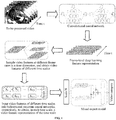
- FIG. 1 is a schematic diagram showing architecture for information processing according to an embodiment of the present disclosure.
- a computer device obtains a to-be-processed video. It can be learned from FIG. 1 that the to-be-processed video includes multiple video frames, and each of the multiple video frames corresponds to a time feature. Different time features may be represented by t.
- the computer device processes each of the multiple video frames in the to-be-processed video by using a convolutional neural network, to obtain a time feature corresponding to each of the multiple video frame.
- the computer device determines a time feature sequence of the to-be-processed video based on the time feature corresponding to each of the multiple video frames.
- the time feature sequence is deep learning representation at the frame level.
- the computer device may sample the to-be-processed video according to a time-feature sampling rule.
- the time-feature sampling rule refers to sampling video features at different frame rates in a time dimension, and obtaining at least one video frame feature sequence.
- the video frame feature sequences correspond to different time scales.
- the computer device inputs video frame feature sequences corresponding to different time scales into bidirectional recurrent neural networks, to obtain a feature representation result corresponding to at least one video frame feature sequence.
- the feature representation result is video feature representation in a time scale.
- the computer device inputs all feature representation results into a second neural network, namely, the mixed expert model, and obtains a prediction result corresponding to each video frame feature sequence.
- a category of the to-be-processed video can be determined based on the prediction results, to classify the to-be-processed video.
- a user In common video data, a user usually describes and comments video information and provides personalized label data, to form rich text information related to online videos.
- the text information may also be used as basis for video classification.
- an embodiment of the information processing method according to the embodiments of the present disclosure includes the following steps 101 to 104.
- step 101 a to-be-processed video is obtained.
- the to-be-processed video including multiple video frames, and each of the multiple video frames corresponding to a time feature.
- FIG. 3 is a schematic diagram of the to-be-processed video according to an embodiment of the present disclosure.
- the to-be-processed video includes multiple video frames.
- each picture in FIG. 3 is a video frame, and each video frame corresponds to a time feature.
- the to-be-processed video corresponds to a period of play time. Therefore, each video frame corresponds to a different play time instant. Assuming that a time feature of a first video frame in the to-be-processed video is "1", and a time feature of a second video frame is "2", by this analogy, a time feature of a T-th video frame is "T".
- step 102 the to-be-processed video is sampled according to a time-feature sampling rule, and at least one video frame feature sequence is obtained.
- the time-feature sampling rule is a correspondence between a time feature and a video frame feature sequence.
- the server samples the to-be-processed video according to the time-feature sampling rule.
- the time-feature sampling rule includes a preset relationship between a time feature and a video frame feature sequence.
- one video frame feature sequence may be obtained, or at least two video frame feature sequences of different time scales may be obtained.
- the number of time features corresponding to each video frame feature included in the video frame feature sequence is different, and correspondingly, the video frame feature sequences corresponding to different time scales have different lengths.
- one to-be-processed video includes 1000 video frames, and the 1000 video frames respectively correspond to 1 to 1000 time features.
- time-feature sampling rule is that each time feature corresponds to one video frame feature
- 1000 time features of the to-be-processed video correspond to 1000 video frame features.
- the length of the video frame feature sequence formed by the 1000 video frame features is 1000.
- the time-feature sampling rule is that every 100 time features correspond to one video frame feature
- the 1000 time features of the to-be-processed video correspond to 10 video frame features.
- the length of the video frame feature sequence formed by the 10 video frames is 10, and so on, and details are not described herein.
- step 103 the at least one video frame feature sequence is processed by using a first neural network model, to obtain a feature representation result corresponding to the at least one video frame feature sequence, each of the at least one video frame feature sequence corresponding to a feature representation result.
- the server may separately input video frame feature sequences corresponding to different time scales into the first neural network model.
- the first neural network model is a recurrent neural network model. Then a recursive process is performed on the inputted at least one video frame feature sequence through the first neural network model, and a feature representation result of each video frame feature sequence is correspondingly outputted.
- Different time scales indicate different lengths of the video frame feature sequences. As described in step 102, assuming that the total length of the video is T, if each time feature corresponds to one video frame feature, the length of the video frame feature sequence is T/1. If every 10 time features correspond to one video frame feature, the length of the video frame feature sequence is T/10.
- the feature representation result corresponding to the at least one video frame feature sequence is processed by using a second neural network model, to obtain a prediction result corresponding to the at least one video frame feature sequence, the prediction result being used for determining a category of the to-be-processed video.
- Each of the at least one video frame feature sequence corresponds to a prediction result.
- the server may separately input the feature representation result corresponding to each video frame feature sequence into the second neural network model, and then after processing each inputted feature representation result by using the second neural network model, the server outputs the prediction result corresponding to each feature representation result. Finally, the server may determine the category of the to-be-processed video based on the prediction result.
- the category of the to-be-processed video may be "sports”, “news”, “music”, “animation”, “game”, or the like, and is not limited herein.
- an information processing method is provided.
- the server obtains the to-be-processed video, the to-be-processed video including multiple video frames, and each of the multiple video frames corresponding to a time feature, and then samples the to-be-processed video according to the time-feature sampling rule, and obtains the at least one video frame feature sequence, the time-feature sampling rule being the correspondence between the time feature and the video frame feature sequence.
- the server then inputs the at least one video frame feature sequence into the first neural network model, to obtain the feature representation result corresponding to the at least one video frame feature sequence, the first neural network model being a recurrent neural network model.
- the server inputs the feature representation result corresponding to the at least one video frame feature sequence into the second neural network model, to obtain the prediction result corresponding to each video frame feature sequence, the prediction result being used for determining the category of the to-be-processed video.
- the method may further include:
- the server may process each video frame in the to-be-processed video by using a convolutional neural network (CNN) having an inception structure, and then extract a time feature corresponding to each video frame. Finally, the server determines the time feature sequence of the to-be-processed video based on the time feature of each video frame. Assuming that the first video frame of the to-be-processed video is 1, and the second video frame of the to-be-processed video is 2, by this analogy, the last video frame of the to-be-processed video is T, it may be determined that the time feature sequence of the to-be-processed video is T (seconds).
- CNN convolutional neural network
- FIG. 4 is a schematic diagram of a convolutional neural network having an inception structure according to an embodiment of the present disclosure.
- the inception structure includes convolutions of three different sizes, namely, a 1 ⁇ 1 convolutional layer, a 3 ⁇ 3 convolutional layer, and a 5 ⁇ 5 convolutional layer, and in a 3 ⁇ 3 maximum pooling layer, a final fully-connected layer is removed, and a global average pooling layer (the size of the picture is changed to 1 ⁇ 1) is used instead of the fully-connected layer.
- a network depth and a network width may be increased.
- free parameters also need to be reduced. Therefore, in a same layer of the inception structure, there are three different convolution templates for convolving the 1 ⁇ 1 convolutional layer, the 3 ⁇ 3 convolutional layer, and the 5 ⁇ 5 convolutional layer.
- Feature extraction may be performed on the three convolution templates in different sizes, and the three convolution templates are also a mixed model.
- the maximum pooling layer also has the function of feature extraction, and no overfitting is performed without parameters, which is different from convolution, and the maximum pooling layer is used as a branch. However, directly doing this causes a relatively large calculation amount of the entire network, and depth of the layers are not increased. Therefore, 1 ⁇ 1 convolution is first performed before 3 ⁇ 3 convolution and 5 ⁇ 5 convolution, to reduce the number of input channels, so that the network is deepened, and the calculation amount is reduced.
- the server may further process each video frame in the to-be-processed video by using a convolutional neural network, and obtain a time feature corresponding to each video frame.
- the time features are used to form a time feature sequence of the entire to-be-processed video.
- each video frame is trained and processed by using the convolutional neural network, to facilitate improvement of the accuracy and effect of time feature extraction.
- the sampling the to-be-processed video according to a time-feature sampling rule, and obtaining at least one video frame feature sequence may include:
- the size of the time window may be predefined manually. A larger number of video frames in one time window indicates a larger granularity. An averaging operation is performed on content in each time window, so that the content becomes content of "one frame".
- a method for extracting video frame feature sequences in different time scales is described. Namely, at least one time window is first determined according to the time-feature sampling rule, and each of the at least one time window includes at least one of the multiple video frames in the to-be-processed video, and then a video frame feature sequence corresponding to each of the at least one time window is extracted from the time feature sequence.
- video frame feature sequences in different scales can be obtained, to obtain multiple different samples for feature training. In this way, the accuracy of a video classification result is improved.
- the processing the at least one video frame feature sequence by using a first neural network model, to obtain a feature representation result corresponding to each of the at least one video frame feature sequences may include:
- FIG. 5 is a schematic structural diagram of a first neural network model according to an embodiment of the present disclosure.
- the entire first neural network model includes two parts, namely, a forward recurrent neural network and a backward recurrent neural network, and each video frame feature sequence is inputted into the forward recurrent neural network, and then a corresponding first representation result is outputted. Meanwhile, each video frame feature sequence is inputted into the backward recurrent neural network, and then a corresponding second representation result is outputted.
- a feature representation result corresponding to the video frame feature sequence can be obtained by directly combining the first representation result and the second representation result.
- time sequence modeling may be performed on the video frame feature sequence by using a recurrent gate unit based recurrent neural network.
- a first neural network model can also be used to perform video feature compression.
- a bidirectional recurrent neural network is used for performing feature compression and representation respectively from forward and backward directions toward a central time instant of the to-be-processed video. In this way, the operability of the solution is improved.
- the calculating the feature representation result corresponding to the at least one video frame feature sequence based on the first representation result and the second representation result may include:
- a bidirectional recurrent neural network may be used for performing feature compression and representation respectively from forward and backward directions toward a central time instant of the video. Specifically, for a video frame feature sequence X t of a certain scale, t ⁇ [1, T ] .
- h t f is an intermediate layer feature representation in the forward recurrent neural network, which may be represented as a first representation result h T / 2 f
- h t b is an intermediate layer feature representation of the backward recurrent neural network, which may be represented as a second representation result h T / 2 b .
- W z , W r , W t , U z , U r , and U h are all linear transformation parameter matrices, where different subscripts respectively represent different "gates", and b z , b r , and b h are offset parameter vectors.
- ° represents calculation of a compound function.
- the prediction result can be obtained by calculation by using related equations, to provide feasible manners for implementation of the solution, thereby improving the feasibility and operability of the solution.
- the processing the feature representation result corresponding to the at least one video frame feature sequence by using a second neural network model, to obtain a prediction result corresponding to the at least one video frame feature sequence may include:
- FIG. 6 is a schematic structural diagram of a second neural network model according to an embodiment of the present disclosure.
- the entire second neural network model includes two parts: a first sub-model and a second sub-model.
- the first sub-model may also be referred to as "gate representation”, and the second sub-model may also be referred to as "activation representation”.
- a feature representation result corresponding to each video frame feature sequence is inputted to the "gate representation”, and a corresponding third representation result is outputted.
- a feature representation result corresponding to each video frame feature sequence is input to the "activation representation", and a corresponding fourth representation result is outputted.
- Each third representation result is multiplied by each fourth representation result, and then addition is performed, to obtain a prediction result of the video frame feature sequence.
- the second neural network model may be further used to classify the feature representation result.
- non-linear transformation may be performed on the feature representation result to obtain gate representation and activation representation, and then a multiplication operation is performed on the two paths of representation and addition is performed, to obtain a final feature representation for classification, thereby improving the accuracy of classification.
- the calculating the prediction result corresponding to the at least one video frame feature sequence based on the third representation result and the fourth representation result may include:
- N paths of gate representation and activation representation are obtained by performing non-linear transformation on the feature representation result. Then, a third representation result g n corresponding to the gate representation is calculated, and a fourth representation result a n corresponding to the activation representation is calculated.
- the order in which the third representation result g n and the fourth representation result a n are calculated is not limited herein.
- the prediction result can be obtained by calculation by using related equations, to provide feasible manners for implementation of the solution, thereby improving the feasibility and operability of the solution.
- the method may further include:
- the server may further calculate the category of the to-be-processed video according to the prediction result corresponding to each video frame feature sequence, and a weight value corresponding to each video frame feature sequence, and classify the to-be-processed video according to a classification result.
- a maximum number of prediction results is five, and the prediction result is indicated by a code formed by "0" and "1" having a length of 5.
- the code of the prediction result 1 is 00001
- the code of the prediction result 3 is 00100
- the to-be-processed video is indicated as 00101.
- each prediction result is not greater than 1, and the prediction result may indicate a possibility that the to-be-processed video belongs to the category.
- ⁇ 0.01, 0.02, 0.9, 0.005, 1.0 ⁇ is a reasonable prediction result, and it means that a probability that the to-be-processed video belongs to the first category is 1.0, namely, 100%, a probability that the to-be-processed video belongs to the second category is 0.005, namely, 0.5%, a probability that the to-be-processed video belongs to the third category is 0.9, namely, 90%, a probability that the to-be-processed video belongs to the fourth category is 0.02, namely, 2%, and a probability that the to-be-processed video belongs to the fifth category is 0.01, namely, 1%.
- the prediction result is calculated by using a preset weight value, and calculation may be performed by using a weighted algorithm.
- Each weight value is obtained by learning by using linear regression, and is a numerical value, and indicates the importance of each video frame feature sequence, and a sum of weight values is 1, for example, ⁇ 0.1, 0.4, 0.5 ⁇ . How to calculate the category of the to-be-processed video is described below.
- the probability that the to-be-processed video belongs to the third category is largest, and the probability that the to-be-processed video belongs to the first category is the second largest. Therefore, the to-be-processed video is preferentially displayed in a video list of the third category.
- the server may further calculate the category of the to-be-processed video based on the prediction result corresponding to each video frame feature sequence and the weight value corresponding to each video frame feature sequence, and finally classify the to-be-processed video according to the category of the to-be-processed video.
- the prediction result is determined based on the time feature, when the to-be-processed video is analyzed, the video classification capability can be improved, to implement personalized recommendation, and improve practicability.
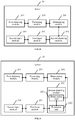
- FIG. 7 is a schematic diagram of an embodiment of a server according to an embodiment of the present disclosure.
- the server 20 includes: a first obtaining module 201, a second obtaining module 202, a first input module 203, and a second input module 204.
- the first obtaining module 201 is configured to obtain a to-be-processed video, the to-be-processed video including multiple video frames, and each video frame corresponding to a time feature.
- the second obtaining module 202 is configured to: sample, according to a time-feature sampling rule, the to-be-processed video obtained by the first obtaining module 201, and obtain at least one video frame feature sequence, the time-feature sampling rule being a correspondence between a time feature and a video frame feature sequence.
- the first input module 203 is configured to process, by using a first neural network model, the at least one video frame feature sequence obtained by the second obtaining module 202, to obtain a feature representation result corresponding to the at least one video frame feature sequence, the first neural network model being a recurrent neural network model.
- the second input module 204 is configured to process, by using a second neural network model, the feature representation result that corresponds to the at least one video frame feature sequence and that is obtained by the first input module 203, to obtain a prediction result corresponding to the at least one video frame feature sequence, the prediction result being used for determining a category of the to-be-processed video.
- the first obtaining module 201 obtains the to-be-processed video, the to-be-processed video including multiple video frames, and each of the multiple video frame corresponding to a time feature; the second obtaining module 202 samples, according to the time-feature sampling rule, the to-be-processed video obtained by the first obtaining module 201, and obtains the at least one video frame feature sequence, the time-feature sampling rule being the correspondence between the time feature and the video frame feature sequence.
- the first input module 203 processes, by using the first neural network model, the at least one video frame feature sequence obtained by the second obtaining module 202, to obtain the feature representation result corresponding to the at least one video frame feature sequence, the first neural network model being a recurrent neural network model.
- the second input module 204 processes, by using the second neural network model, the feature representation result corresponding to the at least one video frame feature sequence obtained by the first input module 203, to obtain the prediction result corresponding to the at least one video frame feature sequence, the prediction result being used for determining the category of the to-be-processed video.
- a server obtains the to-be-processed video, the to-be-processed video including multiple video frames, and each of the multiple video frame corresponding to a time feature, and then samples the to-be-processed video according to the time-feature sampling rule, and obtains the at least one video frame feature sequence, the time-feature sampling rule being the correspondence between the time feature and the video frame feature sequence.
- the server then inputs the at least one video frame feature sequence into the first neural network model, to obtain the feature representation result corresponding to each of the at least one video frame feature sequence.
- the server inputs the feature representation result corresponding to each of the at least one video frame feature sequence into the second neural network model, to obtain the prediction result corresponding to each of the at least one video frame feature sequence, the prediction result being used to determine the category of the to-be-processed video.
- a feature change of the video in a time dimension is also considered, so that video content can be better represented, the accuracy of video classification is improved, and the effect of video classification is improved.
- the server 20 further includes: a processing module 205 and a determining module 206.
- the processing module 205 is configured to process each of the multiple video frames in the to-be-processed video by using a convolutional neural network CNN, to obtain a time feature corresponding to each of the multiple video frame after the first obtaining module 201 obtains the to-be-processed video.
- the determining module 206 is configured to determine a time feature sequence of the to-be-processed video according to the time feature corresponding to each of the multiple video frames processed by the processing module 205, the time feature sequence being used for sampling.
- the server may further process each of the multiple video frames in the to-be-processed video by using a convolutional neural network, and obtain a time feature corresponding to each of the multiple video frames.
- the time features are used to form a time feature sequence of the entire to-be-processed video.
- each of the multiple video frame is trained and processed by using the convolutional neural network, to improve the accuracy and effect of time feature extraction.
- the second obtaining module 202 includes: a determining unit 2021 and an extraction unit 2022.
- the determining unit 2021 is configured to determine at least one time window according to the time-feature sampling rule, each of the least one time window including at least one of the multiple video frames of the to-be-processed video.
- the extraction unit 2022 is configured to extract, from the time feature sequence, a video frame feature sequence corresponding to each of the least one time window determined by the determining unit 2021.
- a method for extracting video frame feature sequences in different scales is described. Namely, at least one time window is first determined according to the time-feature sampling rule, and each of the at least one time window includes at least one of the multiple video frames in the to-be-processed video, and then a video frame feature sequence corresponding to each of the at least one time window is extracted from the time feature sequence.
- video frame feature sequences in different scales can be obtained, to obtain multiple different samples for feature training. In this way, the accuracy of a video classification result is improved.
- the first input module 203 includes: a first obtaining unit 2031, a second obtaining unit 2032, a first calculation unit 2033.
- the first obtaining unit 2031 is configured to input the at least one video frame feature sequence into a forward recurrent neural network in the first neural network model, to obtain a first representation result.
- the second obtaining unit 2032 is configured to input each video frame feature sequence into a backward recurrent neural network in the first neural network model, to obtain a second representation result.
- the first calculation unit 2033 is configured to calculate the feature representation result corresponding to the at least one video frame feature sequence based on the first representation result obtained by the first obtaining unit 2031 and the second representation result obtained by the second obtaining unit 2032.
- time sequence modeling may be performed on the video frame feature sequence by using a recurrent gate unit based recurrent neural network.
- a first neural network model can also be used to perform video feature compression.
- a bidirectional recurrent neural network is used for performing feature compression and representation respectively from forward and backward directions toward a central time instant of the to-be-processed video. In this way, the operability of the solution is improved.
- the first calculation unit 2033 includes: a first calculation subunit 20331.
- the prediction result can be obtained by calculation by using related equations, to provide feasible manners for implementation of the solution, thereby improving the feasibility and operability of the solution.
- the second input module 204 includes: a third obtaining unit 2041, a fourth obtaining unit 2042, a second calculation unit 2043.
- the third obtaining unit 2041 is configured to input the feature representation result corresponding to each of the at least one video frame feature sequence into a first sub-model in the second neural network model, to obtain a third representation result.
- the fourth obtaining unit 2042 is configured to input the feature representation result corresponding to each of the at least one video frame feature sequence into a second sub-model in the second neural network model, to obtain a fourth representation result.
- the second calculation unit 2043 is configured to calculate a prediction result corresponding to each of the at least one video frame feature sequence based on the third representation result obtained by the third obtaining unit 2041 and the fourth representation result obtained by the fourth obtaining unit 2042.
- the second neural network model may be further used to classify the feature representation result.
- non-linear transformation may be performed on the feature representation result to obtain gate representation and activation representation respectively, and then a multiplication operation is performed on the two paths of representation and addition is performed, to obtain a final feature representation for classification, thereby improving the accuracy of classification.
- the second calculation unit 2043 includes: a second calculation subunit 20431.
- the prediction result can be obtained by calculation by using related equations, to provide feasible manners for implementation of the solution, thereby improving the feasibility and operability of the solution.
- the server 20 further includes: a calculation module 207 and a classification module 208.
- the calculation module 207 is configured to calculate the category of the to-be-processed video based on the prediction result corresponding to the at least one video frame feature sequence and a weight value corresponding to the at least one video frame feature sequence after the second input module 204 processes, by using the second neural network model, the feature representation result corresponding to the at least one video frame feature sequence, to obtain the prediction result corresponding to the at least one video frame feature sequence.
- the classification module 208 is configured to classify the to-be-processed video according to the category that is of the to-be-processed video and that is calculated by the calculation module 207.
- the server may further calculate the category of the to-be-processed video based on the prediction result corresponding to each video frame feature sequence and the weight value corresponding to each video frame feature sequence, and finally classify the to-be-processed video according to the category of the to-be-processed video.
- the prediction result is determined based on the time feature, when the to-be-processed video is analyzed, the video classification capability can be improved, to implement personalized recommendation, and improve practicability.
- FIG. 15 is a schematic structural diagram of a server according to an embodiment of the present disclosure.
- the server 300 may vary greatly due to different configurations or performance, and may include one or more central processing units (CPU) 322 (for example, one or more processors) and a memory 332, and one or more storage media 330 (for example, one or more mass storage devices) that store an application program 342 or data 344.
- the memory 332 and the storage medium 330 may be transient storages or persistent storages.
- the program stored in the storage medium 330 may include one or more modules (which is not marked in the figure), and each module may include a series of instruction and operations to the server.
- the central processing unit 322 may be configured to communicate with the storage medium 330, and perform, on the server 300, a series of instructions and operations in the storage medium 330.
- the server 300 may further include one or more power supplies 326, one or more wired or wireless network interfaces 350, one or more input/output interfaces 358, and/or one or more operating systems 341, for example, Windows ServerTM, Mac OS XTM, UnixTM, LinuxTM, and FreeBSDTM.
- one or more power supplies 326 for example, Windows ServerTM, Mac OS XTM, UnixTM, LinuxTM, and FreeBSDTM.
- steps executed by the server may be based on the server structure shown in FIG. 15 .
- the CPU 322 included in the server has the following functions:
- the CPU 322 is further configured to execute the following operations:
- the CPU 322 is specifically configured to execute the following operations:
- the CPU 322 is specifically configured to execute the following operations:
- the CPU 322 is specifically configured to execute the following operations:
- the CPU 322 is specifically configured to execute the following step:
- the CPU 322 is further configured to execute the following operations:
- An embodiment of the present disclosure further provides a storage medium, for storing program code, the program code being configured to execute any implementation of the information processing method according to the foregoing embodiments.
- implementation may be entirely or partially performed by using software, hardware, firmware or any combination thereof.
- implementation may be entirely or partially performed in the form of a computer program product.
- the computer program product includes one or more computer instructions.
- the computer may be a general-purpose computer, a special-purpose computer, a computer network, or another programmable apparatus.
- the computer instructions may be stored in a computer readable storage medium or transmitted from one computer readable storage medium to another computer readable storage medium.
- the computer instructions may be transmitted from one website, computer, server or data center to another website, computer, server or data center in a wired (for example, a coaxial cable, an optical fiber or a digital subscriber line (DSL)) or wireless (for example, infrared, wireless or microwave) manner.
- a wired for example, a coaxial cable, an optical fiber or a digital subscriber line (DSL)
- wireless for example, infrared, wireless or microwave
- the computer readable storage medium may be any available medium capable of being accessed by a computer or include one or more data storage devices integrated by an available medium, such as a server and a data center.
- the available medium may be a magnetic medium (such as a floppy disk, a hard disk, or a magnetic tape), an optical medium (such as a digital versatile disc (DVD)), a semiconductor medium (such as a solid state disk (SSD)) or the like.
- the disclosed system, apparatus, and method may be implemented in other manners.
- the described apparatus embodiment is merely an example.
- the unit division is merely logical function division and may be other division during actual implementation.
- multiple units or components may be combined or integrated into another system, or some features may be ignored or not performed.
- the displayed or discussed mutual couplings or direct couplings or communication connections may be implemented by using some interfaces.
- the indirect couplings or communication connections between the apparatuses or units may be implemented in electronic, mechanical, or other forms.
- the units described as separate parts may or may not be physically separate, and the parts displayed as units may or may not be physical units, may be located in one position, or may be distributed on multiple network units. Some of or all of the units may be selected according to actual needs to achieve the objectives of the solutions of the embodiments.
- functional units in the embodiments of the present disclosure may be integrated into one processing unit, or each of the units may exist alone physically, or two or more units are integrated into one unit.
- the integrated units may be implemented in a form of hardware or may be implemented in a form of a software functional unit.
- the integrated unit When the integrated unit is implemented in the form of a software functional unit and sold or used as an independent product, the integrated unit may be stored in a computer-readable storage medium.
- the computer software product is stored in a storage medium and includes several instructions for instructing a computer device (which may be a personal computer, a server, a network device, or the like) to perform all or some of the steps of the methods described in the embodiments of the present disclosure.
- the foregoing storage medium includes: any medium that can store program code, such as a USB flash memory drive, a removable hard disk, a read-only memory (ROM), a random access memory (RAM), a magnetic disk, or an optical disc.
Landscapes
- Engineering & Computer Science (AREA)
- Theoretical Computer Science (AREA)
- Physics & Mathematics (AREA)
- General Physics & Mathematics (AREA)
- Data Mining & Analysis (AREA)
- Software Systems (AREA)
- Evolutionary Computation (AREA)
- General Engineering & Computer Science (AREA)
- Artificial Intelligence (AREA)
- Computing Systems (AREA)
- Computational Linguistics (AREA)
- Multimedia (AREA)
- General Health & Medical Sciences (AREA)
- Health & Medical Sciences (AREA)
- Life Sciences & Earth Sciences (AREA)
- Mathematical Physics (AREA)
- Databases & Information Systems (AREA)
- Biomedical Technology (AREA)
- Biophysics (AREA)
- Molecular Biology (AREA)
- Computer Vision & Pattern Recognition (AREA)
- Medical Informatics (AREA)
- Bioinformatics & Cheminformatics (AREA)
- Bioinformatics & Computational Biology (AREA)
- Evolutionary Biology (AREA)
- Computational Mathematics (AREA)
- Mathematical Analysis (AREA)
- Mathematical Optimization (AREA)
- Pure & Applied Mathematics (AREA)
- Library & Information Science (AREA)
- Algebra (AREA)
- Image Analysis (AREA)
- Two-Way Televisions, Distribution Of Moving Picture Or The Like (AREA)
Applications Claiming Priority (2)
| Application Number | Priority Date | Filing Date | Title |
|---|---|---|---|
| CN201710833668.8A CN109508584B (zh) | 2017-09-15 | 2017-09-15 | 视频分类的方法、信息处理的方法以及服务器 |
| PCT/CN2018/100733 WO2019052301A1 (fr) | 2017-09-15 | 2018-08-16 | Procédé de classification de vidéos, procédé de traitement d'informations et serveur |
Publications (2)
| Publication Number | Publication Date |
|---|---|
| EP3683723A1 true EP3683723A1 (fr) | 2020-07-22 |
| EP3683723A4 EP3683723A4 (fr) | 2021-06-23 |
Family
ID=65723493
Family Applications (1)
| Application Number | Title | Priority Date | Filing Date |
|---|---|---|---|
| EP18855424.0A Pending EP3683723A4 (fr) | 2017-09-15 | 2018-08-16 | Procédé de classification de vidéos, procédé de traitement d'informations et serveur |
Country Status (7)
| Country | Link |
|---|---|
| US (1) | US10956748B2 (fr) |
| EP (1) | EP3683723A4 (fr) |
| JP (1) | JP7127120B2 (fr) |
| KR (1) | KR102392943B1 (fr) |
| CN (2) | CN109508584B (fr) |
| MA (1) | MA50252A (fr) |
| WO (1) | WO2019052301A1 (fr) |
Families Citing this family (32)
| Publication number | Priority date | Publication date | Assignee | Title |
|---|---|---|---|---|
| US11636681B2 (en) * | 2018-11-21 | 2023-04-25 | Meta Platforms, Inc. | Anticipating future video based on present video |
| JP7352369B2 (ja) * | 2019-03-29 | 2023-09-28 | 株式会社日立システムズ | 予測モデル評価システム、予測モデル評価方法 |
| CN111782734B (zh) * | 2019-04-04 | 2024-04-12 | 华为技术服务有限公司 | 数据压缩、解压方法和装置 |
| CN110162669B (zh) * | 2019-04-04 | 2021-07-02 | 腾讯科技(深圳)有限公司 | 视频分类处理方法、装置、计算机设备及存储介质 |
| KR102255312B1 (ko) * | 2019-06-07 | 2021-05-25 | 국방과학연구소 | 순환 신경망을 이용한 코덱 분류 시스템 및 코덱 분류 방법 |
| CN110263216B (zh) * | 2019-06-13 | 2022-01-28 | 腾讯科技(深圳)有限公司 | 一种视频分类的方法、视频分类模型训练的方法及装置 |
| CN113010735B (zh) * | 2019-12-20 | 2024-03-08 | 北京金山云网络技术有限公司 | 一种视频分类方法、装置、电子设备及存储介质 |
| CN111144508A (zh) * | 2019-12-30 | 2020-05-12 | 中国矿业大学(北京) | 煤矿副井轨道运输自动控制系统与控制方法 |
| CN111190600B (zh) * | 2019-12-31 | 2023-09-19 | 中国银行股份有限公司 | 基于gru注意力模型的前端代码自动生成的方法及系统 |
| CN111104930B (zh) * | 2019-12-31 | 2023-07-11 | 腾讯科技(深圳)有限公司 | 视频处理方法、装置、电子设备及存储介质 |
| CN111209439B (zh) * | 2020-01-10 | 2023-11-21 | 北京百度网讯科技有限公司 | 视频片段检索方法、装置、电子设备及存储介质 |
| CN111259779B (zh) * | 2020-01-13 | 2023-08-01 | 南京大学 | 一种基于中心点轨迹预测的视频动作检测方法 |
| CN111209883B (zh) * | 2020-01-13 | 2023-08-04 | 南京大学 | 一种基于多源运动特征融合的时序自适应视频分类方法 |
| CN111428660B (zh) * | 2020-03-27 | 2023-04-07 | 腾讯科技(深圳)有限公司 | 视频剪辑方法和装置、存储介质及电子装置 |
| US11354906B2 (en) * | 2020-04-13 | 2022-06-07 | Adobe Inc. | Temporally distributed neural networks for video semantic segmentation |
| CN111489378B (zh) * | 2020-06-28 | 2020-10-16 | 腾讯科技(深圳)有限公司 | 视频帧特征提取方法、装置、计算机设备及存储介质 |
| CN111737521B (zh) * | 2020-08-04 | 2020-11-24 | 北京微播易科技股份有限公司 | 一种视频分类方法和装置 |
| DE102020212515A1 (de) * | 2020-10-02 | 2022-04-07 | Robert Bosch Gesellschaft mit beschränkter Haftung | Verfahren und Vorrichtung zum Trainieren eines maschinellen Lernsystems |
| US12058321B2 (en) * | 2020-12-16 | 2024-08-06 | Tencent America LLC | Method and apparatus for video coding |
| US11943271B2 (en) * | 2020-12-17 | 2024-03-26 | Tencent America LLC | Reference of neural network model by immersive media for adaptation of media for streaming to heterogenous client end-points |
| CN114764859A (zh) * | 2020-12-30 | 2022-07-19 | Tcl科技集团股份有限公司 | 视频特征提取方法、装置、终端设备及存储介质 |
| CN113204992B (zh) * | 2021-03-26 | 2023-10-27 | 北京达佳互联信息技术有限公司 | 视频质量确定方法、装置、存储介质及电子设备 |
| CN115205723A (zh) * | 2021-04-13 | 2022-10-18 | 影石创新科技股份有限公司 | 视频精彩片段的检测方法、装置、计算机设备和存储介质 |
| CN113349791B (zh) * | 2021-05-31 | 2024-07-16 | 平安科技(深圳)有限公司 | 异常心电信号的检测方法、装置、设备及介质 |
| CN113204655B (zh) * | 2021-07-02 | 2021-11-23 | 北京搜狐新媒体信息技术有限公司 | 多媒体信息的推荐方法、相关装置及计算机存储介质 |
| CN113779472B (zh) * | 2021-07-30 | 2024-10-01 | 淘宝(中国)软件有限公司 | 内容审核方法、装置及电子设备 |
| KR102430989B1 (ko) | 2021-10-19 | 2022-08-11 | 주식회사 노티플러스 | 인공지능 기반 콘텐츠 카테고리 예측 방법, 장치 및 시스템 |
| CN114443896B (zh) * | 2022-01-25 | 2023-09-15 | 百度在线网络技术(北京)有限公司 | 数据处理方法和用于训练预测模型的方法 |
| CN114611584B (zh) * | 2022-02-21 | 2024-07-02 | 上海市胸科医院 | Cp-ebus弹性模式视频的处理方法、装置、设备与介质 |
| CN114764898A (zh) * | 2022-03-31 | 2022-07-19 | 阿依瓦(北京)技术有限公司 | 一种视频分析方法及装置 |
| CN115424172A (zh) * | 2022-08-25 | 2022-12-02 | 高新兴科技集团股份有限公司 | 一种交通事件检测方法、装置、设备及存储介质 |
| KR102806775B1 (ko) * | 2023-12-27 | 2025-05-16 | 한국과학기술원 | 자연어와 스케치 기반의 비디오 편집 시스템 |
Family Cites Families (22)
| Publication number | Priority date | Publication date | Assignee | Title |
|---|---|---|---|---|
| KR100656373B1 (ko) | 2005-12-09 | 2006-12-11 | 한국전자통신연구원 | 시간구간별 우선순위와 판별정책을 적용하는 유해 동영상판별 방법 및 그 장치 |
| US8990132B2 (en) * | 2010-01-19 | 2015-03-24 | James Ting-Ho Lo | Artificial neural networks based on a low-order model of biological neural networks |
| CN103544498B (zh) * | 2013-09-25 | 2017-02-08 | 华中科技大学 | 基于自适应抽样的视频内容检测方法与系统 |
| CN104331442A (zh) * | 2014-10-24 | 2015-02-04 | 华为技术有限公司 | 视频分类方法和装置 |
| US10762894B2 (en) * | 2015-03-27 | 2020-09-01 | Google Llc | Convolutional neural networks |
| JP6556509B2 (ja) | 2015-06-16 | 2019-08-07 | Cyberdyne株式会社 | 光音響画像化装置および光源ユニット |
| CN104951965B (zh) * | 2015-06-26 | 2017-04-19 | 深圳市腾讯计算机系统有限公司 | 广告投放方法及装置 |
| CN104966104B (zh) * | 2015-06-30 | 2018-05-11 | 山东管理学院 | 一种基于三维卷积神经网络的视频分类方法 |
| US9697833B2 (en) * | 2015-08-25 | 2017-07-04 | Nuance Communications, Inc. | Audio-visual speech recognition with scattering operators |
| CN106503723A (zh) * | 2015-09-06 | 2017-03-15 | 华为技术有限公司 | 一种视频分类方法及装置 |
| CN105550699B (zh) * | 2015-12-08 | 2019-02-12 | 北京工业大学 | 一种基于cnn融合时空显著信息的视频识别分类方法 |
| JP6517681B2 (ja) * | 2015-12-17 | 2019-05-22 | 日本電信電話株式会社 | 映像パターン学習装置、方法、及びプログラム |
| US11055537B2 (en) * | 2016-04-26 | 2021-07-06 | Disney Enterprises, Inc. | Systems and methods for determining actions depicted in media contents based on attention weights of media content frames |
| CN106131627B (zh) * | 2016-07-07 | 2019-03-26 | 腾讯科技(深圳)有限公司 | 一种视频处理方法、装置及系统 |
| US10402697B2 (en) * | 2016-08-01 | 2019-09-03 | Nvidia Corporation | Fusing multilayer and multimodal deep neural networks for video classification |
| CN106779467A (zh) * | 2016-12-31 | 2017-05-31 | 成都数联铭品科技有限公司 | 基于自动信息筛选的企业行业分类系统 |
| US11263525B2 (en) * | 2017-10-26 | 2022-03-01 | Nvidia Corporation | Progressive modification of neural networks |
| US10334202B1 (en) * | 2018-02-28 | 2019-06-25 | Adobe Inc. | Ambient audio generation based on visual information |
| US20190286990A1 (en) * | 2018-03-19 | 2019-09-19 | AI Certain, Inc. | Deep Learning Apparatus and Method for Predictive Analysis, Classification, and Feature Detection |
| US10860858B2 (en) * | 2018-06-15 | 2020-12-08 | Adobe Inc. | Utilizing a trained multi-modal combination model for content and text-based evaluation and distribution of digital video content to client devices |
| US10418957B1 (en) * | 2018-06-29 | 2019-09-17 | Amazon Technologies, Inc. | Audio event detection |
| US10699129B1 (en) * | 2019-11-15 | 2020-06-30 | Fudan University | System and method for video captioning |
-
2017
- 2017-09-15 CN CN201710833668.8A patent/CN109508584B/zh active Active
- 2017-09-15 CN CN201910834142.0A patent/CN110532996B/zh active Active
-
2018
- 2018-08-16 JP JP2020515067A patent/JP7127120B2/ja active Active
- 2018-08-16 KR KR1020197032023A patent/KR102392943B1/ko active Active
- 2018-08-16 MA MA050252A patent/MA50252A/fr unknown
- 2018-08-16 EP EP18855424.0A patent/EP3683723A4/fr active Pending
- 2018-08-16 WO PCT/CN2018/100733 patent/WO2019052301A1/fr not_active Ceased
-
2019
- 2019-08-30 US US16/558,015 patent/US10956748B2/en active Active
Also Published As
| Publication number | Publication date |
|---|---|
| CN109508584A (zh) | 2019-03-22 |
| MA50252A (fr) | 2020-07-22 |
| CN109508584B (zh) | 2022-12-02 |
| JP2020533709A (ja) | 2020-11-19 |
| CN110532996A (zh) | 2019-12-03 |
| WO2019052301A1 (fr) | 2019-03-21 |
| EP3683723A4 (fr) | 2021-06-23 |
| CN110532996B (zh) | 2021-01-22 |
| KR20190133040A (ko) | 2019-11-29 |
| JP7127120B2 (ja) | 2022-08-29 |
| US20190384985A1 (en) | 2019-12-19 |
| US10956748B2 (en) | 2021-03-23 |
| KR102392943B1 (ko) | 2022-04-29 |
Similar Documents
| Publication | Publication Date | Title |
|---|---|---|
| EP3683723A1 (fr) | Procédé de classification de vidéos, procédé de traitement d'informations et serveur | |
| CN109919078B (zh) | 一种视频序列选择的方法、模型训练的方法及装置 | |
| CN110162669B (zh) | 视频分类处理方法、装置、计算机设备及存储介质 | |
| EP3889803B1 (fr) | Procédé de classement de vidéo et serveur | |
| CN110147711B (zh) | 视频场景识别方法、装置、存储介质和电子装置 | |
| CN112559800B (zh) | 用于处理视频的方法、装置、电子设备、介质和产品 | |
| WO2020221278A1 (fr) | Procédé d'entraînement de modèles, procédé de classification de vidéos, appareil associé, et dispositif électronique | |
| CN107590224B (zh) | 基于大数据的用户偏好分析方法与装置 | |
| CN111160191A (zh) | 一种视频关键帧提取方法、装置及存储介质 | |
| US20230386208A1 (en) | Multimodal unsupervised video temporal segmentation for summarization | |
| EP3725084B1 (fr) | Apprentissage en profondeur sur des trames d'image pour générer un résumé | |
| CN113469298A (zh) | 模型训练方法及资源推荐方法 | |
| CN111400615B (zh) | 一种资源推荐方法、装置、设备及存储介质 | |
| CN115033739B (zh) | 搜索方法、模型训练方法、装置、电子设备和介质 | |
| EP3757874A1 (fr) | Procédé et appareil de reconnaissance d'action | |
| CN110968725B (zh) | 图像内容描述信息生成方法、电子设备及存储介质 | |
| CN107291845A (zh) | 一种基于预告片的电影推荐方法及系统 | |
| CN112016590A (zh) | 结合序列局部特征提取及深度卷积预测模型的预测方法 | |
| US10853417B2 (en) | Generating a platform-based representative image for a digital video | |
| CN114942986B (zh) | 文本生成方法、装置、计算机设备及计算机可读存储介质 | |
| CN108563648A (zh) | 数据显示方法和装置、存储介质及电子装置 | |
| CN115063858A (zh) | 视频人脸表情识别模型训练方法、装置、设备及存储介质 | |
| CN115048504A (zh) | 信息推送方法、装置、计算机设备及计算机可读存储介质 | |
| US20240144656A1 (en) | Method, apparatus, device and medium for image processing | |
| CN113438509A (zh) | 视频摘要的生成方法、设备和存储介质 |
Legal Events
| Date | Code | Title | Description |
|---|---|---|---|
| STAA | Information on the status of an ep patent application or granted ep patent |
Free format text: STATUS: THE INTERNATIONAL PUBLICATION HAS BEEN MADE |
|
| PUAI | Public reference made under article 153(3) epc to a published international application that has entered the european phase |
Free format text: ORIGINAL CODE: 0009012 |
|
| STAA | Information on the status of an ep patent application or granted ep patent |
Free format text: STATUS: REQUEST FOR EXAMINATION WAS MADE |
|
| 17P | Request for examination filed |
Effective date: 20200303 |
|
| AK | Designated contracting states |
Kind code of ref document: A1 Designated state(s): AL AT BE BG CH CY CZ DE DK EE ES FI FR GB GR HR HU IE IS IT LI LT LU LV MC MK MT NL NO PL PT RO RS SE SI SK SM TR |
|
| AX | Request for extension of the european patent |
Extension state: BA ME |
|
| REG | Reference to a national code |
Ref country code: DE Ref legal event code: R079 Free format text: PREVIOUS MAIN CLASS: G06K0009620000 Ipc: G06N0003040000 |
|
| A4 | Supplementary search report drawn up and despatched |
Effective date: 20210525 |
|
| RIC1 | Information provided on ipc code assigned before grant |
Ipc: G06N 3/04 20060101AFI20210518BHEP Ipc: G06K 9/00 20060101ALI20210518BHEP Ipc: G06K 9/62 20060101ALI20210518BHEP |
|
| RAP3 | Party data changed (applicant data changed or rights of an application transferred) |
Owner name: TENCENT TECHNOLOGY (SHENZHEN) COMPANY LIMITED |
|
| STAA | Information on the status of an ep patent application or granted ep patent |
Free format text: STATUS: EXAMINATION IS IN PROGRESS |
|
| 17Q | First examination report despatched |
Effective date: 20230307 |