EP3683733B1 - Procédé, appareil et produit-programme d'ordinateur pour réseaux neuronaux - Google Patents
Procédé, appareil et produit-programme d'ordinateur pour réseaux neuronaux Download PDFInfo
- Publication number
- EP3683733B1 EP3683733B1 EP20150003.0A EP20150003A EP3683733B1 EP 3683733 B1 EP3683733 B1 EP 3683733B1 EP 20150003 A EP20150003 A EP 20150003A EP 3683733 B1 EP3683733 B1 EP 3683733B1
- Authority
- EP
- European Patent Office
- Prior art keywords
- neural network
- compressed
- request
- server
- client
- Prior art date
- Legal status (The legal status is an assumption and is not a legal conclusion. Google has not performed a legal analysis and makes no representation as to the accuracy of the status listed.)
- Active
Links
Images



Classifications
-
- G—PHYSICS
- G06—COMPUTING OR CALCULATING; COUNTING
- G06N—COMPUTING ARRANGEMENTS BASED ON SPECIFIC COMPUTATIONAL MODELS
- G06N3/00—Computing arrangements based on biological models
- G06N3/02—Neural networks
- G06N3/08—Learning methods
- G06N3/082—Learning methods modifying the architecture, e.g. adding, deleting or silencing nodes or connections
-
- G—PHYSICS
- G06—COMPUTING OR CALCULATING; COUNTING
- G06N—COMPUTING ARRANGEMENTS BASED ON SPECIFIC COMPUTATIONAL MODELS
- G06N3/00—Computing arrangements based on biological models
- G06N3/02—Neural networks
- G06N3/04—Architecture, e.g. interconnection topology
- G06N3/045—Combinations of networks
-
- G—PHYSICS
- G06—COMPUTING OR CALCULATING; COUNTING
- G06N—COMPUTING ARRANGEMENTS BASED ON SPECIFIC COMPUTATIONAL MODELS
- G06N3/00—Computing arrangements based on biological models
- G06N3/02—Neural networks
- G06N3/04—Architecture, e.g. interconnection topology
- G06N3/0464—Convolutional networks [CNN, ConvNet]
-
- G—PHYSICS
- G06—COMPUTING OR CALCULATING; COUNTING
- G06N—COMPUTING ARRANGEMENTS BASED ON SPECIFIC COMPUTATIONAL MODELS
- G06N3/00—Computing arrangements based on biological models
- G06N3/02—Neural networks
- G06N3/04—Architecture, e.g. interconnection topology
- G06N3/0495—Quantised networks; Sparse networks; Compressed networks
-
- G—PHYSICS
- G06—COMPUTING OR CALCULATING; COUNTING
- G06N—COMPUTING ARRANGEMENTS BASED ON SPECIFIC COMPUTATIONAL MODELS
- G06N3/00—Computing arrangements based on biological models
- G06N3/02—Neural networks
- G06N3/06—Physical realisation, i.e. hardware implementation of neural networks, neurons or parts of neurons
- G06N3/063—Physical realisation, i.e. hardware implementation of neural networks, neurons or parts of neurons using electronic means
Definitions
- Various example embodiments relate to neural networks.
- Semantic information may be represented by metadata which may express the type of scene, the occurrence of a specific action/activity, the presence of a specific object, etc. Such semantic information can be obtained by analyzing the media.
- Neural networks are computerized models that comprise an input layer and an output layer.
- the neural networks comprise layered units that form input data into data that is usable by the output layer.
- a publication US 2017/0132511 discloses a solution receiving a compressed convolutional neural network (CNN).
- a media content item to be processed can be acquired.
- the compressed CNN is utilized to apply a media processing technique to the media content item to produced information about the media content item. It is determined, based on at least some of the information about the media content item, whether to transmit at least a portion of the media content item to one or more remote servers for additional media processing.
- Neural networks have recently prompted an explosion of intelligent applications for loT (Internet of Things) devices, such as mobile phones, smart watches and smart home appliances.
- loT Internet of Things
- transferring data to a centralized computation server for processing is appealing, considering the high computational complexity and battery consumption, concerns over data privacy and latency of large volume data transmission have been promoting distributed computation scenarios.
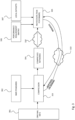
- Fig. 1 shows an apparatus representing a client device for the purposes of the present embodiments.
- the functional blocks of the apparatus can also be found in a server according to the present embodiment.
- the generalized structure of the apparatus will be explained in accordance with the functional blocks of the system.
- Several functionalities can be carried out with a single physical device, e.g. all calculation procedures can be performed in a single processor if desired.
- a data processing system of an apparatus according to an example of Fig. 1 comprises a main processing unit 100, a memory 102, a storage device 104, an input device 106, an output device 108, and a graphics subsystem 110, which are all connected to each other via a data bus 112.
- a client may be understood as a client device or a software client running on an apparatus.
- the main processing unit 100 is a processing unit arranged to process data within the data processing system.
- the main processing unit 100 may comprise or be implemented as one or more processors or processor circuitry.
- the memory 102, the storage device 104, the input device 106, and the output device 108 may include other components as recognized by those skilled in the art.
- the memory 102 and storage device 104 store data in the data processing system 100.
- Computer program code resides in the memory 102 for implementing, for example, machine learning process.
- the input device 106 inputs data into the system while the output device 108 receives data from the data processing system and forwards the data, for example to a display.
- data bus 112 is shown as a single line it may be any combination of the following: a processor bus, a PCI bus, a graphical bus, an ISA bus. Accordingly, a skilled person readily recognizes that the apparatus may be any data processing device, such as a computer device, a personal computer, a server computer, a mobile phone, a smart phone or an Internet access device, for example Internet tablet computer.
- Deep learning is a solution for analyzing data and is a sub-field of machine learning which has emerged in the recent years. Deep learning is a field, which studies artificial neural networks (ANN), also referred to as neural network (NN).
- ANN artificial neural networks
- N neural network
- a neural network is a computation graph representation, usually made of several layers of successive computation. Each layer is made of units or neurons computing an elemental/basic computation. Deep learning may involve learning of multiple layers of nonlinear processing units, either in supervised or in unsupervised manner, or in semi-supervised manner. Each learned layer extracts feature representations from the input data. Features from lower layers represent low-level semantics (i.e. less abstract concepts, such as edges and texture), whereas higher layers represent higher-level semantics (i.e., more abstract concepts, like scene class). Unsupervised learning applications typically include pattern analysis and representation (i.e., feature) learning, whereas supervised learning applications may include classification of image objects (in the case of visual data).
- Deep learning techniques may be used e.g. for recognizing and detecting objects in images or videos with great accuracy, outperforming previous methods.
- deep learning techniques are utilized in an ever-creasing number of applications for any type of device, such as an apparatus of Fig. 1 . Examples of the applications include various media (video, image, audio) analysis and processing, social media data analysis, device usage data analysis, etc.
- One difference of deep learning image recognition technique compared to previous methods is learning to recognize image objects directly from the raw data, whereas previous techniques may be based on recognizing the image objects from hand-engineered features (e.g. SIFT features).
- Deep learning expects training in order to be able to perform the expected analysis.
- deep learning techniques build computation layers which extract features of increasingly abstract level.
- at least the initial layers of an artificial neural network represent a feature extractor.
- An example of a feature extractor in deep learning techniques is included in the Convolutional Neural Network (CNN), shown in Fig. 2 .
- CNN Convolutional Neural Network
- This example of a CNN comprises one or more convolutional layers, fully connected layers, and a classification layer on top. CNNs are relatively easy to train compared to other deep neural networks and have fewer parameters to be estimated. Therefore, CNNs are highly attractive architecture to use, especially in image and speech applications.
- the input to a CNN is an image, but any other data could be used as well.
- Each layer of a CNN represents a certain abstraction (or semantic) level, and the CNN extracts multiple feature maps.
- a feature map may for example comprise a dense matrix of Real numbers representing values of the extracted features.
- the CNN in Fig. 2 has only three feature (or abstraction, or semantic) layers C1, C2, C3 for the sake of simplicity, but CNNs may have more than three convolution layers.
- the first convolution layer C1 of the CNN may comprise extracting 4 feature-maps from the first layer (i.e. from the input image). These maps may represent low-level features found in the input image, such as edges and corners.
- the second convolution layer C2 of the CNN which may extract 6 feature-maps from the previous layer, increases the semantic level of the extracted features.
- the third convolution layer C3 may represent more abstract concepts found in images, such as combinations of edges and corners, shapes, etc.
- the last layer of the CNN referred to as fully connected Multi-Layer Perceptron (MLP) may include one or more fully-connected (i.e., dense) layers and a final classification layer. The MLP uses the feature-maps from the last convolution layer in order to predict (recognize) for example the object class. For example, it may predict that the object in the image is a house.
- the goal of a neural network is to transform the input data into a more useful output.
- classification where input data is classified into one of N possible classes (e.g., classifying if an image contains a cat or a dog).
- regression where input data is transformed into a Real number (e.g. determining the music beat of a song).
- the power of neural networks comes from the internal representation which is built inside the layers. This representation is distributed among many units and is hierarchical, where complex concepts build on top of simple concepts.
- a neural network has two main modes of operation: training phase and testing phase.
- the training phase is the development phase, where the neural network learns to perform the final task. Learning may include iteratively updating the parameters of the neural network, for example weights or connections between units.
- the testing phase is the phase in which the neural network performs the task. Learning can be performed in several ways. The main ones are supervised, unsupervised, and reinforcement learning. In supervised training, the neural network model is provided with input-output pairs, where the output may be a label.
- the neural network In supervised training, the neural network is provided only with input data (and also with output raw data in case of self-supervised training). In reinforcement learning, the supervision is sparser and less precise; instead of input-output pairs, the neural network gets input data and, sometimes, delayed rewards in the form of scores (E.g., -1, 0, or +1).
- the neural network may be trained on a training data set, which is supposed to be representative of the data on which the neural network will be used. During training, the neural network uses the examples in the training dataset to modify its learnable parameters (e.g., its connections' weights) in order to achieve the desired task. Input to the neural network is the data, and the output of the neural network represents the desired task. Examples of desired tasks are classification of objects in images, denoising of images (or other types of data, such as heart-rate signals), semantic segmentation. For such tasks, the output of the neural network may be a probability distribution over object classes for the whole image, a denoised image, a probability distribution over classes for each input pixel, respectively.
- Convolutional Neural Networks may be used in various applications. However, they have a huge data storage requirement, whereupon a compressed representation of neural networks (NN) is a preferred feature.
- the compressed representation of NNs includes core neural network compression features that, for example, represent different artificial neural network types (e.g., feedforward neural networks such as CNN and autoencoder, recurrent neural networks such as LSTM (Long short-term memory), etc.); enable efficient incremental updates of compressed representations of NNs; enable scalability, i.e. NNs of different performance can be obtained from subsets of the complete compressed representation; inference with compressed neural network, enable use under resource limitations (computation, memory, power, bandwidth).
- feedforward neural networks such as CNN and autoencoder
- LSTM Long short-term memory
- LSTM Long short-term memory
- Various compression methods include, for example, a weight quantization; lossless source coding; pruning, where less contributing weights are removed, SVD (Singular Value Decomposition); filter selection; structure design. While compression reduces the size of the neural network, it may adversely affect performance of the neural network. Therefore, there may be a performance deterioration value or level associated with a compression method and/or a compression ratio. Deterioration of the compressed neural network may be determined by comparing performance metrics of the original and the compressed neural network, as disclosed in various embodiments.
- Sharing trained neural network models or parts of deep neural networks has been very important practices in the rapid progress of research and development of AI systems. At the same time, it is imperative to share NN models, which are often complex and computational resources demanding, in an efficient and manageable manner.
- the present embodiments are targeted to a NN representation that supports intelligent and flexible sharing of compressed neural networks as web-based services in cloud environments.
- the present embodiments improve the provision of customized neural networks to clients.
- the present embodiments are generally related to a communication between a client and a server, where a client receives a compressed neural network from a server, which compressed neural network has been generated according to client specified requirement(s).
- the server may cause generation of the compressed neural network in response to receiving the request from the client.
- the server may have caused generation of the compressed neural network prior to receiving the request from the client.
- the server may select an available compressed neural network that substantially complies with the request.
- the client comprises a neural network for a certain task.
- the client uploads the neural network with specified requirement(s) to the NN server that is configured to perform a compression of the neural network according to the requirement(s).
- the compressed neural network or at least an identification for accessing the compressed neural network, is transmitted to the client, whereupon the client is able to operate with the compressed neural network or to share it forward, e.g. within an application, or to cause the neural network to perform a desired task.
- the client may not have a neural network, but needs one for a specific task.
- the client may send a request for the NN server, wherein the request comprises at least parameters for a needed neural network.
- a neural network e.g. VGG16, ResNet51, DenseNet, etc.
- the client may also include an indication/pointer/URL to such neural network.
- the server either selects a suitable or identified neural network from the database or trains a new neural network if a suitable neural network (i.e. a NN that mostly matches with the requirements) is not found.
- a suitable neural network i.e. a NN that mostly matches with the requirements
- Such a selected neural network is then compressed and transmitted in the compressed form to the client.
- the client is then able to operate with the compressed neural network or share it forward, e.g. within an application, or to cause the neural network to perform a desired task.
- the client is an AI capable smartphone.
- AI related neural networks may be deep neural networks, which are very big in size (for example 1 GB (gigabytes)). Distribution of such a NN as an application or operating system update to millions of smartphones may not be feasible. Therefore, a compression of a neural network to a reasonable size with reasonable loss of performance may be needed.
- the "NN Compression as a service" platform is able to perform the compression of the neural network (which is either received from the client; or selected from a database; or generated as a response to the request) and transmit the compressed NN as a response to the client.
- the server may have specified the final parameters about a performance of the neural network, etc., in the response.
- the client may distribute it within an application or platform. Since the NN compression may use hardware and storage resources that may need to be scaled, the compression service can be implemented as a cloud service that can be accessed by a web service.
- FIG. 3 illustrates an overview of a use case and a diagram of system components for NN-on-demand services.
- NN receiver 305 represents a client device requesting a neural network from a server.
- the NN receiver 305 e.g. a client, is configured to perform a task e.g. analyzing and processing of various media (video, image, audio), analyzing of social media data or of device usage data, just to mention few as examples, by means of a neural network.
- the NN receiver 305 may not permanently comprise any neural networks of its own, for example for memory saving purposes. Therefore, the NN receiver 305 is configured to request for a suitable neural network for a certain task from a server.
- the NN receiver 305 has a neural network, compression of which the NN receiver 305 is configured to ask from the server.
- the NN receiver 305 may include at least one or more requirements for the neural network and/or for the compression of the neural network in the request.
- the NN receiver 305 may include the original neural network to the request or an identification of one that should be compressed.
- the requirement(s) may be defined in a performance requirement matrix 306, and they can comprise for example the required inference performance, compression ratio, or time of delivery, etc.
- the requirement(s) may also be provided in other data structure or format, for example one or more tables, lists, or files. For simplicity, embodiments have been described as using a performance requirement matrix as an example.
- the request may be sent to the NN provider through data communication network 310.
- the NN provider which may be for example a server or another type of computing apparatus such as for example a user device, a mobile phone, or a tablet computer, is configured to obtain a suitable neural network for compression.
- the obtaining can be achieved by selecting a suitable neural network from the a set of original neural networks 301; by training a new version of the neural network to be the suitable neural network, or to obtain the neural network from the request of the client.
- the term original neural network may be understood as a neural network which is subject to compression. It is appreciated that such original network may have been obtained based on prior operations performed on the original neural network.
- the original neural network may be a fine-tuned version of another neural network, or it may have been compressed and decompressed earlier.
- the NN provider is configured to perform a compression 303 of the neural network to have a compressed representation of the neural network, i.e. compressed neural network 304.
- the server may request the compressed version of the neural network from another party, for example from another server over a communication network.
- the compression 303 which is discussed in more detailed manner with reference to Figure 4 , can be implemented according to NNR (Neural Network Representation) standards 302.
- the compressed neural network 304 or at least some information identifying and/or accessing it, is then provided to the NN receiver 305 through a communication network 310.
- Accessing a neural network may be understood for example as providing instructions for executing the neural network, or, downloading, updating, or modifying the neural network, or parts thereof.
- a client may access neural network located at a server to cause execution of the neural network by the server.
- the client may also access the neural network by downloading it for execution at the client. Downloading may be done in streaming mode, for example, the client may initiate execution of some layers of the neural network, while other layers are still being downloaded from the server.
- a server may access a neural network located at the server or another server to update or modify the neural network, for example based on training carried out or caused by the server.
- the NN receiver 305 may be configured to determine whether the received compressed neural network is satisfactory. The determining can be based on the information provided in the performance requirement matrix 306. In addition, the performance requirement matrix can be updated by the compression server with the actual metrics for the compressed neural networks, when the compression has been applied.
- the client device 305 may request for a new neural network from the server by means of a new request with new requirements.
- the client device 305 is configured to perform the expected task by means of it by using the local training datasets 307.
- the communication between the NN receiver 305 and the NN provider is enabled through Internet to which the NN receiver 305 and the NN provider are able to access via a communication network 310.
- the communication network can be a wireless or wired local area network, a mobile telecommunications network, for example Global System for Mobile Communications (GSM), Genera IPacket Radio Service (GPRS), cdmaOne, CDMA2000 (Code-Division Multiple Access), Evolution-Data Optimized (EV-DO), Enhanced Data Rates for GSM Evolution (EDGE), Universal Mobile Telecommunications System (UMTS), Digital Enhanced Cordless Telecommunications (DECT), Digital AMPS (IS-136/TDMA), Integrated Digital Enhanced Network (iDEN).
- GSM Global System for Mobile Communications
- GPRS Genera IPacket Radio Service
- cdmaOne CDMA2000 (Code-Division Multiple Access), Evolution-Data Optimized (EV-DO), Enhanced Data Rates for GSM Evolution (EDGE), Universal Mobile Telecommunications System (UM
- Figure 4 illustrates an example of a compression, referred to with a reference number 303 in Figure 3 .
- the compression begins by obtaining an original neural network(s) 401, which is(are) compressed according to any compression approach, e.g. pruning, SVD, filter selection, structure design.
- the compression results in a compressed NN model 402, that can be further fine-tuned by fine-tuning the compression method.
- the compressed model 402 may be quantized to result in a quantized NN model 403.
- the quantized NN model 403 is encoded to obtain a coded model 404 of the neural network.
- FIG. 5 An exchange format for neural network compression according to an embodiment is illustrated in Figure 5 .
- FIG. 6 Another embodiment for the exchange format is illustrated in Figure 6 .
- Figure 5 illustrates an embodiment for the example 1, relating to a Rest API based exchange format of compressed NN between client and server.
- REST API, HTTP and other protocols are provided as examples and may be used in exchange of other similar network based processing and access protocols.
- Figure 5 shows a NN storage server, a client, a NN compression server and a compressed NN storage server.
- a client requests a NN compression service to compress a neural network.
- the request comprises a link to, or another identification of, the desired (original) neural network.
- the request may also include configuration parameters or descriptions according to which the compression is to be performed.
- the NN compression service requests the indicated neural network from a NN storage server and receives the NN model data as a response.
- the client device is configured to request the compressed NN from the NN compression service. If the compressed neural network is not ready, the NN compression service may ask the client to retry the request and may include an estimated finalization time to the response. If the compressed neural network is ready, the NN compression service may include the final configuration parameters, for example an identification of the compressed neural network, to the response, whereupon the client is able to ask the compressed NN from the compressed NN storage server.
- Figure 6 illustrates another embodiment for the example 1, that relates to a storage format based message exchange.
- Figure 6 shows a client and a server, wherein a client sends a file, for example a media file, containing a NN to be compressed and/or configuration parameters associated with the neural network and/or the desired compression to the server. Then the client sends a request to access the compressed neural network.
- the server responds with an OK if the compressed neural network is ready, wherein the response may comprise also final configuration parameters of the compressed neural network. If the neural network is not ready, the server response indicates (but not limited to) "Resource not available" or a similar message.
- a first response message may comprise an estimated time of delivery of the neural network indicated in a request message.
- a second response message may comprise and indication of a performance of the neural network. The second response message may be sent after completing generation of the requested neural network.
- the exchange format comprises any one or more of the following fields relating to:
- a desired performance metric may therefore include pairs of (compression ratio and performance deterioration, e.g.;
- the compression rations may be specified by the client device 305, for example according to the available computational resources, e.g. the available memory on GPUs to run requested neural networks.
- the required NN model size may be expressed e.g. in MB (megabytes).
- Deterioration level(s) may be specified by the client device 305.
- the accuracy may be measured by the ratio between correctly_classified_image with respect to all_images.
- the deterioration level can be determined by the service provider.
- the client device (or other requesting device) may have a limited storage capacity (in byte size) for the NN in the run-time environment.
- the client device can provide the requirement for the server to apply a compression so that the NN does not exceed the target byte size, as well as meet the deterioration_level target.
- These two targets may be conflicting, whereupon it may turn into a compression optimization problem on the server side.
- Multiple NN models with different sizes (below or slightly exceeding the provided model size target) may be returned by the server, letting the client to make the final decision.
- a client device 305 may also one or more computational complexities that are expected from the compressed neural network(s). For example, a number of floating-point operations (FLOPs) may be defined in the request. The number of FLOPs may for example define a maximum number of operations that are allowed to be assigned to the requested neural networks is specified.
- FLOPs floating-point operations
- a client device 305 may specify either proprietary or public datasets that can be used to train, fine-tune or prune the original NNs 301.
- a reference field in the request may include e.g. a unique identifier or a link to such dataset.
- metadata of the datasets may also be specified to facilitate the training/re-training/pruning of the original NNs 301.
- the metadata may include various types of information about the dataset, for example, one or more data types of the dataset (e.g. image, video), one or more file formats of the datasets of the like.
- Information on the local datasets may be sent to the NN service provider, so that the estimation of computational complexities, time and probabilities of success can be calculated accordingly by the NN provider.
- This field may specify one or more tasks to be performed by the required NNs.
- this field may also specify one or more compression methods, e.g. pruning, sparsifying and/or channel-coding (e.g. entropy coding, Huffman coding or CABAC coding).
- the NN provider may determine one or more neural networks to be provided to the client, unless already included in the client's request.
- the server selects a neural network that meets, or at least substantially meets, the request of the client.
- the NN provider may train a new neural network, or a new version of a neural network based on client's requirements specified in the request and/or the information in the client's request.
- the exchange format may comprise any one or more of the following fields relating to:
- Configuration parameters may be related to a requested neural network or a provided neural network.
- a handle may comprise a reference for accessing the neural network.
- the handle may be used as a function call to invoke execution of the neural network.
- the neural network may be executed internally at the client or the client may cause remote execution of the neural network, for example at the NN provider server or another server.
- Such a handle can be for example directly used by the program scripts running on the client side 305.
- the availability of NNs may be determined by other fields elaborated below.
- such a handle can be efficiently and uniquely implemented as a 128-bit universally unique identifier (UUID), which can be directly referenced in program scripts of different programming languages, e.g. python or JavaScript. Therefore, in one embodiment the identification of the compressed neural network received in the response message from the server may be included, e.g. copied, in one or more predetermined locations in a program code. This may be done to access the identified neural network, for example to cause execution of it.
- a neural network handle, a link to a neural network, or an UUID are examples of means for identifying a neural network.
- Estimated time when returned NNs are active Since the required NN (e.g. a NN with required performance) may not be available on the server, it may initiate one or more training processes to train or fine-tune the required NN.
- This field may specify the estimated date and time by which the required NN is expected to be available. For example, this field may adopt the Coordinated Universal Time (CUT) for this purpose.
- CUT Coordinated Universal Time
- a client may use this information to access the neural network at the estimated time.
- the server may initiate the training of requested NNs with the entire training dataset, for a few epochs, e.g. 3, and measure the required time e.g. 3 minutes, the estimated time of the entire training process may then be calculated as the number of epochs * 1 minutes_per_epoch.
- the server may initiate the training of requested NNs with a subset of the training data, e.g. 1%, and measure the required time, the estimated time of the entire training process may then be calculated as the_measured_training_time * 100.
- At least one or the two following types of approaches can be used to estimate the probability of success:
- the ratio of r pruning filters may be used to determine the probability of success.
- four points (0, 1), (r0, p0), (r1, p1), (1, 0) jointly define a piece-wise linear model with three line segments connecting these four points.
- the actual parameters (r0, p0), (r1, p1) are different according to the training dataset, the requested neural network architectures etc., and may be estimated from historical data.
- model parameters Once the model parameters are estimated, then it can be used to estimate the probability of success for given pruning ratios.
- the client may use the probability of success to determine whether to wait for training the new neural network, or to issue an updated request with updated requirements.
- the estimated time for providing the new neural network may be also used for the same purpose.
- the client may be configured to wait for the new neural network, if the estimated time of delivery is within a predetermined time, for example a minute or an hour, and/or if the estimated probability of success is at least a predetermined percentage, for example 80 %. Otherwise, the client may send the updated request.
- the client may decide to allow higher compression ratio (less compression), a higher memory, higher complexity, and/or higher deterioration for the new neural network.
- the client may issue a new request without waiting for provision of the previously requested neural network.
- the returned NN model(s) may be suitable for deployment or not.
- the client may decide to pursue different actions, e.g. to accept the returned NN model if it is satisfactory, or to re-issue a request with modified performance metrics if the returned NN model does not fulfill the requirement.
- the actual NN model size may be different from the requested ones. This field may specify the actual model size(s) of the returned neural network.
- the returned NN model size it may be suitable to be deployed, or in case the returned NN model size is too big, the request has to be re-issued, possibly with compromised performance metric.
- the term "returned neural network” may refer to a neural network selected or trained by the NN provider. Subsequently this neural network may or may not be provided to the client.
- the server may send a message to the client to inform the client about the new neural network, for example at least one parameter of the returned neural network, such as performance.
- the server may provide the returned neural network to the client in response to receiving an acceptance message from the client.
- the server may determine that a neural network that is already available substantially meets the requirement(s) of the client and may provide the neural network or inform the client about this neural network.
- the term 'substantially meeting the requirements' may be understood as meeting most of the requests, for example meeting most of the requirements but failing to meet a predetermined number of requirements, and/or as almost meeting individual requests, for example failing to meet all requests by a small margin, for example a few per cents in terms of memory size or complexity.
- the client may therefore select between fast delivery of a suboptimal neural network or waiting for provision of a neural network that fulfils the requirements.
- the compression method comprises pruning
- this method may be also associated with certain parameter(s), such as for example to which layer it should be applied, a pruning technique, or threshold(s), etc. These may also overlap with the performance matrix to some extent.
- the compression method comprises parameter binarization
- the method may include quantization of the neural network model weights. Different quantization levels can be applied to different layers, e.g. one layer may have eight bit precision, while another may have four bit precision. Such configurations can be pre-selected by the client and sent via parameters of selected NN compression method to the NN provider.
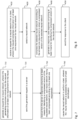
- Fig. 7 is a flowchart illustrating a method according to an embodiment.
- a method comprises generating 710 a request for a neural network, wherein the generating comprises including into the request information on at least one requirement for the neural network; sending 720 the request to a server; receiving 730 from the server a response comprising at least means for identifying a compressed version of the requested neural network, said neural network having been compressed according to the at least one requirement; and causing 740 the neural network to perform a task, wherein the neural network is accessed by means of said identification.
- An apparatus is a client device comprising means for generating a request for a neural network, wherein the generating comprises including into the request information on at least one requirement for the neural network; means for sending the request to a server; means for receiving from the server a response comprising at least means for identifying a compressed version of the neural network, said neural network having been compressed according to the at least one requirement; and means for causing the neural network to perform a task, wherein the neural network is accessed by means of said identification.
- the means comprises a processor, a memory, and a computer program code residing in the memory.
- the processor may further comprise a processing circuitry.
- Fig. 8 is a flowchart illustrating a method according to an embodiment.
- a method comprises receiving 810 a request for a neural network from a client, wherein the request comprises information on at least one requirement for the neural network; selecting 820 a neural network; compressing 830 the selected neural network according to the at least one requirement to obtain a compressed version of the selected neural network; generating a response, said response comprising at least means for identifying the compressed version of the neural network; and sending 850 the response to the client.
- An apparatus is a server, comprising means for receiving a request for a neural network from a client, wherein the request comprises information on at least one requirement for the neural network and/or for the compression of the neural network; means for selecting a neural network; means for compressing the selected neural network according to the at least one requirement to obtain a compressed version of the selected neural network; means for generating a response, said response comprising at least means for identifying the compressed version of neural network; and means for sending the response to the client.
- the means comprises a processor, a memory, and a computer program code residing in the memory.
- the processor may further comprise a processing circuitry.
- a device may comprise circuitry and electronics for handling, receiving and transmitting data, computer program code in a memory, and a processor that, when running the computer program code, causes the device to carry out the features of an embodiment.
- a network device like a server may comprise circuitry and electronics for handling, receiving and transmitting data, computer program code in a memory, and a processor that, when running the computer program code, causes the network device to carry out the features of an embodiment.
- the computer program code may reside on a non-transitory computer readable medium.
Landscapes
- Engineering & Computer Science (AREA)
- Physics & Mathematics (AREA)
- Theoretical Computer Science (AREA)
- Health & Medical Sciences (AREA)
- Life Sciences & Earth Sciences (AREA)
- Biomedical Technology (AREA)
- Biophysics (AREA)
- General Health & Medical Sciences (AREA)
- General Physics & Mathematics (AREA)
- Evolutionary Computation (AREA)
- Computational Linguistics (AREA)
- Molecular Biology (AREA)
- Computing Systems (AREA)
- General Engineering & Computer Science (AREA)
- Data Mining & Analysis (AREA)
- Mathematical Physics (AREA)
- Software Systems (AREA)
- Artificial Intelligence (AREA)
- Neurology (AREA)
- Compression, Expansion, Code Conversion, And Decoders (AREA)
- Information Transfer Between Computers (AREA)
Claims (13)
- Procédé exécuté par un dispositif client, comprenant :- la génération d'une demande de réseau neuronal compressé, dans lequel la demande de génération comprend au moins une indication d'un réseau neuronal original pour une certaine tâche, et l'inclusion des exigences suivantes dans la demandeune description d'une tâche du réseau neuronal ;une performance souhaitée du réseau neuronal compressé exécutant la tâche, dans lequel la performance souhaitée du réseau neuronal compressé est définie par un taux de compression et un niveau de détérioration, le taux de compression étant spécifié selon des ressources informatiques du dispositif client, et dans lequel le procédé de compression utilisé est au moins l'un des suivants : une quantification de poids, un codage de source sans perte, un élagage, une décomposition en valeurs singulières, une sélection de filtre ou une conception de structure ;- l'envoi de la demande à un serveur ;- la réception, du serveur, d'une réponse comprenant au moins une identification pour accéder à au moins un réseau neuronal compressé, ledit réseau neuronal compressé ayant été généré par le serveur par rapport à un réseau neuronal original selon lesdites exigences ; et- l'obtention du réseau neuronal compressé au moyen de ladite identification, et- l'exécution du réseau neuronal compressé pour réaliser la tâche.
- Procédé exécuté par un dispositif serveur, comprenant :- la réception d'une demande de réseau neuronal compressé de la part d'un client, dans lequel la demande comprend au moins une indication du réseau neuronal original pour une certaine tâche, et au moins les exigences suivantes pour le réseau neuronal :une description d'une tâche du réseau neuronal ;une performance souhaitée du réseau neuronal compressé exécutant la tâche, dans lequel la performance souhaitée du réseau neuronal compressé a été définie par un taux de compression et un niveau de détérioration, le taux de compression ayant été spécifié selon des ressources informatiques du dispositif client, et dans lequel le procédé de compression utilisé est au moins l'un des suivants : une quantification de poids, un codage de source sans perte, un élagage, une décomposition en valeurs singulières, une sélection de filtre ou une conception de structure ;- la détermination d'au moins un réseau neuronal original selon ladite indication ;- la compression de l'au moins un réseau neuronal original déterminé selon lesdites exigences pour obtenir au moins un réseau neuronal compressé ;- la génération d'une réponse, ladite réponse comprenant au moins une identification pour obtenir ledit au moins un réseau neuronal compressé ; et- l'envoi de la réponse au client.
- Appareil comprenant :- des moyens pour générer une demande de réseau neuronal compressé, dans lequel la demande de génération comprend au moins une indication d'un réseau neuronal original pour une certaine tâche, et l'inclusion des exigences suivantes dans la demandeune description d'une tâche du réseau neuronal ;une performance souhaitée du réseau neuronal compressé exécutant la tâche, dans lequel la performance souhaitée du réseau neuronal compressé est définie par un taux de compression et un niveau de détérioration, le taux de compression étant spécifié selon des ressources informatiques du dispositif client, et dans lequel le procédé de compression utilisé est au moins l'un des suivants : une quantification de poids, un codage de source sans perte, un élagage, une décomposition en valeurs singulières, une sélection de filtre ou une conception de structure ;- des moyens pour envoyer la demande à un serveur ;- des moyens pour recevoir du serveur une réponse comprenant au moins une identification pour accéder à au moins un réseau neuronal compressé, ledit réseau neuronal compressé ayant été généré par le serveur par rapport à un réseau neuronal original selon lesdites exigences ; et- des moyens pour obtenir du réseau neuronal compressé au moyen de ladite identification, et- des moyens pour exécuter du réseau neuronal compressé pour réaliser la tâche.
- Appareil selon la revendication 3, où les informations sur lesdites exigences comprennent en outre un ou plusieurs des éléments suivants :- une métrique de performance requise ;- une taille de réseau neuronal requise ;- une complexité de calcul requise ;- une identification de jeu de données d'entraînement ;- l'identification d'un procédé de compression.
- Appareil selon la revendication 3 ou 4, comprenant en outre des moyens pour déterminer si le réseau neuronal compressé est satisfaisant, la détermination étant basée sur les informations sur l'au moins une exigence et sur les informations sur le réseau neuronal compressé, et en réponse à la détermination du fait que le réseau neuronal compressé n'est pas satisfaisant, des moyens pour renvoyer la demande à un serveur, la demande comprenant au moins une exigence mise à jour pour le réseau neuronal compressé.
- Appareil selon l'une des revendications 3 à 5, comprenant en outre des moyens pour accéder au réseau neuronal compressé via un réseau de communication pour amener le serveur ou un autre serveur à réaliser la tâche par le réseau neuronal compressé.
- Appareil selon l'une des revendications 3 à 6, où la réponse du serveur comprend un ou plusieurs des éléments suivants :- une gestion de réseau neuronal ;- un temps estimé lorsque le réseau neuronal identifié est actif ;- une estimation de la probabilité de succès de l'identification d'un réseau neuronal répondant aux exigences ;- une matrice de performance estimée et/ou réelle du réseau neuronal identifié ;- une taille de modèle réelle du réseau neuronal identifié ;- un procédé de compression et/ou au moins un paramètre de compression.
- Appareil selon l'une des revendications 3 à 7, dans lequel les moyens comprennent au moins un processeur ; et au moins une mémoire comportant un code de programme informatique, l'au moins une mémoire et le code de programme informatique étant configurés pour, avec l'au moins un processeur, provoquer la performance de l'appareil.
- Appareil comprenant :- des moyens pour recevoir une demande de réseau neuronal compressé de la part d'un client, dans lequel la demande comprend au moins une indication du réseau neuronal original pour une certaine tâche, et au moins les exigences suivantes pour le réseau neuronal :une description d'une tâche du réseau neuronal ;une performance souhaitée du réseau neuronal compressé exécutant la tâche, dans lequel la performance souhaitée du réseau neuronal compressé a été définie par un taux de compression et un niveau de détérioration, le taux de compression ayant été spécifié selon des ressources informatiques du dispositif client, et dans lequel le procédé de compression utilisé est au moins l'un des suivants : une quantification de poids, un codage de source sans perte, un élagage, une décomposition en valeurs singulières, une sélection de filtre ou une conception de structure ;- des moyens pour déterminer au moins un réseau neuronal original selon ladite indication ;- des moyens compresser l'au moins un réseau neuronal original déterminé selon lesdites exigences pour obtenir au moins un réseau neuronal compressé ;- des moyens pour générer une réponse, ladite réponse comprenant au moins une identification pour obtenir ledit au moins un réseau neuronal compressé ; et- des moyens pour envoyer la réponse au client.
- Appareil selon la revendication 9, où les informations sur lesdites exigences comprennent en outre un ou plusieurs des éléments suivants :- une métrique de performance requise ;- une taille de réseau neuronal requise ;- une complexité de calcul requise ;- une identification de jeu de données d'entraînement ;- l'identification d'un procédé de compression.
- Appareil selon la revendication 9 ou 10, où la réponse au dispositif client comprend un ou plusieurs des éléments suivants :- une gestion de réseau neuronal ;- un temps estimé lorsque le réseau neuronal identifié est actif ;- une estimation de la probabilité de succès de l'identification d'un réseau neuronal répondant aux exigences ;- une matrice de performance estimée et/ou réelle du réseau neuronal identifié ;- une taille de modèle réelle du réseau neuronal identifié ;- un procédé de compression et/ou au moins un paramètre de compression.
- Appareil selon l'une des revendications 9 à 11, comprenant en outre des moyens pour générer un nouveau réseau en réponse à la demande du dispositif client et pour sélectionner le nouveau réseau neuronal pour la compression.
- Appareil selon la revendication 12, dans lequel le nouveau réseau est généré par son entraînement avec le jeu de données d'entraînement identifié par le client.
Applications Claiming Priority (1)
| Application Number | Priority Date | Filing Date | Title |
|---|---|---|---|
| FI20195011 | 2019-01-10 |
Publications (2)
| Publication Number | Publication Date |
|---|---|
| EP3683733A1 EP3683733A1 (fr) | 2020-07-22 |
| EP3683733B1 true EP3683733B1 (fr) | 2024-11-06 |
Family
ID=69137705
Family Applications (1)
| Application Number | Title | Priority Date | Filing Date |
|---|---|---|---|
| EP20150003.0A Active EP3683733B1 (fr) | 2019-01-10 | 2020-01-02 | Procédé, appareil et produit-programme d'ordinateur pour réseaux neuronaux |
Country Status (1)
| Country | Link |
|---|---|
| EP (1) | EP3683733B1 (fr) |
Families Citing this family (4)
| Publication number | Priority date | Publication date | Assignee | Title |
|---|---|---|---|---|
| CN115802370A (zh) * | 2021-09-10 | 2023-03-14 | 华为技术有限公司 | 一种通信方法及装置 |
| CN117499981A (zh) * | 2022-07-26 | 2024-02-02 | 华为技术有限公司 | 一种无线局域网中通信的方法和装置 |
| WO2025065662A1 (fr) * | 2023-09-28 | 2025-04-03 | 北京小米移动软件有限公司 | Procédé de mise à jour de modèle, terminal, dispositif de réseau, dispositif de communication et support de stockage |
| CN120181189A (zh) * | 2023-12-19 | 2025-06-20 | 华为云计算技术有限公司 | 神经网络模型加载的方法、装置和设备 |
Family Cites Families (1)
| Publication number | Priority date | Publication date | Assignee | Title |
|---|---|---|---|---|
| US20170132511A1 (en) * | 2015-11-10 | 2017-05-11 | Facebook, Inc. | Systems and methods for utilizing compressed convolutional neural networks to perform media content processing |
-
2020
- 2020-01-02 EP EP20150003.0A patent/EP3683733B1/fr active Active
Also Published As
| Publication number | Publication date |
|---|---|
| EP3683733A1 (fr) | 2020-07-22 |
Similar Documents
| Publication | Publication Date | Title |
|---|---|---|
| CN110288049B (zh) | 用于生成图像识别模型的方法和装置 | |
| CN110334201B (zh) | 一种意图识别方法、装置及系统 | |
| CN109104620B (zh) | 一种短视频推荐方法、装置和可读介质 | |
| CN113673260B (zh) | 模型处理方法、装置、存储介质和处理器 | |
| EP3683733B1 (fr) | Procédé, appareil et produit-programme d'ordinateur pour réseaux neuronaux | |
| US20230368028A1 (en) | Automated machine learning pre-trained model selector | |
| US20210004677A1 (en) | Data compression using jointly trained encoder, decoder, and prior neural networks | |
| CN111523640B (zh) | 神经网络模型的训练方法和装置 | |
| CN110830807B (zh) | 图像压缩方法、装置及存储介质 | |
| CN111160191A (zh) | 一种视频关键帧提取方法、装置及存储介质 | |
| CN111104954B (zh) | 一种对象分类的方法与装置 | |
| US11507324B2 (en) | Using feedback for adaptive data compression | |
| EP3767548B1 (fr) | Fourniture de réseaux neuronaux comprimés | |
| EP3767549A1 (fr) | Fourniture de réseaux neuronaux comprimés | |
| CN112307243A (zh) | 用于检索图像的方法和装置 | |
| EP4517585A1 (fr) | Segmentation d'actions vidéo structurées de longue durée | |
| CN116090543B (zh) | 模型压缩方法及装置、计算机可读介质和电子设备 | |
| CN110263930B (zh) | 用于发送信息的方法和装置 | |
| US12475161B2 (en) | Multimedia resource recommendation method and apparatus | |
| CN114330239B (zh) | 文本处理方法及装置、存储介质及电子设备 | |
| CN113742593B (zh) | 用于推送信息的方法和装置 | |
| Chen et al. | A mobile cloud framework for deep learning and its application to smart car camera | |
| CN117636100B (zh) | 预训练任务模型调整处理方法、装置、电子设备和介质 | |
| US20250384659A1 (en) | Similarity-based subset selection of labeled images | |
| CN119693634B (zh) | 目标检测方法、设备及存储介质 |
Legal Events
| Date | Code | Title | Description |
|---|---|---|---|
| PUAI | Public reference made under article 153(3) epc to a published international application that has entered the european phase |
Free format text: ORIGINAL CODE: 0009012 |
|
| STAA | Information on the status of an ep patent application or granted ep patent |
Free format text: STATUS: THE APPLICATION HAS BEEN PUBLISHED |
|
| AK | Designated contracting states |
Kind code of ref document: A1 Designated state(s): AL AT BE BG CH CY CZ DE DK EE ES FI FR GB GR HR HU IE IS IT LI LT LU LV MC MK MT NL NO PL PT RO RS SE SI SK SM TR |
|
| AX | Request for extension of the european patent |
Extension state: BA ME |
|
| RAP1 | Party data changed (applicant data changed or rights of an application transferred) |
Owner name: NOKIA TECHNOLOGIES OY |
|
| STAA | Information on the status of an ep patent application or granted ep patent |
Free format text: STATUS: REQUEST FOR EXAMINATION WAS MADE |
|
| 17P | Request for examination filed |
Effective date: 20210122 |
|
| RBV | Designated contracting states (corrected) |
Designated state(s): AL AT BE BG CH CY CZ DE DK EE ES FI FR GB GR HR HU IE IS IT LI LT LU LV MC MK MT NL NO PL PT RO RS SE SI SK SM TR |
|
| STAA | Information on the status of an ep patent application or granted ep patent |
Free format text: STATUS: EXAMINATION IS IN PROGRESS |
|
| 17Q | First examination report despatched |
Effective date: 20220428 |
|
| GRAP | Despatch of communication of intention to grant a patent |
Free format text: ORIGINAL CODE: EPIDOSNIGR1 |
|
| STAA | Information on the status of an ep patent application or granted ep patent |
Free format text: STATUS: GRANT OF PATENT IS INTENDED |
|
| INTG | Intention to grant announced |
Effective date: 20240606 |
|
| GRAS | Grant fee paid |
Free format text: ORIGINAL CODE: EPIDOSNIGR3 |
|
| GRAA | (expected) grant |
Free format text: ORIGINAL CODE: 0009210 |
|
| STAA | Information on the status of an ep patent application or granted ep patent |
Free format text: STATUS: THE PATENT HAS BEEN GRANTED |
|
| AK | Designated contracting states |
Kind code of ref document: B1 Designated state(s): AL AT BE BG CH CY CZ DE DK EE ES FI FR GB GR HR HU IE IS IT LI LT LU LV MC MK MT NL NO PL PT RO RS SE SI SK SM TR |
|
| REG | Reference to a national code |
Ref country code: GB Ref legal event code: FG4D |
|
| REG | Reference to a national code |
Ref country code: CH Ref legal event code: EP |
|
| REG | Reference to a national code |
Ref country code: DE Ref legal event code: R096 Ref document number: 602020040638 Country of ref document: DE |
|
| REG | Reference to a national code |
Ref country code: IE Ref legal event code: FG4D |
|
| REG | Reference to a national code |
Ref country code: LT Ref legal event code: MG9D |
|
| REG | Reference to a national code |
Ref country code: NL Ref legal event code: MP Effective date: 20241106 |
|
| PG25 | Lapsed in a contracting state [announced via postgrant information from national office to epo] |
Ref country code: PT Free format text: LAPSE BECAUSE OF FAILURE TO SUBMIT A TRANSLATION OF THE DESCRIPTION OR TO PAY THE FEE WITHIN THE PRESCRIBED TIME-LIMIT Effective date: 20250306 Ref country code: HR Free format text: LAPSE BECAUSE OF FAILURE TO SUBMIT A TRANSLATION OF THE DESCRIPTION OR TO PAY THE FEE WITHIN THE PRESCRIBED TIME-LIMIT Effective date: 20241106 Ref country code: IS Free format text: LAPSE BECAUSE OF FAILURE TO SUBMIT A TRANSLATION OF THE DESCRIPTION OR TO PAY THE FEE WITHIN THE PRESCRIBED TIME-LIMIT Effective date: 20250306 |
|
| PG25 | Lapsed in a contracting state [announced via postgrant information from national office to epo] |
Ref country code: FI Free format text: LAPSE BECAUSE OF FAILURE TO SUBMIT A TRANSLATION OF THE DESCRIPTION OR TO PAY THE FEE WITHIN THE PRESCRIBED TIME-LIMIT Effective date: 20241106 Ref country code: NL Free format text: LAPSE BECAUSE OF FAILURE TO SUBMIT A TRANSLATION OF THE DESCRIPTION OR TO PAY THE FEE WITHIN THE PRESCRIBED TIME-LIMIT Effective date: 20241106 |
|
| REG | Reference to a national code |
Ref country code: AT Ref legal event code: MK05 Ref document number: 1740175 Country of ref document: AT Kind code of ref document: T Effective date: 20241106 |
|
| PG25 | Lapsed in a contracting state [announced via postgrant information from national office to epo] |
Ref country code: BG Free format text: LAPSE BECAUSE OF FAILURE TO SUBMIT A TRANSLATION OF THE DESCRIPTION OR TO PAY THE FEE WITHIN THE PRESCRIBED TIME-LIMIT Effective date: 20241106 |
|
| PG25 | Lapsed in a contracting state [announced via postgrant information from national office to epo] |
Ref country code: ES Free format text: LAPSE BECAUSE OF FAILURE TO SUBMIT A TRANSLATION OF THE DESCRIPTION OR TO PAY THE FEE WITHIN THE PRESCRIBED TIME-LIMIT Effective date: 20241106 |
|
| PG25 | Lapsed in a contracting state [announced via postgrant information from national office to epo] |
Ref country code: NO Free format text: LAPSE BECAUSE OF FAILURE TO SUBMIT A TRANSLATION OF THE DESCRIPTION OR TO PAY THE FEE WITHIN THE PRESCRIBED TIME-LIMIT Effective date: 20250206 |
|
| PG25 | Lapsed in a contracting state [announced via postgrant information from national office to epo] |
Ref country code: GR Free format text: LAPSE BECAUSE OF FAILURE TO SUBMIT A TRANSLATION OF THE DESCRIPTION OR TO PAY THE FEE WITHIN THE PRESCRIBED TIME-LIMIT Effective date: 20250207 Ref country code: LV Free format text: LAPSE BECAUSE OF FAILURE TO SUBMIT A TRANSLATION OF THE DESCRIPTION OR TO PAY THE FEE WITHIN THE PRESCRIBED TIME-LIMIT Effective date: 20241106 Ref country code: AT Free format text: LAPSE BECAUSE OF FAILURE TO SUBMIT A TRANSLATION OF THE DESCRIPTION OR TO PAY THE FEE WITHIN THE PRESCRIBED TIME-LIMIT Effective date: 20241106 |
|
| PG25 | Lapsed in a contracting state [announced via postgrant information from national office to epo] |
Ref country code: PL Free format text: LAPSE BECAUSE OF FAILURE TO SUBMIT A TRANSLATION OF THE DESCRIPTION OR TO PAY THE FEE WITHIN THE PRESCRIBED TIME-LIMIT Effective date: 20241106 |
|
| PG25 | Lapsed in a contracting state [announced via postgrant information from national office to epo] |
Ref country code: RS Free format text: LAPSE BECAUSE OF FAILURE TO SUBMIT A TRANSLATION OF THE DESCRIPTION OR TO PAY THE FEE WITHIN THE PRESCRIBED TIME-LIMIT Effective date: 20250206 |
|
| PG25 | Lapsed in a contracting state [announced via postgrant information from national office to epo] |
Ref country code: SM Free format text: LAPSE BECAUSE OF FAILURE TO SUBMIT A TRANSLATION OF THE DESCRIPTION OR TO PAY THE FEE WITHIN THE PRESCRIBED TIME-LIMIT Effective date: 20241106 |
|
| PG25 | Lapsed in a contracting state [announced via postgrant information from national office to epo] |
Ref country code: DK Free format text: LAPSE BECAUSE OF FAILURE TO SUBMIT A TRANSLATION OF THE DESCRIPTION OR TO PAY THE FEE WITHIN THE PRESCRIBED TIME-LIMIT Effective date: 20241106 |
|
| PG25 | Lapsed in a contracting state [announced via postgrant information from national office to epo] |
Ref country code: EE Free format text: LAPSE BECAUSE OF FAILURE TO SUBMIT A TRANSLATION OF THE DESCRIPTION OR TO PAY THE FEE WITHIN THE PRESCRIBED TIME-LIMIT Effective date: 20241106 |
|
| PG25 | Lapsed in a contracting state [announced via postgrant information from national office to epo] |
Ref country code: RO Free format text: LAPSE BECAUSE OF FAILURE TO SUBMIT A TRANSLATION OF THE DESCRIPTION OR TO PAY THE FEE WITHIN THE PRESCRIBED TIME-LIMIT Effective date: 20241106 |
|
| PG25 | Lapsed in a contracting state [announced via postgrant information from national office to epo] |
Ref country code: SK Free format text: LAPSE BECAUSE OF FAILURE TO SUBMIT A TRANSLATION OF THE DESCRIPTION OR TO PAY THE FEE WITHIN THE PRESCRIBED TIME-LIMIT Effective date: 20241106 |
|
| PG25 | Lapsed in a contracting state [announced via postgrant information from national office to epo] |
Ref country code: CZ Free format text: LAPSE BECAUSE OF FAILURE TO SUBMIT A TRANSLATION OF THE DESCRIPTION OR TO PAY THE FEE WITHIN THE PRESCRIBED TIME-LIMIT Effective date: 20241106 |
|
| PG25 | Lapsed in a contracting state [announced via postgrant information from national office to epo] |
Ref country code: IT Free format text: LAPSE BECAUSE OF FAILURE TO SUBMIT A TRANSLATION OF THE DESCRIPTION OR TO PAY THE FEE WITHIN THE PRESCRIBED TIME-LIMIT Effective date: 20241106 |
|
| REG | Reference to a national code |
Ref country code: DE Ref legal event code: R097 Ref document number: 602020040638 Country of ref document: DE |
|
| REG | Reference to a national code |
Ref country code: CH Ref legal event code: PL |
|
| PG25 | Lapsed in a contracting state [announced via postgrant information from national office to epo] |
Ref country code: SE Free format text: LAPSE BECAUSE OF FAILURE TO SUBMIT A TRANSLATION OF THE DESCRIPTION OR TO PAY THE FEE WITHIN THE PRESCRIBED TIME-LIMIT Effective date: 20241106 |
|
| PLBE | No opposition filed within time limit |
Free format text: ORIGINAL CODE: 0009261 |
|
| STAA | Information on the status of an ep patent application or granted ep patent |
Free format text: STATUS: NO OPPOSITION FILED WITHIN TIME LIMIT |
|
| PG25 | Lapsed in a contracting state [announced via postgrant information from national office to epo] |
Ref country code: LU Free format text: LAPSE BECAUSE OF NON-PAYMENT OF DUE FEES Effective date: 20250102 Ref country code: MC Free format text: LAPSE BECAUSE OF FAILURE TO SUBMIT A TRANSLATION OF THE DESCRIPTION OR TO PAY THE FEE WITHIN THE PRESCRIBED TIME-LIMIT Effective date: 20241106 |
|
| 26N | No opposition filed |
Effective date: 20250807 |
|
| PG25 | Lapsed in a contracting state [announced via postgrant information from national office to epo] |
Ref country code: BE Free format text: LAPSE BECAUSE OF NON-PAYMENT OF DUE FEES Effective date: 20250131 |
|
| PG25 | Lapsed in a contracting state [announced via postgrant information from national office to epo] |
Ref country code: FR Free format text: LAPSE BECAUSE OF NON-PAYMENT OF DUE FEES Effective date: 20250106 |
|
| PG25 | Lapsed in a contracting state [announced via postgrant information from national office to epo] |
Ref country code: CH Free format text: LAPSE BECAUSE OF NON-PAYMENT OF DUE FEES Effective date: 20250131 |
|
| REG | Reference to a national code |
Ref country code: BE Ref legal event code: MM Effective date: 20250131 |
|
| GBPC | Gb: european patent ceased through non-payment of renewal fee |
Effective date: 20250206 |
|
| PG25 | Lapsed in a contracting state [announced via postgrant information from national office to epo] |
Ref country code: GB Free format text: LAPSE BECAUSE OF NON-PAYMENT OF DUE FEES Effective date: 20250206 |
|
| PG25 | Lapsed in a contracting state [announced via postgrant information from national office to epo] |
Ref country code: IE Free format text: LAPSE BECAUSE OF NON-PAYMENT OF DUE FEES Effective date: 20250102 |
|
| PGFP | Annual fee paid to national office [announced via postgrant information from national office to epo] |
Ref country code: DE Payment date: 20251203 Year of fee payment: 7 |