EP3686790A1 - Procédé et dispositif d'apprentissage de réseau neuronal convolutionnel utilisant une convolution 1 × 1 pour la reconnaissance d'images destinés à être utilisés pour l'optimisation de matériel et procédé et dispositif d'essai les utilisant - Google Patents
Procédé et dispositif d'apprentissage de réseau neuronal convolutionnel utilisant une convolution 1 × 1 pour la reconnaissance d'images destinés à être utilisés pour l'optimisation de matériel et procédé et dispositif d'essai les utilisant Download PDFInfo
- Publication number
- EP3686790A1 EP3686790A1 EP19219455.3A EP19219455A EP3686790A1 EP 3686790 A1 EP3686790 A1 EP 3686790A1 EP 19219455 A EP19219455 A EP 19219455A EP 3686790 A1 EP3686790 A1 EP 3686790A1
- Authority
- EP
- European Patent Office
- Prior art keywords
- rois
- testing
- per
- training
- generate
- Prior art date
- Legal status (The legal status is an assumption and is not a legal conclusion. Google has not performed a legal analysis and makes no representation as to the accuracy of the status listed.)
- Pending
Links
Images




Classifications
-
- G—PHYSICS
- G06—COMPUTING OR CALCULATING; COUNTING
- G06V—IMAGE OR VIDEO RECOGNITION OR UNDERSTANDING
- G06V10/00—Arrangements for image or video recognition or understanding
- G06V10/40—Extraction of image or video features
- G06V10/46—Descriptors for shape, contour or point-related descriptors, e.g. scale invariant feature transform [SIFT] or bags of words [BoW]; Salient regional features
- G06V10/462—Salient features, e.g. scale invariant feature transforms [SIFT]
-
- G—PHYSICS
- G06—COMPUTING OR CALCULATING; COUNTING
- G06N—COMPUTING ARRANGEMENTS BASED ON SPECIFIC COMPUTATIONAL MODELS
- G06N3/00—Computing arrangements based on biological models
- G06N3/02—Neural networks
- G06N3/08—Learning methods
- G06N3/084—Backpropagation, e.g. using gradient descent
-
- G—PHYSICS
- G06—COMPUTING OR CALCULATING; COUNTING
- G06F—ELECTRIC DIGITAL DATA PROCESSING
- G06F18/00—Pattern recognition
- G06F18/20—Analysing
- G06F18/21—Design or setup of recognition systems or techniques; Extraction of features in feature space; Blind source separation
- G06F18/214—Generating training patterns; Bootstrap methods, e.g. bagging or boosting
- G06F18/2148—Generating training patterns; Bootstrap methods, e.g. bagging or boosting characterised by the process organisation or structure, e.g. boosting cascade
-
- G—PHYSICS
- G06—COMPUTING OR CALCULATING; COUNTING
- G06F—ELECTRIC DIGITAL DATA PROCESSING
- G06F18/00—Pattern recognition
- G06F18/20—Analysing
- G06F18/21—Design or setup of recognition systems or techniques; Extraction of features in feature space; Blind source separation
- G06F18/217—Validation; Performance evaluation; Active pattern learning techniques
-
- G—PHYSICS
- G06—COMPUTING OR CALCULATING; COUNTING
- G06F—ELECTRIC DIGITAL DATA PROCESSING
- G06F18/00—Pattern recognition
- G06F18/20—Analysing
- G06F18/24—Classification techniques
- G06F18/241—Classification techniques relating to the classification model, e.g. parametric or non-parametric approaches
-
- G—PHYSICS
- G06—COMPUTING OR CALCULATING; COUNTING
- G06N—COMPUTING ARRANGEMENTS BASED ON SPECIFIC COMPUTATIONAL MODELS
- G06N3/00—Computing arrangements based on biological models
- G06N3/02—Neural networks
- G06N3/04—Architecture, e.g. interconnection topology
- G06N3/045—Combinations of networks
-
- G—PHYSICS
- G06—COMPUTING OR CALCULATING; COUNTING
- G06N—COMPUTING ARRANGEMENTS BASED ON SPECIFIC COMPUTATIONAL MODELS
- G06N3/00—Computing arrangements based on biological models
- G06N3/02—Neural networks
- G06N3/04—Architecture, e.g. interconnection topology
- G06N3/0464—Convolutional networks [CNN, ConvNet]
-
- G—PHYSICS
- G06—COMPUTING OR CALCULATING; COUNTING
- G06N—COMPUTING ARRANGEMENTS BASED ON SPECIFIC COMPUTATIONAL MODELS
- G06N3/00—Computing arrangements based on biological models
- G06N3/02—Neural networks
- G06N3/08—Learning methods
- G06N3/09—Supervised learning
-
- G—PHYSICS
- G06—COMPUTING OR CALCULATING; COUNTING
- G06V—IMAGE OR VIDEO RECOGNITION OR UNDERSTANDING
- G06V10/00—Arrangements for image or video recognition or understanding
- G06V10/20—Image preprocessing
- G06V10/25—Determination of region of interest [ROI] or a volume of interest [VOI]
-
- G—PHYSICS
- G06—COMPUTING OR CALCULATING; COUNTING
- G06V—IMAGE OR VIDEO RECOGNITION OR UNDERSTANDING
- G06V10/00—Arrangements for image or video recognition or understanding
- G06V10/40—Extraction of image or video features
- G06V10/44—Local feature extraction by analysis of parts of the pattern, e.g. by detecting edges, contours, loops, corners, strokes or intersections; Connectivity analysis, e.g. of connected components
- G06V10/443—Local feature extraction by analysis of parts of the pattern, e.g. by detecting edges, contours, loops, corners, strokes or intersections; Connectivity analysis, e.g. of connected components by matching or filtering
- G06V10/449—Biologically inspired filters, e.g. difference of Gaussians [DoG] or Gabor filters
- G06V10/451—Biologically inspired filters, e.g. difference of Gaussians [DoG] or Gabor filters with interaction between the filter responses, e.g. cortical complex cells
- G06V10/454—Integrating the filters into a hierarchical structure, e.g. convolutional neural networks [CNN]
-
- G—PHYSICS
- G06—COMPUTING OR CALCULATING; COUNTING
- G06V—IMAGE OR VIDEO RECOGNITION OR UNDERSTANDING
- G06V10/00—Arrangements for image or video recognition or understanding
- G06V10/70—Arrangements for image or video recognition or understanding using pattern recognition or machine learning
- G06V10/82—Arrangements for image or video recognition or understanding using pattern recognition or machine learning using neural networks
-
- G—PHYSICS
- G06—COMPUTING OR CALCULATING; COUNTING
- G06F—ELECTRIC DIGITAL DATA PROCESSING
- G06F18/00—Pattern recognition
- G06F18/20—Analysing
- G06F18/24—Classification techniques
Definitions
- the present disclosure relates to a method for learning parameters of a CNN for image recognition to be used for hardware optimization; and more particularly, to the method for learning the parameters of the CNN for the image recognition, including steps of: (a) if at least one training image is acquired, (i) instructing one or more convolutional layers to generate ROI feature maps per each of one or more ROIs, corresponding to one or more objects, by applying one or more convolution operations to each of ROI images generated by cropping and resizing areas of the ROIs on the training image, and (ii) (ii-1) instructing a pooling layer to apply one or more pooling operations to the ROI feature maps, to thereby generate pooled feature maps per each of the ROIs, and instructing a first transposing layer to concatenate each of pixels, per each of the ROIs, in each of corresponding same locations on the pooled feature maps per each of the ROIs, to thereby generate an integrated feature map, or (ii-2) instructing the pooling layer to apply the pooling operations to the ROI feature maps
- Deep Convolution Neural Networks are at the heart of the remarkable development in deep learning. CNNs have already been used in the 90's to solve the problems of character recognition, but their use has become as widespread as it is now thanks to recent research. These deep CNNs won the 2012 ImageNet image classification tournament, crushing other competitors. Then, the convolutional neural network became a very useful tool in the field of the machine learning.
- the CNN is comprised of a feature extractor which extracts features from an image, and a feature classifier which detects objects in the image or recognizes the image by referring to the features extracted by the feature extractor.
- the feature extractor of the CNN is comprised of convolutional layers
- the feature classifier is comprised of FC layers capable of applying fully connected operations to the features extracted by the feature extractor.
- FC layers have problems in that weights have to be generated for every feature inputted, and the fully connected operations have to be performed for every feature inputted, resulting in heavy computational load.
- the FC layers require a size of its input image to be same as a size preset according to an FC layer model. Therefore, if a training image or a test image having a size different from the preset size is inputted into a CNN including the FC layers, although the convolutional layers may apply their operations successfully to the training image or the test image, the FC layers cannot apply their operations to the training image or the test image, as the size of the input image is different from the preset size.
- the inventors of the present disclosure propose the CNN for image recognition capable of overcoming the problems of the FC layers.
- a method for learning parameters of a CNN for image recognition including steps of: (a) a learning device, if at least one training image is acquired, (i) instructing one or more convolutional layers to generate ROI feature maps per each of one or more ROIs, corresponding to one or more objects, by applying one or more convolution operations to each of ROI images generated by cropping and resizing areas of the ROIs on the training image, and (ii) (ii-1) instructing a pooling layer to apply one or more pooling operations to the ROI feature maps, to thereby generate pooled feature maps per each of the ROIs, and instructing a first transposing layer to concatenate each of pixels, per each of the ROIs, in each of corresponding same locations on the pooled feature maps per each of the ROIs, to thereby generate an integrated feature map, or (ii-2) instructing the pooling layer to apply the pooling operations to the ROI feature maps, to thereby generate the pooled feature maps per each
- the learning device instructs the first transposing layer to convert the pooled feature maps per each of the ROIs into the integrated feature map having a width of 1, a height of N, and a channel of M1•M2•J, or (ii) instructs the pooling layer to convert the pooled feature maps per each of the ROIs into the integrated feature map having the width of 1, the height of N, and the channel of M1•M2•J.
- the learning device instructs the first 1 ⁇ 1 convolutional layer to generate the first adjusted feature map having a volume of N•1•K resulting from a width of N, a height of 1, and a channel of K, and instructs the second 1 ⁇ 1 convolutional layer to generate the second adjusted feature map having a volume of N•1•L resulting from the width of N, the height of 1, and a channel of L.
- the learning device instructs the second transposing layer to convert the second adjusted feature map into the pixel-wise feature maps per each of the ROIs having a volume of 1•1•L, resulting from a width of 1, a height of 1, and a channel of L, corresponding to each of N ROIs, or (ii) instructs the classifying layer to convert the second adjusted feature map into the pixel-wise feature maps per each of the ROIs having the volume of 1•1•L, resulting from the width of 1, the height of 1, and the channel of L, corresponding to each of the N ROIs.
- the classifying layer uses at least one softmax algorithm.
- a method for testing a CNN for image recognition including steps of: (a) on condition that a learning device (1) (i) has instructed one or more convolutional layers to generate ROI feature maps for training per each of one or more ROIs for training, corresponding to one or more objects for training, by applying one or more convolution operations to each of ROI images for training generated by cropping and resizing areas of the ROIs for training on at least one training image, and (ii) (ii-1) has instructed a pooling layer to apply one or more pooling operations to the ROI feature maps for training, to thereby generate pooled feature maps for training per each of the ROIs for training, and has instructed a first transposing layer to concatenate each of pixels, per each of the ROIs for training, in each of corresponding same locations on the pooled feature maps for training per each of the ROIs for training, to thereby generate an integrated feature map for training, or (ii-2) has instructed the pooling layer to apply the pooling operations to
- the testing device instructs the first transposing layer to convert the pooled feature maps for testing per each of the ROIs for testing into the integrated feature map for testing having a width of 1, a height of N, and a channel of M1•M2•J, or (ii) instructs the pooling layer to convert the pooled feature maps for testing per each of the ROIs for testing into the integrated feature map for testing having the width of 1, the height of N, and the channel of M1•M2•J.
- the testing device instructs the first 1 ⁇ 1 convolutional layer to generate the first adjusted feature map for testing having a volume of N•1•K resulting from a width of N, a height of 1, and a channel of K, and instructs the second 1 ⁇ 1 convolutional layer to generate the second adjusted feature map for testing having a volume of N•1•L resulting from the width of N, the height of 1, and a channel of L.
- the testing device instructs the second transposing layer to convert the second adjusted feature map for testing into the pixel-wise feature maps for testing per each of the ROIs for testing having a volume of 1•1•L, resulting from a width of 1, a height of 1, and a channel of L, corresponding to each of N ROIs for testing, or (ii) instructs the classifying layer to convert the second adjusted feature map for testing into the pixel-wise feature maps for testing per each of the ROIs for testing having the volume of 1•1•L, resulting from the width of 1, the height of 1, and the channel of L, corresponding to each of the N ROIs for testing.
- the classifying layer uses at least one softmax algorithm.
- a learning device for learning parameters of a CNN for image recognition including: at least one memory that stores instructions; and at least one processor configured to execute the instructions to: perform processes of (I) (i) instructing one or more convolutional layers to generate ROI feature maps per each of one or more ROIs, corresponding to one or more objects, by applying one or more convolution operations to each of ROI images generated by cropping and resizing areas of the ROIs on at least one training image, and (ii) (ii-1) instructing a pooling layer to apply one or more pooling operations to the ROI feature maps, to thereby generate pooled feature maps per each of the ROIs, and instructing a first transposing layer to concatenate each of pixels, per each of the ROIs, in each of corresponding same locations on the pooled feature maps per each of the ROIs, to thereby generate an integrated feature map, or (ii-2) instructing the pooling layer to apply the pooling operations to the ROI feature maps, to perform processes of (I) (i) instructing one or more convolution
- the processor instructs the first transposing layer to convert the pooled feature maps per each of the ROIs into the integrated feature map having a width of 1, a height of N, and a channel of M1•M2•J, or (ii) instructs the pooling layer to convert the pooled feature maps per each of the ROIs into the integrated feature map having the width of 1, the height of N, and the channel of M1•M2•J.
- the processor instructs the first 1 ⁇ 1 convolutional layer to generate the first adjusted feature map having a volume of N•1•K resulting from a width of N, a height of 1, and a channel of K, and instructs the second 1 ⁇ 1 convolutional layer to generate the second adjusted feature map having a volume of N•1•L resulting from the width of N, the height of 1, and a channel of L.
- the processor instructs the second transposing layer to convert the second adjusted feature map into the pixel-wise feature maps per each of the ROIs having a volume of 1•1•L, resulting from a width of 1, a height of 1, and a channel of L, corresponding to each of N ROIs, or (ii) instructs the classifying layer to convert the second adjusted feature map into the pixel-wise feature maps per each of the ROIs having the volume of 1•1•L, resulting from the width of 1, the height of 1, and the channel of L, corresponding to each of the N ROIs.
- the classifying layer uses at least one softmax algorithm.
- a testing device for testing a CNN for image recognition including: at least one memory that stores instructions; and at least one processor, on condition that a learning device (1) (i) has instructed one or more convolutional layers to generate ROI feature maps for training per each of one or more ROIs for training, corresponding to one or more objects for training, by applying one or more convolution operations to each of ROI images for training generated by cropping and resizing areas of the ROIs for training on at least one training image, and (ii) (ii-1) has instructed a pooling layer to apply one or more pooling operations to the ROI feature maps for training, to thereby generate pooled feature maps for training per each of the ROIs for training, and has instructed a first transposing layer to concatenate each of pixels, per each of the ROIs for training, in each of corresponding same locations on the pooled feature maps for training per each of the ROIs for training, to thereby generate an integrated feature map for training, or (ii-2) has
- the processor instructs the first transposing layer to convert the pooled feature maps for testing per each of the ROIs for testing into the integrated feature map for testing having a width of 1, a height of N, and a channel of M1•M2•J, or (ii) instructs the pooling layer to convert the pooled feature maps for testing per each of the ROIs for testing into the integrated feature map for testing having the width of 1, the height of N, and the channel of M1•M2•J.
- the processor instructs the first 1 ⁇ 1 convolutional layer to generate the first adjusted feature map for testing having a volume of N•1•K resulting from a width of N, a height of 1, and a channel of K, and instructs the second 1 ⁇ 1 convolutional layer to generate the second adjusted feature map for testing having a volume of N•1•L resulting from the width of N, the height of 1, and a channel of L.
- the processor instructs the second transposing layer to convert the second adjusted feature map for testing into the pixel-wise feature maps for testing per each of the ROIs for testing having a volume of 1•1•L, resulting from a width of 1, a height of 1, and a channel of L, corresponding to each of N ROIs for testing, or (ii) instructs the classifying layer to convert the second adjusted feature map for testing into the pixel-wise feature maps for testing per each of the ROIs for testing having the volume of 1•1•L, resulting from the width of 1, the height of 1, and the channel of L, corresponding to each of the N ROIs for testing.
- the classifying layer uses at least one softmax algorithm.
- recordable media that are readable by a computer for storing a computer program to execute the method of the present disclosure is further provided.
- Any images referred to in the present disclosure may include images related to any roads paved or unpaved, in which case the objects on the roads or near the roads may include vehicles, persons, animals, plants, buildings, flying objects like planes or drones, or any other obstacles which may appear in a road-related scene, but the scope of the present disclosure is not limited thereto.
- said any images referred to in the present disclosure may include images not related to any roads, such as images related to alleyway, land lots, sea, lakes, rivers, mountains, forests, deserts, sky, or any indoor space
- the objects in said any images may include vehicles, persons, animals, plants, buildings, flying objects like planes or drones, ships, amphibious planes or ships, or any other obstacles which may appear in a scene related to alleyway, land lots, sea, lakes, rivers, mountains, forests, deserts, sky, or any indoor space, but the scope of the present disclosure is not limited thereto.
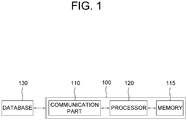
- Fig. 1 is a drawing schematically illustrating a learning device 100 of a CNN for image recognition in accordance with one example embodiment of the present disclosure, and by referring to Fig. 1 , the learning device 100 may include a communication part 110 and a processor 120.
- the communication part 110 may receive at least one training image.
- the training image may be stored in a database 130, and the database 130 may store at least one ground truth of class information on each of one or more objects and at least one ground truth of location information on each of the objects, corresponding to the training images.
- the learning device may further include a memory 115 capable of storing computer readable instructions for performing following processes.
- the processor, the memory, a medium, etc. may be integrated with an integrated processor.
- the processor 120 may perform processes of (i) instructing one or more convolutional layers to generate ROI feature maps per each of one or more ROIs, corresponding to the objects, by applying one or more convolution operations to each of ROI images generated by cropping and resizing areas of the ROIs on the training image, and (ii) (ii-1) instructing a pooling layer to apply one or more pooling operations to the ROI feature maps, to thereby generate pooled feature maps per each of the ROIs, and instructing a first transposing layer to concatenate each of pixels, per each of the ROIs, in each of corresponding same locations on the pooled feature maps per each of the ROIs, to thereby generate an integrated feature map, or (ii-2) instructing the pooling layer to apply the pooling operations to the ROI feature maps, to thereby generate the pooled feature maps per each of the ROIs, and instructing the pooling layer to concatenate each of the pixels, per each of the ROIs, in each of the corresponding same locations on the pooled feature maps
- the processor 120 may perform processes of instructing a first 1 ⁇ 1 convolutional layer to apply a 1 ⁇ 1 convolution operation to the integrated feature map, to thereby generate a first adjusted feature map whose volume is adjusted, instructing a second 1 ⁇ 1 convolutional layer to apply the 1 ⁇ 1 convolution operation to the first adjusted feature map, to thereby generate a second adjusted feature map whose volume is adjusted.
- the processor 120 may perform processes of (i) instructing a second transposing layer to divide the second adjusted feature map by each of the pixels, to thereby generate pixel-wise feature maps per each of the ROIs, and instructing a classifying layer to generate object information on each of the ROIs by using the pixel-wise feature maps per each of the ROIs, or (ii) instructing the classifying layer to divide the second adjusted feature map by each of the pixels, to thereby generate the pixel-wise feature maps per each of the ROIs, and instructing the classifying layer to generate the object information on each of the ROIs by using the pixel-wise feature maps per each of the ROIs.
- the processor 120 may instruct a loss layer to calculate one or more object losses by referring to the object information and its corresponding GT, to thereby learn at least part of parameters of the second 1 ⁇ 1 convolutional layer, the first 1 ⁇ 1 convolutional layer, and the convolutional layers by backpropagating the object losses.
- the learning device 100 in accordance with one example of the present disclosure may be a computing device and may be any digital device with a processor capable of computation.
- Fig. 1 shows the single learning device 100, the scope of the present disclosure is not limited thereto.
- the learning device may be configured as several devices to perform its functions.
- FIG. 2 A method for learning parameters of the CNN for image recognition by using the learning device 100 in accordance with one example embodiment of the present disclosure is described by referring to Fig. 2 as follows.
- the learning device 100 may instruct a convolutional layer 121 to generate ROI feature maps per each of one or more ROIs, corresponding to each of the objects, by applying the convolution operations to each of ROI images generated by cropping and resizing areas of the ROIs on the training image.
- the convolutional layer 121 may be a single convolutional layer or multiple convolutional layers for sequential convolution operations on the ROI images.
- the learning device 100 may instruct a pooling layer 122 to apply the pooling operations to the ROI feature maps per each of the ROIs, to thereby generate pooled feature maps per each of the ROIs.
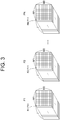
- each of the pooled feature maps P1, P2, ..., and PN per each of the ROIs may have a volume of M1•M2•J.
- the learning device 100 may instruct a first transposing layer 123 to concatenate each of pixels, per each of the ROIs, in each of corresponding same locations on the pooled feature maps P1, P2, ..., and PN per each of the ROIs, outputted from the pooling layer 122, to thereby generate an integrated feature map.
- a first transposing layer 123 may concatenate each of pixels, per each of the ROIs, in each of corresponding same locations on the pooled feature maps P1, P2, ..., and PN per each of the ROIs, outputted from the pooling layer 122, to thereby generate an integrated feature map.
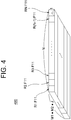
- R1F11, R2F11, ..., and RNF11 may be concatenated such that a first part of the integrated feature map 400 having a width of N and a height of 1 is generated, shown as a line in the front corresponding to the first channel among all the channels in Fig. 4 , and this process may be performed for the rest of the pixels in each of the pooled feature maps P1, P2, ..., and PN per each of the ROIs.
- the integrated feature map 400 may be generated as having channels of M1•M2•J which is equal to the number of the pixels in each of the pooled feature maps P1, P2, ..., and PN per each of the ROIs.
- the learning device 100 may instruct the first transposing layer 123 to generate the integrated feature map 400 by using the pooled feature maps P1, P2, ..., and PN per each of the ROIs outputted from the pooling layer 122.
- the learning device 100 may instruct the pooling layer 122 to generate the integrated feature map 400, without using the first transposing layer 123.
- the learning device 100 may instruct the pooling layer 122 to apply the pooling operations to each region, corresponding to each of the ROIs, on the initial feature map, to thereby generate the pooled feature maps P1, P2, ..., and PN per each of the ROIs, and to concatenate each of pixels, per each of the ROIs, in each of corresponding same locations on the pooled feature maps P1, P2, ..., and PN per each of the ROIs, to thereby generate the integrated feature map 400.
- the learning device 100 may perform processes of instructing a first 1 ⁇ 1 convolutional layer 124 to apply the 1 ⁇ 1 convolution operation to the integrated feature map 400, to thereby generate a first adjusted feature map whose volume is adjusted, and instructing a second 1 ⁇ 1 convolutional layer 125 to apply the 1 ⁇ 1 convolution operation to the first adjusted feature map, to thereby generate a second adjusted feature map whose volume is adjusted.
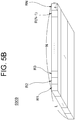
- the learning device 100 may perform processes of instructing the first 1 ⁇ 1 convolutional layer 124 to apply the 1 ⁇ 1 convolution operation to the integrated feature map 400 in Fig. 4 , to thereby generate a first adjusted feature map 500A having a volume of N•1•K resulting from a width of N, a height of 1, and a channel of K as in Fig.
- the learning device 100 may instruct a second transposing layer 126 to divide the second adjusted feature map 500B by each of the pixels, to thereby generate pixel-wise feature maps per each of the ROIs.
- the learning device 100 may instruct the second transposing layer 126 to divide the second adjusted feature 500B map having a volume of N•1•L resulting from a width of N, a height of 1, and a channel of L as in Fig. 5B , by each of the pixels, to thereby generate the pixel-wise feature maps PW1, PW2, ..., and PWN per each of the ROIs, having a width of 1, a height of 1, and a channel of L.
- the learning device 100 may instruct a classifying layer 127 to generate the object information on each of the ROIs by using the pixel-wise feature maps PW1, PW2, ..., and PWN per each of the ROIs.
- the classifying layer 127 may use a softmax algorithm and may generate recognized results representing what each of the objects in each of the ROIs is estimated as, and may generate probability information on whether the recognized results are true.
- the object information may include location information on each of the objects on the training image.
- the second transposing layer 126 may generate the pixel-wise feature maps PW1, PW2, ..., and PWN per each of the ROIs by using the second adjusted feature map 500B.
- the classifying layer 127 may generate the pixel-wise feature maps PW1, PW2, ..., and PWN per each of the ROIs by using the second adjusted feature map 500B, without using the second transposing layer 126.
- the learning device 100 may instruct the classifying layer 127 to divide the second adjusted feature map 500B by each of the pixels, to thereby generate the pixel-wise feature maps PW1, PW2, ..., and PWN per each of the ROIs, and may instruct the classifying layer 127 to generate the object information on each of the ROIs by using the pixel-wise feature maps PW1, PW2, ..., and PWN per each of the ROIs.
- the learning device 100 may instruct a loss layer 128 to calculate one or more object losses by referring to the object information and its corresponding GT, to thereby learn at least part of parameters of the second 1 ⁇ 1 convolutional layer 125, the first 1 ⁇ 1 convolutional layer 124, and the convolutional layer 121 by backpropagating the object losses.
- the CNN for image recognition in accordance with one example embodiment of the present disclosure above is comprised of the convolutional layers only, and thus capable of recognizing the objects in the input image without regard to the size of the input image. Also, the CNN for image recognition in accordance with one example embodiment of the present disclosure is capable of reducing amount of computation by applying locally connected operation of the 1 ⁇ 1 convolutional layer, compared to the fully connected operation of the conventional FC layers.
- Fig. 7 is a drawing schematically illustrating a testing device 200 of the CNN for image recognition in accordance with one example embodiment of the present disclosure, and by referring to Fig. 7 , the testing device 200 may include a communication part 210 and a processor 220.
- testing device may further include a memory 215 capable of storing computer readable instructions for performing following processes.
- the processor, the memory, a medium, etc. may be integrated with an integrated processor.
- the communication part 210 may acquire or support another device to acquire at least one test image.
- the CNN for image recognition in accordance with one example of the present disclosure may be assumed to have been learned by the learning method described by referring to Figs. 1 to 6 .
- the learning device may have performed processes of (a) (i) instructing the convolutional layers to generate ROI feature maps for training per each of one or more ROIs for training, corresponding to one or more objects for training, by applying the convolution operations to each of ROI images for training generated by cropping and resizing areas of the ROIs for training on the training image, and (ii) (ii-1) instructing the pooling layer to apply the pooling operations to the ROI feature maps for training, to thereby generate pooled feature maps for training per each of the ROIs for training, and instructing the first transposing layer to concatenate each of pixels, per each of the ROIs for training, in each of corresponding same locations on the pooled feature maps for training per each of the ROIs for training, to thereby generate an integrated feature map for training, or (ii-2) instructing the pooling layer to apply the pooling operations to the ROI feature maps for training, to thereby generate the pooled feature maps for training per each of the ROIs for training, to thereby generate the pooled feature maps for
- the processor 220 may perform processes of (i) instructing the convolutional layers to generate ROI feature maps for testing per each of one or more ROIs for testing, corresponding to one or more objects for testing, by applying the convolution operations to each of ROI images for testing generated by cropping and resizing areas of the ROIs for testing on the test image, and (ii) (ii-1) instructing the pooling layer to apply the pooling operations to the ROI feature maps for testing, to thereby generate pooled feature maps for testing per each of the ROIs for testing, and instructing the first transposing layer to concatenate each of pixels, per each of the ROIs for testing, in each of corresponding same locations on the pooled feature maps for testing per each of the ROIs for testing, to thereby generate an integrated feature map for testing, or (ii-2) instructing the pooling layer to apply the pooling operations to the ROI feature maps for testing, to thereby generate the pooled feature maps for testing per each of the ROIs for testing, and instructing the pooling layer to concatenate each
- the processor 220 may perform processes of instructing the first 1 x1 convolutional layer to apply the 1 x1 convolution operation to the integrated feature map for testing, to thereby generate a first adjusted feature map for testing whose volume is adjusted, and instructing the second 1 x1 convolutional layer to apply the 1 ⁇ 1 convolution operation to the first adjusted feature map for testing, to thereby generate a second adjusted feature map for testing whose volume is adjusted.
- the processor 220 may perform processes of (i) instructing the second transposing layer to divide the second adjusted feature map for testing by each of the pixels, to thereby generate pixel-wise feature maps for testing per each of the ROIs for testing, and instructing the classifying layer to generate object information for testing on each of the ROIs for testing by using the pixel-wise feature maps for testing per each of the ROIs for testing, or (ii) instructing the classifying layer to divide the second adjusted feature map for testing by each of the pixels, to thereby generate the pixel-wise feature maps for testing per each of the ROIs for testing, and instructing the classifying layer to generate the object information for testing on each of the ROIs for testing by using the pixel-wise feature maps for testing per each of the ROIs for testing.
- the testing device 200 in accordance with one example embodiment of the present disclosure may be a computing device and may be any device with a processor capable of computation.
- Fig. 7 shows the single testing device 200, but the scope of the present disclosure is not limited thereto.
- the testing device may be configured as several devices to perform its functions.
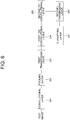
- FIG. 8 A method for testing the CNN for image recognition by using the testing device 200 in accordance with one example embodiment of the present disclosure is described by referring to Fig. 8 as follows. In the description below, the part easily deducible from the learning method described by referring to Figs. 1 to 6 will be omitted.
- the testing device 200 may instruct the convolutional layer 221 to apply the convolution operations to each of the ROI images for testing generated by cropping and resizing areas of the ROIs for testing, corresponding to the objects for testing, on the test image, to thereby generate the ROI feature maps per each of the ROIs for testing.
- the convolutional layer 221 may be a single convolutional layer or multiple convolutional layers for sequential convolution operations on the ROI images for testing.
- the testing device 200 may instruct a pooling layer 222 to apply the pooling operations to the ROI feature maps for testing per each of the ROIs for testing, to thereby generate pooled feature maps for testing per each of the ROIs for testing.
- the testing device 200 may instruct the first transposing layer 223 to concatenate each of pixels, per each of the ROIs for testing, in each of corresponding same locations on the pooled feature maps for testing per each of the ROIs for testing, outputted from the pooling layer 222, to thereby generate an integrated feature map for testing.
- the testing device 200 may instruct the first transposing layer 223 to generate the integrated feature map for testing by using the pooled feature maps for testing per each of the ROIs for testing outputted from the pooling layer 222.
- the testing device 200 may instruct the pooling layer 222 to generate the integrated feature map for testing, without using the first transposing layer 223.
- the learning device 200 may instruct the pooling layer 222 to apply the pooling operations to the ROI feature maps for testing per each of the ROIs for testing, to thereby generate the pooled feature maps for testing per each of the ROIs for testing, and to concatenate each of pixels, per each of the ROIs, in each of corresponding same locations on the pooled feature maps for testing per each of the ROIs for testing, to thereby generate the integrated feature map for testing.
- the testing device 200 may perform processes of instructing a first 1 x1 convolutional layer 224 to apply the 1 x1 convolution operation to the integrated feature map for testing, to thereby generate a first adjusted feature map for testing whose volume is adjusted, and instructing a second 1 x1 convolutional layer 225 to apply the 1 x1 convolution operation to the first adjusted feature map for testing, to thereby generate a second adjusted feature map for testing whose volume is adjusted.
- the testing device 200 may instruct a second transposing layer 226 to divide the second adjusted feature map for testing by each of the pixels, to thereby generate pixel-wise feature maps for testing per each of the ROIs for testing.
- the testing device 200 may instruct a classifying layer 227 to generate the object information for testing on each of the ROIS for testing by using the pixel-wise feature maps for testing per each of the ROIs for testing.
- the classifying layer 227 may use the softmax algorithm and may generate recognized results representing what each of the objects for testing in each of the ROIs for testing is estimated as, and may generate probability information on whether the recognized results are true.
- the object information for testing may include location information of each of the objects for testing on the test image.
- the second transposing layer 226 may generate the pixel-wise feature maps for testing per each of the ROIs for testing by using the second adjusted feature map for testing.
- the classifying layer 227 may generate the pixel-wise feature maps for testing per each of the ROIs for testing by using the second adjusted feature map for testing, without using the second transposing layer 226. That is, the testing device 200 may instruct the classifying layer 227 to divide the second adjusted feature map for testing by each of the pixels, to thereby generate the pixel-wise feature maps for testing per each of the ROIs for testing, and may instruct the classifying layer 227 to generate the object information for testing on each of the ROIs for testing by using the pixel-wise feature maps for testing per each of the ROIs for testing.
- the present disclosure has an effect of recognizing the objects in the input image without regard to the size of the input image by implementing the CNN for image recognition only with the convolutional layers.
- the present disclosure has another effect of minimizing the number of weights for feature classification by implementing the CNN for image recognition only with the convolutional layers, compared to a conventional case of using the FC layers.
- the present disclosure has still another effect of reducing computational load for the feature classification by implementing the CNN for image recognition only with the convolutional layers, compared to the conventional case of using the FC layers.
- size of a chip can be decreased as convolution operations and fully connected layer operations are performed by a same processor. Accordingly, there are advantages such as no need to build additional lines in a semiconductor manufacturing process.
- the embodiments of the present disclosure as explained above can be implemented in a form of executable program command through a variety of computer means recordable to computer readable media.
- the computer readable media may include solely or in combination, program commands, data files, and data structures.
- the program commands recorded to the media may be components specially designed for the present disclosure or may be usable to a skilled human in a field of computer software.
- Computer readable media include magnetic media such as hard disk, floppy disk, and magnetic tape, optical media such as CD-ROM and DVD, magneto-optical media such as floptical disk and hardware devices such as ROM, RAM, and flash memory specially designed to store and carry out program commands.
- Program commands include not only a machine language code made by a complier but also a high level code that can be used by an interpreter etc., which is executed by a computer.
- the aforementioned hardware device can work as more than a software module to perform the action of the present disclosure and they can do the same in the opposite case.
Landscapes
- Engineering & Computer Science (AREA)
- Theoretical Computer Science (AREA)
- Physics & Mathematics (AREA)
- General Physics & Mathematics (AREA)
- Evolutionary Computation (AREA)
- Artificial Intelligence (AREA)
- Data Mining & Analysis (AREA)
- Life Sciences & Earth Sciences (AREA)
- Health & Medical Sciences (AREA)
- General Health & Medical Sciences (AREA)
- General Engineering & Computer Science (AREA)
- Biomedical Technology (AREA)
- Software Systems (AREA)
- Molecular Biology (AREA)
- Computing Systems (AREA)
- Computer Vision & Pattern Recognition (AREA)
- Mathematical Physics (AREA)
- Computational Linguistics (AREA)
- Biophysics (AREA)
- Multimedia (AREA)
- Bioinformatics & Cheminformatics (AREA)
- Bioinformatics & Computational Biology (AREA)
- Evolutionary Biology (AREA)
- Databases & Information Systems (AREA)
- Medical Informatics (AREA)
- Biodiversity & Conservation Biology (AREA)
- Image Analysis (AREA)
Applications Claiming Priority (1)
| Application Number | Priority Date | Filing Date | Title |
|---|---|---|---|
| US16/254,928 US10387753B1 (en) | 2019-01-23 | 2019-01-23 | Learning method and learning device for convolutional neural network using 1×1 convolution for image recognition to be used for hardware optimization, and testing method and testing device using the same |
Publications (1)
| Publication Number | Publication Date |
|---|---|
| EP3686790A1 true EP3686790A1 (fr) | 2020-07-29 |
Family
ID=67620896
Family Applications (1)
| Application Number | Title | Priority Date | Filing Date |
|---|---|---|---|
| EP19219455.3A Pending EP3686790A1 (fr) | 2019-01-23 | 2019-12-23 | Procédé et dispositif d'apprentissage de réseau neuronal convolutionnel utilisant une convolution 1 × 1 pour la reconnaissance d'images destinés à être utilisés pour l'optimisation de matériel et procédé et dispositif d'essai les utilisant |
Country Status (5)
| Country | Link |
|---|---|
| US (1) | US10387753B1 (fr) |
| EP (1) | EP3686790A1 (fr) |
| JP (1) | JP6964353B2 (fr) |
| KR (1) | KR102338765B1 (fr) |
| CN (1) | CN111476248B (fr) |
Families Citing this family (8)
| Publication number | Priority date | Publication date | Assignee | Title |
|---|---|---|---|---|
| CN110738213B (zh) * | 2019-09-20 | 2022-07-01 | 成都芯云微电子有限公司 | 一种包括周边环境的图像识别方法及装置 |
| CN110827297A (zh) * | 2019-11-04 | 2020-02-21 | 中国科学院自动化研究所 | 基于改进的条件生成对抗网络的绝缘子分割方法 |
| JP7278202B2 (ja) * | 2019-11-27 | 2023-05-19 | 富士フイルム株式会社 | 画像学習装置、画像学習方法、ニューラルネットワーク、及び画像分類装置 |
| DE102020208080A1 (de) * | 2020-06-30 | 2021-12-30 | Robert Bosch Gesellschaft mit beschränkter Haftung | Erkennung von Objekten in Bildern unter Äquivarianz oder Invarianz gegenüber der Objektgröße |
| CN111652330B (zh) * | 2020-08-05 | 2020-11-13 | 深圳市优必选科技股份有限公司 | 图像处理方法、装置、系统、电子设备及可读存储介质 |
| KR102585478B1 (ko) * | 2021-10-14 | 2023-10-10 | 주식회사 램스 | 딥러닝을 이용한 스핀 코터의 포토레지스트 도포 상태 검사 시스템 |
| CN115115046B (zh) * | 2022-04-07 | 2025-08-08 | 腾讯科技(深圳)有限公司 | 对象优化方法、装置、计算机设备和存储介质 |
| KR20230149121A (ko) * | 2022-04-19 | 2023-10-26 | 오지큐 주식회사 | 딥러닝 기반의 분류를 통한 공사 진척도 판단 방법 및 장치 |
Family Cites Families (29)
| Publication number | Priority date | Publication date | Assignee | Title |
|---|---|---|---|---|
| US6413949B1 (en) * | 1995-06-07 | 2002-07-02 | D-Pharm, Ltd. | Prodrugs with enhanced penetration into cells |
| US9418319B2 (en) * | 2014-11-21 | 2016-08-16 | Adobe Systems Incorporated | Object detection using cascaded convolutional neural networks |
| US9928410B2 (en) * | 2014-11-24 | 2018-03-27 | Samsung Electronics Co., Ltd. | Method and apparatus for recognizing object, and method and apparatus for training recognizer |
| CN106156807B (zh) * | 2015-04-02 | 2020-06-02 | 华中科技大学 | 卷积神经网络模型的训练方法及装置 |
| US10410096B2 (en) * | 2015-07-09 | 2019-09-10 | Qualcomm Incorporated | Context-based priors for object detection in images |
| US9965719B2 (en) * | 2015-11-04 | 2018-05-08 | Nec Corporation | Subcategory-aware convolutional neural networks for object detection |
| US20170124409A1 (en) * | 2015-11-04 | 2017-05-04 | Nec Laboratories America, Inc. | Cascaded neural network with scale dependent pooling for object detection |
| US10002313B2 (en) * | 2015-12-15 | 2018-06-19 | Sighthound, Inc. | Deeply learned convolutional neural networks (CNNS) for object localization and classification |
| US9858496B2 (en) * | 2016-01-20 | 2018-01-02 | Microsoft Technology Licensing, Llc | Object detection and classification in images |
| WO2017139927A1 (fr) * | 2016-02-17 | 2017-08-24 | Intel Corporation | Proposition de région pour des régions d'image qui comprennent des objets dignes d'intérêt à l'aide de cartes de caractéristiques de multiples couches d'un modèle de réseau de neurones convolutionnel |
| US9471836B1 (en) * | 2016-04-01 | 2016-10-18 | Stradvision Korea, Inc. | Method for learning rejector by forming classification tree in use of training images and detecting object in test images, and rejector using the same |
| US20180039853A1 (en) * | 2016-08-02 | 2018-02-08 | Mitsubishi Electric Research Laboratories, Inc. | Object Detection System and Object Detection Method |
| US10354362B2 (en) * | 2016-09-08 | 2019-07-16 | Carnegie Mellon University | Methods and software for detecting objects in images using a multiscale fast region-based convolutional neural network |
| US20190228268A1 (en) * | 2016-09-14 | 2019-07-25 | Konica Minolta Laboratory U.S.A., Inc. | Method and system for cell image segmentation using multi-stage convolutional neural networks |
| US10387740B2 (en) * | 2016-10-10 | 2019-08-20 | Gyrfalcon Technology Inc. | Object detection and recognition apparatus based on CNN based integrated circuits |
| US10198671B1 (en) * | 2016-11-10 | 2019-02-05 | Snap Inc. | Dense captioning with joint interference and visual context |
| CN115097937B (zh) * | 2016-11-15 | 2025-04-29 | 奇跃公司 | 用于长方体检测的深度学习系统 |
| US20180211403A1 (en) * | 2017-01-20 | 2018-07-26 | Ford Global Technologies, Llc | Recurrent Deep Convolutional Neural Network For Object Detection |
| US20180336469A1 (en) * | 2017-05-18 | 2018-11-22 | Qualcomm Incorporated | Sigma-delta position derivative networks |
| KR101847874B1 (ko) * | 2017-06-28 | 2018-05-25 | 서경대학교 산학협력단 | 합성곱 신경망을 이용한 이미지 인식 방법 및 그 기록 매체 |
| US10474908B2 (en) * | 2017-07-06 | 2019-11-12 | GM Global Technology Operations LLC | Unified deep convolutional neural net for free-space estimation, object detection and object pose estimation |
| US10733755B2 (en) * | 2017-07-18 | 2020-08-04 | Qualcomm Incorporated | Learning geometric differentials for matching 3D models to objects in a 2D image |
| JP7149692B2 (ja) * | 2017-08-09 | 2022-10-07 | キヤノン株式会社 | 画像処理装置、画像処理方法 |
| US10169679B1 (en) * | 2017-10-13 | 2019-01-01 | StradVision, Inc. | Learning method and learning device for adjusting parameters of CNN by using loss augmentation and testing method and testing device using the same |
| US9946960B1 (en) * | 2017-10-13 | 2018-04-17 | StradVision, Inc. | Method for acquiring bounding box corresponding to an object in an image by using convolutional neural network including tracking network and computing device using the same |
| US10007865B1 (en) * | 2017-10-16 | 2018-06-26 | StradVision, Inc. | Learning method and learning device for adjusting parameters of CNN by using multi-scale feature maps and testing method and testing device using the same |
| CN107808138B (zh) * | 2017-10-31 | 2021-03-30 | 电子科技大学 | 一种基于FasterR-CNN的通信信号识别方法 |
| US10229346B1 (en) * | 2018-09-04 | 2019-03-12 | StradVision, Inc. | Learning method, learning device for detecting object using edge image and testing method, testing device using the same |
| US10223614B1 (en) * | 2018-09-04 | 2019-03-05 | StradVision, Inc. | Learning method, learning device for detecting lane through classification of lane candidate pixels and testing method, testing device using the same |
-
2019
- 2019-01-23 US US16/254,928 patent/US10387753B1/en active Active
- 2019-11-15 KR KR1020190147084A patent/KR102338765B1/ko active Active
- 2019-12-19 CN CN201911315993.0A patent/CN111476248B/zh active Active
- 2019-12-23 EP EP19219455.3A patent/EP3686790A1/fr active Pending
-
2020
- 2020-01-09 JP JP2020002364A patent/JP6964353B2/ja active Active
Non-Patent Citations (4)
| Title |
|---|
| "A Guide to Convolutional Neural Networks for Computer Vision", 1 January 2018, MORGAN & CLAYPOOL, article SALMAN KHAN: "A Guide to Convolutional Neural Networks for Computer Vision", pages: 53-54, 57 - 60, XP055705166 * |
| LI JIAN ET AL: "Object detection via feature fusion based single network", 2017 IEEE INTERNATIONAL CONFERENCE ON IMAGE PROCESSING (ICIP), IEEE, 17 September 2017 (2017-09-17), pages 3390 - 3394, XP033323204, DOI: 10.1109/ICIP.2017.8296911 * |
| SAMANGOUEI POUYA ET AL: "Face-MagNet: Magnifying Feature Maps to Detect Small Faces", 2018 IEEE WINTER CONFERENCE ON APPLICATIONS OF COMPUTER VISION (WACV), IEEE, 12 March 2018 (2018-03-12), pages 122 - 130, XP033337627, DOI: 10.1109/WACV.2018.00020 * |
| ZHU YOUSONG ET AL: "CoupleNet: Coupling Global Structure with Local Parts for Object Detection", 2017 IEEE INTERNATIONAL CONFERENCE ON COMPUTER VISION (ICCV), IEEE, 22 October 2017 (2017-10-22), pages 4146 - 4154, XP033283287, DOI: 10.1109/ICCV.2017.444 * |
Also Published As
| Publication number | Publication date |
|---|---|
| JP6964353B2 (ja) | 2021-11-10 |
| CN111476248A (zh) | 2020-07-31 |
| CN111476248B (zh) | 2023-09-22 |
| US10387753B1 (en) | 2019-08-20 |
| JP2020119542A (ja) | 2020-08-06 |
| KR20200091792A (ko) | 2020-07-31 |
| KR102338765B1 (ko) | 2021-12-15 |
Similar Documents
| Publication | Publication Date | Title |
|---|---|---|
| US10387753B1 (en) | Learning method and learning device for convolutional neural network using 1×1 convolution for image recognition to be used for hardware optimization, and testing method and testing device using the same | |
| US10402695B1 (en) | Learning method and learning device for convolutional neural network using 1×H convolution for image recognition to be used for hardware optimization, and testing method and testing device using the same | |
| US10740593B1 (en) | Method for recognizing face using multiple patch combination based on deep neural network with fault tolerance and fluctuation robustness in extreme situation | |
| US10387754B1 (en) | Learning method and learning device for object detector based on CNN using 1×H convolution to be used for hardware optimization, and testing method and testing device using the same | |
| EP3686797A1 (fr) | Procédé et dispositif d'apprentissage pour détecteur d'objets basé sur cnn utilisant une convolution 1 × 1 destiné à être utilisé pour l'optimisation de matériel et procédé et dispositif de test l'utilisant | |
| US11461653B2 (en) | Learning method and learning device for CNN using 1xK or Kx1 convolution to be used for hardware optimization, and testing method and testing device using the same | |
| US10430691B1 (en) | Learning method and learning device for object detector based on CNN, adaptable to customers' requirements such as key performance index, using target object merging network and target region estimating network, and testing method and testing device using the same to be used for multi-camera or surround view monitoring | |
| EP3686782A1 (fr) | Procédé d'apprentissage et dispositif d'apprentissage pour détecteur d'objet en utilisant un réseau d'estimation d'objet cible et un réseau de fusion d'objet cible, procédé de test et dispositif de test les utilisant | |
| EP3686793A1 (fr) | Procédé d'apprentissage et dispositif d'apprentissage d'extraction de caractéristique à partir d'une image d'entrée à l'aide de couches à convolution dans des blocs multiples dans un cnn, donnant lieu à une optimisation du matériel permettant de satisfaire un indice de performance clé et procédé de test et dispositif de test les utilisant | |
| EP3686781B1 (fr) | Procédé d'apprentissage et dispositif d'apprentissage pour détecteur d'objets à base de cnn au moyen de la concaténation d'images et procédé et dispositif de test les utilisant | |
| US10402692B1 (en) | Learning method and learning device for fluctuation-robust object detector based on CNN using target object estimating network adaptable to customers' requirements such as key performance index, and testing device using the same | |
| EP3686807A2 (fr) | Procédé d'apprentissage et dispositif d'apprentissage pour détecteur d'objets à utiliser pour une surveillance basée sur un réseau neuronal convolutionnel capable de convertir des modes selon des échelles d'objets, procédé de test et dispositif de test les utilisant |
Legal Events
| Date | Code | Title | Description |
|---|---|---|---|
| PUAI | Public reference made under article 153(3) epc to a published international application that has entered the european phase |
Free format text: ORIGINAL CODE: 0009012 |
|
| STAA | Information on the status of an ep patent application or granted ep patent |
Free format text: STATUS: REQUEST FOR EXAMINATION WAS MADE |
|
| 17P | Request for examination filed |
Effective date: 20191223 |
|
| AK | Designated contracting states |
Kind code of ref document: A1 Designated state(s): AL AT BE BG CH CY CZ DE DK EE ES FI FR GB GR HR HU IE IS IT LI LT LU LV MC MK MT NL NO PL PT RO RS SE SI SK SM TR |
|
| AX | Request for extension of the european patent |
Extension state: BA ME |
|
| RBV | Designated contracting states (corrected) |
Designated state(s): AL AT BE BG CH CY CZ DE DK EE ES FI FR GB GR HR HU IE IS IT LI LT LU LV MC MK MT NL NO PL PT RO RS SE SI SK SM TR |
|
| STAA | Information on the status of an ep patent application or granted ep patent |
Free format text: STATUS: EXAMINATION IS IN PROGRESS |
|
| 17Q | First examination report despatched |
Effective date: 20220311 |