EP3686800B1 - Procédé et dispositif d'apprentissage pour détecteur d'objets basé sur cnn utilisant une convolution 1xh destiné à être utilisé pour l'optimisation de matériel et procédé et dispositif de test les utilisant - Google Patents
Procédé et dispositif d'apprentissage pour détecteur d'objets basé sur cnn utilisant une convolution 1xh destiné à être utilisé pour l'optimisation de matériel et procédé et dispositif de test les utilisant Download PDFInfo
- Publication number
- EP3686800B1 EP3686800B1 EP20151209.2A EP20151209A EP3686800B1 EP 3686800 B1 EP3686800 B1 EP 3686800B1 EP 20151209 A EP20151209 A EP 20151209A EP 3686800 B1 EP3686800 B1 EP 3686800B1
- Authority
- EP
- European Patent Office
- Prior art keywords
- testing
- feature map
- channels
- layer
- proposals
- Prior art date
- Legal status (The legal status is an assumption and is not a legal conclusion. Google has not performed a legal analysis and makes no representation as to the accuracy of the status listed.)
- Active
Links
Images


Classifications
-
- G—PHYSICS
- G06—COMPUTING OR CALCULATING; COUNTING
- G06N—COMPUTING ARRANGEMENTS BASED ON SPECIFIC COMPUTATIONAL MODELS
- G06N3/00—Computing arrangements based on biological models
- G06N3/02—Neural networks
- G06N3/08—Learning methods
- G06N3/084—Backpropagation, e.g. using gradient descent
-
- G—PHYSICS
- G06—COMPUTING OR CALCULATING; COUNTING
- G06F—ELECTRIC DIGITAL DATA PROCESSING
- G06F18/00—Pattern recognition
- G06F18/20—Analysing
- G06F18/21—Design or setup of recognition systems or techniques; Extraction of features in feature space; Blind source separation
- G06F18/214—Generating training patterns; Bootstrap methods, e.g. bagging or boosting
-
- G—PHYSICS
- G06—COMPUTING OR CALCULATING; COUNTING
- G06F—ELECTRIC DIGITAL DATA PROCESSING
- G06F18/00—Pattern recognition
- G06F18/20—Analysing
- G06F18/21—Design or setup of recognition systems or techniques; Extraction of features in feature space; Blind source separation
- G06F18/2163—Partitioning the feature space
-
- G—PHYSICS
- G06—COMPUTING OR CALCULATING; COUNTING
- G06F—ELECTRIC DIGITAL DATA PROCESSING
- G06F18/00—Pattern recognition
- G06F18/20—Analysing
- G06F18/21—Design or setup of recognition systems or techniques; Extraction of features in feature space; Blind source separation
- G06F18/217—Validation; Performance evaluation; Active pattern learning techniques
-
- G—PHYSICS
- G06—COMPUTING OR CALCULATING; COUNTING
- G06F—ELECTRIC DIGITAL DATA PROCESSING
- G06F18/00—Pattern recognition
- G06F18/20—Analysing
- G06F18/24—Classification techniques
-
- G—PHYSICS
- G06—COMPUTING OR CALCULATING; COUNTING
- G06N—COMPUTING ARRANGEMENTS BASED ON SPECIFIC COMPUTATIONAL MODELS
- G06N3/00—Computing arrangements based on biological models
- G06N3/02—Neural networks
- G06N3/04—Architecture, e.g. interconnection topology
- G06N3/045—Combinations of networks
-
- G—PHYSICS
- G06—COMPUTING OR CALCULATING; COUNTING
- G06N—COMPUTING ARRANGEMENTS BASED ON SPECIFIC COMPUTATIONAL MODELS
- G06N3/00—Computing arrangements based on biological models
- G06N3/02—Neural networks
- G06N3/04—Architecture, e.g. interconnection topology
- G06N3/0464—Convolutional networks [CNN, ConvNet]
-
- G—PHYSICS
- G06—COMPUTING OR CALCULATING; COUNTING
- G06N—COMPUTING ARRANGEMENTS BASED ON SPECIFIC COMPUTATIONAL MODELS
- G06N3/00—Computing arrangements based on biological models
- G06N3/02—Neural networks
- G06N3/08—Learning methods
-
- G—PHYSICS
- G06—COMPUTING OR CALCULATING; COUNTING
- G06N—COMPUTING ARRANGEMENTS BASED ON SPECIFIC COMPUTATIONAL MODELS
- G06N3/00—Computing arrangements based on biological models
- G06N3/02—Neural networks
- G06N3/08—Learning methods
- G06N3/09—Supervised learning
-
- G—PHYSICS
- G06—COMPUTING OR CALCULATING; COUNTING
- G06T—IMAGE DATA PROCESSING OR GENERATION, IN GENERAL
- G06T7/00—Image analysis
- G06T7/20—Analysis of motion
- G06T7/246—Analysis of motion using feature-based methods, e.g. the tracking of corners or segments
-
- G—PHYSICS
- G06—COMPUTING OR CALCULATING; COUNTING
- G06V—IMAGE OR VIDEO RECOGNITION OR UNDERSTANDING
- G06V10/00—Arrangements for image or video recognition or understanding
- G06V10/40—Extraction of image or video features
- G06V10/44—Local feature extraction by analysis of parts of the pattern, e.g. by detecting edges, contours, loops, corners, strokes or intersections; Connectivity analysis, e.g. of connected components
- G06V10/443—Local feature extraction by analysis of parts of the pattern, e.g. by detecting edges, contours, loops, corners, strokes or intersections; Connectivity analysis, e.g. of connected components by matching or filtering
- G06V10/449—Biologically inspired filters, e.g. difference of Gaussians [DoG] or Gabor filters
- G06V10/451—Biologically inspired filters, e.g. difference of Gaussians [DoG] or Gabor filters with interaction between the filter responses, e.g. cortical complex cells
- G06V10/454—Integrating the filters into a hierarchical structure, e.g. convolutional neural networks [CNN]
-
- G—PHYSICS
- G06—COMPUTING OR CALCULATING; COUNTING
- G06V—IMAGE OR VIDEO RECOGNITION OR UNDERSTANDING
- G06V10/00—Arrangements for image or video recognition or understanding
- G06V10/70—Arrangements for image or video recognition or understanding using pattern recognition or machine learning
- G06V10/764—Arrangements for image or video recognition or understanding using pattern recognition or machine learning using classification, e.g. of video objects
-
- G—PHYSICS
- G06—COMPUTING OR CALCULATING; COUNTING
- G06V—IMAGE OR VIDEO RECOGNITION OR UNDERSTANDING
- G06V10/00—Arrangements for image or video recognition or understanding
- G06V10/70—Arrangements for image or video recognition or understanding using pattern recognition or machine learning
- G06V10/82—Arrangements for image or video recognition or understanding using pattern recognition or machine learning using neural networks
-
- G—PHYSICS
- G06—COMPUTING OR CALCULATING; COUNTING
- G06V—IMAGE OR VIDEO RECOGNITION OR UNDERSTANDING
- G06V20/00—Scenes; Scene-specific elements
-
- G—PHYSICS
- G06—COMPUTING OR CALCULATING; COUNTING
- G06T—IMAGE DATA PROCESSING OR GENERATION, IN GENERAL
- G06T2207/00—Indexing scheme for image analysis or image enhancement
- G06T2207/20—Special algorithmic details
- G06T2207/20081—Training; Learning
-
- G—PHYSICS
- G06—COMPUTING OR CALCULATING; COUNTING
- G06T—IMAGE DATA PROCESSING OR GENERATION, IN GENERAL
- G06T2207/00—Indexing scheme for image analysis or image enhancement
- G06T2207/20—Special algorithmic details
- G06T2207/20084—Artificial neural networks [ANN]
Definitions
- the present disclosure relates to a method according to claim 1.
- Deep Convolution Neural Networks are at the heart of the remarkable development in deep learning. CNNs have already been used in the 90's to solve the problems of character recognition, but their use has become as widespread as it is now thanks to recent research. These deep CNNs won the 2012 ImageNet image classification tournament, crushing other competitors. Then, the convolutional neural network became a very useful tool in the field of the machine learning.
- the CNN may include a feature extractor which extracts features from an image, and a feature classifier which detects objects in the image or recognizes the objects in the image by referring to the features extracted by the feature extractor.
- the feature extractor of the CNN may include convolutional layers, and the feature classifier may include FC layers capable of applying fully connected operations to the features extracted by the feature extractor.
- FC layers have problems in that weights have to be generated for every feature inputted, and the fully connected operations have to be performed for every feature inputted, resulting in heavy computational load.
- the FC layers require a size of its input image to be same as a size preset according to an FC layer model. Therefore, if a training image or a test image having a size different from the preset size is inputted into the CNN including the FC layers, although the convolutional layers may apply their operations successfully to the training image or the test image, the FC layers cannot apply their operations to the training image or the test image, as the size of the input image is different from the preset size.
- the inventors of the present disclosure propose an object detector based on the CNN capable of overcoming the problems of the FC layers.
- recordable media that are readable by a computer for storing a computer program to execute the method of the present disclosure is further provided.
- Any images referred to in the present disclosure may include images related to any roads paved or unpaved, in which case the objects on the roads or near the roads may include vehicles, persons, animals, plants, buildings, flying objects like planes or drones, or any other obstacles which may appear in a road-related scene, but the scope of the present disclosure is not limited thereto.
- said any images referred to in the present disclosure may include images not related to any roads, such as images related to alleyway, land lots, sea, lakes, rivers, mountains, forests, deserts, sky, or any indoor space
- the objects in said any images may include vehicles, persons, animals, plants, buildings, flying objects like planes or drones, ships, amphibious planes or ships, or any other obstacles which may appear in a scene related to alleyway, land lots, sea, lakes, rivers, mountains, forests, deserts, sky, or any indoor space, but the scope of the present disclosure is not limited thereto.
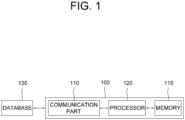
- Fig. 1 is a drawing schematically illustrating a learning device 100 of an object detector based on a CNN in accordance with one example embodiment of the present disclosure, and by referring to Fig. 1 , the learning device 100 may include a communication part 110 and a processor 120.
- the communication part 110 may receive at least one training image.
- the training image may be stored in a database 300, and the database 300 may store at least one ground truth of class information on each of one or more objects and at least one ground truth of location information on each of the objects, corresponding to the training images.
- the learning device may further include a memory 115 capable of storing computer readable instructions for performing following processes.
- the processor, the memory, a medium, etc. may be integrated with an integrated processor.
- the processor 120 may perform processes of (i) instructing one or more convolutional layers to generate at least one initial feature map by applying one or more convolution operations to the training image, (ii) instructing an RPN to generate one or more proposals corresponding to each of the objects in the training image by using the initial feature map, and (iii) (iii-1) instructing a pooling layer to apply one or more pooling operations to each region, corresponding to each of the proposals, on the initial feature map, to thereby generate pooled feature maps per each of the proposals, and instructing a first transposing layer to concatenate each of pixels, per each of the proposals, in each of corresponding same locations on the pooled feature maps per each of the proposals, to thereby generate an integrated feature map, or (iii-2) instructing the pooling layer to apply the pooling operations to each region, corresponding to each of the proposals, on the initial feature map, to thereby generate the pooled feature maps per each of the proposals, and instructing the pooling layer to concatenate
- the processor 120 may perform processes of (i) instructing a first reshaping layer to concatenate each of features in each group comprised of each corresponding H1 channels among all channels of the integrated feature map, to thereby generate a first reshaped feature map, (ii) instructing a 1 ⁇ H1 convolutional layer to apply a 1 ⁇ H1 convolution operation to the first reshaped feature map, to thereby generate a first adjusted feature map whose volume is adjusted, (iii) instructing a second reshaping layer to concatenate each of features, in each group comprised of each corresponding H2 channels among all channels of the first adjusted feature map, to thereby generate a second reshaped feature map, and (iv) instructing a 1 ⁇ H2 convolutional layer to apply a 1 ⁇ H2 convolution operation to the second reshaped feature map, to thereby generate a second adjusted feature map whose volume is adjusted.
- the processor 120 may perform processes of (i) instructing a second transposing layer to divide the second adjusted feature map by each of the pixels, to thereby generate pixel-wise feature maps per each of the proposals, and instructing a classifying layer to generate object class information on each of the proposals by using the pixel-wise feature maps per each of the proposals, or (ii) instructing the classifying layer to divide the second adjusted feature map by each of the pixels, to thereby generate the pixel-wise feature maps per each of the proposals, and instructing the classifying layer to generate the object class information on each of the proposals by using the pixel-wise feature maps per each of the proposals.
- the processor 120 may perform processes of instructing a detecting layer to generate object detection information corresponding to the objects in the training image by referring to the object class information and the pixel-wise feature maps per each of the proposals, and instructing a detection loss layer to calculate one or more object detection losses by referring to the object detection information and its corresponding GT, to thereby learn at least part of parameters of the 1 ⁇ H2 convolutional layer, the 1 ⁇ H1 convolutional layer, and the convolutional layers by backpropagating the object detection losses.
- the processor 120 may instruct an RPN loss layer to calculate one or more RPN losses by referring to the proposals and their corresponding ground truths, to thereby learn at least part of parameters of the RPN by backpropagating the RPN losses.
- a temporal order of backpropagating the object detection losses and backpropagating the RPN losses is not limited.
- the learning device 100 in accordance with one example of the present disclosure may be a computing device and may be any digital device with a processor capable of computation.
- Fig. 1 shows the single learning device 100, the scope of the present disclosure is not limited thereto.
- the learning device may be configured as several devices to perform its functions.
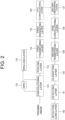
- FIG. 2 A method for learning parameters of the object detector based on the CNN by using the learning device 100 in accordance with one example embodiment of the present disclosure is described by referring to Fig. 2 as follows.
- the learning device 100 may instruct a convolutional layer 121 to apply the convolution operations to the training image, to thereby generate the initial feature map.
- the convolutional layer 121 may be a single convolutional layer or multiple convolutional layers for sequential convolution operations on the training image.
- the learning device 100 may instruct an RPN 122 to generate one or more proposals corresponding to the objects in the training image by using the initial feature map.
- the RPN 122 may generate ROI candidates, corresponding to candidate regions, where the objects are estimated as located, in the training image, and may output specific ROI candidates, having high probabilities by which the objects are determined as located, among the ROI candidates, as the proposals.
- the learning device 100 may instruct a pooling layer 123 to generate the pooled feature maps per each of the proposals by pooling each region, corresponding to each of the proposals, on the initial feature map.
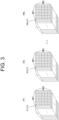
- each of the pooled feature maps P1, P2, ..., and PN per each of the proposals may have a volume of M1•M2•J.
- the learning device 100 may instruct a first transposing layer 124 to concatenate each of the pixels, per each of the proposals, in each of corresponding same locations on the pooled feature maps per each of the proposals, outputted from the pooling layer 123, to thereby generate the integrated feature map.
- P1F1, P2F1, ..., and PNF1 represent each of first pixels in each of the pooled feature maps P1, P2, ..., and PN per each of the proposals in Fig. 3
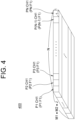
- P1F1, P2F1, ..., and PNF1 may be concatenated such that a first part of the integrated feature map 400 having a width of N and a height of 1 is generated, shown as a line in the front corresponding to the first channel among all the channels in Fig. 4 , and this process may be performed for the rest of the pixels in each of the pooled feature maps P1, P2, ..., and PN per each of the proposals.
- the integrated feature map 400 may be generated as having channels of M1•M2•J which is equal to the number of the pixels in each of the pooled feature maps per each of the proposals.
- the learning device 100 may instruct the first transposing layer 124 to generate the integrated feature map 400 by using the pooled feature maps per each of the proposals outputted from the pooling layer 123.
- the learning device 100 may instruct the pooling layer 123 to generate the integrated feature map 400, without using the first transposing layer 124.
- the learning device 100 may instruct the pooling layer 123 to apply the pooling operations to each region, corresponding to each of the proposals, on the initial feature map, to thereby generate the pooled feature maps per each of the proposals, and to concatenate each of the pixels, per each of the proposals, in each of corresponding same locations on the pooled feature maps per each of the proposals, outputted from the pooling layer 123, to thereby generate the integrated feature map 400.
- the learning device 100 may instruct a first reshaping layer 125 to concatenate each of features in each group comprised of each corresponding H1 channels among all channels of the integrated feature map 400, to thereby generate a first reshaped feature map 500A.
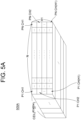
- the learning device 100 may instruct the first reshaping layer 125 to concatenate each of features P1CH1, P2CH1, ..., and PNCH1 in a first channel of the integrated feature map 400 to P1CH(H1), P2CH(H1), ..., and PNCH(H1) in an H1-th channel thereof, to concatenate each of features P1CH(H1+1), P2CH(H1+1), ..., and PNCH(H1+1) in an (H1+1)-th channel of the integrated feature map 400 to P1CH(2•H1), P2CH(2•H1), ..., and PNCH(2•H1) in a (2•H1)-th channel thereof, and the like. That is, the learning device 100 may repeat this concatenating process to generate the first reshaped feature map 500A having a width of N, a height of H1, and a channel of CEIL( M 1 ⁇ M 2
- the learning device 100 may instruct the first reshaping layer 125 to add at least one first dummy channel to the integrated feature map 400 such that the number of the channels of the integrated feature map 400 including the at least one first dummy channel is a multiple of H1, and to concatenate said each of features in said each group comprised of said each corresponding H1 channels among said all channels of the integrated feature map 400.
- the at least one zero padding region may be added such that the integrated feature map 400 has a width of N and a height of H1.
- the learning device 100 may instruct a 1 ⁇ H1 convolutional layer 126 to apply the 1 ⁇ H1 convolution operation to the first reshaped feature map 500A, to thereby generate the first adjusted feature map 500B whose volume is adjusted.
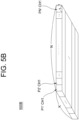
- the learning device 100 may instruct the 1 ⁇ H1 convolutional layer 126 to apply the 1 ⁇ H1 convolution operation to the first reshaped feature map 500A in Fig. 5A , to thereby generate the first adjusted feature map 500B having a volume of N•1•K resulting from a width of N, a height of 1, and a channel of K.
- the amount of computation of the present disclosure becomes 1/H1 of that of the conventional art, thus processing time and performance may be improved.
- features P1'CH1, P2'CH1, ..., and PN'CH1 on the first adjusted feature map 500B may result from locally connecting features P1CH1, P1CH2, ..., and P1CH(H1), locally connecting features P2CH1, P2CH2, ..., and P2CH(H1), ..., and locally connecting features PNCH1, PNCH2, ..., and PNCH(H1) on the first reshaped feature map 500A.
- said "locally connecting" means applying the 1 ⁇ H1 convolution operation.
- the learning device 100 may instruct a second reshaping layer 127 to concatenate each of features in each group comprised of each corresponding H2 channels among all channels of the first adjusted feature map 500B, to thereby generate a second reshaped feature map 600A.
- the learning device 100 may instruct the second reshaping layer 127 to concatenate each of features P1'CH1, P2'CH1, ..., and PN'CH1 in a first channel of the first adjusted feature map 500B to P1'CH(H2), P2'CH(H2), ..., and PN'CH(H2) in an H2-th channel thereof, to concatenate each of features P1'CH(H2+1), P2'CH(H2+1), ..., and PN'CH(H2+1) in an (H2+1)-th channel of the first adjusted feature map 500B to P1'CH(2•H2), P2'CH(2•H2), ..., and PN'CH(2•H2) in a (2•H2)-th channel thereof, and the like. That is, the learning device 100 may repeat this concatenating process to generate the second reshaped feature map 600A having a width of N, a height of
- the learning device 100 may instruct the second reshaping layer 127 to add at least one second dummy channel to the first adjusted feature map 500B such that the number of the channels of the first adjusted feature map 500B including the at least one second dummy channel is a multiple of H2, and to concatenate said each of features in said each group comprised of said each corresponding H2 channels among said all channels of the first adjusted feature map 500B.
- the at least one zero padding region may be added such that the first adjusted feature map 500B has a width of N and a height of H2.
- the learning device 100 may instruct a 1 ⁇ H2 convolutional layer 128 to apply the 1 ⁇ H2 convolution operation to the second reshaped feature map 600A, to thereby generate the second adjusted feature map 600B whose volume is adjusted.
- the learning device 100 may instruct the 1 ⁇ H2 convolutional layer 128 to apply the 1 ⁇ H2 convolution operation to the second reshaped feature map 600A in Fig. 6A , to thereby generate the second adjusted feature map 600B having a volume of N•1•L resulting from a width of N, a height of 1, and a channel of L.
- the amount of computation of the present disclosure becomes 1/H2 of that of the conventional art, thus processing time and performance may be improved.
- features P1"CH1, P2"CH1, ..., and PN"CH1 on the second adjusted feature map 600B may result from locally connecting features P1'CH1, P1'CH2, ..., and P1'CH(H1), locally connecting features P2'CH1, P2'CH2, ..., and P2'CH(H1), ..., and locally connecting features PN'CH1, PN'CH2, ..., and PN'CH(H1) on the second reshaped feature map 600A.
- said "locally connecting" means applying the 1 ⁇ H2 convolution operation.
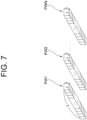
- the learning device 100 may instruct a second transposing layer 129 to divide the second adjusted feature map 600B by each of the pixels, to thereby generate pixel-wise feature maps PW1, PW2, ..., and PWN per each of the proposals.
- the learning device 100 may instruct the second transposing layer 129 to divide the second adjusted feature map 600B having a volume of N•1•L resulting from a width of N, a height of 1, and a channel of L as in Fig. 6B , by each of the pixels, to thereby generate the pixel-wise feature maps PW1, PW2, ..., and PWN per each of the proposals, having a width of 1, a height of 1, and a channel of L.
- the learning device 100 may instruct a classifying layer 130 to generate the object class information on each of the proposals by using the pixel-wise feature maps PW1, PW2, ..., and PWN per each of the proposals.
- the classifying layer 130 may use a softmax algorithm and may generate probability information on whether each of the proposals corresponds to each of the objects to be detected.
- the second transposing layer 129 may generate the pixel-wise feature maps PW1, PW2, ... , and PWN per each of the proposals by using the second adjusted feature map 600B.
- the classifying layer 130 may generate the pixel-wise feature maps PW1, PW2, ..., and PWN per each of the proposals by using the second adjusted feature map 600B, without using the second transposing layer 129.
- the learning device 100 may instruct the classifying layer 130 to divide the second adjusted feature map 600B by each of the pixels, to thereby generate the pixel-wise feature maps PW1, PW2, ..., and PWN per each of the proposals, and may instruct the classifying layer 130 to generate the object class information on each of the proposals by using the pixel-wise feature maps per PW1, PW2, ..., and PWN each of the proposals.
- the learning device 100 may instruct a detecting layer 131 to generate the object detection information corresponding to the objects in the training image by referring to the object class information and the pixel-wise feature maps PW1, PW2, ..., and PWN per each of the proposals.
- the detecting layer 129 may use an NMS algorithm, i.e., non-maximum suppression algorithm, and if a single object is tagged by multiple proposals, may select at least one specific proposal thereamong with a high probability as the object detection information corresponding to the single object.
- the learning device 100 may instruct a detection loss layer 132 to calculate one or more object detection losses by referring to the object detection information and its corresponding GT, to thereby adjust at least part of parameters of the 1 ⁇ H2 convolutional layer 128 and the 1 ⁇ H1 convolutional layer 126, and the convolutional layer 121 by backpropagating the object detection losses.
- the learning device 100 may instruct at least one RPN loss layer 133 corresponding to the RPN 122 to calculate one or more RPN losses by referring to the proposals and their corresponding GTs, to thereby adjust at least part of parameters of the RPN 122 by backpropagating the RPN losses.
- the object detector based on the CNN in accordance with one example embodiment of the present disclosure above is comprised of the convolutional layers only, and thus capable of detecting the objects in the input image without regard to the size of the input image, which is not possible if the CNN uses conventional FC layers. Also, the object detector based on the CNN in accordance with one example embodiment of the present disclosure is capable of reducing amount of computation by applying locally connected operation of the 1 ⁇ H convolutional layer, compared to the fully connected operation of the conventional FC layers.
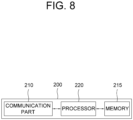
- Fig. 8 is a drawing schematically illustrating a testing device 200 of the object detector based on the CNN in accordance with one example embodiment of the present disclosure, and by referring to Fig. 8 , the testing device 200 may include a communication part 210 and a processor 220.
- testing device may further include a memory 215 capable of storing computer readable instructions for performing following processes.
- the processor, the memory, a medium, etc. may be integrated with an integrated processor.
- the communication part 210 may acquire or support another device to acquire at least one test image.
- the object detector based on the CNN in accordance with one example of the present disclosure may be assumed to have been learned by the learning method described by referring to Figs. 1 to 7 .
- the phrase “for training” is added for terms related to the learning processes
- the phrase “for testing” is added for terms related to testing processes, to avoid possible confusion.
- the learning device may have performed processes of (a) (i) instructing the convolutional layers to generate at least one initial feature map for training by applying the convolution operations to the training image, (ii) instructing the RPN to generate one or more proposals for training corresponding to each of one or more objects for training in the training image by using the initial feature map for training, and (iii) (iii-1) instructing the pooling layer to apply the pooling operations to each region, corresponding to each of the proposals for training, on the initial feature map for training, to thereby generate pooled feature maps for training per each of the proposals for training, and instructing the first transposing layer to concatenate each of pixels, per each of the proposals for training, in each of corresponding same locations on the pooled feature maps for training per each of the proposals for training, to thereby generate an integrated feature map for training, or (iii-2) instructing the pooling layer to apply the pooling operations to each region, corresponding to each of the proposals for training
- the learning device may have instructed the RPN loss layer to calculate one or more RPN losses by referring to the proposals for training and their corresponding ground truths, to thereby learn at least part of the parameters of the RPN by backpropagating the RPN losses.
- the processor 120 may perform processes of (i) instructing the convolutional layers to generate at least one initial feature map for testing by applying the convolution operations to at least one test image, (ii) instructing the RPN to generate one or more proposals for testing corresponding to each of one or more objects for testing in the test image by using the initial feature map for testing, and (iii) (iii-1) instructing the pooling layer to apply the pooling operations to each region, corresponding to each of the proposals for testing, on the initial feature map for testing, to thereby generate pooled feature maps for testing per each of the proposals for testing, and instructing the first transposing layer to concatenate each of pixels, per each of the proposals for testing, in each of corresponding same locations on the pooled feature maps for testing per each of the proposals for testing, to thereby generate an integrated feature map for testing, or (iii-2) instructing the pooling layer to apply the pooling operations to each region, corresponding to each of the proposals for testing, on the initial feature map for testing, to thereby generate thereby
- the processor 220 may perform processes of (i) instructing the first reshaping layer to concatenate each of features in each group comprised of each corresponding H1 channels among all channels of the integrated feature map for testing, to thereby generate a first reshaped feature map for testing, (ii) instructing the 1 ⁇ H1 convolutional layer to apply the 1 ⁇ H1 convolution operation to the first reshaped feature map for testing, to thereby generate a first adjusted feature map for testing whose volume is adjusted, (iii) instructing the second reshaping layer to concatenate each of features, in each group comprised of each corresponding H2 channels among all channels of the first adjusted feature map for testing, to thereby generate a second reshaped feature map for testing, and (iv) instructing the 1 ⁇ H2 convolutional layer to apply the 1 ⁇ H2 convolution operation to the second reshaped feature map for testing, to thereby generate a second adjusted feature map for testing whose volume is adjusted.
- the processor 220 may perform processes of (i) instructing the second transposing layer to divide the second adjusted feature map for testing by each of the pixels, to thereby generate pixel-wise feature maps for testing per each of the proposals for testing, and instructing the classifying layer to generate object class information for testing on each of the proposals for testing by using the pixel-wise feature maps for testing per each of the proposals for testing, or (ii) instructing the classifying layer to divide the second adjusted feature map for testing by each of the pixels, to thereby generate the pixel-wise feature maps for testing per each of the proposals for testing, and instructing the classifying layer to generate the object class information for testing on each of the proposals for testing by using the pixel-wise feature maps for testing per each of the proposals for testing.
- the processor 220 may instruct the detecting layer to generate object detection information for testing corresponding to the objects for testing in the test image by referring to the object class information for testing and the pixel-wise feature maps for testing per each of the proposals for testing.
- the testing device 200 in accordance with one example embodiment of the present disclosure may be a computing device and may be any device with a processor capable of computation.
- Fig. 8 shows the single testing device 200, the scope of the present disclosure is not limited thereto.
- the testing device may be configured as several devices to perform its functions.
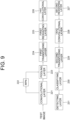
- FIG. 9 A method for testing parameters of the object detector based the CNN by using the testing device 200 in accordance with one example embodiment of the present disclosure is described by referring to Fig. 9 as follows. In the description below, the part easily deducible from the learning method described by referring to Figs. 1 to 7 will be omitted.
- the testing device 200 may instruct the convolutional layer 221 to apply the convolution operations to the test image, to thereby generate the initial feature map for testing.
- the convolutional layer 221 may be a single convolutional layer or multiple convolutional layers for the sequential convolution operations on the test image.
- the testing device 200 may instruct the RPN 222 to generate one or more proposals for testing, corresponding to each of the objects for testing, in the test image by using the initial feature map for testing.
- the RPN 222 may generate ROI candidates for testing, corresponding to candidate regions, where the objects for testing are estimated as located, in the test image, and may output specific ROI candidates for testing, having high probabilities by which the objects for testing are determined as located, among the ROI candidates for testing, as proposals for testing.
- the testing device 200 may instruct a pooling layer 223 to generate pooled feature maps for testing per each of the proposals for testing by pooling each region, corresponding to each of the proposals for testing, on the initial feature map for testing.
- the testing device 200 may instruct the first transposing layer 224 to concatenate each of the pixels, per each of the proposals for testing, in each of corresponding same locations on the pooled feature maps for testing per each of the proposals for testing, outputted from the pooling layer 223, to thereby generate an integrated feature map for testing.
- the testing device 200 may instruct the first transposing layer 224 to generate the integrated feature map for testing by using the pooled feature maps for testing per each of the proposals for testing outputted from the pooling layer 223.
- the testing device 200 may instruct the pooling layer 223 to generate the integrated feature map for testing, without using the first transposing layer 224.
- the testing device 200 may instruct the pooling layer 223 to apply the pooling operations to each region, corresponding to each of the proposals for testing, on the initial feature map for testing, to thereby generate the pooled feature maps for testing per each of the proposals for testing, and to concatenate each of pixels, per each of the proposals for testing, in each of corresponding same locations on the pooled feature maps for testing per each of the proposals for testing, to thereby generate the integrated feature map for testing.
- the testing device 200 may instruct a first reshaping layer 225 to concatenate each of features in each group comprised of each corresponding H1 channels among all channels of the integrated feature map for testing, to thereby generate a first reshaped feature map for testing.
- the learning device 200 may instruct the first reshaping layer 225 to add at least one first dummy channel to the integrated feature map for testing such that the number of the channels of the integrated feature map for testing including the at least one first dummy channel is a multiple of H1, and to concatenate said each of features in said each group comprised of said each corresponding H1 channels among said all channels of the integrated feature map for testing.
- the at least one zero padding region may be added such that the integrated feature map for testing has a width of N and a height of H1.
- the testing device 200 may instruct a 1 ⁇ H1 convolutional layer 226 to apply the 1 ⁇ H1 convolution operation to the first reshaped feature map for testing, to thereby generate the first adjusted feature map for testing whose volume is adjusted.
- the testing device 200 may instruct a second reshaping layer 227 to concatenate each of features in each group comprised of each corresponding H2 channels among all channels of the first adjusted feature map for testing, to thereby generate a second reshaped feature map for testing.
- the learning device 200 may instruct the second reshaping layer 227 to add at least one second dummy channel to the first adjusted feature map for testing such that the number of the channels of the first adjusted feature map for testing including the at least one second dummy channel is a multiple of H2, and to concatenate said each of features in said each group comprised of said each corresponding H2 channels among said all channels of the first adjusted feature map for testing.
- the at least one zero padding region may be added such that the first adjusted feature map for testing has a width of N and a height of H2.
- the testing device 200 may instruct a 1 ⁇ H2 convolutional layer 228 to apply the 1 ⁇ H2 convolution operation to the second reshaped feature map for testing, to thereby generate the second adjusted feature map for testing whose volume is adjusted.
- the testing device 200 may instruct a second transposing layer 229 to divide the second adjusted feature map for testing by each of the pixels, to thereby generate pixel-wise feature maps for testing per each of the proposals for testing.
- the testing device 200 may instruct a classifying layer 230 to generate the object class information for testing on each of the proposals for testing by using the pixel-wise feature maps for testing per each of the proposals for testing.
- the classifying layer 230 may use the softmax algorithm and may generate probability information for testing on whether each of the proposals for testing corresponds to each of the objects for testing to be detected.
- the second transposing layer 229 may generate the pixel-wise feature maps for testing per each of the proposals for testing by using the second adjusted feature map for testing.
- the classifying layer 230 may generate the pixel-wise feature maps for testing per each of the proposals for testing by using the second adjusted feature map for testing, without using the second transposing layer 229. That is, the testing device 200 may instruct the classifying layer 230 to divide the second adjusted feature map for testing by each of the pixels, to thereby generate the pixel-wise feature maps for testing per each of the proposals for testing, and may instruct the classifying layer 230 to generate the object class information for testing on each of the proposals for testing by using the pixel-wise feature maps for testing per each of the proposals for testing.
- the testing device 200 may instruct a detecting layer 231 to generate the object detection information for testing corresponding to the objects for testing in the test image by referring to the object class information for testing and the pixel-wise feature maps for testing per each of the proposals for testing.
- the detecting layer 231 may use the NMS algorithm, i.e., non-maximum suppression algorithm, and if a single object for testing is tagged by multiple proposals for testing, may select at least one specific proposal for testing thereamong with a high probability as the object detection information for testing corresponding to the single object for testing.
- the above learning device and the testing method may be provided to be used for hardware optimization which satisfies KPI(key performance index).
- the present disclosure has an effect of detecting the objects in the input image without regard to the size of the input image by implementing the object detector based on the CNN only with the convolutional layers.
- the present disclosure has another effect of minimizing the number of weights used for feature classification by implementing the object detector based on the CNN only with the convolutional layers, compared to a conventional case of using the FC layers.
- the present disclosure has still another effect of reducing amount of computation for the feature classification by implementing the object detector based on the CNN only with the convolutional layers, compared to the conventional case of using the FC layers.
- the embodiments of the present disclosure as explained above can be implemented in a form of executable program command through a variety of computer means recordable to computer readable media.
- the computer readable media may include solely or in combination, program commands, data files, and data structures.
- the program commands recorded to the media may be components specially designed for the present disclosure or may be usable to a skilled human in a field of computer software.
- Computer readable media include magnetic media such as hard disk, floppy disk, and magnetic tape, optical media such as CD-ROM and DVD, magneto-optical media such as floptical disk and hardware devices such as ROM, RAM, and flash memory specially designed to store and carry out program commands.
- Program commands include not only a machine language code made by a compiler but also a high level code that can be used by an interpreter etc., which is executed by a computer.
Landscapes
- Engineering & Computer Science (AREA)
- Theoretical Computer Science (AREA)
- Physics & Mathematics (AREA)
- General Physics & Mathematics (AREA)
- Evolutionary Computation (AREA)
- Artificial Intelligence (AREA)
- Data Mining & Analysis (AREA)
- Life Sciences & Earth Sciences (AREA)
- Health & Medical Sciences (AREA)
- General Health & Medical Sciences (AREA)
- General Engineering & Computer Science (AREA)
- Software Systems (AREA)
- Computing Systems (AREA)
- Computer Vision & Pattern Recognition (AREA)
- Molecular Biology (AREA)
- Biomedical Technology (AREA)
- Multimedia (AREA)
- Mathematical Physics (AREA)
- Computational Linguistics (AREA)
- Biophysics (AREA)
- Medical Informatics (AREA)
- Databases & Information Systems (AREA)
- Bioinformatics & Cheminformatics (AREA)
- Bioinformatics & Computational Biology (AREA)
- Evolutionary Biology (AREA)
- Biodiversity & Conservation Biology (AREA)
- Image Analysis (AREA)
Claims (9)
- Procédé mis en oeuvre par ordinateur pour apprendre des paramètres d'un détecteur d'objet sur la base d'un CNN, le procédé comprenant les étapes suivantes consistant à :(a) (i) générer, via une ou plusieurs couches convolutives, au moins une carte de caractéristiques initiale en appliquant une ou plusieurs opérations de convolution à une image d'apprentissage, (ii) générer, via un RPN, N propositions correspondant à chacun d'un ou plusieurs objets dans l'image d'apprentissage en utilisant la carte de caractéristiques initiale, (iii) générer, via une couche de regroupement, N cartes de caractéristiques regroupées, ayant une largeur de M1, une hauteur de M2 et un nombre de canaux de J, pour chacune des N propositions en appliquant une ou plusieurs opérations de regroupement à chaque région, correspondant à chacune des N propositions, sur la carte de caractéristiques initiale, et (iv) générer, via une première couche de transposition, une carte de caractéristiques intégrée, ayant une largeur de N, une hauteur de 1 et un nombre de canaux de M1•M2•J ,(b) (b1) (i) générer, via une première couche de remodelage, une première carte de caractéristiques remodelée ayant une largeur de N, une hauteur de H1 et un nombre de canaux de CEIL ((M1•M2•J)/H1) en concaténant chacune des caractéristiques H1 dans chaque groupe composé de chaque canal H1 correspondant parmi tous les canaux de la carte de caractéristiques intégrée le long de la hauteur H1 de la première carte de caractéristiques remodelée, et (ii) générer, via une couche convolutive IxH1 ayant un nombre de filtres de K, une première carte de caractéristiques ajustée ayant une largeur de N, une hauteur de 1 et un certain nombre de chaînes de K, et (b2) (i) générer, via une deuxième couche de remodelage, une deuxième carte de caractéristiques remodelées ayant une largeur de N, une hauteur de H2 et un nombre de canaux de CEIL (K/H2) en concaténant chacune des caractéristiques H2 dans chaque groupe composé de chaque H2 canaux correspondants parmi tous canaux de la première carte de caractéristiques ajustée le long de la hauteur H2 de la deuxième carte de caractéristiques remodelée, et (ii) générer une couche convolutive 1 × H2 ayant un certain nombre de filtres de L, une deuxième carte de caractéristiques ajustée ayant une largeur de N, une hauteur de 1 et un nombre de canaux de L ;(c) (c1) (i) générer, via une deuxième couche de transposition, des cartes de caractéristiques par pixel ayant une largeur de 1, une hauteur de 1 et un nombre de canaux de L pour chacune des N propositions en divisant la deuxième carte de caractéristiques ajustée par chacun des pixels, et générer, via une couche de classification, des informations de classe d'objet sur chaque des N propositions en utilisant les cartes de caractéristiques par pixel pour chacune des N propositions, (c2) générer, via une couche de détection, des informations de détection d'objet correspondant aux objets dans l'image d'apprentissage en se référant aux informations de classe d'objet et aux cartes de caractéristiques par pixel pour chacune des N propositions (c3) calculer, via une couche de perte de détection, une ou plusieurs pertes de détection d'objet en se référant aux informations de détection d'objet et à leur GT correspondant, et (c4) apprendre au moins une partie des paramètres de la couche convolutive 1x H2, de la couche convolutive 1x H1 et des couches convolutives par rétropropagation des pertes de détection d'objet.
- Procédé selon la revendication 1, comprenant en outre, après l'étape de (a), de calculer, via une couche de perte RPN, une ou plusieurs pertes RPN en se référant aux propositions et à leurs vérités de terrain correspondantes, et apprendre au moins une partie des paramètres du RPN par rétropropagation des pertes RPN.
- Procédé selon la revendication 1, comprenant en outre de :à l'étape (b), si le nombre de canaux de la carte de caractéristiques intégrée n'est pas un multiple de H1, ajouter, via la première couche de remodelage, au moins un premier canal factice à la carte de caractéristiques intégrée de telle sorte que le nombre de canaux de la carte de caractéristiques intégrée incluant le au moins un premier canal factice est un multiple de H1, et concaténer chacune desdites caractéristiques dans chaque dit groupe constitué de chacun desdits canaux H1 correspondants parmi lesdits tous les canaux de la carte de caractéristiques intégrée età l'étape (b), si le nombre de canaux de la première carte de caractéristiques ajustée n'est pas un multiple de H2, ajouter, via la deuxième couche de remodelage, au moins un deuxième canal factice à la première carte de caractéristiques ajustée de telle sorte que le nombre de canaux de la première carte de caractéristiques ajustée incluant le ou les deuxièmes canaux factices soit un multiple de H2, et concaténer chacune desdites caractéristiques dans chaque dit groupe constitué de chacun desdits canaux H2 correspondants parmi tous lesdits canaux de la première carte de caractéristiques ajustée.
- Procédé selon la revendication 1, dans lequel la couche de classification utilise au moins un algorithme softmax.
- Procédé selon la revendication 1, dans lequel la couche de détection utilise au moins un algorithme de suppression non maximale.
- Procédé mis en oeuvre par ordinateur à tester un détecteur d'objet basé sur un CNN comprenant des couches convolutives ayant des paramètres qui ont été appris conformément au procédé selon une quelconque des revendications 1-5 en exécutant ledit détecteur d'objet sur une image test, le procédé comprend les étapes suivantes consistant à :(a) (i) générer, via des couches convolutives, au moins une carte de caractéristiques initiale à tester en appliquant les opérations de convolution à une image de test, (ii) générer, via un RPN, N propositions de test correspondant à chacun d'un ou plusieurs objets à tester dans l'image de test en utilisant la carte de caractéristiques initiale à tester, (iii) générer, via une couche de regroupement, N cartes de caractéristiques regroupées pour les tests, ayant une largeur de M1, une hauteur de M2 et un nombre de canaux de J, pour chacune des N propositions de tests en appliquant des opérations de regroupement à chaque région, correspondant à chacune des N propositions à tester, sur la carte de caractéristiques initiale à tester, et (iv) générer, via une première couche de transposition, une carte de caractéristiques intégrée à tester, ayant une largeur de N, une hauteur de 1 et un nombre de canaux de M1•M2•J,(b) (b1) (i) générer, via une première couche de remodelage, une première carte de caractéristiques remodelée à tester ayant une largeur de N, une hauteur de H1 et un nombre de canaux de CEIL ((M1•M2•J) /H1) en concaténant chacune des caractéristiques H1 dans chaque groupe constitué de chaque canaux H1 correspondants parmi tous les canaux de la carte de caractéristiques intégrée à tester le long de la hauteur de H1 de la première carte de caractéristiques remodelée à tester, et (ii) générer, via un Couche convolutive IxH1 ayant un nombre de filtres de K, une première carte de caractéristiques ajustée à tester ayant une largeur de N, une hauteur de 1 et un nombre de canaux de K et (b2) (i) générant, via une deuxième couche de remodelage , une deuxième carte de caractéristiques remodelée à tester ayant une largeur de N, une hauteur de H2 et un nombre de canaux de CEIL (K/H2) en concaténant chacune des caractéristiques H2 dans chaque groupe composé de chacun des canaux H2 correspondants parmi tous les canaux de la première carte des caractéristiques ajustée à tester sur la hauteur de H2 de la deuxième carte de caractéristique remodelée et (ii) générer, via une couche convolutive 1 xH2 ayant un nombre de filtres de L, une deuxième carte de caractéristiques ajustée à tester ayant une largeur de N, une hauteur de 1 et un certain nombre de canaux de L ; et(c) (c1) (i) générer, via une deuxième couche de transposition, des cartes de caractéristiques par pixel à tester ayant une largeur de 1, une hauteur de 1 et un nombre de canaux de L pour chacune des N propositions de test en divisant la deuxième carte de caractéristiques ajustée à tester par chacun des pixels, et générer, via une couche de classification, des informations de classe d'objet à tester sur chacune des N propositions de test en utilisant les cartes de caractéristiques par pixel à tester pour chacune des N propositions de test. N propositions de test, et (c2) générer, via une couche de détection, des informations de détection d'objet à tester correspondant aux objets à tester dans l'image de test en se référant aux informations de classe d'objet à tester et aux cartes de caractéristiques par pixels à tester pour chaque des N propositions de tests.
- Procédé selon la revendication 6, comprenant en outre, à l'étape (b), si le nombre de canaux de la carte de caractéristiques intégrée à tester n'est pas un multiple de H1, ajouter, via la première couche de remodelage, au moins un premier canal factice à la carte de caractéristiques intégrée à tester de telle sorte que le nombre de canaux de la carte de caractéristiques intégrée à tester comprenant ledit au moins un premier canal fictif soit un multiple de H1 et concaténer chacune desdites caractéristiques dans chaque groupe constitué de chaque canal H1 correspondant parmi tous les canaux de la carte de caractéristiques intégrée à tester et
à l'étape (b), si le nombre de canaux de la première carte de caractéristiques ajustée à tester n'est pas un multiple de H2, ajouter, via la deuxième couche de remodelage, au moins un deuxième canal factice à la première carte de caractéristiques ajustée à tester de telle sorte que le nombre de canaux de la première carte de caractéristiques ajustée à tester, le fait que ledit au moins un deuxième canal factice soit un multiple de H2, et concaténer chacune desdites caractéristiques dans chaque dit groupe constitué de chacun desdits canaux H2 correspondants parmi tous les canaux de la première carte de caractéristiques ajustée à tester. - Procédé selon la revendication 6, dans lequel la couche de classification utilise au moins un algorithme softmax.
- Procédé selon la revendication 6, dans lequel la couche de détection utilise au moins un algorithme de suppression non maximale.
Applications Claiming Priority (1)
| Application Number | Priority Date | Filing Date | Title |
|---|---|---|---|
| US16/254,976 US10387754B1 (en) | 2019-01-23 | 2019-01-23 | Learning method and learning device for object detector based on CNN using 1×H convolution to be used for hardware optimization, and testing method and testing device using the same |
Publications (3)
| Publication Number | Publication Date |
|---|---|
| EP3686800A1 EP3686800A1 (fr) | 2020-07-29 |
| EP3686800C0 EP3686800C0 (fr) | 2024-06-19 |
| EP3686800B1 true EP3686800B1 (fr) | 2024-06-19 |
Family
ID=67620910
Family Applications (1)
| Application Number | Title | Priority Date | Filing Date |
|---|---|---|---|
| EP20151209.2A Active EP3686800B1 (fr) | 2019-01-23 | 2020-01-10 | Procédé et dispositif d'apprentissage pour détecteur d'objets basé sur cnn utilisant une convolution 1xh destiné à être utilisé pour l'optimisation de matériel et procédé et dispositif de test les utilisant |
Country Status (5)
| Country | Link |
|---|---|
| US (1) | US10387754B1 (fr) |
| EP (1) | EP3686800B1 (fr) |
| JP (1) | JP6858382B2 (fr) |
| KR (1) | KR102338750B1 (fr) |
| CN (1) | CN111476262B (fr) |
Families Citing this family (7)
| Publication number | Priority date | Publication date | Assignee | Title |
|---|---|---|---|---|
| CN110770760B (zh) | 2017-05-19 | 2024-01-12 | 渊慧科技有限公司 | 视觉交互网络系统及其方法、训练方法和计算机存储介质 |
| CN110874671B (zh) * | 2019-10-24 | 2021-03-16 | 腾讯科技(深圳)有限公司 | 一种配电网的电力负荷预测方法、装置及存储介质 |
| CN113269014B (zh) * | 2020-02-17 | 2025-02-25 | 阿里巴巴集团控股有限公司 | 图像处理方法、设备及存储介质 |
| DE102020107108A1 (de) * | 2020-03-16 | 2021-09-16 | Kopernikus Automotive GmbH | Verfahren und System zum autonomen Fahren eines Fahrzeugs |
| JP6830561B1 (ja) * | 2020-09-17 | 2021-02-17 | 株式会社スペースリー | 情報処理装置、情報処理方法、情報処理システム、情報処理プログラム |
| CN112035683B (zh) * | 2020-09-30 | 2024-10-18 | 北京百度网讯科技有限公司 | 用户交互信息处理模型生成方法和用户交互信息处理方法 |
| US12225205B2 (en) * | 2021-06-18 | 2025-02-11 | Tencent America LLC | Block-wise entropy coding method in neural image compression |
Family Cites Families (44)
| Publication number | Priority date | Publication date | Assignee | Title |
|---|---|---|---|---|
| US9536293B2 (en) * | 2014-07-30 | 2017-01-03 | Adobe Systems Incorporated | Image assessment using deep convolutional neural networks |
| CN106156807B (zh) * | 2015-04-02 | 2020-06-02 | 华中科技大学 | 卷积神经网络模型的训练方法及装置 |
| WO2016165060A1 (fr) * | 2015-04-14 | 2016-10-20 | Intel Corporation | Détection de peau d'après une modélisation discriminatoire en ligne |
| US9965719B2 (en) * | 2015-11-04 | 2018-05-08 | Nec Corporation | Subcategory-aware convolutional neural networks for object detection |
| US20170124409A1 (en) * | 2015-11-04 | 2017-05-04 | Nec Laboratories America, Inc. | Cascaded neural network with scale dependent pooling for object detection |
| US9881234B2 (en) * | 2015-11-25 | 2018-01-30 | Baidu Usa Llc. | Systems and methods for end-to-end object detection |
| JP6873600B2 (ja) * | 2016-03-04 | 2021-05-19 | キヤノン株式会社 | 画像認識装置、画像認識方法及びプログラム |
| JP2018005520A (ja) * | 2016-06-30 | 2018-01-11 | クラリオン株式会社 | 物体検出装置及び物体検出方法 |
| US20180039853A1 (en) * | 2016-08-02 | 2018-02-08 | Mitsubishi Electric Research Laboratories, Inc. | Object Detection System and Object Detection Method |
| US10019655B2 (en) * | 2016-08-31 | 2018-07-10 | Adobe Systems Incorporated | Deep-learning network architecture for object detection |
| US10354159B2 (en) * | 2016-09-06 | 2019-07-16 | Carnegie Mellon University | Methods and software for detecting objects in an image using a contextual multiscale fast region-based convolutional neural network |
| US10354362B2 (en) * | 2016-09-08 | 2019-07-16 | Carnegie Mellon University | Methods and software for detecting objects in images using a multiscale fast region-based convolutional neural network |
| US11308350B2 (en) * | 2016-11-07 | 2022-04-19 | Qualcomm Incorporated | Deep cross-correlation learning for object tracking |
| US10846523B2 (en) * | 2016-11-14 | 2020-11-24 | Kodak Alaris Inc. | System and method of character recognition using fully convolutional neural networks with attention |
| JP6929047B2 (ja) * | 2016-11-24 | 2021-09-01 | キヤノン株式会社 | 画像処理装置、情報処理方法及びプログラム |
| US10380741B2 (en) * | 2016-12-07 | 2019-08-13 | Samsung Electronics Co., Ltd | System and method for a deep learning machine for object detection |
| US10262237B2 (en) * | 2016-12-08 | 2019-04-16 | Intel Corporation | Technologies for improved object detection accuracy with multi-scale representation and training |
| CN108303748A (zh) * | 2017-01-12 | 2018-07-20 | 同方威视技术股份有限公司 | 检查设备和检测行李物品中的枪支的方法 |
| US10185878B2 (en) * | 2017-02-28 | 2019-01-22 | Microsoft Technology Licensing, Llc | System and method for person counting in image data |
| US10635927B2 (en) * | 2017-03-06 | 2020-04-28 | Honda Motor Co., Ltd. | Systems for performing semantic segmentation and methods thereof |
| US20180260414A1 (en) * | 2017-03-10 | 2018-09-13 | Xerox Corporation | Query expansion learning with recurrent networks |
| US10678846B2 (en) * | 2017-03-10 | 2020-06-09 | Xerox Corporation | Instance-level image retrieval with a region proposal network |
| US11010595B2 (en) * | 2017-03-23 | 2021-05-18 | Samsung Electronics Co., Ltd. | Facial verification method and apparatus |
| US10325342B2 (en) * | 2017-04-27 | 2019-06-18 | Apple Inc. | Convolution engine for merging interleaved channel data |
| US10460470B2 (en) * | 2017-07-06 | 2019-10-29 | Futurewei Technologies, Inc. | Recognition and reconstruction of objects with partial appearance |
| US10503978B2 (en) * | 2017-07-14 | 2019-12-10 | Nec Corporation | Spatio-temporal interaction network for learning object interactions |
| EP3432263B1 (fr) * | 2017-07-17 | 2020-09-16 | Siemens Healthcare GmbH | Segmentation sémantique pour la détection du cancer dans la tomosynthèse numérique du sein |
| US10776903B2 (en) * | 2017-07-17 | 2020-09-15 | Open Text Corporation | Systems and methods for image modification and image based content capture and extraction in neural networks |
| CN108022238B (zh) * | 2017-08-09 | 2020-07-03 | 深圳科亚医疗科技有限公司 | 对3d图像中对象进行检测的方法、计算机存储介质和系统 |
| KR101880901B1 (ko) * | 2017-08-09 | 2018-07-23 | 펜타시큐리티시스템 주식회사 | 기계 학습 방법 및 장치 |
| US10753997B2 (en) * | 2017-08-10 | 2020-08-25 | Siemens Healthcare Gmbh | Image standardization using generative adversarial networks |
| JP6972756B2 (ja) * | 2017-08-10 | 2021-11-24 | 富士通株式会社 | 制御プログラム、制御方法、及び情報処理装置 |
| JP6972757B2 (ja) * | 2017-08-10 | 2021-11-24 | 富士通株式会社 | 制御プログラム、制御方法、及び情報処理装置 |
| US10929987B2 (en) * | 2017-08-16 | 2021-02-23 | Nvidia Corporation | Learning rigidity of dynamic scenes for three-dimensional scene flow estimation |
| US10679351B2 (en) * | 2017-08-18 | 2020-06-09 | Samsung Electronics Co., Ltd. | System and method for semantic segmentation of images |
| US10884433B2 (en) * | 2017-08-28 | 2021-01-05 | Nec Corporation | Aerial drone utilizing pose estimation |
| CN107492099B (zh) * | 2017-08-28 | 2021-08-20 | 京东方科技集团股份有限公司 | 医学图像分析方法、医学图像分析系统以及存储介质 |
| US20190094858A1 (en) * | 2017-09-25 | 2019-03-28 | Uber Technologies, Inc. | Parking Location Prediction |
| US9984325B1 (en) * | 2017-10-04 | 2018-05-29 | StradVision, Inc. | Learning method and learning device for improving performance of CNN by using feature upsampling networks, and testing method and testing device using the same |
| US10169679B1 (en) * | 2017-10-13 | 2019-01-01 | StradVision, Inc. | Learning method and learning device for adjusting parameters of CNN by using loss augmentation and testing method and testing device using the same |
| US10223610B1 (en) * | 2017-10-15 | 2019-03-05 | International Business Machines Corporation | System and method for detection and classification of findings in images |
| US10007865B1 (en) * | 2017-10-16 | 2018-06-26 | StradVision, Inc. | Learning method and learning device for adjusting parameters of CNN by using multi-scale feature maps and testing method and testing device using the same |
| CN110832596B (zh) * | 2017-10-16 | 2021-03-26 | 因美纳有限公司 | 基于深度学习的深度卷积神经网络训练方法 |
| CN108764292B (zh) * | 2018-04-27 | 2022-03-18 | 北京大学 | 基于弱监督信息的深度学习图像目标映射及定位方法 |
-
2019
- 2019-01-23 US US16/254,976 patent/US10387754B1/en active Active
- 2019-11-15 KR KR1020190147087A patent/KR102338750B1/ko active Active
- 2019-12-24 CN CN201911347404.7A patent/CN111476262B/zh active Active
-
2020
- 2020-01-09 JP JP2020002054A patent/JP6858382B2/ja active Active
- 2020-01-10 EP EP20151209.2A patent/EP3686800B1/fr active Active
Also Published As
| Publication number | Publication date |
|---|---|
| KR102338750B1 (ko) | 2021-12-15 |
| EP3686800C0 (fr) | 2024-06-19 |
| CN111476262B (zh) | 2023-08-15 |
| EP3686800A1 (fr) | 2020-07-29 |
| JP6858382B2 (ja) | 2021-04-14 |
| US10387754B1 (en) | 2019-08-20 |
| JP2020119539A (ja) | 2020-08-06 |
| KR20200091793A (ko) | 2020-07-31 |
| CN111476262A (zh) | 2020-07-31 |
Similar Documents
| Publication | Publication Date | Title |
|---|---|---|
| EP3686800B1 (fr) | Procédé et dispositif d'apprentissage pour détecteur d'objets basé sur cnn utilisant une convolution 1xh destiné à être utilisé pour l'optimisation de matériel et procédé et dispositif de test les utilisant | |
| EP3686801B1 (fr) | Procédé et dispositif d'apprentissage de réseau neuronal convolutionnel utilisant une convolution 1xh pour la reconnaissance d'images destinés à être utilisés pour l'optimisation de matériel et procédé et dispositif d'essai les utilisant | |
| EP3690742B1 (fr) | Procédé d'auto-étiquetage d'images de formation destiné à être utilisé dans un réseau d'apprentissage profond pour analyser des images avec une haute précision et dispositif d'auto-étiquetage l'utilisant | |
| EP3690705B1 (fr) | Procédé et dispositif de génération d'image composite trompeuse au moyen d'un gan comprenant un réseau neuronal de génération et un réseau neuronal de discrimination pour permettre à un système de surveillance de reconnaître l'environnement et détecter un événement rare plus précisément | |
| EP3686791B1 (fr) | Procédé et dispositif d'apprentissage pour détecteur d'objets basés sur cnn à utiliser pour une surveillance panoramique ou à caméras multiples utilisant la concaténation d'images et un réseau de fusion d'objets cibles et procédé et dispositif de test les utilisant | |
| EP3686782B1 (fr) | Procédé d'apprentissage et dispositif d'apprentissage pour détecteur d'objet en utilisant un réseau d'estimation d'objet cible et un réseau de fusion d'objet cible, procédé de test et dispositif de test les utilisant | |
| US10387753B1 (en) | Learning method and learning device for convolutional neural network using 1×1 convolution for image recognition to be used for hardware optimization, and testing method and testing device using the same | |
| EP3686774B1 (fr) | Procédé et dispositif d'apprentissage pour améliorer les performances de segmentation dans la détection d'obstacles routiers nécessaires pour satisfaire les niveaux 4 et 5 des véhicules autonomes utilisant le réseau pyramidal laplacien et procédé d'essai et dispositif d'essai associés | |
| EP3686795B1 (fr) | Procédé et dispositif d'apprentissage pour améliorer les performances de segmentation à utiliser pour la détection d'événements comprenant des événements piétonniers, des événements de véhicule et des événements de chute et utilisant la perte par les parois latérales et procédé d'essai et dispositif d'essai associés | |
| EP3686781B1 (fr) | Procédé d'apprentissage et dispositif d'apprentissage pour détecteur d'objets à base de cnn au moyen de la concaténation d'images et procédé et dispositif de test les utilisant | |
| US10430691B1 (en) | Learning method and learning device for object detector based on CNN, adaptable to customers' requirements such as key performance index, using target object merging network and target region estimating network, and testing method and testing device using the same to be used for multi-camera or surround view monitoring | |
| EP3690723B1 (fr) | Procédé et dispositif d'apprentissage pour la fusion de capteurs hétérogènes à l'aide d'un réseau de fusion qui apprend la suppression non maximale | |
| EP3686797A1 (fr) | Procédé et dispositif d'apprentissage pour détecteur d'objets basé sur cnn utilisant une convolution 1 × 1 destiné à être utilisé pour l'optimisation de matériel et procédé et dispositif de test l'utilisant | |
| EP3686794B1 (fr) | Procédé d'apprentissage et dispositif d'apprentissage pour cnn utilisant la convolution 1xk ou kx1 à utiliser pour l'optimisation de matériel et procédé de test et dispositif de test les utilisant | |
| EP3686793A1 (fr) | Procédé d'apprentissage et dispositif d'apprentissage d'extraction de caractéristique à partir d'une image d'entrée à l'aide de couches à convolution dans des blocs multiples dans un cnn, donnant lieu à une optimisation du matériel permettant de satisfaire un indice de performance clé et procédé de test et dispositif de test les utilisant | |
| EP3686785A1 (fr) | Procédé et dispositif d'apprentissage pour détecteur d'objets résistant aux fluctuations basés sur cnn utilisant un réseau d'estimation d'objets cibles et procédé et dispositif de test les utilisant | |
| EP3686807A2 (fr) | Procédé d'apprentissage et dispositif d'apprentissage pour détecteur d'objets à utiliser pour une surveillance basée sur un réseau neuronal convolutionnel capable de convertir des modes selon des échelles d'objets, procédé de test et dispositif de test les utilisant |
Legal Events
| Date | Code | Title | Description |
|---|---|---|---|
| PUAI | Public reference made under article 153(3) epc to a published international application that has entered the european phase |
Free format text: ORIGINAL CODE: 0009012 |
|
| STAA | Information on the status of an ep patent application or granted ep patent |
Free format text: STATUS: REQUEST FOR EXAMINATION WAS MADE |
|
| 17P | Request for examination filed |
Effective date: 20200110 |
|
| AK | Designated contracting states |
Kind code of ref document: A1 Designated state(s): AL AT BE BG CH CY CZ DE DK EE ES FI FR GB GR HR HU IE IS IT LI LT LU LV MC MK MT NL NO PL PT RO RS SE SI SK SM TR |
|
| AX | Request for extension of the european patent |
Extension state: BA ME |
|
| RBV | Designated contracting states (corrected) |
Designated state(s): AL AT BE BG CH CY CZ DE DK EE ES FI FR GB GR HR HU IE IS IT LI LT LU LV MC MK MT NL NO PL PT RO RS SE SI SK SM TR |
|
| STAA | Information on the status of an ep patent application or granted ep patent |
Free format text: STATUS: EXAMINATION IS IN PROGRESS |
|
| 17Q | First examination report despatched |
Effective date: 20220504 |
|
| REG | Reference to a national code |
Ref country code: DE Ref legal event code: R079 Free format text: PREVIOUS MAIN CLASS: G06K0009620000 Ipc: G06V0010764000 Ref document number: 602020032512 Country of ref document: DE |
|
| GRAP | Despatch of communication of intention to grant a patent |
Free format text: ORIGINAL CODE: EPIDOSNIGR1 |
|
| STAA | Information on the status of an ep patent application or granted ep patent |
Free format text: STATUS: GRANT OF PATENT IS INTENDED |
|
| RIC1 | Information provided on ipc code assigned before grant |
Ipc: G06V 10/764 20220101AFI20240307BHEP |
|
| INTG | Intention to grant announced |
Effective date: 20240322 |
|
| GRAS | Grant fee paid |
Free format text: ORIGINAL CODE: EPIDOSNIGR3 |
|
| GRAA | (expected) grant |
Free format text: ORIGINAL CODE: 0009210 |
|
| STAA | Information on the status of an ep patent application or granted ep patent |
Free format text: STATUS: THE PATENT HAS BEEN GRANTED |
|
| AK | Designated contracting states |
Kind code of ref document: B1 Designated state(s): AL AT BE BG CH CY CZ DE DK EE ES FI FR GB GR HR HU IE IS IT LI LT LU LV MC MK MT NL NO PL PT RO RS SE SI SK SM TR |
|
| REG | Reference to a national code |
Ref country code: GB Ref legal event code: FG4D |
|
| REG | Reference to a national code |
Ref country code: CH Ref legal event code: EP |
|
| REG | Reference to a national code |
Ref country code: DE Ref legal event code: R096 Ref document number: 602020032512 Country of ref document: DE |
|
| U01 | Request for unitary effect filed |
Effective date: 20240716 |
|
| U07 | Unitary effect registered |
Designated state(s): AT BE BG DE DK EE FI FR IT LT LU LV MT NL PT SE SI Effective date: 20240725 |
|
| PG25 | Lapsed in a contracting state [announced via postgrant information from national office to epo] |
Ref country code: HR Free format text: LAPSE BECAUSE OF FAILURE TO SUBMIT A TRANSLATION OF THE DESCRIPTION OR TO PAY THE FEE WITHIN THE PRESCRIBED TIME-LIMIT Effective date: 20240619 |
|
| PG25 | Lapsed in a contracting state [announced via postgrant information from national office to epo] |
Ref country code: GR Free format text: LAPSE BECAUSE OF FAILURE TO SUBMIT A TRANSLATION OF THE DESCRIPTION OR TO PAY THE FEE WITHIN THE PRESCRIBED TIME-LIMIT Effective date: 20240920 |
|
| PG25 | Lapsed in a contracting state [announced via postgrant information from national office to epo] |
Ref country code: NO Free format text: LAPSE BECAUSE OF FAILURE TO SUBMIT A TRANSLATION OF THE DESCRIPTION OR TO PAY THE FEE WITHIN THE PRESCRIBED TIME-LIMIT Effective date: 20240919 Ref country code: HR Free format text: LAPSE BECAUSE OF FAILURE TO SUBMIT A TRANSLATION OF THE DESCRIPTION OR TO PAY THE FEE WITHIN THE PRESCRIBED TIME-LIMIT Effective date: 20240619 Ref country code: GR Free format text: LAPSE BECAUSE OF FAILURE TO SUBMIT A TRANSLATION OF THE DESCRIPTION OR TO PAY THE FEE WITHIN THE PRESCRIBED TIME-LIMIT Effective date: 20240920 Ref country code: RS Free format text: LAPSE BECAUSE OF FAILURE TO SUBMIT A TRANSLATION OF THE DESCRIPTION OR TO PAY THE FEE WITHIN THE PRESCRIBED TIME-LIMIT Effective date: 20240919 |
|
| PG25 | Lapsed in a contracting state [announced via postgrant information from national office to epo] |
Ref country code: PL Free format text: LAPSE BECAUSE OF FAILURE TO SUBMIT A TRANSLATION OF THE DESCRIPTION OR TO PAY THE FEE WITHIN THE PRESCRIBED TIME-LIMIT Effective date: 20240619 |
|
| U20 | Renewal fee for the european patent with unitary effect paid |
Year of fee payment: 6 Effective date: 20241219 |
|
| PG25 | Lapsed in a contracting state [announced via postgrant information from national office to epo] |
Ref country code: IS Free format text: LAPSE BECAUSE OF FAILURE TO SUBMIT A TRANSLATION OF THE DESCRIPTION OR TO PAY THE FEE WITHIN THE PRESCRIBED TIME-LIMIT Effective date: 20241019 |
|
| PG25 | Lapsed in a contracting state [announced via postgrant information from national office to epo] |
Ref country code: CZ Free format text: LAPSE BECAUSE OF FAILURE TO SUBMIT A TRANSLATION OF THE DESCRIPTION OR TO PAY THE FEE WITHIN THE PRESCRIBED TIME-LIMIT Effective date: 20240619 |
|
| PG25 | Lapsed in a contracting state [announced via postgrant information from national office to epo] |
Ref country code: RO Free format text: LAPSE BECAUSE OF FAILURE TO SUBMIT A TRANSLATION OF THE DESCRIPTION OR TO PAY THE FEE WITHIN THE PRESCRIBED TIME-LIMIT Effective date: 20240619 Ref country code: SK Free format text: LAPSE BECAUSE OF FAILURE TO SUBMIT A TRANSLATION OF THE DESCRIPTION OR TO PAY THE FEE WITHIN THE PRESCRIBED TIME-LIMIT Effective date: 20240619 |
|
| PG25 | Lapsed in a contracting state [announced via postgrant information from national office to epo] |
Ref country code: ES Free format text: LAPSE BECAUSE OF FAILURE TO SUBMIT A TRANSLATION OF THE DESCRIPTION OR TO PAY THE FEE WITHIN THE PRESCRIBED TIME-LIMIT Effective date: 20240619 Ref country code: SM Free format text: LAPSE BECAUSE OF FAILURE TO SUBMIT A TRANSLATION OF THE DESCRIPTION OR TO PAY THE FEE WITHIN THE PRESCRIBED TIME-LIMIT Effective date: 20240619 |
|
| PG25 | Lapsed in a contracting state [announced via postgrant information from national office to epo] |
Ref country code: SM Free format text: LAPSE BECAUSE OF FAILURE TO SUBMIT A TRANSLATION OF THE DESCRIPTION OR TO PAY THE FEE WITHIN THE PRESCRIBED TIME-LIMIT Effective date: 20240619 Ref country code: SK Free format text: LAPSE BECAUSE OF FAILURE TO SUBMIT A TRANSLATION OF THE DESCRIPTION OR TO PAY THE FEE WITHIN THE PRESCRIBED TIME-LIMIT Effective date: 20240619 Ref country code: RO Free format text: LAPSE BECAUSE OF FAILURE TO SUBMIT A TRANSLATION OF THE DESCRIPTION OR TO PAY THE FEE WITHIN THE PRESCRIBED TIME-LIMIT Effective date: 20240619 Ref country code: PL Free format text: LAPSE BECAUSE OF FAILURE TO SUBMIT A TRANSLATION OF THE DESCRIPTION OR TO PAY THE FEE WITHIN THE PRESCRIBED TIME-LIMIT Effective date: 20240619 Ref country code: IS Free format text: LAPSE BECAUSE OF FAILURE TO SUBMIT A TRANSLATION OF THE DESCRIPTION OR TO PAY THE FEE WITHIN THE PRESCRIBED TIME-LIMIT Effective date: 20241019 Ref country code: ES Free format text: LAPSE BECAUSE OF FAILURE TO SUBMIT A TRANSLATION OF THE DESCRIPTION OR TO PAY THE FEE WITHIN THE PRESCRIBED TIME-LIMIT Effective date: 20240619 Ref country code: CZ Free format text: LAPSE BECAUSE OF FAILURE TO SUBMIT A TRANSLATION OF THE DESCRIPTION OR TO PAY THE FEE WITHIN THE PRESCRIBED TIME-LIMIT Effective date: 20240619 |
|
| PLBE | No opposition filed within time limit |
Free format text: ORIGINAL CODE: 0009261 |
|
| STAA | Information on the status of an ep patent application or granted ep patent |
Free format text: STATUS: NO OPPOSITION FILED WITHIN TIME LIMIT |
|
| 26N | No opposition filed |
Effective date: 20250320 |
|
| REG | Reference to a national code |
Ref country code: CH Ref legal event code: PL |
|
| PG25 | Lapsed in a contracting state [announced via postgrant information from national office to epo] |
Ref country code: MC Free format text: LAPSE BECAUSE OF FAILURE TO SUBMIT A TRANSLATION OF THE DESCRIPTION OR TO PAY THE FEE WITHIN THE PRESCRIBED TIME-LIMIT Effective date: 20240619 |
|
| GBPC | Gb: european patent ceased through non-payment of renewal fee |
Effective date: 20250110 |
|
| PG25 | Lapsed in a contracting state [announced via postgrant information from national office to epo] |
Ref country code: GB Free format text: LAPSE BECAUSE OF NON-PAYMENT OF DUE FEES Effective date: 20250110 |
|
| PG25 | Lapsed in a contracting state [announced via postgrant information from national office to epo] |
Ref country code: CH Free format text: LAPSE BECAUSE OF NON-PAYMENT OF DUE FEES Effective date: 20250131 |
|
| PG25 | Lapsed in a contracting state [announced via postgrant information from national office to epo] |
Ref country code: IE Free format text: LAPSE BECAUSE OF NON-PAYMENT OF DUE FEES Effective date: 20250110 |
|
| U20 | Renewal fee for the european patent with unitary effect paid |
Year of fee payment: 7 Effective date: 20251215 |