EP3686829A1 - Vorrichtungssteuerungsverfahren und zugehöriges verfahren dafür - Google Patents
Vorrichtungssteuerungsverfahren und zugehöriges verfahren dafür Download PDFInfo
- Publication number
- EP3686829A1 EP3686829A1 EP18882248.0A EP18882248A EP3686829A1 EP 3686829 A1 EP3686829 A1 EP 3686829A1 EP 18882248 A EP18882248 A EP 18882248A EP 3686829 A1 EP3686829 A1 EP 3686829A1
- Authority
- EP
- European Patent Office
- Prior art keywords
- transaction information
- target device
- participant
- control
- transaction
- Prior art date
- Legal status (The legal status is an assumption and is not a legal conclusion. Google has not performed a legal analysis and makes no representation as to the accuracy of the status listed.)
- Granted
Links
Images




Classifications
-
- G—PHYSICS
- G06—COMPUTING OR CALCULATING; COUNTING
- G06Q—INFORMATION AND COMMUNICATION TECHNOLOGY [ICT] SPECIALLY ADAPTED FOR ADMINISTRATIVE, COMMERCIAL, FINANCIAL, MANAGERIAL OR SUPERVISORY PURPOSES; SYSTEMS OR METHODS SPECIALLY ADAPTED FOR ADMINISTRATIVE, COMMERCIAL, FINANCIAL, MANAGERIAL OR SUPERVISORY PURPOSES, NOT OTHERWISE PROVIDED FOR
- G06Q20/00—Payment architectures, schemes or protocols
- G06Q20/38—Payment protocols; Details thereof
- G06Q20/382—Payment protocols; Details thereof insuring higher security of transaction
- G06Q20/3821—Electronic credentials
-
- G—PHYSICS
- G06—COMPUTING OR CALCULATING; COUNTING
- G06Q—INFORMATION AND COMMUNICATION TECHNOLOGY [ICT] SPECIALLY ADAPTED FOR ADMINISTRATIVE, COMMERCIAL, FINANCIAL, MANAGERIAL OR SUPERVISORY PURPOSES; SYSTEMS OR METHODS SPECIALLY ADAPTED FOR ADMINISTRATIVE, COMMERCIAL, FINANCIAL, MANAGERIAL OR SUPERVISORY PURPOSES, NOT OTHERWISE PROVIDED FOR
- G06Q20/00—Payment architectures, schemes or protocols
- G06Q20/38—Payment protocols; Details thereof
- G06Q20/382—Payment protocols; Details thereof insuring higher security of transaction
- G06Q20/3821—Electronic credentials
- G06Q20/38215—Use of certificates or encrypted proofs of transaction rights
-
- G—PHYSICS
- G06—COMPUTING OR CALCULATING; COUNTING
- G06Q—INFORMATION AND COMMUNICATION TECHNOLOGY [ICT] SPECIALLY ADAPTED FOR ADMINISTRATIVE, COMMERCIAL, FINANCIAL, MANAGERIAL OR SUPERVISORY PURPOSES; SYSTEMS OR METHODS SPECIALLY ADAPTED FOR ADMINISTRATIVE, COMMERCIAL, FINANCIAL, MANAGERIAL OR SUPERVISORY PURPOSES, NOT OTHERWISE PROVIDED FOR
- G06Q20/00—Payment architectures, schemes or protocols
- G06Q20/38—Payment protocols; Details thereof
- G06Q20/382—Payment protocols; Details thereof insuring higher security of transaction
- G06Q20/3825—Use of electronic signatures
-
- G—PHYSICS
- G06—COMPUTING OR CALCULATING; COUNTING
- G06Q—INFORMATION AND COMMUNICATION TECHNOLOGY [ICT] SPECIALLY ADAPTED FOR ADMINISTRATIVE, COMMERCIAL, FINANCIAL, MANAGERIAL OR SUPERVISORY PURPOSES; SYSTEMS OR METHODS SPECIALLY ADAPTED FOR ADMINISTRATIVE, COMMERCIAL, FINANCIAL, MANAGERIAL OR SUPERVISORY PURPOSES, NOT OTHERWISE PROVIDED FOR
- G06Q20/00—Payment architectures, schemes or protocols
- G06Q20/38—Payment protocols; Details thereof
- G06Q20/389—Keeping log of transactions for guaranteeing non-repudiation of a transaction
-
- G—PHYSICS
- G06—COMPUTING OR CALCULATING; COUNTING
- G06Q—INFORMATION AND COMMUNICATION TECHNOLOGY [ICT] SPECIALLY ADAPTED FOR ADMINISTRATIVE, COMMERCIAL, FINANCIAL, MANAGERIAL OR SUPERVISORY PURPOSES; SYSTEMS OR METHODS SPECIALLY ADAPTED FOR ADMINISTRATIVE, COMMERCIAL, FINANCIAL, MANAGERIAL OR SUPERVISORY PURPOSES, NOT OTHERWISE PROVIDED FOR
- G06Q20/00—Payment architectures, schemes or protocols
- G06Q20/38—Payment protocols; Details thereof
- G06Q20/40—Authorisation, e.g. identification of payer or payee, verification of customer or shop credentials; Review and approval of payers, e.g. check credit lines or negative lists
- G06Q20/403—Solvency checks
- G06Q20/4037—Remote solvency checks
-
- G—PHYSICS
- G06—COMPUTING OR CALCULATING; COUNTING
- G06Q—INFORMATION AND COMMUNICATION TECHNOLOGY [ICT] SPECIALLY ADAPTED FOR ADMINISTRATIVE, COMMERCIAL, FINANCIAL, MANAGERIAL OR SUPERVISORY PURPOSES; SYSTEMS OR METHODS SPECIALLY ADAPTED FOR ADMINISTRATIVE, COMMERCIAL, FINANCIAL, MANAGERIAL OR SUPERVISORY PURPOSES, NOT OTHERWISE PROVIDED FOR
- G06Q20/00—Payment architectures, schemes or protocols
- G06Q20/38—Payment protocols; Details thereof
- G06Q20/40—Authorisation, e.g. identification of payer or payee, verification of customer or shop credentials; Review and approval of payers, e.g. check credit lines or negative lists
- G06Q20/407—Cancellation of a transaction
-
- G—PHYSICS
- G06—COMPUTING OR CALCULATING; COUNTING
- G06Q—INFORMATION AND COMMUNICATION TECHNOLOGY [ICT] SPECIALLY ADAPTED FOR ADMINISTRATIVE, COMMERCIAL, FINANCIAL, MANAGERIAL OR SUPERVISORY PURPOSES; SYSTEMS OR METHODS SPECIALLY ADAPTED FOR ADMINISTRATIVE, COMMERCIAL, FINANCIAL, MANAGERIAL OR SUPERVISORY PURPOSES, NOT OTHERWISE PROVIDED FOR
- G06Q20/00—Payment architectures, schemes or protocols
- G06Q20/38—Payment protocols; Details thereof
- G06Q20/42—Confirmation, e.g. check or permission by the legal debtor of payment
- G06Q20/425—Confirmation, e.g. check or permission by the legal debtor of payment using two different networks, one for transaction and one for security confirmation
-
- H—ELECTRICITY
- H04—ELECTRIC COMMUNICATION TECHNIQUE
- H04L—TRANSMISSION OF DIGITAL INFORMATION, e.g. TELEGRAPHIC COMMUNICATION
- H04L9/00—Cryptographic mechanisms or cryptographic arrangements for secret or secure communications; Network security protocols
- H04L9/06—Cryptographic mechanisms or cryptographic arrangements for secret or secure communications; Network security protocols the encryption apparatus using shift registers or memories for block-wise or stream coding, e.g. DES systems or RC4; Hash functions; Pseudorandom sequence generators
- H04L9/0618—Block ciphers, i.e. encrypting groups of characters of a plain text message using fixed encryption transformation
- H04L9/0637—Modes of operation, e.g. cipher block chaining [CBC], electronic codebook [ECB] or Galois/counter mode [GCM]
Definitions
- This application relates to the communications field, and in particular, to a device control method and a related device.
- An Internet of things (the internet of things, IOT) is an Internet in which objects are interconnected.
- the Internet of things is developed based on the Internet.
- a user terminal is extended to any object, and information exchange and communication are performed between objects.
- information and communications technologies great importance is attached to development and prospects of the Internet of things by society.
- Many technologies of a basic Internet of things have entered human life, such as smart household and smart traffic.
- the smart household technology may be used to control a household appliance when a user is taking part in an outdoor activity, meeting a user requirement and improving user experience.
- Control over a target device by a user may be implemented by using a blockchain-based bitcoin technology.
- an authorization server generates a transaction.
- the transaction describes granting of target device control permission to the user, and an address corresponding to a public key of the user is filled in for a first participant. If the target device finishes verifying the permission of the user and the verification succeeds, a payee address of the user in a first transaction may be recorded, and the payee address corresponds to the public key of the user.
- each management instruction is signed by using a private key corresponding to the public key, and the target device may verify whether the private key matches the recorded public key, namely, the payee address of the user.
- the management instruction is executed. If the private key matches the recorded public key, the management instruction is not executed.
- a blockchain can effectively prevent tampering and record all valid transactions in the blockchain, ensuring immutability of transactions. After a payer performs a behavior of bitcoin payment through transfer, a transfer service is acknowledged and cannot be revoked.
- Bitcoin is essentially a behavior of payment through transfer. Once the payer pays and payment is acknowledged, a transaction cannot be revoked. Therefore, during control over the target device by the user by using the blockchain-based bitcoin service technology, when it is found later that the transaction needs to be canceled, that is, control over the target device by the user needs to be canceled, the transaction cannot be revoked, resulting in a failure to revoke control over the target device by the user.
- Embodiments of this application provide a device control method and a related device, so that a target device rejects, based on second transaction information including second data, control by a first participant.
- a first aspect of this application provides a device control method, including:
- the server generates the second transaction information including the second data, where the second data corresponds to the first data in the first transaction information. Therefore, when obtaining the second transaction information from the blockchain, the target device determines that the control permission has been revoked, and therefore rejects control over the target device by the first participant. In this way, control permission of a user on a target device can be revoked based on a need in a blockchain-based Internet of things service, for example, a bitcoin-based Internet of things service.
- that the server generates the first transaction information based on the first message may include:
- This embodiment describes in detail how the server generates the first transaction information carrying the authorization information. This increases feasibility of solution implementation.
- the second participant includes: a target account of the server, where the account may be controlled by the server. Therefore, the account can be used to generate the second transaction information.
- This embodiment describes a specific object of the second participant, increasing feasibility of solution implementation.
- a second aspect of this application provides a device control method, including:
- the method before the determining, by the target device based on the second transaction information, that control permission has been revoked, the method further includes:
- the method further includes:
- the receiving, by the target device from the blockchain, the first transaction information sent by the server includes:
- a third aspect of this application provides a server, including:
- the server generates the second transaction information including the second data, where there is a correspondence between the second transaction information and the first data in the first transaction information. Therefore, when obtaining the second transaction information from the blockchain, the target device determines that the control permission has been revoked, and therefore rejects control over the target device by the first participant. In this way, when a blockchain-based service is applied to an Internet of things, control permission of a user on a target device can be revoked based on a need.
- the first generation unit includes:
- This embodiment describes in detail how the server generates the first transaction information carrying the authorization information. This increases feasibility of solution implementation.
- a fourth aspect of this application provides a device control method, including:
- the target device when detecting the second transaction information, rejects control by the first participant in the first transaction information, thereby implementing control rejection based on the second transaction information.
- the target device further includes:
- a control accepting process is supplemented before the target device rejects control. This indicates that when being under control, the target device can reject, based on the second transaction information, control by the first participant.
- the target device further includes:
- This embodiment describes in detail that the target device periodically checks for the second transaction information when the target device is under control. This increases diversity of solution implementation.
- the receiving unit includes:
- This embodiment describes in detail a way in which the target device obtains the first transaction information. This increases diversity of solution implementation.
- a fifth aspect of this application provides a server, including a memory, a transceiver, a processor, and a bus system, where the memory is configured to store a program and an instruction; the transceiver is configured to send or receive information under control of the processor; the processor is configured to execute the program in the memory; and the bus system is configured to connect the memory, the transceiver, and the processor, so that the memory, the transceiver, and the processor communicate with each other, where the processor is configured to invoke the program and the instruction in the memory to perform the method according to any one of the first aspect or the first and second implementations of the first aspect.
- a sixth aspect of this application provides a target device, including a memory, a transceiver, a processor, and a bus system, where the memory is configured to store a program and an instruction; the transceiver is configured to send or receive information under control of the processor; the processor is configured to execute the program in the memory; and the bus system is configured to connect the memory, the transceiver, and the processor, so that the memory, the transceiver, and the processor communicate with each other, where the processor is configured to invoke the program and the instruction in the memory to perform the method according to any one of the second aspect or the first to third implementations of the second aspect.
- a seventh aspect of the embodiments of this application provides a computer-readable storage medium, including an instruction, where when the instruction is run on a computer, the computer is enabled to perform the method according to any one of the first aspect or the first and second implementations of the first aspect, the second aspect or the first implementation to the third implementation of the second aspect, the third aspect or the first implementation of the third aspect, and the fourth aspect or the first to third implementations of the fourth aspect.
- An eighth aspect of the embodiments of this application provides a computer program product including an instruction, where when the computer program product is run on a computer, the computer is enabled to perform the method according to any one of the first aspect or the first and second implementations of the first aspect, the second aspect or the first implementation to the third implementation of the second aspect, the third aspect or the first implementation of the third aspect, and the fourth aspect or the first to third implementations of the fourth aspect.
- the server generates the first transaction information, and the server sends the first transaction information to the blockchain, where the first transaction information is used to indicate that the first participant has obtained the control permission, the first transaction information includes the information about the first participant and the first data that includes the information about the second participant, and the control permission is the permission to control the target device; when the control permission is revoked, the server generates the second transaction information, where the second transaction information includes the second data, and there is a correspondence between the second data and the first data; then, the server sends the second transaction information to the blockchain, so that when the target device obtains the second transaction information from the blockchain, the target device determines that the control permission has been revoked, and therefore rejects control over the target device by the first participant.
- the server generates the second transaction information that includes the second data corresponding to the first data in the first transaction information, and sends the second transaction information to the blockchain, so that when the target device determines that the second transaction information exists in the blockchain, the target device determines that the control permission has been revoked, and therefore rejects control over the target device by the first participant.
- Embodiments of this application provide a device control method and a related device, to reject, based on second transaction information related to first transaction information, control by a first participant.
- a target device is a target device with a management server.
- the management server may be a server used for authorization in the embodiments; or may be a server that belongs to a service party different from that of the server used for authorization, but has a partnership with the server used for authorization.
- the target device is relative to the first participant, and the target device is a determined physical device.
- This application is implemented based on a blockchain technology. Imitating a Bitcoin service in a blockchain, control over the target device is simulated as bitcoin payment through transfer. However, a behavior of payment through transfer is irrevocable, that is, once a user has control permission on a device, the control permission cannot be revoked. Therefore, this application proposes a device control method, to implement revocation of the control permission of the user on the device.
- the embodiments of this application may be used in an Internet of things. The following provides descriptions with reference to specific examples.
- bitcoin payment through transfer is generally used as an example for description of application scenarios. It can be understood that revocation of control permission may not involve input and output of amounts of money in the embodiments.
- payment through transfer indicates only a relationship between a payer of a second transaction and a payee of a first transaction.
- An Internet of things applied to the education industry can achieve integration of education resources.
- Specific education facilities including books, experimental devices, school networks, related personnel, and the like, are all integrated to implement a unified and interconnected education network.
- the blockchain is a private blockchain or an alliance blockchain.
- a field carrying authorization information is set in a data structure of the private blockchain or the alliance blockchain.
- a specific control manner is as follows: In an education system of a school, the foregoing resource information is integrated into an Internet device first.
- the device contains an introduction to school courses, an introduction to teachers, community activities, an introduction to books in a library, and the like. A student may use this device for course appointment, community registration, or the like.
- another manner may alternatively be available. Specifically, a student uses a mobile phone, a computer, or another device to remotely control the Internet device to perform registration or make an appointment, or may communicate with the Internet device and access an education resource on the Internet device.
- the school implements some security measures to prevent resource leakage, for example, construction of a campus local area network. Only a device within a scope of this local area network can control the campus Internet device. Therefore, in the scenario of the embodiments of this application, a user mobile phone or the like first sends a first message to a server. Content of this message is "Please authorize the device to control the school Internet device.” The server checks whether the device is within the scope of the campus local area network. If the device is within the scope of the campus local area network, the server grants permission X to the user mobile phone, and generates first transaction information.
- the transaction information includes a submitter, namely, an authorization requesting party: the user mobile phone; a first receiver, namely, a control object: the school Internet device, with a public key address of the school Internet device being filled in for the receiver; and a second receiver, which may be the server itself or a server-controllable target account, with a public key address of the second receiver being filled in for the receiver.
- a transfer transaction is used as an example. For example, A has CNY 100, and pays CNY 50 to a first payee B, and A receives CNY 50 as a second payee A'.
- the server sends the first transaction information to a blockchain to ensure immutability of a transaction.
- the first transaction information further includes much content of other aspects, such as authorization information, a HASH value of the transaction, input and output amounts of money, and a transaction ID.
- the campus Internet device detects, in the blockchain, only the first transaction information carrying the authorization information, the campus Internet device accepts control over the campus Internet device by the user mobile phone.
- a user can remotely access a web page of the device, or use the mobile phone to remotely perform an operation that can be performed by using only the Internet device.
- the server revokes control over the campus Internet device by the user mobile phone.
- a revocation manner is to use second transaction information generated by the server-controllable target account with a private key of the second receiver, or second transaction information generated by the server with a private key of the second receiver, where the second transaction information carries the private key of the second payee.
- a target device can learn from a private key-based signature that the second transaction information is initiated by a second participant.
- a second transaction is that, for example, A' is a payer, C is a payee, and CNY 50 is paid to C.
- the server sends the second transaction information to the blockchain.
- the school Internet device may learn that the server has revoked control permission of the user mobile phone on the school Internet device, and therefore rejects control by the user mobile phone.
- the server determines whether to grant authorization based on a criterion of whether the user mobile phone exists within the scope of the campus local area network. It can be understood that, in different application scenarios, there are different criteria for the server to determine whether to grant authorization, and a criterion for determining whether to grant authorization may alternatively not be determined based on an application scenario.
- the server stores an identifier of an authorization requesting party that is allowed to be authorized. When the server detects that an authorization requesting party has this identifier, the authorization requesting party may be authorized.
- a manner in which the school Internet device obtains the first transaction information and the second transaction information from the blockchain may be as follows.
- a user uses a portable smart device to remotely control a household appliance.
- This application scenario is based on a blockchain bitcoin technology.
- the blockchain is a public blockchain.
- a difference from the first application scenario is that a field carrying an authorization instruction is not set in a data structure.
- a user A may use a portable smart device to send a first message to a server.
- Content of the message is "Request to control an air conditioner A.”
- the server detects that the smart device is a smart device whose public key address has been stored in advance, and therefore grants permission Y to the smart device, and generates first transaction information. Then, the server sends the first transaction information to a blockchain.
- the air conditioner detects only the first transaction information in the blockchain, the air conditioner accepts control by the smart device.
- the user may perform a series of operations, such as "turn-on”, “timing”, “turn-off”, and "temperature adjustment”, on the air conditioner by using the smart device.
- a specific implementation manner may be that the smart device has an application program, and the user can use the application program to perform the foregoing operations.
- the server When the server determines to revoke control permission of the smart device, the server generates second transaction information.
- a characteristic of the second transaction information is similar to that in the application scenario 1.
- the second transaction information includes a private key of a second participant in the first transaction information. It can be learned from a private key-based signature that the second transaction information is initiated by the second participant.
- the air conditioner detects the second transaction information in the blockchain, the air conditioner may learn that the smart device does not have the control permission, and therefore rejects control by the smart device.
- This application scenario is based on a public blockchain. Therefore, a manner in which the first transaction information carries authorization information may be indicated by using a received amount of money. For example, if the server grants permission 1 to the user mobile phone, a corresponding amount of money is 0.00000001 BTC.
- a manner in which the air conditioner A obtains the first transaction information and the second transaction information from the blockchain may be as follows.
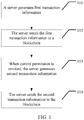
- an embodiment of a device control method according to the embodiments of this application includes the following steps.
- a server generates first transaction information.
- the server After receiving a first message, the server determines to authorize a first participant to control a target device. A specific manner of indicating authorization by the server is generating the first transaction information.
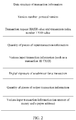
- FIG. 2 a data structure of a piece of transaction information is shown in FIG. 2 and includes:
- the data structure of the transaction information shown in the figure is only some constituent parts of the transaction information.
- a piece of transaction information may further include more constituent parts than those shown in the figure.
- the target device may learn, based on the first transaction information, that the first participant has obtained control permission.
- a specific implementation manner may be that the first transaction information carries authorization information.
- the first transaction information includes information about the first participant and first data that includes information about a second participant.
- the first participant is user equipment, and the second participant may be the server itself, or may be a server-controllable target account, or may be another device or user.
- the second participant has a private key. This is not specifically limited herein.
- a manner in which the server generates second transaction information may be that the server has the private key of the second participant, and it may be learned, based on the private key, that a second transaction is submitted by the second participant (the another device and user)
- the server instructs another device corresponding to the controllable target account, to use the private key of the second participant to generate the second transaction information.
- the first transaction information may further include information about a third participant or even information about more participants.
- a quantity of participants whose information is included is not limited herein, provided that at least the information about the first participant and the information about the second participant are included, that is, information about at least two participants needs to be included.
- the server fills in, for a first payee (the first participant) in the first transaction information, an address corresponding to a public key of the first payee.
- a manner in which the server obtains the address may be that the address is carried in the first message and sent to the server together with the first message, or may be that the address is stored in the server in advance. This is not specifically limited herein.
- the user equipment when the user equipment requests, after obtaining the control permission, to manage the target device, the user equipment submits a transaction ID of the first transaction, a challenge value signed by using a private key, and a public key.
- the challenge value is provided to prove that the first participant actually has a private key, and therefore a temporarily given random number can be encrypted.
- the target device After obtaining the first transaction information from a blockchain, the target device needs to determine that: 1. the public key address of the first payee (the first participant) is consistent with the public key provided by the first participant; 2. a submitter of the first transaction information is a valid server; and 3. no second transaction information exists. If all the three points are met, the target device accepts control by the first participant.
- data encrypted by using a private key may be decrypted by using a public key. Therefore, the first participant corresponds to the public key address of the user equipment, and the second participant corresponds to a public key address of an associated account of the authorization server or a public key address of the authorization server. Both the first participant and the second participant have their respective private keys.
- the target device After obtaining the first transaction information, the target device obtains the public keys of the first participant and the second participant, and can decrypt different private keys by using the corresponding public keys, to authenticate identities of the first participant and the second participant.
- the first transaction information further includes first data information.
- the first data information includes the information about the second participant.
- control permission is permission to control the target device.
- the server sends the first transaction information to the blockchain.
- the server After generating the first transaction information, the server sends and adds the transaction information to a block block, and then the block is added to the entire blockchain.
- the server When the control permission is revoked, the server generates the second transaction information.
- the server When the server itself determines to revoke the control permission, or the server receives a message sent by another device and then determines to revoke the control permission, the server generates the second transaction information.
- the second transaction information includes second data. There is a correspondence between the second data and the first data.
- the correspondence between the second data and the first data is as follows:
- the first transaction information includes the transaction ID of the first transaction information, the information about the first participant, and the information about the second participant (for example, a public key address of the second participant), and the second transaction information includes the transaction ID of the first transaction information, a transaction ID of the second transaction information, and the private key of the second participant, where the private key is used to perform signature authentication to prove that the second transaction information is submitted by the second participant.
- This embodiment is based on the blockchain technology.
- this embodiment is applied to a behavior of bitcoin payment through transfer, a process is similar to that in this embodiment, but involves input and output of amounts of money.
- the following uses payment through transfer as an example to describe content of the second transaction information with reference to a specific application scenario.
- Payment through transfer is used as an example.
- Content of the first transaction information is as follows: A has CNY 100, pays CNY 50 to B, and pays CNY 50 to A', where A' is A.
- the content of the second transaction information may be as follows: A payer A' has CNY 50, and pays CNY x to a payee C, where x is less than 50.
- the correspondence between the second data and the first data may be as follows: 1. the participant A' in the first transaction information and the participant A' in the second transaction information correspond to each other; 2. an amount of money in the first transaction information and an amount of money in the second transaction information correspond to each other; and 3. the second data includes a transaction source, that is, a transaction index number: the transaction ID TXID1 of the first transaction information.
- This embodiment is used for control authorization, but does not involve input and output of amounts of money. Therefore, the second transaction information needs to include only the private key of the second participant. Then, signature authentication is performed so that it is learned that the transaction information is initiated by the
- the server sends the second transaction information to the blockchain.
- the server After the server generates the second transaction information including the second data, where there is the correspondence between the second data and the first data in the first transaction information, the server sends the second transaction information to the blockchain.
- the target device After the target device obtains the second transaction information from the blockchain, the target device learns, based on the second transaction information, that the server has canceled the control permission of the first participant on the target device. The target device rejects control over the target device by the first participant.
- the server generates the second transaction information including the second data, where there is a correspondence between the second transaction information and the first data in the first transaction information. Therefore, when obtaining the second transaction information from the blockchain, the target device determines that the control permission has been revoked, and therefore rejects control over the target device by the first participant. In this way, when a blockchain-based technology is applied to an Internet of things, control permission of a user on a target device can be revoked based on a need.
- a reason why the target device can authorize, based on the first transaction information, the first participant to control the target device may be that the first transaction information carries the authorization information.
- a manner of carrying authorization information varies according to blockchain type.
- the blockchain is a private blockchain or an alliance blockchain
- a field carrying authorization information is set in a data structure of the blockchain.
- the server needs to use only the field to describe the authorization information.
- the authorization information is a digital certificate, and a formal HASH value is added to an optional field OP_RETURN of a transaction.
- the authorization information may be carried in the first transaction information in a plurality of manners, for example, through a received amount of money in the first transaction information. Referring to FIG. 3 , the following provides a description.
- a server receives a first message sent by a first participant.
- the first message is used by the first participant to request control permission on a target device.
- the first message is generated by using a portable smart terminal of the user, and is sent to the server for processing.
- the server parses data and an instruction that are carried in the first message, and learns that the user is requesting the control permission on the target device.
- the server determines whether to authorize the user to control the target device.
- the first participant is a party that requests to obtain the control permission on the target device.
- a first participant is generally a specific terminal device.
- content of the first message may be specifically "Please authorize the first participant to control the target device.”
- a manner in which the first participant sends the first message to the server may be that instruction information is sent by using a smart device of the first participant, or may be that the first participant directly configures the server. This is not specifically limited herein.
- the server determines authorization information as permission X based on the first message.
- the server determines the authorization information as the permission X.
- the server uses a target value in first transaction information to represent the permission X, and generates the first transaction information that carries the permission X.
- bitcoin is used as an example.
- a smallest unit of bitcoin is one Satoshi, corresponding to one hundred millionth of a bitcoin.
- a manner in which the server uses the target value in the first transaction information to represent the permission X may be as follows.
- the server sends the first transaction information to a blockchain.
- the server When the control permission is revoked, the server generates second transaction information.
- the server sends the second transaction information to the blockchain.
- embodiment steps 304, 305, and 306 are similar to embodiment steps 102, 103, and 104 shown in FIG. 1 . Details are not described herein again.
- the blockchain is a public blockchain
- the received amount of money of the payee (participant) carries the authorization information in this embodiment, properly using a field in the first transaction information, and improving practical applicability of solution implementation.
- the foregoing describes the device control method in the embodiments of this application from a perspective of the server.
- the following describes a device control method in the embodiments of this application from a perspective of a target device.
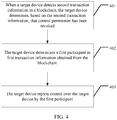
- a target device detects second transaction information in a blockchain, the target device determines, based on the second transaction information, that control permission has been revoked.
- the target device When the target device detects that the second transaction information exists in the blockchain, the target device can determine, based on the second transaction information, that control permission of a first participant has been revoked.
- a reason why the target device can determine, based on the second transaction information, that the control permission of the first participant has been revoked is that the second transaction information includes second data, and there is a correspondence between the second data and first data in first transaction information.
- the correspondence is similar to that in embodiment step 103, and details are not described herein again.
- the first transaction information may be generated when a server determines, after receiving a first message sent by the first participant, to authorize the first participant to control the target device. Therefore, the target device can accept, based on a first transaction, control by the first participant. However, when the target device detects the second transaction information with the foregoing characteristic, the target device determines that the control permission has been revoked, and therefore rejects control by the first participant.
- the target device determines the first participant in the first transaction information obtained from the blockchain.
- the target device After determining the second transaction information, the target device needs to further determine the first participant in the first transaction information. A reason is that when a plurality of participants are controlling the target device, the target device needs to determine whose control should be rejected.
- the first transaction information includes the first data
- the first data includes information about a second participant
- the first transaction information further includes information about the first participant.
- the first transaction information includes the first data
- the first data includes the information about the second participant
- the first transaction information further includes the information about the first participant.
- the first transaction information may further include information about a third participant or even information about more participants.
- a quantity of participants whose information is included is not limited herein, provided that at least the information about the first participant and the information about the second participant are included, that is, information about at least two participants needs to be included.
- the target device rejects control over the target device by the first participant.
- the target device when the first participant requests to control the target device or after the target device accepts control by the second participant, the target device can reject, based on the second transaction information, control by the first participant.
- the target device when the target device detects the second transaction information in the blockchain, the target device determines the first participant in the first transaction information, and rejects control by the first participant. In this way, when a blockchain-based technology is applied to an Internet of things, control permission of a user on a target device can be revoked based on a need.
- the target device may detect the second transaction information when verifying the control permission after obtaining the first transaction information, or may detect the second transaction information after accepting control by the first participant. This is not specifically limited herein. The following describes the two cases.
- Case 1 The target device detects the second transaction information when verifying the control permission after obtaining the first transaction information. Referring to FIG. 5 , the following provides a description.
- a server receives a first message sent by a first participant.
- embodiment step 501 is similar to embodiment step 301 shown in FIG. 3 . Details are not described herein again.
- the server generates first transaction information based on the first message.
- the server sends the first transaction information to a blockchain.
- a target device obtains the first transaction information from the blockchain.
- the target device obtains the first transaction information.
- the server When control permission is revoked, the server generates second transaction information.
- the server sends the second transaction information to the blockchain.
- embodiment steps 502, 503, 505, and 506 are similar to embodiment steps 101, 102, 103, and 104 shown in FIG. 1 . Details are not described herein again.
- the target device detects the second transaction information in the blockchain.
- the target device verifies control permission of the first participant in the first transaction information. During the verification, the target device also needs to verify whether the second transaction information exists. If the second transaction information exists, the target device determines that the control permission has been revoked. In this case, the verification fails, and the target device rejects control by the first participant.
- the target device determines, based on the second transaction information, that the control permission has been revoked.
- the target device determines the first participant in the first transaction information.
- the target device rejects control over the target device by the first participant.
- the target device after the target device obtains the first transaction information from the blockchain and then detects the second transaction information in the blockchain, the target device rejects control by the first participant when the first participant requests to control the target device. This increases feasibility and diversity of solution implementation.
- embodiment steps 508, 509, and 510 are similar to embodiment steps 401, 402, and 403 shown in FIG. 4 . Details are not described herein again.
- Case 2 The target device detects the second transaction information after accepting control by the first participant. Referring to FIG. 6A and FIG. 6B , the following provides a description.
- a server receives a first message sent by a first participant.
- the server generates first transaction information based on the first message.
- the server sends the first transaction information to a blockchain.
- embodiment steps 601 to 603 are similar to embodiment steps 501 to 503 shown in FIG. 5 . Details are not described herein again.
- a target device obtains the first transaction information from the blockchain.
- the target device obtains the first transaction information.
- the target device verifies control permission based on the first transaction information.
- the target device verifies the control permission to mainly determine that: 1. a public key address of a first payee (the first participant) is consistent with a public key provided by the first participant; 2. a submitter of the first transaction information is a valid server; and 3. no second transaction information exists. If all the three points are met, the target device accepts control by the first participant.
- the target device determines that verifying the control permission succeeds.
- the target device accepts control over the target device by the first participant.
- the target device accepts control over the target device by the first participant.
- the server When the control permission is revoked, the server generates second transaction information.
- the server sends the second transaction information to the blockchain.
- embodiment steps 608 and 609 are similar to embodiment steps 503 and 504 shown in FIG. 5 . Details are not described herein again.
- the target device periodically checks whether the second transaction exists in the blockchain.
- the target device after accepting control by the first participant, the target device periodically checks whether the second transaction information exists in the blockchain.
- a check period may be preset on the target device.
- the target device determines, based on the second transaction information, that the control permission has been revoked.
- the target device determines that the server has revoked the control permission of the first participant on the target device.
- the target device determines the first participant in a first transaction.
- the target device rejects control over the target device by the first participant.
- embodiment steps 612 and 613 are similar to embodiment steps 402 and 403 shown in FIG. 4 . Details are not described herein again.
- the target device verifies the control permission in the first transaction information. When verifying the permission succeeds, the target device accepts control by the first participant. Then, the target device periodically checks whether the second transaction information exists. If the second transaction information exists, the target device rejects control by the first participant. This increases diversity of solution implementation.
- Each piece of transaction information has a transaction ID.
- a plurality of pieces of transaction information may exist in the blockchain.
- a manner in which the target device obtains the first transaction information may be that the first participant submits a transaction ID of the first transaction to the target device, and the target device obtains the first transaction from the blockchain based on the ID; or may be that the target device obtains third transaction information submitted by the first participant, where there is a correspondence between the third transaction information and the first transaction information, and the target device determines an ID of the first transaction information based on the third transaction information, and then obtains the first transaction information.
- a latter manner is a one-time authorization manner because the third transaction information cannot be generated twice. The following describes each of the manners.
- Manner 1 The target device obtains the ID of the first transaction sent by the first participant. Referring to FIG. 7 , the following provides a description.
- a server receives a first message sent by a first participant.
- the server generates first transaction information based on the first message.
- the server sends the first transaction information to a blockchain.
- embodiment steps 701, 702, and 703 are similar to embodiment steps 501, 502, and 503 shown in FIG. 5 . Details are not described herein again.
- a target device receives a transaction ID, of the first transaction information, sent by the first participant.
- the transaction ID may be used to indicate an address of the first transaction information in the blockchain, or may be a unique identifier of the first transaction information.
- the target device may obtain the first transaction information from the blockchain based on the identifier.
- the target device obtains the first transaction information from the blockchain based on the transaction ID.
- the target device after obtaining the transaction ID of the first transaction information, the target device obtains the first transaction information based on the transaction ID.
- the target device determines, based on the second transaction information, that control permission has been revoked.
- the target device determines the first participant in the first transaction information.
- the target device rejects control over the target device by the first participant.
- embodiment steps 706 to 708 are similar to embodiment steps 401 to 403 shown in FIG. 4 . Details are not described herein again.
- the first participant provides the transaction ID of the first transaction information to the target device, so that the target device can obtain the first transaction information from the blockchain. This increases feasibility of the solution.
- Manner 2 The target device obtains the third transaction information sent by the first participant. Referring to FIG. 8 , the following provides a description.
- a server receives a first message sent by a first participant.
- the server generates first transaction information based on the first message.
- the server sends the first transaction information to a blockchain.
- embodiment steps 801, 802, and 803 are similar to embodiment steps 501, 502, and 503 shown in FIG. 5 . Details are not described herein again.
- a target device obtains third transaction information sent by the first participant.
- the first participant generates the third transaction information.
- the third transaction information includes third data in the first transaction information.
- the third data corresponds to the first participant.
- the third data corresponds to the first participant.
- the third data includes a private key of the first participant.
- the private key can be used to perform signature authentication to learn that the third transaction information is initiated by the first participant. Therefore, the third transaction information further includes a transaction source, namely, a transaction ID of the first transaction information or a transaction index.
- the target device may directly obtain the third transaction information from the first participant; or the target device may obtain the third transaction information from the blockchain after the first participant sends the third transaction information to the blockchain. This is not specifically limited herein.
- the first transaction information is associated with both second transaction information and the third transaction information, but specific association content is different.
- specific association content is different.
- Payment through transfer is used as an example.
- Content of the first transaction information is as follows: A has CNY 100, pays CNY 70 to B, and pays CNY 30 to A', where A' is A.
- Content of the second transaction information is as follows: A payer A' with CNY 30 pays CNY x to C, where x is less than 30.
- Content of the third transaction information is as follows: A payer B with CNY 70 pays CNY y to D, where y is less than 70.
- the target device determines the transaction ID of the first transaction information based on the third transaction information.
- the target device can determine the transaction ID of the first transaction information based on the third transaction information.
- the target device obtains the first transaction information from the blockchain based on the transaction ID.
- the target device determines, based on the second transaction information, that control permission has been revoked.
- the target device determines the first participant in the first transaction information.
- the target device rejects control over the target device by the first participant.
- embodiment steps 807 to 809 are similar to embodiment steps 401 to 403 shown in FIG. 4 . Details are not described herein again.
- the target device obtains the third transaction information sent by the first participant, learns an address of the first transaction information based on the third transaction information, and obtains the first transaction information from the blockchain. This increases diversity of manners of obtaining the first transaction information.
- FIG. 1 and FIG. 3 to FIG. 8 describe the embodiments of this application from a perspective of the device control method.
- FIG. 9 the following describes embodiments of this application from a perspective of a server.
- a first generation unit 901 is configured to generate first transaction information.
- the first transaction information is used to indicate that a first participant has obtained control permission.
- the first transaction information includes information about the first participant and first data that includes information about a second participant.
- the control permission is permission to control a target device.
- a first sending unit 902 is configured to send the first transaction information to a blockchain.
- a second generation unit 903 is configured to generate second transaction information when the control permission is revoked.
- the second transaction information includes second data, and there is a correspondence between the second data and the first data.
- a second sending unit 904 is configured to send the second transaction information to the blockchain.
- the second transaction information is used to indicate that the control permission on the target device has been revoked. That the control permission has been revoked is used to instruct the target device to reject control over the target device by the first participant.
- the first generation unit 901 generates the first transaction information; the first sending unit 902 sends the first transaction information to the blockchain; the second generation unit 903 generates the second transaction information when the control permission is revoked; and the second sending unit 904 sends the second transaction information to the blockchain, so that the target device rejects, based on the second transaction information, control by the first participant.
- the second transaction information is generated to overwrite the first transaction information, so as to revoke authorization and reject control by the first participant.
- the first transaction information may carry authorization information by using a received amount of money.
- the first transaction information may carry authorization information by using a received amount of money. Referring to FIG. 10 , the following provides a description.
- a first generation unit 1001 is configured to generate first transaction information.
- the first transaction information is used to indicate that a first participant has obtained control permission.
- the first transaction information includes information about the first participant and first data that includes information about a second participant.
- the control permission is permission to control a target device.
- a first sending unit 1002 is configured to send the first transaction information to a blockchain.
- a second generation unit 1003 is configured to generate second transaction information when the control permission is revoked.
- the second transaction information includes second data, and there is a correspondence between the second data and the first data.
- a second sending unit 1004 is configured to send the second transaction information to the blockchain.
- the second transaction information is used to indicate that the control permission on the target device has been revoked. That the control permission has been revoked is used to instruct the target device to reject control over the target device by the first participant.
- the first generation unit includes:
- the generation module 10012 After the determining module 10021 determines the authorization information as the permission X, the generation module 10012 generates the first transaction information in which the target value is used to represent the permission X, effectively using a field resource of the first transaction information.
- FIG. 9 and FIG. 10 describe the embodiments of this application from the perspective of the server.
- FIG. 11 the following describes embodiments of this application from a perspective of a target device.
- a first detection unit 1101 is configured to: when detecting second transaction information in a blockchain, determine, based on the second transaction information, that control permission has been revoked.
- the second transaction information includes second data. There is a correspondence between the second data and first data that includes information about a second participant.
- the control permission is permission to control the target device.
- a first determining unit 1102 is configured to determine a first participant in first transaction information obtained from the blockchain.
- the first transaction information includes the first data and information about the first participant.
- the first transaction information is used to indicate that the first participant has obtained the control permission.
- the first transaction information is generated by the server.
- a control rejection unit 1103 is configured to reject control over the target device by the first participant.
- the first detection unit 1101 learns that the server has canceled the control permission of the first participant on the target device; the first determining unit 1102 determines the first participant in the first transaction information; and then the control rejection unit 1103 rejects control over the target device by the first participant.
- the target device may detect the second transaction information after accepting control by the first participant. Referring to FIG. 12 , the following provides a description.
- a receiving unit 1201 is configured to receive, from the blockchain, the first transaction information sent by the server.
- a verification unit 1202 is configured to verify the control permission based on the first transaction information.
- a second determining unit 1203 is configured to determine that verifying the control permission succeeds.
- a control accepting unit 1204 is configured to accept control over the target device by the first participant.
- a first detection unit 1205 is configured to: when detecting second transaction information in the blockchain, determine, based on the second transaction information, that the control permission has been revoked, where the second transaction information includes second data, there is a correspondence between the second data and first data that includes information about a second participant, and the control permission is permission to control the target device.
- a first determining unit 1206 is configured to determine the first participant in the first transaction information obtained from the blockchain, where the first transaction information includes the first data and information about the first participant, the first transaction information is used to indicate that the first participant has obtained the control permission, and the first transaction information is generated by the server.
- a control rejection unit 1207 is configured to reject control over the target device by the first participant.
- the target device first accepts control by the first participant, and then detects the second transaction information and rejects control by the first participant. This increases diversity of solution implementation.
- the target device may detect the second transaction information in the blockchain in a periodic check manner. Referring to FIG. 13 , the following provides a description.
- a receiving unit 1301 is configured to receive, from the blockchain, the first transaction information sent by the server.
- a verification unit 1302 is configured to verify the control permission based on the first transaction information.
- a second determining unit 1303 is configured to determine that verifying the control permission succeeds.
- a control accepting unit 1304 is configured to accept control over the target device by the first participant.
- a second detection unit 1305 is configured to periodically check whether the second transaction exists in the blockchain.
- An execution unit 1306 is configured to: if the second transaction exists in the blockchain, perform a step to be performed when the second transaction information is detected.
- a first detection unit 1307 is configured to: when detecting the second transaction information in the blockchain, determine, based on the second transaction information, that the control permission has been revoked.
- the second transaction information includes second data. There is a correspondence between the second data and first data that includes information about a second participant.
- the control permission is permission to control the target device.
- a first determining unit 1308 is configured to determine the first participant in the first transaction information obtained from the blockchain.
- the first transaction information includes the first data and information about the first participant.
- the first transaction information is used to indicate that the first participant has obtained the control permission.
- the first transaction information is generated by the server.
- a control rejection unit 1309 is configured to reject control over the target device by the first participant.
- the target device after accepting control by the first participant, rejects control by the first participant when detecting the second transaction information through a periodic check. This increases diversity of solution implementation.
- a receiving unit 1401 is configured to receive, from the blockchain, the first transaction information sent by the server.
- a verification unit 1402 is configured to verify the control permission based on the first transaction information.
- a second determining unit 1403 is configured to determine that verifying the control permission succeeds.
- a control accepting unit 1404 is configured to accept control over the target device by the first participant.
- a first detection unit 1405 is configured to: when detecting second transaction information in the blockchain, determine, based on the second transaction information, that the control permission has been revoked.
- the second transaction information includes second data. There is a correspondence between the second data and first data that includes information about a second participant.
- the control permission is permission to control the target device.
- a first determining unit 1406 is configured to determine the first participant in the first transaction information obtained from the blockchain.
- the first transaction information includes the first data and information about the first participant.
- the first transaction information is used to indicate that the first participant has obtained the control permission.
- the first transaction information is generated by the server.
- a control rejection unit 1407 is configured to reject control over the target device by the first participant.
- the receiving unit includes:
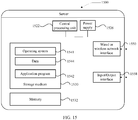
- FIG. 15 is a schematic structural diagram of a server according to an embodiment of this application.
- the server 1500 may vary relatively greatly depending on configuration or performance, and may include one or more central processing units (central processing units, CPU) 1522 (for example, one or more processors) and memories 1532, and one or more storage media 1530 (for example, one or more storage devices) for storing an application program 1542 or data 1544.
- the memory 1532 and the storage medium 1530 may be ephemeral storage or persistent storage.
- a program stored in the storage medium 1530 may include one or more modules (not shown in the figure), and each module may include a series of operation instructions for the server.
- the central processing unit 1522 may be configured to communicate with the storage medium 1530. The series of operation instructions in the storage medium 1530 are executed on the server 1500.
- the central processing unit 1522 may perform the following steps based on operation instructions:
- the server 1500 may further include one or more power supplies 1526, one or more wired or wireless network interfaces 1550, one or more input/output interfaces 1558, and/or one or more operating systems 1541, for example, Windows ServerTM, Mac OS XTM, UnixTM, LinuxTM, and FreeBSDTM.
- one or more power supplies 1526 for example, Windows ServerTM, Mac OS XTM, UnixTM, LinuxTM, and FreeBSDTM.
- Steps performed by the server in the foregoing embodiments may be based on a server structure shown in FIG. 15 .
- FIG. 16 is a schematic structural diagram of a target device according to an embodiment of this application.
- the target device 1600 may vary relatively greatly depending on configuration or performance, and may include one or more central processing units (central processing units, CPU) 1622 (for example, one or more processors) and memories 1632, and one or more storage media 1630 (for example, one or more storage devices) for storing an application program 1642 or data 1644.
- the memory 1632 and the storage medium 1630 may be ephemeral storage or persistent storage.
- a program stored in the storage medium 1630 may include one or more modules (not shown in the figure), and each module may include a series of operation instructions for the target device.
- the central processing unit 1622 may be configured to communicate with the storage medium 1630. The series of operation instructions in the storage medium 1630 are executed on the target device 1600.
- the central processing unit 1622 may perform the following steps based on the operation instructions:
- the target device 1600 may further include one or more power supplies 1626, one or more wired or wireless network interfaces 1650, one or more input/output interfaces 1658, and/or one or more operating systems 1641, for example, Windows ServerTM, Mac OS XTM, UnixTM, LinuxTM, and FreeBSDTM.
- one or more power supplies 1626 for example, Windows ServerTM, Mac OS XTM, UnixTM, LinuxTM, and FreeBSDTM.
- Steps performed by the target device in the foregoing embodiments may be based on a target device structure shown in FIG. 16 .
- the disclosed system, apparatus, and method may be implemented in other manners.
- the described apparatus embodiments are merely examples.
- the unit division is merely logical function division and may be other division in actual implementation.
- a plurality of units or components may be combined or integrated into another system, or some features may be ignored or not performed.
- the displayed or discussed mutual couplings or direct couplings or communication connections may be implemented by using some interfaces.
- the indirect couplings or communication connections between the apparatuses or units may be implemented in electrical, mechanical, or other forms.
- the units described as separate parts may or may not be physically separate, and parts displayed as units may or may not be physical units, may be located in one position, or may be distributed on a plurality of network units. Some or all of the units may be selected based on actual requirements to achieve the objectives of the solutions of the embodiments.
- functional units in the embodiments of this application may be integrated into one processing unit, or each of the units may exist alone physically, or two or more units are integrated into one unit.
- the integrated unit may be implemented in a form of hardware, or may be implemented in a form of a software functional unit.
- the integrated unit When the integrated unit is implemented in the form of a software functional unit and sold or used as an independent product, the integrated unit may be stored in a computer-readable storage medium. Based on such an understanding, the technical solutions of this application essentially, or the part contributing to the prior art, or all or some of the technical solutions may be implemented in a form of a software product.
- the computer software product is stored in a storage medium and includes instructions for instructing a computer device (which may be a personal computer, a local client, a network device, or the like) to perform all or some of the steps of the methods in the embodiments in FIG. 1 and FIG. 3 to FIG. 8 in this application.
- the foregoing storage medium includes: any medium that can store program code, such as a USB flash drive, a removable hard disk, a read-only memory (read-only memory, ROM), a random access memory (random access memory, RAM), a magnetic disk, or an optical disc.
- program code such as a USB flash drive, a removable hard disk, a read-only memory (read-only memory, ROM), a random access memory (random access memory, RAM), a magnetic disk, or an optical disc.
Landscapes
- Business, Economics & Management (AREA)
- Engineering & Computer Science (AREA)
- Accounting & Taxation (AREA)
- Computer Security & Cryptography (AREA)
- Physics & Mathematics (AREA)
- Strategic Management (AREA)
- Finance (AREA)
- General Business, Economics & Management (AREA)
- General Physics & Mathematics (AREA)
- Theoretical Computer Science (AREA)
- Computer Networks & Wireless Communication (AREA)
- Signal Processing (AREA)
- Financial Or Insurance-Related Operations Such As Payment And Settlement (AREA)
- Telephonic Communication Services (AREA)
Applications Claiming Priority (2)
| Application Number | Priority Date | Filing Date | Title |
|---|---|---|---|
| CN201711209715.8A CN109840766B (zh) | 2017-11-27 | 2017-11-27 | 一种设备控制方法及其相关设备 |
| PCT/CN2018/117122 WO2019101156A1 (zh) | 2017-11-27 | 2018-11-23 | 一种设备控制方法及其相关设备 |
Publications (3)
| Publication Number | Publication Date |
|---|---|
| EP3686829A1 true EP3686829A1 (de) | 2020-07-29 |
| EP3686829A4 EP3686829A4 (de) | 2020-12-09 |
| EP3686829B1 EP3686829B1 (de) | 2025-03-26 |
Family
ID=66631358
Family Applications (1)
| Application Number | Title | Priority Date | Filing Date |
|---|---|---|---|
| EP18882248.0A Active EP3686829B1 (de) | 2017-11-27 | 2018-11-23 | Vorrichtungssteuerungsverfahren und zugehöriges verfahren dafür |
Country Status (4)
| Country | Link |
|---|---|
| US (1) | US20200349566A1 (de) |
| EP (1) | EP3686829B1 (de) |
| CN (1) | CN109840766B (de) |
| WO (1) | WO2019101156A1 (de) |
Families Citing this family (4)
| Publication number | Priority date | Publication date | Assignee | Title |
|---|---|---|---|---|
| WO2016076934A2 (en) | 2014-08-22 | 2016-05-19 | Thomas John K | Verification system for secure transmission in a distributed processing network |
| US11042878B2 (en) * | 2016-01-19 | 2021-06-22 | Priv8Pay, Inc. | Network node authentication |
| CN110290144B (zh) * | 2019-07-01 | 2022-02-25 | 深圳市元征科技股份有限公司 | 一种用户权限信息更新方法、系统、存储介质及电子设备 |
| CN115107697B (zh) * | 2021-03-18 | 2023-10-24 | 广州汽车集团股份有限公司 | 一种基于去中心化的车辆远程预启动方法及系统 |
Family Cites Families (14)
| Publication number | Priority date | Publication date | Assignee | Title |
|---|---|---|---|---|
| US8064881B2 (en) * | 2007-02-28 | 2011-11-22 | Embarq Holdings Company, Llc | System and method for remotely managing wireless devices |
| WO2009070430A2 (en) * | 2007-11-08 | 2009-06-04 | Suridx, Inc. | Apparatus and methods for providing scalable, dynamic, individualized credential services using mobile telephones |
| US9413827B2 (en) * | 2013-02-25 | 2016-08-09 | Qualcomm Incorporated | Context aware actions among heterogeneous internet of things (IOT) devices |
| WO2015142765A1 (en) * | 2014-03-17 | 2015-09-24 | Coinbase, Inc | Bitcoin host computer system |
| US10084794B2 (en) * | 2015-06-02 | 2018-09-25 | ALTR Solutions, Inc. | Centralized access management of web-based or native applications |
| US10079682B2 (en) * | 2015-12-22 | 2018-09-18 | Gemalto Sa | Method for managing a trusted identity |
| CN105678182B (zh) * | 2015-12-29 | 2019-04-12 | 布比(北京)网络技术有限公司 | 一种数据操作控制的方法及装置 |
| CN106339875B (zh) * | 2016-08-25 | 2019-09-06 | 江苏通付盾科技有限公司 | 基于公有区块链的操作记录审查方法及装置 |
| JP6971019B2 (ja) * | 2016-09-26 | 2021-11-24 | Gmoインターネット株式会社 | データ管理システム、情報処理装置、プログラム、及び、データ管理方法 |
| WO2018093371A1 (en) * | 2016-11-17 | 2018-05-24 | Intel Corporation | Multi-use fog device |
| CN106534160B (zh) * | 2016-12-02 | 2020-02-21 | 江苏通付盾科技有限公司 | 基于区块链的身份认证方法及系统 |
| EP3596880B1 (de) * | 2017-04-18 | 2022-06-01 | Samsung Electronics Co., Ltd. | Verfahren und vorrichtung zur zugangskontrolle in einem verteilten blockkettenbasierten internet-der-dinge(iot)-netzwerk |
| US11979392B2 (en) * | 2017-07-17 | 2024-05-07 | Comcast Cable Communications, Llc | Systems and methods for managing device association |
| CN107360001B (zh) * | 2017-07-26 | 2021-12-14 | 创新先进技术有限公司 | 一种数字证书管理方法、装置和系统 |
-
2017
- 2017-11-27 CN CN201711209715.8A patent/CN109840766B/zh active Active
-
2018
- 2018-11-23 US US16/764,944 patent/US20200349566A1/en not_active Abandoned
- 2018-11-23 EP EP18882248.0A patent/EP3686829B1/de active Active
- 2018-11-23 WO PCT/CN2018/117122 patent/WO2019101156A1/zh not_active Ceased
Also Published As
| Publication number | Publication date |
|---|---|
| CN109840766A (zh) | 2019-06-04 |
| WO2019101156A1 (zh) | 2019-05-31 |
| EP3686829A4 (de) | 2020-12-09 |
| CN109840766B (zh) | 2024-03-29 |
| US20200349566A1 (en) | 2020-11-05 |
| EP3686829B1 (de) | 2025-03-26 |
Similar Documents
| Publication | Publication Date | Title |
|---|---|---|
| US20250014021A1 (en) | Cryptographic mechanisms including means for verifying the identity of a user of a system utilising key distribution involving additional devices | |
| CN106471514B (zh) | 安全无线充电 | |
| CN109150548B (zh) | 一种数字证书签名、验签方法及系统、数字证书系统 | |
| KR101418799B1 (ko) | 모바일용 오티피 서비스 제공 시스템 | |
| US8819792B2 (en) | Assignment and distribution of access credentials to mobile communication devices | |
| CN101547095B (zh) | 基于数字证书的应用服务管理系统及管理方法 | |
| US9780950B1 (en) | Authentication of PKI credential by use of a one time password and pin | |
| US9294474B1 (en) | Verification based on input comprising captured images, captured audio and tracked eye movement | |
| US20170316497A1 (en) | Method for creating, registering, revoking authentication information and server using the same | |
| CN105099673A (zh) | 一种授权方法、请求授权的方法及装置 | |
| EP3510510A1 (de) | Architektur für zugriffsverwaltung | |
| JP2018515011A (ja) | ユーザを認証する方法及び装置、ウェアラブルデバイスを登録する方法及び装置 | |
| EP3686829B1 (de) | Vorrichtungssteuerungsverfahren und zugehöriges verfahren dafür | |
| EP3206329B1 (de) | Sicherheitsprüfverfahren, vorrichtung, endgerät und server | |
| US20210241270A1 (en) | System and method of blockchain transaction verification | |
| US11943210B2 (en) | System and method for distributed, keyless electronic transactions with authentication | |
| JP2017210862A (ja) | 位置設定可能な電子ロック制御方法、プログラム及びシステム | |
| US9443069B1 (en) | Verification platform having interface adapted for communication with verification agent | |
| CN113924751A (zh) | 用于提供安全数据访问的系统和方法 | |
| WO2017185450A1 (zh) | 终端的认证方法及系统 | |
| CN113569263A (zh) | 跨私域数据的安全处理方法、装置及电子设备 | |
| US12282536B2 (en) | Secure authentication | |
| CN109088890A (zh) | 一种身份认证方法、相关装置及系统 | |
| CN116992458A (zh) | 基于可信执行环境的可编程数据处理方法以及系统 | |
| US20220400015A1 (en) | Method and device for performing access control by using authentication certificate based on authority information |
Legal Events
| Date | Code | Title | Description |
|---|---|---|---|
| STAA | Information on the status of an ep patent application or granted ep patent |
Free format text: STATUS: THE INTERNATIONAL PUBLICATION HAS BEEN MADE |
|
| PUAI | Public reference made under article 153(3) epc to a published international application that has entered the european phase |
Free format text: ORIGINAL CODE: 0009012 |
|
| STAA | Information on the status of an ep patent application or granted ep patent |
Free format text: STATUS: REQUEST FOR EXAMINATION WAS MADE |
|
| 17P | Request for examination filed |
Effective date: 20200423 |
|
| AK | Designated contracting states |
Kind code of ref document: A1 Designated state(s): AL AT BE BG CH CY CZ DE DK EE ES FI FR GB GR HR HU IE IS IT LI LT LU LV MC MK MT NL NO PL PT RO RS SE SI SK SM TR |
|
| AX | Request for extension of the european patent |
Extension state: BA ME |
|
| A4 | Supplementary search report drawn up and despatched |
Effective date: 20201109 |
|
| RIC1 | Information provided on ipc code assigned before grant |
Ipc: G06Q 20/38 20120101AFI20201103BHEP |
|
| DAV | Request for validation of the european patent (deleted) | ||
| DAX | Request for extension of the european patent (deleted) | ||
| STAA | Information on the status of an ep patent application or granted ep patent |
Free format text: STATUS: EXAMINATION IS IN PROGRESS |
|
| 17Q | First examination report despatched |
Effective date: 20220303 |
|
| GRAP | Despatch of communication of intention to grant a patent |
Free format text: ORIGINAL CODE: EPIDOSNIGR1 |
|
| STAA | Information on the status of an ep patent application or granted ep patent |
Free format text: STATUS: GRANT OF PATENT IS INTENDED |
|
| INTG | Intention to grant announced |
Effective date: 20241118 |
|
| GRAS | Grant fee paid |
Free format text: ORIGINAL CODE: EPIDOSNIGR3 |
|
| GRAA | (expected) grant |
Free format text: ORIGINAL CODE: 0009210 |
|
| STAA | Information on the status of an ep patent application or granted ep patent |
Free format text: STATUS: THE PATENT HAS BEEN GRANTED |
|
| AK | Designated contracting states |
Kind code of ref document: B1 Designated state(s): AL AT BE BG CH CY CZ DE DK EE ES FI FR GB GR HR HU IE IS IT LI LT LU LV MC MK MT NL NO PL PT RO RS SE SI SK SM TR |
|
| REG | Reference to a national code |
Ref country code: GB Ref legal event code: FG4D |
|
| REG | Reference to a national code |
Ref country code: CH Ref legal event code: EP |
|
| REG | Reference to a national code |
Ref country code: DE Ref legal event code: R096 Ref document number: 602018080578 Country of ref document: DE |
|
| REG | Reference to a national code |
Ref country code: IE Ref legal event code: FG4D |
|
| PG25 | Lapsed in a contracting state [announced via postgrant information from national office to epo] |
Ref country code: RS Free format text: LAPSE BECAUSE OF FAILURE TO SUBMIT A TRANSLATION OF THE DESCRIPTION OR TO PAY THE FEE WITHIN THE PRESCRIBED TIME-LIMIT Effective date: 20250626 |
|
| PG25 | Lapsed in a contracting state [announced via postgrant information from national office to epo] |
Ref country code: FI Free format text: LAPSE BECAUSE OF FAILURE TO SUBMIT A TRANSLATION OF THE DESCRIPTION OR TO PAY THE FEE WITHIN THE PRESCRIBED TIME-LIMIT Effective date: 20250326 |
|
| REG | Reference to a national code |
Ref country code: LT Ref legal event code: MG9D |
|
| PG25 | Lapsed in a contracting state [announced via postgrant information from national office to epo] |
Ref country code: NO Free format text: LAPSE BECAUSE OF FAILURE TO SUBMIT A TRANSLATION OF THE DESCRIPTION OR TO PAY THE FEE WITHIN THE PRESCRIBED TIME-LIMIT Effective date: 20250626 |
|
| PG25 | Lapsed in a contracting state [announced via postgrant information from national office to epo] |
Ref country code: HR Free format text: LAPSE BECAUSE OF FAILURE TO SUBMIT A TRANSLATION OF THE DESCRIPTION OR TO PAY THE FEE WITHIN THE PRESCRIBED TIME-LIMIT Effective date: 20250326 |
|
| PG25 | Lapsed in a contracting state [announced via postgrant information from national office to epo] |
Ref country code: LV Free format text: LAPSE BECAUSE OF FAILURE TO SUBMIT A TRANSLATION OF THE DESCRIPTION OR TO PAY THE FEE WITHIN THE PRESCRIBED TIME-LIMIT Effective date: 20250326 |
|
| PG25 | Lapsed in a contracting state [announced via postgrant information from national office to epo] |
Ref country code: GR Free format text: LAPSE BECAUSE OF FAILURE TO SUBMIT A TRANSLATION OF THE DESCRIPTION OR TO PAY THE FEE WITHIN THE PRESCRIBED TIME-LIMIT Effective date: 20250627 Ref country code: BG Free format text: LAPSE BECAUSE OF FAILURE TO SUBMIT A TRANSLATION OF THE DESCRIPTION OR TO PAY THE FEE WITHIN THE PRESCRIBED TIME-LIMIT Effective date: 20250326 |
|
| REG | Reference to a national code |
Ref country code: NL Ref legal event code: MP Effective date: 20250326 |
|
| PG25 | Lapsed in a contracting state [announced via postgrant information from national office to epo] |
Ref country code: NL Free format text: LAPSE BECAUSE OF FAILURE TO SUBMIT A TRANSLATION OF THE DESCRIPTION OR TO PAY THE FEE WITHIN THE PRESCRIBED TIME-LIMIT Effective date: 20250326 |
|
| PG25 | Lapsed in a contracting state [announced via postgrant information from national office to epo] |
Ref country code: SE Free format text: LAPSE BECAUSE OF FAILURE TO SUBMIT A TRANSLATION OF THE DESCRIPTION OR TO PAY THE FEE WITHIN THE PRESCRIBED TIME-LIMIT Effective date: 20250326 |
|
| REG | Reference to a national code |
Ref country code: AT Ref legal event code: MK05 Ref document number: 1779704 Country of ref document: AT Kind code of ref document: T Effective date: 20250326 |
|
| PG25 | Lapsed in a contracting state [announced via postgrant information from national office to epo] |
Ref country code: SM Free format text: LAPSE BECAUSE OF FAILURE TO SUBMIT A TRANSLATION OF THE DESCRIPTION OR TO PAY THE FEE WITHIN THE PRESCRIBED TIME-LIMIT Effective date: 20250326 |
|
| PG25 | Lapsed in a contracting state [announced via postgrant information from national office to epo] |
Ref country code: PT Free format text: LAPSE BECAUSE OF FAILURE TO SUBMIT A TRANSLATION OF THE DESCRIPTION OR TO PAY THE FEE WITHIN THE PRESCRIBED TIME-LIMIT Effective date: 20250728 Ref country code: ES Free format text: LAPSE BECAUSE OF FAILURE TO SUBMIT A TRANSLATION OF THE DESCRIPTION OR TO PAY THE FEE WITHIN THE PRESCRIBED TIME-LIMIT Effective date: 20250326 |
|
| PG25 | Lapsed in a contracting state [announced via postgrant information from national office to epo] |
Ref country code: IT Free format text: LAPSE BECAUSE OF FAILURE TO SUBMIT A TRANSLATION OF THE DESCRIPTION OR TO PAY THE FEE WITHIN THE PRESCRIBED TIME-LIMIT Effective date: 20250326 Ref country code: PL Free format text: LAPSE BECAUSE OF FAILURE TO SUBMIT A TRANSLATION OF THE DESCRIPTION OR TO PAY THE FEE WITHIN THE PRESCRIBED TIME-LIMIT Effective date: 20250326 |
|
| PGFP | Annual fee paid to national office [announced via postgrant information from national office to epo] |
Ref country code: GB Payment date: 20250930 Year of fee payment: 8 |
|
| PG25 | Lapsed in a contracting state [announced via postgrant information from national office to epo] |
Ref country code: AT Free format text: LAPSE BECAUSE OF FAILURE TO SUBMIT A TRANSLATION OF THE DESCRIPTION OR TO PAY THE FEE WITHIN THE PRESCRIBED TIME-LIMIT Effective date: 20250326 |
|
| PG25 | Lapsed in a contracting state [announced via postgrant information from national office to epo] |
Ref country code: EE Free format text: LAPSE BECAUSE OF FAILURE TO SUBMIT A TRANSLATION OF THE DESCRIPTION OR TO PAY THE FEE WITHIN THE PRESCRIBED TIME-LIMIT Effective date: 20250326 |
|
| PG25 | Lapsed in a contracting state [announced via postgrant information from national office to epo] |
Ref country code: RO Free format text: LAPSE BECAUSE OF FAILURE TO SUBMIT A TRANSLATION OF THE DESCRIPTION OR TO PAY THE FEE WITHIN THE PRESCRIBED TIME-LIMIT Effective date: 20250326 |
|
| PG25 | Lapsed in a contracting state [announced via postgrant information from national office to epo] |
Ref country code: SK Free format text: LAPSE BECAUSE OF FAILURE TO SUBMIT A TRANSLATION OF THE DESCRIPTION OR TO PAY THE FEE WITHIN THE PRESCRIBED TIME-LIMIT Effective date: 20250326 |
|
| PG25 | Lapsed in a contracting state [announced via postgrant information from national office to epo] |
Ref country code: IS Free format text: LAPSE BECAUSE OF FAILURE TO SUBMIT A TRANSLATION OF THE DESCRIPTION OR TO PAY THE FEE WITHIN THE PRESCRIBED TIME-LIMIT Effective date: 20250726 |
|
| REG | Reference to a national code |
Ref country code: DE Ref legal event code: R097 Ref document number: 602018080578 Country of ref document: DE |
|
| PGFP | Annual fee paid to national office [announced via postgrant information from national office to epo] |
Ref country code: DE Payment date: 20250930 Year of fee payment: 8 |
|
| PG25 | Lapsed in a contracting state [announced via postgrant information from national office to epo] |
Ref country code: DK Free format text: LAPSE BECAUSE OF FAILURE TO SUBMIT A TRANSLATION OF THE DESCRIPTION OR TO PAY THE FEE WITHIN THE PRESCRIBED TIME-LIMIT Effective date: 20250326 |
|
| PG25 | Lapsed in a contracting state [announced via postgrant information from national office to epo] |
Ref country code: CZ Free format text: LAPSE BECAUSE OF FAILURE TO SUBMIT A TRANSLATION OF THE DESCRIPTION OR TO PAY THE FEE WITHIN THE PRESCRIBED TIME-LIMIT Effective date: 20250326 |
|
| PLBE | No opposition filed within time limit |
Free format text: ORIGINAL CODE: 0009261 |
|
| STAA | Information on the status of an ep patent application or granted ep patent |
Free format text: STATUS: NO OPPOSITION FILED WITHIN TIME LIMIT |
|
| REG | Reference to a national code |
Ref country code: CH Ref legal event code: L10 Free format text: ST27 STATUS EVENT CODE: U-0-0-L10-L00 (AS PROVIDED BY THE NATIONAL OFFICE) Effective date: 20260211 |
|
| 26N | No opposition filed |
Effective date: 20260105 |